Florida. The Sunshine State. Our climate is sub-tropical with an average annual rainfall of around 55 inches (140 cm). Mild winters range from the low 50’s F (10 C) in north Florida to the mid 60’s F (18 C) in the south. Throughout the state, average summer temperatures in the hottest month of July are in the low to mid 80’s F (29 C). High humidity levels are due to the fact that no point in Florida is more than 60 miles (96.5 km) from salt water.
The first day of autumn is scheduled for September 22. Hope it isn’t late.
“Fall Migration”. Once again, we have obtained evidence that many birds cannot read. The trip described in this post actually took place on August 18, clearly not yet “Fall”. Yet, we observed two American Redstarts, a migratory species. Also, a group of six Swallow-tailed Kites were preparing for or were actually engaged in migration as this species is typically only seen as individuals or pairs.
We are catching up a bit (“rewinding”) on previously unreported trips. This particular day (August 18) found us lounging around the house uncharacteristically late. Our objective was to scout nearby Colt Creek State Park for early fall migrants but the wise managers of the state’s natural resources have decreed no wildlife within The Sunshine State’s park system shall be officially observed by humans until the bureaucratically decent hour of 08:00.
Fine. A leisurely breakfast at the house, a relaxed ride out of town and arrival just as the state-sanctioned automatic gate at the park’s entrance swung open to welcome us to the official wild Florida. No pesky gorgeous sunrise to distract us from the state’s officially approved bits of nature.
I am not ungrateful. Just the opposite. Florida does a magnificent job managing its vast natural resources and we are very thankful to have so many opportunities to enjoy our great outdoors.
It’s just that I have so little to complain about that I need to practice on small things in case big things happen which require real complaining.
We had a wonderful day! Beautiful weather prevailed and we found lovely flowers in bloom, a plethora of pollinators attracted to said flowers, birds galore but mostly camera shy and even the aforementioned “fall migrants”. In summer.
As a bonus, we encountered two nearly simultaneous life-and-death dramas!
All before lunch time.
Swallow-tailed Kites breed in Florida and begin arriving from their South American wintering grounds about the second week of February each year. Groups begin forming for the return migration south in August and most of the birds are gone by the third week of the month. We found a half-dozen at the park’s entrance just waking, stretching, preening and waiting for the coffee to brew.


A female Roseate Skimmer (Orthemis ferruginea) may not have the flashy hot pink coloration of the male, but her striped thorax and golden abdomen are distinctly beautiful.

Most species of Thread-waisted Wasp (Ammophila procera) won’t sting unless severely provoked. Their relatively large size and brightly colored abdomen are usually sufficient to ward off curiosity seekers, such as yours truly.

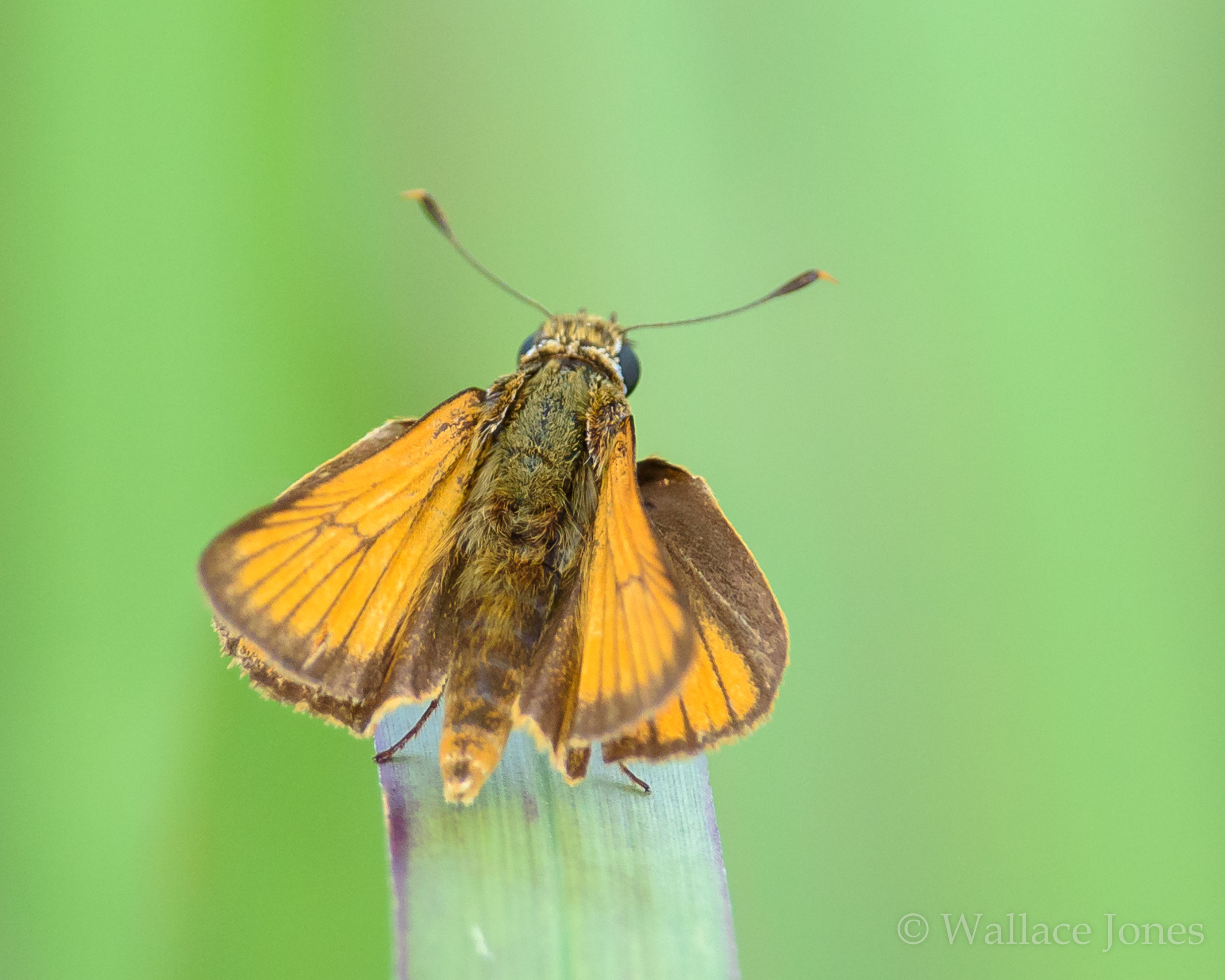
A small member of the grass skipper family, the Whirlabout (Polites vibex) has a flight pattern which leaves little doubt how it was named.

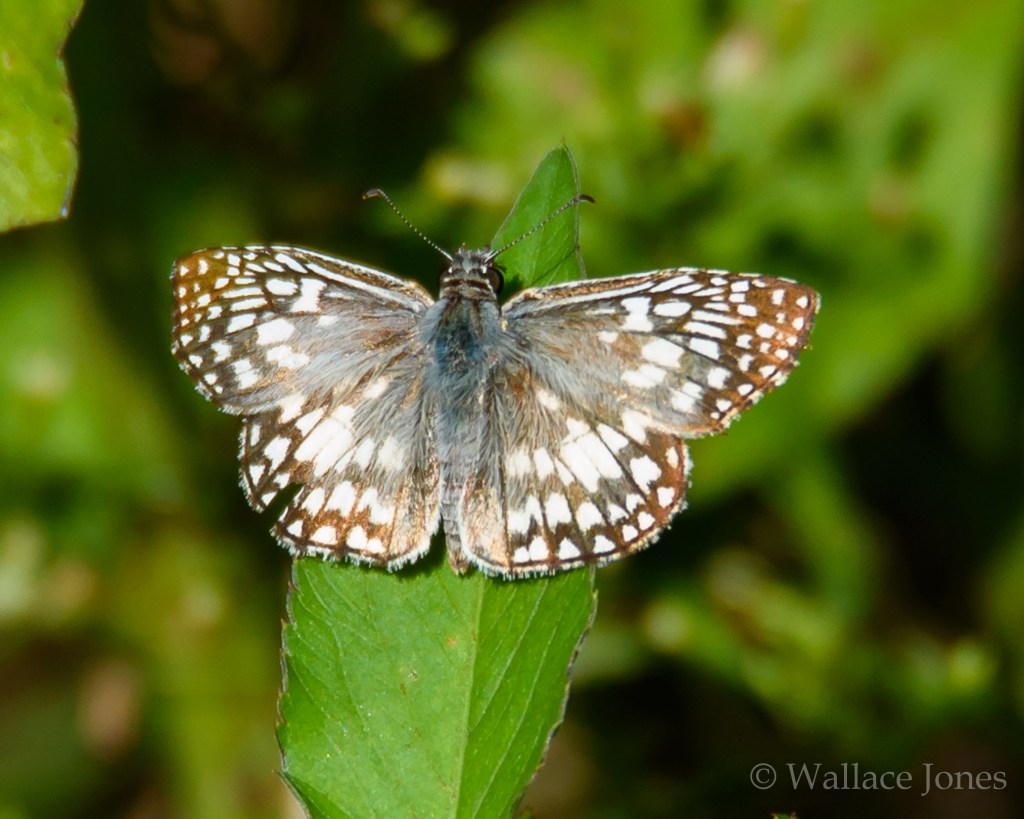
Fast flyers, Tropical Checkered-Skippers (Pyrgus oileus) can be a blue-gray blur zipping above the grass. Although small, the black-and-white pattern of these little butterflies is beautiful.
A Hummingbird Clearwing Moth (Hemaris thysbe) hovered next to the flower of a Spanish Needle, extracting nectar. It flew to another blossom. ZAP! Blending in with the plant’s green foliage, a stealthy Green Lynx Spider (Peucetia viridans) captured his prize.


Scarcely six feet from the scene of the previous ambush, the strong web of a Black and Yellow Argiope (Argiope aurantia) spider proved too strong for a dragonfly.

Two spiders, two different hunting techniques, both successful.
One day, I’ll catch the Sleepy Orange (Abaeis nicippe) with its wings open so we can admire the bright orange and black on its upper wings. For now, the unique pattern of the under wing is just fine.

We watched a family of two adult and two immature Northern Cardinals as they fed along a creek. The young male will soon be all red and his beak will turn orange. It appears the adult male is just completing his annual molt.


A member of the brushfoot family (Nymphalidae), the Variegated Fritillary (Euptoieta claudia) may not be as brightly colored as some its relatives, but the intricate wing pattern is simply fascinating!

Small size and a habit of flying very close to the ground make it surprisingly easy to overlook another member of the brushfoot family, the Phaon Crescent (Phyciodes phaon). Once you see one, however, you will want to see one again!

This is a bug. It might be a Coreid Bug. It might be a Helmeted Squash Bug. It is most likely a Leaf-footed Bug. Or, it could be all of the above as I think they all refer to the same thing: Euthochtha galeator. If anyone knows, please advise. Whatever you call it, it’s pretty impressive.

Yet another member of that brushfoot family is Florida’s official state butterfly. The Zebra Heliconian (Heliconius charithonia) is hard to miss with its long wings and stripes.

We have three species of large, dark dragonflies in our area. The females of one of them, the Great Blue Skimmer (Libellula vibrans), can be a challenge to identify as her normally reddish-brown eyes turn blue and she becomes quite dull-colored overall during late maturity.

One more brushfoot. The Gulf Fritillary (Agraulis vanillae) won’t be ignored. Bright orange above and large silvery-white below they look like flying stained glass windows.

Yes, it’s summer in Florida. Yes, it’s hot and humid. Yes, it rains a lot. However, we wouldn’t trade it for anything! And despite my occasional ranting, our state parks are among the best we have experienced anywhere. Thank goodness we have these magnificent oases where we can escape to enjoy Nature.
We hope you enjoy your search for a natural place and come back for a visit!
Crossing Saddle Creek on the footbridge, it seemed I had been transported to another place. First, there was a hill to climb – in Florida? The tall trees, the dense understory of lush ferns, curtains of vines hanging from huge limbs made it feel as if I was in a rain forest in the Amazon. A huge dragonfly rising from the path completed the illusion.
In reality, I was exploring an unfamiliar section of what has become a familiar patch, Tenoroc Fish Management Area. Parts of the 7,000+ acre reserve include several lakes which are geographically separated from the main area where the headquarters building is located. Lost Lake East and Lost Lake West are designated as canoe/kayak fishing only and no fishing from the bank is permitted. The good news for me is that hiking is allowed and a nicely maintained trail circumnavigates Lost Lake West. I hiked just over two miles along a ridge (remember that hill?) between the two lakes, descending at the southern end of Lost Lake West into a wet hardwood forest which then turned northward adjacent to the western edge of the lake. The walk was very scenic and enjoyable.
My goal was to determine if this area contained suitable habitat for attracting migrating songbirds. It did. The canopies of very tall hardwood trees are ideal for the flocks of insect hunters which will soon be looking for high protein snacks as they proceed southward. The lowland swampy woods had sections of dense willows, perfect for protecting foraging warblers. Saddle Creek meanders through the area and its banks are covered in dense weed growth attractive to myriad insect species which will, in turn, be attractive to birds looking for tasty bugs.
Although the elevation of the trail was slight by most standards, any elevation in central Florida is uncommon. The view from the eastern portion of the trail provided a unique perspective as I was able to look downward to the surface of the lakes and actually into the tops of trees from above them. I found a nice selection of birds along the way, including: Downy and Pileated Woodpeckers, Carolina Wren, Northern Parula Warbler, Yellow-throated Warbler, Tufted Titmouse, White-eyed Vireo, Fish Crow, Osprey, Cooper’s and Red-shouldered Hawks along with Limpkins, ibises, herons and egrets along the lake shore.
Toward the end of the walk, I took a break and sat against a stump for a few minutes. Over my head, I spotted an early fall migrating warbler, a female American Redstart. A Carolina Wren, still in molt, hopped all around trying to figure out what I was. Movement of a larger bird high in an oak tree turned out to be a Yellow-billed Cuckoo.
The scouting trip turned out even better than I hoped and now that I have found them, these lakes shall no longer be “Lost“!
Saddle Creek flows from north to south just west of Lost Lake West.

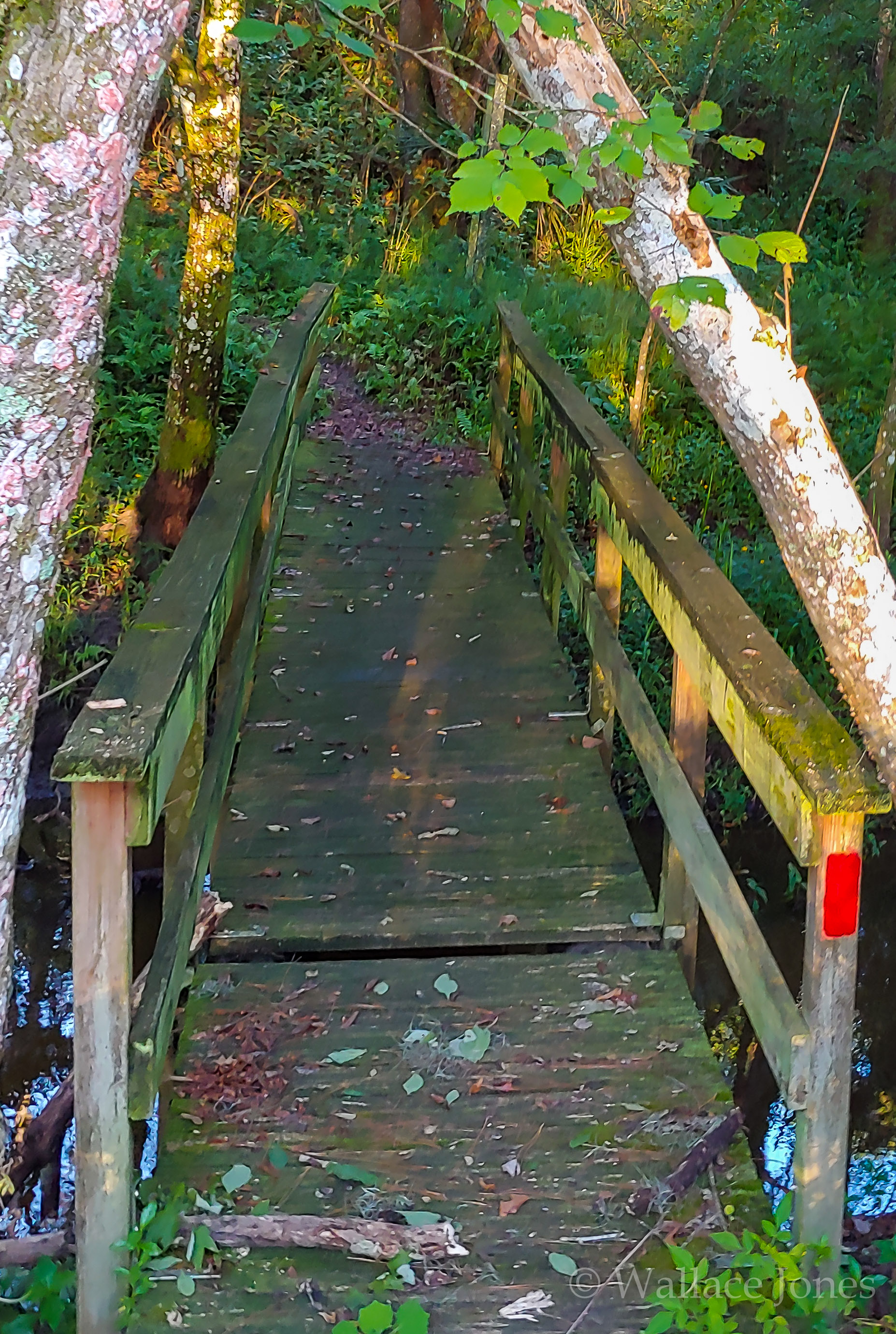
The state of repair of the footbridge across the creek gives one the impression the trail may not be used all that often. Just the way I like it! (The trail itself turned out to be in good shape.)
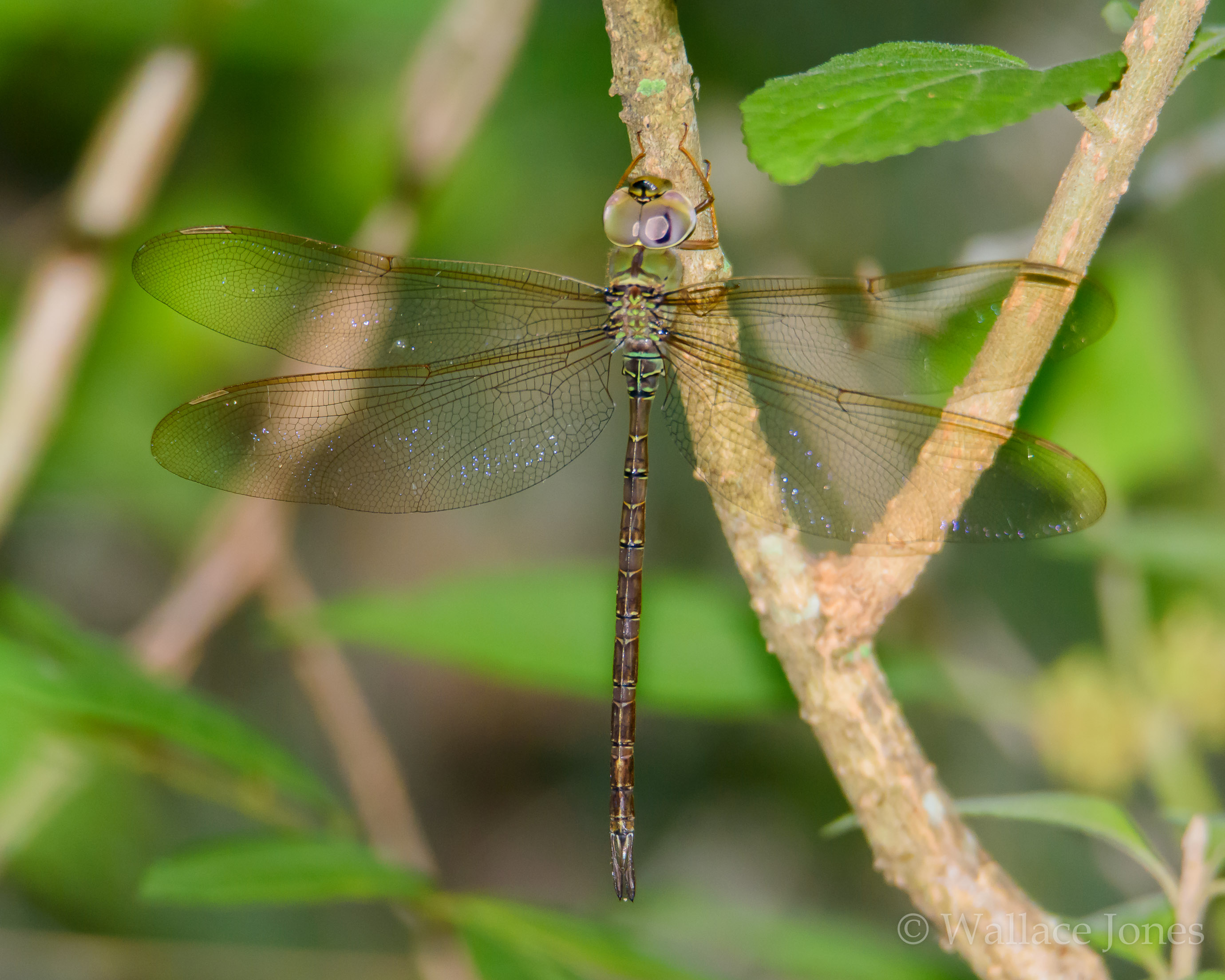
If it hadn’t moved, I doubt I would have noticed this drab-colored Twilight Darner (Gynacantha nervosa) despite its relatively large size.
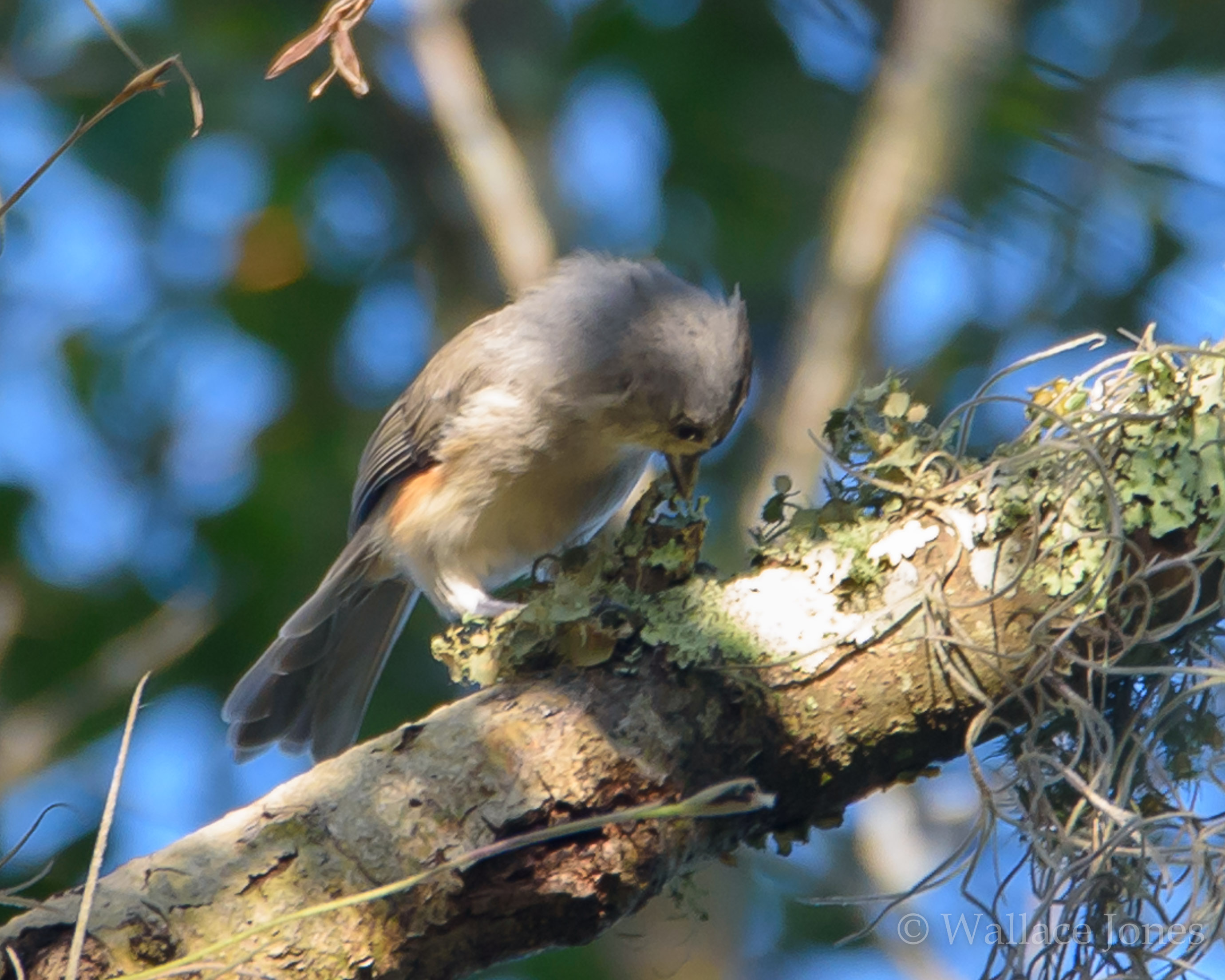
Four Tufted Titmice alternately scolded me and chased insects from the branches of tall trees along the trail.
Northern Parula warblers have a wonderful ascending call and their bright yellow breasts really stand out as they flit quickly from limb to limb. This one was framed nicely by the feathery leaves of a Sweet Acacia tree (Vachellia farnesiana).

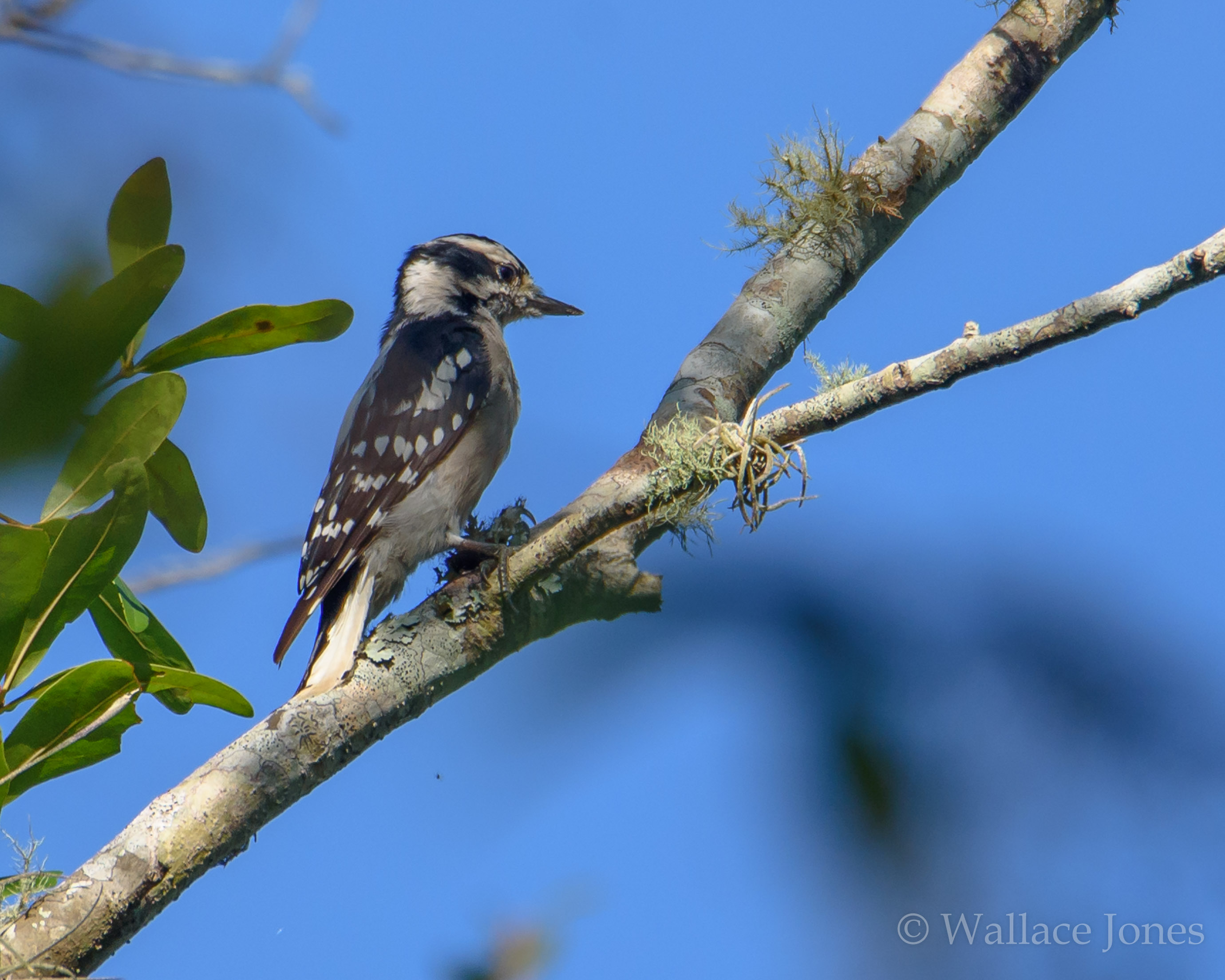
A pair of Downy Woodpeckers probed the branches for breakfast. The male was camera shy but the lady of the house posed briefly for a portrait.
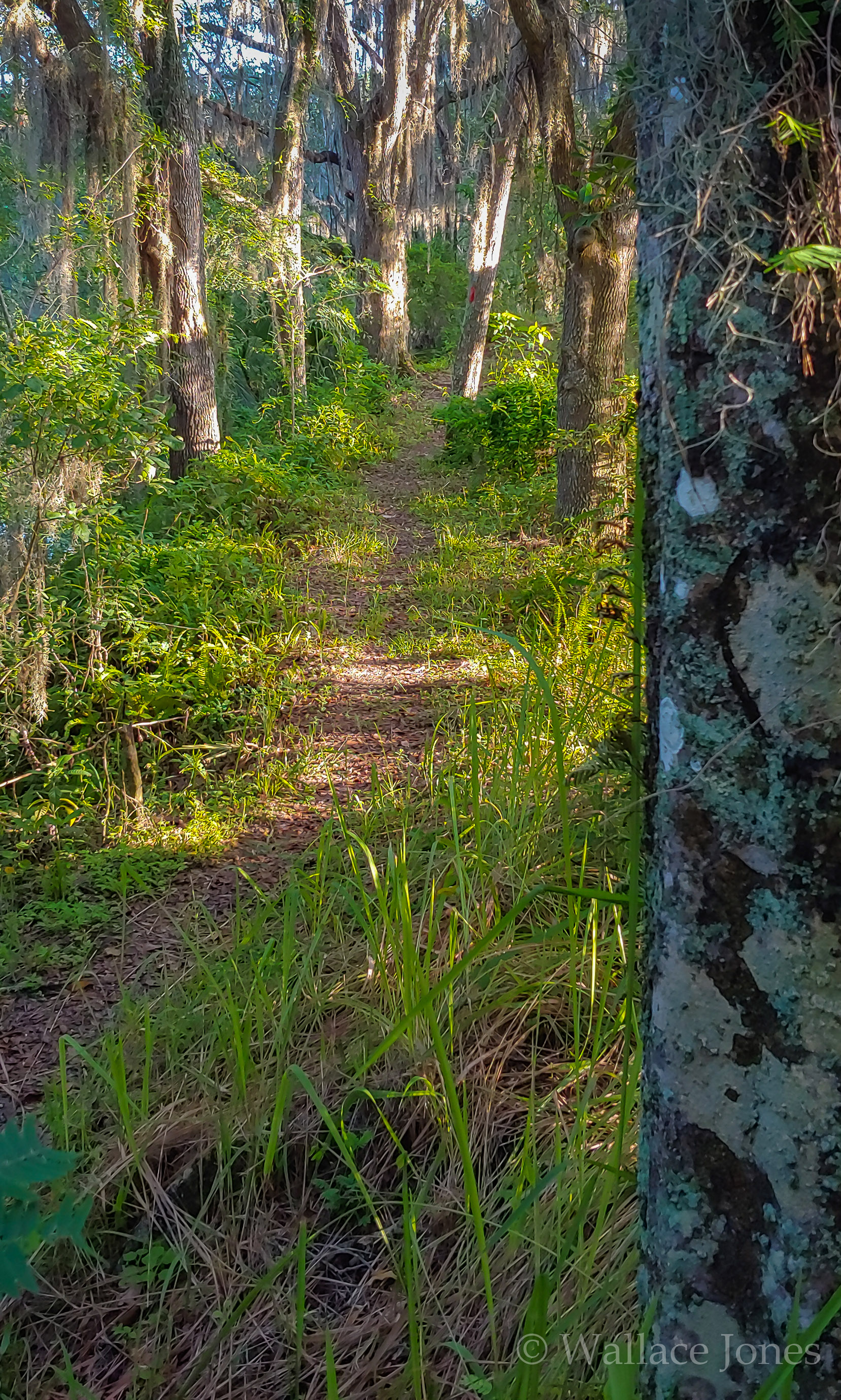
The trail along the ridge between the two lakes afforded a unique look down onto the top of the forest canopy and the surface of the lakes.
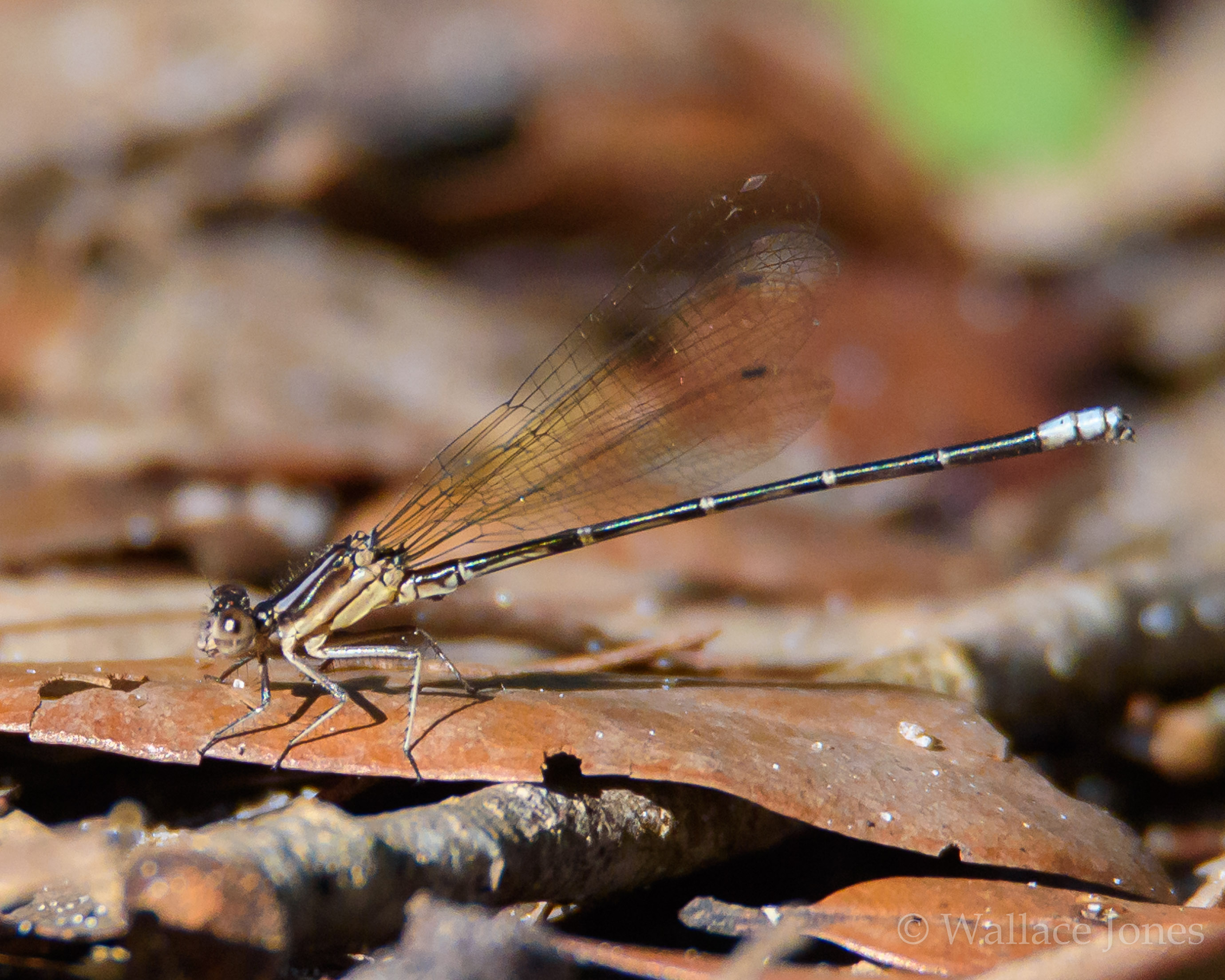
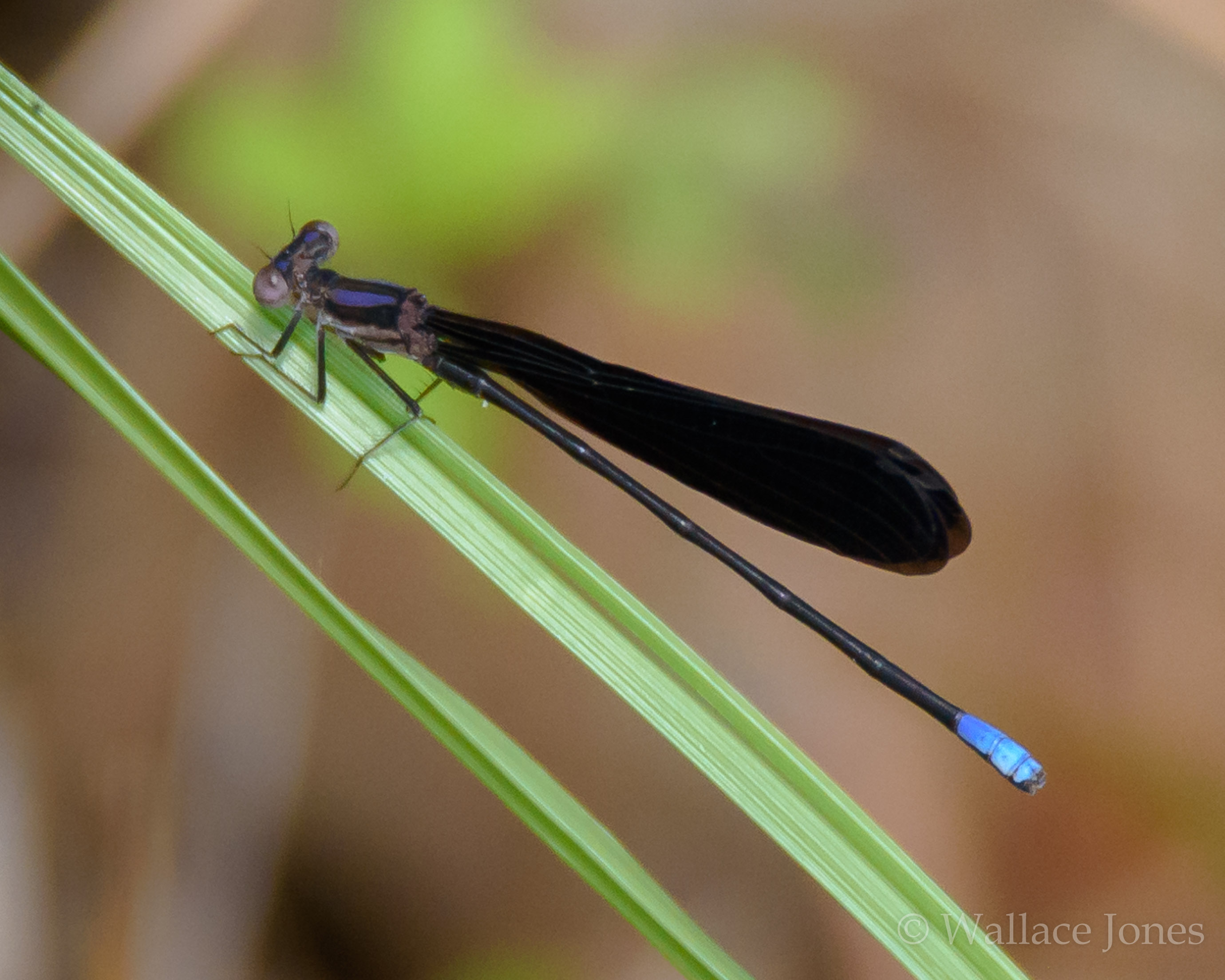
I was only able to grab a couple of quick photographs of this damselfly before it disappeared into the forest. My best guess is that it is a Powdered Dancer (Argia moesta), which would be a first for me and for our county. If anyone can help, it would be appreciated!
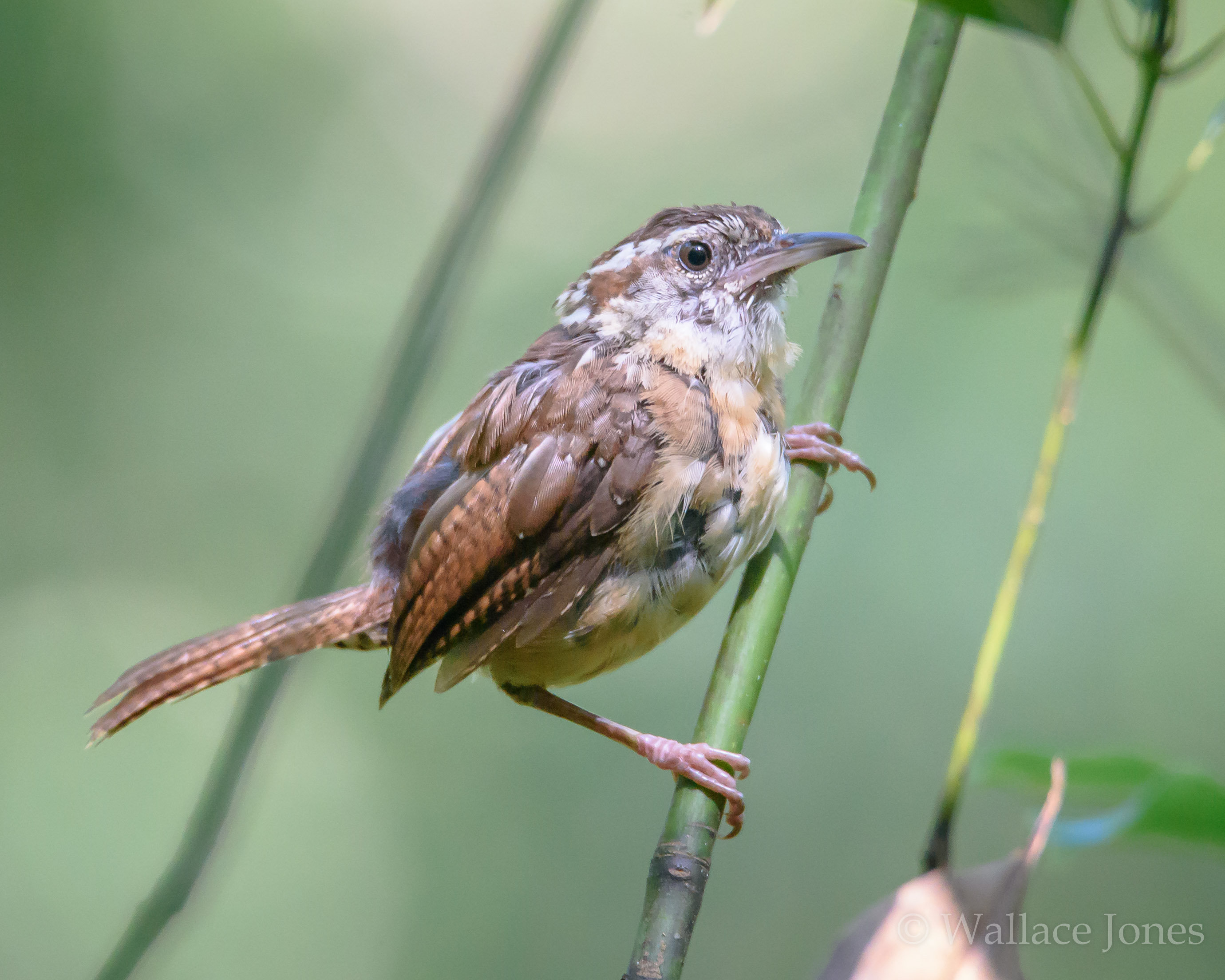
A curious Carolina Wren kept peeking at me while I took a break. It has not quite completed its annual molt and looks a bit unkempt.
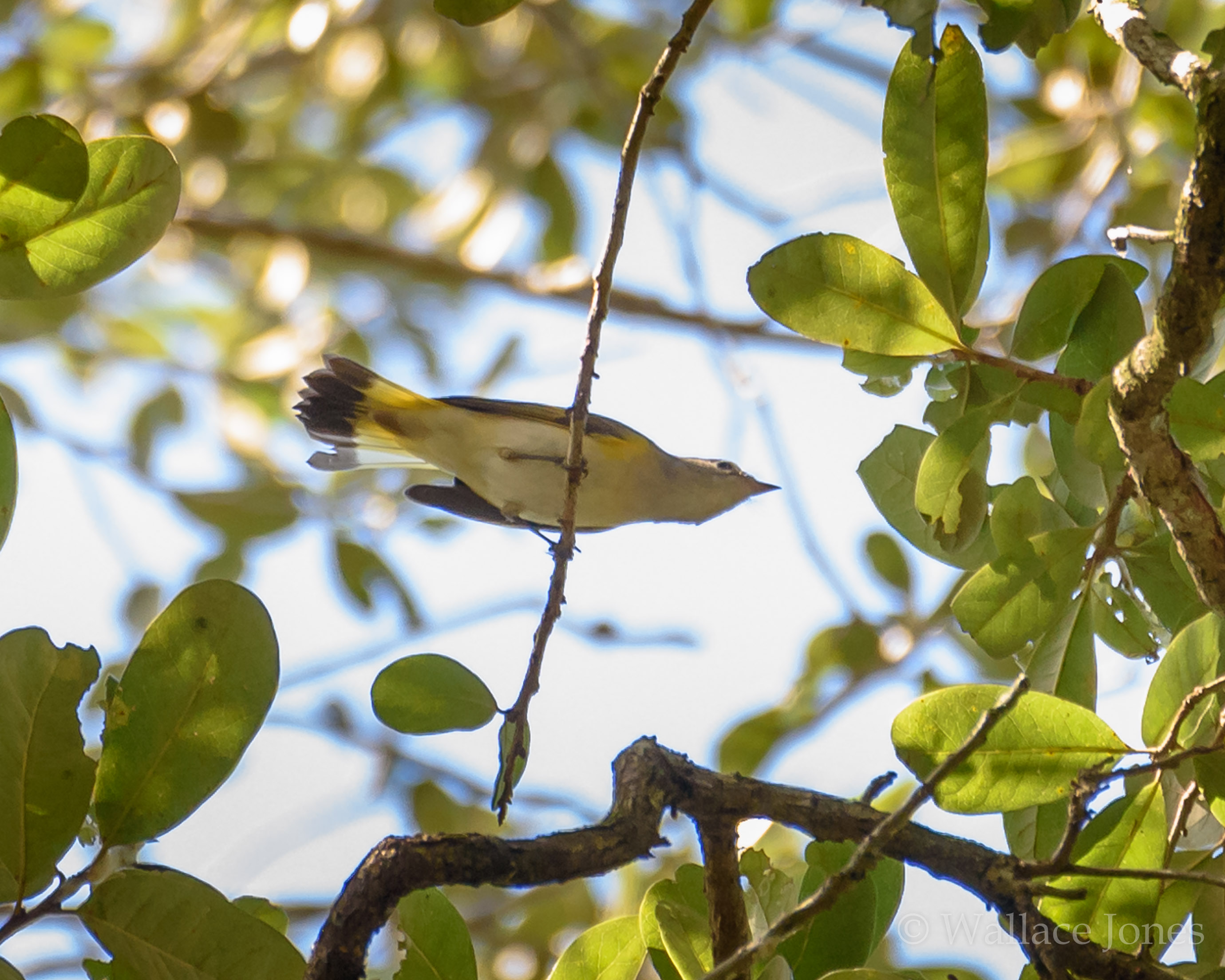
This early bird is getting the worm. And the beetle, And the caterpillar. And anything else she can find. The female American Redstart, a warbler, flares its tail and wings with yellow patches to frighten insects from hiding places. Redstarts are one of the earliest warblers to appear in our area as fall migration is beginning.
One of the few warblers which resides here all year is the Yellow-throated Warbler. It is relatively large for a warbler and has crisp black and white plumage along with its namesake bright yellow throat.

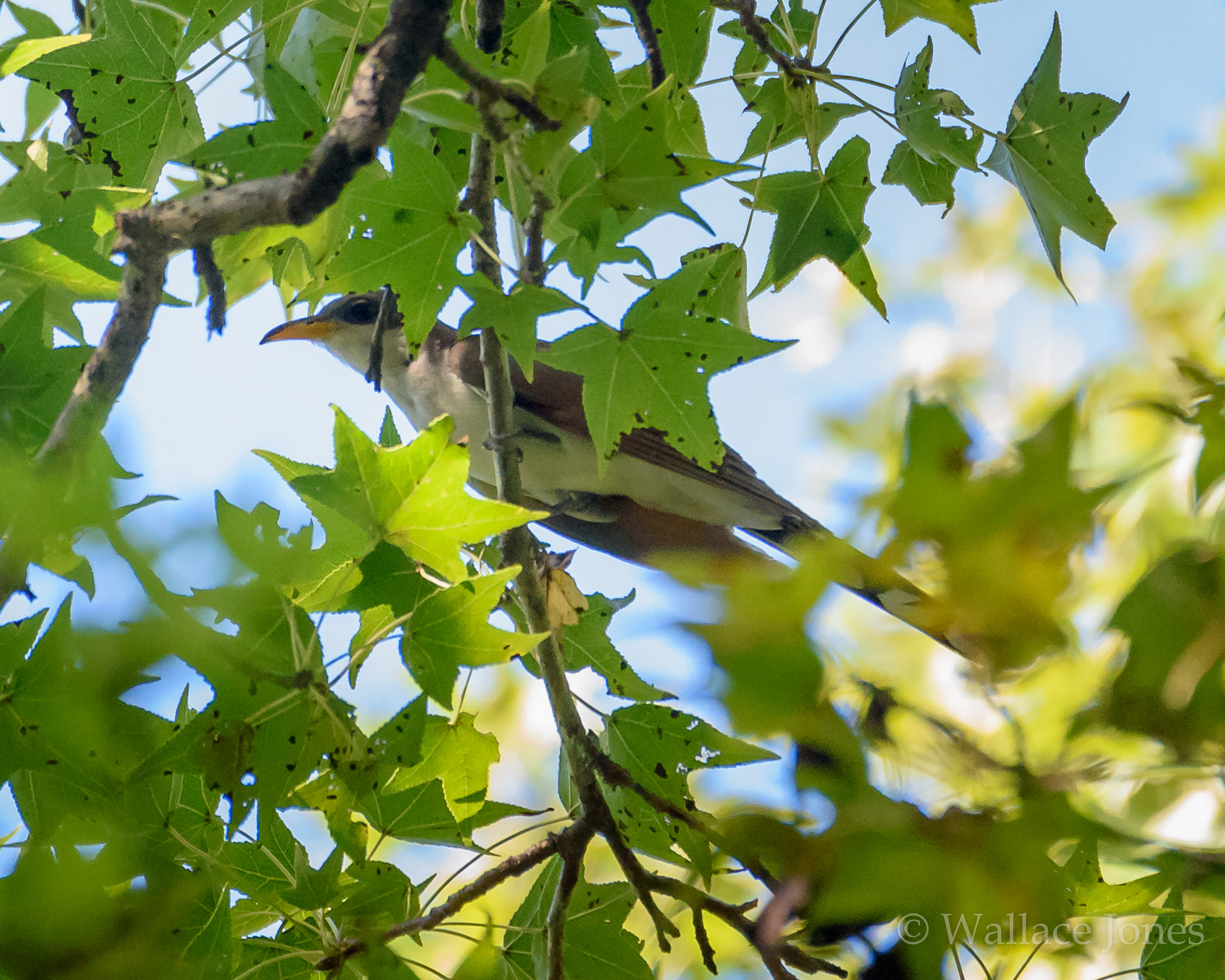
Leaning against a stump, a movement caught my attention. Eventually, a Yellow-billed Cuckoo materialized above my head. He continued to cluck at me which made taking a nap really difficult.
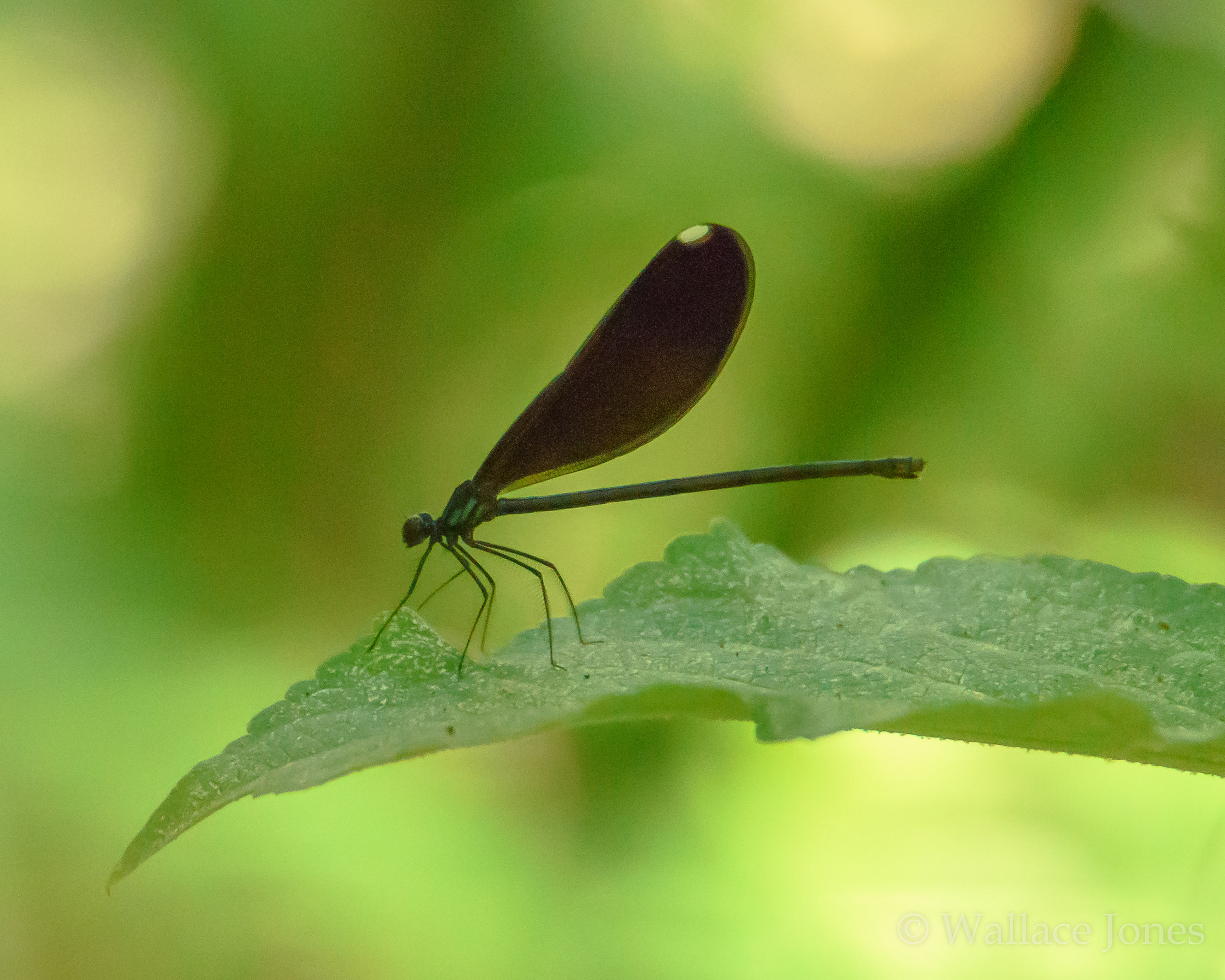
At the end of the trail, a fluttering Ebony Jewelwing (Calopteryx maculata) paused on a leaf for a moment. The dense tree canopy didn’t allow much light through so the image is not the best, but the subject is still beautiful.
Back in the car, I called to see if Gini needed anything from the store. “How was it?”, she asked. “Very interesting”, I replied. “I guess you’ll be going back.” I guess I will.
Enjoy your search for a natural place and come back for a visit!
Additional Information
Breakfast was delightful and enhanced by the local ambience. Alligators now recognize us on sight and popped up to the lake’s surface every few minutes to be sure we were still there. Wading birds probed the soft mud by the water for their own breakfast. Waves of cicadas sang in unison, volume rising then falling, reminding us how much we love our Sunshine State and all the natural beauty it has to offer.

Cicada
Along with her ageless beauty, sparkling eyes, alert mind and incredible zest for living, Gini possesses uncommonly keen hearing. (The actual kind, in addition to the “Mother’s Radar” which knew what our children were doing even when they were at someone else’s house.) I rely on her to report which birds are chipping nearby as well as who’s singing in a field a mile away. My own hearing disappeared during my Air Force days (20 years worth of radio noise). We won’t discuss my skin, eyes, mind, etc., thank you very much.
She heard a lot this morning. White-eyed Vireo, Tufted Titmouse, Carolina Wren, Eastern Towhee, Northern Cardinal, Red-winged Blackbird. Alas, today most remained beyond camera range.
Gini pointed out a Fish Crow and Osprey perched together in a treetop. They appeared to be having a conversation. A pair of big Pileated Woodpeckers flew overhead. The commuting lanes of the morning sky were beginning to fill with White Ibises, Black-bellied Whistling-Ducks, Boat-tailed Grackles, a Little Blue Heron and a Red-shouldered Hawk. We were getting busy, too. Every step seemed to reveal another nugget of joy Mother Nature wanted us to see. We were happy to oblige.
We have tried to tailor our trips to birding or looking for bugs or concentrating on flowers – all to no avail. It’s the “shiny object” syndrome. If we go birding, Gini will invariably exclaim: “Look at that big dragon!!” So, we attempt to multi-task as best we can. All I know is after each trip, we look at each other and agree it was a good day. Who could want for more?
Images of our after-breakfast explorations are below, if you care to glance.
I had the distinct impression I was watching two old fishermen exchanging stories about technique and the one that got away. Fish Crow and Osprey.

***NEW SPECIES*** >>>> Coffee-loving Pyrausta (Pyrausta tyralis). Now, how could I NOT adore a moth who is coffee-loving?? Sorta nice to look at, too.

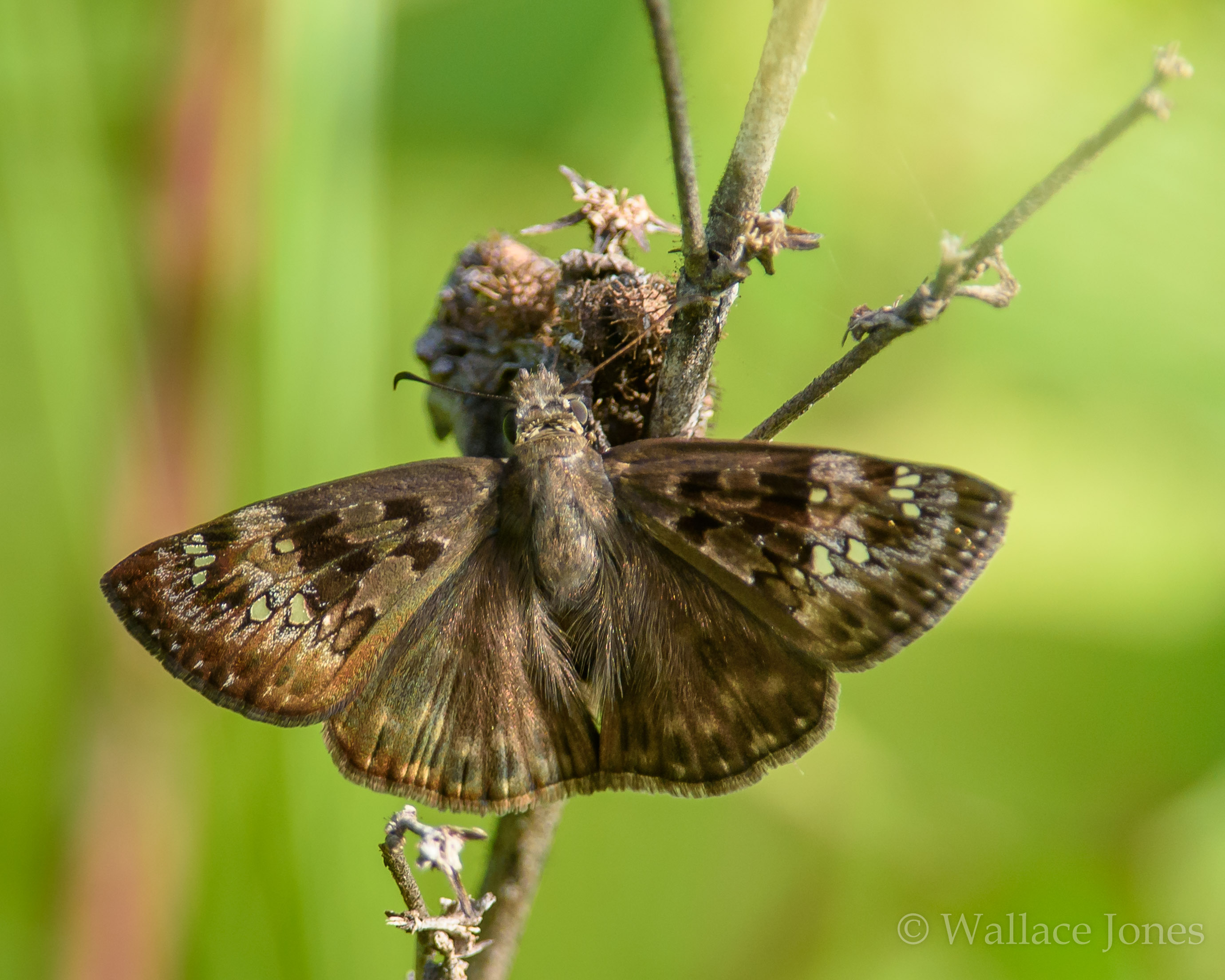
We saw a familiar butterfly which at first glance seems nondescript. As you gaze at the amazing patterns on the wings, you realize how beautiful Horace’s Duskywing (Erynnis horatius) really is.
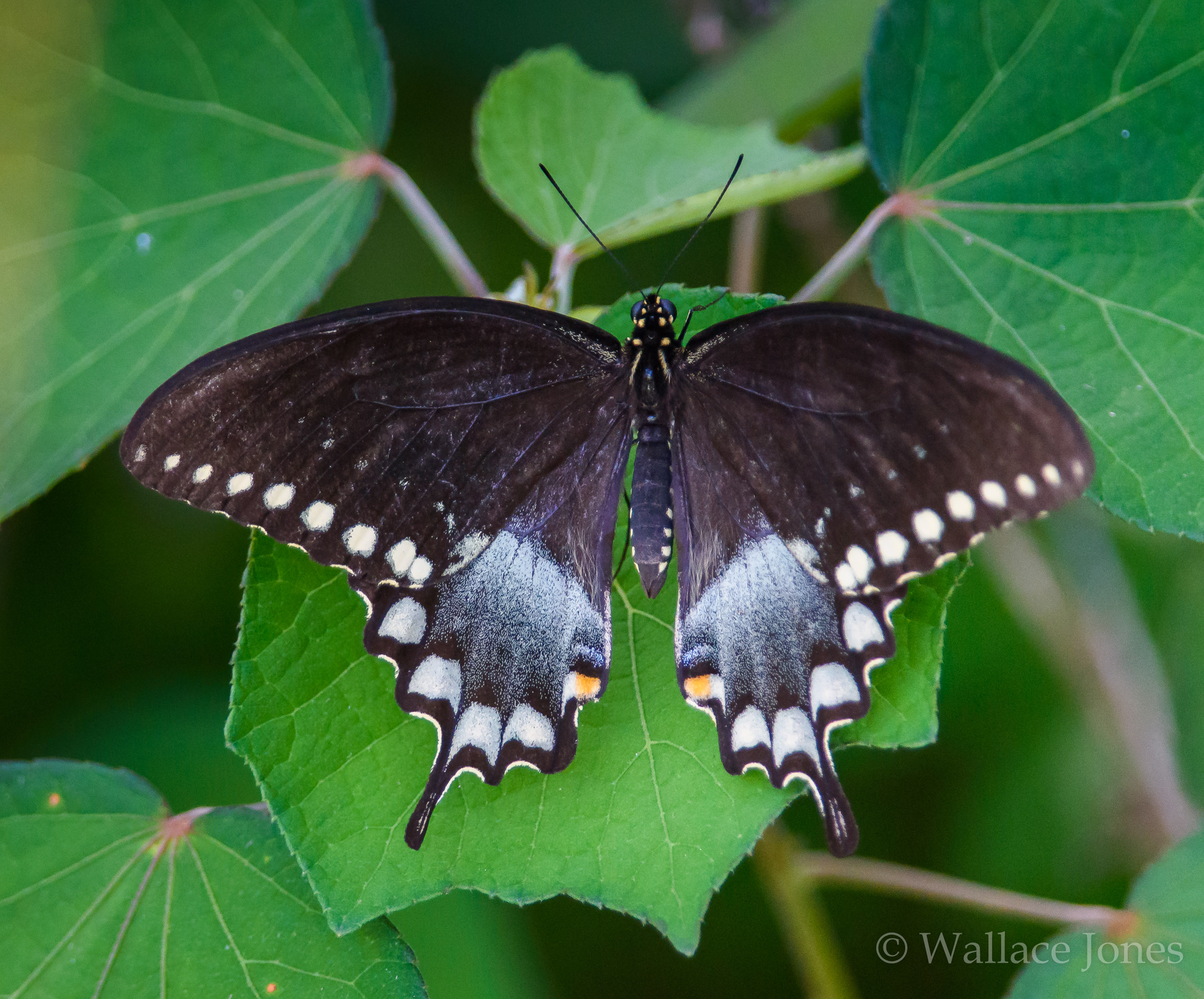
The blue wash on the upper side of a Spicebush Swallowtail (Papilio troilus) identifies this as a female. The male has a greenish color instead.
Easily mistaken for a wasp, the diminutive Eastern Amberwing (Perithemis tenera) is the smallest dragonfly in North America. Wings are mostly clear on the male while the female has a more dense pattern.

Eastern Amberwing (Perithemis tenera) – Male
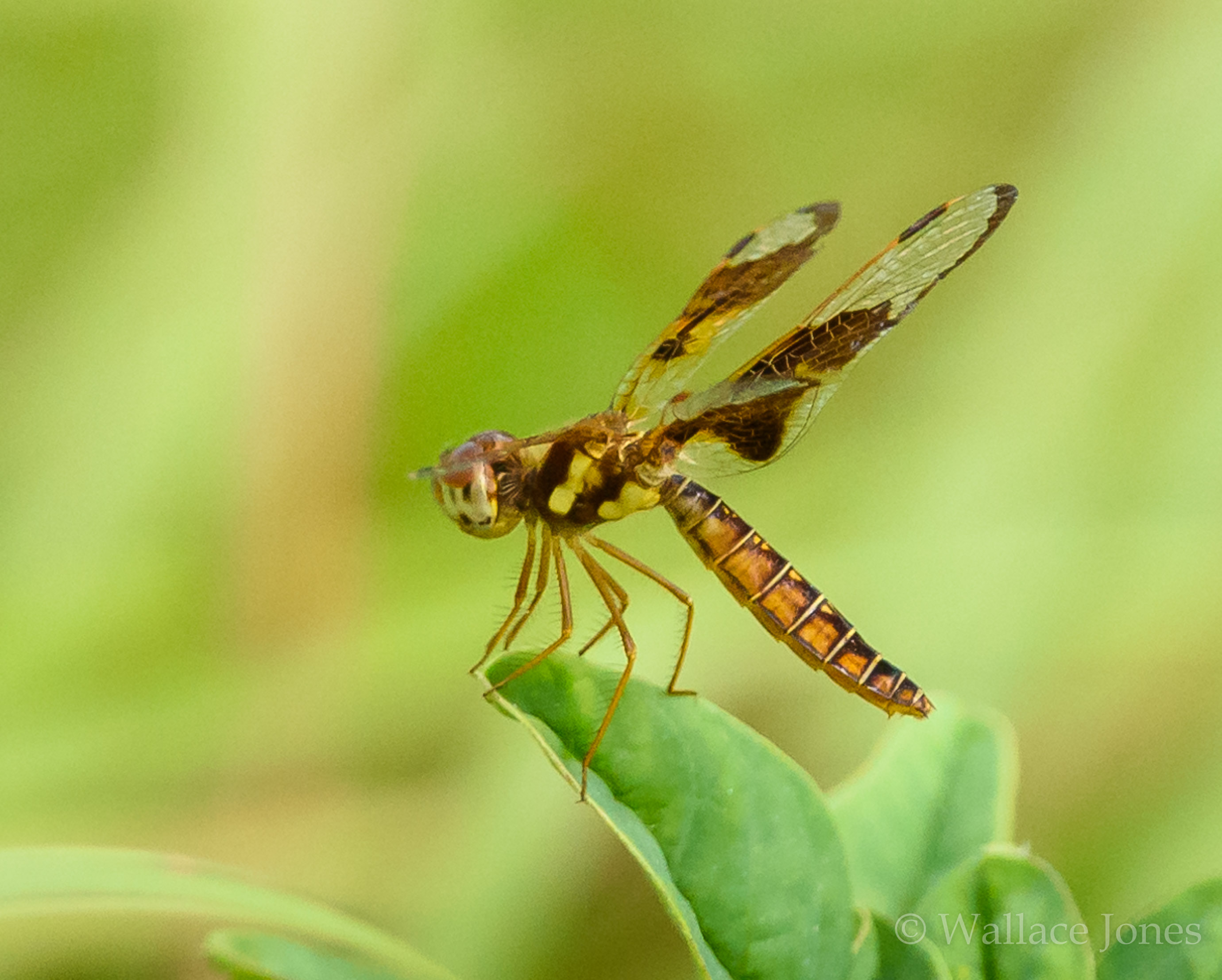
Eastern Amberwing (Perithemis tenera) – Female
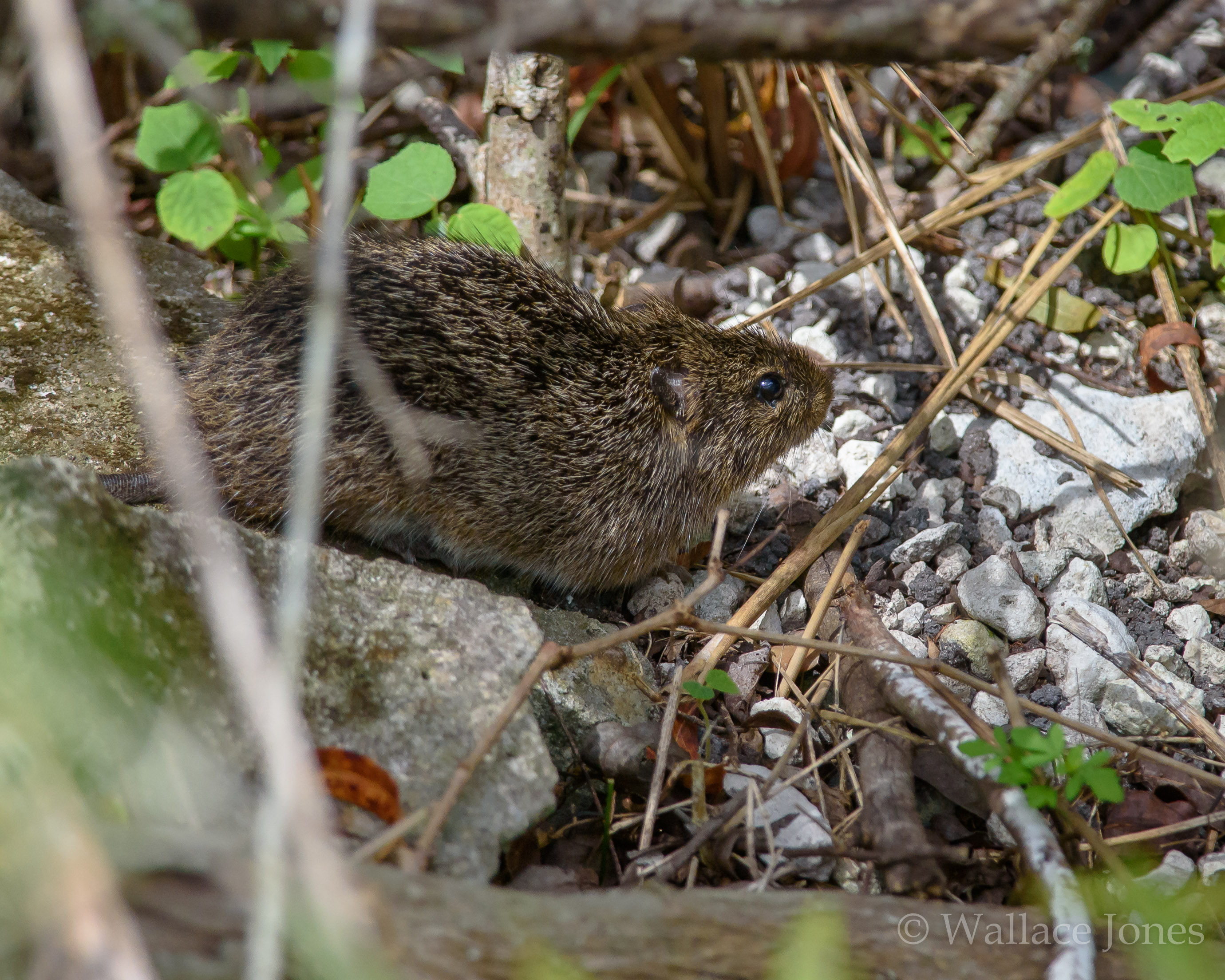
As far as I’ve been able to find out, the common Muskrat (Ondatra zibethicus) does not occur in Florida. A smaller relative, the Round-tailed Muskrat (Neofiber alleni) inhabits lakes, rivers and wetlands throughout the state. This is the first one we’ve ever seen.
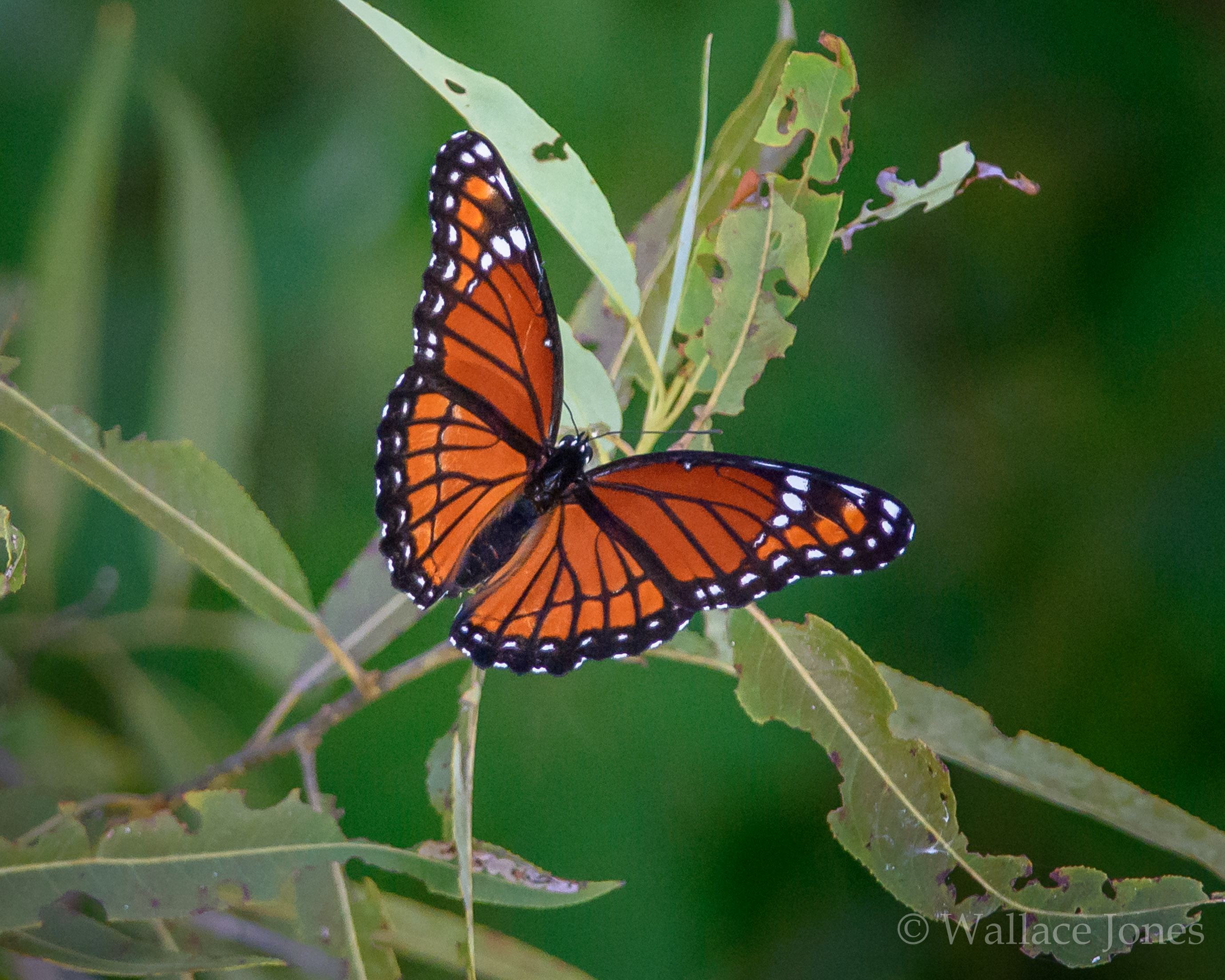
As beautiful as the Monarch it mimics, a Viceroy (Limenitis archippus) hopes would-be predators know how bad that other guy tastes and will leave him alone!
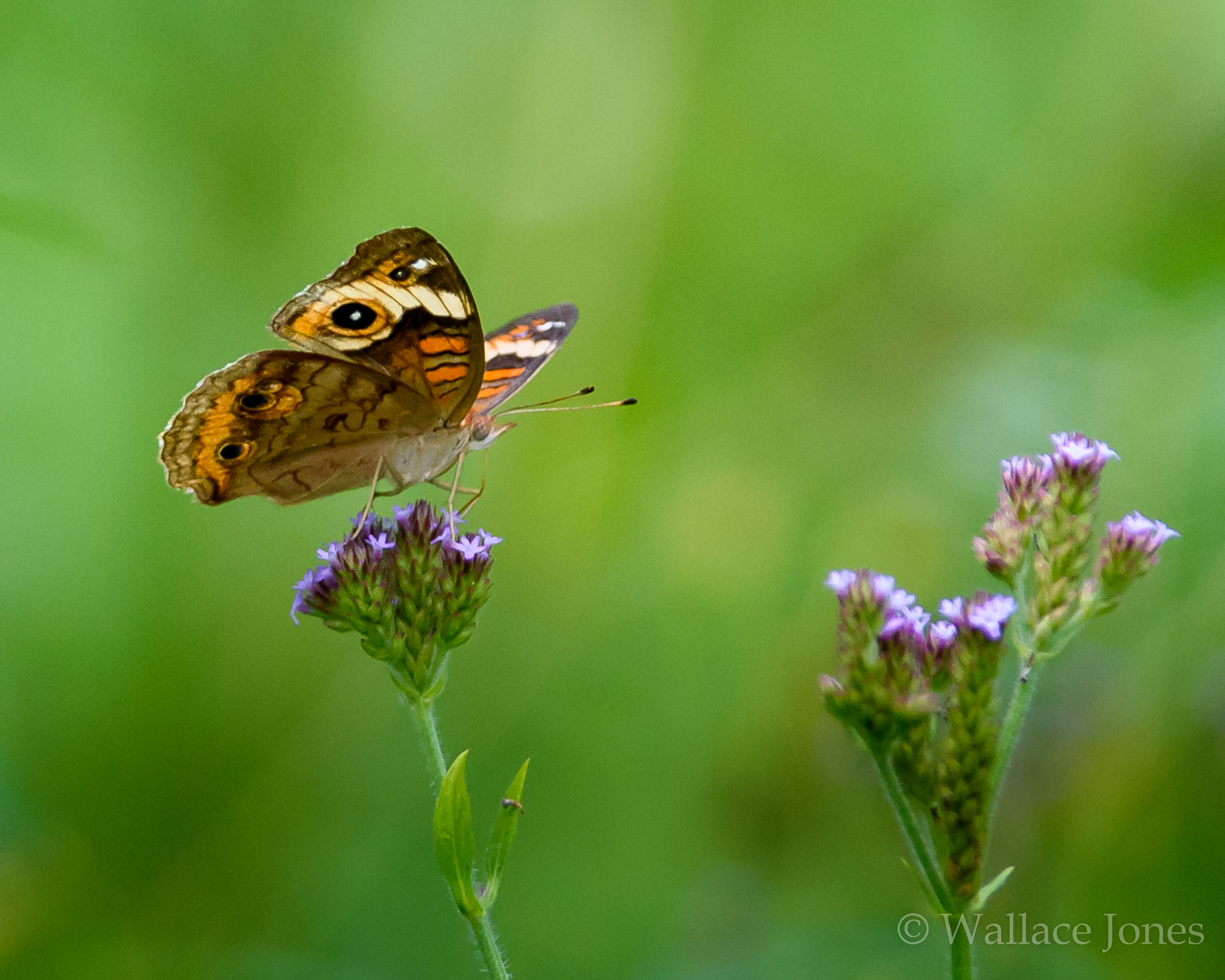
Using a method different than the Viceroy of warding off predators, a Common Buckeye (Junonia coenia Hübner) hopes the big “eyes” on its wings will confuse or scare a hunter.
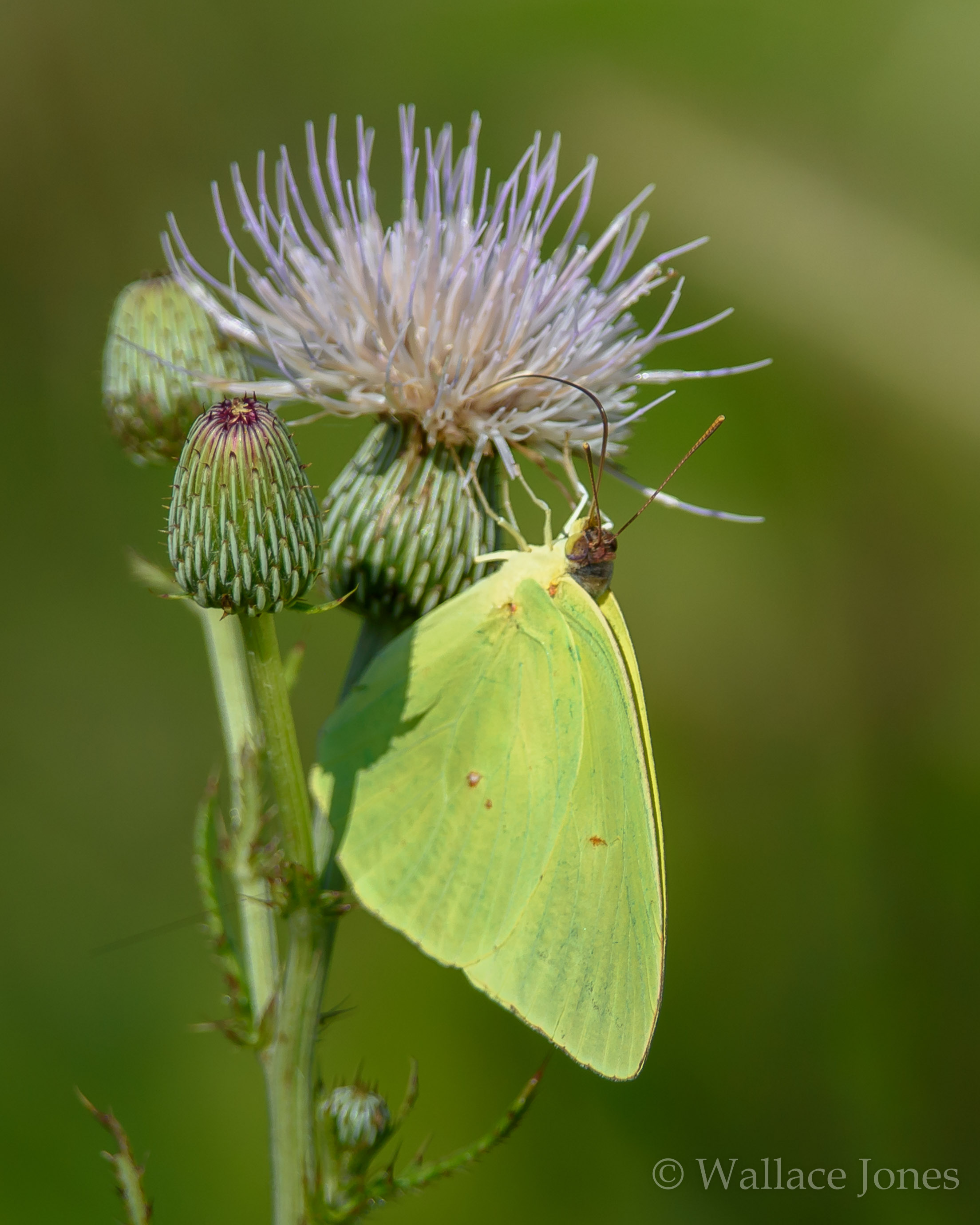
Unconcerned with the drama of being devoured, a Cloudless Sulphur (Phoebis sennae) simply hangs around all day looking beautiful.

An adjustment is needed to change my focus from trees for birds to shrubs for butterflies to individual blades of grass for the tiny damselflies. It would be a shame to pass by a Rambur’s Forktail (Ischnura ramburii) without saying hello and snapping a quick photo.

This cooperative Two-striped Forceptail (Aphylla williamsoni) posed nicely on a waist-high twig. Probably had been watching me struggle to kneel down and get up shooting the damselfly picture and took pity on me. I appreciated it.

Wait. What? It’s noon already? As if in answer, a roll of thunder from the south advised we should probably head home. It had been a morning of relatively few opportunities to photograph birds, but nature provided a smorgasbord of alternative subjects! Once again, we had been overwhelmed to encounter So Much – LIFE!
Enjoy your search for a natural place and come back for a visit!
Are the drops on the leaves and blades of grass from dew or last night’s rainfall? It doesn’t matter. They reflect the morning sunlight as though a thousand prisms had been scattered about. Photographers are told the best time to experience the most favorable light outdoors is an hour before and after sunrise and sunset – “The Golden Hour”. This was more like “The Rainbow Hour”.
Gini said the landscape looked like it was wearing its finest diamonds. Just for us.
Bending down on a knee to get a lower angle on a butterfly resulted in a soaked pant leg. Sitting for a moment to focus on a damselfly resulted in – well, you know.
We had stopped at the Tenoroc Public Use Area Headquarters to sign in and get our permit for the day. Great staff! Always friendly and helpful. We almost have them trained, now. The majority of visitors here are fishermen. When they ask “What lake?” and I answer “We’re here birding today”, they look up with a momentary blank stare. “Oh, yeah! Just a second and I’ll print your pass.”
With over 7,000 acres (2800+ ha) as our playground, we try to follow a bit of a plan on each visit as it would be impossible to explore all of that area in a day, much less a morning. Do we go “birding” only or search for dragons and damsels? But butterflies and moths are abundant! Flora? Wild pigs, turtles, alligators – all with new babies in tow?
It’s a dilemma.
In which case, we just make (sorry about this) – “dilemmanade”!
My old Air Force comrades would refer to our situation something like: “Target is LIMPKIN. Exploit other Targets Of Opportunity to fullest extent.”
We had multiple Targets Of Opportunity to exploit.
Summer in sub-tropical Florida means rain. We have been getting regularly scheduled thunderstorms daily beginning in mid-afternoon. Early mornings are warm and humid but I happen to like that combination. (Native Floridian disease.) By around 10:00, even the rocks start wilting. We usually head for the house before high noon melts the tires off the vehicle.
There are actually a good number of birds to be found in the hot months. Many of them have finished breeding and are busy teaching youngsters how to fly, find bugs and avoid predators. Molting is in full swing for some species and the resulting hot mess of straggly feathers should not be photographed just out of simple courtesy. So, when possible, we strive to find birds to grace our image sensor. Otherwise, we are easily distracted by all the other goodies Mother Nature lays before us.
Our initial route took us to a horseshoe-shaped lake with a path around it. The sun began to dry the foliage and insects became active as they sought a spot from which they could dry themselves as quickly as possible. Small bugs know better than to remain in the open for very long or else they become a meal.
The normal cast of characters began to appear. Once again, we were amazed at the diversity of life all around us! From small flowers and damselflies, to hedgerows and butterflies, to 60-foot tall oak trees and raptors – truly marvelous!
A small sampling from the first half of the morning.
We had heard the characteristic calls of Black-bellied Whistling-Ducks and spotted one foraging along the lake shore. They always seem to have a “just groomed” appearance.

Just a little longer in the sunshine and this Little Yellow (Pyrisitia lisa) will be dry enough to fly efficiently and begin its day.
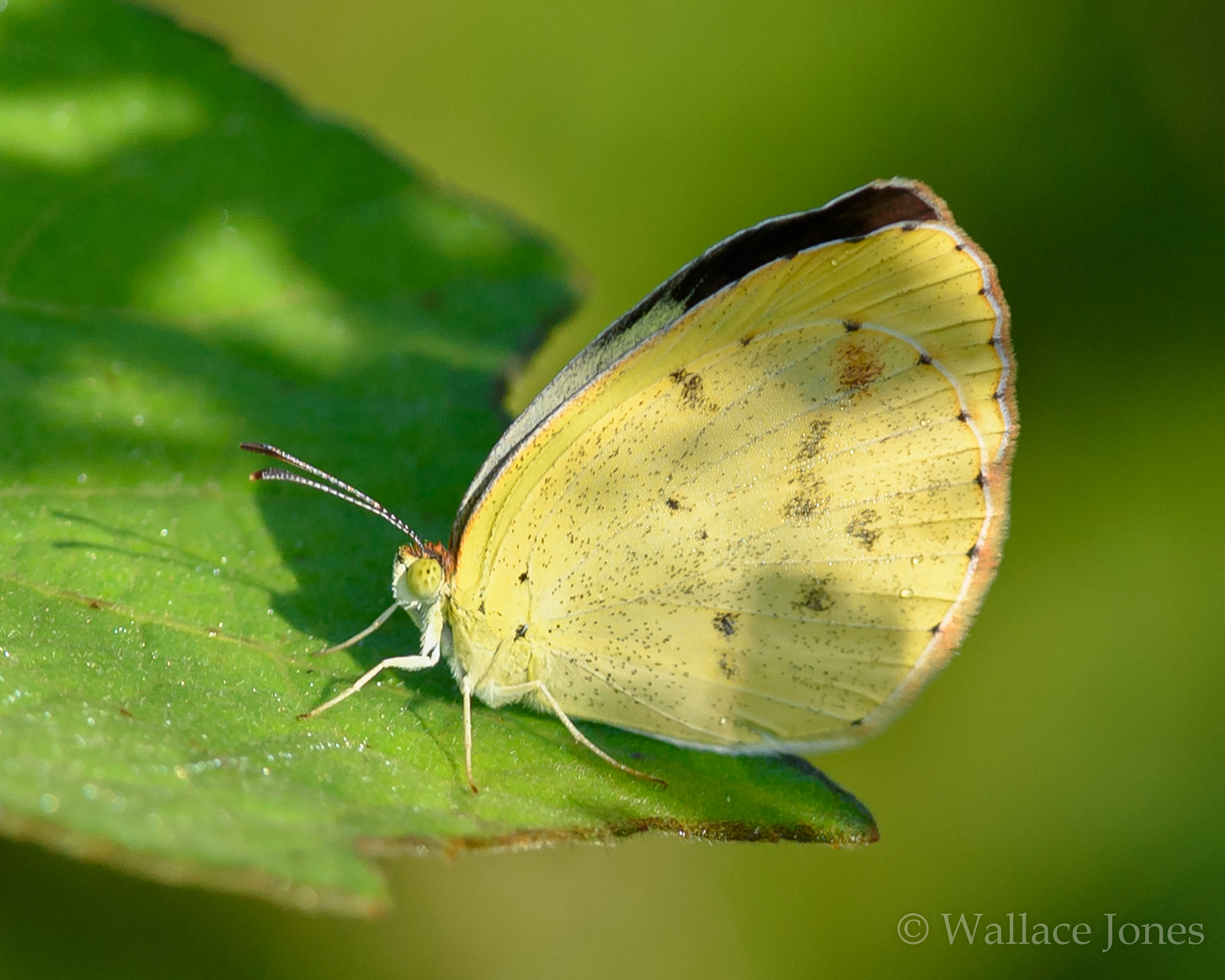
A Barred Yellow (Eurema daira) will take a little longer to lose its droplets but it has a more sheltered, and shaded, perch to keep it somewhat hidden.

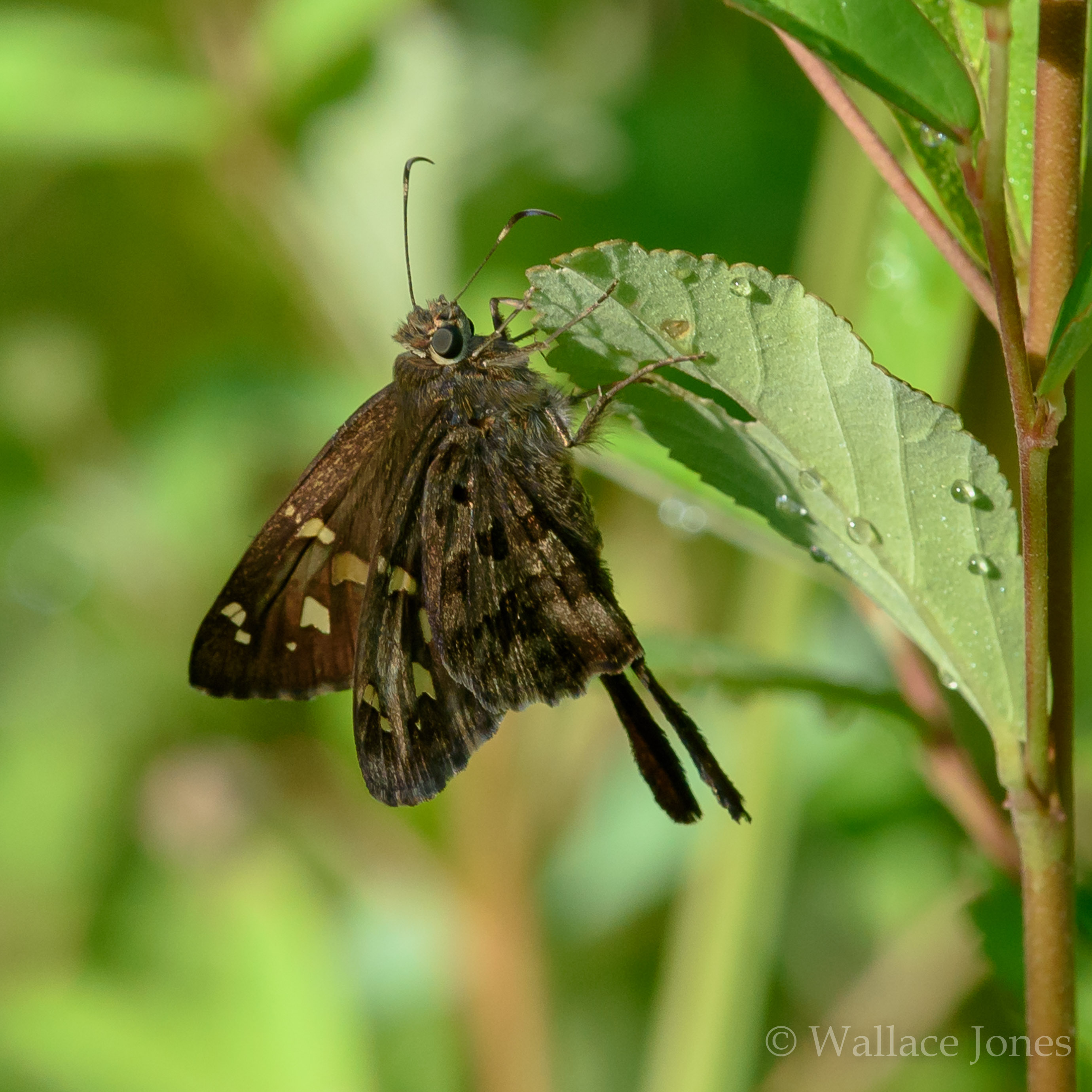
Full sun has helped to thoroughly dry a Dorantes Longtail (Urbanus dorantes) and he’ll soon be flitting very quickly from bloom to bloom in the never-ending quest for nectar.
Somewhat unusual for a moth, the Ornate Bella Moth (Utetheisa ornatrix) is active during daylight hours. Gini sees owl faces in the moth’s intricate wing pattern.

A couple of tips on identifying this female Needham’s Skimmer (Libellula needham) from the nearly identical Golden-winged Skimmer (Libellula auripennis). The pale portion of the Needham’s thorax extends into the dark front area but does not in the Golden-winged. Also, the Golden-winged hind tibiae are black but are brown in Needham’s. Yes, there will be a test later.

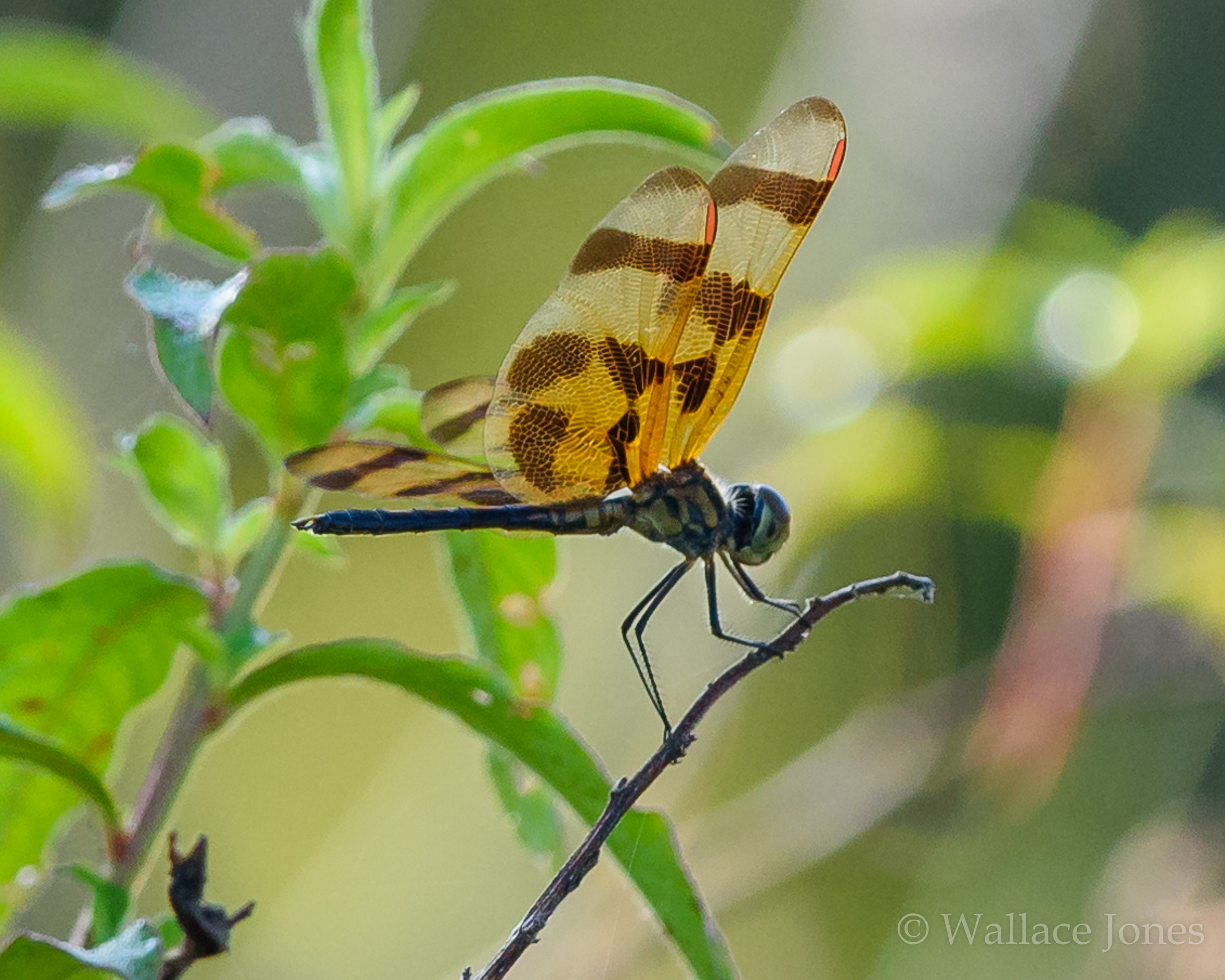
A very striking wing pattern identifies the Halloween Pennant (Celithemis eponina).
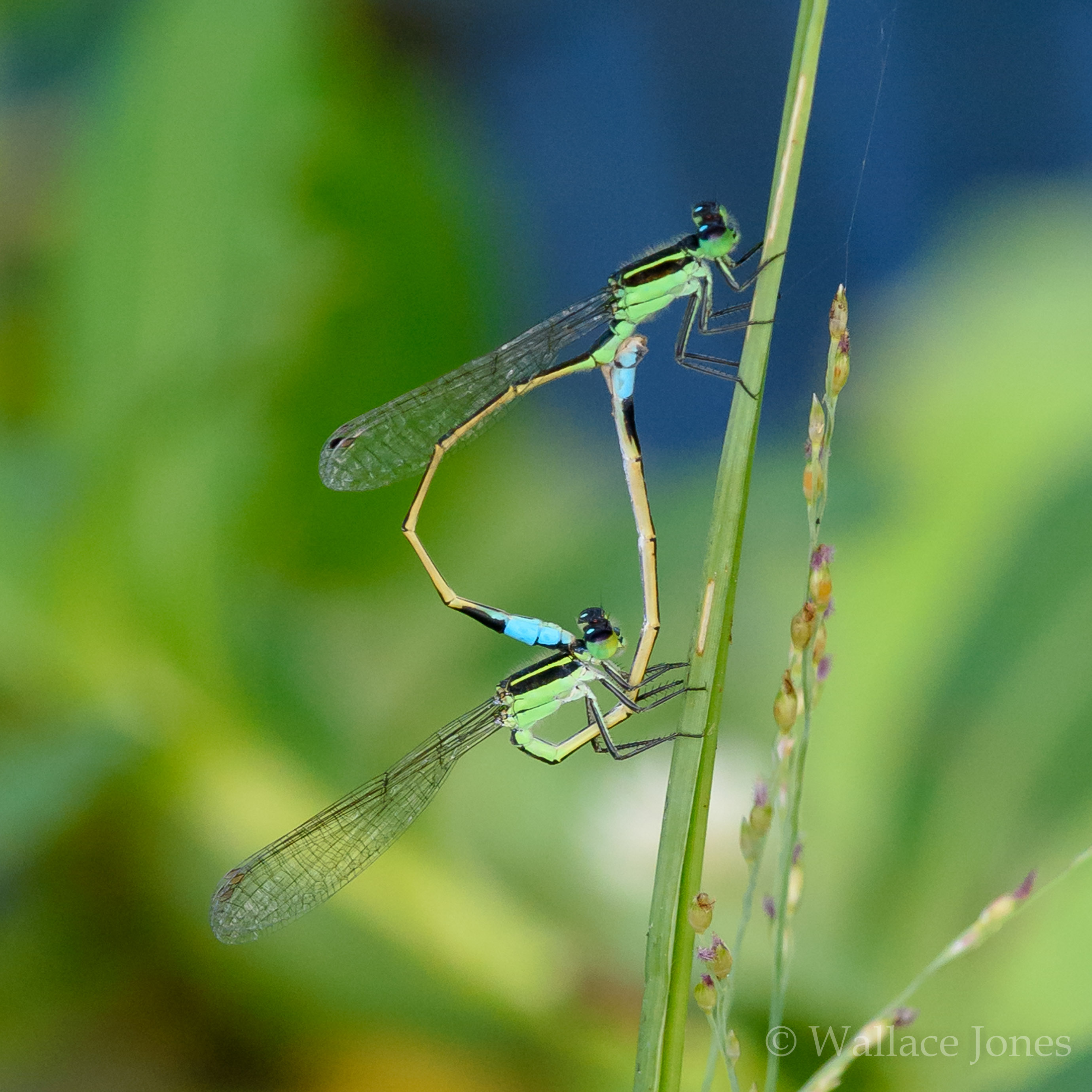
Rambur’s Forktail (Ischnura ramburii) is one of our most common damselflies. The female has two color forms, a heteromorph with orange thorax and no blue at the end of the abdomen and an andromorph which is colored the same as the male. The andromorph female is the lower damsel in the image.
It’s neat to get a photograph of more than one species in a single photograph. Here, a Limpkin shares a bit of shoreline weeds with a White Ibis.

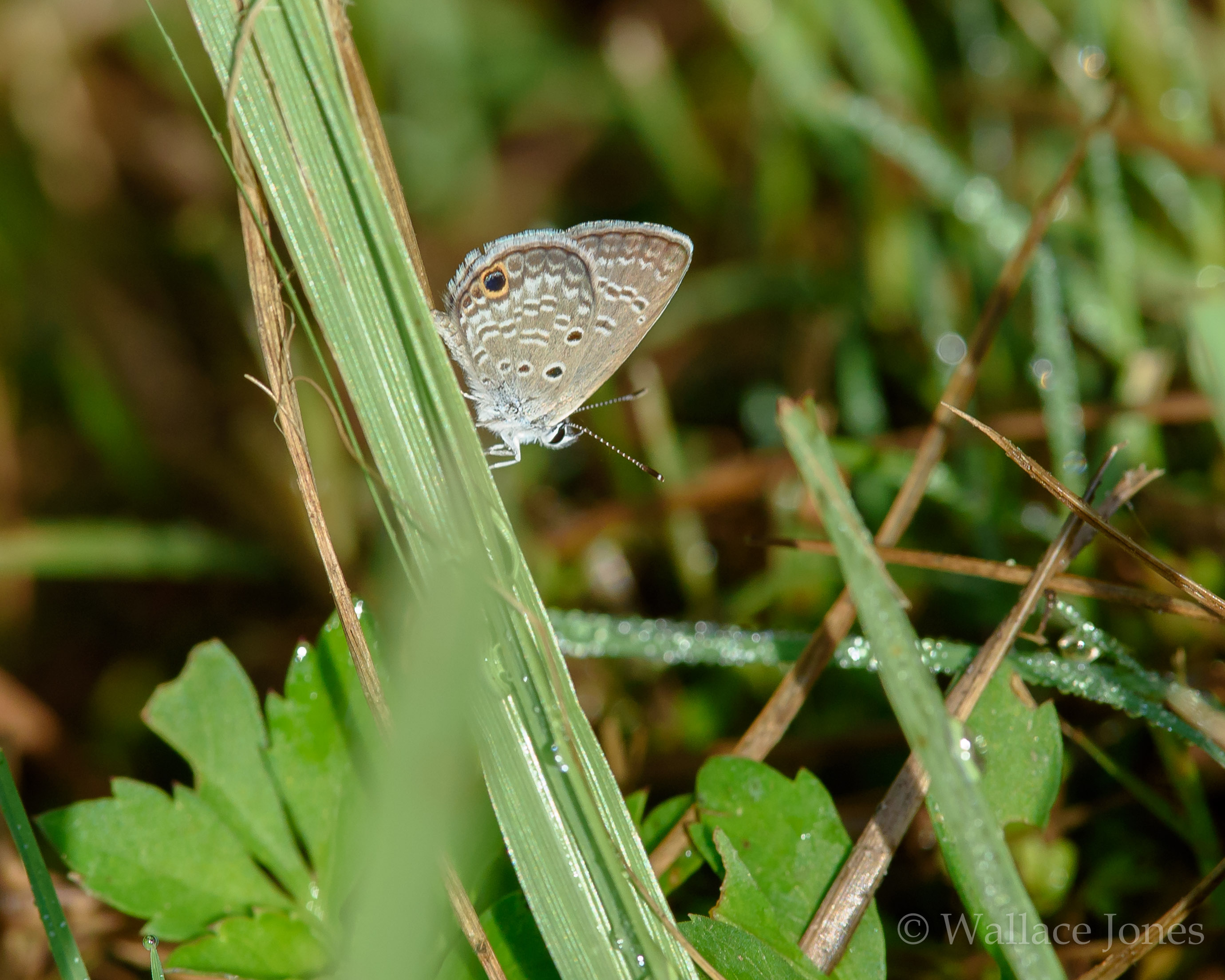
Pretty small at 7/16 inch (11 mm), this Ceraunus Blue (Hemiargus ceraunus) is easy to overlook as my big feet tromp through the weeds. Luckily, it was high enough on a piece of grass to be seen before being stomped. One day, I’ll get a shot of its beautiful dark blue upper side. One day …
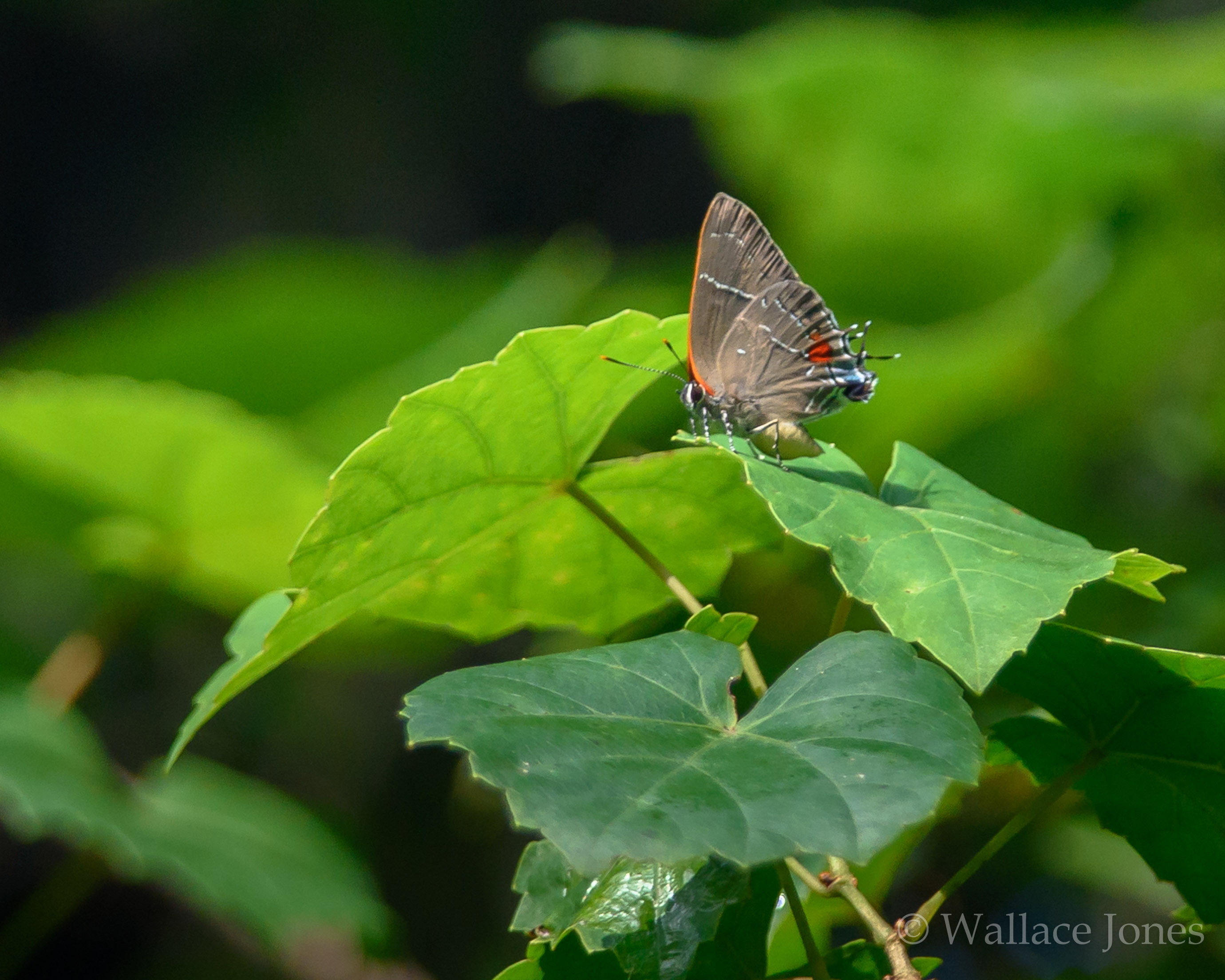
A new species! Hooray! Twenty-two species of Hairstreak (Theclinae) occur in Florida. Most of these we have NOT yet seen. Today, we found a White M Hairstreak (Parrhasius m album). Typical of this species, it was active about 20 feet up in the tree canopy.
Grass-skippers have been described as the LBJ’s of the butterfly world. (Little Brown Jobs) Here, an orange-colored male Whirlabout (Polites vibex) posed nicely. The female is darker brown/gray.

Another grass-skipper, the Clouded Skipper (Lerema accius) male and female are similar in appearance.

Slim abdomen, dark thorax and characteristic wing spots identify a male Four-spotted Pennant (Brachymesia gravida).
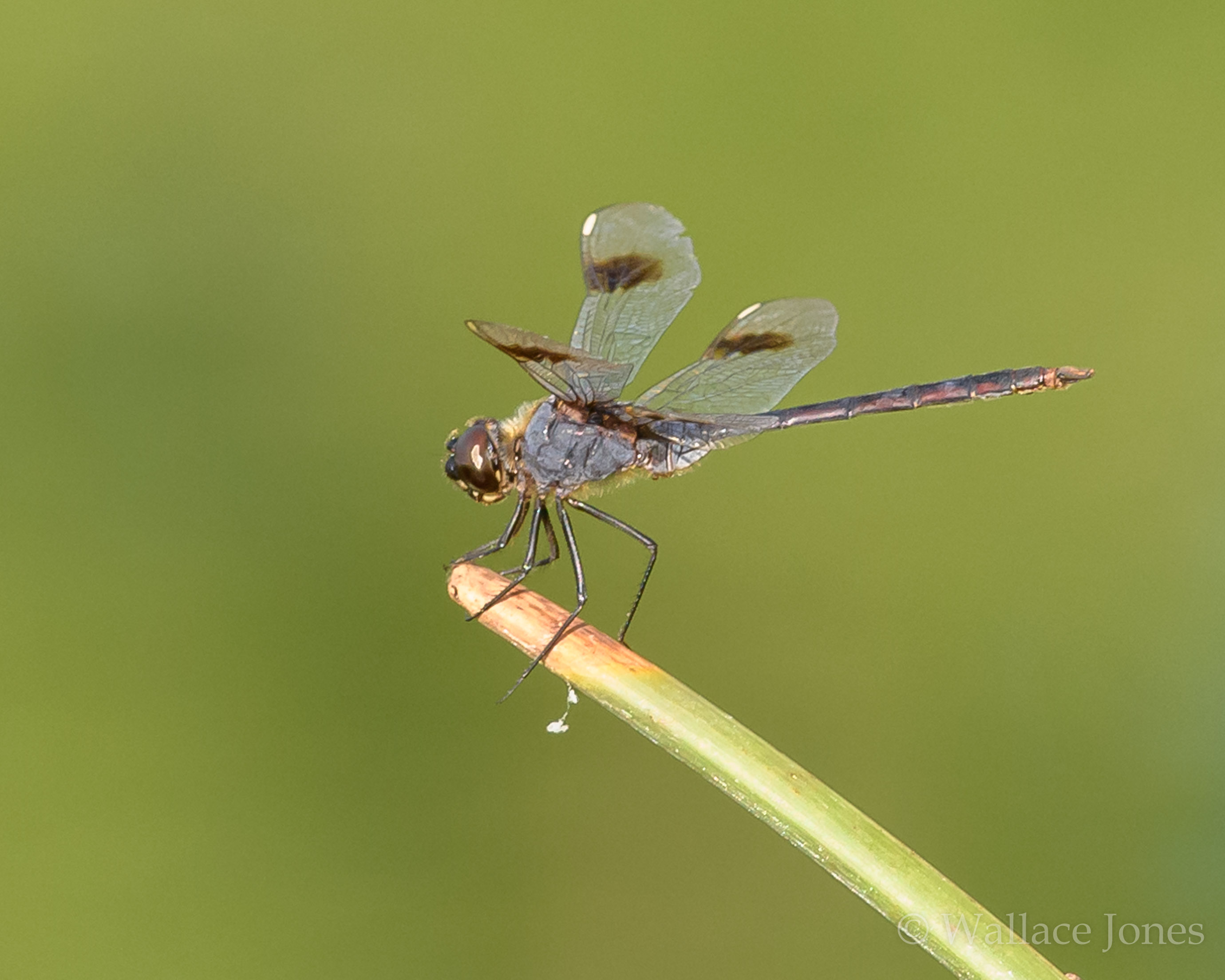
So geographically diverse, the Variable Dancer (Argia fumipennis) is the only North American odonate to be given subspecies common names. This specimen, Argia fumipennis atra, occurring in the Florida peninsula, is also known as the Black Dancer.
The sun is well and truly up and droplets are vaporizing, much to the delight of the insect world. As the insects become more active, there are some happy birds in nearby trees. While they contemplate what to have for breakfast, Gini and I shall pause and enjoy our own repast. Peanut butter and jelly sandwiches may be plebeian, but right now they sure will taste good!
Stay tuned for the remainder of our morning visit where we find even more LIFE!
(Header image is a Tricolored Heron at dawn.)
Enjoy your search for a natural place and come back for a visit!
A review of last year’s records began as a search for early fall migration arrival dates. It soon devolved into a tragic tale of ancient Babylon, unfulfilled love and blood-soaked —
I’m getting ahead of myself.
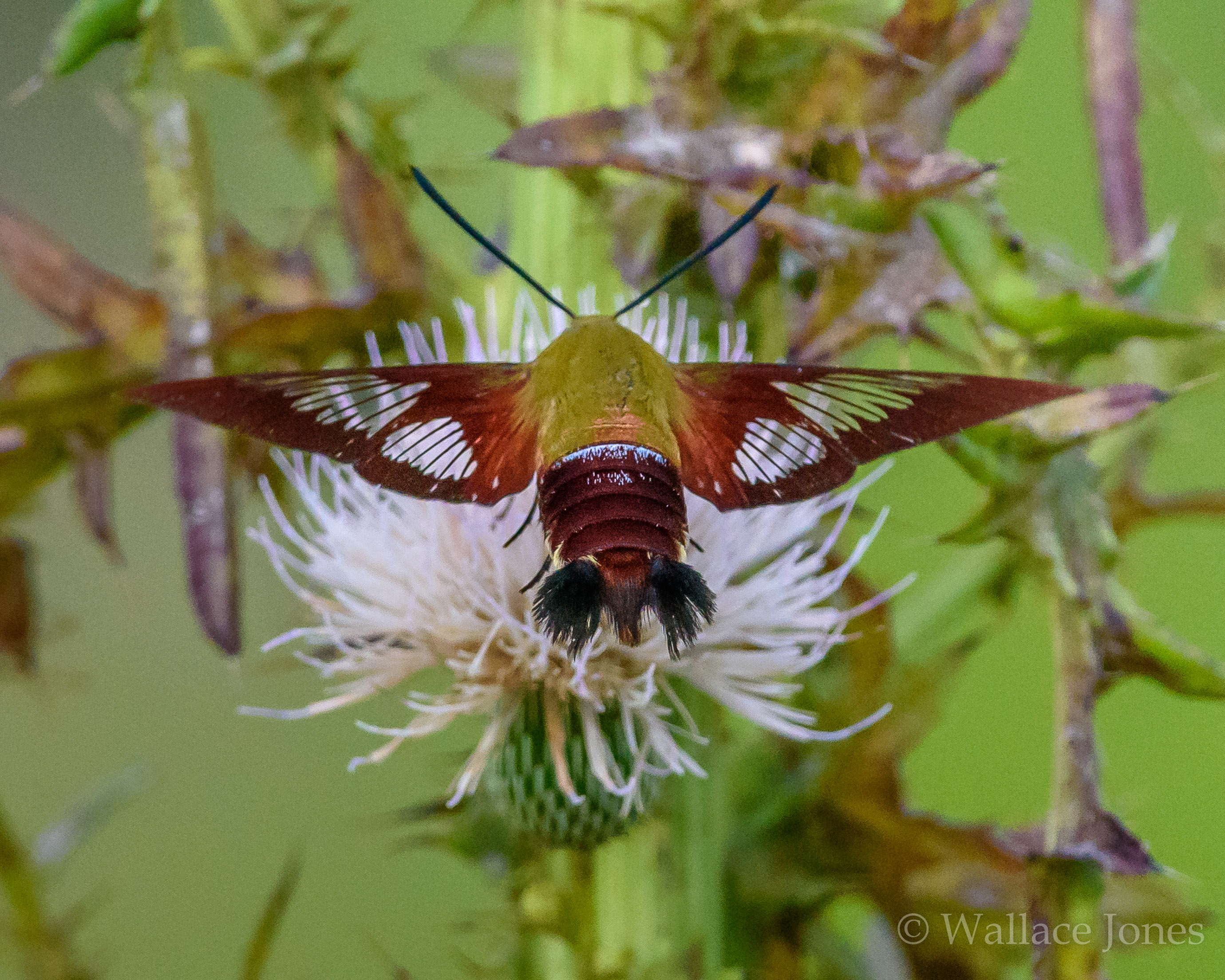
The data indicated a few early American Redstarts might begin arriving as early as the last week of July. Where would be the most likely place to search for them? Several choices presented themselves. Wait. What’s this? About this time last year, we found Hummingbird Clearwing Moths (Hemaris thysbe) at Colt Creek State Park. They were feeding on thistles. Hey, thistles are blooming now. This species feeds in the daytime. Hey, that would make taking pictures a bit easier. That settles it. Set the clock early.
Hemaris thysbe. You DO, of course, remember the tale that old Roman Ovid spun about Pyramus and Thisbe, don’t you? What? You DON’T??
Ancient Babylon. The most handsome lad in the city, Pyramus, lived next door to the most desirable girl in the city, Thisbe. Their homes were connected by an adjoining wall but their parents forbid them to associate with one another. A crack in the wall allowed them to communicate and words of love grew more intense as time passed. One day, they agreed to meet under a mulberry tree at the edge of town. Thisbe arrived first but a lioness appeared, blood covering her muzzle as she had just dined on an ox. Thisbe was terrified and ran to a nearby cave, dropping her scarf under the tree. The lioness shredded the scarf, leaving blood stains from the ox on it. Pyramus showed up, saw the lioness, which ran away and discovered the blood-stained scarf. Distraught at what he thought was the demise of the fair Thisbe, he thrust his sword into his heart. Thisbe returned to find Pyramus breathing his last, took his sword and fell on it herself. Ovid tells us the blood of the ill-fated pair splashed on the ripening mulberries, which had, heretofore, been white. From then on, ripe mulberries turn dark red to symbolize the deaths of the Babylonian would-be lovers.
Now you remember!
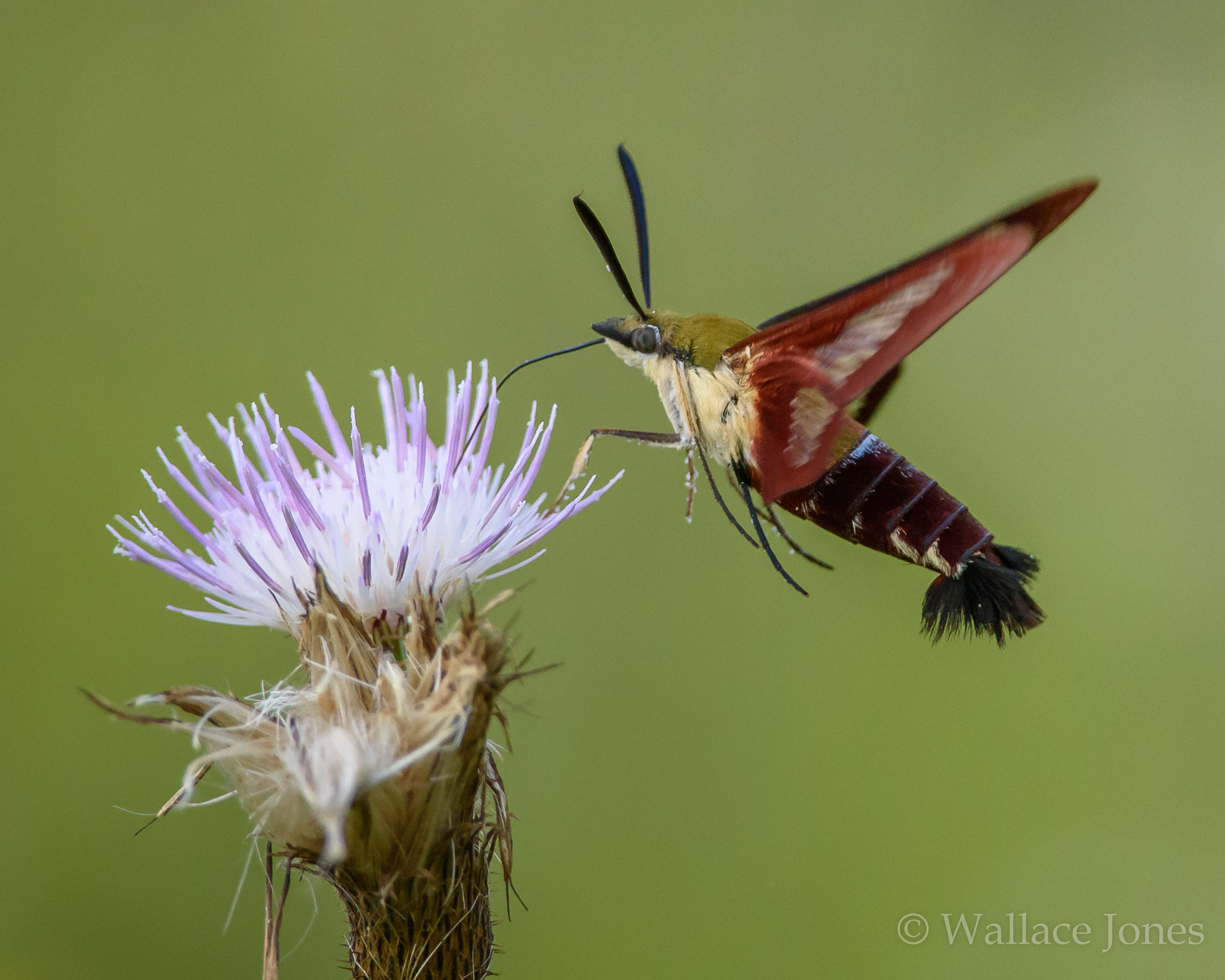
The Hummingbird Clearwing Moth (Hemaris thysbe) was given its Latin name by Danish entomologist, Johan Christian Fabricius, in the 18th century. He apparently was a fan of Ovid. Hemaris may be from the Greek “hema” meaning blood and “thysbe” refers to Thisbe from our story. The color of the body and wing borders of the moth reminded Fabricius of the blood spilled by the lovers.
Who says science is boring?
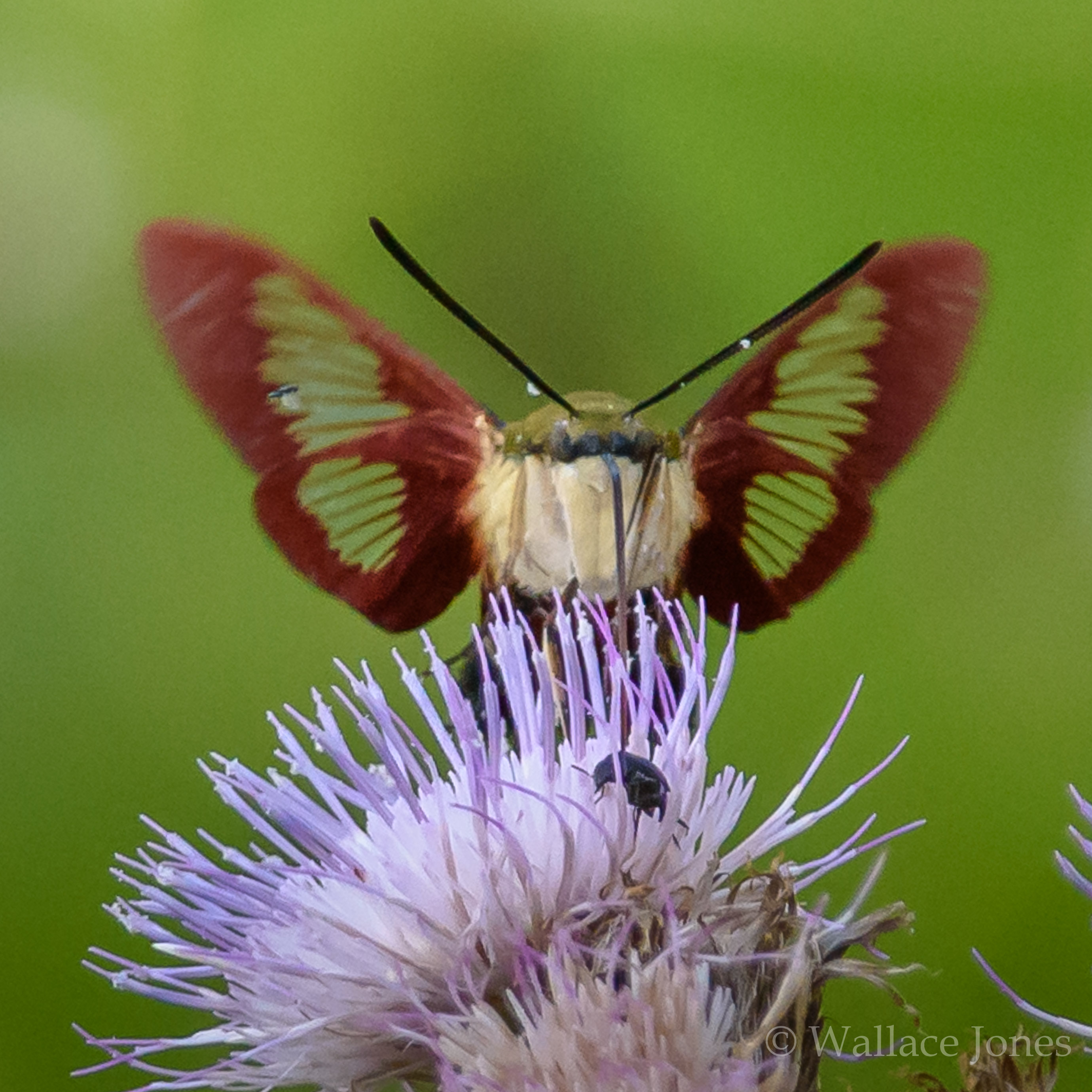
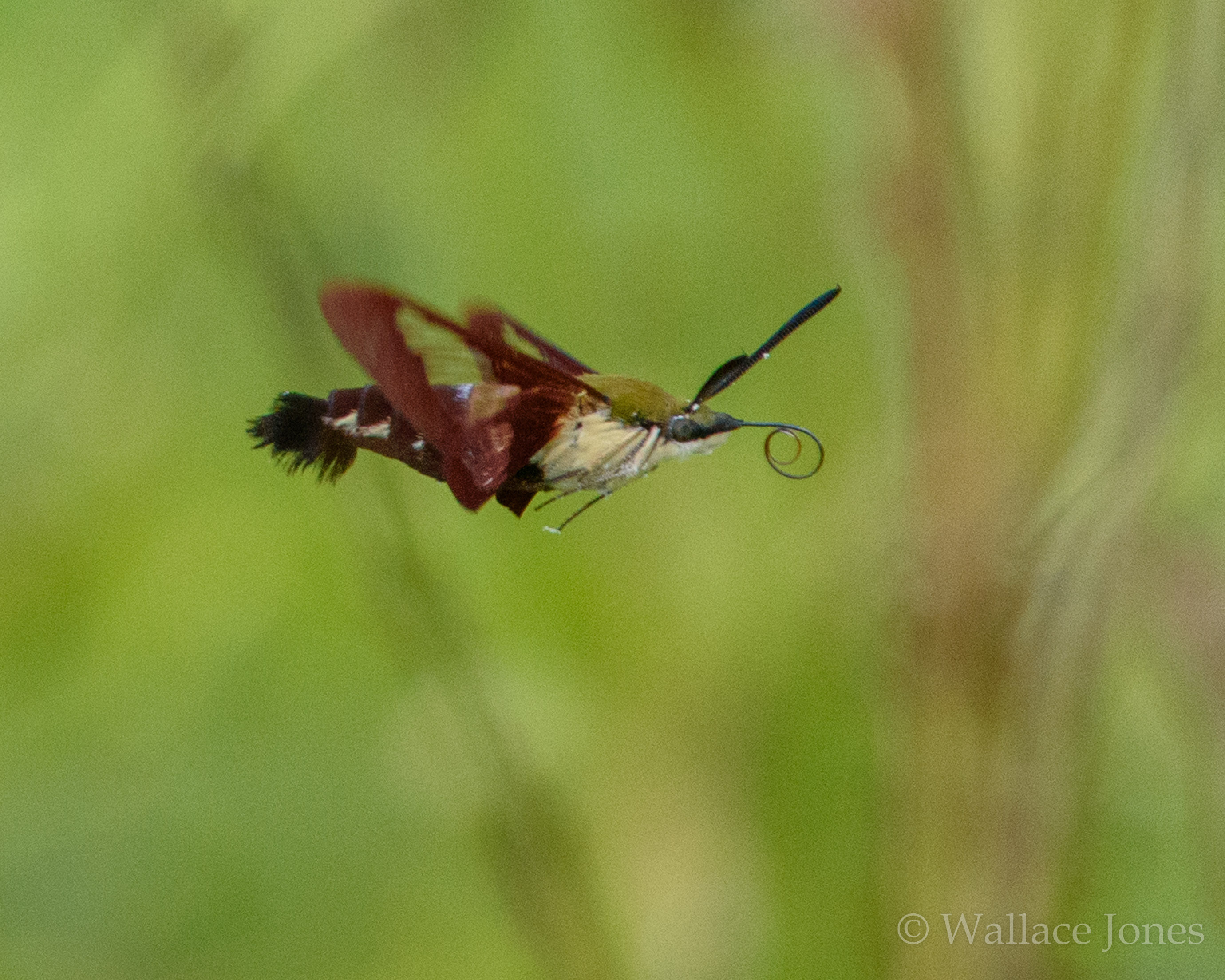
Hummingbird Clearwing Moth (Hemaris thysbe) among the thistles. This moth averages about 1.5 inches (38 mm) in length and about the same in wingspan. (Most actual hummingbirds are nearly twice as large.)
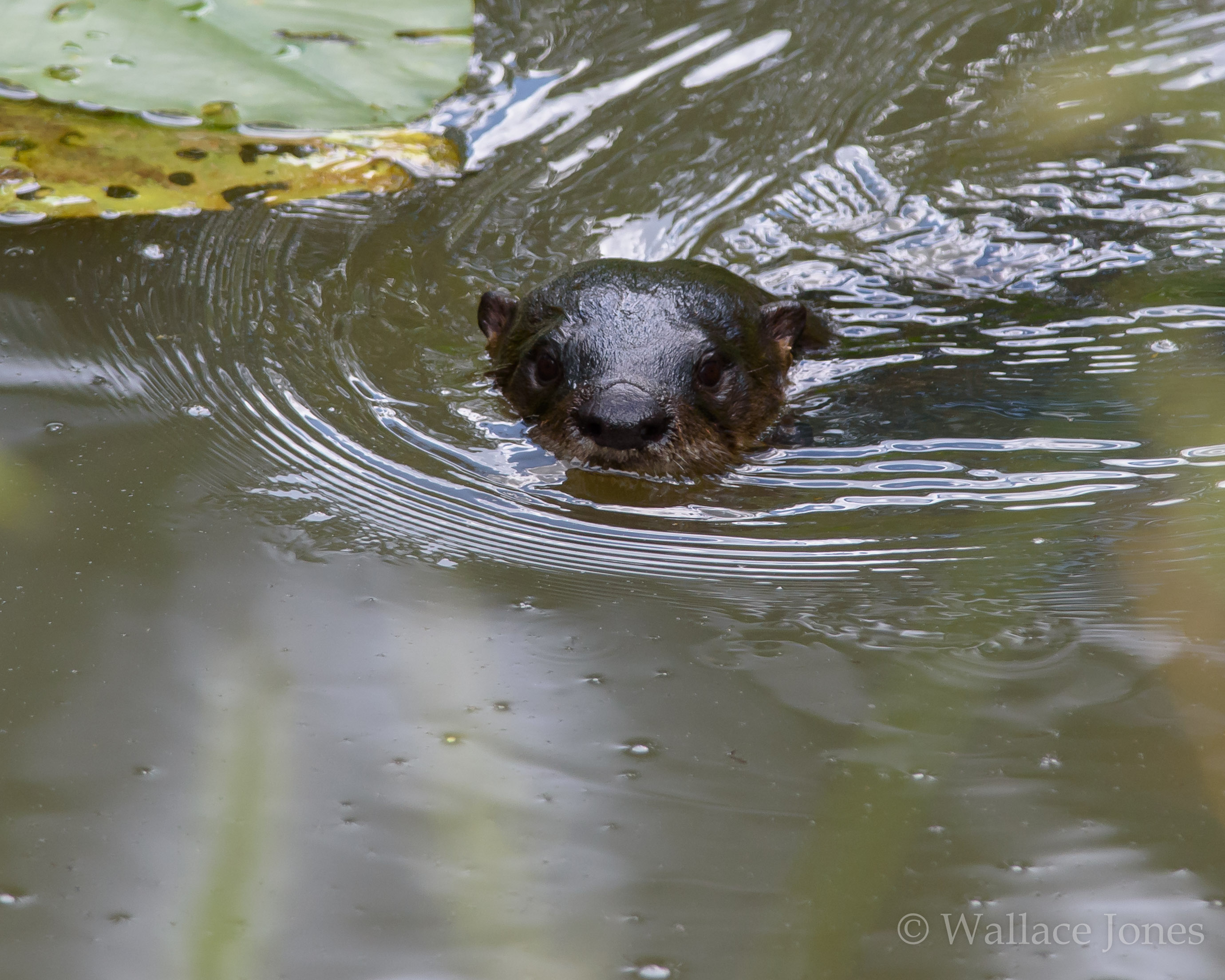
After all the drama, the remainder of our morning exploring Colt Creek State Park was rather calm. We didn’t locate any early bird migrants, but we certainly enjoyed spotting a Northern Parula singing his heart out, a gorgeous Red-shouldered Hawk, a diverse selection of insects and for a grand finale we were treated to a fishing exposition by a young River Otter.
Our tangerine breakfast was delicious but small. Time to head home for leftover okra, tomatoes and rice. Mmmmm!
Some additional Beauty! from the morning’s adventure.
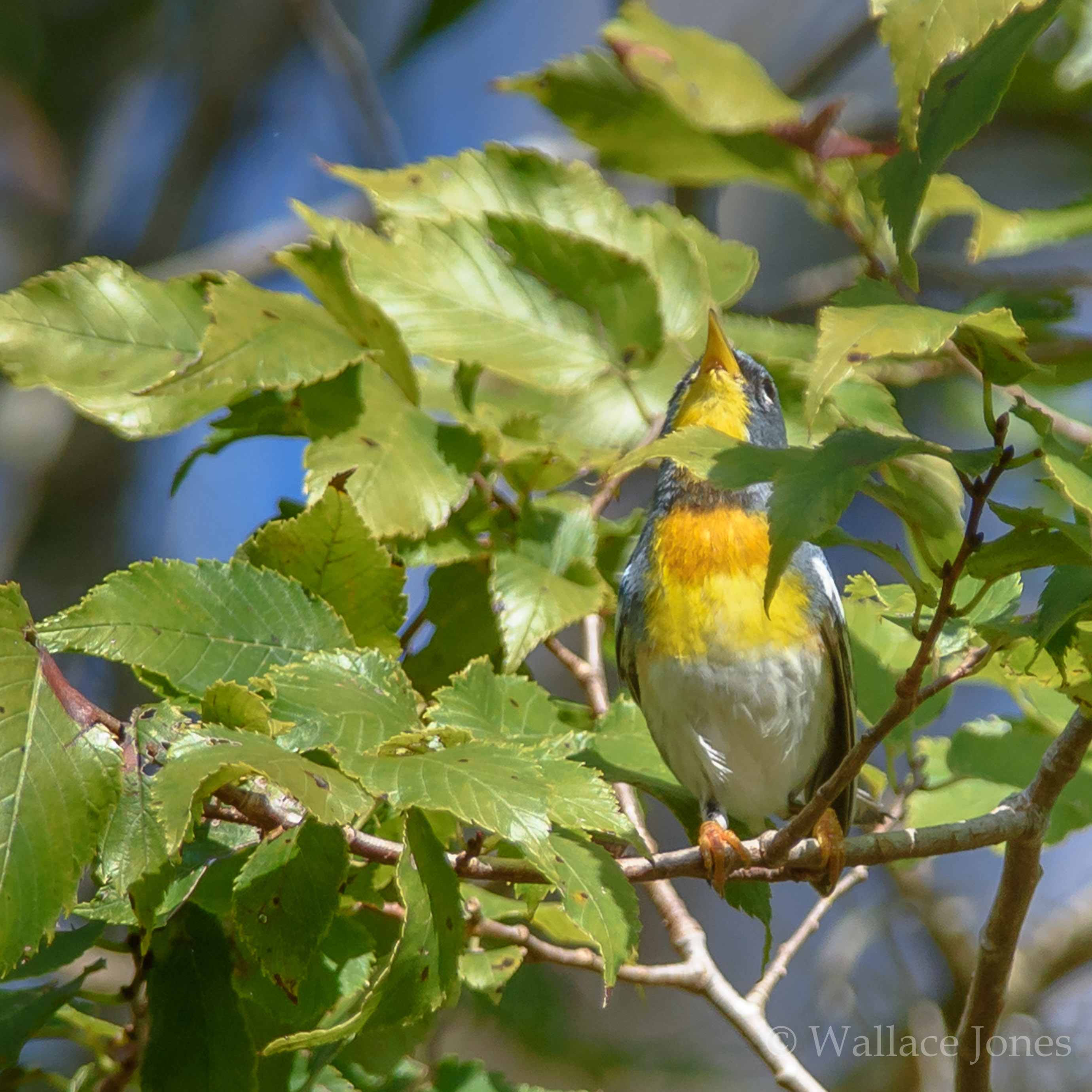
A male Northern Parula wouldn’t give me a clear shot but he certainly belted out his wonderful ascending song for us!
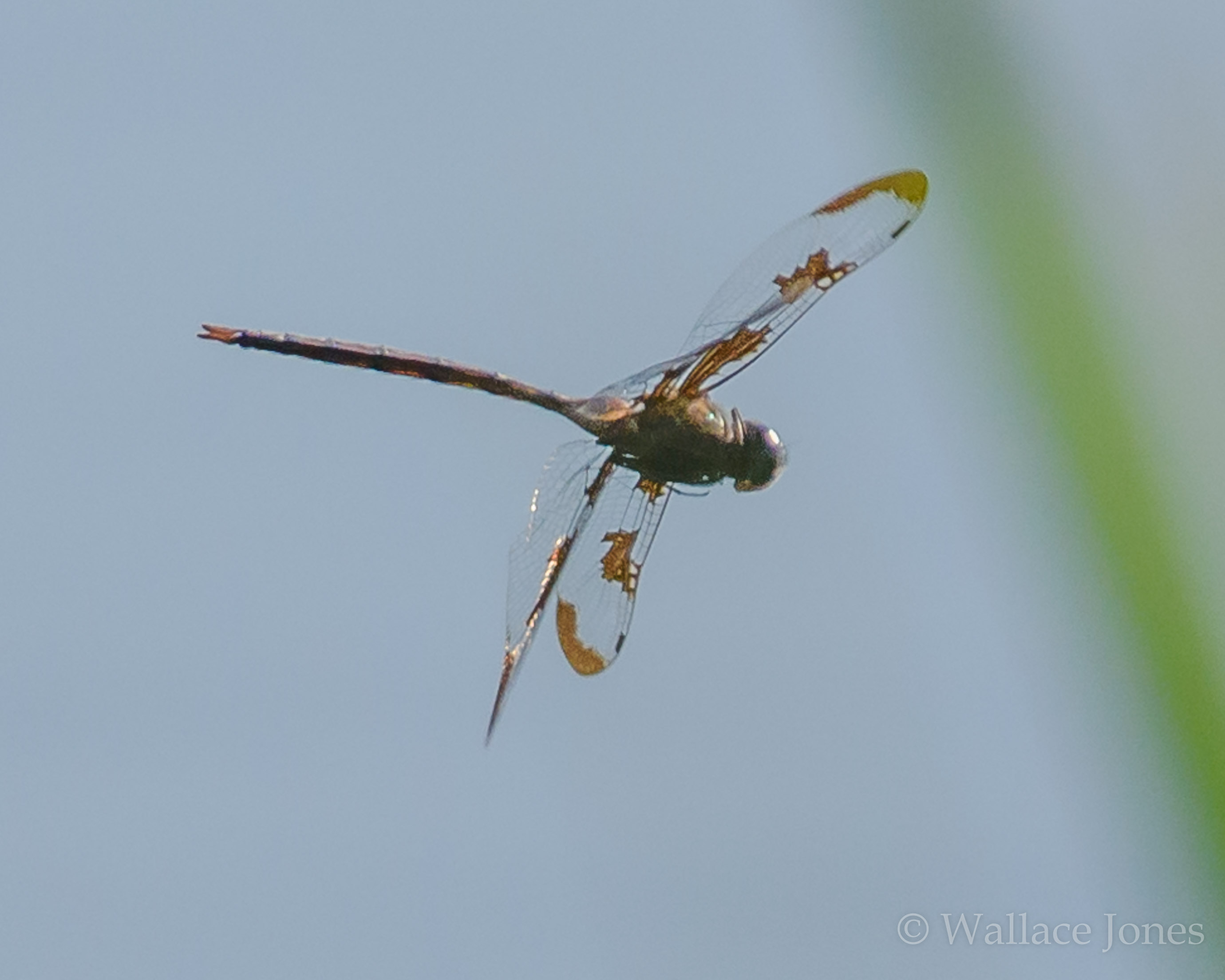
Patrolling near a lake shoreline, a Prince Baskettail (Epitheca princeps) shows off his unique wing pattern.
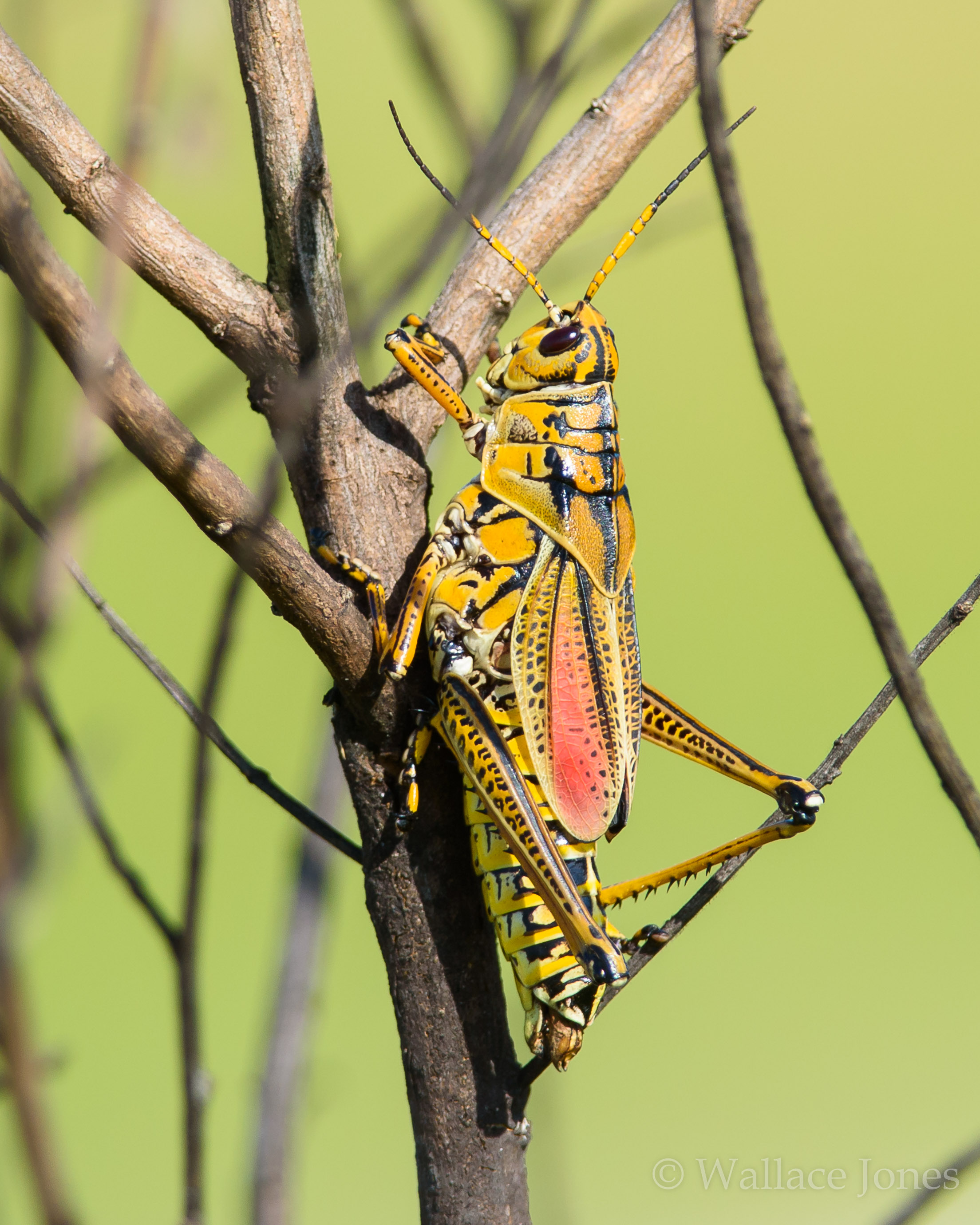
The large Eastern Lubber Grasshopper (Romalea microptera) averages around two inches (55 mm) in length for males and 2.75 inches (70 mm) for females with some up to 3.5 inches (90 mm) not unusual. If nothing else, they are colorful!
The thistles (Cirsium horridulum) attract all sorts of pollinators in addition to the Hummingbird Moth. Here, a Cloudless Sulphur (Phoebis sennae) retrieves a bit of nectar.
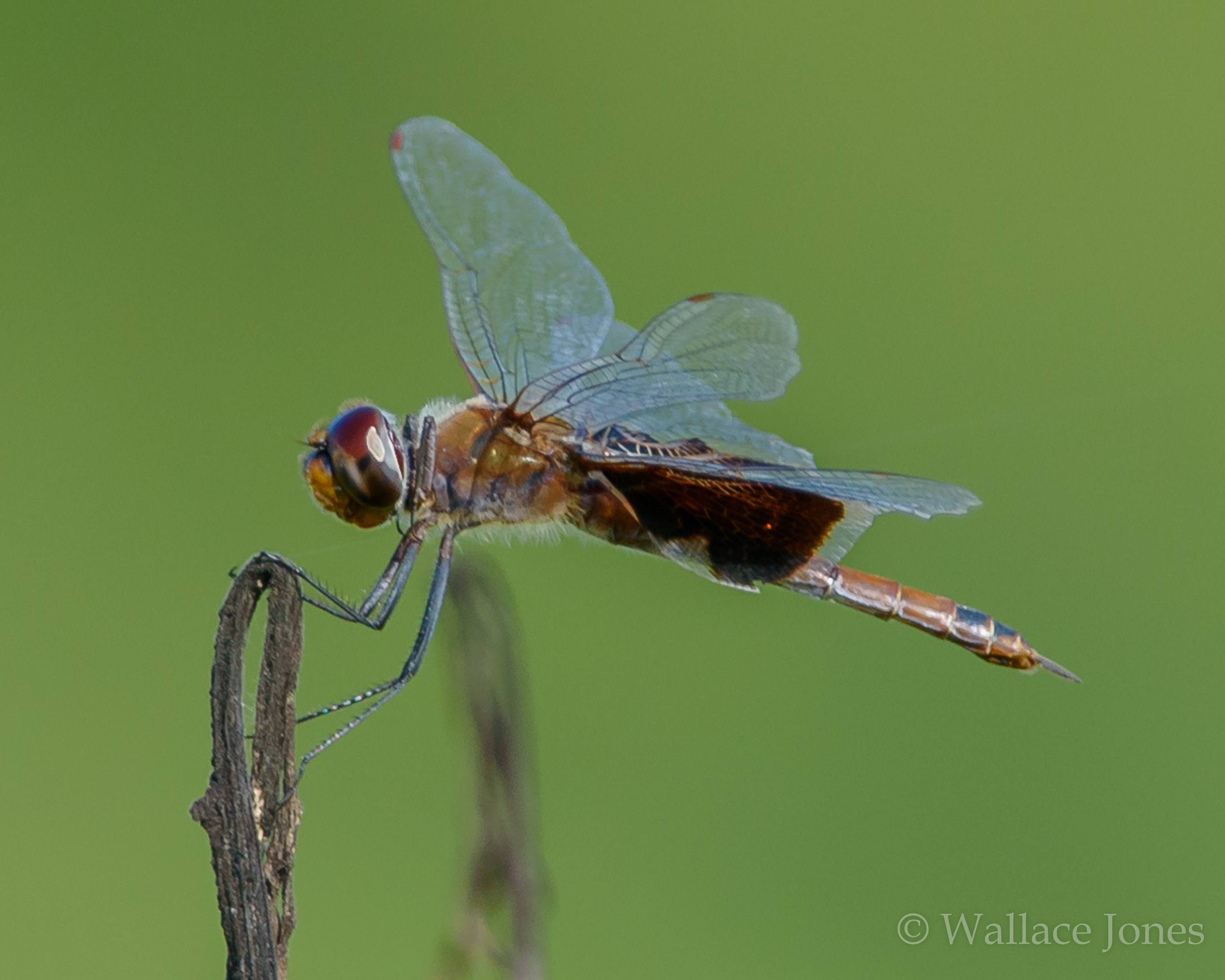
Gini spotted a Red Saddlebags (Tramea onusta) atop a spent thistle. No nectar for this lady dragon, but she has a great perch to spot potential breakfast bugs.
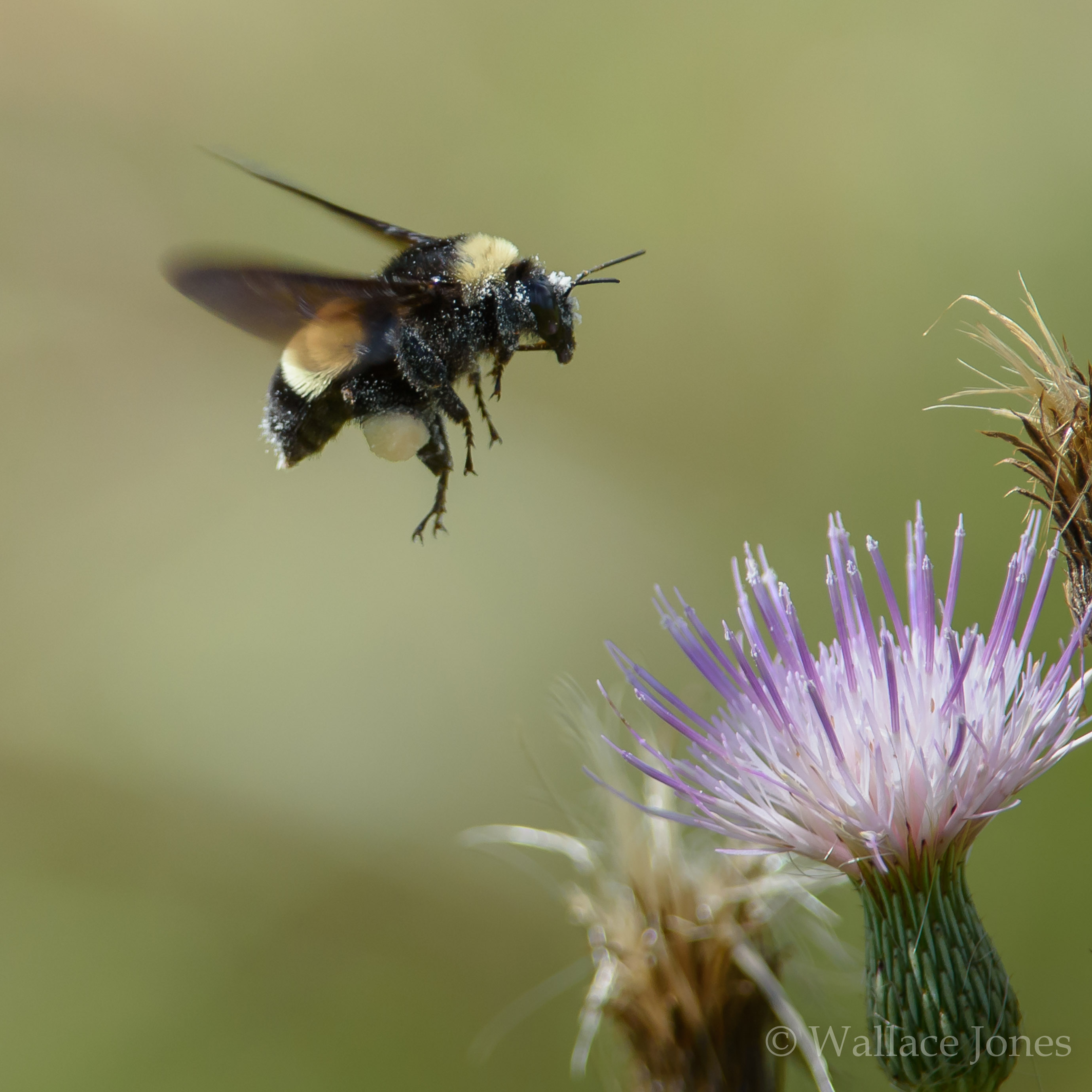
A Bumble Bee transports his cargo of pollen from one thistle to another. A quick drink for his efforts and he’s off to take a load to a different flower.
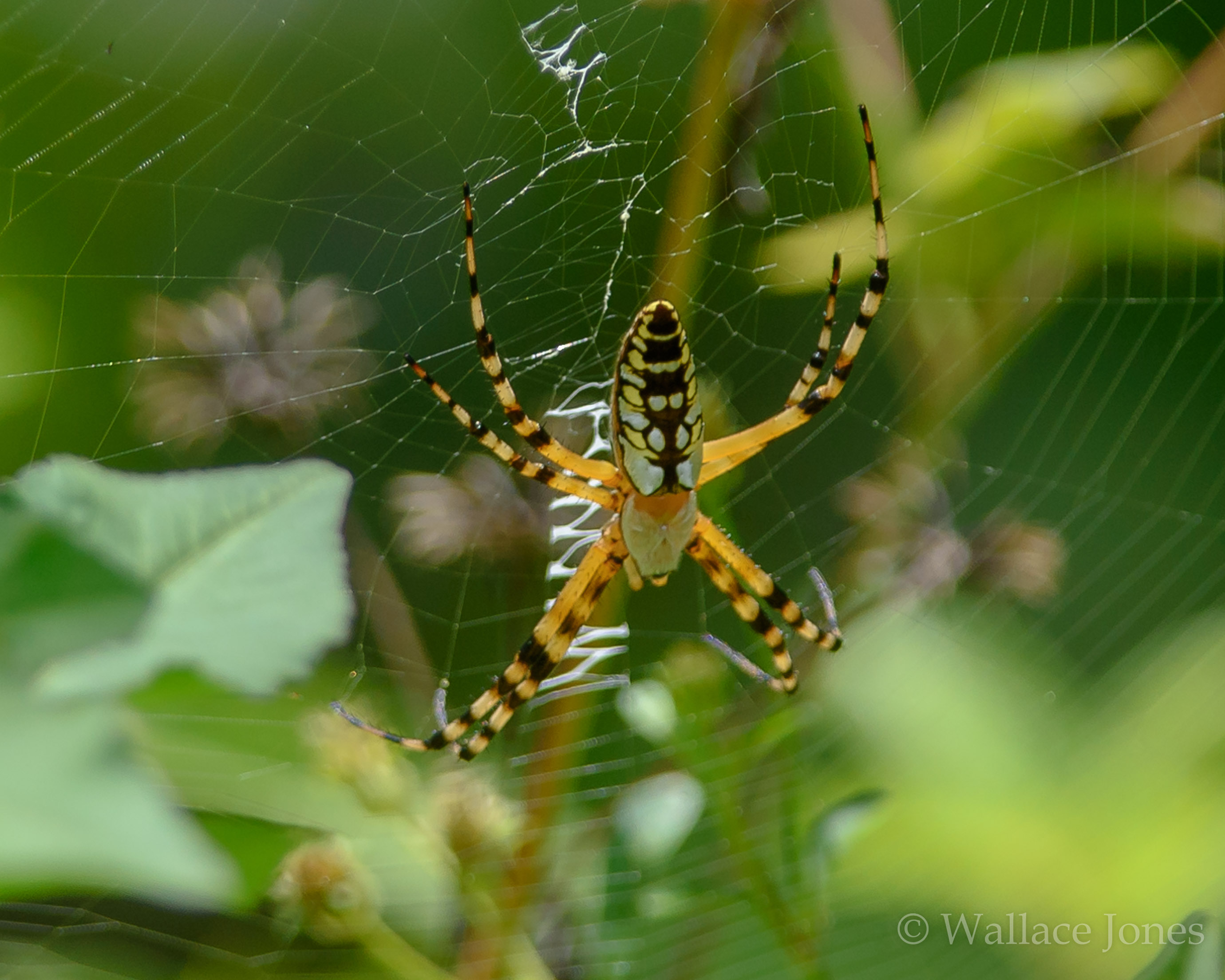
Measuring about an inch (25 mm) in length, the Black and Yellow Argiope (Argiope aurantia) is a colorful spider who usually includes a “zig-zag” design near the center of her web.
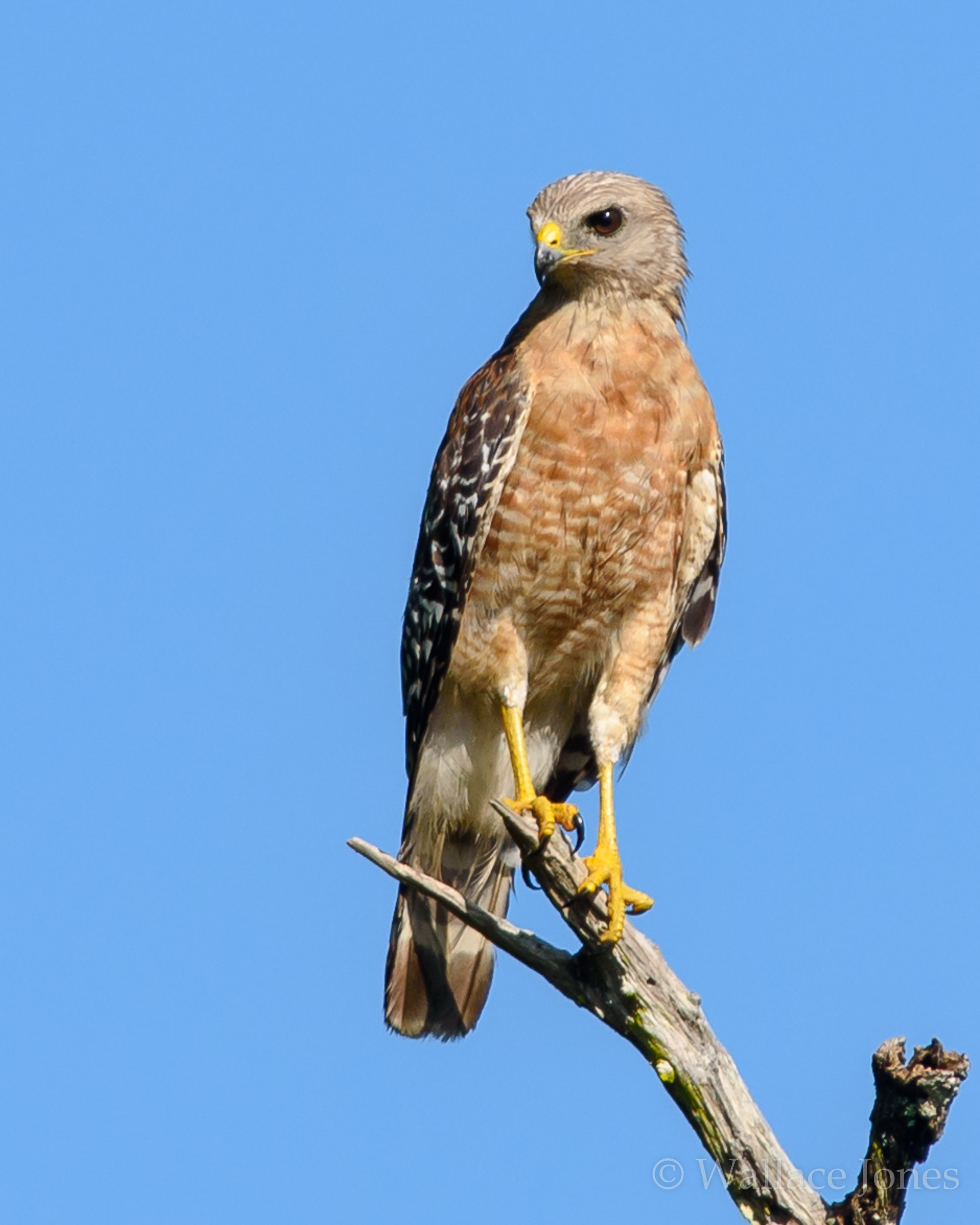
Hoping to spot a frog or a lizard, an adult Red-shouldered Hawk didn’t pay us much attention as we admired one of our most common raptors.
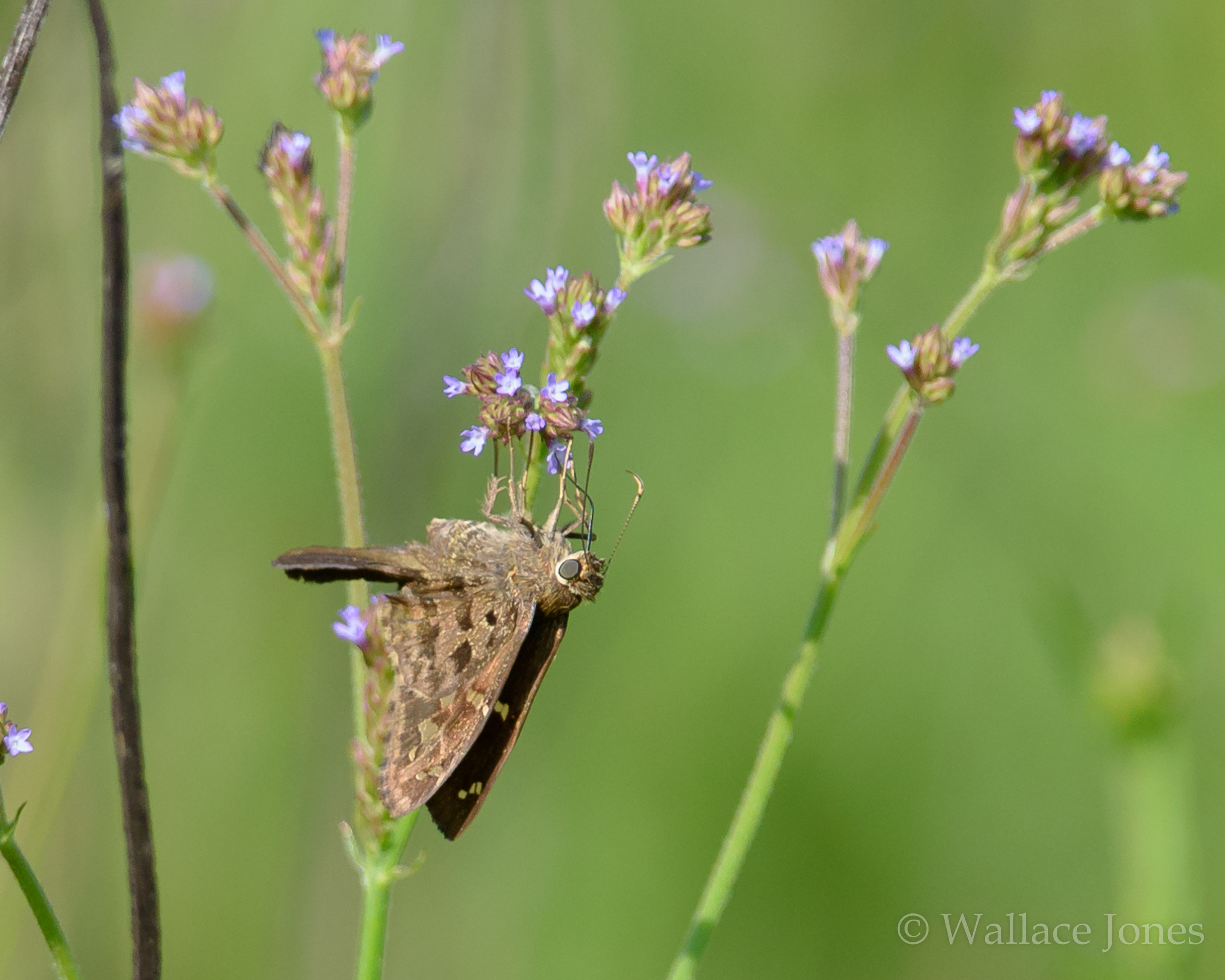
A Dorantes Longtail (Urbanus dorantes) has forsaken the sweet nectar of the thistles and gone over to the dark side of sampling the forbidden fruits of an invasive Brazilian Vervain (Verbena brasiliensis). No worries. He’ll be back.
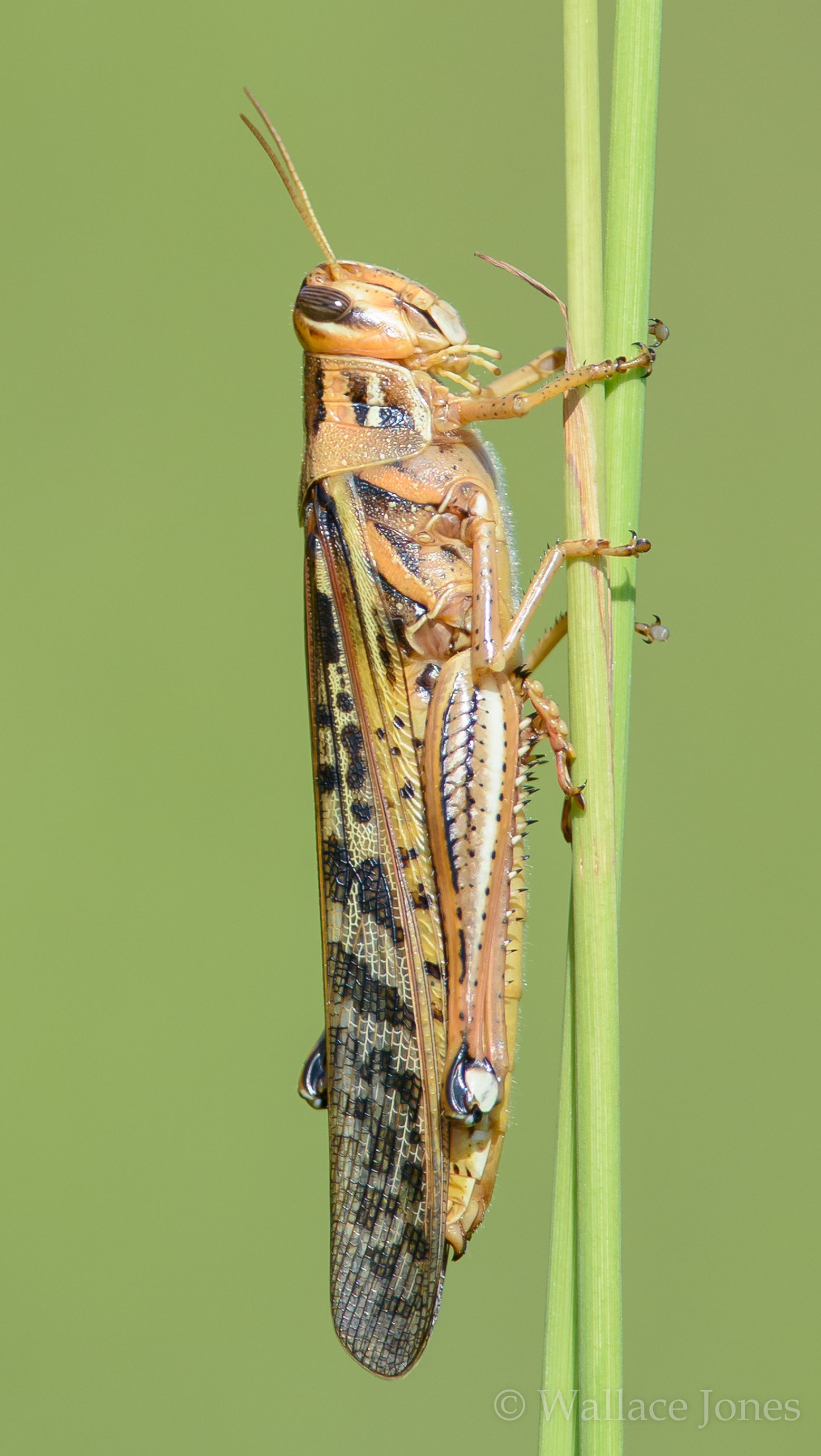
Averaging 1.5-2 inches (45-55 mm), the American Grasshopper (Schistocerca americana) is sometimes referred to as the American Bird Grasshopper due to its strong flying abilities. This insect causes significant agricultural damage each year. It certainly is handsome, though!
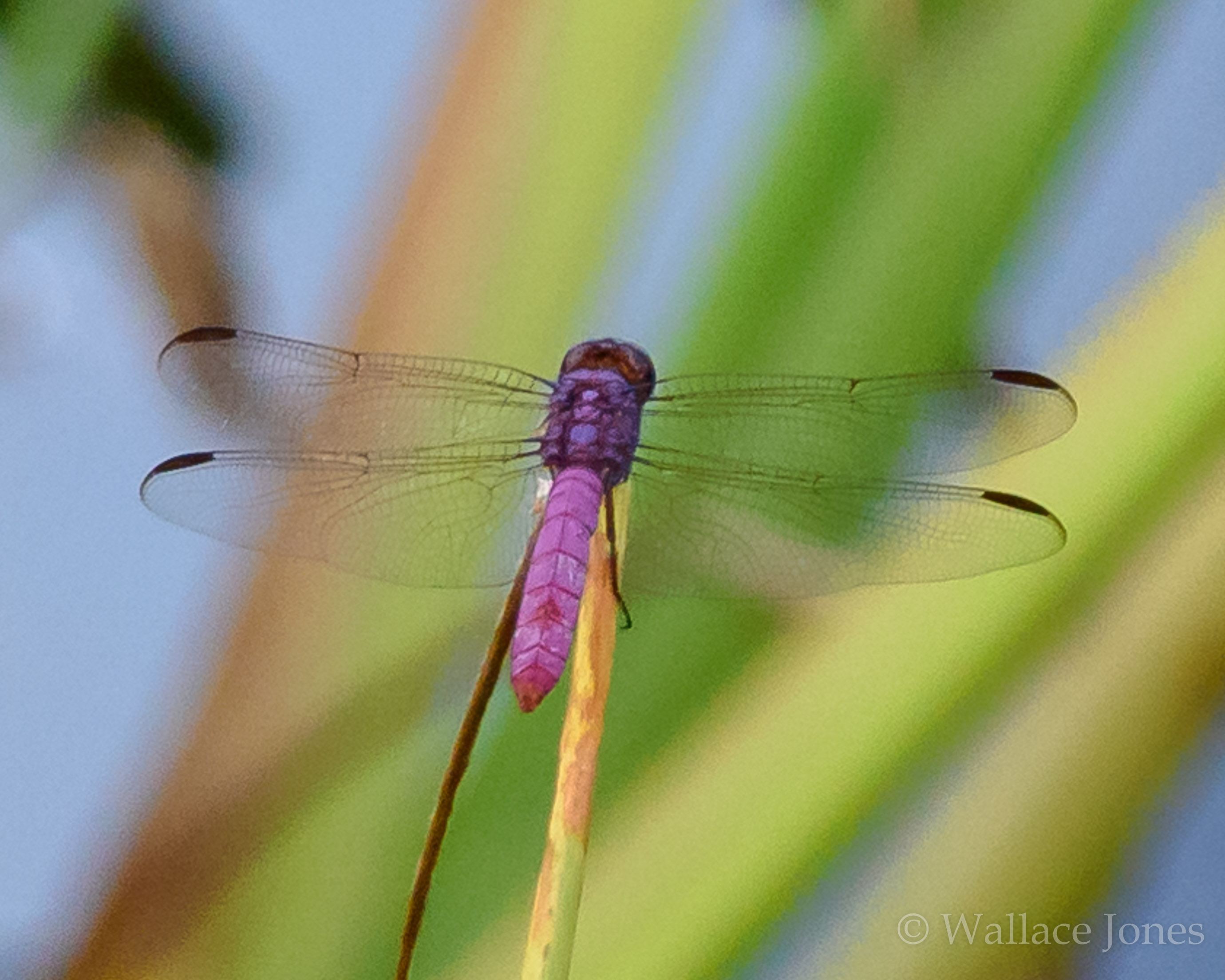
It’s hard to miss a male adult Roseate Skimmer (Orthemis ferruginea)! There isn’t much in nature with that color.
One of the smallest of the grass skippers, a Delaware Skipper (Anatrytone logan), has few markings and usually stays hidden near the ground. This one crawled onto a blade of grass for a moment – and a picture.
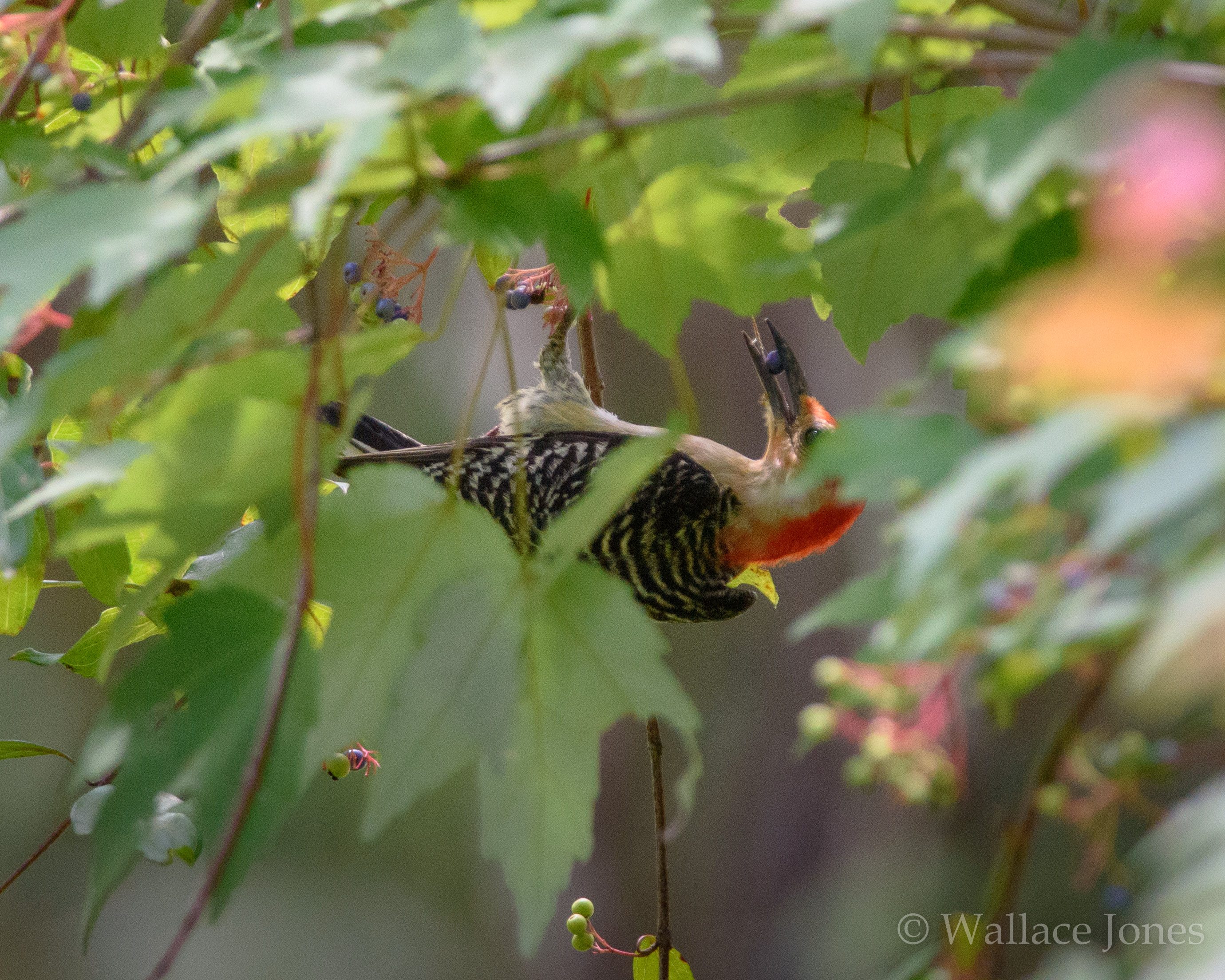
It’s natural to try and post nice, clear photographs of a subject in its natural environment. As a birder, I can attest that it is far more normal to see only bits and pieces of a bird most of the time! Such is the case with this Red-bellied Woodpecker who remained behind foliage and simply would not allow a decent, clear photo.
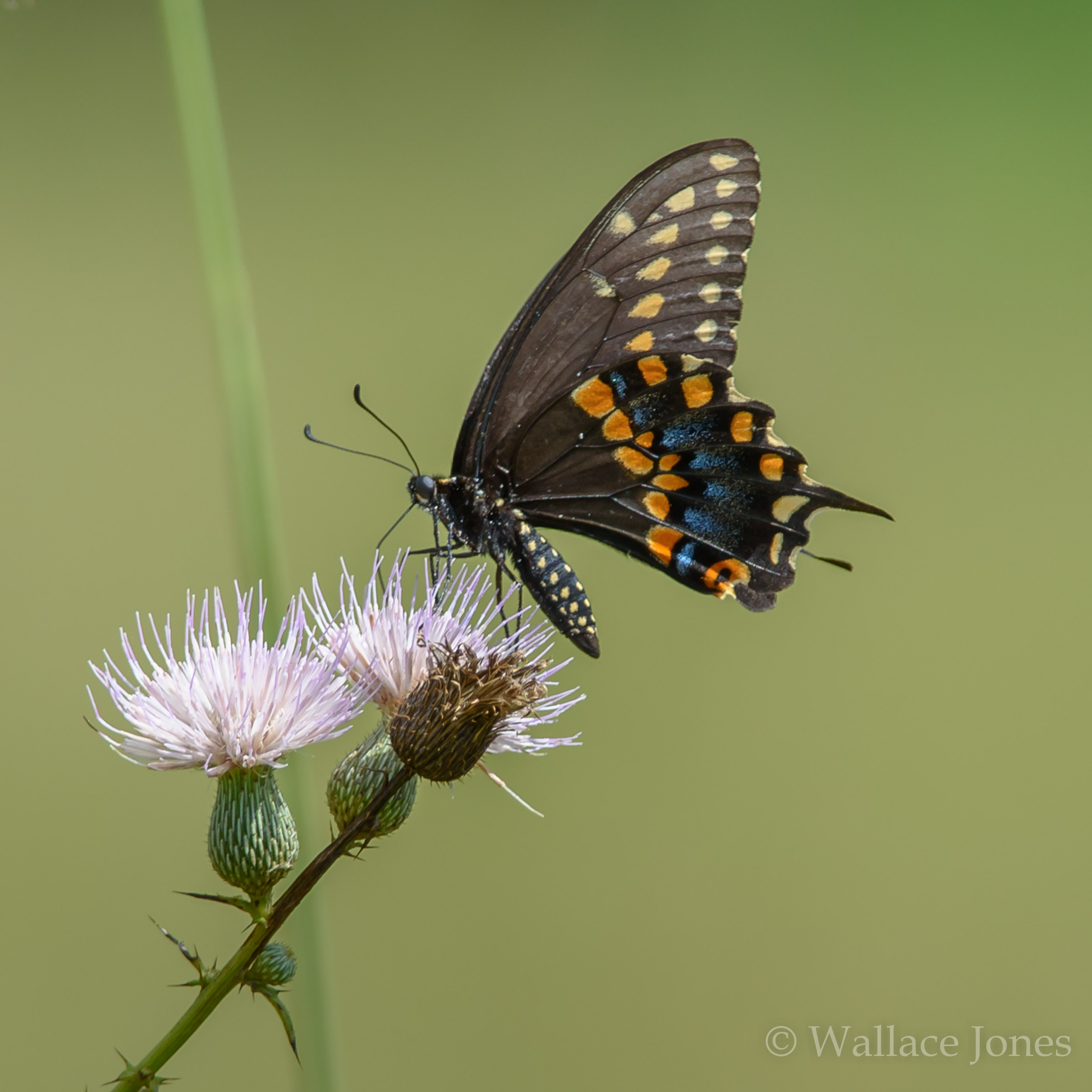
One of a half-dozen dark-colored butterflies in our area, the Black Swallowtail (Papilio polyxenes) also enjoys visiting, guess what – thistles!
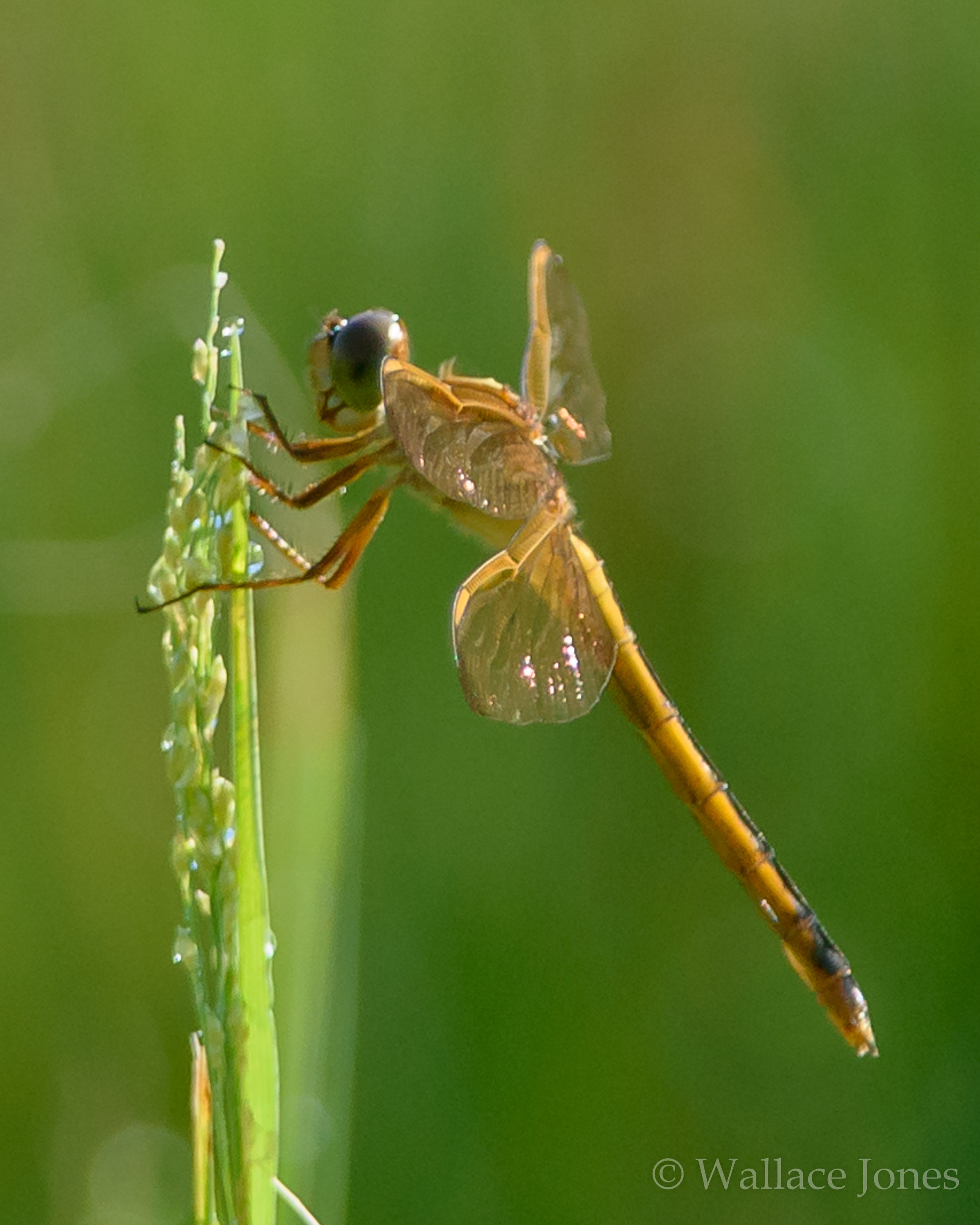
The morning dew highlighted the golden glow of the wings of Needham’s Skimmer (Libellula needhami).
We watched this young River Otter fishing in Colt Creek for a few minutes until he realized we were there. Sploosh! A disappearing otter.
Okay, so I may have started a little over the top with dramatic license, but it was a great morning to be out in nature! Pretty neat to review old notes, make a plan to see if history would repeat and, ultimately, to enjoy success. Take a look at your own notes or photographs from this time in past years. Perhaps it will lead you to your very own Babylon! Blood! and Beauty!
Enjoy your search for a natural place and come back for a visit!

