(Today’s post describes our visit to Colt Creek State Park in central Florida on September 26, 2025. Gini had knee replacement surgery 30 days prior. I will have four more sessions to complete 36 visits to the clinic for cardiac rehabilitation. Our last outing in Nature was August 15. Kudos to those who waded through all three blog parts!)
(Click on images to enlarge, click again to zoom.)
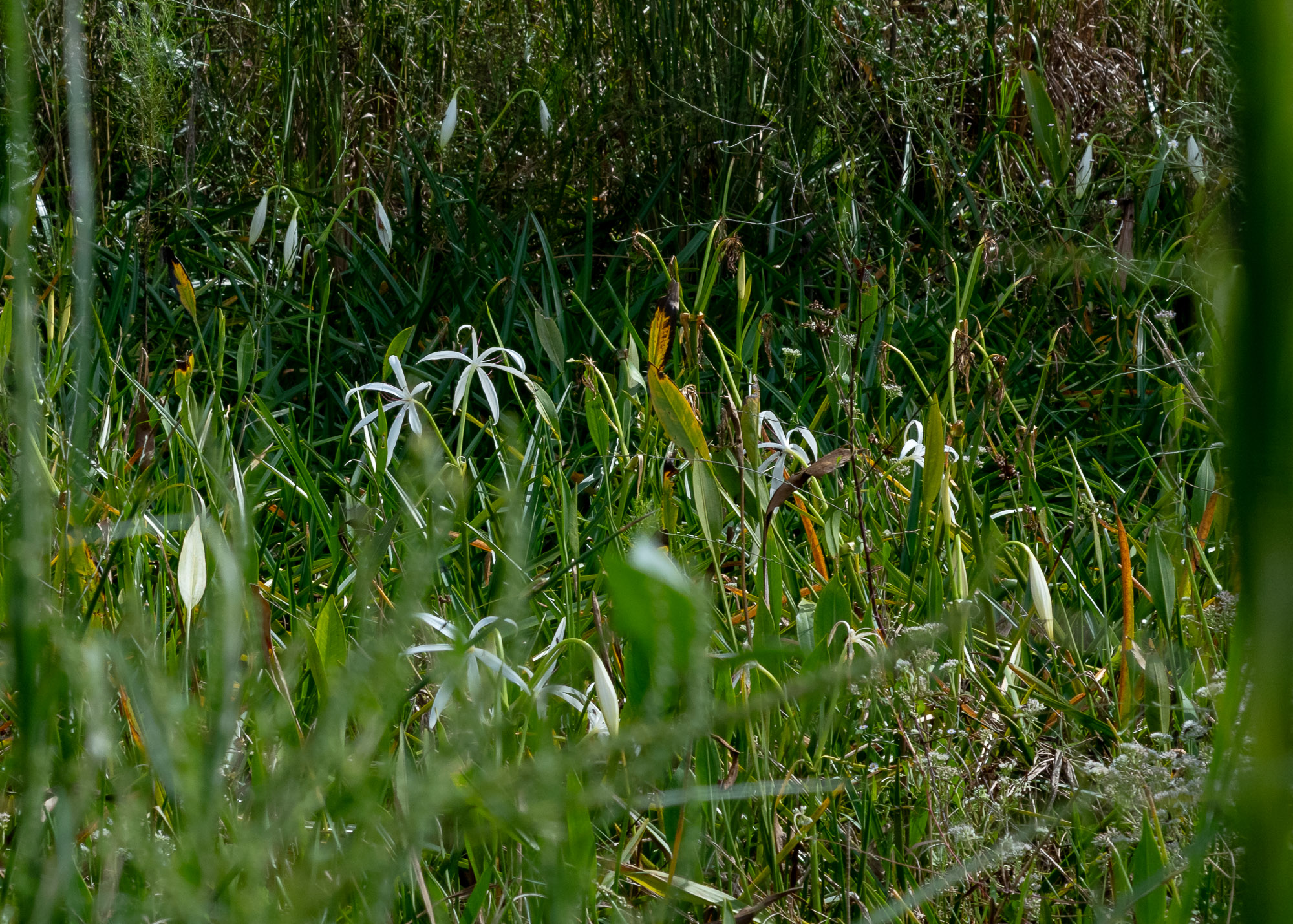
Friday. Late afternoon. No other visitors to the park were visible. Just past the entrance we were greeted by a lovely group of Seven Sisters all dressed in white. The Red-shouldered Hawk was on his pine branch perch at the first bend in the road. A patch of Clustered Bushmint was attracting all sorts of nectar-lovers. We parked at the first trailhead with a specific purpose in mind.
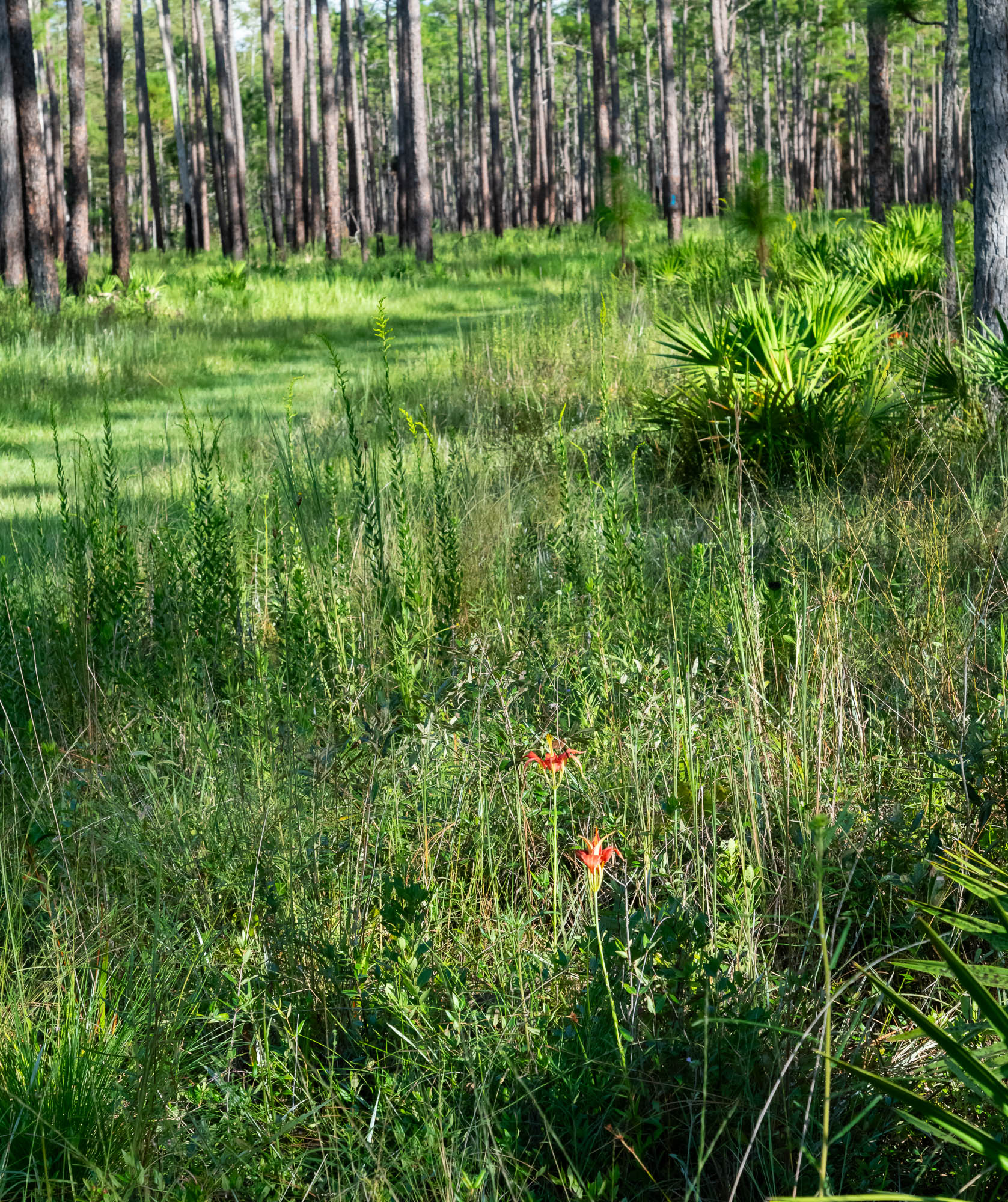
Gini was not quite ready to test her brand new knee on the uneven trail so she volunteered to guard the vehicle while she caught up on her latest novel. I went. I saw. I photographed. Two types of flowers, both bearing the common name of “lily”, but one from the Iris family and the other actually from the Lily family. Mission accomplished. Now what?
Oh, there is a whole park we haven’t yet wandered around in and there are still a couple of hours of daylight left. Lake, creek, forest, fields, bugs, blooms, birds. We took it all in with each breath. Who knew when we would be able to return?
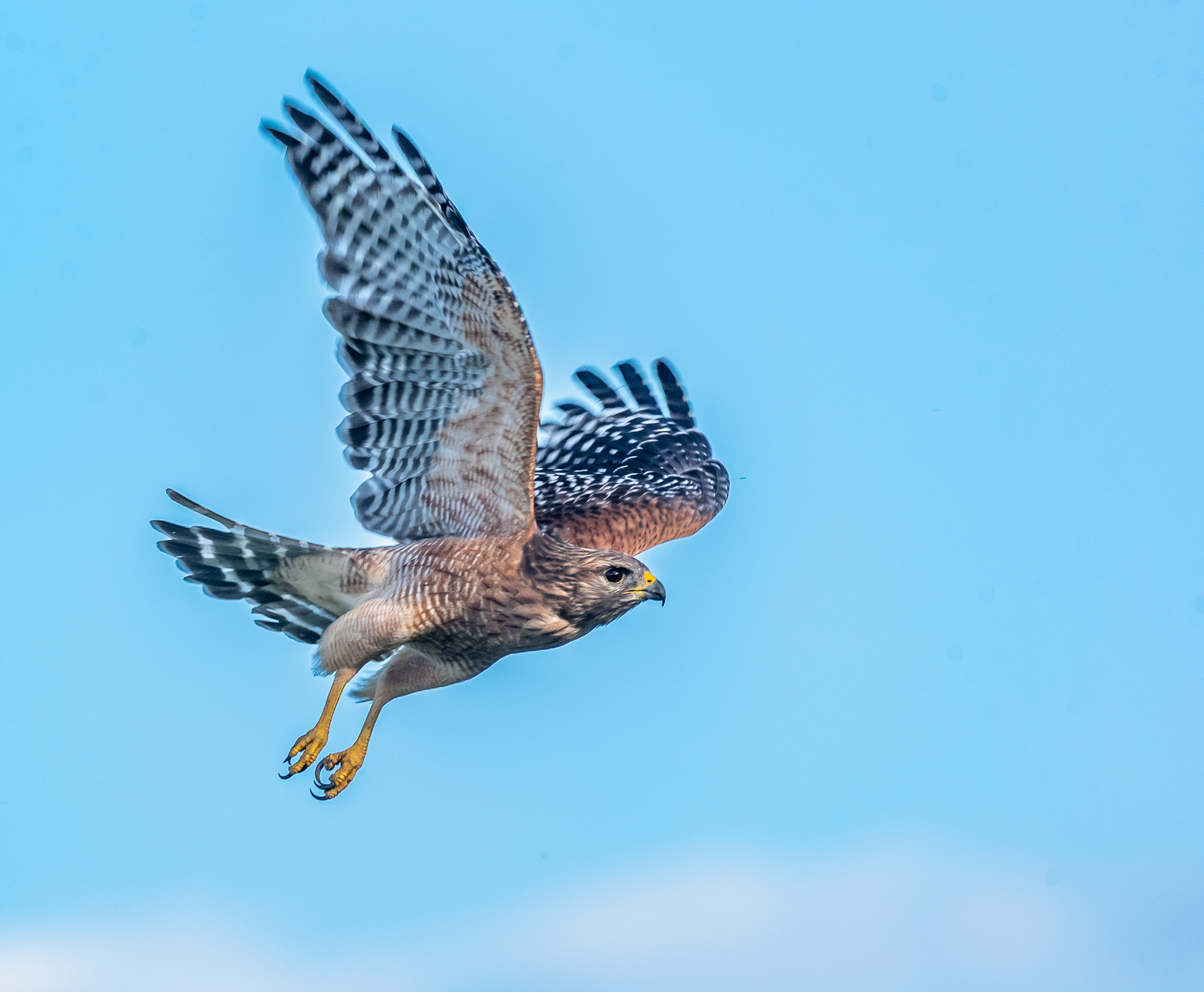
Red-shouldered Hawks are quite common throughout Florida. This handsome adult launched from a small pine tree with its eye on early supper.
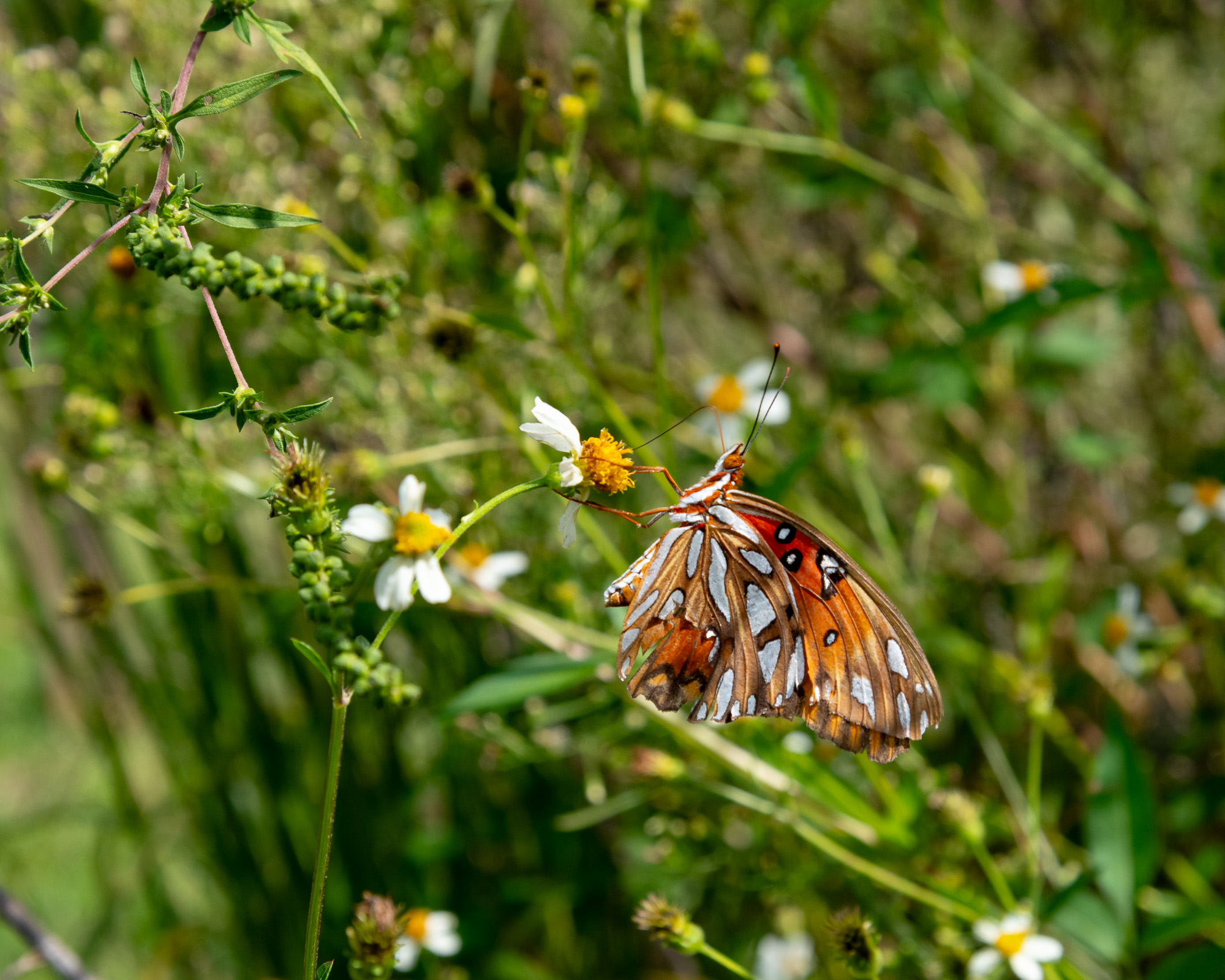
One of our more abundant, and colorful, butterflies is the bright orange Gulf Fritillary (Dione incarnata).
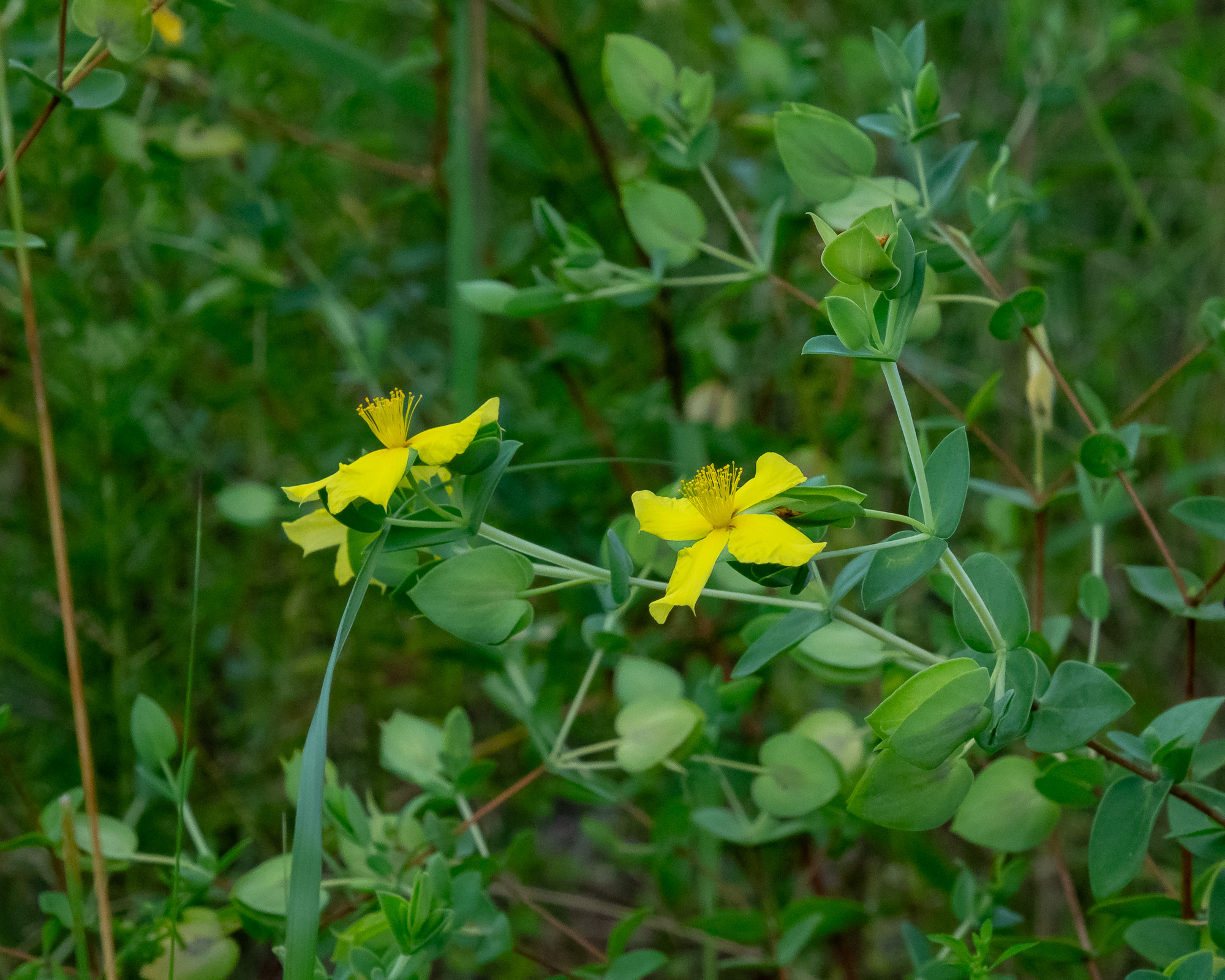
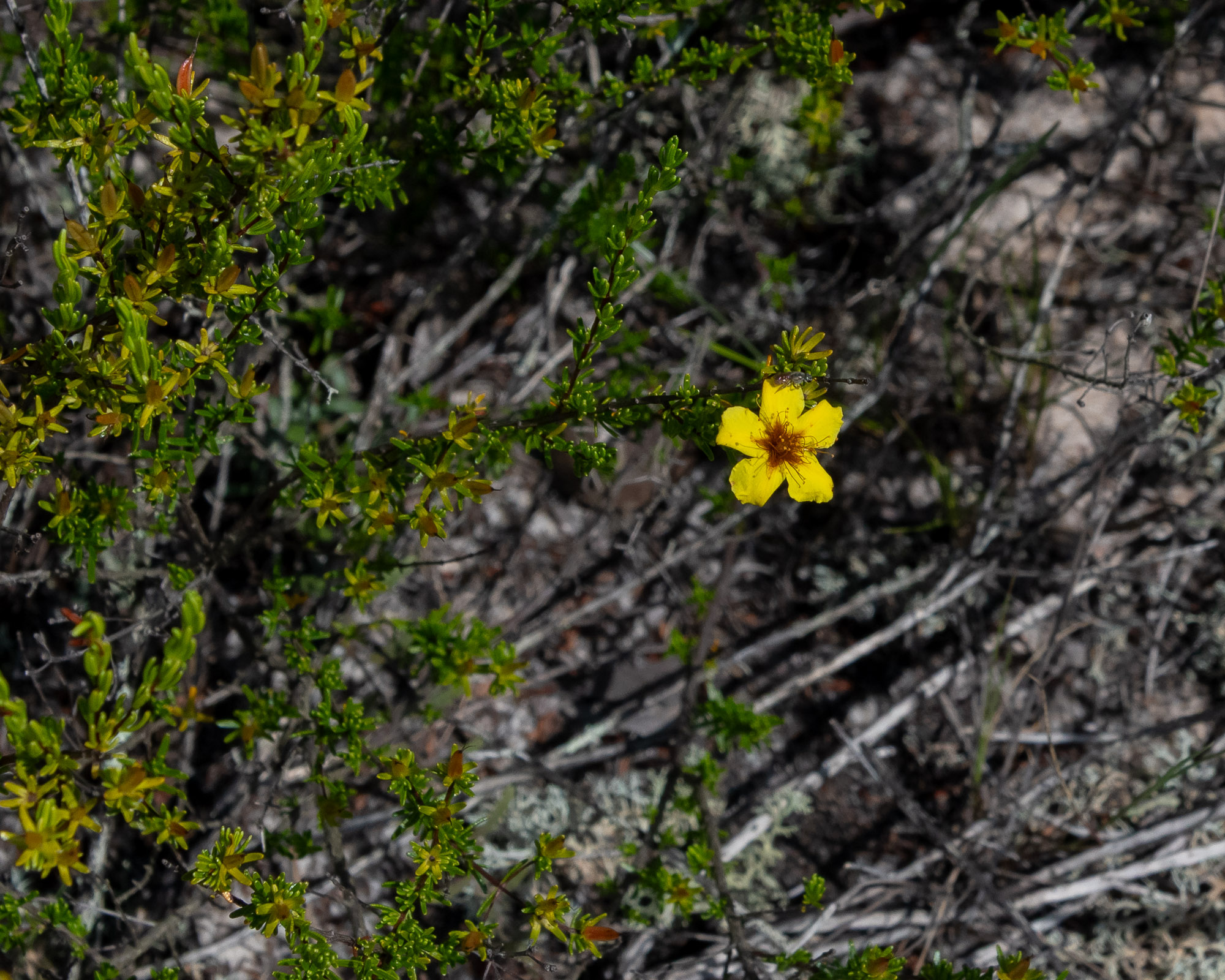
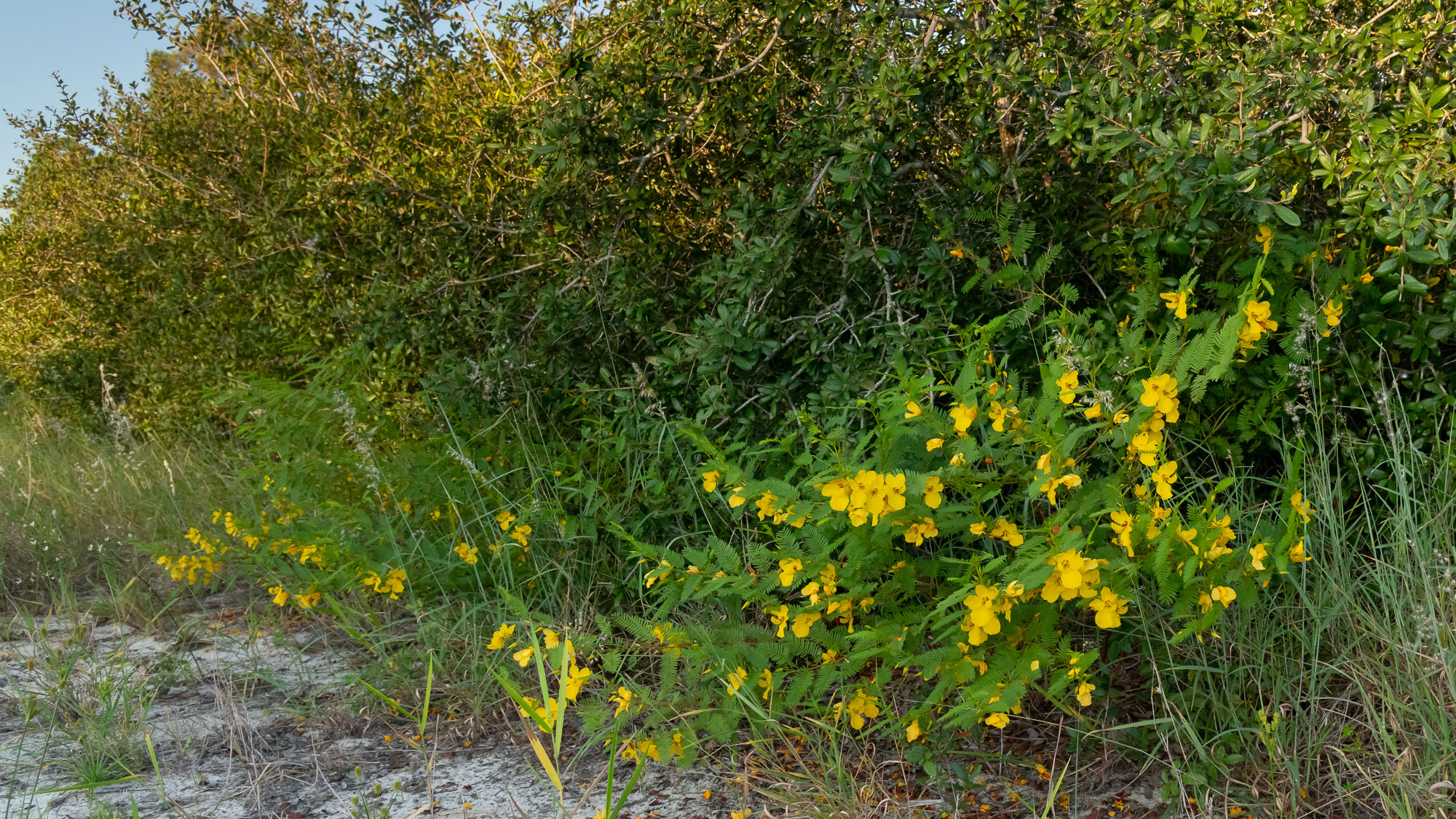
Nearly endemic to Florida, Four-petal St. Johnswort (Hypericum tetrapetalum) blooms profusely in spring and summer but, as we discovered, doesn’t mind showing off even in late September.
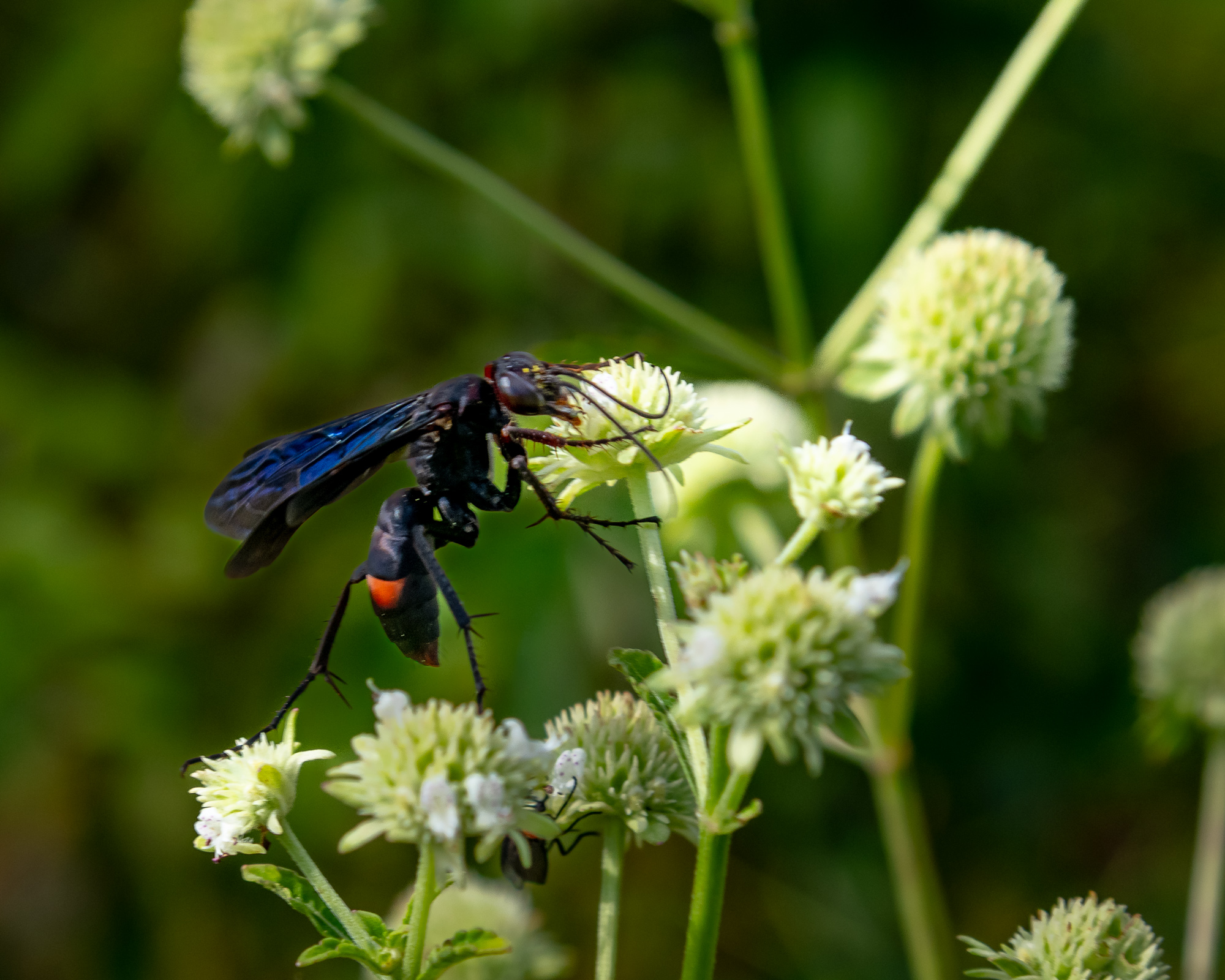
A New Bug! From all our research and queries, we are pretty sure this big specimen is in the Spider Wasp Family (poss. Anoplius semicinctus). Here, it’s on Clustered Bushmint (Hyptis alata).
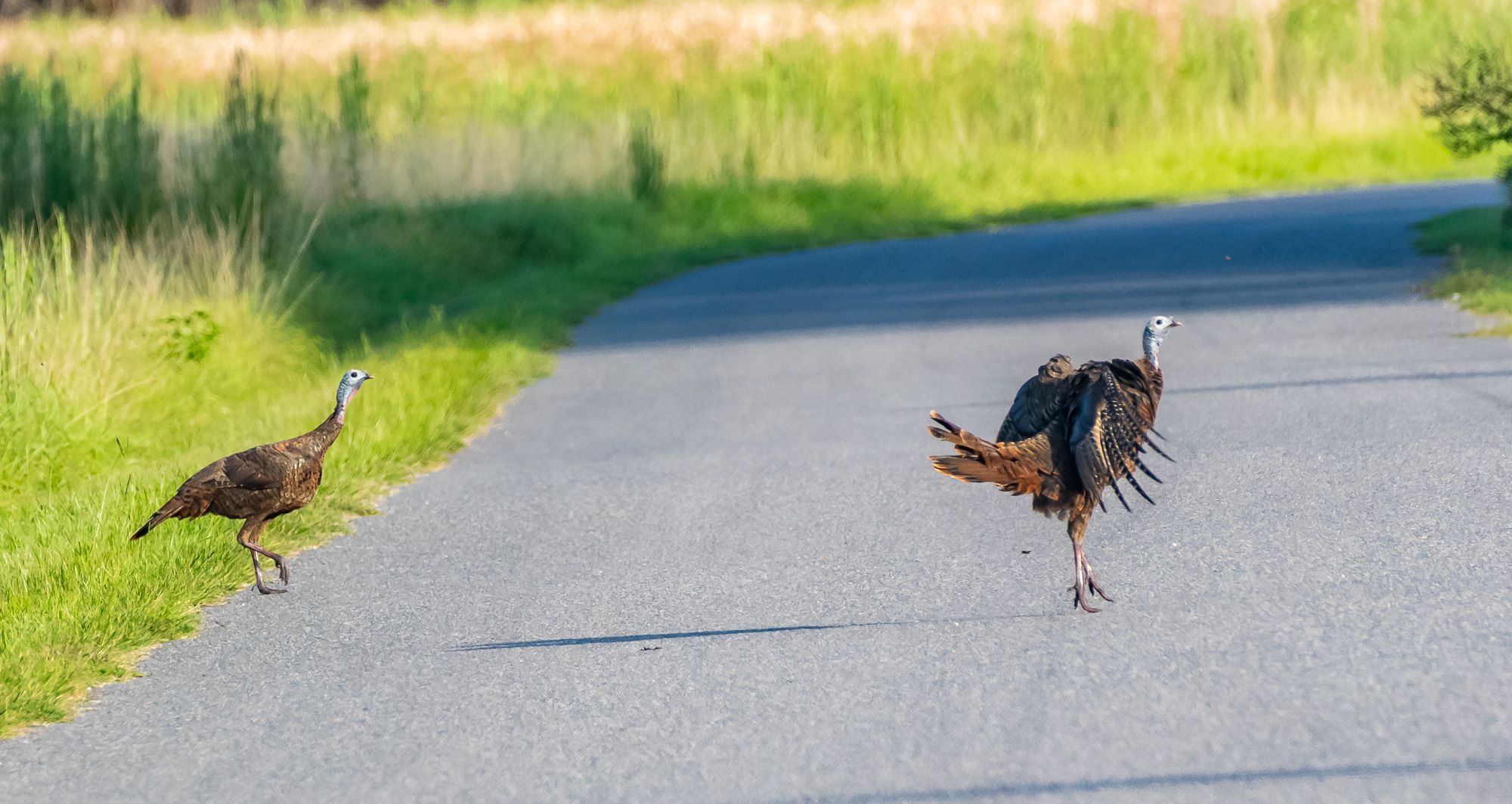
Stop! Wild Turkey crossing. (We watched as these two joined a group of 18 nearby.)
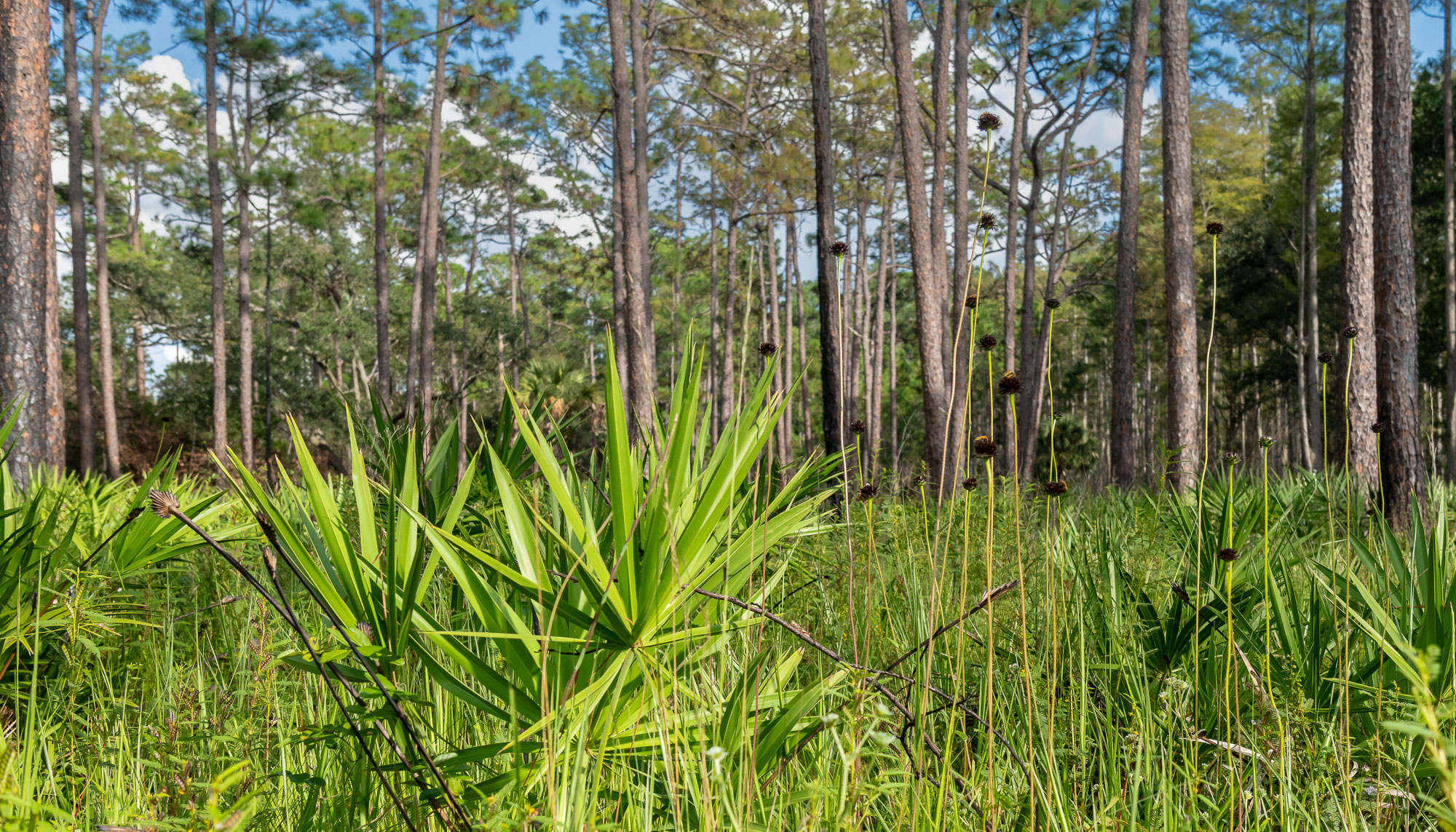
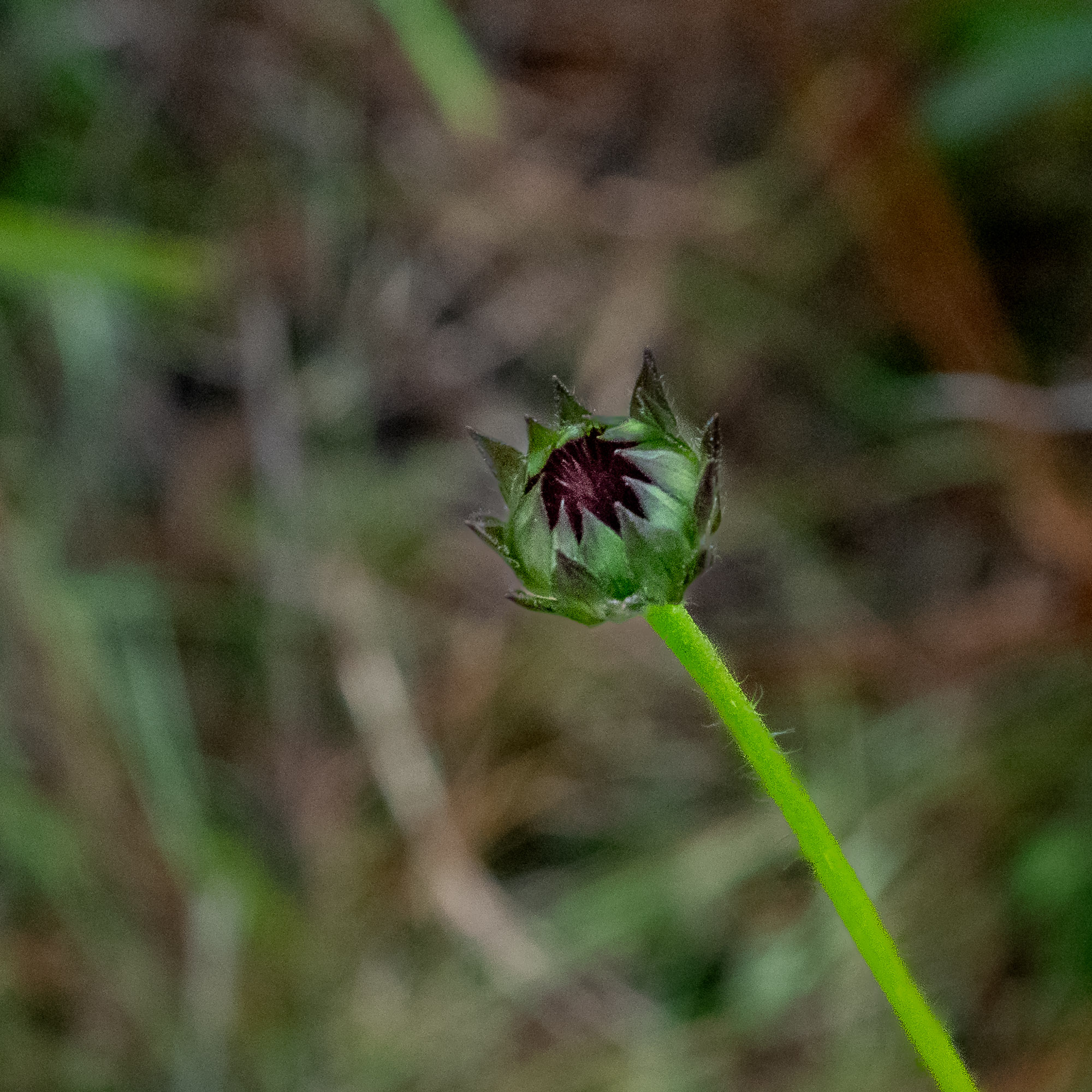
A New Bloom! We have searched for this one for a long time and finally found them today. Rayless Sunflower (Helianthus radula) is quite unique and very different from its cousins with all those yellow petals.
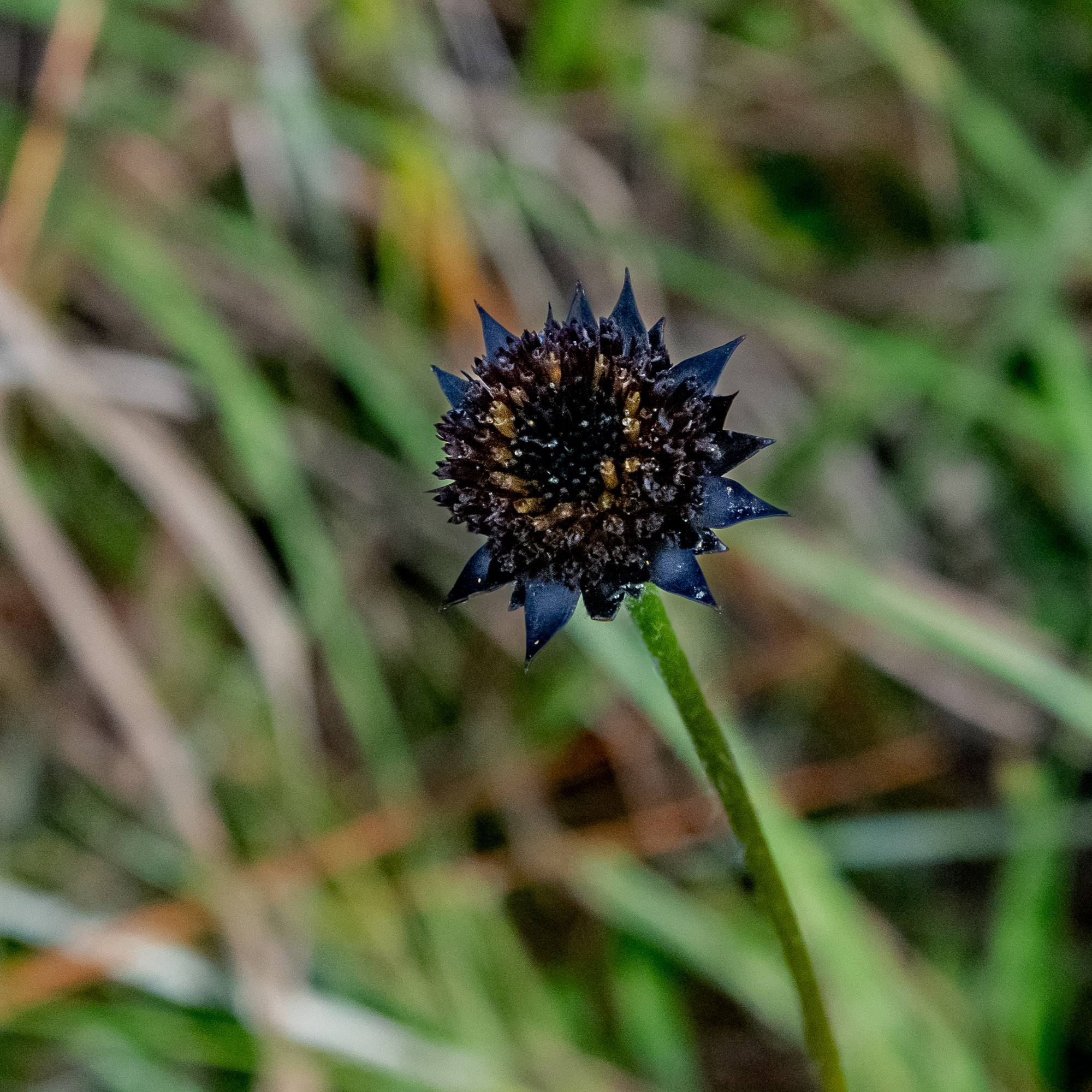
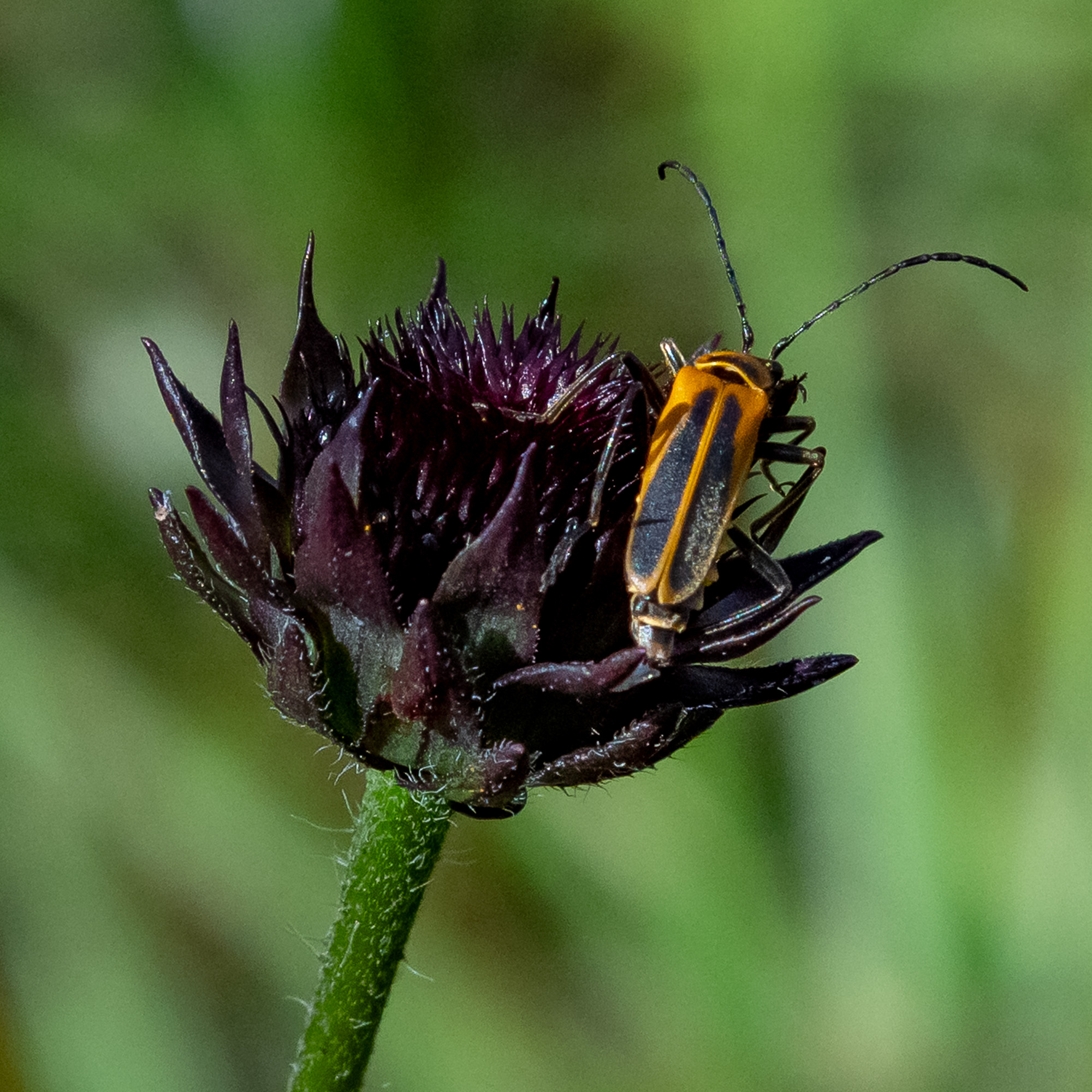
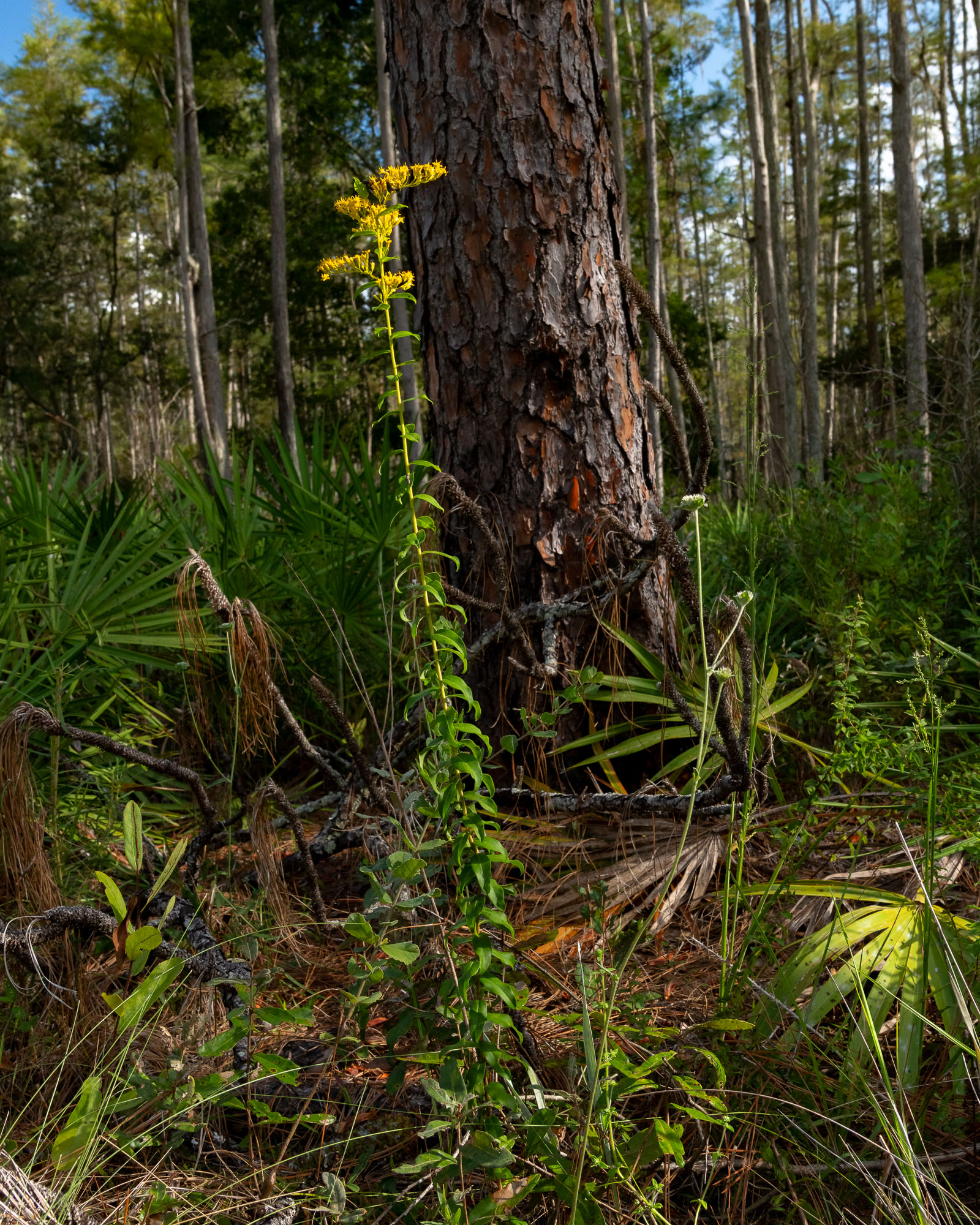
Another species nearly endemic to Florida, Chapman’s Goldenrod (Solidago chapmanii) typically is one of the earliest blooming goldenrods in Florida. This one hung around just for us.
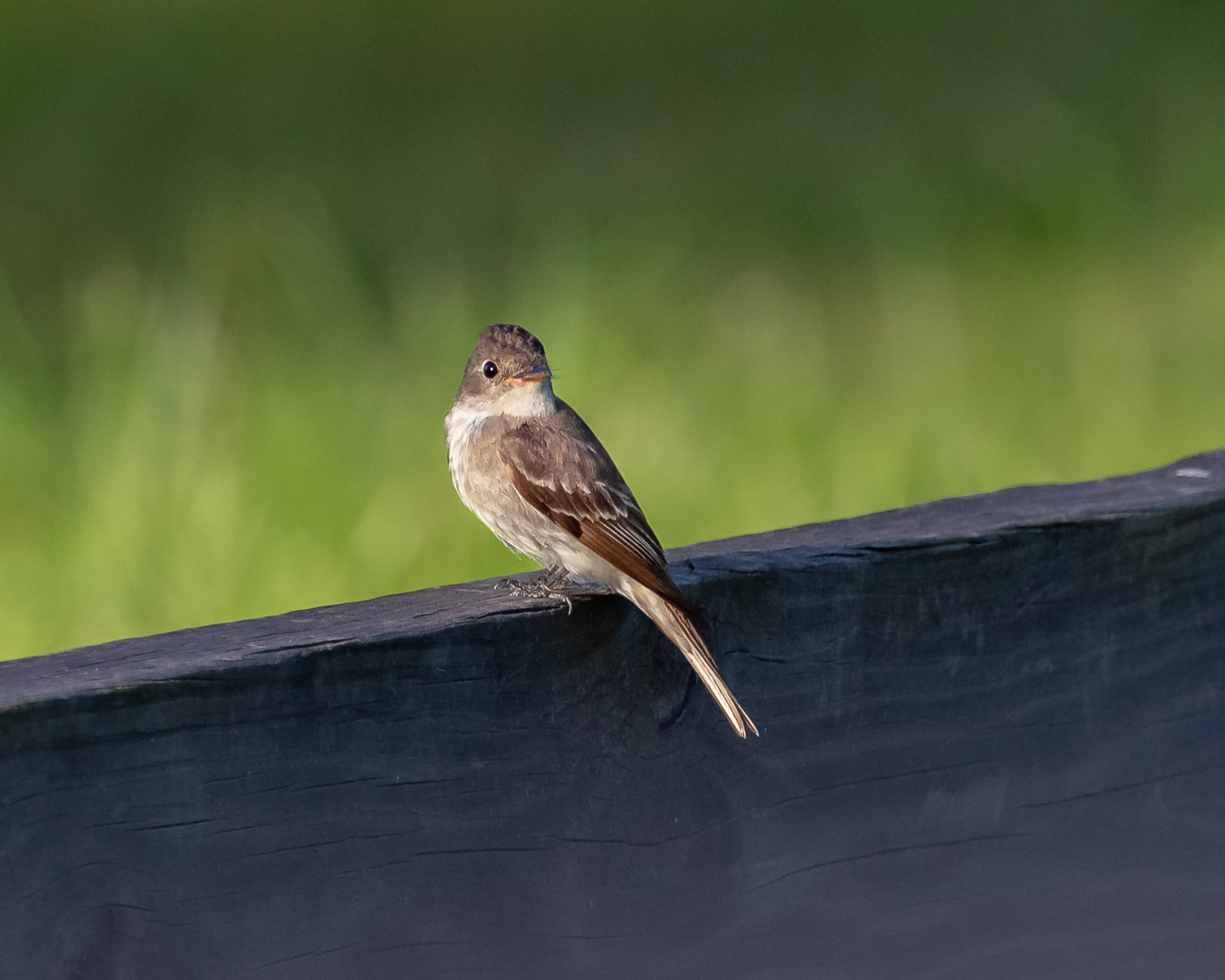
One of our first fall migrants made an appearance. This Eastern Phoebe is quite polite as she constantly yells her name for us: “Pheeee-Beeee“!
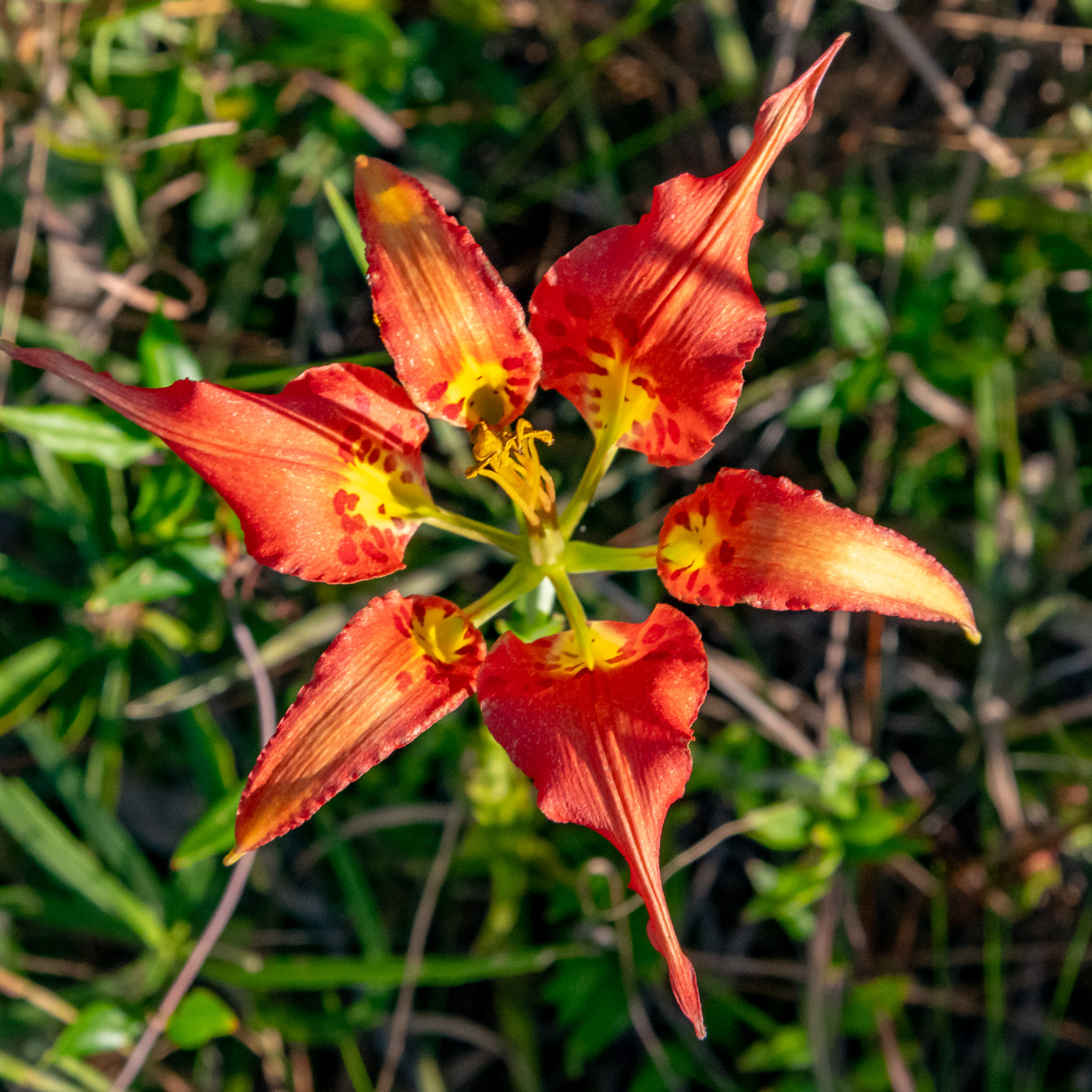
On my short walk when we first arrived at the park, I found the two lilies I had hoped to see. The first, Pine lily (Lilium catesbaei), is also known as Catesby’s lily, Leopard lily, Tiger lily or Southern-red lily. It is the largest lily found in North America.
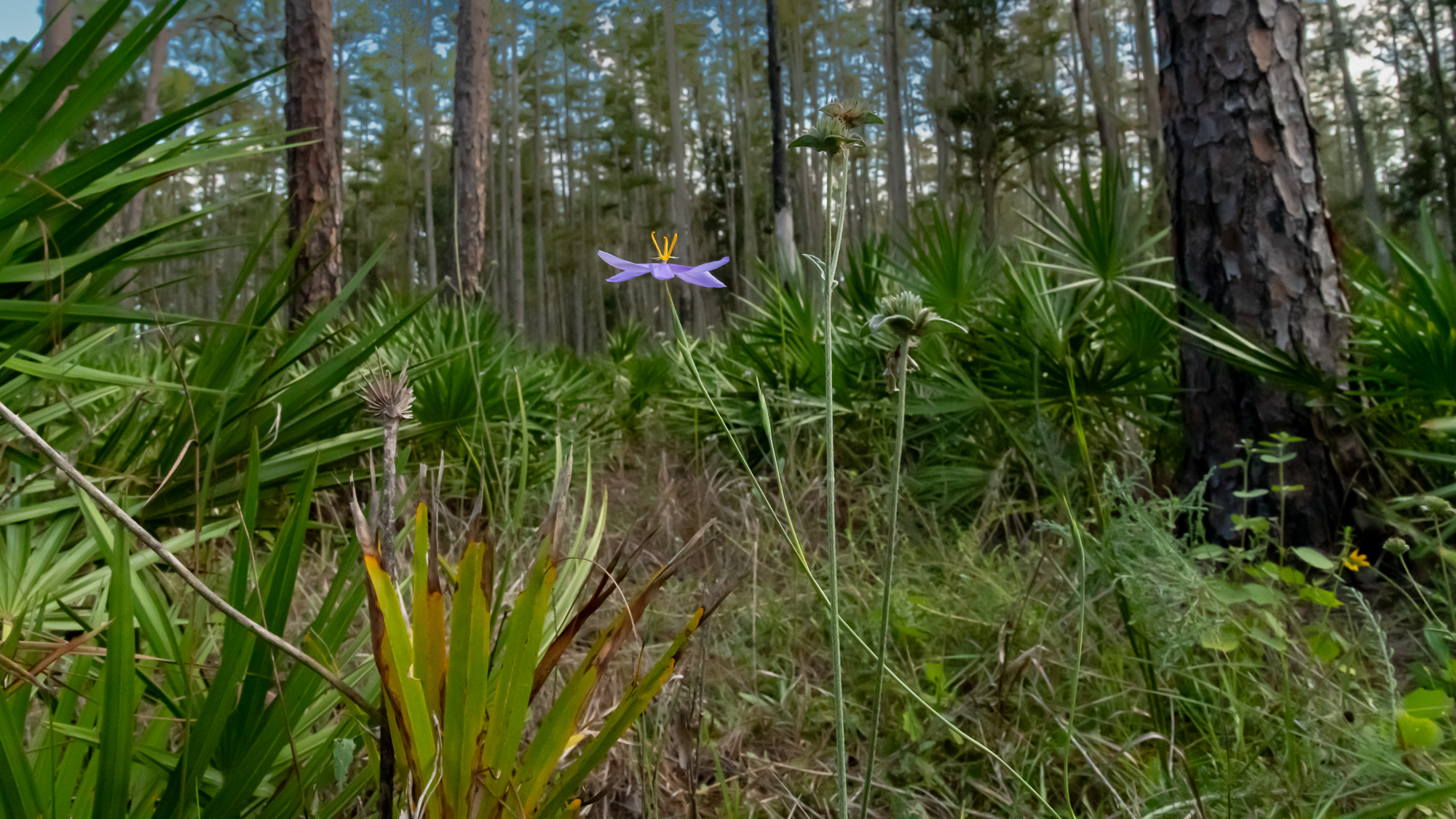
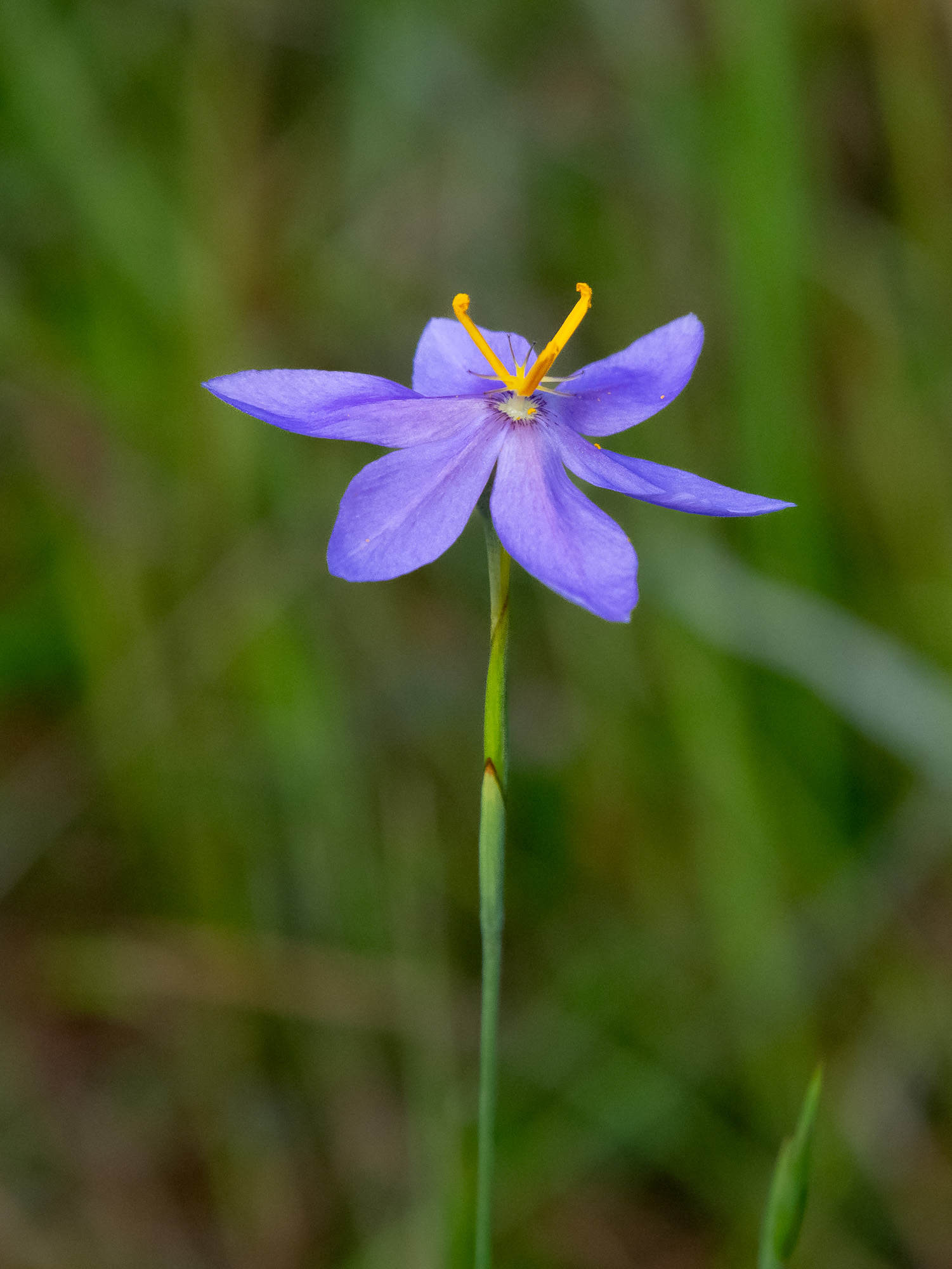
The other “lily”, in the Iris family, is a small delicate flower called Celestial Lily (Nemastylis floridana). It is found only in Florida and it only blooms in the late afternoon.
We had a wonderful therapy session in one of our favorite Natural Places today. Unsure of what the coming months would have in store for us, we were grateful for the opportunity to see so much in such a short span of time.
Enjoy your search for a natural place and come back for a visit!
(Finally. This is the last chapter of reporting on our only day this summer we were able to explore nature. It was August 15 and we were in the Lake Wales Ridge State Forest in central Florida.)

(Click on images to enlarge, click again to zoom.)
It would have been easy to talk ourselves out of this trip. Both recovering from surgeries, horrible curve balls from Life, middle of Florida’s hot and humid summer – stay home, enjoy the air conditioning. What a mistake THAT would have been!
There were so many flowers and trees and birds and insects – heat and humidity were not even noticed. What a glorious time! We were like a couple of kids at an amusement park. Look at that! What is this? (Okay, to be fair, we’re pretty much like that all the time.)
We relaxed, truly relaxed, probably for the first time in a year. Thoughts of hospitals, doctors, rehabilitation, future operations – were banished on this day. Instead, we relished the longleaf pine forest, the open grassy savannahs, the ponds and creeks and all the living things we encountered.
Our summer of exploring nature was oh-so-satisfying. Even if it did only consist of this single day.
Usually occurring as a single bloom atop a slender stem, the Rose-Rush (Lygodesmia aphylla) is nearly endemic to Florida with only a few reports from south Georgia. The stems can reach 24-36 inches in height and the flowers range from almost white to deep lavender.

Shiny needle-like leaves and butter-colored flowers make the low-growing Sandhill St. John’s-Wort (Hypericum tenuifolium) extremely attractive and today the landscape was littered with the lovely plants. All sorts of pollinators are attracted to the blooms but they seem to be especially loved by bees.
With all the flowers here, more than a few butterflies were busily flitting to and fro. Here’s one now. A lovely Cloudless Sulphur (Phoebis sennae).

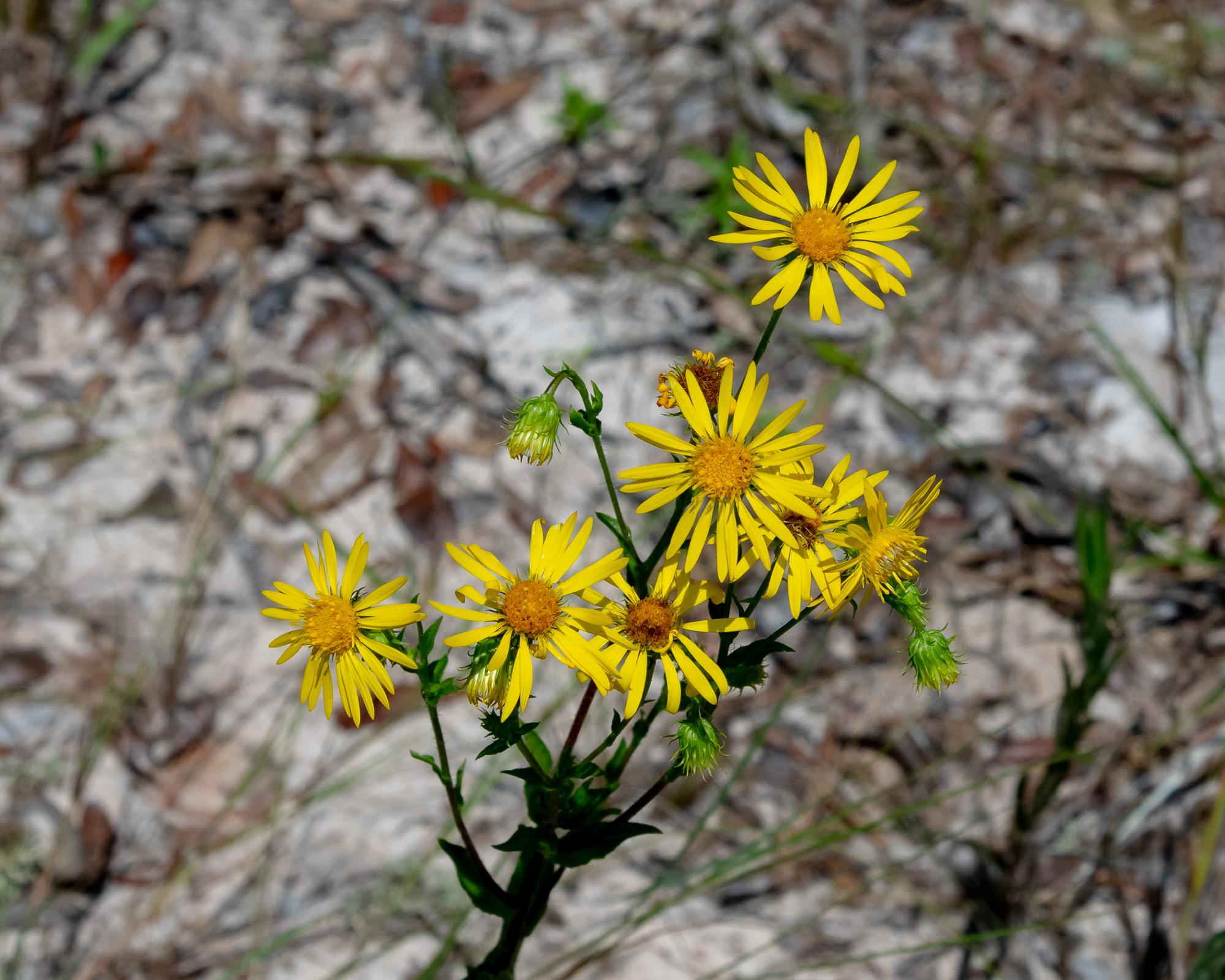
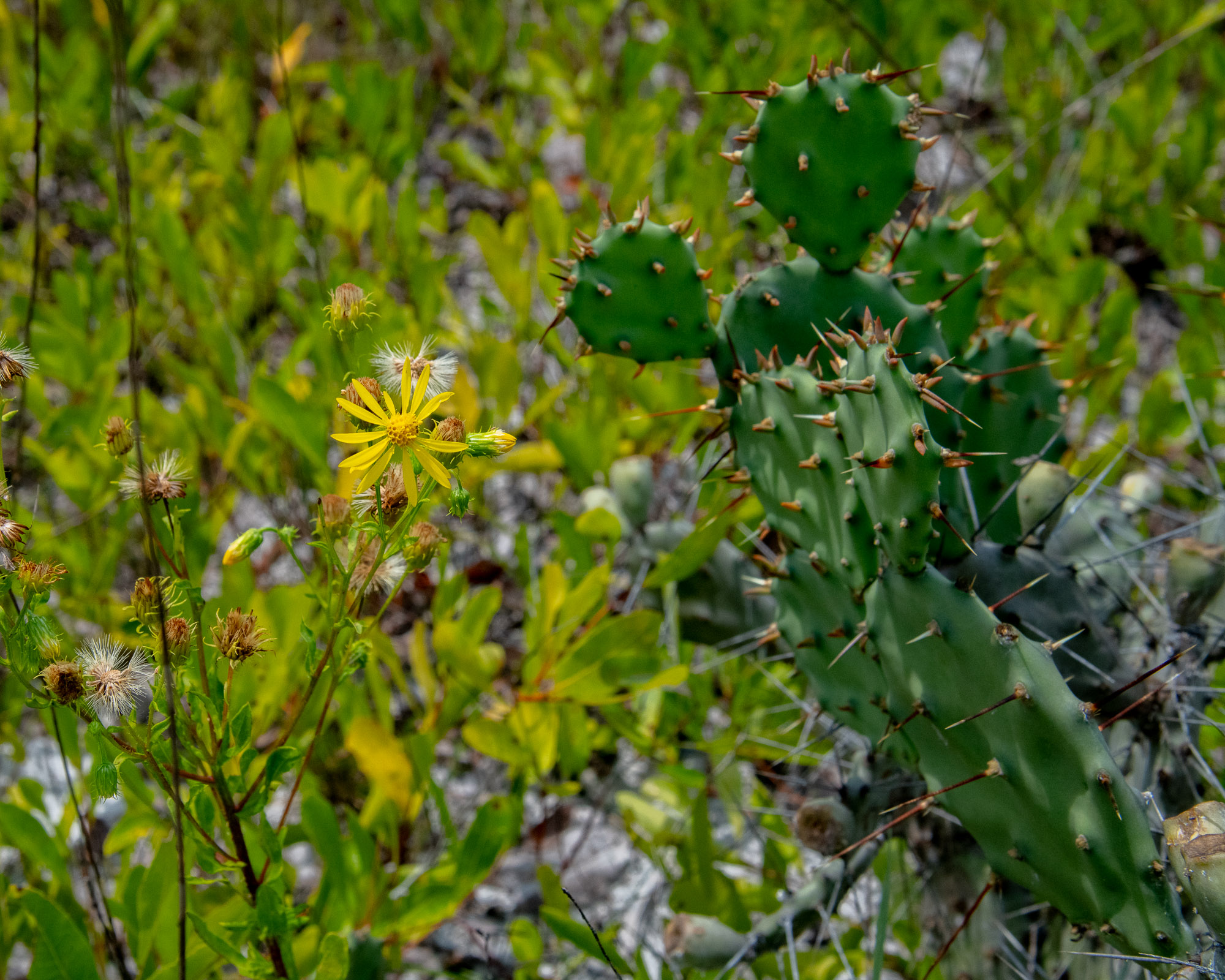
Found only in Florida, the Scrubland Goldenaster (Chrysopsis subulata) is prolific along the Lake Wales Ridge. More yellow. No complaints.

Small (1/2 inch) flowers with white petals and yellow stamens blooming from a cone-like head give Carolina Yellow-eyed Grass (Xyris caroliniana) the appearance of tiny butterflies flitting in the breeze.

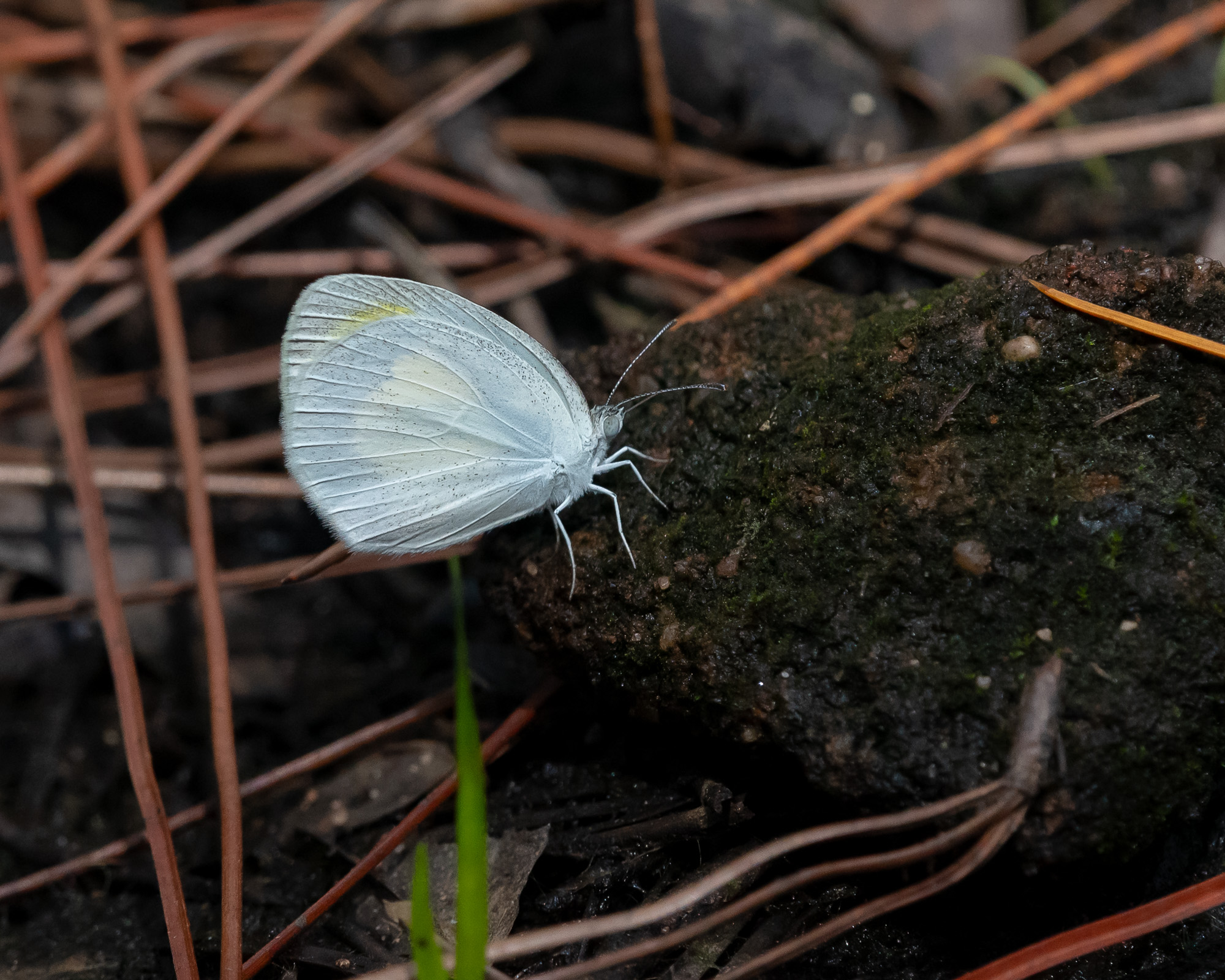
Speaking of small butterflies, the low-flying Barred Yellow (Eurema daira) was numerous today throughout the forest.
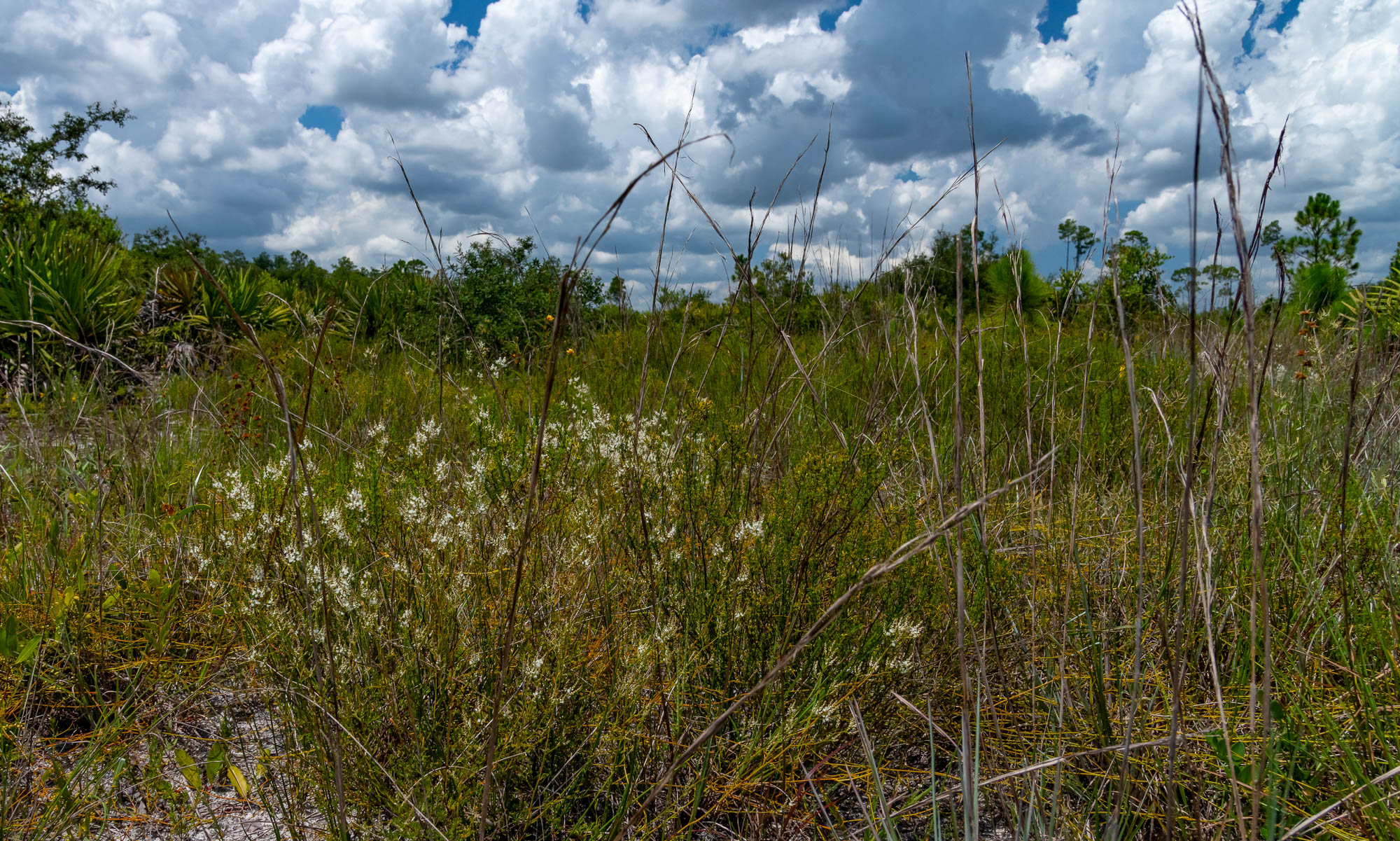
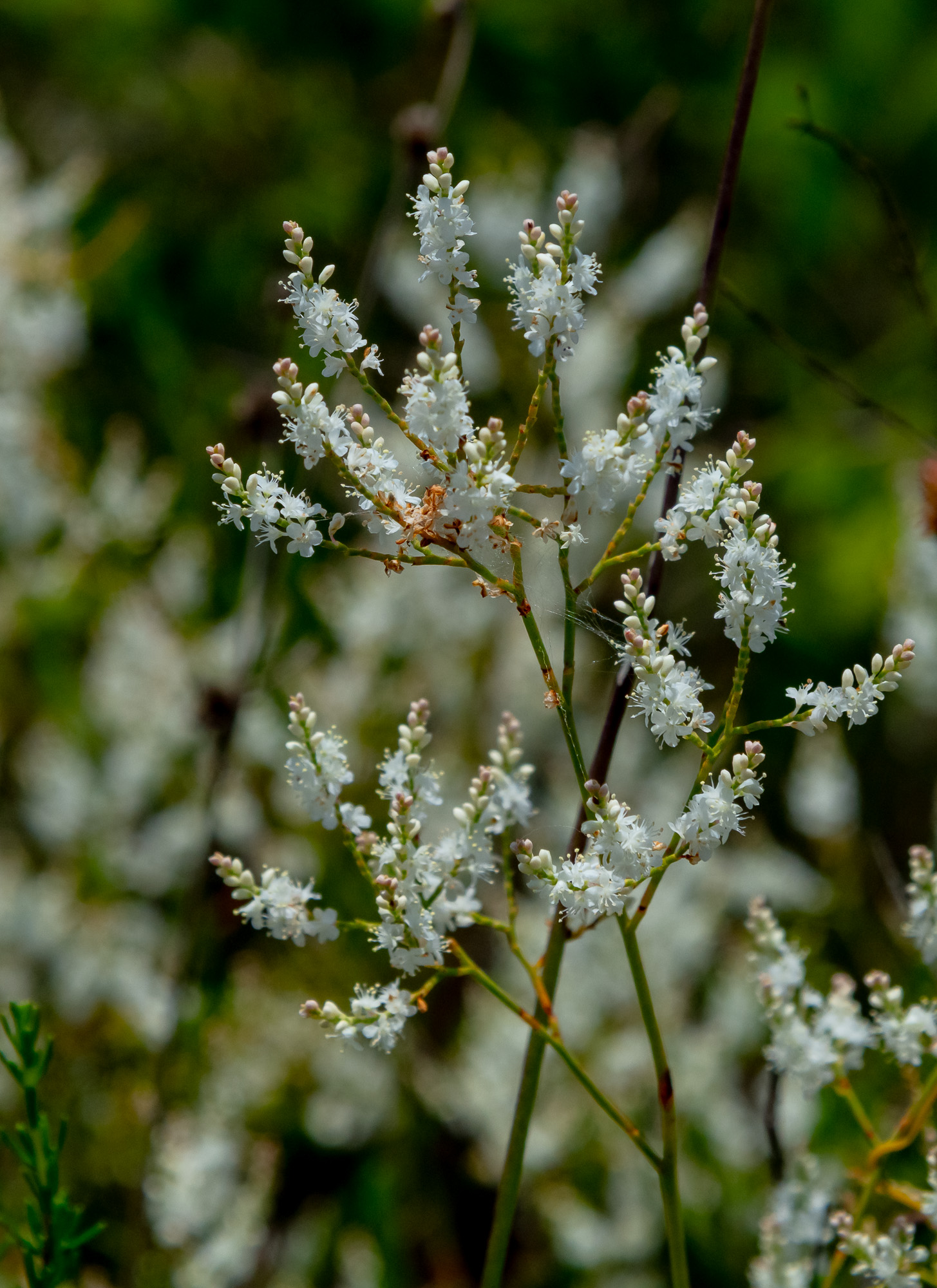
A member of the buckwheat family, this October Flower
(Polygonella polygama) is getting a jump on blooming by a couple of months. Called a “sub-shrub”, it is easily overlooked for most of the year. Then, it blooms. Wow!
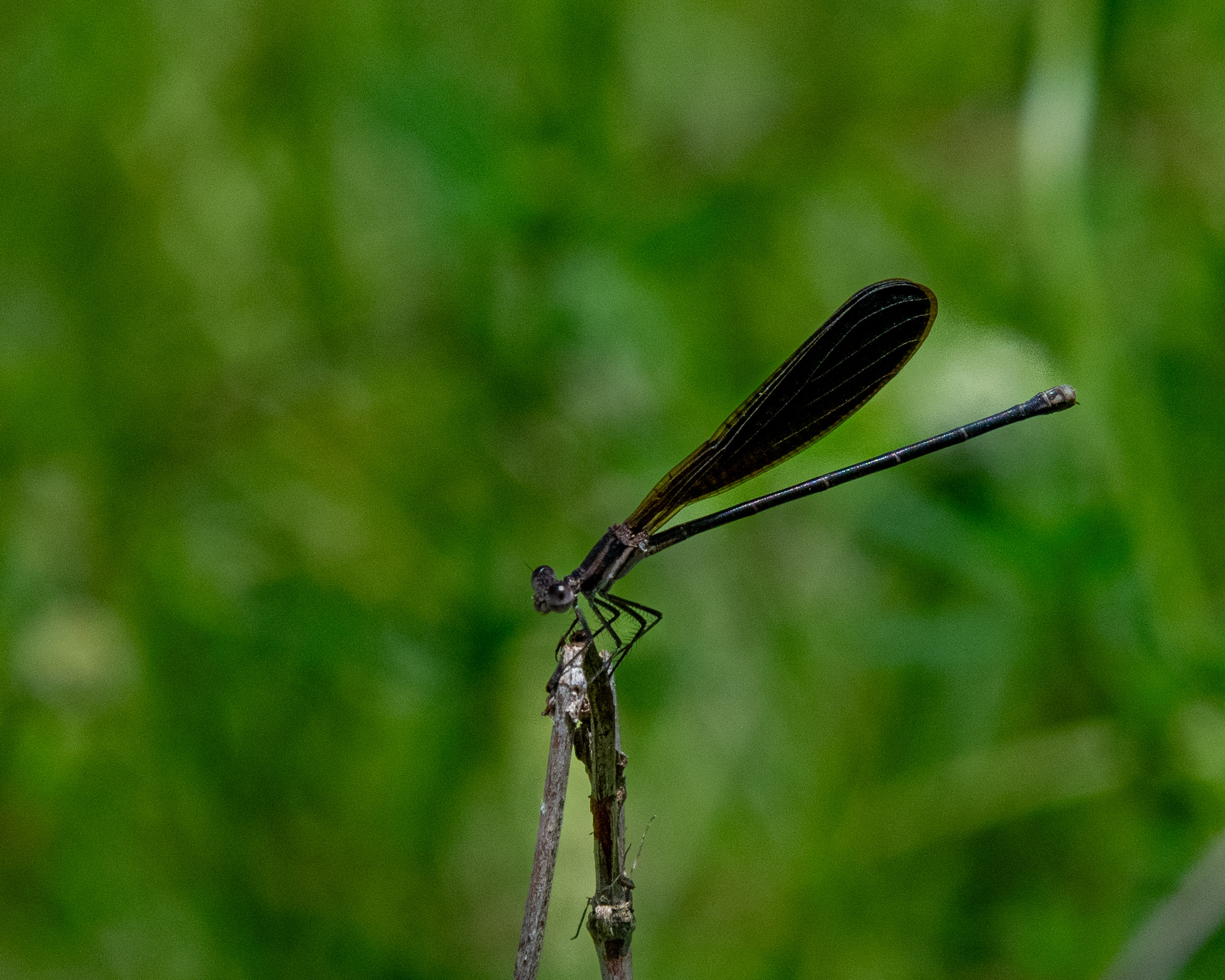
Primarily found in Florida, the Black Dancer (Argia fumipennis ssp. atra) is a subspecies of the more common Variable Dancer. This unique damselfly is fairly abundant in the state forest.
One of our favorite trees is the Loblolly Bay (Gordonia lasianthus). It likes the swampy soil adjacent to upland pine forests and the lovely flowers are similar to Magnolias.

Its common name may hint that it is common but we are elated anytime we spot a Common Buckeye (Junonia coenia). Common or not, it is uncommonly beautiful.

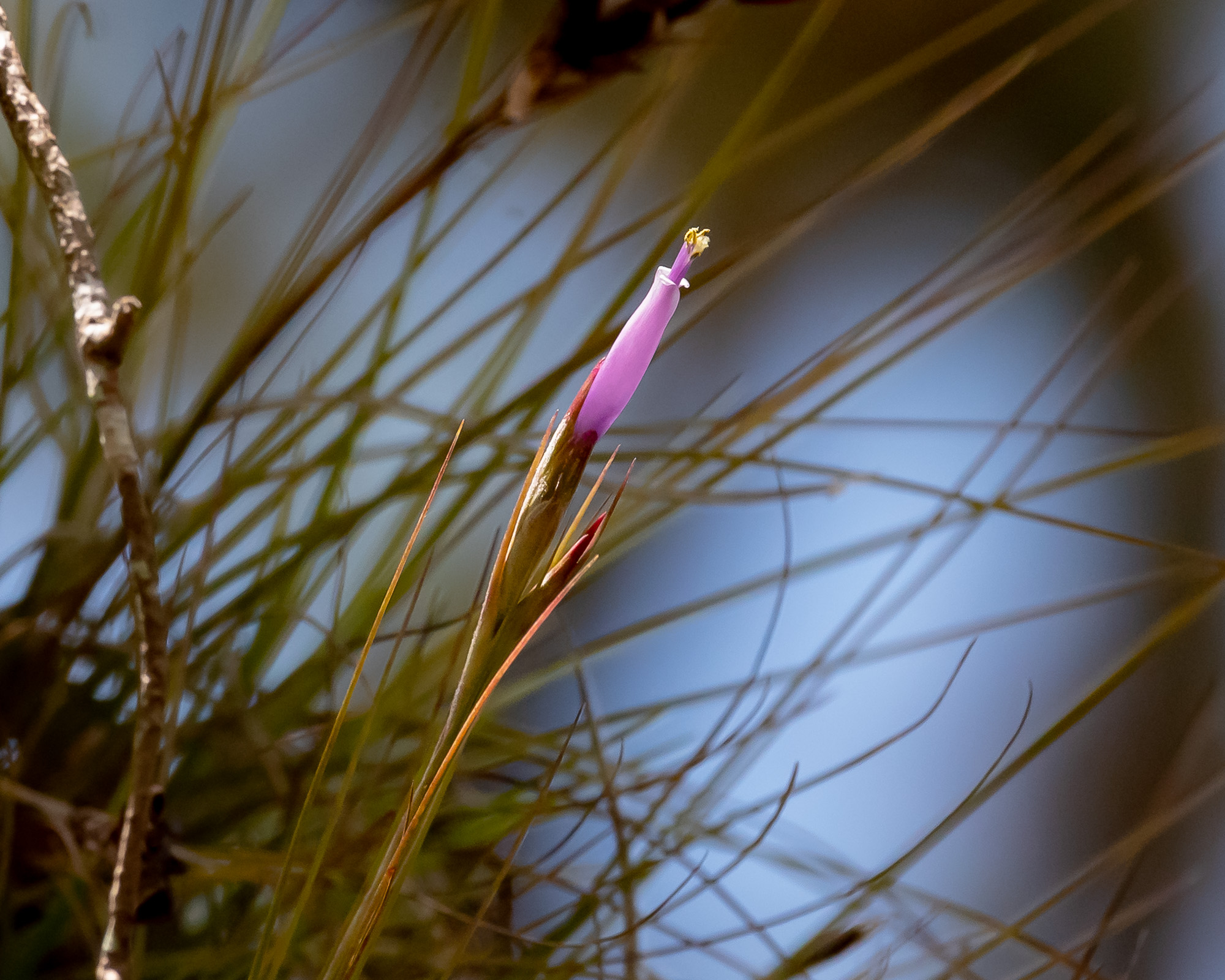
Related to our ubiquitous Spanish Moss, Southern Needleleaf (Tillandsia setacea) can seem to take over some of the oak tree branches around here. Some have called the spindly collection of leaves of this bromeliad the “trash basket of the trees”. When it offers a glimpse of its bloom, however, we simply call it gorgeous.
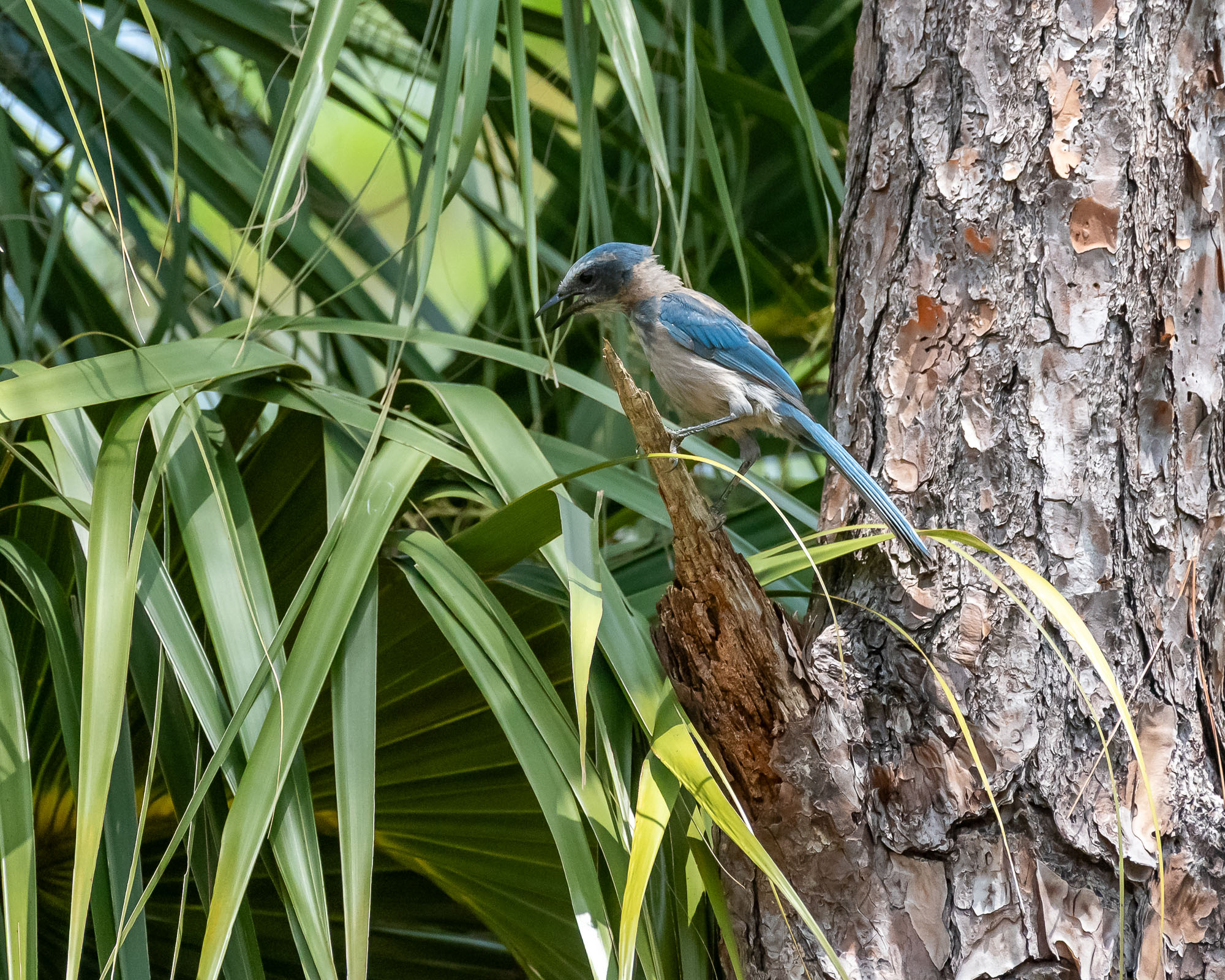
The Florida Scrub Jay is, happily, abundant to this section of central Florida. Typical of other members of the jay family, we are greeted by a gang of birds screeching at our intrusion as soon as we get near the forest entrance road. And that is okay with us.
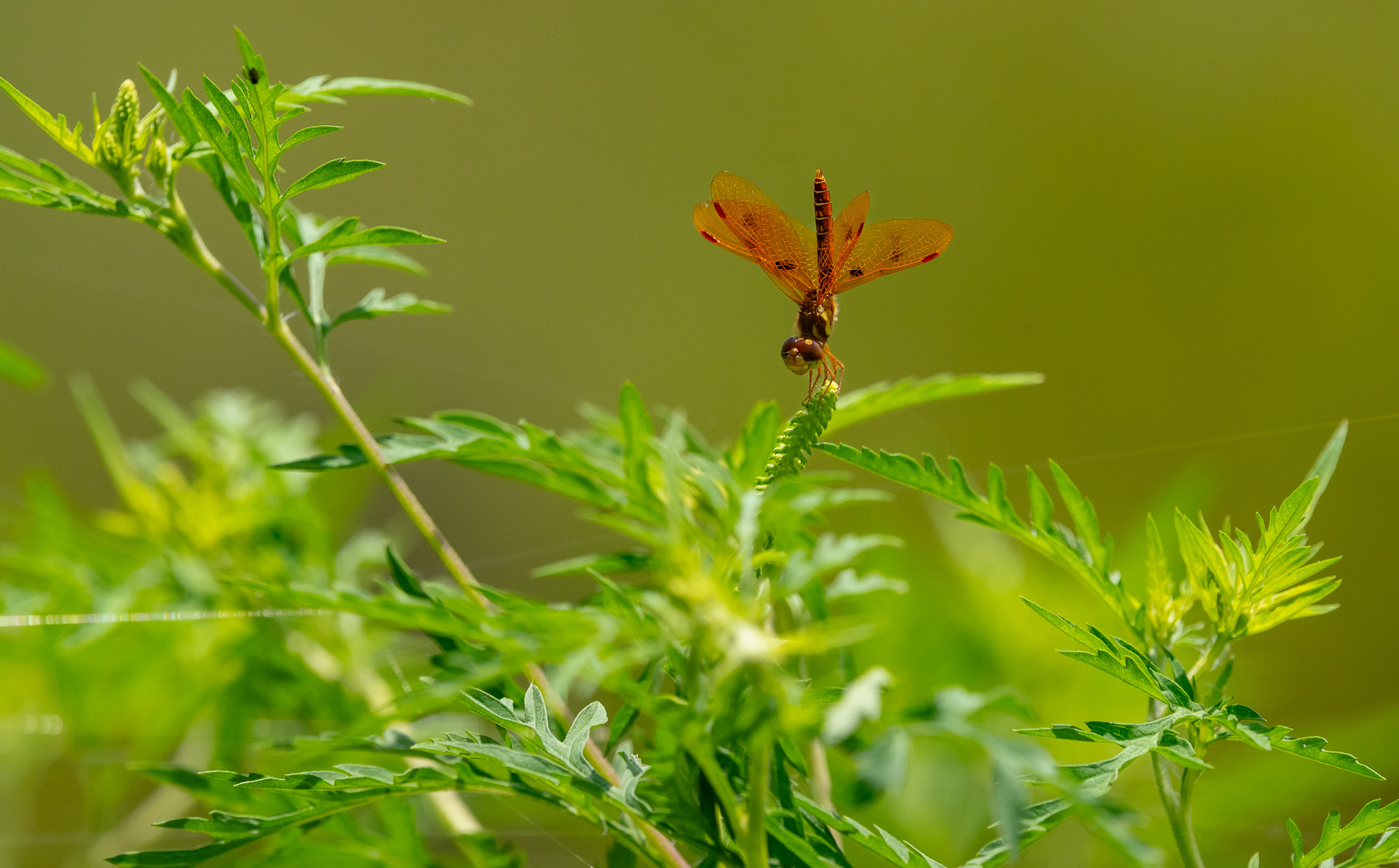
One of the smallest dragonflies in North America, the Eastern Amberwing (Perithemis tenera) resembles some rare golden ornament among the greenery of the forest understory.
Summer is but a memory. This year has been challenging but the outlook for us is bright. We’ve managed a few outings since August and will try to get back into the blog habit. Thanks for your patience!
Enjoy your search for a natural place and come back for a visit!
RIP, our good friend from Australia whom we never met but who made our lives better through her lovely blog posts.
Elephant’s Child, Sue – You shall be missed.

(Click on images to enlarge, click again to zoom.)
The red clay road is still damp along the edges from yesterday’s brief rain shower. Pine trees provide that fresh scent only they can manufacture. Blue sky, no breeze, no man-made sounds. We pause and sigh as one.
Ancient geological phenomena make the Lake Wales Ridge one of our very favorite places to visit. This unique ecosystem is covered with a mosaic of scrub, flatwoods, wetlands and lakes. Although we haven’t become lost here in our wanderings, we always become lost in reverie.
Although the dog days of summer have just passed, the hounds have allowed the heat to remain over the land with no relief in sight. Siriusly. (Reminder, the date of this visit was August 15th.) It’s okay. Our internal Florida bodily thermostats adjust to handle these egg-frying temperatures. Ooops. Gini just asked to get that car A/C turned down!
Yes, there are, once again, way too many pictures. Just scroll quickly and you’ll be finished in time for dinner.
In the center of surrounding pine forest and scrub palmetto is a small lake. This source of water attracts a terrific selection of birds, blooms and bugs. Oh, look. Here’s a familiar resident now. American White Waterlily (Nymphaea odorata).

One of the larger dragonflies in this area is the Golden-winged Skimmer (Libellula auripennis).

Where there is wet ground, we will usually find some member of the Sagitarria genus. This one is Grassy Arrowhead (Sagittaria graminea).

Also known as Hat Pins or Bog Buttons, Tenangle Pipewort (Eriocaulon decangulare) offers a different form than a “regular” flower bloom.

The male Pipevine Swallowtail (Battus philenor) has a really bright upper wing iridescence.

Supposedly, some botanist conjured a vision of the track of a huge mammal when observing the basal leaves of the Tall Elephantsfoot (Elephantopus elatus). The vision escapes me. No matter. The lovely lavender flowers more than make up for its name.


We’ll check back in the spring, but strongly suspect the area’s critters will keep the fruit of this Darrow’s Blueberry (Vaccinium darrowii) completely harvested.

By far, the most common bird call throughout the forest today was that of the Eastern Towhee. “Drink-your-teeeeee“.

Blooms of the Winged Sumac (Rhus copallinum) attracted a huge number of pollinators. Most were really small fly-like things which evaded all attempts to photograph them.


Endemic to Florida, the bright Yellow Milkwort (Senega rugelii) can often be overlooked in the taller grasses around the forest edges.


As summer wanes, family groups of Brown-headed Nuthatches begin to disperse to establish territories of their own for the next breeding season. Their unmistakable “rubber-ducky” squeaks are music to our ears.

Another gold jewel of the dragons, a Halloween Pennant (Celithemis eponina) is, thankfully, a common sight in this area.

This is our first sighting of the aquatic carnivorous Purple Bladderwort (Utricularia purpurea). Their ability to filter nutrients from prey they capture is fascinating.

Black and white and purple. What’s not to like about a Zebra Swallowtail (Eurytides marcellus) on Pickerelweed (Pontederia cordata)?

This is Part Two of a three-part series on the one day this summer we were able to have an outing. Good news on two fronts. Gini recovered from last year’s heart escapades sufficiently to have one of her knees completely replaced. The other one should be done early next year. She is doing well and walking a bit unassisted for the first time in nearly 30 years! Secondly, yours truly will soon graduate from several months of cardiac rehabilitation. We have managed a couple of recent outings and are preparing for more! (You have been warned.)
Enjoy your search for a natural place and come back for a visit!
(Click on images to enlarge, click again to zoom.)
Dew-bejeweled wisps of webs atop brown grass stalks sparkled with the first rays of sun as we made our way along the red clay road through the forest. The call of a Northern Cardinal was as clear as the bright blue sky overhead. Mid-summer. Hot. Humid. Surely a day meant for mad dogs. Indeed.
Flowers appeared in profusion every few yards. Birds and cicadas competed in some sort of “who can sing the loudest” contest. Woodpeckers punctuated the songfest with percussion support. Lizards scurried from under every other step. Eastern Towhees seemed to be everywhere all at once urging one and all to “drink-your-teeeea“.
Incredible to think we encountered no other human all day in this lush paradise of birds, bugs and blooms. Every few minutes seemed to produce a heavy sigh from one of us.
We were in the center of Florida within the Lake Wales Ridge State Forest. This unique scrub ecosystem may host the largest number of rare and endangered plants in the United States. Currently, 33 plants and 36 animals in this region are on state or federal endangered lists. Little wonder this is one of our favorite spots to spend a little time.
Key words this year for exploring nature: “little time“.
Surgeries, recoveries – wash/rinse/repeat. Growing old is not for the faint of heart.
Gini was scheduled for knee replacement surgery in mid-July but it had to be postponed until August 26. She is recovering well but still in pain. Meds are helping and on lesser-pain days her physical agility is quite good. Physical therapy will help in the coming weeks.
Meanwhile, little did we suspect this day in mid-August would be our last day to get out for the summer. Fortunately, it was a very good day.
(This post covers only a small portion of the day. We’ll provide little doses over the next few weeks.)
Butter-colored Partridge Pea (Chamaecrista fasciculata) was abundant throughout the forest today. Birds and other animals like the seeds. While the plant is host to several butterfly species, the design of the bloom is such that it can only be pollinated by long-tongued bees.

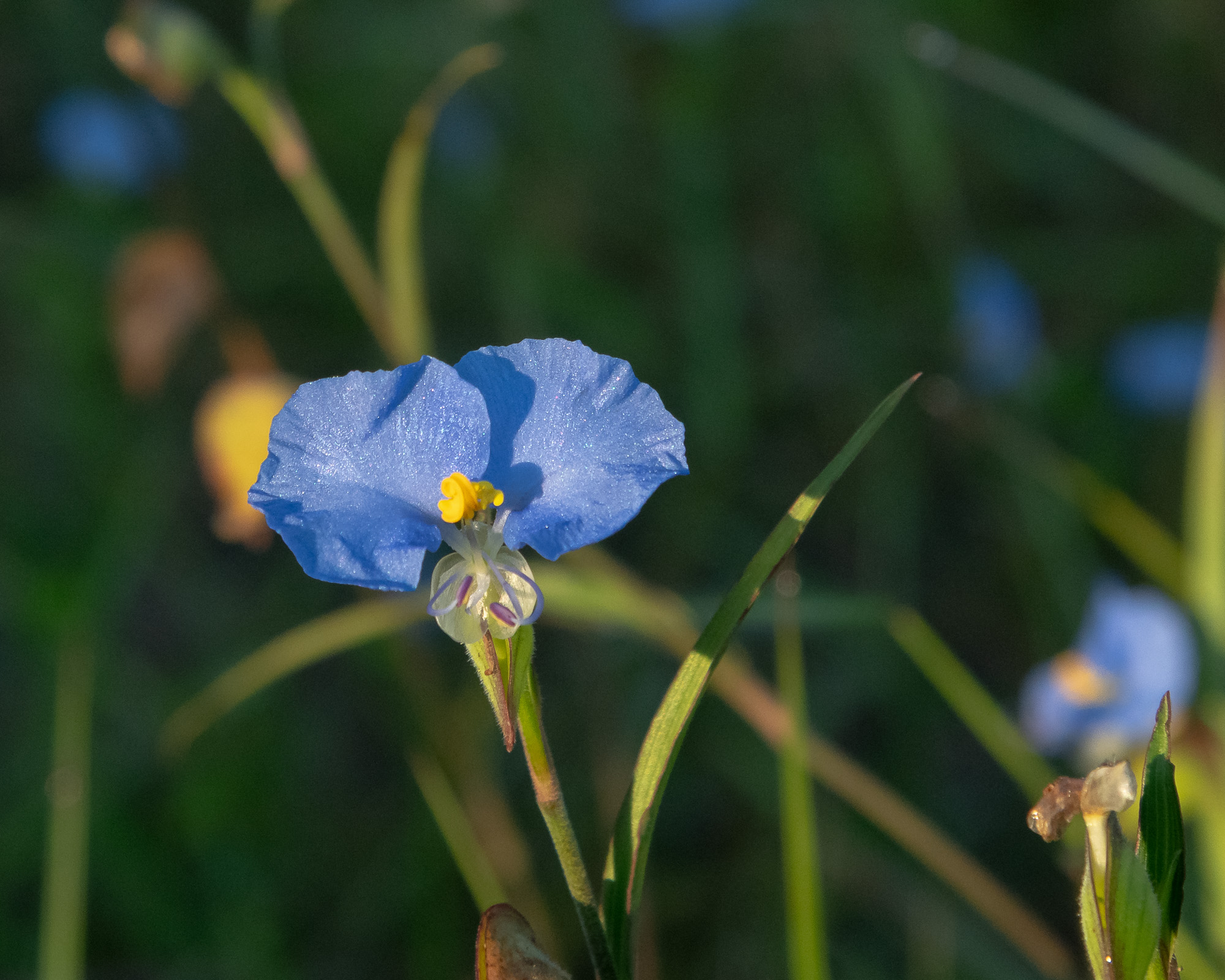
Also plentiful was the brilliant blue Whitemouth Dayflower (Commelina erecta). True to its name, blooms only last one day but the plants have a succession of flowers which keeps the area dotted with blue all summer.

A strange-looking grass-like plant, Plains Snakecotton (Froelichia floridana) is a member of the Amaranth family which can grow as tall as three feet. Despite its scientific name, it’s common throughout the central and eastern United States.

It is estimated that over the last 50 years the population of Red-headed Woodpecker in North America declined by over 50%. Likely due to loss of nut-producing trees and clearing of dead trees, this handsome bird is, thankfully, fairly abundant within the Lake Wales Ridge State Forest.

Pinweeds are low-growing plants that resemble herbs. This particular one, Deckert’s Pinweed (Lechea deckertii), is found in Florida and southern Georgia. Different!

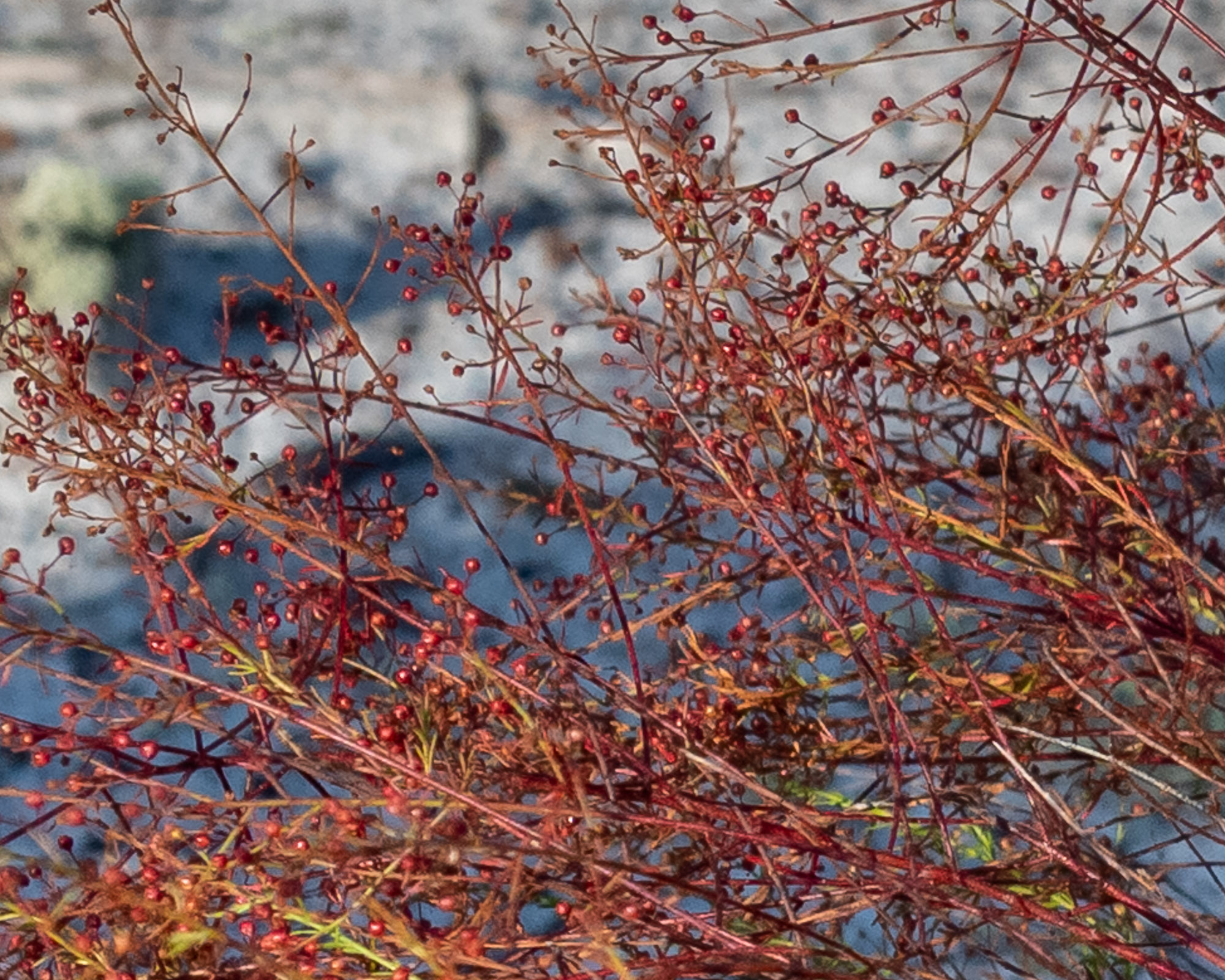
State and federally endangered, Small’s Jointweed (Polygonella myriophylla) is only found in four counties in Florida’s Lake Wales Ridge. This woody, low-growing plant has a profusion of very small white flowers through the summer and early fall.


A legume with bright yellow blooms, Florida Alicia (Chapmannia floridana) can reach three feet in height. Endemic to Florida.


Plenty of insects thrive in this area. This one is quite common. A Carolina Saddlebags (Tramea carolina) on Needlepod Rush (Juncus scirpoides).

If we had known this was to be our last summer day in Nature for the year, what would we have done differently? Not one single thing.
Enjoy your search for a natural place and come back for a visit!
 Our Natural Places