Header Image: Carolina Wren
Once again, that mee-tee-oh-rah-low-gist was absolutely correct. Partly cloudy with temperatures about the same as yesterday. I missed my calling.
We pulled into the management area just before the sun was scheduled to make an appearance. Thin fog suggested the actual appearance would be somewhat later than Sol had in the day-planner. Atop the welcome sign, a Red-shouldered Hawk scanned the dew-soaked grass for any sign of movement, AKA: breakfast.
The fog was of such consistency that we could not see too far in any direction but Gini’s well-developed sense of hearing reported chips and tweets in abundance. Sandhill Cranes trumpeted overhead as they moved from their nightly roost to a nearby field where they would forage all day. The “churrrrr” of a Red-bellied Woodpecker advertised his location. Lakes were beginning to become noisy with the gabble of Common Gallinules and the eerie cry of a Limpkin split the early morning calm like that alarm clock did a short while ago.
There are locations throughout Tenoroc Fish Management Area that, over time, have proven to be consistently productive for observing bird life. Like a pair of surgeons in a convalescent ward, Gini and I make our rounds, checking the health of our patients and listening calmly as the wrens complain incessantly about their neighbors and the food. Doctor Gini announced it was already time for breakfast.
The fog didn’t last long and the clear blue sky and relatively mild temperature induced heavy sighs from us both. This. This is what life is about. Sharing nature’s beauty with someone you love. We had innumerable tasks which needed attention at the house. Some, admittedly, have needed attention for, well, a very long time. Our priorities are skewed. We know it. We accept it. Cleaning closets or holding hands while watching a Belted Kingfisher yell at the water? No contest.
I frequently feel I should apologize for subjecting you to too many images. Let us know if this is a recurring problem. There is no guarantee the issue will change, but at least I will be aware of your discomfort.
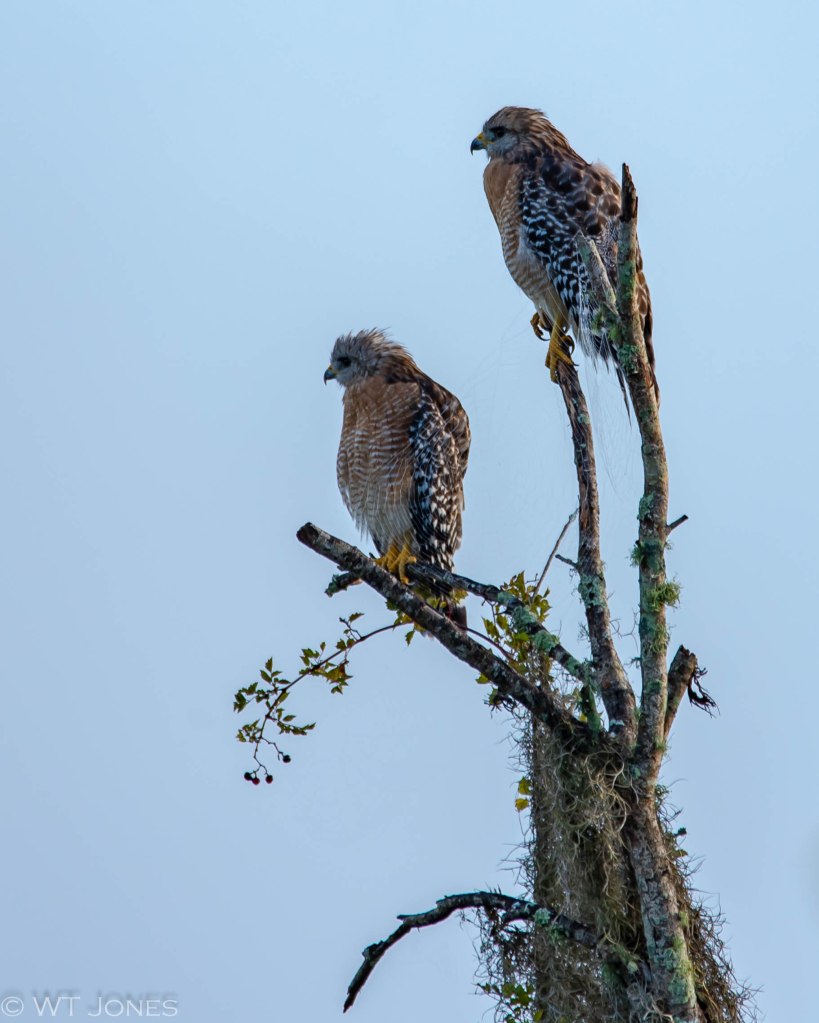
A pair of Red-shouldered Hawks begin the daily routine of hunting for food. One of our most common raptors, I feel it is one of the most handsome.
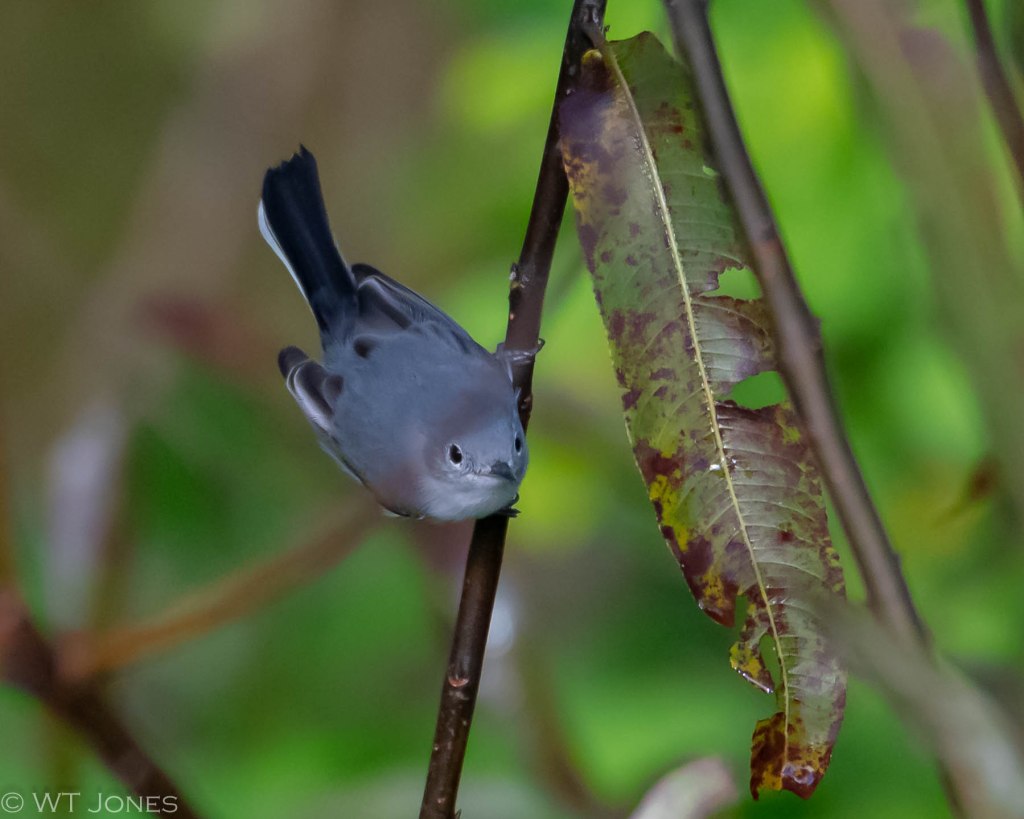
The beginning of fall migration season is often signaled by small songbirds gathering in large groups which can offer protection from predators as they journey southward. Blue-gray Gnatcatchers are one such species. We saw nearly three dozen during our morning outing.
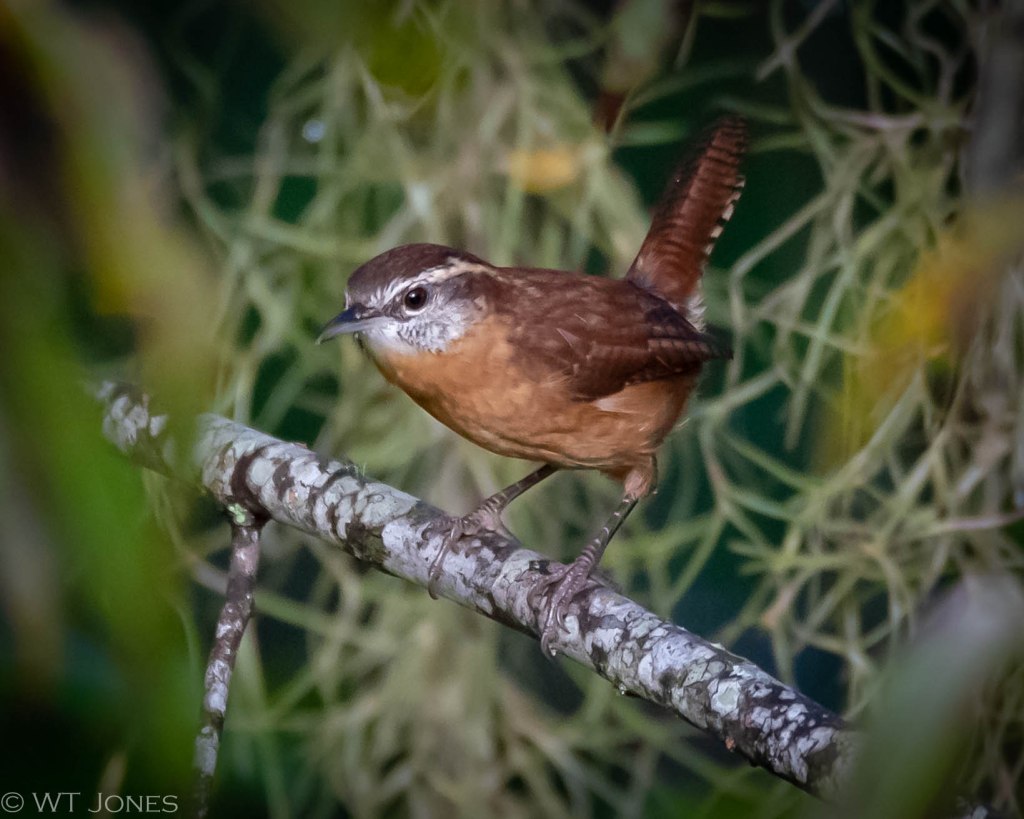
Wrens seem to be among the more aggressive members of the bird world. If they were as large as an eagle, they would be fearsome, indeed! A Carolina Wren confronted us as soon as we approached a hedgerow, demanding to know our intention. “Click.” Intention fulfilled. Thank you.
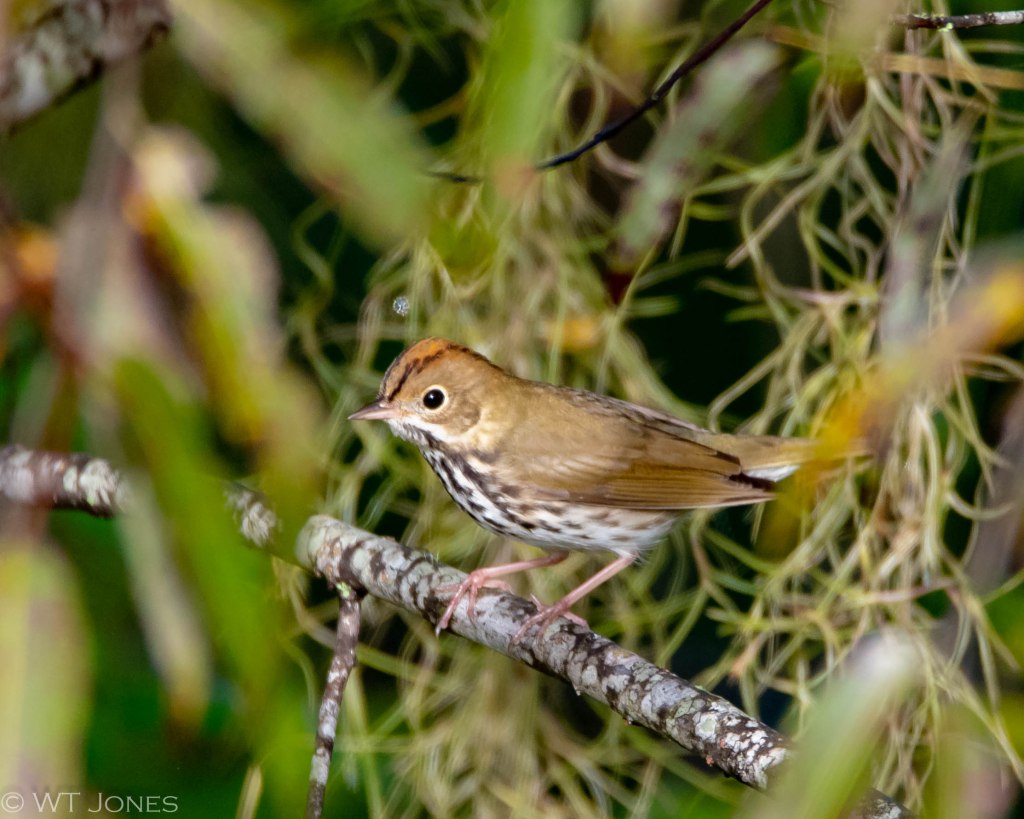
Curious as to why the Carolina Wren was yelling so loudly, a migratory Ovenbird skulked in the low branches, orange crest flared as she knew something had upset the wren so perhaps she should be upset, too. Some are not aware the Ovenbird is a warbler as it has thrush-like streaking on its undersides.
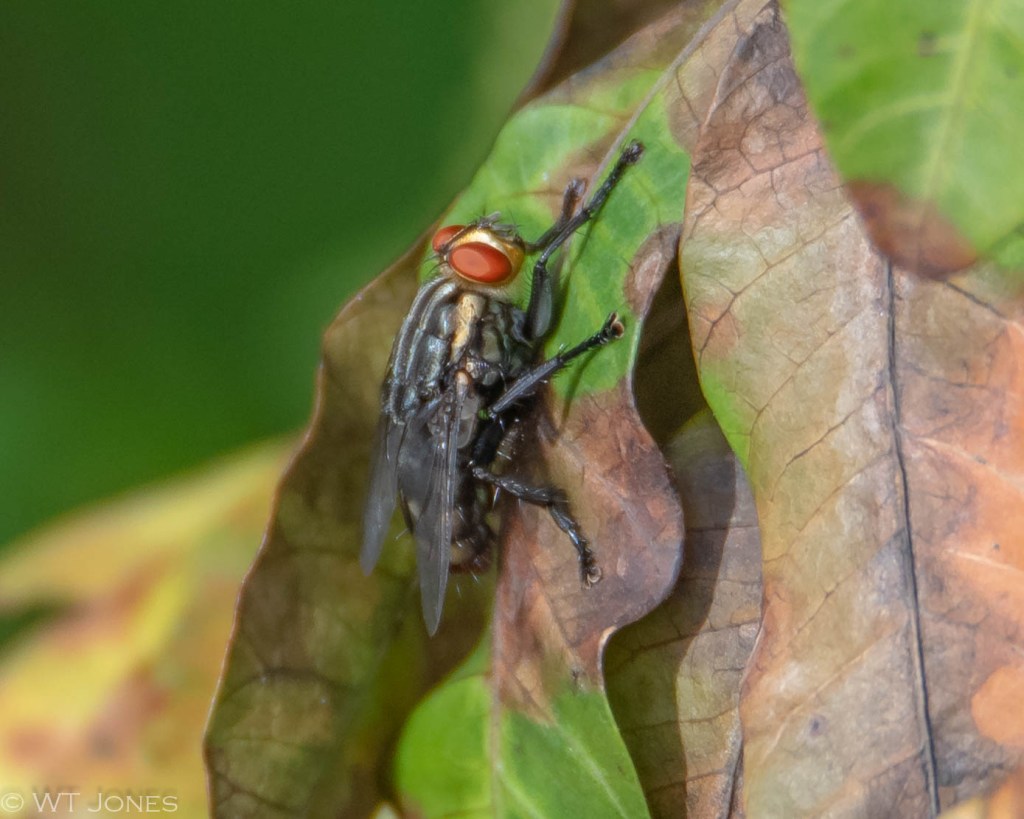
Insects abound in the area since we are seldom very far from water. This lovely specimen is the Flesh Fly (Sarcophagidae spp.). As one might expect from the Latin as well as its common name, its specialty is consuming decaying flesh.
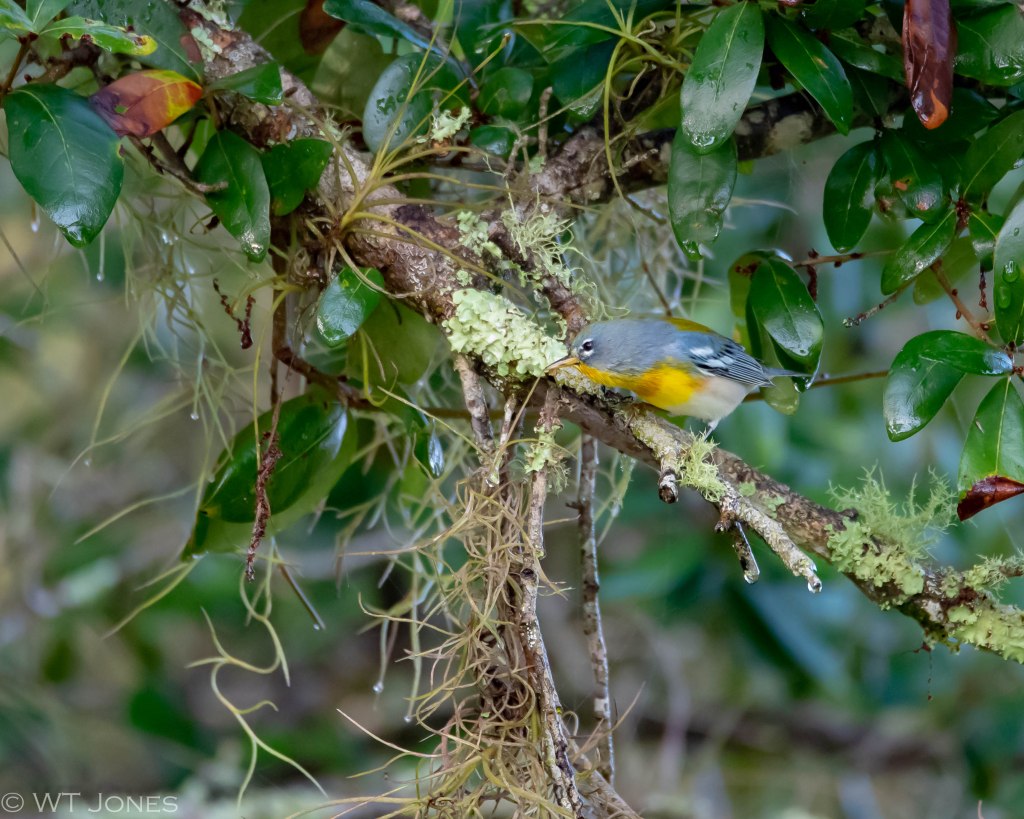
We’re lucky to have the Northern Parula here during breeding season and enjoy its ascending buzzy trill. In the fall, numbers of this warbler join with Titmice and Gnatcatchers in their trek southward.
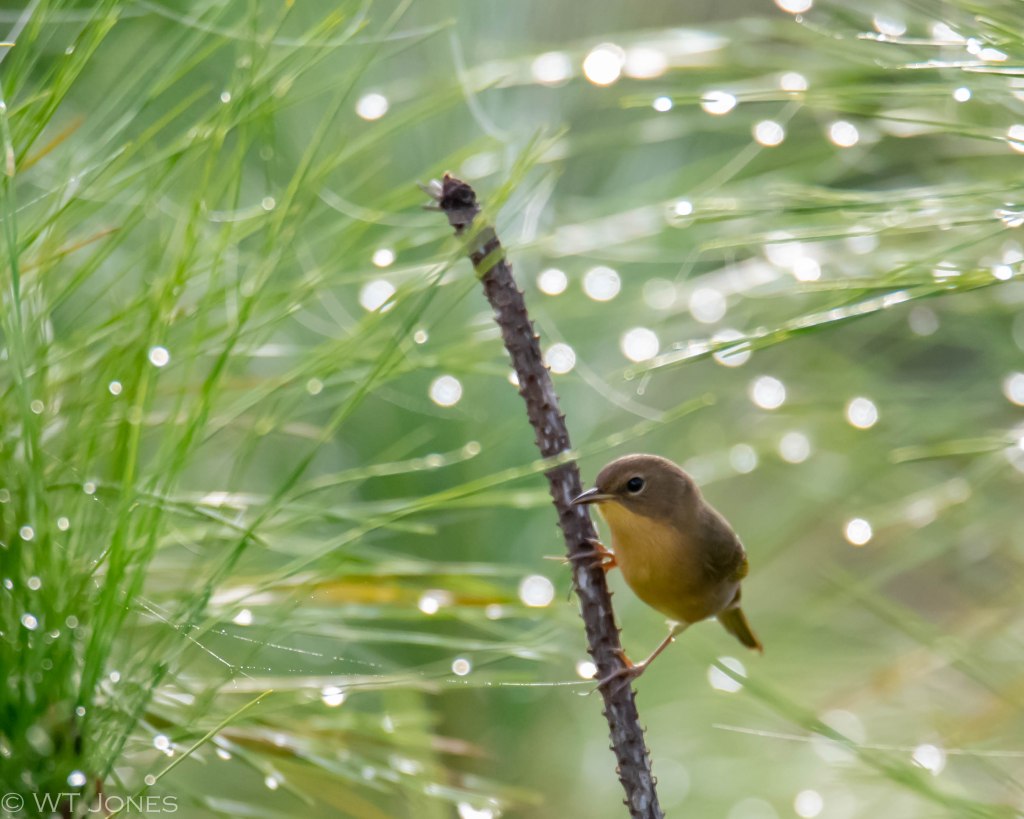
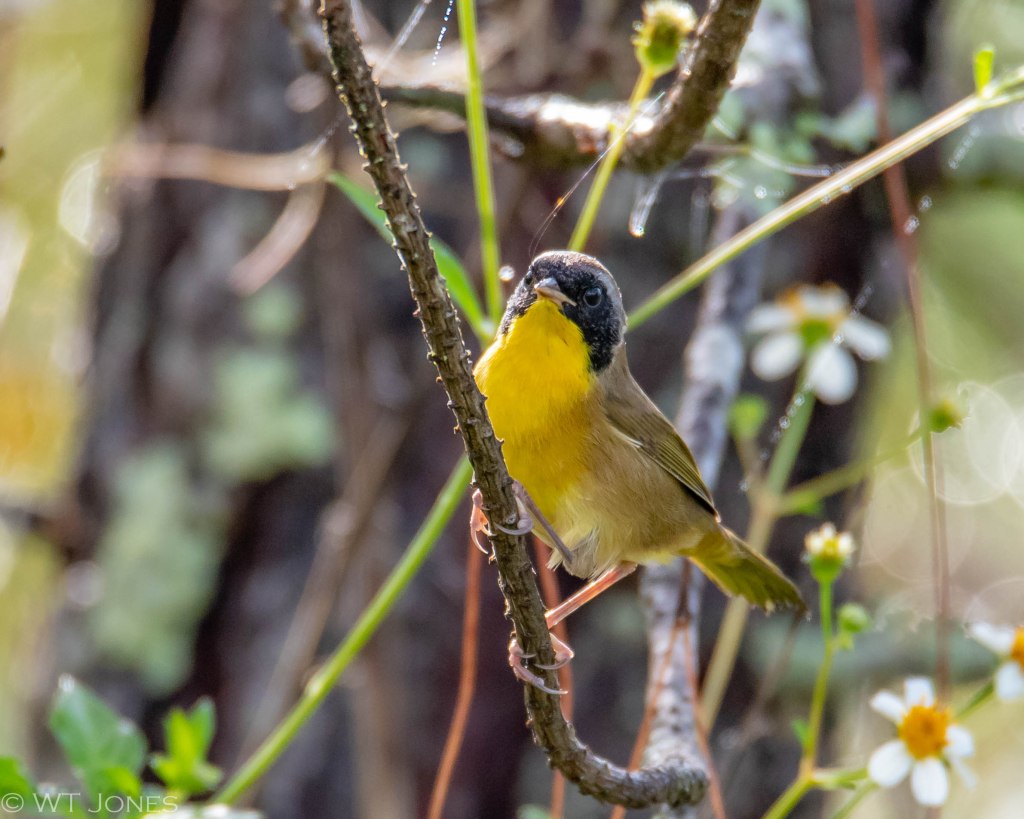
A demure female Common Yellowthroat looks like royalty surrounded by a field of dewy jewels. The male is more boldly colored and sports a black mask once mature.
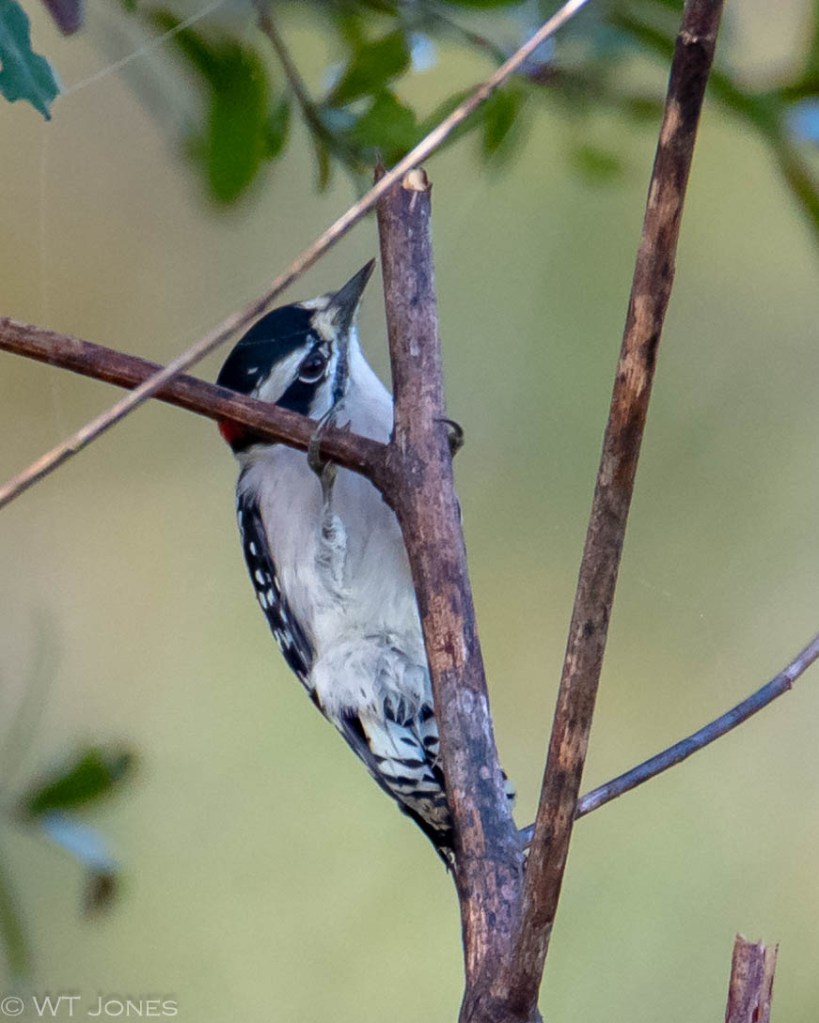
Cocking his head to get a better look at a branch, a male Downy Woodpecker has a red spot on his nape which the female lacks.
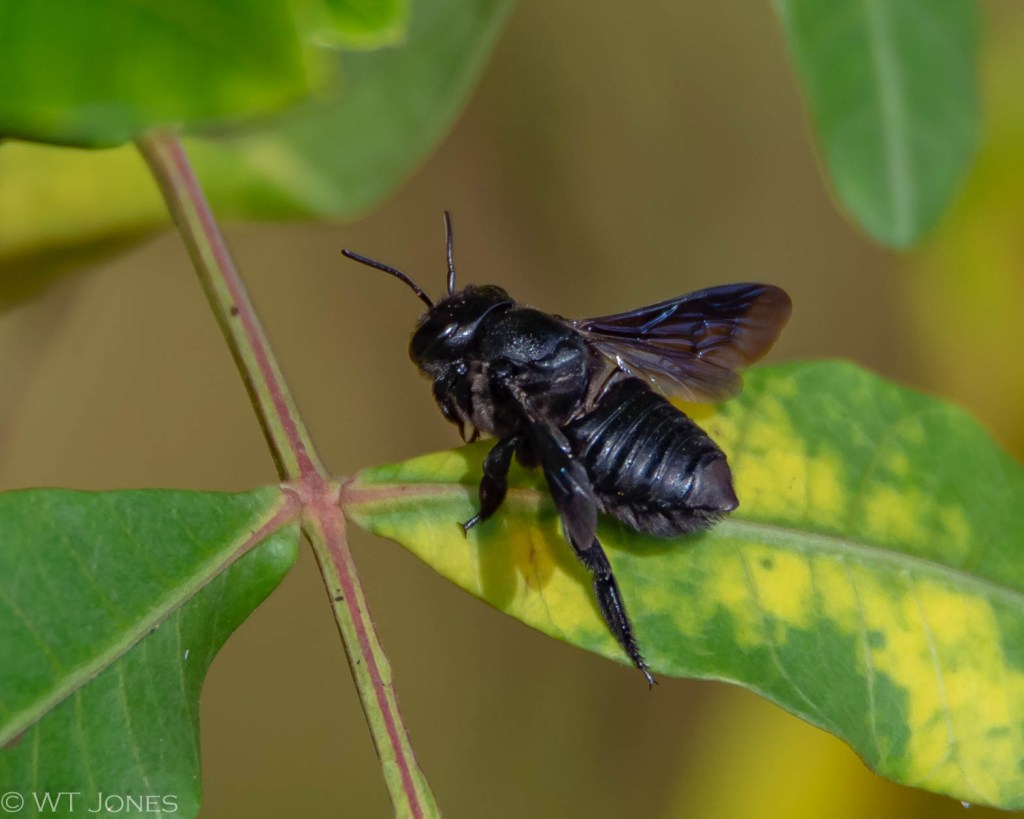
Carpenter-mimic Leafcutter Bee (Megachile xylocopoides). That’s a mouthful. Similar in appearance to Carpenter Bees, the Leafcutter Bees carry pollen on their abdomen instead of leg pouches.
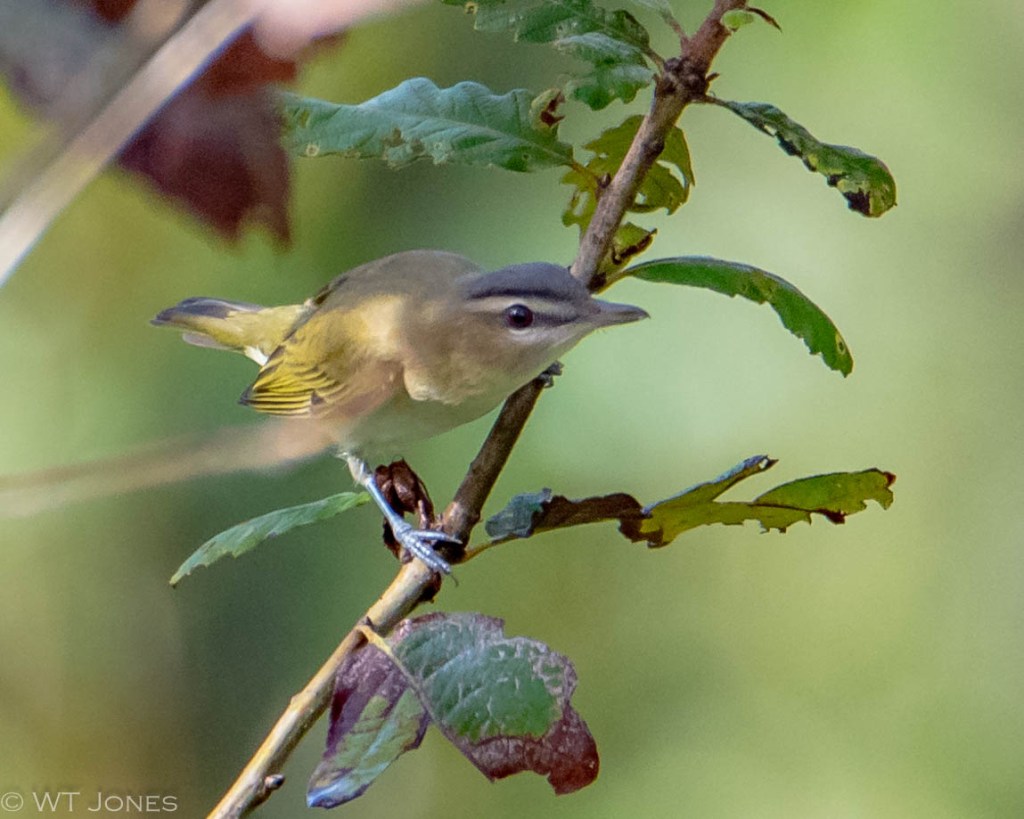
A trio of Red-eyed Vireos were busily feeding along the path. One glanced our way for a moment, decided we were no threat and continued the hunt for juicy caterpillars.
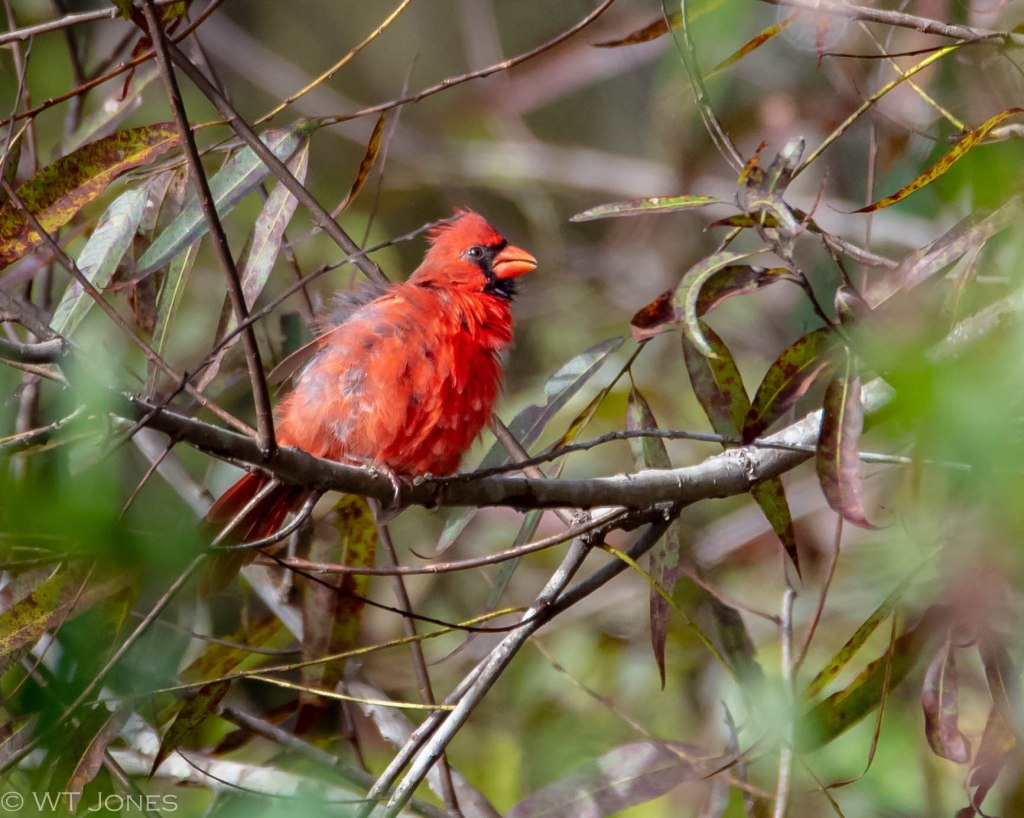
Late molting is likely responsible for the disheveled appearance of this male Northern Cardinal. It is not unusual for cardinals to have two or even three broods in our sub-tropical climate.
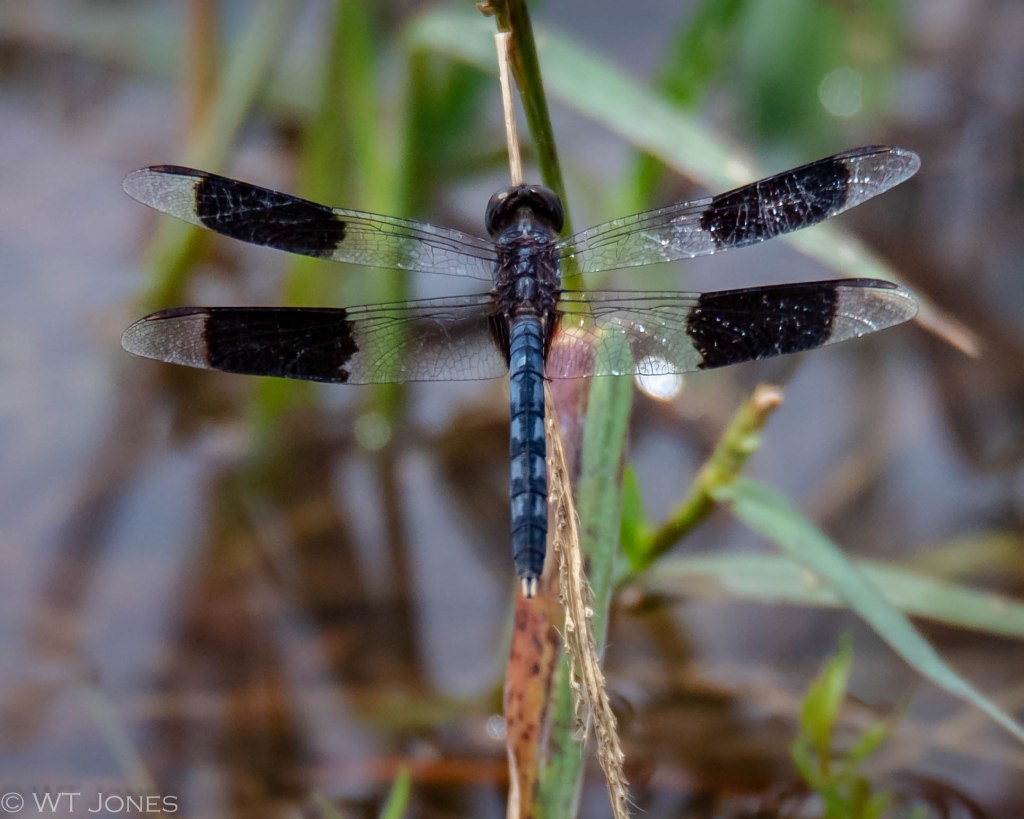
The edge of a large open field normally has a few spots where water collects. Dragonflies love the habitat, and, therefore, so do we! We found over a dozen Band-winged Dragonlets (Erythrodiplax umbrata) in the area.
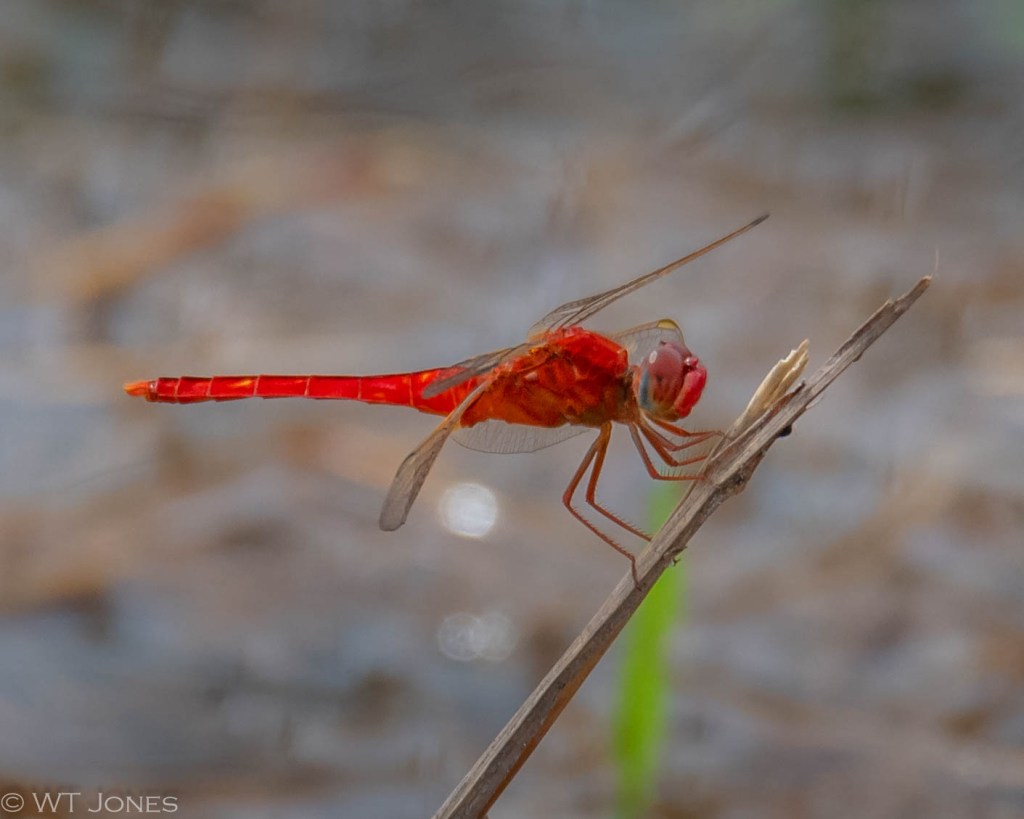
Flashes of red directed our attention to the Scarlet Skimmer (Crocothemis servilia). Not native to North America, this species likely arrived via landscaping plants.
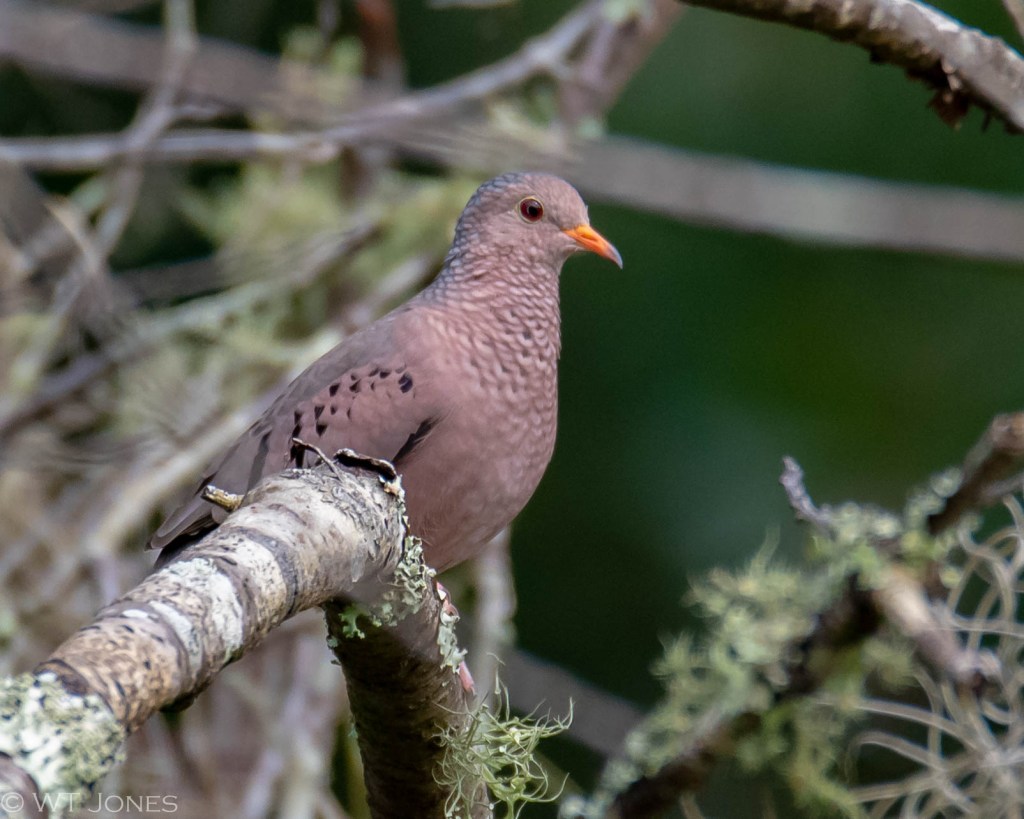
One of the smallest doves in the United States, the Common Ground Dove is about the size of a Song Sparrow.
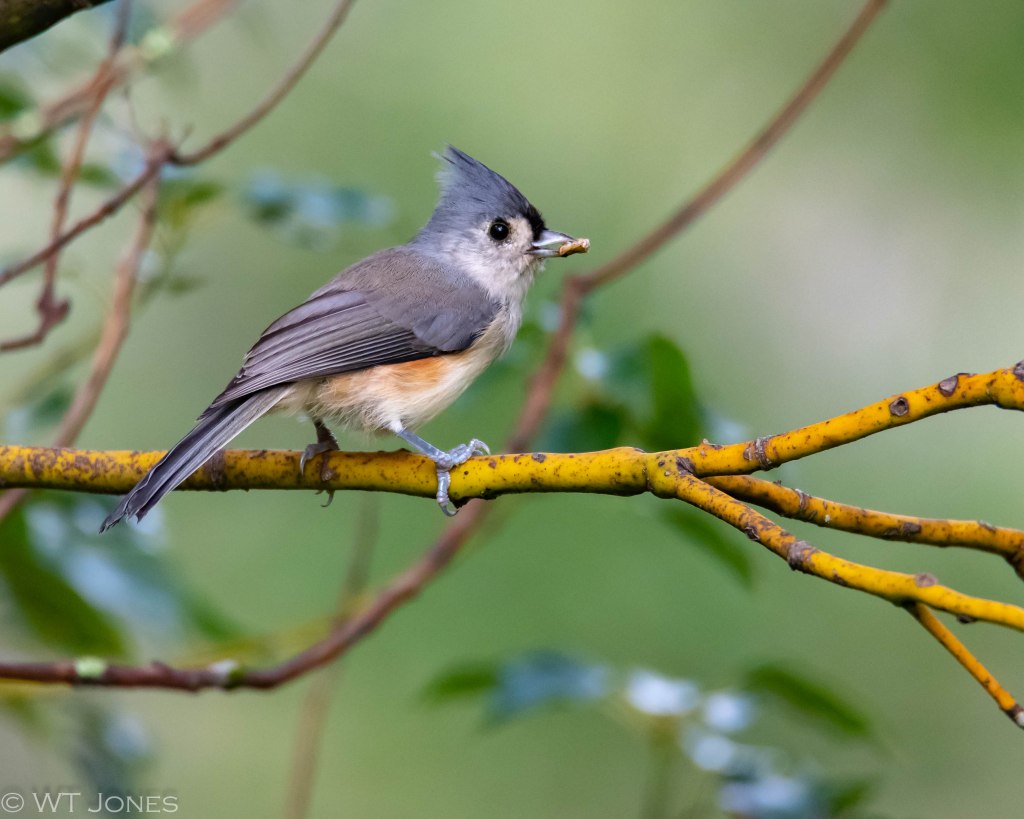
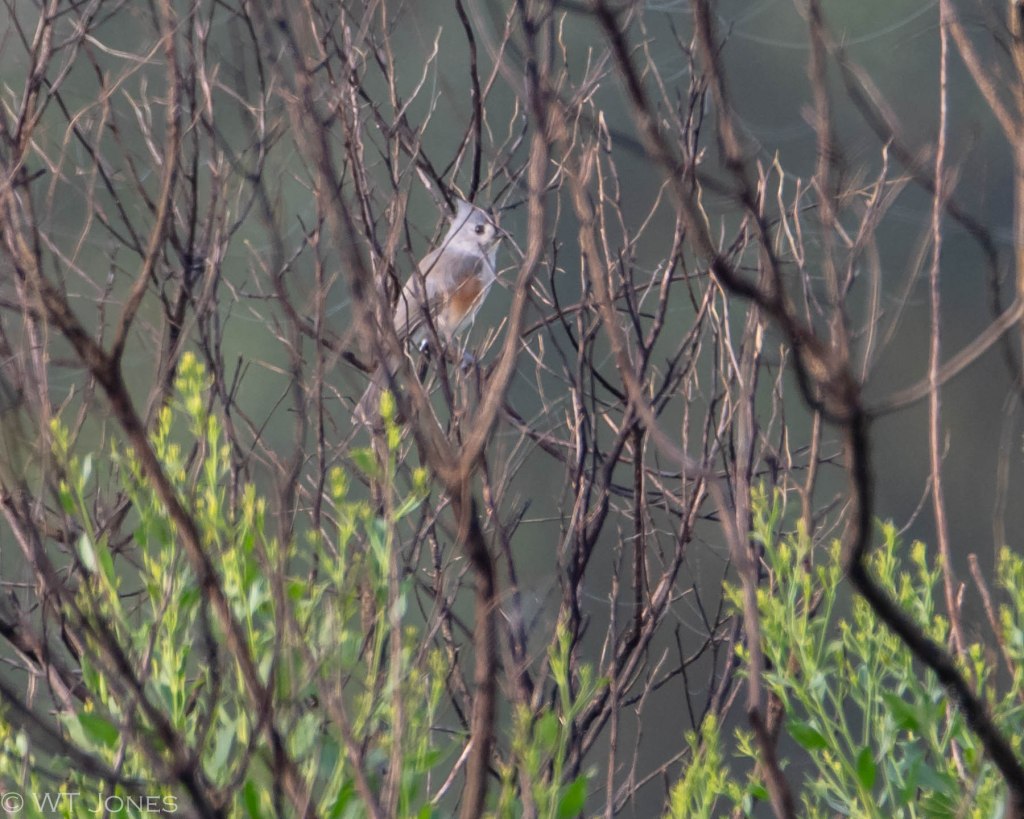
Gangster. The Tufted Titmouse is the first to yell in the forest when a human shows up. He then leads is pack of bird-thugs to challenge our incursion of their territory. Okay, it’s pretty hard to call anything this cute a “gangster”.
Roseate Skimmers (Orthemis ferruginea) are some of the largest of the skimmers. This female posed for a few seconds and I appreciate it.
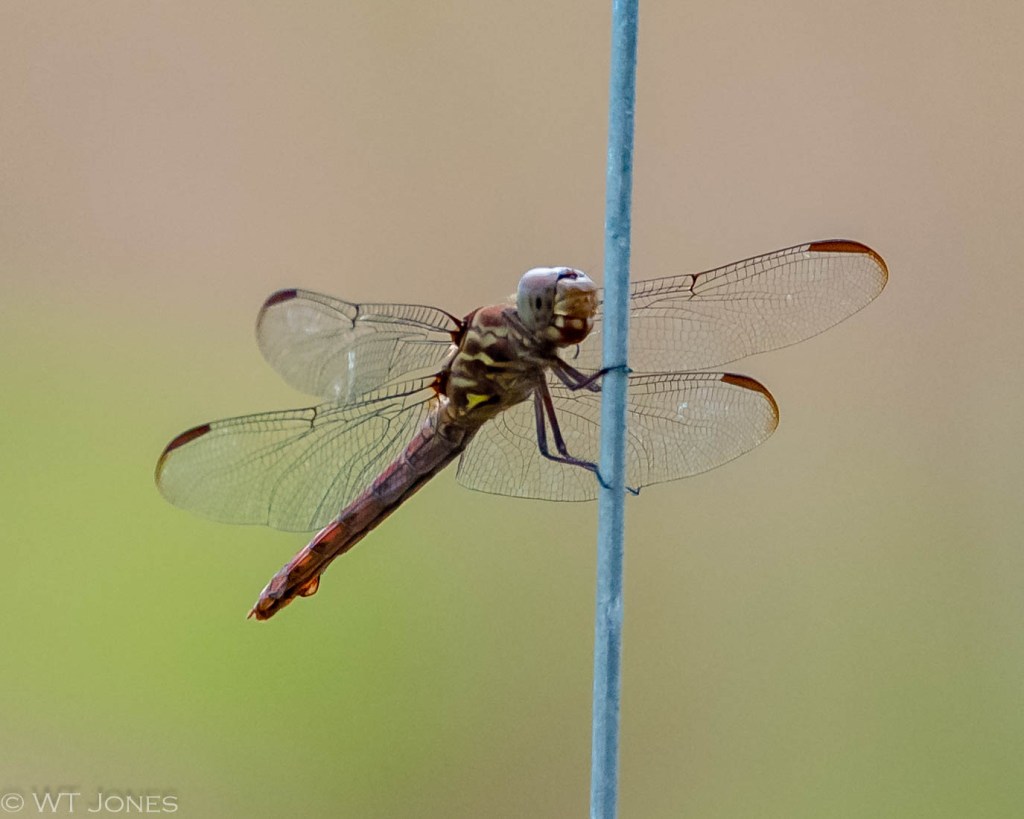
For me, one of the most attractive butterflies we have in the area is the Zebra Swallowtail (Protographium marcellus). As frequently happens, this one lost a bit of its tail, probably due to a close call with a predator.
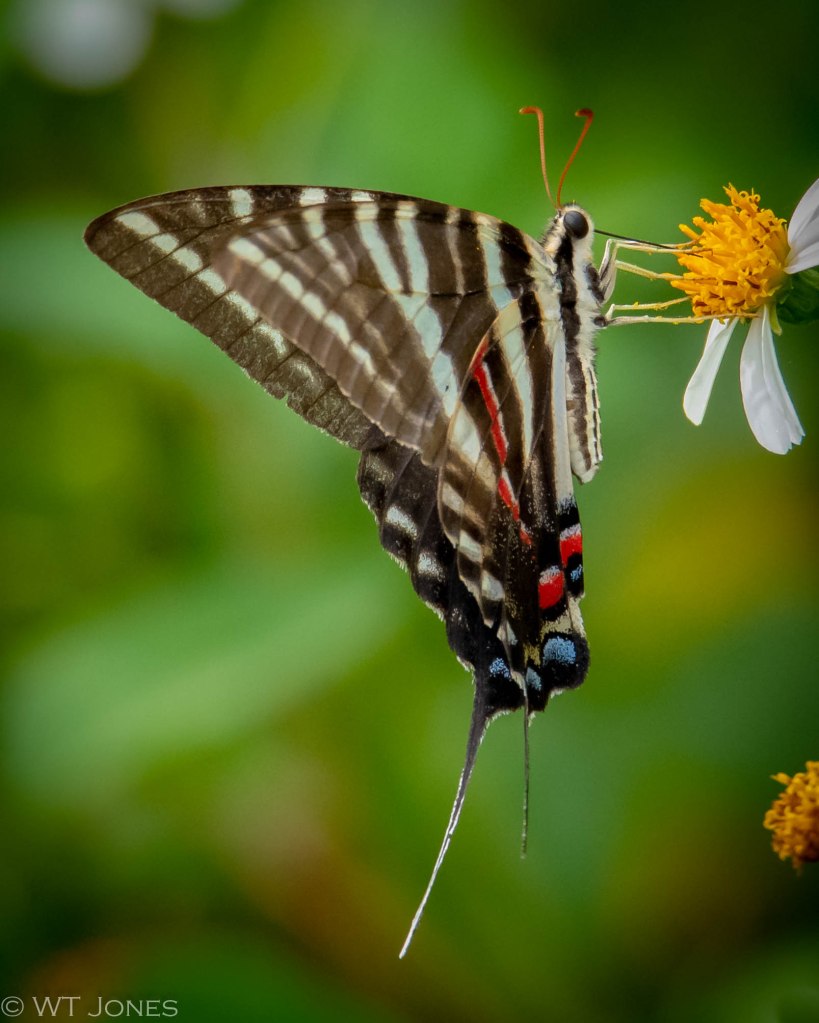
We know fall migration is definitely underway when we hear the rattles of active Belted Kingfishers around our lakes. This guy wouldn’t quit yelling at the water below. We couldn’t see the object of his ire, perhaps Al The Gator?
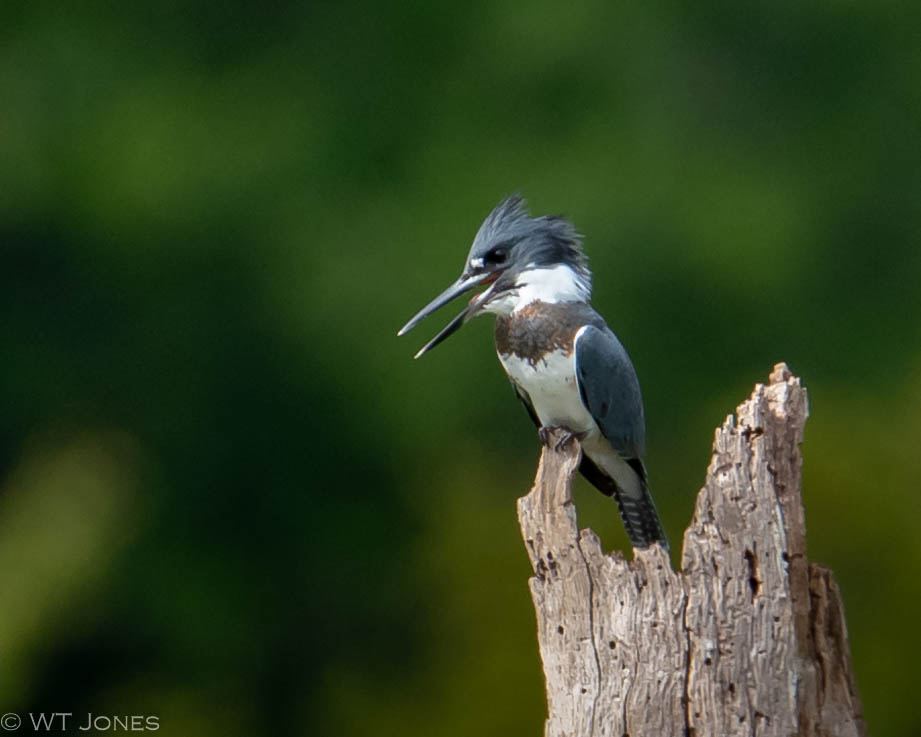
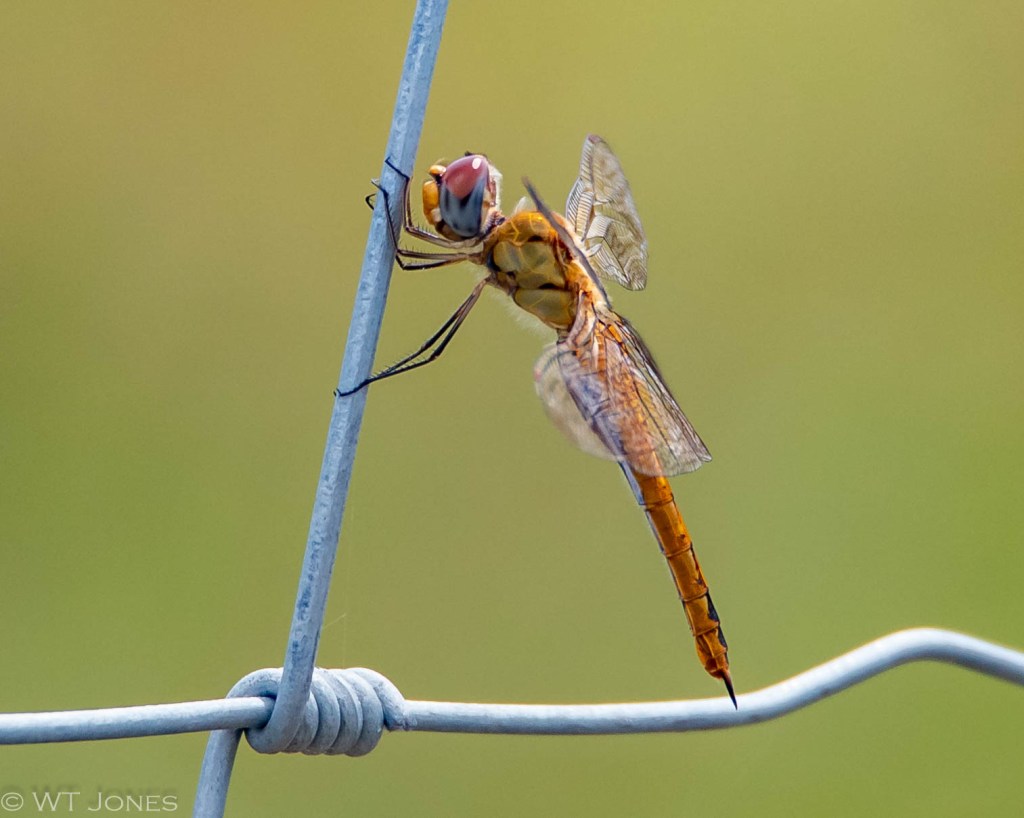
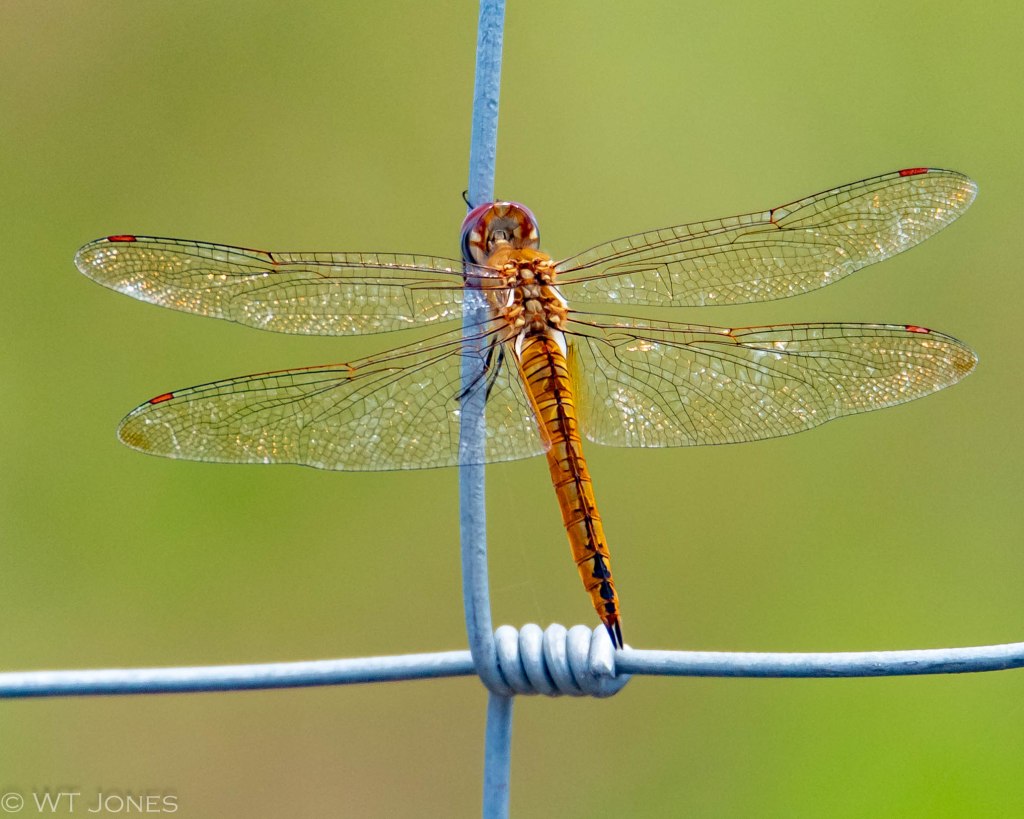
Two dragons we don’t often catch sitting still!
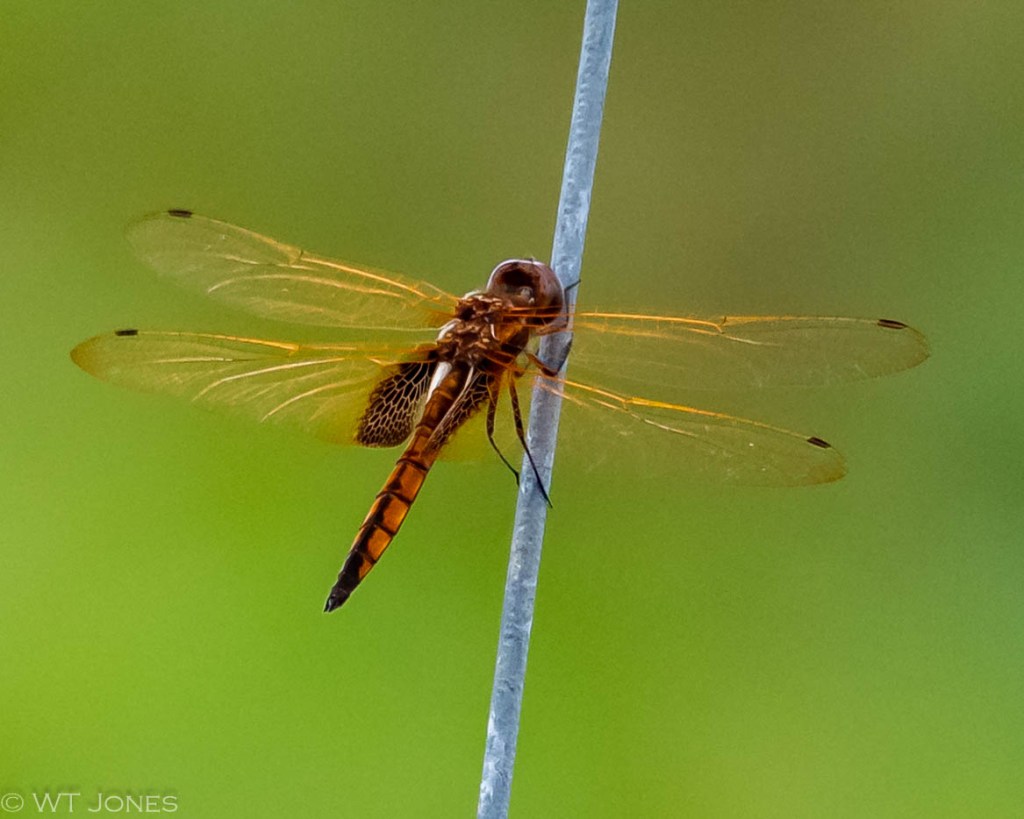
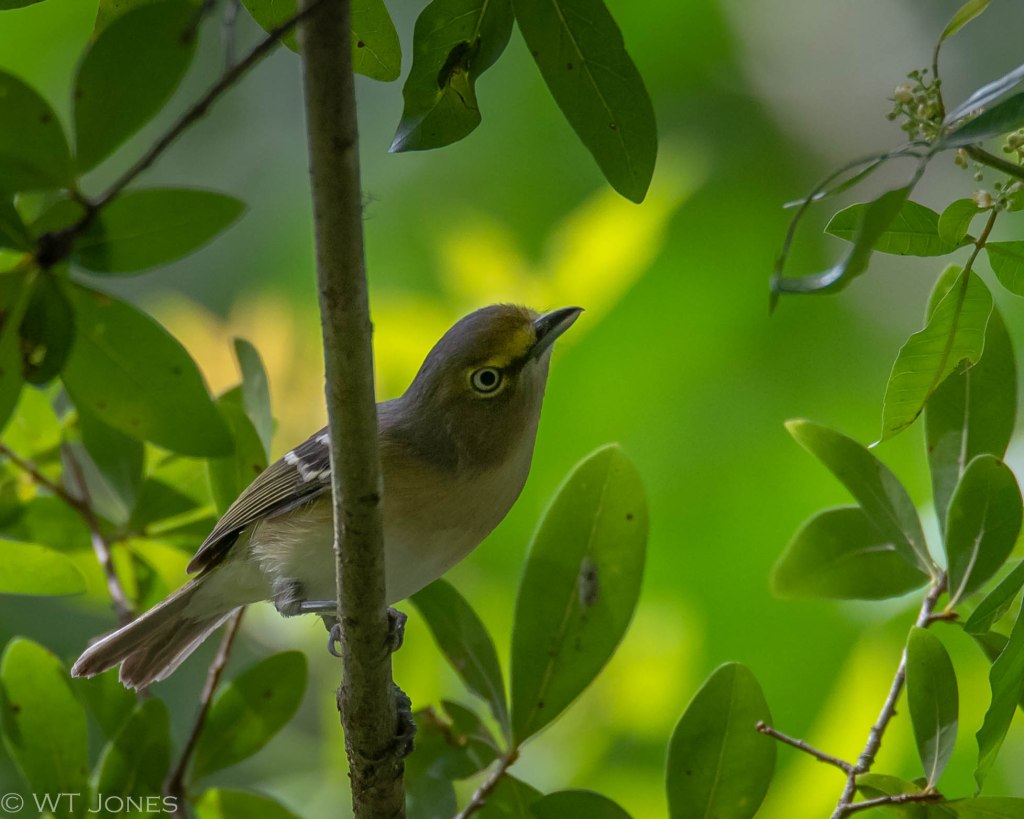
Always curious, constantly singing, beautiful to look upon. Yep, we like White-eyed Vireos!
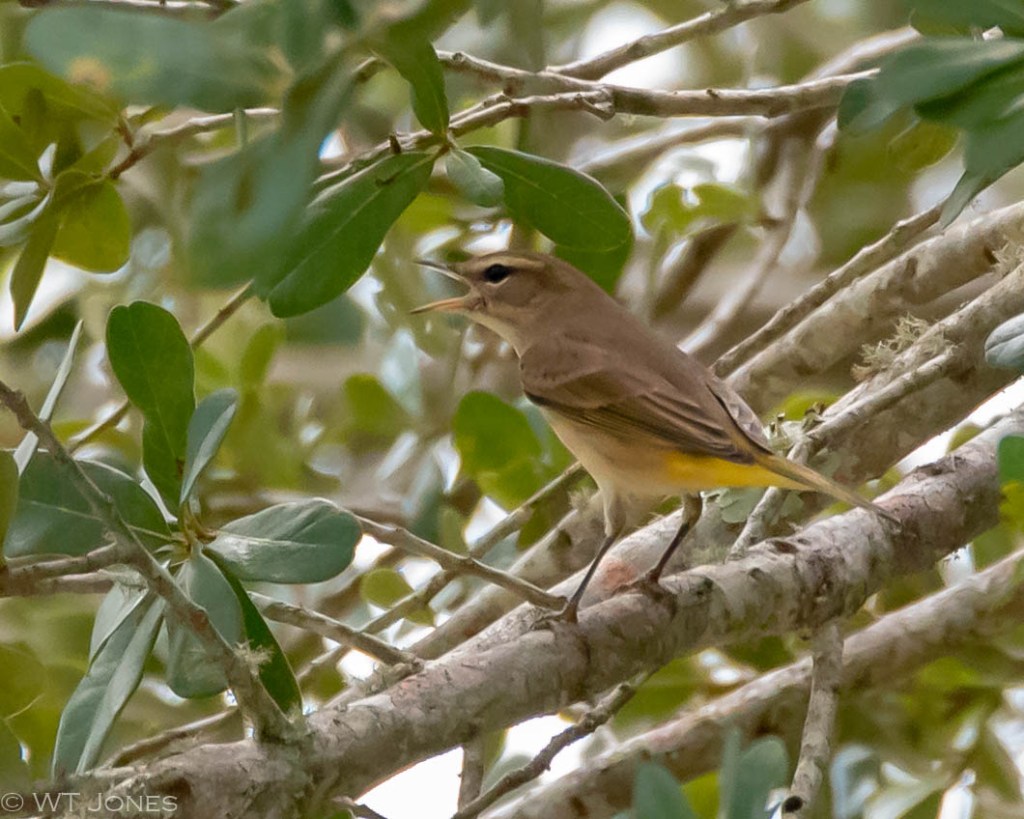
We were a bit surprised to find a few early Palm Warblers. Like, nearly 50 of them! They were staging from a row of large oak trees as they foraged in an open field. It was like welcoming old friends back for an annual reunion. And all of them with tails pumping.
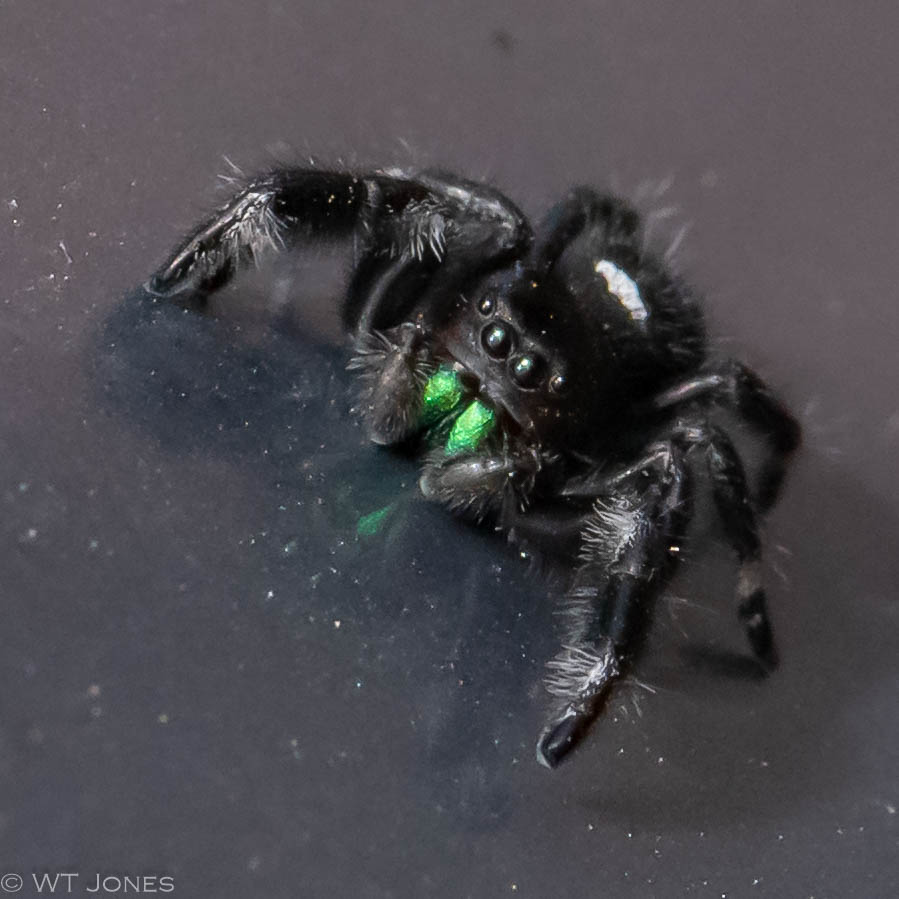
Rounding out our morning outing, that darned car once again proved to be a critter magnet. This time, a Regal Jumping Spider (Phidippus regius) had taken possession of the vehicle. Any move in its direction was immediately challenged, front legs waving. Good thing they are less than an inch long, else we might have felt threatened.
A happy combination of loving each other and enjoying the natural world has resulted in a long-lasting relationship which endures and continues to flourish. Luckiest – man – in – the -world.
We leave you with a definition (and a poem) from “The Devil’s Dictionary” by Ambrose Bierce, one of my all-time favorite writers.
OUT-OF-DOORS, n. That part of one’s environment upon which no government has been able to collect taxes.* Chiefly useful to inspire poets.
I climbed to the top of a mountain one day
To see the sun setting in glory,
And I thought, as I looked at his vanishing ray,
Of a perfectly splendid story.
‘Twas about an old man and the ass he bestrode
Till the strength of the beast was o’ertested;
Then the man would carry him miles on the road
Till Neddy was pretty well rested.
The moon rising solemnly over the crest
Of the hills to the east of my station
Displayed her broad disk to the darkening west
Like a visible new creation.
And I thought of a joke (and I laughed till I cried)
Of an idle young woman who tarried
About a church-door for a look at the bride,
Although ’twas herself that was married.
To poets all Nature is pregnant with grand
Ideas—with thought and emotion.
I pity the dunces who don’t understand
The speech of earth, heaven and ocean.
—Stromboli Smith **
*(This was written in the late 19th century, prior to governments coming up with the revenue-generating idea of “parks”.)
** (Stromboli Smith is one of several dozen aliases used by Bierce throughout his career.)
Enjoy your search for a natural place and come back for a visit!
Additional Information
Header Image: Great Blue Heron
We married young. Too young, “they” said. With our 20-20 hindsight, Gini and I have determined we married at the exact time the universe had scheduled the event. Our life continues to be infinitely rewarding.
In those early days, we had little “spare” money. (Times haven’t changed much!) What we had an abundance of was curiosity – about everything. The military life had its challenges, but a nice side benefit was the new places it flung us every few years. Different cultures, languages, foods, environments – we were like sponges and soaked up all we could absorb.
Time marched on and we were blessed with the two best children which have ever been born. The money poured in. And leaked right back out again. Thanks to Gini’s frugality and detailed planning, we socked away a few coins. Eventually, we reached a point where we thought we could afford a “luxury” now and then. A better Tee-Vee set, a stereophonic system, nicer toys (for those children, you know).
Camping equipment was a “necessity”, we convinced ourselves. Exploring nature required binoculars (for those children, you know). The military camera club had a sale too good to pass up and, after all, seeing all that stuff is one thing, but to have it recorded for posterity (for those children, you know), well, another “necessity” was checked off the list.
Sigh. Those children. Long ago, it seems, they fledged, as they were bound to, and forlorn parents simply had to do something to maintain our balance in life. Upgrades! That’s the ticket! The digital world beckoned and the siren song of sending those children‘s children instant gratification of their grandparents’ exploits could not be denied.
Meanwhile, in the real world of our present reality, we have a lot of stuff which has not only accumulated over many years, but, I swear this is true, it has found a way to multiply when we aren’t looking. How else can one explain all the camera bodies, lenses, tripods, packs, batteries, memory cards, ad infinitum, spread out over the living room floor??
Our typical birding day-trip includes renting a small moving van to haul the requisite equipment one must have available to adequately capture the essence of an avian subject resting upon a twig. After all, THIS might be the one which will motivate National Geographic or Sir David Attenborough his own self to contact us concerning our upcoming fame and fortune!
Last Tuesday, in an outright display of unacceptably irresponsible and reckless behavior, I left the house with only one camera, one lens and one pair of binoculars. I know. I should have been reported.
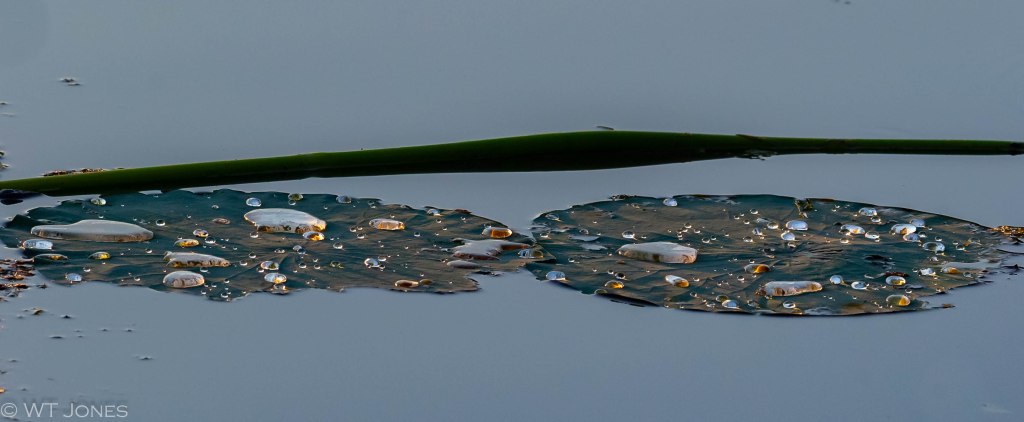
A strange thing occurred. During the next hour-and-a-half at the local park, I observed nature. Right here within the city limits. Standing on the shore of the lake, I actually saw the sunrise. I don’t mean I looked eastward and there was the sun at 0710 as scheduled. I mean – I watched as the horizon turned pink, then orange and the bright arc of our sun moved slowly upward and became the fiery ball which keeps us all alive. Water droplets gathered on the flat lily pads. Fish broke the water’s surface as they fed on floating insects. Calls of birds filled the air.
It was – exhilarating.
There was no urgency to record anything. Being there was enough.
(Habits are difficult things to ignore. Images were made.)
Water on the lilies resembled shards of broken glass.
The white face and bright eyes of a Blue Dasher (Pachydiplax longipennis) greeted the rising sun of a new day.

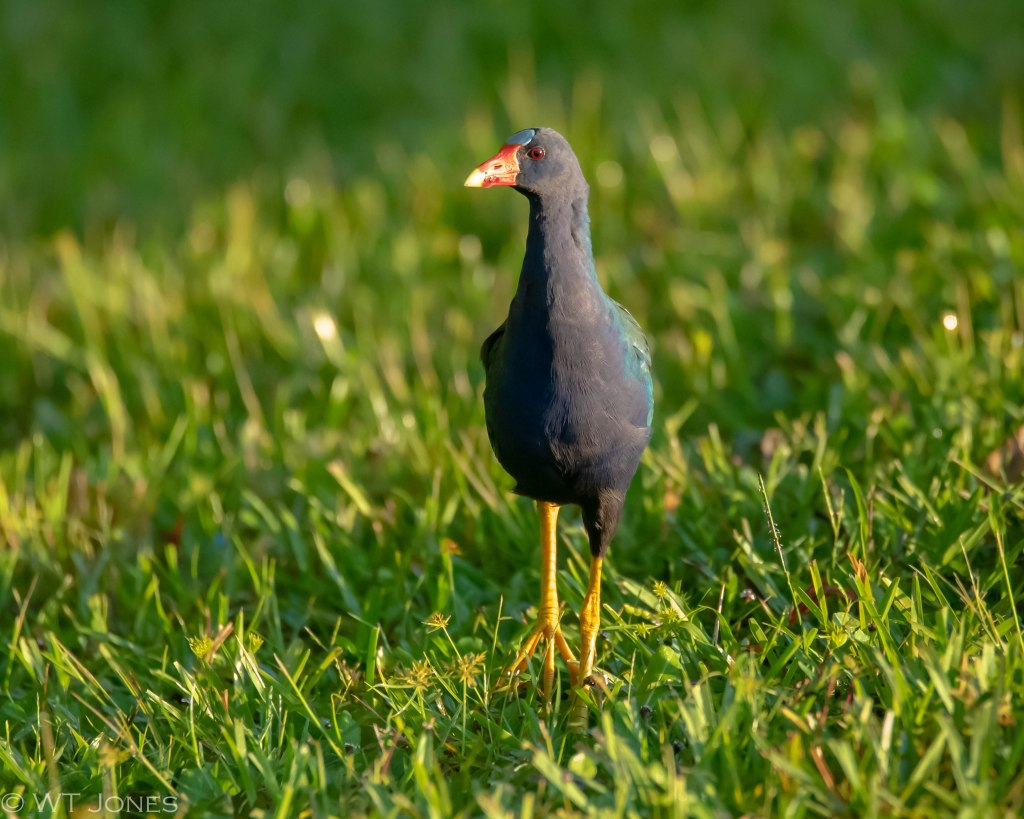
This is a city park where well-meaning people indulge in feeding the birds. The resident population of Purple Gallinules has learned to head straight for humans when spotted knowing they will likely be rewarded with a soggy bit of hot dog bun or handful of potato chips. Yum.
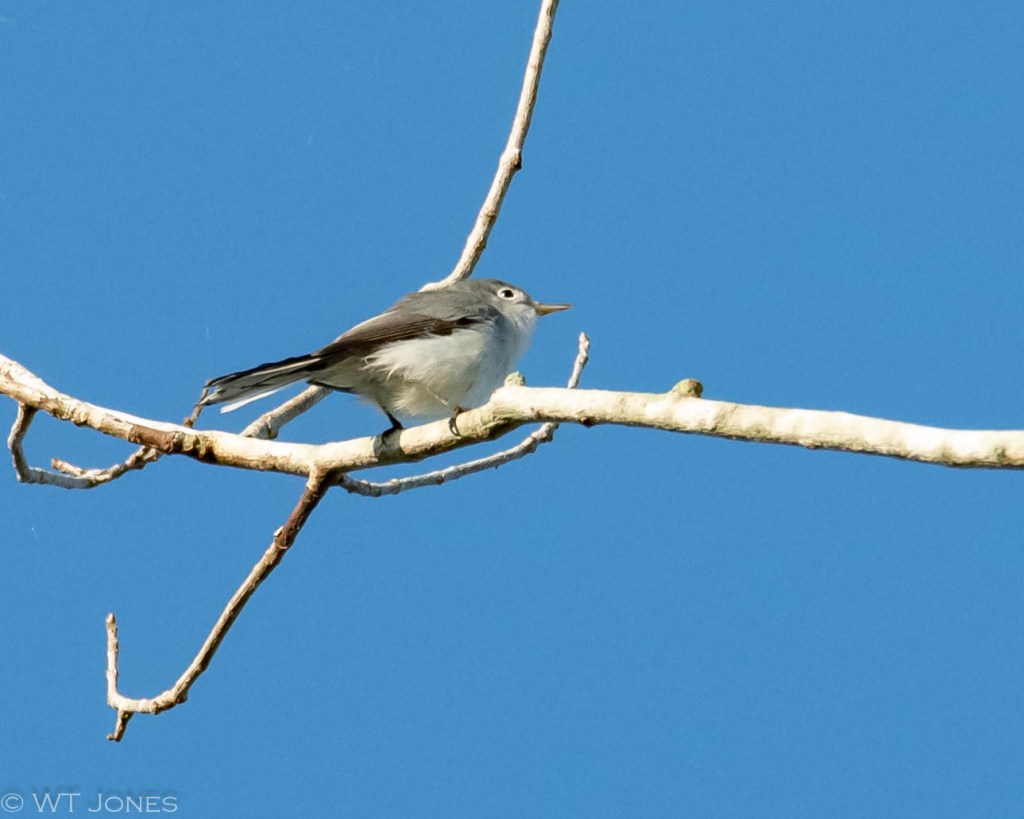
The tops of trees throughout the park are now filled with resident and migratory birds in their non-stop quest to consume fuel for their journey further south. This Blue-gray Gnatcatcher seemed to inspect every single branch.
Park personnel thoughtfully placed a bench at the lake’s edge for weary White Ibises to rest.

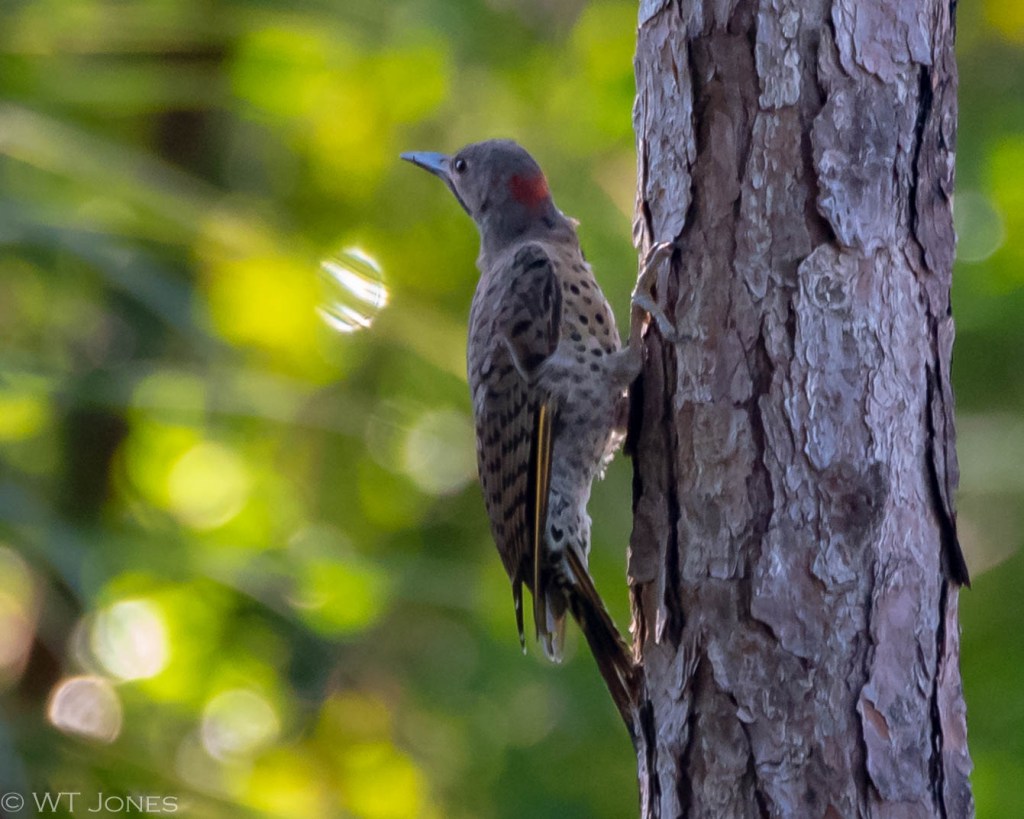
Northern Flickers tend to feed in an “un-woodpecker-like” manner by hopping along the ground, where they often target ants. In the eastern United States, the Yellow-shafted form of this handsome woodpecker is prevalent while in the west there is a Red-shafted form. Once upon a time, they were considered separate species. But then – science happened.
Bright early morning sunshine highlights the latest trend in hair style for modern Red-bellied Woodpeckers. This may be a result of late molting, “bed-head”, no coffee yet or simply a reaction to seeing me standing under its perch.

Thick, hooked bill and yellow “spectacles” help identify the Yellow-throated Vireo. This beauty breeds in our area but its numbers increase as fall migration progresses.

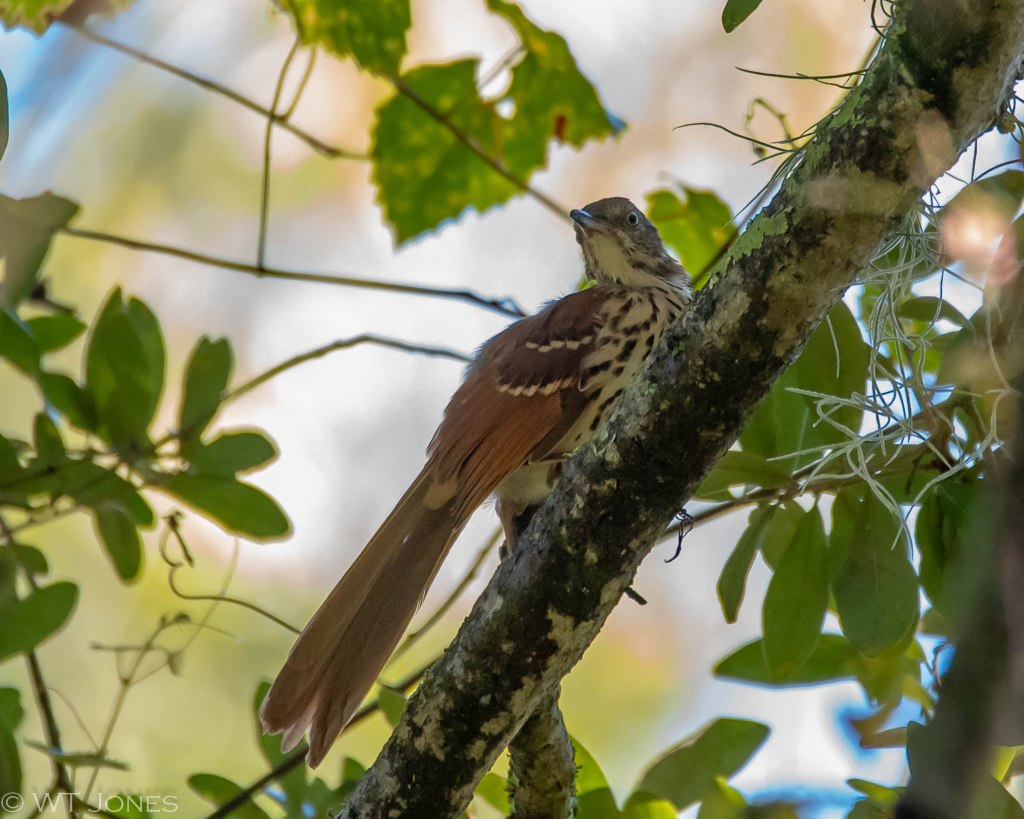
The large Brown Thrasher with its golden eyes is an accomplished singer with a vast repertoire exceeded only by his cousin the Northern Mockingbird.
More often lately, we tend to eschew the moving van of paraphernalia and instead grab the bins and camera and head for somewhere local. We are exceedingly fortunate to have superb birding venues mere minutes away. The storehouse of equipment will still come in handy. Just not on every trip.
We hope you enjoy your search for a natural place and come back for a visit!
Header Image: White-tailed Deer
No. The title does not refer to Gini. No matter whether such a description might be true, she may take exception to that “short” thing. And you wouldn’t want me to end up bruised (again), would you?
Our days have been interrupted lately with catch-up visits to assorted physicians and lab specialists which were postponed due to the interplanetary plague of recent years. It was becoming serious as our birding and nature exploration was in danger. Thankfully, we are almost current in such appointments. Except for this afternoon.
Thus, a quick morning trip before the afternoon is consumed by medical locusts.
The short trip began in fog. Unlike my occasional brain fog, no caffeine needed to clear the skies. Simply wait long enough and the gray mist dissipates to reveal the green world around us still exists.
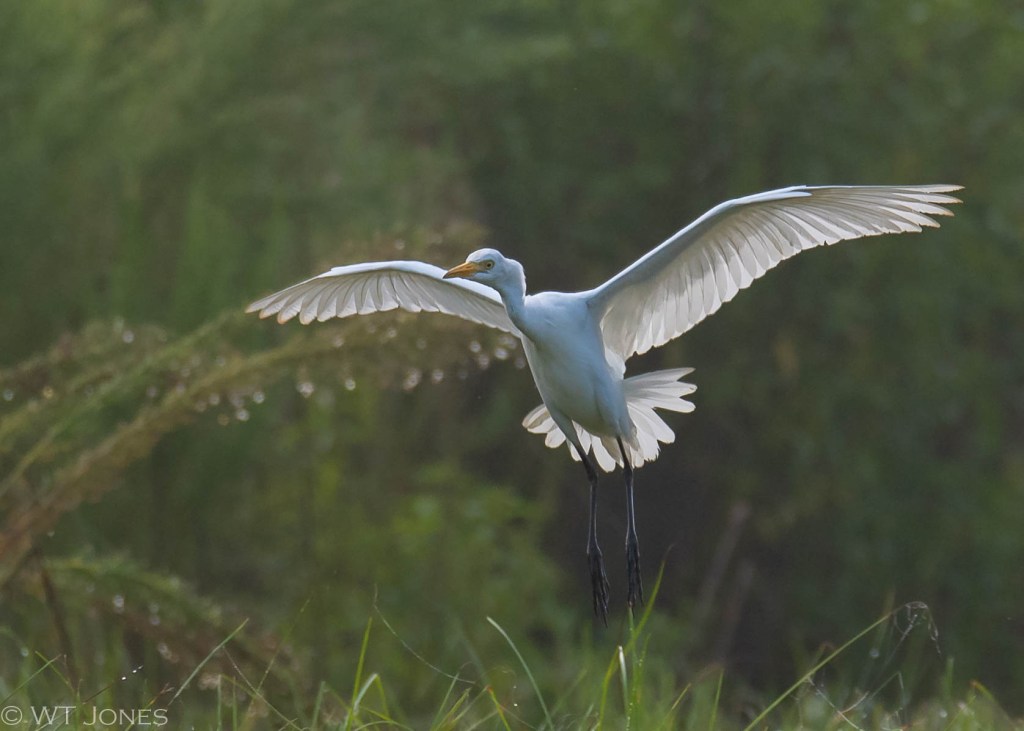
A dawn flock of Cattle Egrets descended in front of us as they hungrily devoured insects stuck to wet grass stems and weed leaves. White-tailed Deer were too busy munching their own breakfast to pay us much attention. Until we got too close. Then, their namesake white flag tails were all we saw as they disappeared into the woods. Fall is here. Groups of Blue-gray Gnatcatchers, Tufted Titmice and Carolina Chickadees seemed to be all around us. Vireos sang from hidden perches. A Great Horned Owl surprised us with its soft “who-who-who-who-who-who” from a nearby snag. (Of course, reaching for the camera caused her to immediately abandon the area.) A new Eastern Bluebird family was a joy to watch as they hunted bugs and decorated a utility pole. A line from that same pole supported an Eastern Kingbird, passing through on his way even further south.
Short and sweet. Even a quick trip beginning in a fog and ending with bluebird skies makes it all worthwhile.


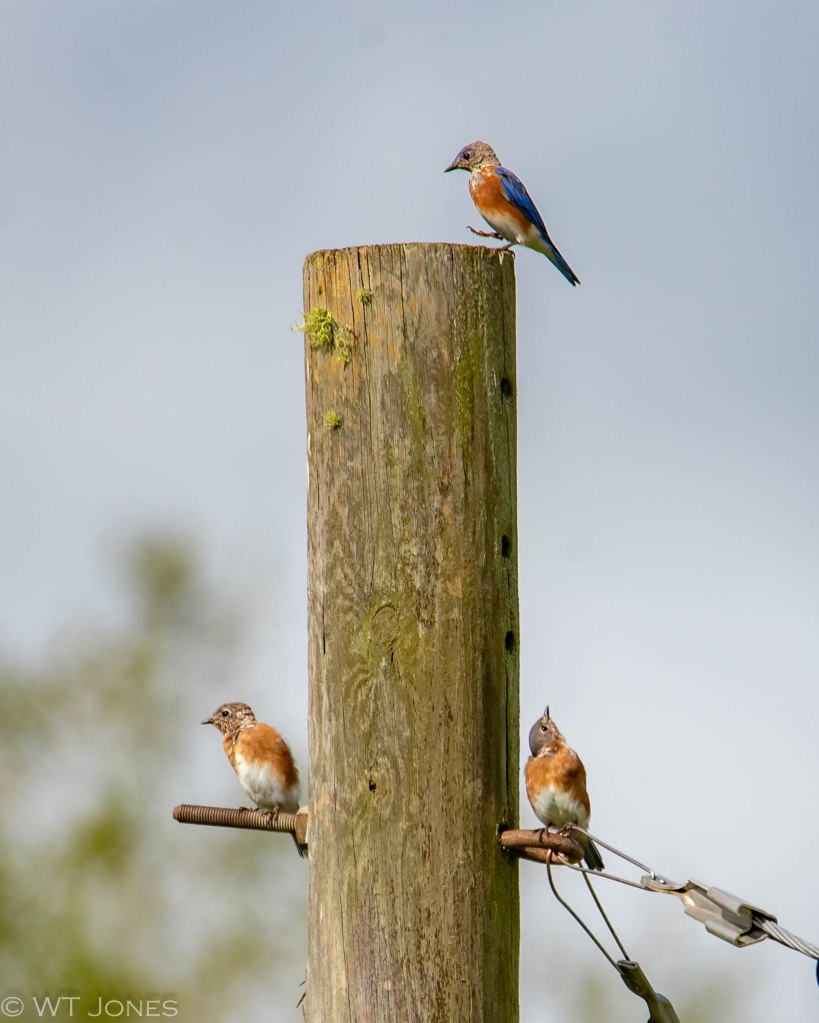
If you have a chance, get outside, even if it’s for a short time. Marvel at how Nature goes about the business of survival. Sometimes, She doesn’t even mind if we watch.
Enjoy your search for a natural place and come back for a visit!
Header Image: Swamp Sunflowers, Marl Bed Flats, Lake Jessup, Florida, USA
(We interrupt our irregularly scheduled attempts at blogging to bring you a public service announcement. There is joy in the world. Seek it.)
Or, as our favorite group of all time used to say: “And now for something completely different.”**
*(“Walking On Sunshine” by Katrina and the Waves. https://www.youtube.com/watch?v=iPUmE-tne5U
Yes, you may sing along.)
The Narrowleaf or Swamp Sunflower (Helianthus angustifolius) is quite common throughout much of the eastern United States. It likes to keep its feet wet. Growing in sometimes dense patches, the plant normally grows to four or five feet tall and can reach over seven feet. A single plant can produce dozens of bright yellow flowers. Blooming season is from September to November.
Yesterday, October 12, we visited Marl Bed Flats on the shore of Lake Jessup in Seminole County Florida. A short hike through a wonderful oak hammock opened onto the vista of thousands of blooming sunflowers.
We hope your day will be as brightened by the views as was ours.
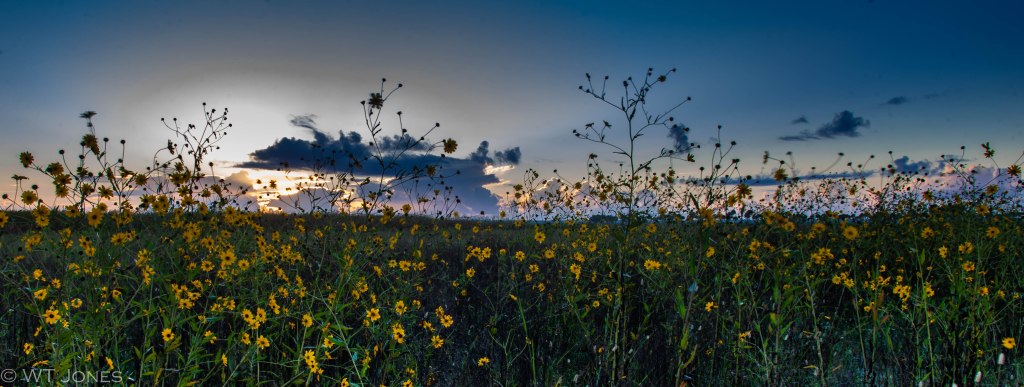
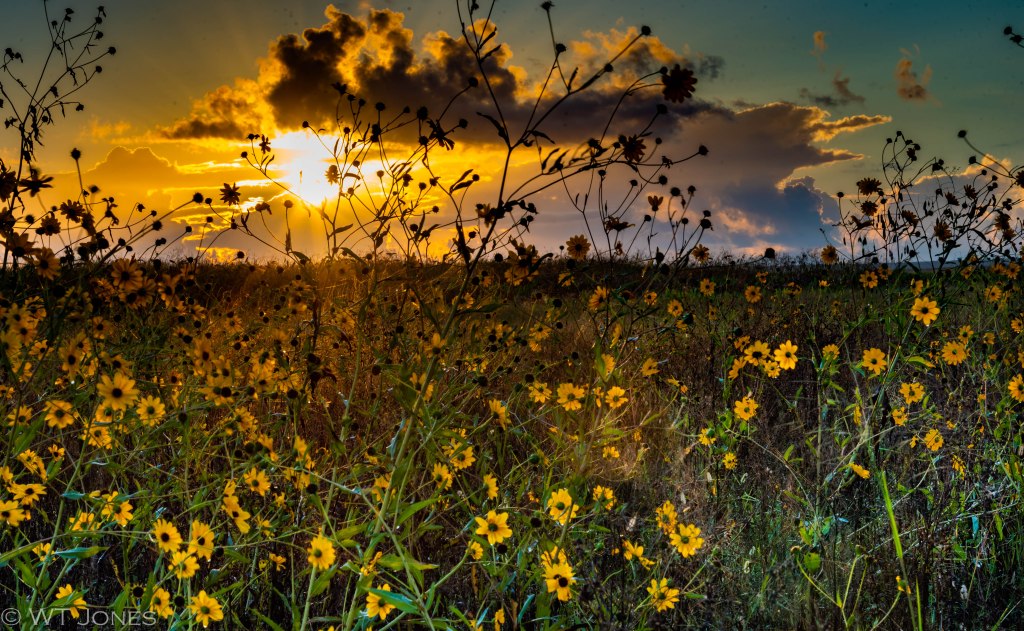
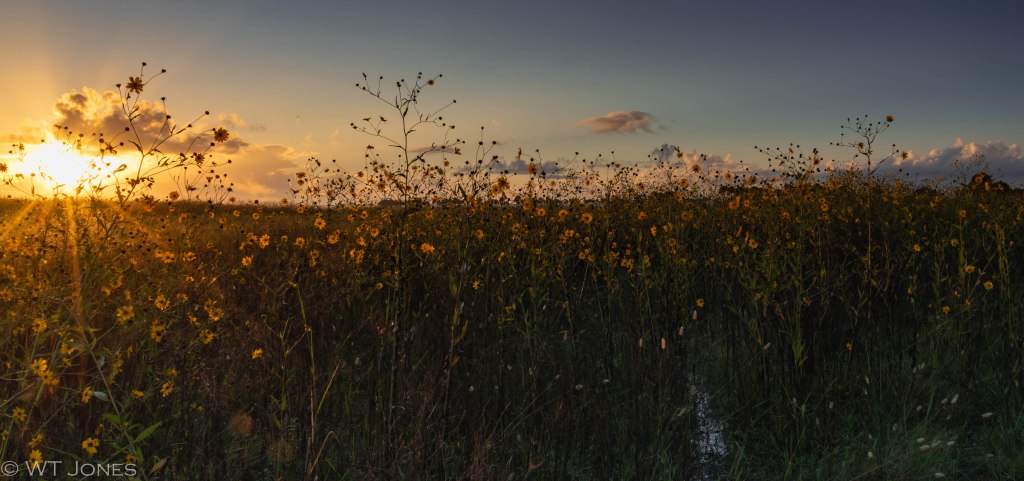
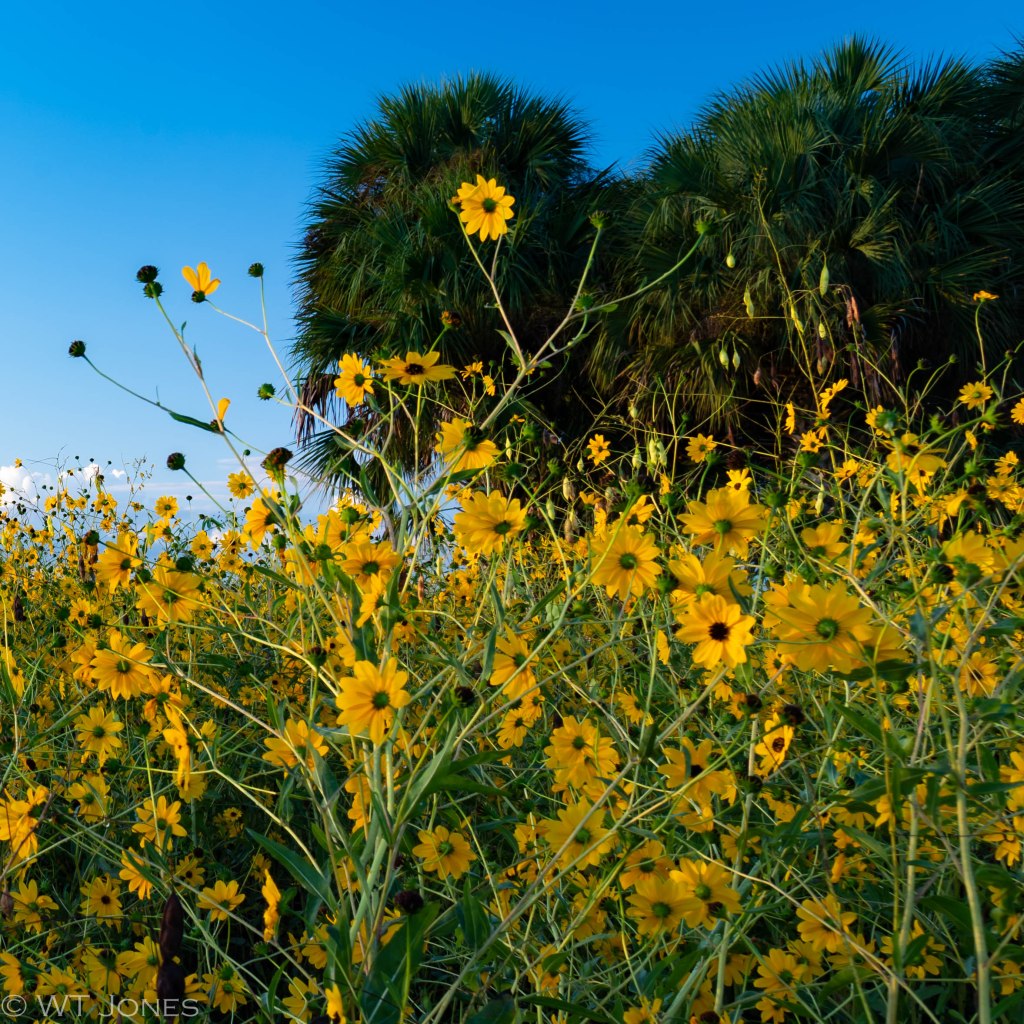

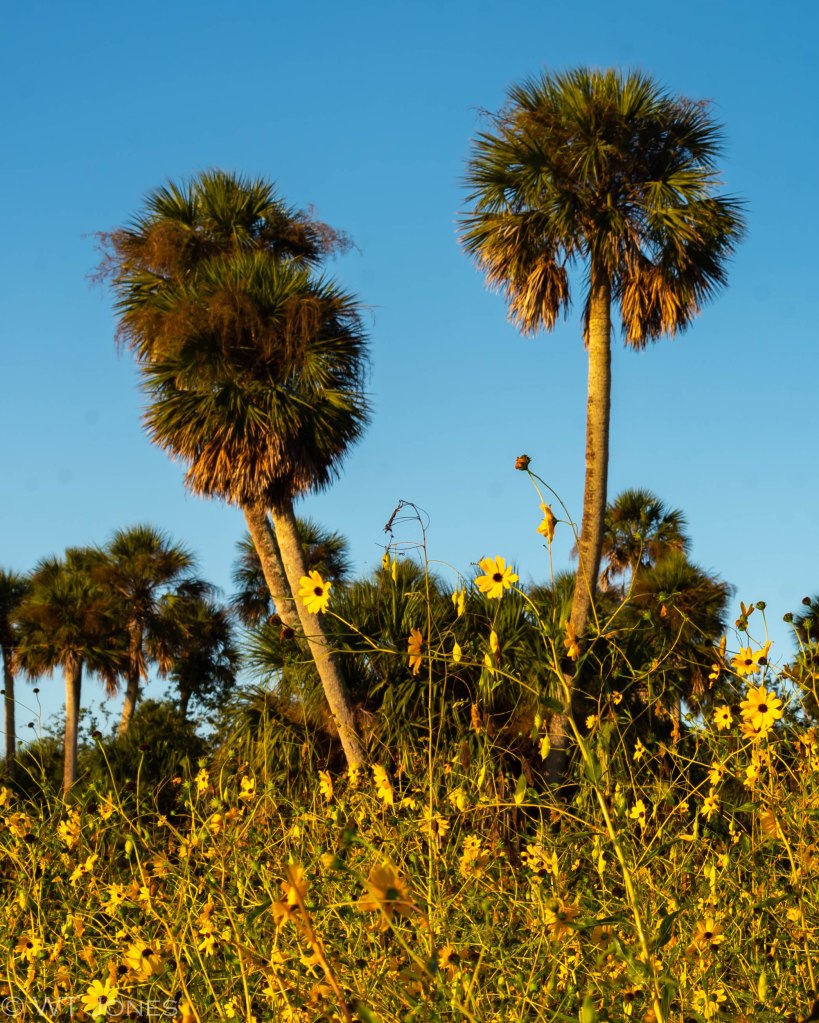
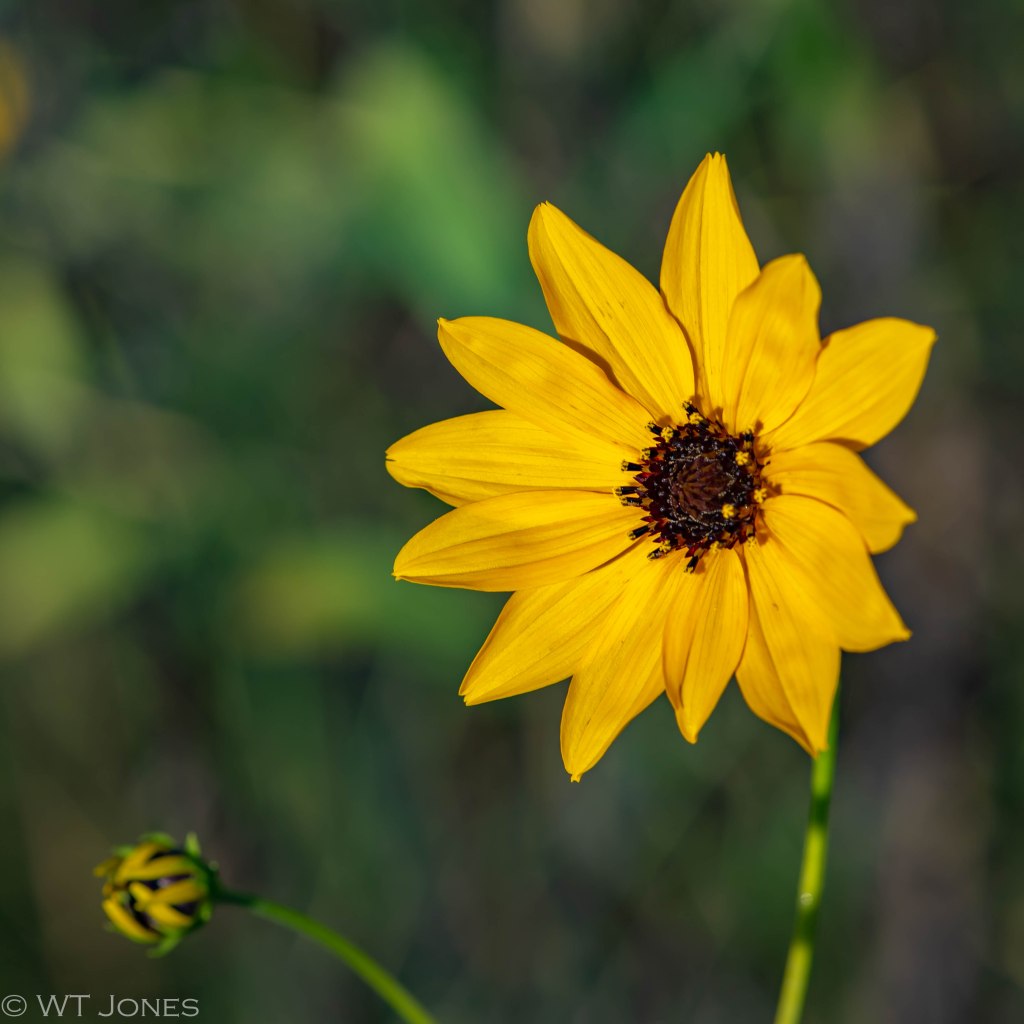
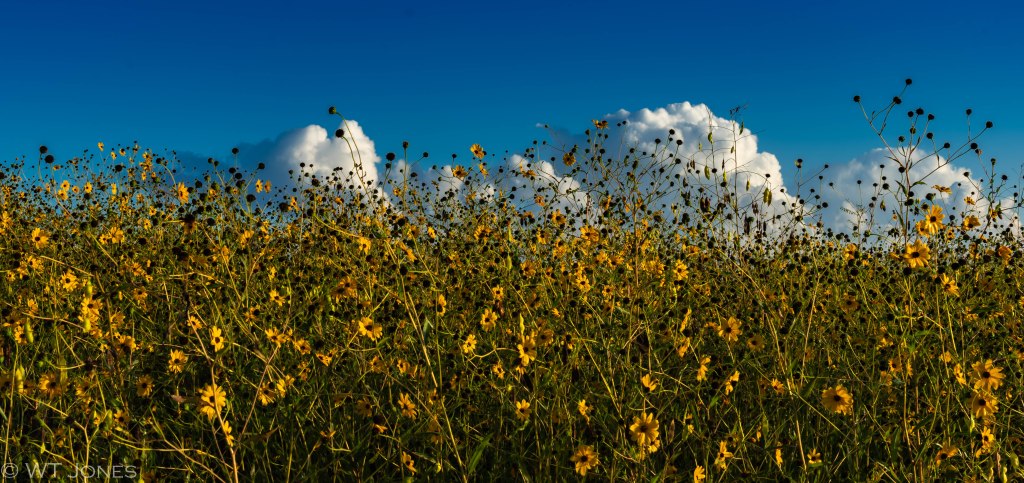
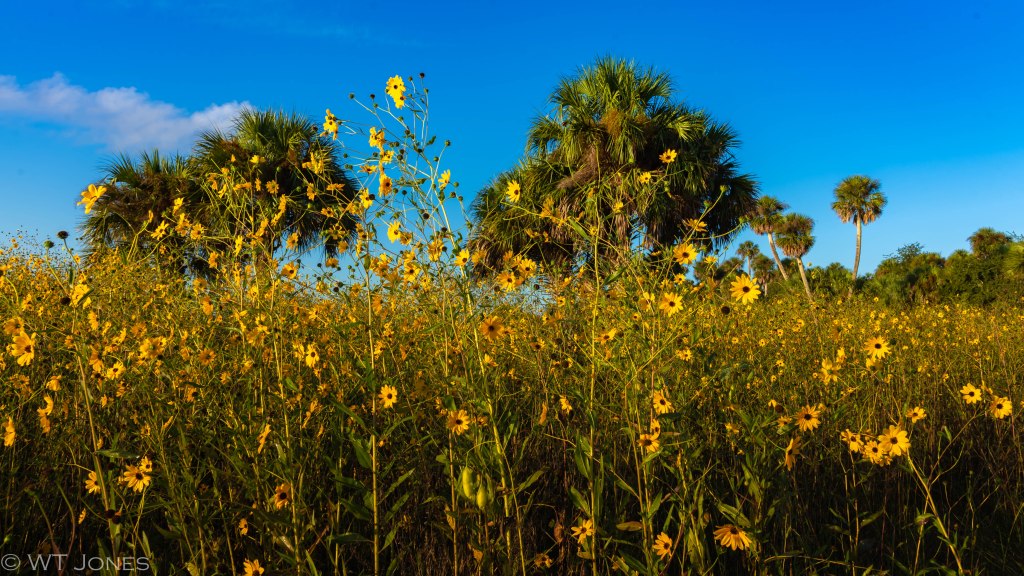
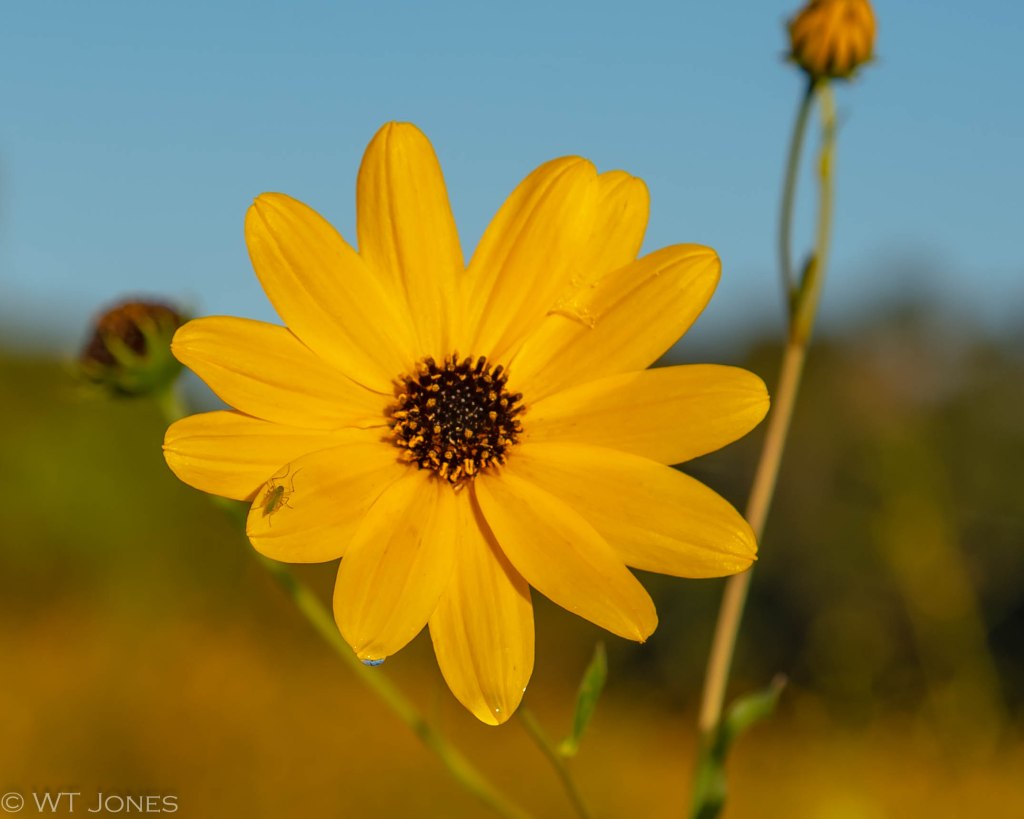
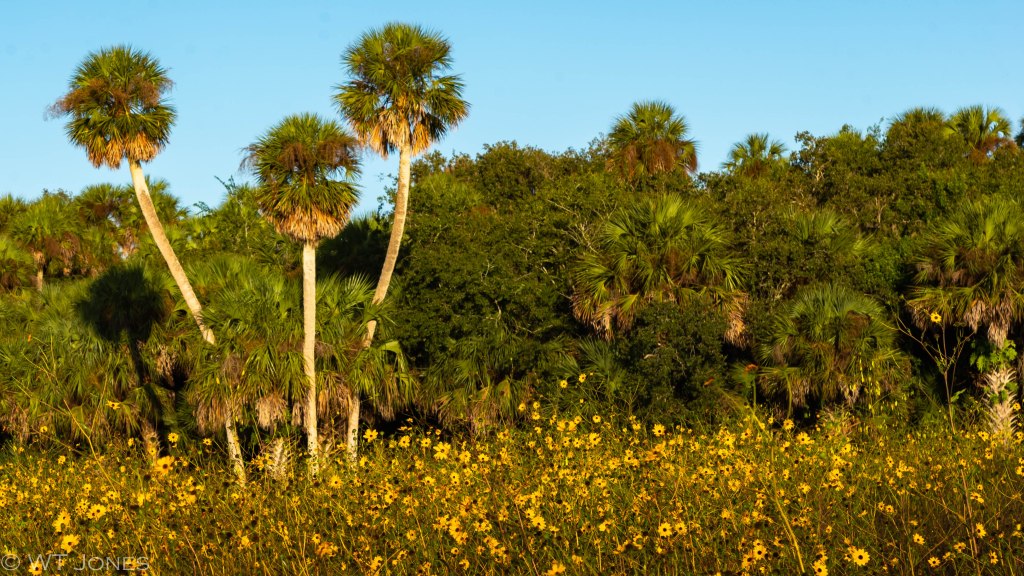
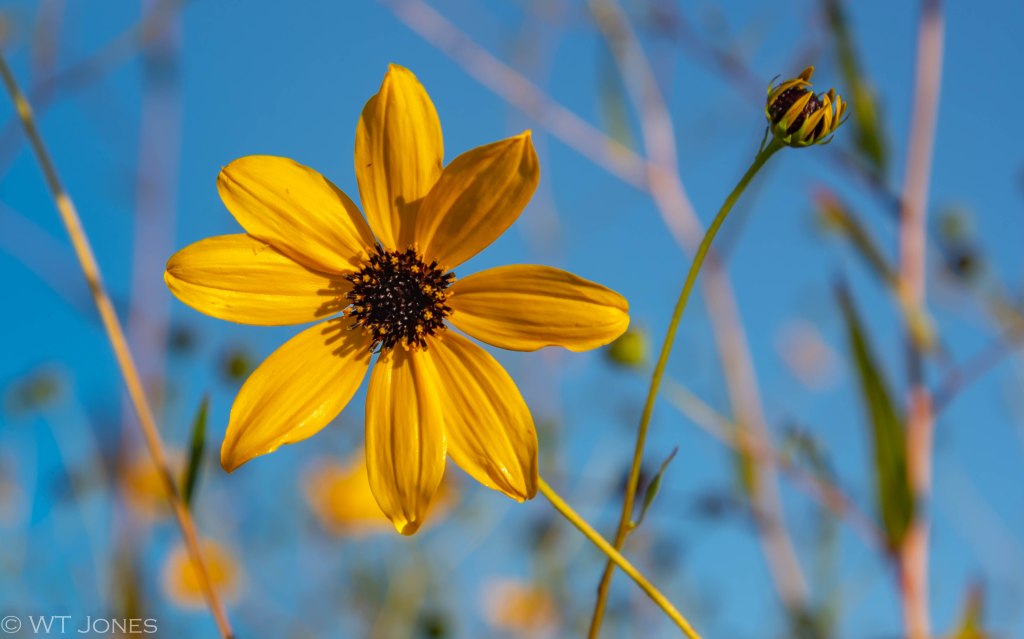
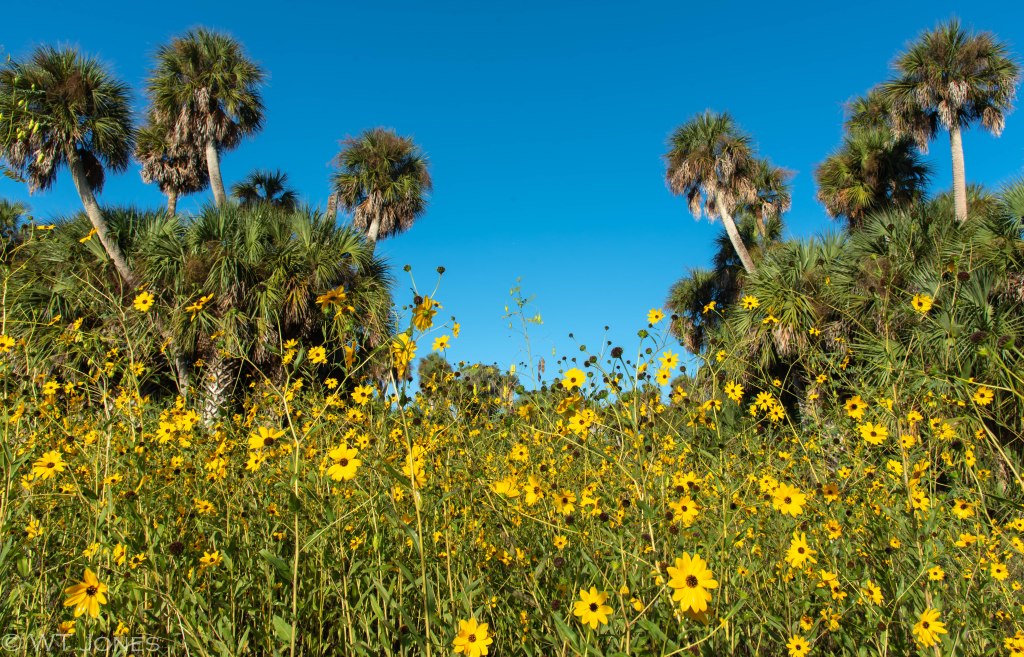
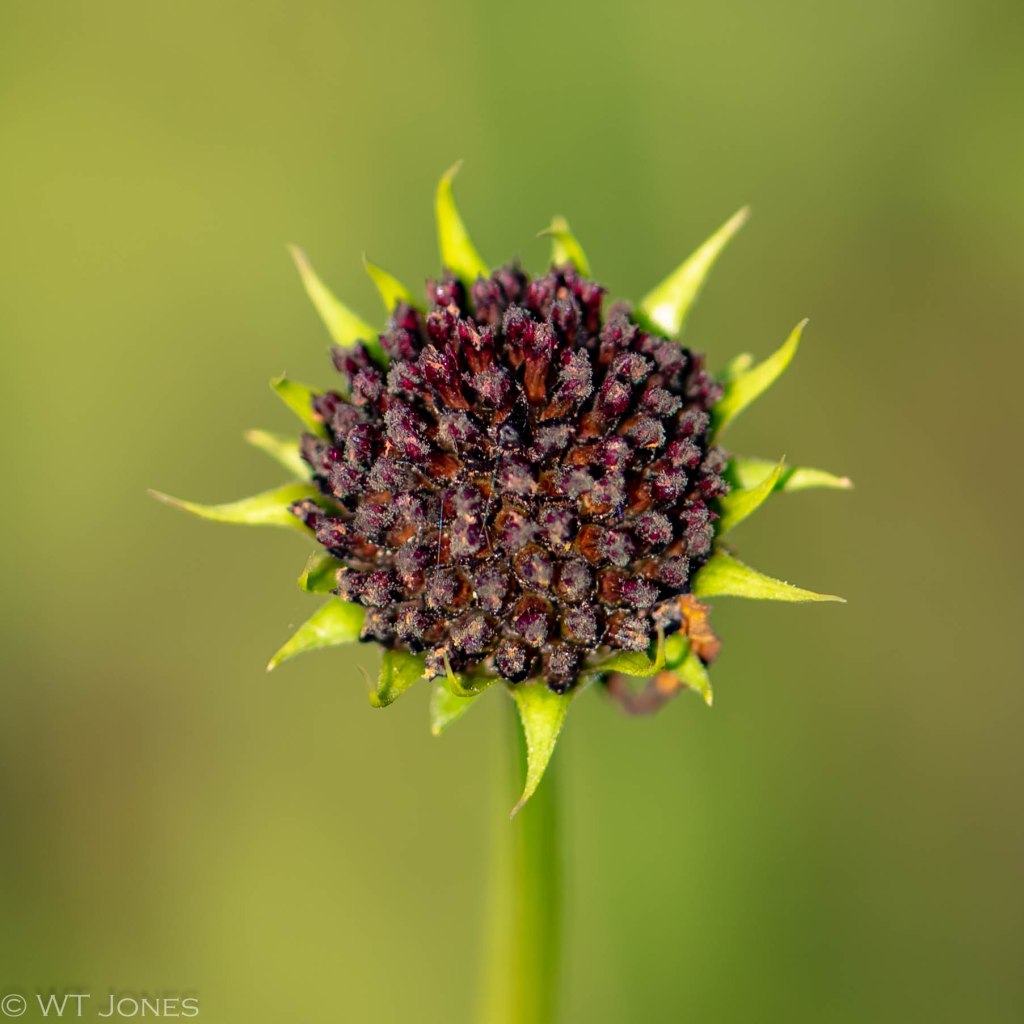
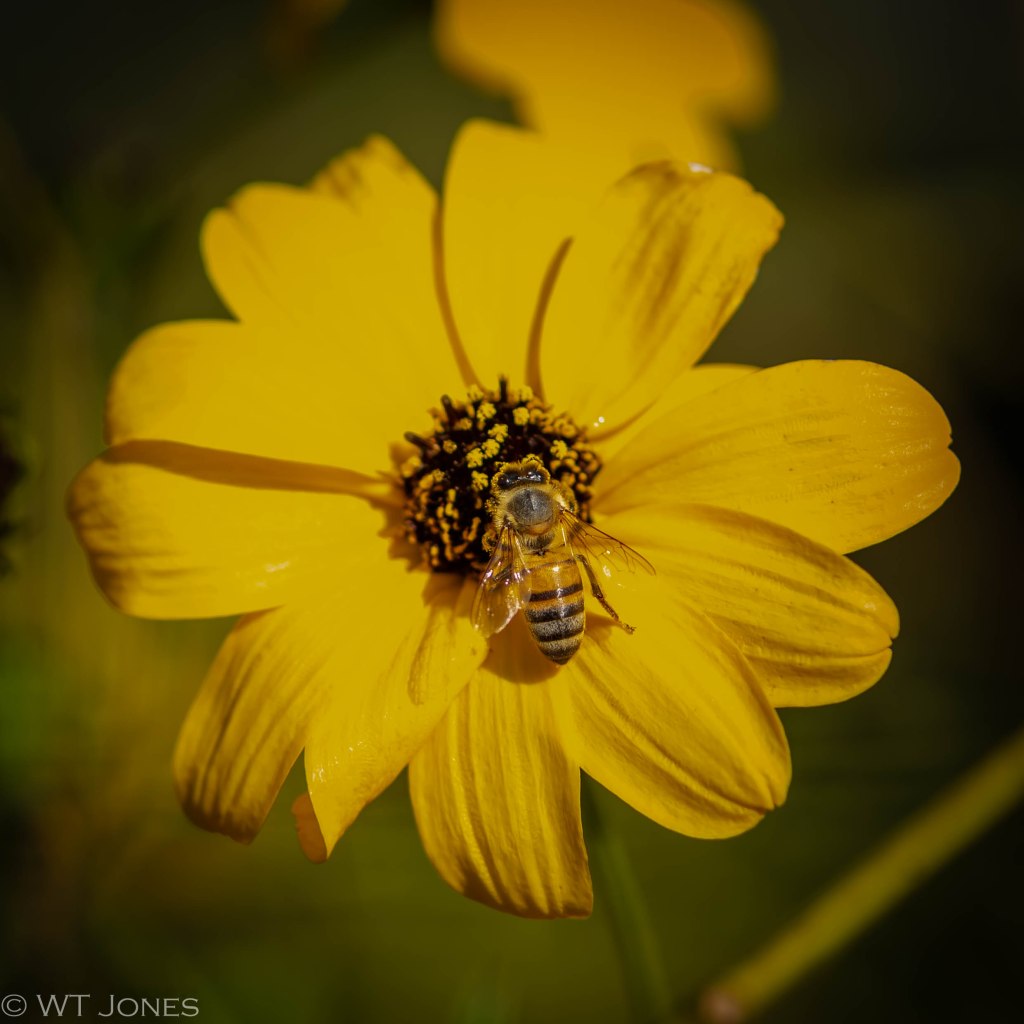
Many thanks to Ed at https://edrosack.com/2021/10/03/sunflower-status-oct-2-2021/ for turning us on to this spectacular venue! (Be sure to check out Ed’s superb Flickr images.)
**Monty Python’s Flying Circus.
Enjoy your search for a natural place and come back for a visit.
Header: Great Blue Heron At Sunrise
An Osprey called as she flew over my head while I was getting out of the car. She was followed by a flight of several White Ibises heading from their nightly roosting area to some spot they knew would provide an adequate breakfast. A nice paved path led from the parking lot to the dock which jutted a short ways into Lake Crago. Boat-tailed Grackles cranked up the volume at my approach to the lake’s edge. The sun was about to peek over the eastern shoreline as a Great Blue Heron stalked the shallows among the reeds.
My normal walking shoes are something called “cross-trainers”, designed for runners who like to speed across hill and dale, mud and rock, leaves and puddles. This particular pair has never had to worry about being abused in such a fashion. Running is something I may have done once to catch a train in Germany. The shoes have been fabulous for what I do. Walk slowly in easily maneuvered areas, stopping often, occasionally stepping into the edge of a lake or fording a shallow stream. They are very comfortable.
Yesterday, those normal walking shoes got pretty wet and were not dry this morning. Plan B. Hiking boots. Large. Substantial. Heavily lined (“water resistant”). So naturally I selected a venue consisting of paved trails. But I could have gone into the bush, if I had wanted to.
Today’s exploration was short but filled with amazing things. The heron fishing, a group of huge mushrooms, dragons, damsels, a tired butterfly, birds, a snake, alligators. I promised Gini I wouldn’t be long so I was back home in under two hours. Pretty good, for me.
Scenes seen can be seen soon.
The subtle colors of a Little Blue Heron seem really dark before the sun brightens them up.

A group of six large mushrooms was pretty impressive. Each cap exceeded six inches across.
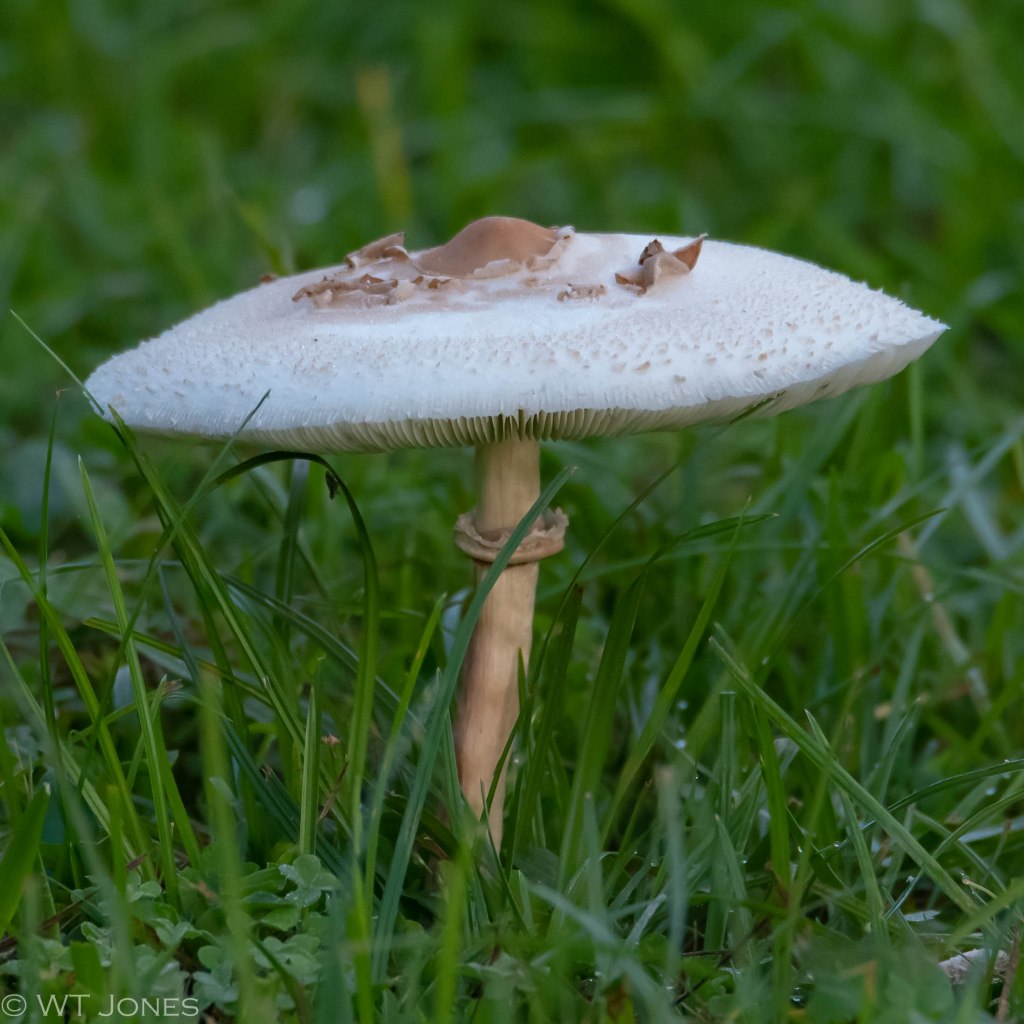
Patience is a virtue. The Great Blue Heron must be one of the most virtuous creatures in the bird world. They seem able to wait forever for a meal to appear.

I could not convince this Red Saddlebags (Tramea onusta) to turn for a better angle so this is all you get.

It should not be surprising there are plenty of Osprey around any water source in Florida. They are not all as cooperative about posing as nicely as this model.

Brightening up the morning was this great-looking Four-spotted Pennant (Brachymesia gravida). The white stigma near the wingtips are like flags signaling “Here I am!”.

Ms. Cardinal was not happy that I woke her up. I promised next time to bring her coffee.

Looking a bit tattered, a Sleepy Orange (Abaeis nicippe) was visiting as many blooming Spanish Needle, or Beggarticks (Bidens alba) as possible for sufficient nectar.

Although the Variable Dancer (Argia fumipennis) is a damselfly which is common over a large range, it can look very different depending on specific location. In Florida, the species is very dark and is known as a Black Dancer (Argia fumipennis atra).

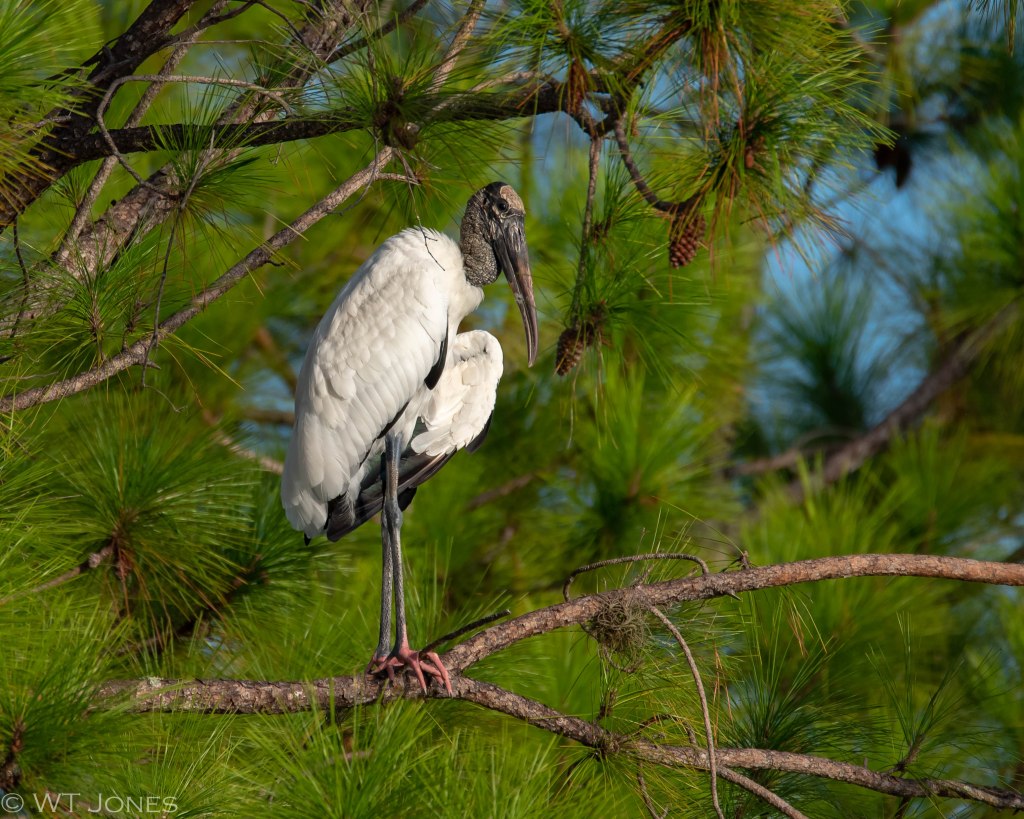
Sometimes, your feet get tired of sifting through mud for a meal and you just have to find a comfortable branch to give them a rest. A Wood Stork in a pine tree may not be the normal view we have of this big wader, but he looks pretty good surrounded by all that green.
Speaking of giving your feet a rest. I’m headed to the house where I’ll kiss and hug Gini, slip into my bare feet, make a pot of coffee and burn some bacon. Even if you aren’t wearing your favorite shoes, get out early, celebrate a sunrise and all that Nature has to offer!
Enjoy your search for a natural place and come back for a visit!
 Our Natural Places