Header Image: Pricklypear In Bloom
“As age comes on, one source of enjoyment after another is closed, but nature’s sources never fail.” – John Muir
“Where would you like to go?”
“Out.”
The morning air was cool and Gini almost wished she had worn that sweatshirt. Almost. As it always does, the sun rapidly rose above the line of cypress trees on the eastern side of the small lake. Residents of this neighborhood were already going about their daily lives. Mockingbirds and cardinals were especially noisy as males announced their willingness to mate with any agreeable females. (Resisting anthropomorphism is a struggle at times.) Double-crested Cormorants decorated exposed perches as they dried their wings. Pig Frogs grunted from nearby weeds. A Red-shouldered Hawk cruised overhead shrieking – just because he can.
This is such an incredible time to visit nature! New growth on trees, blooming flowers, courting animals and our Florida humidity is still in slumber. Today we are sight-seers. No agenda, checklists or schedule. Ambling, conversing, oohing, sighing – and loving every minute of it! Gini-with-the-acute-hearing (and pretty cute …. uhh …. but I digress) announces Northern Parula Warblers seem to be everywhere.
A small dock on a lake provided the perfect setting for breakfast. Yes, peanut butter and jelly on raisin bread – again. Fresh grapes and a tangerine rounded out a perfect repast. While we munched, a pair of Palm Warblers dropped by briefly. They will soon be absent in our landscape until the fall. A huge Brown Pelican lumbered just above the water’s surface and the uniquely eerie call of a Limpkin echoed from a distant lagoon.
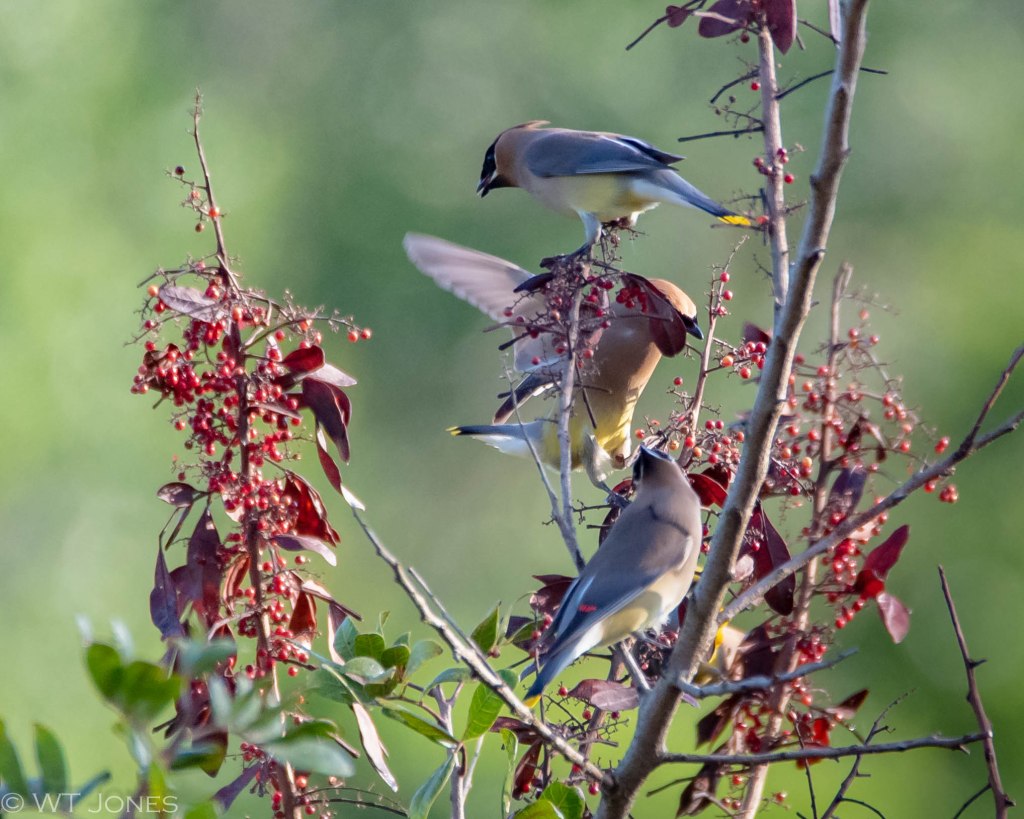
We were stunned to count over one hundred Cedar Waxwings this morning! They are still gleaning fruit from Brazilian Pepper bushes in preparation for the long journey north. We’ll miss that high-pitched call piercing the early morning sky. Gray Catbirds “mewed” at us from the understory and an Eastern Phoebe swooped down to grab a grasshopper. Farewell to our migratory visitors.
Osprey nests dot the shorelines of nearly every body of water and we could tell eggs were being brooded in many of them. We tried to identify woodpecker species by the sound of drumming we heard. Swallow-tailed Kites have returned from South America and an incredible diversity of insects have appeared to show their appreciation of newly blooming flowers. Hello to our natural residents.
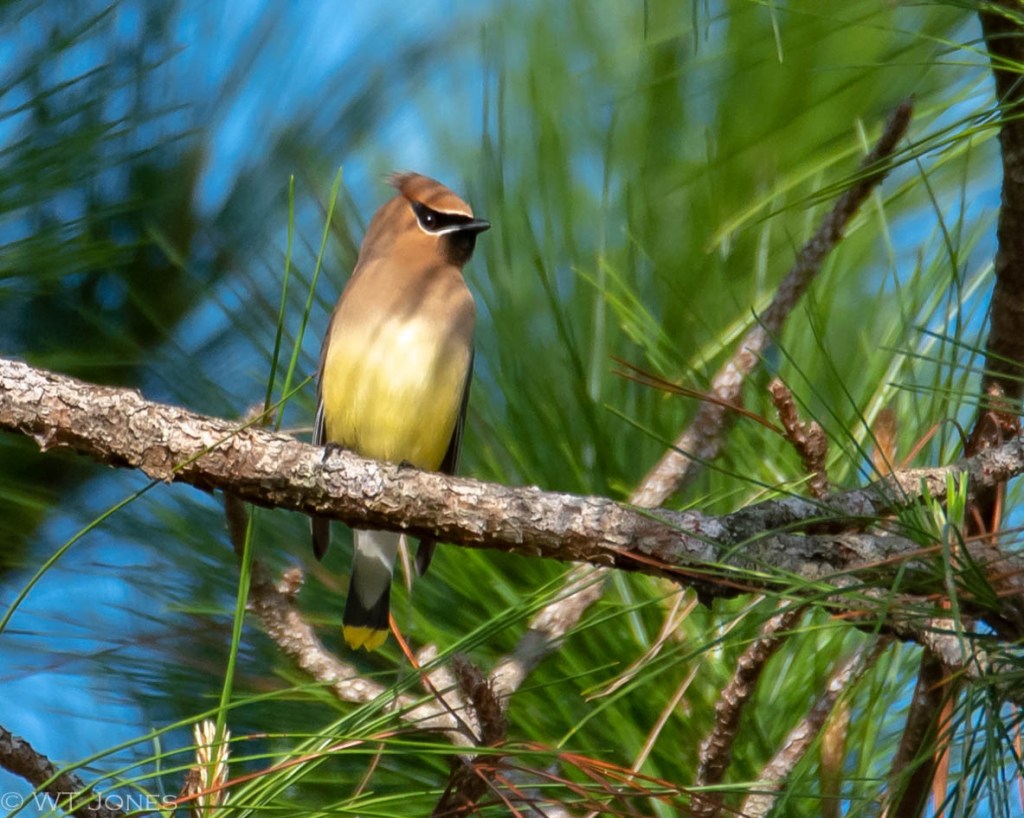
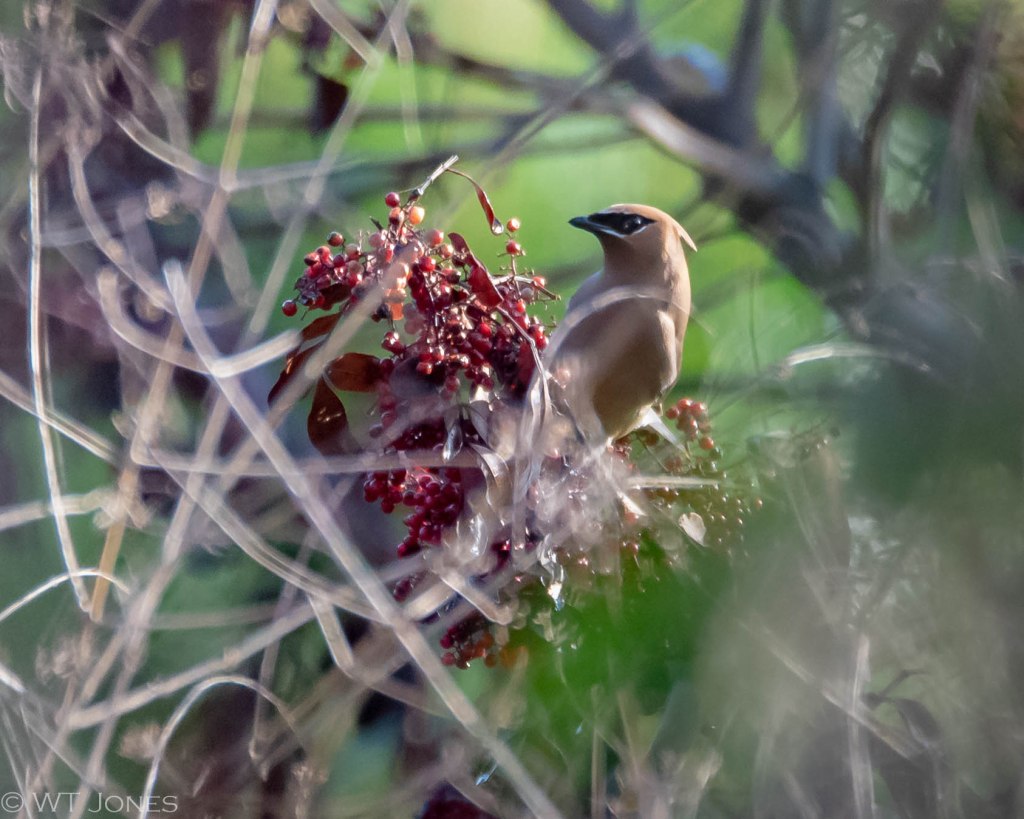
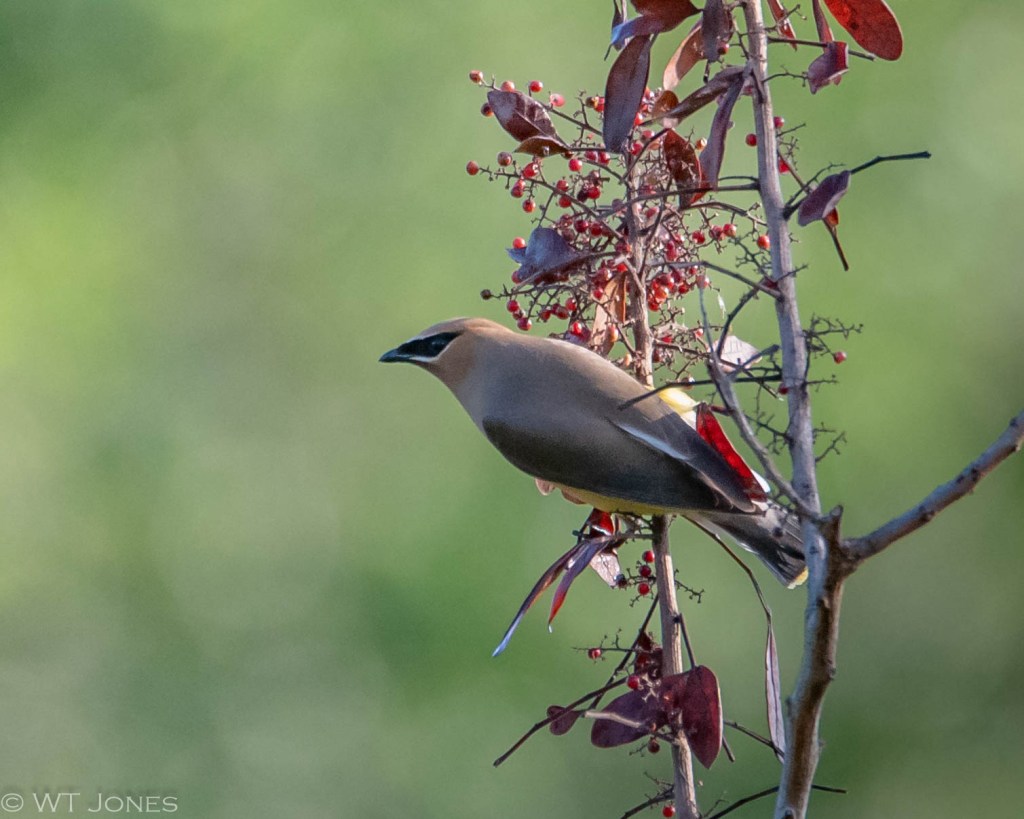
The sleek Cedar Waxwing has graced us with its presence for the past several weeks. And we appreciate it!
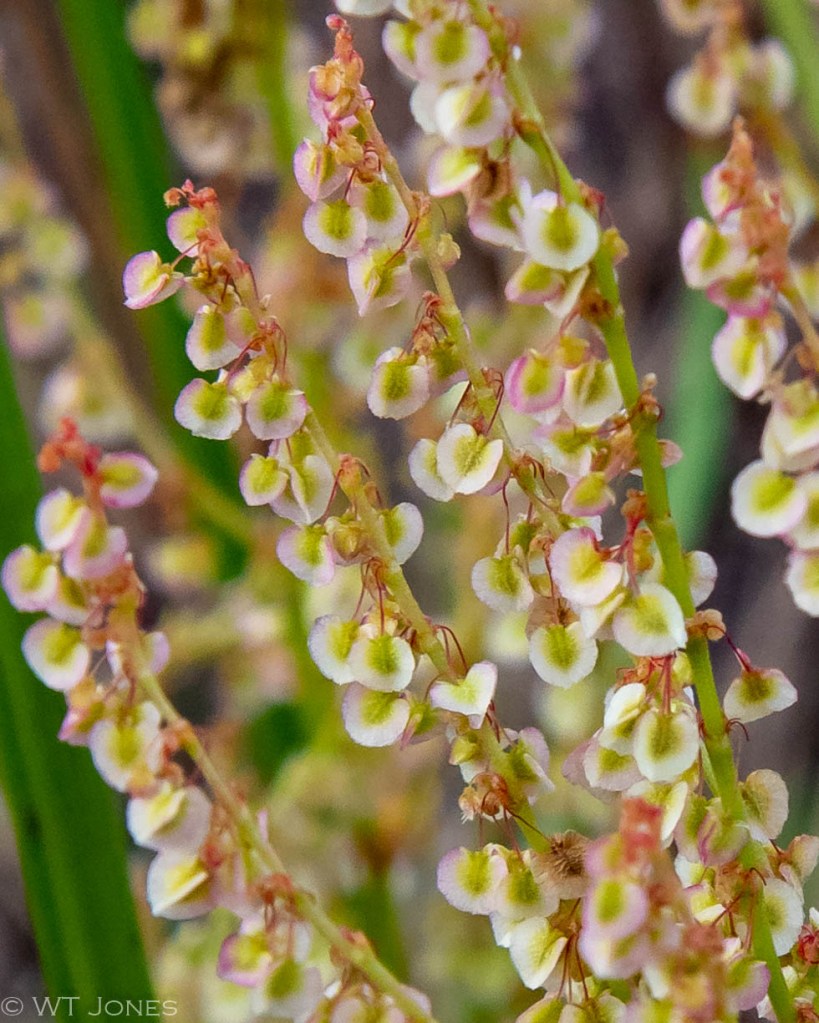
Once it matures, the Heartwing Dock or Sorrel (Rumex hastatulus) turns reddish which gives the otherwise desolate fields a much more pleasant appearance. The early flowers are small and quite beautiful.
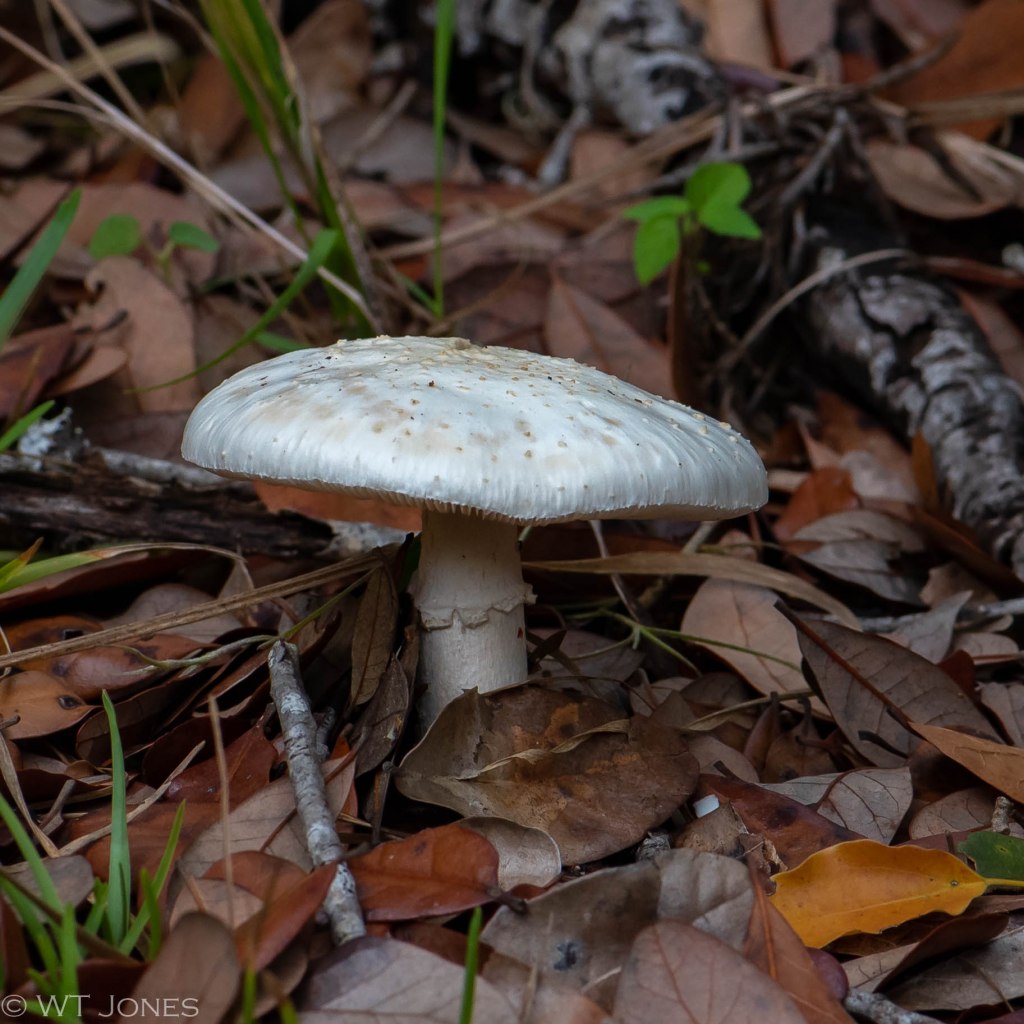
Even a small amount of rain is enough to encourage all sorts of things to grow. Especially fungus.
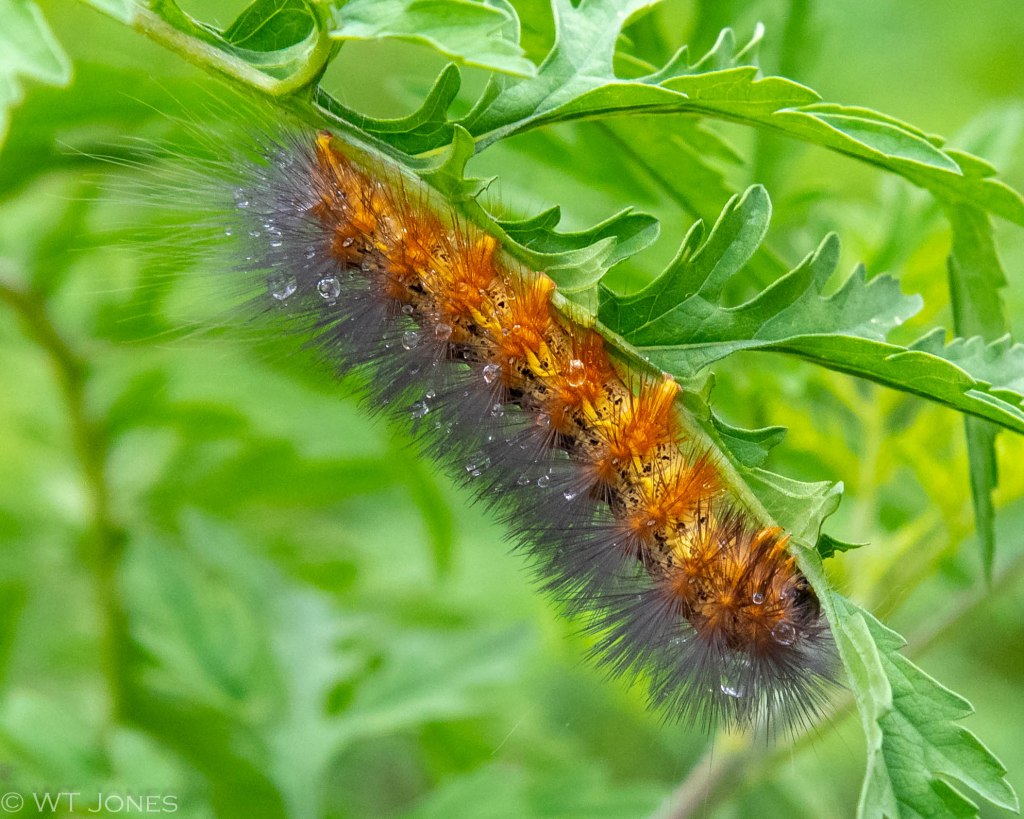
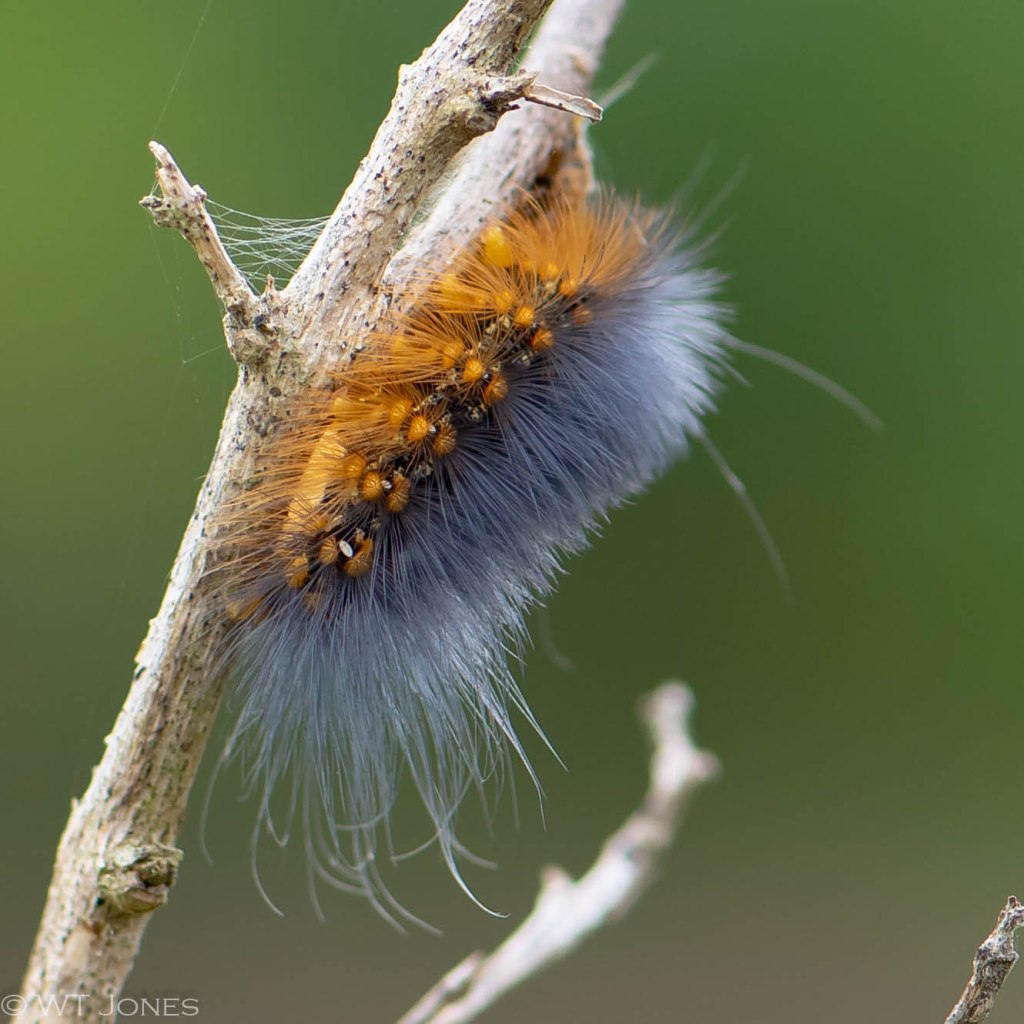
I have never seen an adult, but the larvae of the Salt Marsh Moth (Estigmene acrea) are abundant! This fairly large caterpillar can be found in a variety of color combinations. (If the identification of either of these is not correct, please let me know.)
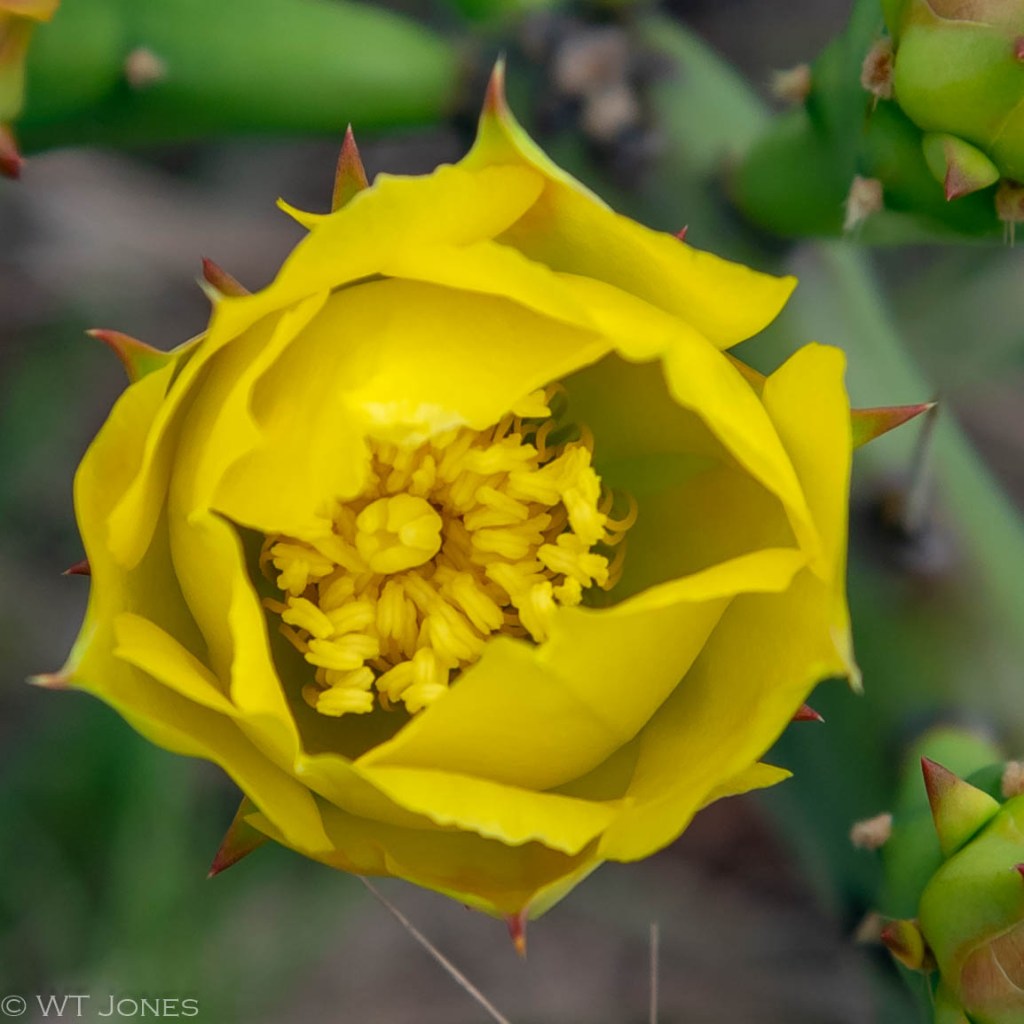
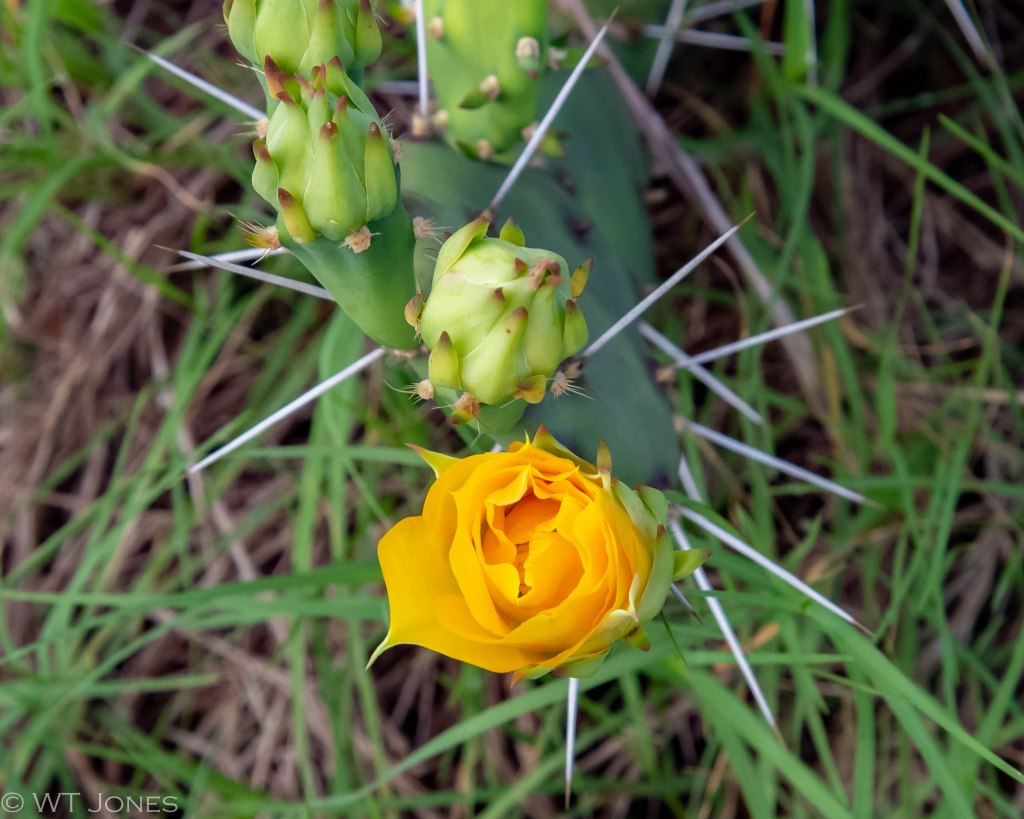
I would never say one particular flower is prettier than another, but the yellow of the Pricklypear (Opuntia spp.) certainly is appealing! Picking one can be a challenge so I think I’ll just take photographs.
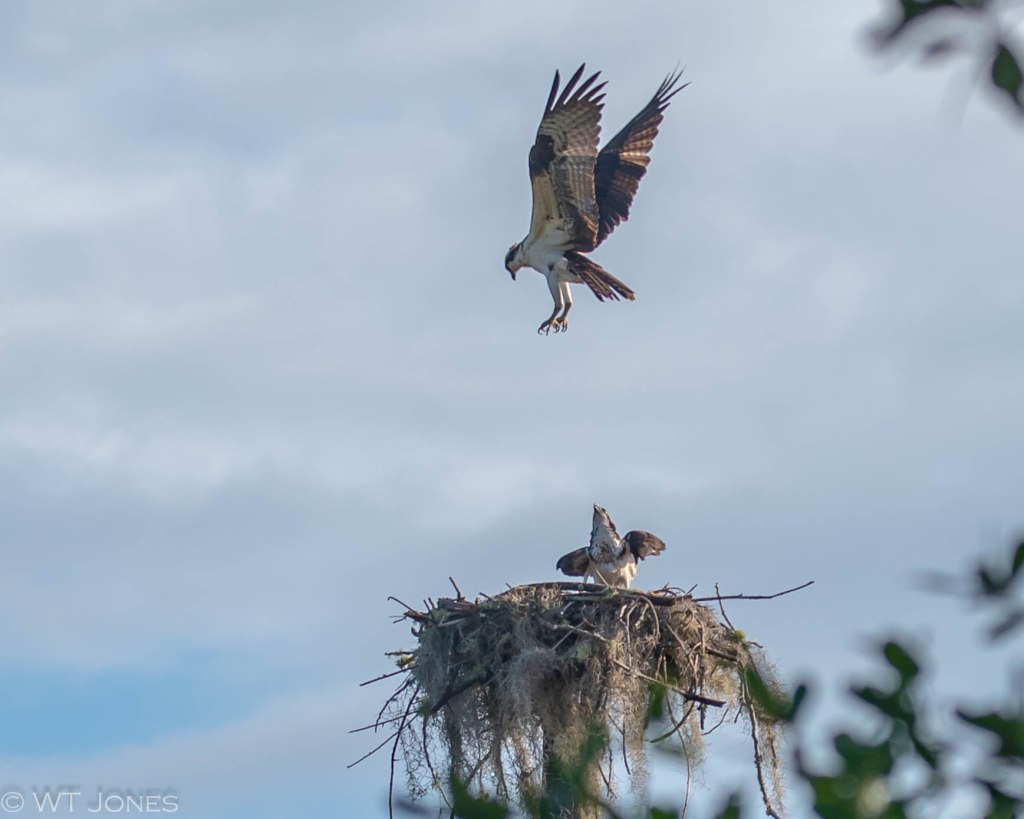
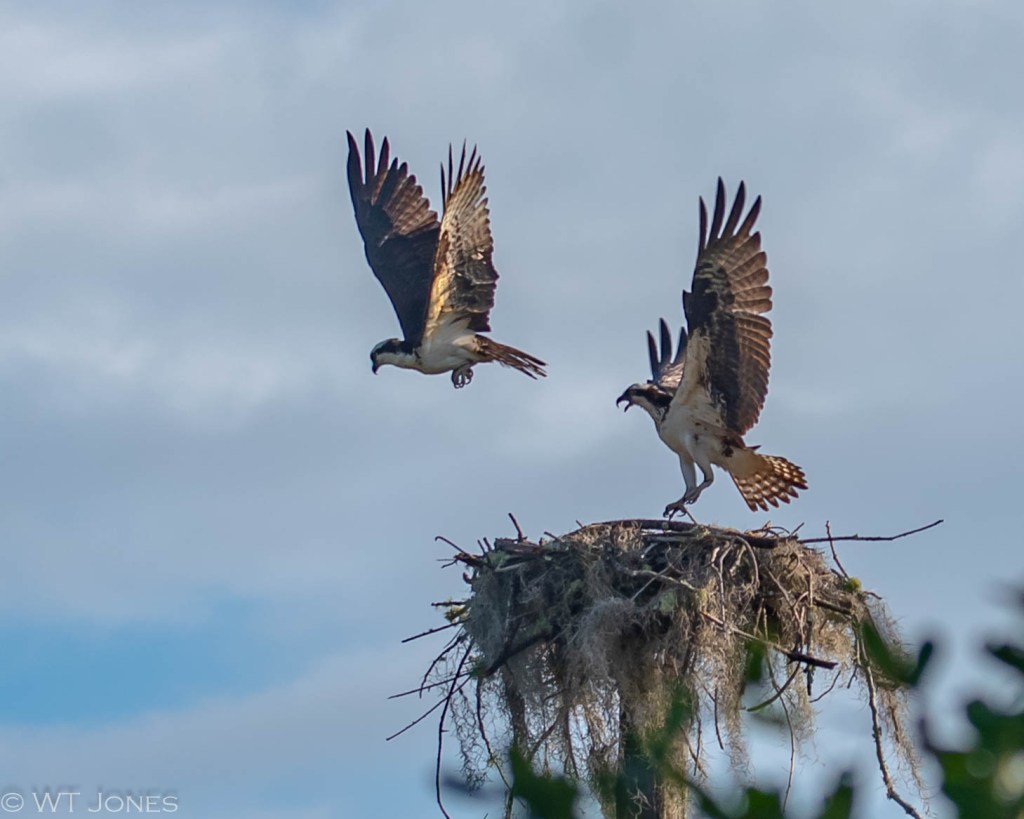
We think this is a male Osprey (it’s a bit smaller than the bird on the nest) attempting to mate with a female which we believe is brooding eggs. She was somewhat discouraging. He didn’t hang around. Smart bird.
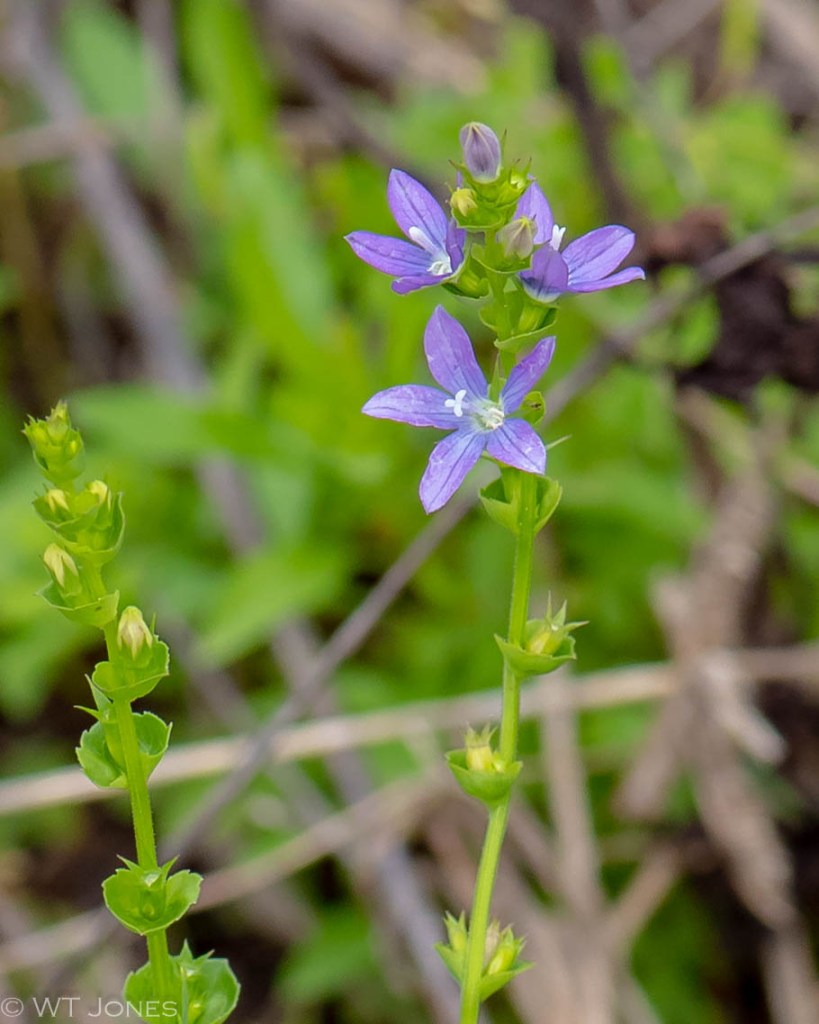
Small, tall (about 24 inches) and looking good. We found a small group of Clasping Venus’ Looking-glass (Triodanis perfoliata) which really added some color to the landscape.
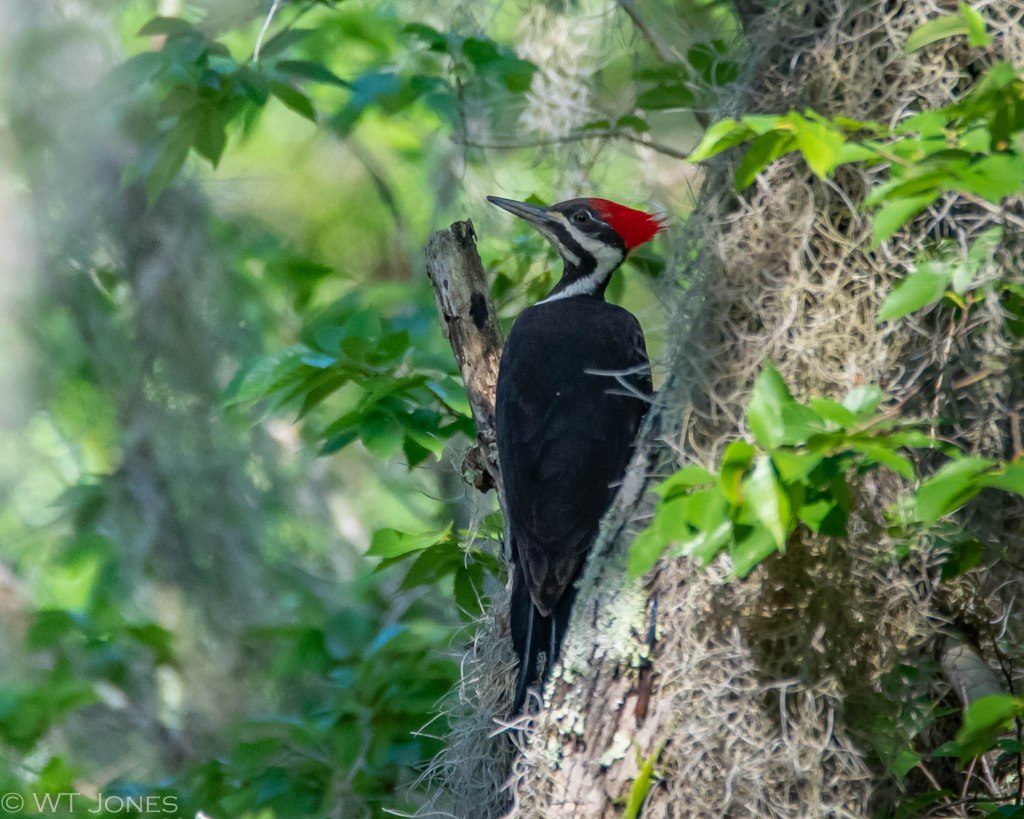
One of the drummers we identified earlier in the day made an appearance. A female Pileated Woodpecker probed a few branches before flapping off into the woods. The females have a black cheek stripe and the male’s stripe is red.
It’s hard not to like spring. Especially if you like to be outside. We can leave our cares and concerns indoors where they will patiently await our return. Meanwhile, among the trees we breathe deeply, hear a bird, see a flower, feel the breeze. And we are alive.
Enjoy your search for a natural place and come back for a visit!
Header Image: Swamp Chaos
This is a follow-up to our last post about flowers. There was a tremendous outcry from a massive amount of our followers protesting the fact no bird images were included in the entry. Okay, so there was only one complaint about a post with no birds. Okay, so it wasn’t really a complaint, more of a “note”. Anyhow, our trip to Colt Creek State Park recently did provide us with more than just bouquets of blooms.
We were all “multitaskers” before that even became a thing. Even as infants, most of us could hold a parent’s little finger and smile at the same time. I distinctly remember, as a youngster, being able to walk, chew Dubble-Bubble AND blow big pink bubbles of the stuff simultaneously! One of the staples of 1950’s television was that guy on the Ed Sullivan Show (you youngsters can look that one up on the worldwide web) who would spin plates atop tall thin poles, increasing the number of plates/poles as a nation collectively held its breath knowing at some point there would be crashing and breaking. Now, THAT was multitasking!
Don’t get Gini started on the multitasking abilities of a mother and wife! It’s a prerequisite, no matter what it may be called.
You may have encountered “competition” birders who appear to be single-minded as they travel at break-neck speeds through field and forest checking off birds seen, heard and suspected. These athletes seem to be concentrating on nothing other than the next bird while ignoring all other flora and fauna on their path to glory.
While I used to think these high-speed birdwatchers had little appreciation for anything other than their lists (or in today’s technological world, their “app”), spending time with them has proved illuminating. To become an expert birder, they had to learn a bit about their target species. Education included where to find a bird, a bit about their biology, learning what they eat, how they mate, what their nest looks like, what is the best time of the year/day to look for them – they had to become amateur naturalists if they hoped to remain at the top of their game. In short, in their zeal to find large numbers of birds and new species, they had to learn to multitask in the natural world. Granted, most of these speedsters don’t stop to smell the roses, but they can quickly identify different habitats while at the same time scanning the area for the objects of their desire.
Gini and I are like that. Only in slow motion. With less on our agenda. Birding has been an integral part of our outdoor activities for a very long time. Not the only part, however. How could we explore an area such as Colt Creek State Park which was bursting with blooming flowers (re: our last post), rush past all those plants and only report that we saw some birds? Yes, we were excited to see a Cedar Waxwing, but we were equally excited to see the Purple Passionflower and the Blue Dasher and the Phaon Crescent and even the duckweed-camouflaged alligator.
Multitasking. In nature. Who knew we could do it?
Here are a few things other than just flowers we saw on the same day as reported in our “Spring Floral Collection”.
Just inside the park, atop a stop sign, an adult Red-shouldered Hawk gave us a look that said: “Move along. I’m hunting for breakfast here“. We did as requested.

Cattle Egrets are very common in our area and, true to their name, typically associate with herds of cattle. Originally native to Africa and Asia, they began showing up in North America in the 1950’s and are found throughout the south. Plain and white most of the year, spring breeding plumage transforms this male into quite a handsome fellow!

A Groundselbush Beetle (Trirhabda bacharidis) found on the host plant, Groundsel Tree, also called Eastern Baccharis or Sea Myrtle.

Gini practiced a little “Zen Birding” as she spotted a group of Wild Turkeys a few miles before we arrived at the park. She remarked that it had been a long time since we had seen turkeys within the park. This big Tom showed up a half mile into the park and said whatever the gobbler version is of “et voilà“!

We know spring is truly here when we start seeing some of the larger skimmer species such as this Bar-winged Skimmer (Libellula axilena).

Red-winged Blackbirds were very busy around all the water sources today involved in loud territorial spats, nest-building in the reeds and courtship behavior. This one rose above the crowd for a better view.

We are constantly amazed how nature can take plain colors such as brown and gray and produce an absolutely beautiful creature like the Dorantes longtail (Urbanus dorantes).

Gini exclaimed: “Bluebirds”! And followed immediately with: “And they have friends”! The oak tree revealed three Eastern Bluebirds and a half-dozen Cedar Waxwings. Gini’s eyes are not only beautiful, they’re darned efficient!


Bright emerald green in the pine forest understory grabs your attention. An immature male Eastern Pondhawk (Erythemis simplicicollis) will retain the female coloring for two-three weeks before turning pruinose blue.

Palm Warblers are migratory in our area and are becoming scarce as they return to their northern breeding grounds. The yellow on the belly of this one indicates it is the eastern or “Yellow” sub-species. Palm Warblers west of Hudson Bay typically have light-colored bellies without yellow.

Rounding a bend in the trail, we caught a White-tailed Deer by surprise. She didn’t seem too alarmed and eased into the brush and disappeared.

Frogs were on the brunch menu as every time this Little Blue Heron stabbed at the water you could here a high-pitched “squeak” and a splash.

Just pretend you can’t see her. She knows you can but she worked so hard on that camouflage we don’t want to hurt her feelings.

By far, the most numerous butterfly species we encountered this morning was the Gulf Fritillary (Agraulis vanillae). The Purple Passionflower (Passiflora incarnata) is one of their main host plants and was blooming profusely. This individual was visiting a Florida Hedgenettle (Stachys floridana).

Those green eyes, a white face and blue abdomen advertise the little male Blue Dasher (Pachydiplax longipennis) is present and accounted for.

One of the few moths active in daytime is the Ornate Bella Moth (Utetheisa ornatrix). We’re happy about that as it certainly looks good in full sun!

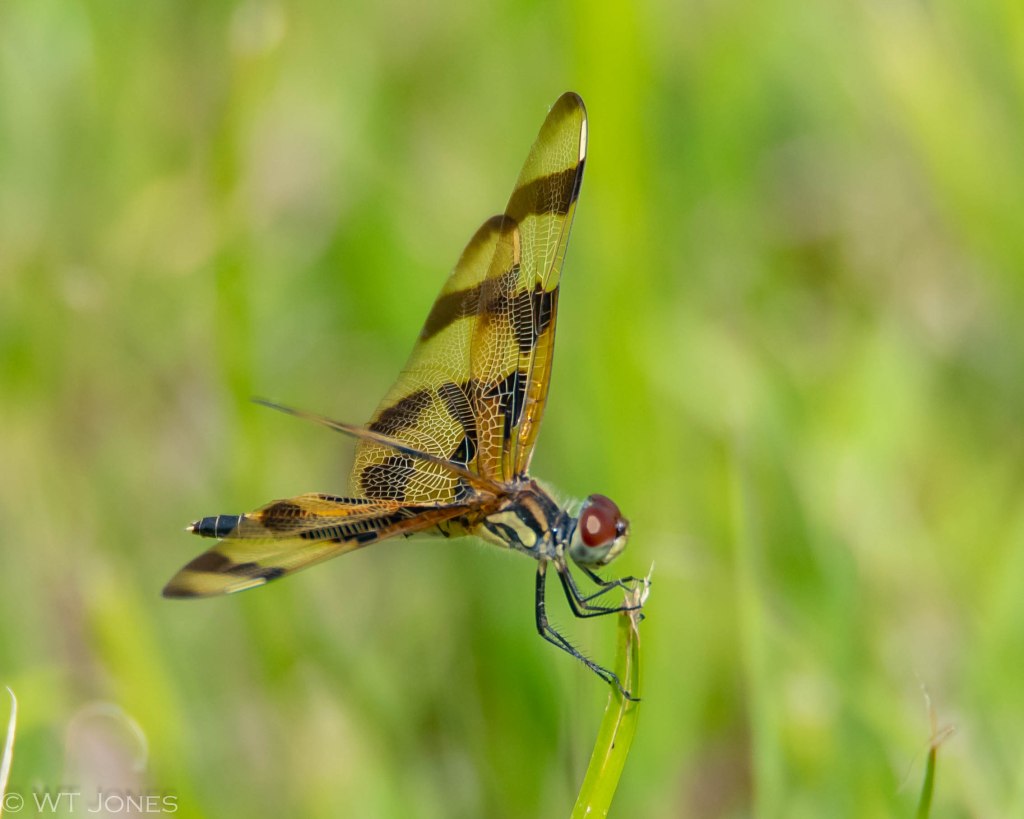
Although we’ll soon be seeing them everywhere, the first sightings each spring of the Halloween Pennant (Celithemis eponina) is like finding a gold pendant you haven’t seen in a long time.
The grass beside the trail hides a large number of small creatures. It’s hard to believe we could miss such a bright thing as the Phaon Crescent (Phyciodes phaon), but unless they move, which they do constantly (!), you would never know you almost stepped on one.

Very small and jewel-like, an Orchard Orbweaver (Leucauge argyrobapta) busily attended her weaving duties as we watched her toil against the backdrop of a massive cypress swamp.

Accomplishing several things at the same time. Multitasking. Call it what you will, once you enter Nature’s bailiwick, you just can’t help yourself.
Enjoy your search for a natural place and come back for a visit!
Header Image: Field of Purple Passionflowers
We spent a couple of hours the other day ambling through one of our our favorite venues, Colt Creek State Park. Twenty minutes from the house, it is an easy decision to go often. Located on the edge of the vast Green Swamp, the habitat of pine and mixed hardwood forest, a couple of lakes, a couple of creeks, a bit of wetland, some open grassy areas – I mean, if you’re a wild thing, what’s not to like?
As we enjoyed seeing a few lingering bird migrants as well as plenty of resident birds, my very own wild thing piped up to mention how colorful the joint was since our last visit (only a week prior). Indeed, there were patches of color as well as individual blooms standing up to be noticed. As we ventured off a path, our eyes began to adjust to very small bits of color as well. Flowers were hiding, literally, underneath the blooms of larger flowers.
Breakfast in a grove of tall Longleaf Pine Trees was accompanied by Eastern Bluebirds flitting in the canopies, a Downy Woodpecker tap-tap-tapping, a Red-shouldered Hawk screeching as it circled overhead and butterflies and dragonflies hurrying to some nearby appointment.
Spring is a seasoning to be applied liberally to one’s soul.
Our morning exploration included birds and bugs, but it was the blooms which highlighted the day.
(If you can offer any corrections to identifications we would really appreciate it.)
“Come with me into the woods. Where spring is advancing, as it does, no matter what, not being singular or particular, but one of the forever gifts, and certainly visible.” – Mary Oliver
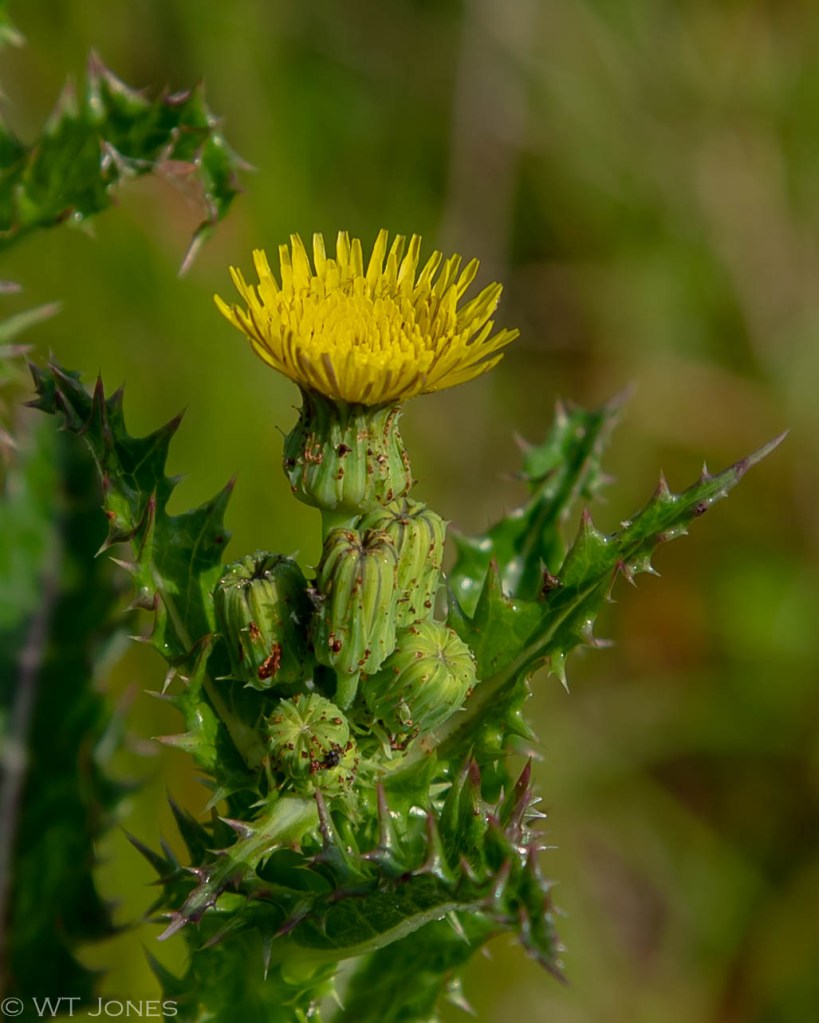
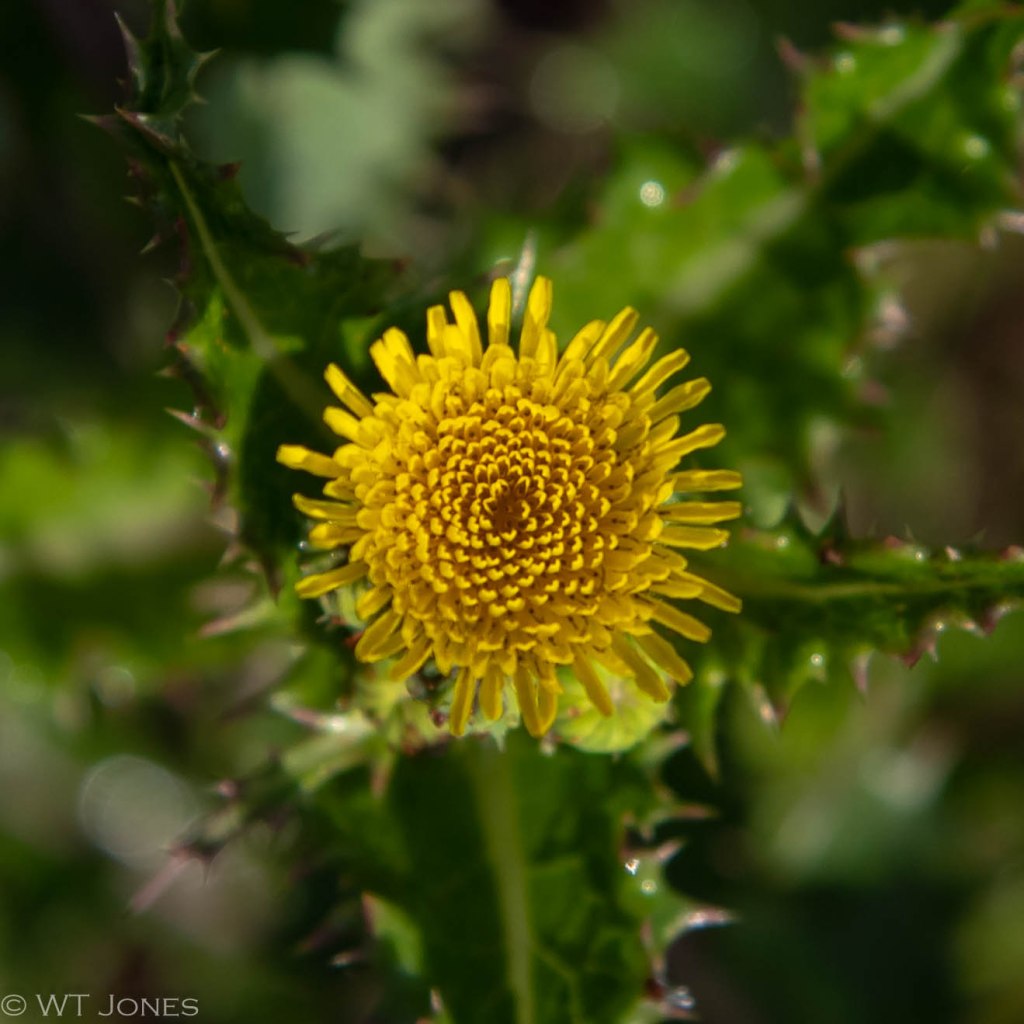


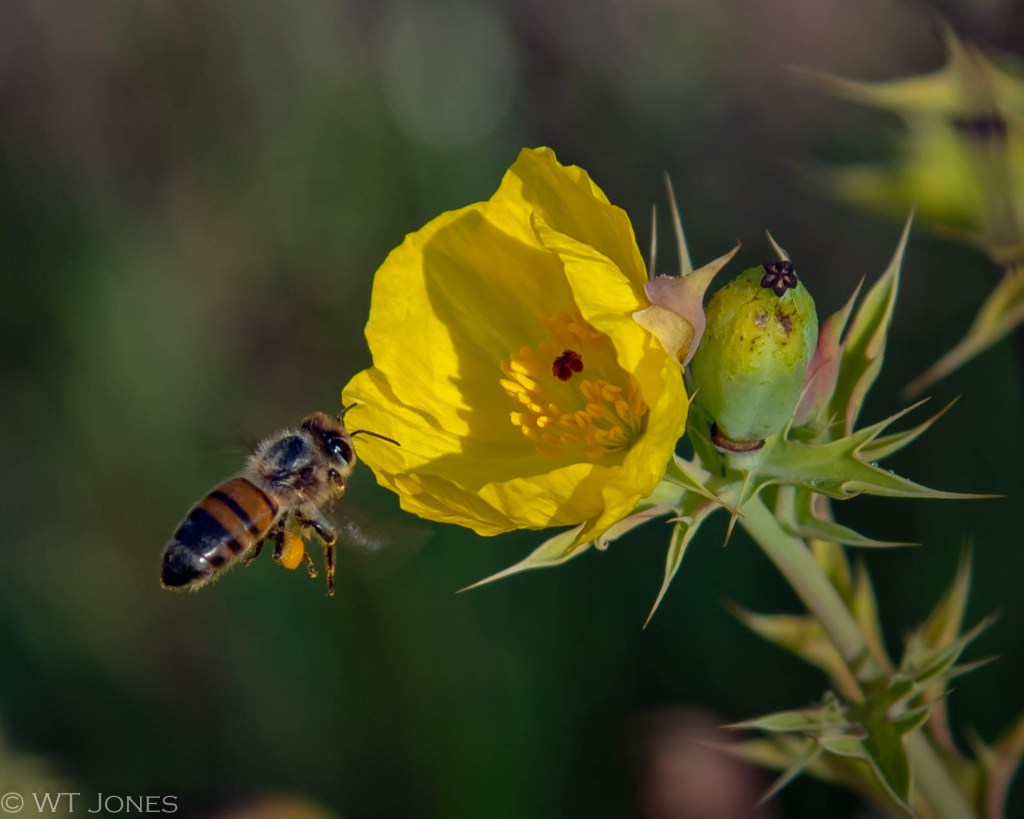


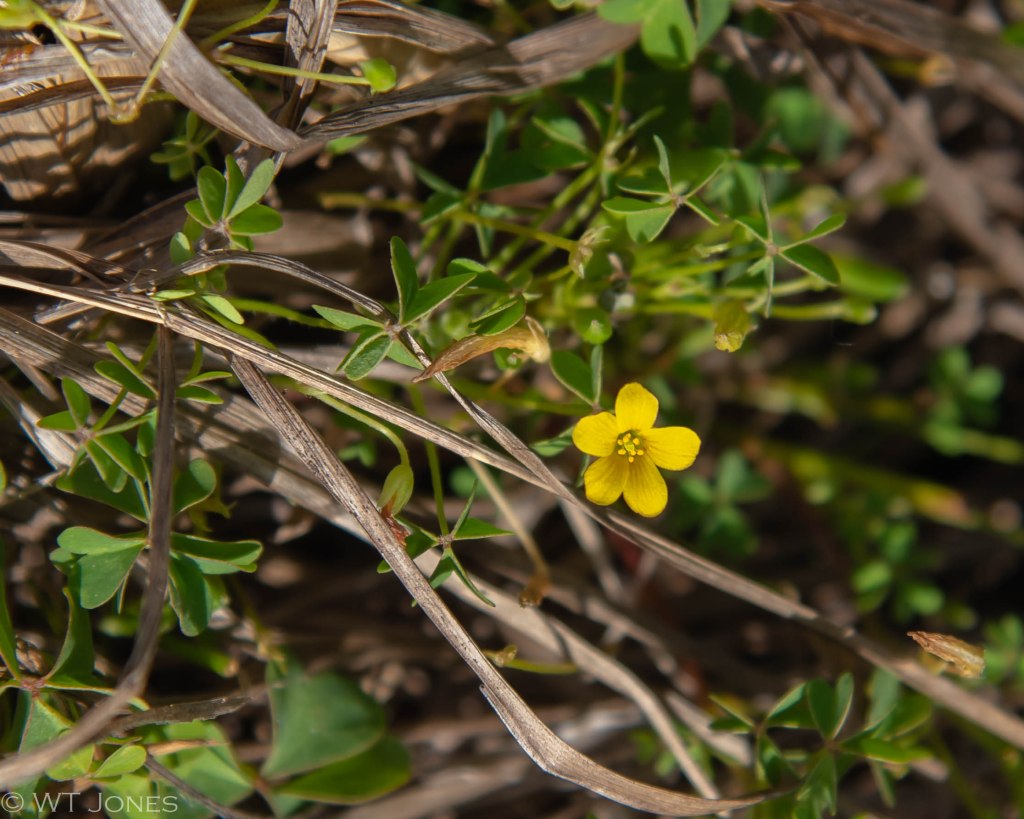


It is all too easy to become excited when we spot something special in nature and in our enthusiasm we can overlook the small bloom, quiet bird or inactive insect. Go slowly, observe, stand still often, kneel (easier for some than others!). There is infinite beauty in nature so we shall always be able to find something new to savor!
Enjoy your search for a natural place and come back for a visit!
Header Image: White-eyed Vireo
So many things to do!
The garage really needs to be sorted out, the extra bedroom looks like the aftermath of a craft warehouse explosion, bags of donation items need to be hauled away, a couple of small trees are awaiting excavation, the birding-mobile is overdue for an oil change — where, oh where, to begin?
Sunrise in the forest is so quiet and peaceful. In early spring, we are blessed with uncharacteristically low humidity and can almost understand why so many people who reside in northern regions like it so much. Rays of bright sunshine illuminate small bright flowers emerging from hibernation. The staccato of a Downy Woodpecker hammering on a limb seemed to serve as a wake-up call for Nature.
Early singers included a Northern Cardinal, the soft cooing of Mourning Dove and the incessant questioning call of a White-eyed Vireo. Soon, Northern Parulas joined in with their ascending notes sounding as if they were practicing their scales. A Red-shouldered Hawk screeched as a couple of Fish Crows harassed him from his tree-top perch.
Newly sprouted leaves on all the trees are so green! Pine trees are all sporting new growth at the extremities of their limbs called “candles”. Indeed, it seemed as if we were admiring a forest of chandeliers. As the morning sun dried the grass and weeds, insects set about their daily tasks mostly unobserved by humans. Other creatures, however, took intense notice. Life is a constant effort to survive, for all creatures.
Gini and I munched slices of tangerine and once again marveled at how blessed we are. To be able to simply travel a very short distance, enjoy a peaceful morning surrounded by nature, revel in the company of someone we not only love, but actually like to be around – this is what we wish everyone could experience.
A few of our observations were recorded for posterity.
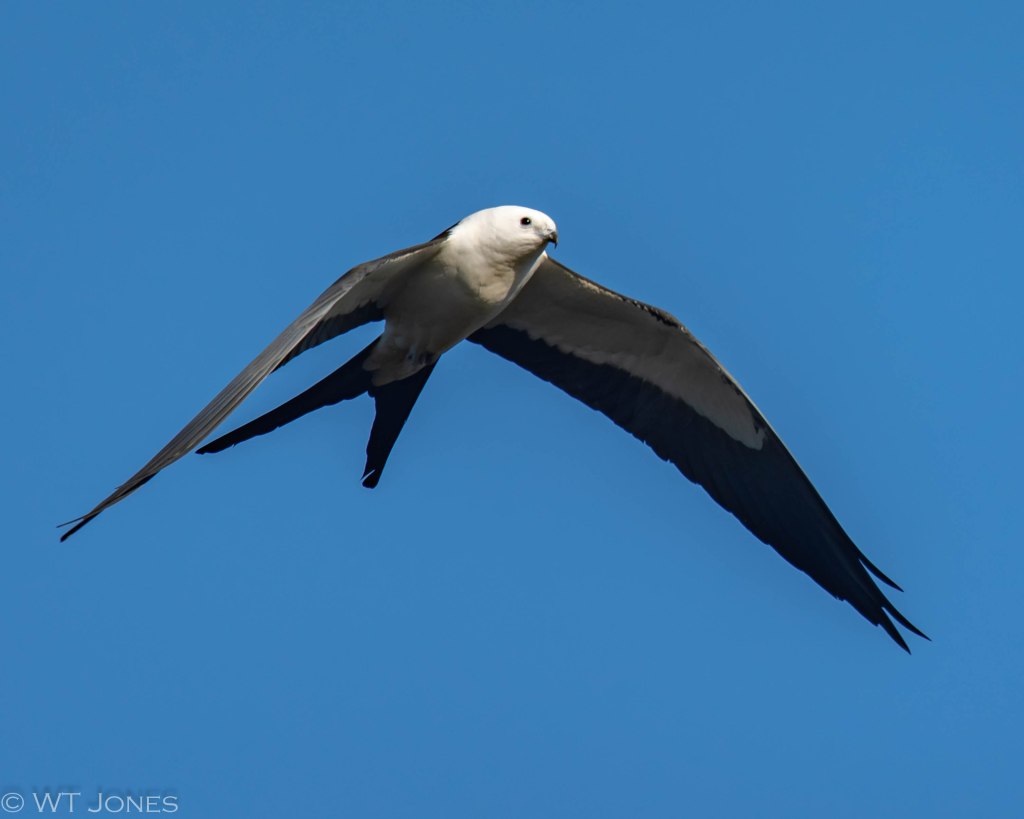
Swallow-tailed Kites have returned from wintering in South America. They will soon select a tall tree near water for a nest. Watching these aerobatic hunters is mesmerizing.
The paths and forest roads were busy with dragon patrols. Today, we saw a few Carolina and Red Saddlebags, but the main actors were Hyacinth Gliders (Miathyria marcella).

We don’t often get a good look at the namesake underside of the Red-bellied Woodpecker, but this male offered us a glimpse as he is sporting fresh breeding plumage.

Not only were the “road warrior” dragons active, those who prefer to perch for their dinner are starting to become abundant as well. This male Blue Dasher (Pachydiplax longipennis) will soon have emerald green eyes once it fully matures.

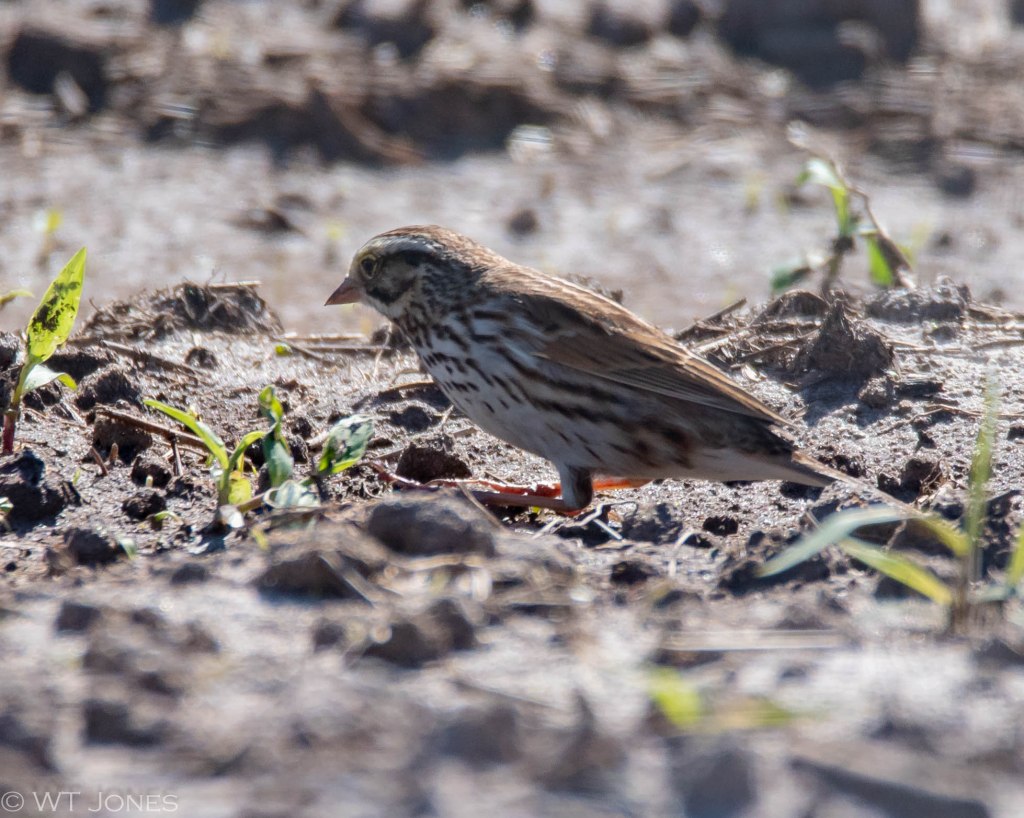
We found a group of a dozen Savannah Sparrows foraging in a recently planted field. Soon, they will all depart for their northern breeding grounds.
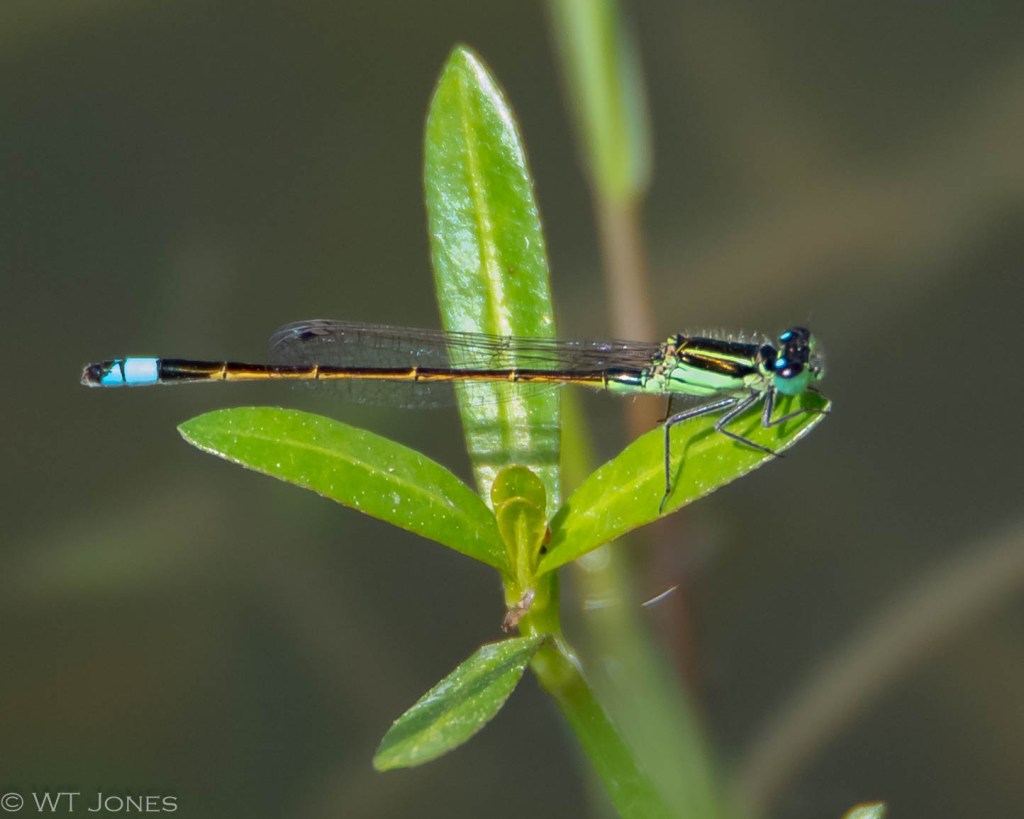
Yet another dragon hunting technique, the Eastern Pondhawk (Erythemis simplicicollis) is one of the few skimmers which prefers to perch on the ground. The bright green of this female will blend very well in the grass and weeds, once she moves from that white rock.

Old blue-eyes. Not much in the singing department, but those eyes along with white plumage a red bill, face and legs certainly make the White Ibis a stand-out!

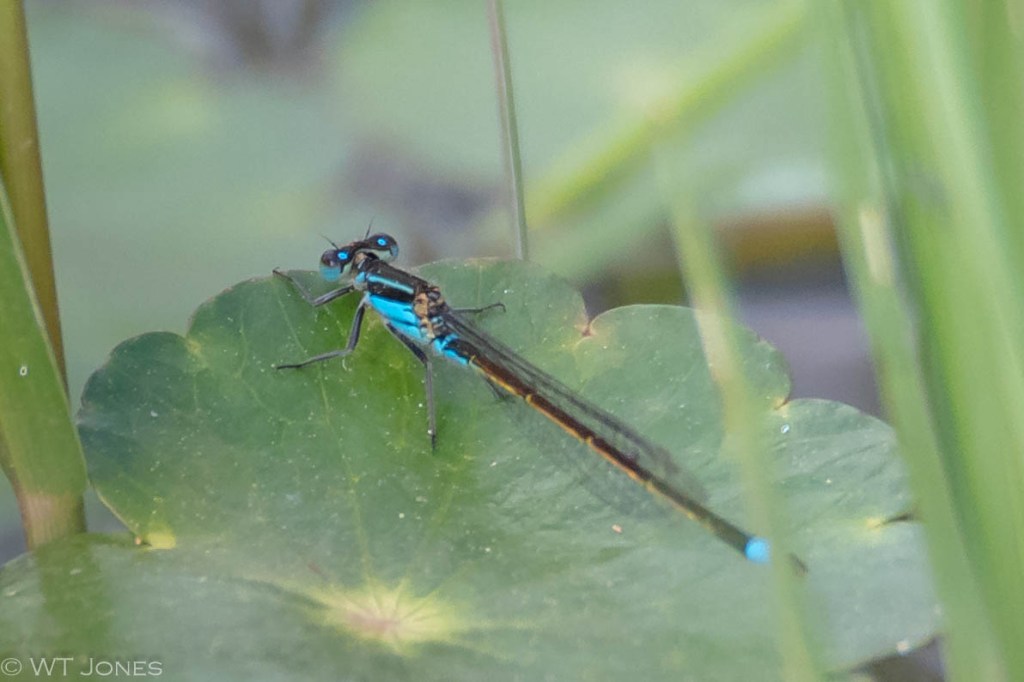
Damselflies are so small it’s very easy to miss seeing them altogether. If you do happen to spot one, identification of the specific species offers it own special challenge. In the case of Rambur’s Forktail (Ischnura ramburii), the challenge becomes almost ridiculous! While the sensible male has a single green form, the female can be green like the male, blue, olive or orange! Good luck. We were fortunate today and found males and three of the four female forms – all within ten feet of each other.


From the underbrush throughout the morning came the tireless singing of White-eyed Vireos hoping to attract a mate. We didn’t mind one bit. When one occasionally offered us a glimpse, well, we liked that even better!

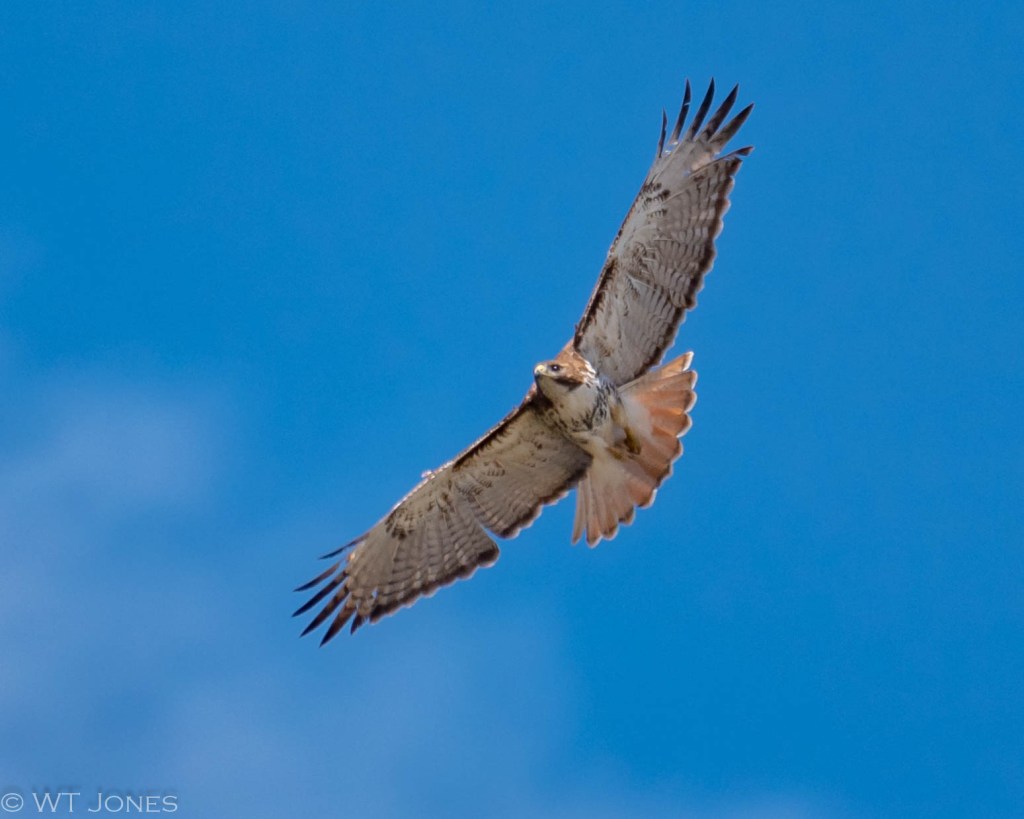
In Florida, our largest breeding Buteo is the Red-tailed Hawk. This magnificent raptor has a wingspan of up to 52 inches (133 cm). Masters of the air, they can spot movement from great altitudes and silently swoop down to snatch a rabbit with incredible speed. Gini once glanced up from reading to see one grasp a squirrel from atop our fence. She had the additional joy of watching the big bird clean the mammal, eviscerate it and consume virtually the whole thing! Who needs the telly?
All of us lead very busy lives. Work, family, chores, finances, politics, world conflict, disease – we must pay attention to all of these. Try not to become overwhelmed. Take time for yourself and those you care about. The recipe for our overall well-being is a simple blending of All Natural Ingredients.
Enjoy your search for a natural place and come back for a visit!
Header Image: Roosting Cedar Waxwings
Zucchini. Taste a slice. The word you are trying to avoid saying is “bland“. That’s why it is served with other stuff. Breading, cheese, onions, disguised in a salad with other bland ingredients to which a tasty dressing is added.
Gini is a true magician. She took zucchini, mixed a few secret powders and potions, poured the resulting mixture into a loaf pan and placed it in a hot oven. The ensuing aroma which spread into every nook and cranny of the house caused one to inhale deeply and saliva involuntarily tried to escape from hungry mouths.
Yesterday morning, sitting next to each other in the cool air of a March morning, overlooking a lake where a Great Blue Heron blinked at the rising sun, a slice of Zucchini bread and a sip of hot tea formed my personal definition of perfection. She took a dull green vegetable and transformed it into an irresistible substance. Magical.
Nature is a true magician. A few weeks ago, bare tree limbs and brown weeds greeted us on our outdoor excursions. Now, as we step into the forest or swamp, we are slapped in the face with splashes of the bright green of newly sprouted tree leaves, the indescribable hues of blooming wildflowers and the bustling of animals, birds and insects rushing to do what it takes to ensure the survival of their species.
Cardinals appear more red, bluebirds more blue, a yellow butterfly looks like – well – butter, dragonflies seem to be flying jewels. Spring. Renewal. Magical.
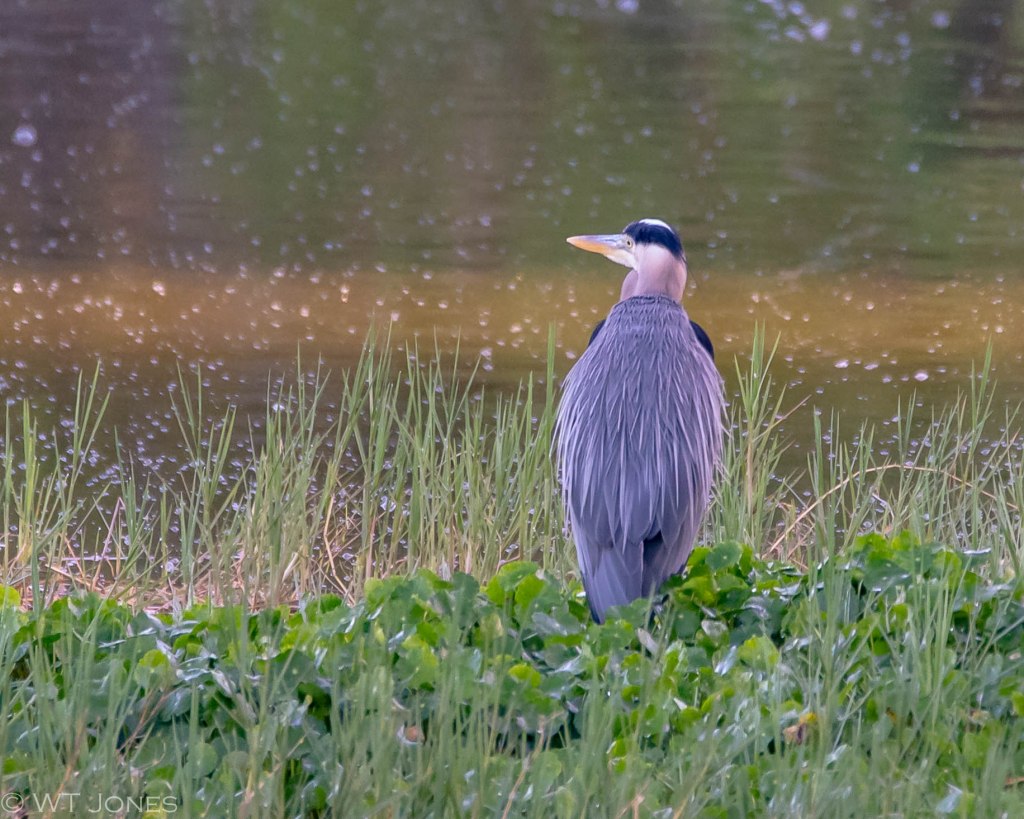
As the sun’s rays streak over the tree line, a Great Blue Heron scans the water for her first meal of the day.
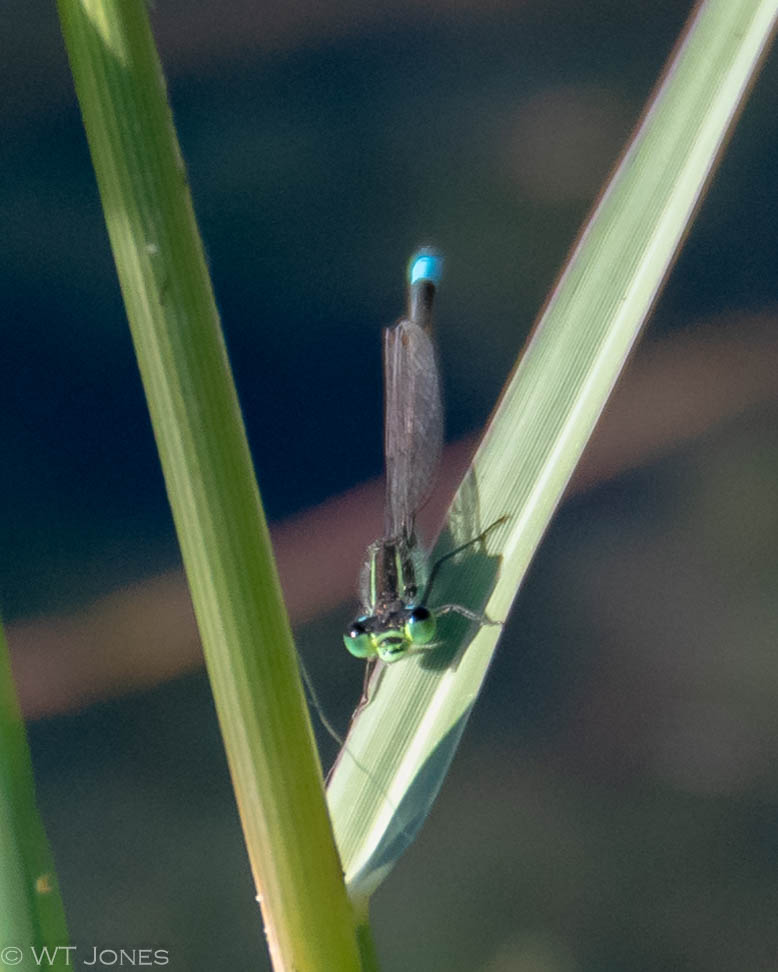
Small and handsome, a male Rambur’s Forktail (Ischnura ramburii) has emerged after a few years living as a nymph under water.
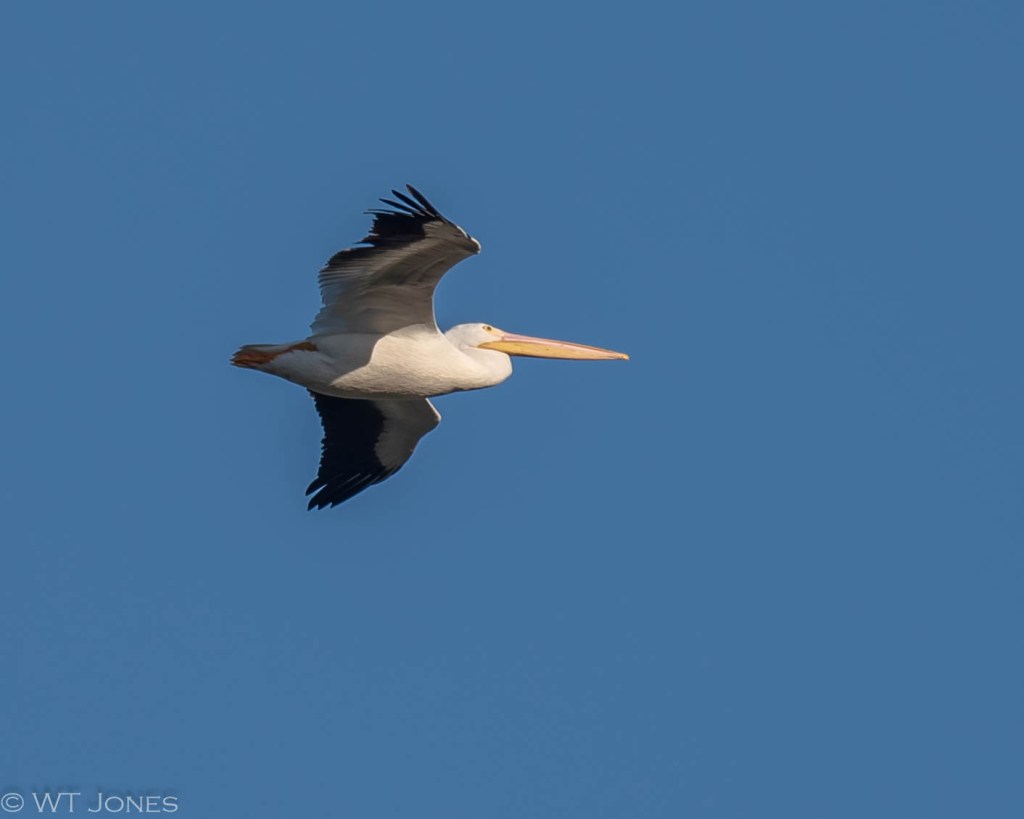
American White Pelicans are fairly common in our area even though we are over an hour away from the coast.
Dozens of Eastern Pondhawks (Erythemis simplicicollis) seemed to be everywhere as they pursued food and each other. Powder blue body and green face identify this one as a male.

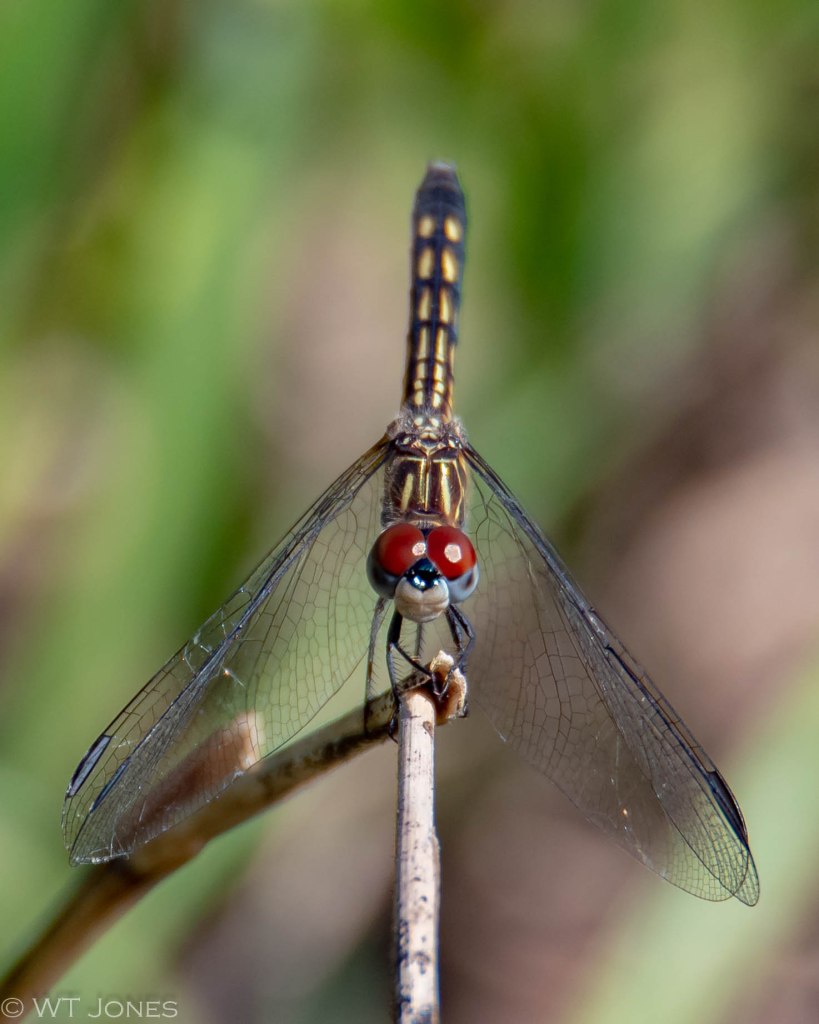
Also numerous today were Blue Dashers (Pachydiplax longipennis). This female gave us the eye(s) as she waited from her perch for breakfast to fly into view.
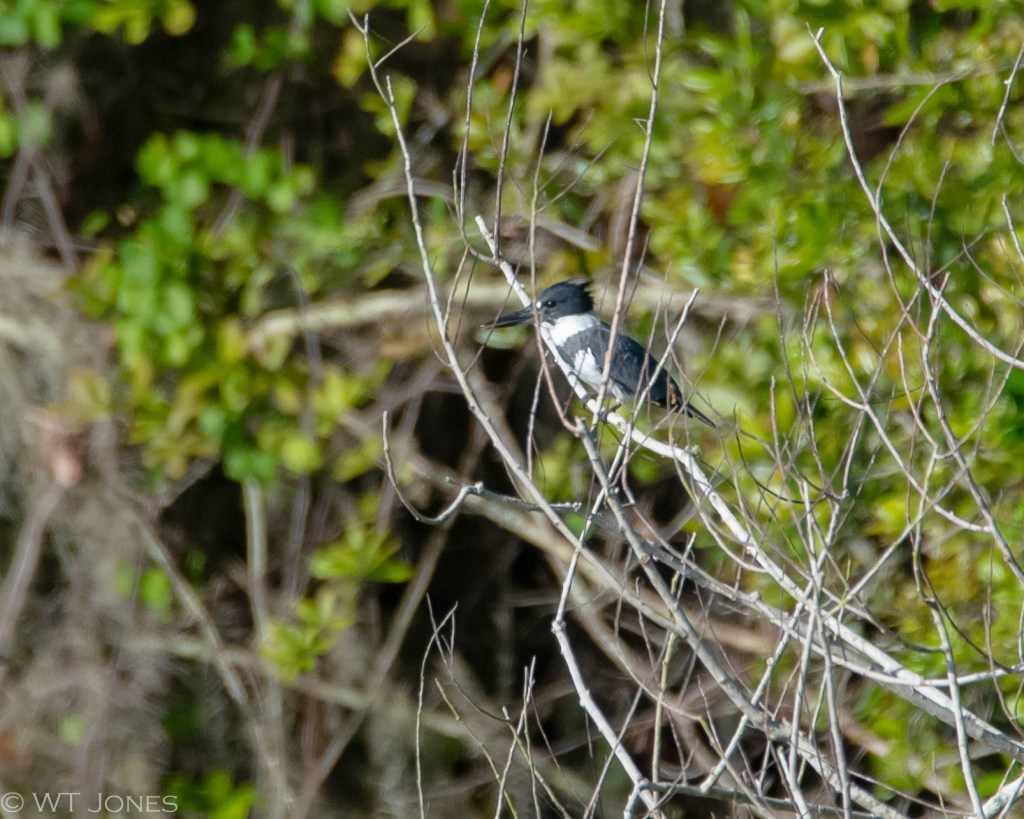
The rattling call of the Belted Kingfisher let us know we were encroaching on his fishing spot. We respectfully retreated.
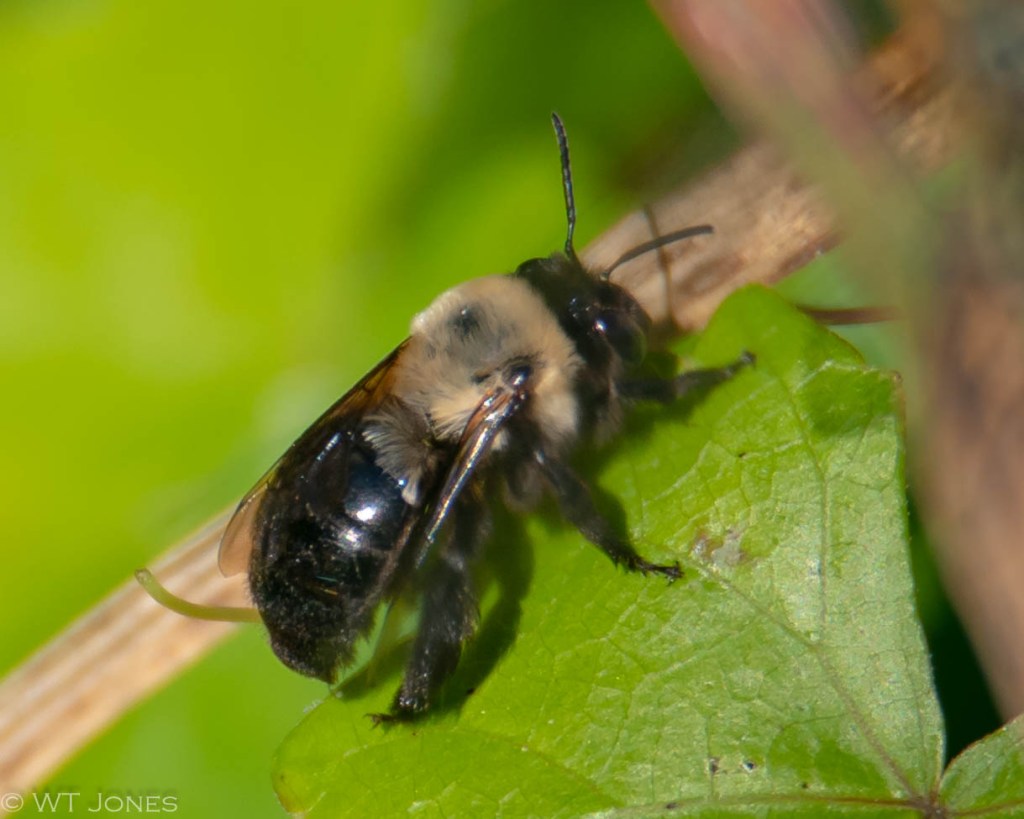
A shiny black abdomen helps separate this Eastern Carpenter Bee (Xylocopa virginica) from its Bumblebee cousin.
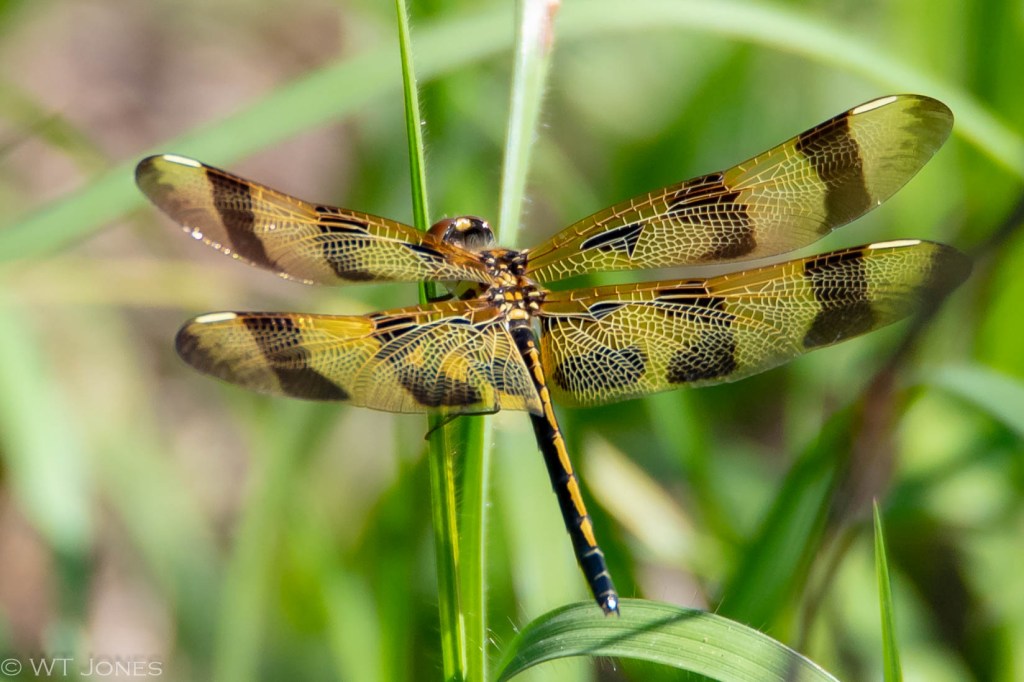
Gilded in gold, when the sunlight strikes at the right angle, the Halloween Pennant (Celithemis eponina) really can resemble a precious jewel in flight.
In our area, we have three “broadsaddle” saddlebag dragonflies: Black, Carolina and Red. As expected, the Black Saddlebags (Tramea lacerata) shows a lot of black as opposed to mostly red in the other two.

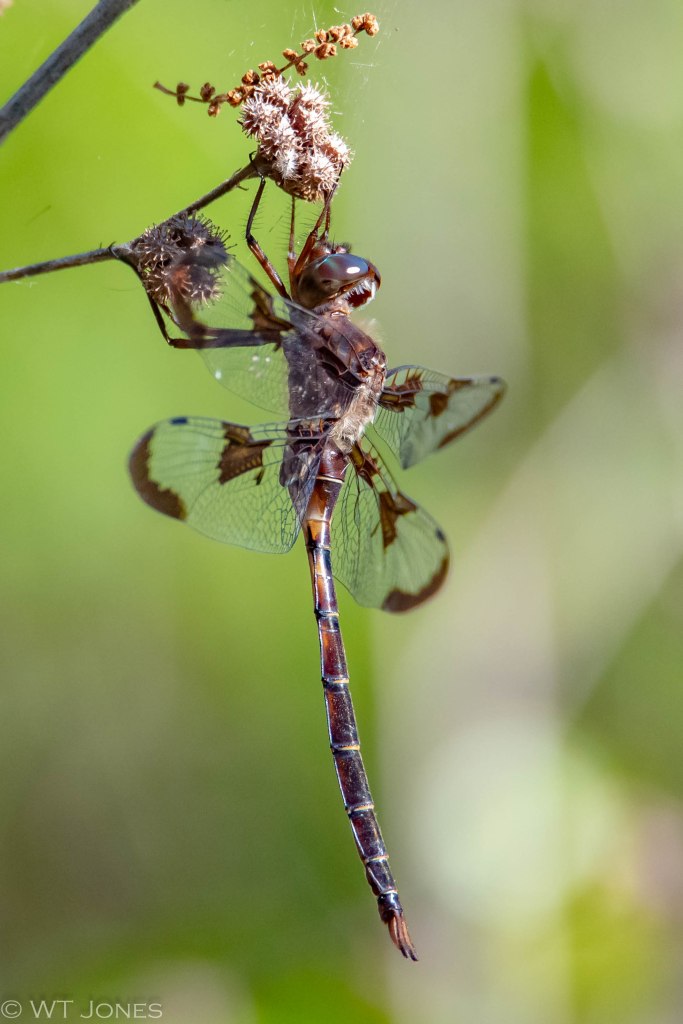
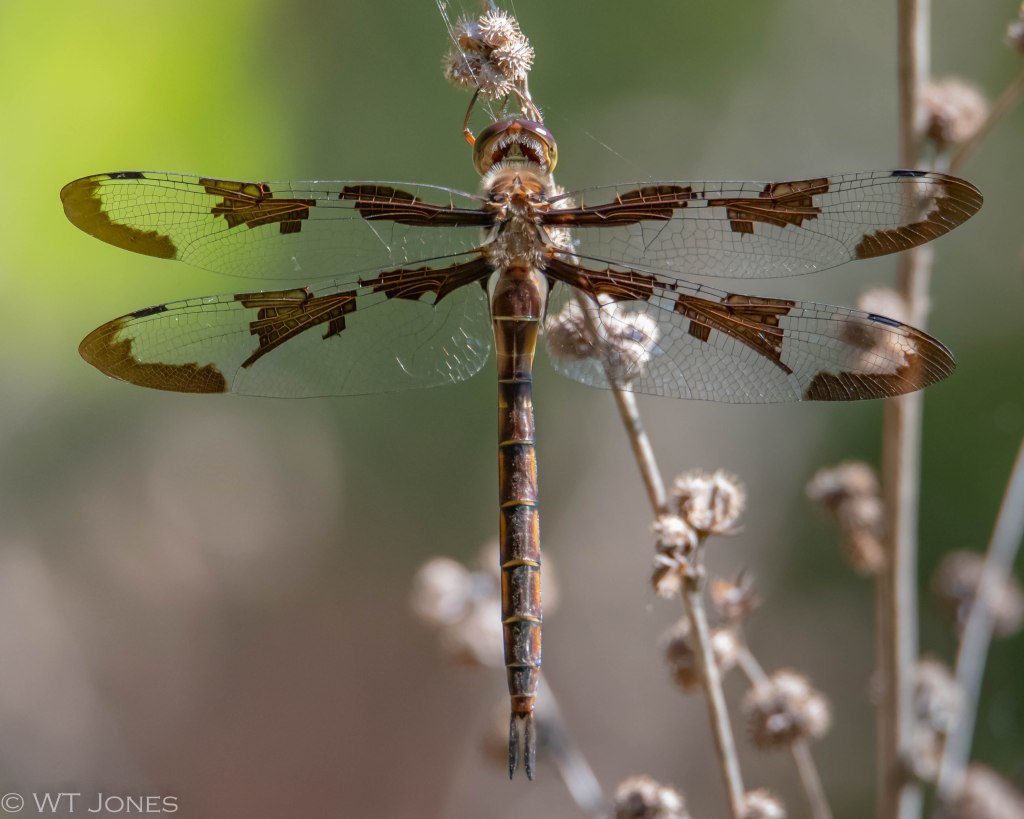
Normally seen zipping back and forth near the shore of a lake, we got lucky and found both male and female Prince Baskettail (Epitheca princeps) perched. They’re pretty unmistakable with that unique wing pattern.


We weren’t the only observers interested in all the Spring insect activity. An Eastern Phoebe needs to consume a lot of bugs to provide enough energy for the trip to her more northerly breeding grounds.

Looking like some piece of artistic embroidery, a White Peacock (Anartia jatrophae) rested a moment in the weeds while we marveled at its beauty.

After a dry winter, the water level in some of the bogs is low enough to allow a slog in the mud which pretty soon won’t be possible. (Well, not for me, as I have an extreme allergy to Cottonmouth Moccasins and nesting Alligators.) Along the bog’s edge, a dense growth of Savanna Iris (Iris savannarum) certainly put an exclamation point on our already colorful day!


Gini’s wizardry amazes me on a daily basis. She transforms the ordinary into something quite special. In all seasons, but especially Spring, Nature offers us glimpses of fantasy which can be hard to believe are real. Human nature tends to dwell on the negative while longing for something positive. That longing is called “Hope“. It exists in every sunrise, every butterfly, every flower.
Embrace the magic.
We hope you enjoy your search for a natural place and come back for a visit.

