Header Image: Red-eyed Vireo
“What day is it?” asked Pooh.
“It’s today,” squeaked Piglet.
“My favorite day,” said Pooh.”
― A.A. Milne
As we entered the month of September, thoughts turned to fall migration. Even in a region which barely alters appearance during “autumn“, we can sense all sorts of changes. We actually do have some trees which have leaves showing us a golden or reddish hue instead of forest green. Annual bird migration is turning into an almost constant drip of Yellow Warblers, American Redstarts, Northern Waterthrush and the formation of mixed gangs of Tufted Titmice, Blue-gray Gnatcatchers and Downy Woodpeckers. Gini is researching new recipes for upcoming holidays.
September should be the seventh month since it derives its name from “septem“, Latin for seven. That was under the Roman calendar. Then an ancient bureaucrat decided that system wasn’t very accurate and suggested the Gregorian calendar instead. So now we have the “seventh” month appearing on our walls and phone apps as the “ninth” month instead.
With the notable exception of visiting medical facilities, our lives are mostly uncluttered by schedules. Most evenings come to a close with “want to go for a ride in the morning”? Occasionally we plan a trip further afield and must figure out how much food and gas to accumulate the day before.
This day was a typical casual visit to the local patch. Boiled eggs and grapes are good “mobile” breakfast items. From the house to the entrance gate is a ten-minute drive so we get to sleep in a bit. The area is not huge so we can cover it fairly well before lunch. Did I mention there are usually some interesting things to see?
I’ll show you.
A Brown Thrasher is a strikingly handsome bird. The bright brown plumage and golden eyes are highlights of this large member of the mimic family. Mockingbirds get credit for copying the songs of other birds, but the Brown Thrasher is equally proficient.

It’s easy to forget the Eastern Towhee is actually a sparrow as it doesn’t quite resemble the “little brown job” appearance of their cousins. This female appears to be in the late stages of molting. Florida has a native species of Eastern Towhee which has pale eyes instead of the red eyes of more northern birds.

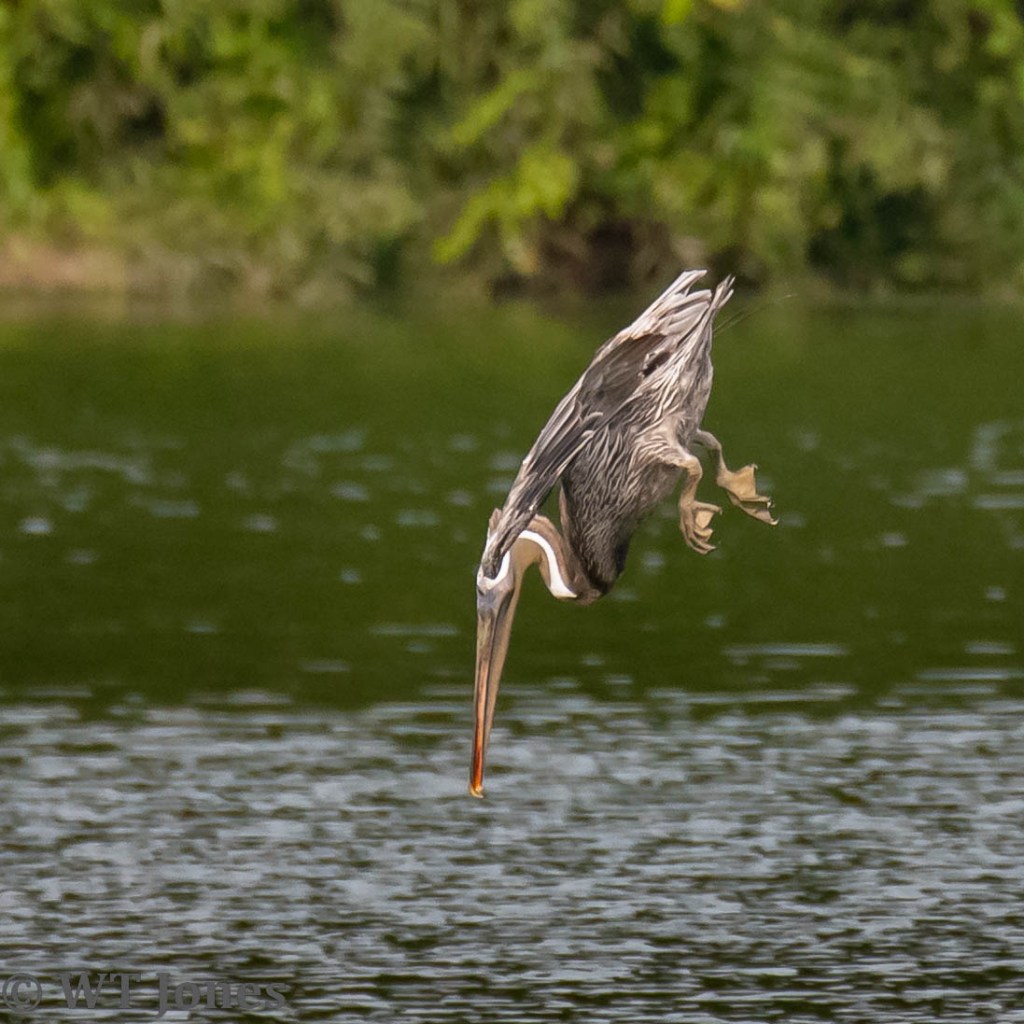
Pelicans are normally associated with salt water. We are about 50 miles from the nearest salt water but a small group of Brown Pelicans breed in our local lakes annually. This one spotted a school of small fish, made a dive and filled its pouch with breakfast.


Looking a bit tattered, a Velvetbean Caterpillar Moth (Anticarsia gemmatalis) wandered among the dew drops early in the morning.

The colorful Northern Parula warbler will soon be absent from our woodlands as they head to South America for the winter.

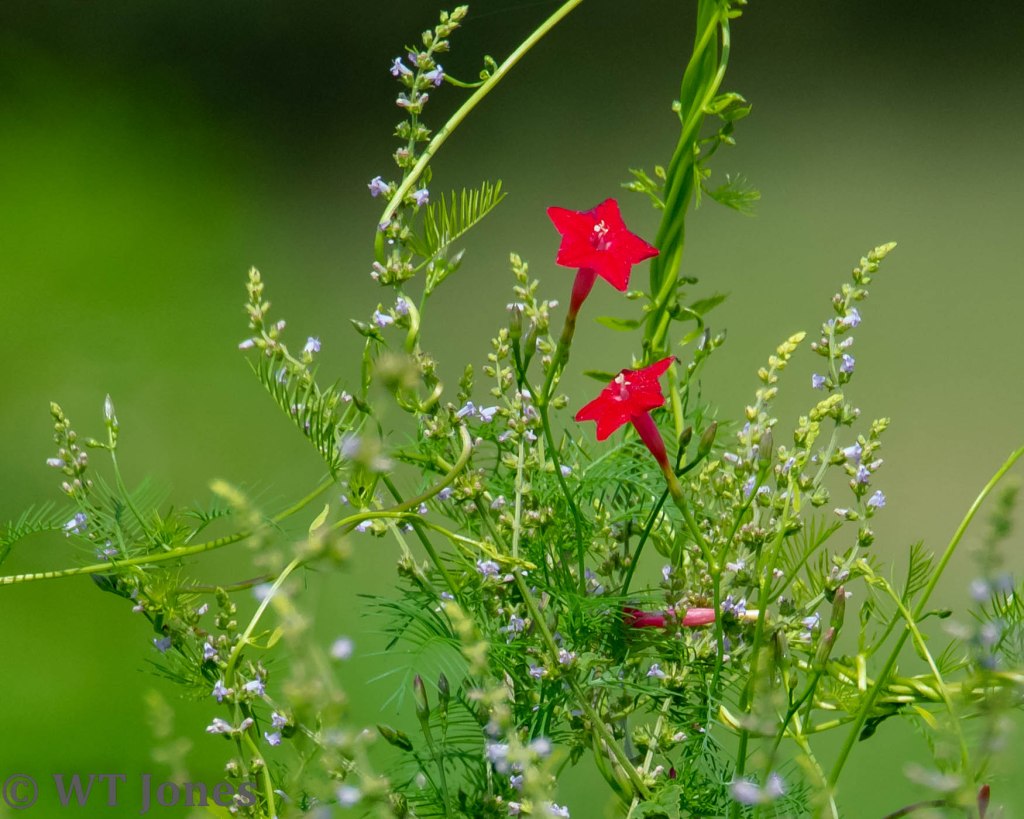
One of the many members of the morning-glory family is the small-flowered Cypressvine (Ipomoea quamoclit). I believe it is not native to Florida and the feathery leaves certainly don’t resemble those of others in the family.
Looking more like some sort of thrush, the Ovenbird is a warbler which prefers foraging among the leaves of the forest floor instead of chasing insects among the high-altitude limbs of trees.

Exuvia. I just like saying the word. This one belongs to one of the 19 species of Cicada found in Florida. If you prefer, you may call this a “cast nymphal skeleton”, but I find “exuvia” more pleasing.

It seems this young male Northern Cardinal has just about completed his first molt and will soon be more completely red, just like Dad.

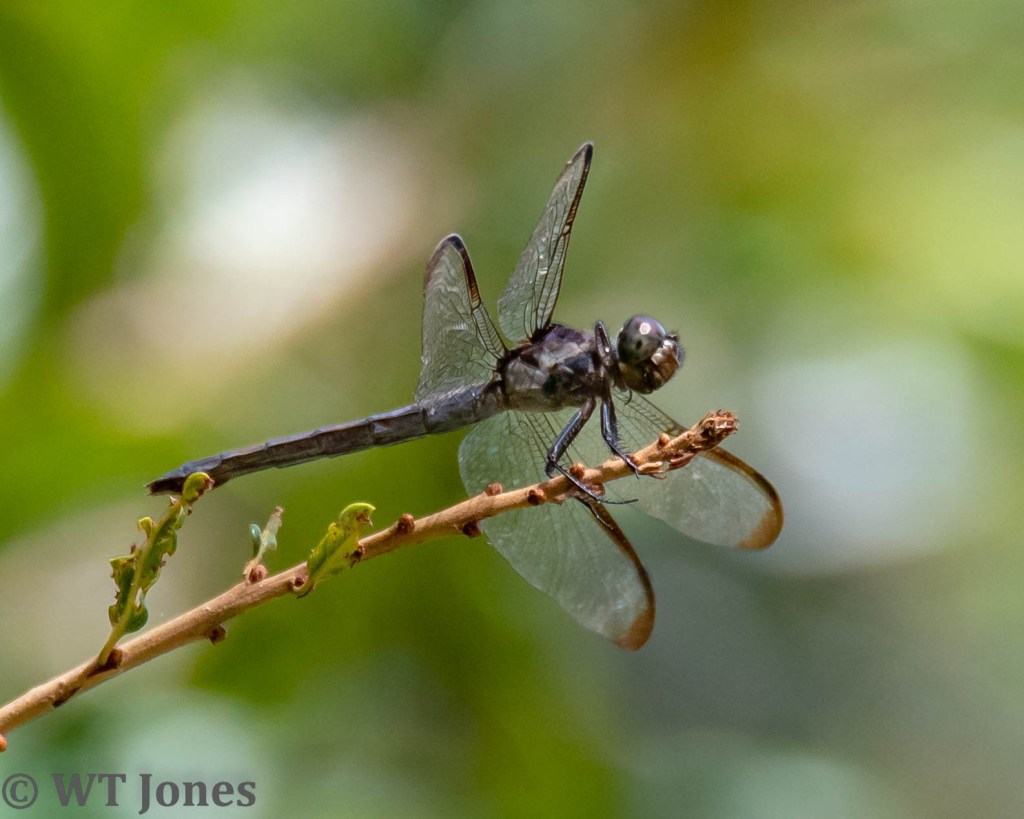
We have three species of large dark members of the King skimmer family which are common in our area. The Bar-winged, Great Blue and Slaty Skimmers. This is a female Slaty Skimmer (Libellula incesta).
As birds begin preparing for migration, they eat almost constantly in order to have sufficient fuel for their long journey south. Some smaller birds form loose flocks which can help provide some protection from predators. For the next several weeks we’ll see larger and larger groups of birds such as the Blue-gray Gnatcatcher chasing down anything that moves in a tree or bush.

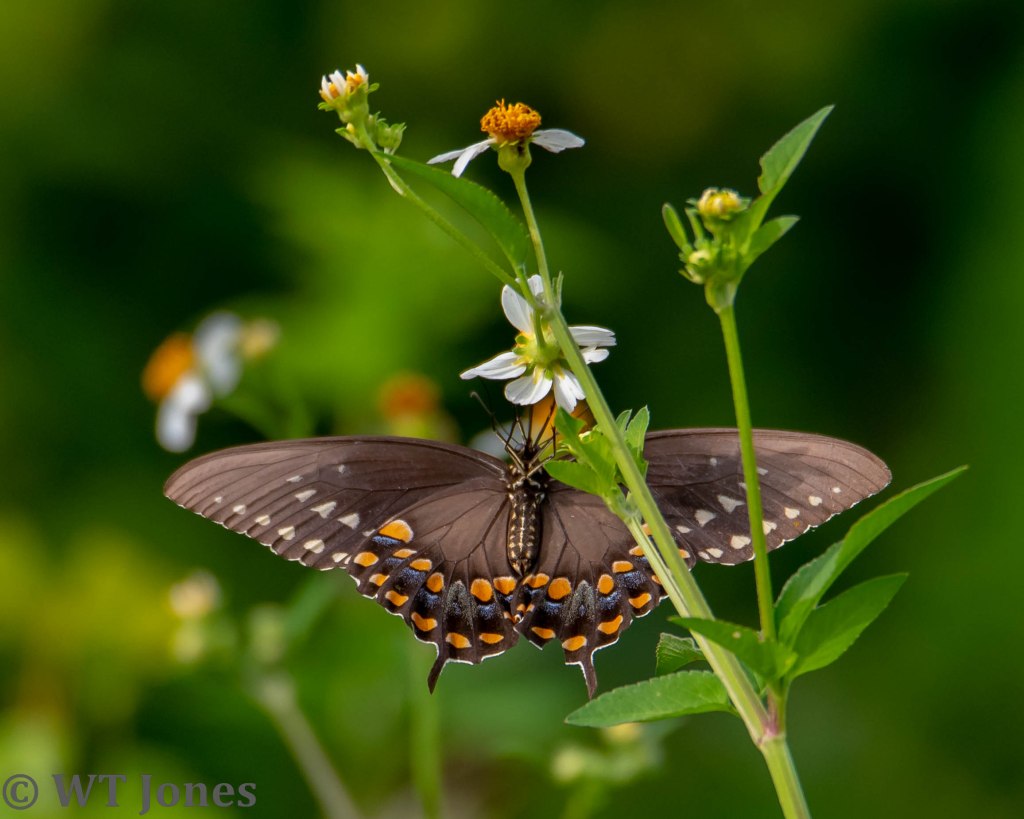
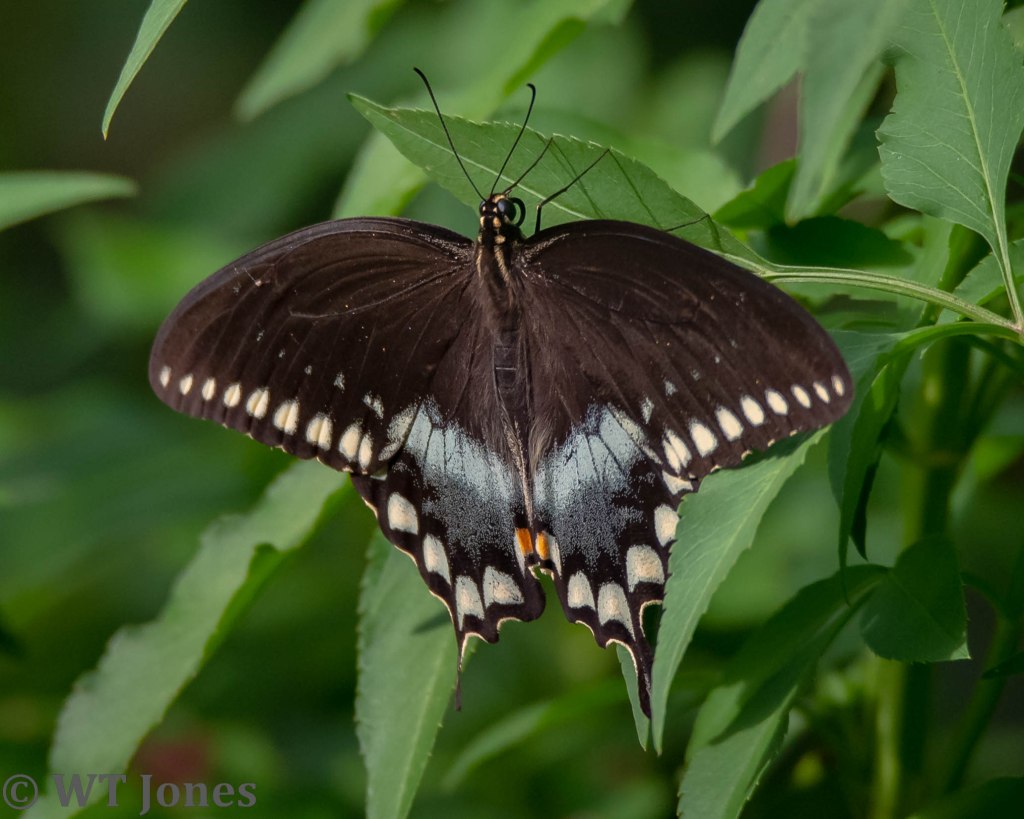
We are so fortunate to have a climate that allows us to see many creatures much later in the year than other parts of the world. A Spicebush Swallowtail (Papilio troilus) was kind enough to allow a photograph from underneath, an angle we don’t always have a chance to capture.
As bright as our famous citrus, a fresh Gulf Fritillary (Agraulis vanillae) visits a Spanish Needle for nectar.

Another visitor to the Spanish Needles is a Zebra Longwing (Heliconius charithonia), Florida’s state butterfly.

A Red-eyed Vireo silently probes through the trees. They breed in our area but more show up during migration as they head to South and Central America.

Another favorite day! We saw so much yet feel like we could have seen so much more. I suppose we shall just have to return for yet one more favorite day.
Enjoy your search for a natural place and come back for a visit!
Header Image: Prairie Warbler
Autumn. In many parts of the world, seasons are marked by distinct, often visible changes. Green in spring, white in winter, bright warm days of summer and colorful leaves in autumn. In our sub-tropical environment here in central Florida, we had to invent the calendar in order to keep up with what season we were experiencing. It is now (looking over at the wall calendar) “autumn”.
Gini and I were born and raised in Florida. Immediately after signing a marriage certificate, I bundled her into a car and whisked her out of the state in case she came to her senses and changed her mind. Second thoughts may, indeed, have entered her conscience when we arrived at our first new home in Syracuse, New York. March in Florida was already hot. March in upstate New York – stuff on the ground called “snow“. Our very first encounter.
A fresh blanket of snow in a forest was a new and amazing adventure. Small birds hopped along a branch and caused a mini blizzard. Tracks on the white forest floor told the story of who passed this way. Deer, raccoons, fox, mice. Exploring nature in this environment was actually quite similar to our efforts in Florida, albeit cooler. In addition to New York, we have been fortunate to live in Maryland, west and south Texas and three different areas of Germany. The climates and habitats differed in each but the method of exploring remained the same.
Birders are afflicted with a physical phenomenon during each spring and fall migration season. “Warbler Neck”. Constantly scanning the tops of trees for visiting birds uses muscles we don’t exercise as much during the rest of the year. Evolving from “just a birder” to becoming a more all-around observer of nature means our necks are getting an even more strenuous work-out. Now we look up high for birds and scan the ground at our feet for insects, plants and evidence of nature’s life cycles.
A recent visit to our local patch at Tenoroc Public Use Area provided a perfect example of our approach to investigating nature. Birds and insects were very active at near eye level, raptors soared high above us, flowers lured us close for a better look which resulted in discovering insects on the plants which led to finding more insects on the ground and then a hawk screamed from above and a lizard scrambled from underneath my foot and … you get the idea.
We will never be quick enough nor sufficiently observant to document all of nature’s wonders, but today was a good day. Migratory birds beginning to arrive, resident birds forming into groups in preparation for heading south, insects going about their business of survival. Enjoy it with us.
Normally, a hawk will fly away screaming as soon as we’re spotted. This Red-shouldered Hawk remained in place as if challenging us to explain our presence.

About the same size as a House Sparrow, a Common Ground Dove surveys a field from atop a gate.

Small and hyperactive describes the Blue-gray Gnatcatcher. In preparation for migration, they form into groups along with other species which helps provide a bit of protection from predators.

One of the gang members the Gnatcatcher hangs around with is the Tufted Titmouse. They make a good show of being fierce and aggressive.

Male Northern Parula warblers have a distinct band separating a bright yellow throat and breast. They have two white wing bars and a lovely yellow-green patch on their back.


Don’t forget to look down. A blade of grass covered in droplets of dew is a perfect perch for a small Fiery Skipper (Hylephila phyleus).

Remember to look up again. A flash of bright yellow in the top of a tree reveals a Prairie Warbler.

Down again. Partially hidden, the blue eyes of a Barred Yellow (Eurema daira) stare back at us.

Changing from breeding to non-breeding plumage is not always an attractive affair. This male Indigo Bunting was a bit of a surprise in this area.

An uncooperative model. Most of the time, we have to be satisfied with what’s offered. I followed this Hyacinth Glider (Miathyria marcella) for quite a while hoping for a better angle. Sigh. At least from the rear you can see the dark “saddle” spots on the hindwings and the golden wing veins.

It seems most areas we visit lately have an abundance of Spicebush Swallowtail (Pterourus troilus) butterflies. That’s okay with us! The bluish wash on the wings indicates this is a female. The male wash is more greenish.

A colorful dragon with blue eyes and striped face, the Two-striped Forceptail (Aphylla williamsoni) is always a treat to find.

That bright green could be part of the plant, or it could be the Green Lynx Spider (Peucetia viridans) spinning her web around a stem to form a nest. She will then produce an egg sac containing hundreds of bright orange eggs. Fairly large for a spider, the female body can reach about an inch (26 mm) in length and a total with leg span up to 2.75 inches (70 mm).

No matter where you may live on this beautiful planet, when you understand that Nature has its ups and downs, you will know exactly where to look for her treasures. Oh, don’t forget eye level. And behind you. And over there, too!
Enjoy your search for a natural place and come back for a visit!
Header Image: White-tailed Deer
Avian fall migration brings out the worst in me. Years of conditioning to be a better “birder” forces me to peruse local birding reports and to visit locations which have historically proven to be “hotspots” for our annual autumnal visitors. This is not necessarily a bad thing. However, in the past few years I have discovered other interests in the natural world. I blame the inexorable advancement of the human aging process.
For whatever reason, Gini has avoided this affliction. However, don’t ask about her first sighting of a Bullock’s Oriole, which involved a primal scream, an arm flung across my chest while driving and a near-vehicle accident. That was “excitement of the moment” as opposed to my “addiction” issues.
I knew things were changing in my approach to birding when more and more time was spent driving and walking around somewhat aimlessly with no specific “birding” goal. Nature revealed heretofore unexplored worlds. The camera focused more often on insects and plants. There have even been moments when I removed the “big lens” and replaced it with a “wide-angle lens”. On purpose.
Our present-day methodology is still one of exploration, especially of new places, but our focus has shifted to observing ALL life forms within the environment. No longer do we move about with no goal in mind. Our wandering is now – willful.
Today we enjoyed a rather short but rewarding wander. Gini refers to our “new” agenda as the three “B’s”: birds, blooms and bugs. What could be better than that?
A small Fiery Skipper (Hylephila phyleus) on Alligatorflag (Thalia geniculata). (Alligatorflag is also called Fireflag and Bent-alligatorflag.)

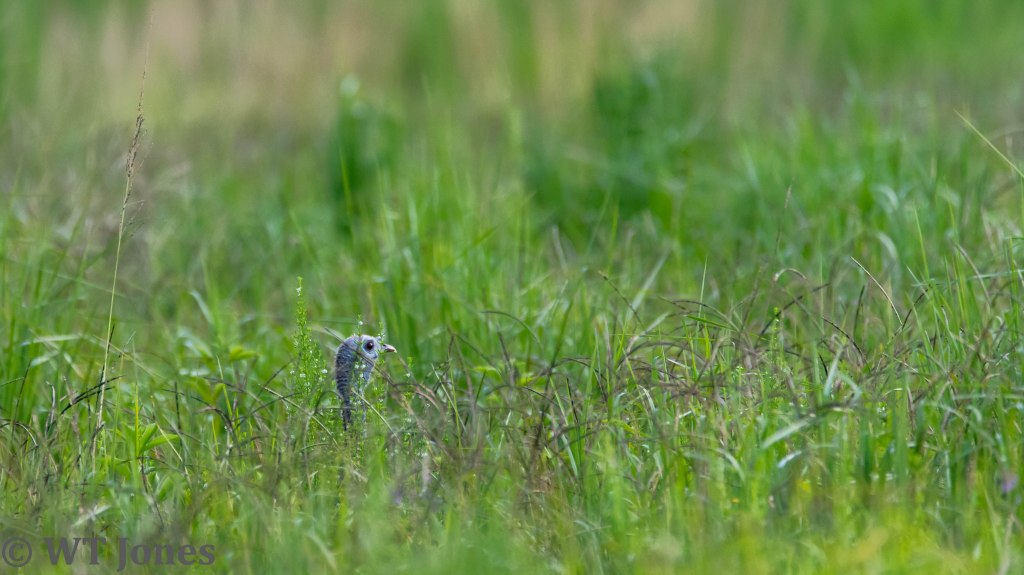
This Wild Turkey is standing in a field enjoying the view. For reference, this adult bird is probably close to 40 inches (100 cm) tall which gives you an idea of the height of the weeds.
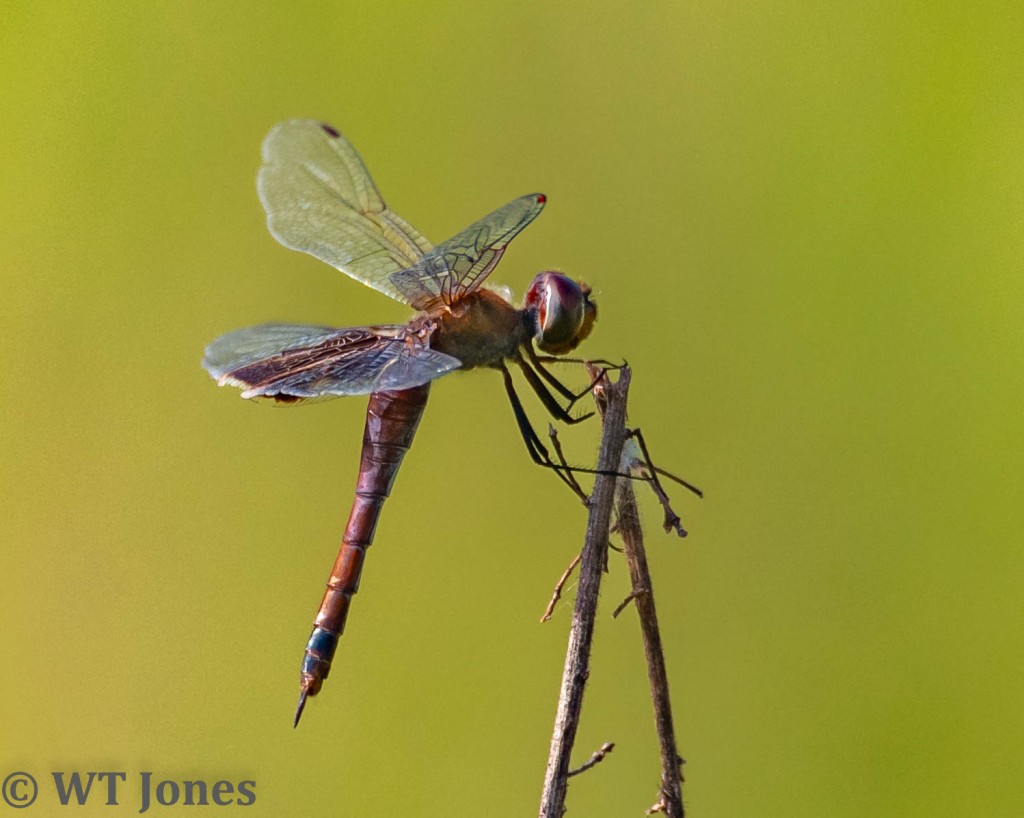
We’re fortunate to have a sub-tropical climate which allows us to enjoy insects such as this Carolina Saddlebags (Tramea carolina) a bit later in the year than some areas.
This model dropped by the studio for a photo session. Actually, he hitched a ride on the car and remained long enough for a picture. A new species for us, a ruggedly handsome Ridgeback Grasshopper (Spharagemon cristatum).

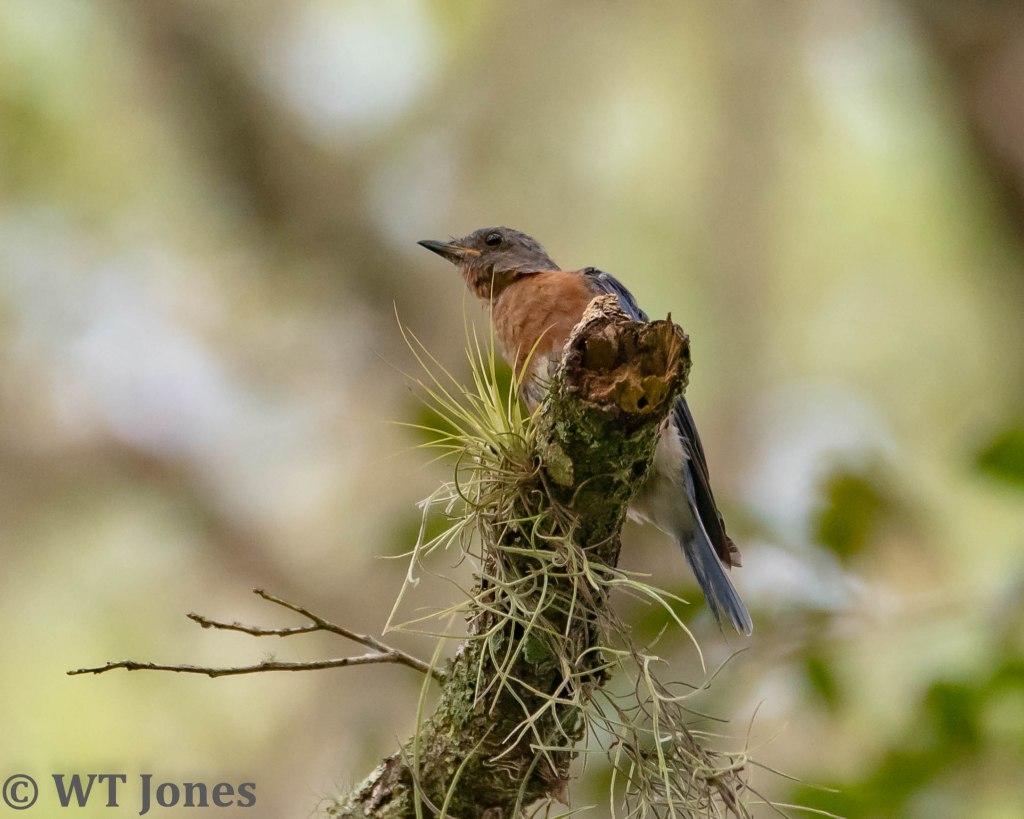
A curious Eastern Bluebird flew to a snag overhead. Turns out there were four more bluebirds in the branches above.
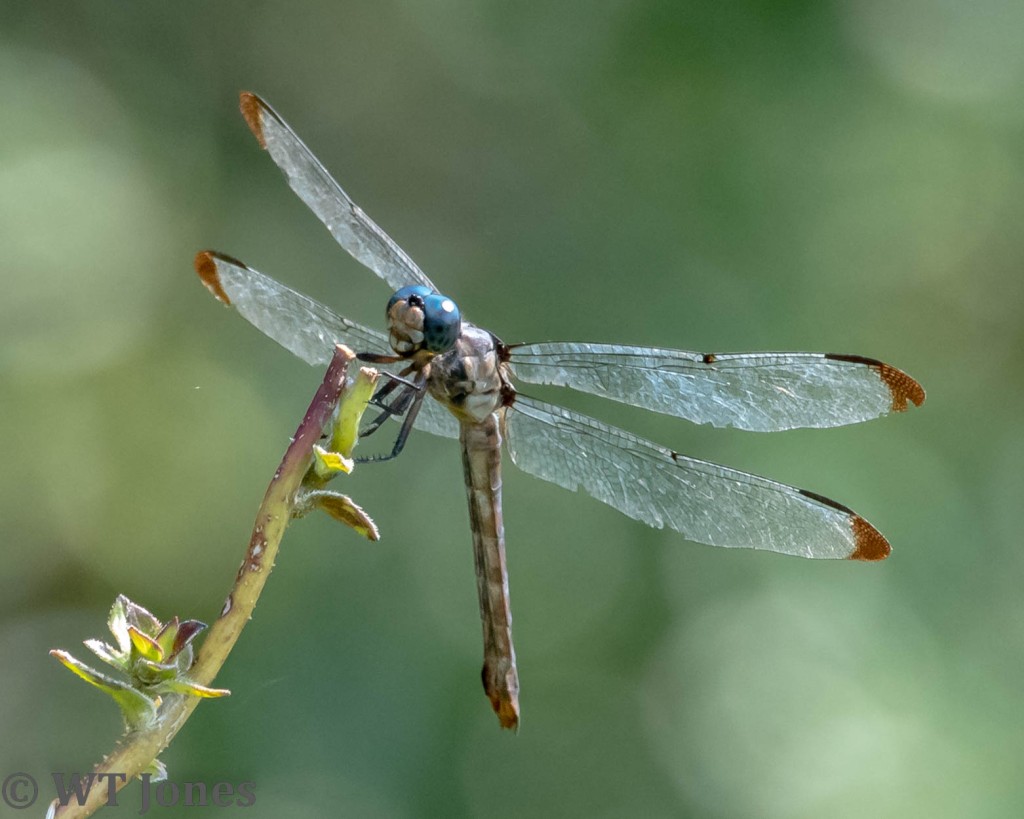
Likely an older female Great Blue Skimmer (Libellula vibrans) as her eyes have turned from dull greenish to blue.
Should we photograph a butterfly or a flower? Happily, a solution was presented. Cloudless Sulphur (Phoebis sennae) at Saltmarsh Morning-glory (Ipomoea sagittata).
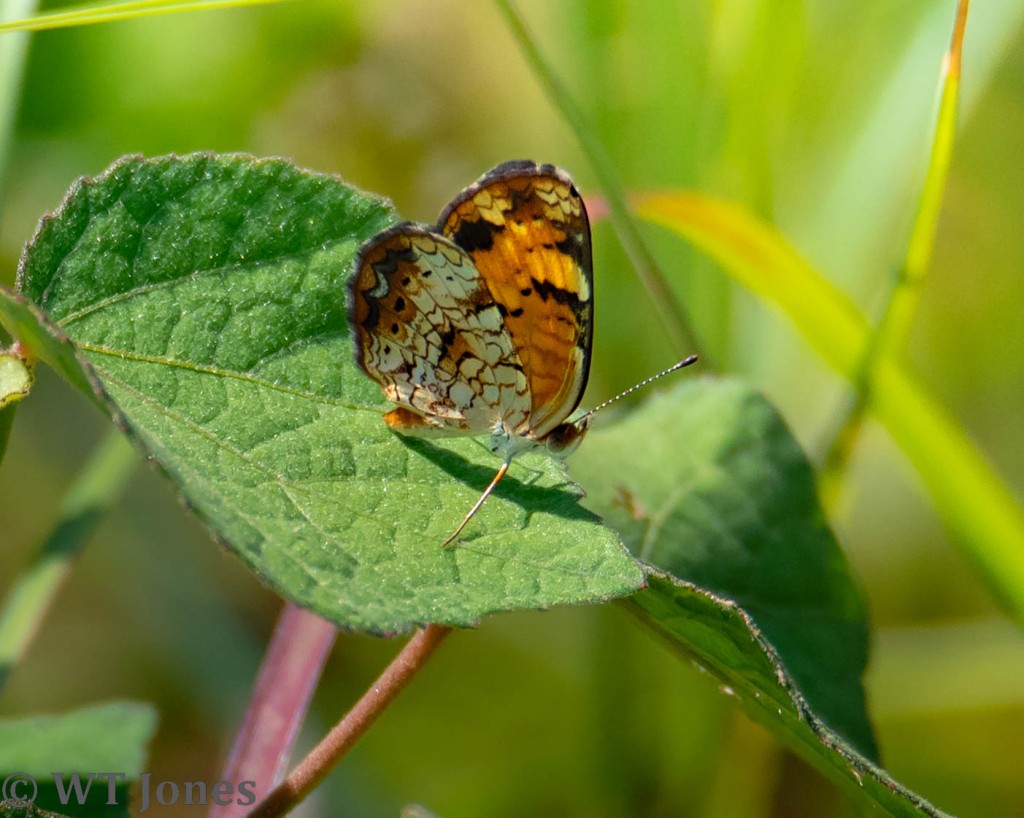
Pearl Crescent (Phyciodes tharos). Equally beautiful from above or below, this view of the small butterfly shows the namesake crescent near the hindwing margin.
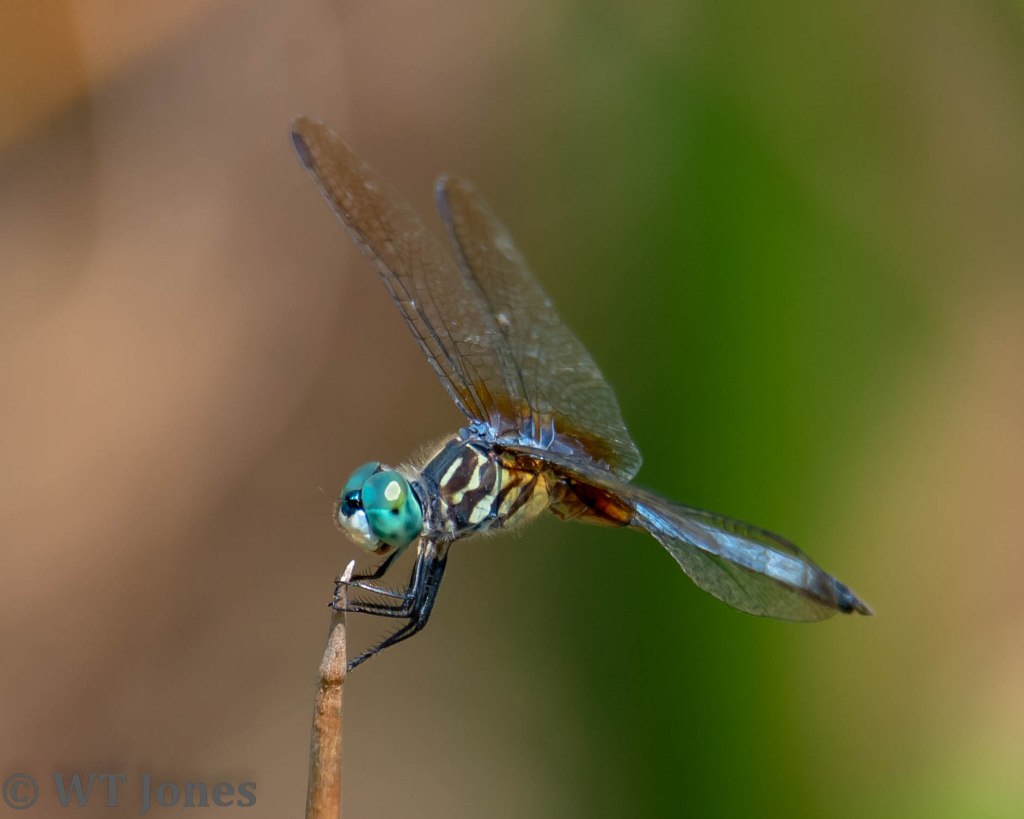
Pretty sure at least one of those many eyes is looking at me. Small, colorful and quick dragonfly describes a male Blue Dasher (Pachydiplax longipennis).
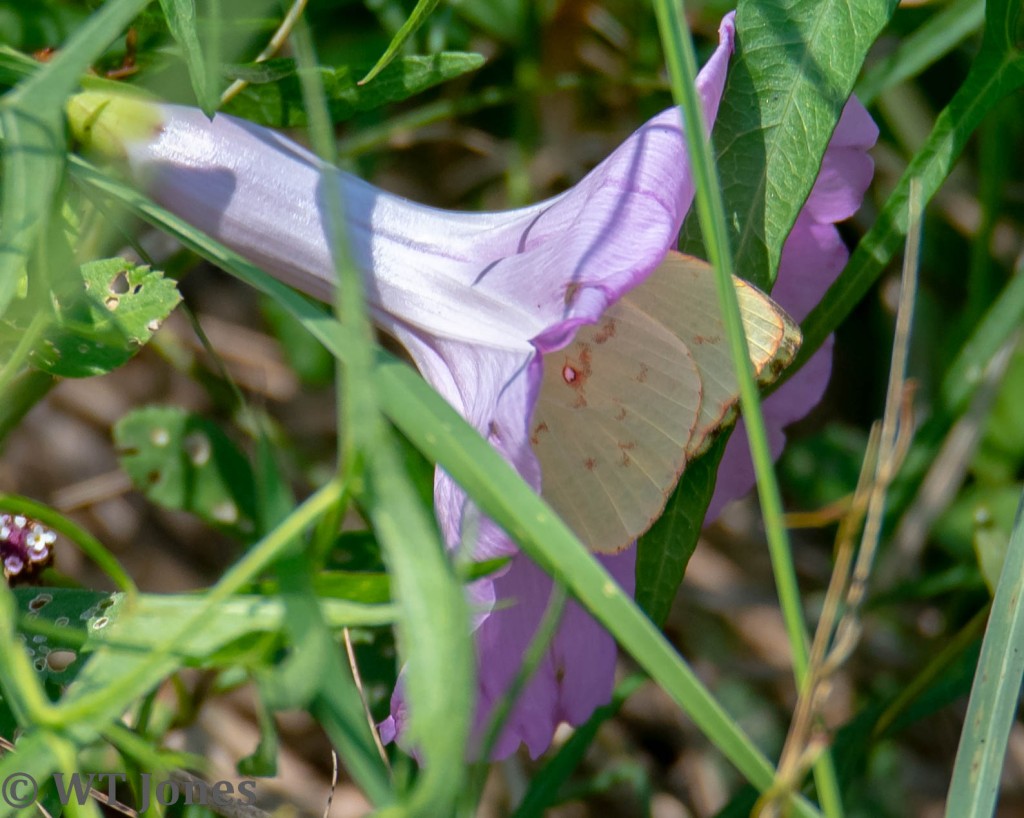
Love in the shade. I felt like I should apologize for interrupting this pair of Sleepy Orange (Abaeis nicippe) butterflies. Turns out, they ignored me completely.

Going birding will likely still be a part of our lives. Exploring all aspects of our natural world will continue to expand. The aimless wanderers will try to be more willful in scope.
Enjoy your search for a natural place and come back for a visit!
Header Image: Anhinga
Miles and miles of miles and miles. That was the description of west Texas landscape we heard from more than one Texan as we settled into our new neighborhood. Exploration of the area confirmed the truth of the statement. Most of those miles, at first glance, appeared completely inhospitable. Upon closer examination, we discovered the most incredible array of life forms which had learned to adapt to what, for us, was an extremely harsh environment.
That was in the early 1970’s and once we learned how and where to look, our time in west-central Texas remains among our most cherished memories of finding a fascinating natural place.
Meanwhile, 1400 miles to the east.
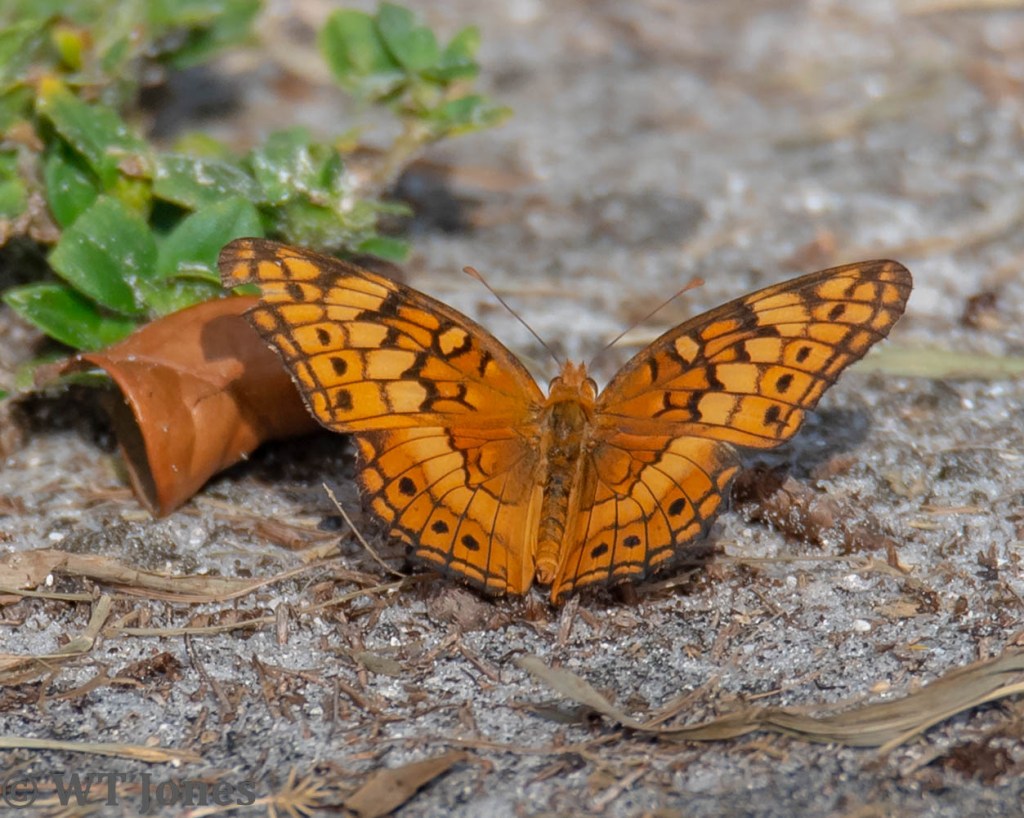
“Look at that butterfly!” Gini directed me to the dull orange Variegated Fritillary resting next to a brown leaf on the ground. Fritillaries, swallowtails, skippers, crescents – the grass edges of the road were alive with color! Today we’re ambling through the Bridgewater Tract of the larger Tenoroc Fish Management Area a few miles away. There are eight lakes in this area and included are wetlands, sandhill pines and a bit of oak/hickory/bay woodlands.
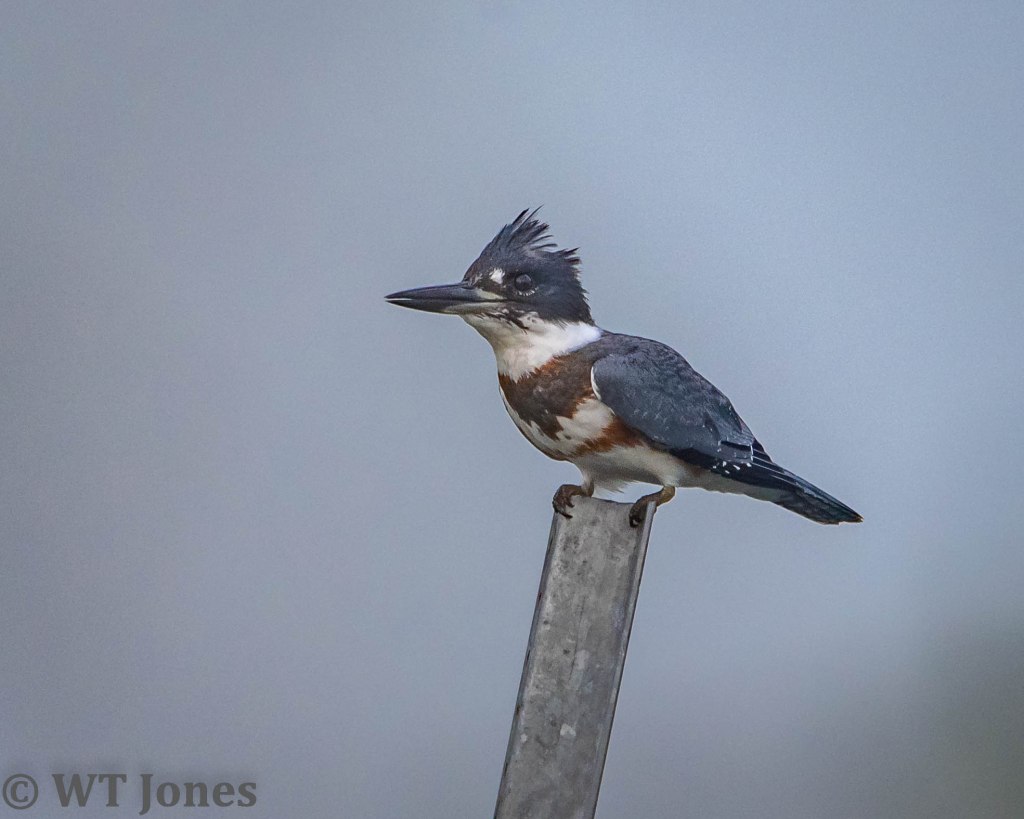
As we enjoyed our fresh tangerines and bananas at the edge of one of the lakes, Brown Pelicans and Ospreys crashed the water’s surface to retrieve their own breakfast. On either side of us, Blue-gray Gnatcatchers and Northern Parula warblers scoured tree limbs for anything that moved. At one of the boat ramps, our first fall Belted Kingfisher acknowledged our presence by abruptly flying away with her loud rattle of irritation. Terns are normally associated with salt water, but we have a small colony of Caspian and Royal Terns which remain inland here all year. We watched a Royal Tern demonstrate its aerobatic prowess over one of the lakes.
A combination of plentiful clean water, wetlands, forest and some open fields produces a favorable habitat for many species of life here. Nature tries to ensure equilibrium and, as long as humans don’t interfere too much, this place is a wonderful spot to explore. Often.
A Northern Mockingbird has not quite completed its seasonal molt. Even when ragged looking we think it’s a handsome bird.

The Royal Tern can be distinguished from its slightly larger relative, the Caspian Tern, by a more orange bill with no dusky tip and a cleaner white forehead.

Most areas visited recently have large numbers of Spicebush Swallowtails (Papilio troilus) actively feeding. This is a female, showing a blue swash at the base of her wings. Males display a more greenish color.
Very likely a fall migrant, this female Belted Kingfisher made it be known very loudly she didn’t appreciate us interrupting her morning fishing session.
It would be easy to pass by this Variegated Fritillary (Euptoieta claudia) as it almost blends in with the brown oak leaves littering the ground. Unless your companion happens to be Gini with the keen brown eyes.
All the lakes in the area attract a large number of fishermen. And fisherwomen. And fisher-children. Not to mention fisher-birds, such as a gorgeous Tricolored Heron.

Even the bugs like it here. Near the water’s edge at this time of year we usually find good numbers of Rambur’s Forktail (Ischnura ramburii). The field guide describes this species as a “large” damselfly. They have a different definition of “large” than what I thought it meant.

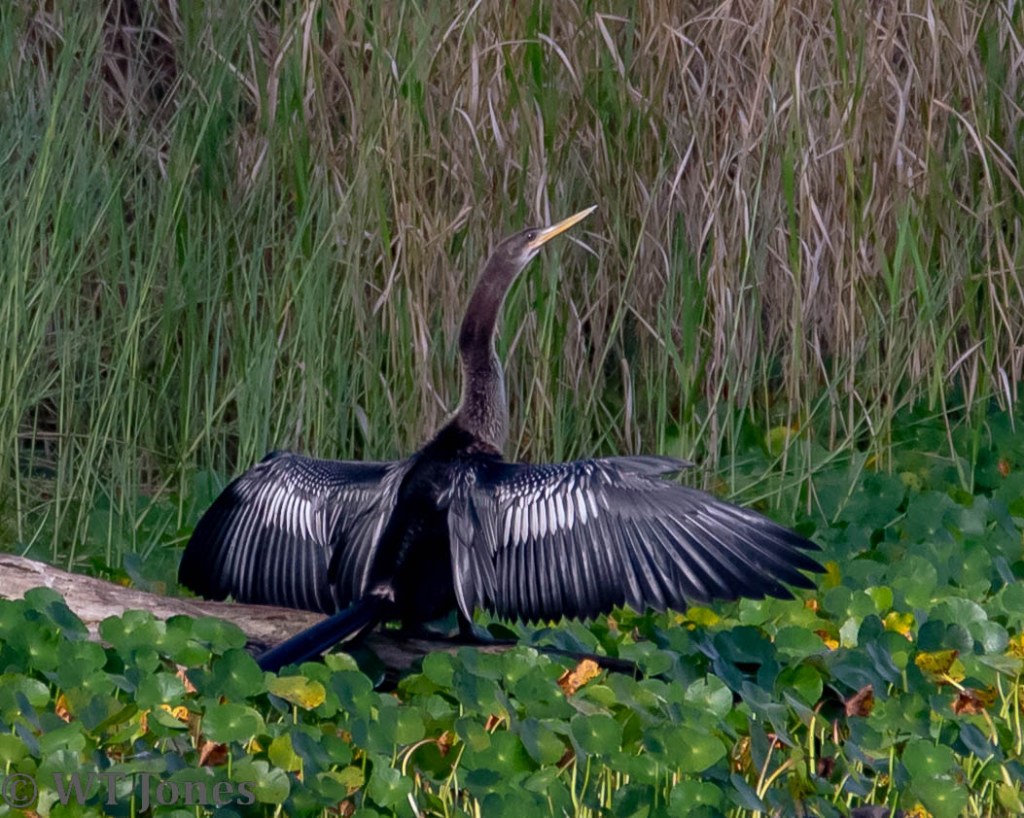
Throughout Florida one of the most ubiquitous water birds is the Anhinga. Unlike many water birds, their feathers are not waterproof, and they must spend a lot of time drying their wings. We grew up calling these “water turkeys” due to the shape of their head and broad tail.
Red Bull Assassin Bug (Repipta taurus). Sounds scary. I love it. Any bug which dines on aphids, flies and mosquitoes is a true friend!

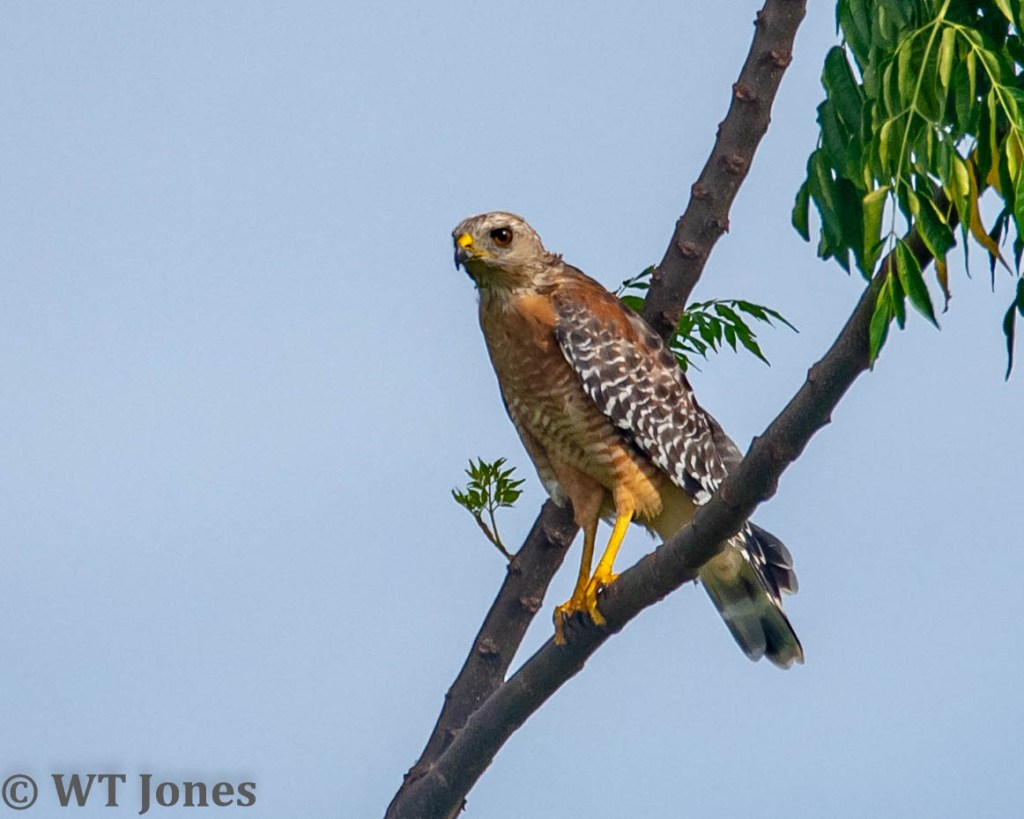
Reluctantly, we headed to the house. Near the exit gate we bade farewell to one of nature’s centurions, a Red-shouldered Hawk.
Whether it’s semi-arid west Texas or semi-tropical central Florida, nature provides a suitable habitat for a startling array of living things. Discovering it all is a happy hobby.
Enjoy your search for a natural place and come back for a visit!
Header Image: Pine Flatwoods Dawn
“And far as the eye of God could see
Darkness covered everything,
Blacker than a hundred midnights
Down in a cypress swamp.
Then God smiled,
And the light broke,
And the darkness rolled up on one side,
And the light stood shining on the other,
And God said: That’s good!”
(From The Creation by James Weldon Johnson.)
We often visit the swamp. Florida has quite a few areas which meet the definition of a swamp. One of the shortest informative descriptions I’ve run across says a swamp is a “forested wetland”. Marshes, on the other hand, are distinguished by the main vegetation being grasses rather than trees.
Our “local” destination is central Florida’s Green Swamp. Over 560,000 acres (227,000 hectares) of river swamp, longleaf pine sandhills, hardwood hammocks, pine flatwoods and cypress ponds located between Tampa and Orlando. It sounds odd, but the Green Swamp is actually on a “plateau” surrounded by sand ridges. A vast underground aquifer rises near the surface in this area and as rain falls it trickles through the soil to replenish what is the state’s main source of drinking water. Annual rains here also form the headwaters of four major rivers: the Withlacoochee, the Ocklawaha, the Hillsborough and the Peace.
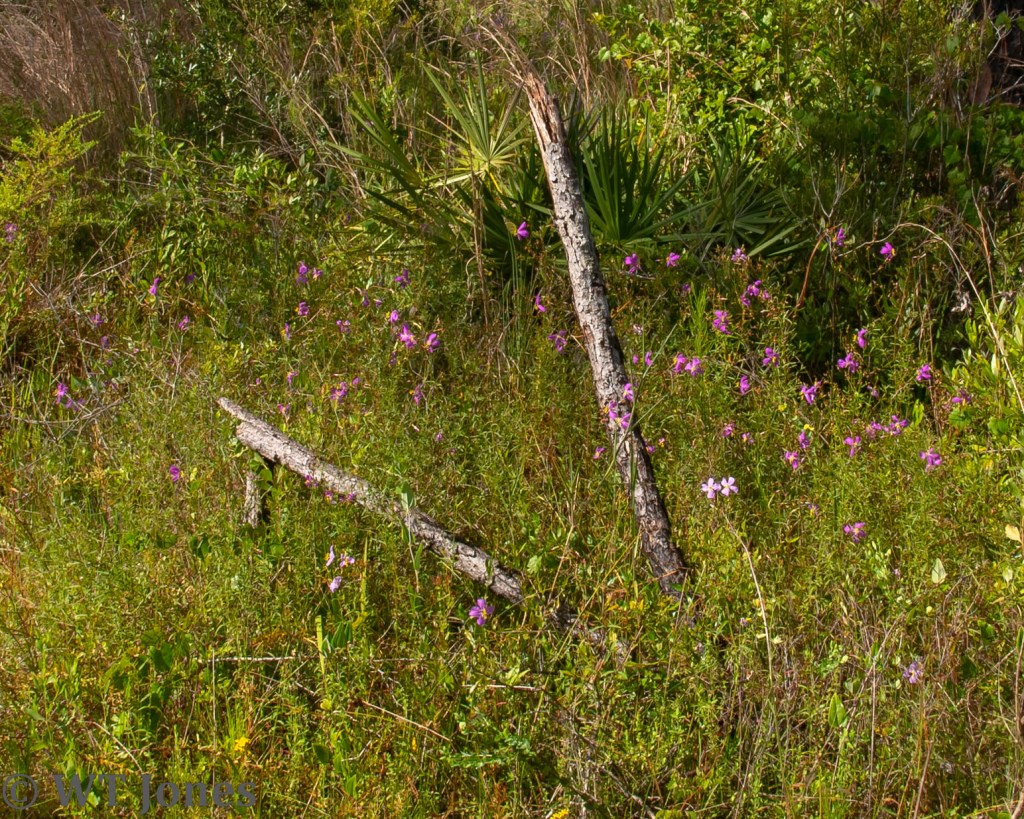
Light fog filtered early rays of the rising sun through the dense pine forest. Clearings were thick with lush ferns, saw palmetto and wildflowers. The most prominent bloom was Pale Meadowbeauty, providing a pink welcome mat into the depths of the swamp. Gossamer nets woven by industrious spiders covered the open glades forming bowls in the grass as well as stretched between tree trunks and tall plants. Woodpeckers and Brown-headed Nuthatches scolded from high above. The scream of a Red-shouldered Hawk alerted all in the area of our intrusion into their world.
Logging roads crisscross the area we were exploring. Care must be taken as rains and fallen trees can make some of the roads hazardous to navigate. A combination of driving slowly and hiking an interesting-looking trail reveals an incredible diversity of life. Today should we be birders, budding botanists, promising herpetologists, intrepid dragon hunters or just visitors who love the aroma of fresh pine and the beauty of a simple flower? All of the above.
We seldom encounter many humans in this area. The solitude enriches our souls. As we turn onto the paved road and head to the house, we sigh in unison and instinctively know each other’s thoughts about the morning: “That’s good!“.
A few images may illustrate why we love our swamp.
Open meadows adjacent to the pine forest are common and always seem to offer something different each time we visit.

The likely engineer of this intricate bowl-shaped web is one of the Orchard Orbweavers (Leucauge species).

Carolina Redroot (Lachnanthes caroliana) is plentiful throughout the swamp and is loved by a host of nectar-loving insects, such as this Spicebush Swallowtail (Papilio troilus).


Pink is the color of the day at this time of year in the pine woods. Virtually every open spot we passed was filled with Pale Meadowbeauty (Rhexia mariana). We didn’t mind one bit.


Some early fall foliage was provided by a native Red Maple (Acer rubrum) inviting us to explore a creek through the forest.

Horsetail or Scouringrush (Equisetum hyemale), is a reed-like plant which loves wet areas. It reminds us of asparagus. (No, we didn’t taste it on this trip.)

As we look around at birds and flowers, we are likely to miss some colorful jewels right at our feet. Small but beautiful, a Pearl Crescent (Phyciodes tharos) looks like a little flying stained-glass window.


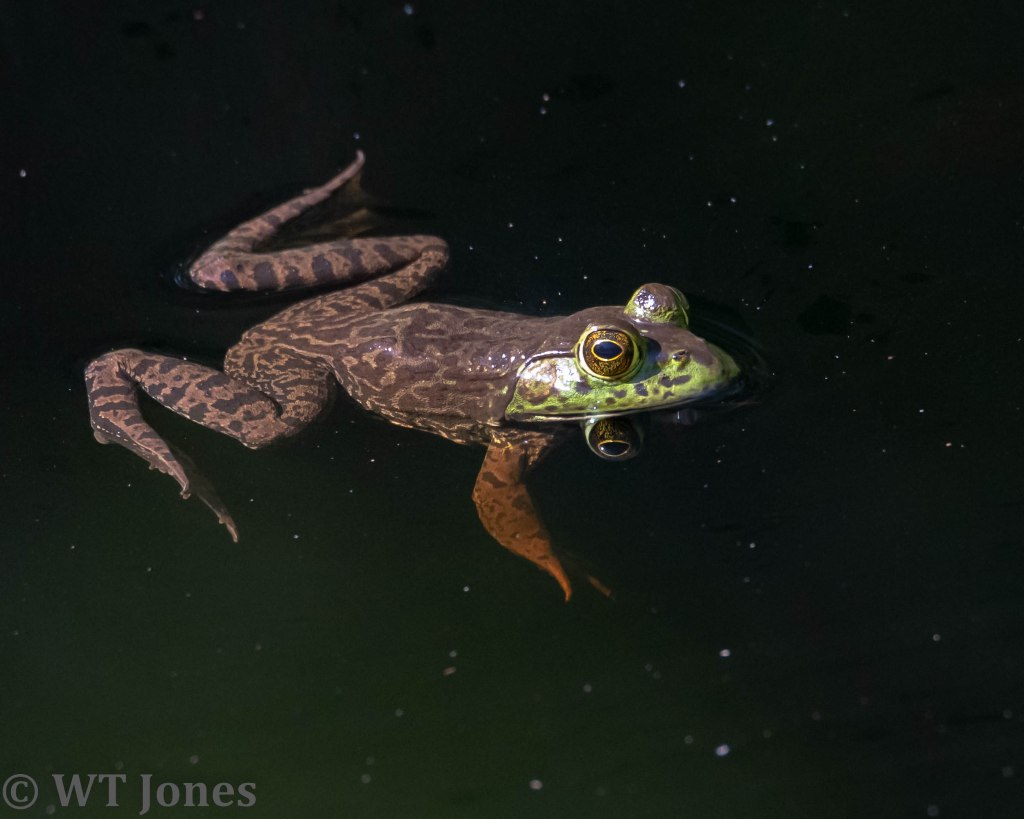
There are a few physical differences between a Pig Frog (Rana grylio) and an American Bullfrog (Lithobates catesbeianus), but if you’re able to hear them call you will have no doubt.
Pig Frog https://www.youtube.com/watch?v=1EsYi_NbGJE
Bullfrog: https://www.youtube.com/watch?v=mtAdhpTKmgg
More Pale Meadowbeauty (Rhexia mariana) and lower in the vegetation is Yellow Milkwort (Polygala rugelii), a species endemic to Florida.

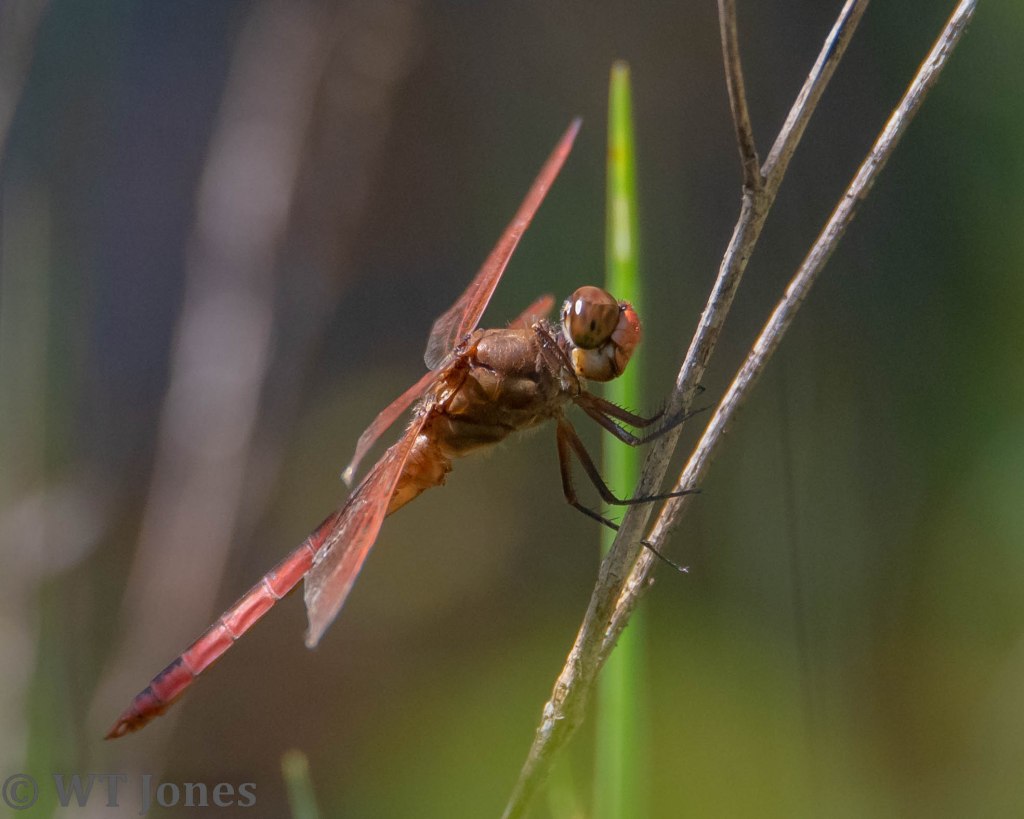
Adding another dimension to our already colorful experience is a male Golden-winged Skimmer (Libellula auripennis).

A sprinkling of white decorated the edge of a section of forest as we left the area. Standing nearly three feet tall, the Flattened Pipewort or Hatpins (Eriocaulon compressum) added a delicate touch to the landscape.

Away from the noise of human endeavor, amid the calls of Blue Jays and Pig Frogs, Gini and I recharged our internal batteries. We indulged our appetite for nature’s beauty at one of her bountiful banquet tables. We will repeat the process again. Often.
Enjoy your search for a natural place and come back for a visit!
 Our Natural Places