Header Image: Ruby-crowned Kinglet
Apparently, we did not exhaust ourselves enough during the Lakeland Christmas Bird Count so we volunteered to participate in the Green Swamp count. Twenty people. Over 500,000 acres of swamp. Challenging! Gini and I were assigned to the East Tract of the Green Swamp Wildlife Management Area which consisted of a mere 51,000 acres.
The vast majority of this area is inaccessible. The Christmas census is designed to present a “snapshot” of bird populations in a particular area on a specific day. We hope our little snapshot contributes a bit.
The day was, logistically, a repeat of our day in Lakeland. We found a few spots a couple of hours before sunrise to listen for birds which thrive in darkness. Luck was with us again as we heard Barred Owls, Eastern Screech Owls and Eastern Whip-poor-wills. As the light level slowly increased, we realized something was missing. Where was the sky?
The fog hung around in varying degrees for a couple of hours and I think it hindered some bird activity. Clear blue skies signaled “time to eat”! For the birds, too.
Even though we were in and around swampy habitat, we found very few water birds. There are virtually no areas of open water and much of the standing water is too shallow to support fish. We did, however, come across a large number of other birds!
A couple of highlights include nearly 20 Ruby-crowned Kinglets, over a dozen Brown-headed Nuthatches, several Carolina Chickadees and a pair of Wilson’s Snipe. The Snipe were special as it was the first time Gini spotted this species before I did. Nice job!
Back roads through swamp and pastures, logging roads within the wildlife management area, old iron bridges built in the 1930’s, clear weather and another 12+ hours with my favorite person by my side.
Life is good.
Swamp sentinel. A Red-shouldered Hawk waits in the mist for her breakfast to make a move.

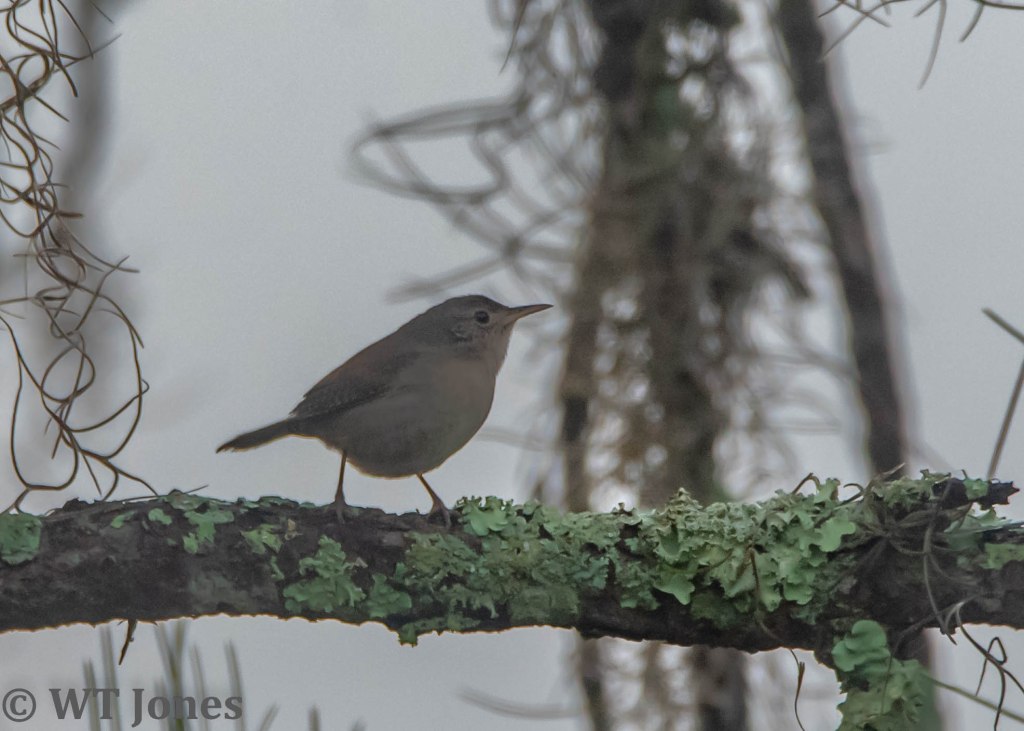
Fog is no hindrance for a pugnacious House Wren. We only get to enjoy them during migration.
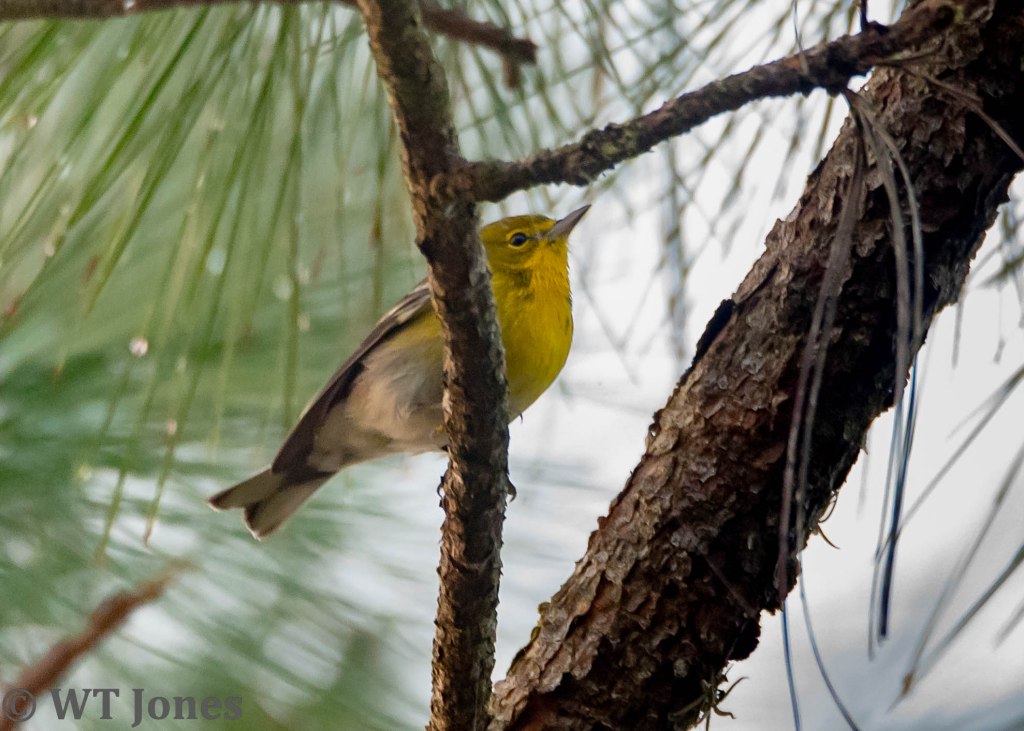
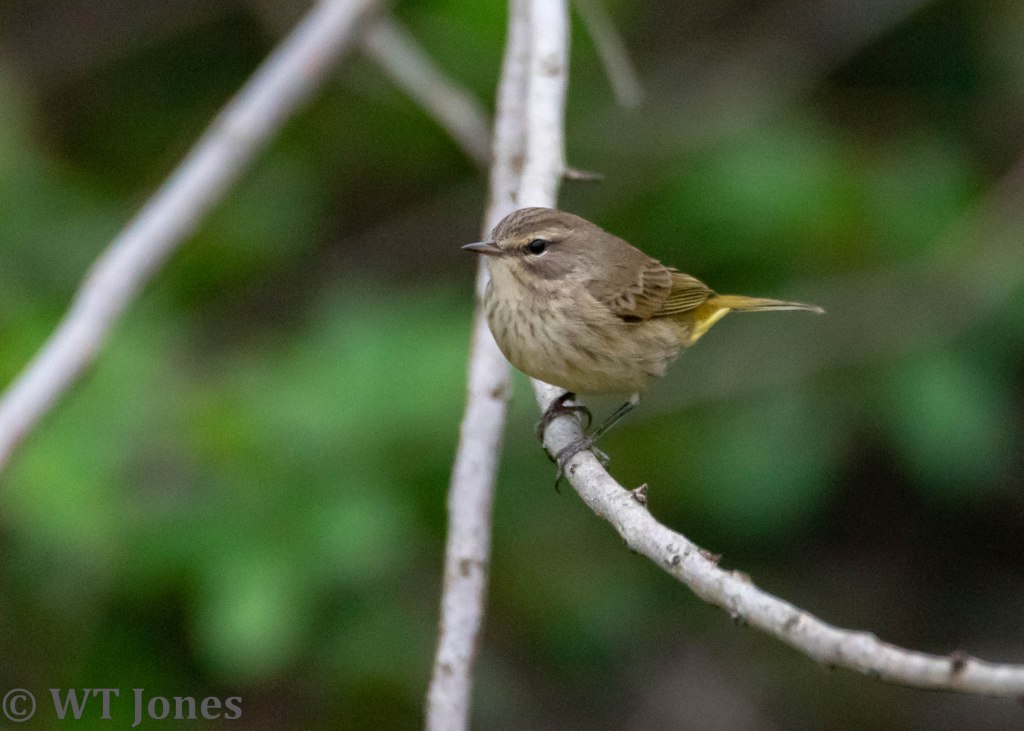
A Pine Warbler contributes some color to the gray morning. We counted nearly 100 of these by day’s end.
Over a hundred Palm Warblers flitted onto the leaves of our report before the sun went down.

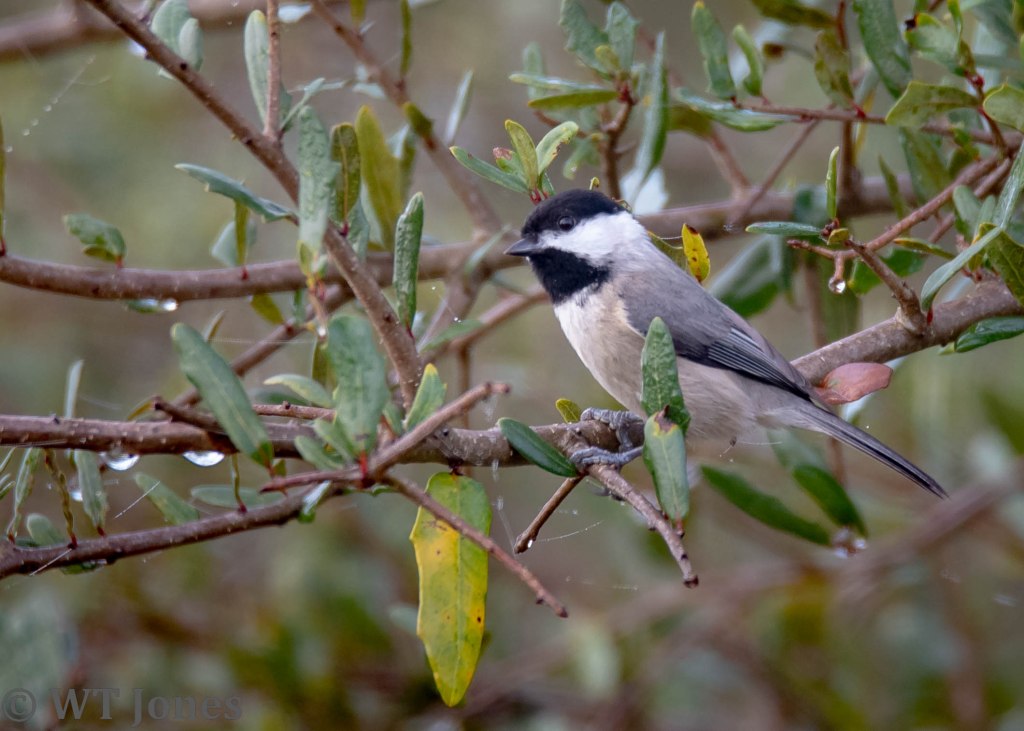
Carolina Chickadees appear sporadically throughout the Green Swamp. Some are resident birds and are joined each winter by small flocks of northern migrants.

This trip was on January 2, 2023 and American Robins were just beginning to show up in large numbers in the region. We eventually saw 36 of the big colorful thrushes.

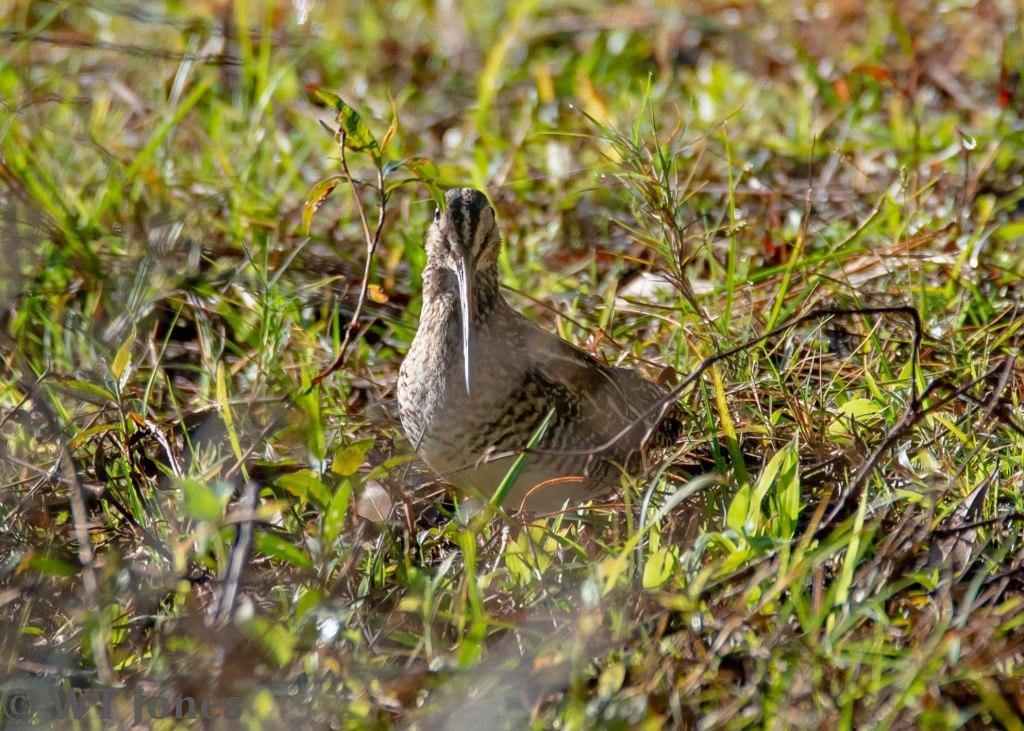
She spotted something different. “Never mind. Wait! It IS a bird! It’s a Snipe!” Two Wilson’s Snipe in the grass by an irrigation canal for an adjacent pasture. Their cryptic plumage makes finding them pretty tough. I guess that’s the idea!
Another very abundant species at this time of year is the Yellow-rumped Warbler. At day’s end, over 90 had been counted.

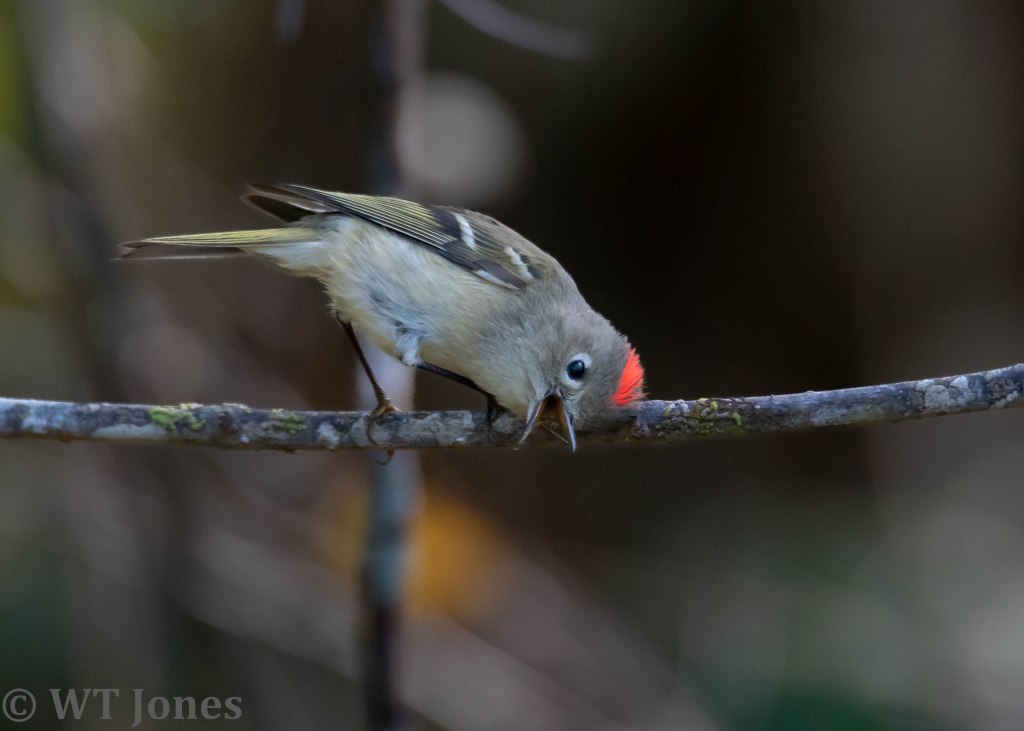
One of our favorites, the Ruby-crowned Kinglet, put in a good showing with 18 counted. At one point, a trio entertained us as they fed, fought and flitted almost within arm’s reach. (Yes, she tried to get one to perch on her finger. No joy.)

Rubber ducky. That’s the description some field guides provide for the call of the Brown-headed Nuthatch. They are not wrong. Gini-with-the-sonar-ears heard them long before I saw one. These birds are among the earliest nesting passerines in Florida with nest-building usually completed by mid-February.

It was a terrific day. We were tired, but we did what we loved from before dawn to dusk. Tomorrow we can rest.
Enjoy your search for a natural place and come back for a visit!
Header Image: Burmarigold or Smooth Beggartick (Bidens laevis)
Standing by the side of the road in the dark. Hands cupping our ears. Straining for the sounds of the night. “Whip, whip, whip, whip!” The loud call accompanied the sound of flapping wings passing us as an Eastern Whip-poor-will flew along with mouth open wide to inhale insects hovering above the sandy stretch of road. Ten minutes later, the surprisingly soft trill of an Eastern Screech Owl added to our rush of adrenaline.
Gini and I were a “team of birders” assigned to cover specific areas for the annual Audubon Christmas Bird Count. The count tradition began near the turn of the 20th century when an early officer of the newly formed Audubon Society, Frank Chapman, thought it would be a good idea to have bird watchers around the country count birds in their area instead of having contests to see who could shoot the most during the Christmas holiday. The fledgling effort took wings over the years and today tens of thousands of citizen scientists contribute to a data base which helps assess the health of bird populations and helps guide conservation action.
Our day began about two hours before sunrise and ended just before sunset. We covered three geographically separate areas within a circle that had the city of Lakeland, Florida at its center. Six other teams covered different locations in order to provide a snapshot of birds present in the area on that day. The two of us identified 52 species and counted just over 900 individual birds. Whew! Our fingers and toes were tired! We birded by car, foot and all-terrain-vehicle. It was a good day.
If you have a chance to participate in one of these counts, contact the local Audubon chapter to volunteer. It’s fun, your efforts contribute to important research data and it’s a good opportunity to learn more about birds. Expertise in birding is not required! Christmas counts are normally held between December 14 thru January 5 each year.
Here are images of the 900 birds we saw.
Yes. I am kidding. Only 100 or so.
The Eastern Towhee breeds in Florida but this individual is likely a migrant since it has dark eyes. The Florida variant has pale eyes.

A young Red-shouldered Hawk looks very intent on finding breakfast.

The morning was quite cool and a bit of sunshine on a white road offered a perfect spot for this beautiful Red Cornsnake (Pantherophis guttatus) to warm up. These are also known as Red Ratsnakes and are very welcome around the farm or ranch as this namesake implies their particular talent.

Sandhill Cranes trumpeted their arrival and landed in a small field to begin their day of collecting insects.

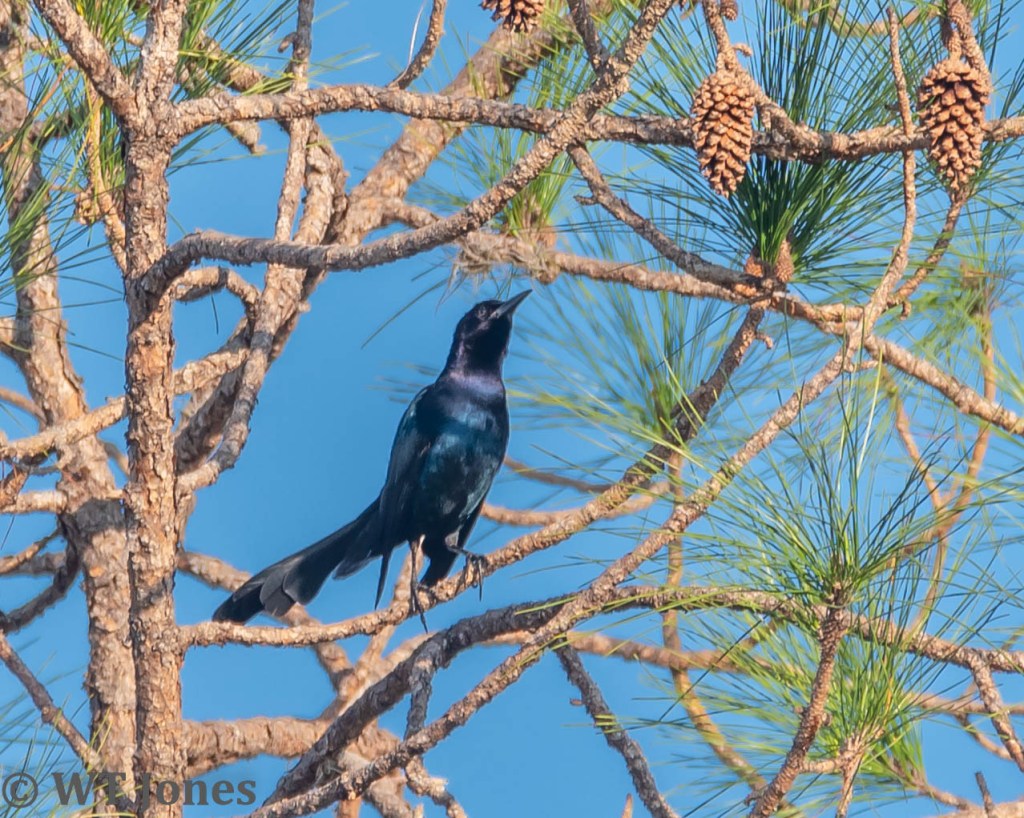
They’re big, they’re noisy and they can make a mess. The Boat-tailed Grackle is also beautiful, especially when the morning sun shows the striking iridescent plumage of the male.
The winter months signal breeding time for many of our water birds. A Great Blue Heron has begun to build a nest of sticks on the shore of a lake. We’ll check on its progress in the coming weeks.

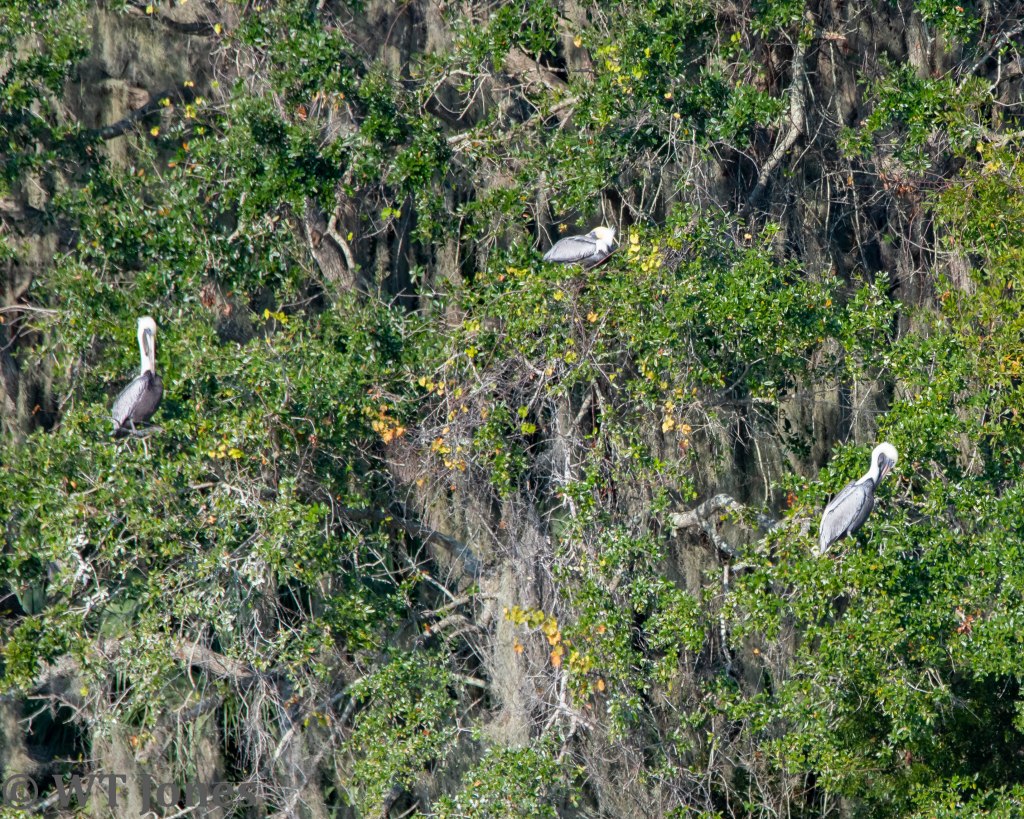
Brown Pelicans are normally associated with the coast but our location an hour inland has several local populations who remain here all year. This trio was just rousing from their nightly roosting spot.
Many Eastern Phoebes find central Florida to their liking and remain all winter as thousands of their relatives continue on to South and Central America. We appreciate their beauty, their calls and most importantly, their insatiable appetite for bugs!

A bit of rain a few days prior to our count day provided just enough wet areas to attract this pair of Wilson’s Snipe. The rain softens the ground sufficiently for worms and other subterranean life forms to become vulnerable to the long probing beaks of the Snipe.

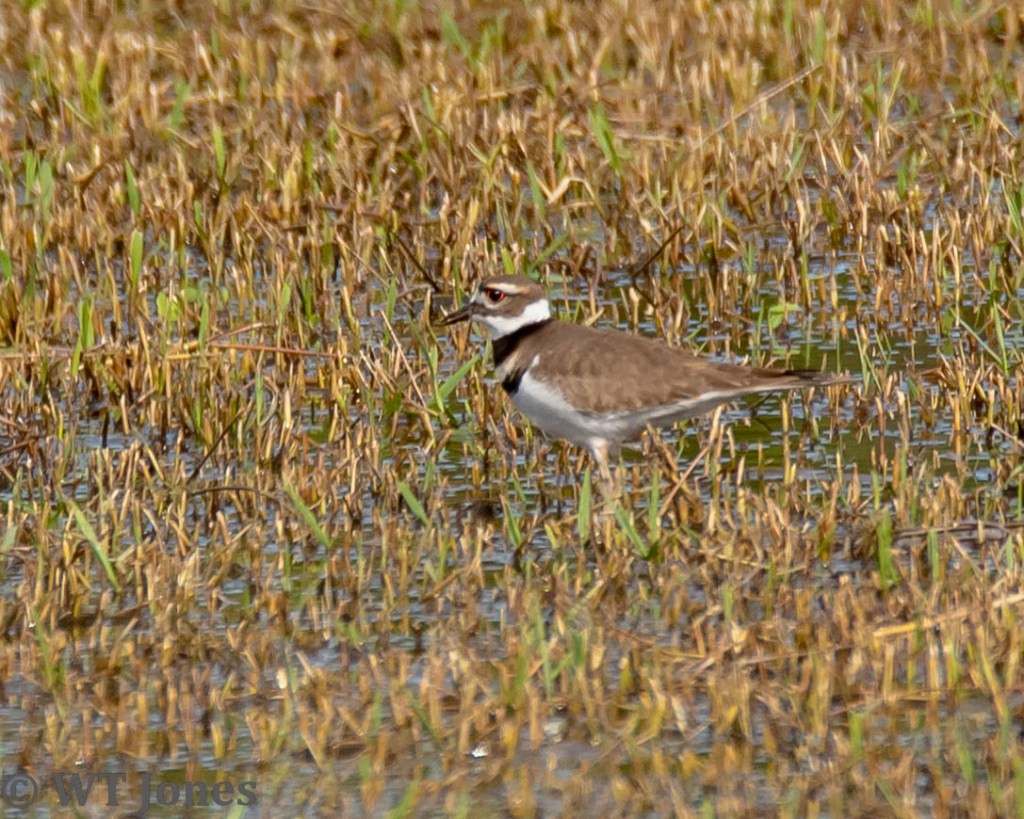
Not one to miss out on an easy meal, a Killdeer followed the Snipe around hoping for leftovers.
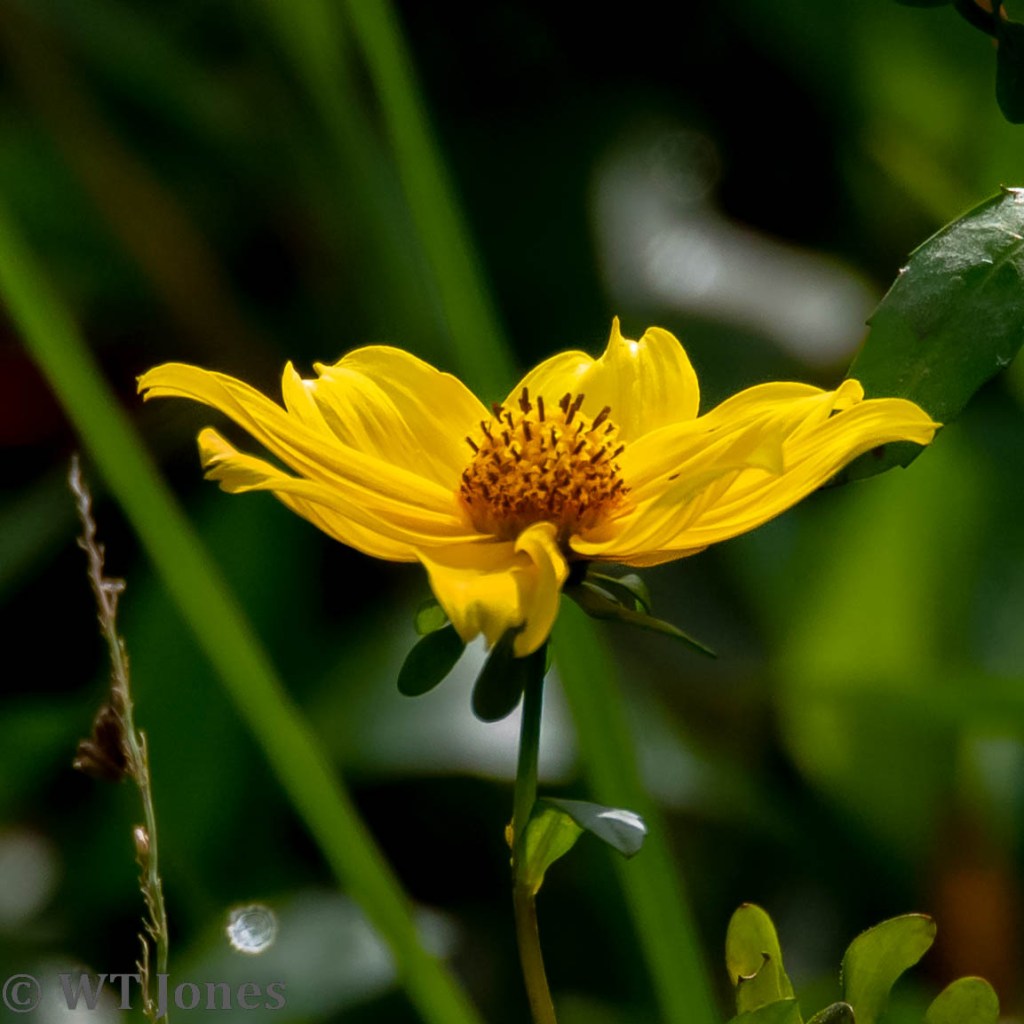
One of the most prolific blooms we enjoy during the winter season is the incredible yellow of the Burmarigold (Bidens laevis). It tends to grow in masses around the edges of ponds and lakes. The Latin name provides a hint to the other name applied to this plant, “Smooth Beggartick”, first cousin to Spanish Needles (B. alba). But someone saw those bright flowers and thought it reminded them of Marigolds. Who am I to argue?
This female American Kestrel refused to turn around so it seemed like a good opportunity to admire her colorful back and tail plumage.

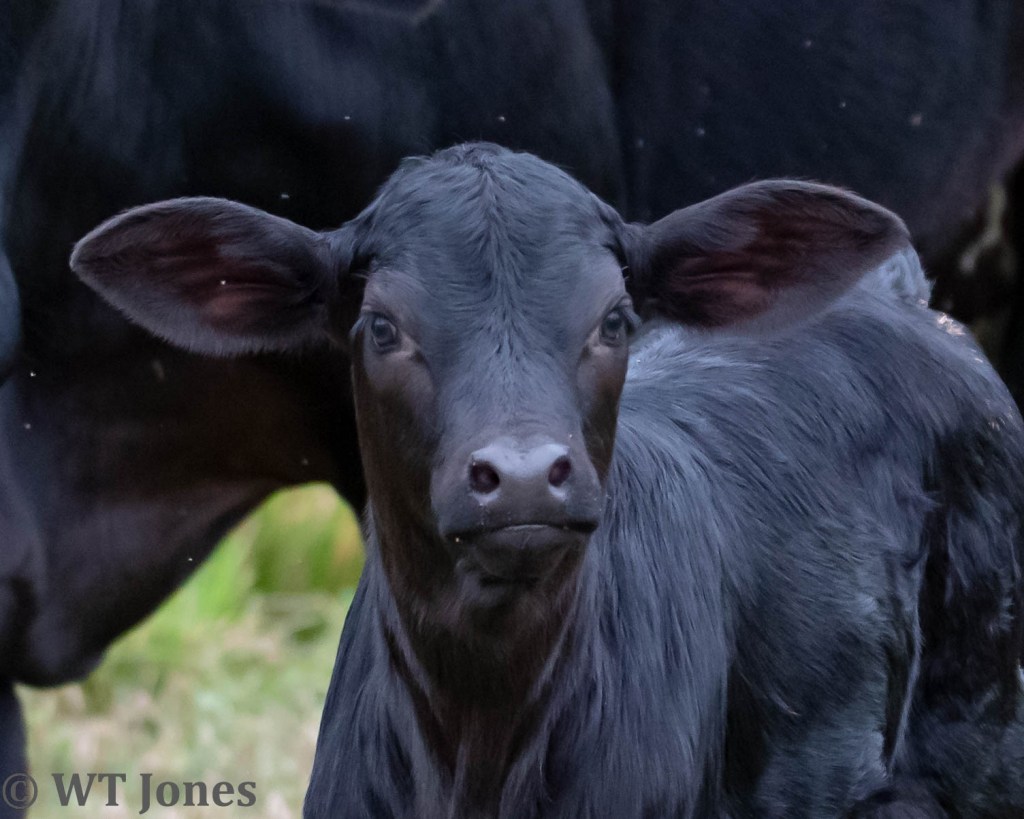
A local rancher graciously allows us to survey his pasture each year. It consists of about 200 acres and has a small lake fed by a creek in the middle of it all. Some of the residents were quite curious about us.
The Red-bellied Woodpecker is by far the most abundant breeding woodpecker in Florida.

Near the lake in the pasture a female Belted Kingfisher is hoping for a late afternoon dinner.

Migratory Palm Warblers seem to be everywhere at this time of year. They are one of our most numerous visiting songbirds during winter.
Although the Blue-gray Gnatcatcher breeds in our area, many others migrate in for the winter and the little bug vacuum cleaners seem to inhabit every tree in the county.

Just as we were about to head back to the barn and end our long day, a flock of nearly 50 American Robins flew into a group of Chinaberry Trees (Melia azedarach) lining the lake. It was a pretty dramatic climax to a really great day of birding!

We came. We saw (and heard). We counted. And we will do it all again in a few days. Stay tuned …..
Enjoy your search for a natural place and come back for a visit!
Header Image: Royal Terns, Laughing Gulls, Ring-billed Gull
Admit it. You like to watch birds. Some of you may even feed them and give them water. I personally know about people who provide homes for birds. If you like to watch birds, and I know you do, it is very likely you use a pair of binoculars in order to see them more clearly. Do you perhaps also own a piece of equipment known as a spotting scope? From using these specialty types of “optics”, it is a natural and short leap to picking up a camera, you know, so you can record that pretty bird to show a friend. Then you see that fellow on the lake shore with a VERY BIG camera and lens. You then find yourself one evening all alone. Just you and your computer and — the internet. It wouldn’t hurt to just look at some of those VERY BIG cameras and lenses. Would it?
At this time, we shall not discuss the dark side of bird-watching. I mean, who would want to become involved in keeping a list of all the birds one sees in a day. Or a year. Seriously? Why, some have been known to treat this relaxing past time as a SPORT! No. We won’t go there today.
Birds. When we were children it was fun to see a bird bathing in the sprinkler or a puddle. Grandma would show us the wren’s nest on the porch with those pretty eggs and we would be amazed when baby birds appeared. Then, we forgot about birds. School, chores, sports, cars, boys, girls – life happened and we were too busy. University, jobs, love, a family of our own.
We tried to teach our own children about the important things in life. Birds migrated back into our routine. Now. This is the time many of us became “bird watchers”. Teaching others what we love is the true path to learning about ourselves.
Part of our learning about bird watching and, therefore, important for teaching others, is where to go and look for birds. Instinctively, we go to “nature”. Forest, field, shore. That’s where the birds are! At some point we have an epiphany and realize birds are all around us! At home, at work, on the drive to and from a job as well as at all those “natural” places. They may be different birds, but they are there to be seen.
So it was, on a Thursday about mid-morning, that I parked beside our city’s largest power plant. It is an imposing structure with metal walls, exterior framework crisscrossing like some chaotic puzzle, tall light poles, wiring leading outward in every direction, the constant whine of huge turbines – you know, habitat.
Water around the plant remains a bit warmer than the rest of the lake and that attracts fish and other aquatic life. Things that eat fish are therefore attracted to the plant, too. Some of those things are birds.
A few of them are shown below. (Whew! You probably thought you’d never get here, didn’t you?)
It was a chilly and breezy day. This Green Heron found a nice spot out of the wind.

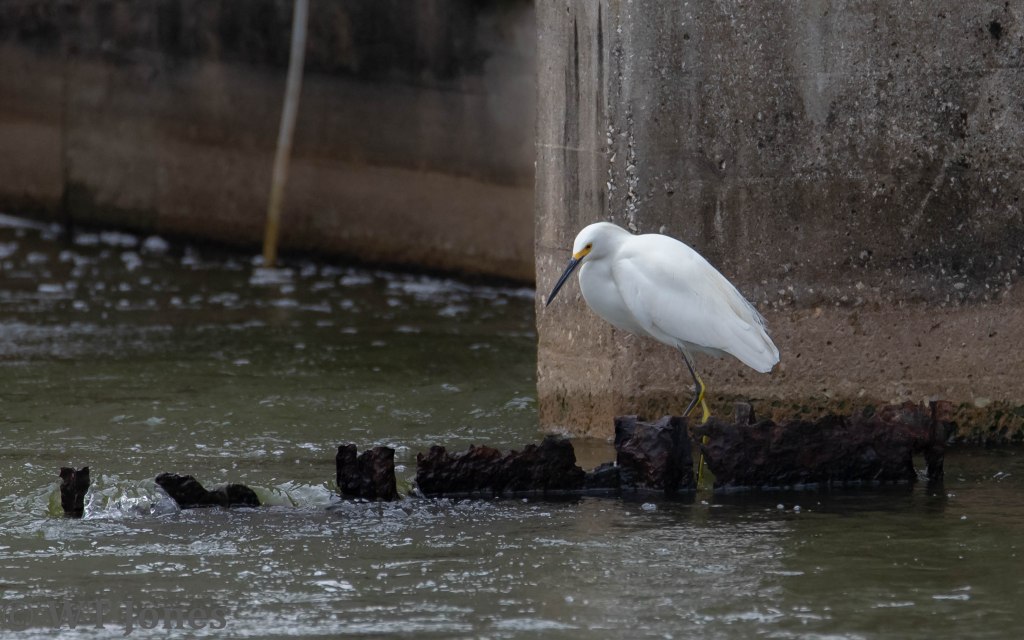
A canal adjacent to the plant’s exterior wall is an excellent place for a wading bird to grab brunch.
Snowy Egret

Tricolored Heron


Little Blue Heron


Weedy patches around the building harbor plenty of insects for a flock of hungry Cattle Egret to hunt.

All of that framework provides places for many birds to hide and nest. Among them is the Eurasian Collared Dove.

A Palm Warbler won’t let a fence impede his bug stalking.

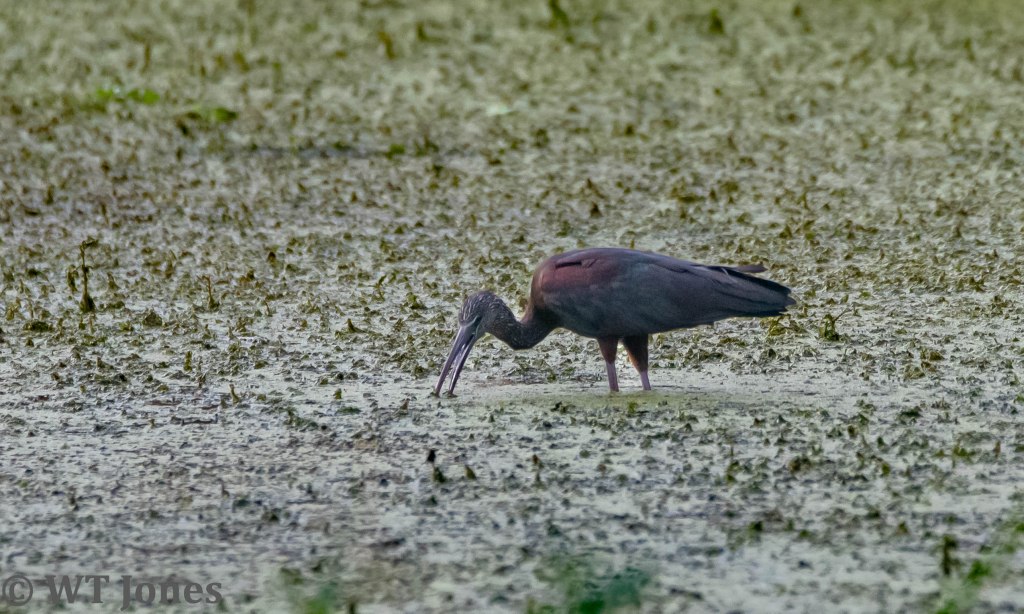
Duckweed and algae provide cover for a multitude of life forms. The curiously curved bill of the Glossy Ibis is a perfect tool for probing beyond the green carpet.
What would an urban location be without pigeons? (Cleaner?) Call ’em Pigeons, Feral Pigeons, Rock Dove, Rock Pigs or the current taxonomically favored “Rock Pigeon”, these birds really are attractive. These almost appear to be musical notes on a scale.

Birds are special creatures. They provide us joy with their diverse appearance. Their songs let us know they are near even if they aren’t visible. We are amazed at their ability to fly. Engage in bird watching at whatever level suits you. Most of all, share your passion!
Enjoy your search for a natural place and come back for a visit!
Header Image: Sunset
“To the orange grove, right?”
I am so predictable. At the time I signed the contract over 50 years ago, I suspected Gini could read my mind. That fact has been confirmed again and again over the past five decades. When asked if she would like to ride with me around 3:30 p.m., she instantly knew where I intended to go. Our destination is about 40 minutes away and sunset is at 5:20 p.m.
Hah! But this time, she only knew half of WHY I wanted to go! Perhaps she is not as psychic as I think. (Looking over my shoulder as I type and ducking my head reflexively.)
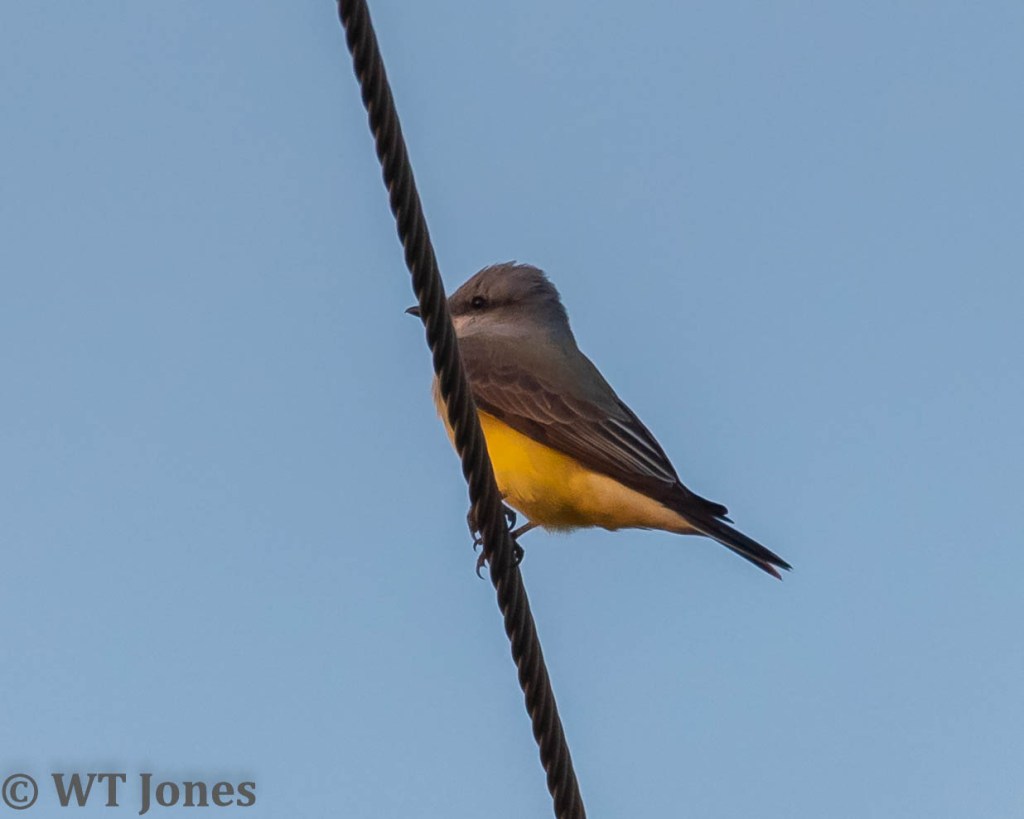
An astute local birder reported spotting some infrequently observed sparrows in an area of orange groves, open fields, old homesteads and lakes. This area has for years been a wintering spot for two rather uncommon Florida visitors, the Scissor-tailed Flycatcher and Western Kingbird. These two species reliably appear about 30 minutes prior to sunset, gather on utility lines and suddenly plunge into the citrus trees for the night.
The area consistently produces a few surprises as well as a very diverse group of birds, especially during migration. We located a couple of the “rare-ish” little brown jobs and then drove around the lake shore where dozens of Double-crested Cormorants were settling in for the night and other water birds were getting one last snack. Near one of the old homesteads we found a female Baltimore Oriole and were treated to a flyby of a Bald Eagle.
As the sun descended, the flycatchers materialized. We saw two Scissor-tailed Flycatchers and 16 Western Kingbirds. Riding out of the area, we watched a flock of over 30 American Robins noisily arguing about which trees would be best for bedding down and an American Kestrel scanned a field hoping for dinner to show up.
Nature lovers, birders and especially some of us with a camera have been indoctrinated to believe the only times worth being outdoors is an hour or two around sunrise and sunset. An evening such as this one makes us almost think they are right. Almost.
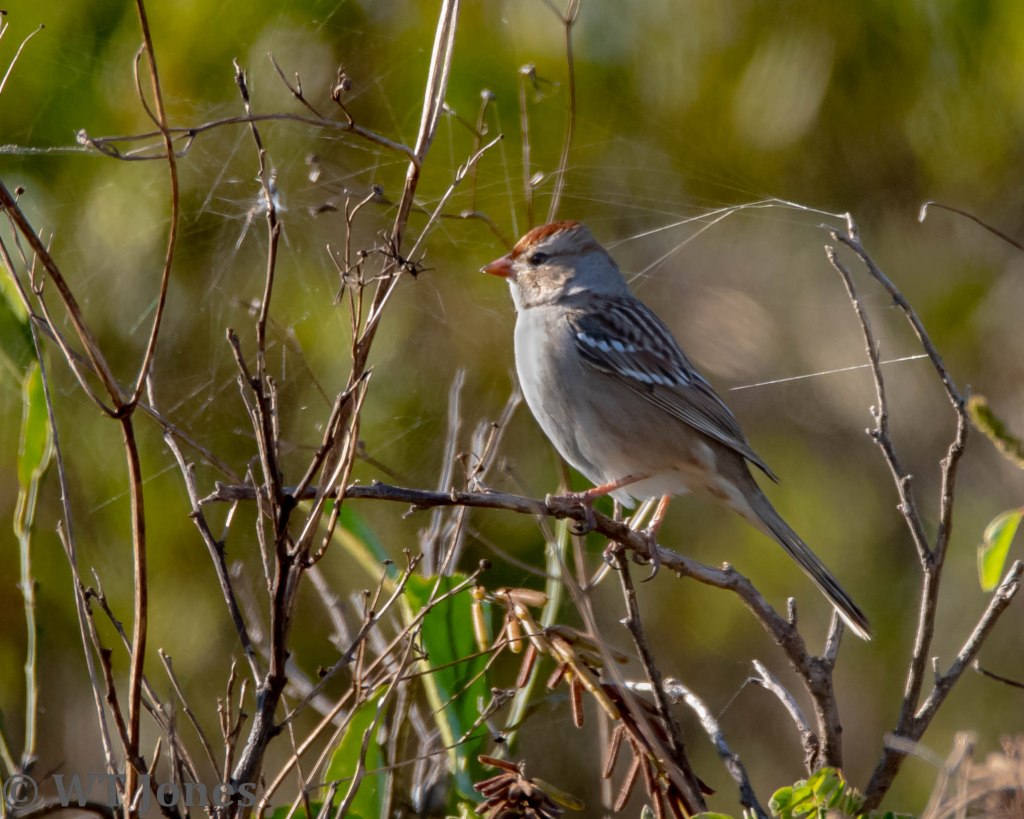
Adult White-crowned Sparrows have distinctive black-and-white head patterns. This is a first year bird and shows a brown and gray head pattern. Only a few migrants make it to Florida each year.
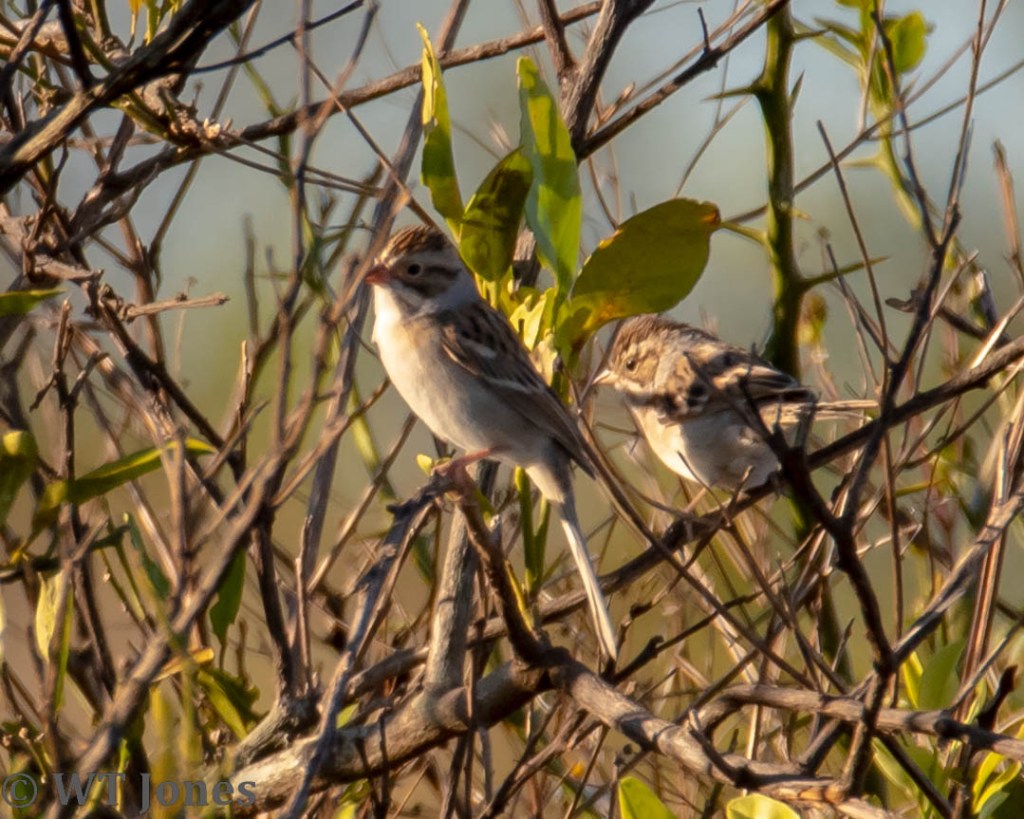
Contrasting face pattern, finely streaked center crown stripe and pale gray collar help identify the Clay-colored Sparrow. This is another species only occasionally reported in Florida during fall/winter migration.
Not as brightly colored as the male, this female Baltimore Oriole has her very own beauty. There have also been Orchard Orioles in this spot and although similar in appearance, the females are more yellow underneath without the bit of orange showed in the Baltimore.

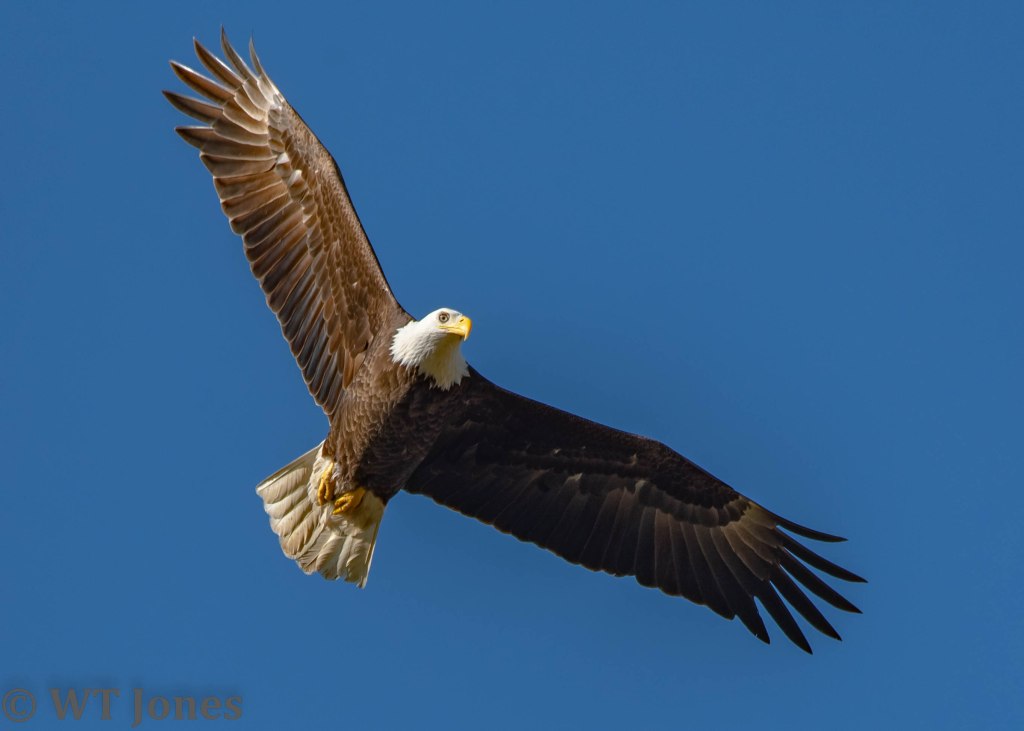
A late-day sortie by an adult Bald Eagle brought her overhead to check us out. Pretty spectacular raptor at any angle.
In the wetlands adjacent to the lake, many avian diners were taking advantage of the last light of the day. A trio of Sandhill Cranes may be a family unit of the Florida species, Grus canadensis pratensis, which are non-migratory and number around 5,000. Each winter, they are joined by upwards of 30,000 of their migrating cousins, G. c. tabida, which are slightly larger than the residents. (Size comparison is tough. We’ve found it easier to use our own formula: less than five birds may be locals, more than that are likely tourists.)

A group of Glossy Ibises found the selection of mud-dwelling entrees to be just fine.

We pulled to the side of the road where we have observed the flycatchers roosting and, right on schedule, they began arriving in one’s and two’s 30 minutes prior to scheduled sunset. A very pleasant way to spend a winter evening.


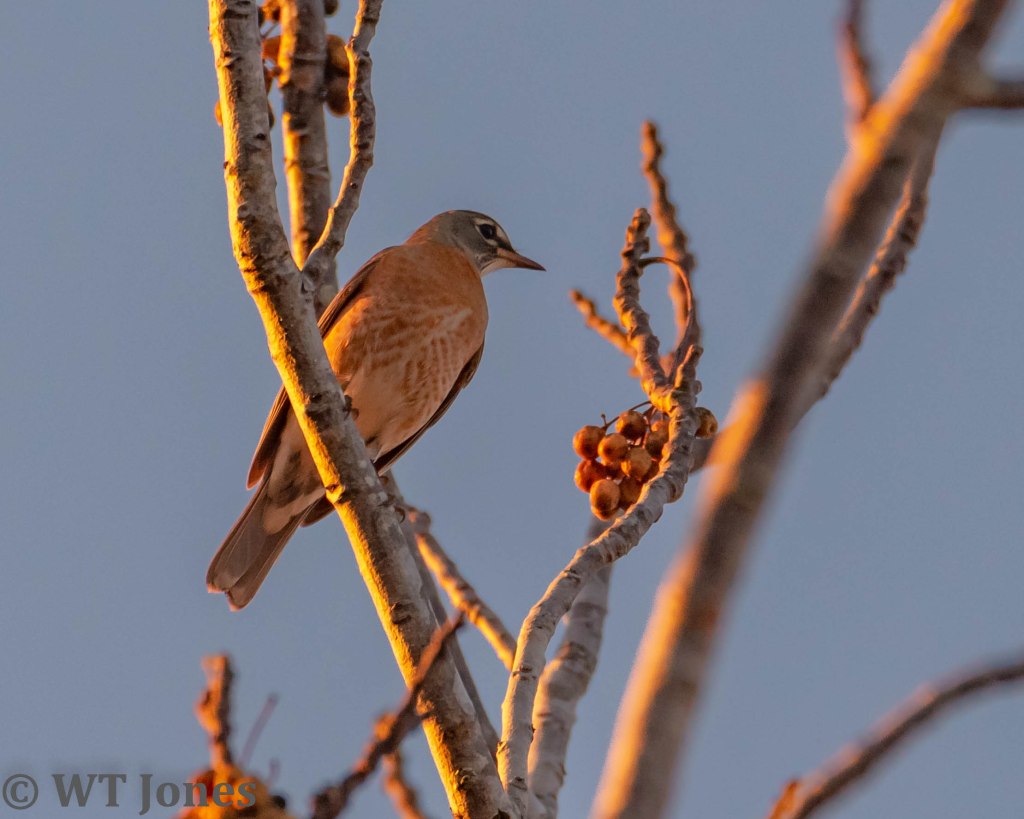
As we left the roosting area, the very last light of the day illuminated the back of an American Robin. He was part of more than 30 birds loudly jostling for the best roosting limbs for the night.
Within sight of the robins was an American Kestrel. We suspect she was not worried about a roosting spot but would not argue with a tasty bug or lizard before bedtime.

We like this area for all of the reasons illustrated above. Whether we find seldom-seen birds or familiar feathered friends, we always have an uncommonly good adventure!
Enjoy your search for a natural place and come back for a visit!
Header Image: Eastern Phoebe Eyes Bagworm Moth
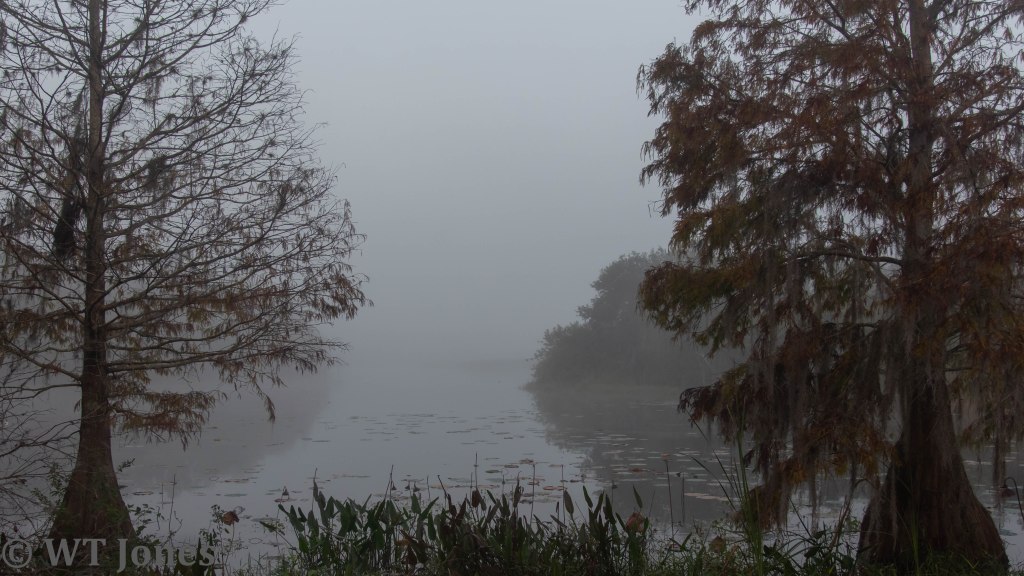
We seem to relish foggy days. For one, as Gini noted on this day, it just seems so quiet. The stillness of an early morning on the bank of a lake blanketed in gray with sight and sound limited heightens the senses. More importantly, we know clear skies lurk just above the mist and the natural world will soon be going about the business of surviving another day. As will we.
This particular visit to Tenoroc Fish Management Area took place in mid-December. Morning temperatures were mild but made to seem cooler by the fog. Not too long after sunrise, we were basking in the warm Florida sun under bright blue skies.
Small birds were active but fairly silent while the fog clung to the earth. Visibility improved slowly and the morning commuter flocks could navigate from roosts to feeding areas. Scores of White Ibis, Double-crested Cormorant and Anhinga crisscrossed the patchwork of lakes. A pair of Black-bellied Whistling-Ducks whistled overhead. A Great Blue Heron materialized from the fog and flapped his way onto a cypress tree branch. A distant screech from a Red-shouldered Hawk seemed to signal the official start of the day.
We progressed slowly from one favorite spot to another. Lingering along a trail or at a boat ramp or fence row provided an incredible diversity of our three main goals: birds, blooms and bugs. Migratory birds were sprinkled throughout our morning which increased the pleasure provided by our normal resident population. At this time of year we don’t encounter as many insects as during warmer months, but we still came across butterflies, moths, dragonflies and small creepies and crawlies all enjoying the relative winter warmth. A few flowers brightened up the landscape.
One day I will concentrate on including fewer images and creating shorter blog posts. This is not that day.
The pretty panorama of Picnic Lake was mostly obscured by the morning fog.
Bright yellow blooms in the water are but a memory. American Lotus (Nelumbo lutea) in winter.

The strength of the sun will soon overcome the damp gray blanket hugging the earth.

A positive result of the delayed sunrise is that the Moonflowers (Ipomoea alba) remain open longer. This bloom measured almost eight inches in diameter.

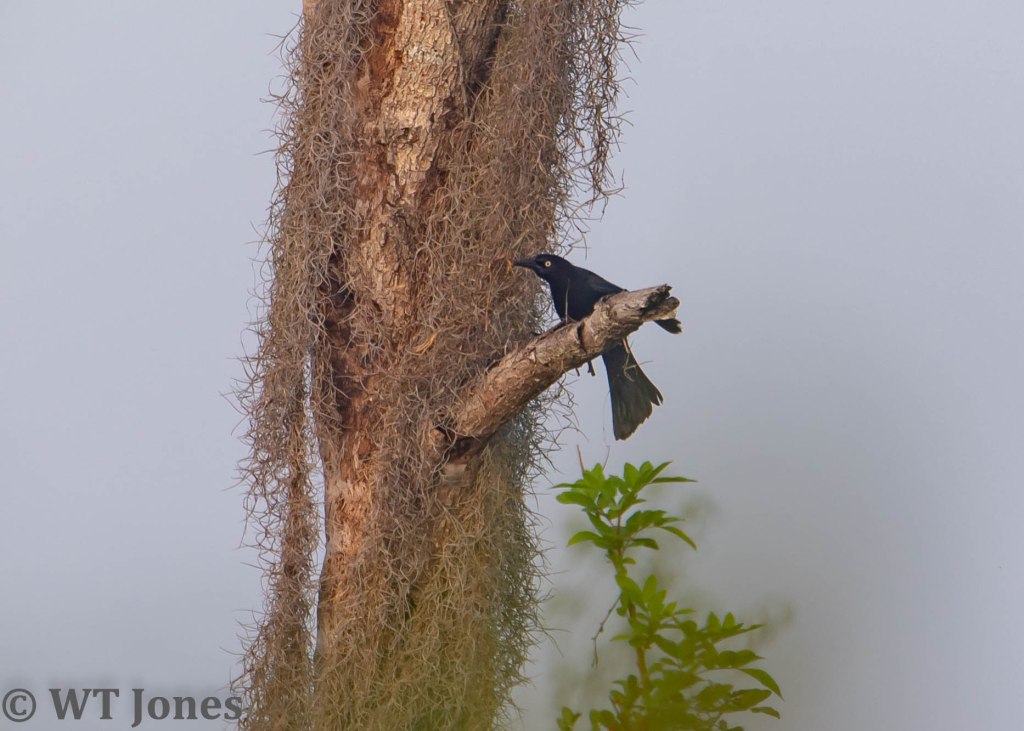
With its bright yellow eyes, a Common Grackle just chased away my opportunity to photograph our first observed migratory American Robin of this season. Sigh.
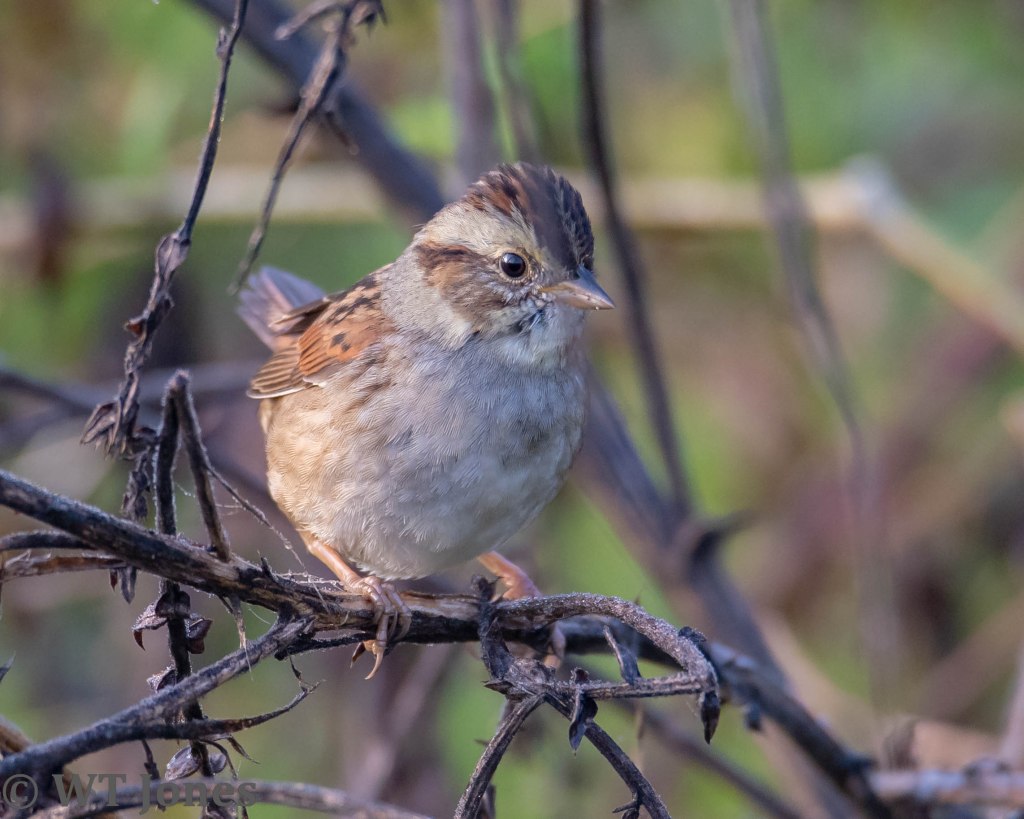
Skulking in the lower portion of the brush is another winter migrant, the Swamp Sparrow.

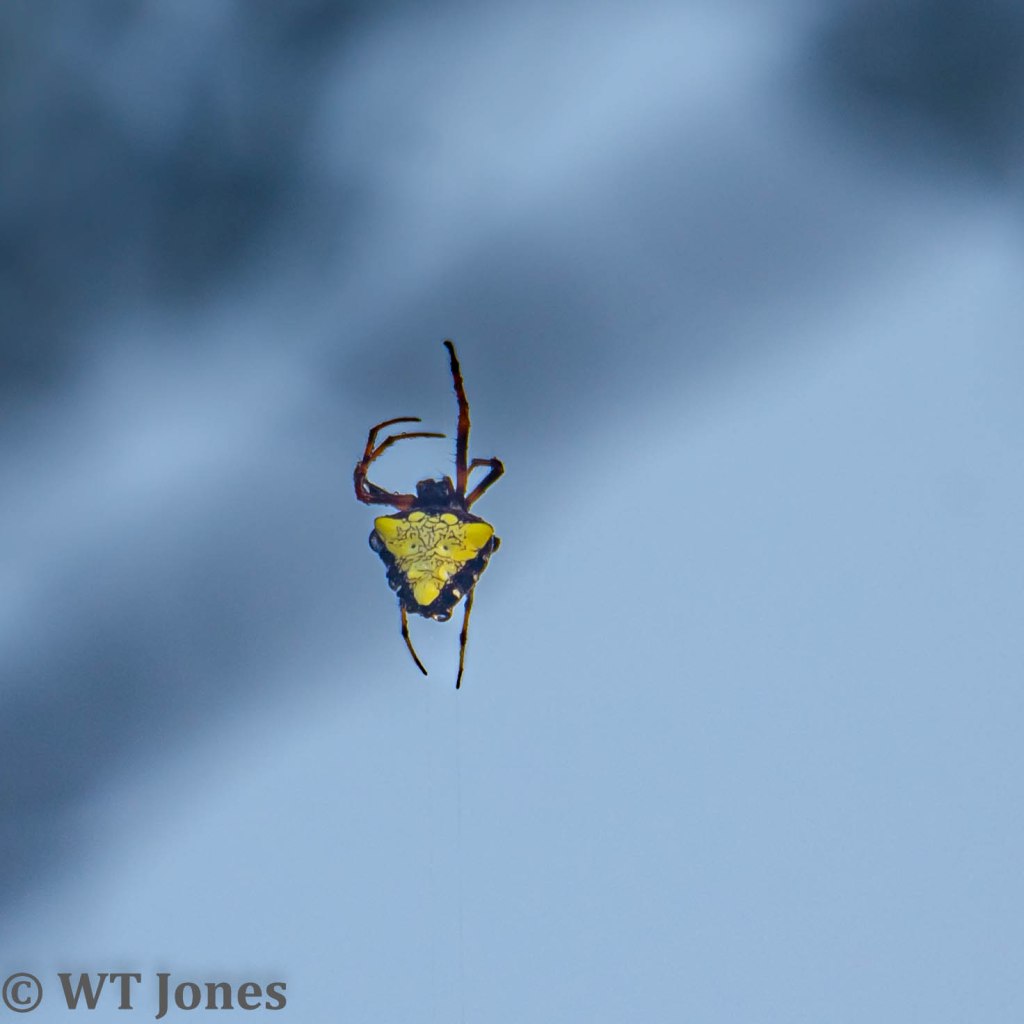
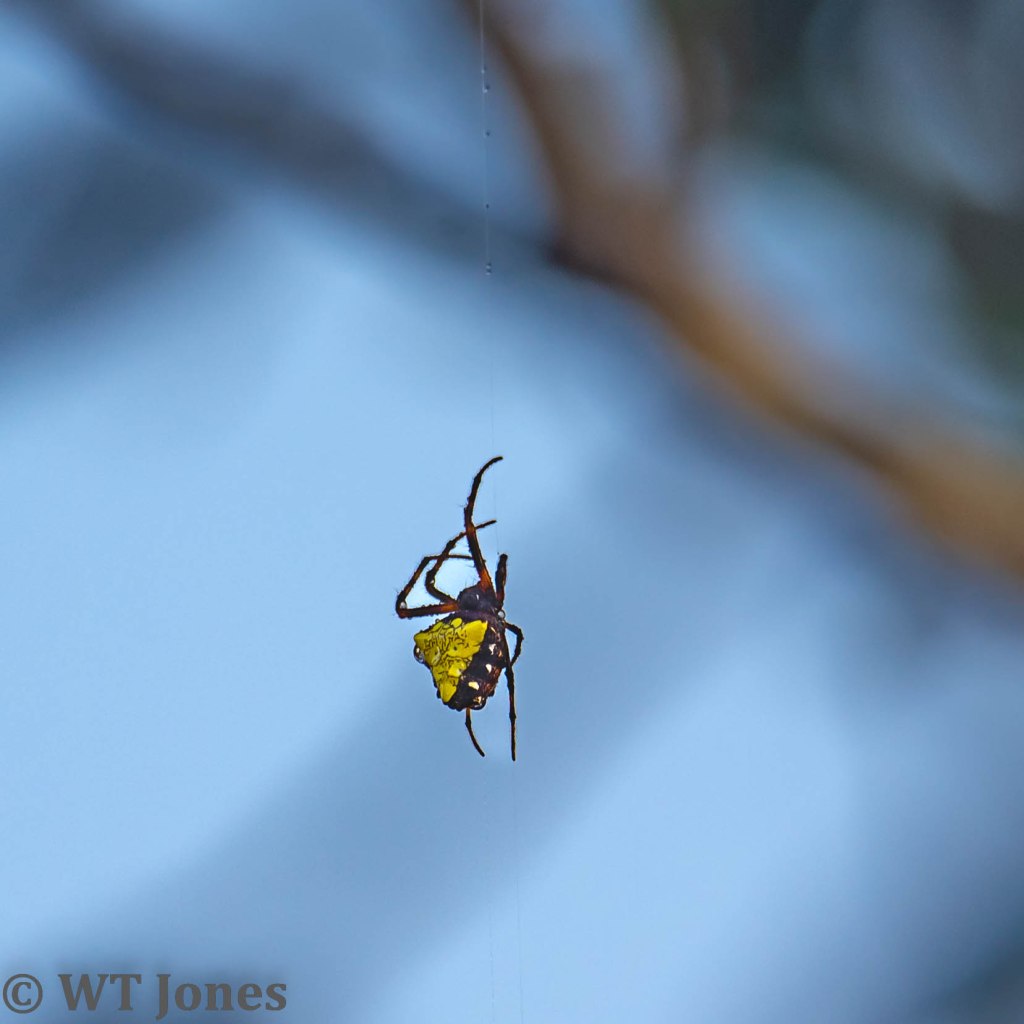
I was hoping to change to the macro lens for a detailed image of this spectacular Arrowhead Spider (Verrucosa arenata), but she was much quicker than me. Two clicks with the big lens and she disappeared.
One of our (many) favorite winter visitors is the Northern Harrier. Their distinct owl-like face and low, lilting flight as they hunt over a marsh or field make them quite unique. This one was uncharacteristically perched in a large field. Based on the fairly dark plumage, especially of the head, this is likely an immature bird. I thought it had just captured breakfast, but after 20 minutes it took flight with no evidence of prey.


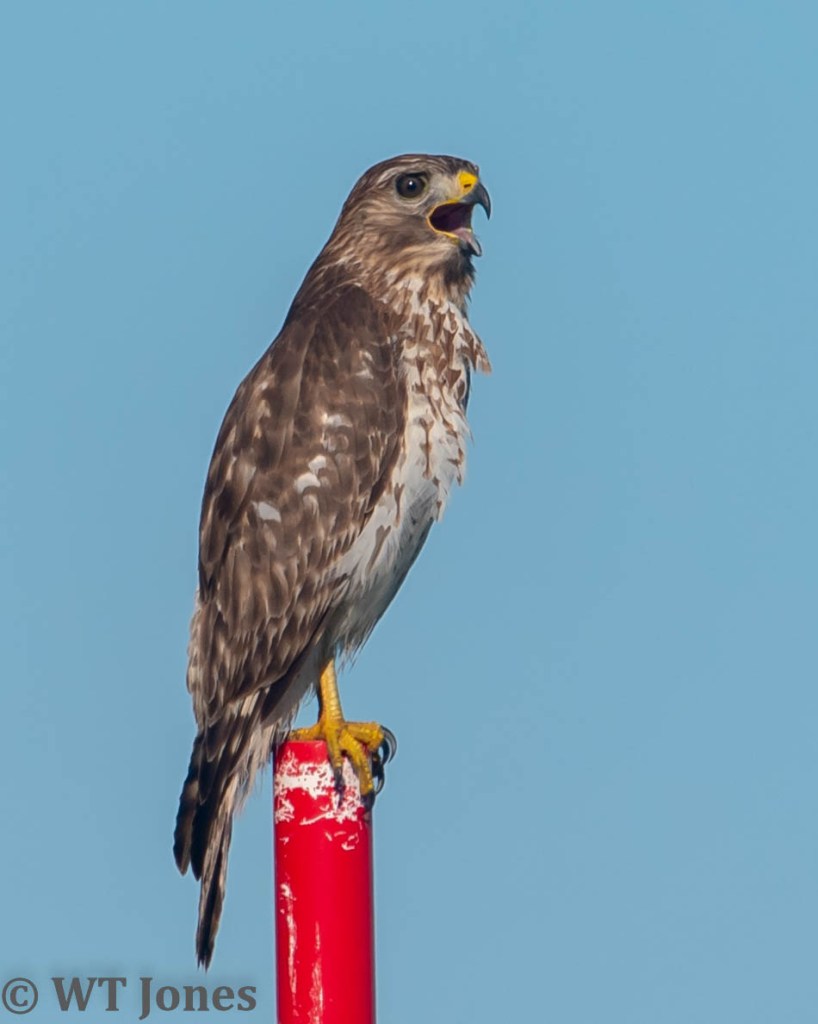
Our presence may have been detected. This young Red-tailed Hawk wouldn’t stop squawking about us. More like “Tattle-tale” Hawk.
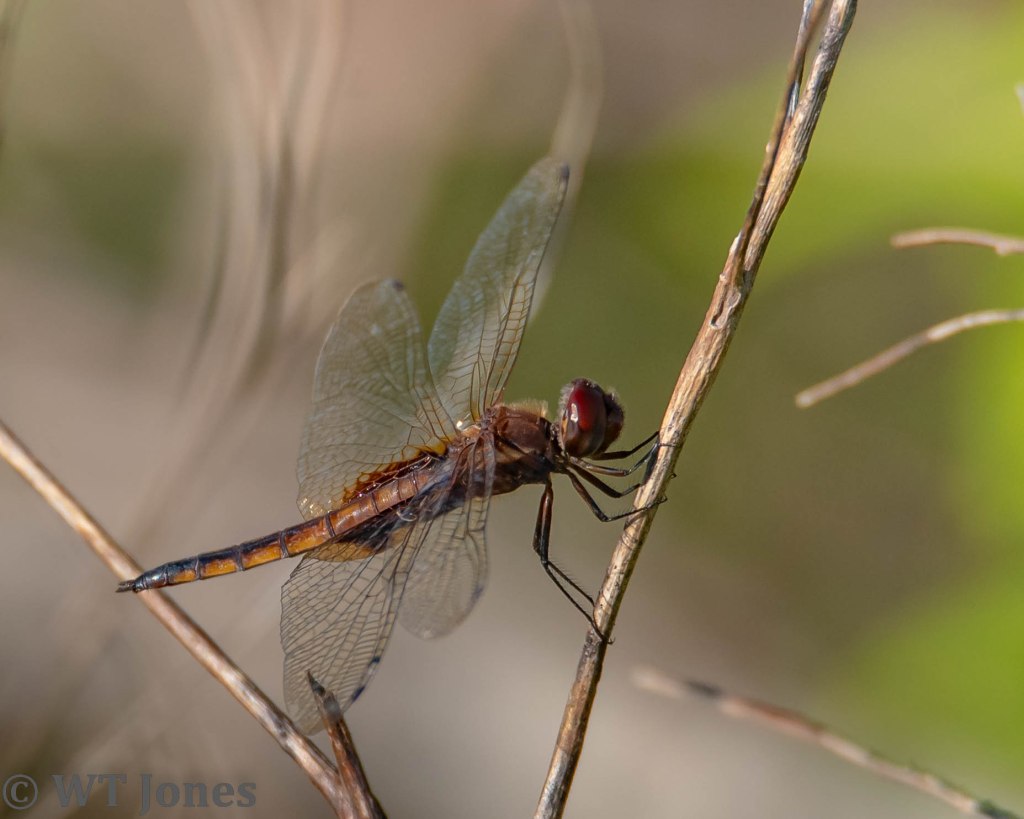
Winter dragon. Like the Harrier above, this male Hyacinth Glider (Miathyria marcella) is normally airborne and we’re always surprised to find one sitting still. Dozens of these were active over the same field where we found the Harrier and Hawk.
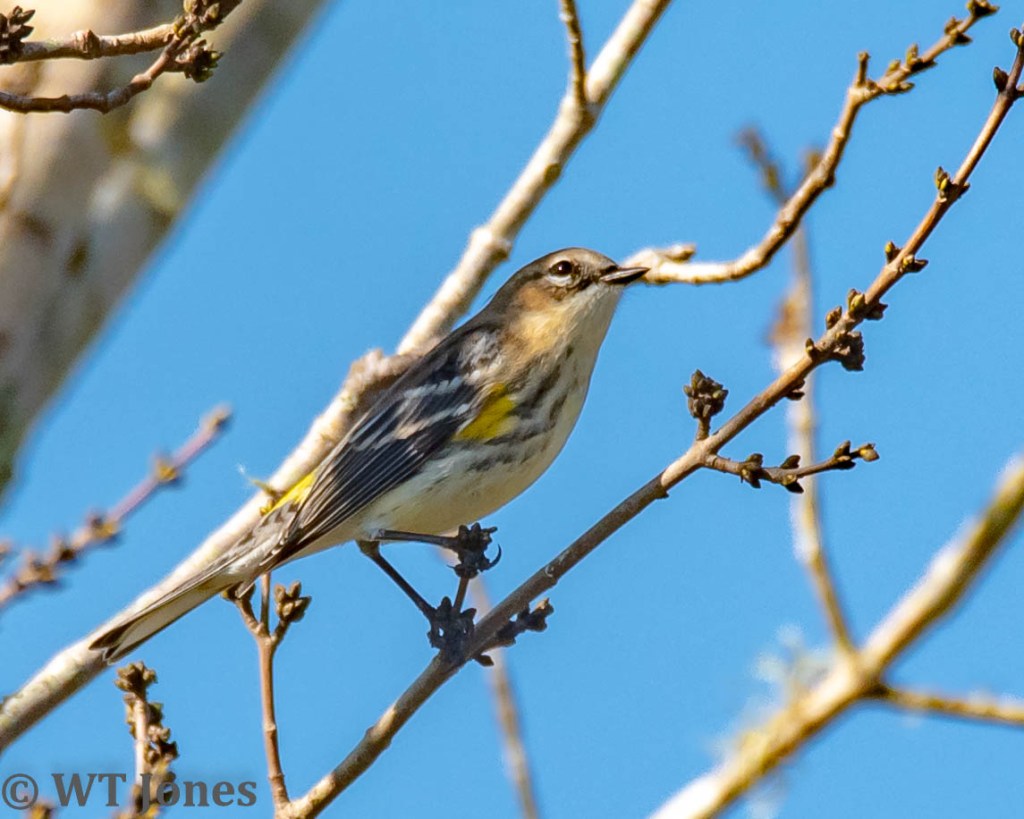
Yellow-rumped Warblers are among our most common winter migrant songbirds. The majority of these handsome birds fly on to South America but thousands remain in the area until spring.
Gini thinks too much coffee may be the reason a Ruby-crowned Kinglet seems to never hold still. Fidgety, constantly flexing its little wings, hopping from one twig to another. These are considered “short-distance” migrants since in the fall they move from far-north breeding grounds to the southern part of North America and typically no further. We appreciate them entertaining us all winter!

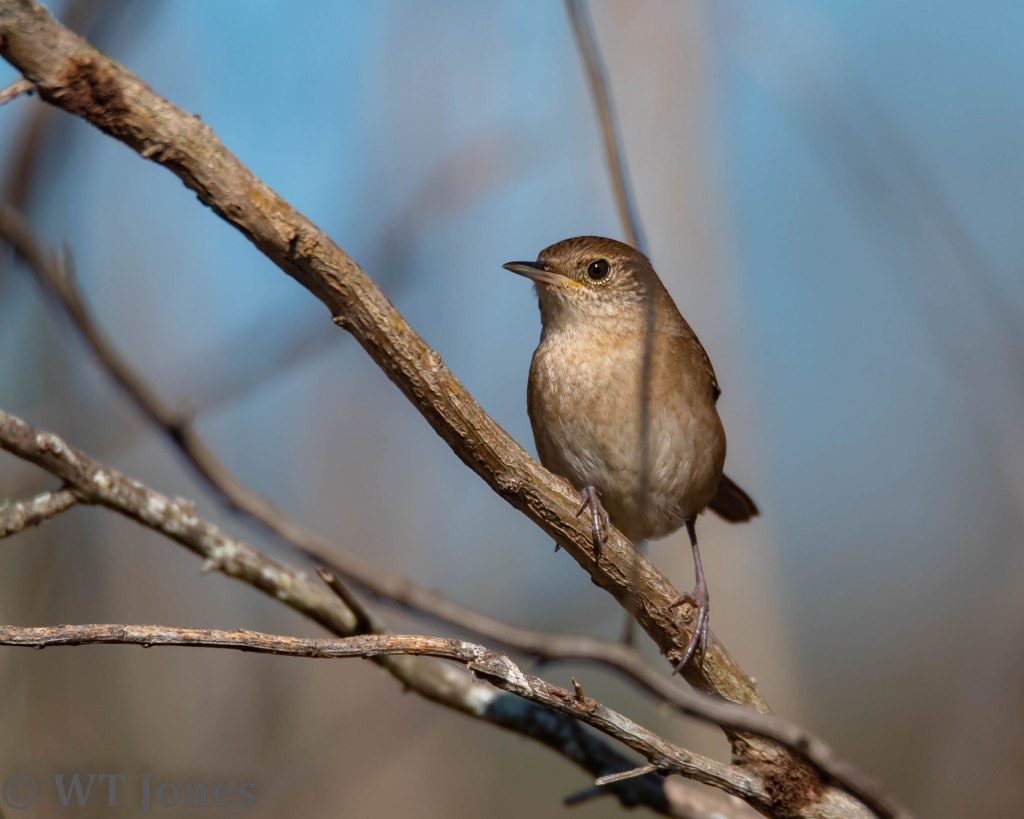
Speaking of fidgety and entertaining. Meet the House Wren. These little brown jobs are all over the place in winter! They may be small but they are intensely aggressive. They have a surprisingly loud and beautiful song.
More tourists. Savannah Sparrows are easily identified (for a sparrow) by the striped breast, distinct face pattern and usually a bit of yellow over the eye. This is our most abundant migratory sparrow.

It may not be as brightly colored as some butterflies, but we think the Variegated Fritillary (Euptoieta claudia) is stunningly beautiful!

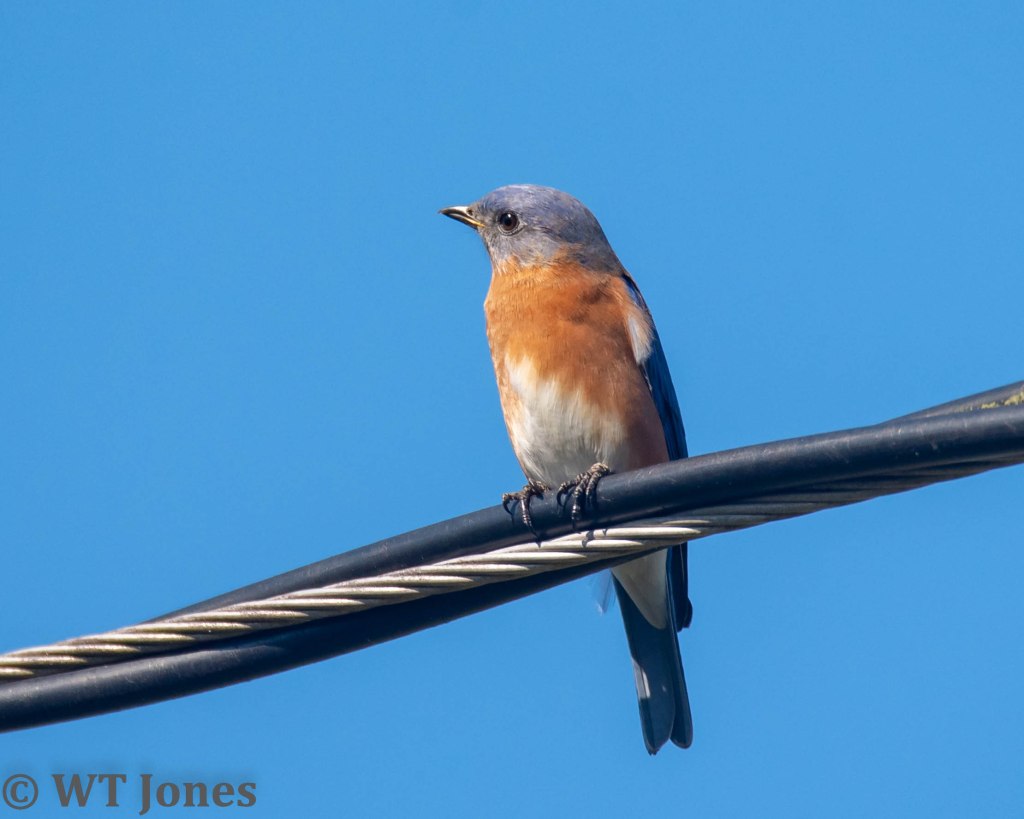
With no trace of fog remaining, an Eastern Bluebird has plumage which is nearly a match for the morning’s recently revealed bright sky.
More blue revealed! This time in the eyes of a White Ibis as it probes the shallows for breakfast.

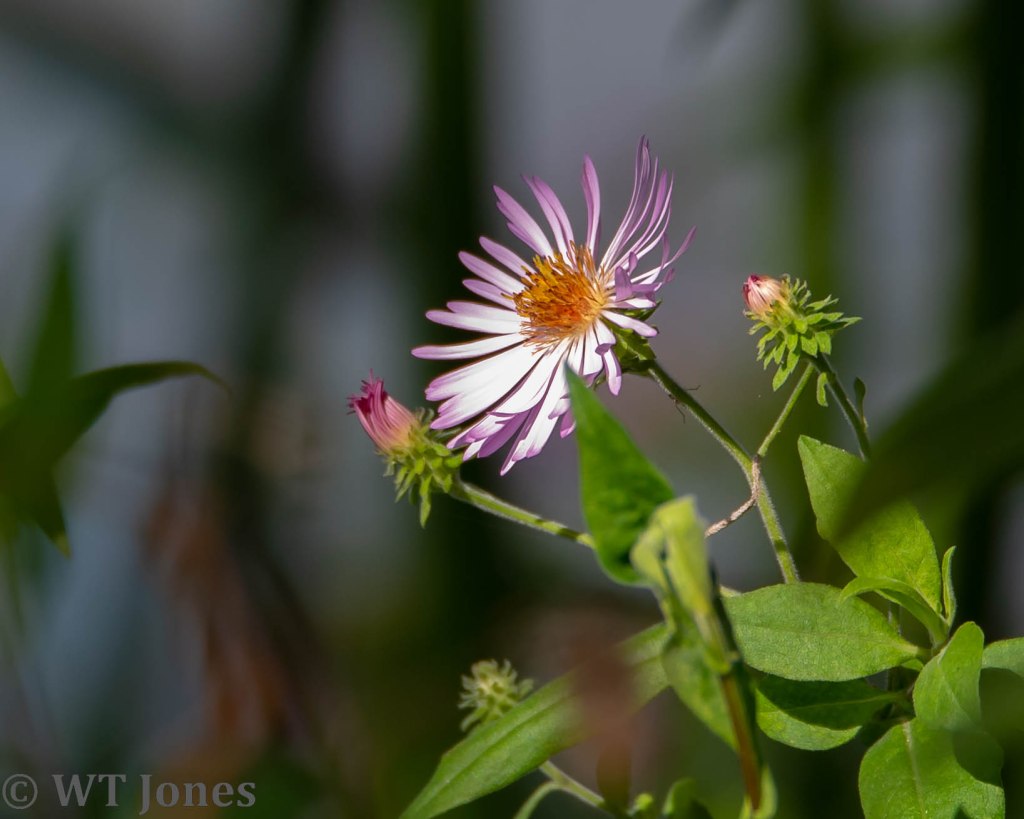
Our imagination thinks the flowers are grateful for the sun’s rays and open a little wider in thanks. This Climbing Aster (Symphyotrichum carolinianum) bloom is one of dozens adorning the bank of a lake.
We began the day on the shore of a lake straining to see what might be in the distance. As the fog cleared, so did our vision and our spirits. Life can be like that. Gloom can restrict our sense of what is important. Eventually, barriers are overcome and all is right with the world.
Enjoy your search for a natural place and come back for a visit!

