(Note: We’re changing to a somewhat more stable header image which will probably be some sort of generic Florida habitat display.)
We love exploring new places. The excitement of finding something different. Anticipating new birds, blooms and bugs. The unknown – what’s around the next bend?
Today is not like that. Today is relaxing with a good friend as she and I talk about our grandson’s recent visit, our son’s European trip, plans for Thanksgiving with our daughter’s family and casually observe the passing scene. The comfort of familiar surroundings.
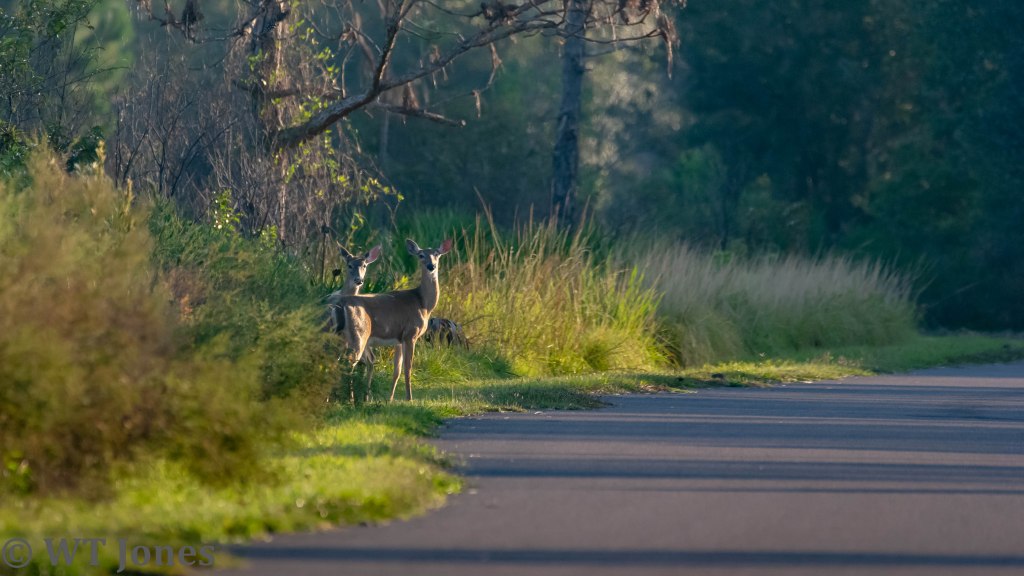
We were greeted at the entrance to the park by a White-tailed Deer and her fawn. The Red-shouldered Hawk was at his normal station mid-way up the pine tree. Calling White-eyed Vireos have now been joined by fall visitors such as House Wrens and Gray Catbirds, creating a cacophonous chorus of welcoming voices. Fall flowers such as morning-glory, blazing star and butterfly pea dotted the landscape around us. Water birds patiently fished around the lakes, newly hatched butterflies probed for nectar, young alligators soaked up the warm rays of the sun.
“Our” breakfast spot under the aromatic pine boughs was almost quiet. Cicadas are still calling even though most species to the north are quiet during the fall and winter months. We find that sort of “background music” quite pleasant.
Although the morning spent in a regular haunt is calming, we still had those moments of involuntary exclamation and pointing as nature typically has a few surprises up her sleeve. An uncommon Red-headed Woodpecker, the first Yellow-rumped Warbler of the fall, hairy caterpillars in a forest of fennel, the sudden clattering of a Belted Kingfisher unhappy that we intruded into her fishing territory.
We did not see any new exotic sights, nor did we discover any different species of life. Our morning was relatively subdued, spent in familiar surroundings while visiting with a few friends – and each other.
A fall migrant, this female Belted Kingfisher objected noisily to our presence. We usually have several kingfishers remain in our area throughout the winter.

A doe. A deer. A female deer. With a young fawn behind her. The fawn is nearly as large as mama.
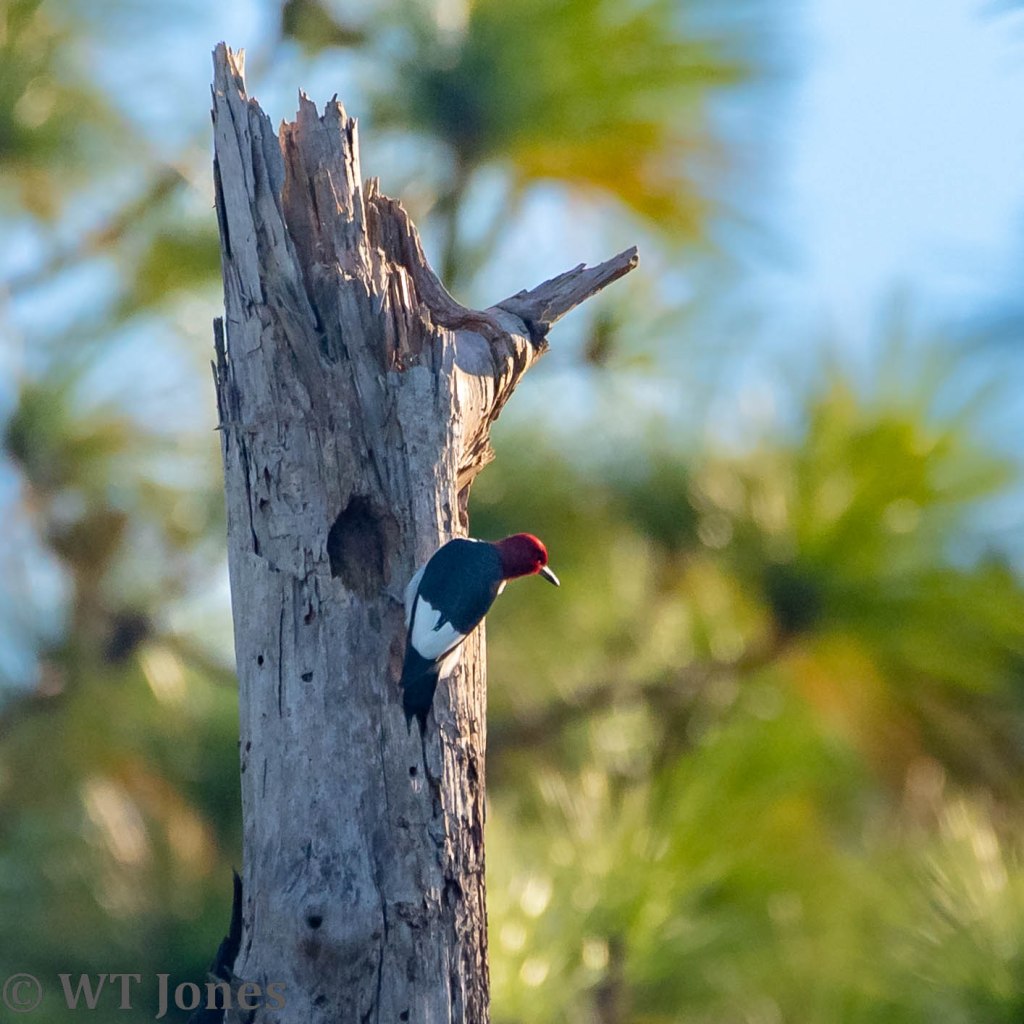
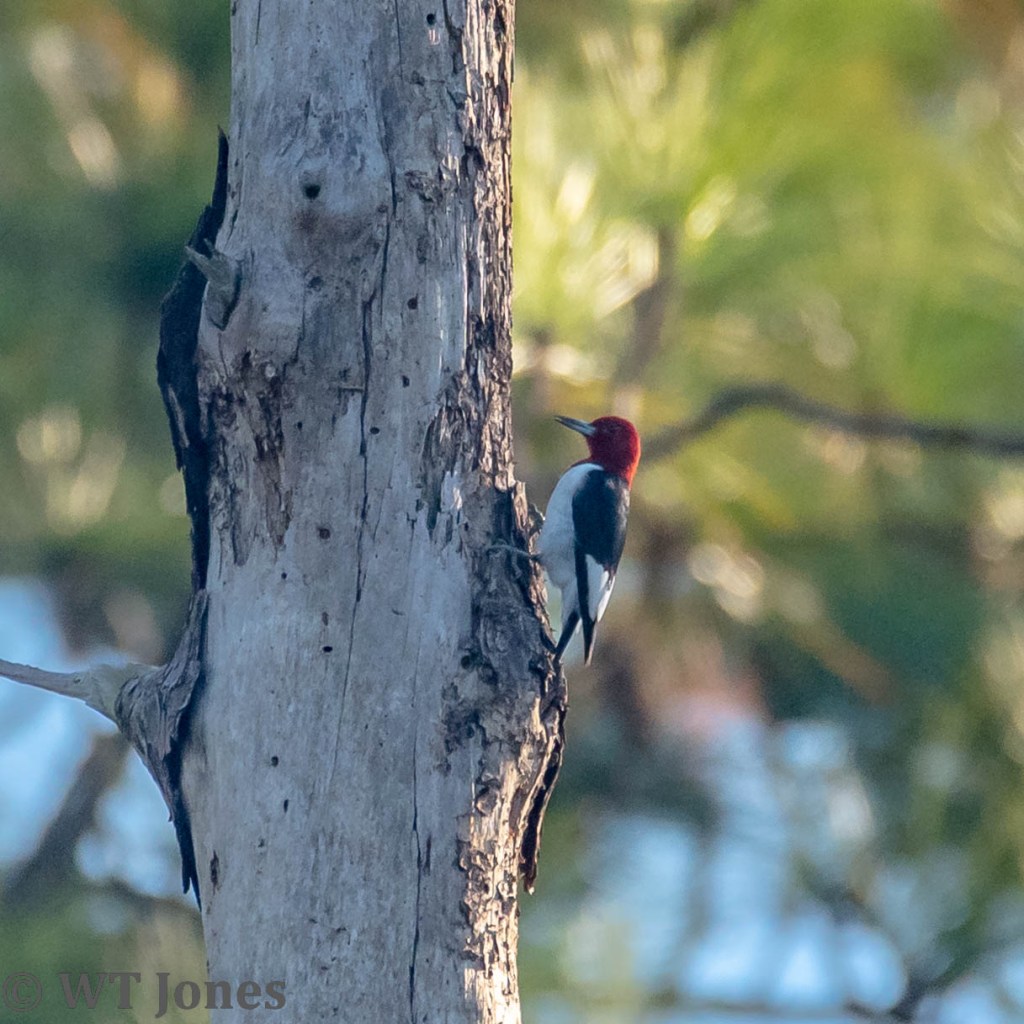
In North America, the Red-headed Woodpecker population has declined over 50% since 1900. Likely causes are loss of nut trees due to disease and over-harvesting. Additionally, landowners have aggressively cleared dead and dying trees and snags which are primary nesting sites for this species. In Florida, declination is around 25% for the same time period with some populations holding their own in the past two decades. Fingers crossed for the future. Poor photographs but I was happy to see one at all!
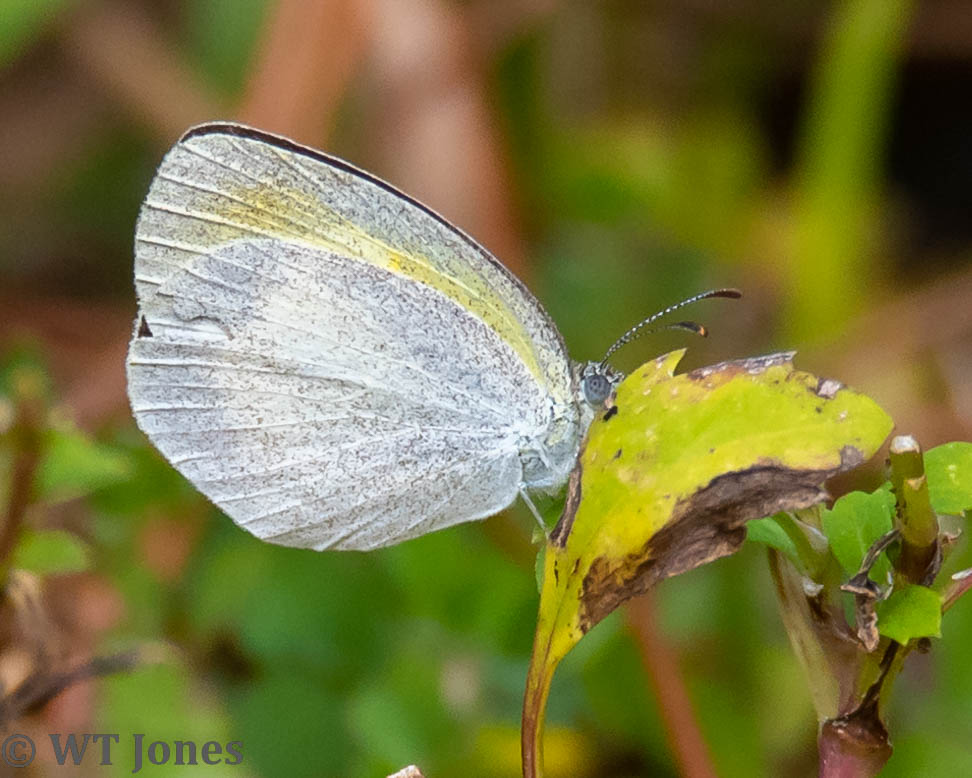
The Barred Yellow (Eurema daira) goes through seasonal color changes. Very light during spring and summer and turning darker during late fall and winter.
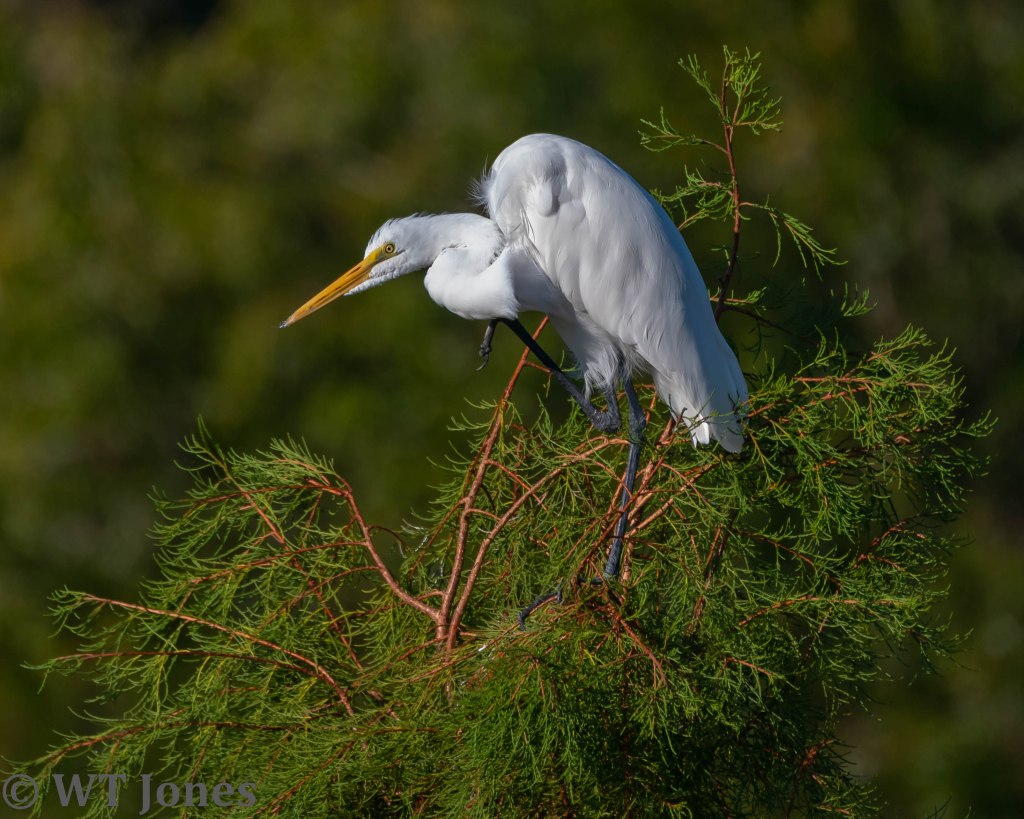
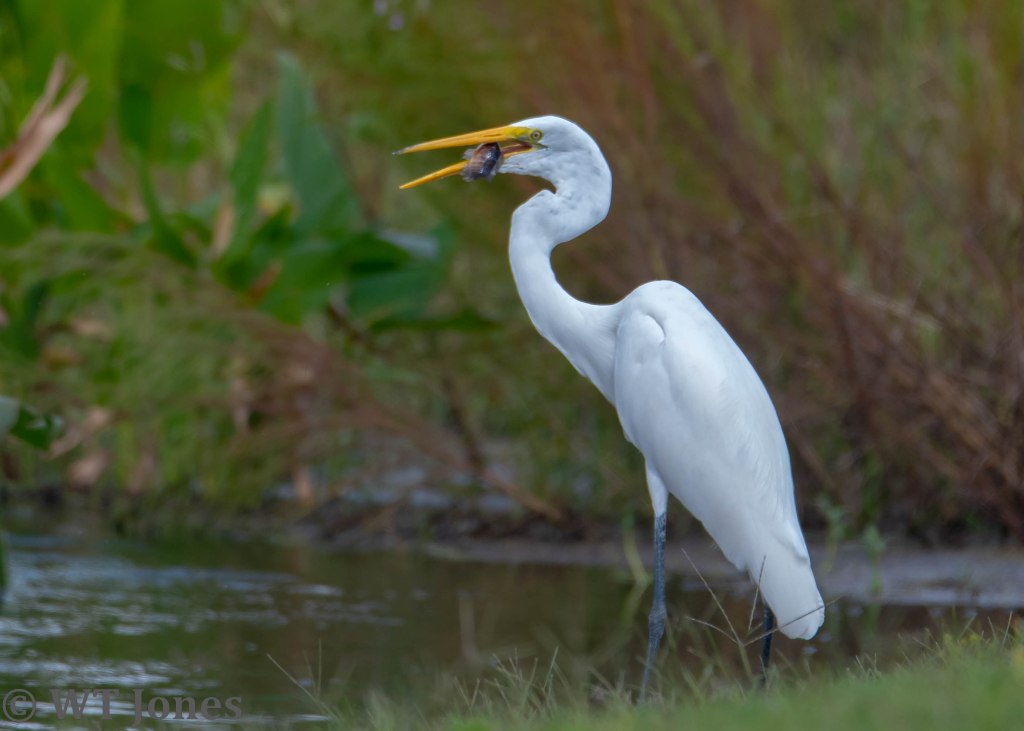
A Great Egret scratches an itch in the early morning light. With those nails it needs to be careful! A bit later, it’s time for a fish brunch.
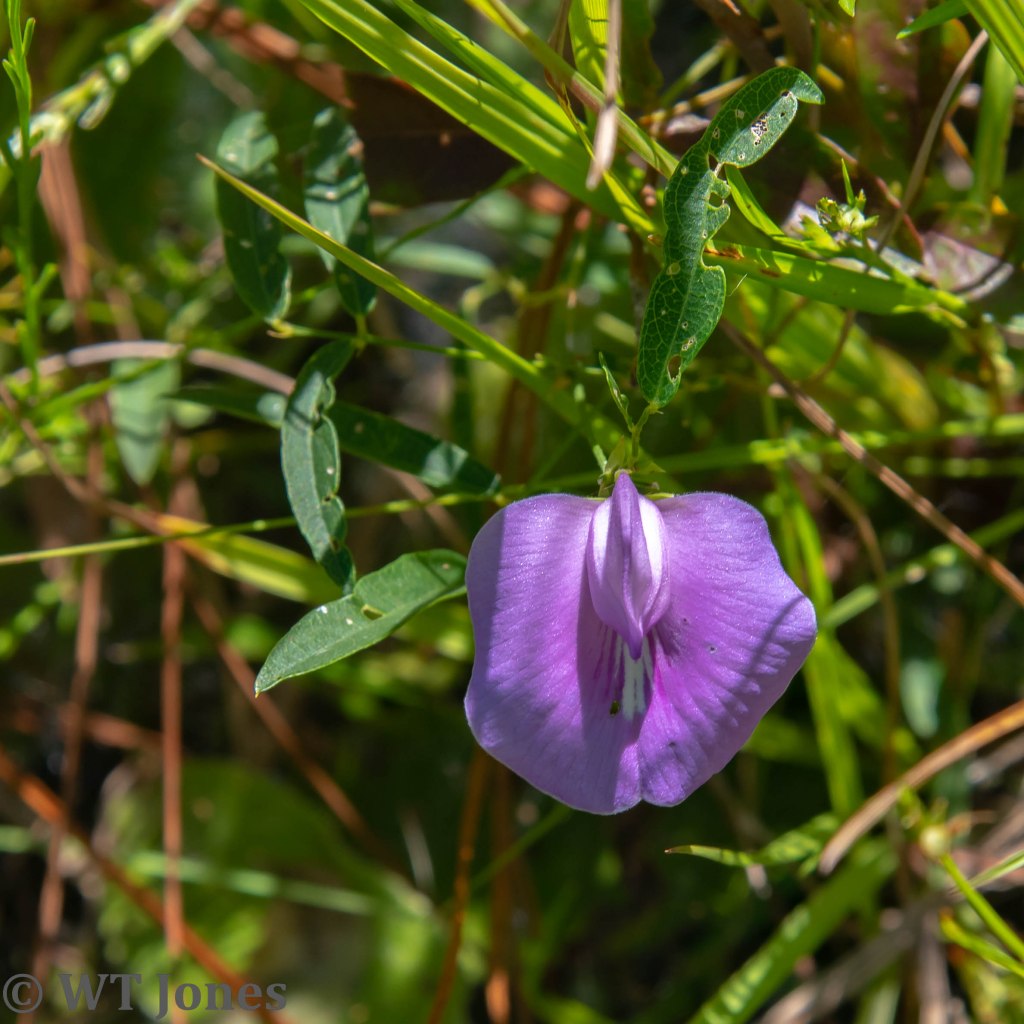
In the pine forest, purple seems to be an abundant fall color. We found several vines of Spurred Butterfly Pea (Centrosema virginianum) winding around whatever support it could find.
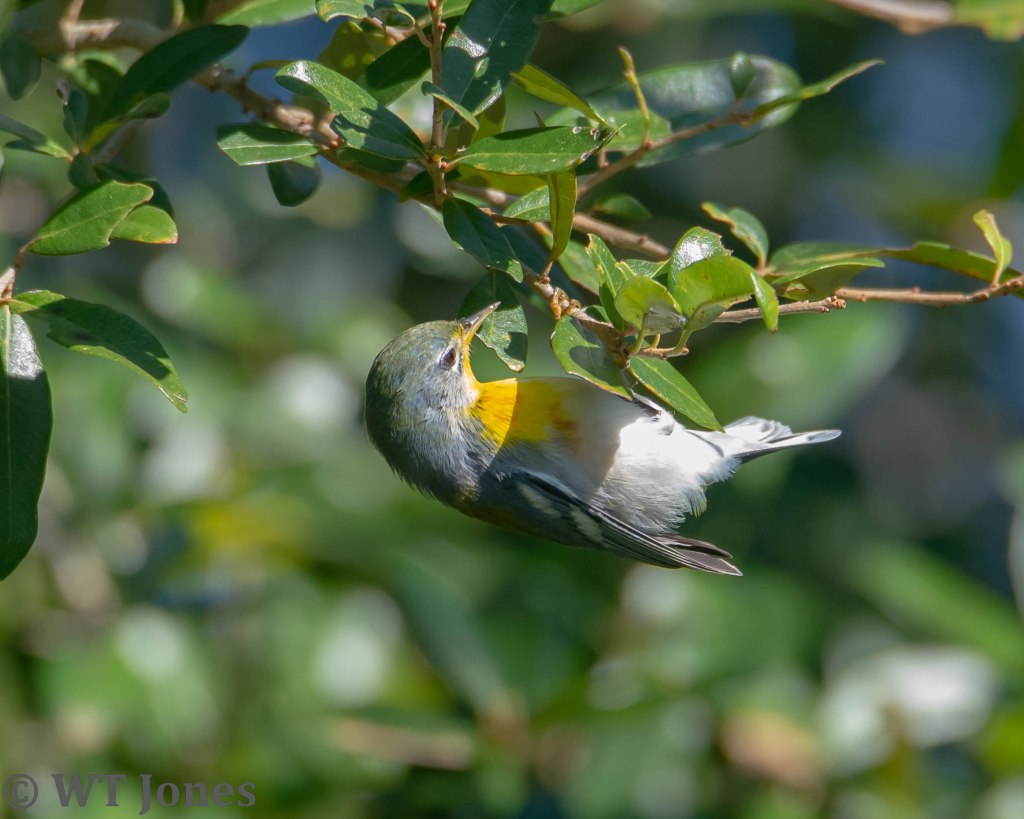
Northern Parula warblers breed in our area and become scarce during the winter months. Some will spend the winter in the southern part of Florida while others travel on to South America.
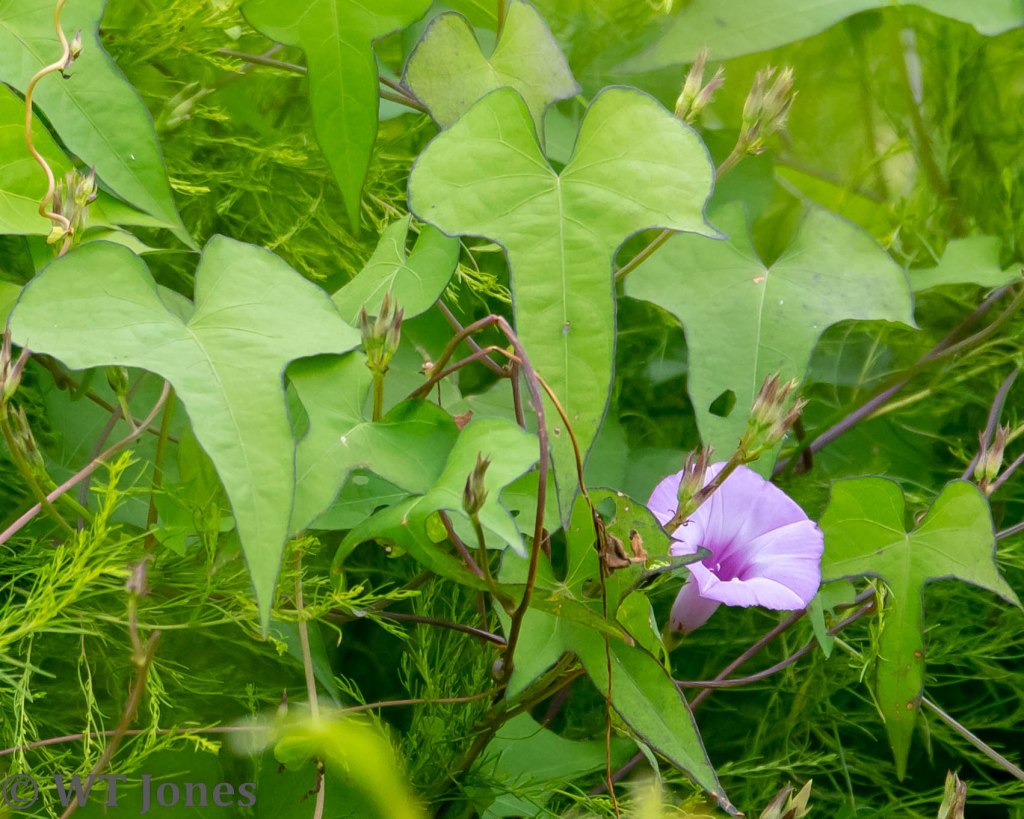
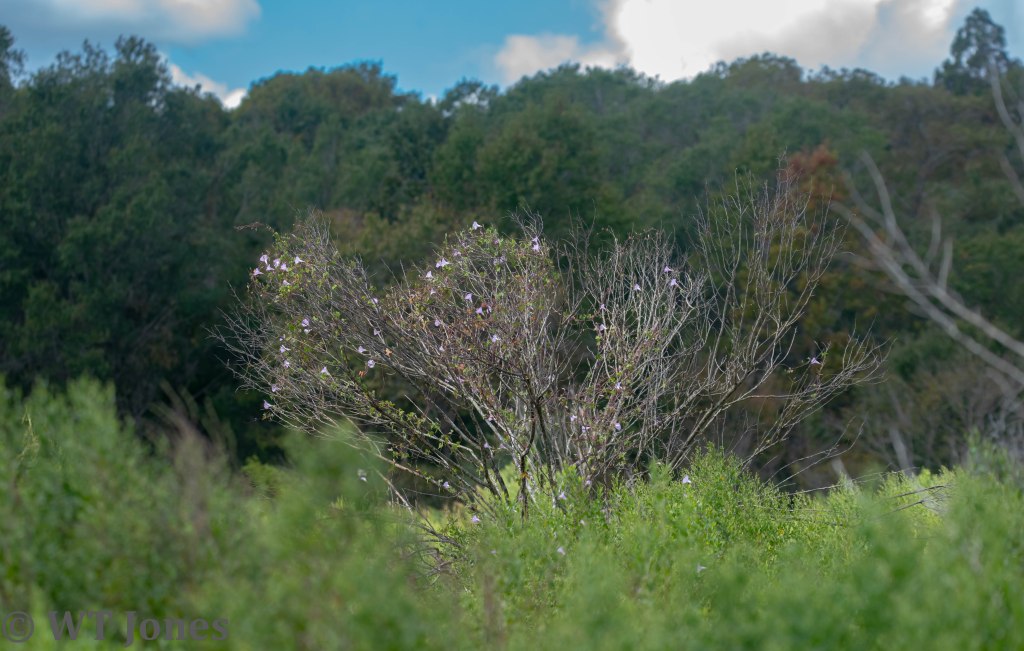
Tievine (Ipomoea cordatotriloba) is a member of the morning-glory family. It has fairly large flowers and can spread quite some distance if it can find supporting structure. The leaves can be sword-shaped or heart-shaped. In the second image, we found a dead-looking tree which the Tievine had made its own. The tree was over 20 feet tall.
A group of immature White Ibises passed overhead.

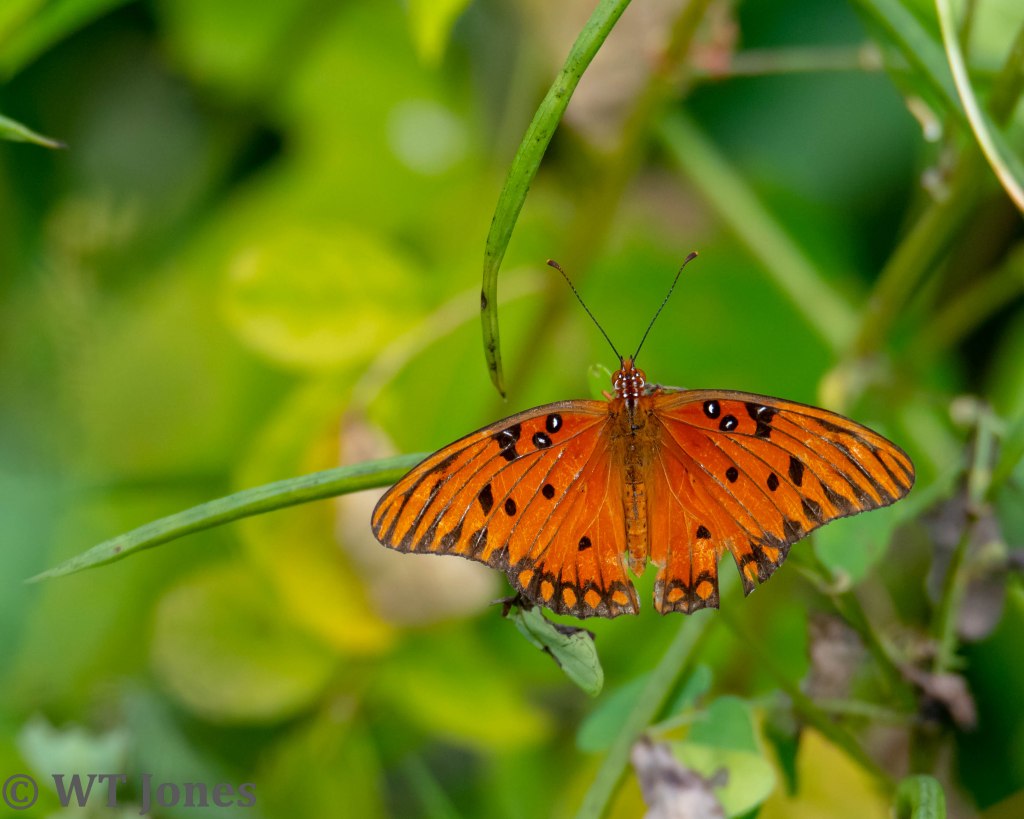
Appropriate for Florida with a combination of citrus and sunshine orange, the Gulf Fritillary (Dione incarnata) is a common butterfly for the area. Uncommonly beautiful.
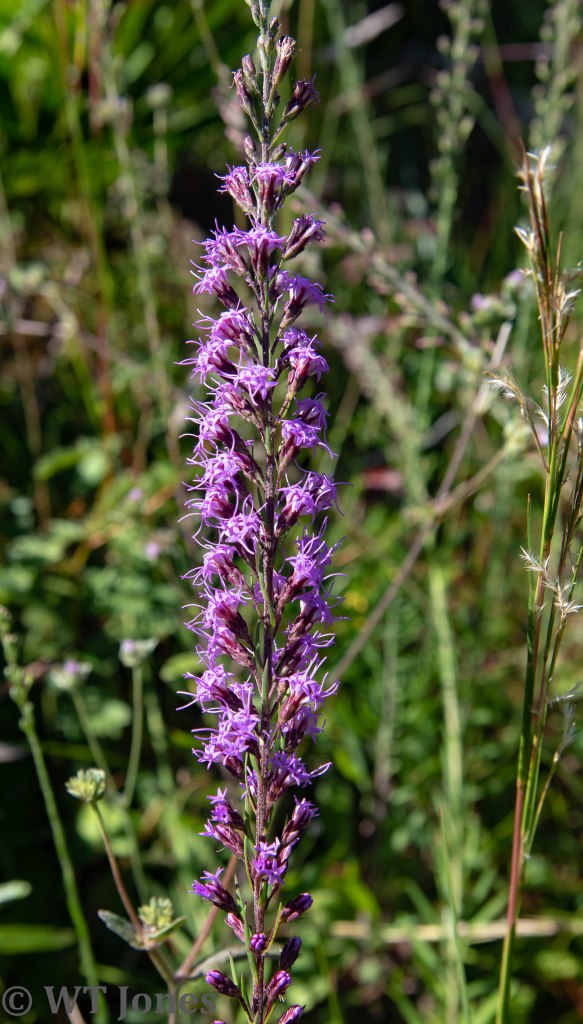
More purple. Gayfeather, blazing star. There are 17 species of Liatris in Florida. This is one of them. No matter what you call it, we think it’s gorgeous!

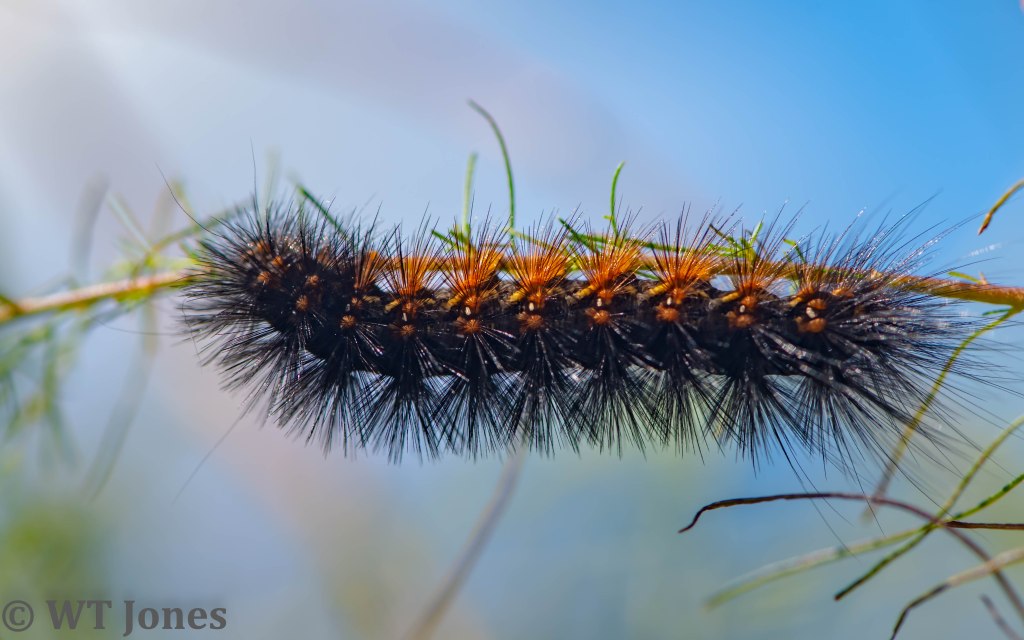
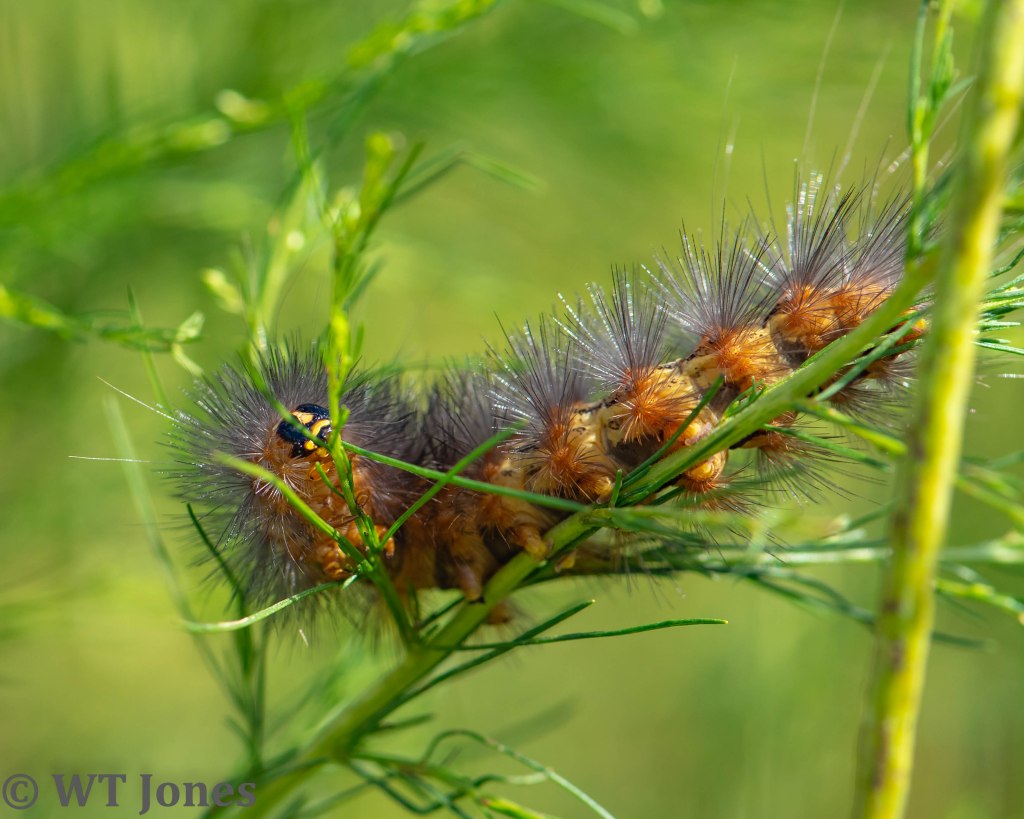
In a field of Dogfennel (Eupatorium capillifolium), we found a number of caterpillars hungrily munching away. They appeared to all be the larvae of Salt Marsh Moth (Estigmene acrea). These caterpillars vary greatly in appearance depending on instar (developmental) stage. Similar to “wooly bears” but different family.
If events in our lives tend to become overwhelming, having a comforting familiar oasis in which to spend a morning can help us see more clearly. The batteries of our souls are recharged. A small change in perspective can yield large rewards.
As Johnny Nash sings it:
“It’s gonna be a bright (bright)
Bright (bright) sunshiny day
Look all around, there’s nothing but blue skies
Look straight ahead, nothing but blue skies.”
*https://www.youtube.com/watch?v=g_rB4v75jqU
Enjoy your search for a natural place and come back for a visit!
Header Image: Sandhill Cranes
Thank goodness we have venues nearby where we can travel less than ten minutes and enjoy birds, blooms and bugs! If we had to plan for a long drive, we might “accidentally” oversleep. Our unscientific research reveals that sunrise and the early birds wait for no birder.
One of our current favorite patches is Tenoroc Public Use Area. It is near the city of Lakeland in central-west Florida in Polk County. Our population is a little over 100,000 but 99.9% of those folks seldom visit our little paradise which is okay with us. This area consists of around 7,000 acres which was once mined for phosphate. Over the past 50 years, extensive reclamation has turned it into a diverse natural habitat with 39 trails and 29 lakes. Efforts have been made to re-introduce native plant species which, in turn, have lured a large number and variety of animal life to call the place home.
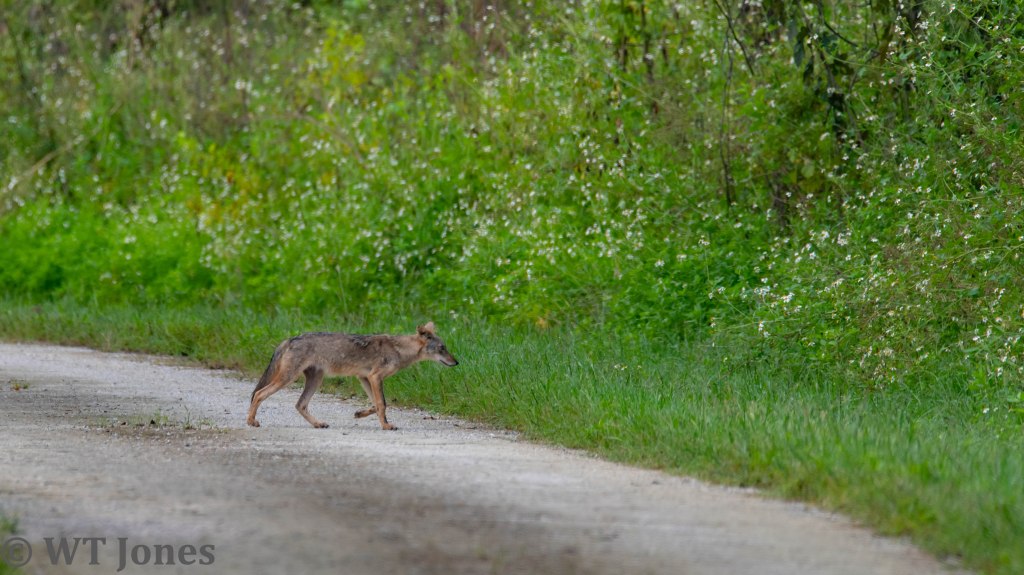
We had an early morning surprise when a Coyote sauntered across the road. Poor guy looked like he had a rough night. Coyotes are not uncommon in the area although we usually just see their tracks. Around sunrise, the earliest callers of the bird world are Northern Cardinals and Mourning Dove. As the night gives way to the new day, flocks of White Ibises and Cattle Egret move from roosts to feeding areas. Hammering of woodpeckers can be heard throughout the forest. Common Gallinules gabble from all the lakes. A Red-shouldered Hawk’s scream ensures any creature still asleep is now fully awake.
Two bird calls we only hear during the months of migration belong to the Eastern Phoebe and the Gray Catbird. These were by far the most common calls of the day. Fall flowers are in bloom. Insects are busy visiting the blooming flowers. We are privileged to be here to witness a small sliver of nature beginning yet another day.
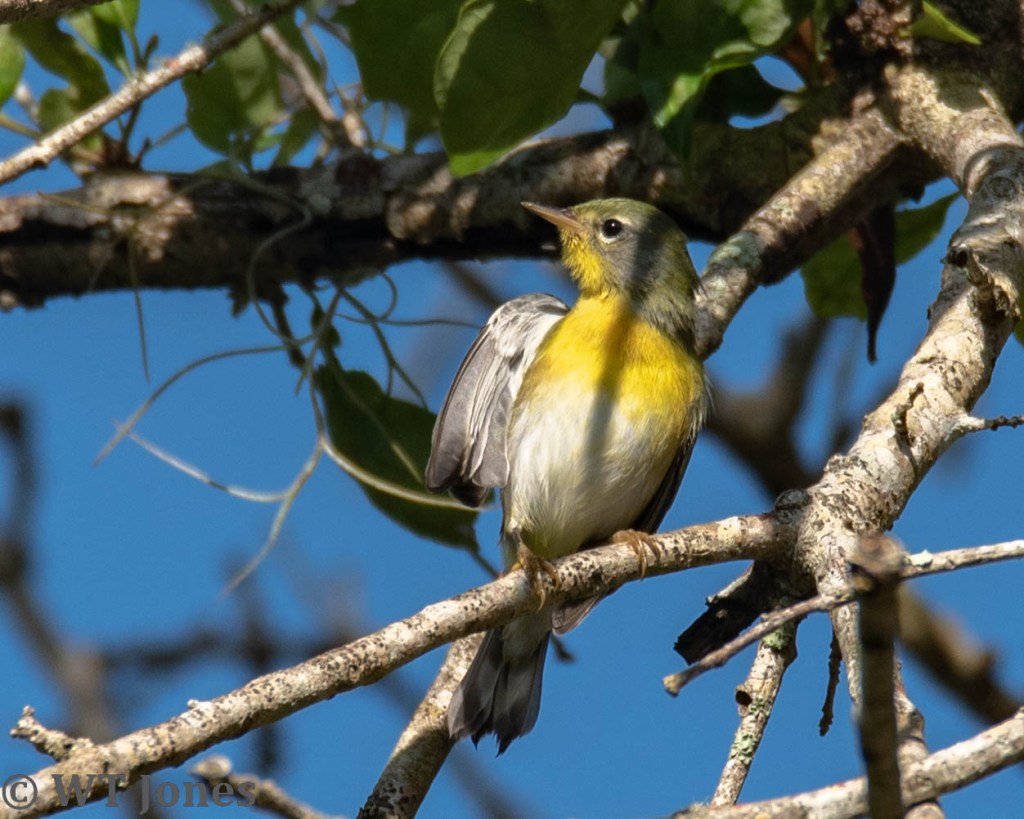
The bright male Northern Parula points us in the direction of a pretty flower. This warbler species is already diminishing in number as fall progresses and will soon almost disappear until spring.
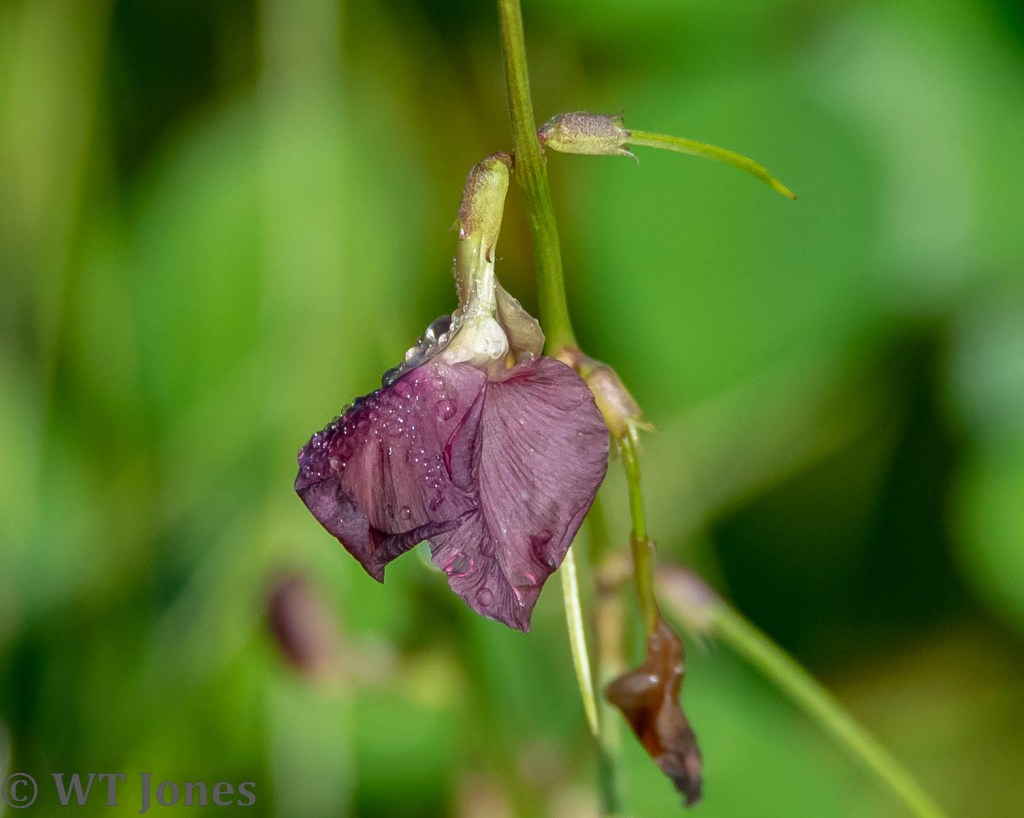
Wild Bushbean (Macroptilium lathyroides) is a non-native species which has been prevalent in Florida for at least 50 years. It can become a nuisance if it grows in large clumps due to its tendency to crowd out native species. We like the bloom’s unique brown/purple color.
Poor coyote looks pretty scroungy. Probably just needs coffee.
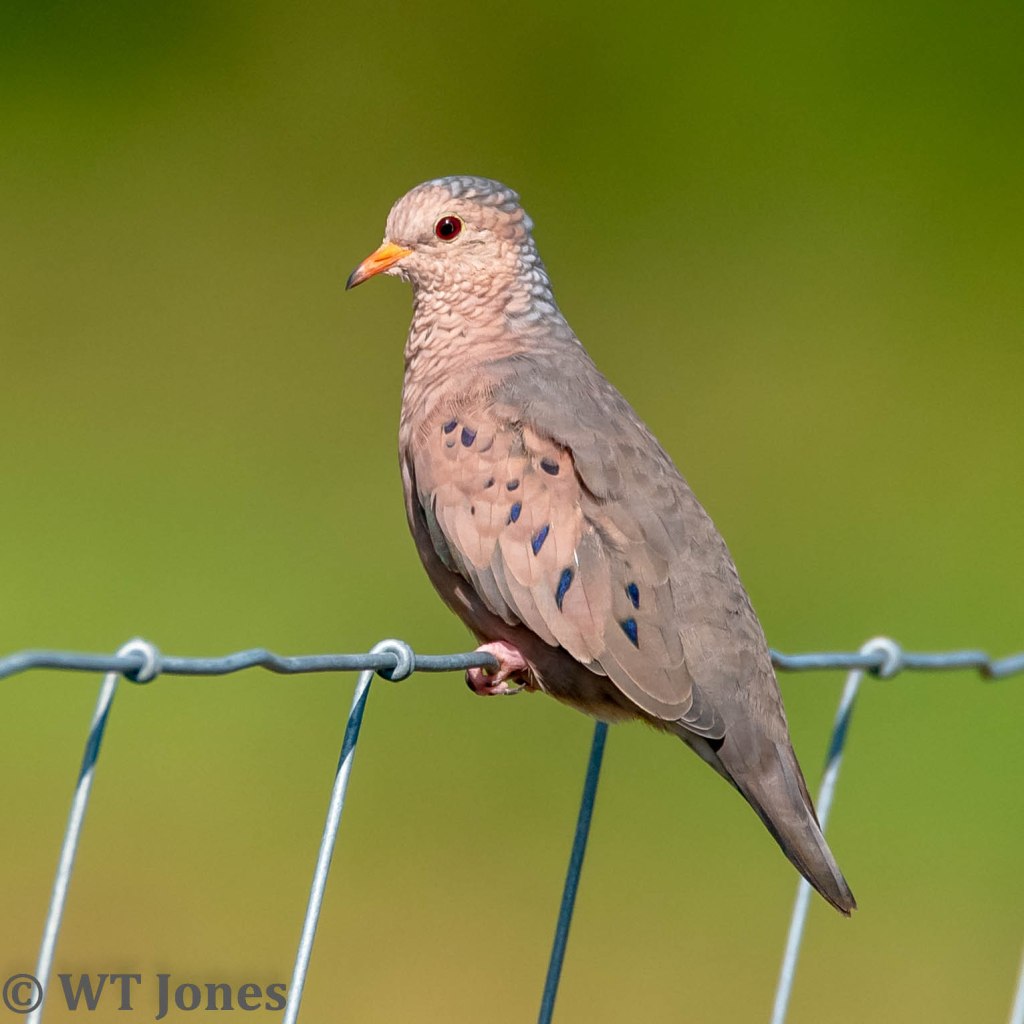
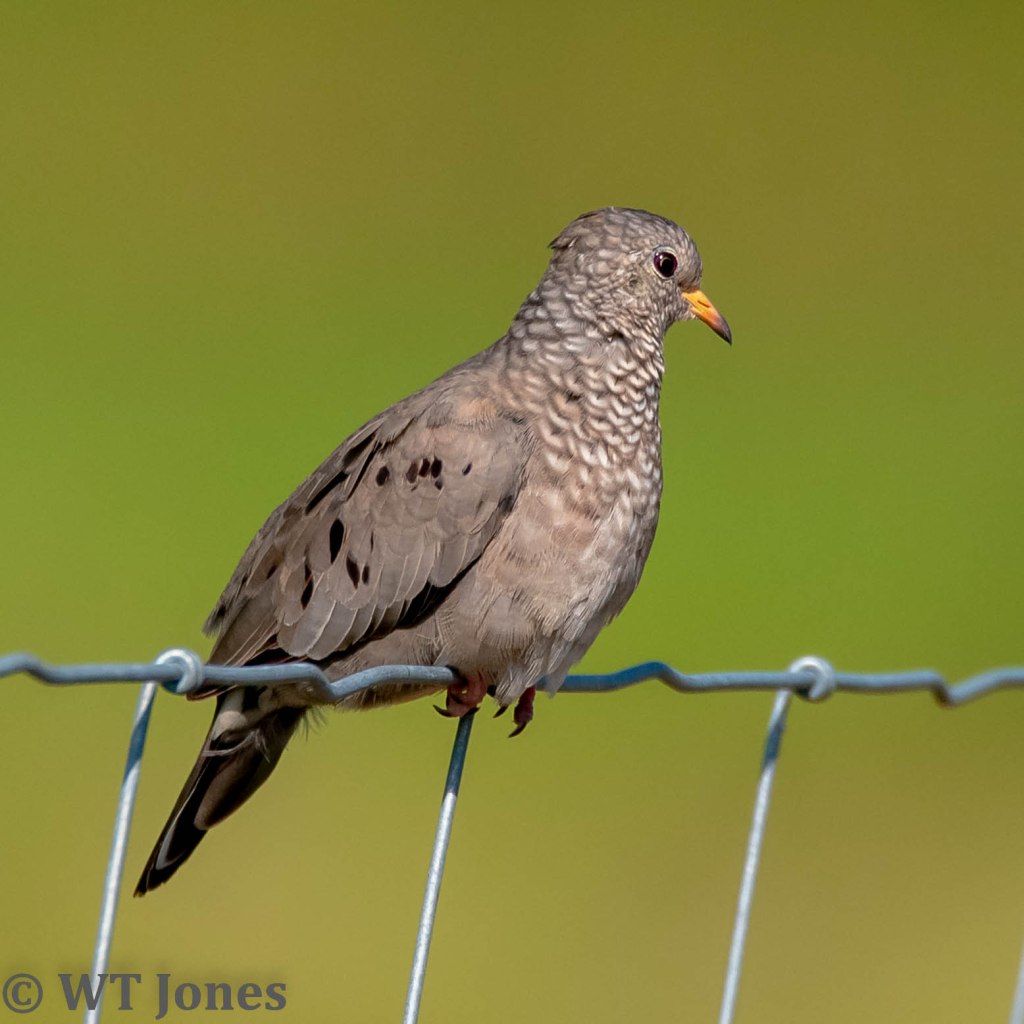
Male Common Ground Dove have a bluish crown that the female lacks. These small dove are, well, common in our area.
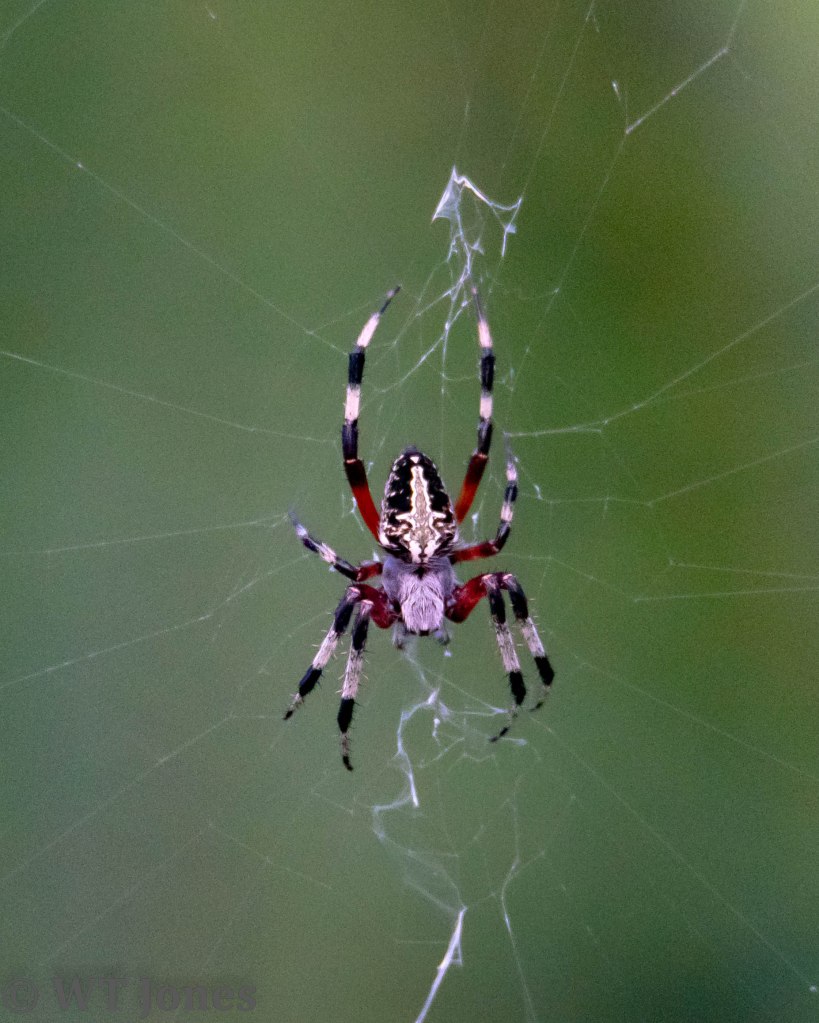
This has been the year of the Red-femured Spotted Orbweaver (Neoscona domiciliorum). I don’t know if it’s because they’re more abundant this year or if we just happened to have been in the right spots at the right time.
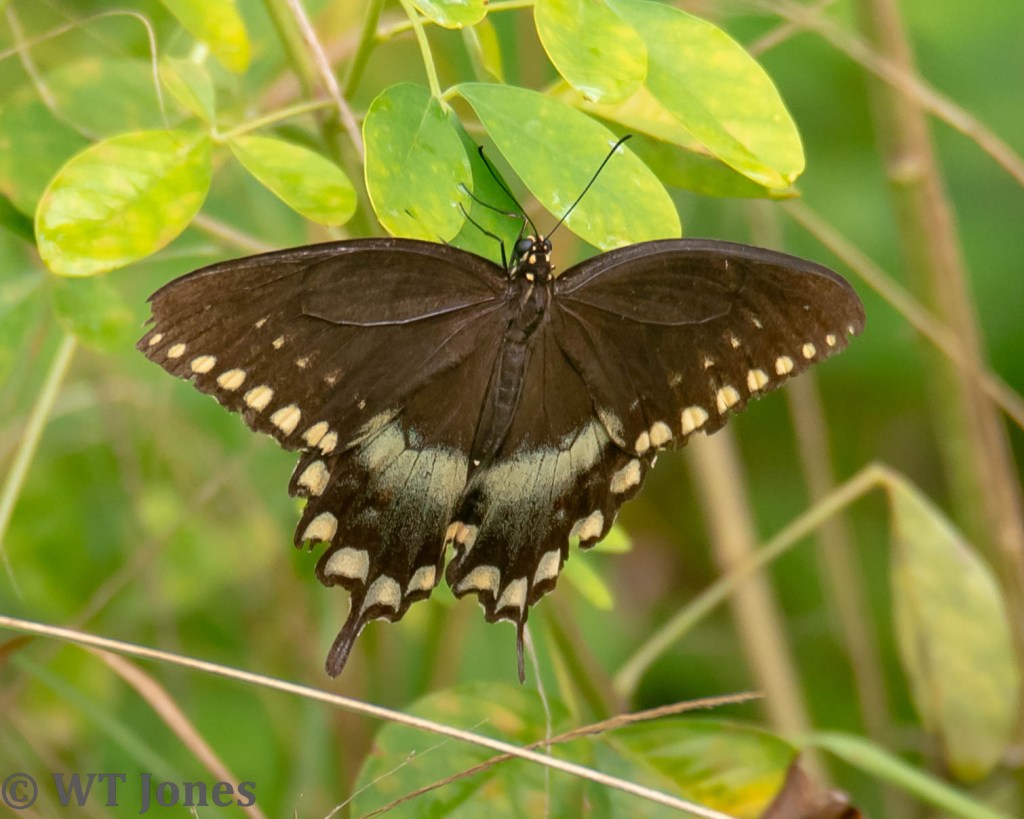
Just when we think we won’t see many butterflies as the year progresses, dozens of the critters are fluttering all over the place! This Spicebush Swallowtail (Pterourus troilus) was one of many this morning.
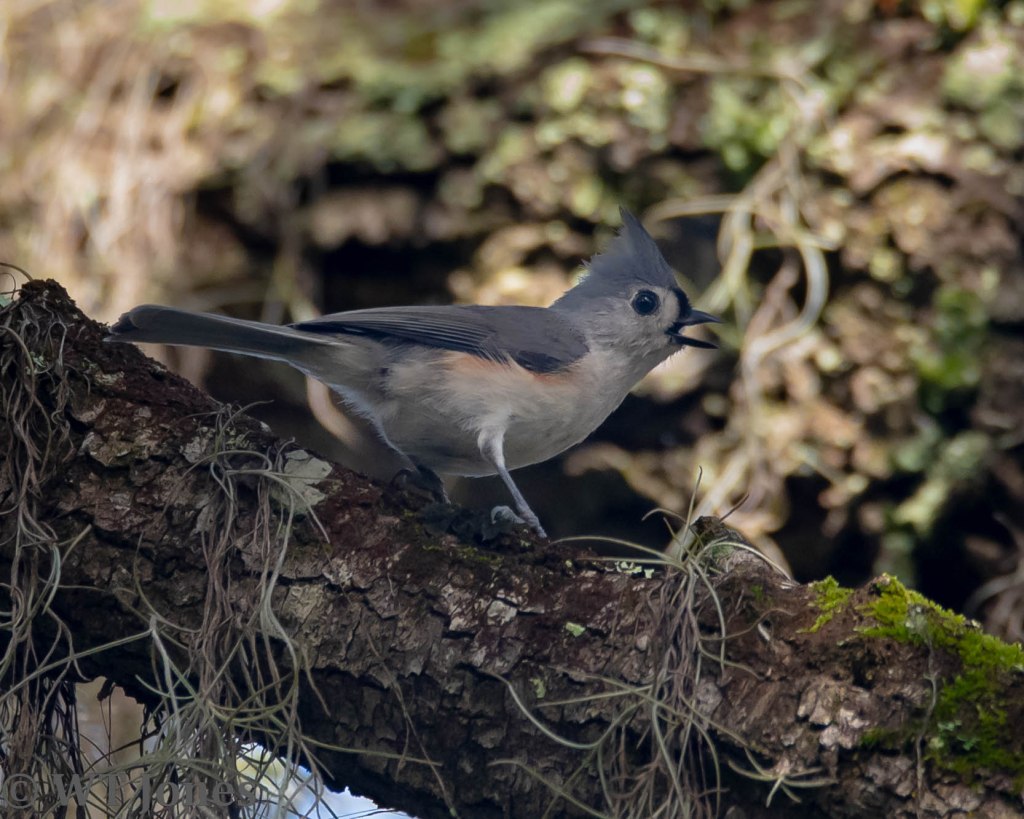
Migratory gang leader. Small songbirds tend to flock together as they migrate each year which may be a strategy for protection from predators. The Tufted Titmouse is typically the first to show up and yell at us as the other gang members flutter around, join in the yelling and eventually flee to the upper canopy.
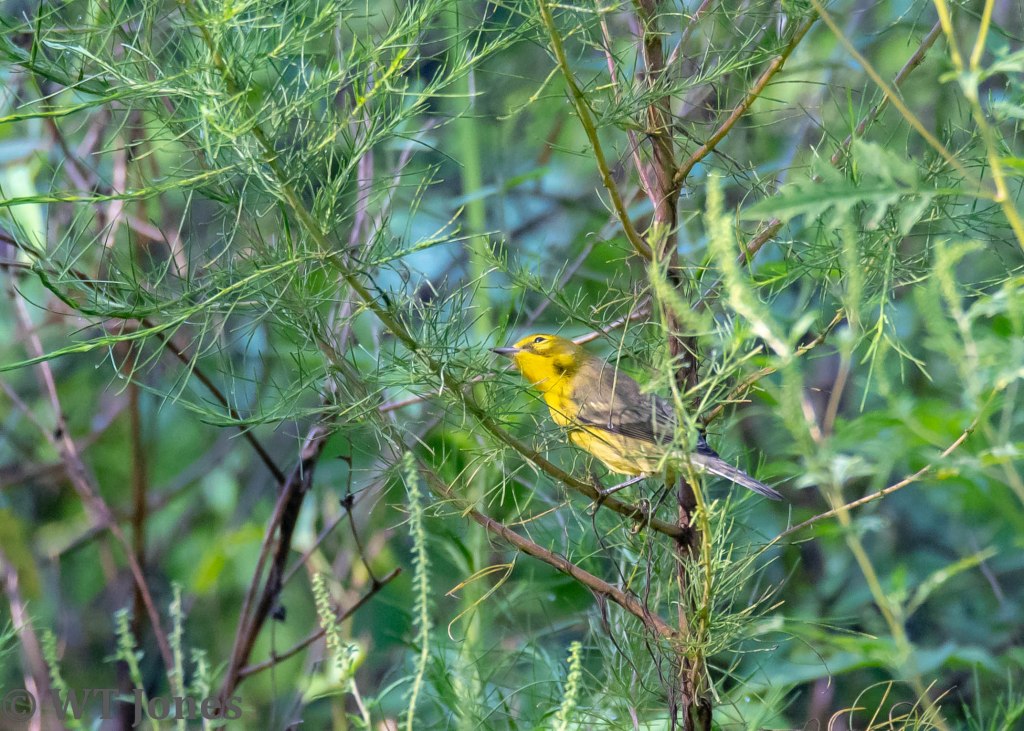
Flashes of yellow usually mean some sort of warbler is nearby. This Prairie Warbler casts an upward glance and for good reason. (See the next image.)
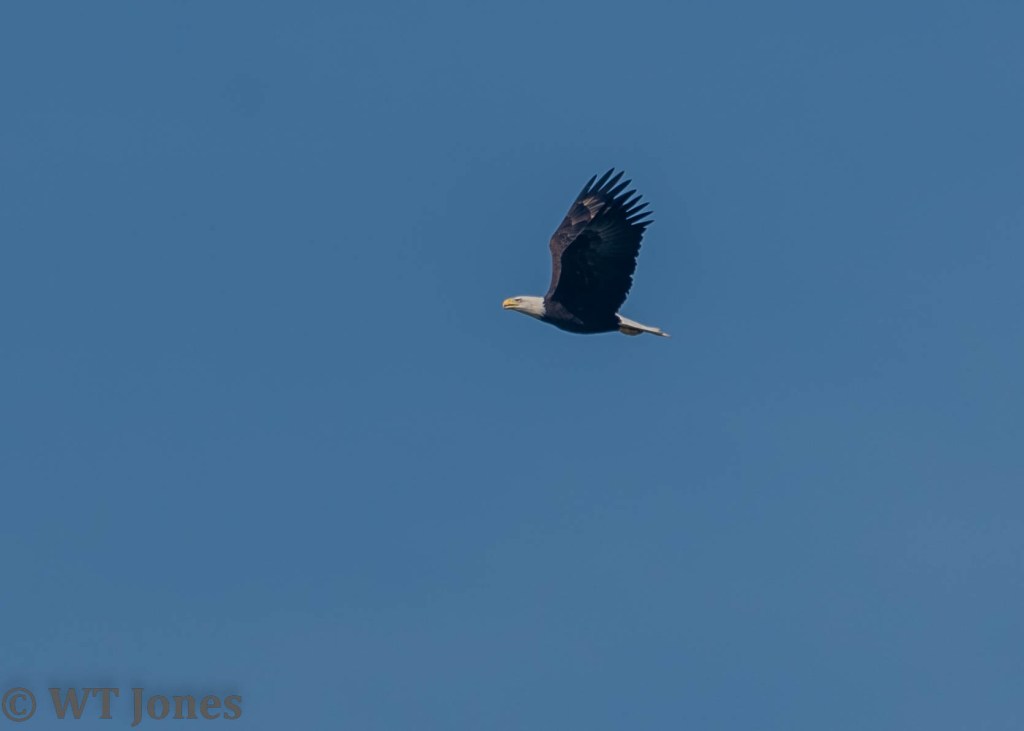
Although small warblers are not usually on the menu, a Bald Eagle should not be ignored as a threat if you’re a Prairie Warbler!
One of the few moths to be out and about in the daytime, an Ornate Bella Moth (Utetheisa ornatrix) has a terrific mix of color and pattern.

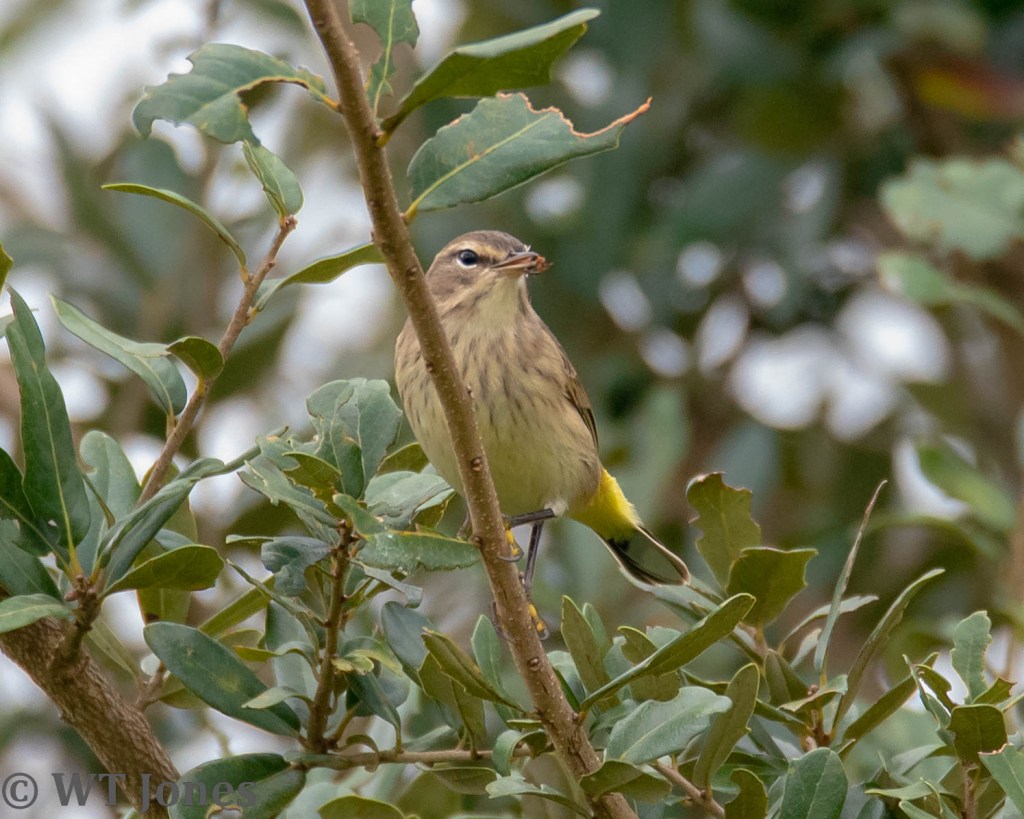
Now that fall has fell, Palm Warblers are part of the landscape. They can be easily identified even at a distance by their habit of constantly pumping their tails up and down.
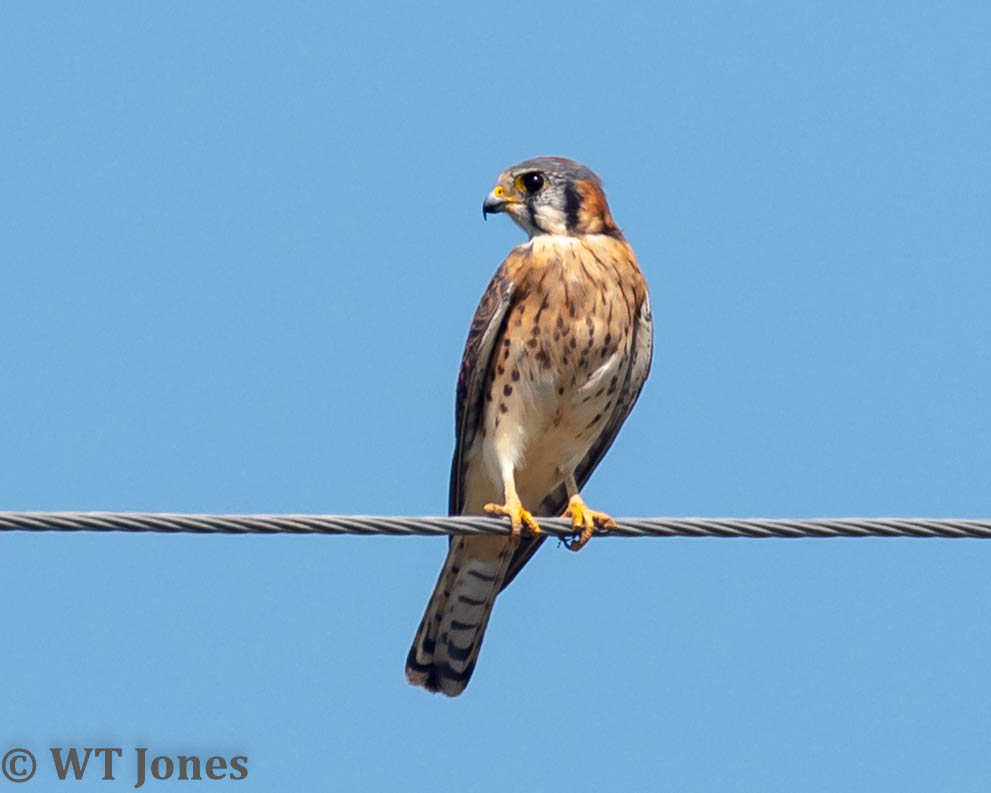
We will soon see an influx of American Kestrels as northern birds head south. A few will remain here all winter. This bird is likely a Florida sub-species as it was in a field where we observed a breeding pair produce two new falcons over the summer.
We love our swamps and seashores. Some may forget that Florida has an abundance of open fields and fantastic forests to explore. As long as we continue to have fun, we shall continue to visit them all!
Enjoy your search for a natural place and come back for a visit!
Header Image: White-tailed Deer
“What a really nice morning!” This was the second time Gini had made that statement since we left the state park. As we pulled into the Bar-B-Que restaurant, she observed that we always seem to say that no matter where we have been. She is right.
This particular morning had not been particularly unusual. We saw a few birds, a few insects, enjoyed nice scenery and we talked about the kids, the coming week, ate some fruit while small birds chipped around us. A “normal” day. We again marveled at how blessed we are to have bits of nature so close at hand for us to explore. It makes us happy.
I started thinking, what is it about these trips that make us “happy“? Analyzing the ingredients resulted in an epiphany. Turns out, it isn’t the things we see or the places we go which make us “happy“. It is – us.
We are content staying at home, visiting a park, driving across the country, dining out, being with our children and grandchildren. Weird but true. We actually like each other’s company! There it is – the secret formula which makes us “happy“. That guy Frank sung that love and marriage go together like a horse and carriage. Turns out he was right.
Happiness can be enhanced. Here’s some of the things we saw this morning which didn’t hurt our happiness quotient at all.
Running head-first down a tree trunk, a small Black-and-White Warbler gives the impression of a nuthatch.

Dragonflies today were skittish and didn’t offer many opportunities for photographs. This Red Saddlebags (Tramea onusta) perched for a moment then took off for parts unknown.

As fall migration proceeds, we will see fewer of many small species of songbirds such as the Blue-gray Gnatcatcher.

It’s always surprising how many species of insects visit the small and extremely common Beggarticks, or Romerillo (Bidens alba). The little flower doesn’t seem like it would offer much in the way of nectar, but visitors like this Dorantes Longtail (Urbanus dorantes) prove that it must.

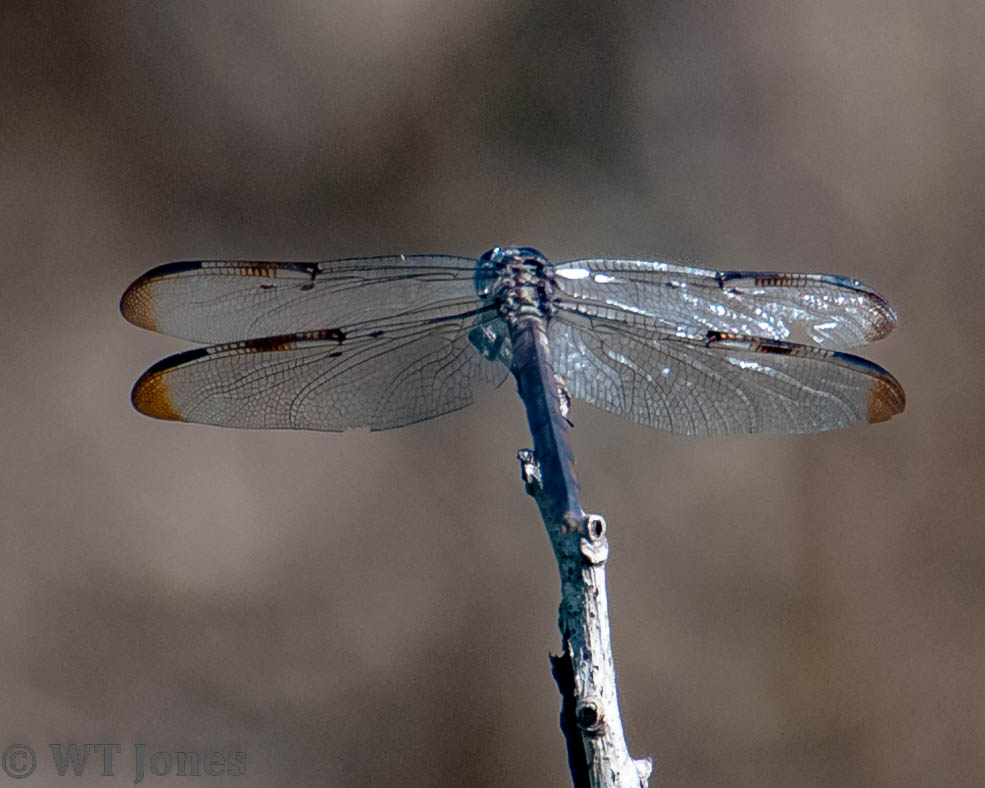
A unique wing pattern helps identify this fairly large dragonfly as a Bar-winged Skimmer (Libellula axilena).
Florida has five species of “black” swallowtail butterflies. This is an Eastern Black Swallowtail (Papilio polyxenes) showing once again the Beggarticks flower has tasty nectar. Photobombed! The first image has a small Crab Spider (Thomisidae spp.) hiding under the flower. The second image shows a beetle, possibly one of the Leaf beetles (Polyphaga spp.).


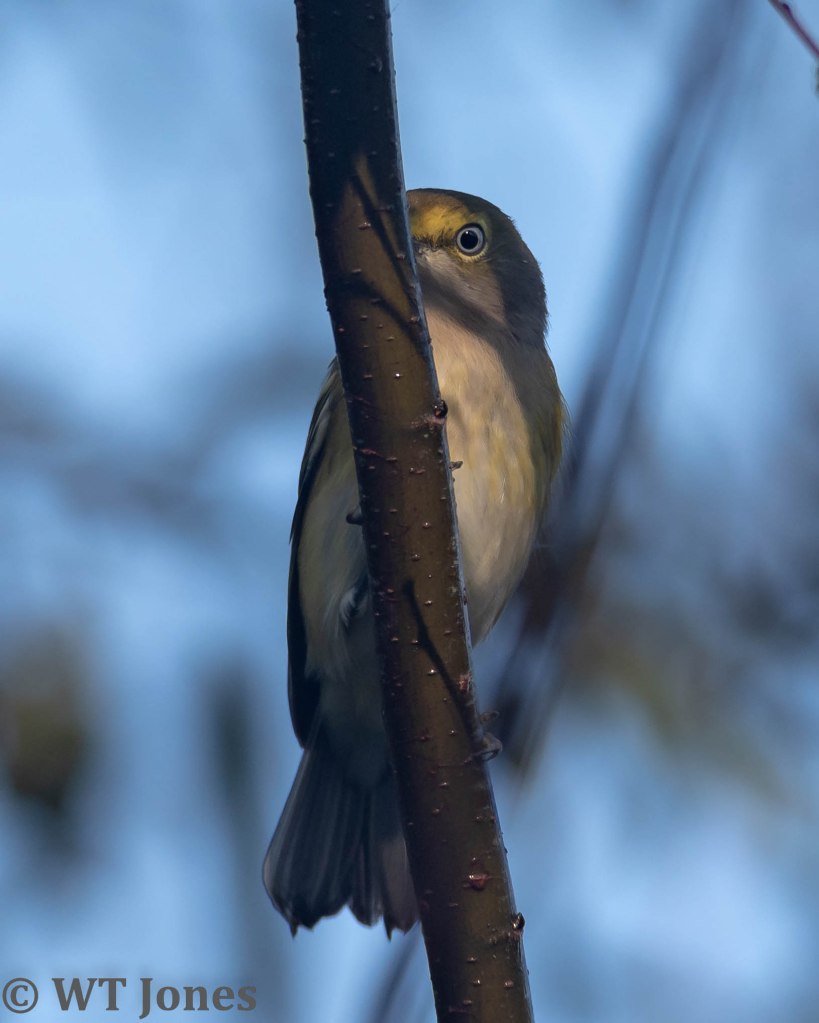
The eyes have it. And the White-eyed Vireo has some special eyes!

When one thinks “wasp” the word “sting” often comes to mind. In this case, “handsome” might apply. A Gold-marked Thread-waisted Wasp (Eremnophila aureonotata) visits a Spotted Beebalm (Monarda punctata) and gets dusted with a bit of pollen.

By now, this flower should be familiar. Another visitor, a Fiery Skipper (Hylephila phyleus), loves the flavor of that Beggarticks bloom.

While admiring a group of tall, gangly yellow blooms, Gini said, “that flower looks weird, like it has a sort of shadow on it”. She insisted I hike around and look at the back of the blossom. She is so smart. A Green Lynx Spider (Peucetia viridans) on a Florida False Sunflower (Phoebanthus grandiflorus) had captured a bee for brunch. This particular plant is a member of the Aster family and is endemic to Florida.

We really did have a nice morning. My post-trip analysis of why we seem happy no matter our situation was informative. Although, I’m pretty sure the smart one of the partnership has known it all along.
“If it is your nature
to be happy
you will swim away along the soft trails
for hours, your imagination
alighting everywhere.”
From Morning Poem, by Mary Oliver
Enjoy your search for a natural place and come back for a visit!
Header Image: Spotted Beebalm (Monarda punctata)
Early morning sunshine illuminated the forest’s shadowy places and dried the dampness left by last night’s dew. Insects roused from their torpor to start their daily routine of survival. Just above the bugs on the food chain, hungry birds also began their daily routine of survival. Slightly next in line on that food chain thing, a couple of humans raised binoculars in unison to watch the rufous bundle of feathers we call a Carolina Wren probe leaves, twigs and limbs for a bit of sustenance.
We are in awe of nature. (Does it show?) As we are privileged to observe our world’s diverse life forms during our explorations, it occurs to us how incredibly balanced things can be when left unmolested.
Most of us have been informed at different stages of life that “balance” is imperative. We must eat a “balanced” meal or bad things will happen to our health. (Gini and I are of an age where we remember being admonished that failing to clean our plates would somehow result in all the children in China starving.) Parents have been instructed to ensure their kids receive a “balanced” education. Everyone knows the importance of maintaining a “balanced” bank account. As adults, we enter the work force and employers advise us to be attuned to our “work and home balance”. We sign papers assuring the boss we know what that means.
To actually gain insight into the definition of “balance”, we need look no further than just beyond the walls of our cave. Watch the interaction of hunter and prey, the response of plants to water and light, the rising and falling of tides, the timing of insect proliferation and bird migration, the reliable changing of seasons. All of it is by design to maintain “balance”.
This trip was sort of an example of “balance”. It seems we saw nearly equal amounts of birds, blooms and bugs. Very satisfying indeed.
(A note. Apparently, we are simply making too many trips and enjoying ourselves way too much. This has caused our blogging efforts – not to mention many of our other responsibilities – to have been ignored lately. The trip described in this posting actually took place during the first week of September. We shall strive to catch up. Holding your breath is not advised at this time.)
A Carolina Wren seems to have found a cocoon of some sort to its liking. Must be like removing the wrapper from a sumptuous candy bar. (Or maybe it prefers wrapper and all?)

Who knew there were so many ‘hoppers? We parked on the side of the road for a minute and the hood became an instant photo studio (again). A new species for us! The Southern Green-Striped Grasshopper (Chortophaga viridifasciata) is mighty handsome and looks like he means business!

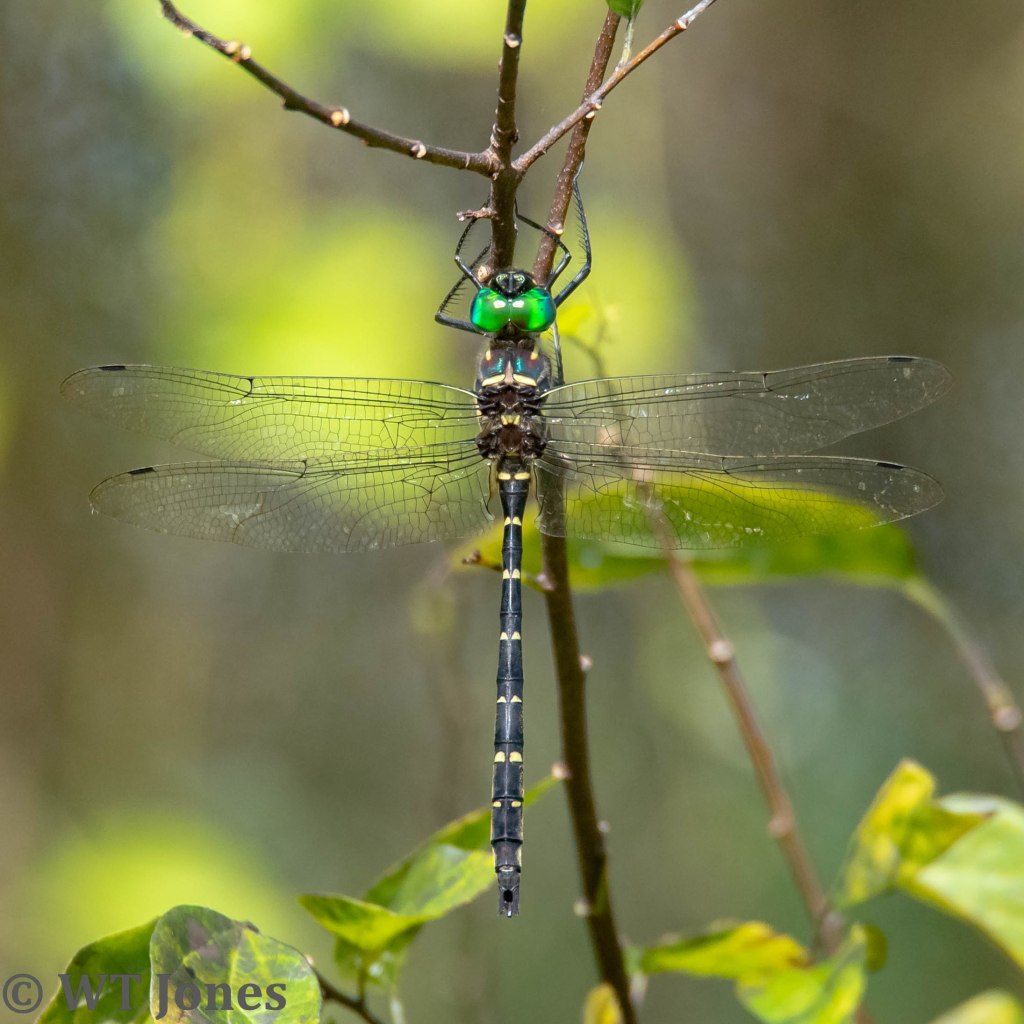
Gini with the laser-sharp eyesight spotted a big dragon zipping overhead and pointed to where it landed. A superb Royal River Cruiser (Macromia taeniolata)!

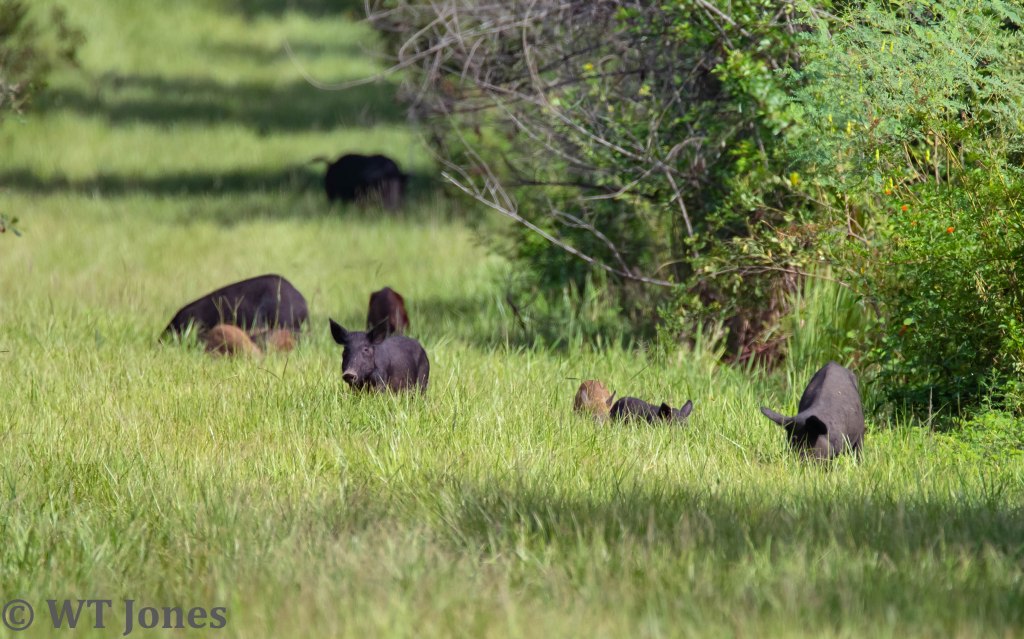
Florida’ s wild hogs all come from stock introduced by Spanish explorers over 500 years ago. These swine can grow to over six feet (1.8 meter) and reach 150 pounds (68 kilograms)! Typically, they travel in family groups called “sounders” consisting of multiple generations.
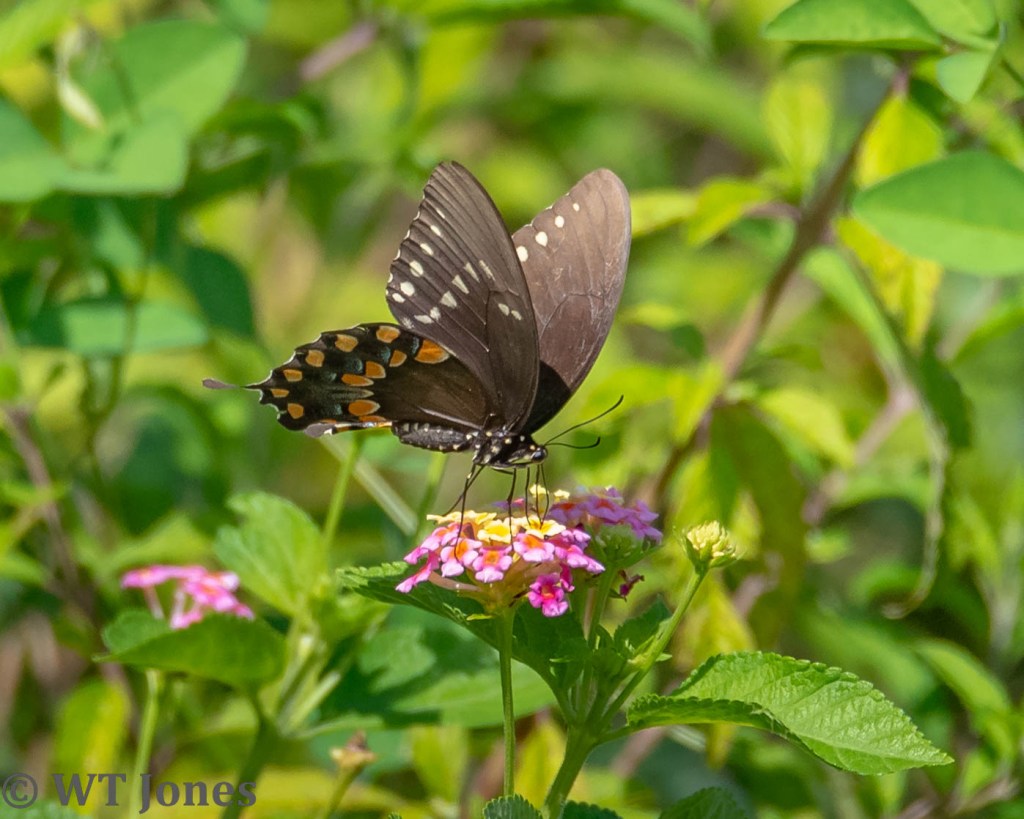
The most abundant butterfly of the day was definitely the Spicebush Swallowtail (Pterourus troilus). Butterflies will frequently gather at a spot of sand and rock to absorb salts and minerals. This process is called “puddling”, as the area of leached nutrients is often moist.

Our movements were of interest to a pair of young Eastern Bluebirds. Mom and Dad showed up to shoosh them away from the unsavory looking hunters. Well, one of them was pretty savory looking, actually.

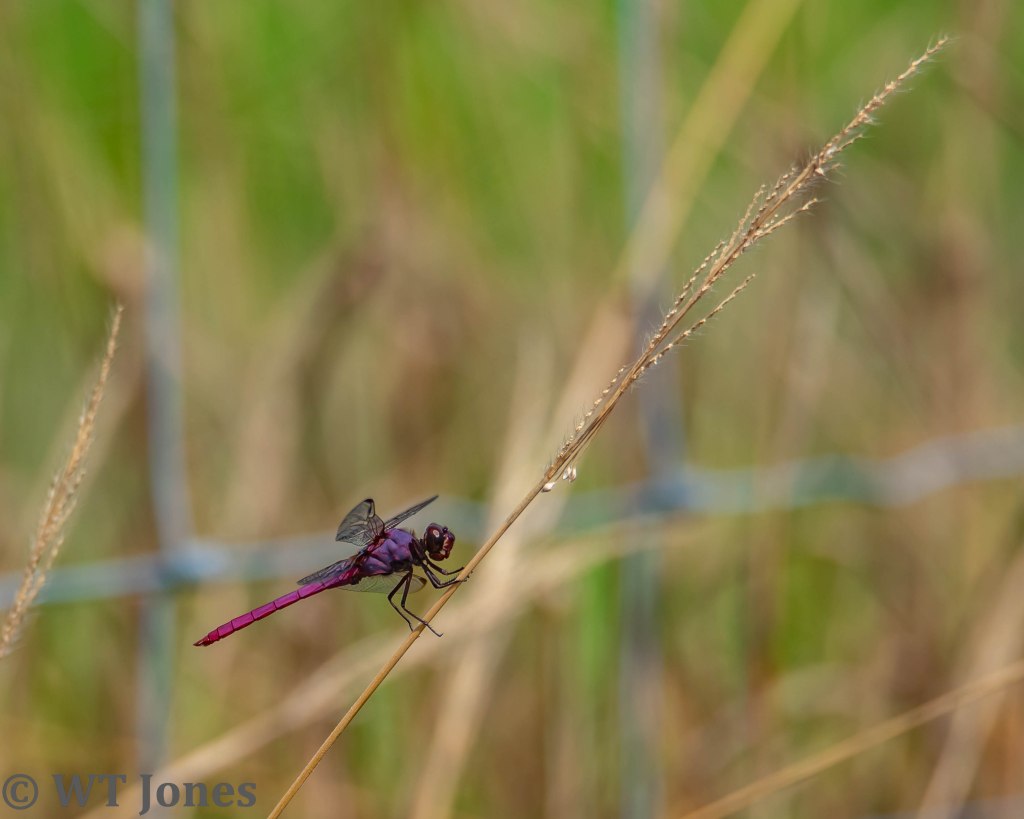
Many species of dragonflies are sexually dimorphic. The difference between female and male Roseate Skimmer (Orthemis ferruginea) is pretty startling!

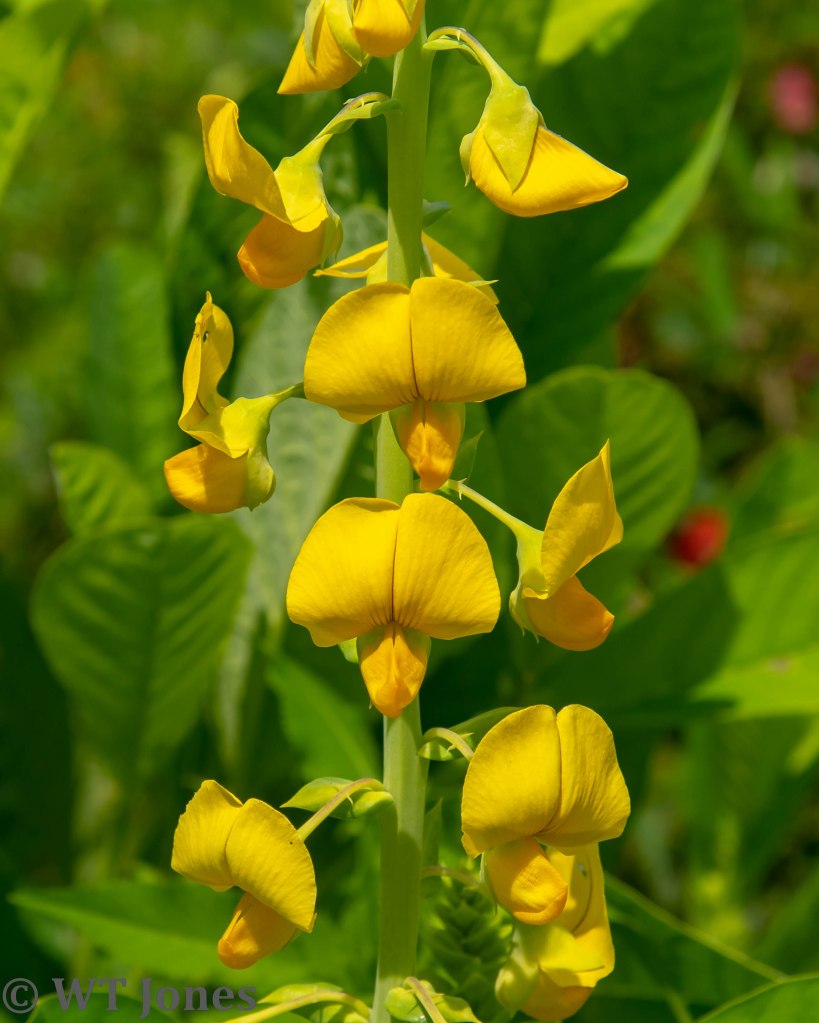
Pretty but deadly. Showy Rattlebox (Crotalaria spectabilis) has wonderful yellow blooms that brighten the outdoors. This particular species of Crotalaria was introduced from Africa and Asia to take advantage of the nitrogen-fixing nature of the root system. Unfortunately, all parts of this plant proved toxic to livestock, especially horses. Fortunately, most animals avoid it unless they are really hungry.
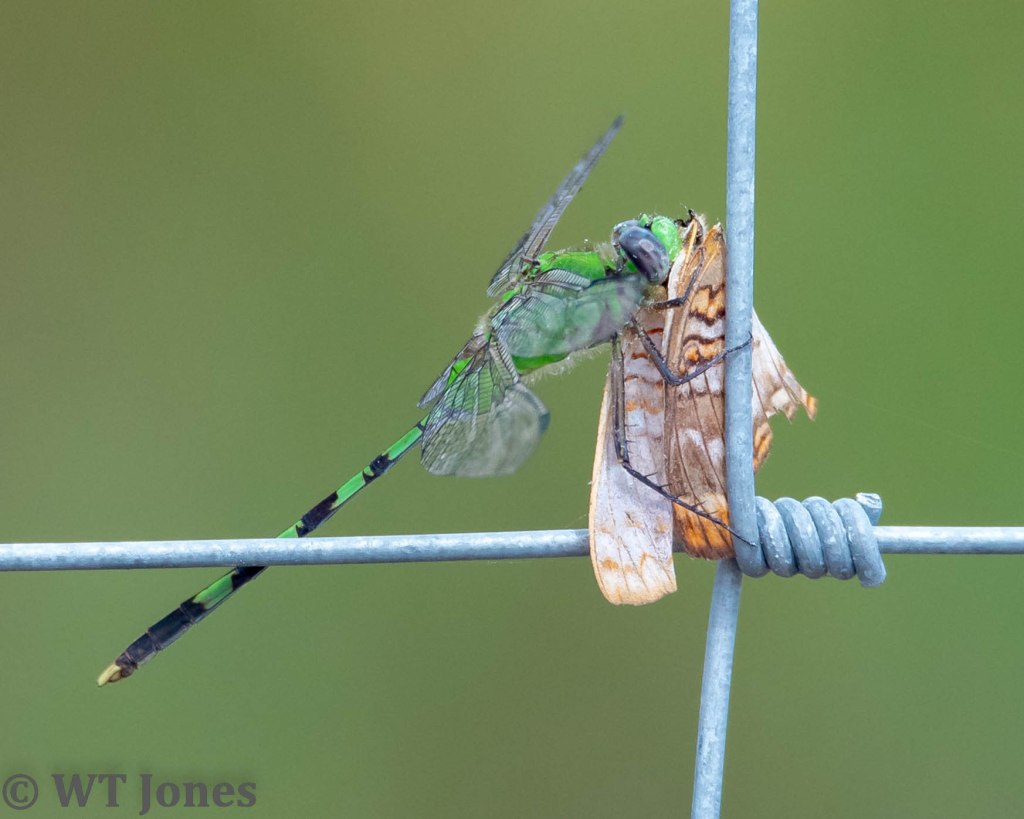
Its appearance is similar to the female Eastern Pondhawk (Erythemis simplicicollis), but the Great Pondhawk (Erythemis vesiculosa) is a bit larger, slimmer and both sexes are green. We have not seen very many of these dragons as opposed to the huge abundance of the Eastern Pondhawk. This individual is enjoying a healthy meal of White Peacock (Anartia jatrophae). Mmmm, butterfly, it’s what’s for dinner.
Gopher Tortoise (Gopherus polyphemus). Ancient in appearance and fascinating to observe. These wonderful animals dig burrows about six feet (1.8 meter) deep which can reach up to 15 feet (4.5 meters) in length or more. They spend about 80% of their time in these burrows and abandoned ones house an incredible diversity of creatures.

For water birds such as a Snowy Egret, preening is vital to maintain healthy and beautiful feathers.

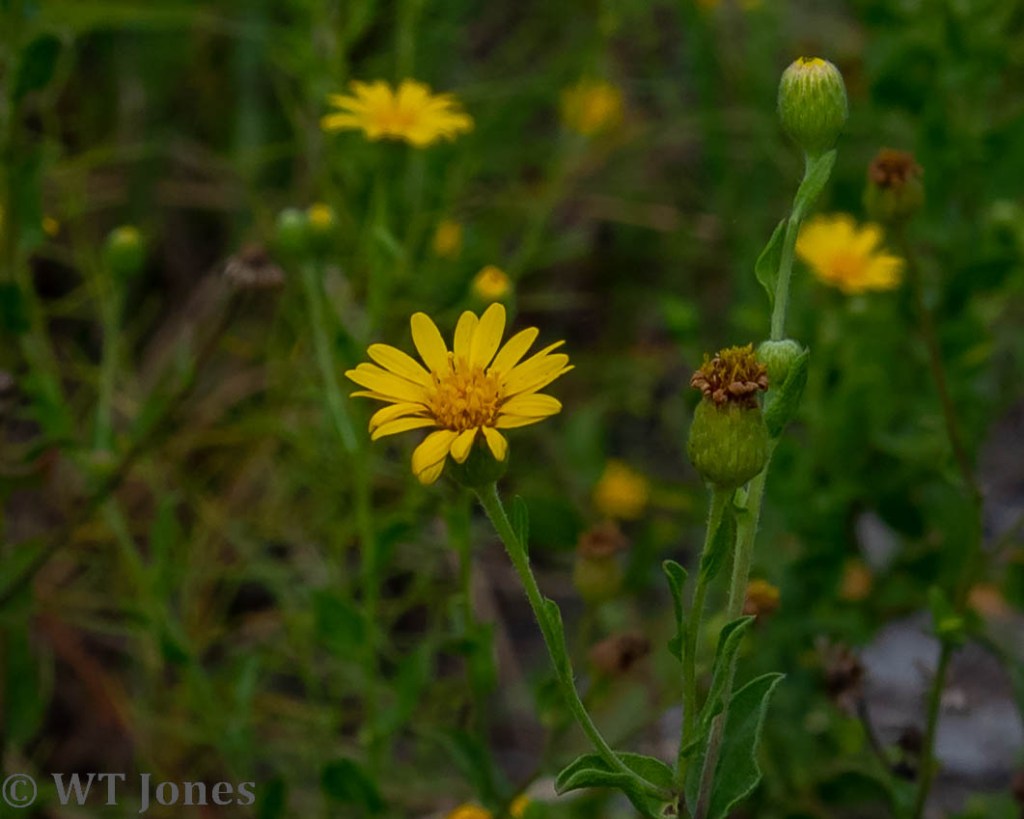
Camphorweed (Heterotheca subaxillaris) gets its common name from the aroma resulting from crushing the leaves. It’s a common plant across much of the United States and the bright yellow blooms attract a large variety of pollinators.

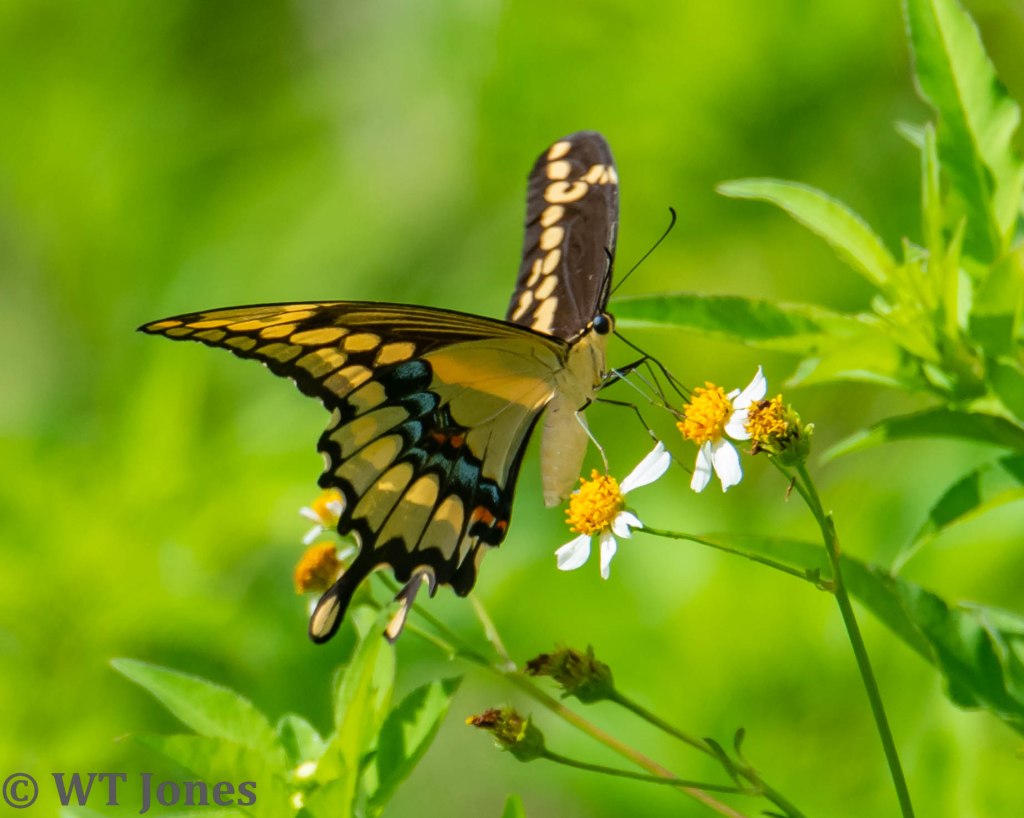
The largest butterfly in North America, the Giant Swallowtail (Heraclides cresphontes), has a wingspan which can reach almost 7 inches (18 cm). Both males and females are mostly dark above with yellow markings and mostly yellow underneath with dark markings. Impressive sight!
At the other end of the size spectrum for its species is the tiny Eastern Amberwing (Perithemis tenera) stretching the tape to about 0.8 inch (20 mm) in length. This one is a male which has very little marking on its golden wings. As a defense mechanism, this dragon dangles its feet as it flies in order to resemble a distasteful wasp to would-be predators. The small friend sharing a leaf with our dragon is a species of Longlegged Fly (Family Dolichopodidae).

Although fairly common, the Barred Yellow (Eurema daira) has a habit of staying down in the weeds and is easily overlooked. This species can be highly variable in coloration and during the winter months many can become quite dark, almost brick-red in appearance.

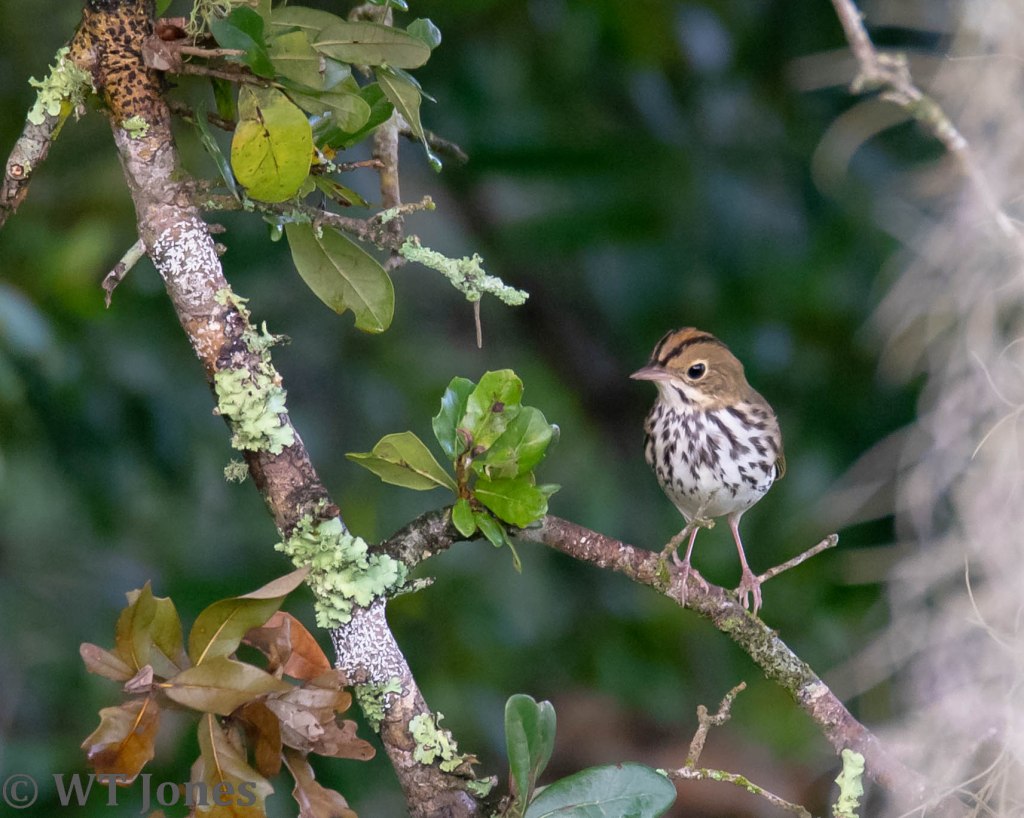
Foraging on the forest floor, scratching among the leaves and sporting a spotted/streaky breast, it is easy to see why many don’t immediately think of “warbler” when they see an Ovenbird. Its bright and loud song helps place it in that family.
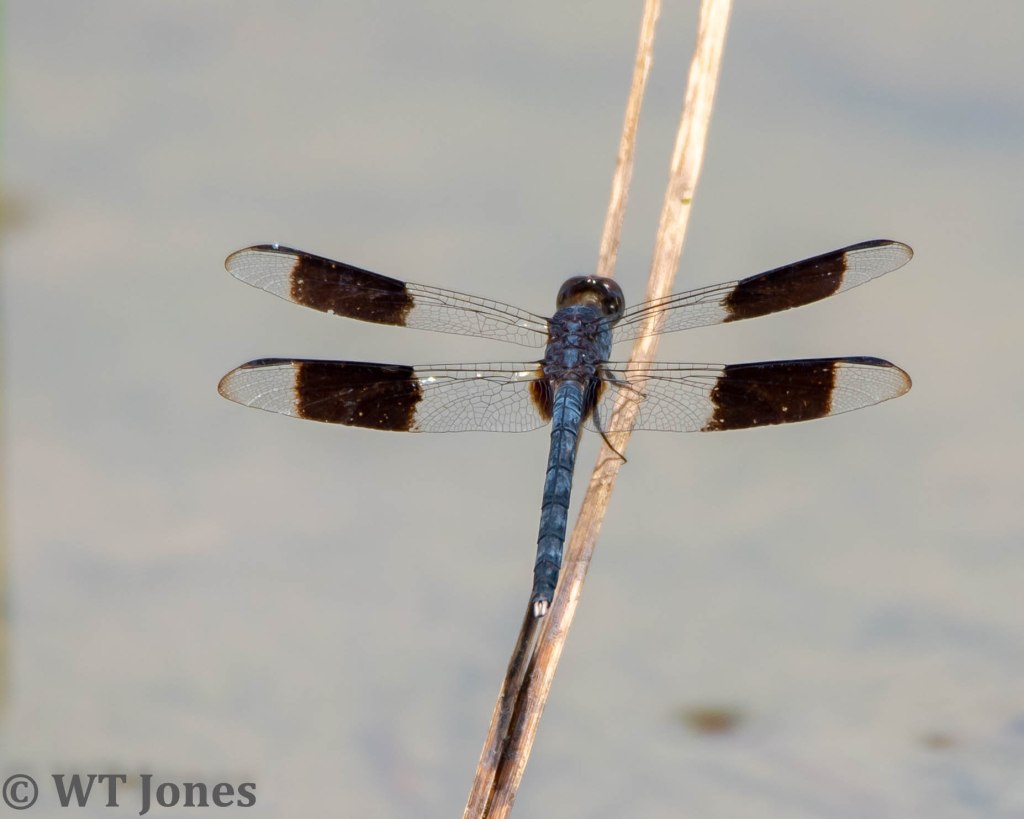
Our birding patch has a large open field with tall grass and is bordered by hardwood trees. Summer rains keep parts of the field in standing water offering the perfect habitat for the striking Band-winged Dragonlet (Erythrodiplax umbrata).
We happened to see a male Eastern Pondhawk (Erythemis simplicicollis) ambush a grasshopper and drag it under a bush for brunch.

We came across a sizeable section of Spotted Beebalm (Monarda punctata). Also called Dotted Horsemint, this is a very showy plant and when in bloom attracts a really incredible variety of pollinators. Especially, well, bees. Beebalm. Attracts bees. Who’d a thunk it?


Gini and I have done our best over the years to maintain a balance in our lives. Perhaps nature has been our role model without us even knowing.
Enjoy your search for a natural place and come back for a visit!
Header Image: American Alligator
Pre-dawn gray slowly transformed into stunningly bright blue skies and a glance to the east risked temporary blindness as the sun announced its arrival. Every field was adorned with sparkling jewels of dew held in place by gossamer webs spun during the night. A few scrub oak and sand pine trees were scattered here and there among the weedy fields. As we turned onto the forest road, saw palmetto replaced the weeds and longleaf pines became the predominant tree.
Today we are in the Arbuckle Tract of the Lake Wales Ridge State Forest in west-central Florida. Ancient oceans once covered most of what is now the peninsula of Florida. A ridge along the center of the peninsula remained above water where many diverse life forms thrived as the waters slowly receded. Today, the area along this ridge is home to 33 plants and 36 animals which are on federal and state threatened or endangered lists. It is a wonderful place to explore!
This trip is even more special due to a guest adventurer. Our First Grandson came along for the ride. He is visiting from Philadelphia and spending time together was our actual goal. Mission accomplished.
The latter part of our sub-tropical wet season has seen a bit more rainfall than average and much of the area was quite soggy. The good news is all that water has produced an abundance of wildflowers! Most notably, bright yellow blooms of Partridge Pea lined every road and path. Beyond the edges of the trail, we saw bushes of American Beautyberry, loaded with ripe purple fruit. Northern Bobwhite murmured to each other as they skulked beneath palmetto fronds debating whether it was safe to scurry across the path. The echo of woodpeckers hammering on trees was present all morning. A group of a dozen young Wild Turkeys ran alongside the car as we headed out of the forest.
There were plenty of birds around, but most remained beyond the reach of the lens today. Damp red clay roads told the tale of who had passed during the night. White-tailed deer, raccoons, opossums, snakes, rodents, coyotes, bobcats, wild turkeys. Amazing.
Come. The forest beckons.
First Grandson spied a spider. An orb weaver. The web was about three feet in diameter. Turns out, he found a species new to us! Darned smarty pants kids. This beauty is a Florida Garden Spider (Argiope florida).

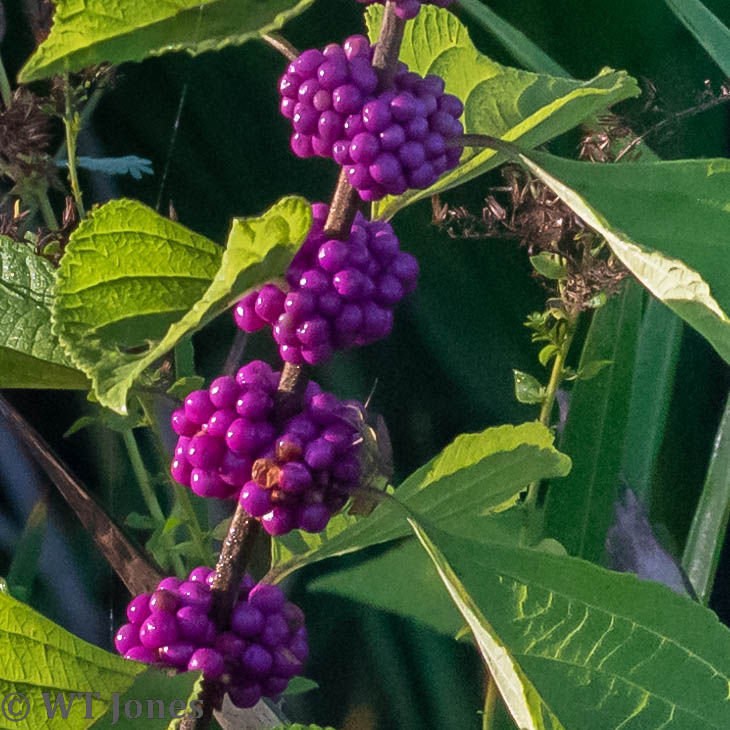
In some spots the bright green leaves and purple fruit of American Beautyberry (Callicarpa americana) seemed to be all around us. Indeed, the entire forest was punctuated by purple. The berries are edible and can be made into jelly and wine. Leaves can be crushed and rubbed on your skin for a mosquito and tick repellant. CAUTION!! TEST IN SMALL AMOUNTS FIRST TO BE SURE YOU DON’T HAVE AN ALLERGIC REACTION!
One of our favorite butterfly species is often difficult to find perched for more than a moment. This Zebra Swallowtail (Eurytides marcellus) was kind enough to hold still for a nice portrait.

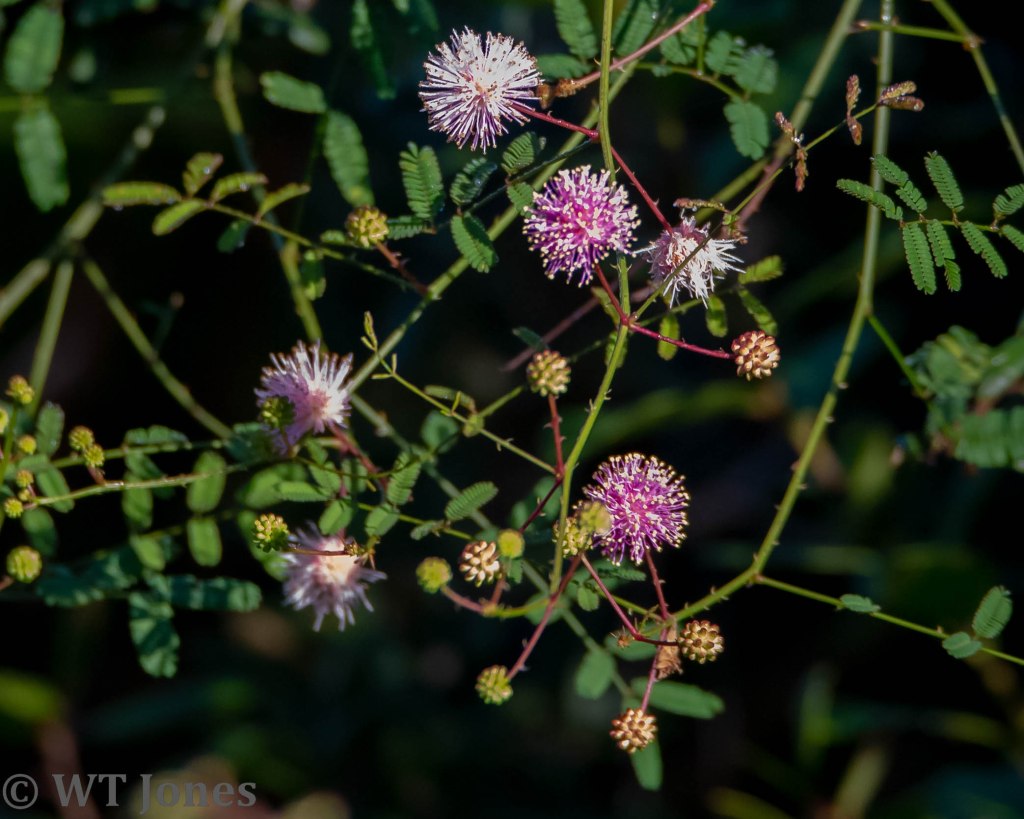
Feathery leaves and puffy pink flowers belie the thorny branches of Florida Sensitive Brier (Mimosa quadrivalvis) just waiting to leave their mark on unsuspecting arms and legs. The USDA calls this plant Florida Mimosa and there are a couple of closely related species. One of the diagnostic features of this variant is the uniquely recurved thorns. The “sensitive” part of the name is due to the leaves folding upward when touched (even by raindrops I discovered).
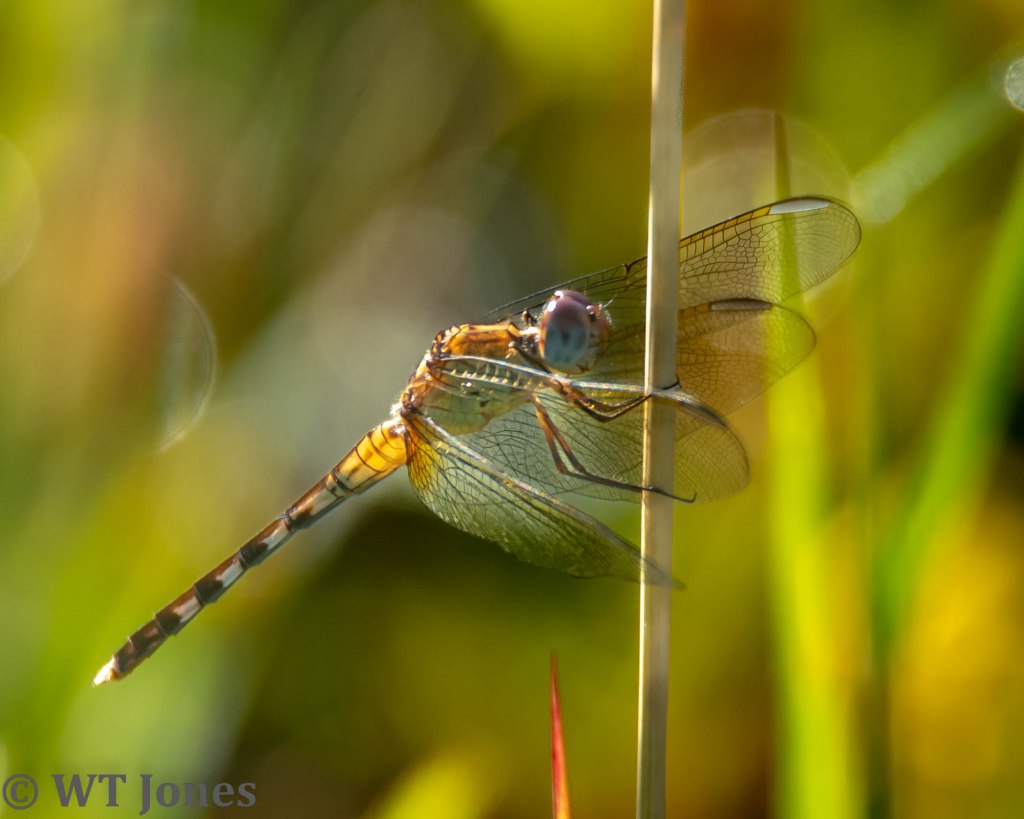
Brilliant morning sun enhances the golden abdomen and wings of a Little Blue Dragonlet (Erythrodiplax minuscula). This tiny (about an inch/25 mm long) dragon likes to stay low in the grass and can be hard to spot.
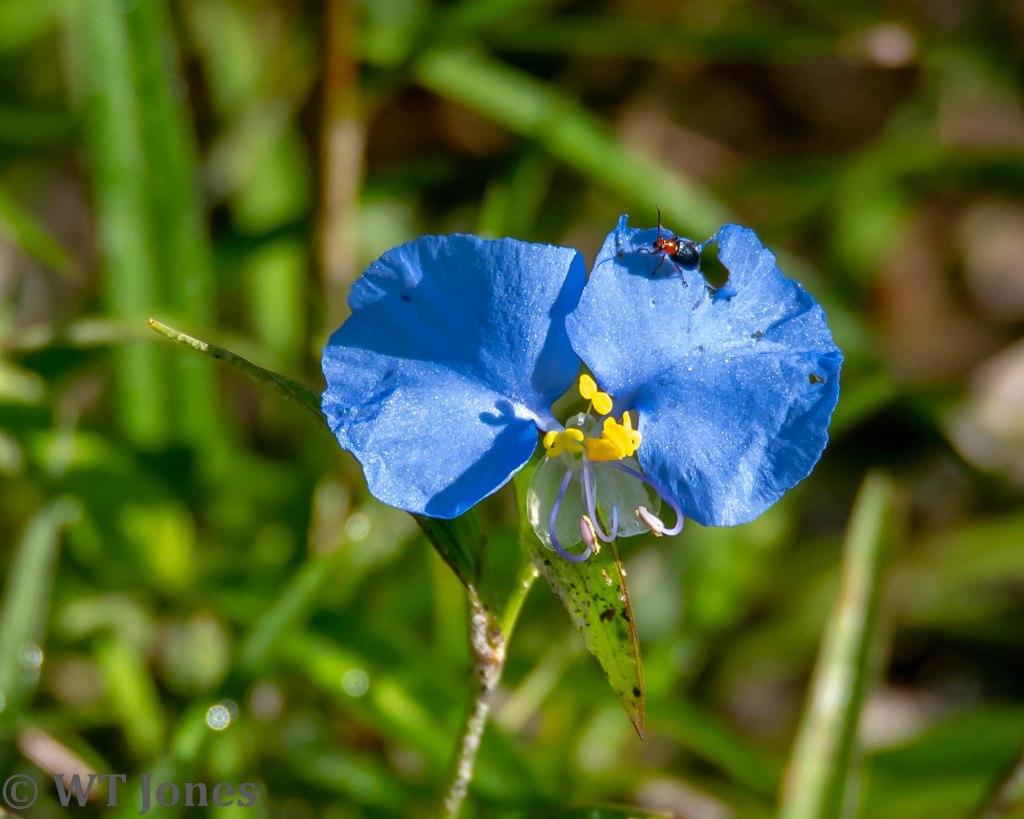
Blue blossoms to match the sky! True to its name, the Whitemouth Dayflower (Commelina erecta) will only bloom for a day. Fortunately, the plant produces a nice succession of blossoms, so the forest floor is dotted with fragments of sky throughout the season. Appearing in today’s photo is a species of Leaf Beetle (Oulema genus).
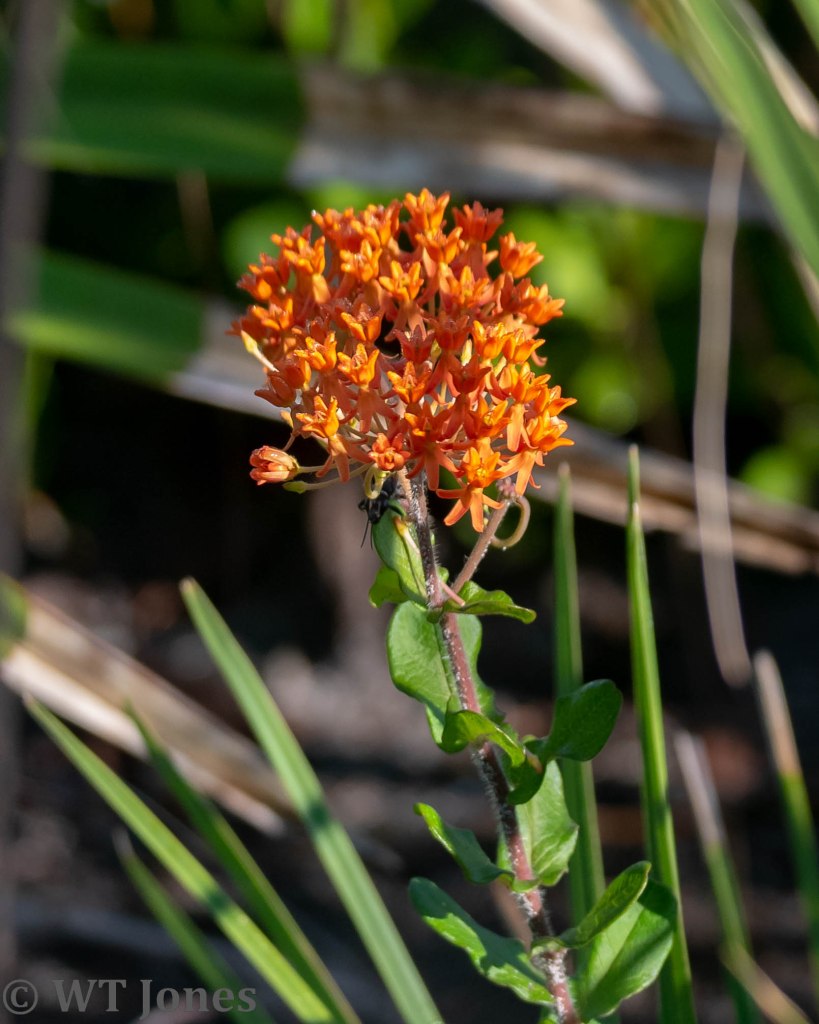
Mama Nature is nothing if not diverse. Mixing up the color scheme a bit, we ran across the beautiful orange Butterfly Milkweed (Asclepias tuberosa). As one would suspect, this is a favorite of many nectar lovers!
One of the more plentiful dragonflies of the day, a Carolina Saddlebags (Tramea carolina) steadfastly patrols a section of lake shoreline immediately chasing away any intruders.

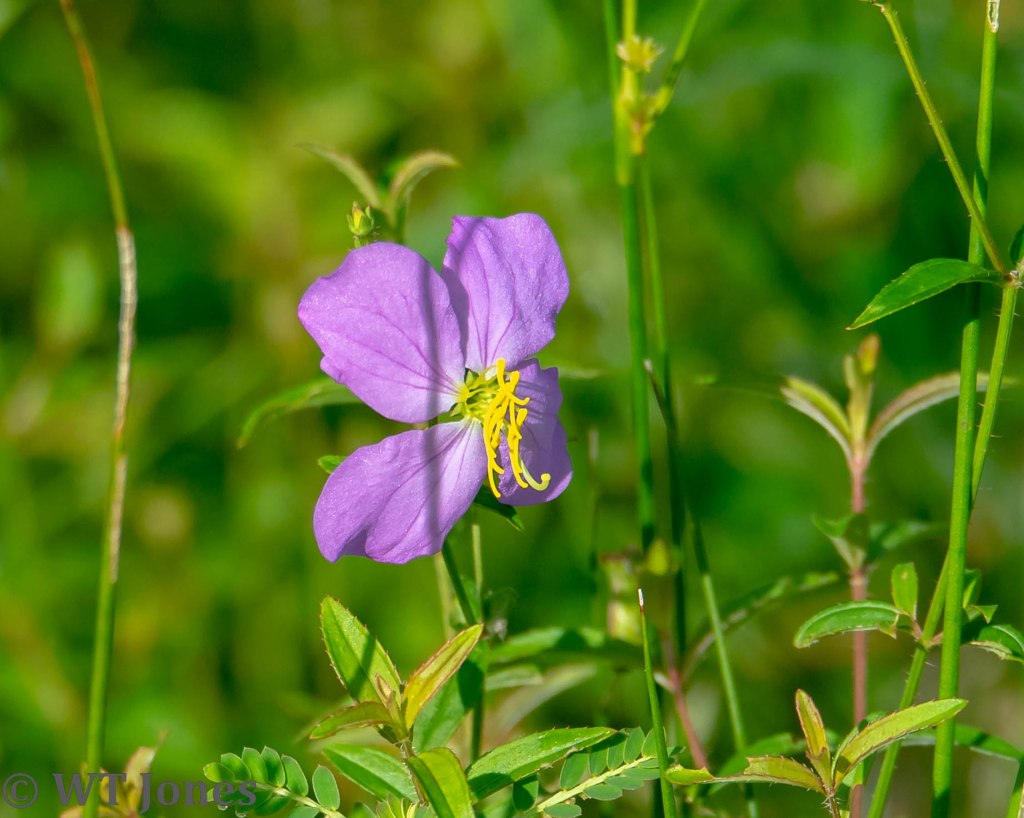
The color combination of lavender and yellow makes the Pale Meadowbeauty (Rhexia mariana) easy to identify. Uniquely curved shape of those yellow anthers adds even more interest to an already outstanding-looking flower.
A small lake in the middle of the forest attracts an astounding number of creatures of all sizes. One of the larger residents is the American Alligator. We estimated this one to be about eight feet (2.4 meters) in length. He/she was not shy and made a show of swimming quickly in our direction then checking to see if had run away yet. We retreated respectfully after a few photos.

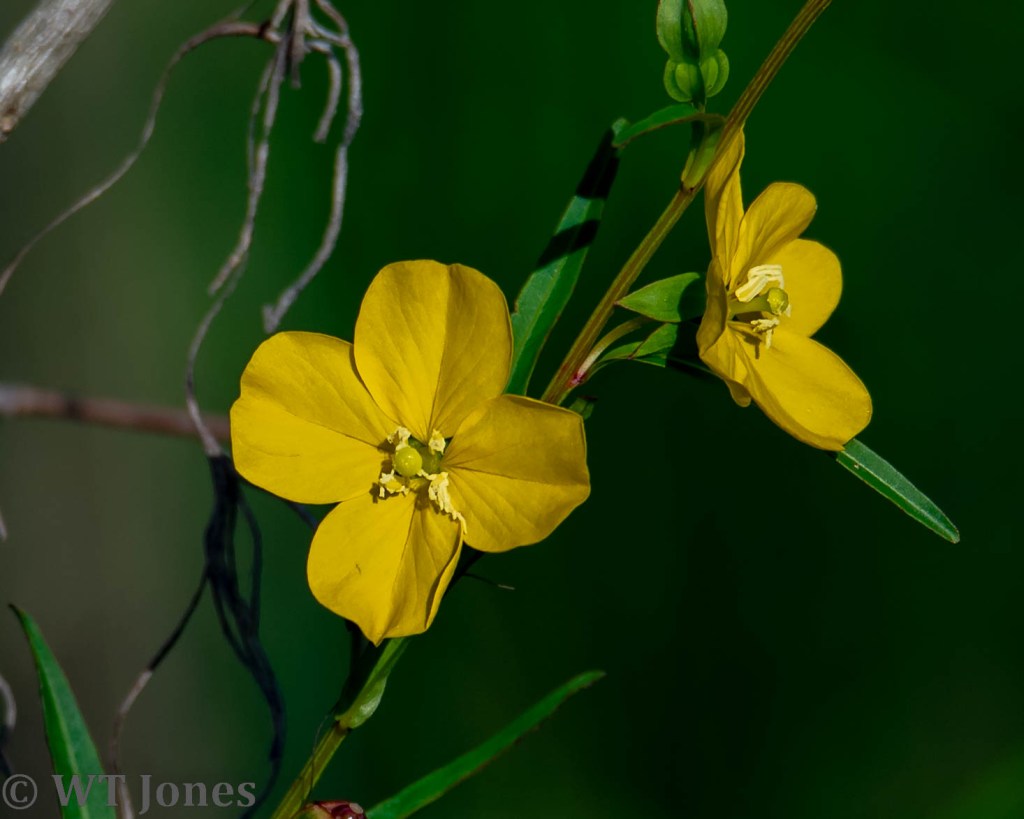
There are about 30 species of Ludwigia (Primrose-willow) in Florida. This can make identification a challenge. One of these species helps by having uniquely narrow leaves and is actually called Narrowleaf Primrose-Willow (Ludwigia linearis). Call it what you will, those yellow flowers are simply gorgeous!
Every few steps produced something wonderful to savor. Case in point: a Pipevine Swallowtail (Battus philenor) on Carolina Redroot (Lachnanthes caroliana).

Tall stems, small flowers. The Coastal Plain Yelloweyed Grass (Xyris ambigua) can reach three feet in height and the tiny three-petaled flowers normally only bloom in the morning.

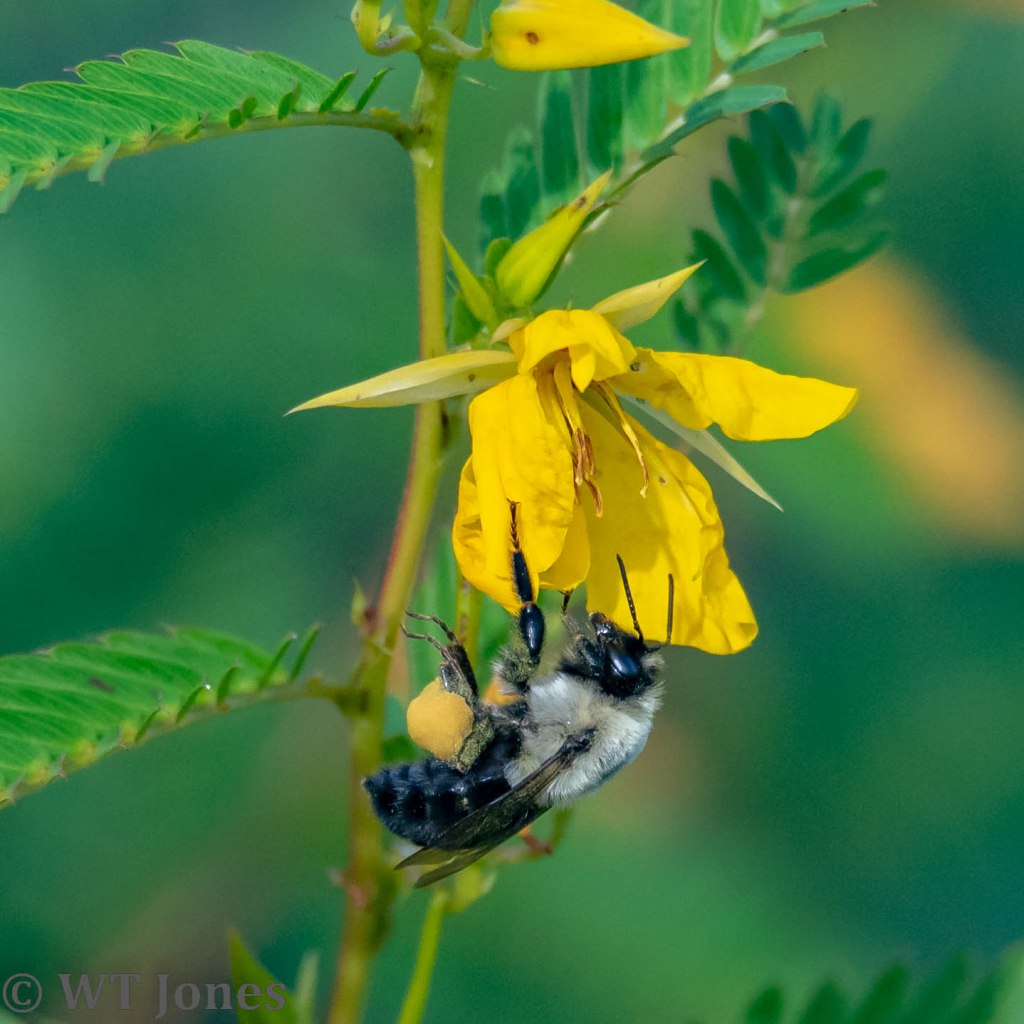
Common Eastern Bumble Bee (Bombus impatiens) on Partridge Pea (Chamaecrista fasciculata). Rivers of yellow lined many of the roads and paths throughout the forest as the Partridge Pea put on a show. These plants are hosts for several butterfly species, the blooms produce nectar for many insects and the ripened seeds are favorites of dove and quail.
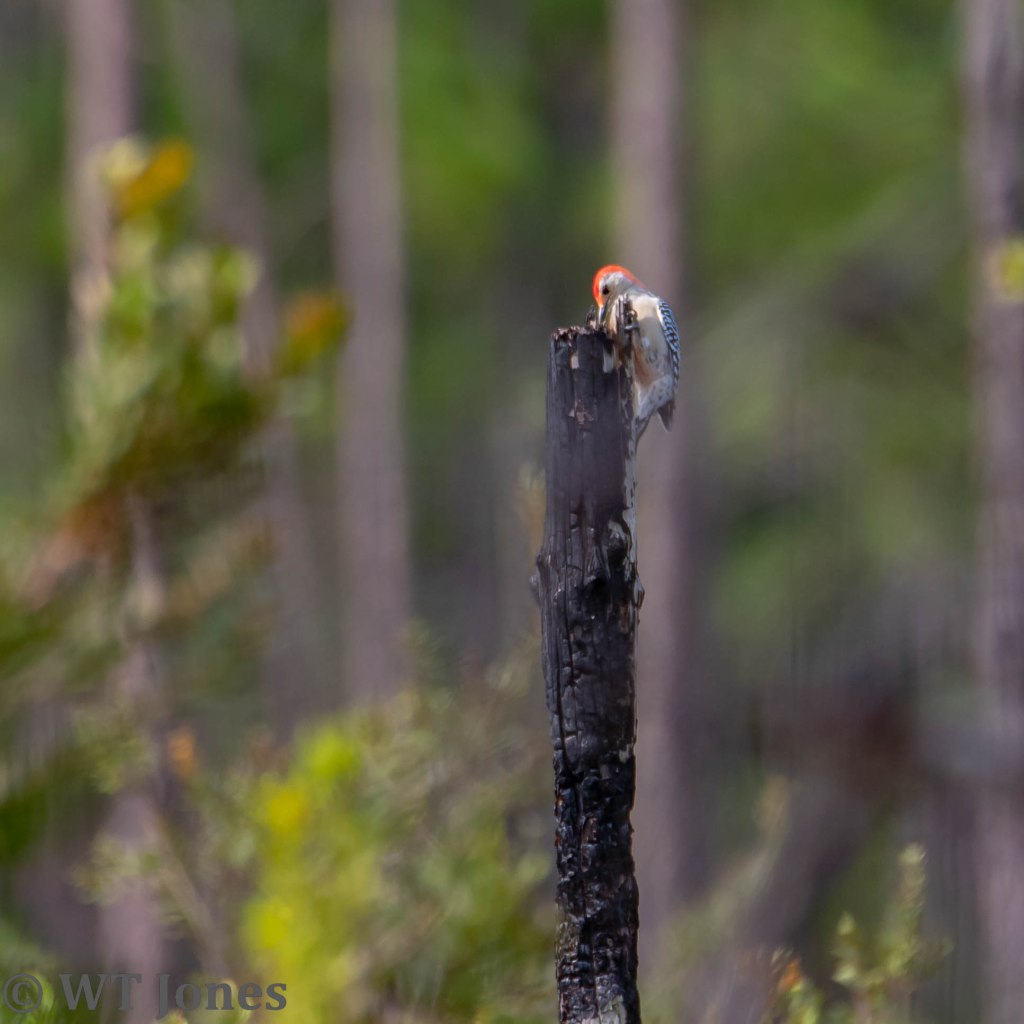
A Red-bellied Woodpecker probes a burnt tree trunk for brunch.
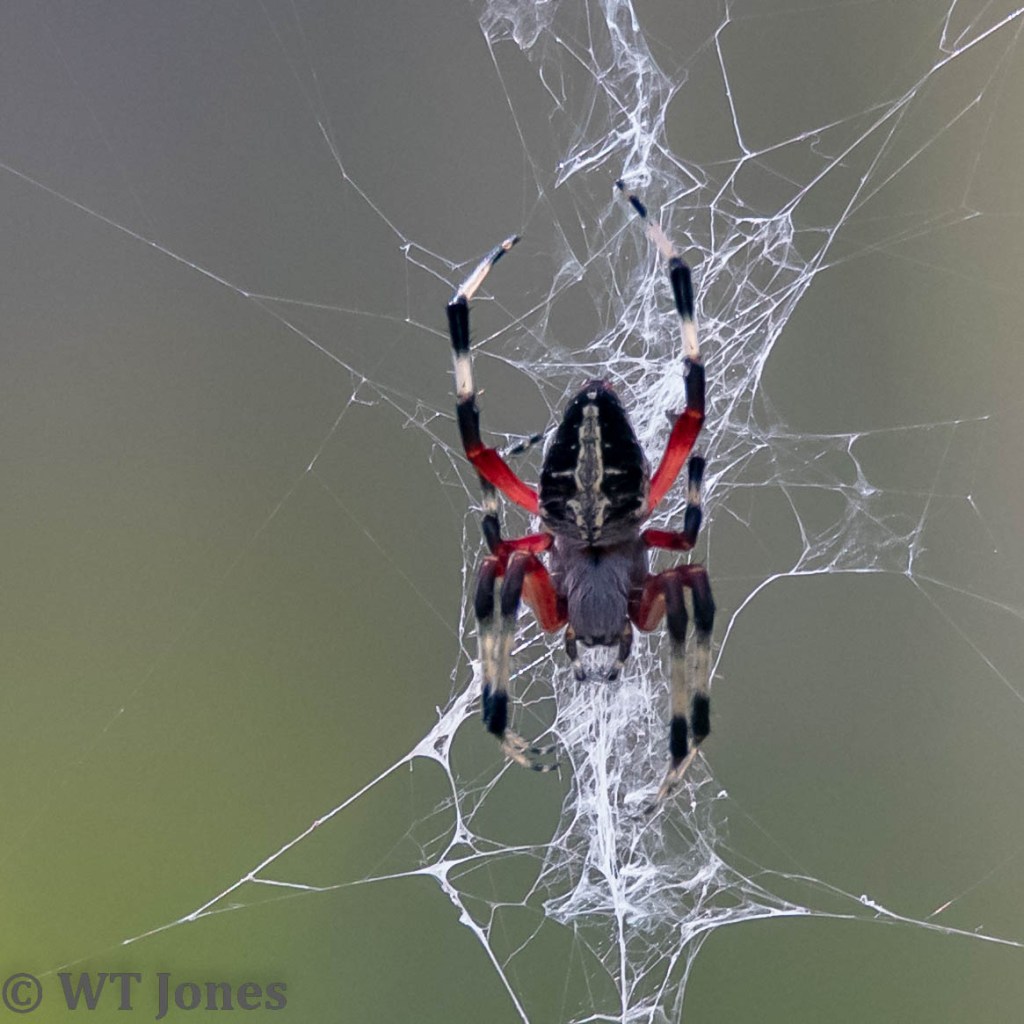
First Grandson was impressed by the variety of spiders we discovered during the morning. He thought this Red-femured Spotted Orbweaver (Neoscona domiciliorum) was particularly striking. I agree.
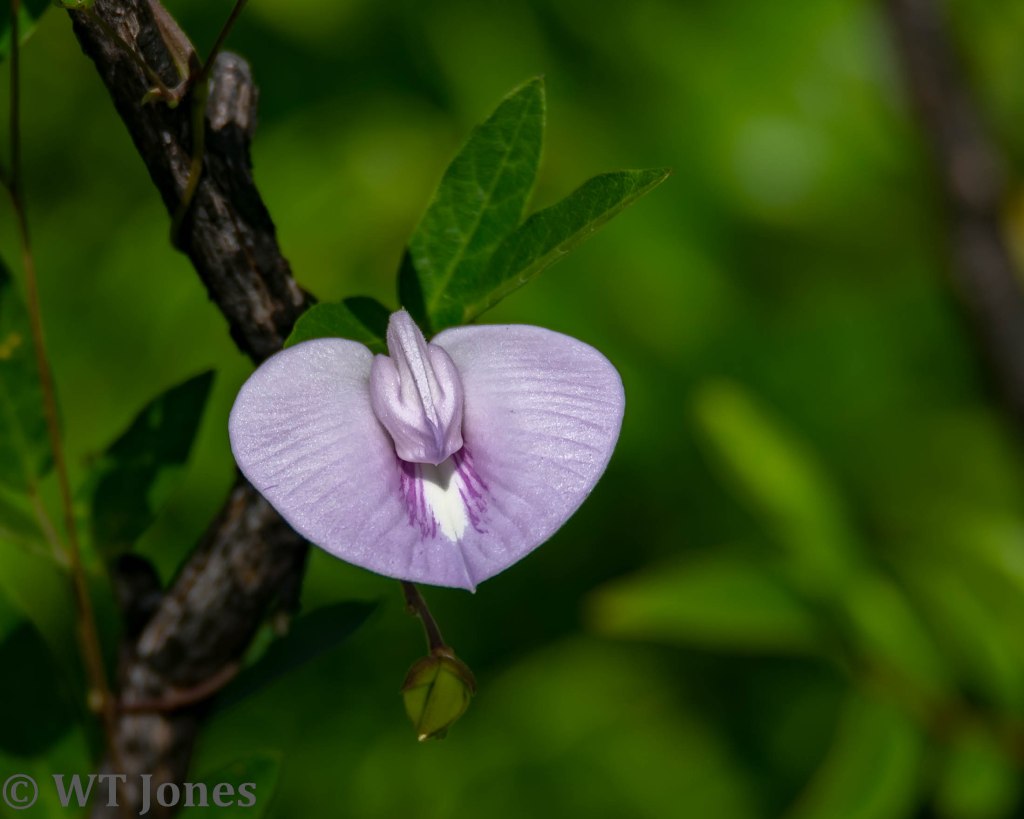
Purple stripes on a patch of white guide nectaring insects to the buffet bar within. A woody vine which coils around its neighbors for support, the Spurred Butterfly Pea (Centrosema virginianum) can reach up to eight feet in length. Pale lavender flowers add yet another hue to the forest panoply.
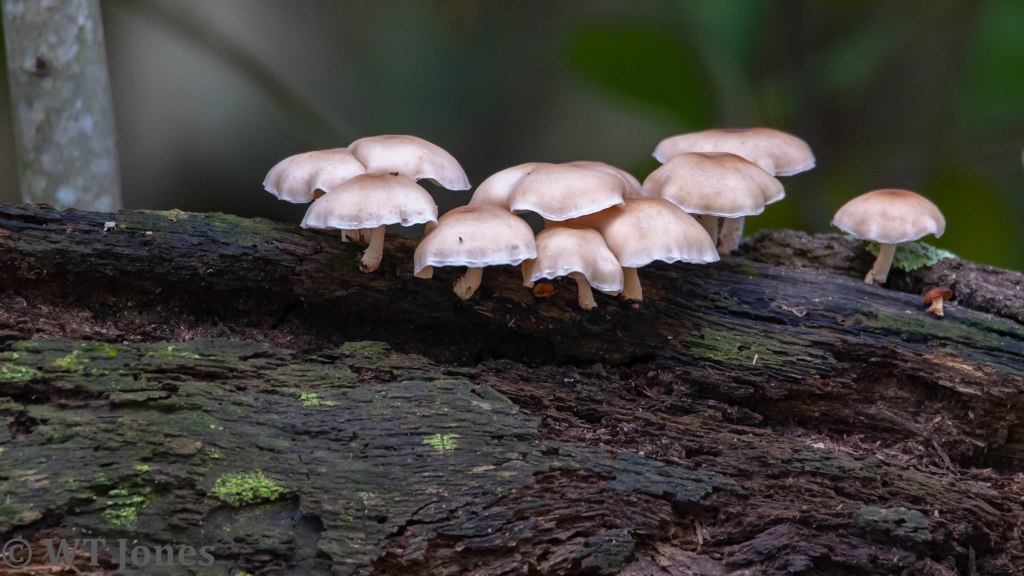
Florida. Sub-tropical climate. Rainy season. Fungi. Inevitable.
Making tracks.


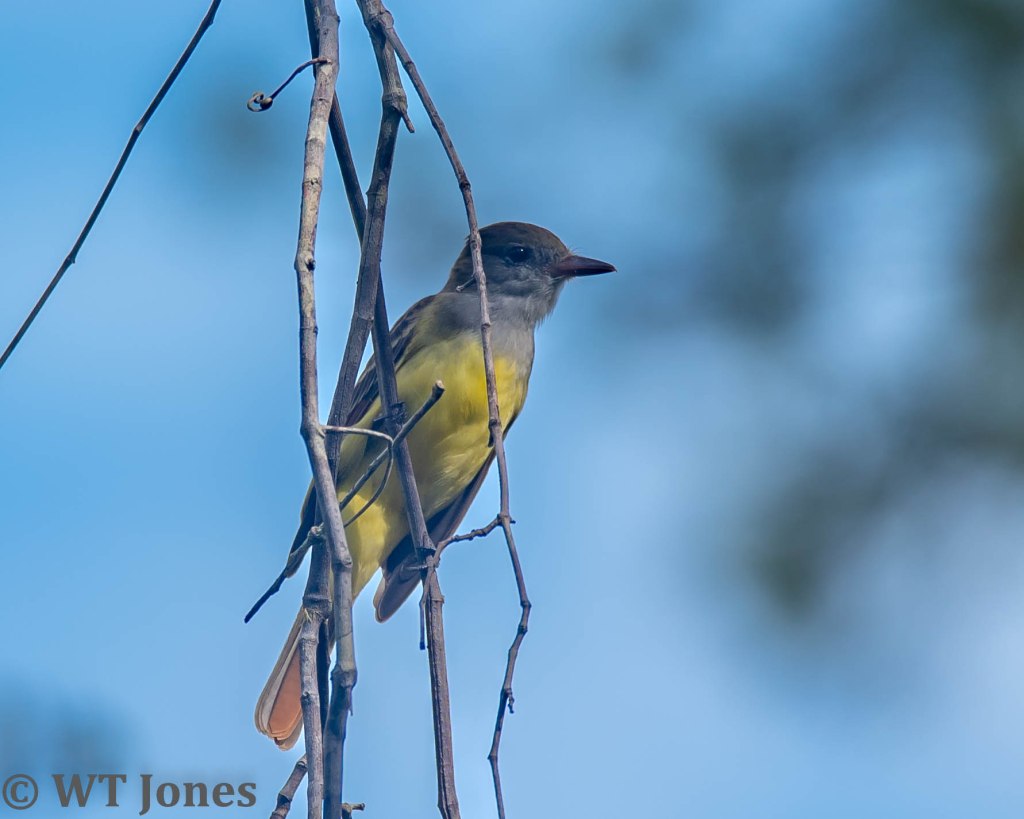
The Great Crested Flycatcher will soon retreat a bit to southern Florida for the winter.
Grandson. Grandma. Grandpa. The Grand Outdoors. Truly a Grand Day Out*!
Enjoy your search for a natural place and come back for a visit!
*(For Aardman fans, no cheese was harmed in the making of this post.)
Postscript.
Seven days after our visit, Hurrican Ian passed slowly over this forest with churning winds of nearly 100 mph and inundating the already saturated ground with over 15 inches of rain in a 12-hour period. Much of the tract remains closed due to downed trees and flooding. The forest will rebound. In its time.

