“Sausage, grits and cantaloupe okay with you?”
Once upon a time, there was a beautiful brown-eyed young woman who blinked those sublime eyes in disbelief when I revealed I did not care for grits. After all, my mother was raised in Mississippi, the virtual center of the “grits belt” of the southern United States. My father was from the panhandle of Florida, which is actually part of Alabama and Georgia, where a day without grits is unthinkable.
I don’t really know the origin of my grits-avoidance. Perhaps it stemmed from that childhood syndrome of not liking something you were forced to eat or face the threat of corporal punishment. It only took her 50 years, but my patient Gini coaxed me into trying a spoonful of yellow grits last year. I love grits!
(On the off chance someone is not familiar with the southern American dish of grits, it is basically ground corn. No, it is not polenta. Yes, there are an infinite number of ways it can be prepared. Only one of those is worth eating – Gini’s way.)
With her motivating words planted in my small brain, I headed out for a “short” walk at nearby Saddle Creek Park. This is another former phosphate mining area which was reclaimed three decades ago, covers about 740 acres (300 ha.) and offers fishing, camping, hiking, ball fields and a shooting range. A nature trail offers outstanding birding during spring and fall migration. Today I hoped to see breeding birds and maybe a few interesting insects.
About an hour passed and the alarm clock in my head sounded and I headed for the car. A quick call to see if my Sweetheart needed anything. “Just you.” Sigh. I am way too lucky.
The morning had been pleasant, although humid (it IS Florida!). Highlights included recently fledged Tufted Titmice, a pair of hunting Swallow-tailed Kites, an aggressive Carolina Wren, an uncommon inland Yellow-crowned Night Heron, a skulking Yellow-billed Cuckoo and a new dragonfly species.
Walking into the air-conditioned house felt good. A warm hug, hot coffee, breakfast with the most beautiful woman in the galaxy – Life. Is. Good.
At dawn, an island rookery became a noisy place as over 150 White Ibises began their daily routine of attending to nests, eggs and new chicks begging for food.

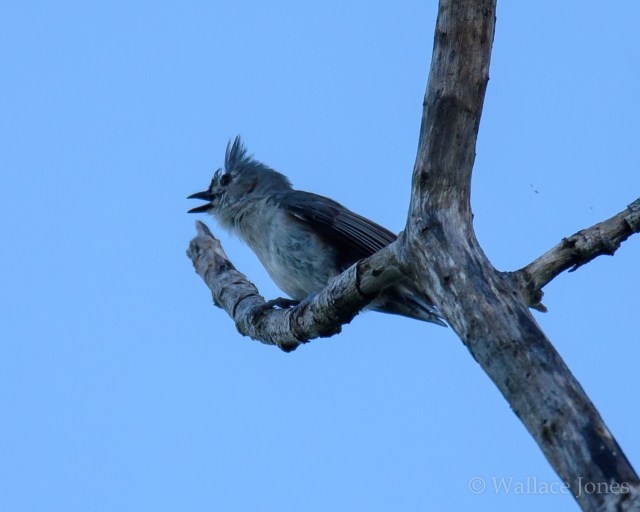
A young Tufted Titmouse let everyone know I was invading the swamp!
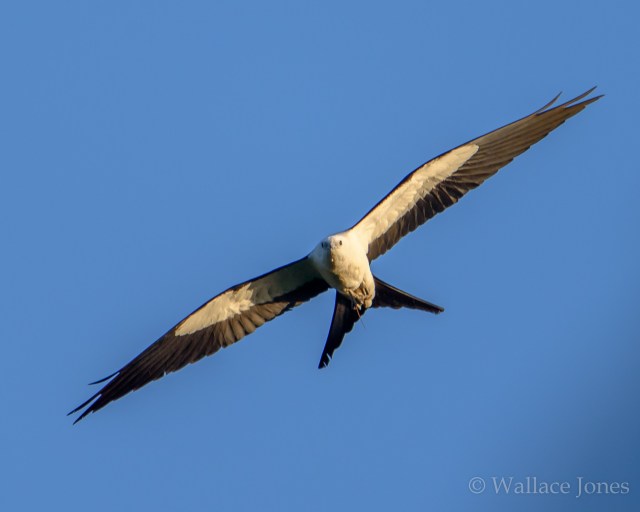
Swallow-tailed Kites breed in our area and a pair I saw this morning likely has a nest along Saddle Creek. This one looked me over carefully and if you look closely you can see her breakfast, especially in the second image. A nice long-tailed lizard!

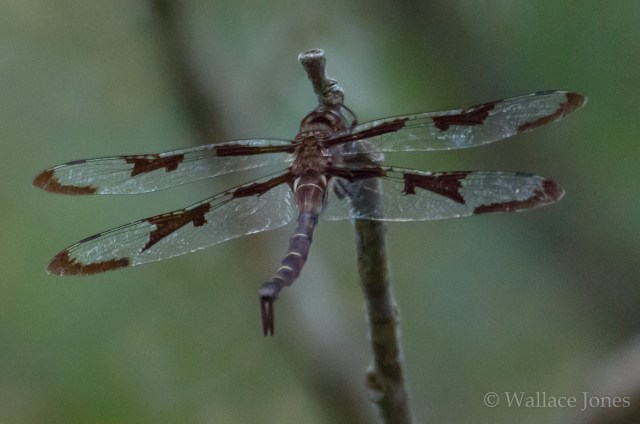
A new species is always exciting! Today I finally found a Prince Baskettail (Epitheca princeps). Of course it was perched high in an oak tree and in deep shade, so the photograph isn’t great, but what a wing pattern!
Yellow-crowned Night Herons are more typically found along the coast in salt marsh habitat. This young one was a welcome surprise! It can be told from the similar immature Black-crowned Night Heron by its overall darker bill and head pattern.

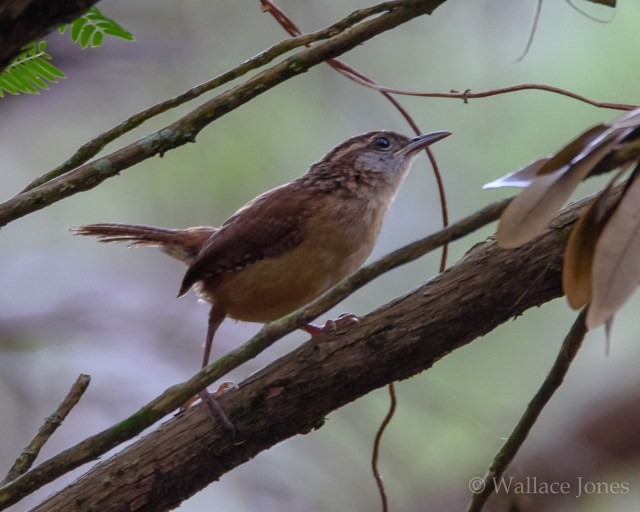
A Carolina Wren materialized on an overhead branch, chirped loudly and escorted me out of the area. I spotted a second wren a little deeper in the trees. Likely a breeding pair with a nest nearby.
Almost back at the parking area, a slight movement caught my eye. A Yellow-billed Cuckoo! I stood around for almost 15 minutes and it simply did not move. At least I now know they very likely breed here.

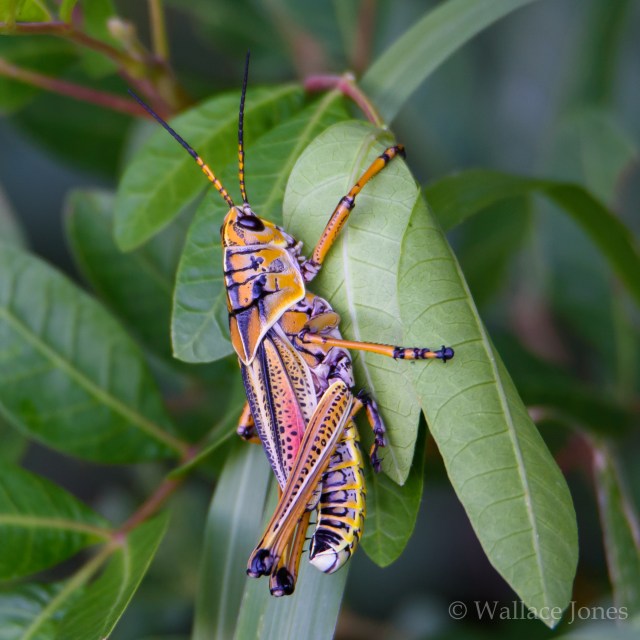
Eastern Lubber Grasshoppers (Romalea microptera) average from 1.7-2.7 inches (43-70 mm) in length with some females as large as 3.5 inches (90 mm). Their colorful appearance serves as a warning to would-be predators that they taste bad. They also hiss, spit and emit a foul-smelling odor when threatened. Other than that, they’re adorable.
One of our more common raptors, the Red-shouldered Hawk is really a beautiful creature. This adult shows the rusty wing patch which is her namesake.

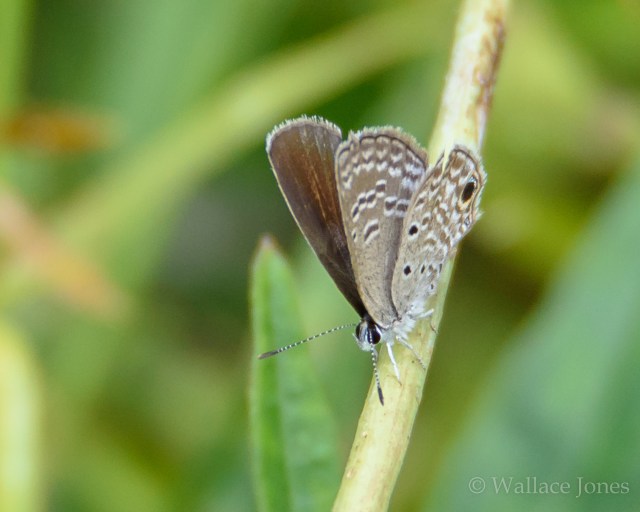
A small butterfly, 3/4 – 1 1/8 inches (2 – 3 cm), the Ceraunus Blue (Hemiargus ceraunus) tries your patience as it flies weakly near the ground giving the appearance it will land any second. About a mile later, you’re still following the silly thing and it still hasn’t landed. (It finally did!)

Common and striking to look at, the Four-spotted Pennant (Brachymesia gravida) is very abundant in our region. The female (first image) does not have the distinct wing spots of the male, although may develop them once fully mature.

Four-spotted Pennant (Brachymesia gravida) – Female
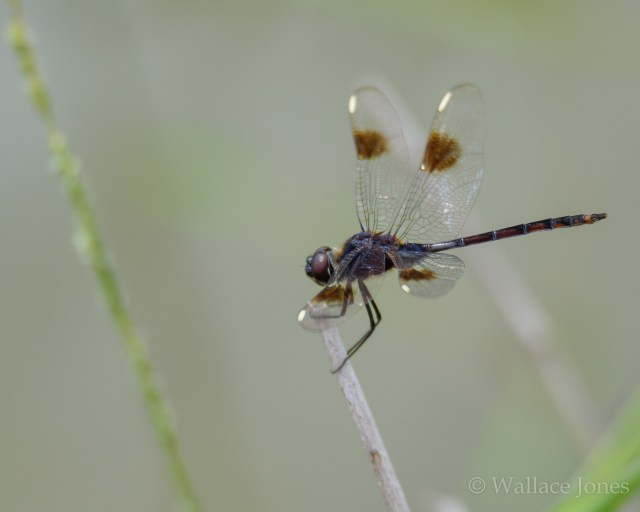
Four-spotted Pennant (Brachymesia gravida) – Male
Ending the morning on a bright note, a male Needham’s Skimmer (Libellula needhami) was nice enough to pose along the pond within sight of the car. Thank you!

Saddle Creek Park is not a large area, it’s usually busy with fishermen, it doesn’t require a passport to visit and is twenty minutes from the coffee pot. Pros, cons and a delightful spot to spend a morning! Hopefully, you have such a place near you.
Enjoy your search for a natural place and come back for a visit!
Additional Information
“Ooohhh, look at that one! Can you believe the colors? Wow!!”
Okay. I know this may come as a shock to some, but we are not actually “kids”. I mean, chronologically. Gini is a complete adult person but accuses me – hints – that I may not have fully matured emotionally. Also, we were not really in a candy store. But, oh my, what a delicious selection Mother Nature had for us on this gorgeous Florida morning!
Our local patch, Lake Parker Park, is less than ten minutes from the house. The lake frontage, a canal, large stands of hardwood trees, small wetland area, a pond – all contribute to providing an oasis for birds in an urban setting. The park provides walking paths, boat launch ramps, picnic areas, playground, tennis courts and soccer fields. Early morning on a weekday is perfect for observing nature.
The sun was just rising above the trees on the lake’s eastern shoreline. Reeds along the lake were alive with blackbirds, grackles, gallinules, herons and egrets. Cypress trees contained Anhinga nests, some with parents brooding eggs and others with hungry young birds screaming for breakfast. A Snail Kite dipped low in search of apple snails. An alligator reluctantly slid from his sunning spot, swam a short distance and turned to glare.
As the morning matured, bird activity intensified. Insects roused from their slumber as the dew dried from their bodies and they emerged from nighttime roosts to begin a day of feeding, mating and surviving their many predators. Human numbers increased as well. Walkers, joggers, bikers. All friendly. Happy to be out and enjoying the freedom which comes with sun, air, water and green surroundings.
So much to see! Birds feeding chicks, different hunting techniques, preening, singing, courting, avoiding danger, insect wings glittering in the sunlight.
What a wonderful way to spend any morning!
Juvenile Little Blue Herons are completely white, slowly acquiring gray plumage during their first year and usually by their second year attaining the familiar slate blue adult coloration. This mottled immature bird is likely less than a year old.

Greeting the sunrise from her perch in a cypress tree on the bank of the lake, a beautiful Tricolored Heron has her eye on the shallow waters which will soon provide her morning meal.

An adult Green Heron glances at her squabbling offspring, likely proud of the third sibling behaving himself in the background. Moments later the raucous duo share a branch calmly contemplating where a frog might be hiding.


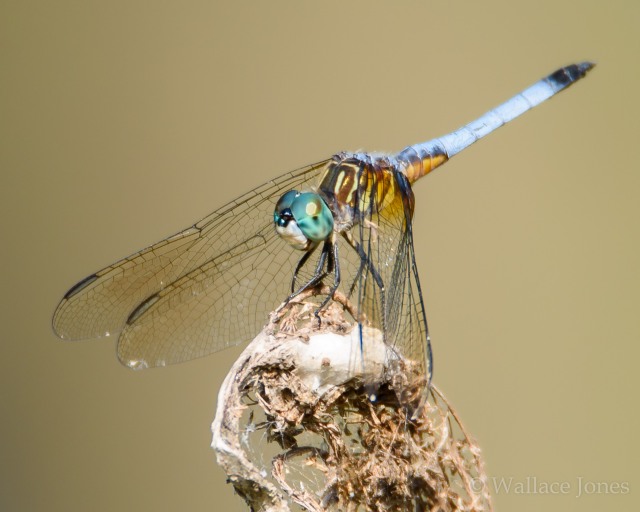
White face, greenish eyes and yellow racing stripes. The male Blue Dasher (Pachydiplax longipennis) is ready to dash after passing prey.
Purple Gallinules within the park have, unfortunately, been trained by well-meaning visitors and don’t hesitate to approach humans where they beg for food. This one, thankfully, prefers a little grass seed.

Hanging Spanish moss is a great place for bugs to hide. It’s also a great place for a hungry Red-bellied Woodpecker to locate brunch.

Although her wing spots are not as prominent as a male’s, the female Four-spotted Pennant (Brachymesia gravida) is no less attractive.

During winter migration, our population of Pied-billed Grebes swells and seeing a dozen at the park is not unusual. Given the late date, this individual is likely a resident and we hope to see young grebes soon!

The large Great Egret is a patient and stealthy hunter. Like watching the hands on a clock, you know he’s moving but can’t actually see it.

An entirely powder-blue body, green face and blue-green eyes describe the male Eastern Pondhawk (Erythemis simplicicollis). One of our most common dragonflies, this species doesn’t hesitate to attack prey larger than itself.

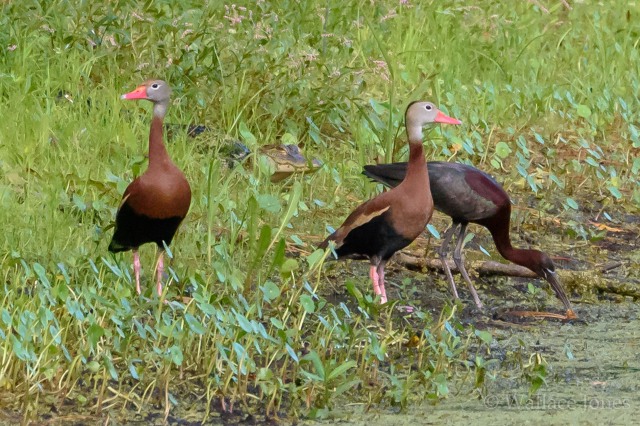
Handsome. A Black-bellied Whistling-Duck enjoying a morning walk along the canal.

Watching a Tricolored Heron hunt is always a treat! They run through the shallow water trying to herd small fish to an ambush point. Spreading their wings high provides shade which fish will be drawn toward. Not only entertaining, pretty nice to look at, too.

Mallards are often maligned in the birding world, but it’s difficult to deny they are beautiful animals.

The Glossy Ibis is busy feeding. The Black-bellied Whistling-Ducks are alert for any potential danger. All clear to the left. All clear to the right. (Alligator: “Decisions, decisions.”)
We know how spoiled we are when it comes to finding a place to observe birds and wildlife. Whether we travel a few hours or a few minutes, we are also very thankful that we are so blessed. Hopefully, you, too, have favorite spots nearby from which you can enjoy our planet’s diverse nature.
Enjoy your search for a natural place and come back for a visit!
Himantopus mexicanus is a small-bodied but somewhat tall shorebird which inhabits shallow wetlands looking for small invertebrates. Found in both fresh and salt water habitats, the average adult is about 14 inches (37 cm) long, mostly black above and white below. It’s long, spindly rosy-pink legs give the bird its name.
“But stilts are essentially waders; for wading they are highly specialized, and here they show to best advantage. At times they seem a bit wabbly on their absurdly long and slender legs, notably when trembling with excitement over the invasion of their breeding grounds. But really they are expert in the use of these well-adapted limbs, and one can not help admiring the skillful and graceful way in which they wade about in water breast deep, as well as on dry land, in search of their insect prey. The legs are much bent at each step, the foot is carefully raised and gently but firmly planted again at each long stride. The legs are so long’ that when the bird is feeding on land it is necessary to bend the legs backward to enable the bill to reach the ground.” – Arthur Cleveland Bent, Life History of the Black-necked Stilt, Smithsonian Institution, monographs published 1920-1950
Gini and I have delighted over the years anytime we have encountered this delicate-looking bird. One of our more memorable observations was watching a group of around a dozen stilts on a brisk windy day along the Texas coast at San Bernard National Wildlife Refuge. Nesting season was approaching and territories were being staked out and defended, noisily. Birds were flapping, flying, feeding, napping – little clouds of black, white and pink all across the salt marsh. Fantastic!
As part of a Florida breeding bird atlas, I was privileged to observe one nesting site containing over 130 nests contained within less than one acre of ground. Another day of discovery by boat located a nesting pair of stilts in a small lake with eggs on a bare patch of mud.
Whether flying, nesting, feeding or sleeping – these frail-looking birds with such long legs continue to be fascinating!
Nap time.

1/3200, f/8, ISO 1000, Nikon D750, Tamron 150-600 @500mm
Stilt eggs.
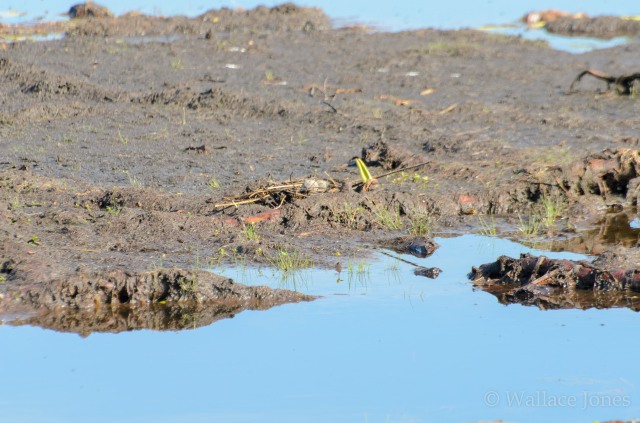
1/400, f/11, ISO 800, Nikon D7000, Nikkor 70-300 f/4.5-5.6 @300mm

1/400, f/11, ISO 800, Nikon D7000, Nikkor 70-300 f/4.5-5.6 @300mm
Immature stilt.

1/3200, f/8, ISO 1250, Nikon D750, Tamron 150-600 @420mm
Adult Black-necked Stilt.

1/1600, f/7.1, ISO 1800, Nikon D750, Tamron 150-600 @600mm
Size comparison with Great Egret. About 14 inches (37 cm) for the stilt to about 40 inches (100 cm) for the egret.
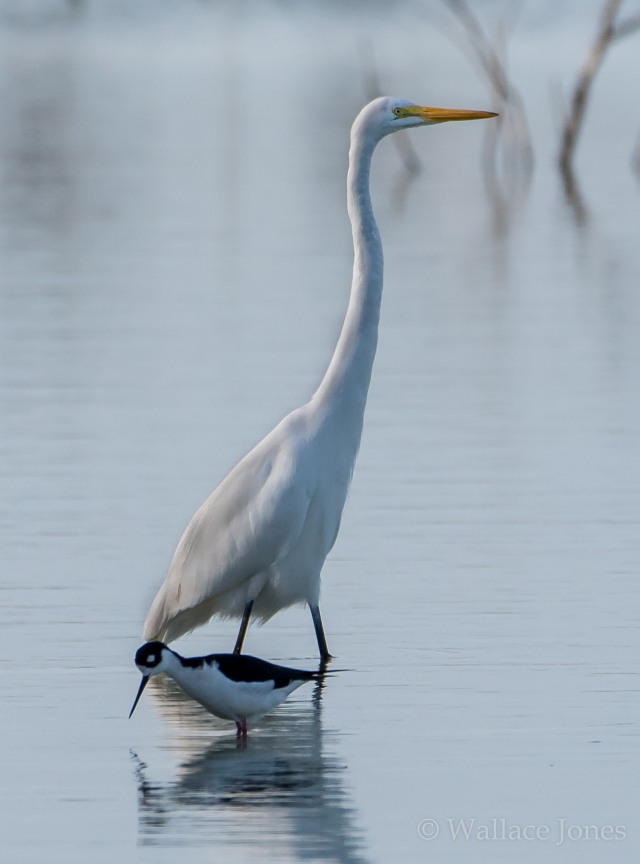
1/3200, f/8, ISO 1000, Nikon D750, Tamron 150-600 @460mm

1/800, f/11, ISO 720, Nikon D7000, Nikkor 70-300 f/4.5-5.6 @300mm
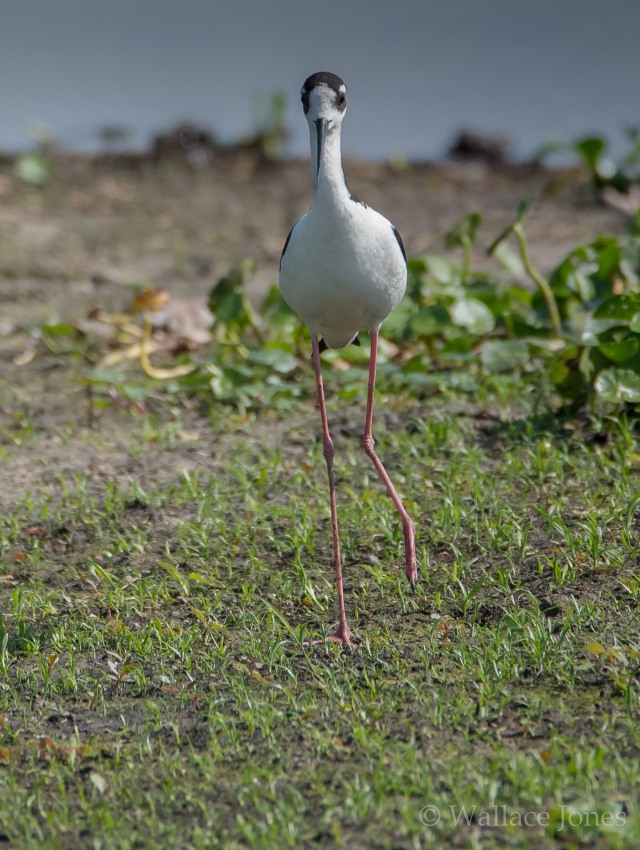
1/3200, f/8, ISO 1000, Nikon D750, Tamron 150-600 @550mm

1/1000, f/8, ISO 250, Nikon D750, Tamron 150-600 @600mm

1/3200, f/8, ISO 900, Nikon D750, Tamron 150-600 @420mm

1/1250, f/7.1, ISO 3600, Nikon D750, Tamron 150-600 @600mm

1/1250, f/11, ISO 1400, Nikon D750, Tamron 150-600 @600mm
If you’re lucky enough to live where Black-necked Stilts can be found, try to spend a little time observing them. Pack a lunch. They can be addictive.
Enjoy your search for a natural place and come back for a visit!
No, not the prestigious communications company.
“Birding By Car”.
Three weeks ago, with all of our parks and managed natural resource areas closed to humans, Gini and I scarcely missed a beat. Our routine birding adventures include rambling along country roads enjoying open spaces and fresh air. Occasionally, we even spot a few birds.
On this particular occasion, SWMBO* requested a “ride in the country”. Perfect! The first week of May means many species of birds are fully engaged in mating mode. Singing, dancing, nest building. I had been hoping to check on Burrowing Owls in Hardee County, about an hour-and-a-half to our south. Gini agreed it was a brilliant idea.
One of the advantages of leaving the house at Oh-Dark-Thirty is missing the high volume of traffic which begins about an hour later. Forty-five minutes of driving, the sky is gradually beginning to lighten and we make a brief stop at the coffee emporium of a small town. (Yes, it WAS a McDonald’s.) Fortified with caffeine, I bravely turned eastward 30 minutes later to face the bright rising sun.
Cool morning air flowed through the open windows, patches of ground fog hugged low places in surrounding pastures and along Charlie Creek. White-tailed Deer, Wild Turkey and Fox Squirrels were beginning their day. Our destination was just ahead.
Turning south, we were on a public road which was rough and unpaved until two years ago. The new asphalt certainly was an improvement in the comfortable ride department! We pulled off the road almost immediately as Gini spotted movement in the brambles. With the engine off, we could hear White-eyed Vireo, Tufted Titmouse, Northern Parula and Red-bellied Woodpecker in a wooded area. The movement Gini spotted suddenly flew some distance and buried itself deep into the weeds. A beautiful male Common Yellowthroat!
Most of the habitat is open pasture and a couple of citrus groves. Two large dairies operate here and the pastures are pockmarked with ponds for cattle and canals connecting them. Very attractive for many birds! Since virtually all of the land is private, BBC is the perfect strategy.
We moved along the road another 50 yards and pulled off again. On the east side of the road, a small wet area harbored a few clucking Common Gallinules and a pair of Red-winged Blackbirds, likely with a nest in the dense reeds. Wading in the shallow water, a pair of Sandhill Cranes instinctively moved away from us. We could hear more cranes in the distance but out of sight. On a fence post a Red-shouldered Hawk alternately preened and scanned the damp ground for breakfast.
The remainder of the morning followed the same pattern: drive a few yards, pull over, see birds. It took us about four hours to cover less than ten miles. Another advantage of BBC, the vehicle serves as a blind. Birds are skittish as we approach but are quick to settle down and return when they don’t see any more movement, as they would if we were hiking the area. And there’s a coffee cup holder.
We reached a bridge over a creek (almost dry as we’ve had no rain) which was our turnaround point. About a dozen Sandhill Cranes were feeding in a grove of oak trees, trumpeting loudly as new birds joined the group. These are almost certainly migratory birds (Grus canadensis). During migration, groups of these cranes numbering more than four or five are likely winter visitors. The Florida Sandhill Crane (Grus canadensis pratensis) is a sub-species endemic to Florida and tend to remain in small family groups for at least their first year.
Highlights of our BBC morning included a migrating flock of about three dozen Bobolinks, Red-headed Woodpeckers and a Crested Caracara which Gini spotted while I was trying to get a Bobolink to pose.
We meandered back to the main highway along yet another back road and came across a section of pine trees where we counted at least eight Red-headed Woodpeckers chasing each other, likely a mating/territorial event. Singing in the distance was a Bachman’s Sparrow and perched on a fence near the car was a Great Crested Flycatcher.
We found no Burrowing Owls today but our BBC adventure was extremely satisfying!
All fluffed up and ready to face the sunrise. A Red-shouldered Hawk ignored us as he continued to preen and watched for a careless frog.

I couldn’t manage to get good images, but any sighting of a Red-headed Woodpecker is welcome! The species continues to decline primarily due to loss of habitat.


Eurasian Collared-Dove were quite common five or six years ago but have become harder to locate in more populated areas. Their “invasion” appears to have moved north and west of here in the past few years.

A Sandhill Crane forages for brunch. The “rusty” colored plumage is likely due to diet and during late summer molting will renew the overall gray look.

Throughout the morning, the wonderful serenade of Eastern Meadowlarks drifted through the windows.

With several ponds and canals in the pastures, Bald Eagles are fairly common.

Frustrated is how I ended up feeling after attempting photographs of Bobolinks. These poor samples were the best I could manage. Sigh.


The state of Florida is re-opening most state parks and many counties and cities are following suit with local parks. It will be wonderful to visit old feathered friends again! However, we will still use our tried and true method of exploration: BBC!
(The Burrowing Owl appearing in the header is from a few years ago at this same location.)
Enjoy your search for a natural place and come back for a visit!
*(She Who Must Be Obeyed)
Now that I have your attention, hope you are all well today. We are.
About two weeks ago, we escaped went out for a bit of fresh air and found ourselves on the edge of the Green Swamp.
In a recent post, Brian at Butterflies To Dragsters described the sensation of our local swamp perfectly: “The rich, dank smell of bog, ditch, mud and water plants is nicer than the finest perfume.”
Never mind our two “bogs” are over a thousand miles apart, the sensation is identical. (Visit Brian’s blog to see beautiful dragons, butterflies and more.)
Florida’s Green Swamp covers a lot of area, over 560,000 acres (+226,000 Ha) in central Florida. Four major rivers begin life here from underground springs: Hillsborough, Ocklawaha, Peace and Withlacoochee. Much of central Florida’s water supply comes from these rivers.
The relatively small area we explored is about 30 miles north of the house and is accessed from logging roads which can vary in condition from not-so-bad to impassable. As the landscape transforms from upland pine forest to cypress swamp, a small wetland offers ideal habitat for many insect species. Our recent visit was during the last week of April and stepping out of the vehicle was exhilarating! Not only did we experience Brian’s olfactory description but we were also overwhelmed with an extravaganza of color as myriad flowers of all sizes bloomed around us. All of this dampness and blooming attracted a host of potential pollinators.
A lazy drive took us deeper into the swamp where we enjoyed the rhythmic hammering of a Pileated Woodpecker, singing Northern Parula Warblers from every direction, Eastern Bluebirds carrying nesting material, expanses of lush green ferns and a river crossing. The Little Withlacoochee River barely flows along under an old wooden bridge and herons, egrets and hawks perch above the dark tannin-stained water.
Another perfect day.
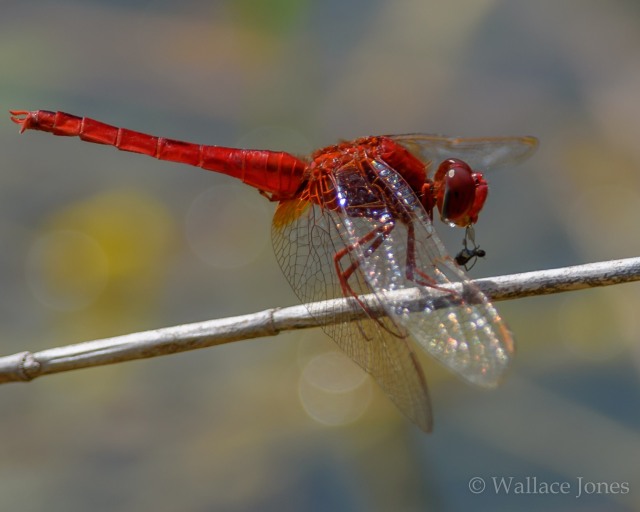
The brightest dragonfly in our area is not a native. The Scarlet Skimmer (Crocothemis servilia) was introduced near Miami in the mid-1970’s and has now become fairly common in central/south Florida.
Replete with racing stripes and blue eyes, the male Blue Dasher (Pachydiplax longipennis) is ready to race away in pursuit of a bug breakfast.

Shimmering gold wings with a distinct pattern help identify the Halloween Pennant (Celithemis eponina).

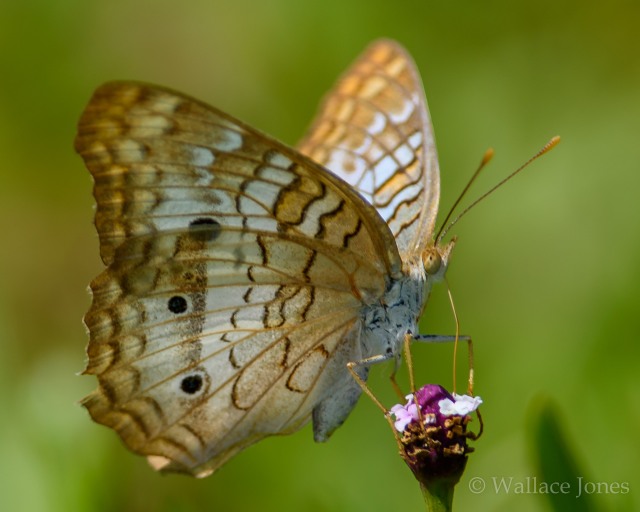
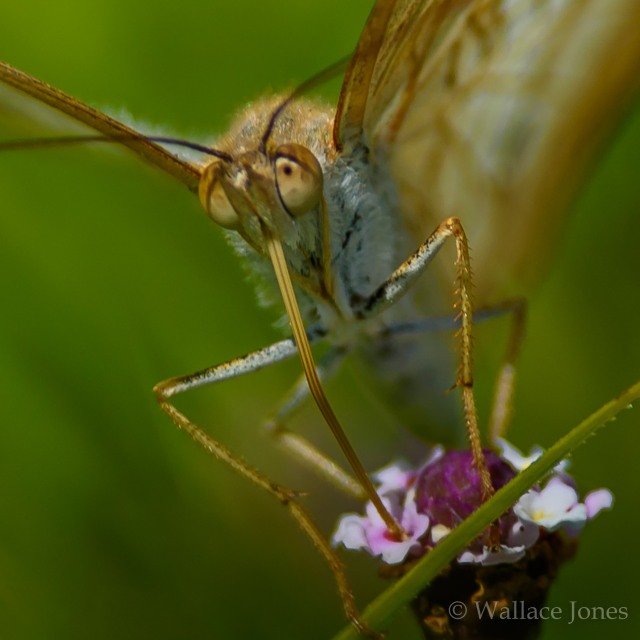
Not a fire-breathing dragon, but we couldn’t ignore the beautiful and plentiful White Peacock (Anartia jatrophae) butterfly.
I couldn’t manage a decent photograph but this Gray-green Clubtail (Arigomphus pallidus) is a new species for us. We’ll return soon to see if we can find a more cooperative model.

One of our more common dragons, often seen patrolling the edges of roads in great numbers, a Carolina Saddlebags (Tramea carolina) posed briefly.
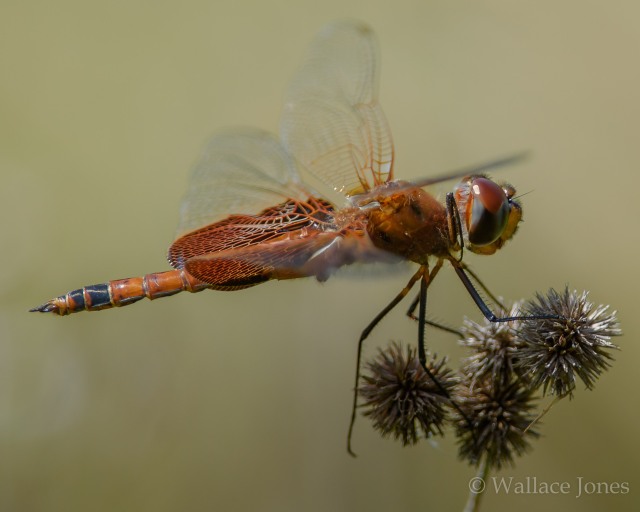
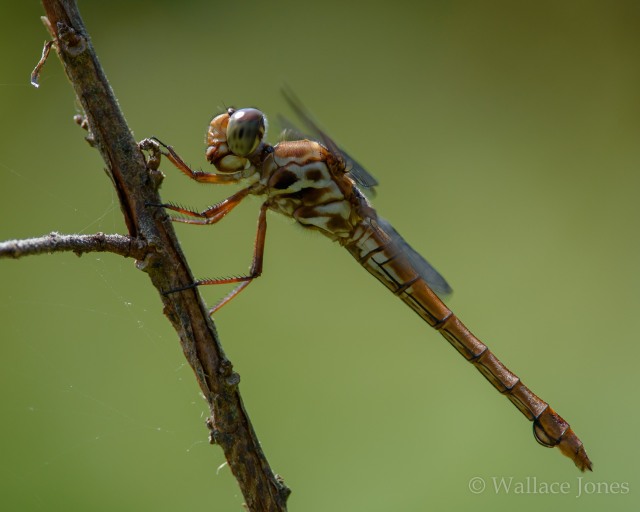
Golden-edged wings and light dorsal stripe help identify a female Needham’s Skimmer (Libellula needhami). Hard to believe the male is more colorful. Perhaps we’ll find one on the next visit.

Ladies’ day continued with a cooperative female Roseate Skimmer (Orthemis ferruginea). Again, maybe next time we’ll spot the purple-hued male.
A reminder for would-be dragon hunters: remember to look up once in awhile. Something may be hunting YOU! A young Bald Eagle, thankfully, prefers a fish dinner.

The humble Bumble Bee (Bombus spp.) seeking nectar and spreading pollen.

Thistles in bloom mean bugs galore! The blooms of these prickly plants certainly attract an amazing array of insects. Bumble Bees (Bombus spp.) were the main actors in the group of thistles we found today.

A shiny metallic blue Mason Bee (Osmia Chalybea) found plenty to like among the purple threads.

Purple Thistle (Cirsium horridulum).

We enjoyed our hunt for dragons on the edge of the swamp. As all of us proceed through uncertain times, step outside if you’re able and marvel at what nature offers. Better days are just around the bend.
Enjoy your search for a natural place and come back for a visit!
Additional Information
 Our Natural Places