Header Image: Golden-winged Skimmer (Libellula auripennis)
The sun has barely managed to get out of bed and already the cicadas are buzzing their raspy chorus in glorious surround-sound. Walking into a meadow requires slogging through a small ditch where the weeds hide six inches of water under bright green tangles. No matter. The dew is so heavy my feet were wet before I made it to the ditch. The humidity is thick enough that everything above my feet is also pretty damp.
Ahhh. Florida in summer!
Clouds of gnats hover just above the expanse of Saw Palmetto where enterprising dragonflies ambush them from nearby twig perches. We have two species of mosquitoes here: big and bigger. Yellow Flies and Deer Flies (members of the Tabanidae family of flies) are most active at this time of year just after sunrise and just before sunset. Good news! They don’t sting! Bad news! They bite! The bite of a deer or yellow fly is painful. Here is how the bug experts at the University of Florida describe it: “Tabanids inflict deep wounds that cause a flow of blood. The mandibles and maxillae penetrate the skin in a scissor-like action. Anticoagulants in the saliva are pumped into the wound and the blood is ingested through the sponging labella.” Nice.
Don’t forget to check yourself (or have a loved one help) for ticks once you get home.
Did I mention the snakes?
For anyone who has made it this far, congratulations on your bravery! (Or are you one of those who loves to read about the suffering of others?)
In spite of all the things out there which might cause one to be uncomfortable, we find the rewards are overwhelmingly worth it! The scent of the pine trees, rays of the early morning sun scattered by the tree branches, the same dew which causes wet feet forms amazing droplets on flower petals, birds calling, the seemingly infinite diversity of insect life (even some which don’t want our blood) and unexpected encounters – all of this and more remind us how good our lives can be. By embracing the less pleasant aspects of nature along with her charms, we seem less likely to take it all for granted. Sort of like friends and family, we accept that all of us have inherently good and not-so-good qualities but do our best to exist together. After all, if we don’t look out for each other, who will?
As is usual for us, we ambled through this forested part of the swamp like a couple of kids in a toy store. Pointing, ooh-ing and ahh-ing, wondering about this or that. Our breakfast was fresh fruit by the side of a big mud puddle in the shade of Long-leaf Pine Trees. The mud around the puddle attracted a half-dozen species of dragonflies and damselflies. A Great Horned Owl called from a distant perch. A refreshing breeze advised us the morning was almost over.
Pulling onto the main road, hands touching, a heavy sigh in unison. We know we are not normal. And we are content.
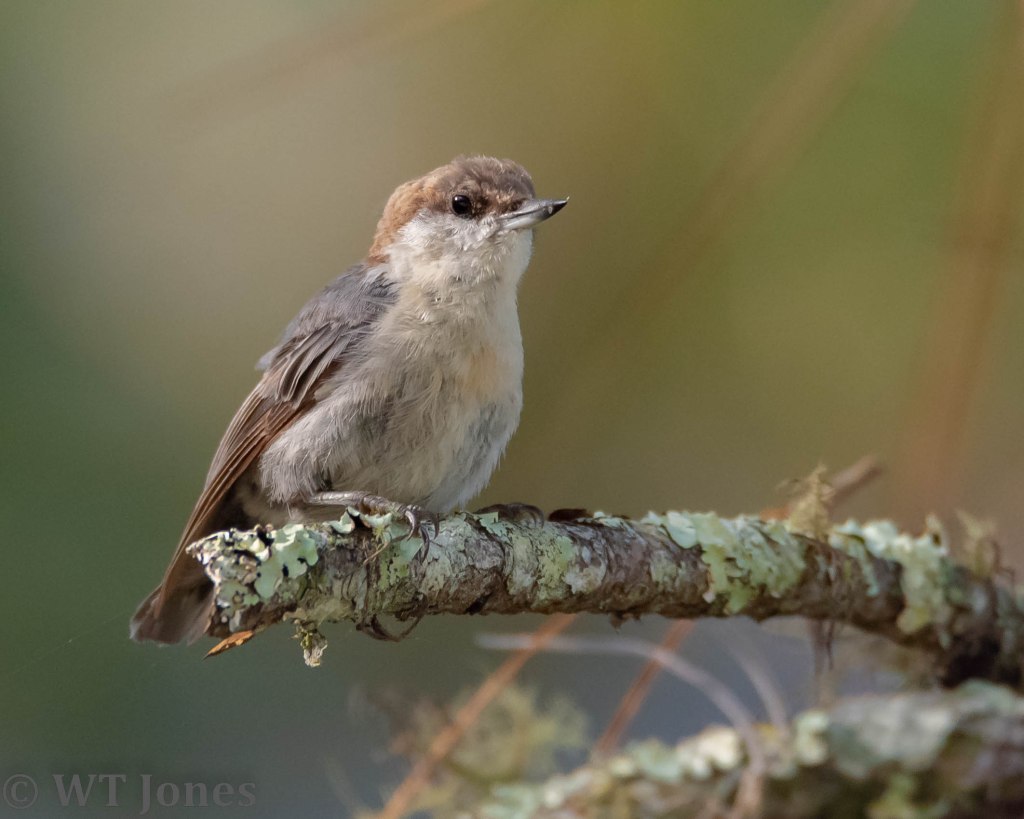
“Rubber ducky!” I immediately knew Gini was referring to the squeaky call of a diminutive Brown-headed Nuthatch. They inhabit older growth pine woods and typically travel in extended family groups. Breeding quite early, in late February, members of this years’ brood are out and about scouring for food and perhaps likely nesting spots for next year.
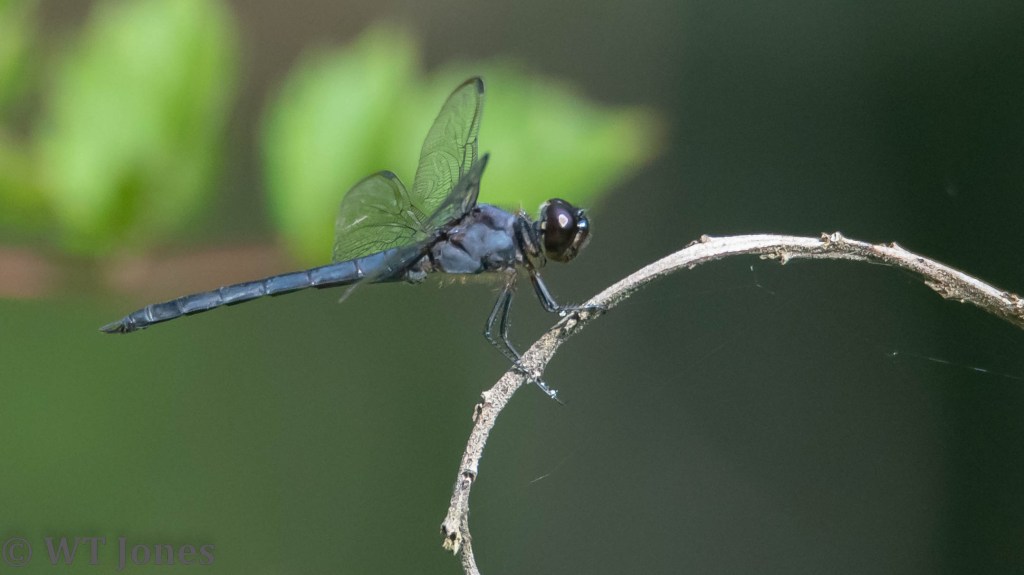
Slaty Skimmer (Libellula incesta) males are distinctive in their overall dark appearance.
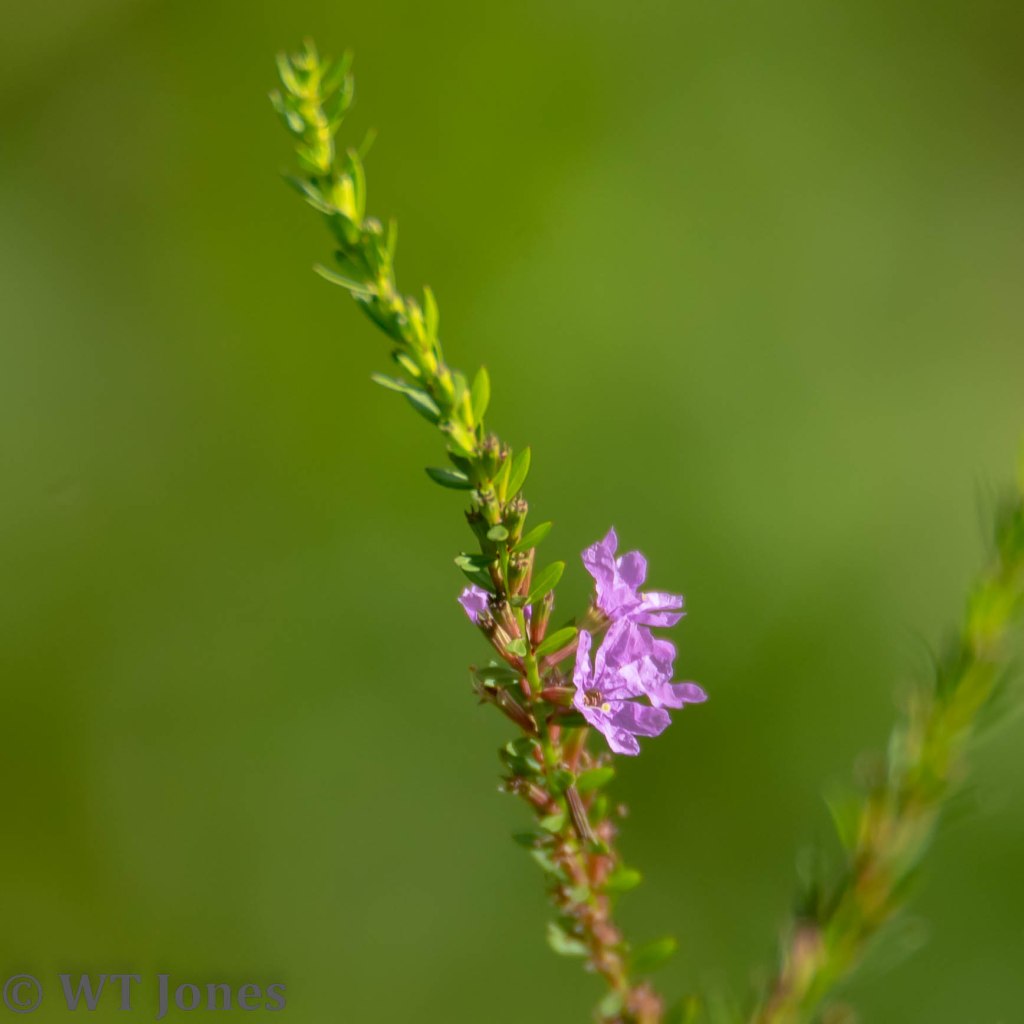
The flowers of the Wand Loosestrife (Lythrum lineare) appear to be made of paper mache with their wrinkled petals.
The forest holds an occasional surprise. A Wild Turkey appeared along the side of the road.

Then, two adults and a poult materialized.

More poults!
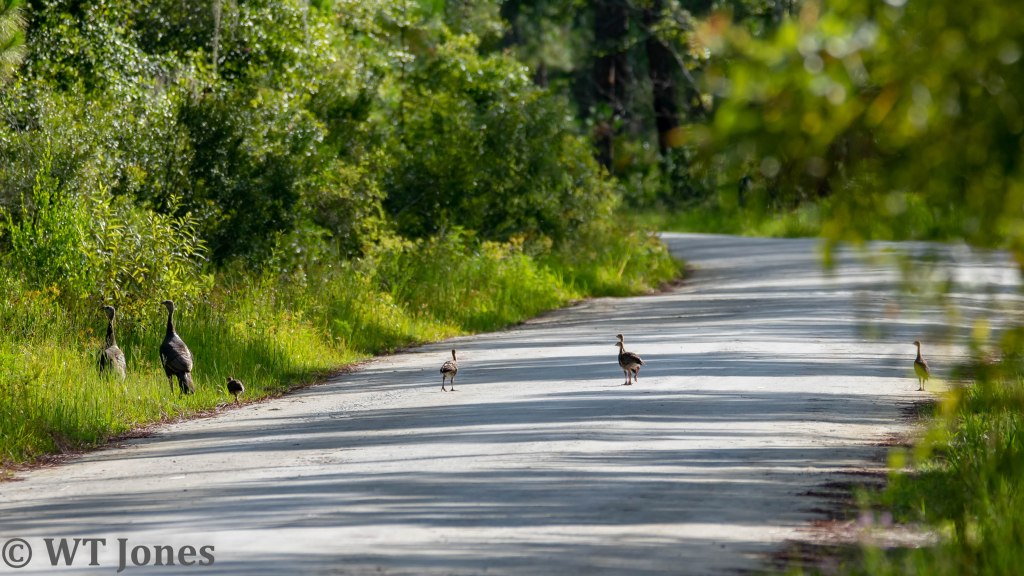
Then, things just got crazy! We eventually counted over two dozen turkeys at this spot including poults, “teenagers” and adults. They chased each other, engaged in aerial “fights” and took their time enjoying the morning. Just like us.
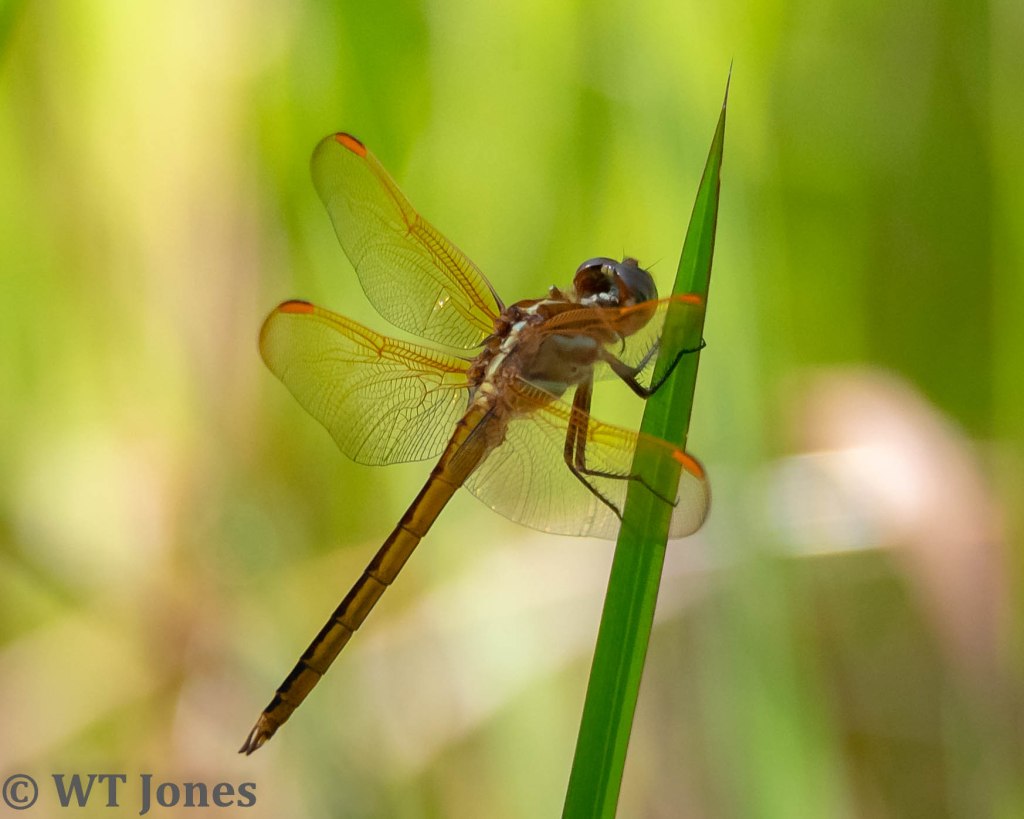
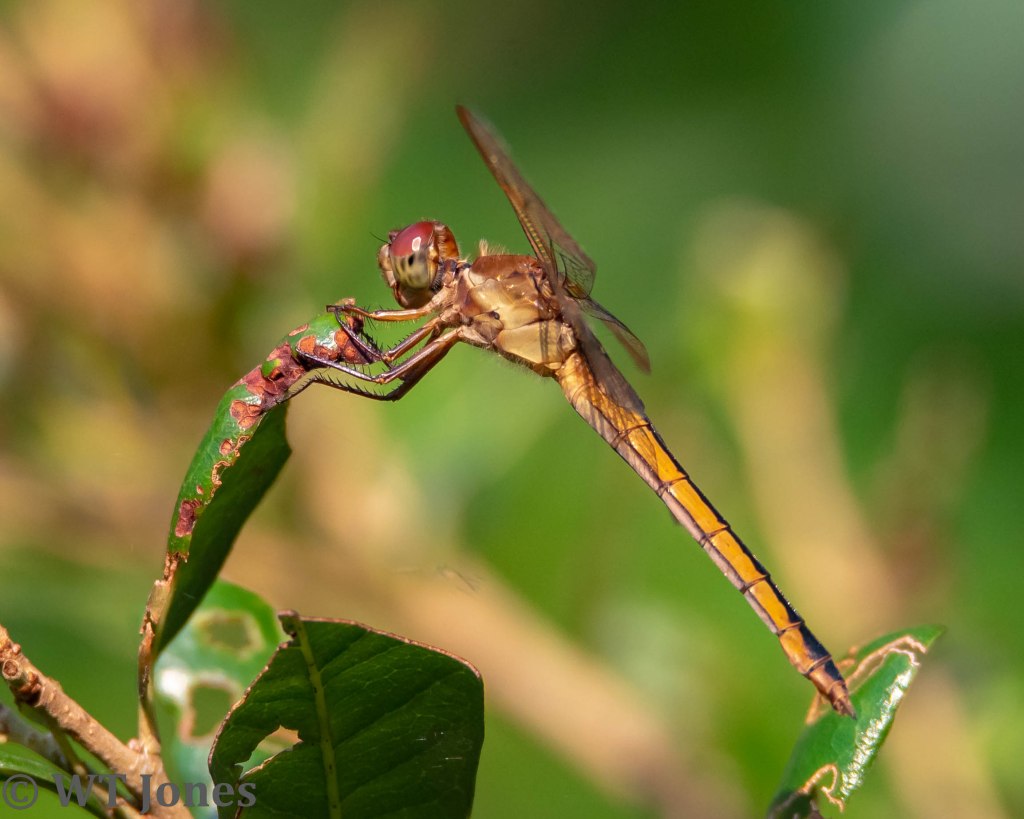
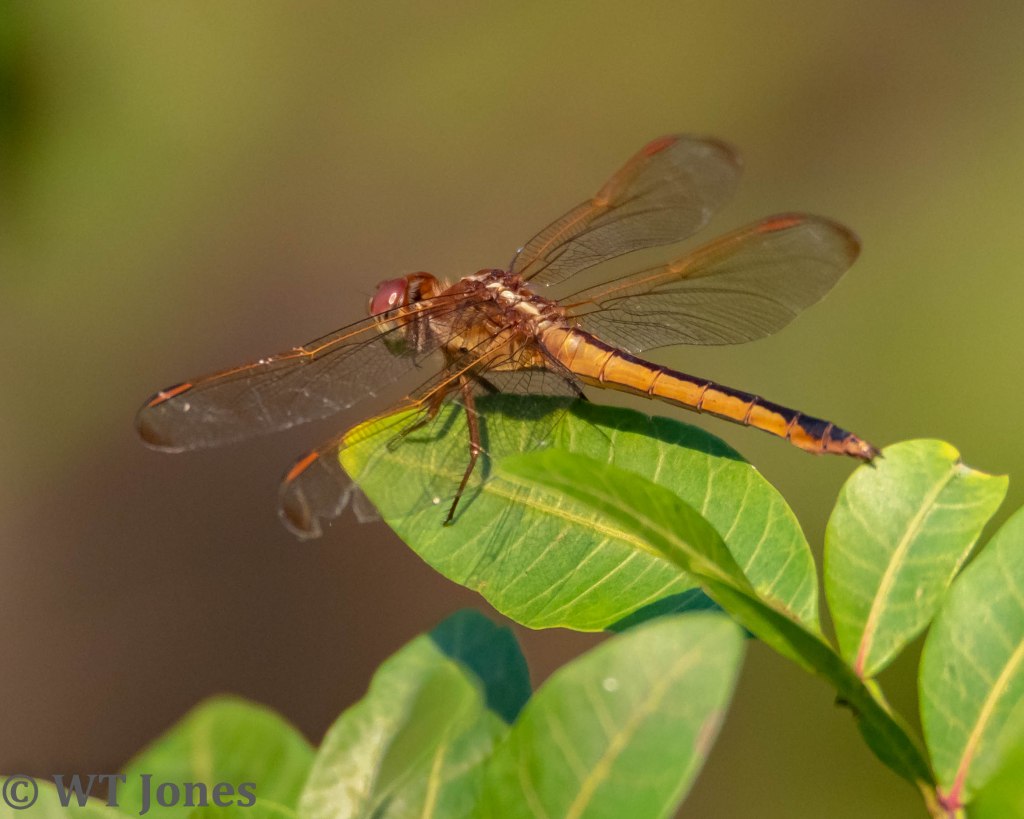
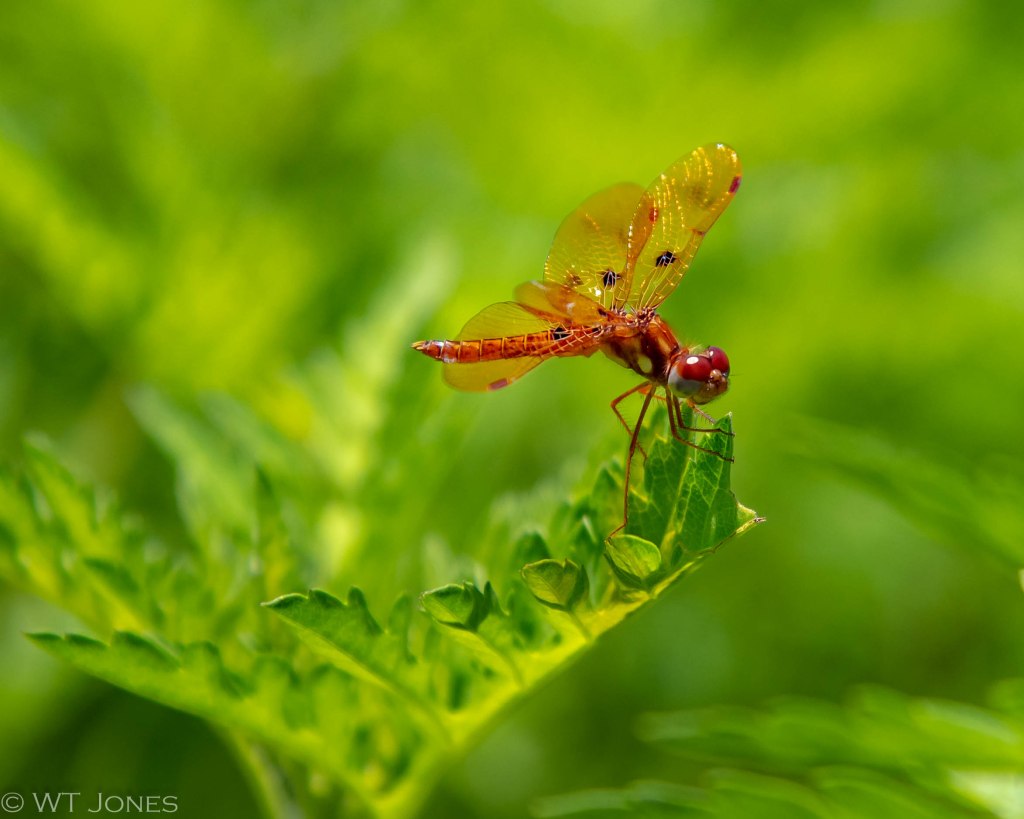
The wing edges of a Golden-winged Skimmer (Libellula auripennis) are reminiscent of fine filigree.
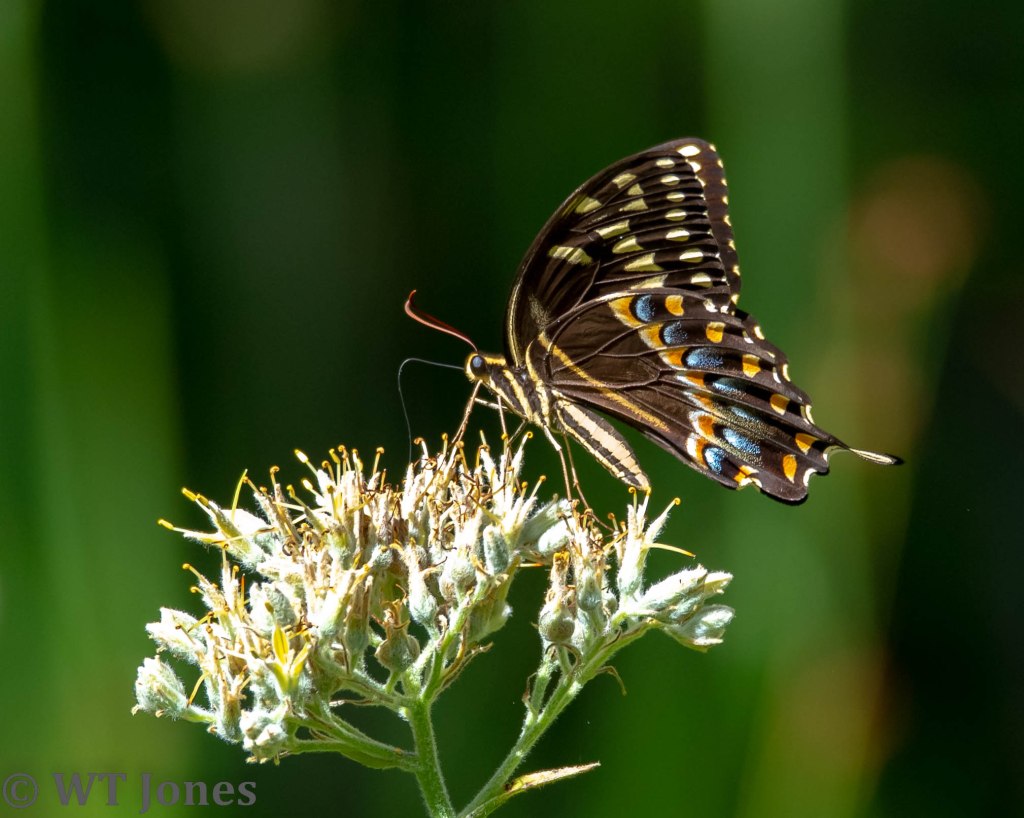
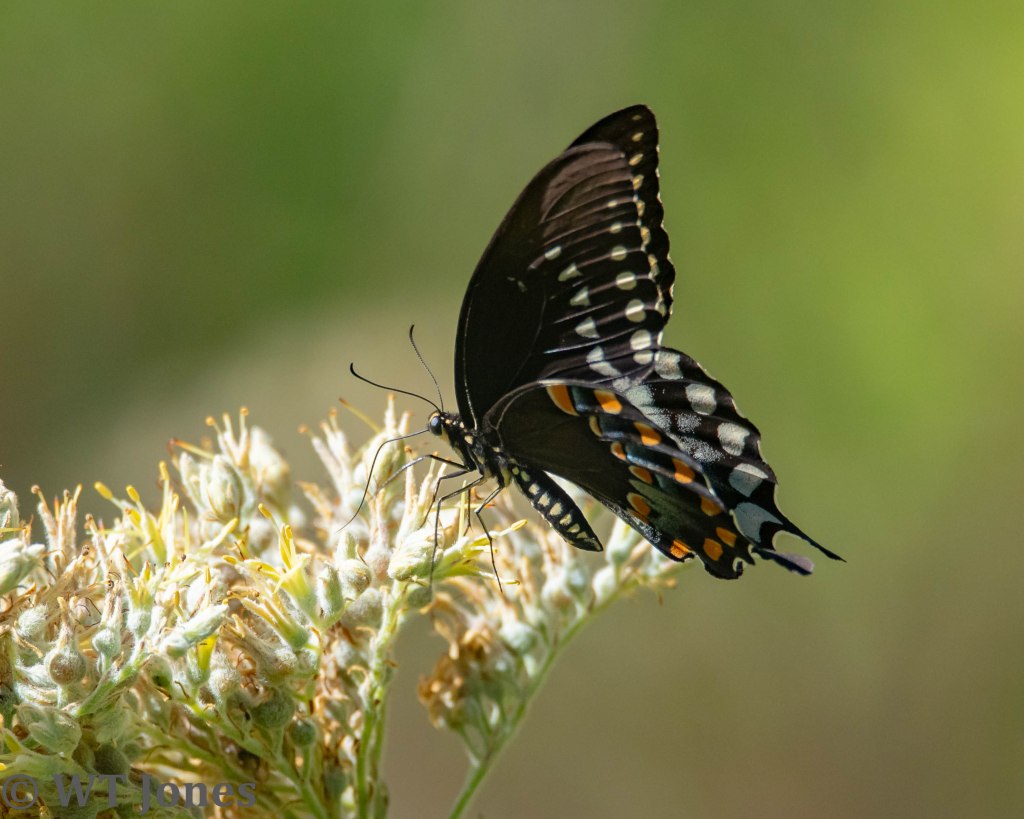
One of our larger butterflies, the Palamedes Swallowtail (Papilio palamedes) has distinctive stripes on its body as opposed to spots seen on other dark swallowtails. (The plant here is Carolina Redroot (Lachnanthes caroliana), extremely attractive to pollinators.)
I’m not certain which of these dragons was attempting to capture which, but it was fun to watch them for awhile. The first image is a Gray-green Clubtail (Arigomphus pallidus) and his worthy opponent is a male Eastern Pondhawk (Erythemis simplicicollis).


The Northern Cloudywing (Thorybes pylades) is a dark skipper we’ve only seen once before, about a mile from this spot.

We saw a few female Bar-winged Skimmers (Libellula axilena) during our visit but none of the dark-colored males. Next time.
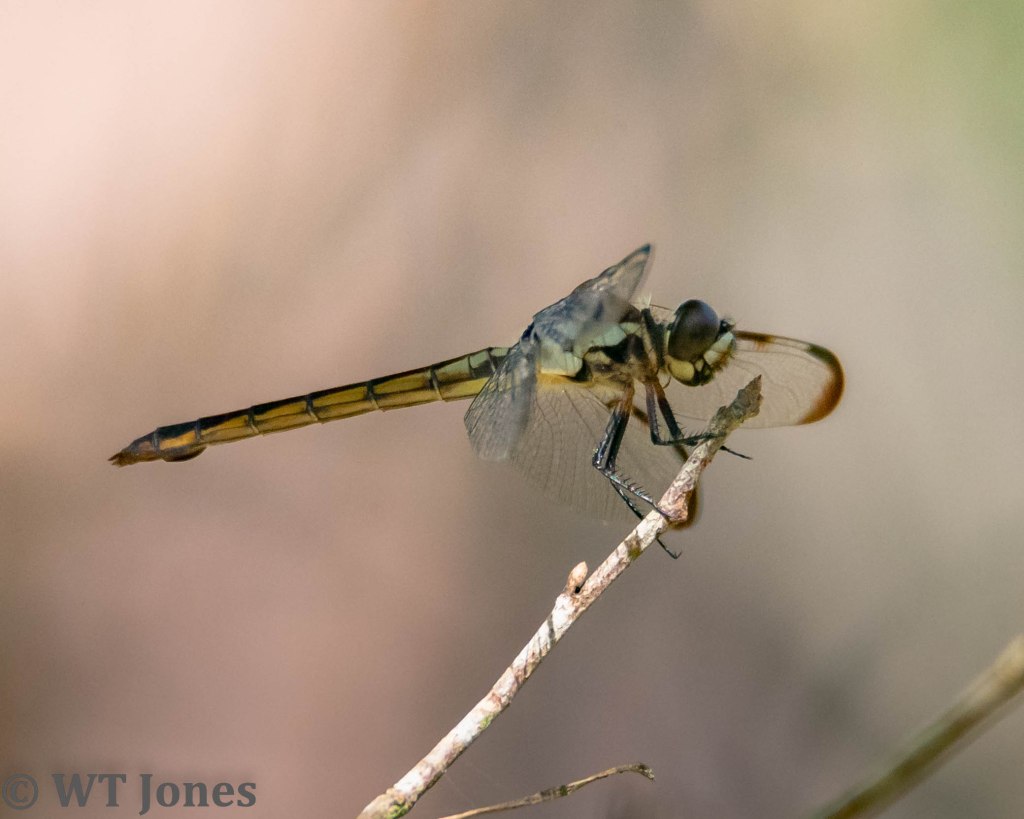
Another large butterfly, a Spicebush Swallowtail (Pterourus troilus), is distinctive for a minimal pattern on its dorsal side. Females (such as this one) have a dusting of blue on the median areas of the hind wing while males have a more greenish swash.

The forest in summer, especially here in Florida, is like our morning mug of coffee. Hot and steamy. If you’re willing to endure a little discomfort, there is a good chance the rewards will be more than worth the effort.
Enjoy your search for a natural place and come back for a visit!
Header Image: Red-shouldered Hawk
Summer is in full bloom here in gorgeous central Florida! We have high temperatures, so you won’t feel chilly, really high humidity to cleanse the pores of your skin, daily thunderstorms which are conveniently timed to coincide with your afternoon nap and plenty of the “Three B’s”: BIRDS, BLOOMS, BUGS!
(A kind individual in Ulaanbaatar recently asked: “Where ya been?”. Alas, an event called a “power surge” (not to be confused with political aspirations) resulted in a lack of said power being applied to our trusty computing device. We rushed the machine to the technological equivalent of an Emergency Room in the hope it could be saved. Evidently, some sort of matricide had taken the life of our “Mother Board”. I reckon the “Father Board” survived. After a small (cough, cough) reconstruction of hard/soft/other-ware, we are now back in the computing business! Sorry for not visiting blogs or producing any of our own. Not to worry! Although computer-less, we did not alter our exploration schedule so will be sharing bits and bobs as we are able.)
Today’s outing started and ended fairly early. By mid-morning, most living things begin to wilt at this time of year so short trips are in order. Sunrise among the lakes and tall cypress trees is pretty special. The calm water, morning flights of wading birds, night herons heading to their daytime roosts, Limpkins yelling at the sun, alligators staring from their nearly submerged positions – it is a wonderful reminder just how good life can be.
A walk down a grassy trail revealed insects beginning to become active as the sun dried the dew from their night-time perches. Dragonflies took notice. The whinny of a small Downy Woodpecker revealed her location overhead as she busied herself with probing anything that might hold an insect morsel. Glancing ahead, a Gray Squirrel foraged in the grass disturbing some small flying insects in the process. We appreciated the squirrel’s showing us where to point the camera!
Florida in summer is melon season! Sweet watermelon and cantaloupe by the lake, moonflowers still in bloom as the sun’s rays remind them it’s time to fold, the energetic song of a White-eyed Vireo, a vivid orange Gulf Fritillary – not a bad way to enjoy our breakfast.
The gorgeous day begged us to linger. So, we did. We are so weak.
Poor images cannot do justice to our actual experience. You should go and see for yourself!
No breeze at dawn and the calm water reflects the stately cypress trees with their sun-tainted beards of Spanish moss.

The early Green Heron gets the fish. Or frog. Or lizard. Or snake.

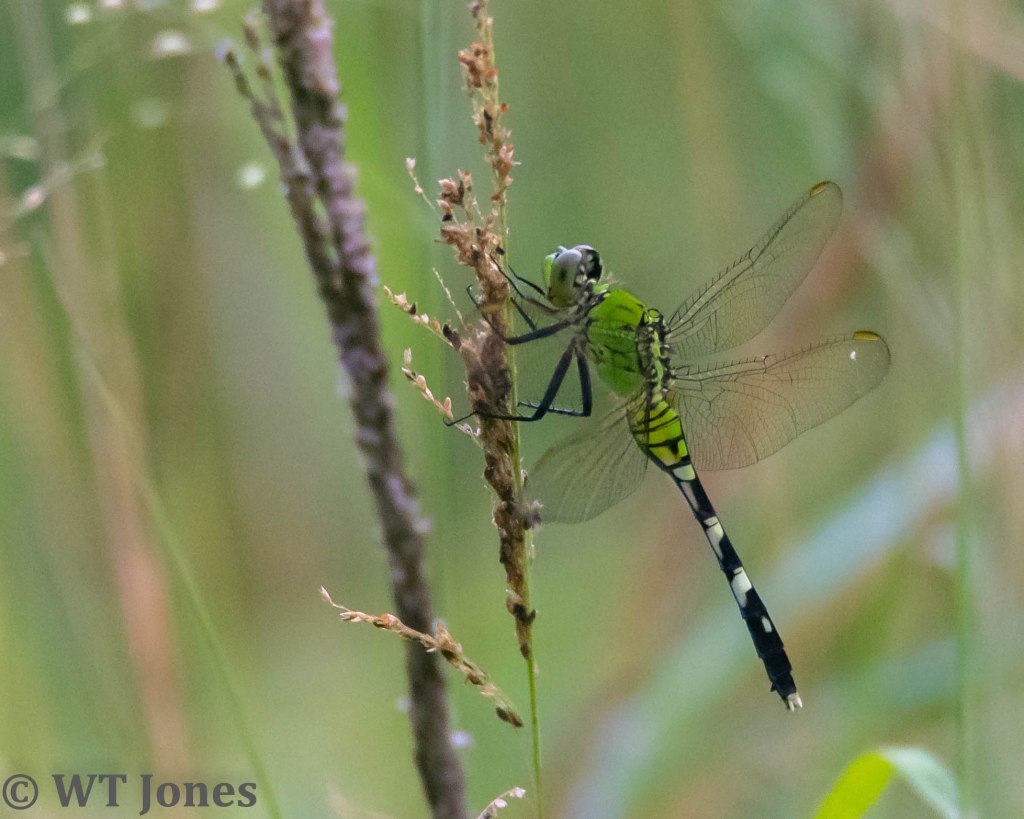
Like a richly colored emerald, a female Eastern Pondhawk (Erythemis simplicicollis) is alert to any movement which might be a meal.
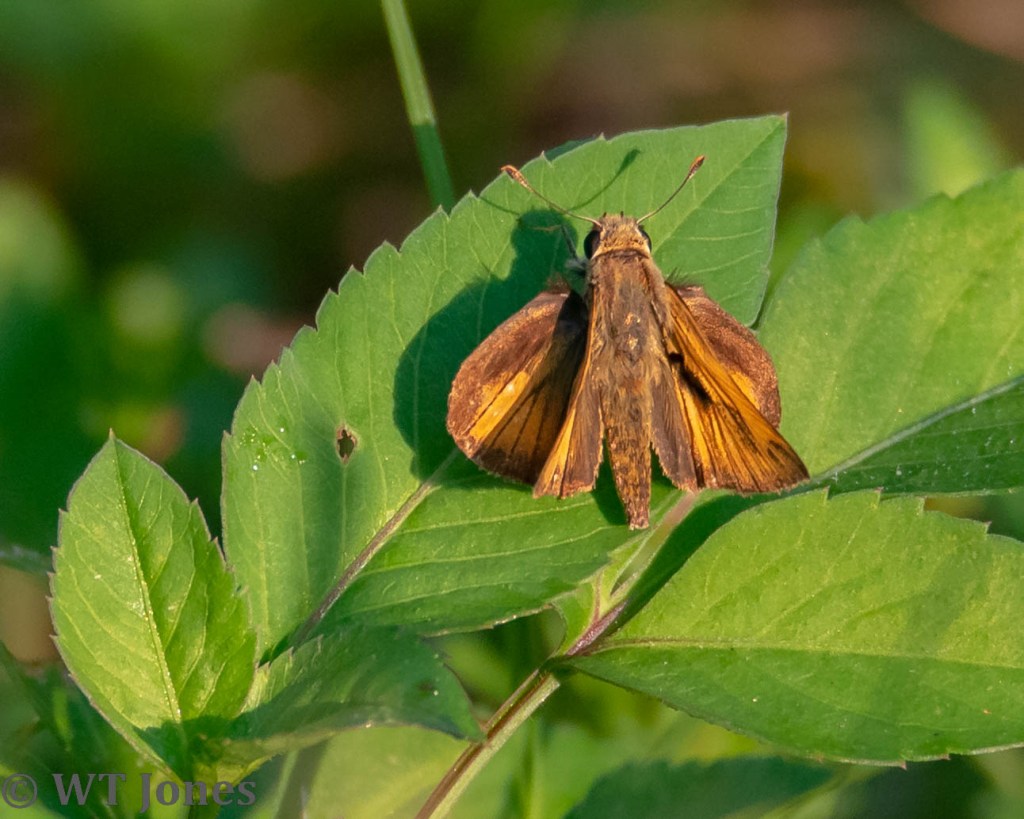
Grass Skippers give me fits. Spotting one usually begins a game of hide-and-seek as they dive down into the grass and disappear. Then, the little orange/brown things fly off in one direction, reverse course, veer one way then another – not a game for an old person to enjoy for long! My best guess on this one is a Whirlabout (Polites vibex). Other suggestions are very welcome.
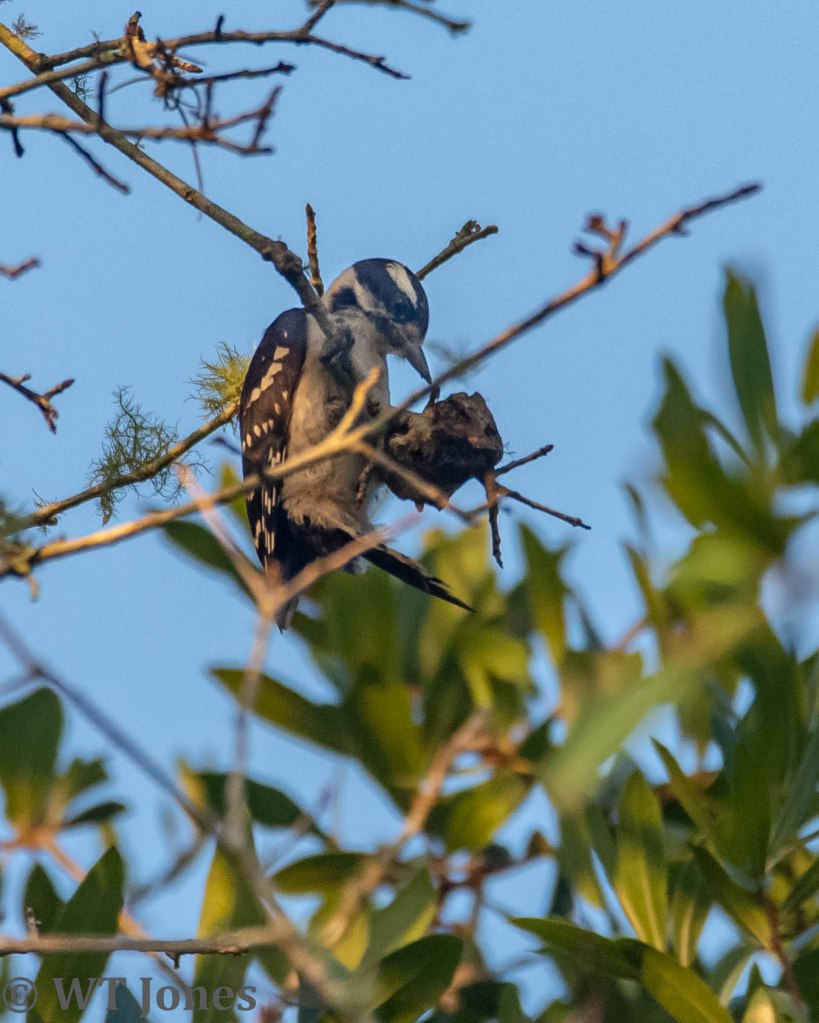
Small and almost non-stop in her search for food, a Downy Woodpecker examines what may be a tree gall.
When the bugs begin their commute to work, dragons help ease the amount of traffic. A female Needham’s Skimmer (Libellula needhami) is more than willing to assist in traffic control.
Gray Squirrels don’t spend much time in the open like this as raptors have a habit of showing up unannounced – and hungry.

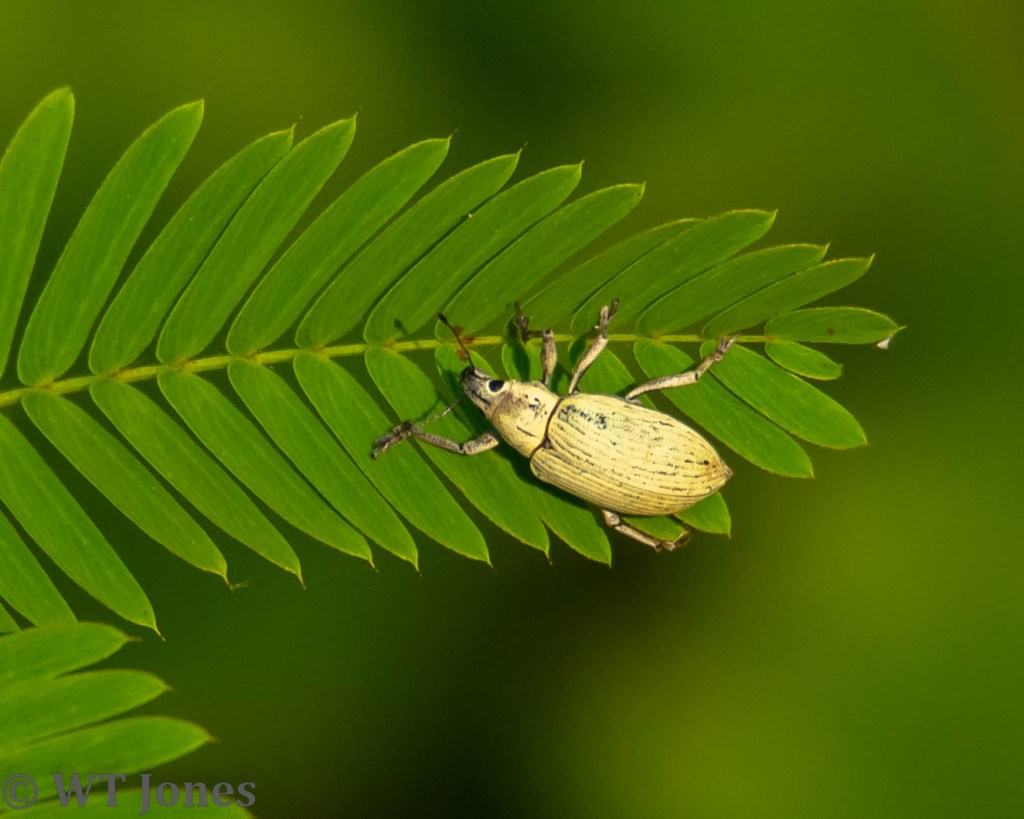
There certainly are a lot of insects on our planet! I believe this beetle is a Little Leaf Notcher (Artipus floridanus). Not a friend of our citrus growers.
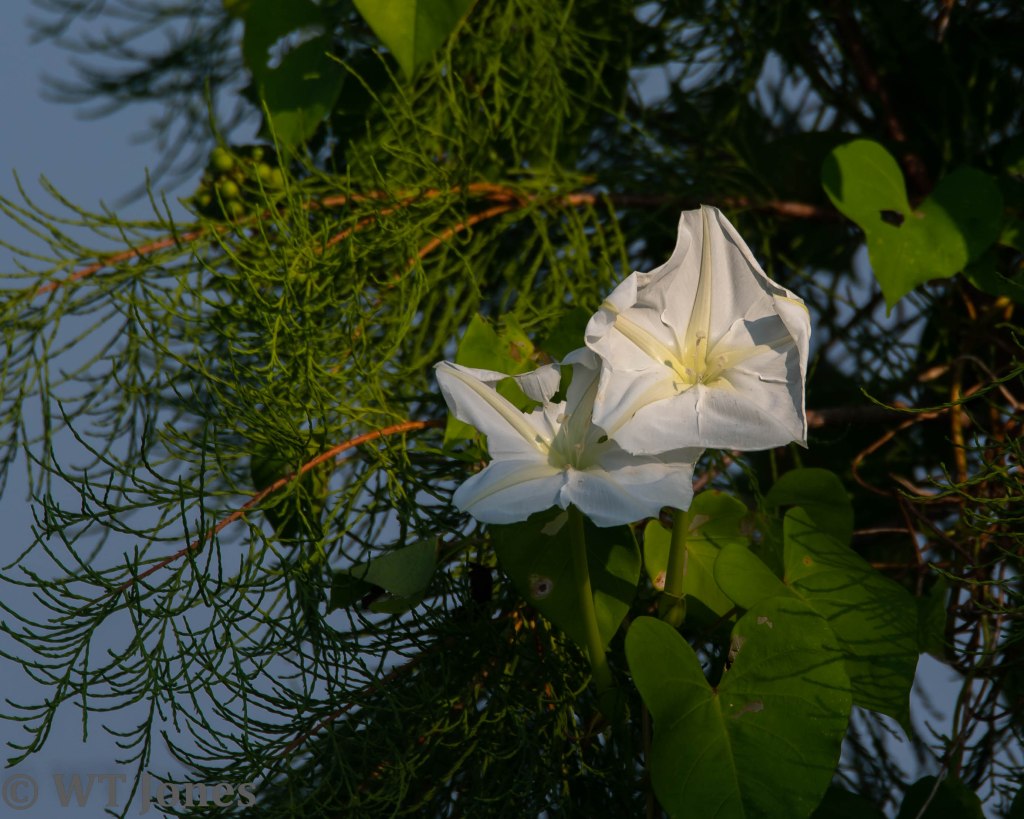
Some botanical references call these blooms Tropical White Morning-glory. I prefer the simpler (and, to me, more romantic) Moonflower. Call it what you will, Ipomoea alba is lovely. Go early. Sunlight causes them to wilt.
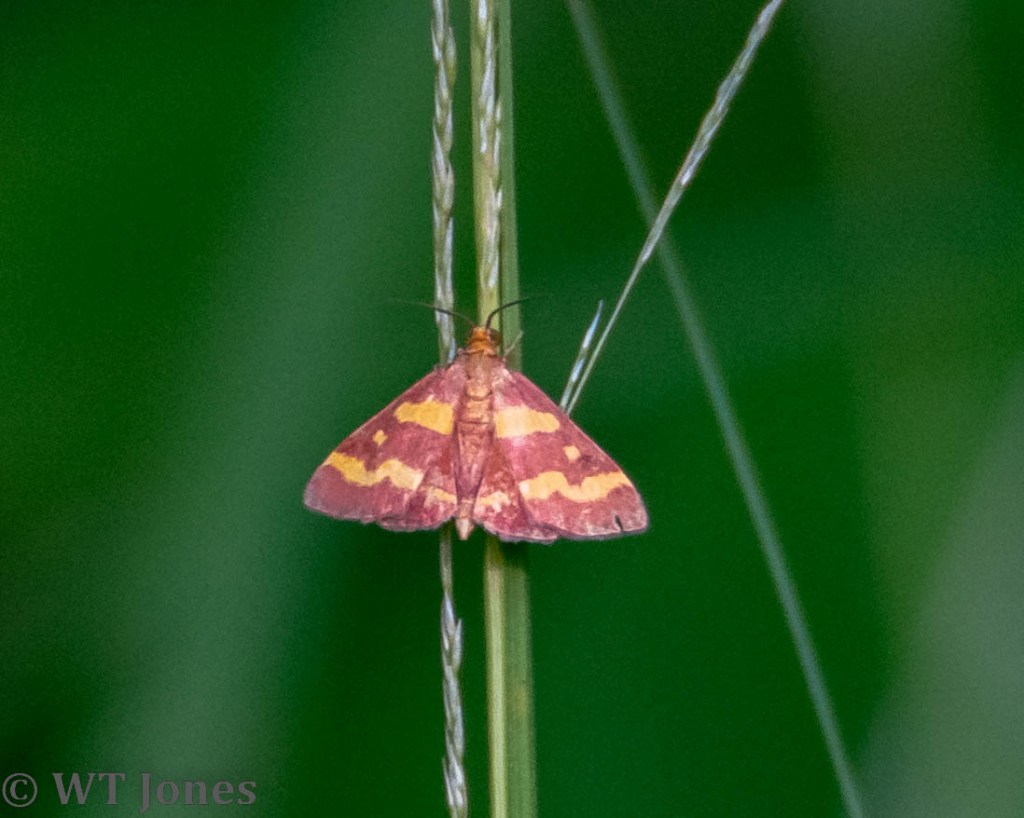
Tiny. Hard to see through the camera’s viewfinder. Worth the effort. Attractive, yes. But how can I not like a moth called a Coffee-loving Pyrausta (Pyrausta tyralis)?
There are around 3,000 species of skipper butterflies worldwide. Thankfully, only a fraction of that number live around here! A distinctive species has long “tails” and it is not unusual to find individuals with one or both tails missing (due mostly to a predator). This Dorantes Longtail (Urbanus dorantes) is missing a tail, but it doesn’t detract from its beauty at all.

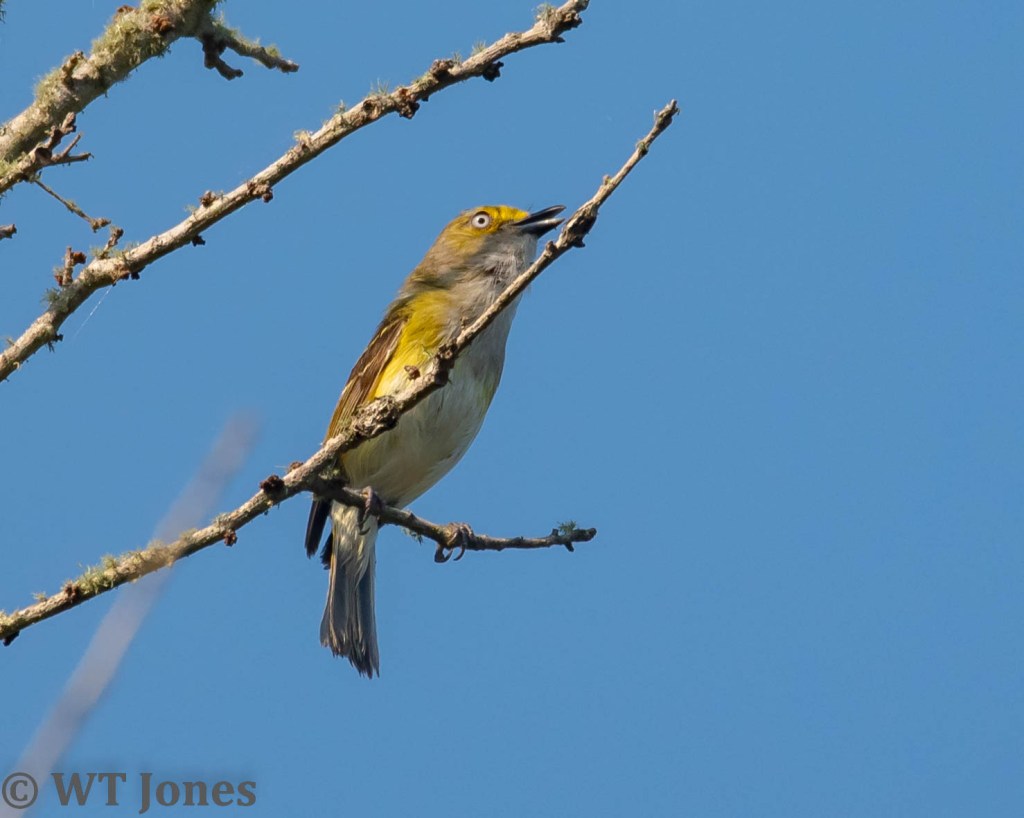
A common songbird year around here is the White-eyed Vireo. It would be hard to imagine a day’s outing without hearing this handsome bird’s distinctive call.
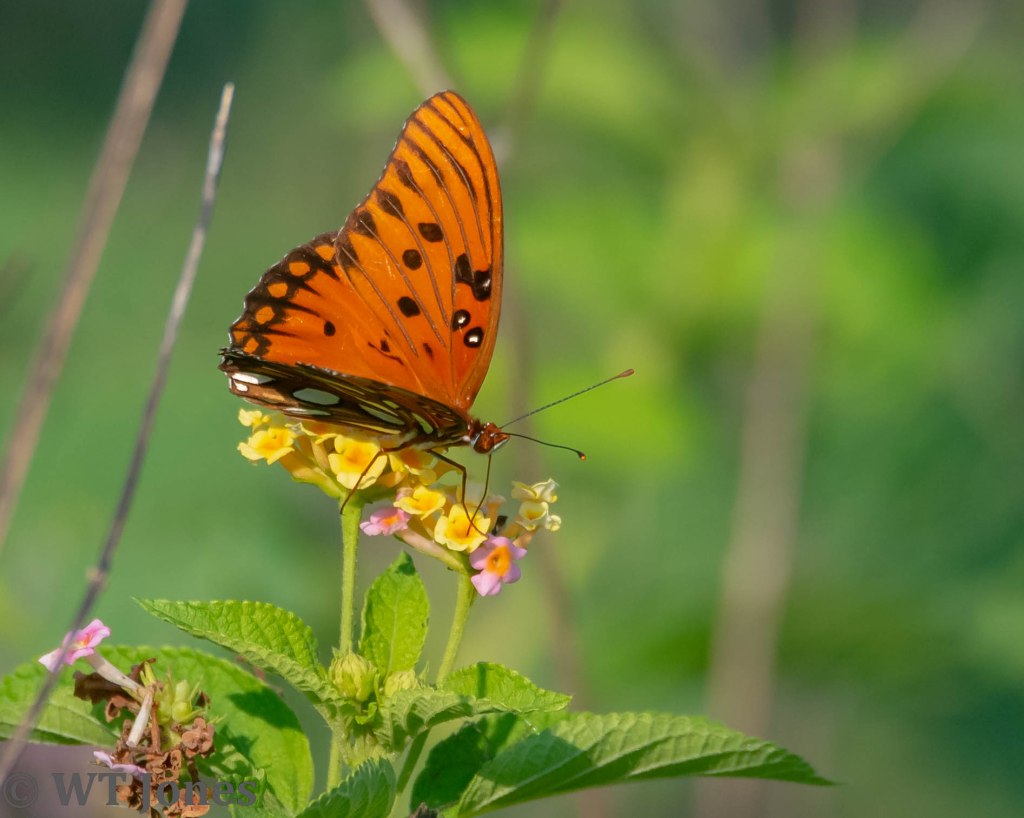
Roadsides, fields and forest edges are awash in orange lately. One of our most prolific butterflies, the Gulf Fritillary (Agraulis vanillae), has upper wings the color of our ripe oranges and underwings which resemble stained glass windows.
Another day in our tropical wonderland! Yeah, it’s hot and humid. Bugs are waiting to pierce your skin. Lightning strikes make you jump. Torrential rain may force you to take a detour. We love it.
Enjoy your search for a natural place and come back for a visit!
Computers are wonderful. Until they aren’t.
We hope to be back online soon.
Go outside! We can enjoy Nature without having to tell anyone. I know. Who knew?
Header Image: Hummingbird Clearwing (Hemaris thysbe)
“Those are some tall thistles!”
My mistress of understatement was right. Soon, I would be threading my way through that sticky forest and would discover most of these plants were two to three feet above head height. Did I mention they were sticky?
Our day began later than some as we were heading to one of Florida’s state parks. Apparently, adding the word “state” to a park’s name automatically entitles it to some regulatory status which precludes gates being unlocked until sensible government-paid workers have had a chance for adequate rest.
So, an hour-and-a-half after sunrise, we eased up to the ranger station, forked over our fee and headed off to explore Colt Creek State Park. Actually, the ranger on duty was extremely nice and even had a name which suited her radiant disposition: “Sunny“. She is an enthusiastic photographer and kindly suggested a few areas to search for our B3 specialties. (Birds, Blooms, Bugs)
It is now late spring or early summer, depending on which “authority” you would like to believe. It’s Florida, so heat, humidity and afternoon thunderstorms are now scheduled until – well, until they aren’t. Migratory birds are but a memory. Flowers seem to increase in number with each successive trip. A seemingly infinite inventory of insects await identification.
I know there are plenty of people (a majority, perhaps) who would be quite happy to drive through the park roads and thoroughly enjoy the sights and sounds of Nature. For some, that is all that’s needed. A day out of the house. A respite from the office, the news, the shopping – from life. And that is absolutely fine.
We are curious.
Gini and I have always had an innate curiosity about living things. As a younger lass, my gentle-natured partner in life discovered the fascinating world of dragonflies. She quickly learned that to simply grab one would result in being bitten. Not all that painful, but it resulted in the immediate release of said bug. Her persistence led to a stealthy, from-behind-approach which contributed to a high rate of successful captures. Those eyes! She was intrigued by the many facets and colors of Odonata eyes. When her Mother found her collection of dragonfly heads secreted away in a matchbox and made her dispose of them, she was crushed. (Even today, I must watch her closely as I focus the camera on a Skimmer else it would soon become headless.)
My own budding naturalist tendencies were more diverse. A matchbox was insufficient to house my findings, so a shoebox (or three) under the bed held such collectibles as snake skins, softshell turtle eggs, dried lizards and frogs, birds’ nests and some cool-looking spiky white things I found in the logs on the patio. Turns out those were the eggs of a Black-Widow Spider. Mothers are relentless detectives. Mine eventually followed her nose around the bedroom and, can you believe it, she made me dump my hard-earned treasure in the trash can (outside)! Yes, I, too, was crushed.
Fortunately, we both survived our overbearing Nature-hating Mothers, ultimately found each other and have lived happily ever after searching the globe for Natural treasures!
Oh, here are some now.
This is a young Eastern Lubber Grasshopper (Romalea microptera). These large insects go through five or six sub-stages (called instars) as they develop from nymphs to adults. This one is in its fourth or fifth instar based on the length of its new wings and overall size. Adults can vary in color from all black, mostly dark, mostly yellow or light yellow/orange. They range throughout the southeastern U.S. coastal plain states.

Our early morning was brightened by the sight of a patch of bright yellow lilies. Bandanna-of-the-Everglades (Canna flaccida) can be found in many wetland areas and, despite its common name, grows in several southeastern U.S. states.

These are not cones on this cypress tree. They are galls caused by a tiny midge fly (Taxodiomyia cupressiananassa). Although they can become unsightly, they don’t really cause much damage to the tree and, fortunately, they have many predators who help keep their population in check. Due to the high number of natural predators, insecticide treatment is not recommended.

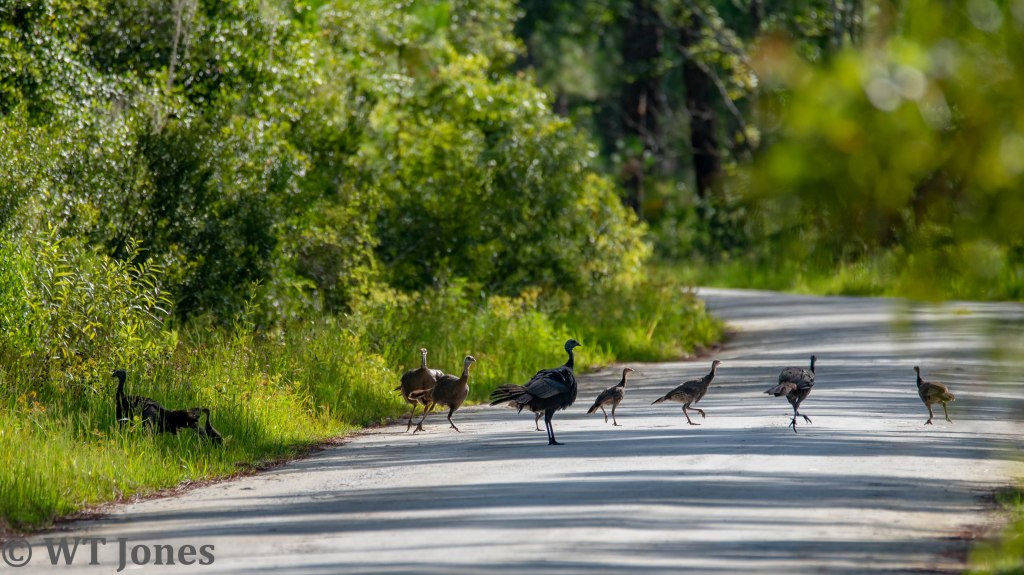
Why did the Wild Turkey cross the road? I have no idea but it certainly wasn’t to provide a better opportunity for the slow-to-react picture-taker!

One never knows what might be around the next bend in the path. These White-tailed Deer were at least as surprised as we were!

The warm morning sun began to dry the vegetation enough to encourage insects to become very active. A tall thistle makes a perfect lookout spot for a hungry Carolina Saddlebags (Tramea carolina).

Nesting season keeps parents very busy trying to feed new hungry chicks. A Great Crested Flycatcher didn’t stay still for long, scooping up anything resembling protein and zooming back home.

The state butterfly for Florida, Zebra Heliconian (Heliconius charithonia), is quite a beauty.

Half buried in a thistle bloom is a species of Flower Beetle (Trichiotinus spp.). The nectar is sweet and pollen shall be spread.

A female Bar-winged Skimmer (Libellula axilena) is more colorful than her overall dark-colored male counterpart.

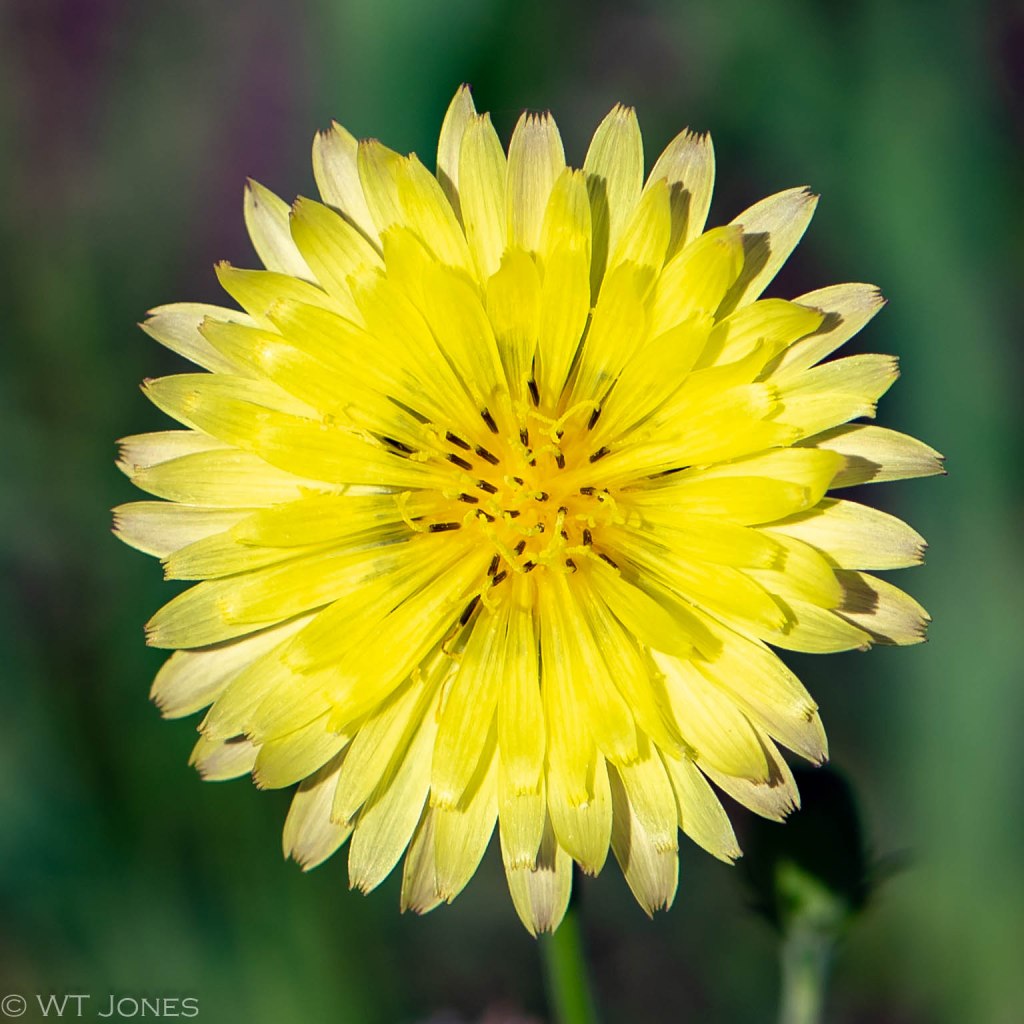
It would be easy to pass by a lone stem supporting a single pale blossom in an open field. Upon closer inspection, a Carolina Desert-Chicory (Pyrrhopappus carolinianus) reveals an explosion of yellow details sufficient to brighten any day!

Thistles. Who knew they were so attractive to so many insects? This Bumble Bee for one. Me, for another.

Reaching new heights for surveillance, a Red Saddlebags (Tramea onusta) is easily eight feet high. This particular thistle species is Nuttall’s Thistle (Cirsium nuttallii). Our area has one other common member of this family, Purple Thistle (Cirsium horridulum). C. horridulum seldom exceeds two or three feet in height wheras C. nuttalli often grows to more than eight feet. Additionally, C. horridulum has spiny bracts at the base of the flower and C. nuttalli does not. (There will be a test later, so study hard.)

One of our favorite yellow blooms, with its starched-look petals and deep purple center, is the Mexican Pricklypoppy (Argemone mexicana).

Small and quick, this time of year produces an incredible number of Blue Dasher (Pachydiplax longipennis) dragonflies. Whether you spot the female with her reddish-brown eyes and yellow-and-black body or the male with bright green eyes dressed in his powder-blue suit, they are quite distinctive.


We had hoped to find this next subject today as we have seen it here in years past. Fortune smiled. The Hummingbird Clearwing (Hemaris thysbe) is a large moth which enjoys searching for nectar during the daytime. They love thistles. What a coincidence!


Found in several states of the southeastern U.S. coastal plain, the Palamedes Swallowtail (Papilio palamedes) is one of our larger dark-colored swallowtails. That guy Mr. Linnaeus loved his Greek mythology and Palamedes was one of the heroes of the Trojan War. Papilio is the Latin word for butterfly.

Utility lines are not pretty. An Eastern Bluebird is.

Purple seemed to be everywhere we looked today. At the edge of a lake, Pickerelweed (Pontederia cordata) was in bloom.

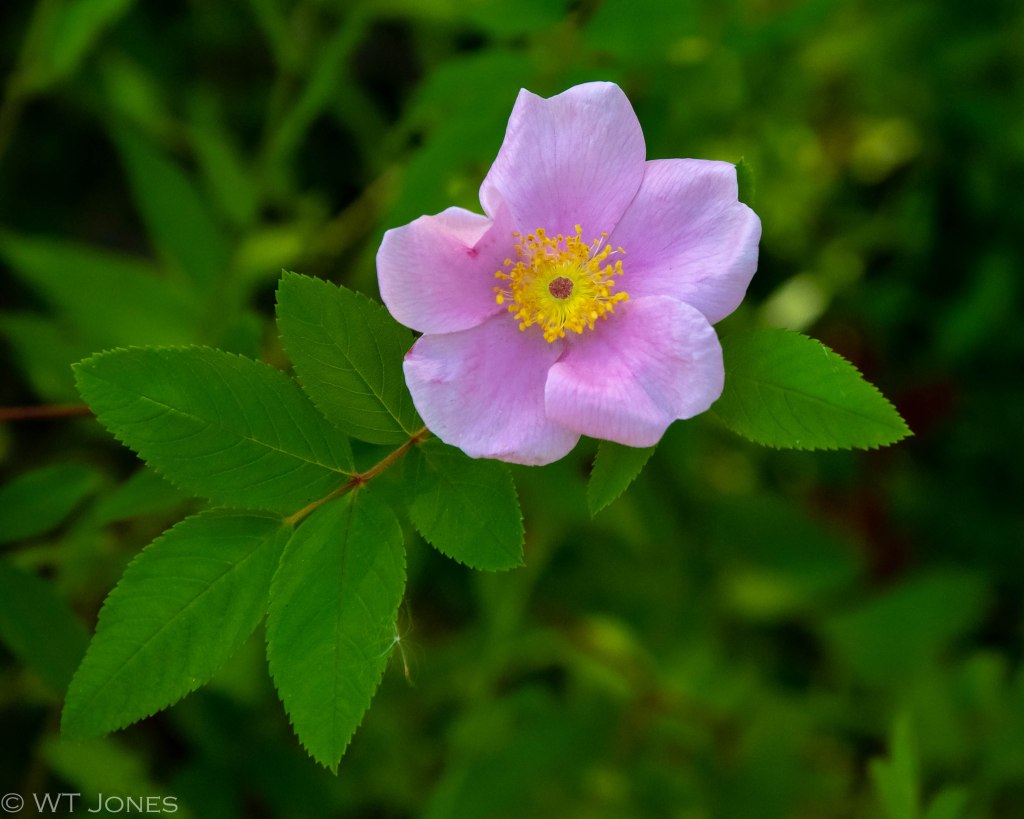
A rose by any other name, would still be pretty thorny, and yet, beautiful. Swamp Rose (Rosa palustris) is no exception. This particular specimen was about six feet tall and there were several bushes spread out over 20 feet. Very mean-looking thorns made me thankful for a zoom lens.
We were evidently born with some sort of curiosity gene which has driven us to explore and ask questions about Nature. When we stop asking questions, it will be time to seek professional care. Go outside! Stay curious!
Enjoy your search for a natural place and come back for a visit!
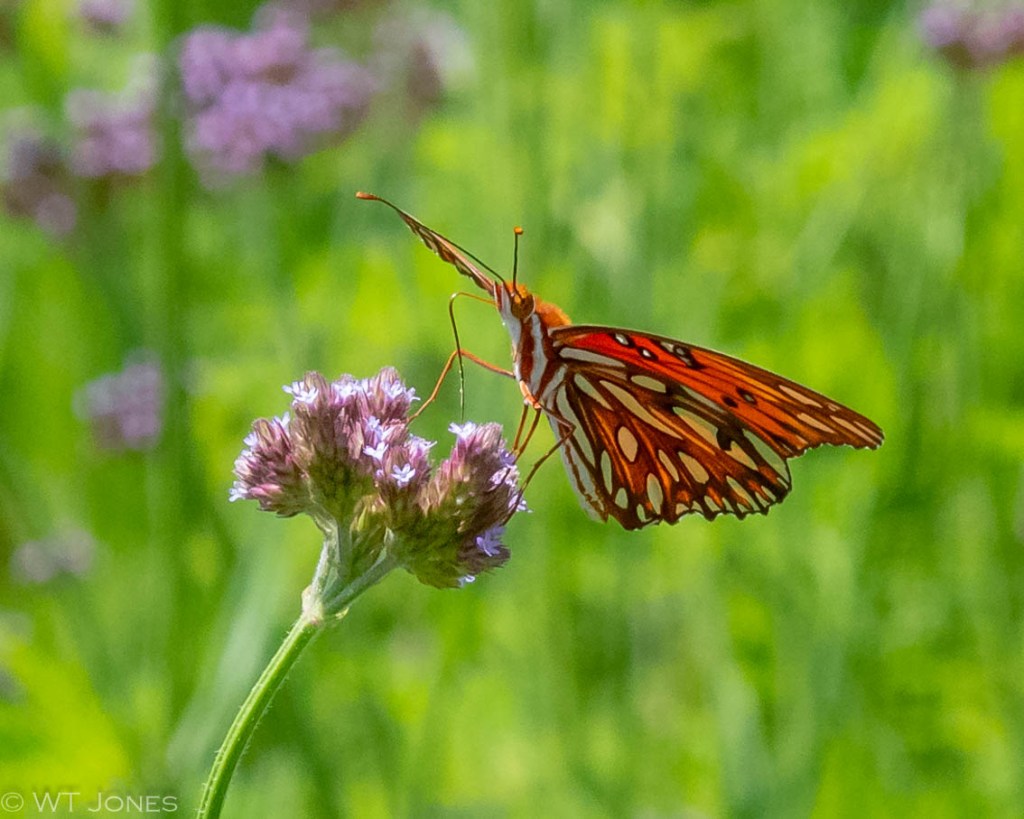
Header Image: Gulf Fritillary (Agraulis vanillae) on Brazilian Vervain (Verbena brasiliensis)
Sweet, tart and juicy slices of tangerine were refreshing as we rested on the shore of the lake a couple of hours after sunrise. We had already seen a lot. New bird babies, morning flowers in bloom, ducks flying overhead and now that the dew was drying from the grass, insects were beginning their day.
Earlier, we entered the Tenoroc Public Use Area and I politely asked Gini which way she would like to go. “Oh, it doesn’t much matter.” I seemed to recall a similar exchange between Alice and the Cheshire Cat.*
The good news is, at this particular location, it really DOESN’T matter which way we go. We always seem to find good things. Excellent habitat helps.
This morning we really enjoyed flowers blooming all over the place. A little warmer weather plus rainfall certainly encourages new growth! Almost every Osprey nest (we counted nine) had one or two chicks yelling for more food. Vireos and Northern Parulas were singing non-stop. Swallow-tailed Kites flew low over the open fields with that lilting flight as they picked off flying insects. Our regular cast of characters were very active. It might seem that we would become bored seeing the same things over and over. I guess we are easily entertained.
Oh, and a new discovery! More on that later.
For now, we shall finish breakfast and enjoy the sight of a small Osprey chick alone in a huge nest calling for someone, anyone to “FEED ME!!”.
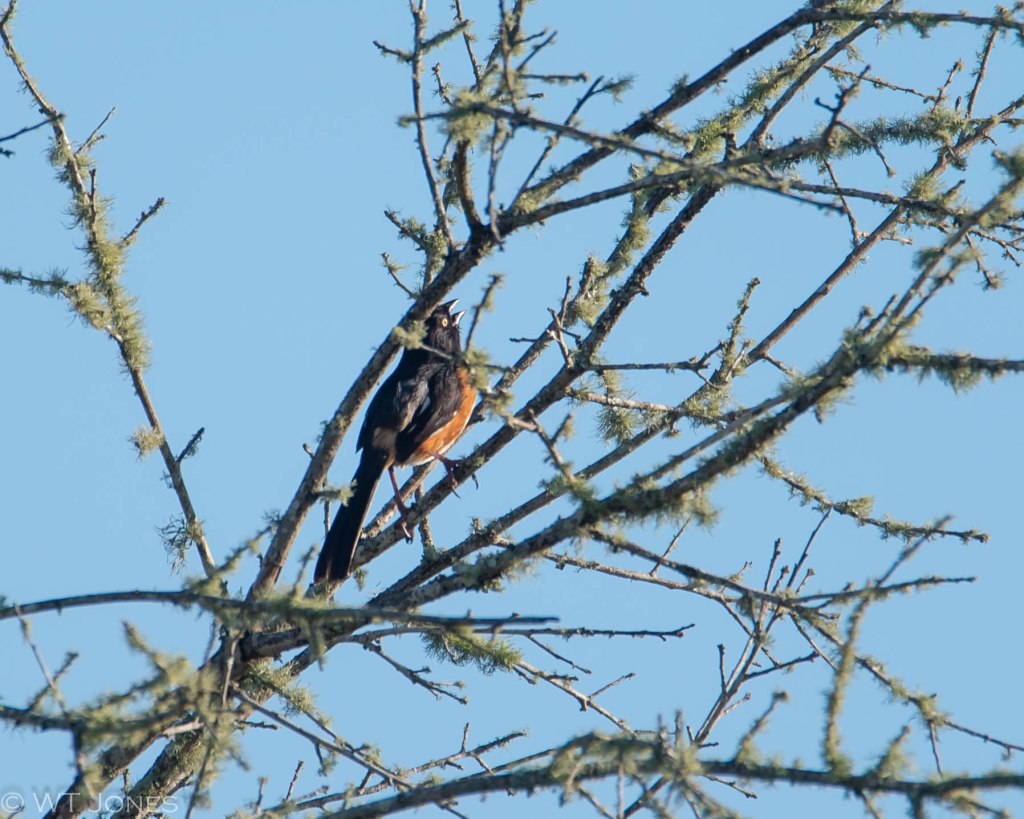
One of the first sights and sounds of our morning was an Eastern Towhee calling loudly. It’s easy to forget this colorful bird is a sparrow.
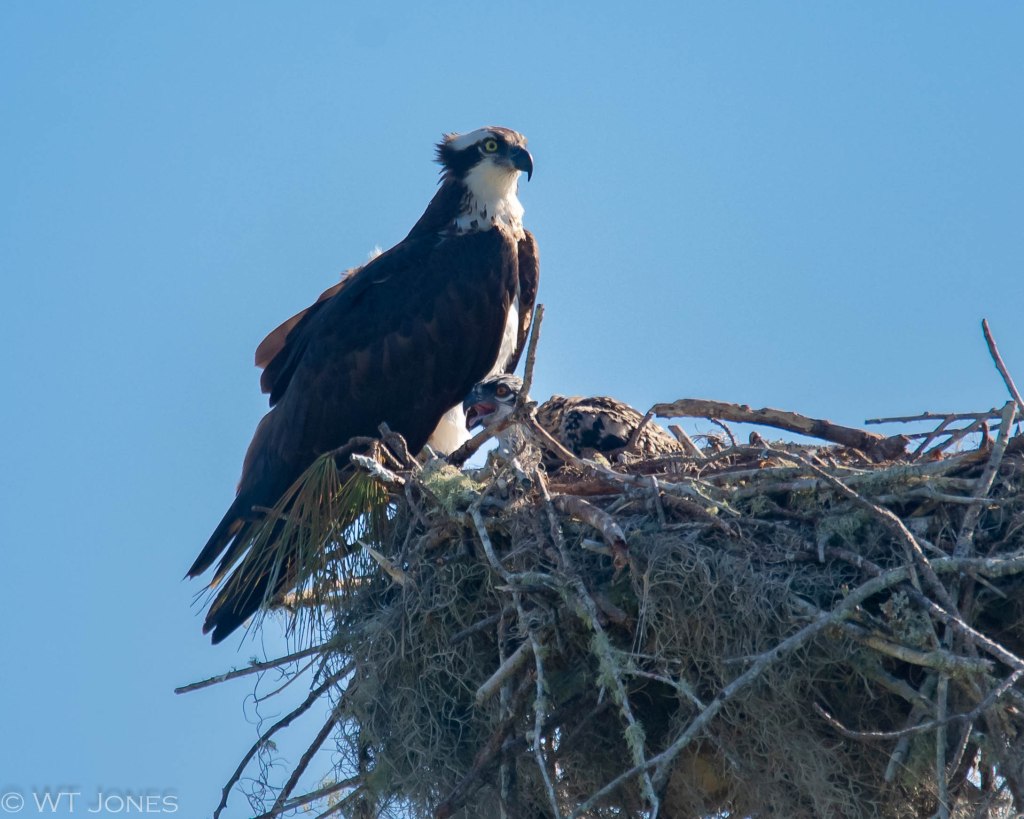
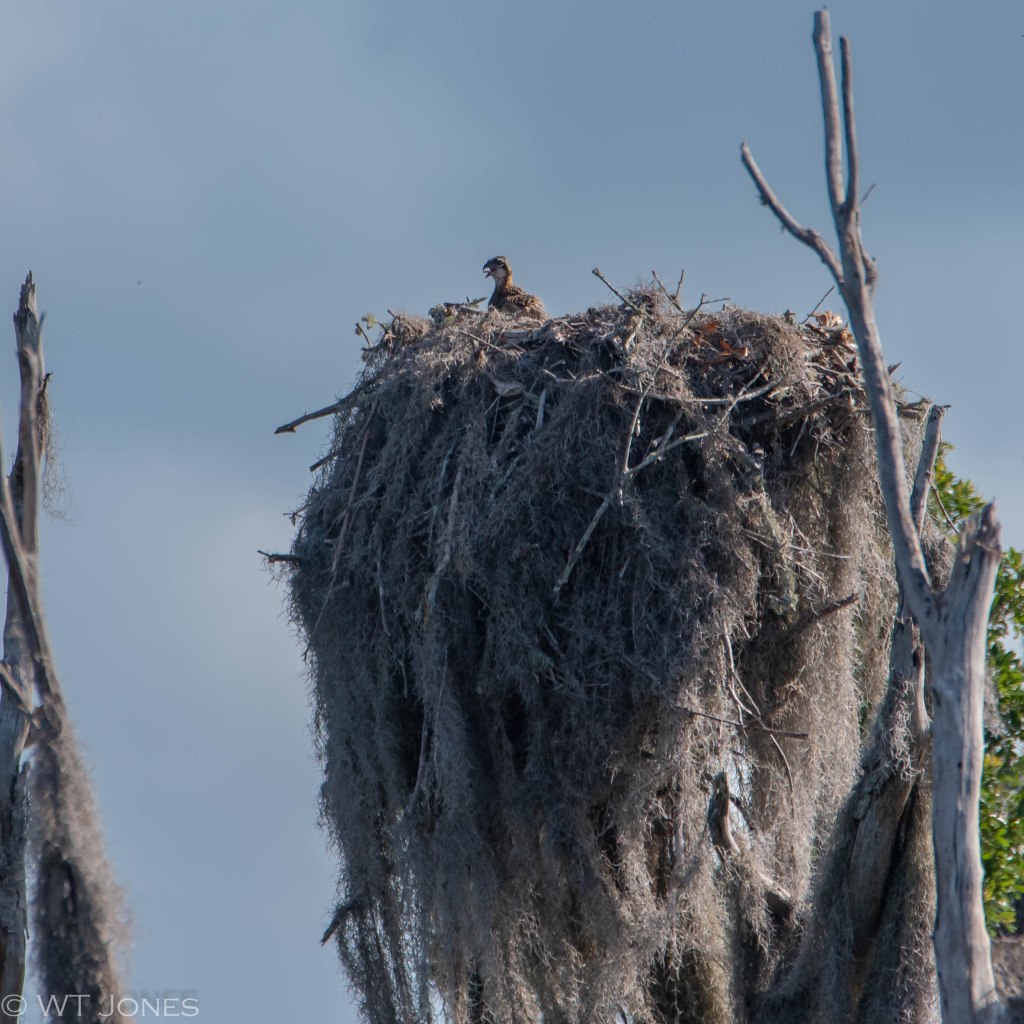
It’s a good thing this area contains plenty of fish to feed all the new little Ospreys! The chick in the first image leans on Mom as they wait for Dad to return from the fishmonger. In the second image, a lone chick is in what may be the largest Osprey nest we’ve ever seen.
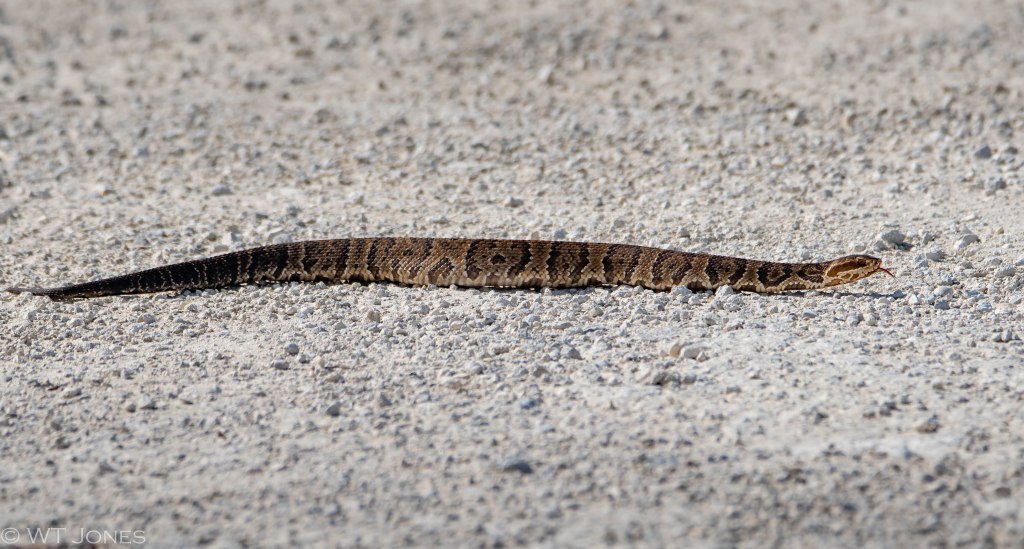
Judging by the position of this Water Moccasin in relation to where I was at the time, it could only have gotten there by crawling by my feet as I was looking through the bins at a woodpecker. Adrenaline delayed.
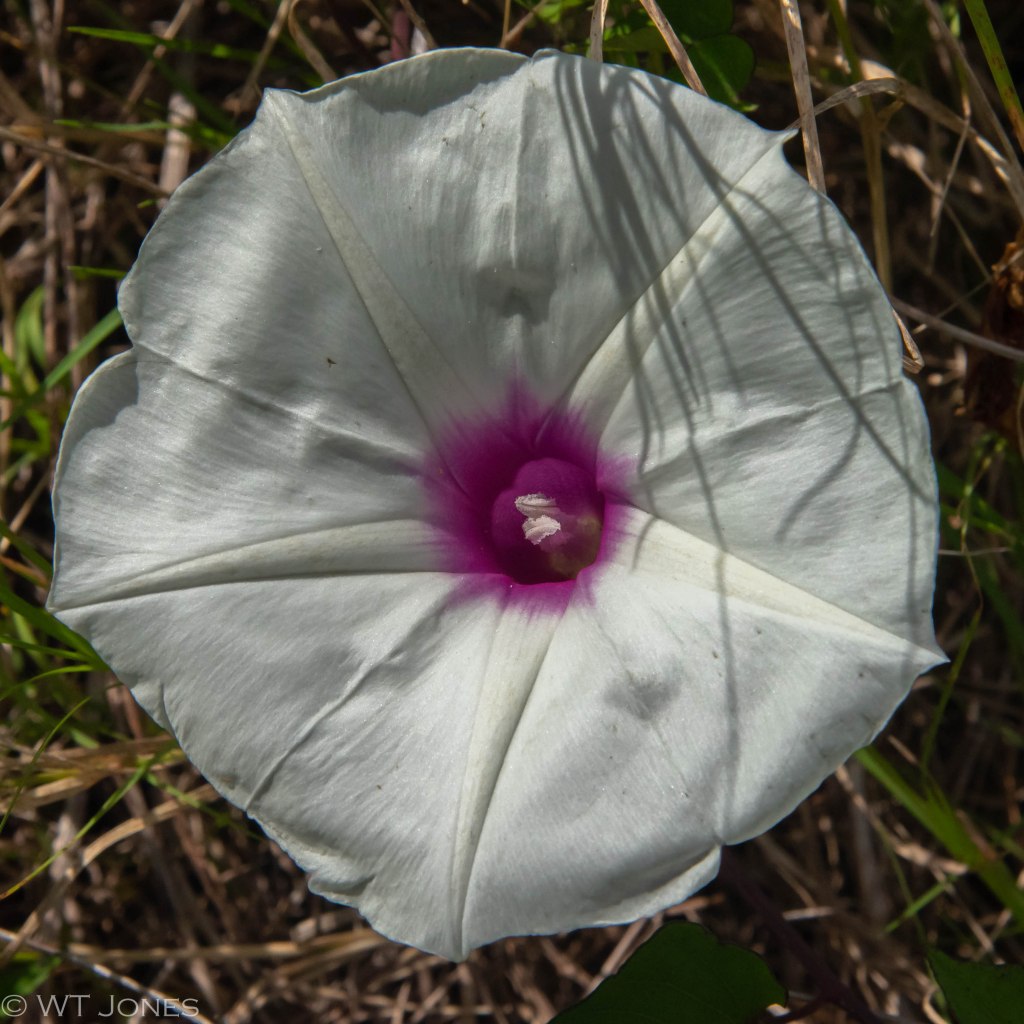
I haven’t been able to find a very good explanation of why this gorgeous flower is called Man-of-the-Earth (Ipomoea pandurata), but that certainly doesn’t detract from its beauty. It has also been called Wild Sweet Potato.

Nothing dresses up a drab brown field of weeds like a sprinkling of colorful Indian Blanket (Gaillardia pulchella).


Okay, throw in some bright yellow splashes of Pricklypear (Opuntia spp.) and the drabness almost completely disappears. The second image has a visitor, a Bee-like Flower Scarab (Trichiotinus spp.).


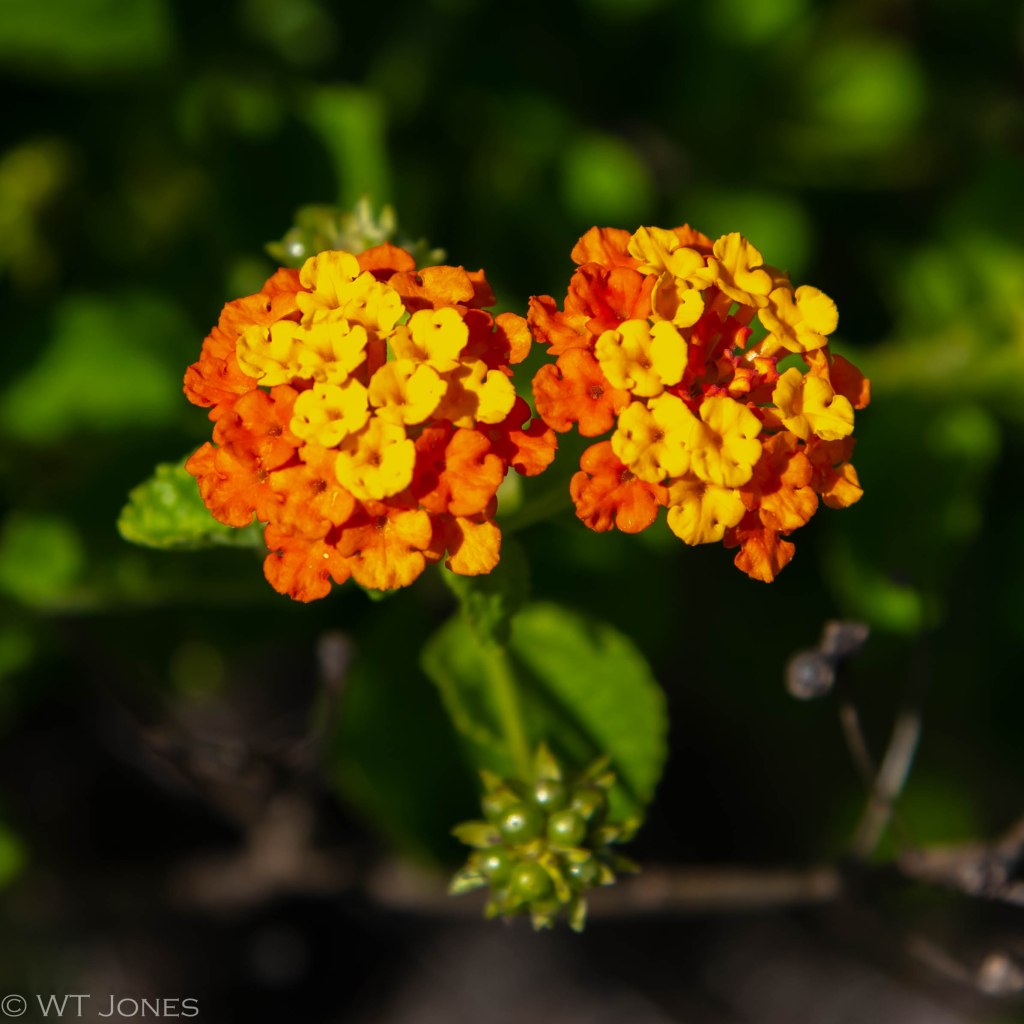
What? Not enough color? A few bushes of Lantana (Lantana strigocamara) added to the scene and drabness has been forgotten.
Heading from one lake to another, a Bald Eagle flying low is very impressive.

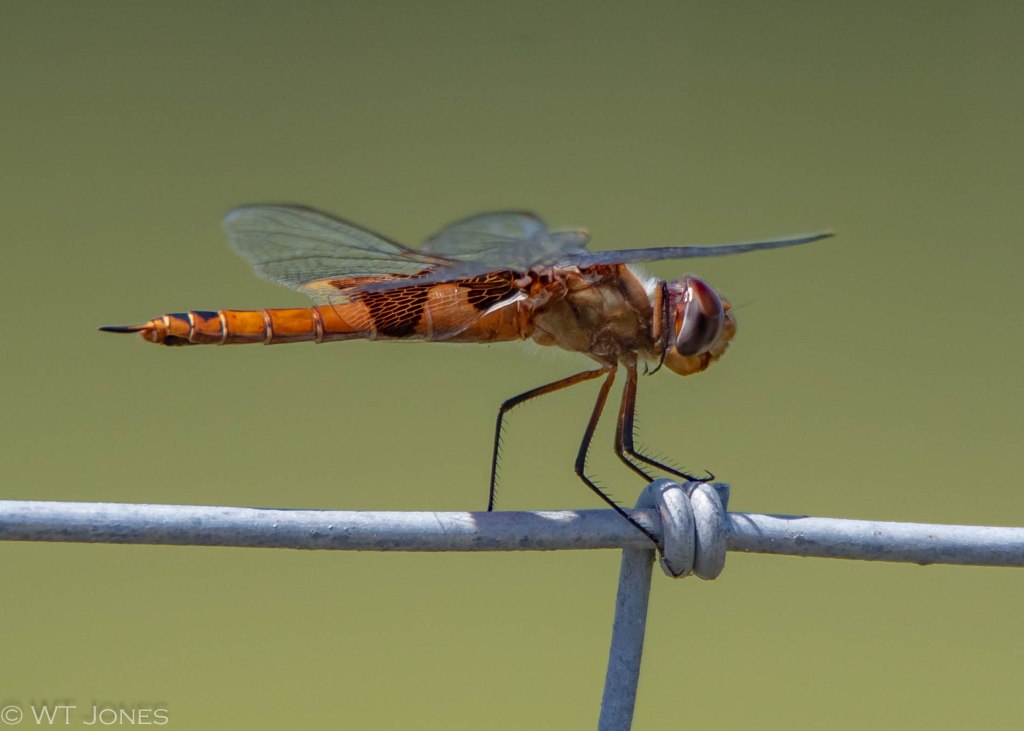
Good fences make good perches. (Sorry, Mr. Frost.) A Red Saddlebags (Tramea onusta) likes the view from his bit of fence and it’s a great launching pad when brunch flies by.
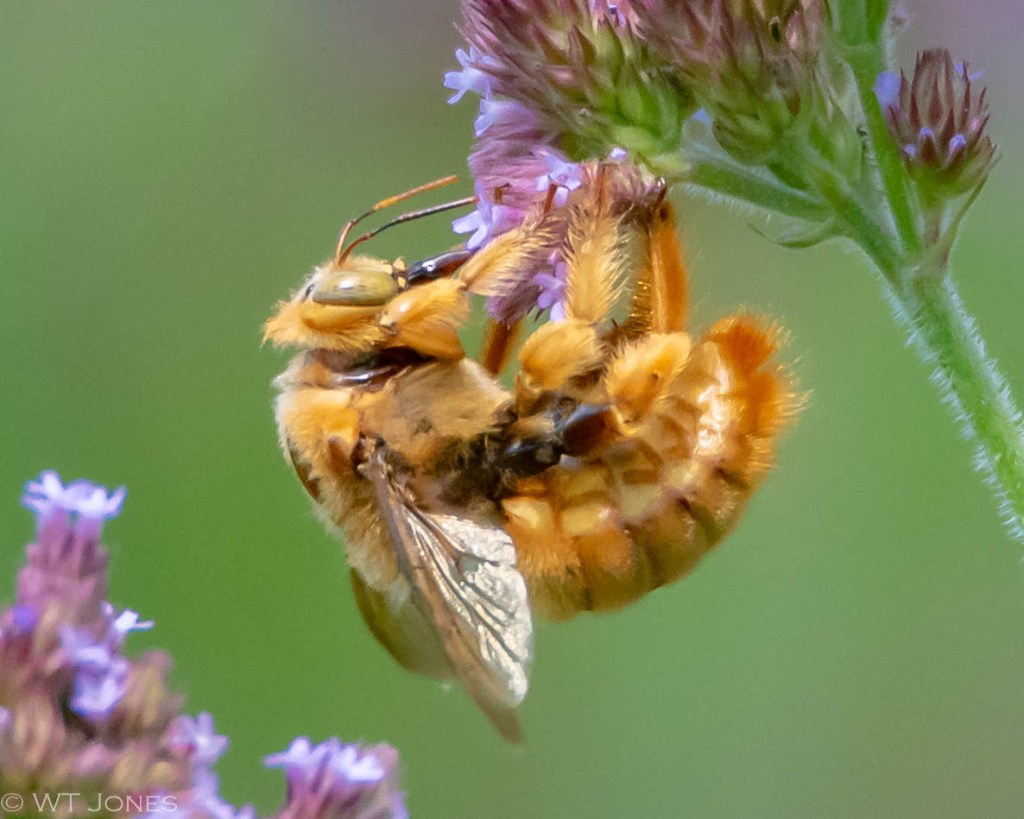
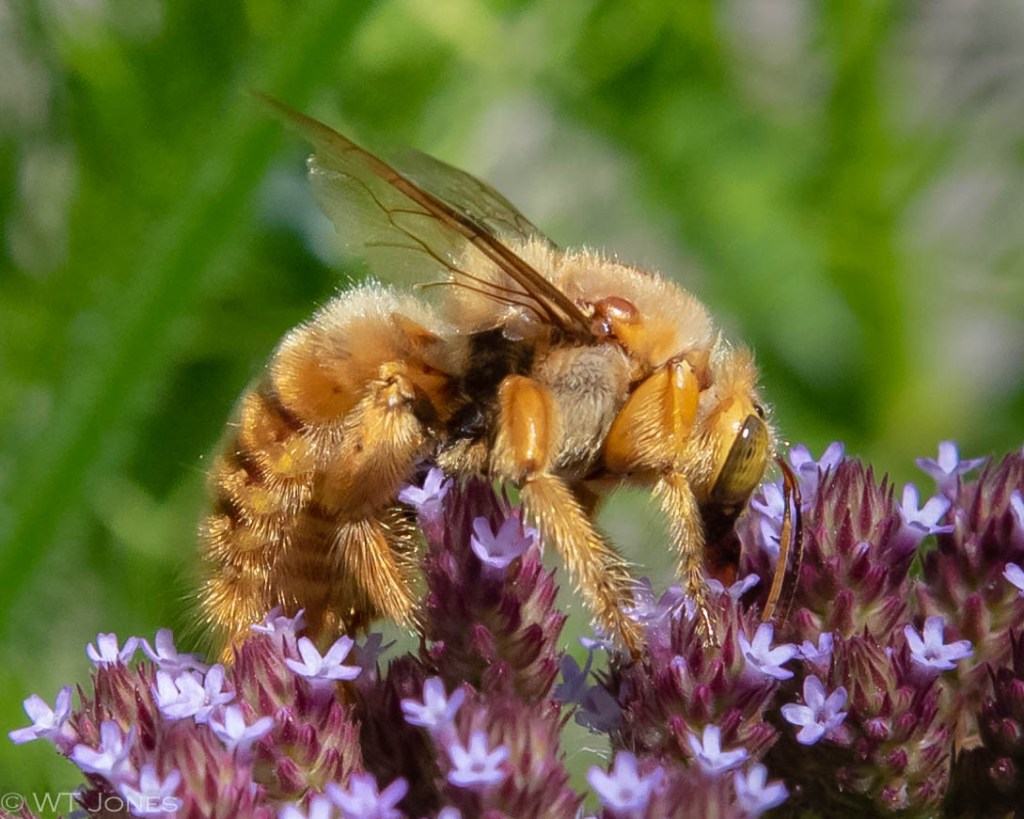
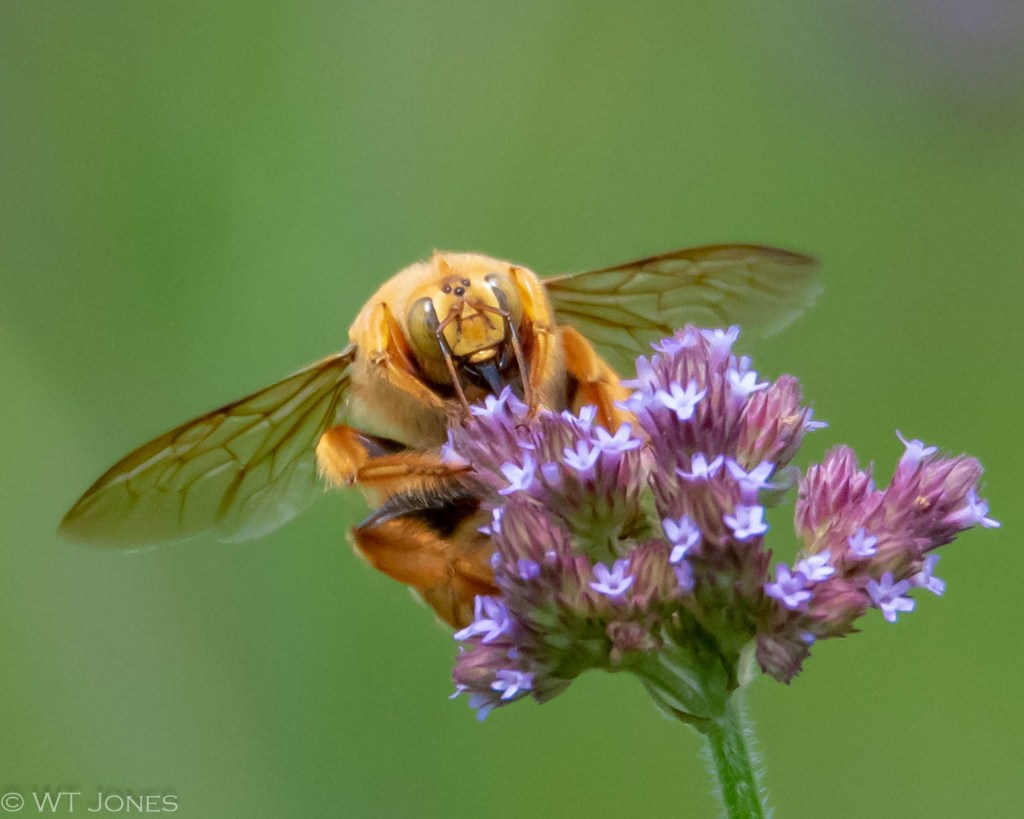
A brand new bug! At first, due to its size, I thought it was a Hummingbird Moth. Then I got a good look at it. All gold?? A bee?? It was larger than a nearby Bumble Bee. I wasn’t aware of anything like this. After a bit of research, it appears this was a Carpenter Bee of the Xylocopa species. This particular bee has only been seen a few times east of the Rocky Mountains or outside Mexico. Not sure if it has been reported in our county before. He was very accommodating! The folks at BugGuide.net note this as: “Xylocopa (Large Carpenter Bee) (unidentified species likely adventive in Florida)”.
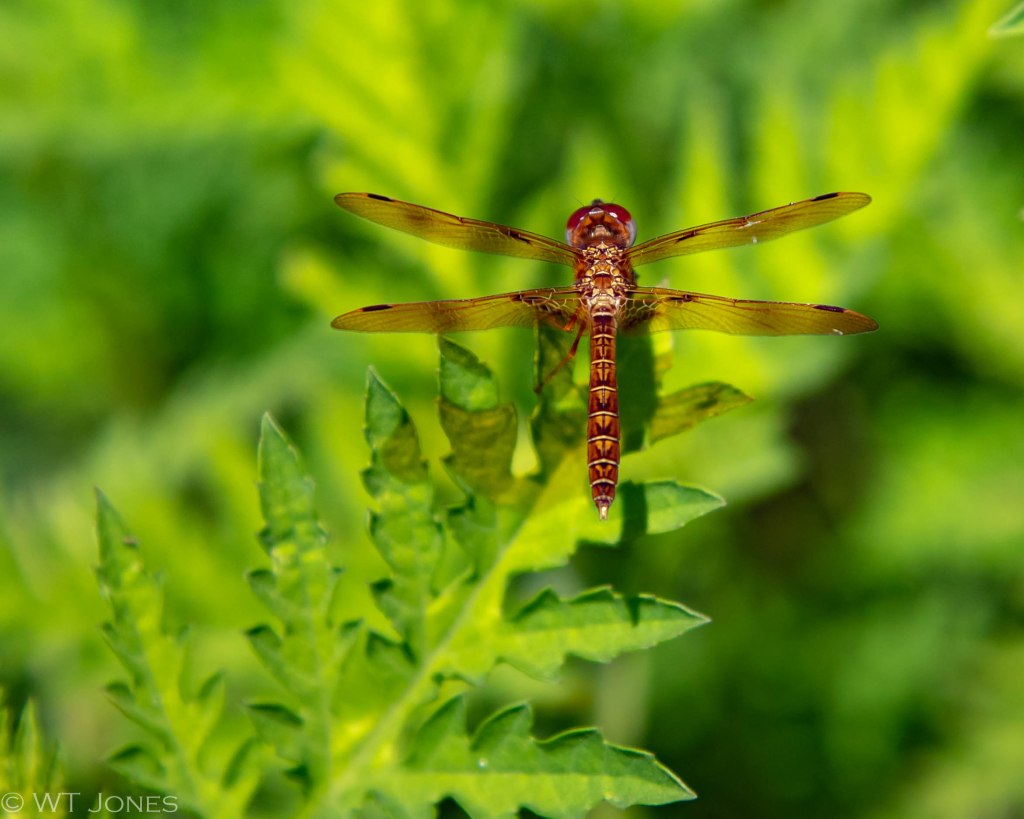
Very wasplike, the little Eastern Amberwing (Perithemis tenera) would like you to think that is what it might be and therefore, please, do not eat it.
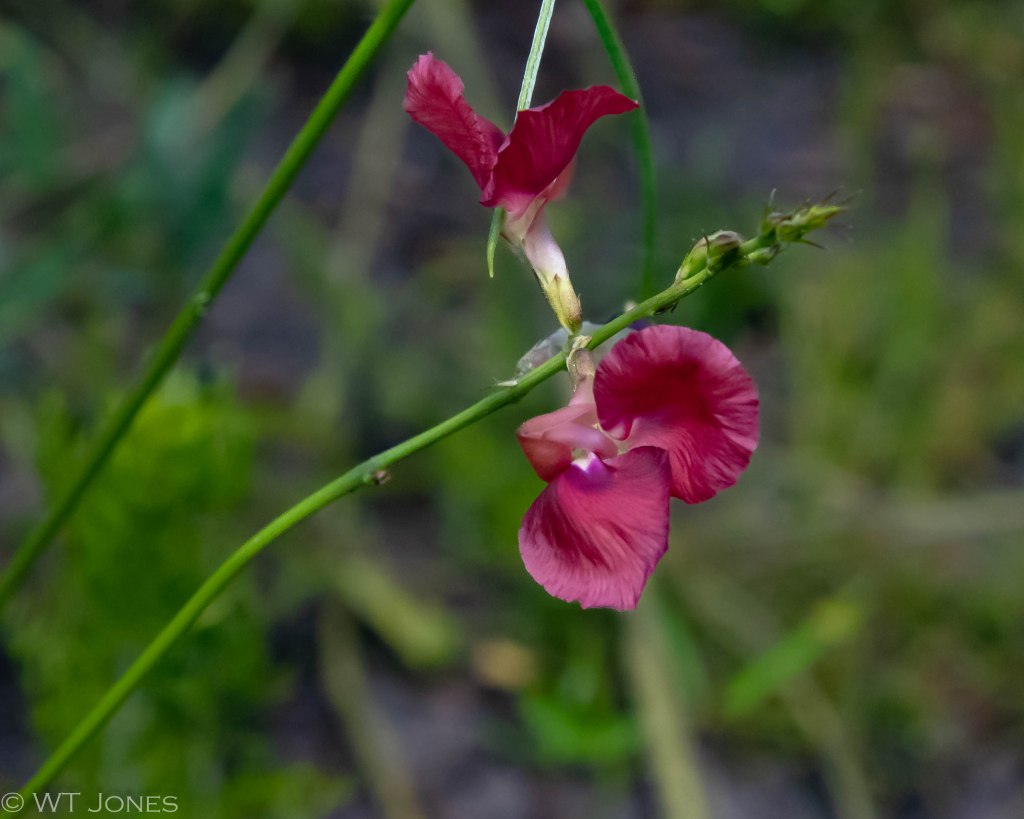
Wild Bushbean (Macroptilium lathyroides) is considered an invasive plant and Florida does not recommend planting it. It was first confirmed in the state in 1944. It has been used extensively in its native country of Mexico and in Central and South America as a cover crop and as forage for livestock. The flower is attractive.
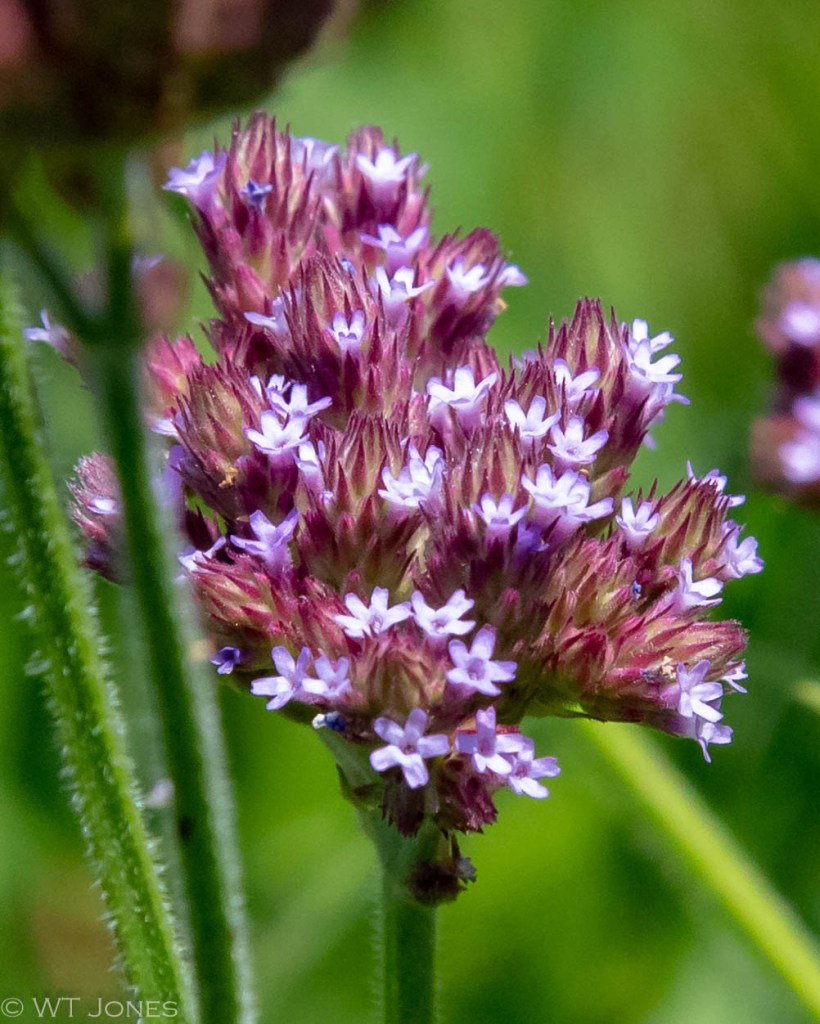
Another invasive, Brazilian Vervain (Verbena brasiliensis), has been around a long time in the U.S. and is very attractive to pollinators.
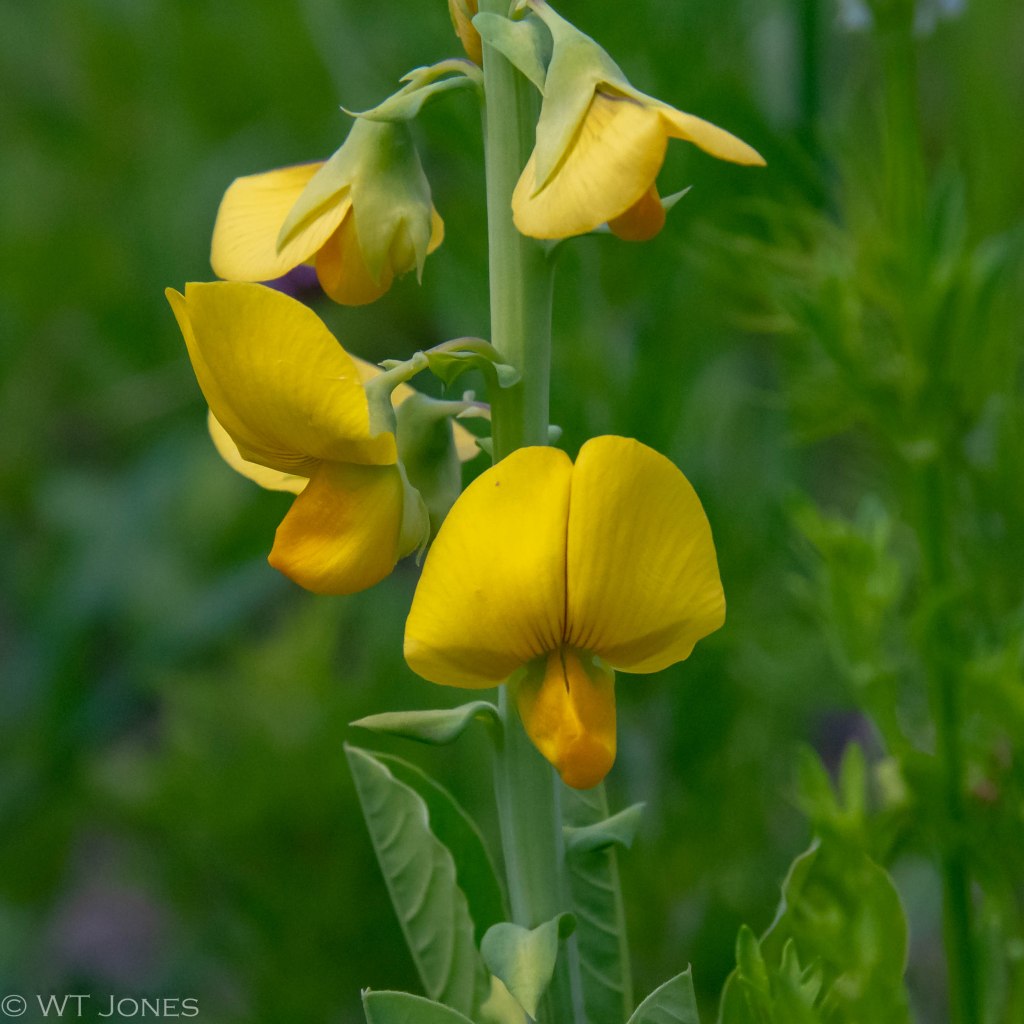
One more “tourist” who found a home in North America, the Showy Rattlebox (Crotalaria spectabilis) was imported from southern Asia to help build healthy soils which had become depleted of certain minerals. Unfortunately, the seeds are poisonous to livestock and poultry. Members of this species are called “rattlebox” due to the sound of dry seeds within their casing.
Common butterfly in our area. Uncommonly beautiful at all times. Gulf Fritillary (Agraulis vanillae).
So we arrived at the entrance gate to this little patch and didn’t much care which way we went. It just didn’t much matter either, since we knew we would find adventure in any direction!
Enjoy your search for a natural place and come back for a visit!
 Our Natural Places