We Visit A Natural Place
(Click on images to enlarge, click again to zoom.)
Peanut-butter and jelly sandwiches and bananas. Underneath a pine tree. Cicadas sputter and then hum their familiar chorus. We stretch and sigh heavily as the morning is now becoming quite warm. It would be easy to lay back with my Love and remain here holding hands for hours. So much has transpired in the past couple of years. It is history. For now, our focus is to observe what we have been missing.
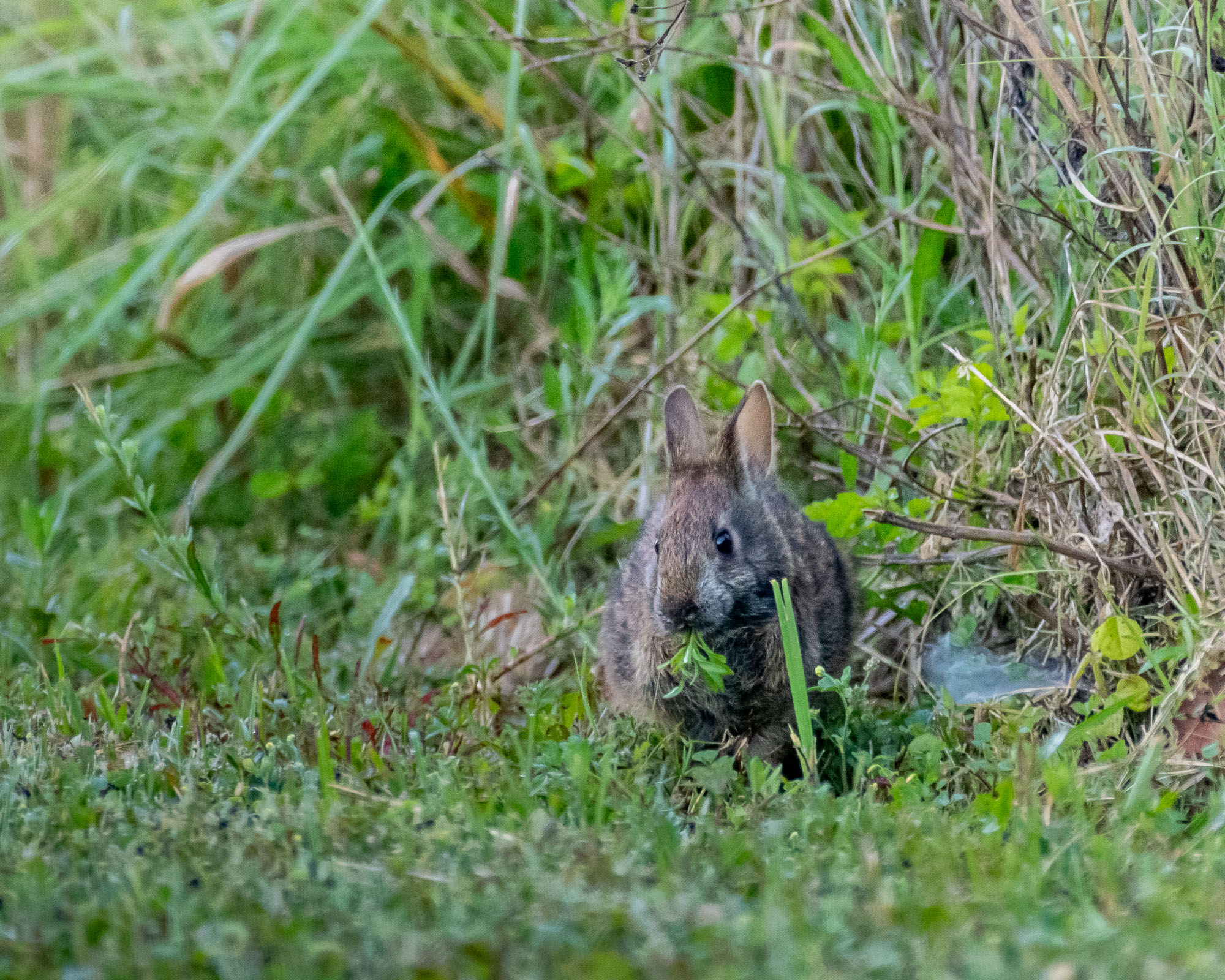
A couple of hours ago, we were met by Mother Nature’s Official Welcoming Committee. Actually, the little Marsh Rabbit didn’t stop chewing the tender grass and barely noticed us. We meandered along and found a few flowers blooming, a few bugs visiting the blooms and a few birds watching a few bugs on a few flowers.
Enough words for today. We hope you are able to get a sense of our very pleasant day by gazing at these images. Pretend the air is pine-scented, the sun is not too hot and the sky is a perfect blue.
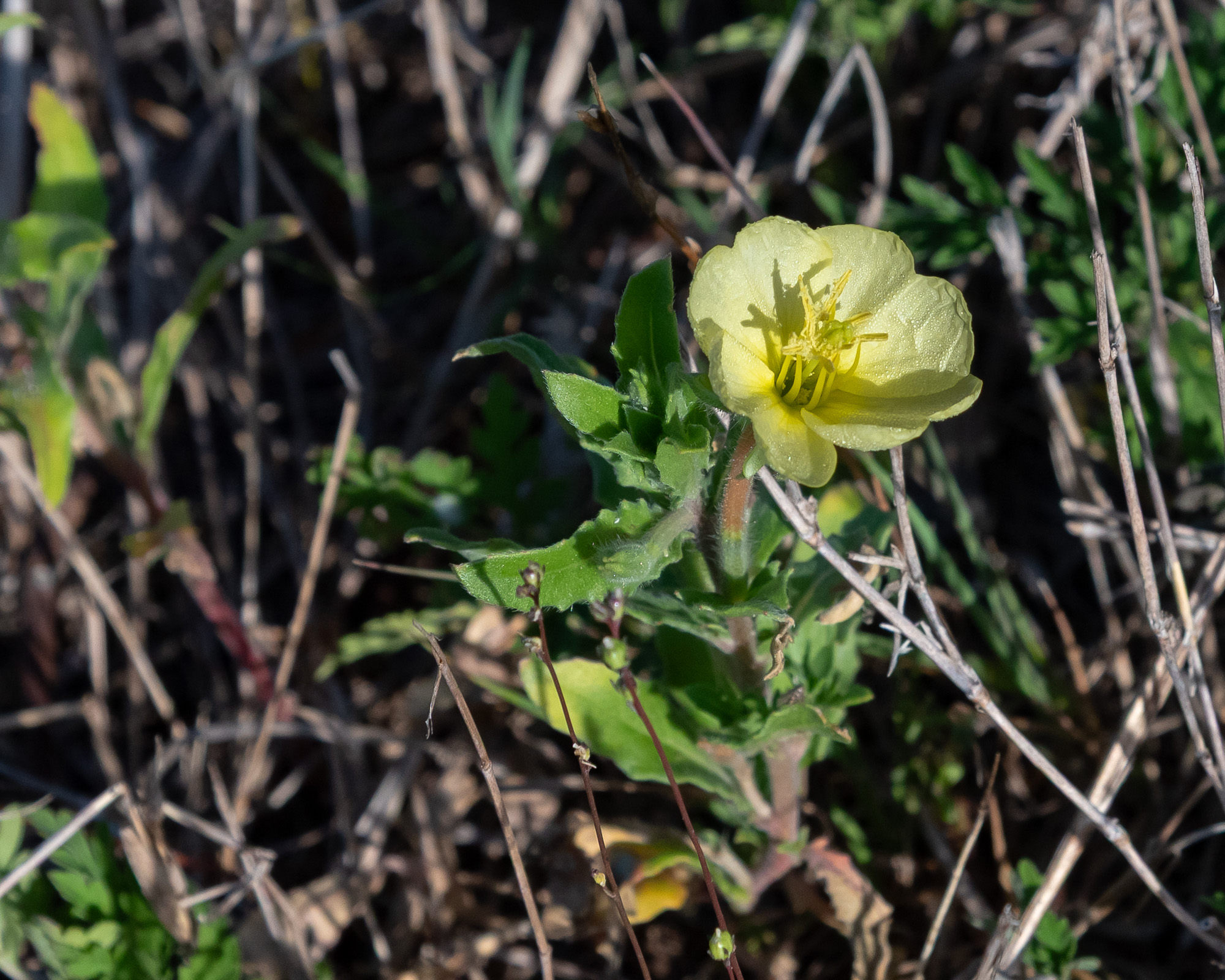
Small and lovely, the Cutleaf Evening Primrose (Oenothera laciniata) only offers a full view of its flowers in the late evening through early morning hours. Our timing was good.
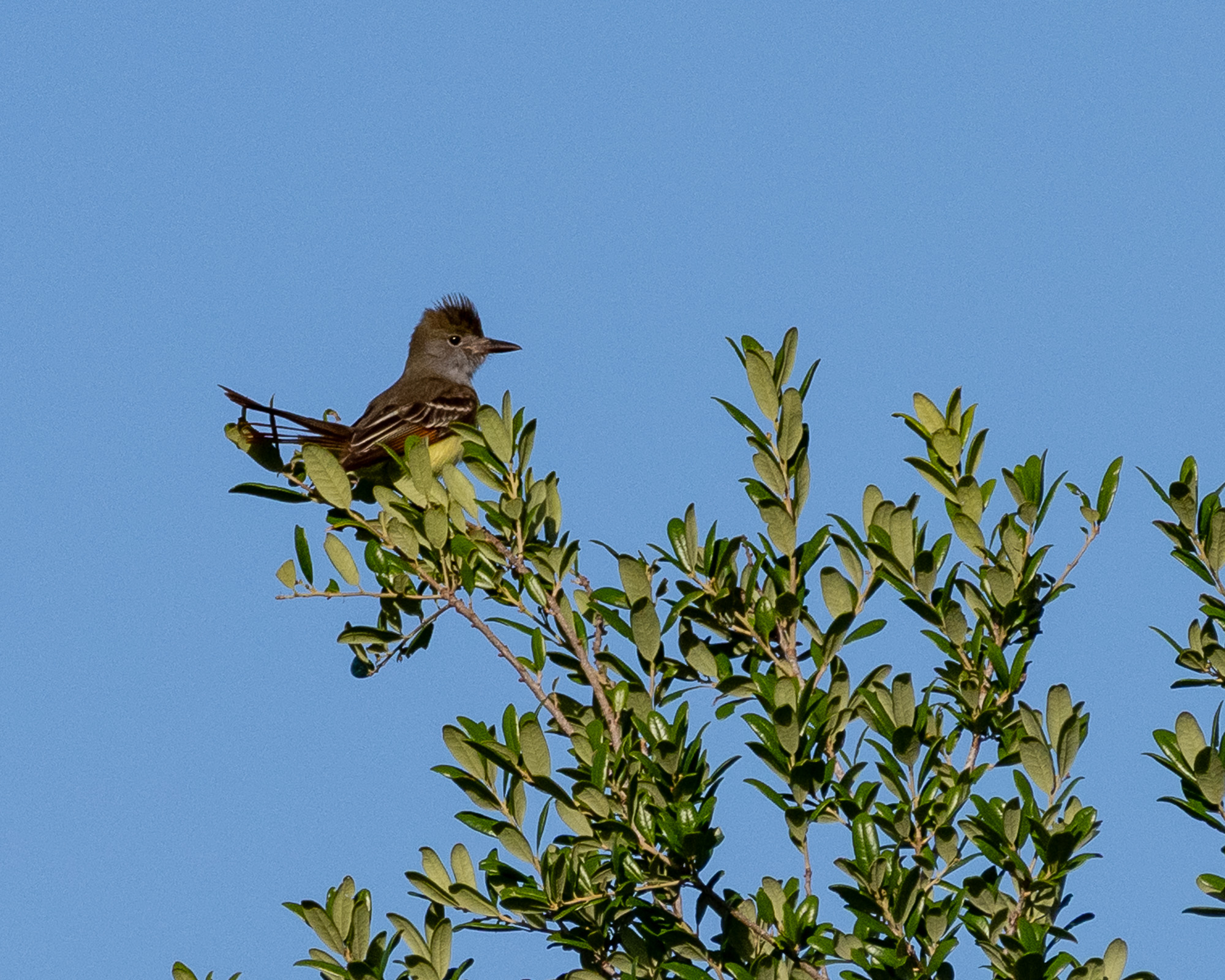
Displaying its namesake, a Great Crested Flycatcher was quick to let the neighborhood know a hawk was cruising above the treetops. How thoughtful.
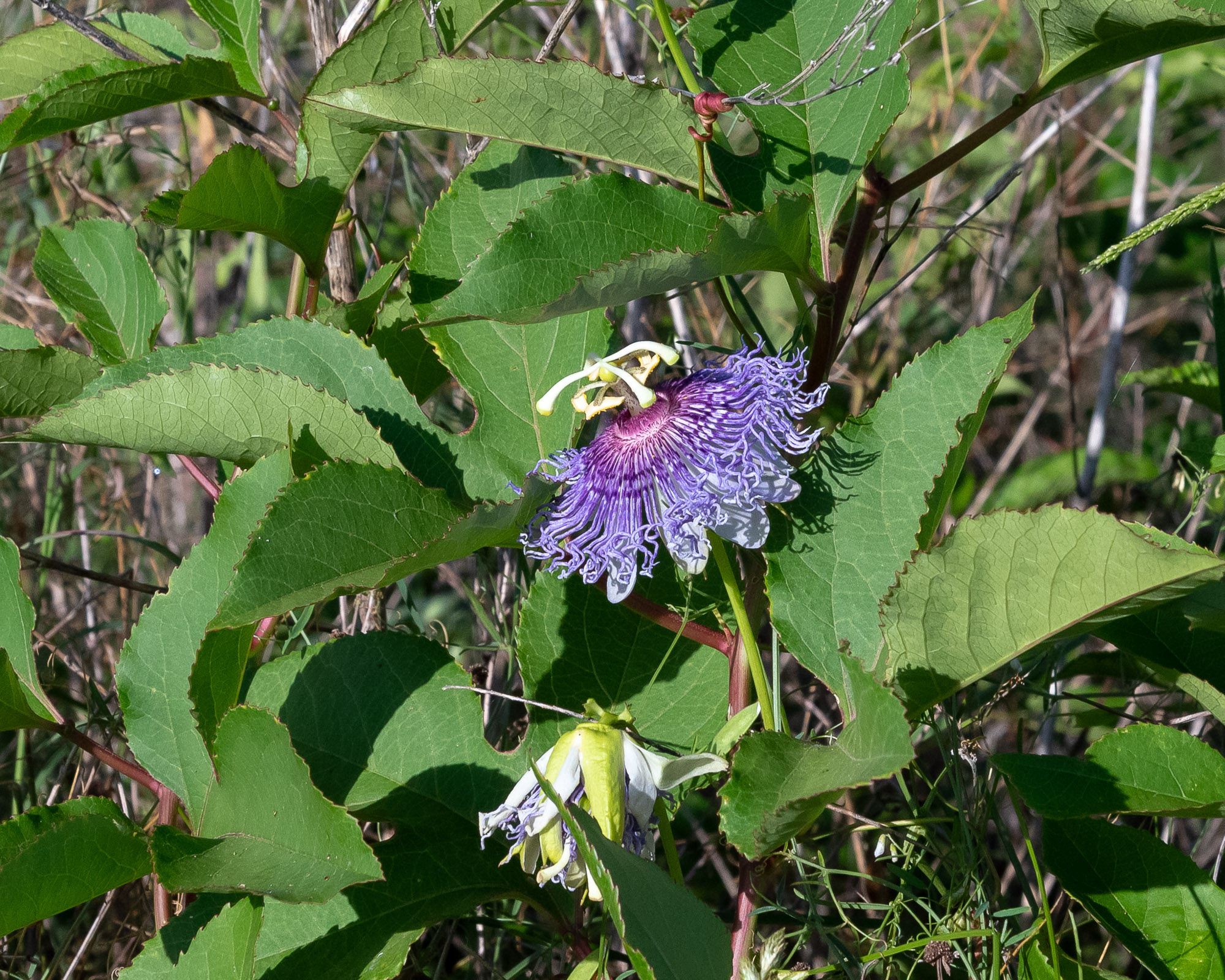
Truly one of the most beautiful flowers in our area, the Purple Passionflower (Passiflora incarnata) bloom is incredibly intricate. Gini still reminisces about using them to decorate mud pies. (And that was just last week……)
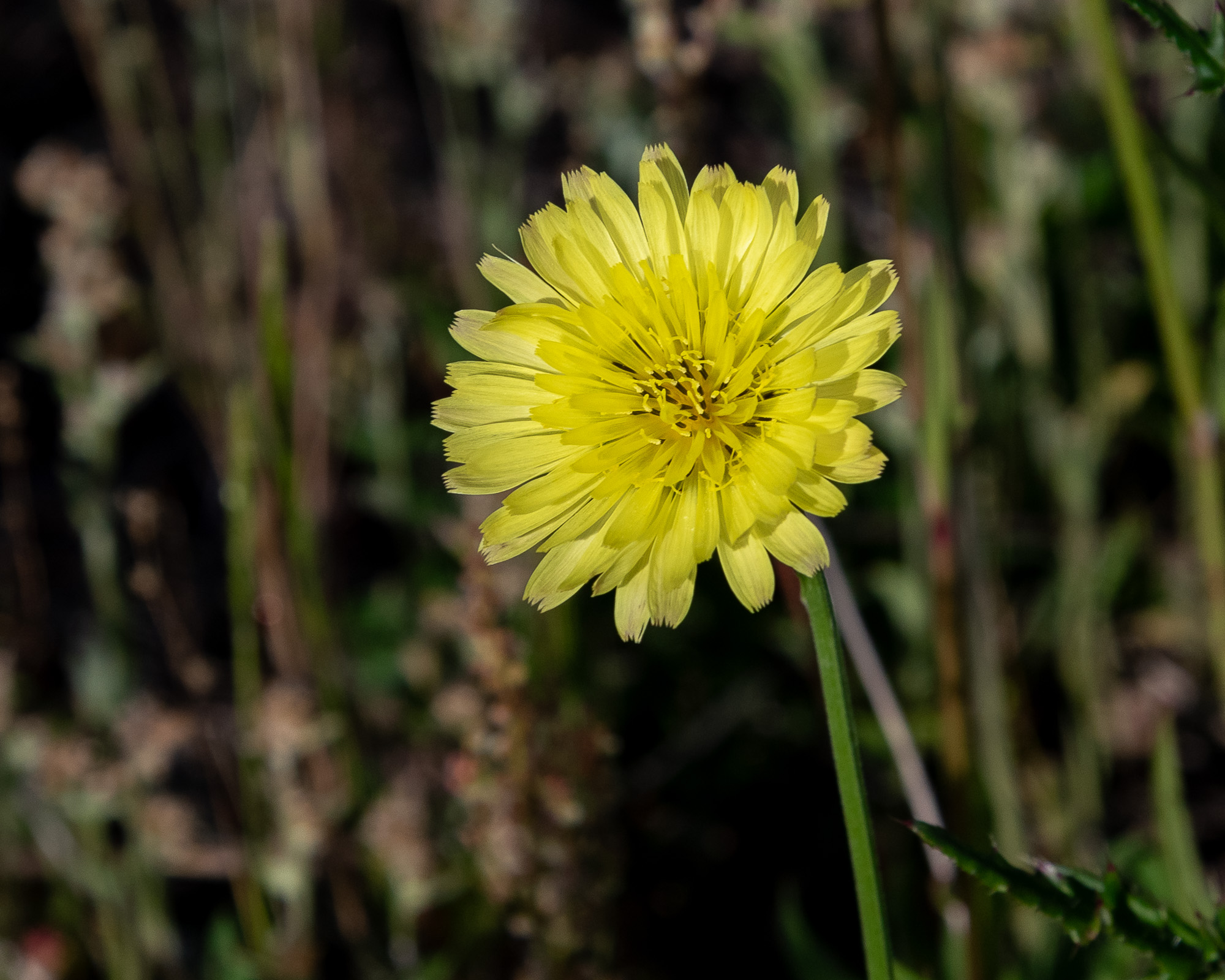
Not in Carolina. Not in the desert. Not related to chicory. Other than that – the taxonomists nailed it! Carolina Desert-Chicory (Pyrrhopappus carolinianus).
Speaking of Passionflower. The bright orange Gulf Fritillary (Dione incarnata) uses the Passionflower as a host plant.

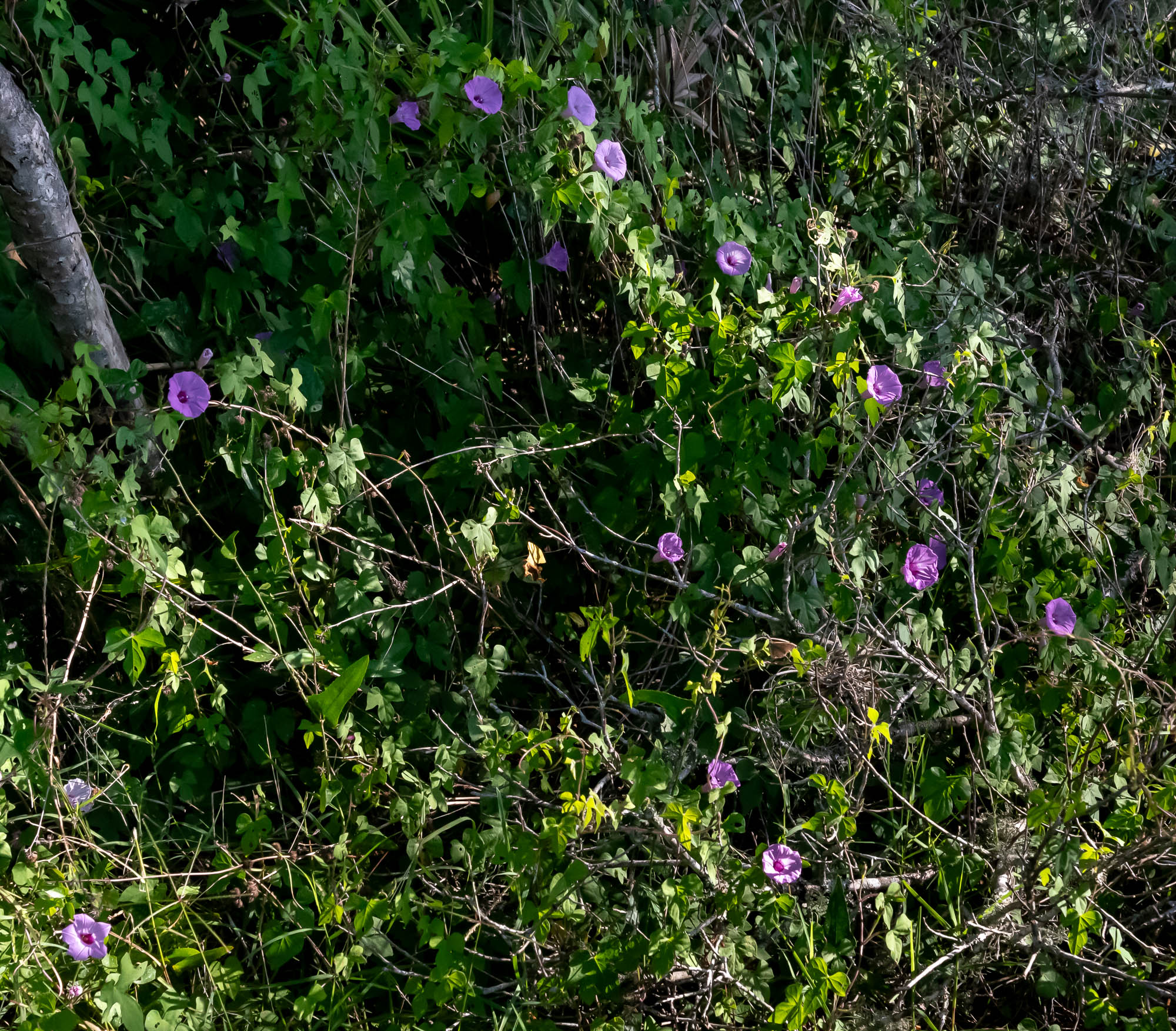
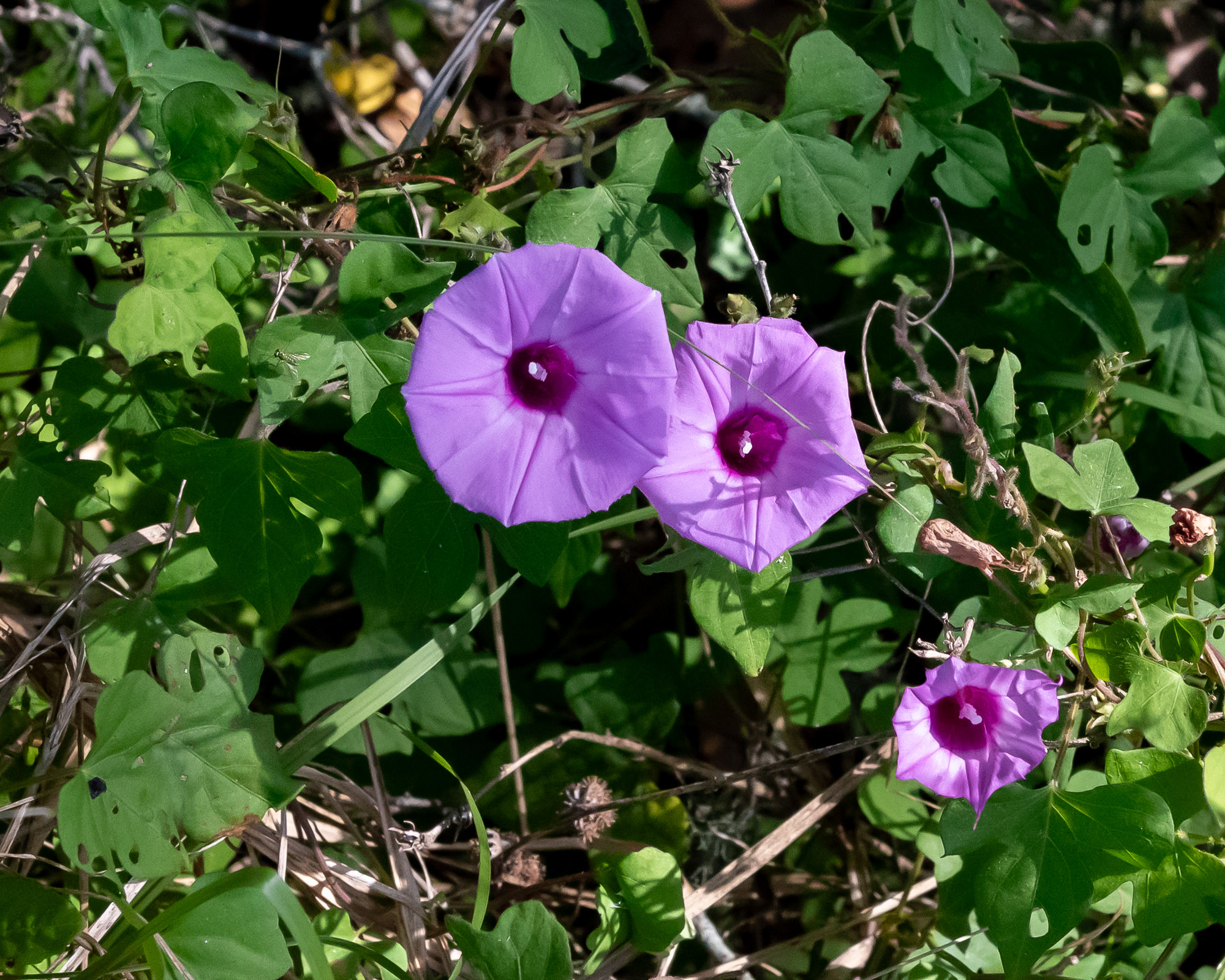
One of our favorite members of the morning glory family is Tievine (Ipomoea cordatotriloba). It’s interesting to examine the leaves of this plant as they can take a few different forms.
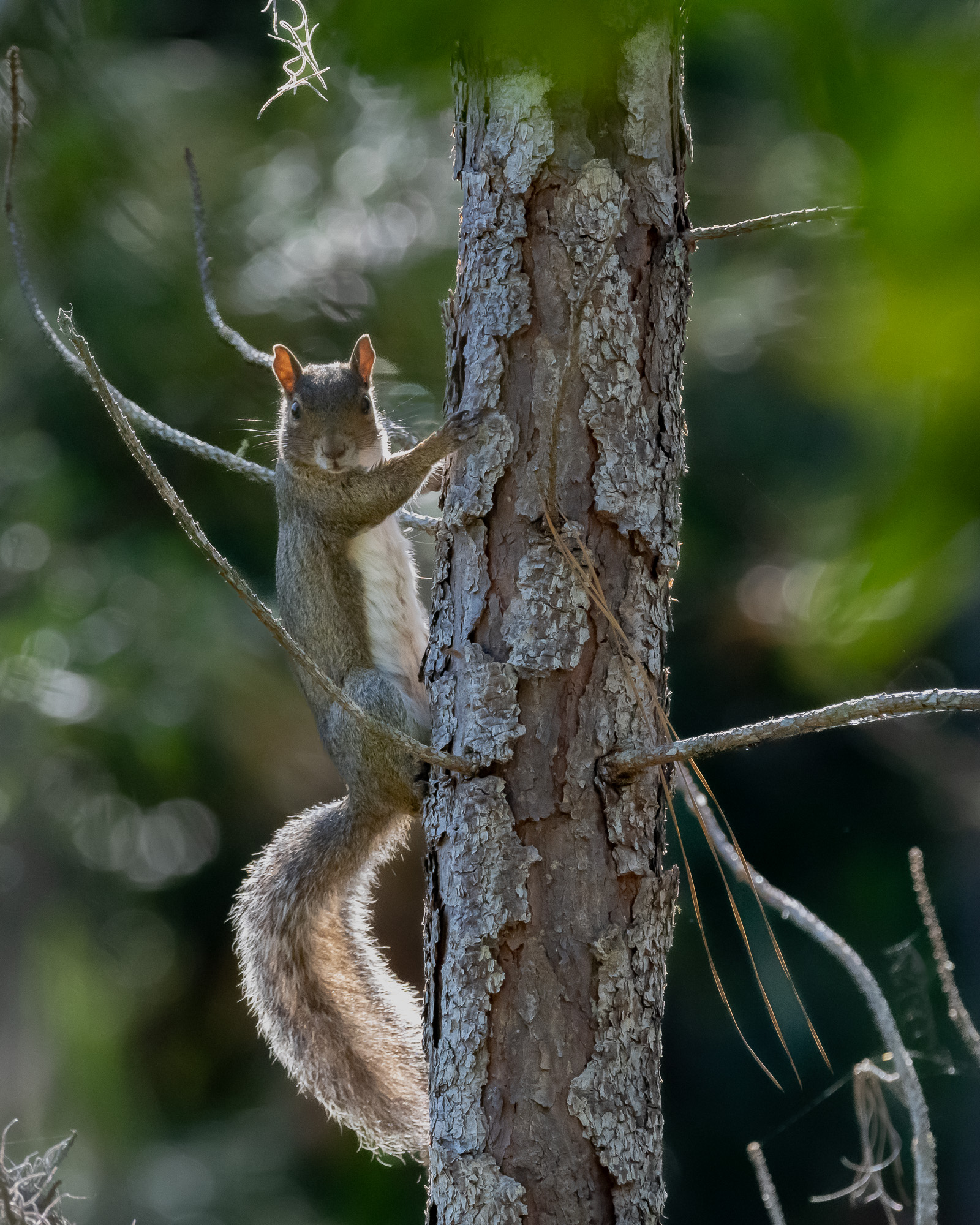
Checking us out. Gray Squirrel.
Lots of really bright yellow flowers makes the Butterweed (Packera glabella) a very happy plant for us to encounter.

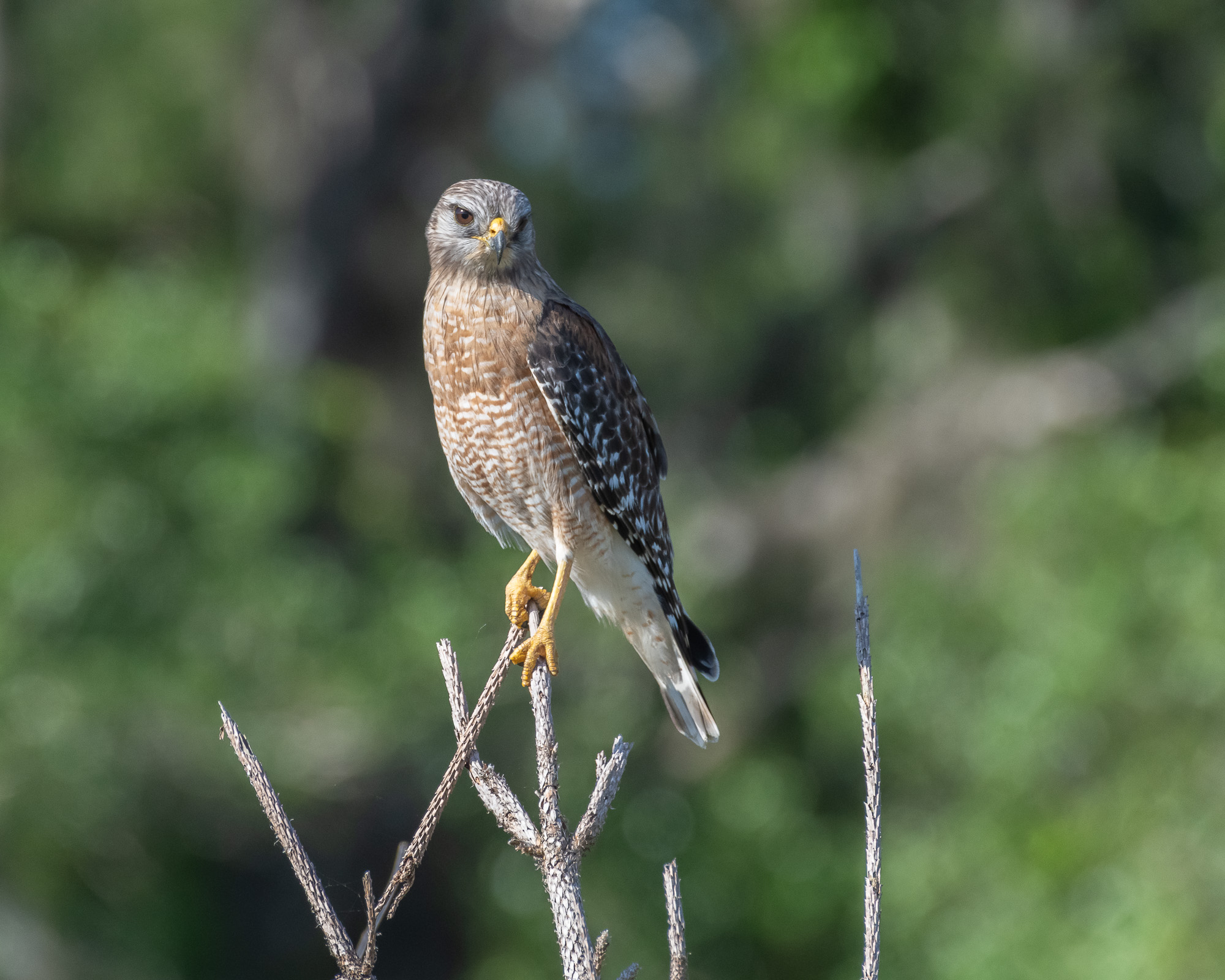
Always looking so serious, a Red-shouldered Hawk gave us that look that translates to “move along, I’m trying to hunt here“. We did.
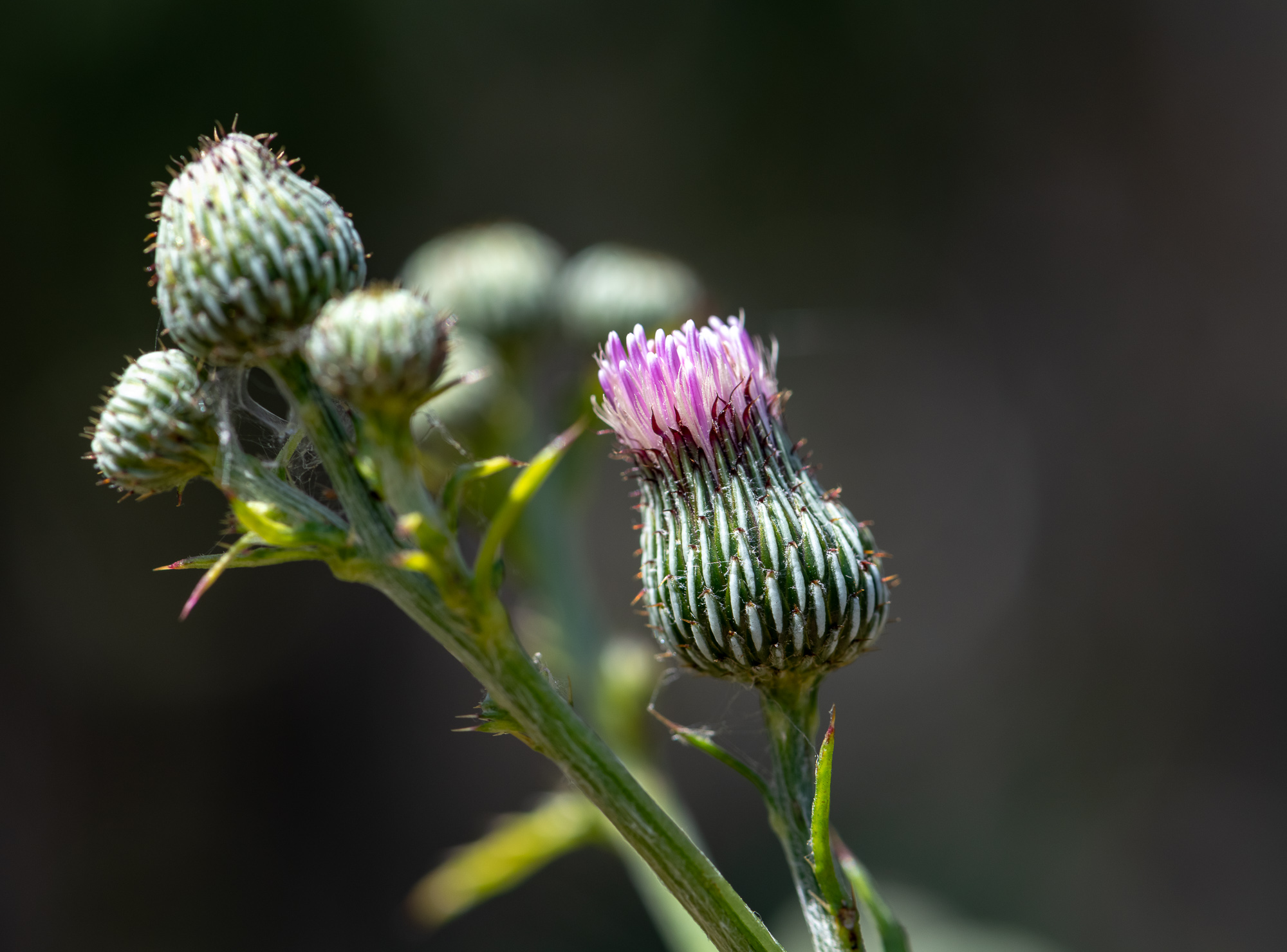
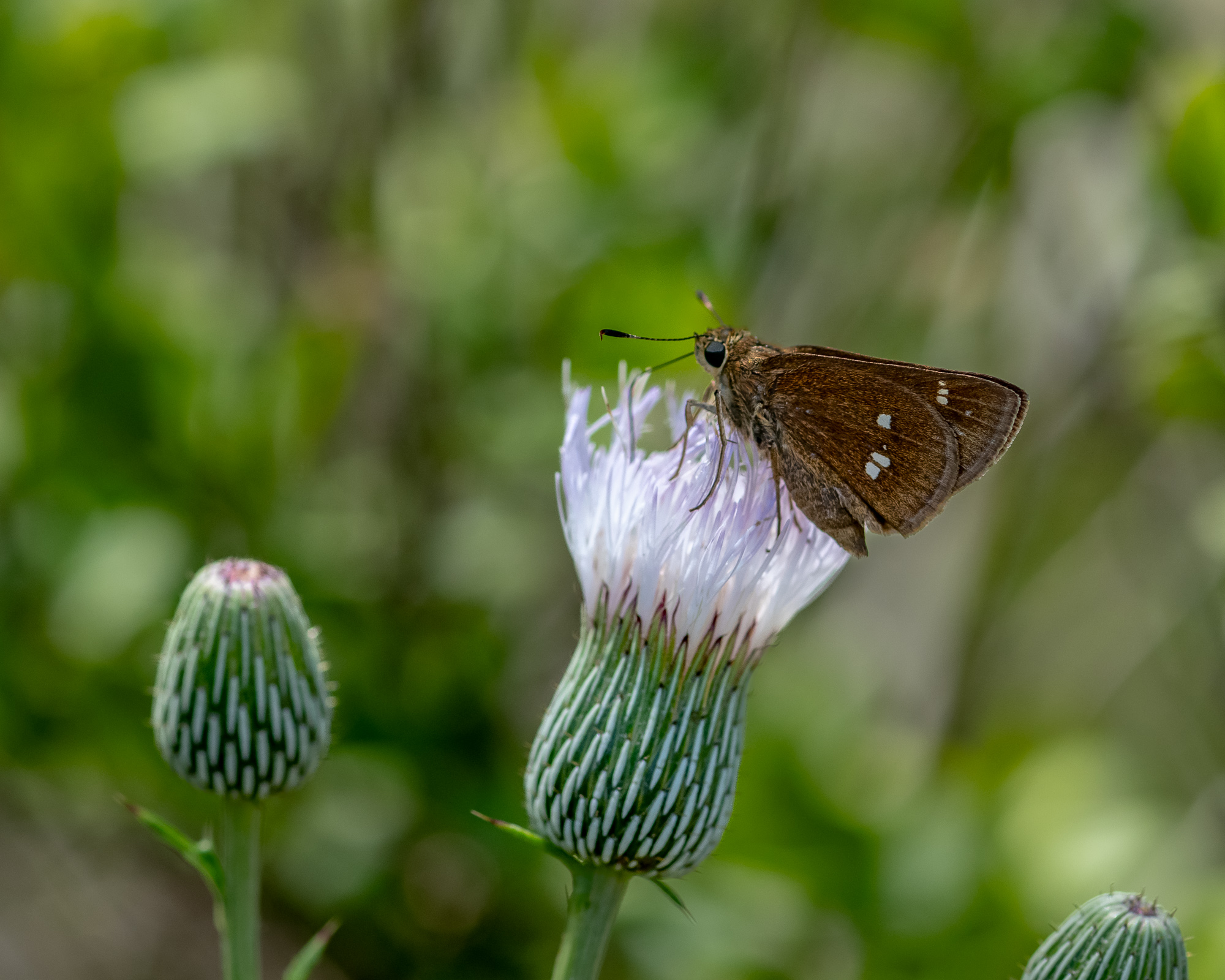
Often growing to over six feet tall, the Nuttall’s Thistle (Cirsium nuttallii) is one of the most popular plants among nectar seekers. For humans, attempting to pick a blossom is not recommended. Ouch.
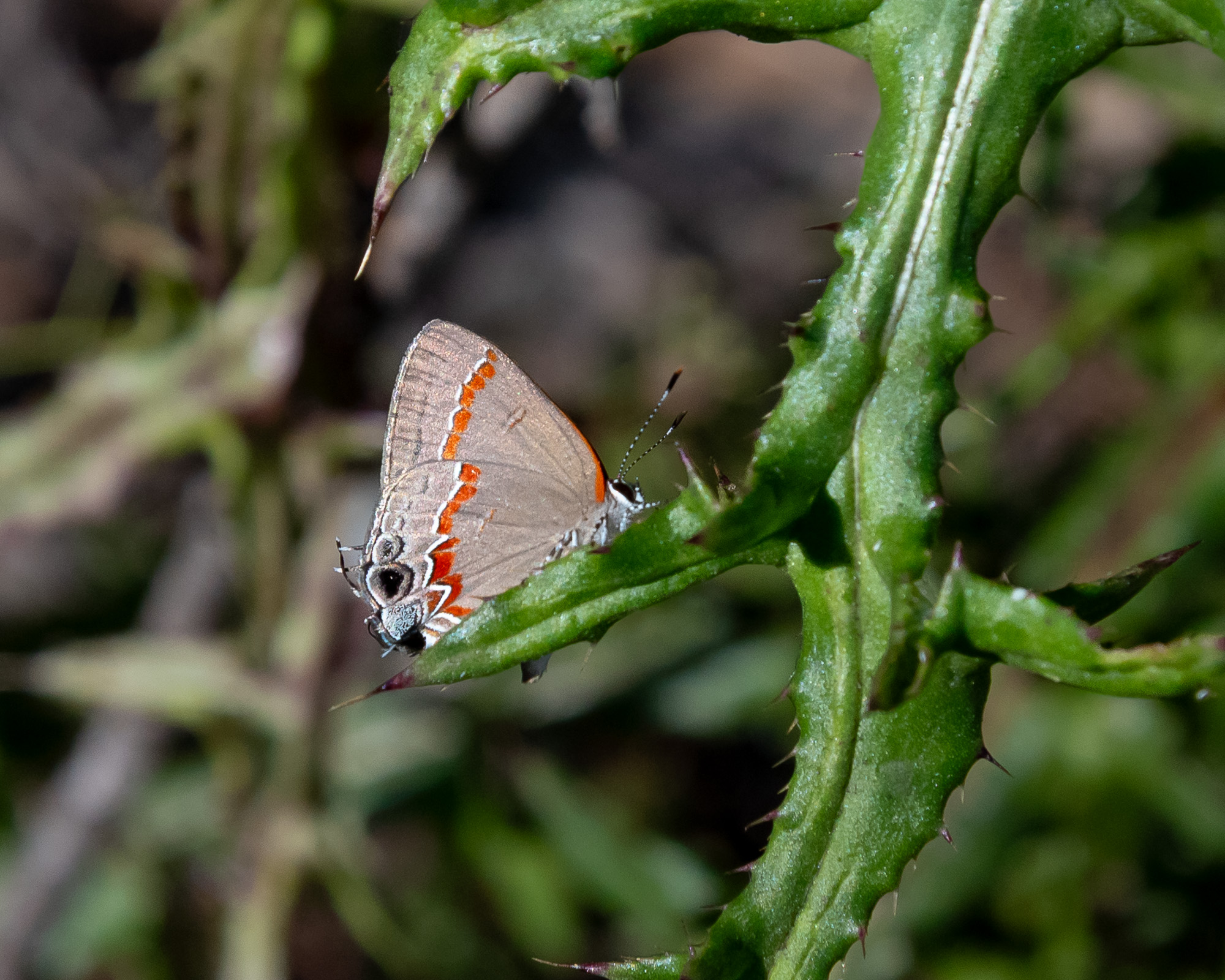
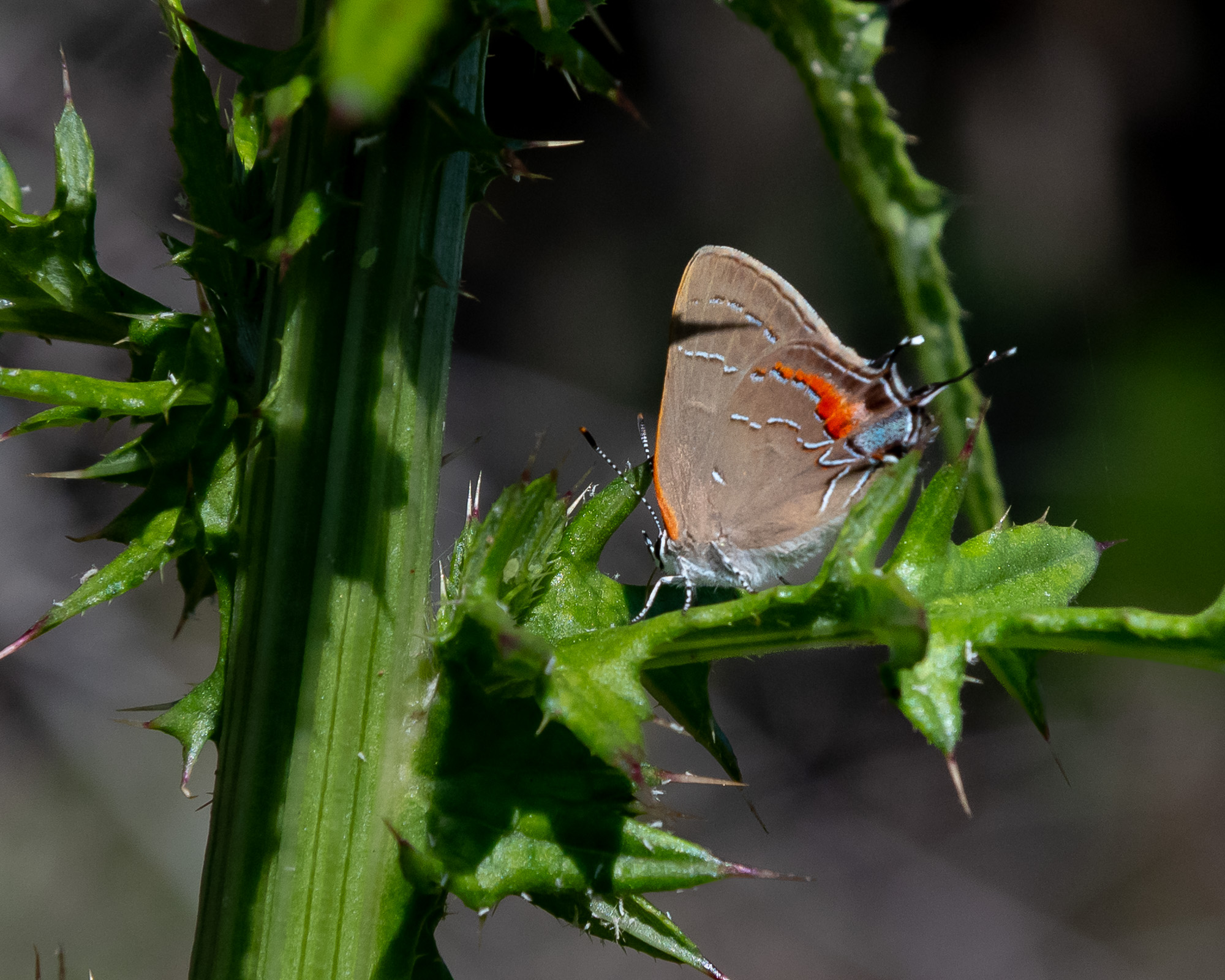
Among the nectar-lovers mentioned above, we found two species of Hairstreak butterflies exploring the thistles. They obviously don’t mind all those sharp pointy things on the leaves and stems.
Uncomfortable memories from playing in the pasture behind the house when I was a kid. Officially it’s called Tread-softly (Cnidoscolus stimulosus). I knew it as Stinging Nettle and no amount of washing or alcohol would ease the pain of that rash!
Yet another fan of the spiny plant. Twin-spot Skipper (Oligoria maculata) on Nuttall’s Thistle (Cirsium nuttallii).
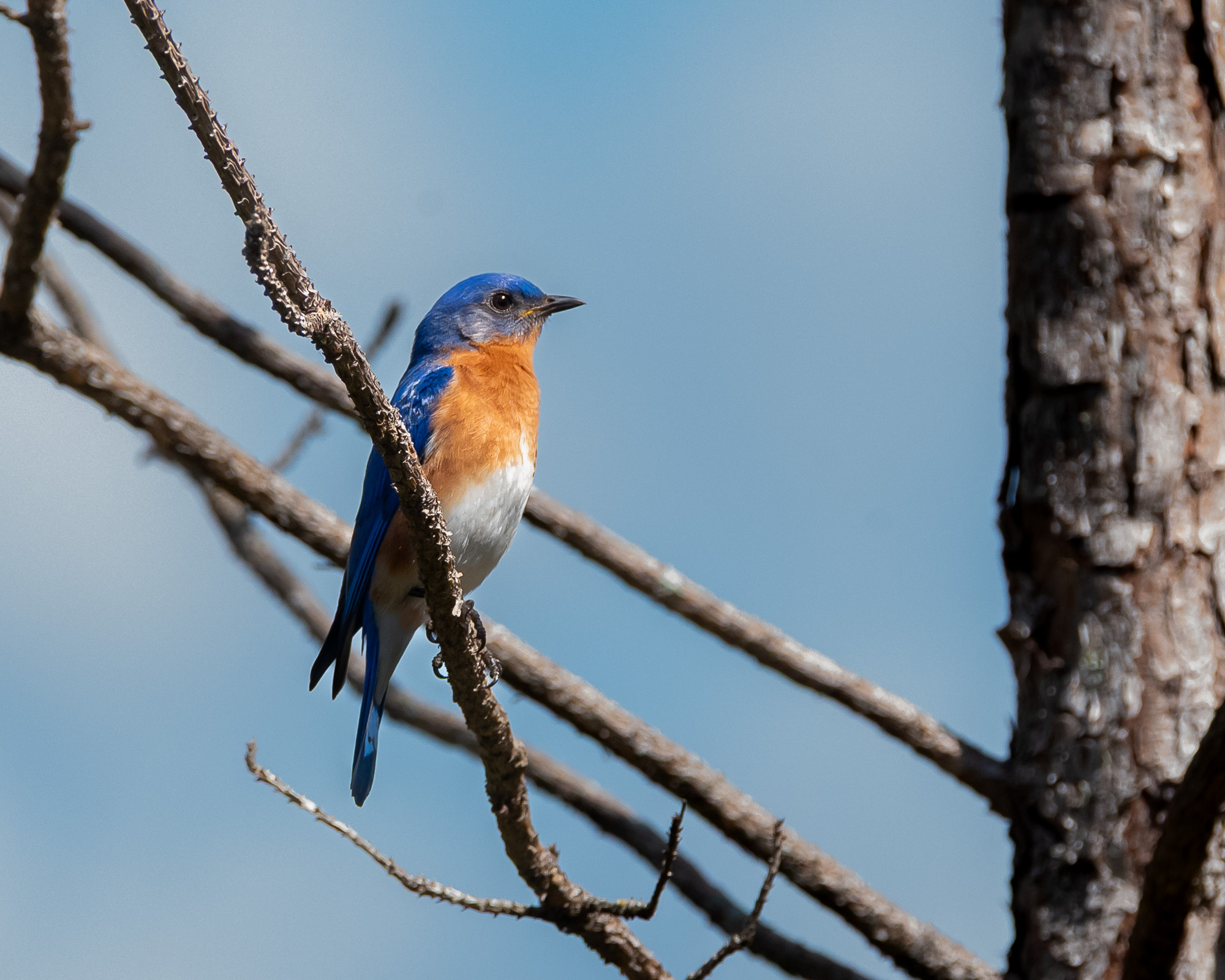
It’s pretty hard to find a more pleasing combination of colors than exhibited by an adult Eastern Bluebird.
Not as colorful as his metallic-colored cousins, this little sweat bee is one of the most abundant in Florida. We like it just fine the way it is. Poey’s Furrow Bee (Halictus poeyi) on Oakleaf Fleabane (Erigeron quercifolius).

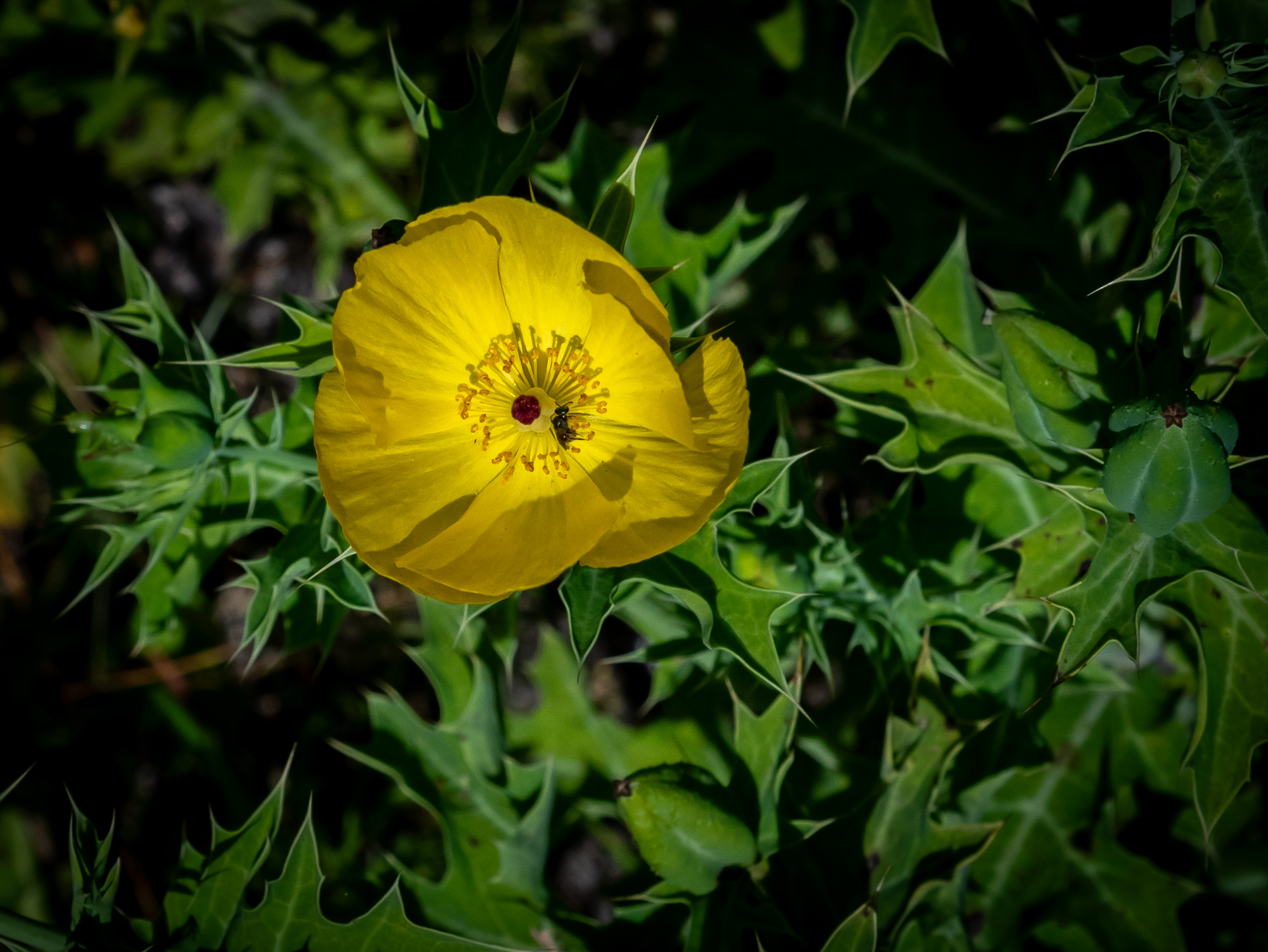
Despite its name, the Mexican Pricklypoppy (Argemone mexicana) is a native of Florida. It’s beautiful, but just in case you see all those spiny leaves and think to yourself “you know, that might really taste delicious” – don’t do it! It’s toxic.
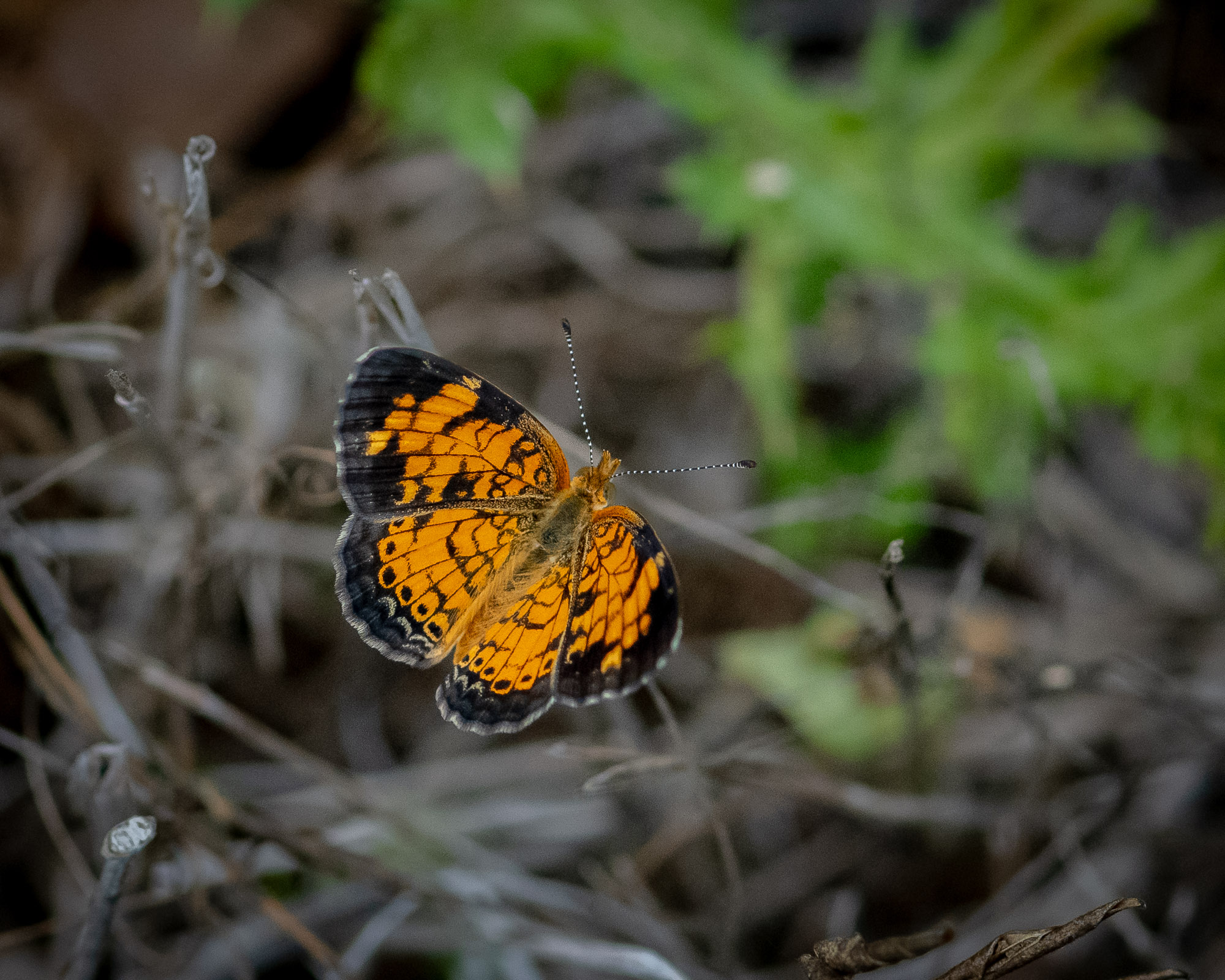
One of the lovely orange grass skipper butterflies, a Pearl Crescent (Phyciodes tharos) led me on a short chase before holding still. Thank you!
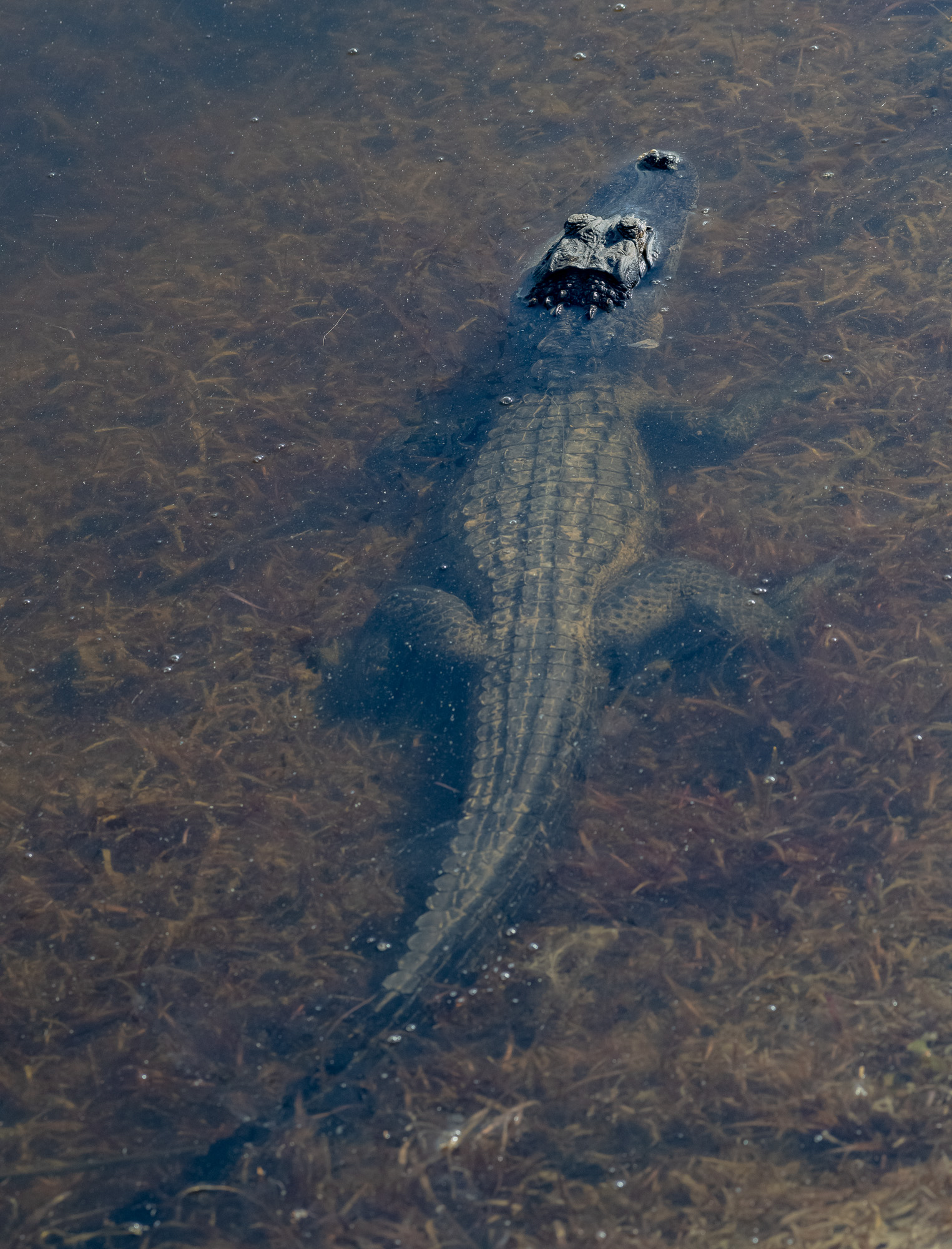
Mother Nature asked us to provide the following Public Service Announcement: “Before stepping into the hot tub, please check first to be sure another visitor is not already present. Thank you for your consideration.“
Our thoughts of blood tests, imaging machines, new medications — erased for a few hours as we totally immersed ourselves in a unique Natural Place. We intend to do it again. Soon.
We hope you enjoy your search for your own natural place and come back for a visit!
 Our Natural Places
I laughed out lout at the squirrel photo. Thanks for the smile.
LikeLike
A good day is made better by cute critters.
And laughing out loud is a sign of a healthy psyche. (I made that up, but it sounds good.)
LikeLiked by 1 person
You capture the beauty of Florida so well. Your blog reminds me of all the beautiful places, animals and plants.
LikeLike
Thank you, Maria! That is exactly what our goal was when we started this thing.
We really appreciate your kind comments!
LikeLiked by 1 person
Okay, that squirrel shot made me smile from ear to ear…then saw the hawk and wondered if it was asking if the coast was clear! Appreciate seeing all the butters, I am horribly deficient in my delicate winged ID ability and you always make me better when I see your shots paired to the names. As I sit here with Poison Ivy on my arms and legs from the all the clearing/weeding whacking since we made it back home, I can appreciate your warning about the Stinging Nettle, that sounds like a whole lotta badness. You two take care of yourselves!!
LikeLike
That squirrel probably hasn’t read the literature that says the Red-shouldered Hawk “primarily” eats lizards, snakes, frogs and bugs. Yeah. The hawk likely hasn’t read that stuff either!!
Two words: Calamine Lotion.
LikeLike
I am so very happy that you have each other. I know you and Gini depend on each other and that’s how it should be. And how wonderful to spend time in nature soaking up the warmth and beauty of Florida in the summertime. I’ve missed seeing the Tievine this year. I’m stuck inside right now. But I’ll be back out as soon as I can and I know you will too. Take care my friends. I’m praying for you both just as you’ve prayed for me. Hugs, Diane
LikeLiked by 1 person
Here’s hoping for a bit more rain and little (okay a lot) less humidity and heat!
It feels good to get back out there. Seems as if we like birds, blooms and bugs more than we do doctors. Go figure ……..
LikeLike
Oh Wally, this was such a joy to be with you and Gini on your Florida walk. I lol a couple of times, like the Carolina Desert Chicory narrative and warning us in case a flower looks delicious not to eat it. I had a swooning moment here, too, with all your gorgeous butterflies. I love gulf fritillaries, my sister’s yard in GA has them too. And the hairstreak is so exquisite, liked seeing both sides of it. Your marsh rabbit is cute. Fantastic photos. I’m sympathetic to your medical burdens and am SO GLAD you take time when possible to join “Mother Nature’s Official Welcoming Committee.” Thanks so much.
LikeLike
We really appreciate your visit Jet, and taking the time to provide such gracious comments.
The next post will include three species of Hairstreak all feeding in the same clump of flowers at the same time. Pretty cool!
Shhhh! There are “ZERO” med appointments on next week’s schedule. Look out swamp, here we come!
LikeLiked by 1 person
Dear Gini and Wally,
I’m so glad you are still able to get out to your favorite places, see beautiful blooms and birds and butterflies (and alligators too), sit under a pine tree eating pb&j sandwiches and holding hands.
Wishing you much for of the same.
All the best,
Tanja
LikeLike
Thank you, Tanja.
We’ll keep getting out as much as possible. We actually have an entire week next week with no(!) doctor appointment on the calendar.
Take good care.
LikeLiked by 1 person
I’m excited for you two and hope you can make the best of the week!
You take care also! 😊
LikeLike
What a beautiful morning! Thanks for sharing. To next one! 😉
LikeLike
You’re welcome!
LikeLiked by 1 person
I agree about the Bluebird and the Red-shouldered Hawk. Very impressive creatures. And too the little harmless toy that you keep in your bathroom. I hate finding stinging nettles in the garden and wouldn’t dream of making a cup of nettle tea – i go to the loo enough as it is.
Peanut butter and jelly (jam) sounds dodgy to me. I will stick to chunky orange marmalade if you don’t mind. It’s hot here today, and no, I will not be staying up late to watch the soccer.
LikeLike
Nettle tea. Doesn’t sound healthy. Or even sane.
You must remember, we attempt to converse in American English. When we say “jelly”, we include jams, jellies, marmelades, preserves, conserves, spreads and pretty much anything sweet that can be spread upon a slice of bread. We may be imprecise, but we know what we like.
What is “soccer”?
LikeLike
Now I know why that rabbit seemed both familiar and unfamiliar. The ‘rabbit’ part I knew; the ‘marsh’ part was new. Our swamp rabbit is quite large, but my sense that this one was smaller — much smaller — was confirmed by online rabbitologists.
I still haven’t come across a Mexican prickly poppy, but its relationship to our white prickly poppy is obvious. The bloom colors may differ, but that prickliness is the same. The genus of your stinging nettle’s the same as that of our Texas bull nettle; the species may differ, but the effect of contact’s the same!
Three young gray squirrels in my nearest live oak have figured out that the strange tall creature is the source of the shelled peanuts they love. Now that they’ve learned to spot my car, I’ve begun carrying a few with me to move them from underfoot when I get home.
Speaking of variety, I smiled to see your mention of pb&j and bananas: a change from hard-boiled eggs and oranges mentioned in the past!
LikeLike
It is fascinating to have so many things in nature that are “almost” the same. Evolution can be a curious thing.
Yep, we unhappily discovered living in Texas did not mean escaping the scourge of the nettle. First camping trip, first bull nettle encounter.
Oh, dear. You have trained your pets well. Good luck.
We are nothing if not culinarily diverse.
LikeLiked by 1 person
I’m completely taken with those Hairstreaks – you got lovely photos, capturing the pearlescent glow of their wings… and the color and pattern are just striking! Those tievine flowers could have been the inspiration for some space-borne expanding solar collectors – their creases are perfectly designed to hold those petals flat.
Thanks for sharing your walk with us… now, how about a bite of that PB&J 🙂
LikeLike
Thank you, Sam.
It was nice having a few bugs hold still for a change. We love those bright Morning Glory blooms!
Gini is not good about sharing her PB&J on cinnamon-raisin bread, but says she would happily make one for your very own.
LikeLike
Yum! Florida just popped to the top of my ‘next trips’ list!
LikeLike
It’s been said that the gulf fritillary, being a butterfly, is inherently a flit-illary. We have that species in Texas, too, as you probably observed in your time here. Likewise for the pearl crescent (and florally for the Mexican prickly poppy; the Carolina dandelion; and the purple bindweed, which is flourishing here now, as it its wont).
That’s a good stare-down with the gray squirrel. Not clear who blinked first.
LikeLike
Perhaps all the flit-illary relatives could be, inherently, flutter-bys.
We know how vicious those adorable squirrels can be so we averted our eyes and kept moving along.
LikeLike