“She went down!”
Three minutes passed. It seemed an eternity. Then, Gini let me know, “Here she comes, right at you!” Was three minutes enough to eat a mouse or lizard or frog?
We had come to this lake in the hope of spotting a wintering Horned Grebe. It was about a half-hour before sunset. A rough count showed about 1200 Lesser Scaup had settled onto the lake’s surface for the night. A few dozen Ruddy Ducks were mixed in with the larger Scaup. There! Just passed that group of ducks. A lone Horned Grebe. Mission accomplished!
The golden rays of the waning sun washed in from our right. As we scanned the lake for more Horned Grebes, a Bald Eagle passed in front of us. Apparently not in hunting mode, the big raptor flew straight and fast. Assorted herons, egrets, anhingas, cormorants and gallinules all were gathering in the shallow water near shore and it would soon be dark.
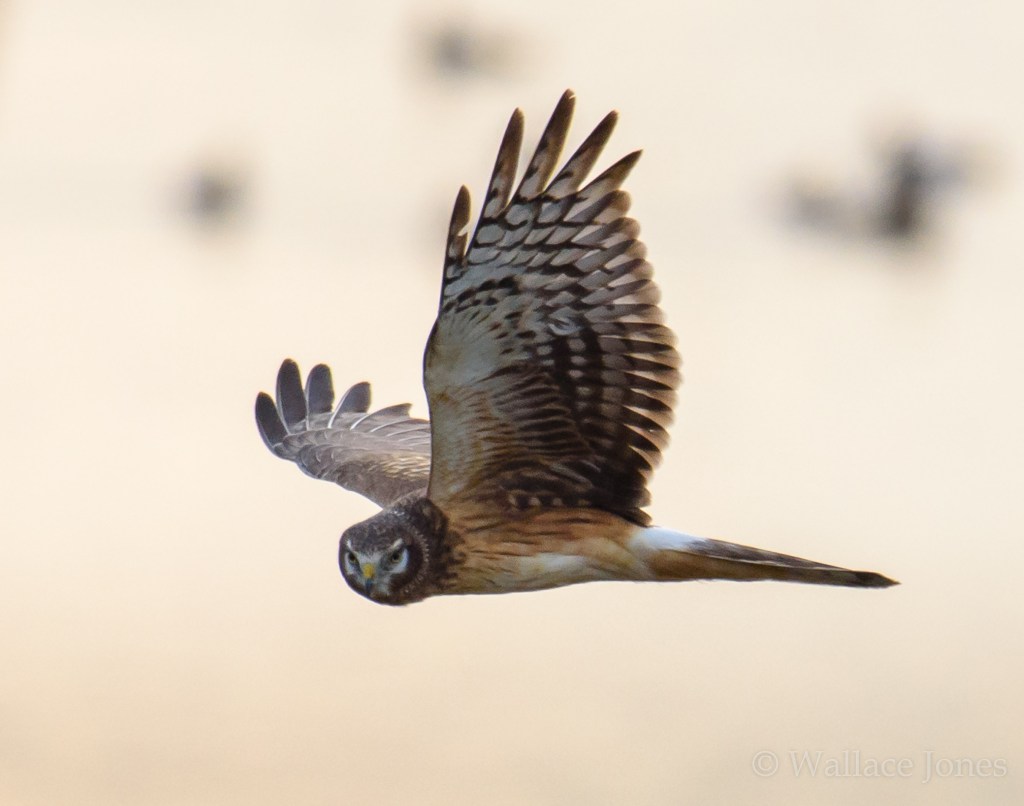
Materializing from the glare of the sun’s last gasp of brightness for the day, flying low along the shore with that lilting, buoyant almost lazy flight – a Northern Harrier appeared. My first impression felt that it was a young female, but with an unstreaked belly and cinnamon wash, it could as easily have been an immature male at this time of year. We shall call her “she”.
Formerly known as a Marsh Hawk (Circus hudsonius), we are fortunate to see these magnificent birds during migration. In a few weeks, they will head back to their breeding territory in the far northern United States and Canada. While they are here, we will watch as long as they allow.
An owl-like head turns left, right and then concentrates directly below her. She initially followed the shoreline, reversed course after a few hundred yards and returned along the same flight path but somewhat inland. The pattern was repeated over the next 30 minutes, each time bringing her farther inland and nearer our position. We could not have wished for better entertainment.
We think when she disappeared into the weeds near the end of her first pass that she scored a meal. She was on the ground about three minutes and as she became airborne she cleaned her talons with her beak as she flew. The aerodynamic display was fascinating! A sudden 90 degree flip of a wing and a quick dive, the constant movement of her head like a radar dish in search mode, the effortless cruising through the tops of the weeds – and then – she was gone.
Gini and I soaked up a few more minutes of the day’s afterglow. A couple of satisfied sighs. A memorable sunset with a beautiful bird.
Yeah. There are pictures. Wish you had been there.
(Photographs were made with a Nikon D750 and Tamron SP AF 150-600mm lens. Most images were at 600mm, f/7.1, 1/1600 and due to the fading light ISO 1000-3200.)

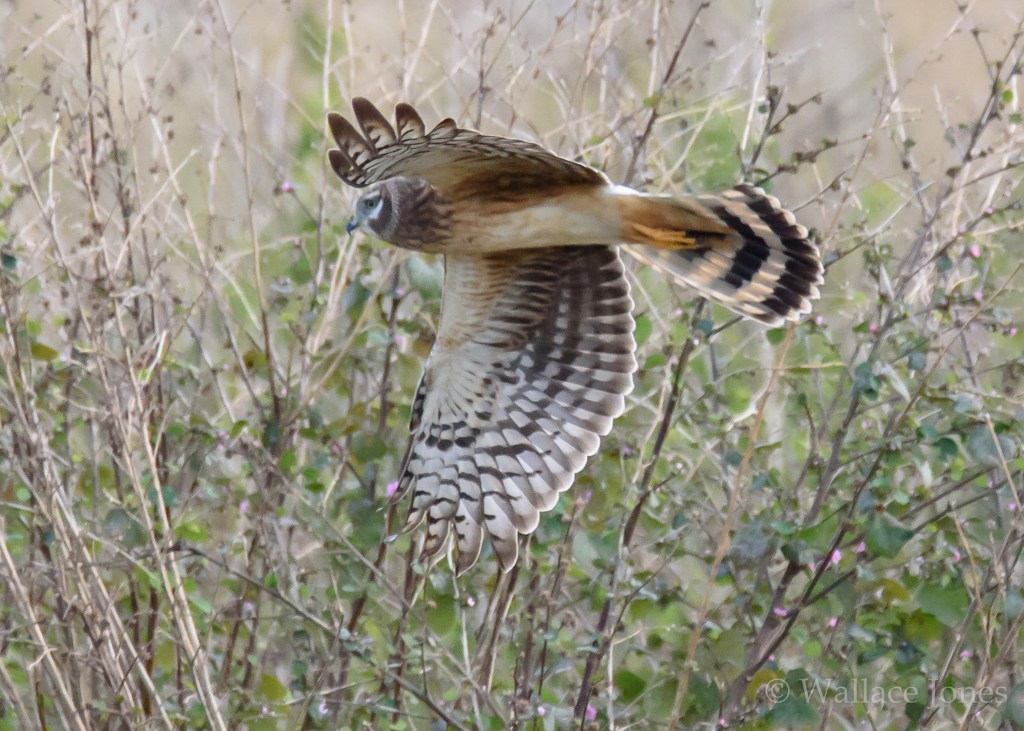
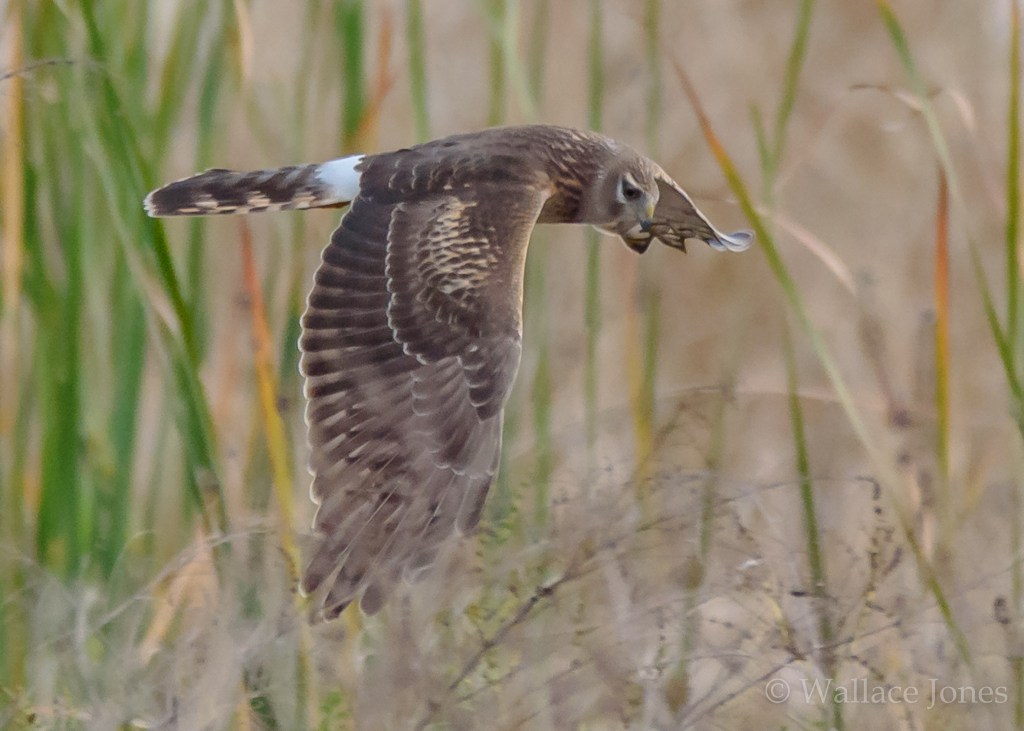

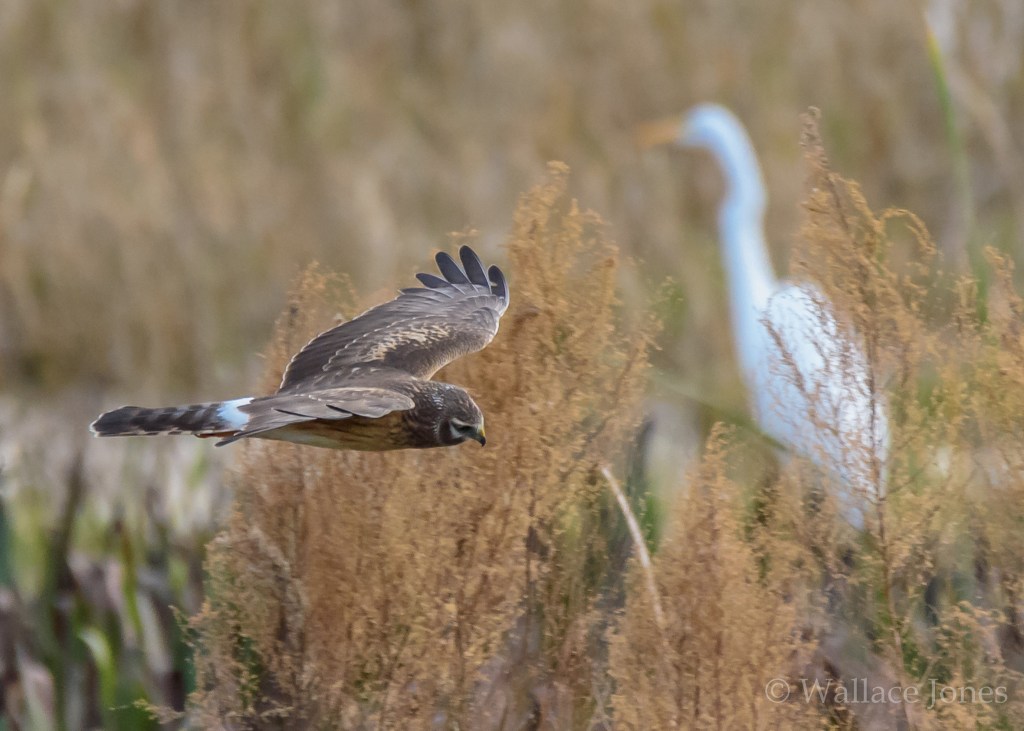
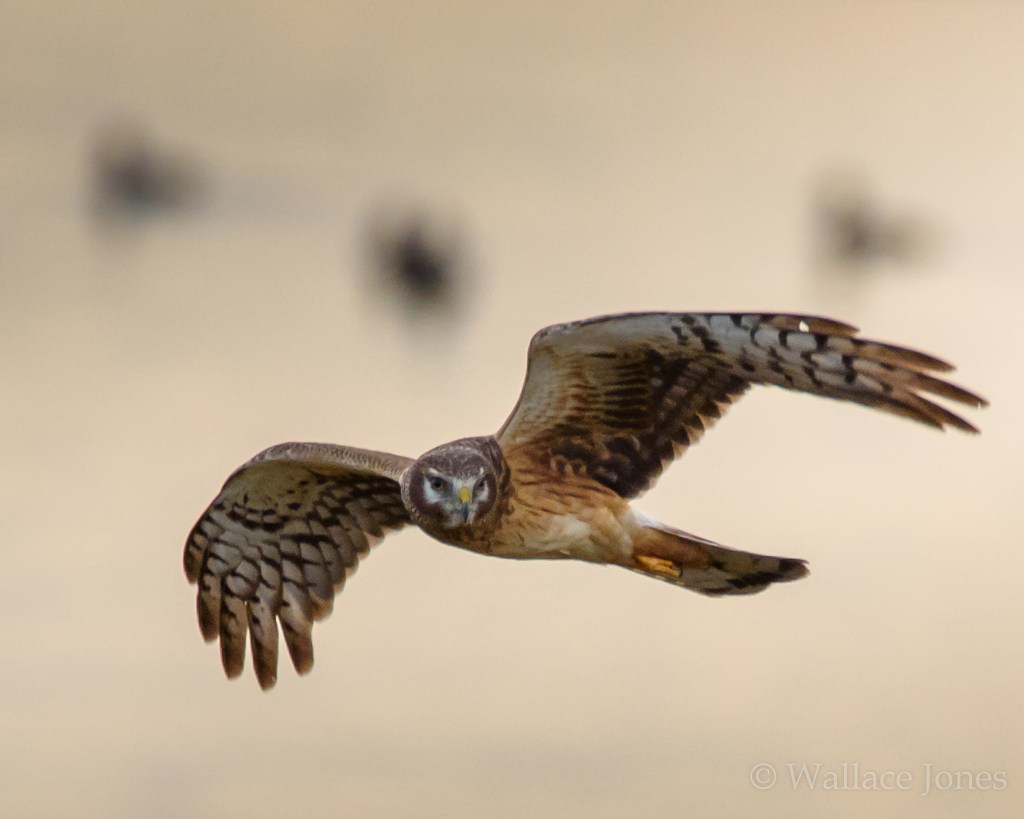




Enjoy your search for a natural place and come back for a visit.
(Header Image: Roseate Spoonbill)
A brand new year is in full swing and we are celebrating the fact that we are still able to enjoy exploring nature and will be seeking new adventures to share.
As we glanced around the blog workshop the other day, we noticed several images awaiting insertion in a post. Events of the past several months seemed to derail my plans to adhere to some sort of blogging schedule. Okay, let’s face it. I’m not really a “schedule” kind of person. So don’t think there will be any improvement in that regard for the future.
We are so fortunate to have many wonderful natural locales within a relatively short distance from the house. This is great for “spur of the moment” excursions which require little planning and won’t consume too much time.
The days of December typically roll downhill quickly for us. Beginning as a small snowball of sending out cards and scheduling a holiday meal with family, gathering speed and size with shopping, organizing events, decorating, baking, crafting, birding – until the final days of the month become an avalanche of activity ultimately crashing at the foot of the mountain which was – Last Year.
Sweeping up the detritus of December, some items went right into the dustbin. Others were placed on the shelf to, perhaps, be used at a later date. A few images in the library which were not published are included in this post. (“Sweeping Up” may be a quaint usage in modern times, but somehow “Vacuums Suck” didn’t have quite the literary nuance I was seeking.)
Among today’s pictures, which were all taken during December, are birds in and around a couple of local lakes, a unique moth and a rural scene which reminds us:
“Whan the sunne shinth make hay. Whiche is to say.
Take time whan time cometh, lest time steale away.”
John Heywood – A dialogue conteinyng the nomber in effect of all the prouerbes in the Englishe tongue, 1546.
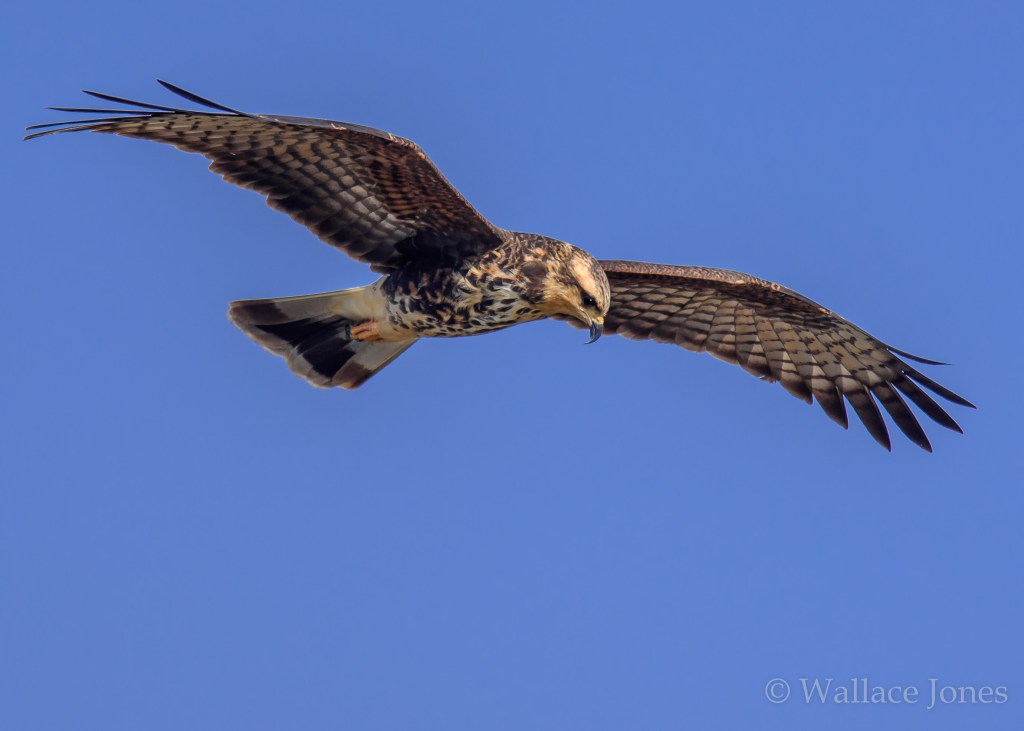
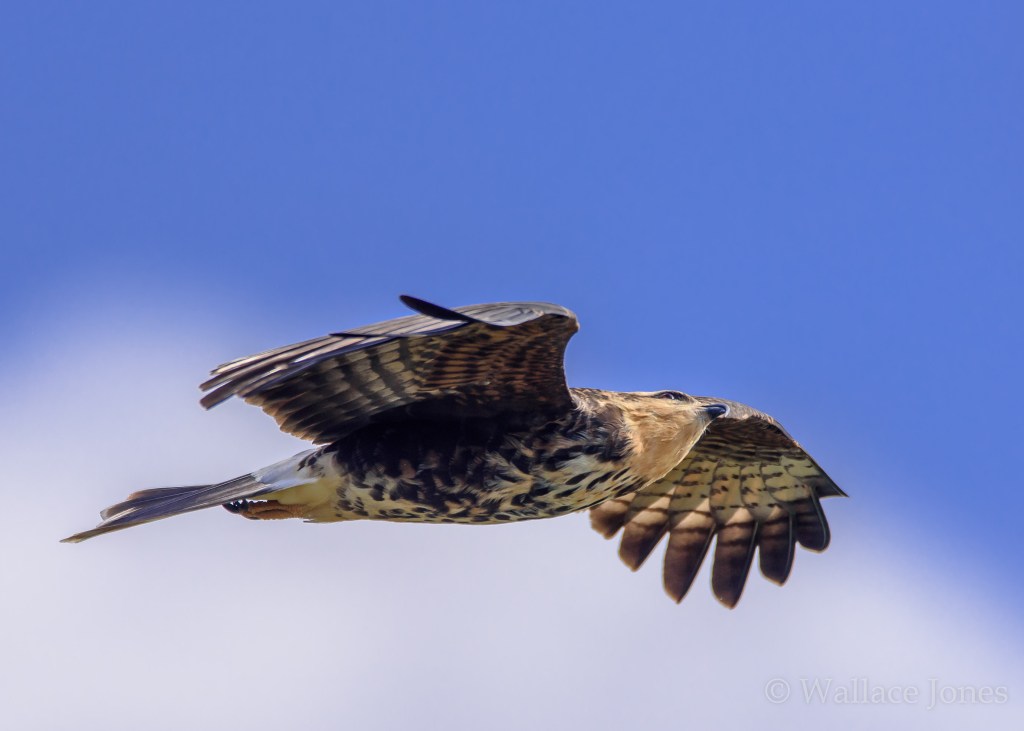
The Snail Kite is on lists for “endangered species” or “species of concern” at both federal and state levels as their very special dietary needs (almost exclusively apple snails) have been negatively impacted over the past several decades by habitat loss. The inadvertent introduction of a couple of non-native apple snail species in the past several years has resulted in a comeback and even some range expansion for this very special raptor. I was fortunate to watch a female Snail Kite as she hunted along the shore of a local lake. In the last image, she looks up to see a Short-tailed Hawk soaring high above her. No threat to her, but good to know who is in the area!

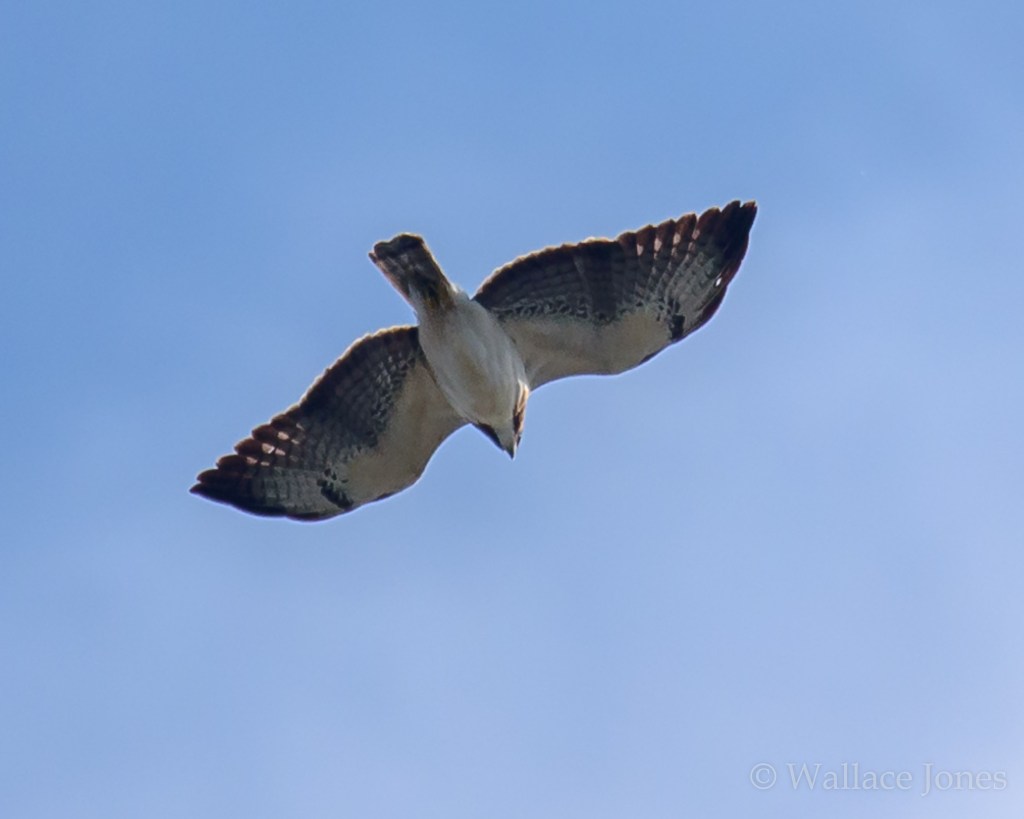
The Short-tailed Hawk has a light and dark version. This light morph was very high over the lake shore where the Snail Kite above was hunting. A compact hawk about the size of a crow, it feeds almost exclusively on small songbirds. Floating higher than where vultures typically soar, the Short-tailed hawk scans the edges of forests and cypress domes and when a small bird (or flock) is spotted will stoop like a falcon to snatch its meal. A tropical raptor, it is endemic to central and south Florida within the United States.
A common winter visitor, the Eastern Phoebe is a small flycatcher which exhibits a trait all birds should emulate. She very politely repeats her name – “Fee-Bee” – thus obviating the need to check field guides and phone apps to confirm her identification.

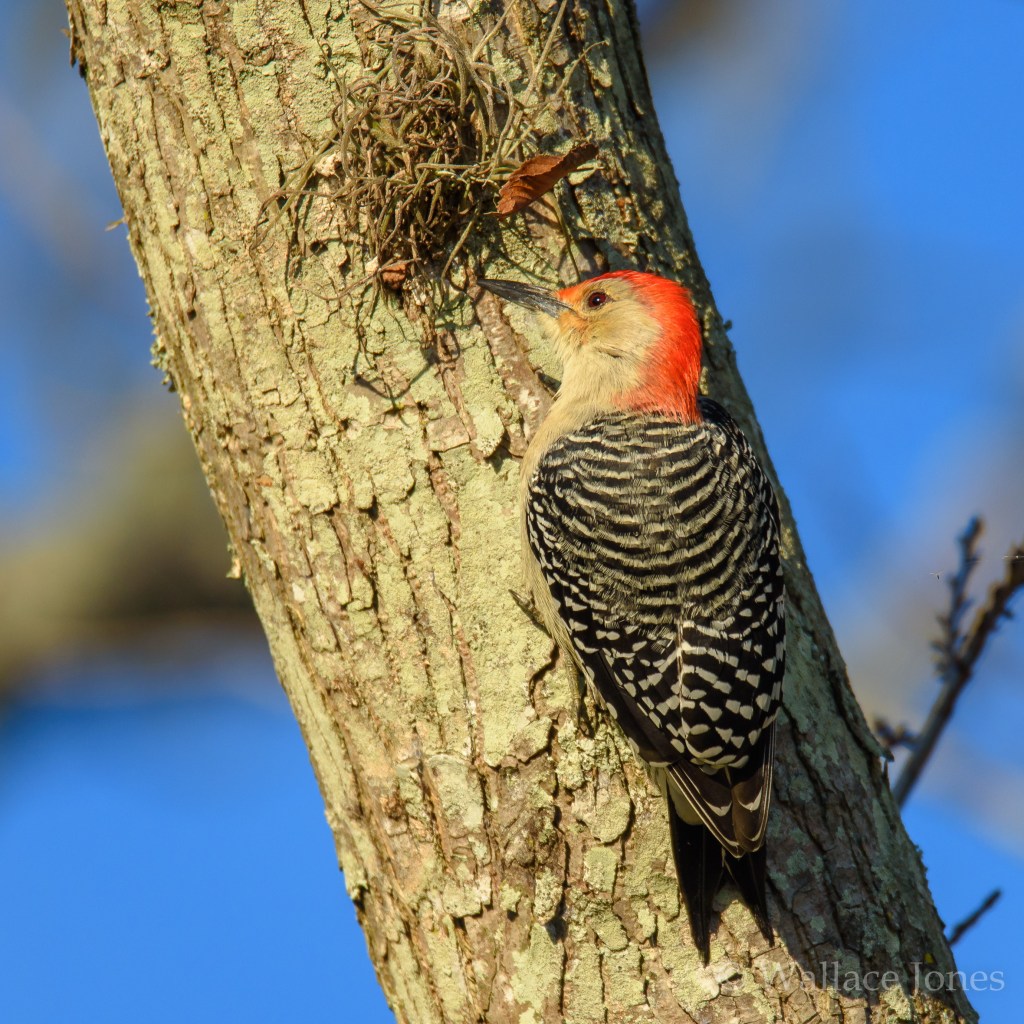
By far the most common woodpecker within our area is the Red-bellied Woodpecker. Recent bird census data indicates this species has adapted to human occupation very effectively.
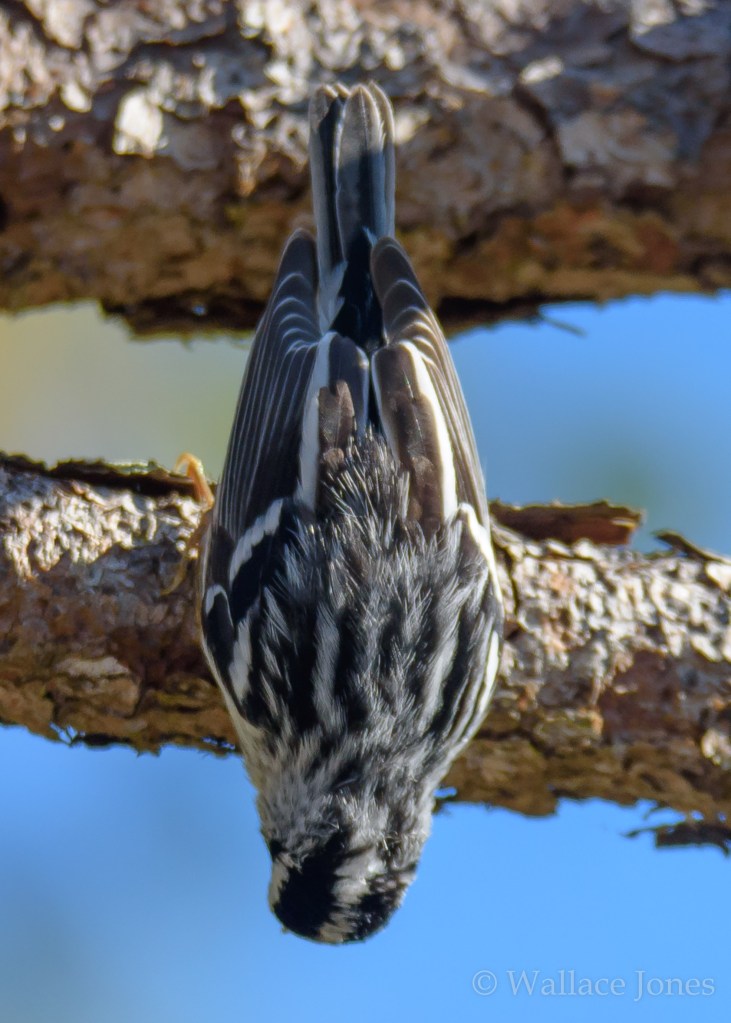
The warbler who thinks it is a nuthatch. The simple but beautiful plumage of the Black-and-White Warbler is enough for helping identify this little bird, but its habit of scurrying down a tree trunk head first is definitely unique for a warbler!

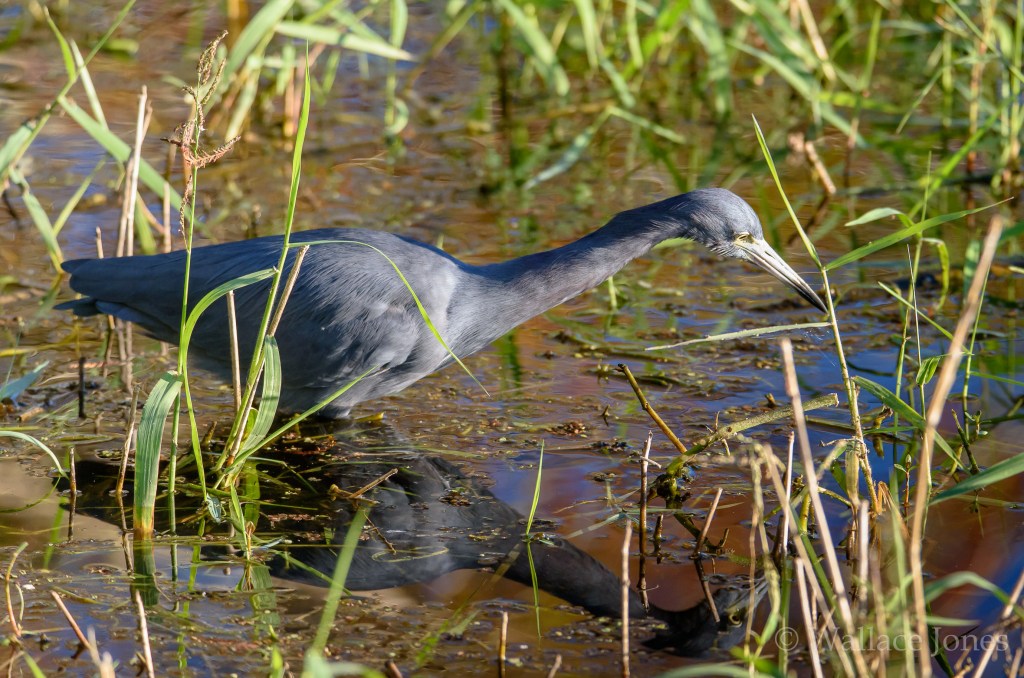
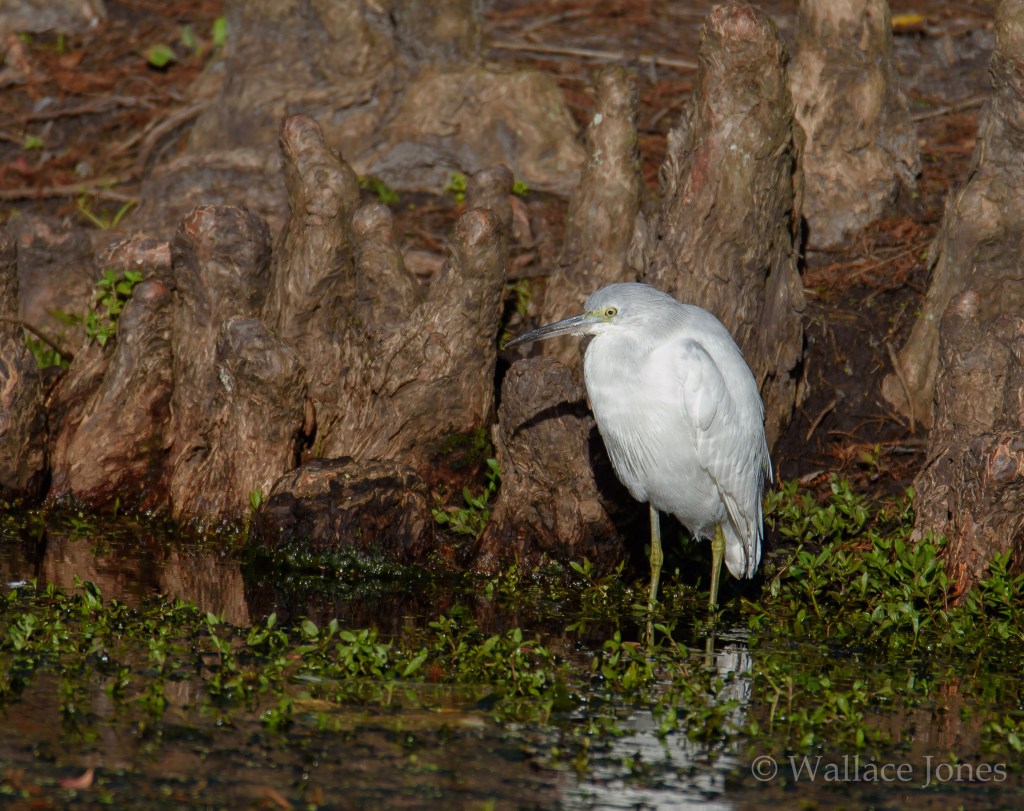
Slate blue body, subtle maroon-colored head and neck and a two-toned bill – the adult Little Blue Heron is a study in patience as it hunts in the shallows. A juvenile Little Blue Heron has a two-toned bill but is white overall until it begins molting into adult plumage near the end of its first year. Immature birds become a patchwork of white and dark blue splotches.
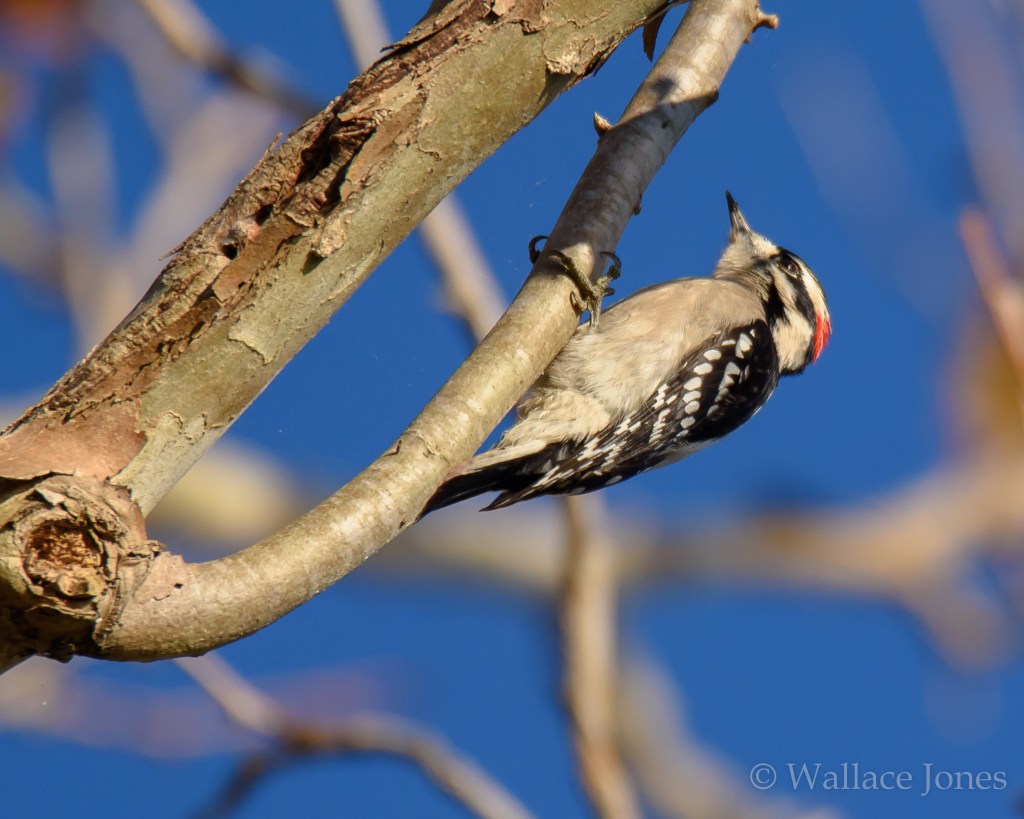
North America’s smallest woodpecker, the Downy, uses its needle-like bill to probe likely hiding spots for bugs. A red patch on its head identifies this as a male.
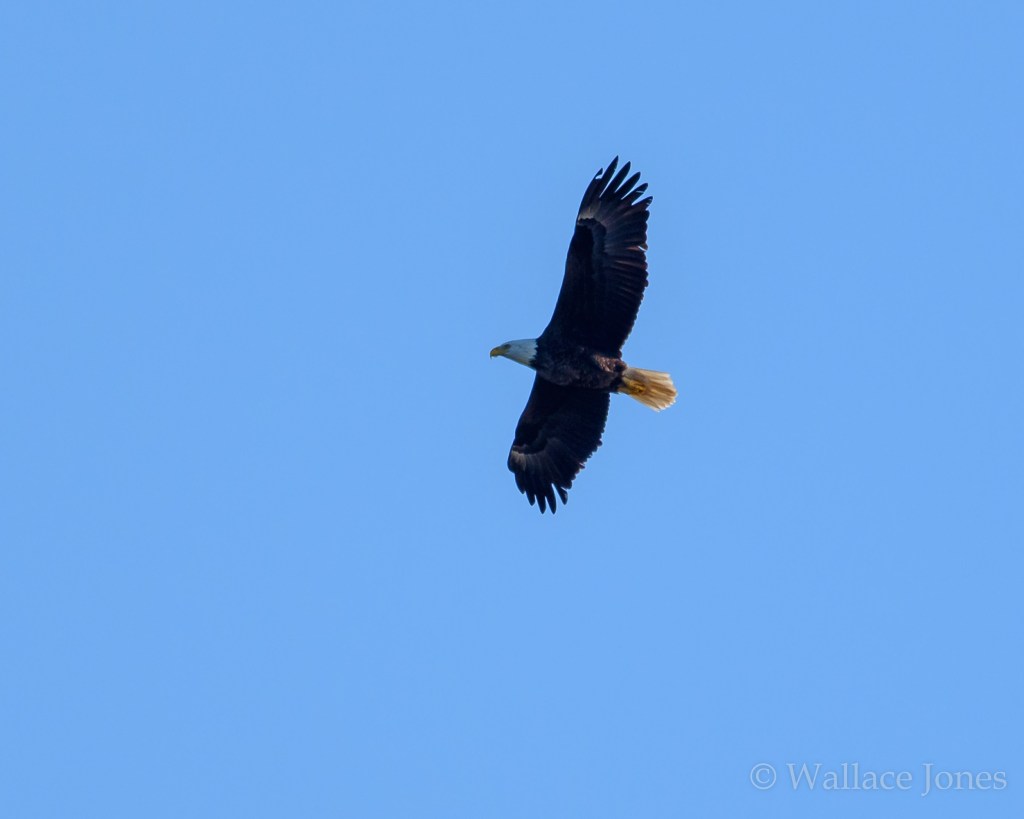
A shadow passes overhead. With so many lakes, we have a healthy resident population of Bald Eagles which is supplemented significantly during migration. Territorial fights between northern visitors and the locals are fierce and commonplace. (Yes, I’m still talking about eagles.)
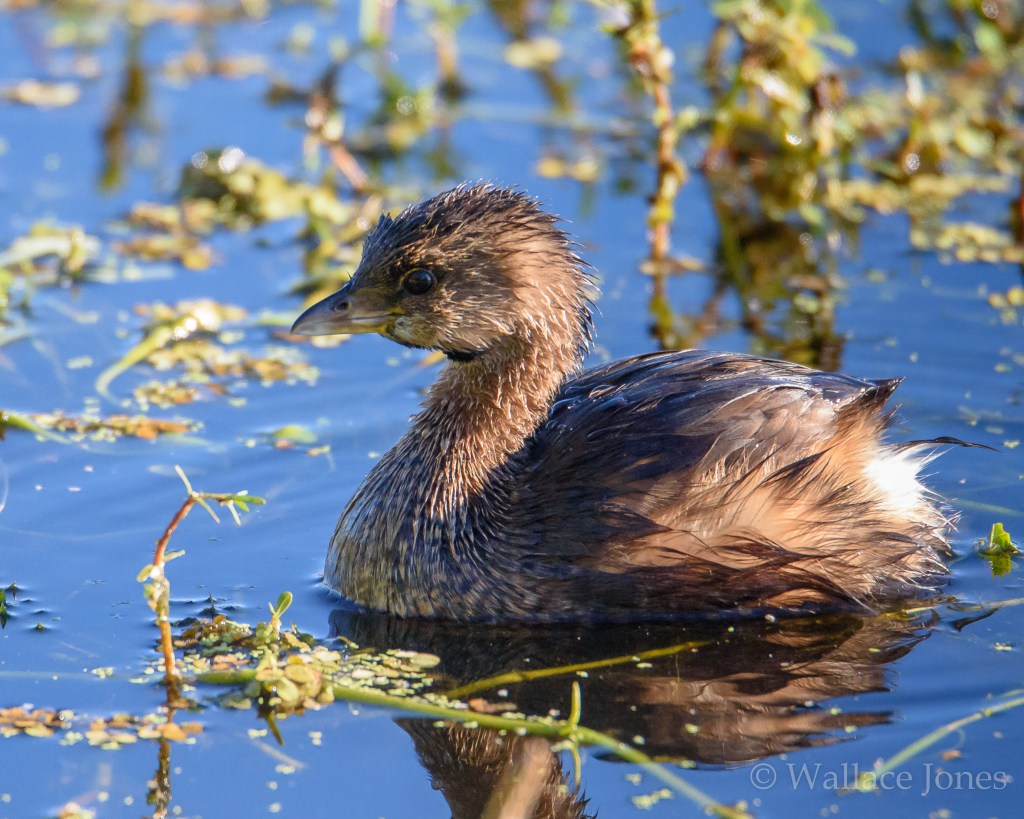
Florida does have a few Pied-billed Grebes which breed within the state. During the winter, the little “fuzzy-butts” (as Gini calls them) can be quite numerous on some lakes.
Wood Storks hold their bills in the water as they move and when they feel something they snap the bill shut and swallow their prey whole. They also use their feet to stir up the mud along the bottom to scare prey into moving.

Another shadow passes across the sun. The Turkey Vulture is as magnificent as the eagle when it comes to aerodynamics. I happen to think it has quite a handsome visage, but apparently my opinion is in the minority.

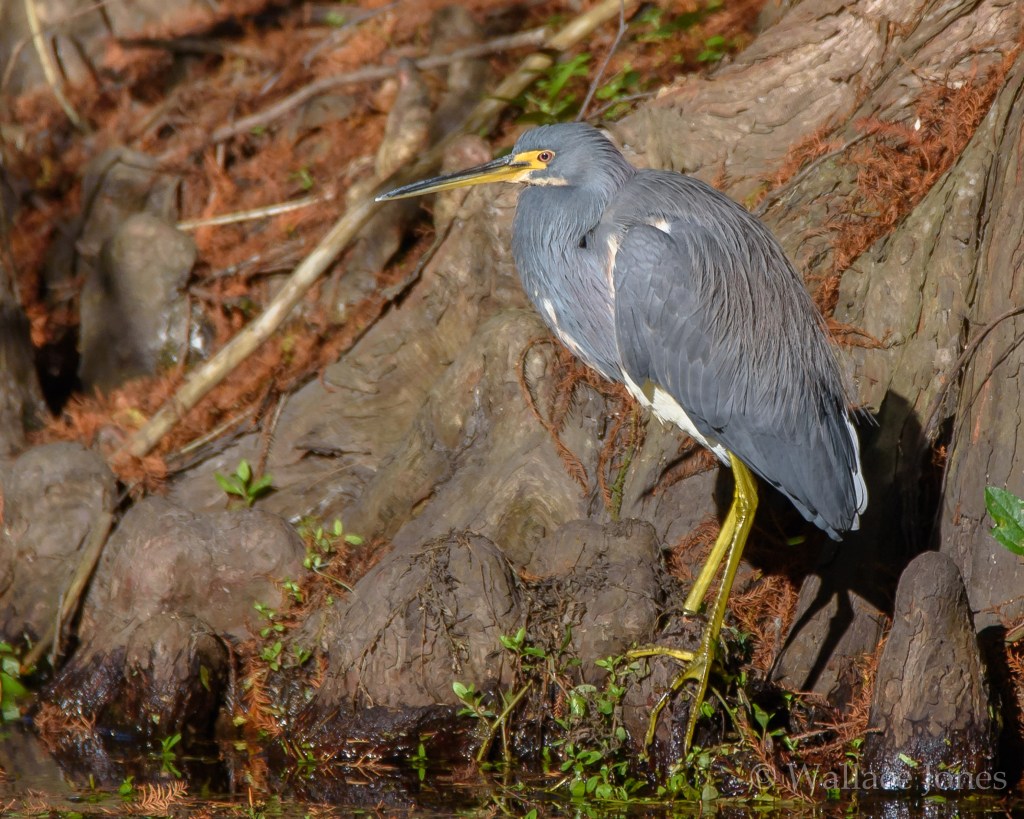
The hunting style of a Tricolored Heron is a bit different than most of its relatives. It usually walks quickly, runs, turns abruptly – it’s like watching some demented ballerina. They will also use their wings held high to create shade which entices small fish and – gulp!
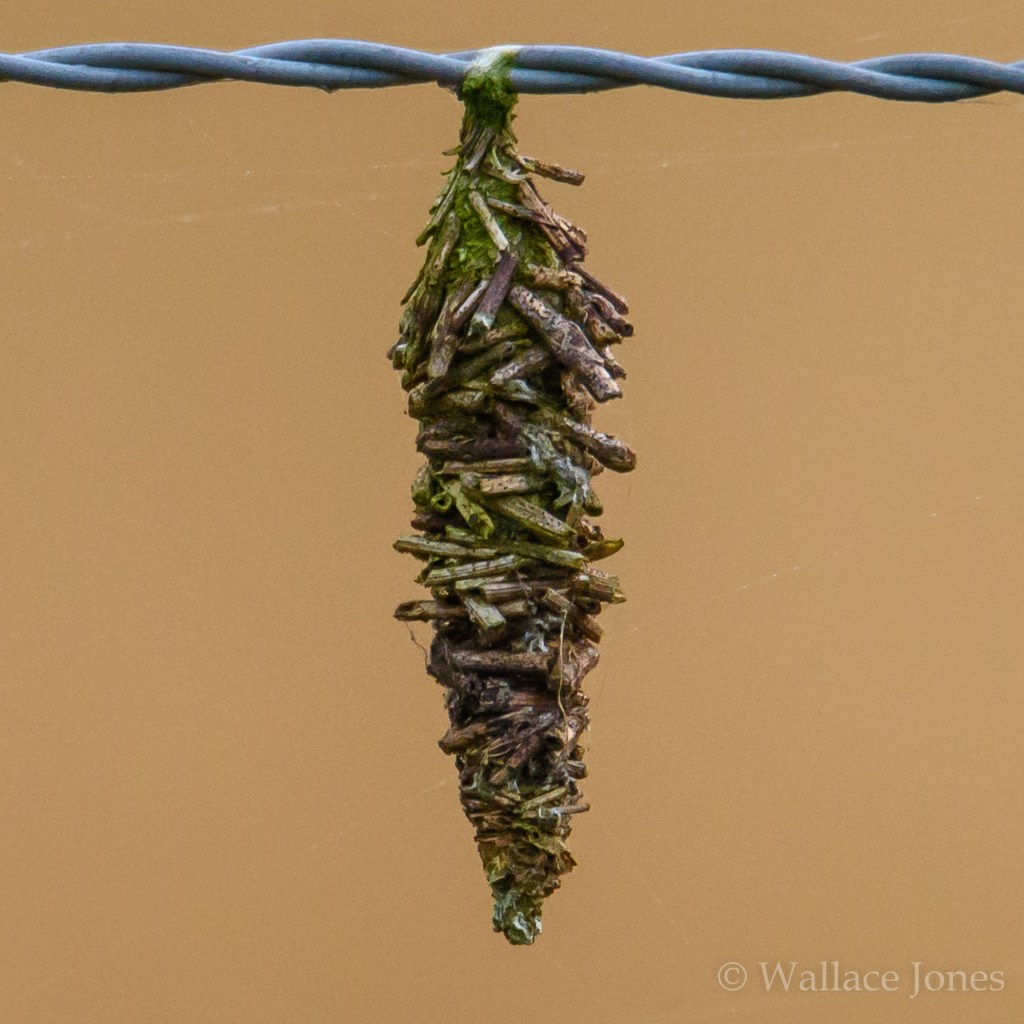
Driving from one spot to another, Gini spotted a bagworm on a strand of fence. I believe this is Abbot’s Bagworm (Oiketicus abbotii), due to the structure of the “bag”. The female moth never leaves the case, or “bag”, and the male leaves just long enough to mate, typically less than a couple of days. Unique insects!
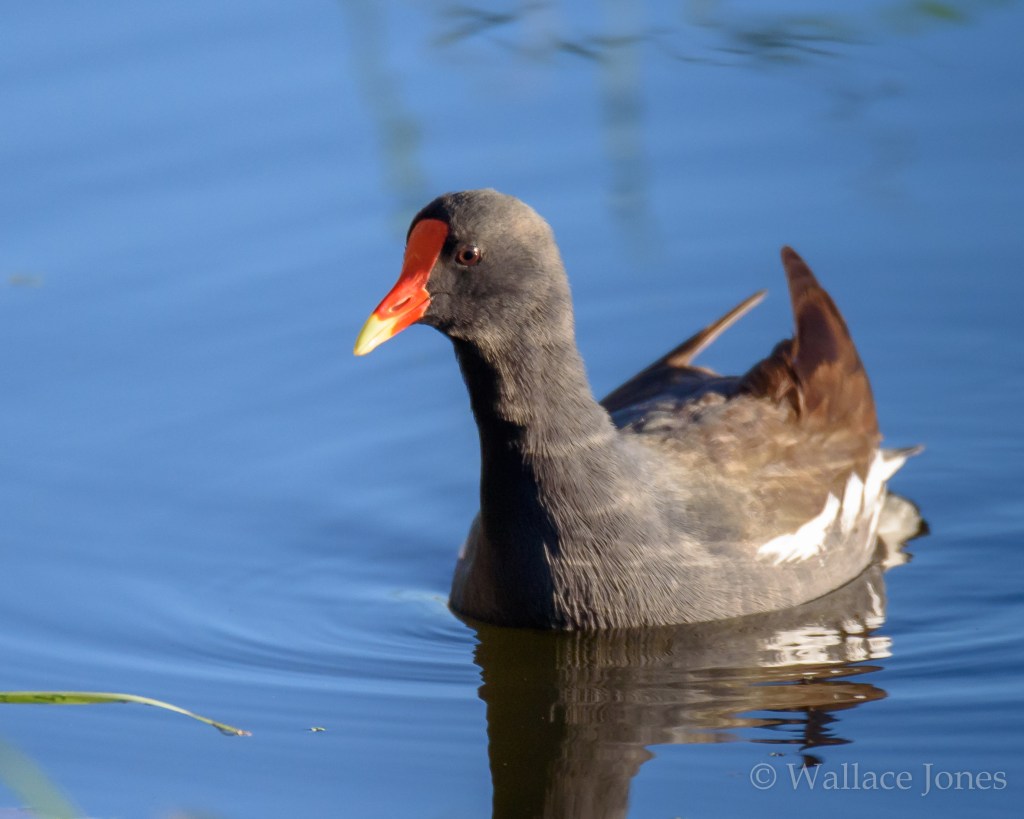
The Common Gallinule certainly lives up to its name in our area! They inhabit virtually all bodies of water, sometimes in incredible numbers. Thanks to Florida’s agreeable climate, these members of the rail family breed nearly year ’round.
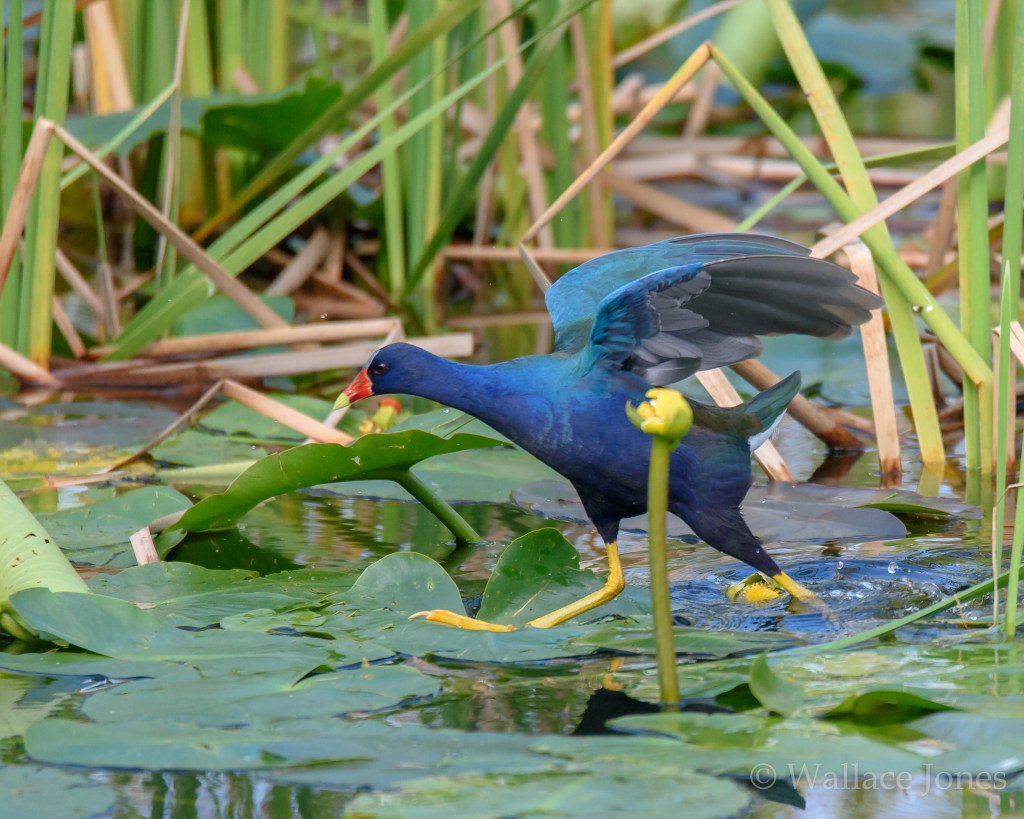
Not as common or widespread as the Common Gallinule, the colorful Purple Gallinule seems to walk on water as its big feet help propel it across lily pads and weeds.
Some Brown Pelicans breed around interior lakes and we normally have a few locally all year long. It can be startling to have one of these large divers fall out of the sky and splash right in front of you!

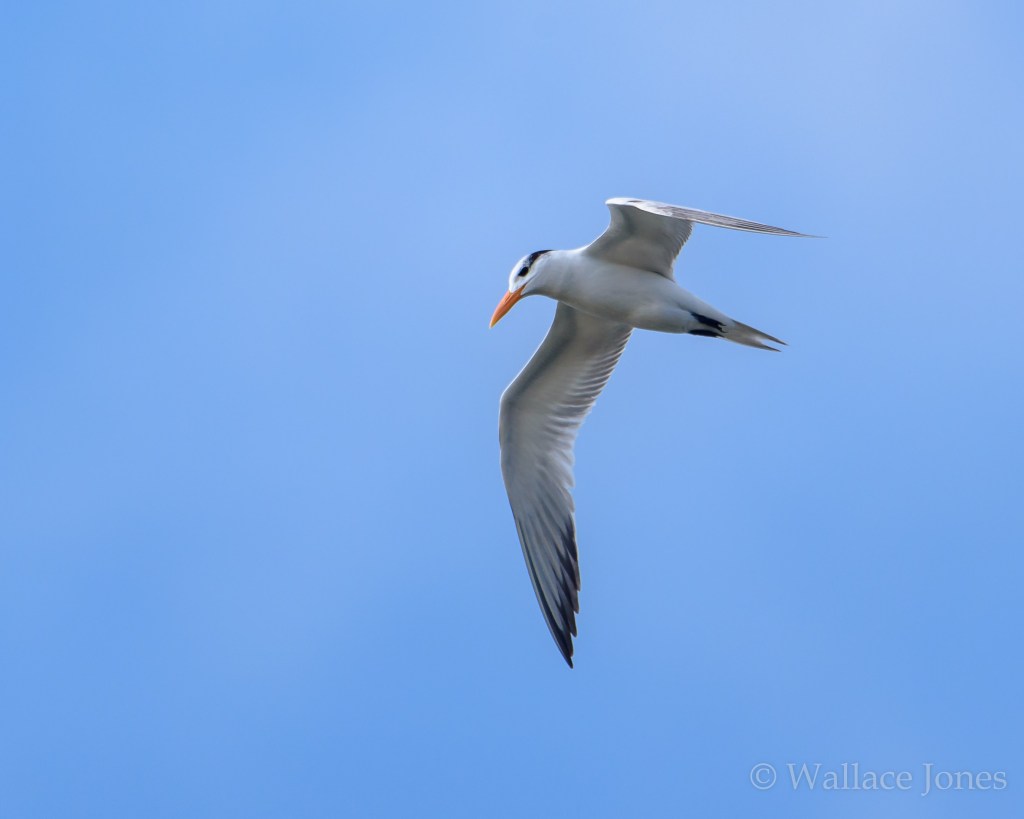
Similar to the normally coastal pelicans, we have a few terns which stay with us all year. A large yellowish bill, black behind the eye and head and a clean white forehead help identify the large Royal Tern.
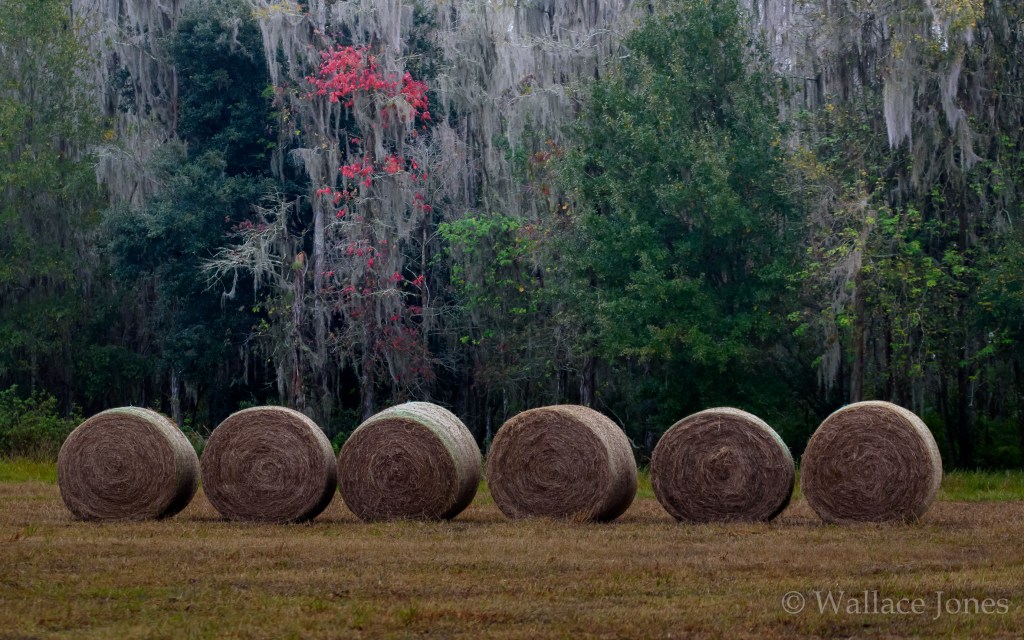
The back roads between lakes take us through fields and pastures and is a very relaxing experience. We leave you with a few bales of hay, cypress trees draped in Spanish moss and a splash of color from a Red Maple. As the old year has departed and we sweep up its remnants to engage the future, apply the wisdom of Mr. John Heywood of the 16th century (here is the modernized version):
“Make hay while the sun shines!”
Thank you all for traveling with us!
There will always be good times and bad. There will always be hope and despair. What we choose to remember, what we choose to grasp – shall make all the difference.
As for me and My Love, we choose to live our best life, today.
Enjoy your search for a natural place and come back for a visit!
(Header Image: Sandhill Cranes)
One of the interesting things about the annual Audubon Christmas Bird Count is that observers are assigned to a specific geographic area within which to conduct a census. In our area, we have urban, suburban and rural spots which include lakes, parks, wetlands, forests and pasture land to explore. This diversity of habitat provides great potential for seeing a good mix of species as well as large numbers of individual birds.
We were familiar with most of the areas which we were assigned to cover and had a chance to scout around a few days before the actual count days. “Count Day”. That is the day when you are reminded that birds have wings and nature has no calendar. The field that was filled with migratory Sandhill Cranes yesterday is empty today. Sigh.
Fortunately, we managed to find plenty of birds of sufficient diversity to be very pleased with ourselves. Besides, birding from before sunrise to after sunset is a great way to spend any day!
Having Gini as my birding partner is a plus in so many ways. For starters, she can hear the birds. I have a hearing loss which seems to filter out many bird sounds. Secondly, she has a wonderful ability to spot something “different” which has often resulted in discovery of a new or unusual bird. She brings good things to snack on. The only downside is she is so good-looking that I am constantly distracted from the primary mission. I’ll try to do better.
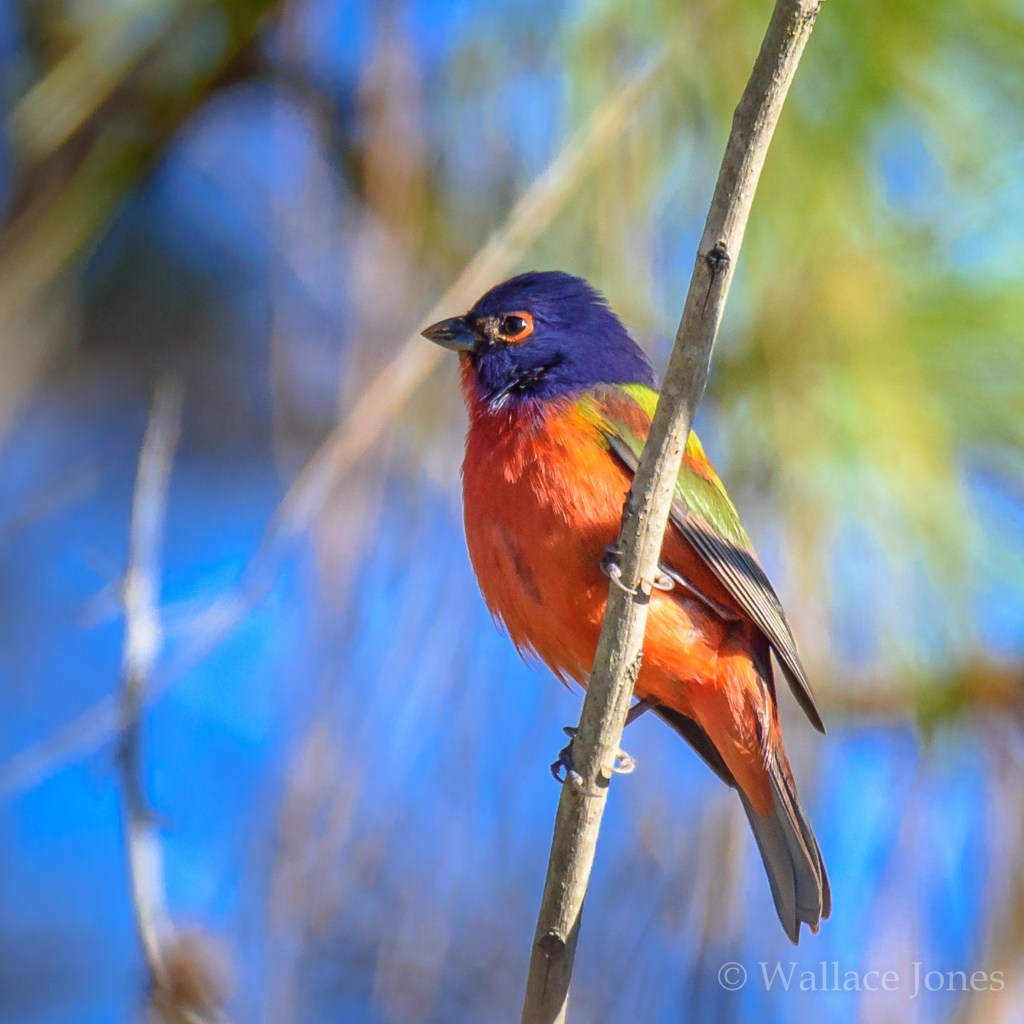
We saw many beautiful birds during this year’s census. One of the most colorful has to be the Painted Bunting. Gini saw something “different” (see what I mean?) near a boat ramp but it disappeared. She said it had a thickish beak and seemed to be green. Just then, a flash of bright color landed a few yards in front of us. A male Painted Bunting! She had likely seen the female. We saw an additional male and this was a first occurrence for the species in that particular area. A highlight for us!
Here are a few more images to give you an idea of the variety we found. Did I mention we had fun?
Gini doesn’t think the Painted Bunting was “painted”, but rather he just rolled around in the artist’s palette so he could include every color. She may be right.
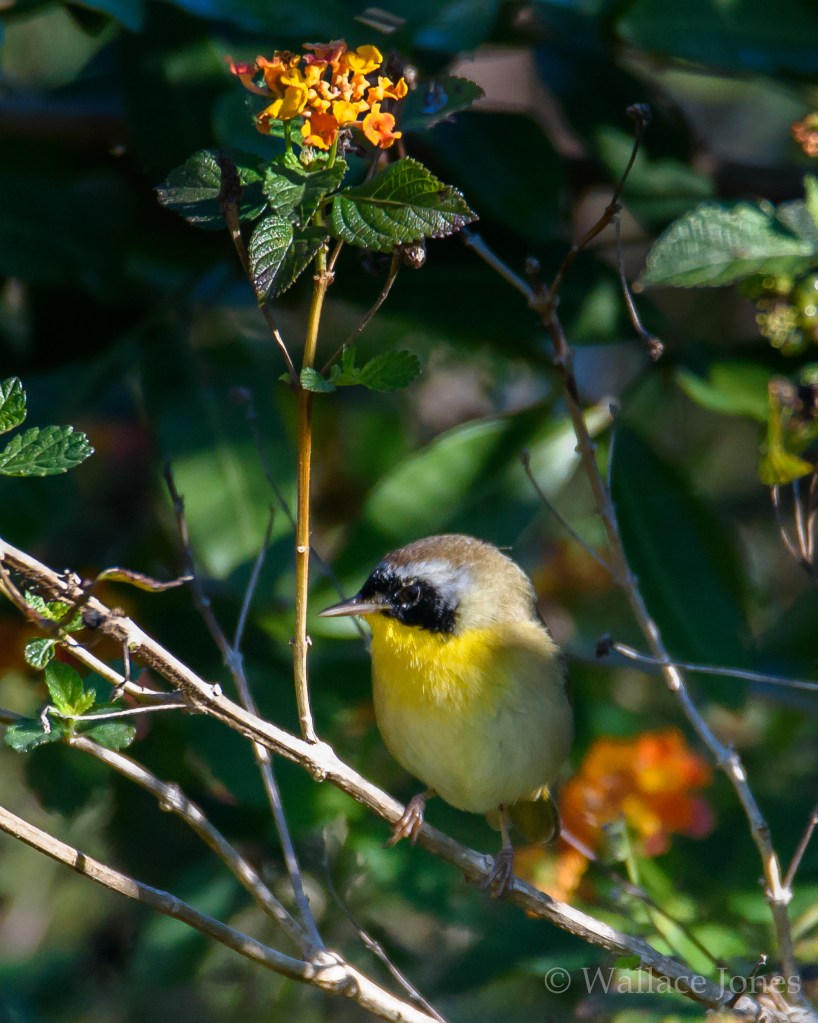
A male Common Yellowthroat with his black mask is one of those small birds with a huge attitude. Quick to challenge any potential intruder, he usually jumps from his hiding place to see who is trespassing in his territory.
Large size is sometimes enough to identify the Red-tailed Hawk. The only raptor in our area which is bigger is the Bald Eagle. The colorful tail certainly helps determine which hawk you’re seeing when it’s visible. Be aware that the tail of young Red-tailed Hawks is brown for their first year.

Small yellow balls of feathers flitting among the branches normally indicates a warbler. But which one? In this case, a distinctive face pattern (gray semi-circle under the eye), a dark eye line, gray streaks along the flanks and extensive yellow underneath tells us we’re looking at a female Prairie Warbler. The male has the same patterns but has darker black where the female is gray.

“Vireo!” Gini’s hearing had us scanning the trees and, sure enough, a vireo. A Blue-headed Vireo with a thick bill, blue-gray head, white “spectacles”, clean white breast and belly with yellow flanks. Another bird I would likely have missed if she had not been with me.

Our smallest woodpecker is the Downy Woodpecker. With only black and white showing on its head and no red, this is a female.

By far the most common hawk in Florida is the Red-shouldered Hawk. There can be quite a bit of difference in plumage color throughout the state with birds in the southern portion of the peninsula appearing lighter.

The smallest falcon in North America is the American Kestrel. They often perch on outbuildings such as this one next to a pasture where insects are abundant. The female, seen here, is not as colorful and a bit larger than the male.

Clear, melodic tones coming from the middle of a cow pasture can be traced to an Eastern Meadowlark. In addition to a pleasing song, the large bright yellow bird is very handsome. Despite its name, the meadowlark is not in the lark family but is actually a blackbird!

Touring a pasture on an all-terrain-vehicle (thank you, Steve and Debby!), a few low places where water and mud were present produced a trio of Least Sandpipers. We weren’t expecting shorebirds among the cattle!

In the pasture mentioned above, we continually flushed sparrows but couldn’t get a good look at them as they would fly a short distance, land in a clump of grass and then run several yards. Finally managed to get one to hold still for a millisecond. Lots of crisp breast streaks, distinct face pattern and a bit of yellow in front of the eye (hard to see here) – Savannah Sparrow.

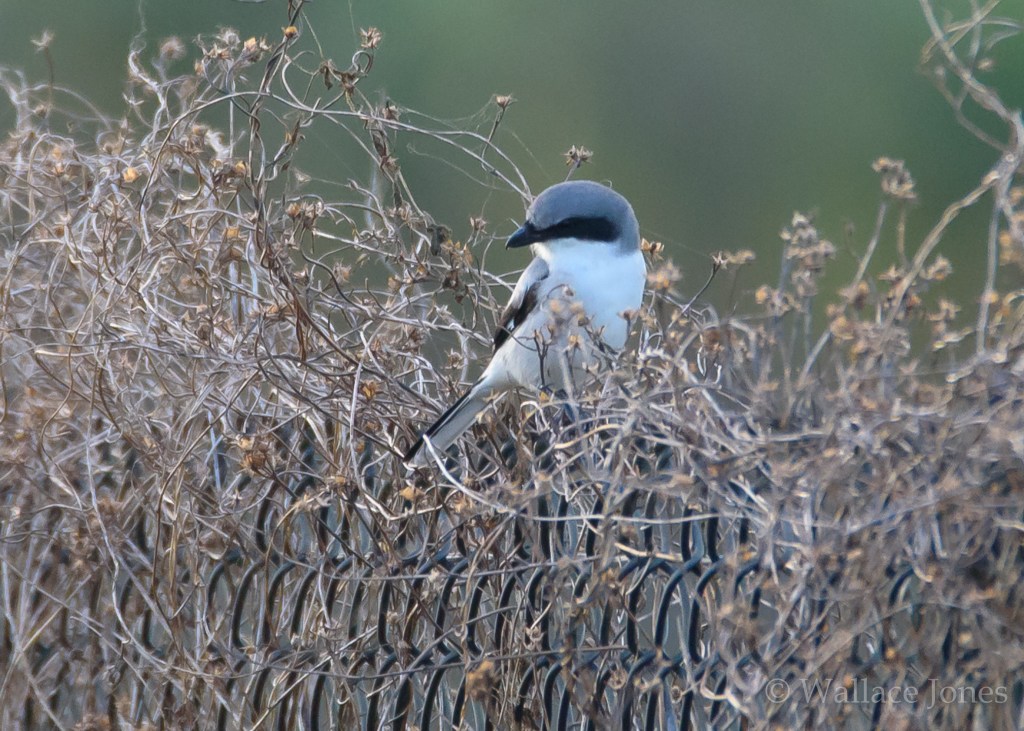
The Butcher Bird is watching! A Loggerhead Shrike has the unique habit of catching an insect and impaling it on a thorn, branch or barbed wire to make it easier to eat.
One of the most numerous warbler species to spend all winter here is the Yellow-rumped Warbler. Many birders call it a “butter-butt”. Whatever you call them, they are beautiful.

My mother was always happy to discover a “redbird” was nesting in the yard. The male Northern Cardinal is, truly, a great-looking “redbird”.

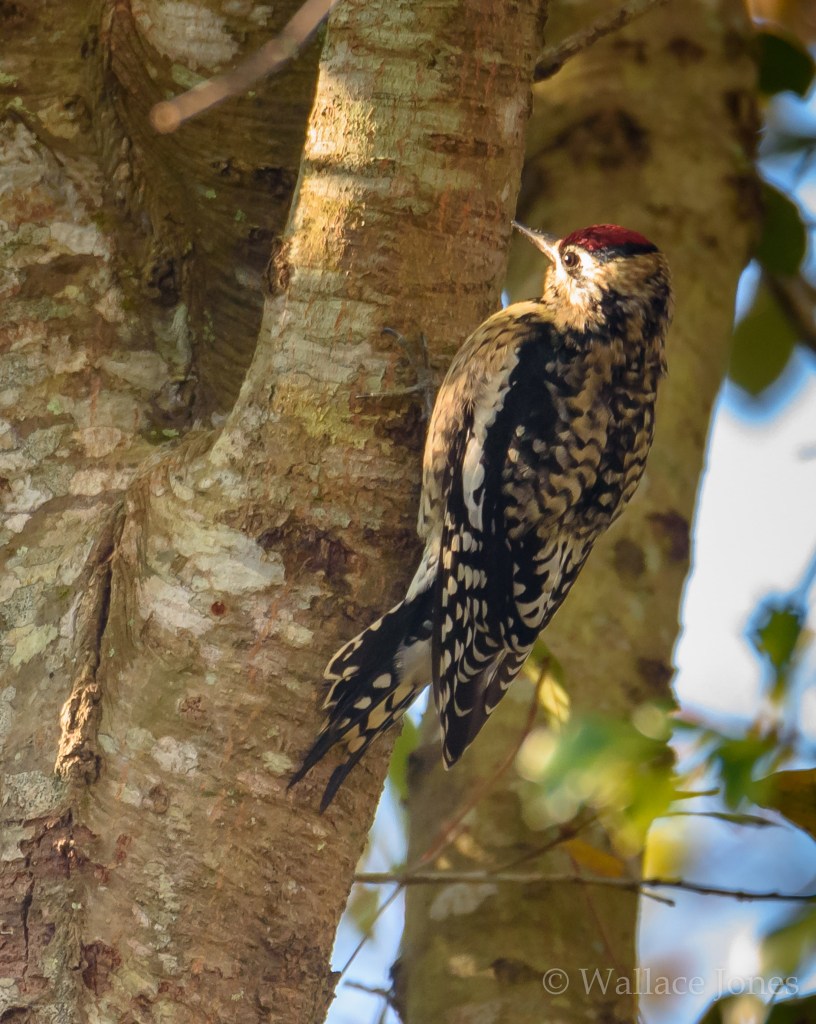
Florida normally has a great collection of woodpecker species which remain here all year. One species we don’t have at least visits each winter. The Yellow-bellied Sapsucker has an overall dark appearance and this female has a light-colored throat. Males have red throats.
This year’s Christmas Bird Count is finished. We saw a lot of birds, covered a lot of territory, spent a couple of long days in the field and had a blast! If you are in an area which participates in the annual census, consider volunteering through the local Audubon chapter. You’ll be glad you did.
Enjoy your search for a natural place and come back for a visit!
(First of a two-part photographic extravaganza!)
(Header Image: A Central Florida lake at sunset.)
We’re tired.
For the last couple of weeks, Gini and I have been participating in the annual Audubon Christmas Bird Counts held around our local area. Several days of scouting, actual count days (+12 hour days in the field), processing data and photographs – whew!
Not content with giving 100% during this time, Gini also conducted Christmas ornament making sessions with family members, baked over 22 dozen cookies, made several loaves of banana and mango bread, prepared an incredible holiday feast of standing rib roast, Yorkshire pudding, greens, rice and black-eyed peas (Hoppin’ John for you American southerners) and delivered gifts to family and friends. (Now I’m even more exhausted just describing my over-achieving mate!)
The annual bird census has its roots at the turn of the 20th century in the recently formed Audubon Society. Ornithologist Frank M. Chapman proposed the idea on Christmas day in 1900 and 27 birders around North America counted birds instead of shooting them, as had been a tradition before then.
Now, between December 14 and January 5 each year, thousands of birders of all degree of experience sign up with local Audubon chapters to help add data for scientists to use in gaining a better understanding of birds. A pretty good idea for which Mr. Chapman would rightly be very proud!
We counted many birds and found a couple of “firsts” to be observed within our area of responsibility (Brown-headed Nuthatch —> thanks to Gini’s good ears – and Crested Caracara). On our first day we found 72 different species and the second trip (in a different area) netted 55 species. We look forward to being tired again about this time next year!
Here are a few of the cooperative birds we spotted during this year’s effort. Once again, we appreciate how blessed we are to live where observing so many diverse birds within a relatively small area is a common occurrence. I hope we never take it for granted!
(For your viewing convenience, we’ll split the image collection into two parts. I mean, who wants to sit and look through almost three dozen pictures of pretty birds? Okay, besides you. And you. The rest of the group is grateful.)
Pretty in pink and with a distinctive bill, a Roseate Spoonbill glides toward a lake shore for a dinner buffet.

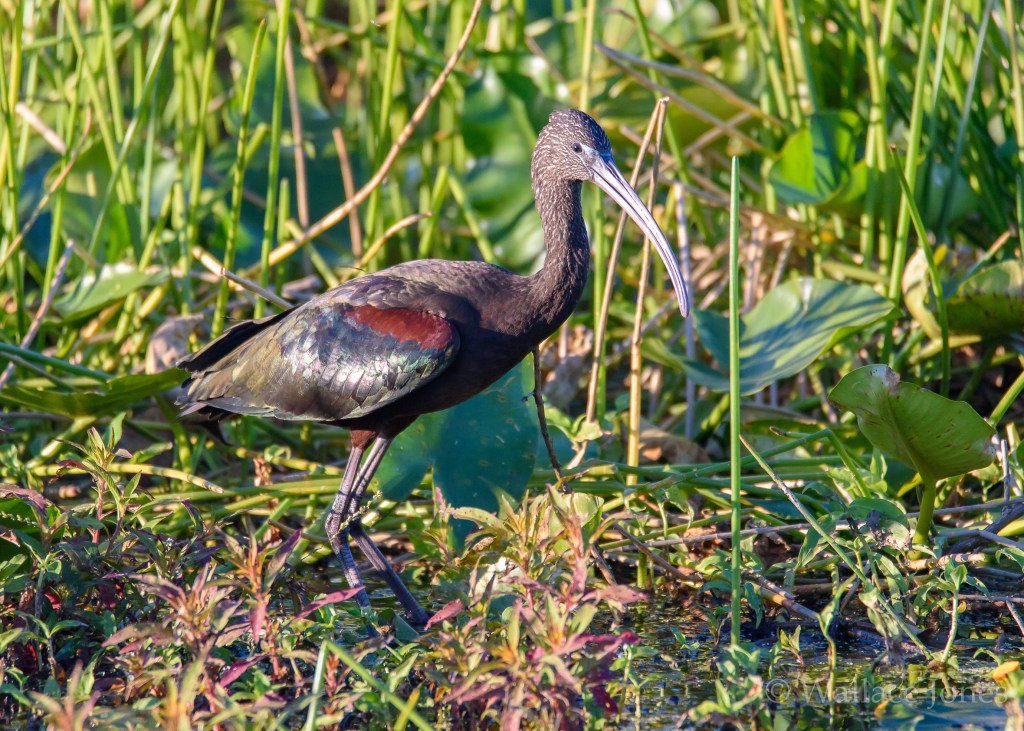
When the light is right, the plumage of the Glossy Ibis is downright iridescent.
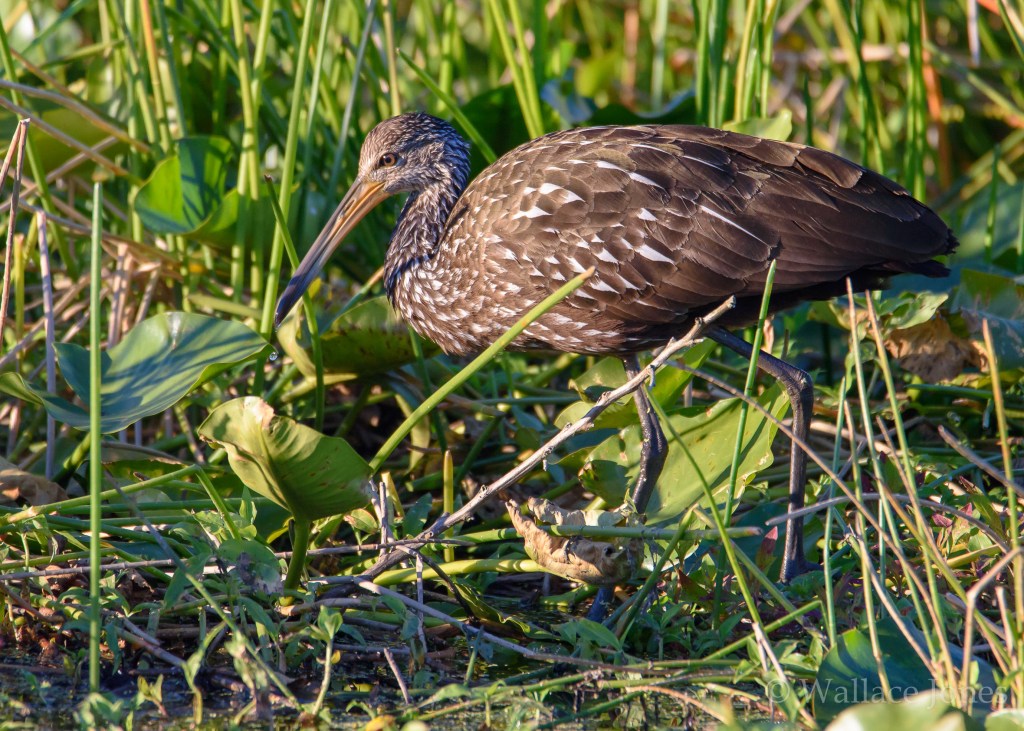
It looks a bit like a heron or an ibis. It is more closely related to rails and cranes. But the Limpkin is the only member of its taxonomic family, Aramidae. It really is one-of-a-kind!
A Belted Kingfisher patiently watches for breakfast. We normally only see these sleek fishermen (“fisherbirds”?) during migration and many remain here throughout the winter.

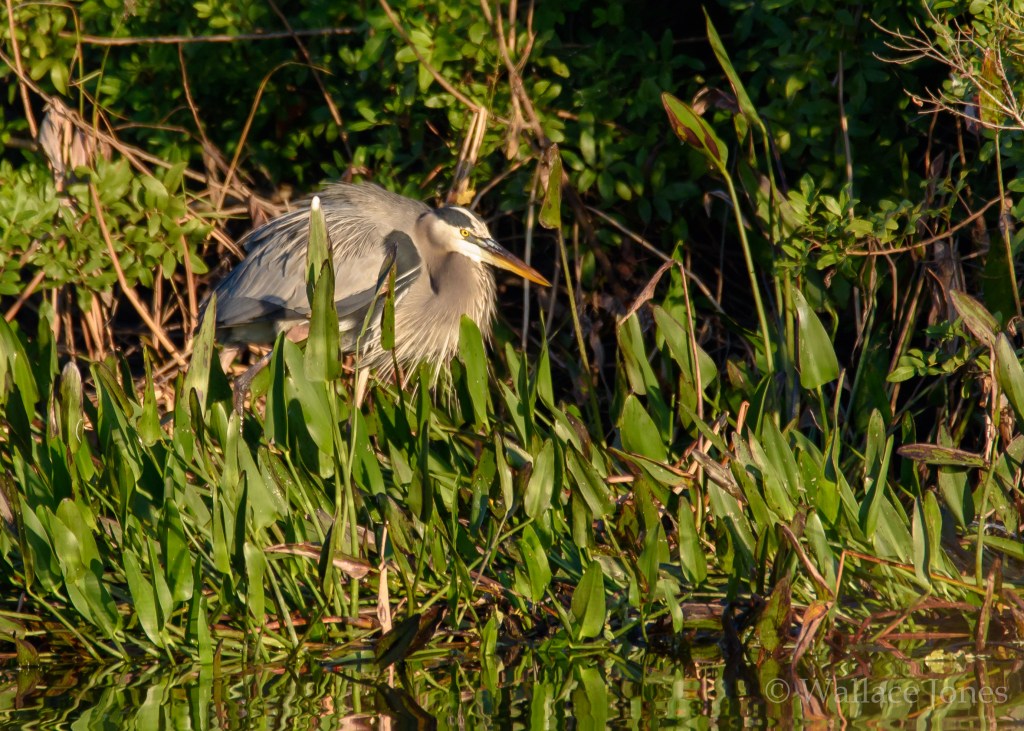
Our first morning outing was cold! A Great Blue Heron has his feathers fluffed to the maximum trying to catch the warming rays of the rising sun.
Black-and-white Warblers behave like nuthatches as they scurry down a tree trunk head first. This first one shows us his brunch worm while number two is a bit camera shy.

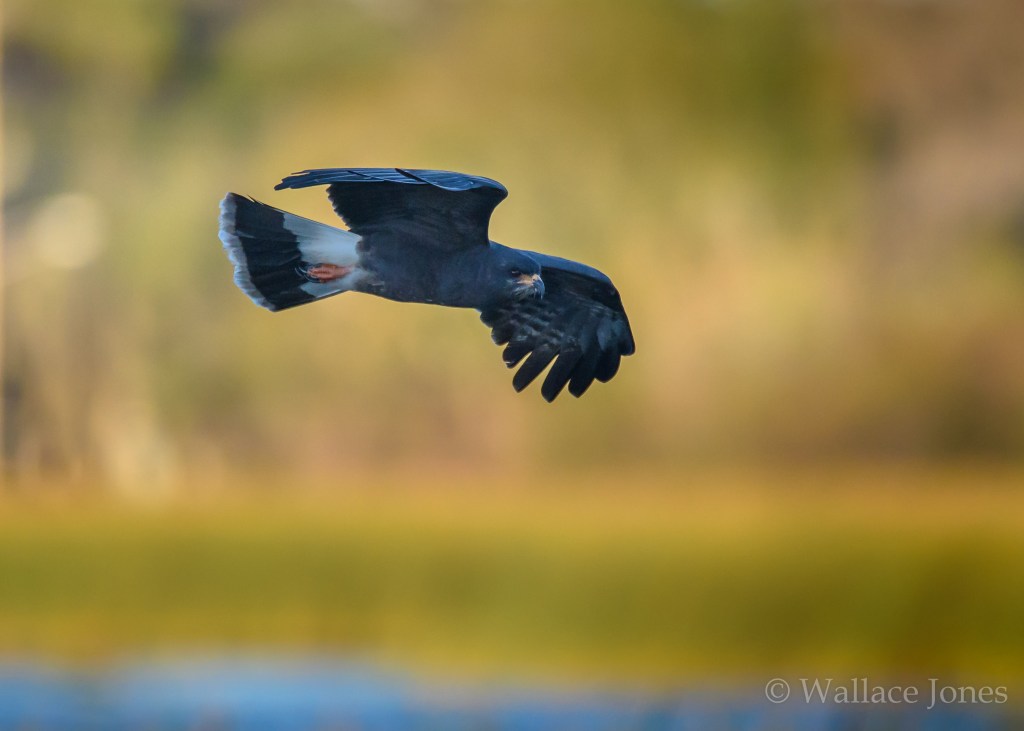
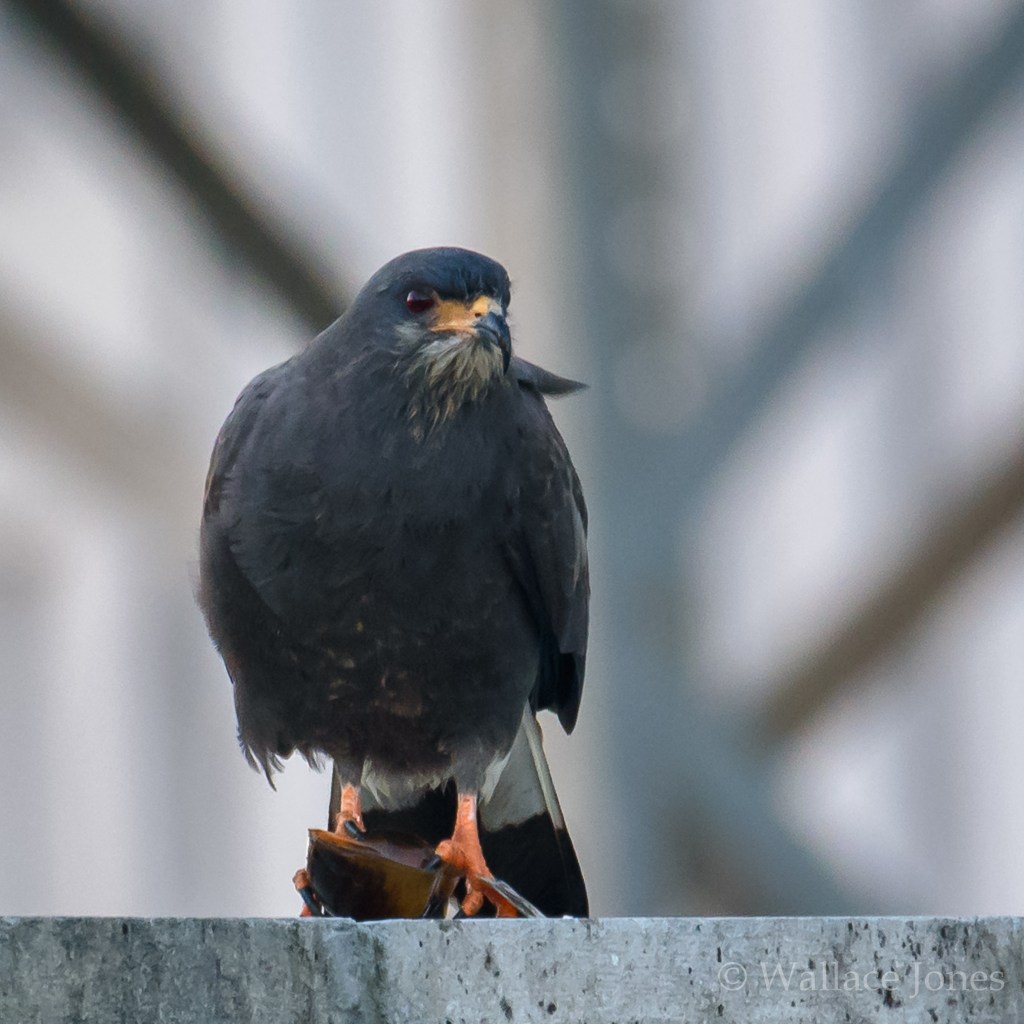
Although its range is expanding slightly, the Snail Kite remains on Florida’s and the federal endangered species list. The handsome gray male cruised in front of me just at sunset, grabbed an apple snail from a reed and took it to a wall and enjoyed his dinner.
Looking like some huge cargo airplane, the Brown Pelican seems to cruise effortlessly above the lake’s surface as he searches for a school of fish with which to fill his pouch.

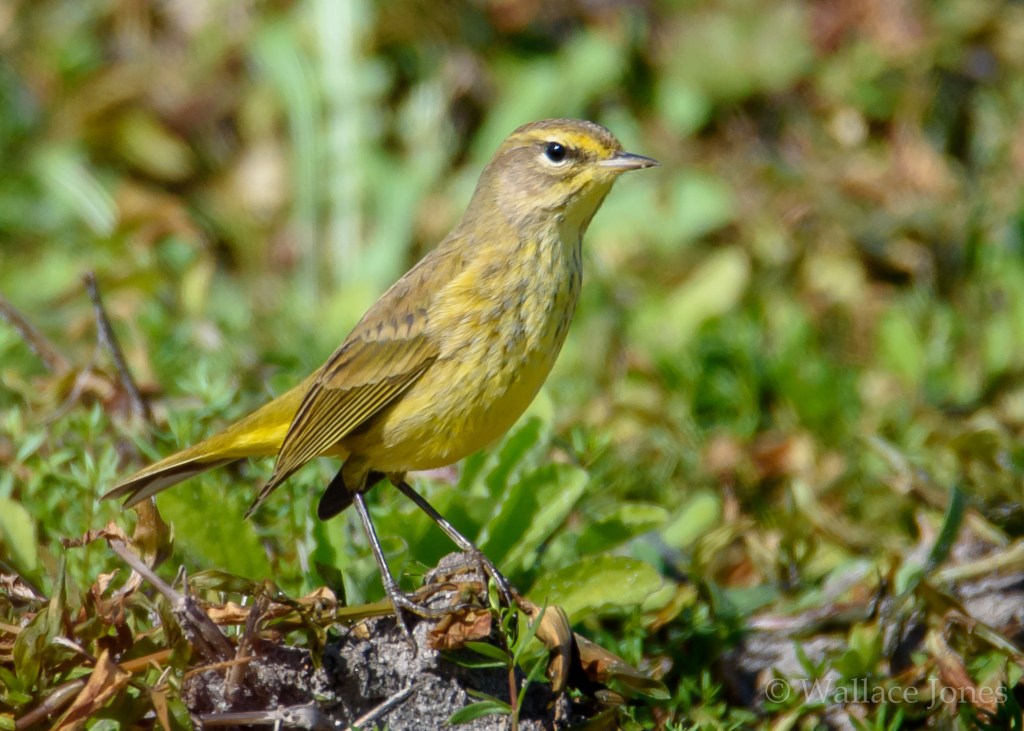
During migration, we see two versions of the Palm Warbler. The Western, which is rather drab gray/brown and the Eastern, which displays more yellow in its plumage. The two versions mix together, sometimes in large flocks, characteristically pumping their tails as they feed.

The wind-blown look. An Eastern Phoebe is alert for any movement which could be its next buggy meal.

Another bird we only see in Florida during migration is the American Robin. This largest member of North American thrushes can be encountered in huge flocks during their flight south. We found a couple dozen enjoying the fruit of Brazilian Pepper (Schinus terebinthifolius), an invasive shrub which is quite detrimental to other flora and fauna.

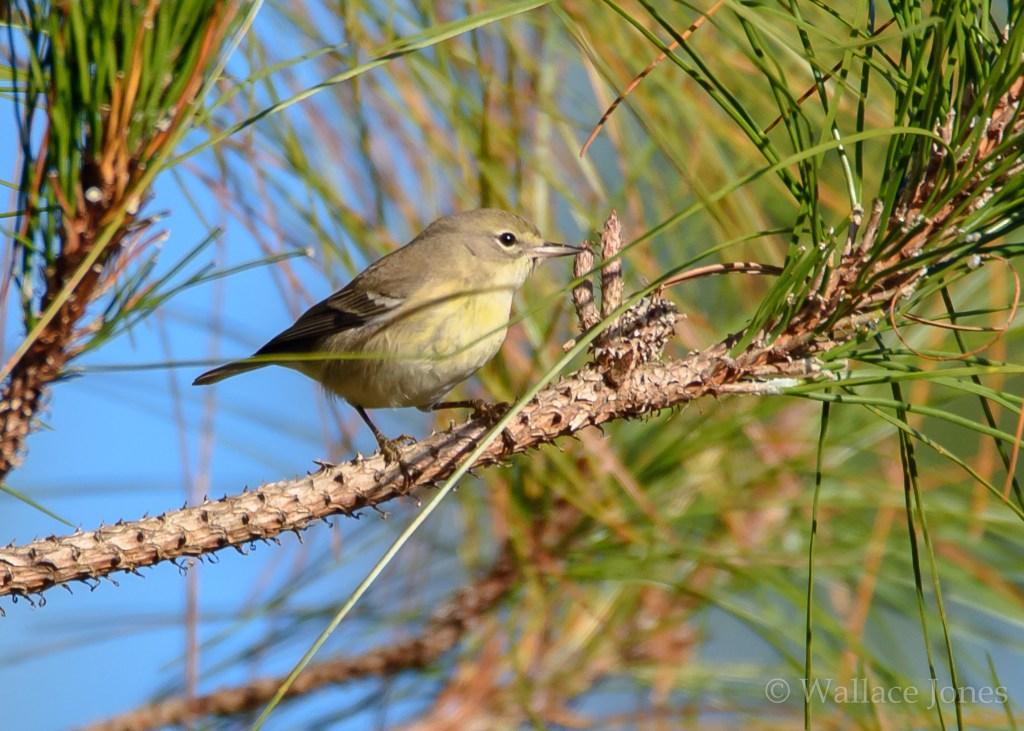
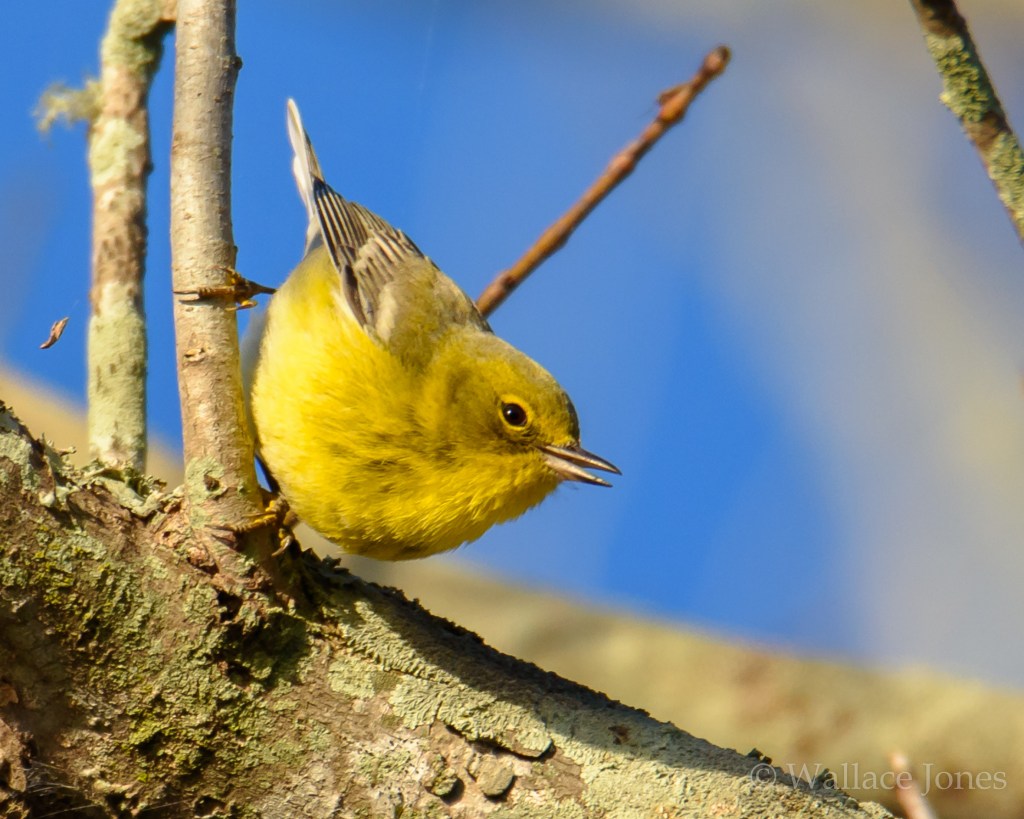
Pine Warblers, similar to the Palm Warbler above, can vary from quite drab to extremely bright. Their bills seem almost too big for a warbler. When they feed, they are somewhat deliberate as they move among the tree tops or walk along the ground. Most other warblers appear “jumpy” as they are always moving at top speed.
The noon-day sun glistened off the beak of a Bald Eagle brooding eggs while its mate stood watch on an adjacent utility pole. That is one serious-looking expectant parent!


Join us next time for more Christmas Bird Count excitement and fun! We’ll bring the cookies.
Enjoy your search for a natural place and come back for a visit!
“Come to the woods, for here is rest.” – John Muir
Upstate New York is unbelievably beautiful. In autumn, that beauty is enhanced by trees adorned with leaves of hues we never even knew existed. Walking along a path in November, crisp cold air turning your nose red, dry leaves crunching under foot, a Ring-necked Pheasant in a field springing up suddenly and snow beginning to fall gently to create a soft blanket which would cover those crunchy leaves during the night.
Gini and I are native Floridians. Living in Syracuse, New York was an adventure we shall never forget.
Fast forward – a lot of years. Back in our home Sunshine State there has always been a joke that Florida only has two seasons: brown and green. We are in the brown one.
However – there are a few spots in the state which, while not on the scale of a New York fall, sport a rather colorful display during late November and early December. Our local state park at Colt Creek happens to be one of those locales. Thanks to a healthy population of Red Maple (Acer rubrum) and a combination of rainfall amount and temperature, we occasionally find red and gold among our normally green patch of swamp and woods.
December in Florida also means we have opportunities to observe birds visiting from as far away as, well, upstate New York. The migratory travelers appreciate all the insect life the swampy woods offer. We appreciate them consuming as many as they can.
A couple of weeks ago, Gini packed up some fresh Florida citrus and granola bars and we enjoyed a splendid day chasing small birds in big trees. We saw our first Chipping Sparrows of the season but, alas, they were quick to escape and I couldn’t find them again for a photo. In addition to a good number of birds, we saw some of our “regular” residents: alligators, deer, squirrels, turtles and even caterpillars, butterflies and a few dragonflies.
The woods smell different at this time of year. I suppose it has to do with decaying leaves recently released from limbs now becoming compost which will support new life in the spring. Drier weather means lower water levels in the creeks and more of the banks exposed for animals and birds to explore the soft mud for a meal.
In addition to fall warblers, we were fortunate to spot a local pair of Red-shouldered Hawks, an American Kestrel, young White Ibises, lovely Turkey Vultures trying to stay warm and a couple of Killdeer at the ranger station. The morning passed all too quickly.
We lingered a bit to enjoy our colorful autumn display across the lake. Admittedly, not as impressive as our New York memory, but we like it just fine.
The Common Yellowthroat has what we refer to as “small bird syndrome”. Similar to his cousins the wren and gnatcatcher, they are quick to challenge any would-be intruder and aggressively jump to a conspicuous perch to defend their territory.

Speaking of the Blue-gray Gnatcatcher. This one was too busy keeping an eye on a breakfast bug to challenge my presence.

White-tailed Deer are common throughout the park early in the morning and have become somewhat accustomed to human presence. This doe still eyed me suspiciously and eventually melted into the trees as I wandered around looking for birds.

An Eastern Bluebird seems to defy gravity as it hangs on to a piece of pine tree bark.

Pine Warblers can be quite bright yellow or quite drab gray, and many shades in between. These big-billed warblers readily come to feeders for seed to supplement their insect diet.

At the park entrance, two Killdeer probed the grass around the pavement for insects. The bird supposedly gets its name from its call. The naturalist, Mark Catesby (early 1700’s) called it the “chattering plover”.

Small gray/brown bird, subtle breast streaks, yellowish flanks – a Yellow-rumped Warbler. The species has been split into two distinct varieties: Myrtle with a whitish throat and Audubon’s with a yellow throat.

It is an ornithological mystery as to how the bird received its common name.

As we passed by a creek, a slight movement caught our attention, otherwise we would have walked by this pair of beautiful Red-shouldered Hawks.

There’s nothing like an old metal roof to warm one up on a chilly morning. A pair of Turkey Vultures soak up the heat as they wait for thermals to form so they can begin their day of soaring. I thought the one perched on the roof’s peak would make a good weather vane. Gini said – well – suffice it to say she was not quite as enthusiastic as I was.


North America’s smallest falcon is the American Kestrel. This one was typically wary and flew to the next county as soon as I snapped a distant picture. The male is unmistakable in his colorful plumage.

A pair of White Ibises prepare to land in a small wetland. Immature birds are brown with white splotches until their second year, when they molt into the pure white of an adult.

Eastern Phoebe’s are fairly numerous throughout the winter and we miss them when they migrate north again. This one enjoys a large grasshopper brunch. Almost too large?


Our memories of distant autumn foliage are cherished. We are blessed to have small bits of color at this time of year which add to our enjoyment of Florida’s forests.
Enjoy your search for a natural place and come back for a visit!
LATE BREAKING NEWS FLASH !!
When last we met, spiders were busy guarding egg sacs throughout the land. We found one which Mother Green Lynx Spider had torn open to help all her new babies crawl out into the wide world. All those little reddish-brown dots have legs.

 Our Natural Places