Header Image: Purple Gallinule
‘Tis the season.
Each year around Christmas, birders across the land scatter to assigned sectors before dawn to listen for nocturnal birds and, once the sky has lightened, continue throughout the day counting species and individual birds until “warbler neck” has disabled them completely and they return to their own nests exhausted, hungry, dirty and mumbling about how horrible this year was compared to past years when flocks of infinite diversity and numbers filled the skies.
“Can’t wait until next year!”
Ah, yes. The annual Audubon Christmas Bird Count is upon us. No shotguns needed, John James.
In the days leading up to count day, Gini and I did a bit of scouting. We wanted to see what was active in our assigned area, find the best times and routes and develop a general plan of action for the big day. Of course, birds have no such “plan of action” and they appear and disappear from one day to the next. Thus, the Painted Buntings we discovered on Wednesday were nowhere to be seen on Saturday. On the other hand, there was no sign of a Wilson’s Snipe on Thursday, but on Saturday 16 showed up. Go figure.
Today’s collection is a pictorial potpourri of our visit to a few different areas as well as observations along the way. We had fun and it was a good warm-up exercise for count day.
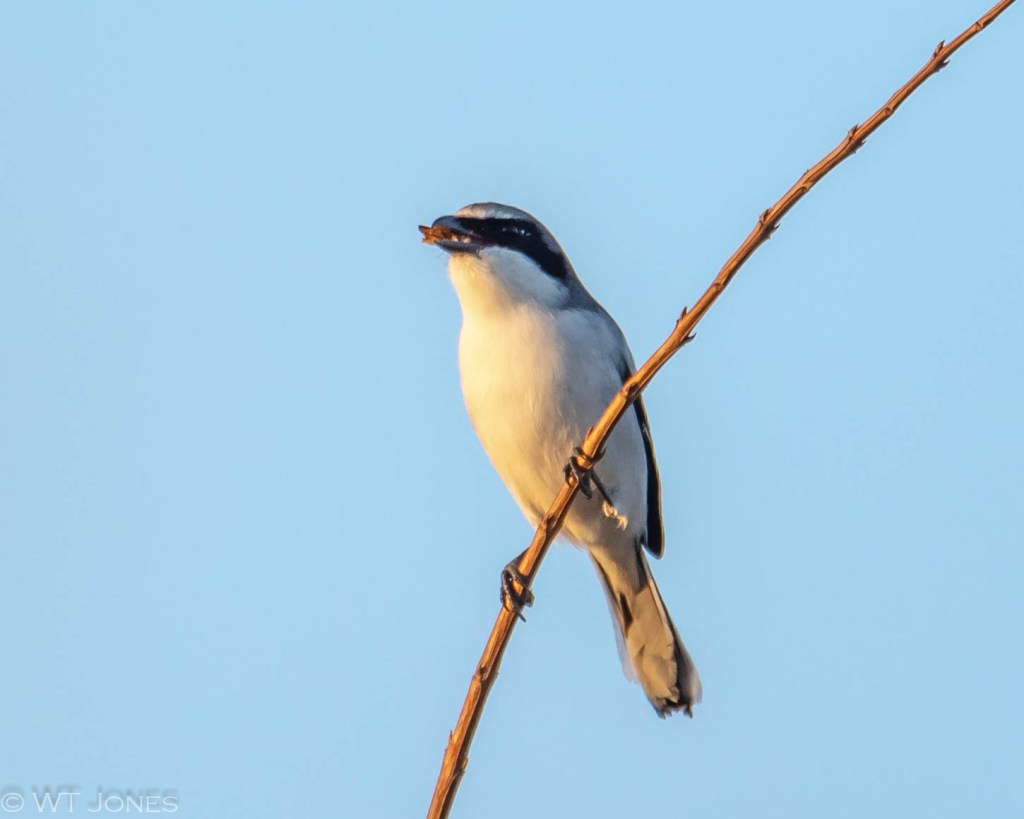
Grasshopper. It’s what’s for breakfast if you are a Loggerhead Shrike.
Whether gripping a fish or a tree limb, the talons of an Osprey are quite impressive.

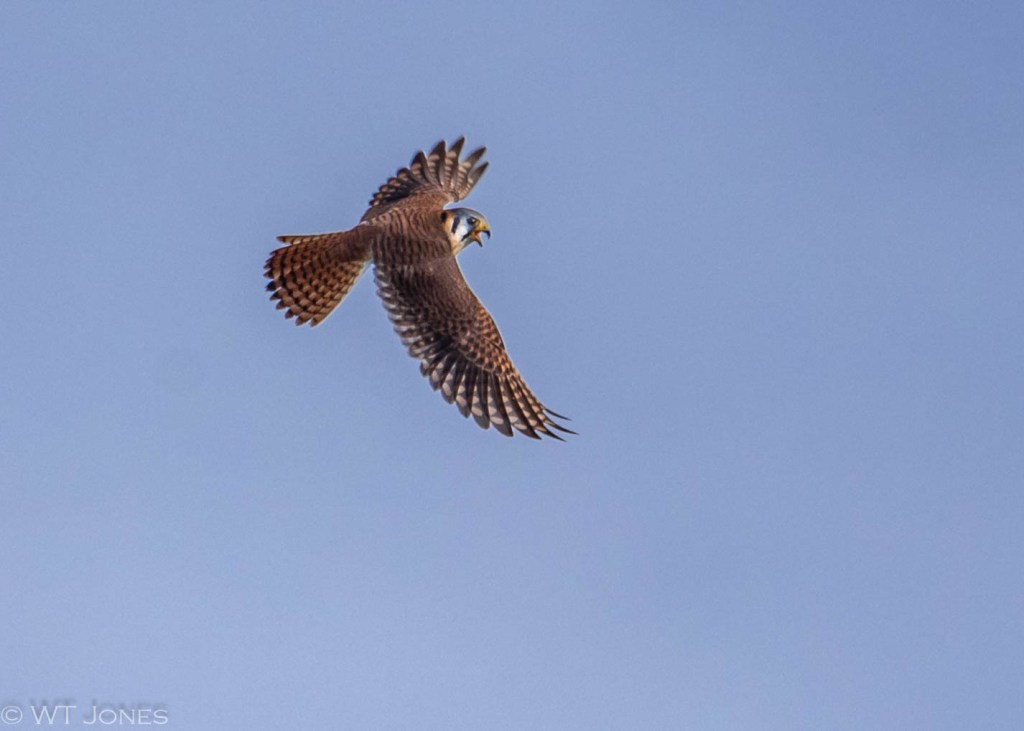
Someone trespassed upon her territory and this American Kestrel was very vocal about being displeased.
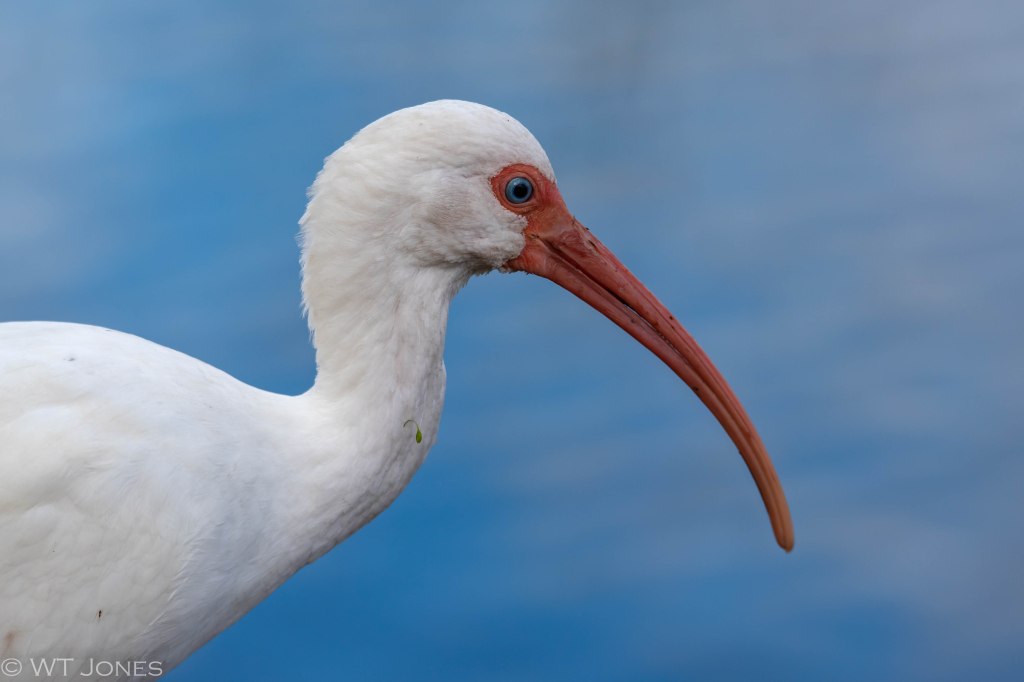
The blue eyes of a White Ibis are almost a match for our Florida sky reflected on the lake’s surface.
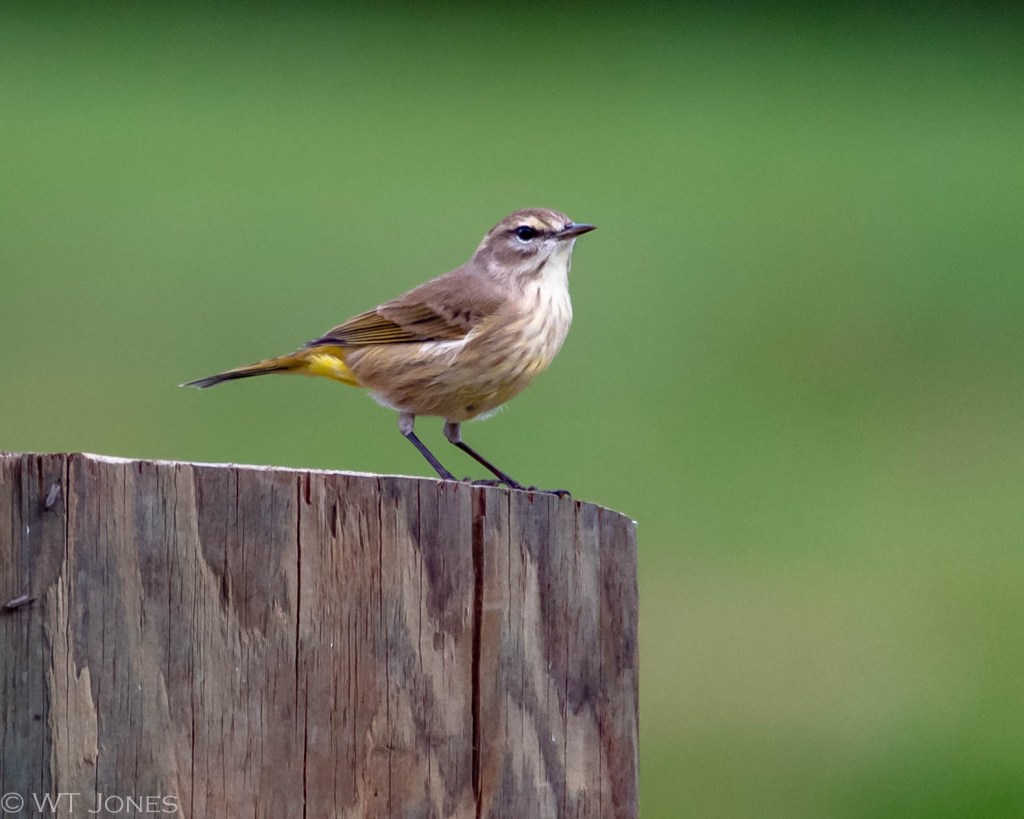
One of our most abundant winter visitors is the small but very active Palm Warbler. Identification is often easy even at a distance as they constantly pump their tails up and down.
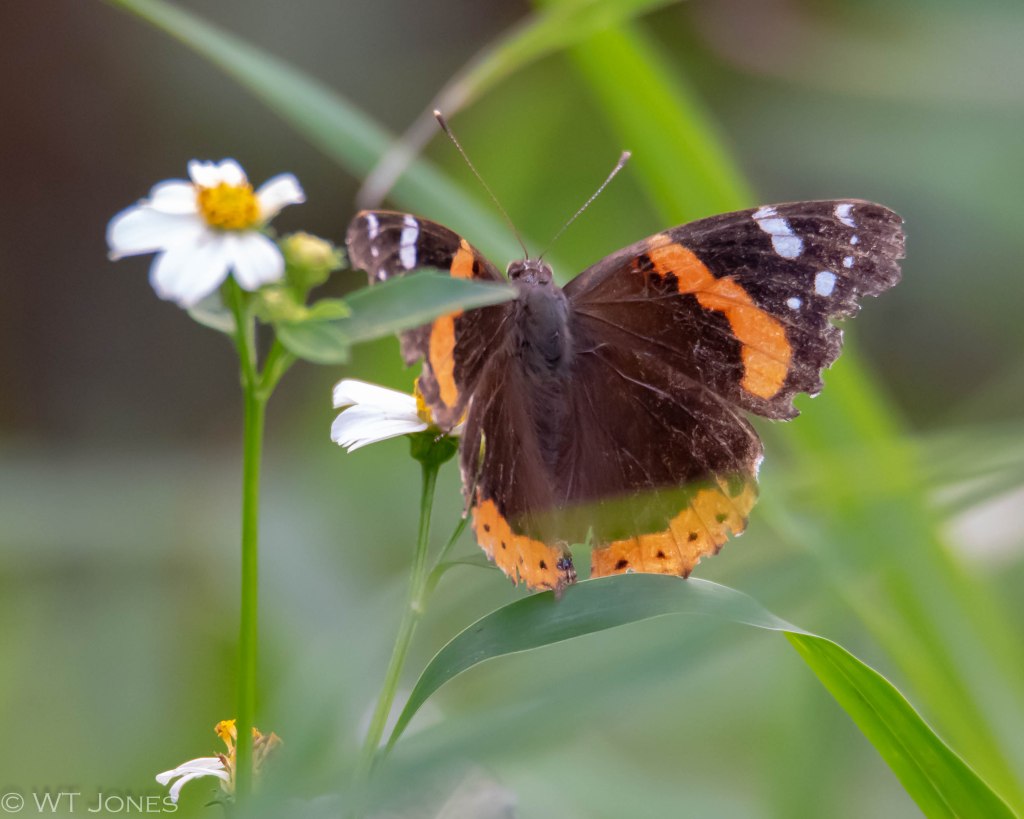
The sub-tropical climate of the Sunshine State provides an extended breeding season for many insects. We found a handsome Red Admiral (Vanessa atalanta) flitting around the edge of a pasture.
Eastern Bluebirds were plentiful and even showed up for Saturday’s count day.

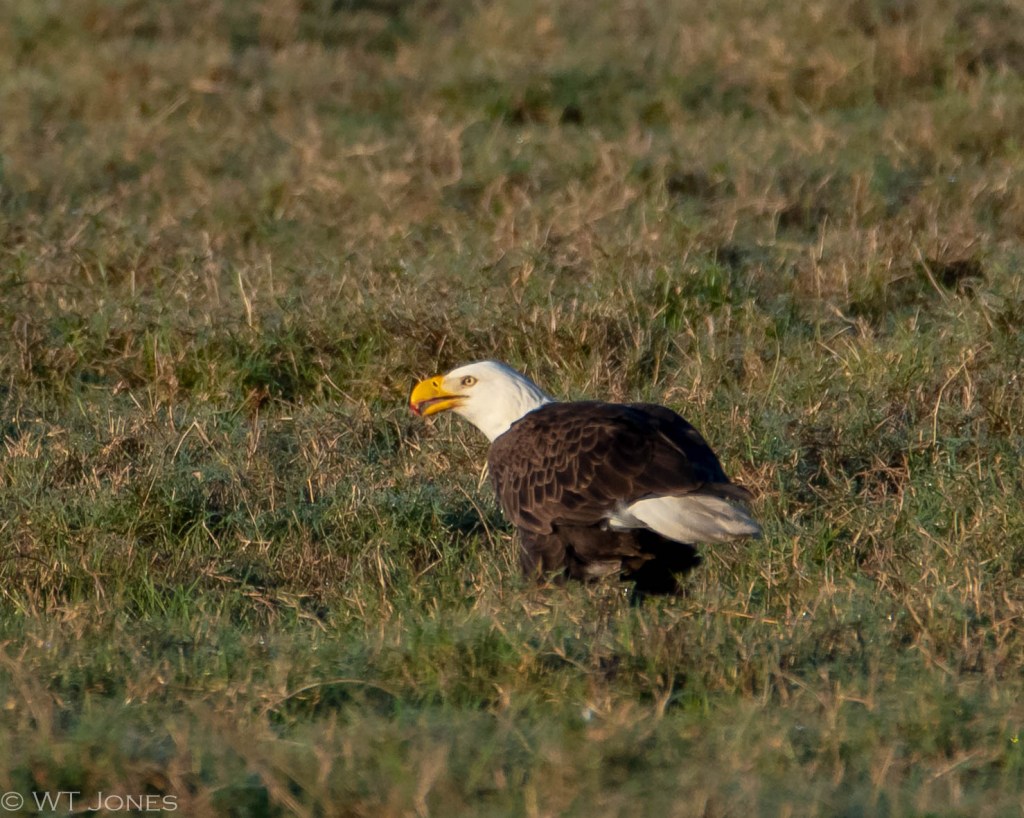
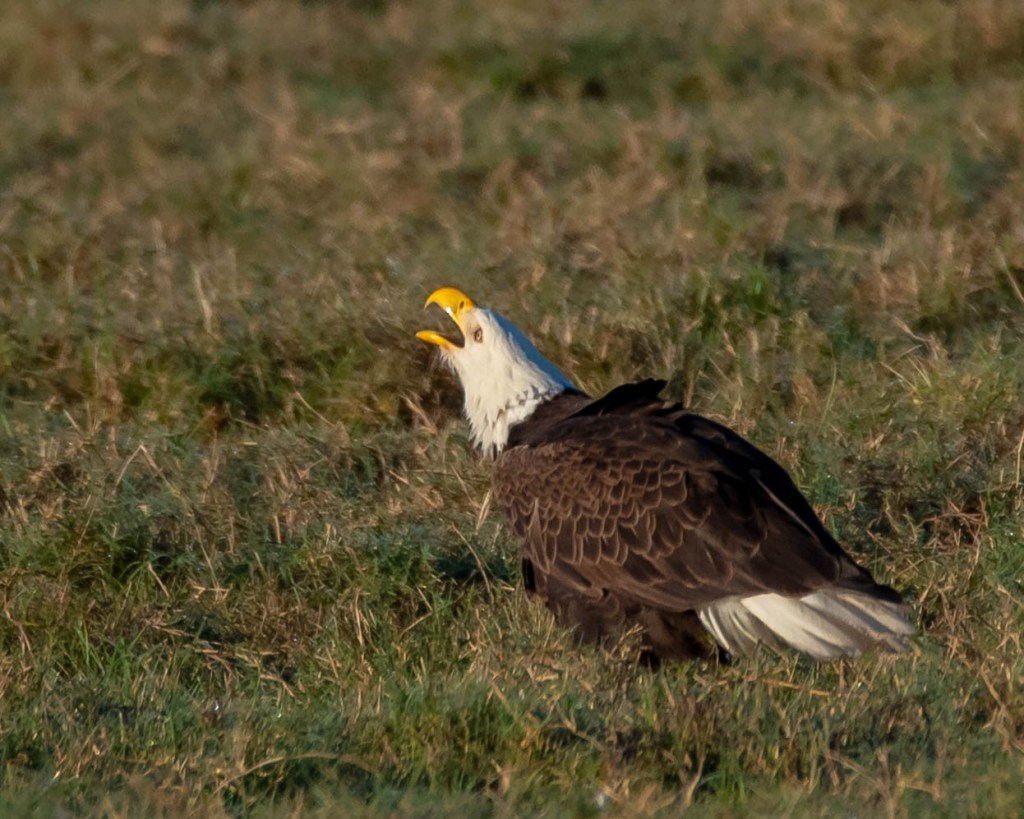
A Bald Eagle was feeding on something fresh which we couldn’t see, but he frequently looked skyward and screamed a warning to would-be interlopers. (Vultures and an immature Bald Eagle.)
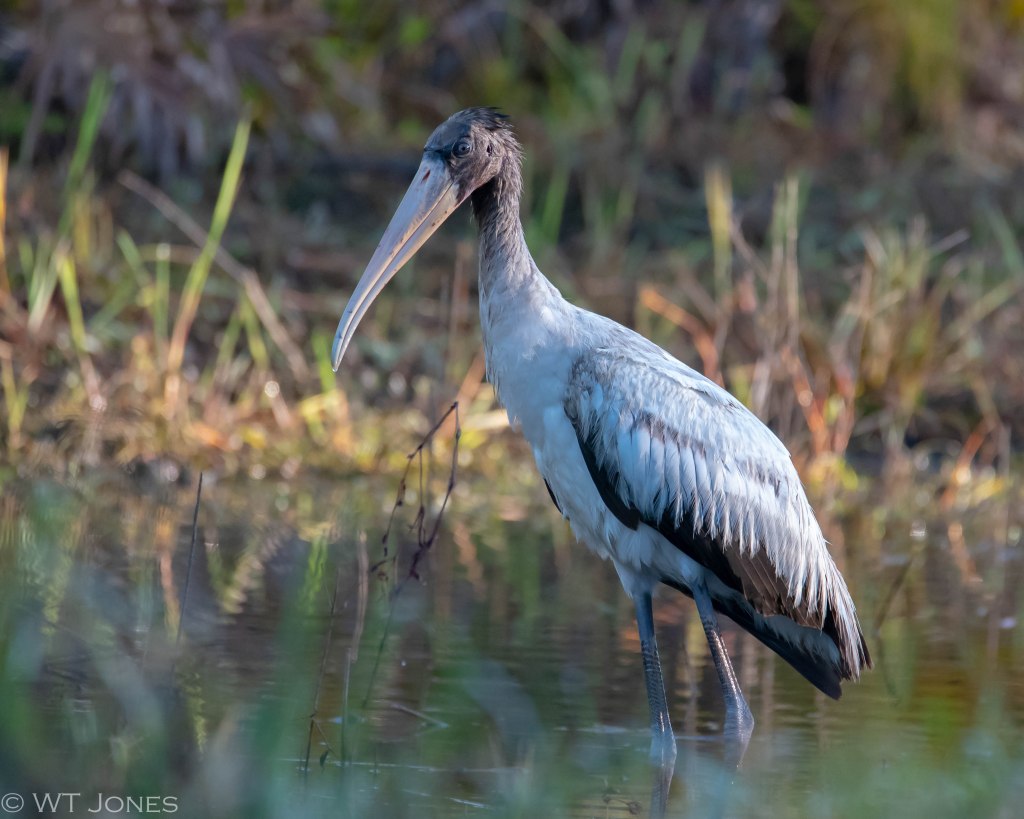
A pale bill and grayish feathers on the head and neck identify an immature Wood Stork. By spring, the head will become bare and the bill will turn dark.
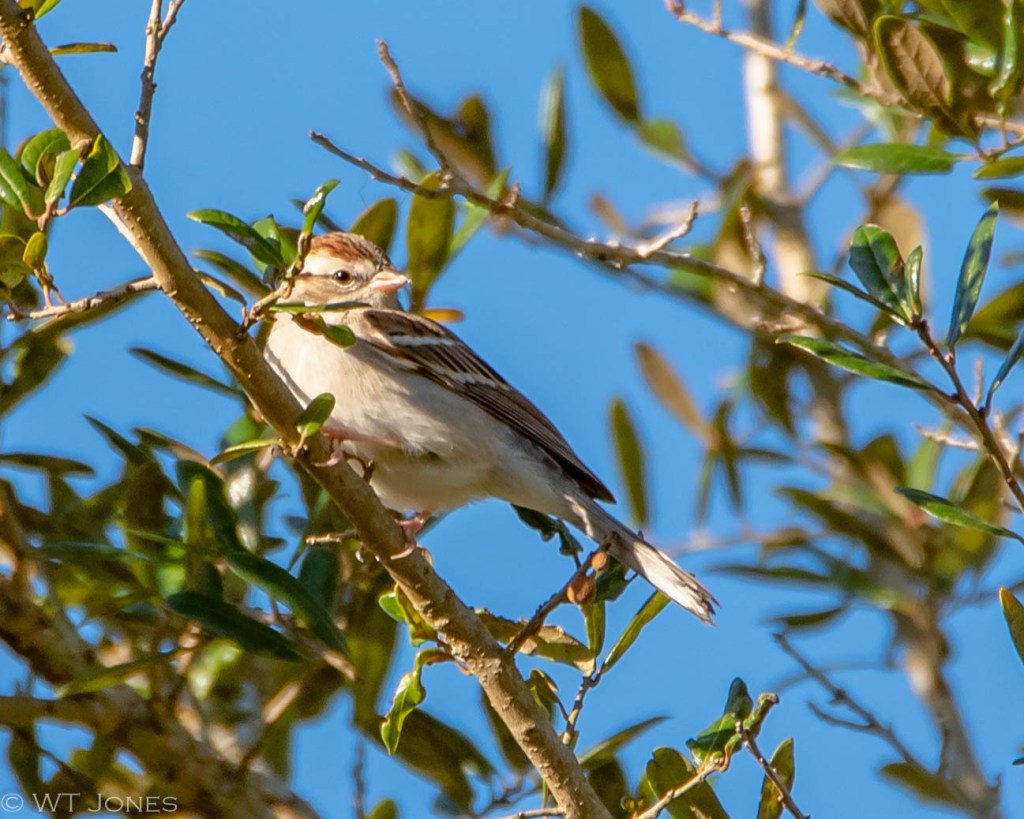
Traveling in gangs of a half-dozen or more, the little Chipping Sparrow likes to forage in the open understory of upland pine woods and oak groves. Cheerful visitors we only get to enjoy during winter.
White-eyed Vireos don’t care what the calendar says. They sang as if it were Spring at almost every stop we made!

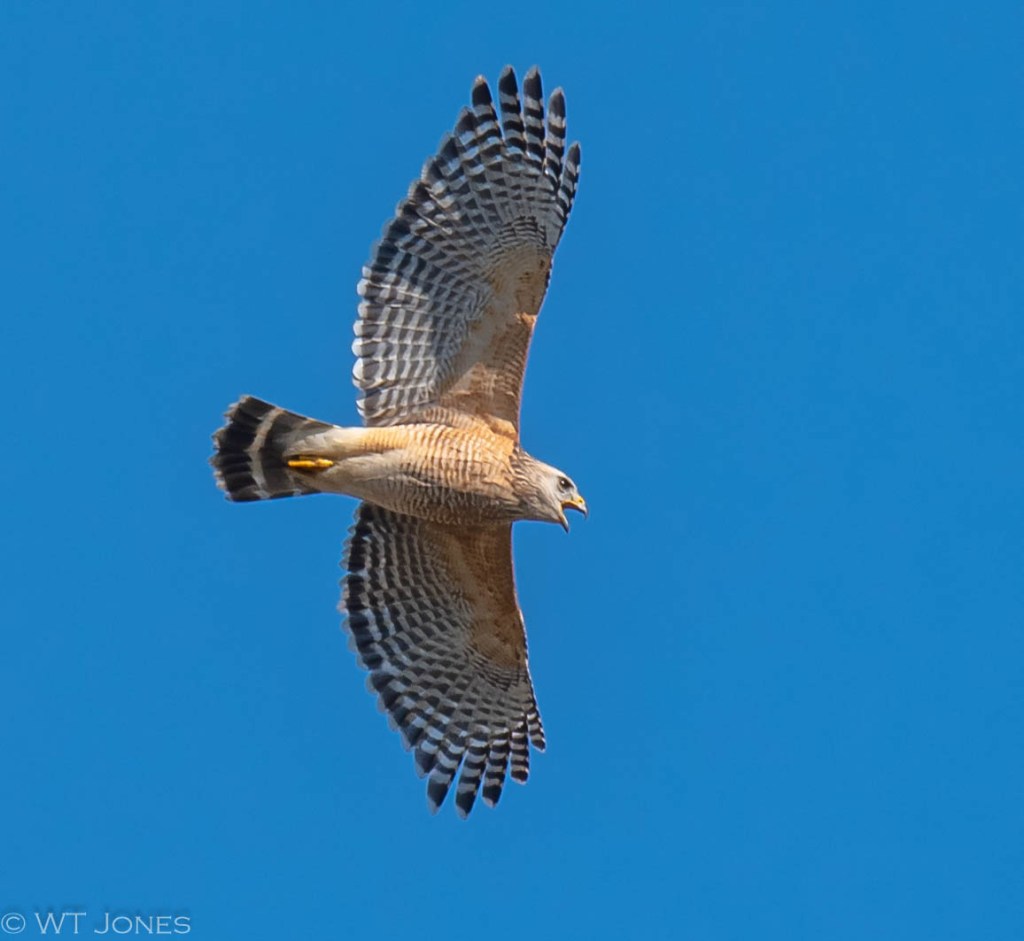
We aren’t certain what upset this Red-shouldered Hawk, but he flew around screaming for several minutes.
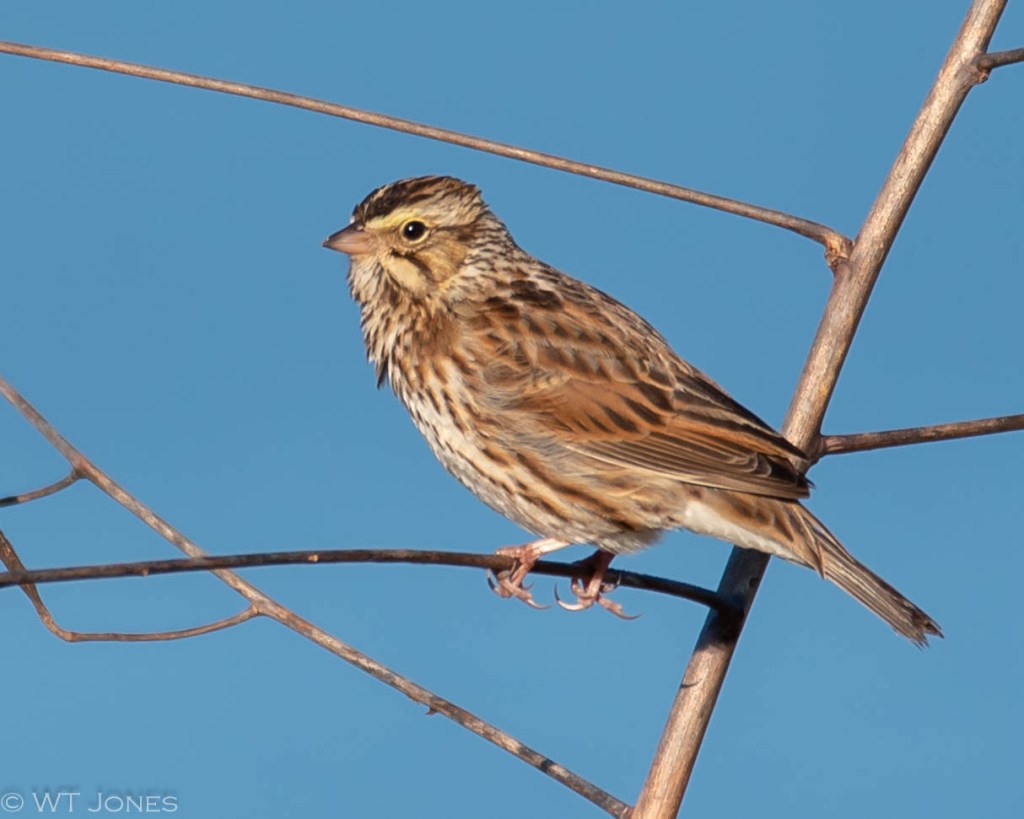
One more seasonal guest, the Savannah Sparrow. Brown with plenty of stripes and a bit of yellow in front of the bill.
We had a wonderful morning scouting out our territory for the upcoming Christmas Bird Count. Stay tuned for the main event.
Enjoy your search for a natural place and come back for a visit!
Header Image: Tricolored Heron
“Ah-choo!”
“Bless you.”
Gini and I sneezed our way through the first two weeks of December. Intense testing, analyses and expert medical opinions told the sad tale. “Y’all got a cold.”
We are seldom sick and one of us, which we shall not name, acts like a big baby when he has the sniffles. Gini is a kitchen magician and she waved her wand over a huge pot and “poof“, soup with curative powers flowed for days. Sleep was elusive at first, but bodies have a way of shutting down when required and, eventually, we both were able to take a 72-hour nap.
Following a regimen of soup and sleep had us feeling much better but not “well”. What to do? (You already know the answer.)
Birding!
One of our local patches is exactly 2.4 miles (3.9 km) from our front door. The Bridgewater Tract of Tenoroc Fish Management Area consists of several lakes, upland pine woods, stands of hardwood (oak, hickory, elm, bay), fields of sedge and other grasses and small wetland areas. An improved dirt/crushed shell road winds its way through the area and we usually stop at each of the boat ramps which provide fair views of the lakes. Several parking spots exist at trailheads and one could easily spend a couple of days wandering the area.
It was a Florida winter day. A hint of coolness in the early morning air gave way to warmth by mid-morning. No clouds interfered with the golden rays of the sun we knew would assist in the healing process. The incessant screams of a Red-shouldered Hawk greeted us at the entrance gate, letting the natural world know that intruders were here! Among the soft pine needles below the neighborhood watch hawk we were treated to roving gangs of Palm and Pine Warblers, a Blue-headed Vireo, diminutive Downy Woodpeckers and chattering Red-bellied Woodpeckers.
The lakes were centers of activity for clucking Common Gallinules, dancing Tricolored Herons, shy Pied-billed Grebes and nervous Wood Ducks. Huge Brown Pelicans roused from their shoreline roosts and crashed into the water’s surface scooping up pouchfuls of small fish. Not having a convenient pouch, Osprey also crashed into the water, but used their substantial talons to snatch a bit larger fish for breakfast.
Winter. Florida. In addition to a wonderful diversity of birds, we found blooming flowers, dragonflies and even butterflies. No wonder we love it here.
As we headed for the exit, we sighed together with one deep breath. Sunshine. Birds. Butterflies. A warm breeze rustling pine and palm trees. None of this may have actually helped “heal” our ailments. But it didn’t hurt.
First impression said it was a pretty blue flower. Then it flew away. Then we found a half-dozen more. Small and fluttering, the Ceraunus Blue (Hemiargus ceraunus) can certainly brighten a day! We seldom see them with open wings.


Pecking, probing, constantly on the move. A little male Downy Woodpecker is handsome with his sleek black and white suit and red nape.

In our area, we see House Finches at our feeder infrequently and even less often in the “wild”. Today we were surprised by three females and one male feeding near a boat ramp. Male House Finches’ head color can vary from nearly red to orange to yellow. The more carotenoids in their diet, the more red in their plumage.


A curious female Northern Cardinal wasn’t sure if were a threat or not. We didn’t move for awhile and she continued feeding.

Masses of bright yellow flowers decorating the banks of lakes and scattered across wetlands at this time of year make us thankful for the Bur-marigold (Bidens laevis). Walking through these plants makes us less thankful as the “beggar-ticks” can be a pain to scrape off pants and socks.

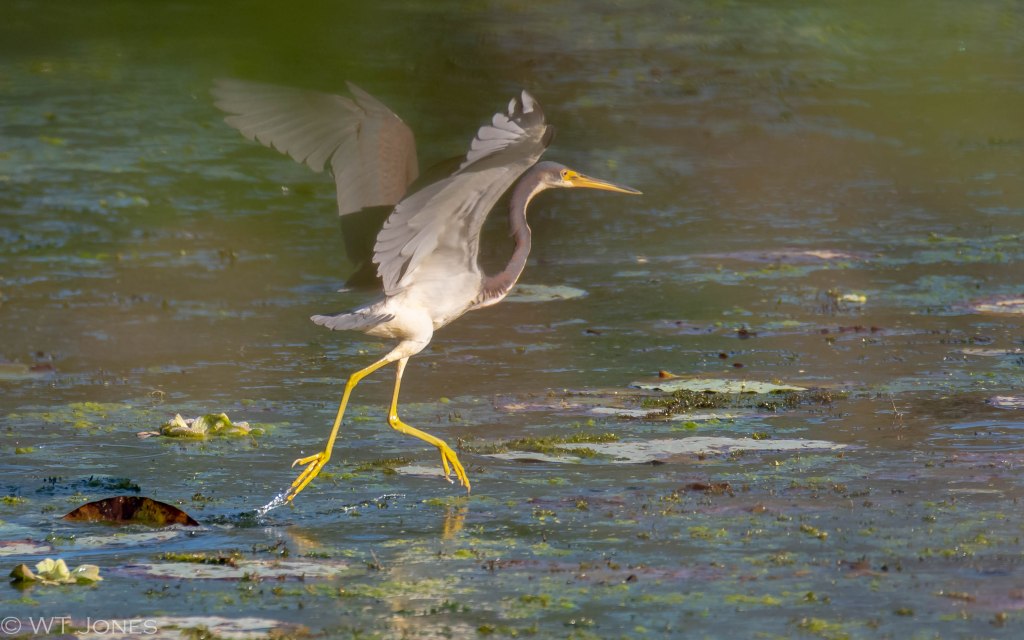
We were entertained for a bit by a pair of Tricolored Herons. They performed an intricate ballet of sorts as they danced across the water, spread their wings, pirouetted and stabbed under lily pads for a snack.
Movement nearby revealed a Black-and-White Warbler scurrying down a tree trunk imitating a Nuthatch. I was only able to snap one quick image before the small beauty disappeared.

The constant calling from a nearby branch alerted us that a Blue-headed Vireo wanted her picture taken, please. Happy to oblige.

Venturing outdoors for the first time in a couple of weeks did not heal us. It DID help us feel better. Our spirits were lighter and there is no medicine which can accomplish that.
Enjoy your search for a natural place and come back for a visit.
THANK YOU ALL FOR VISITING WITH US AND HELPING US CELEBRATE THE NATURAL WORLD. WE APPRECIATE IT.
M E R R Y C H R I S T M A S !!
Header Image: Red-shouldered Hawk
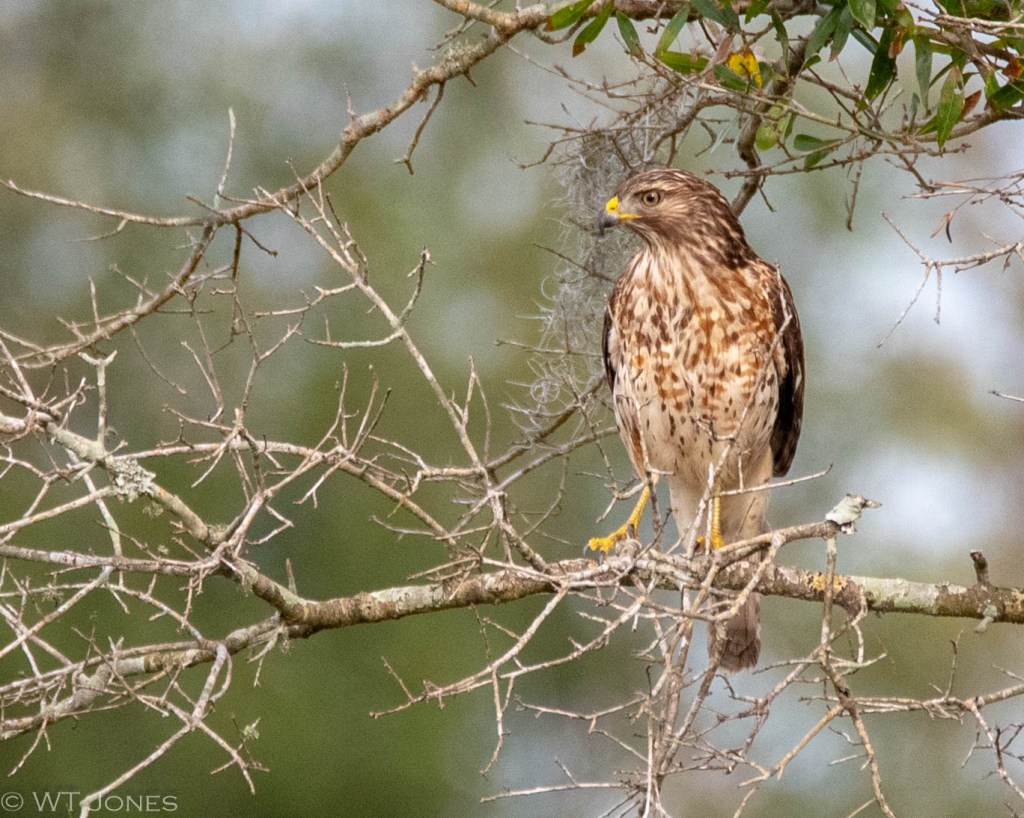
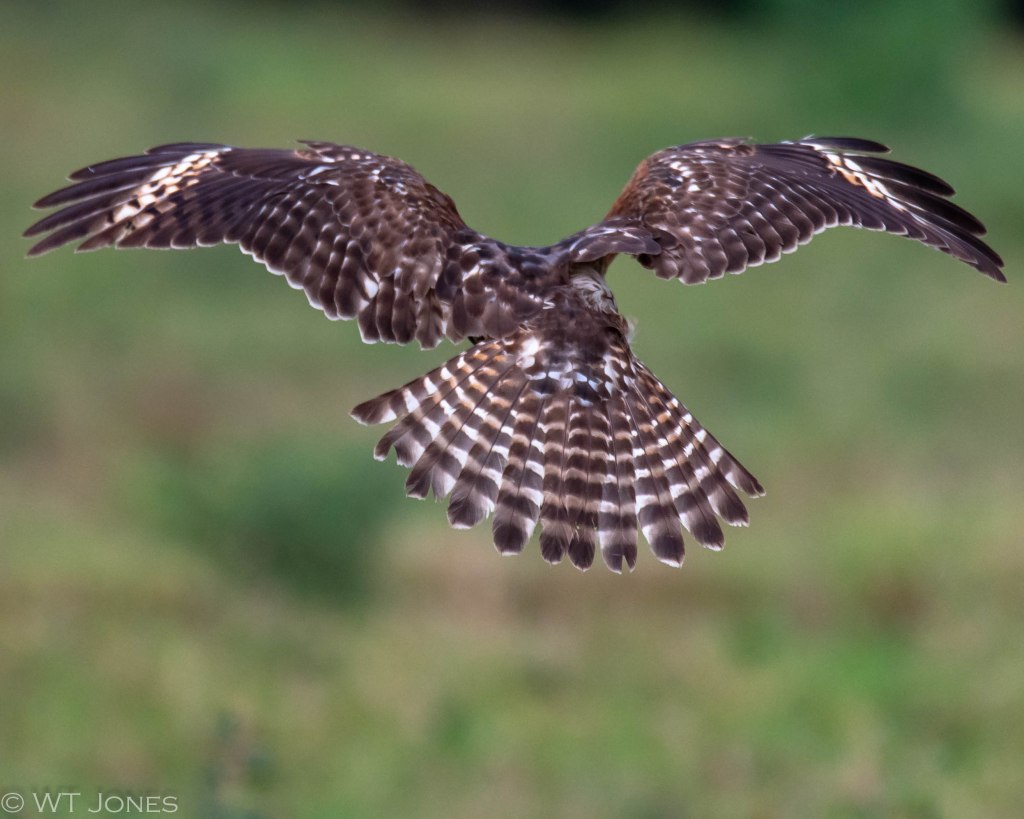
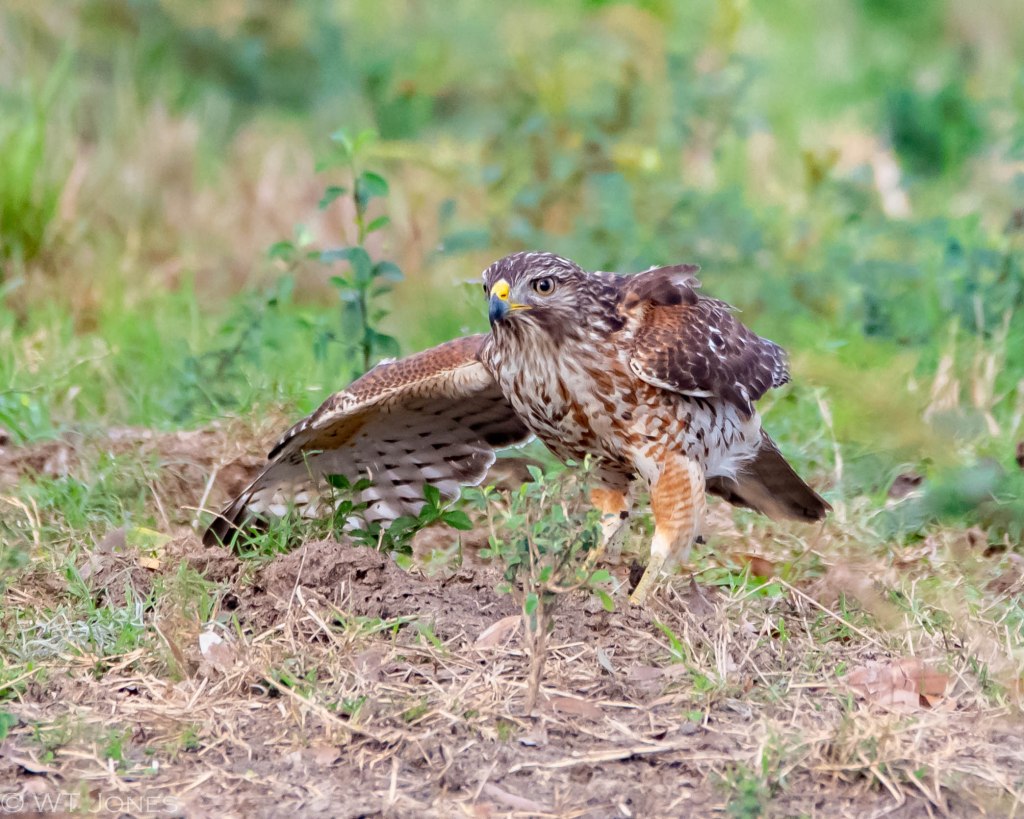
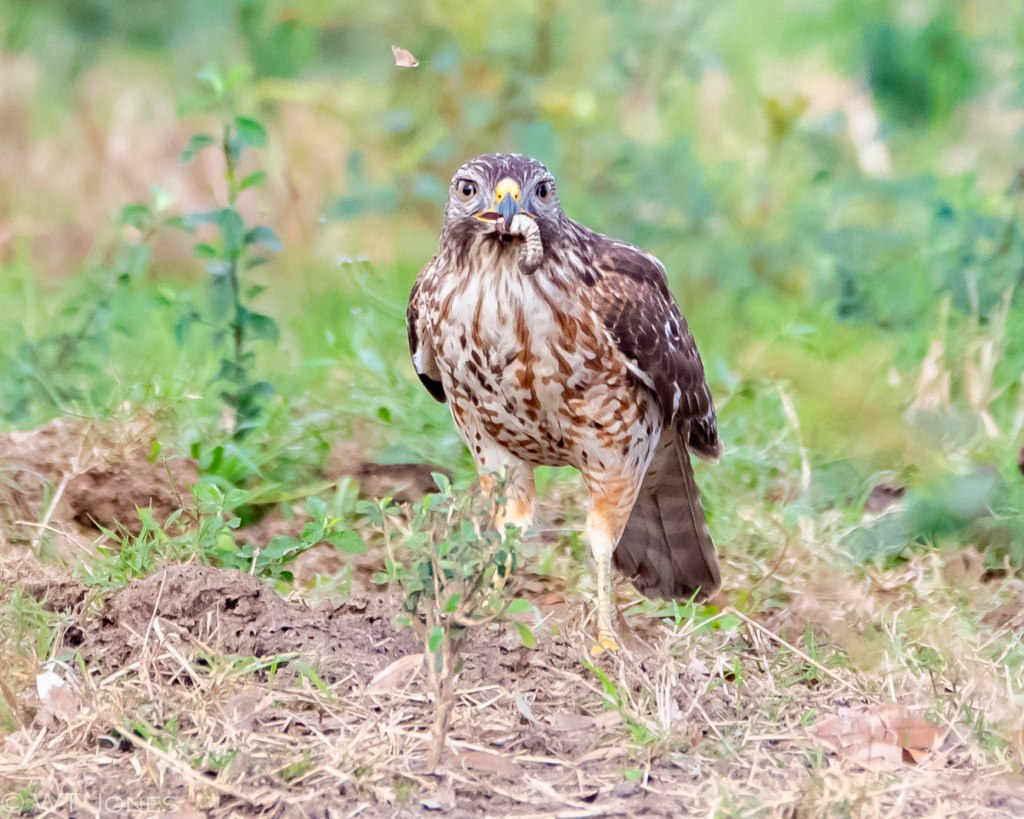
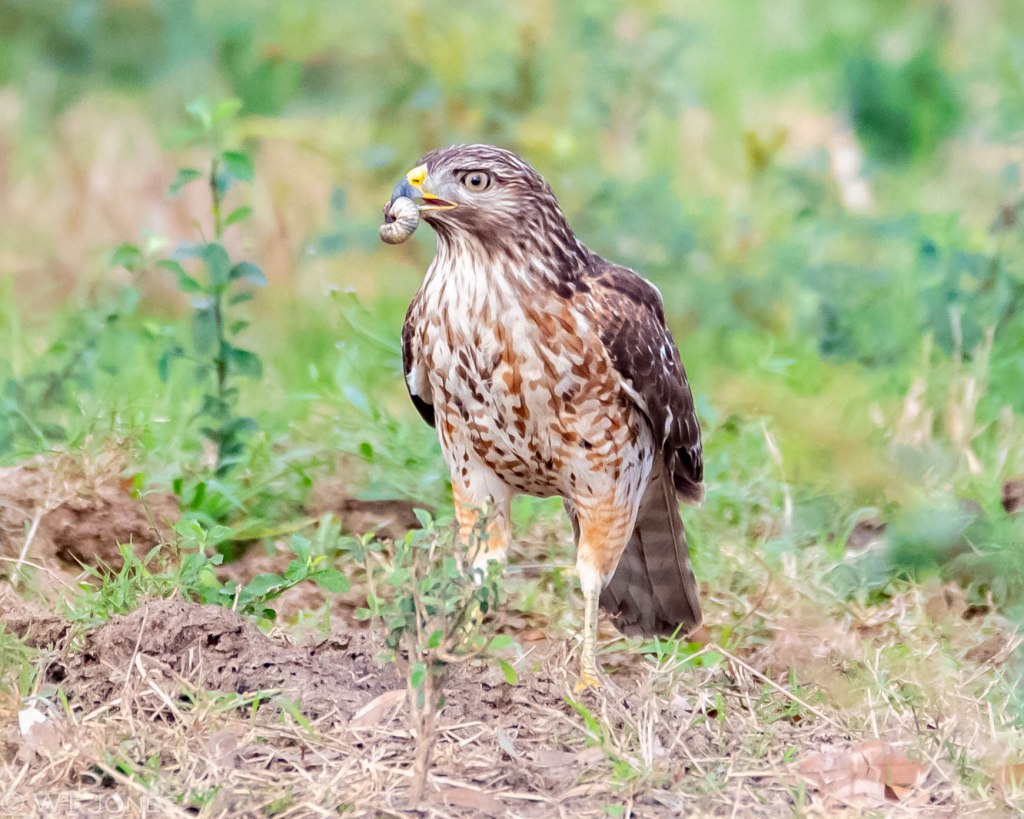
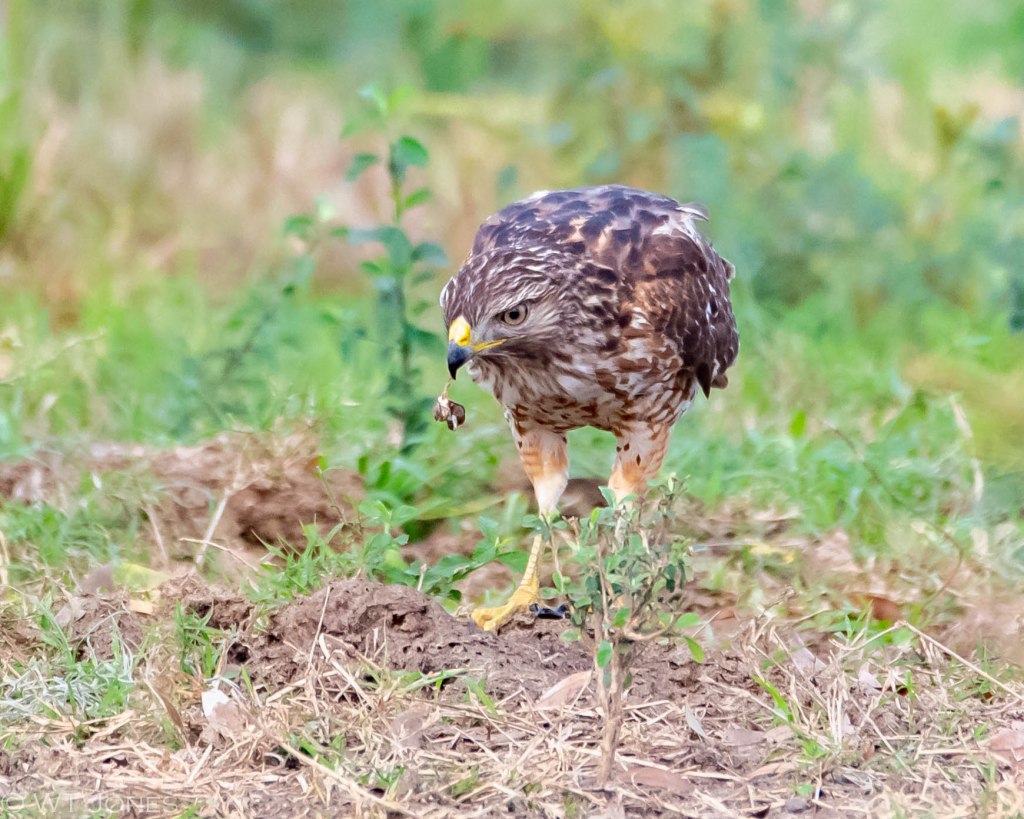
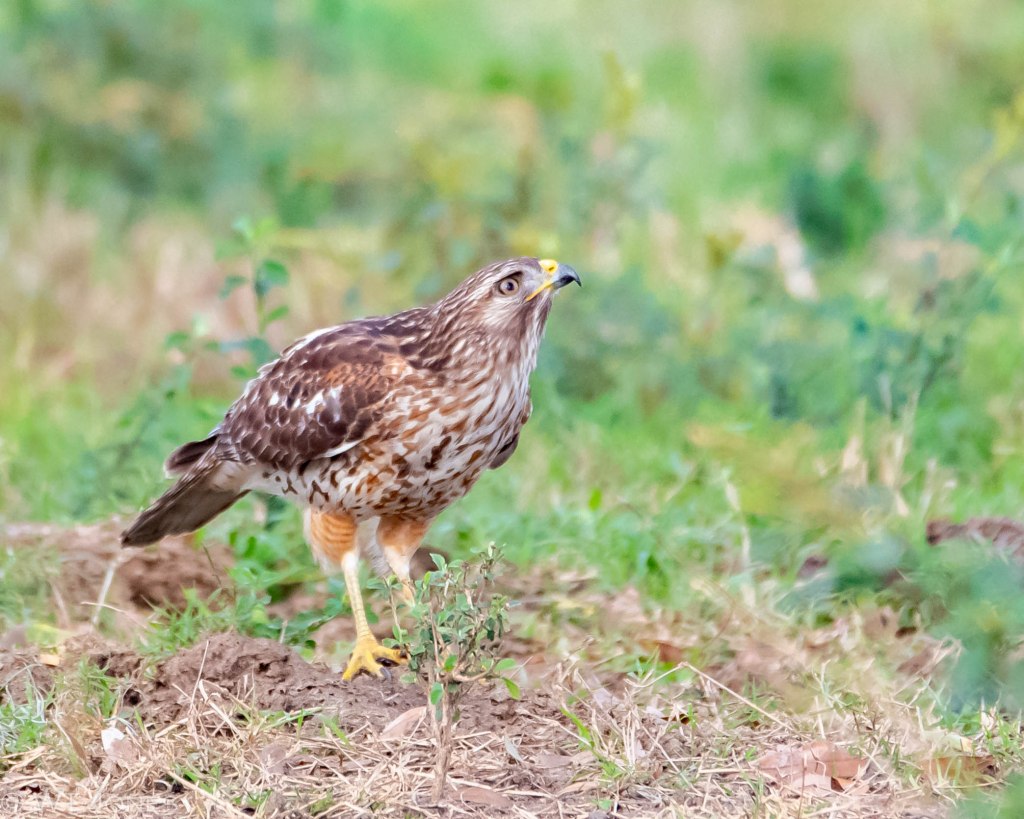
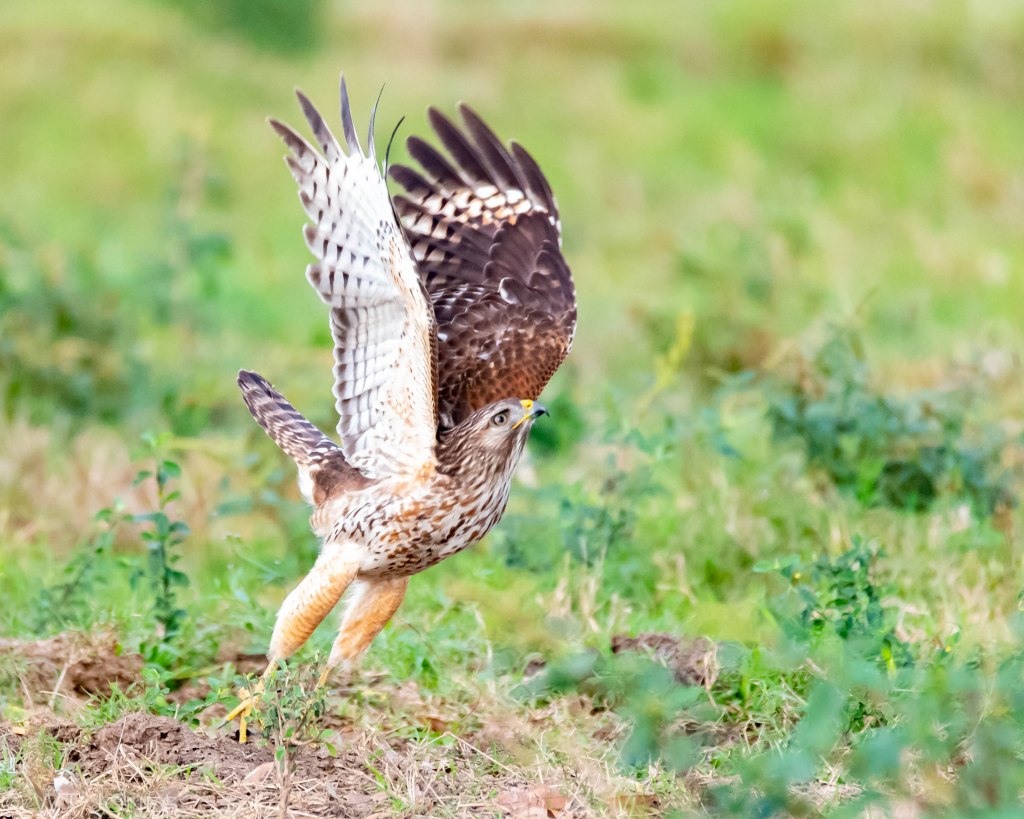
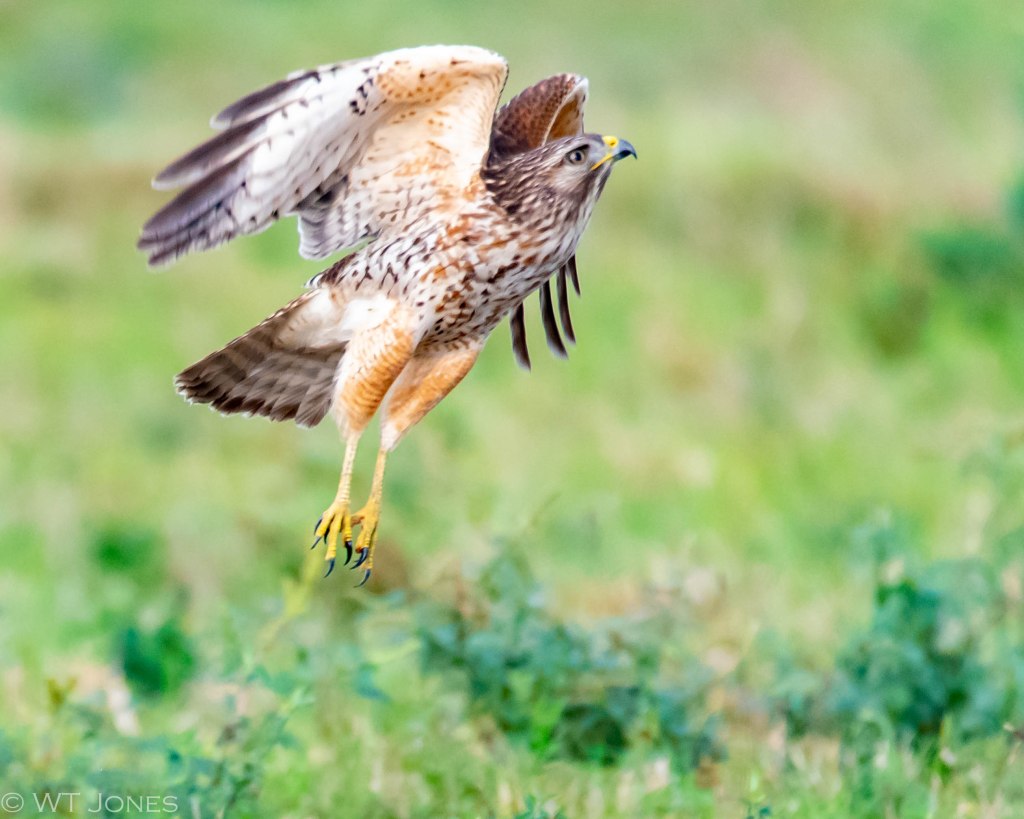
We were quite fortunate yesterday to have the opportunity to observe an immature Red-shouldered Hawk as it scouted for, located and consumed a meal. The bird constantly scanned the ground beneath its perch and once it located its potential prey it acted swiftly.
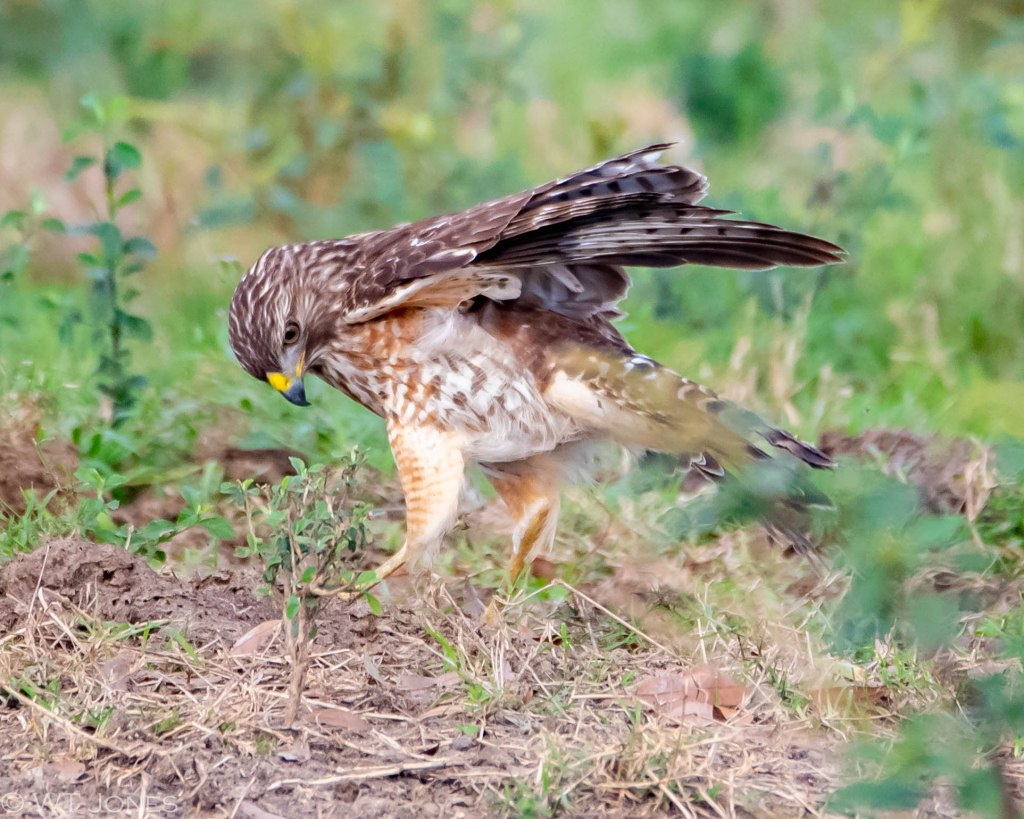
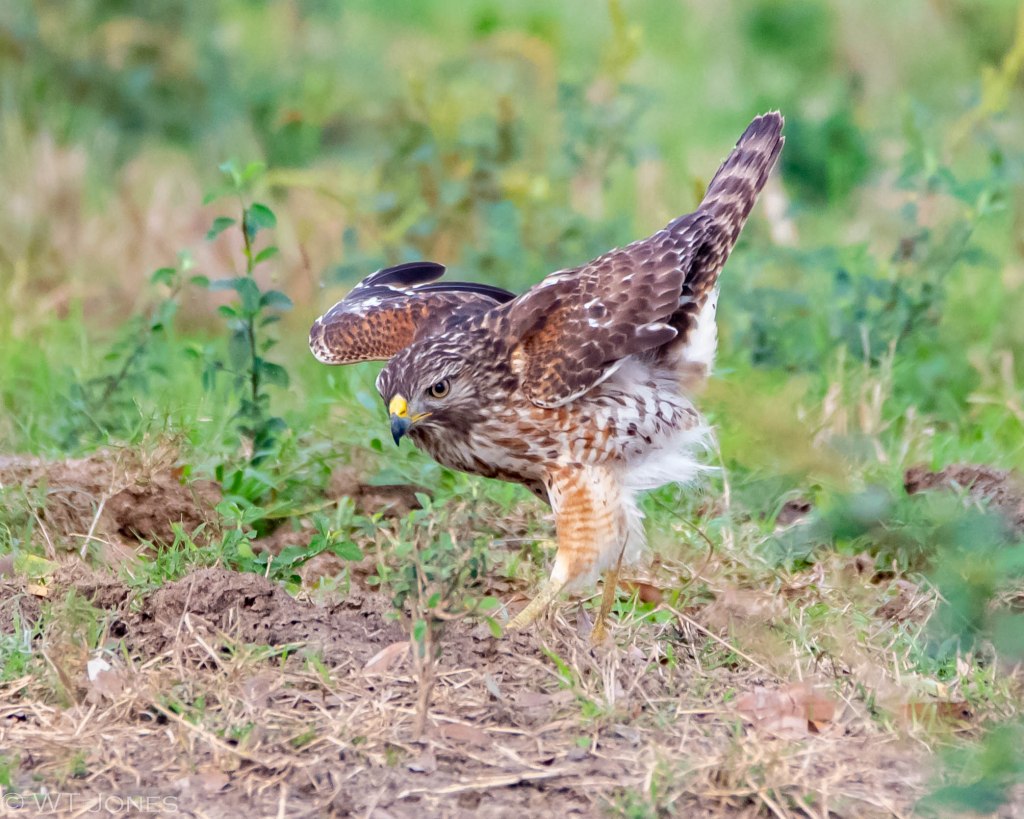
It “fell” from the branch and instantly spread its impressive wings and tail for maximum braking power. As it landed, it pivoted with outstretched talons to seize its meal. It took a couple of minutes (possibly to be sure the prey was immobilized) but the young hawk retrieved a huge grub and consumed in it a few gulps.
Satisfied, the raptor prepared to take off, sprang into the air and headed to the nearby woods.
We don’t often have a chance to enjoy this entire sequence.
Enjoy your search for a natural place and come back for a visit!
Header Image: Northern Waterthrush
It was a day similar to other days.
The sun rose. So did we. Ate breakfast. Read mail. Ate lunch. Accomplished chores. Ate supper. The sun set. We went to bed.
Ahhh. But during the hum-drum ordinary routine of the day, we discovered a few “extras“.
Shortly after the sun rose, we did, too, and drove a short way to have breakfast in the park. Tangerines and boiled eggs were perfect by the lake as we watched the morning flocks of White Ibises leave their nightly roost to locate suitable spots for foraging.
A couple of hours wandering around the pine woods, palmetto understory, lake shore, marsh and creek banks provided an incredibly diverse experience of the natural world. Winter bird migrants, resident birds and wildlife, fall flowers in bloom, insects enjoying the extended warm season of our sub-tropical climate in autumn – so much to take in. I know you’re tired of hearing it, but we truly are spoiled by the richness of our environment!
I would never say (aloud) that Gini whined, but when I mentioned we should be getting home, there was a sharp intake of breath followed by “the look” from those huge brown eyes and no actual vocalization was needed. Just awhile longer. If she had not convinced me to continue the adventure, we would never have seen the Red-shouldered Hawk chase the American Kestrel from his perch and the ensuing kerfuffle. Ordinary bird-watching turned into something “extra“.
A sampling of the “extras” in our otherwise ordinary day.
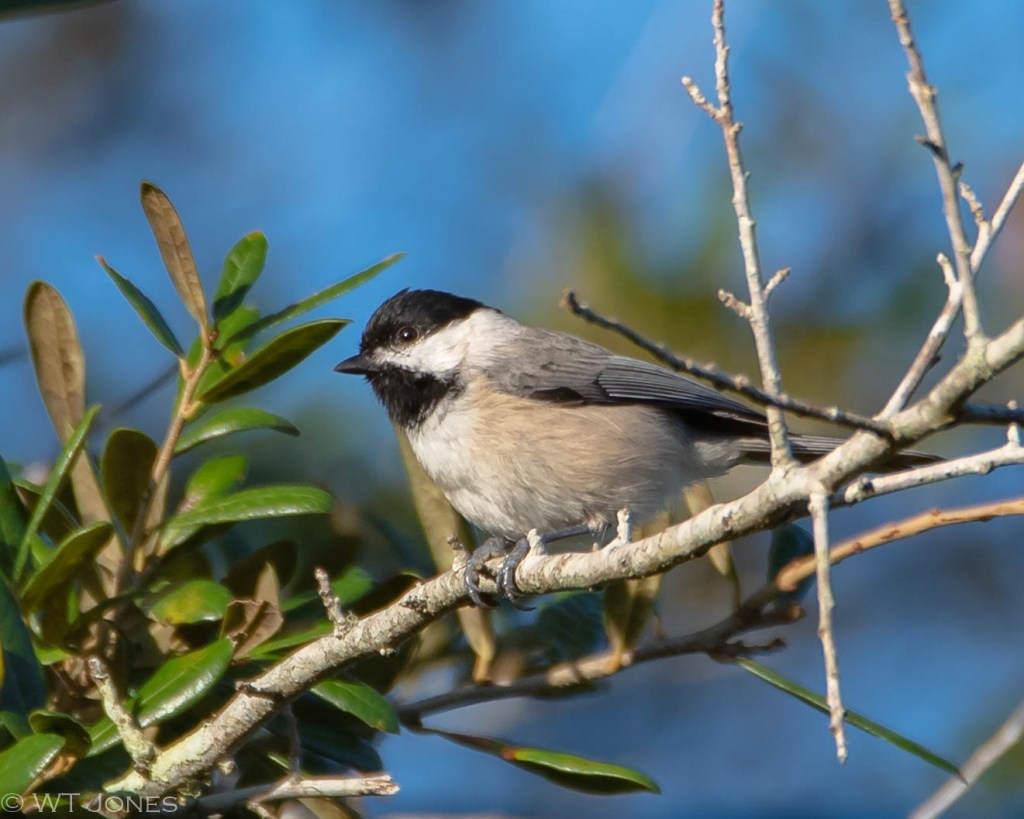
“Chickadee-dee-dee.” The sleek little Carolina Chickadee advised the rest of the flock that we were in the neighborhood. This species breeds in the park but its numbers increase with visitors from the north during migration.
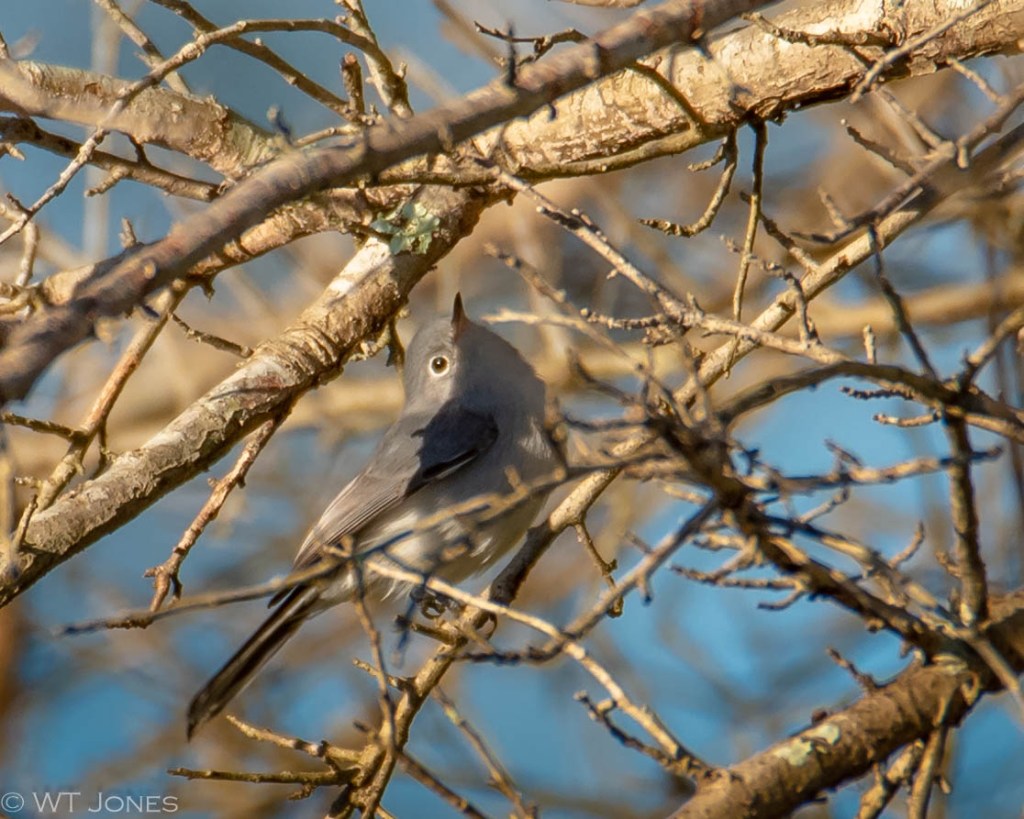
A diminutive Blue-gray Gnatcatcher peers up at a branch hoping to spot a breakfast bug.
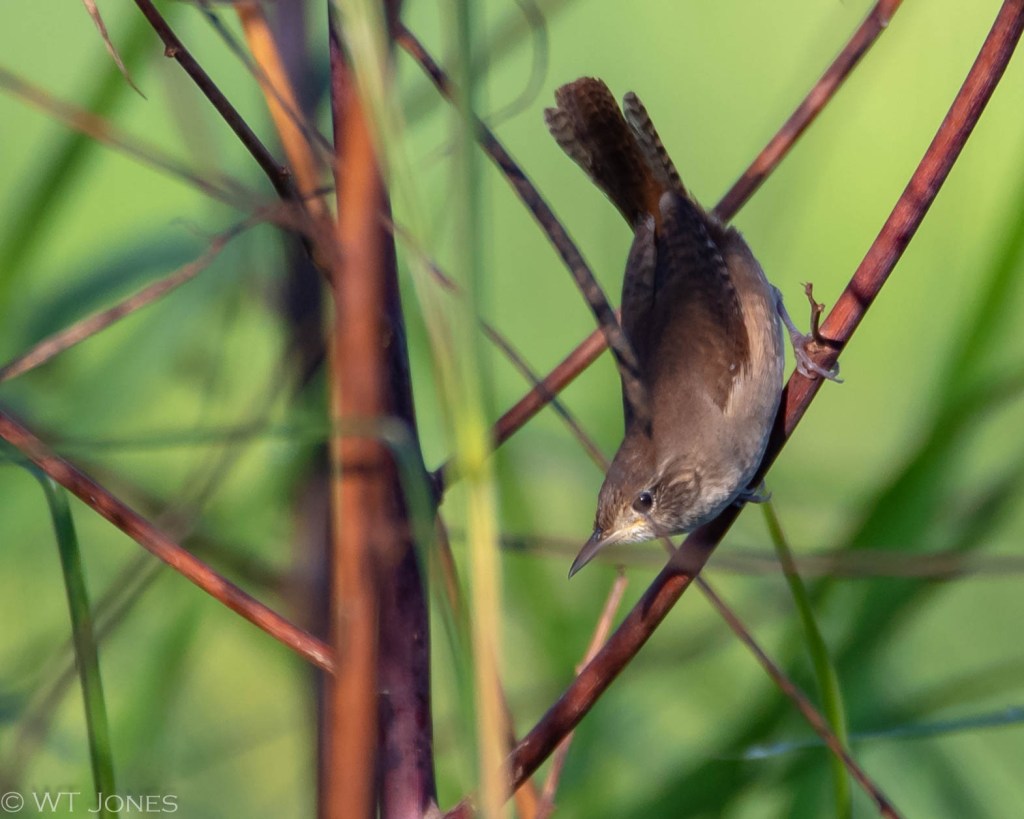
In the winter, we are able to enjoy the antics, calls and songs of House Wrens. Small but aggressive, they are fun to watch.
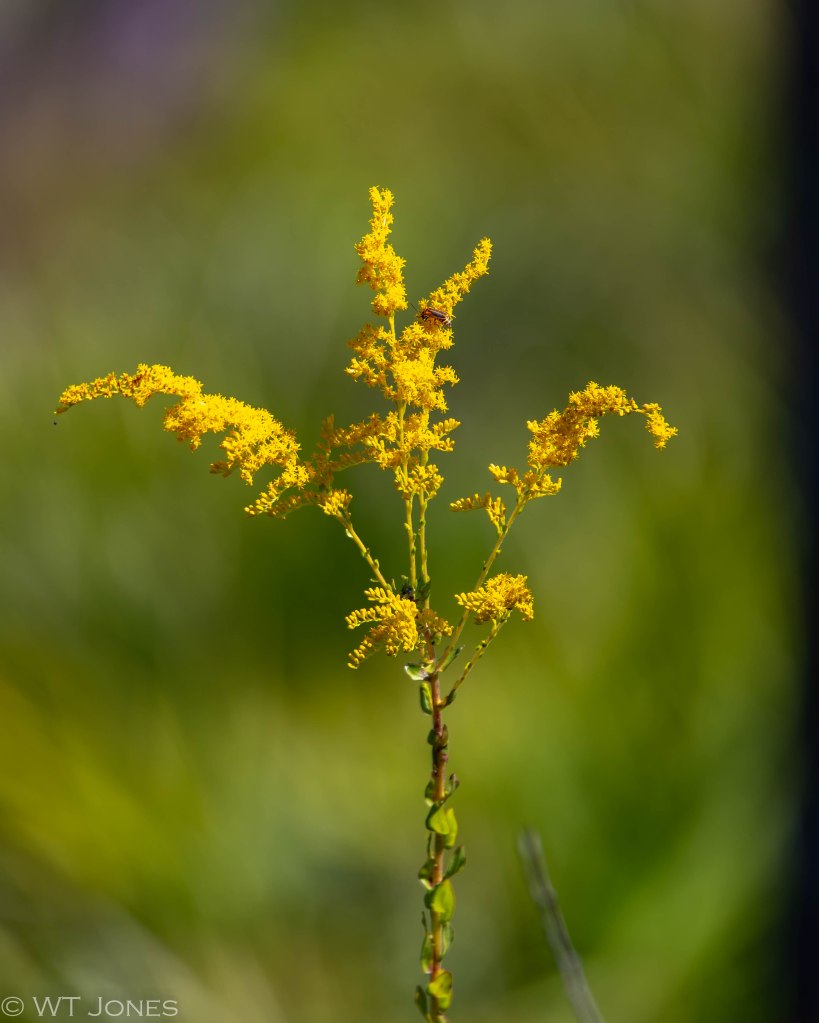
Florida has an amazing display of fall flowers each year. It helps make up for not much tree leaf color, I suppose. This is one of the over 20 species of Goldenrod (Solidago) which can be found in the state.
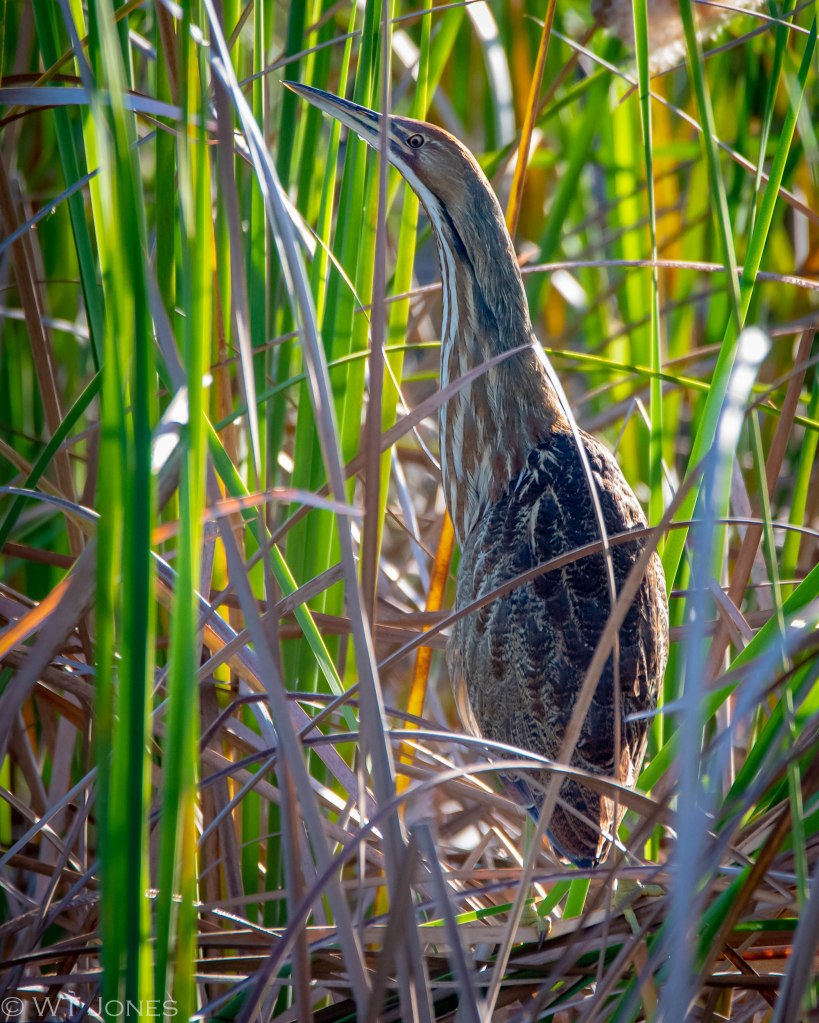
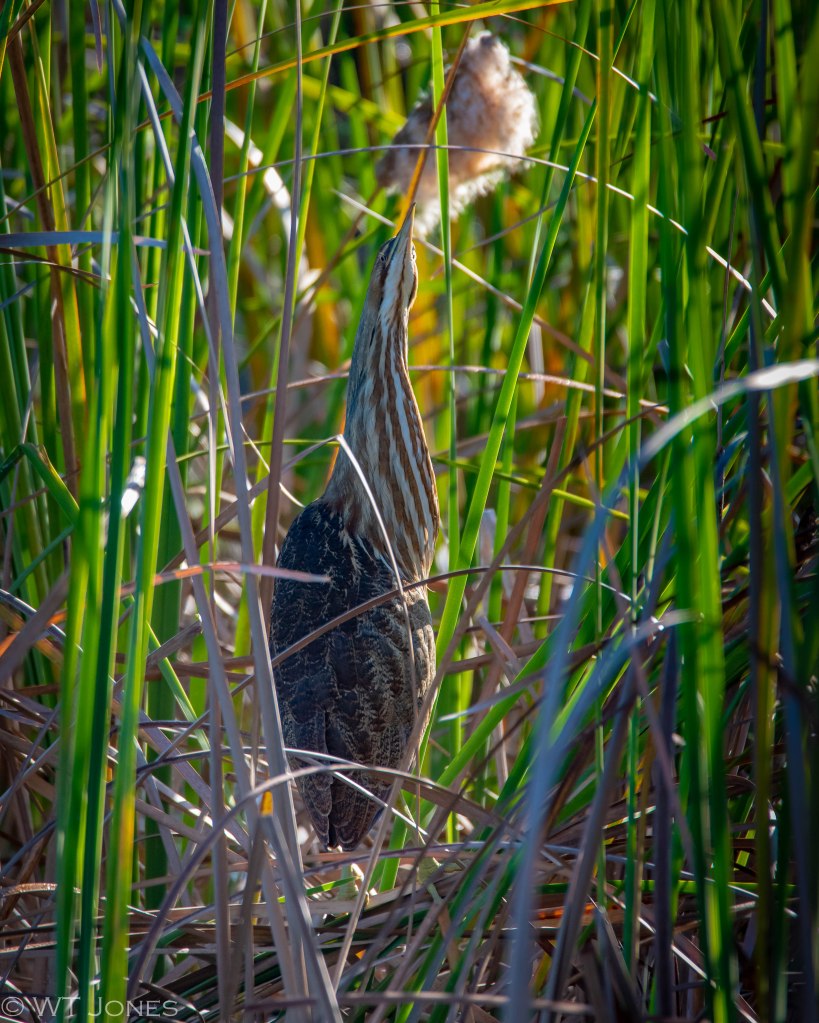
One of our favorite winter visitors is the American Bittern, a medium-sized heron. When alarmed, they often point their heads skyward and remain motionless. Their streaked neck and wonderfully patterned body blend in very well with the reeds of the marsh.
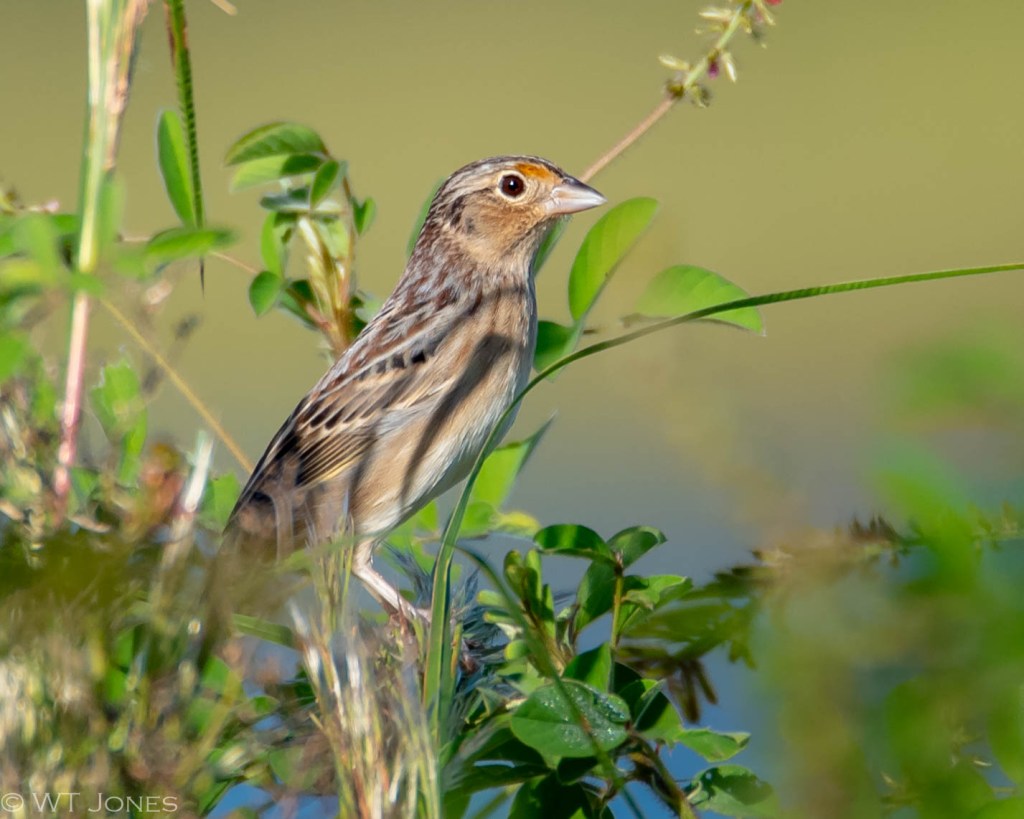
Those sharp brown eyes Gini has spotted “something different” near the lake. We have just started to see fair numbers of migrating sparrows, typically Savannah and Swamp Sparrows. She found two Grasshopper Sparrows hunting in the brush and grass. An unstreaked breast and belly, white eye-ring, an orange/yellow spot above the eye and a “flat-headed” appearance help identify this somewhat uncommon visitor.
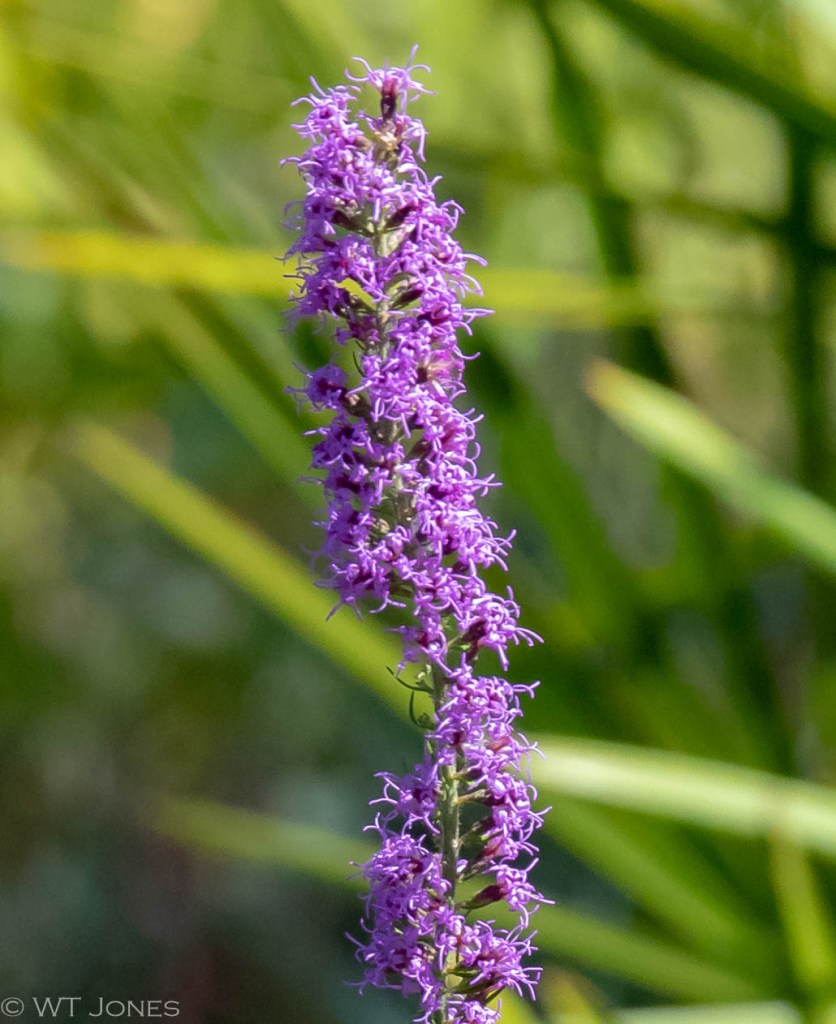
Vertical streaks of purple dotted the pine woods understory as Blazing Star (Liatris spp.) bloomed gloriously throughout the area.
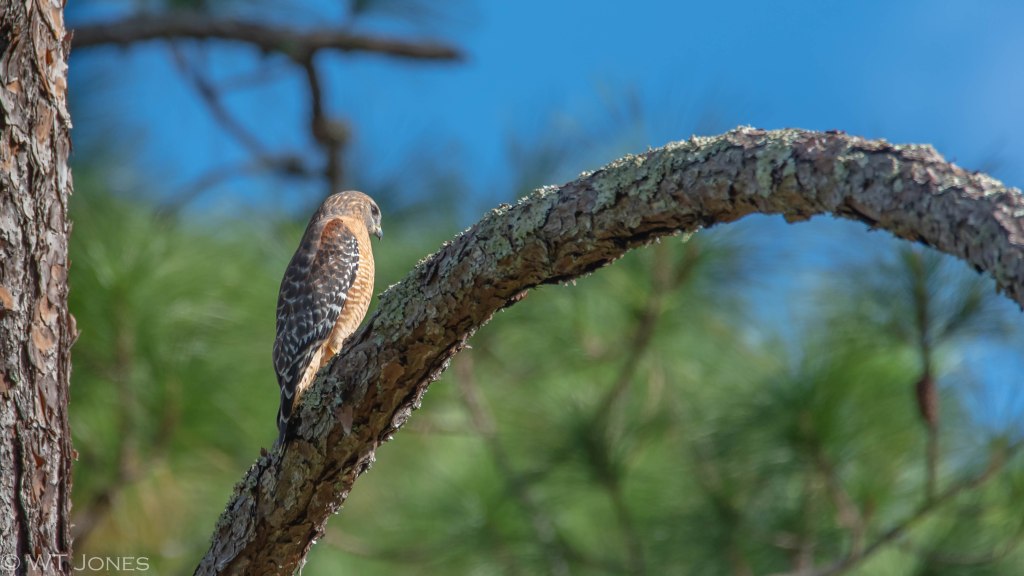
This Red-shouldered Hawk locked his gaze upon a brunch item in the grass and a split-second later launched from his pine tree perch to claim his prize. He did not share with us.
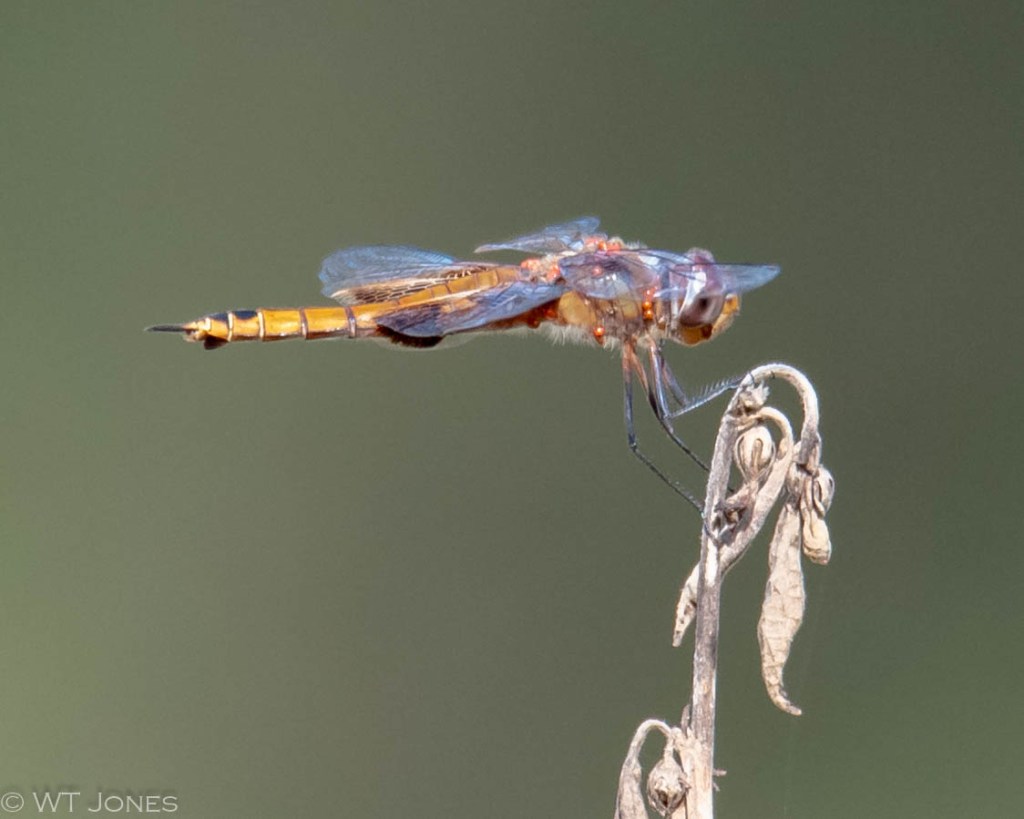
There were plenty of insects out and about but most of them were not interested in posing for a camera. This Red Saddlebags (Tramea onusta) was kind enough to hold still for a moment. Mites seem to be somewhat common on dragonflies. Still, we wished we could offer a remedy.
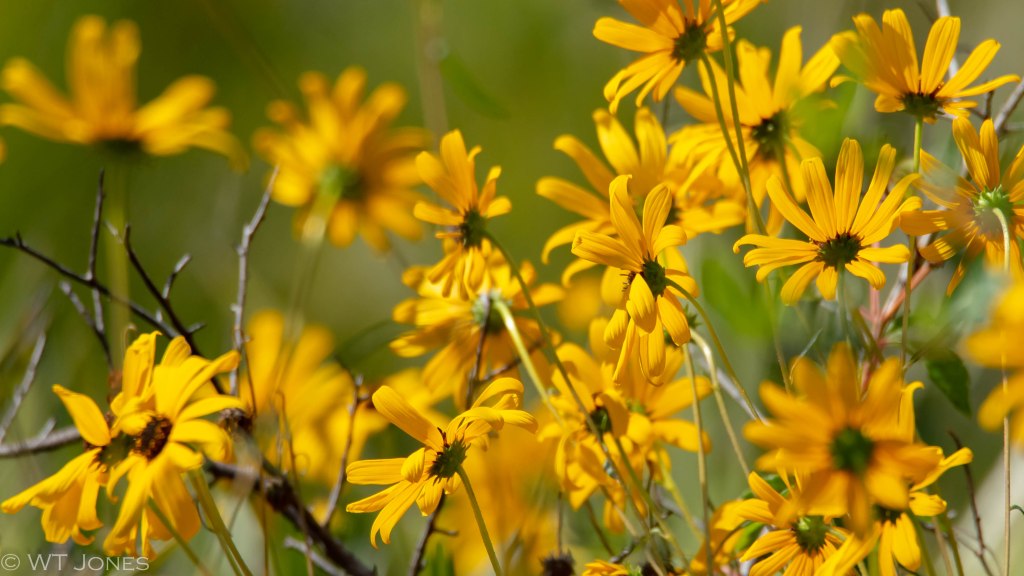
Yellow is the color of the season for Florida wildflowers. Growing to over six feet tall and in masses, we really love the Narrowleaf Sunflower (Helianthus angustifolius), also called the Swamp Sunflower.
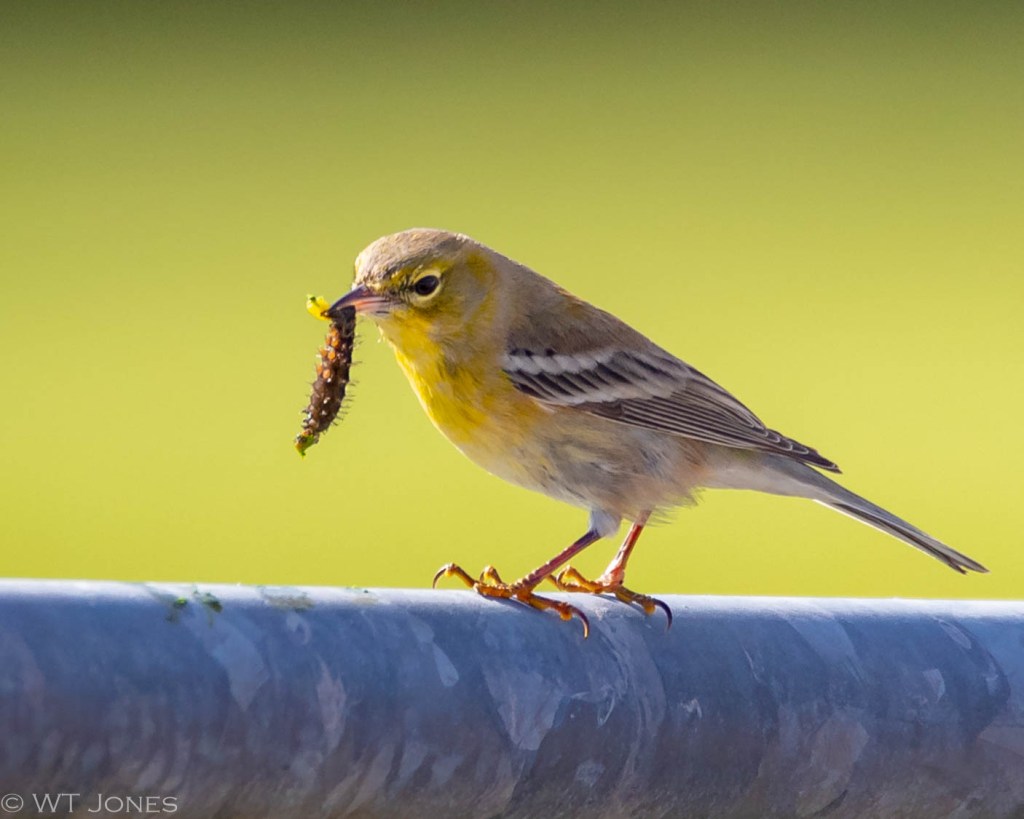
A Pine Warbler used the iron fence as a tenderizer as he continually beat that bug until it was just right.
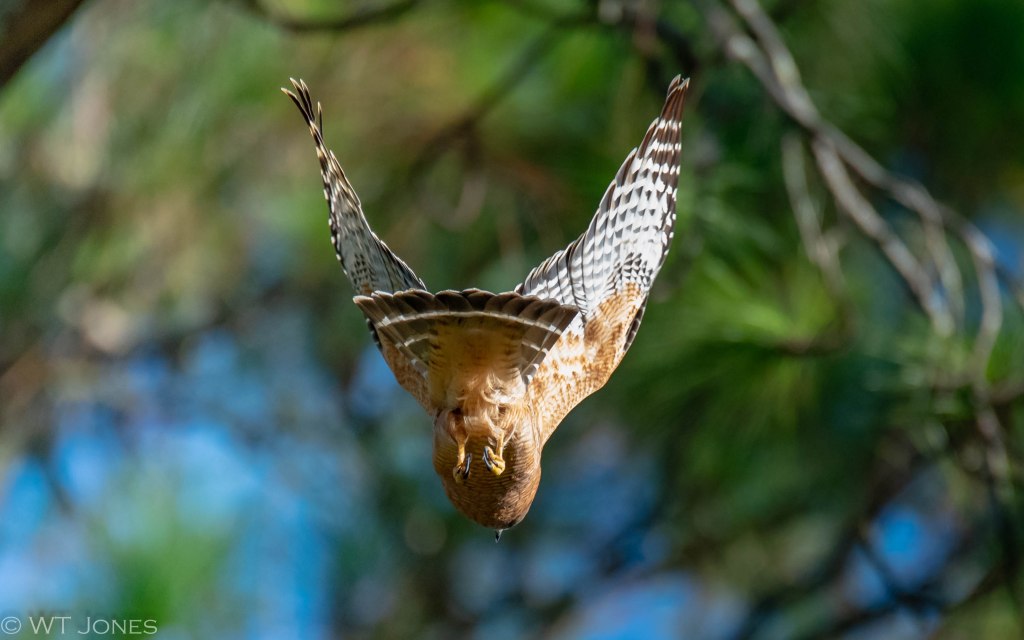
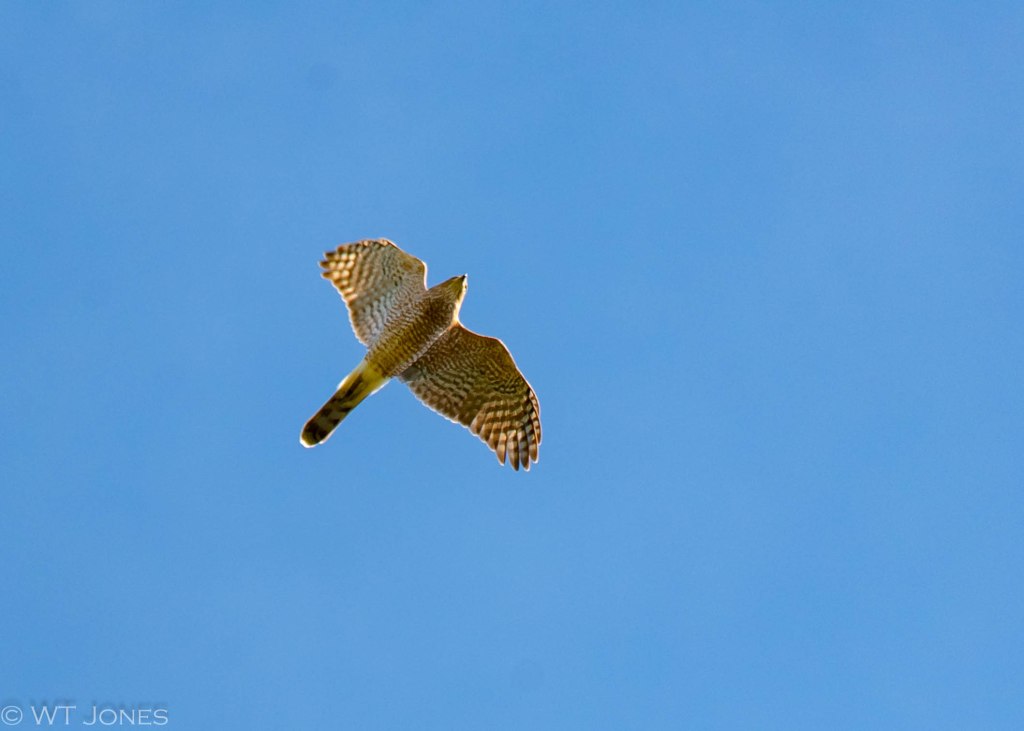
Flying fast above the forest, a long tail and “checkerboard” under wing pattern identified a Cooper’s Hawk.
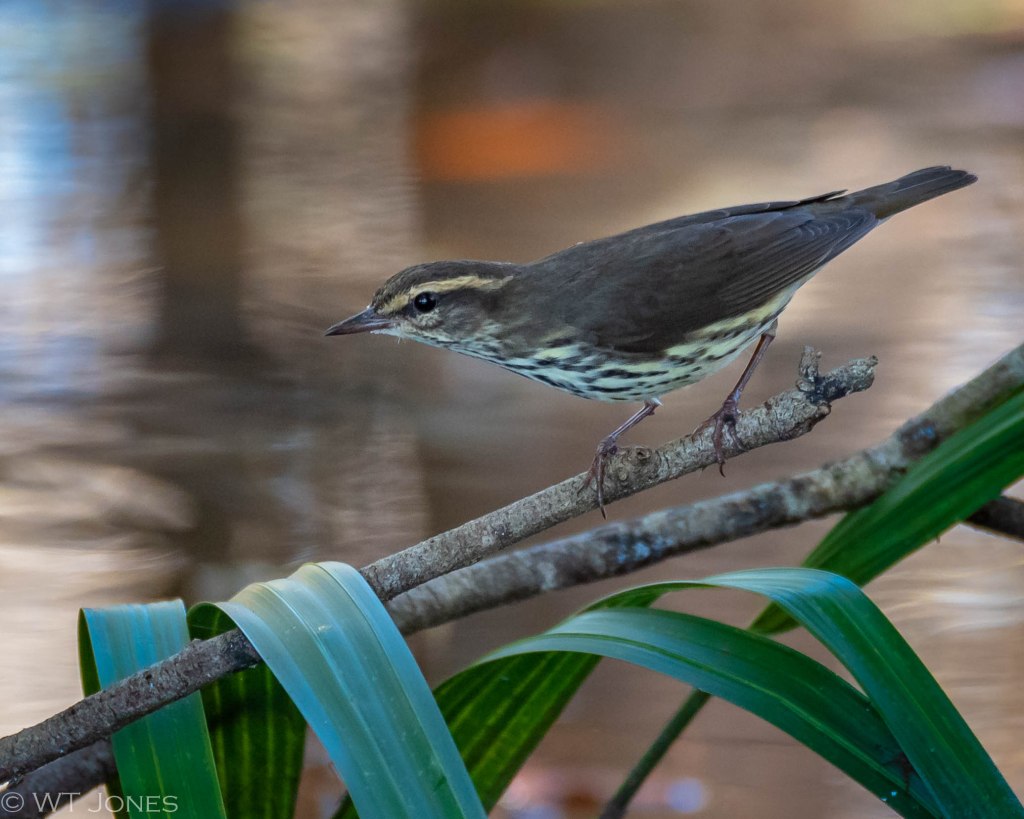
The streaking of a Northern Waterthrush is how it came to have “thrush” in its name, despite the fact this water-loving bird is actually a warbler.
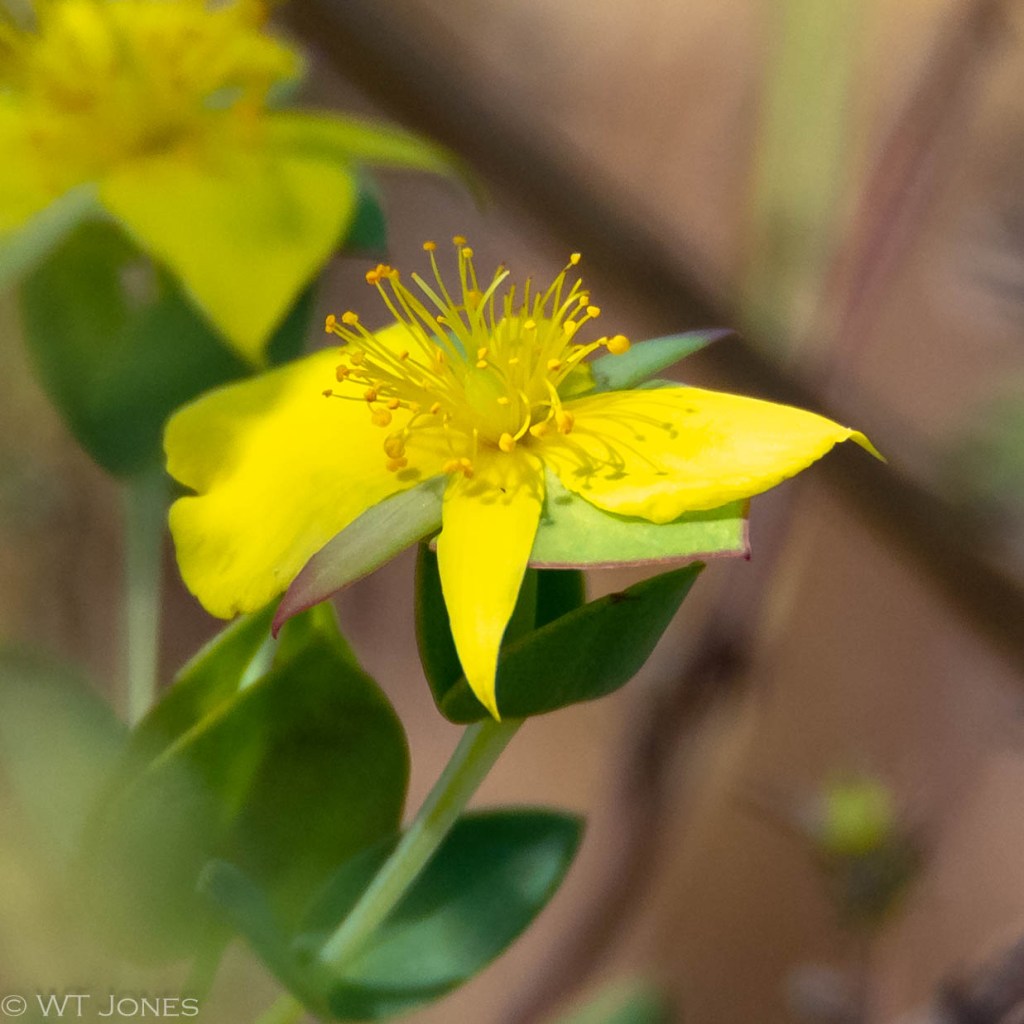
Primrosewillow is a very common plant throughout the southeast although identifying one of the more than 30 varieties can sometimes be a challenge. This is likely the non-native and invasive Peruvian Primrosewillow (Ludwigia peruviana). Those fabulous bright flowers almost make me forgive the plant for being an uninvited guest.
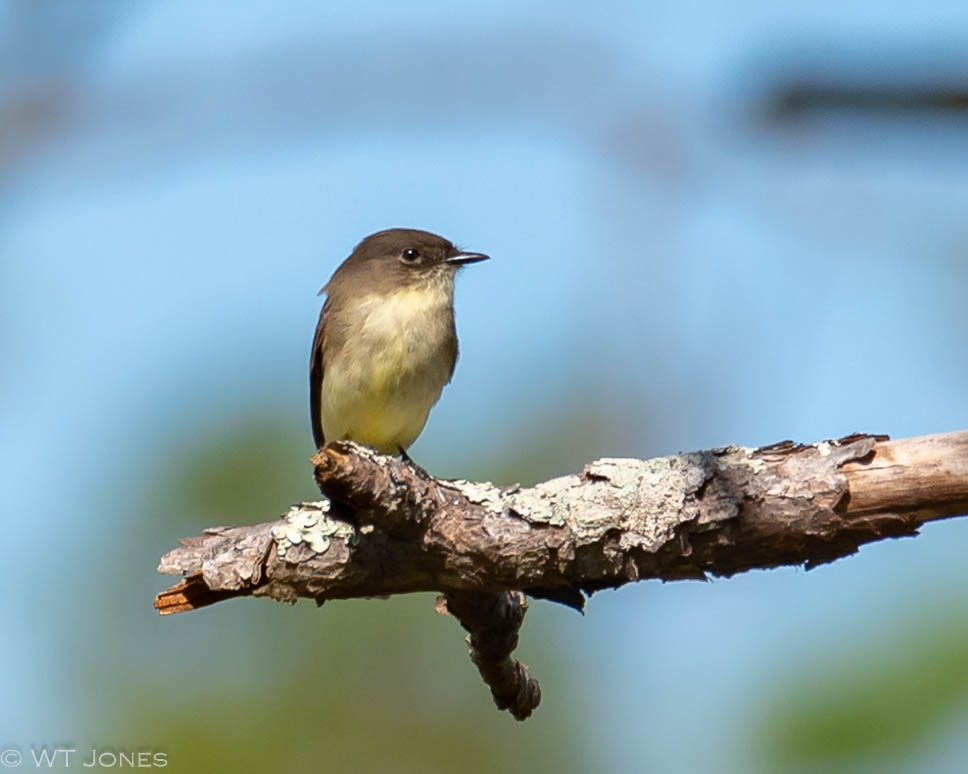
We always know migration is in full swing when we hear the little flycatcher incessantly repeating her name: “Phoe-be“!! Gini says the Eastern Phoebe sounds like she’s yelling: “Feed Me”!
A Red-shouldered Hawk decided he wanted to perch atop a small pine tree where an American Kestrel had set up an observation post. The bigger bird won the spot but the much smaller Kestrel expressed his extreme displeasure, several times.
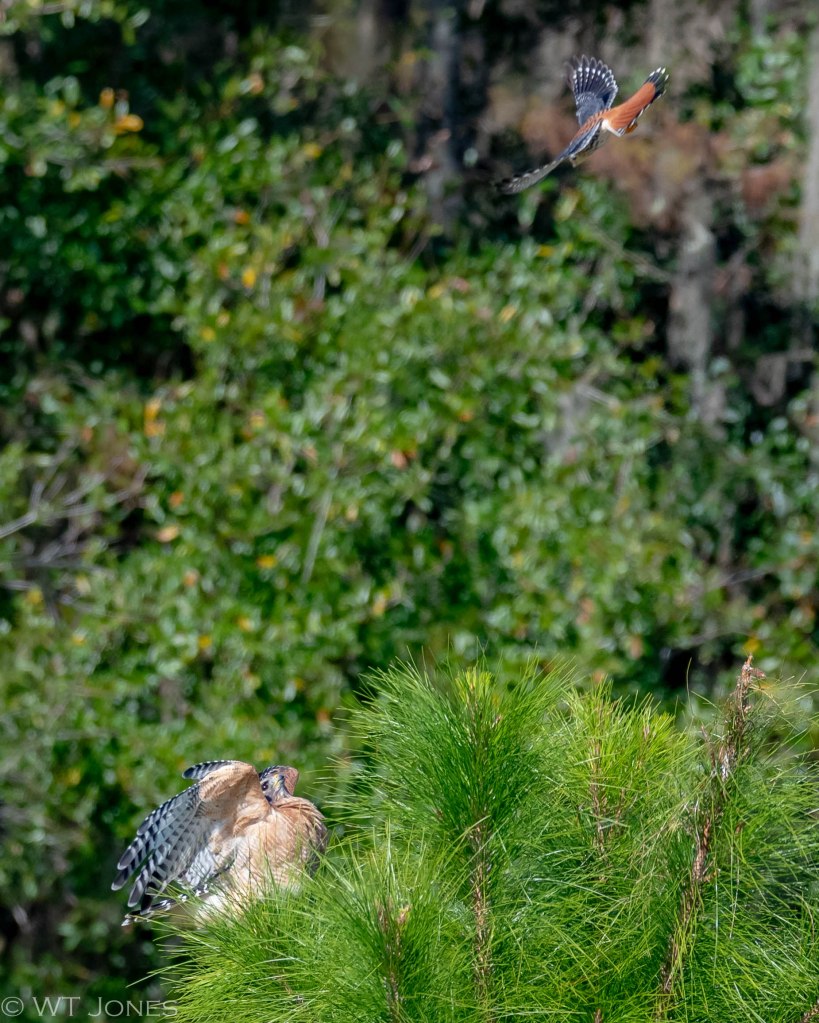
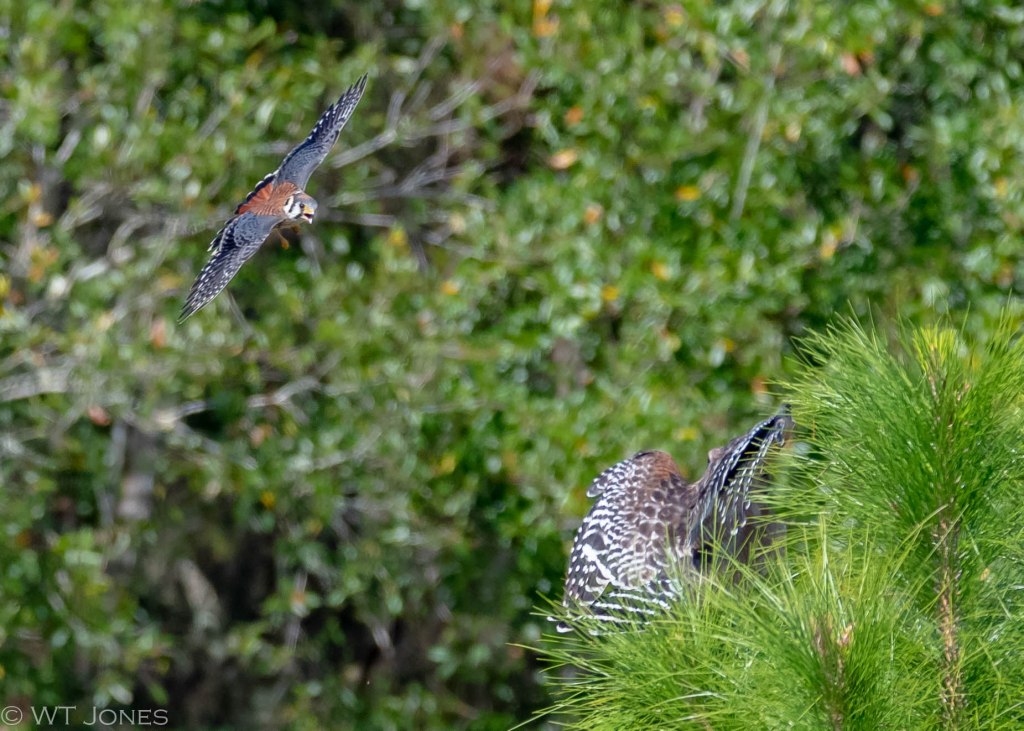
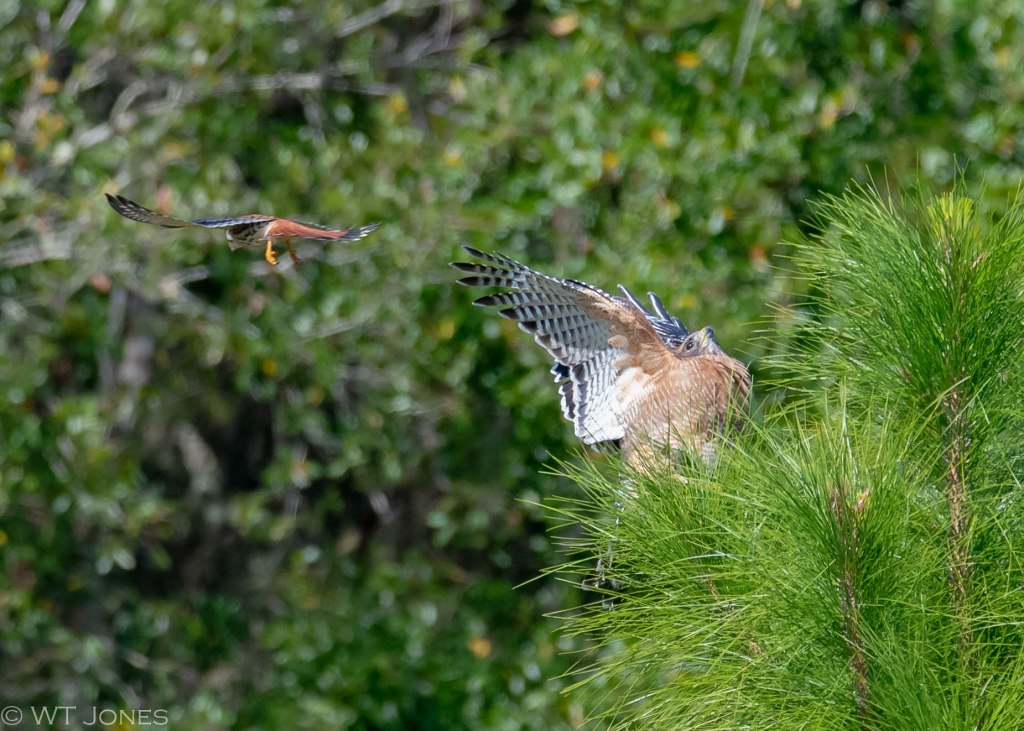
Our ordinary day was transformed into “extraordinary“! A few birds, bugs and blooms and a bit of time spent observing our surroundings was all it took. See if you might have some “extras” hiding within your “ordinary” day.
Enjoy your search for a natural place and come back for a visit!
Header Image: Snail Kite
Most living things are creatures of habit. For good reasons. Over time, we find what works best to ensure our survival. If we happen to be a black bear, we develop a habit of examining certain trees which in the past were used by bees. Yellow-legged Mud-dauber Wasps habitually sting and paralyze spiders, but don’t consume most of them. Instead, they seal a couple dozen in a nest cell containing a single wasp egg. A newly-hatched wasplet can happily munch her way to the great outdoors and is thankful Mom has such a thoughtful habit.
Humans, the most intelligent creatures on the planet, take the habit thing to a whole new level. Sure, we learn what we need to do to survive. Some of us stop right there. Minimalist thinking. Why would I exert more effort than is absolutely necessary for me to keep breathing? At the other end of the scale is the over-achiever. If I need to do ‘x‘ amount of work to survive, then if I do ‘x‘ times ‘infinity‘, why, I could control the whole world!
So, basic creatures do basic things pretty much the same way every day to help the survival of their species. The apex smarty pants of the universe, us, we figure out what we need to do each day to get by and then, depending on our hereditary/educational/social/mental proclivities, we figure out what habits contribute to “success”, which is defined a gabillion different ways depending on who you are and what you want out of life.
Birders develop habits. There are certain venues which become well-known for a diverse bird population or a specific bird or a collection of birds during a particular season. The birder makes it a “habit” to visit this location whenever possible. Some birders have a set routine for an outing and head to several different places throughout the day to check on activity. Many have one “special” spot, perhaps close to home, where they can easily spend an hour or so and have become so familiar with the avian residents that any anomalies are readily noticed. Some birders refer to such a spot as their “patch”.
A very few (hardly worth noting actually, the number is so miniscule) take the birding habit just one step too far. They will visit their “patch” or similar spot to the exclusion of other locales. Instead of seeking a new and unknown area to explore, they return to their “comfort zone” and happily observe the same birds in the same trees which were observed yesterday. This situation, if left unchecked, could potentially cause the unsuspecting birder to trip over a finely honed habit and fall into a rut.
So there we were, enjoying a quiet dinner and I innocently asked my Darling Gini if she minded a trip to Lake Parker Park in the morning. A slight pause was all that was needed for my little gray cells to leap to the possibility that I, yes me, myself, may have inched ever so slightly toward the ledge beyond which lay the abyss of – a “rut“.
“On the other hand”, perspiration formed on my brow as I desperately tried backpedaling to safety, “Why don’t we head over to the east side of the lake and check out the fishing pier area?” She sensed my discomfort, smiled sweetly and simply said: “Sounds good. More coffee?”
That was close.
The aforementioned fishing pier is accessed by a long sidewalk running parallel with a canal on one side and a row of oak, hickory and willow trees on the other. Beyond the canal and the trees is a substantial area of reeds and lily pads along the shore of Lake Parker. The fishing pier juts into the main lake and is a great spot to scan for wintering ducks (in a few more weeks), watch Osprey and Bald Eagles soar and myriad other water birds going about their daily habits. The taller trees can be a great place to find smaller woodland birds.
We saw a surprising assortment of birds, did not spend much time there and arrived back at the house well before lunch time. Most importantly, yours truly appears to have side-stepped a rut in the road of birding habits.
So herewith, a selection of subjects seen singing, sitting and soaring.
As late fall approaches, migrating Bald Eagles filter into the area and, like most tourists, are happily surprised at all the lakes filled with fish! We have a robust resident population of Bald Eagles. The locals do not react well to strangers fishing in their front yard. Fights are common and occasionally fatal. From the pier today, we counted six of the magnificent raptors soaring, screaming and fishing. No fighting – yet.

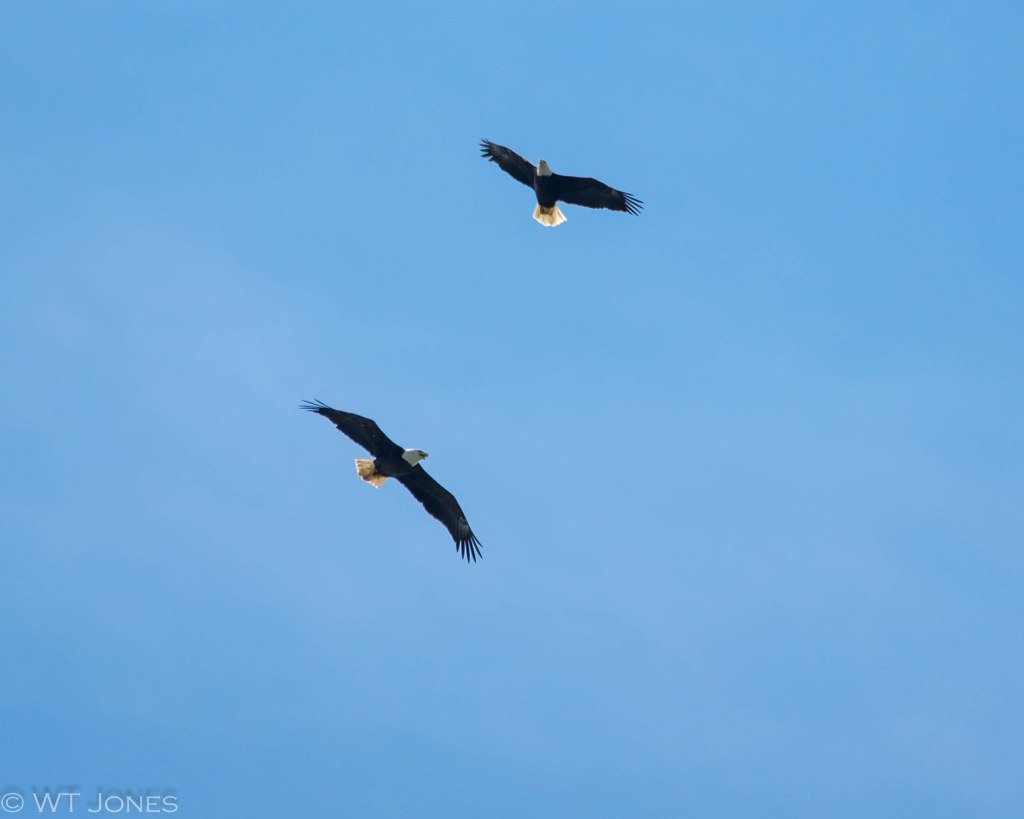
A sky filled with really large birds of prey can make other birds a bit nervous. An Osprey tries to hunt for fish but keeps glancing at the circling eagles overhead.

An Anhinga may not be accused of being the most attractive of birds, but who can resist such beautiful brown eyes?

Caspian Terns are the largest terns in the world. We have a few who, along with several Royal Terns, have made Lake Parker their year-round home.


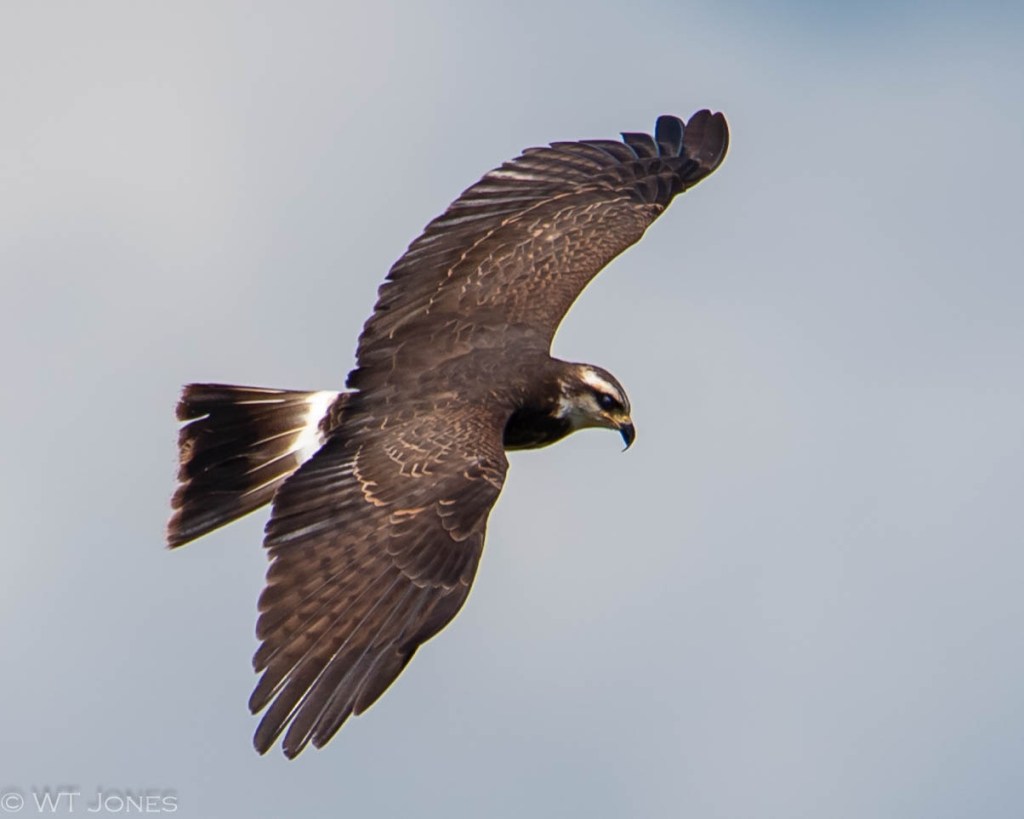
Although still on state and federal endangered lists, Snail Kite populations in Florida have been rebounding over the past few years. None were present here just five years ago and now they are nesting along the northeastern part of Lake Parker.

Some of the earliest warblers to appear in our area for fall migration are Yellow Warblers. They don’t stay too long as they have reservations in Caracas.

Yellow-throated Warblers are Florida residents but they have a bunch of northern relatives which show up for the annual fall bug harvest.

We watched an Osprey methodically clean the head and skin from a freshly-caught fish when she was suddenly swooped upon by a lazy interloper looking for an easy meal. The ensuing air-to-air combat operation would have made most Air Force jet jockeys envious. The would-be thief gave up and the victor enjoyed her spoils from a nearby pine tree.


Developing habits is a matter of survival. Nurturing good habits can help us be more successful in our lives. Repeating some habits too often can lead us into a rut. Diversify. Stay out of ruts!
We hope you enjoy your search for a natural place and come back for a visit!
 Our Natural Places