Header Image: Florida Scrub Jay
It was a dark and stormy night. The day was bad, too. The last few days of September saw Hurricane Ian gain incredible strength in the Gulf of Mexico before roaring ashore in southwest Florida at nearly a Category 5 level with winds around 150 mph. Five months later, many areas of that beautiful coast are still reeling from the amount of damage the storm caused. Some lives were lost and many others were changed forever.
We live inland and had a very windy, rainy experience but were spared the brunt of the catastrophic storm. Our power remained on for the duration and we picked up tree limbs from the yard for a couple of days. For us, it was no worse than any other hurricane we have experienced in over 60 years. Our location in relation to Hurricane Ian’s path was key in our relatively favorable experience. Only 15 miles to the south, the storm cut a wide swath of destruction as it marched eastward across the peninsula.
One of our favorite spots to explore is the Arbuckle Tract of the Lake Wales Ridge State Forest. The tract was closed for a couple of months due to downed trees, flooding (24 inches in 12 hours) and washed-out roads. A few weeks ago, we returned to once again marvel at nature’s resilience.
The forest service did a great job repairing roads and trails. It was obvious that a great many trees had been lost. The flood waters had receded and streams ran clear and the tract’s one lake, Lake Godwin, was once again accessible. And beautiful.
Our entrance to the forested wonderland was met with an early morning ground fog which burned away quickly after the sun had been up an hour. The red clay hauled in to resurface the roads revealed who had been traveling this way during the night. Tracks of White-tailed Deer, Raccoons, Opossums, Northern Bobwhite, Wild Turkey, Coyotes, snakes, lizards and several unknown creatures were encountered every few yards.
Winter migration is still in full swing and there were bird sounds coming from the side of the road as well as from distant trees. The view of Lake Godwin shortly after sunrise was incredibly peaceful with not a ripple to be seen on its surface. The pine trees smelled great and were filled with small birds going about the business of surviving another day. We were treated to a dramatic battle for a dead tree snag. Gini reminded me I promised to rent a dump truck so she could fill it with millions of huge pine cones for craft projects.
Once again, we were in the forest, at peace, satisfied with life and all was right in our world.
Welcome to the forest.

Ground fog settled across the pine savannah.

The bright sun peeked through the fronds of a Saw Palmetto and then made short work of dispensing with the bit of remaining morning mist.

Lake Godwin provides a pleasant view of lily pads and pine trees. In the distance we heard the trumpeting of Sandhill Cranes. The day was beginning.

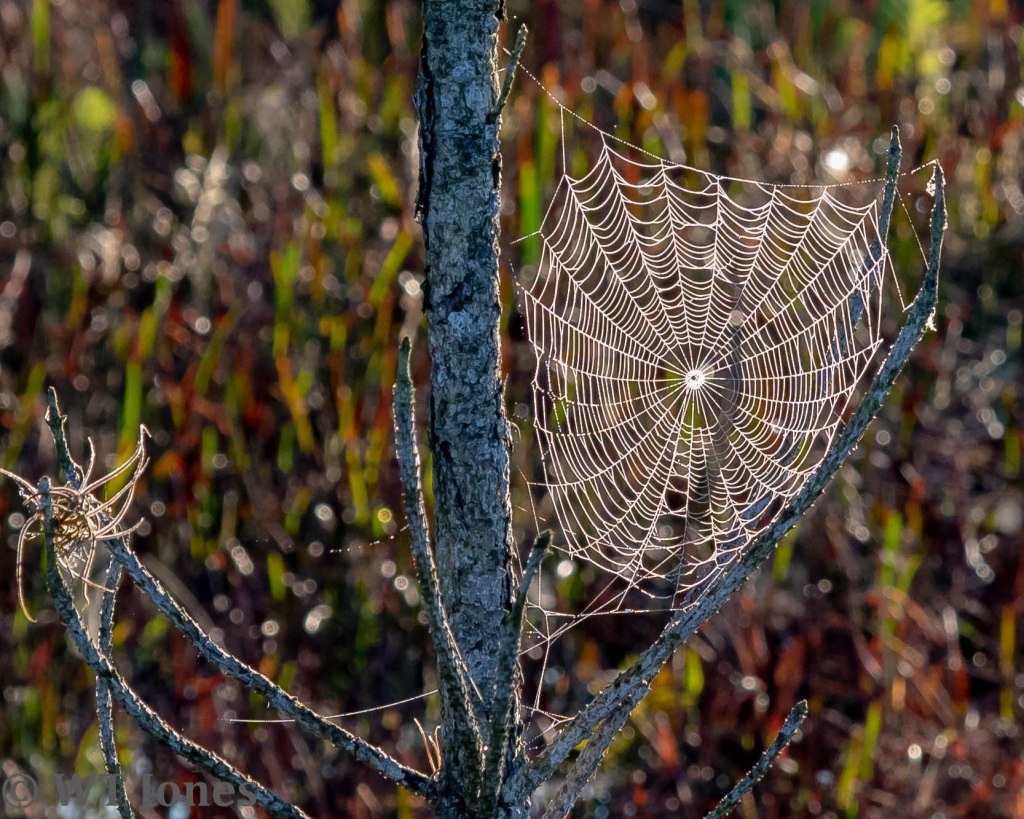
It seemed spider webs adorned every available stalk of grass and tree limb.
The diminutive Brown-headed Nuthatches are our area’s earliest nesting songbirds. They typically travel in loose family groups. This morning we counted at least eight of the little balls of feathers probing every part of the trees in search of breakfast.


Yellow-bellied Sapsuckers visit with us during migration and will be gone from the forest by Easter.

Although we see many migratory Pine Warblers, Florida also has an abundant population of resident birds.

Another winter visitor, an American Robin, perched long enough for a picture before flying off to join a flock of dozens of cousins feeding in the distant pines.

Eastern Bluebirds breed in this area and they are attracted to pines with nearby open spaces.

(Warning: Flight Of Fancy Dead Ahead)
A Bird Tale
“This is a fine snag“, said the Florida Scrub Jay. Her partner agreed.

“Oh, no! A Common Grackle!”

“I’ll get his attention while you attack from the rear!”

Alas, the Grackle was prepared and fought viciously!
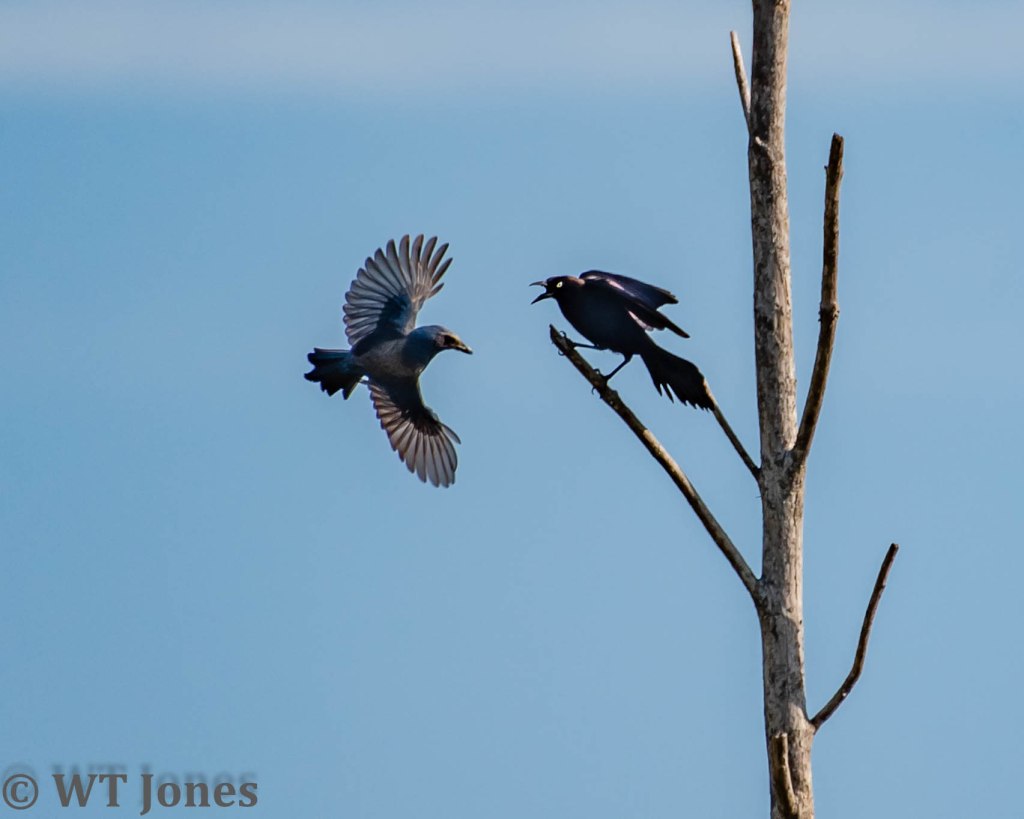
Suddenly, from out of nowhere, there appeared a red-haired stranger! (Known to his friends as the Red-headed Woodpecker).

The ensuing epic battle seemed to last forever! (At least five minutes.)

At last, peace returned to the snag and the Jays relaxed with their new Friend.

The End
The Florida Scrub Jay is endemic to Florida and will only breed in very specific habitat. They can be found in higher and drier areas with Sand Pine and Scrub Oak (from 3 to 6 feet tall). Loose family groups help tend nests and young birds during their first year.


It is always sad to see destruction and injury from any cause. We are constantly amazed at how quickly nature can recover from severe damage. Returning to an area we love to find it in such outstanding condition was more than gratifying.
Enjoy your search for a natural place and come back for a visit!
(Note. Our blog posted on 10/23/22 described a trip I made with our grandson seven days before Hurricane Ian hit the area. https://ournaturalplaces.com/2022/10/23/a-grand-day-out/)
Header Image: Anhinga
The morning was cool and clear. Standing by the small lake, the silence was broken by a Limpkin calling in the distance. That served as a wake-up for several local residents. Common Gallinules gabbled from the shallow-water grass, an Anhinga squawked as it flapped from a nearby cypress branch, White-winged Dove demanded to know “Who-Who-Who Cooks For You”.
We had arrived a little while before the sun rose and just as the moon was setting. Light from the imminent dawn provided a bit of warm color to the opposite shore of the lake. A short distance away, we found another small lake with a bit of mist hanging above the surface and the moon still hanging above it all. Turning around, the sky was becoming bright. Our new day was beginning and we were reminded how truly fortunate we both continue to be.
Our adventure began with watching a pair of Blue-winged Teal feed in the shallows as the bright sun warmed the air and water. I coined a new (?) term for the water droplets on the spider webs: “Dewels“. Gini rolled her eyes. Flocks of Double-crested Cormorants and White Ibises moved overhead as they left their nightly roosting spots. Wading birds waded. Warblers warbled. We came across a mystery. (How did THAT get THERE?)
After an hour of leisurely ambling we shared a small breakfast. Gini is an extraordinarily talented cook. One of her holiday treats is banana bread. She decided to expound on that theme and incorporated some of our area’s famous fresh strawberries in her bread recipe along with walnuts and other secret ingredients. The result has been phenomenal. Her announcement of taking these loaves of love and giving them to family and friends elicited whines of resistance from yours truly. I am almost ashamed of being so selfish. Almost.
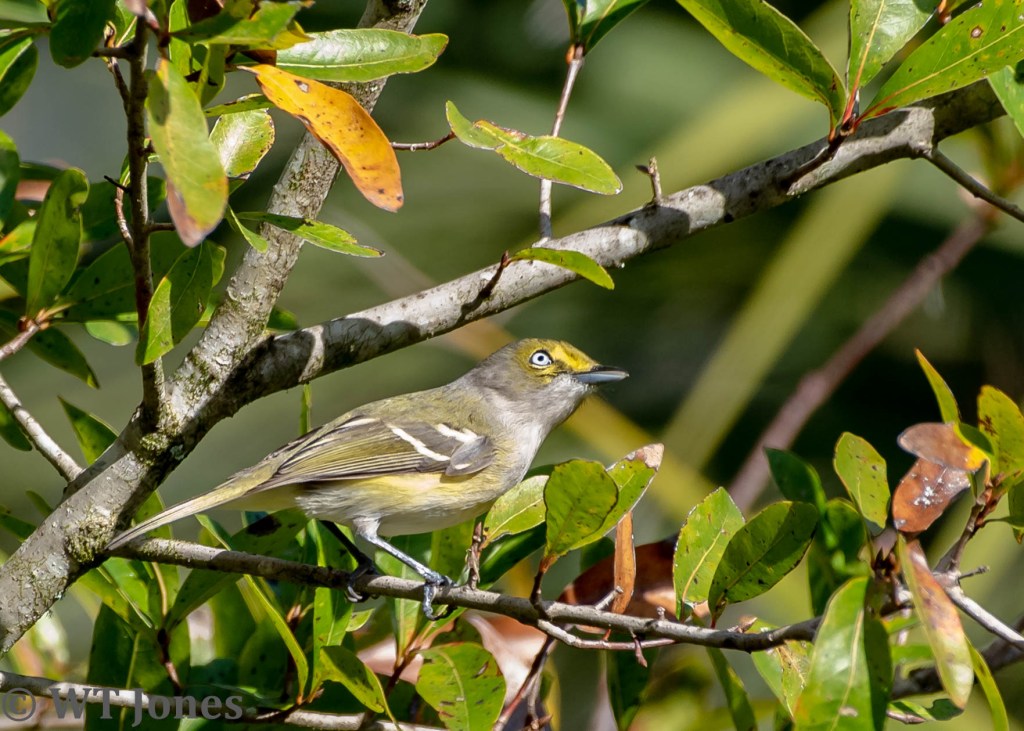
After enjoying a slice of heavenly bread, our morning continued to reveal nature’s beautiful diversity. The incessant calls of a White-eyed Vireo allowed us to locate the bug hunter as she scoured the undersides of leaves and limbs for a bug brunch. We couldn’t believe it was so late! Time and birds fly when we’re having fun.
The setting moon viewed from two different lakes.


After taking the second photograph above, I turned around and took this image. It is a chaotic scene of the rising sun through distant pine trees, grasses, brambles and palm trees. Welcome to our “patch”!

A pair of Blue-winged Teal in the early sunlight.

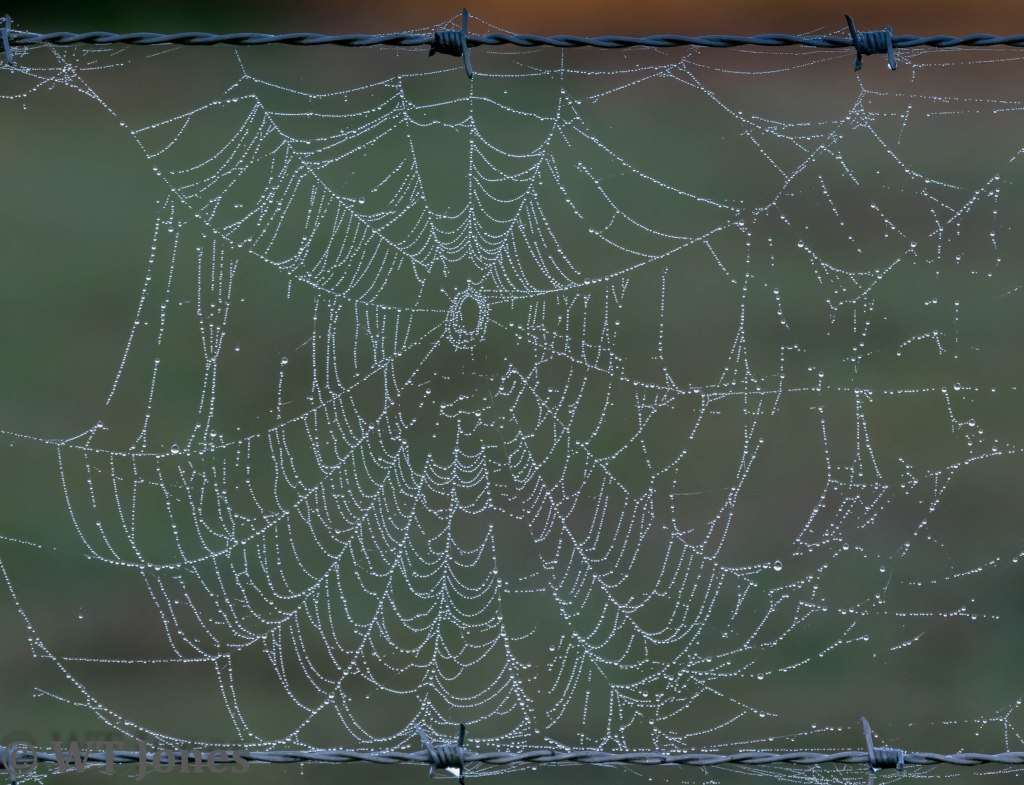
It is so fascinating to find a seemingly infinite number of spider webs which have been spun during the night. This one is bedecked with (you know what) “dewels”.
“Churrr-churrr-churrr.” Even from a distance, a Red-bellied Woodpecker wants all his neighbors to know there are intruders out and about.

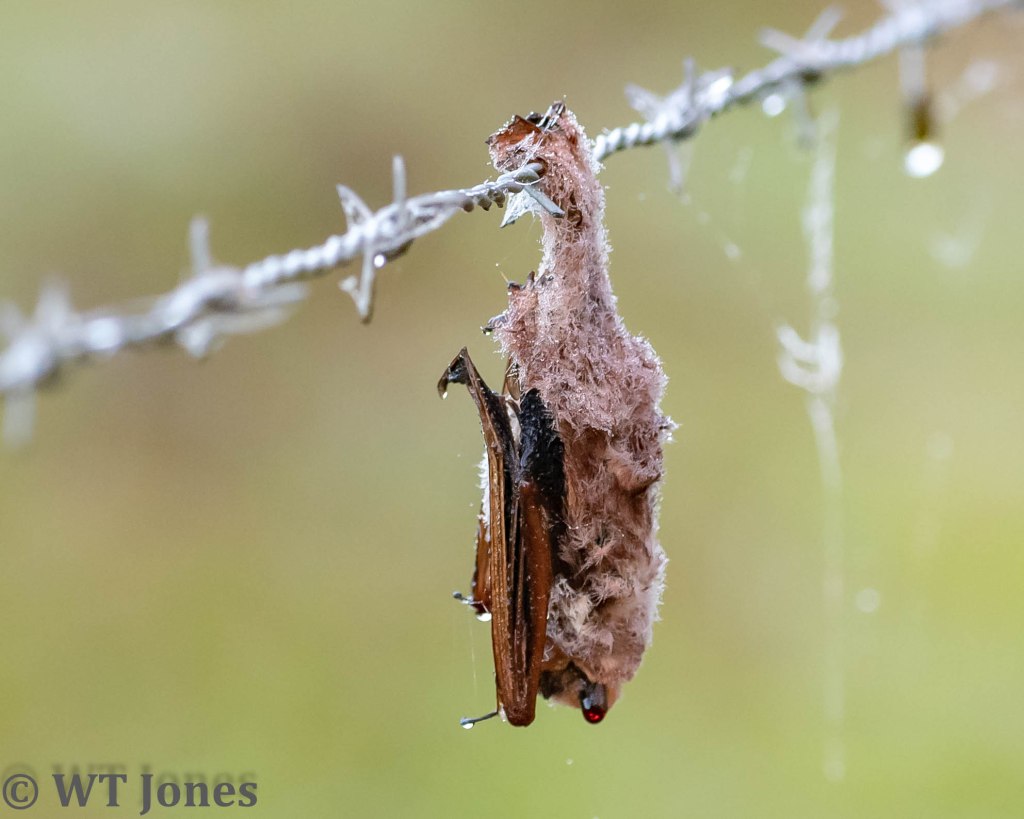
A bit of a mystery. Yep, it’s a bat. Impaled on a barbed wire fence. We have read that the Loggerhead Shrike would take small mammals as prey but we had never seen evidence they ate anything larger than lizards. I’m trying to visualize a shrike chasing a bat, catching it and holding on to it long enough to stick it on this barb. I couldn’t come up with any other scenarios.
An American Coot displaying how simple it is to run on water.

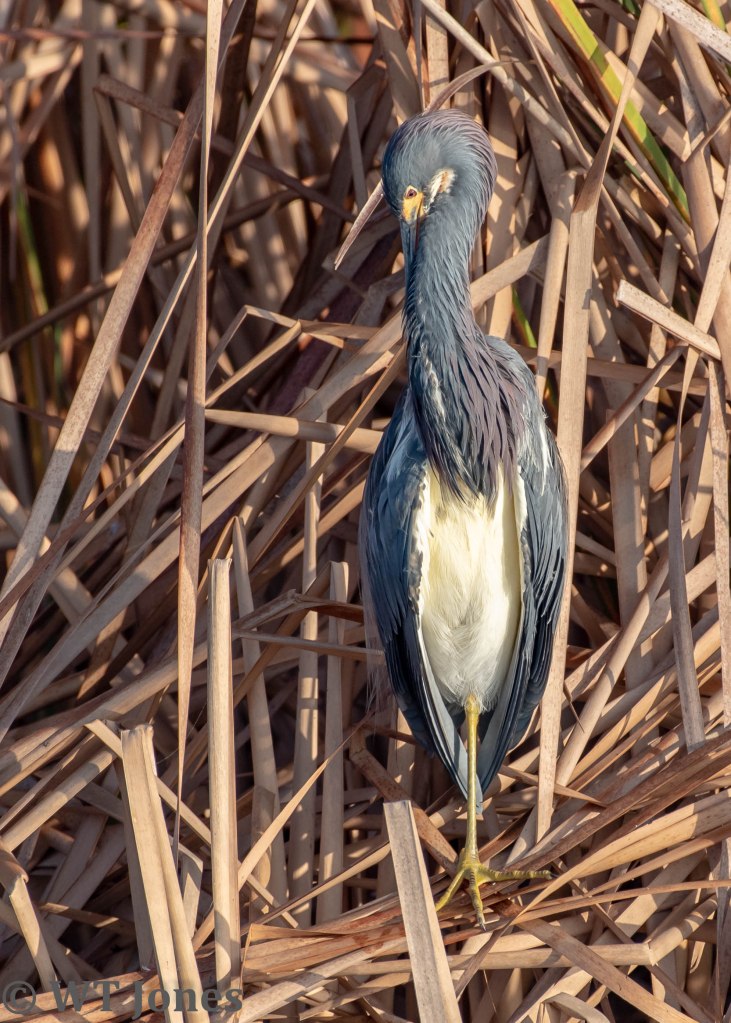
It’s nearly breeding season for many wading birds. This Tricolored Heron sports a small white plume on its head and soon its bill and eyes will turn dark.

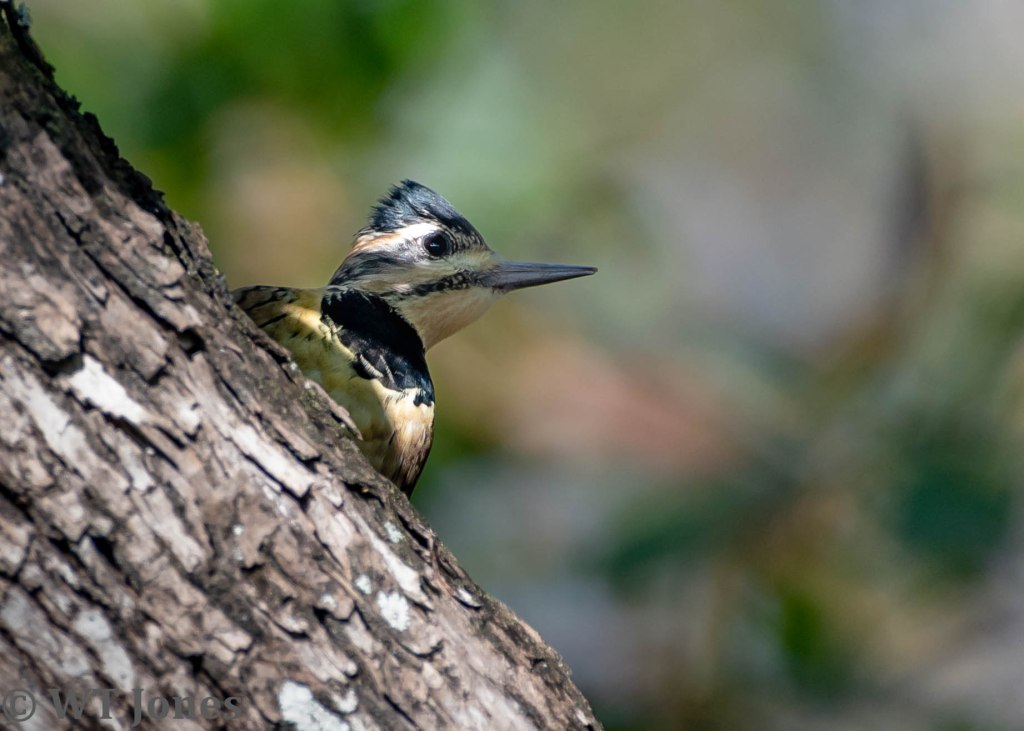
I was peeking at it. It was peeking at me. This Yellow-bellied Sapsucker never would pose in the open. Another month or so and these beautiful woodpeckers will have all returned to their northern nesting areas.
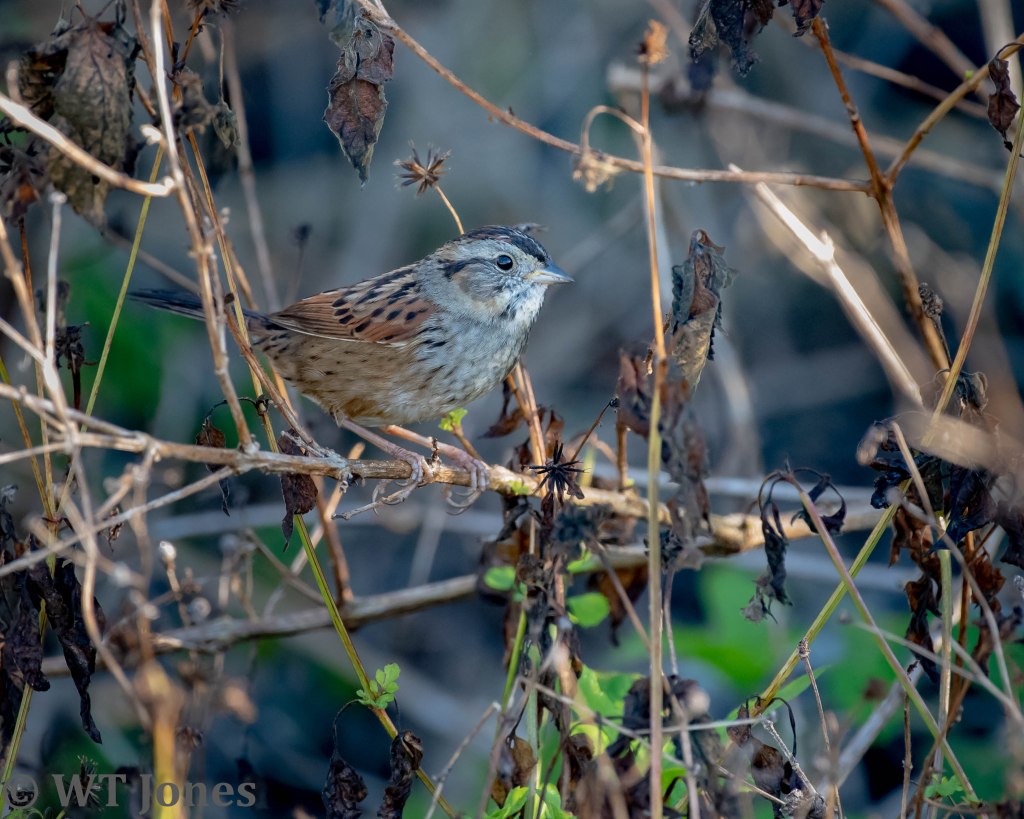
One of the bird world’s “little brown jobs”, a Swamp Sparrow quietly sat in the underbrush. Their unique head pattern, gray neck and rufous wings help separate it from other “LBJ” relatives.
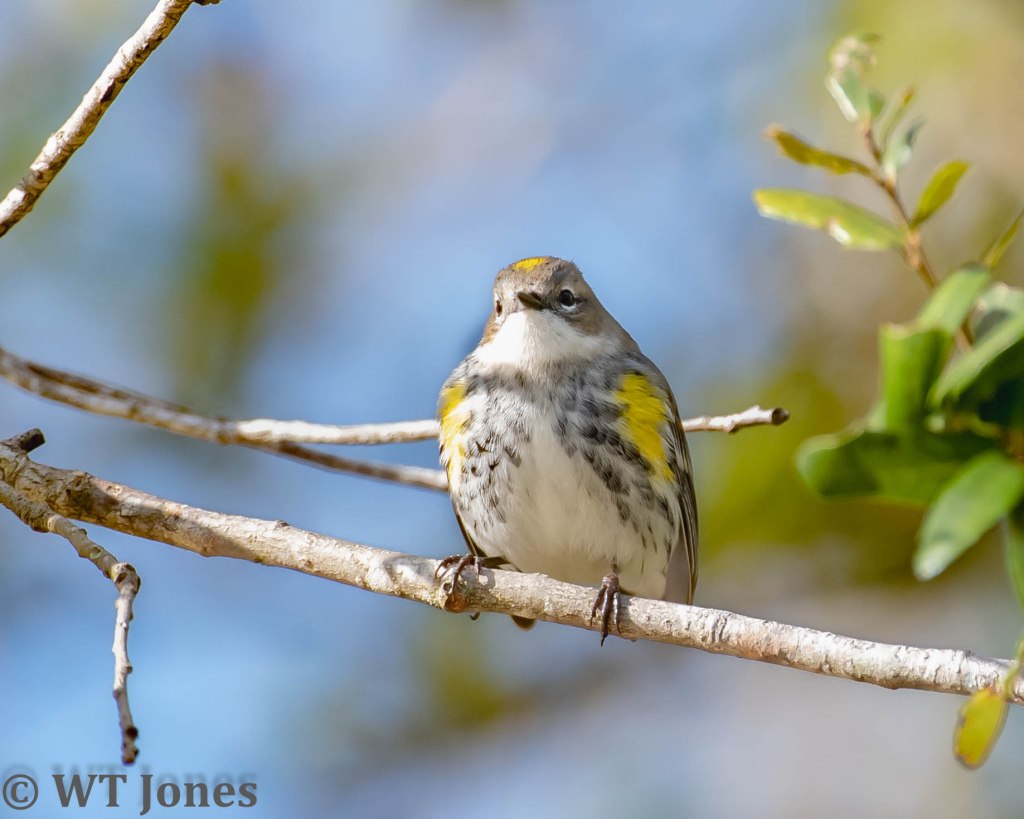
Another migratory visitor, the Yellow-rumped Warbler, shows off its other yellow bits.
Loud. Aggressive. Confrontational. Troglodytes aedon is here! With a Latin name larger than the actual bird, a House Wren is first on the scene to scold any potential threat.

Heard more often than seen, the White-eyed Vireo is a welcome sight to all except an insect. This bird cocks her head as the warm sun encourages bugs to become more active.
The sun indicated it was nearing noon and with no strawberry bread in sight, it was time to head home. It had been a superb new dawn and new day. And we’re feelin’ good!
Enjoy your search for a natural place and come back for a visit!
Lake Apopka was essentially a dead lake in the 1960’s. Damage from pesticides and large-scale fertilizer runoff from muck farms was thought to be irreparable. To visit this area today is enough to make you believe in miracles. If we did not know the lake’s history, we would assume we were enjoying one of Florida’s premier birding locations and prime water recreation destinations.
So much has been done to reclaim Lake Apopka and the surrounding land and the effort has been undertaken by so many from citizens to environmental activists to business/industry leaders and politicians. It’s been a bumpy road at times. The results are so incredibly rewarding!
Cleaning up after decades of abuse has taken decades to reverse course. The work is not finished. Currently, phosphorous levels remain too high throughout the lake and within the marshes. Innovative solutions appear to be working and levels continue to (slowly) improve. The food chain within and around Lake Apopka seems to be healthy and many groups maintain a watchful eye for any disruption.
For those of us who may visit the area infrequently, all appears to be good. Just as we would at any venue we visit for birding, fishing, photography or to just relax, we don’t see the history, the very determined and difficult effort and ongoing plans surrounding the lake’s existence. We just want to see a bird.
The second half of our Lake Apopka Wildlife Drive adventure was every bit as exciting and fun as the first. Nearly 70 species of birds, abundant alligators, turtles, dozens of out-of-state license plates, Florida sunshine – all ours to enjoy!
And we did.
A group of Black-necked Stilts were napping not far from the road. We counted six alligators not far from their resting spot. Sleeping with one eye open is mandatory.

Even if you didn’t see a Belted Kingfisher, you knew they were nearby. Their very distinctive rattling call echoed around us all day.

I’m fascinated with the feet of the American Coot. They look like some sort of inflatable appendages.

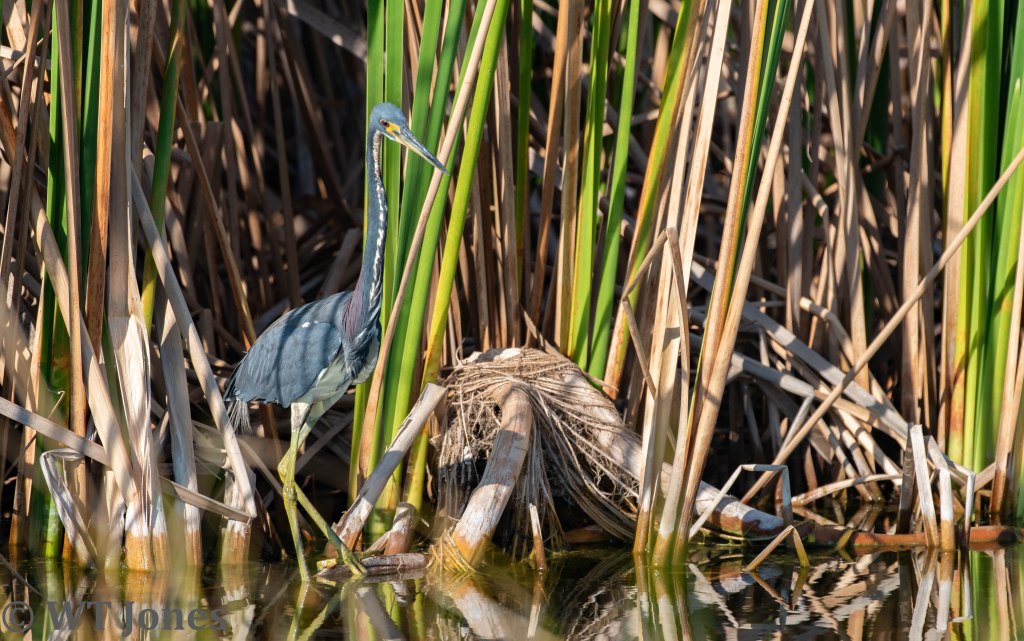
That long patterned neck helps a Tricolored Heron blend in with the reeds so the little fish won’t see her until it’s too late.
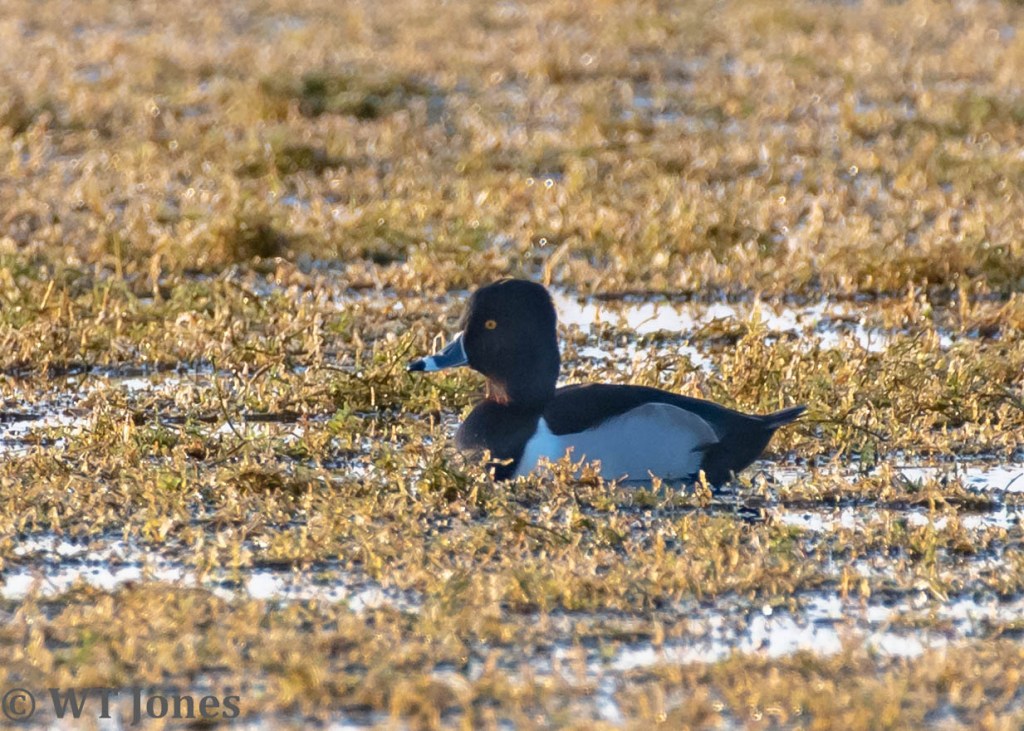
What’s that saying? “Let sleeping ducks lie.” Or something. A pair of Ring-necked Ducks getting some shut-eye. One is keeping an eye out just in case.


A few flowers were starting to bloom across the marsh. One of the most common is Bulltongue Arrowhead (Sagittaria lancifolia).

This Snowy Egret shows some of the fine feathers (aigrettes) of breeding season.

Some wetland areas have extensive masses of bright yellow at this time of year. We only found a few sparse plants of Burr Marigold (Bidens laevis) on today’s trip.

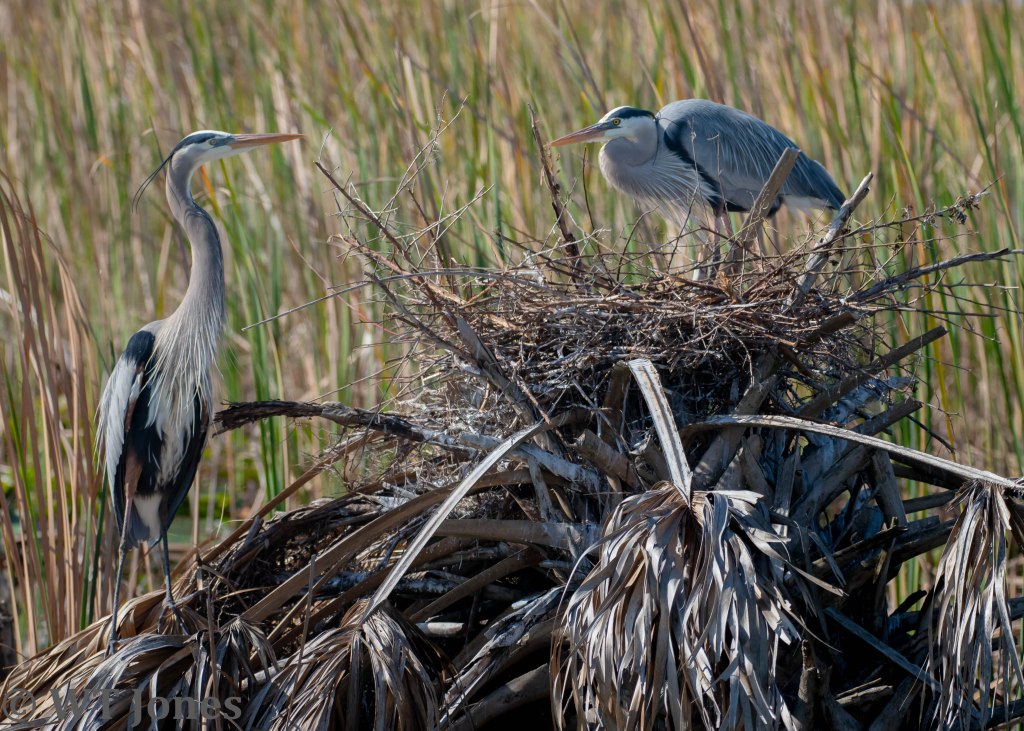
More nesting activity. Great Blue Herons need some substantial structures.

Our second Peregrine Falcon of the day didn’t cause me to drop any more food but clearly had been enjoying his own breakfast of Common Gallinule.

A fairly common resident of freshwater impoundments, the Florida Red-bellied Cooter (Pseudemys nelson) can reach up to 14 inches (36 cm) in length.

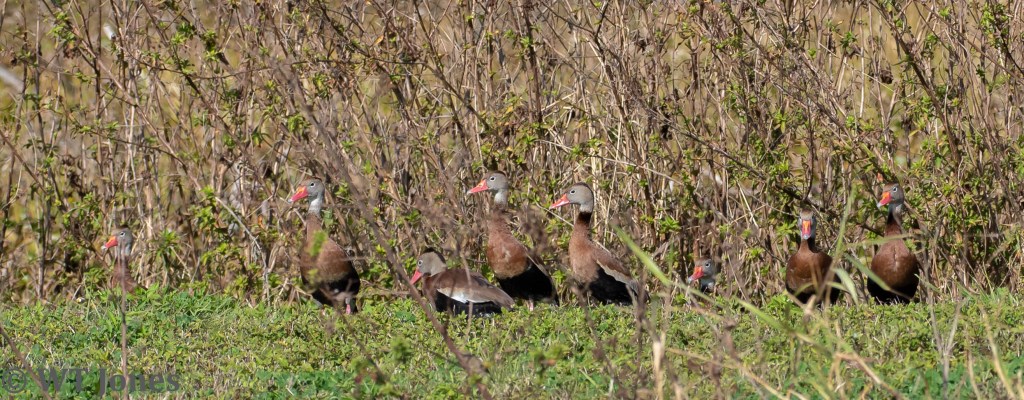
Along the bank of a canal, we counted over 50 Black-bellied Whistling-Ducks. Gini tells me they were all whispering about us.
When this Anhinga first stabbed the fish, a young alligator nearby caused him to move. A Great Blue Heron flew in threatening to steal the meal. The Anhinga slapped the catfish senseless on a tree branch and managed to swallow it before any more pirates appeared!

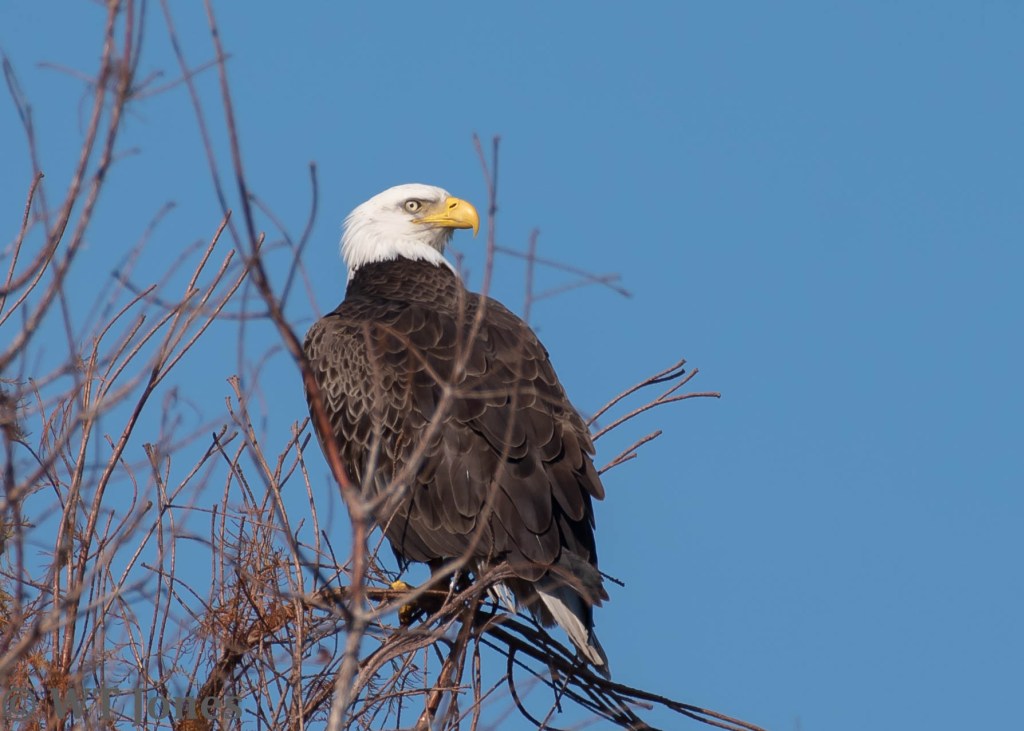
Where there are fish, there are eagles. An adult Bald Eagle held still for a portrait and we appreciated it.
Finally, a public service announcement for those who may visit our state and are not familiar with some of the fauna they may encounter. When walking through tall weeds, be careful not to stumble over a young American Alligator. These gentle creatures can be hard to spot at times and we wouldn’t want one of you to accidentally harm one of these tender-skinned reptiles. Enjoy your visit!

Lake Apopka. Resurgent. We hope you enjoy the natural resources in your area and remember to not take them for granted. If you have children or grandchildren, show them the beauty of our planet. Teach them what it means to be a good steward.
Enjoy your search for a natural place and come back for a visit!
Header Image: American Alligator
In the early 20th century, Florida became a magnet for anyone who wanted to escape the snow of the far north, the bustle of a big city or even the long arm of the law. Warm weather, beaches, sparkling lakes filled with fish, pine forests, no crowds. Why, you could pick an orange right off a tree for breakfast!
The fourth largest lake in the state, Lake Apopka, consisted of over 50,000 acres of clear water teeming with sport fish begging to be reeled in. Around the shoreline were peaceful fishing camps as well as swanky lodges for visitors such as Clark Gable and Al Capone. Agriculture was in the beginning stages of making Florida a major producer of fresh fruits and vegetables for consumers across the United States.
Around the northern shore of big Lake Apopka, a levee was built to separate the lake from about 20,000 acres of low land to which irrigation canals were added. Once the wetlands had been drained, the rich organic muck created from what used to be the lake’s bottom was perfect for a huge variety of crops. Adding modern (at that time) fertilizers and pesticides enhanced production. Owners became rich. All was right in the world.
Then the fish began dying.
In the early 1960’s, it is estimated around three million fish died, most likely due to the effects of aerial spraying of pesticides over the surrounding muck farms. During the following decade, the formerly pristine lake water suffered from continual algae blooms probably caused by fertilizer runoff. These blooms cut off oxygen and resulted in more fish kills. In the winter months of 1998-1999, nearly 700 dead birds were counted around the lake’s north shore. The majority of the deaths were of water birds and autopsies revealed the main cause of death to be consuming contaminated fish.
It was painfully obvious that despite more and harsher regulations that the farms were not going to resolve the environmental issues through self-policing. The state of Florida began purchasing the farms after passing the Lake Apopka Restoration Act. Cleaning and restoring an area of over 50 square miles after years of chemical pollution has been a daunting task. It is now 27 years since that task was begun and there have been significant rewards.
The former muck farms are monitored for pollutant levels and for the past two decades have improved to near-natural conditions. No major fish or bird kills have occurred since the late 1990’s. Much of the area is being administered by water and wildlife management organizations to ensure this huge natural resource is protected for future generations. There is much yet to be done.
In 2015, an 11-mile drive was opened allowing visitors to travel through the restored wetlands of the north shore of Lake Apopka. It is a fantastic experience! The old irrigation canals now provide clean water throughout the marsh. Resident birds breed in significant numbers and each fall tens of thousands of migrating waterfowl, passerines and raptors spend the winter here.
Gini and I recently spent the day poking along the Lake Apopka Wildlife Drive. The large rafts of Ring-necked Ducks, Lesser Scaup, Northern Pintail, Fulvous and Black-bellied Whistling-Ducks, Northern Shovelers and Blue-winged Teal were mostly beyond camera range. We managed to find a few lounging closer to shore who didn’t mind posing for the paparazzi. The area is very attractive for a diverse array of wildlife and there always seem to be surprises awaiting the patient visitor.
After all the words above, I almost forgot to show you some pictures. (Another two-part post, I’m afraid. Blame the camera. It just doesn’t know when to stop clicking.)
One of the more abundant waterfowl species to spend the winter here is the Ring-necked Duck.

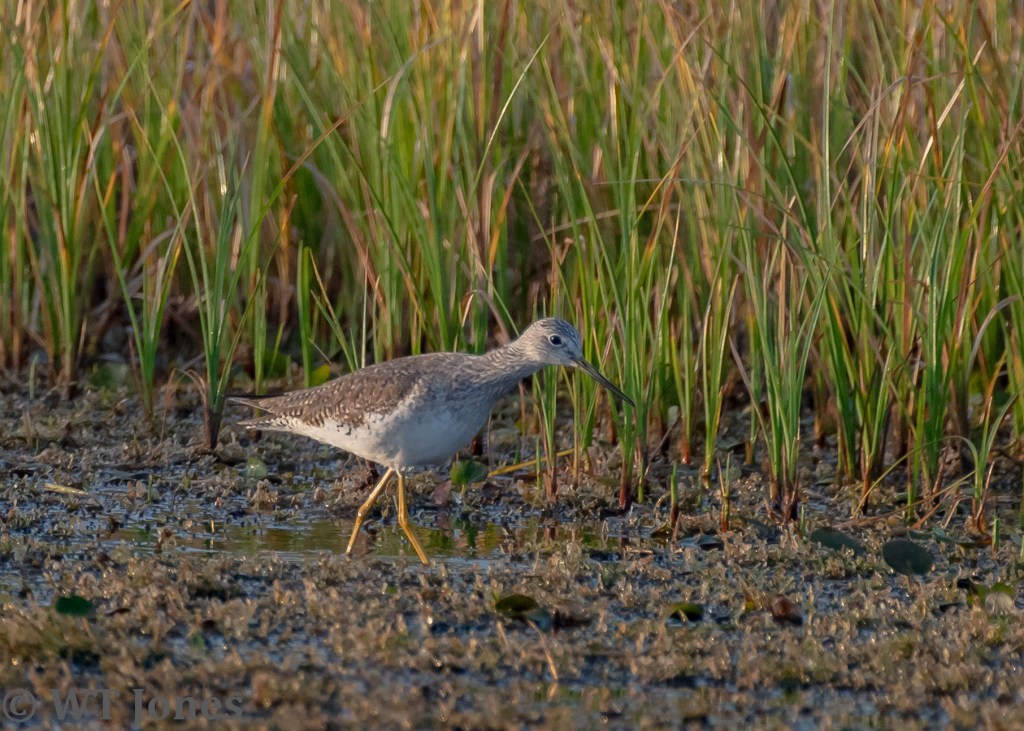
Wading birds such as the Greater Yellowlegs can find plenty of shallow water for hunting among the reeds.
In the 1950’s, several Gray-headed Swamphens escaped from captivity near Miami. They found south Florida to be to their liking. They have spread to many parts of the state and continue to find it to their liking. In this section of Lake Apopka, there are probably 3-4 breeding pairs.


Another very abundant migratory visitor is the Blue-winged Teal.


A Tricolored Heron warmed up in the early morning sun and took care of preening duties before heading out for breakfast.
This vast wetland is not restricted to water birds! A migratory Palm Warbler has found a really good-looking friend to talk to.

If the number of alligators is an indication of the health of the marsh, this place is REALLY healthy! The owner of all this magnificent dental work belongs to the specimen displayed in the header image. We estimated its length to be around 15 feet (4.5+ meters).

Plenty of Pied-billed Grebes scooting around the canals gave us a few photo opportunities. Gini refers to these adorable divers as a “Fuzzy Butt”. My favorite taxonomist, she is.

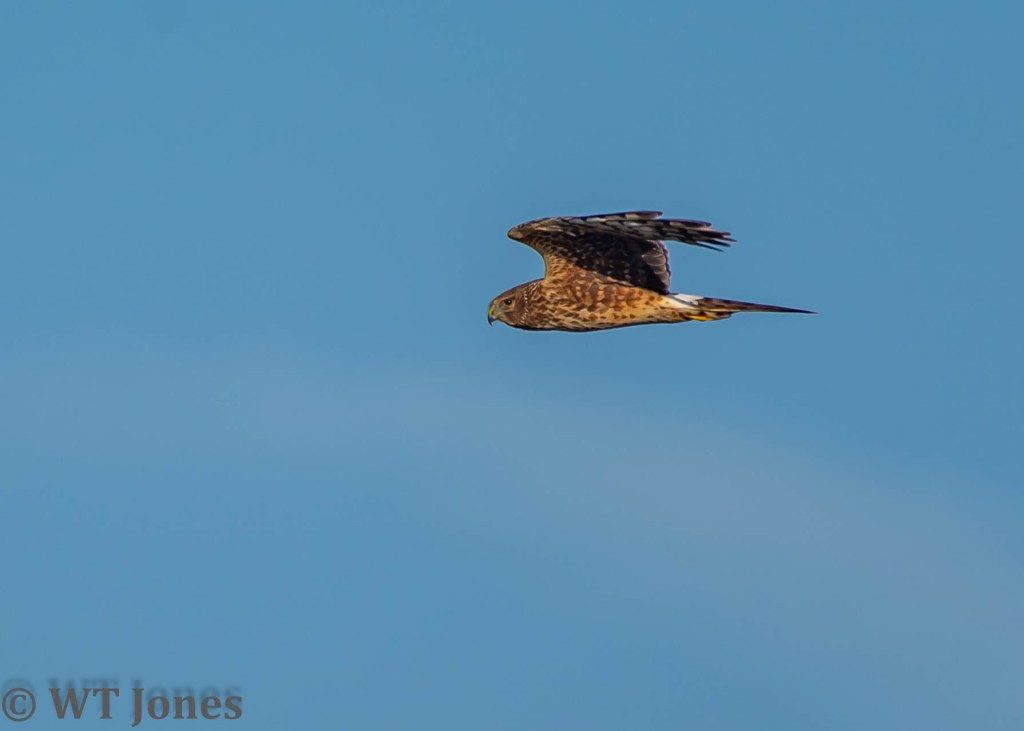
With a lilting low flight and an owl-like face, the migratory Northern Harrier thinks this is perfect habitat.
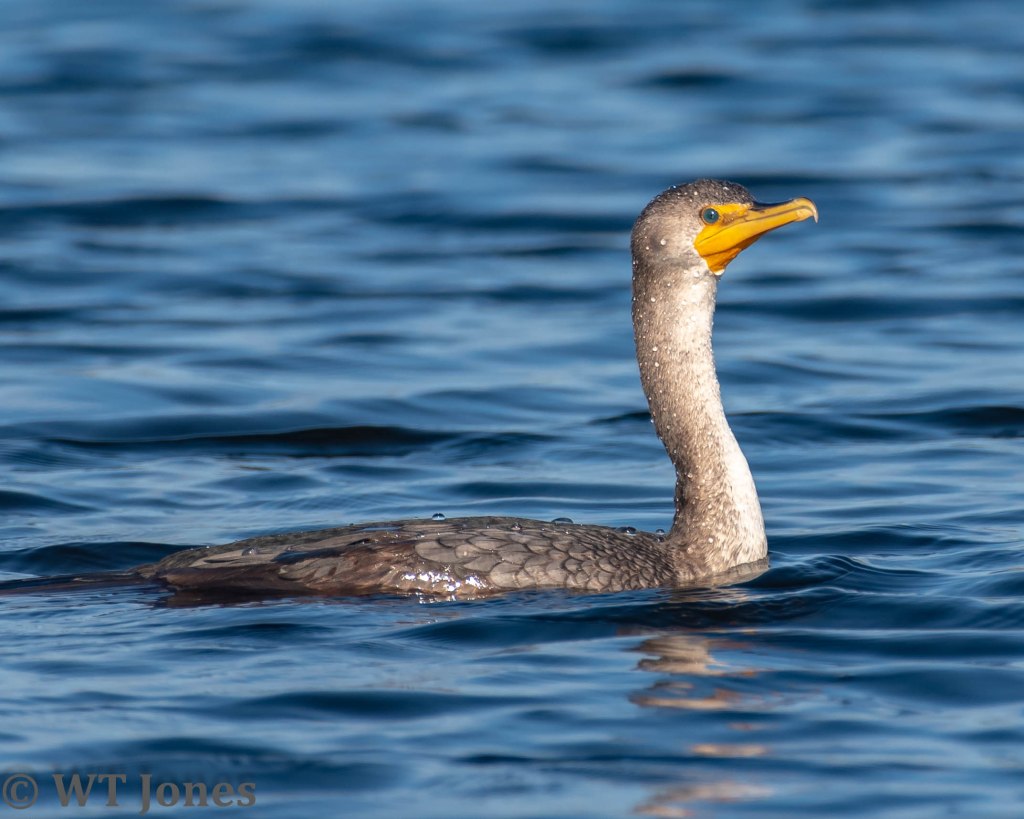
The eyes have it. A Double-crested Cormorant has eyes which look like they should be in a jewelry shop. Thousands of these birds around the lake attest to the current good health of the fish population.
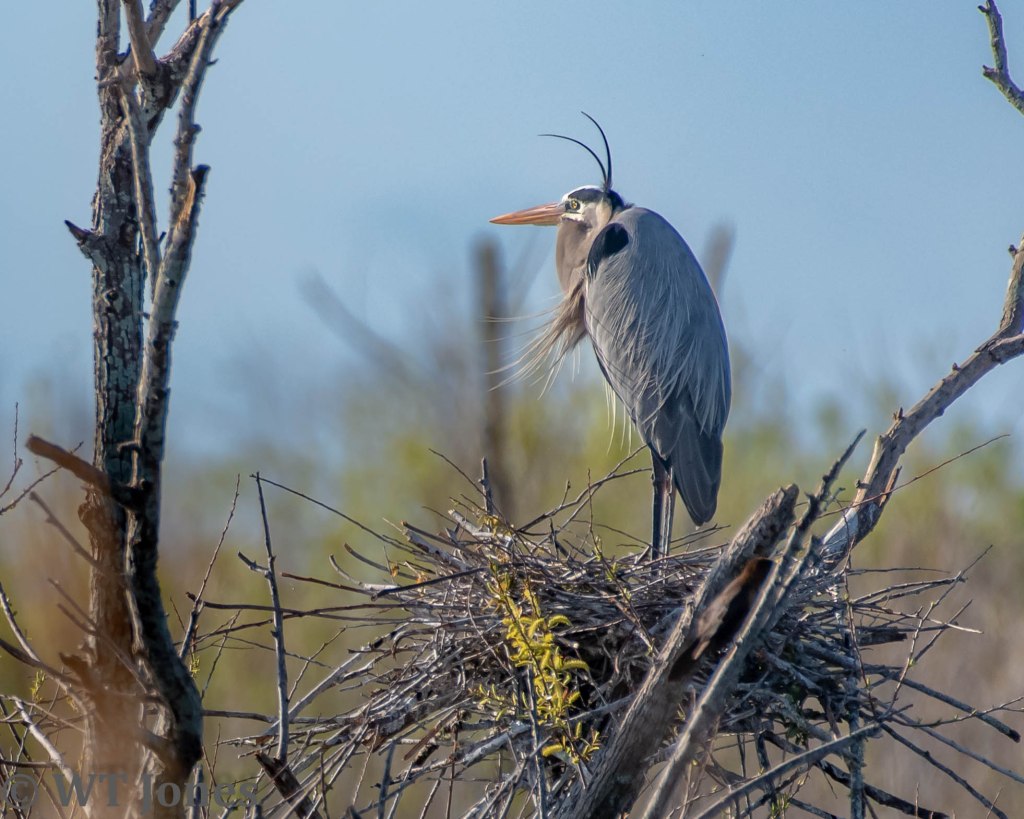
Nesting season! We counted a dozen Great Blue Heron nesting sites during our 11 mile journey. Most were too distant for a photograph, but this one was not far from the road.
With all the visiting as well as resident water birds, a migratory opportunist was not a great surprise but it was a great treat to see! We don’t see many Peregrine Falcons in our area during winter and today we saw TWO! This first one perched long enough for me to toss my boiled egg breakfast onto the car seat as I jumped out and almost threw the camera into the canal in my haste to get a photograph! (The sacrifices I make for all of you!) Yes, Gini was laughing, thank you very much.

The history of Lake Apopka is a sad statement on how short-sighted we humans can be when it comes to protecting the environment. On the other hand, human intervention and very hard work has turned Lake Apopka from a lost cause to a cause for celebration. Stay tuned for a few more reasons to be happy!
Enjoy your search for a natural place and come back for a visit!
Header Image: Cold Front Departing
How can we be “The Sunshine State” if the sun is not shining? Winter. What is it good for? Absolutely nothin’!
So there we were, standing on the dock of the lake, peering into grayness. At the end of the dock were two Brown Pelicans, peering into grayness. Soon, the fog will lift and they can go fishing and we can go birding. Soon.
Any minute now.
Still waiting.
So there we were, standing on the bank of the canal, peering into grayness. The gray plumage of a Great Blue Heron blended nicely with the reeds shrouded by gray mist.
Very gradually, the day became slightly brighter. The birds became active and so did we. We visited three different spots around Lake Parker, including the city park on the western shore. The lake is only ten minutes from the house and we stop by often to check on the residents.
A cold front arrived last night and sure enough, it was cold this morning! Usually, we don’t get thick fog with this type front. Just lucky today, I guess. The icy air and damp mist made me regret not stopping to get a coffee. Gini, you remember her, said: “I’ll be in the car. Let me know if the fog lifts.” In the car. With the heated seats. And banana bread.
Eventually, we found a few birds. The cold front moved off to the east and around mid-morning the sun still had not made an appearance. I want my money back. “Sunshine State”. Right.
Yes, we are totally spoiled! It takes a day like this to remind us how good we have it the other 364 days a year. When the sun shines. In the Sunshine State.
If you squint and use your imagination, there are actual bird images somewhere around here.
Brown Pelicans on the dock. Honest.

A Green Heron doesn’t care about the fog. Wading around the weeds will work just fine for breakfast.

Clinging to a cattail in the mist, a Yellow-rumped Warbler has his fog lights on.

Another hunter who doesn’t need flight clearance for a meal, a Purple Gallinule uses its over-sized feet to step from one lily pad to the next.

Apparently, swallows have some pretty advanced technology on board as they seemed to have no problem at all zipping above the lake snapping up bugs. The photographer, on the other hand, had a huge problem trying to get a picture worth more than one or two (unprintable) words.

Atop a cypress tree, an Anhinga has not yet realized that spreading her wings to dry during a misty morning is an exercise in futility.

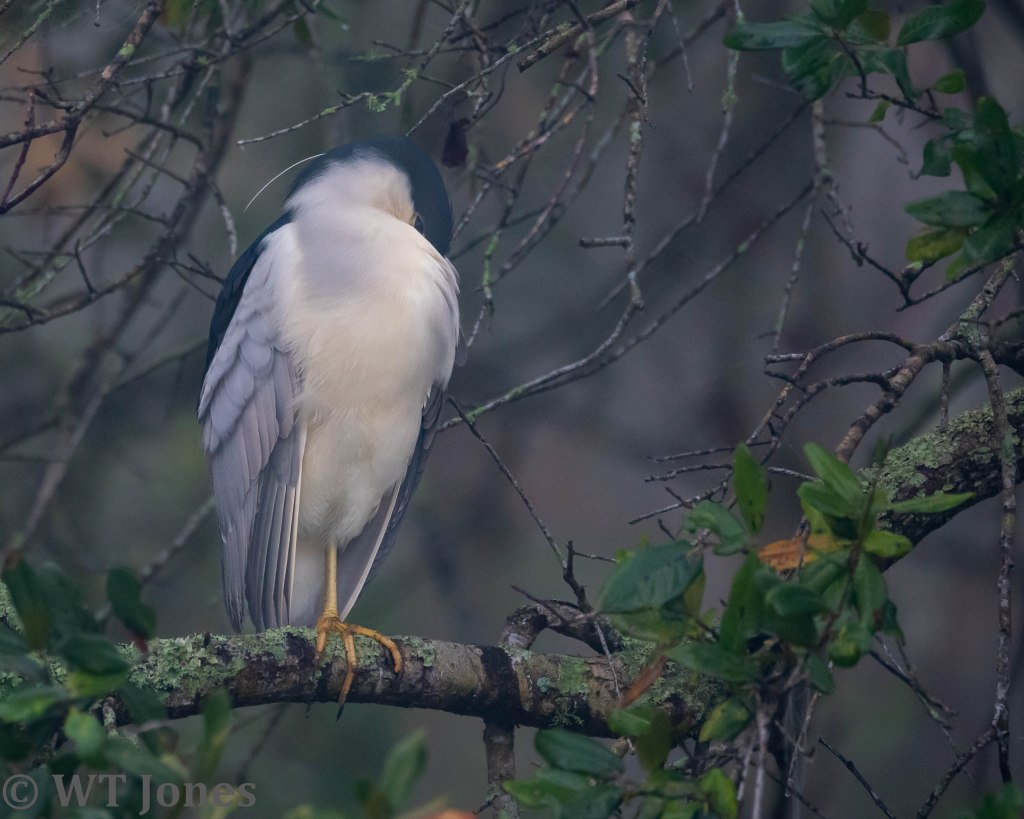
The smart bird of the morning. A Black-crowned Night Heron woke up to cold wet fog and simply buried his head deeper into his warm feathers.
Limpkins can find snails and other tidbits to munch on foggy days just as well as they can on sunny days.

At last! The air began to clear and a tree filled with delayed flights began to flap to life. White Ibis, Glossy Ibis, Anhinga, Cattle Egret, Boat-tailed Grackle – all relieved as they each received permission from the local air traffic controller to take off.

The back end of the cold front shuffled over the lake to the east bringing its damp cold gift to thousands of Disney World visitors. Aww.
Despite no sunshine and few birds, we had a wonderful morning. It wasn’t really all that cold and the fog was not nearly as dense as I have described. No, really, it wasn’t.
Enjoy your search for a natural place and come back for a visit!
 Our Natural Places