Header: Osprey
The weather forecast advised we would encounter heavy fog and once it lifted around mid-morning skies would be mostly cloudy. We decided to go anyway. Perhaps we could get some of those “mood” pictures of thick fog blanketing a lake.
We rolled up to the bank of Picnic Lake, its calm surface reflecting the crystal clear blue sky as the sun rose above the cypress trees on the far shore. The remainder of the morning was cloudless. “Weather presenters” are now calling themselves “climate specialists”. Their prediction rate remains the same. Sigh.
Gini pointed out a pair of Pied-billed Grebes bobbing up from a dive as they searched for breakfast. Sandhill Cranes trumpeted in the distance. The nearly ubiquitous “churrrr” of a Red-bellied Woodpecker seemed to come from just above us. An Anhinga gave us a nasty squawk as we startled it from its perch on a small cypress tree. The morning flights of dozens of White Ibises, Cattle Egrets and Double-crested Cormorants cruised across the clear sky.
One of our patches which we visit often consists of over 7,000 acres (2800+ Hectares) and contains lakes, stands of hardwood trees, upland pine forests, small open grassy areas and swamp. Nearly 30 miles of hiking trails are well maintained and the 29 lakes are managed for maximum recreational angling potential. Naturally, with such diverse habitat, the area is very attractive for wildlife, such as – birds!
We did not spend the whole morning here but during the couple of hours we were there, we were treated to a very nice selection of birds. Springtime is arriving with subtle changes. Trees are beginning to show new green growth, insects are visible in ever-increasing numbers, water levels are low and some creeks are completely dry, the humidity and air temperature are noticeably greater than a couple of weeks ago.
Migratory birds are still here but their numbers are decreasing. Some are forming into larger groups and feeding voraciously as they prepare for a long flight north. Right on schedule, just after Valentine’s Day in mid-February, Swallow-tailed Kites filtered into the area after spending the winter on the pampas of Argentina. Ospreys are fully engaged in home construction.
In late September last year, Hurricane Ian lumbered across Florida from the Gulf of Mexico to the Atlantic Ocean. Destruction was widespread. The southwest coast of Florida was devastated and recovery will take years. In our relatively small birding patch four miles from our house, overall damage was not severe as the more intense part of the big storm passed just to our south. However, every single Osprey nest of which we were aware was wiped out. I don’t mean damaged, there was literally no trace of a nest at all for nearly a dozen pairs of Osprey.
Happily, all of those nests have been rebuilt by these resilient raptors! The speed at which they have put together so many large nests has been remarkable.
Nature. We continue to marvel.
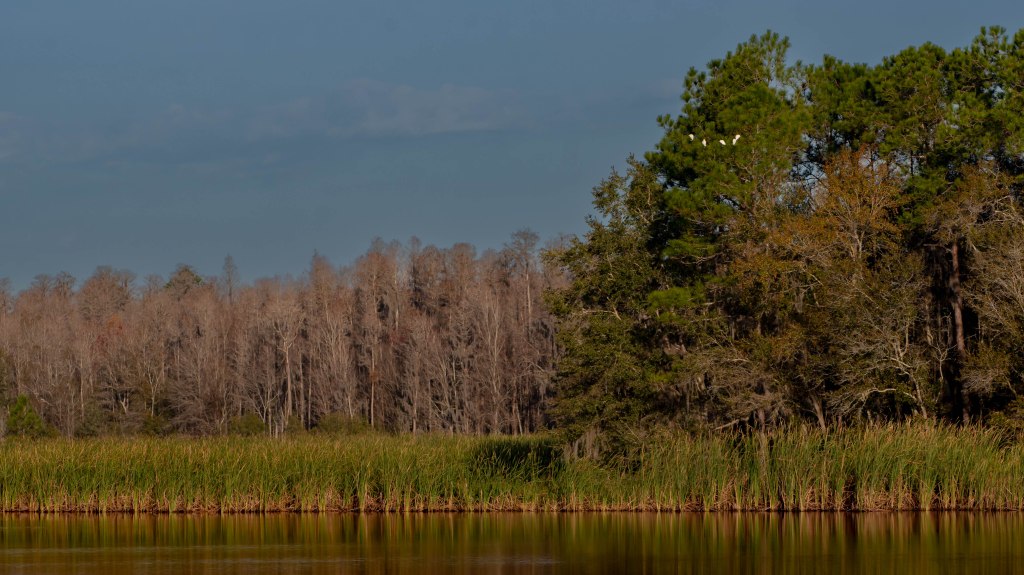
A bit of open water with cypress trees lining the edge of a small swamp. The big trees and all that Spanish Moss harbor huge populations of insects. Birds, residents as well as migrants, appreciate that.

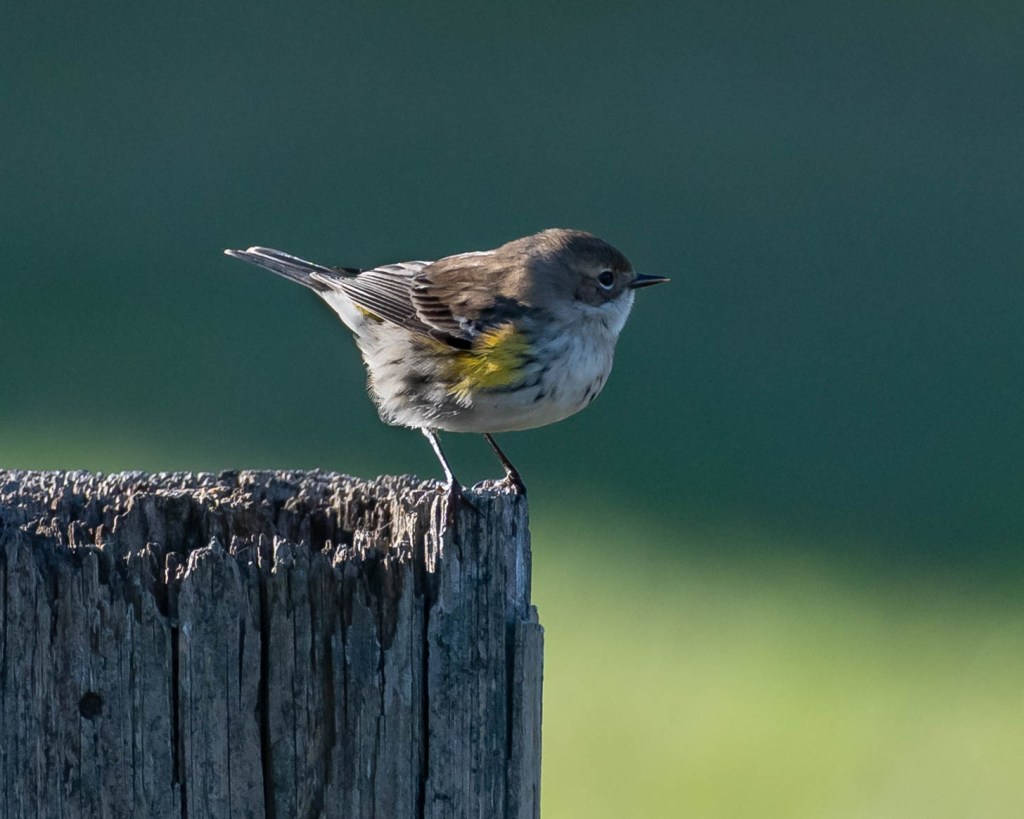
One of our colorful winter tourists, the Yellow-rumped Warbler has a bit of yellow at the shoulder as well as above its tail.
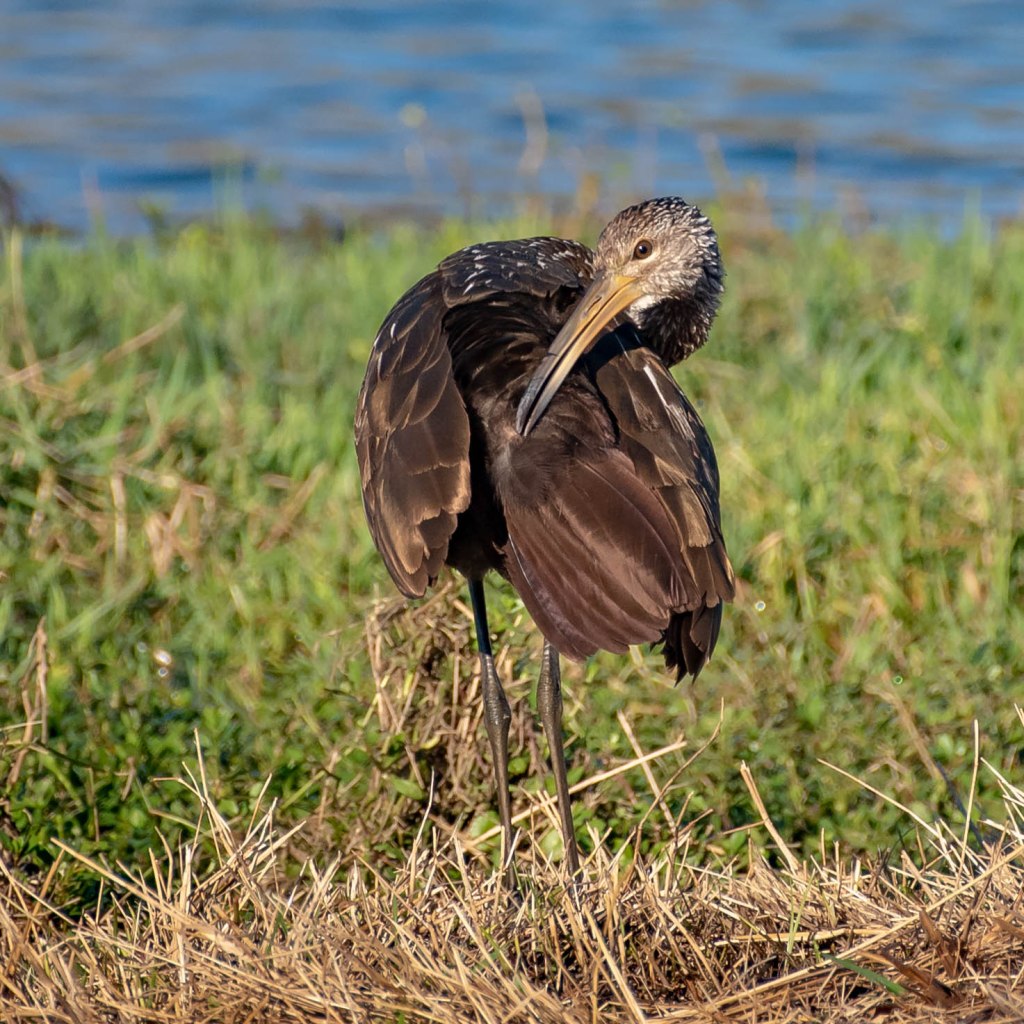
A resident throughout our area wherever there is water and shoreline vegetation, the Limpkin, is a unique bird and the only member in its taxonomic family (Aramidae). Related to rails and cranes, Limpkins are pretty much dietary specialists dining on aquatic snails. In the second image, notice the gap near the end of the bill. The design helps the bill operate like tweezers to pull snails from their shells.


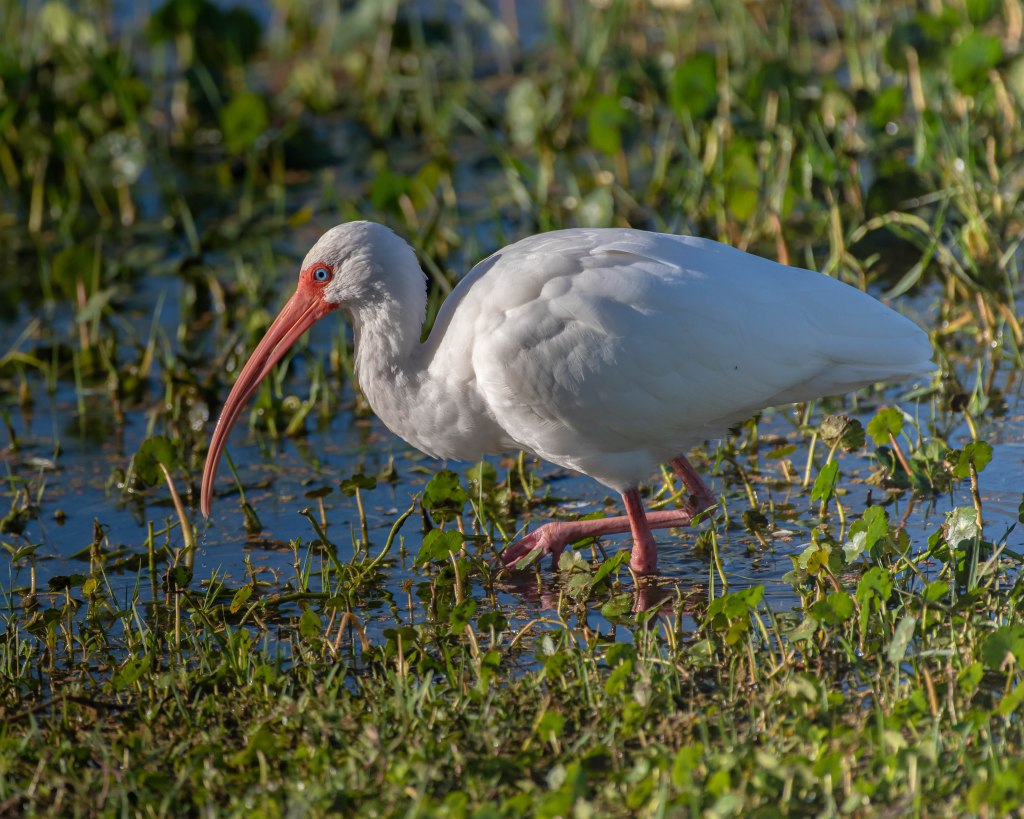
As breeding season progresses, the red legs and bills of the White Ibis will become more intense. Those blue eyes match the sky all year long.
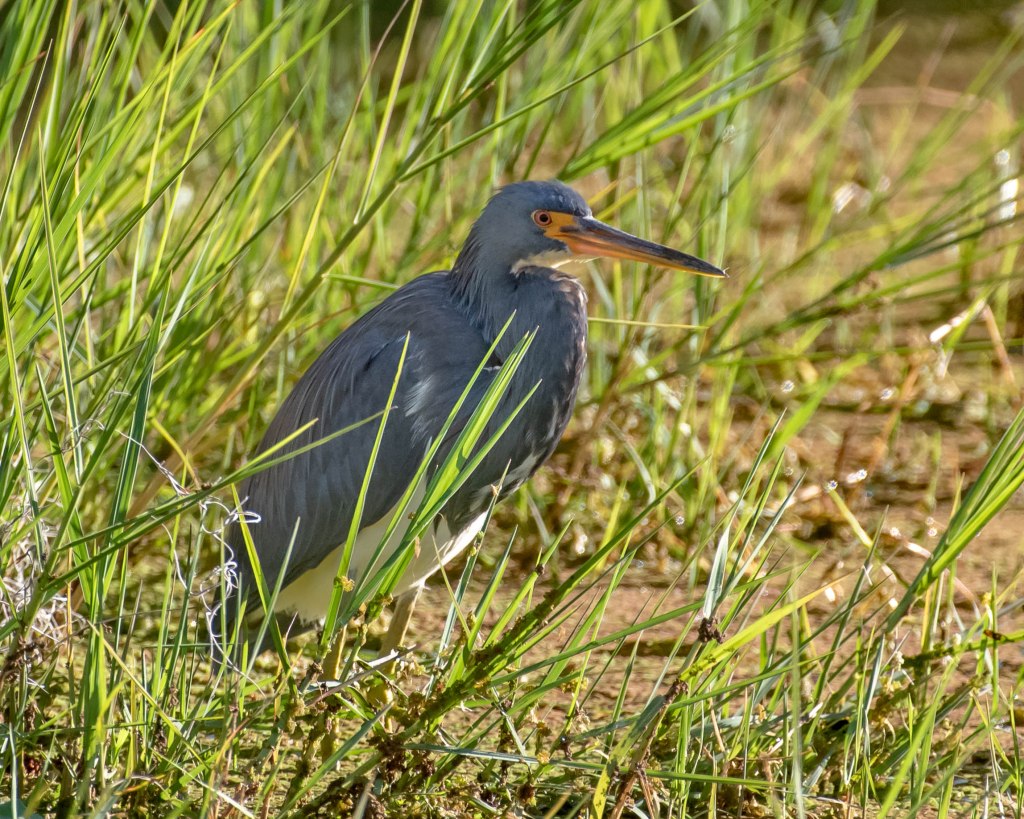
Tricolored Herons are sort of the behavioral opposites of their larger cousins, Great Blue Herons. The latter appears almost stately as it slowly moves through shallow water stalking its prey. The rambunctious Tricolored Heron is more a rapid-fire hunter and seems to almost never hold still as it dances and lunges in the shallow water.
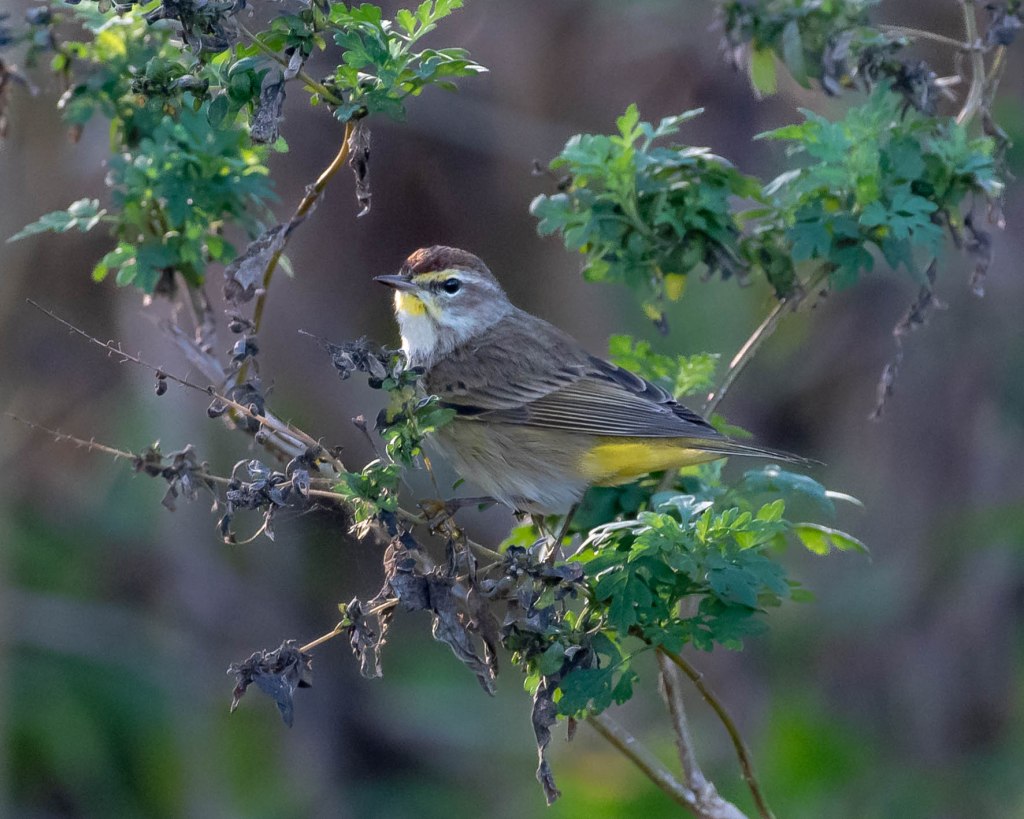
One of our most abundant winter migrant song birds, Palm Warblers, are divided into two sub-species. The “western” version has a mostly pale belly while that of the “eastern” population has a fairly bright yellow belly. Both sub-species can appear pale overall during non-breeding season. They breed mostly in Canada and the dividing line for identification appears to be east or west of Hudson Bay. The best feature for identifying these little bundles is their nearly constantly pumping tails. Pictured is a “western” Palm Warbler in breeding plumage.
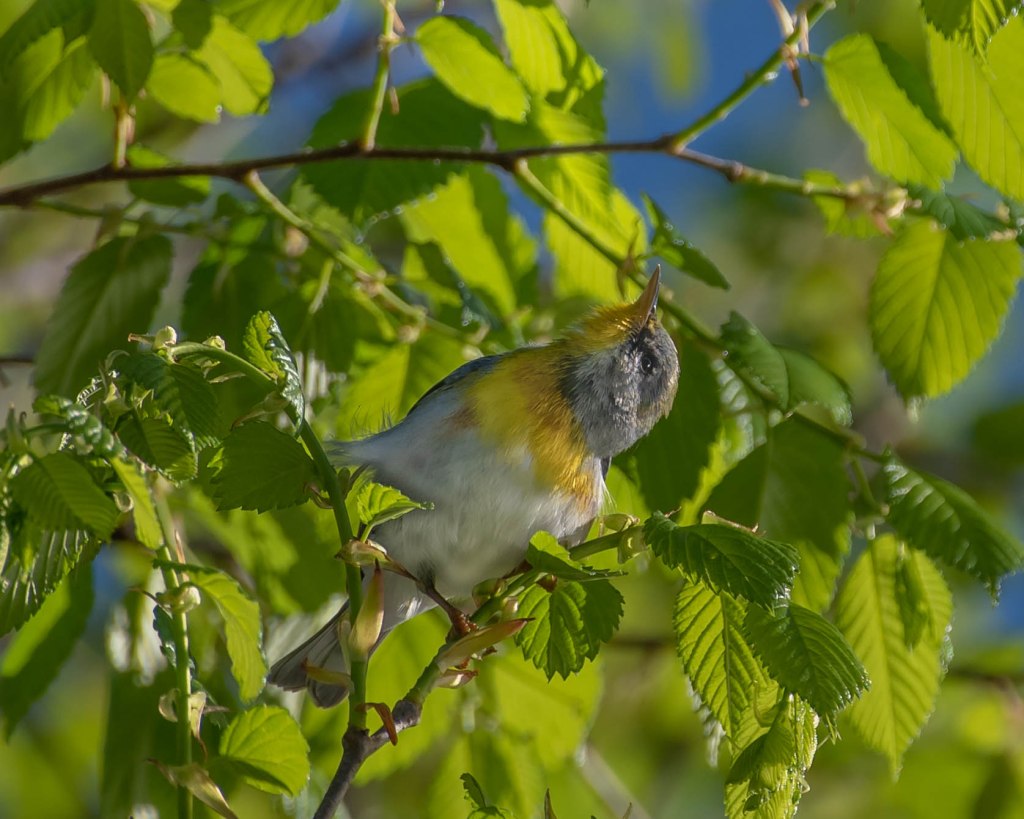
Colorful Northern Parula warblers typically migrate during the winter, although it is not uncommon to find several if our temperatures remain mild. Beginning in late February, they begin returning to our tree tops and their buzzy trilling calls can be heard from almost every part of the area.
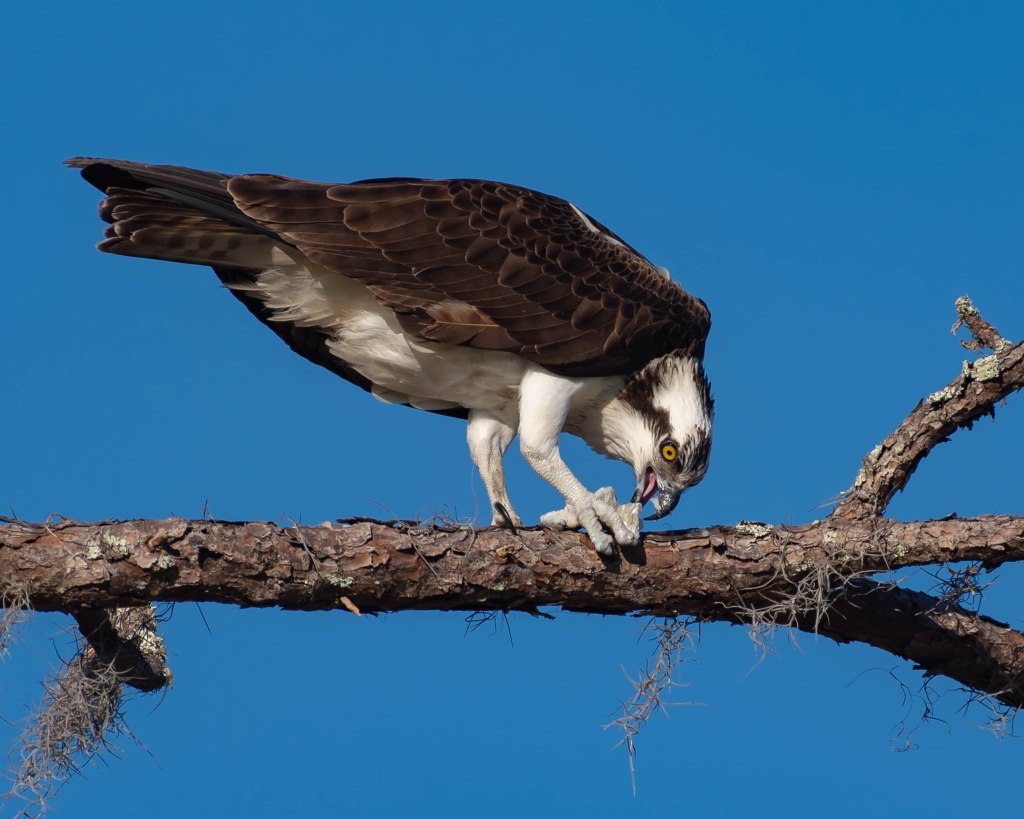
“Even the Fish Hawk is catching more than us!” No worries. Although my Dad had the same complaint each time we spotted an Osprey with a fish on our outings, is wasn’t long before we had our own luck. These magnificent raptors are truly a joy to observe as they fish, build a home and raise a family. Hopefully, we will never take them for granted.

Spring. A time of transition as Nature renews. We will soon say farewell to our winter feathered friends until we see them again in the fall. This particular Spring, we rejoice in the resurgence of the Osprey population as they rebuild from total destruction. Life is good.
Enjoy your search for a natural place and come back for a visit!
Additional Information
Tenoroc Public Use Area (https://myfwc.com/recreation/lead/tenoroc/)
Header Image: Pine Flatwoods
We use the term “swamp” a lot on our blog. Many of our outings take us into or through areas which are defined as swamps. Other wetlands exist in our area and we are sometimes guilty of lumping them all into the same “swamp” basket.
Herewith, some short definitions of wetlands found within the United States, courtesy of the U. S. Environmental Protection Agency. (Pay attention. There will be a test.)
– Swamp. A swamp is any wetland dominated by woody plants.
– Marsh. Marshes are defined as wetlands frequently or continually inundated with water, characterized by emergent soft-stemmed vegetation adapted to saturated soil conditions.
– Bog. Bogs are one of North America’s most distinctive kinds of wetlands. They are characterized by spongy peat deposits, acidic waters and a floor covered by a thick carpet of sphagnum moss.
– Pocosin. The word pocosin comes from the Algonquin Native American word for “swamp on a hill.” These evergreen shrub and tree dominated landscapes are found on the Atlantic Coastal Plain from Virginia to northern Florida; though, most are found in North Carolina. Usually, there is no standing water present in pocosins, but a shallow water table leaves the soil saturated for much of the year.
– Fen. Fens are peat-forming wetlands that receive nutrients from sources other than precipitation: usually from upslope sources through drainage from surrounding mineral soils and from groundwater movement. Fens differ from bogs because they are less acidic and have higher nutrient levels.
https://www.epa.gov/wetlands/classification-and-types-wetlands#undefined: Swamp BouquetLess than ten miles from our house is the boundary of central Florida’s Green Swamp. It consists of pine flatwoods, cypress domes, areas of fresh water (ponds, streams, rivers) and hardwood forests. You know, “woody plants”. (We like to call ’em “trees”.) You may have noticed we frequent “our local swamp” fairly often. As we drive along the old logging roads and see huge oak trees draped in Spanish Moss or seemingly endless pine forest, it doesn’t “feel” like we’re in a swamp. We simply enjoy what it has to offer. Diversity in birds, blooms and bugs. Solitude.
Recently, Gini mentioned we should go to the swamp to see if any signs of Spring might be on display.
“As you wish.”
Along some stretches of the roads were Red Maple trees. Seeds are contained within a winged “fruit” called a samara which generally occurs in pairs.


“Woody plants”, mostly cypress trees and a mix of pine, bay and hackberry. Ferns are abundant throughout the swamp.

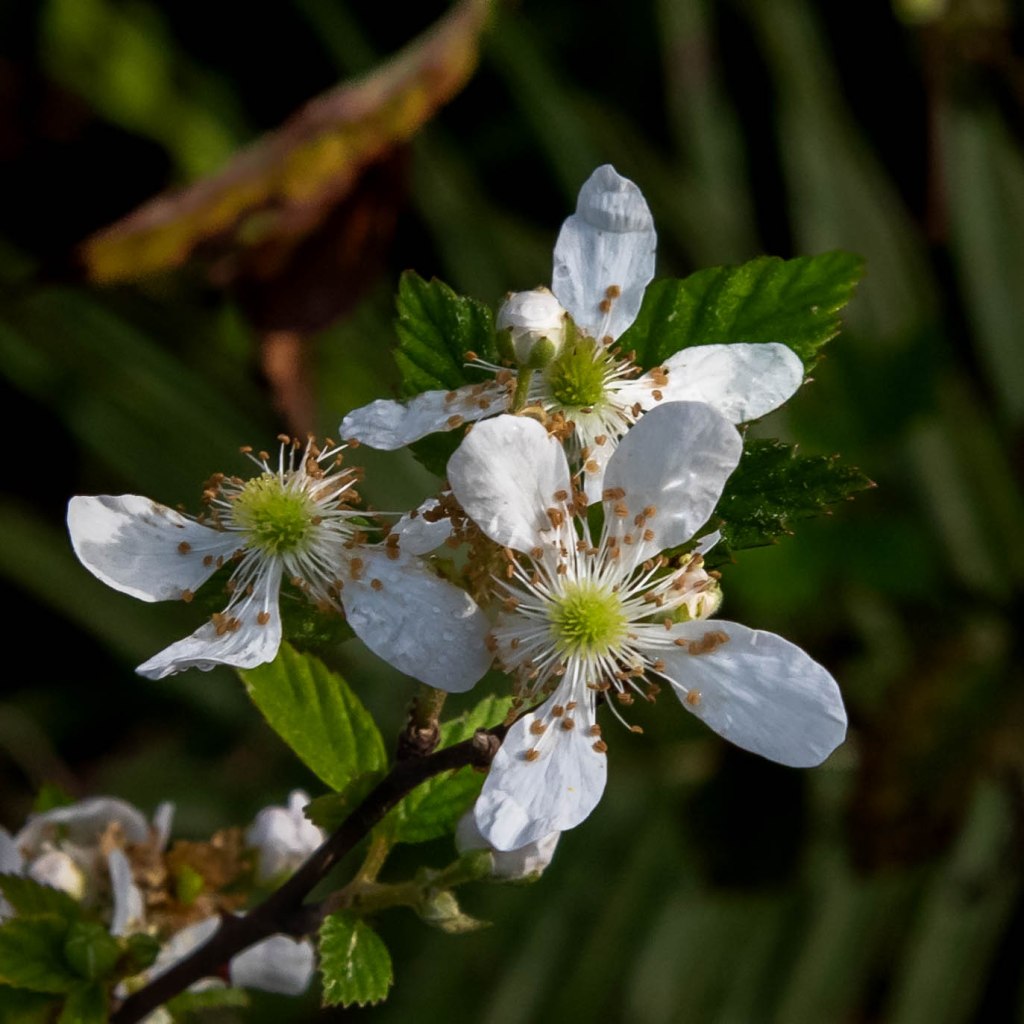
In a few weeks, the Sawtooth Blackberry (Rubus pensilvanicus) plants will yield small sweet fruits which will quickly be harvested by the swamp’s residents. We’ll try to be content with enjoying the lovely flowers.
At this time of year, most areas adjacent to water in the swamp have a healthy growth of Burmarigold (Bidens laevis), also called Smooth Beggartick.

When the Coastal Plain Willow (Salix caroliniana) blooms it attracts myriad insects not only for pollinating, but as a host plant for larvae.

With just a hint of purple now, it won’t be long before Pickerelweed (Pontederia cordata) will be blooming profusely in most shallow water areas.

Sandweed (Hypericum fasciculatum), also called Peelbark St. John’s-wort, has wonderful yellow blooms, narrow leaves and reddish bark on its woody stems.

Cypress domes are unique features of central and south Florida swamps and prairies. They form in response to depressions in the limestone bedrock. As water collects in the depressions, cypress trees take root and flourish since the depressions remain wet. The outer edges of the depressions have shallower water and become dry during fall and winter causing the trees to be shorter than those in the center, thus the dome shape.

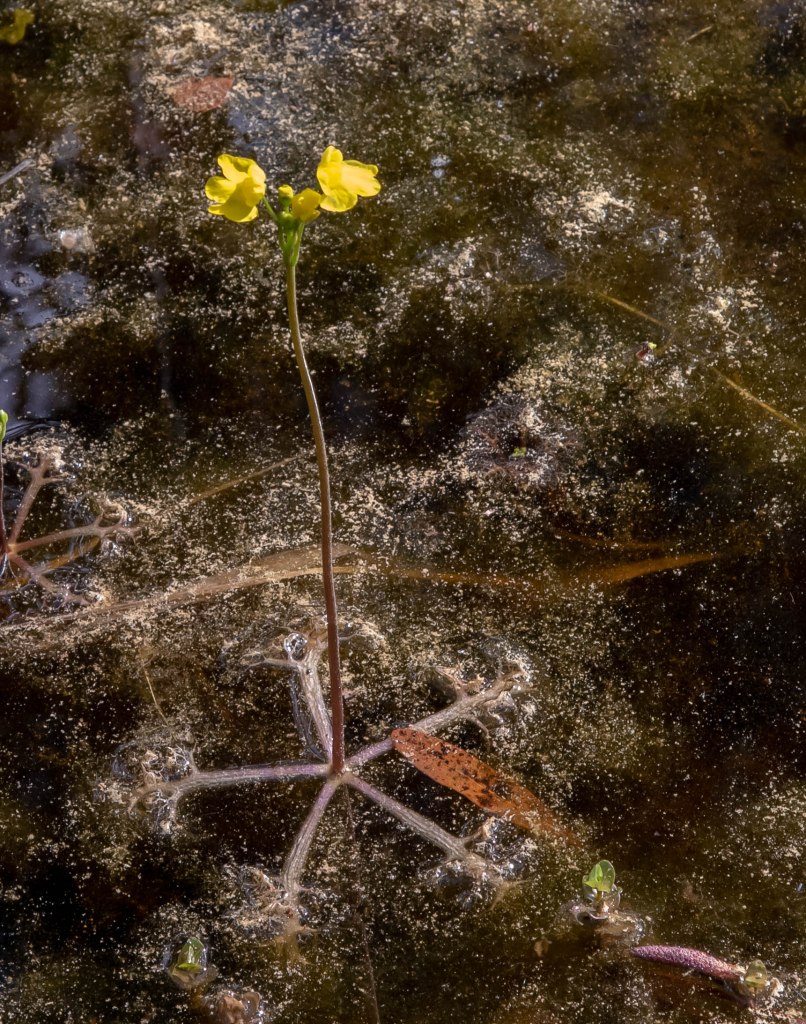
A fascinating plant in the swamp is the Floating Bladderwort (Utricularia inflata). This carnivorous plant has no true leaves or roots, but the stem produces stolons, which are stem-like structures running horizontally on or just below the water’s surface. These stolons are covered in filaments with small bladder traps at their ends which suck in anything small enough which floats by. During flowering season, the plant puts out swollen air-filled stolons like spokes on a wheel which allows the plant and blooms to float. (My impression was that of a B-grade late-night science fiction movie alien.)



We always love finding Oakleaf Fleabane (Erigeron quercifoliu) as this small beauty attracts a terrific diversity of pollinators.

When it’s time for Yellow or Carolina Jessamine (Gelsemium sempervirens) to bloom, it knows no bounds! The woody vine climbs up, around and over just about anything. Not only great to look at, its aroma permeates the air and is a major attractant for pollinating insects. One caution in case you get the urge to bite into the lemon-colored flower, all parts of this plant are toxic.


When we first found one of these beautiful plants a few years ago, we thought it might be an orchid. The Showy Milkwort (Asemeia violacea) is stunning in appearance and it doesn’t seem to be very abundant. Despite the common name, one needs to look carefully to find one of these “Showy” blooms as the plants rarely reach 12 inches tall.

Whether you visit a swamp, marsh, bog, pocosin or fen, we hope you discover your very own bouquet. Once again, Gini’s instinct for impeccable timing paid off in a plethora of picturesque plants!
Enjoy your search for a natural place and come back for a visit!
Header Image: Red-bellied Woodpecker
Ingredients: Baby Lettuces (Green Leaf Lettuce, Green Oak Lettuce, Tango Lettuce, Lollo Rossa Lettuce, Red Oak Lettuce, Red Leaf Lettuce, Butter Lettuce), Baby Greens (Tatsoi, Mizuna, Red Chard, Green Chard, Frisee), Baby Spinach, Radicchio, Ingredients May Vary By Season.
The above is from a label on a package from our grocer labeled: Spring Mix. Most of us purchase a similar package in July or December and don’t really care if it is Spring outside or not. We’re just happy to have something green and fresh-looking we can drown in some oil as we delude ourselves that we are eating “healthy”. Granted, it really is healthier than a hamburger. Taste – that’s an argument you will have to have with your inner self.
Wait a minute! Why are we discussing salad?
Gini and I made a foray to one of our favorite places recently and our morning was incredibly refreshing. You know, like a green salad. (Enough, already!) The day began as many do at this time of year in our low, wet places. Foggy. Also typical, the gray stuff didn’t last very long at all. Sunshine, birds and even some bright blooms made the day special. Before we knew it, it was lunchtime. Wouldn’t a garden salad be a lovely way to dine today? (Stop that!)
Colt Creek State Park never disappoints, because Nature never disappoints. Stepping beyond a line of cypress trees is like slipping behind a curtain where a completely different world is revealed. Here, one can find shallow water, tall trees standing and fallen, a carpet of wet leaves, fungi in abundance, quiet warblers searching for a meal, a noisy hawk alerting all to our presence. Today there was a pair of River Otters busily probing the dimly lit dampness until they spotted us. They silently and completely vanished.
Back in the open again, we disturbed a North American Racer sunning on the road and were immediately reminded why it’s called a “racer“. Wrens, sparrows and an unexpected Northern Waterthrush confirmed that Spring migration was still in progress. A Great Egret in breeding plumage, bright blooms and a few mosquitoes hinted that the calendar season known as Spring was upon us.
No additives needed to enjoy this Spring Mix.
Daylight delayed. Within the swamp, mist had been captured by the cypress trees and provided an ethereal beginning to the day.

We emerged from the veil of the cypress dome to find clear skies above Lake Mac with a few Cattle Egret lounging around last night’s roost.
It’s a bit early for a Northern Waterthrush to show up in our area as it heads northward to its breeding grounds. It is possible it spent the winter here. What’s not to like – plenty of warmth, water and bugs!

More taxing taxonomy. A North American Racer (Coluber constrictor) is also called Racer, Black Racer, Eastern Black Racer, Southern Black Racer and Everglades Black Racer. The latter two monikers are assigned to possible sub-species of C. constrictor. Whatever you choose to call it, this is a very handsome reptile. We have one in the back yard which helps in population control of such things as roaches and mice.

It is not in Carolina. It is not in the desert. It is not related to chicory. So, obviously, it is named “Carolina Desert-Chicory” (Pyrrhopappus carolinianus). Any questions? I happen to think it is an incredibly attractive flower. It has also been called “Texas Dandelion” and “False Dandelion”.

Avian migration brings us several bundles of feathered joy. One of them is the Sedge Wren. As you meander through the weeds, these little brown jobs jump up, fly a couple of feet and melt into the brown undergrowth. Occasionally, their inherent wren confrontational attitudes cause them to remain exposed for about three seconds. Plenty of time for a portrait.

Marsh Wrens are very similar to Sedge Wrens. They typically can be found among reeds growing in water whereas the Sedge Wrens prefer things a bit drier. Physically, the Marsh Wren does not have the strong wing barring and head stripes of its Sedge cousin.

An early-blooming favorite of ours is Walter’s Viburnum or Small-leaf Arrowwood (Viburnum obovatum). A member of the Honeysuckle family, this shrub can grow up to 10-20 feet tall.

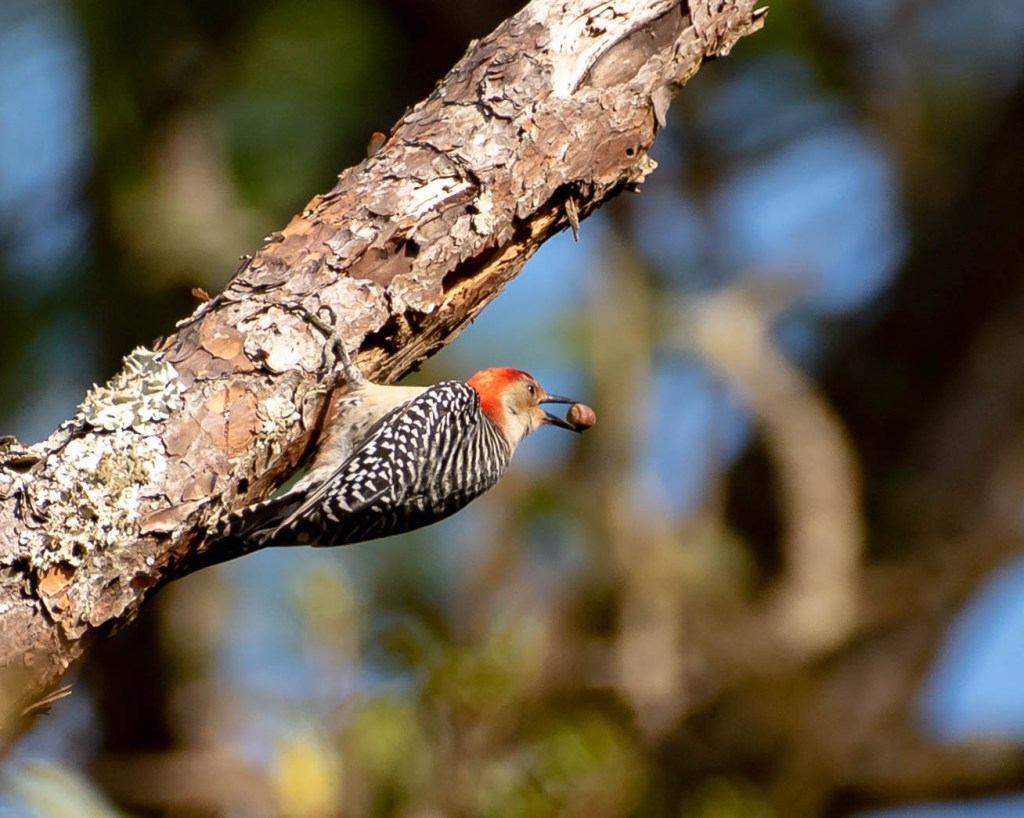
Since we are fairly certain a pine tree does not (yet) produce acorns, we assume this Red-bellied Woodpecker stashed his treasure in a crevice during the winter so he could enjoy it on this bright warm day.
A Great Egret’s size makes for an impressive flight display against the backdrop of cypress trees and cattails. The reddish hues of the trees are aging leaves.

More Spring yellow! The Showy Rattlebox (Crotalaria spectabilis) may be an invasive plant, but the flowers certainly are – well – Showy!

(Age alert.) “Look! Up in the sky! It’s a bird. It’s a plane. It’s Superman!” You were right the first time, it’s a bird. Some songbirds might think it’s “Superbird“! The Cooper’s Hawk is extremely fast and is very adept at negotiating dense forests and underbrush to capture its prey.

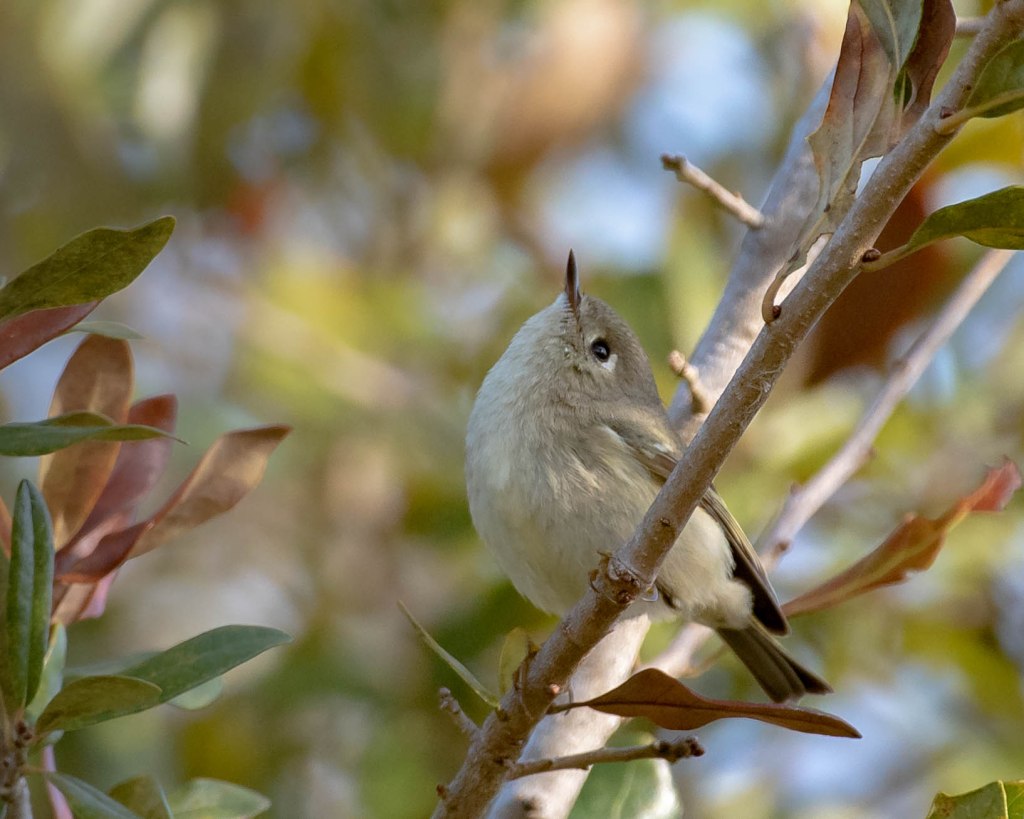
Speaking of small songbirds, a Ruby-crowned Kinglet scours the undersides of limbs and leaves for a bug brunch.
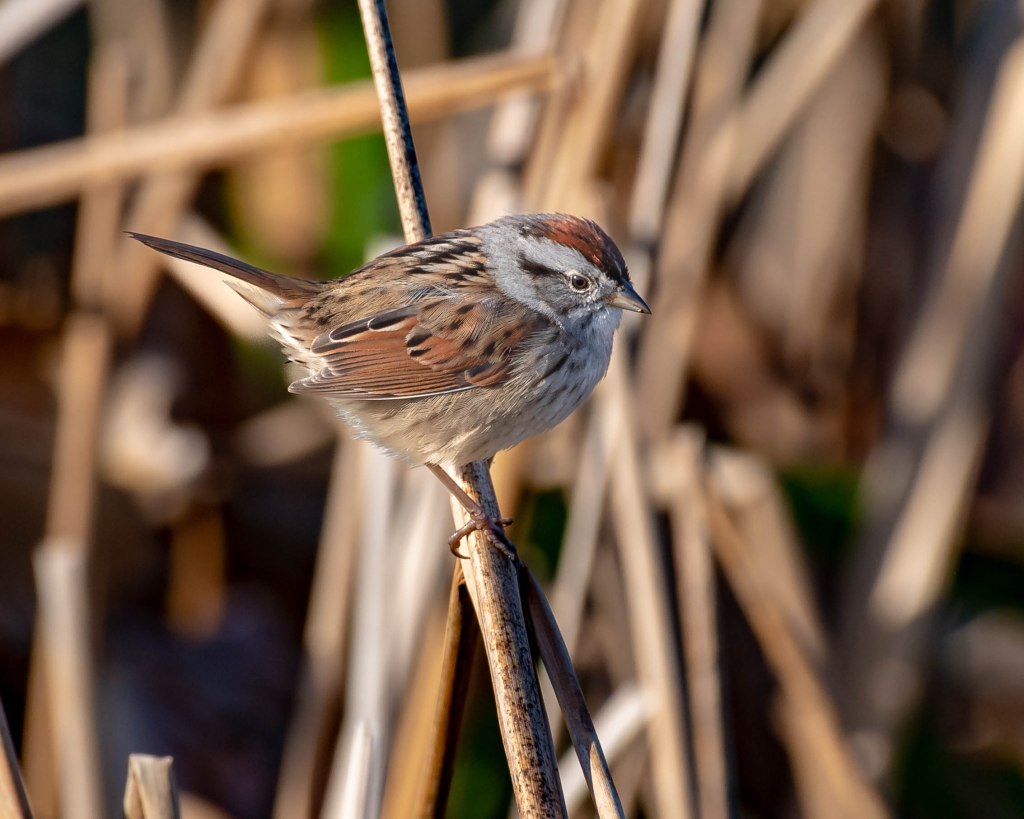
Yet another winter visitor, the Swamp Sparrow, spends migration season with us in fairly large numbers. We found eight of them today.
One more yellow bloom found this morning is the Mexican Pricklypoppy (Argemone mexicana). Such a wonderfully bright flower with a delicate poppy-like appearance but protected by a very thistle-like array of thorny leaves.

As we headed toward the road home, an male American Kestrel posed near the park exit. These handsome falcons nest within the park and we look forward to seeing a new family this summer.

Lunch time! Let’s see, what shall we have today? I know! A big, green, luscious salad! Perhaps a – Spring Mix? Try to get outdoors once your local weather permits and seek your own mix of Nature’s changing seasons.
Enjoy your search for a natural place and come back for a visit!
Header Image: Great Egret
To say we had a nice afternoon would be a world-class understatement. It is difficult to believe we were there less than three hours. Not only did the birds cooperate, human visitors were extremely kind as well. The efforts to improve Orlando Wetlands Park have been quite successful. A new visitor and education center is under construction and will add even more to the total experience one may enjoy at an already satisfying wildlife destination.
Birds continued to carry nesting material to waiting mates, alligators splashed around us, flocks of ducks careened in blue skies, non-nesting birds flew in and out of the dense foliage, cries of Limpkins echoed across the wetlands, the sun descended – we reluctantly trudged back to civilization.
We shall return.
The Great Blue Heron can look ungainly on land or perched in a tree, but in flight – it is magnificent!

Adding even more color to an already colorful day, a Purple Gallinule is a blend of an incredible amount of subtle and not-so-subtle hues. Those large feet help it maneuver across lily pads with ease.

Tricolored Herons develop a patch of blue at the base of the bill and a white plume atop their head during breeding season.


A Snowy Egret cruised by dragging its golden slippers behind.

They’re loud, they’re bullies, they hang about in gangs, they steal food, they aren’t pink or yellow or red. The Boat-tailed Grackle, however, is quite a handsome bird when we take time to look at it in the right light.

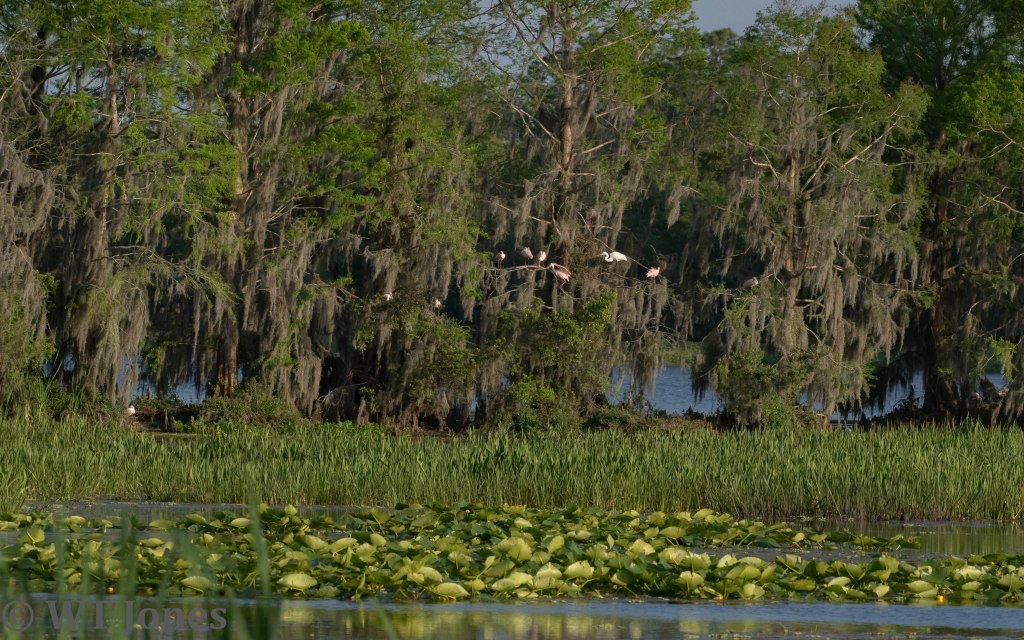
This image is pretty much the landscape in which Gini and I have lived as native Floridians. Clean lakes, lush lily pads, reeds and cypress trees draped with Spanish Moss. Oh, and a few birds, too.
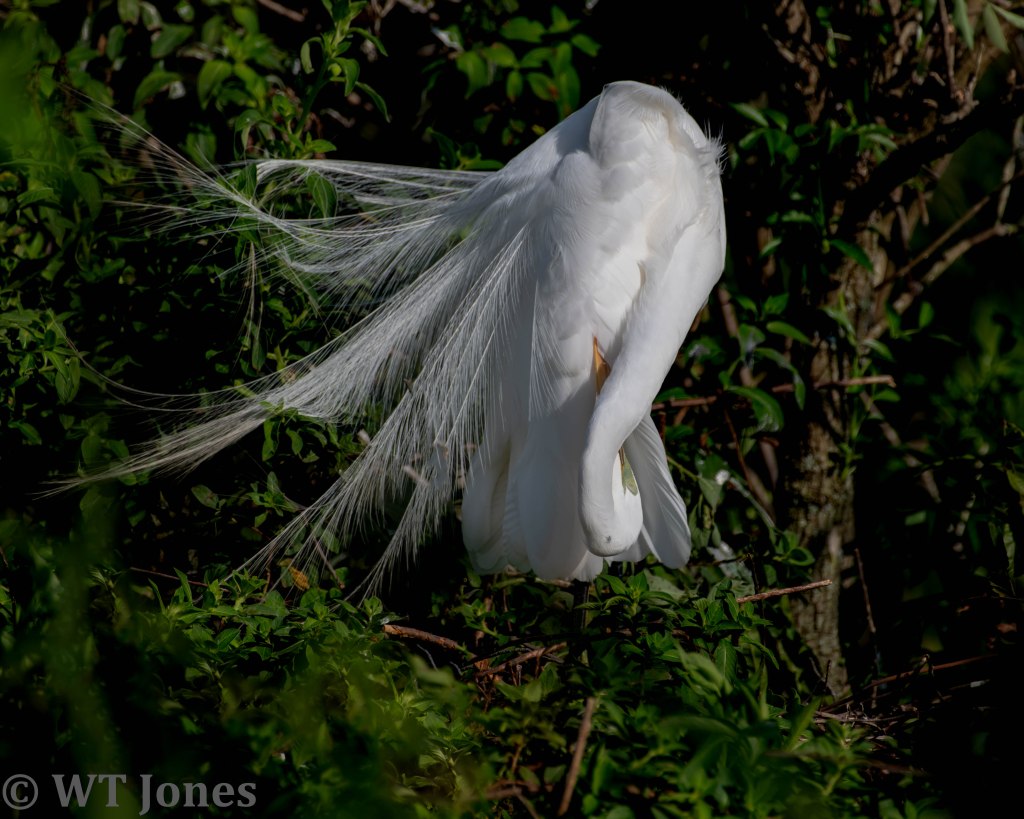
Great Egret series.
During breeding season, a green patch develops on the egret’s face and long delicate plumes grow from its back. It was these plumes which hunters gathered primarily for ladies’ hats in the 19th century and the Great Egret nearly became extinct as a result. Conservation groups such as the Audubon Society and federal laws were created to protect the species. Today it thrives in habitat such as these wetlands.




Somewhat similar to the Grackles, the European Starling may not have a sterling reputation, but they sure can be very attractive.

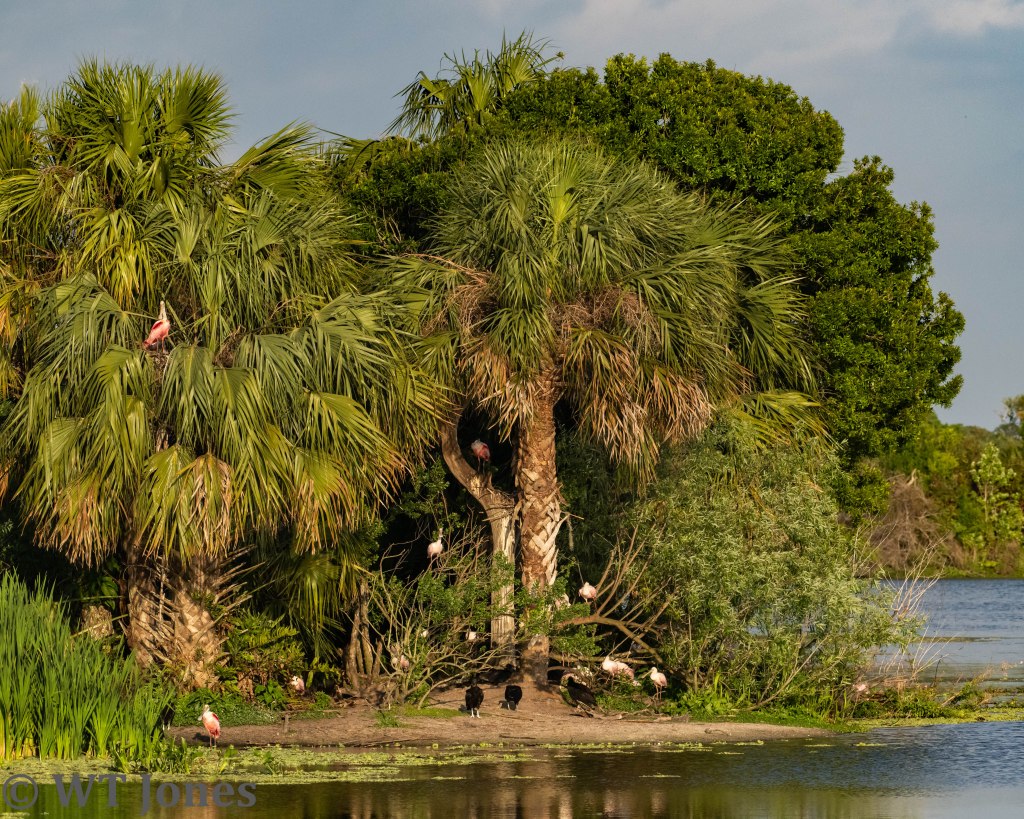
Spoonbill Island. Looks like they hired a contingent of Black Vultures for security. With binoculars, we counted over 20 Roseate Spoonbills within this image. Some are hidden in the shadows.
All black except for silvery-white streaks on its wings and back, a male Anhinga has a pretty good grip on a palm tree stump with those webbed feet.

Happiness is sharing a good snag with friends. And singing about it. Roseate Spoonbills and a Wood Stork late in the day.

Similar to its Tricolored Heron cousin, the Little Blue Heron develops a patch of blue at the base of its bill during breeding season. As the season progresses, its eyes will turn almost all black.

The plumage of the male and female Blue-winged Teal is different but both are equally attractive. In the second image, a flock shows their namesake wing patch which matches the blue sky.


As the sun dipped below the horizon, hundreds of ducks across the wetlands moved from feeding areas to nightly roosting spots. It was an incredible scene.

Orlando Wetlands Park. Truly a unique venue – even for Florida.

It is easy to become overwhelmed by everything this location has to offer for birders, photographers and anyone who enjoys nature. We have chosen to follow the ancient advice on how to eat an elephant: one bite at a time. So we will return for a series of trips and report on other areas of the park as the seasons progress.
Enjoy your search for a natural place and come back for a visit!
Header Image: Roseate Spoonbill
We are so very fortunate in many aspects of our life here in central Florida. Beautiful beaches are within an hour of our house. Nearby lakes teem with fish begging to challenge the sportsman. Forests, swamps and fields offer incredible opportunities for birding. Of course, the crowning glory of interplanetary entertainment is a mere 30 minute drive from our front door. (Well, 90 minutes in “normal” traffic.) For a couple hundred dollars, Walt Disney World says we can visit and they will make our “fantasy a reality”.
Or –
Less than 30 miles east of the Magnificent Magic Kingdom of the Mouse is a park which is filled with many objects of our flights of fancy. No charge for admission.
Orlando Wetlands Park was formed from a project to reclaim waste water from the city of Orlando. Consisting of 1650 acres, the wetlands area became a magnet for all manner of birds and wildlife (e.g., deer, raccoons, otter, bobcat). Turns out a few humans who happen to like all manner of birds and wildlife are attracted to the area, too.
It had been a long time since our last visit and we received notice from a couple of extraordinary photographers which motivated us to make the trip last week. Many thanks to Jess (https://www.blog.catandturtle.net/blog/) and Ed (https://edrosack.com/) !! Visit them if you enjoy quality photography.
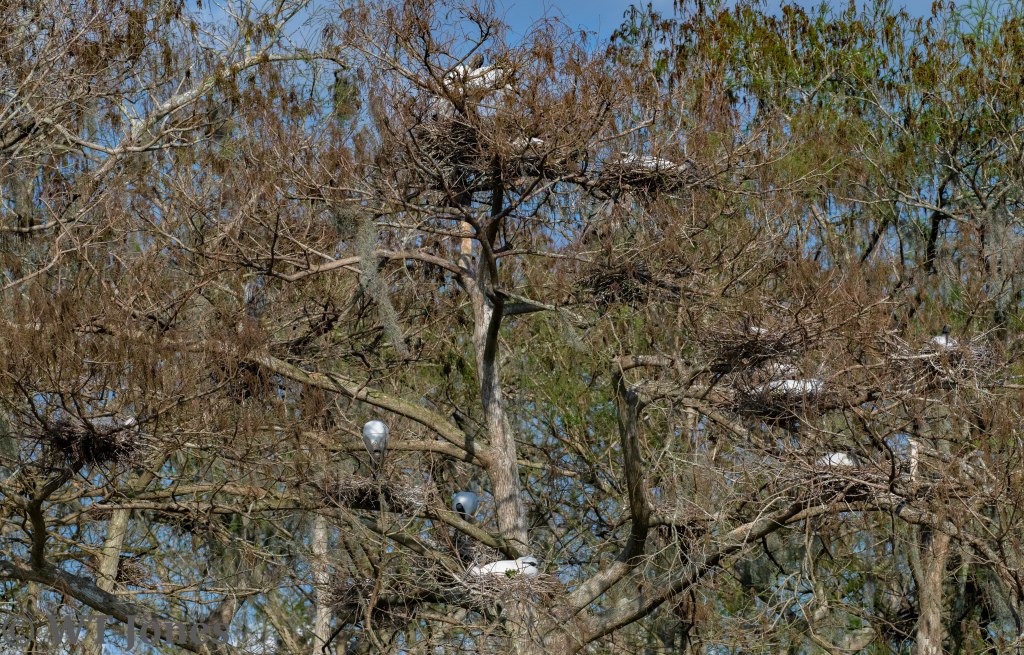
Information they provided got our attention. In December, the park completed construction of a 2200 foot boardwalk into the wetlands. Part of the boardwalk passes within close proximity to a wading bird rookery area. It is breeding season for many of those birds.
“Bad news.” Gini is not accustomed to hearing this and it’s usually followed by “thunderstorms predicted” or “nuclear holocaust scheduled for today”. I had to inform her we were not going to set the clock for 0-dark-thirty and could have a leisurely lunch before heading to the park. Naturally, this did not compute without further explanation. Thanks to a hint from Jess, we knew the afternoon sun would be behind us and would provide better light for viewing the rookery. Good move.
Less talk, more images.
(I tried. Honestly, I really tried. There are just so many things to share this will be yet another two part post. Not sorry. You’ll just have to scroll faster.)
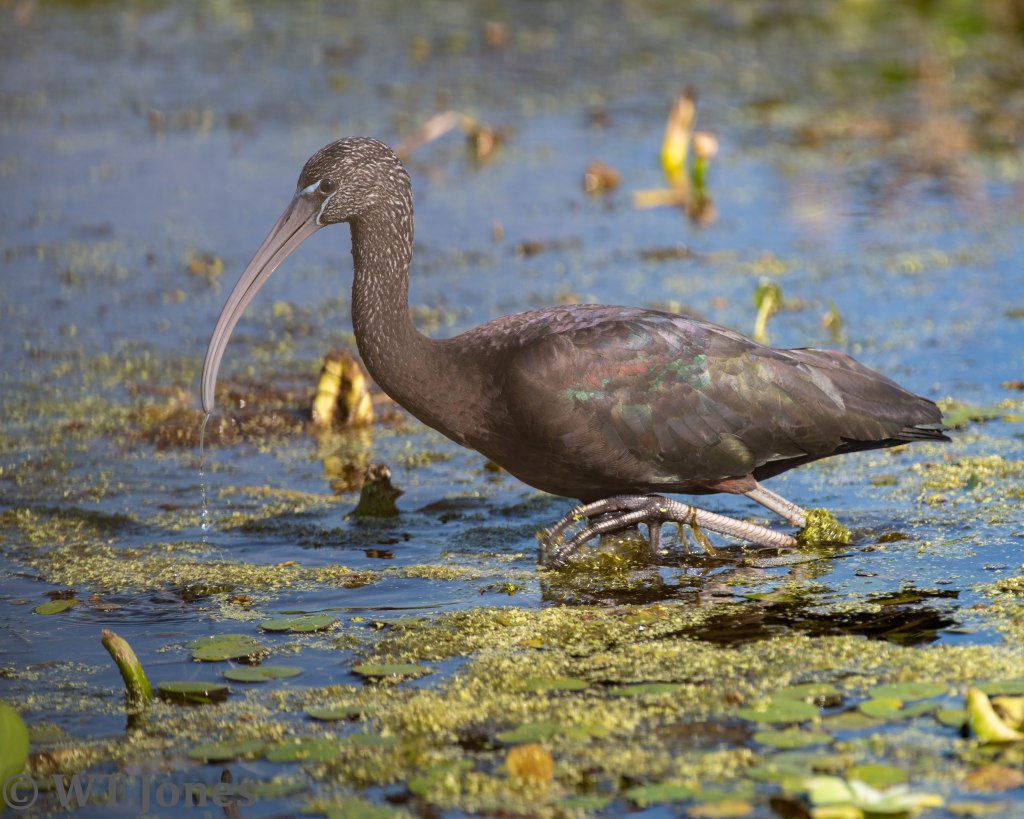
A Glossy Ibis displays that delightful “mother-of-pearl” plumage.
Wood Stork series.


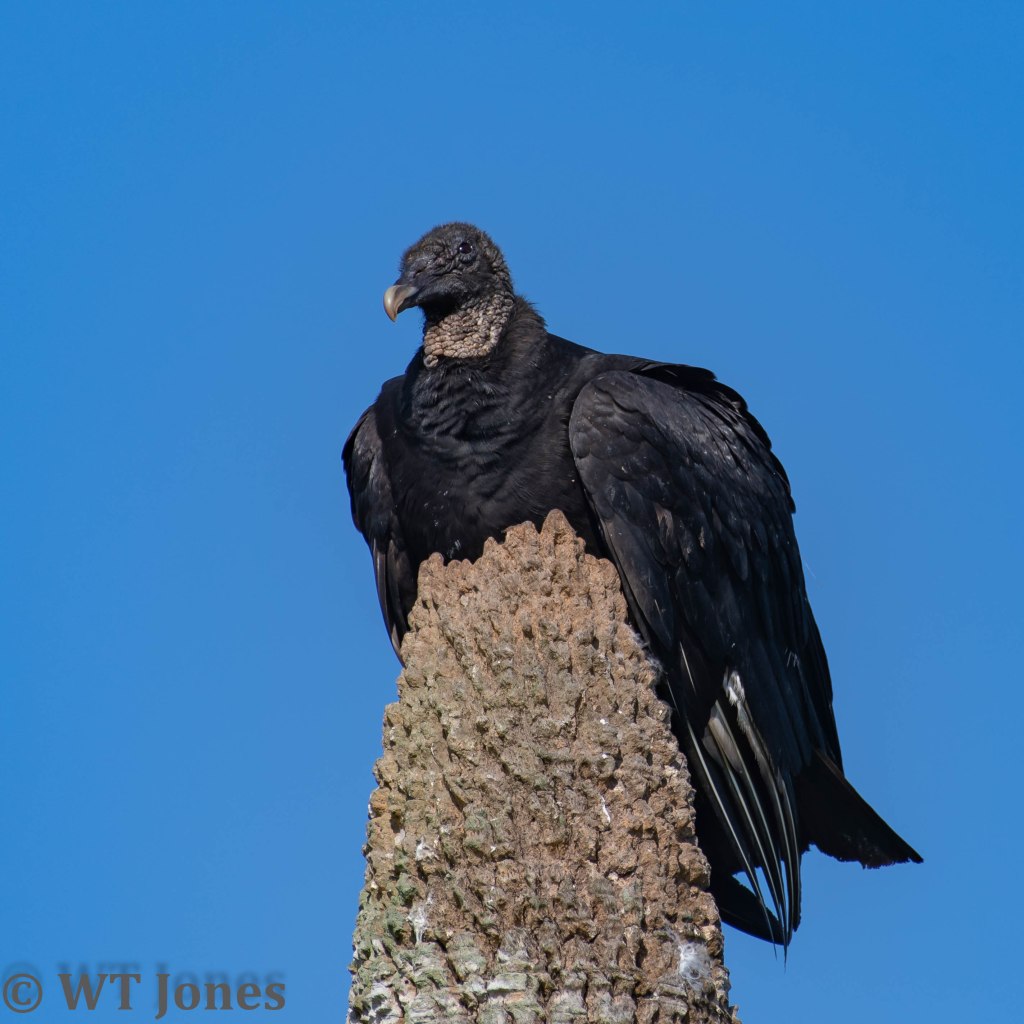
Black Vulture. Her mother would be proud of her beautiful daughter. The rest of us – admire the perches.

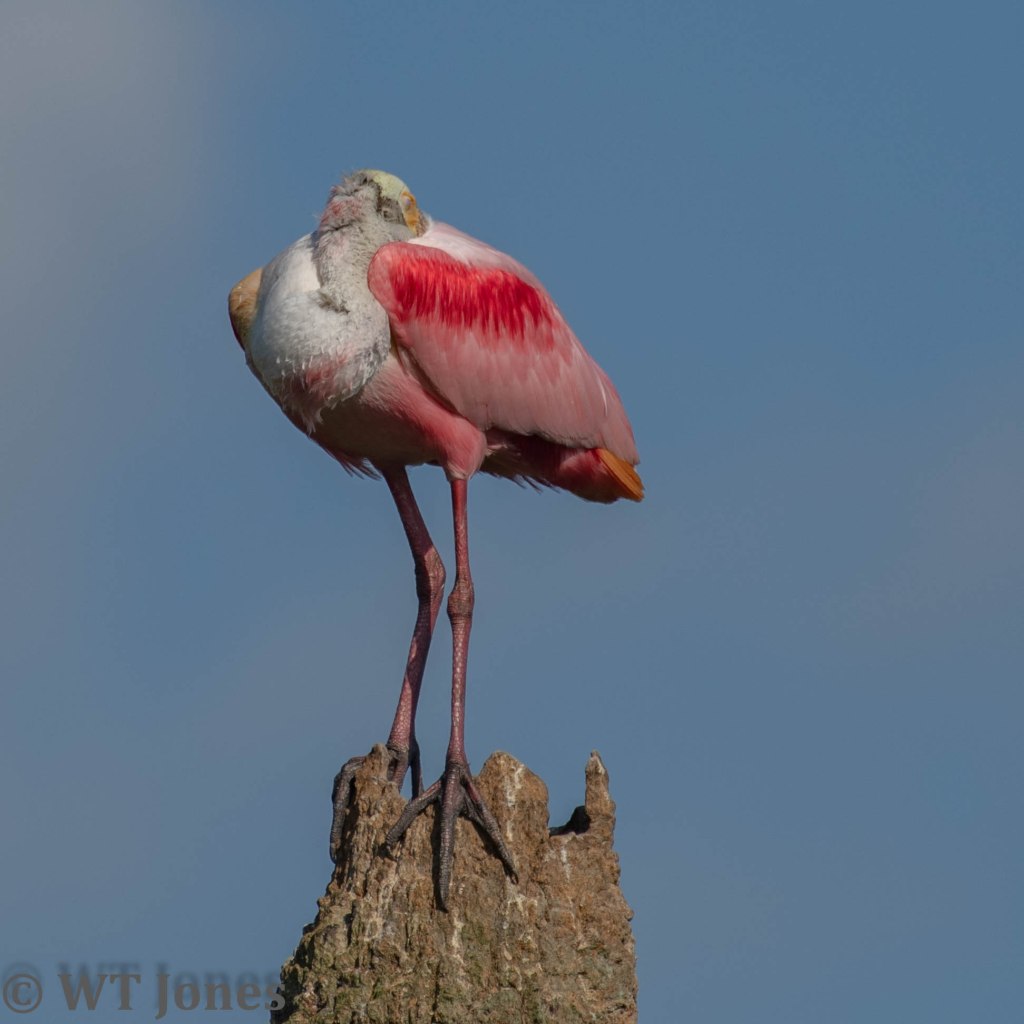
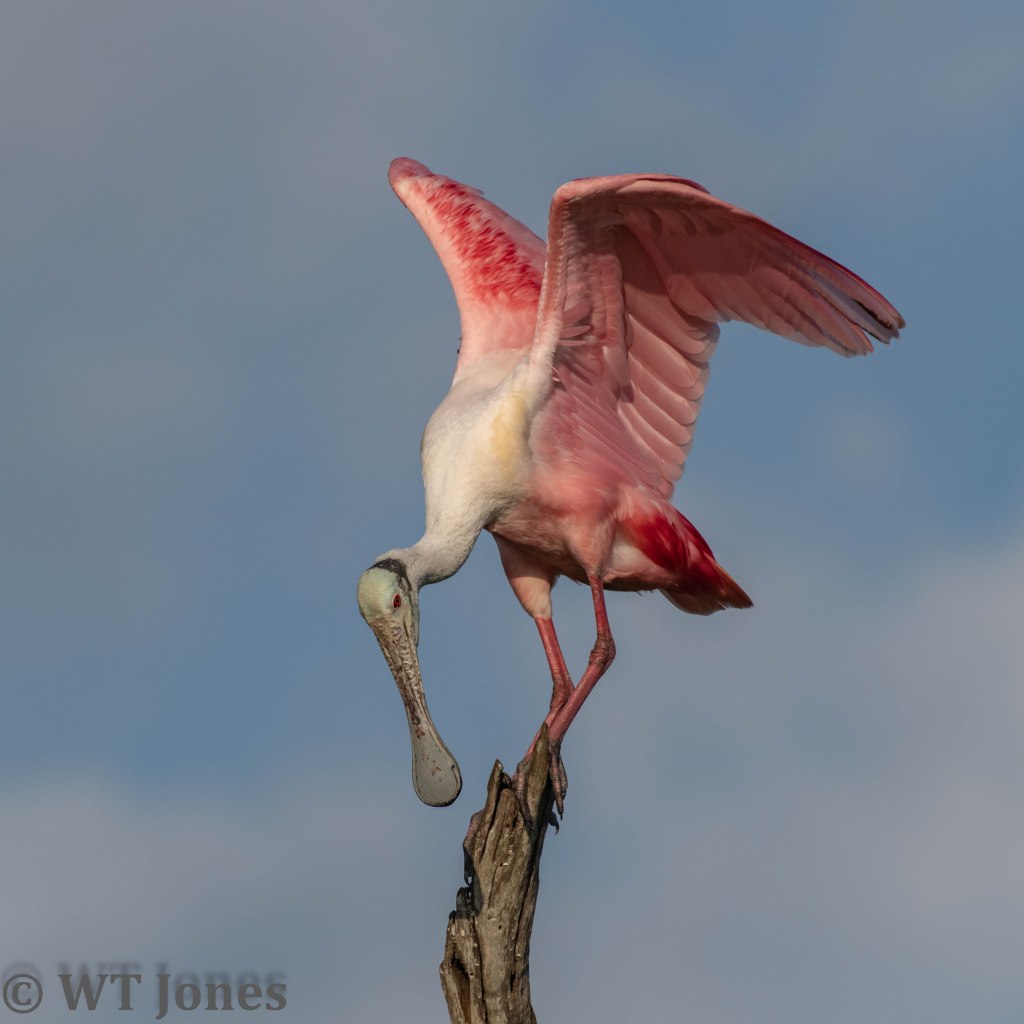
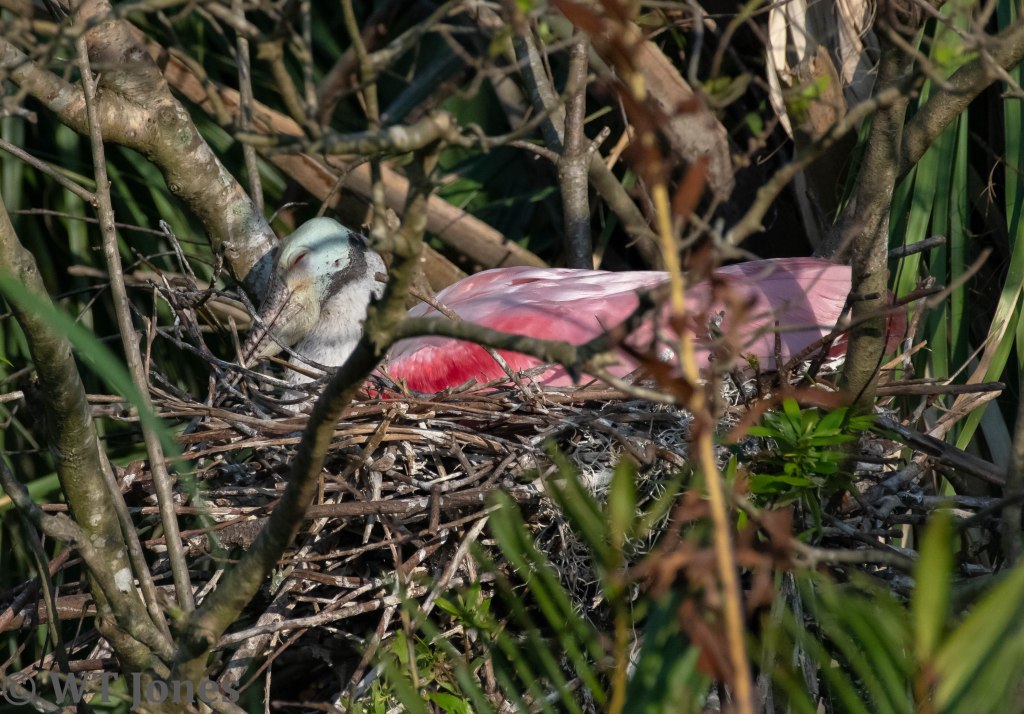
Roseate Spoonbill series. (Warning: Pink Overload.)
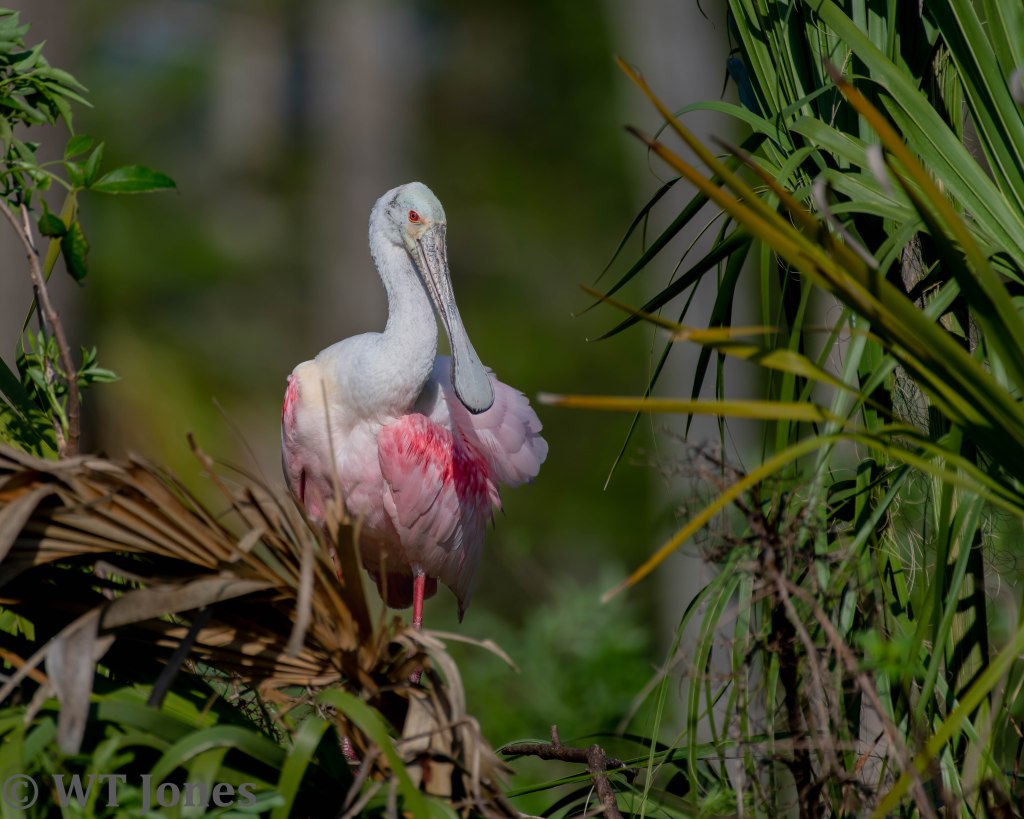
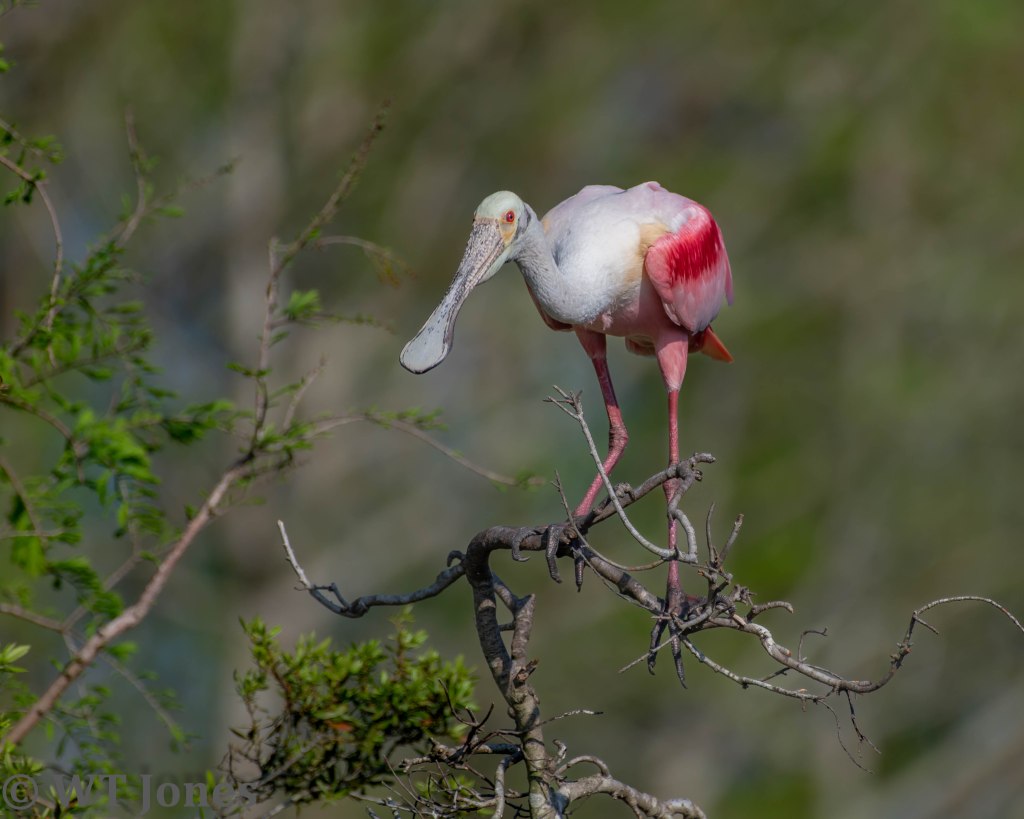
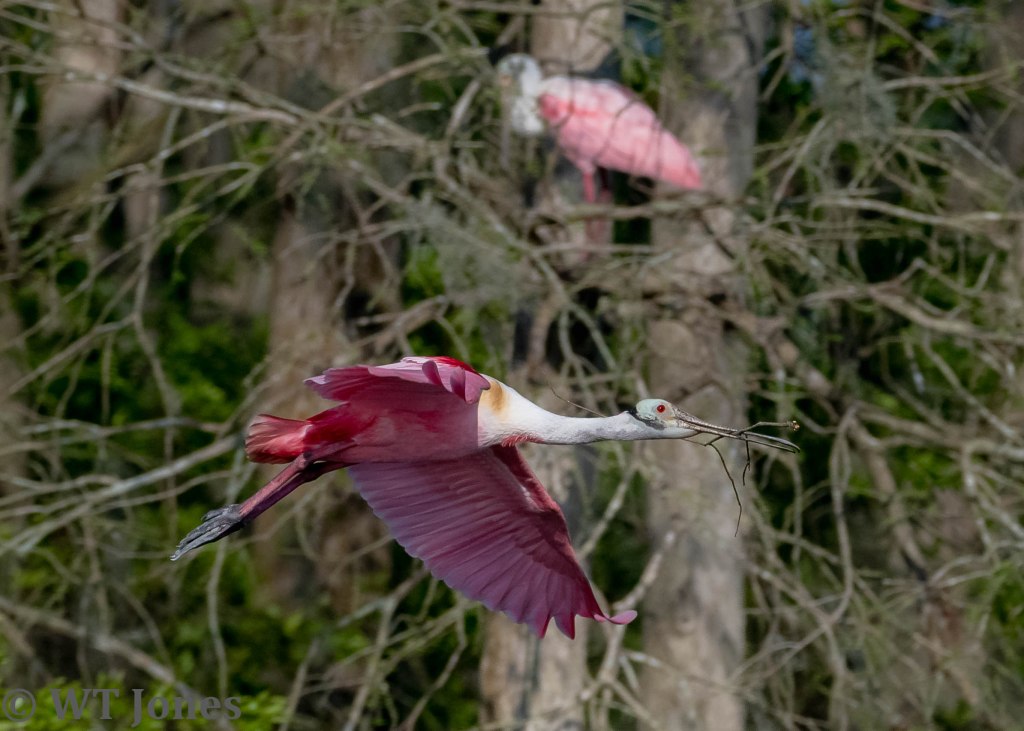
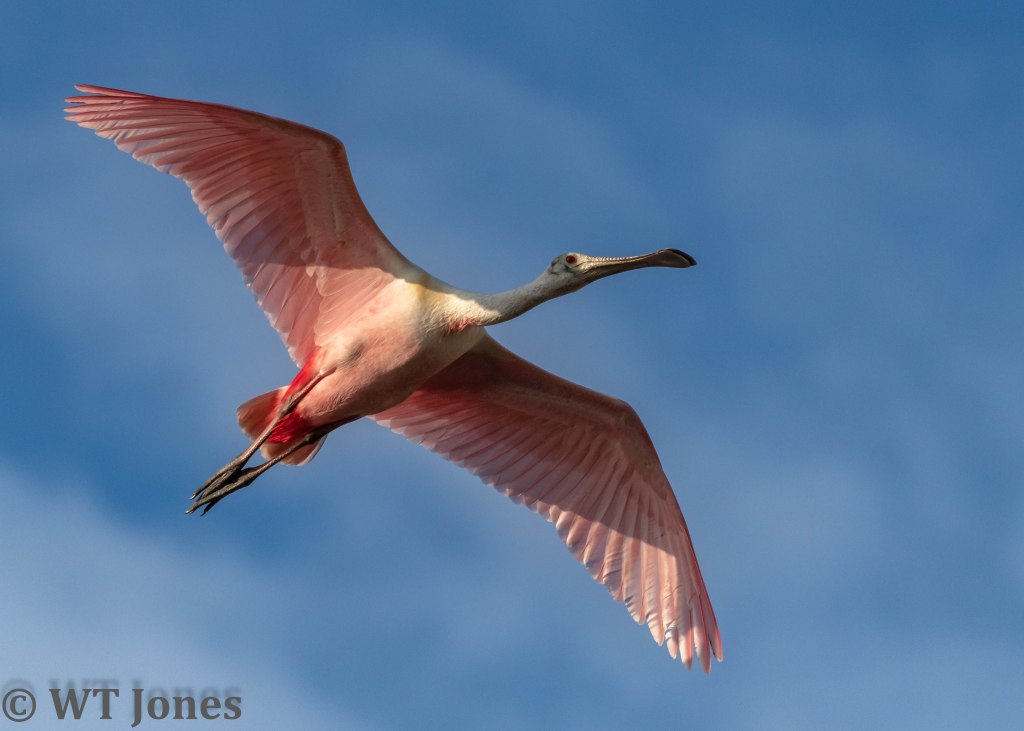

Where there is water, there will be Red-winged Blackbirds. There is a LOT of water out here!

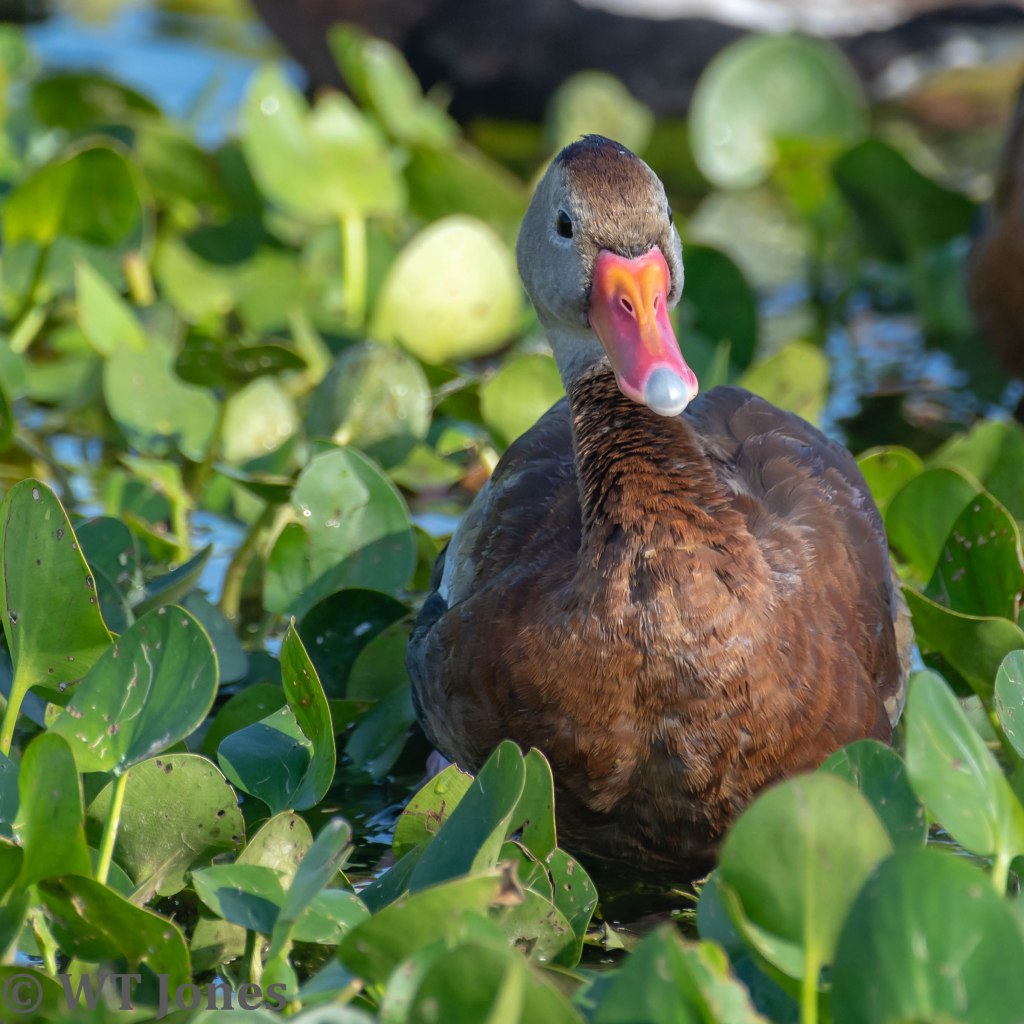
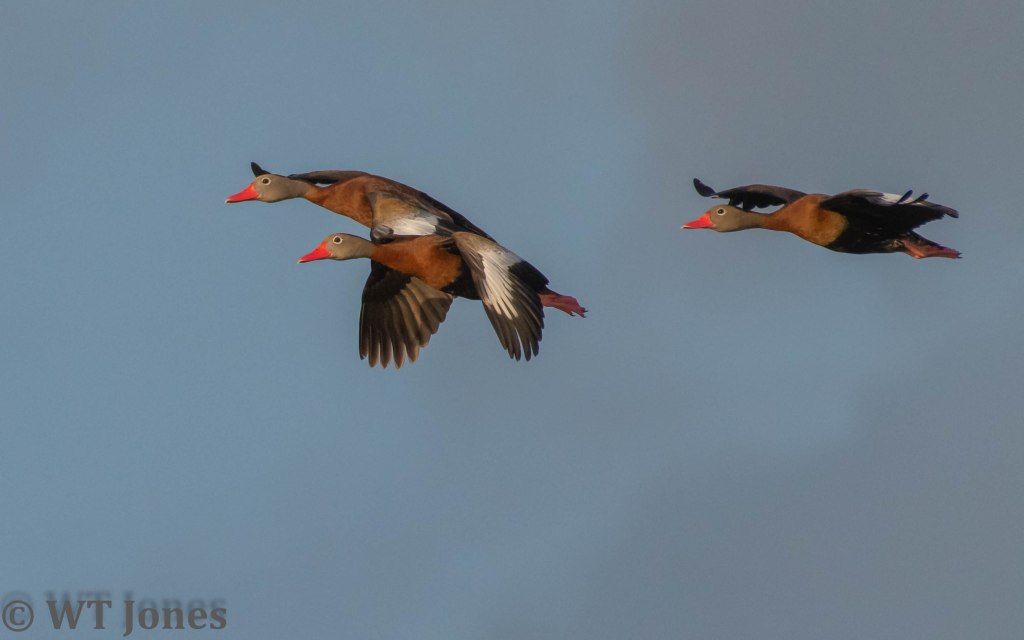
Black-bellied Whistling-Duck series.


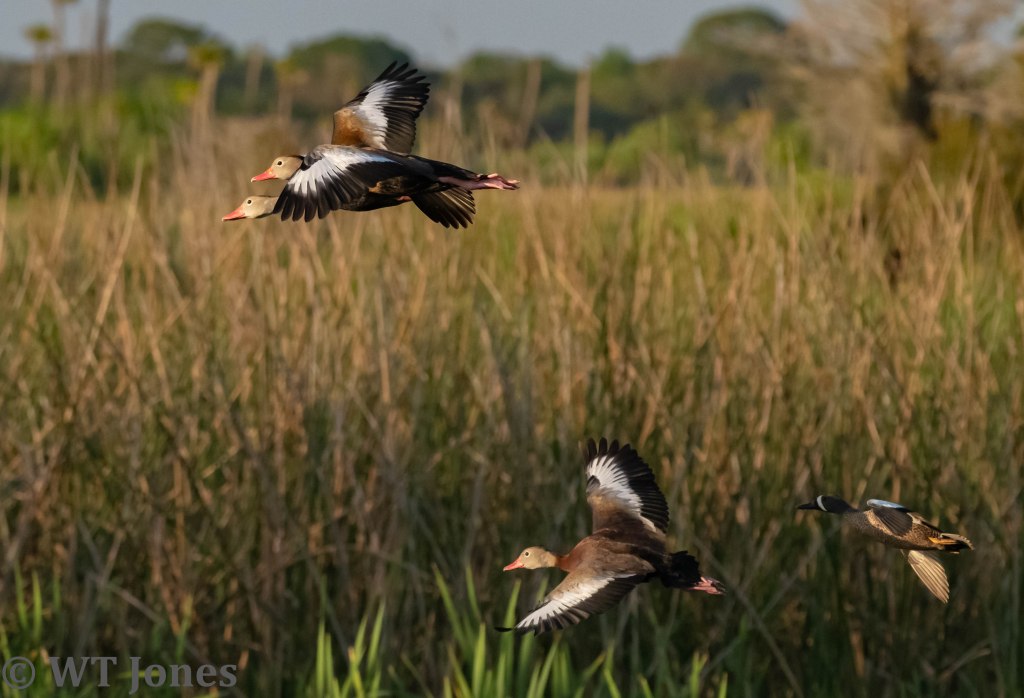
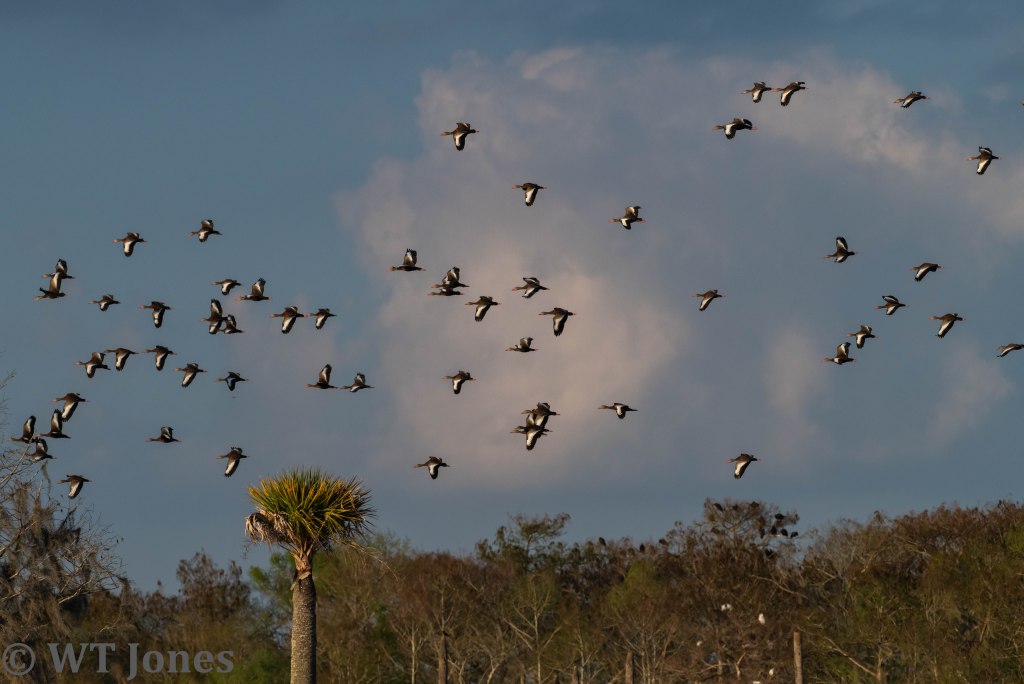
We were a little early in the nesting cycle and didn’t locate any baby birds within view. There will be plenty of them in the coming weeks based on the number of birds we encountered. A return trip may be required.
Enjoy your search for a natural place and come back for a visit!
(Stay tuned for Part Two.)
Additional Information
https://www.orlando.gov/Parks-the-Environment/Directory/Wetlands-Park
 Our Natural Places