Let’s Go For A Walk
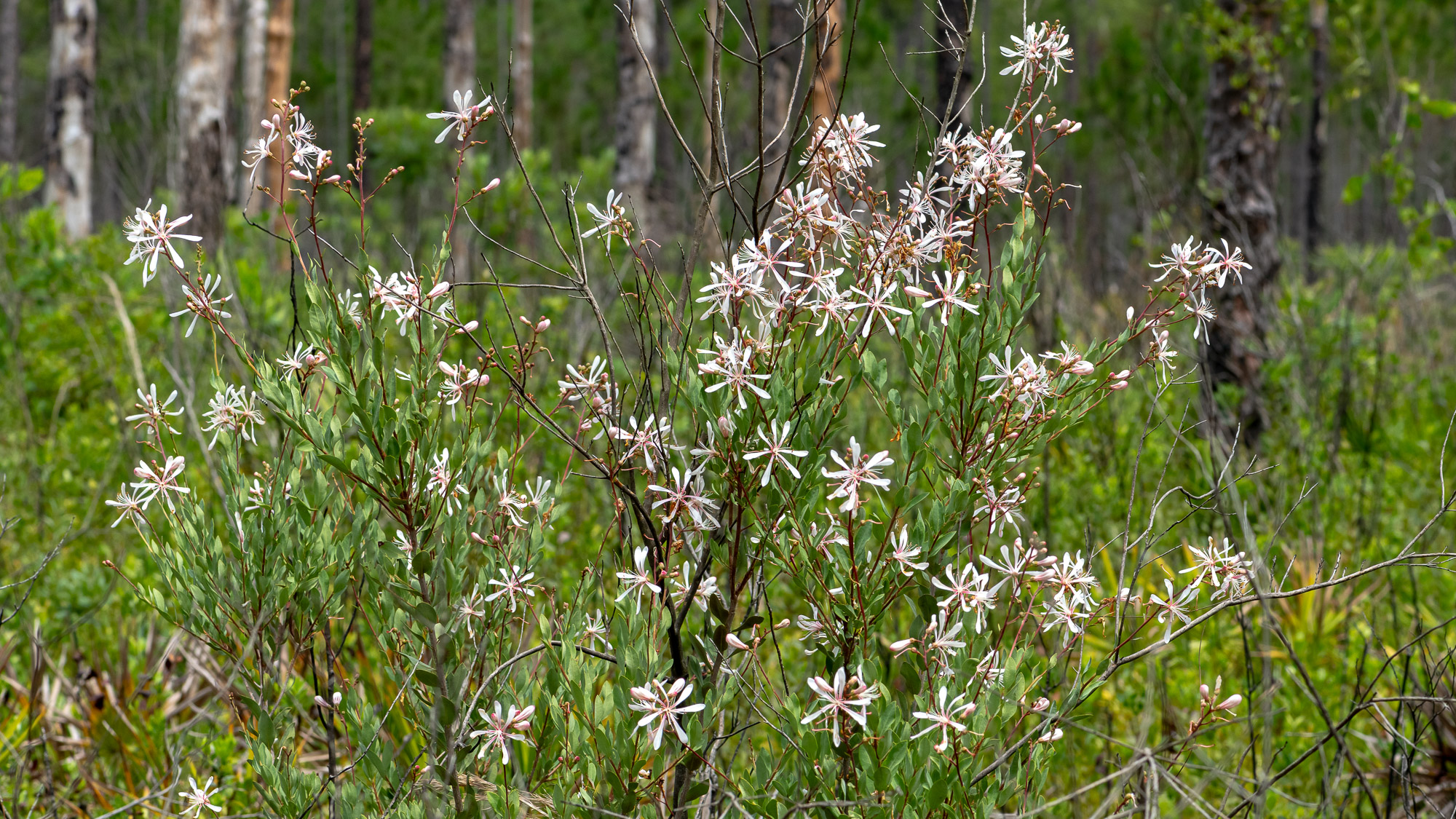
(Click on images to enlarge, click again to zoom.)
It is a little cooler than expected this morning. The dirt of the old logging road is somewhat damp and it readily clings to the soles of our shoes. A path leading to the north is fringed with tall grass and our pant legs are immediately soaked as we veer off the track to look at a lavender wild petunia. Mourning Dove are cooing in the oak trees and a diminutive Downy Woodpecker hops along a limb stopping frequently to peck at the rugged bark to uncover a morsel for breakfast. From deep within the forest, a Barred Owl asks its eternal question: “Who-Who-Who-Cooks-For-You?“.
The illusion of cool air has turned into the reality of a sub-tropical Florida summer day. As we probe several different pathways we once again marvel at how subtle changes in location provide such different samples of flora. The screech of a Red-shouldered Hawk alerts the neighborhood to our presence. Flowers don’t care if we are here and the nectar-seeking insects are on a life-supporting mission so they tend to ignore us. Except for the horse-flies and mosquitoes who have a different target – us.
Breakfast among the Longleaf Pines is leisurely. We hope you don’t mind just fresh fruit today.
Let’s see what’s around the next bend.
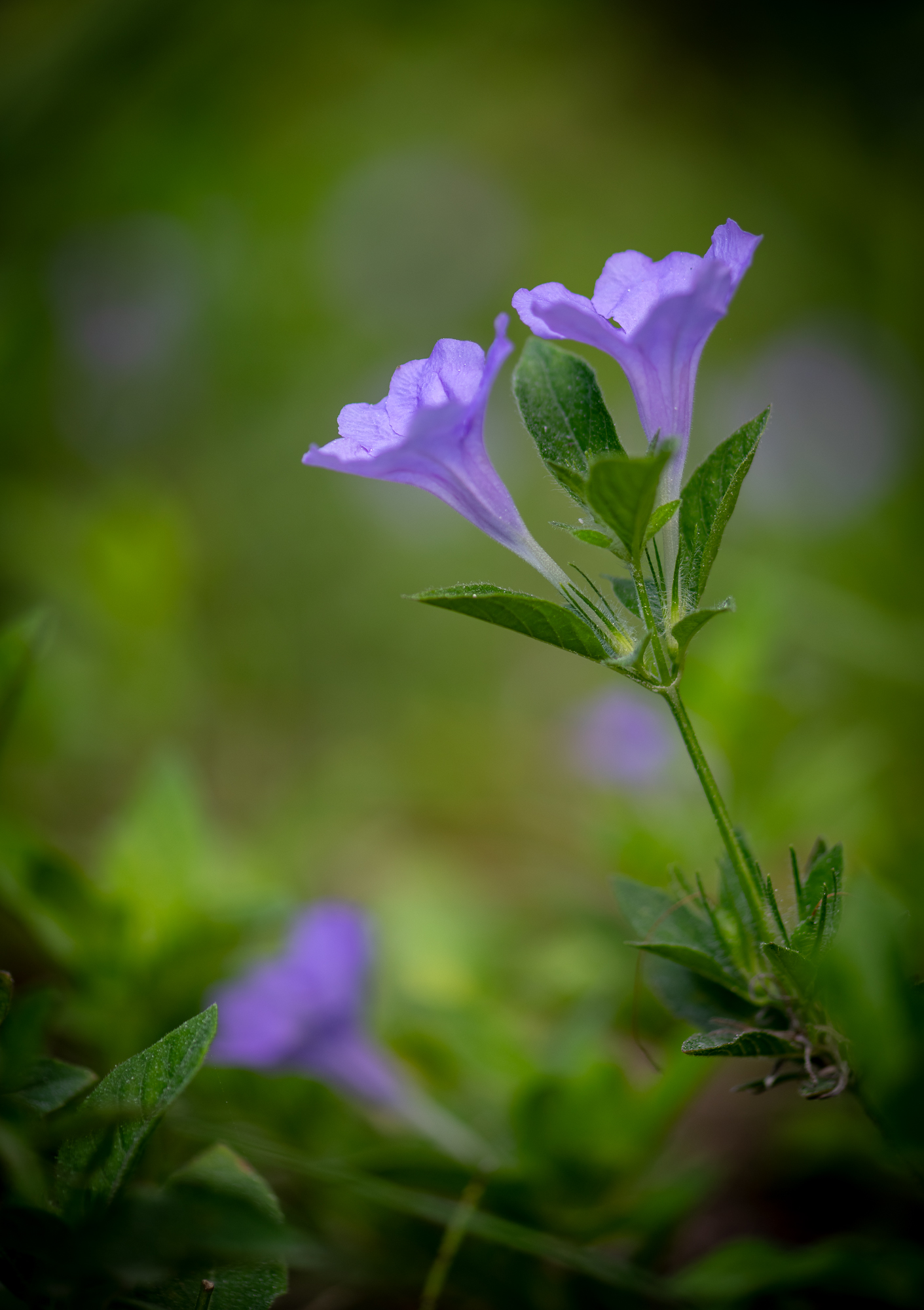
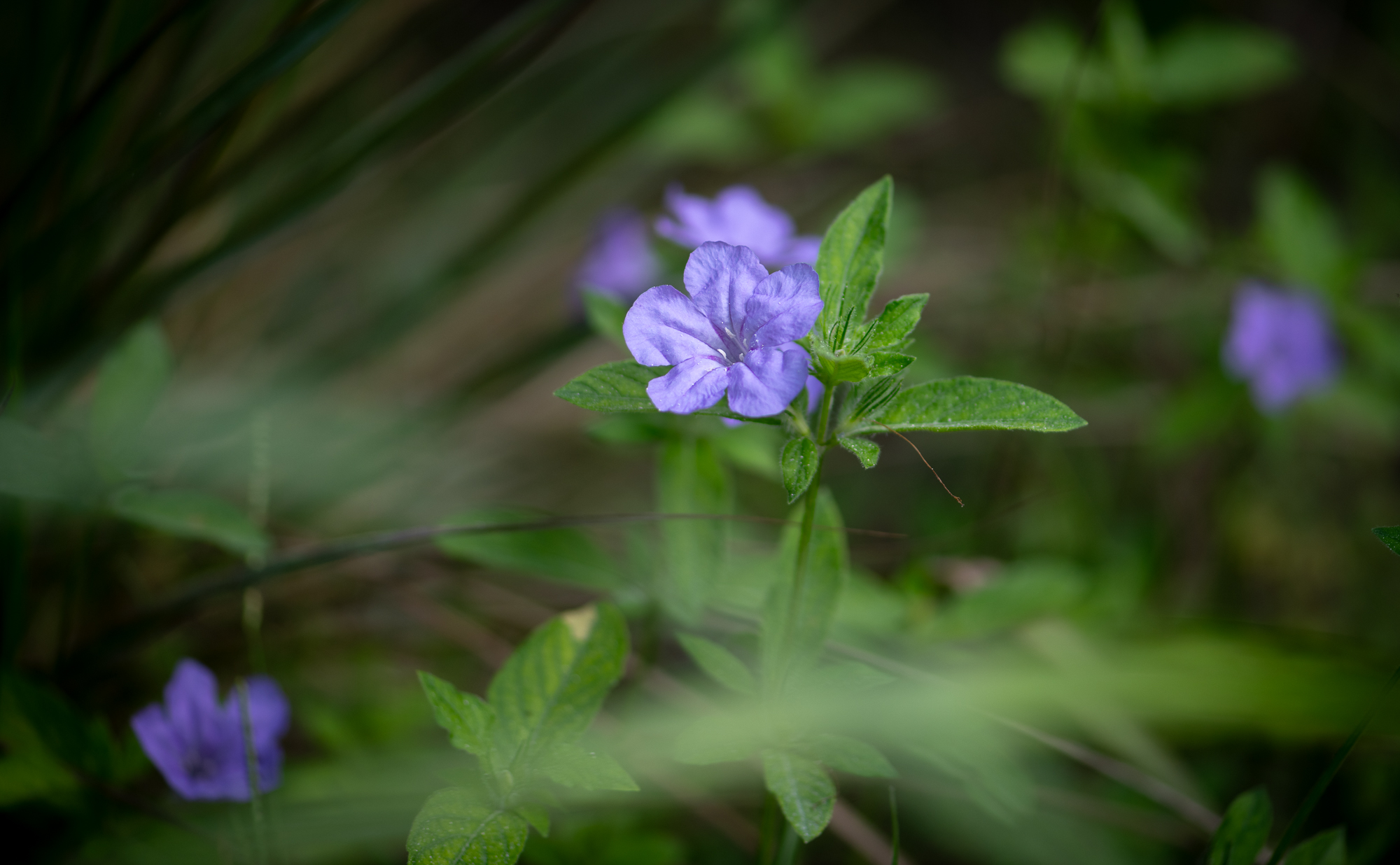
Although not necessarily abundant, the Wild Petunia (Ruellia caroliniensis) tends to occur in small groups whenever we do find it. Also called Carolina Wild Petunia, it is not related to actual petunias. The latter are in the nightshade (Solanaceae) family while the Wild Petunia is a member of the Acanthus family.
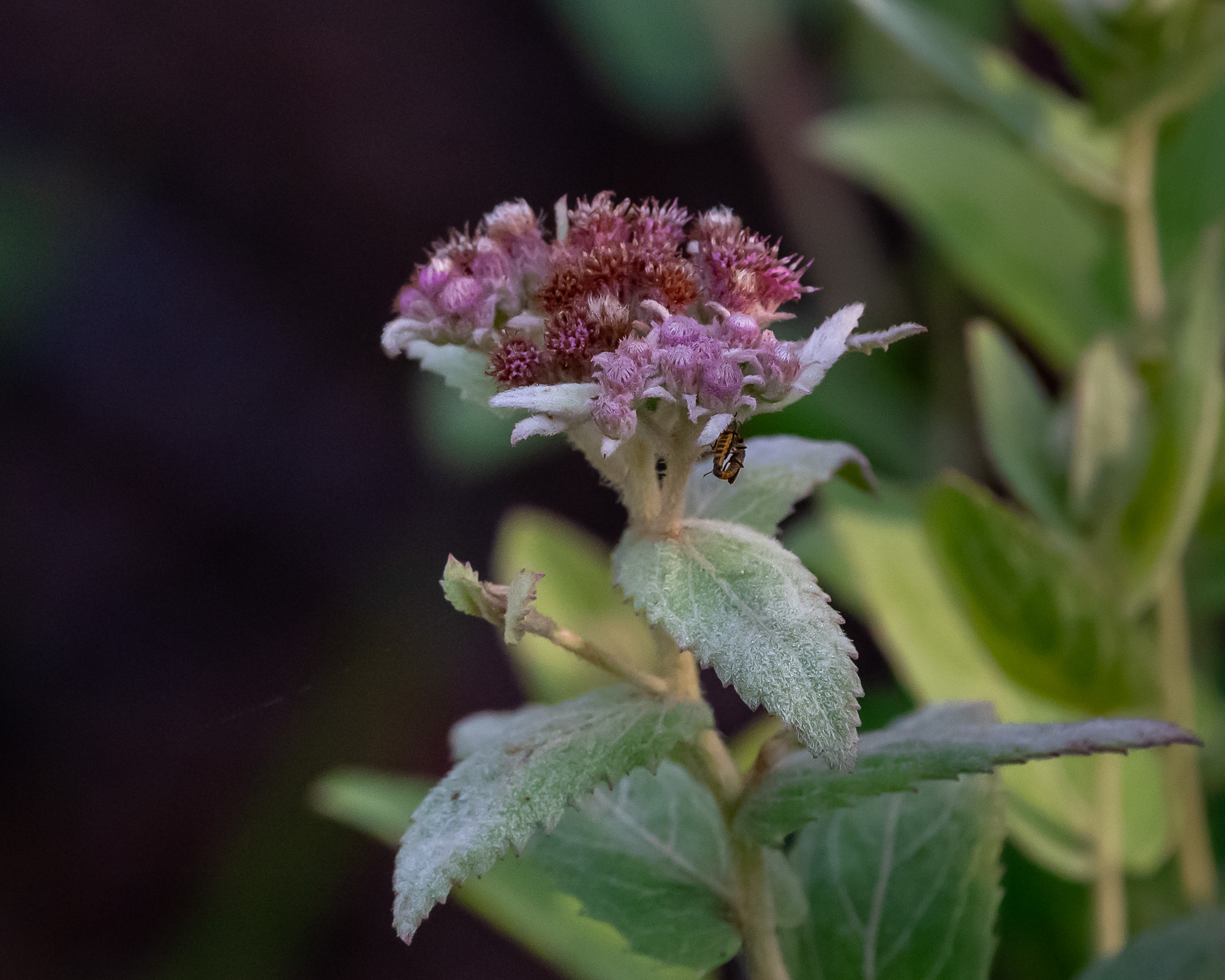
Insects looking for a nectar fix love the densely packed florets atop the Rosy Camphorweed (Pluchea baccharis). Home garden marketers describe this plant as having a “pleasant citrus-like aroma”. Huh. Here, crush this leaf and take a sniff. More like moth balls. Thank goodness it’s beautiful to look at.
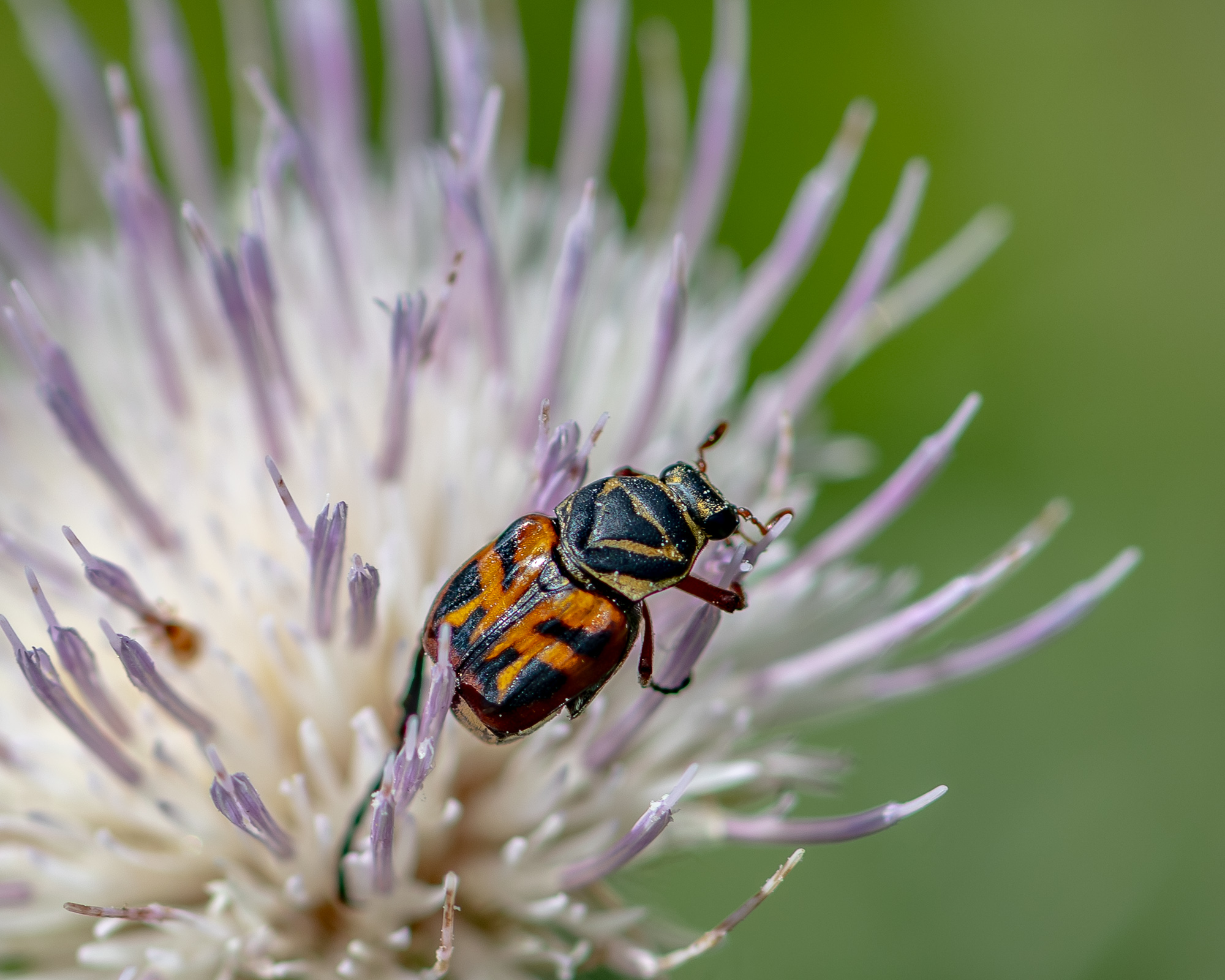
Adult Delta Flower Scarabs (Trigonopeltastes delta) feed on pollen and nectar. At times, these beetles will be so numerous it’s hard to see an acutal flower.
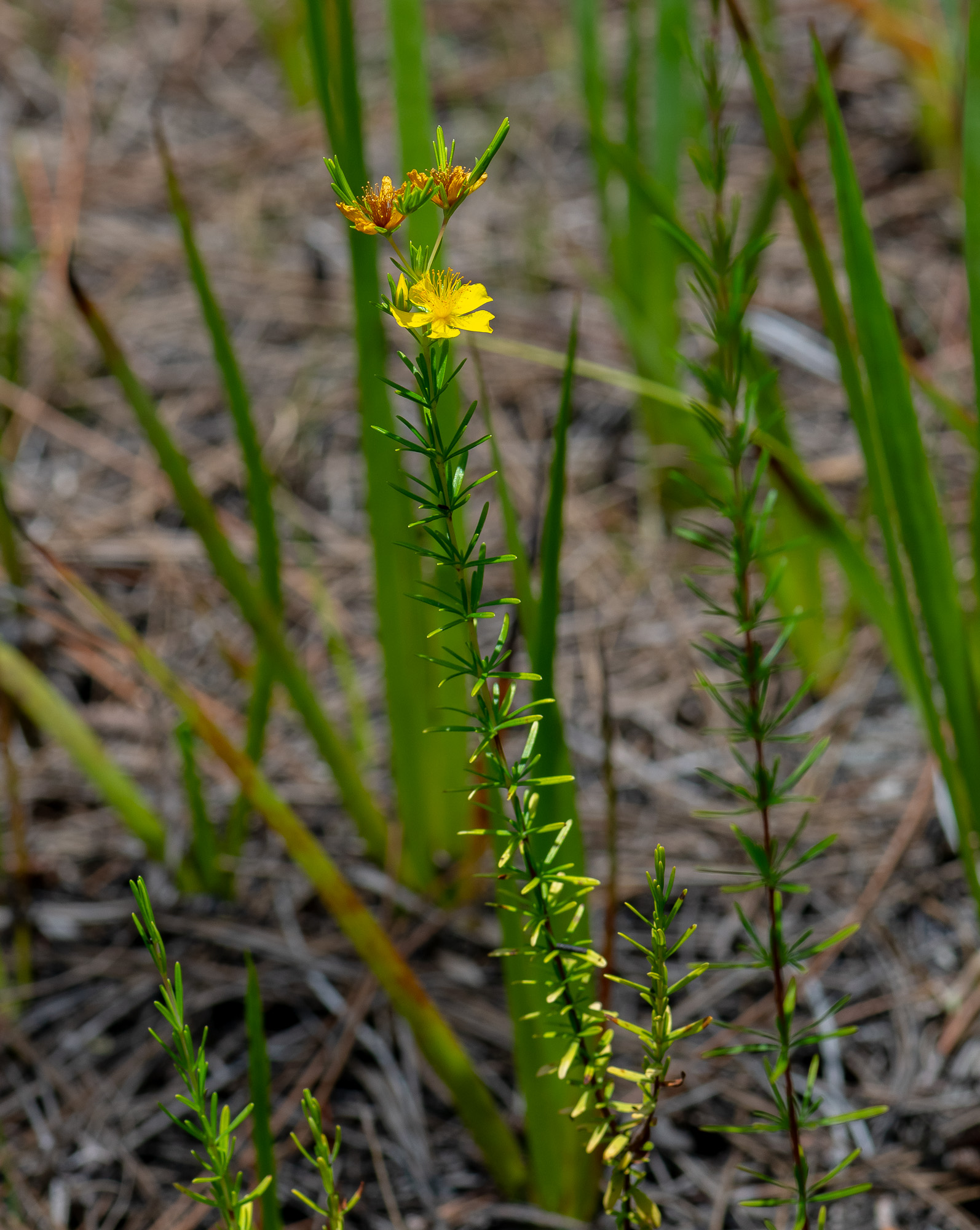
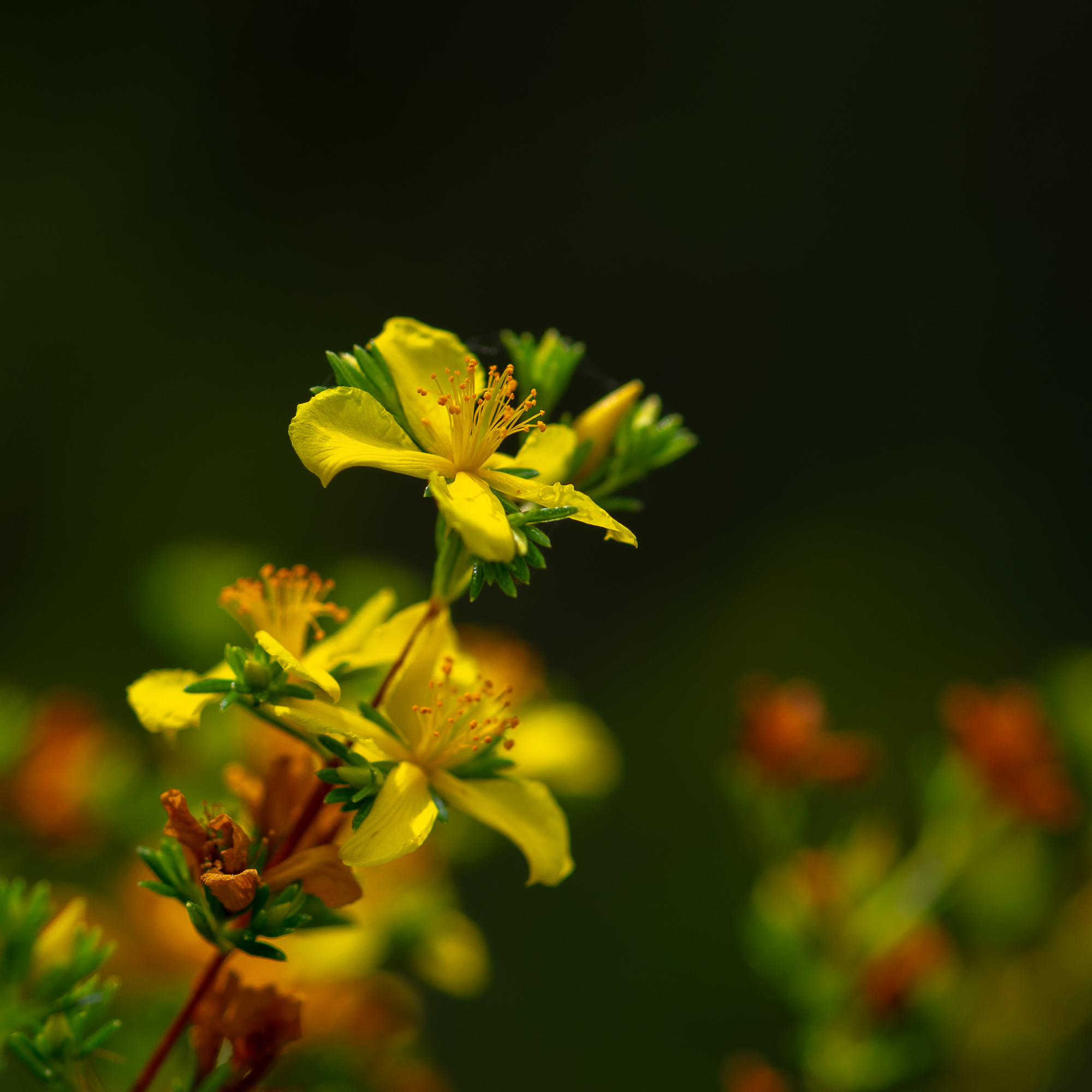
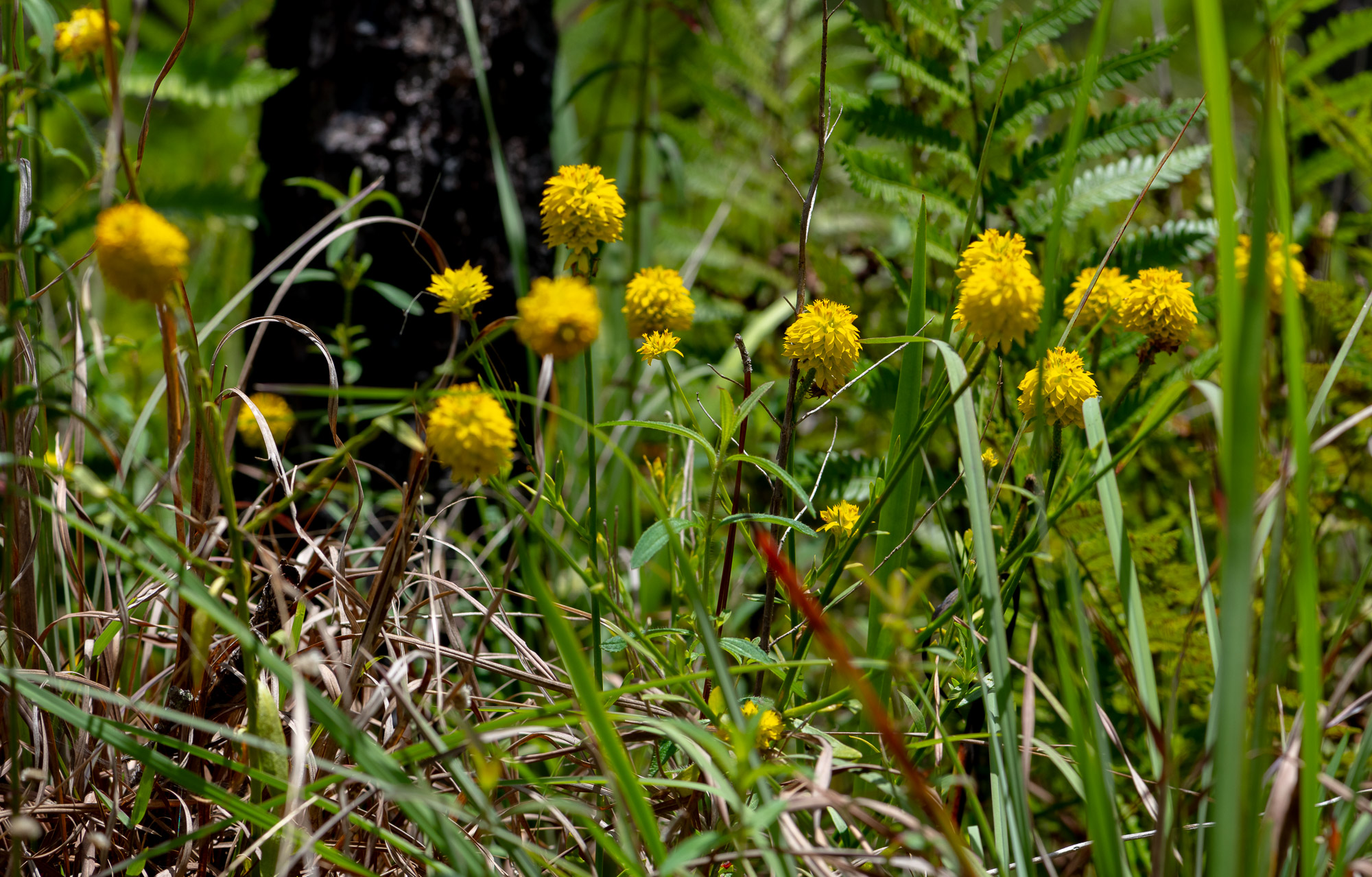
Usually growing as a single stem, the Roundpod St. John’s-Wort (Hypericum cistifolium) can reach 2-3 feet in height, sometimes with several 5-petal blooms at the top of the stem. The unique leaf structure helps with field identification.
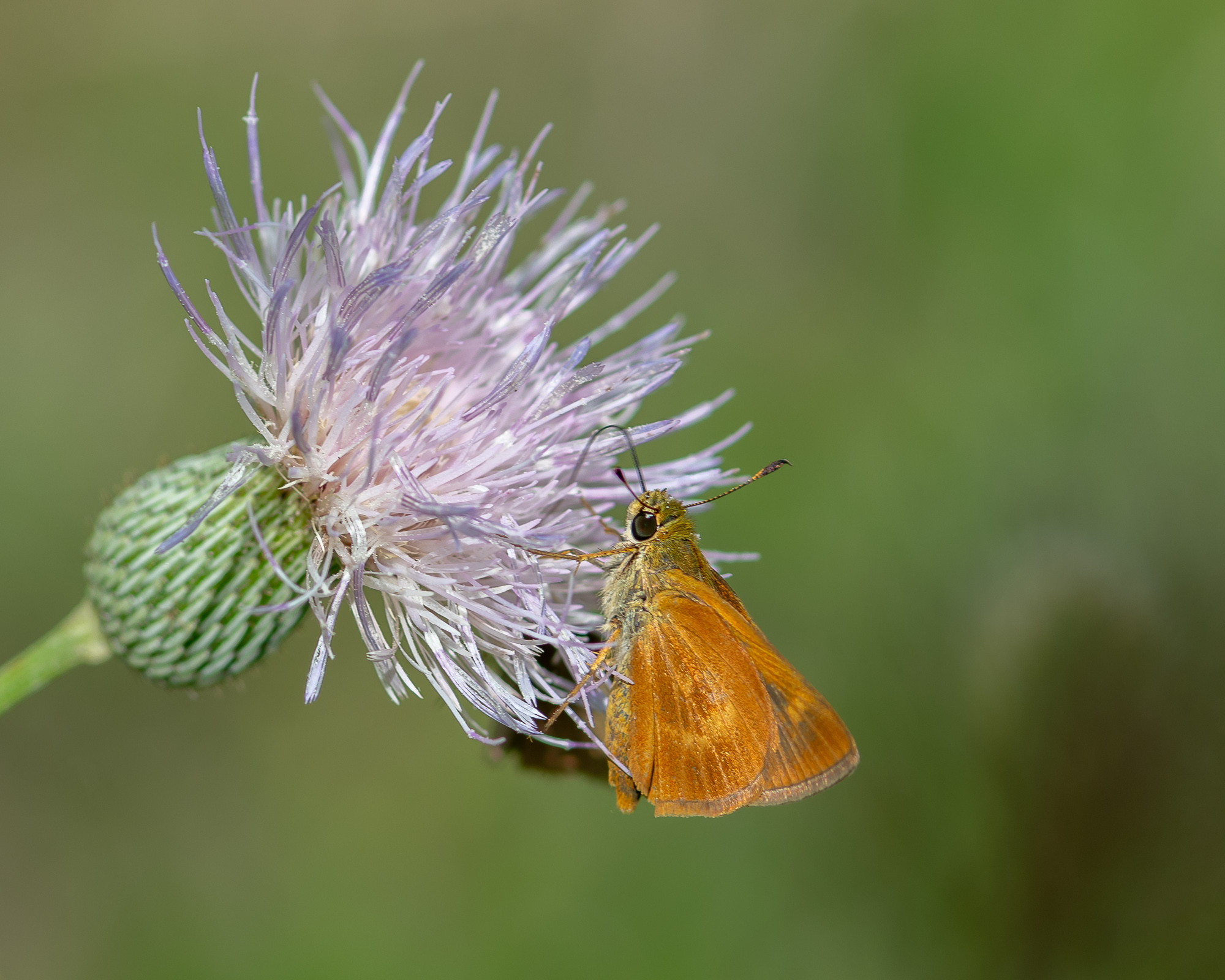
One of the small orange-colored members of the grass skipper family, a Southern Broken-Dash (Polites otho) is quite happy probing this Nuttall’s Thistle (Cirsium nuttallii) for some juice.
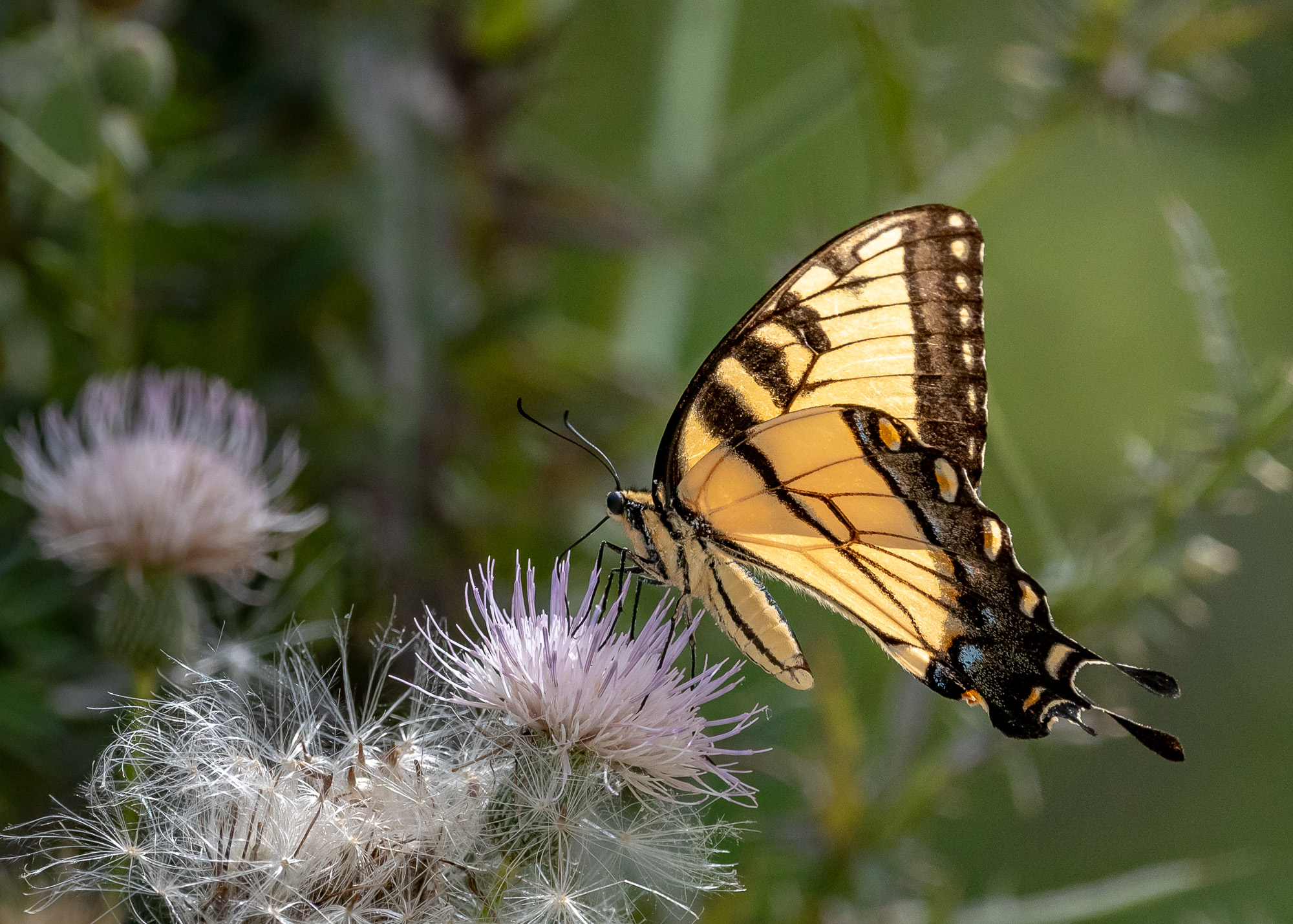
It’s hard to NOT love all our butterflies, but the large ones do seem to attract more oohs and aahs. Like this Eastern Tiger Swallowtail (Pterourus glaucus). Ooh. Aah.
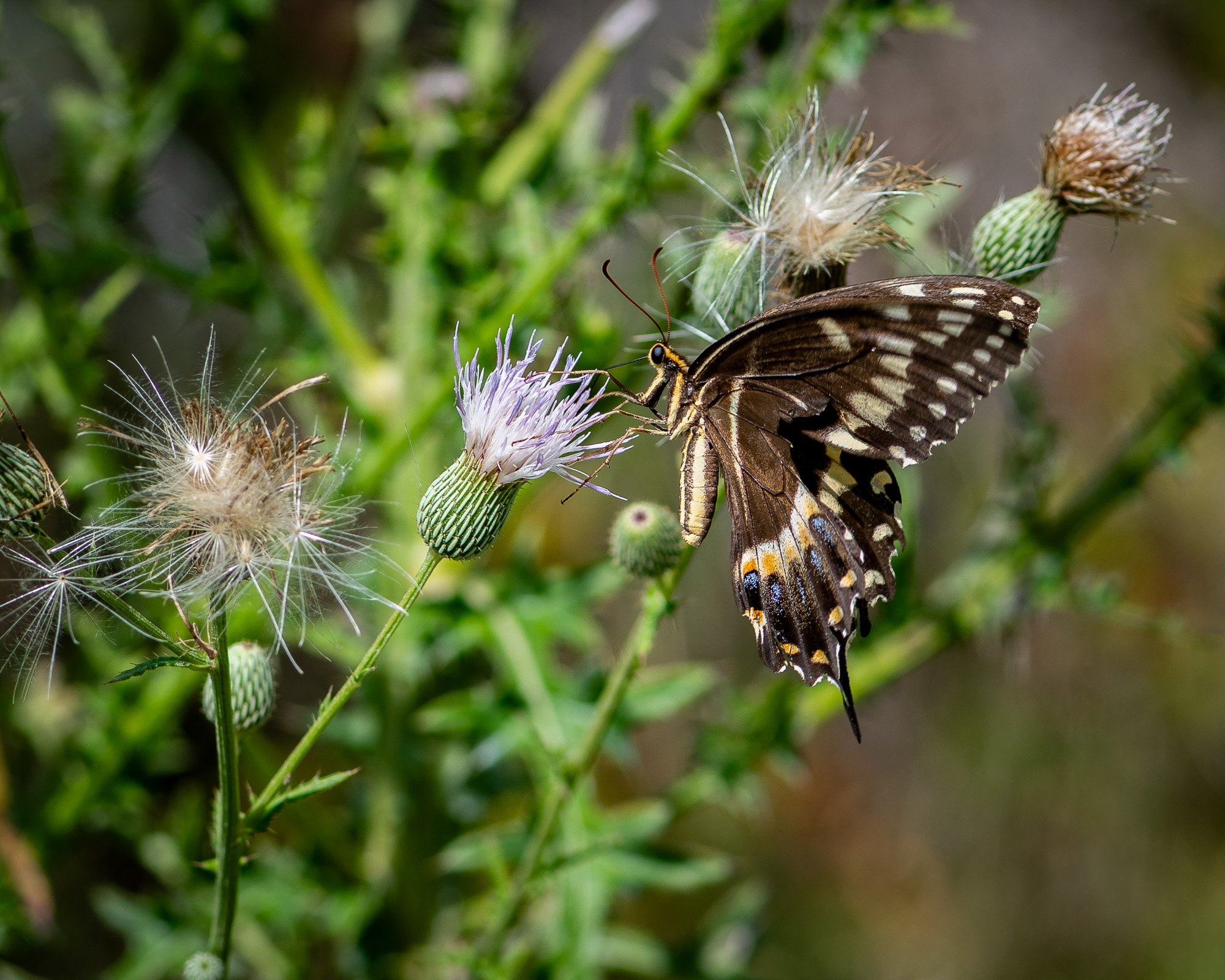
Perhaps not as showy as its slightly larger and brighter Tiger cousin, a Palamedes Swallowtail (Pterourus palamedes) is worthy of at least an “ooh“.
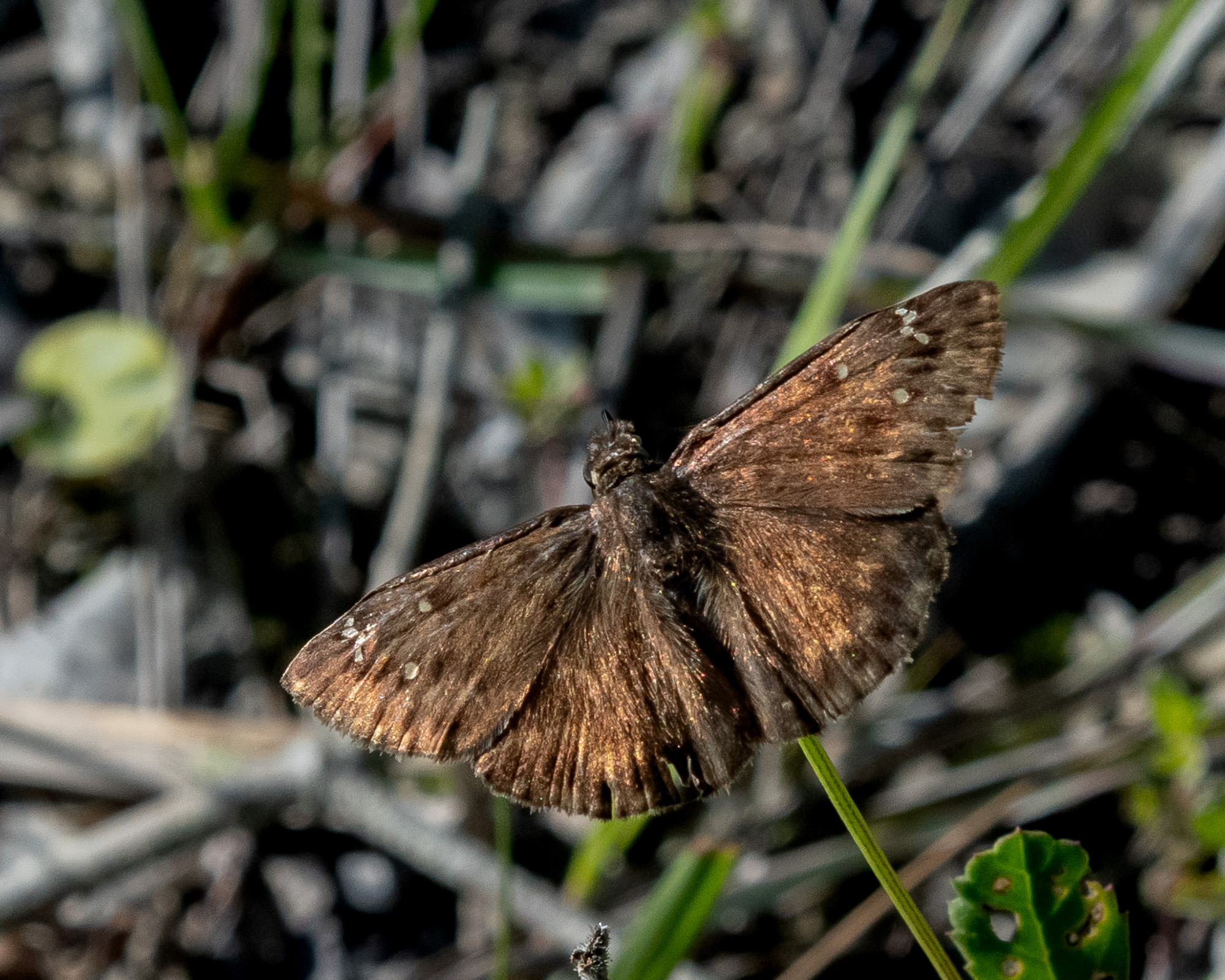
At the opposite end of “flashy butterflies” is the skipper who may define “drab”, Horace’s Duskywing (Erynnis horatius). Horace is just fine with being nondescript, especially when it comes to being noticed by would-predators. (“Hey! Look over there at that big colorful Swallowtail!)
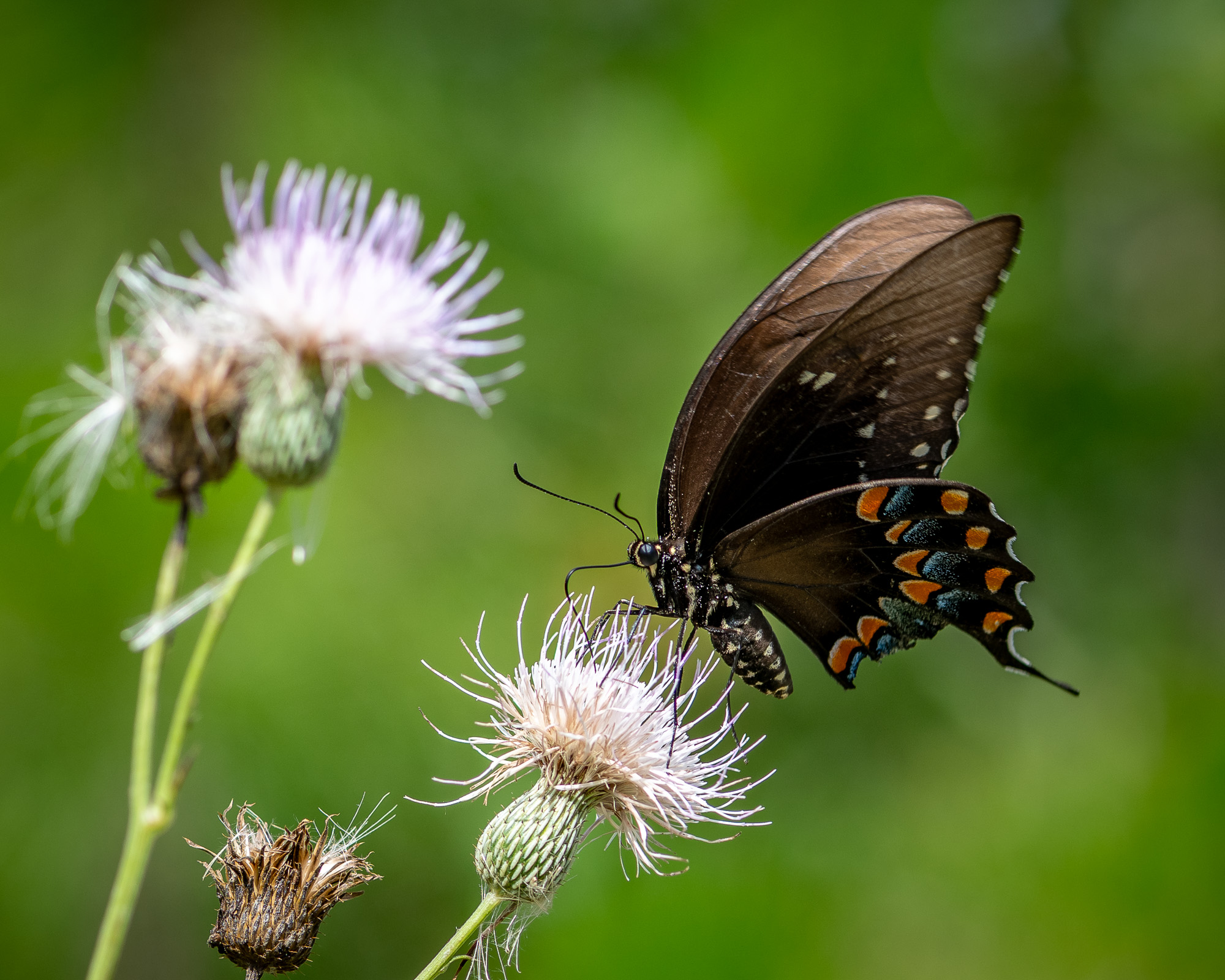
Speaking of which, another of our large dark swallowtails is the Spicebush Swallowtail (Papilio troilus). These butterflies lay eggs exclusively on plants in the Lauraceae family (Magnolia Order), which includes Spicebush (Lindera bezoin); Sassafras (Sassafras albidum); Sweet Bay (Magnolia virginiana); and Tulip Tree (Liriodendron tulipfera).
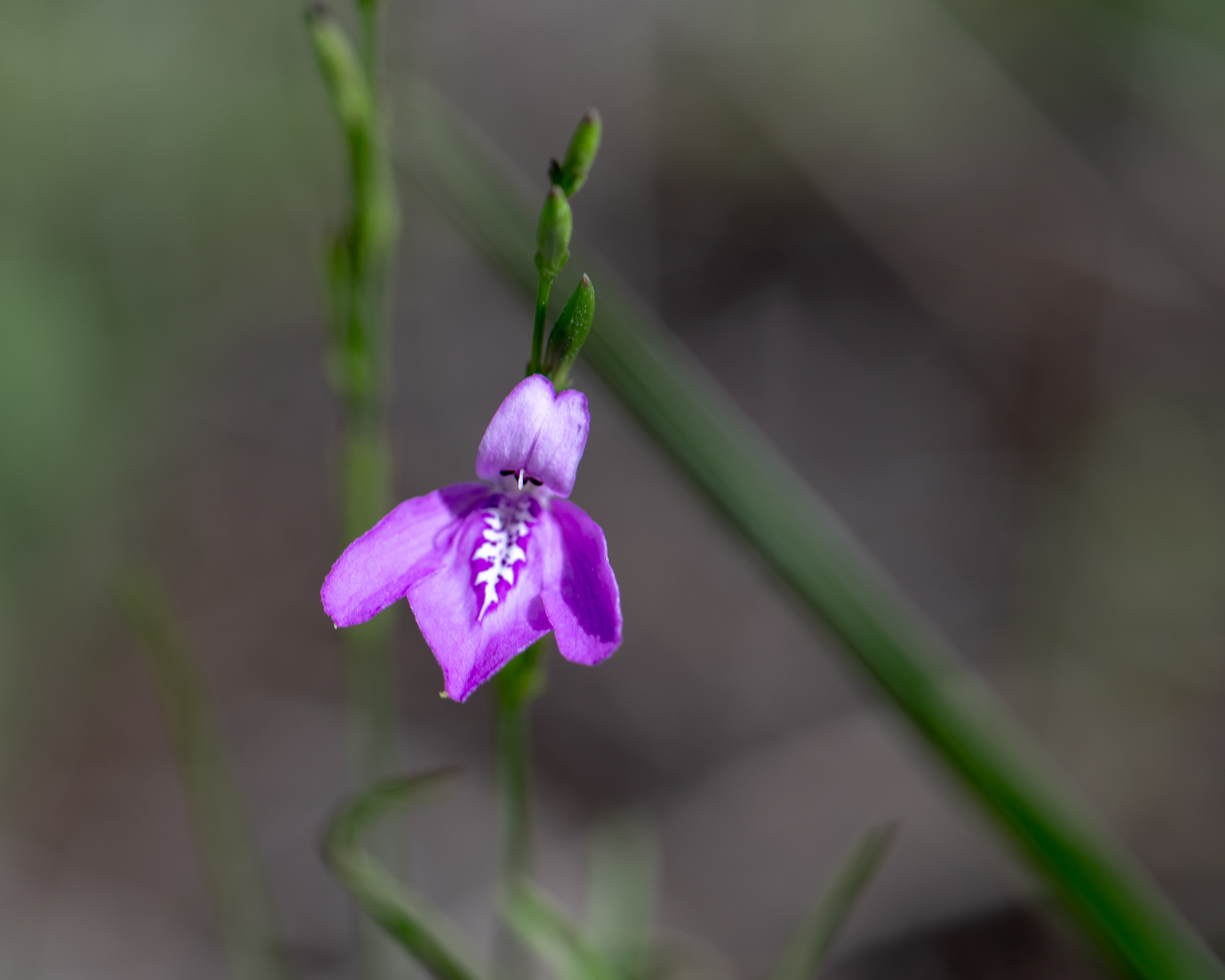
Growing in wet areas on slender stems, the Pineland Waterwillow (Justicia angusta) can reach 3-4 feet tall. It’s very small pink flowers attract several different pollinators. It is a near-endemic of Florida.
Sandweed (Hypericum fasciculatum) is one of the wetland species of St. John’s-wort. It is also known as Peelbark St. John’s-wort due to the tendency of its reddish bark to peel as the plant matures.
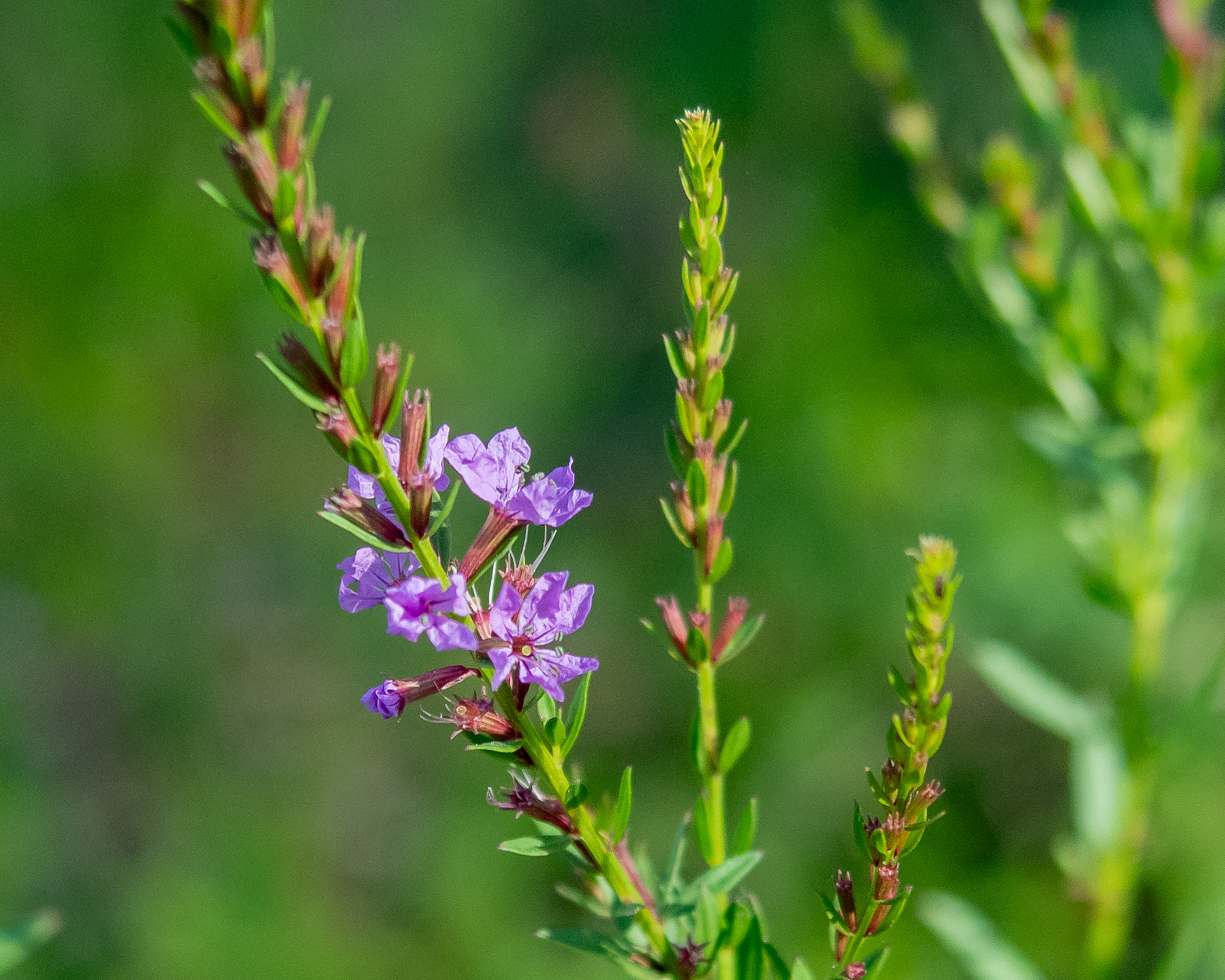
One of the most abundant flowering plants we encountered today was the lovely purple Winged Loosestrife (Lythrum alatum). Seems like every flower had a bug of some sort on it. And there were a LOT of flowers!
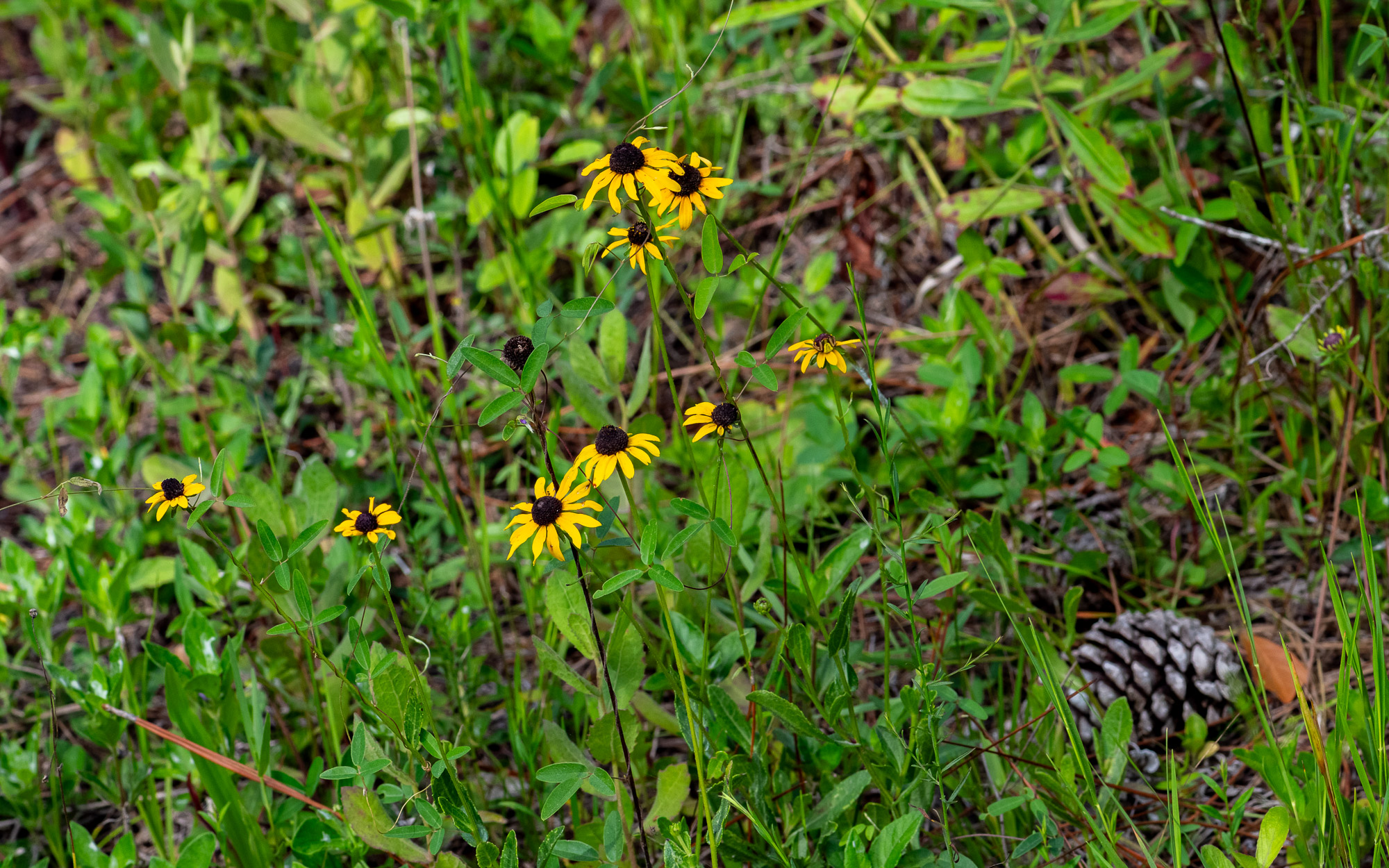
Blackeyed Susan (Rudbeckia hirta). Common bloom. Uncommon beauty.
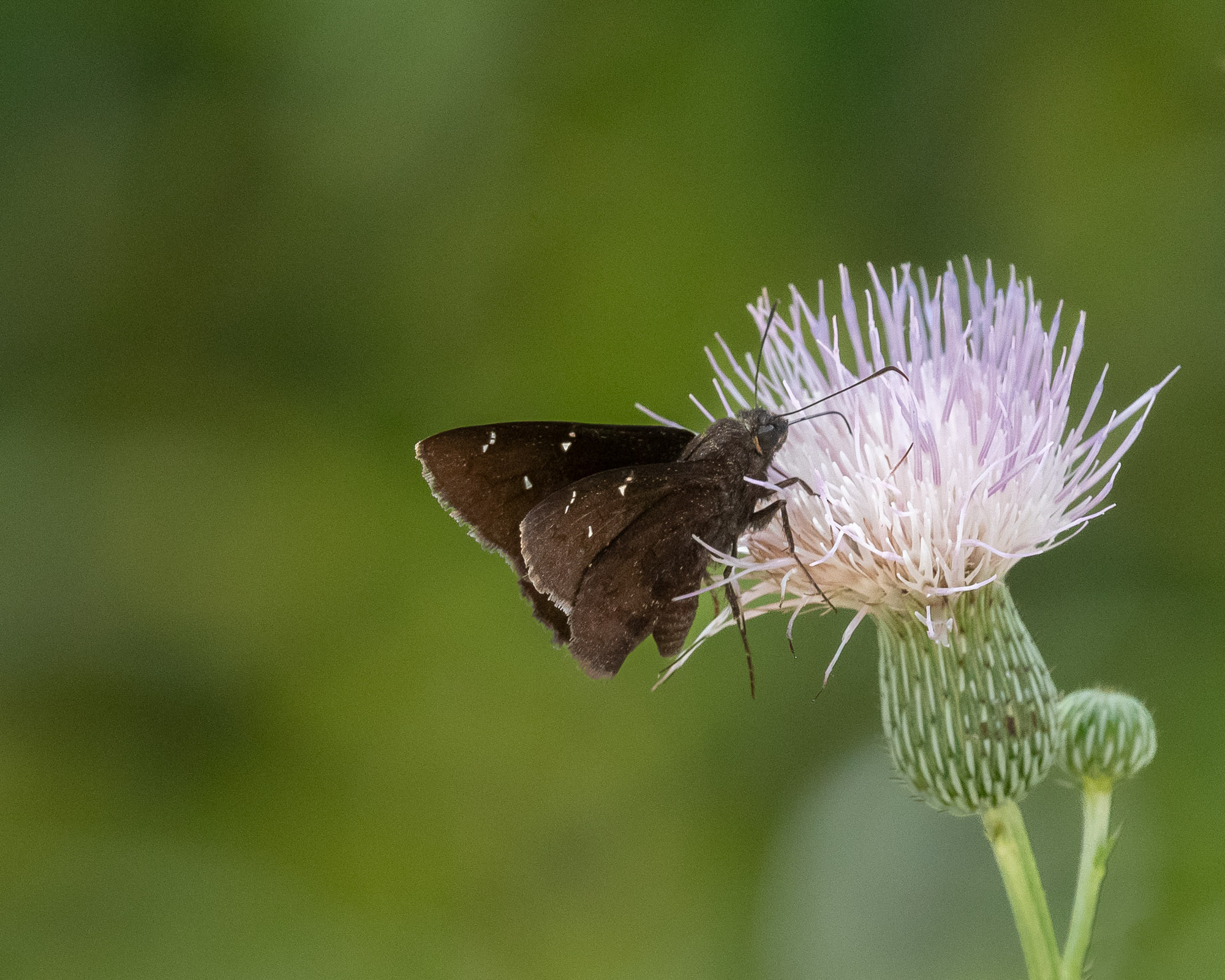
A medium size skipper we have only enountered a few times, this Northern Cloudywing (Cecropterus pylades) is enjoying a visit to a (surprise!) Nuttall’s Thistle (Cirsium nuttallii).
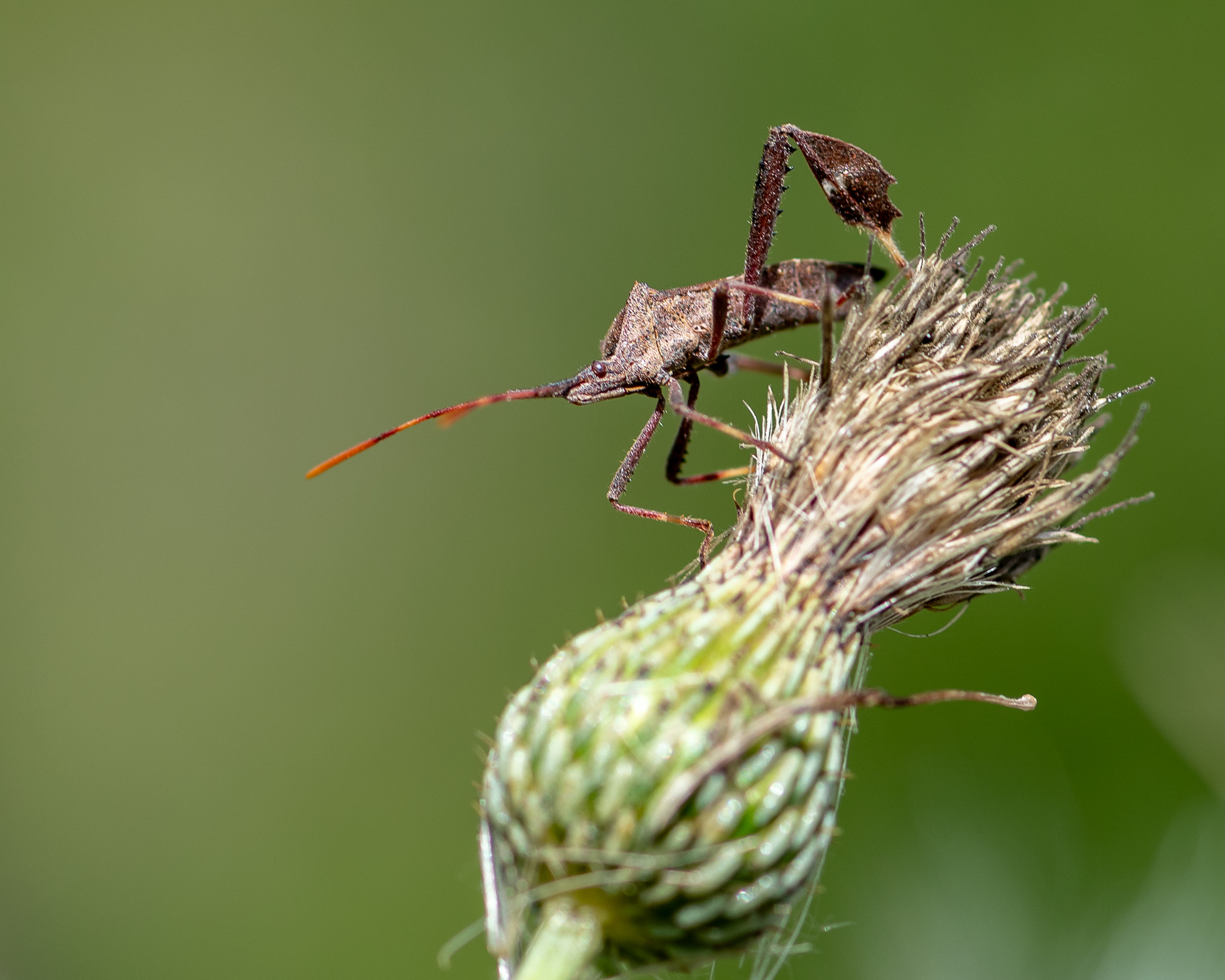
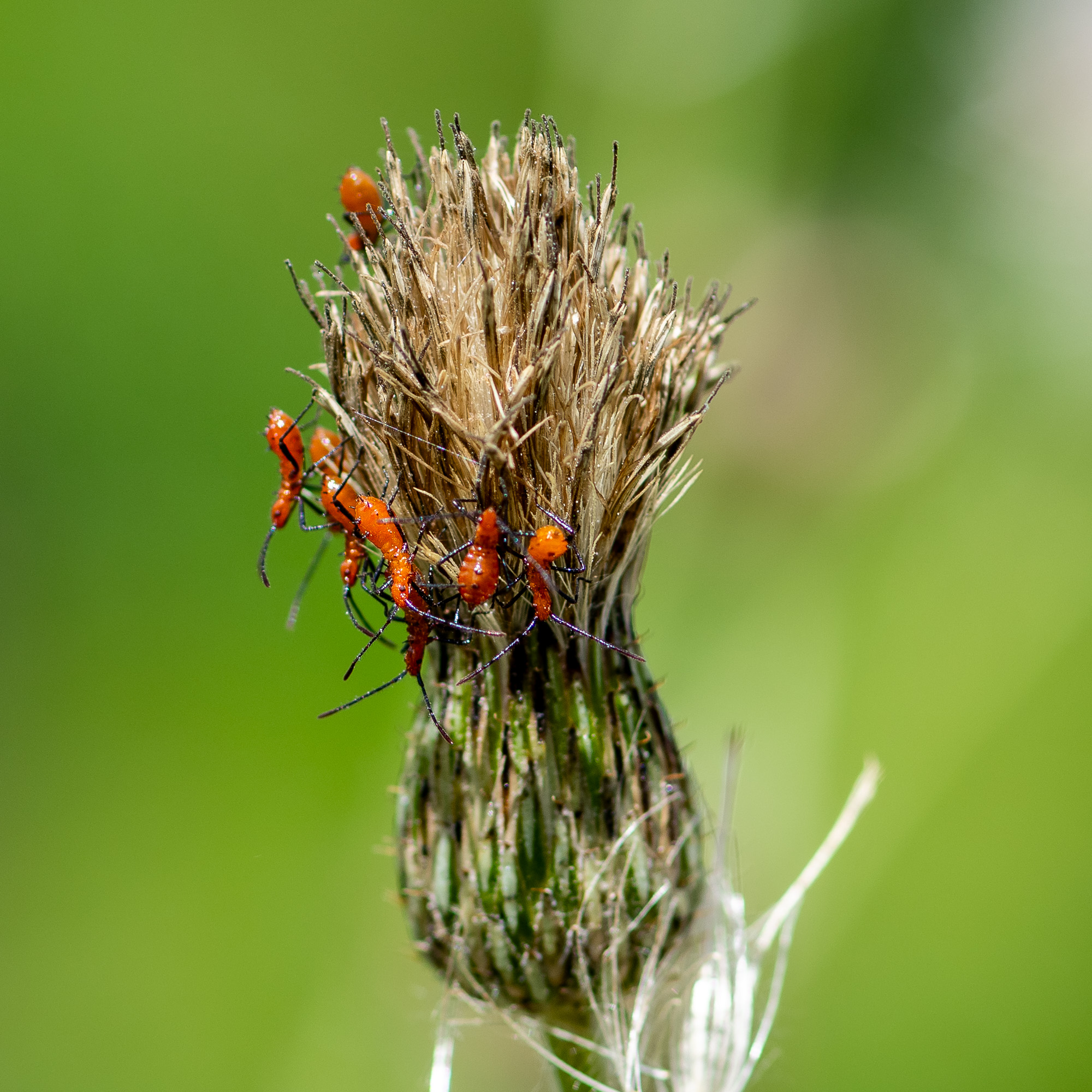
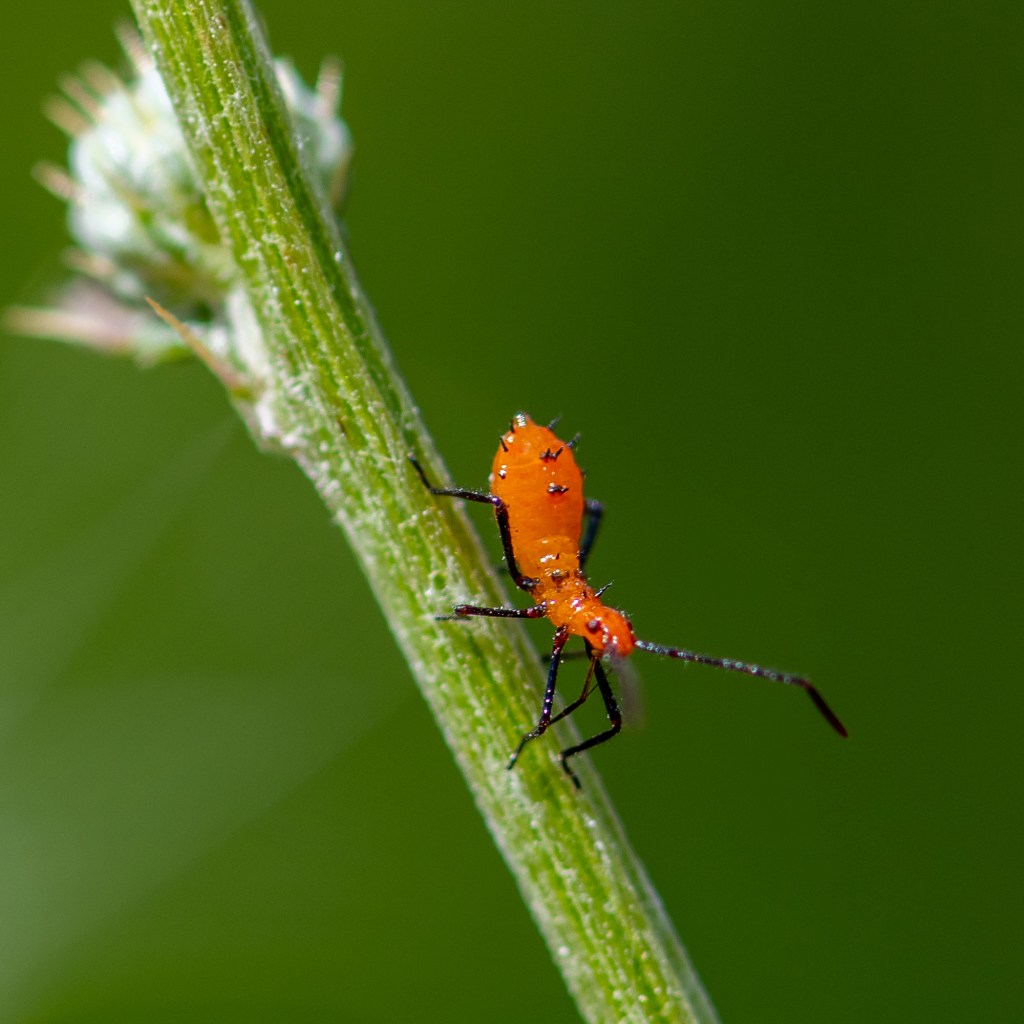
Gini’s sharp eyes spotted some different thistle activity. A daycare center! In this case, a new batch of Eastern Leaf-footed Bug (Leptoglossus phyllopus).
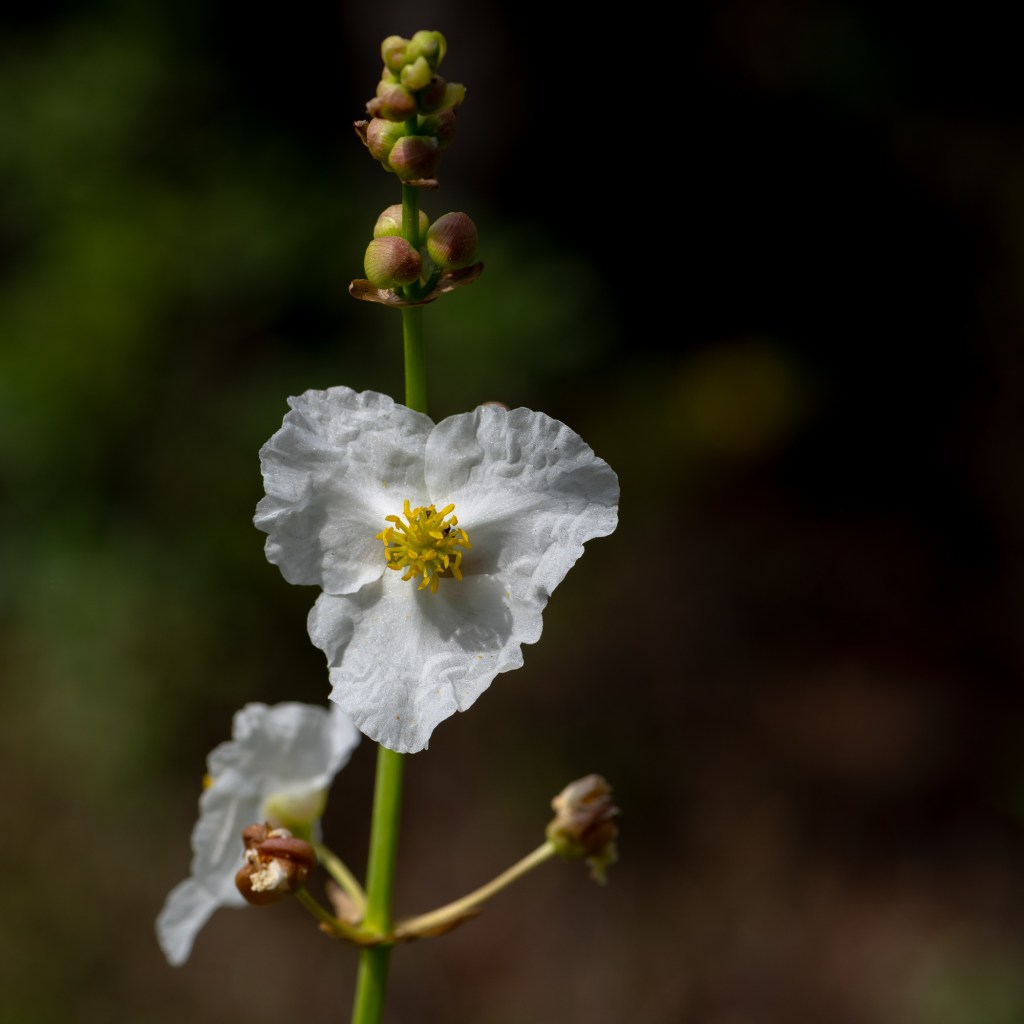
Sometimes called Duck Potato, the Bulltongue Arrowhead (Sagittaria lancifolia) was thriving in most of the damp areas we encountered today.
Endemic to Florida, we found a few patches of bright Yellow milkwort (Senega rugelii). Interestingly, the seeds of this plant are spread almost exclusively by ants.
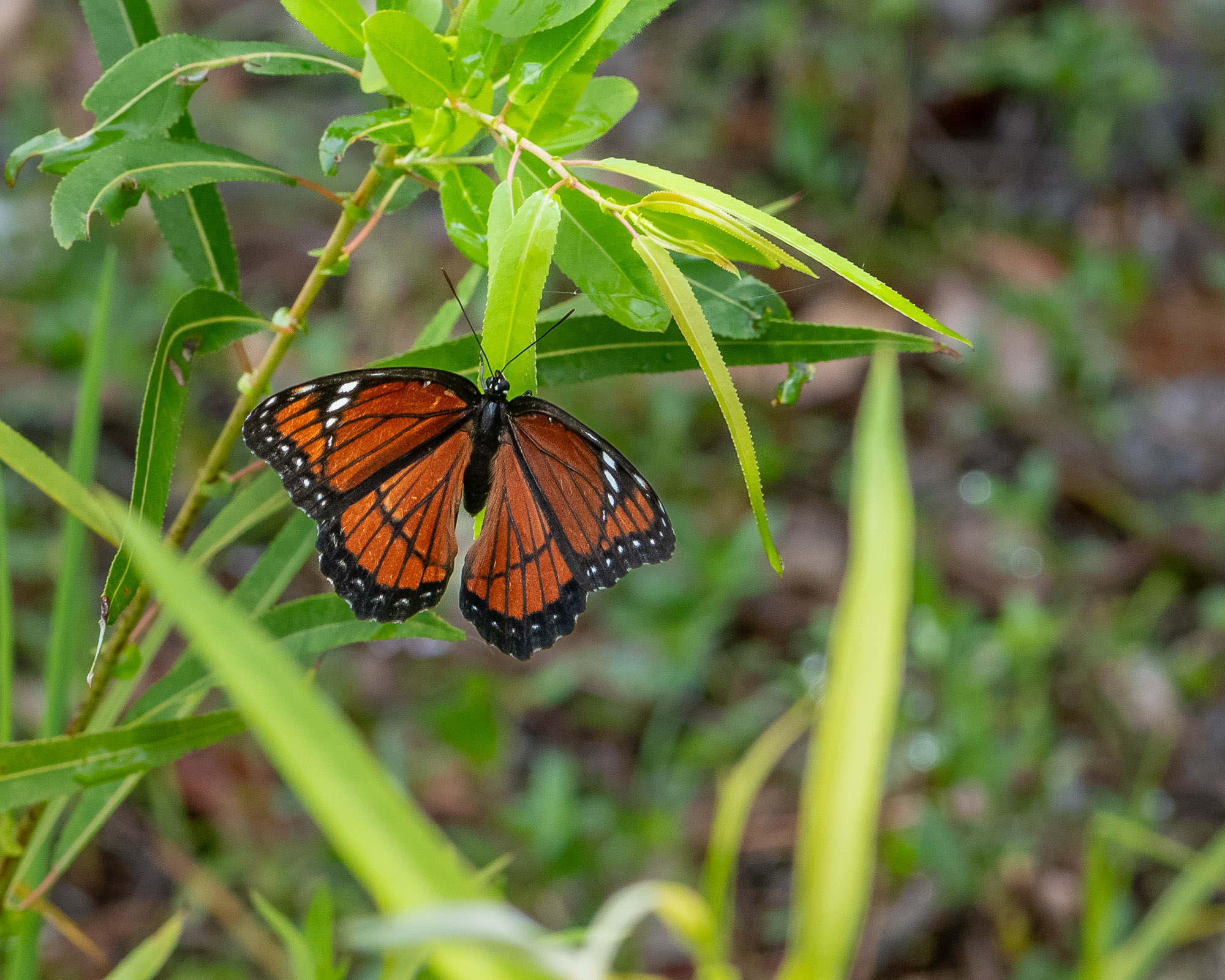
Evolving to resemble a Monarch, the Viceroy (Limenitis archippus) is, like the Monarch, toxic to predators. This type of mimicry is known as Mullerian mimicry, where both subjects likely evolved to look like each other for better overall protection.
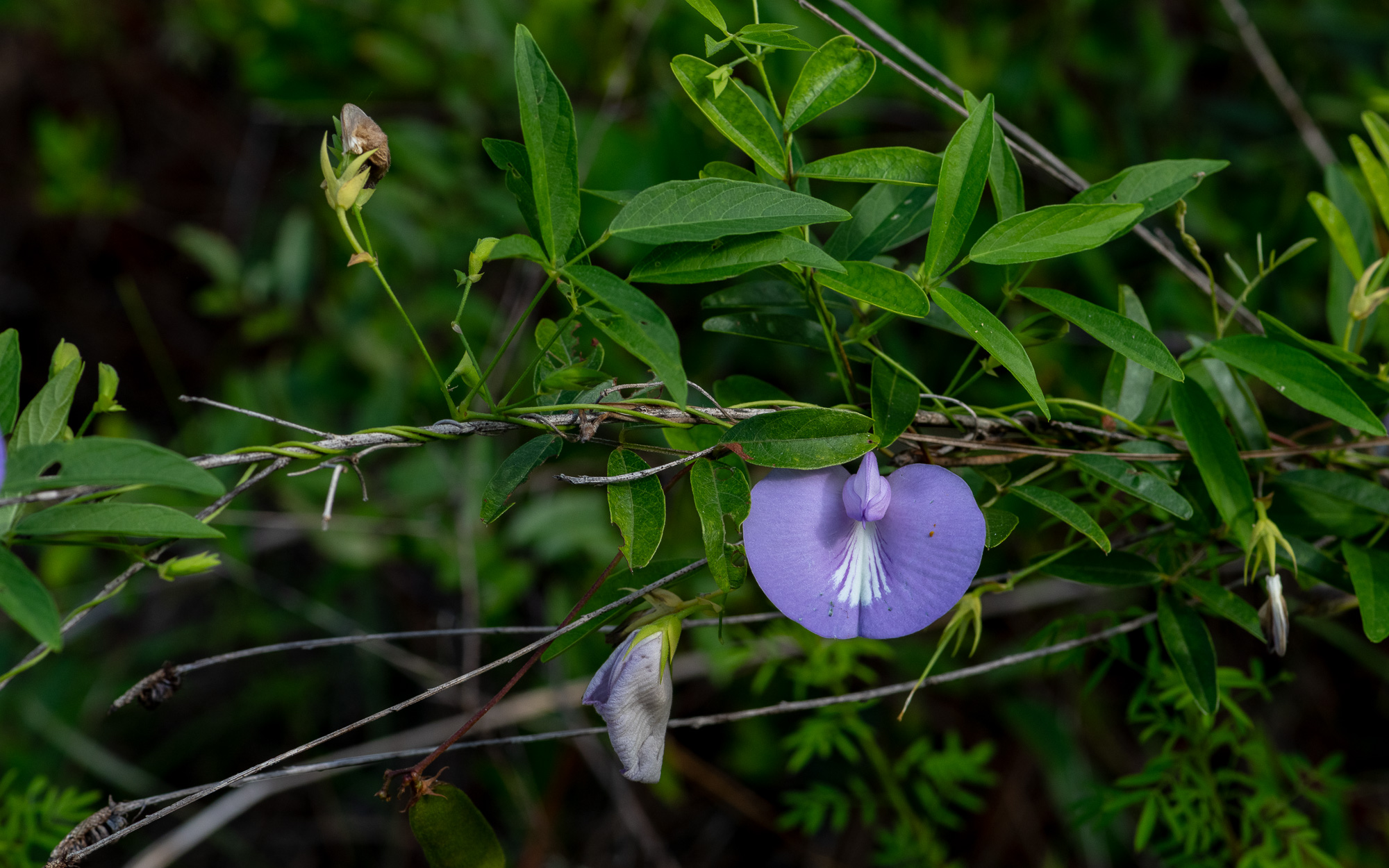
The lovely Spurred Butterfly Pea (Centrosema virginianum) is a vine which is fairly common around our pine forest edges. It is a host plant for the Northern Cloudywing butterfly shown above.
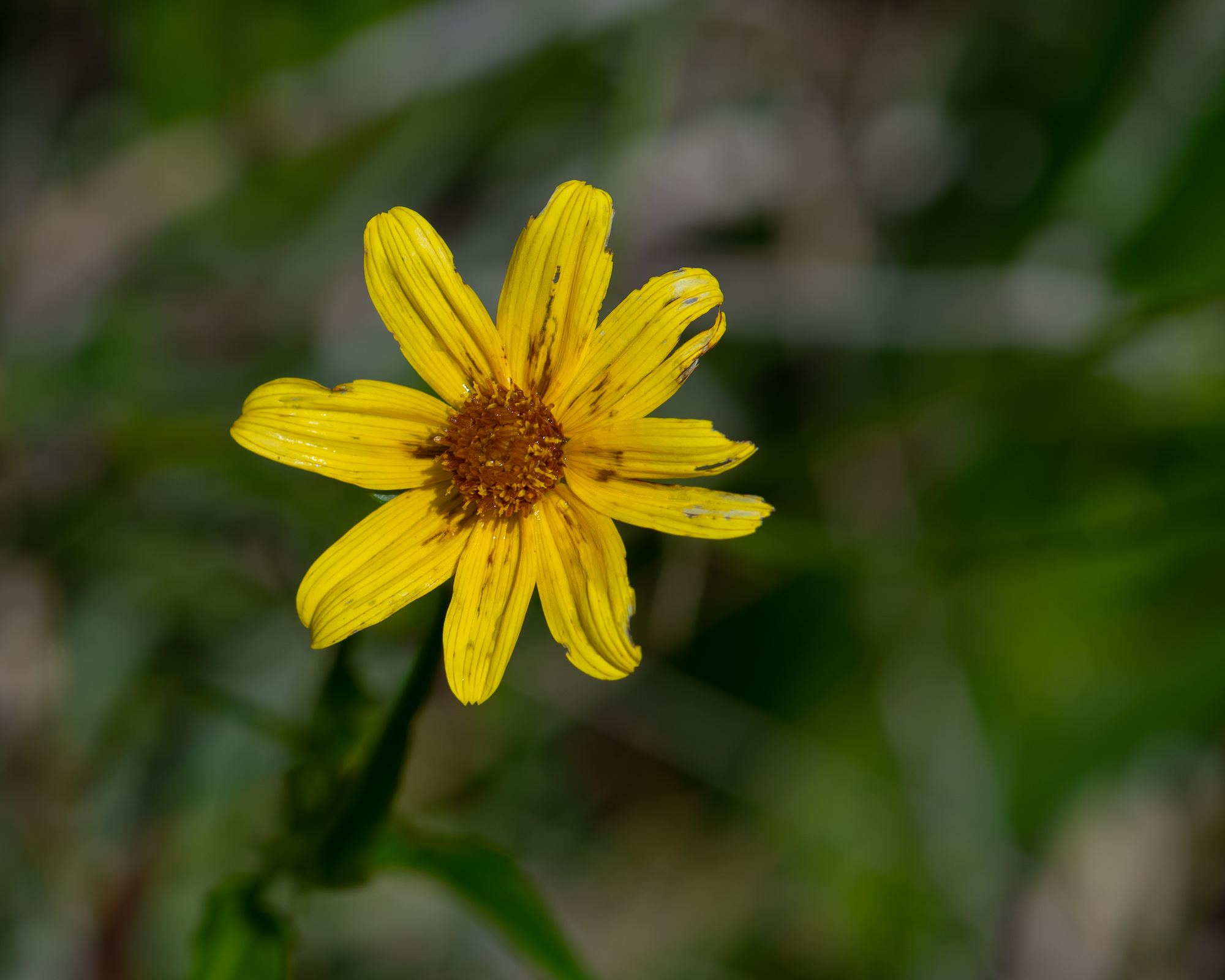
Attractive to a large number of pollinators, bright yellow blooms of Smallfruit Beggarticks (Bidens mitis) can be very abundant around the edges of wet areas.
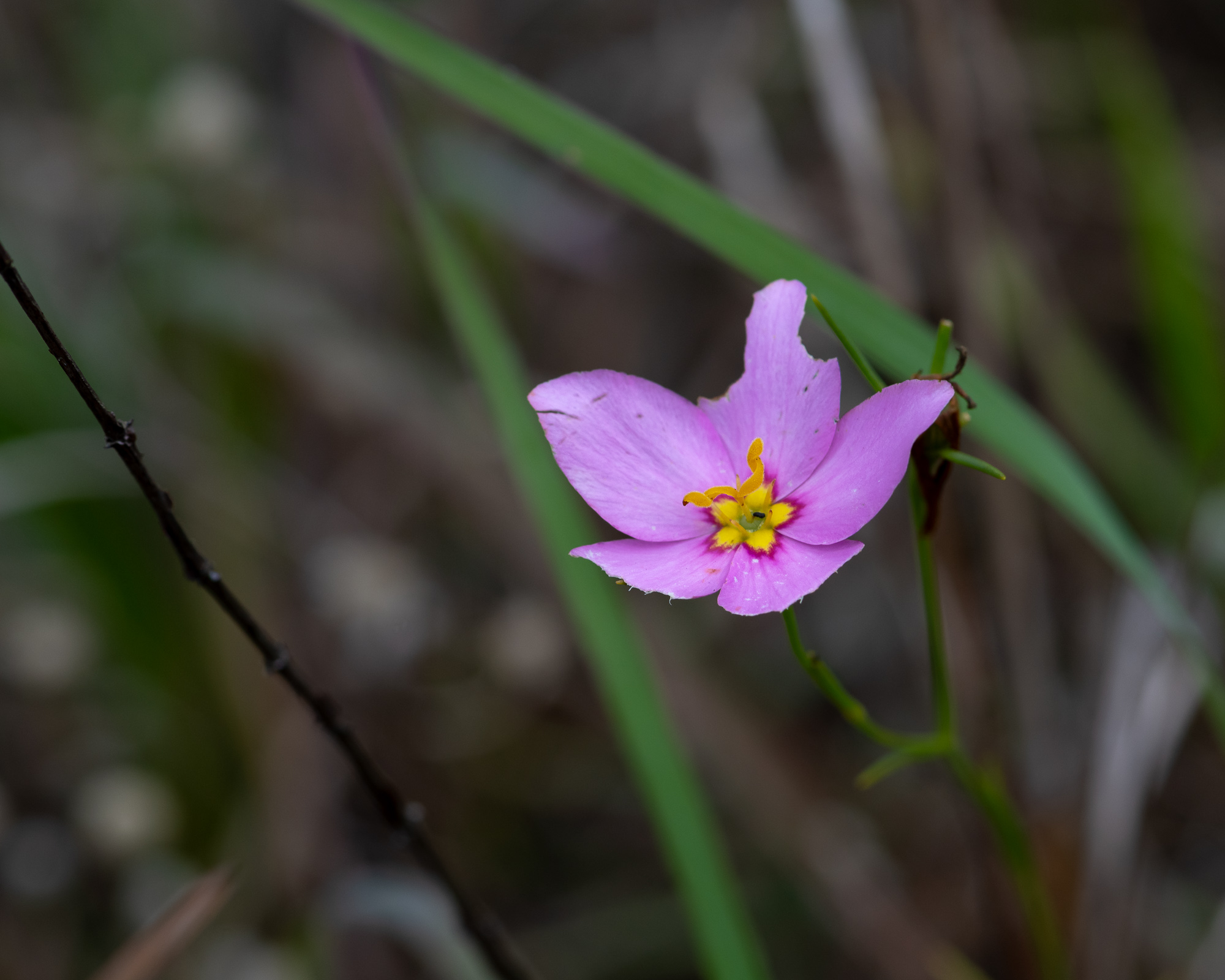
Brilliant pink flowers with a yellow star shape outlined in red at the base identifies the Largeflower Rosegentian (Sabatia grandiflora). Another near-endemic of Florida, it’s been reported in one county in Alabama.
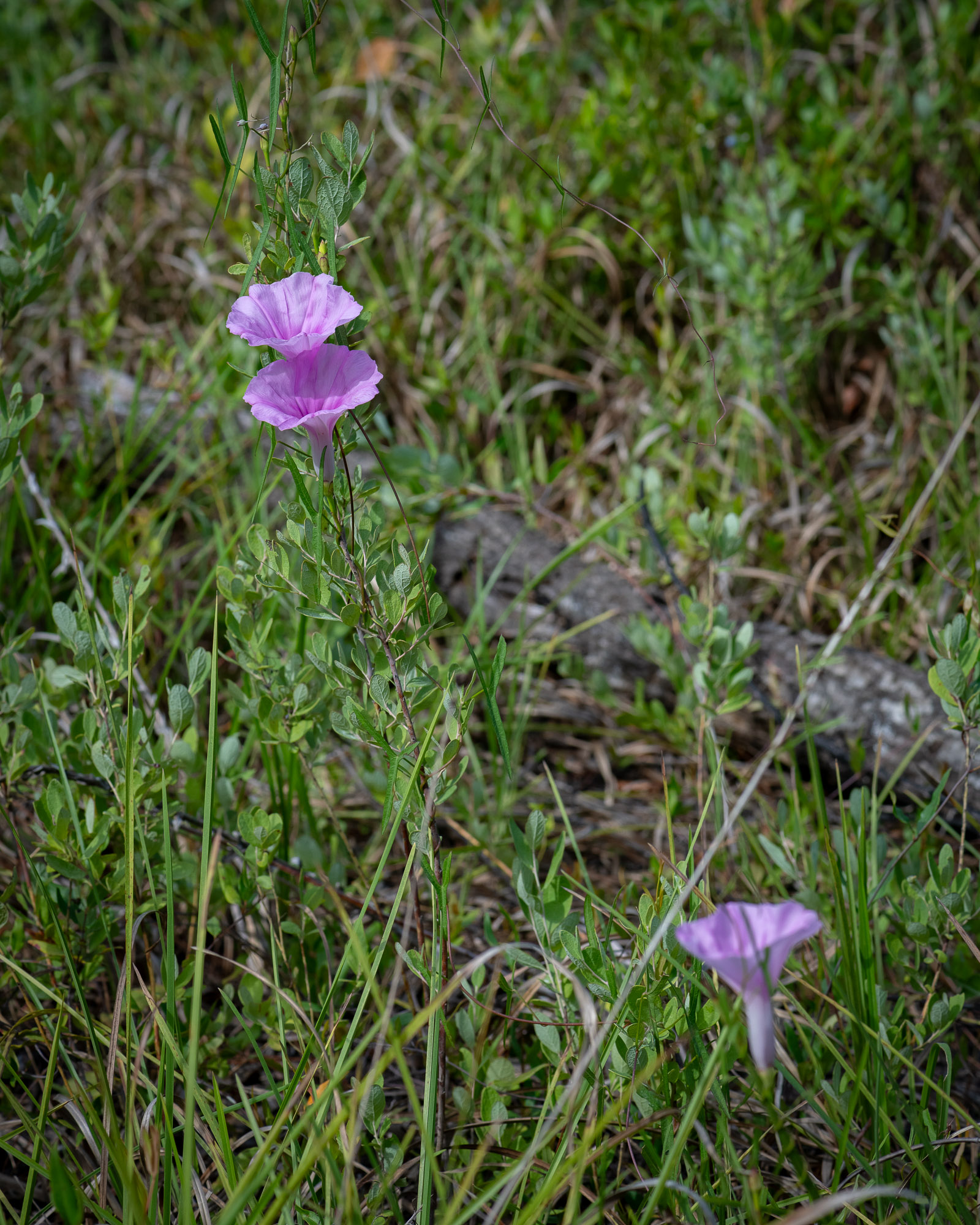
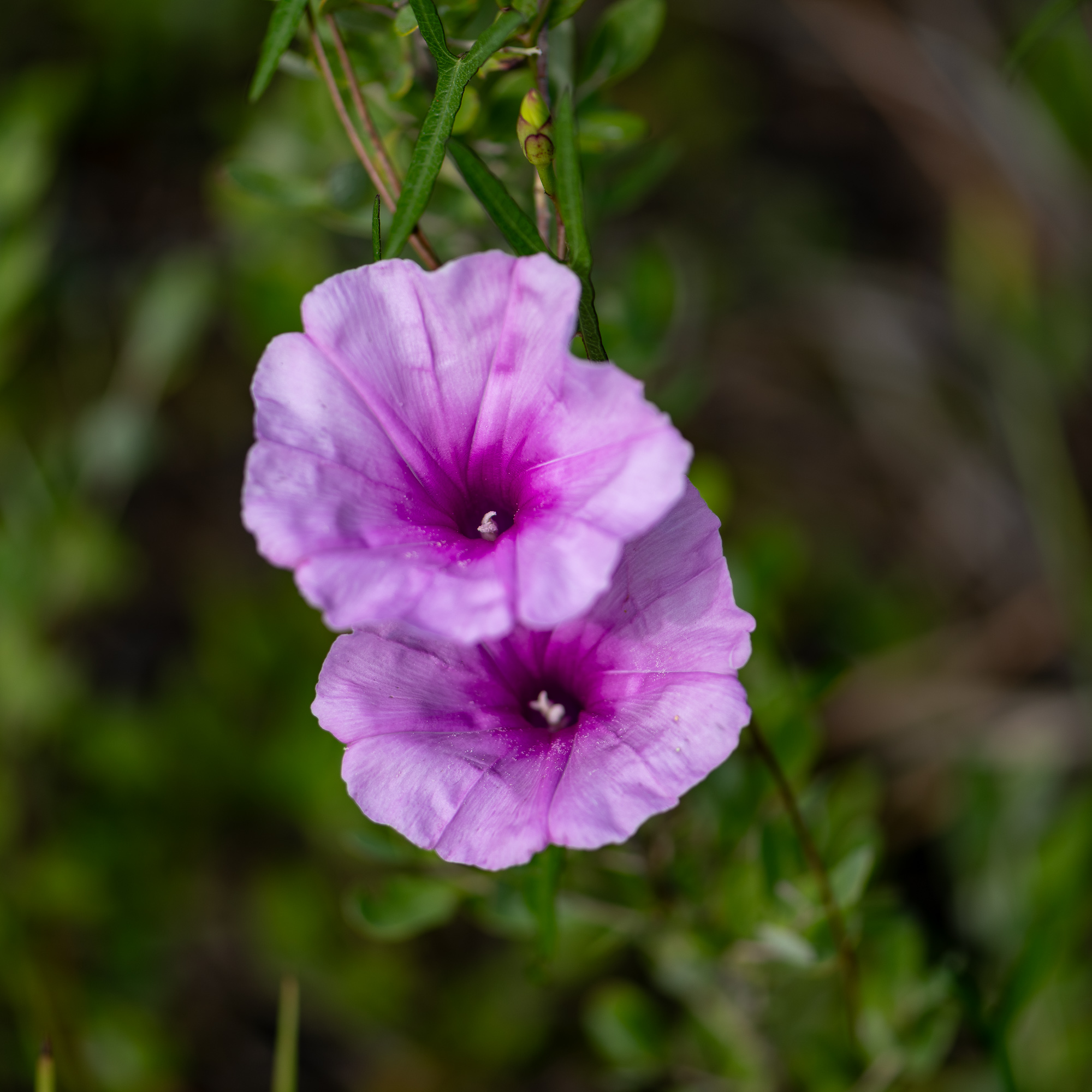
Open in the morning, closing later in the day. That describes the morning glory family. Although we are quite a distance from salt water, this is the stunning Saltmarsh Morning Glory (Ipomoea sagittata). Turns out, it is just fine with freshwater marshes and damp places of almost any sort. The species epithet sagittata is Latin for “arrow-shaped” and refers to the leaf shape.
With just fruit for breakfast, we’re sure you won’t mind if we stop at our favorite barbecue place for some lunch. It has been a pleasure to have you with us on today’s walk. Let’s do it again soon.
Enjoy your search for a natural place and come back for a visit!
 Our Natural Places
Umm, BIRDS Wally, BIRDS!! Just kidding of course. Although not as flashy as its other kin, the Spicebush is probably my favorite of the Swallowtails – that touch of brilliant color on their hindwings is so beautiful on the overall dark wing. Leaf-footed give me the heebie jeebies – thanks for the lack of sleep (which I badly need) due to seeing their babies – nightmares for sure.
LikeLike
A lovely variety of wildflowers. Good to get out in nature on a morning that’s a bit cooler. We’re still waiting for our cool-down!
LikeLike
Thanks, Peter.
However — this IS Florida, so the term “cool” is very relative and usually very short-lived. Thinking back on that morning, it may have just been my wishful thinking at work. 🙂
LikeLike
I say oh, and ah to all the butterflies, even Horace! Oh and ah to the insect and flower photos as well. I am looking forward to fall and everything it has to offer.
LikeLike
We’re lucky to have “extended” seasons due to our sub-tropical climate. That encourages early and late flowers which brings the bugs which brings the birds which brings us …..
Hope y’all are able to rest in between all the farm work.
LikeLike
The leaf footed bug….well I never! I’m just not sure I’ve ever seen that before. But your post and all of the late summer wildflowers is delightful. I am still dealing with a bad heat rash but I think I’m finally on the road to recovery. I’ve had to finally start taking some drugs to beat it. So I can’t wait to get back out there when I can. I always enjoy your photos, knowing these are some of the things I’ll see when I get back in the woods and preserves! Hugs to you both, Diane
LikeLike
We hope your issue clears up rapidly, but if you nurse it awhile longer maybe the temps will lower a bit. (Okay, that may take a long while!)
It’s still Florida so rest assured no matter when we get out there plenty of flowers and bugs will be happy to see us!
Take good care.
LikeLike
I want to go on a walk with you! You certainly found an abundance of beauty on this one. It was fun to see your version of the Ruellia, and the butterfly pea, which we share. As for those leaf-footed bug nymphs, I was tootling down one of our main roads a couple of days ago and noticed one staring at me through the windshield. I can confirm that the critter can hang on up to 45 mph. I didn’t realize until last year how common the Delta Flower scarabs are here; they certainly are easy to identify.
Our two most common Pluchea species don’t come close to a lovely citrus scent, despite a common name ‘sweetscent’ and marketers’ best efforts. The crushed leaves always seem to me to have a camphor-like smell. Looking through the species, I found a mention of Pluchea foetida, or ‘stinking camphorweed.’ I’d love to find that one just to see how foetid it actually is!
I smiled to see the pinecone nestled next to the Black-eyed Susans. That’s a sign of how similar some of your environments are to those of the Big Thicket!
LikeLike
Once again, it’s interesting to see similar species in our respective patches. Those camphorweeds have seemed too offensive to me but certainly not “citrus-like” or “sweet”. I have not yet found P. foetida but it’s supposed to be common around here.
Yep, pine forest habitat just feels like home no matter where it’s located.
LikeLiked by 1 person
Beautiful shots of the little critters!
LikeLike
Thanks, Dina. Had to pay ’em to hold still.
LikeLike
Your bug and butterfly lens must have been red hot that morning. To get all of a swallowtail in focus is some mean feat, in my experience anyways. And poor Horace with a dreadful name and looks that only mummy butterfly could love. Yes, its looking autumnal here too and we are on countdown to Greece. 22 days to go.
Sue and I took a drive to Knott End to the Post Office today to buy Euros for our trip. The sensible Greeks like to see cash rather than to mess with those silly cards that too many people like to flash around and many don’t seem to worry about banks taking a cut.
Lots of love to you both. See you in 22 days.
LikeLike
Trying to use this macro lens more as it forces me to slow down and pay attention to the “small stuff” right in front of me instead of giant Bald Eagles in majestic flight three miles distant. Old dog, new tricks.
Enjoy the bright sun of Skiathos and try to remember to return before Christmas.
LikeLike
As always, the walks you invite us on are just fascinating. I love the close looks at all the flowers and insects (and birds, when you spot them). That Dusky Wing is lovely, with fine copper-colored “hair” shining in the sun. I bet all that fuzz makes them quite unappealing to many birds. And a plant whose seed is distributed by ants… I had to look it up. Florida Wildflower Foundation says, “The seeds contain elaisomes — fleshy, oil- and protein-rich structures. Ants collect the seeds and take them to their nest where they and their larva consume the elaisomes, but leave the seed intact. The seeds are then tossed from the nest into favorable germinating conditions.” What a marvel.
LikeLike
Thank you, Sam.
Nature is so darned interesting! And she looks good, too.
Isn’t that cool about the ants and the milkwort seeds? (That website is one of my favorites.)
LikeLiked by 1 person
I would certainly be giving plenty of ohhs and ahhs even for all those Skippers!
LikeLike
All the flowers sure attract a lot of attention. Seems we always find something different.
LikeLike
It was a great walk! Especially for all the delicate butterflies we encountered. Thanks for taking me along. 😃
LikeLike
Come with us next time, too. I promise, it will even be hotter and there will be lots more bugs!
LikeLiked by 1 person
I so enjoy joining you on your outings and getting to share the close looks at all the marvelous creatures you encounter and capture in your images. Thank you for sharing your beautiful natural places.
As an aside, I have never understood why anybody would want to have clothes that smell of mothballs. One would have to air or wash them before being able to wear them. I find that odor as offensive as marijuana’s.
LikeLike
You’re welcome to join us any time, Tanja.
I know my Mother used mothballs (a couple hundred years ago), but I can’t remember if she washed the clothes before we wore them or not. Maybe one of those things we just accepted as normal at the time?
At least my jeans didn’t have holes in them from hungry moths. Of course, I suppose today I would have been in acceptable fashion. 🙂
LikeLiked by 1 person
Thank you for the invitation; I will keep it in mind! 🙂
As far as holy jeans: whether they are fashionable or not depends on where the holes are located!!!
LikeLike
Whoever chose the scientific name Trigonopeltastes delta apparently had a thing for triangles. Not only is a trigon a polygon with three sides, i.e. a triangle, but the Greek capital letter delta also has the shape of a triangle. Your picture clearly shows the triangularity of the insect’s thorax.
I see from a range map that the Pluchea we have in central Texas, P. odorata, is found in most of Florida’s counties. Have you run across it?
I like how the pineland waterwillow flower has at its center a white design that could pass for the outline of a plant. The spurred butterfly pea flower likewise has a white design that could be botanical.
The nymph of the leaf-footed bug doesn’t yet have the prominent leaf-foot that your first picture of the species shows.
The beginning of Bejaria racemosa may make you think of San Antonio and Bexar (Béjar) County.
LikeLike
Apparently, that particular beetle was given its trangular name by an 18th century naturalist, Johann Reinhold Forster. Quie an interesting biography.
We frequently find P. odorata and it is at least as common here as its P. baccharis cousin.
I have read that such designs on petals of blooms may be to entice or guide would-be pollinators. I had not noticed these do, indeed, resemble a plant.
The Leaf-footed Bug nymphs go through five stages of development (instars) after hatching from an egg. Each successive stage brings them closer to resembling the adult and the leg projections appear in the fourth stage.
Had not made that Bexar/Bejaria connection – until now. Special place for us. Our son was born there.
LikeLike