Nature Has No Calendar
(Click on images to enlarge, click again to zoom.)
The posted speed limit on this particular road is 60 mph. Traveling at that speed is hazardous to one’s safety. Especially at this hour, just before sunrise. The road is 35 miles in length and connects two major U.S. highways, one of which is a short distance from Interstate 75, a main north-south route through the peninsula. Commercial trucks and commuters use this state road as a short-cut between the highways and they have little regard for a “posted speed limit”.
For us, the “short-cut” road cuts through the heart of the Green Swamp spanning a two-county area. That’s good news as it provides easy access to some of our favorite patches. In the dim light of pre-dawn, locating our unmarked forest road is a dicey proposition as a line of commuters happily excited to get to work on time and big trucks anxious to get their cargo to a destination are not very patient with a pokey little auto delaying their journey.
We turn onto the soft dirt logging path and the entire world seems to breathe a huge sigh of relief.
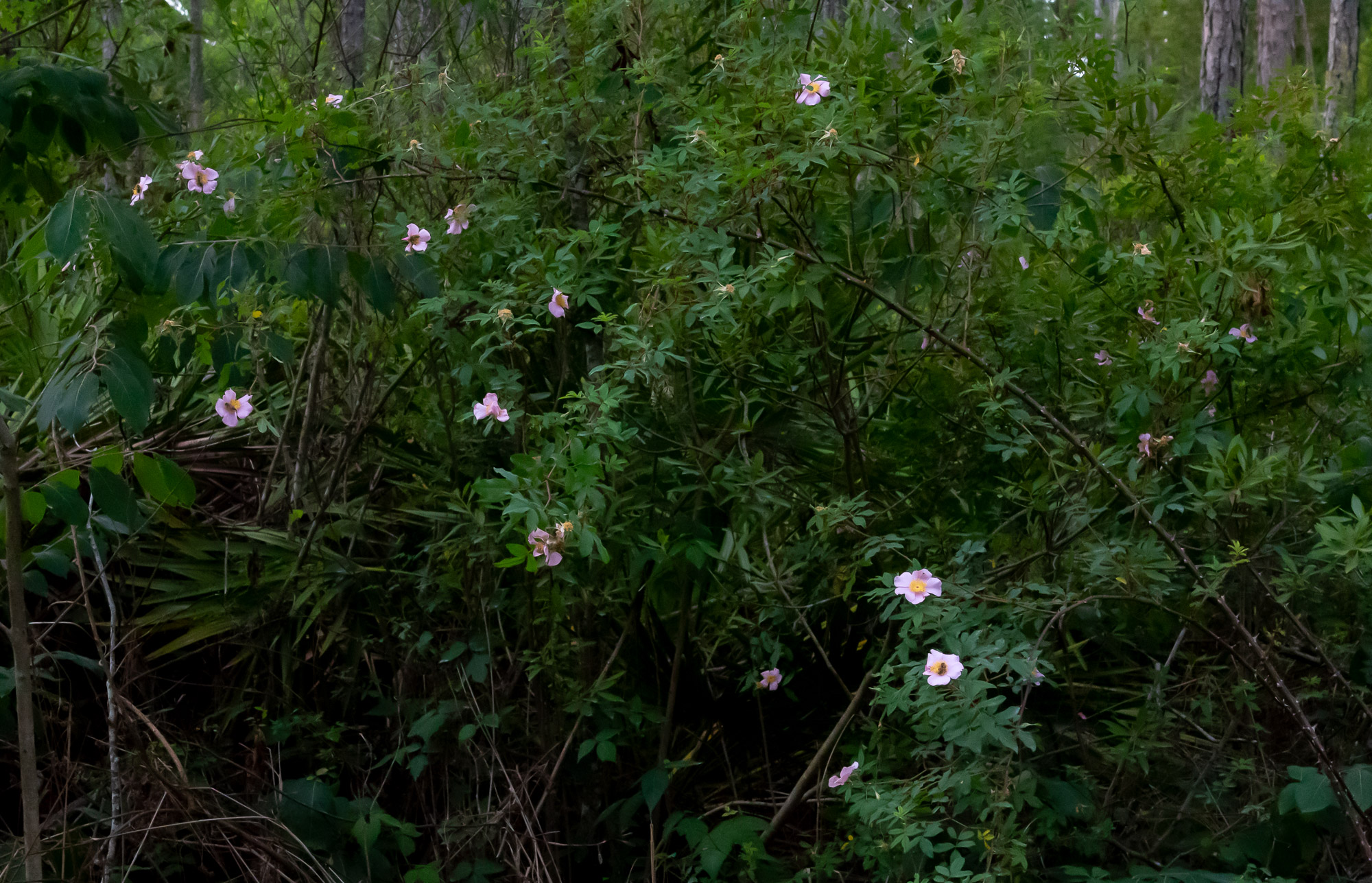
When beginning a morning of exploring Nature, we often wonder what the day will bring as we take in the scent of pine trees, enjoy the distant calls of familiar birds and scan the landscape for interesting sights. Today! Today we were immediately surrounded by birds singing from every branch seemingly at arm’s-length, dozens of cicadas sounding like old Model-T Ford engines trying to get started, Swamp Roses already opening their pink blooms for all to enjoy.
It will be a good day.
Florida has been experiencing its severest drought conditions in 15 years. Our forays within the Green Swamp this year have definitely confirmed areas where we normally see standing water are dry. We have been concerned how these conditions affect the flora and fauna.
Although we understand there must be a negative impact on the overall environment, we are also amazed at the apparent resilience of Nature. Flowers are in abundance, which, in turn, attracts plenty of pollinating insects. Birds are raising families and the checklist of our observations has not been much different than past years. Fauna seems to be very active as evidenced by our sightings of small mammals, alligators and lizards. Tracks in the sand confirm a variety of animals are present.
Nature flows with a cyclic rhythm that never wavers. We may call this “seasons“, but Nature cares not about our labels. Life progresses at its own pace. We are but passengers on a relatively short journey.
Humans have developed methods to keep track of time. (Who figured out we need such a process?) One dictionary definition of a calendar: “… a system for fixing the beginning, length, and divisions of the civil year and arranging days and longer divisions of time (such as weeks and months) in a definite order.”
That made my head hurt.
I could take an aspirin, or – recall a few things we saw in Nature, where no calendars are needed.
Couldn’t they find a better moniker than “Swamp” Rose (Rosa palustris)? No matter where we find them, a rose seems to brighten any corner of our world’s garden, even in a swamp. I reckon Juliet said it best: What’s in a name? That which we call a rose, By any other name would smell as sweet.
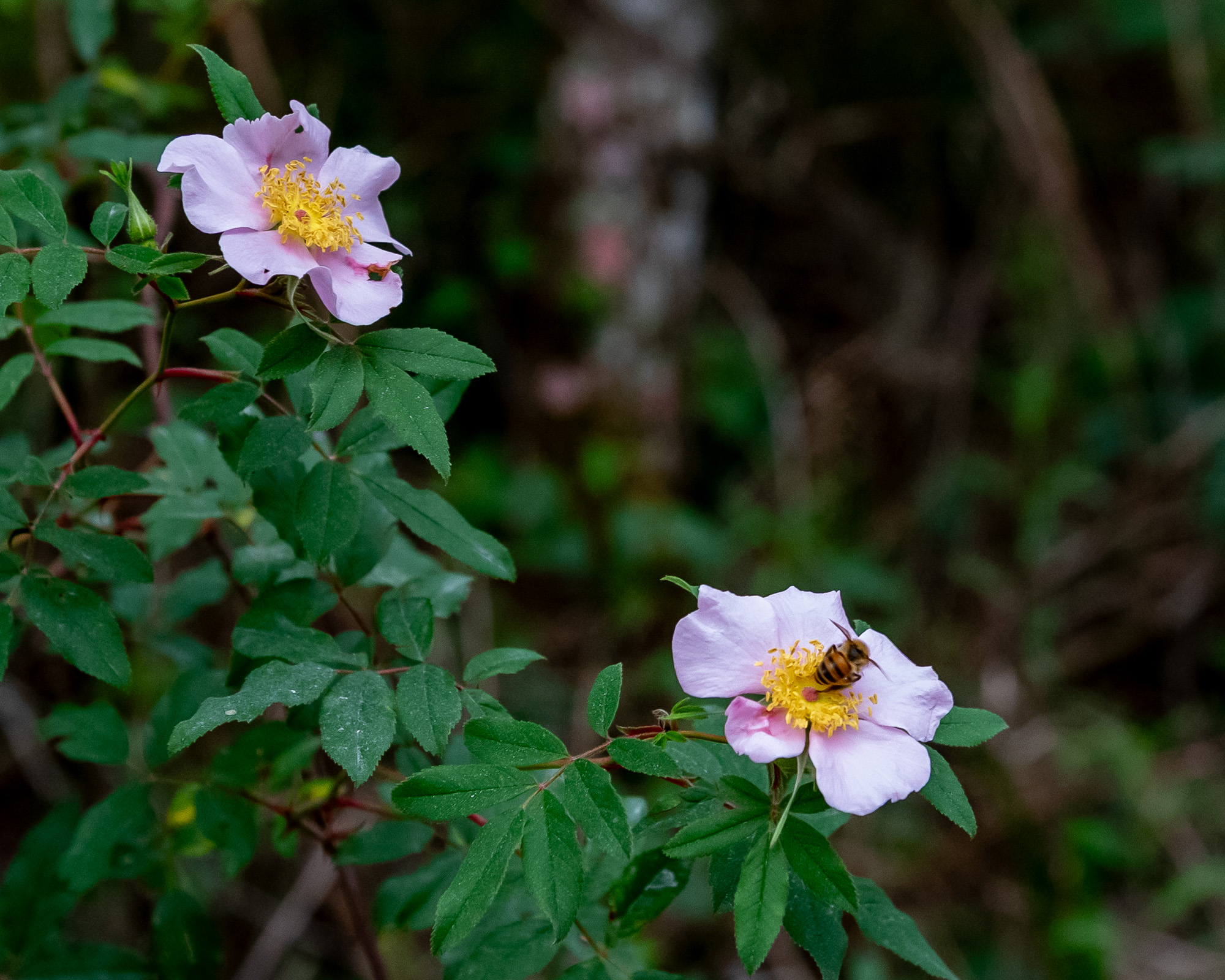
As soon as we turned off the paved highway, Nature sent a messenger to welcome us to the swamp. The White Ibis was likely leaving its nightly roost to find a good spot to forage for breakfast.
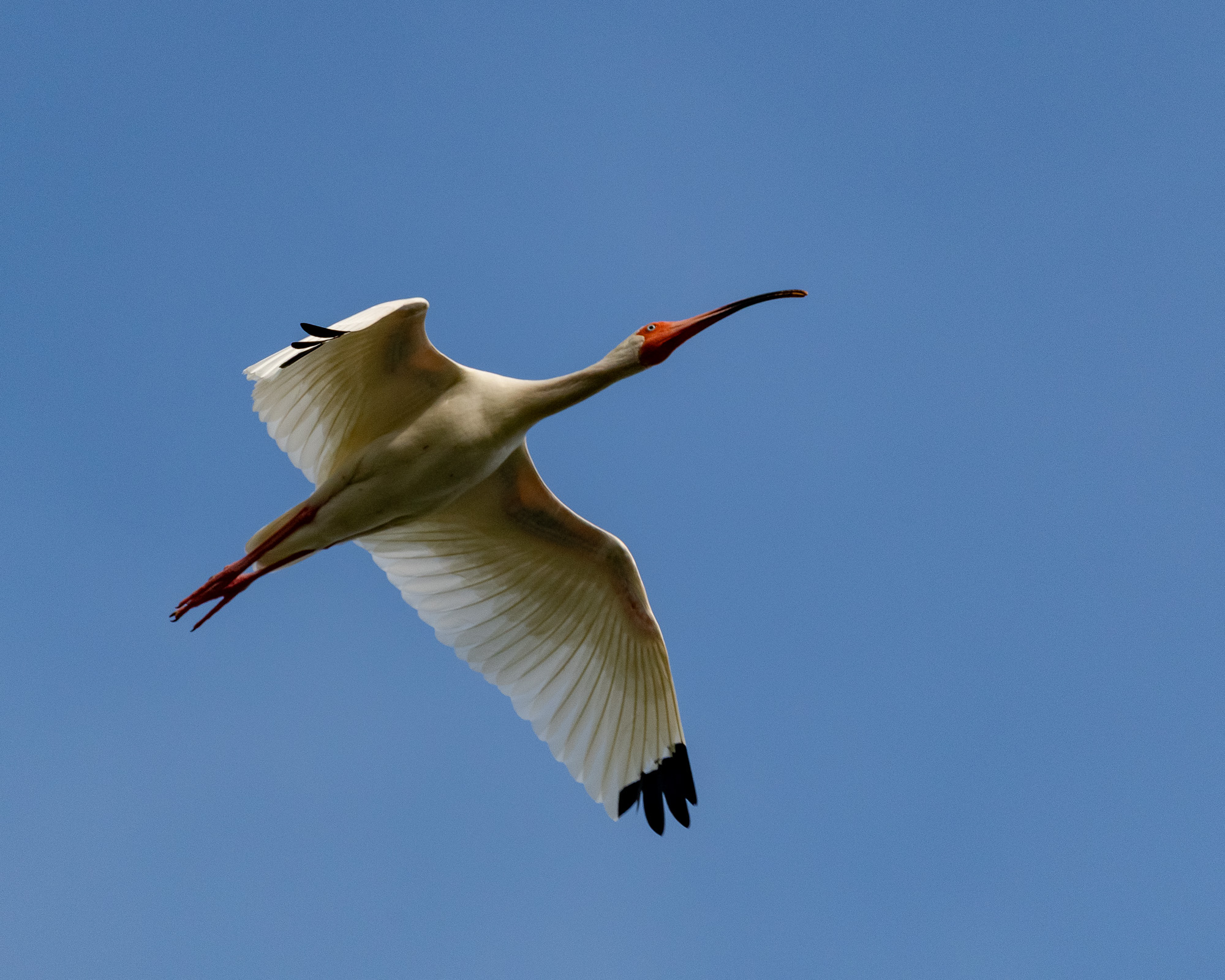
Plenty of pink to be seen this morning. Along with the roses, there was a plethora of Pale Meadowbeauty (Rhexia mariana).

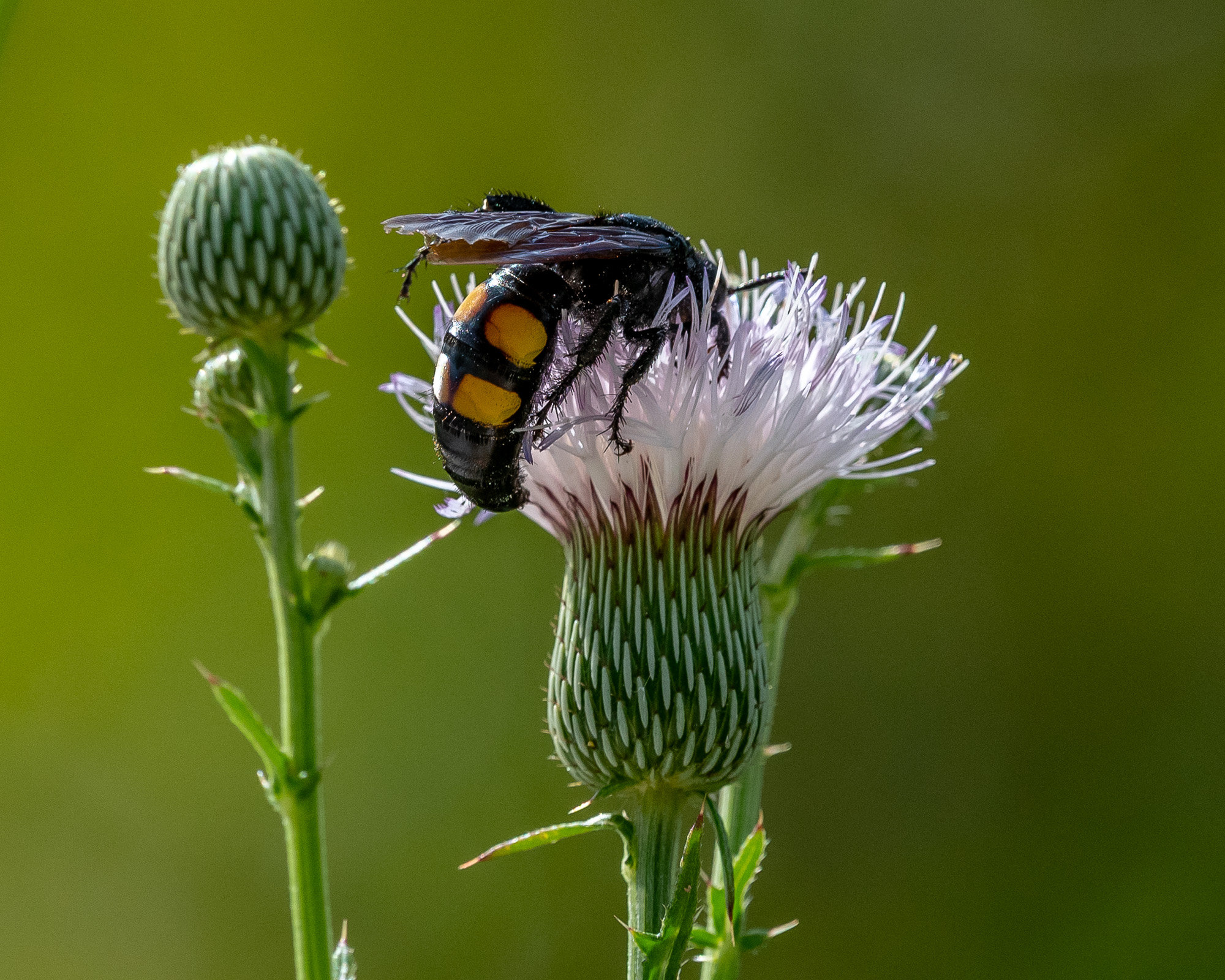
Large Four-spotted Scoliid Wasp (Pygodasisquadrimaculata) is the largest wasp in our area. The adults are pollinators as they seek nectar. Eggs are laid underground inside beetle larvae, which helps reduce damage to flora from some larvae species. The big wasps are not aggressive, although I’ve never tried to get one to sting me.
Speaking of larvae. This Northern Parula warbler thinks they make a fine brunch.

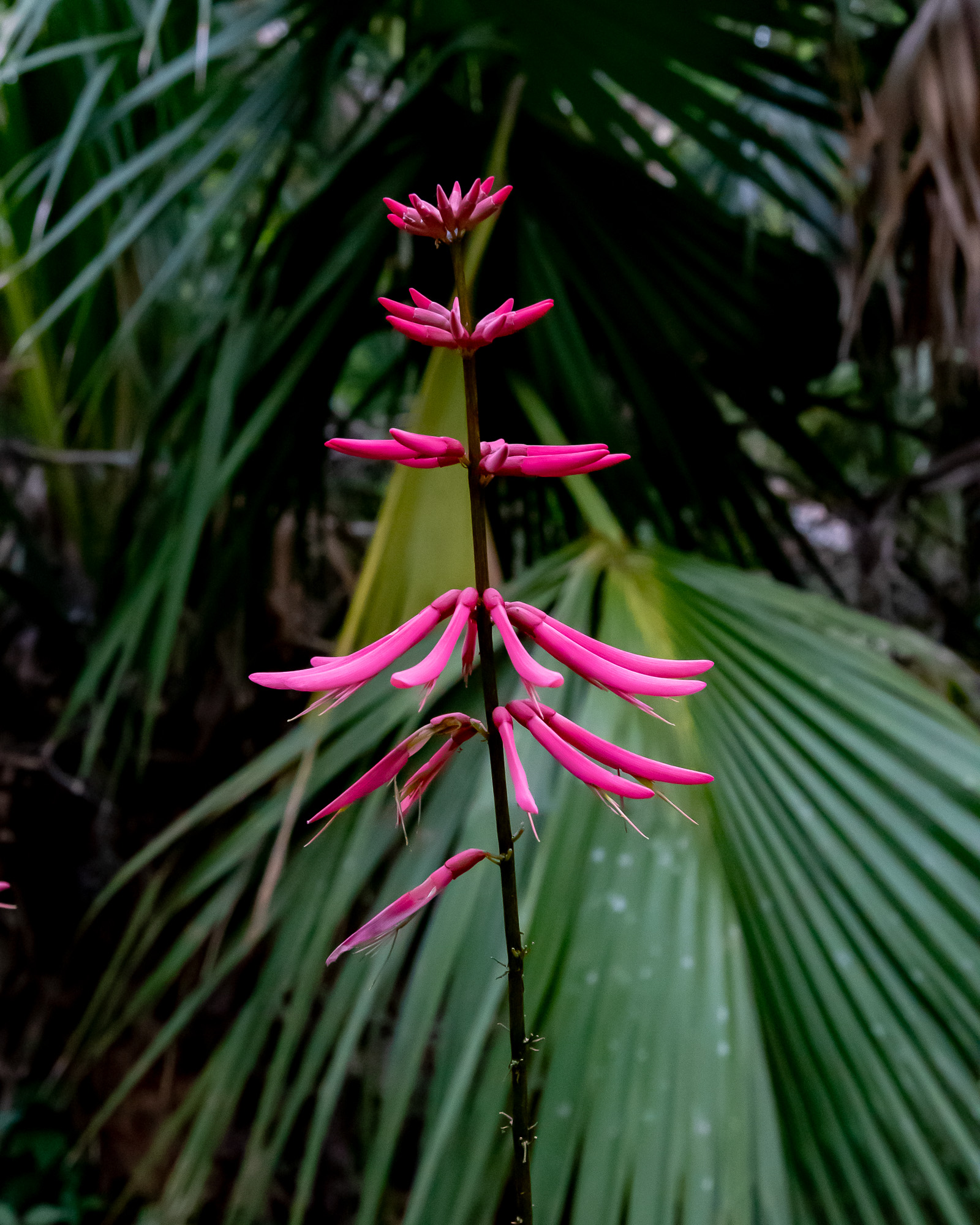
Coralbean (Erythrina herbacea), has lovely red flowers but its common name is derived from the coral-colored seeds which will appear within long pods later in the year. Be careful if handling the seeds as they contain a toxin.
Delaware Skipper (Anatrytone logan) on Nuttall’s Thistle (Cirsium nuttallii). This is one of the small members of the grass-skipper family of butterflies and is common in moist habitats.

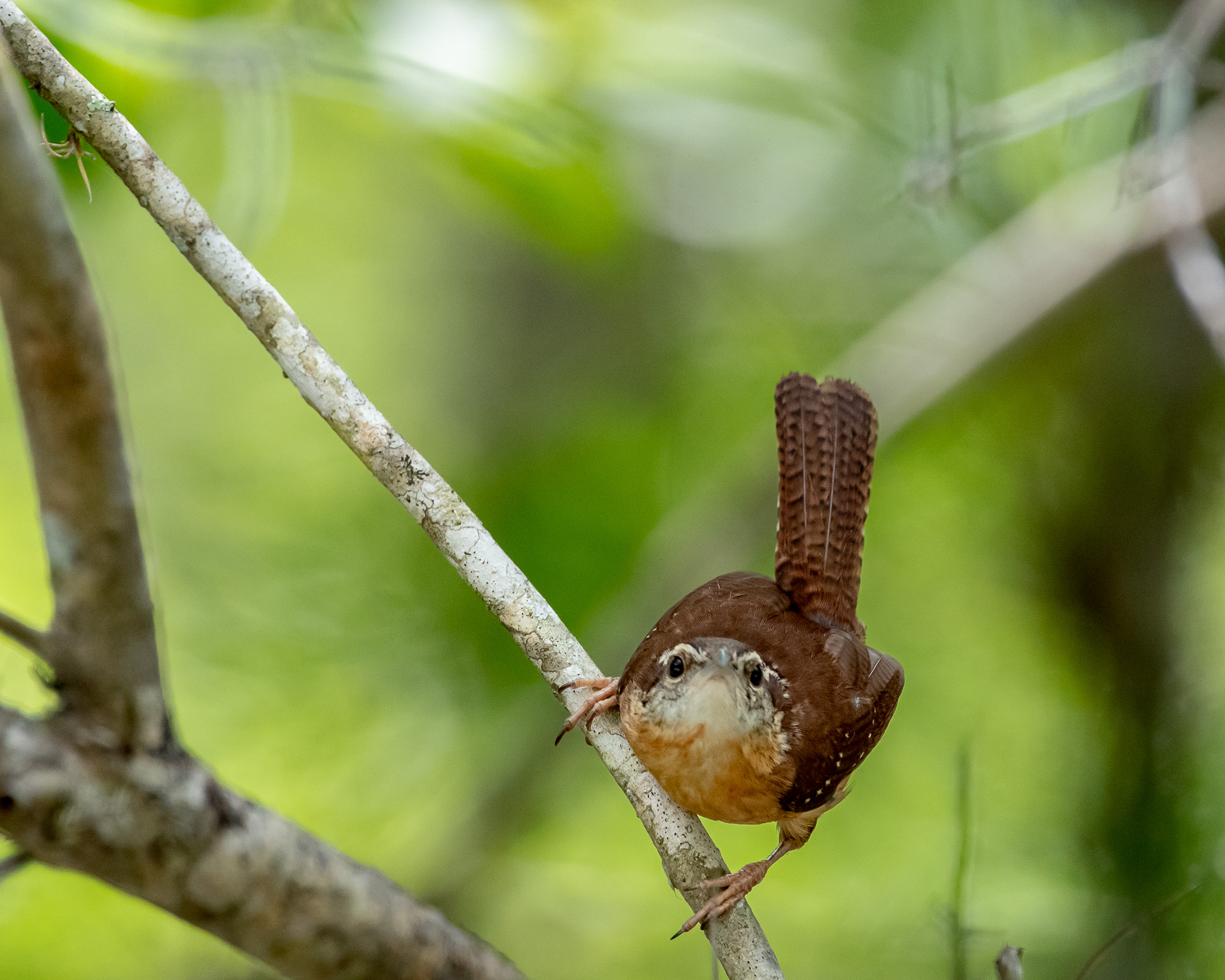
A feisty Carolina Wren demanded to know what we were doing in its neighborhood. It seems many small birds, especially wrens, have large attitudes.
With flowers that open fully after sunset, the Southern Beeblossom (Oenothera simulans) encourages nectar-seekers such as moths. The family name, Onagraceae, is “evening primrose”. This species was previously named Gaura angustifolia and is still known by some as Southern or Morning Gaura.

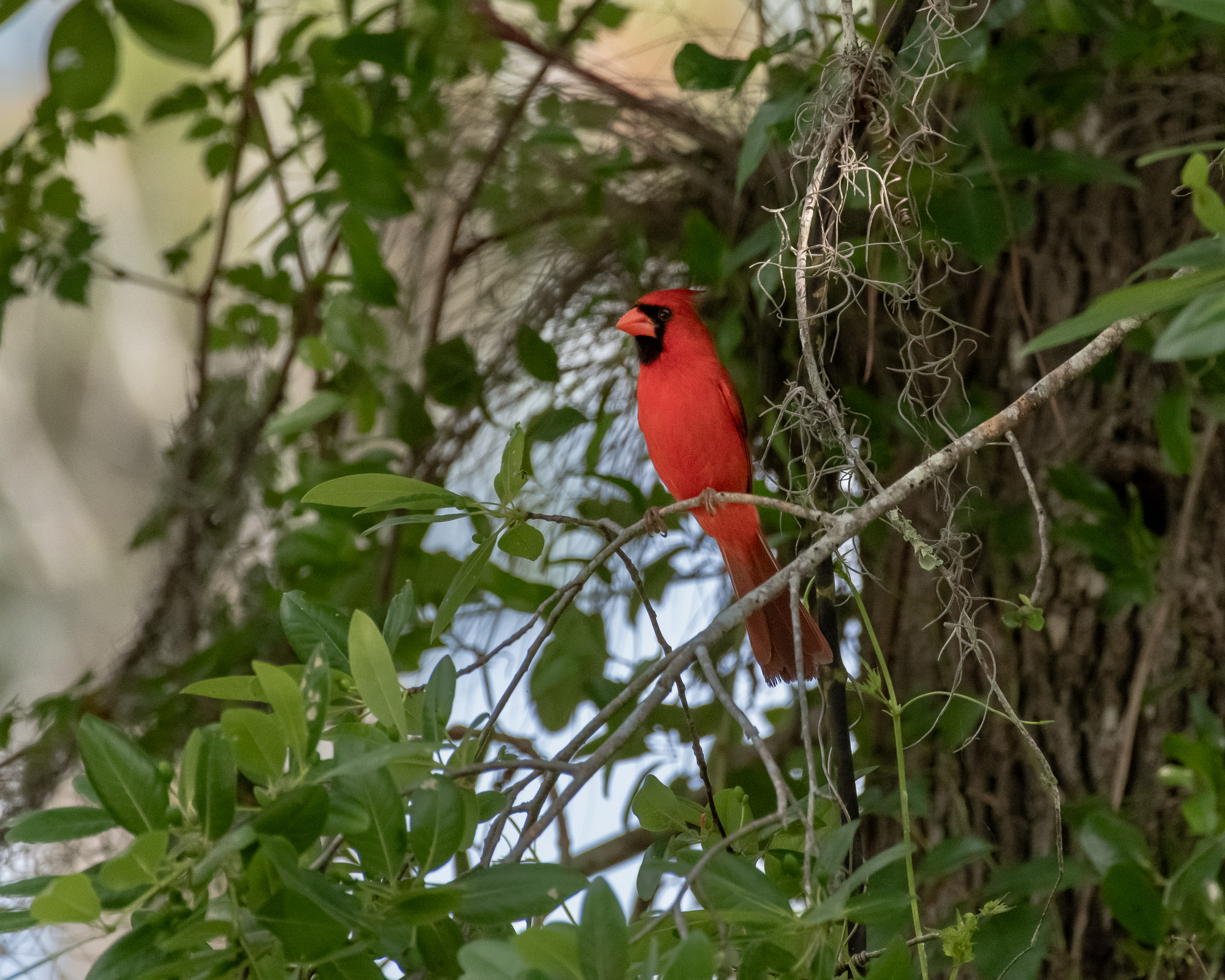
Bright red is pretty hard to conceal among the green and brown of the trees and gray of the Spanish Moss. That’s a good thing. Otherwise, we might miss a Northern Cardinal.
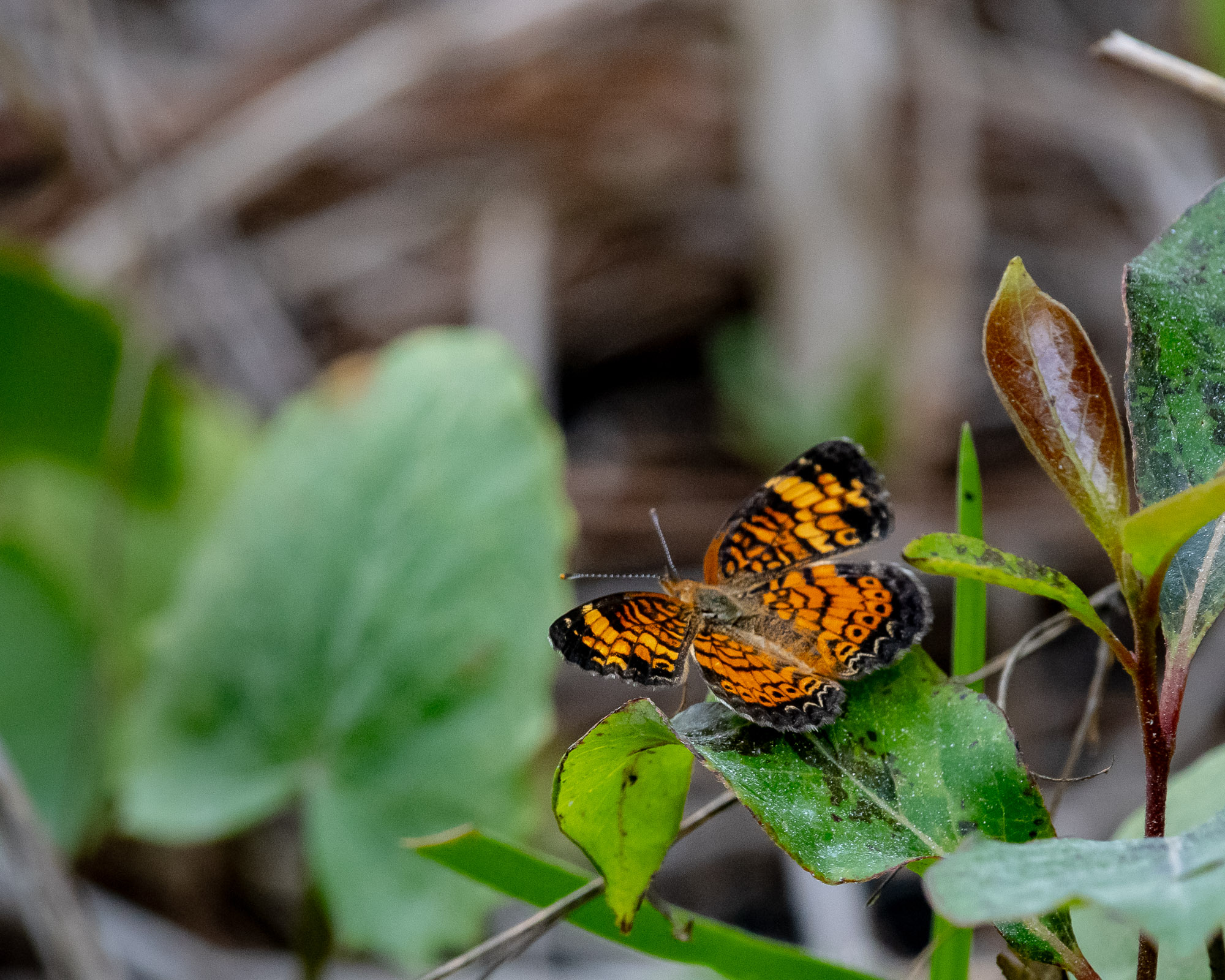
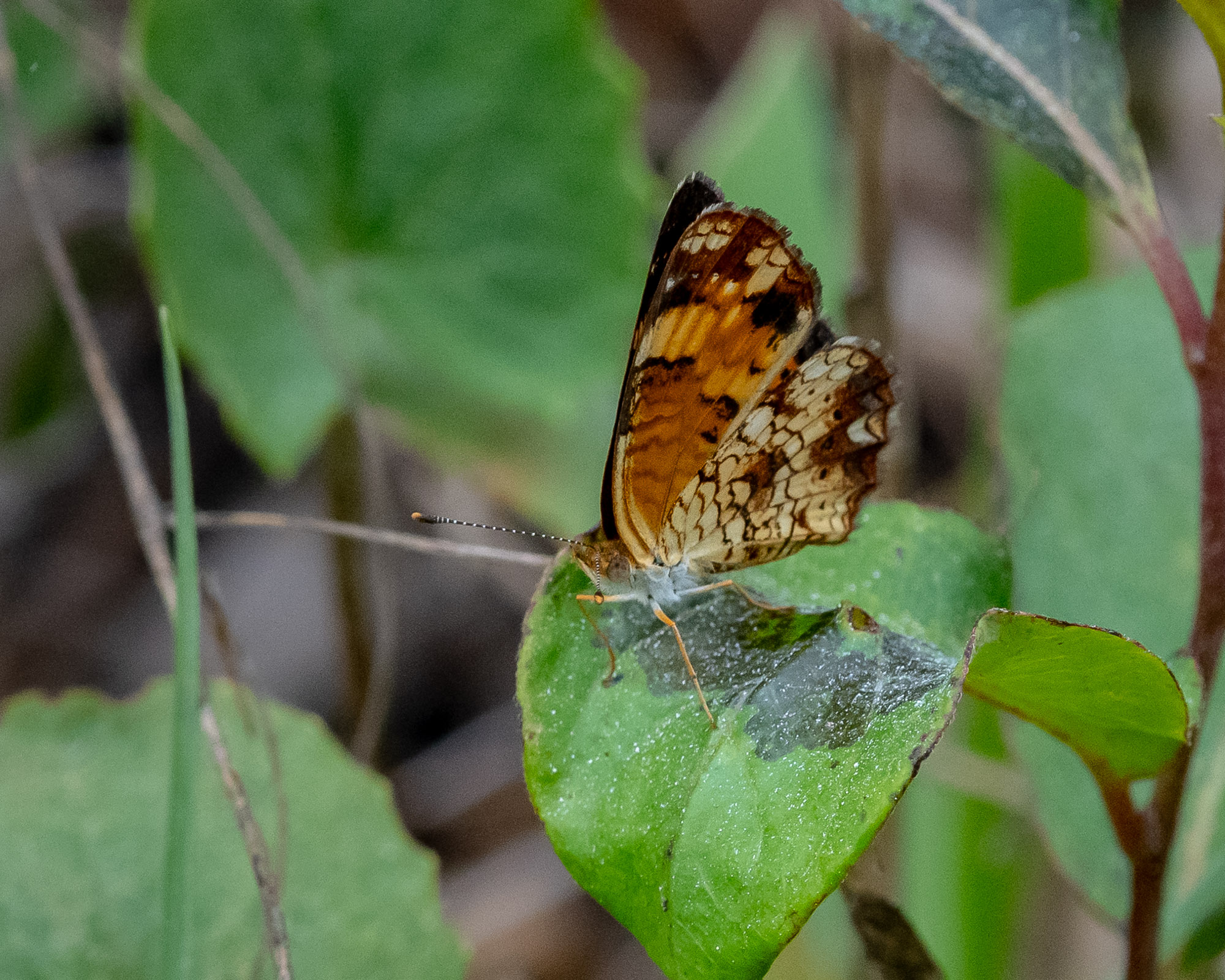
It may be one of the most common butterflies in the brushfoot family (Nymphalidae), but it’s always a pleasure to encounter a small bright gem fluttering among the blooms. The Pearl Crescent (Phyciodes tharos) is found throughout the U.S. except the west coast. The family name “brush-footed” is due to reduced-size forelegs which are covered in small hairs, like little “brushes”.
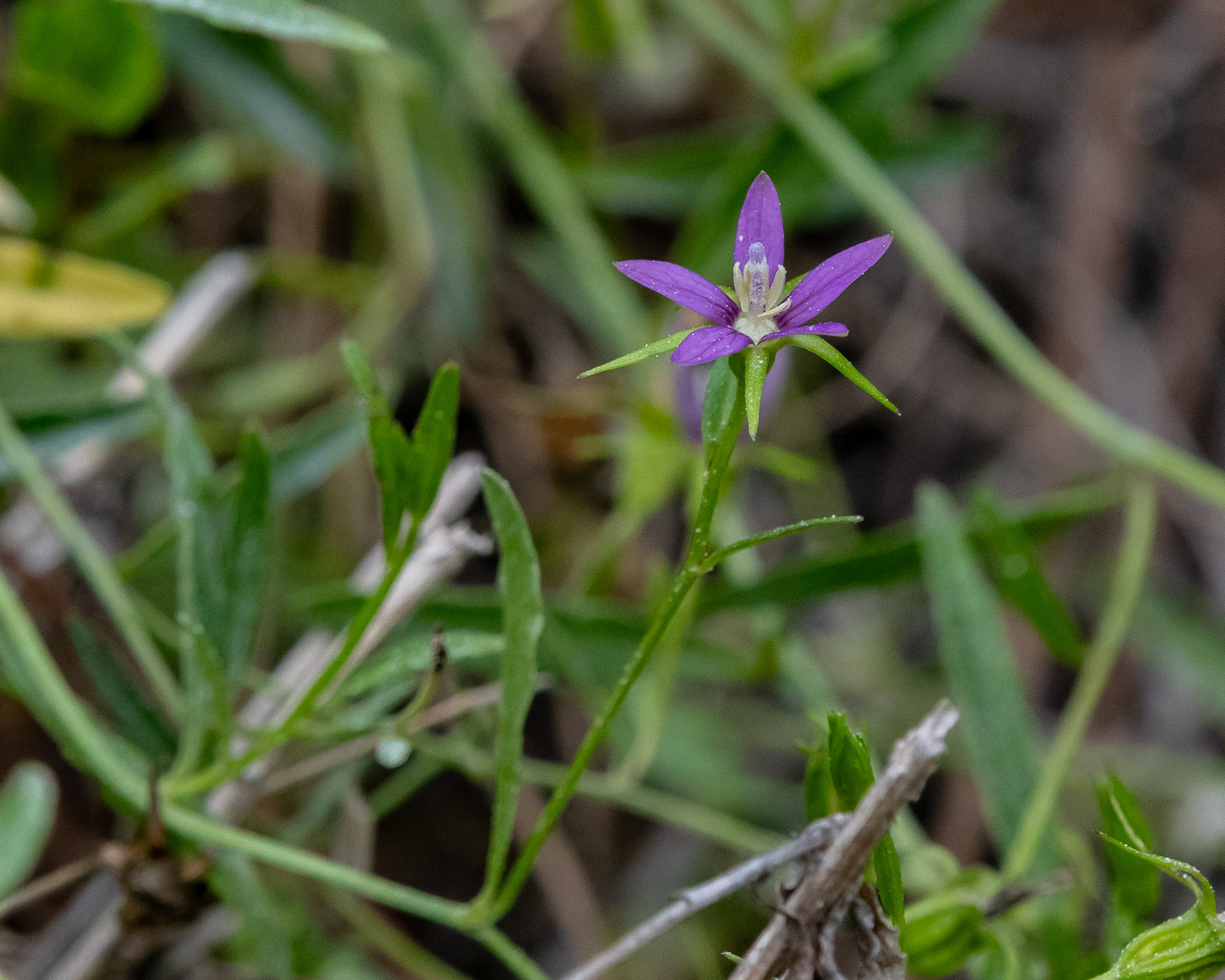
So small, it could easily be overlooked. Fortunately, we found a few lovely splashes of violet which turned out to be Florida Bellflower (Campanula floridana). It’s always a pleasure to find something so beautiful that occurs only within our Sunshine State.
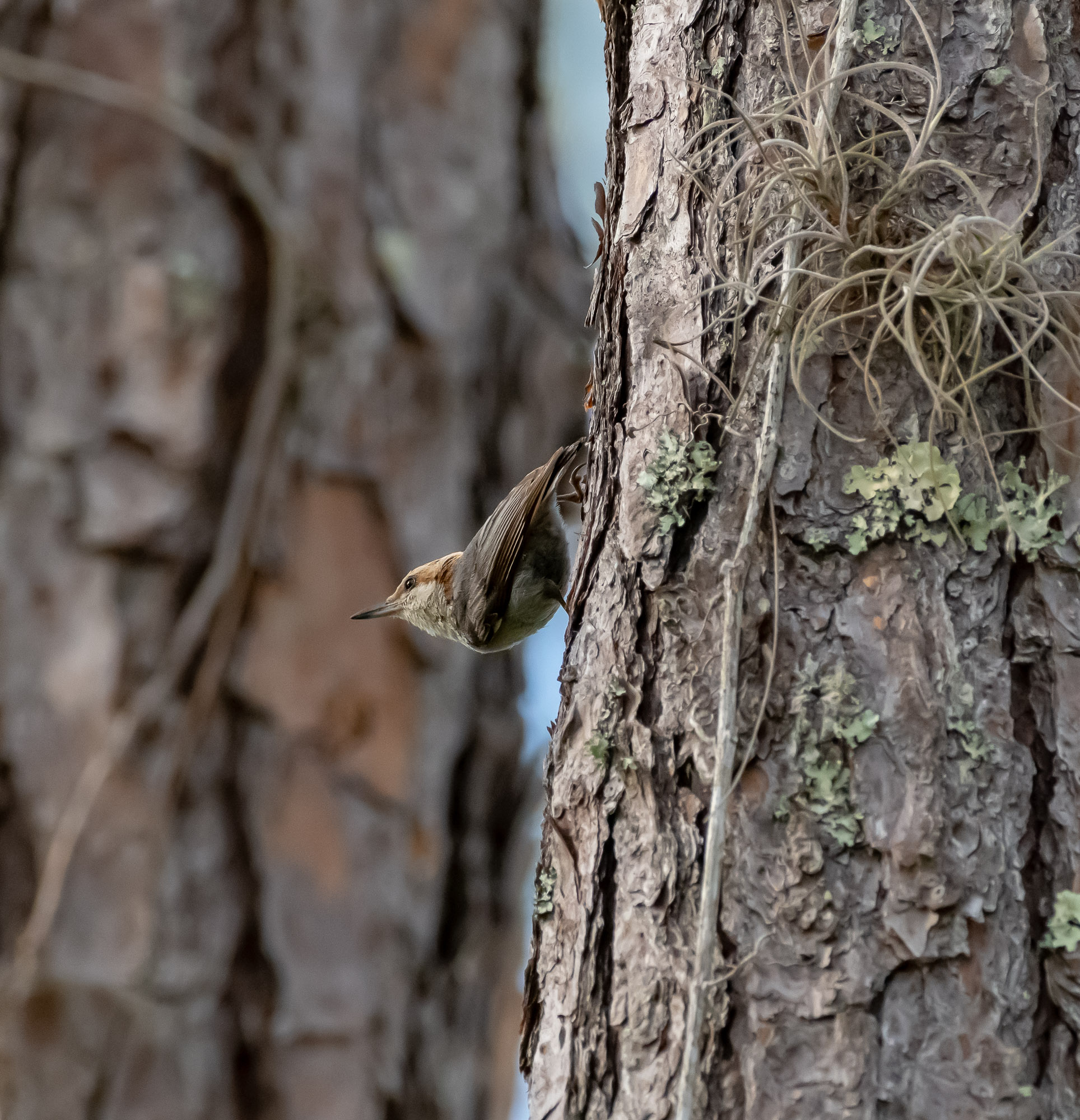
Always busy, running down a tree trunk, squeaking like a rubber ducky. We think the Brown-headed Nuthatch is pretty special.
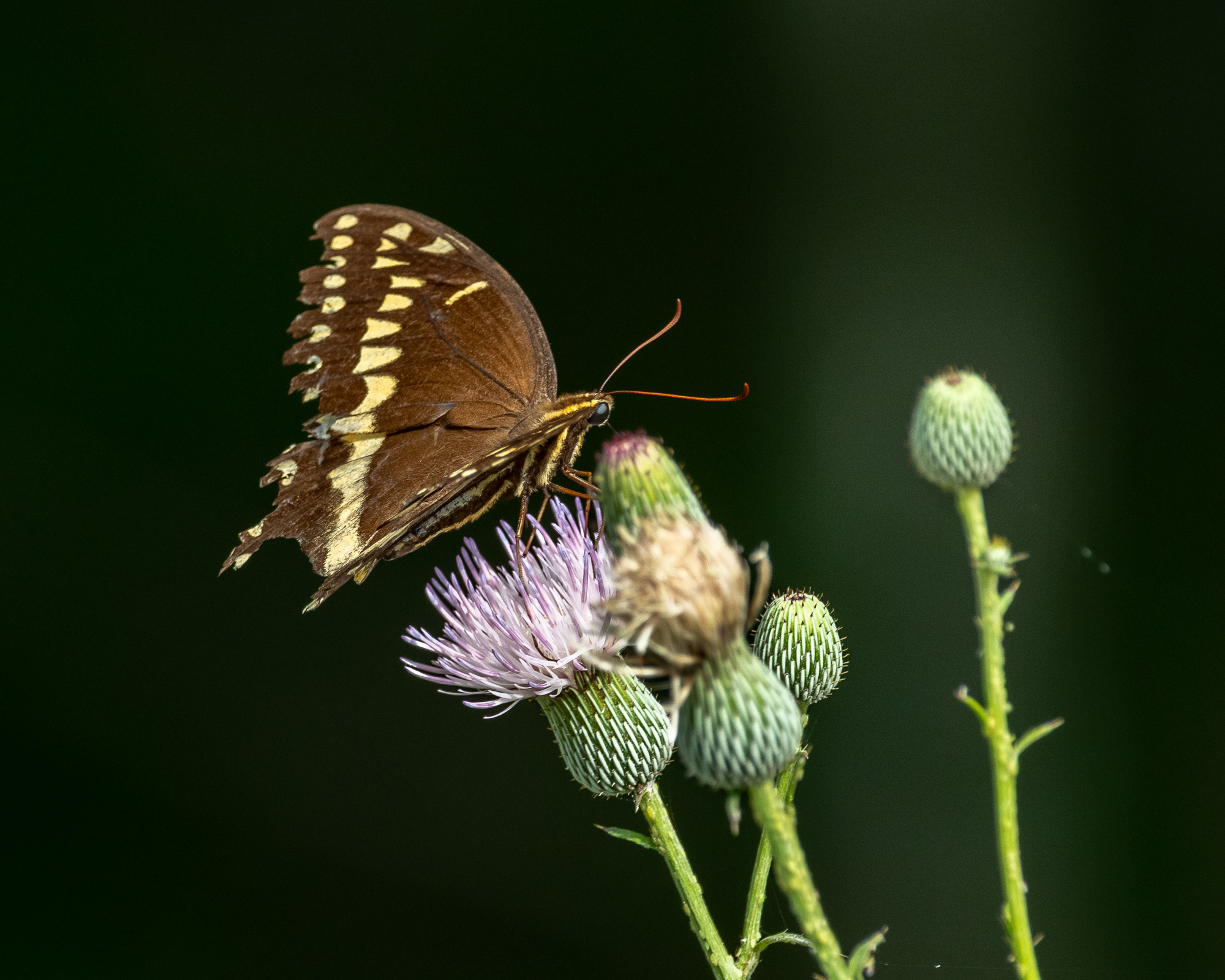
Palamedes Swallowtail (Papilio palamedes) on Nuttall’s Thistle (Cirsium nuttallii). This is one of four large dark swallowtails which can be found in Florida.
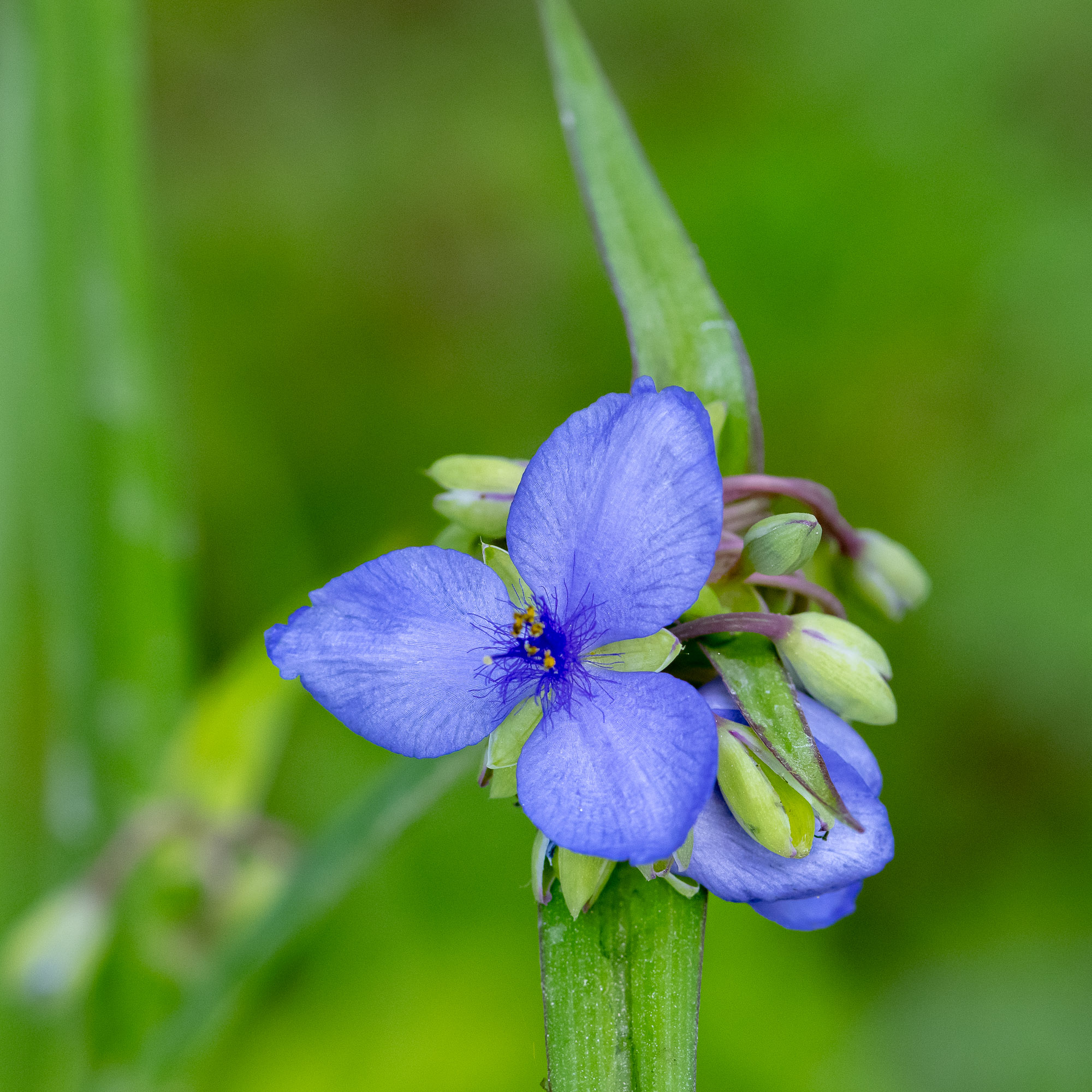
“I can’t find my blue jacket. Oh, the spider wore it.” (Feel free to groan. Gini certainly did.) Bluejacket (Tradescantia ohiensis) is also known as Ohio Spiderwort. Whatever you call it, please overlook my poor attempt at humor and enjoy the beauty of this outstandingly gorgeous flower.
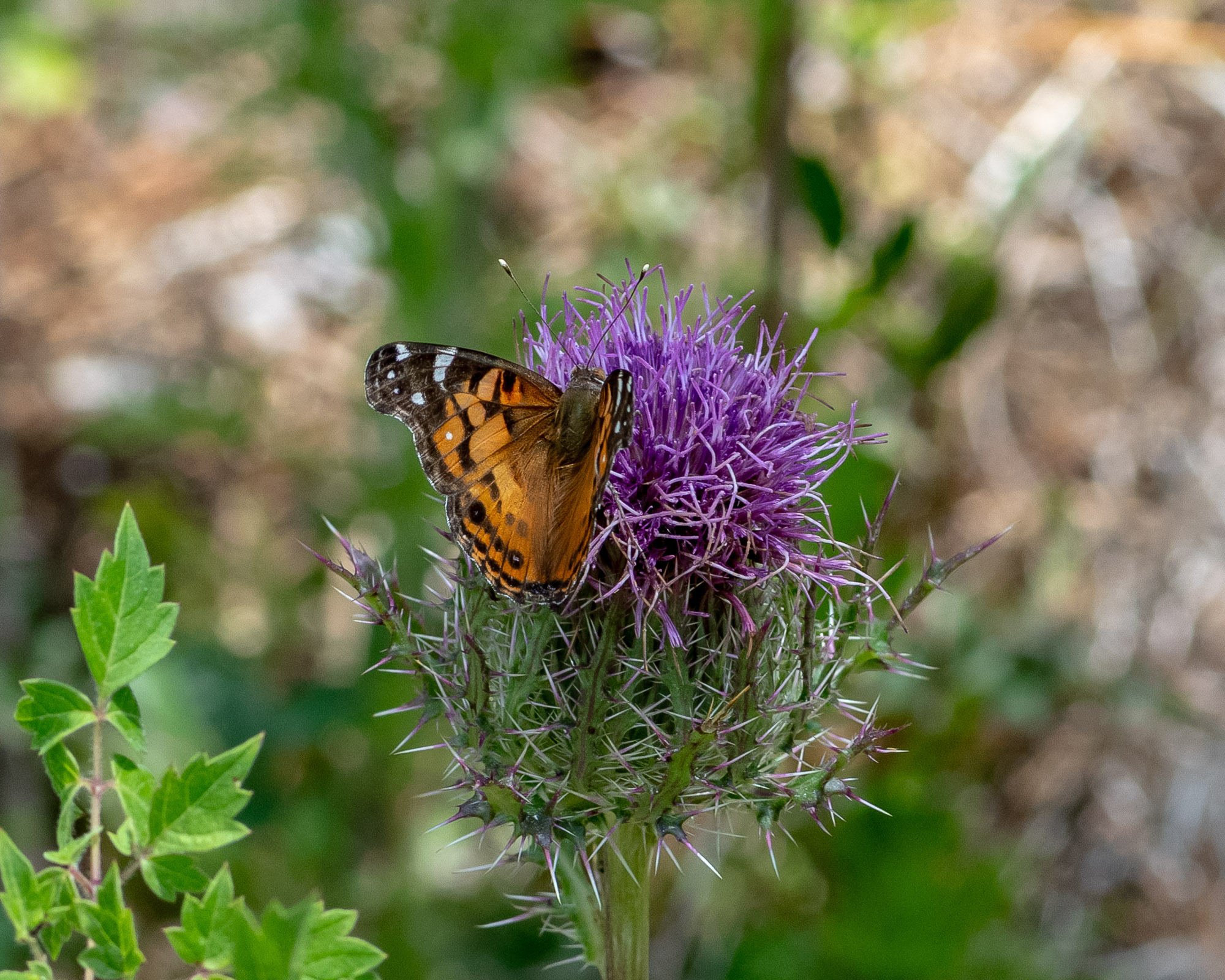
American Lady (Vanessa virginiensis) on Purple Thistle (Cirsium horridulum). Hopefully, some day I’ll get a decent photo of this Lovely Lady.
We heard Common Yellowthroats singing and calling all morning long. Finally, a male made an appearance long enough for a quick click.

Gini thinks the little Showy Milkwort (Asemeia violacea) resembles a cartoon elephant. It’s a good thing it isn’t larger or collectors would scoop them all up.

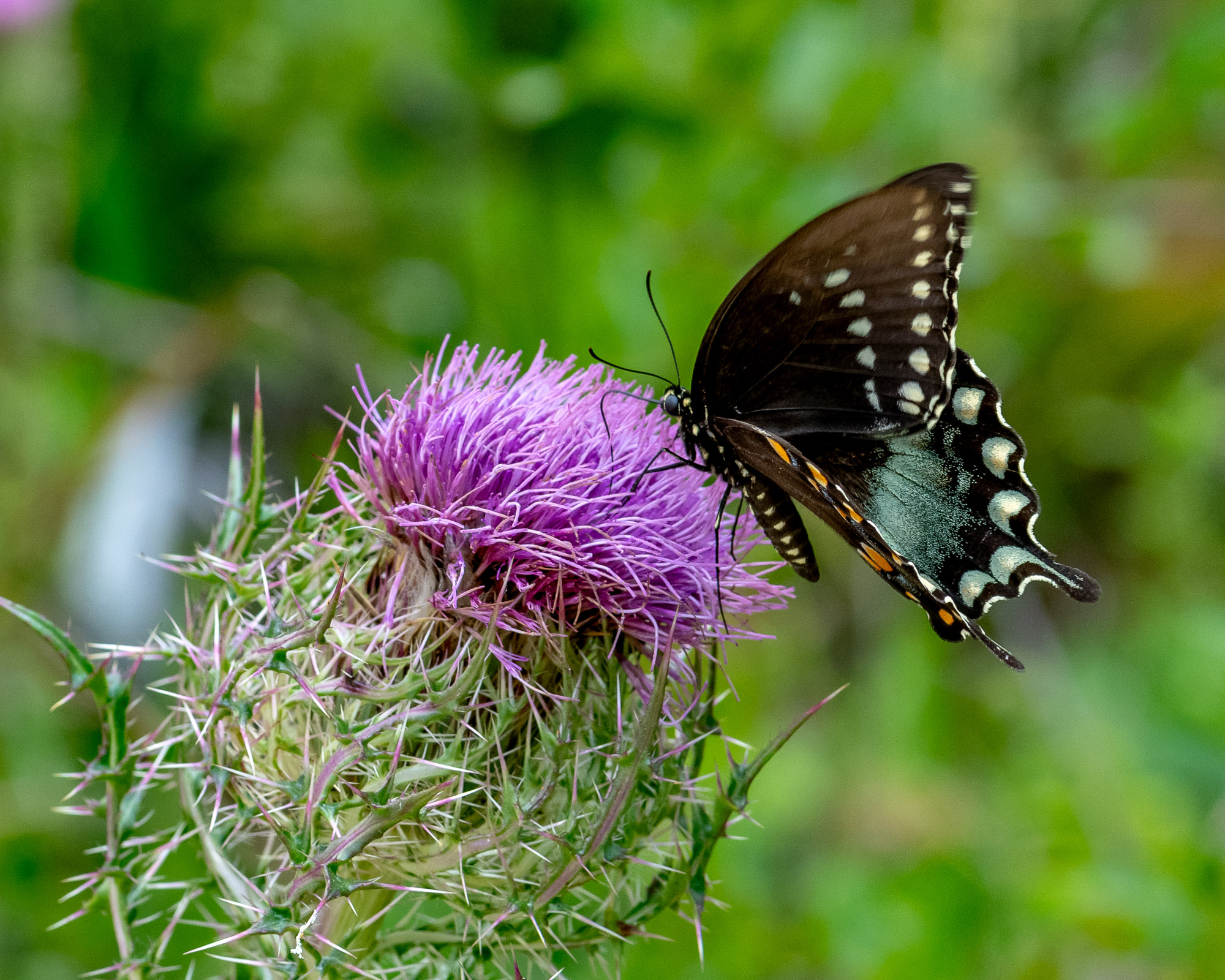
Another dark swallowtail, the Spicebush Swallowtail (Papilio troilus) on Purple Thistle (Cirsium horridulum) is pretty common out here. Much to our joy.
We’re fortunate to have a climate that allows us to enjoy Coral Honeysuckle (Lonicera sempervirens) blooms almost year ’round. Somehow, it seems even more beautiful in the depths of the swamp than in a suburban garden. Just me.

Despite far less rainfall than normal, Nature continues to thrive. If it had a schedule, it would have accomplished exactly what it needed to by this particular time. Oh, wait. It continues to do exactly that! (‘Scuse me whilst I discard my calendars.)
Enjoy your search for a natural place and come back for a visit!


Another fine collection of shots Wally (w/ birds ha). That Pearl Crescent is mighty fine. I need to keep my eye out for that one as I do not recall seeing it before. My birding ear will forever be developing (as I learn to filter out the ringing from stupid decisions when I was younger), but I will never mistake the squeak of the Brown-Headed Nuthatch. It can ring out anywhere in the woods and my ears will perk up. Take care, both of you.
LikeLike
We’re fortunate to have a few of our favorite patches filled with rubber duckies in the treetops. Music to our ears.
Not sure when I began focusing on subjects other than birds but it’s tough trying to give equal time to all Nature’s potential. Sigh. At least I don’t have to buy film any more.
LikeLike
We are indeed just passengers. And we need to stop thinking that we are owners! Like your area, posted speed limits seem to have no meaning in S. CA. I love the photo of the wasp on the thistle!
LikeLike
Thank you, Peter. We need to perhaps better teach our kids the meaning of “stewardship” as it relates to the planet.
We have plenty of thistles and wasps, so it’s just up to us being there at the right moment. Well, I reckon that describes any photographic endeavor!
LikeLike
Such a wealth of beauty, both familiar and unfamiliar. The showy milkwort was especially appealing, and quite different from the milkworts I’ve seen here. On the other hand, despite the familiarity of the spiderwort, this one’s color is a truer blue than most that I see, which tend toward pink or purple. Color’s tricky, of course. Your coralbean has a distinctly fuchsia cast, rather than the vibrant red I tend to associate with its flowers. It could be a trick of light.
Your Model T ford description of the cicada’s sound is great. I’ve always thought of them as the white noise of summer, and right now they’re cranking up the decibels. I’ve seen the Palamedes Swallowtail just once; this one seems a bit ragged, like most of us as our August heat drags on!
LikeLike
Thank you, Linda. We are so fortunate to have such a vast area filled with diverse flora and fauna so relatively nearby.
That little milkwort should have been named “I could really be a showy contender if only I were much larger” Milkwort. It’s okay. We have learned to look at all those little pink dots in the undergrowth and are delighted to finde these beauties.
You are right about color being tricky. I often look at an image on the computer screen and try to confirm if that is really what I saw in the field. Then there is the matter of the effect of morning, mid-day and late-day light. Different cameras and lenses, not to mention settings. Photo processing software effects.
Sigh. I’ve pretty much resigned myself to “is the final result pleasing?” and then get my artistic consultant to take a look for her expert opinion.
Speaking of The Boss. It was Gini who observed the cicada-model T connection many years ago and that’s now what I always hear.
It’s good to get back to almost regular visits outdoors.
LikeLiked by 1 person
I finally got out yesterday. I feared there wouldn’t be much to see in the local spots I visited, but we both know how foolish that fear can be. I found lotuses still in bloom!
LikeLiked by 1 person
This is a great title ‘Nature has no calendar’. I think it’s so true. This blog post has so much variety. I enjoyed all of them!
LikeLike
Nice to see you, Maria! Thank you for visiting and we’re happy you enjoyed our little variety of stuff.
LikeLiked by 1 person
What a wealth of observations! You and Gini must have been bobbing from one side of the trail to the other as these wonders appeared! I was floored by the size of that wasp – I might have momentarily mistaken it for a dark hummingbird!
Your Brown-headed Nuthatch is really interesting – I was taken with him, as I haven’t seen one before, and looked him up. His range map on All About Birds shows him missing from a swath across the Florida peninusla… that runs just south of the Green Swamp. So, you were quite lucky to see him!
LikeLike
Yep, that’s us, the Bobbing Twins!
It’s such a unique place, Sam, that no matter the time of year or day there are wonders to behold. We really love it out there.
The Brown-headed Nuthatch breeds throughout our central Florida area and are one of the earliest songbirds to begin nesting here, usually in late February. Once fledged, the birds usually hang together in family groups the rest of the year and then help parents with nesting the following season.
Fun little birds!
LikeLiked by 1 person
Thanks for sharing this collection of butterflies 🦋. We are just passengers on a short trip…
LikeLike
You’re welcome any time!
LikeLiked by 1 person
Too bad you have to drive the gauntlet in order to reach this destination.
I often wonder why we surround ourselves with calendars and clocks and watches and other reminders of time, its passage, and ours too. Instead of making us more aware and appreciative of the short span we have, they only seem to make us to hurry on to whatever.
One of the many benefits of spending time in nature is the associated timelessness. I’m often surprised to realize that morning has turned to afternoon, or afternoon to evening.
LikeLike
You are so right about losing our sense of time when we’re enjoying Nature. That’s why we keep doing it as often as possible!
LikeLiked by 1 person
Same here! 🙂
LikeLike
The variety of subjects you found to photograph offers no evidence of the drought your words revealed. You clearly had a good time on your familiar foray into nature in the Green Swamp. And hopefully the lack of rain significantly reduced the mosquito population.
Good contours-revealing shot of the white ibis overhead. Your picture got me to pose a question to AI: “Does the black at the tips of a white ibis’s wings serve any purpose?” Here’s the answer that came back:
“Yes, the black tips on a White Ibis (Eudocimus albus) wing serve important structural and aerodynamic purposes. The dark coloration comes from melanin, a pigment that provides distinct functional benefits… Feathers containing melanin are physically stronger and more resistant to wear, tear, and fraying…. The outermost wing feathers (the primaries) endure the highest friction and aerodynamic stress during flight, making extra strength essential…. Studies on avian flight feathers indicate that the pigmented dark areas absorb heat faster than white areas, creating tiny localized temperature and air-density differences that can generate subtle extra lift and reduce drag while soaring.”
You closed with a picture of something central Texas shares with you: coral honeysuckle.
LikeLike
Thank you very much, Steve, for your gracious comments.
That is fascinating information about the Ibis’ wingtips. It’s fun each year to be with new birders encountering young White Ibises, which are brown with no black on the wingtips.
LikeLike