A Visit To The Prairie
(Click on images to enlarge, click again to zoom.)
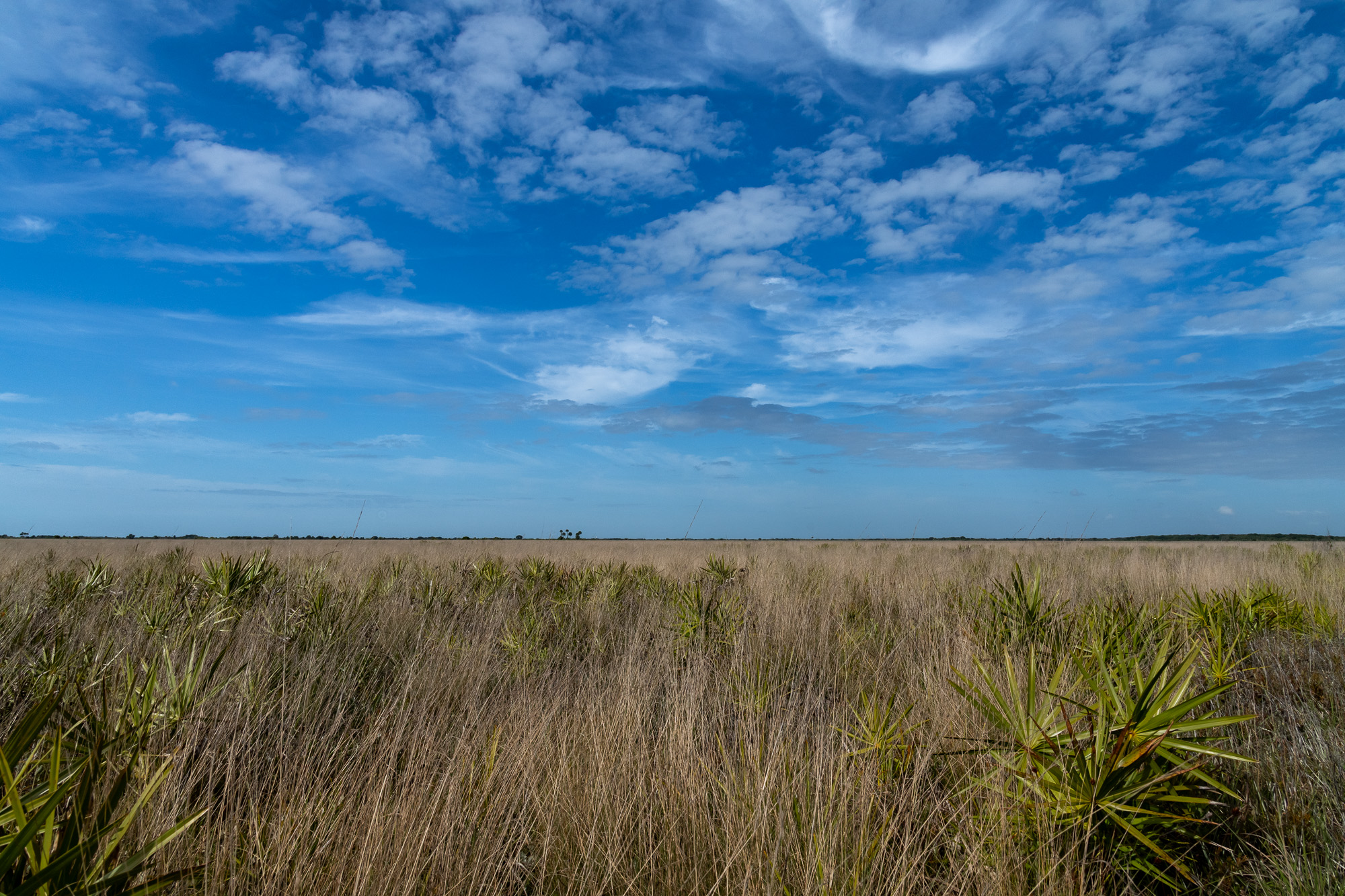
So much sky!
We become accustomed to the view from our yards, towns, local woods or, in our case, swamp habitat. Our line of sight is limited by buildings, fences or trees. Hiking through the woods provides glimpses of the heavens through small overhead windows but nothing like we were enjoying on this trip.
Once upon a time, prior to Florida’s human settlement, there existed over 2,000 square miles of dry prairie throughout the central part of the peninsula. This vast semi-open range was home to a large number of “Florida Cows”, remnants of cattle brought by Spanish explorers nearly 500 years ago. During the 19th and early 20th centuries, Florida was very busy in the cattle ranching business. “Cow Hunters” annually rounded up what were fairly wild herds and drove them to Gulf coast ports for shipment mainly to Cuba.
Today, some of those dry prairies have been preserved, one of the largest tracts being the Three Lakes Wildlife Management Area, where we enjoyed our breakfast under a seemingly infinite blue sky. (The three lakes are Kissimmee, Jackson and Marian.) This area is south of Orlando, north of big Lake Okeechobee and about 90 minutes due east of our house. Over 63,000 acres were purchased by the state in the 1970’s in an effort to preserve a portion of this unique prairie ecosystem.
Habitat here is a mix of dry and wet prairie with seasonal ponds scattered throughout and edged by moist flatwoods, hammocks and cypress ponds. An incredible diversity of flora and fauna can be found here.
As we traversed the open grasslands, there was an abundance of wildflowers, birds and insects just waiting to be discovered. I don’t think there was a moment during the entire morning that wasn’t filled with songs from Eastern Meadowlarks or Common Yellowthroats. Plenty of thistles offered nectar to an amazing number of thirsty bugs.
Take a look!
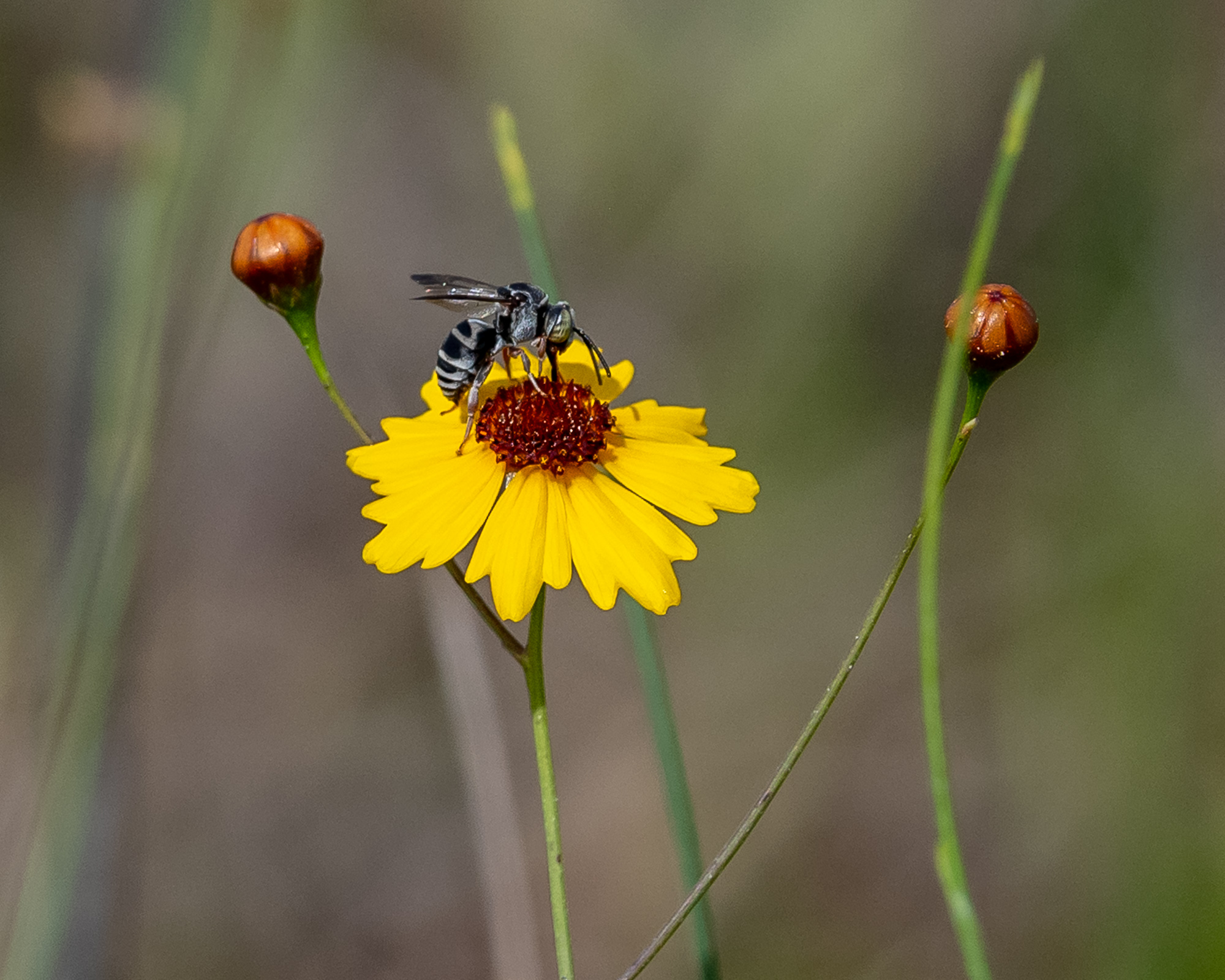
Lunate Longhorn-cuckoo Bee (Triepeolus lunatus) on Leavenworth’s Tickseed (Coreopsis leavenworthii). This bee was a first for us. The bright yellow Coreopsis was probably the most abundant flower of the day.
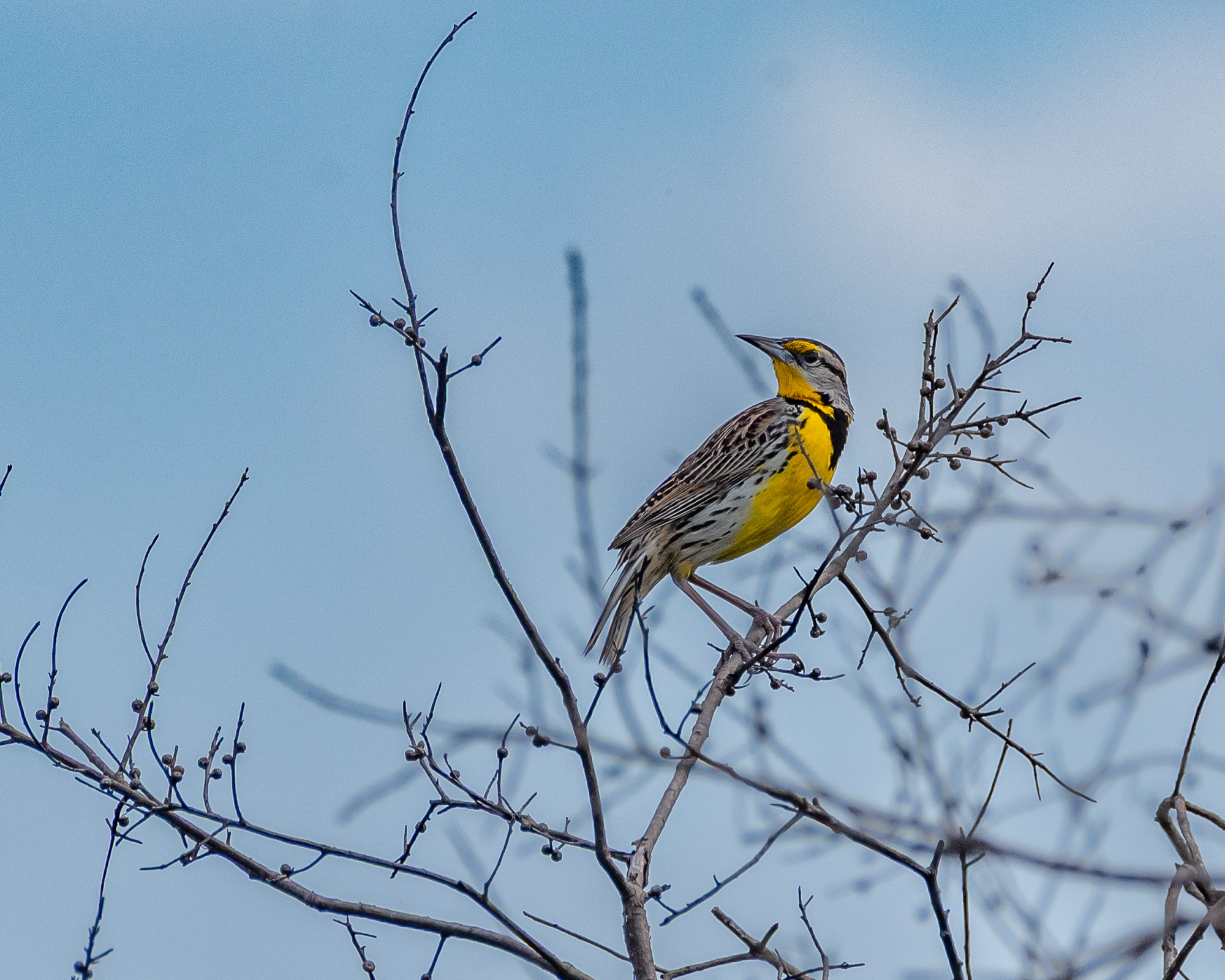
Pure and loud. The spring song of Eastern Meadowlarks could be heard from all around us all morning.
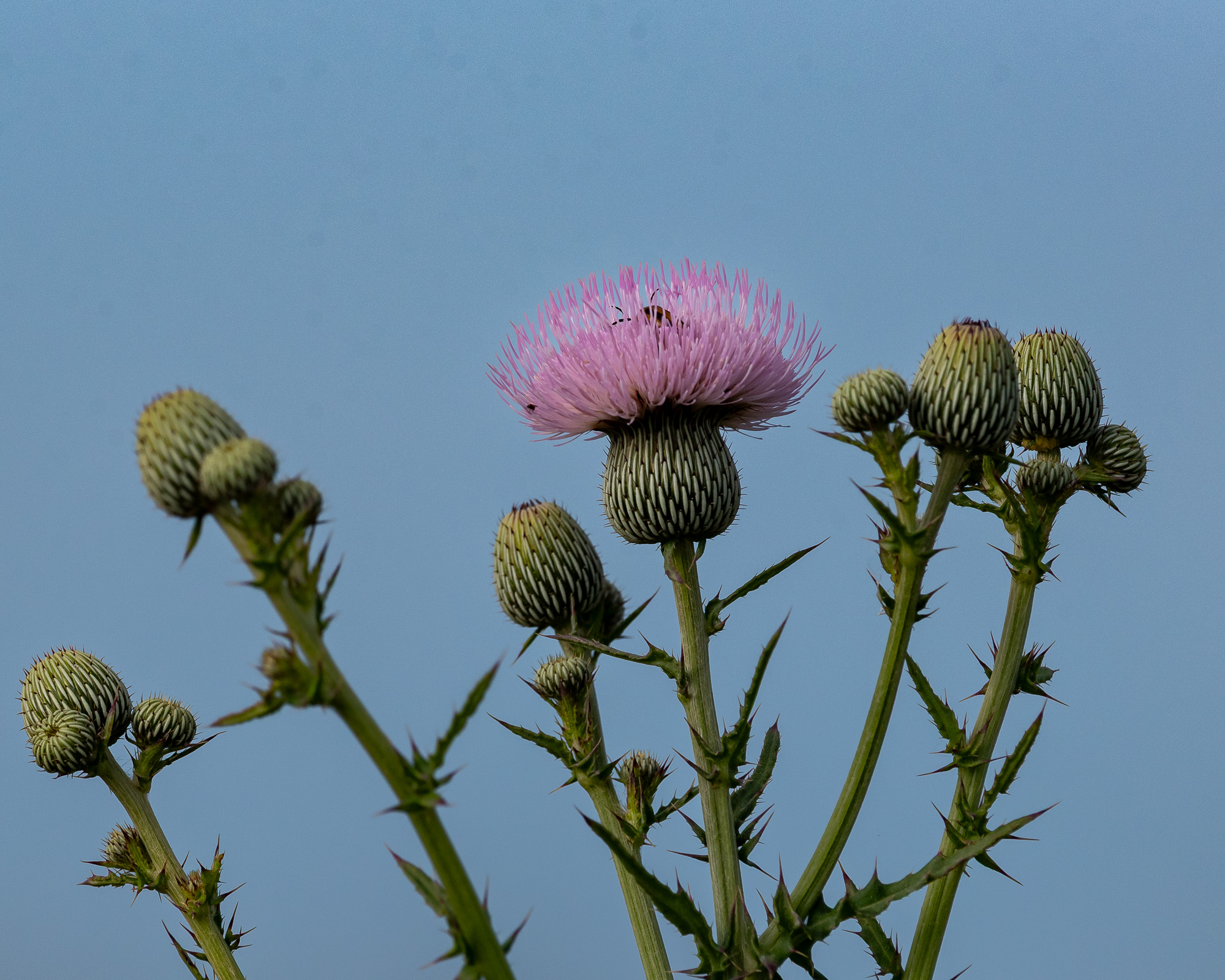
Not quite as thorny as its purple cousin, Nuttall’s Thistle (Cirsium nuttallii) was prevalent along the edges of the prairie grass. Many plants were well over six feet tall and we seldom saw a bloom without a pollinator drinking its fill.
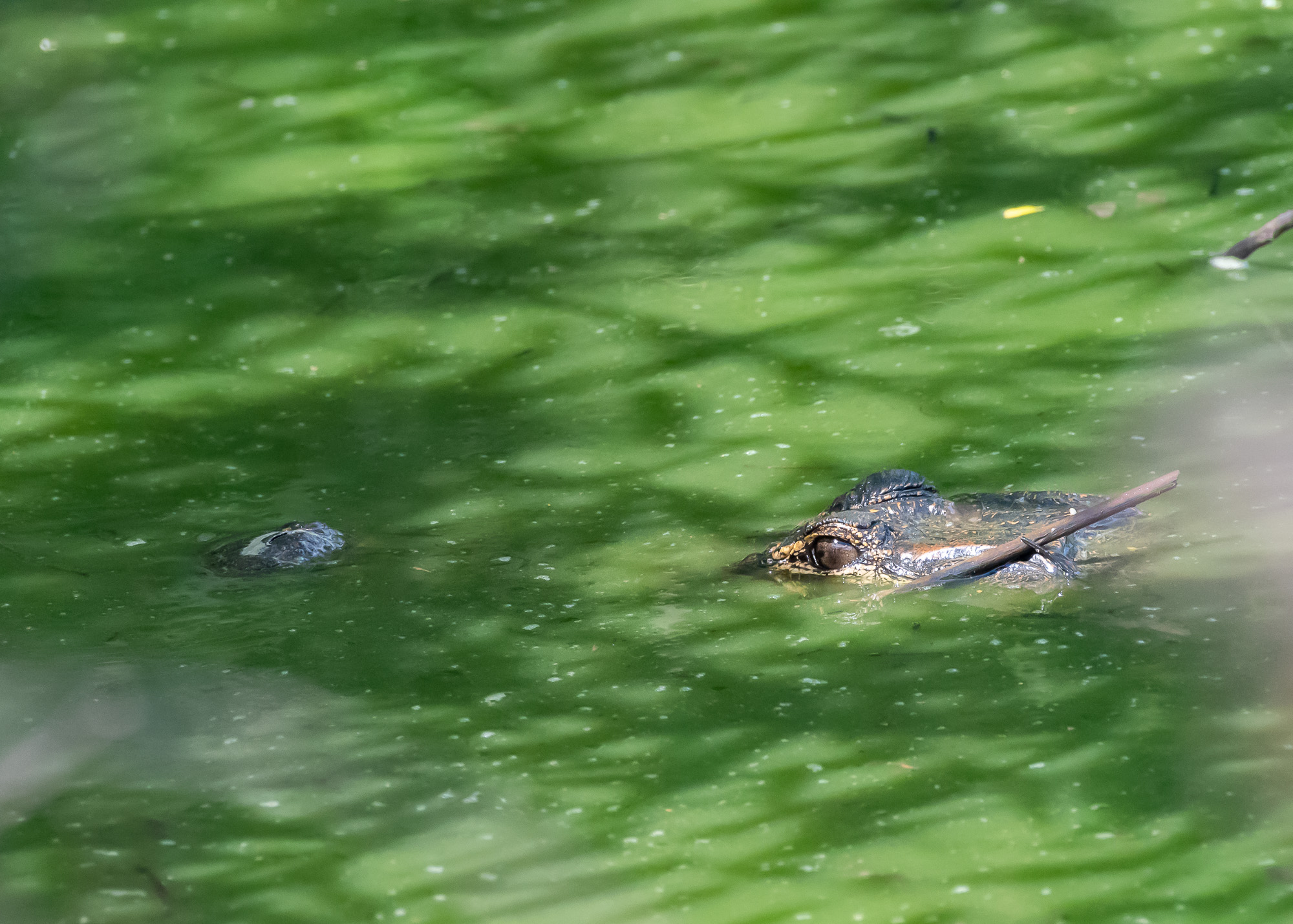
Depressions throughout the area will contain water during the rainy season. The few we came across with a bit of water also had a reptilian water-lover in residence. (American Alligator).
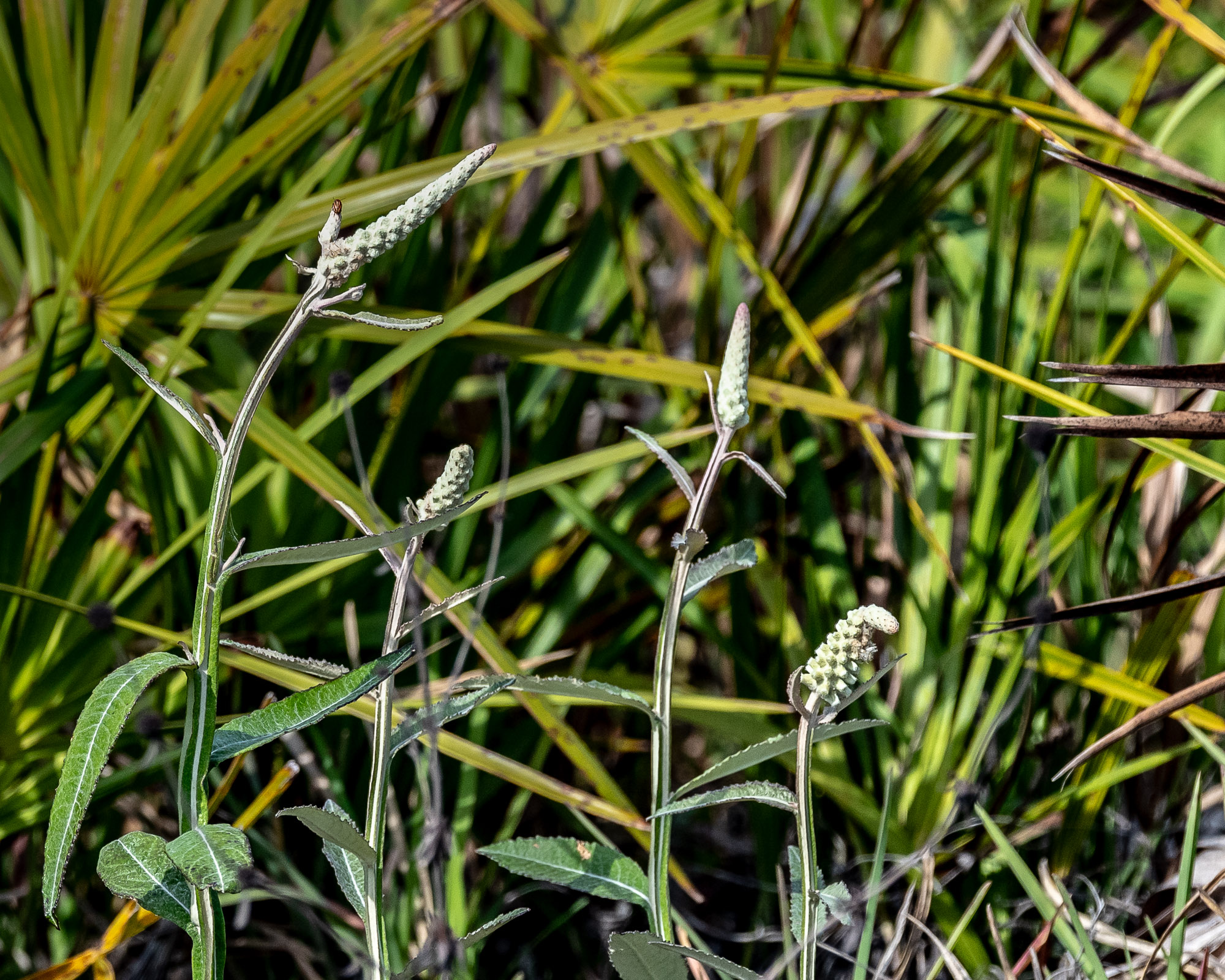
Although its habitat is listed as pinewoods and moist sandhills, Blackroot (Pterocaulon pycnostachyum) seems to like the edge of the dry prairie just fine.
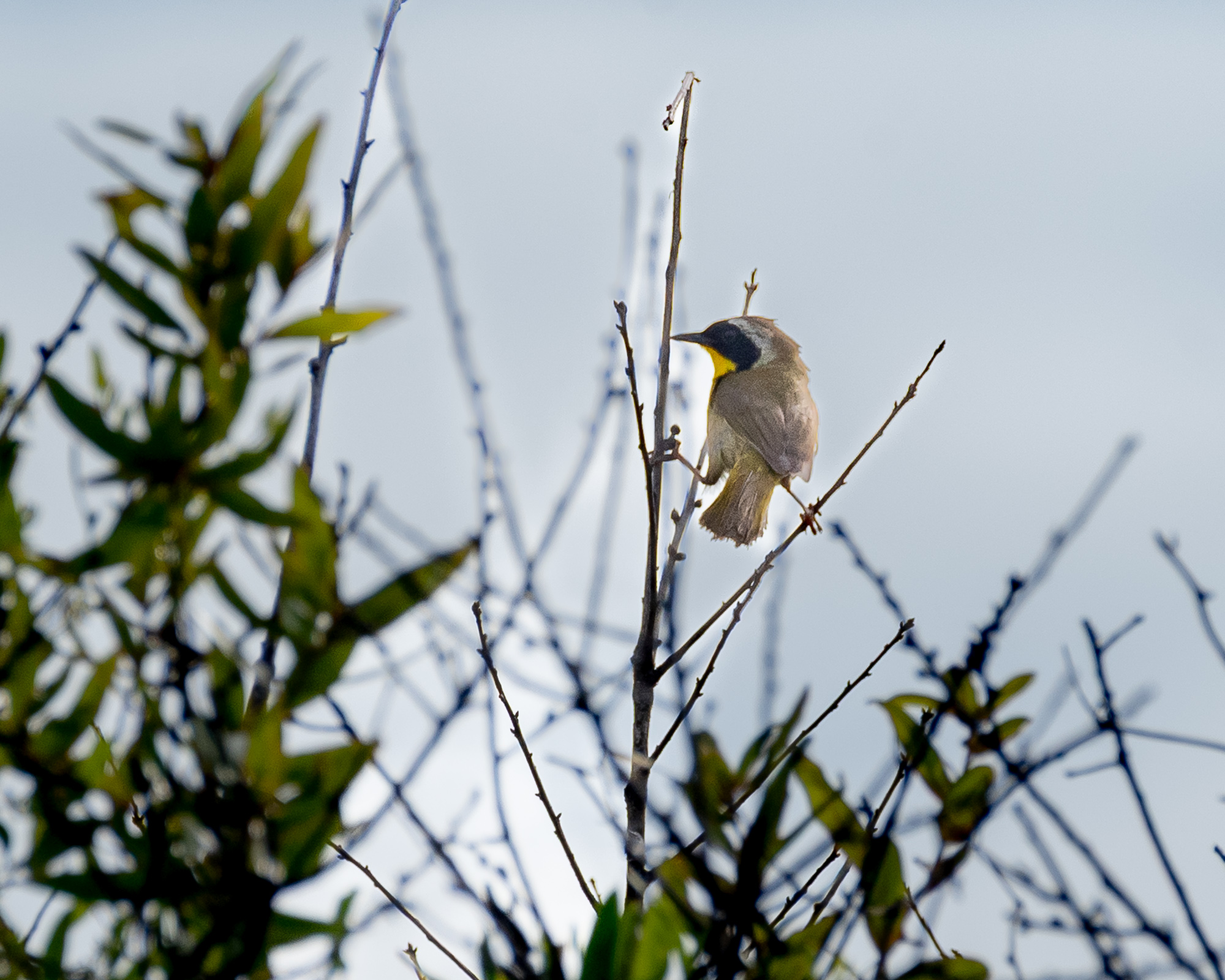
Competing with meadowlarks for the most abundant songster of the day was the Common Yellowthroat. There seemed to be a male hiding under every palmetto frond in the land. Finally, one popped into view long enough for poor photo.
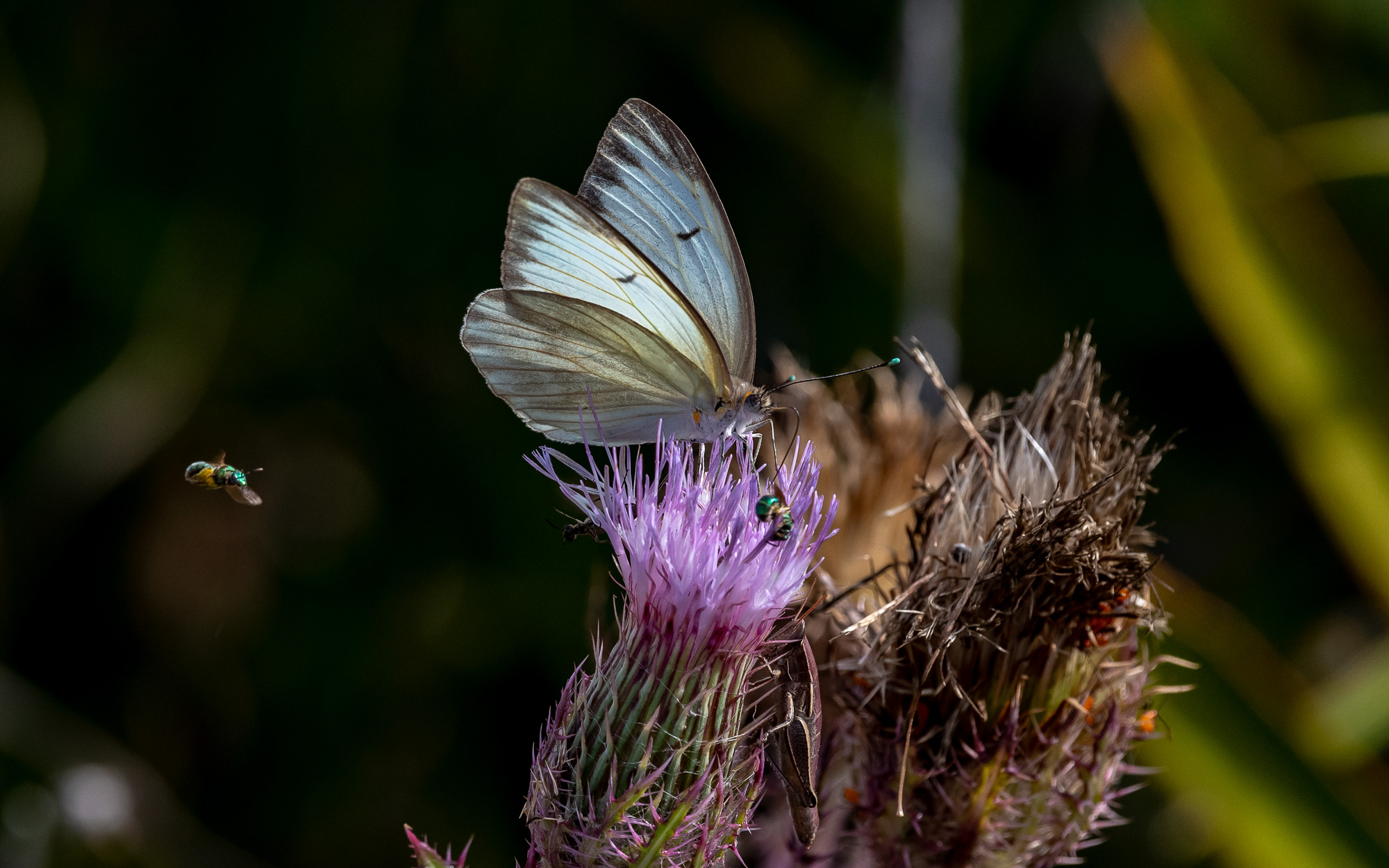
Plenty of flowers means plenty of pollinators. Here, a Great Southern White (Ascia monuste) enjoys sipping nectar from a Purple Thistle (Cirsium horridulum). Heavy traffic from sweat bees was a challenge and the bees often chased away would-be competitors.
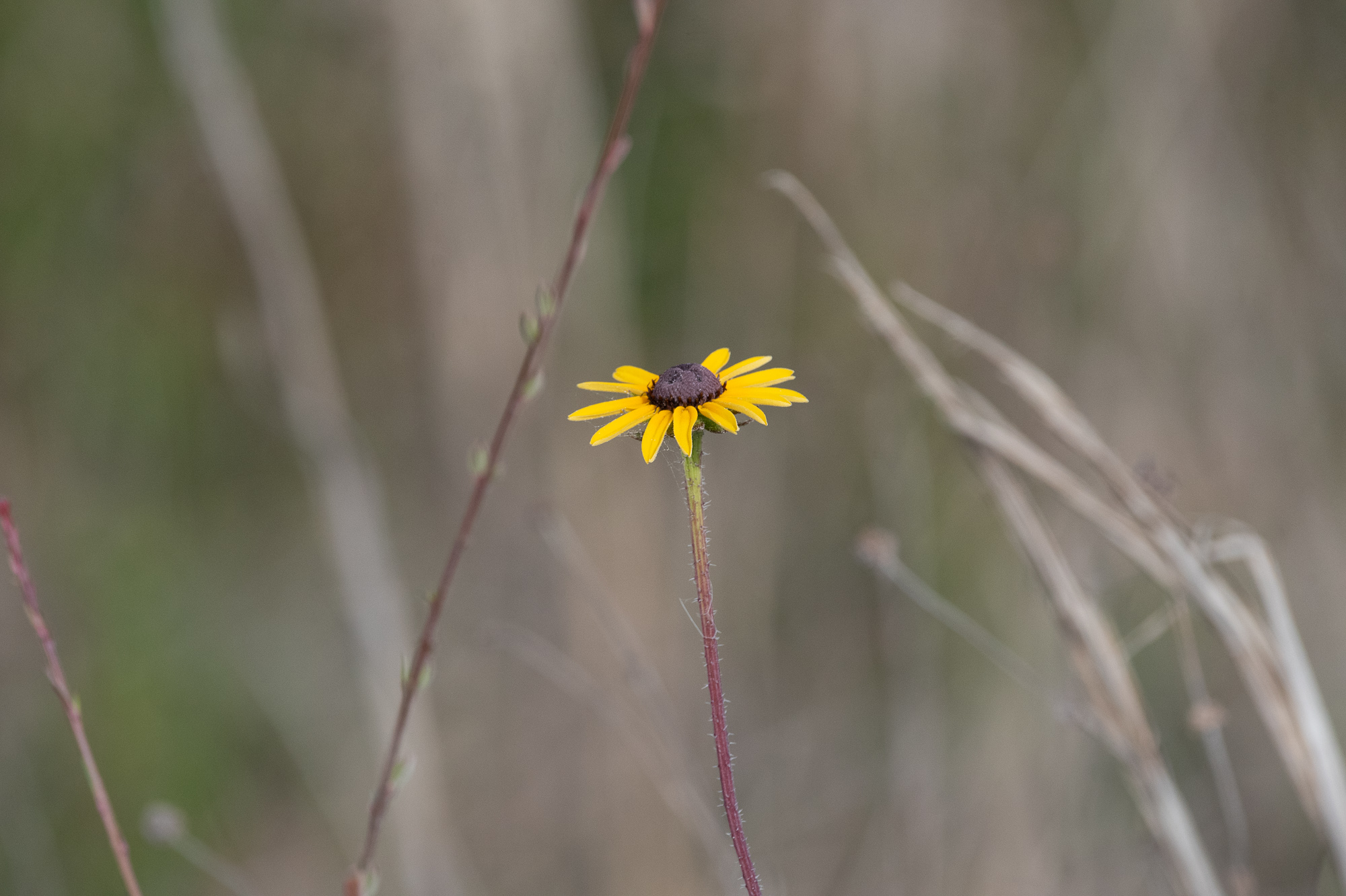
More bits of yellow in the landscape were produced by Black-eyed Susan (Rudbeckia hirta) stems waving in the breeze.
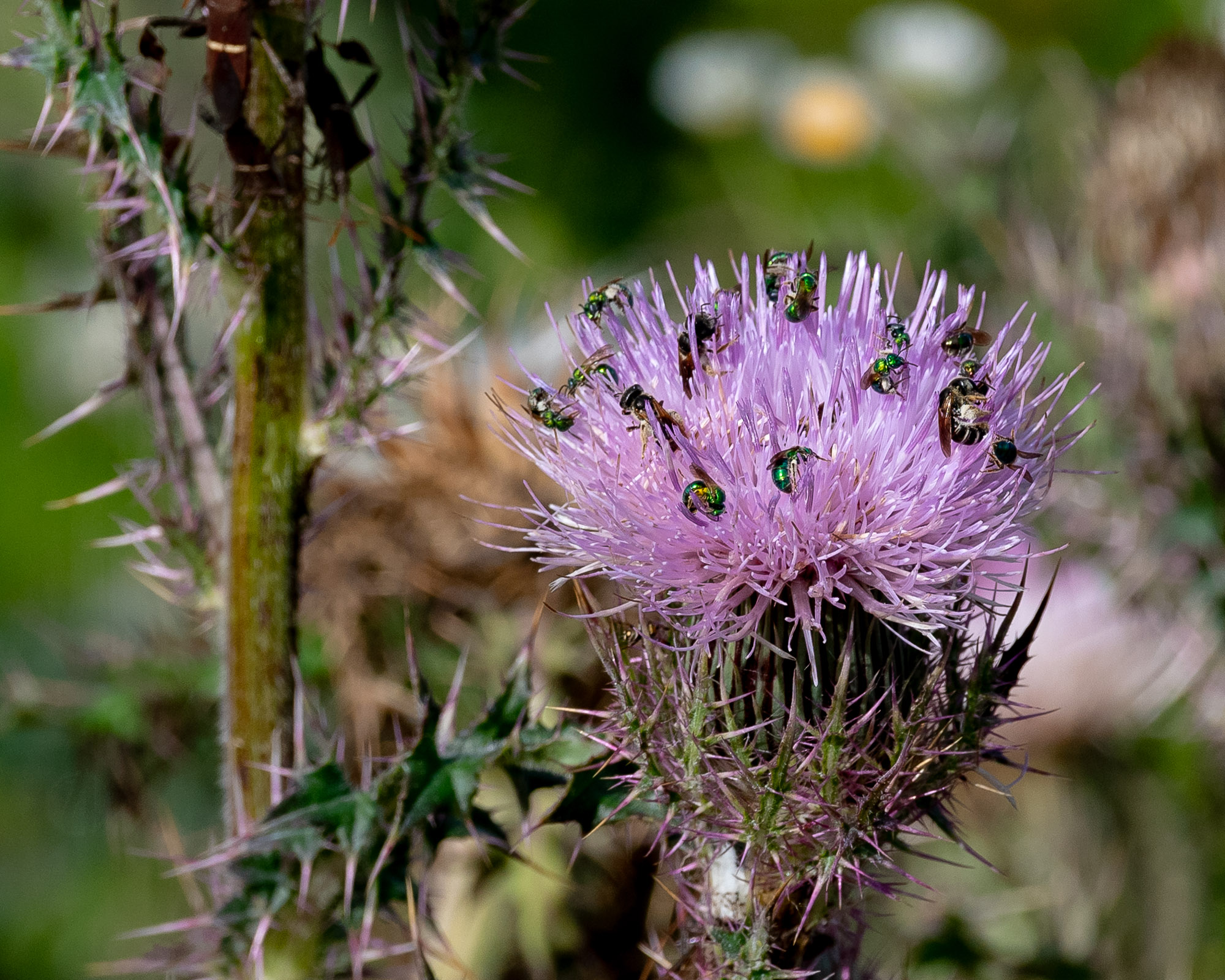
Did we mention the thistles were popular? Halictidae spp. on Purple Thistle (Cirsium horridulum).
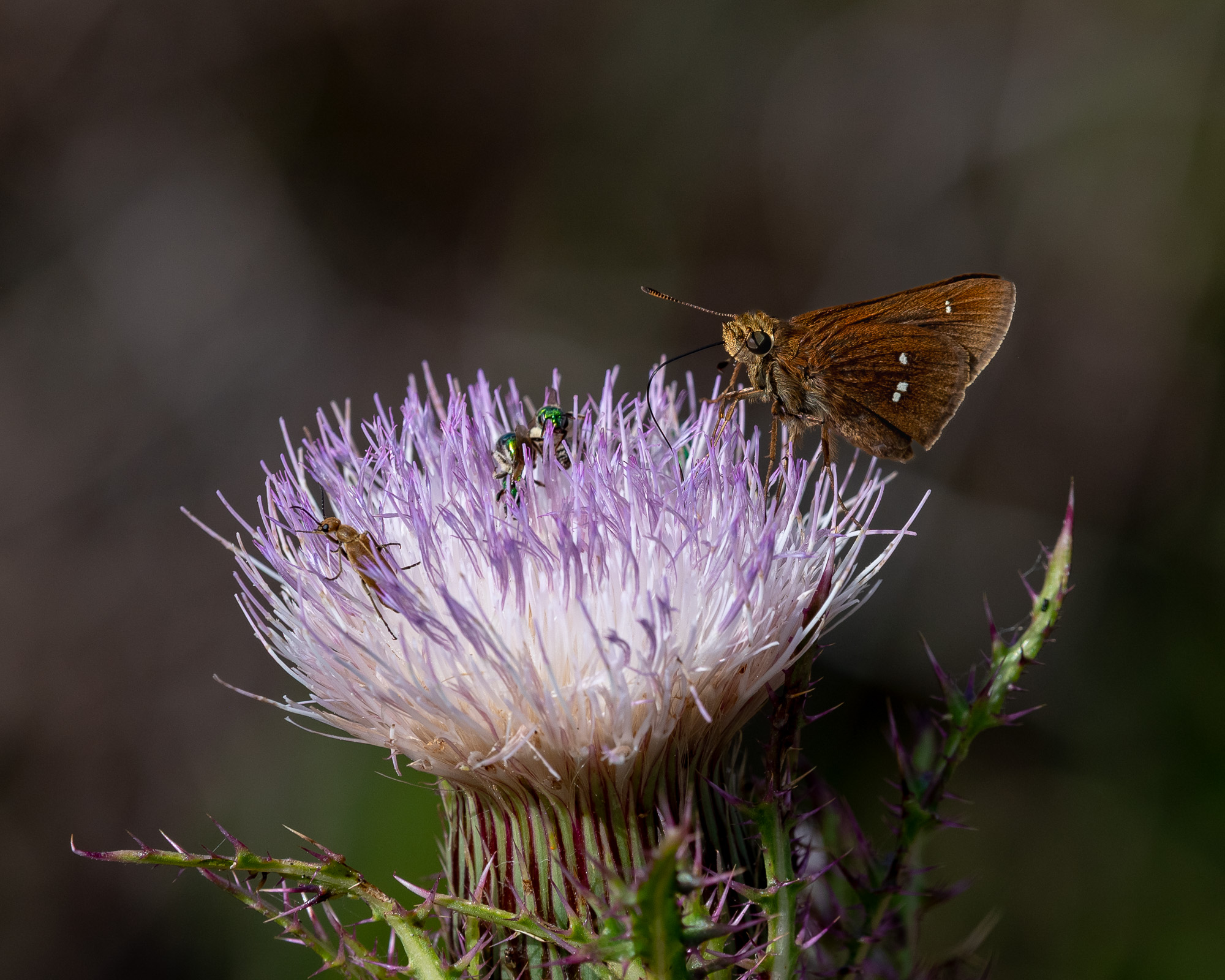
A Twin-spot Skipper (Oligoria maculata) on a Purple Thistle (Cirsium horridulum) tries to get a drink before bees and beetles chase him away.
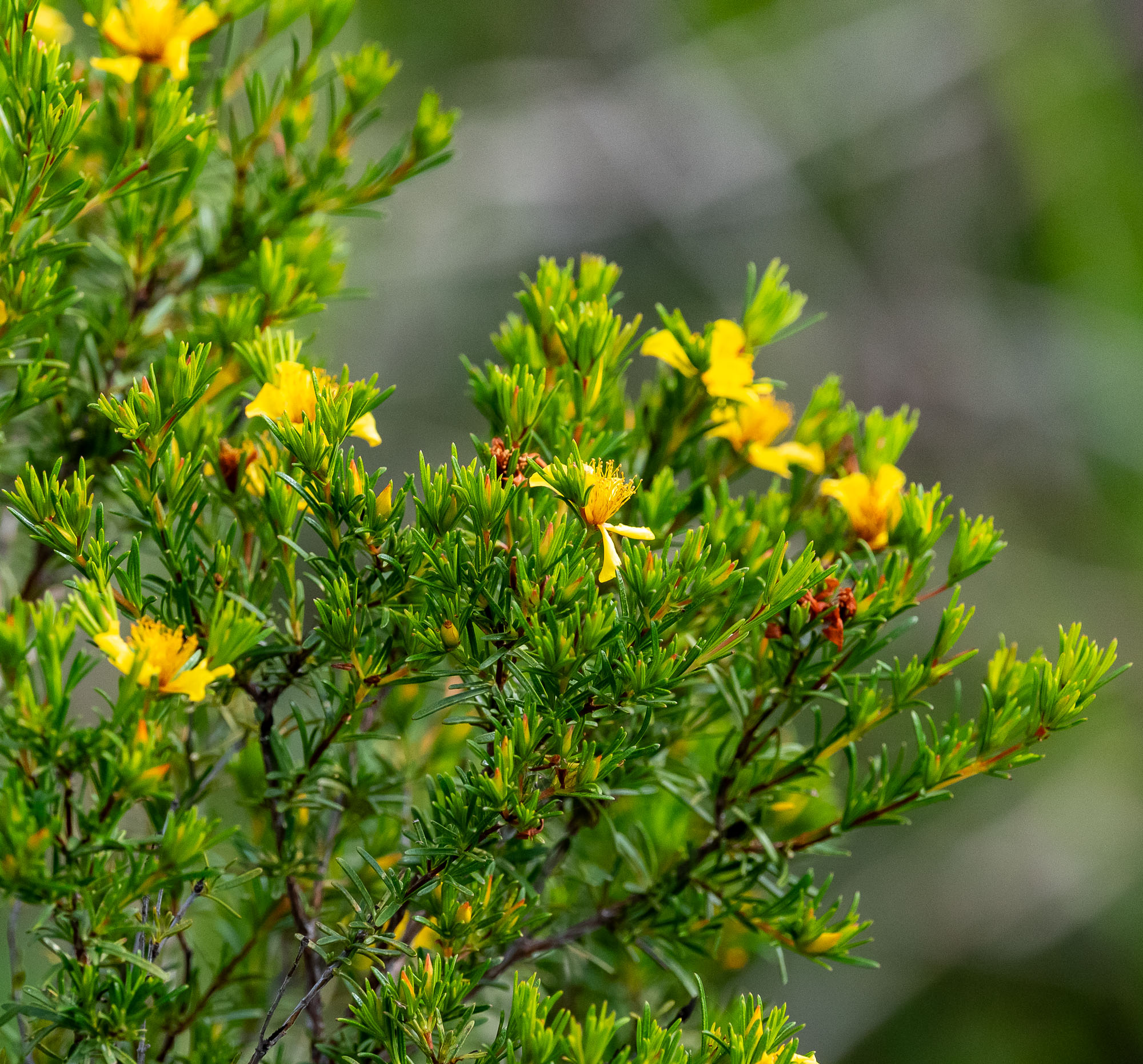
Sandweed (Hypericum fasciculatum) is also known as Peelbark St. Johnswort. By any name, the profuse blooms are beautiful.
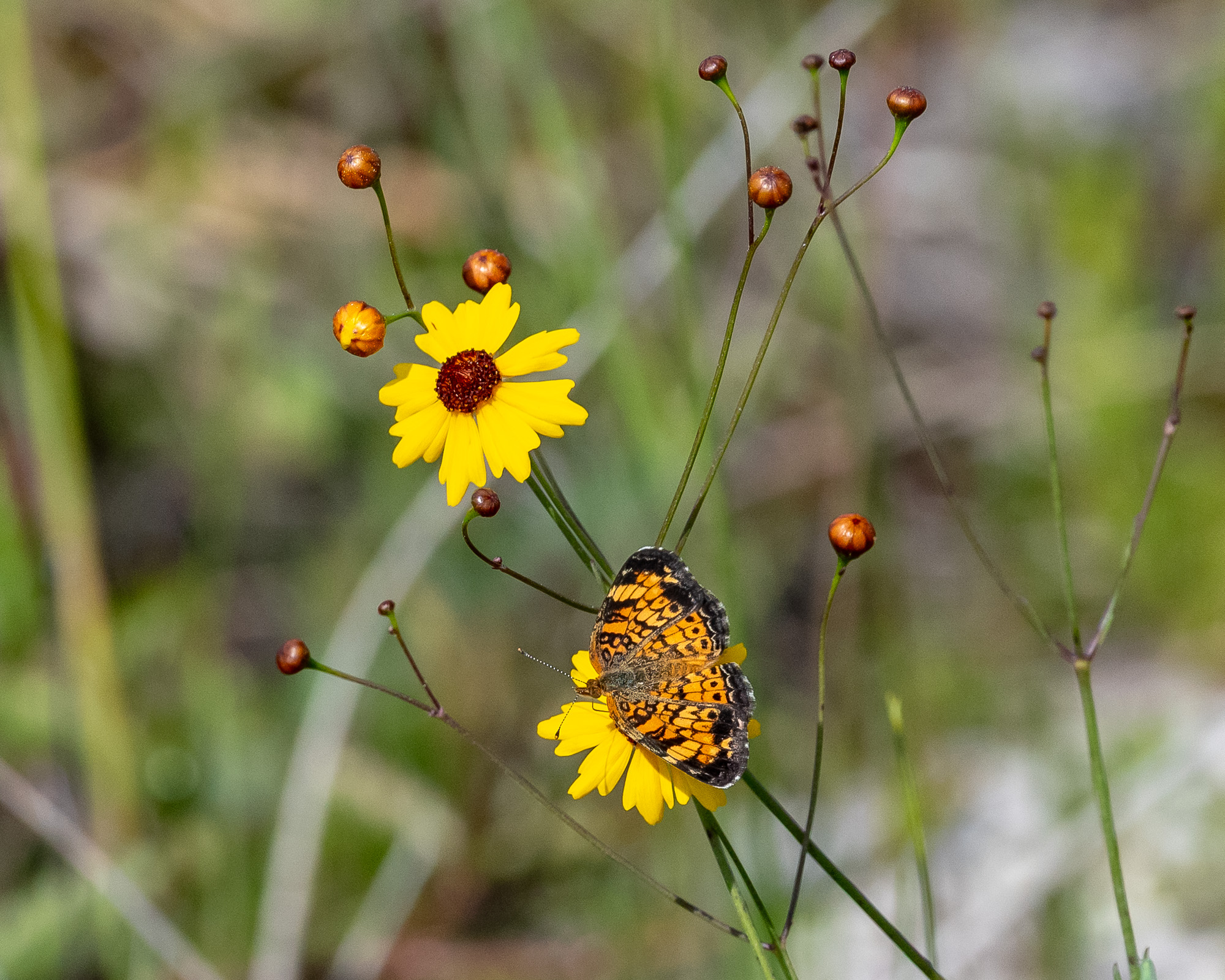
Orange and yellow can look pretty nice together. Pearl Crescent (Phyciodes tharos) on Leavenworth’s tickseed (Coreopsis leavenworthii).
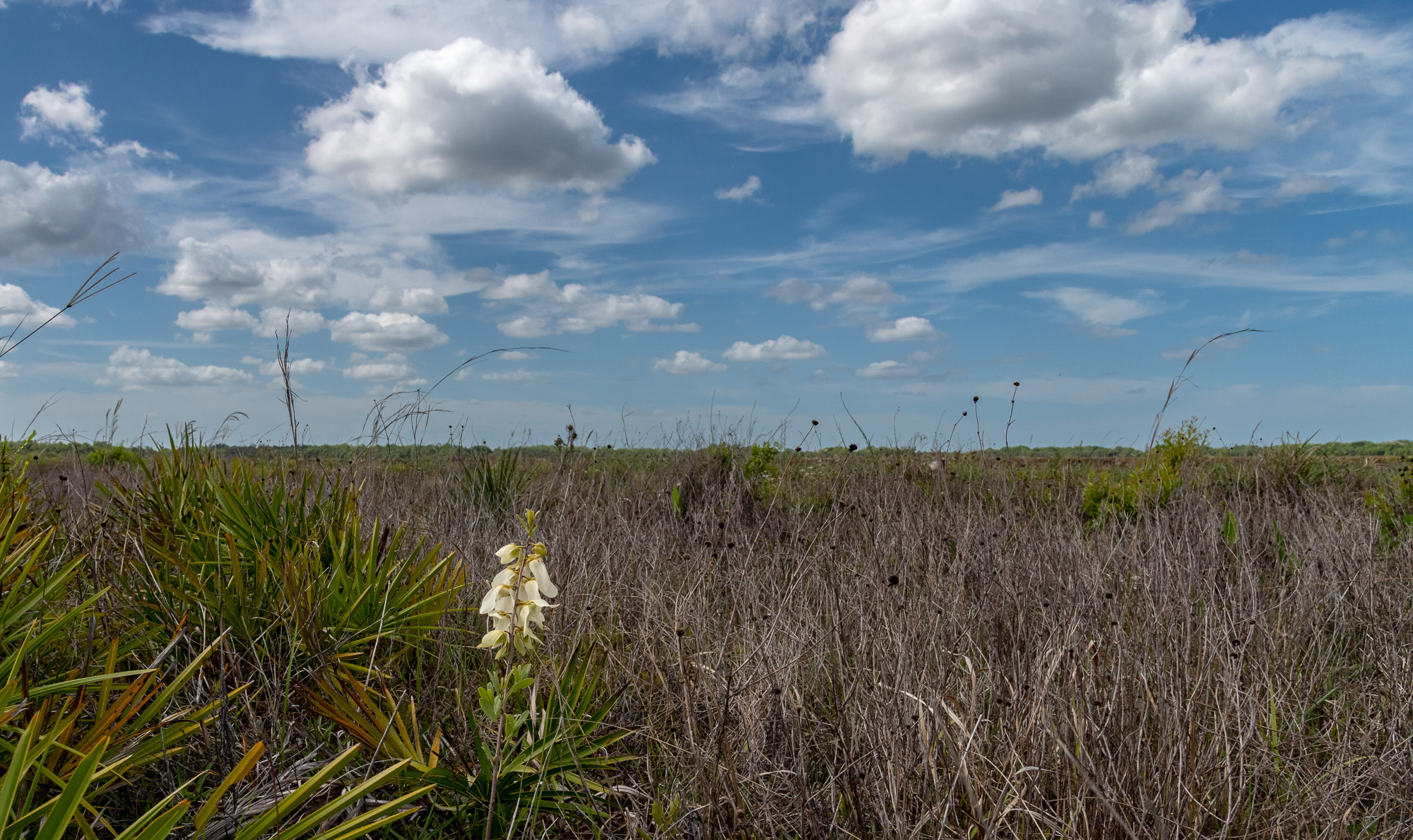
A Bigflower Pawpaw (Asimina obovata) overlooks a bit of open prairie.
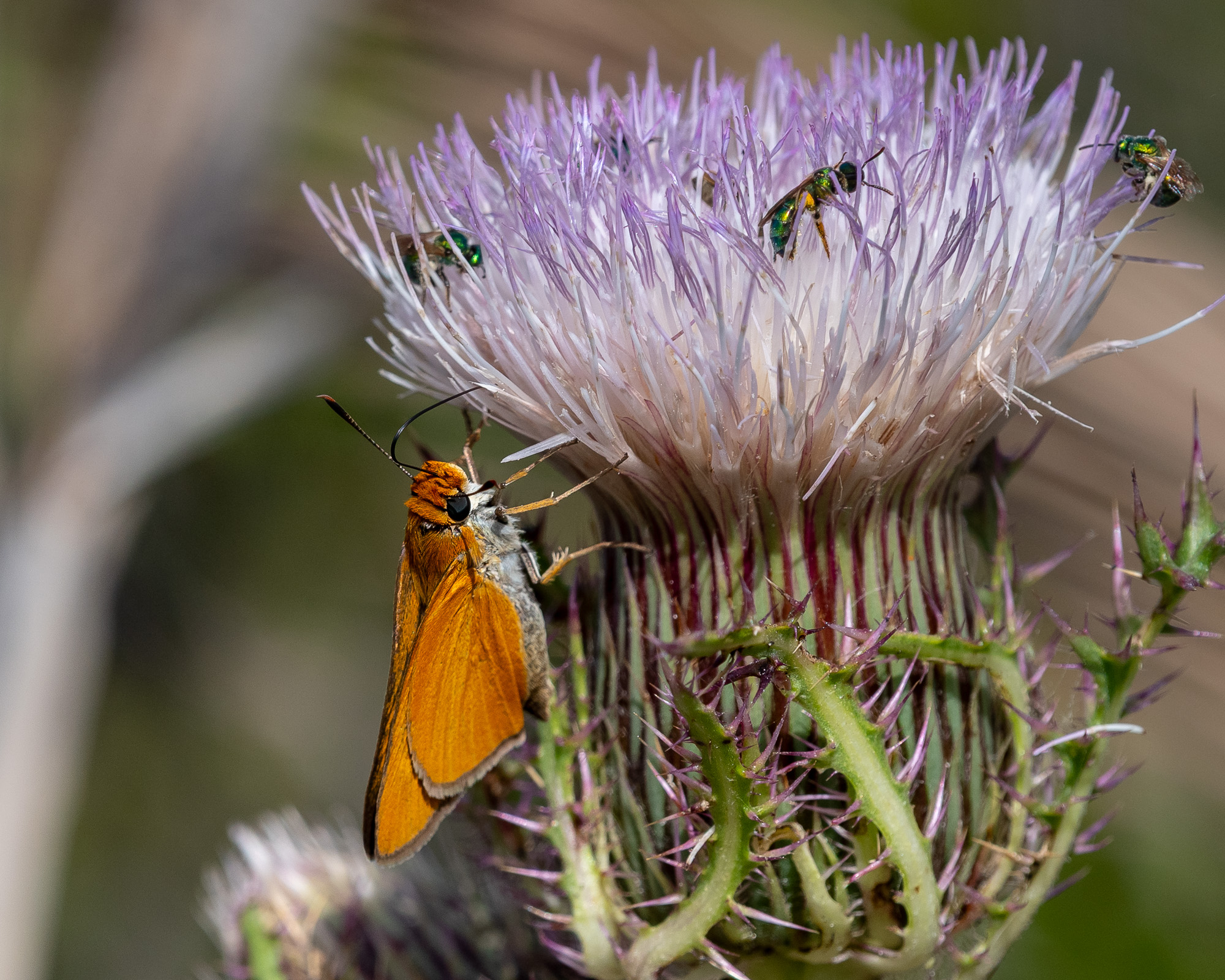
Another thistle, another drinker. The Delaware Skipper (Anatrytone logan) is very attractive despite little in the way of wing markings.
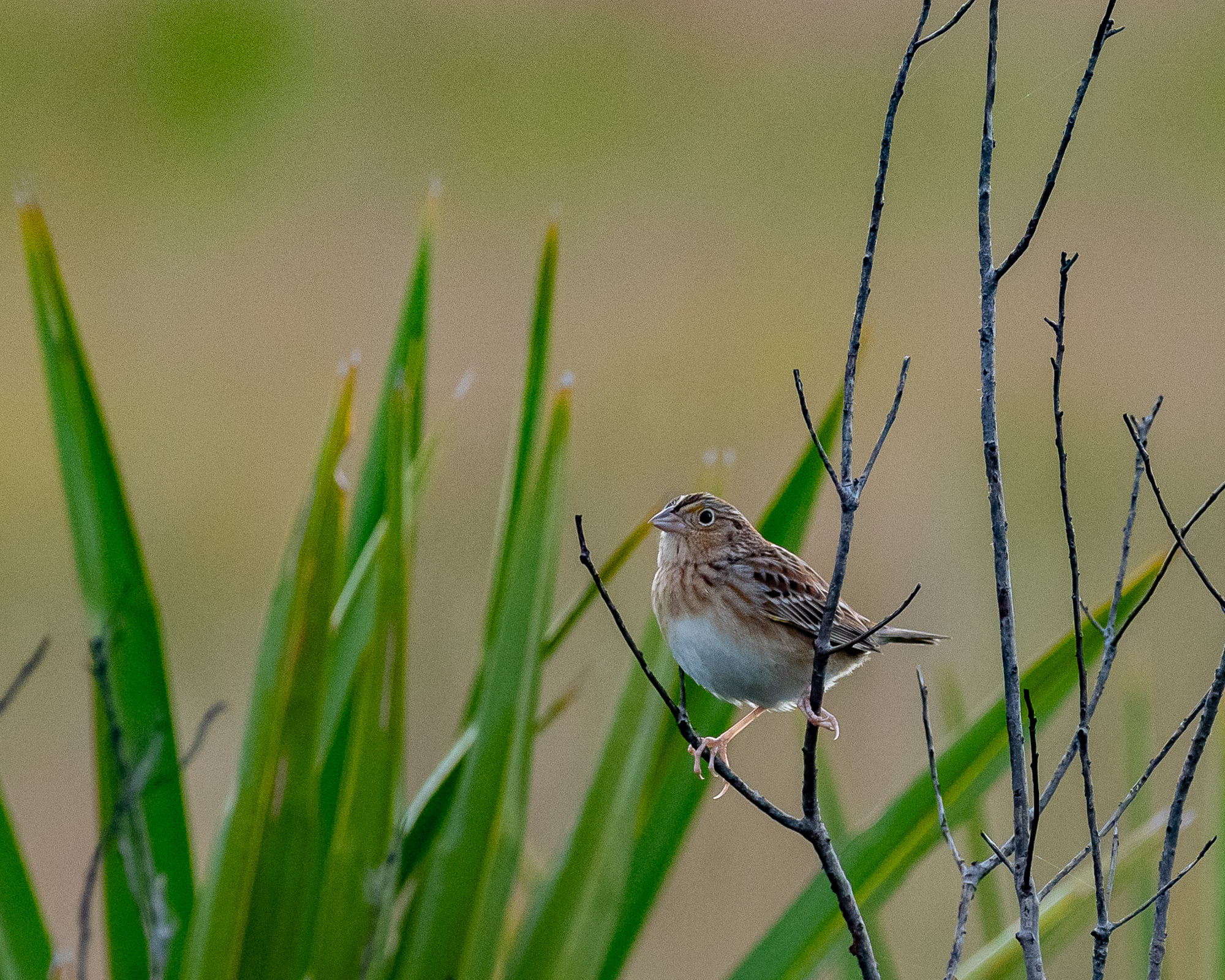
One bird we had hoped to find was the Florida Grasshopper Sparrow. This sub-species is extremely rare and endangered. Our trip was in mid-April and although we struck out on Florida’s bird, we were treated to some great views and singing of its northern cousin visiting for the winter. The Florida sub-species (Ammodramus savannarum floridanus) is a bit smaller and overall darker than the Grasshopper Sparrow (Ammodramus savannarum). Maybe next time.
We thoroughly enjoyed a change of venue from our local patches. There was more to this visit as well, which we’ll talk about soon. This is one of our favorite areas to explore and we’ll return to the Florida prairie often.
Enjoy your search for a natural place and come back for a visit!


Hello my poor friends. If I could afford to pay for a two week trip to Skiathos for you both I would do so without hesitation. On our recent trip and during a walk through Skiathos Town we chanced upon a lovely lady from Michigan and her teenage daughter. Mum was showing daughter the delights of Europe and in particular the wonders of Skiathos. She had in the past visited England so quite understood about the attraction of the Greek summer against our own UK climate. Our chat to compare notes of Greece was brief but that rare meeting of our respective nationhoods was one to remember. If only we had exchanged email addresses and blog names!
I enjoyed this glimpse of Florida prairies, its insects, flowers and special birds. You are blessed with time on your hands and the will to explore and enjoy it all at your leisure. I am indoors now – raining July 2nd. English summer.
LikeLike
Good Morning!
We hope you are recovering from Skiathos but I strongly suspect you are already planning your next escape.
It’s heartening to hear about your encounter with an American. The world could stand a bit more of such experiences. Reality can be so different from what we are told.
Indeed, we are blessed with a bit more time on our hands lately, although the medical community remains determined to spend time on the rest of our bodies. Send rain. American summer.
LikeLike
Now you are talking my kind of terrain! We live in what would be described as a prairie. Meadow Larks, Bluebirds, Blue Stem and Prickly Pear. It looks so start from a distance but abundant with wildlife when you slow down and really look.
LikeLike
Every time we visit this area we are reminded how full of life it is. As you say, just from looking at it, you would think nothing could call that home. Happy that reality in Nature is different!
LikeLike
Interesting post. I didn’t realize prairies have such large and diverse flora and fauna. The thistles really were popular!
LikeLike
The diversity is due to the “edges” of the open grassland areas. Here can be found cypress and pine woods, lakes and marshes. As you get “out there” in the dry prairie, there is an amazing amount of plants and flowers “hiding” down low so they aren’t readily visible until you almost step on them. The total biosphere of the area is like a magnet for life – which includes us! As YOU might imagine, all this wide open space is where I hope to be several nights in the near future attempting that Milky Way thing you do so impressively.
LikeLike
Thank you for sharing this wonderful natural area of Florida. I enjoyed all of your images and descriptions.
LikeLike
You’re very welcome!
We sure appreciate you dropping by and hope to see you again.
LikeLiked by 1 person
That ‘change of venue’ you mentioned is a primary reason I enjoy visiting east Texas and the Big Thicket. It truly is a different world there, and the change is as refreshing as it is interesting. I smiled at your mention of the Florida cows. The first time I traveled to Florida by land, I was taking my mother over to Lakeland to visit an aunt and a cousin who lived and worked in Bartow. As we got into the state, the last things I expected to see were dairy herds, but there they were.
I especially enjoyed seeing the thistles. The number of insects willing to overlook their differences and share the pollen and nectar is fascinating. The Pterocaulon looked so familiar that I went online exploring. Sure enough, P. virgatum is native here in Texas, and I’ve probably come across it without pursuring its true identity.
I’m glad you included the sparrow! I used to think sparrows were ‘just sparrows,’ but I’ve repented of my silliness, and slowly am learning some of the species that we have.
LikeLike
Many are taken aback by fields of cattle throughout the Sunshine State. The wild-ish “Florida Cracker” are likely descendants from Spanish cattle brought by explorers and are also called “Criollo” cattle, which means, “of European origin but born in the New World.”
It’s always a surprise to find so much diversity of plant life in what appears to be a sea of brown.
We tend to refer to unidentified sparrows during migration as “LBJ’s” – little brown jobs. If we’re lucky, they will sing a bit and help with the i.d.
We really love all this central Florida area has to offer.
LikeLiked by 1 person
Brillant Photographs and interesting stories. My favourites are the Photos with heavy traffic!
LikeLike
Thank you very much. It is a really great place to enjoy open spaces and an incredible diversity of life.
LikeLike
Love the name Bristle Thistle – perfect! I was intrigued to see the bright purple spines on the bracts (I think) of the thistle, making a little purple cage for the fluffy flower. Those green bees are amazing, how cool to get an entire collection of them.
You are right, these wide open skies are very different from your usual haunts… isn’t it wonderful to get to go exploring!
LikeLike
It’s amazing the “Purple” Thistle can also be found in yellow, white and many shades in between. The armored protection certainly deters flower-pickers.
It was rare that morning to find a thistle bloom without any bugs on it. Entomologist dream.
We love that area. Many lakes, some really neat wooded areas and that open space – heavenly!
LikeLike
Fantastic geography lesson and brilliant images, thanks Wally.
LikeLike
Thanks very much, Brian.
LikeLike
Now you’re talking my language: “over 2,000 square miles of dry prairie throughout the central part of the peninsula.” Who knew? Do you think many Floridians know about that?
One of the vernacular names the Lady Bird Johnson Wildflower Center lists for Cirsium horridulum is the rhyming “bristle thistle.” Have you ever heard anyone use that name? We have that species in east Texas, and when I checked the range map just now I was surprised to find it grows as far northeast as New England, so cold isn’t an obstacle to it.
Looking forward to more reportage on the Florida prairie from you.
LikeLike
I suspect the majority in our state would be surprised at that fact. Cattle ranching has played a huge part in the state’s economy for a couple hundred years.
A few common names for C. horridulum: Bristle Thistle, Yellow Thistle, Horrid Thistle, Purple Thistle, Spiny Thistle, Bull Thistle. The nectar-seekers don’t care. Just as long as the juice keeps flowing!
LikeLike