B3 B4 7*
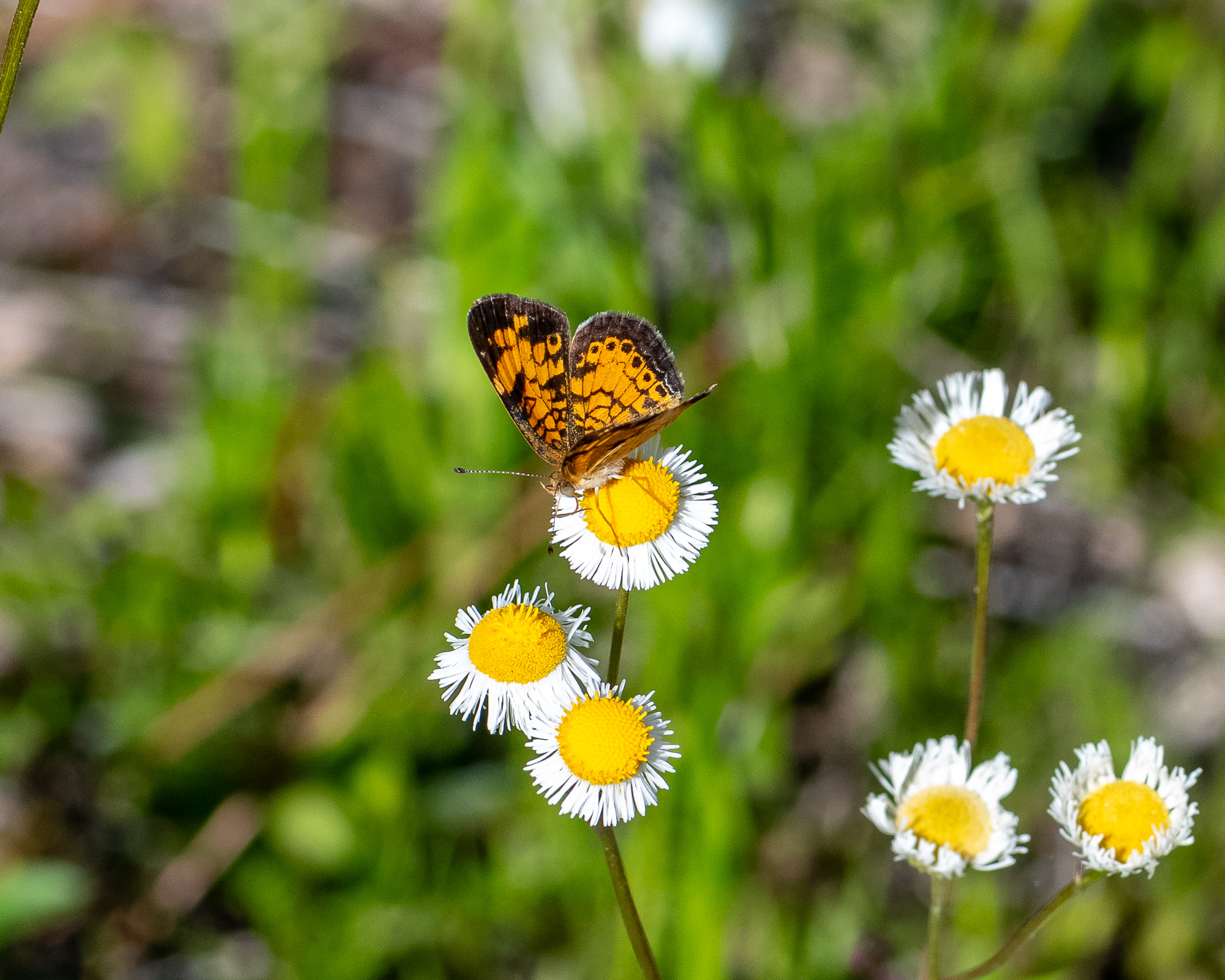
(Click on images to enlarge, click again to zoom.)
Plecia nearctica!
The season of the “Lovebug” is upon us. And upon the winshield. And upon the headlights. And upon the front bumper and grill and our faces and in our sandwiches. A plague one might think we would get used to since it occurs at the same time each year. I love bugs. I do not love Lovebugs. (If you’re interested, they are a type of fly in the Order Diptera.)
With the nasty bit out of the way, there we were once again visiting the Green Swamp. This time, it was a short trip in late afternoon. We continue to be amazed at the diversity of plant life to be found as we are still woefully short of rainfall. Flowers were plentiful in places but not yet abundant. Most blooms were busy hosting nectar-seeking insects.
Spring bird migration was still in progress and there were myriad calls, songs and warning cries. One more meal before sunset seemed to have our feathered friends flitting about the place with little regard for yours truly who was vainly attempting to chronicle their adventures.
Short but sweet. (She’s giving me THE LOOK.) Honest, I was referring to the trip.
A few things we encountered which held still for a moment. Click.
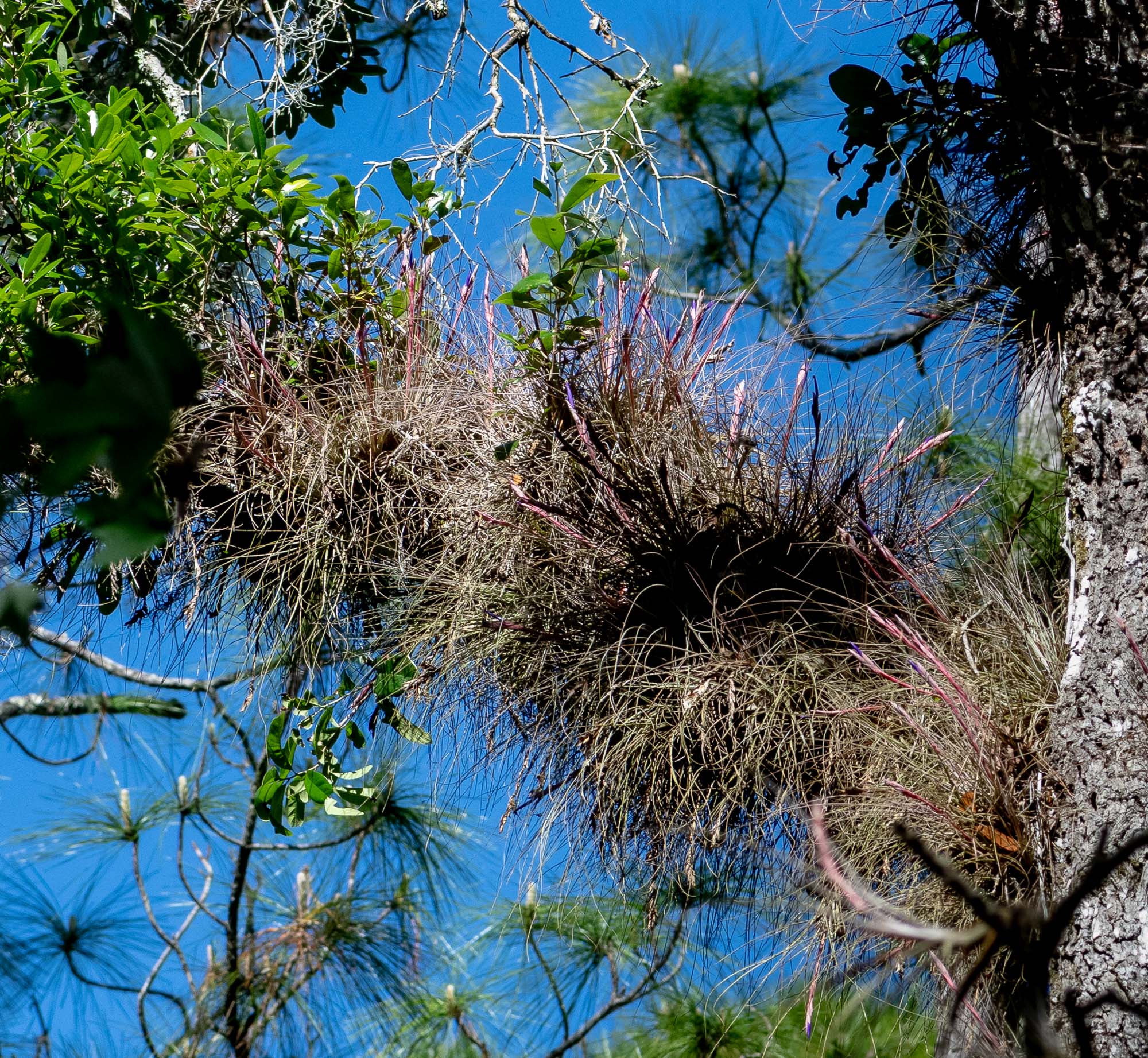
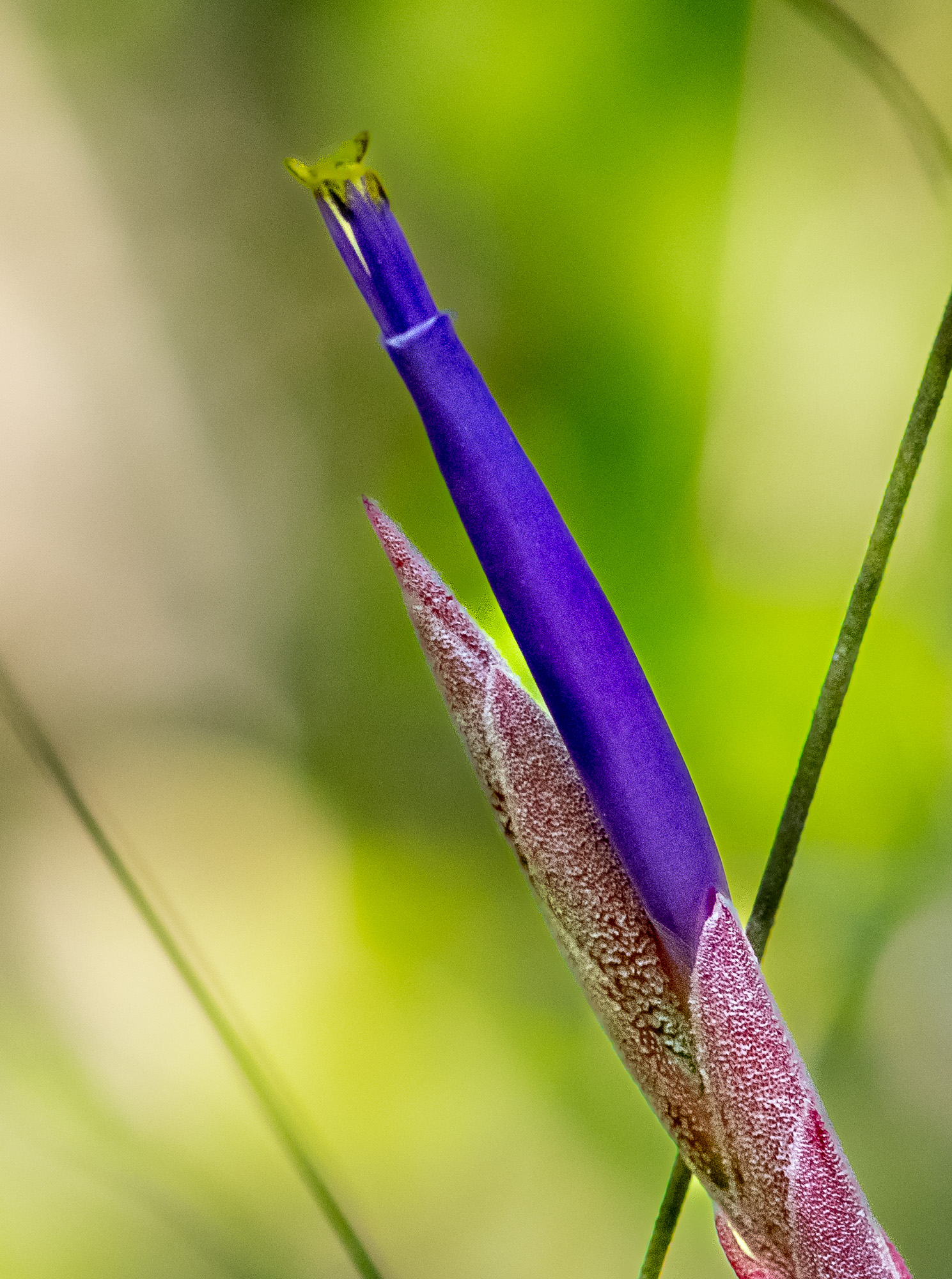
Southern Needleleaf (Tillandsia setacea) is an air plant in the Bromeliad family. One botanist has described its unkempt appearance high in the branches of oak trees as an airborne trash can, as it seems to accumulate all sorts of debris. Once you get past the scruffy looks, it has a remarkably beautiful bloom.
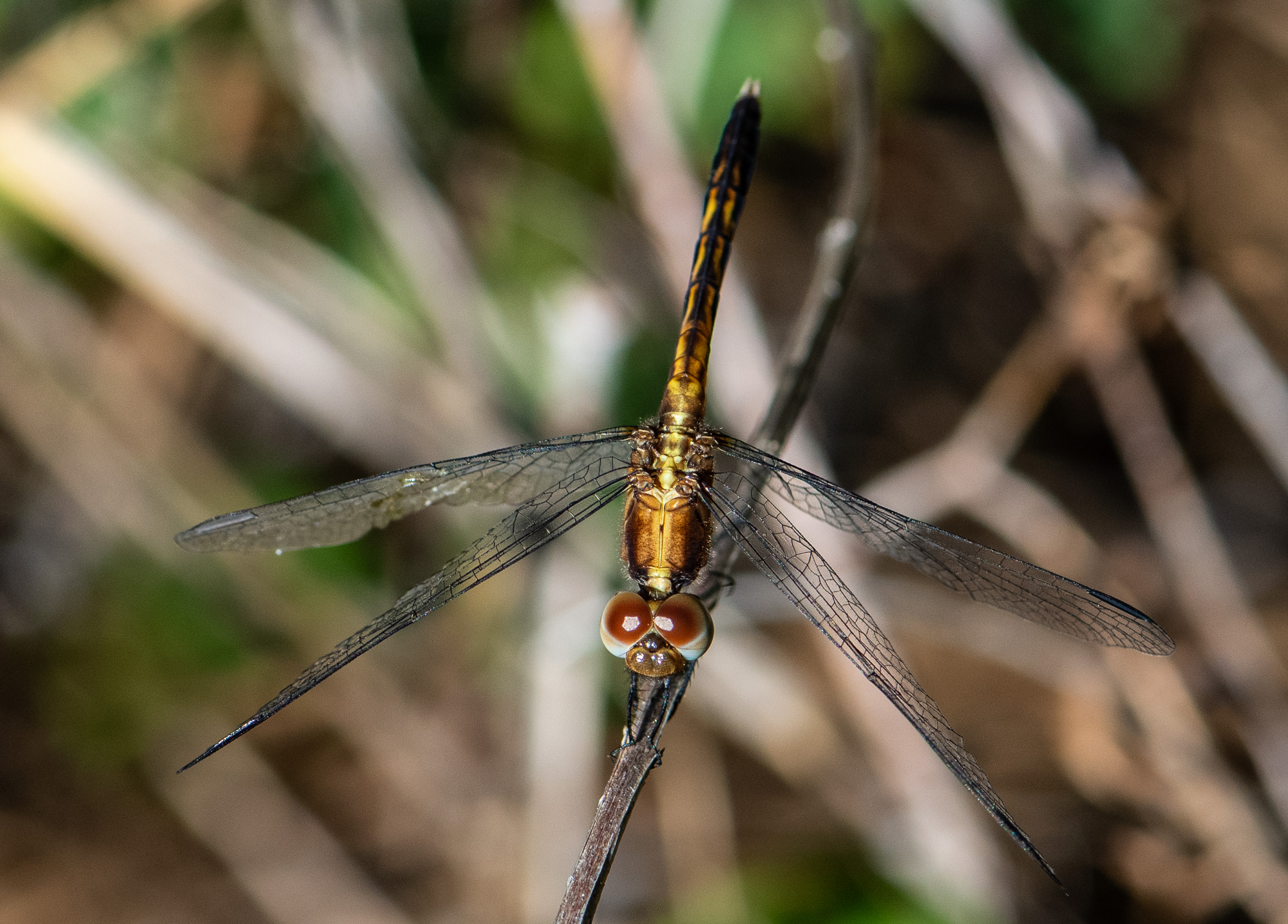
I almost stepped on this little dragon. The Little Blue Dragonlet (Erythrodiplax minuscula) is one of North America’s smallest dragonflies.
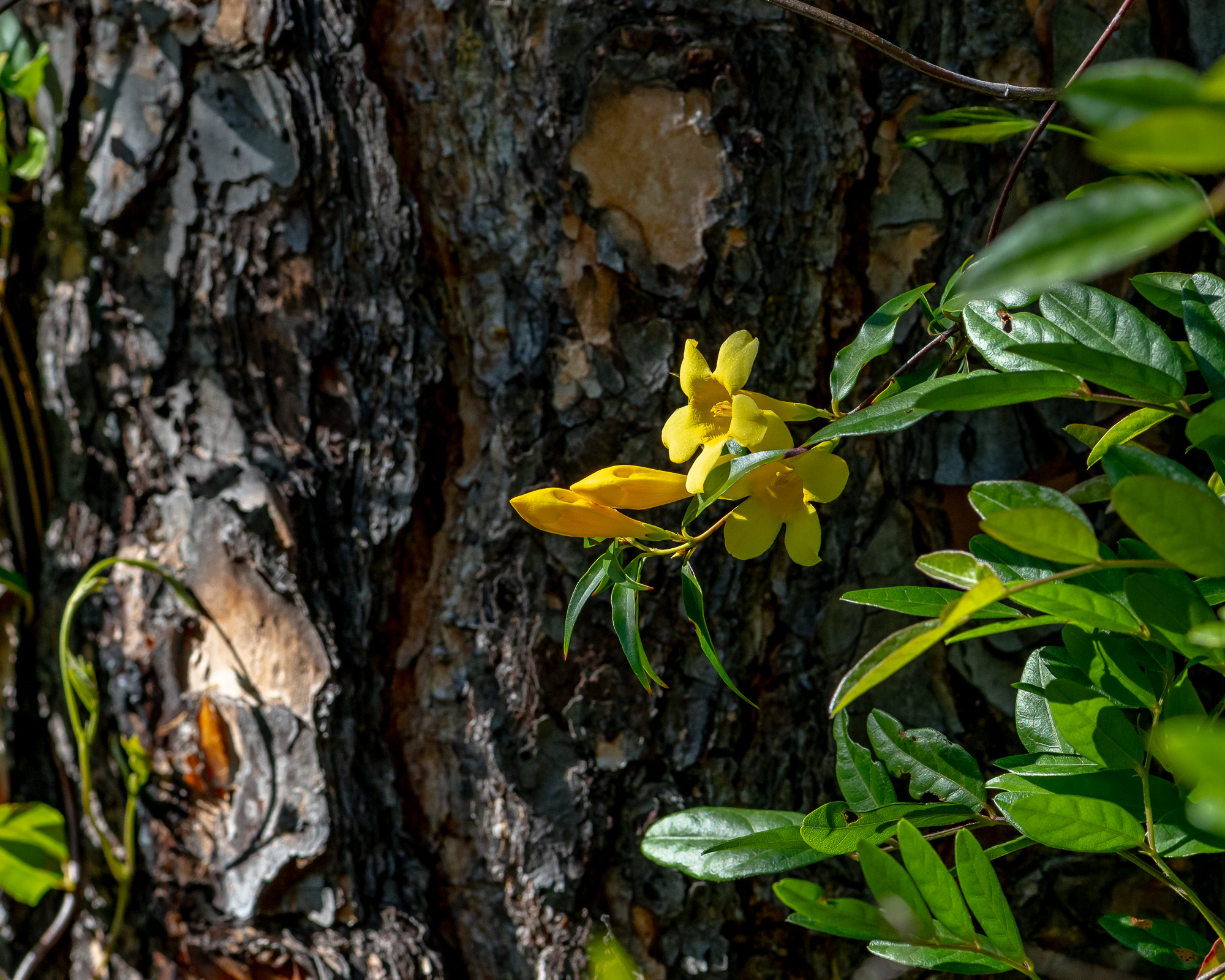
Often, one can smell its scent before spotting the bright yellow flowers of a Carolina Jessamine (Gelsemium sempervirens). CAUTION: Most parts of the plant are toxic.
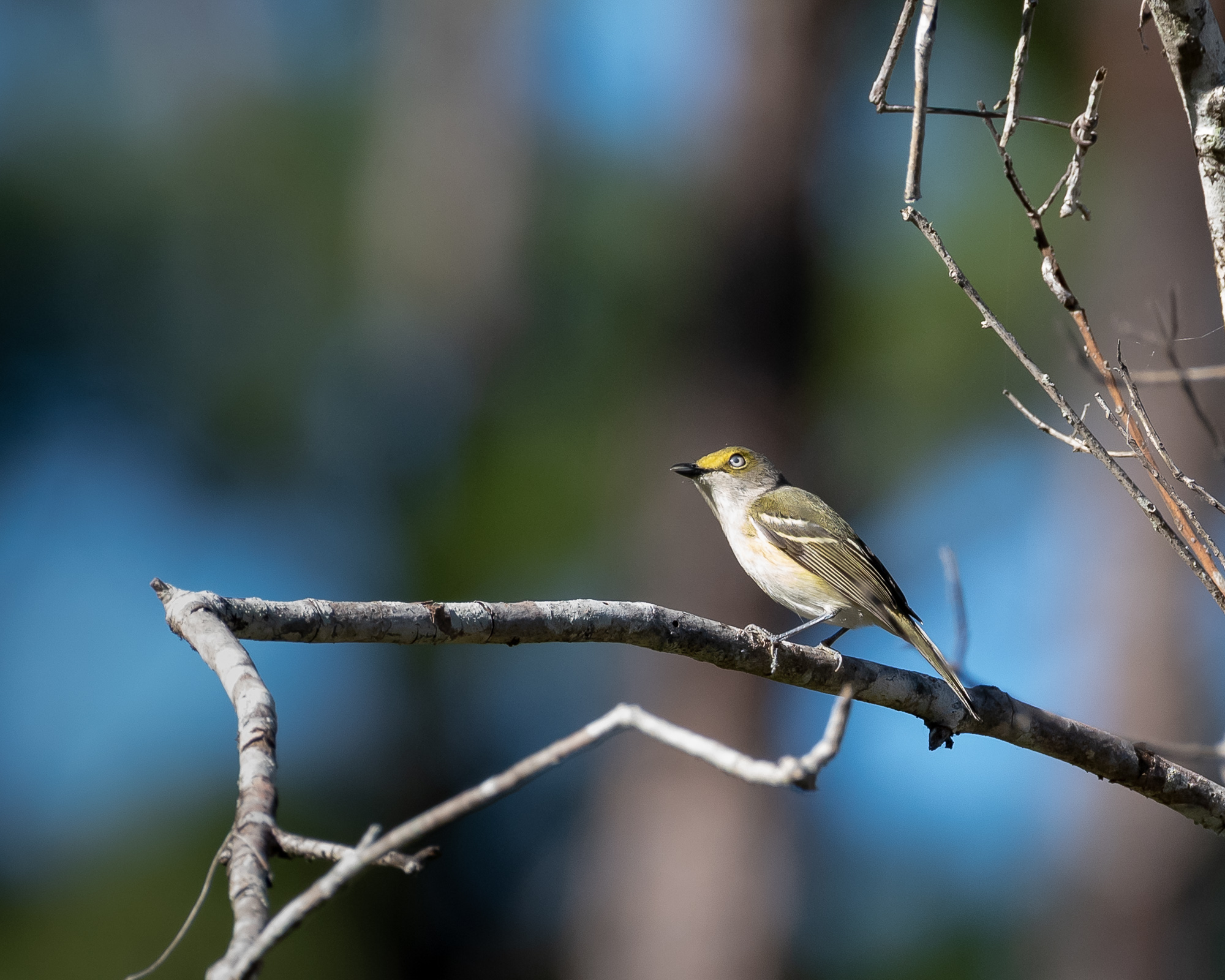
We heard the clear whistling song of over a dozen White-eyed Vireos before finally finding one that held still for 1/2000 of a second.
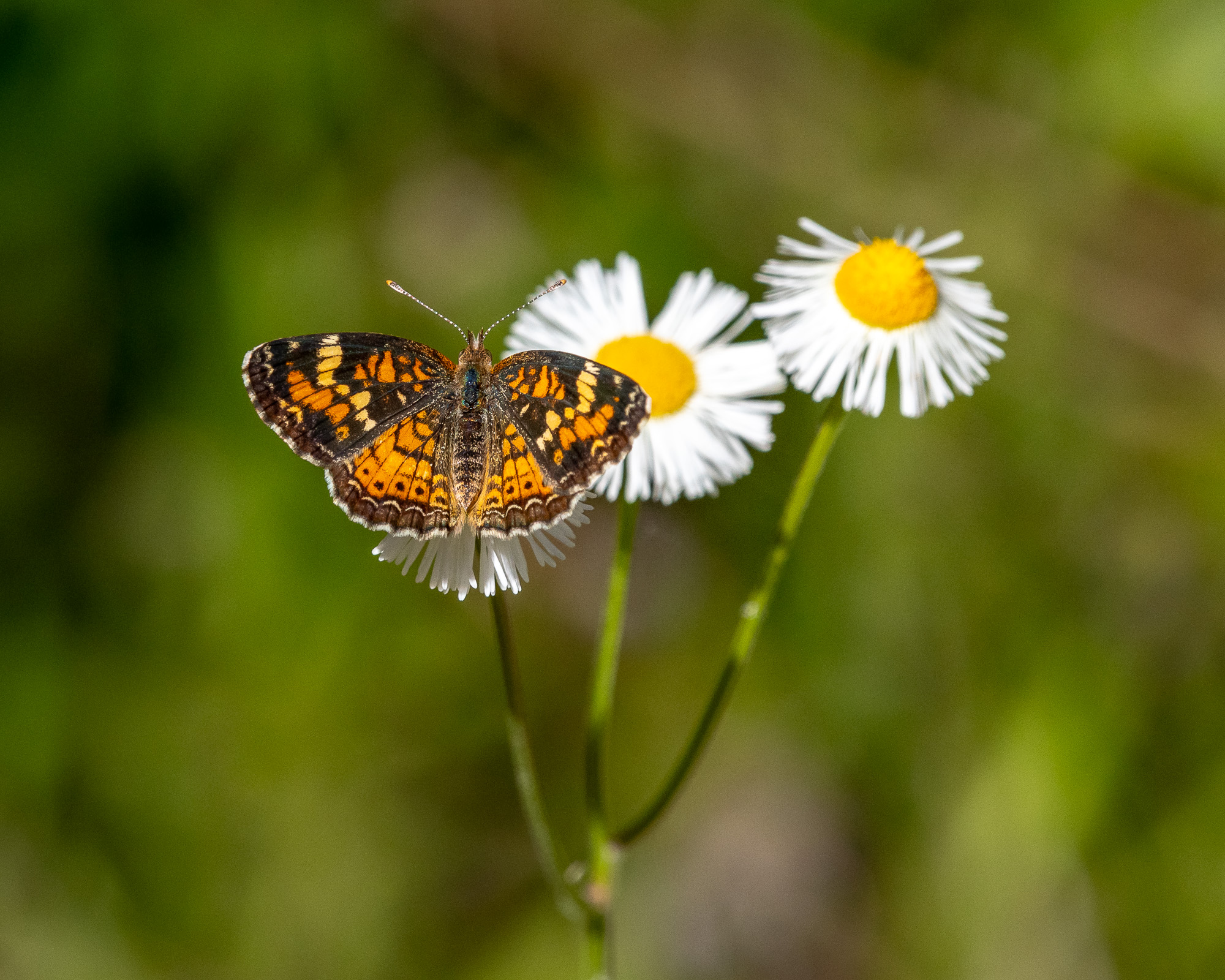
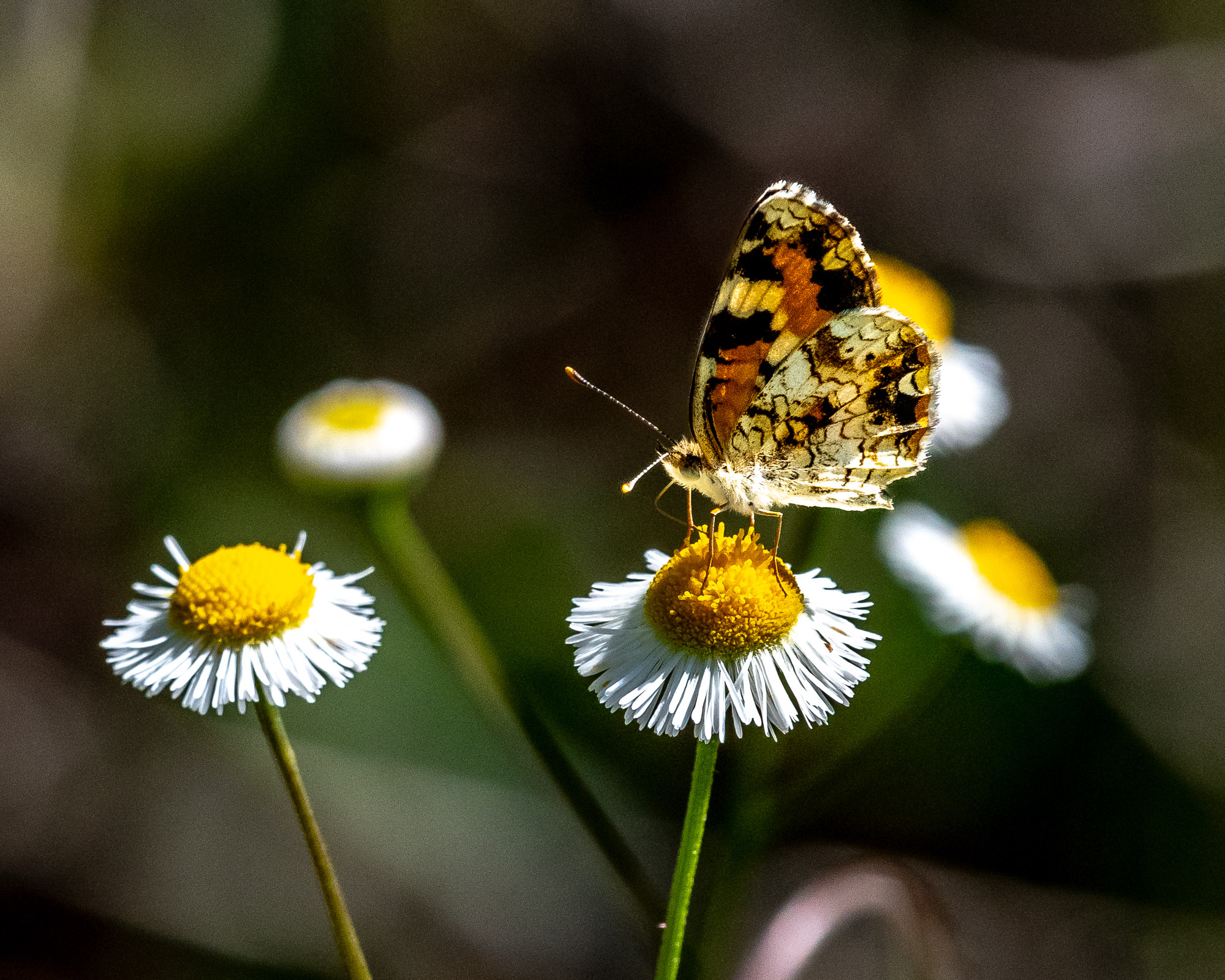
The most abundant species of butterfly we found this evening were Crescents, which belong to the family of brush-footed butterflies. This is a Phaon Crescent (Phyciodes phaon) on Oakleaf Fleabane (Erigeron quercifolius). It has subtle differences to the similar Pearl Crescent shown at the beginning of the post.
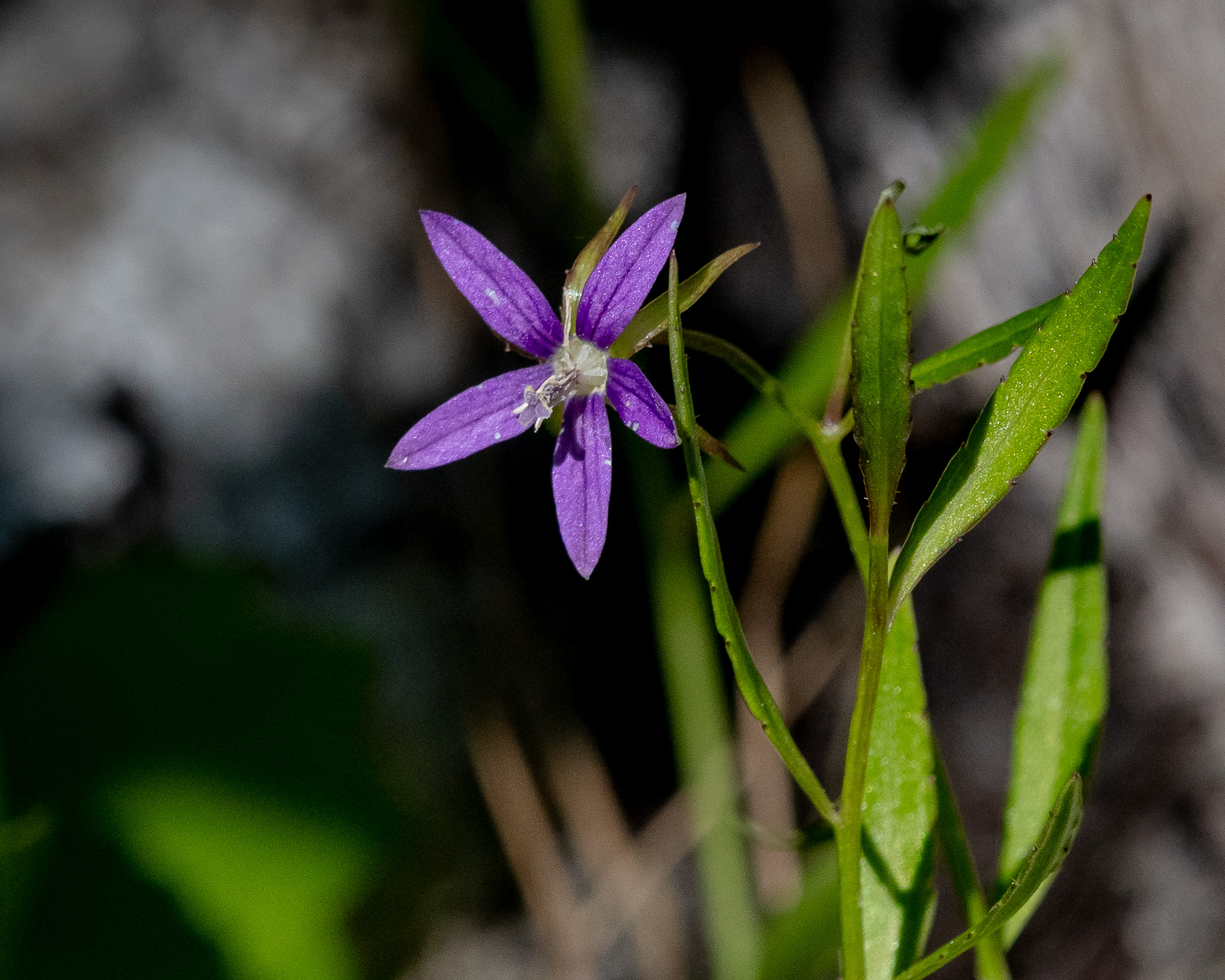
The incredibly lovely Florida Bellflower (Rotanthella floridana) is a very small wildflower of damp meadows and marsh edges. Although it grows to 12-16 inches in height, it has very weak stems so is more often seen draped over neighboring plants. This beauty is endemic to Florida.
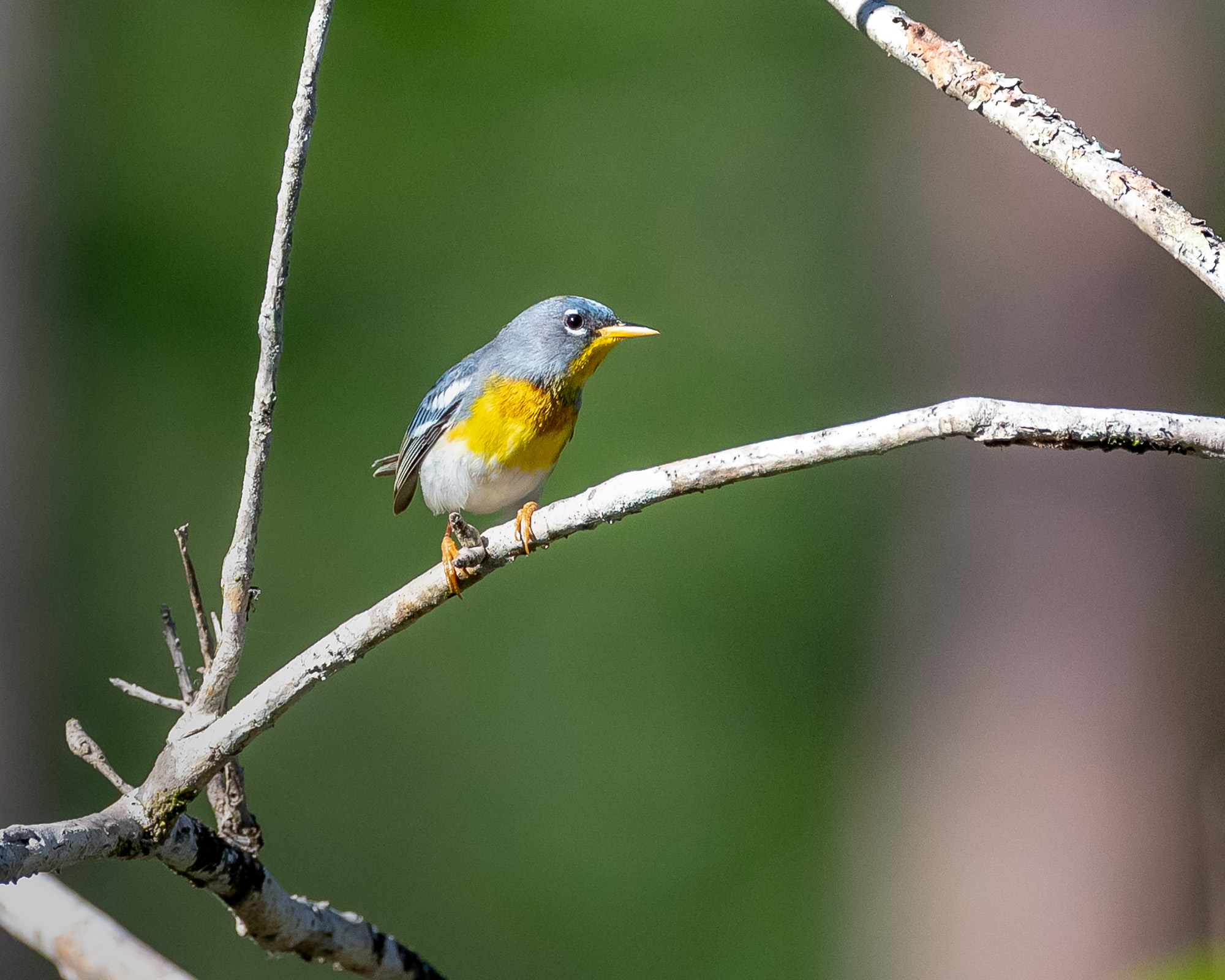
Quick! That bird is in the open! The Northern Parula is a woodland warbler which breeds in our area. At the moment, there are many dozens in the woods as the tourists are gathering for their return trip to more northerly nesting sites. The locals are not unhappy at their imminent departure. (“More bugs for us!”)
The adventure was short on time but long on pleasure. The shadows deepened as the sun sank toward the horizon and we agreed to return soon and linger longer in our favorite swamp.
Enjoy your search for a natural place and come back for a visit!
*
B3 – Our motto: “Birds, Blooms, Bugs”
B4 – Before
7 – Seven O’Clock
(It’s okay to shout “Bingo!” about now.)


That Southern Needleleaf bloom is striking – even looking at your first photo, which had to be from fairly close, I couldn’t spot the vibrant purple of the bloom. It was a wonderful surpise.
Ah, the lovebugs – we had to wash our car’s grille several times during our recent trip to remove the collection and allow the radiator to work efficiently. Our efforts at bio-engineering are so woefully comic sometimes, I wonder at the audacity of even considering terraforming Mars!
LikeLike
We were fortunate to find a few low-growing Needleleaf plants with nice showy blossoms.
I read where some guy named Gates is proposing to release over 30 million bio-engineered mosquitoes to combat mosquito-borne maladies. I can’t help but wonder how long it will be before the old adage is once again proven: “The cure may be worse than the disease.”.
Concerning Mars. My inner sci-fi fan keeps thinking the Martians may soon pay us a visit to give their opinion.
LikeLike
Hmm, I know a few birds and frogs that might have a thought or two about reducing the insect population. This might go on the list of things that make our Martian observers shake their heads.
LikeLike
Even with limited time you had a very productive outing. Beautiful photos. Love the butterfly captures!
LikeLike
Thanks, Peter.
Even short trips beat sitting in the house. A few birds, blooms and bugs help, too.
LikeLike
Love your Northern Parula! They are one of the prettiest warblers, I think tropical with them!!
LikeLike
Our woods are currently filled with their songs. Nest building and territorial spats are in full swing.
A great time to be out there!
LikeLiked by 1 person
Our cars hate the lovebugs too. Beautiful shots!
LikeLike
Thanks very much, Dina.
LikeLike
“The adventure was short on time but long on pleasure.” And so it is with your article! Great photographs and I fell in love with Little Blue Dragonlet and White-eyed Vireo! I wish I could have been with you on this expedition. And B4 7: It is an expierience I made in April this year – the early bird catches the worm!
LikeLike
Welcome to our nature exploration ramblings!
We hope the worm you caught was worth your efforts. The small dragon and loud bird you like are two of our favorites as well.
For your visit and your kind comments: herzlichen Dank!
LikeLike
I understand the importance of (some) bugs, but I still generally hate them ha. Not sure they have the same impact in your area, but the farmland switched to invasive bugs as alternative to pesticides. Sounds good on onset, but then they plow the fields causing the swarms of Asian beetles to take over every square inch of our house and property with zero natural predators..the battle is real folks hehehe. Again, a wonderful set of shots. Especially like the Parula ones, they are so pretty all dressed up in their slate plumbeous..sorry, greys, yellows and highlights of rufous. I like your acronym, but mine would be more like B2B49
LikeLike
Supposedly, Lovebugs were imported to help reduce the mosquito population. The Lovebugs loved the environment. The taste of ‘skeeters – not so much. (Not sure of the veracity of this information. Some have discounted this idea as fiction.)
LikeLiked by 1 person
My longer comment was supposed to appear in its own right, but somehow WordPress glommed it onto my reply to Linda’s. It isn’t only birds that get to say “More bugs for us.”
LikeLiked by 1 person
Had to google the Lovebug as we have nothing like it here. In fact most bugs are in short supply in the UK.
Loved those butterflies.
LikeLike
Thank you, Brian.
I should have included images of the Lovebugs but as soon as I point a camera their direction they swarm onto the lens and ruin any chance of a photo. (Yes, I exaggerate. A bit.)
LikeLike
Oh, love bugs. Apart from the nasty effects you listed, they also love fresh varnish and will swarm to it, even flying straight into an open can. During their season, I have to lay varnish before they get up in the morning, and after they go to bed. Otherwise, they ‘bug’ my work. The approved method for dealing with the ones that get stuck is to let the varnish dry, then break their little legs, toss the carcass, and try to rub out the remnants. Mosquitoes are less annoying.
I remember your needleleaf. While its flowers are similar to those of our ball moss, they’re far more dramatically colored, and the blooms are larger; it’s fun being able to see them in the tree. If you’d shown the Florida Bellflower without any context, my first thought would have been of Venus’s looking-glass. Then, I might have noticed that, apart from the flower’s similarity, the arrangement of stem and leaves is quite different.
There are so many fleabanes. I’m not sure I’ve heard of this one, but it makes a perfect setting for your butterflies. The biggest surprise in this post? The yellow feet (and legs?) on that exceedingly cute Parula Warbler. The only other yellow-footed bird I can think of right now is the Snowy Egret.
LikeLike
The blooms of Bellflower and Venus’s Looking Glass could almost be interchangeable. Typically, for the latter, it seems to be more low-growing. As you mentioned, the leaf structure certainly helps.
I’ll ltry to include images of the leaves of that fleabane next time and it’s name will become apparent. That Parula is probably one of our winter visitors who purchased a pair of yellow leggings at the beach store and just HAD to have ’em before its flight to Ohio.
LikeLiked by 1 person
Count me as another Texan who also immediately thought of a Venus’s looking glass. Now I see it wasn’t a question of whether my identification was akin to whether the metaphorical glass was half full or half empty, but rather that it was fully empty.
LikeLiked by 1 person
‘Tis good that your Erigeron didn’t cause the crescents to decresce (or decrease, or depart).
The elongated purple of that Tillandsia setacea looks great, definitely anti-scruffy. In the Everglades last year we saw what seems to have been Tillandsia fasciculata.
Swamps have a bad enough reputation that few people would profess a wish, as you did, to “linger longer in our favorite swamp.” Hope you get back there soon.
LikeLiked by 1 person