Transitions
(Click images to enlarge, click again to zoom.)
“Wow!”
That’s an overused interjection, for certain. Sometimes, however, nothing else conveys the meaning one seeks. Besides, it’s a direct quote, so there.
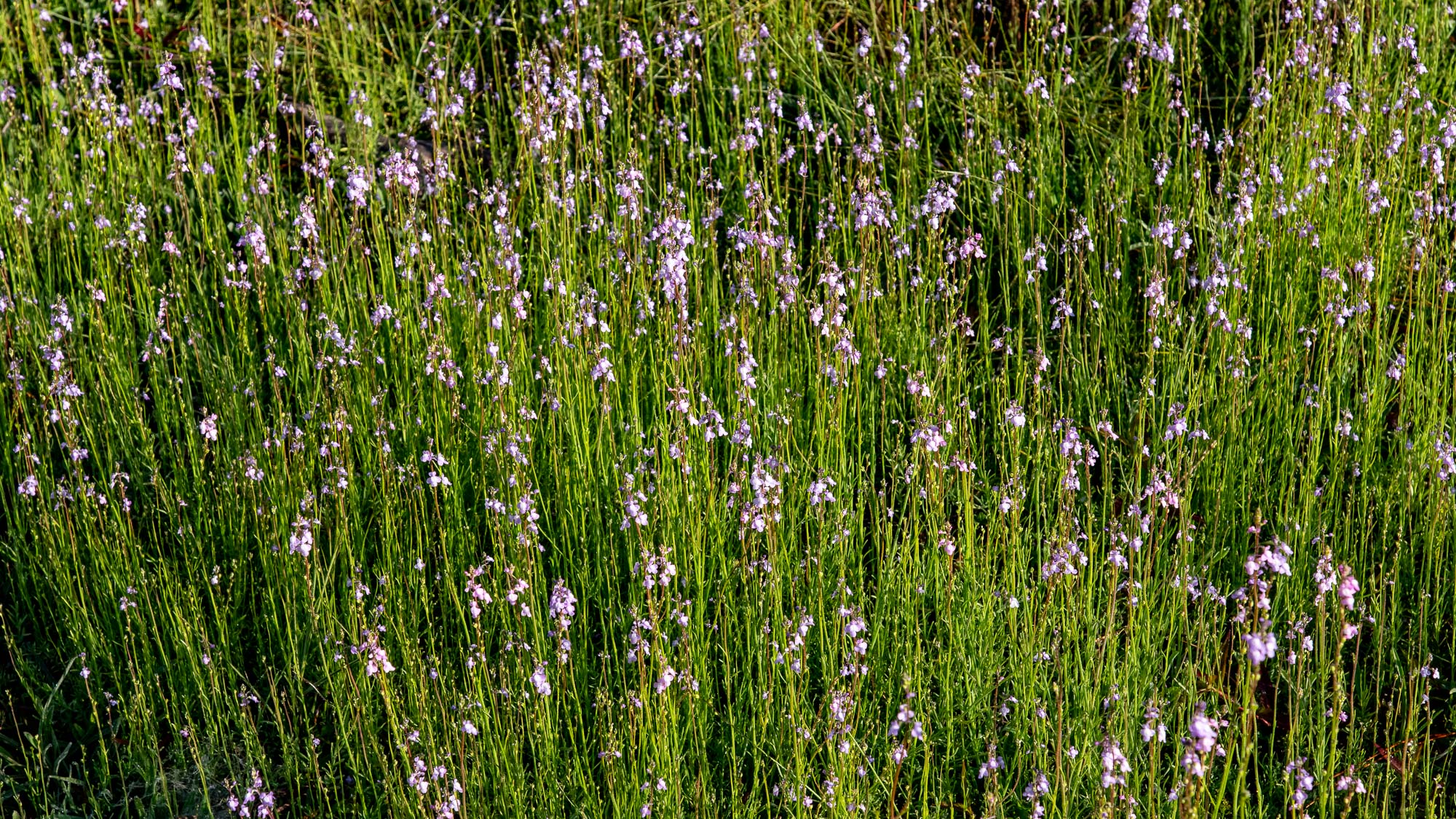
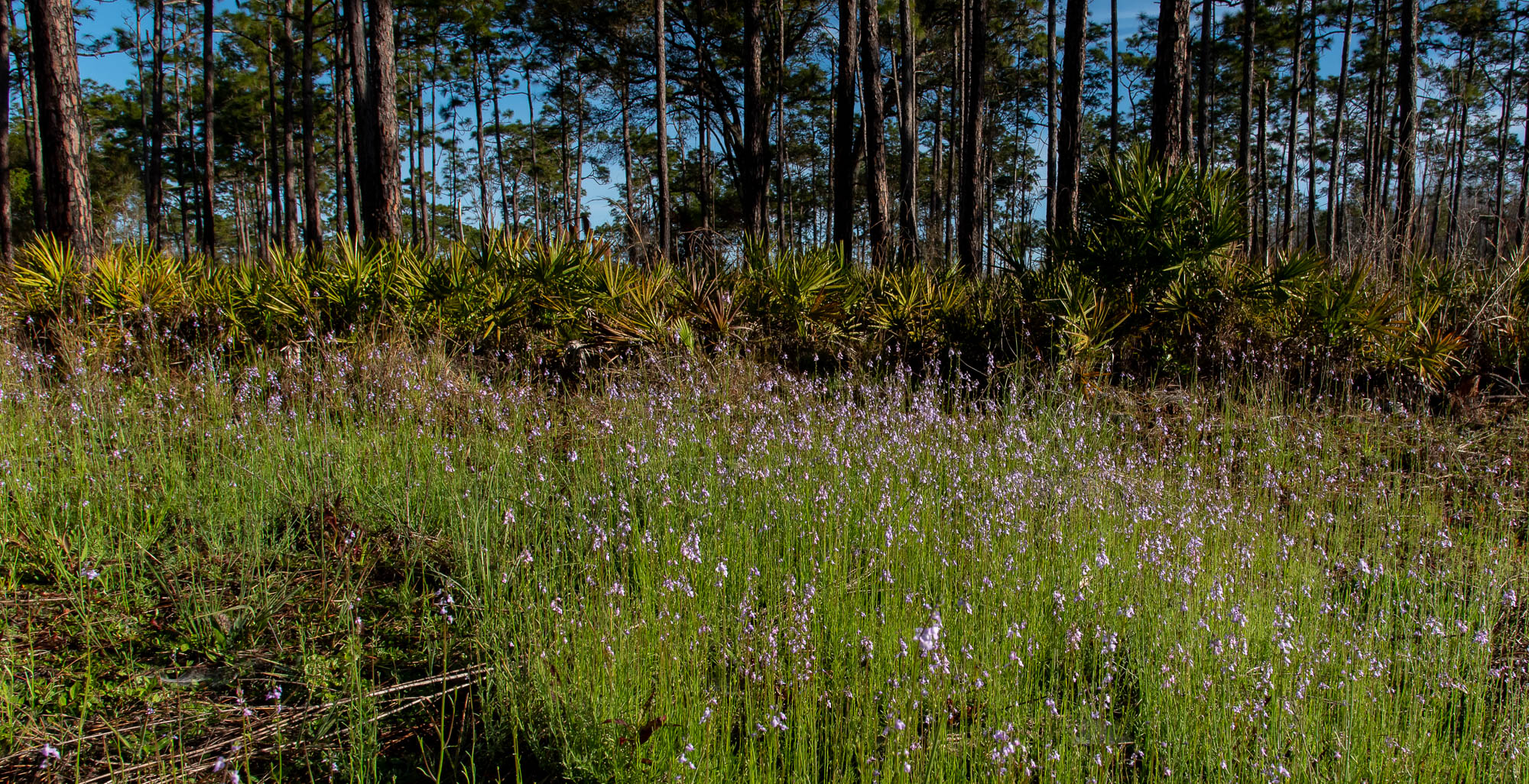
The object of Gini’s amazement hove into view as we came to the first bend in the road after entering Colt Creek State Park. A large swath of lavender along the edge of the pine forest offered a spectacular “Welcome Back“. Canadian or Blue Toadflax is an early spring bloomer which often occurs in masses and just as often elicits an exhaled “Wow!”.
Our local state park received considerable damage from Hurricane Milton in mid-October 2024. The huge storm dumped over 18 inches of rain in the area in 24 hours, had sustained winds of near 100 mph as it crossed the center of Florida and spawned 46 confirmed tornadoes in a single day. The staff and volunteers have done an incredible job of restoring trails, camping areas and cleaning up downed trees. Due to our health issues and the park closure, this was our first visit since Sepember 17, 2024.
We are both almost back to good health and are convinced that breathing fresh air and lounging under longleaf pine branches are far better for us than any other remedies. As we progress toward full recuperation, Nature progresses toward annual renewal. “Official” Spring is still a couple of weeks ahead, but our morning exploration revealed a refreshing “Spring Preview”.
It is a wonderful time of year to be outdoors. We are blessed with migratory birds which are fueling up for their upcoming return to northern breeding grounds. Meanwhile, resident birds are practicing courtship songs, mating behavior and some are already constructing nests. Winter’s gray-brown landscape is dotted with bright green new leaves. Some early blooming flowers, such as that toadflax mentioned above, are putting on quite a show. Looking carefully along the edges of a path can reveal small floral jewels among the leaf litter. A fox squirrel scolds from an oak limb. White-tailed Deer forage in the shadows. Adrenaline surges as a Cottontail Rabbit sprints away from under my feet.
What a totally satisfying morning.
Small flowers. Large impact. Canadian (or Blue) Toadflax (Linaria canadensis).

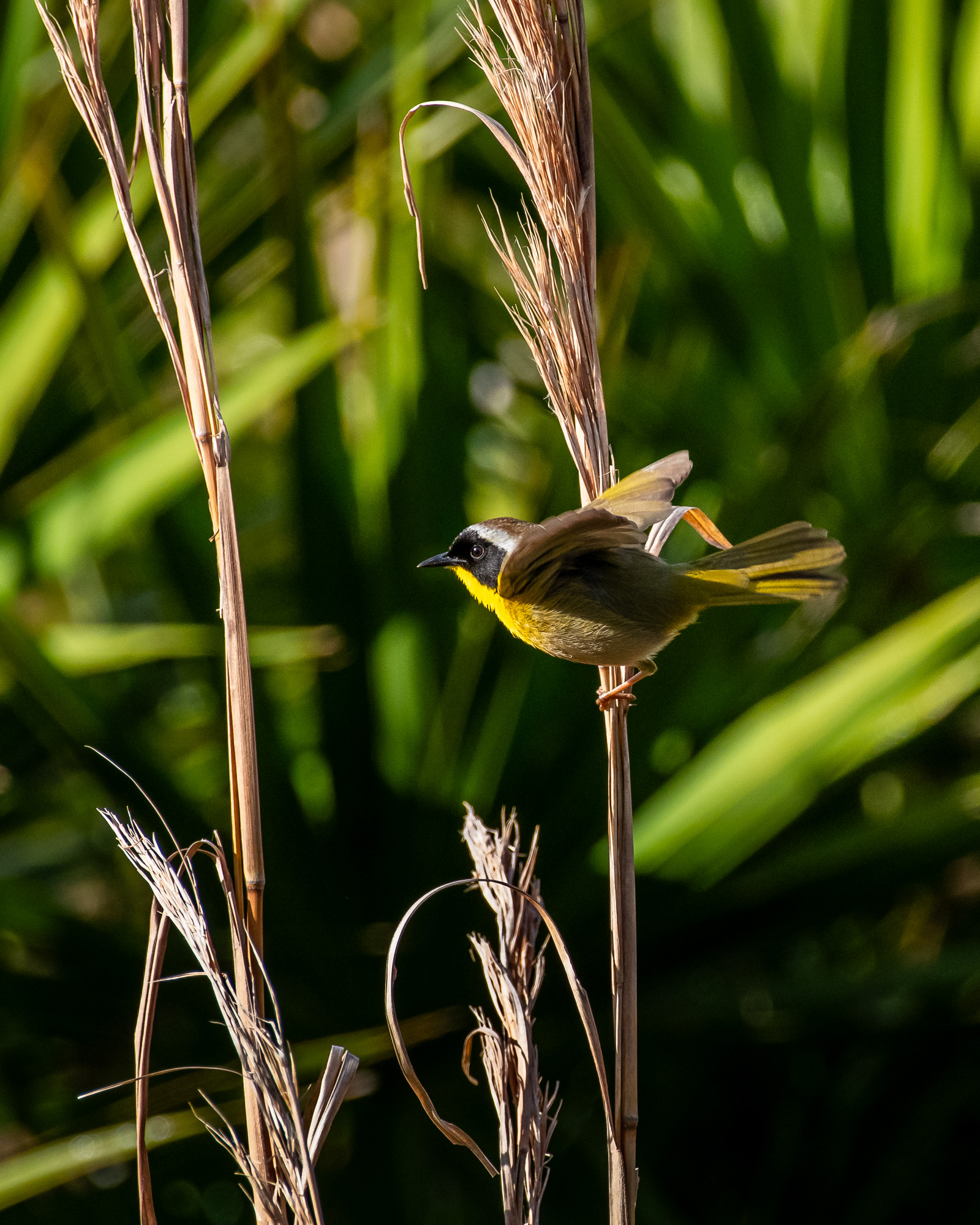
A male Common Yellowthroat tried to impress Gini with his courting song. It worked.
Nature just doesn’t care that humans use calendars for keeping track of the seasons. When it’s time for berries, it’s time for berries. Sawtooth Blackberry (Rubus pensilvanicus).

The Savannah Sparrow is one of our most abundant winter migrant species.

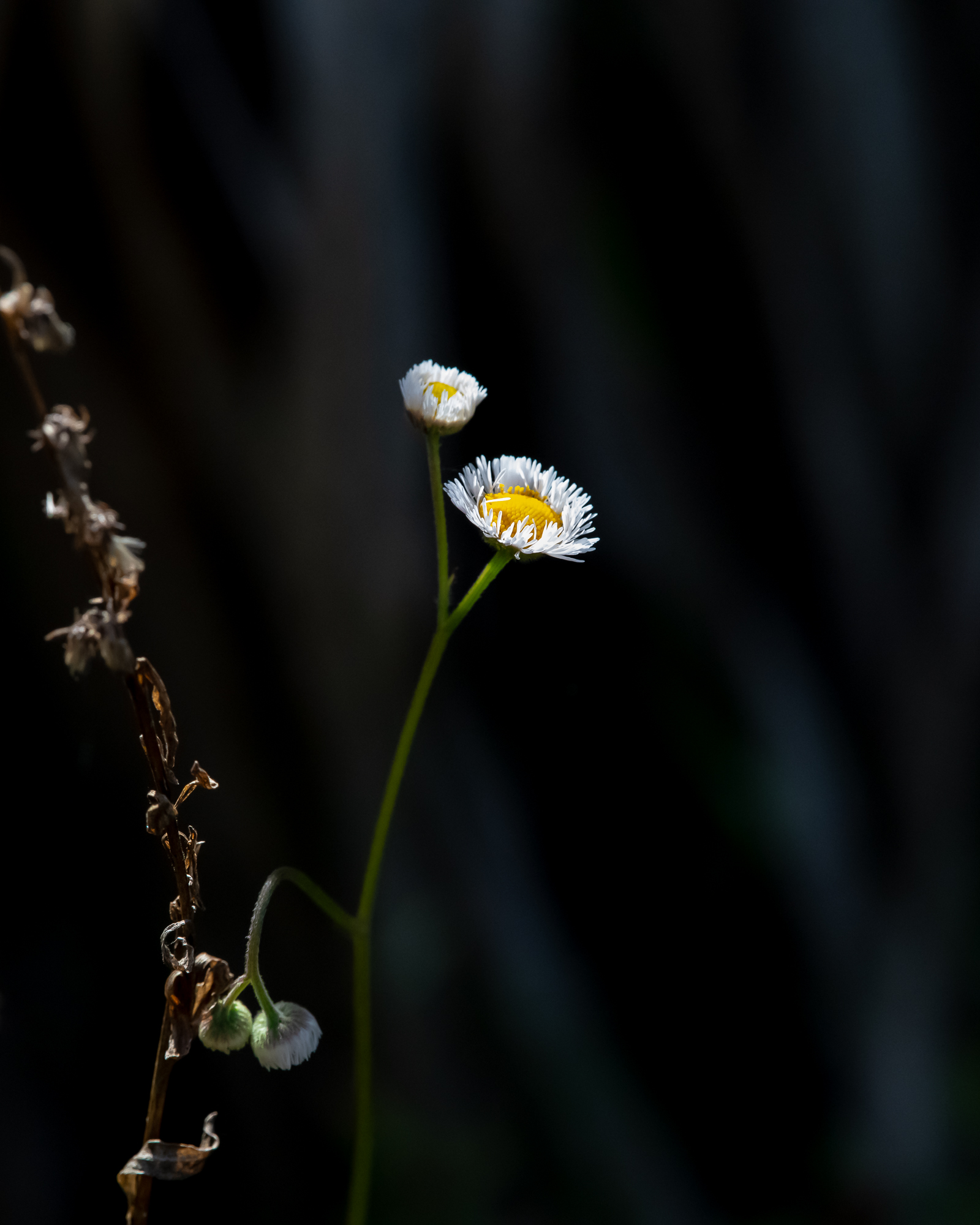
Maybe I’m just hungry, but the small flower of Oakleaf Fleabane (Erigeron quercifolius) reminds me of a fried egg.
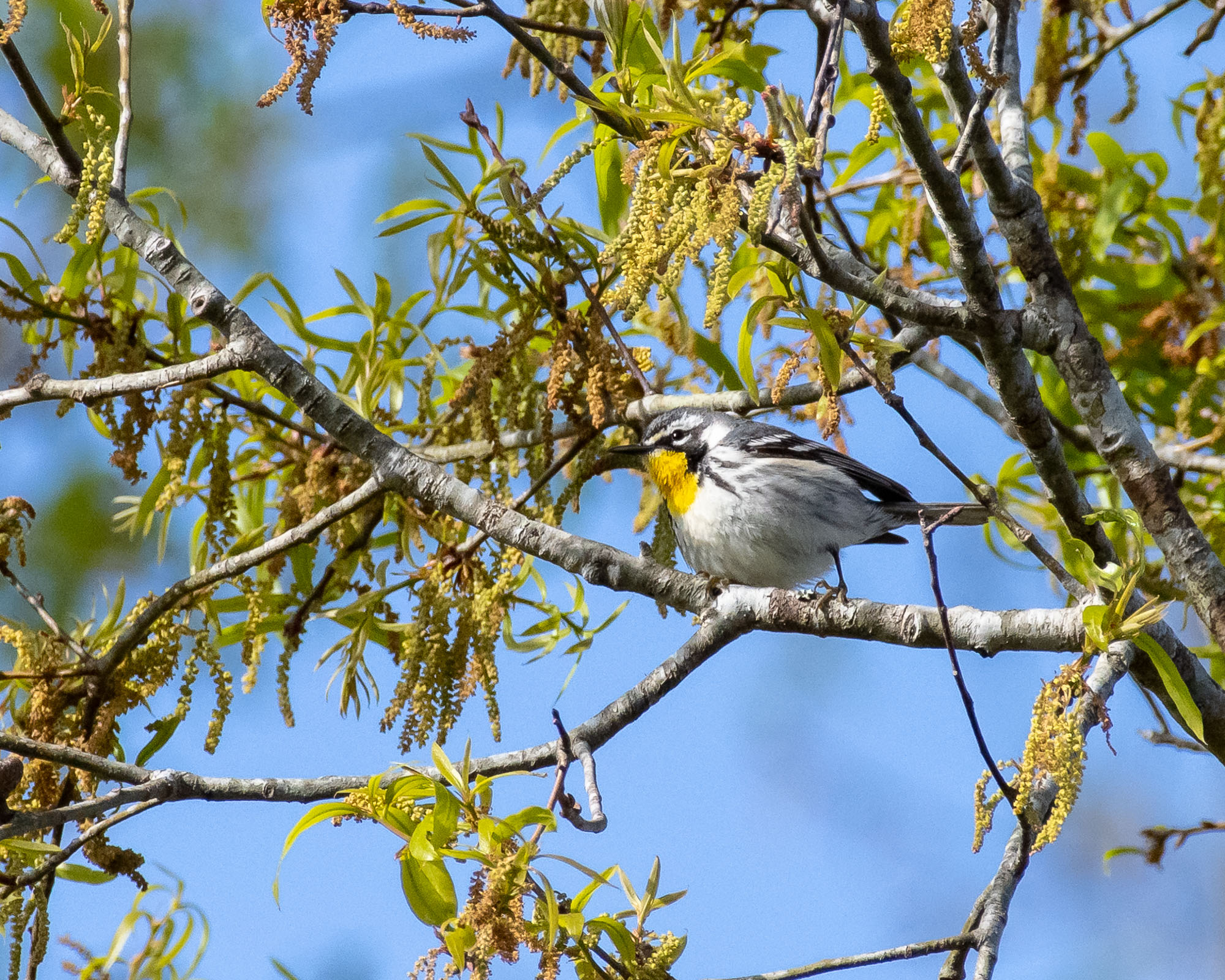
A resident bird which nests within the park, a Yellow-throated Warbler was busy adding to its insect collection.
Florida couldn’t figure out which wildflower to name as the official state flower, so they just named an entire genus for that honor. One species of the genus Coreopsis, Leavenworth’s Tickseed (Coreopsis leavenworthii), is an early bloomer and always looks gangly, unkempt and deliciously golden.

Stork Club. A group of Wood Storks relaxes by the lake. These large birds breed locally within the Green Swamp, which borders the park. (All three are immature birds. Light bills and gray feathers on their necks.)

Lovely blooms. Lovely scent. Some birds actually eat the flowers. Don’t try that at home. All parts of the Carolina Jessamine (Gelsemium sempervirens) are very toxic for humans and most livestock.

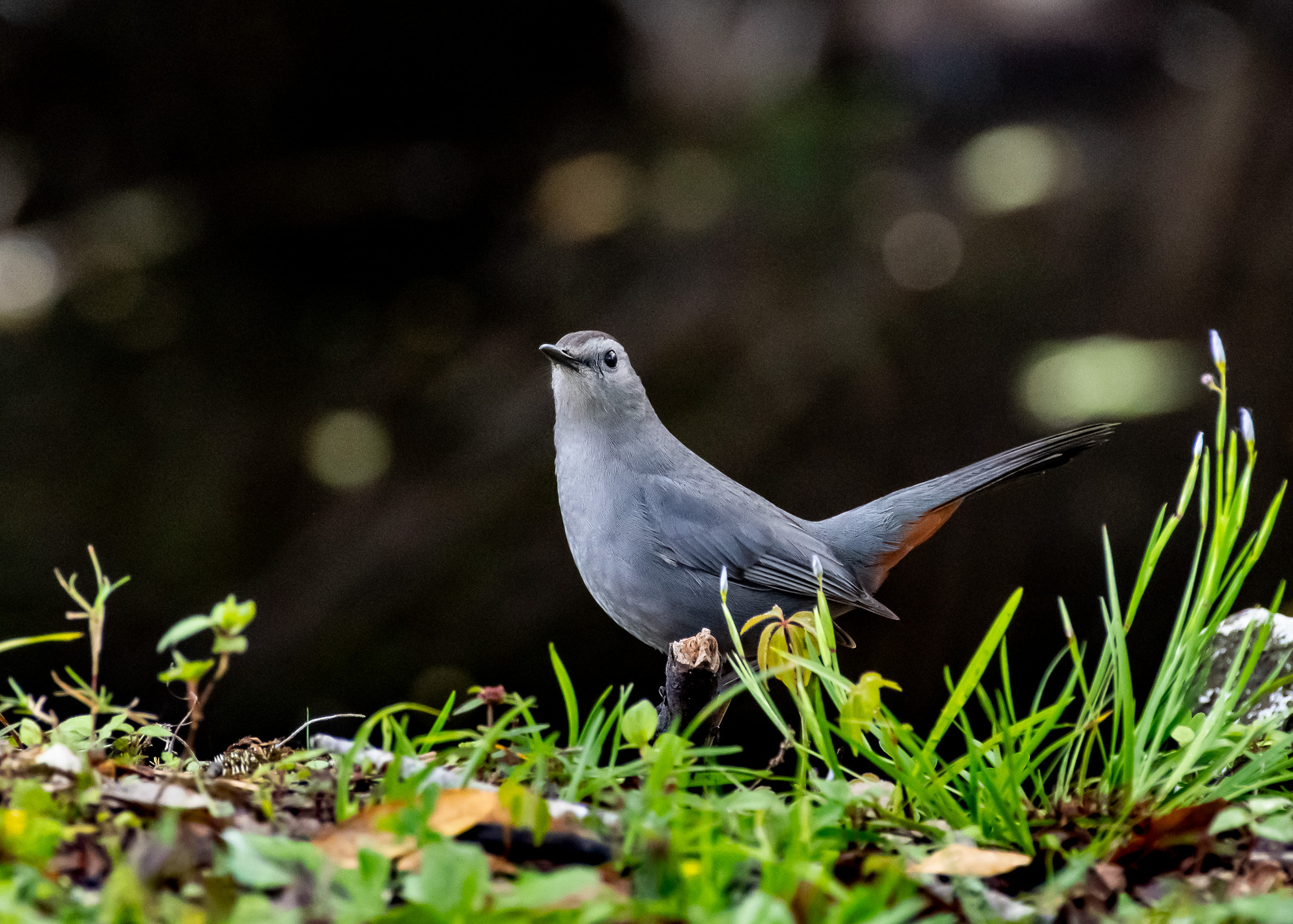
Another winter tourist, a Gray Catbird is really quite attractive for seeming so plain in appearance.
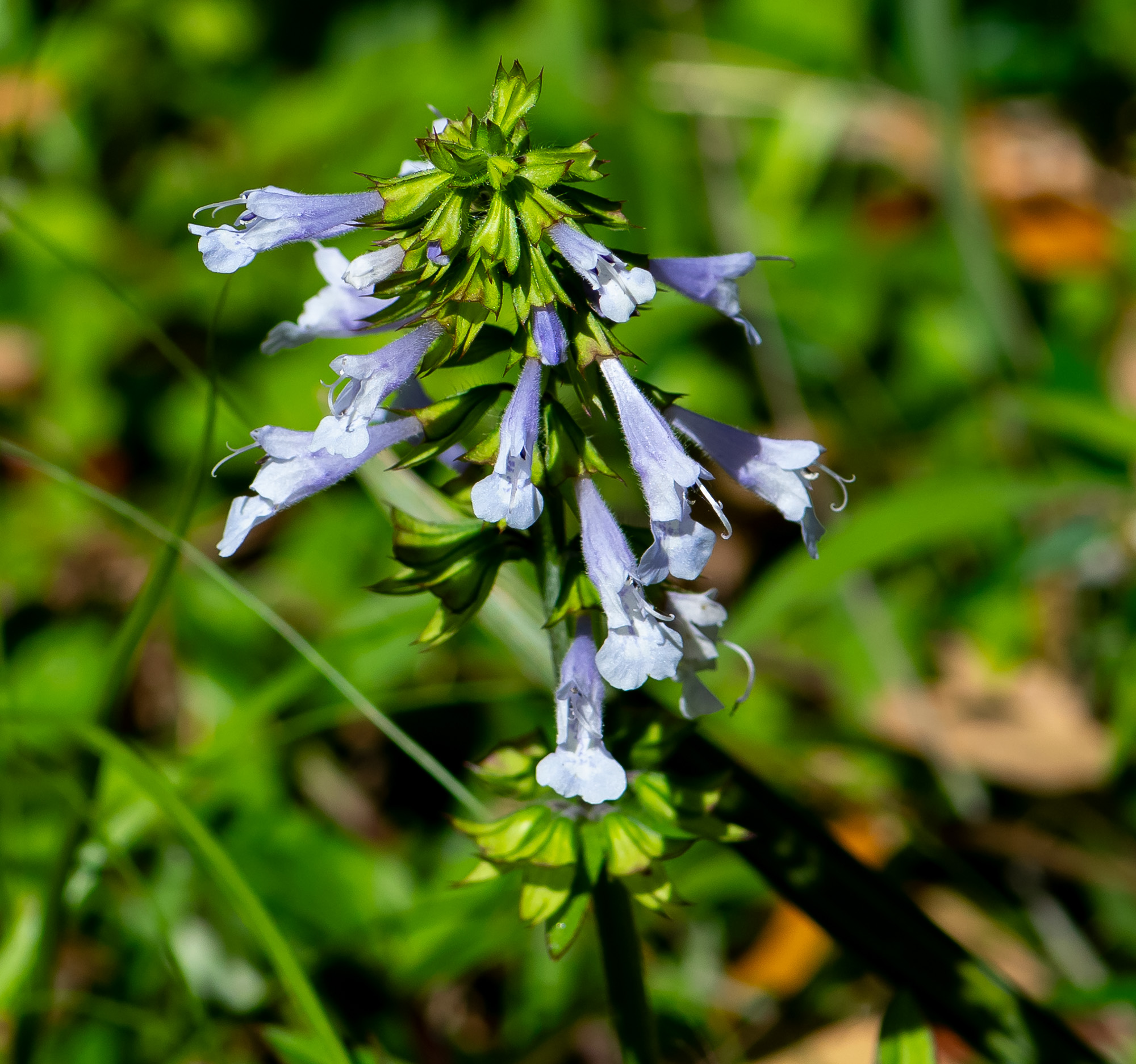
Bees and butterflies love the blooms of the Lyreleaf Sage (Salvia lyrata). Okay, so do we. The fact that it blooms from late winter through spring helps.
We aren’t alone in our love of tall pines. A convenient limb makes a great lookout for a Red-shouldered Hawk.

Blooms with delicate lemon-yellow petals are beginning to pop up around the park. This is one of our favorite flowers. Carolina Desert-chicory (Pyrrhopappus carolinianus), also known as Texas or False Dandelion.

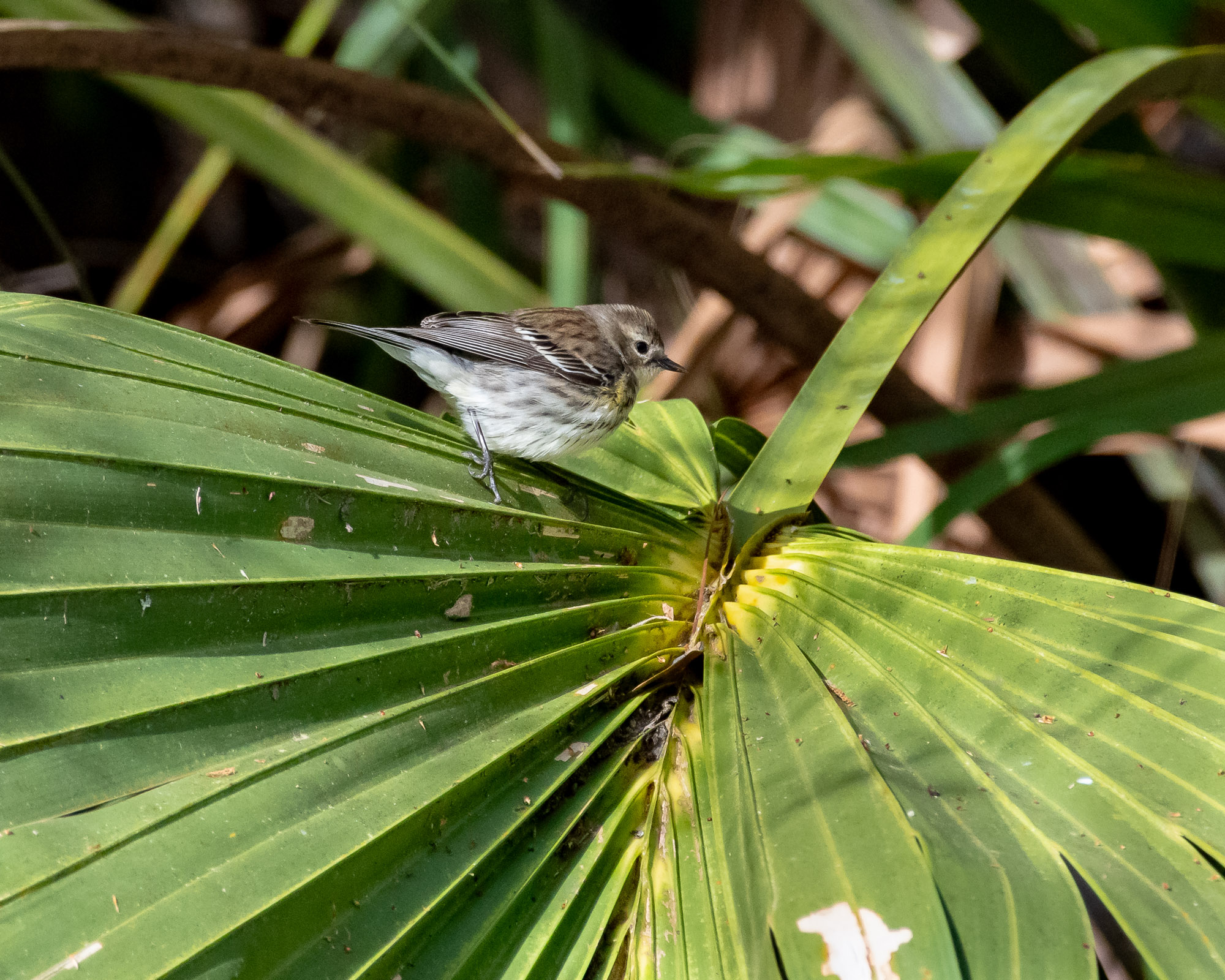
The Yellow-rumped Warbler is one of the most abundant warblers we encounter during winter migration. This may be an immature bird as it doesn’t show must color.
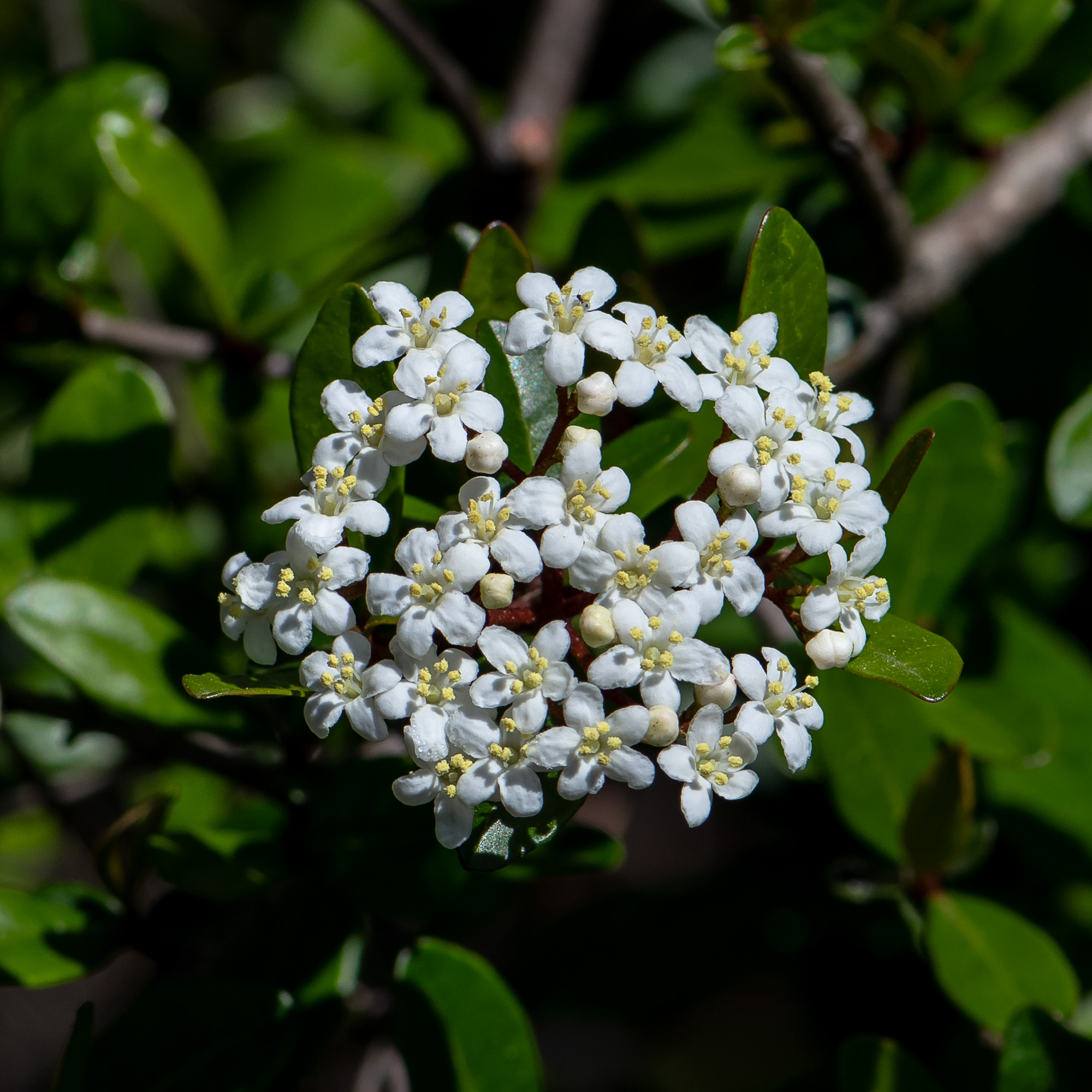
A really attractive plant in early spring along the forest edges is Walter’s Viburnum (Viburnum obovatum). It can grow to 12 feet tall and just about as wide. The clusters of small white flowers are loved by us and the bugs. In late summer, there will be drupes of red fruit which turn black when ripe.
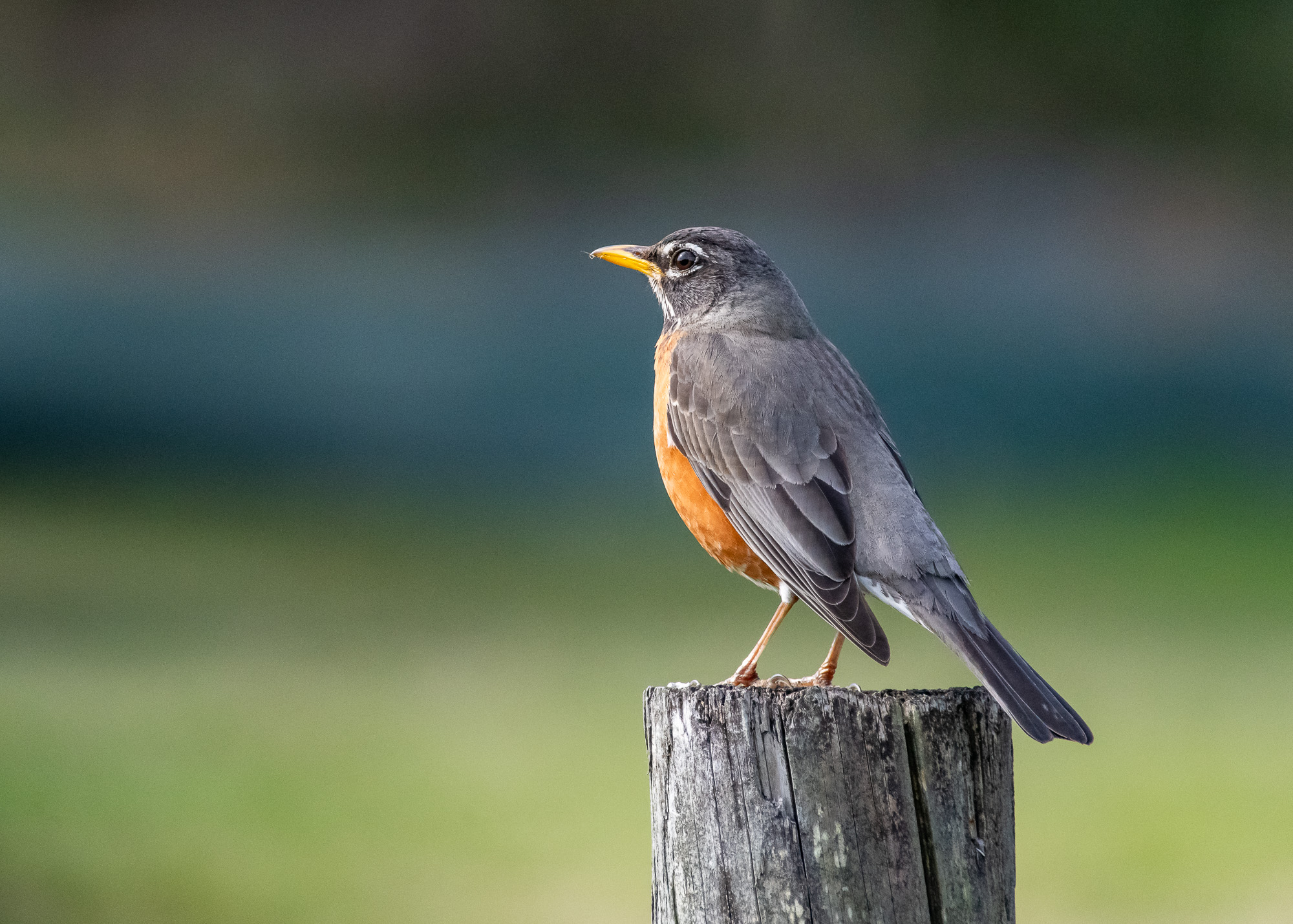
Gangs from the north appear on lawns and fence posts all winter long. American Robin.
More beauty en masse. This time, a sea of yellow as we get to enjoy the fields filled with Mexican Pricklypoppy (Argemone mexicana).


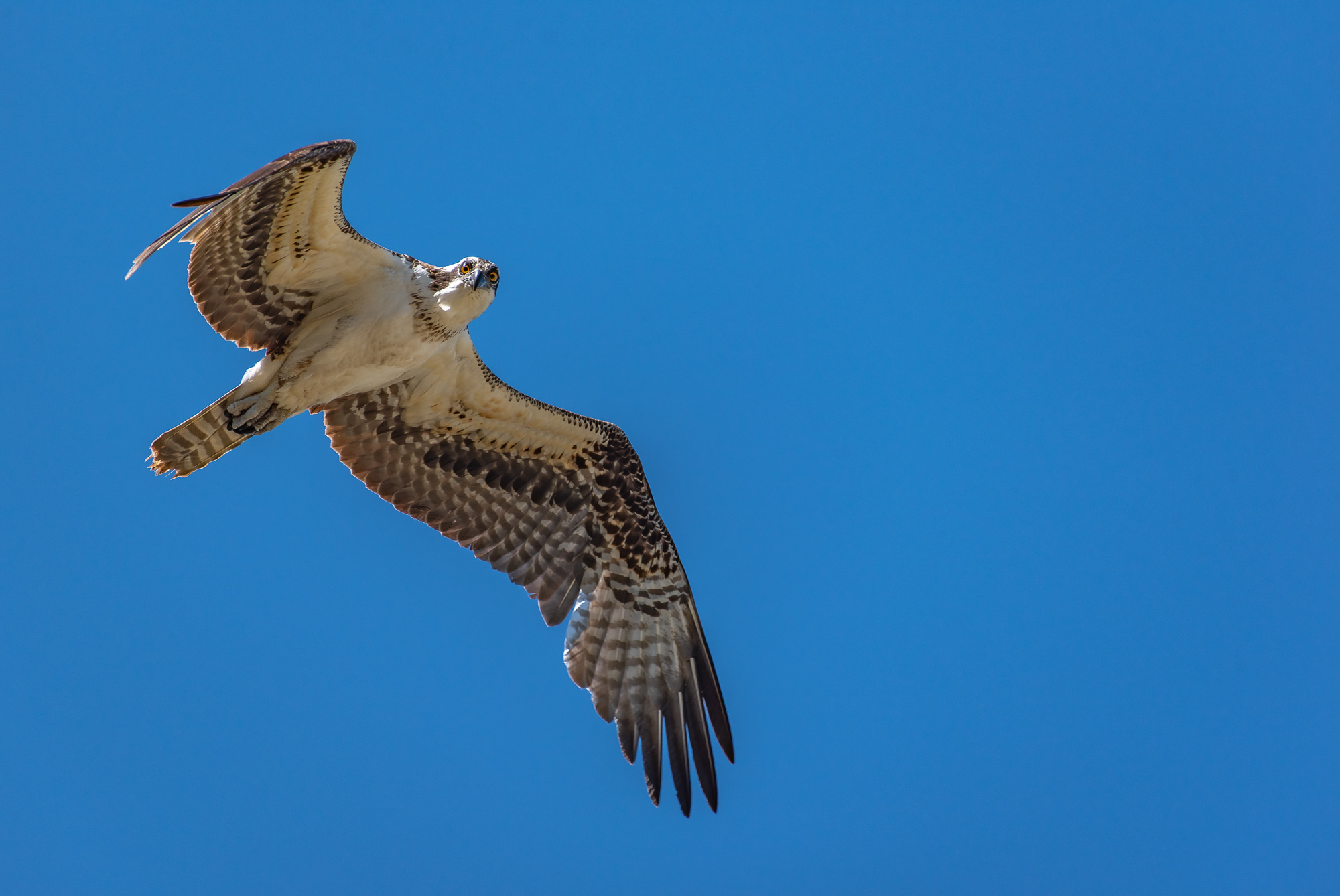
“I am NOT a fish!” The Osprey still checked me out, just in case.
Gini says the Pileated Woodpecker looks prehistoric. I happen to agree. (Don’t tell her.). This male spent quite awhile probing around tree limbs at eye-level. (Why can’t all photo subjects be so cooperative?)

Seasons and lives change. It is inevitable. How we deal with the transitions makes all the difference.
Enjoy your search for a natural place and come back for a visit!
 Our Natural Places
We are in transition here as well, turning from brown to green, but we could use some moisture as things are really dry. So dry in fact that the grass is not growing. Love that last picture of the piliated, they are such cool and interesting birds.
LikeLike
Brown and green are our state colors.
Hopefully, we will both see a bit of rain soon. The wildflowers are waiting patiently.
My intrepid scout, the pretty one with the incredible brown eyes, said: “While you were busy clicking pics of that woodpecker, a big blacksnake crawled onto that rock about ten feet from you but scooted off when you moved. I tried yelling at you but you ignored me.” Good hearing is the third or fourth thing to go once you reach “that certain age”.
LikeLike
As always, your images of the birds and blooms are beautiful, Wally. I’m so glad you and Gini are able to enjoy your natural places again. Nature is, indeed, the best healer and I hope more of that healing power will rub off onto you both.
LikeLike
Thank you, Tanja.
We’re doing okay with recuperation, now we just need to have life stop interrupting with “other stuff”.
Hope we all get to enjoy the beauty of Spring.
LikeLike
Your flower and bird captures are getting me excited for spring. Things are picking up here birdwise as the Robins have moved in to start gorging on worms, our annual Phoebe has arrived to claim its spot under our deck and the flowers..well, they are actually still all tucked away as our temps fluctuate between and 70 and 25. Love the Pileated pick (I agree with Gini and you can tell her ha). People are always looking high for them in the field and I have to keep telling them to look midtree level. Glad to see everyone doing better – continue to take care.
LikeLiked by 1 person
Spring is springing up all over the place.
We hope to get out in it again – soon and often.
Thanks for the great comments.
LikeLiked by 1 person
I felt such happiness reading your post and seeing this lovely morning you shared together and then with us! Loved the Piliated WP and Osprey! The Osprey are returning slowly to the Chesapeake Bay, I saw my first of season a week ago. Happy Spring to you both, Wally & Gina, it’s awaiting your return to the wild!
LikeLike
We really appreciate the kind words, Donna.
The past few months have thrown up quite a few road blocks which we’re still trying to navigate around. Getting out on a spring morning sure helped. More to come!
LikeLiked by 1 person
Very glad to hear you are both back to near 100% again. Also glad to see your photography didn’t suffer while you were “off the beam” as my Gram used to say. Very nice Spring collection of flora and fauna. Excited that we will see more going forward.
LikeLike
Thanks, Brad. It was a good morning.
We are definitely looking forward to going forward.
LikeLiked by 1 person
You’ve shared a restful and refreshing walk with us. I’m always tickled by the appearance of morning dew in your photos – you and Gini know how to optimize the early morning light. The toadflax creates a lavender cloud floating above the ground – and then the color was repeated among the coreopsis by, I think, vetch? If so, fetching vetch 🙂
LikeLike
Thank you, Sam. That outing DID refresh us.
Good eye on spotting the fetching vetch amongst the yellow fellows.
LikeLiked by 1 person
I’m so glad you are both feeling well enough to get out and enjoy Spring! The Jessamine is blooming here and the white flowering trees and bushes. I’ll have to come back and ID some flowers from your blog when I see them. Is that cheating? We would love to camp in that area…some day! Enjoy your week. Take care and hugs to you both, Diane
LikeLike
We continue to improve. Thank you, Diane.
Hopefully, we’ll be back to some sort of regular visits to the outdoors.
No. It is not cheating to share.
LikeLike
Lovely to see the results of your return to the wild. What cracking shots of the woodpecker, Osprey and robin!
You are right, being out there on a nice day is the best tonic available, keep well.
LikeLike
Once in a great while, a bird cooperates with this shaky-handed photog.
Thanks for the visit, Brian. We’ll try to keep well and get out there as often as possible.
LikeLike
Thanks for sharing these beautiful critters. Enjoy your time and be well!
LikeLike
You are very welcome. We always enjoy our time. That “be well” thing – well, we’re trying!
LikeLiked by 1 person
What an assortment of beauties you found! I hardly could believe you have prickly poppies already, not to mention the toadflax. It seems way too early for such, but of course you are in Florida, and things are different there!
They aren’t entirely different, though. My current post is of Salvia lyrata, and I just spotted my first fleabane of the year yesterday. Our version of the Texas dandelion (Pyrrhopappus pauciflorus) is everywhere, and there are plenty of yellow-rumped warblers flitting through the trees.
I especially enjoyed the wood storks, partly because they’re so uncommon here, and partly because they always make me smile. They seem so improbable, somehow. It’s wonderful that you were able to get out and about to see them, and all those other wonders. You (and Gini!) really have been missed.
LikeLike
We do seem to enjoy early bloomers. What else would one expect from La Florida?
There were a total of eight young storks lounging by the lake but they refused to cooperate for a group photo.
It really felt great to be out in all that fresh pine air. Now, if we can just figure out how to return to our regularly scheduled Nature program.
LikeLiked by 1 person
Glad to hear the twin recuperation is continuing apace. You must have been thrilled to be back in one of your favorite local places after an absence of half a year.
Plants whose scientific name includes leavenworthii, like the Eryngium leavenworthii in Austin, always makes me think of the prison (which in turn reminds me of Groucho Marx’s character Rufus T. Firefly in “Duck Soup,” who suggested a sentence of “ten years in Leavenworth, or eleven years in Twelveworth”).
That’s quite a redhead in your final photo.
LikeLike
We’re planning to keep scheduling visits to old and new haunts, even if we can’t stick to it.
The park really gave us a much needed break. It didn’t hurt that we encountered plenty of birds and blooms.
Groucho certainly left his “Marx” on the comedy profession.
LikeLike
You saw so many beautiful things there. What a great place. Glad you are back out and about.
LikeLike
We’re glad, too, Dina.
It was a great morning. Can’t wait to do it again. And again.
LikeLike
What a wonderful post, Wally. Very glad you’re both out and about!
LikeLike
Thank you, Ed.
It’s good to be out in the weeds and trees again.
LikeLike