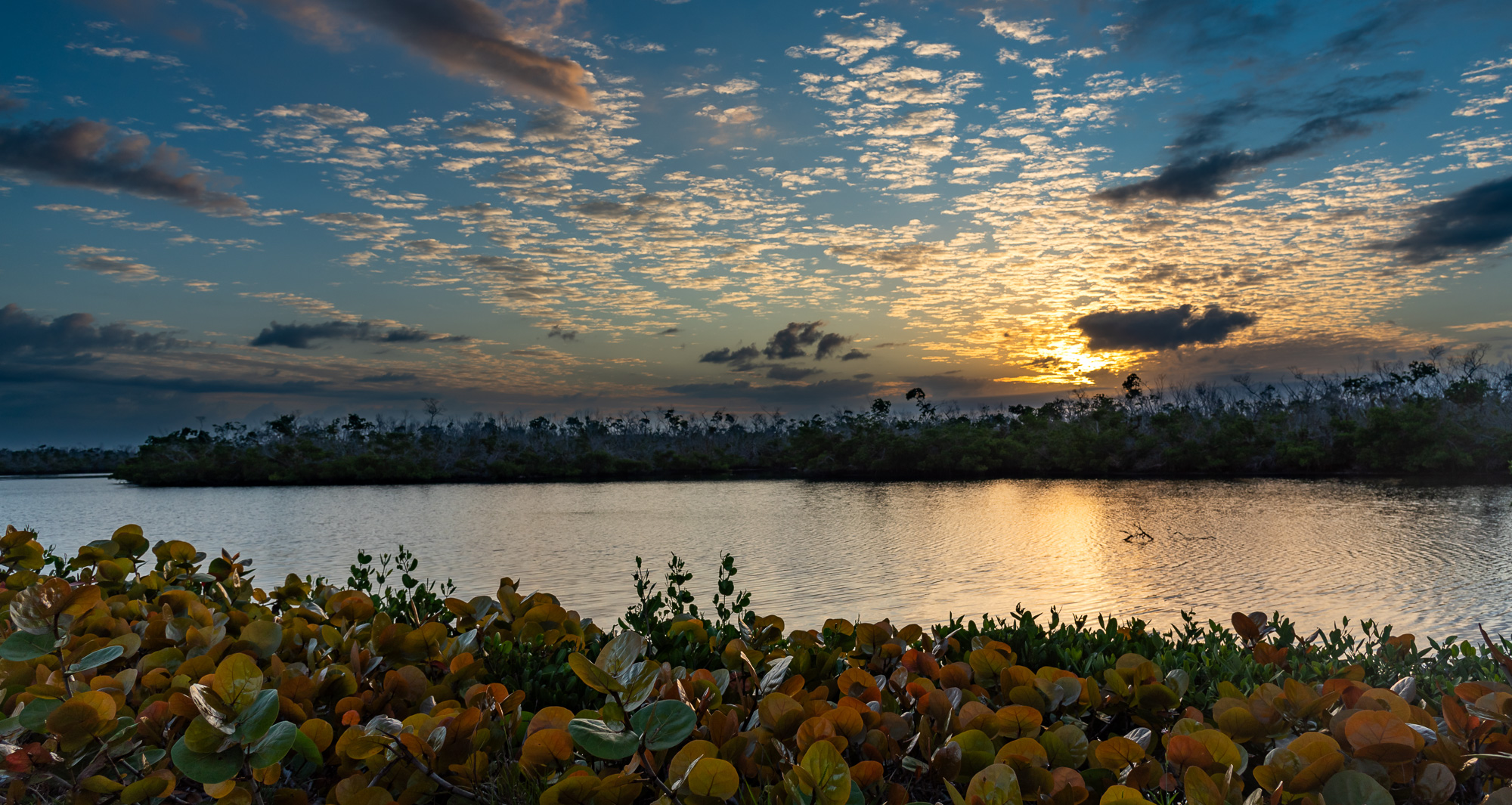
(Click on images to enlarge, click again to zoom.)
Sea breeze. Invigorating. Gulls calling, mullet jumping, the unique aroma of low tide, fiddler crabs scurrying for cover. Gini and I grew up with these sensations along Florida’s Gulf of Mexico coast. It feels like home.
Today we are visiting the J.N. “Ding” Darling National Wildlife Refuge on Sanibel Island just west of Fort Myers, Florida. Sanibel is a barrier island jutting into the Gulf of Mexico and the refuge is on the protected north side of the island.
Consisting of about 6500 acres, the refuge is a terrific place to see birds any time of year but it offers plenty of protection and food for migrating birds in the fall and spring. In addition to a very informative visitor’s center, there is a one-way wildlife drive and several trails to explore.
Jay N. “Ding” Darling was a prolific political cartoonist and worked at newspapers in Iowa for 50 years in the early 1900’s. He became interested in conservation and in 1934 was named head of what would become the U.S. Fish and Wildlife Service. He was awarded three Pulitzer Prizes for his cartoons and he drew the picture for the first Federal Duck Stamp. I think he would be humbled by having a refuge named for him.
In September 2022, the refuge and large areas of Florida’s southwest coast were severely damaged by Hurricane Ian. The large storm came ashore just north of the refuge at Cayo Costa with 155 mph sustained winds. Coastal areas were inundated by a storm surge of 12-18 feet above ground level. Damage is still apparent all along the coast as some buildings are yet to be rebuilt and boats of all description are still at rest far from the shoreline, most too damaged to salvage. The recovery from the devastating storm has been miraculous. Most notable is the attitude of the residents. No defeatism here.
We lingered at a spot offering a nice view of the rising sun chasing away night time clouds. An Osprey dove for a shiny speckled trout which may have been breakfast for a new family. Many Osprey nests were occupied and we spotted two chicks in one. It was low tide and hordes of shorebirds darted, stopped, darted, pulled some morsel from the mud, darted – most were too far for photos but it was fun watching them. Herons, egrets, pelicans, plovers, sandpipers. Some are in breeding plumage but – shhh! – at least one night shift worker is resting now that the sun is up.
Gini had conjured up a magical smoked salmon dip which we enjoyed with wheat crackers and fresh strawberries. All of the bird life was fantastic and we had a wonderful bonus as there were flowers aplenty to enjoy. The flowers were especially noteworthy as they were growing profusely among the bleached carcasses of scrub oak and mangrove which had been ripped from the ground by Hurricane Ian.
Shield your eyes. The sunrise is bright and rather beautiful this morning.
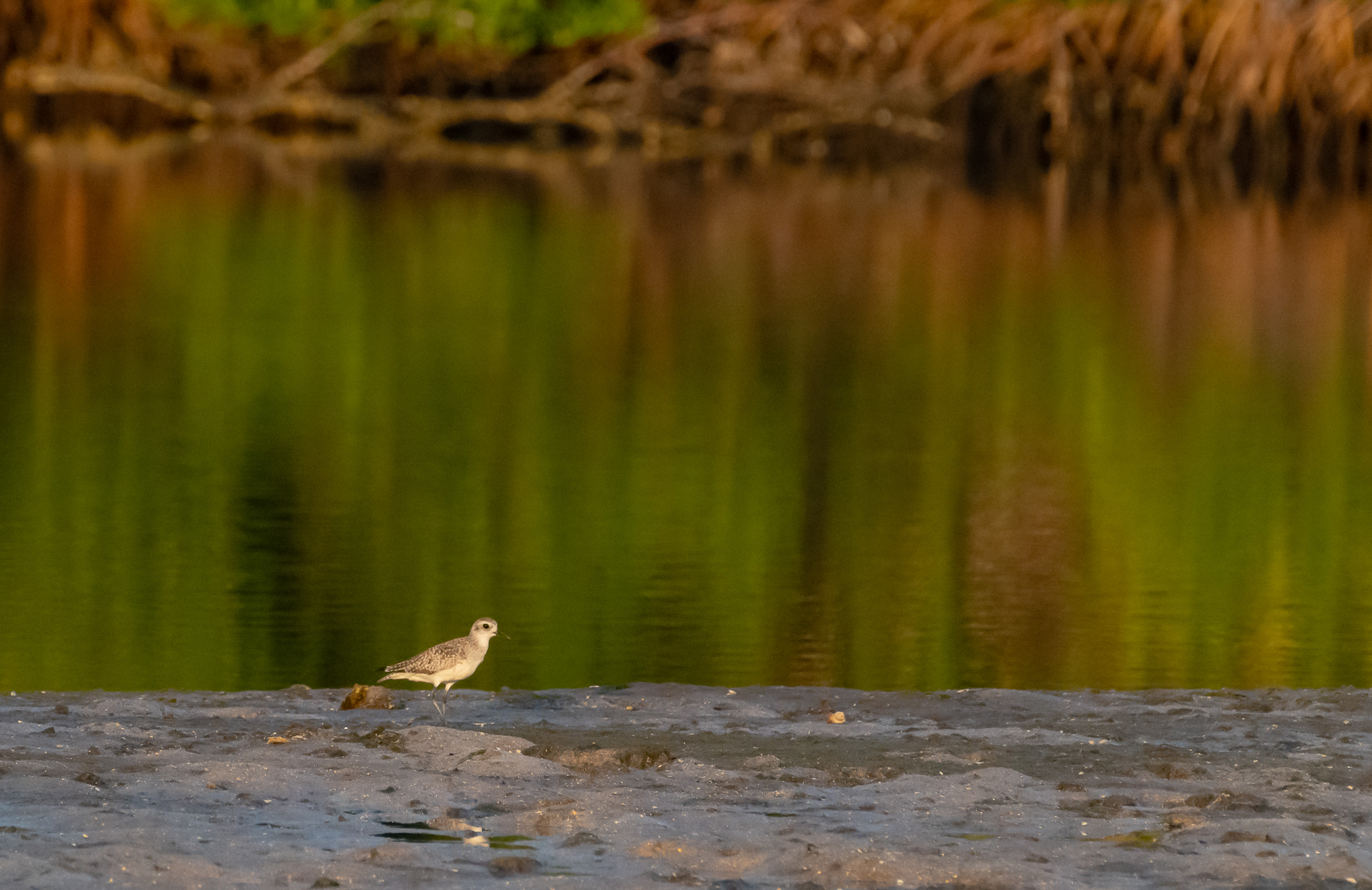
The shorebird-formerly-known-as-Black-bellied Plover. Apparently, the birding powers that be decided we shall now call it the Grey Plover. Of course, I most likely shall not. I have photos with more detail, but I sort of liked this distant one showing the shoreline colors and their reflection.
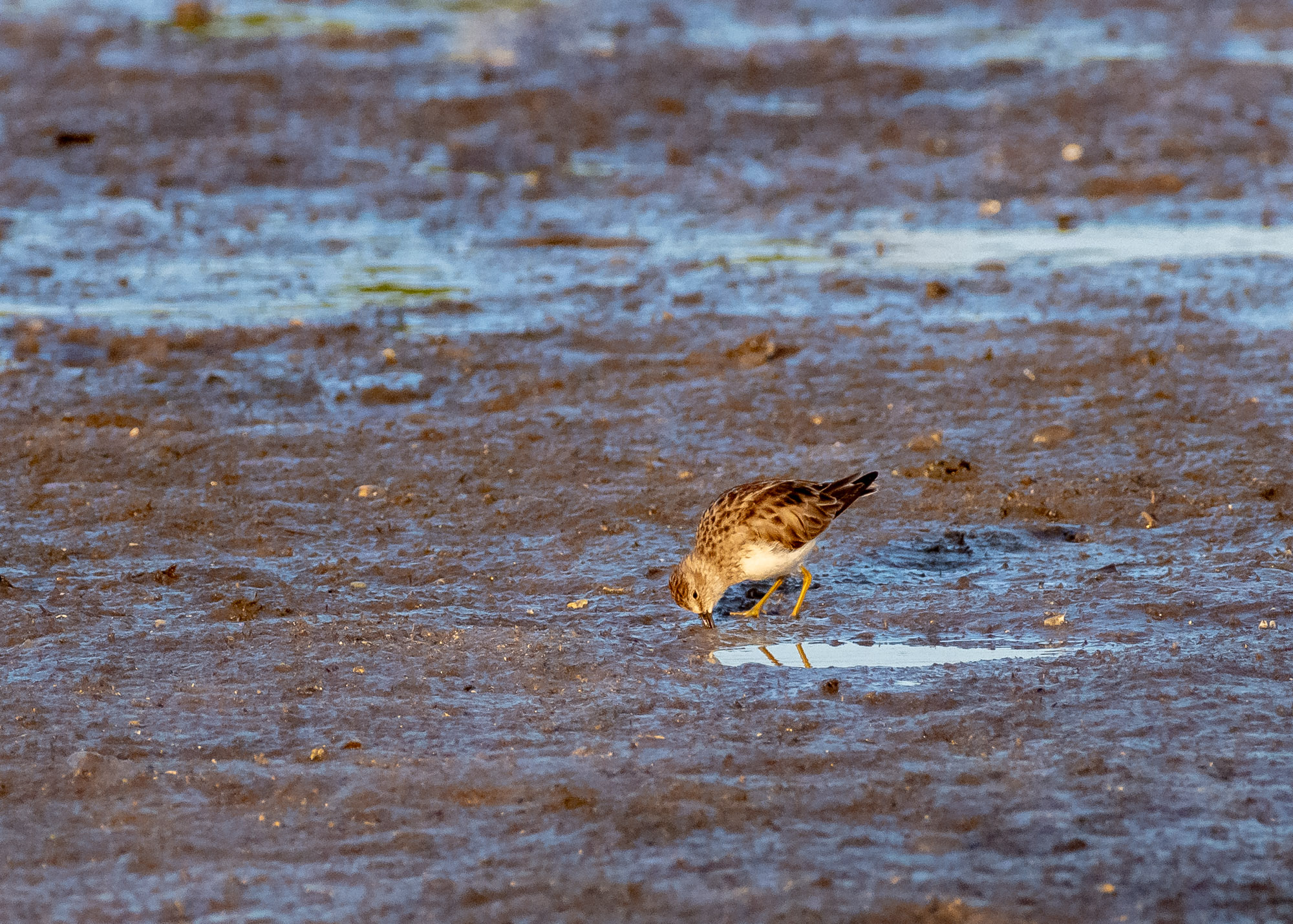
One of the smallest shorebirds in North America, a Least Sandpiper probes for worms and crabs.
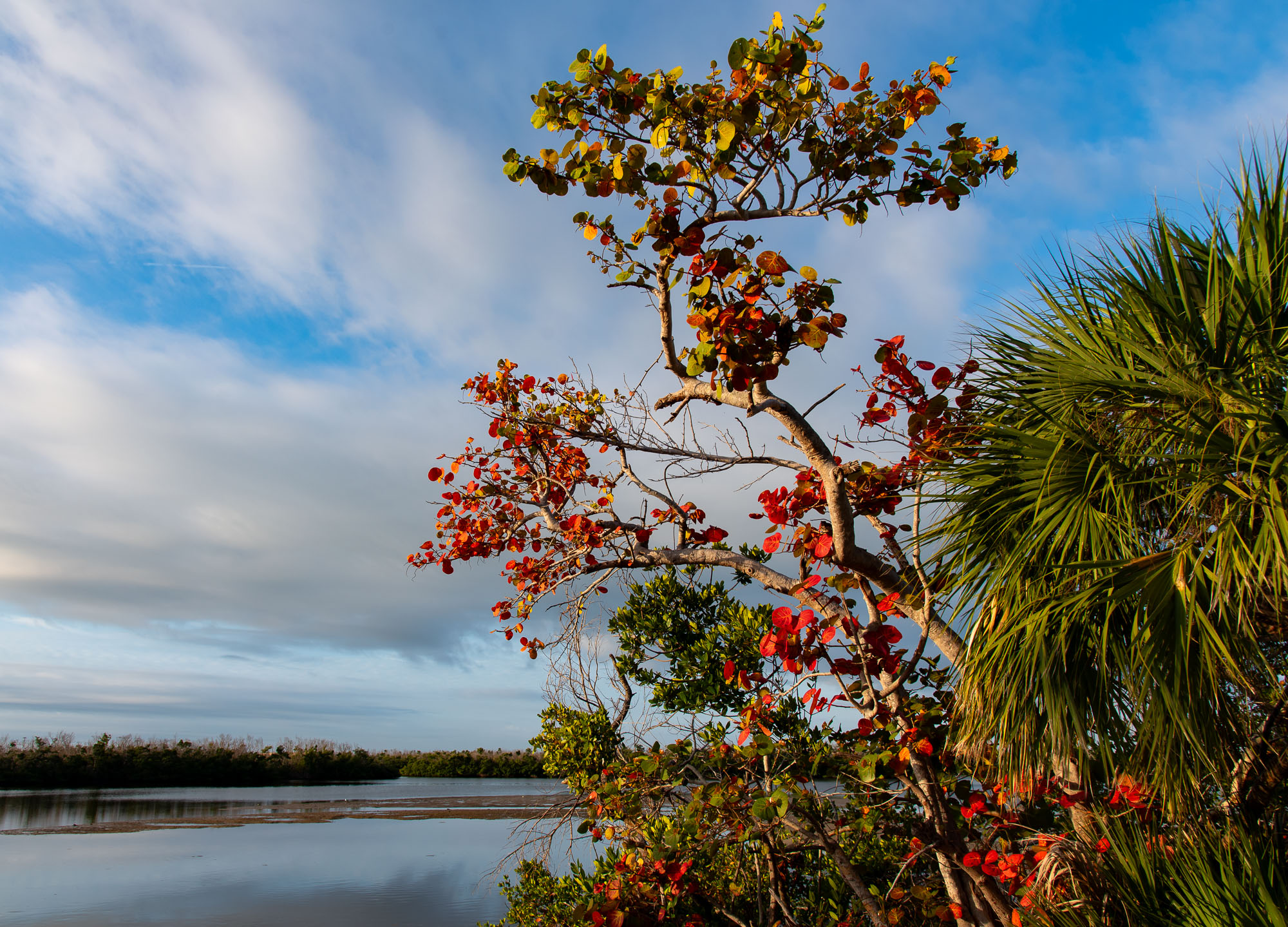
Sea Grape (Coccoloba uvifera) is not related to grapes and is actually in the Buckwheat family. Someone decided the cluster of fruit it bears toward the end of summer resembles grapes. It can grow to nearly 20 feet tall and the large round leaves can be quite colorful. You can see some low-growing plants in the first image above (Sunrise).
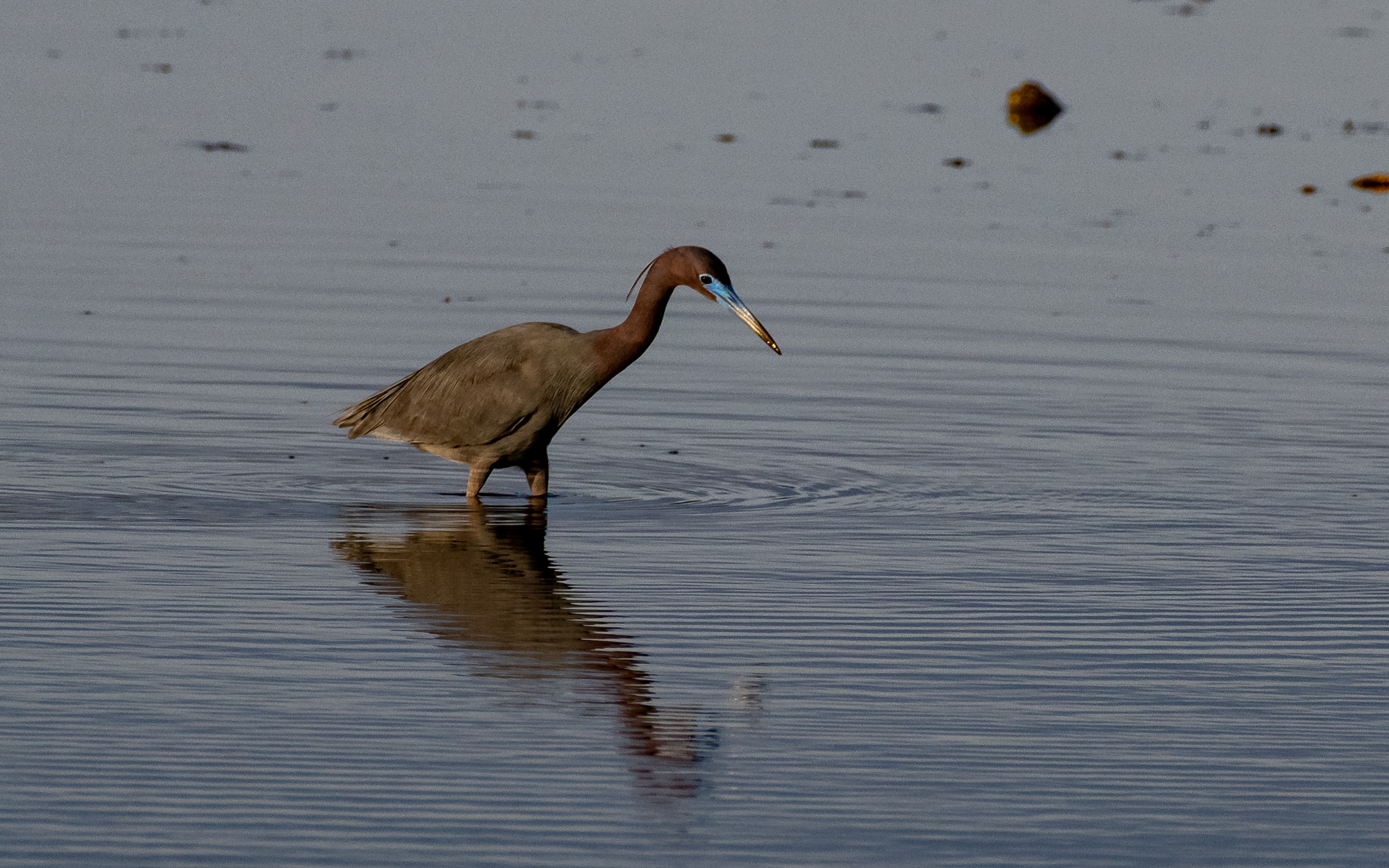
As Spring breeding season arrives, a Little Blue Heron displays darker legs, beak and eyes. A bright blue patch forms at the base of the bill and a long brownish/reddish plume decorates its head.
More plumage changes for Spring are exhibited by the White Ibis. Bill, facial skin and legs become brighter red than normal.

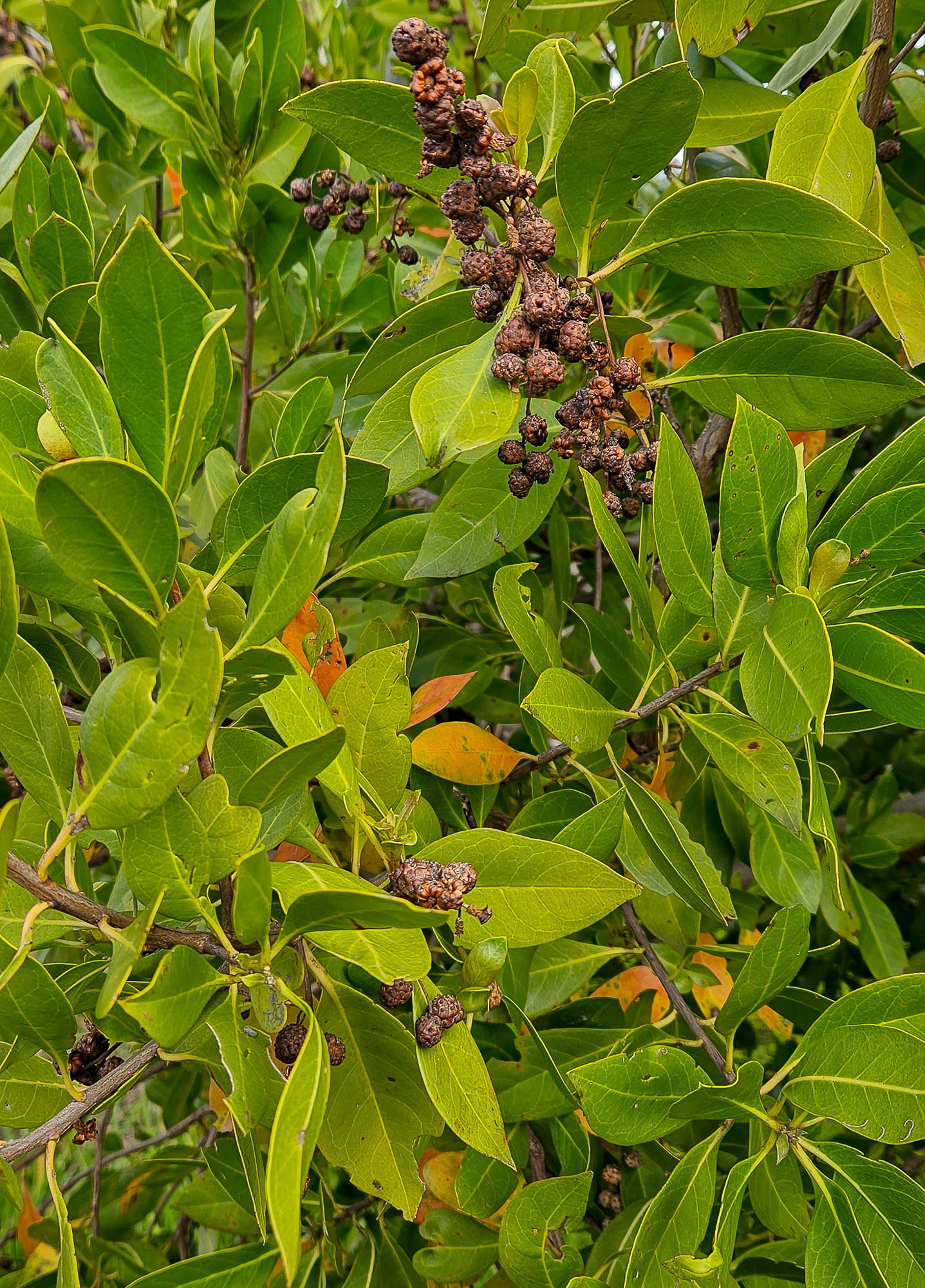
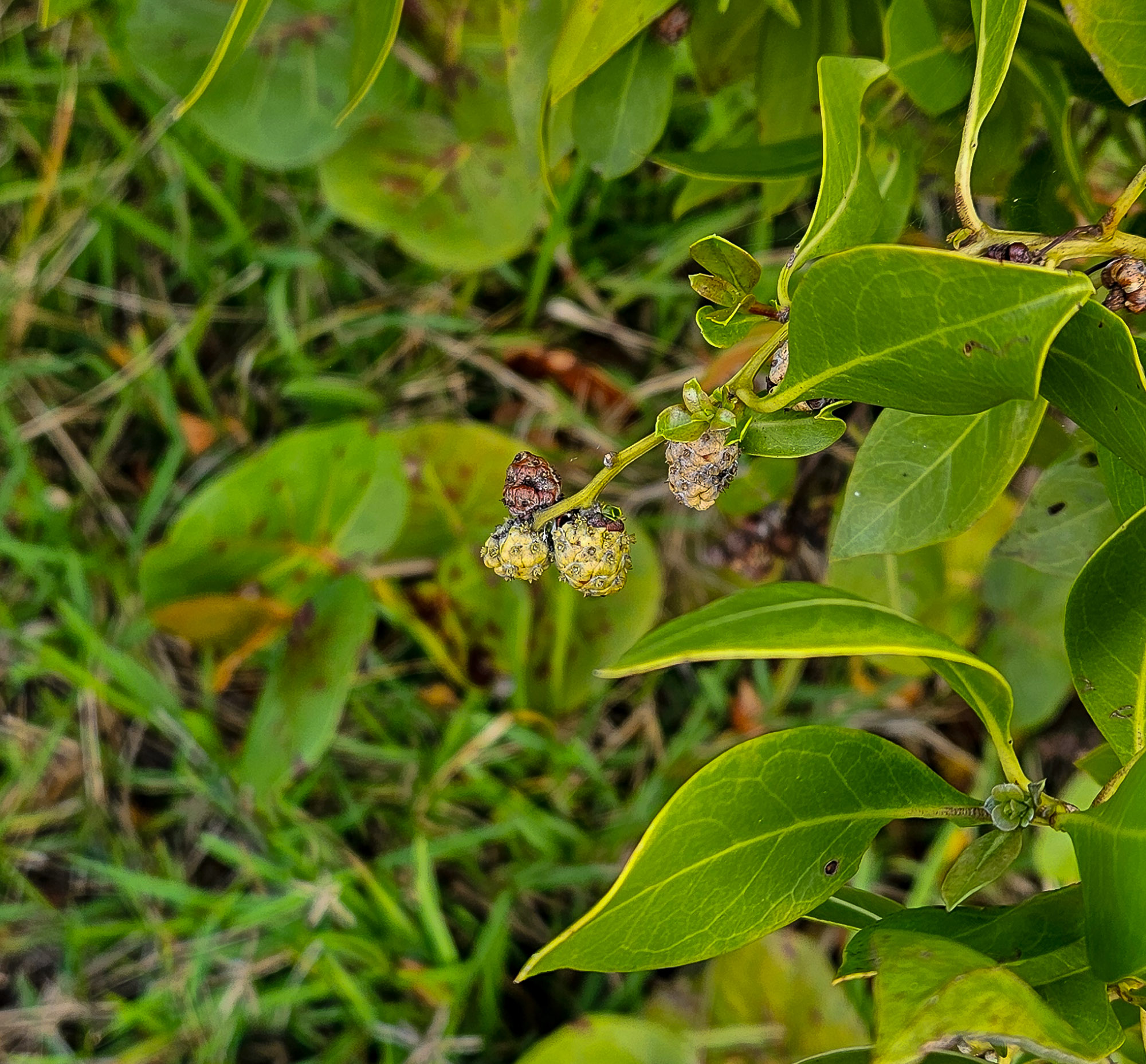
Coastal Florida, from north-central southward, has abundant sections of salt-loving mangrove. There are three species of mangrove in Florida. Maybe. Commonly accepted are Black, Red and White Mangrove. Many “experts” regard the Button Mangrove (Conocarpus erectus) as a fourth species, but just as many do not. Also called Buttonwood, this member of the almond family resembles a mangrove in its appearance, habitat and growth characteristics. Call it what you will, it’s an interesting plant. Its “flowers” are more like fruit-like “drupes”. We thought it was mighty nice looking.
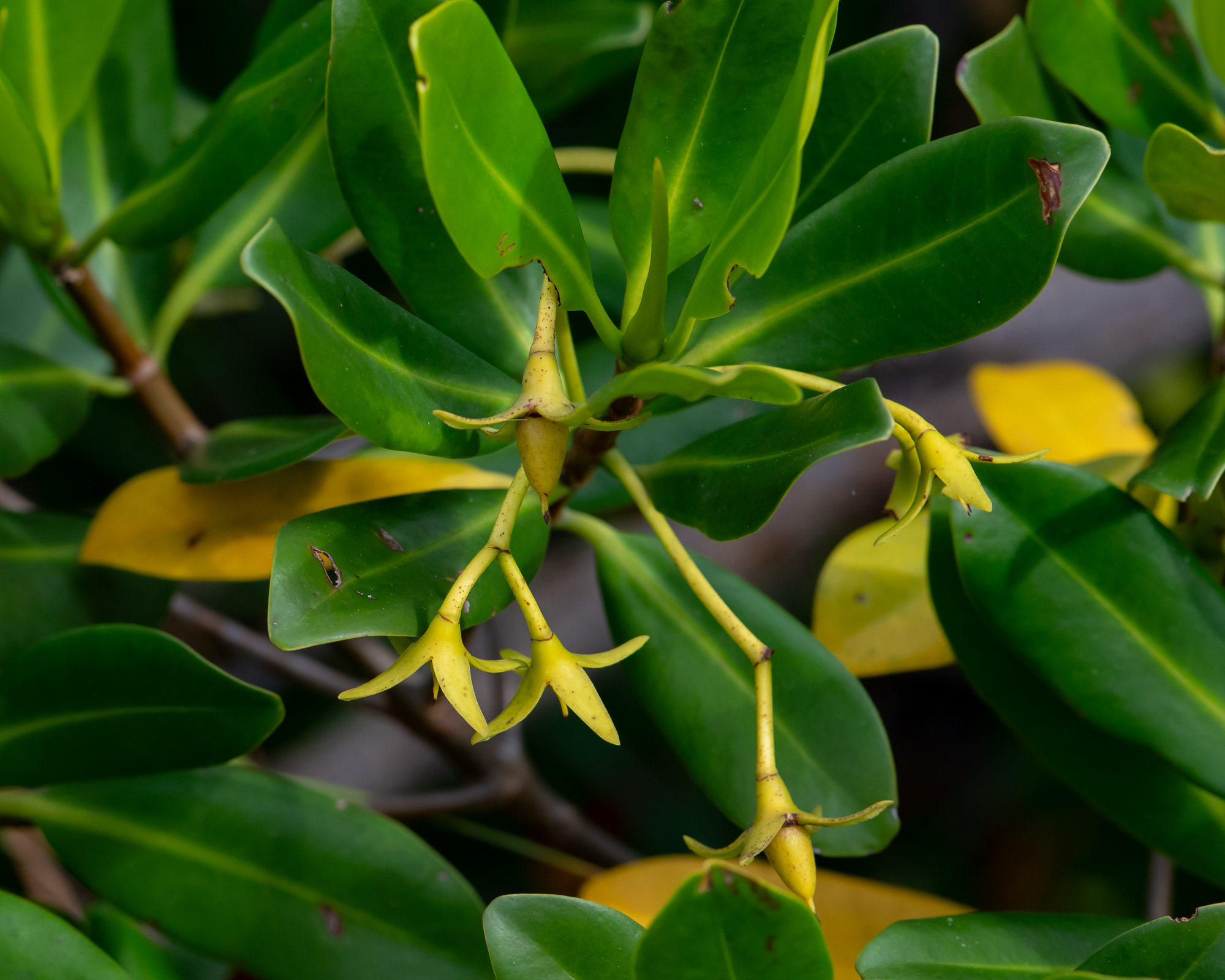
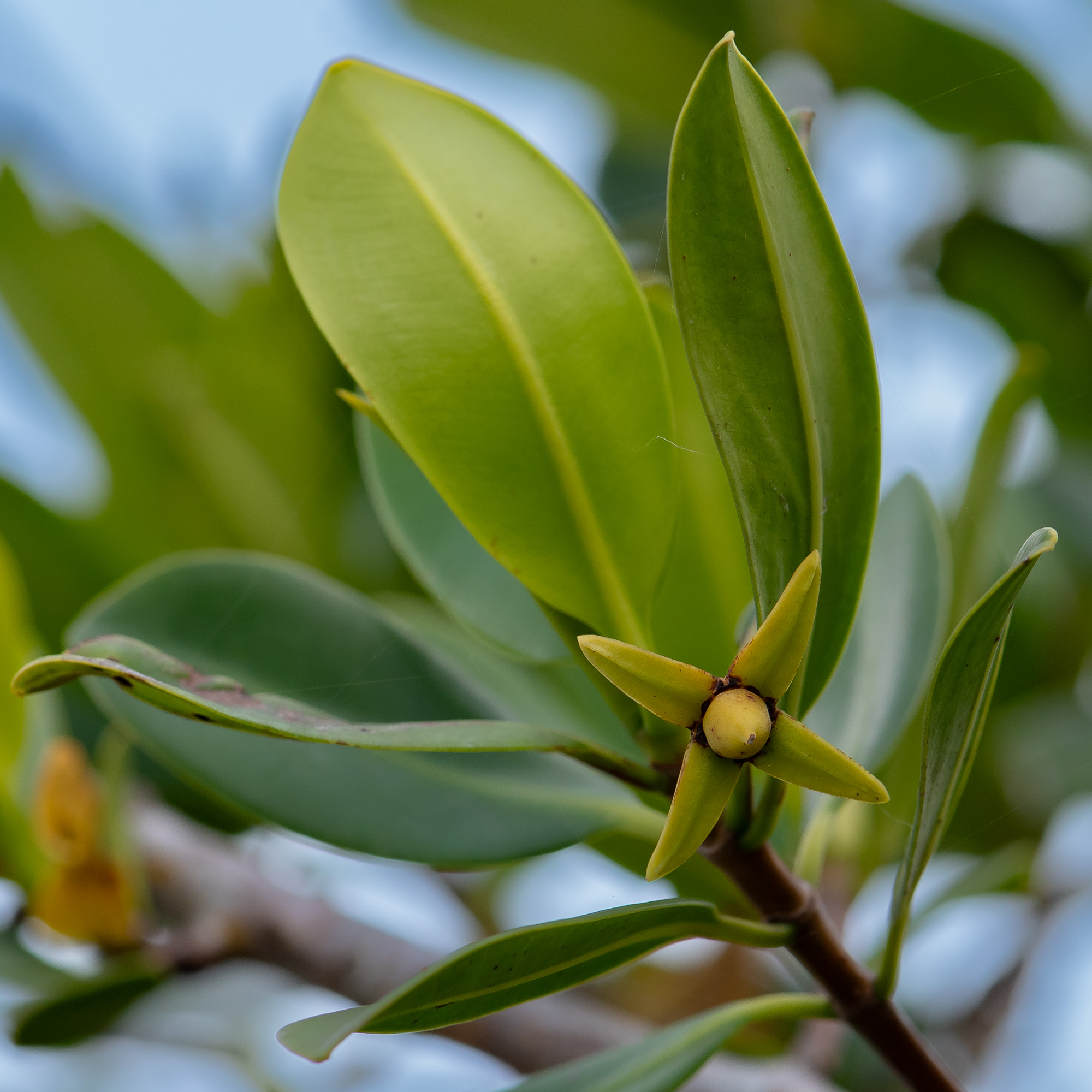
One of the “officially approved” mangroves, the Red Mangrove (Rhizophora mangle), was really putting on a flower show. The yellow blossoms were abundant.

All morning, Ospreys were in the sky as they constantly splashed into the shallow salt water. Sometimes they came up with a catch and flew off for a snack or a delivery.

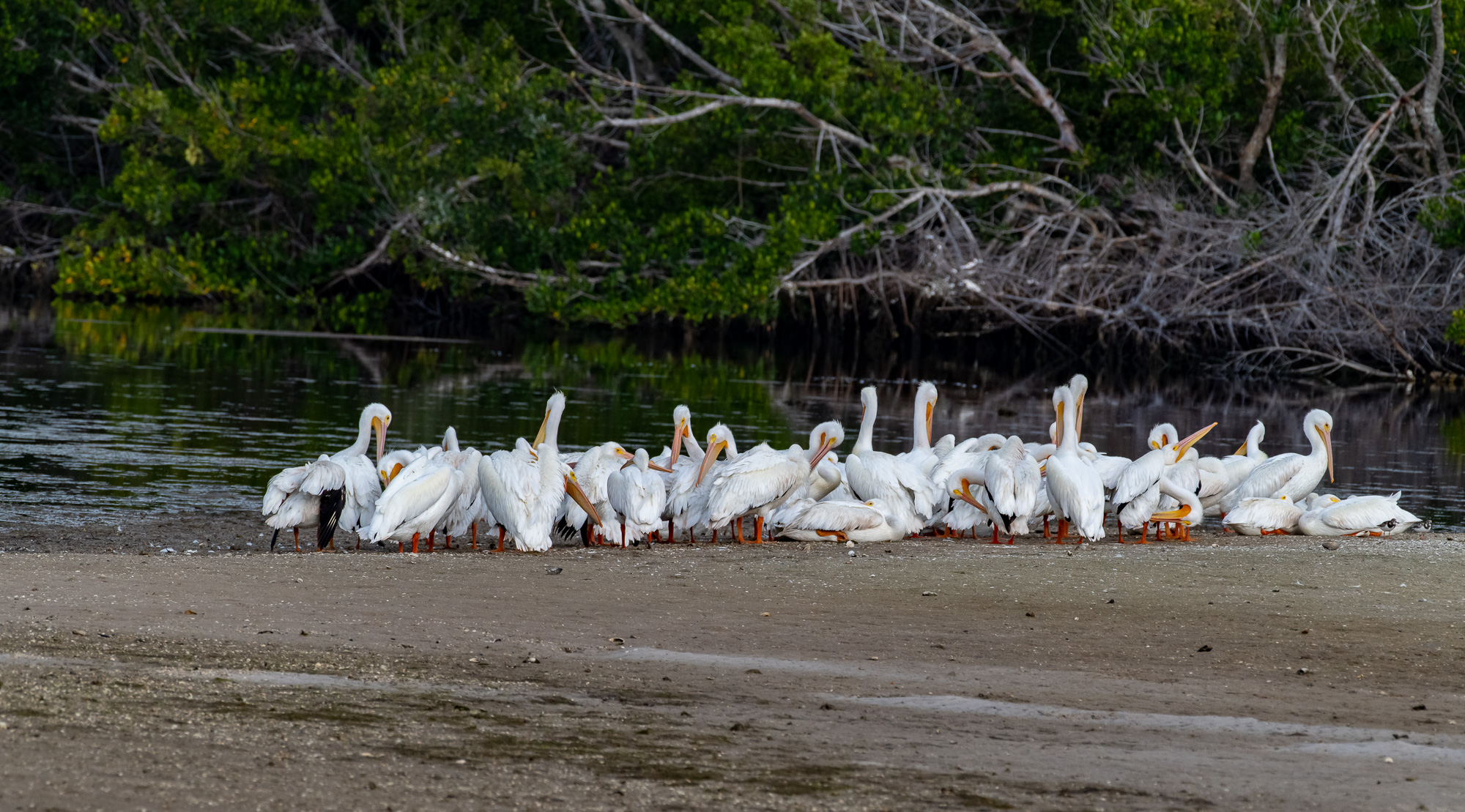
Preening is the primary task early in the morning for groups of American White Pelicans. We found several such groups who roosted at night on sandbars which are fairly safe from predators.
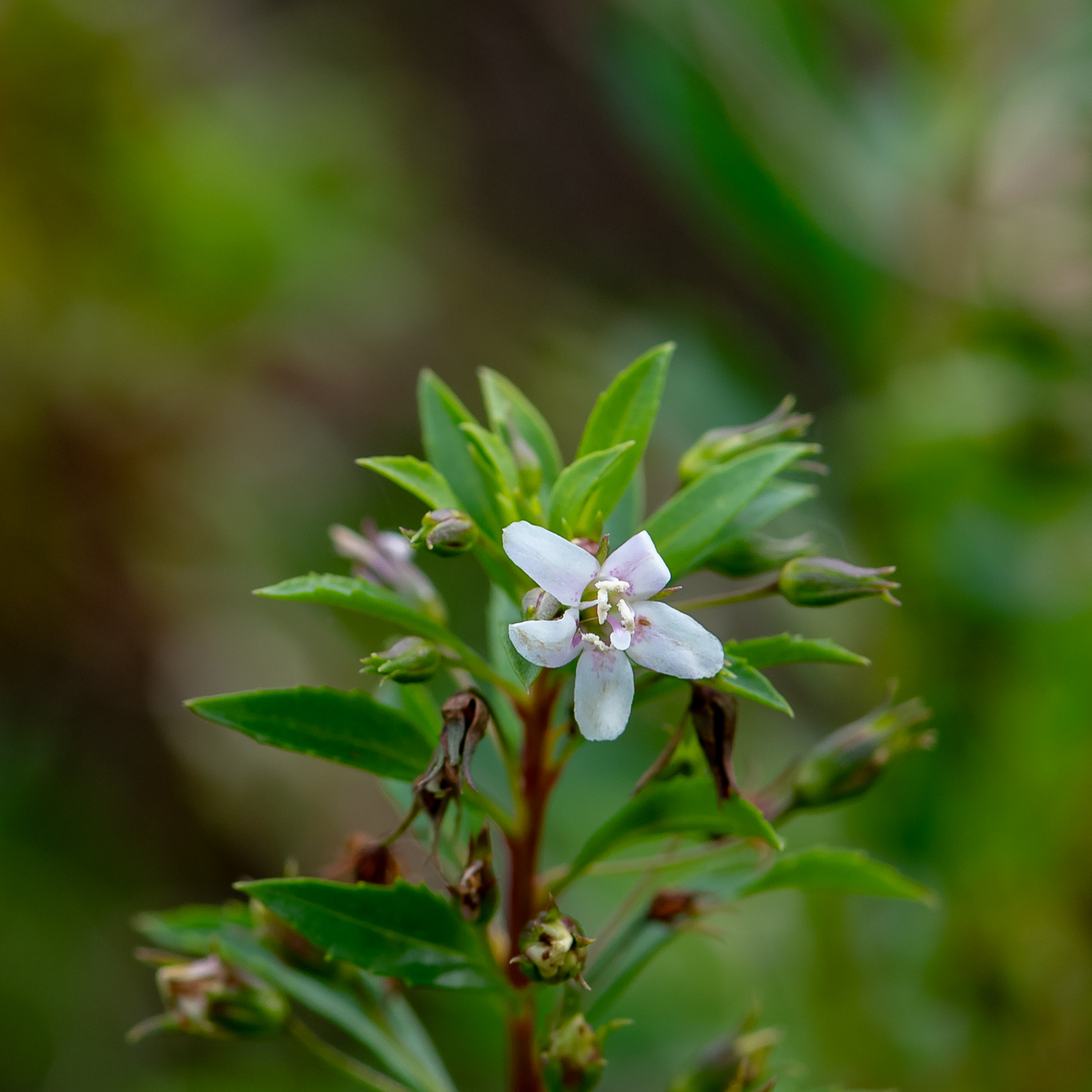
A new flower for us! Goatweed (Capraria biflora). It is a member of the Figwort family. Small but beautiful blooms.
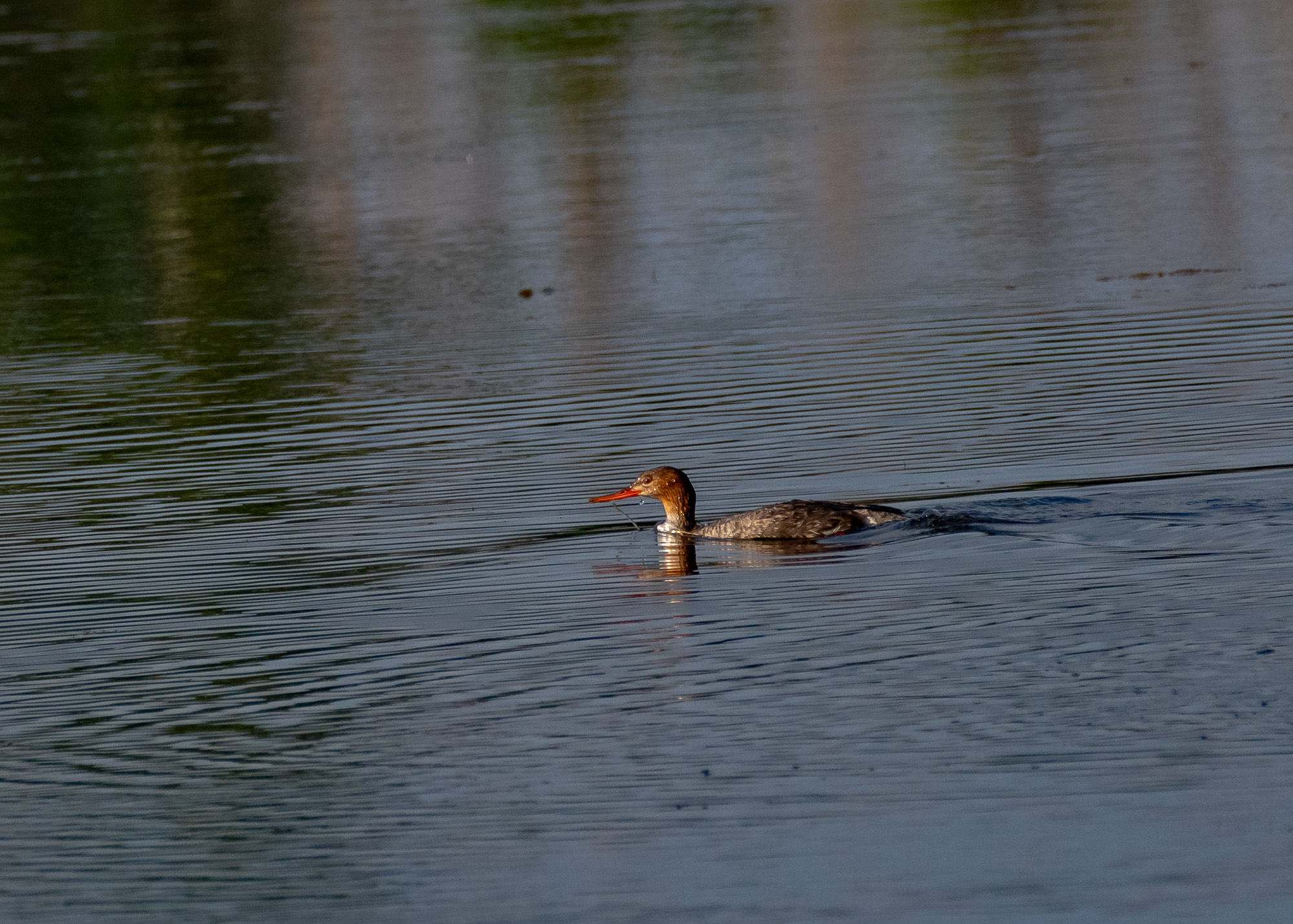
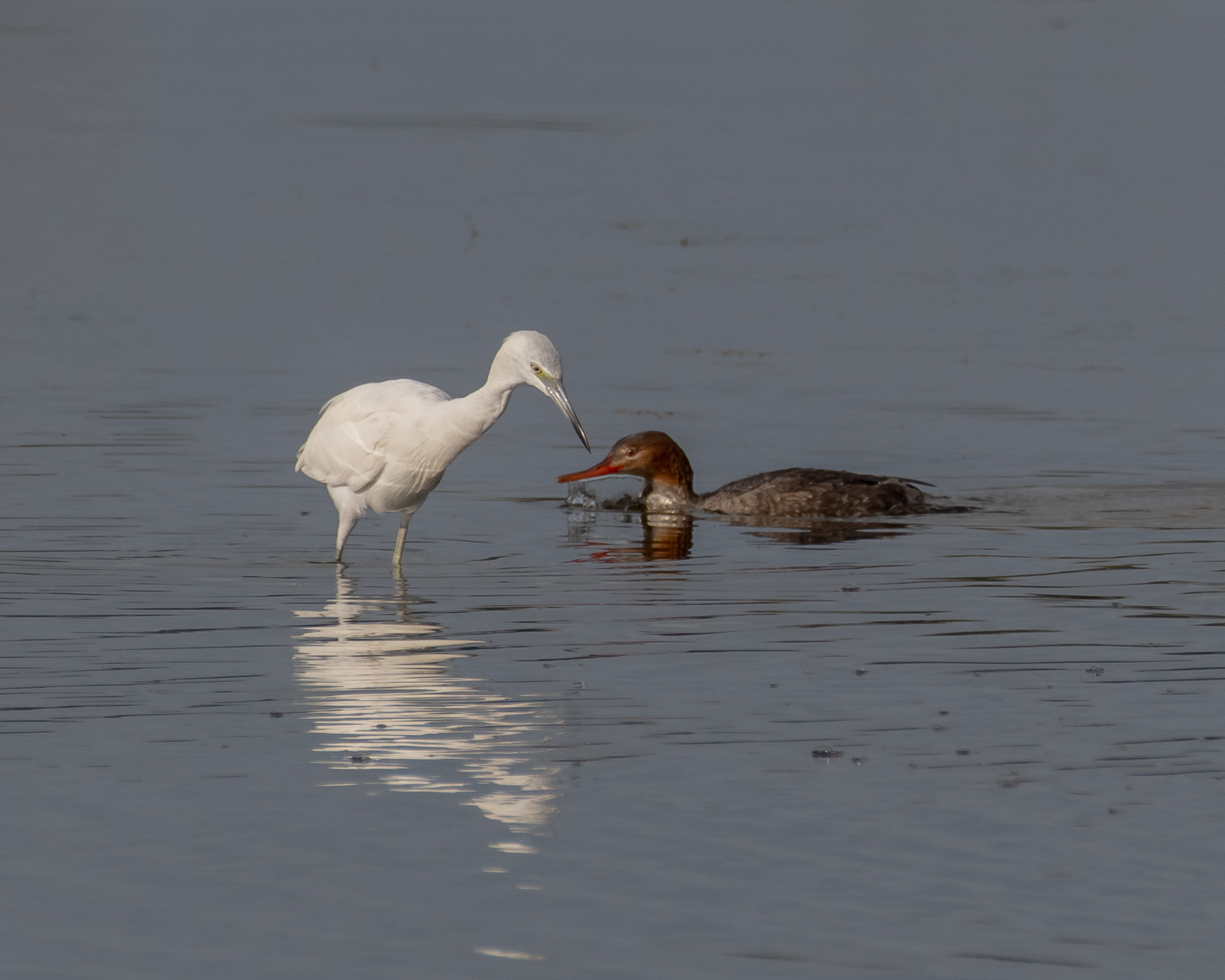
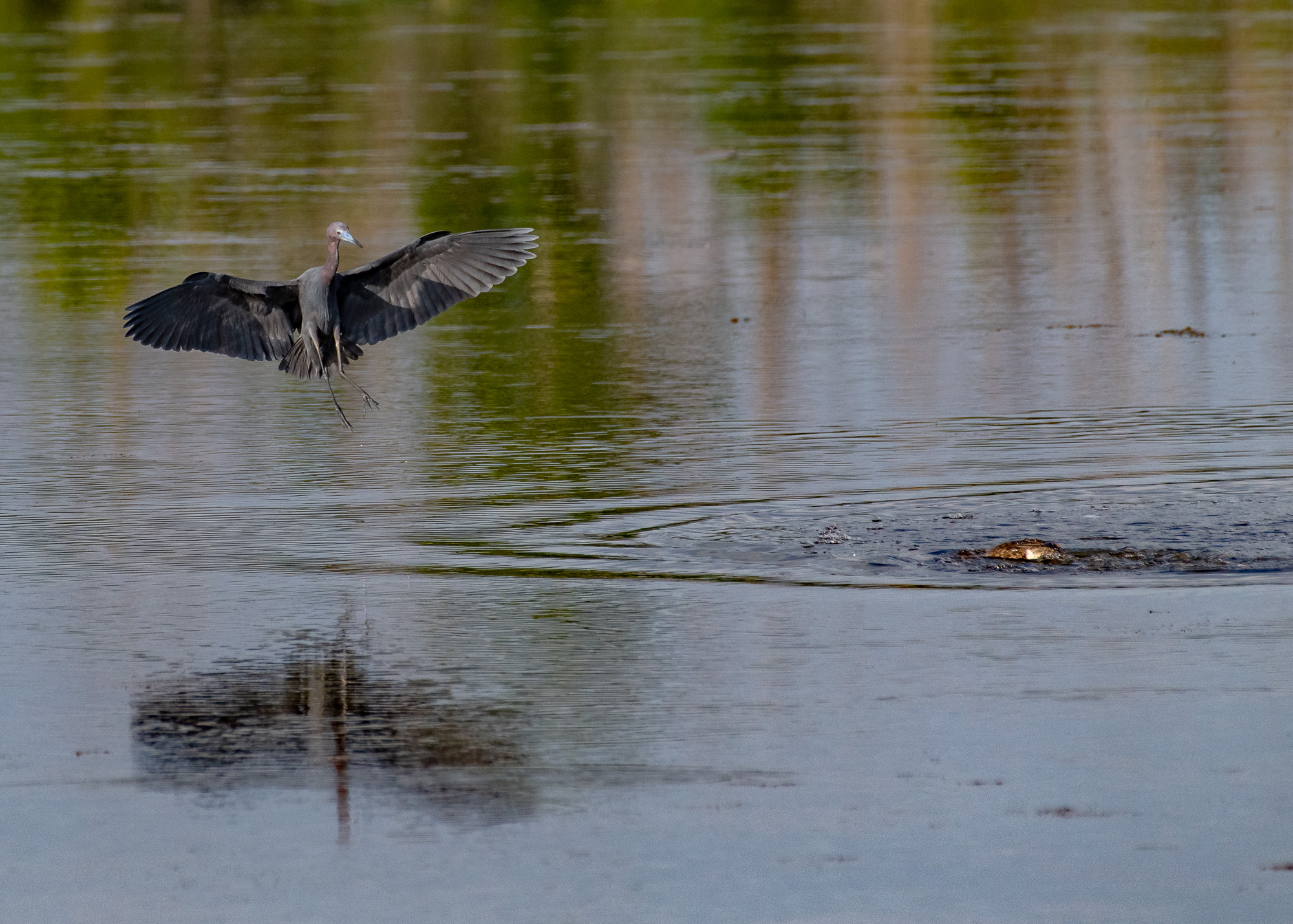
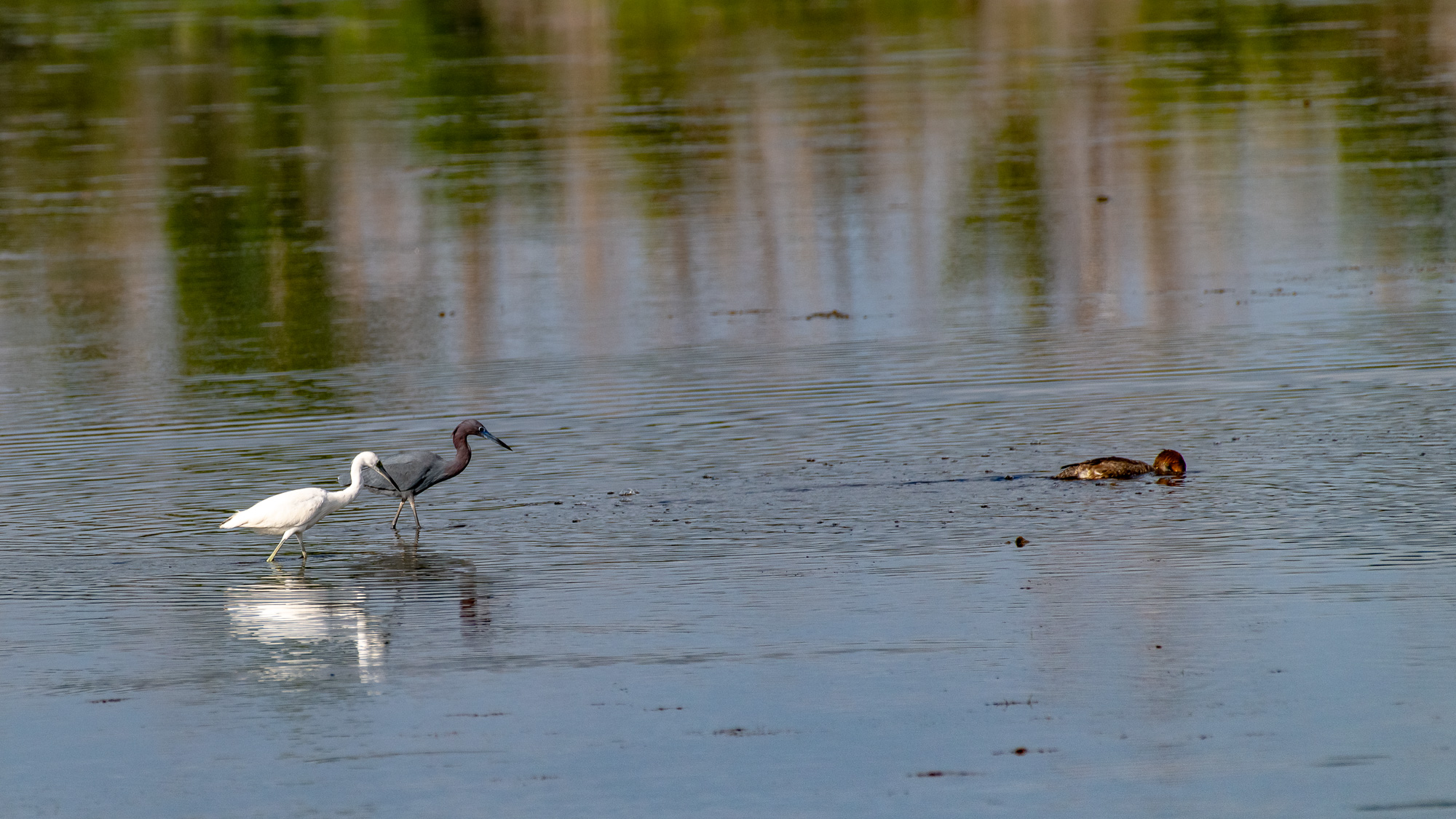
We observed a fairly common event. Expert hunter finds food. Lazy hunters try to take its food. A Red-breasted Merganser was super active locating schools of small fish and scooping them up. An immature Little Blue Heron tried several times to snatch a fish from the Merganser but was unsuccessful. An adult Little Blue Heron flew in to help junior. They stalked the successful hunter, but the Merganser was too quick and they eventually had to go hunt somewhere else.
Lord of the salt flats. Great Blue Heron.

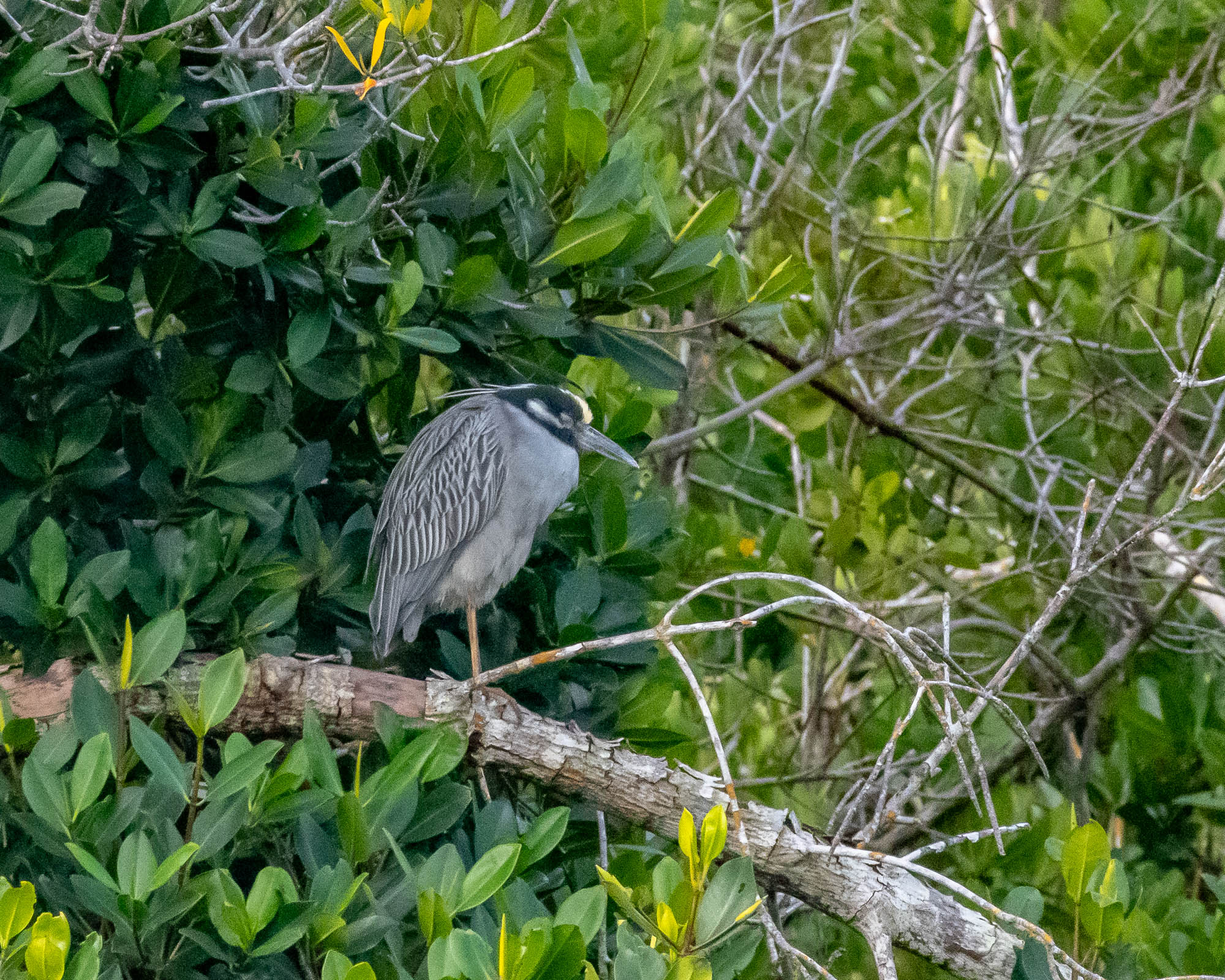
Another long night shift completed, a Yellow-crowned Night Heron catches a bit of rest before it’s time to do it again.
It was startling to see how much damage had been caused by Hurricane Ian, both in heavily populated areas as well as within the refuge. We were very impressed with the efforts to rebuild and restore urban and suburban destruction. Over the years, we have experienced how resilient Nature is in response to devastation. The cycle of life as Spring was unfolding within Ding Darling NWR was extremely heartening to observe.
Enjoy your search for a natural place and come back for a visit!
Additional Information
Ding Darling NWR: https://www.fws.gov/refuge/jn-ding-darling/visit-us
Ding Darling cartoon, Des Moines Register, circa 1926: https://digital.lib.uiowa.edu/islandora/object/ui:ding_3058/print?clip=identifier%3Dhttps%253A%252F%252Fdigital.lib.uiowa.edu%252Fiiif%252F2%252Fui%253Ading_3058~JP2~5a595bbf2fcd87d44e13644a383b9fd25254c68f5bbfa83160b0c55f39fcd5bc~default_public%26region%3D0%252C117%252C1889%252C2127%26size%3D1890%252C2298
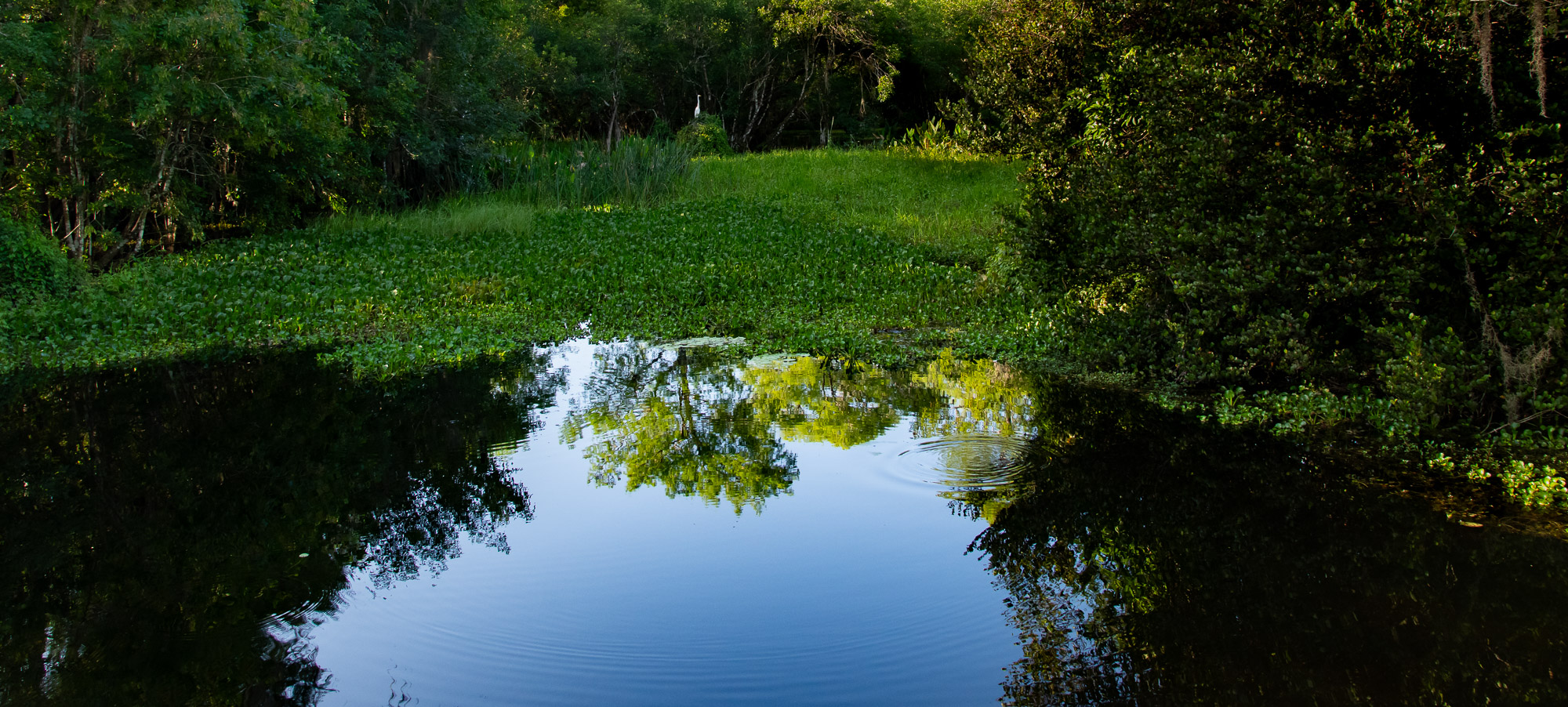
The sound of nature can be incredibly silent.
We scanned in all directions and saw no sign of human existence.
We strained to listen in all directions and heard no sound made by a human being. No traffic noise. No sirens. No electronic emissions disguised as “music”. No one yelling at someone.
The wet prairie of sawgrass, reeds, palm trees and cypress trees awakened gradually as the sun rose higher. Barred Owls called in the distance. A flock of White Ibises squawked as they flew from nightly roosts to a feeding area. Mourning Dove cooed, bright chirps from a Northern Cardinal, screeching of a Red-shouldered Hawk, raucous calls of American Crows – these are the sounds which soothe the soul.
Today, Gini and I continued to explore the Big Cypress National Preserve. Along U.S. Highway 41 (“Tamiami Trail”), the National Park Service operates two very nice visitors’ centers. Here, one can learn about the hydrology of south Florida and the importance of the swamps in filtering water as it flows to the sea. Additionally, there a few roadside parks along this highway which offer surprisingly good opportunities for observing the region’s flora and fauna.
We were up before the sun. We explored. We discovered. We relaxed. We got hungry.
Come on! Let’s go!
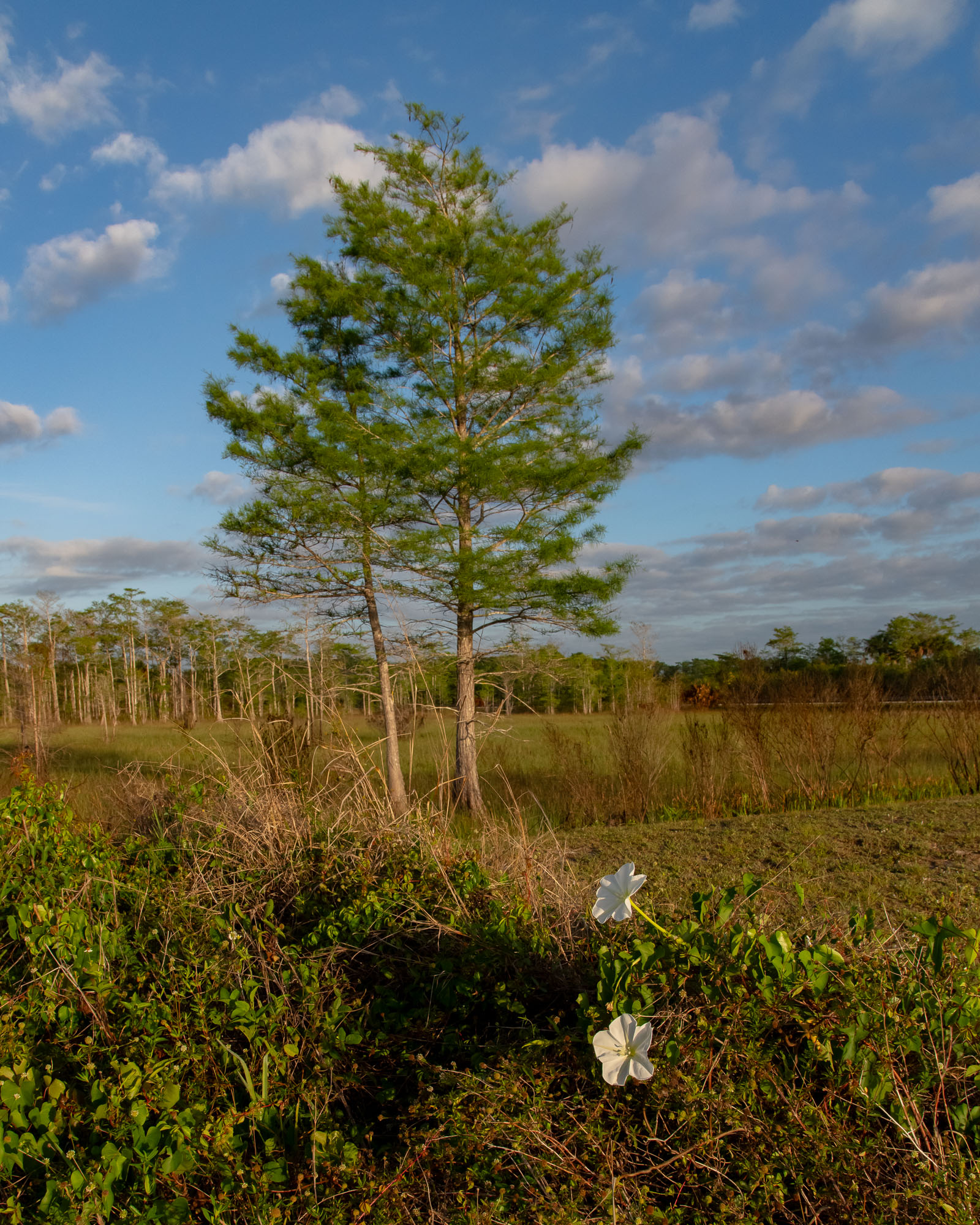
Just after sunrise, at the edge of a cypress-studded wet prairie, we found a blooming Moonflower (Ipomoea alba). Soon, it’s petals will fold as the sun becomes brighter.

An American Crow welcomed us to our breakfast spot, the Kirby Storter Roadside Park. Mr. Storter helped oversee the construction of the “Tamiamai Trail” (U.S. Highway 41) many years ago.

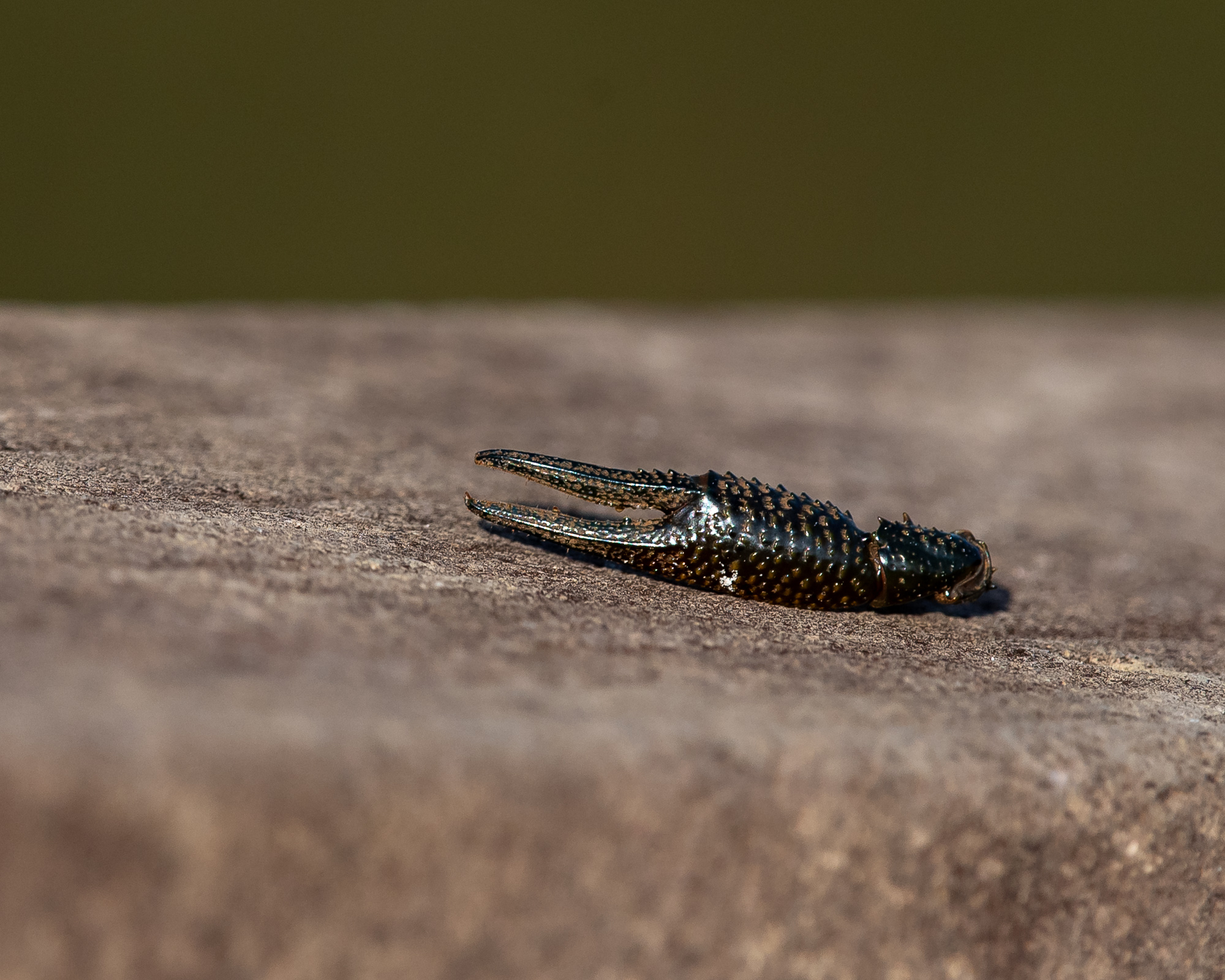
As we enjoyed a boardwalk through the swamp, Gini found a crayfish claw, likely a remnant of a midnight snack from a night heron or other nocturnal prowler.
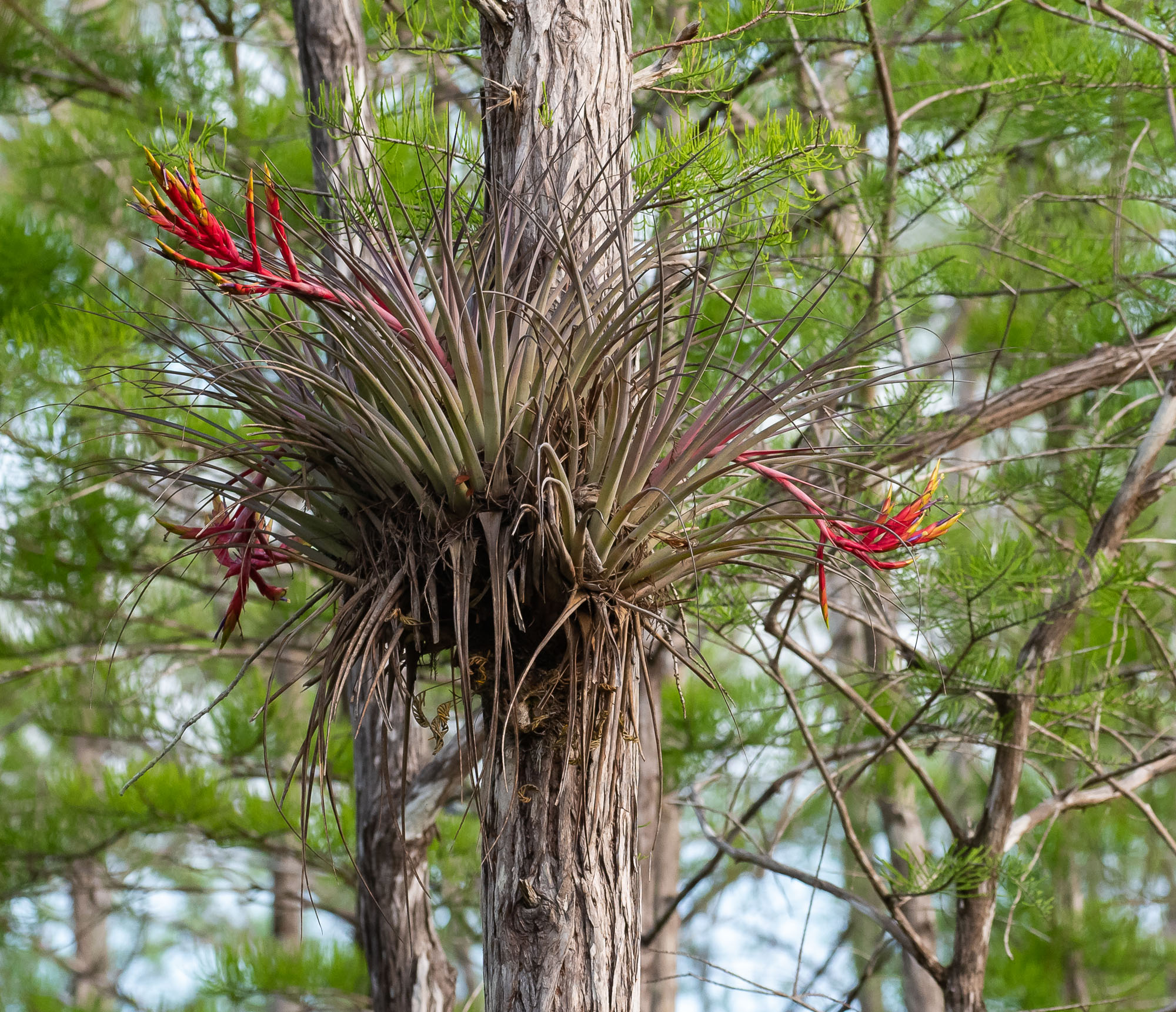
We promised more Cardinal Airplants (Tillandsia fasciculata).
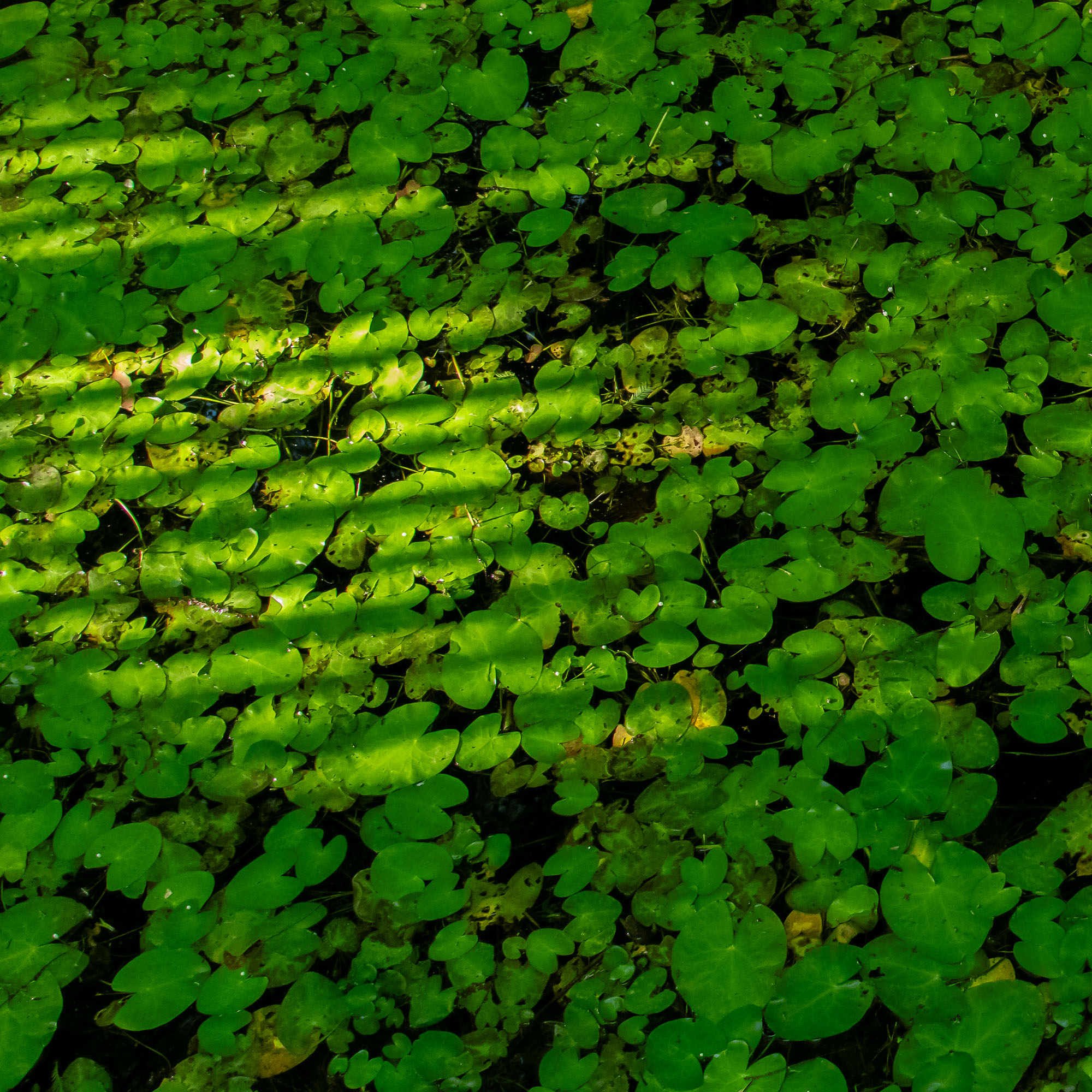
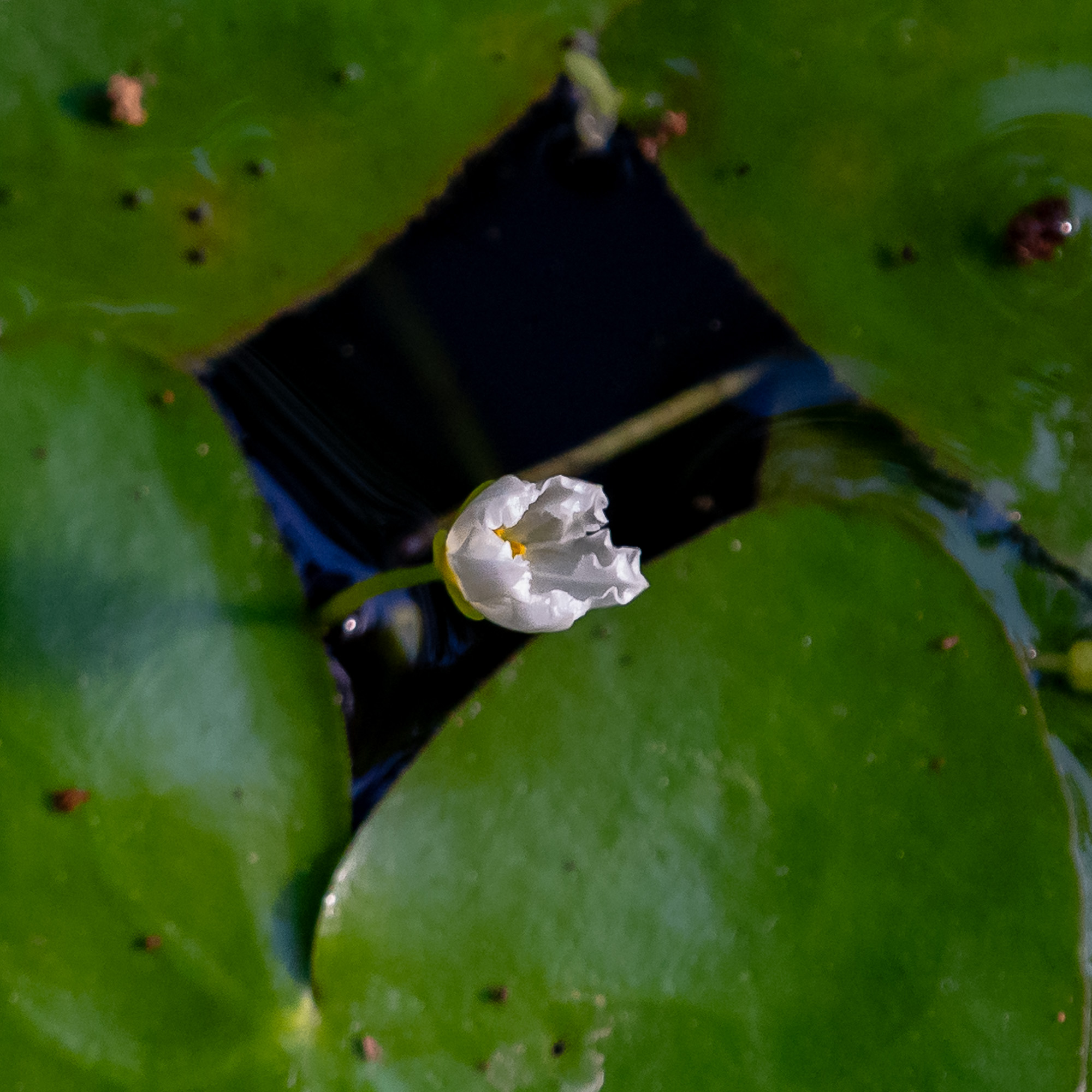
There are two species of Floating Heart (Nymphoides spp.) prevalent in this part of south Florida. One is native, the other invasive. I couldn’t tell which this one was. In the first image, enlarge and zoom in to see the very small white blooms decorating the heart-shaped leaves. The second picture provides a little better view of the flower.
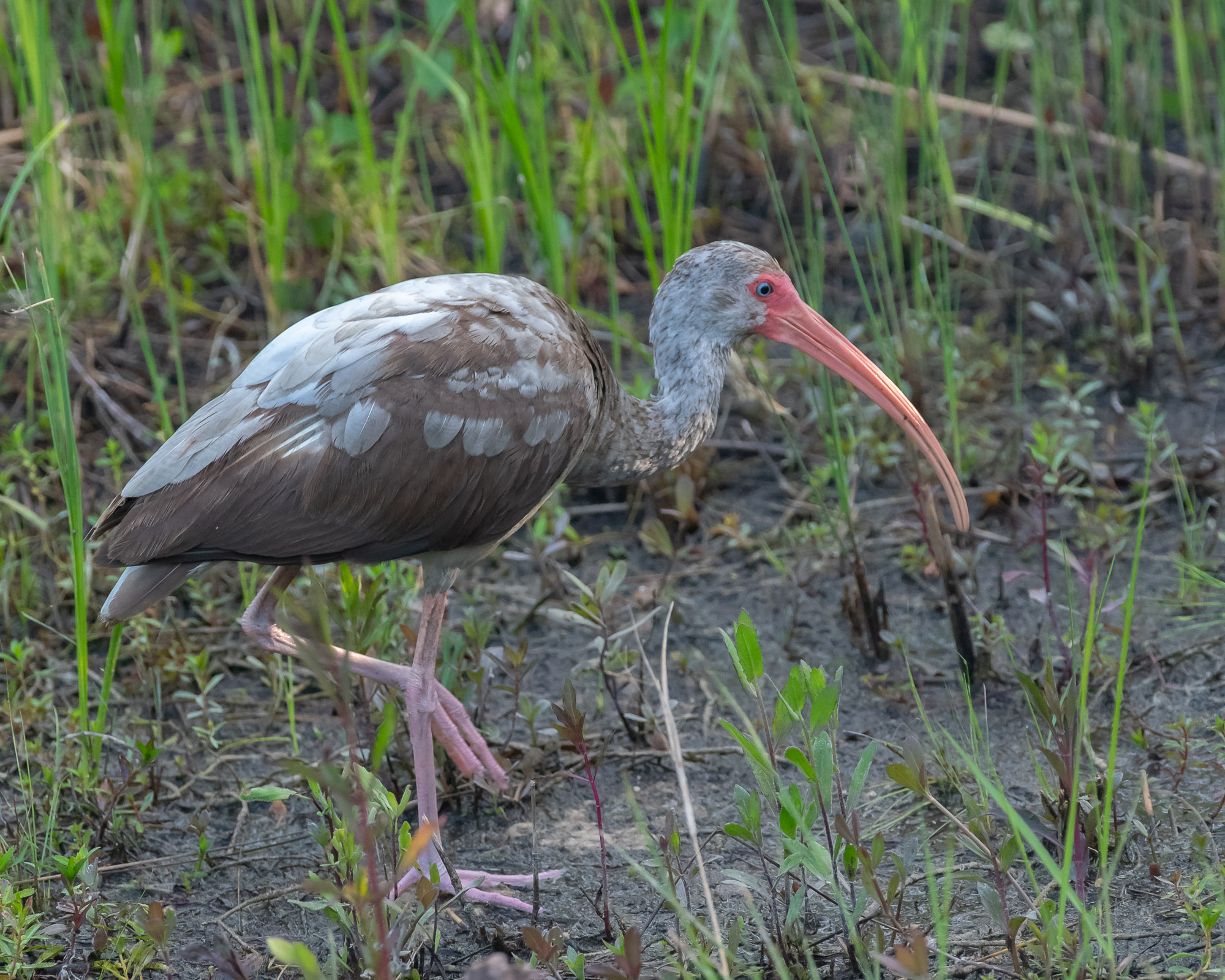
An immature White Ibis was not deterred by our presence as she probed the soft ground for breakfast. It takes about a year for these birds to achieve the completely white plumage of an adult.
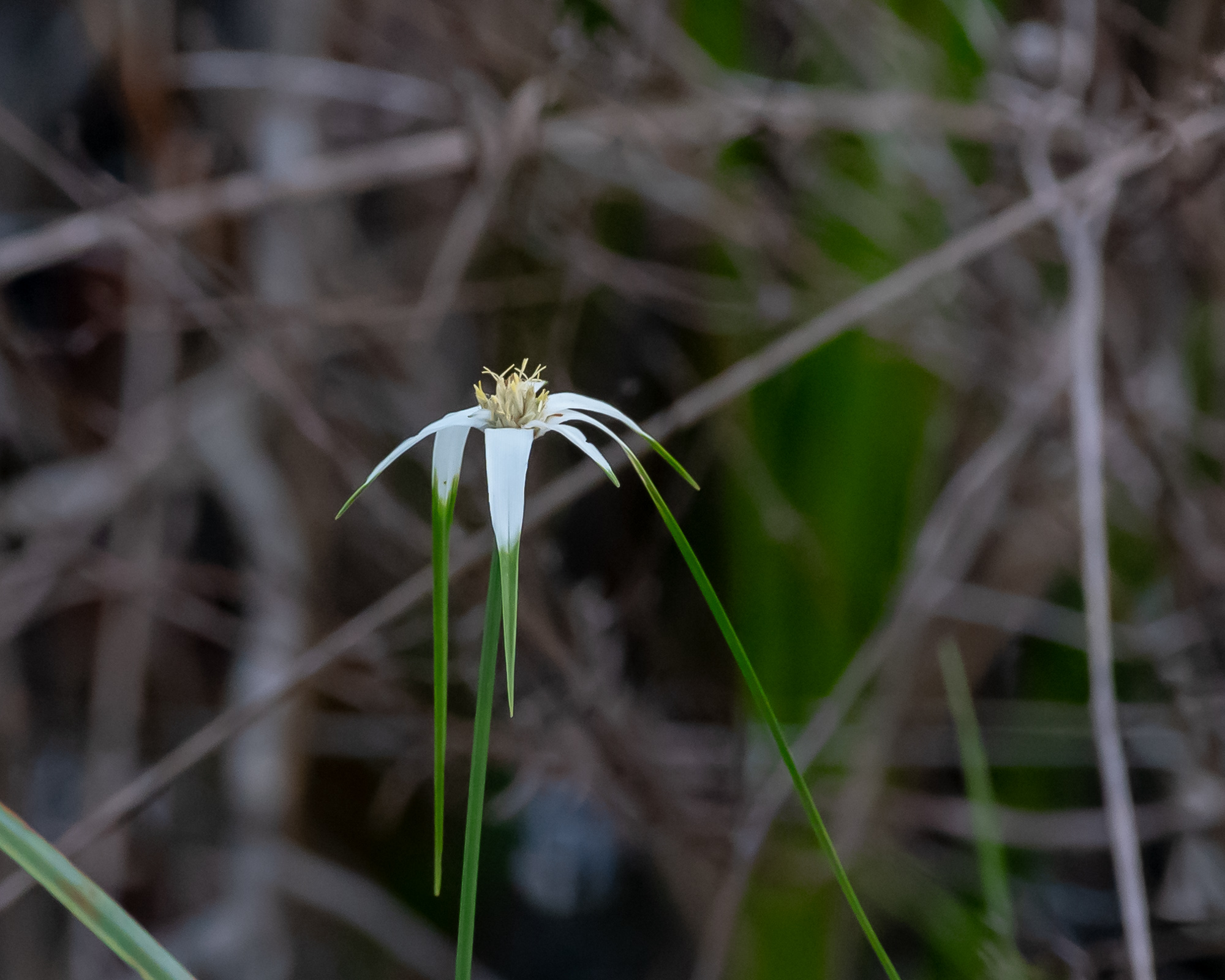
It may appear to be a flower, but the Starrush Whitetop (Rhynchospora colorata) is actually a perennial sedge. Unlike other sedges and grass-like plants, which are wind-pollinated, it’s pollinated primarily by insects.
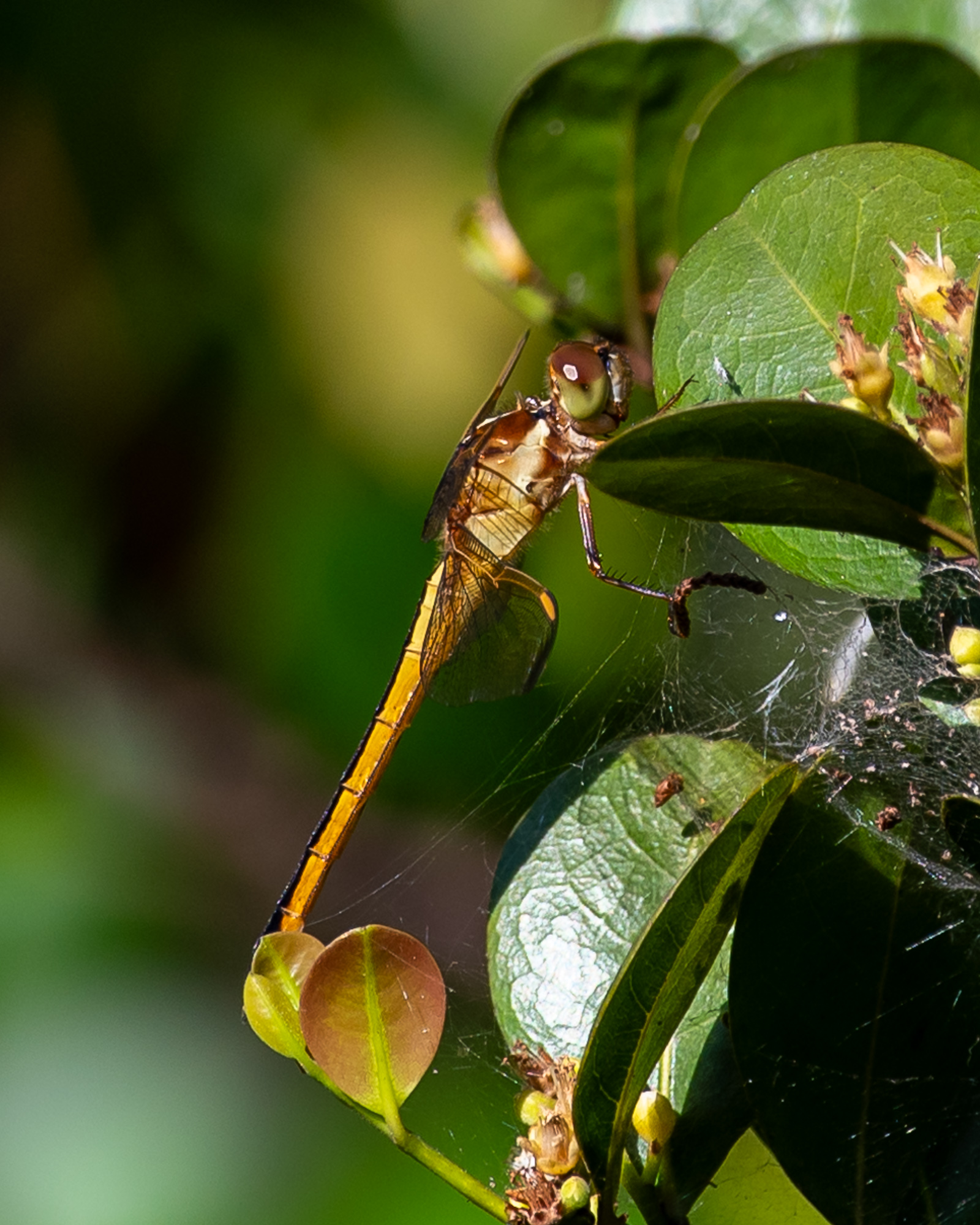
Spring begins early in the southern Florida swamps and there were plenty of insects enjoying the warmth, humidity and newly flowering plants. Gini’s sharp eyes spotted a Needham’s Skimmer (Libellula needhami).
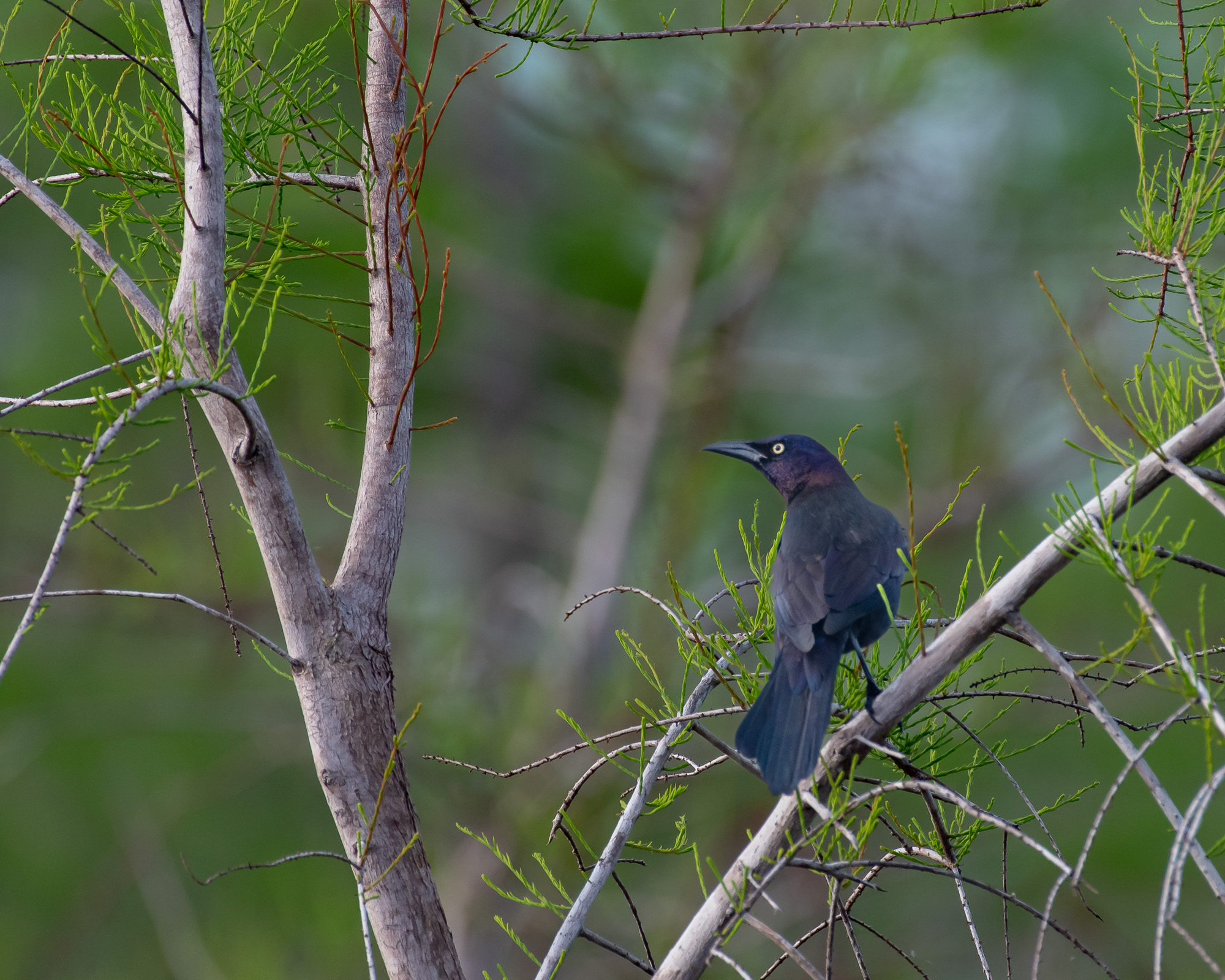
Typically loud and challenging, a Common Grackle issued an unceasing “intruder alert” so the whole swamp knew we were there.
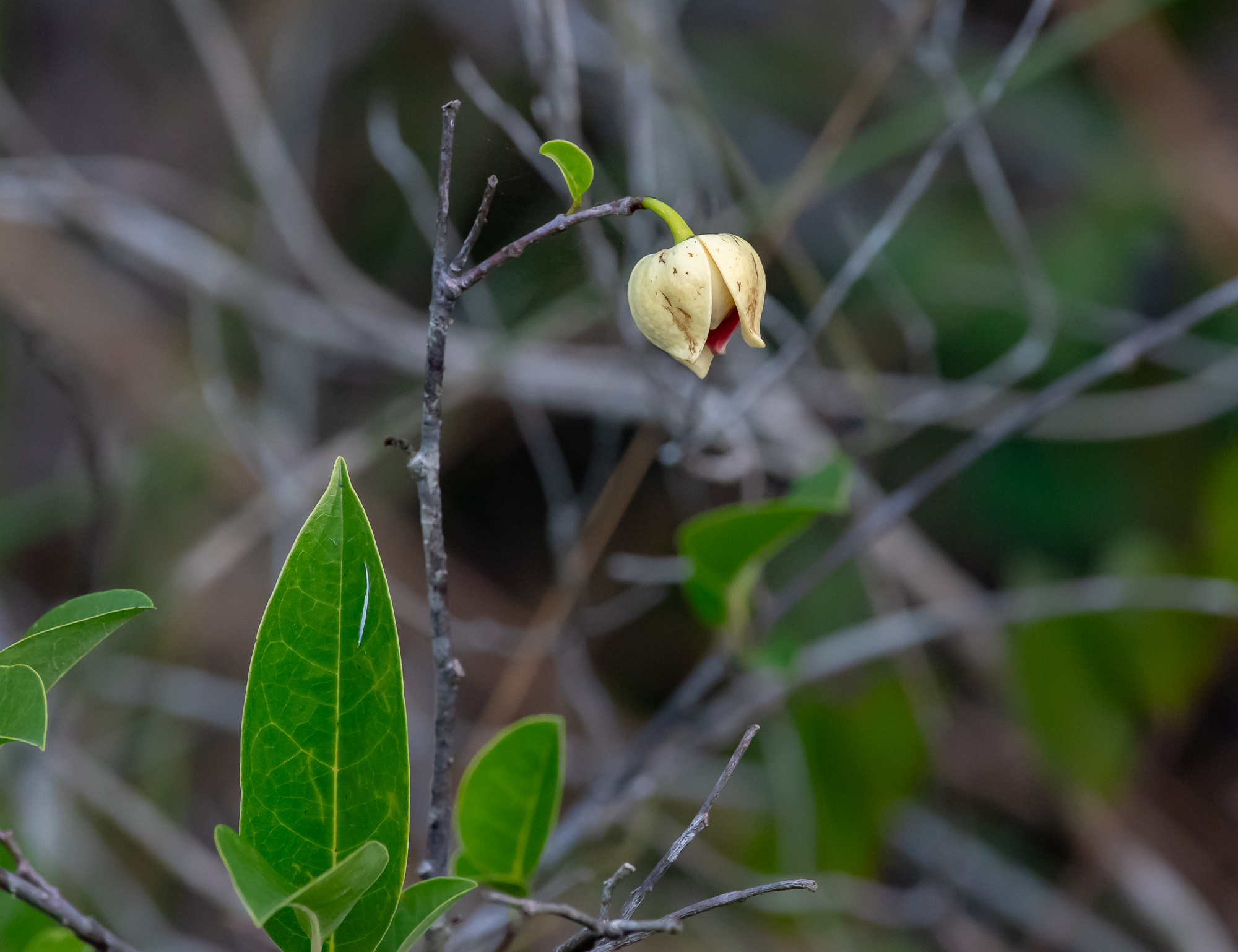
Another swampy resident of south Florida, the Pond Apple (Annona glabra) actually does form a small fruit resembling an apple. Reports of it being edible vary from “okay” to “use it in preserves” to “yukkk“.
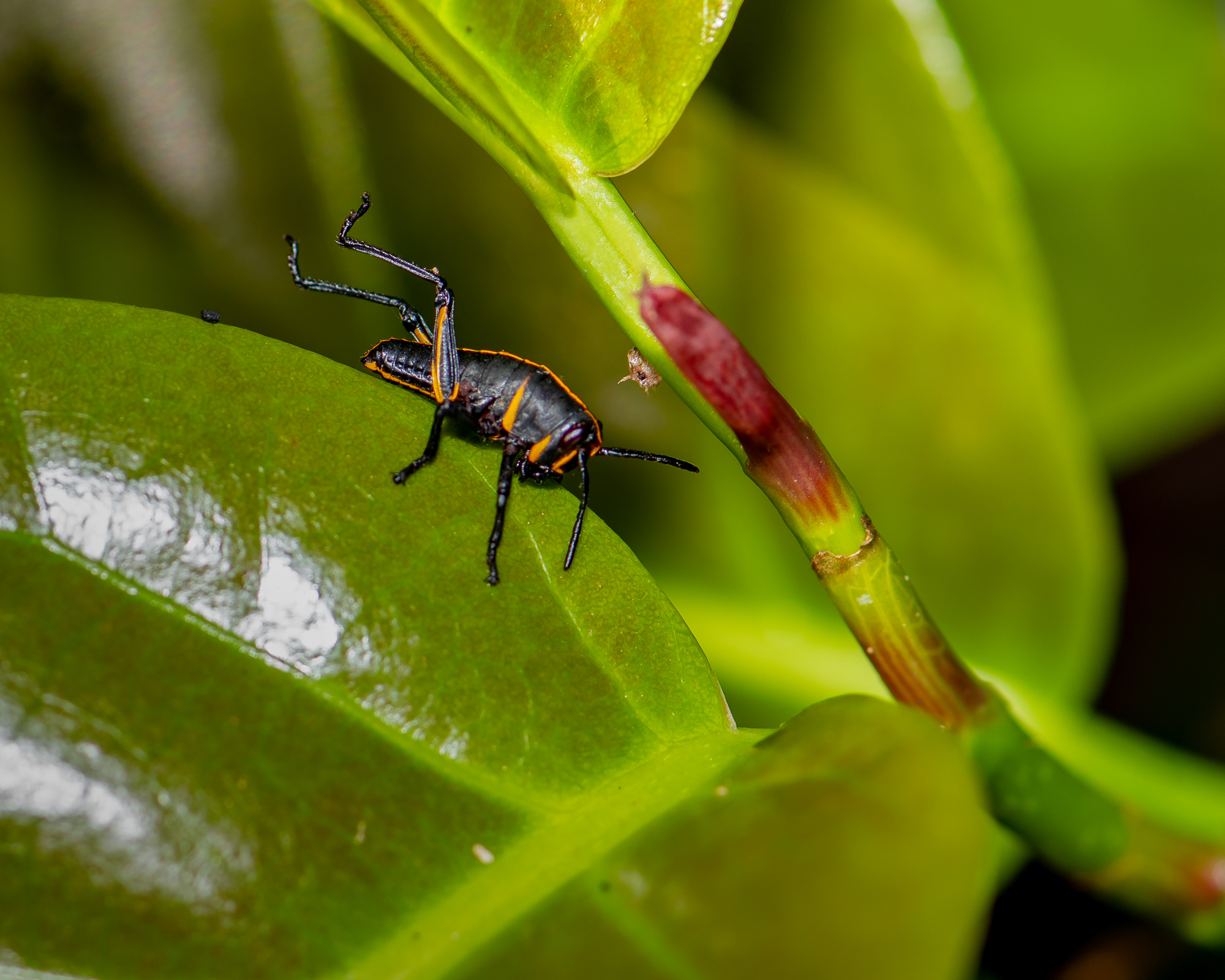
The large bright yellow grasshopper known as the Eastern Lubber Grasshopper (Romalea microptera) begins life as a small mostly black creature. Still pretty striking when on a nice green leaf. The immature ‘hoppers go through five molts (instars) each lasting about 20 days before becoming adults.
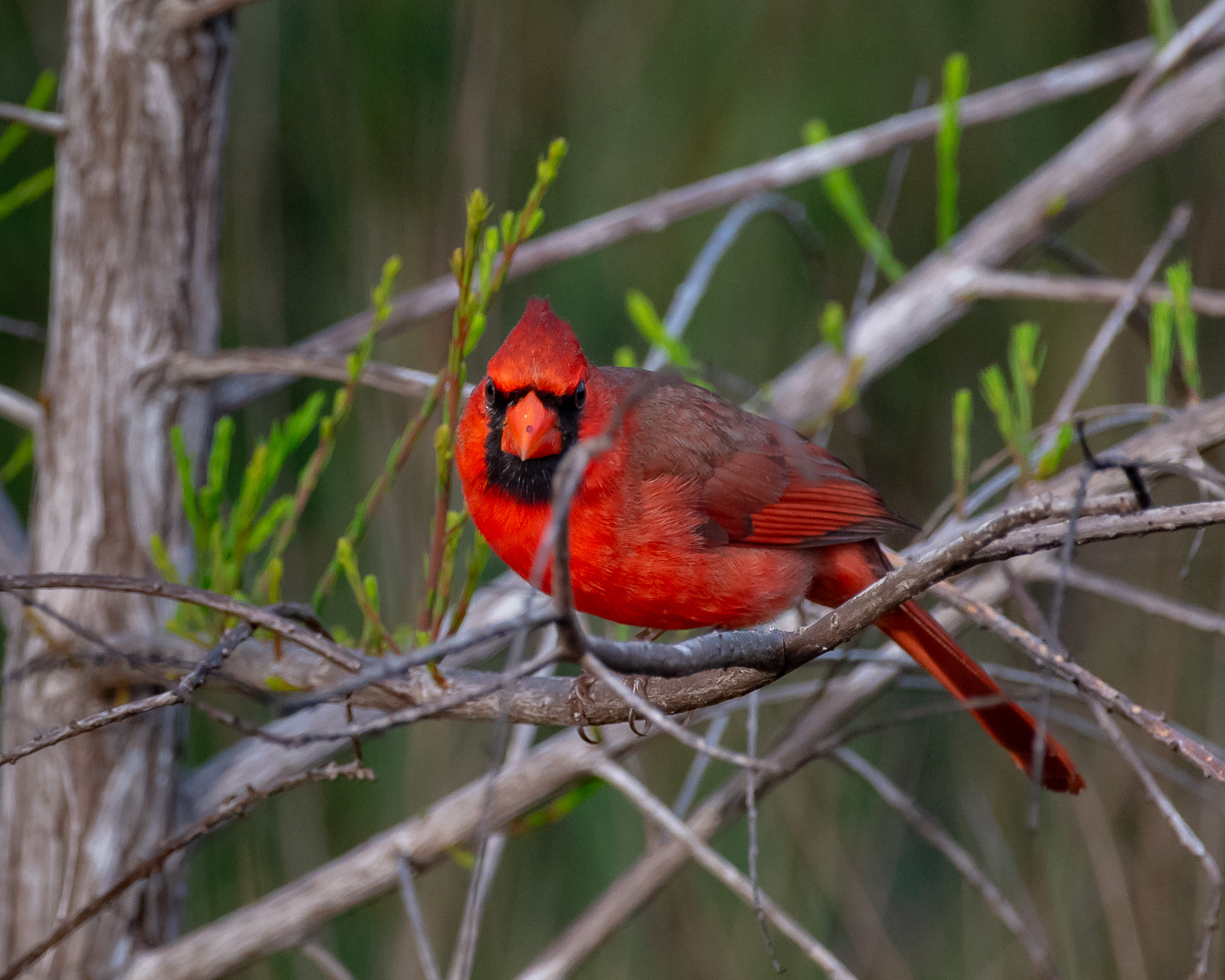
Bright red bird posed nicely. Northern Cardinal.
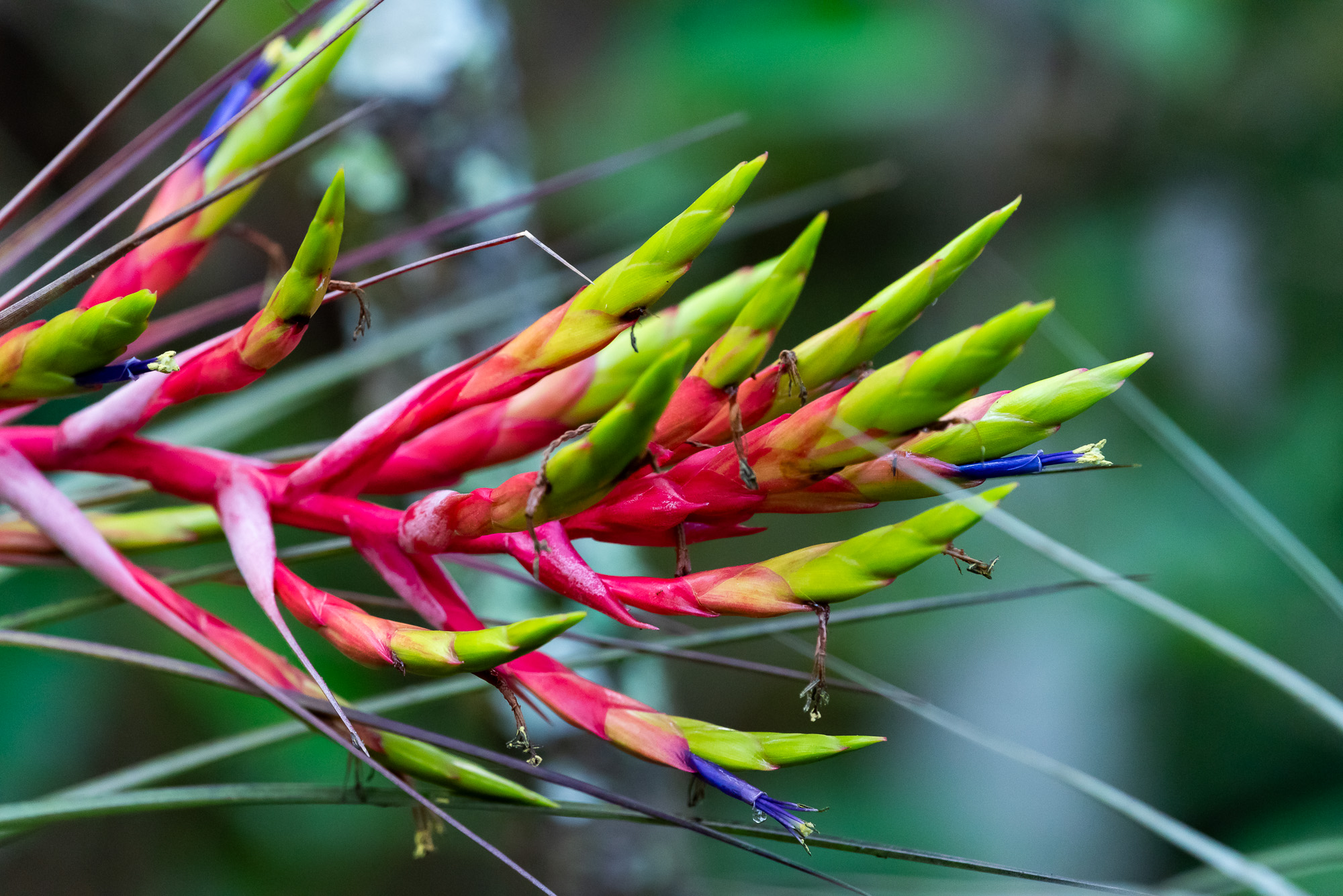
Bright red flower posed nicely. Cardinal Airplant (Tillandsia fasciculata). Again.
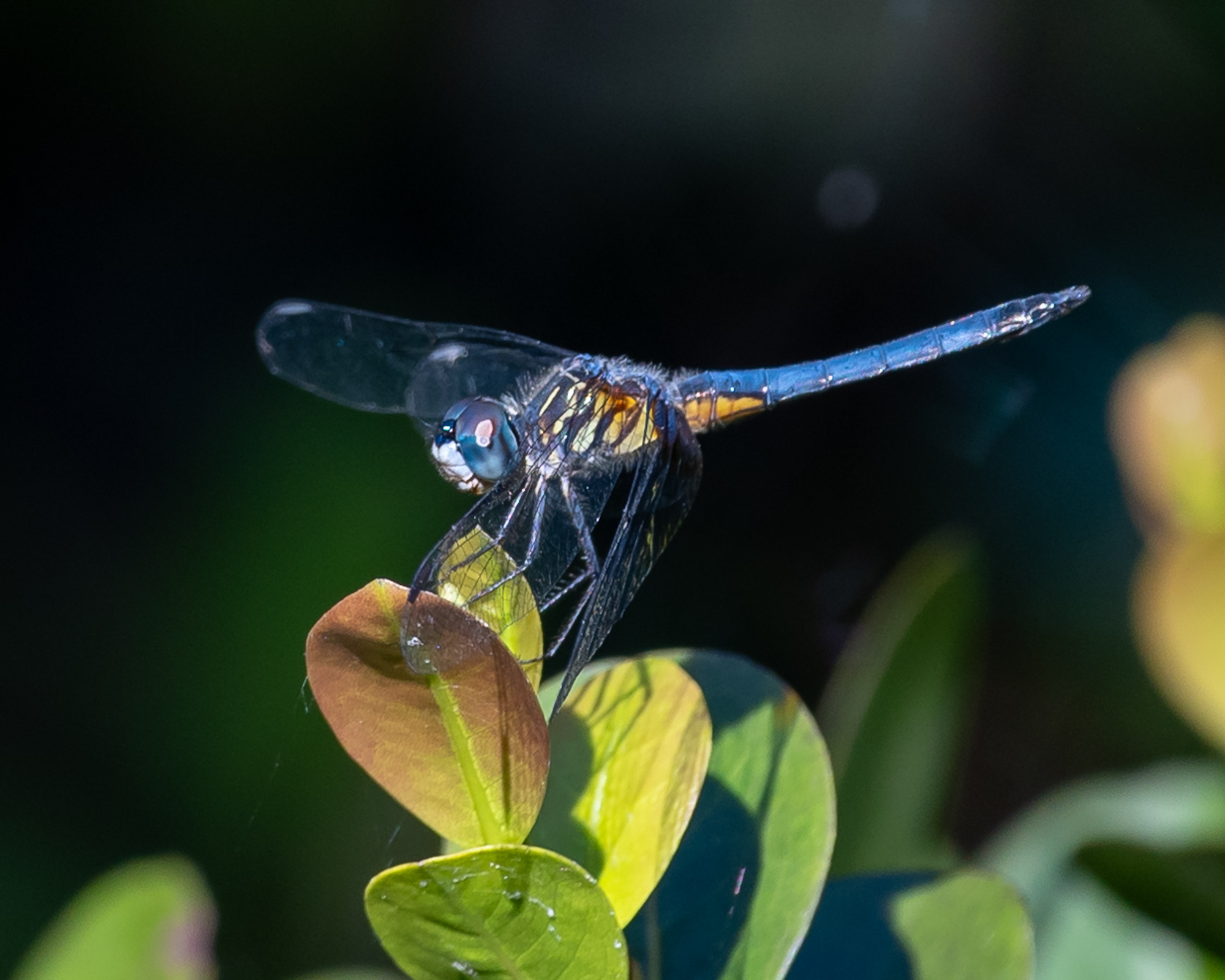
Another swamp dragon. A male Blue Dasher (Pachydiplax longipennis) has a bright white face, blue abdomen and cool black-and-yellow racing striped thorax.
Okay, adventurers. Tomorrow we will be heading northwest for a dose of salt water. So refuel and get a good night’s sleep. For us, a bowl of she-crab soup, a helping of fried green tomatoes and a platter of fresh shrimp. That hotel bed will feel mighty comfortable. Sweet dreams!

The Big Cypress Preserve offered up some amazing scenery, flora and fauna. We found familiar things in a different setting, discovered new plants, enjoyed incredibly dark night skies packed with stars, basked in the warm Florida sun and can’t wait to do it again!
Enjoy your search for a natural place and come back for a visit!
Additional Information
Big Cypress NP (https://www.nps.gov/bicy/planyourvisit/things2do.htm)
Big Cypress NP Visitor Centers (https://www.nps.gov/bicy/planyourvisit/visitorcenters.htm)

(Click image to enlarge, click again to zoom.)
We had not taken a road trip for quite awhile. March is the month in which we married, 56 years ago. Time to celebrate.
Several locations in southwest Florida have been on our “sure would like to go” list for several years. As we reviewed the map, two new spots and one long-time favorite were declared the winners.
The vehicle was serviced, hotel reservations booked, food sources scouted, bird reports digested, photographer recommendations considered, weather reports ignored (hey, it’s Florida!). We’re off!
First up, Big Cypress National Preserve, a 729,000 acre swampy buffer zone helping protect the vast Everglades watershed immediately to the south. Most of this area is only accessible by boat and much of that only by airboat. A few park service roads and very nice visitors’ centers helped us enjoy a couple of days exploring cypress and sawgrass swamp habitat.
Grab some bug repellant, get your hat, check your camera batteries and let’s see what we can find.
As the morning sky began to lighten, the sun chased away bits of lingering clouds and we began to see open wet sawgrass prairie dotted with single cypress trees and where deeper water collected, cypress domes.


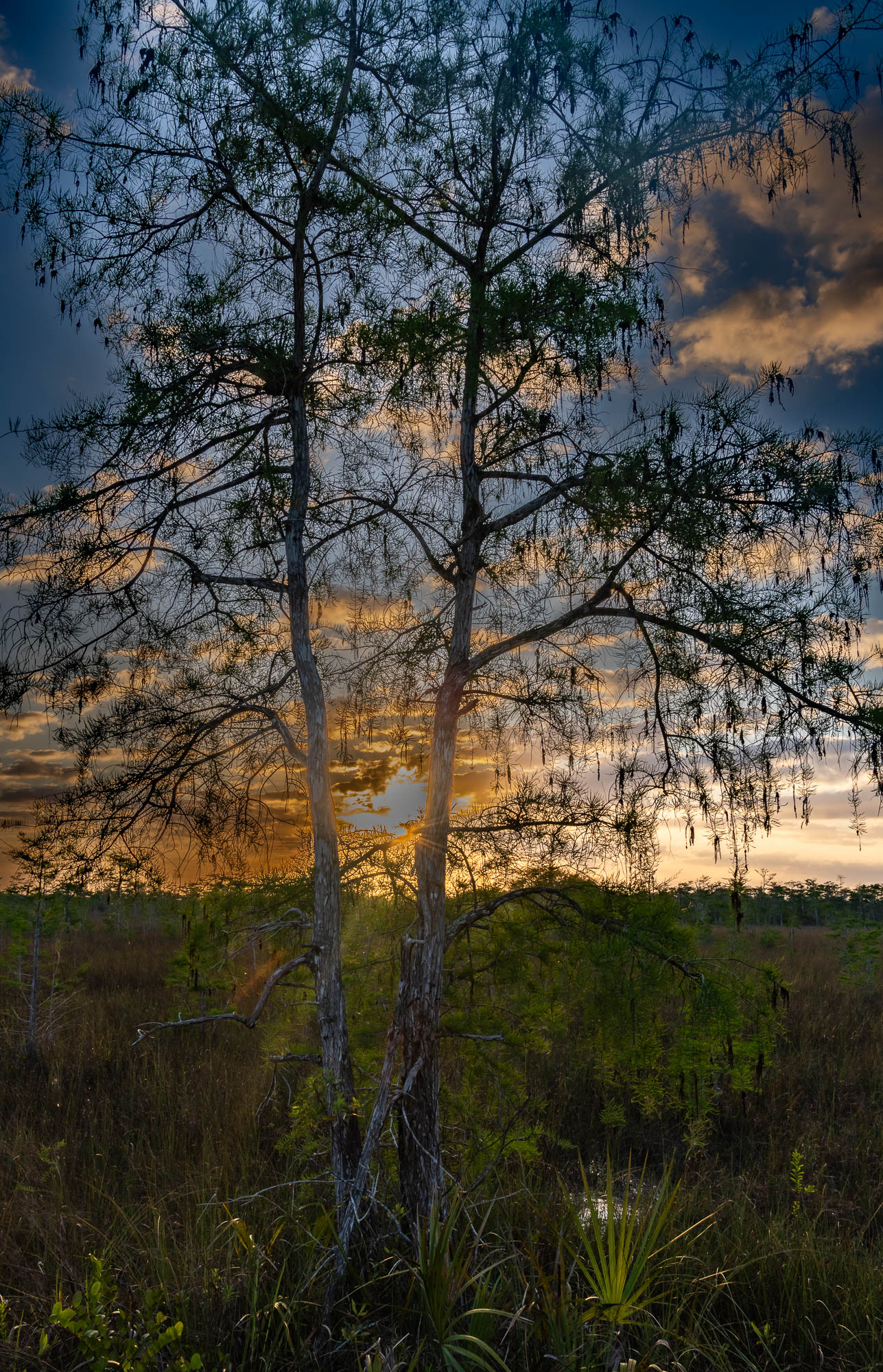
Once the sun was up, we had a better view of our surroundings.

Throughout the preserve are small areas of open water. If you’re a duck, you know where to find these waterfowl oases. These are all Blue-winged Teal.

Sub-tropical conditions for much of the year provide ideal habitat for all sorts of humidity and heat loving plants. Cardinal Airplant (Tillandsia fasciculata) seemed to be blooming at every place we visited in the preserve.

Leafy Bladderwort (Utricularia foliosa) looked as if someone had scattered very small yellow stars throughout the swamp. The fern-like submerged leaves trap all sorts of yummy things to help these small carnivorous plants thrive. Including mosquitoes! (I may have a new favorite plant.)


Even a large white bird such as this Great Egret can almost vanish in the vast swamp of sawgrass and reeds.

We found many familiar faces as we explored new territory. A bright Saltmarsh Morning-glory (Ipomoea sagittata) was a very welcome sight.

Timing was apparently good for a new crop of Halloween Pennant (Celithemis eponina) dragonflies. They were flitting nearby at almost every location.

Rain in early March resulted in several flowing streams within the preserve. Clear water moving quickly over a rock bed carries nutrients to waiting flora and fauna in the sawgrass prairie.

If the cypress and palm trees were happy with that wet enviroment, the Cardinal Airplant (Tillandsia fasciculata) must have been ecstatic. Red blooms filled our day.

Breakfast in the swamp is made better when friends drop by to visit. This little Palm Warbler said in a few weeks he would be feathering his nest near the Great Lakes.

Yes. We saw alligators. Like this one.

Just in case we needed a reminder, a large Palamedes Swallowtail (Papilio palamedes) butterfly emphasized it is Spring.

Underscoring the Spring attitude of the swamp dwellers, a female Northern Flicker surveyed the scene from her high-rise condo where there may soon (or already) be new eggs to incubate.

You look like you could use a break. Rest here awhile and we’ll find a gas station so we can continue to explore. Perhaps we’ll bring you some orange juice. And Key Lime Pie. Don’t go away.
Enjoy your search for a natural place and come back for a visit!
Additional Information
Big Cypress Preserve: https://www.nps.gov/bicy/index.htm
(Gini and I have just returned from a week-long road trip to southwest Florida. We wanted a change of venue to celebrate our 56th wedding anniversary. Instead of exploring the familiar swamps near home, where else would a couple of native Floridian nature lovers go for such a momentous celebration than — bigger swamps? More to come. In the meantime, this post will be a description of our visit to a favorite forest area about five weeks ago.)
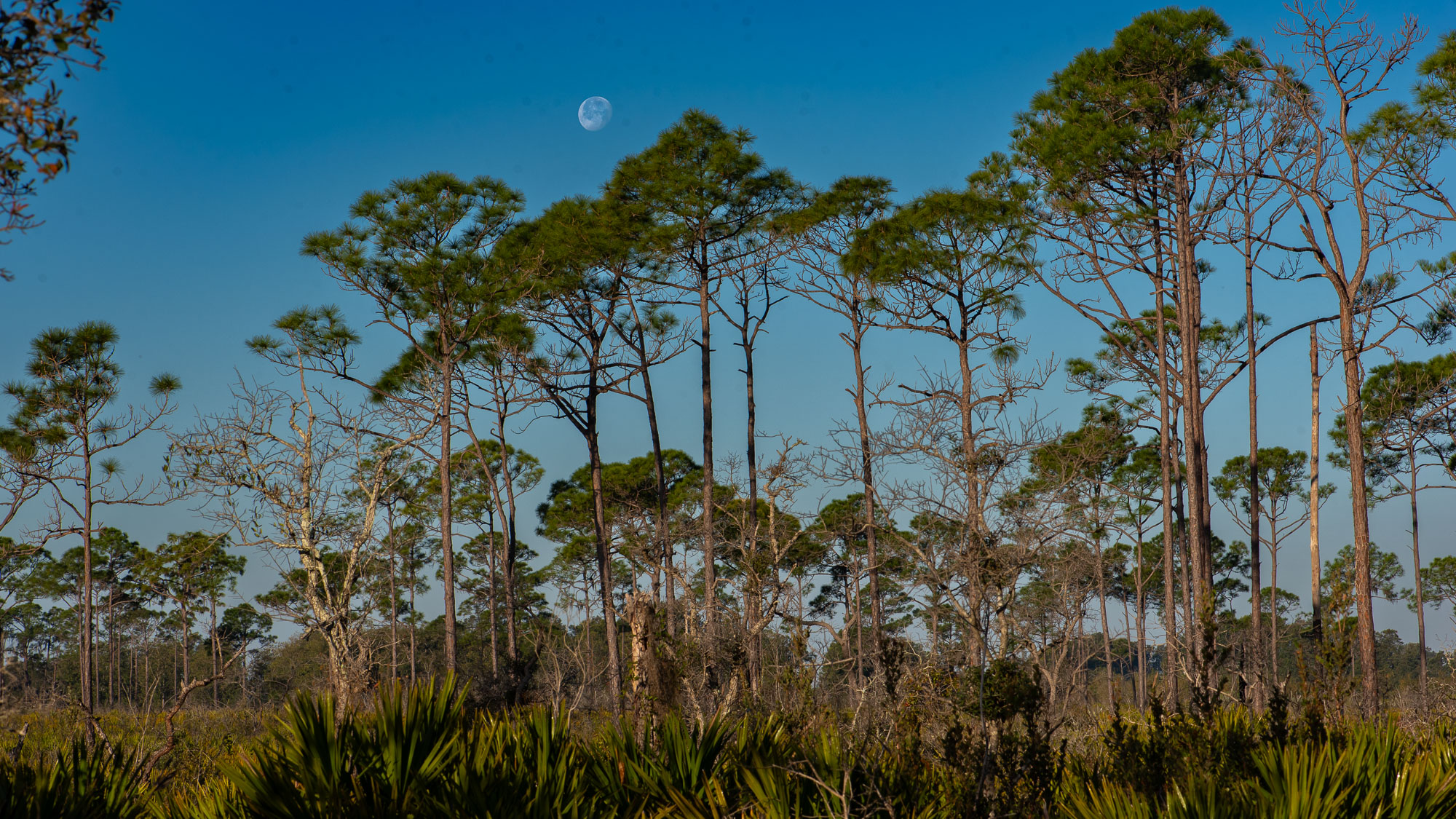
(Click images to enlarge, click again to zoom.)
We turned off the main road onto the access road which would take us through a couple of miles of pine, oak and scrub habitat to the entrance of the Lake Wales Ridge State Forest. The sun was rising and the moon was setting. Groups of noisy Florida Scrub Jays were foraging in the distance. A woodpecker had found the perfect pitch he had been seeking on a dead pine tree branch and was sending love notes to any female who might wish to respond. Spring was near.
The Lake Wales Ridge is a unique geological feature. It rose from ancient beach and dune systems that have stood above sea level for over a million years. The long, narrow ridge was uplifted about 300 feet above sea level and is one of the oldest natural scrub communities in Florida. The habitats of the Ridge can be relatively dry and almost desert-like. Many species of flora and fauna found on the ridge exist nowhere else in the world, making the scrub a unique and biologically important habitat.
We like it because it is beautiful and has few human visitors.
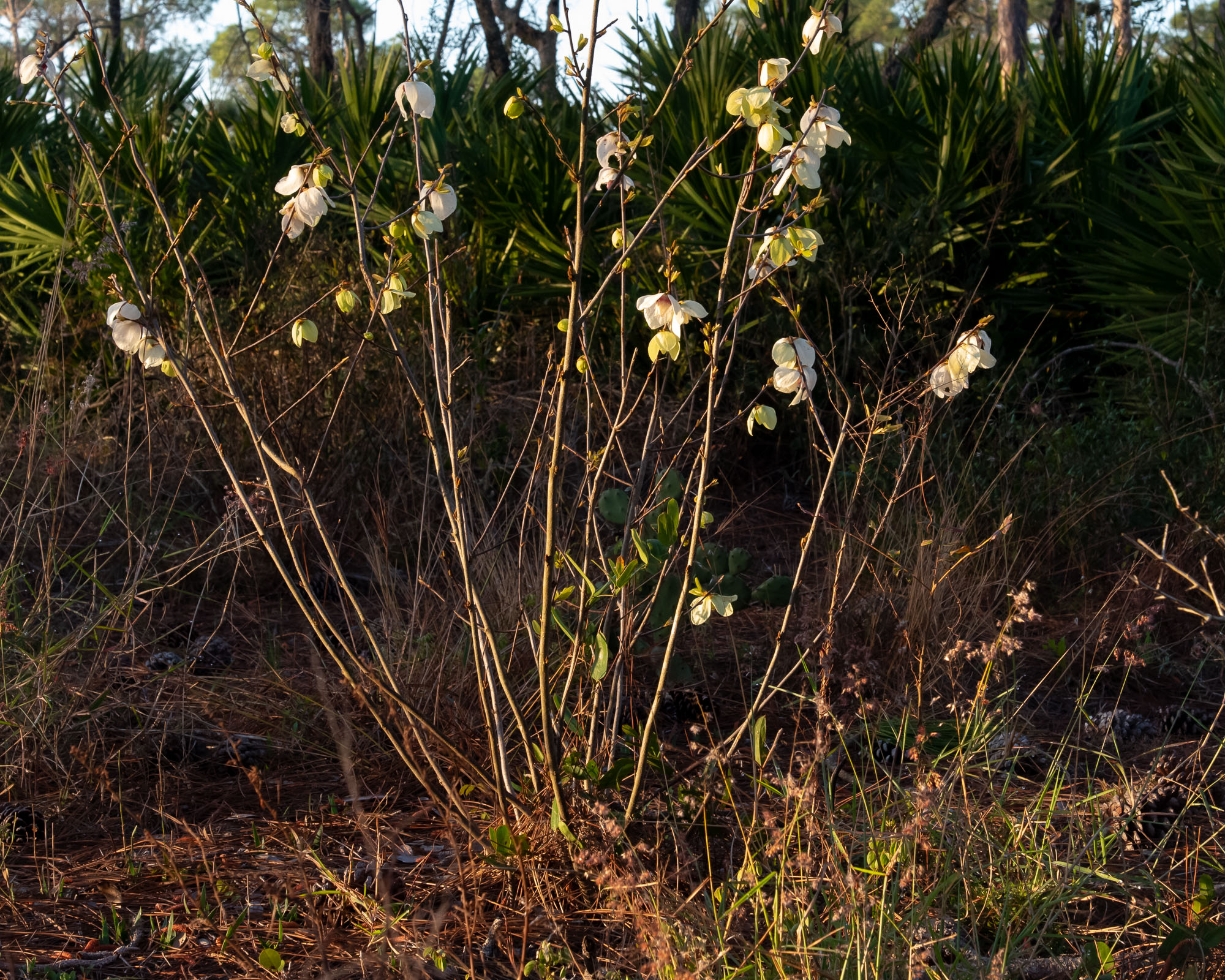
Nature, once again, goes by its own clock. “Official” Spring was still a few weeks away but birds were courting, flowers seemed to be blooming everywhere, pollinators were visiting the blooms and we just relaxed and enjoyed the spectacle.
Gini’s homemade blueberry bread sustained us through the morning. We discovered some new-to-us plants, enjoyed the high-pitched squeaks of Brown-headed Nuthatches high in the pines, distant booming calls of Barred Owls, animal tracks in the damp red clay of the forest road and each other’s company.
I’ll quit talking. Hope you enjoy a few images of things we found.
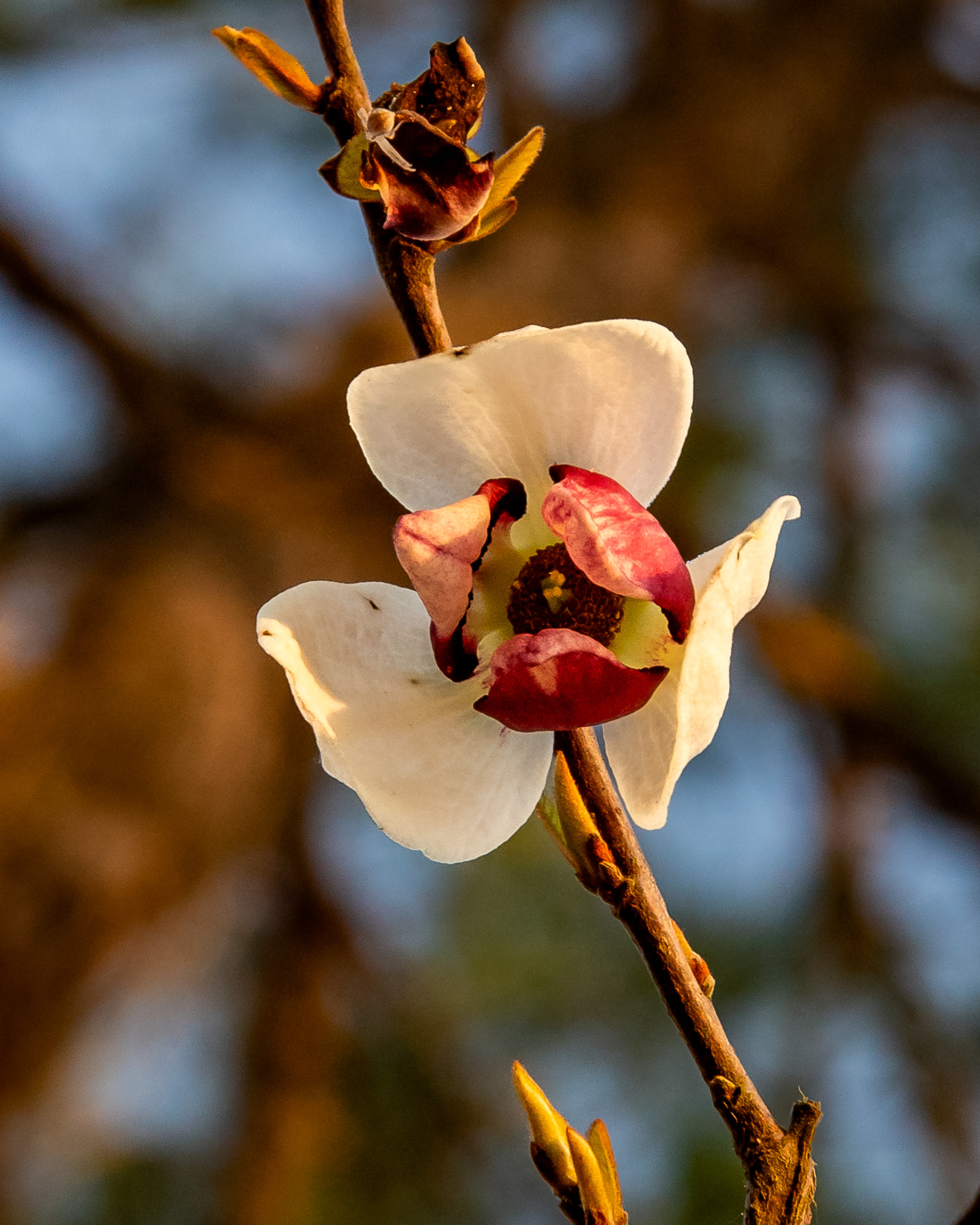
Netted Pawpaw (Asimina reticulata) is a member of the custard apple family and may not grow in many places outside Florida. It produces an edible fruit but we have never been able to beat the wildlife to it.
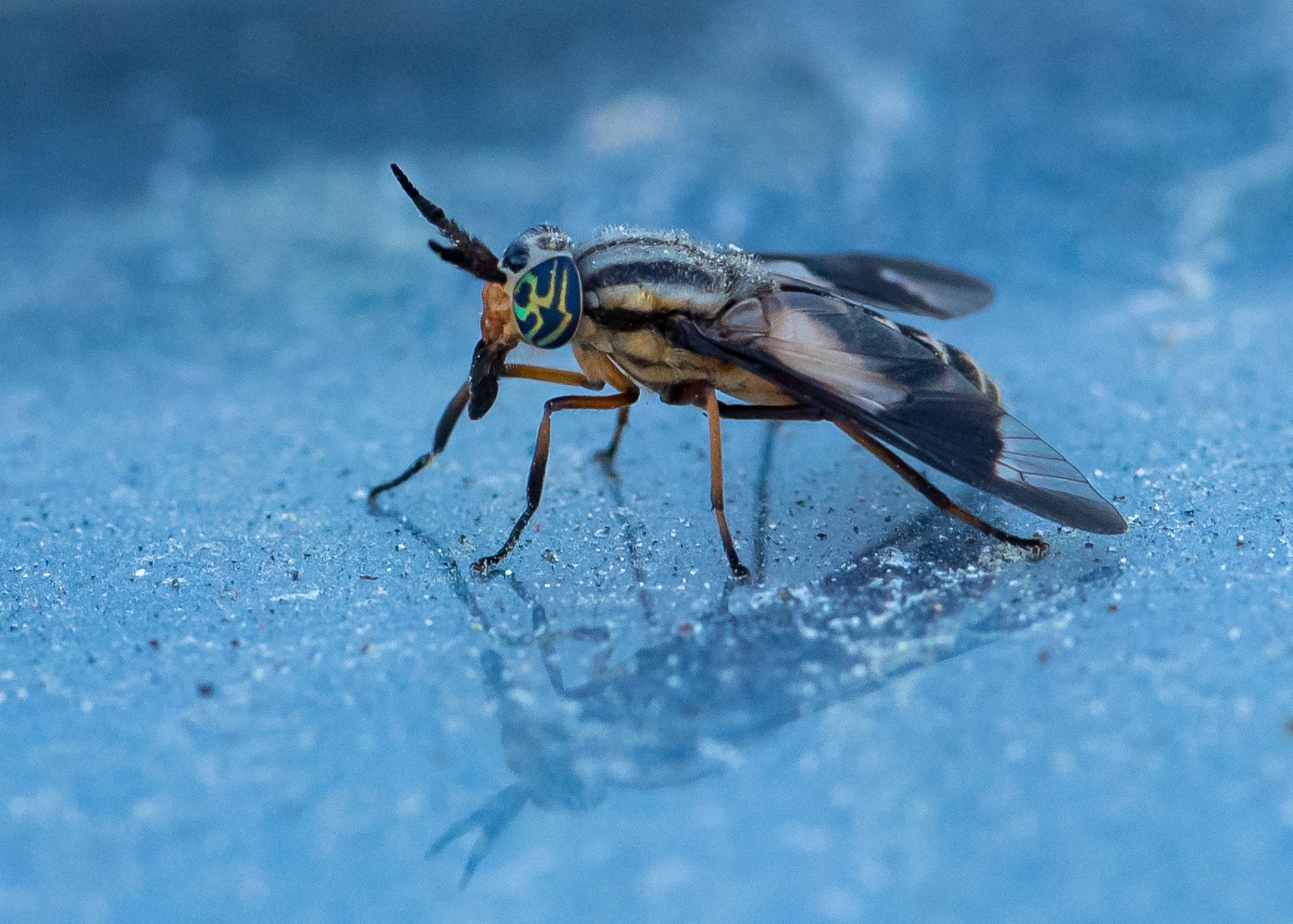
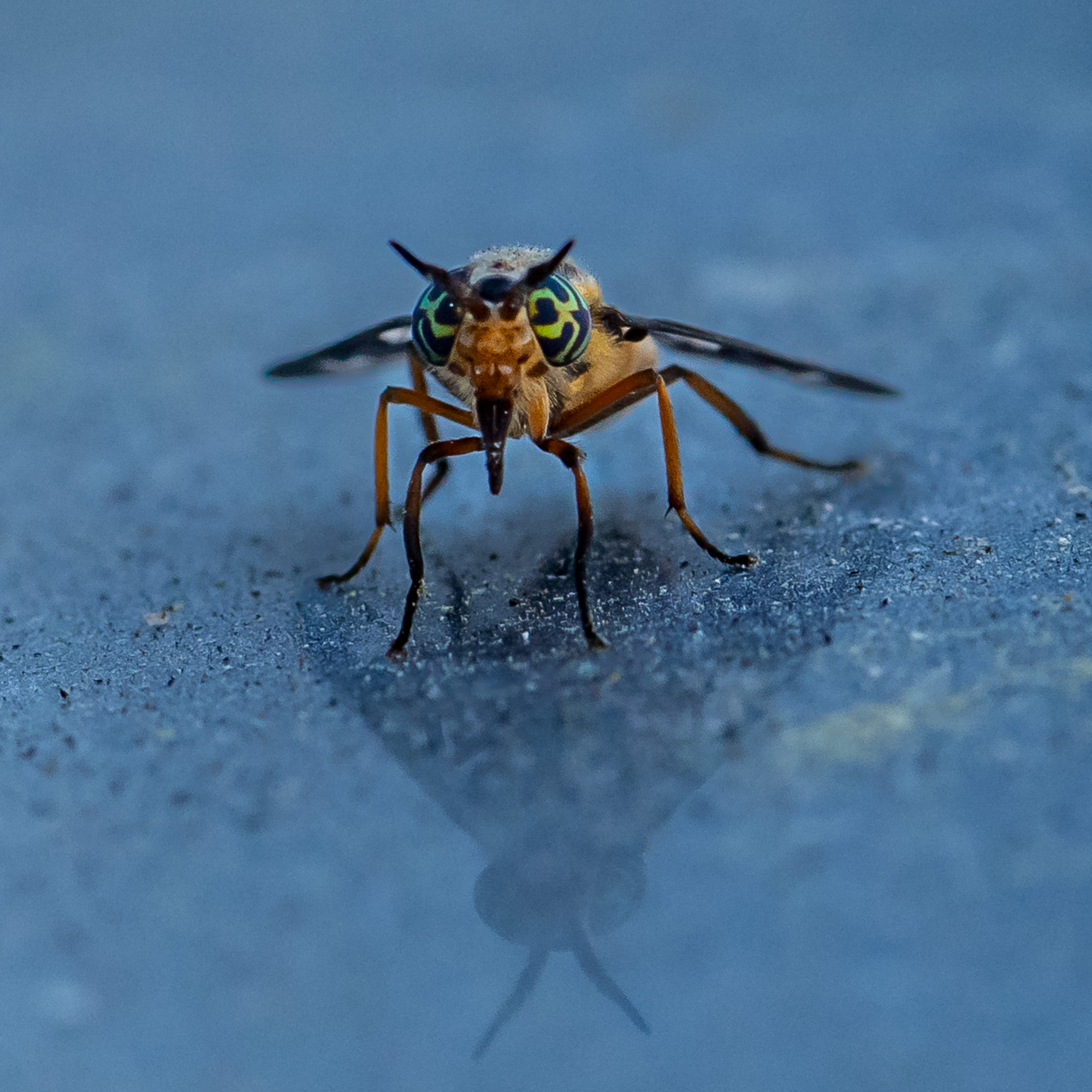
If you don’t know exactly when Spring begins in this area of central Florida, check your arms and face. If you find one of these lovely critters, congratulations! It’s Springtime! Deer Fly (Chrysops species). Oh, and smack it before it sucks any more of your blood.
Found only in three counties in central Florida, the Short-leaved Rosemary (Conradina brevifolia) has a very lovely flower.


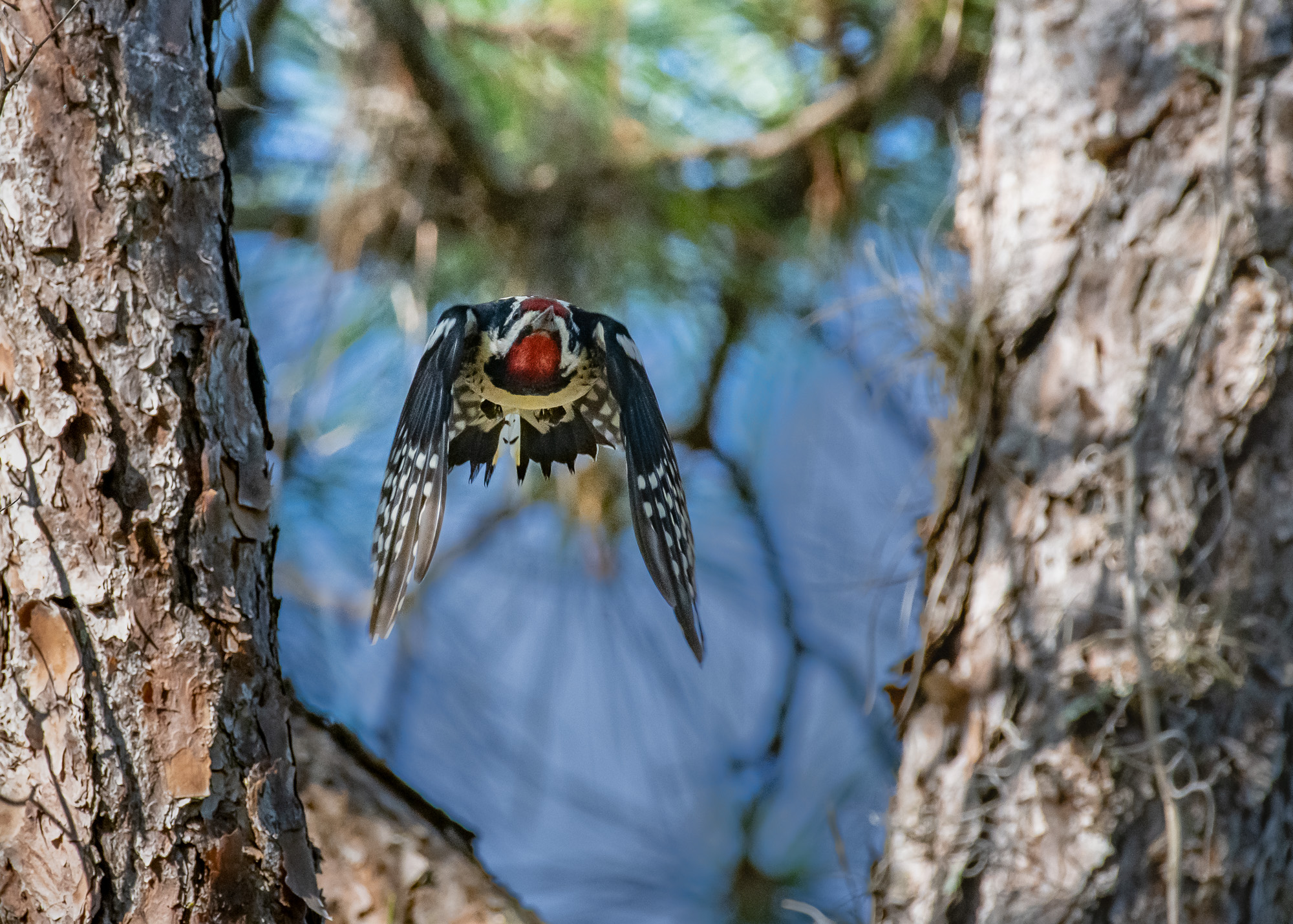
As we were finishing breakfast by a small lake, a movement in a nearby long-leaf pine tree led us to a strikingly patterned male Yellow-bellied Sapsucker. This species only visits during migration.

A member of the Aster family, the Coastal Plain Honeycombhead (Balduina angustifolia) is a prolific producer of bright yellow flowers. Too bad they couldn’t come up with a longer common name.


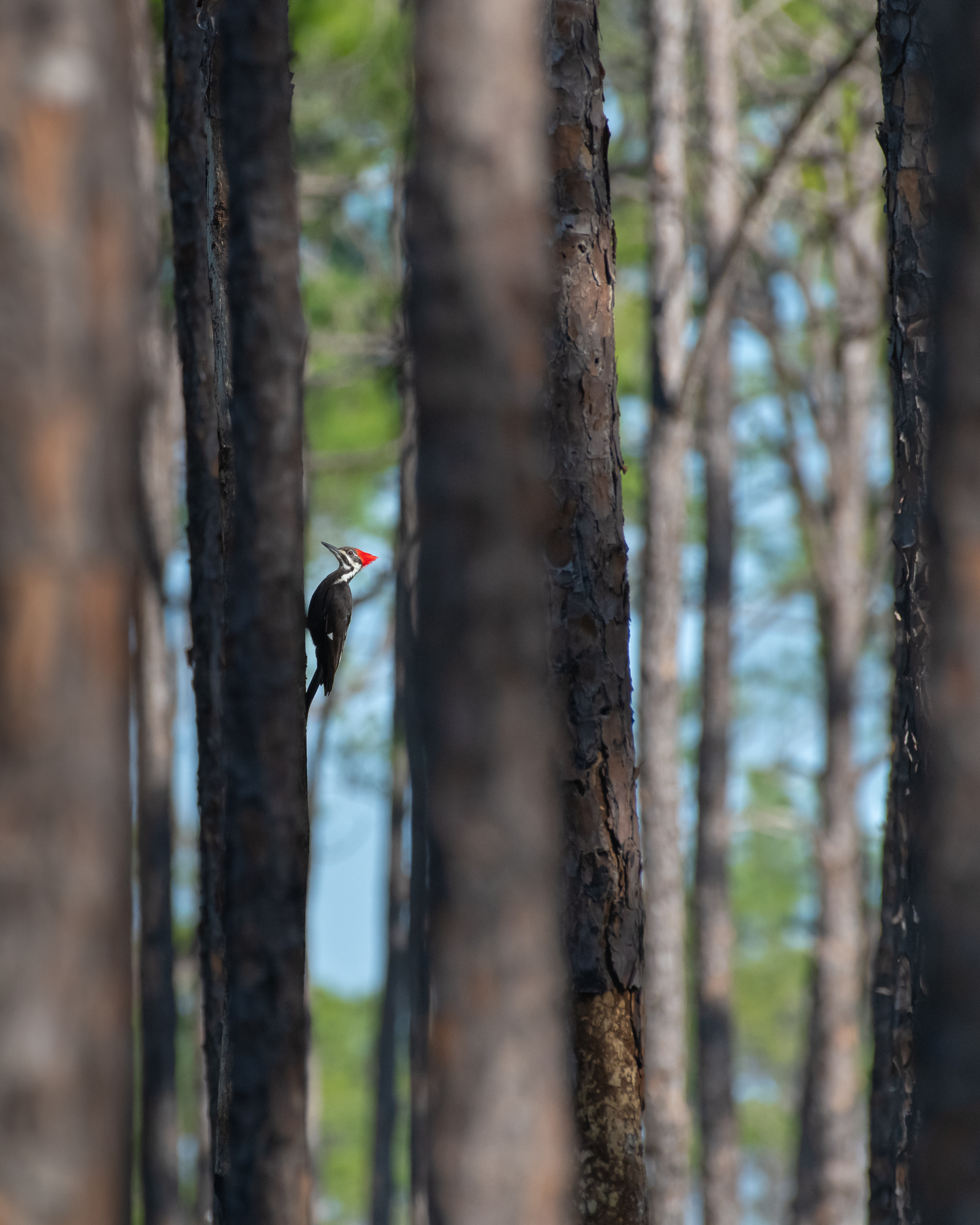
During our morning outing, we counted over a dozen Pileated Woodpeckers throughout the forest. Gini asked me if they resemble prehistoric Pterodactyls. You know, since I was around at the time.
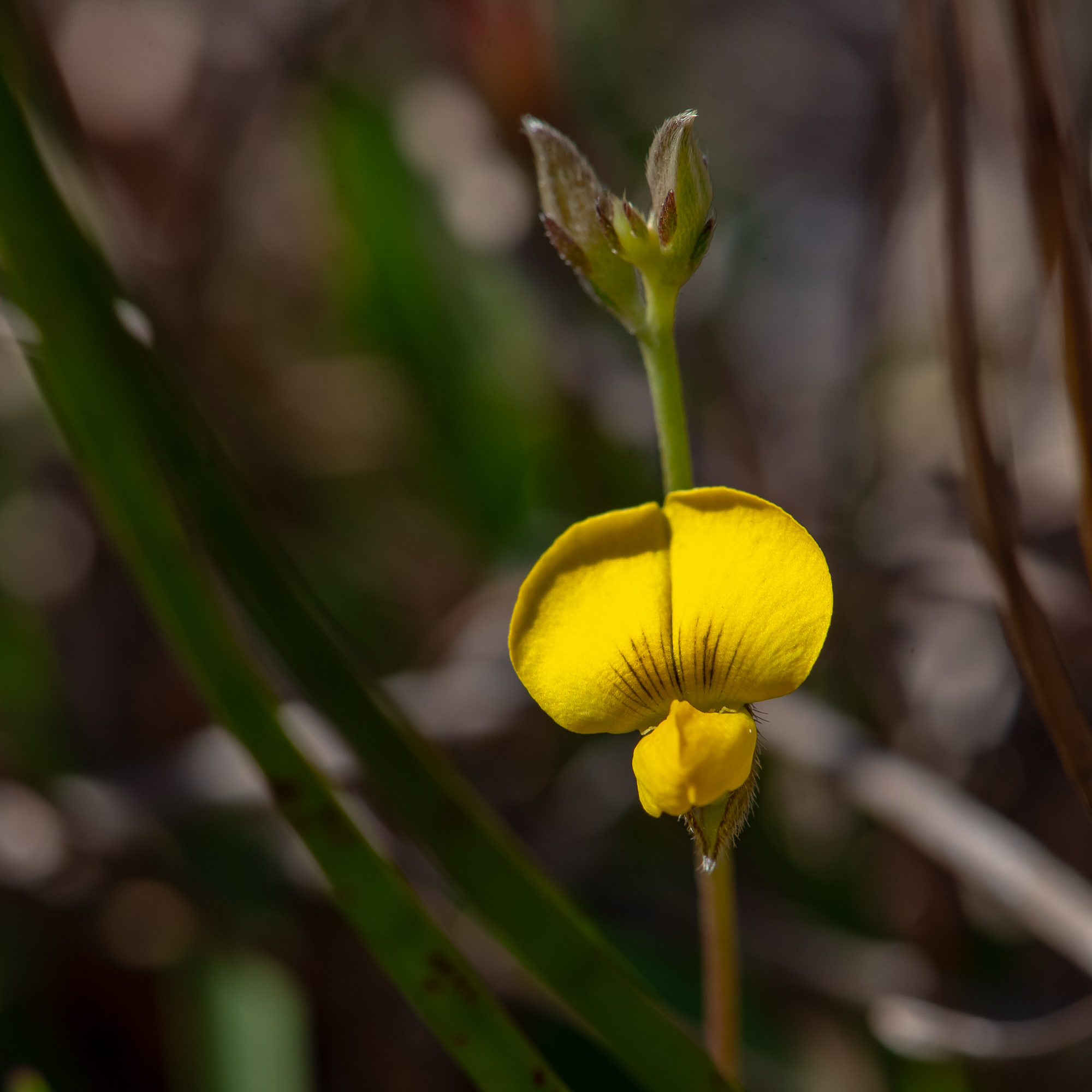
There are 15 species of Crotalaria in Florida, but only three are native. One of those, Rabbitbells (Crotalaria rotundifolia), is fairly widespread, quite small and really lovely.

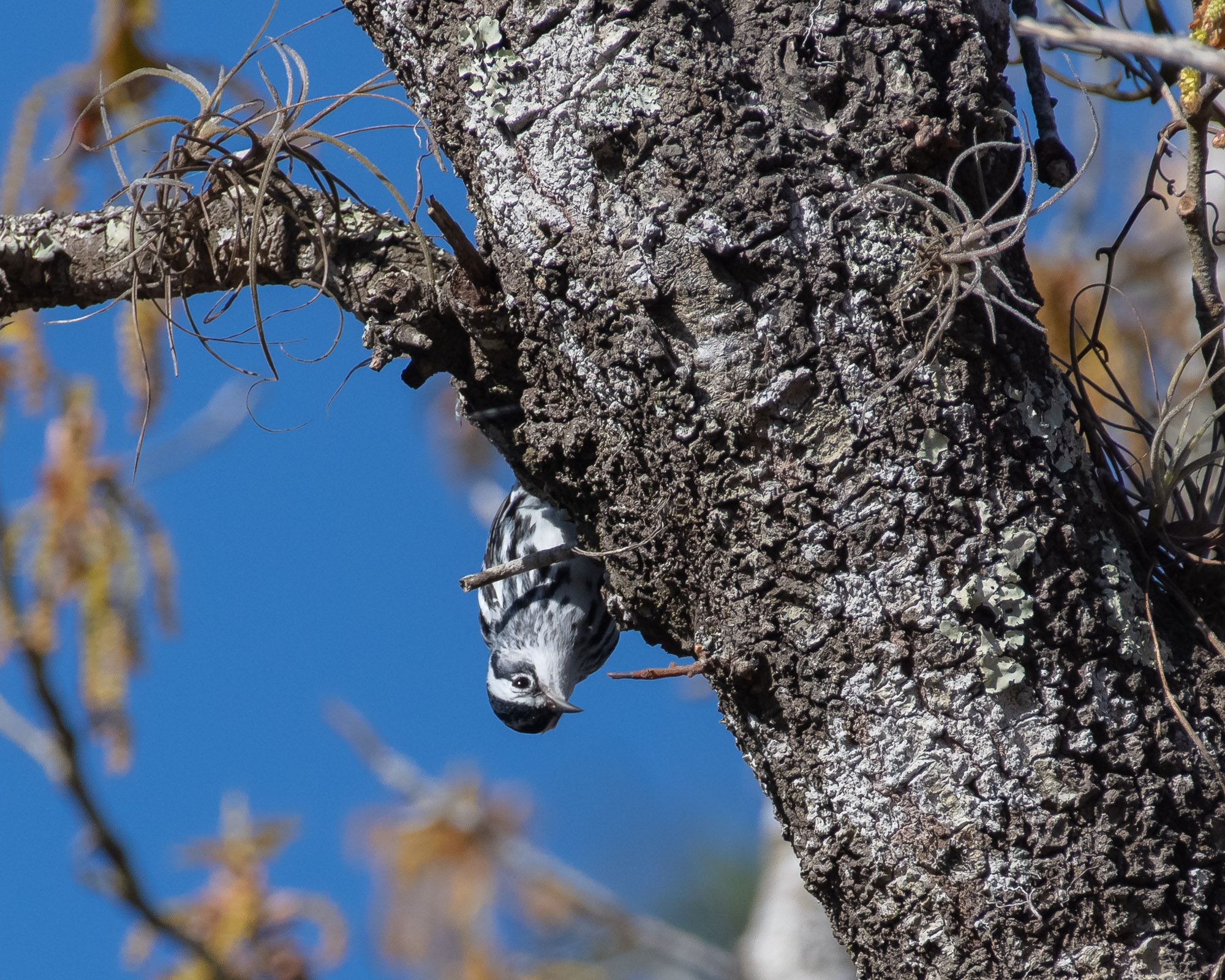
Running down a tree trunk like a Nuthatch, the small Black-and-White Warbler will soon wing its way northward to breed.
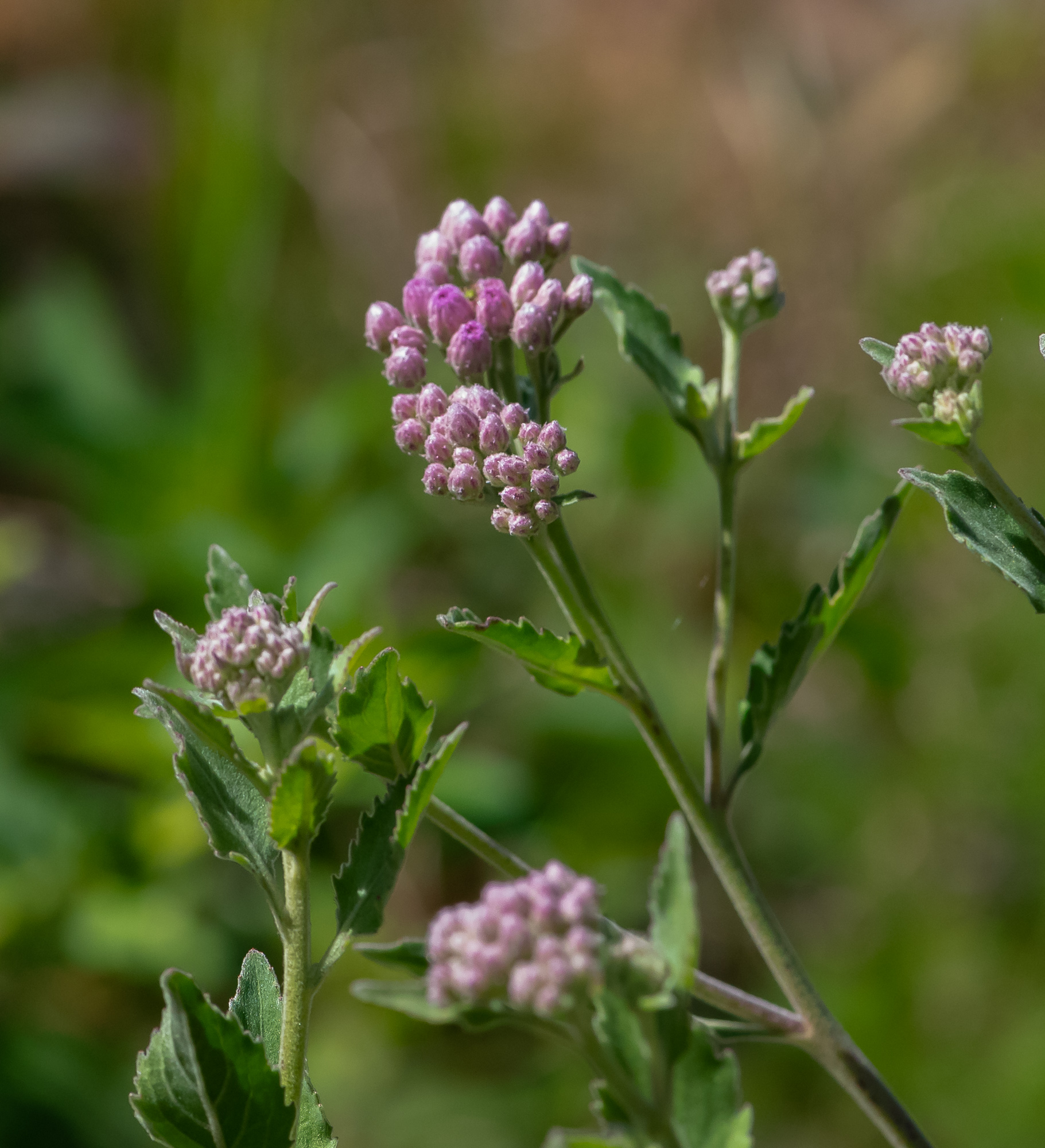
Some think the aroma of Sweetscent (Pluchea odorata) is quite pleasant. Perhaps they forget to add the rest of the sentence – “for a camphorweed”. I’ll forgive the plant its resemblance to the smell of mothballs since it produces such pretty pink flower clusters.
The very small blooms of Florida Toadflax (Nuttallanthus floridanus) can, like its cousin, N. canadensis, form blankets of lavender when massed in a field around this time of year. This one was all alone.

Pine Warbler plumage can vary from almost all gray to almost all bright yellow. This one was a nice balance of color. There were several gangs of the little bug eaters foraging among the tree canopies as they fuel up for migration. Some of this species will remain and breed in Florida.

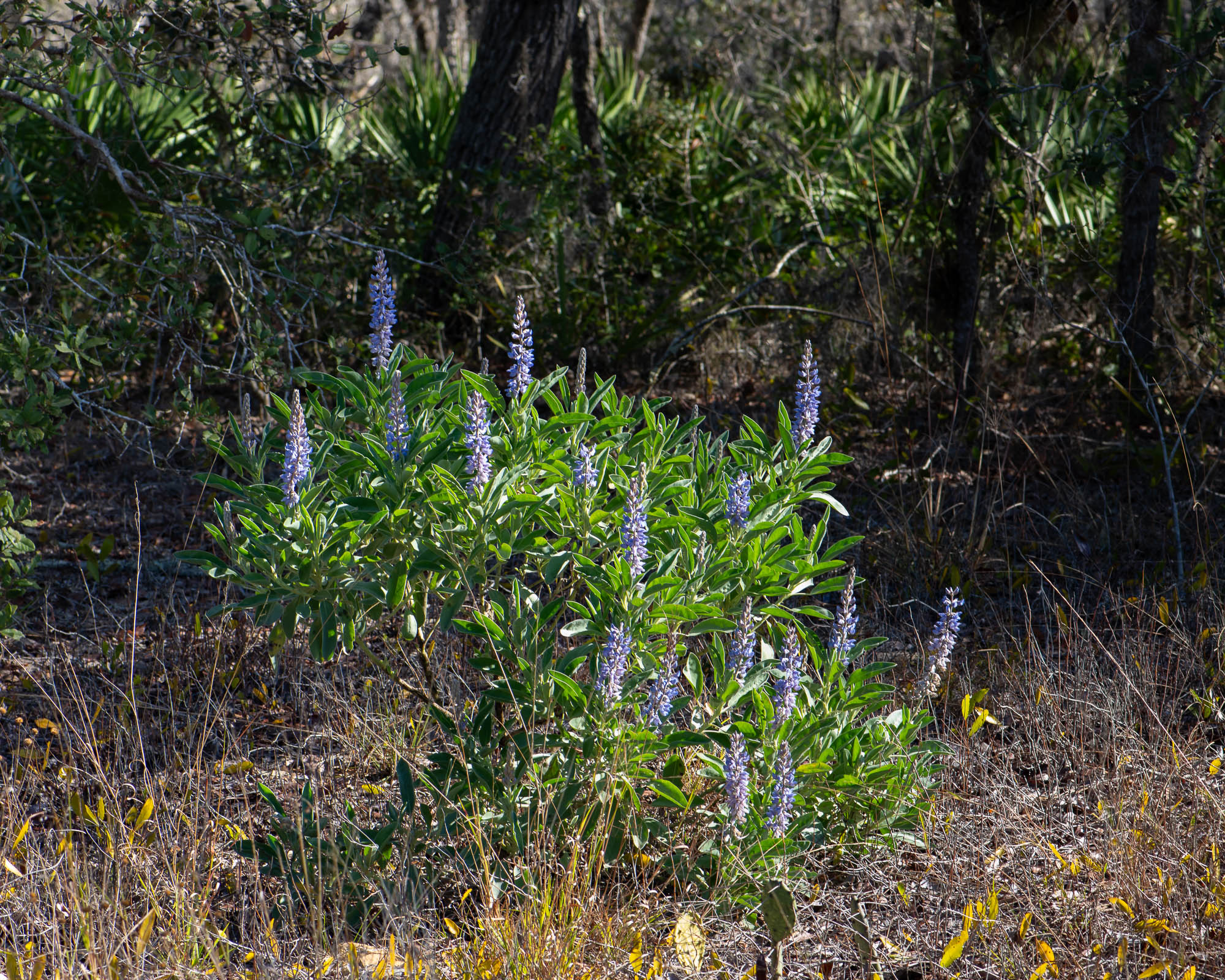
Lupines were blooming in several spots this morning. Recently published research has defined three new Lupine species within Florida. Based on the kind help of botanists, these are probably Lupinus floridanus. No common name has yet been offered. For the really, really technically curious, here ya go: https://www.flawildflowers.org/wp-content/uploads/2024/01/04-PhytoN-UnifoliolateLupinus.pdf.

Plentiful and perpetually in motion, Blue-gray Gnatcatchers were seen and heard every place we checked this morning. The species breeds in Florida but about a million of them will head north soon after Easter.

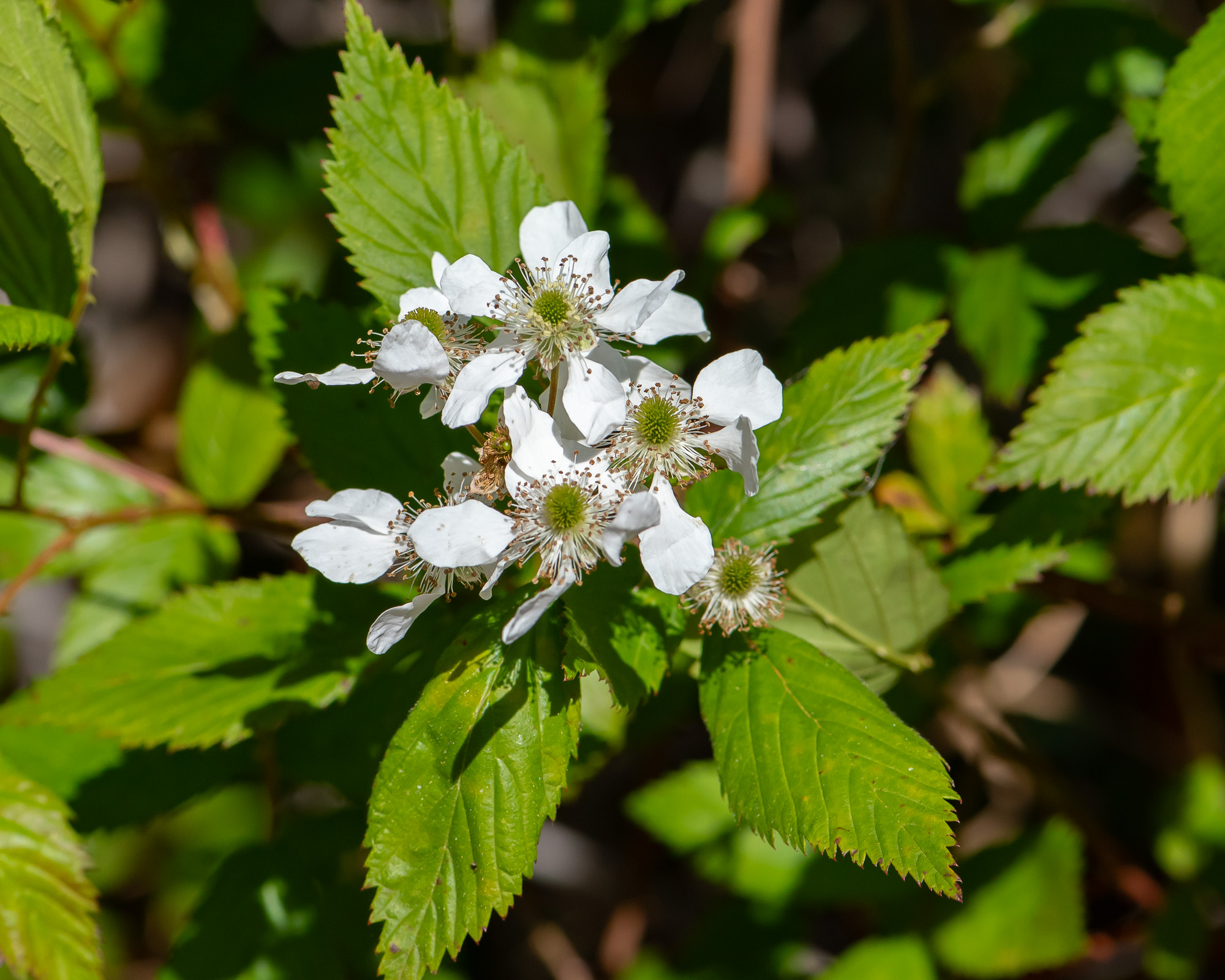
Massive thorny tangles are now sporting gorgeous white flowers and will soon produce dark sweet fruit for those willing to brave the plants’ defenses. These flowers belong to the Sawtooth Blackberry (Rubus argutus).
Northern Parula warblers migrate from our area during winter but are quick to return as the weather warms. Hard to believe a bird with so much color can blend in with the leaves so well.

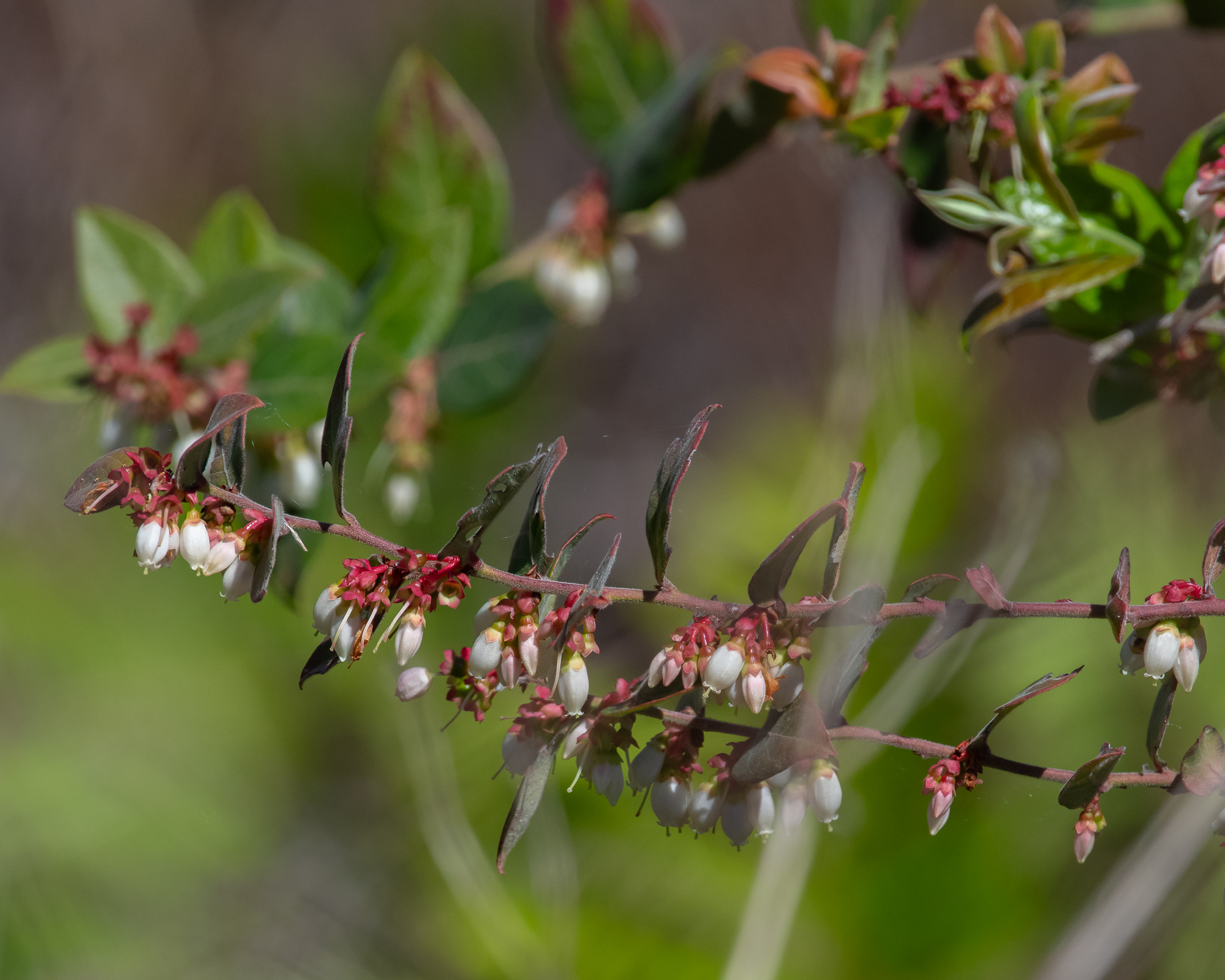
Not nearly as plentiful as the Blackberry clan, Shiny Blueberry (Vaccinium myrsinites) is no slouch when it comes to attractive flowers. Branches supporting what look like miniature lanterns will soon have juicy treats for quick customers.
Also known as Rock Rose, the bright yellow of Pinebarren Frostweed (Crocanthemum corymbosum) dotted several areas of the forest. Hard to believe each bloom will drop all its petals after one day.

This very unique section of central Florida never fails to provide surprises each time we visit. Combined with the fact it is so very quiet and we seldom see any other humans makes it one of our very favorite places to explore.
Enjoy your search for a natural place and come back for a visit!
(Click on images to enlarge, click again to zoom.)
Spring. According to the calendar, it will be here next week, arriving precisely at 11:06 p.m. on March 19, 2024.
Nature. It adheres to it’s very own schedule, every day of the year.
I reckon it may be useful (?) to know that on the date and time above there will be an equal amount of day and night. Equinox. Plan accordingly.
So, there we were, six weeks ago, in the dead of Winter, leaving the house in the dark about an hour before sunrise. Dressed appropriately for Florida’s severe cold season (me, short sleeves and Gini with that sweatshirt just in case) we were prepared to explore what the swamp had to offer us this day.
The swamp. Yes, once again we are headed into Florida’s Green Swamp. To refresh your memory, this expanse in the west-central part of the peninsula consists of over 560,000 acres (875 square miles). The composition of the area is mostly hardwood swamp, cypress domes, sandhills and pine flatwoods. The Green Swamp is the source of four of Florida’s major rivers and below the surface is the vast limestone aquifer which contains most of the state’s drinking water.
The logging industry harvested pine and cypress here from the late 19th until the mid-20th century. Since then, better forest management practices have seen a significant return of mature trees of all species. Part of that resource management includes prescribed burns which attempt to emulate natural fires begun by lightning. Over time, flora and fauna adapted to natural fires and some species depend on periodic fires in order to thrive.
Old logging roads zig-zag throughout the swamp, some more passable than others. Many trails have been blazed along these roads, again, some more accessible than others. The good news is that we seldom see other humans during our exploration. We do see plenty of birds, blooms and bugs.
Six weeks ago, we really did not have Spring on our minds. Birds singing made us realize THEY had Spring on THEIR minds! Little Brown-headed Nuthatches are among the first birds to breed in our area and their high-pitched “rubber-ducky” squeaking filled the air. Adding to the Spring mix were the cheerful “chicka-dee-dee-dee” calls of Carolina Chickadees. Red maple trees were beginning to bud. Yellow blooms dotted the wet places and sides of the road. The sun was warm. The sky was blue.
The Green Swamp was beginning to show its true colors.
Recent rains have made walking through a pine savanna a rather damp experience.

A male Northern Cardinal added some bright color to the swamp. We heard many of them singing all morning.

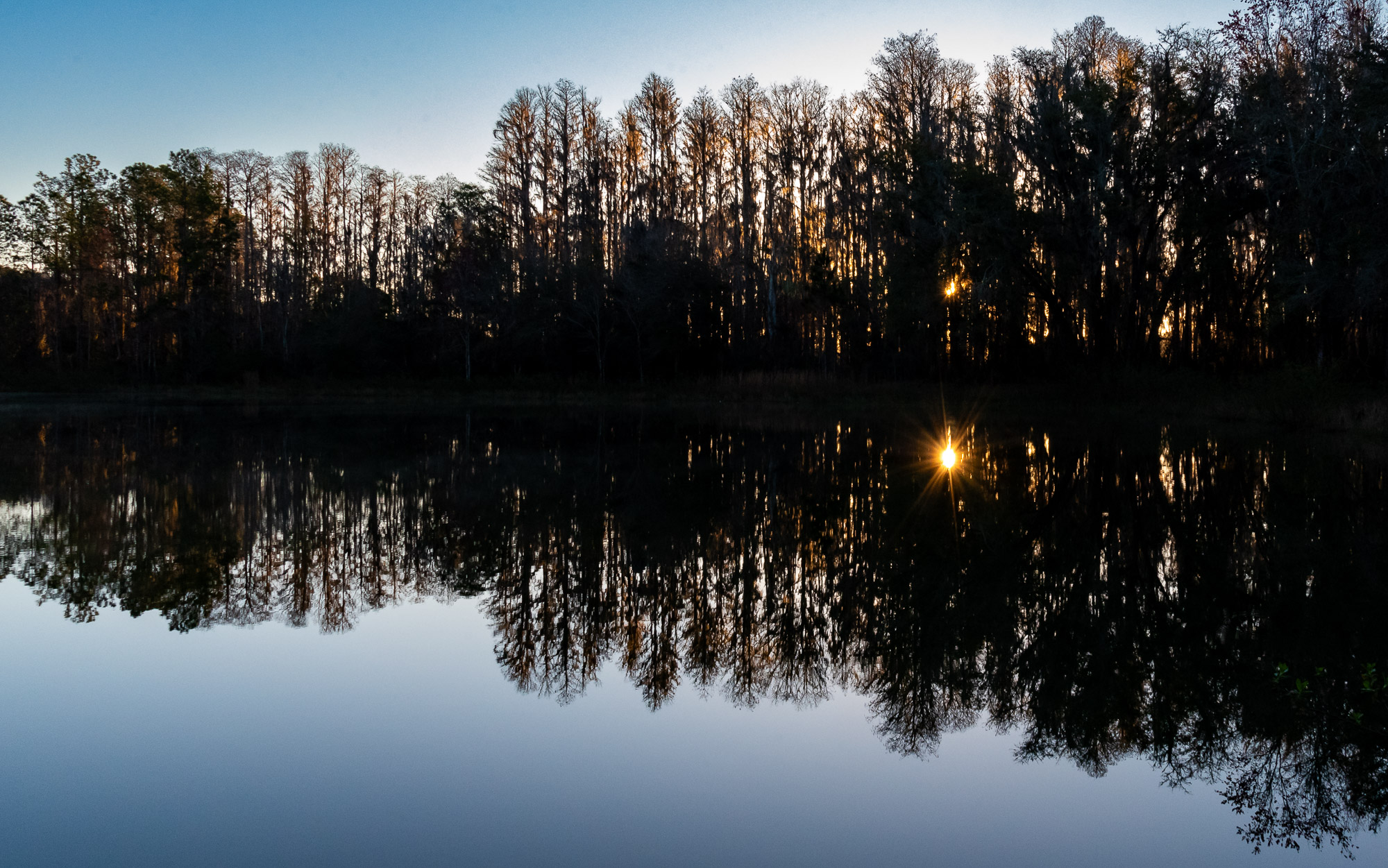
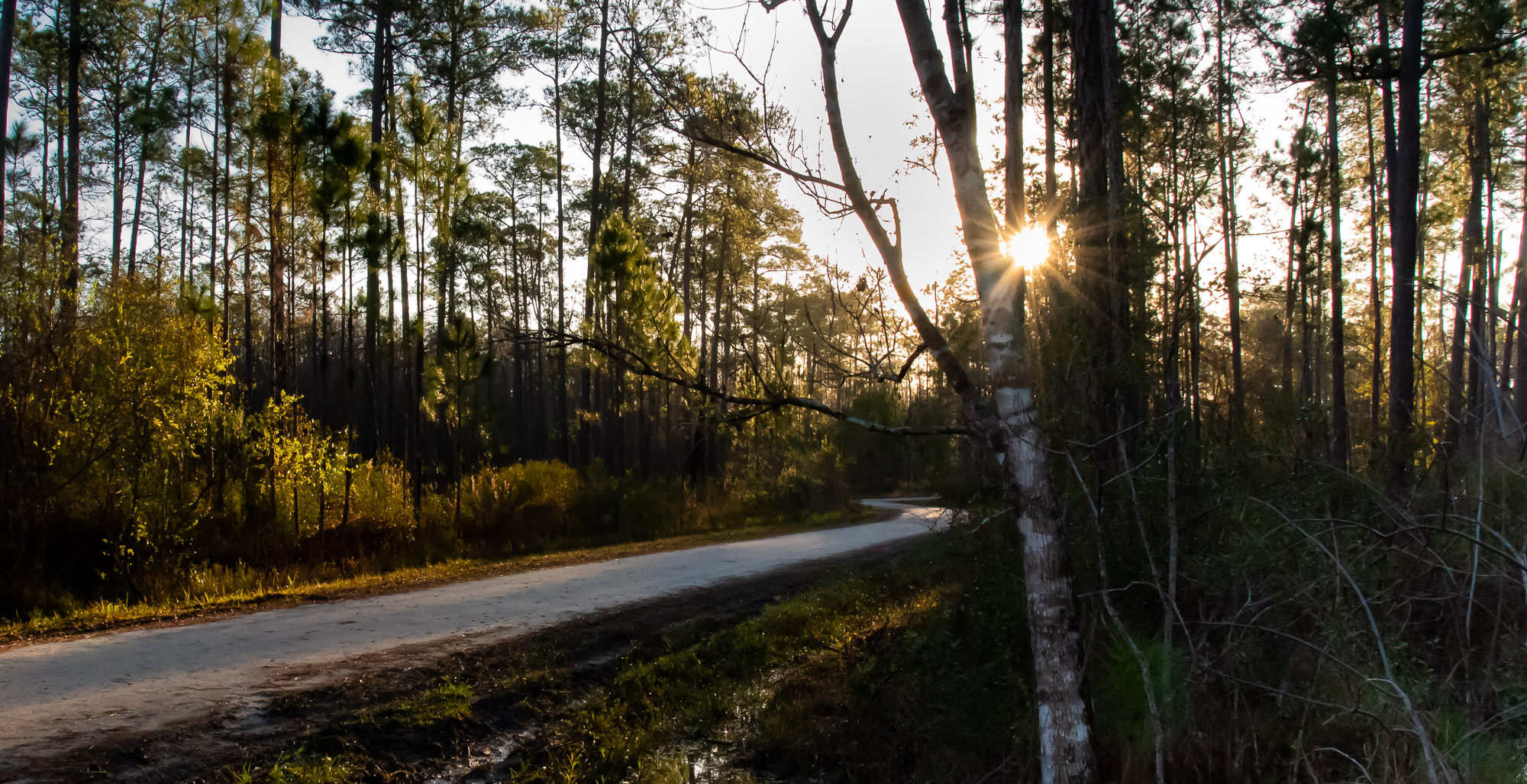
One of the better-looking logging roads as we head into the sun.
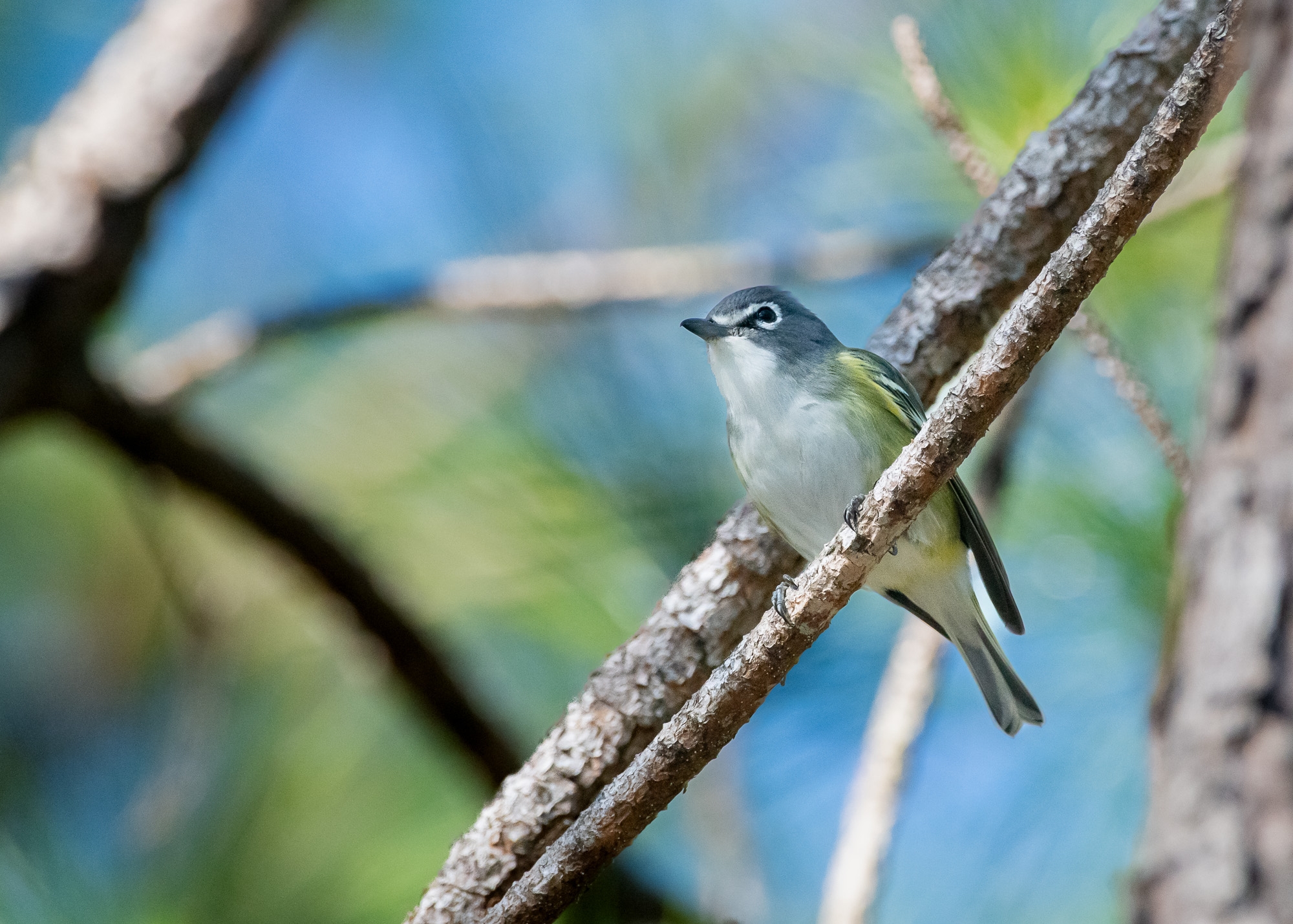
The Blue-headed Vireo is a winter visitor and will head north to breed by the end of March.
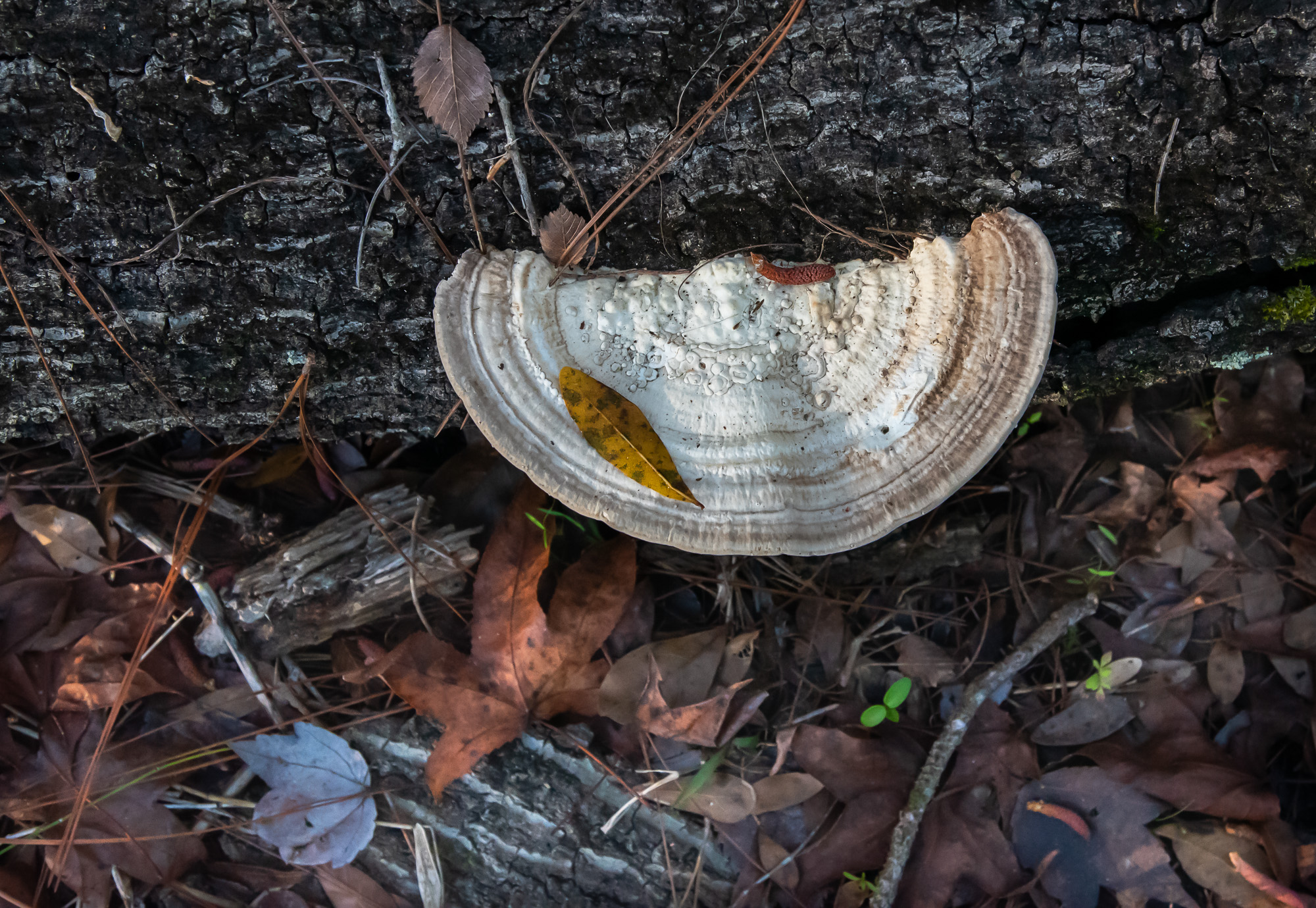
One might expect to find a lot of fungi in such a wet environment. One would be correct. This one is a large shelf fungus known as Turkey-Tail (Trametes versicolor).
Throughout the fall and winter months, some wet places have an abundance of bright yellow flowers known as Smallfruit Beggarticks (Bidens mitis).

Small. Squeaky. Feisty. In Florida, the Brown-headed Nuthatch begins breeding as early as the second week of February. Hey! That’s now!

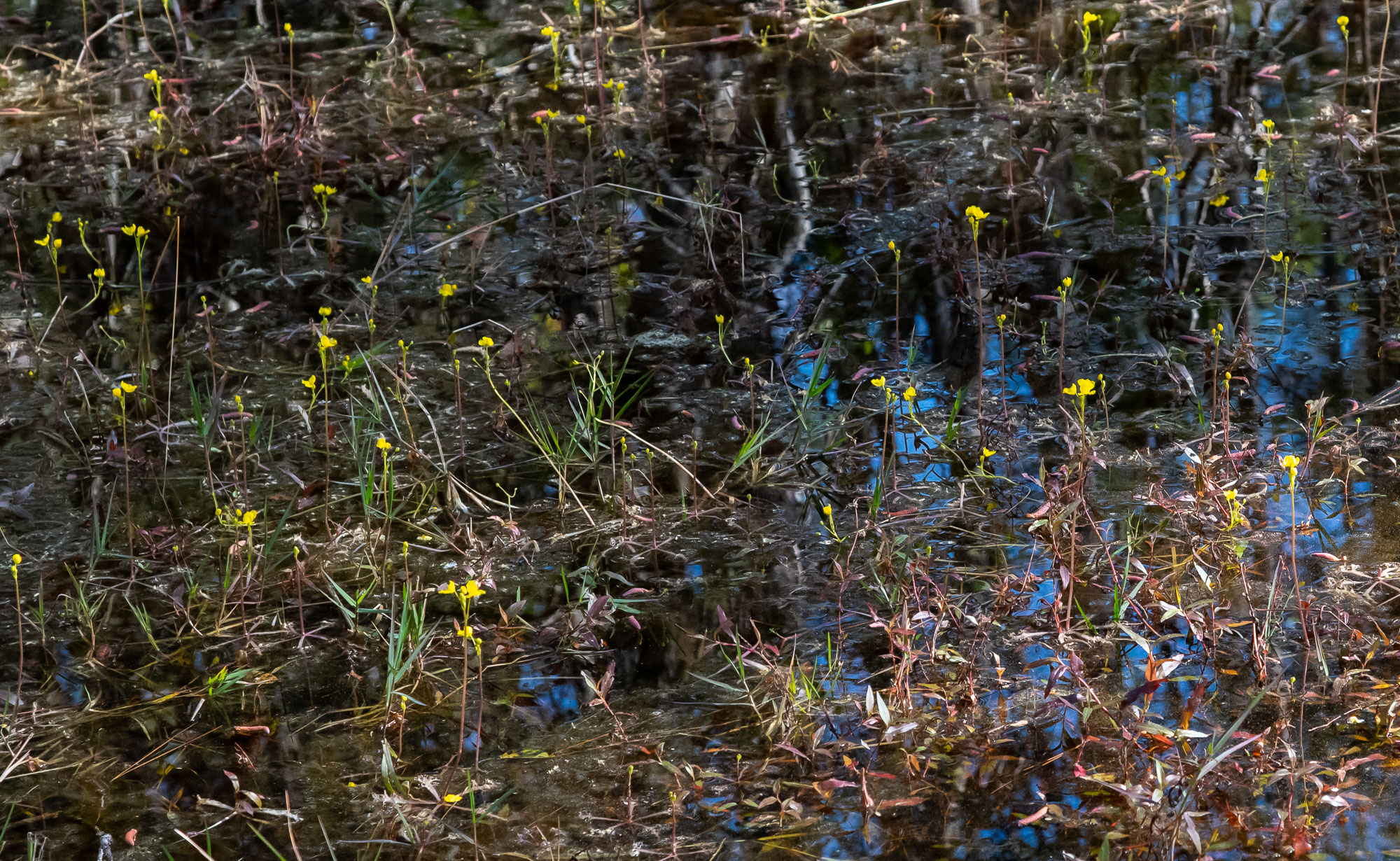
A fascinating family of plants, bladderworts are carnivorous and attractive. Interesting combination. We are just beginning to see one of their local representatives, the Floating Bladderwort (Utricularia inflata), appear on the surface of many pools in the swamp.

Small, plain, quick. The Blue-gray Gnatcatcher may not sport bright colors, but they sure are fun to watch as they vacuum up bugs from every branch and leaf. This species breeds here but there are also many migrants out and about.

A couple of areas go through oak hammocks and almost form a “canopy road”.

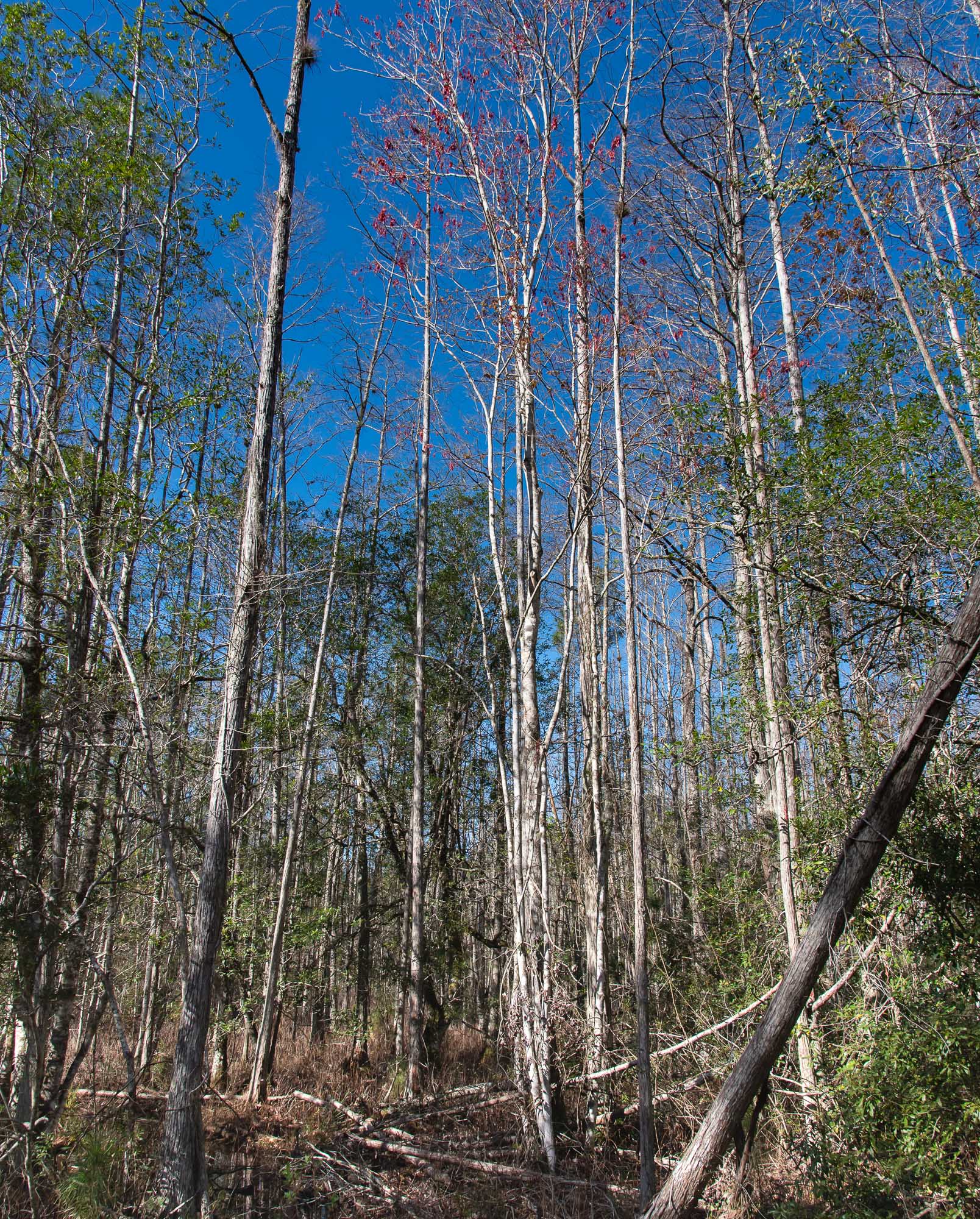
Bits of red atop tall trees signal our Red Maple (Acer rubrum) trees are about to burst into bloom.
Another of our migratory visitors, the Yellow-rumped Warbler, arrives and leaves later than most other species. That’s okay with us. We think they’re adorable.

Some of the roadside ditches had several patches of bright yellow Blackeyed Susan (Rudbeckia hirta) this morning.

It seemed as if every time we stopped, we heard the calls of the Carolina Chickadee. The calendar may say one thing. These little birds sing a different tune.

Our winter day in the Green Swamp turned out to be composed of many different colors. We hope your winter has not been too severe. No matter what the calendar says, Nature may let you know it’s okay to celebrate Spring whenever you’re ready.
Enjoy your search for a natural place and come back for a visit!
 Our Natural Places