(Header image: Peace River swamp.)
“The Butcher Bird’s been busy!” This was the third insect Gini had spotted stuck on a fence barb. The Butcher Bird is a nickname for members of the shrike family, in our case it’s the Loggerhead Shrike. They will capture a bug and impale it on a fence barb or thorn to make it easier for them to eat. It is not unusual to find caches of insect carcasses the birds have stored in the crevice of a tree for later.
We were on our way home after spending the morning wandering around in the dark. Well, okay, not actually dark, but pretty dim. Mosaic Peace River Park is a few miles south of the city of Bartow in west-central Florida and about a 40 minute drive from the house.
The Peace River flows south from Lake Hancock between Bartow and Lakeland for over 100 miles to Port Charlotte where it empties into the Gulf of Mexico. Along the way are several places for access where one can launch a boat or canoe as well as a few parks for picnicking, hiking and some pretty good birding.
Our current location at the Mosaic Peace River Park offers a small network of boardwalks crisscrossing a swampy area which leads to the banks of the Peace River. The dense canopy of mostly cypress trees blocks much of the sunlight resulting in that “dark swamp” environment. It also means some pretty low light for attempting photography.
This park was closed for almost two years due to damage from Hurricane Irma in September 2017. The boardwalk system had to be completely replaced. They did a good job and it’s nice to be back.
Typical of Florida’s swamps, this one has plenty of what one would expect to find: alligators, snakes, turtles, raccoons, opossums, mosquitoes, owls – did I mention mosquitoes? At this time of year, we are also blessed with a few seasonal visitors. Fall migration brings a host of warblers and other passerines who take advantage of the vast numbers of insects which call the swamp home. Actually spotting these small hunters within the subdued light and in the tops of dense 60-foot tall trees is another matter. Getting an acceptable photograph is – challenging.
Although we didn’t find an unusually large number of migratory travelers, we did observe a few and that made the day better. As often happens, we also enjoyed some of the swamp’s special treats and like to think we may be the only ones to have been fortunate enough to see a mushroom tree, a phantom of the swamp, a leaf suspended in mid-air or a tiny dancing damsel. Our mysterious swamps are amazing!
Watch your footing! The damp leaves on the boardwalk make for slippery walking.

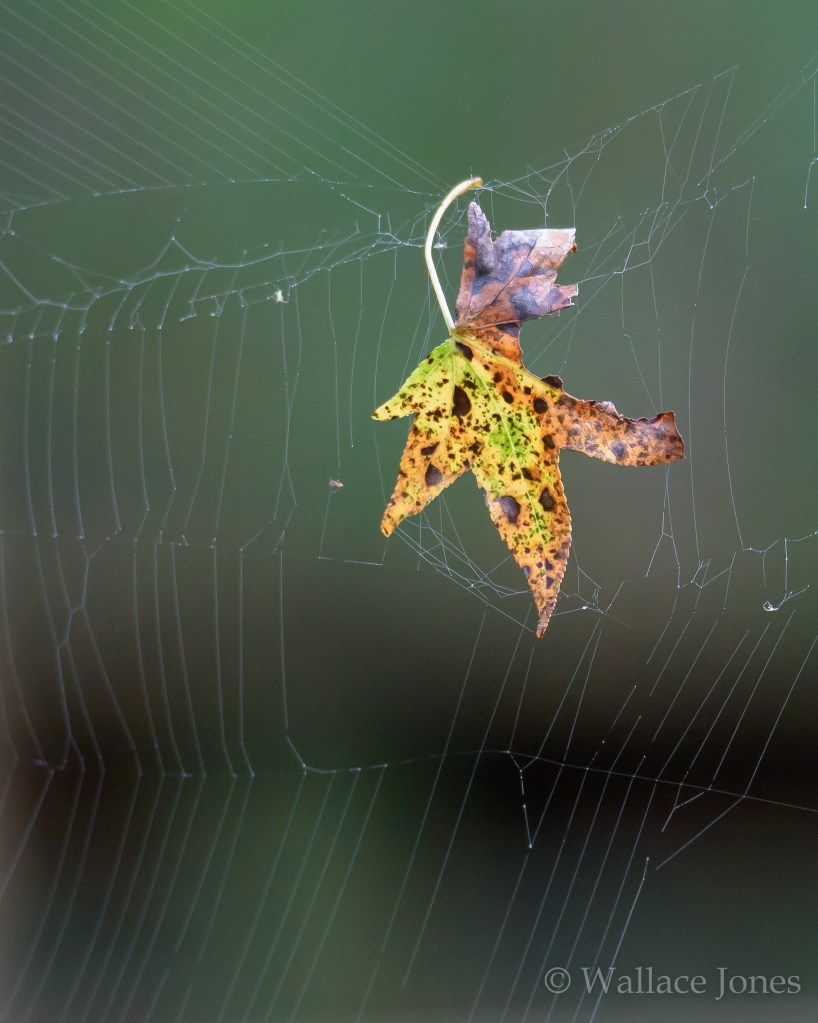
A small bit of autumn color has been captured by a spider’s web and held for us to enjoy.
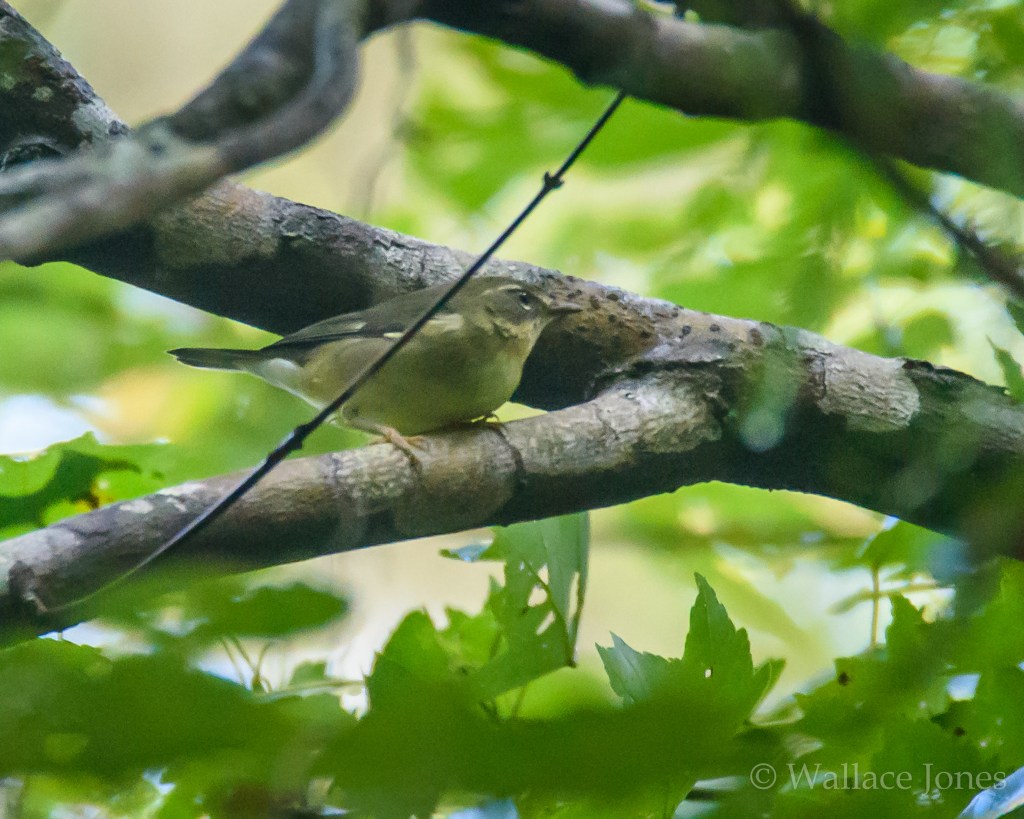
Sexual dimorphism is common in the natural world. Here, the Black-throated Blue Warbler male and female provide an example.

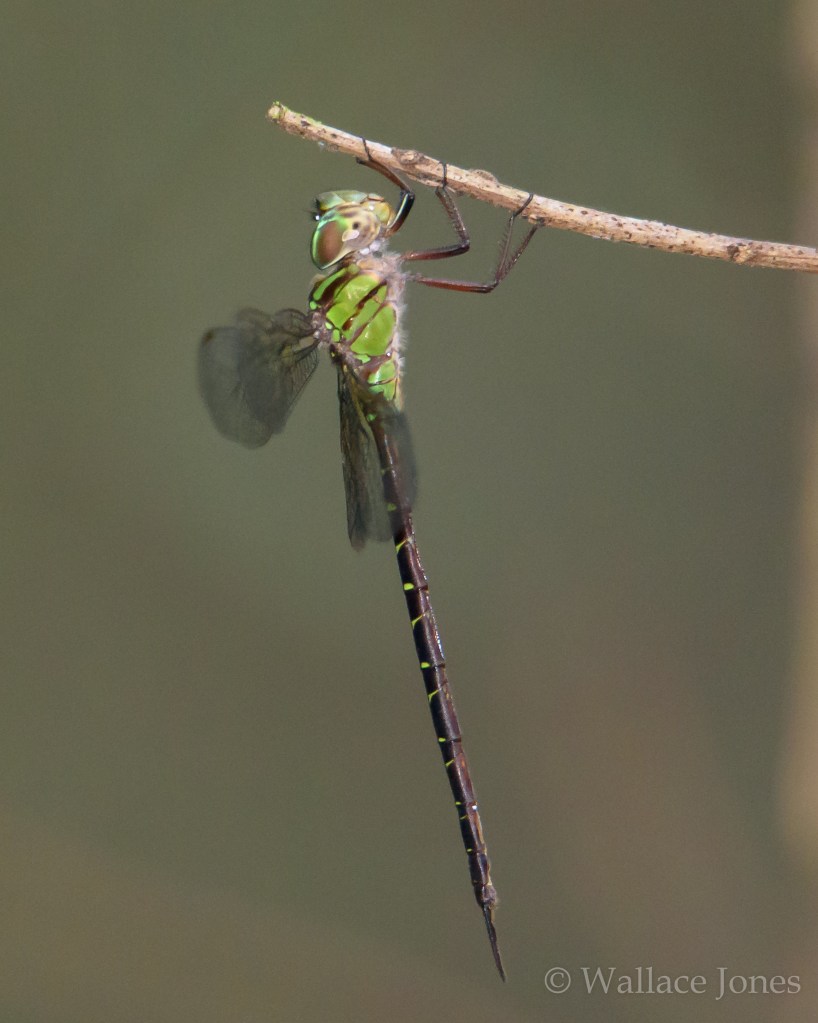
One of the larger members of the dragonfly family, a Phantom Darner (Triacanthagyna trifida), hangs vertically while waiting for his next meal to arrive. (I pointed out plenty of mosquitoes buzzing in front of my face, but he didn’t budge.)
Fairly non-descript except for a striped head, a Worm-eating Warbler specializes in searching dead leaf clusters for the prize inside. They especially like grubs and caterpillars, thus the name.

Who needs splashy color? A Black-and-White Warbler makes just two shades a thing of beauty.

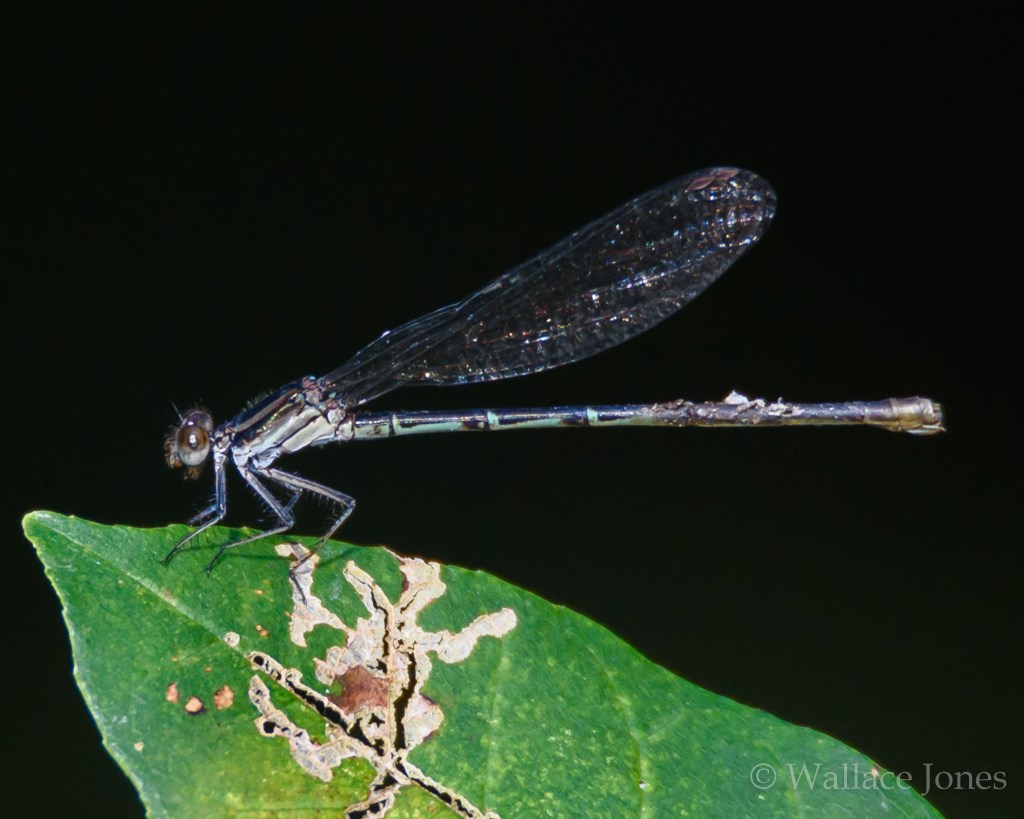
I think this small damselfly is a Blue-ringed Dancer (Argia sedula) and would be appreciative of anyone who could offer an opinion. It appears to be either a female or immature male. We found five of them but couldn’t locate an adult male.
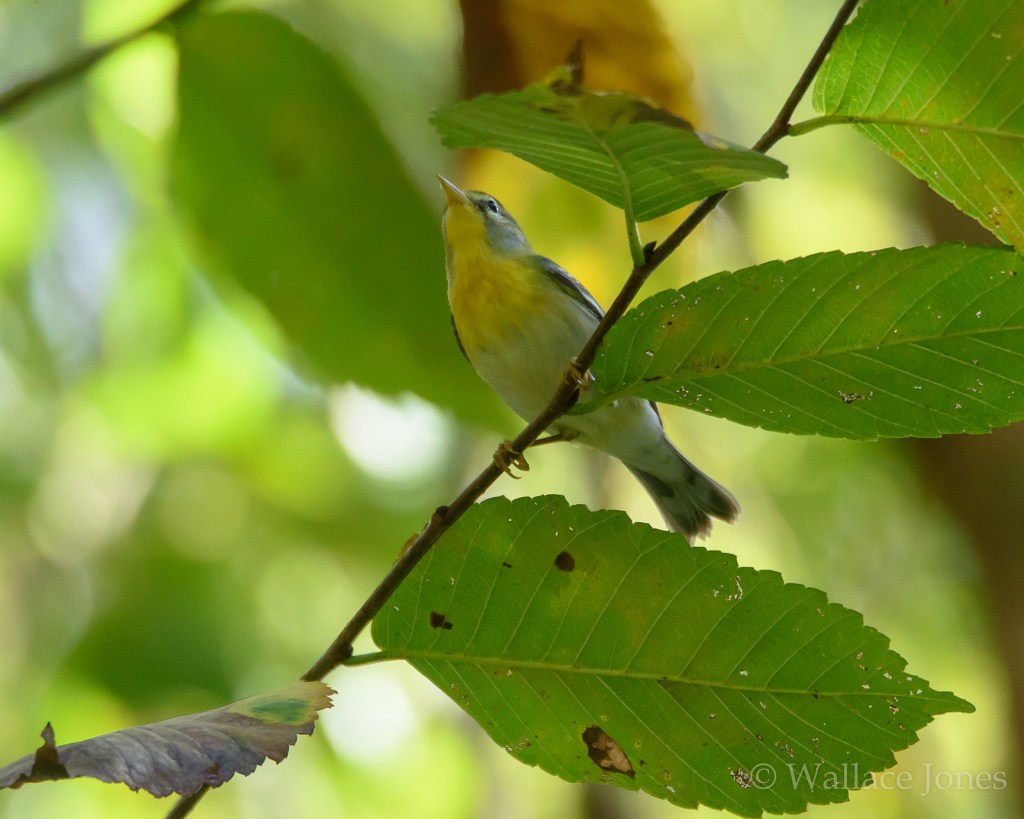
Gini’s superior hearing detected several Northern Parula warblers long before we ever saw one. Heard or seen – they are gorgeous!
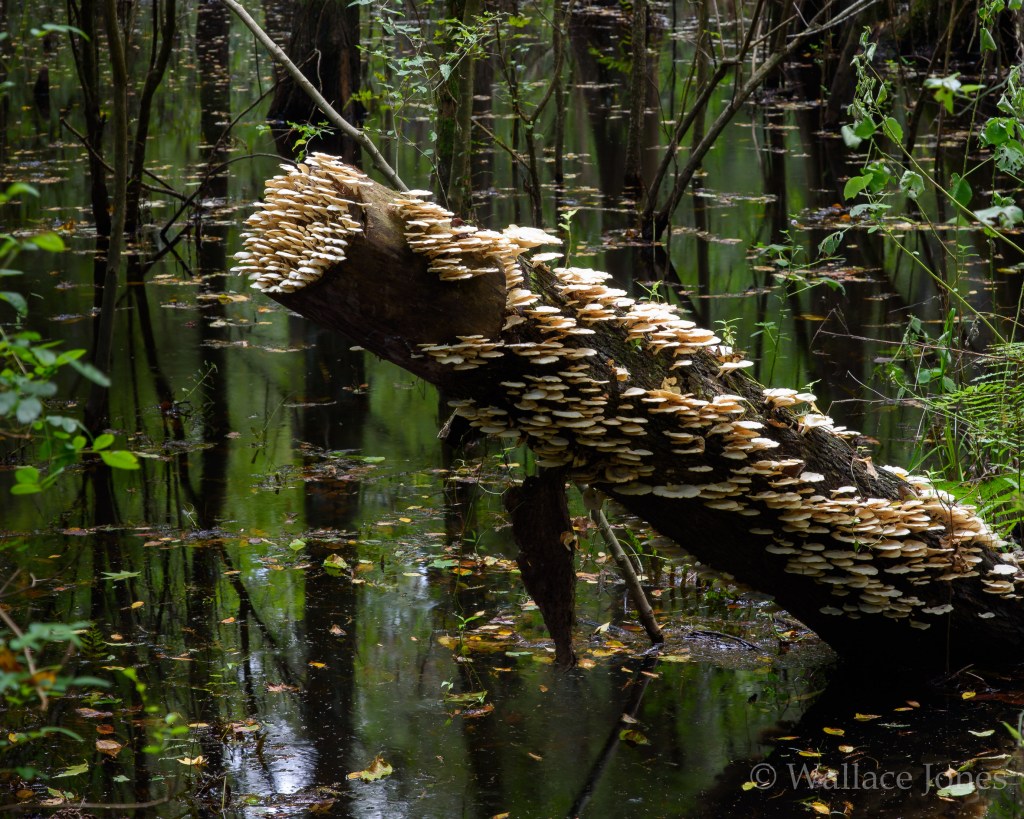
During cleanup from Hurricane Irma, many trees were removed and some were trimmed of broken branches. This large section of remaining trunk has developed into an impressive mushroom farm.

A common dragon for our area, a male Eastern Pondhawk (Erythemis simplicicollis) looks good in his powdery blue coat against the green of a cypress branch.

Flashing his bright orange wing and tail patches to frighten insects from hiding places, the male American Redstart really brightened up the place!

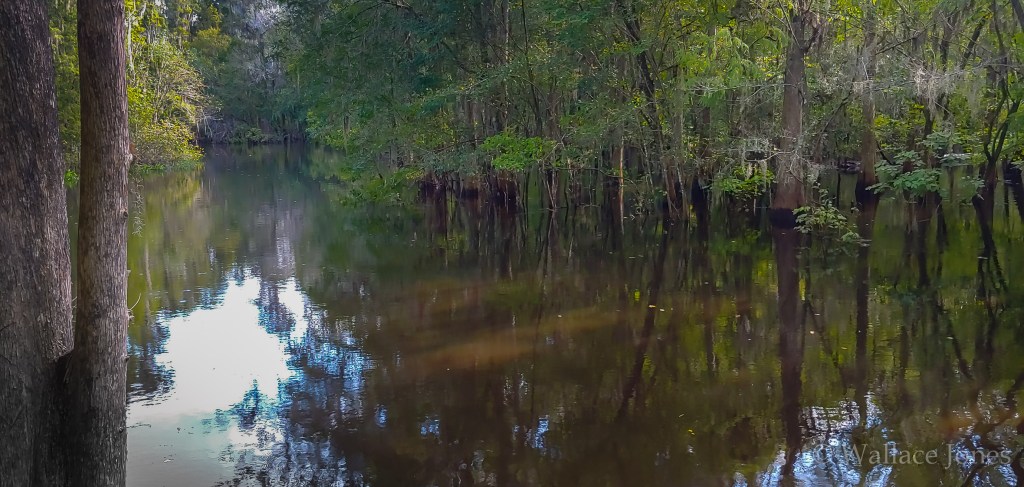
The Peace River. It is still at near-flood stage after a bit higher than normal rainfall during our wet season.
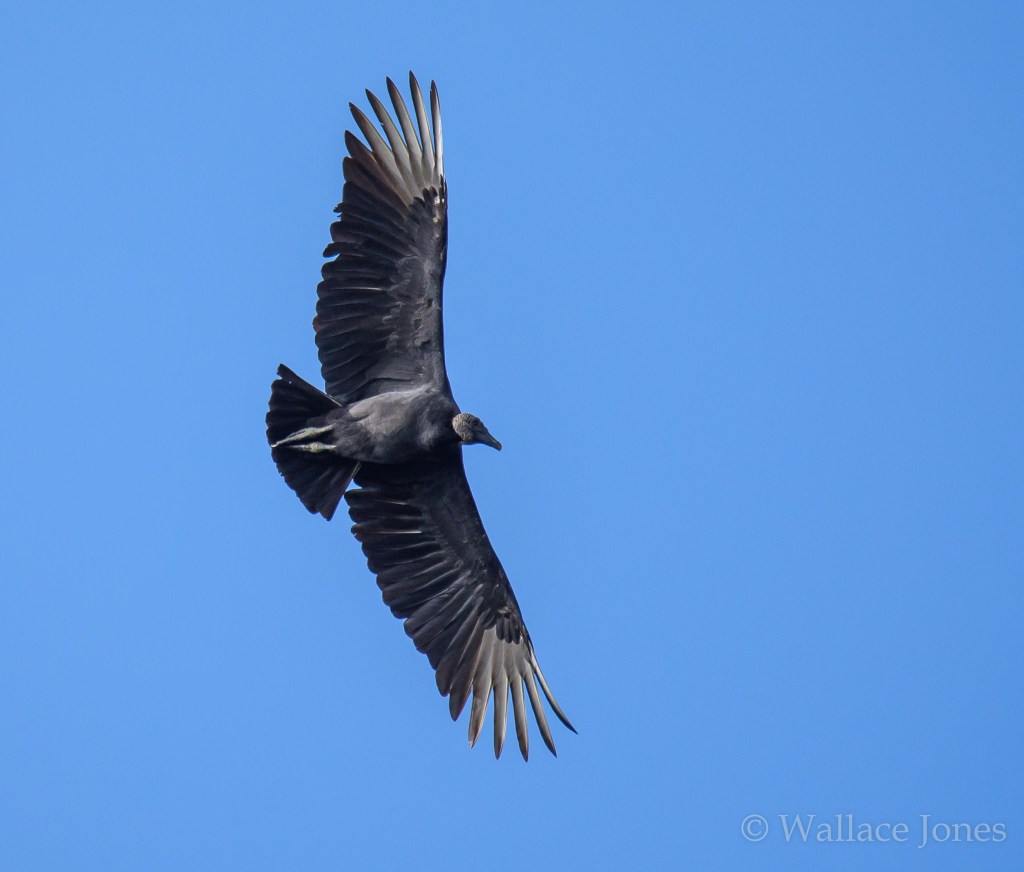
Soaring above the river, an Anhinga and Black Vulture navigate southward as they each search for somewhat different prey.

Meanwhile, back at the parking lot. Returning to the car, we were greeted by a female Ruby-throated Hummingbird.

On the way home, Gini saw what looks like a species of Sphinx moth left on a barbed-wire fence by a Loggerhead Shrike.

Not far from the park, a pair of male Wild Turkey skulked through the grass looking for lunch.

Time for us turkeys to do the same!
It was a great day under the cover of the cypress trees, leisurely peering into the dark waters of the swamp from the boardwalk. Enjoying the sights and sounds of Nature unique to the habitat is the ultimate form of relaxation therapy. Highly recommended.
We hope you enjoy your search for a natural place and come back for a visit!
Header Image: Cloudless Sulphur (Phoebis sennae)
A definition of a “timeline” might be: a sequence of related events arranged in chronological order and displayed along a line.
Therefore, “Nature’s Timeline” could be as simple as:
Spring > Summer > Autumn > Winter
Wash. Rinse. Repeat.
Seasonal change is caused by the axial tilt of the Earth, which creates climatic differences due to greater or lesser exposure to solar radiation. —-Reference.com, Characteristics of the Four Seasons
On the other hand, when we are exploring within Nature’s milieu, and feel the first cool breeze of fall on our cheeks, hear the crunch of fallen leaves as we walk a path, see the brilliant orange patches flashing on the otherwise black feathers of an American Redstart – we realize Nature has no “timeline”. Rather, there is a rhythm which produces infinite possibilities throughout the year, every year.
Experiencing those infinite possibilities is what keeps us returning to the outdoors.
“Live each season as it passes; breathe the air, drink the drink, taste the fruit, and resign yourself to the influences of each.” — Henry David Thoreau
(Note: The visit described herein took place in early September.)
There is a reason we keep visiting some places more often than others. For us, it is usually some combination of convenience and potential. Colt Creek State Park is such a place. We can be there in 20 minutes and the diverse habitat offers good opportunities for birding as well as enjoying flora, insects and mammals. An added benefit when we go on a weekday being the park is seldom crowded.
Gini packed our breakfast staples of granola and fruit which we were enjoying as we looked out across Mac Lake. Another meal interrupted. A flock of Barn Swallows appeared and began feeding over the lake, occasionally dipping their bills into the water for a drink. Photographing these sleek speedsters is a challenge for me. Bonus bird! Among the swallows was a Purple Martin, all dark and a bit larger than his cousins.
The morning went by too fast. Lots of dragonflies and butterflies begged for portraits. The ascending notes of Northern Parula Warblers, clear calls of the Tufted Titmouse gang and non-stop branch-hopping of dozens of Blue-gray Gnatcatchers were all signs that fall migration was in progress. As if signaling a farewell to summer, a soaring Swallow-tailed Kite swooped low above our heads. These handsome raptors breed in Florida and migrate to South America for the winter. This bird is a couple of weeks late as we typically see none after the third week of August.
Change was in the air. Florida doesn’t normally have much of a distinction between seasons, but the subtle notes in Nature’s rhythmic timeline were there and we look forward to the exciting prospects which lay ahead!
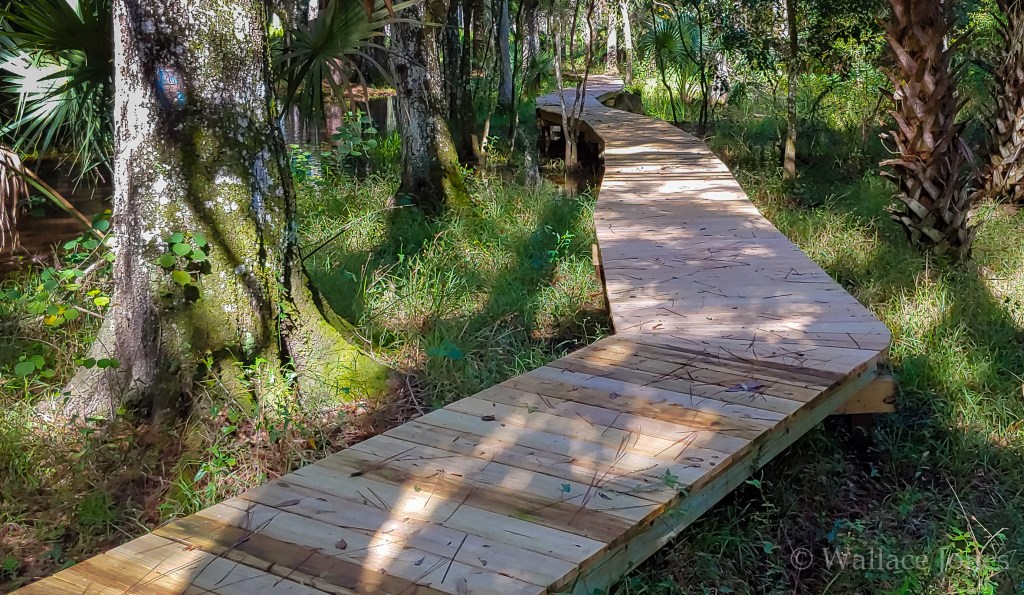
A new boardwalk was recently added over a small wetland area. No wet feet today!
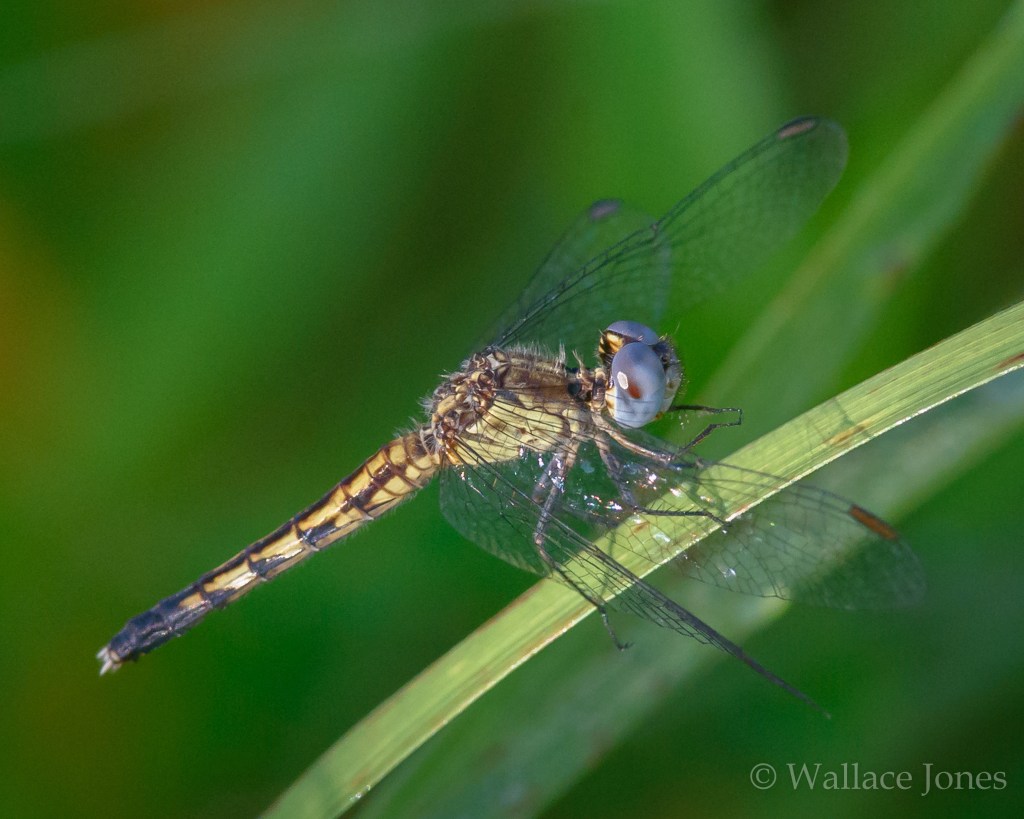
There are not many dragonflies this small (1 inch/26 mm) which helps in identifying the Little Blue Dragonlet (Erythrodiplax minuscula). Adult males are powdery blue.
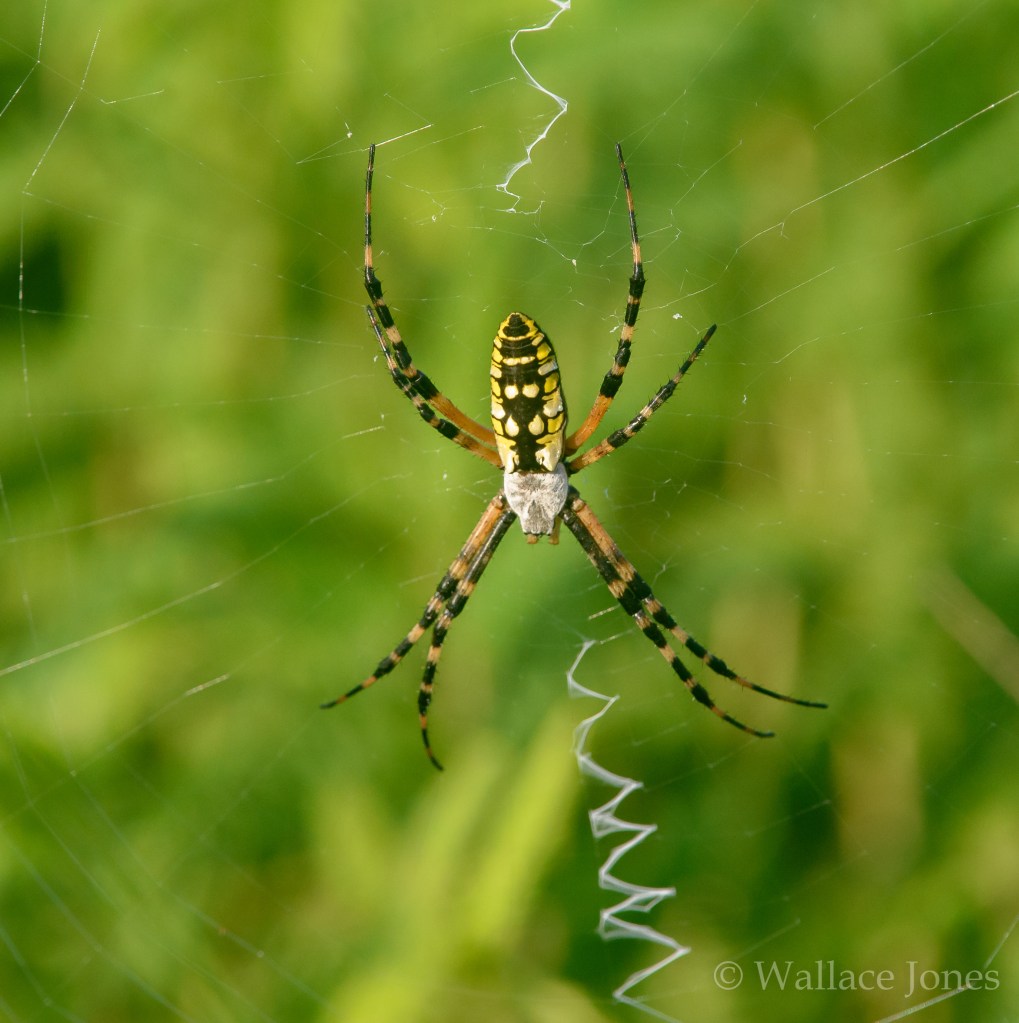
Some spider species can be recognized by their webs. The zig-zag “zipper” in the center of this large web identifies the owner as the beautiful Black and Yellow Argiope (Argiope aurantia).
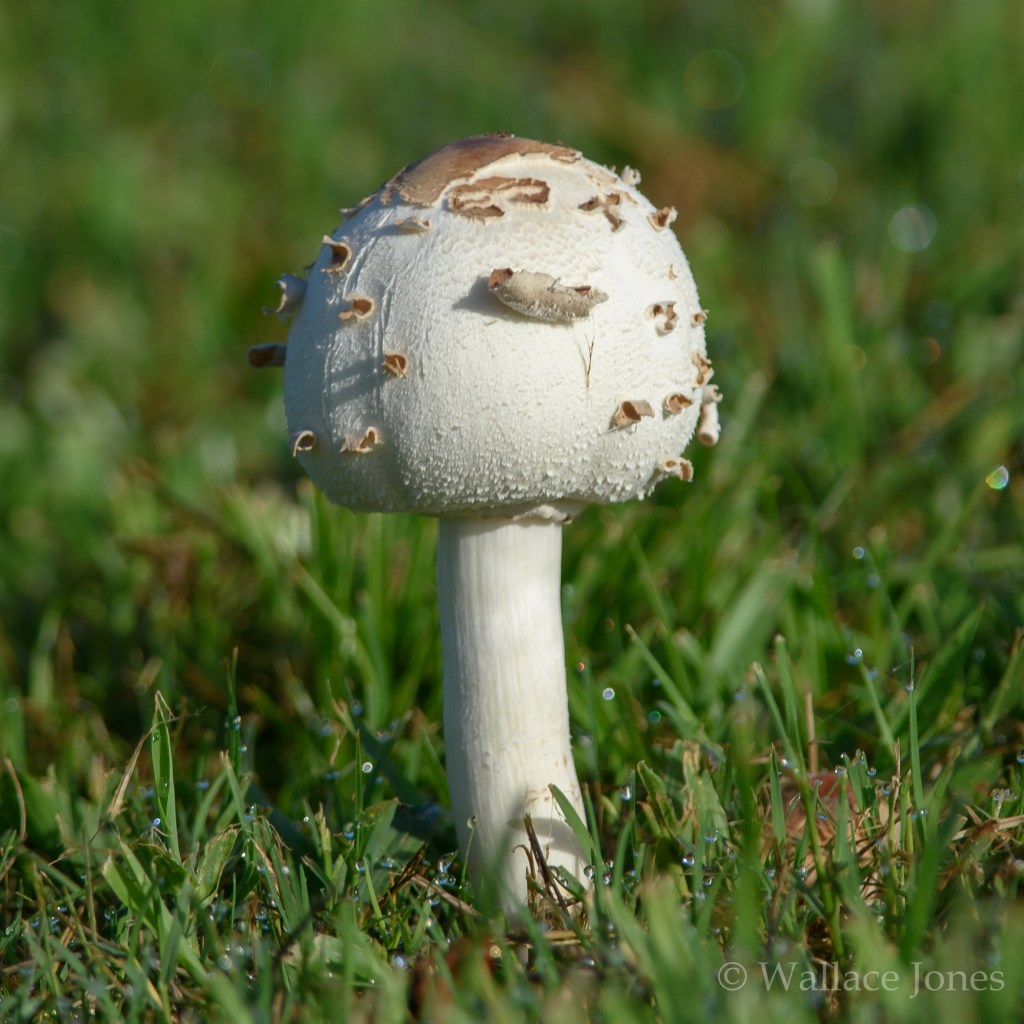
At first, this little mushroom looked a bit sad. But as I knelt down to take his picture, I found out he was really (wait for it) —- a fungi!
(sorry)
Purple Martins are North America’s largest swallows. This one joined a group of Barn Swallows as they swooped over Mac Lake snapping up flying insects.
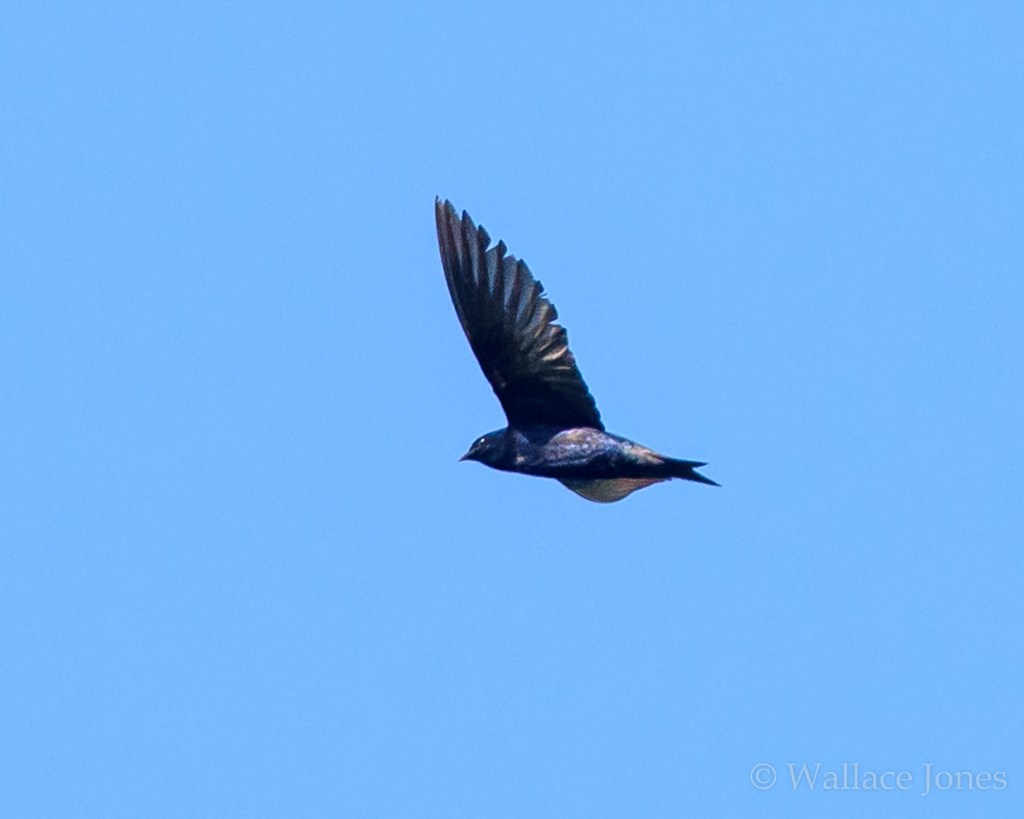
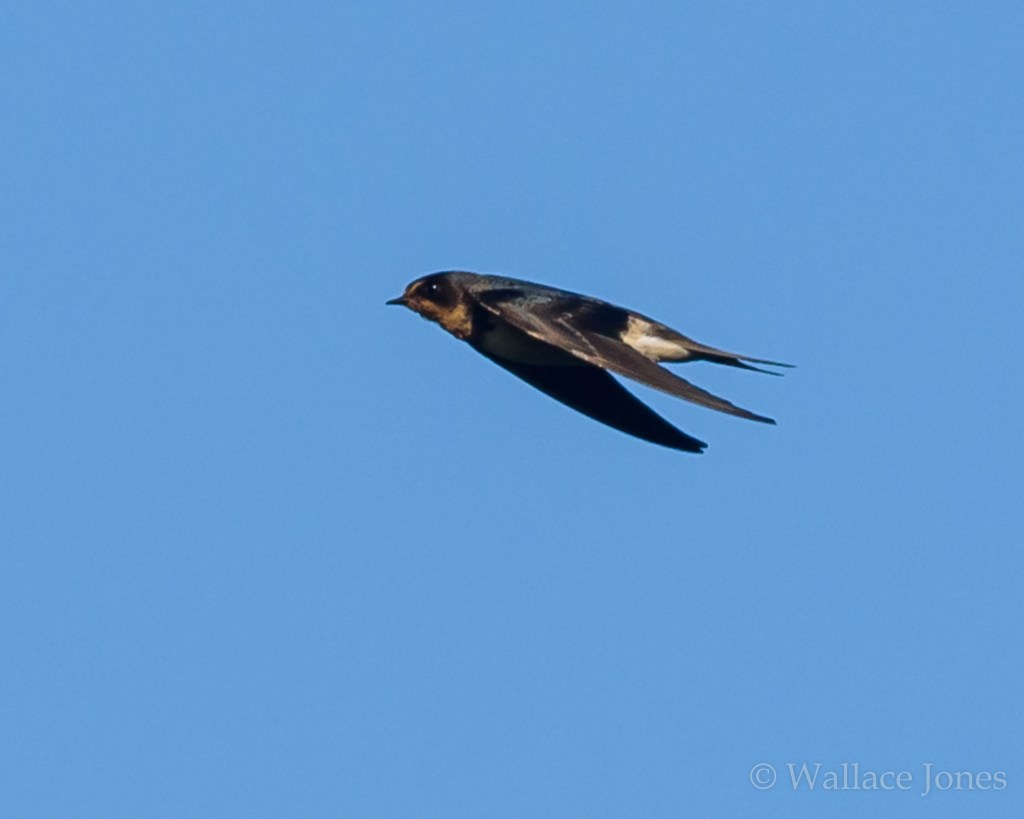
Barn Swallows are beginning to appear in large flocks as they begin their annual migration. It’s fun to watch them touch the surface of the water for a drink as they twist and turn following clouds of bugs.
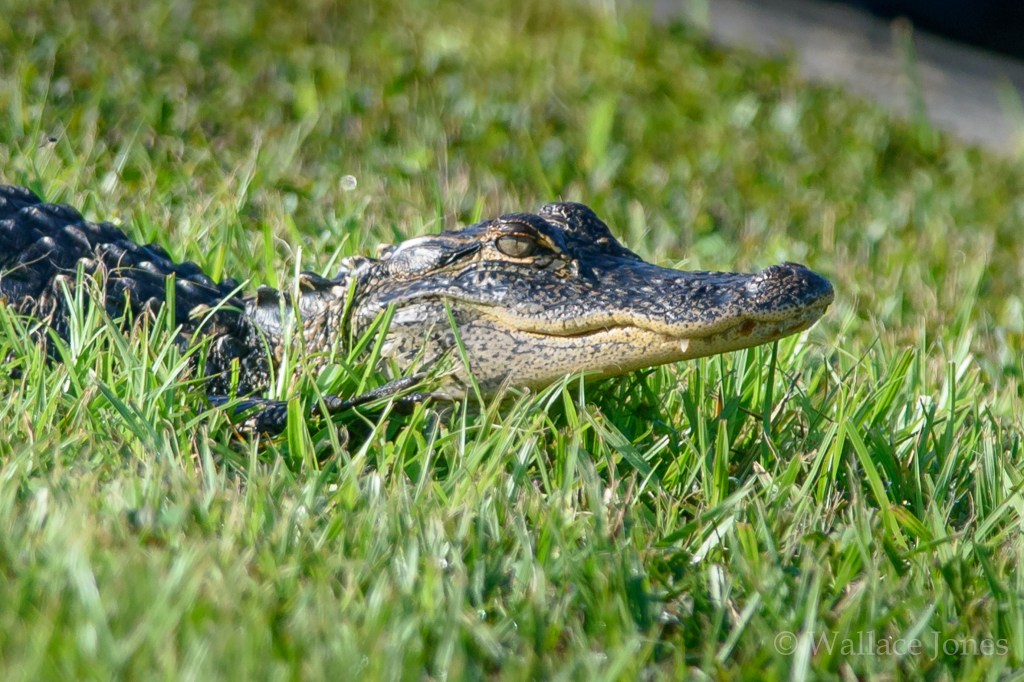
A young American Alligator has already learned humans don’t represent a threat. This is a very dangerous trait. If he ever leaves the park, he may discover humans with different attitudes. Humans who don’t understand wild animals are likely to approach too close for a photograph or, worse, toss the animal a snack. Injury to both parties could result. (To be clear, we were some distance from this alligator and the photo was taken with a 600mm telephoto lens and then cropped further so it may seem we were much closer.)
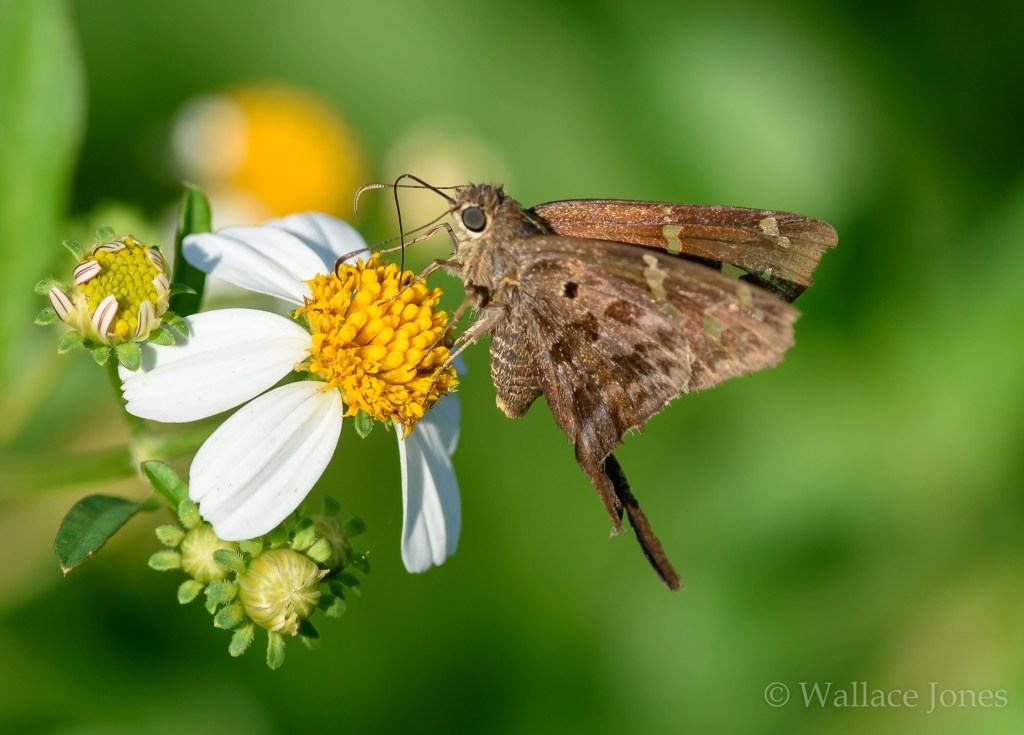
Skippers get their name from how they appear to “skip” in flight from one flower to another. Worldwide, there are more than 3,000 species of skippers! We took a picture of just a few today. A Dorantes Longtail (Urbanus dorantes) has twin “tails” for which it is named. The left “tail” has been removed, likely by a predator.
Another subtle sign of Nature’s Timeline. The Spotted Orbweaver (Neoscona domiciliorum) is usually nocturnal, but as fall begins the female becomes active during daytime.

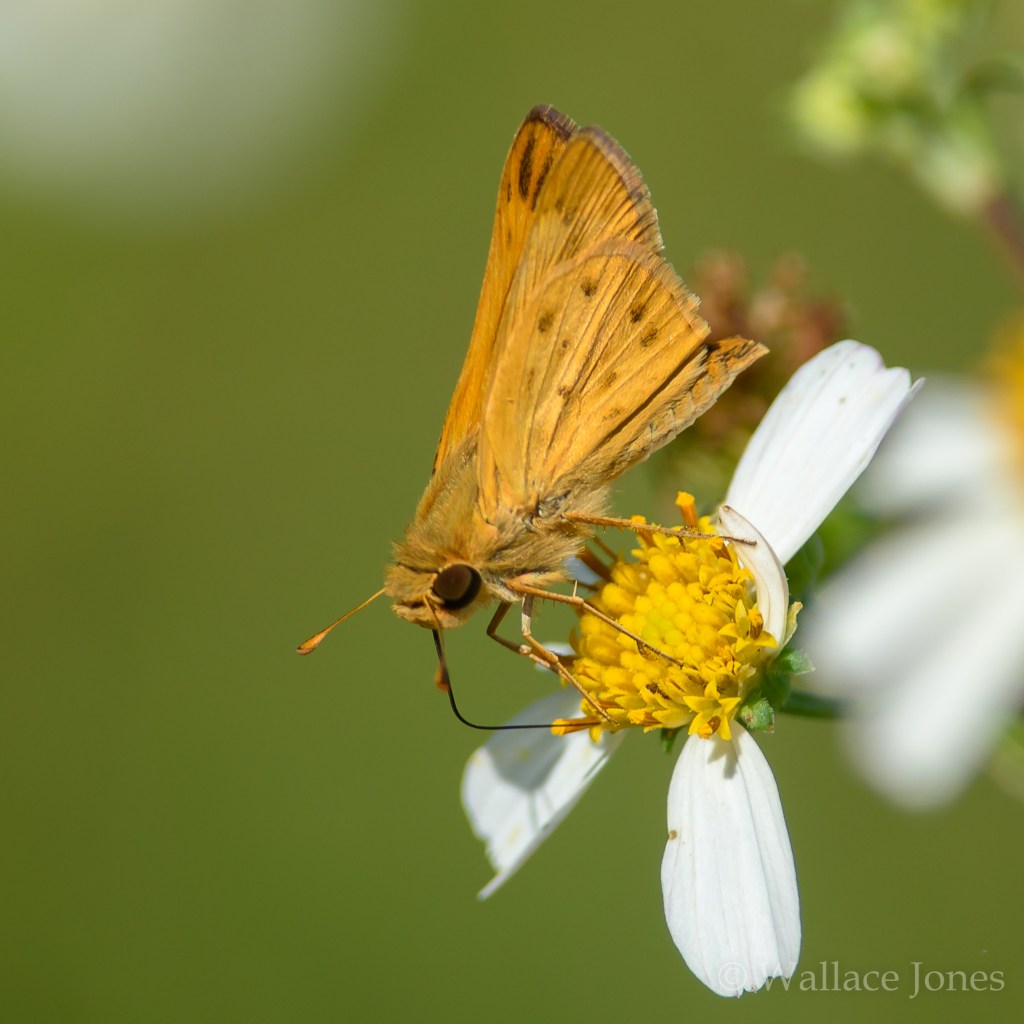
One of the smaller members of the vast skipper family of butterflies, the Fiery Skipper (Hylephila phyleus) can be identified by the small scattered spots on its hindwing.
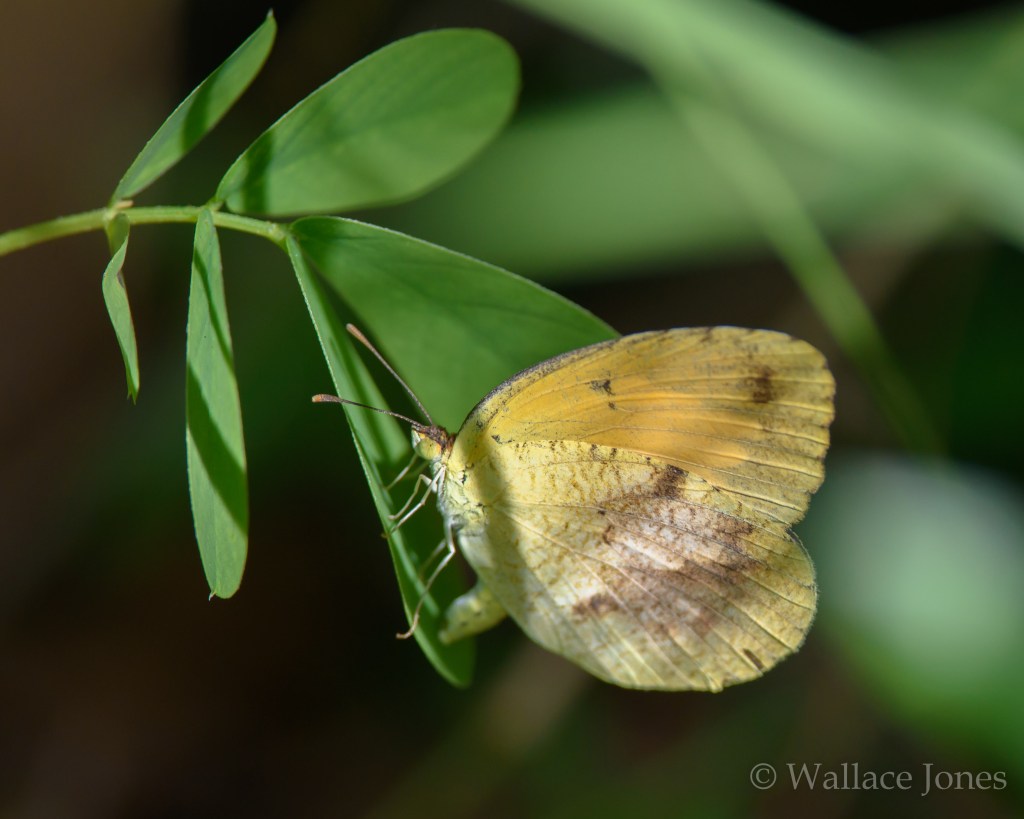
As with most things in nature, butterflies don’t care what WE would like and seldom pose in the manner WE would like for a glorious photograph. Fortunately, specimens such as this Sleepy Orange (Eurema nicippe) are glorious whether or not some human is around to record it. Just having observed it is enough.
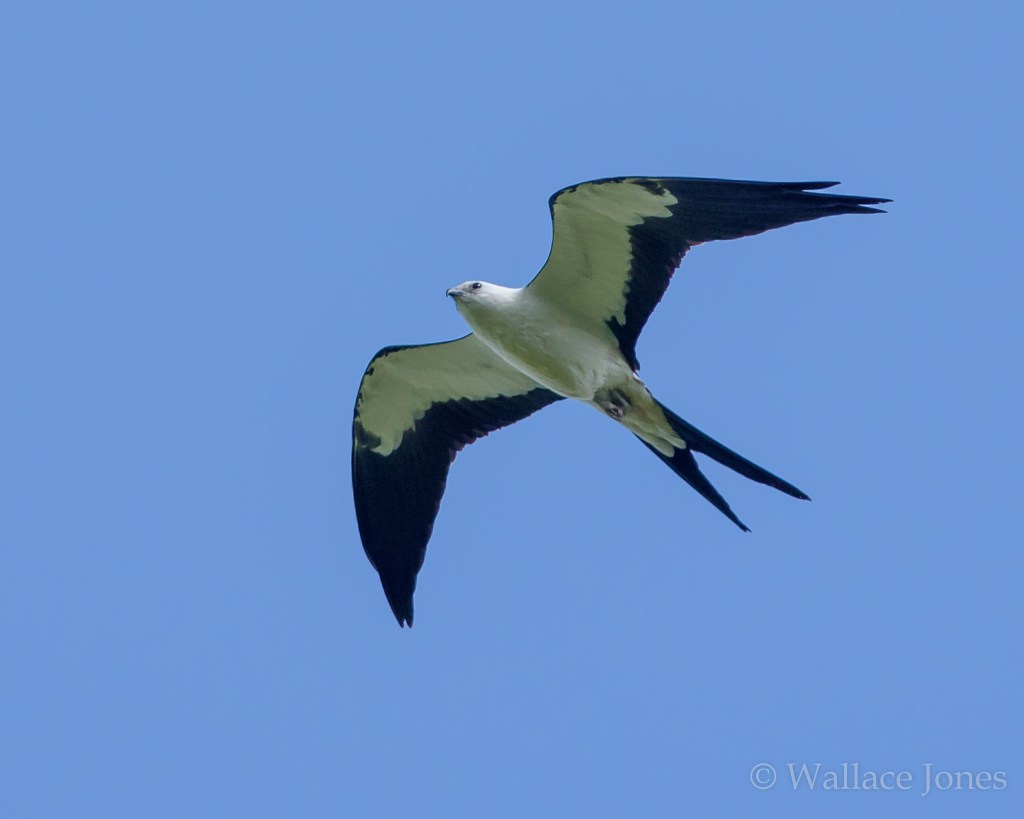
We’re not sure why this Swallow-tailed Kite is still here. The rest of his clan left a couple of weeks ago for South America. Quite unusual to see one after August.
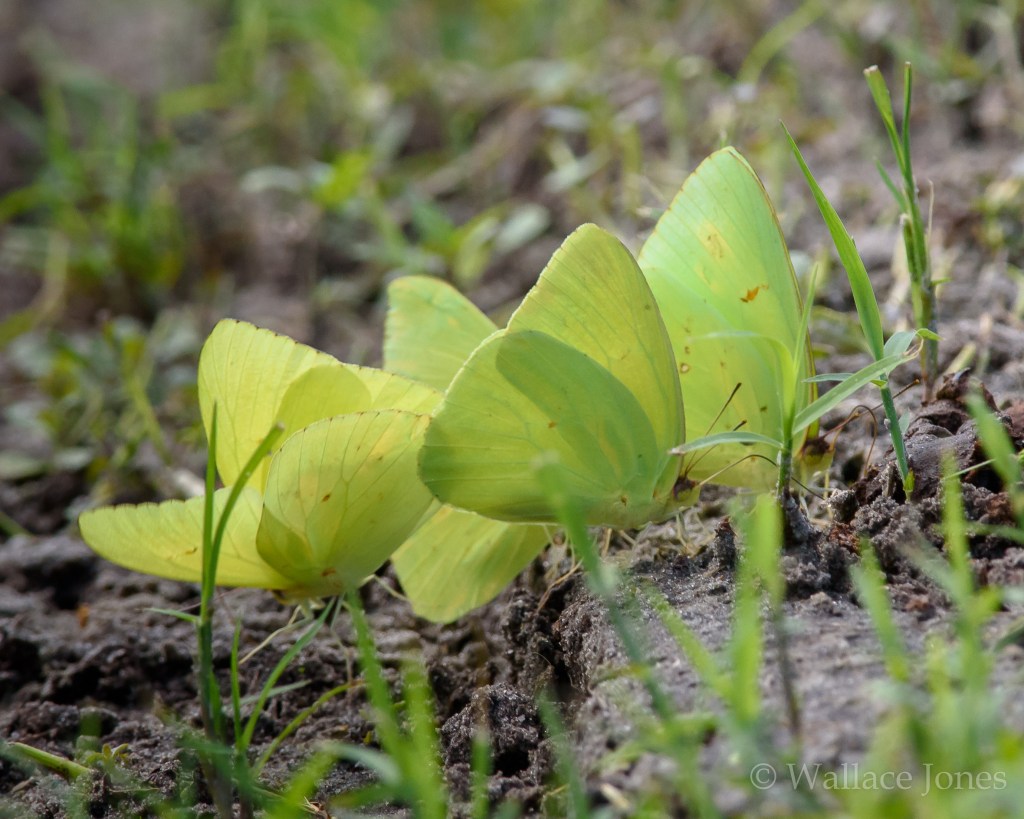
Butterflies obtain nutrients from a variety of sources, including the nectar of flowers. They occasionally need extra salts and minerals which they get from damp soil (also known as “mud”). Once in awhile, large numbers of butterflies can be seen “puddling” as they gather around a rich source of what they need. This group is made up of Cloudless Sulphur (Phoebis sennae) butterflies.
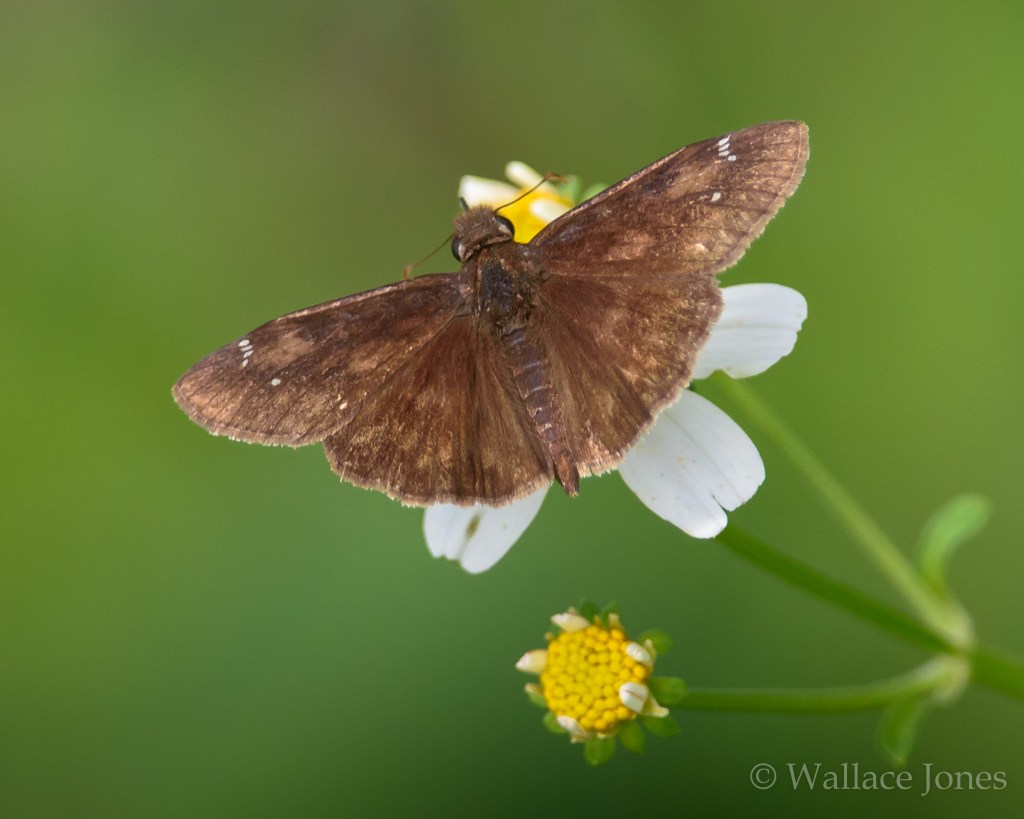
Even an all-dark butterfly is beautiful, with subtle markings easily overlooked in the field since they simply don’t care if we want them to hold still or not. This is Horace’s Duskywing (Erynnis horatius).
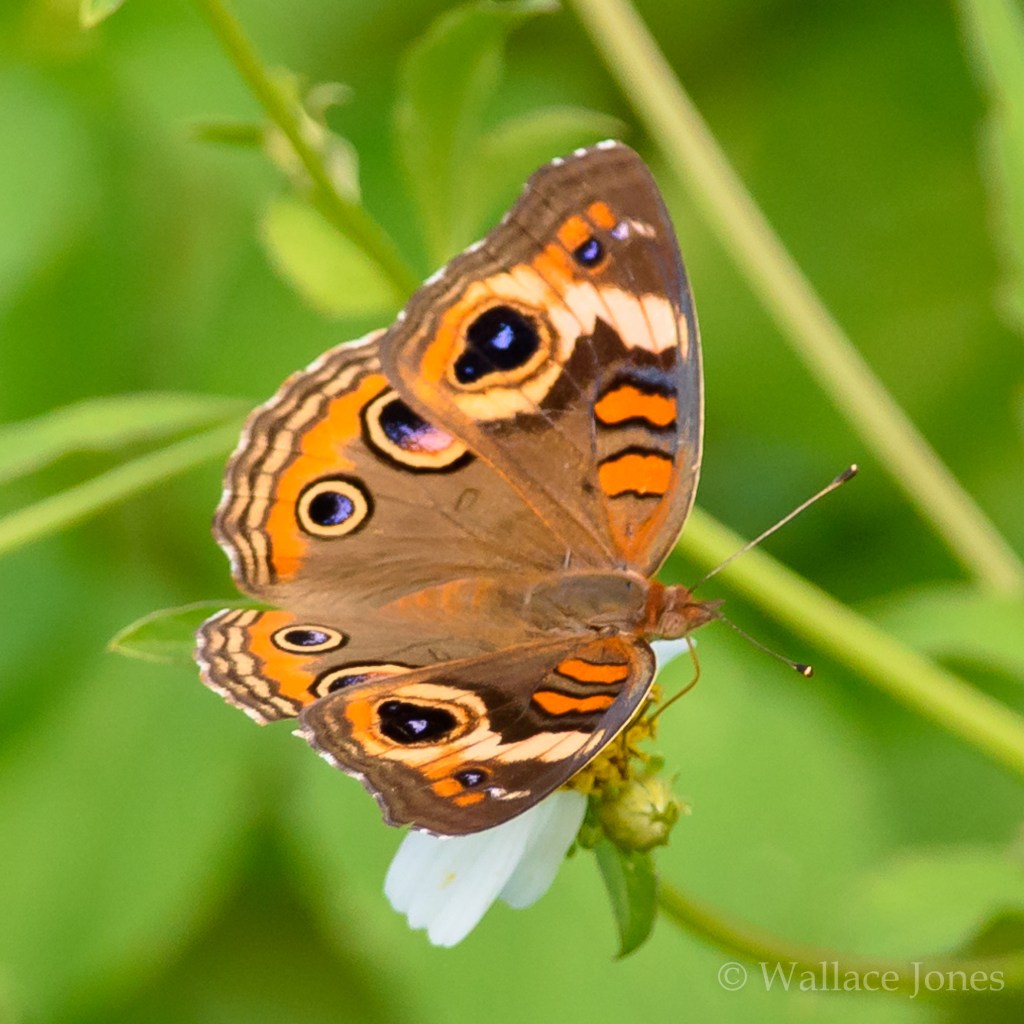
Eyes on its wings. The large spots on the wings of a Common Buckeye (Junonia coenia) could be mistaken by a would-be predator for eyes and will sometimes result in the butterfly escaping rather than being eaten. Not too bad to look at, either!
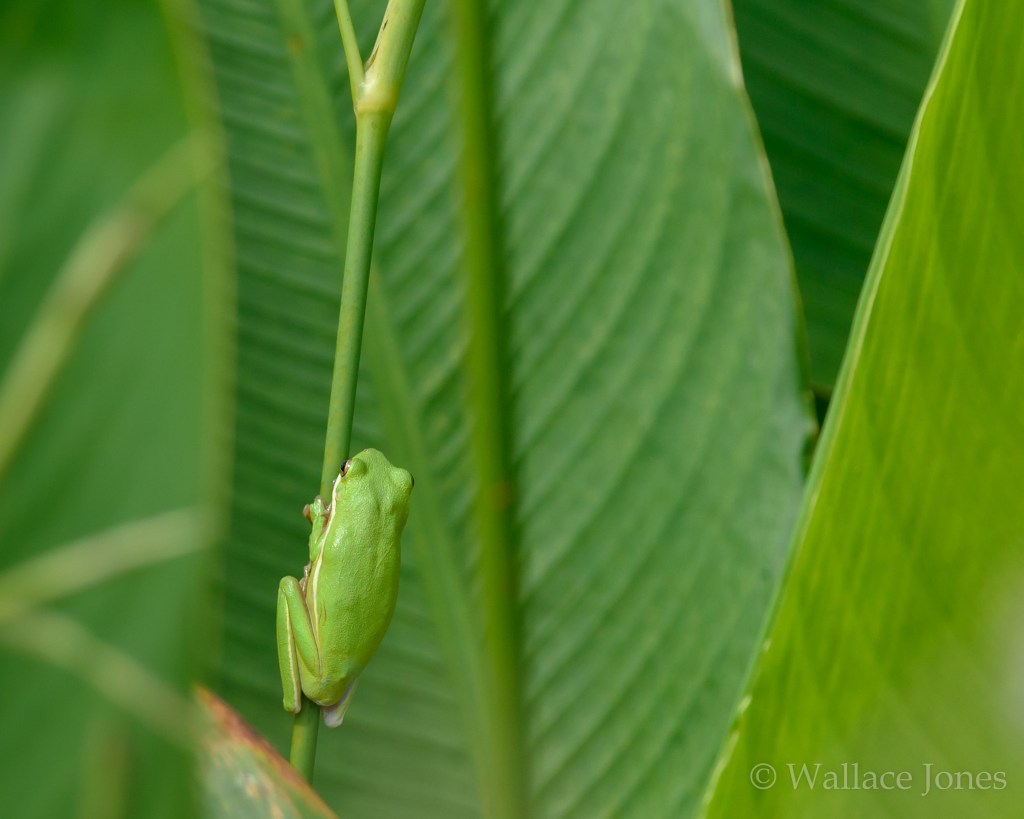
In the wetlands, a small Green Tree Frog (Hyla cinerea) tries to make herself look even smaller as she clings to a stem of Alligatorflag (Thalia geniculata).
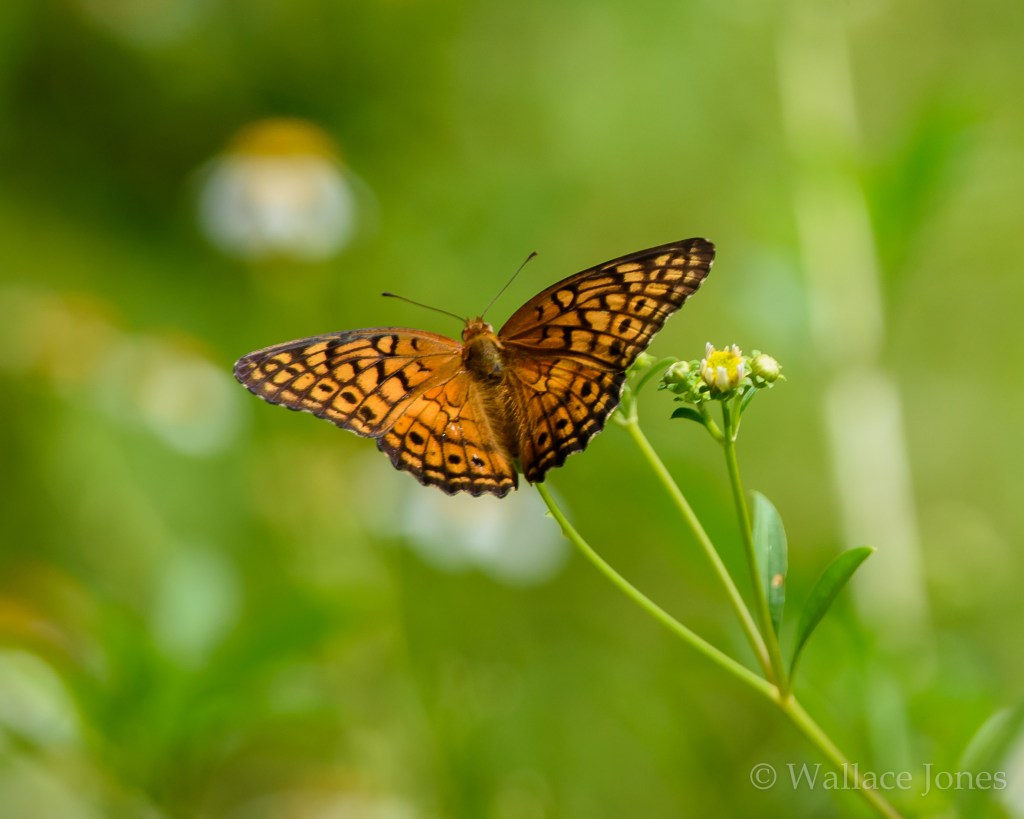
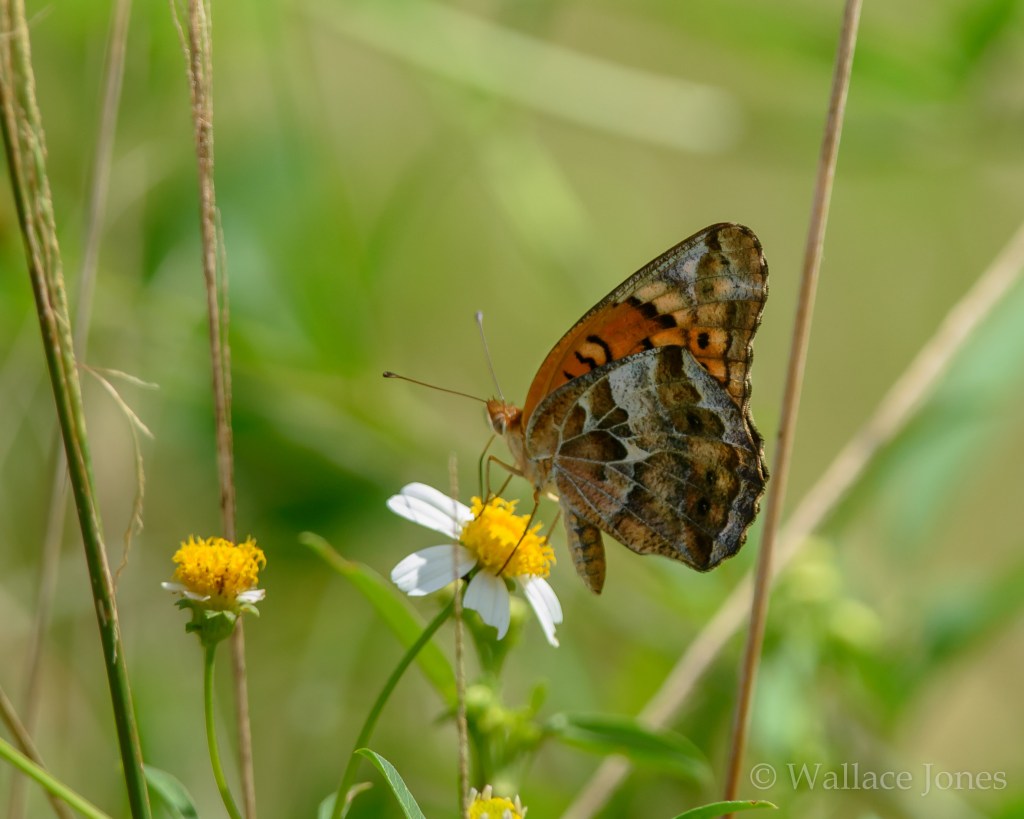
No matter how you look at it, a Variegated Fritillary (Euptoieta claudia) is pretty spectacular on either side! From above, the mosaic design is captivating. The underwing looks like a work of stained-glass art.
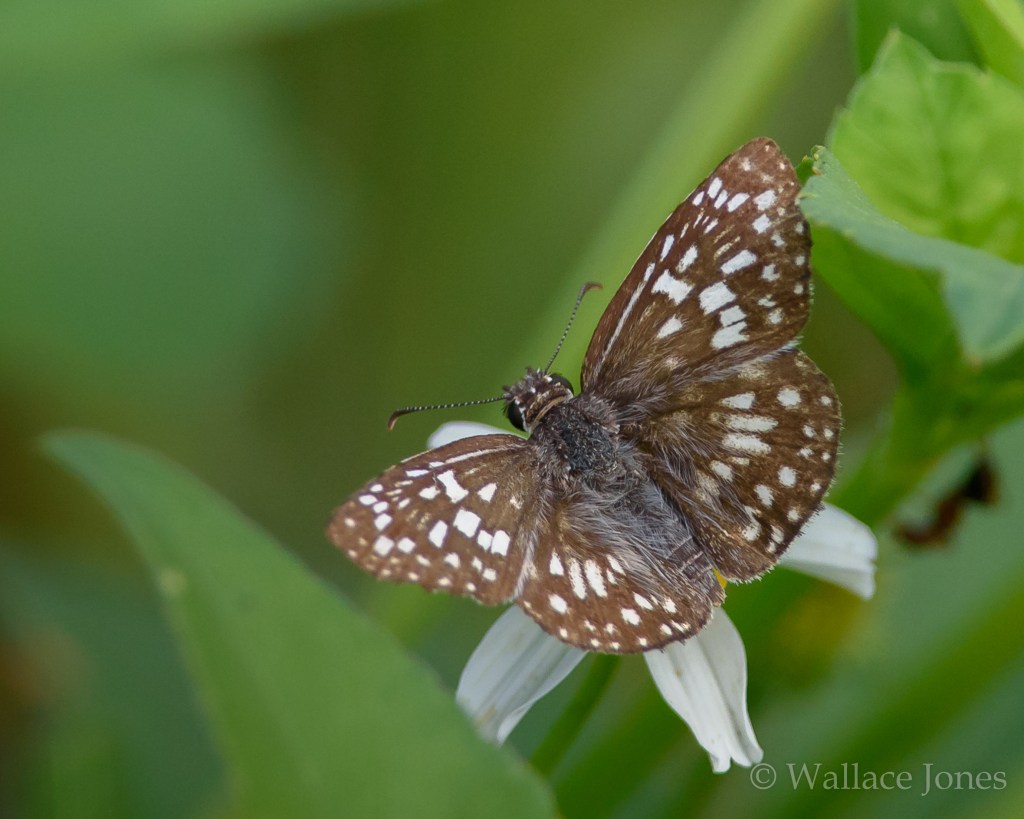
Yet another member of that large skipper family, the Tropical Checkered-Skipper (Pyrgus oileus) is an example of nature taking “just gray and white” and elevating it to something very special.
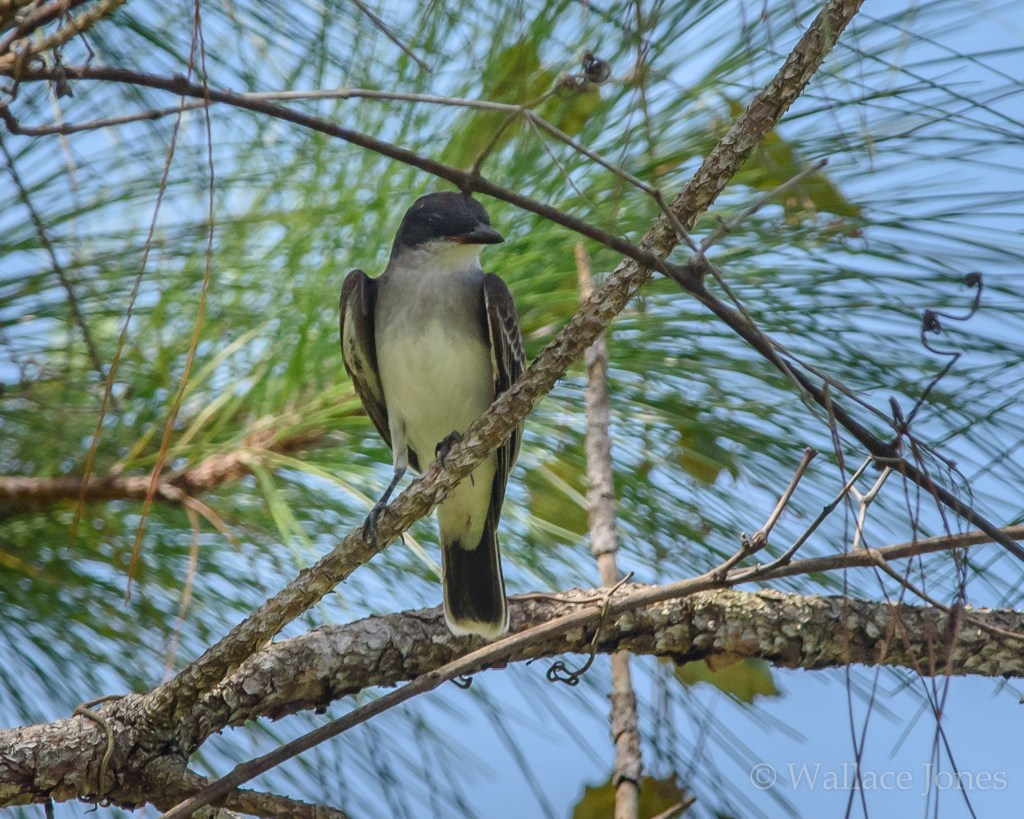
Throughout the morning, we noted several warblers heralding the coming fall migration. As we neared the park’s exit, as if to underscore the fact that summer is over and autumn is here, an Eastern Kingbird posed for a moment. We only see these in the park during migration. With all of the insects we saw today, he should eat well!
Nature expressed as a graphic timeline may be accurate. Nature enjoyed as a sensory smorgasbord is an overwhelming delight!
Enjoy your search for a natural place and come back for a visit!
Additional Information
(Header image: Buff-breasted Sandpiper)
Today’s title may seem like an oxymoron, but species defined as shorebirds spend a lot of time at places other than the shore, such as mud flats, marshes, agricultural fields and even forests. During migration, shorebirds stop at historically food-rich locations to refuel and rest on their annual trek. Even commercial sod farms.
Green. Horizon to horizon.
Small tractors scuttled around the fields and large flatbed trucks trundled along the narrow dirt road toward the outbuildings where they would be loaded with freshly cut sod. The green patches of lawn will then be hauled to newly built homes and businesses where they will be tossed onto recently scraped dirt. Copious amounts of water and fertilizer will be administered until the grass takes root. Homeowners and landscape companies will then spend hundreds of hours per year with mowers, trimmers, rakes, more fertilizer and more water in an attempt to keep the stuff green.
Meanwhile, back at the sod farm.
As vast swaths of green are cut and removed in preparation for the big trucks, all that dirt which is exposed turns to mud when it rains or when the fields are irrigated. The combination of mud and newly sprouting grass is a magnet for a diverse population of insects. Large numbers of birds know this. More than a few birders have also discovered this phenomenon.
Throughout the year, this commercial sod farm hosts from a few to several hundred shorebirds, with the largest concentrations occurring during spring and fall migration. A typical birding day a few weeks ago, for example, produced around 250 Least Sandpiper, 50 Killdeer, a dozen Pectoral Sandpiper, a few Semipalmated and Western Sandpiper, several Greater and Lesser Yellowlegs, a Spotted and Solitary Sandpiper and a couple of Wilson’s Snipe.
Occasionally, an uncommon species makes an appearance. Our timing was good recently.
Just after sunrise, we cruised slowly along the paved county road adjacent to the sod farm. Not much to see. We turned onto the dirt road which leads to the farm’s operation center. Fortunately, this portion of the road is public.
Birds! Looking like ants at a picnic, waves of small sandpipers moved across the dew-covered grass snapping up insect morsels as they marched and hopped along. Most of what we could see were Least Sandpipers with a few of their larger look-alike cousins, Pectoral Sandpipers. Gini-with-the-sharp-eyes exclaimed: “That’s different!”
It sure was! Larger than the Least, not as round as the Pectoral, tawny-colored, a roundish head, an upright foraging posture. Buff-breasted Sandpiper! And there was a second one!
In years past, we have glimpsed this uncommon migrant at extreme distances through the spotting scope. Now, here were two feeding less than 50 yards from our “hide” (the car)! We enjoyed the next half-hour watching the pair feed along with several dozen other sandpipers. I caught a movement on the other side of the road and discovered a Spotted Sandpiper, still bearing the spots of its breeding plumage.
As our rare visitors flew to another part of the field, we moved down the road and found a few large puddles caused by recent rains. Here we watched Greater and Lesser Yellowlegs, a Stilt Sandpiper, Killdeer, Wilson’s Snipe, Semipalmated Plover and more Lesser and Pectoral Sandpipers feeding voraciously. A pair of Mottled Ducks appeared in some tall grass.
The Buff-breasted Sandpiper pair joined the group above and we couldn’t have asked for a better day at the sod farm! These amazing birds nest in the Arctic tundra and fly to the pampas of South America for the winter. An incredible journey! It has been estimated they used to number in the millions. Uncontrolled hunting in the 19th century and loss of feeding habitat along migration routes in modern times has reduced their population to probably less than 50,000. We feel very privileged to have spent a little time with them.
A portion of a flock of Lesser and Pectoral Sandpipers moving from one feeding location to another.

A rare treat, the Buff-breasted Sandpiper.


By far the most common shorebird in our area is the Least Sandpiper. Only 5-6 inches (12-15 cm) long, their “crouched” feeding posture and light-colored legs help separate them from Semipalmated and Western Sandpipers.

Pretty soon, this Spotted Sandpiper will be plain gray/brown above and plain white below.

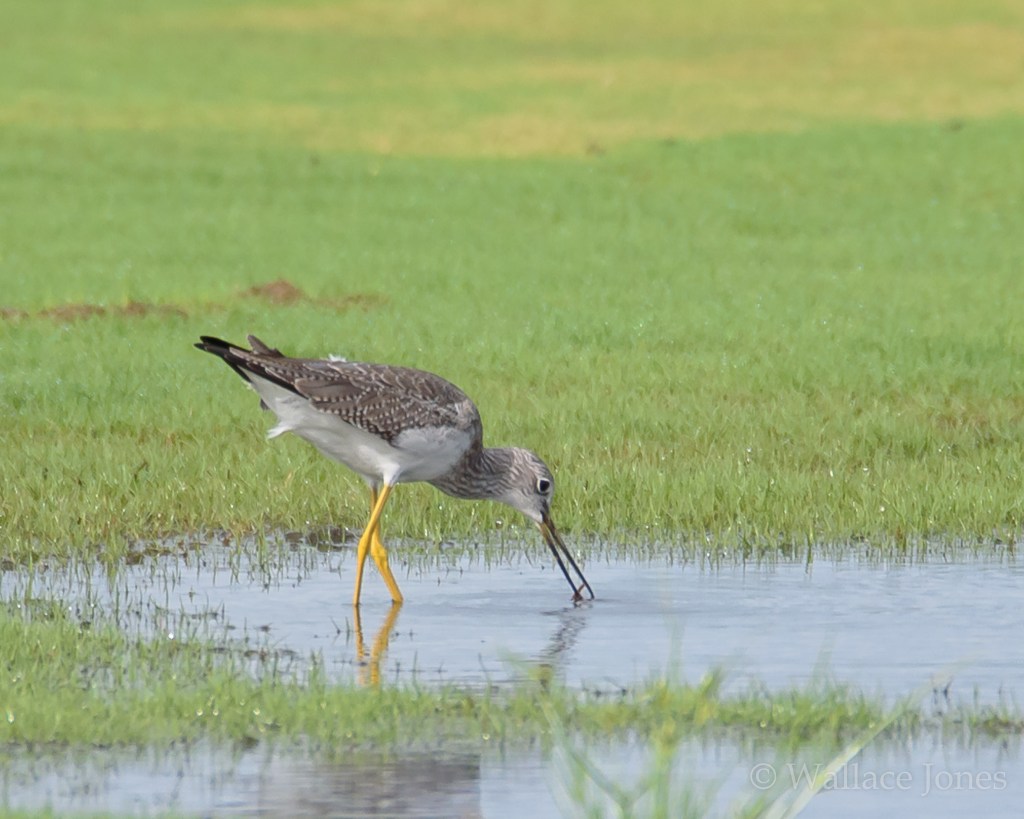
We were fortunate to have both Greater and Lesser Yellowlegs feeding in the same area so identification was simplified. It can be difficult to judge size if the birds are alone and the best way to determine which is which is by their calls. Greater is 11-13 inches (29-33 cm) long and the Lesser is about 9-10 inches (23-27 cm) in length.

A Stilt Sandpiper is not a rare bird but is not very common in our area, even during migration. Here it is seen (on the right) with a Lesser Yellowlegs.

Pectoral Sandpipers look like large versions of the Least Sandpiper.

Although the quality of this photograph is not great, it shows the size difference between Least Sandpiper, Pectoral Sandpiper and a Killdeer.
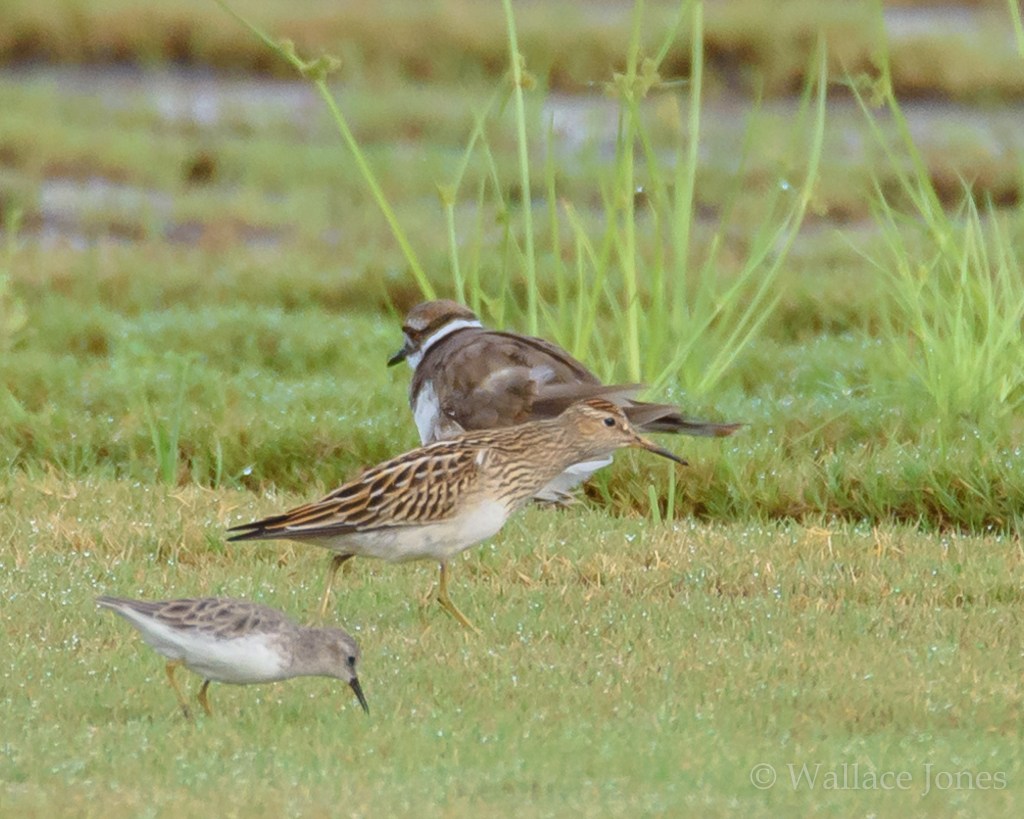
With a bill truly made for deep probing, the Wilson’s Snipe’s plumage can make finding them in a field of brown grass a real challenge.

Looking much different than the sandpipers, we found about a dozen Semipalmated Plover during the morning.
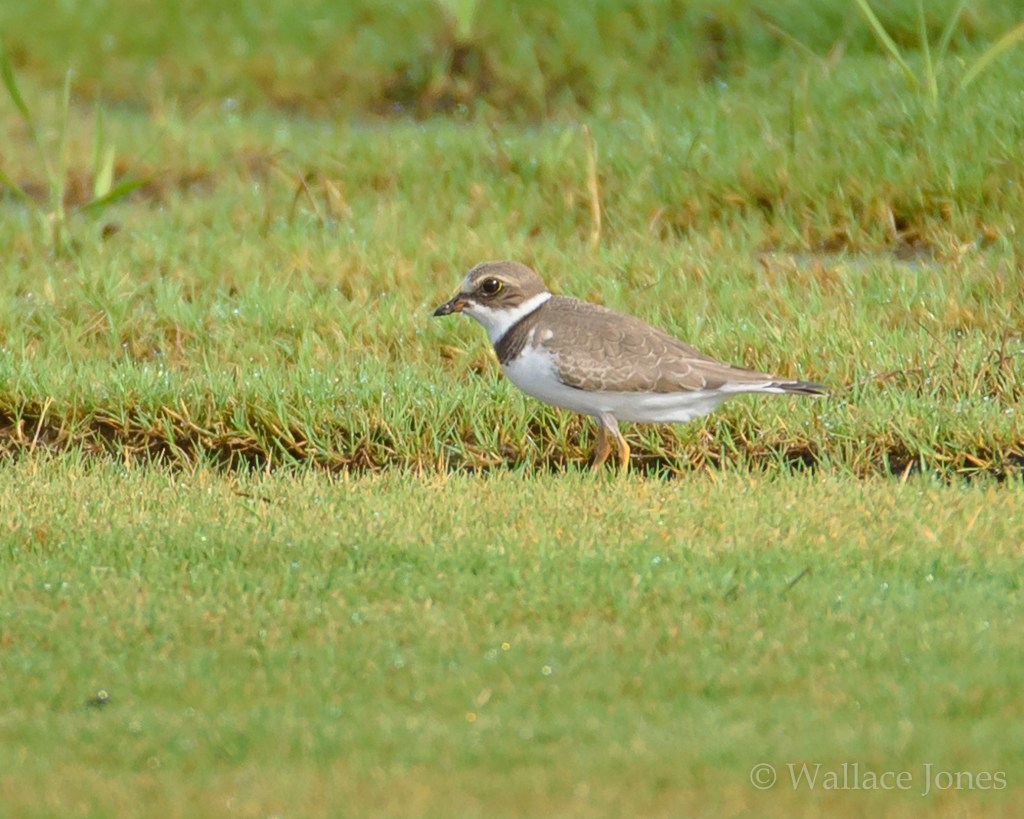
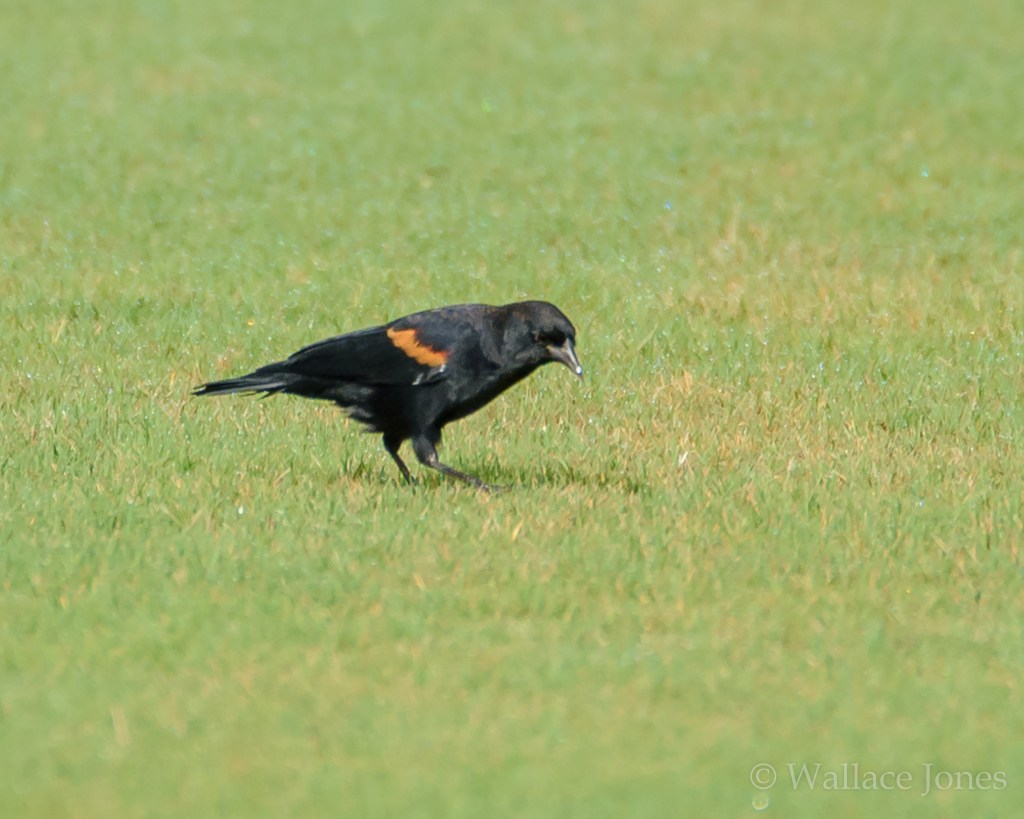
With an abundance of food available, shorebirds were not the only guests at the sod farm. Dozens of Red-winged Blackbirds arrived to enjoy brunch.
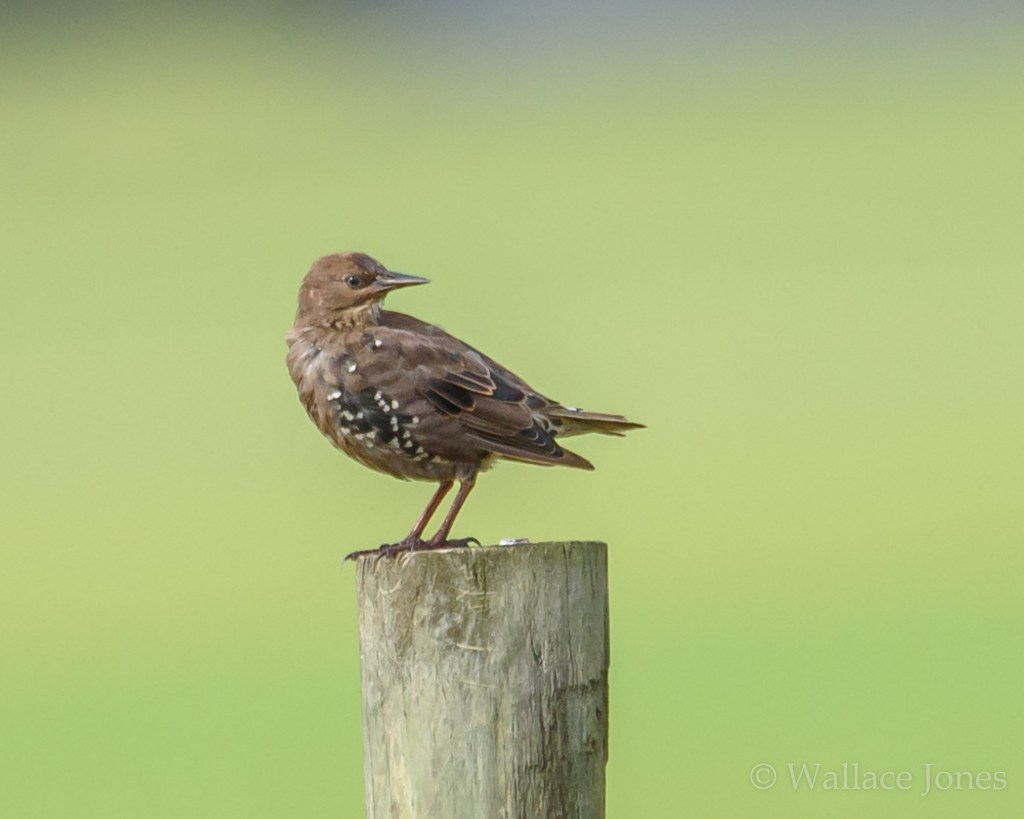
A juvenile European Starling was part of a larger group which also found the fields to be an acceptable foraging location.
Trying to remain hidden in a section of taller grass with standing water, a pair of Mottled Ducks added to the variety of our day.

It seemed almost like cheating to be comfortably seated in the car and being able to observe so much activity and diversity all around us. Almost. We can’t wait to do it again!
Enjoy your search for a natural place and come back for a visit!
Eight minutes.
“Would it be okay if I go to the park in the morning?”
“You know you don’t have to ask. Of course it would be okay.”
“It’s just that I have this headache.”
“You? Have a headache? That’s unusual!”
“I think it’s a migration headache.”
“Oh. C’mon, let’s go to bed.”
She loves my witty repartee.
Birders know the symptoms of the seasons, though. Each spring and autumn scores of wanna-be J.J. Audubons experience aching shoulders from toting heavy optical equipment, sore eyes from squinting into the depths of branches and brush in the dim light of pre-dawn and, worst of all, the dreaded and debilitating “warbler neck” from gazing into the tippy tops of trees hoping to spot a wing bar 200 feet above the ground. Yes, “migration headache” season is upon us.
Eight minutes after walking out the front door I was pulling into a parking spot at Lake Parker Park. It’s a nicely maintained facility within the city limits of our home town of Lakeland, Florida, USA. It offers walking trails, picnic pavilions, two boat ramps, tennis and basketball courts and a soccer complex. Located on the northwest shore of Lake Parker, a 2300 acre (930 ha.) freshwater lake, the park is a great place for birding. The combination of the lake, shoreline, canal, wetlands, open areas and a fairly diverse collection of trees make the area very inviting for a wide assortment of birds.
During fall and spring migration, although not a “hot spot”, the park can produce a consistently decent list of traveling species. Occasional surprises are also possible. Last year, I found an unexpected Orchard Oriole atop a cypress tree by the boat ramp. Many migrants spend the entire winter within the park as it offers plenty of food and secure shelter, especially thanks to recent efforts to control the feral cat population.
Join me for a morning walk. You check the upper branches and I’ll scour the understory. (My neck is older.)
We’ll begin at the mulberry tree by the big pavilion near the lake, then walk along the shore. Keep an eye out for Caspian Terns and Bald Eagles over the lake. As we cross the footbridge, check in the willows for a Black-crowned Night heron. Once we turn to follow the canal, any of the big trees could hold warblers.
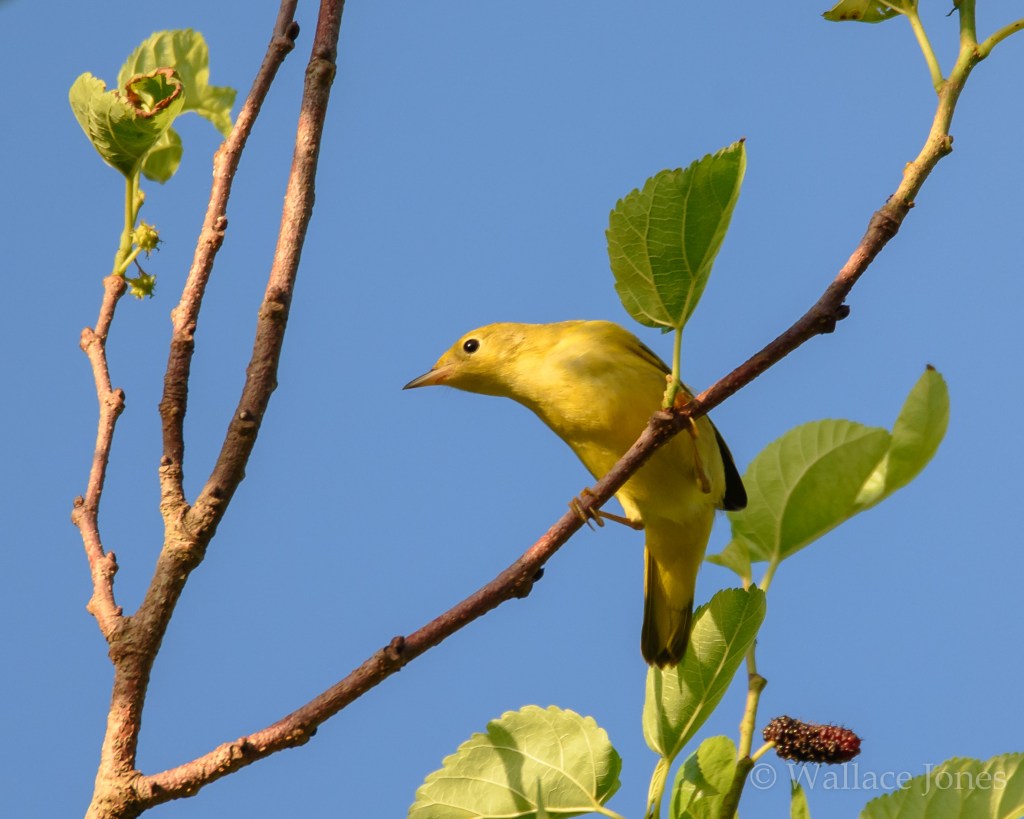
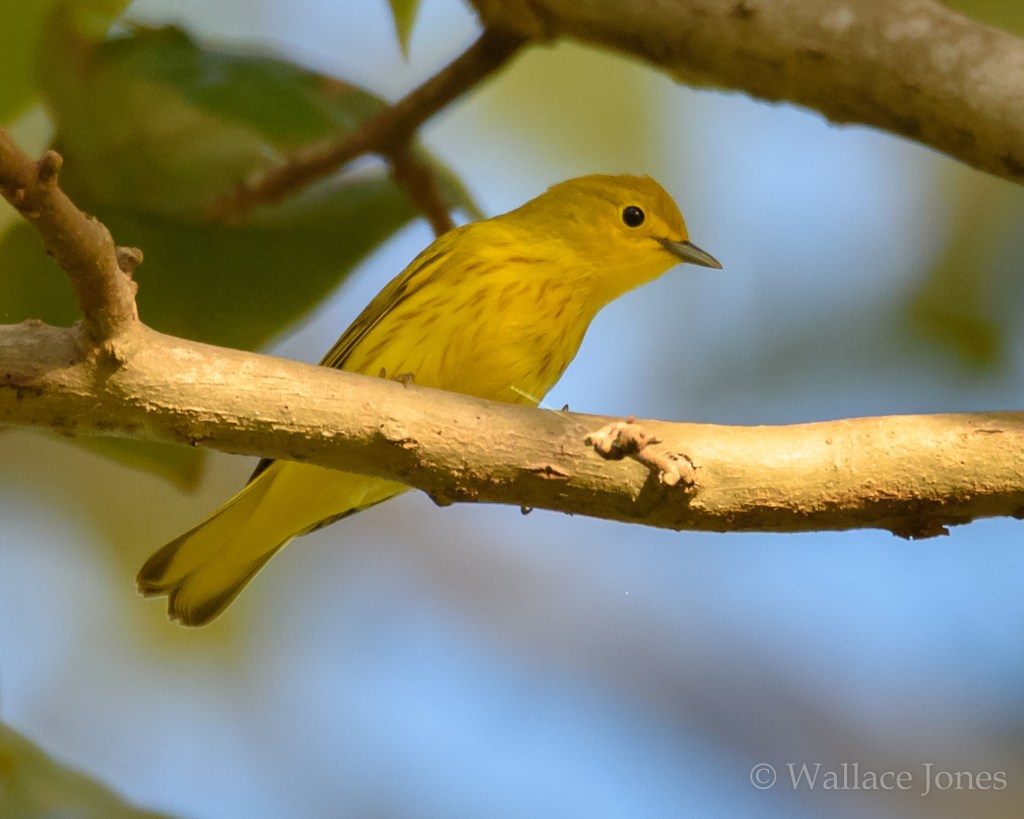
I wonder if the person who named the Yellow Warbler was a master of understatement? One of the most common warblers in North America, we are privileged to see them during migration.
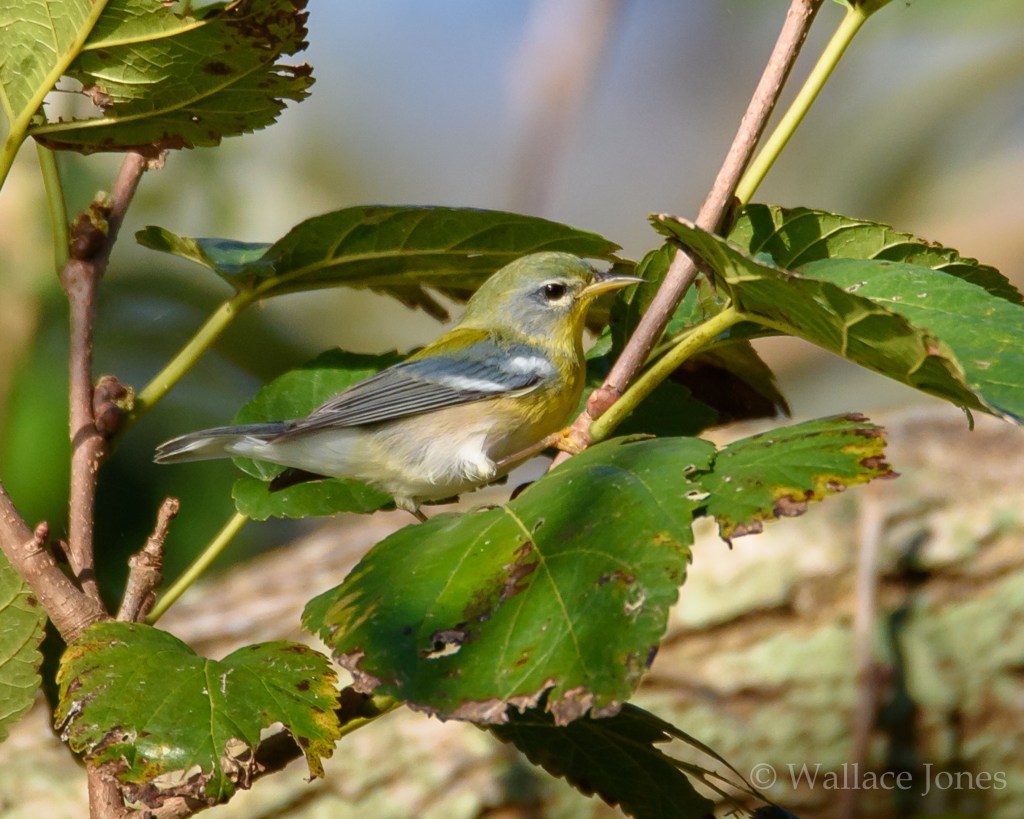
The Northern Parula breeds in our area and numbers increase as migrants pass through on their way to Mexico, Central America and the Caribbean.
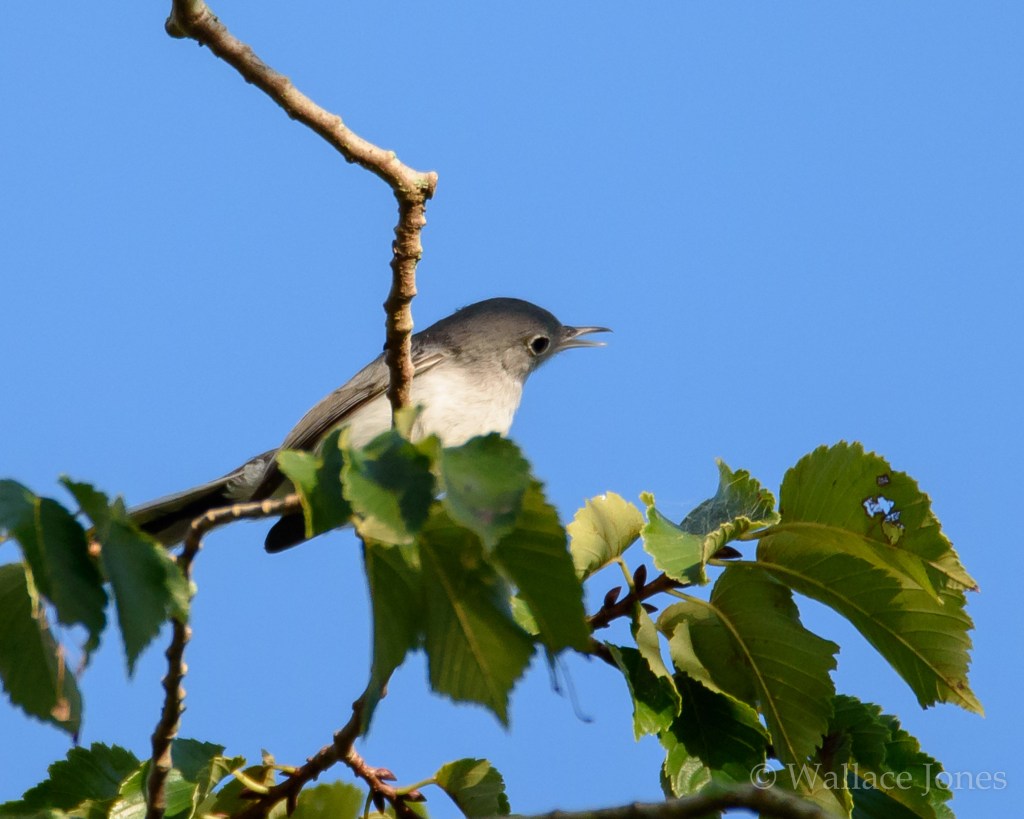
Slim and super-active, Blue-gray Gnatcatchers also breed in Florida. Many will remain throughout the winter as others will continue to Central America and the Caribbean to help with insect control.
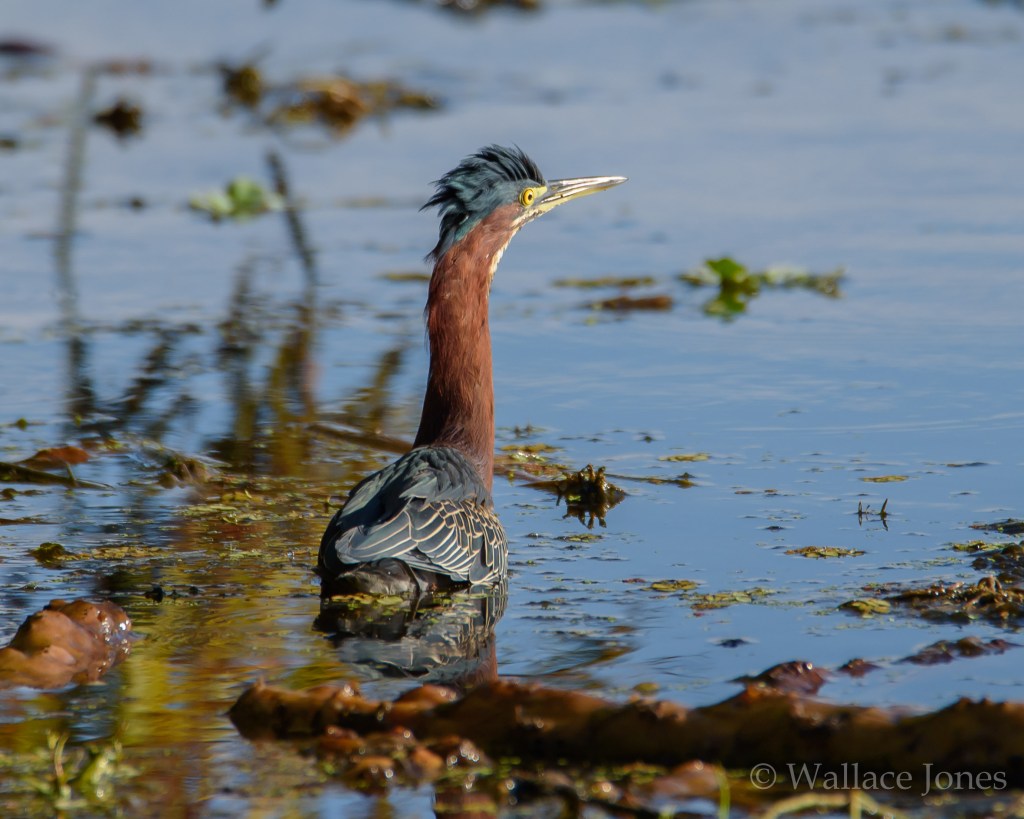
Along the lake shore we find an upset Green Heron. The crest on his head is raised as a Tricolored Heron flew too close to the heron’s breakfast buffet.
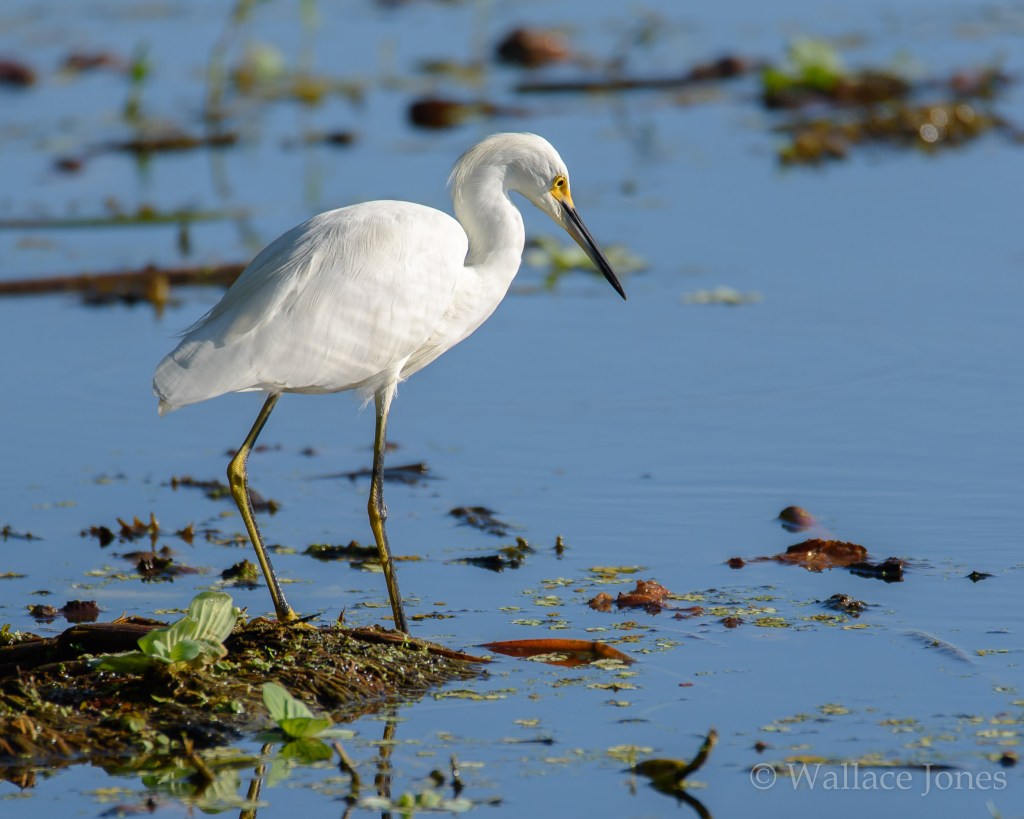
Nearby, a Snowy Egret’s concentration on a frog is unbroken by the heron kerfuffle.
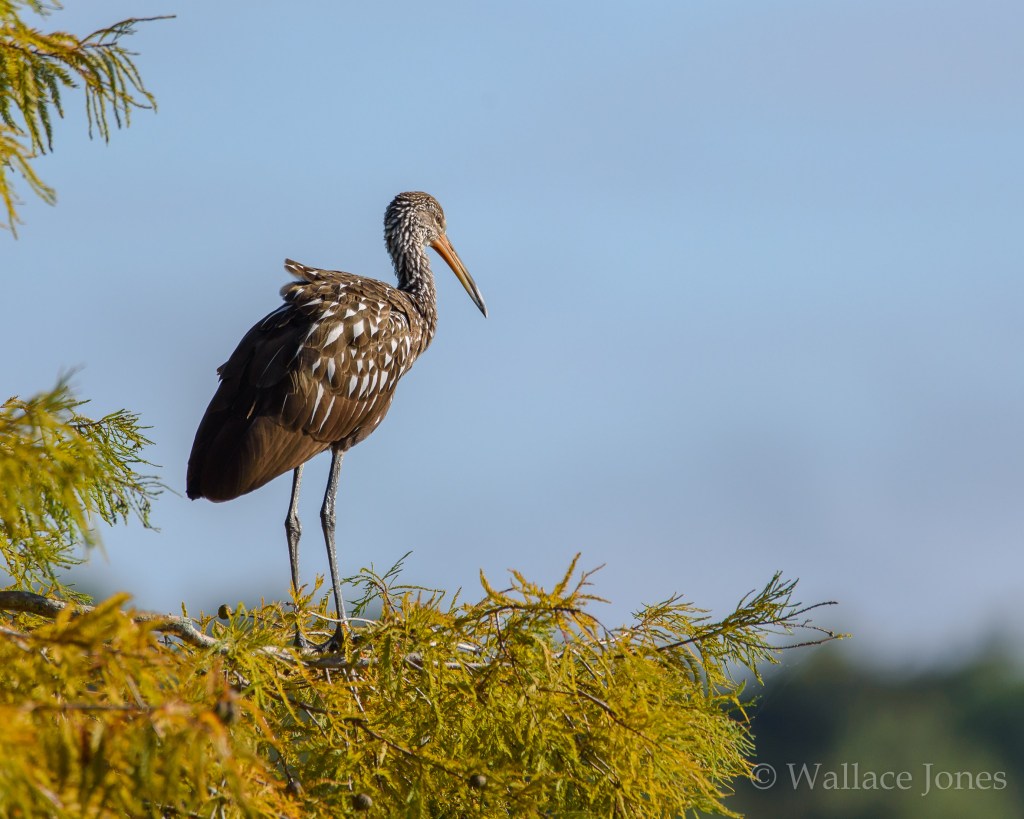
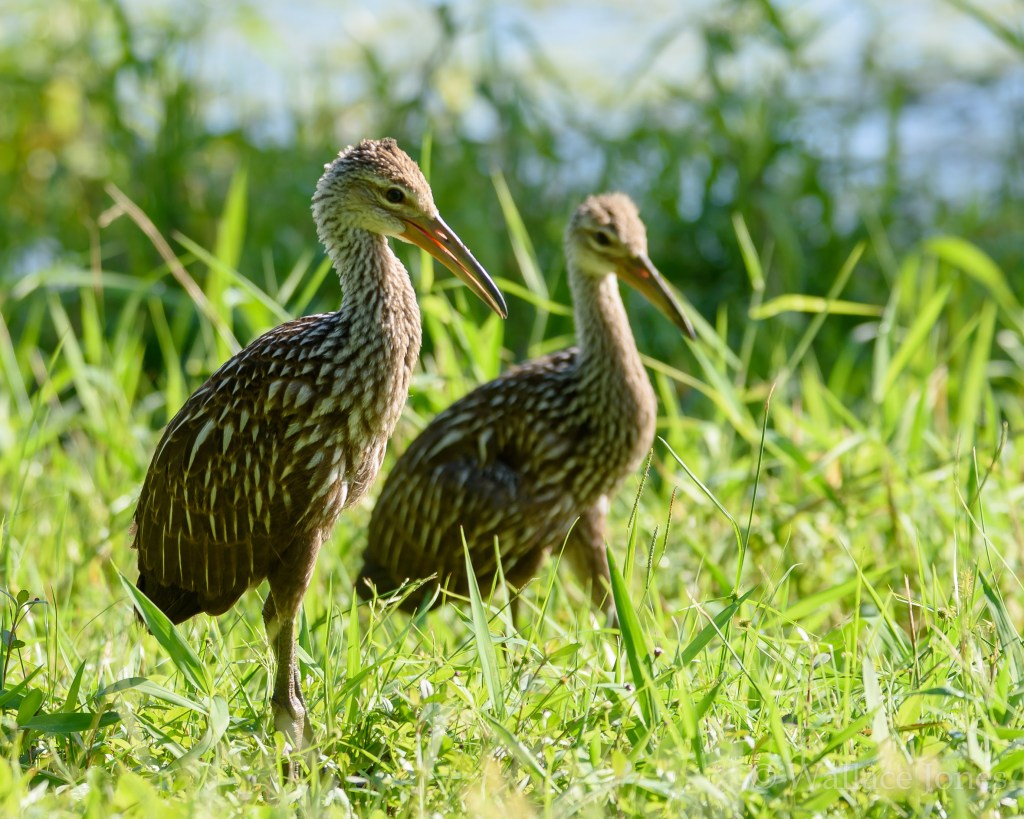
A branch overlooking the lake is a perfect spot to enjoy the first rays of the rising sun for this Limpkin. Too young to notice anything except their next meal, a pair of immature Limpkins almost step on my feet as they scout the area for succulent snails.
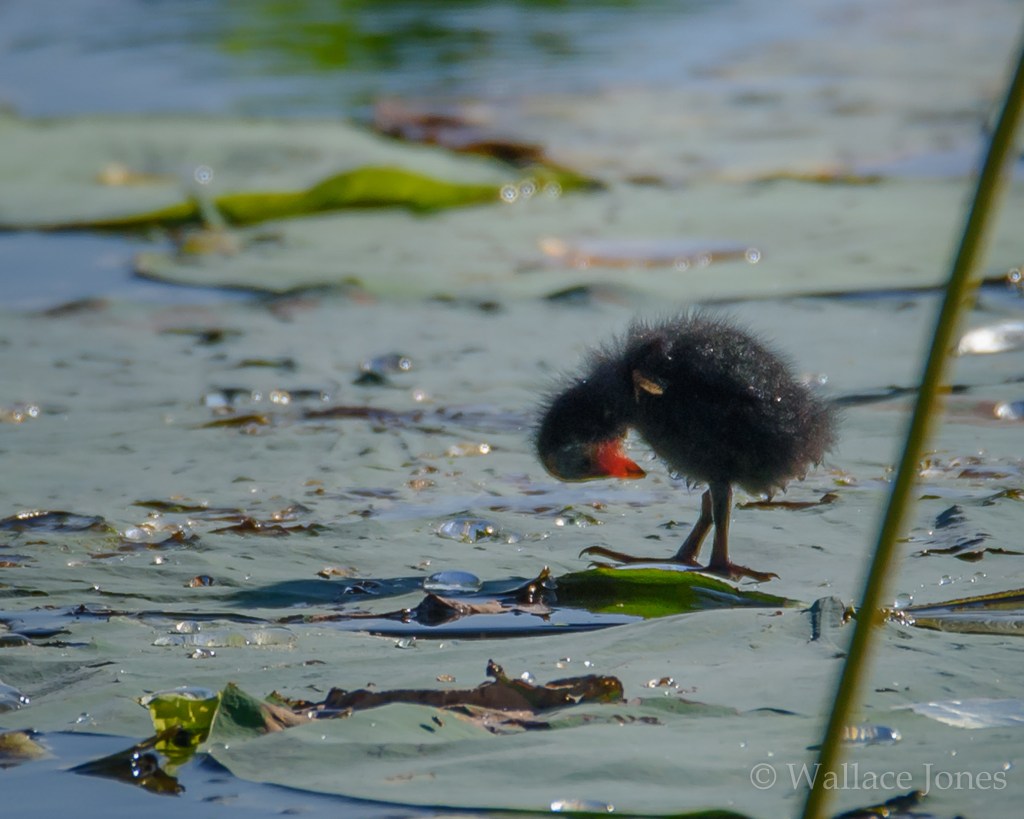
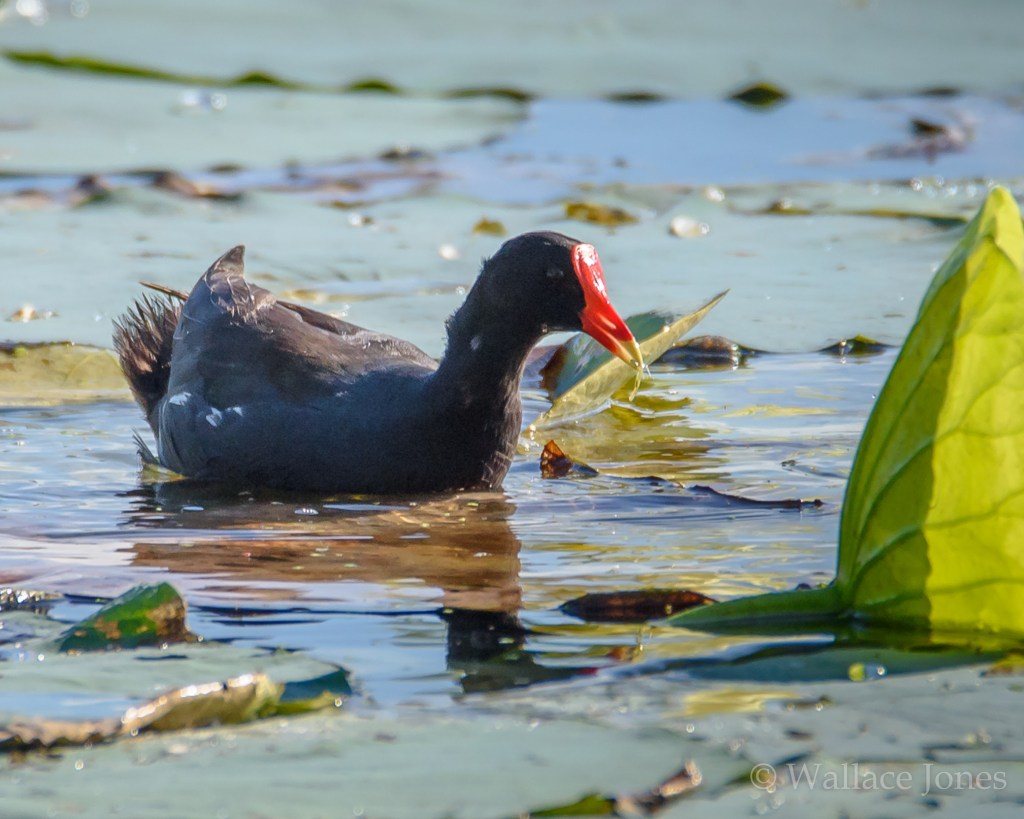
Gini says the Common Gallinule chicks look like a ball of black wool which has been exposed to static electricity. Babies. Mama thinks she’s just adorable.
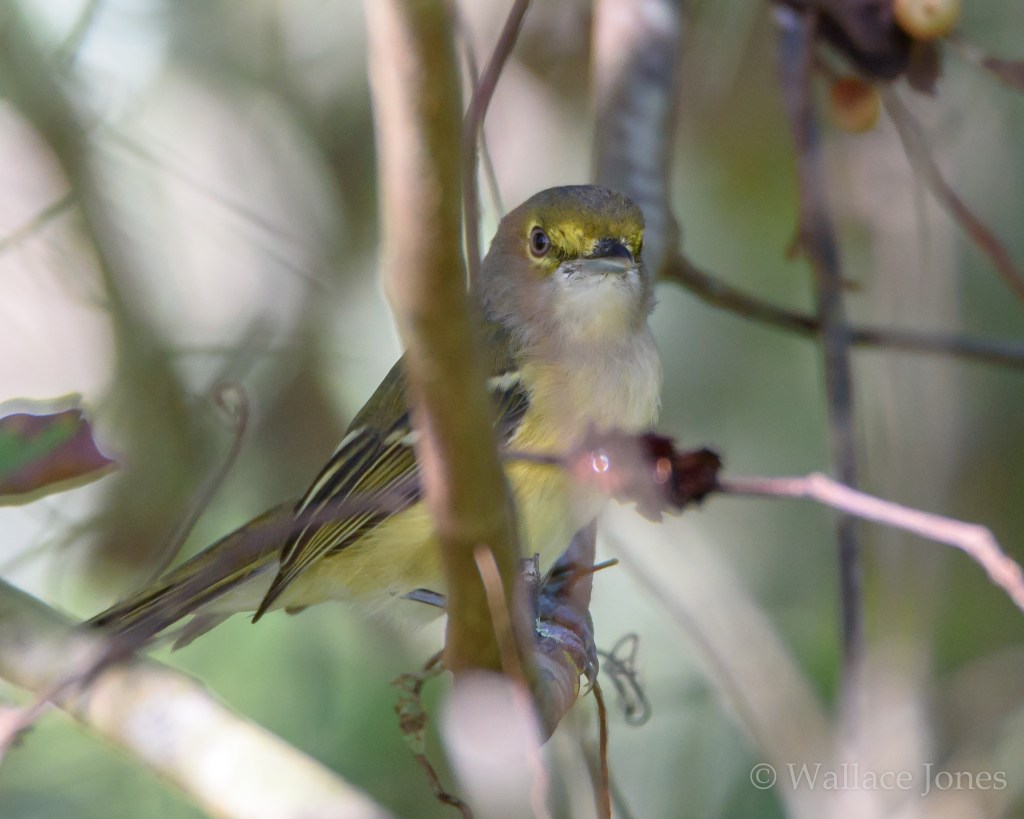
Calling from within a willow thicket, a White-eyed Vireo keeps those white eyes on yours truly. I was able to retreat after one shot and he relaxed and sang a for awhile.
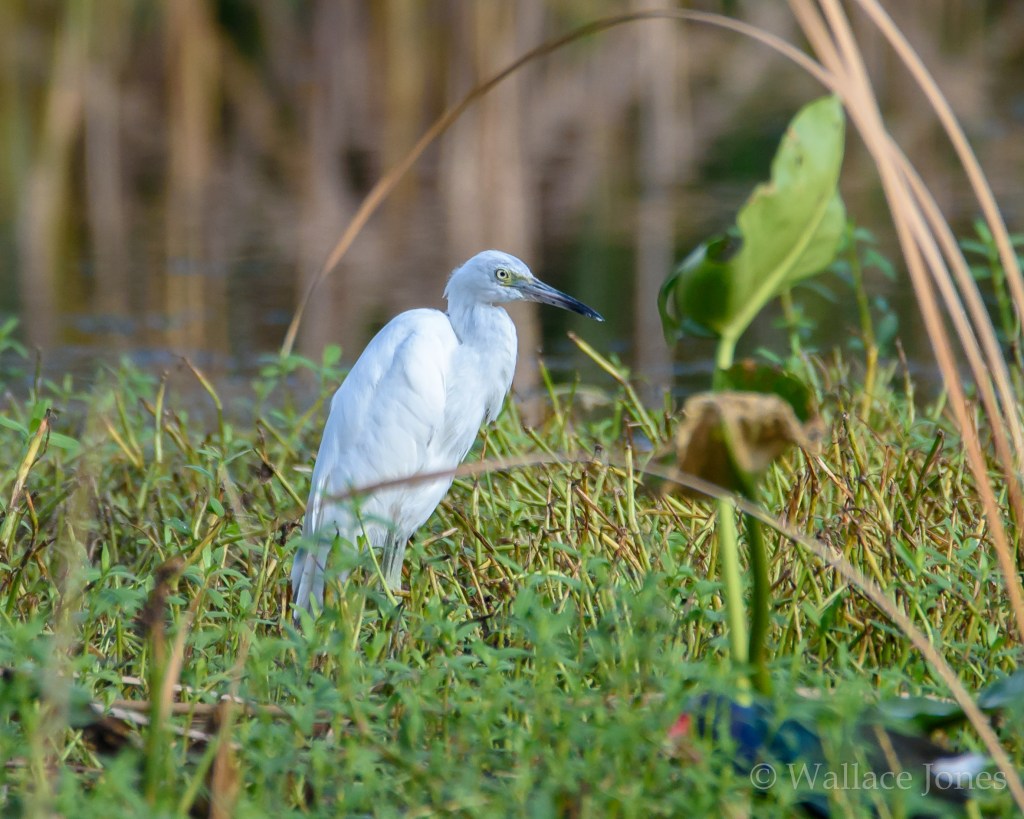
Sometime after their first spring, immature Little Blue Herons will molt from white into the more familiar slate blue of an adult.
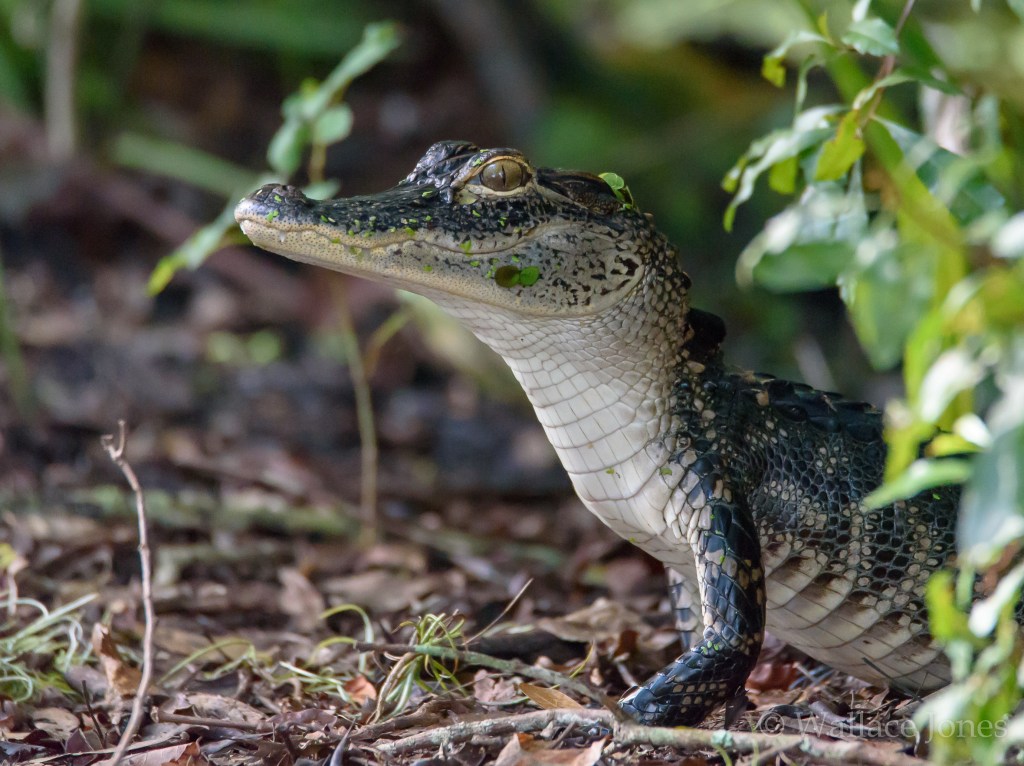
While you’re craning your necks upward scanning hopefully for a glimpse of a wayward warbler, glance down once in awhile to see if a cute young alligator is waiting patiently to cross the path. I know, he’s hard to see with that green camouflage on his head.
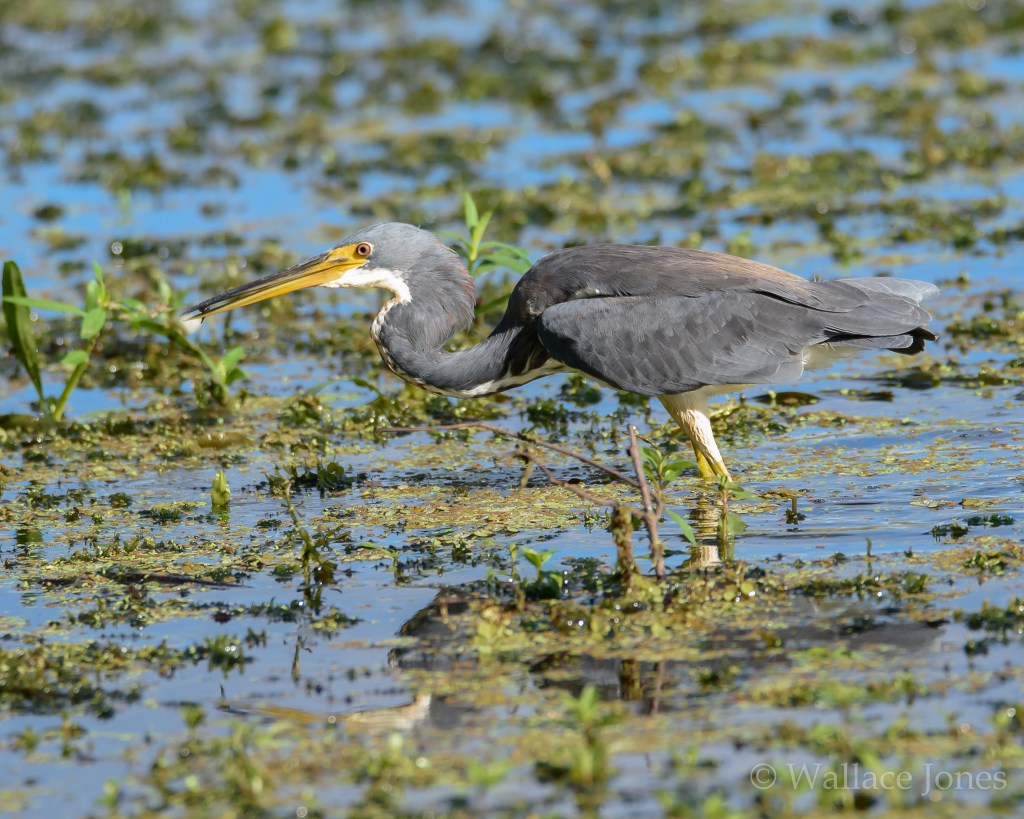
The Tricolored Heron quit pestering the Snowy Egret and managed to find his own snack. A small minnow for such a large bird.
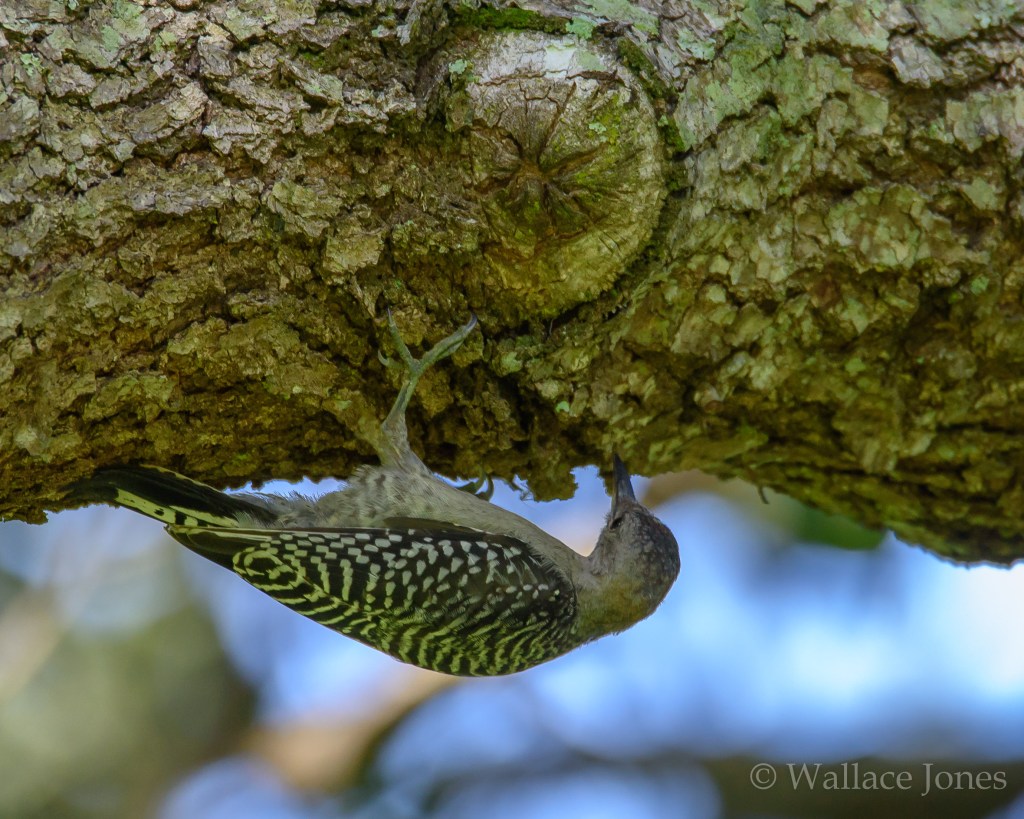
She may be young, but this immature Red-bellied Woodpecker has already learned the best bugs like to hide on the underside of tree limbs.
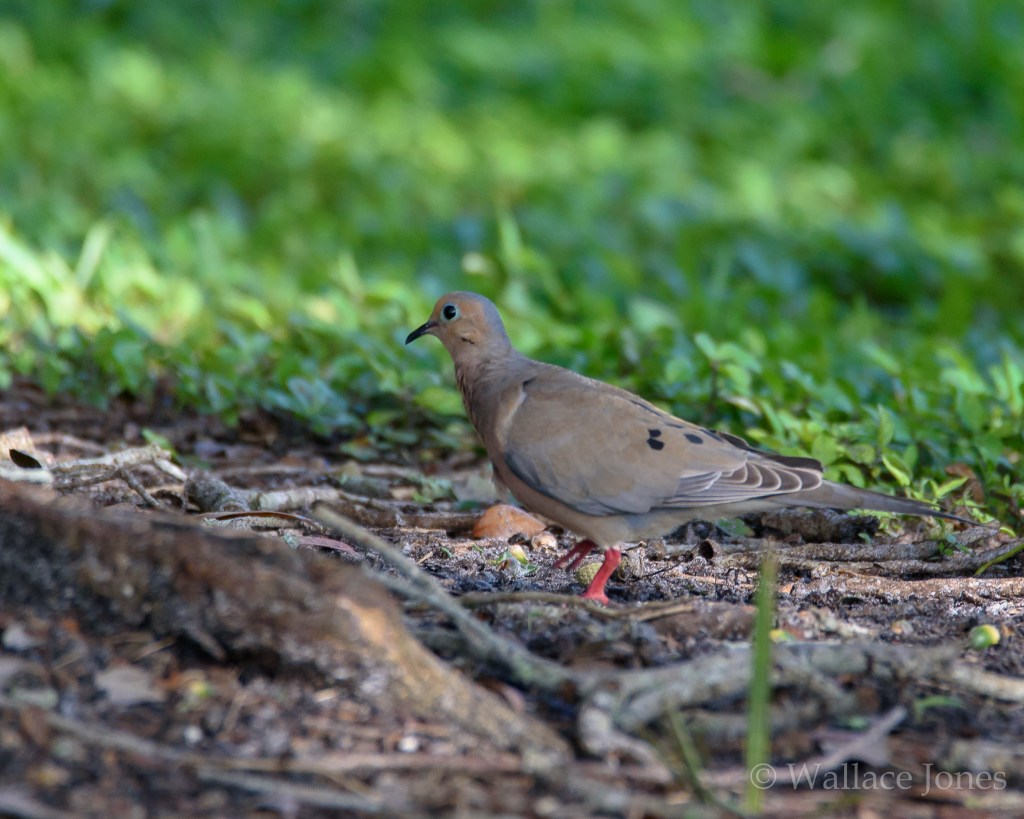
Common and numerous does not mean you can’t be beautiful, too. Exhibit “A”, the Mourning Dove.
Larger, and likewise common and numerous, Exhibit “B”, the White-winged Dove is just as attractive as its cousin.

Sporting a wingspan of nearly 30 inches (75 cm), the Pileated Woodpecker is impressive as it hammers away at tree limbs in its search for insects. This female chiseled out large chunks of wood and used her sticky tongue to lap up ants. I know they were ants because she continued to chop at the limb until it fell and I had a chance to examine it.
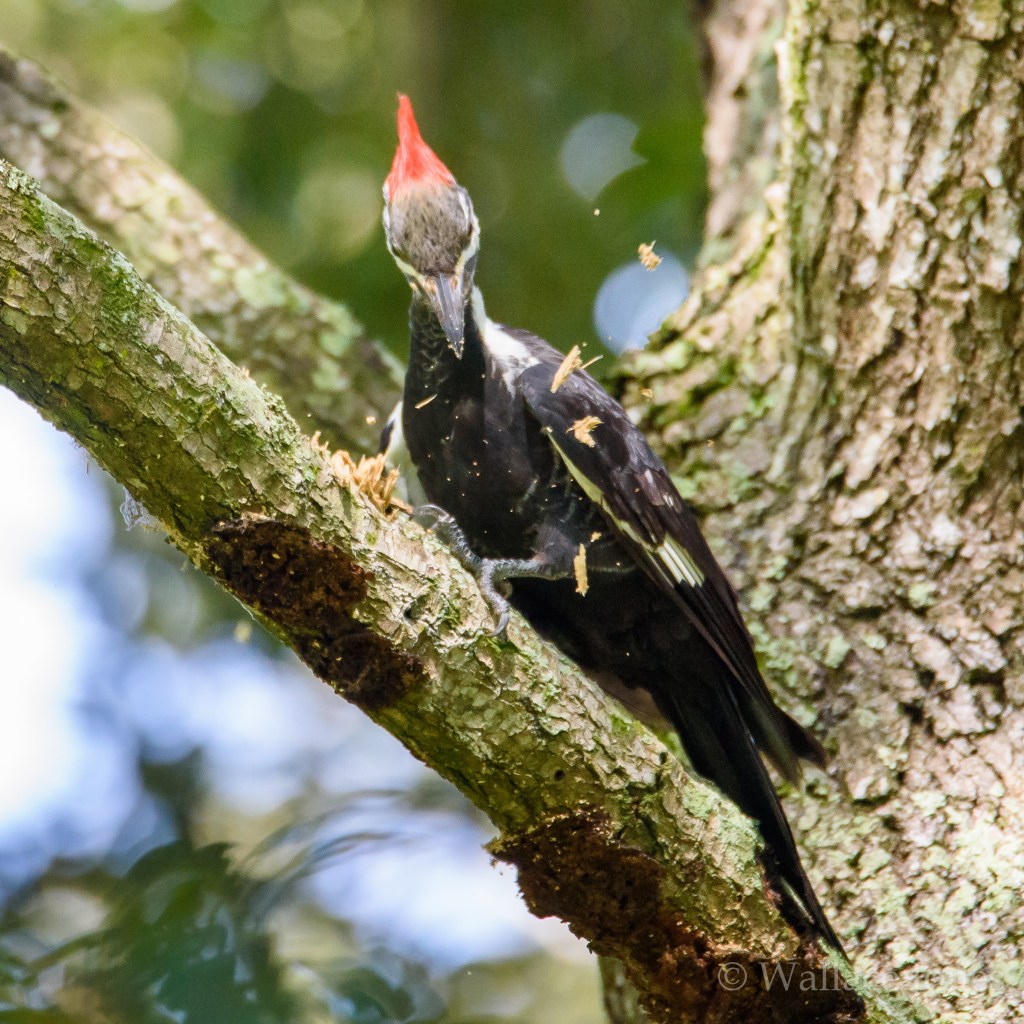
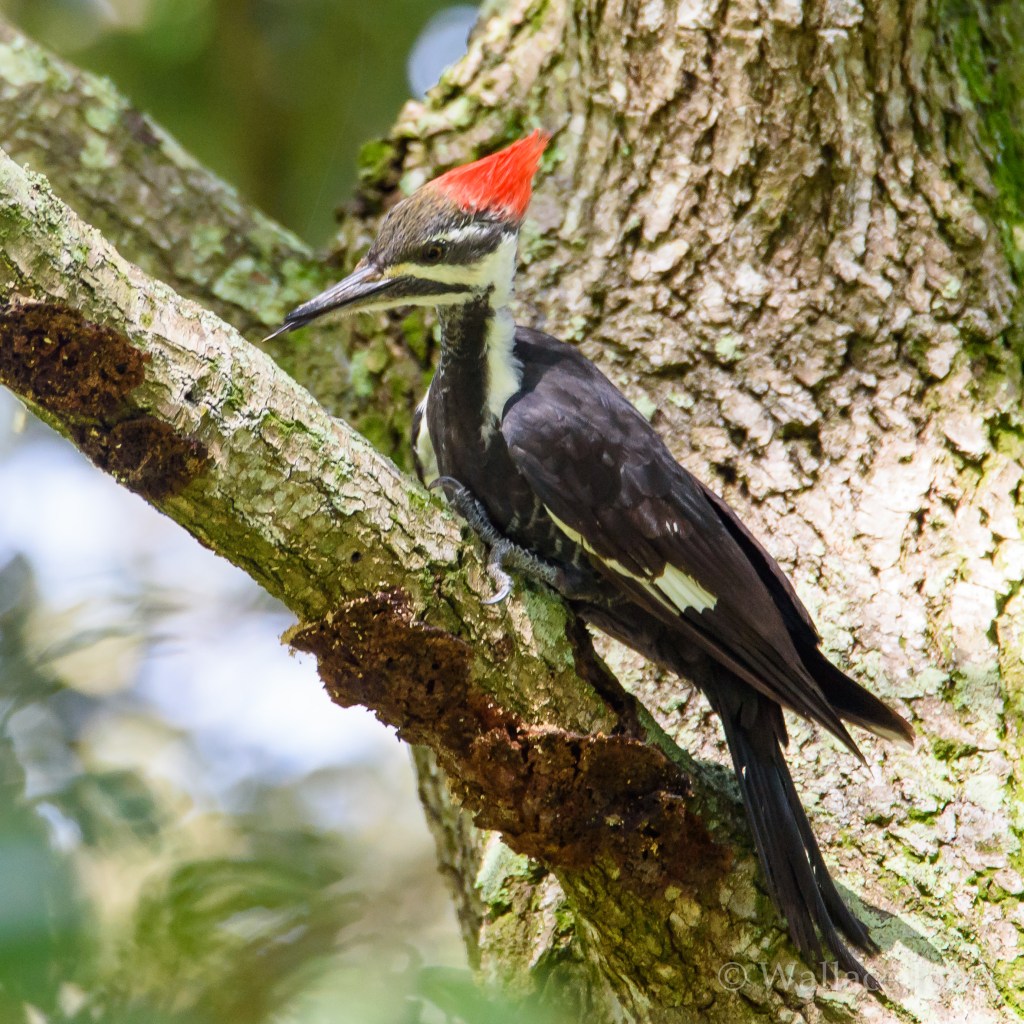
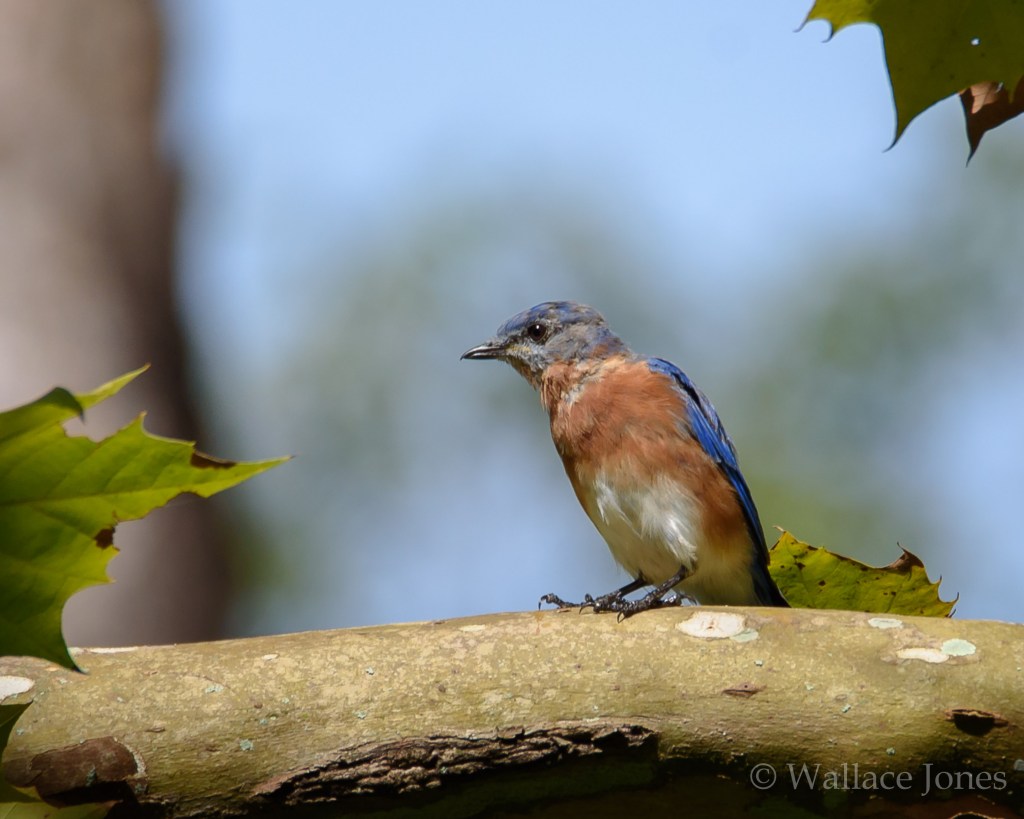
A bit of a surprise was finding a half-dozen Eastern Bluebirds in the park. They generally prefer a bit more open habitat.
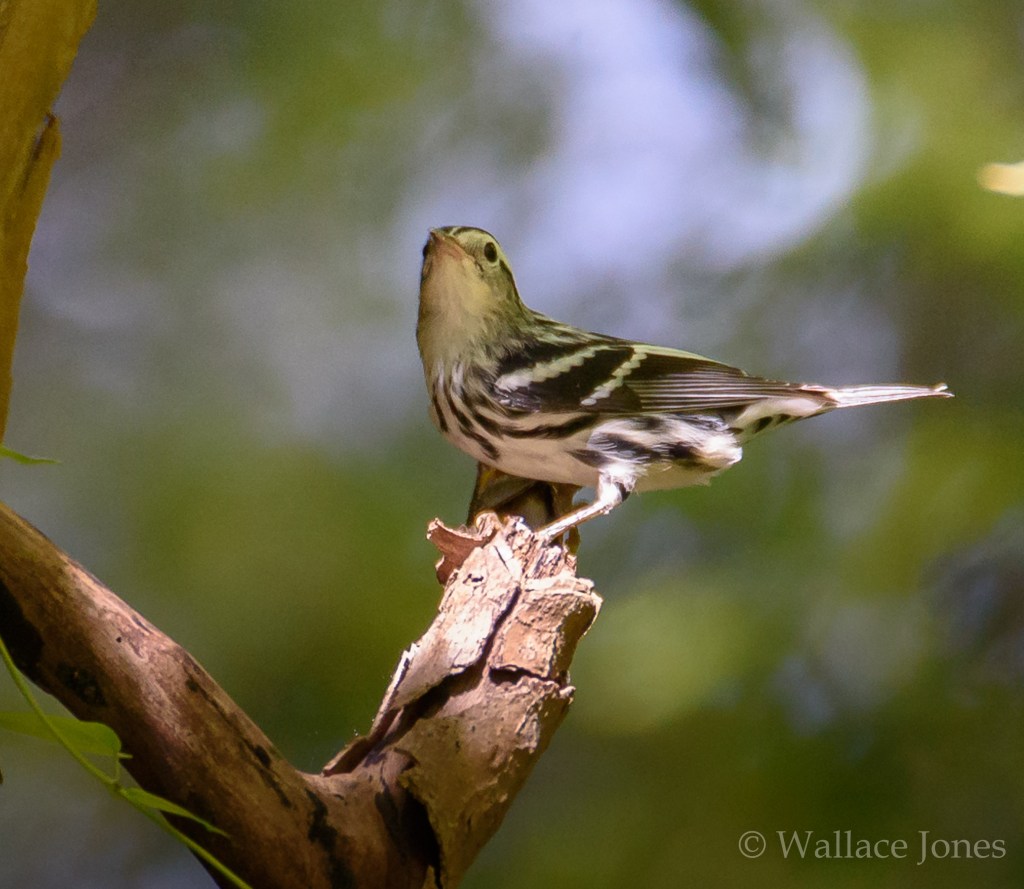
Several Black-and-White Warblers were active in the park. And I do mean active! They hunt for bugs everywhere and will hop down the trunk of a tree head first, like a nuthatch.
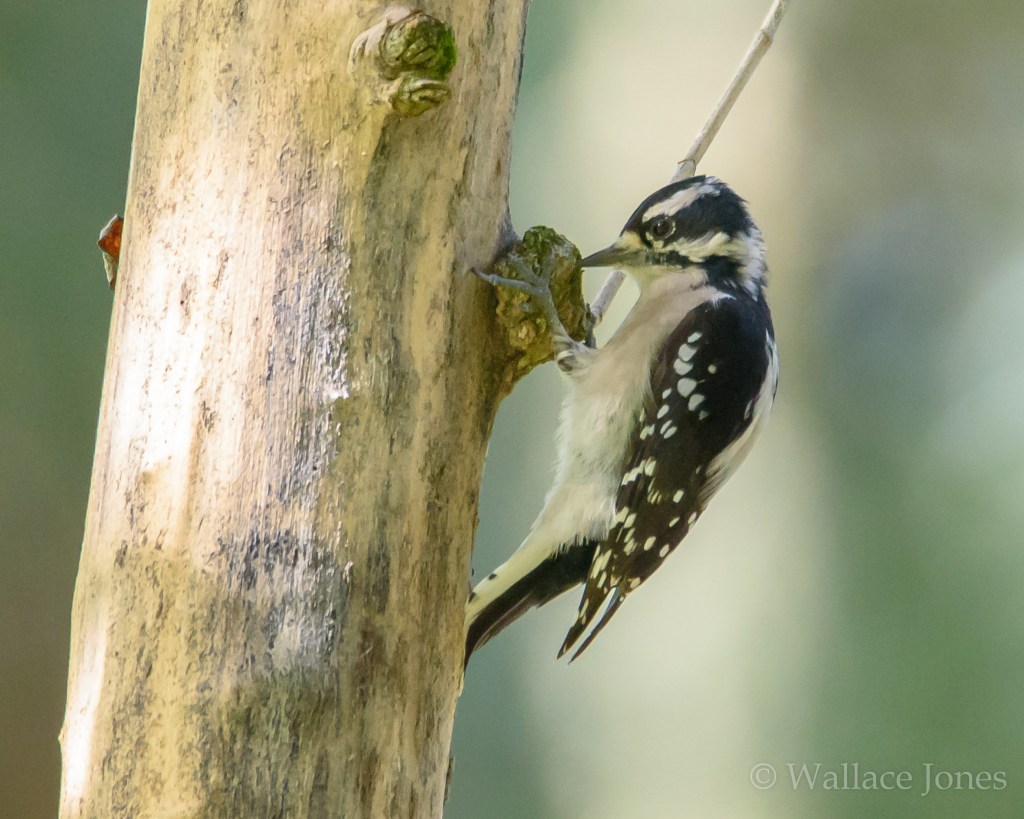
After watching the big Pileated Woodpecker, a female Downy Woodpecker seems dainty by comparison.
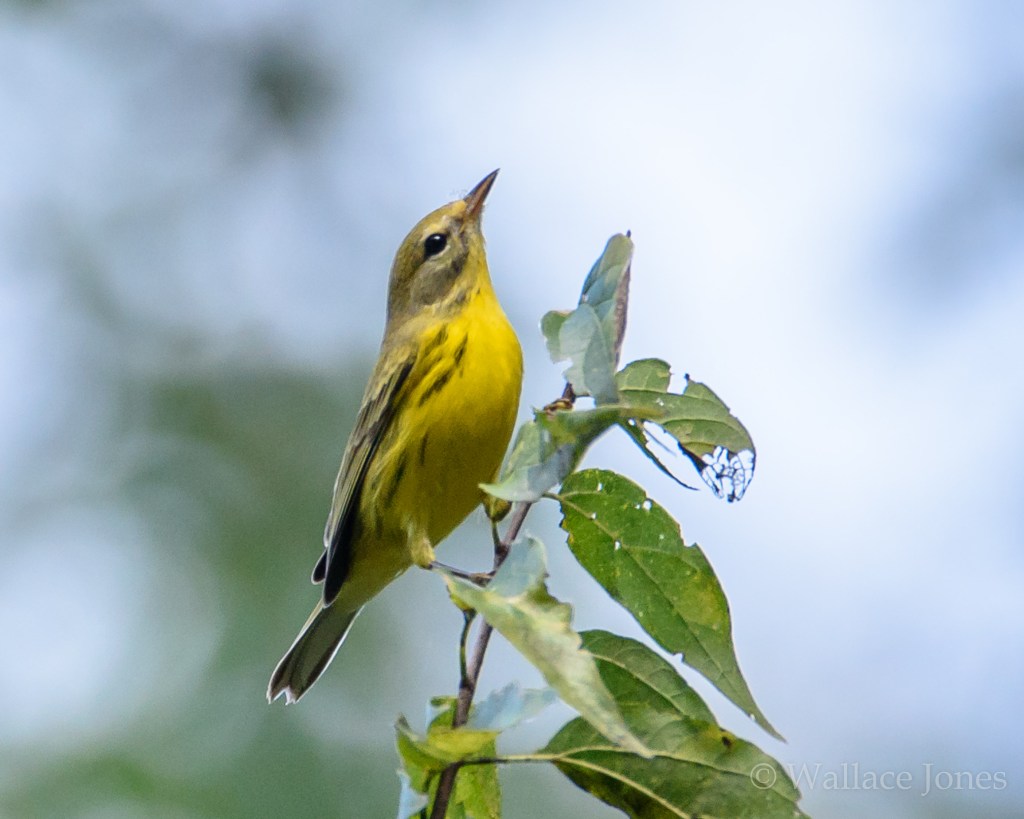
Bright yellow with dark stripes on the flank and a unique facial pattern help identify a Prairie Warbler. They breed here so it’s hard to know if this one is a migrant or a resident.
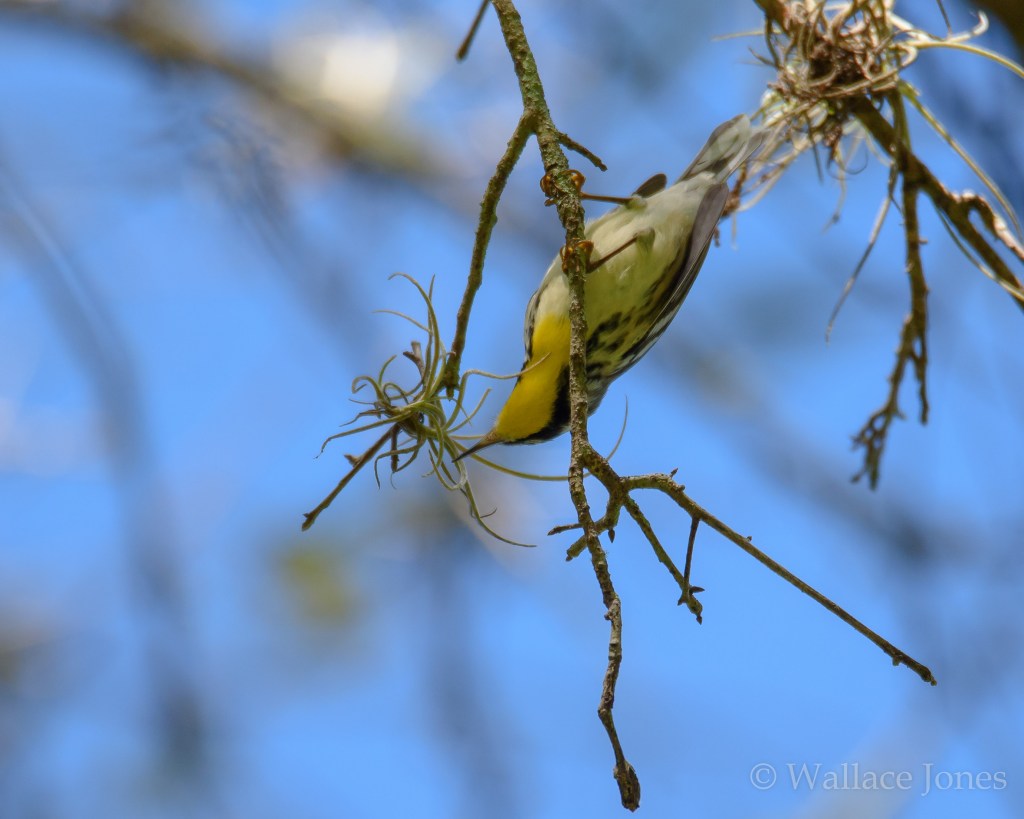
More bright yellow! This time it’s a Yellow-throated Warbler, doing some acrobatics to search for brunch.
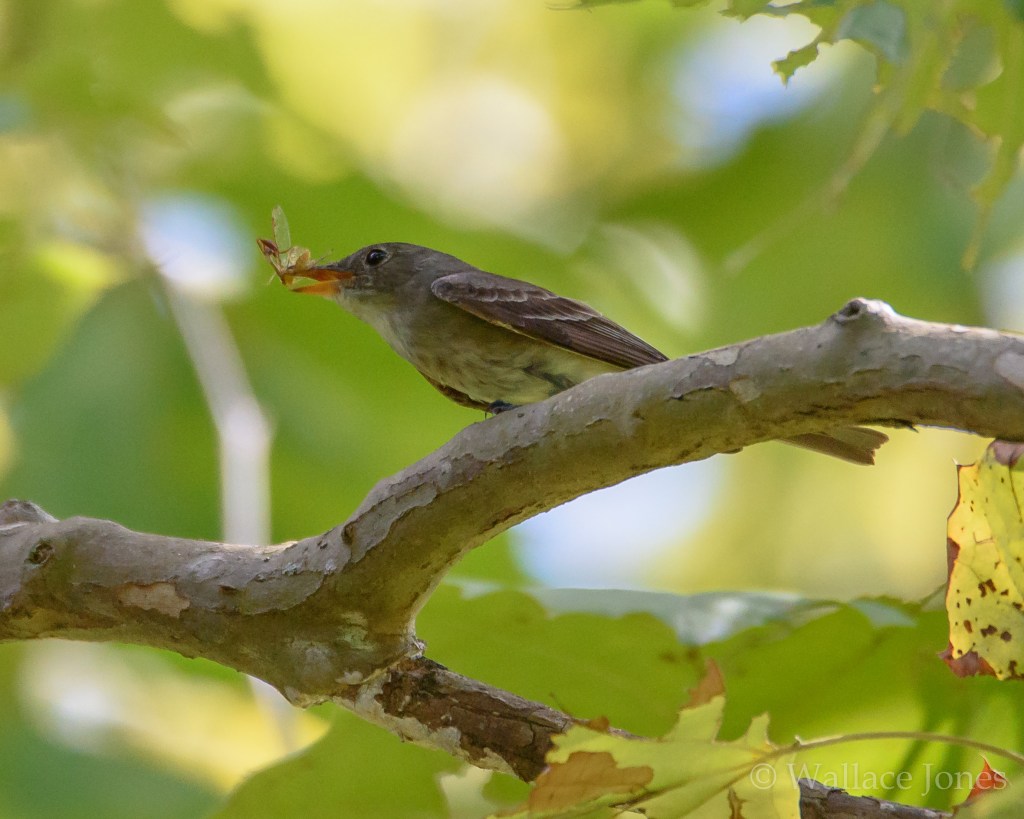
Time to head back to the car. Wait! Did you see that? A flycatcher swooped from its perch to grab a crane fly. Grayish-brown above, dusky light gray below, two light wing bars, faint eye ring, orangish lower mandible. An Eastern Wood-Pewee! A definite migrant.
My “migration headache” has disappeared. Its symptoms, however, will linger a few more weeks. Thank you for coming along. Gini says cinnamon buns and fresh coffee are ready, if you’re interested. Only eight minutes away.
We hope you enjoy your search for a natural place and come back for a visit!
(Header image: Common Ground Dove.)
The conversation usually goes something like: “Is there somewhere you would like to go tomorrow?” Gini responds, “Anywhere is fine with me.”
“Anywhere” will typically be within our home county as we like to keep tabs on what’s happening with “our” resident birds. Since we live in west-central Florida, there are many great birding destinations within a couple hours’ drive and we often explore those venues. One day, I’ll surprise her and take her shopping. She would never forgive me.
For today, “anywhere” will be what has become another local “patch”. Birders tend to return to places which don’t require extensive travel yet offer good observation opportunities. As we become familiar with those areas, we get to know the bird populations and it becomes easier to spot “newcomers”. Since we know the terrain well, not becoming lost and knowing where to go helps with efficiency. For birders, patches are good things.
Formerly mined extensively for phosphate, Tenoroc Fish Management Area has over 7500 acres (3035 hectares) to explore. Much of that is water. Old mining pits have been reclaimed and transformed into excellent fishing lakes. The area is only open Friday through Monday and anglers come from long distances to be first in line to get to their favorite lake. Management only allows a limited number of fishermen on each lake in order to avoid overfishing. (It doesn’t hurt that this vast playground and new “patch” is only ten minutes from the front door.)
With all of that space and water, birding can be quite good. We have found some spots more productive than others and it has been easy to fall into a routine. By the time we check the “good” spots, it’s time to head to the house.
Today, we decided to be bold and explore a couple of trails we had heretofore not trod.
Here’s the thing. Somewhere along the 50+ year journey of becoming avid birders, we made the rather startling discovery that we may be “amateur naturalists”. Especially in the past couple of years, we become easily distracted from birding by a butterfly, an interesting plant, dragons and damsels and even – gulp – fungi!
So, even though today’s trip did not result in a large number of birds seen, we found two new trails which hold great potential for migrating birds and which provided some terrific sightings of insects and flowers which made for a very successful day.
As usual, my genius Gini’s “anywhere” turned out to be a winner. Just like her.
Yup. We made images.
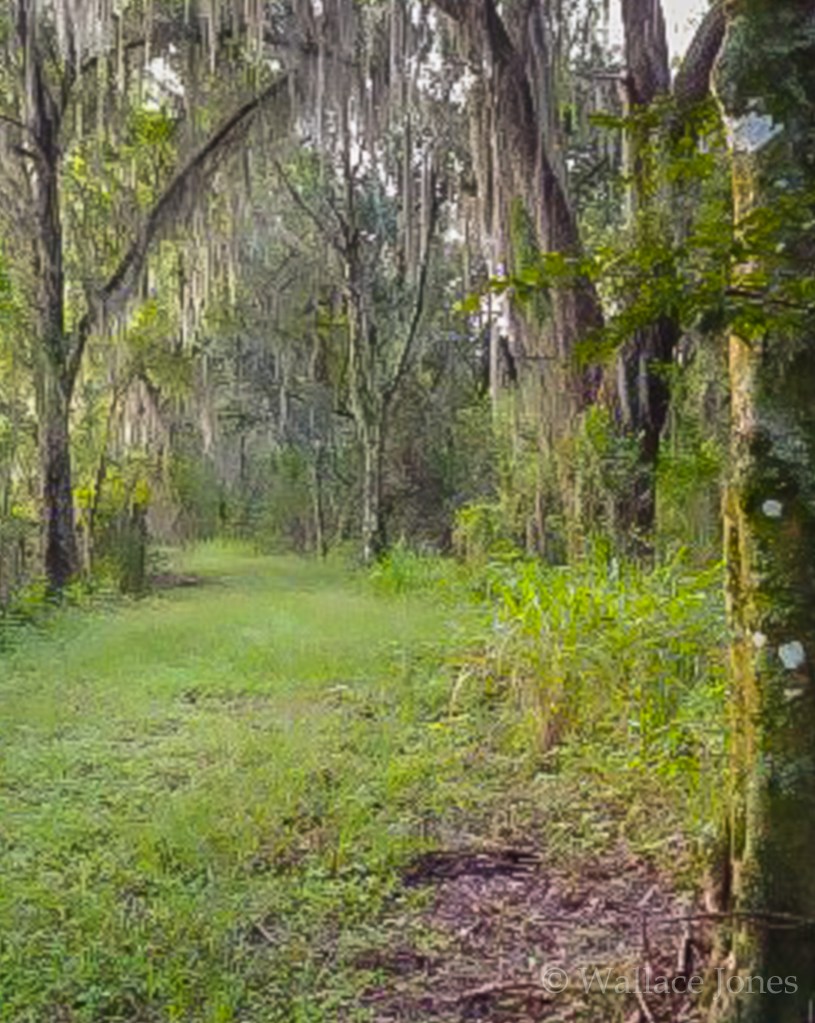
The first path had a lake on one side and a steep ravine and creek on the other. Tall hardwood trees in the ravine and willows along the lake screamed “birdy”! Now, if we can just convince the birds how nice it is. As with all things in life, timing is everything. (Apologies for the image quality. Cell phone camera.)
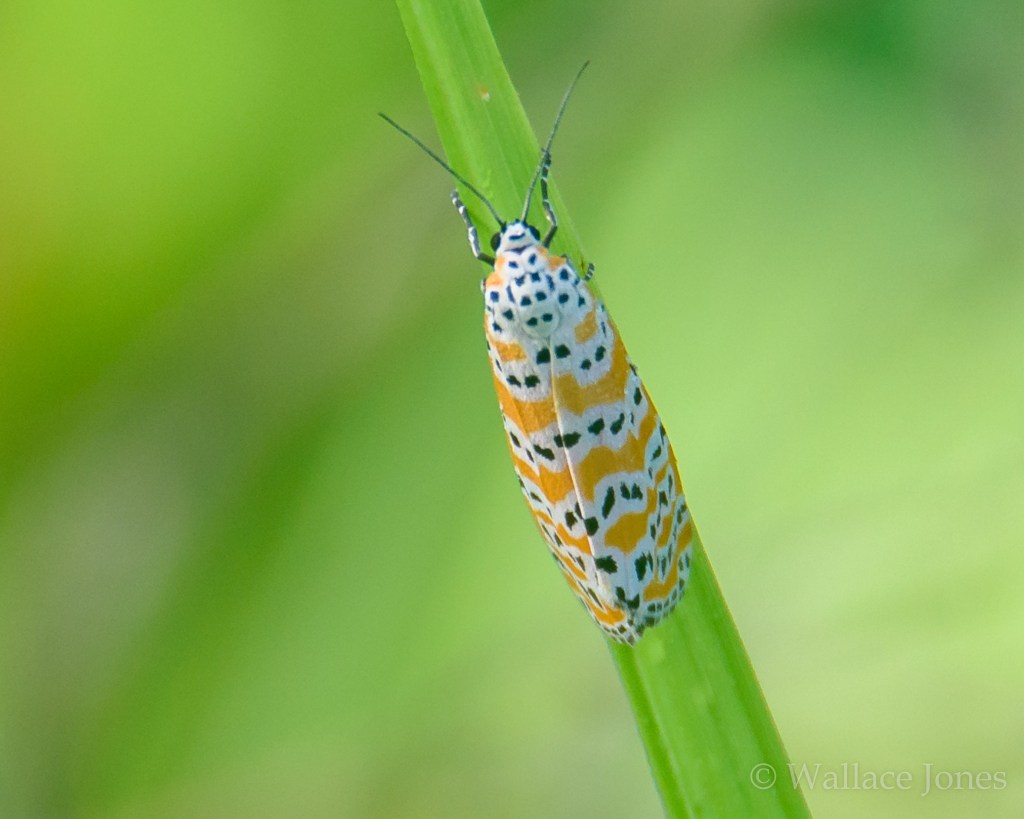
The Ornate Bella Moth (Utetheisa ornatrix) has two endearing qualities: it is active in the daytime, making it easier to see; and it’s sorta pretty.
One of Florida’s more common butterflies, the White Peacock (Anartia jatrophae), also happens to be fairly attractive.

During the morning, we counted six Blue-gray Gnatcatchers. These sleek hunters rarely pause as they inspect every twig and leaf for insect snacks.

As dragonflies go, the Needham’s Skimmer (Libellula needhami) is medium-sized and the male is hard to miss with his reddish-orange body. The female pictured here has a warm brownish-orange abdomen and gold-tinted wings.
Small and gorgeous. A Carolina Satyr (Hermeuptychia sosybius) is a woodland butterfly with “eyes” on its wings to help fool would-be predators.

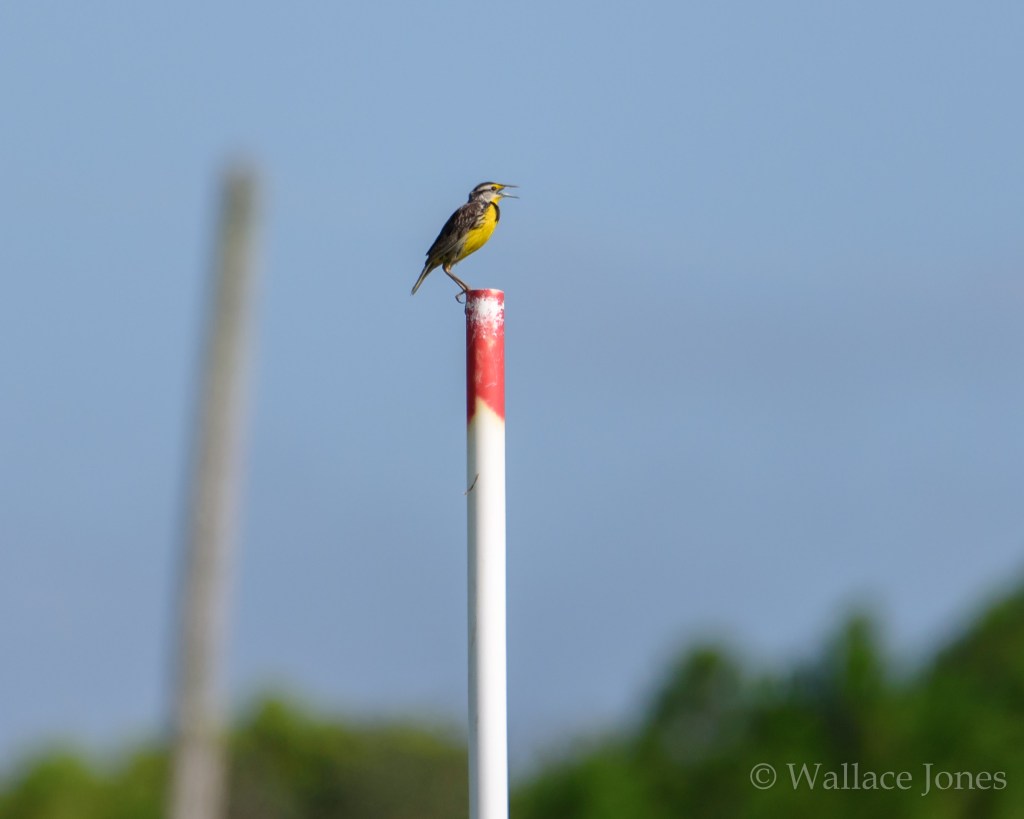
During annual molting, many birds, such as the Eastern Meadowlark remain silent as they have only limited ability to fly. Once new feathers are in place, a convenient perch in a field becomes a stage from which the unmistakable clear notes of this songster are broadcast for those fortunate enough to be in range.
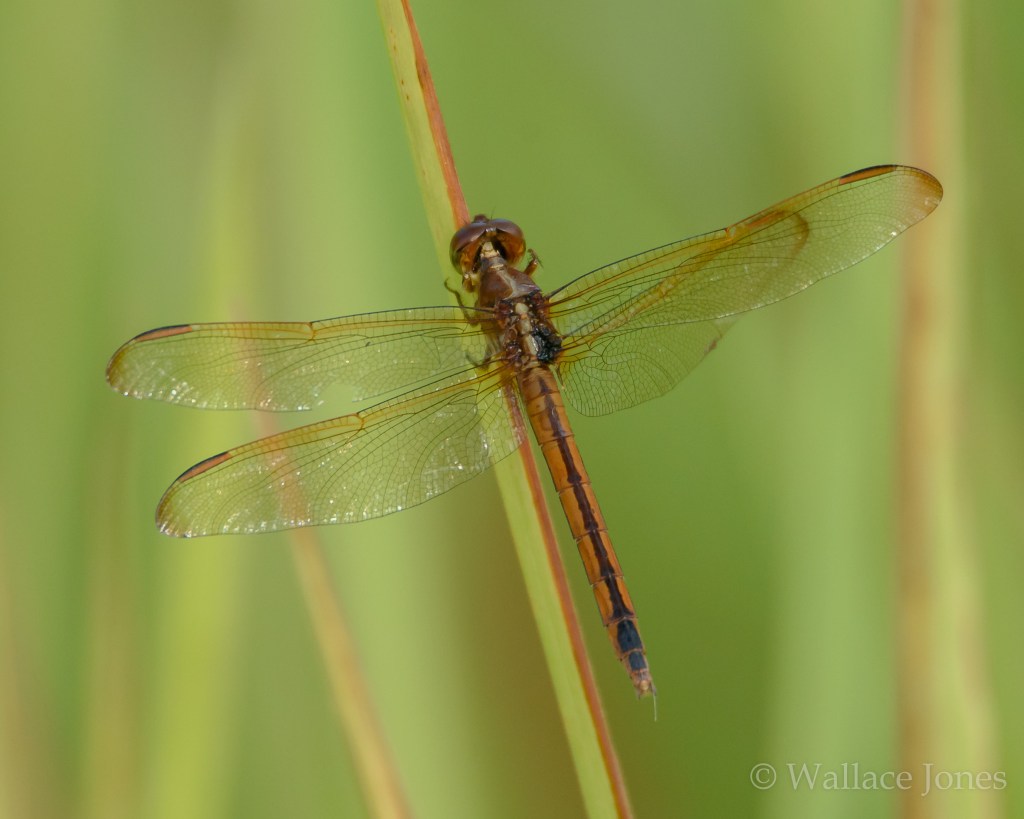
Wandering Gliders (Pantala flavescens) are true to their name and can normally be seen zipping back and forth guarding territories and chasing rivals and potential enemies. Knowing they have to land SOMETIME and actually finding them when they do are two different things. We found one! Woo-hoo!
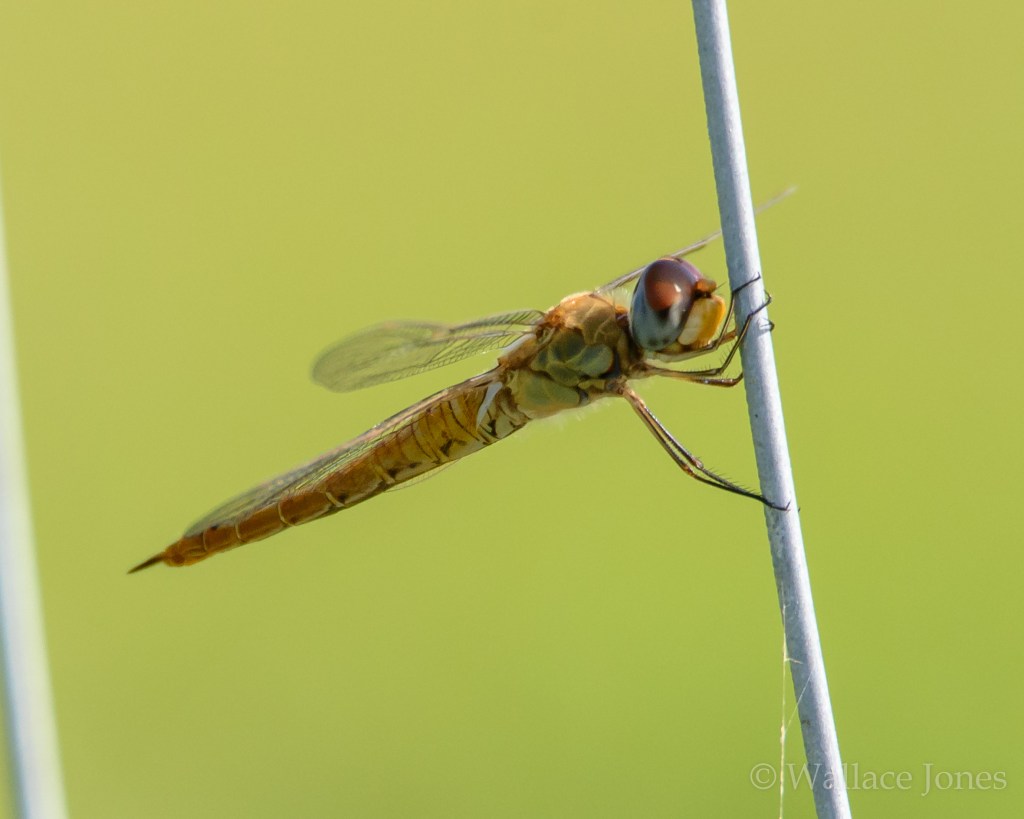
This path was bordered on the north by a lake and on the south by a really nice wetland area, filled with cypress trees, willows and a few oaks and hickory trees. Again with that timing thing. We’ll keep tabs on this spot as fall migration gets busy. (Again, cell phone quality.)

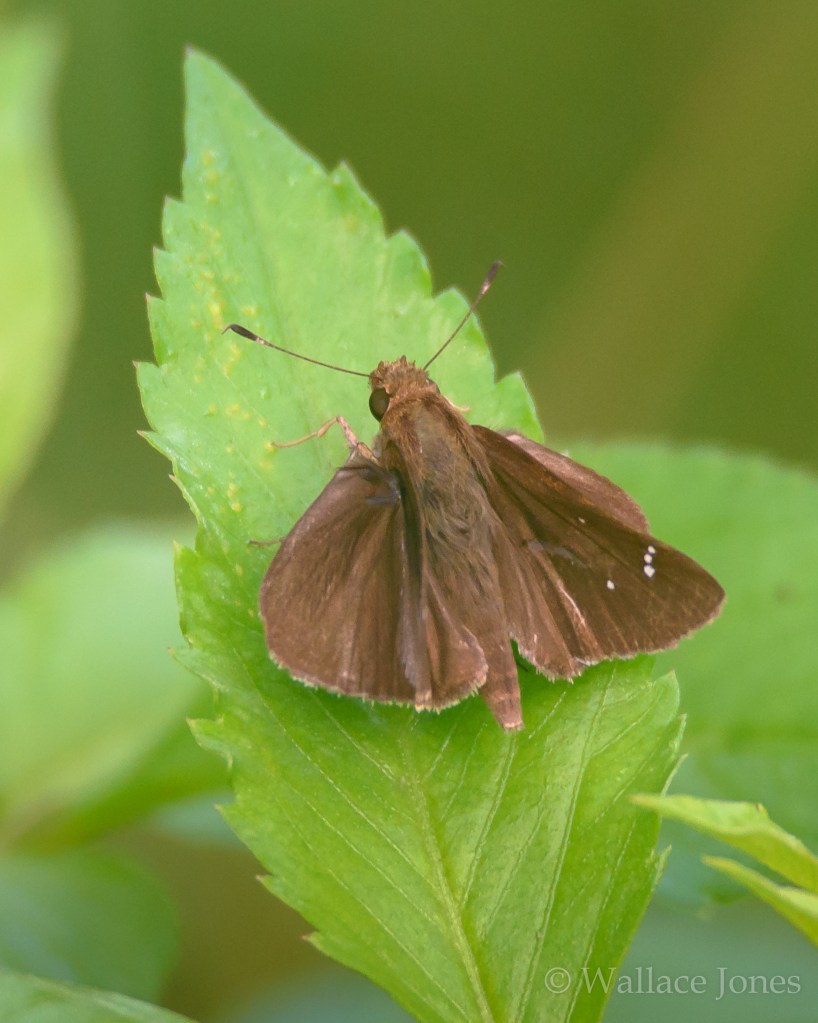
Small, brownish-gray and a few tiny white spots help identify a Clouded Skipper (Lerema Accius). Even simplicity in nature is beautiful.
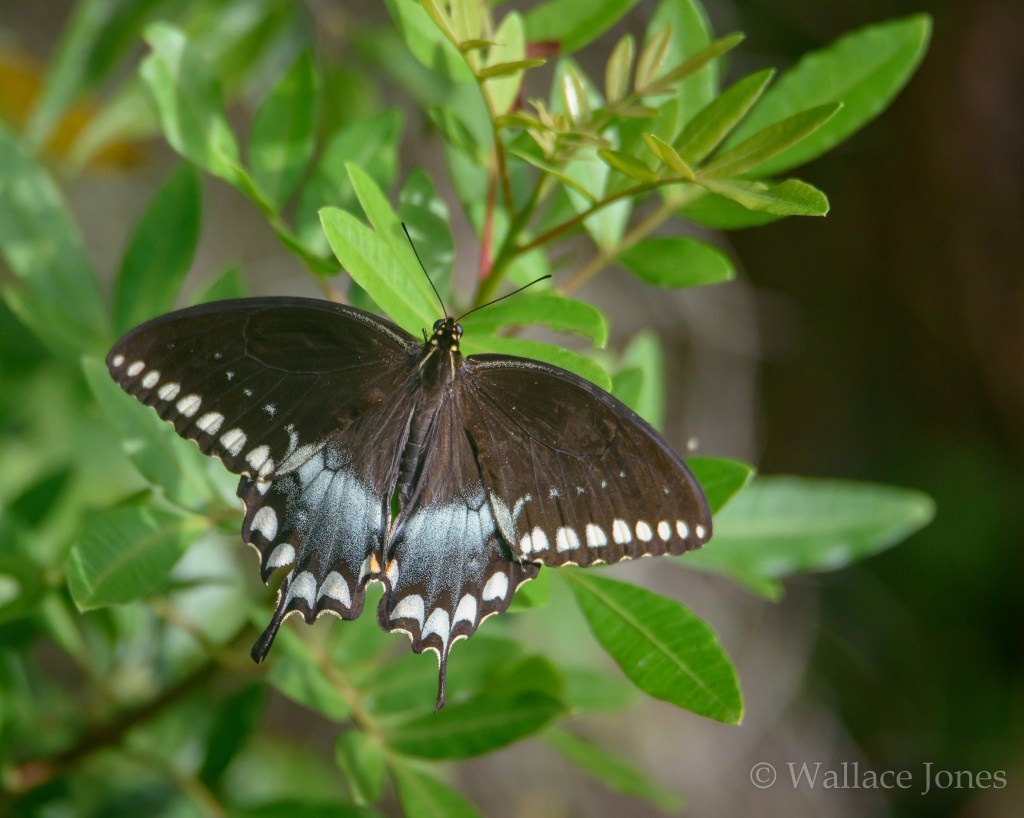
No subtlety here! A colorful Spicebush Swallowtail (Papilio troilus) shows off its black and contrasting wash of blue, which identifies it as a female. The male displays a wash which is more greenish.
If it hadn’t moved just a bit, I would have walked right by this Royal River Cruiser (Macromia taeniolata). Although they are large for a dragonfly, they blend in surprisingly well with their perches.


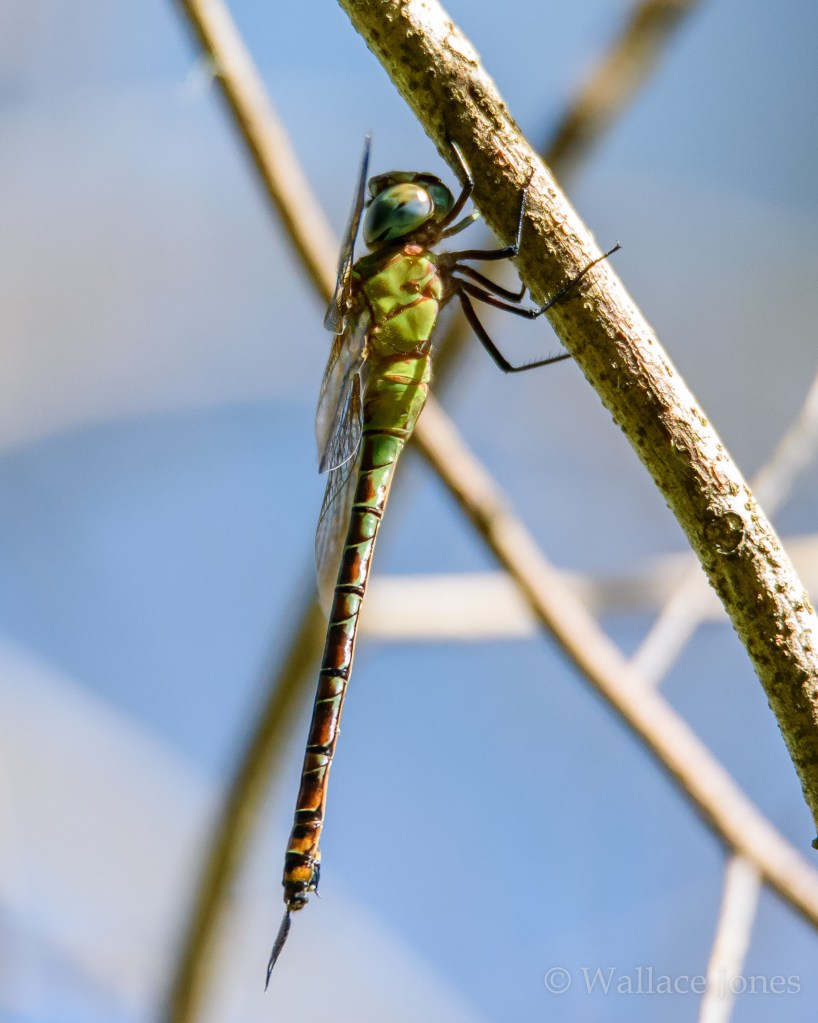
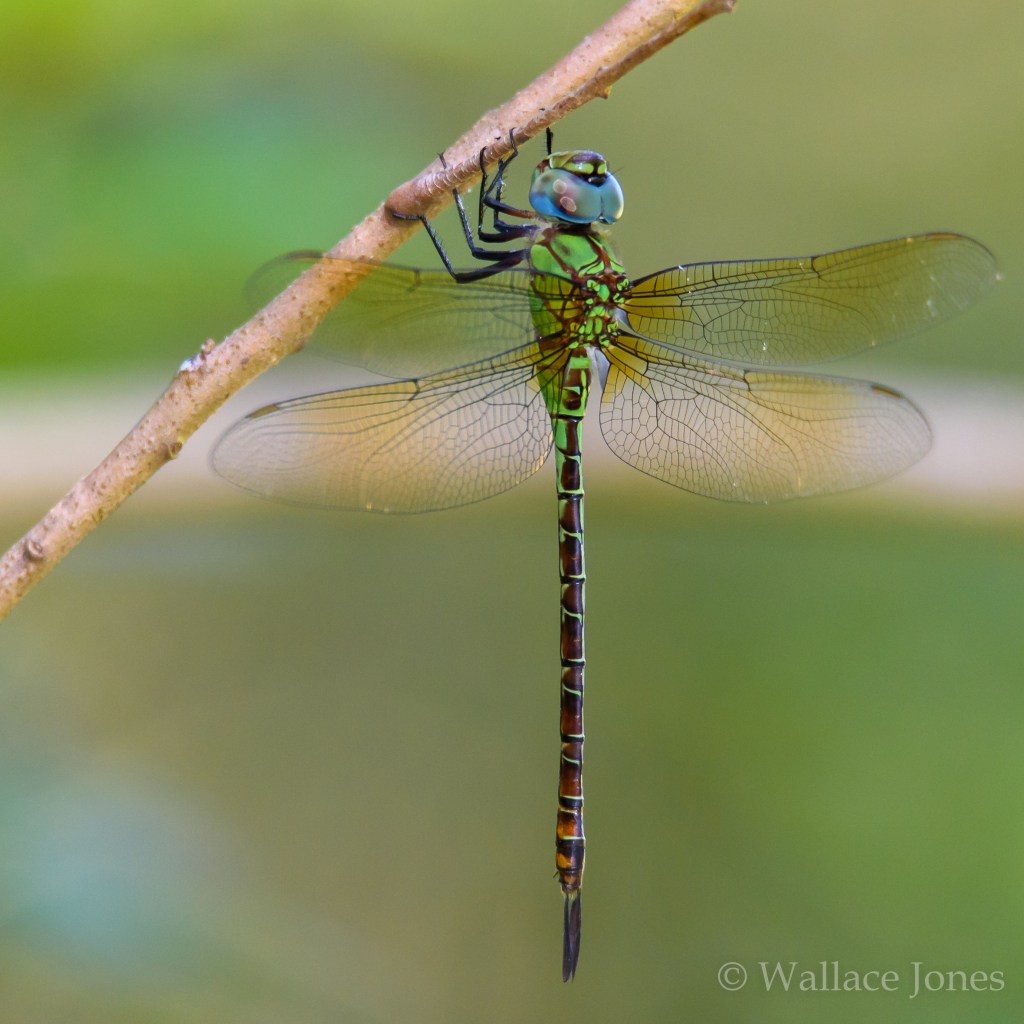
And, if I had not seen the dragon above, I would have missed the Blue-faced Darner (Coryphaeschna adnexa) which was hanging about six feet beyond it. Thus proving my motto: “Better lucky than good!”
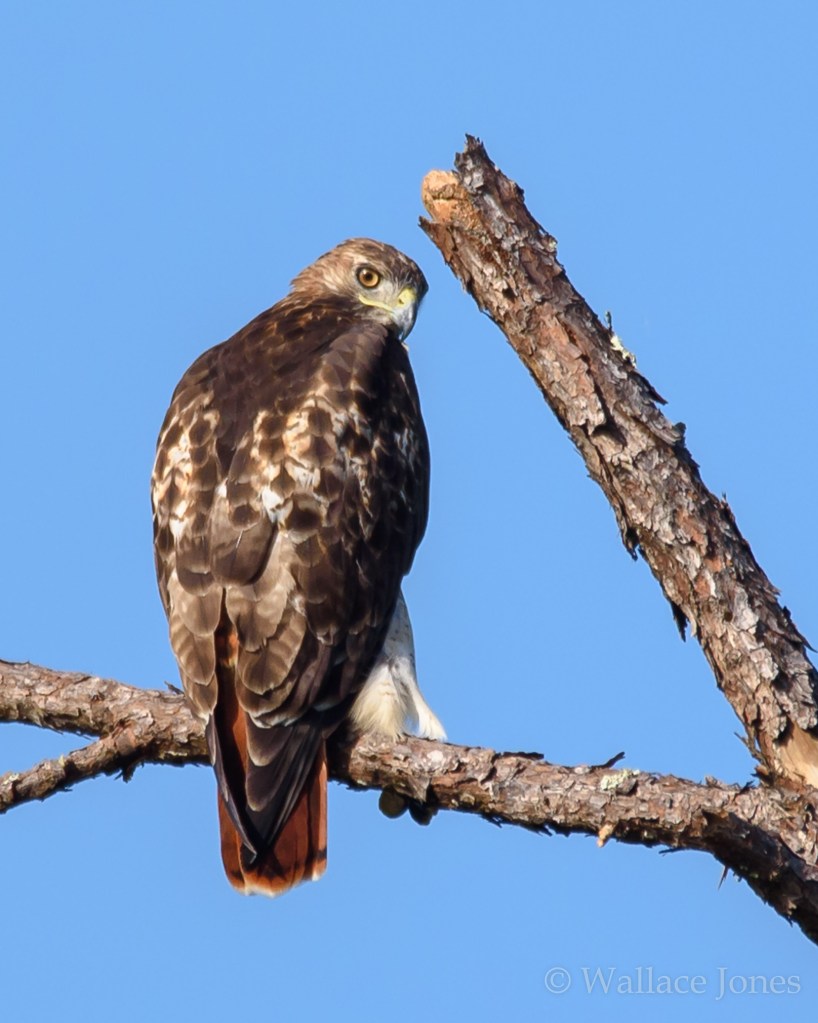
Heading home, we spotted a movement in a tall pine tree and parked to take a closer look. A magnificent Red-tailed Hawk! She appeared to have fresh prey which may have been a rabbit. Her head snapped around and I took a couple of quick shots and left her alone to enjoy lunch.
We are not yet familiar with all of our new “patch”. Does that make it a “patch-work in progress”? The portions we have explored so far makes anticipating future trips an exciting prospect!
We hope you enjoy your search for a natural place and come back for a visit!
Additional Information
 Our Natural Places