(Header Image: Egrets and Ibises head for their nightly roost.)
Traffic was relatively sparse as we left the interstate highway at the sign announcing “Disney World!”. We drove past that exit and continued toward Orlando International Airport. It was a Thursday. The glowing green digits of the car’s information panel displayed “4:45 a.m.”. My hand rested comfortably in Gini’s.
Escorted by a couple of huge trucks, we cruised by the turnoff for the airport and left the glow of the Orlando metroplex in our rearview mirror. Morning commuters were beginning to stack up on the other side of the freeway headed for jobs in the city. I sure miss those days. HA-HA-HA-HA!!
Ahead, darkness. We passed through the marshes of the St. Johns River where ground fog formed a patchwork quilt on either side of the road. The horizon began to lighten, not from the pending sunrise, but due to the need for humans to avoid the dark.
We drove by the roads which lead to Cape Canaveral and the Kennedy Space Center. Space – the final frontier. Our goal today was a bit closer.
Crossing the bridge at Titusville over the Indian River, a flashing sign informed us “Black Point Wildlife Drive Closed”. Rain the previous few days apparently caused portions of the road to be covered in water. This had been one of our primary destinations. No worries. Plenty of other spots to explore in the 140,000+ acres of Merritt Island National Wildlife Refuge.
Our first stop was at the Biolab Road boat ramp. We watched as the sun broke above the far shoreline of Mosquito Lagoon. The lagoon is part of the Indian River and just beyond the shore to the east is the Atlantic Ocean. Before the sun appeared, birds of all sorts were awaking to a new day. Pelicans were already crashing into the water’s surface, gulls were trying to steal breakfast from the Pelicans, small flocks of shorebirds skittered just above the water, an Osprey circled overhead, a Red-bellied Woodpecker “churred” just behind us and a pair of porpoises chased a school of mullet a few yards away.
After enjoying a delightful dawn and since the wildlife drive was closed, we headed for East Gator Creek Road. Good choice. Hundreds of ducks, ibises, egrets, herons, shorebirds and even a pair of American Avocet were just waiting for our arrival. We gawked, we photographed, we oohed, we aahed, we sighed – a lot.
Gini and I are native Floridians. As such, we must have periodic infusions of salt air. I am pretty sure it’s a law.
We paused at a bend in the road with a view of a large section of marsh where plenty of birds were feeding. Time for some feeding of our own. Gini had prepared her favorite breakfast: peanut-butter and grape jelly sandwiches on cinnamon-swirl raisin bread. Along with a fresh orange, we were fortified for the day’s adventures.
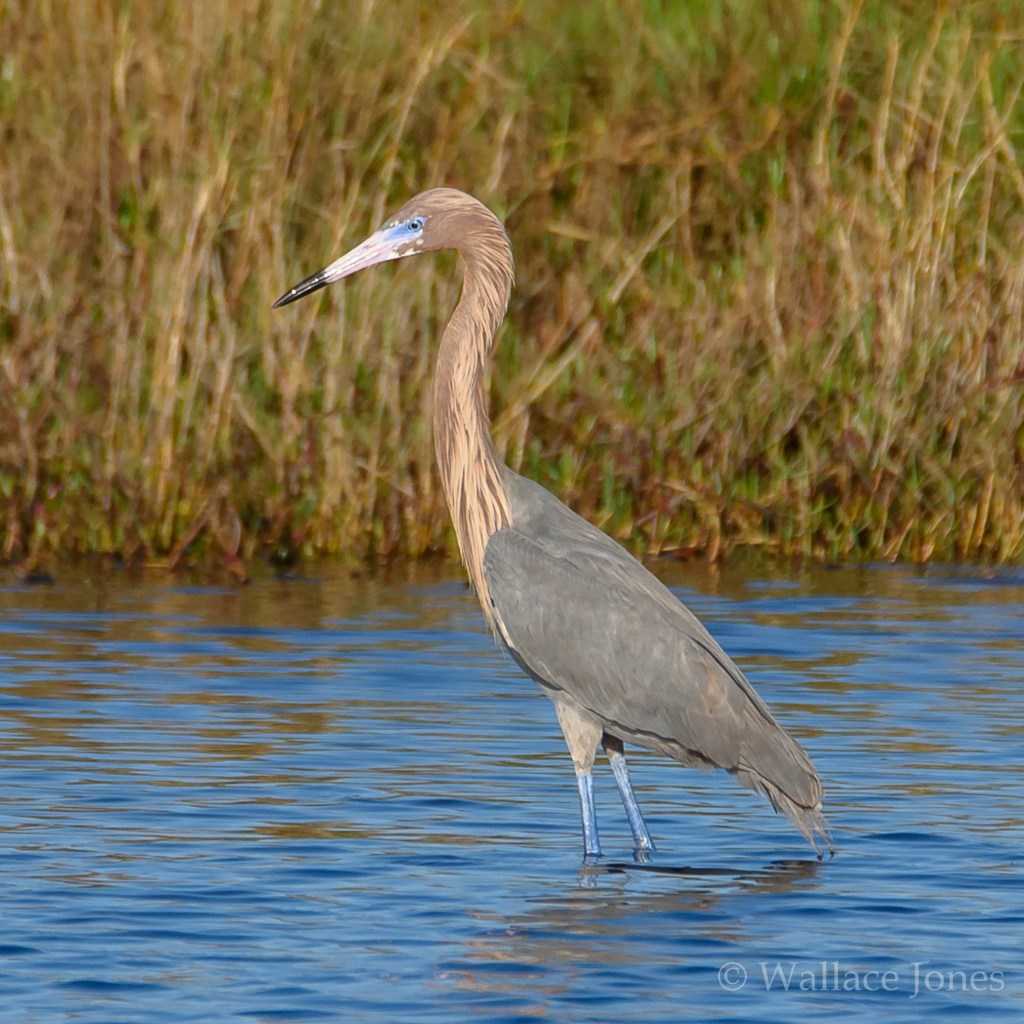
One of the morning’s highlights was watching a Reddish Egret perform his own very special ballet. Incredible spectacle!
We’ll take a mid-morning break and share a few images with you.
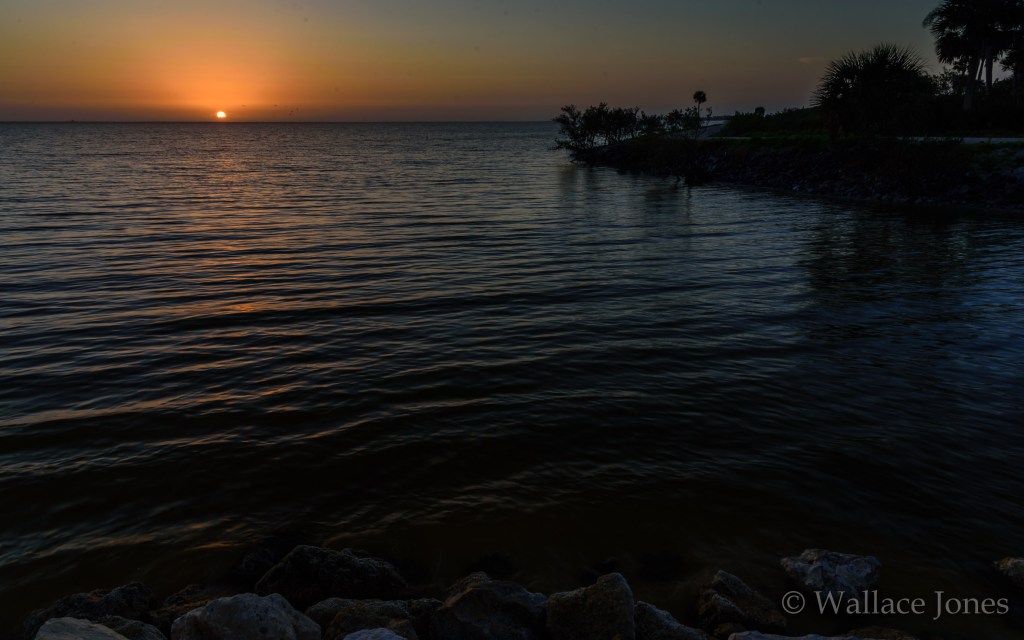
The sun makes its appearance rising above the Atlantic Ocean and peeking at us over the Indian River’s Mosquito Lagoon.
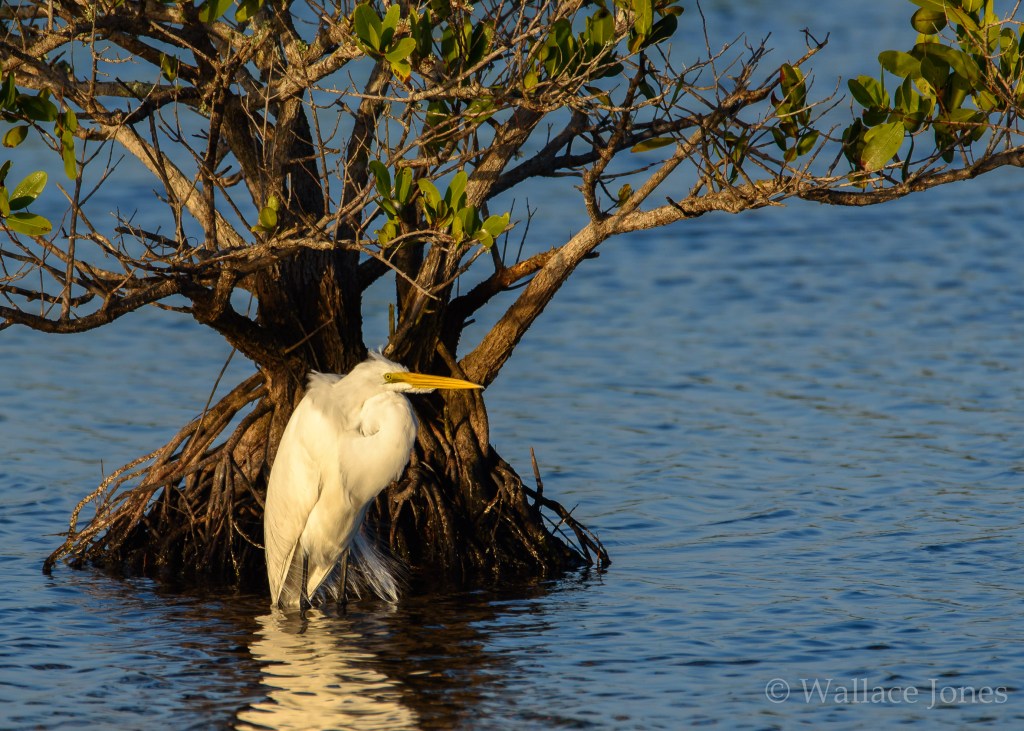
Vast shallow-water areas sprinkled with mangrove trees provide a perfect habitat for birds of all descriptions. A Great Egret soaks up the early morning sun’s rays as he prepares to look for crabs and fish all day.
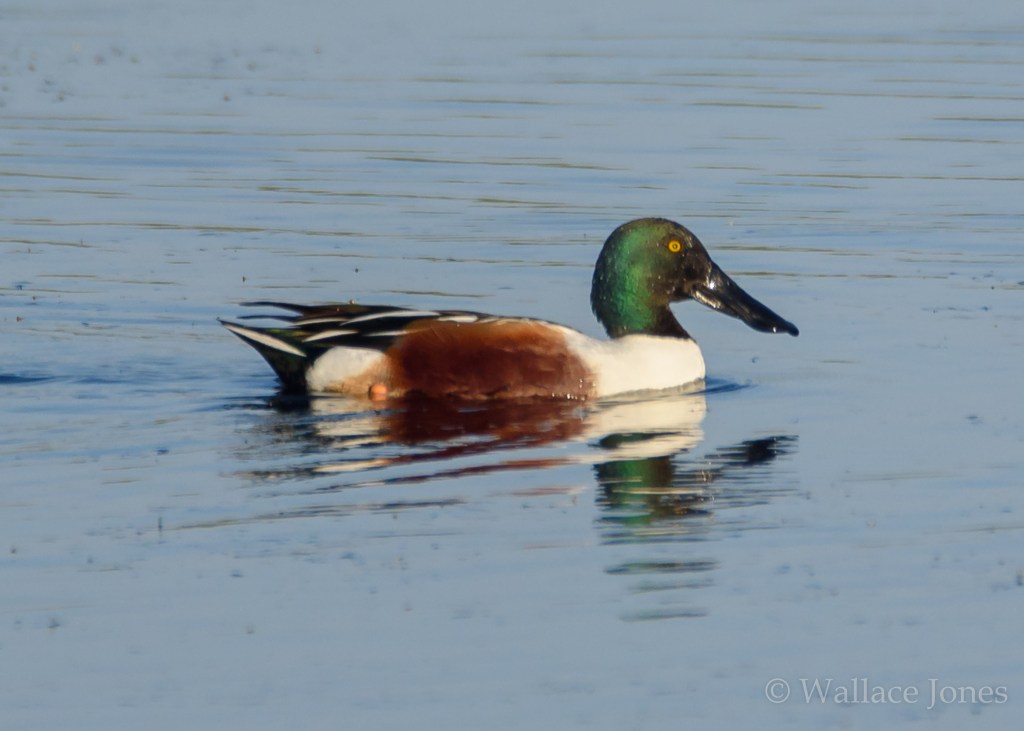
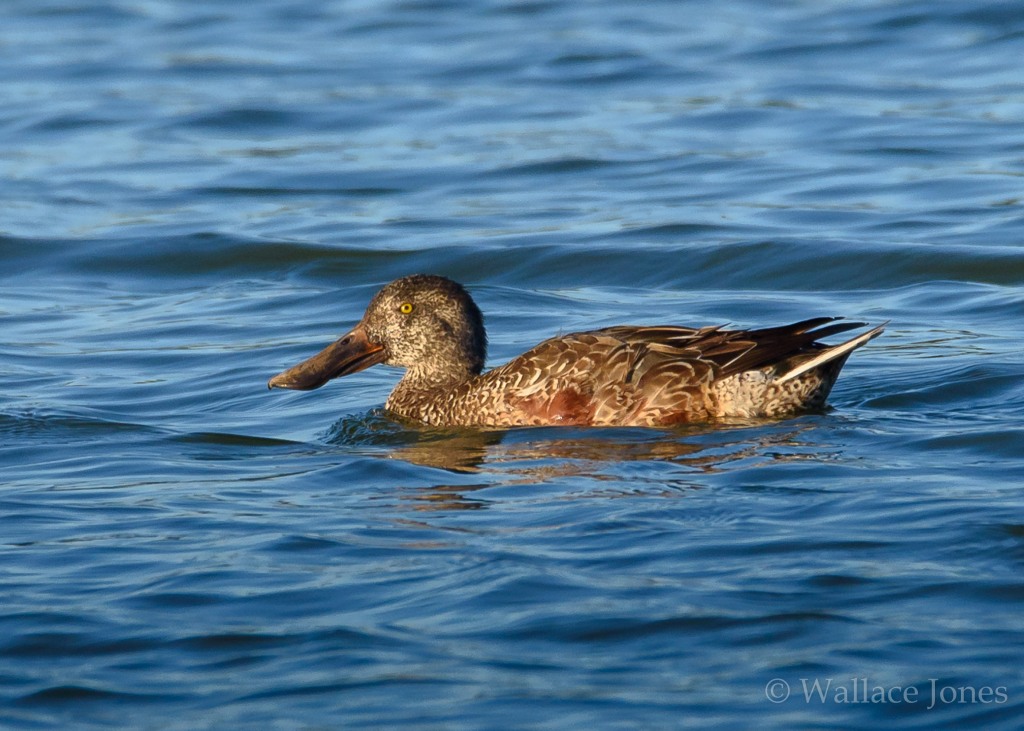
Merritt Island is a magnet for wintering waterfowl and attracts tens of thousands of them each winter. A pair of Northern Shoveler are thankful for a sheltered spot to forage. On the wing, they are sleek-looking and strong, fast fliers.


A Glossy Ibis appears to float as she prepares to make a landing. The sun highlights her mother-of-pearl iridescent feathers.

The most abundant ducks on the refuge this day were Blue-winged Teal. The first image solves the mystery of how they were named. The second image provides a glimpse of a small portion of the teal we encountered. Finally, a pair of male teal escort a female during some tight-formation aerobatics.


Not as numerous, but equally attractive, there were plenty of American Wigeon in the air and on the water.

A pair of American Avocet entertained us with their sweeping motion technique of feeding. As their slim bills move back and forth, they open the bill slightly and scoop up small invertebrates. Soon, their head and neck will turn a rusty brown during breeding season. Handsome birds in any season!


The Reddish Egret goes through quite a routine to obtain a meal. He raises his wings to diminish glare on the water’s surface. This move also provides shade which attracts fish. He will run forward quickly and then suddenly change directions. Finally, he’ll stop and stab at the water and be rewarded with a fishy prize! I got tired just watching it all.


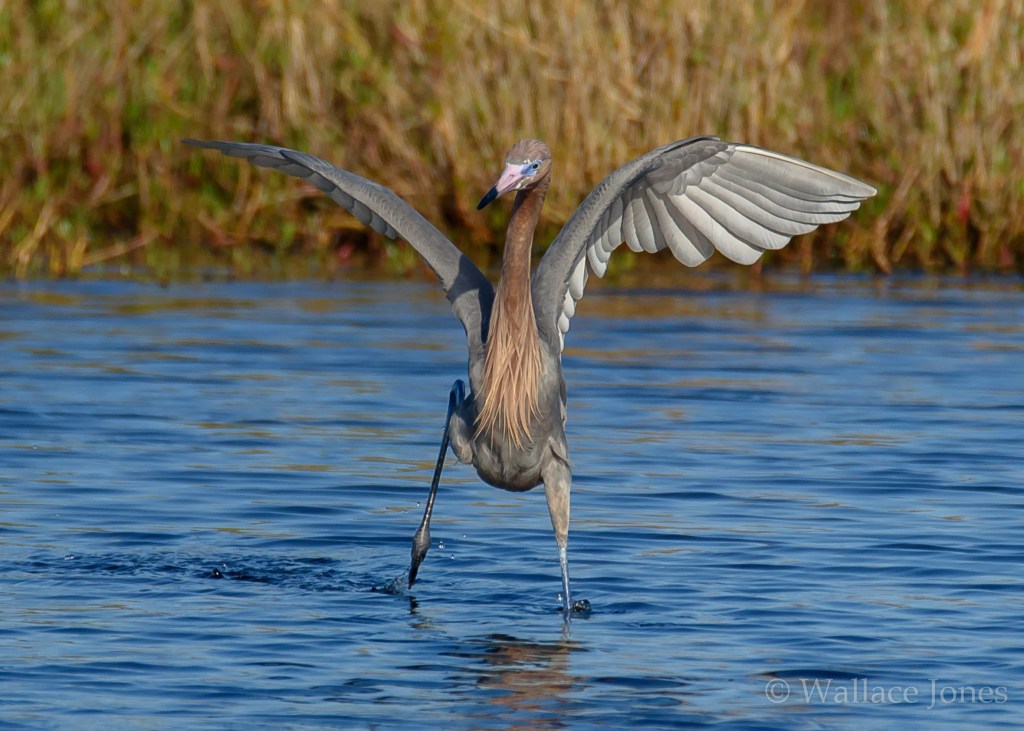

Early birders may not get worms, but we certainly had a wonderful start to our day! Next up – gorging on crab eggs. Don’t miss it!
Enjoy your search for a natural place and come back for a visit!
Additional Information
(Header Image: Morning In The Swamp)
It’s true. We’re spoiled.
We have access to some of the best birding locations on the planet. Within a couple of hours, we could be at the Atlantic Ocean, the Gulf of Mexico, Ocala National Forest or the vast “river of grass”, the Everglades. Or, we could sleep in, enjoy a leisurely breakfast and saunter over to our local state park, which doesn’t swing open the gate until 8:00 a.m.
On this day, we chose the latter.
Just beyond the ranger station at Colt Creek State Park, a pair of Killdeer were hunting for their own breakfast along the main park road. In a tall pine tree at the first curve was a loud Red-shouldered Hawk. A swampy spot across the road from the hawk still had a few red maple leaves showing as the early morning sun filtered through the trees.
For the first couple of hours, every time we stopped the car, Gini heard a smorgasbord of songs and chips and chirps. The fields and forest seemed filled with birds today. Some were residents but most were winter migrants still enjoying the Sunshine State’s hospitality before they responded to the urge to return north.
White-tailed deer munched grass near the tree line, unconcerned by our presence as they have become accustomed to tourists gawking at them. Eastern Gray Squirrels scampered up trees to enjoy an acorn on a sun-drenched limb. Young alligators relaxed in the warm mud on the bank of Colt Creek. A Limpkin cried in the distance.
A new day was in progress.
We drove the park road slowly, stopping now and then to explore a short path. Turkey Vultures spiraled upward as warm thermal air buoyed their efforts. A horse rider flagged us down and asked for help. Her mount appeared to have injured a knee. I stayed with the horse as Gini drove her to retrieve her truck and trailer. We hope the animal recovers.
As usually happens, the noon hour came and went without us noticing. Reluctantly, we left the birds singing and hunting as we re-crossed the creek on our way home. Another beautiful day.
We are SO spoiled.
A few images somehow made their way into the camera.
Supposedly, the Killdeer was named because of its call. I don’t hear it, but I probably need a better imagination.

Soon, the American Goldfinch will turn brighter yellow and return a bit further north. We will miss them until next fall.

We are continually surprised at the variety of songs the small House Wren produces! Their pugnacious attitude belies how sweetly they can serenade the forest.

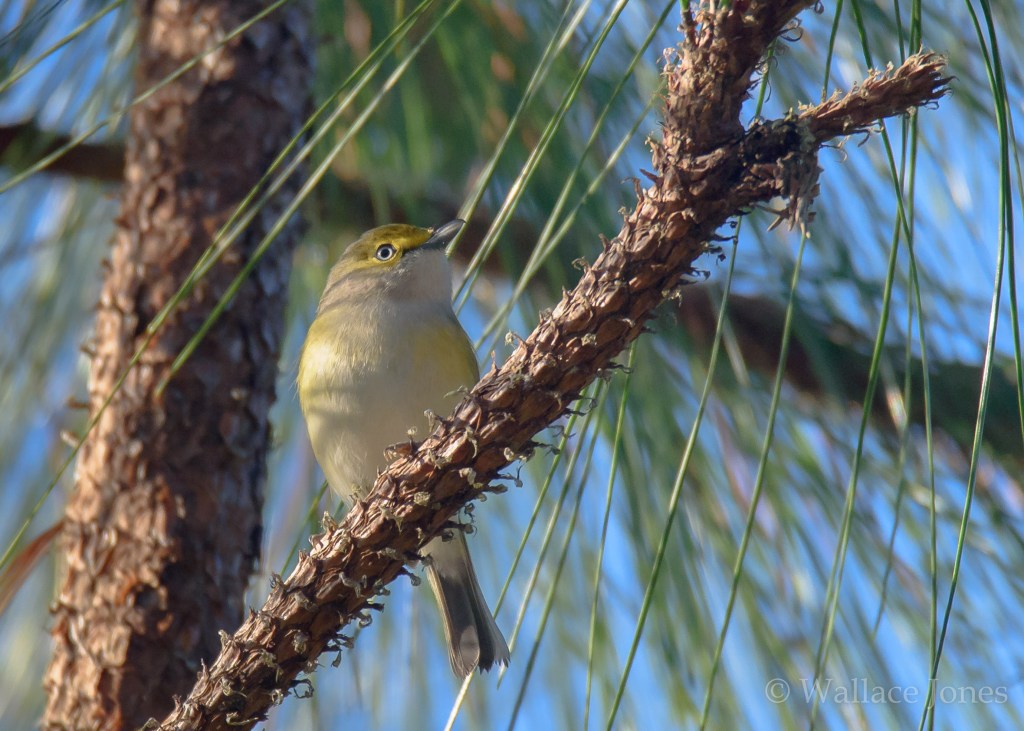
One of our year-round residents, the White-eyed Vireo, is quick to jump out to see who is invading their territory.
In the right light, it’s no mystery how the Red-shouldered Hawk received its name. This medium-sized raptor is by far the most common in our area.

Usually observed feeding on the ground, we found a trio of Common Ground Doves napping in a small tree. They went right back to sleep after I clicked a photo.

A long, loud call got my attention. It also got the attention of a male Red-shouldered Hawk which flew over my head as he responded to his female mate. She was ready to copulate, he obliged. They rested a few moments and then soared together in a bright blue Florida sky. Spring is on the way!


A gray squirrel offered a nice portrait with the sun behind him.

“CAUTION!” There are all sorts of predators out here! If you’re a bug, the Eastern Phoebe is a nemesis which should be feared! Sadly, we only get to enjoy these wonderful birds who sing their name during the winter.


Our morning up Colt Creek and back down again and through the forest and around the swamp was simply exquisite! My beautiful companion beside me made the day perfect. Next time, the coast. Or the big swamp. Or, just maybe we’ll sleep late again.
Enjoy your search for a natural place and come back for a visit!
Additional Information
(Header image: American White Pelicans)
Sunrise will happen in about 45 minutes. I’m on the way to a spot where there have been reports of a couple of uncommon winter migratory waterfowl. As darkness gives way to the early morning light, I approach the target area and search for a place to park. I have calculated where the sun will rise in order to have it behind me as I hope for a decent photograph of the visiting ducks. There! The perfect spot to park, at the – public library??
Our hometown, Lakeland, Florida, has a population of a little over 100,000 and is situated almost half-way between Tampa and Orlando. Similar to many cities, at some point planners were convinced to “enhance” urban lakes with exotic waterfowl. In the early 20th century, the tale is told of swans which took up residence at Lake Morton near the center of downtown. They were promptly eaten by alligators. Some enterprising citizen wrote to Queen Elizabeth (no, really) who authorized the donation of a pair of royal swans in the 1950’s. With proper management, swans have proliferated here ever since.
With a vibrant population of swans, exotic geese, the ubiquitous mallard, a steady source of food (albeit not necessarily healthy food, tossed by a well-meaning public) and protection from predators (the city learned its lesson and keeps the urban lakes ‘gator free) – many migratory species now visit these watery oases during the winter months. Occasionally, a few less-common birds show up and cause a ruckus among local birders. (Hey, that would be me!)
It was too easy. The two ducks I went searching for were waiting as I got out of the car. Just as the sun’s rays streaked over the library, a small female Bufflehead swam from the lily pads near the shore toward open water. A few steps to the north and there was the Northern Shoveler, feeding and paddling and totally ignoring me. Mission accomplished. Time for coffee. Well, maybe a few shots of the locals. Since I’m already here.
“We can forget all our troubles, forget all our cares … So go downtown …” (Downtown, written by Tony Hatch, recorded in 1964 by Petula Clark.)
Each winter, we usually see a couple of Bufflehead at the downtown lakes. Usually it’s females, like this pretty one.

A Northern Shoveler or two also pay us a visit. Soon, this male will be sporting his breeding plumage with all-green head, white chest and rusty brown sides.
Other migrants, very common and numerous during the winter, Ring-necked ducks can be found on many of our smaller lakes and ponds.
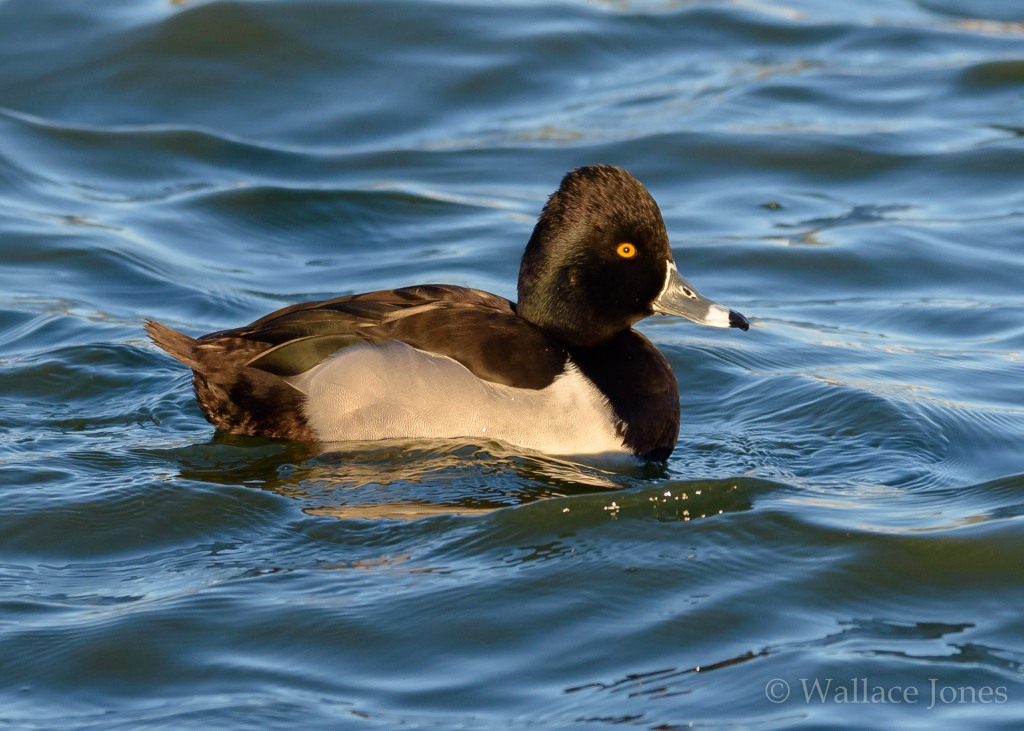


Similar in size and appearance to the Ring-necked Duck, Lesser Scaup show up in small groups on city lakes but can occur in flocks of several hundred on our larger bodies of water. If you visit the coast you may encounter thousands in a single area!

A smaller wintering duck, this male Ruddy Duck will soon have a fairly bright blue bill and chestnut sides as it heads north to its breeding grounds in the north-central United States and Canada.

Not lacking in the bright color department, Wood Ducks are residents here and have already begun courtship and mating as they get a head start on spring.
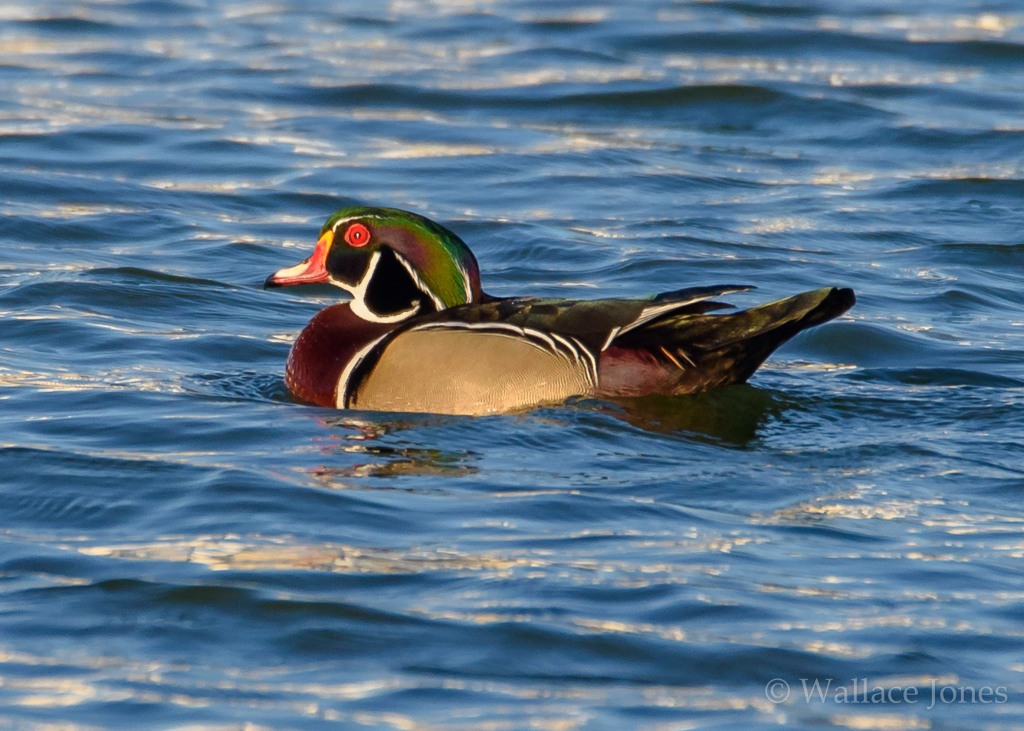
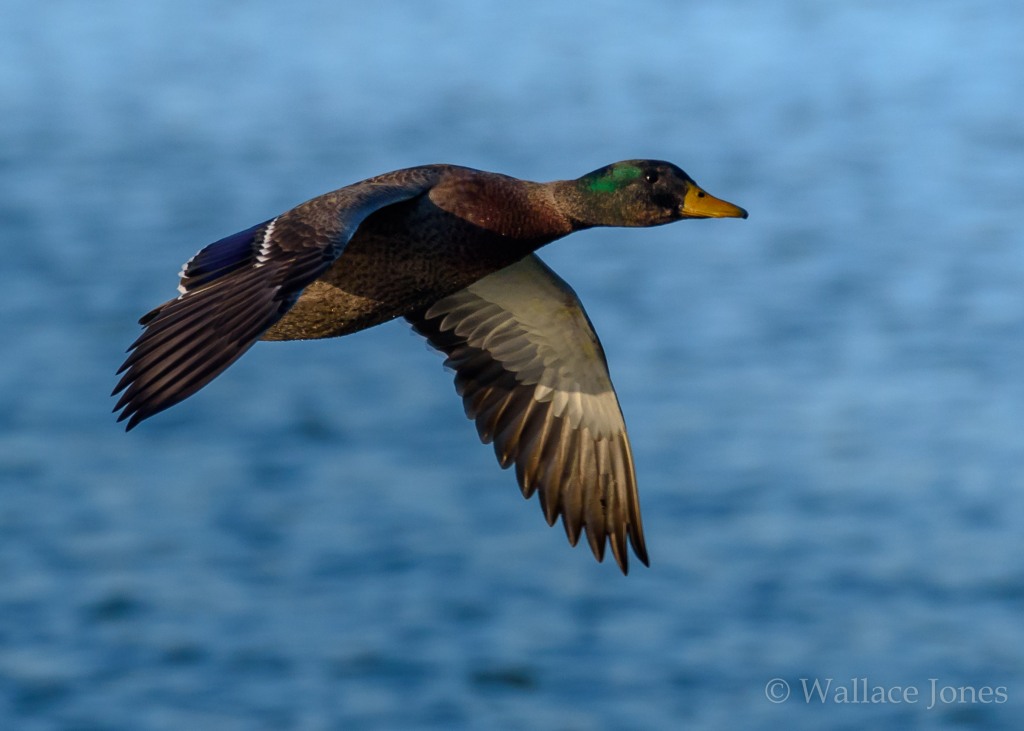
Within the city’s parks and lakes, Mallards abound. In all sorts of configurations. All white to all black and everything in between. I managed to find a “normal-looking” male flying by. This bird is in “eclipse” plumage and is a bit scruffy looking as it molts into full breeding color.
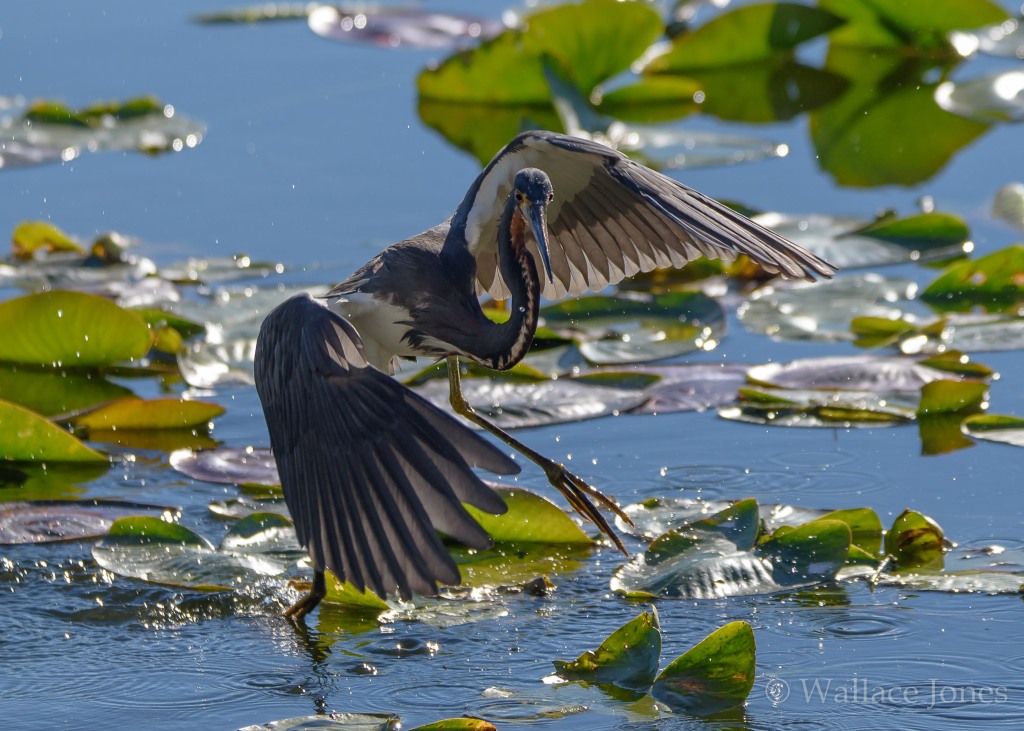
But wait – there’s more! We not only have ducks, but many other water-loving fowl as well. Such as the Tricolored Heron. Beautiful, as the morning sun highlighted the subtle colors on its back. Impressive, as it sprang into action chasing breakfast!

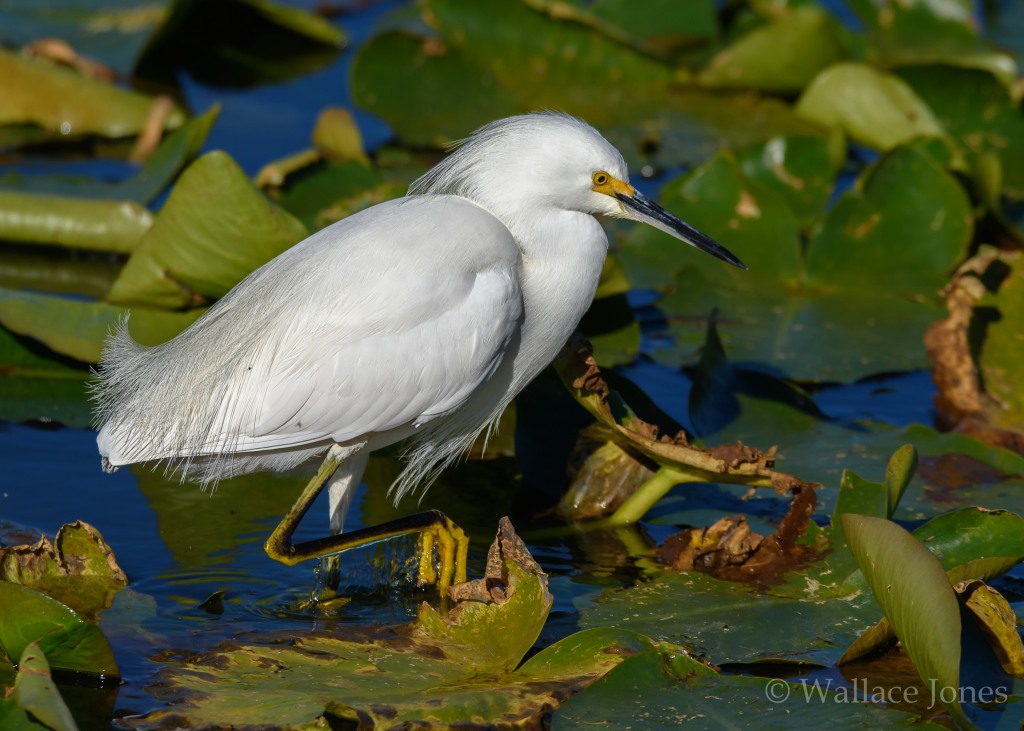
The pure white of the Snowy Egret is interrupted by those golden eyes concentrating on a fish under a lily pad. The equally golden feet suddenly seemed to be walking on water as said fish was swallowed faster than the camera could click.

Several dozen American White Pelicans normally roost at Lake Morton (I counted 42 this morning). They spend a little time preening (like in the header image) and take off in small groups, circling high over the town center and head for nearby feeding areas before returning at dark. One was curious about me.

Brown Pelicans are found locally in our area also but in smaller groups than the American White Pelicans. They are just as curious as their cousins.

Overhead, a Wood Stork lumbered toward shore where a couple of his friends were waiting. Looked like a morning meeting of the chamber of commerce.

Always stately in appearance, a Great Blue Heron passed nearby.
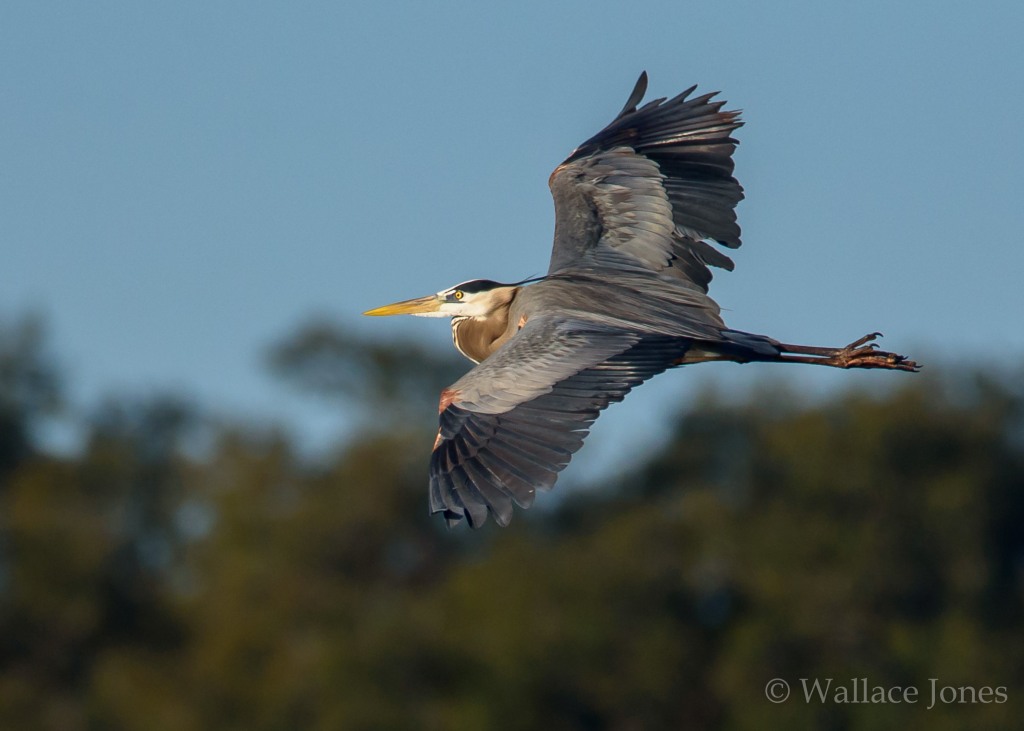
Lake Morton is currently host to about 80 Mute Swans. Too many for this size lake. Every couple of years, some birds are sold to maintain a more balanced population. Is this one a descendant of royalty?
Could be …

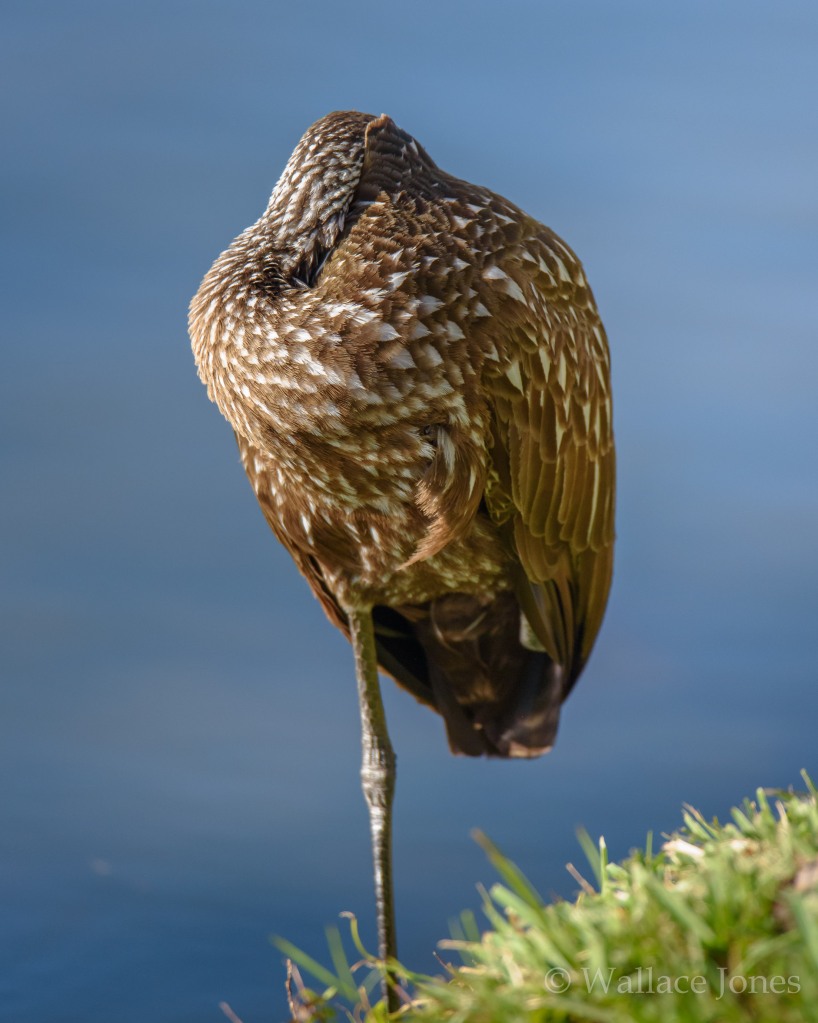
Ahhh, a bird to which I can relate! Despite the hustle and bustle of a city awakening to a new day, the Limpkin is unperturbed. “Wake me when the coffee is ready.” I hear ya!
At times, in our rush to reach the “wilderness”, we forget to look in the other direction. Admittedly, a sunrise within the “concrete canyon” of an urban center may not have the same impact as dawn in the forest, swamp or shore, but a short drive might reveal unexpected rewards once we arrive – Downtown.
Enjoy your search for a natural place and come back for a visit!
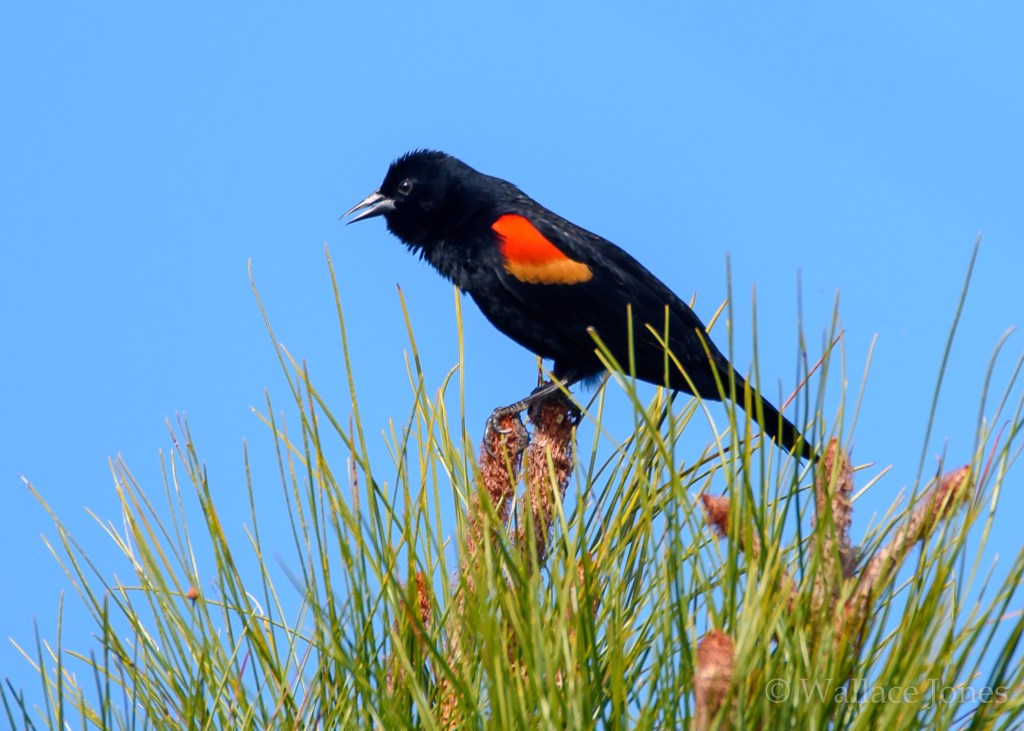
(Header image: Red-winged Blackbird)
The sun is hiding just below the tree line. It will make its grand entrance in about ten minutes. A cloudless blue sky is beginning to have that pre-dawn glow. It’s going to be a gorgeous day!
Glad I wore the boots. There is more dew on the grass than I expected and my regular walking shoes would be soaked by now. So would my feet. It’s just cool enough this morning that cold and wet feet would be uncomfortable.
Early morning commuters are already jamming the skyway. Sandhill Cranes with their loud trumpeting head across the marsh. A trio of male Wood Ducks add a splash of color to the scene. Ancient-looking Wood Storks lumber along and settle in on the bank of an open water area. An Osprey circles above as she tries to decide which menu item to select from her favorite dive-in spot.
Itchepackesassa Creek Wetlands is a man-made impoundment designed to help control periodic flooding. It has only been partially successful. The geology of this area is simply prone to flooding. The creek flows northwest from a lake about five miles away, travels about 12 miles and joins with the Hillsborough River. A study of about 50 square miles here by the Army Corps of Engineers several years ago determined there was essentially nothing to be done to alter the landscape which could halt seasonal flooding. They recommended homeowners raise their existing foundations by at least five feet. The current effort here at the wetlands helps a bit, but once a tropical storm dumps a foot of water over the area, flooding is common.
In the meantime, here I am, walking around a raised berm, enjoying the view of trees, reeds, marsh, open water and birds galore. Selfish thoughts.
We are very fortunate to have several areas near centers of heavy population such as these mitigation sites, parks and wildlife corridors. They provide important oases for wildlife which otherwise would not survive in an urban environment. More selfish thoughts. They provide important oases for me, too! And you.
This morning, Gini remained home as she is knee-deep in creating gifts for our niece’s upcoming baby shower. I promised to not stay long and to prepare brunch upon returning. That first promise, as she knows, will likely be broken.
According to my eBird tracker, this morning’s walk was 2.25 miles (3.6 km). Plenty of bright blue sky and sunshine. That sun plus a bit of walking ensured I didn’t suffer from the cool temperature. My notes show a total of 46 bird species observed. And a River Otter. I found five Marsh Wrens and a Sedge Wren during the morning but could not manage a single photograph of any of them! They will be here another few weeks before migrating north so perhaps I’ll have another chance.
It was a very comfortable and satisfying morning at my very own oasis.
Bald Eagles look majestic even when they are perched on an extremely ugly utility pole.

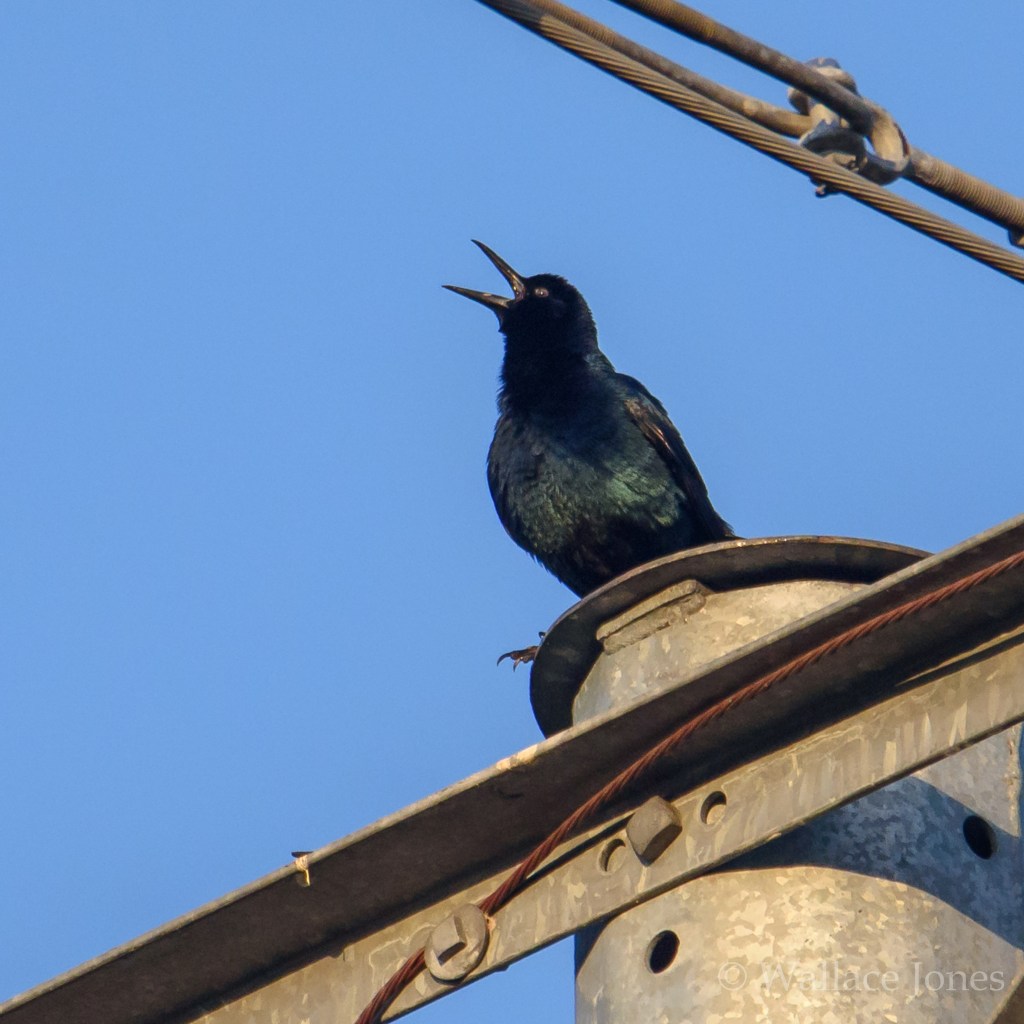
About six feet away from the above eagle, a Boat-tailed Grackle yelled at the eagle. Maybe not “majestic”, but still a good-looking bird.
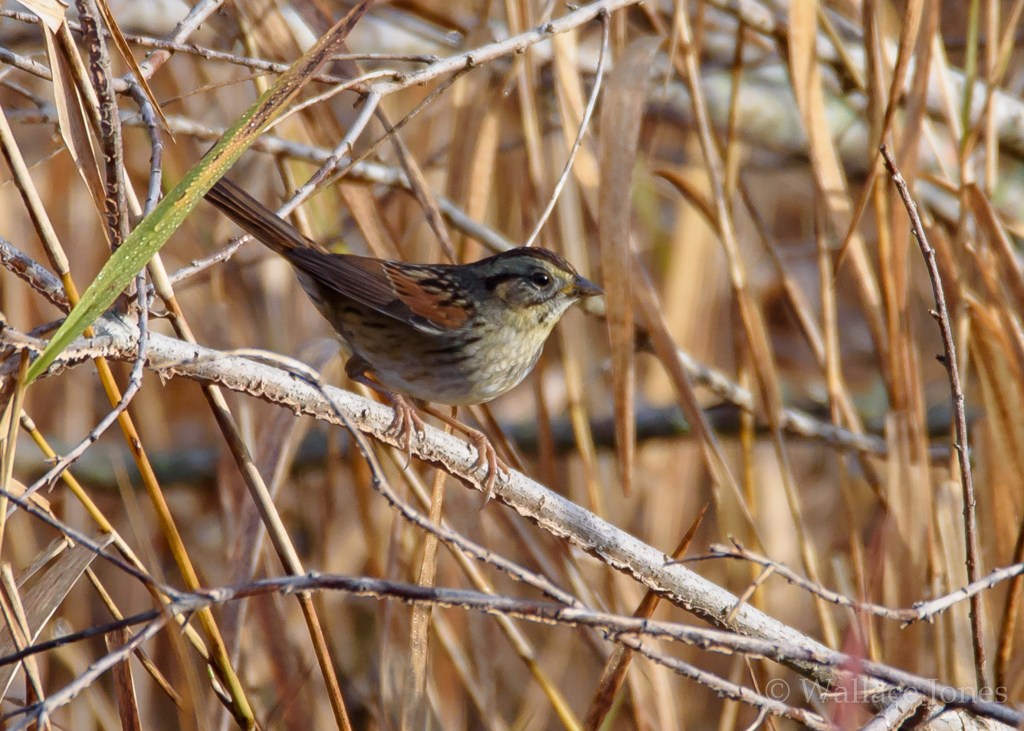
One of our winter visitors, the Swamp Sparrow, has rich brown plumage which helps her blend in nicely with the surrounding dead reeds.
The little tree may not be so attractive, but a Great Egret certainly helps improve its overall appearance.
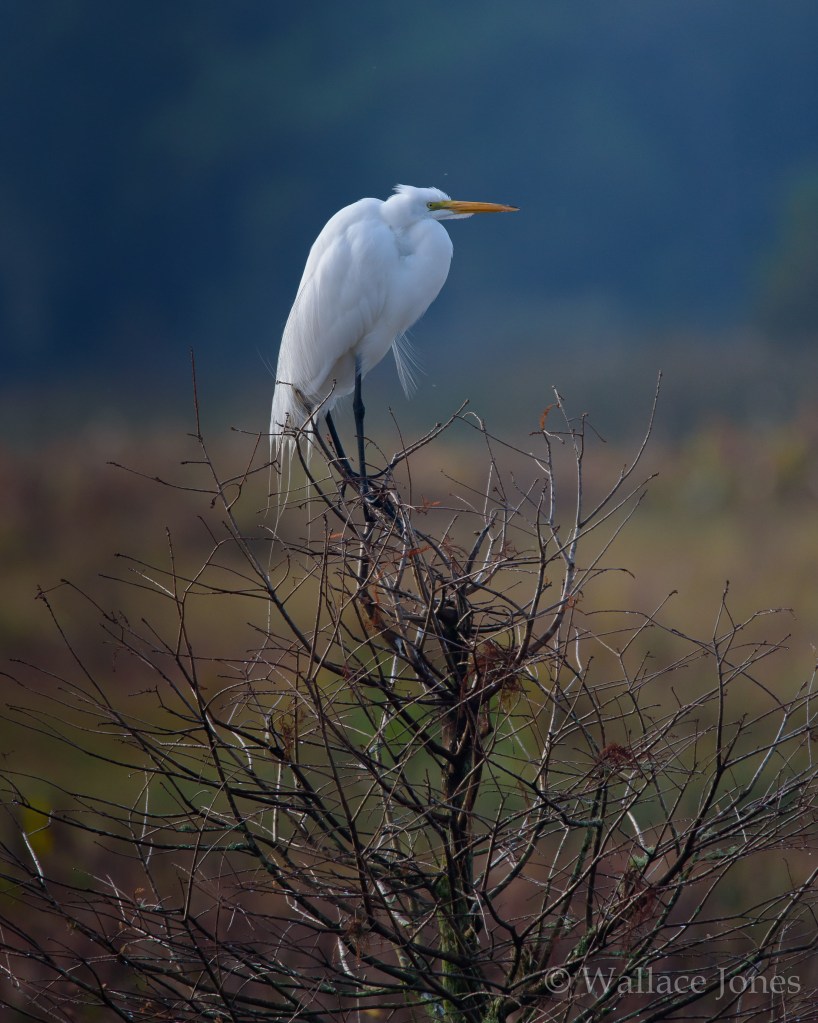
Another tree-topper, the Little Blue Heron uses the increased altitude to scan for potential breakfast items. All-white plumage indicates this is a juvenile bird and this summer it will begin to show patches of blue and by next spring it will have attained the all blue color of an adult.

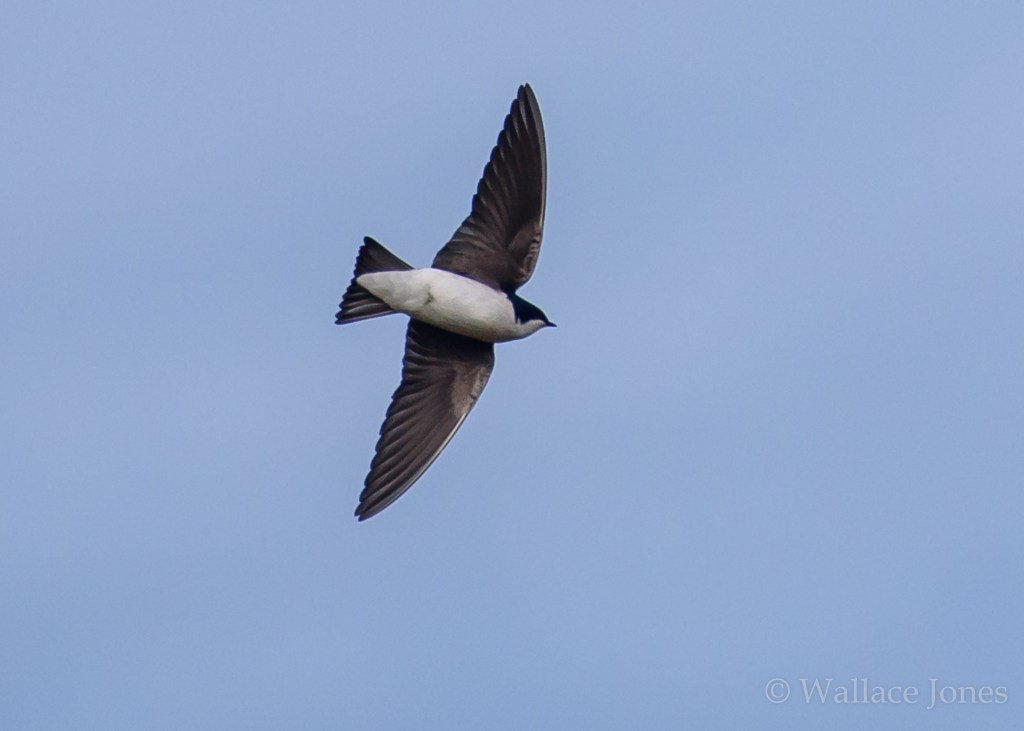
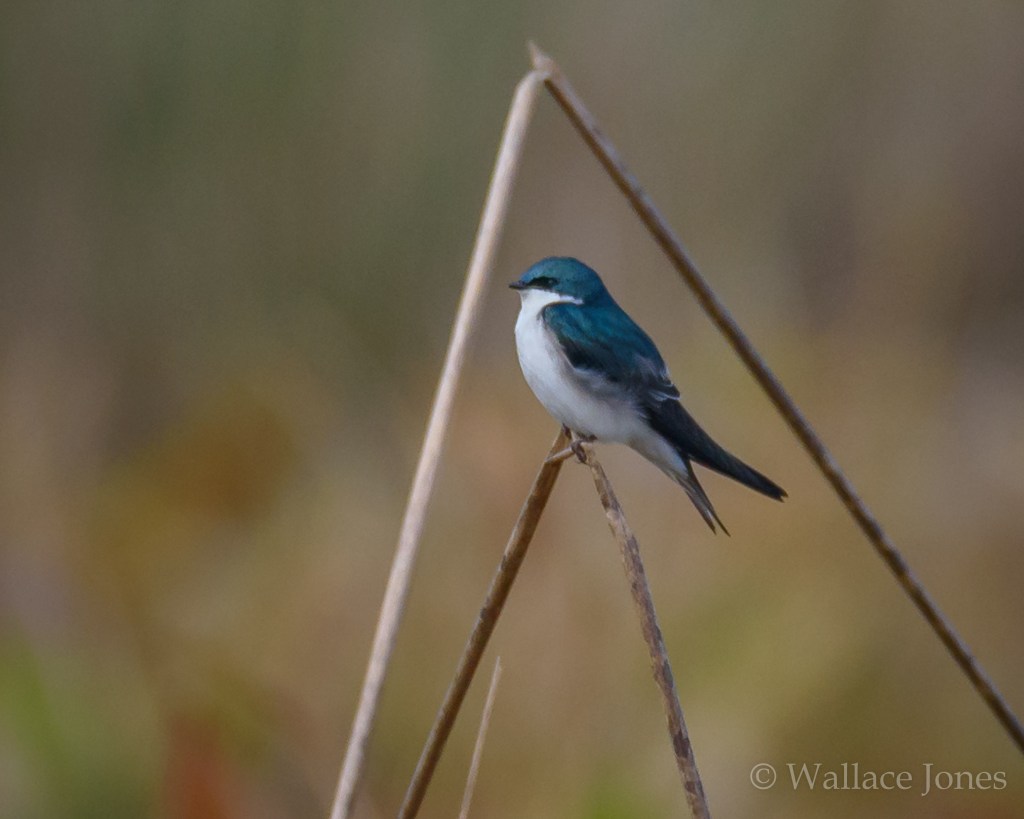
We are seeing Tree Swallows frequently these past few weeks and they will soon gather in very large flocks in preparation for spring migration. I don’t often see them perched!
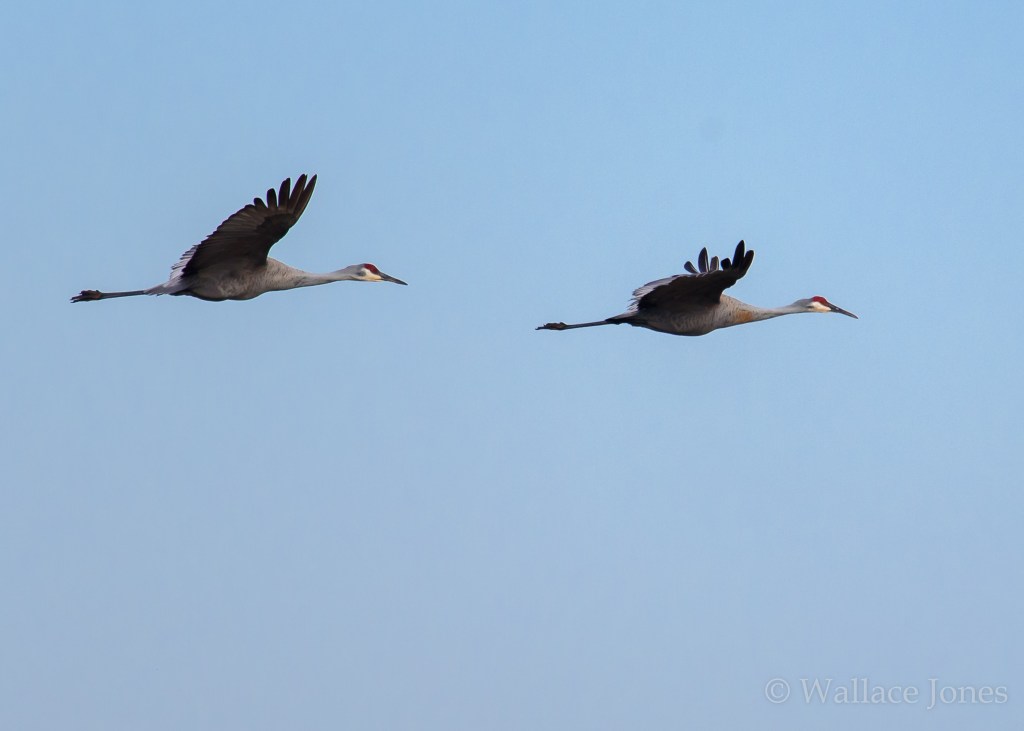
A pair of Sandhill Cranes cross the marsh. Florida has a resident sub-species (Grus Canadensis Pratensis) of the Greater Sandhill Crane which is non-migratory. Each year the state hosts over 30,000 migratory cranes and it’s common to spot groups of several dozen to several hundred of these huge birds in open fields.
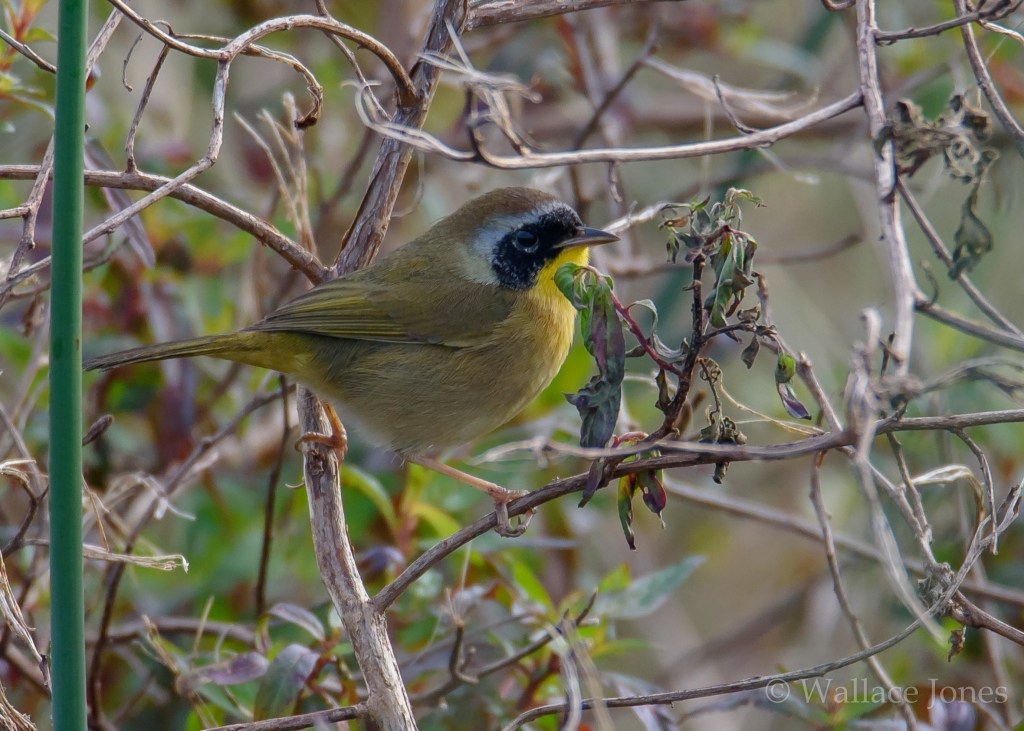
“Small birds, big attitudes” is how we usually describe wrens. The Common Yellowthroat also fits that description. This masked male wanted to know what I was doing on his front porch!
Common bird. Uncommonly handsome. The Red-winged Blackbird is one of our most common birds and it is all too easy to take them for granted. The male’s simple black plumage punctuated by the brilliant red and yellow-orange wing patches make this one of the most attractive birds in nature. In my unbiased opinion.
It was another fantastic morning spent wandering around another spectacular oasis! Wish you had been there. Perhaps there is something similar in your neighborhood?
Slices of pear and Florida navel orange, gouda cheese and whole-grain toast topped with fresh avocado. Cup of hot Earl Grey tea. (I knew you would ask what I prepared for Gini when I got home.)
Enjoy your search for a natural place and come back for a visit!
“She went down!”
Three minutes passed. It seemed an eternity. Then, Gini let me know, “Here she comes, right at you!” Was three minutes enough to eat a mouse or lizard or frog?
We had come to this lake in the hope of spotting a wintering Horned Grebe. It was about a half-hour before sunset. A rough count showed about 1200 Lesser Scaup had settled onto the lake’s surface for the night. A few dozen Ruddy Ducks were mixed in with the larger Scaup. There! Just passed that group of ducks. A lone Horned Grebe. Mission accomplished!
The golden rays of the waning sun washed in from our right. As we scanned the lake for more Horned Grebes, a Bald Eagle passed in front of us. Apparently not in hunting mode, the big raptor flew straight and fast. Assorted herons, egrets, anhingas, cormorants and gallinules all were gathering in the shallow water near shore and it would soon be dark.
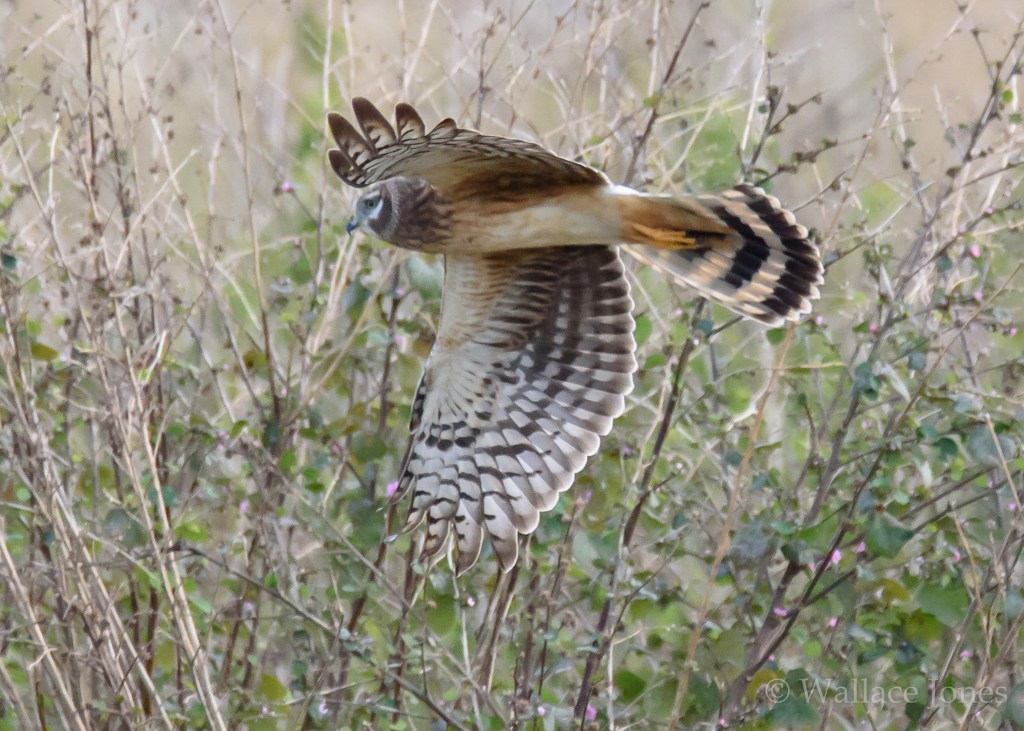
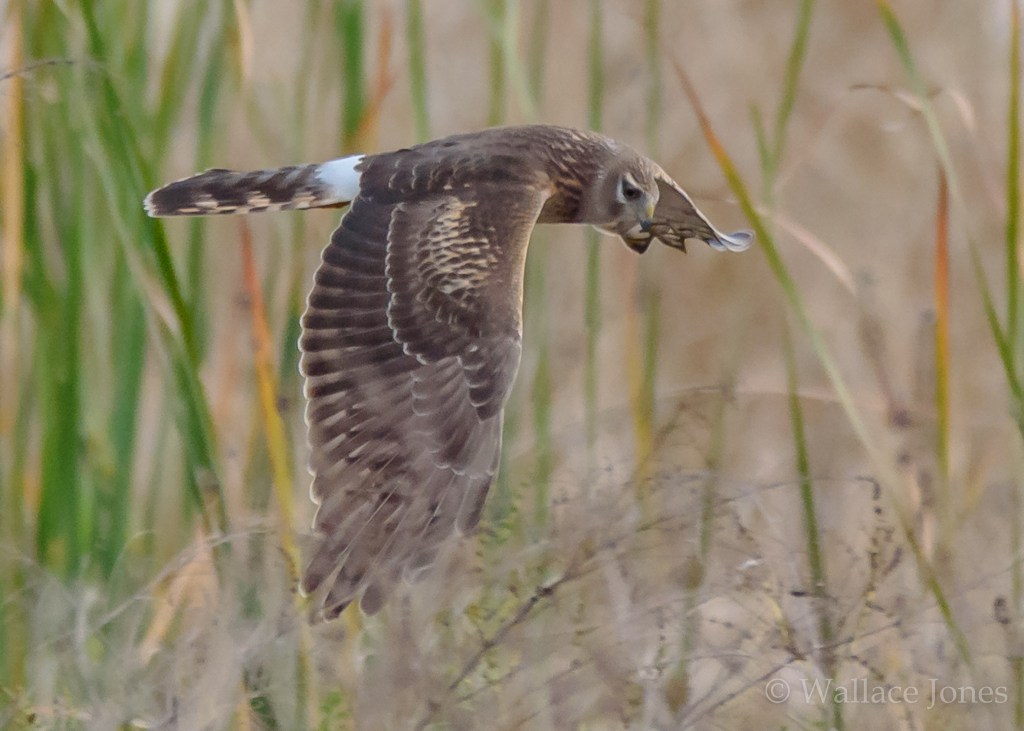
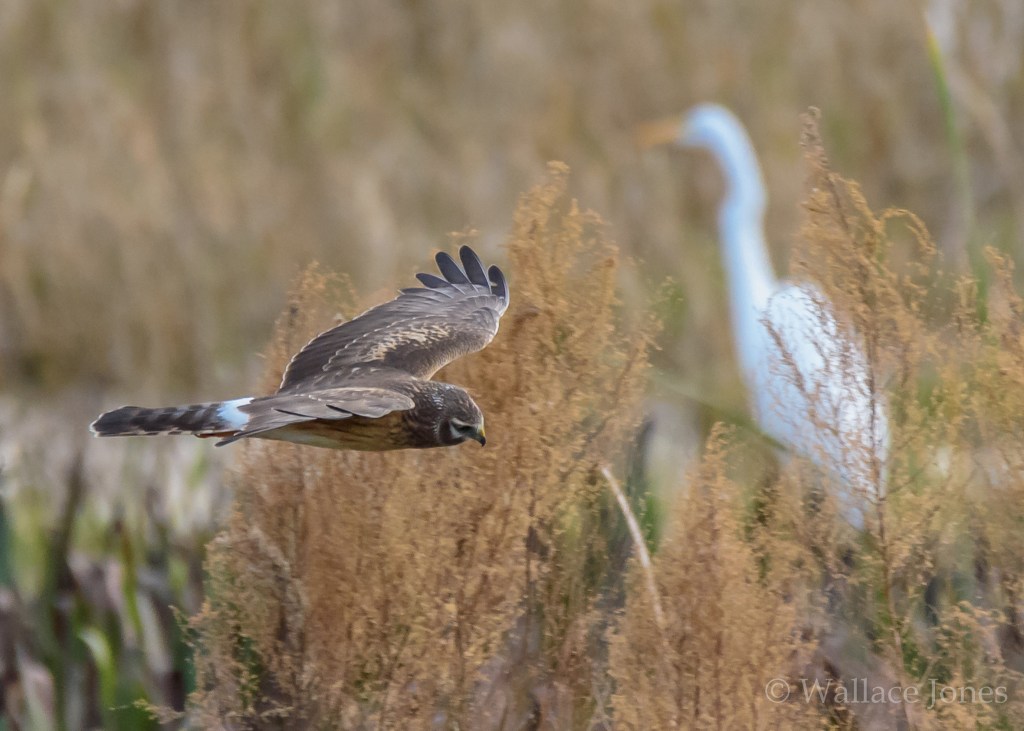
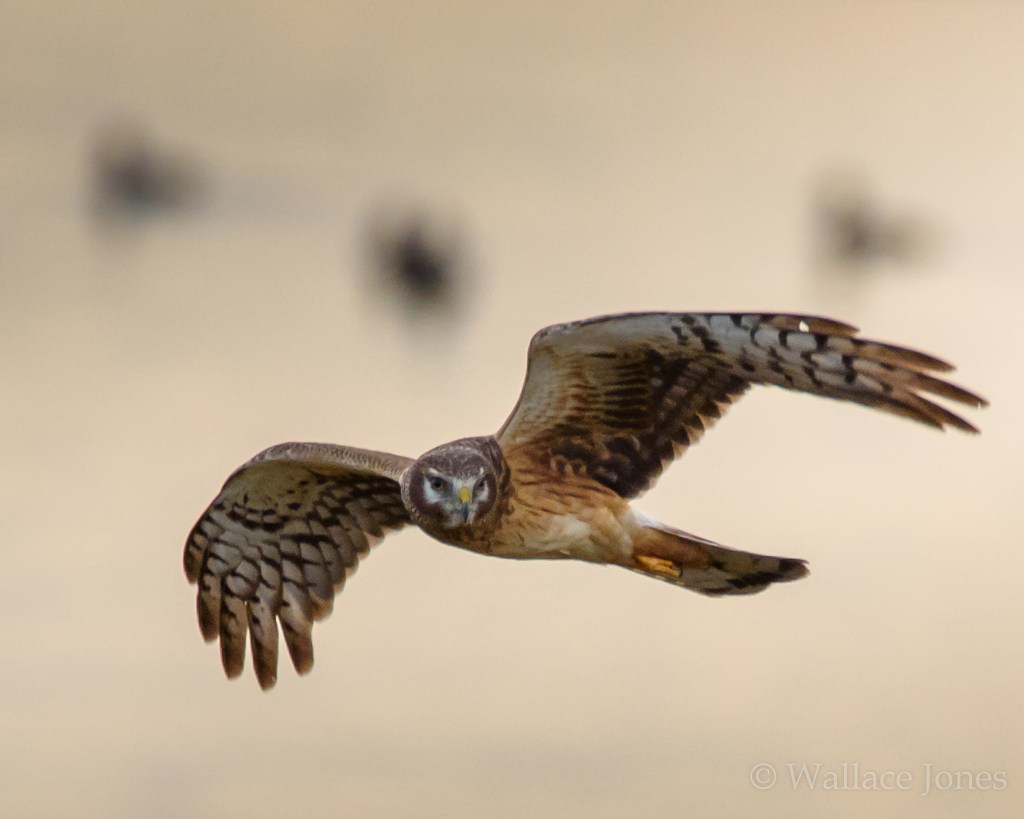
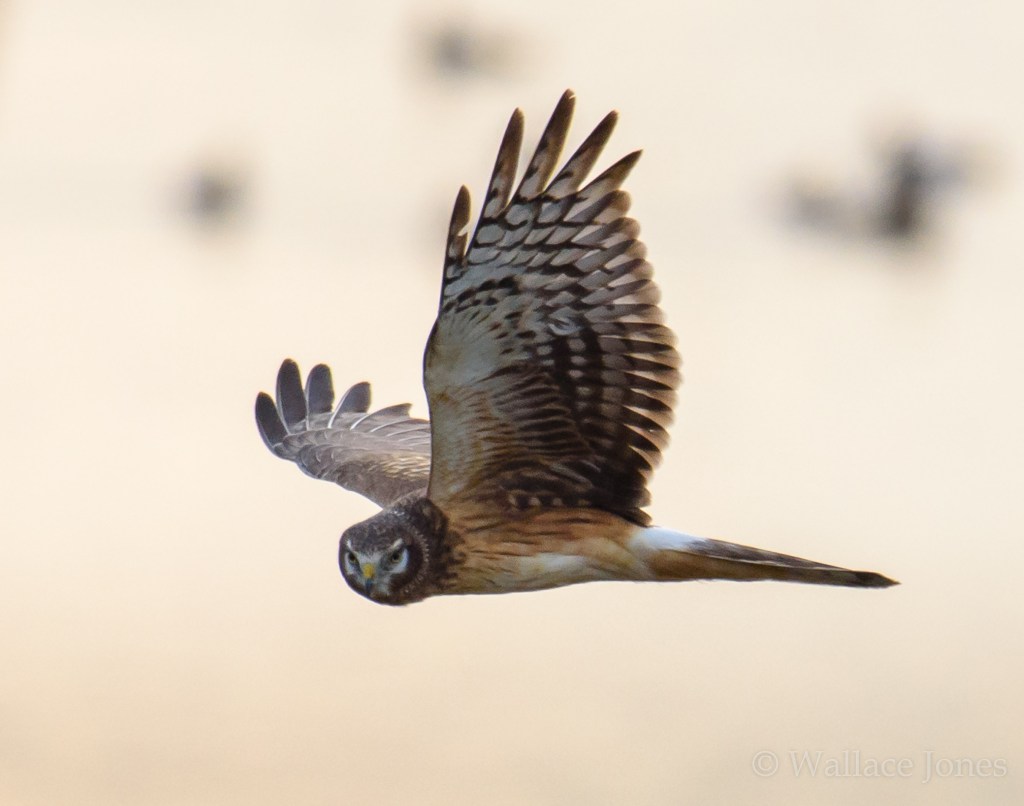
Materializing from the glare of the sun’s last gasp of brightness for the day, flying low along the shore with that lilting, buoyant almost lazy flight – a Northern Harrier appeared. My first impression felt that it was a young female, but with an unstreaked belly and cinnamon wash, it could as easily have been an immature male at this time of year. We shall call her “she”.
Formerly known as a Marsh Hawk (Circus hudsonius), we are fortunate to see these magnificent birds during migration. In a few weeks, they will head back to their breeding territory in the far northern United States and Canada. While they are here, we will watch as long as they allow.
An owl-like head turns left, right and then concentrates directly below her. She initially followed the shoreline, reversed course after a few hundred yards and returned along the same flight path but somewhat inland. The pattern was repeated over the next 30 minutes, each time bringing her farther inland and nearer our position. We could not have wished for better entertainment.
We think when she disappeared into the weeds near the end of her first pass that she scored a meal. She was on the ground about three minutes and as she became airborne she cleaned her talons with her beak as she flew. The aerodynamic display was fascinating! A sudden 90 degree flip of a wing and a quick dive, the constant movement of her head like a radar dish in search mode, the effortless cruising through the tops of the weeds – and then – she was gone.
Gini and I soaked up a few more minutes of the day’s afterglow. A couple of satisfied sighs. A memorable sunset with a beautiful bird.
Yeah. There are pictures. Wish you had been there.
(Photographs were made with a Nikon D750 and Tamron SP AF 150-600mm lens. Most images were at 600mm, f/7.1, 1/1600 and due to the fading light ISO 1000-3200.)






Enjoy your search for a natural place and come back for a visit.
 Our Natural Places