(Click images to enlarge, click again to zoom.)
“Wow!”
That’s an overused interjection, for certain. Sometimes, however, nothing else conveys the meaning one seeks. Besides, it’s a direct quote, so there.
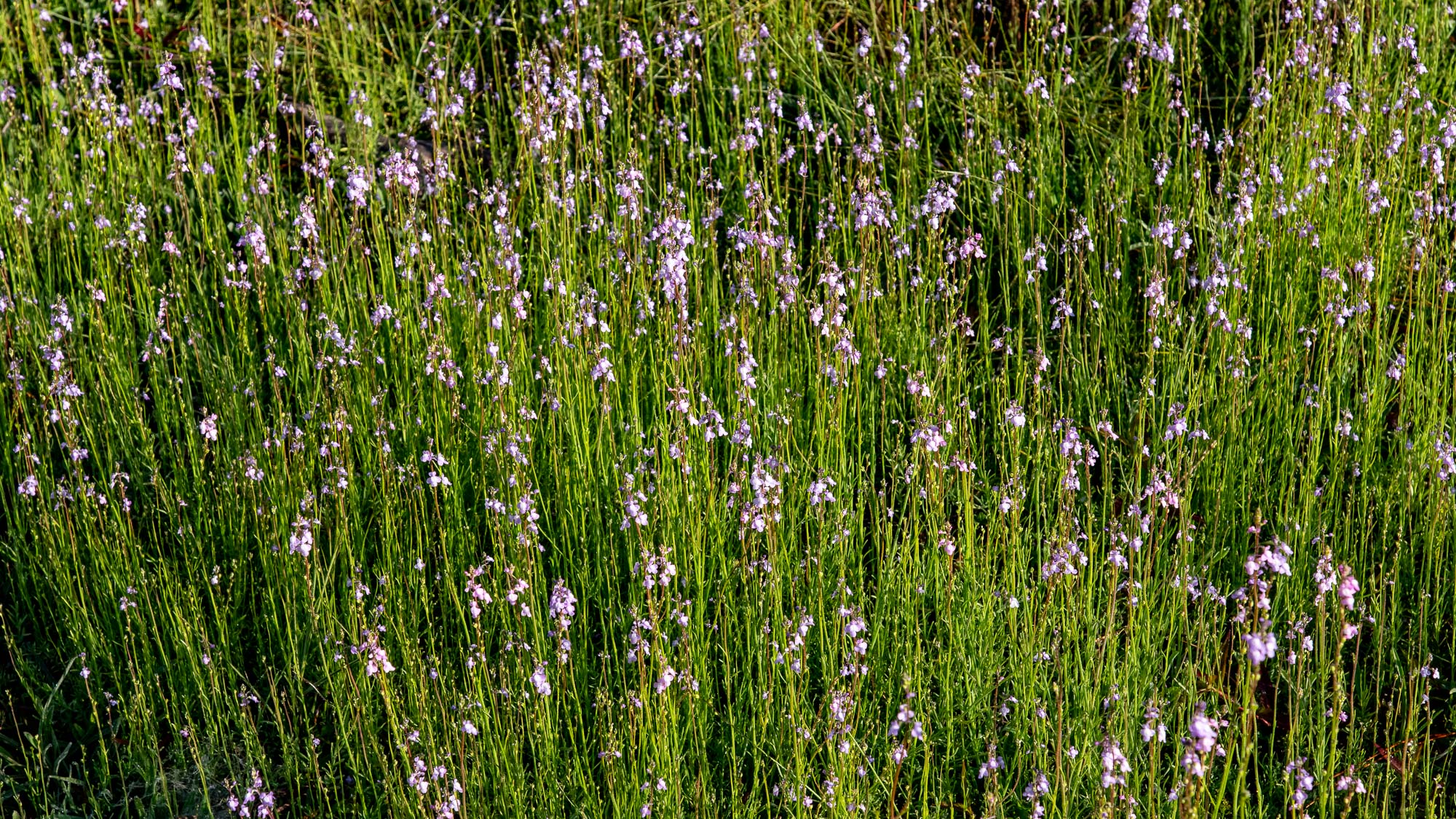
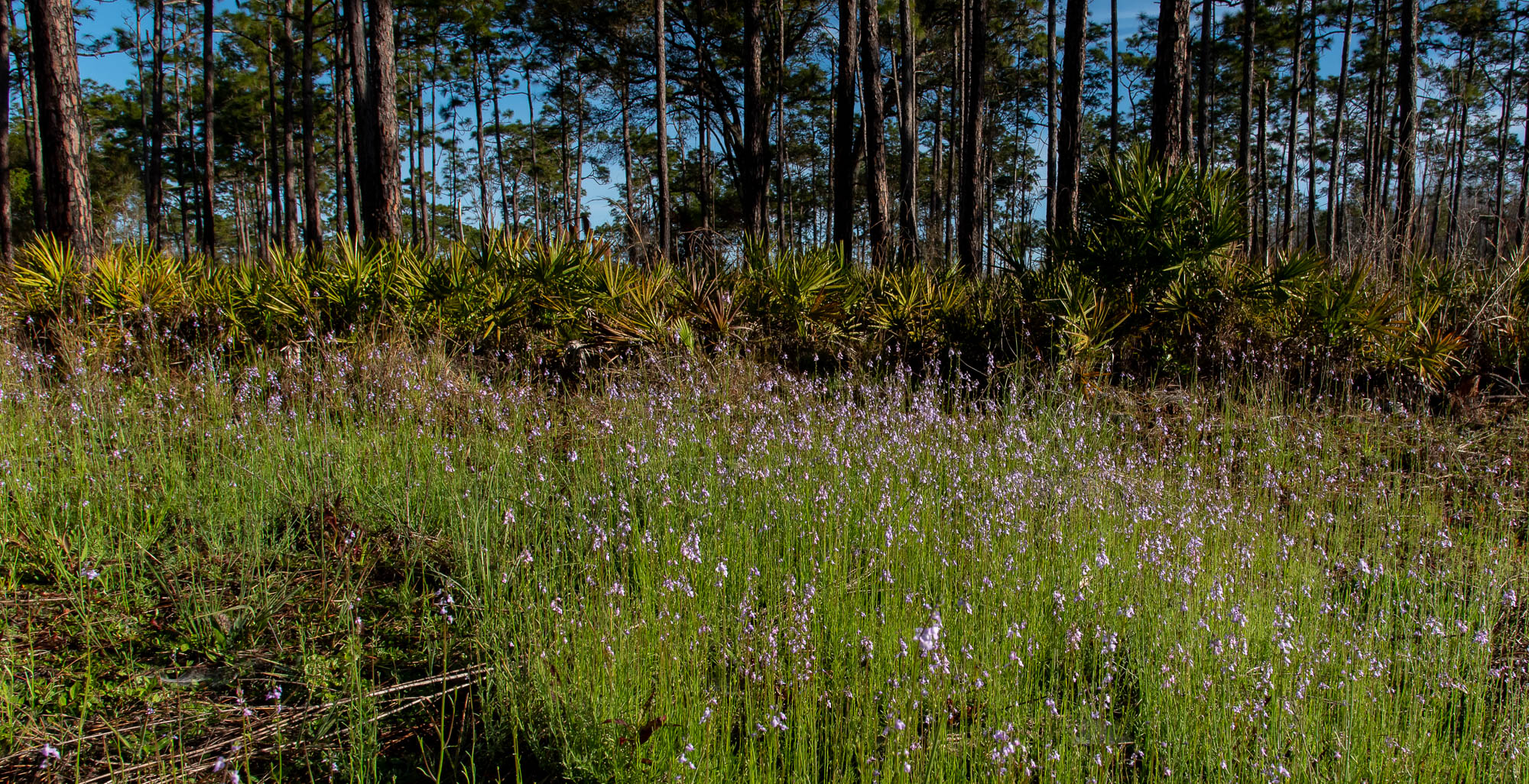
The object of Gini’s amazement hove into view as we came to the first bend in the road after entering Colt Creek State Park. A large swath of lavender along the edge of the pine forest offered a spectacular “Welcome Back“. Canadian or Blue Toadflax is an early spring bloomer which often occurs in masses and just as often elicits an exhaled “Wow!”.
Our local state park received considerable damage from Hurricane Milton in mid-October 2024. The huge storm dumped over 18 inches of rain in the area in 24 hours, had sustained winds of near 100 mph as it crossed the center of Florida and spawned 46 confirmed tornadoes in a single day. The staff and volunteers have done an incredible job of restoring trails, camping areas and cleaning up downed trees. Due to our health issues and the park closure, this was our first visit since Sepember 17, 2024.
We are both almost back to good health and are convinced that breathing fresh air and lounging under longleaf pine branches are far better for us than any other remedies. As we progress toward full recuperation, Nature progresses toward annual renewal. “Official” Spring is still a couple of weeks ahead, but our morning exploration revealed a refreshing “Spring Preview”.
It is a wonderful time of year to be outdoors. We are blessed with migratory birds which are fueling up for their upcoming return to northern breeding grounds. Meanwhile, resident birds are practicing courtship songs, mating behavior and some are already constructing nests. Winter’s gray-brown landscape is dotted with bright green new leaves. Some early blooming flowers, such as that toadflax mentioned above, are putting on quite a show. Looking carefully along the edges of a path can reveal small floral jewels among the leaf litter. A fox squirrel scolds from an oak limb. White-tailed Deer forage in the shadows. Adrenaline surges as a Cottontail Rabbit sprints away from under my feet.
What a totally satisfying morning.
Small flowers. Large impact. Canadian (or Blue) Toadflax (Linaria canadensis).

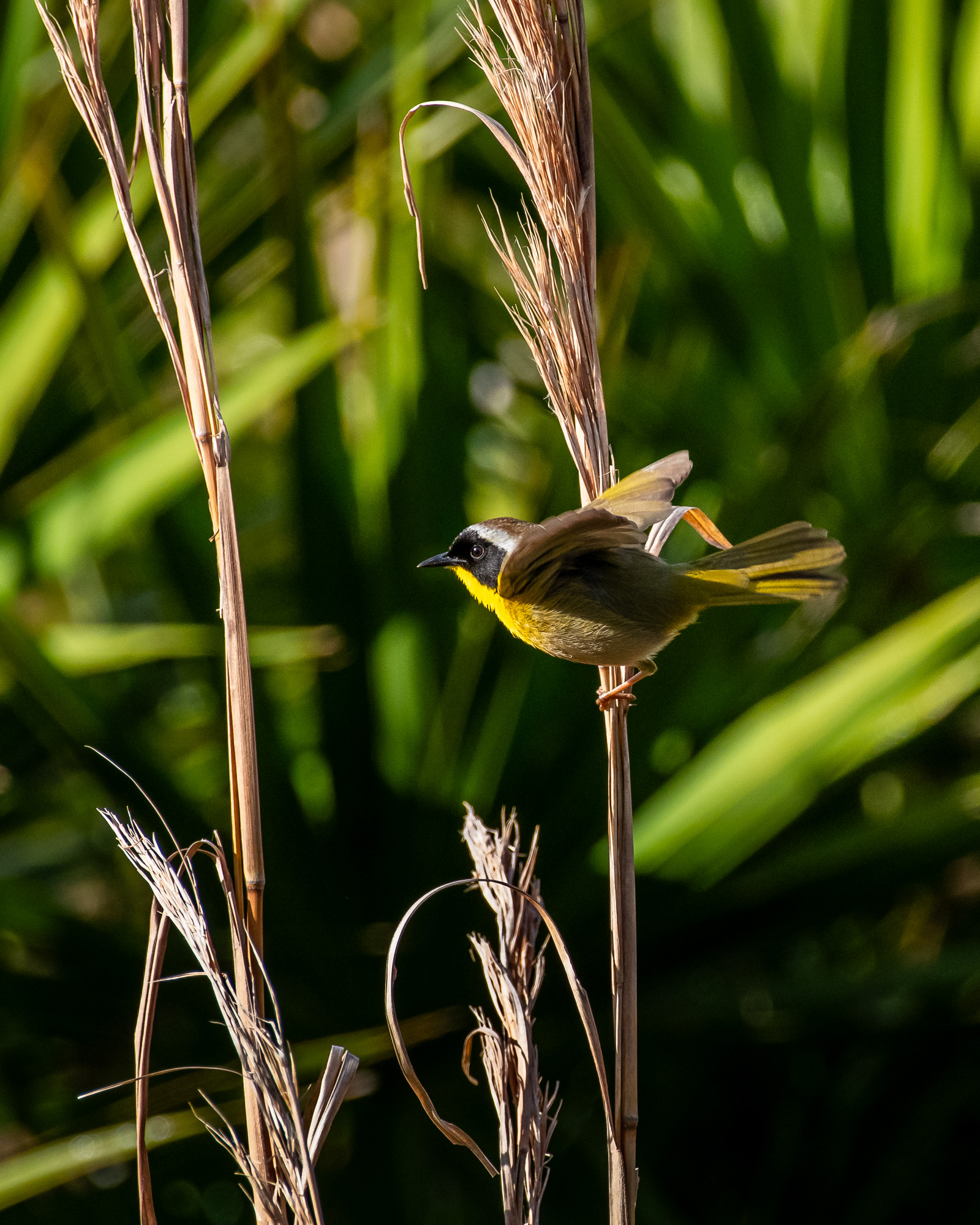
A male Common Yellowthroat tried to impress Gini with his courting song. It worked.
Nature just doesn’t care that humans use calendars for keeping track of the seasons. When it’s time for berries, it’s time for berries. Sawtooth Blackberry (Rubus pensilvanicus).

The Savannah Sparrow is one of our most abundant winter migrant species.

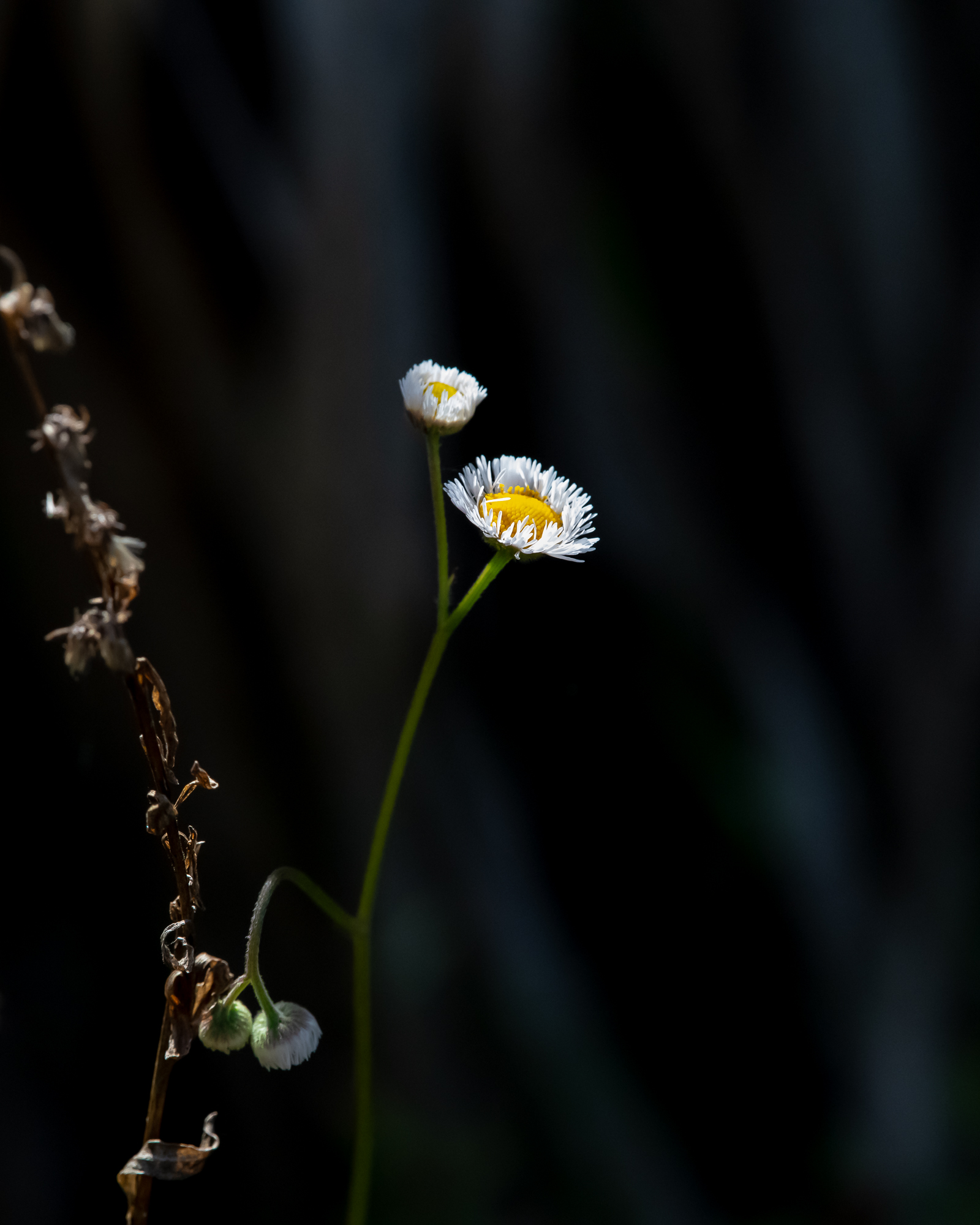
Maybe I’m just hungry, but the small flower of Oakleaf Fleabane (Erigeron quercifolius) reminds me of a fried egg.
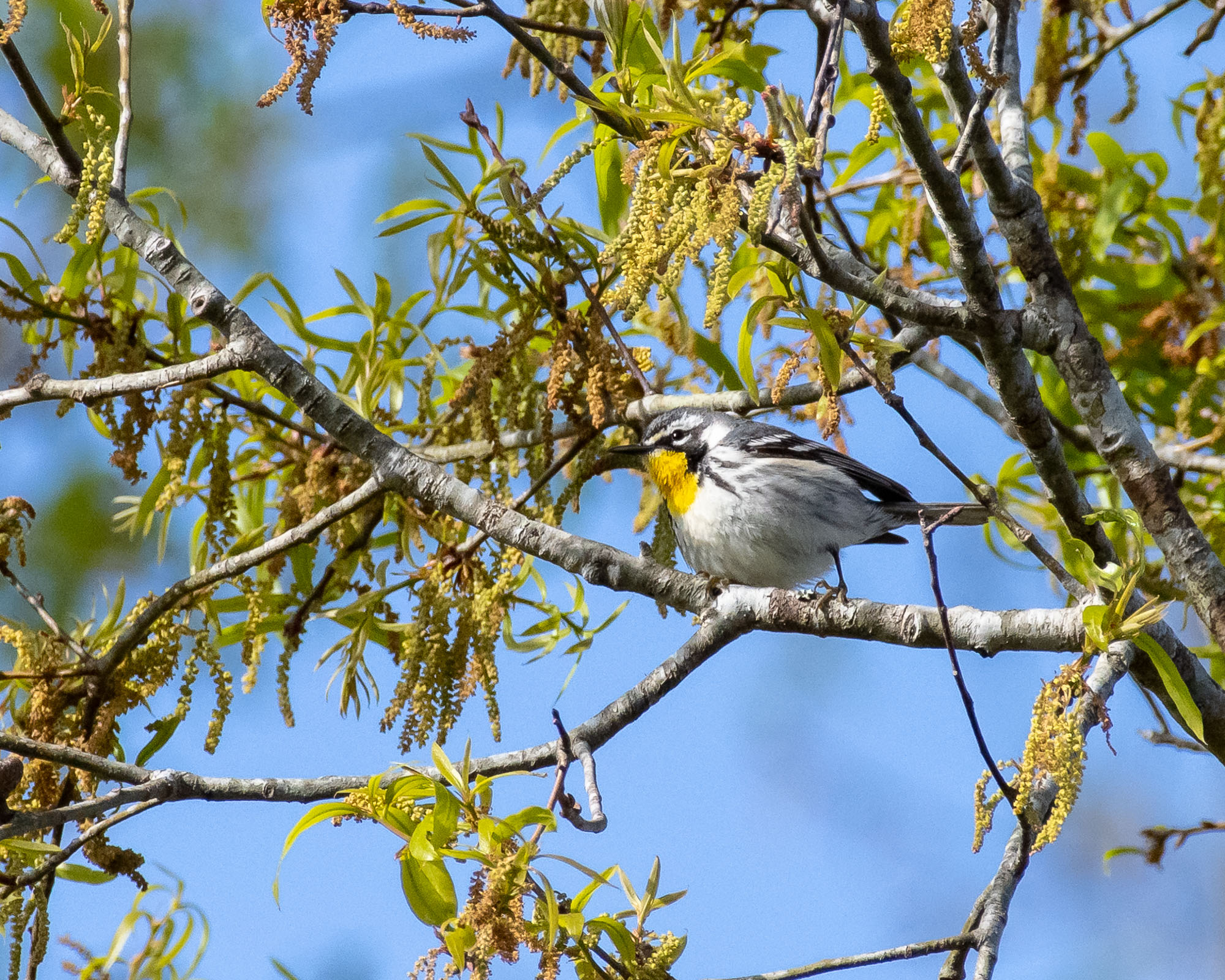
A resident bird which nests within the park, a Yellow-throated Warbler was busy adding to its insect collection.
Florida couldn’t figure out which wildflower to name as the official state flower, so they just named an entire genus for that honor. One species of the genus Coreopsis, Leavenworth’s Tickseed (Coreopsis leavenworthii), is an early bloomer and always looks gangly, unkempt and deliciously golden.

Stork Club. A group of Wood Storks relaxes by the lake. These large birds breed locally within the Green Swamp, which borders the park. (All three are immature birds. Light bills and gray feathers on their necks.)

Lovely blooms. Lovely scent. Some birds actually eat the flowers. Don’t try that at home. All parts of the Carolina Jessamine (Gelsemium sempervirens) are very toxic for humans and most livestock.

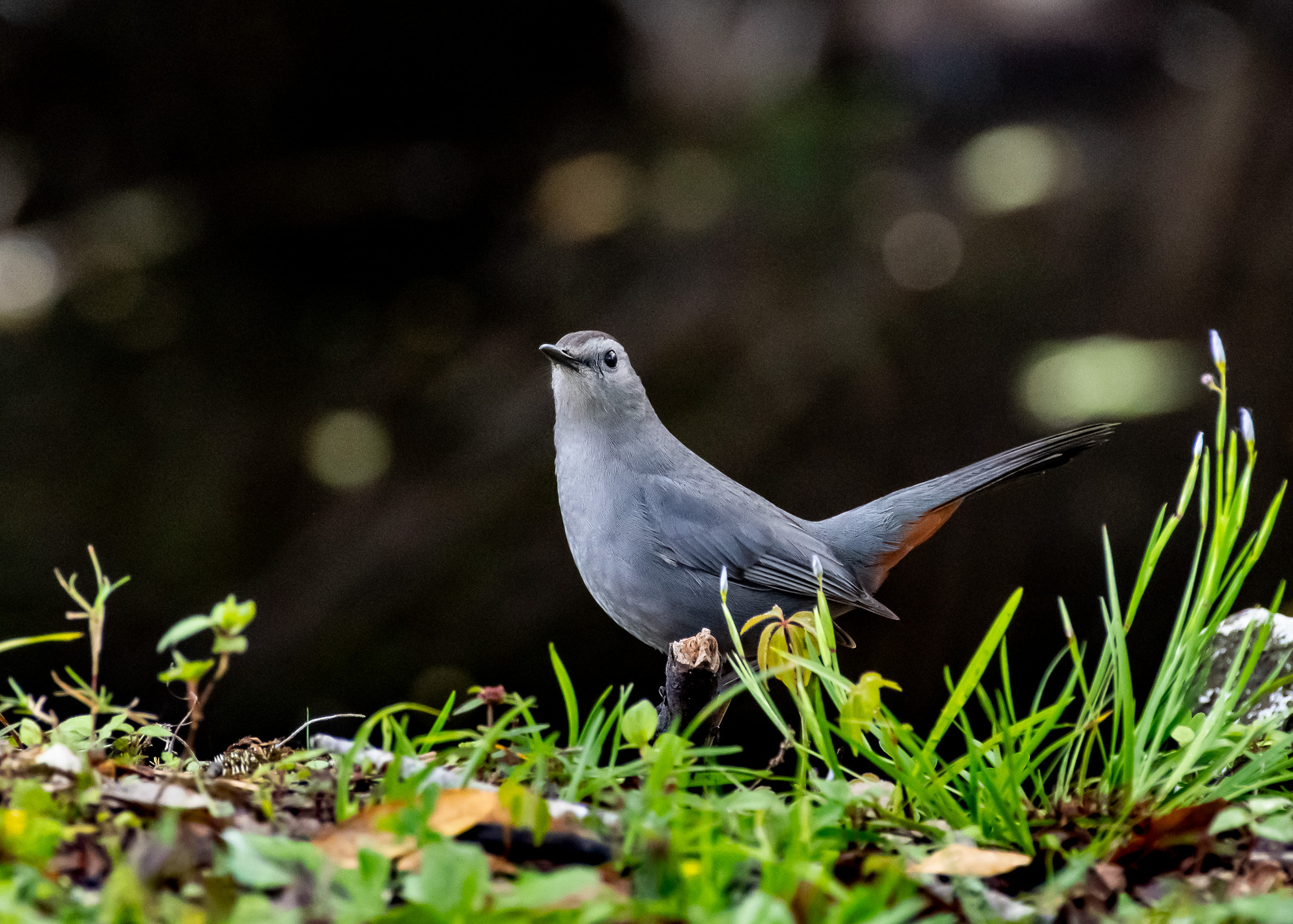
Another winter tourist, a Gray Catbird is really quite attractive for seeming so plain in appearance.
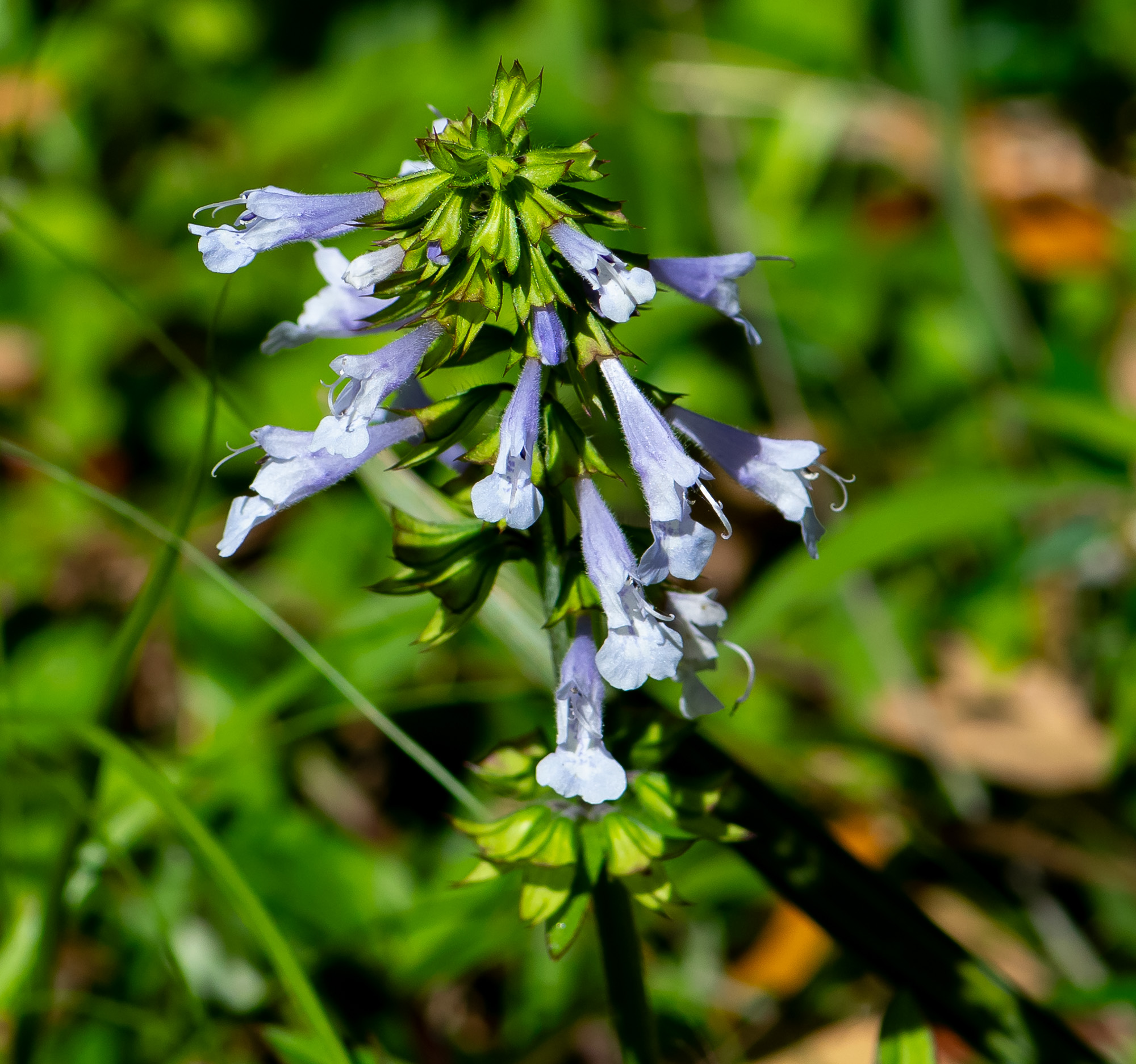
Bees and butterflies love the blooms of the Lyreleaf Sage (Salvia lyrata). Okay, so do we. The fact that it blooms from late winter through spring helps.
We aren’t alone in our love of tall pines. A convenient limb makes a great lookout for a Red-shouldered Hawk.

Blooms with delicate lemon-yellow petals are beginning to pop up around the park. This is one of our favorite flowers. Carolina Desert-chicory (Pyrrhopappus carolinianus), also known as Texas or False Dandelion.

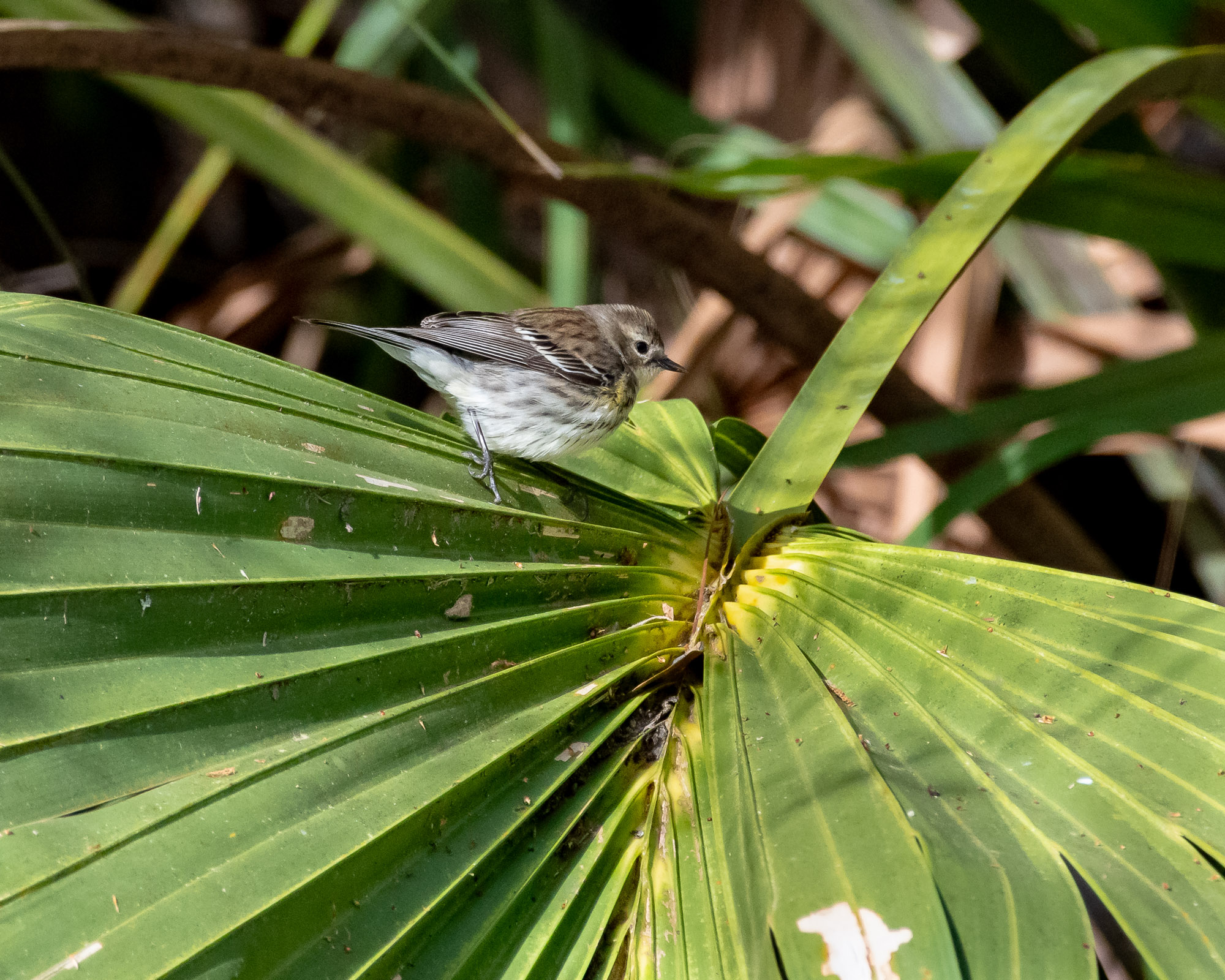
The Yellow-rumped Warbler is one of the most abundant warblers we encounter during winter migration. This may be an immature bird as it doesn’t show must color.
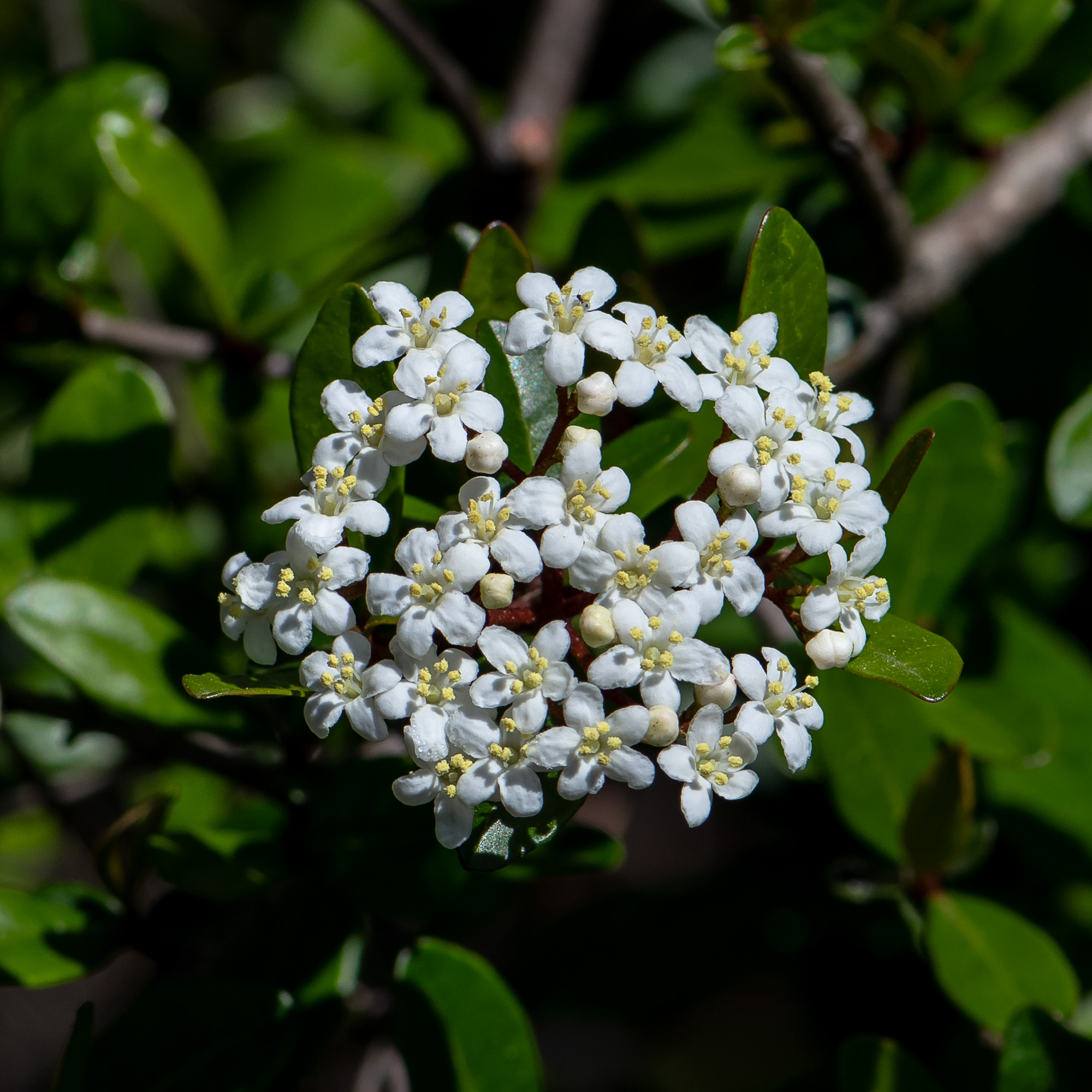
A really attractive plant in early spring along the forest edges is Walter’s Viburnum (Viburnum obovatum). It can grow to 12 feet tall and just about as wide. The clusters of small white flowers are loved by us and the bugs. In late summer, there will be drupes of red fruit which turn black when ripe.
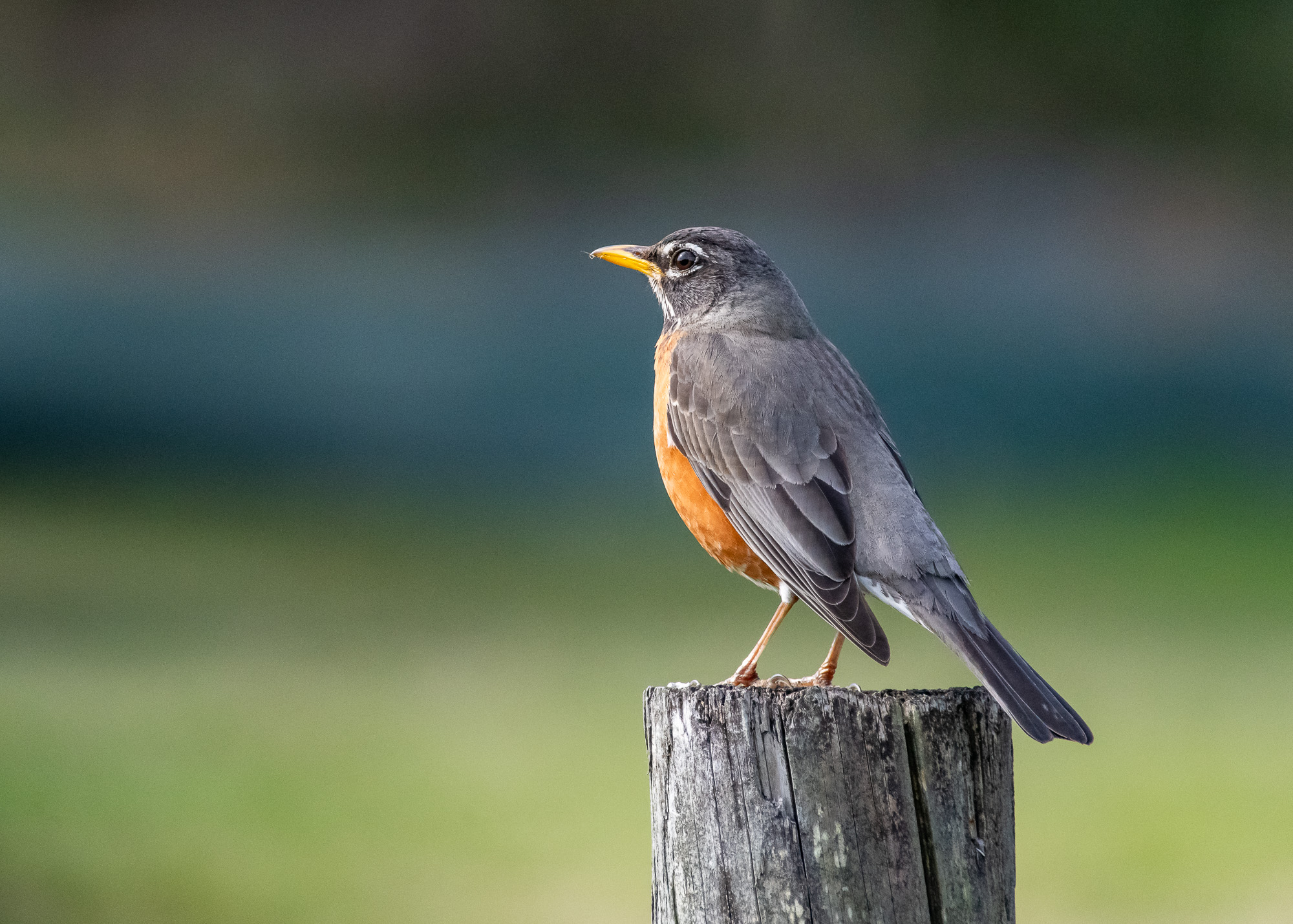
Gangs from the north appear on lawns and fence posts all winter long. American Robin.
More beauty en masse. This time, a sea of yellow as we get to enjoy the fields filled with Mexican Pricklypoppy (Argemone mexicana).


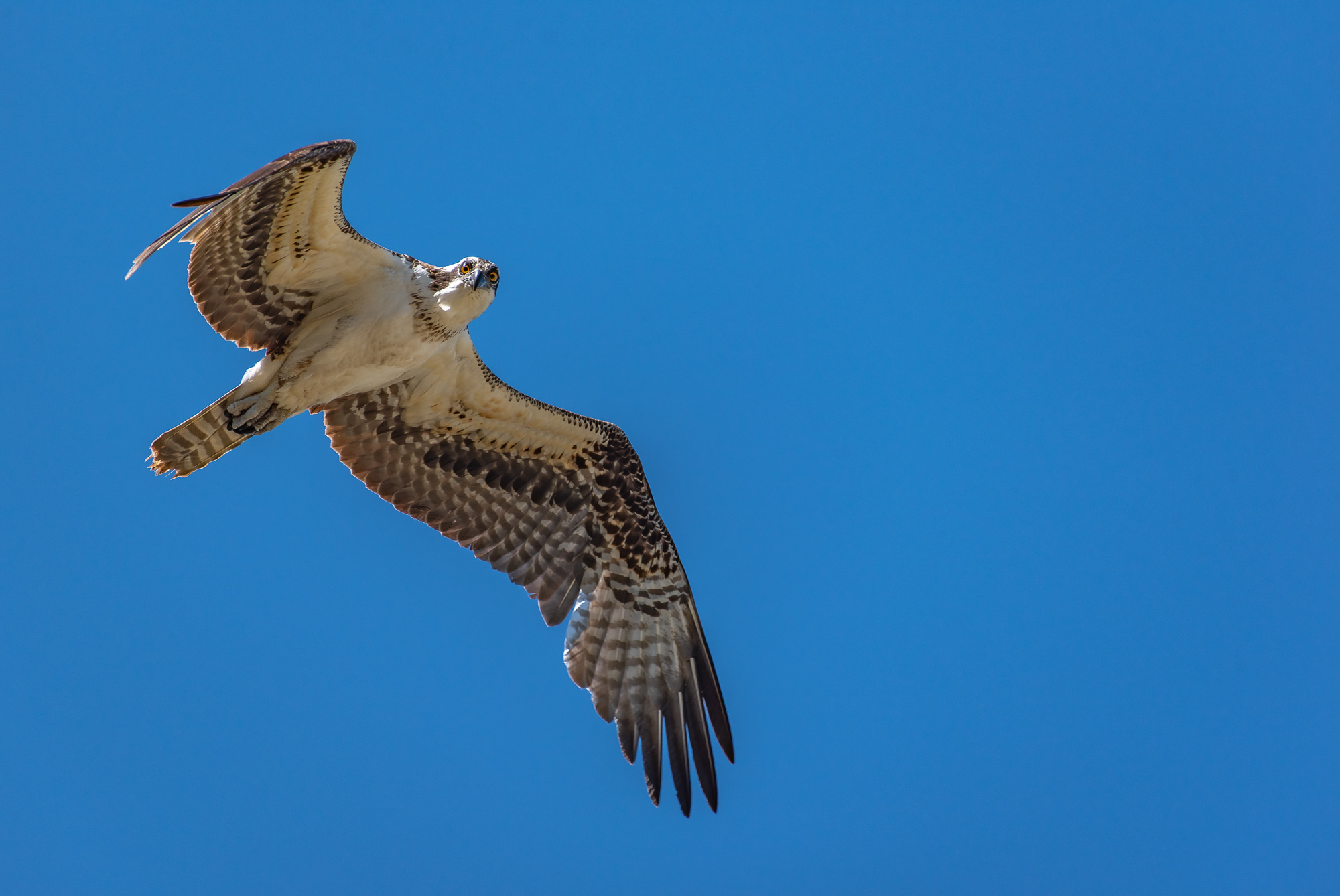
“I am NOT a fish!” The Osprey still checked me out, just in case.
Gini says the Pileated Woodpecker looks prehistoric. I happen to agree. (Don’t tell her.). This male spent quite awhile probing around tree limbs at eye-level. (Why can’t all photo subjects be so cooperative?)

Seasons and lives change. It is inevitable. How we deal with the transitions makes all the difference.
Enjoy your search for a natural place and come back for a visit!
Life is precious. Step outside. Breathe deeply. Tell someone you love them.
(Our handlers released the latch to the door of our confinement and we furtively stepped onto the soft grass. It took a few moments for us to realize that we could once again spread our wings fully. In unison, we ran forward, flapped vigorously and were propelled into the bright blue sky. As we … “slipped the surly bonds of earth
And danced the skies on laughter-silvered wings” …**, we breathed deeply and thanked all those who had helped us prolong our dream-life together. A warm layer of air buoyed us enough that we could soar over fields, forests, lakes, swamps. As winter loosens its grip, spots of bright green appeared below and we knew Spring would soon grace us with renewal.)

(Click on images to enlarge, click again to zoom.)
Our rehabilitation is ongoing. We feel good each day and recently enjoyed our first outing since mid-December. The morning was glorious. Blue skies and mild temperatures greeted us as we inspected one of our favorite birding patches. Residents and winter migrants were going about the daily business of survival. Just as they have since the beginning of time.
Fresh fruit for breakfast at the edge of the lake, checking on early Spring flora, watching a dozen Palm Warblers flit from perches to the grassy hiding places of protein-laden insects, excitement as an Osprey flew overhead with a huge branch to shore up a nest which will soon be home to a new generation of fish hawks. It was all so — refreshing. Can’t wait to do it again.
Although it would be easy to think it’s a sign of Spring, these bright berries of a Yaupon Holly (Ilex vomitoria) are holdovers from the winter. Soon, small white flowers will appear and new fruit will show up in the fall.

During migration, we occasionally find a group of Wilson’s Snipe, such as these. Typically, we only see single birds hiding in the grass where they blend in very well. Seeing this gang out in the open was a nice treat.

It may not be as flamboyant as its big cousin, the Great Blue Heron, but the Little Blue Heron certainly is handsome with a subtle blend of colors.

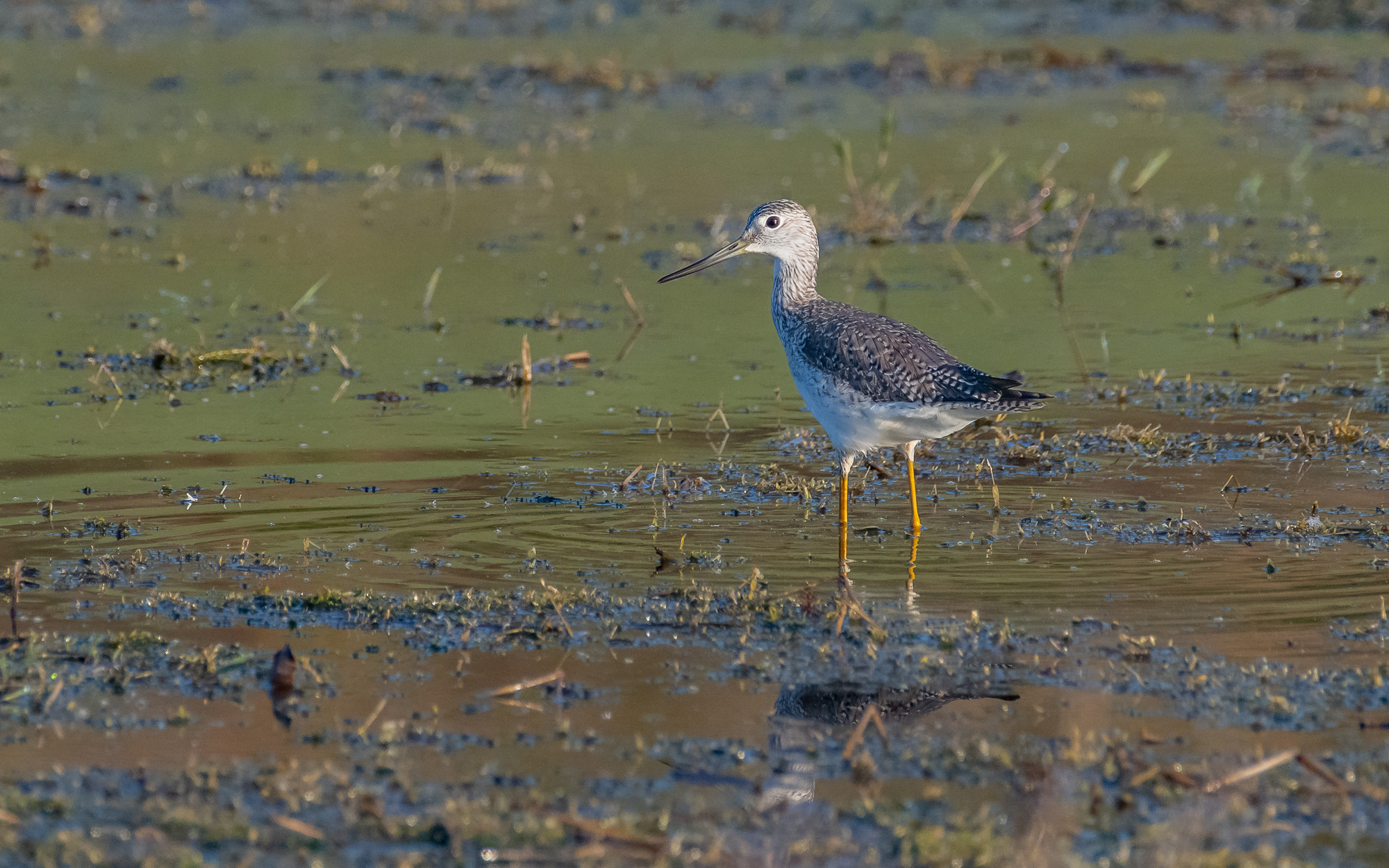
When they are side by side, it’s pretty easy to distinguish Greater and Lesser Yellowlegs. When alone, such as this Lesser Yellowlegs, their calls help in identification.
“Mother-of-pearl” always comes to mind when the light shines just right on the feathers of a Glossy Ibis.

Further indication that Spring is on the horizon as we found Coastal Plain Willow (Salix caroliniana) with its yellow-green catkins blooming.

One of our most numerous winter warblers is the Yellow-rumped Warbler. Some birders refer to it as a “Butter Butt”, but we are much too refined to call it that.

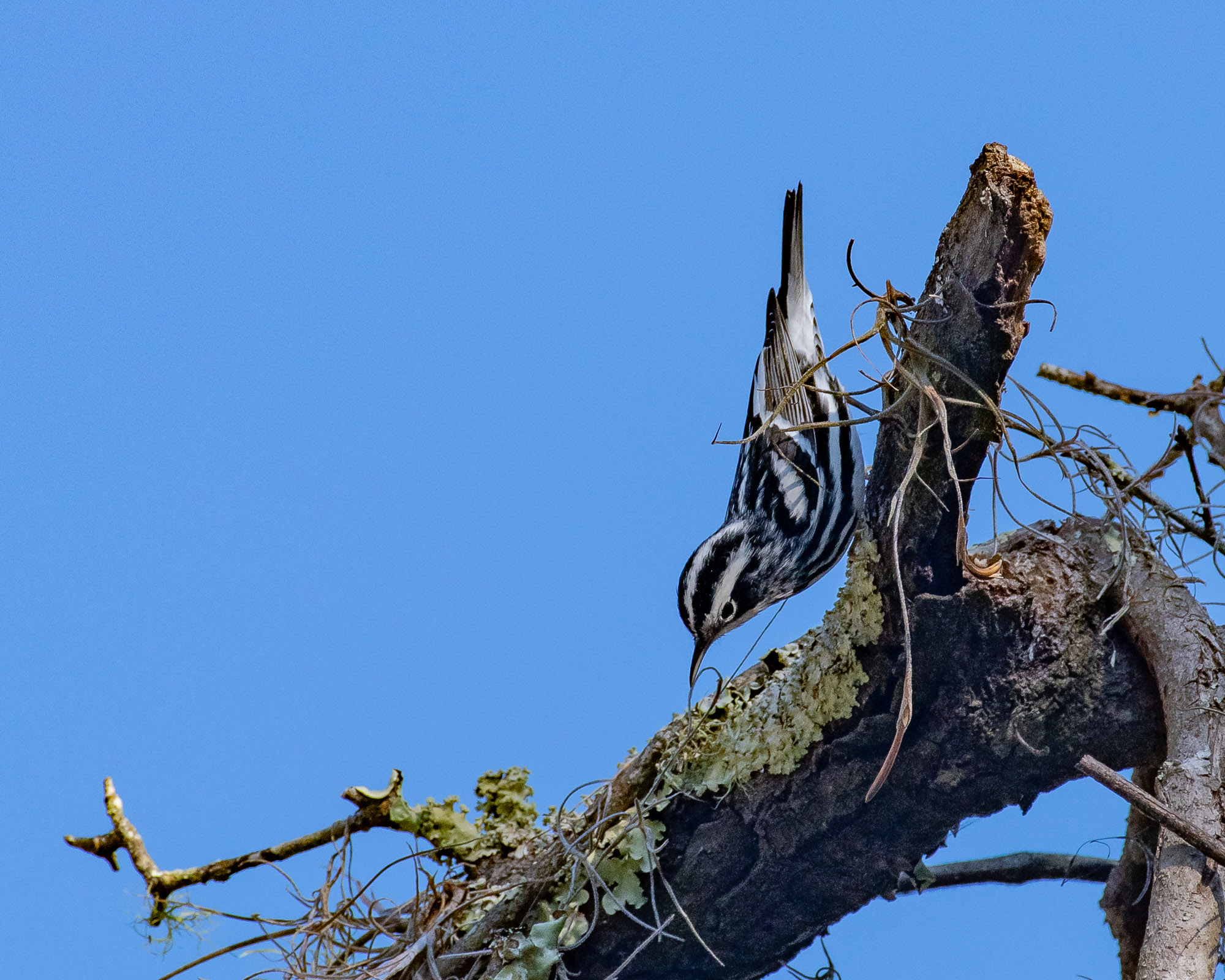
Yet another tourist, the Black-and-White Warbler, behaves like a Nuthatch as it scurries headlong down a tree branch.
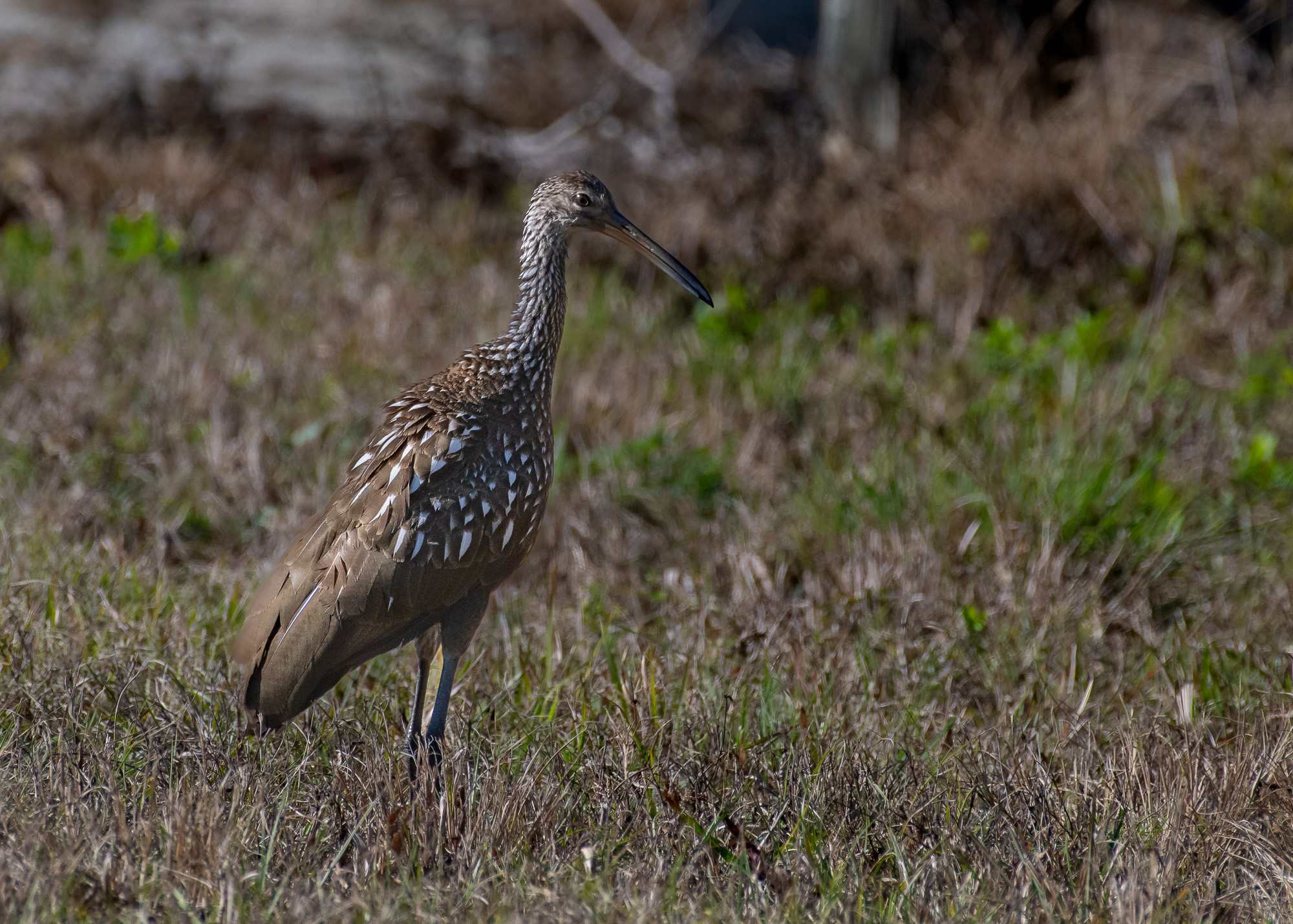
A young Limpkin barely gave us a glance as it hurried across the path to a stand of reeds where there are likely apple snails just waiting to join her for breakfast.
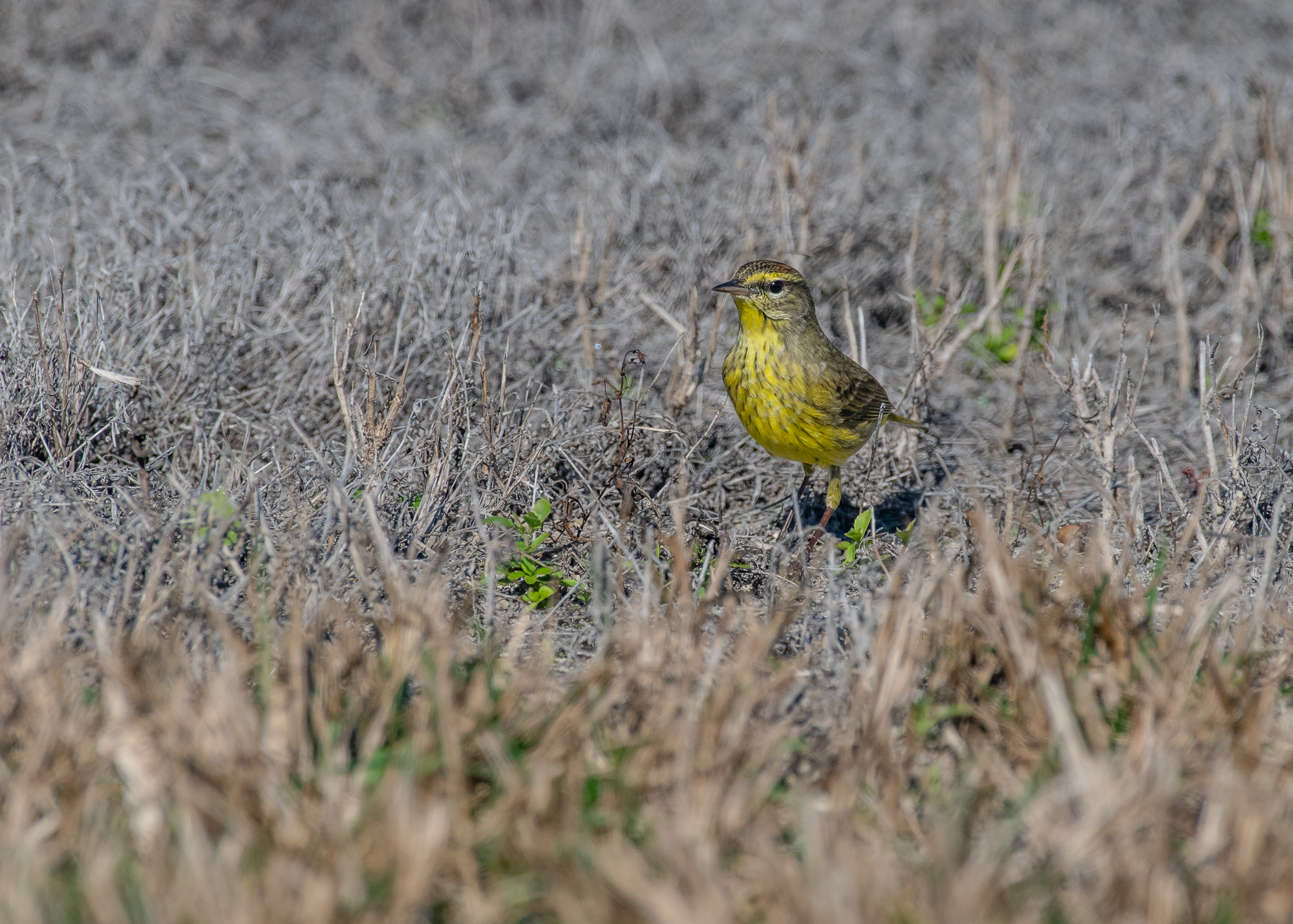
Even more visitors from the north, Palm Warbler gangs were roaming the fields in large numbers. There are two sub-species of this little songbird. The “yellow”, or Eastern, has more yellow on its belly and eyebrow. The “Western”, has a paler belly and eyebrow.

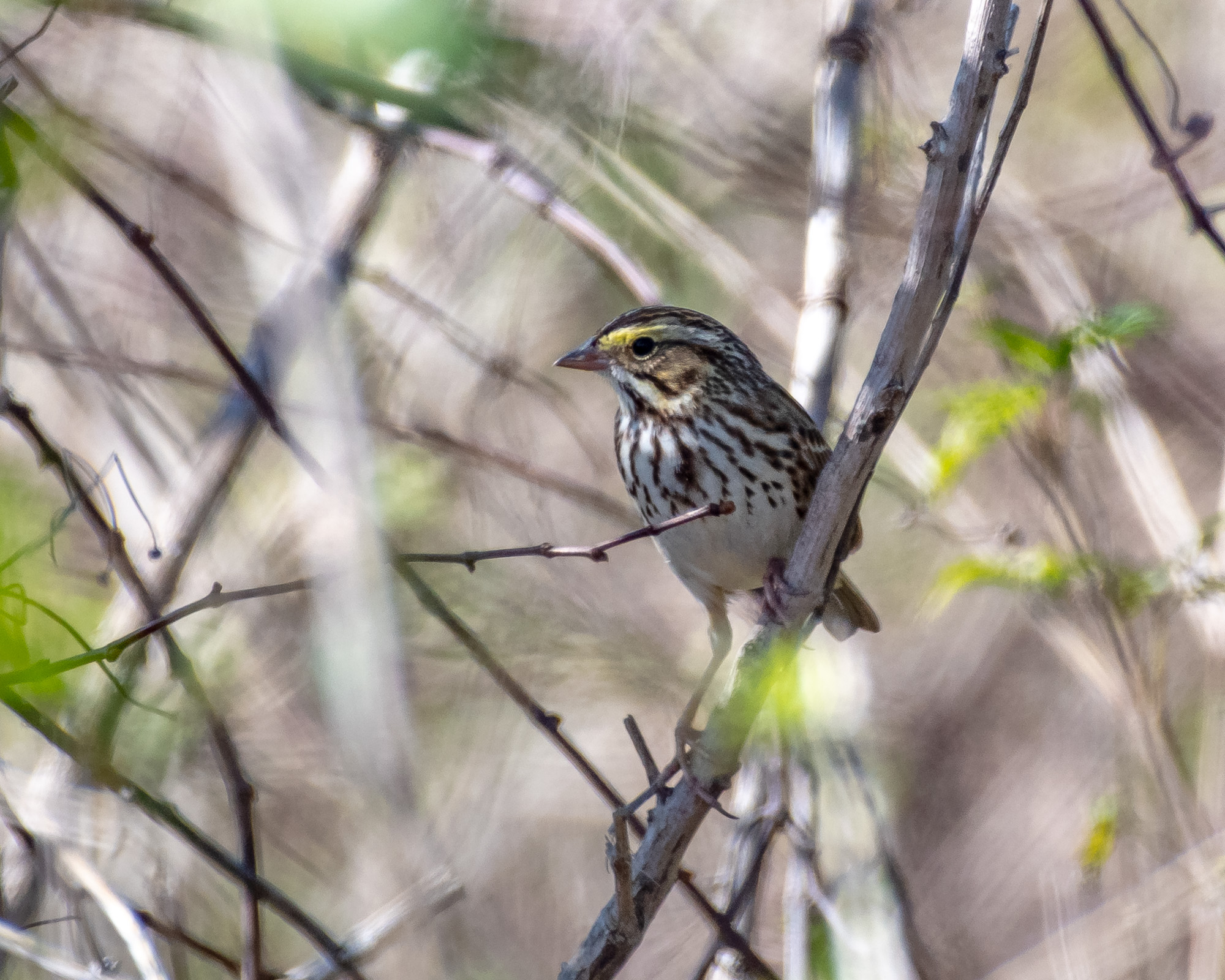
Our most common migratory sparrow is the Savannah Sparrow. Plenty of streaks and usually a yellowish stripe over the eye.
It was SO good to be out in nature again! Thank you all for wishing us well. Hopefully, we’ll get back to a somewhat regular exploration routine.
Enjoy your search for a natural place and come back for a visit!
* “Back In The Saddle Again”
** “High Flight”
Oh! I have slipped the surly bonds of earth
And danced the skies on laughter-silvered wings;
Sunward I’ve climbed, and joined the tumbling mirth
Of sun-split clouds – and done a hundred things
You have not dreamed of – wheeled and soared and swung
High in the sunlit silence. Hov’ring there,
I’ve chased the shouting wind along, and flung
My eager craft through footless halls of air.
Up, up the long, delirious, burning blue
I’ve topped the wind-swept heights with easy grace
Where never lark, or even eagle flew –
And, while with silent lifting mind I’ve trod
The high untrespassed sanctity of space,
Put out my hand and touched the face of God.
– John Gillespie Magee Jr.
(Yes, we’re late to the party but we hope you are all well into living your best life as a new year brings so many new opportunities. Gini and I are both recuperating well. However, our rehabbers are not ready to release us back into the wild just yet. Soon! In the meantime, please enjoy a few images from a trip we made on September 11, 2024.)

(Click on images to enlarge, click again to zoom.)
Many of our posts are from exploring an area just northeast of us within the vast Green Swamp, the Richloam Wildlife Management Area. This tract is one of several which make up the Withlacoochee State Forest. The Withlacoochee River is one of Florida’s major rivers and has its source within the Green Swamp. A smaller tributary, the Little Withlacoochee River runs through the Richloam WMA.
This tract consists of over 58,000 acres where pine flatwoods with scattered oak hammocks, bottomland hardwoods and cypress swamp are the main natural communities. On this date, we were treated to displays of fall flowers and a nice variety of birds and insects.
We hope you enjoy the morning sights as much as we did.
Scanning the open areas early in the morning reveals an abundance of spider webs. This large net was built by a Golden Silk Spider (Trichonephila clavipes). Also known as a Golden Silk Orbweaver, this female has captured some sort of flying insect and is wrapping it in silk. It will then be stored near the center of the web until she’s ready to eat. The male of the species is much, much smaller and keeps his distance until she tells him he is needed. He hopes it will not be as an hors d’oeuvre.

One of our favorite flowers often found at this location is the Skyflower (Hydrolea corymbosa). The incredibly blue blooms really do seem to mirror the bright sky overhead.

At first, a Tufted Titmouse seemed content to watch us as if trying to figure out what we were and whether we might be a threat. Soon, his instincts kicked in and he started the incessant alarm call to alert the neighborhood to our presence. Tattletale.

This is an immature Eastern Lubber Grasshopper (Romalea microptera). Based upon the length of its wings, it will soon be an adult. When mature, these large grasshoppers can be yellow/orange, brown or all black.

Widespread in wet areas, the dimunitve flower of Virginia Buttonweed (Diodia virginiana) appear like small stars scattered throughout the swamp.

Another large spider of the early morning is the Red-femured Spotted Orbweaver (Neoscona domiciliorum). Often, the female will dismantle the web after sunrise and rebuild it at dusk.


Around the edges of the pine flatwoods, trailing vines of Spurred Butterfly Pea (Centrosema virginianum) show off their lovely lavender flowers. This is a host plant for several species of butterfly.

You’re just walking along, enjoying the outdoors and you have that “feeling” someone is watching you. Amazing how these large swamp lizards can blend in as they lay mostly submerged in a small pool. American Alligator.

With fall flowers come fall butterflies. Sleepy Orange (Abaeis nicippe) on Winged Loosestrife (Lythrum alatum).

Once upon a time, the tobacco industry used the leaves of the Vanillaleaf (Carphephorus odoratissimus) to flavor some products, especially pipe tobacco. The advent of artificial flavoring curtailed the harvest of these wildflowers. More for us to enjoy.

It’s always exciting to see a spot of bright color among the browns and subtle greens of the pine flatwoods. Pine Lily (Lilium catesbaei), also known as Southern Red Lily and Catesby’s Lily, provides that excitement each time we spot one.

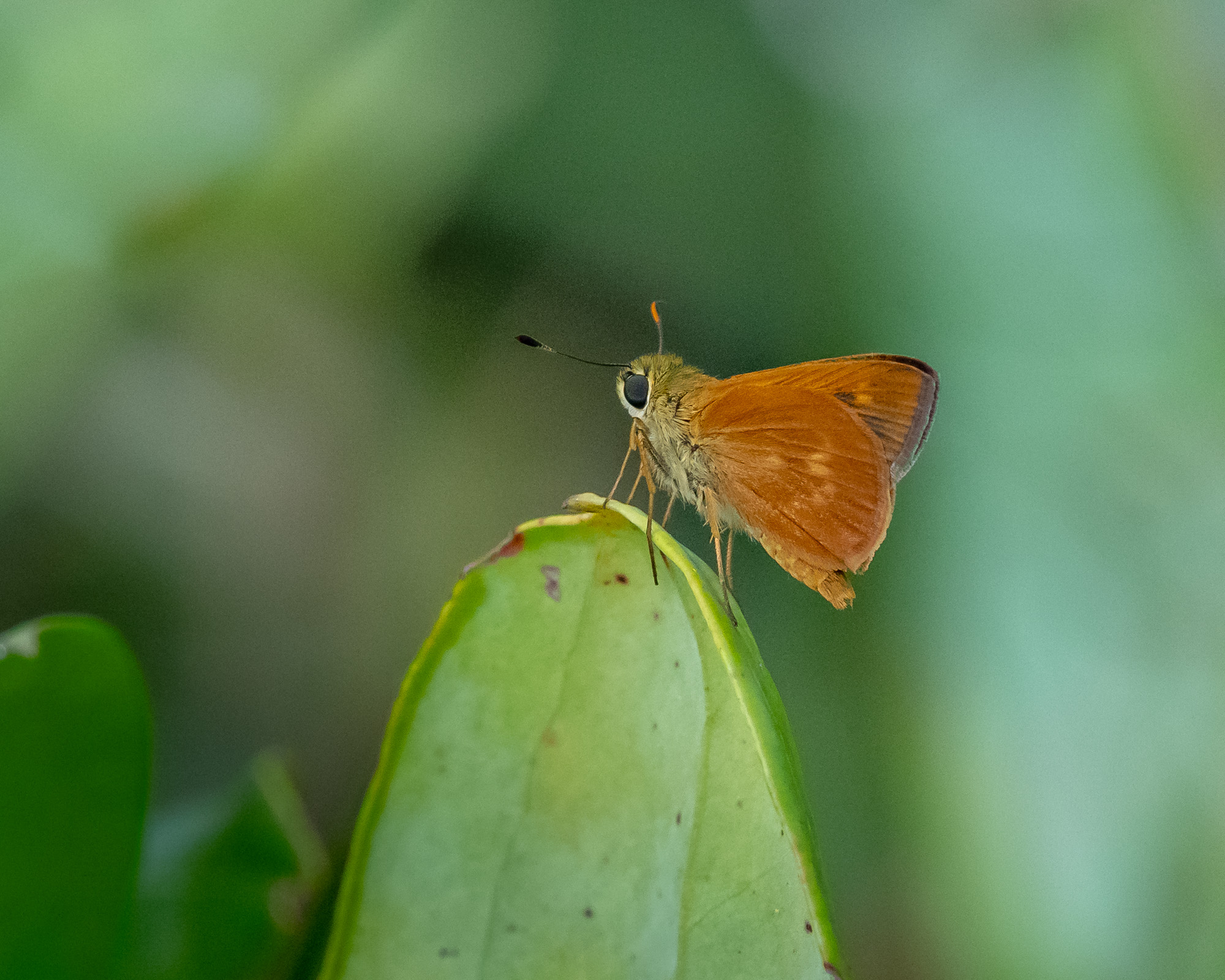
Part of the large butterfly family of Grass-Skippers, a Southern Broken-Dash (Polites otho) shows a bit more contrast of brown and orange than many of its cousins.

Pink and yellow together make quite a pleasing combination. Cloudless Sulphur (Phoebis sennae) on Purple False Foxglove (Agalinis purpurea).

Velvety leaves and pretty pink flowers don’t really come to mind when thinking of this plant’s name: Tall Elephantsfoot (Elephantopus elatus). Supposedly, the common name stems from the shape of the large basal leaves (which I failed to photograph). I need a better imagination.

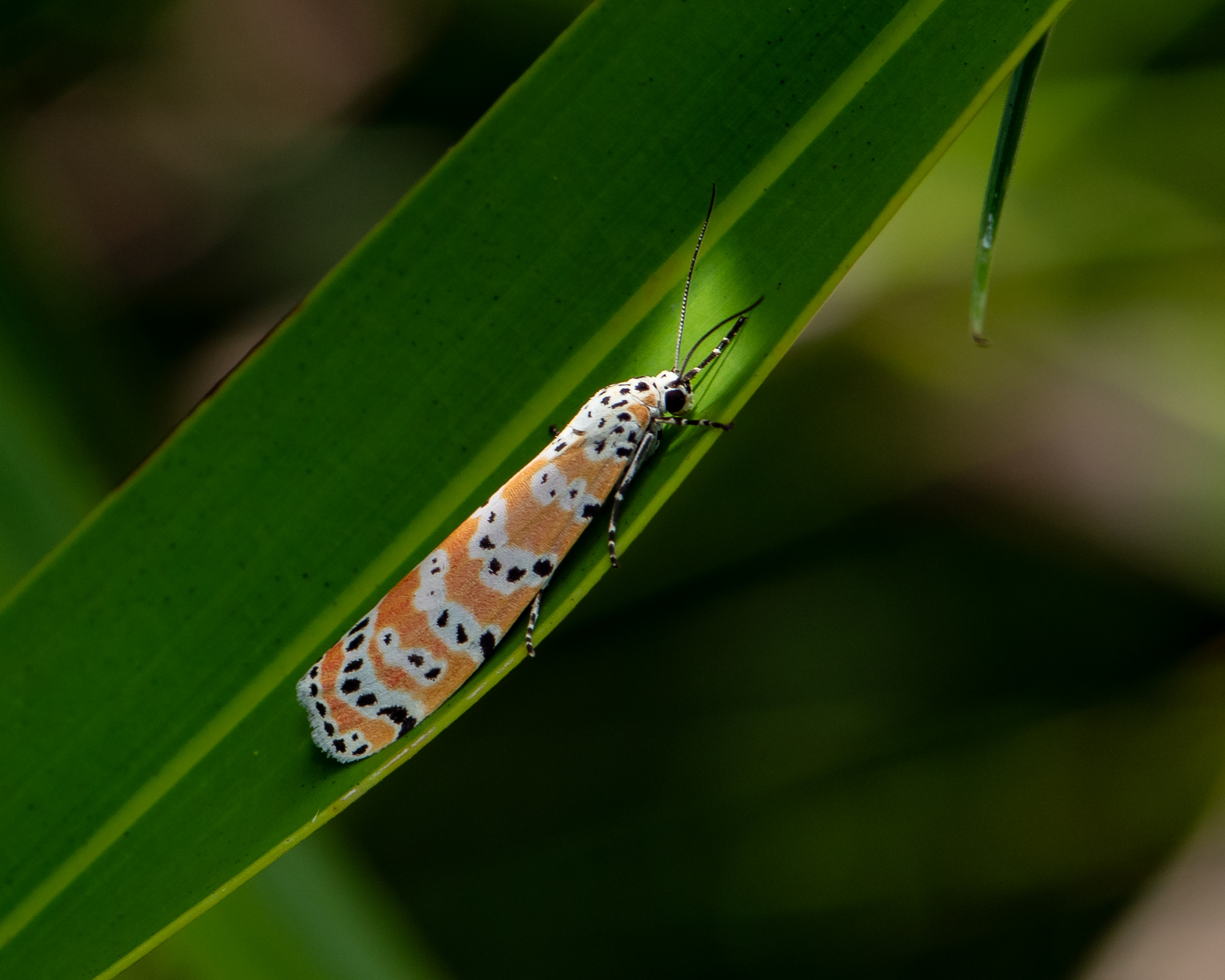
A moth which works the day shift. My kind of moth. Not to mention it’s not too bad in the looks department. Ornate Bella Moth (Utetheisa ornatrix).
I know. It’s not yellow. We are not in Carolina. Those crazy botanists. No matter what it’s called, Carolina Yellow-eyed Grass (Xyris caroliniana) is delicate and wonderful to behold. We’ll try to find an actual yellow variety soon. But we still won’t be in Carolina.


One of our smallest dragonfly species, the Little Blue Dragonlet (Erythrodiplax minuscula) remains close to the ground. If they don’t move, good luck in seeing one.

We had a terrific time exploring this section of the state forest. Four weeks after our visit, Hurricane Milton marched across this area with 100+ mph winds and over 20 inches of rain in 24 hours. We are anxious to head out there and see how it is recuperating. Just as soon as we – recuperate.
Enjoy your search for a natural place and come back for a visit!

Thank you so much for all the positive thoughts. We are extremely grateful.
Gini is recovering nicely following replacement of an aortic valve to help her heart hold even more love. In a fit of jealousy, I told my own doctor to order up something even more spectacular. Last week, he complied by performing a triple bypass graft. Recuperation may take a while.
We are still here. We will return to Nature’s playground at some point.
Play nice while we are away.
(Click on image to enlarge, click again to zoom.)
Previously, in “Falling In The Morning”, I alluded to the fact that Ranger Sunny provided a nugget of information which I had hoped to hear. It put into motion our plan to have a relatively short morning at Colt Creek State Park in order to return later in the day.
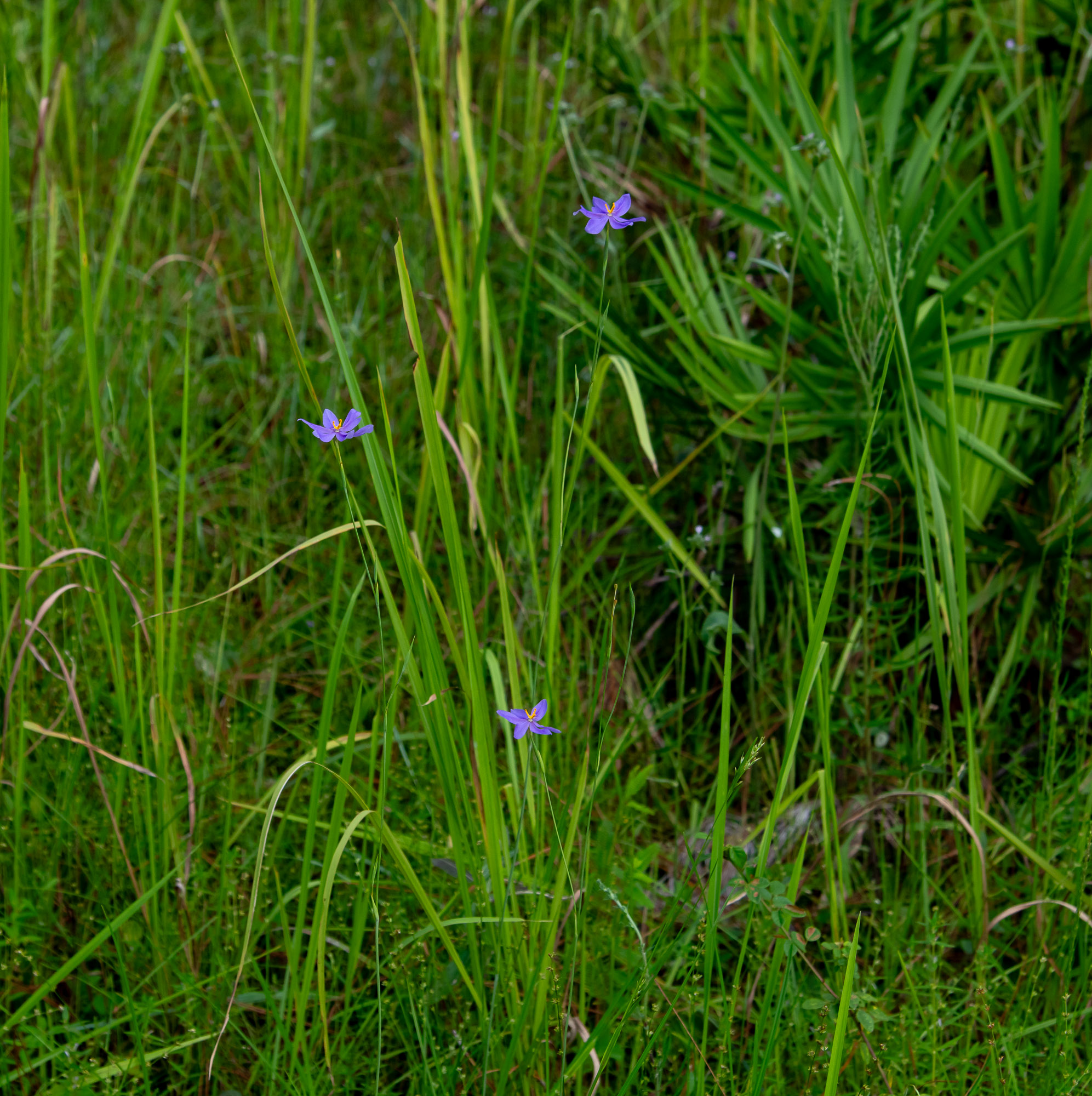
She let us know the lilies were blooming. One of those, the Pine (also known as Catesby’s) Lily is the largest member of the wild lily family in North America and mighty colorful. Additionally, she said there were Celestial Lilies also in bloom. That’s what I’d hoped for. These lovely flowers only bloom late in the day. Try to find them before 4 or 5 o’clock and all you’ll see is what could be blades of grass.
Again, thank you to our “Ranger Extraordinaire “! (She, along with the rest of the park staff and volunteers have been incredibly busy working to restore the damage caused by Hurricane Milton. Kudos to all who are helping.)
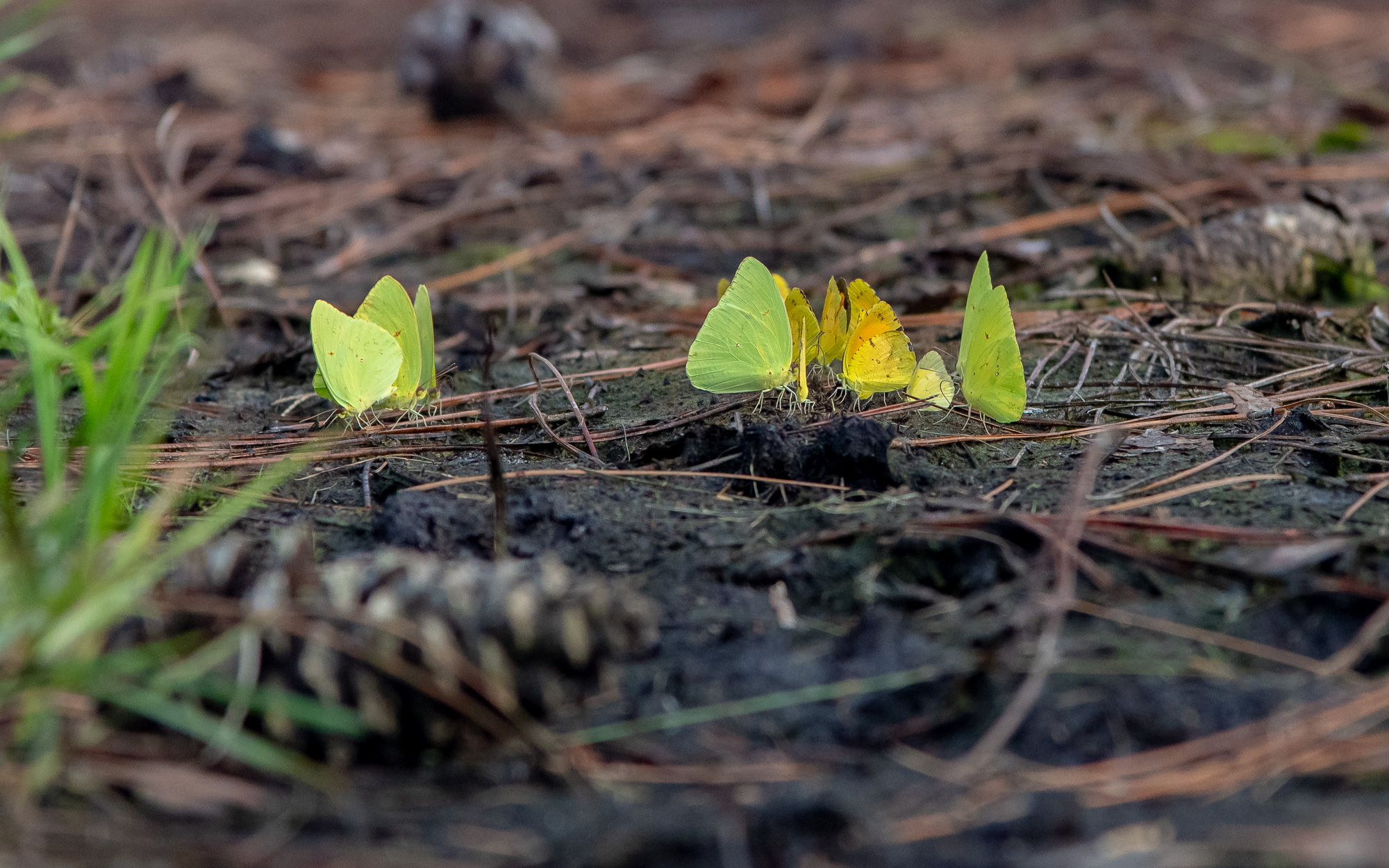
On the walk to an area where I had seen the lilies before, I ran across three different groups of butterflies “puddling”. They are able to extract minerals from damp ground which are vital to their health. A nice bonus appeared in the form of a Longhorn Bog Orchid.
Once our target lilies had been recorded, we still had about an hour before sunset so we wandered around a bit. It’s amazing how different the same landscape can appear at a different time of day. More flowers, birds, butterflies, a young alligator and more than a few deer rounded out an incredibly rewarding day enjoying nature.
Yes. Another American Alligator. A young one barely three feet long and quite colorful. The epitome of “cute“.

A new plant for us! I failed to get a decent photograph but hope to find a Longhorn Bog Orchid (Habenaria quinqueseta) again.

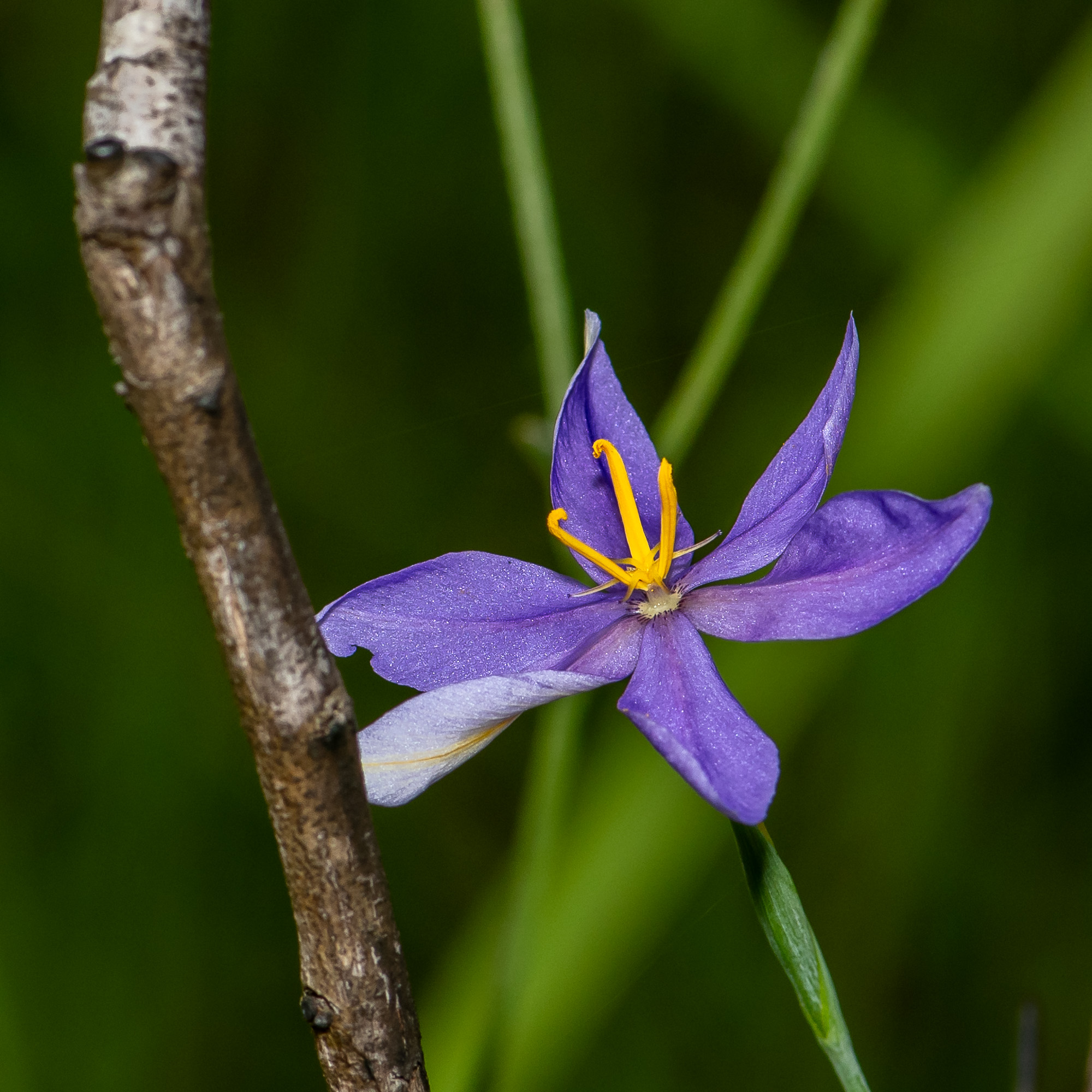
Our main target. The Celestial Lily (Nemastylis floridana). Dozens of these lovely flowers littered the pine forest this afternoon.

Puddling butterlies. Species in this group include Cloudless Sulphur (the yellow-green larger ones), Sleepy Orange (brighter yellow) and at least one Little Yellow (smallest one).
Big and boldly colored, it is always a delight to find the Pine (or Catesby’s) Lily (Lilium catesbae).

Just at sunset, White-tailed Deer begin to materialize from the edges of the forest to browse. Groups of does, fawns and first-year bucks remain together and mature bucks typically stay apart from these herds.
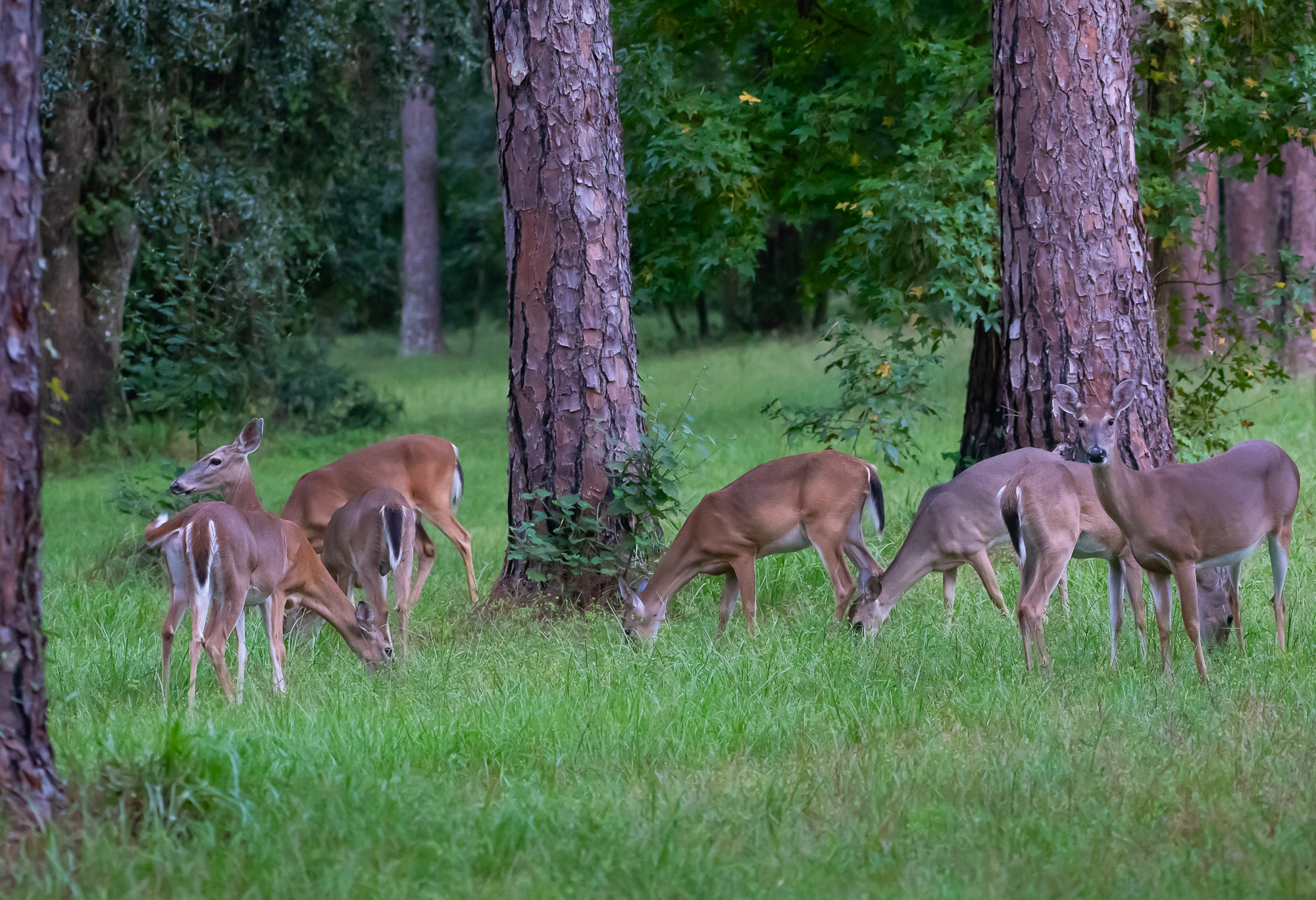

What a day! Florida autumns may not offer the awesome display of colorful foliage found further north, but we have a few specialties all our own of which to be proud. Gini and I “fall” for them every year.
Enjoy your search for a natural place and come back for a visit!
(Medical Update. Gini had successful heart valve replacement surgery last week and is resting well at home. Thank you so very much to all who wished her well.)
 Our Natural Places