
(Click on images to enlarge, click again to zoom.)
The red clay road is still damp along the edges from yesterday’s brief rain shower. Pine trees provide that fresh scent only they can manufacture. Blue sky, no breeze, no man-made sounds. We pause and sigh as one.
Ancient geological phenomena make the Lake Wales Ridge one of our very favorite places to visit. This unique ecosystem is covered with a mosaic of scrub, flatwoods, wetlands and lakes. Although we haven’t become lost here in our wanderings, we always become lost in reverie.
Although the dog days of summer have just passed, the hounds have allowed the heat to remain over the land with no relief in sight. Siriusly. (Reminder, the date of this visit was August 15th.) It’s okay. Our internal Florida bodily thermostats adjust to handle these egg-frying temperatures. Ooops. Gini just asked to get that car A/C turned down!
Yes, there are, once again, way too many pictures. Just scroll quickly and you’ll be finished in time for dinner.
In the center of surrounding pine forest and scrub palmetto is a small lake. This source of water attracts a terrific selection of birds, blooms and bugs. Oh, look. Here’s a familiar resident now. American White Waterlily (Nymphaea odorata).

One of the larger dragonflies in this area is the Golden-winged Skimmer (Libellula auripennis).

Where there is wet ground, we will usually find some member of the Sagitarria genus. This one is Grassy Arrowhead (Sagittaria graminea).

Also known as Hat Pins or Bog Buttons, Tenangle Pipewort (Eriocaulon decangulare) offers a different form than a “regular” flower bloom.

The male Pipevine Swallowtail (Battus philenor) has a really bright upper wing iridescence.

Supposedly, some botanist conjured a vision of the track of a huge mammal when observing the basal leaves of the Tall Elephantsfoot (Elephantopus elatus). The vision escapes me. No matter. The lovely lavender flowers more than make up for its name.


We’ll check back in the spring, but strongly suspect the area’s critters will keep the fruit of this Darrow’s Blueberry (Vaccinium darrowii) completely harvested.

By far, the most common bird call throughout the forest today was that of the Eastern Towhee. “Drink-your-teeeeee“.

Blooms of the Winged Sumac (Rhus copallinum) attracted a huge number of pollinators. Most were really small fly-like things which evaded all attempts to photograph them.


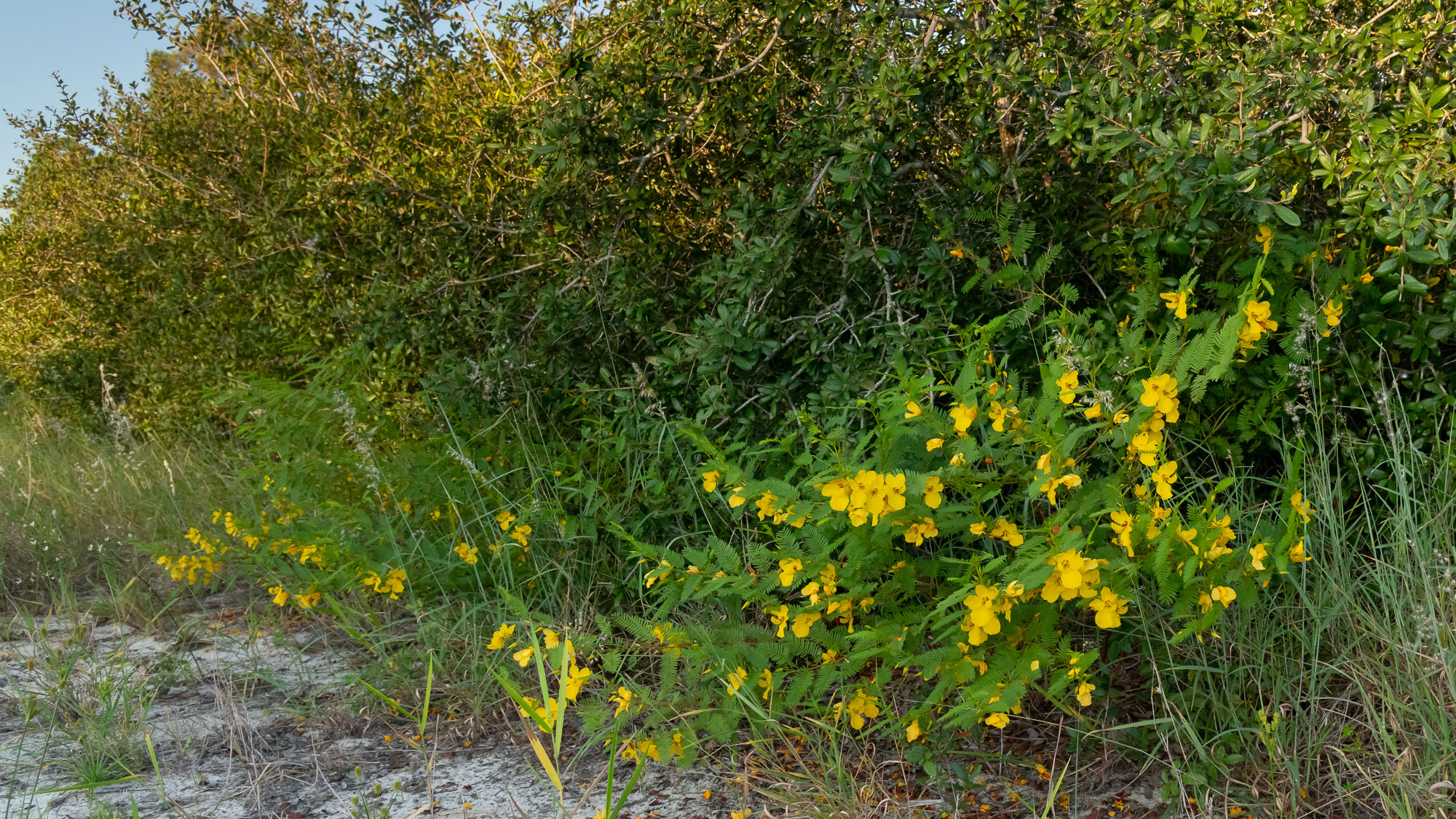
Endemic to Florida, the bright Yellow Milkwort (Senega rugelii) can often be overlooked in the taller grasses around the forest edges.


As summer wanes, family groups of Brown-headed Nuthatches begin to disperse to establish territories of their own for the next breeding season. Their unmistakable “rubber-ducky” squeaks are music to our ears.

Another gold jewel of the dragons, a Halloween Pennant (Celithemis eponina) is, thankfully, a common sight in this area.

This is our first sighting of the aquatic carnivorous Purple Bladderwort (Utricularia purpurea). Their ability to filter nutrients from prey they capture is fascinating.

Black and white and purple. What’s not to like about a Zebra Swallowtail (Eurytides marcellus) on Pickerelweed (Pontederia cordata)?

This is Part Two of a three-part series on the one day this summer we were able to have an outing. Good news on two fronts. Gini recovered from last year’s heart escapades sufficiently to have one of her knees completely replaced. The other one should be done early next year. She is doing well and walking a bit unassisted for the first time in nearly 30 years! Secondly, yours truly will soon graduate from several months of cardiac rehabilitation. We have managed a couple of recent outings and are preparing for more! (You have been warned.)
Enjoy your search for a natural place and come back for a visit!
(Click on images to enlarge, click again to zoom.)
Dew-bejeweled wisps of webs atop brown grass stalks sparkled with the first rays of sun as we made our way along the red clay road through the forest. The call of a Northern Cardinal was as clear as the bright blue sky overhead. Mid-summer. Hot. Humid. Surely a day meant for mad dogs. Indeed.
Flowers appeared in profusion every few yards. Birds and cicadas competed in some sort of “who can sing the loudest” contest. Woodpeckers punctuated the songfest with percussion support. Lizards scurried from under every other step. Eastern Towhees seemed to be everywhere all at once urging one and all to “drink-your-teeeea“.
Incredible to think we encountered no other human all day in this lush paradise of birds, bugs and blooms. Every few minutes seemed to produce a heavy sigh from one of us.
We were in the center of Florida within the Lake Wales Ridge State Forest. This unique scrub ecosystem may host the largest number of rare and endangered plants in the United States. Currently, 33 plants and 36 animals in this region are on state or federal endangered lists. Little wonder this is one of our favorite spots to spend a little time.
Key words this year for exploring nature: “little time“.
Surgeries, recoveries – wash/rinse/repeat. Growing old is not for the faint of heart.
Gini was scheduled for knee replacement surgery in mid-July but it had to be postponed until August 26. She is recovering well but still in pain. Meds are helping and on lesser-pain days her physical agility is quite good. Physical therapy will help in the coming weeks.
Meanwhile, little did we suspect this day in mid-August would be our last day to get out for the summer. Fortunately, it was a very good day.
(This post covers only a small portion of the day. We’ll provide little doses over the next few weeks.)
Butter-colored Partridge Pea (Chamaecrista fasciculata) was abundant throughout the forest today. Birds and other animals like the seeds. While the plant is host to several butterfly species, the design of the bloom is such that it can only be pollinated by long-tongued bees.

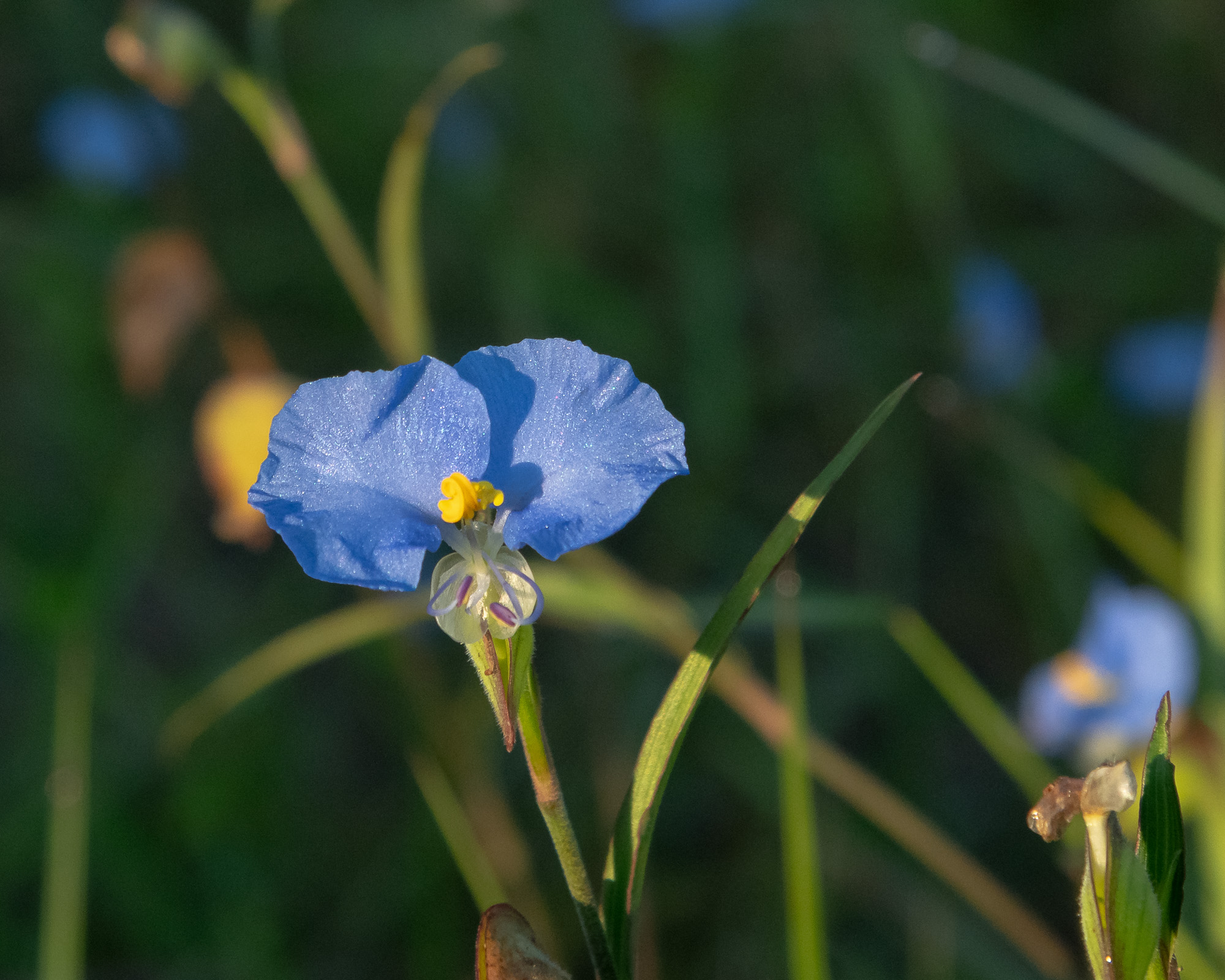
Also plentiful was the brilliant blue Whitemouth Dayflower (Commelina erecta). True to its name, blooms only last one day but the plants have a succession of flowers which keeps the area dotted with blue all summer.

A strange-looking grass-like plant, Plains Snakecotton (Froelichia floridana) is a member of the Amaranth family which can grow as tall as three feet. Despite its scientific name, it’s common throughout the central and eastern United States.

It is estimated that over the last 50 years the population of Red-headed Woodpecker in North America declined by over 50%. Likely due to loss of nut-producing trees and clearing of dead trees, this handsome bird is, thankfully, fairly abundant within the Lake Wales Ridge State Forest.

Pinweeds are low-growing plants that resemble herbs. This particular one, Deckert’s Pinweed (Lechea deckertii), is found in Florida and southern Georgia. Different!

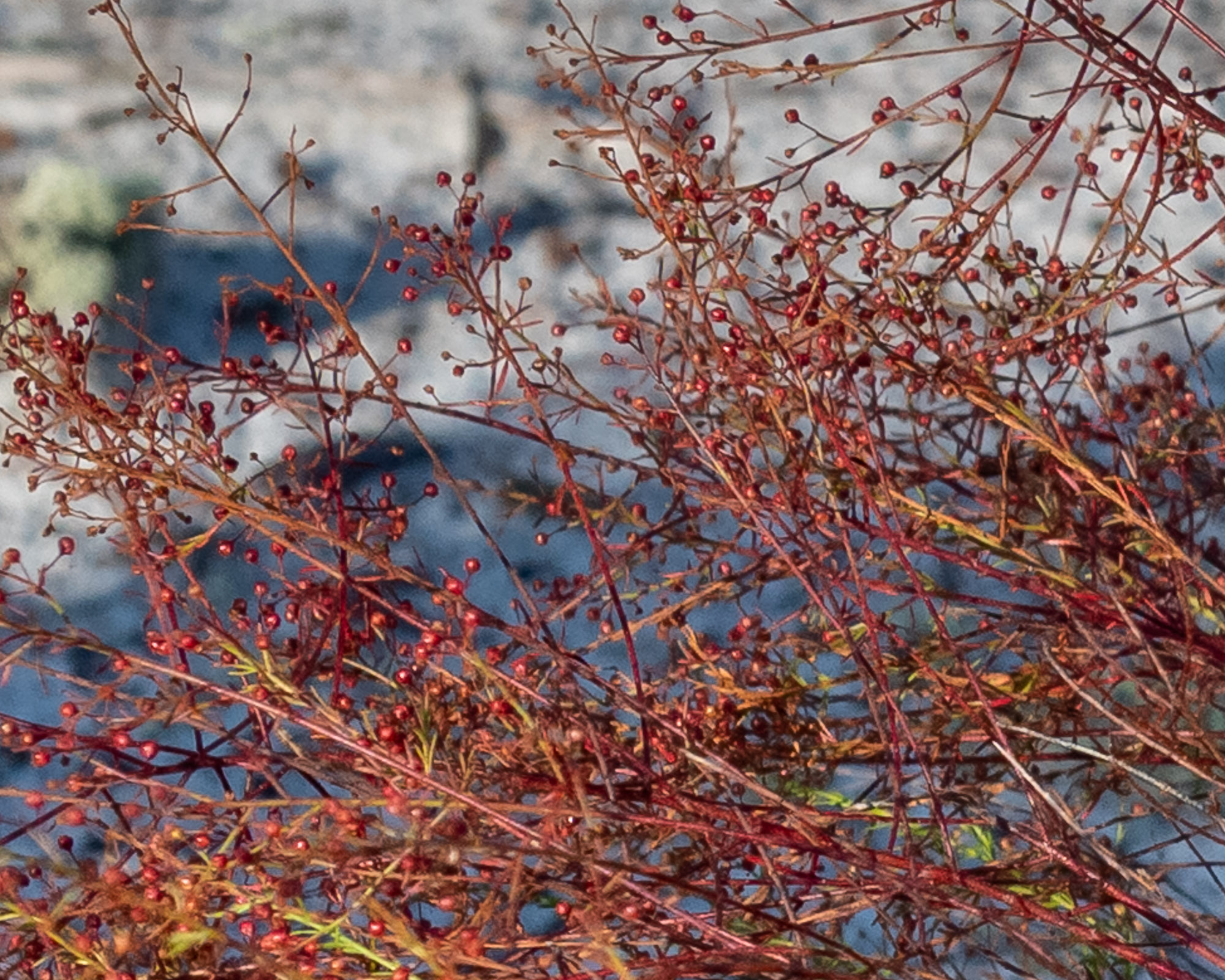
State and federally endangered, Small’s Jointweed (Polygonella myriophylla) is only found in four counties in Florida’s Lake Wales Ridge. This woody, low-growing plant has a profusion of very small white flowers through the summer and early fall.


A legume with bright yellow blooms, Florida Alicia (Chapmannia floridana) can reach three feet in height. Endemic to Florida.


Plenty of insects thrive in this area. This one is quite common. A Carolina Saddlebags (Tramea carolina) on Needlepod Rush (Juncus scirpoides).

If we had known this was to be our last summer day in Nature for the year, what would we have done differently? Not one single thing.
Enjoy your search for a natural place and come back for a visit!
(Click on images to enlarge, click again to zoom.)
Sweltering summer days. Exploring in August usually means being out early. Today, we braved the humidity and building thunderstorms to visit one of our favorite patches at sunset.
Citrus groves criss-crossed by clay roads are bordered by pastures, weedy fields, small lakes and a blueberry farm which seems to have been unsuccessful based on the level of disrepair we found. In a couple of months, this area will be a magnet for a diverse collection of migrating birds. Today, a few year-round residents graced us with their presence.
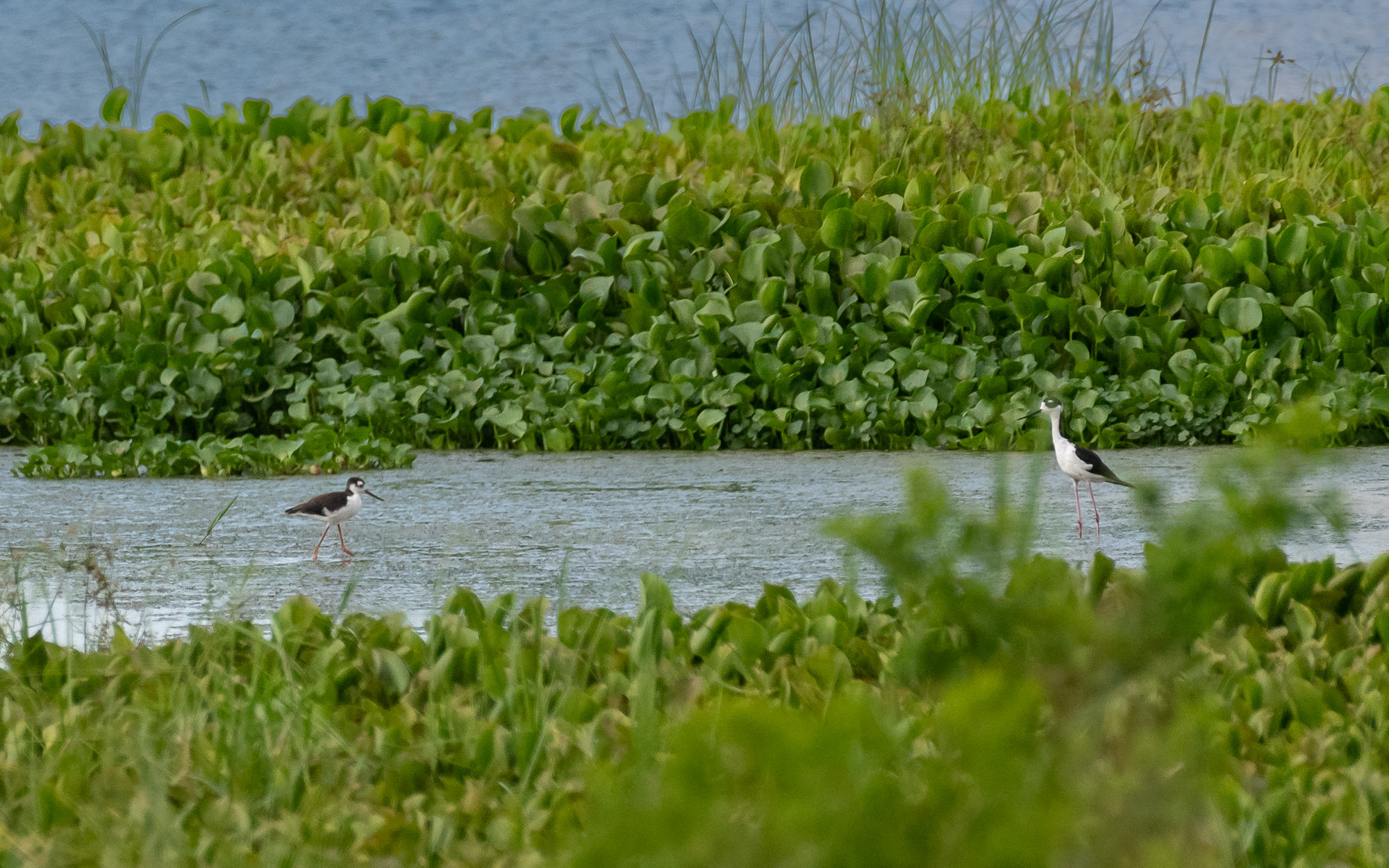
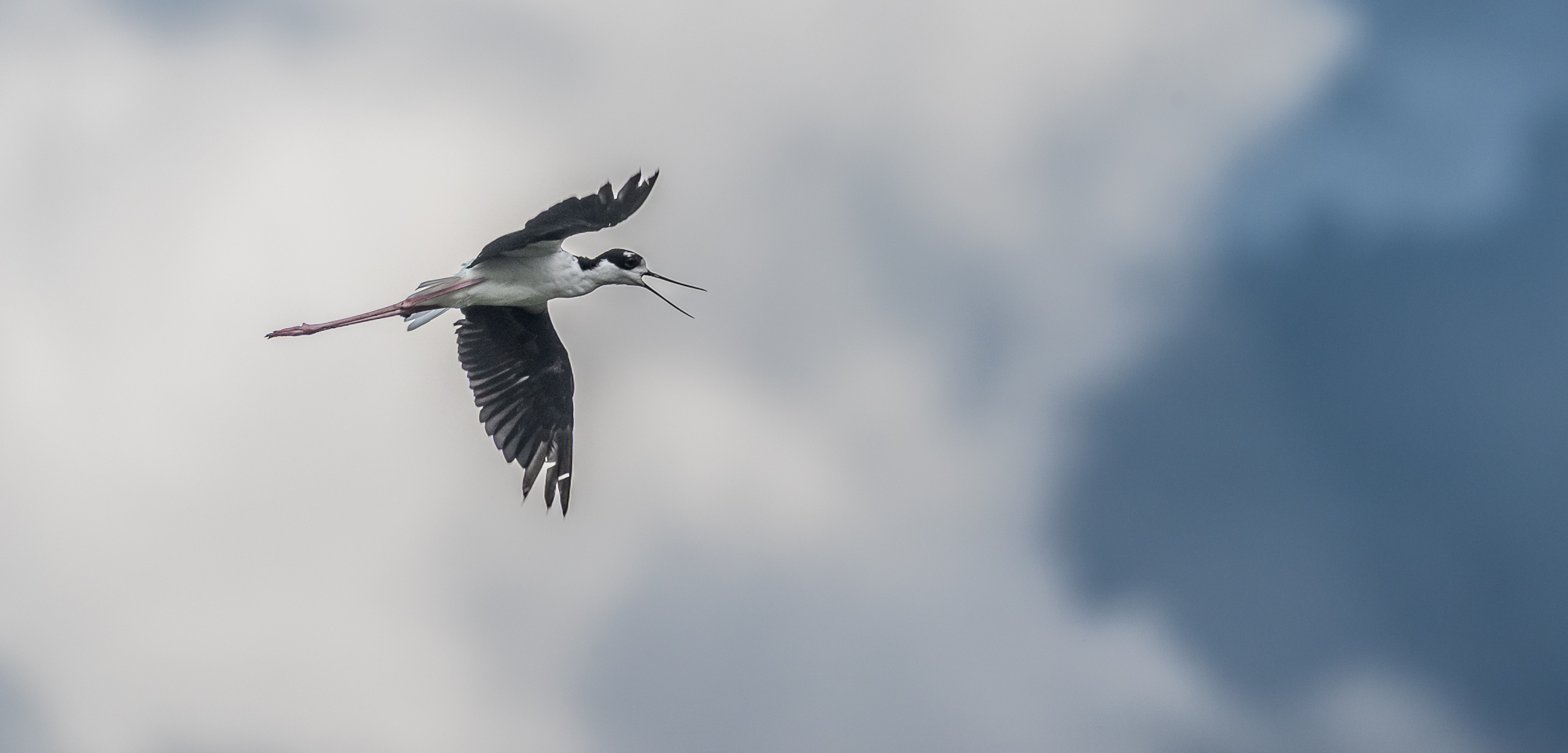
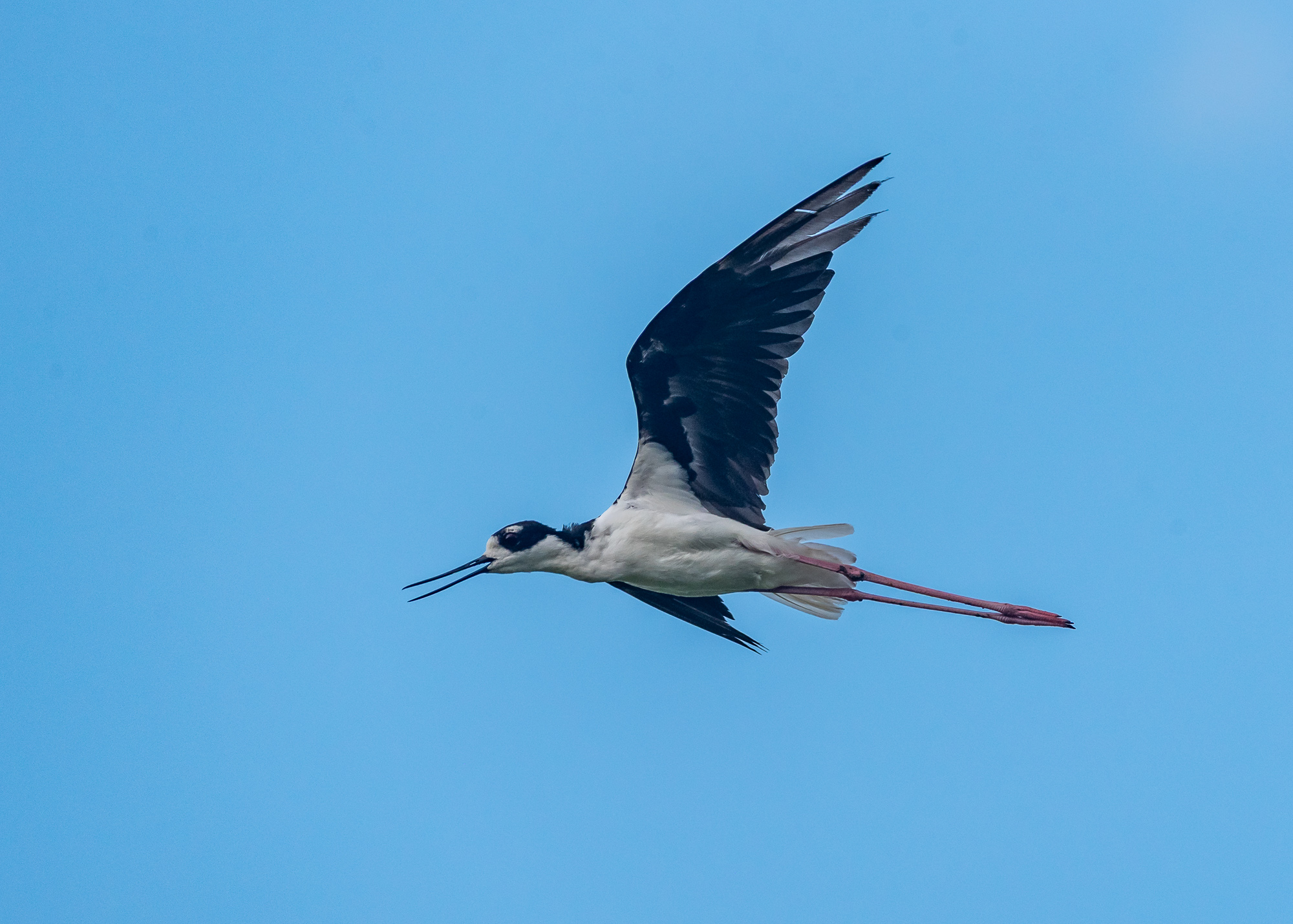
Thanks to new hearing aids, my ears were assaulted with familiar but long unheard sounds. Choruses of cicadas sang out in undulating waves as if celebrating summer. Gini pointed at a male Northern Cardinal atop an orange tree with head thrown back belting out his clear whistle. I actually heard it before my eyes found it. What’s that urgent call overhead? Familiar and almost forgotten. The Black-necked Stilt was obviously upset at our presence. Following it to its landing spot revealed why. A youngster demanded attention, and protection.
Anhinga, Double-crested Cormorant, Great Blue Heron, White Ibis, Wood Stork, Bald Eagle, Red-shouldered Hawk, American Kestrel, Northern Bobwhite, Mourning Dove, Common Ground Dove, Northern Mockingbird, Blue-gray Gnatcatcher, those Black-necked Stilts – we didn’t expect quite this diversity.
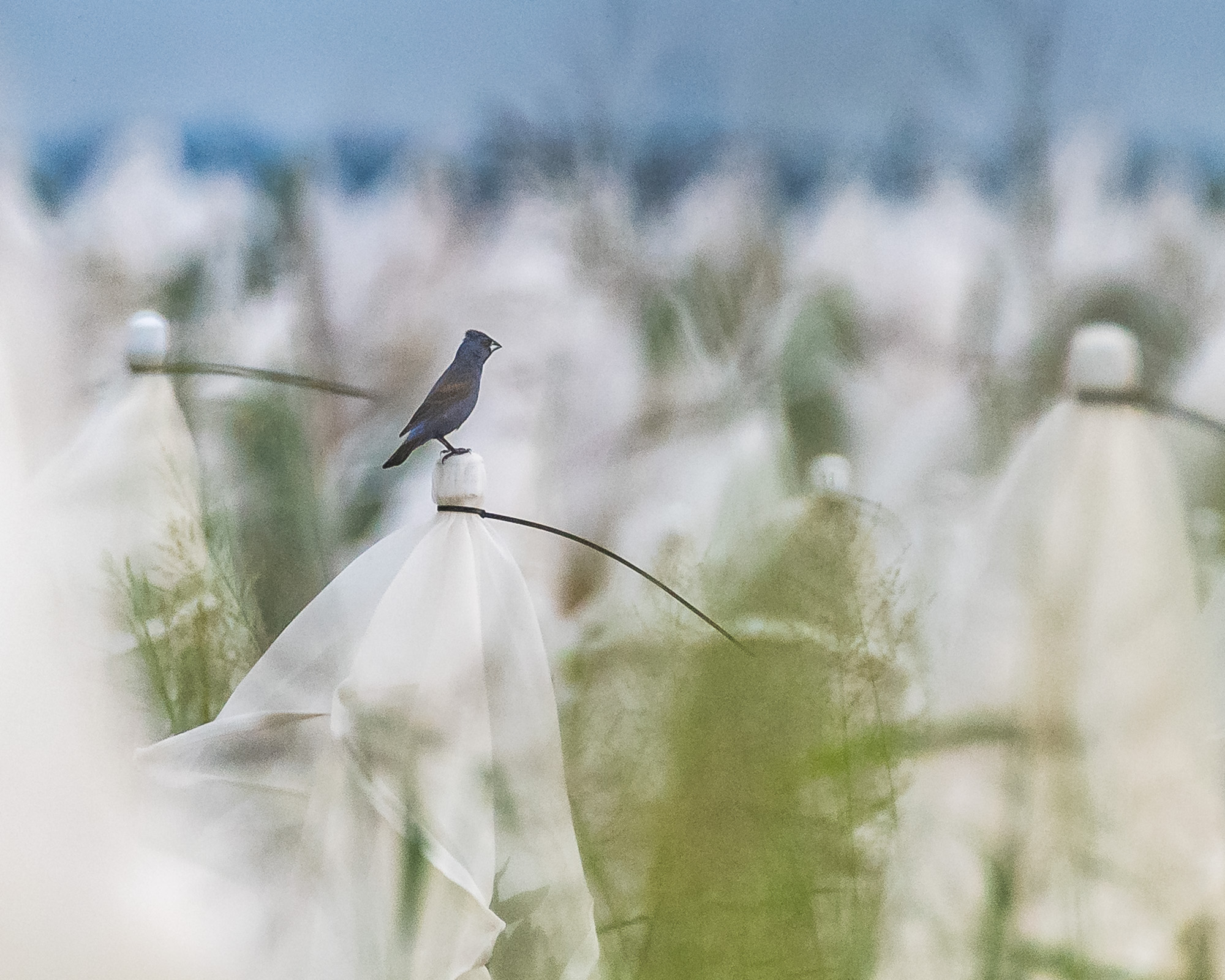
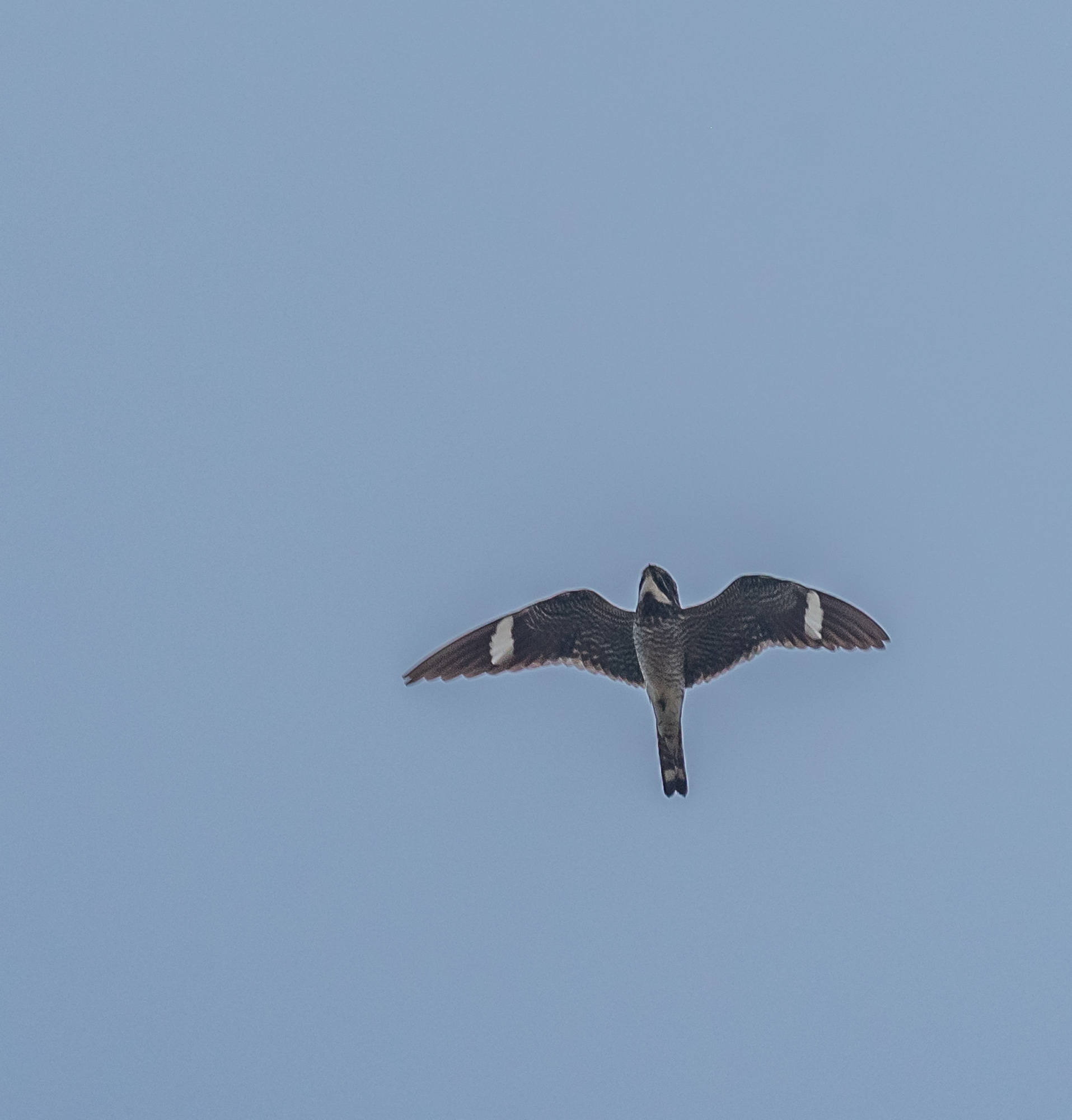
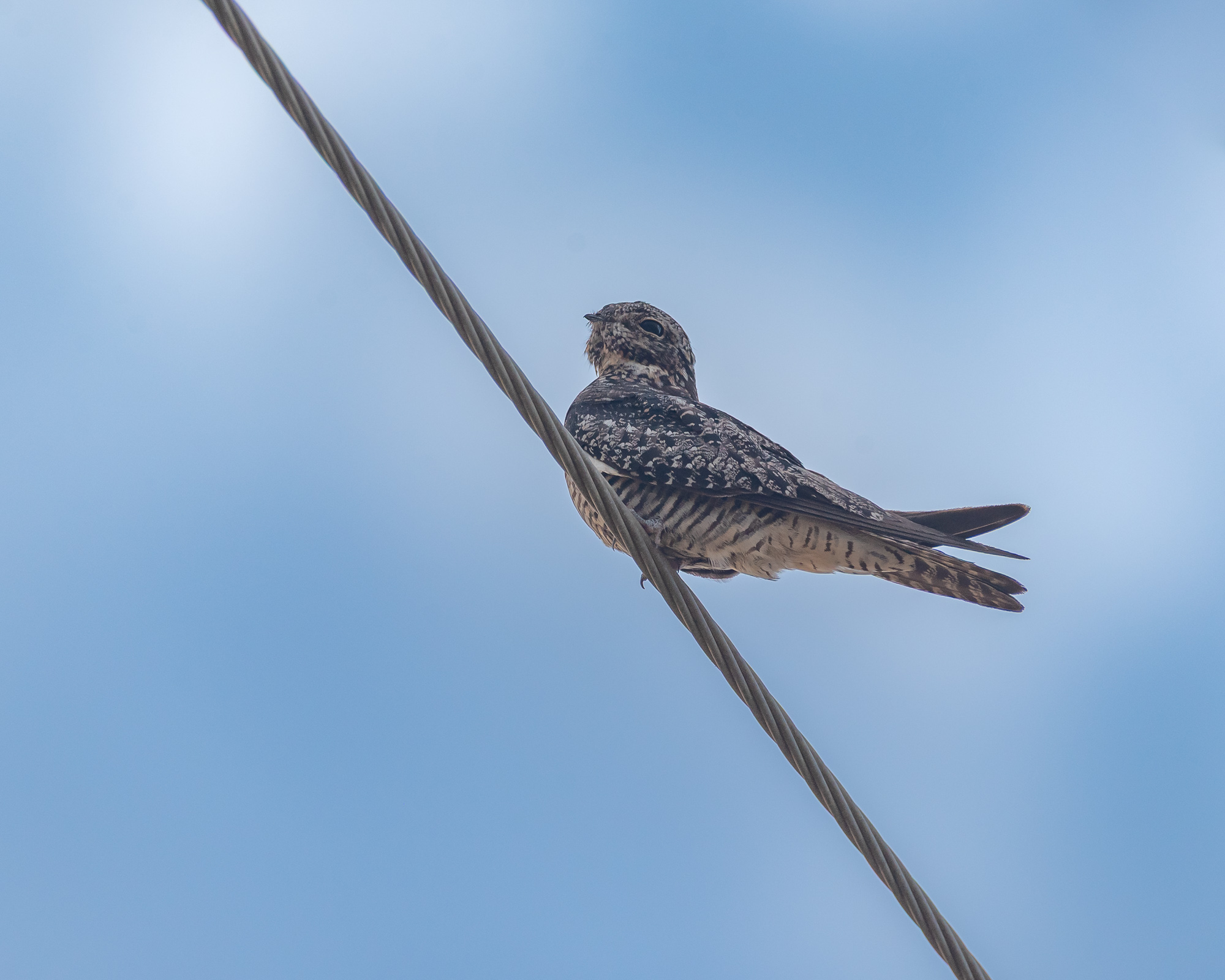
Then, Gini heard a burbling song and we both said “what is that?”. This hearing thing is pretty neat! A male Blue Grosbeak briefly perched for a very distant photo. Just as the sun began its final descent, a familiar summertime buzz filled the air. Over a dozen Common Nighthawks busily snatched a late snack before gathering on utility lines in preparation to roost in the citrus trees.
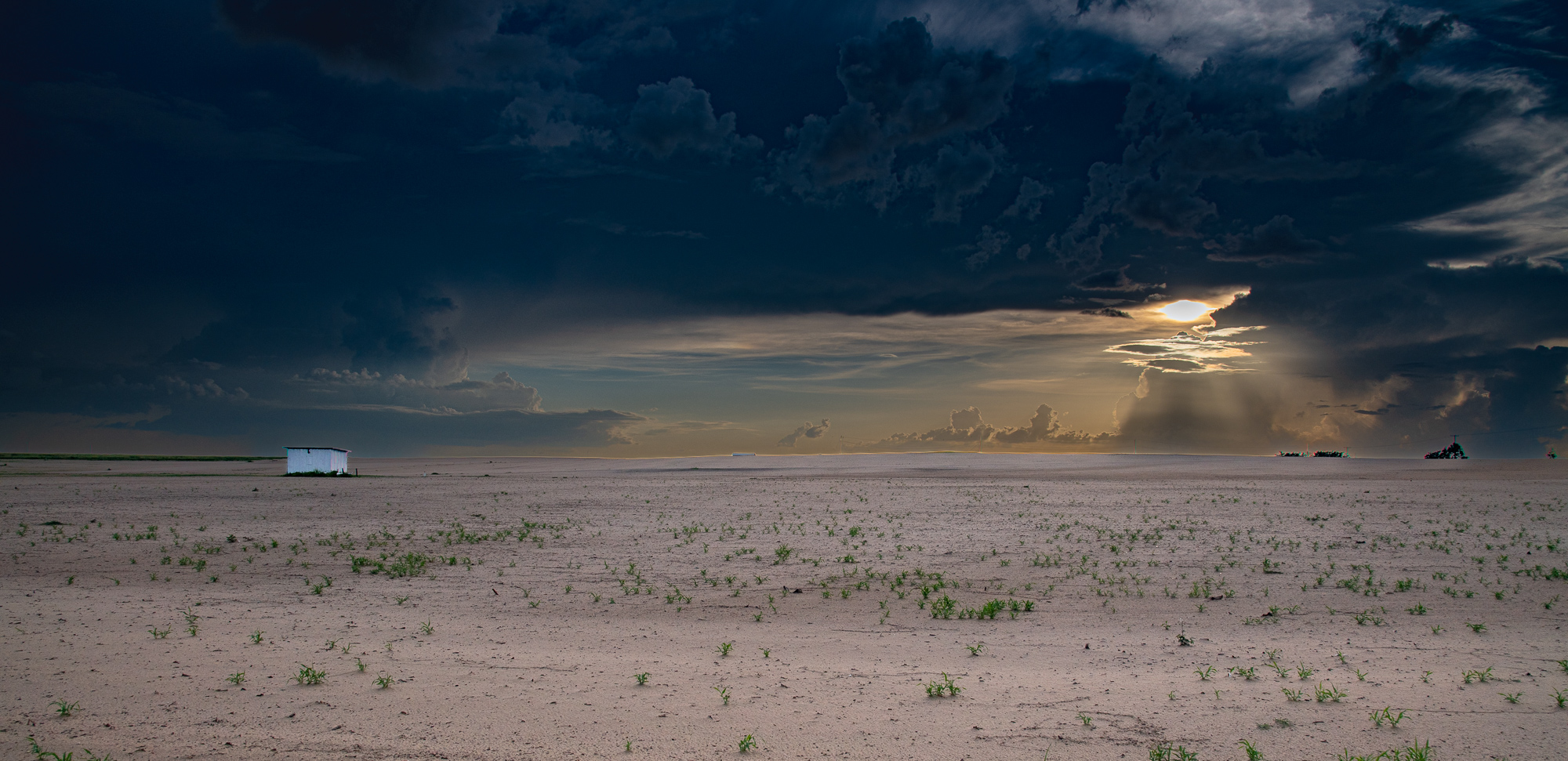
A vantage point on the shore of a small lake gave us a ringside seat for a truly glorious sunset. Passing storm clouds added a nice dramatic touch.
Evening rides make summer better.
Black-necked Stilt with young and yelling at us from overhead.
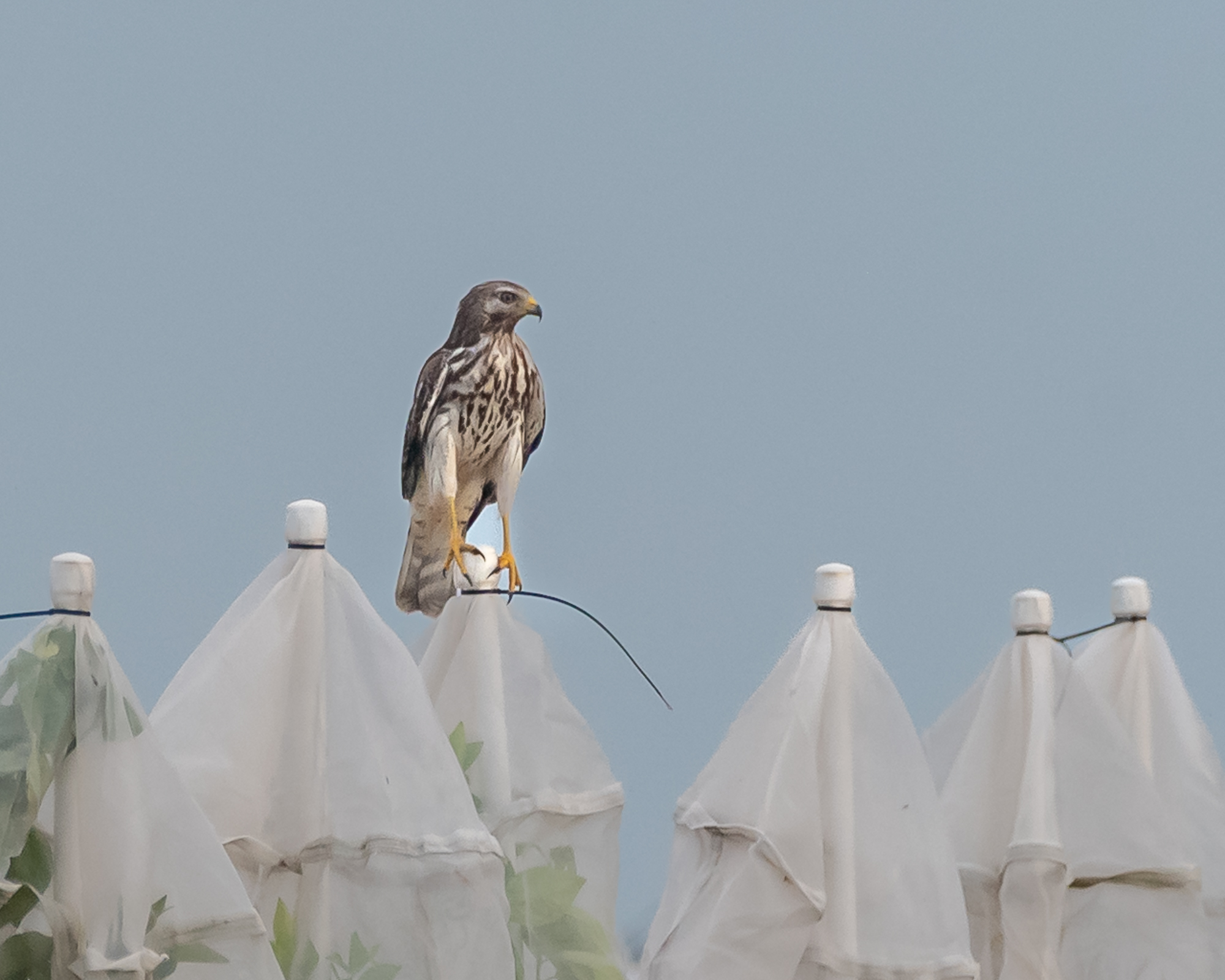
An immature Red-shouldered Hawk perches atop a young tented citrus tree hoping for supper to appear. (Tents are being used for citrus to ward off a citrus greening disease caused by a bacteria which destroys the fruit and trees. Some success is being realized.)
A male Blue Grosbeak gave us a very nice vocal performance. Wish he would have perched closer than half-a-mile away!
The “buzz” of the Common Nighthawk is distinctive as they fly with their mouths open through clouds of insects at dawn and dusk. We even heard one male “boom” – a sound made by flexing his wings during a steep dive. Usually heard during courtship, they will also “boom” at potential intruders, like the two-legged monster with the big camera.
Just before sunset.
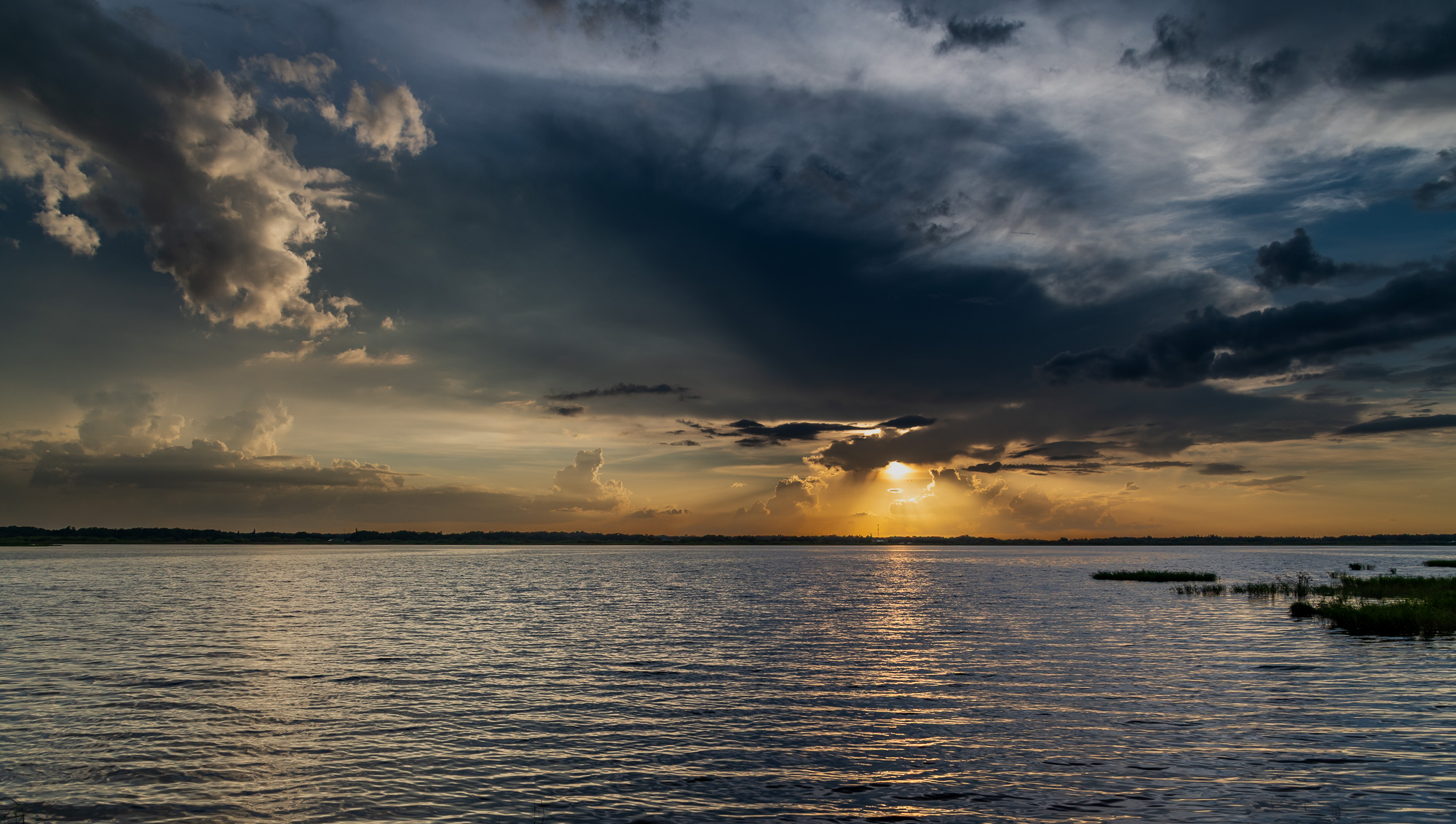
A creek empties into the lake.
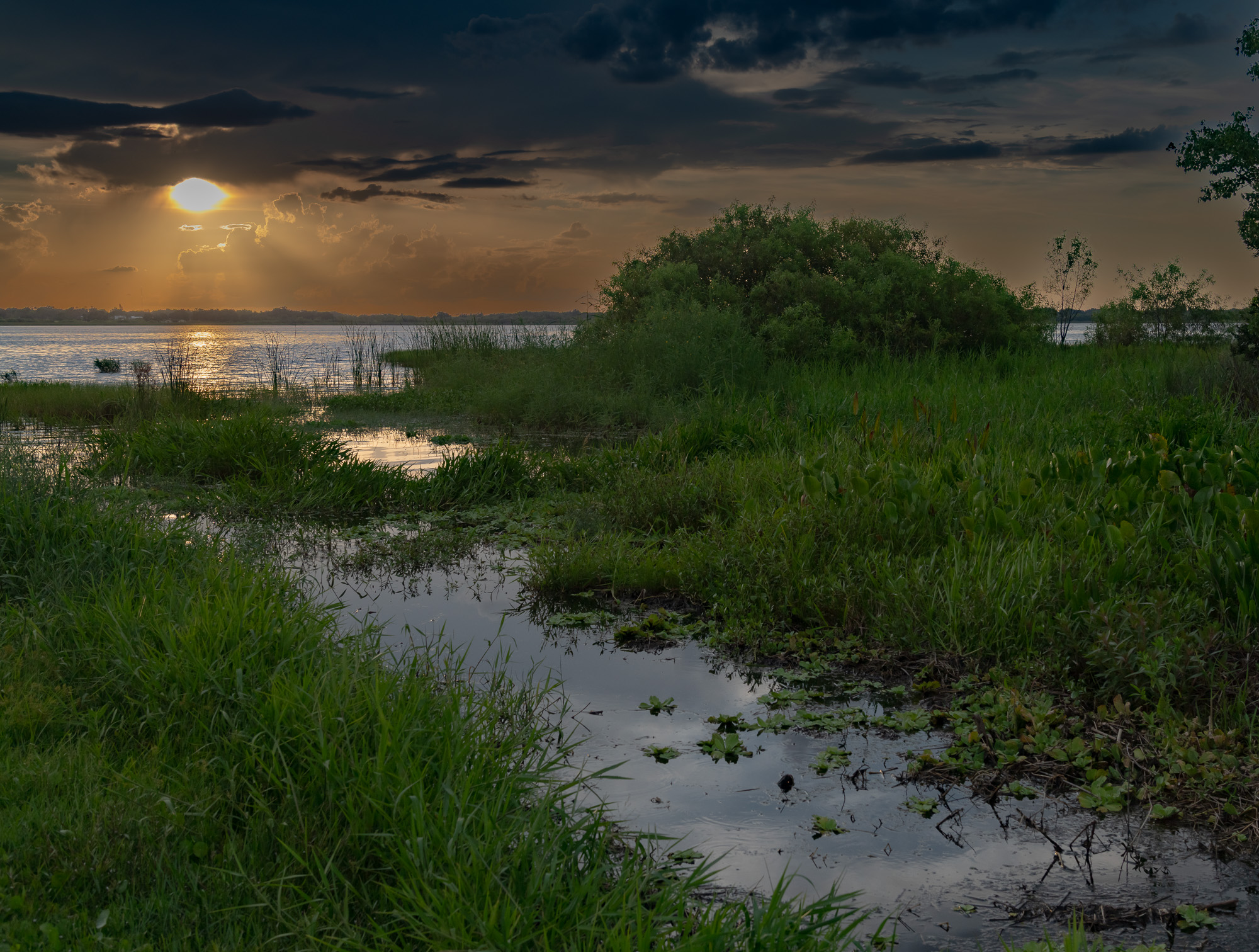
Sunset.
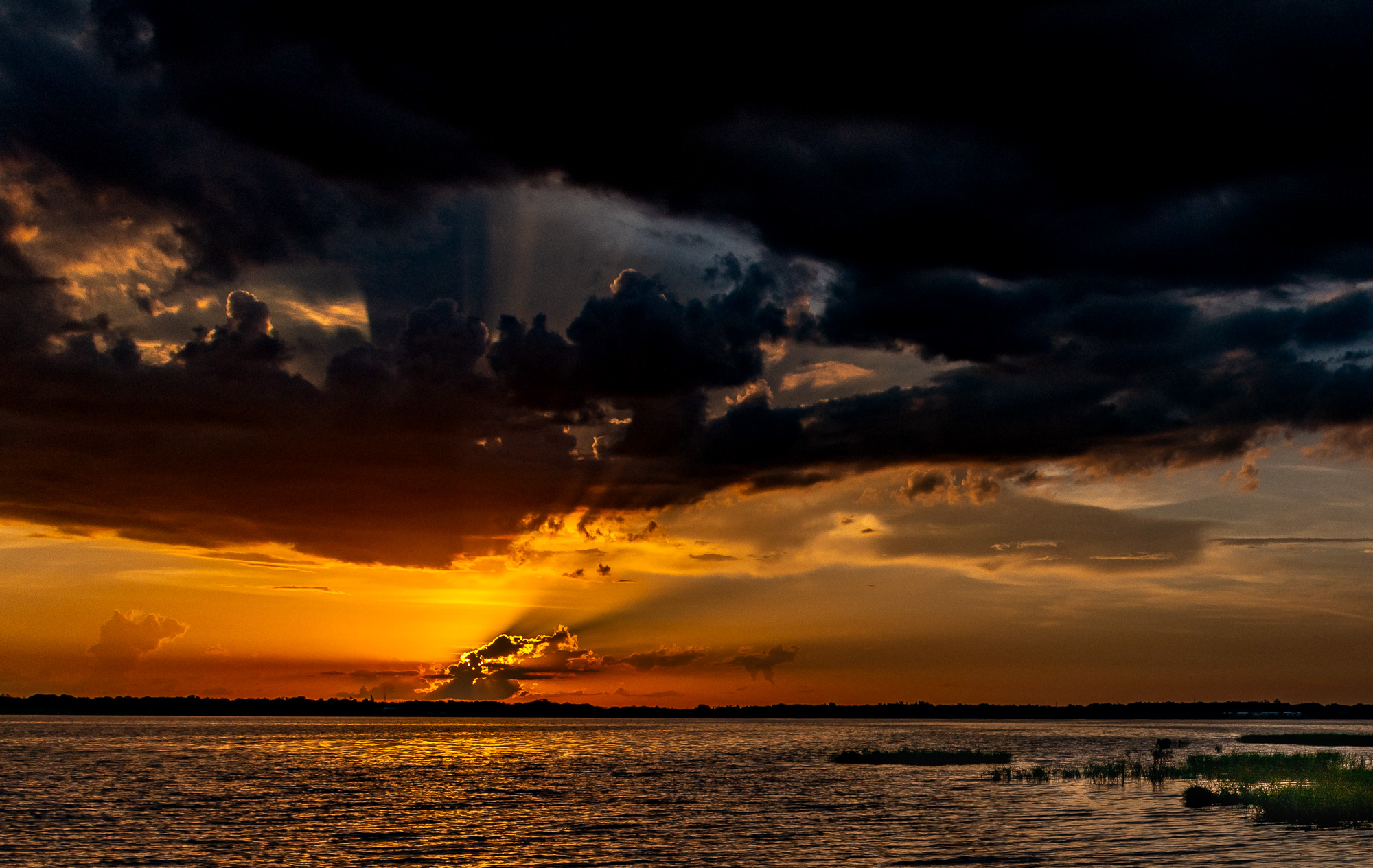
Being out before sunrise can beat the summer heat. A nice evening ride in August can offer unexpected rewards.
We hope you enjoy your search for a natural place and come back for a visit!
(So, has our absence made your hearts grow fonder? The year has provided more than its share of challenges for us. The vicissitudes of life have kept us from pursuing our love of exploring Nature. Things may be changing for the better. We made our first trip to the forest since April a few days ago. This post is a follow-up to our last one which describes our spring visit to the Green Swamp. We hope you all have been well.)
(Click on images to enlarge, click again to zoom.)
When we tell people our favorite place to explore is the Green Swamp, it is understandable they think of slimy water filled with snakes and alligators, while they politely back away from us. Truth is, yes, we know where to find some of that slimy water with who-knows-what in it, but the “swamp” also consists of lovely shaded oak hammocks, long-leaf pine forest, open savannas, cypress tree-lined streams, hardwood stands and small remote ponds.
Such diversity of habitat leads to diversity of life therein. Several years ago, we initially went for the bird watching. We keep returning for everything else. The old logging roads twist and turn and the state forest management system has provided multiple trails along those roads. A few steps take us into primitive wilderness where we seldom encounter another human.
Our last post described plant and insect life thriving in the swamp environment. Surprise! This post is more of the same. Hope you don’t become bored.
Bright yellow blooms occur throughout the area which is just fine with us. This eight-petal lovely belongs to the Smallfruit Beggarticks (Bidens mitis). Just as with other members of this family, tiny seedheads annoyingly attach themselves to everything they touch. Since they are so pretty, we forgive them.

Soft pink decorates the edges of the pine woods where it’s wet. The Swamp Rose (Rosa palustris) is simple and beautiful.

Insects love the nectar. Birds enjoy the seeds. Ducks gobble down the entire plant. Although it’s reported to be edible for humans, we’ll enjoy it from afar. Pickerelweed (Pontederia cordata).

Palamedes Swallowtail (Papilio palamedes) on Purple Thistle (Cirsium horridulum). This is one of a handful of “large” black swallowtail butterflies in our area. The yellow line at the base of the underwing and along the body help separate it from the similar Black Swallowtail (Papilio polyxenes).

Small visitor to a small flower. One of the hover flies, Thin-lined Calligrapher (Toxomerus boscii) on Oakleaf Fleabane (Erigeron quercifolius).

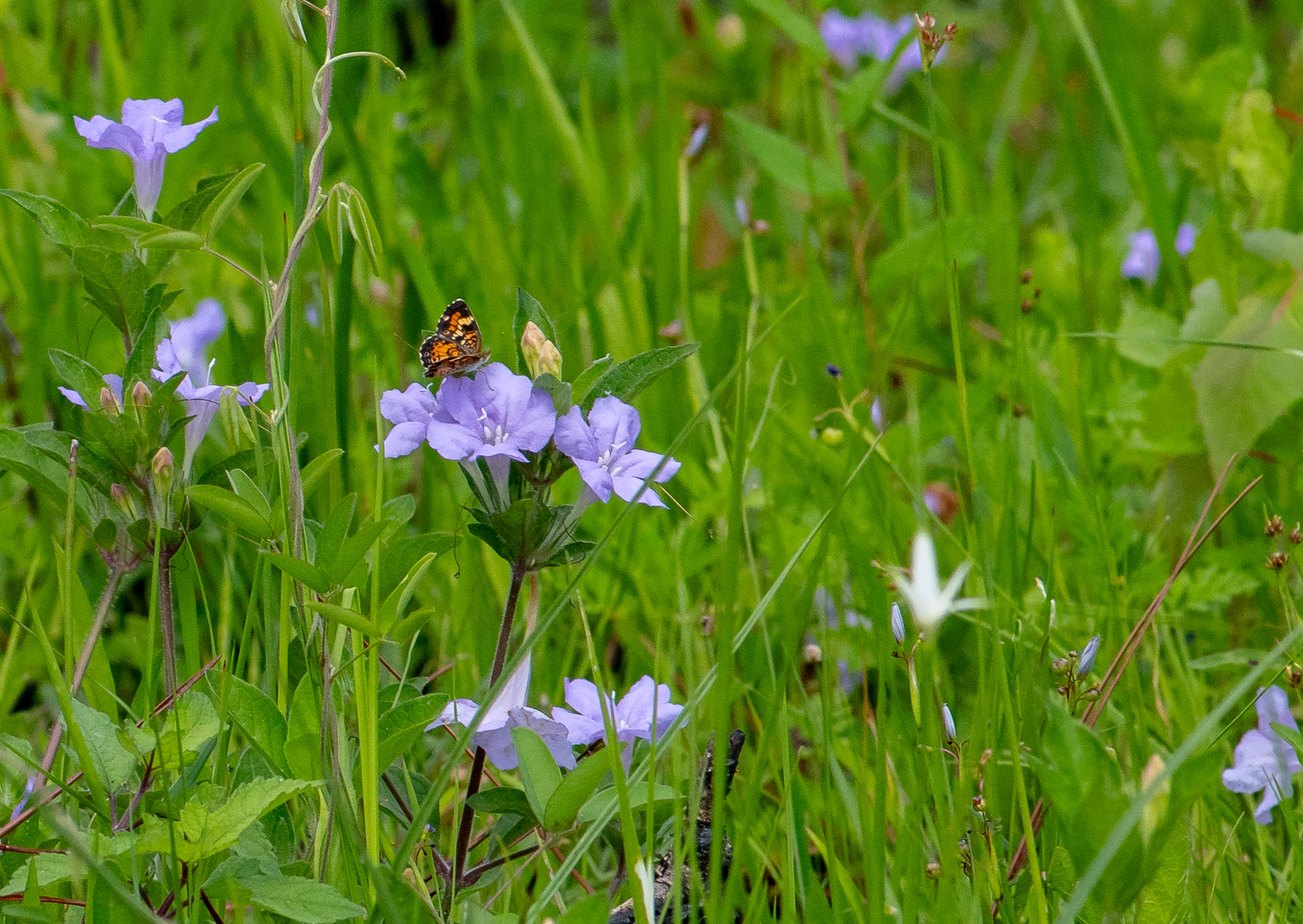
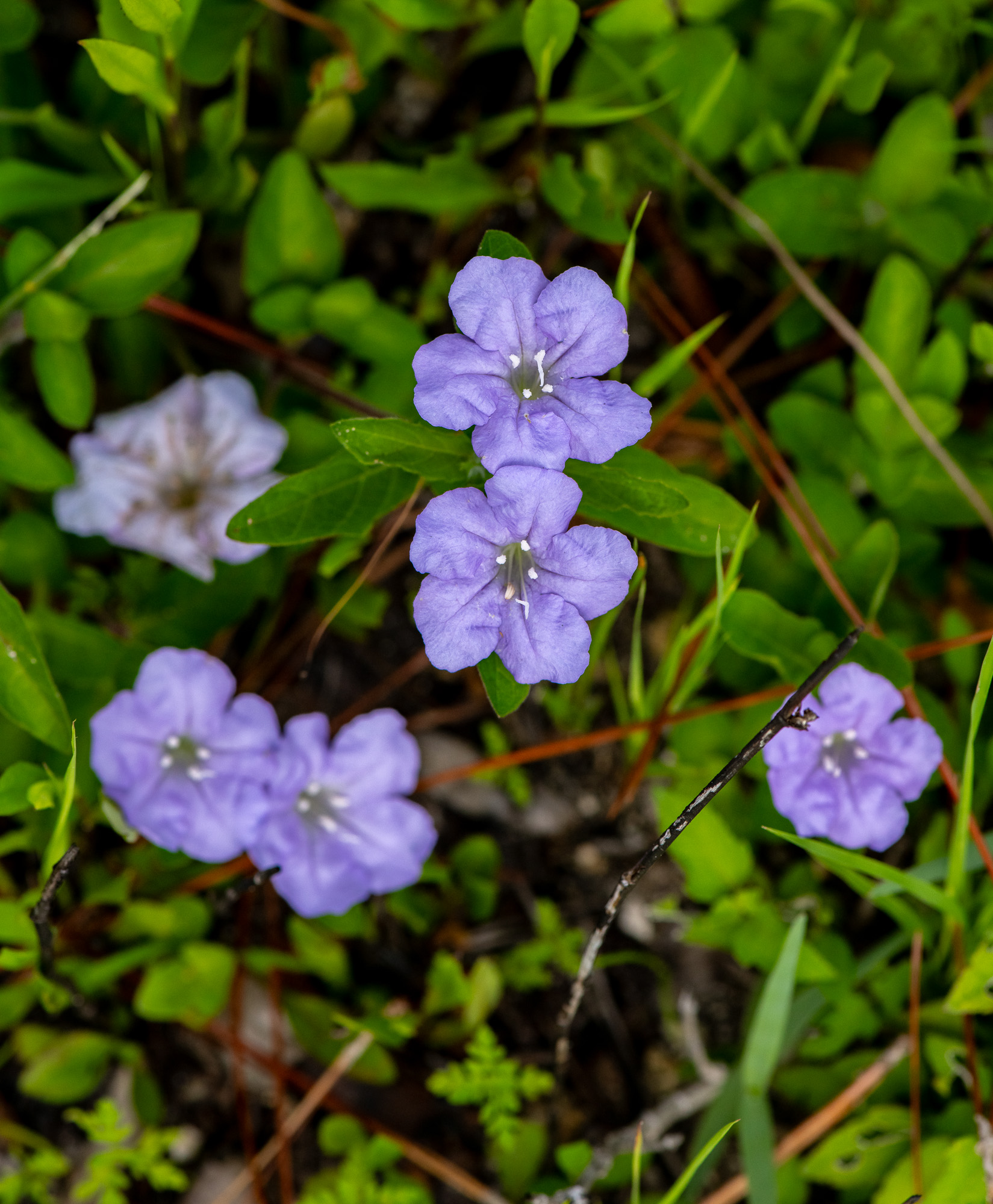
A host plant for the Common Buckeye and White Peacock butterfly larvae, Carolina Wild Petunia (Ruellia caroliniensis) is fairly common. We love its lavender addition to the landscape so much we don’t even care it’s not really a petunia.
More feared (by me) than snakes and ‘gators, the voracious Yellow Fly (Diachlorus ferrugatus). Nice eyes, though.

Nearly endemic to Florida, the lemon-yellow blooms of Coastal Plain Hawkweed (Hieracium megacephalon) poke through browned fronds of a saw palmetto (Serenoa repens).

Immature Eastern Lubber Grasshoppers (Romalea microptera) will soon mature into the more familiar yellow/orange large adults.

Pinebarren Aster (Oclemena reticulata) needs to have frequent moisture to thrive and is thus well-suited for the edges of the pine forest here which receives periodic rain throughout the summer. Growing to nearly three feet tall, several clusters normally occur together, each producing numerous flowers.

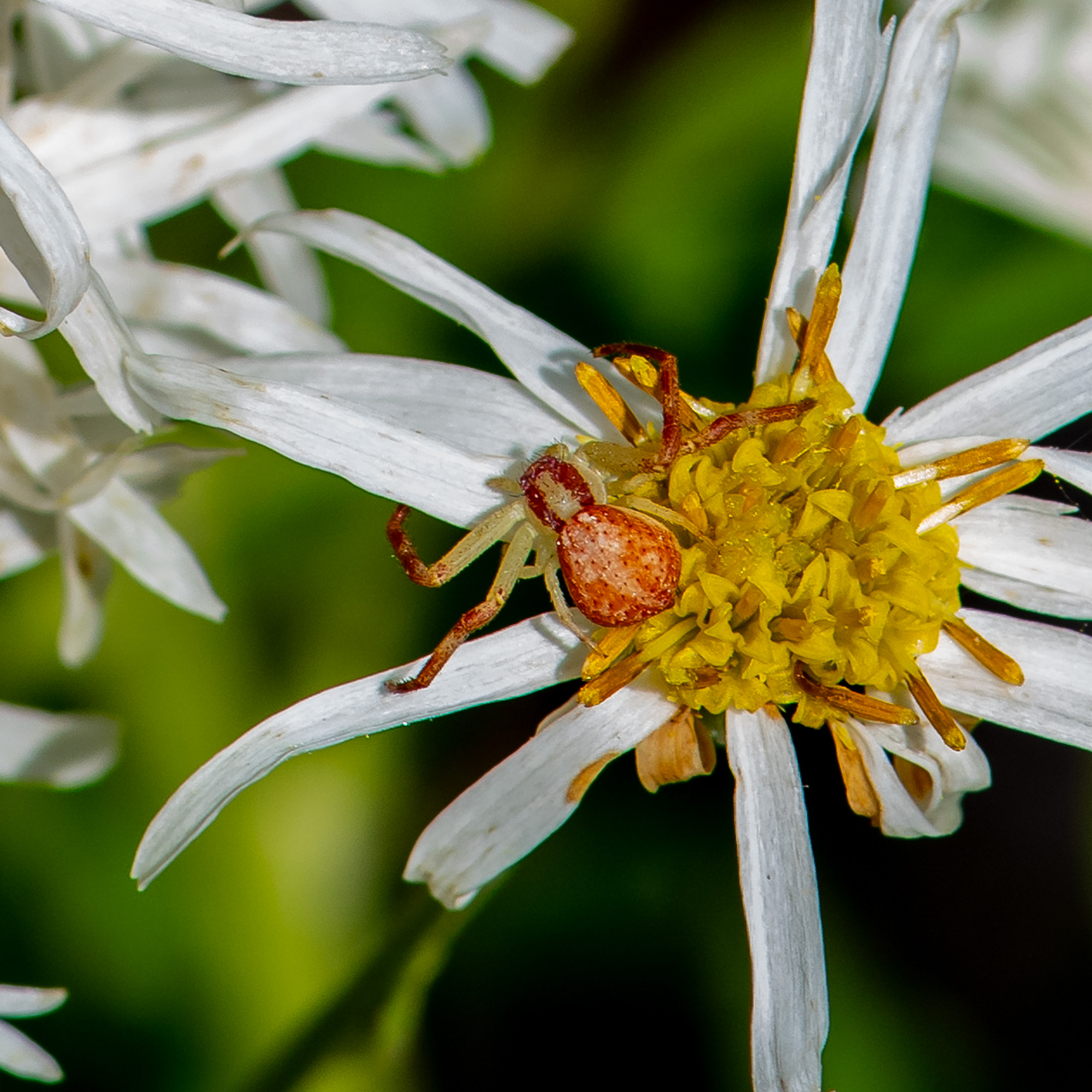
A closer look can often provide a surprise. Crab Spider (Family Thomisidae).
The Southern Redlegged Grasshopper (Melanoplus propinquus) is one of the most common grasshoppers in the state. Its good looks, however, are on the wanted poster of farmers and gardeners who are all too familiar with the damage it can cause.

Sometimes growing in fairly large clumps, the beautiful Blue-eyed Grass (Sisyrinchium angustifolium) is attractive to a host of nectar-loving insects. We may not care for the nectar, but it certainly is among our favorites.

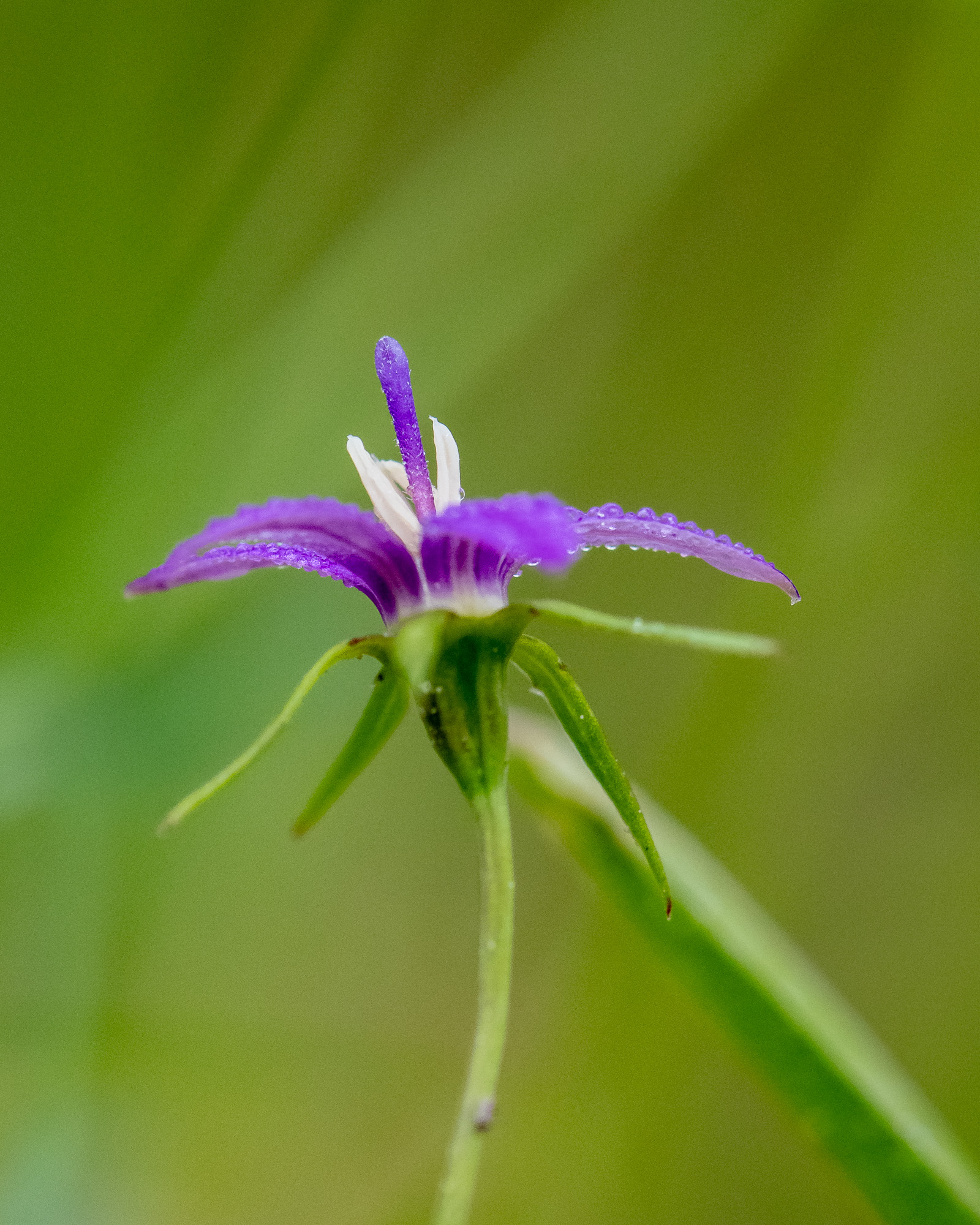
Endemic to Florida, the diminutive Bay Lobelia (Lobelia feayana) is fairly common in roadside ditches and depressions. The small blooms can form impressive masses of lavender and bees really like them. So do we.

A uniquely-shaped plant, Blackroot (Pterocaulon pycnostachyum) can grow to two feet tall and has little knobby whitish flowers. The stems and undersides of the leaves are covered in silvery hairs. Something different.


Found in open areas with moist soils and plenty of sunlight, the Yellow Milkwort (Senega rugelii) is another Florida endemic. Flower stalks can grow up to three feet and the blooms are rounded. Yellow Milkwort seeds are spread almost exclusively by ants. The seeds contain fleshy, oil- and protein-rich structures. Ants collect the seeds and take them to their nest where they consume the protein, but leave the seed intact. The seeds are then tossed from the nest into favorable germinating conditions.


Just as we both decided to have some sort of heart surgery late last year, we also decided “Gee, this would be a great time buy a new house and move!“. We closed on the house in January of this year and spent the next few months remodeling the place while attempting to regain our health. Several other nasty surprises left us emotionally and physically drained. We are almost recovered from it all. Moved into the new place July 1st and are having fun staring at mountains of boxes. Mostly, we’re relaxing. Through it all, we know that – Life Is Good!
Enjoy your search for a natural place and come back for a visit!
(Click on images to enlarge, click again to zoom.)
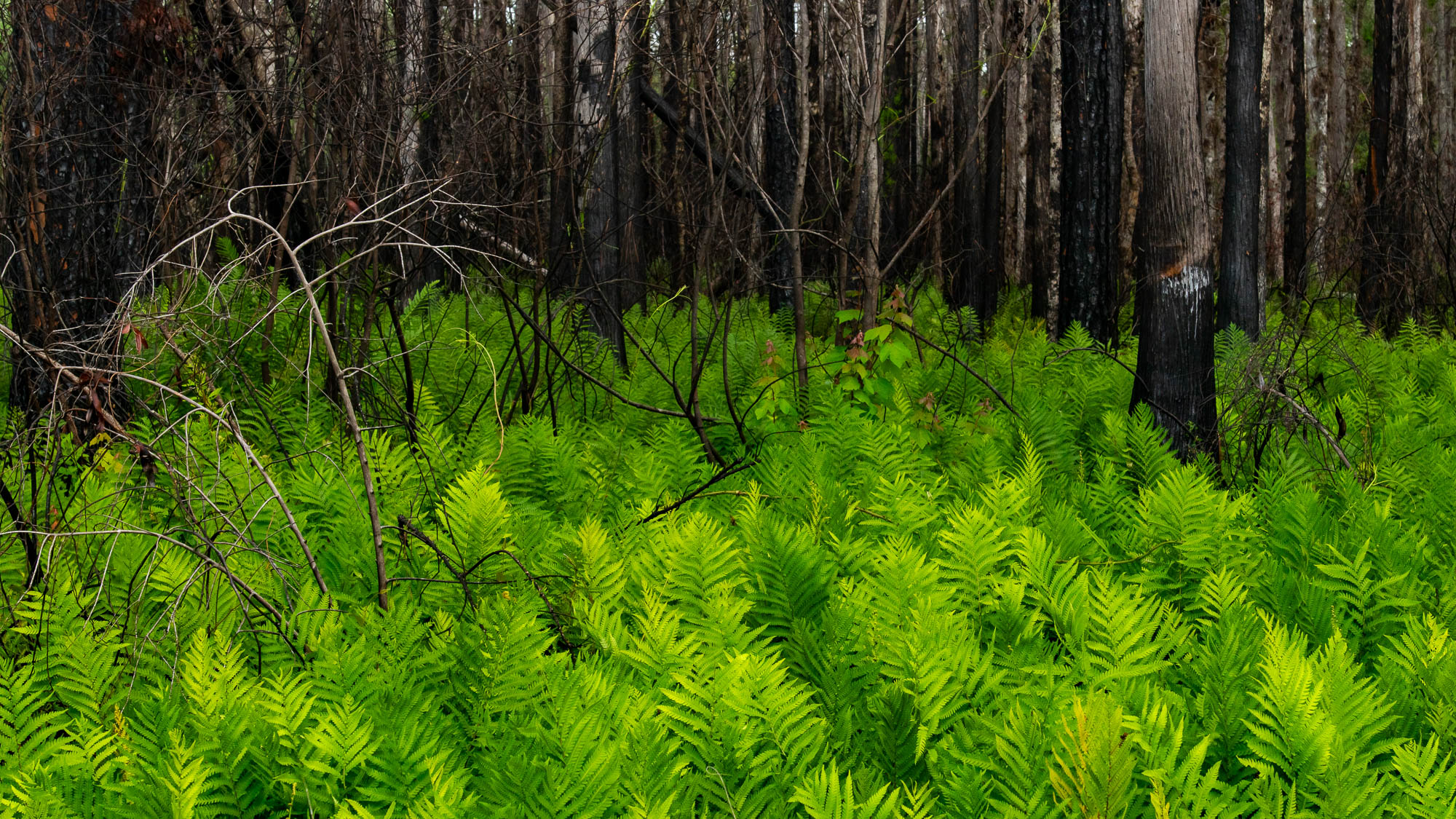
Pre-dawn mist which had settled into depressions appeared as little ground-clouds across the vast pastureland adjacent to the Green Swamp. Morning flights of White Ibises were landing among the browsing cattle hoping for breakfast to be hopping and crawling away from moving hooves. Abruptly, now we were driving through what seemed like a tunnel of trees. Mostly long-leaf pines with an occasional bay or hickory and stately cypress standing guard along streams and the Withlacoochee River.
Transitioning from paved to unpaved road meant slowing down. Speed. There has to be a metaphor for living our lives in there somewhere. The effect of barely moving forward along the old logging road was immediately rewarding. Ubiquitous Spanish Needle, little “fried-egg” blooms of Oakleaf Fleabane, “non-flowers” of large patches of Starrush Whitetop – would we have noticed any of these at “highway speed”?
Our feet are immediately soaked by dew clinging to grass and plants and we strain to remember our science lessons of how dew forms. Humidity, condensation, transpiration, radiation. My head hurts. Our biggest question is, if there is so much dew this morning, why has it not rained in a couple of months? Central Florida is having its driest spring in almost ten years.
We need rain.
Gini. Beautiful brown eyes and incredible hearing. (Okay, she cheats. She retains that “Mom Hearing” trait where she could hear our kids, and me, clearing throats or whispering two blocks away.) On this beautiful morning, she ticks off songs, calls and scoldings of myriad unseen avian audiences. Brown-headed Nuthatch, Tufted Titmouse, Carolina Wren, Northern Parula, Blue Jay, Eastern Towhee, Red-bellied and Downy Woodpeckers. (None of the songsters posed for pictures today.) From deep in the forest a Barred Owl was loud enough even I could hear it.
With no rain, we were not certain what to expect in our search for spring blooms. The swamp provides ample satisfaction every time we visit. Today was no exception.
We reveled in the power of the flower.
Bees love the lemon-yellow flowers of the Fourpetal St. Johnswort (Hypericum tetrapetalum). So do we. The plant is almost endemic to Florida with it also being reported in a couple of counties in south Georgia.

Small and delicate, the Florida Bellflower (Campanula floridana) is found only in Florida. We think it’s beautiful from any angle.

So nice the state couldn’t make up its mind. In 1991, they decided to name the entire species of Coreopsis as Florida’s state wildflower. This one, Leavenworth’s Tickseed (Coreopsis leavenworthii), is near endemic to the Sunshine State and we love its wispy attitude.

At first glance, the Starrush Whitetop (Rhynchospora colorata) looks like a white flower with green-tipped petals. It is actually a sedge and quite common in ditches and low damp places.

Although we saw a few different species of butterfly, by far the most abundant today was the Phaon Crescent (Phyciodes phaon). In Greek mythology, Phaon was an old and unattractive boatman. According to myth, he ferried Aphrodite a long distance, but would not accept payment. As a gift, Aphrodite gave him back his youth and made him beautiful.

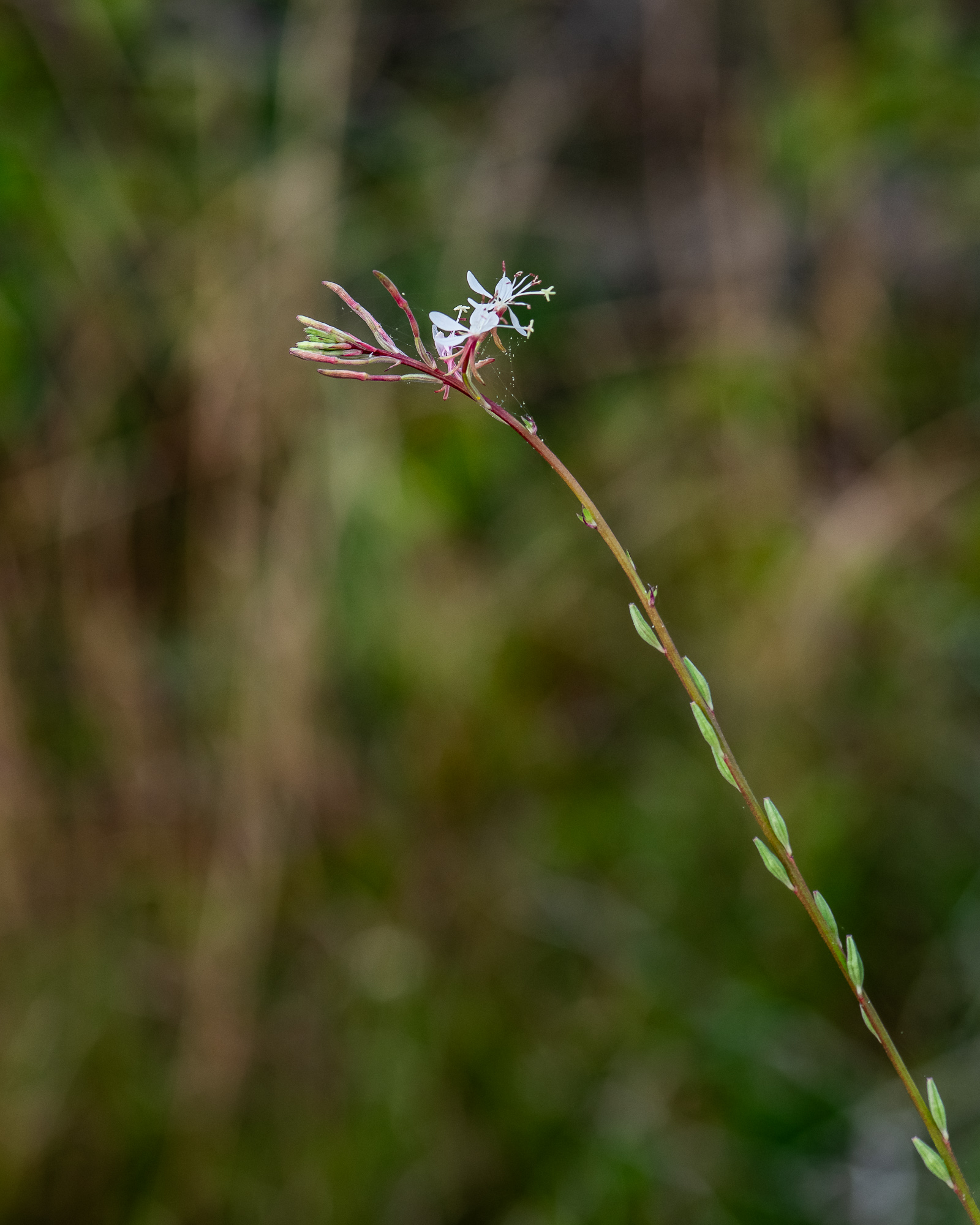
Southern Beeblossom (Oenothera simulans), the plant formerly known as Gaura angustifolia. Taxonomists just want to have fun. This lovely bloom opens when the sun sets and begins to fade the next day. Nighttime pollinators appreciate the all-night nectar bar.
Lavender to bluish blooms attract a variety of insects, as well as those of us who appreciate stuff that is just nice to look at. The Lyreleaf Sage (Salvia lyrata) is, fortunately, abundant in the swamp/forest. Basal leaves help identify the plant even when blooms aren’t present and their shape is how it gets its common name.

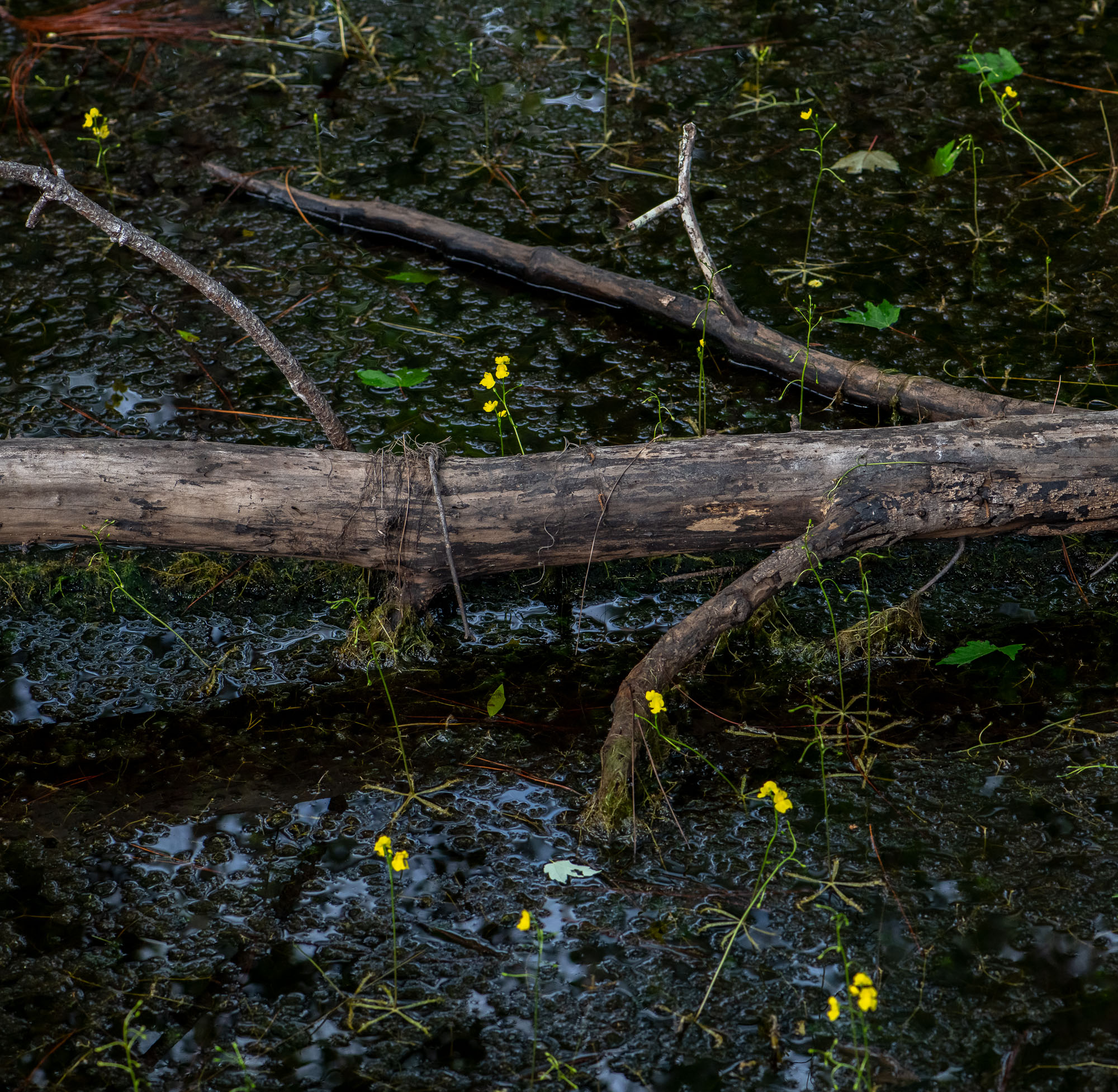
Looking like little alien creatures atop the water, the Swollen Bladderwort (Utricularia inflata) has attractive yellow flowers and really neat “feet”. These carnivorous plants float innocently along until a little fishie or shrimp thingy touches those “feet” and then – “gulp” – gone.
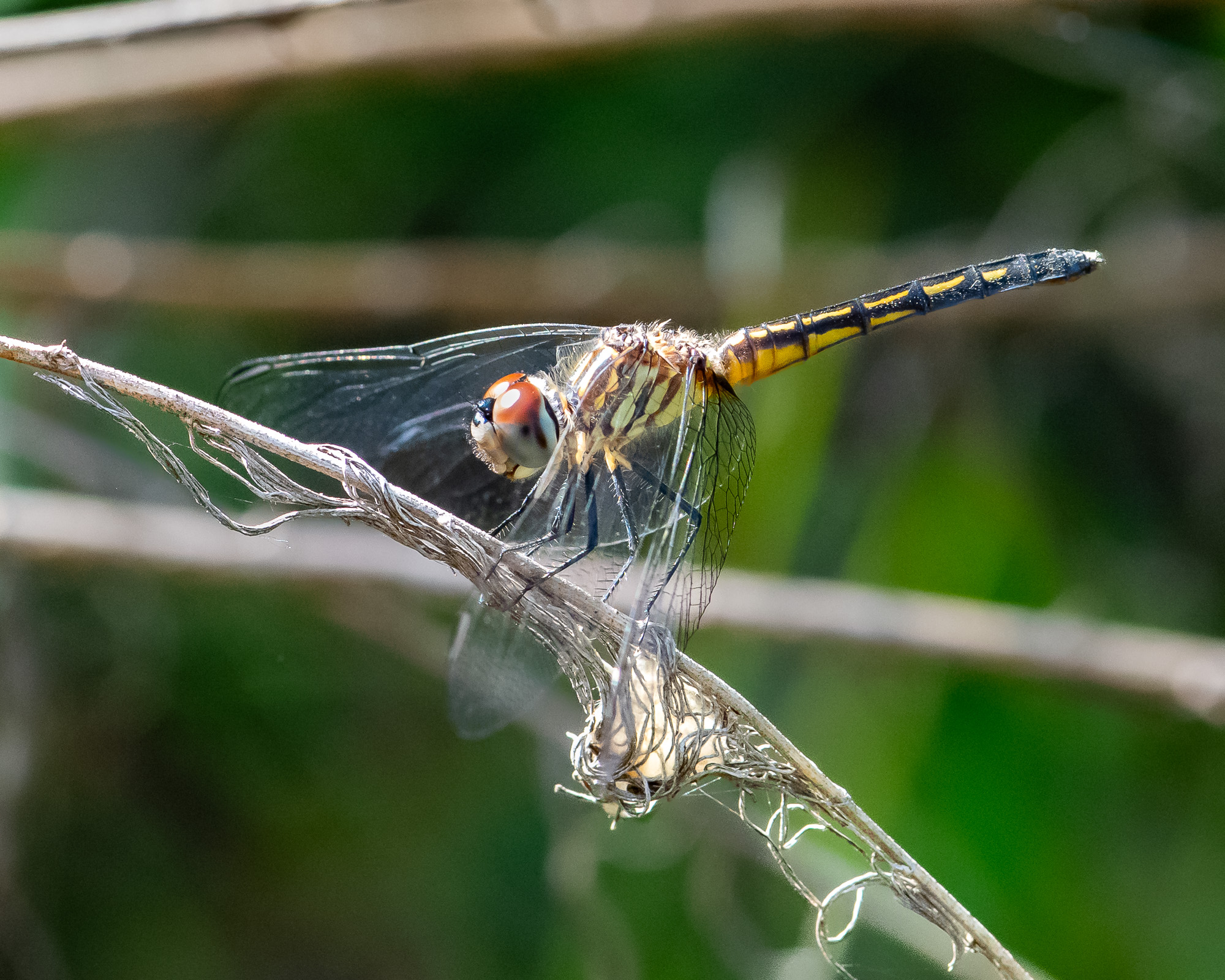
A very common dragonfly throughout central Florida, the Blue Dasher (Pachydiplax longipennis) is small and quite handsome. The male sports a slate-blue abdomen while his mate prefers the more sporty gold-with-racing-stripe look.

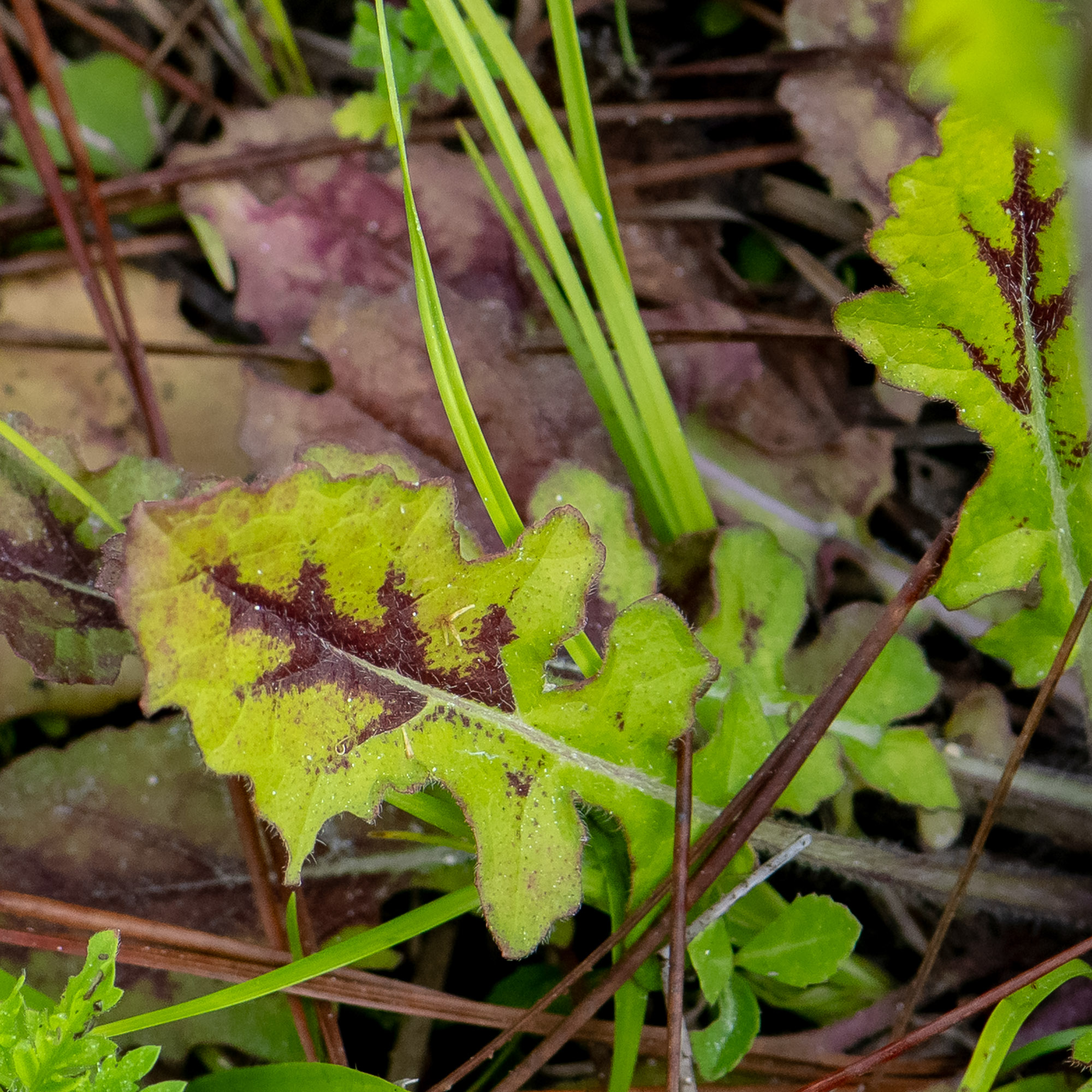
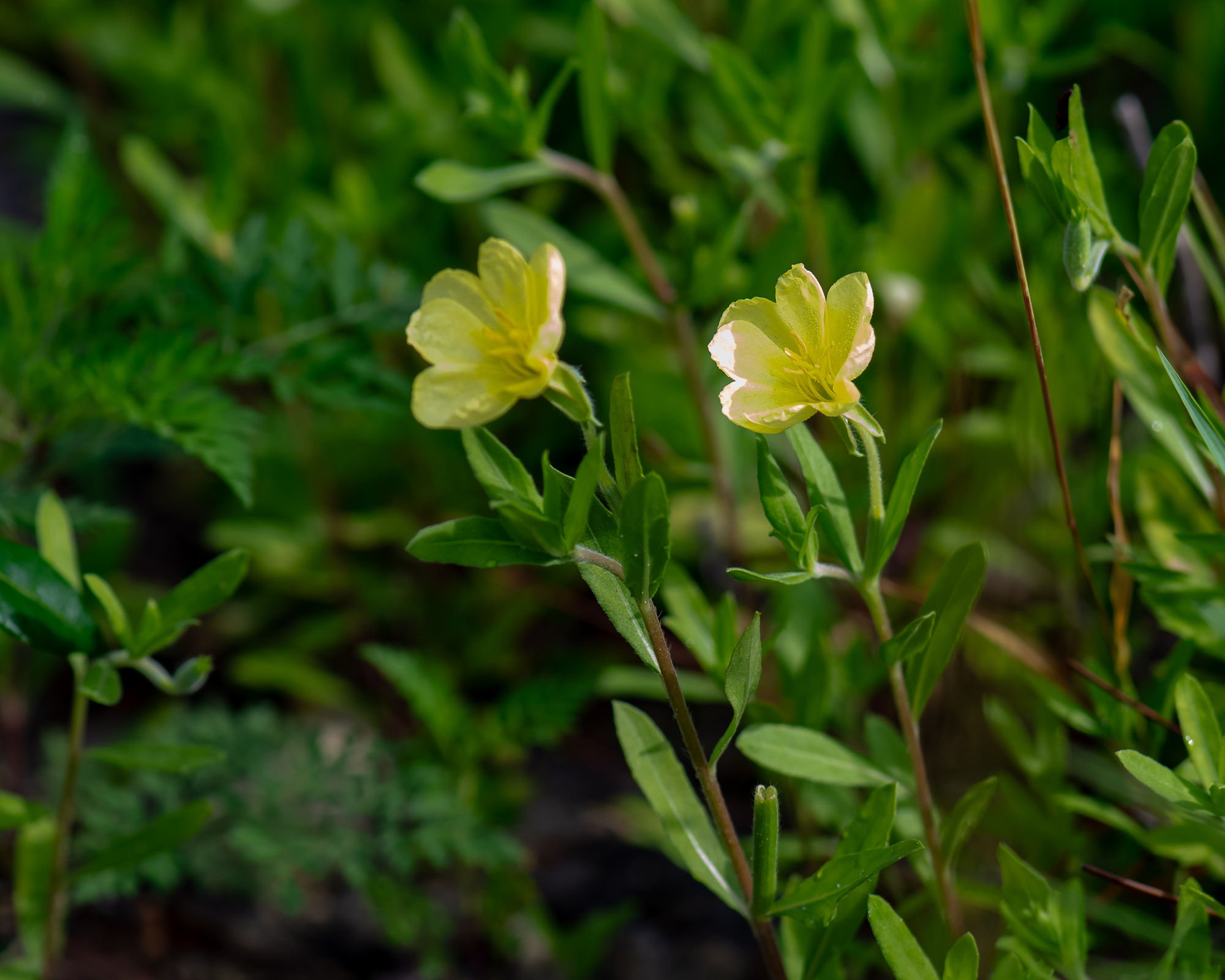
Another night-bloomer, the Cutleaf Evening Primrose (Oenothera laciniata) has delicate four-petal flowers. Thankfully, the blooms remain open for much of the morning so those of us who don’t spend the night in the swamp too often can enjoy them.
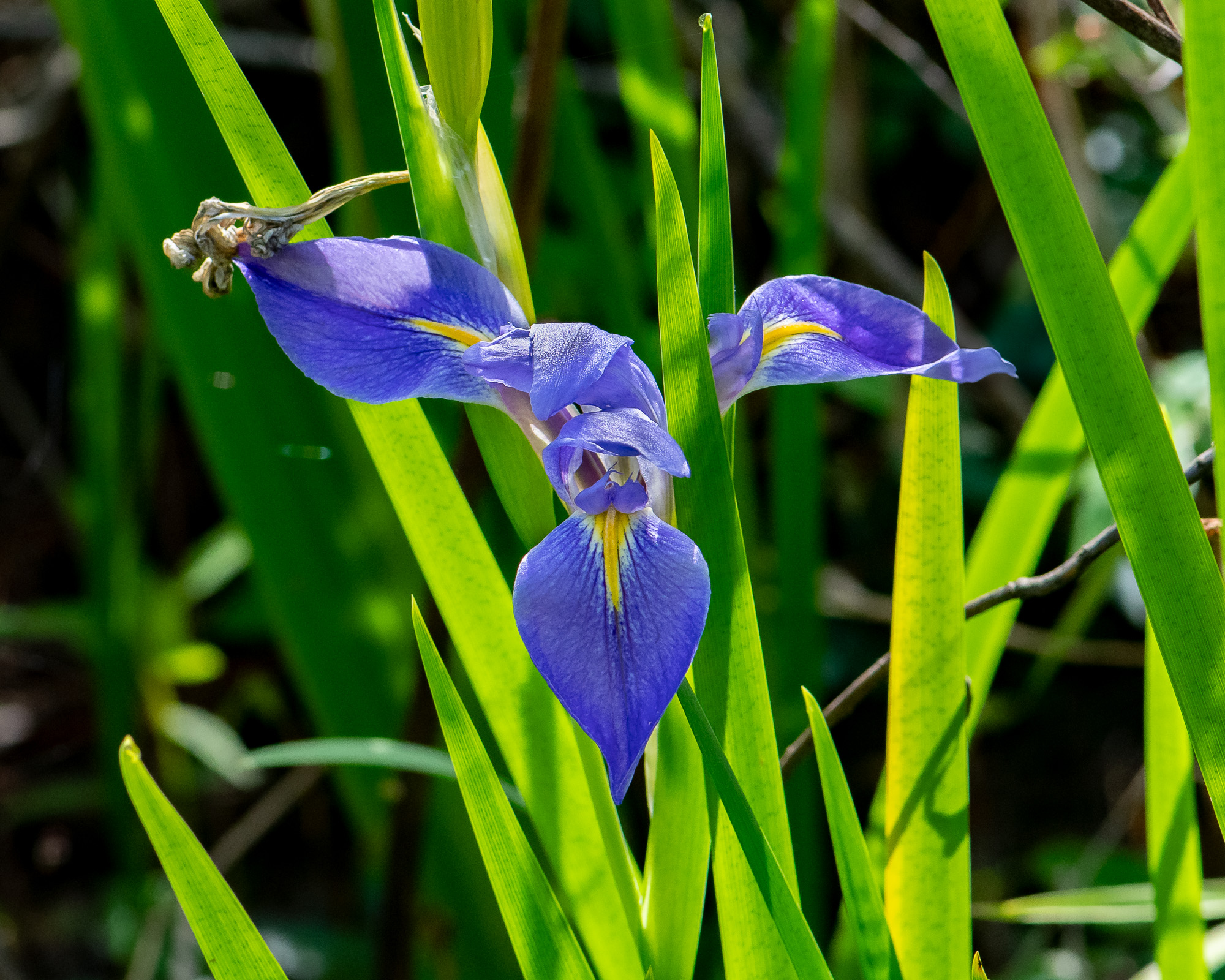
Speaking of taxonomy. One could get dizzy trying to track down Iris identifications. We’re going to call this one Savanna Iris (Iris savannarum). It is also commonly referred to as Prairie Iris. It is also easy to go down a rabbit hole when you try to get agreement on a scientific name. No matter. It is, quite simply, one of the most attractive flowers in our spring landscape. The Green Swamp is awash in purple today.
NEW BUG ALERT! We are not the only ones attracted to the attractive Iris. Ever have that feeling you’re being — watched? In this case, by eight eyes. This colorful jumping spider, Phidippus princeps pulcherrimus, apparently has no common name. That color against the nice green of a Savanna Iris stem certainly stood out.


Thistle Time!
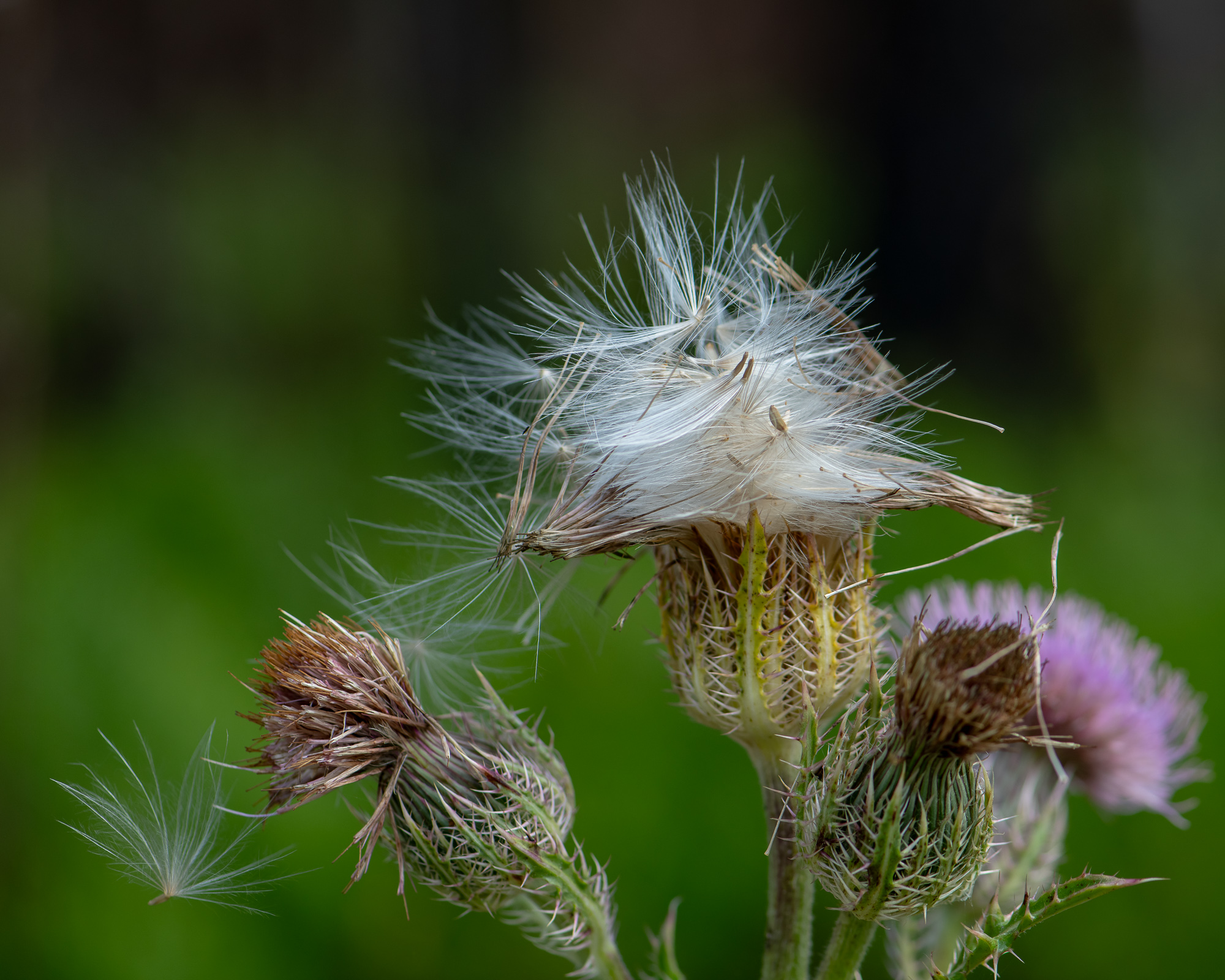
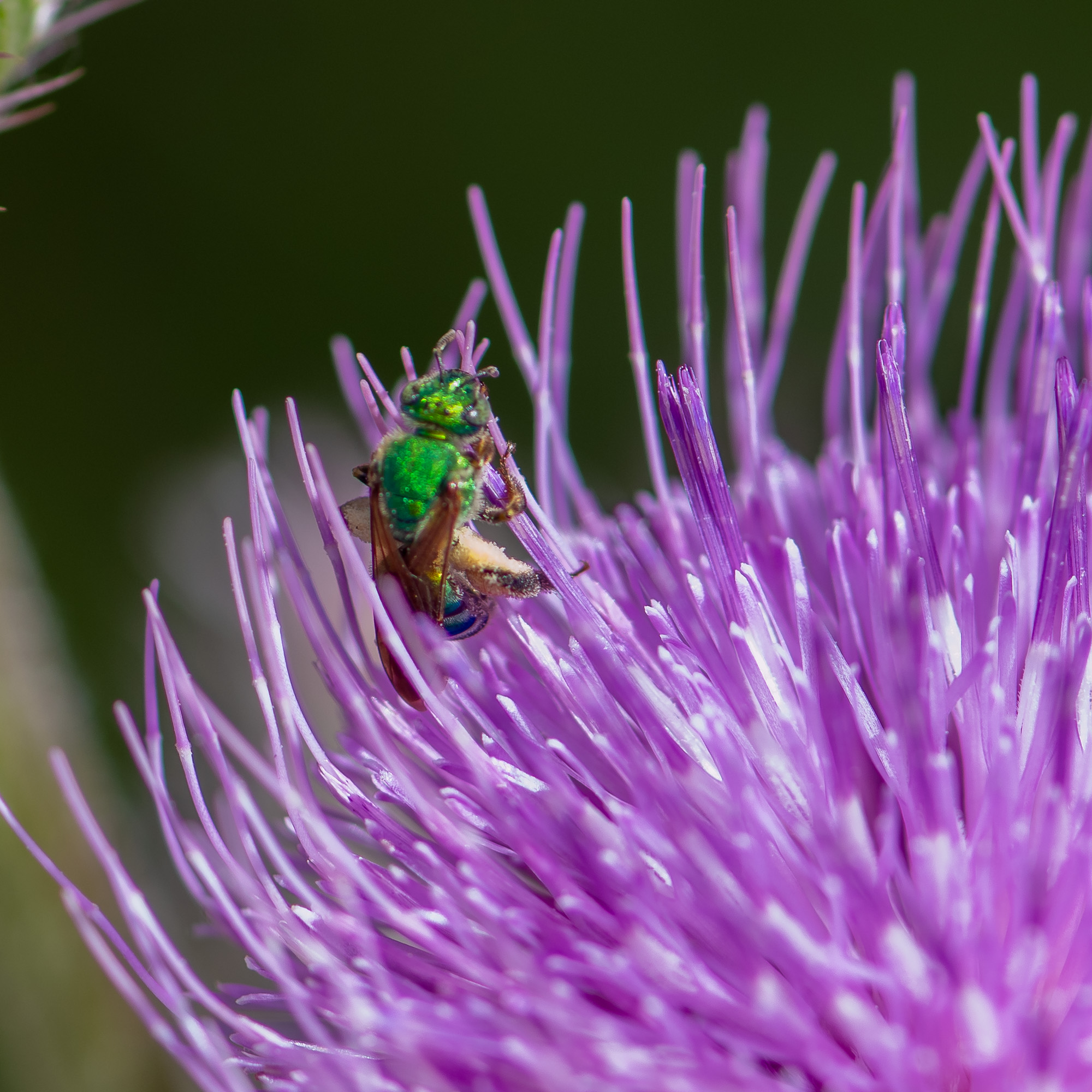
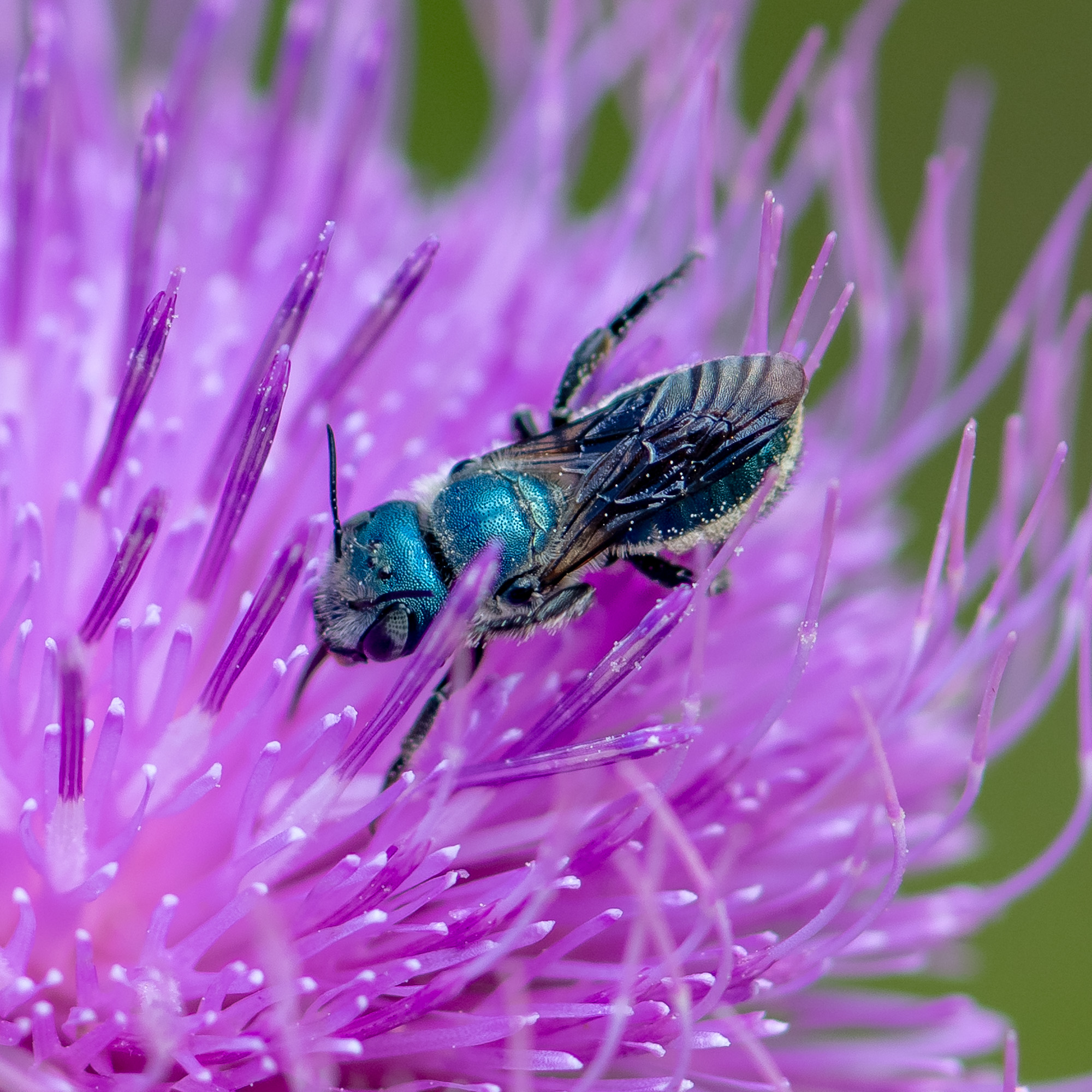
Spring in the swamp means thistles. Today we found a terrific number of Purple Thistle (Cirsium horridulum). Which, as we all know, can also be called Bristle Thistle, Yellow Thistle, Horrid Thistle, Spiny Thistle or Bull Thistle. Pollinators (and, to be honest, us, too) simply don’t care what it’s called. It’s pretty and, apparently has delicious nectar once you get past the thorny things.

Thistle lover. Brown-winged Striped Sweat Bee (Agapostemon splendens).

Another lover, of thistles. A Mason Bee (Osmia chalybea), with no apparent common name.
Our spirits were definitley improved today through the astounding magic of flower power. All that and there shall be a Part II, coming soon to a blog near you.
Enjoy your search for a natural place and come back for a visit!
 Our Natural Places