“All men would be tyrants if they could.” – Daniel Defoe

One of the special treats we enjoyed when living in Texas was the year around presence of Scissor-tailed Flycatchers. Their graceful flight, efficient hunting technique, subtle plumage and courtship displays were highlights of many field trips. We miss them.
Winter migration brings us gifts of a diverse selection of birds we would not otherwise be able to observe here in sub-tropical Florida. Among the visitors are a few of our old friends, Scissor-tailed Flycatchers. For at least the past ten years, a small group of these sleek beauties have joined with a handful of their cousins, the Western Kingbird, to spend winters roosting in a nearby citrus grove. About 30 minutes before sunset, the birds gather on utility lines adjacent to the groves, snag a late snack and dive into the dark green foliage just as dark descends.
These two species are part of a large family of flycatchers known as Tyrannidae, or Tyrant Flycatchers. One speculation about their name derives from their aggressive nature in driving potential threats away from nesting sites.
We begin looking for the arrival of our visitors from the west in early November and can look forward to seeing them until late February. It’s nice to have a taste of our memorable Texas treats every winter.
As if the chance to see migrating flycatchers is not enough, this particular area offers many other opportunites as well. The citrus groves are surrounded by a couple of lakes, pastures and weedy fields. Nothing like a huge helping of sunshine, water and orange juice to attract winter tourists! Since our target birds arrive just at sunset, we also get to enjoy a setting sun from this slightly elevated location, such as the one at the top of the page.
Hurry now. It will be dark soon.
We’re fortunate to not only have a resident population of Sandhill Cranes to enjoy all year, but we are also host to several thousand migrating cranes each winter. The visting birds typically hang out in large groups of from ten to several hundred. Resident birds remain in pairs or the year’s small family group. One of the family members we saw asked politely for us to move on. We did.


The Peninsula Cooter (Pseudemys peninsularis) is a fairly common freshwater turtle in our area. Descriptions say they may reach up to 20 inches in length. This one was every bit of that.

Winter populations of our resident Blue-gray Gnatcatcher greatly increase as northern migrants join in the frenetic hunt for protein-laden insects.

There she goes again. “Wait. What is that?” A spot of pink among the green leaves caught Gini’s eye so we investigated. Not just a moth, but an Ornate Bella Moth (Utetheisa ornatrix) depositing eggs on a leaf of Smooth Rattlebox (Crotalaria pallida var. obovata).

One of our most numerous winter warblers. We don’t mind if it’s common. The Palm Warbler is always a pleasure to see.

Success! Right on schedule, a half-dozen Western Kingbirds and a single Scissor-tailed Flycatcher appeared. They hawked a few bugs for about 20 minutes and melted into the lush green citrus tree branches for the night.


For some, finding tyrants is all-too-easy. For us, finding OUR type of tyrant is an exercise in annual patience. The reward is oh-so-satisfying.
Enjoy your search for a natural place and come back for a visit!

(Click to enlarge images. Click again to zoom.)
It was mid-November and plans were in progress for Thanksgiving. Family and food. Not enough of the former and too much of the latter. Such is life. We continue to be thankful for both.
For a small break from thinking about all that shopping and planning and shopping, Gini and I made an early morning visit to one of our local patches. The area is dotted with five small lakes and is adjacent to a very large lake. Filling in the spaces between all that water are bits of pine woods, a section of hardwood trees, several weedy fields, a couple of wetland spots and a vast reedy marsh by the big lake. Perfect habitat for a nice variety of birds and other life forms. Even us.
Each lake has a small boat ramp and a few other access points for checking out shorelines and open water. Mild temperatures at this time of year insure an abundance of insects which attract migrating and resident birds. Gini brought along some fruit and we lingered at breakfast enjoying a group of Blue-winged Teal, a Pied-billed Grebe and noisy Gray Catbirds.
A couple of relaxing hours and we were refreshed and ready to return to our rigorous planning duties. Okay. So we went home, had lunch and watched some old t.v. shows together. Which was very rigorous. No, really.
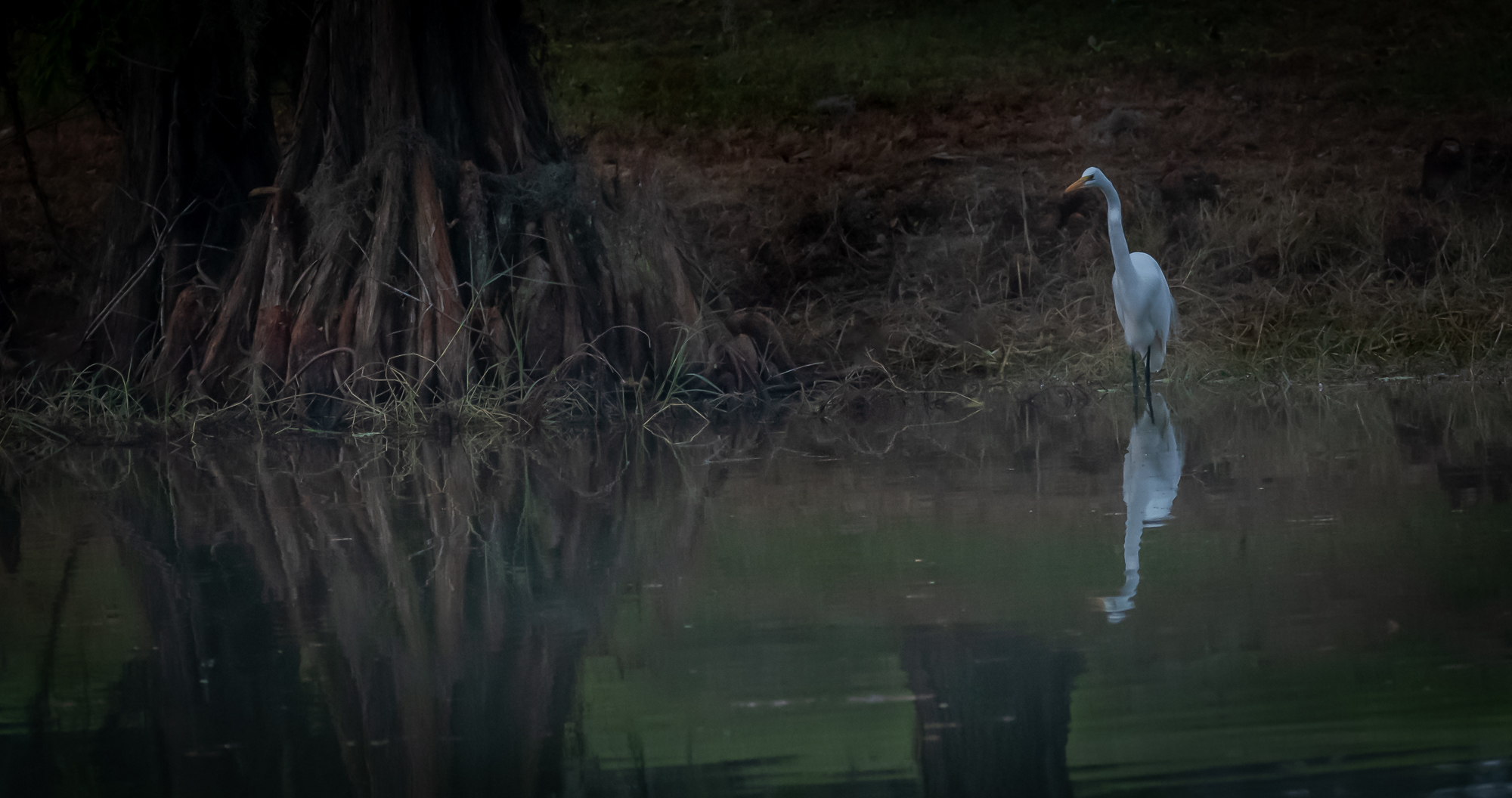
Just at sunrise, a Great Egret waited patiently near a big cypress tree for the buffet to begin.
A Bald Eagle perched atop a utility pole at the entrance gate. This one and its mate are sprucing up their nest from last year and will soon be incubating new eggs.

Small and very active Blue-gray Gnatcatchers were present everywhere we went throughout the morning. Although they breed here, large numbers of migratory Gnatcatchers join the locals each winter.

Gini spotted a light-colored speck in the distance and investigation revealed it was a chrysalis of a Variegated Fritillary (Euptoieta claudia). I love those sharp brown eyes of hers.

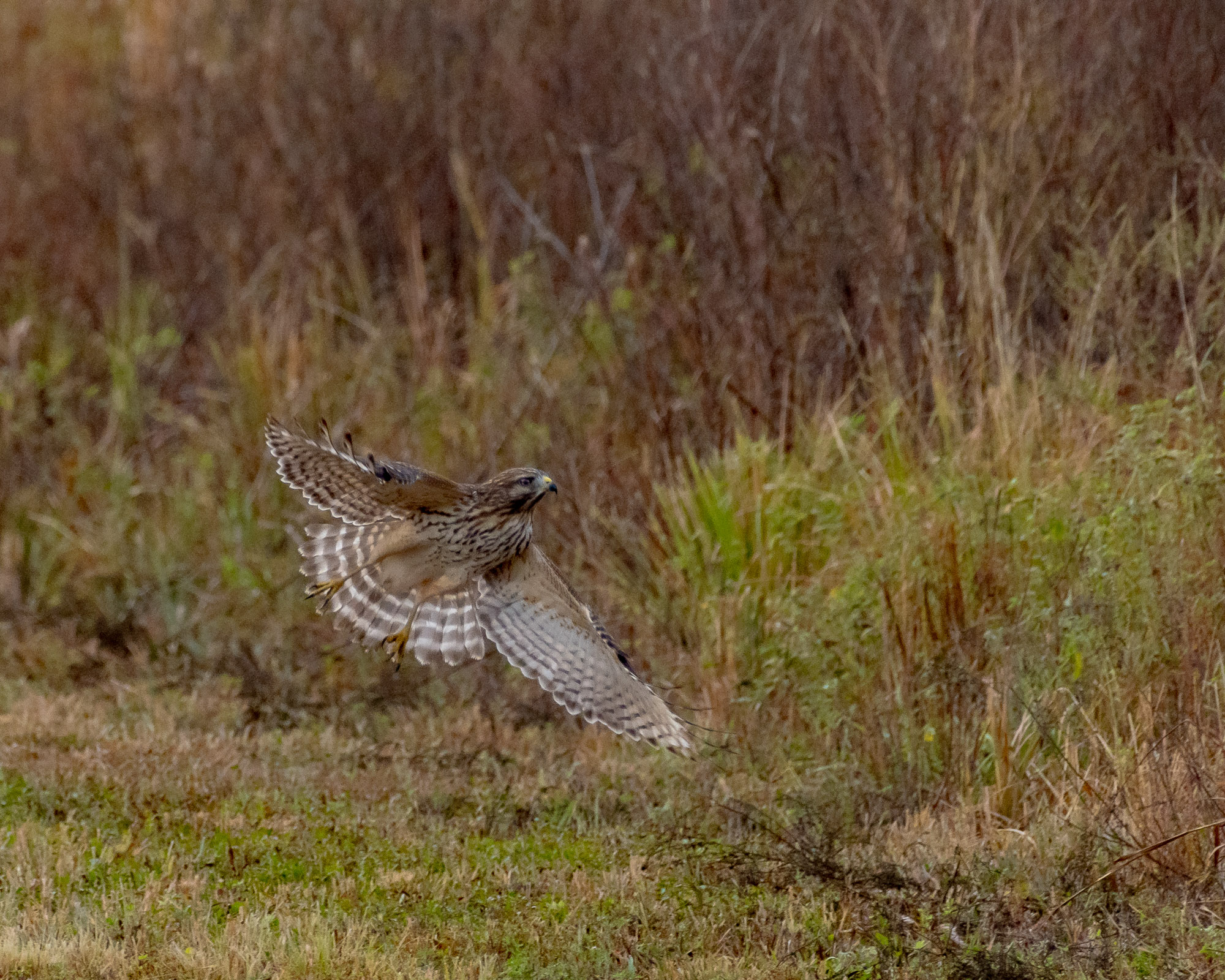
An immature Red-shouldered Hawk dropped from a nearby tree limb onto a patch of grass. Whatever had caught her eye escaped as she flew up empty-taloned.
Fair numbers of migratory Eastern Phoebes spend the entire winter in this part of Florida.

Tops of dead weeds are pulled together and bound in silk by the female Green Lynx Spider (Peucetia viridans) where she then constructs a nest. Eggs produced in October have now hatched and dozens of reddish spiderlings are active under the many watchful eyes of Mama.


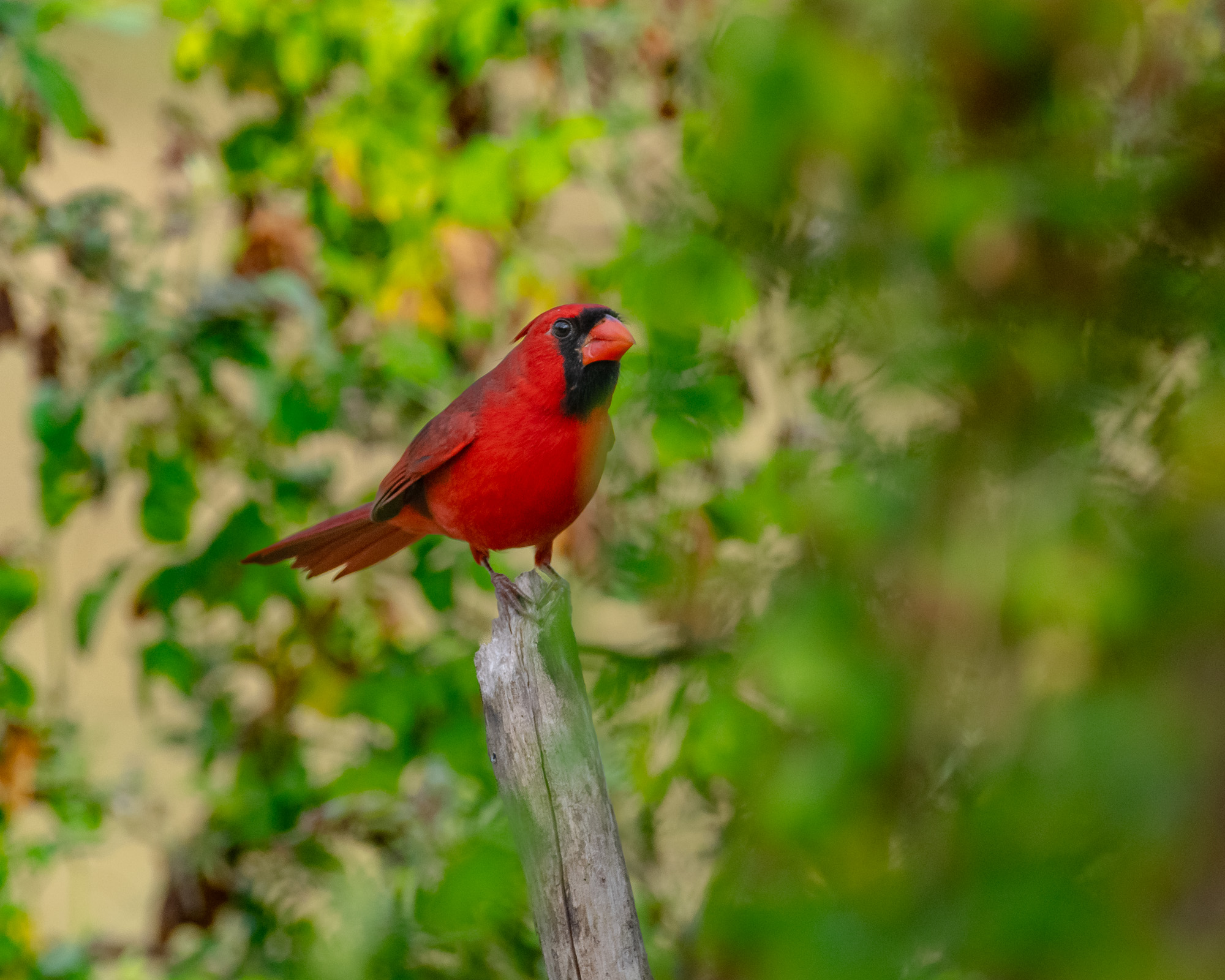
Northern Cardinals help add a bit of bright color to the otherwise drab landscape.
Florida’s state bird, the Northern Mockingbird, is quick to alert the neighborhood as we approach a hedgerow.

One of the benefits of our sub-tropical environment is we are able to enjoy butterflies quite late in the year. This Cloudless Sulphur (Phoebis sennae) on a Tievine (Ipomoea cordatotriloba) was a nice morning highlight. Tievine is also called Purple Bindweed.

Normally associated with coastal habitat, we have a local group of Brown Pelicans which breed in the area. This one was just waking up in a section where we have seen them nesting in previous years.

With so many lakes and coastlines in Florida, the Anhinga is a very common sight. The pale head and neck indicate this is a female or immature male.

Even more benefits of mild weather. We came across a patch of Spotted Beebalm (Monarda punctata). Although it was in decline, it still showed a bit of its beauty. An Eastern Carpenter Bee (Xylocopa virginica) found the blooms quite attractive. This plant is also known as Spotted Horsemint.


As we prepared to leave, a Little Blue Heron said we could come back and visit his pad any time. We plan to take him up on the offer.

Thanksgiving is now history and it was a very comfortable day for our family. Spending a day with Gini exploring nature underscored why we are so thankful. Not just at a specific time of year, but at each moment of our lives.
Enjoy your search for a natural place and come back for a visit!

(Click to enlarge images, click again to zoom.)
Winter solstice begins in two days. That may not mean too much, temperature-wise, to us here in central Florida, but in many areas of the northern hemisphere the date usually portends colder conditions with frost, ice and snow. I found a virtual binder in the corner of the digital desk drawer which was not reported on at the time. We apologize for its tardiness, but please accept some warming images of our late fall to help ease you into whatever your season is offering.
This actual trip took place during the last week of October. The woods and fields of nearby Colt Creek State Park were filled with our favorite natural triumvirate: birds, blooms and bugs! The normal bird population was supplemented by migratory visitors, some of which will remain here throughout the winter. Central Florida is blessed with several species of late-blooming flowers and the extended warm season is perfect for insects trying to survive a late-season hatch.
It was a relatively short ramble but extremely satisfying. A small pool of water at the edge of the pine woods attracted a dozen wading birds. Deer browsed in several different areas. Splashes of yellow, blue and purple decorated the fields and forest understory. Butterflies took advantage of fresh nectar. We spent nearly 30 minutes observing one section of marsh as several species of small birds were very actively feeding on insects and seeds from Alligatorflag (Thalia geniculata), also known as Bent Alligatorflag or Fireflag.
Blue skies, tall pines, the distant calls of a Barred Owl, a pair of big Pileated Woodpeckers foraging above. It all made our boiled egg and tangerine breakfast seem unusually special.
We hope your first day of winter will be as pleasant as possible. If it’s too cold, rub your hands together, pour a cup of hot chocolate and come to Florida for a little while.
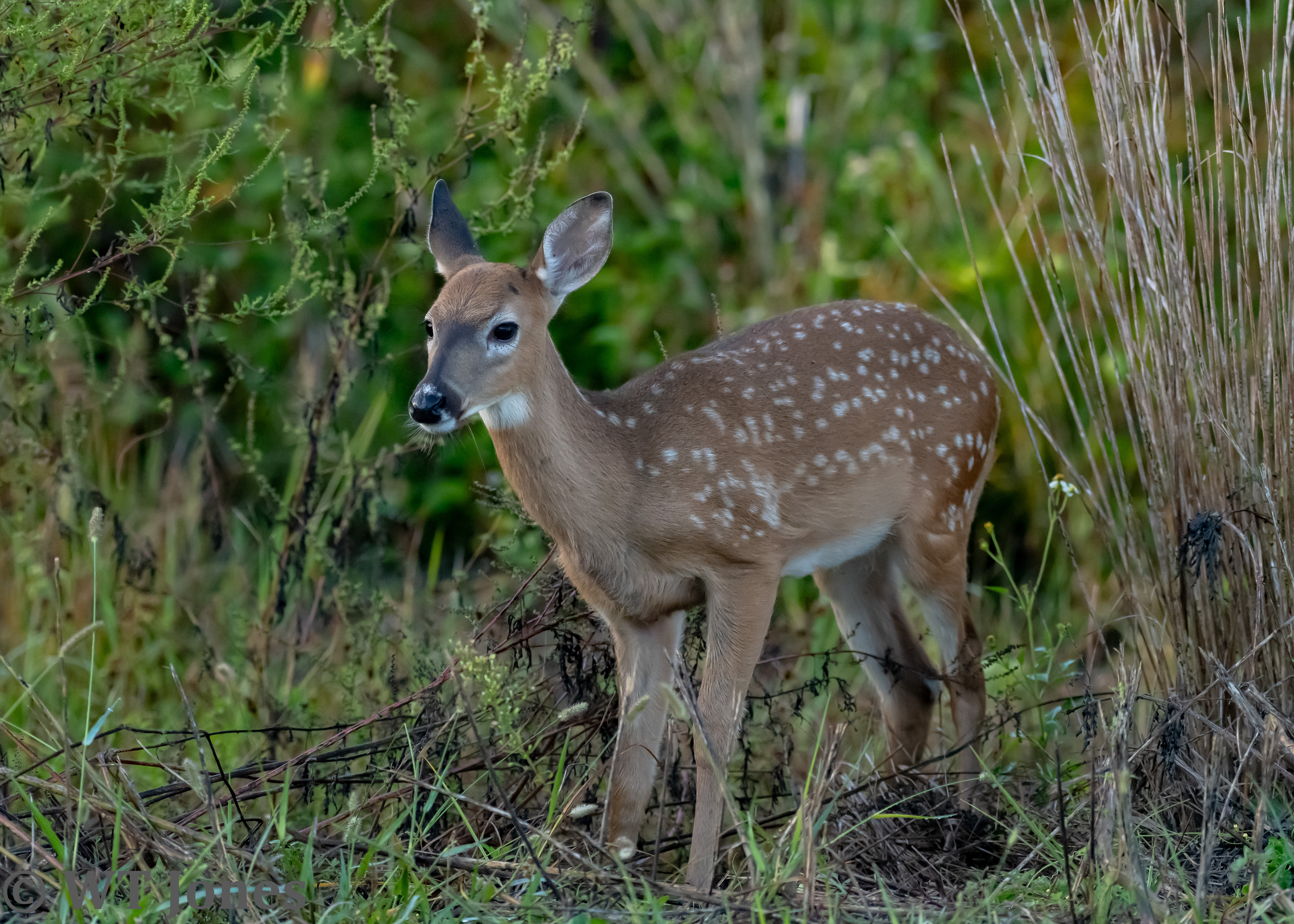
There were many White-tailed Deer in the park and this fawn didn’t understand why Mom insisted she move into the shadows of the woods. She will, one day.
White Ibises typically feed on insects and grubs. This one has apparently developed a taste for seafood. (Or, in this case, small-pondfood.)

Young White Ibises remain brown and gray until their second year when they transform into the all-whitle plumage of an adult.
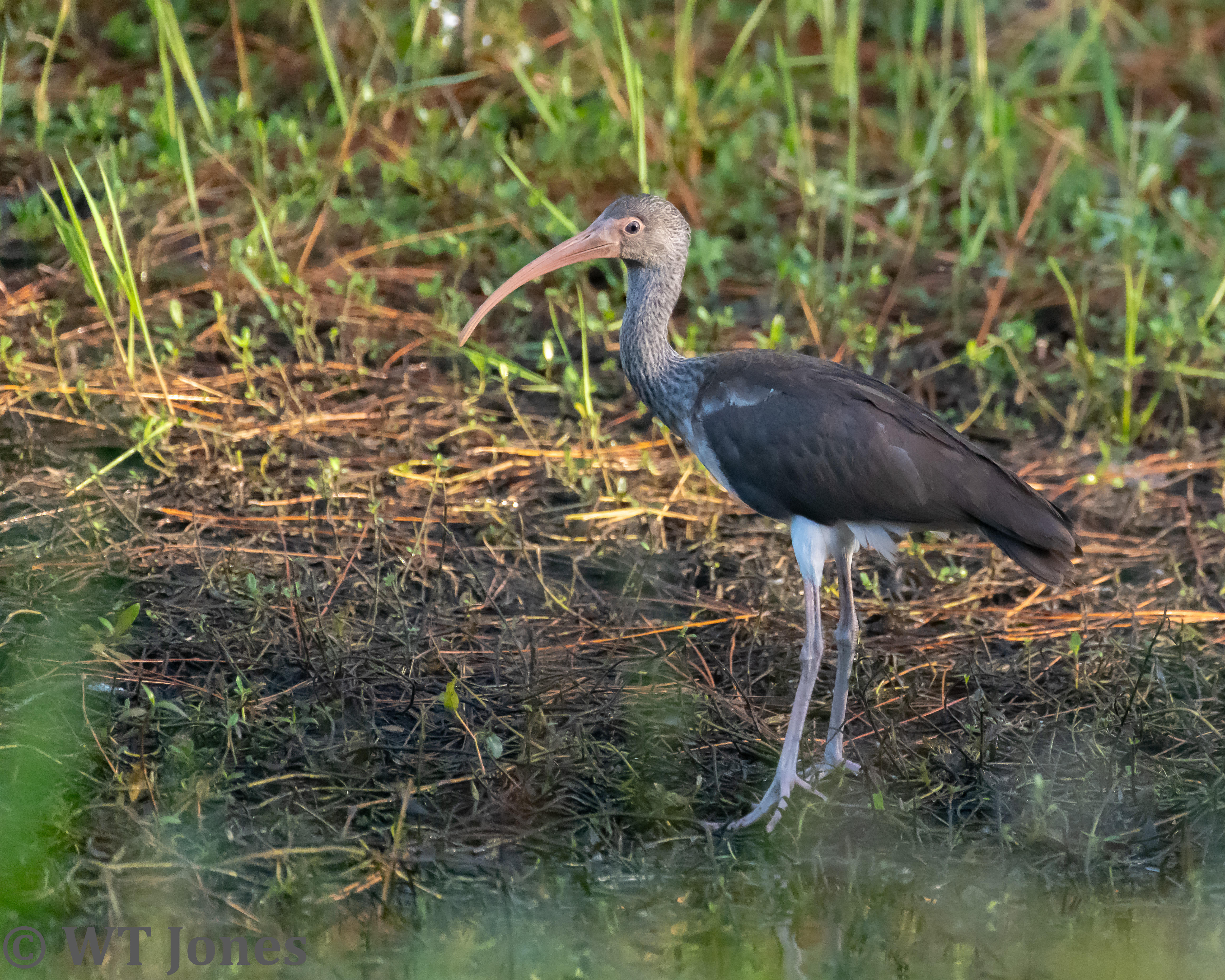
An immature Wood Stork also takes about a year to fully develop its adult plumage, including a bald head.

Early morning dew causes a Gulf Fritillary (Dione incarnata) to linger at its nightly perch until the sun dries its wings a bit.

One of our winter tourists, the House Wren, was present in fair numbers today.
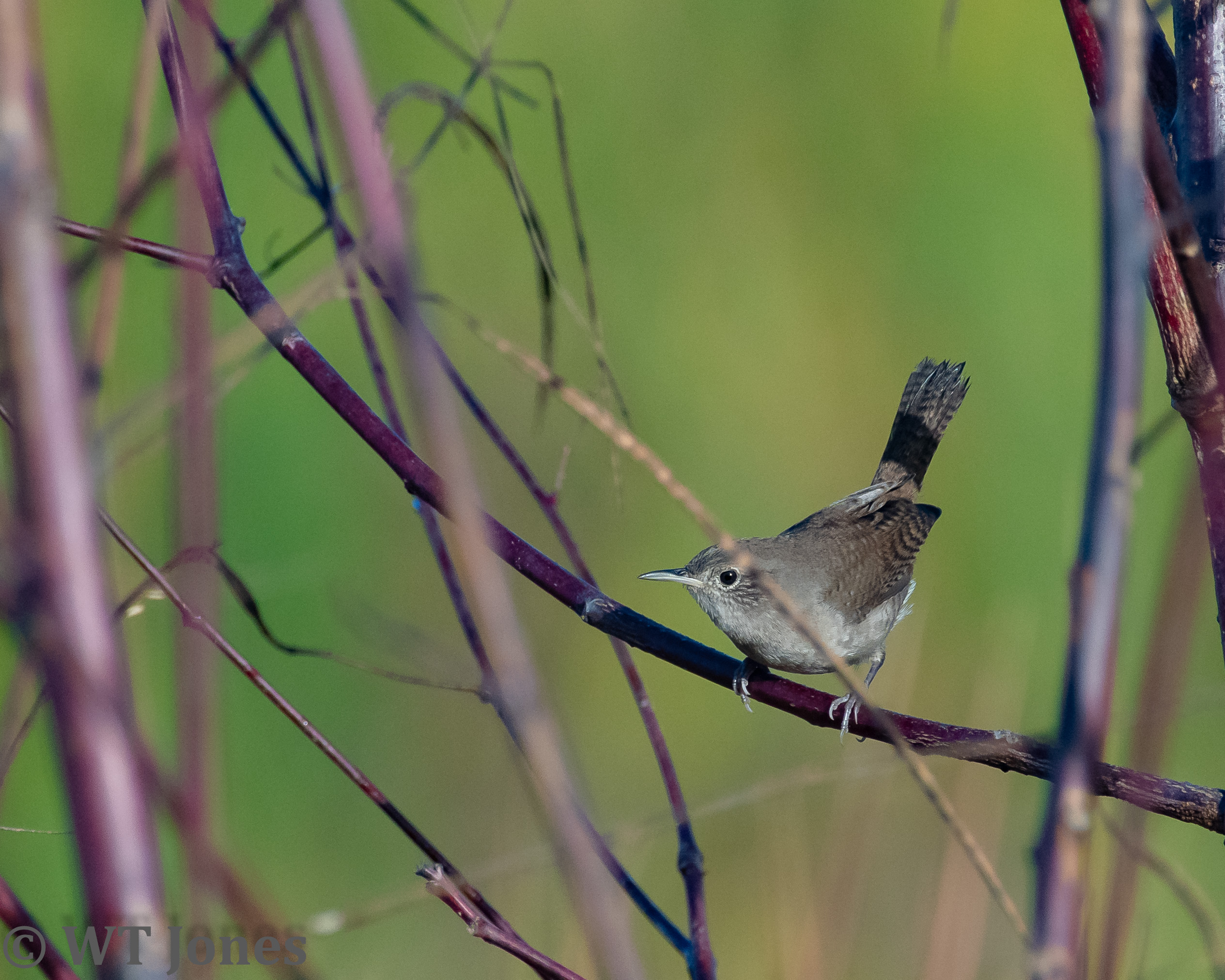
Seeds of the Alligatorflag (Thalia geniculata) are rich in protein and attracted quite a few birds to a marshy spot this morning. A pair of Northern Cardinals flew from one plant to another in a sort of frenetic feeding dance.


Joining the cardinals in the hunt for seeds were several Swamp Sparrows. We only see this species during migration.

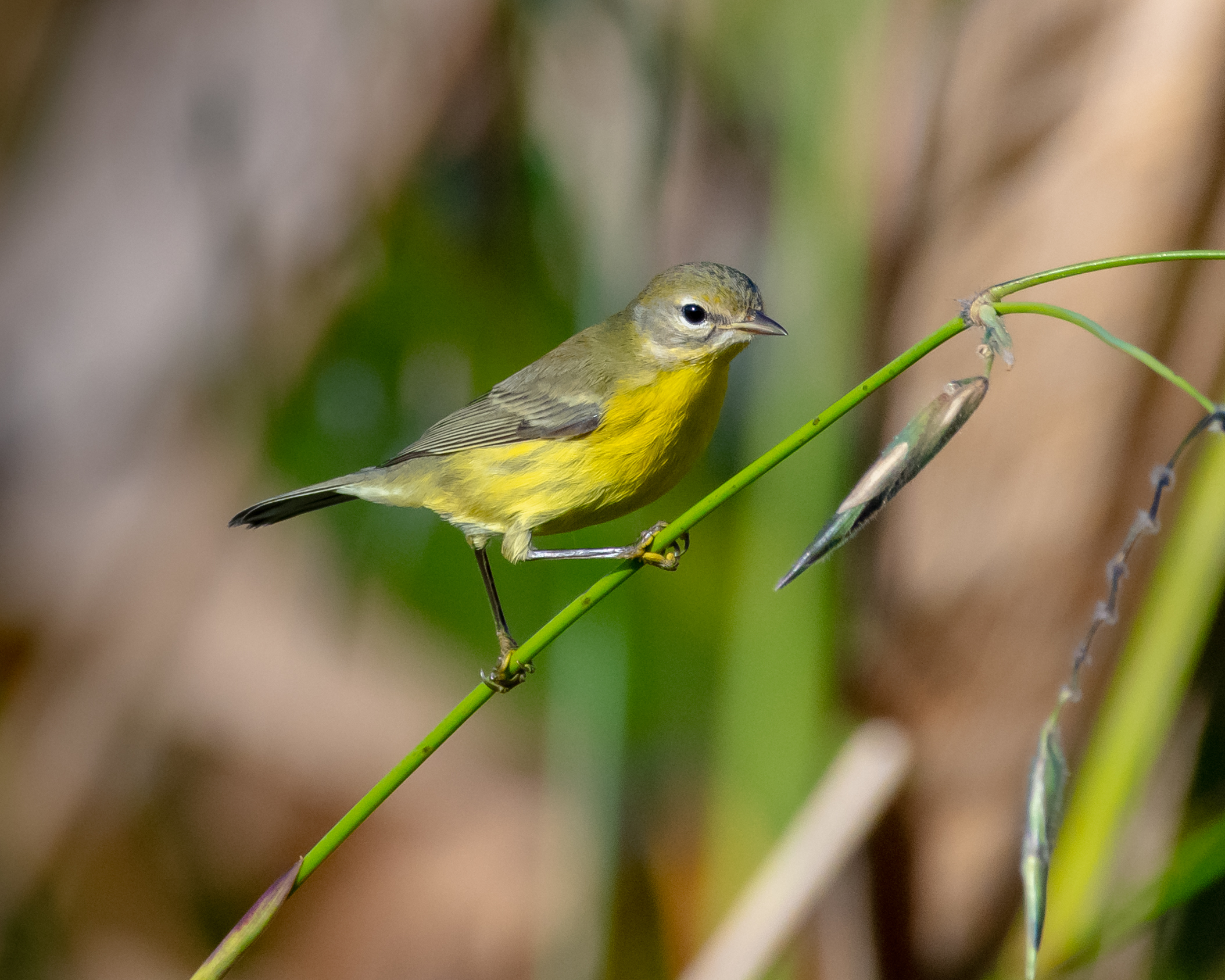
Prairie Warblers breed in this area, but we also see individuals from the north during the fall/winter. Impossible to tell if this female is a visitor or a tourist. Easy to tell that she was hungry.
Movement under a large oak tree turned out to be a Carolina Satyr (Hermeuptychia sosybius).

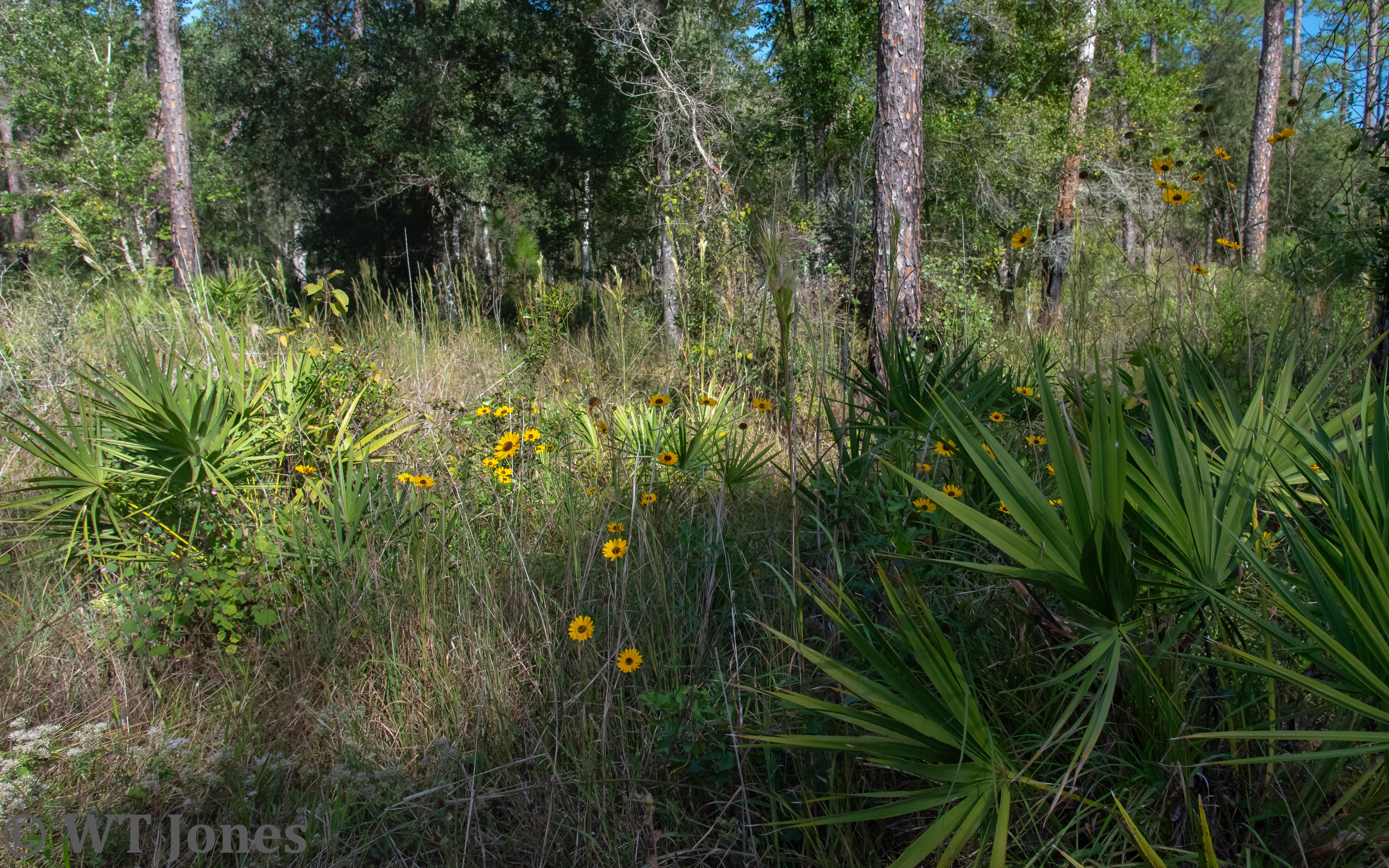
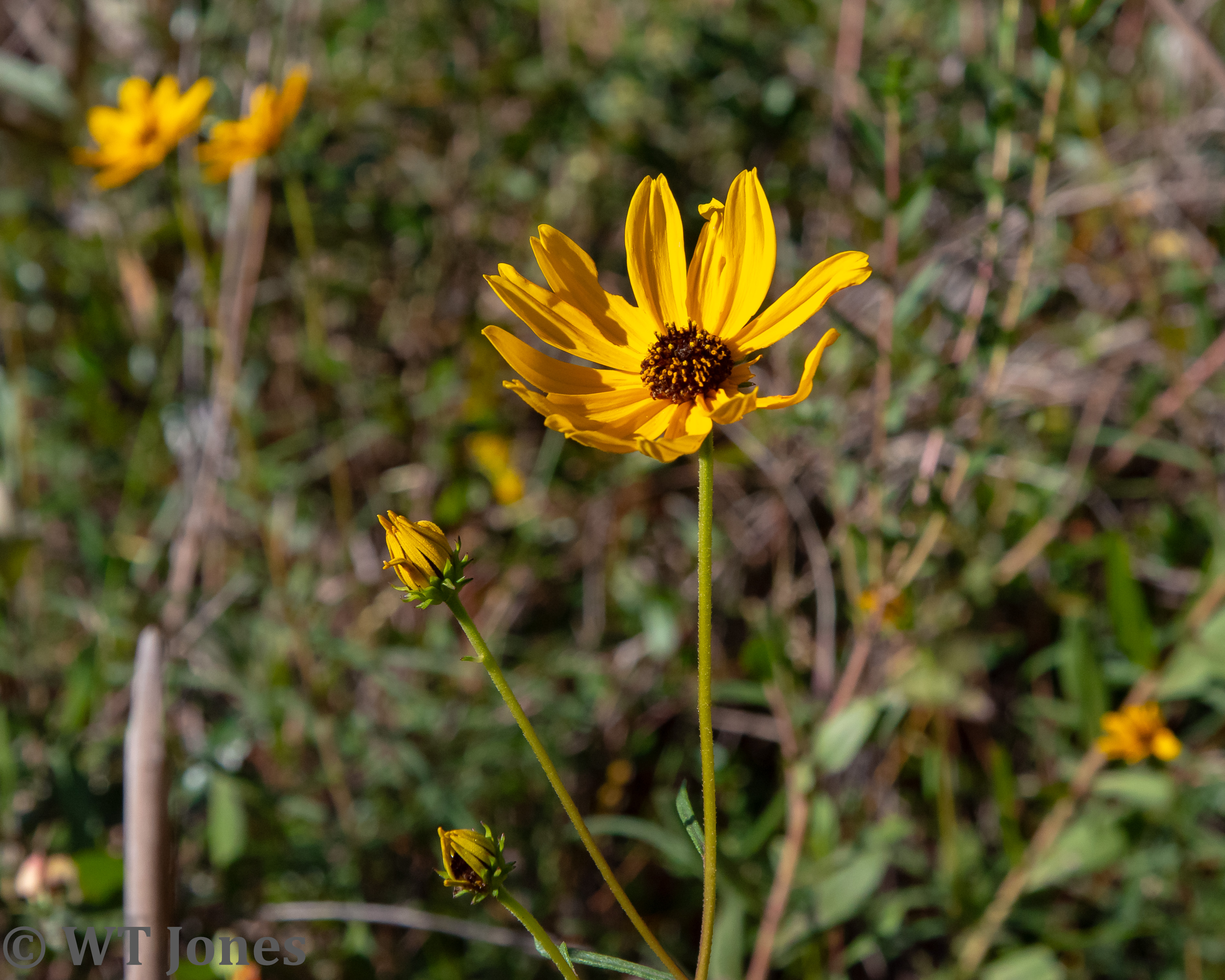
There was a lot of yellow throughout the park this morning. Most was Narrowleaf Sunflower (Helianthus angustifolius).
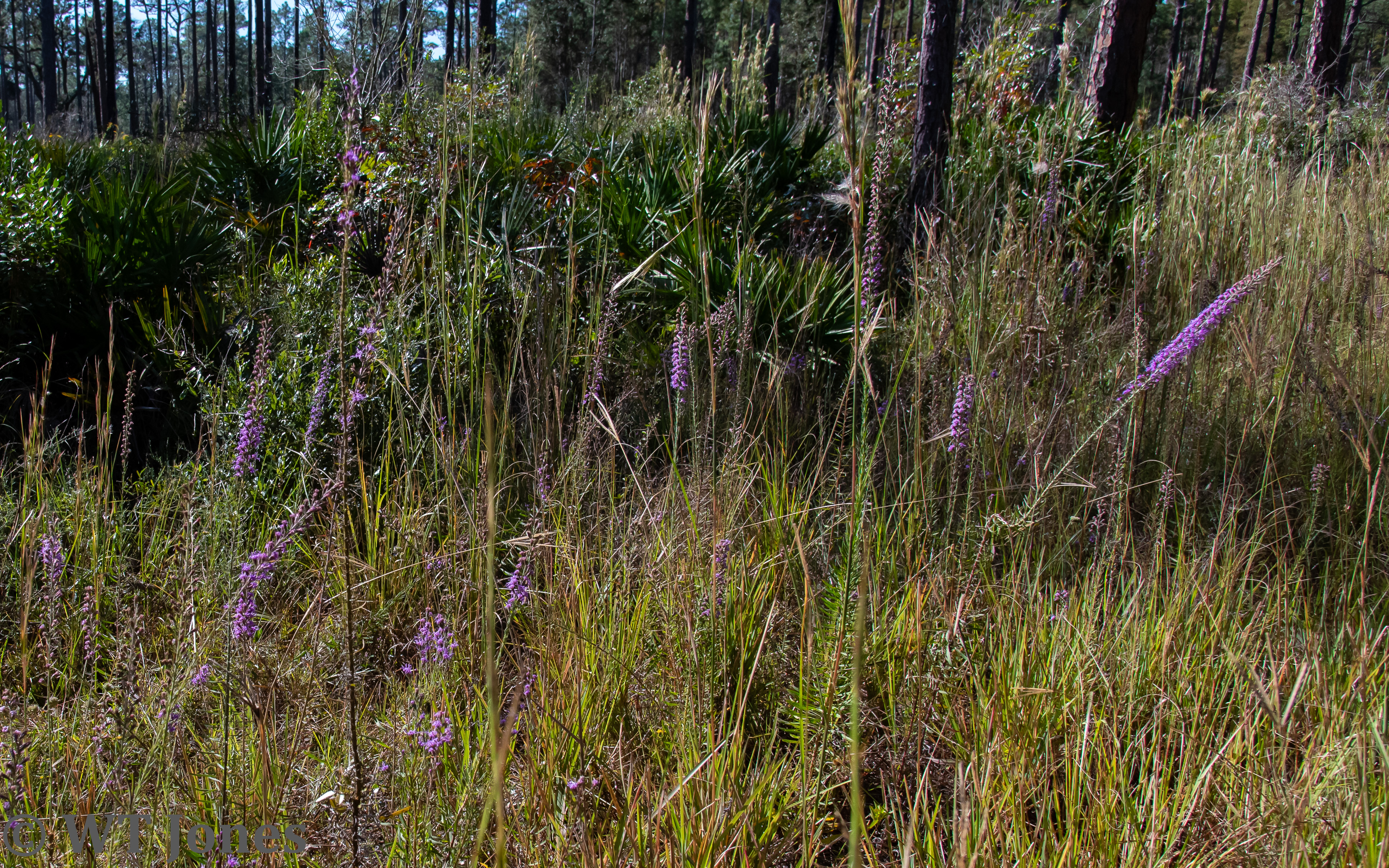
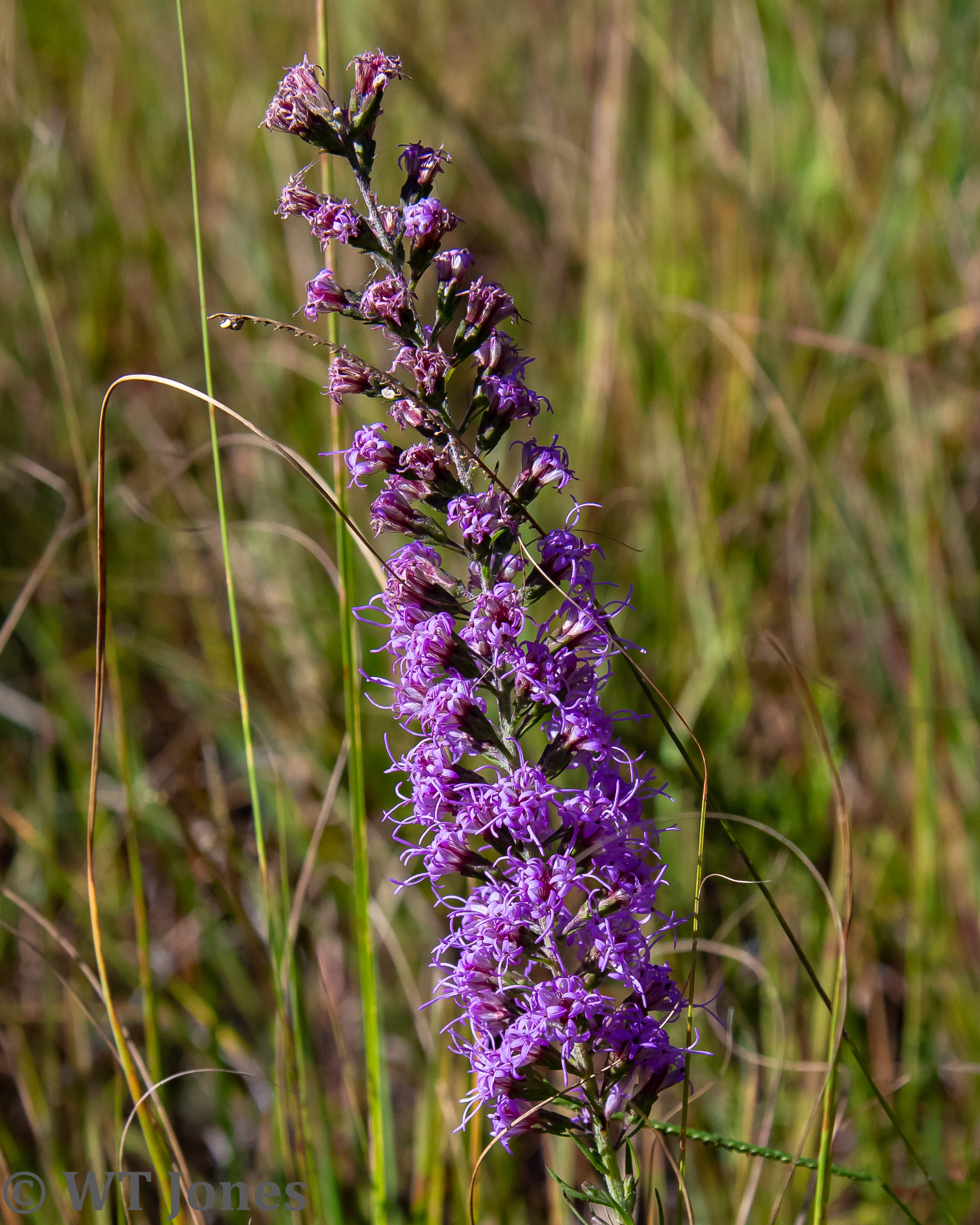
A few patches of bright purple Chapman’s Blazing Star (Liatris chapmanii) certainly demanded our attention.
Not as abundant as the sunflowers, buttery yellow Four-petal St. John’s-wort (Hypericum tetrapetalum) was equally beautiful to behold.

Another common fall migrant is the Eastern Phoebe. Many of these aggressive little flycatchers will stay with us all winter.

Even more yellow. At this time of year, our most common goldenrod is Pinebarren Goldenrod (Solidago fistulosa).

Several butterflies thrive almost year around in central Florida. One species which does well is the Tropical Checkered-Skipper (Burnsius oileus).

It just doesn’t seem like a real color. The Eastern Bluebird tries to “out-blue” the sky. I purposely didn’t adjust the color of this image so it would show the actual hue.

A personal favorite. When I go out to specifically find one of these, I invariably fail. On a casual day of relaxation, a feeling that you are being watched comes over you ……….Gray Wall Jumper (Menemerus bivittatus). (Do click twice on this one.)

A fall morning. A full morning. Old man winter was not on the horizon. Now – he’s knocking at the door.
Enjoy your search for a natural place and come back for a visit!
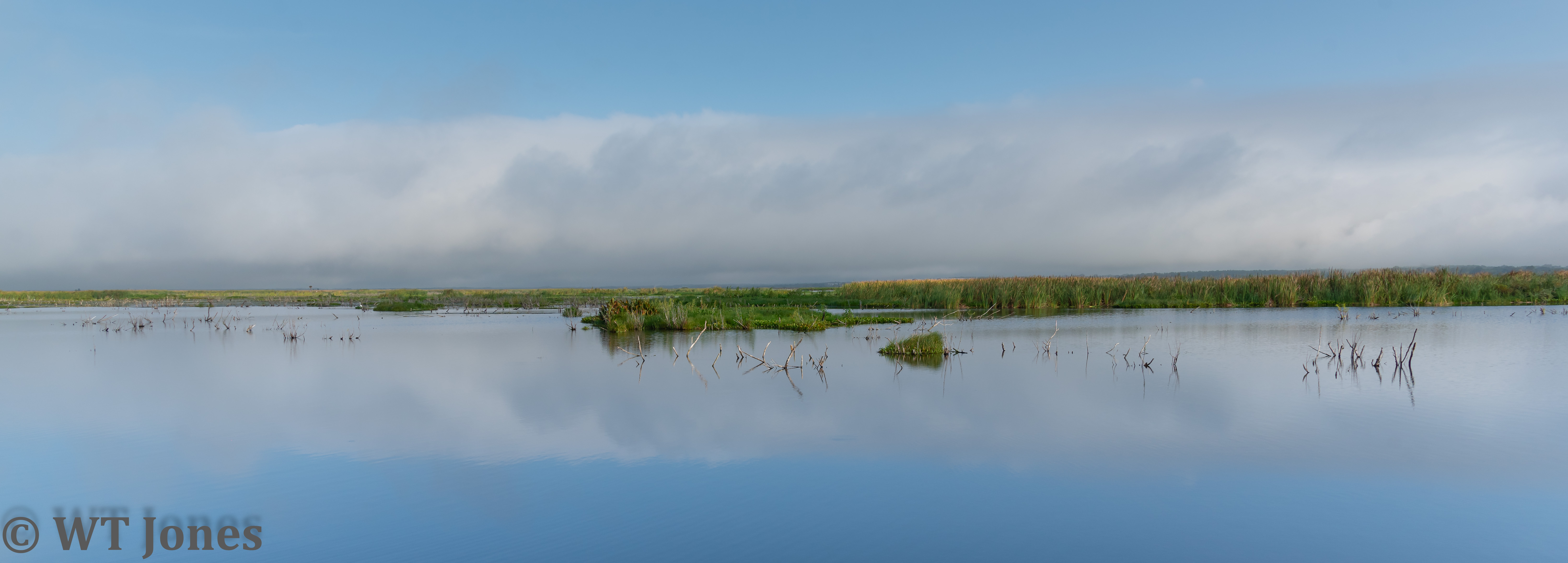
We arrived at Lake Apopka just before “official” sunrise. Of course, the fog obscured the sun completely. It was now about three hours later and the marsh was awash in sunshine, skies were nearly clear and the natural world was beginning to make up for the daylight delay.
It’s a bit eerie how fog dissipates. Like clock watching. (Remember analog clocks?) We know the hands are moving but can’t actually detect any movement. The dense fog did not just vanish all at once. The open spaces of the marsh created a situation where we could observe as the mist became less and less dense and distant objects became incrementally more distinct.
Flocks of White Ibis, Blue-winged Teal, Black-bellied and Fulvous Whistling-Duck moved from one spot to another. Osprey splashed into open water areas and took their catch to a nearby tree branch to enjoy. Wading birds waded, gallinules gabbled, warblers gave up warbling while swallowing bugs, alligators galore grinned and grunted.
We enjoyed it all.
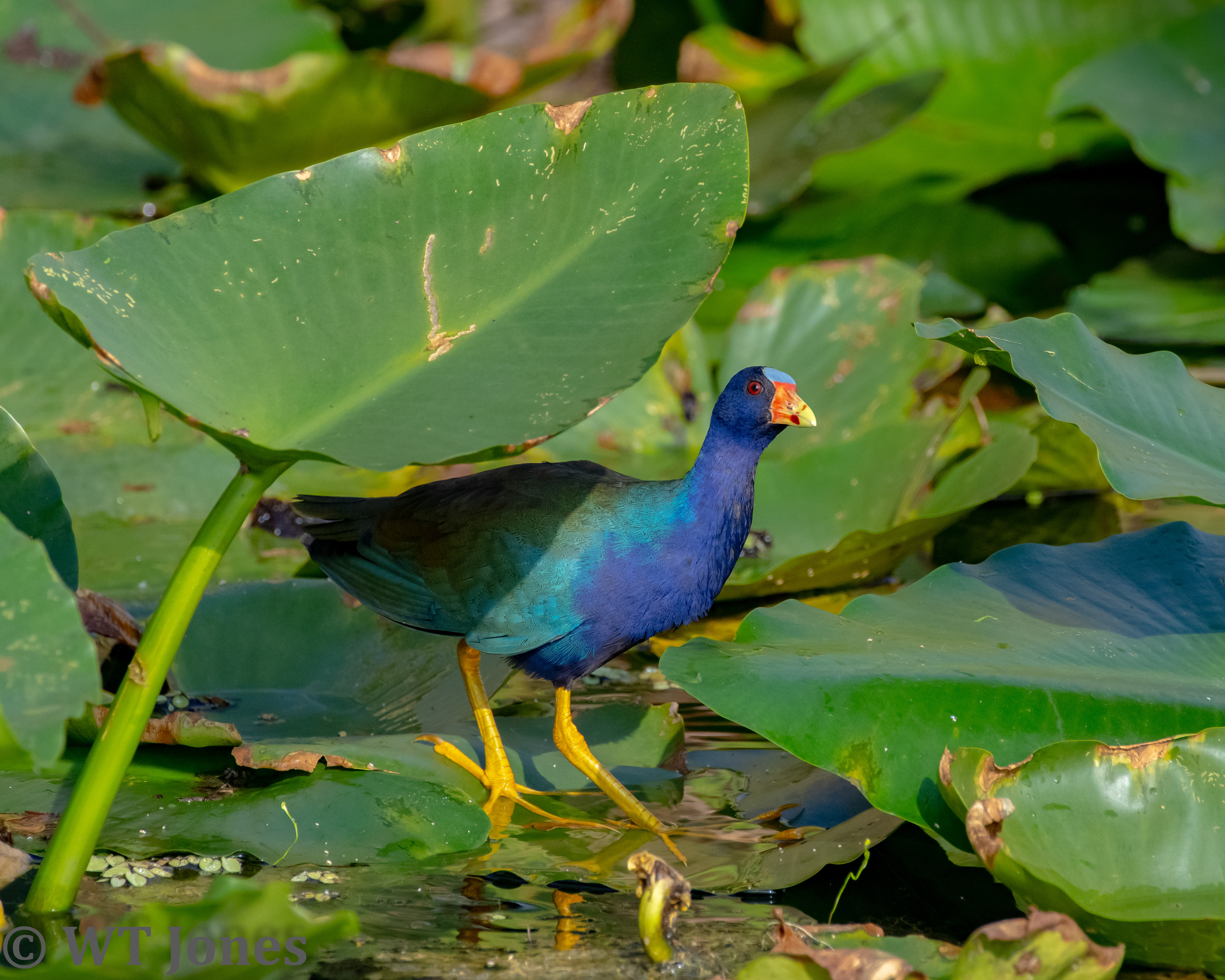
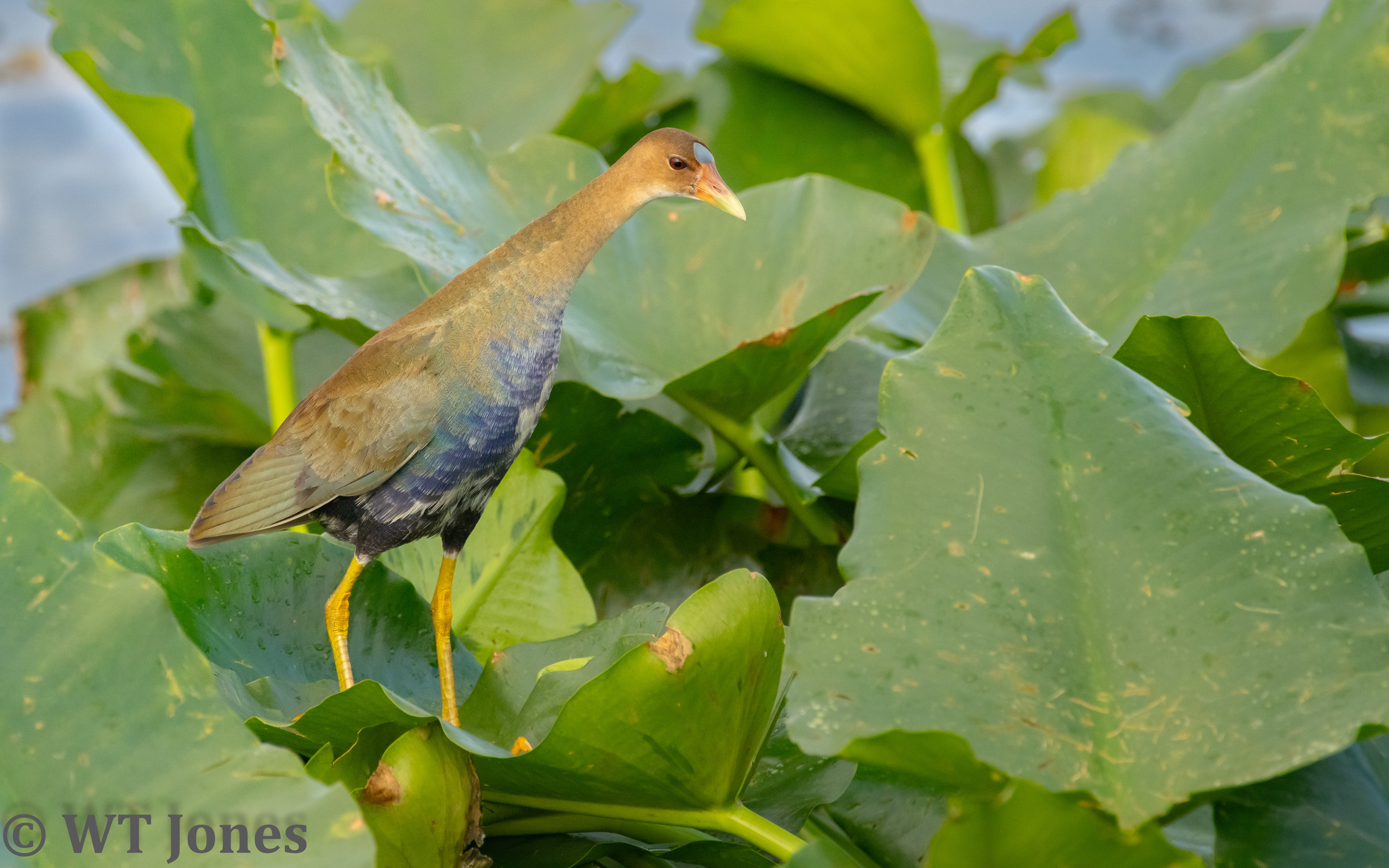
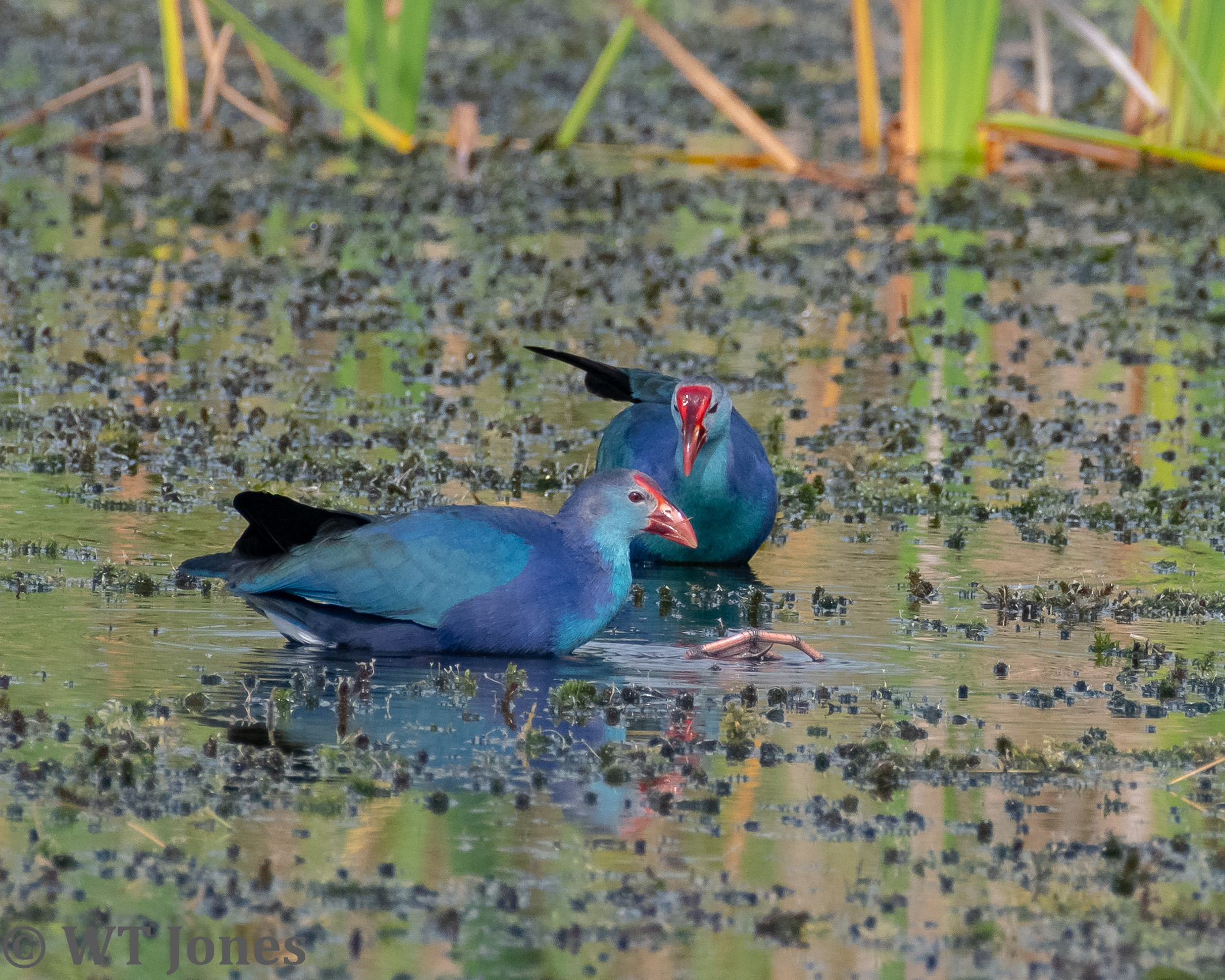
Smaller than the Gray-headed Swamphen we highlighted in the last post, native Purple Gallinules are abundant throughout the marsh. The first image is an adult and the second an immature bird. Sexes are similar in appearance.
Bright Yellow Warblers are early migrants and they love an area such as this as it makes finding a meal easy. They need to eat as many insects as possible to provide energy for their flight onward to South America.

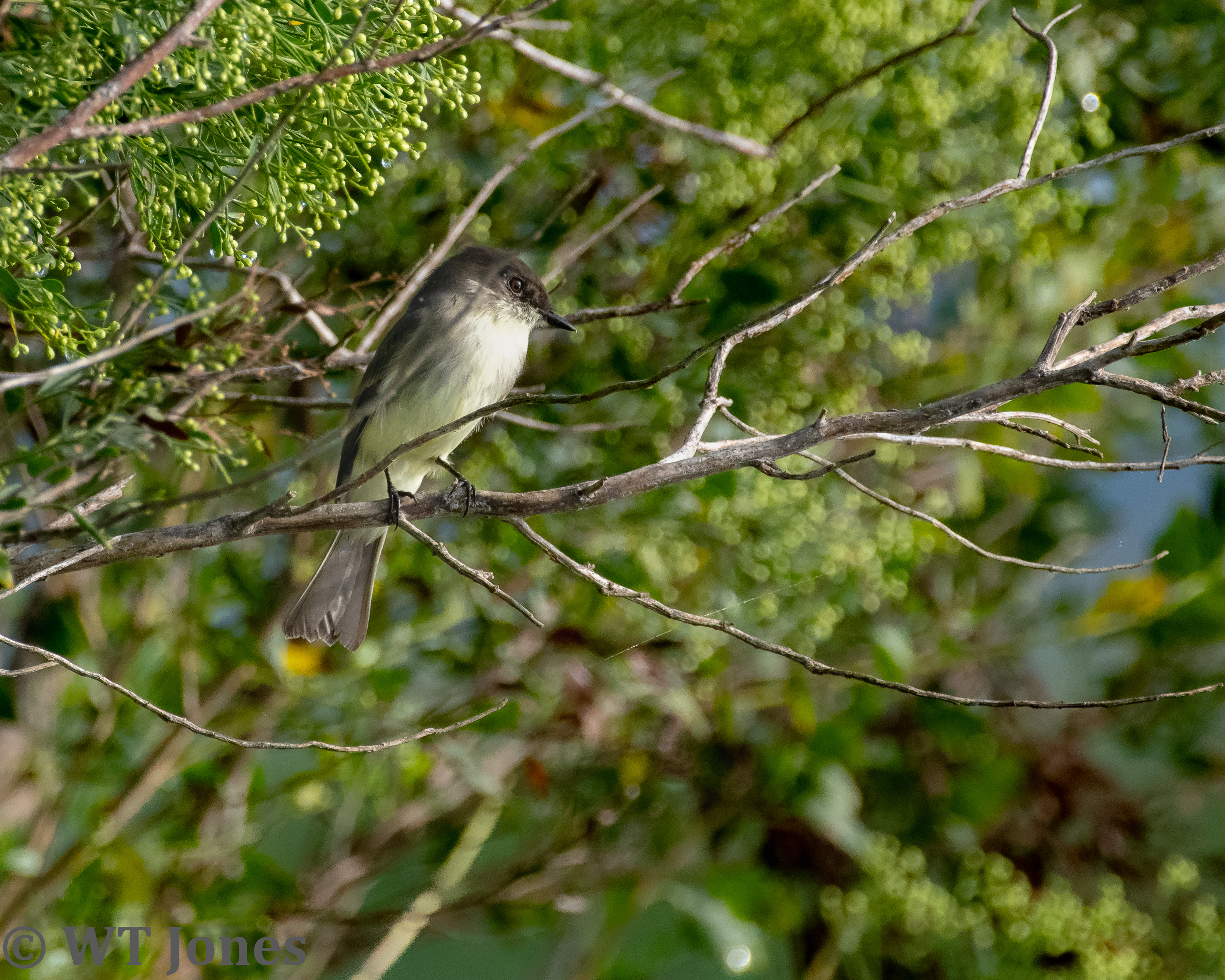
Many migrating birds will spend the entire winter in Florida as long as the weather doesn’t become too cold. This Eastern Phoebe is loving the abundant mosquito hordes. Go, Phoebe, go!
Open water supports several types of aquatic plant life. Yellow balls above large lush green leaves identify Spatterdock (Nuphar advena).

We saw several dozen large Fulvous Whistling-Ducks today. They are year-round residents and breed here.

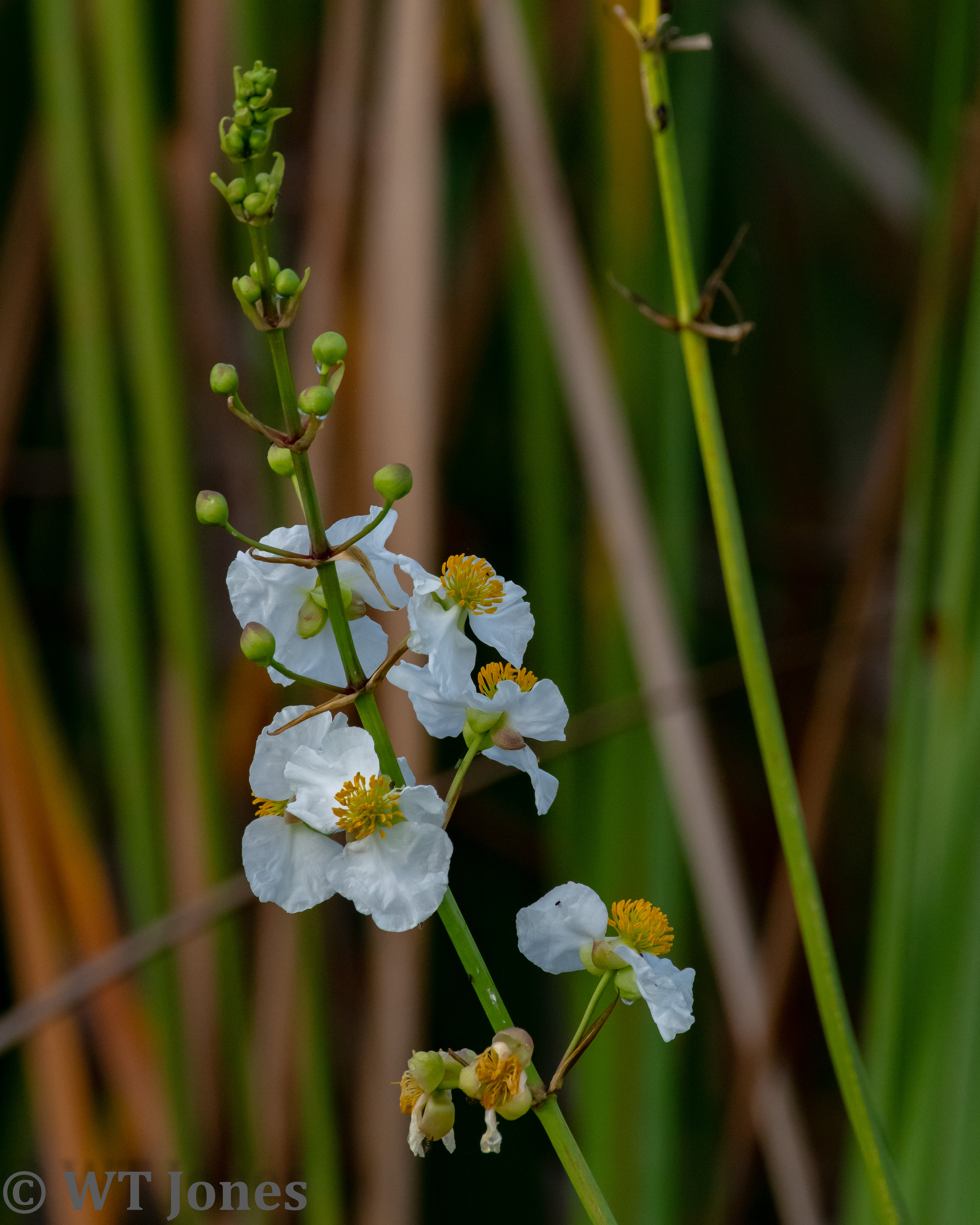
Another water-loving plant, Broadleaf Arrowhead (Sagittaria latifolia), provided lovely white bouquets for us to enjoy.
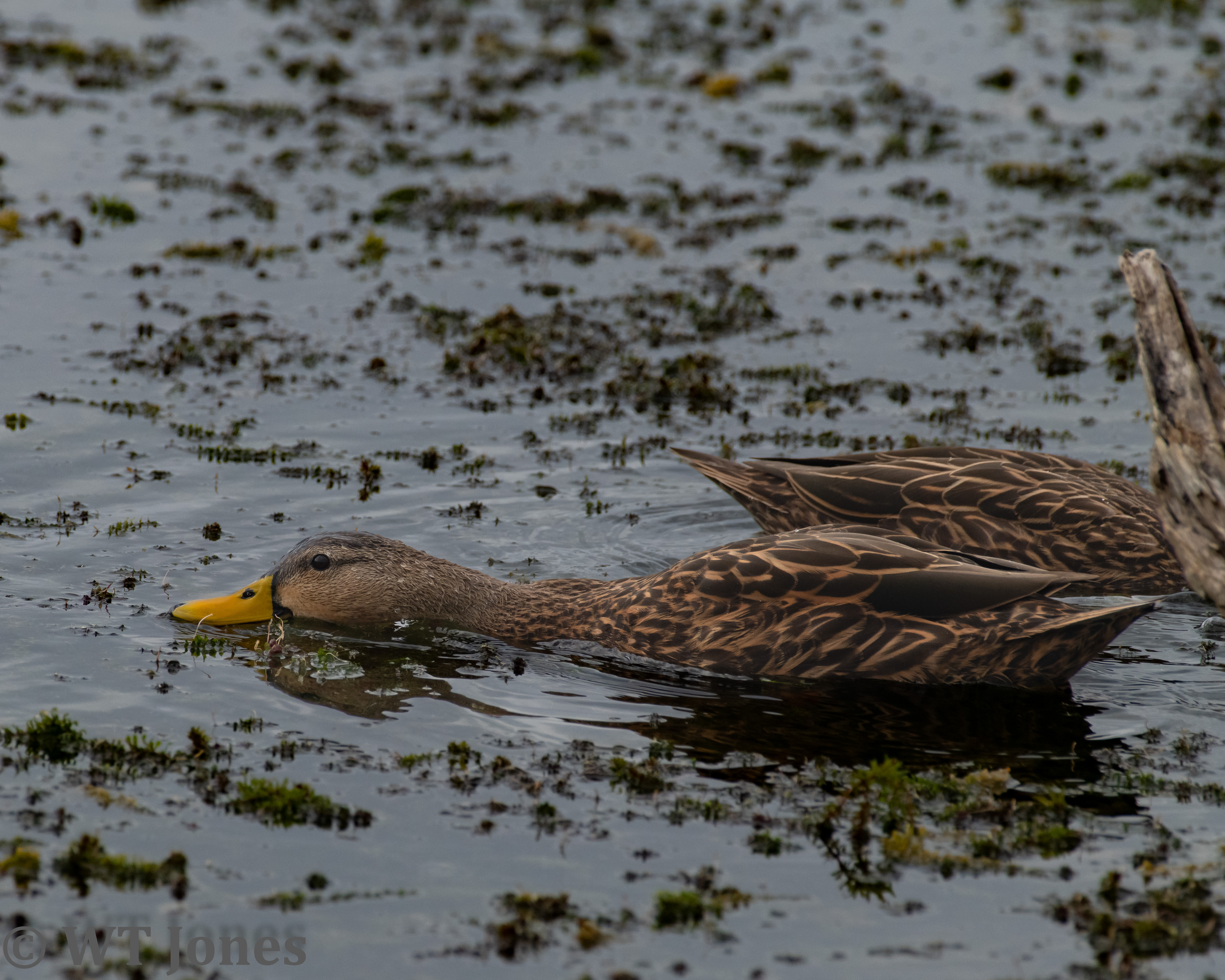
Similar in appearance to Mallards, Mottled Ducks are lighter in overall plumage, there are differences in bills and the wing speculum has no white border like the Mallard has. Hybridization, especially with Mallards, poses a real threat to the Mottled Duck’s future.
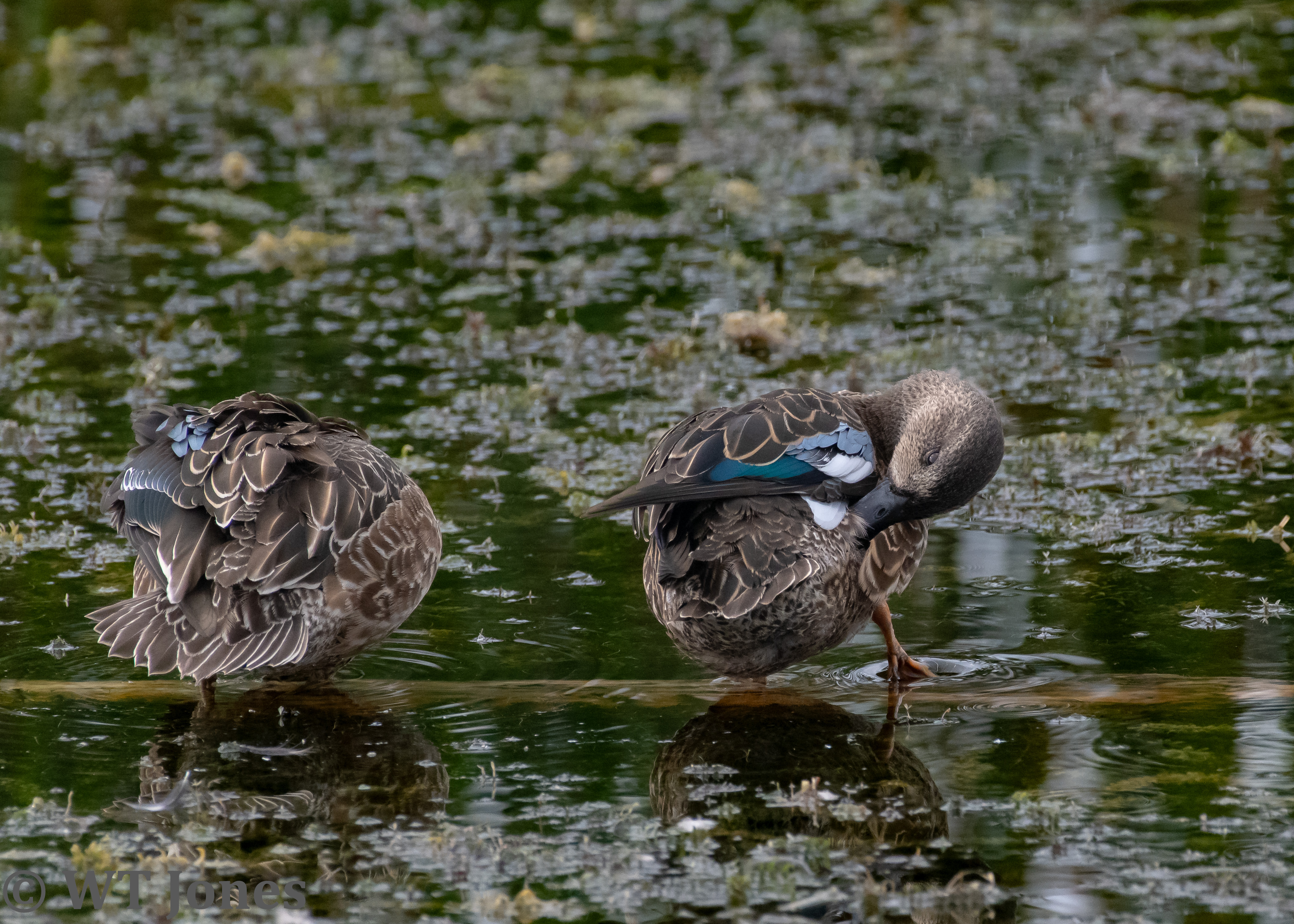
Cleanliness is next to Duckliness. Preening time-outs are frequent and vital to maintaining healthy feathers. This Blue-winged Teal duo really enjoyed having their photo taken while they were busy cleaning up. (They may have a different story.)
Floating flowers. The marsh was in bloom with American White Waterlily (Nymphaea odorata) showing off and we really appreciated it.

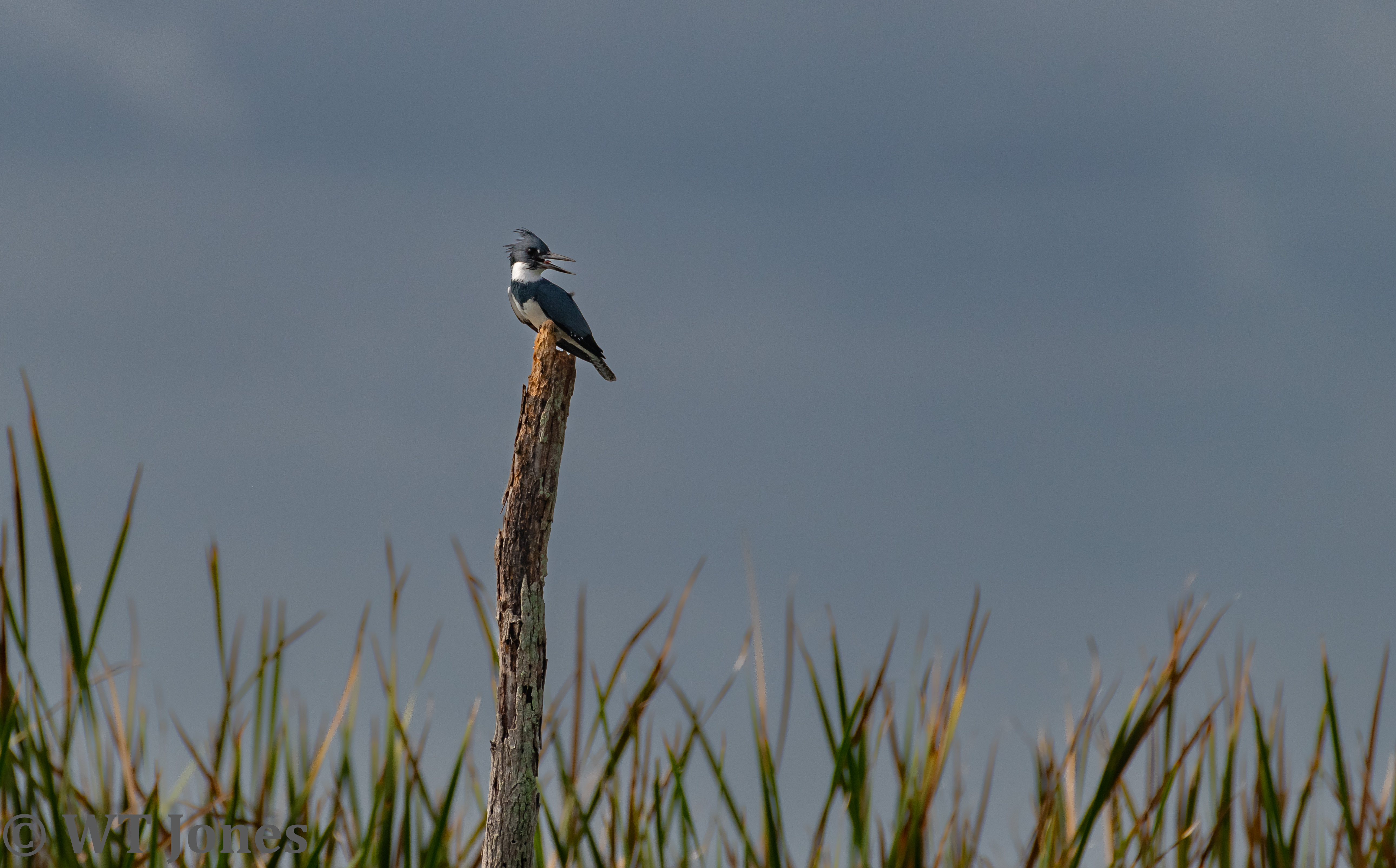
A male Belted Kingfisher sang sweetly as we admired his sleek blue-gray form. Okay, okay. His harsh rattling let us know he was not very pleased with us tromping past his buffet table.
Even more white floral displays to ogle. Bulltongue Arrowhead (Sagittaria lancifolia) is loved by a diverse number of pollinators and at least two flower-lovers. (Yes, she wanted me to pick some to take home. “That alligator in the nearby reeds isn’t all that big.” No, there was no Arrowhead arrangement for the dinner table today.)

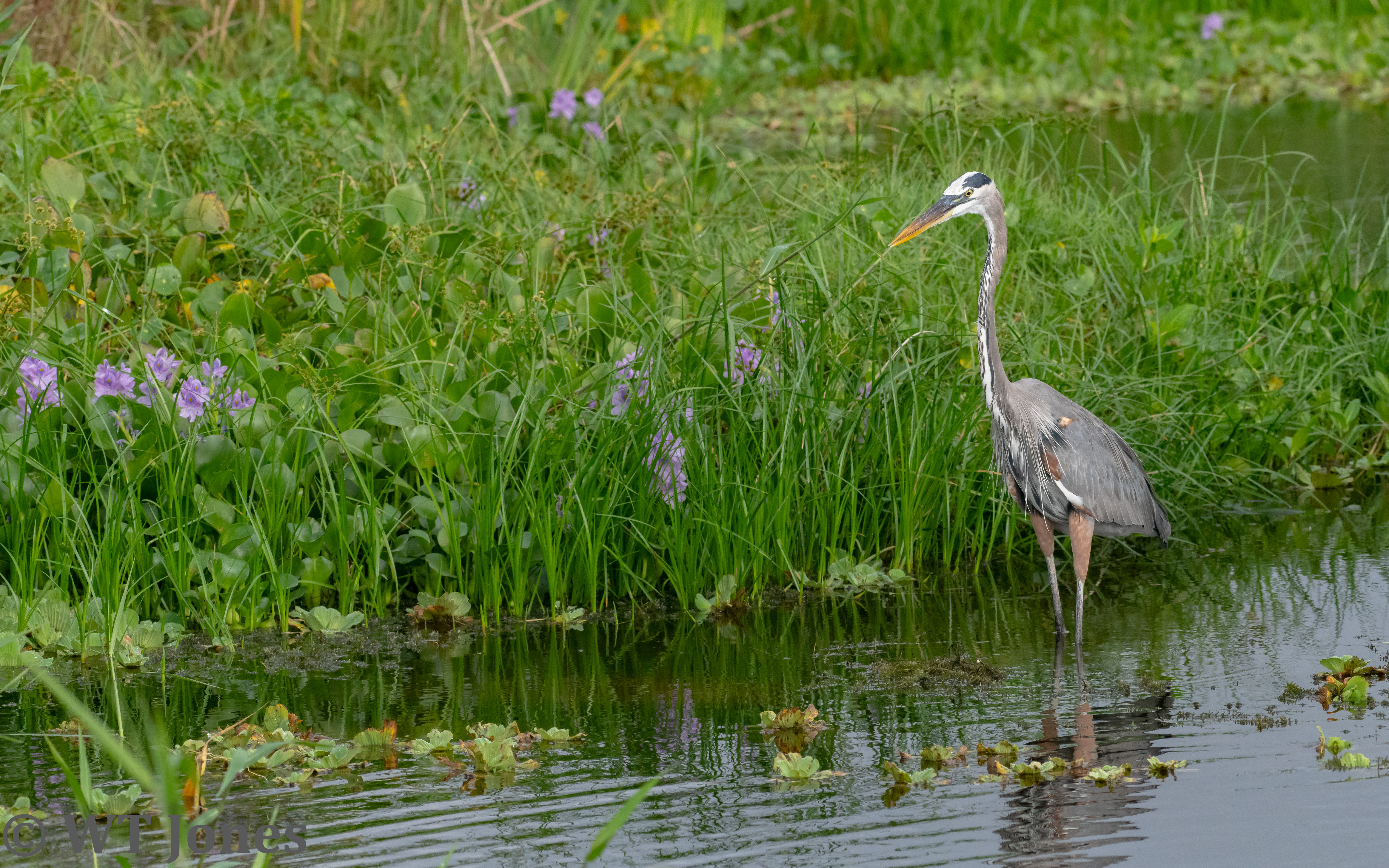
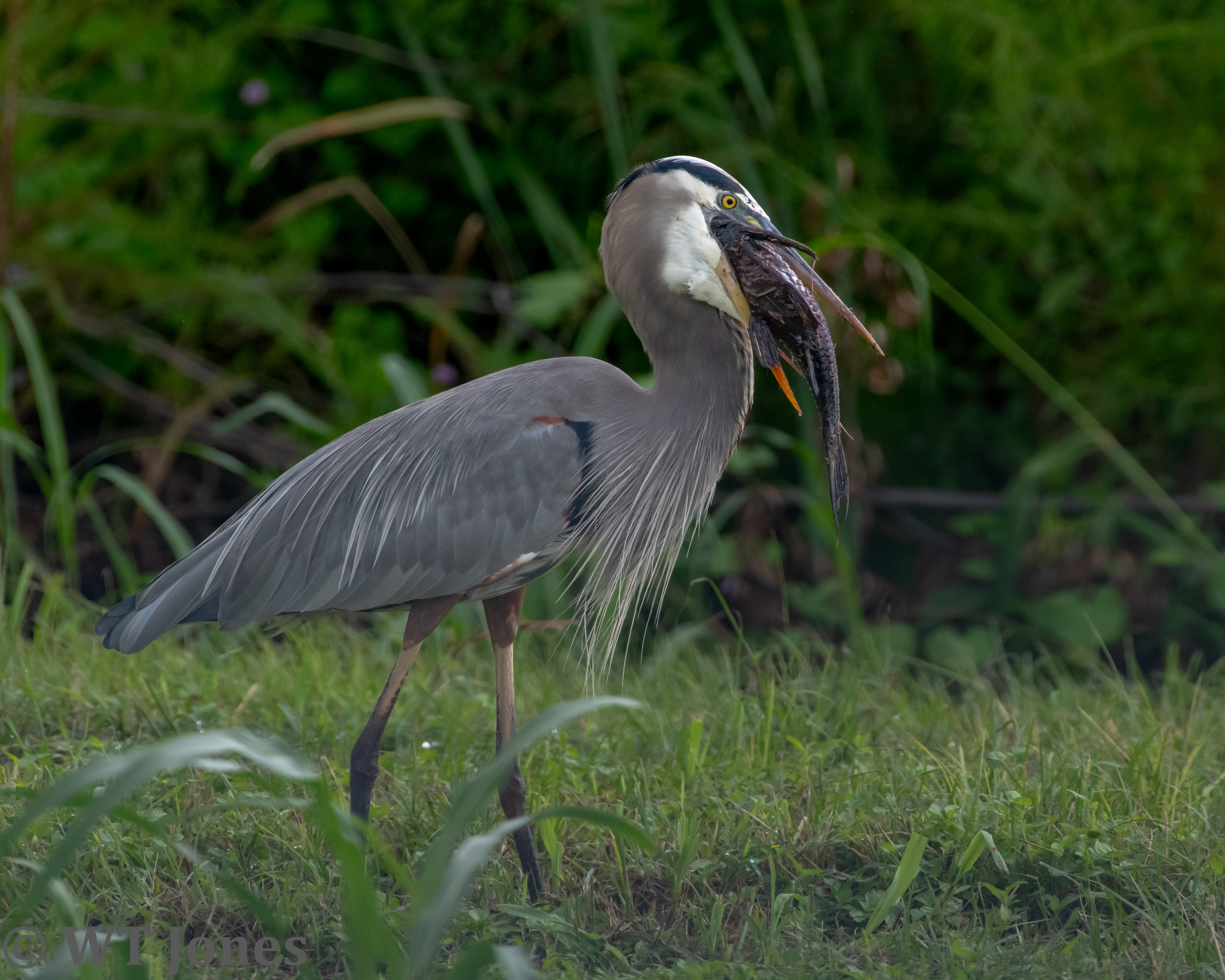
Over 20,000 acres of marsh means there is plenty of room for a Great Blue Heron to stretch its wings. Surveys indicate many dozens of the large waders agree. The big blue birds can look adorable amongst the hyacinths and pretty imposing when trying to swallow a giant-sized catfish.
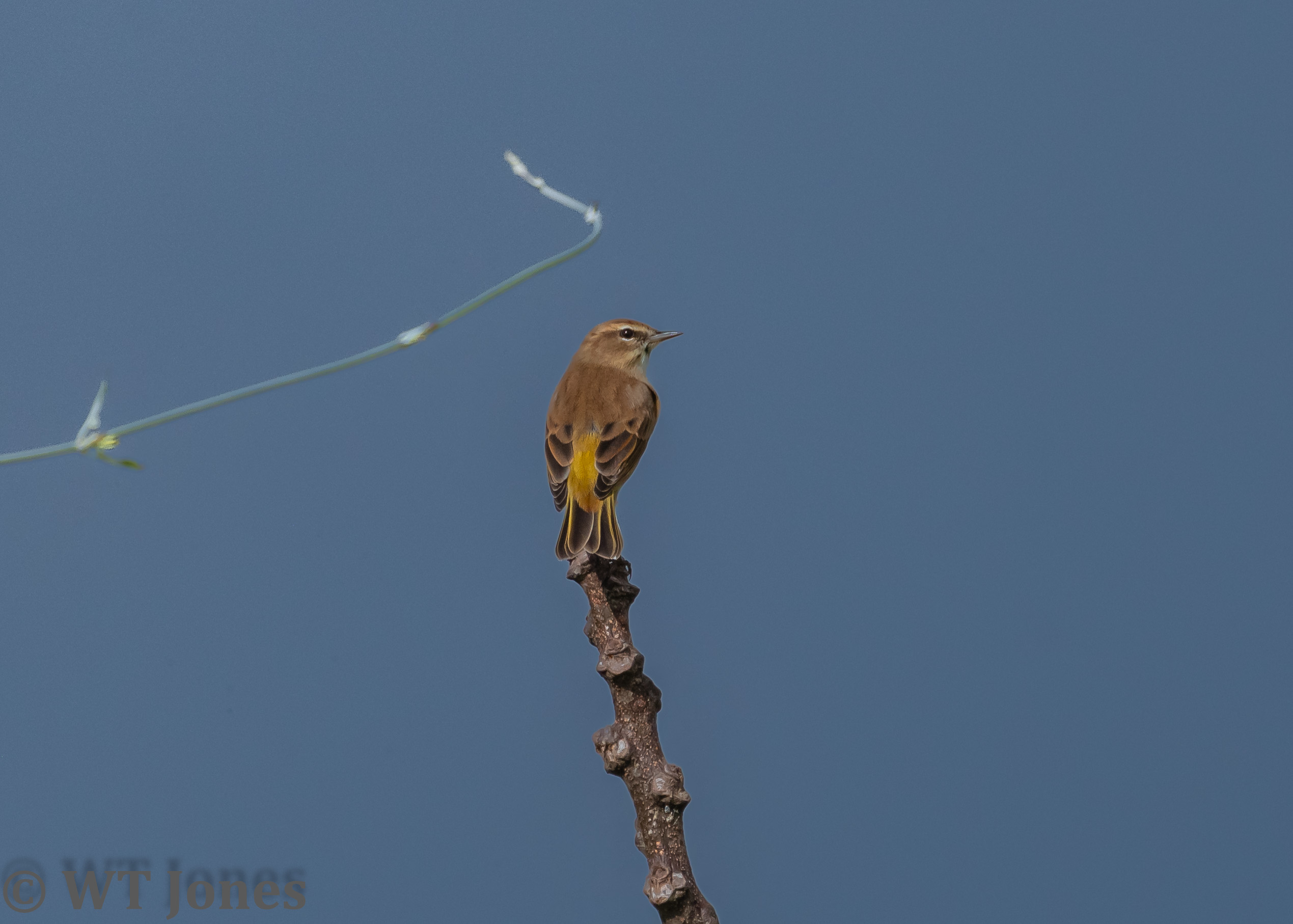
Palm Warblers are one of the most numerous winter migrants in central Florida. They are easily identified, even from a distance, by their constantly pumping tails. Despite fairly subtle plumage, they are handsome little birds.
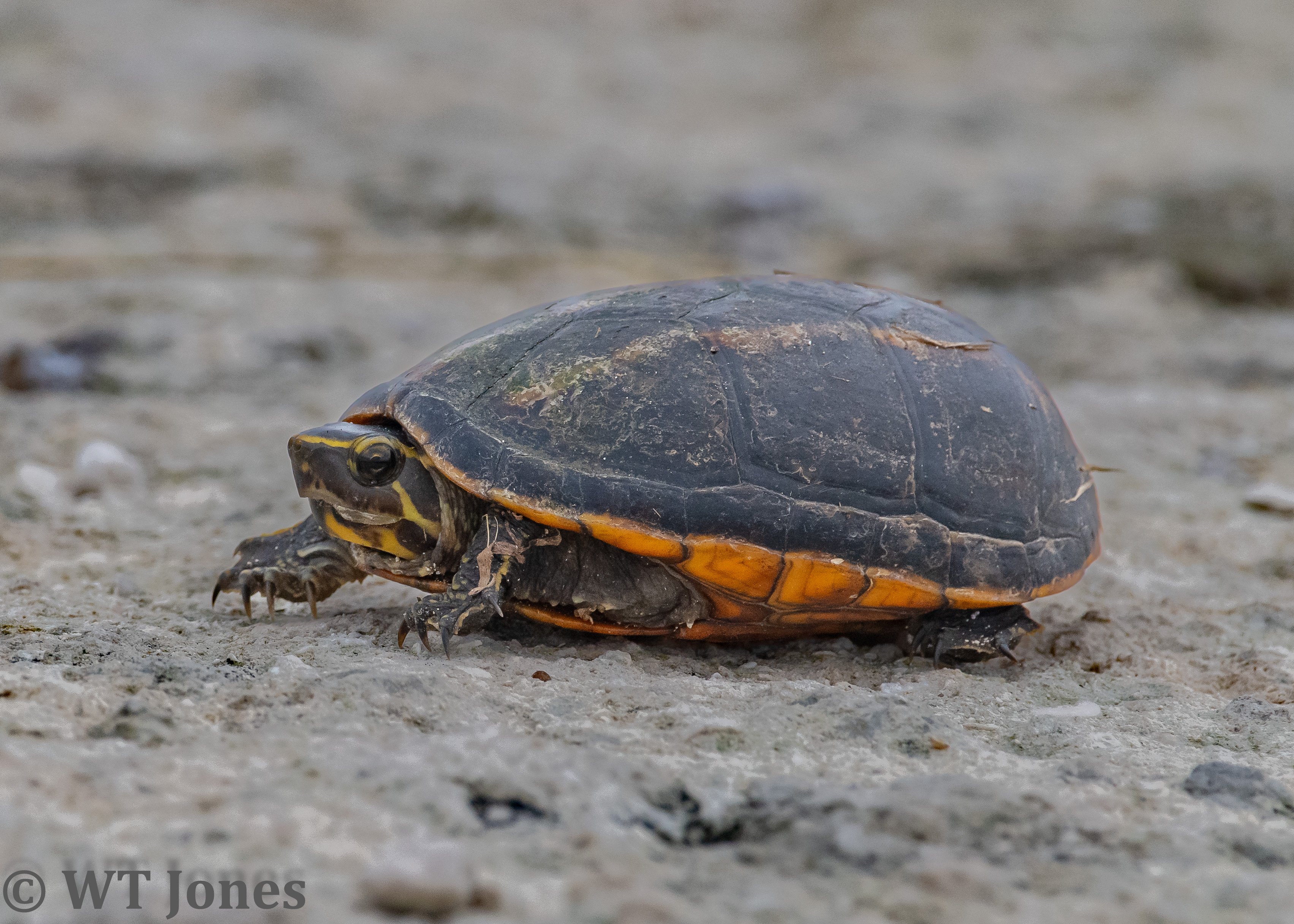
We neared the exit of the Wildlife Drive almost six hours after we began the 11-mile adventure. Discussion had already begun about what German delicacies we would soon enjoy when, all of a sudden, a turtle sprang from the side of the road and bolted in front of the car! Yeah, “sprang” and “bolted” are pretty foreign in turtle terminology. This small Striped Mud Turtle (Kinosternon baurii) was very patient as I took a few photographs and as gently as possible lifted him from the center of the road to the tall weeds toward which he was heading.
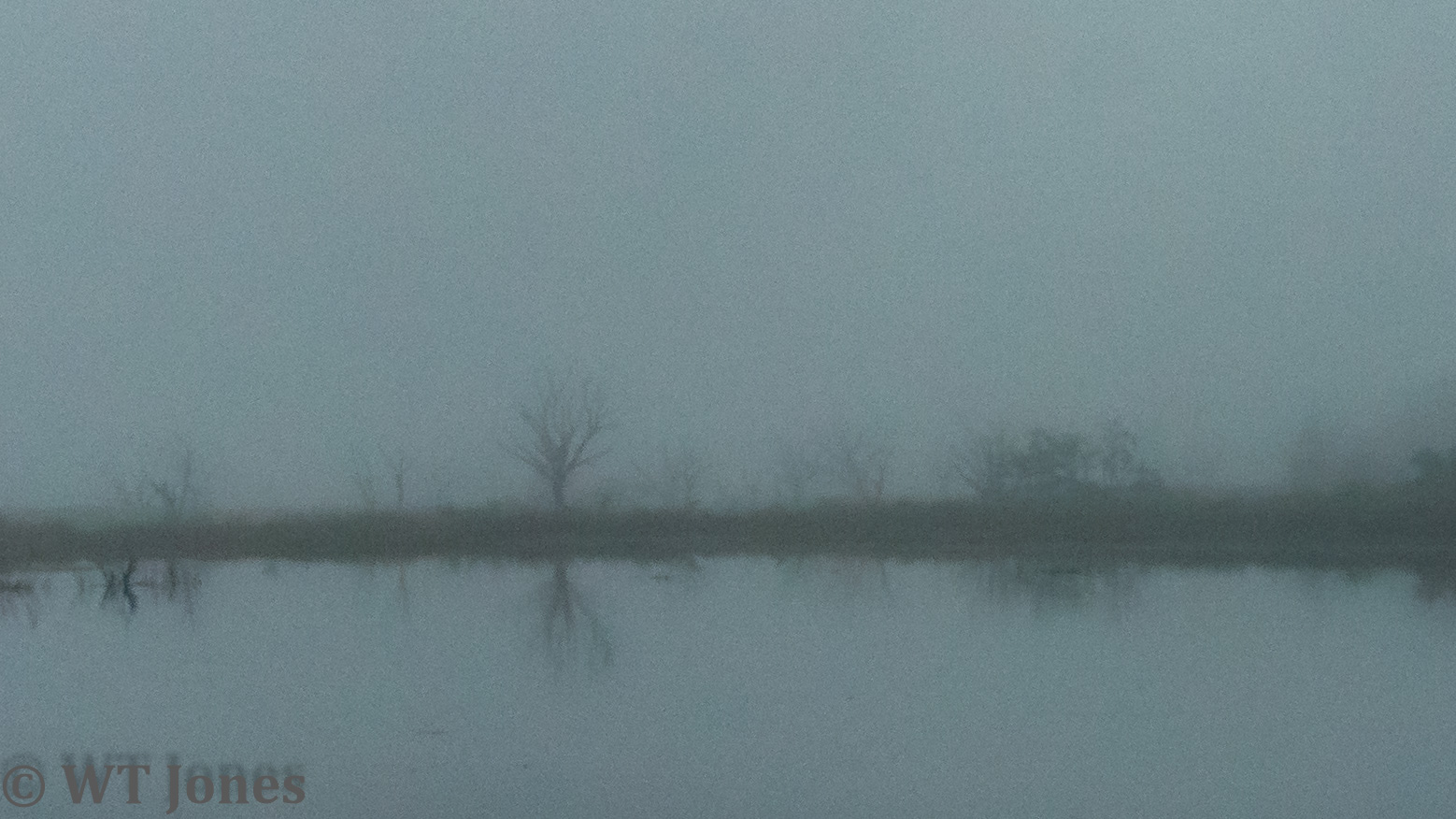
Today’s exploration began in murky darkness. Patience paid off as we eventually became enlightened and, ultimately, basked in the bright glory of blue skies and golden sunshine. May your own day be similar.
Enjoy your search for a natural place and come back for a visit!
*(Thanks to Mr. Ernest Hemingway for creating a wonderful title for his novel. Apologies to Mr. Hemingway for modifying it for my own selfish purpose.)
“At least it’s not cold.” How can I not remain in love with such an optimist?
The thick fog permitted a very limited view of our surroundings. We could hear the Whistling-Ducks whistling as they flew above us. We could hear a Limpkin crying about no sunshine. We could hear a big splash – it was close – probably just a turtle. Yeah, that’s it. A turtle.
We have written about Lake Apopka previously. (https://ournaturalplaces.com/2023/02/18/a-work-in-progress/)
It is one of our absolute favorite natural places to visit. All seasons offer a little something different, but fall and winter can be quite special. Over 20,000 acres of marsh adjacent to a huge lake attracts all sorts of migrating birds. The eleven-mile drive through the impoundment offers viewing opportunities seldom available to nature-lovers.
The fog persisted for a couple of hours after sunrise. We consoled ourselves by paying attention to reeds, shrubs and trees which were close at hand. Birds were not hindered by the mist as they busily searched for protein-laden insects. The photographer complained about poor light. The birders loved every second.
No controversial sandwiches for breakfast today. Just fresh fruit and granola. We purposely planned on eating light as our Lake Apopka adventure always ends with a trip to the nearby Yalaha Bakery for lunch. German fare from the deli means grilled bratwurst or schnitzel with sauerkraut and potato salad. Fresh baked sourdough bread, German apple pie, liverwurst and Berliner rolls were bagged up for the trip home.
Almost imperceptibly, the gray blanket began to fade, revealing a spot of blue sky here and there. The marsh was in constant motion as birds, bugs and animals concentrated on surviving one more day.
Hopefully, you will be able to see well enough through the foggy curtain to enjoy a few of our discoveries.
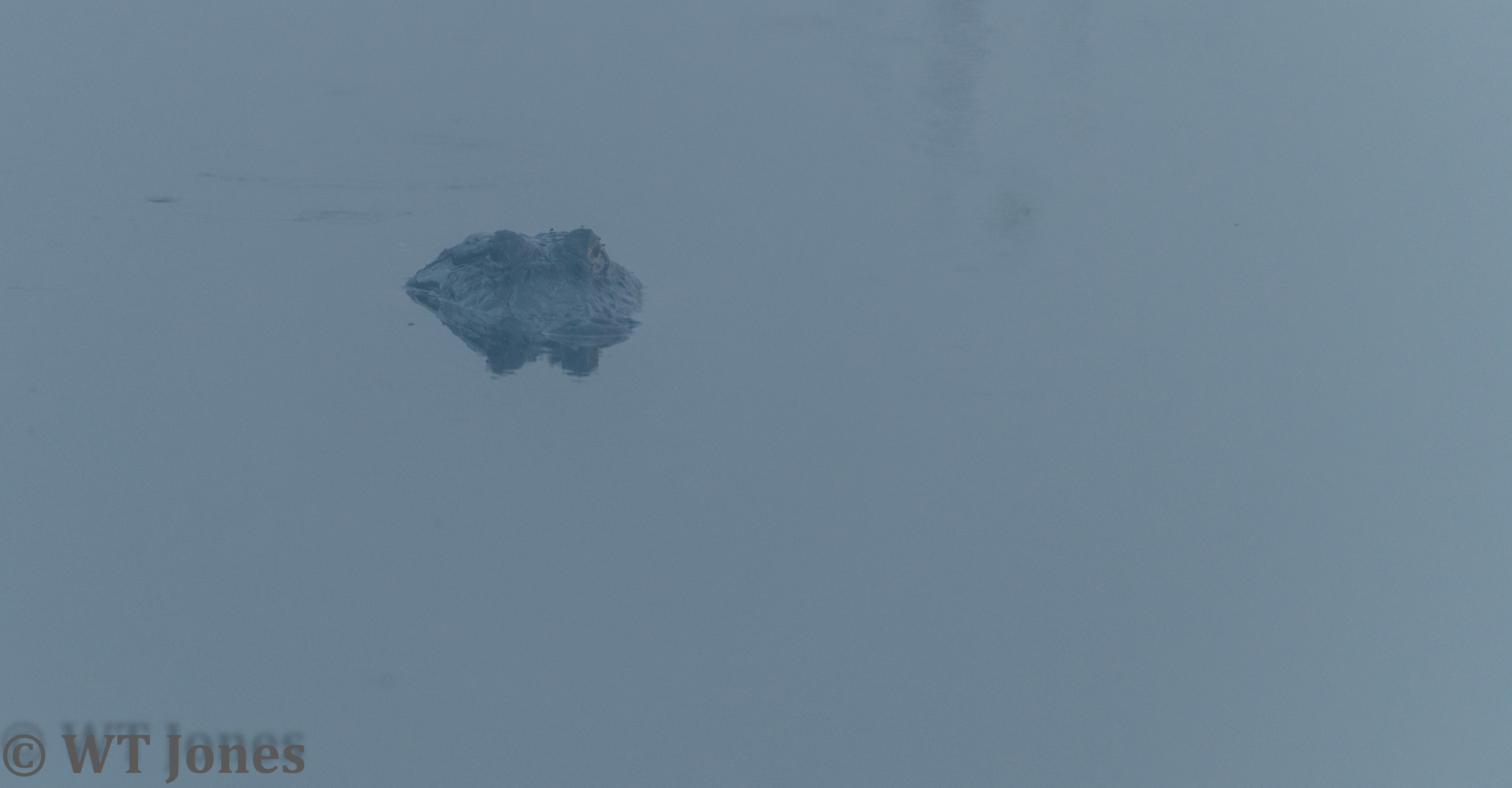
Lily pad? Stump? Turtle? No way it could be an American Alligator that close. Could it?
Fortunately, the Red-shouldered Hawk has no problem finding a frog in fog.

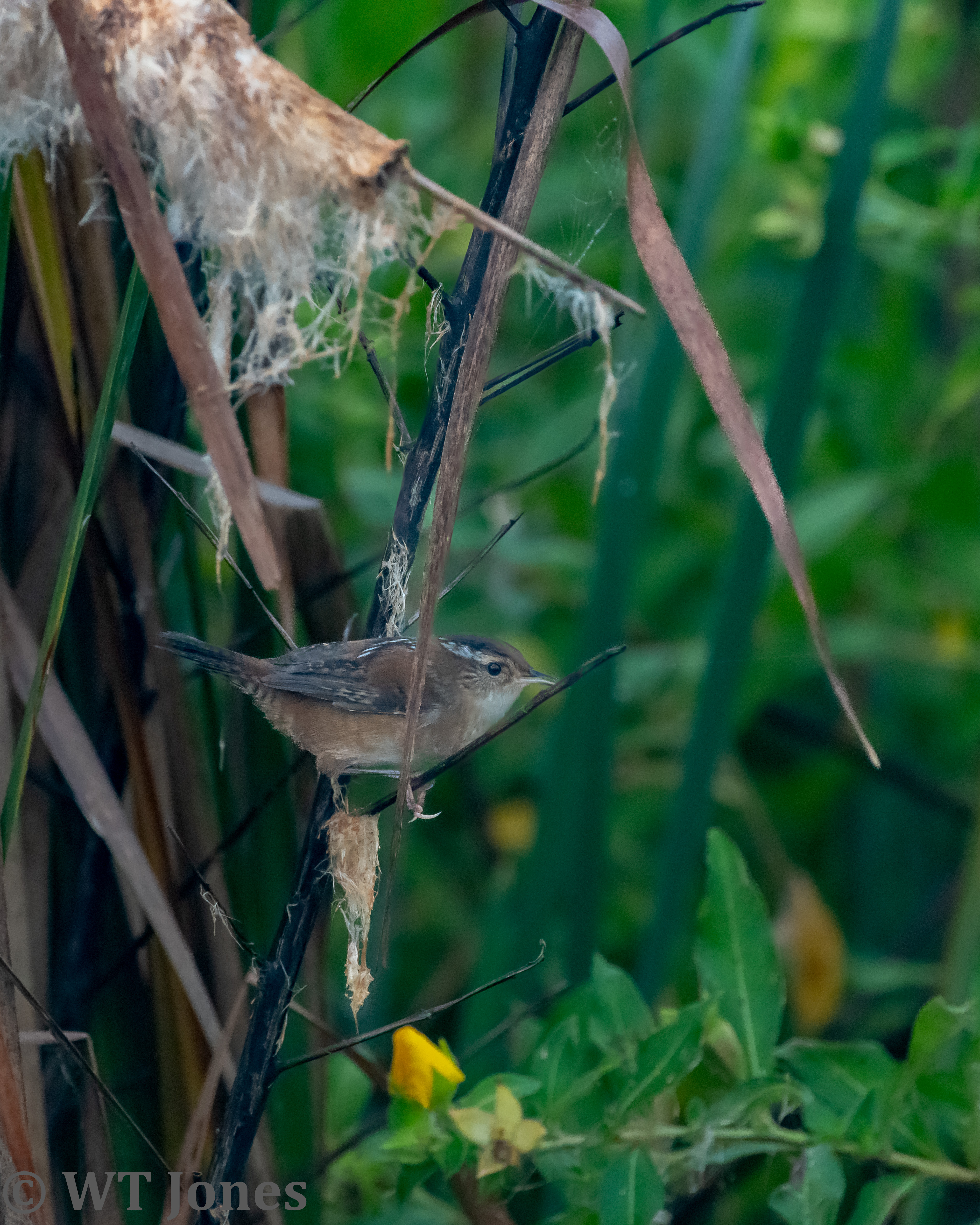
Small birds aren’t bothered by the gray stuff at all. They don’t need to see long distances to find a bug on a branch. This Marsh Wren is a fall migrant and does not breed in Florida.
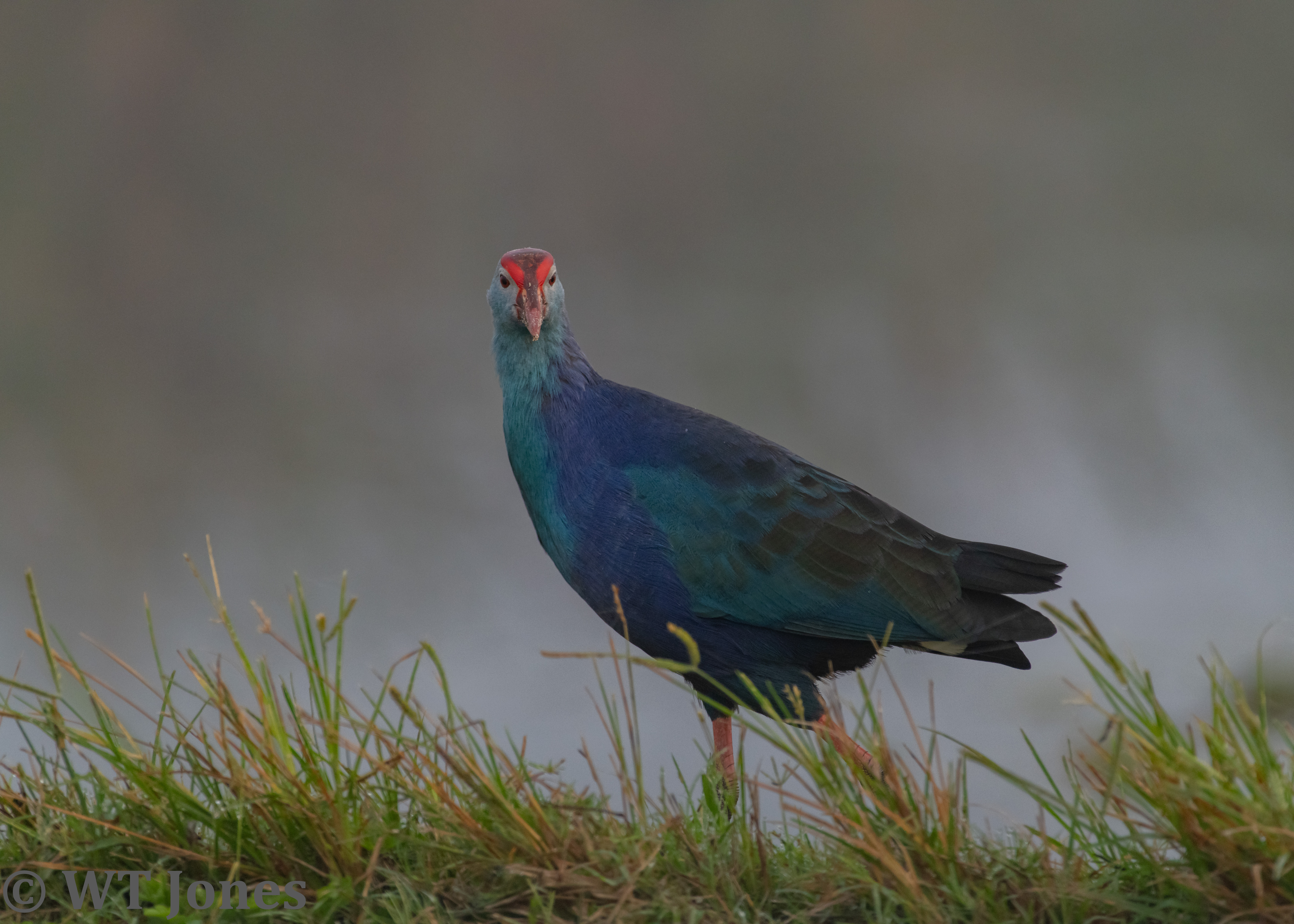
A successful invasive species. The Gray-headed Swamphen probably got a start in Florida due to an escape near Miami in the 1990’s and has now spread to at least the north-central part of the state. Lake Apopka offers perfect habitat for this large member of the rail family.
Constantly on the move, the Common Yellowthroat brightens up the marsh with its bright yellow plumage. We counted 18 of these little birds during the morning.


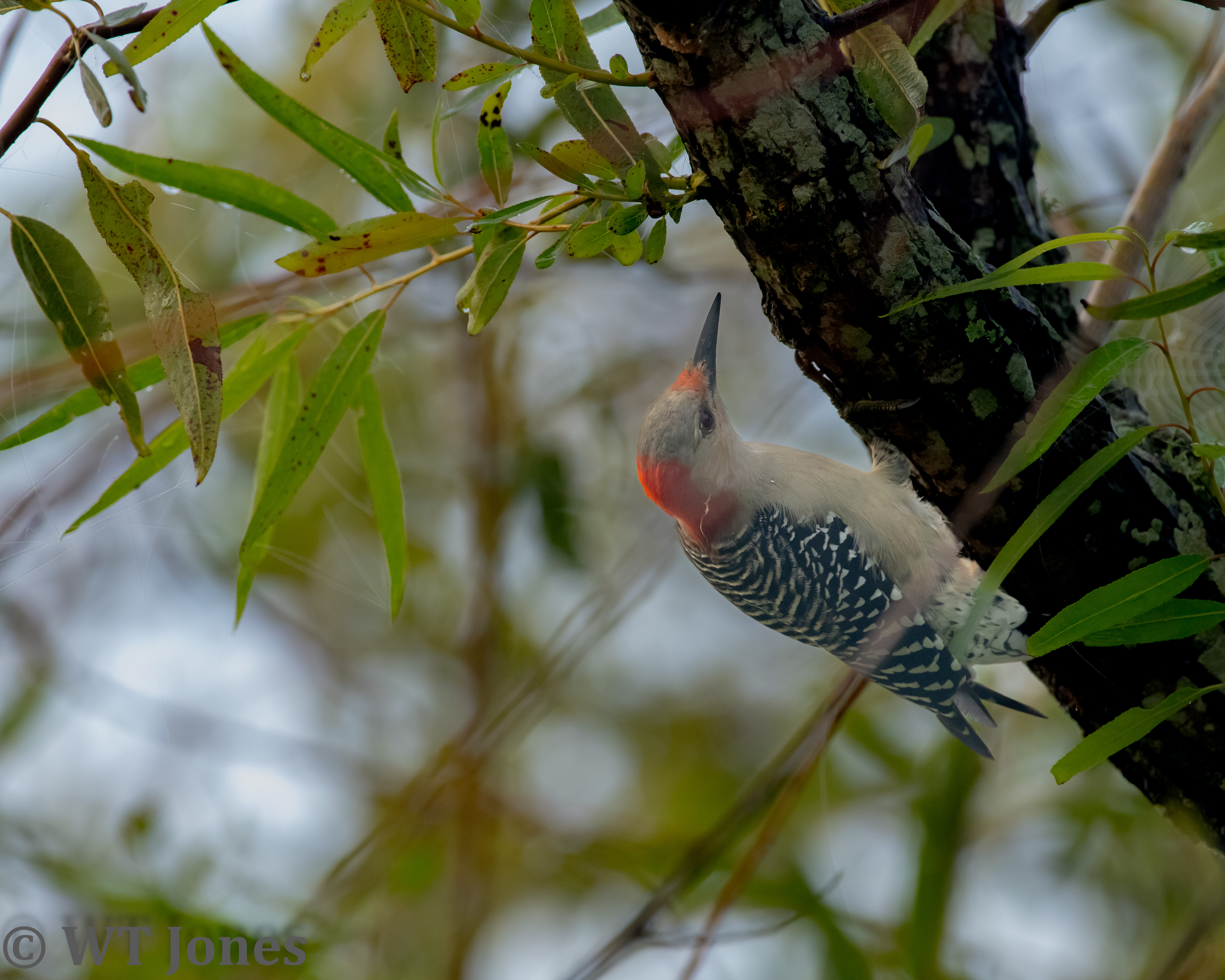
The Red-bellied Woodpecker is our most abundant woodpecker species. This female gave me one shot before disappearing among the leaves.
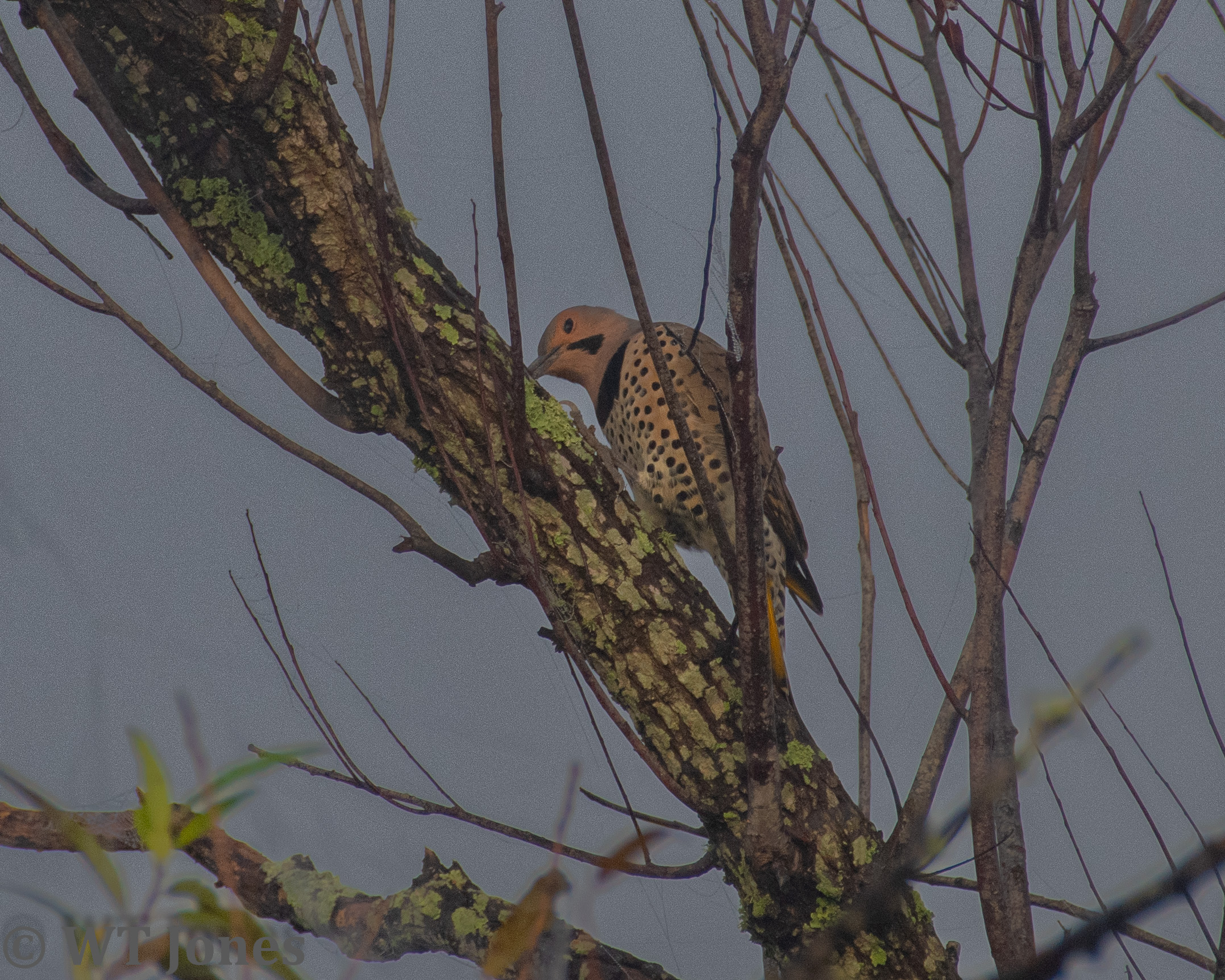
Although the Northern Flicker breeds in our area, their numbers increase during migration.
Is it getting brighter? A White Ibis welcomes a stray beam of light.

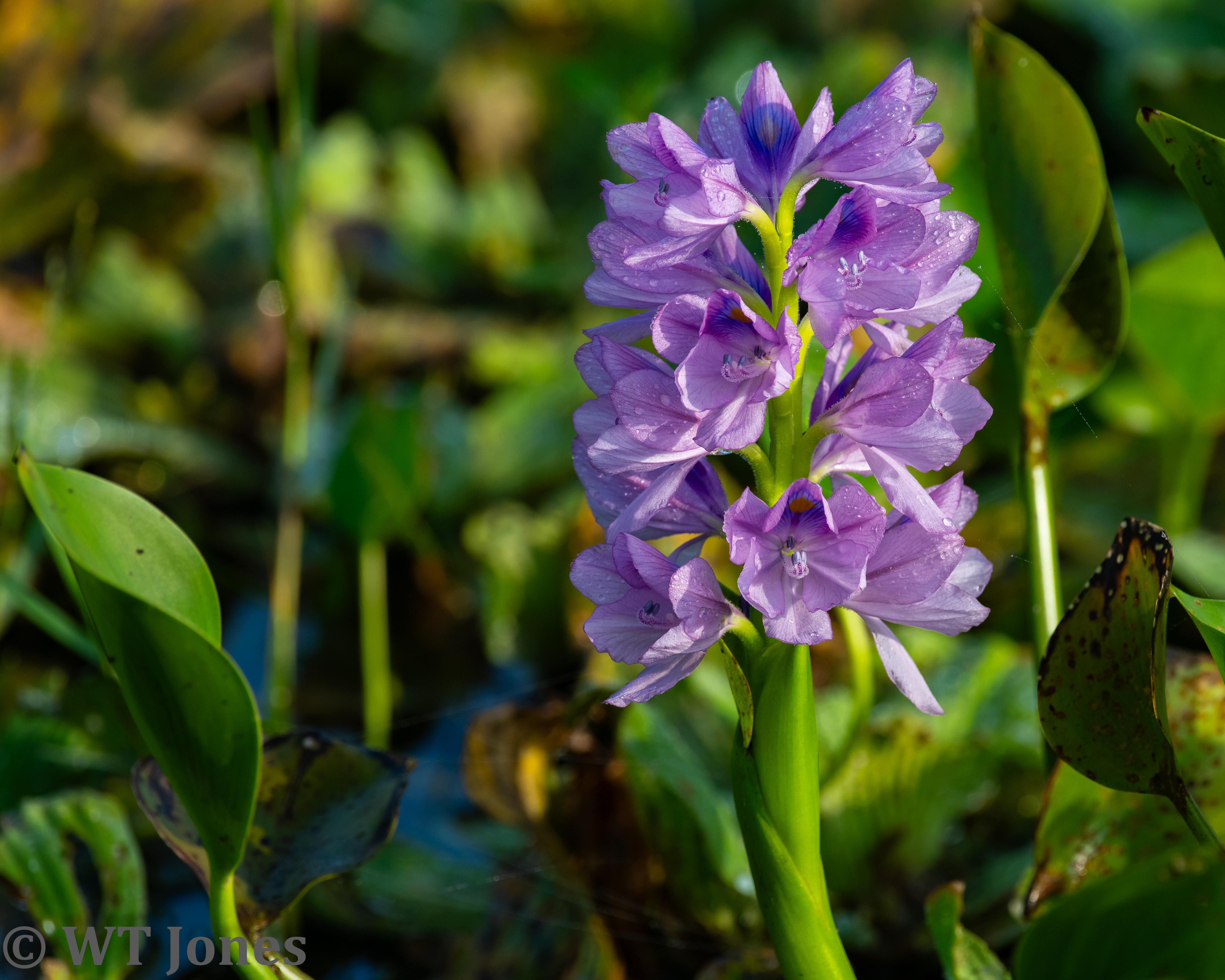
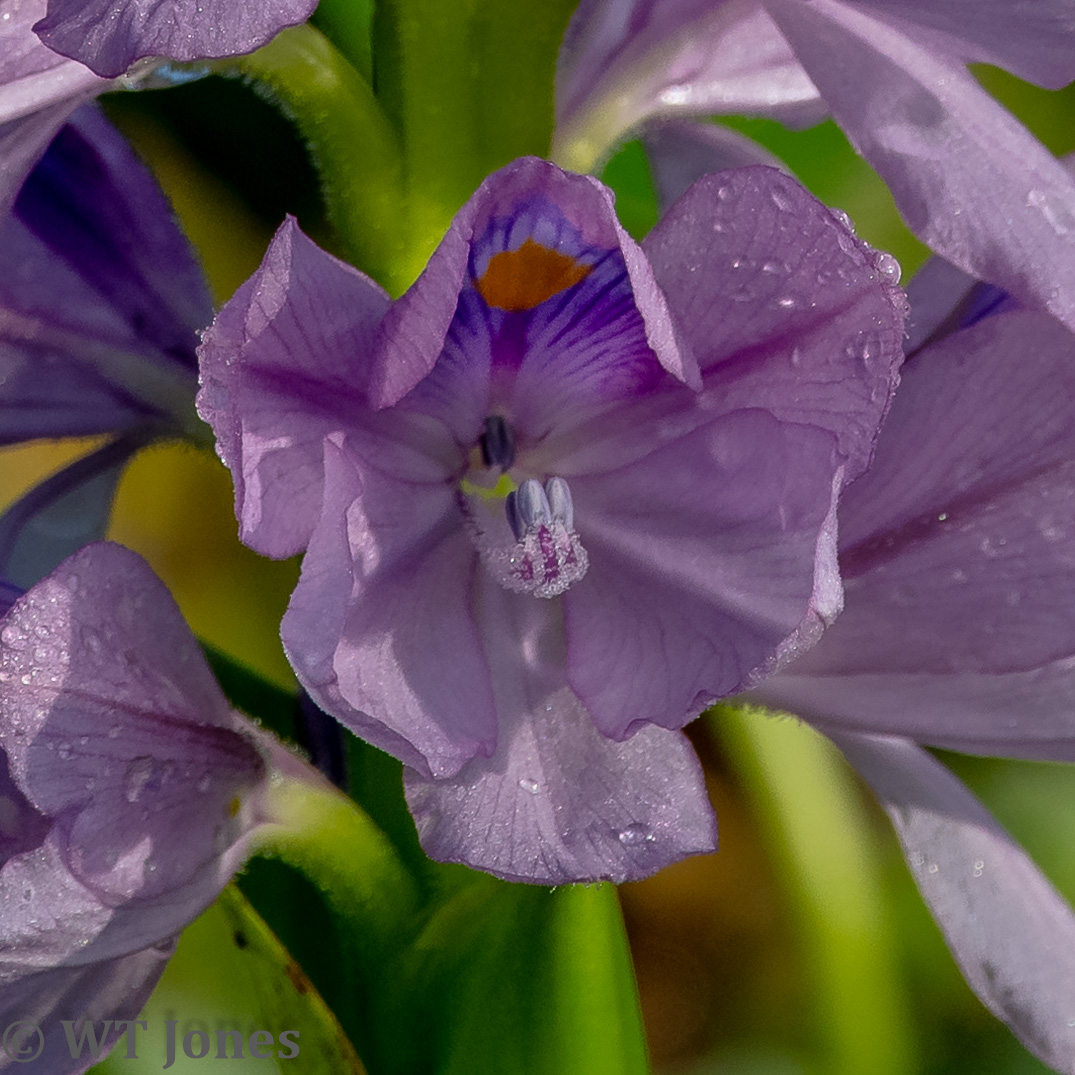
A nasty beauty. The Common Water-hyacinth (Eichhornia crassipes) is truly lovely. However, this very aggressive invasive aquatic plant multiplies extremely fast, forms thick mats which obscure light reaching below a lake’s surface, crowds out native plants and reduces the availability of oxygen in the water. (If you are a boat owner and visit lakes where these grow, clean your prop and boat bottom thoroughly so the plant doesn’t spread.)
Lake Apopka is a joy to explore. There is so much diversity of nature here offering something for everyone. If only that fog would lift ……….
Enjoy your search for a natural place and come back for a visit!
*(Apologies to Carl Sandburg)
The actual words:
FOG
The fog comes
on little cat feet.
It sits looking
over harbor and city
on silent haunches
and then moves on.

