Streaks of light from the sun rising above the cypress trees lit up the opposite shore of the lake where a Great Blue Heron and Great Egret were wading in search of breakfast. Stepping onto the wooden fishing platform caused a splash from below my feet. A young alligator surfaced several feet into the lake and gave me “the look”. An Osprey splashed just to the right and flew away with a fat catfish.
Only a few minutes ago, we were inching through the morning commuter traffic. Someone ahead let a large truck pull into the road from a gas station. The car behind us honked his horn as I suspect the driver was dismayed at anything which might delay his excitement in being at work. We turned off the main thoroughfare onto the park road and were thankful to be off the busy highway. Another two miles and traffic was a memory. The eastern sky was beginning to lighten. So were our spirits.
One of the nice things about visiting a natural place with which we’re familiar is, well, it’s familiarity. In many respects, we know what to expect. There are occasional surprises, but we could pretty much tell you what we’ll find on any given day. It is a comfortable place.
Fall bird migration brings a variety of avian visitors to our patch. Colorful warblers scurry among the tops of trees, brown sparrows skulk through the grass and weeds, waterfowl gabble and splash in the lakes, raptors soar and hover above field and marsh. Just as most tourists who visit the Sunshine State in winter, they are thankful for our warmer air and bountiful fresh food items.
Our patch is now filled with even more delights for us to enjoy.
What? No, we don’t mind sharing.
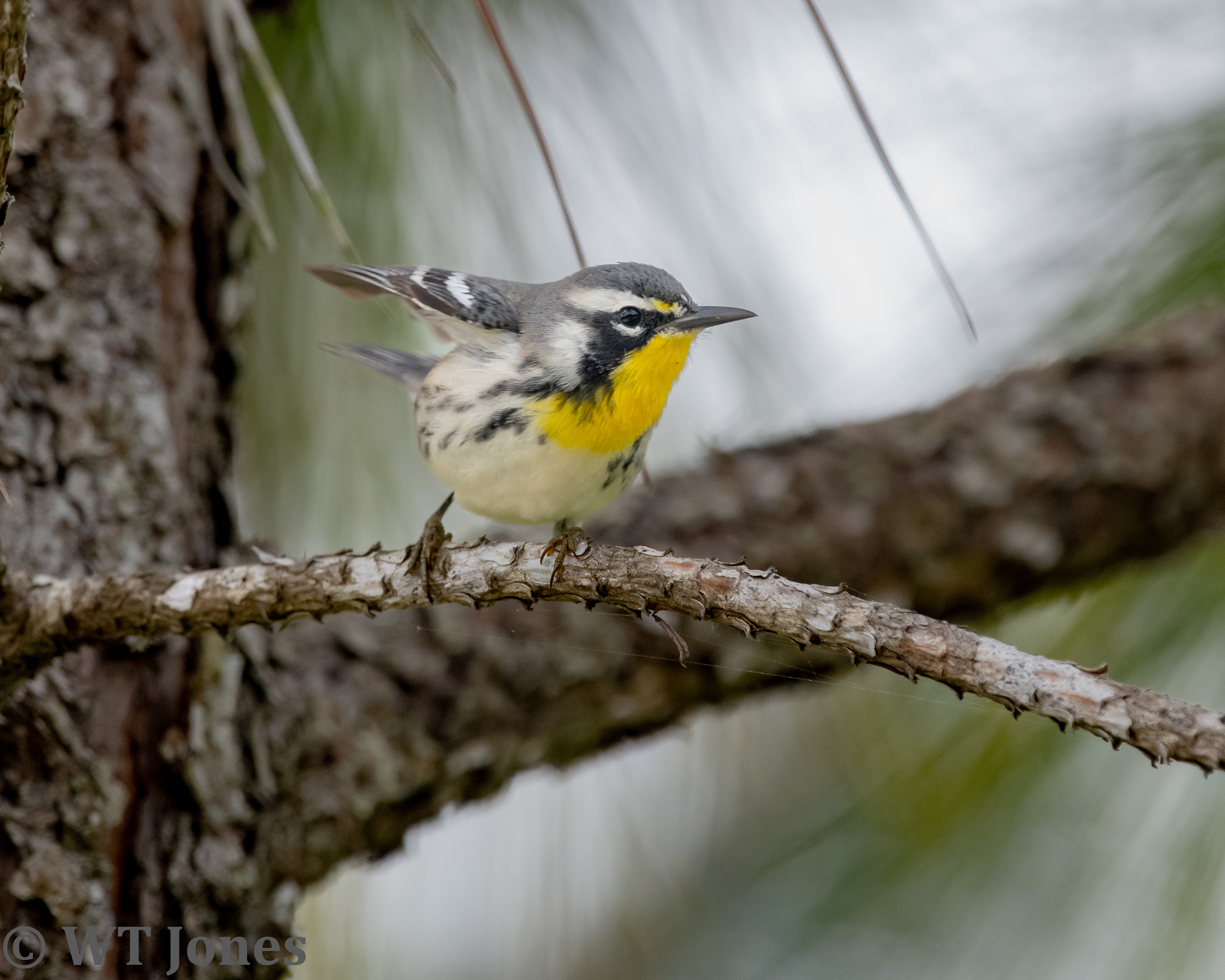
This Yellow-throated Warbler was taking off to a higher branch to continue its search for a meal.
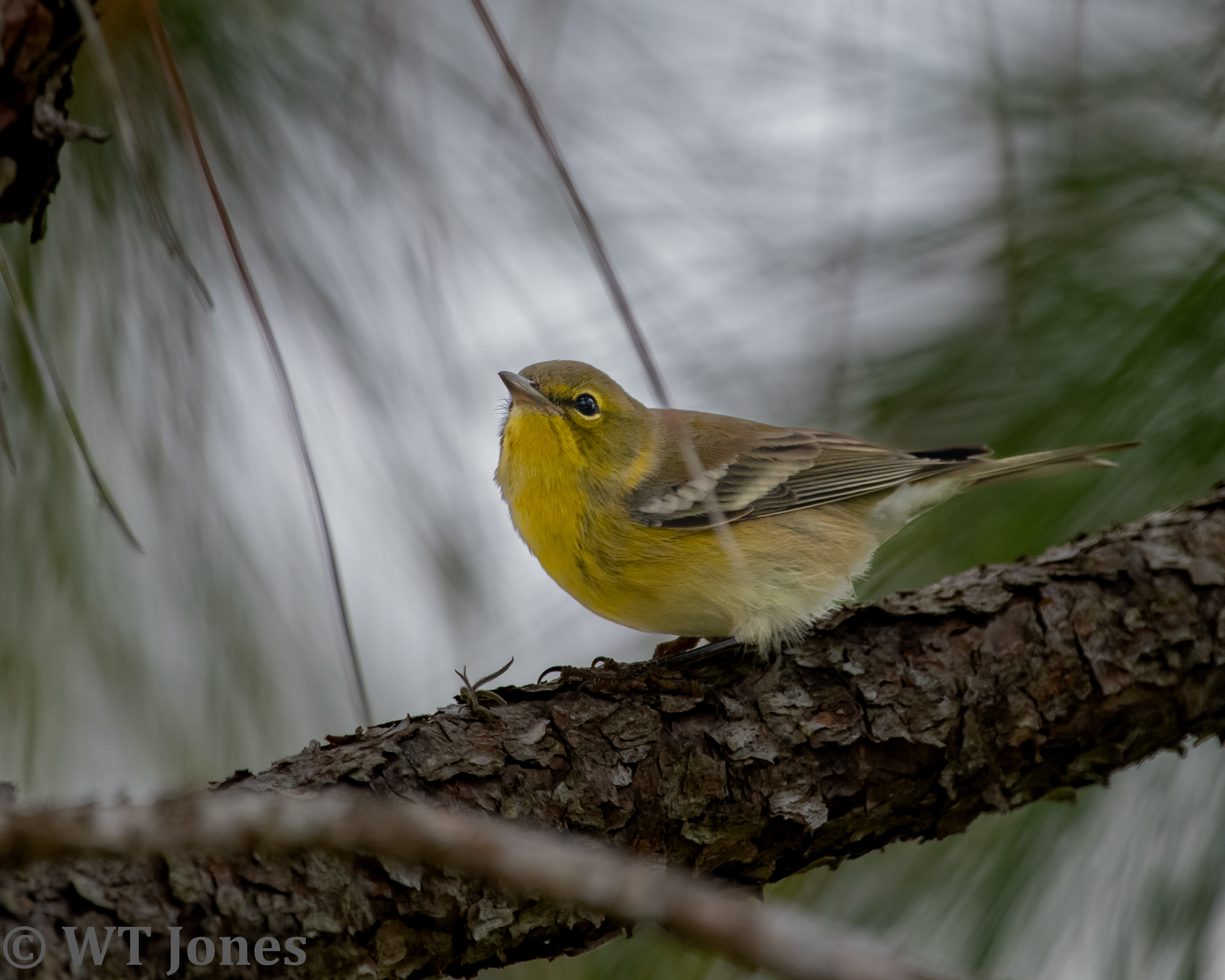
No sooner had the above warbler departed than a Pine Warbler lit on the same limb looking for leftovers.
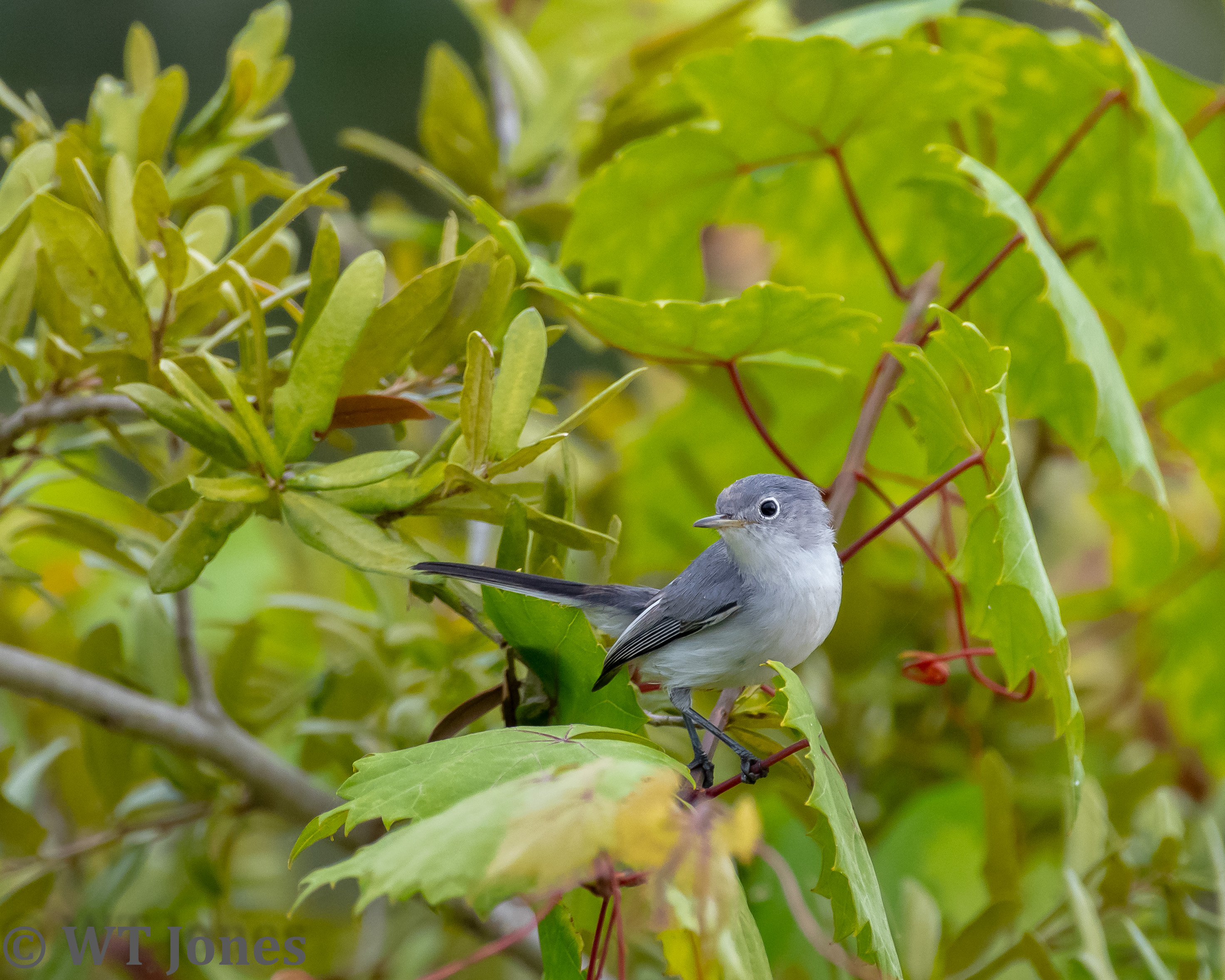
Seemingly in perpetual motion, a Blue-gray Gnatcatcher moves at high speed and checks out every twig and leaf it encounters.
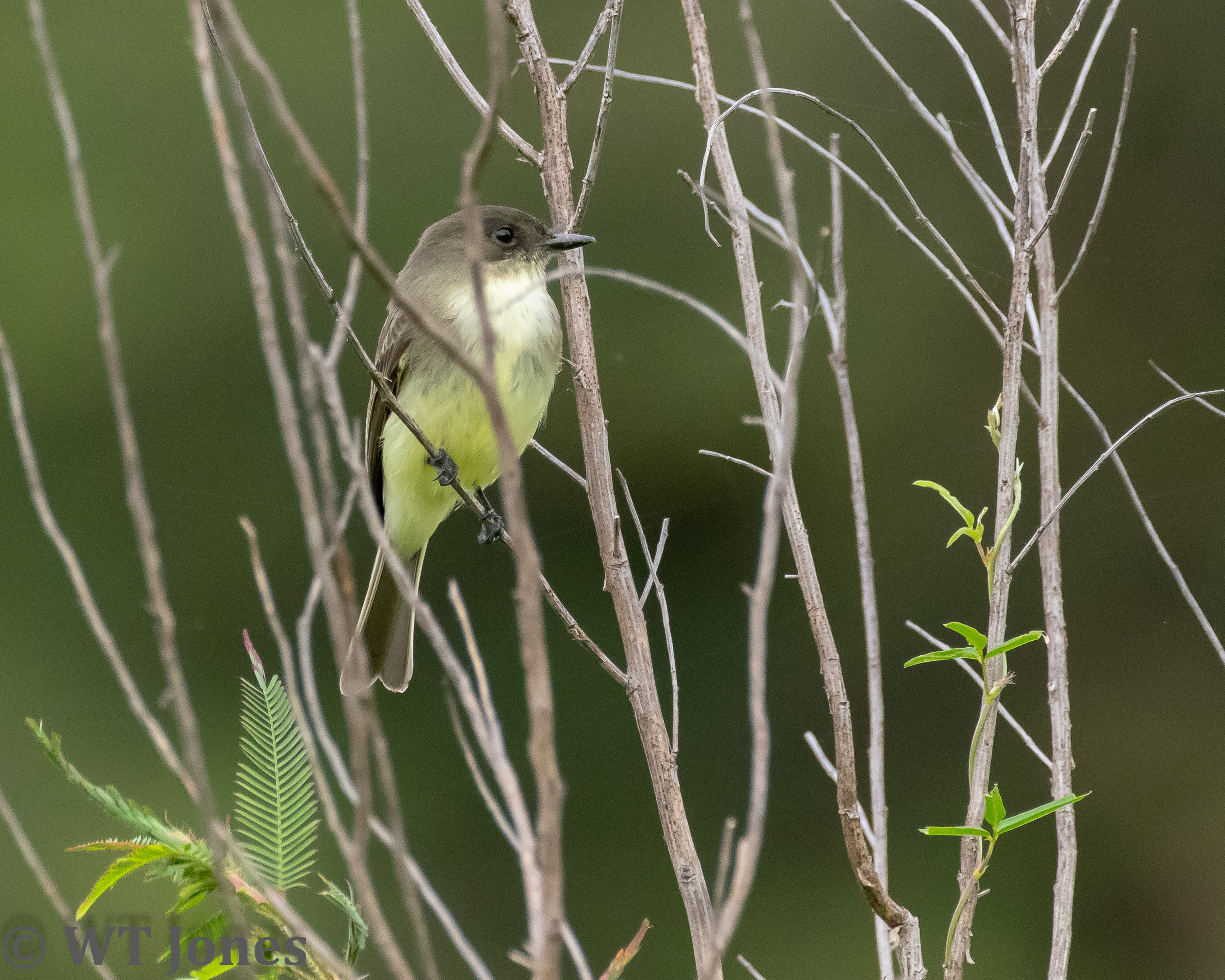
Gini says all birds should be as thoughtful as the Eastern Phoebe. It lets us know its name is “Pheee-Beee“! Loudly. And often.
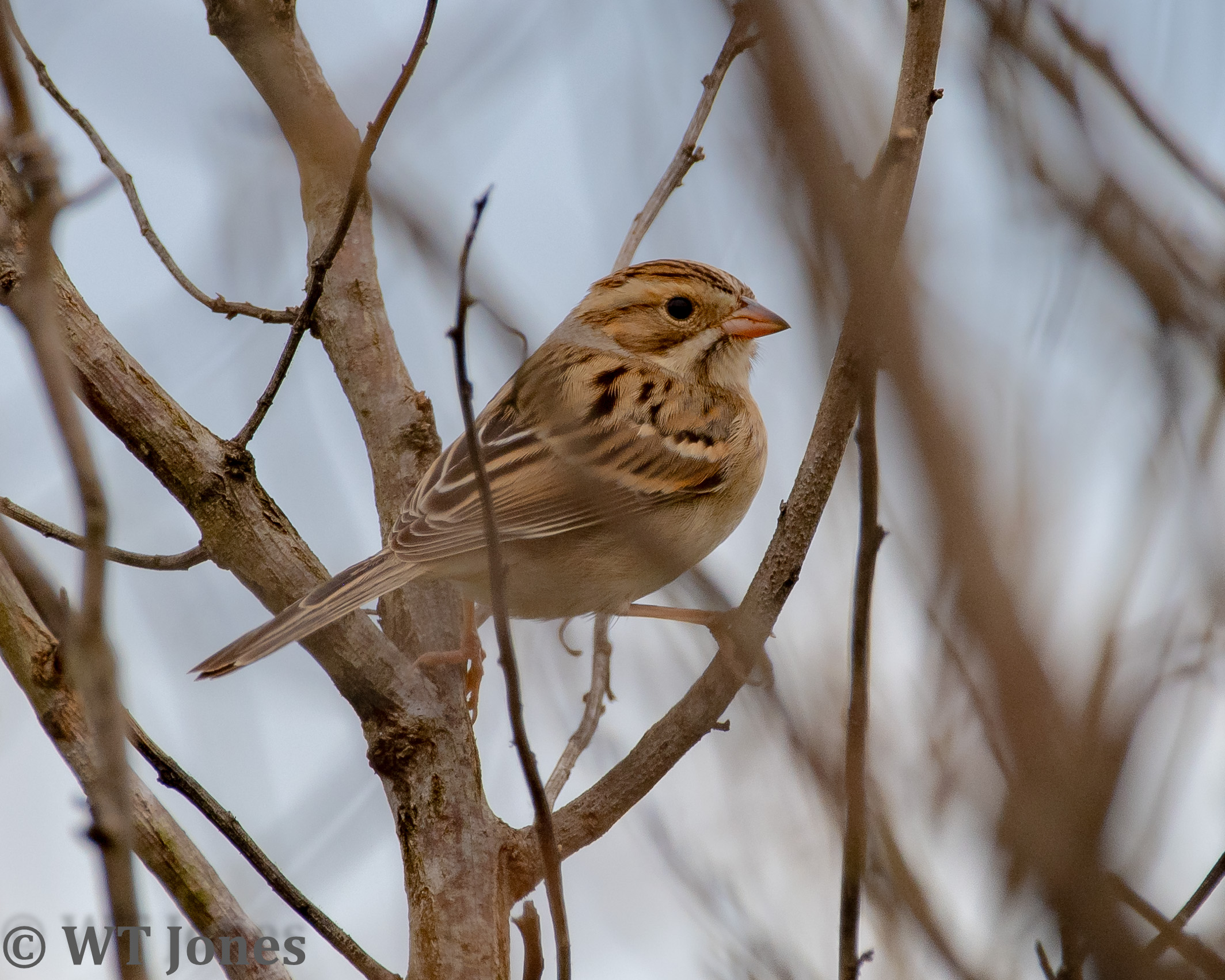
“That’s something different!” Gini’s sharp eyes knew this was not what we might expect to see at this spot. (We typically find Savannah and Swamp Sparrows here in the fall.) We were surrounded by weedy fields but there was a low, damp place where a few Willow Trees and Scrub Oaks provided shelter from potential predators. Following her outstretched finger, I finally saw what she had discovered. The face pattern, the pale bill, the gray neck nape – an uncommon Clay-colored Sparrow! Very nice, Sweetheart! Very nice, indeed.
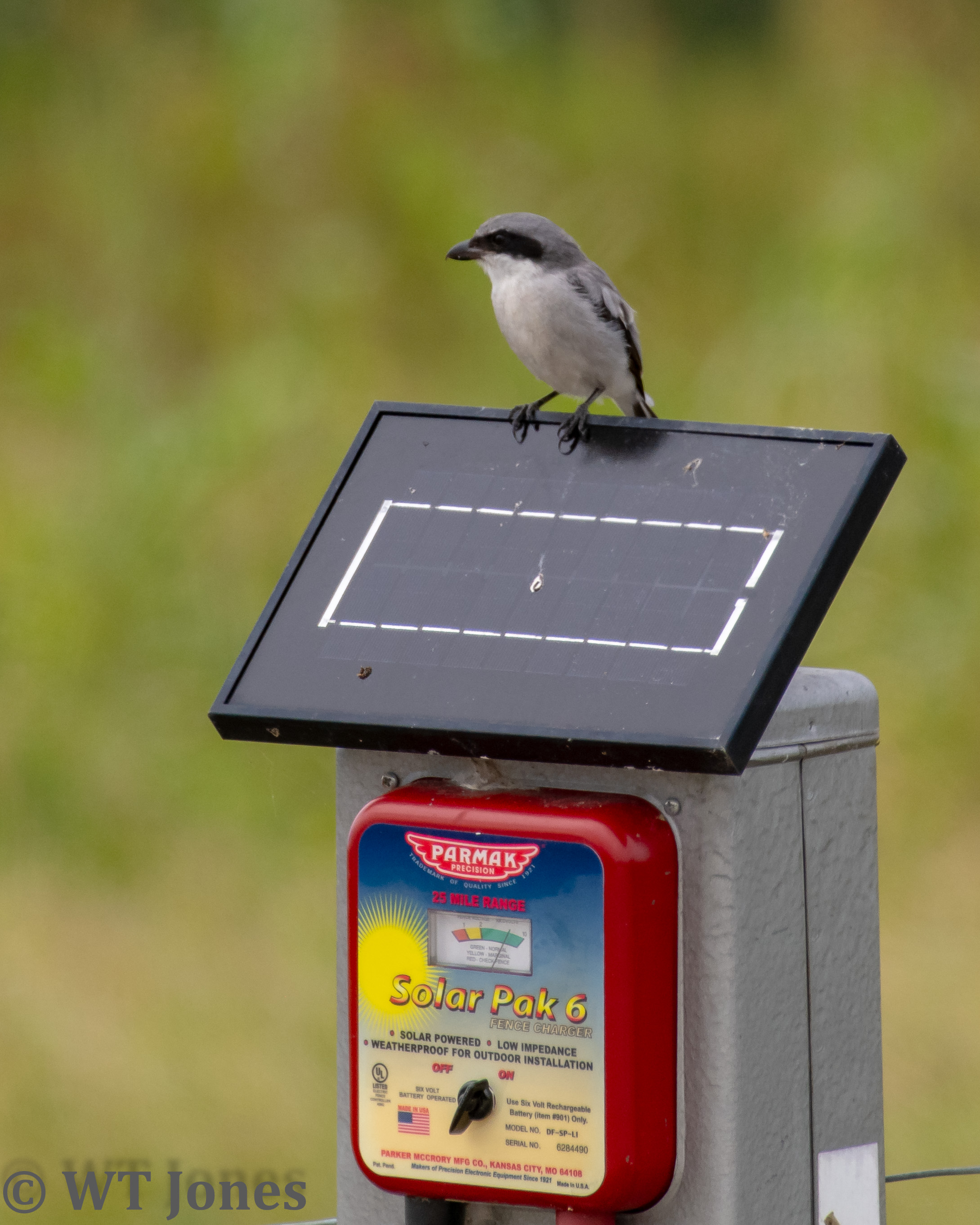
Sometimes, you just need to take a break and recharge your batteries. A Loggerhead Shrike appreciates the convenience of a solar charging station.
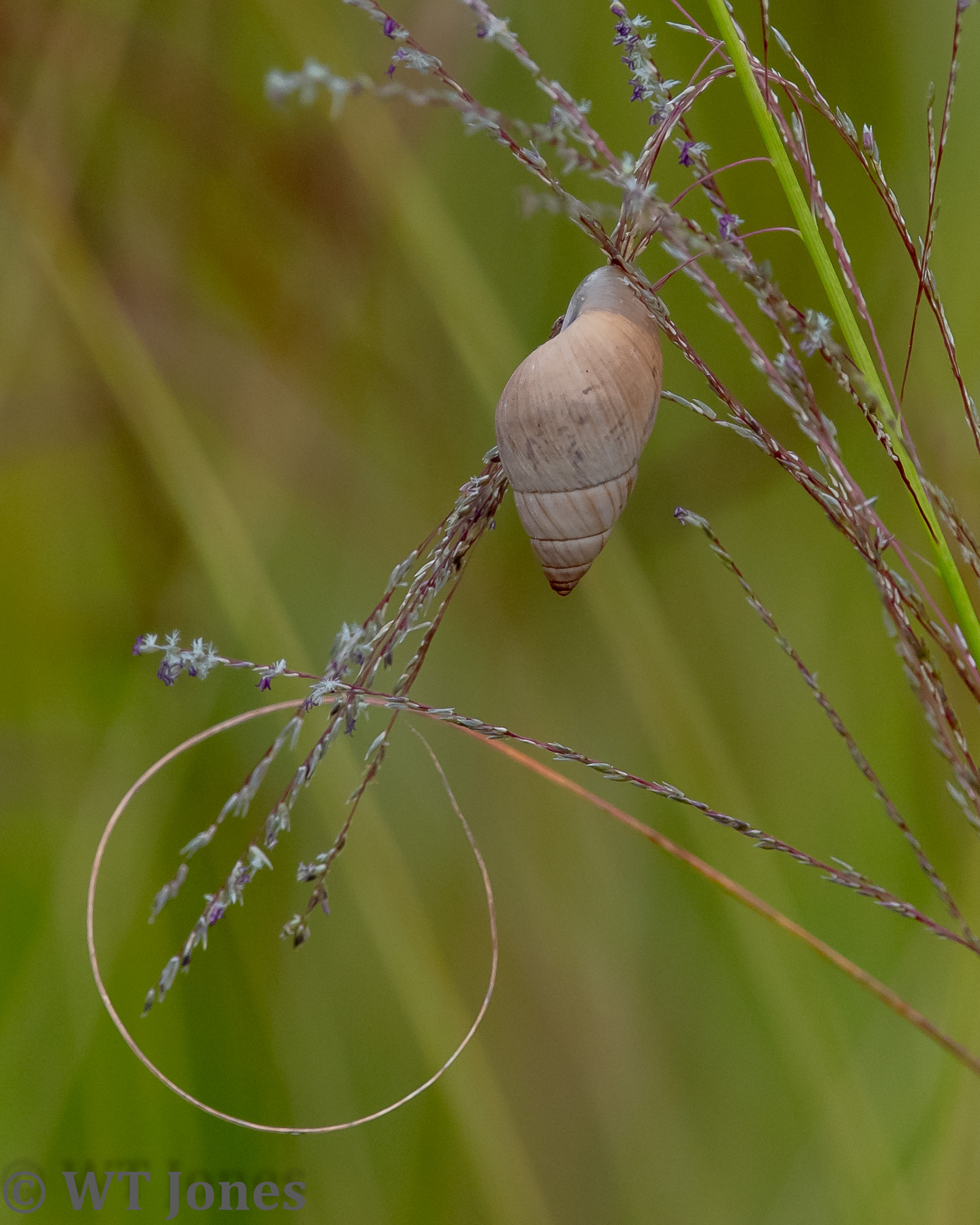
Research indicates this is a snail. Further research indicates this is still a snail. I have failed to find a specific identification. So, I celebrate the fact that this is – a snail. (They don’t move away from the camera as quickly as a bird.)
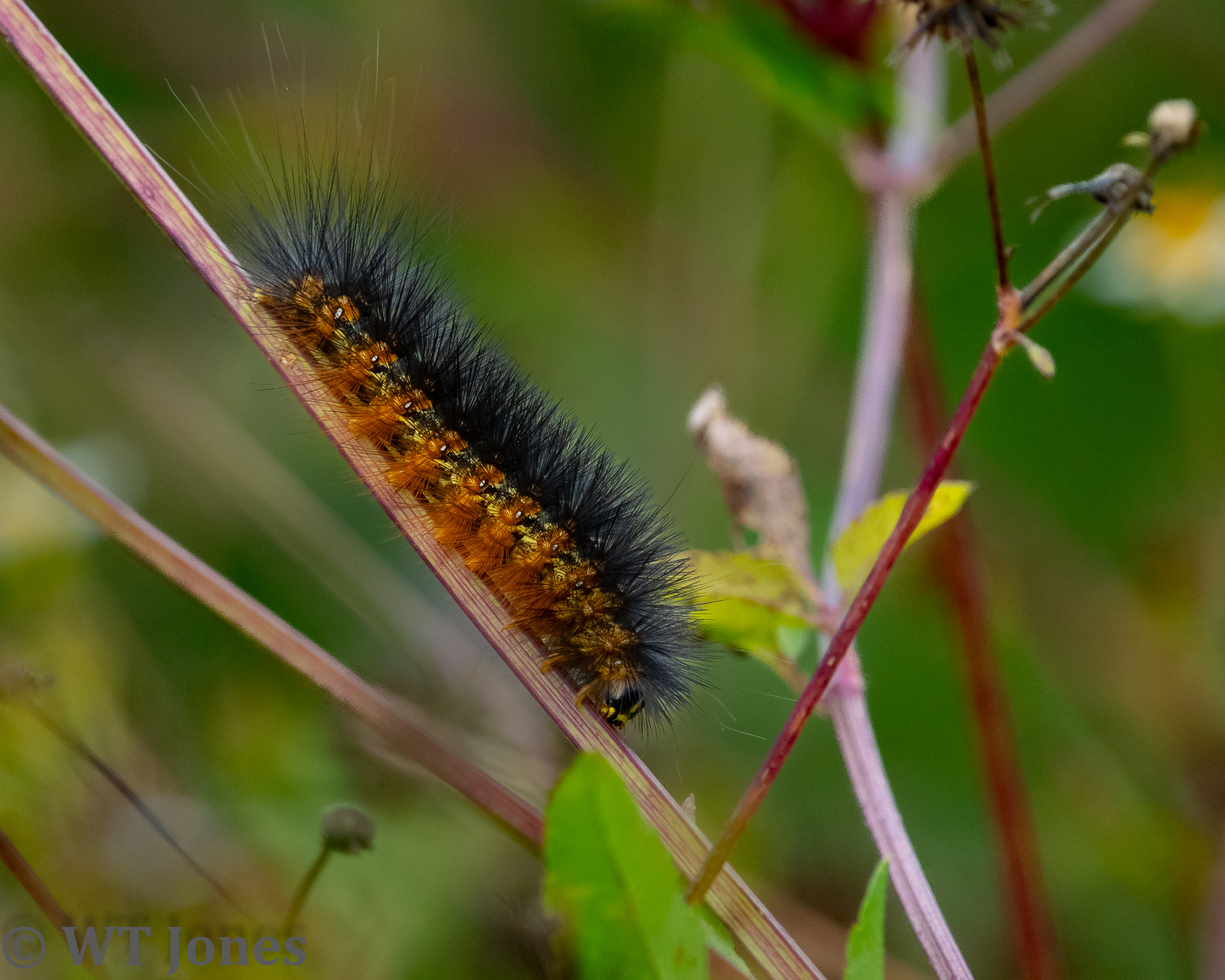
The hungry, hungry caterpillar. In this case, it is the larva of a Salt Marsh Moth (Estigmene acrea).

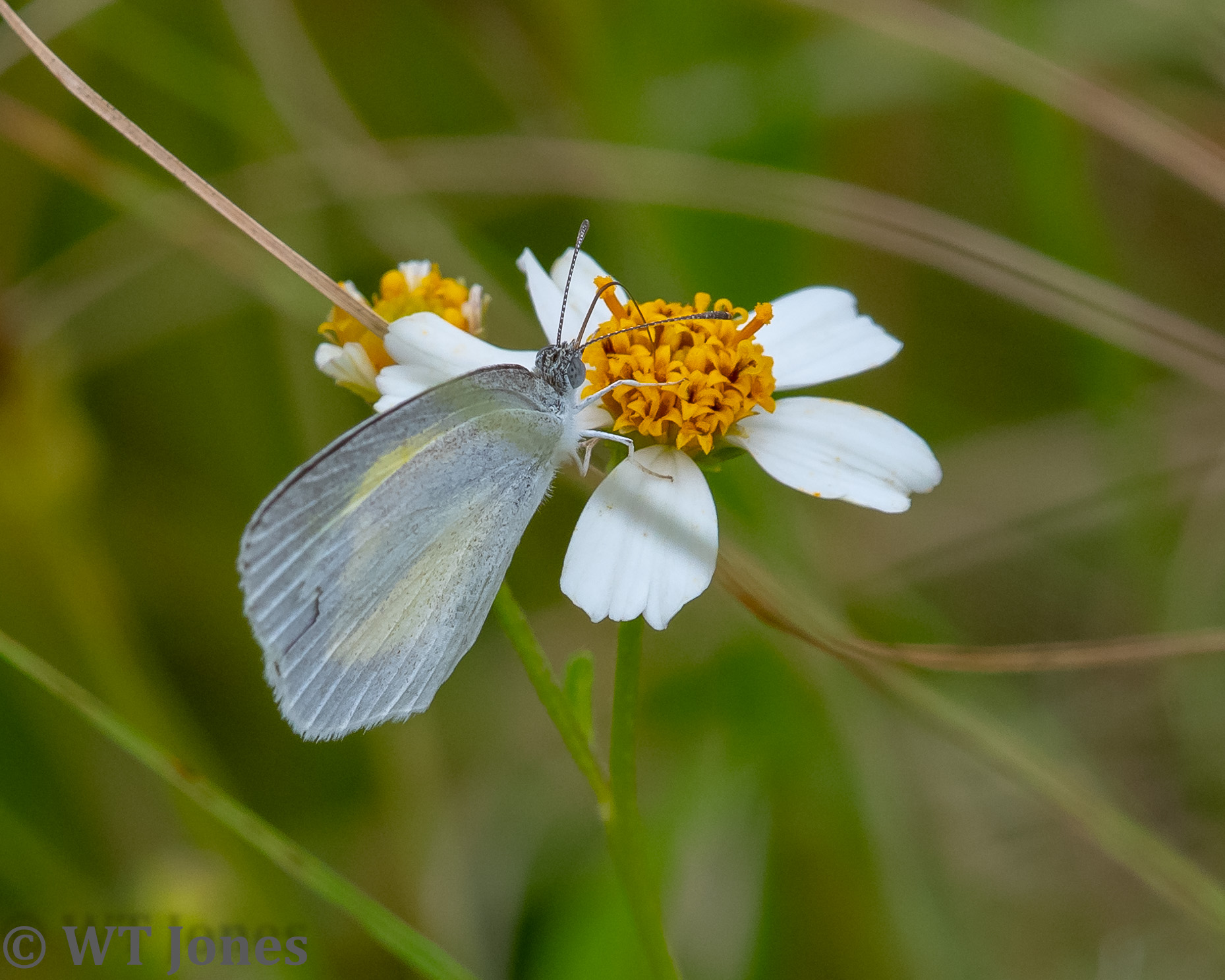
Today we encountered dozens of Barred Yellow (Eurema daira) butterflies.
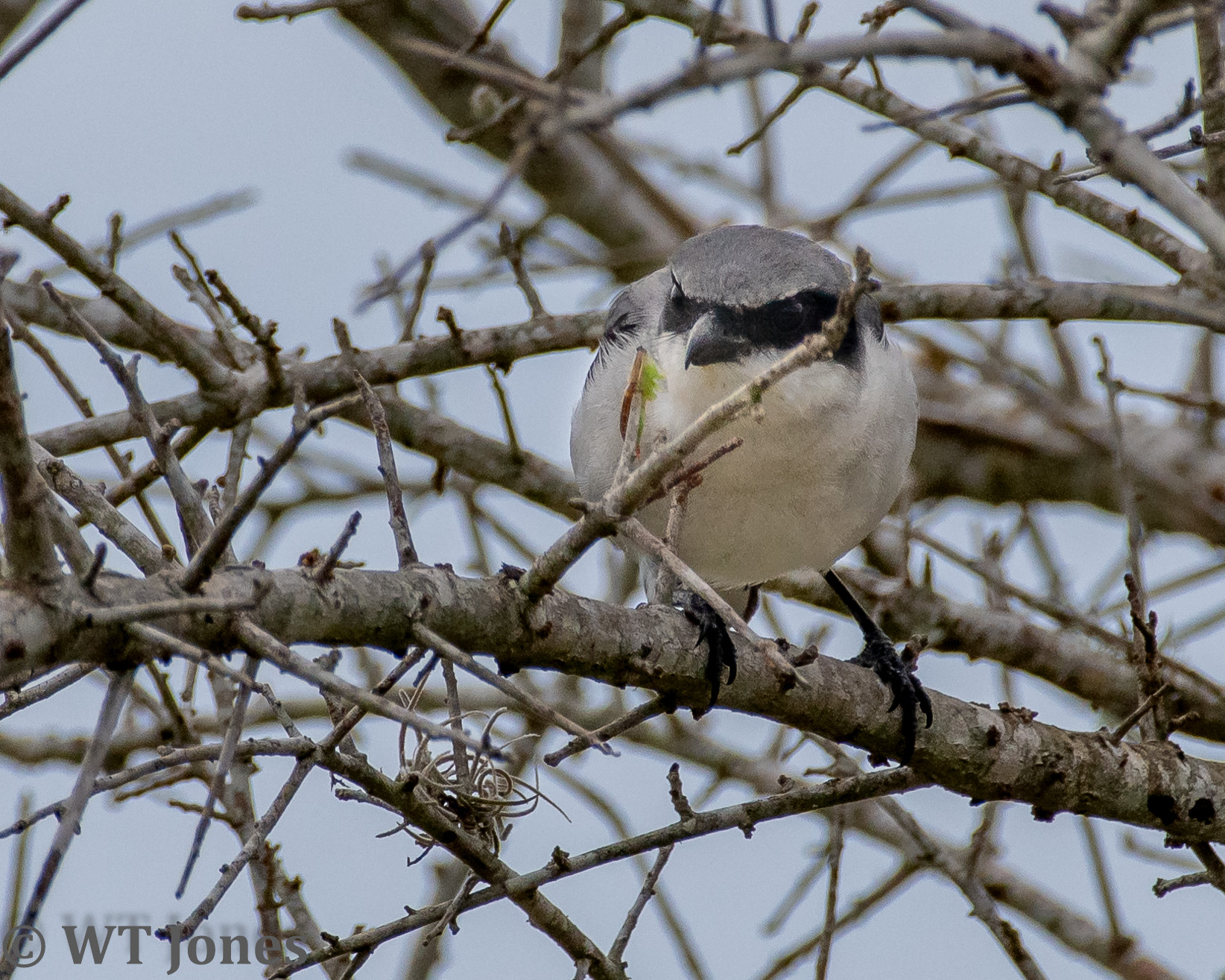
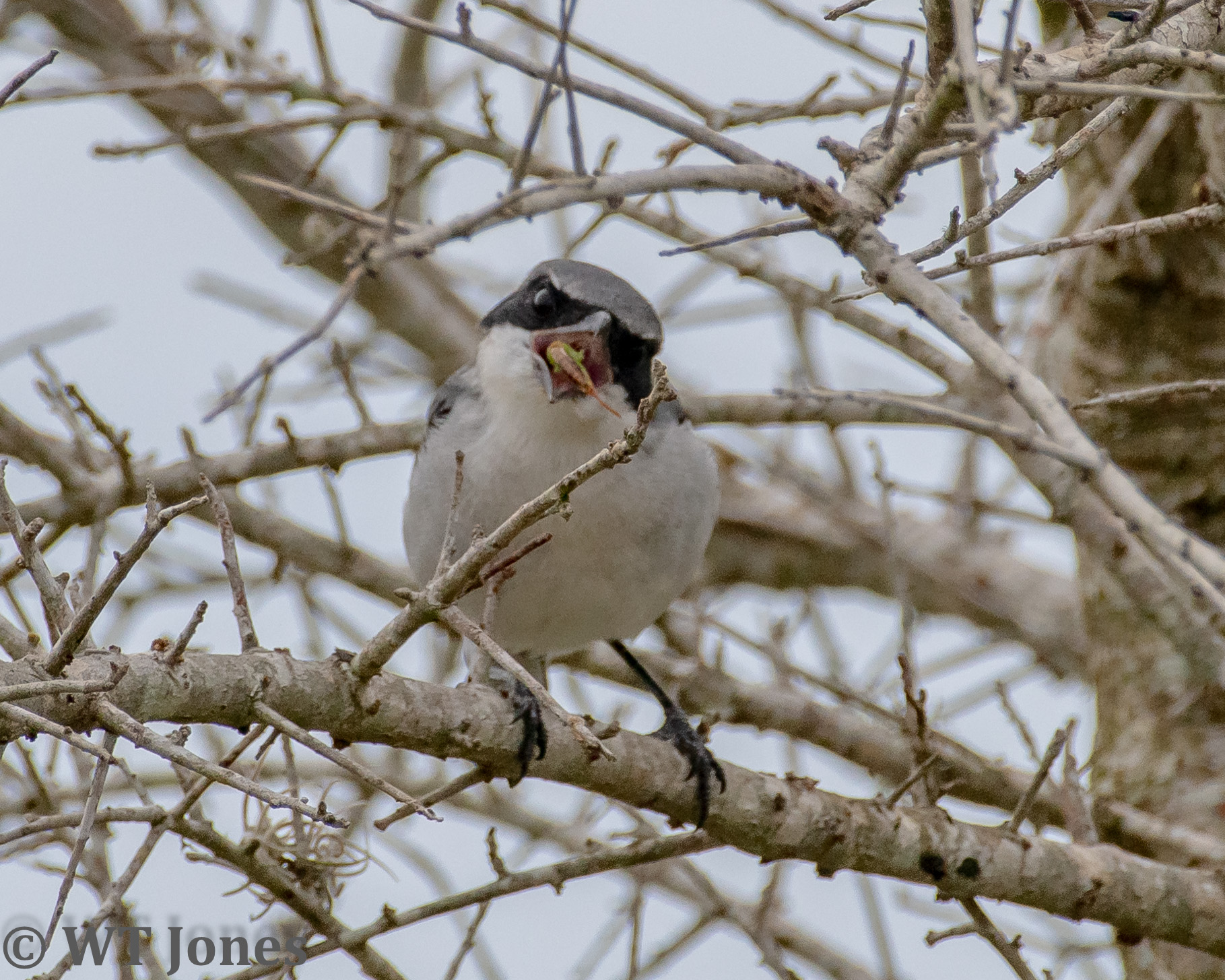
Having fully recharged its batteries, the Loggerhead Shrike captured a katydid and impaled it on a twig, as any self-respecting Butcherbird would. After admiring it for a bit, brunch from a branch.
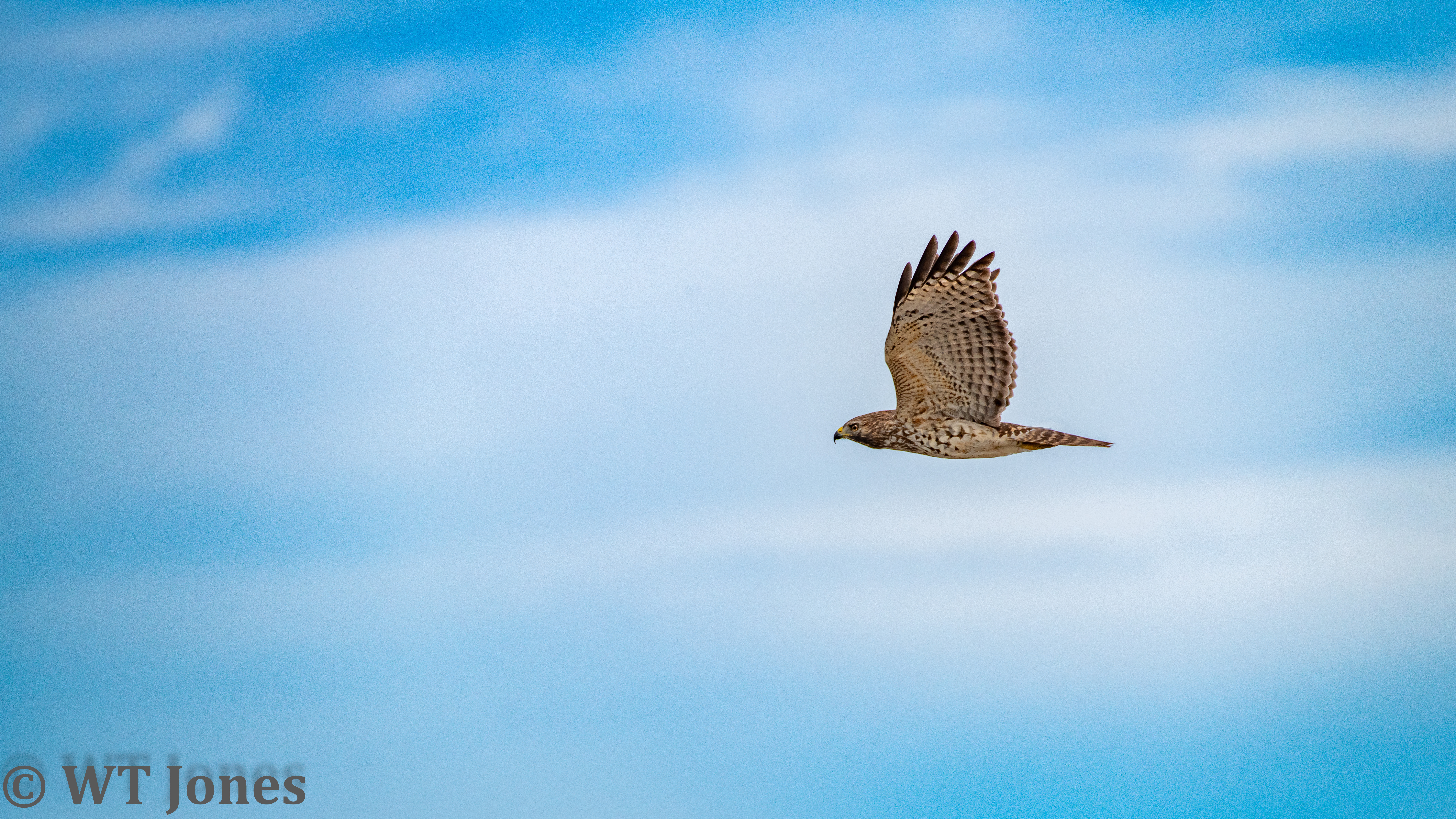
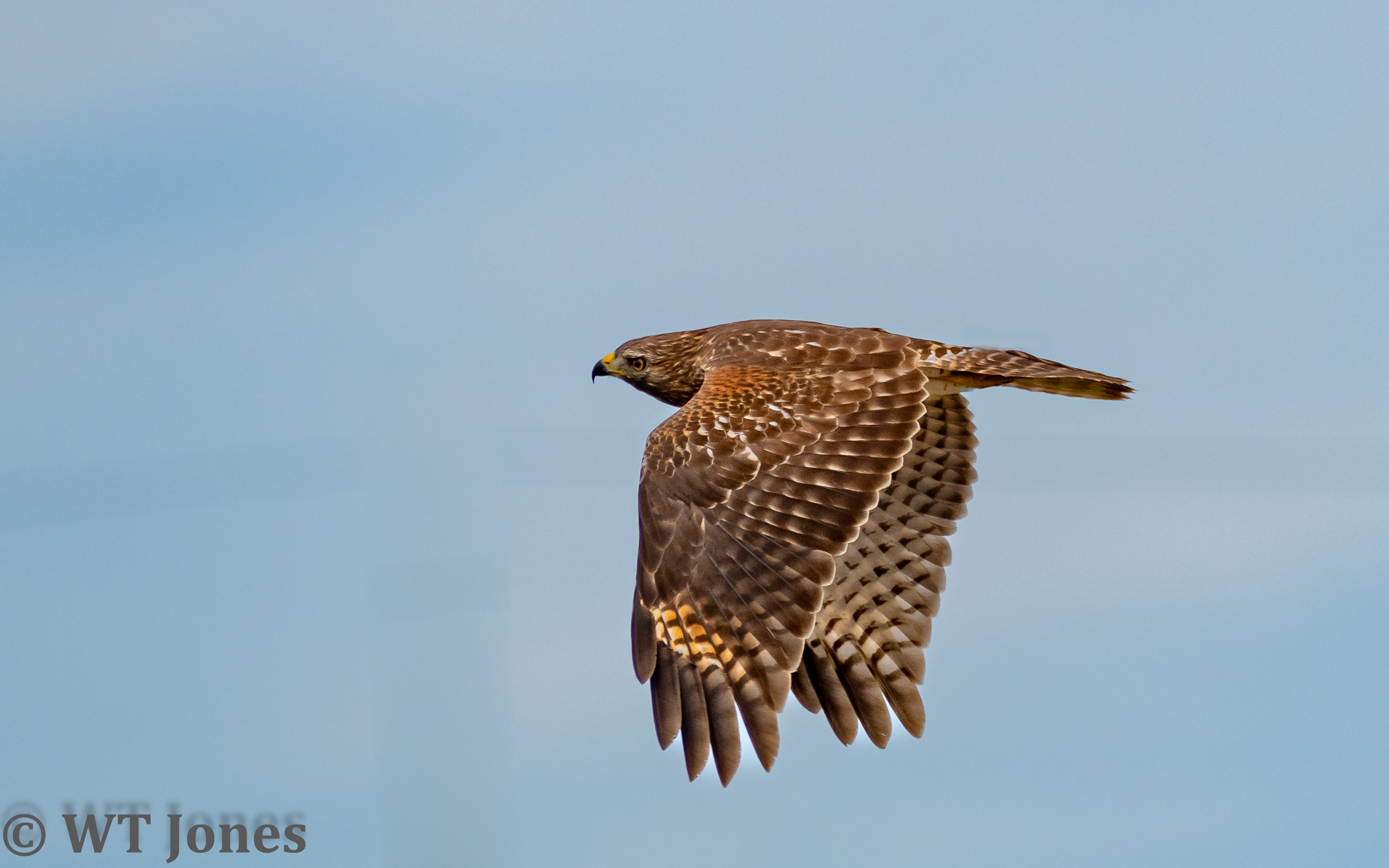
A young Red-shouldered Hawk provides a good view of its namesake red “shoulders” and the pale crescents near the wingtips which help identify this species.
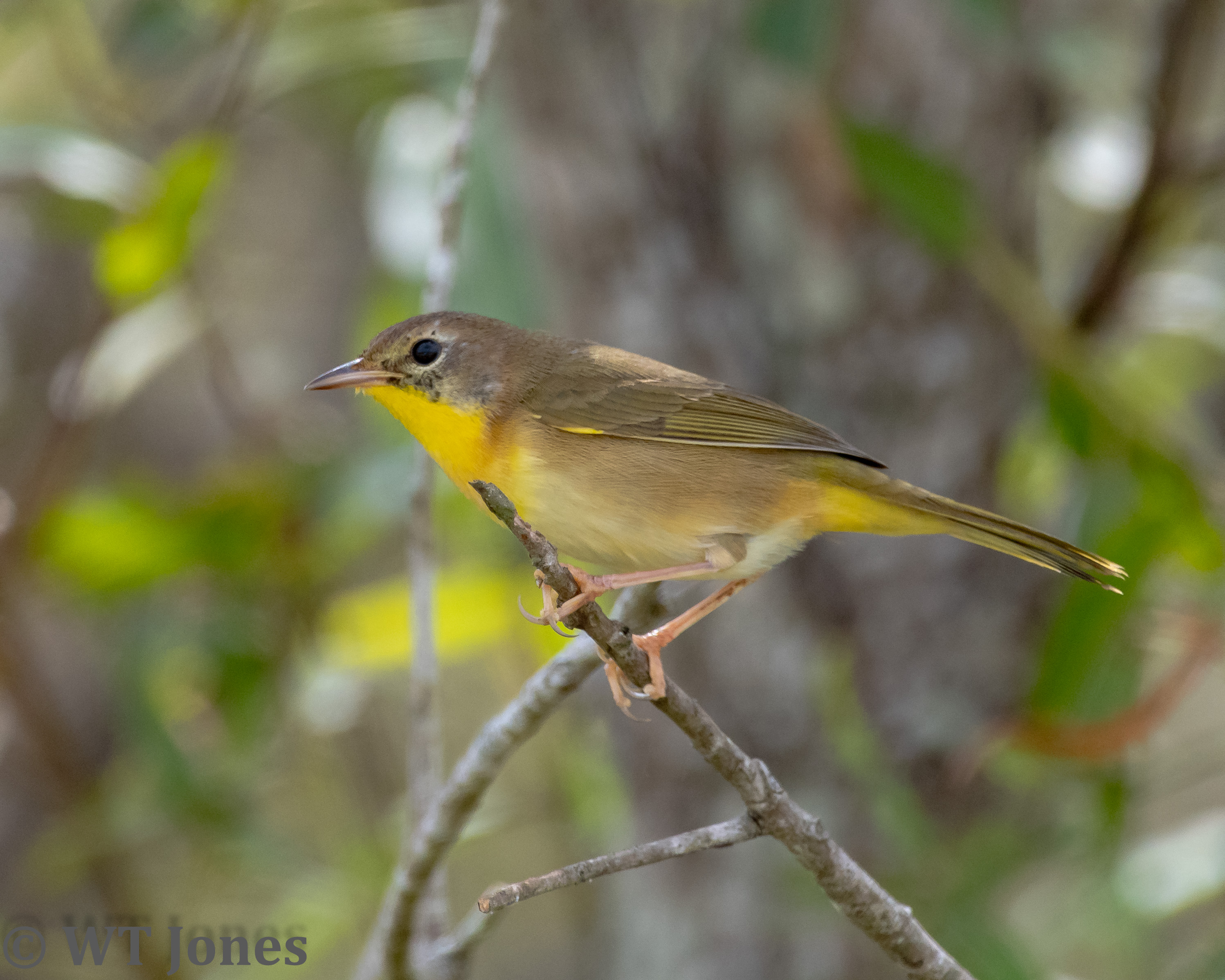
Gini did it again. “Oh, look!” A lovely Common Yellowthroat spent a few minutes hopping around the branches checking us out.
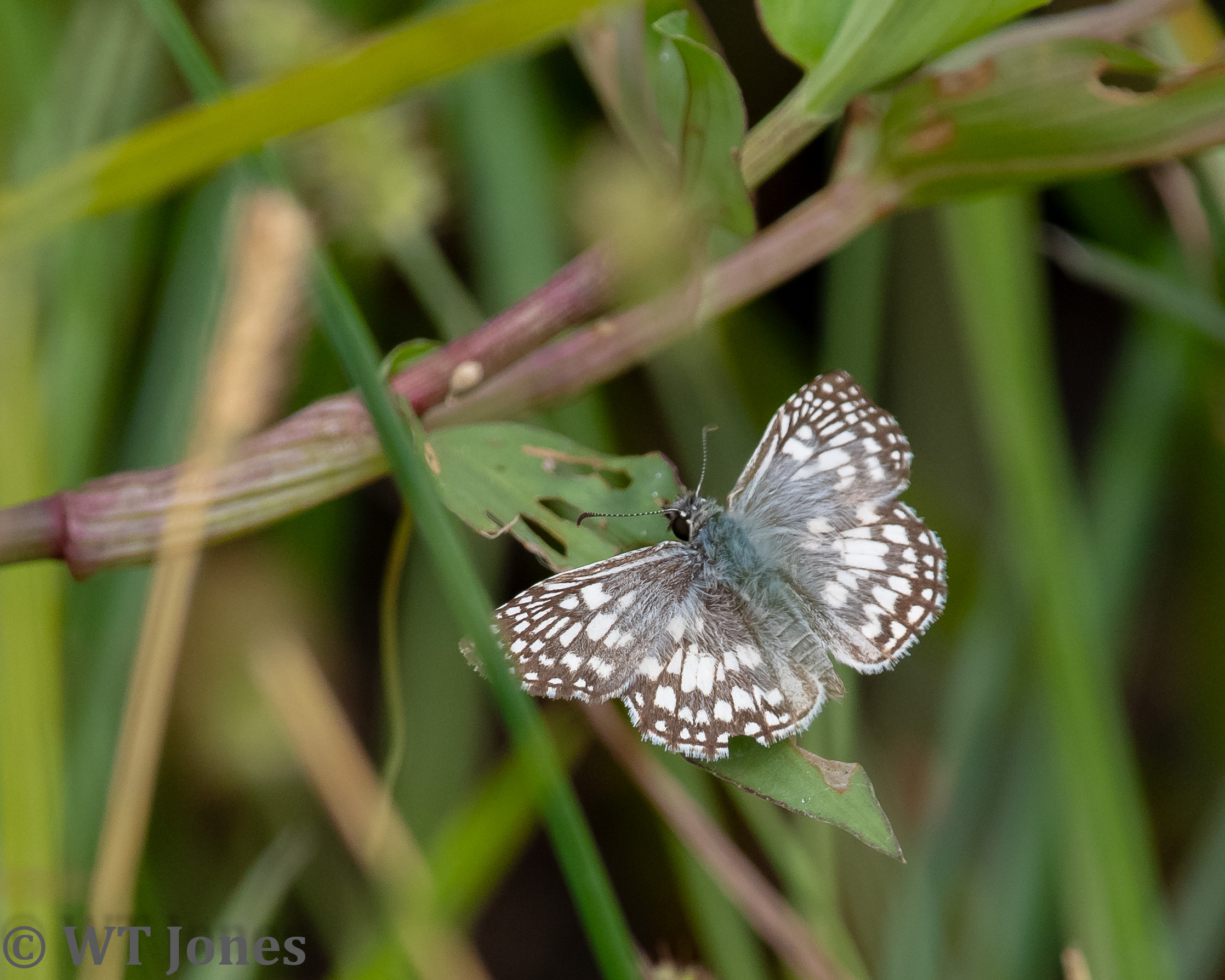
Although small, the fluttering black-and-white checks near the ground help us spot the Tropical Checkered-Skipper (Burnsius oileus). We found several enjoying today’s sunshine.
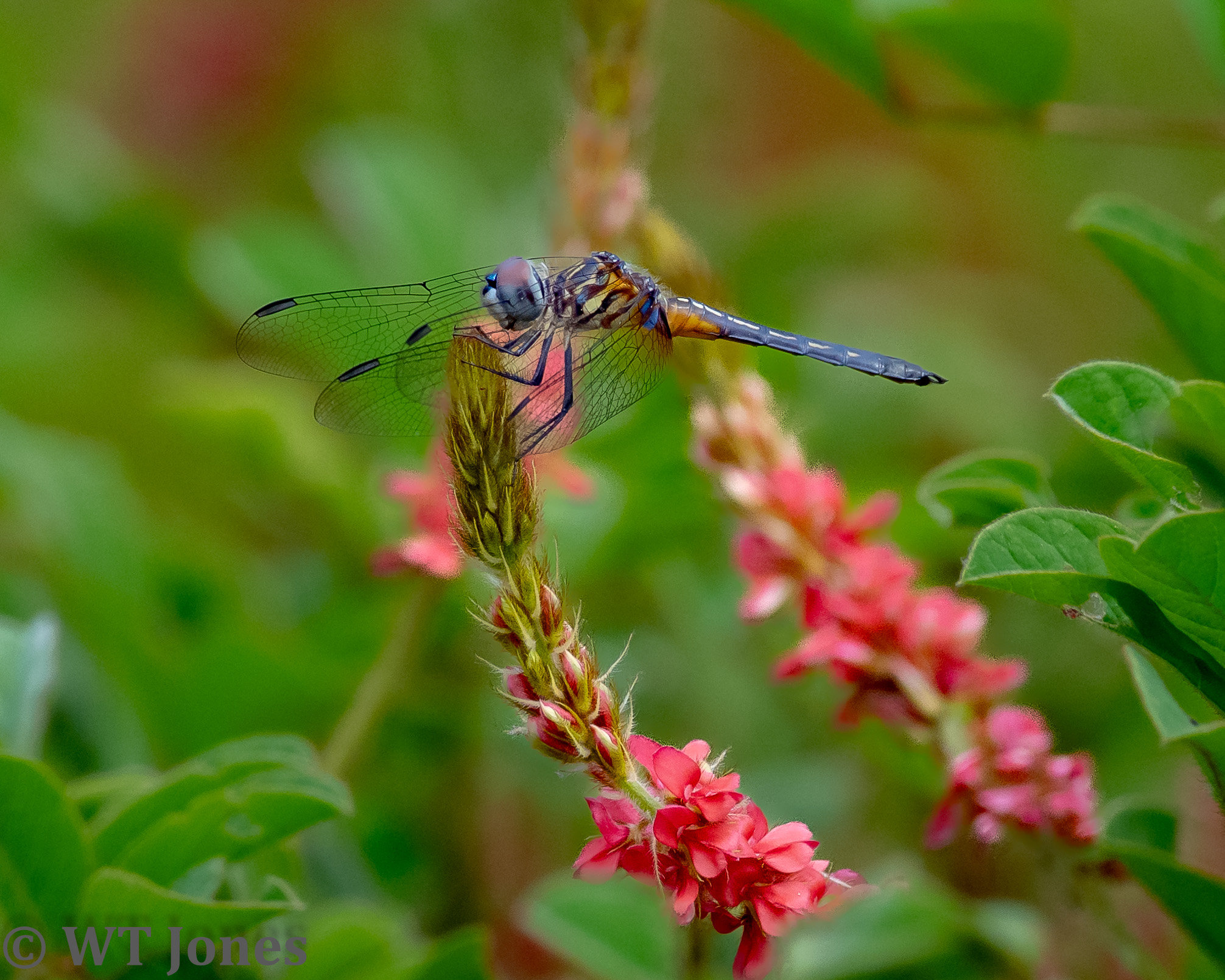
Florida may not boast much in the way of colorful autumn trees, but if one looks around, there is plenty of color to be found. An example is this male Blue Dasher (Pachydiplax longipennis) on Hairy Indigo (Indigofera hirsuta).
An oasis near the house provides welcome relief from the hustle and bustle of modern life and allows us to observe Nature’s diversity. It is an amazing blessing. On any given day our patch is filled with a bounty of satisfying exploration. Today that bounty defied containment.
Enjoy your search for a natural place and come back for a visit!

Our excursion to Lake Wales Ridge State Forest had been typical of past visits. We encountered old friends and were treated to surprises which nature has a way of placing in your path. The quiet of sunrise in the pine forest, the raucous wake-up calls of both Blue and Florida Scrub Jays, abundant floral arrangements just for our eyes, white-tailed deer skulking just inside the tree line, tracks of a Bobcat in the damp clay road – a very special time.
With so much life all around us, it’s all too easy to overlook many of the smaller or less-conspicuous residents. As we admired a big flowering plant, three smaller flowering bushes were between us and the more colorful plant and I only saw them as I stepped closer to the larger subject. I was so focused on getting a photograph of a Brown-headed Nuthatch, I was not aware of a Downy Woodpecker almost at my shoulder until I moved and it flew away. Insects can be like that. Unless they’re biting us or flying around our heads, we are almost unaware of their presence.
The bugs of the ridge are as diverse as the other flora and fauna of this incredibly unique geological remnant. One type of bee was recently sighted here which hasn’t been seen in Florida since 2016. So many different species of flowering plants attracts just as many pollinators. Other specific habitat creates homes for insects not normally seen in other areas of the state.
Many times during the morning, I felt like some cartoon character with a camera as I stalked a bird only to become distracted by a pretty flower only to be distracted by a beautiful butterfly only to be distracted by a fox squirrel only to be – see what I mean? It just wasn’t fair. We loved it.
A sampler of Bugs of The Ridge.
We have only seen a Citrine Forktail (Ischnura hastata) twice before today. This male obligingly (and surprisingly) held still for his portrait. (The plant he is on is Hairy Indigo (Indigofera hirsuta)).
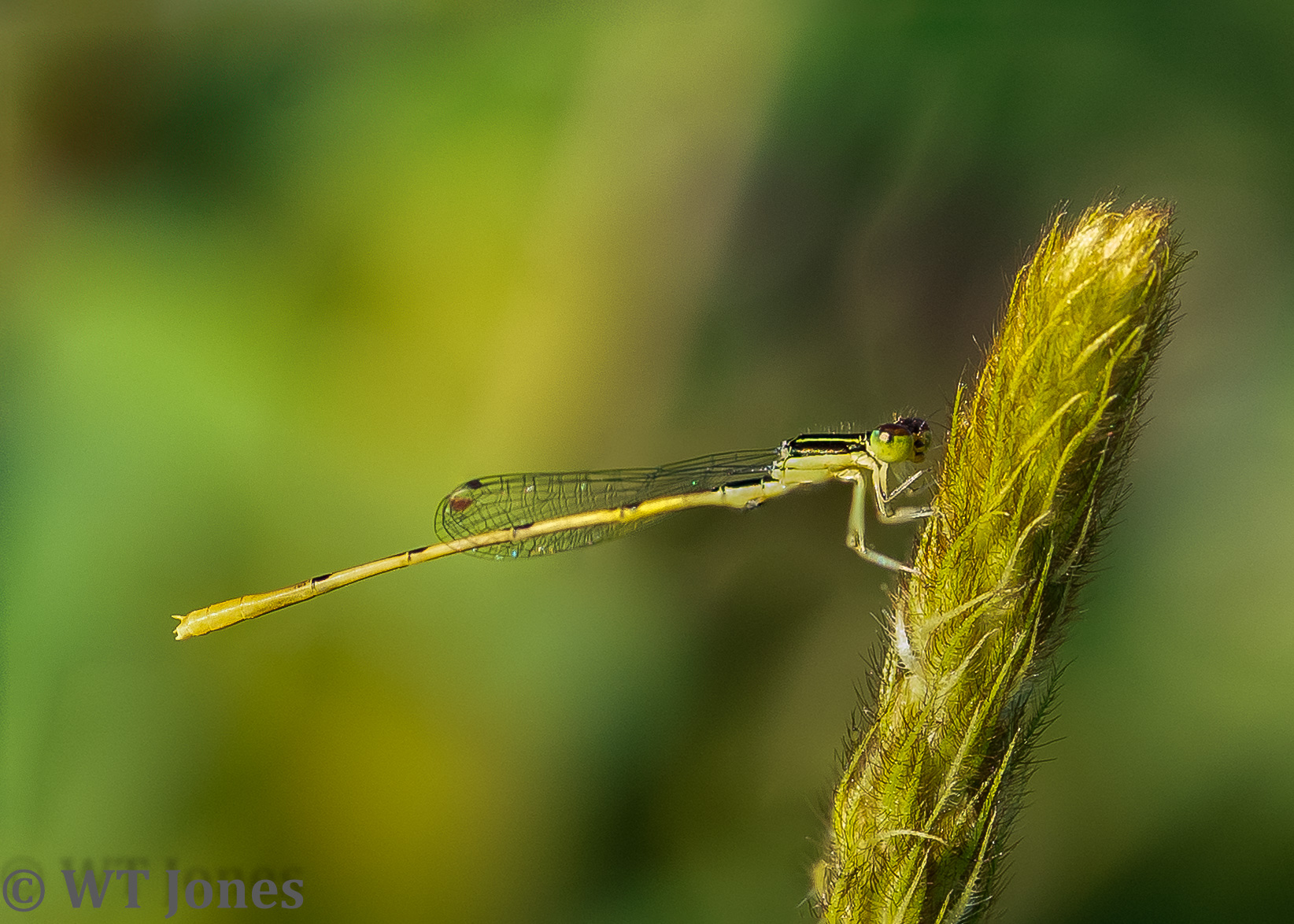
One of the smallest dragonflies in North America, the Little Blue Dragonlet (Erythrodiplax minuscula) is fairly common to encounter but trying to photograph them near the forest floor where they live is another story. The male is blue and the female is yellow.
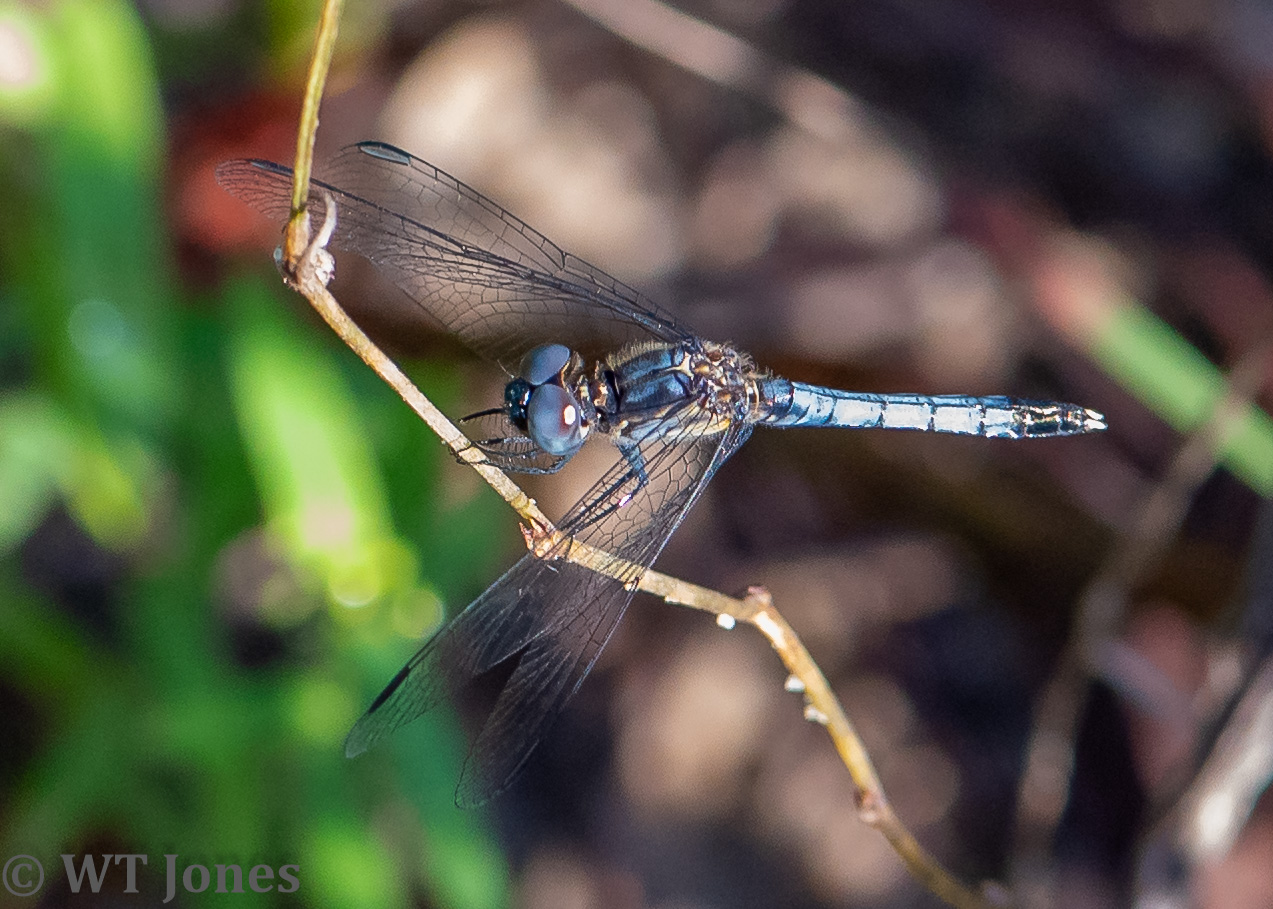

It’s not often we see a female Band-winged Dragonlet (Erythrodiplax umbrata). That’s probably due to being distracted by the male with its broad wing bands. I’ll try to pay more attention. This can be a locally common species if the habitat is suitable.

As kids, we would use a stick wrapped with a bit of spider web to stir around funnel-shaped pits in the sand. With luck, we would pull out a “doodlebug” attached to the end of our stick. What we had was the larva of an Antlion (Family Myrmeleontidae). Until recently, I had never noticed the adult form. It resembles a damselfly somewhat. It eats mosquitoes, so I really like it. A lot.

Small flying jewels. Eastern Amberwing (Perithemis tenera) females such as this one have more complex wing patterns than males.

Nature succeeds in combining colors we might not think about. Such as gold and lavender. A Delaware Skipper (Anatrytone logan) on Florida Paintbrush (Carphephorus corymbosus).

Similar to its cousin, the Monarch, a Queen (Danaus gilippus) butterfly adds a lovely shade of orange to the landscape. It looks particularly lovely on a Feay’s Palafox (Palafoxia feayi).

A tiny Ceraunus Blue (Hemiargus ceraunus) butterfly took one look my way and disappeared. Sigh.

This Gray Hairstreak (Strymon melinus) is not quite as small as the above Blue, but it figured if I was that scary, it better fly off, also. Which it did.

Our day within the Lake Wales Ridge State Forest was tranquil, exciting, wondrous and extremely satisfying. The combined effect of all the birds, blooms and bugs was to underscore the incredible diversity of nature and to instill within us an internal urge to return. Again and Again. You have been warned.
Enjoy your search for a natural place and come back for a visit!

Pine trees. Tall. Green. Rough, thick, scaly bark. Be careful in handling the pine cone or you may wind up with a hand full of small holes. Close your eyes and breathe in. The air of a pine forest can soothe one’s very soul.
Our two souls were busy being soothed when the shriek of a Red-shouldered Hawk roused us from our reverie. Gini and I have almost come to treat each visit to this section of the Lake Wales Ridge State Forest as a sort of pilgrimage. Each trip seems to offer something different for our senses to absorb.
Beyond all those pine trees we mentioned above, there are areas of smallish oak trees called Florida Scrub Oak or Sandhill Oak (Quercus inopina) which seldom grow taller than ten feet. Open spaces are filled with various grasses, including a threatened species, Cutthroatgrass (Coleataenia abscissa). There are groves of large hardwood trees such as hickory, bay, sweetgum and live oak. Around the lakes and streams are cypress and willows. Vast areas of palmetto cover much of the forest understory.
While we were having fun bird watching throughout the day, our surroundings were incredibly lush as Florida’s autumn blooming season was in – well – full bloom. We once again marveled at Nature’s balancing act as forest, lake, wetland, animal life, birds, insects – all blended to create the world in which we are privileged to exist.
No matter when we visit, there is always something in bloom. Fall can be especially colorful. In addition to many familiar flowers, the Lake Wales Ridge is home to over 30 plant species found nowhere else and which are on federal and state threatened or endangered lists. We may not have found anything rare, but we certainly enjoyed a very colorful day.
We hope you will, too.
Reflecting the sky, Whitemouth Dayflowers (Commelina erecta) were abundant throughout the forest.

Florida Alicia (Chapmannia floridana) is found nowhere else but in Florida. There were many in bloom this morning.

We often encounter pretty pink members of the Rosegentian family, but when they are dressed in all white, they are just as lovely. Several masses of Shortleaf Rosegentian (Sabatia brevifolia) were attractive to us and more than a few nectar-seeking insects.

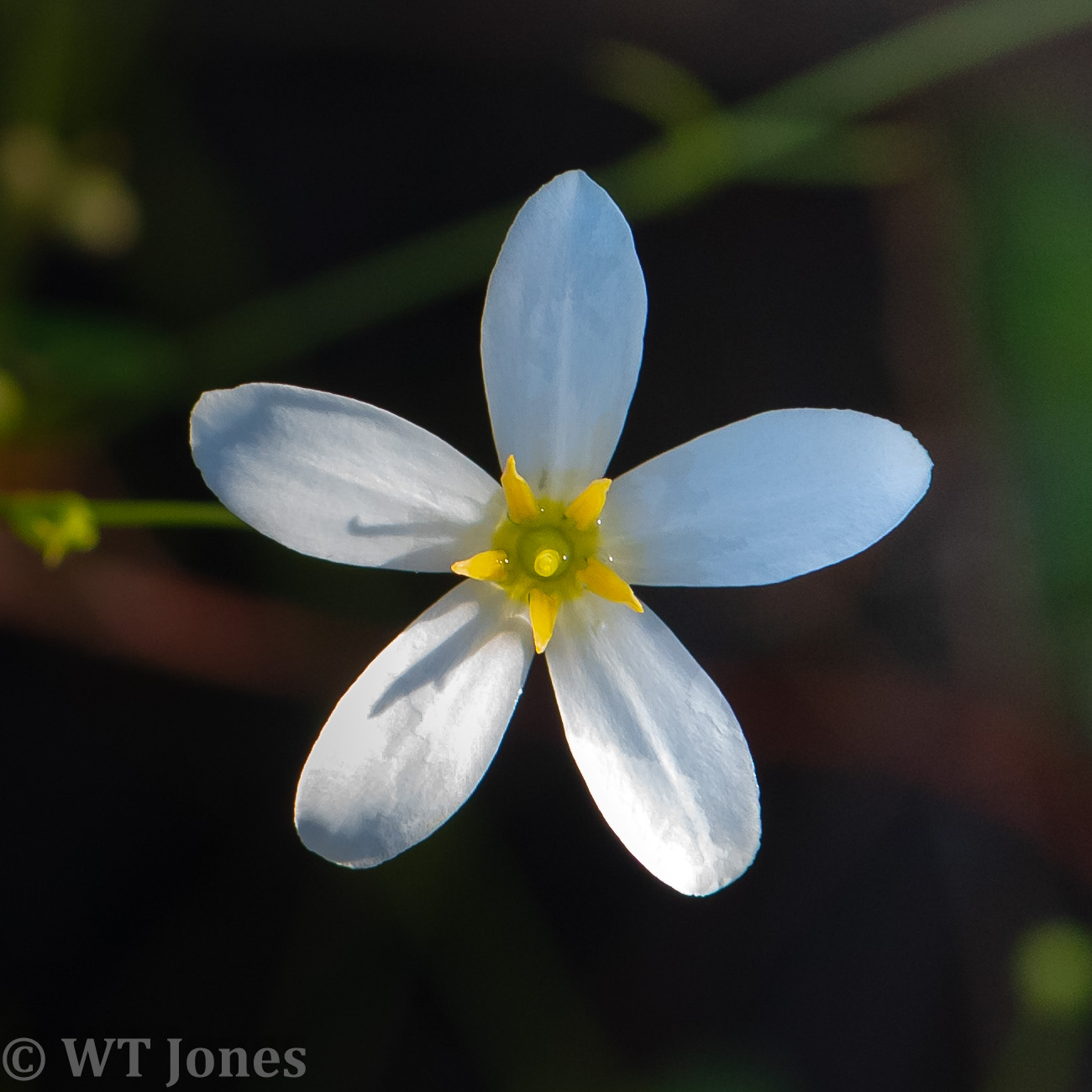

More white. This time in the form of small blooms on thin stalks in standing water. A small photo-bombing metallic green sweat bee thinks the flowers of the Grassy Arrowhead (Sagittaria graminea) are lovely. So do we.

A member of the Aster family, rather than Rosaceae, the Rose-Rush (Lygodesmia aphylla) blooms from spring through fall. A single lavender blossom appears atop a thin stalk about 24-36 inches in height and the flowers are about an inch in diameter. It only grows in Florida and Georgia.

One of the brightest flowers in Florida’s landscape is the Florida Paintbrush (Carphephorus corymbosus). It is also called Coastal Plain Chaffhead and can grow over three feet tall. It occurs throughout the peninsula and in parts of Georgia and South Carolina.


Tubular disk flowers dressed in maroon and white make the Feay’s Palafox (Palafoxia feayi) a really handsome plant, in my opinion. Hordes of pollinators agree. Endemic to the lower two-thirds of Florida’s peninsula, the woody stalks of this member of the Aster family can reach six feet.

Some areas of the forest were painted yellow. One species contributing to the bright landscape was Coastal Plain Honeycombhead (Balduina angustifolia). As the flower petals wilt, they drop and leave just the disk flowers which, at a distance, resemble Yellow Milkwort (Polygala rugelii).
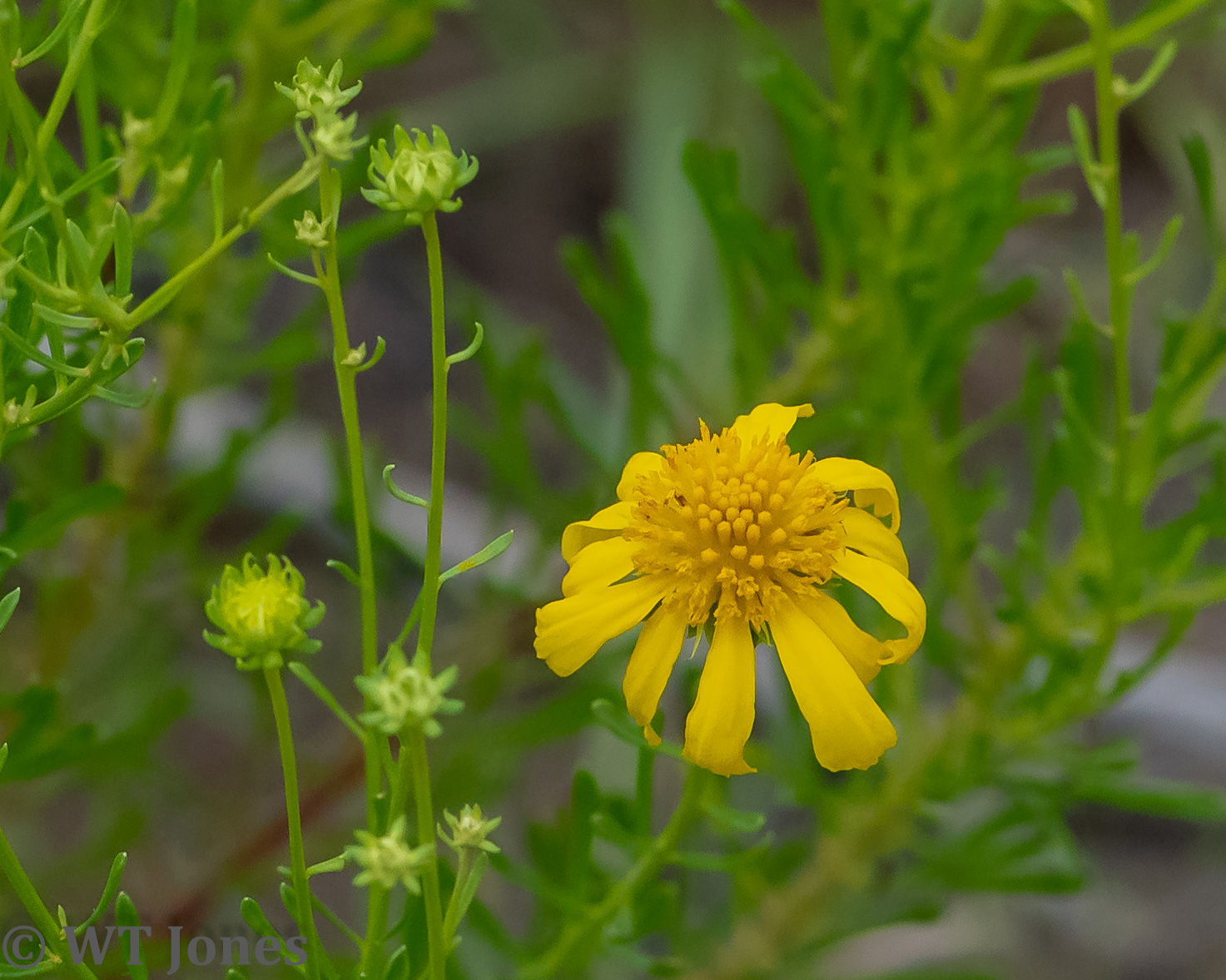

Even the grass is beautiful out here. Several spots had tall Lopsided Indiangrass (Sorghastrum secundum) waving in the breeze.

More yellow. This time, small flowers atop many-branched stems and grass-like leaves with fine hairs which give the plants a dull green/silvery appearance. Narrowleaf Silkgrass (Pityopsis graminifolia) is well-named.

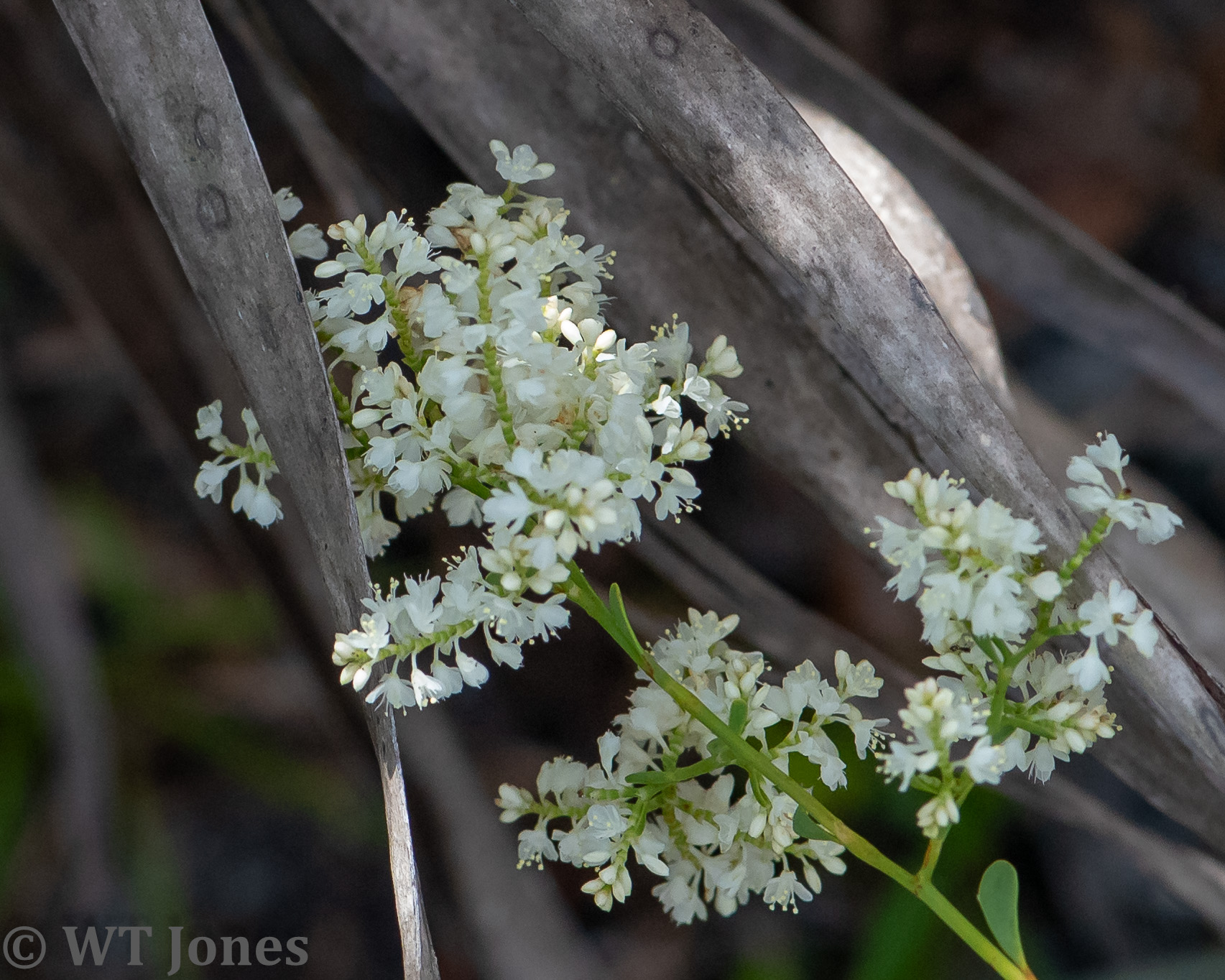
Masses of small white flowers against a backdrop of green saw and scrub palmetto fronds make a dramatic statement. Overlooked much of the year as the plant’s small green foliage blends in with its surroundings, fall is showtime for the stunning performance of October Flower (Polygonum polygamum).

Drupes of burgundy fruit dot the edges of wet areas and, by themselves, appear like small grapes ready for harvesting. Indeed, the fruit as well as most other parts of the Winged Sumac (Rhus copallinum) tree have many recorded ethnobotanical uses, from culinary to medicinal. And oenological.

As one peers through the woods or travels along a path, the vast green canvas is dotted with what could be small red stars. Half a dozen species of holly trees can be found in central Florida. One of the more common in this particular habitat is the Dahoon Holly (Ilex cassine). Bees love the flower nectar in spring. Birds and small animals like the fruit in the fall. (As for Gini – she is in a daze, visions of red-studded Christmas wreaths dancing in her head.)

Our latest pilgrimage into the forest of The Ridge has been memorable. We have seen bodacious birds, beautiful blooms and, as you well know, where there are blooms, there are bound to be — Bugs. Buzzing in soon.
Enjoy your search for a natural place and come back for a visit!
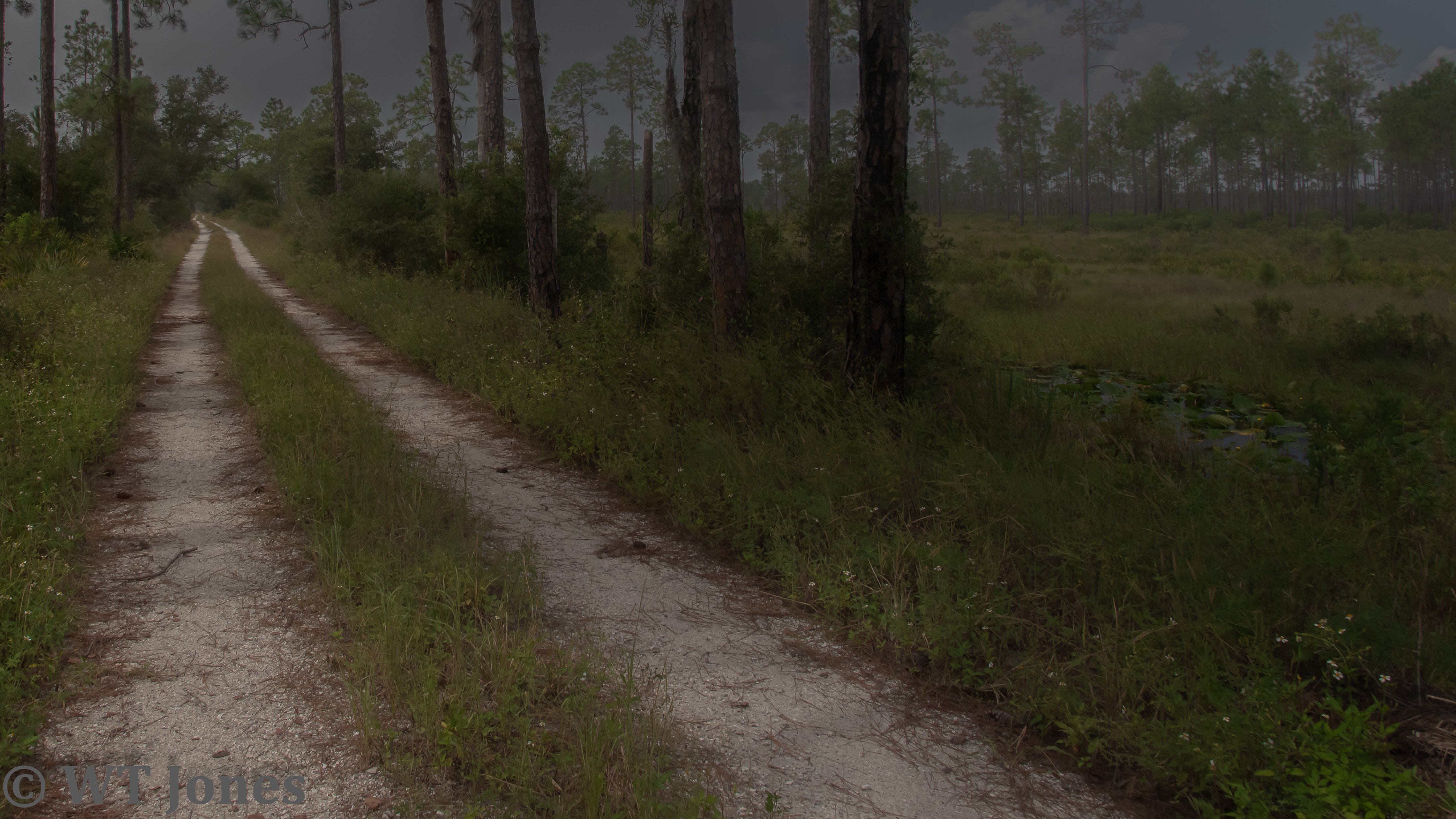
Driving along a dirt road in the dim light of pre-dawn is invigorating. The condition of the road demands slow speed. With the windows down it almost feels chilly, even here in sub-tropical Florida. Gini confirmed she was the smartest in the group (of two) by bringing a sweatshirt which was now wrapped loosely around her neck for maximum coziness. Suddenly, the day was bright and we were seeing flowers along the roadside and scattered to infinity in the surrounding scrub habitat. White-eyed Vireos greeted us with song, woodpeckers hammered in the distance, Florida Scrub Jays squawked nearby. Our first stop.
A new day!
We have returned to the Lake Wales Ridge State Forest to get an idea of how the fall bird migration is proceeding. Also, to check on fall flowers and their insect attendants. Nature rewarded our efforts with three scoops of sweetness on our exploration waffle cone.
(https://ournaturalplaces.com/2023/08/18/the-ridge-1/)
Although we didn’t exactly see a huge influx of migratory birds today, we found plenty to be excited about. Our endemic Florida Scrub Jays were especially active. Gini heard the “rubber-ducky” squeaks of Brown-headed Nuthatches long before we saw them. Bright yellow Pine Warblers swarmed among the treetops and we seldom traveled more that a dozen yards without hearing Eastern Towhees calling.
Somebody took too many photographs. Again. Therefore, there will once more be multiple posts of our day on The Ridge.
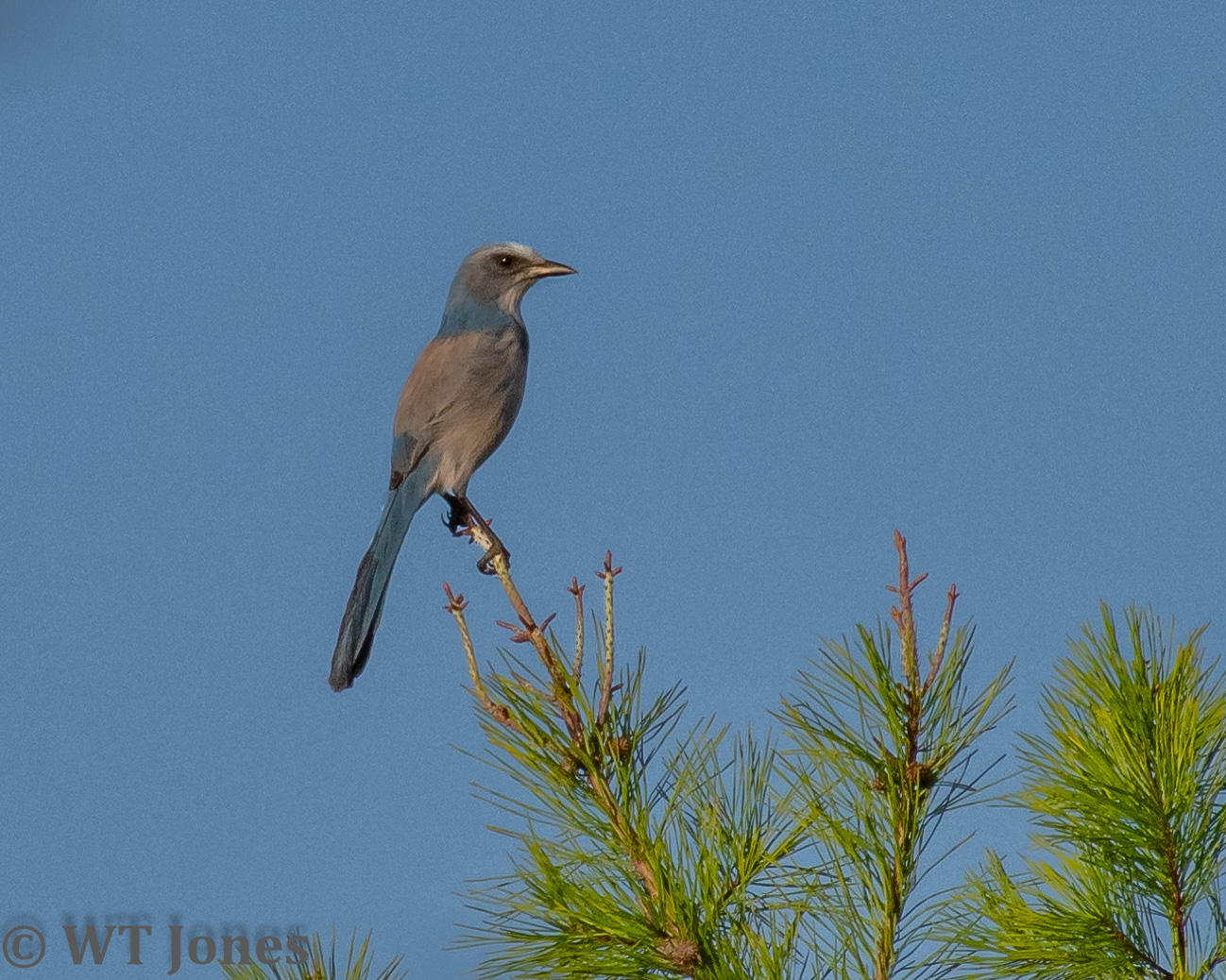
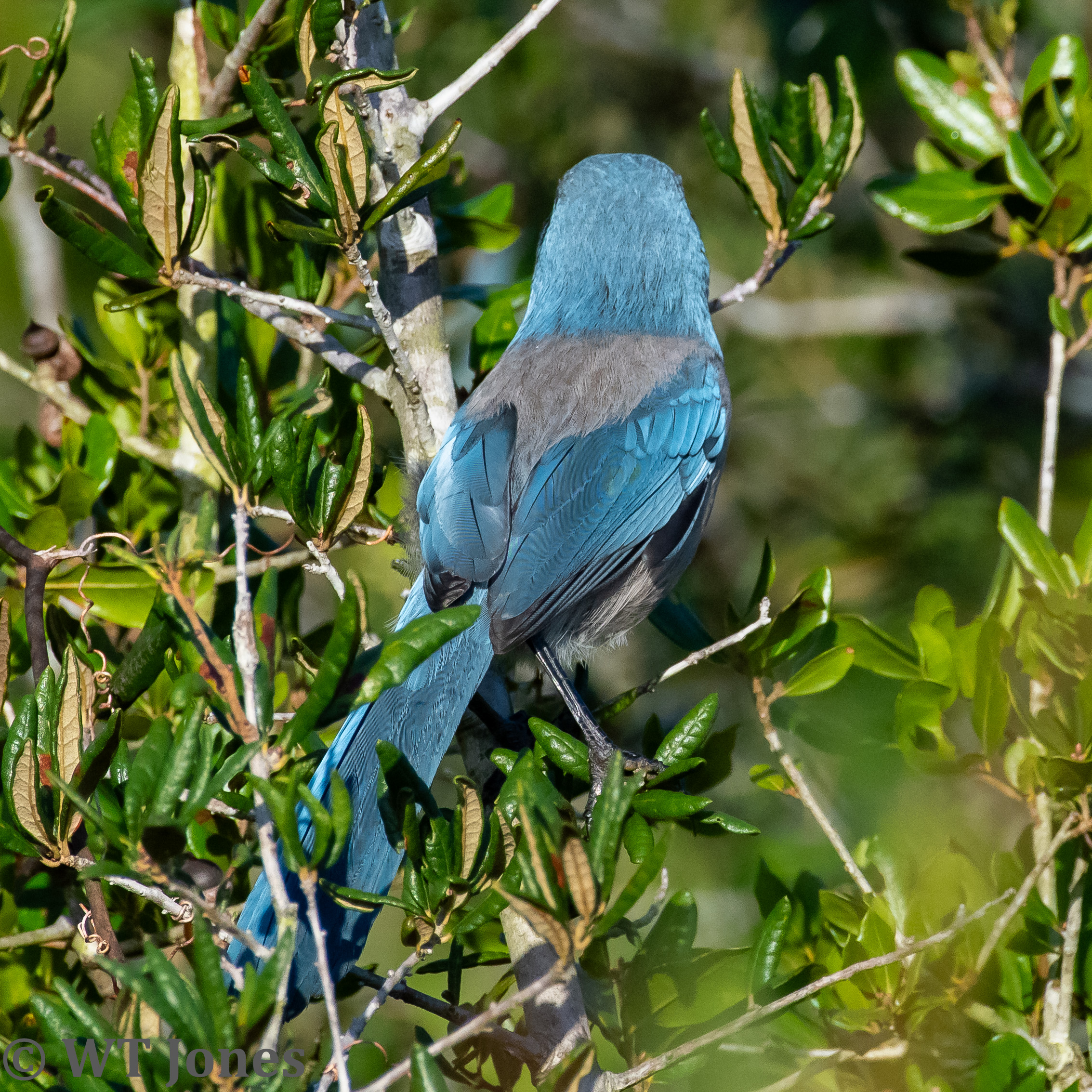
Florida Scrub Jays remain in loose family groups throughout the year. If you find one, a half-dozen will be nearby. They are not shy. And they are loud! (I liked the second image which shows the rich color and detail of this beautiful bird.)
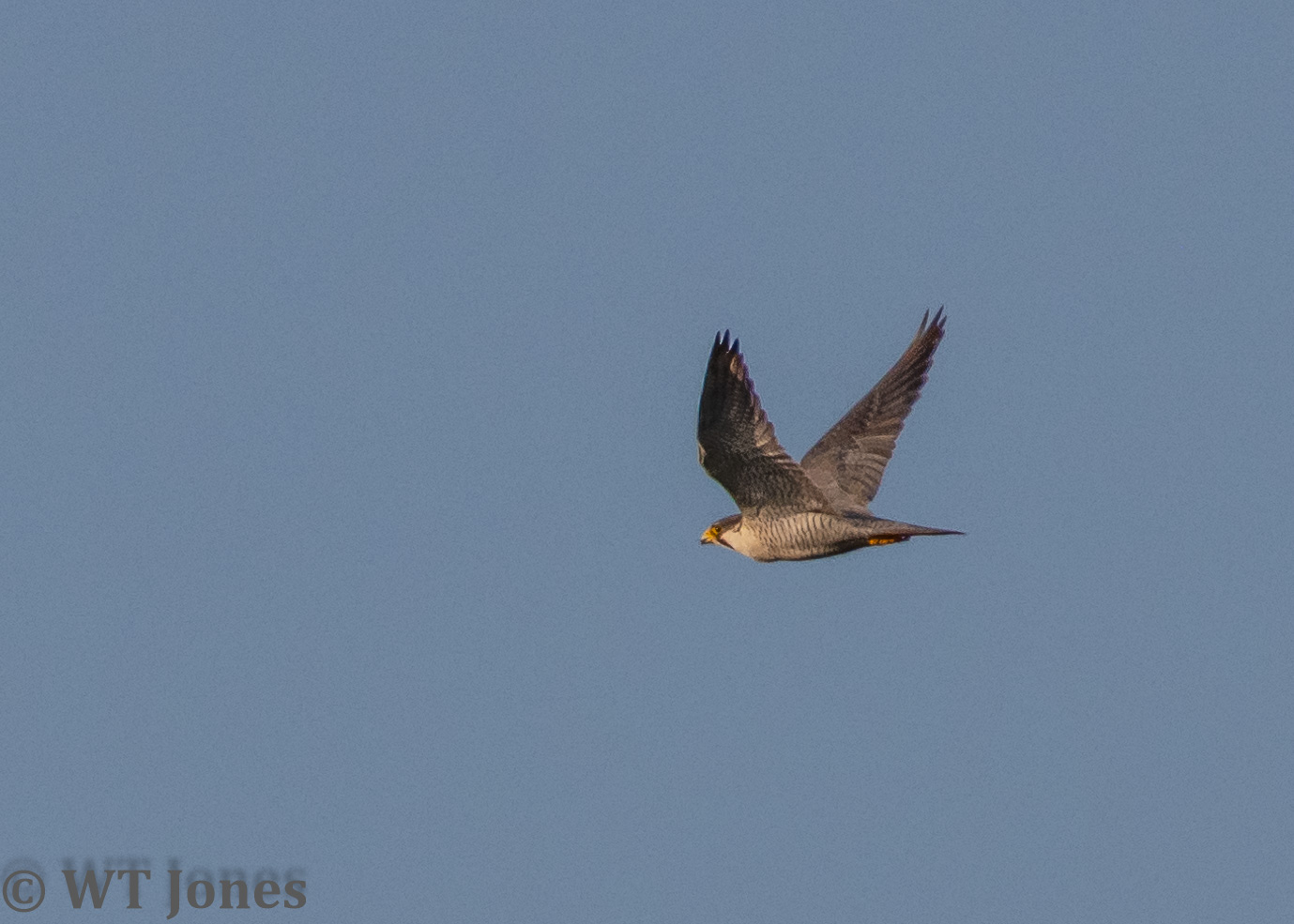
“Look up in the sky! It’s a bird! It’s a plane! It’s a Peregirne Falcon!” Not a good photograph, but the darn bird is so fast!
Large and in charge. Brown Thrashers are quick to challenge any intruders. Those golden eyes are pretty intense.


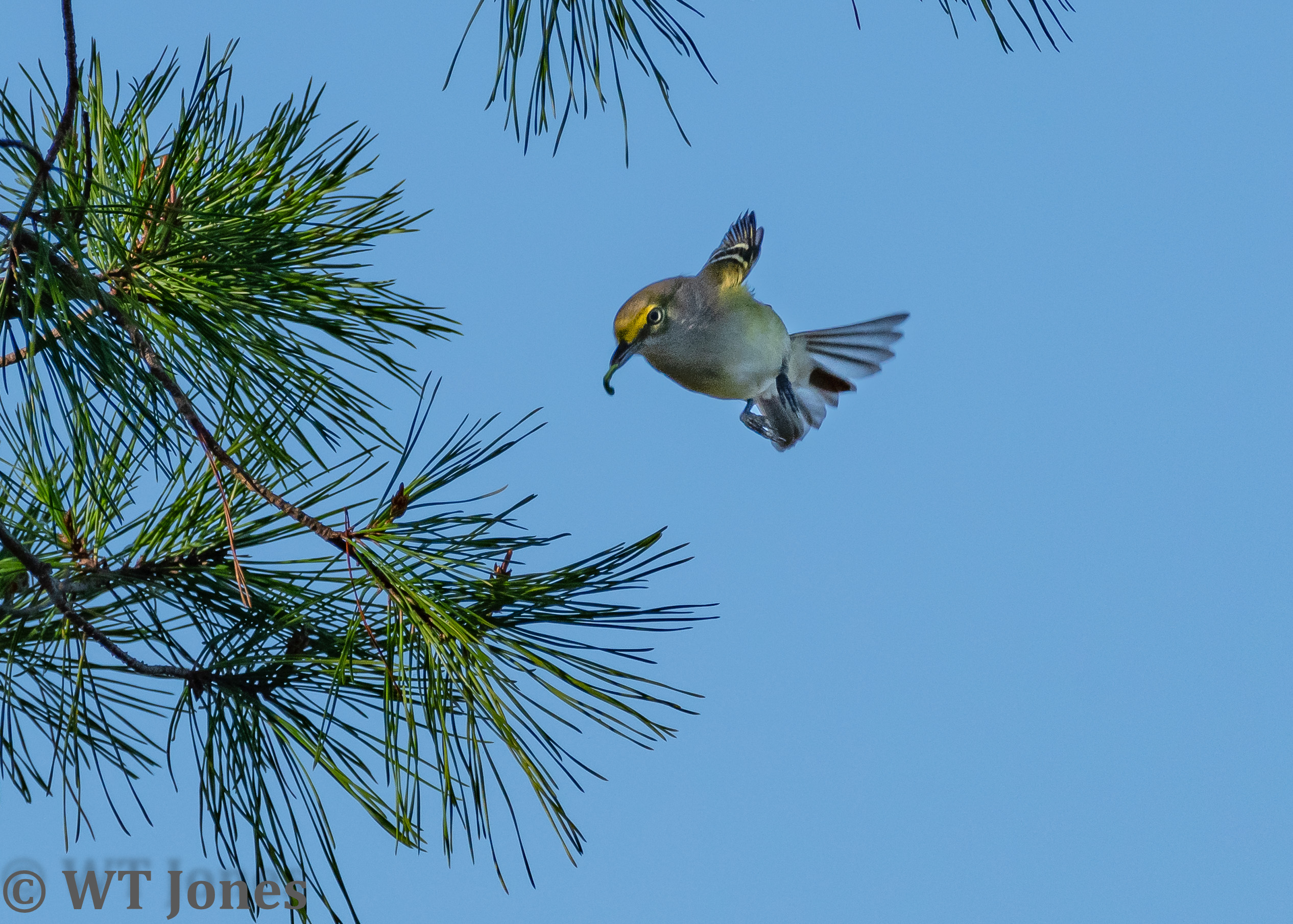
A White-eyed Vireo takes time out from singing to snag a bug.
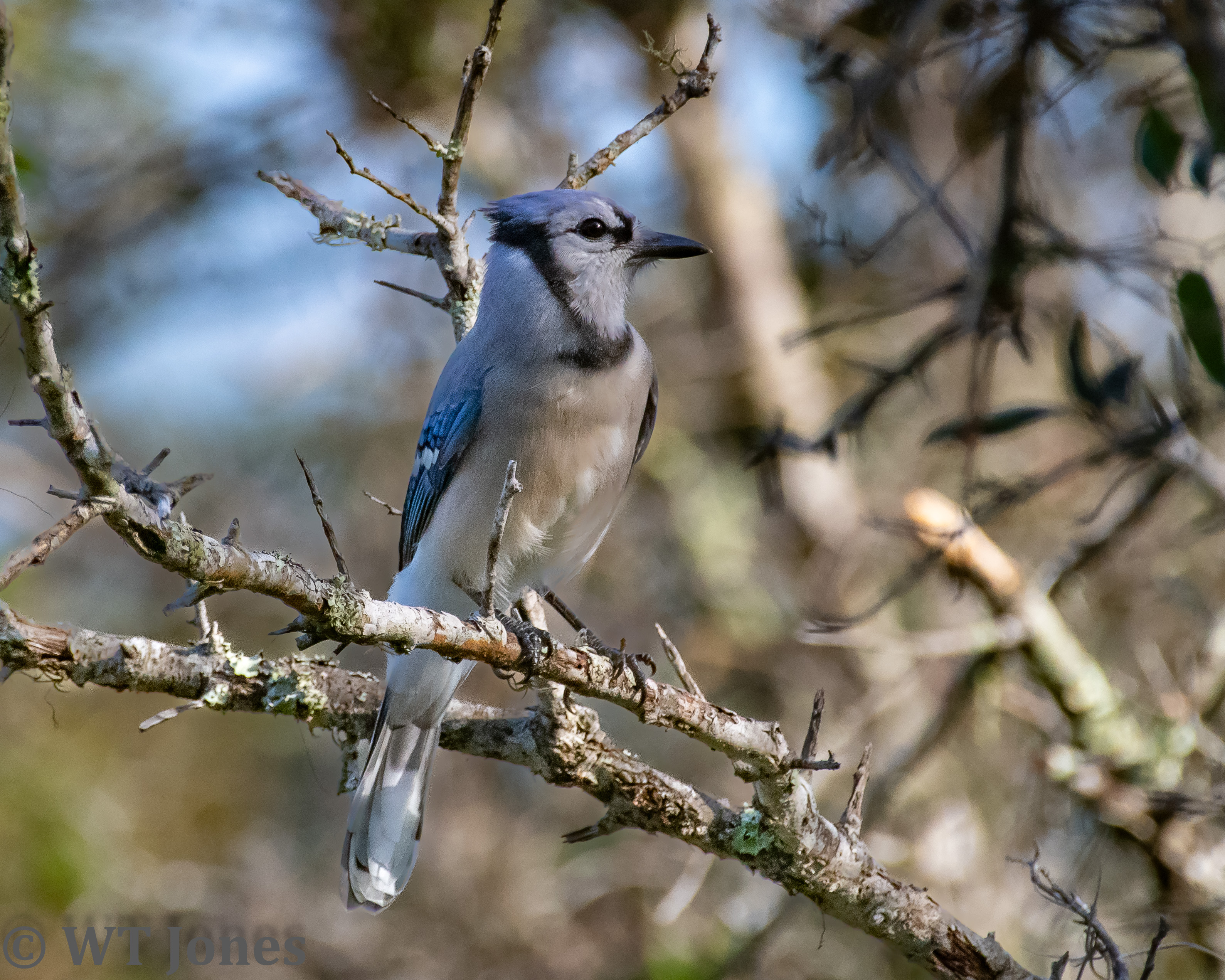
Florida’s “othter jay”. The Blue Jay is common throughout the middle and eastern portion of the United States. They are important members of the avian neighborhood watch committee and are the first and loudest to scream about potential danger.
We counted over a dozen Eastern Towhees today. The normal population of this section of forest has been bolstered by migrants from the north. The photograph is likely a local resident as Florida towhees have pale eyes as opposed to the red of their northern cousins.

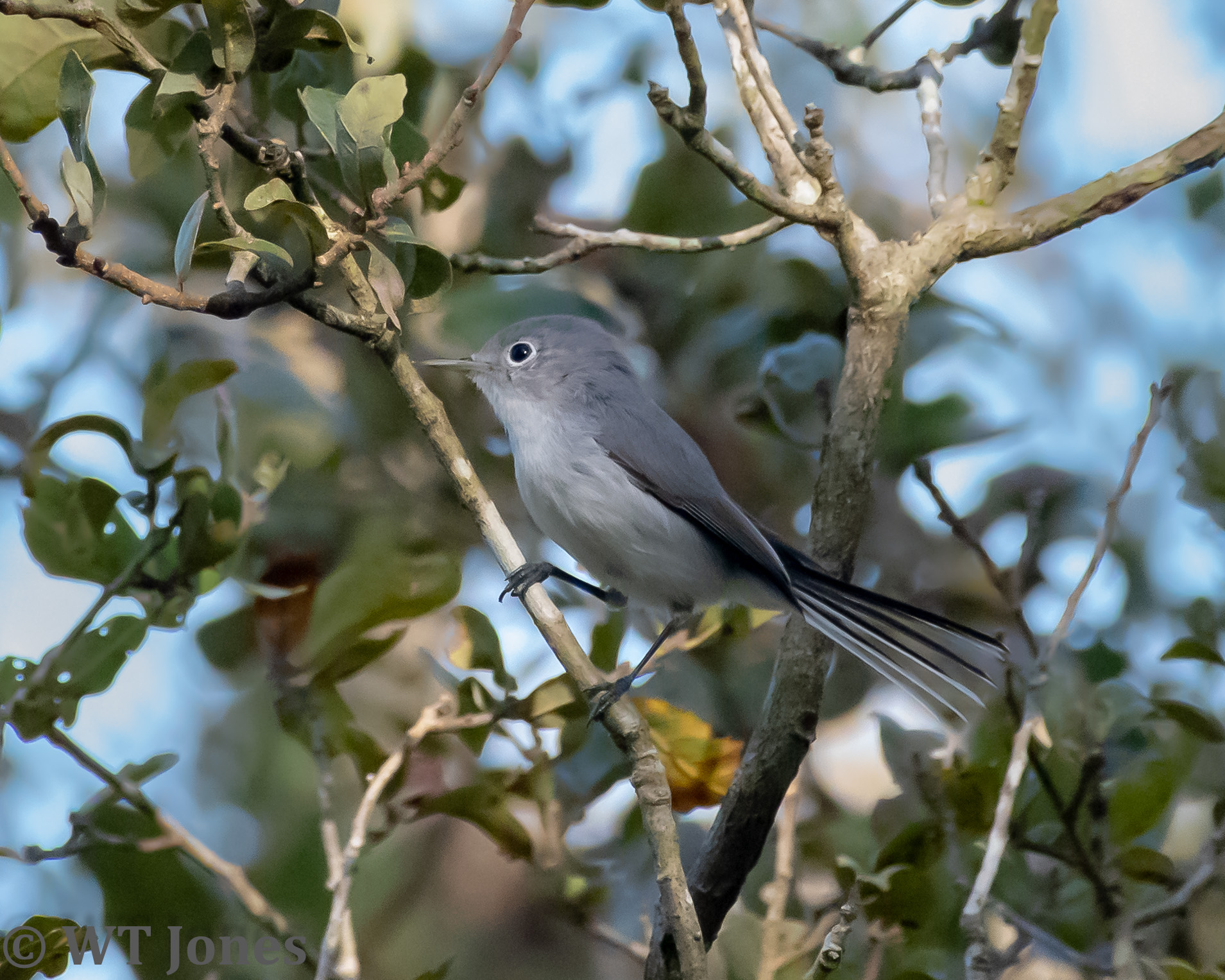
Small and very active, gangs of Blue-gray Gnatcatchers seemed to never stop chasing insects all day long. During migration, these small songbirds gather in groups and join with Tufted Titmice, Carolina Chickadees and others for greater safety from predators.
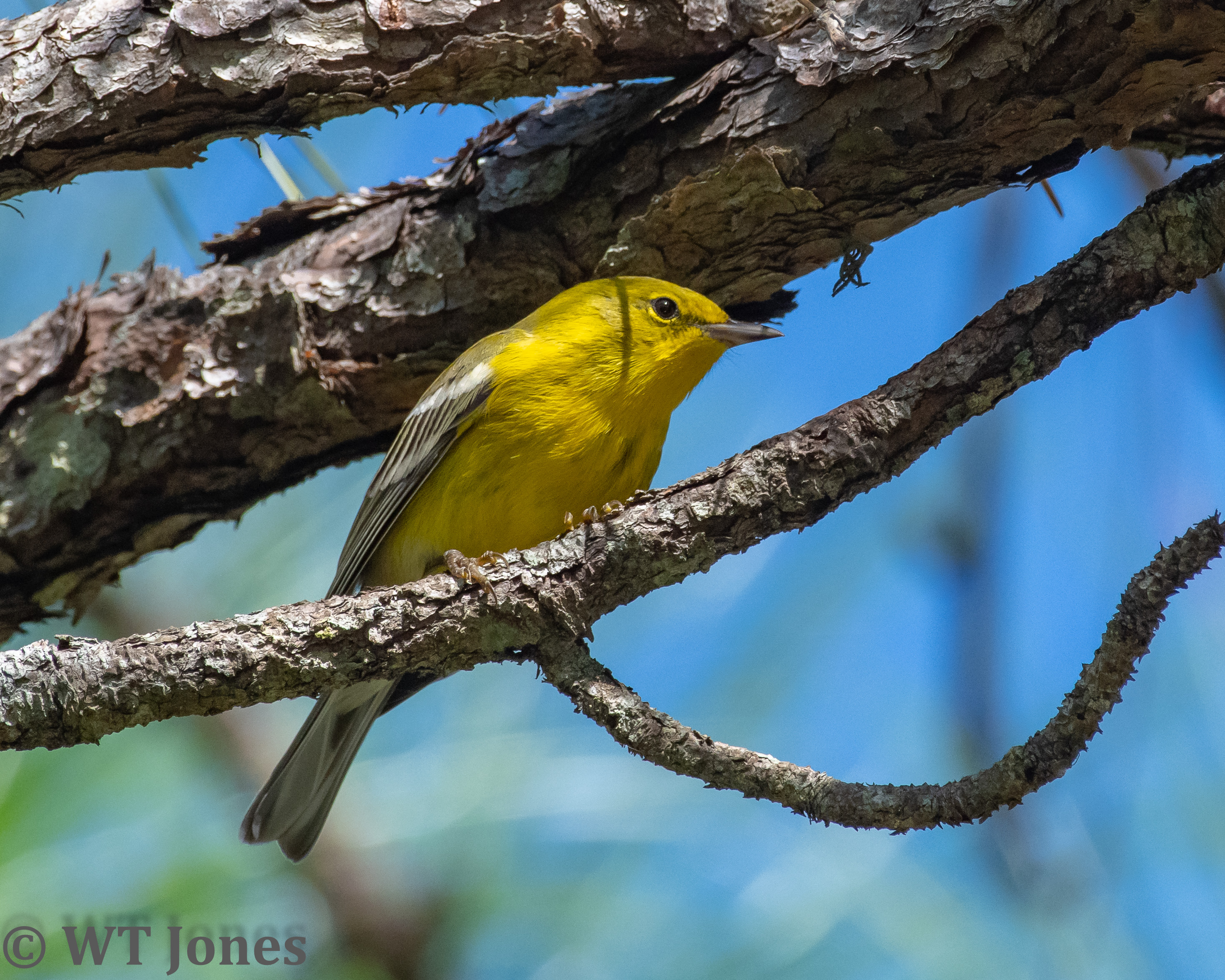
Tops of longleaf pine trees were adorned with bright yellow decorations all over the woods. Pine Warblers jumped, ran and flitted along the branches scooping up whatever they could find as they fueled up for the trip further south. Many of these lovely warblers will remain here throughout the winter. That’s just fine with us.
Pugnacious. Some small birds such as wrens just seem to have a whole lot of “attitude”. Brown-headed Nuthatches are like that. When one spotted us, he squeaked his warning and we were quickly surrounded by the little long-beaked fluff balls. Watching them run head-first down a tree trunk is always fun.

A male Downy Woodpecker found something he liked in the crack of a dead snag. His sticky tongue darted in and out as he gobbled up whatever was in there.

We saw and heard plenty of Red-headed Woodpeckers but only one immature bird ventured close enough for a photograph. Its dark head will become bright red by spring.

The day was simply superb. We would have been quite happy to have just seen a few birds. As it turned out, we saw more. Much more. Stay tuned.
Enjoy your search for a natural place and come back for a visit!

(Click images to enlarge, click again to zoom.)
The Sun. The Moon. Sky, earth, water. Life. Death.
Nature has it all. Spending time away from human-influenced distractions allows us to realize that nature incorporates rhythm into each and every day. I think that’s why humans invented music. A poor attempt to emulate nature’s never-ending heartbeat. A day in the forest, at the shore, in a grassy field, deep in a dark swamp – we realize that we are a part of nature. We are not quite as significant as our huge homo sapiens’ brains would have us believe. We are humbled.
On this day, Gini and I encountered the mundane and the magnificent. We savored it all. Leaving the house while it is still dark out always seems to heighten our sense of anticipation. What will we discover as the light in the east gradually brightens? Perhaps a new bird, an amazing vista, lovely flowers, predators pursuing prey? Maybe we shall simply revel in an atmosphere of clear air, no man-made noise, a view unobstructed by walls and the unspoken unadulterated joy of each other’s company.
Time passed all too quickly. It seems we had barely finished our peanut butter and jelly sandwiches and it was almost noon. Several dozen instances of Gini loudly “whispering”: “Look, look at that!” and her grabbing my arm and pointing and — well, take a look.
Our driveway. Looking up. The day begins.

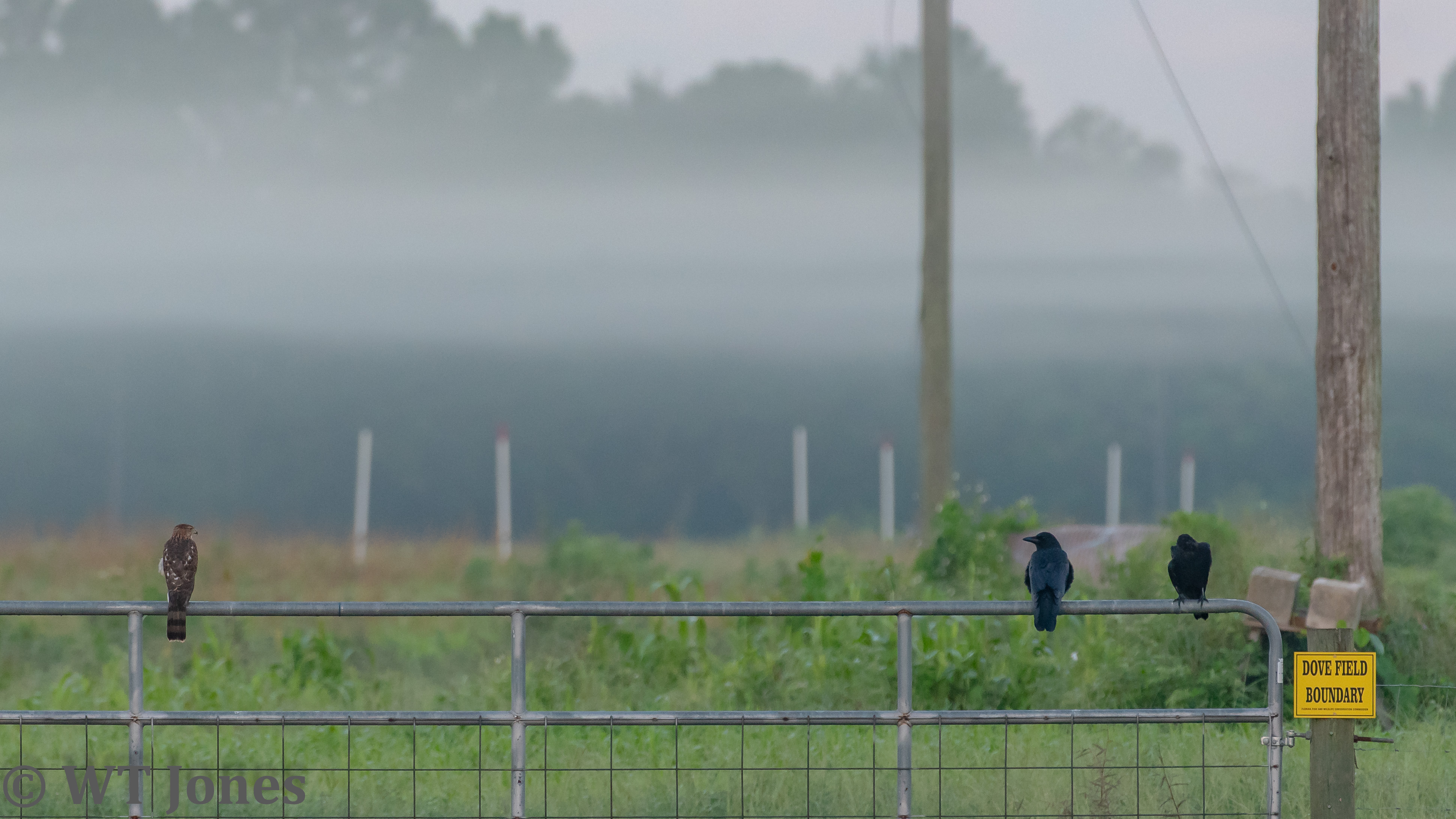
Mortal enemies. American Crows and Cooper’s Hawk. A meeting at the Fence of Peace, The Dove Field Boundary (according to the sign, at least).
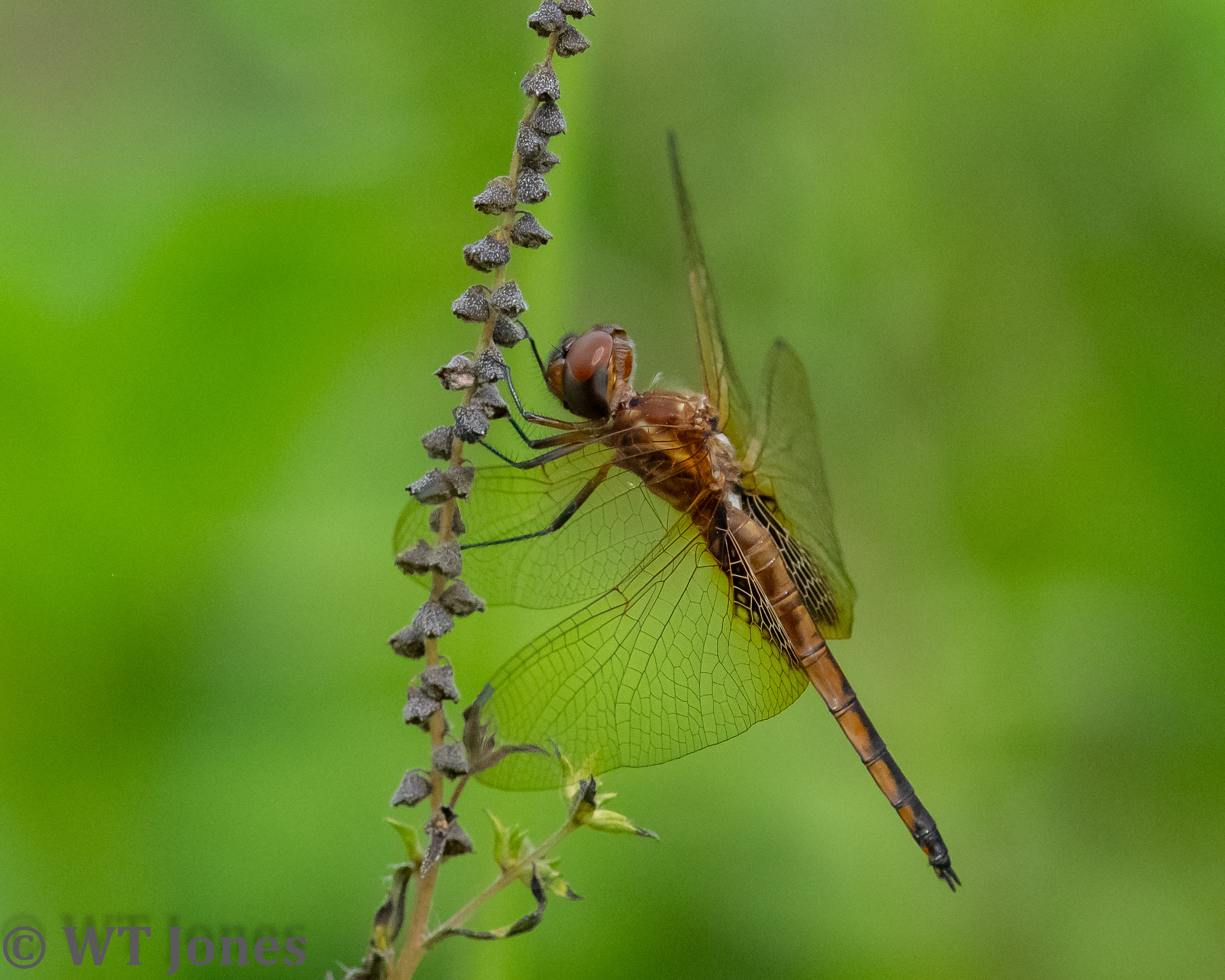
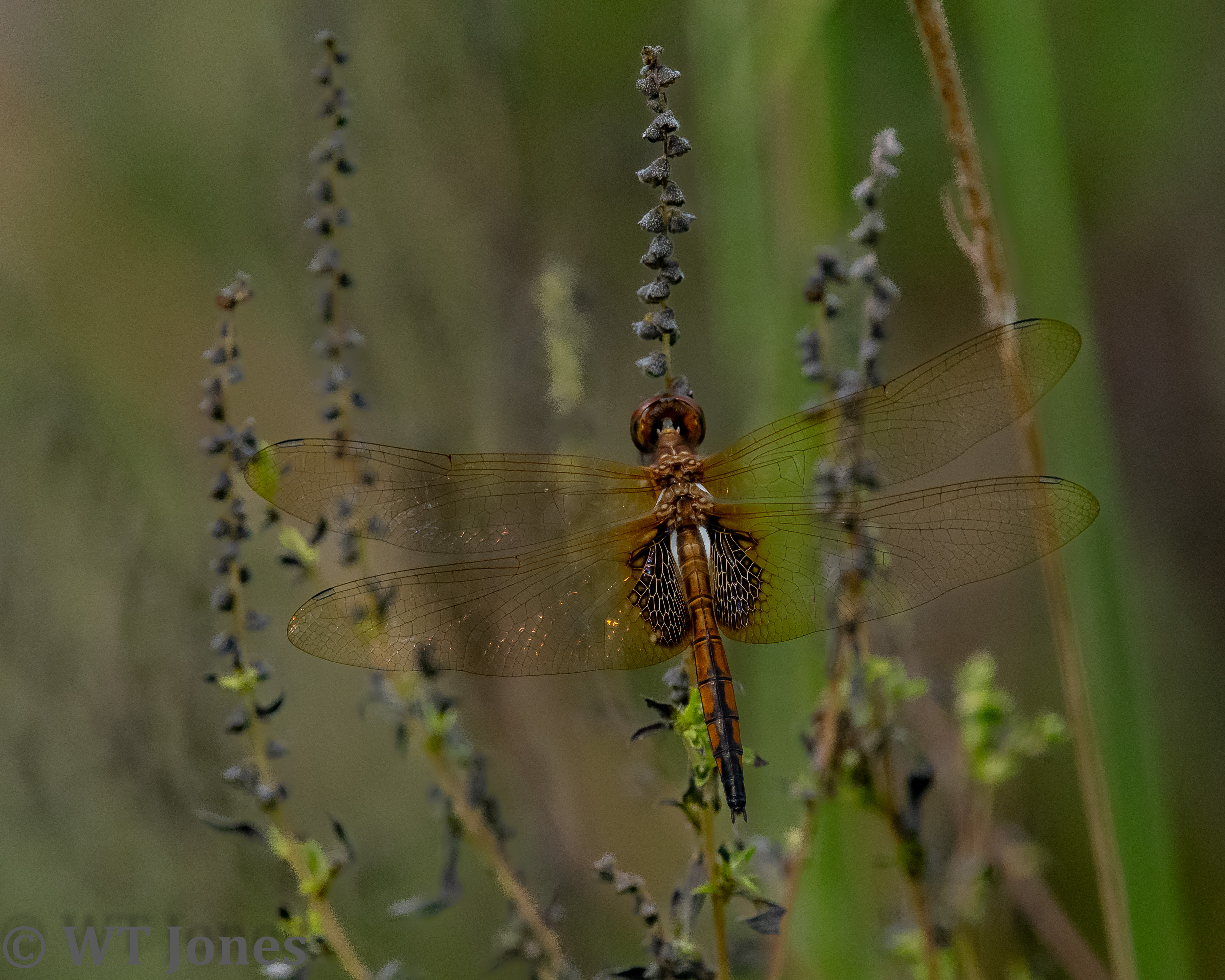
Early in the morning, before the sun dries its golden wings, a Hyacinth Glider (Miathyria marcella) glistens. Soon, it will be difficult to find one perched as they seem to remain in flight indefinitely.
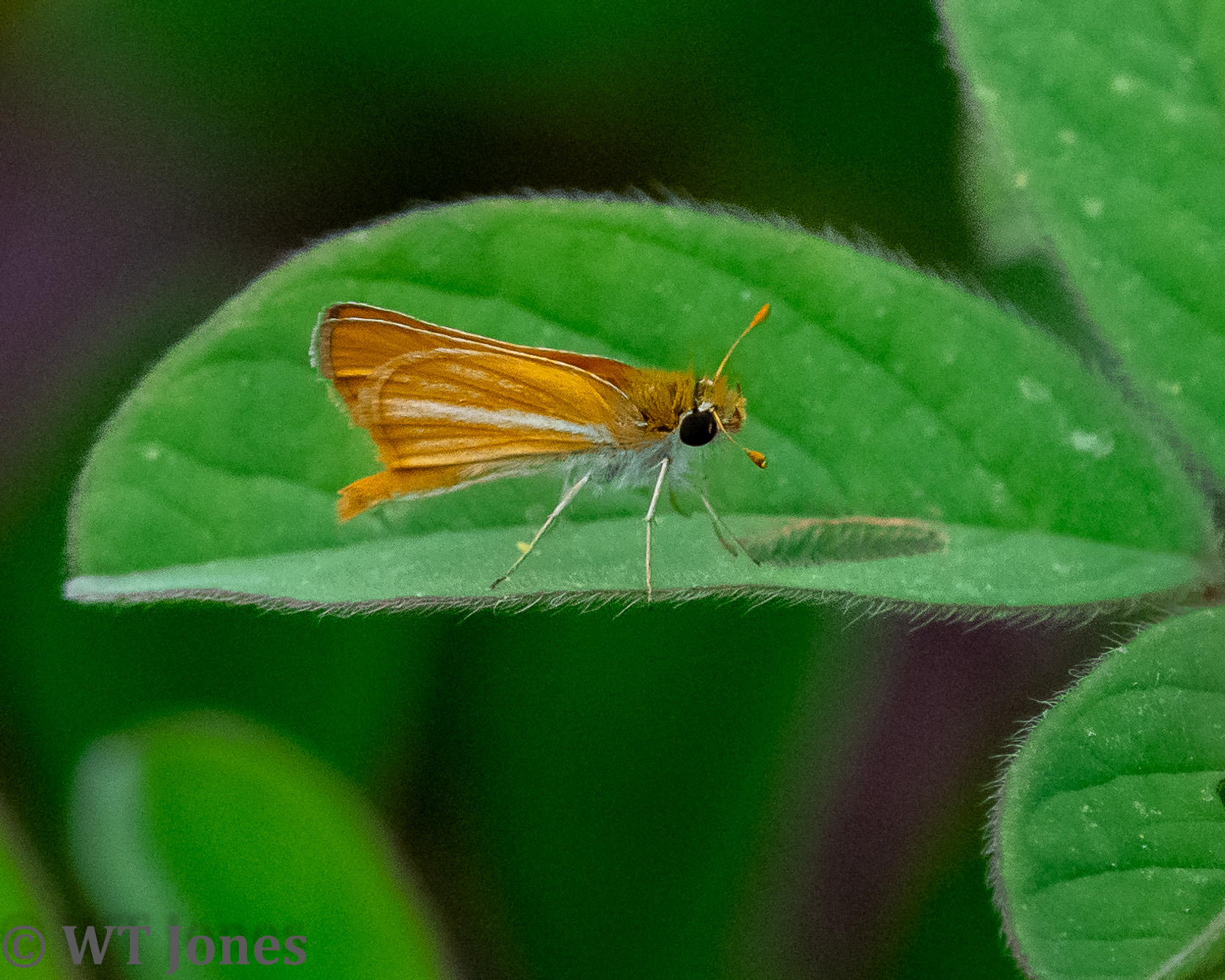
Smallest of the North American skipper butterflies, a Southern Skipperling (Copaeodes minima) greets the rising sun from its lofty leafy lookout.
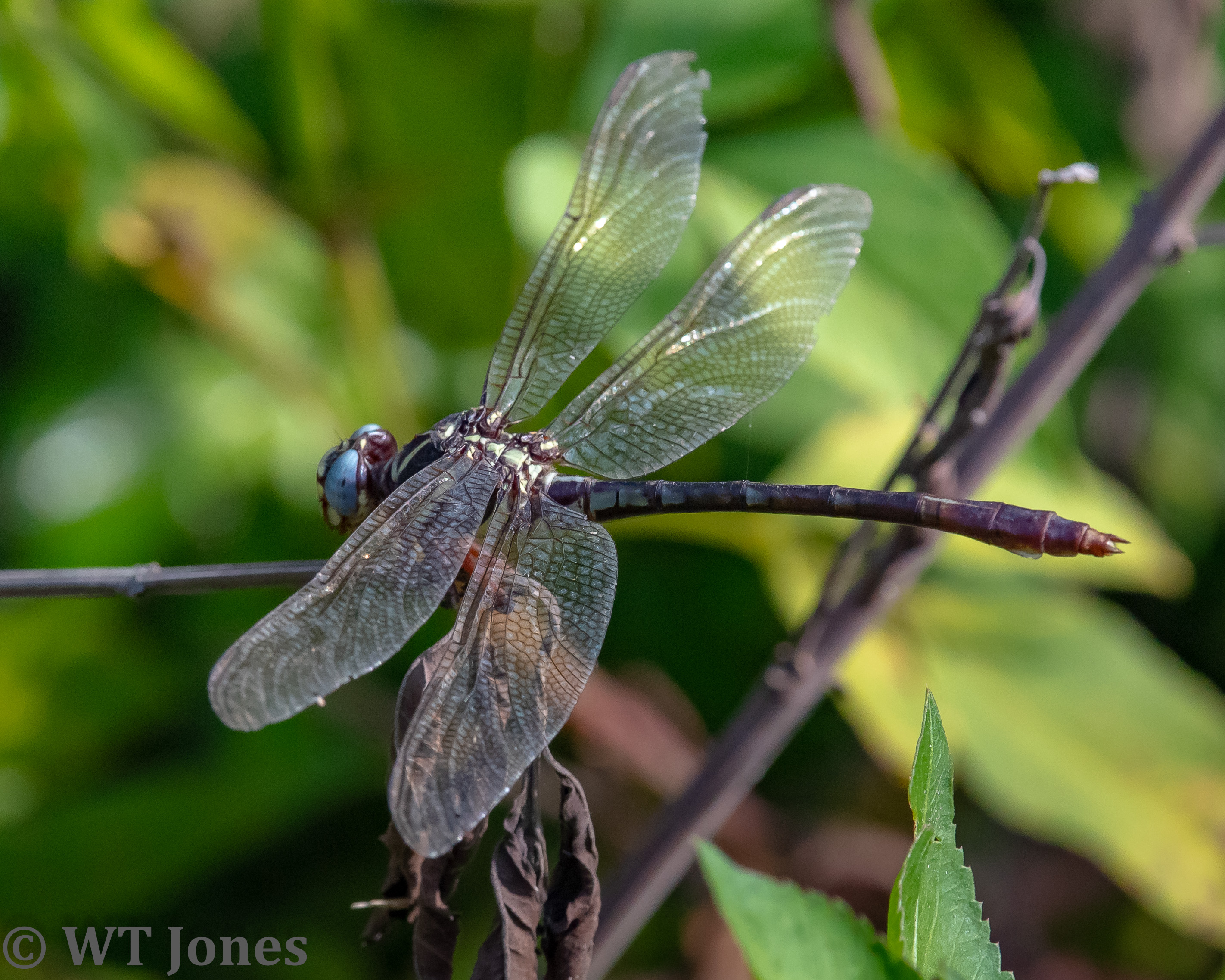
I was only able to get one image of this Two-striped Forceptail (Aphylla williamsoni). We can see how it got its name and we have a glimpse of those pretty blue eyes.
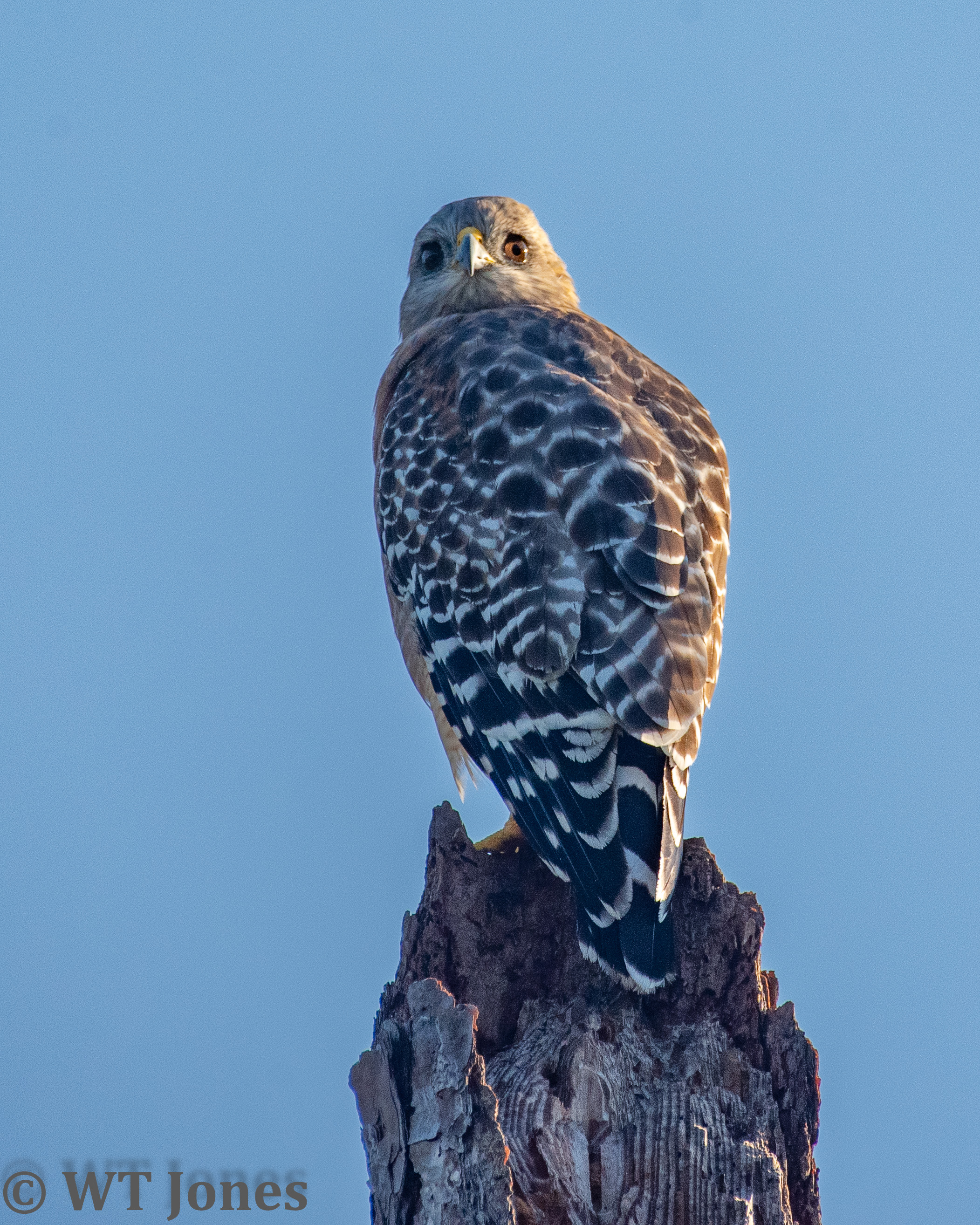
Not sure, but I THINK this Red-shouldered Hawk may have spotted me attempting to sneak closer for a better photo.
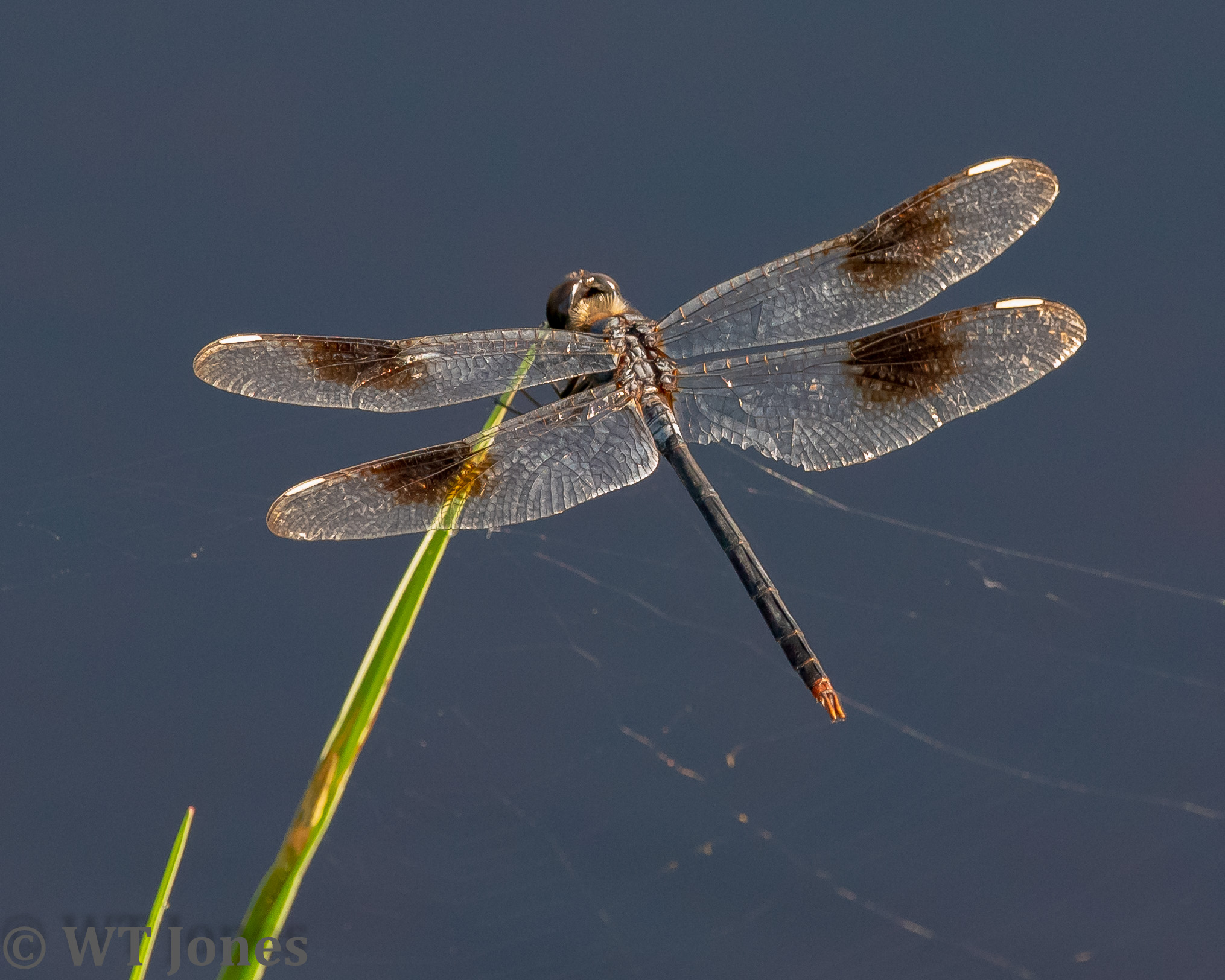
A blade of grass, a bit of water. Happiness if you are a Four-spotted Pennant (Brachymesia gravida).
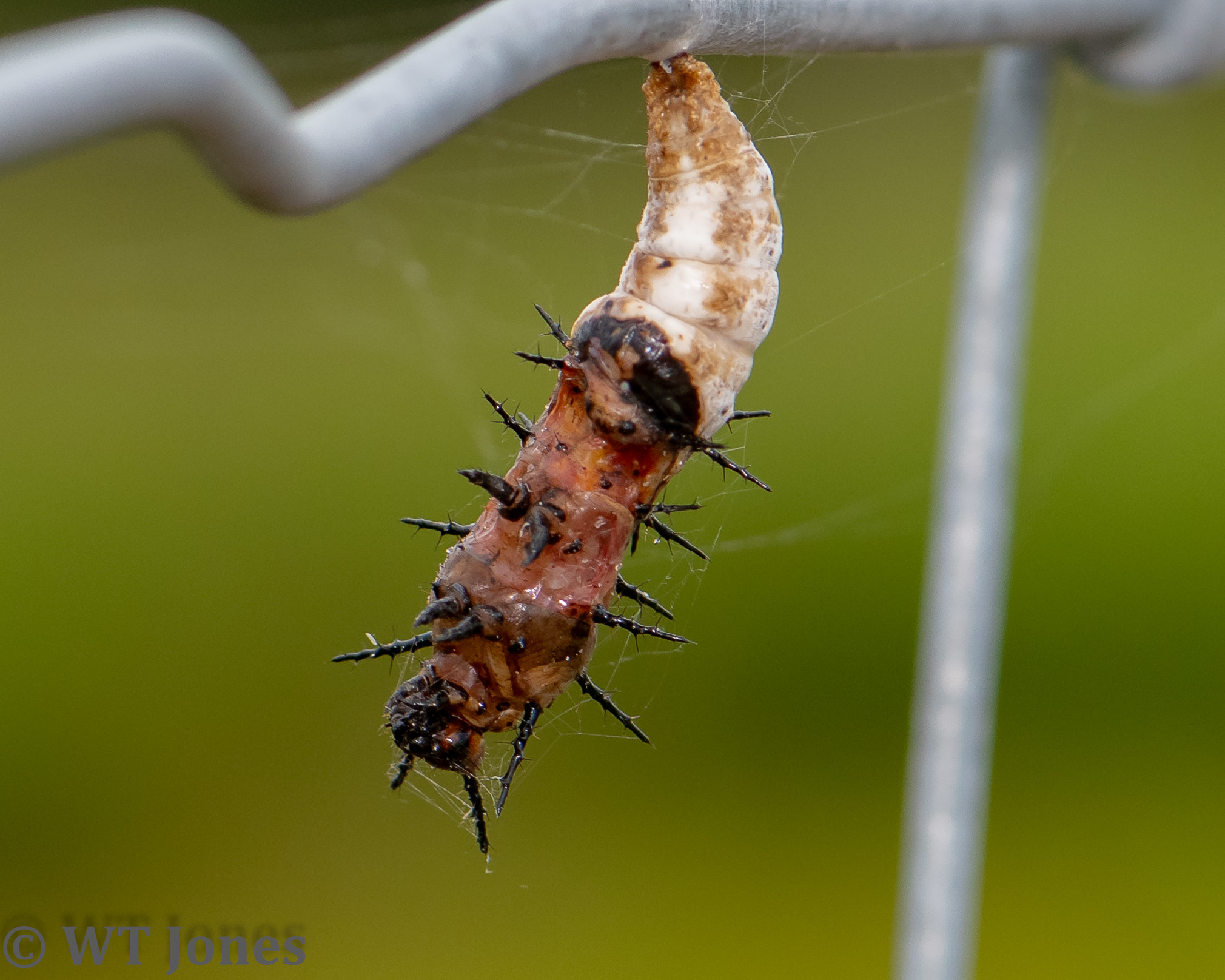
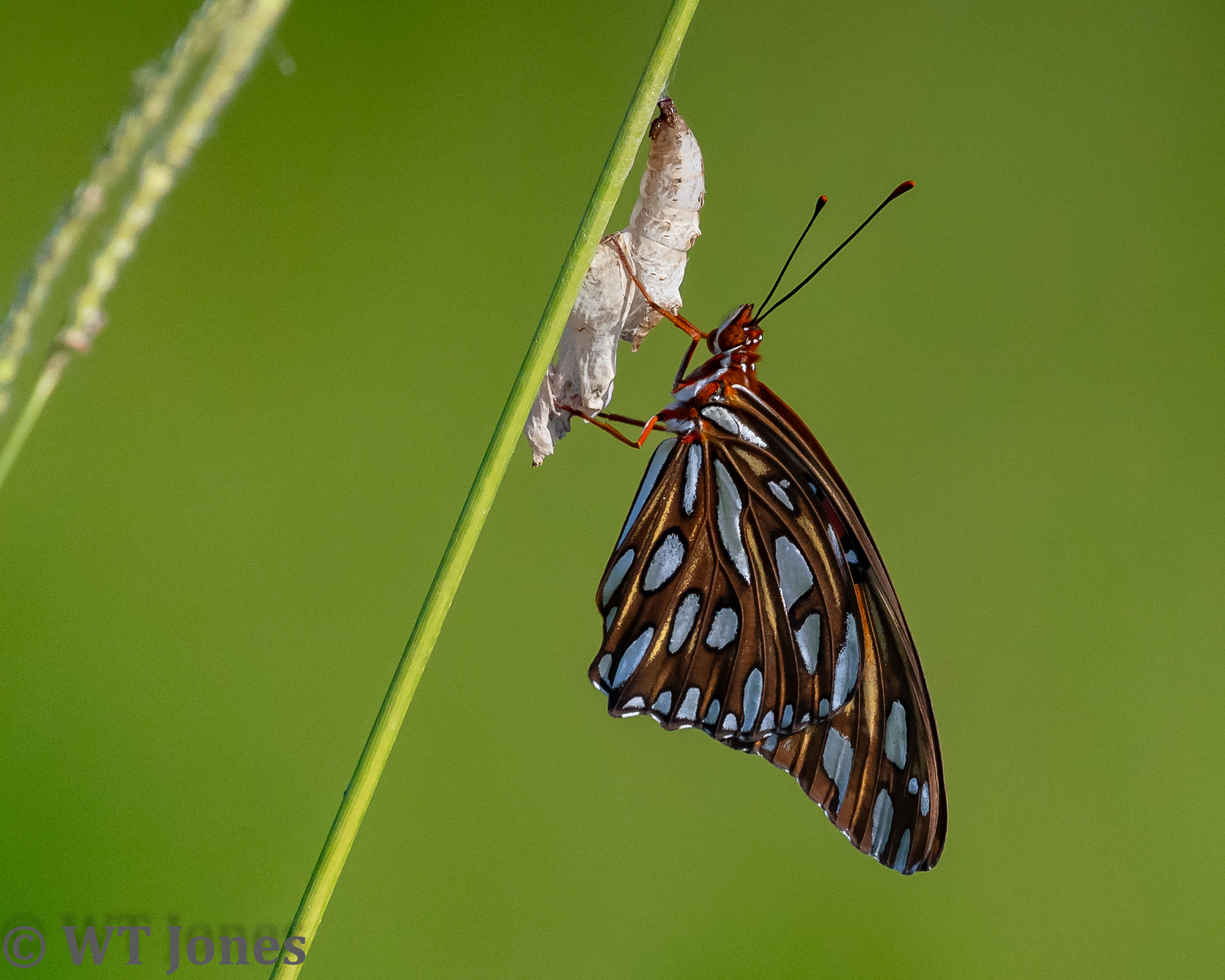
We discovered the larva of a Gulf Fritillary (Agraulis vanillae) butterfly working to create a chrysalis. It will remain in the protective case for 10-14 days before emerging as an adult. (The images of the adults are from earlier this year and are provided for reference.)

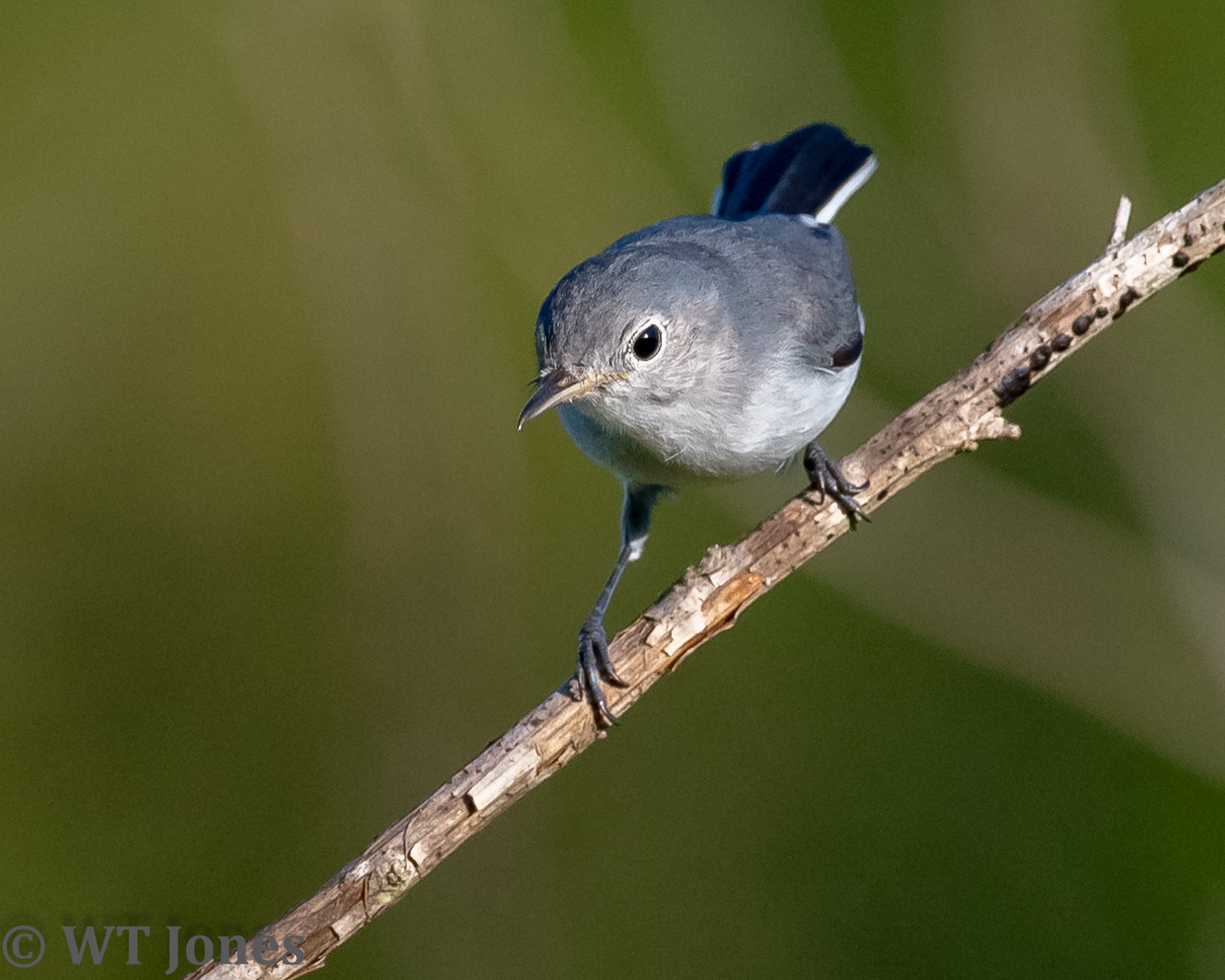
Migration season brings an influx of many different bird species to our semi-tropical area where they fuel up on insects before traveling further south. A very active Blue-gray Gnatcatcher did not stop for long in its pursuit of breakfast.
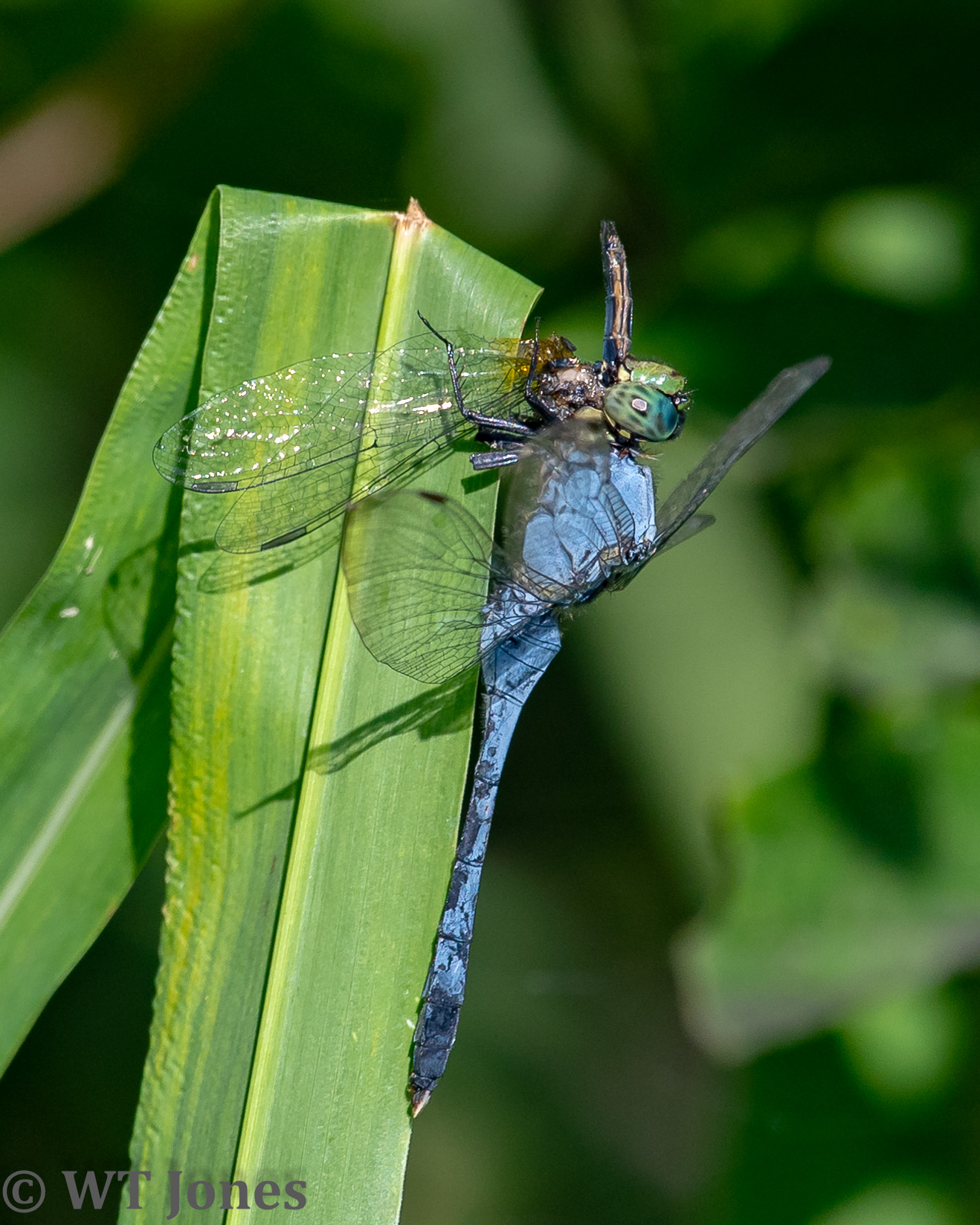
Circle of life moment. An adult male Eastern Pondhawk (Erythemis simplicicollis) captured what appears to be a Blue Dasher (Pachydiplax longipennis). It took about three minutes for the larger dragonfly to consume its smaller cousin.

We were fascinated to watch this Carpenter-mimic Leafcutter Bee (Megachile xylocopoides) gather nectar from the small blooms of Spanish Needles/Beggarticks (Bidens alba). This species has no “pouches” on its legs for pollen like some bees, but the pollen sticks to its abdomen.
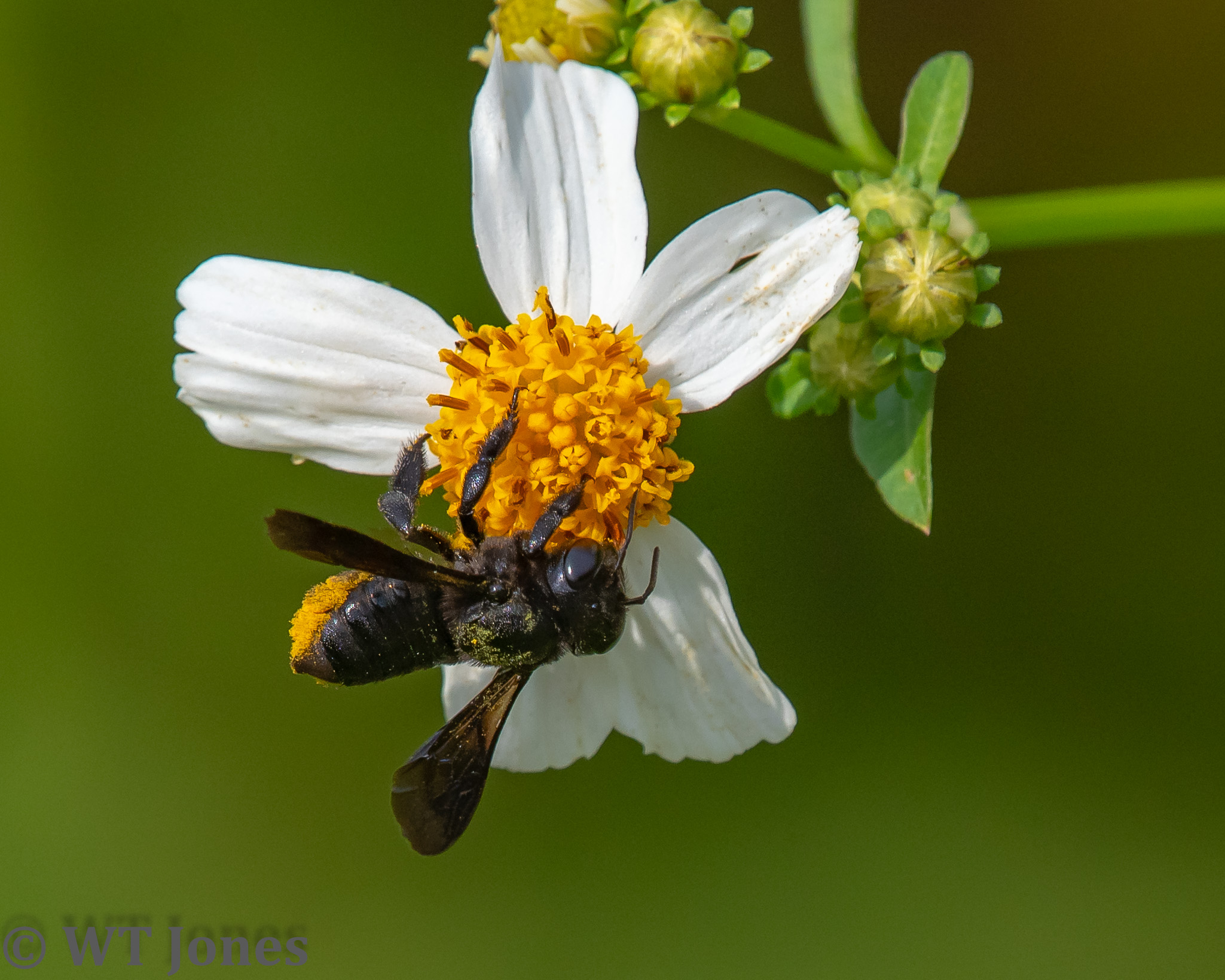
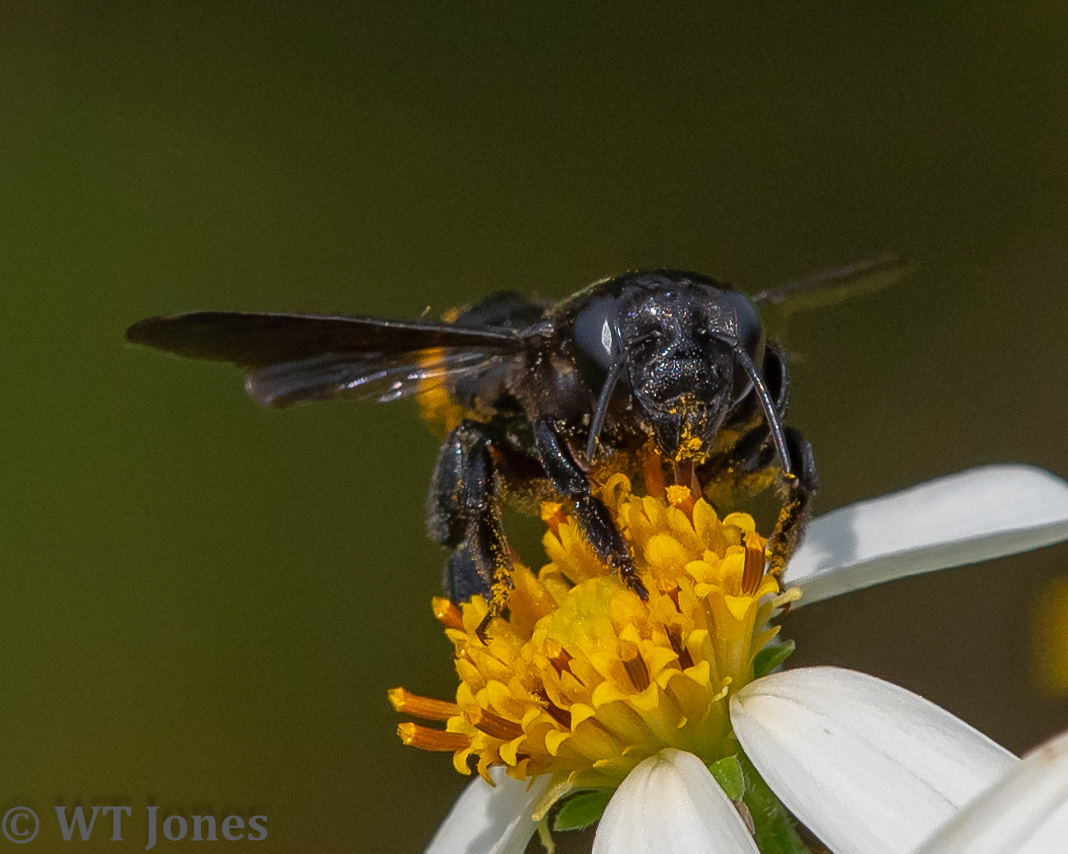
As kids, we loved building things with Lincoln Logs. (Interesting history on the toy here: https://www.history.com/news/the-birth-of-lincoln-logs.) The unique case of Abbot’s Bagworm Moth (Oiketicus abbotii) always reminds me of the old construction log toy set. The female moth remains within her portable shelter most of her life.

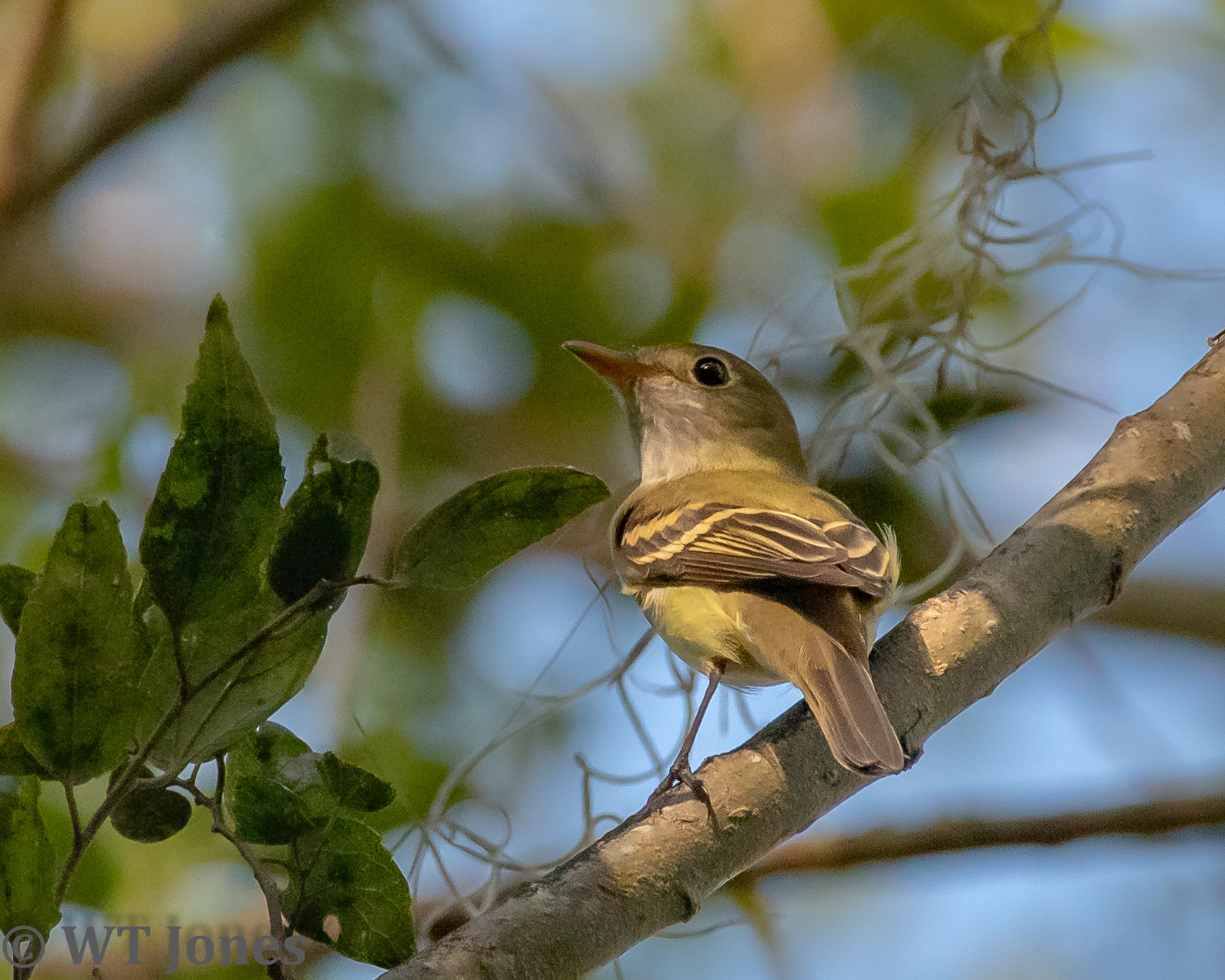
A smallish flycatcher, two wingbars, an eyering, olive colored upper parts. An Acadian Flycatcher, although not rare, is most certainly very uncommon around here.
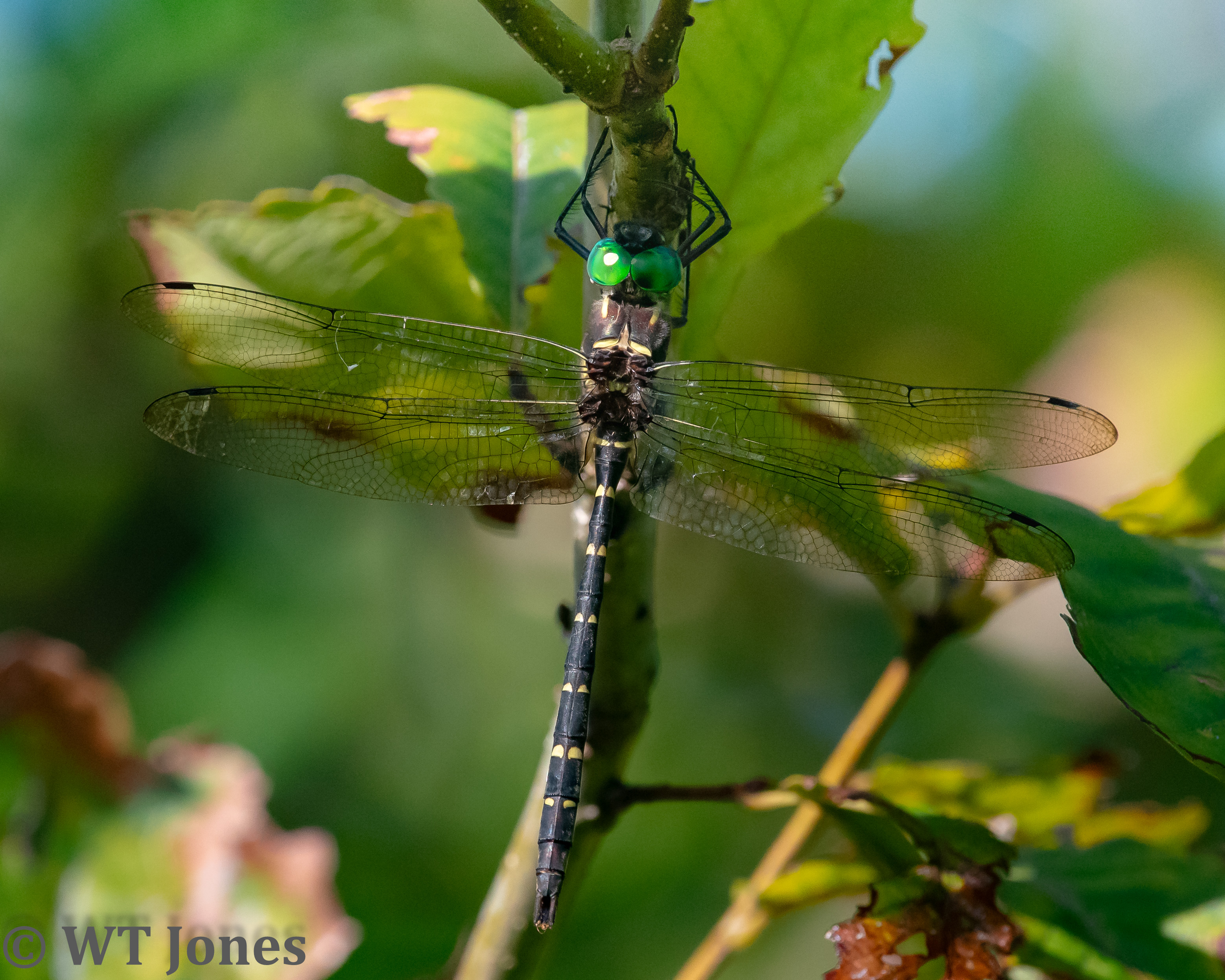
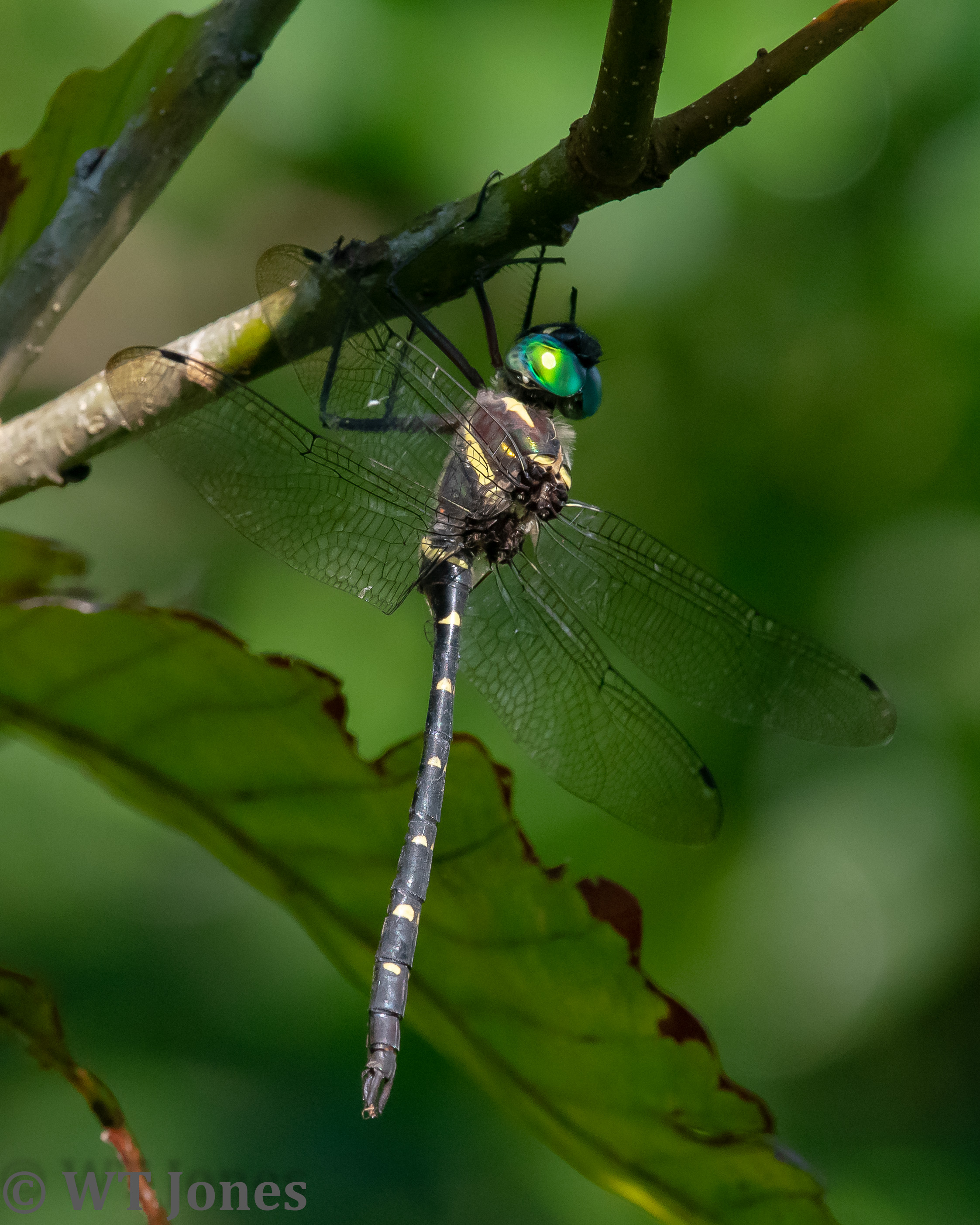
“Those eyes!” The large Royal River Cruiser (Macromia taeniolata) is one of Gini’s favorite dragons. Okay. One of mine, too.
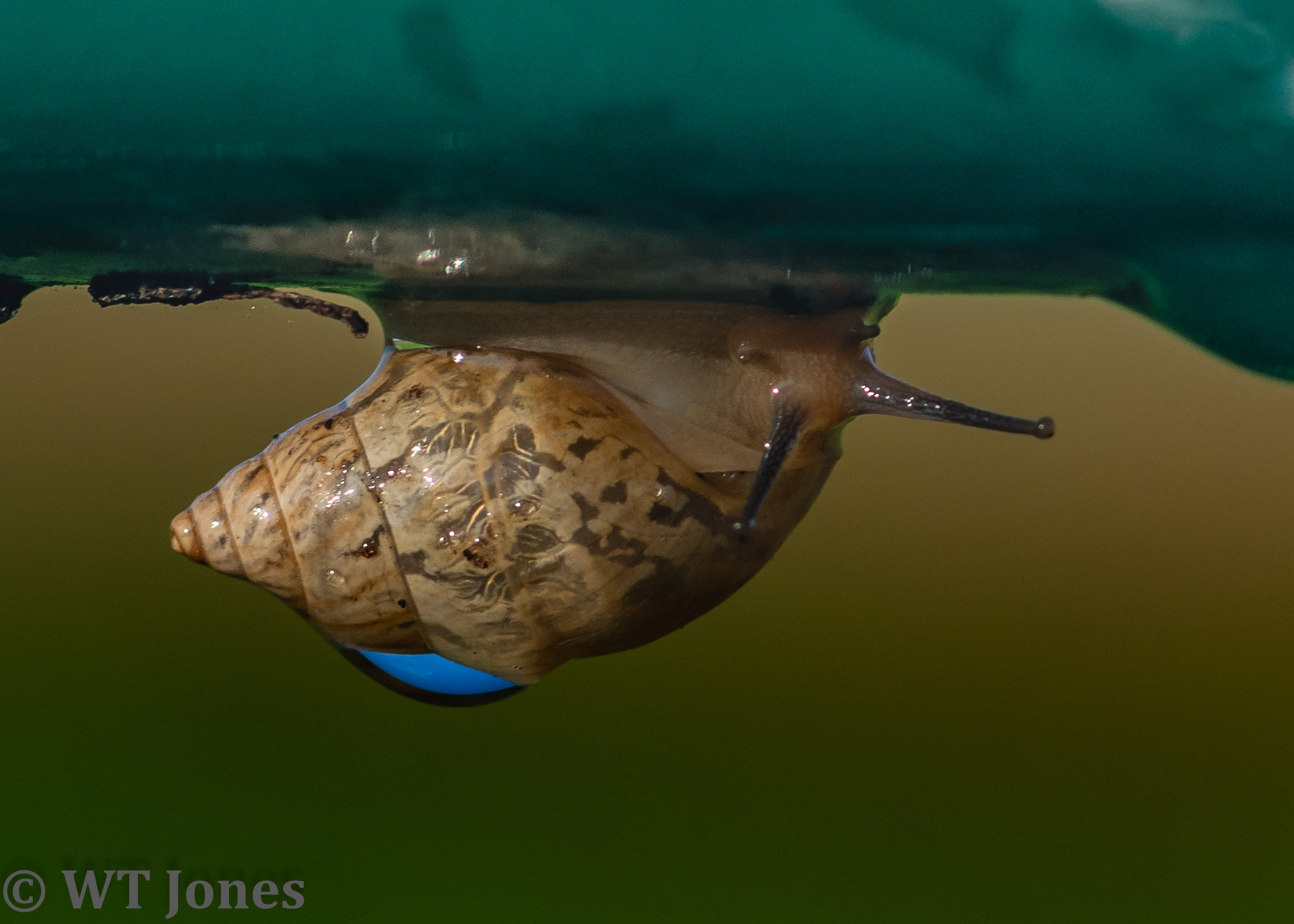
The sky reflected within a drop of water on the back of the shell of a snail. I’ll leave it to you to create your own metaphor. Or poem. Or, as we did, you could just enjoy the view.
Whew! We saw a lot today. Only a small portion has been shared. (You can thank us later.) Nature stays busy. Survival is a never-ending task. It boggles the mind to understand that this process occurs each and every day, whether we are there or not. We hope to repeat the experience soon – and often.
Enjoy your search for a natural place and come back for a visit!
 Our Natural Places