An Inevitable (and Thankful) Outcome of Osmosis – A Love Story
(Click on images to enlarge, click again to zoom.)
OSMOSIS
One dictionary definition: “Movement of a solvent (such as water) through a semipermeable membrane (as of a living cell) into a solution of higher solute concentration that tends to equalize the concentrations of solute on the two sides of the membrane.”
Another: “A process of absorption or diffusion suggestive of the flow of osmotic action.”
And: “A usually effortless often unconscious assimilation.”
Aha.
Our specific example.
Once upon a time — the life of Gini and Wally has, after all, been the stuff of a fairy tale — we met in an atmosphere filled with music. She said “why me?“. He said “because you are YOU“. We eventually proceeded down life’s road with detours to raise children, reside in foreign lands, learn hard lessons in finance/politics/injustice/ignorance/health – you all know because you have traveled similar detours in your own lives.
As we nurtured our common love of nature through hiking, camping, exploring – we were introduced to the world of what, in the olden times, was called “bird-watching”. Decades passed and wherever the current chapter of our life found us we were able to enjoy our hobby/obsession. We evolved. We discovered we had become “birders”. Optics appeared around our necks and in our hands. We produced lists. Without even trying, we became “citizen scientists”.
Osmosis. Something happened during our birding adventures. Imperceptibly, we became more and more interested in learning the names of flowers, trees, insects. The camera’s data card which recorded images of our excursions seemed to be filled with a more diverse collection of flora and fauna. Birds definitely were our main focus – but were no longer our only focus.
Inevitable. Our search for birds took us afield where we experienced forests, pastures, lakes, swamps, coasts, farmland. Although we may have begun to target a particular habitat in the hope of finding a particular bird species, we discovered so much more. Sights, sounds, smells – sensational!
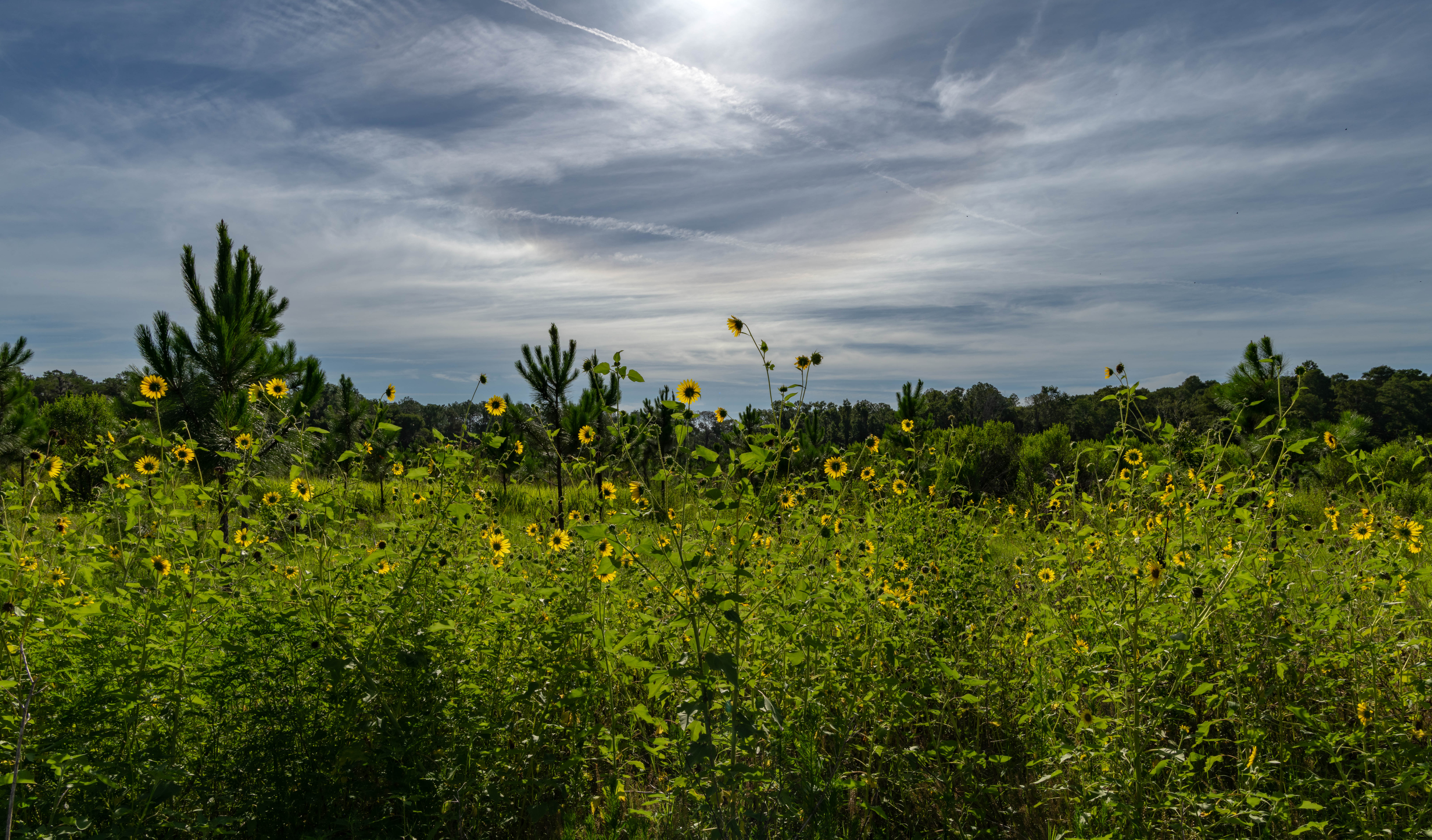
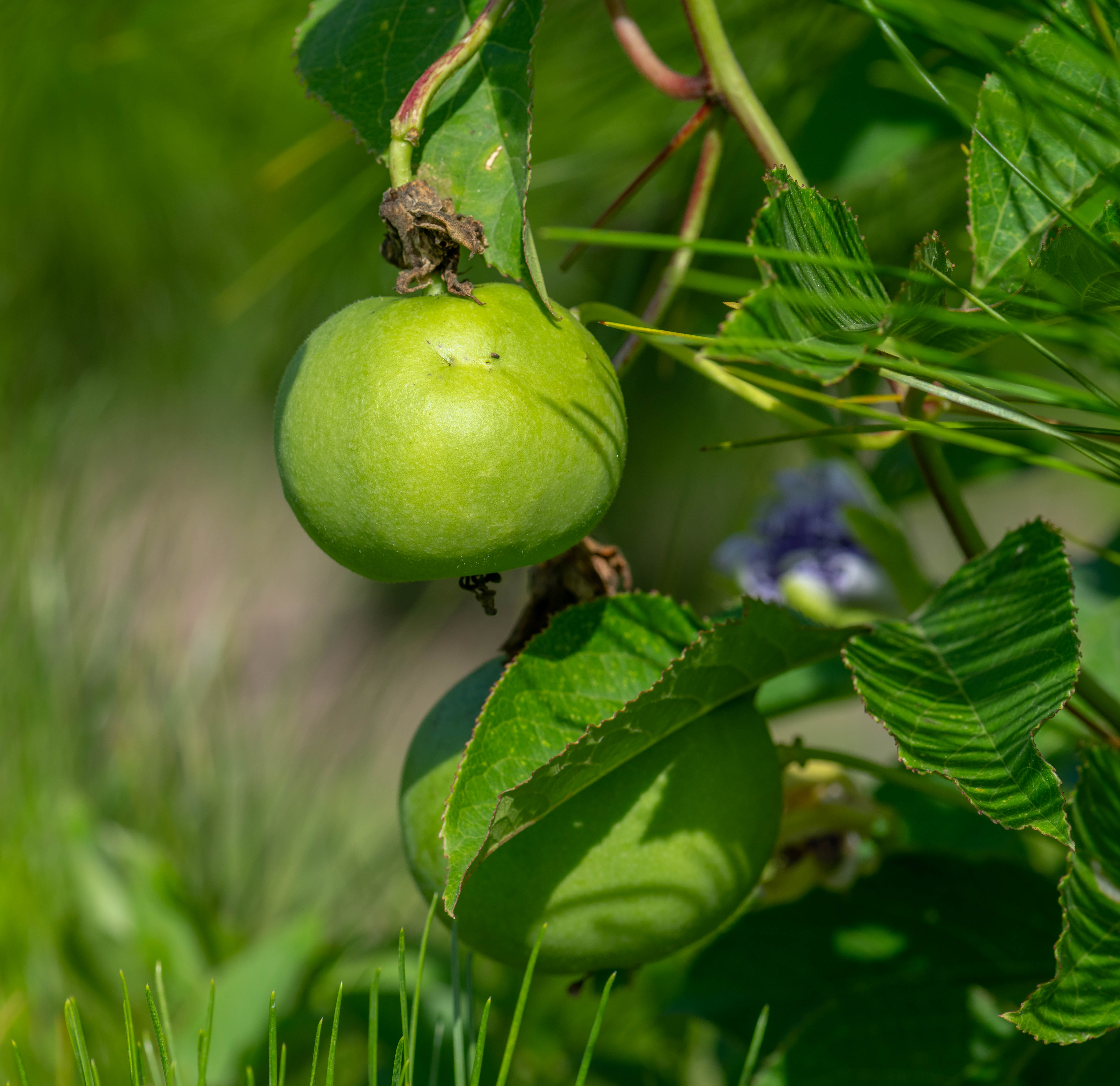
Thankful. On this morning, it would have been easy to take all that we enjoyed for granted. Just another day outdoors. Fortunately, we have learned to stop and smell the pines. The day began with a few clouds obscuring the rise of the sun. Sunflowers didn’t care and in unison turned their bright faces eastward, as they do every morning. Purple Passionflower blooms are so flamboyant one could easily miss the fruit ripening under tender green leaves. Careful examination of the ground ahead of our footsteps revealed the diminutive pink Showy Milkwort. Breakfast was accompanied by woodpeckers hammering, cicadas humming, butterflies hovering – we agreed how fortunate we have been to be able to appreciate the bounty Nature offers. Movement on a limb nearby caught our attention. Has that Great Crested Flycatcher been there watching us during breakfast? Huh. Some birders we are were …….
A plethora of pictures.
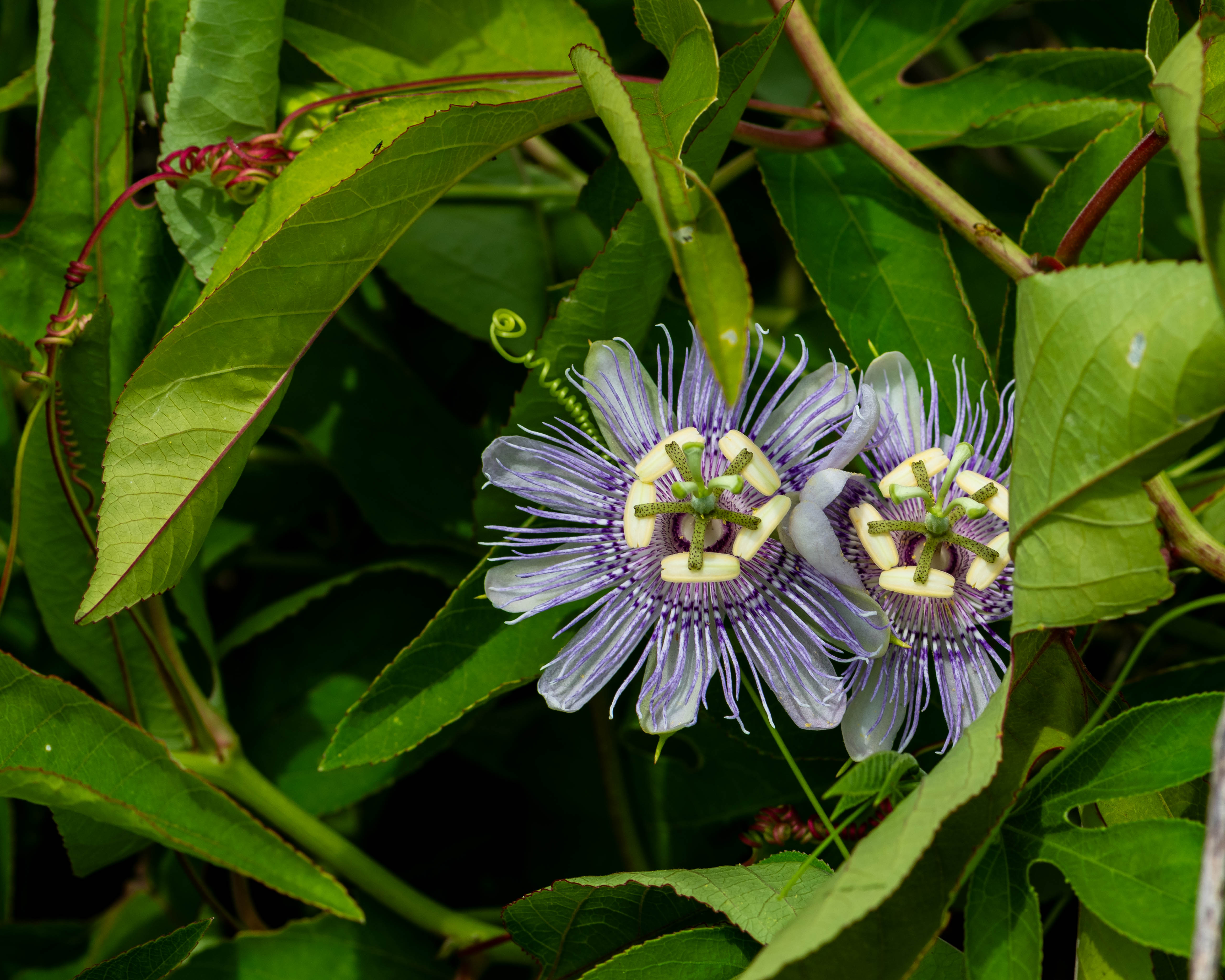
Purple Passionflower (Passiflora incarnata), also called Maypop. These incredibly beautiful, complex flowers were numerous this morning. The plant produces a fruit which turnes slightly orange when ripe and makes a rather tart and tasty preserve. Rumor has it that not too long ago some blooms may have been used by a young blonde budding chef to decorate something known as a “mud pie”. Just a rumor …..
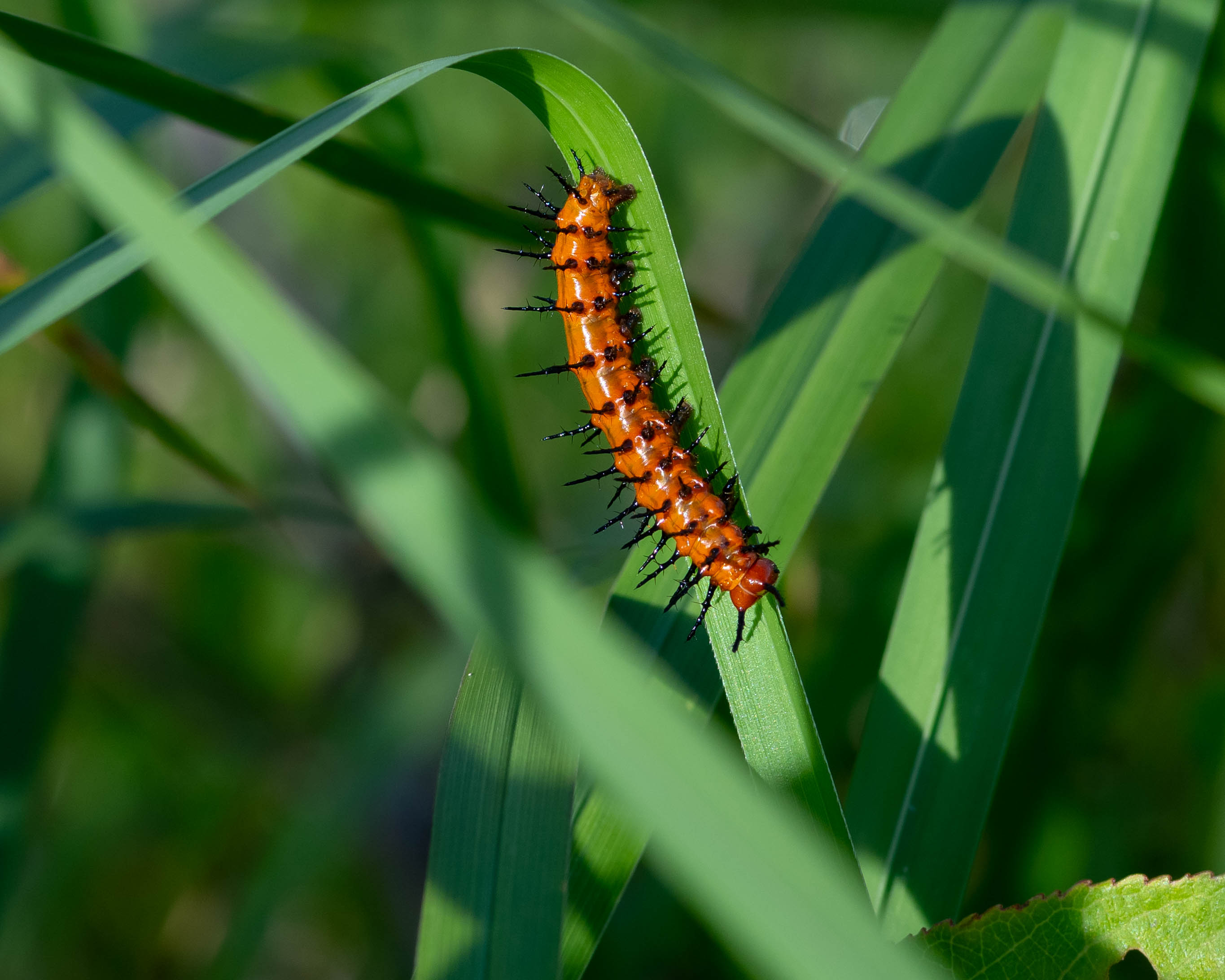
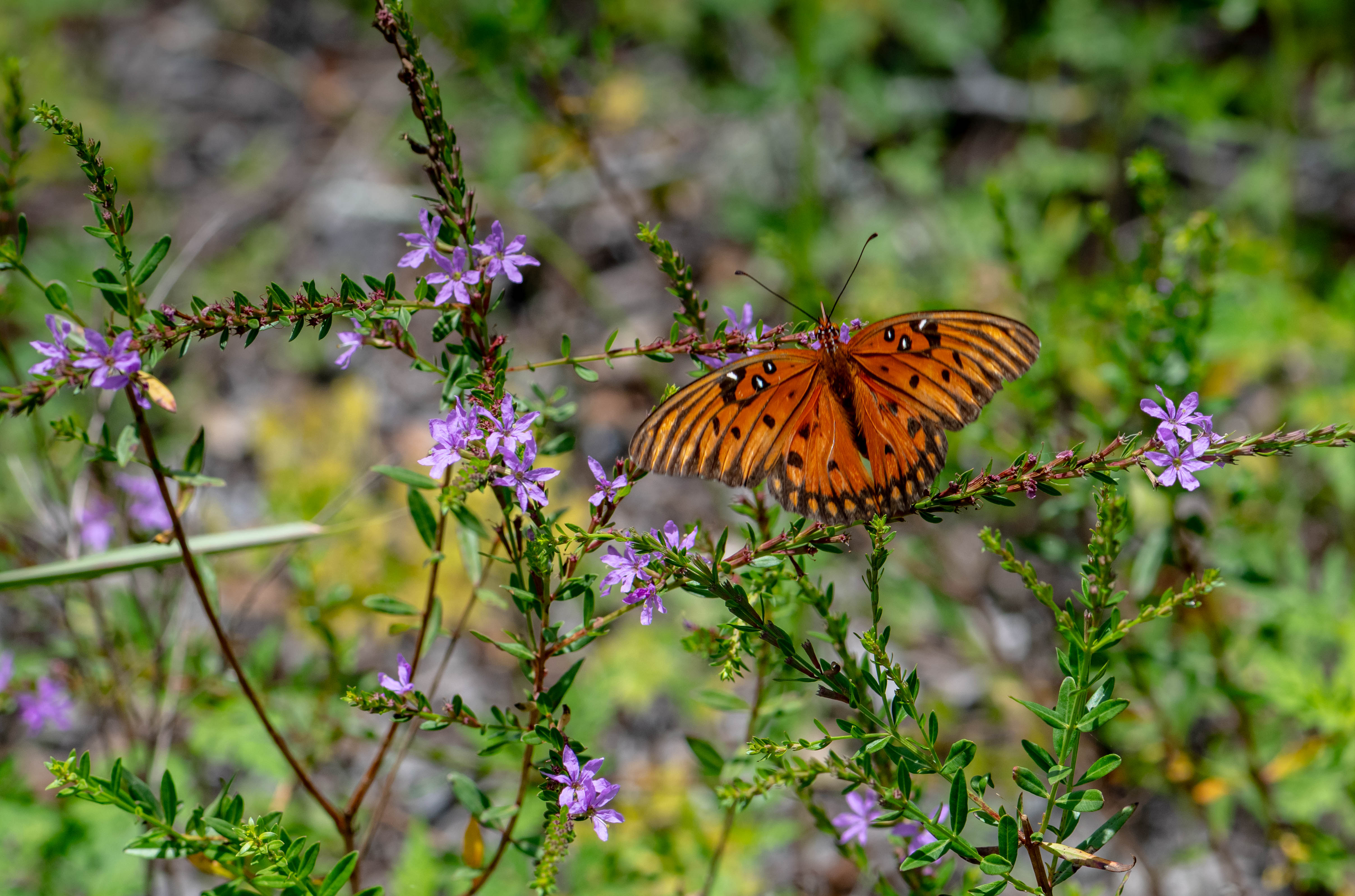
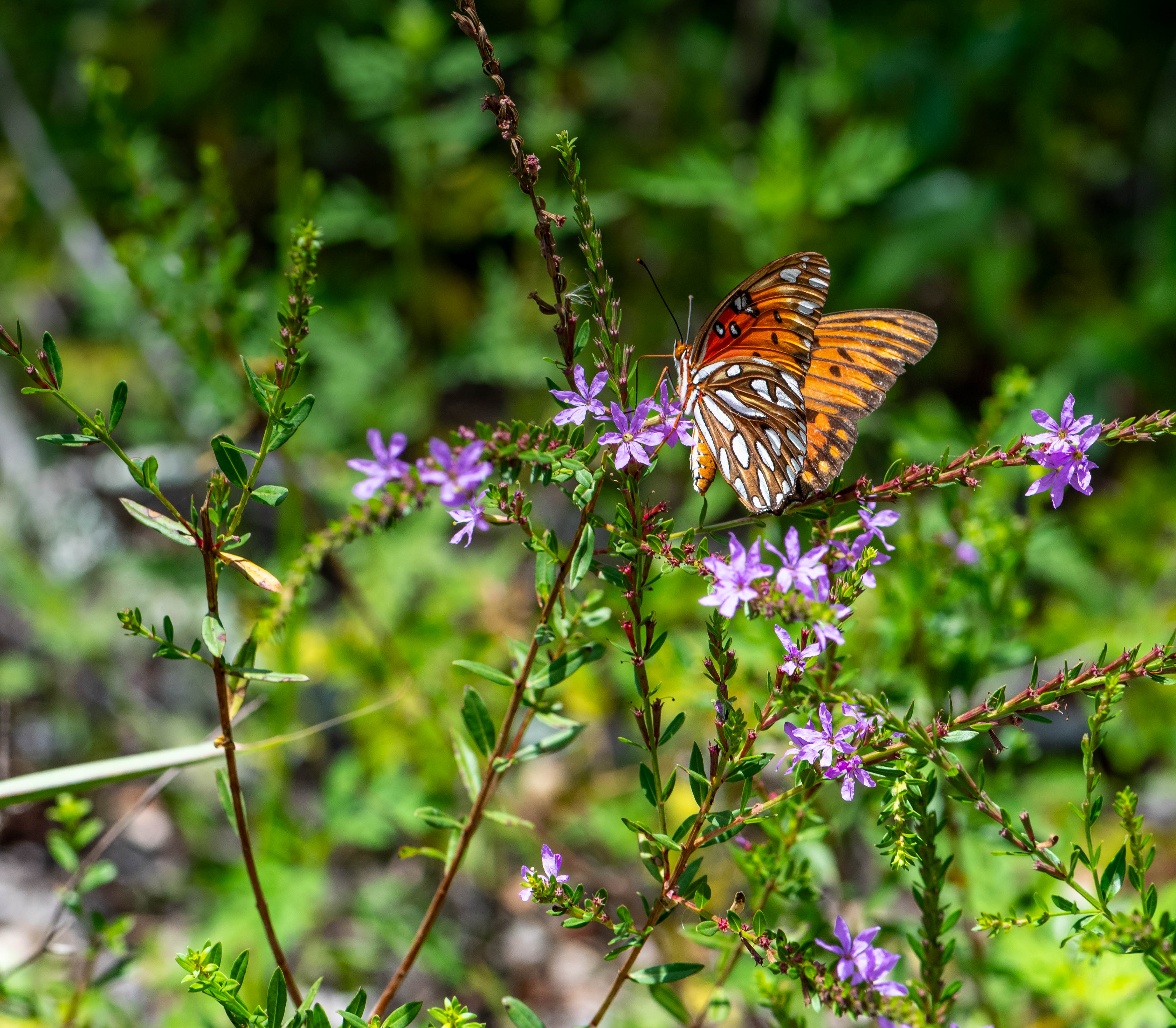
Butterfly larvae can be just as attractive as the eventual adult butterfly. A case in point. Gulf Fritillary (Dione vanillae). Lucky us. They are one of our more abundant species.
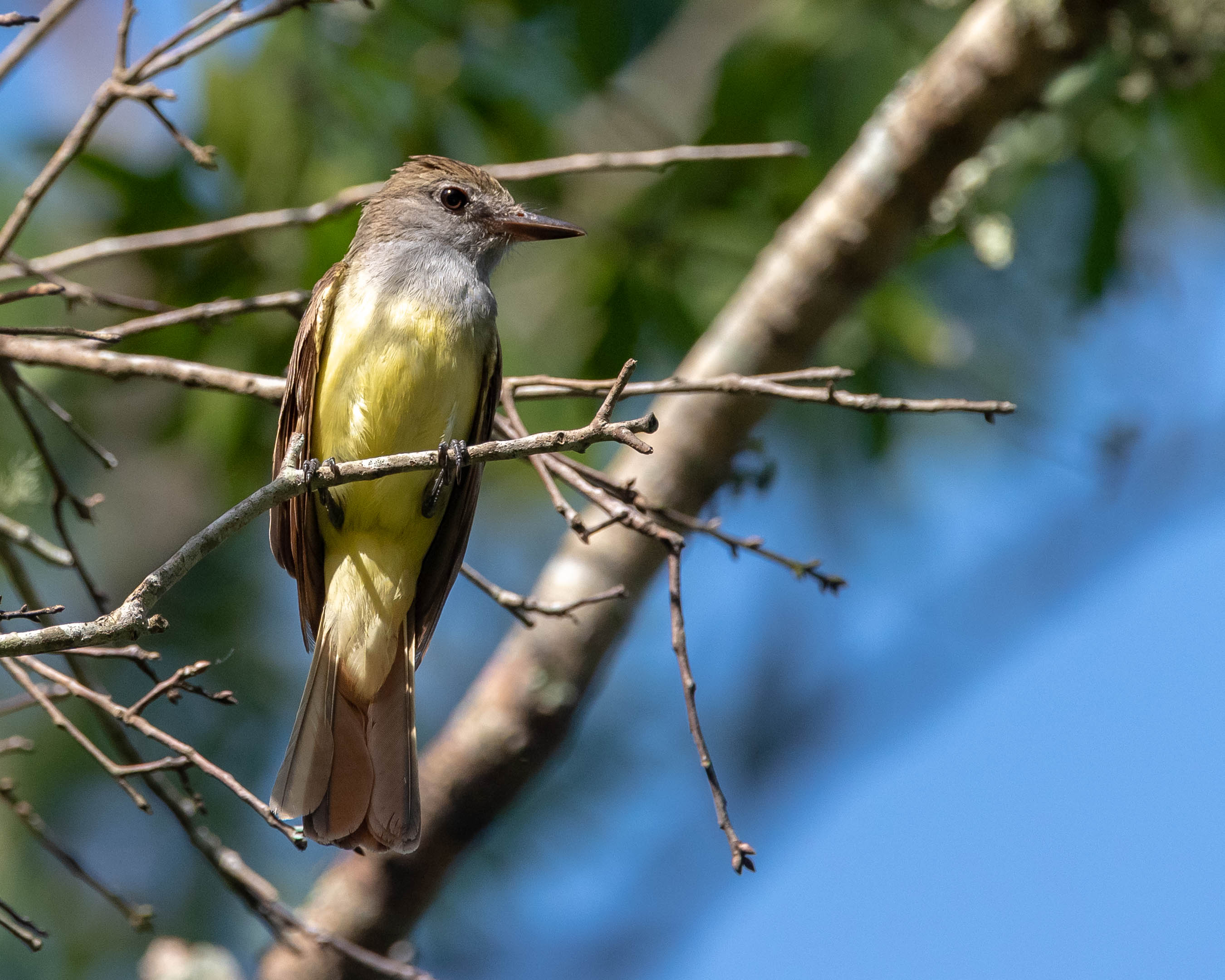
Breakfast eavesdropper. The Great Crested Flycatcher nests throughout our area.
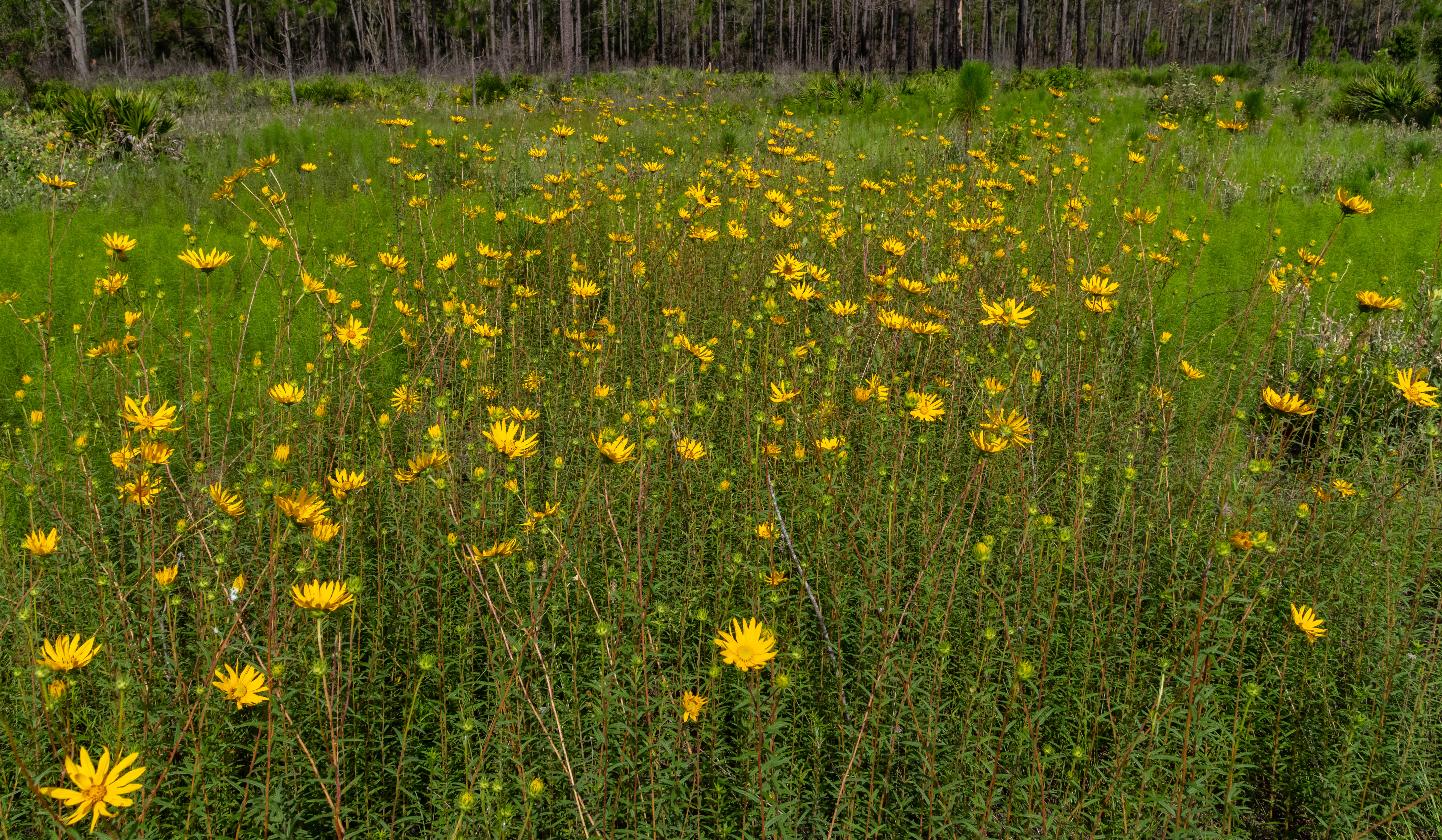
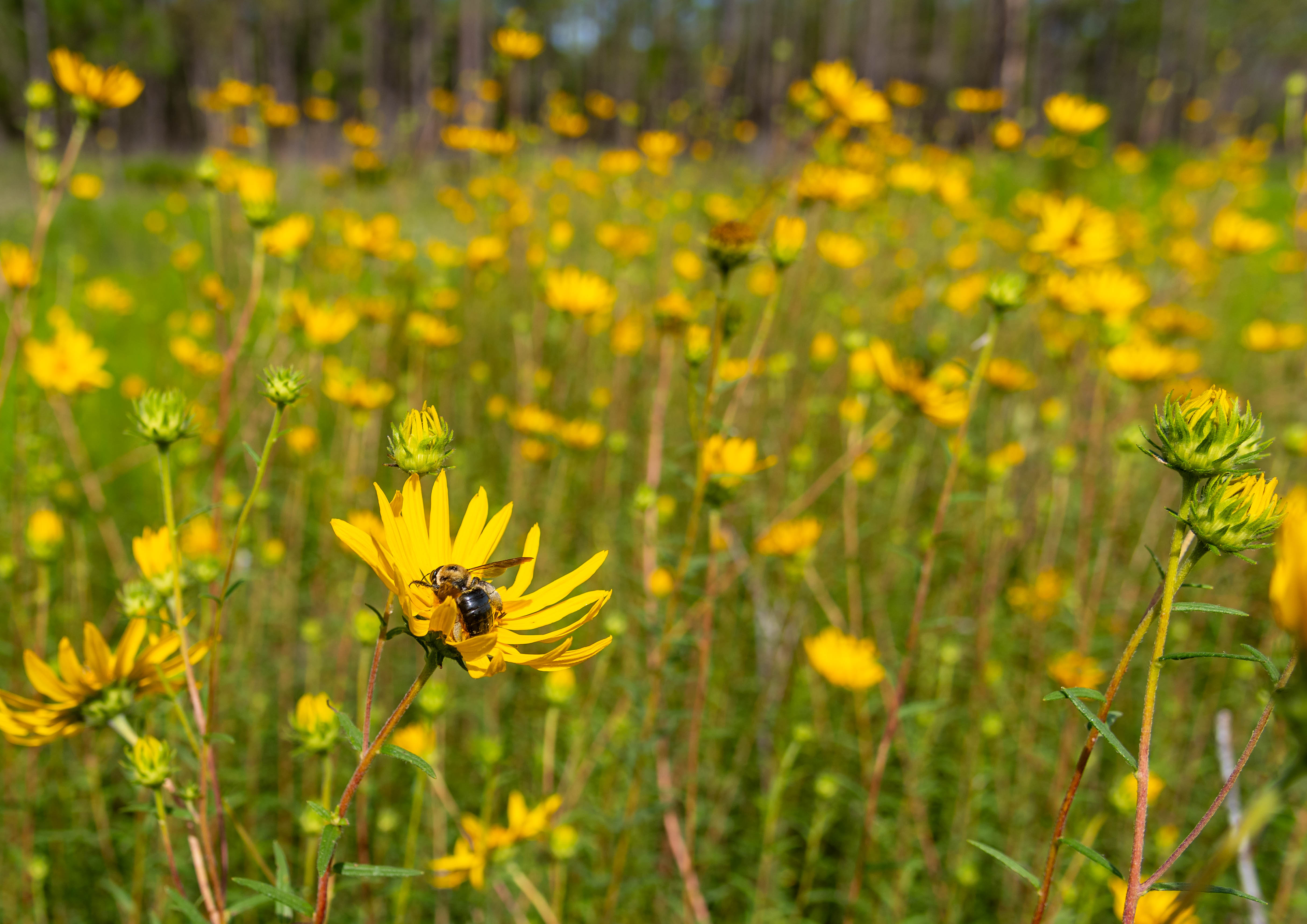
When is a sunflower not a sunflower? When it is a Florida False Sunflower (Phoebanthus grandiflorus). Actually a member of the Aster family, these bright yellow beauties are only found in Florida. Millions of insects are thankful. So are we!
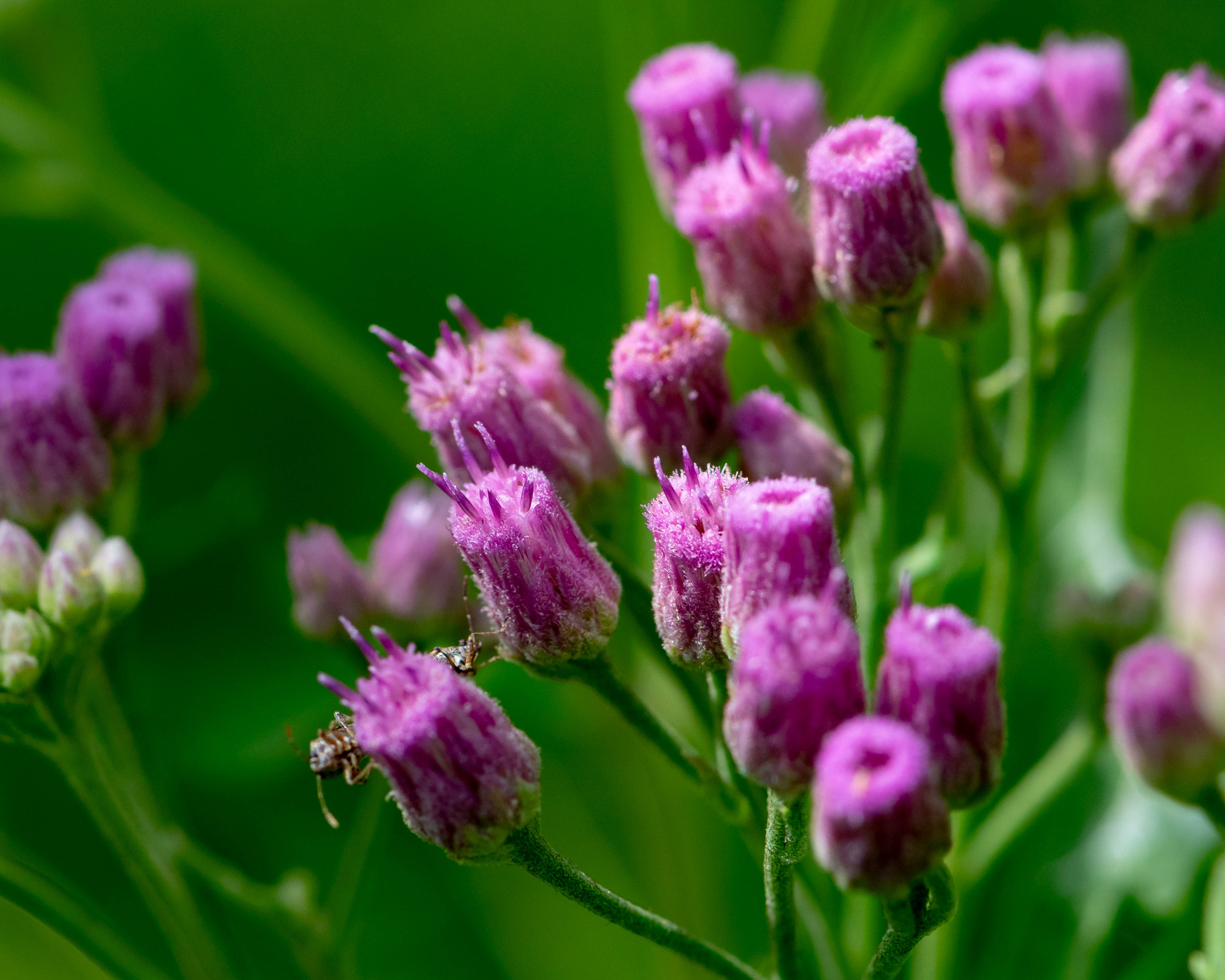
Sweetscent (Pluchea odorata) is also known as Camphorweed, Stinkweed, Salt marsh fleabane, Sourbush and Cattle-tongue. Whew! That’s a lot of aliases for a very pretty flower. Evidently, its odor is not very offensive to myriads of nectar-seekers as we usually find the blooms very busy with bugs.
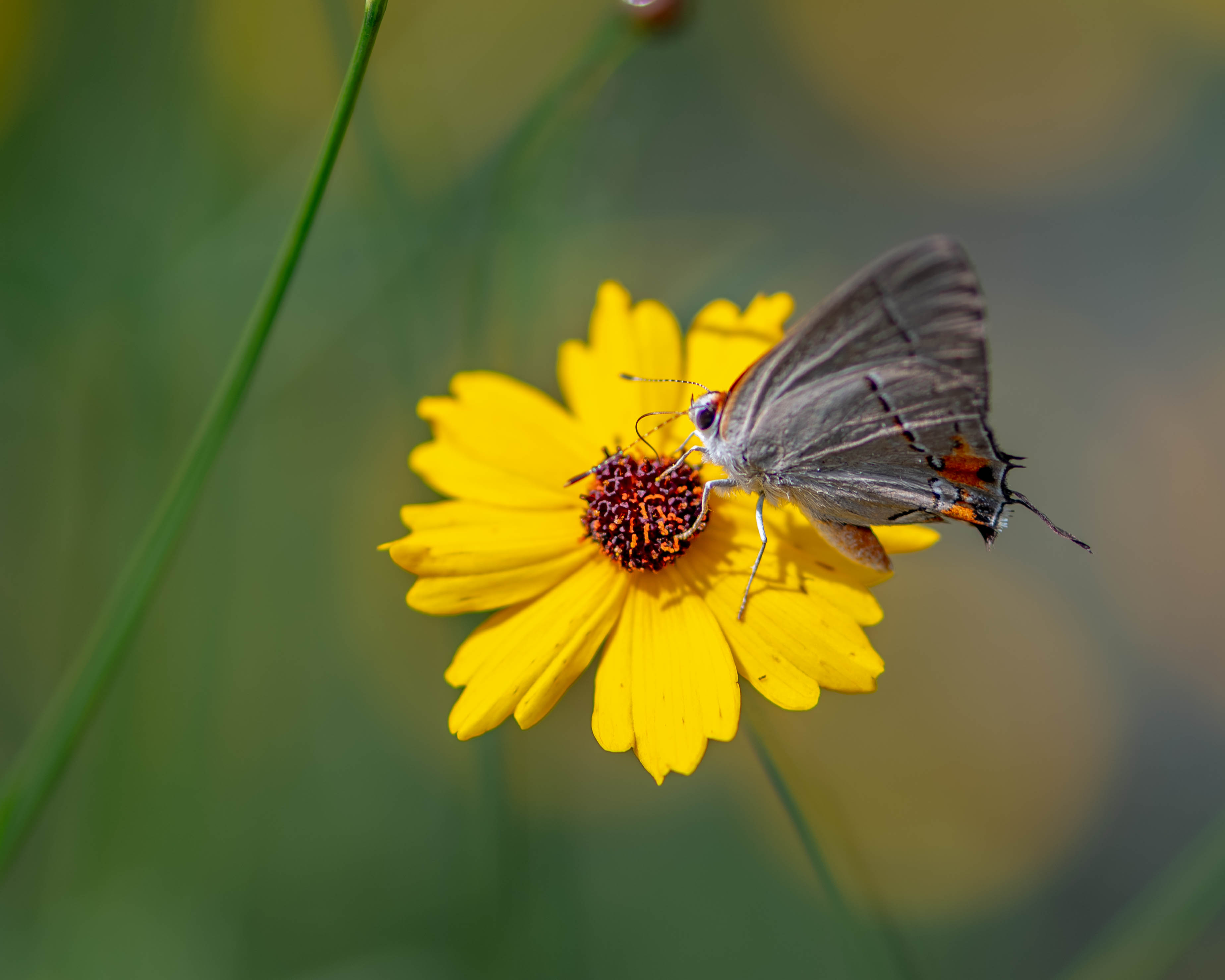
In 1991, the state legislature, in typcial bureaucratic fashion, couldn’t make a specific decision so named Florida’s state wildflower as the entire genus of Coreopsis. They continued with their politically bland behavior by placing a member of the genus on our state’s license plates to celebrate their genius. What did they choose? Goldenmane coreopsis (Coreopsis basalis) is the wildflower featured on the state wildflower license plate, BUT it is not native to Florida. Sigh. Anyhow, today we found plenty of a member of the “state wildflower” genus which is nearly endemic to Florida, Leavenworth’s Tickseed (Coreopsis leavenworthii). This Gray Hairstreak (Strymon melinus) is apolitical and thinks the nectar is just fine, thank you very much.
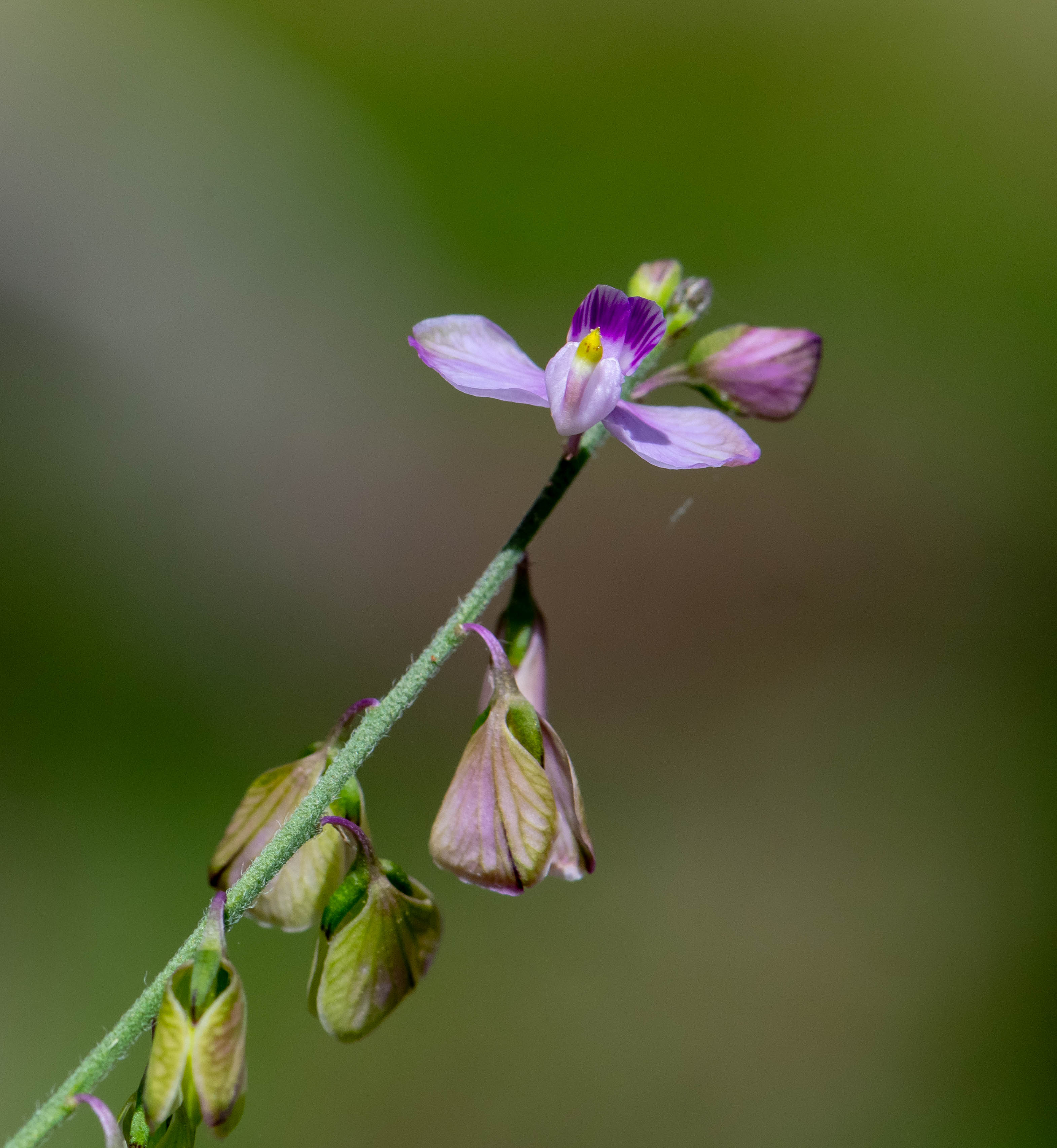
Seldom growing taller than 12 inches, the Showy Milkwort (Asemeia violacea) has tiny but gorgeous flowers. Bees are its primary pollinators.
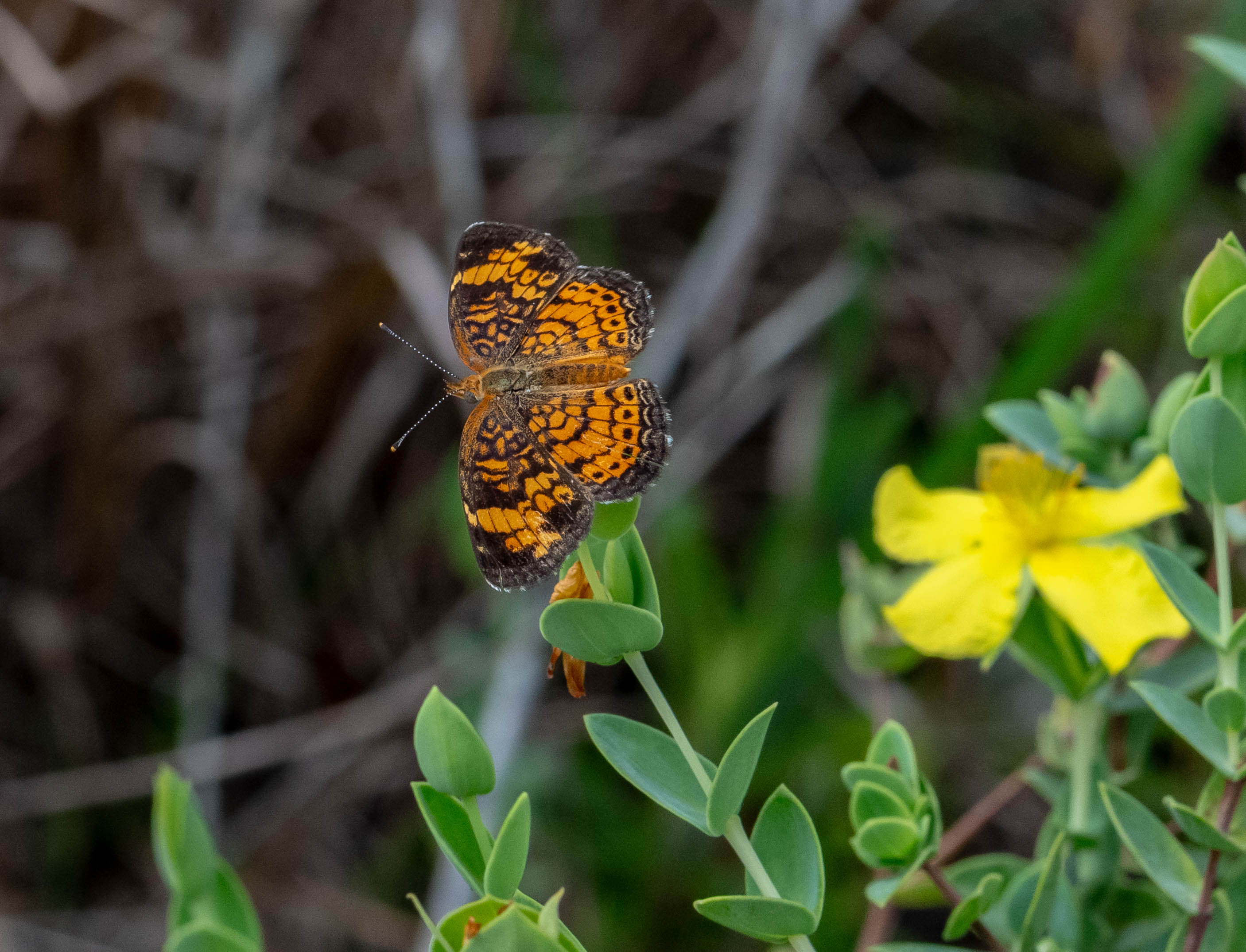
An abundant butterfly in most of North America, the Pearl Crescent (Phyciodes tharos) can easily be overlooked due to its small size and unless it moves it can be surprisingly difficult to spot near the ground. Lovely to see once we do find one.
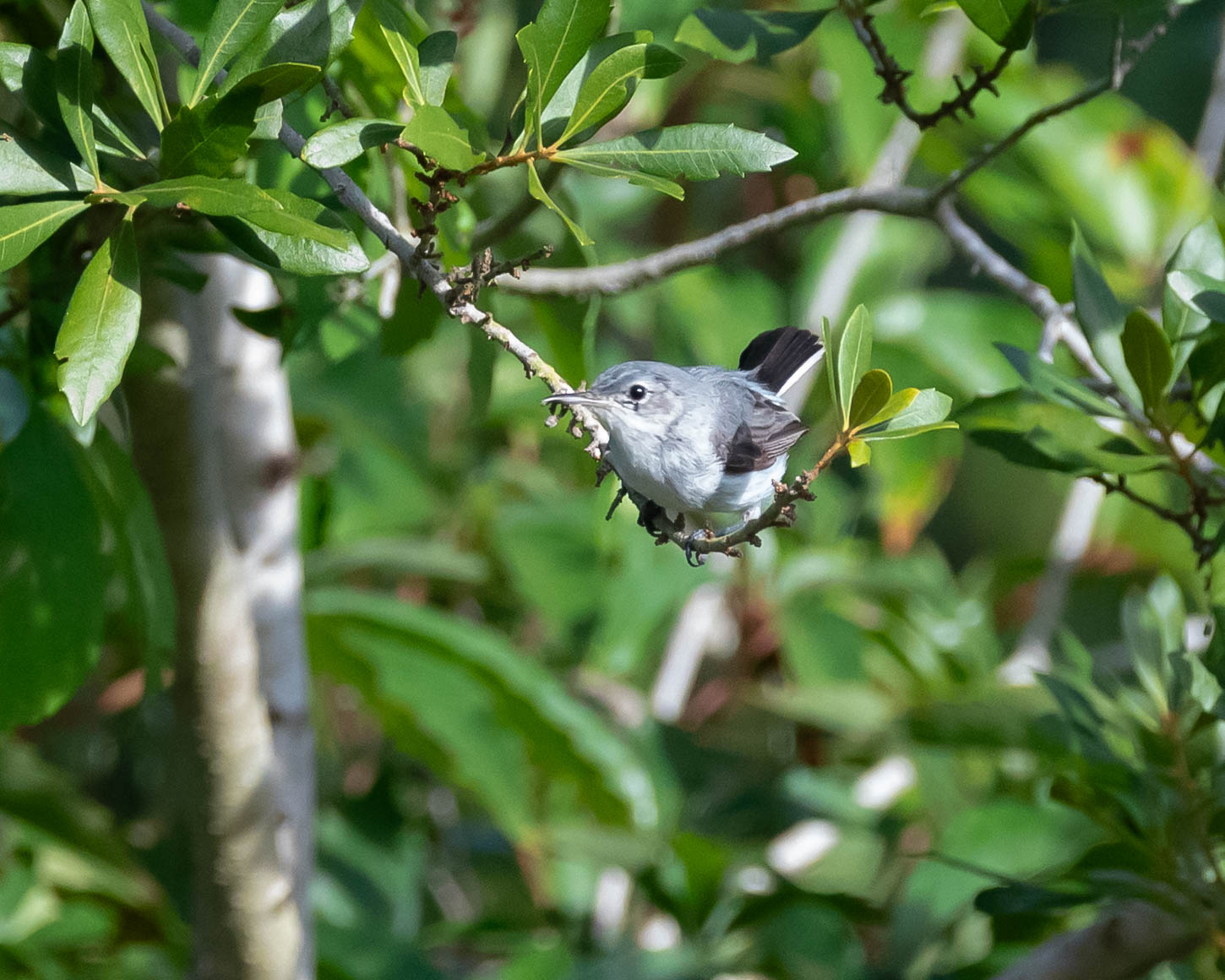
Constantly moving. Constantly fussing. Blue-gray Gnatcatchers may not be the most colorful bird in the woods but they certainly are handsome. Not to mention fun to watch.
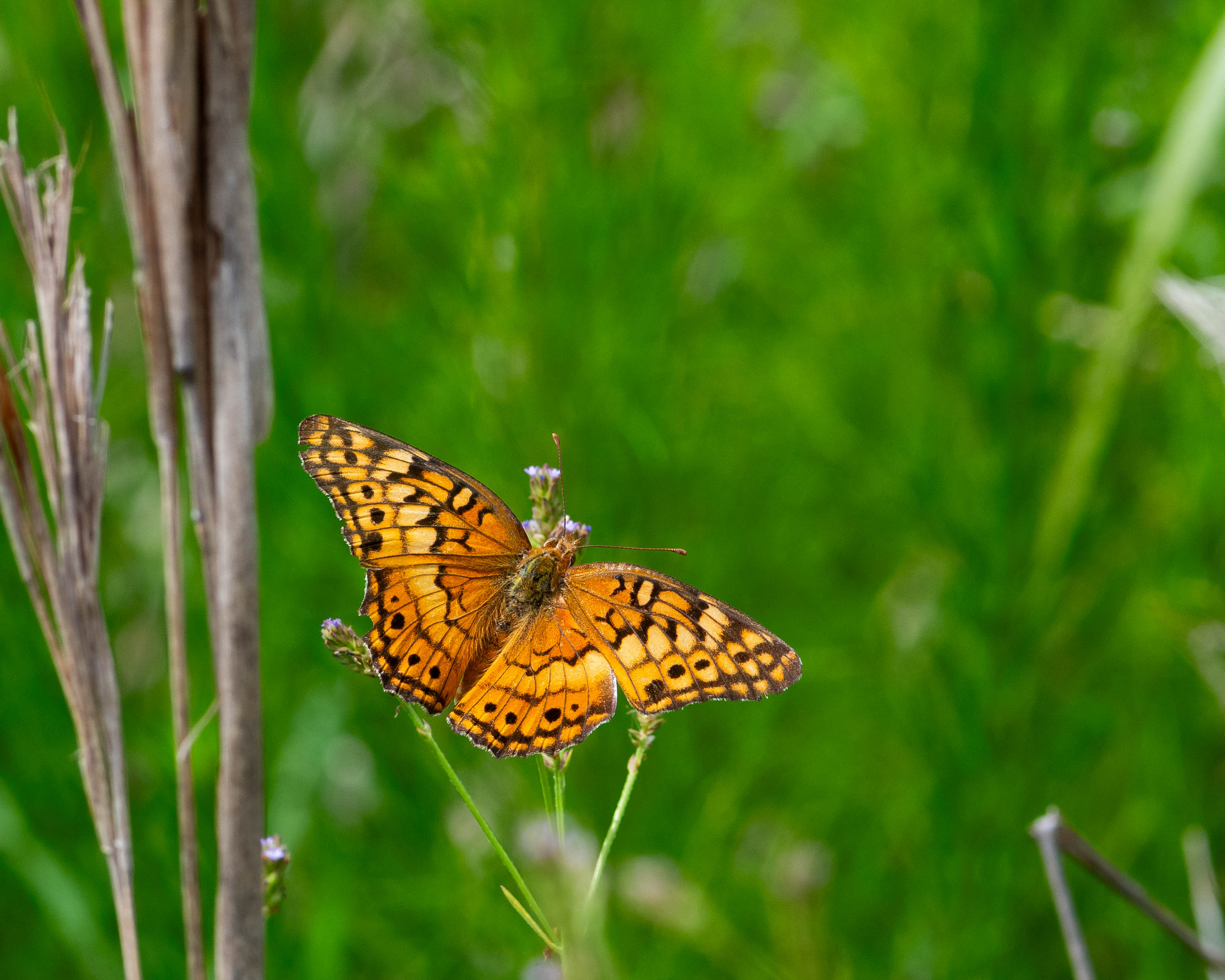
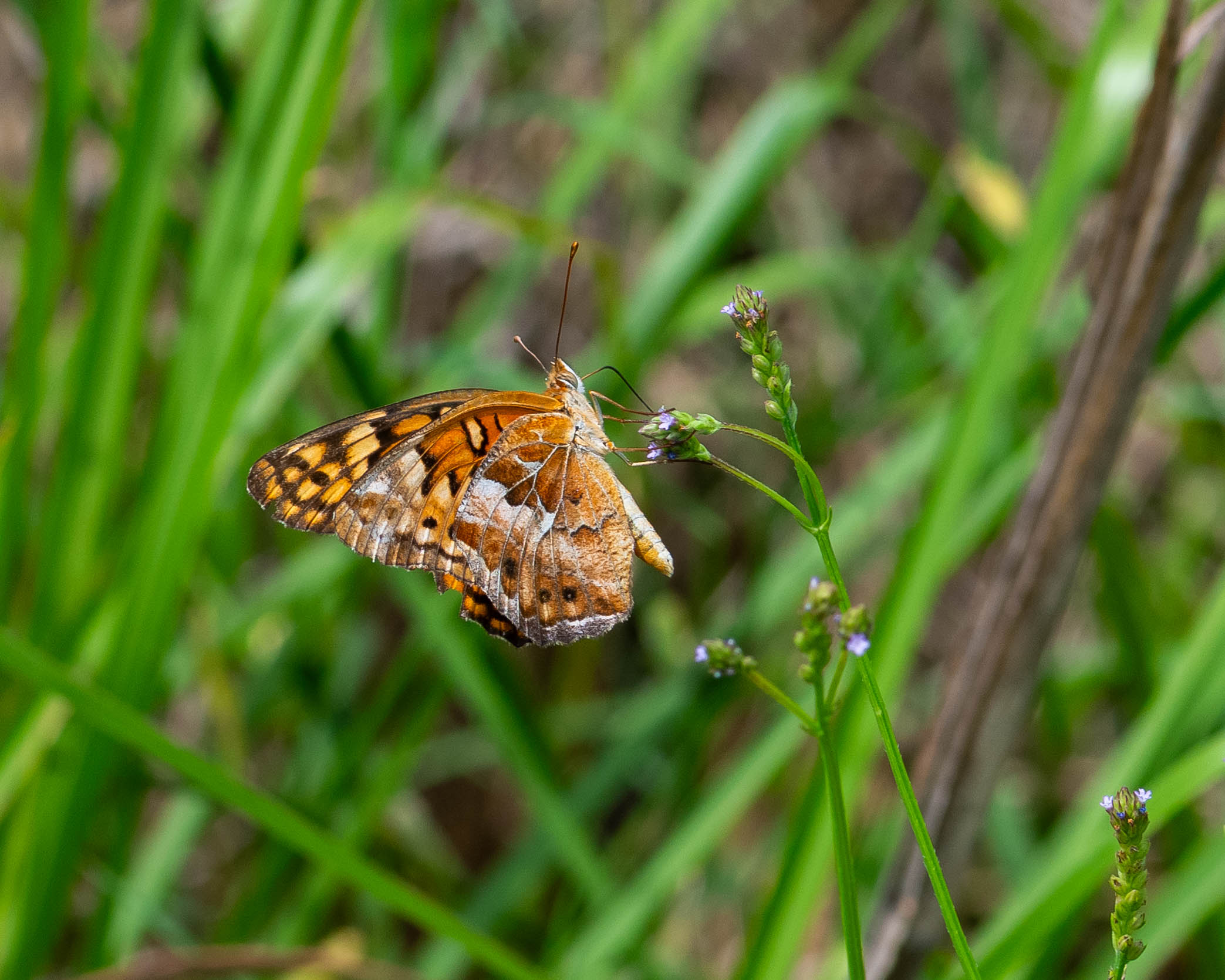
Not quite as brightly colored as its Gulf Fritillary cousin, the Variegated Fritillary (Euptoieta claudia) has a subtle beauty all its own. It gets its common name from the intricately detailed lines on its upper side. Beneath, its wings are said to resemble a dead leaf.
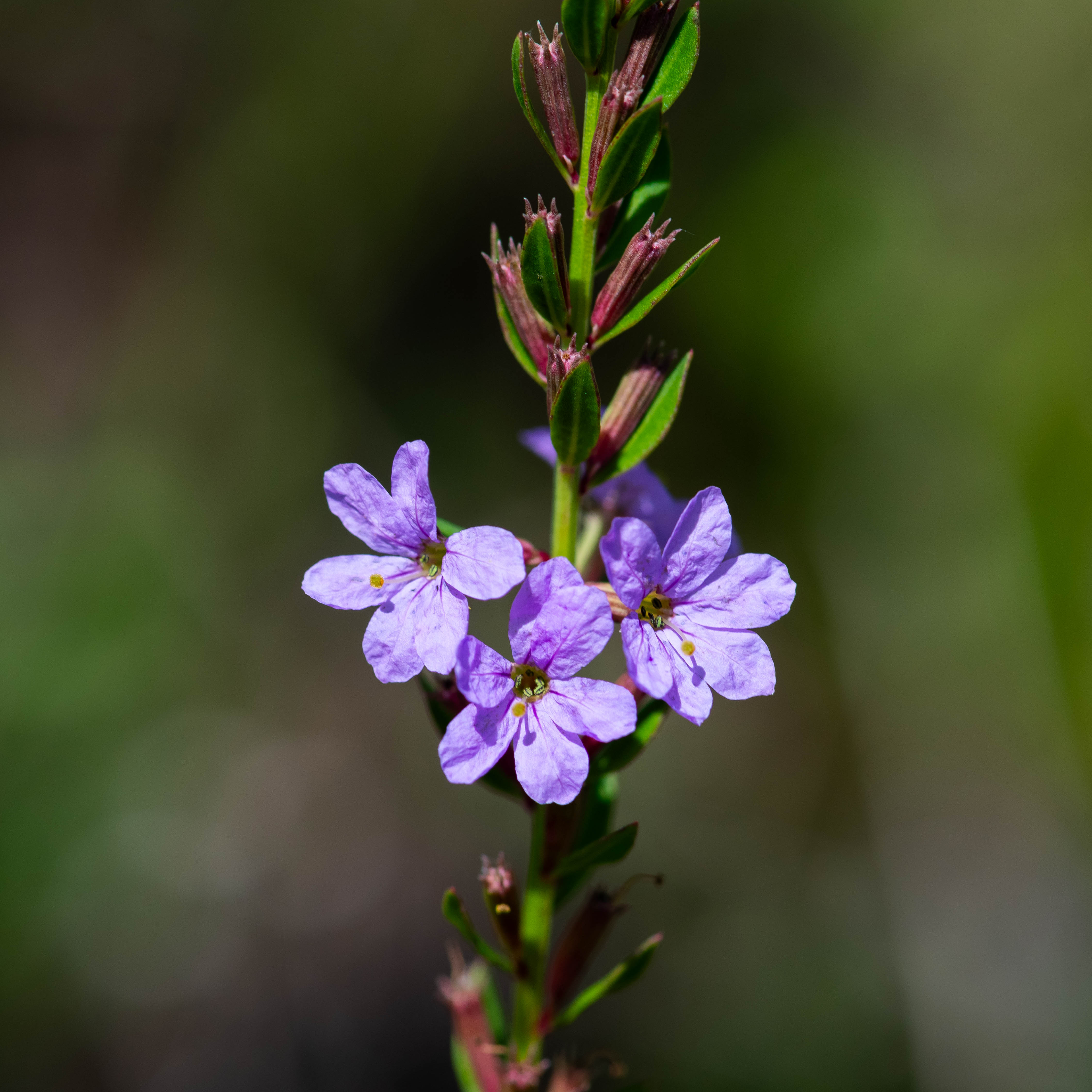
Winged Loosestrife (Lythrum alatum) is abundant throughout our area and can often seem like a lavender blanket covering the edges of forests and swamps. In the spring, it’s difficult to find one of these plants not covered in nectar-lovers.
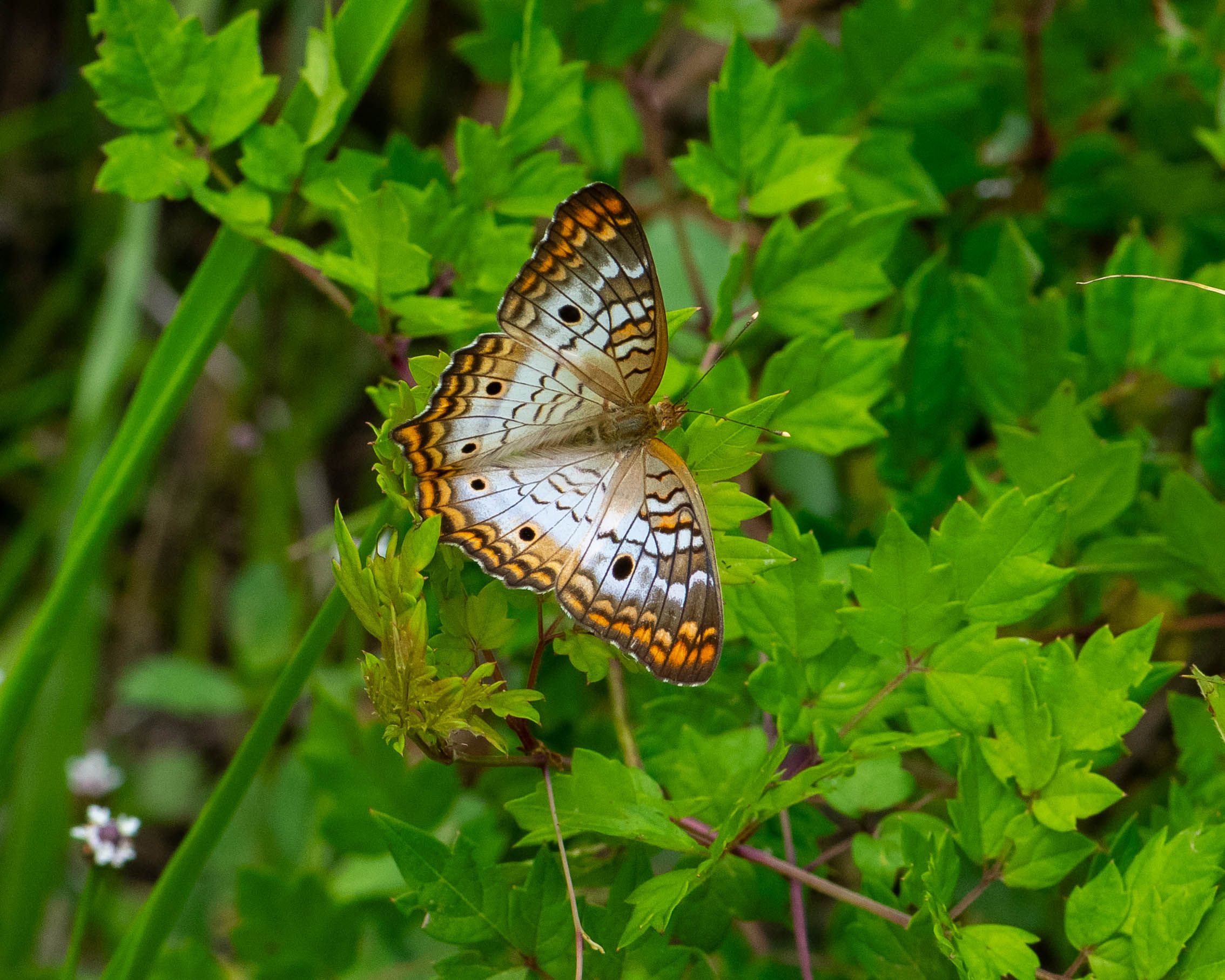
Common in the southeastern United States, the White Peacock (Anartia jatrophae) is like me. Prefers its weather warm, thank you.
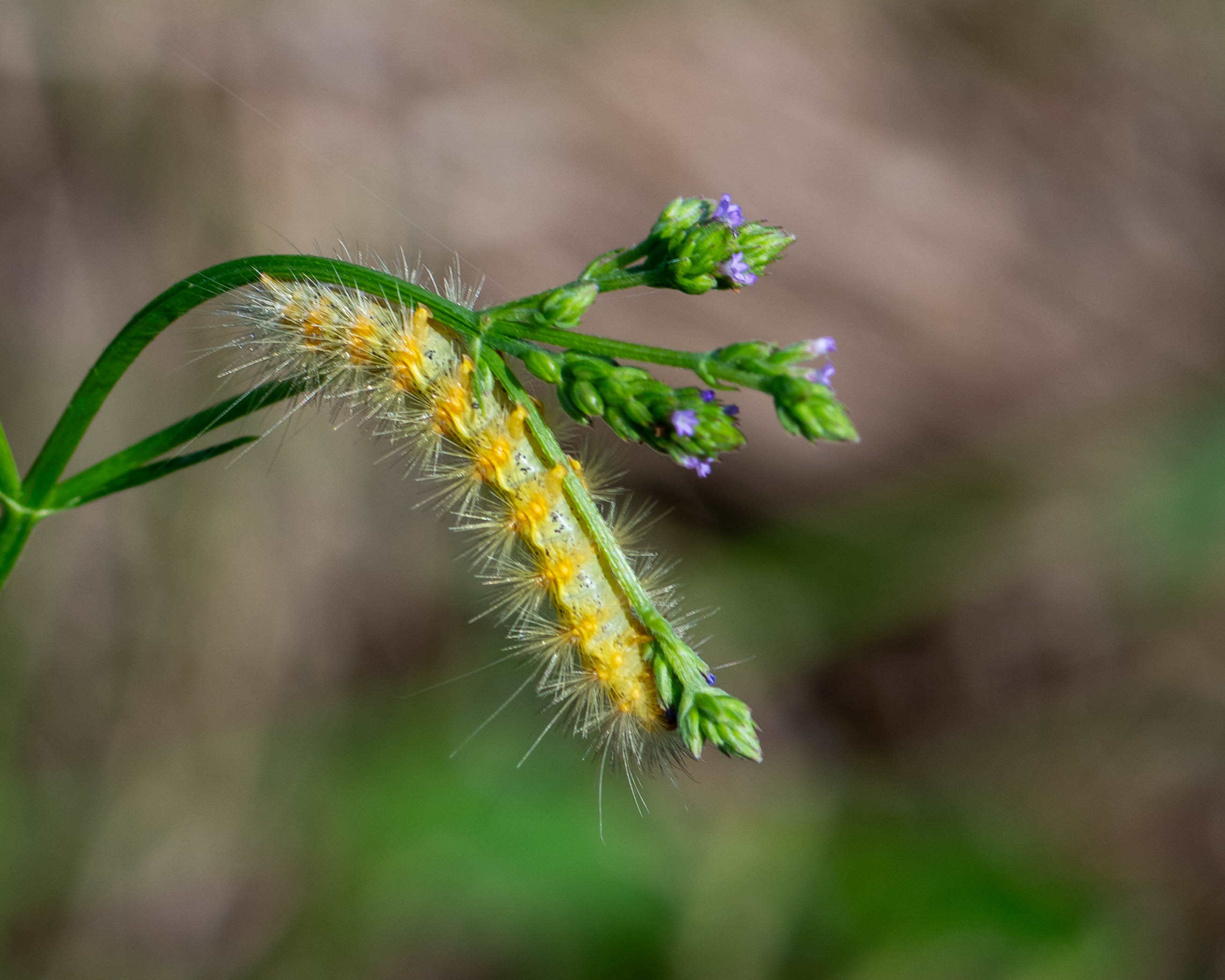
If there is a prize for variable color in a moth larva, the Salt Marsh Moth (Estigmene acrea) larva should win hands, err, legs (?) down. From almost white to almost black, I’m still hunting for an adult to see if they actually exist. In the meantime, I’ll just keep enjoying all the different looks of these really neat caterpillars.
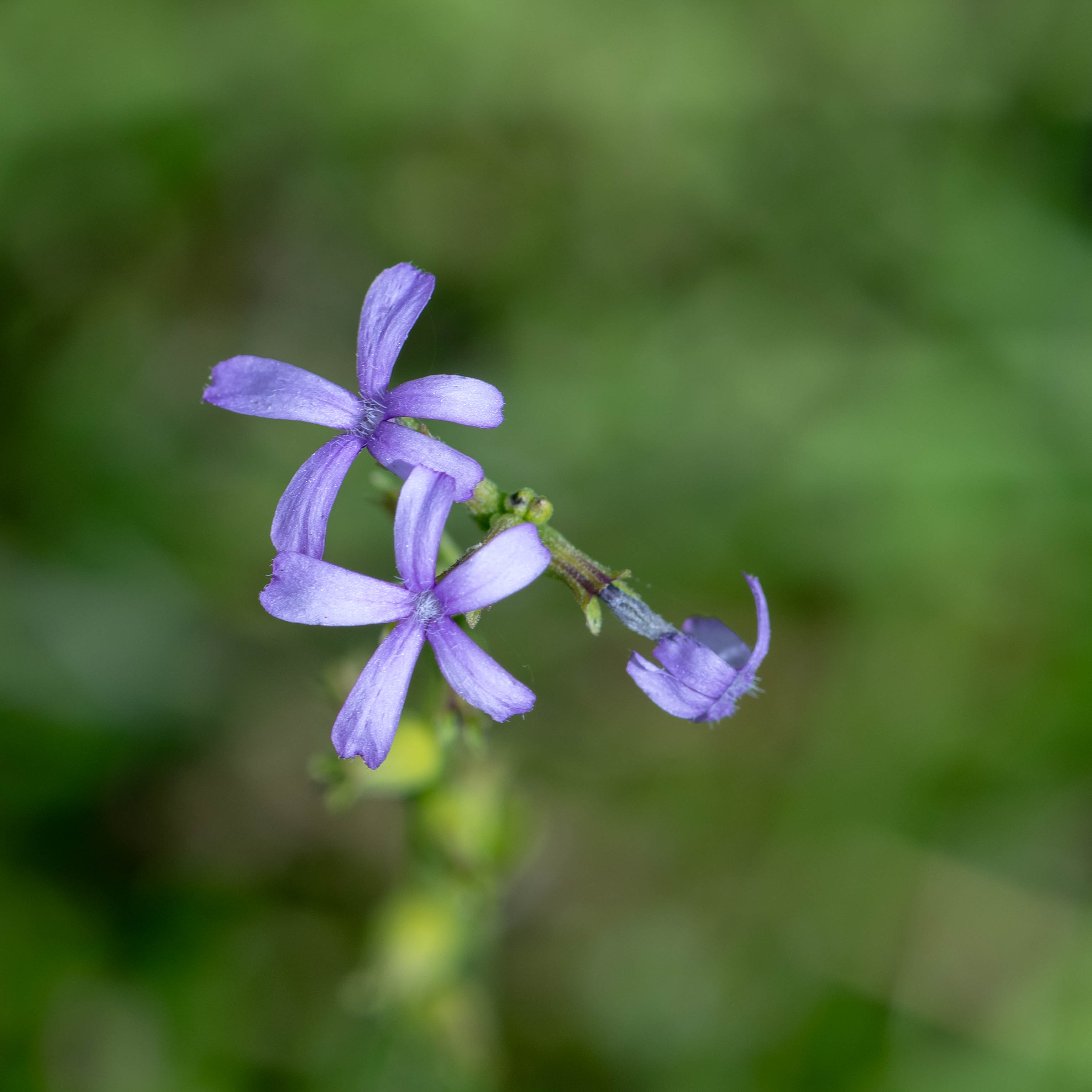
Found in pinelands, prairies, marshes and along roadsides, American Bluehearts (Buchnera americana) have flowers which can range in color from white to bright violet. Not just great to look upon, they feed a huge variety of insects and even birds enjoy the seeds.
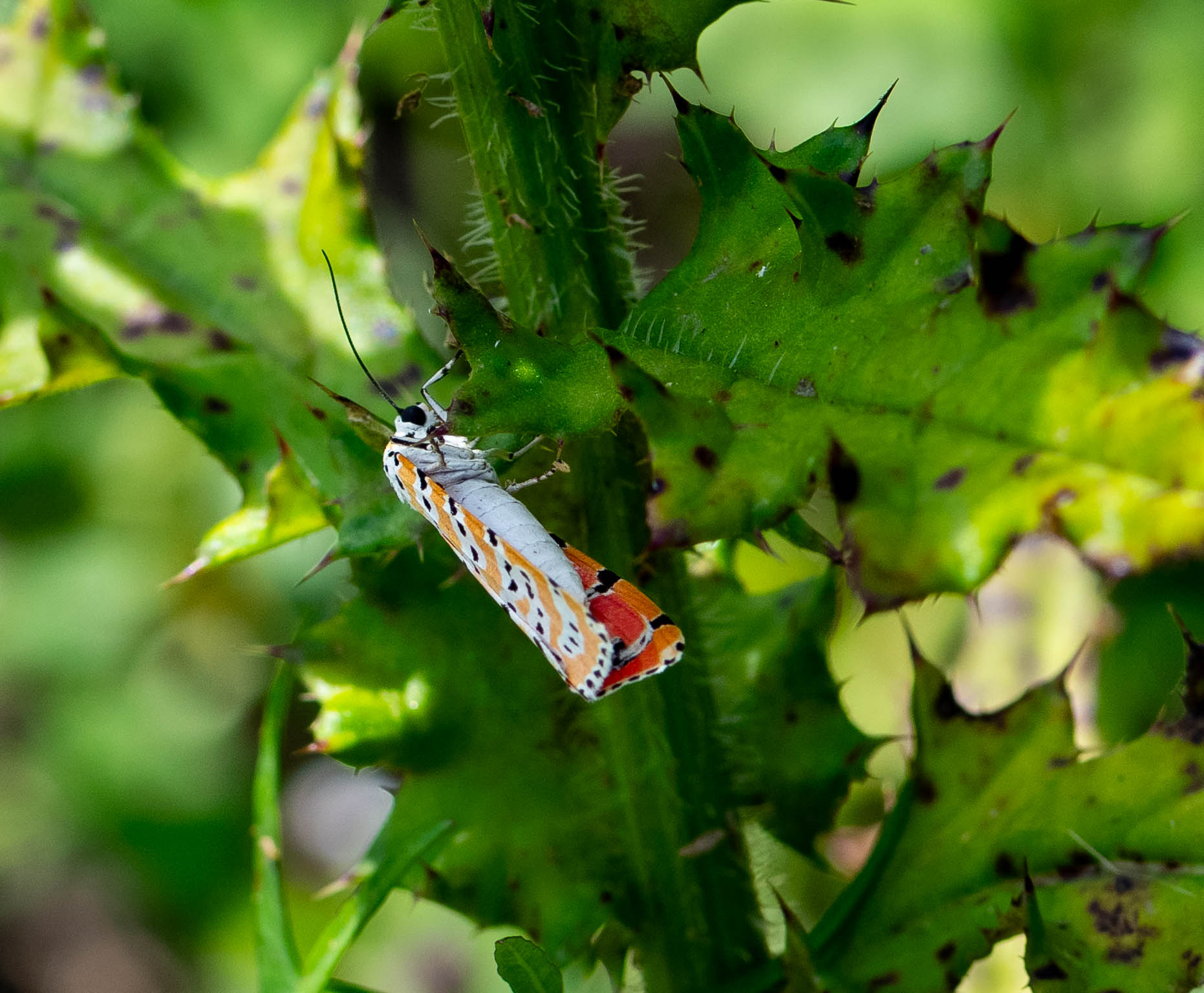
Ornate Bella Moth (Utetheisa ornatrix). Incredibly pink wings when they fly get your attention. These moths are toxic to most predators. Pretty handy feature!
Our lives are filled with events which define who we are at any given moment. We mature chronologically as well as existentially. We often unconsciously absorb information we may not have intended to seek. This process allows us to evolve into the being we are right now. To experience this osmotic effect with Gini by my side continues to make me the most fortunate individual in the universe. Why, yes. I do believe I just defined “love“.
Enjoy your search for a natural place and come back for a visit!
NOTE: A combination of extended family issues and (mostly) computer disaster/slow recovery caused us to be away from an “online presence” for the past several weeks. We’ll try to catch up on all your wonderful adventures, which we have sorely missed.


Welcome back Wally. I feel I am still in the early stages of my mature osmosis as life beyond feathers is still pretty unnamed …especially when it comes to caterpillars..the living kind, of course, as I know a LOT about the heavy iron kind ha. Another lovely set of pictures to enjoy over my lunch. Take care and continue to bask in the definition of love.
LikeLike