Back On Track
(Click on images to enlarge, click again to zoom.)
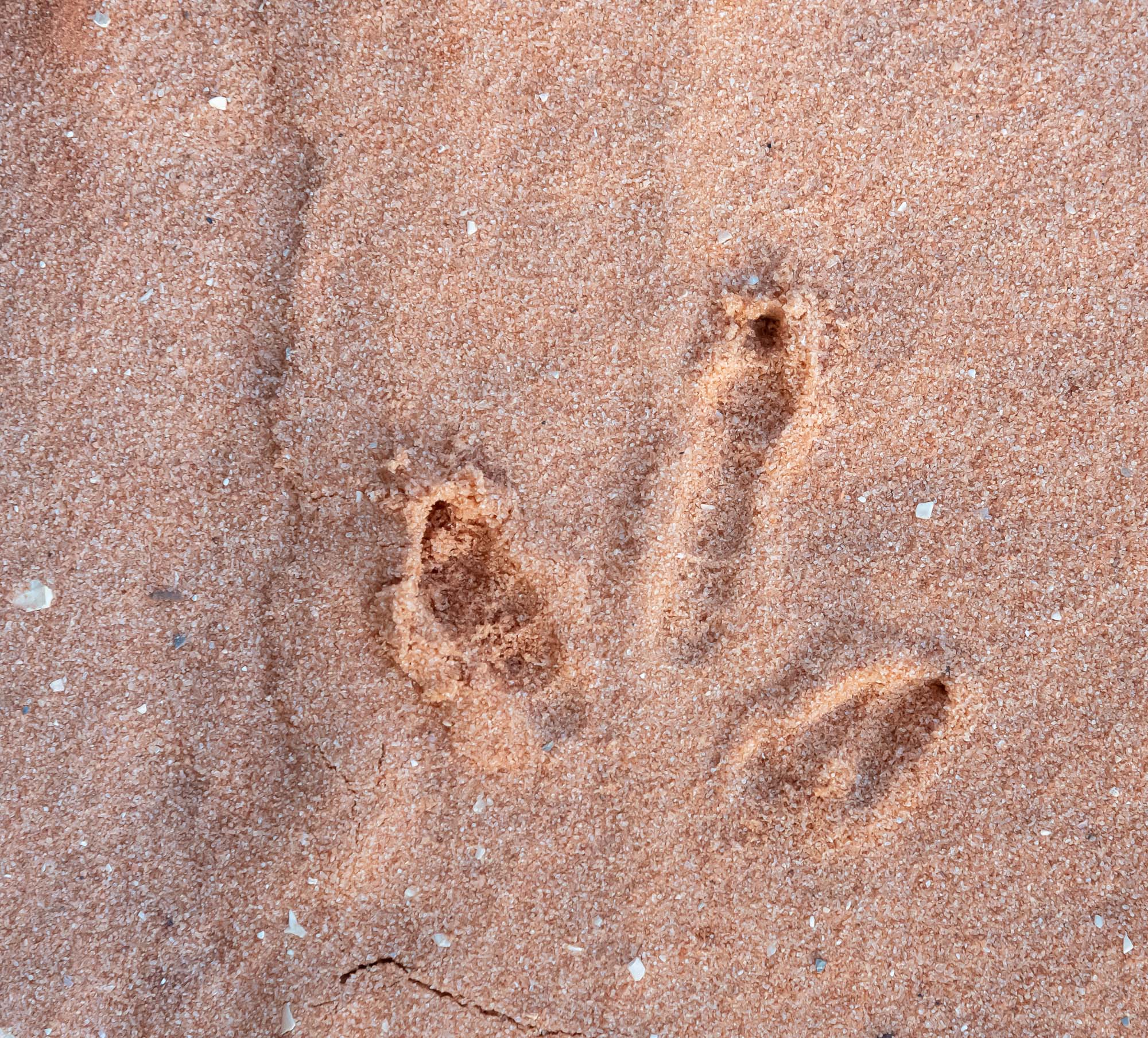
For ten miles, the road stretches in a straight line through the Lake Wales Ridge State Forest. Multiple trails lead from the road into pine woods, oak scrub and sandhill habitat dotted with saw-palmetto. We stop often to inspect the fine reddish-colored sand to see who has passed in the night. On this cool morning, Wild Turkey prints were abundant. There were also raccoon, opossum, deer, snakes and some we just could not identify.
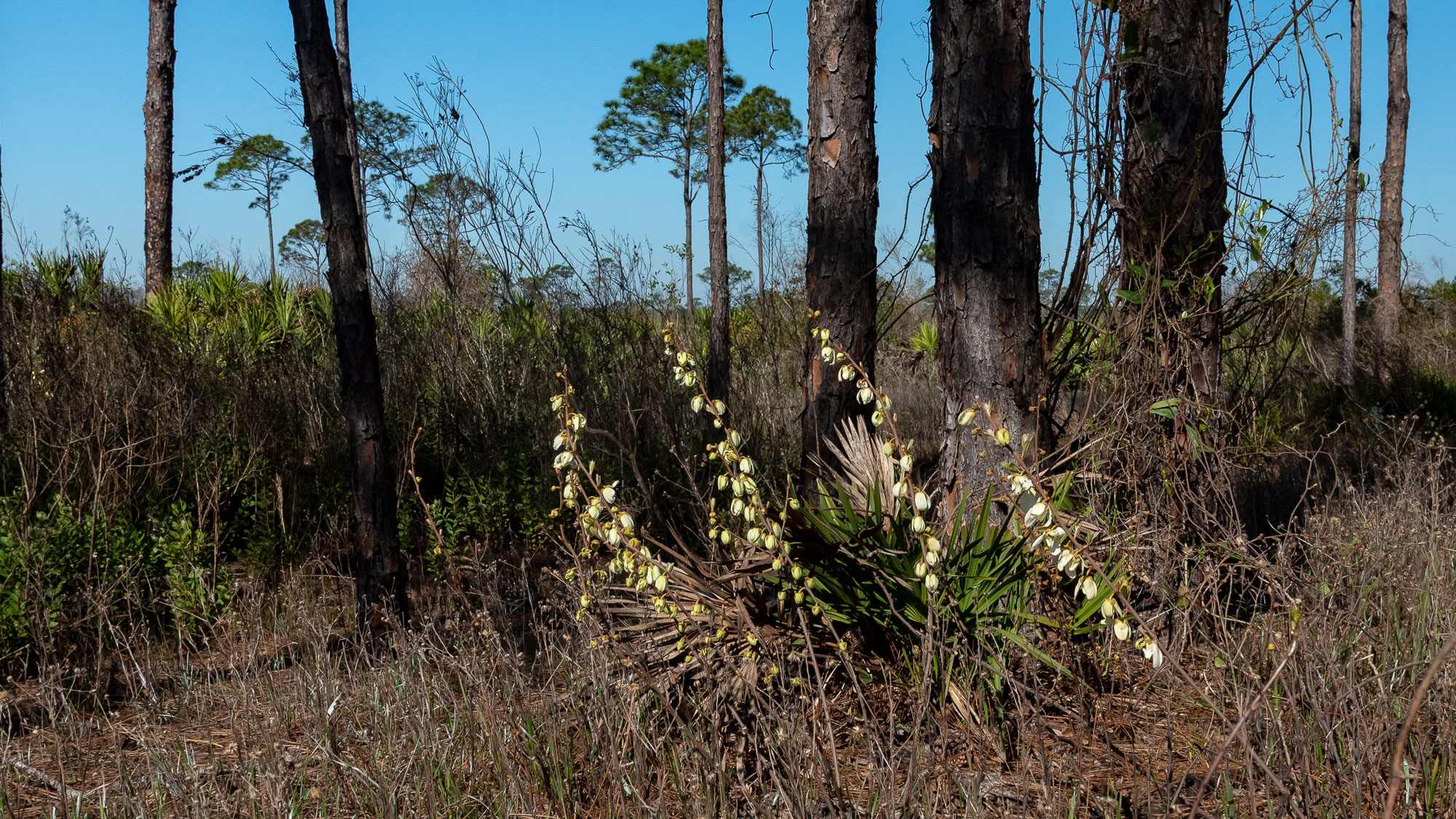
We often talk about enjoying the silence of the forest. “Silence” is probably not the right word. Especially in spring. Eastern Towhees seemed to be everywhere this morning. From their clear whistled “tow-hee” call notes to the males loudly advising to “drink your teeeeaaa!”, it was non-stop wherever we were. After their winter absence, it was great to once again hear the ascending trills of the Northern Parula. “Churrs” of Red-bellied woodpeckers were puncuated with their hammering on branches. High-pitched squeaks of Brown-headed Nuthatches reverberated among the tops of the long-leaf pines. Fussy, squawking Scrub Jays, whistling Tufted Titmice, Carolina Wrens with a theme similar to the Towhee’s as they repeated seemingly non-stop “teakettle, teakettle, teakettle …“, a Red-shouldered Hawk screams overhead, Northern Bob-Whites calling out their name, the pure whistling of Cardinals.
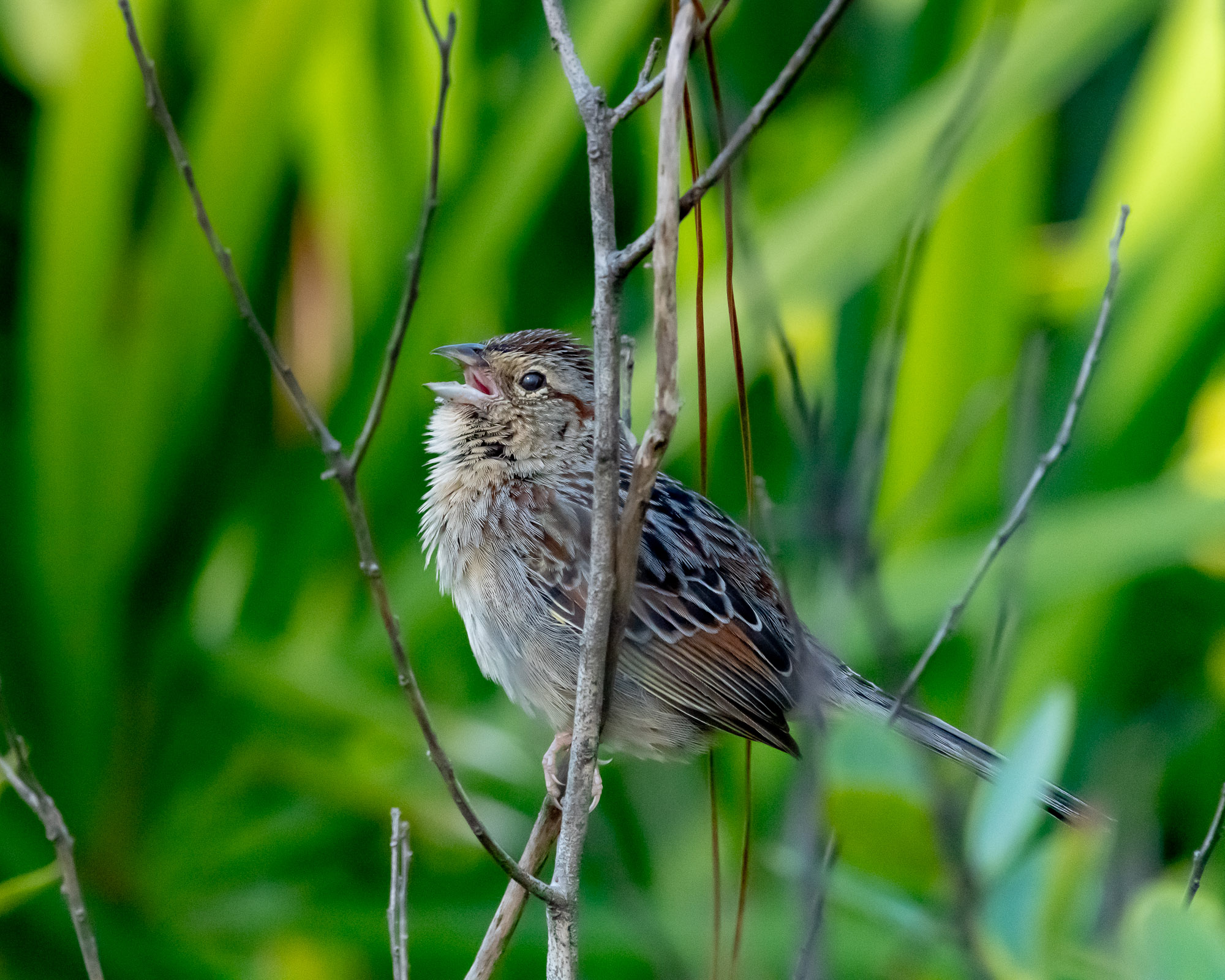
One song we were hoping to hear materialized just after breakfast by the lake. “Heeeeere kitty kitty kitty.” The uncommon Bachman’s Sparrow is picky about where it lives. Pine forests with open palmetto and/or wiregrass as the only understory and where fire cleanses the area every few years. Icing on our morning cake!
Throw in a few buzzy insects and the forest can be downright noisy! The difference from our daily sounds of “civilization” is stark. Rather than the “silence” of the forest, perhaps we experience “stillness” which one definition describes as “freedom from agitation”. Although, that posing Bachman’s Sparrow created significant agitation as I fussed with camera settings and focusing and trying not to breathe or step on a dry twig or ………
Come on! What’s that over there?
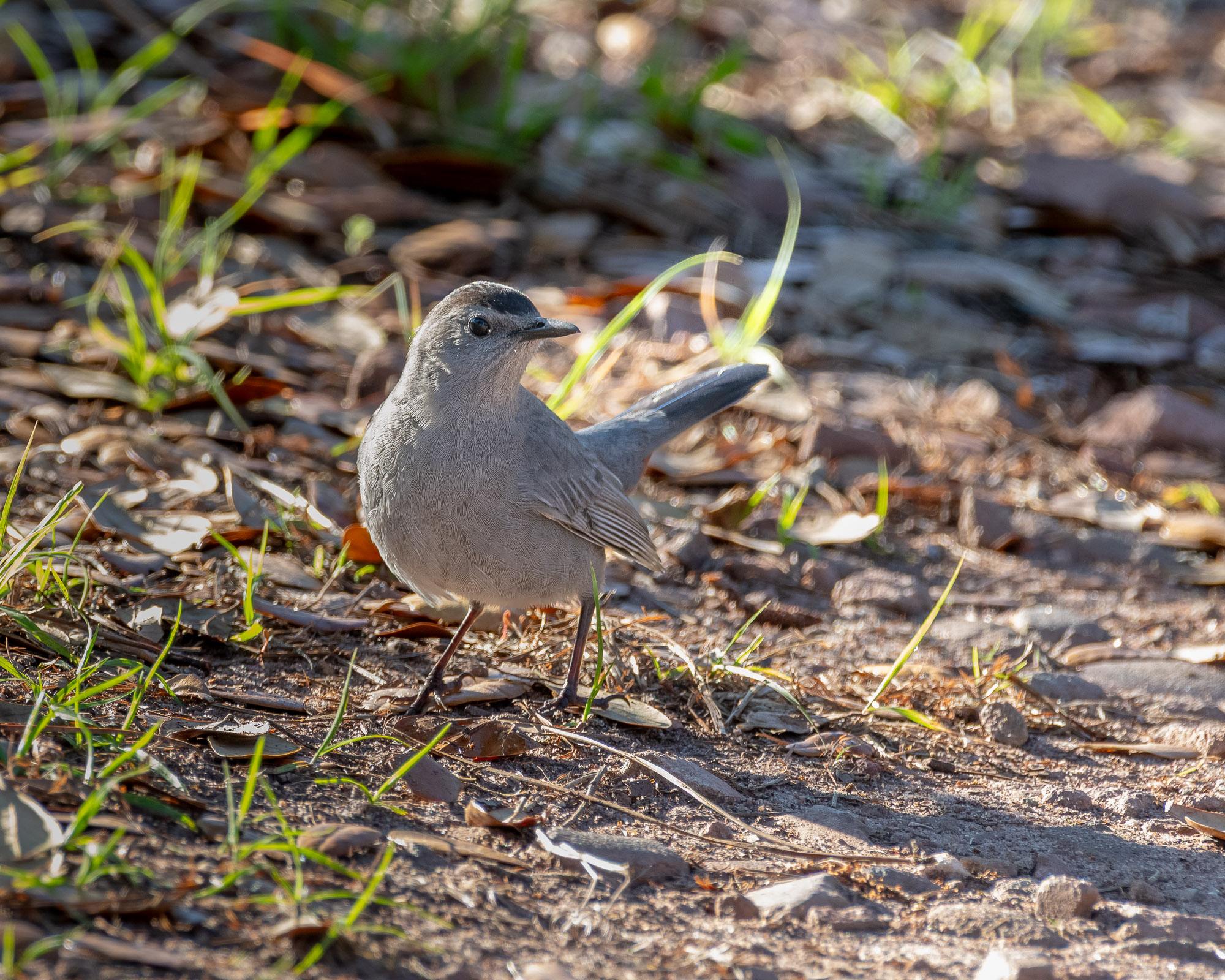
There was no mistaking the pure song of an Eastern Meadowlark. Although we are more accustomed to seeing them in open fields, a bit of gold among the tall grass and pines was just as satisfying.
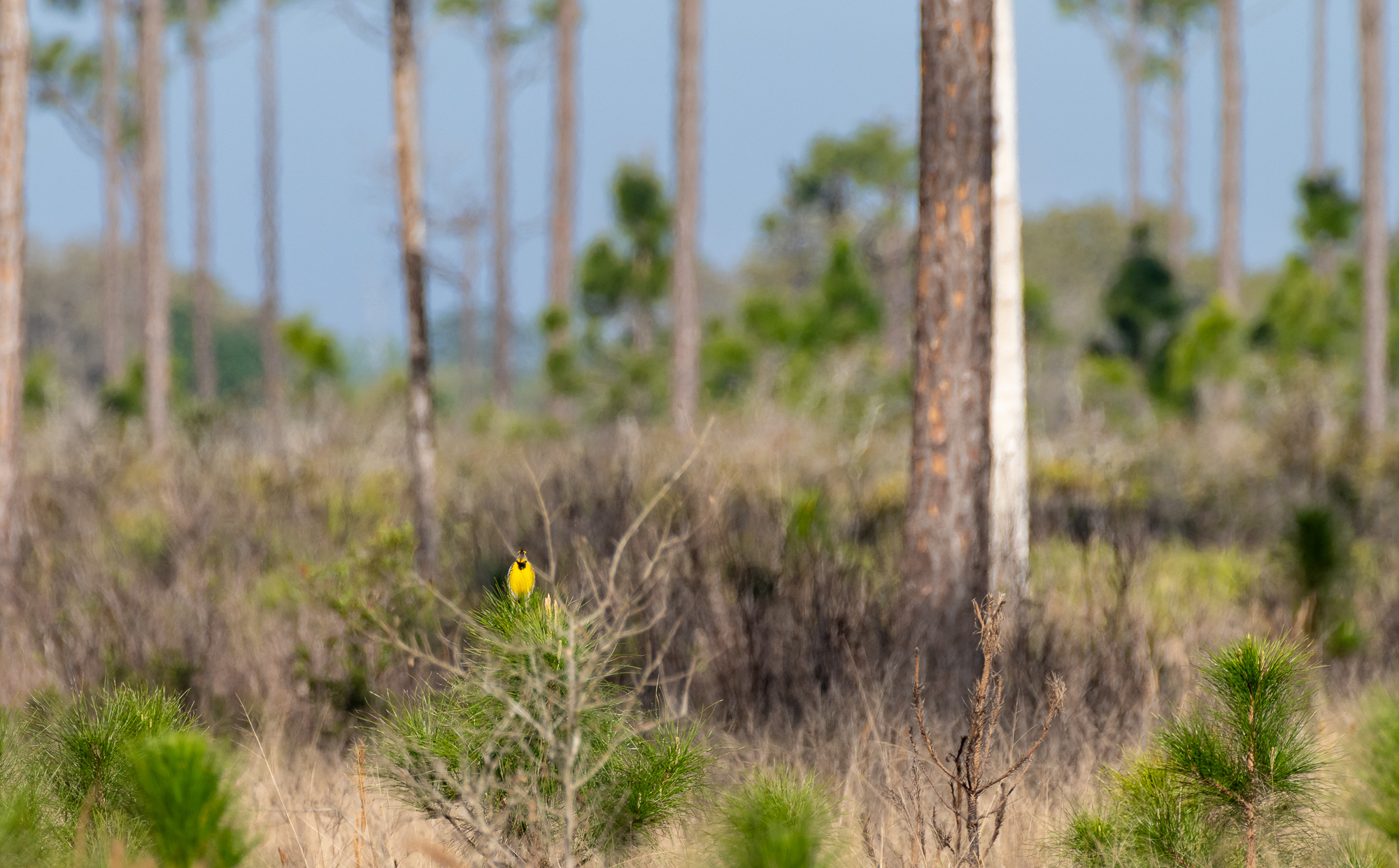
Fairly abundant in spring and summer, Smallfruit Beggarticks (Bidens mitis) provides terrific splashes of yellow along the edges of the forest.
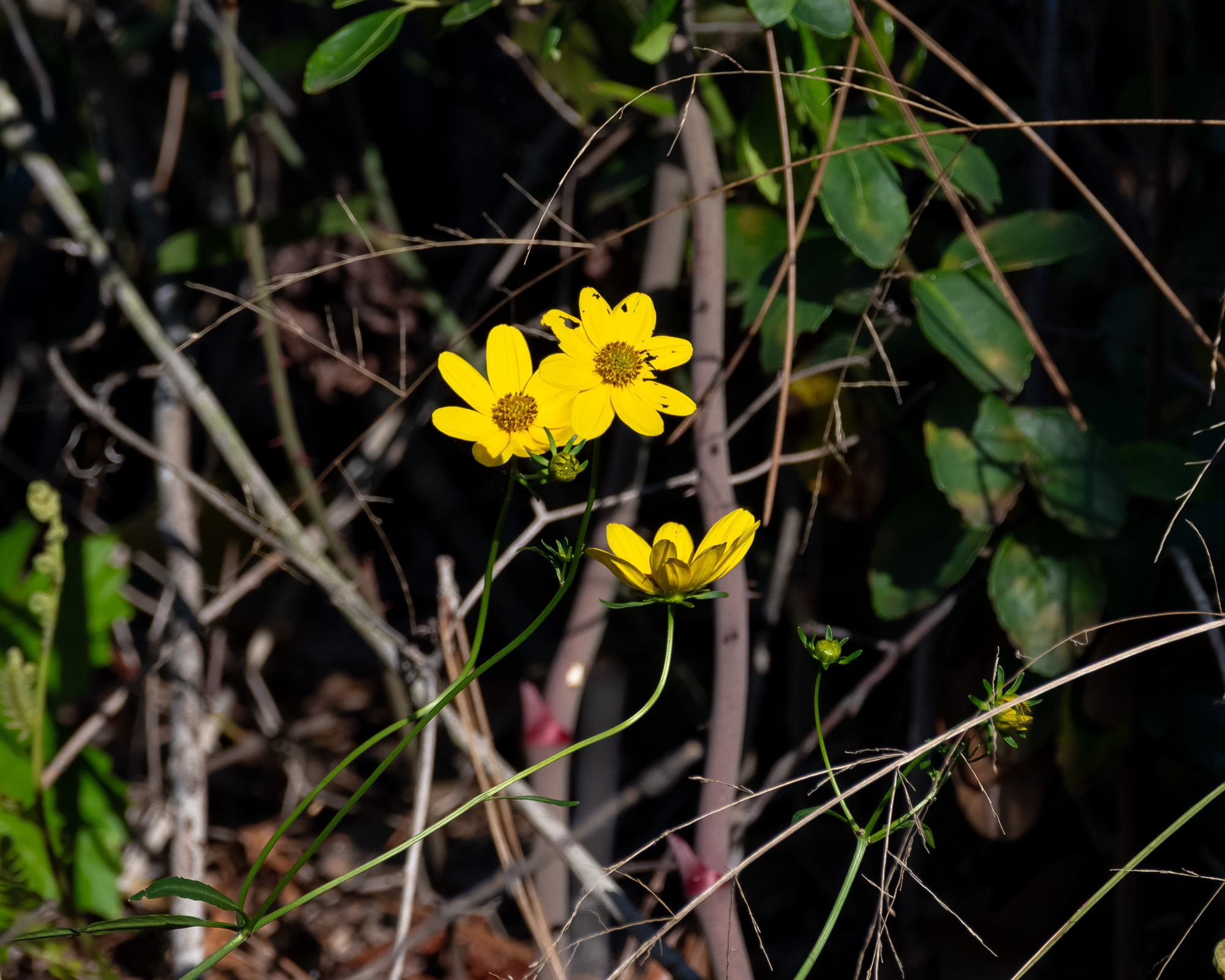
Gray Catbirds are numerous from late fall through spring. As it becomes time to return to their northern breeding grounds, they form into groups as large as two dozen. This one had no interest in joining a group or worrying about us as it was intent on turning over every leaf in its pursuit of brunch.
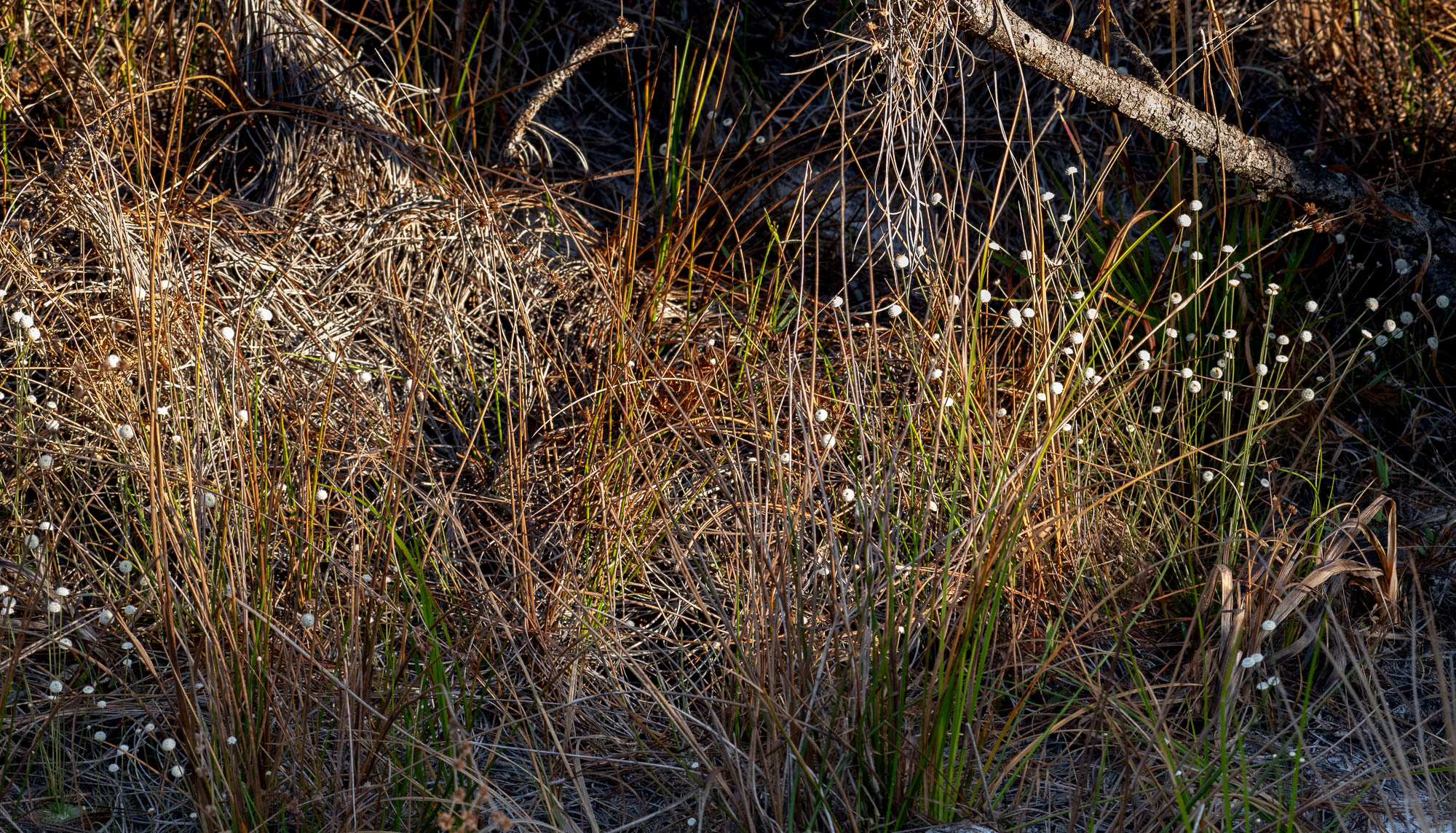
Sometimes called hatpins, Flattened Pipewort (Eriocaulon compressum) was a bit of a surprise as it’s usually found near water. Perhaps there was some bit of moisture under the soil which made this dry-looking spot acceptable.
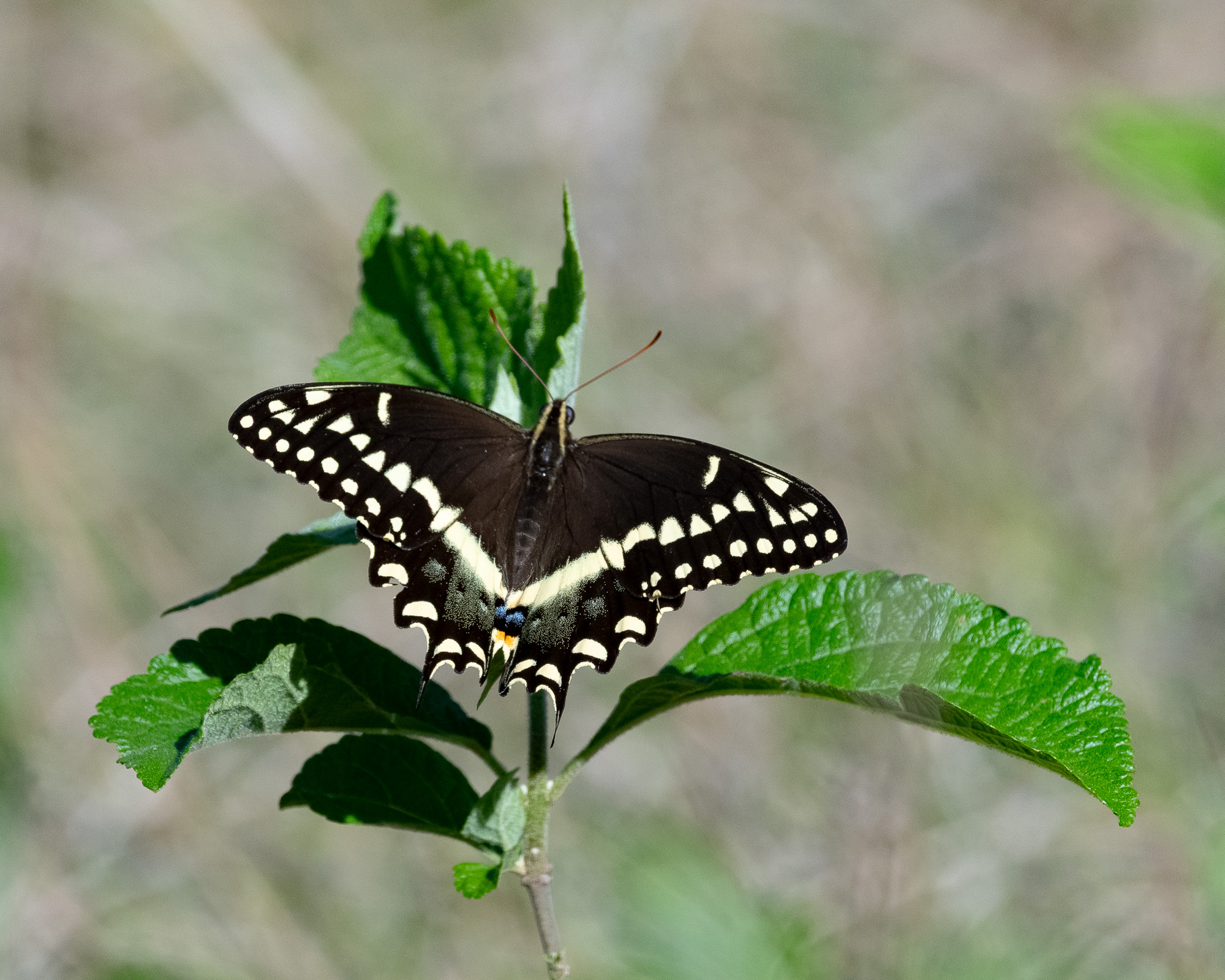
Palamedes Swallowtails (Pterourus palamedes) were busy throughout the woods.
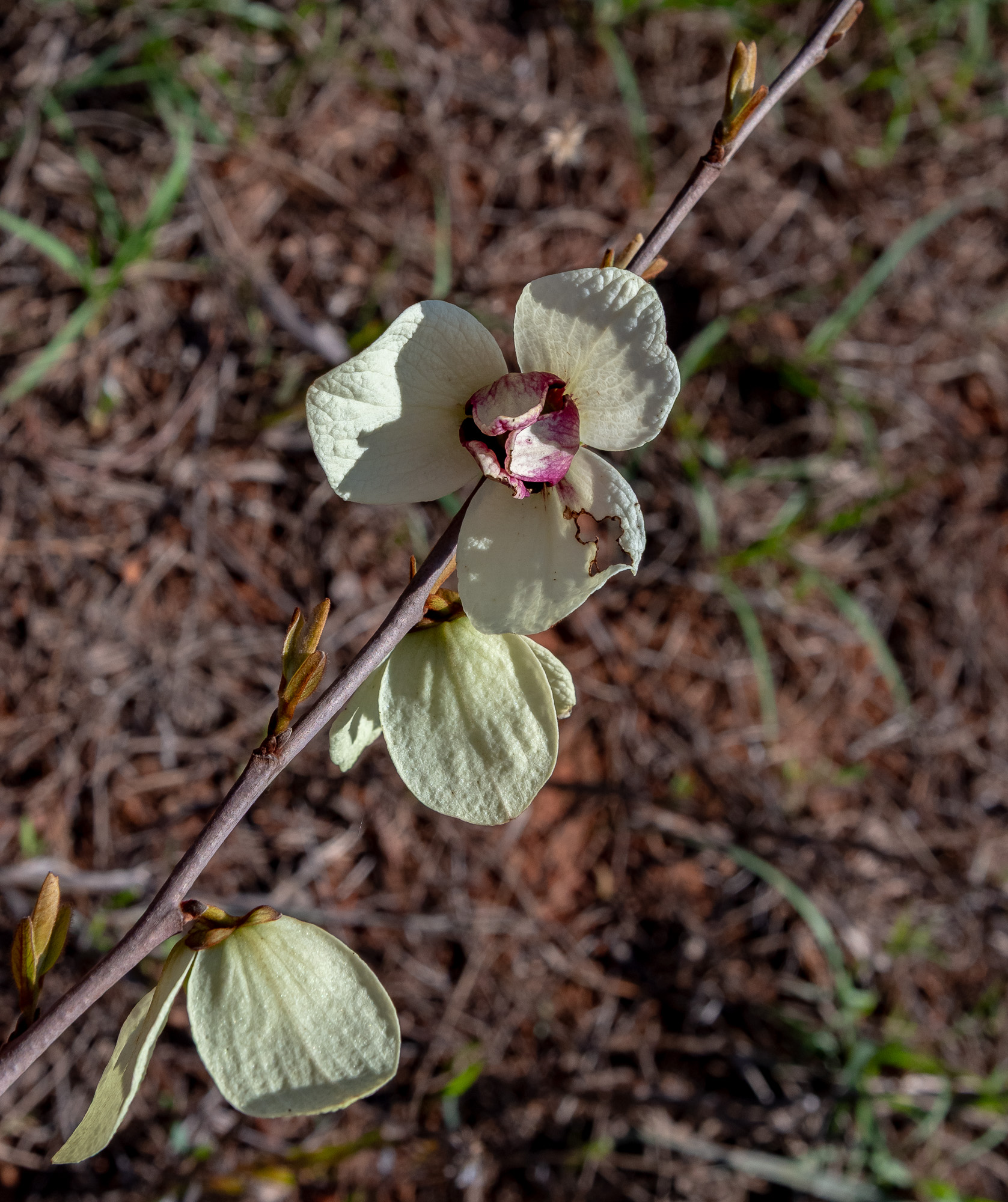
Lots of white flowers waved at us on tall stalks as we enjoyed the beauty of Netted Pawpaw (Asimina reticulata). Soon, the plants will bear plenty of fruit for wildlife to nibble.
Although I took about a hundred photographs of this subject, I’ll be kind and only post one. A singing male Bachman’s Sparrow was the highlight of the day.
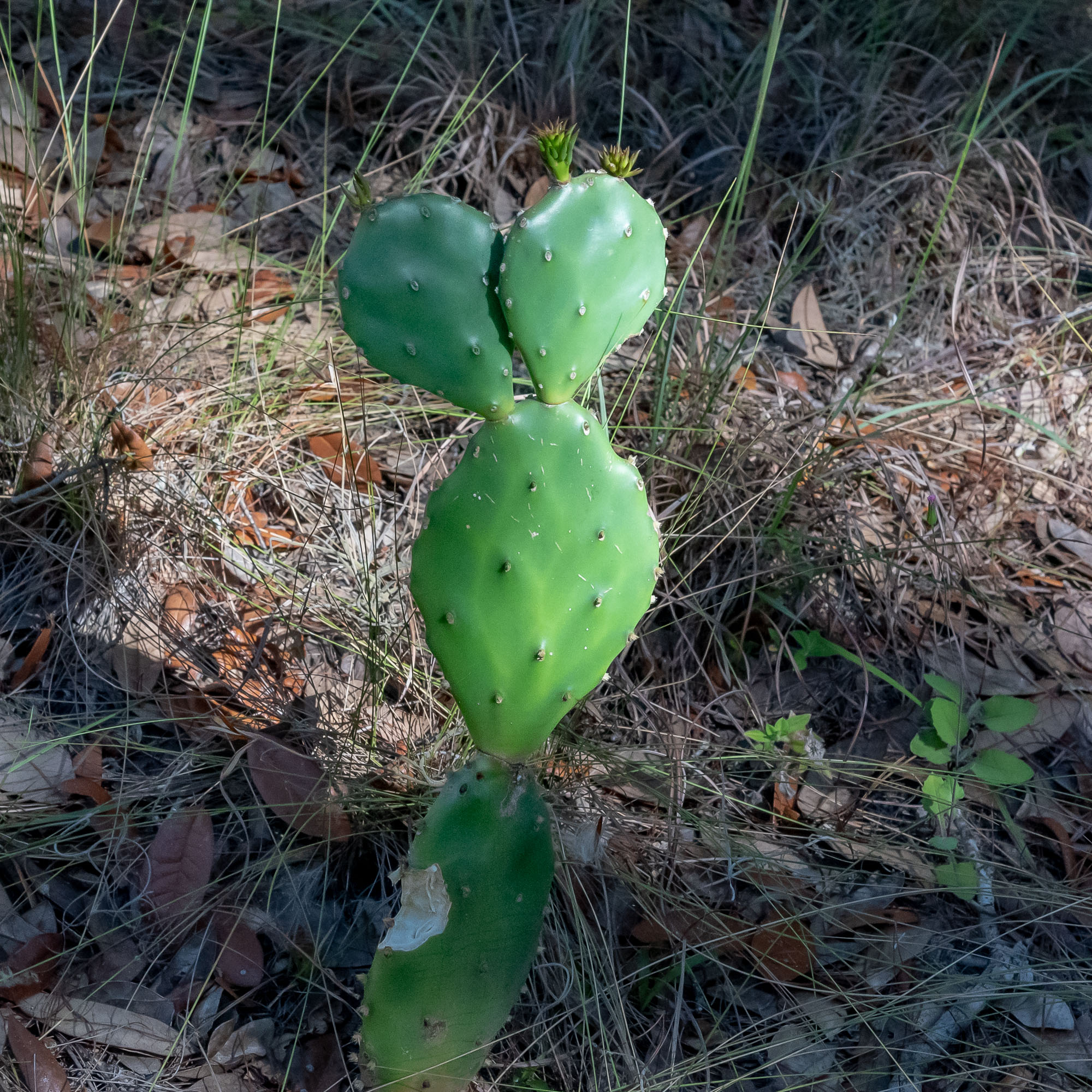
Gini thought this Pricklypear looked like a rabbit. Who am I to argue? (Opuntia species.) Looks like a Gopher Tortoise took a bite of the spiny bunny.
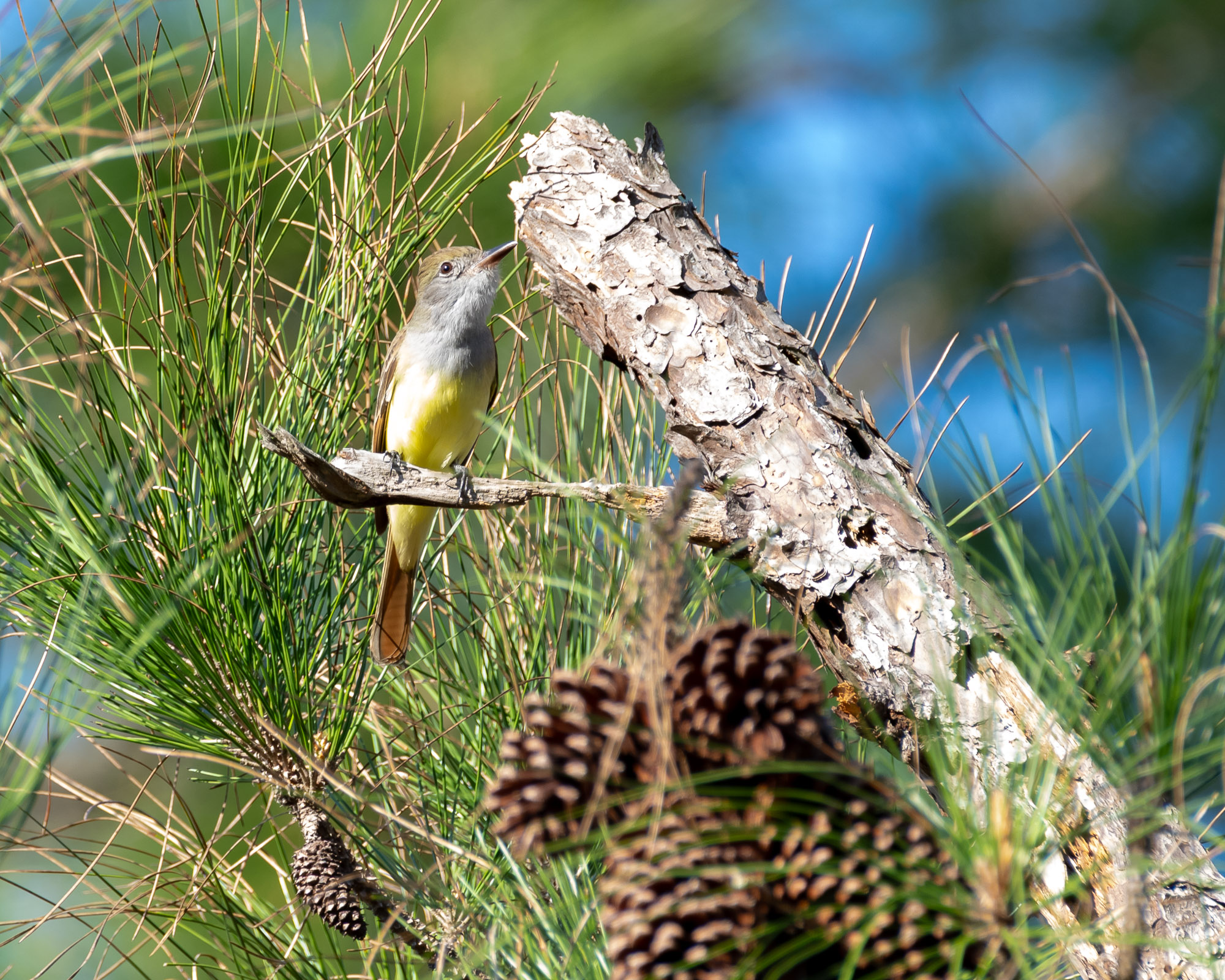
The Great Crested Flycatcher breeds throughout our area. And we are happy about that!
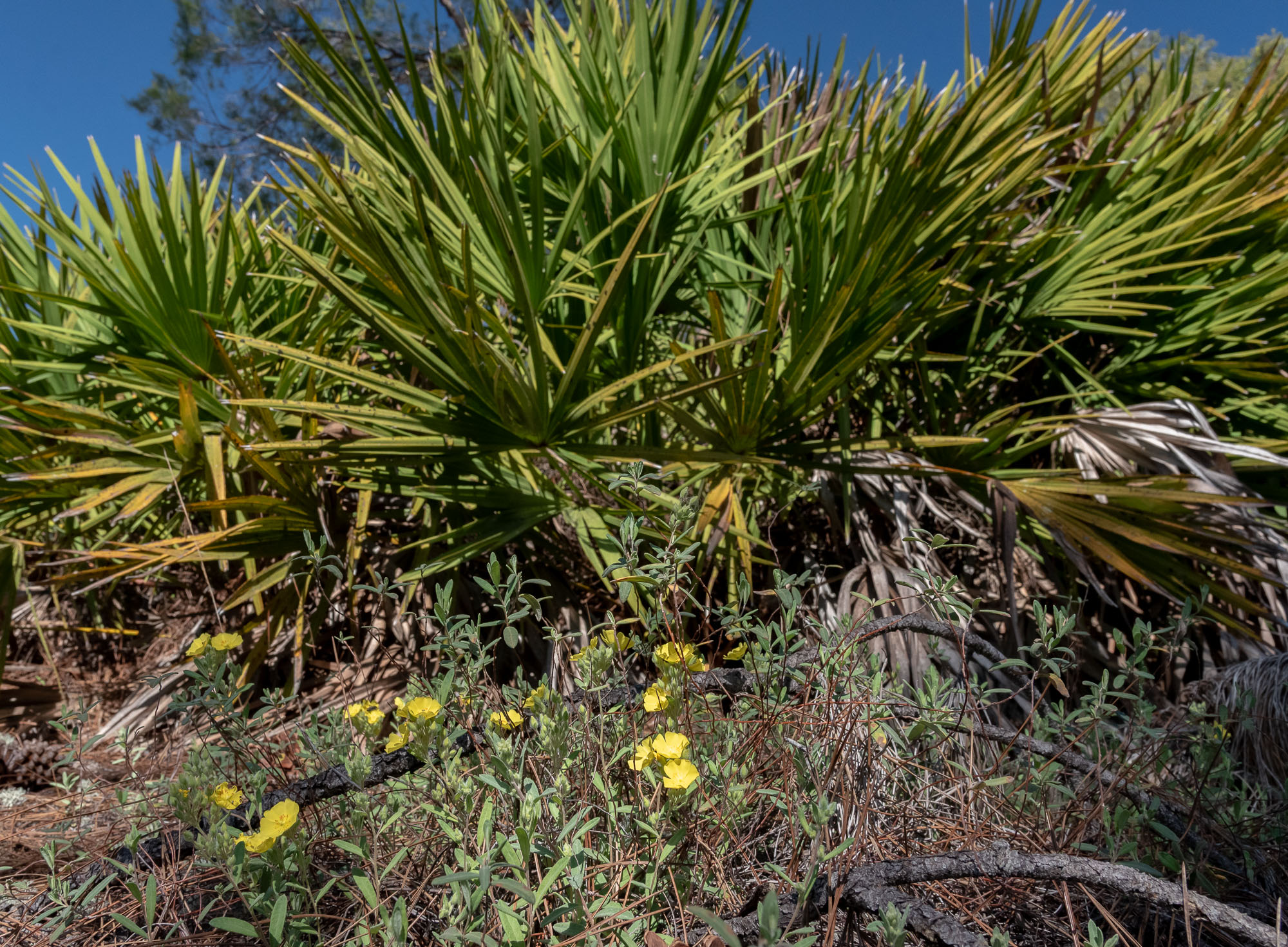
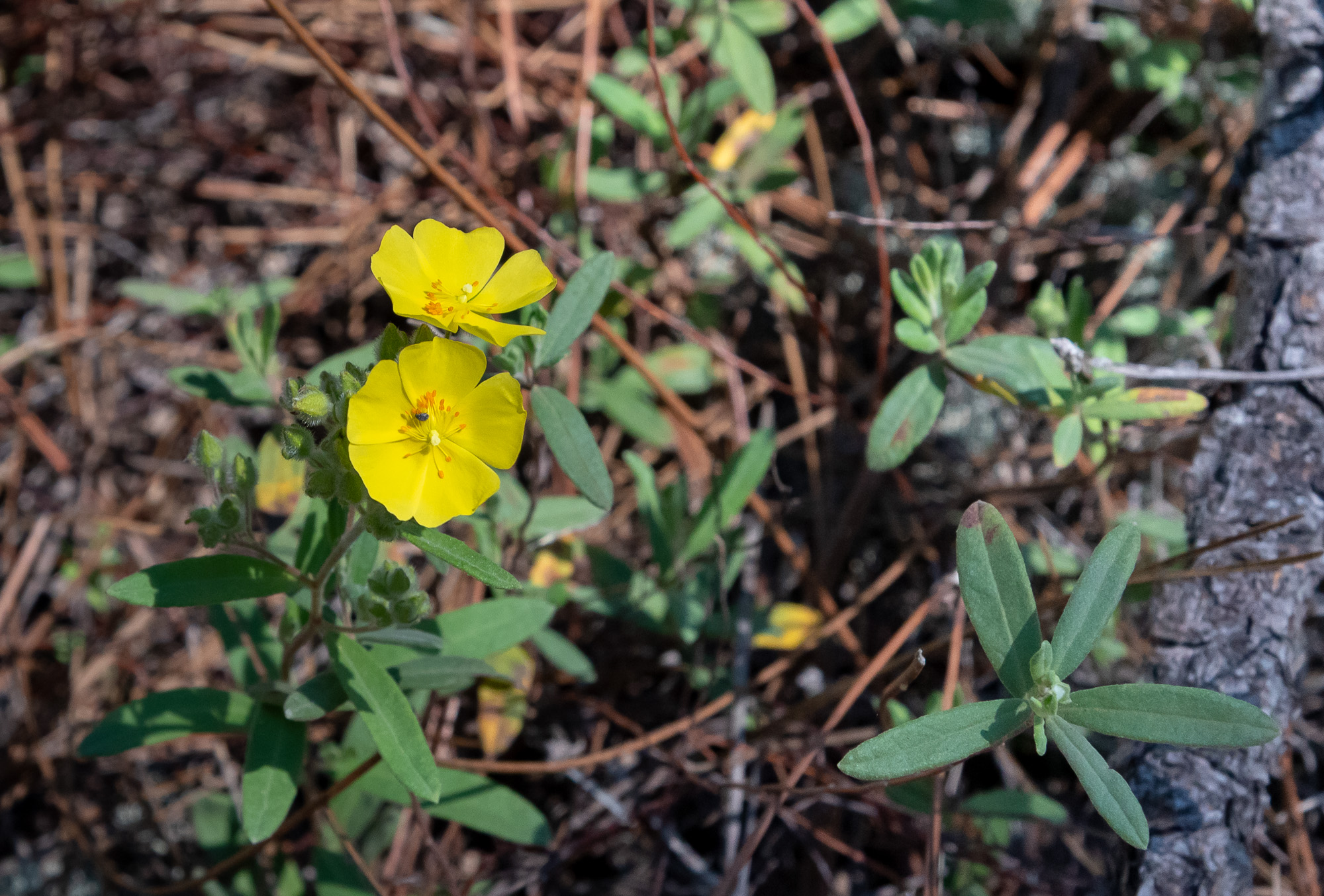
Near-endemic to Florida, the bright Florida Scrub Frostweed (Crocanthemum nashii) snuggles up to the Saw Palmetto, where rattlesnakes also like to snuggle.
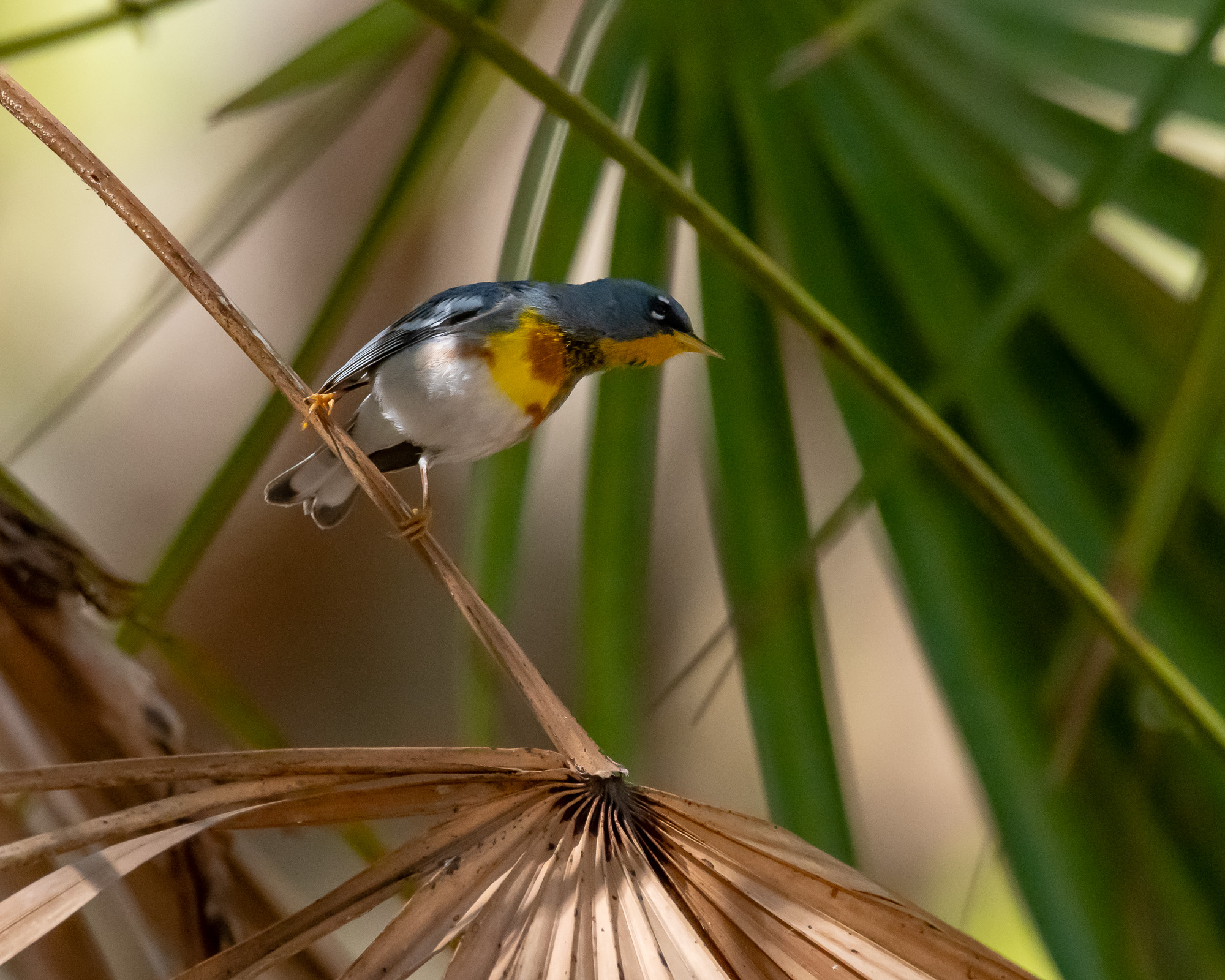
Today, the woods rang out with the songs of Northern Parula warblers. They tend to be scarce during winter and our “local” birds may migrate to the southern part of the state. It’s wonderful to find so many returning to the area!
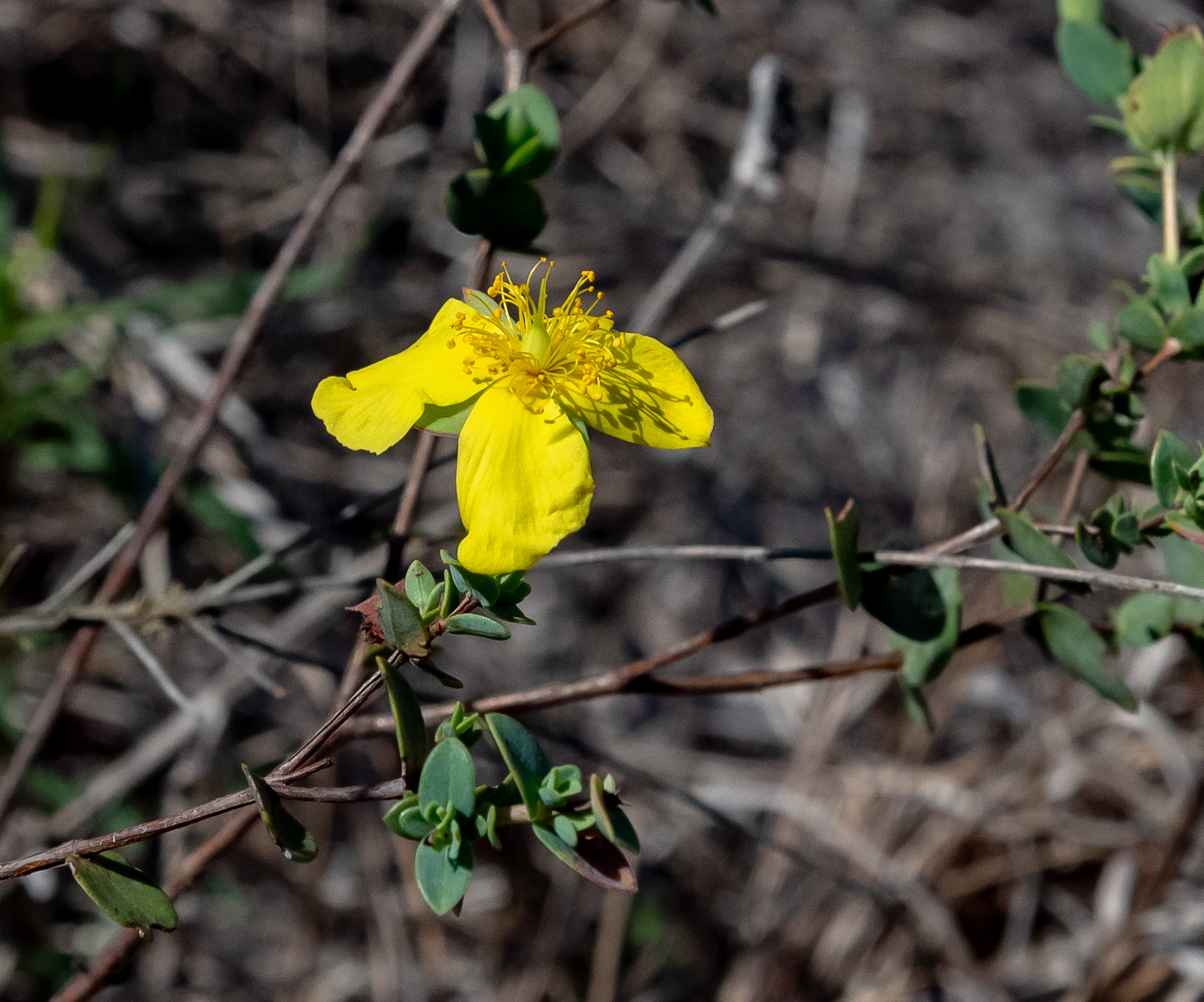
Another Florida near-endemic, Four-petal St. John’s Wort (Hypericum tetrapetalum) is a woody shrub which can grow to about three feet tall.
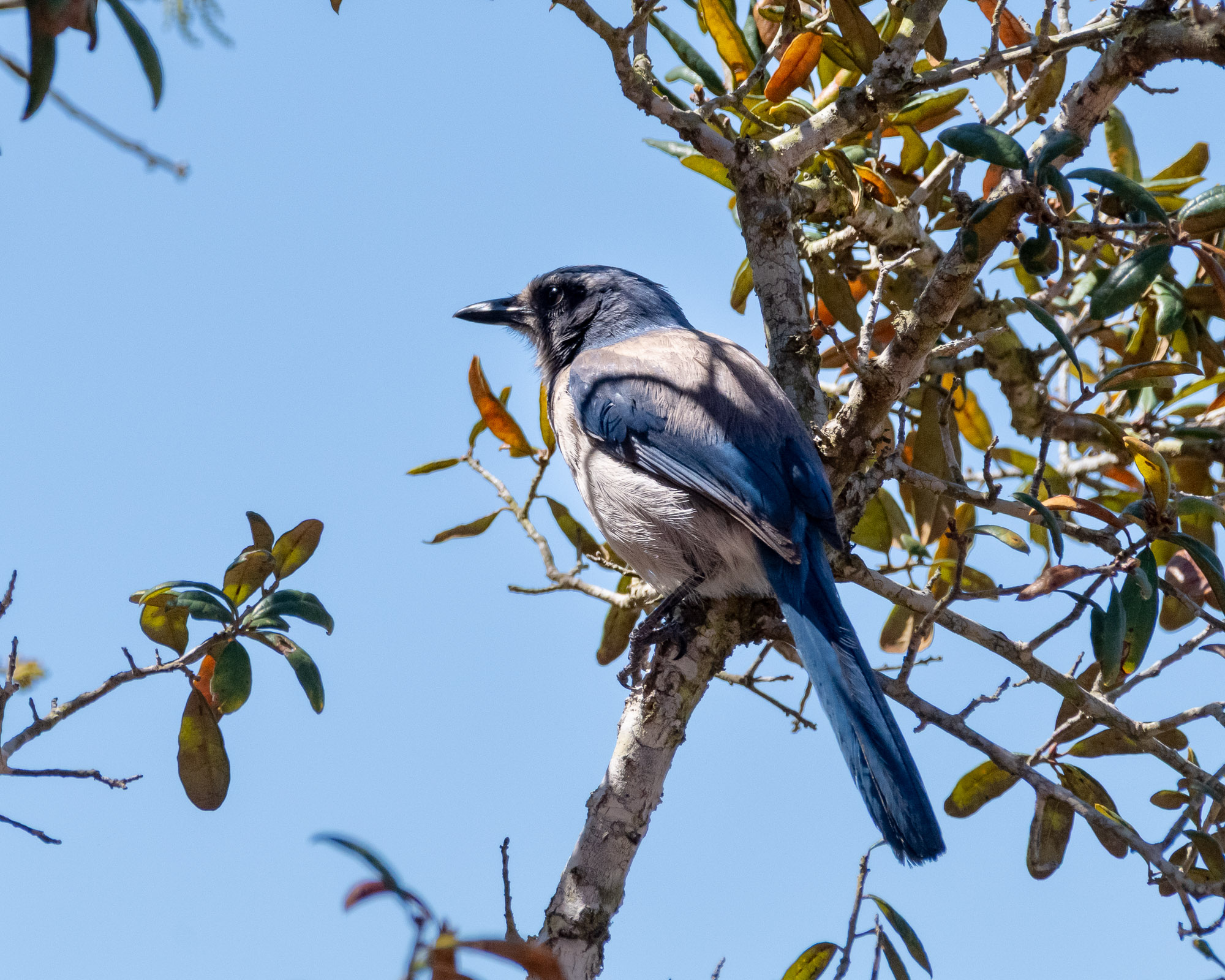
No visit to the Lake Wales Ridge State Forest would be complete without enjoying the antics of the Florida Scrub Jay. They did not disappoint.
Life offers challenges to us all. How we handle the challenges can make all the difference in our overall well-being. Our own hurdles with surgeries and infirmities definitely interrupted our lifestyle routine. We are healing. We are getting “Back On Track”.
Enjoy your search for a natural place and come back for a visit!
 Our Natural Places
The opening shot looks like a dinosaur track in the sand. Thanks for sharing the floral and feathered friends.
LikeLike
Our Florida turkeys are big and mean and must be related to the dinosaur.
Happy to share the little bits we find.
LikeLiked by 1 person
Quite the racket ypu got going on those woods ha! Honestly the natural sounds are incredibly soothing (and hopefully adding your healing recovery). I keep ranting to Linda every time I pull out Merlin and it reveals all the human noise pollution we get bombarded with every day. The Bachmans is a special treat and currently missing the check on my life list. The Parulas are passing through home, their crescendo is easily discerned in the woods. Sounds like the two of you are pushing through – continued well wishes.
LikeLike
Perhaps it was because it’s been awhile since we were in the woods, but it sure seemed filled with bird songs and calls. Music to our ears!
We are definitely pushing through and Gini is threatening to go dancing ……..
LikeLiked by 1 person
Beautiful shots! That Bachman’s is still on my “to get” list. Nice catch!
LikeLike
Thank you, Dina.
That is a great area to find Bachman’s. We heard at least a half dozen males singing throughout the morning.
LikeLike
I especially enjoyed your description of the forest sounds, including the birdsong. I’m still recovering from whatever virus laid me low. The good news is that I feel pretty good, and my energy level is rising, but I still can’t hear. Real silence is no fun; it’s given me quite an appreciation for what the deaf experience. I’m told it will resolve ‘in time,’ although that time can range from a few days to a few weeks. I’m looking forward to hearing birdsong again, and appreciative of the wisdom of your last paragraph!
It was good to be reminded of the St. John’s Wort, beggarticks, and pipewort. Even though our species differ, they’re a pleasant part of spring and early summer in east Texas. I don’t remember seeing the netted pawpaw before, although you may have posted photos of it. ‘Pawpaw’ always makes me smile. It was the Liberian name for papaya, and the name of one of my cats, because of her tendency to knead with her paws whichever human leg was available.
LikeLike
We hope your recovery is speedy.
I lost a small amount of hearing due to my job over 20 years in the Air Force. That loss accelerated rapidly a couple of years ago. Big thanks to the VA and superb audiologist for providing hearing aids which have allowed me to once again hear all those bird songs. Now, if I could just remember which ones belong to which ones……
Gini is also singing the praises of the VA as she no longer has to put up with my constant “Huh?”. Well, unless I’m messing with her. Which is really rare. (Sure hope she doesn’t see these comments.)
We are happily amazed at all the blooms we’re finding considering how dry the spring has been. Nature is mighty resilient. Who knew?
LikeLiked by 1 person
What a collection! Your summery spring is so rich with color! Loved your almost-in-flight Parula; like you and Gini, he is just a step away from an exciting journey.
Your description of the joyful peaceful wilderness birdsongs was wonderful – reminded me once more that I really need to pay more attention to the calls of our feathered friends. I did notice on our recent trip to Arizona that I really missed the rowdy sound of hundreds of birds hidden along the paths – but the isolated calls of individual birds sure stood out!
LikeLike
It was a “pleasantly noisy” morning.
You’re right about how a change in venue can almost be startling, not only in sounds but also sights and smells to which we have become accustomed.
Differences can make all the – difference.
LikeLike
Good you are getting back out there and enjoying it all then sharing with us.
LikeLike
That getting back out there thing sure feels good.
The sharing thing may still happen but, just as before, no guarantee of regularity. (I sound like an ad for indigestion meds.)
LikeLike
My first take on your opening picture was that it showed a dinosaur footprint. Oh well, the consensus these days is that turkeys, along with all other birds, descend from dinosaurs.
Can’t remember if I previously mentioned that parula is one letter away from paraula, the Catalan word for ‘word,’ which seems appropriate for a warbler. And who knows, maybe words evolved from warbles.
Have you ever seen your local frostweed extrude ice the way Verbesina virginica does in Texas when we get freezes in late autumn?
LikeLike
Gini made that same prehistoric turkey connection at the time. Great minds.
Interesting connection on warbling words.
Our Florida plants recoil at the thought of ice on their extremities. We shall continue to be quite content to admire your astounding photographs of the extrusion process from afar. Very far afar.
LikeLike
Really enjoyed today’s story on flora and feathers.
LikeLike
Thanks, Brad.
Really enjoyed gathering the raw data.
LikeLike