How Green Was My Swamp
(Click on images to enlarge, click again to zoom.)
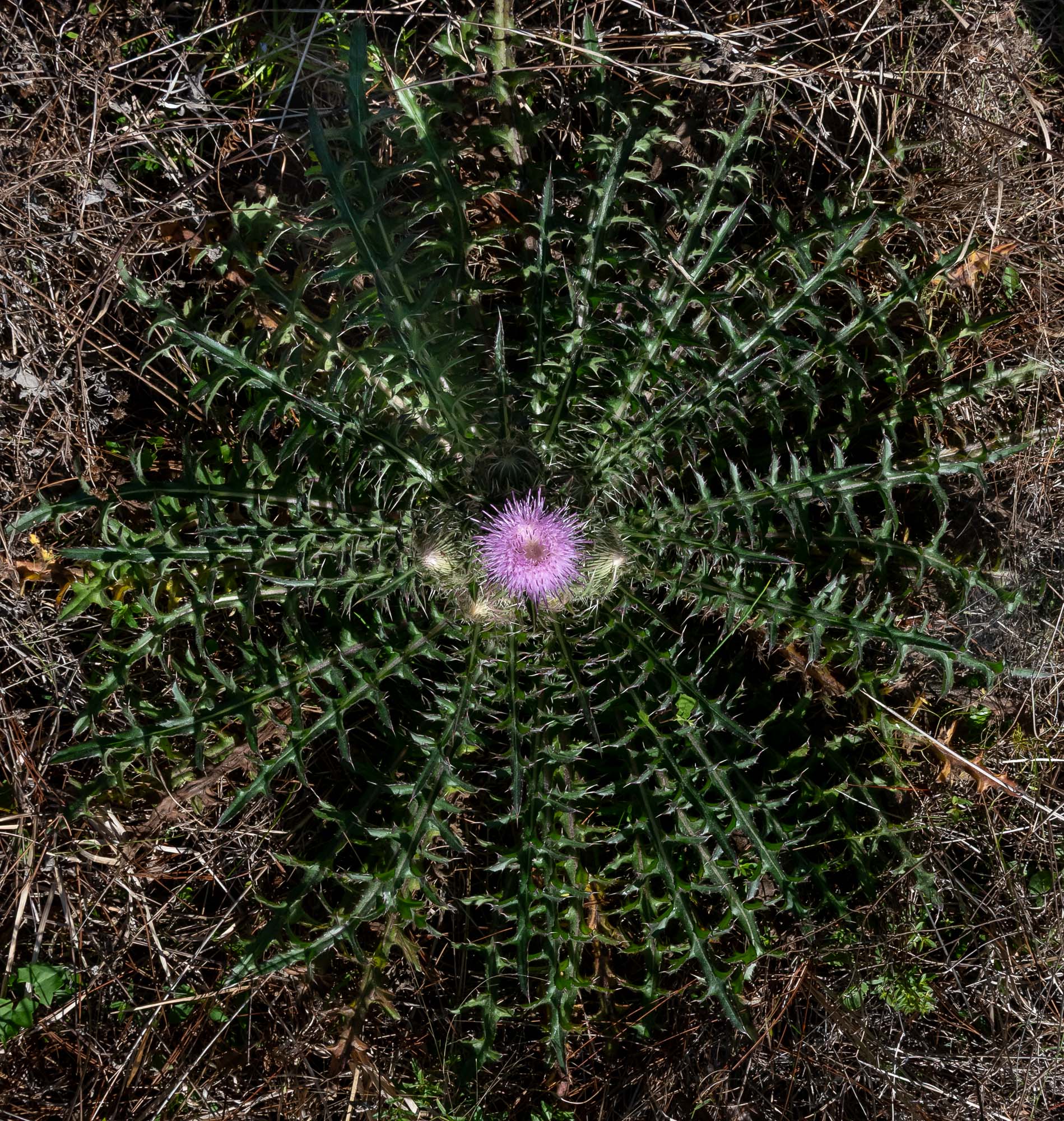
Thistles!
Thrilling!
I know. We’re easily excitable. Following a marathon of medical adventures, we needed to absorb as much fresh air as possible to recharge our souls. Today was a good step toward that goal.
A refresher on central Florida’s Green Swamp region. Over 560,000 acres of wetlands, flatlands and low ridges are bounded by prominent sandy ridgelines. The region forms a sort of plateau above a large portion of the peninsula’s aquifer system, which is an important source of drinking water for a large part of the state’s population. Rainwater drains across the surface to create the headwaters of four major rivers: the Withlacoochee, the Ocklawaha, the Hillsborough and the Peace. Habitat in the area includes sandhills, flatwoods, oak hammocks, river swamp and cypress ponds. An incredible diversity of life exists here.
(This morning’s adventure took place about a month ago, eight weeks after Gini’s second knee replacement surgery. She celebrated by doing her daily exercises on an old logging road.)
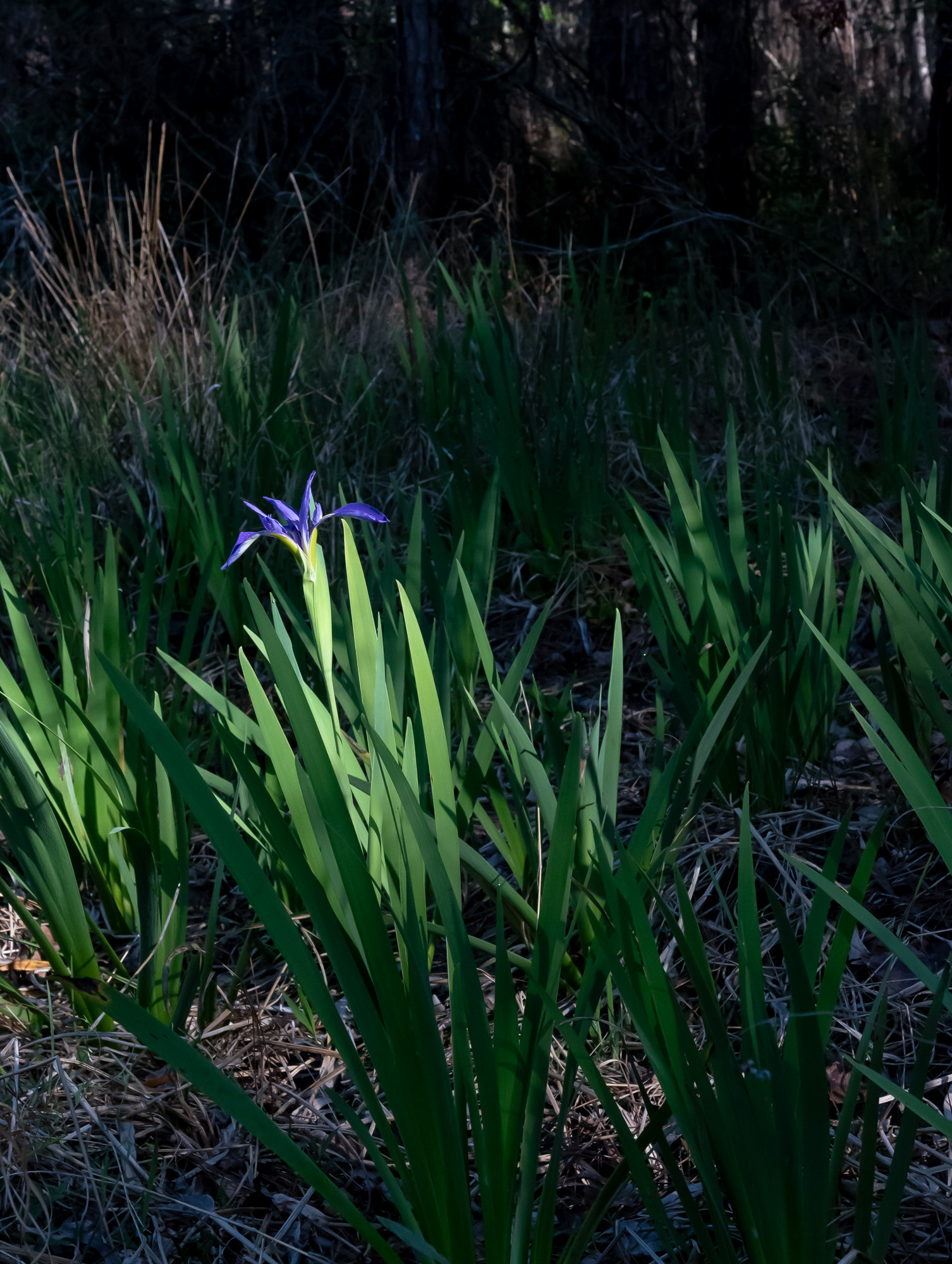
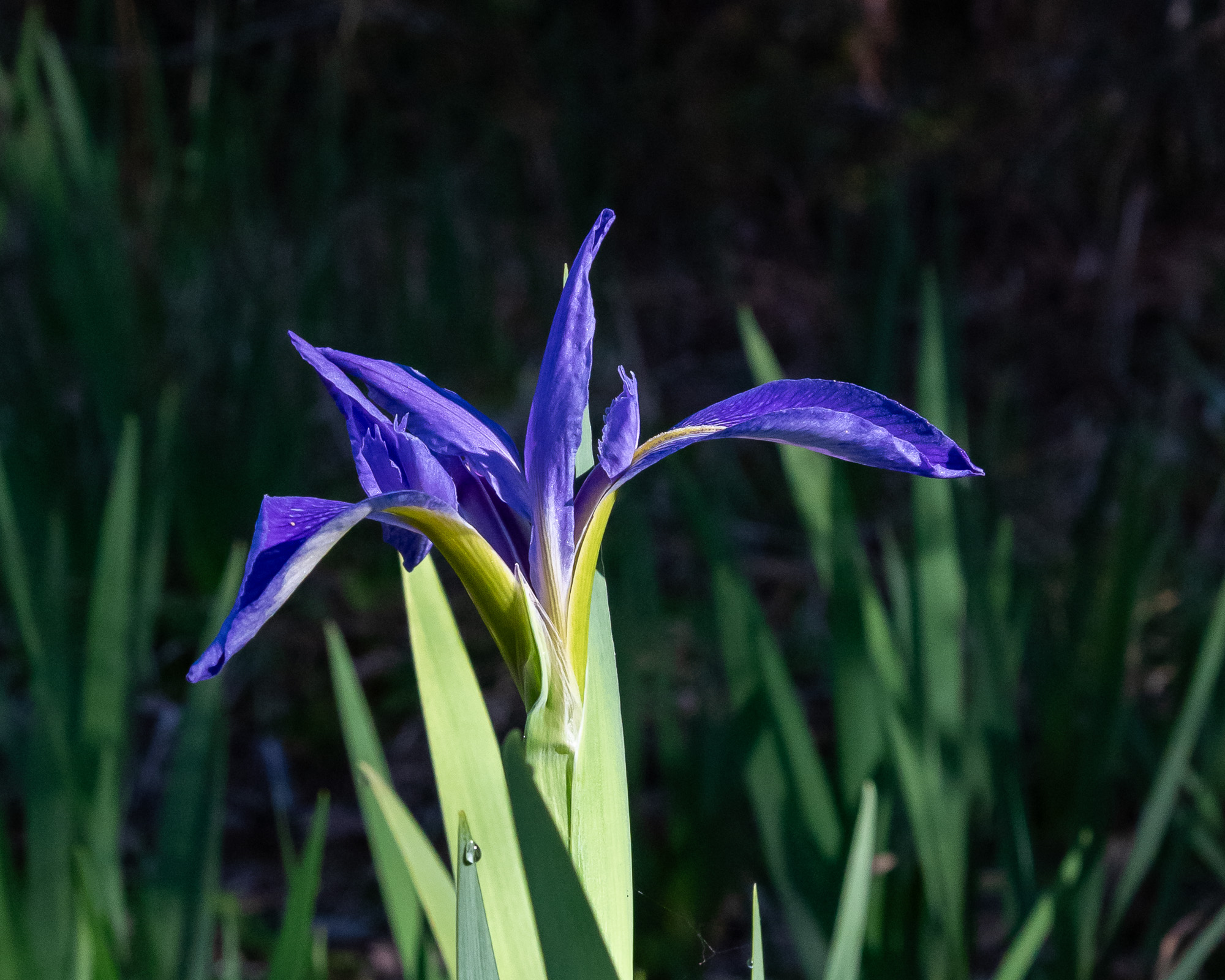
Our winter has been drier than normal and many of our favorite spots were filled with dust. Some low spots had a bit of dampness just below the surface and it was obvious that Spring was rapidly approaching. Those thistles were one indication, along with a host of nectar-loving insects on almost every bloom. Another hint of the coming seasonal change was the blue welcome flags hoisted atop dozens of Prairie (Savanna) Irises.
As winter wanes, avian visitors gather in small groups to fuel up for their return northward where they will begin seeking mates and building nests. The woods were filled with songs, chattering and scolding. Music to our ears.
We shall try to catch up on all of your blogs as we will be attempting to visit familiar patches and discover new venues.
(Insert rain dance music here >>>>)
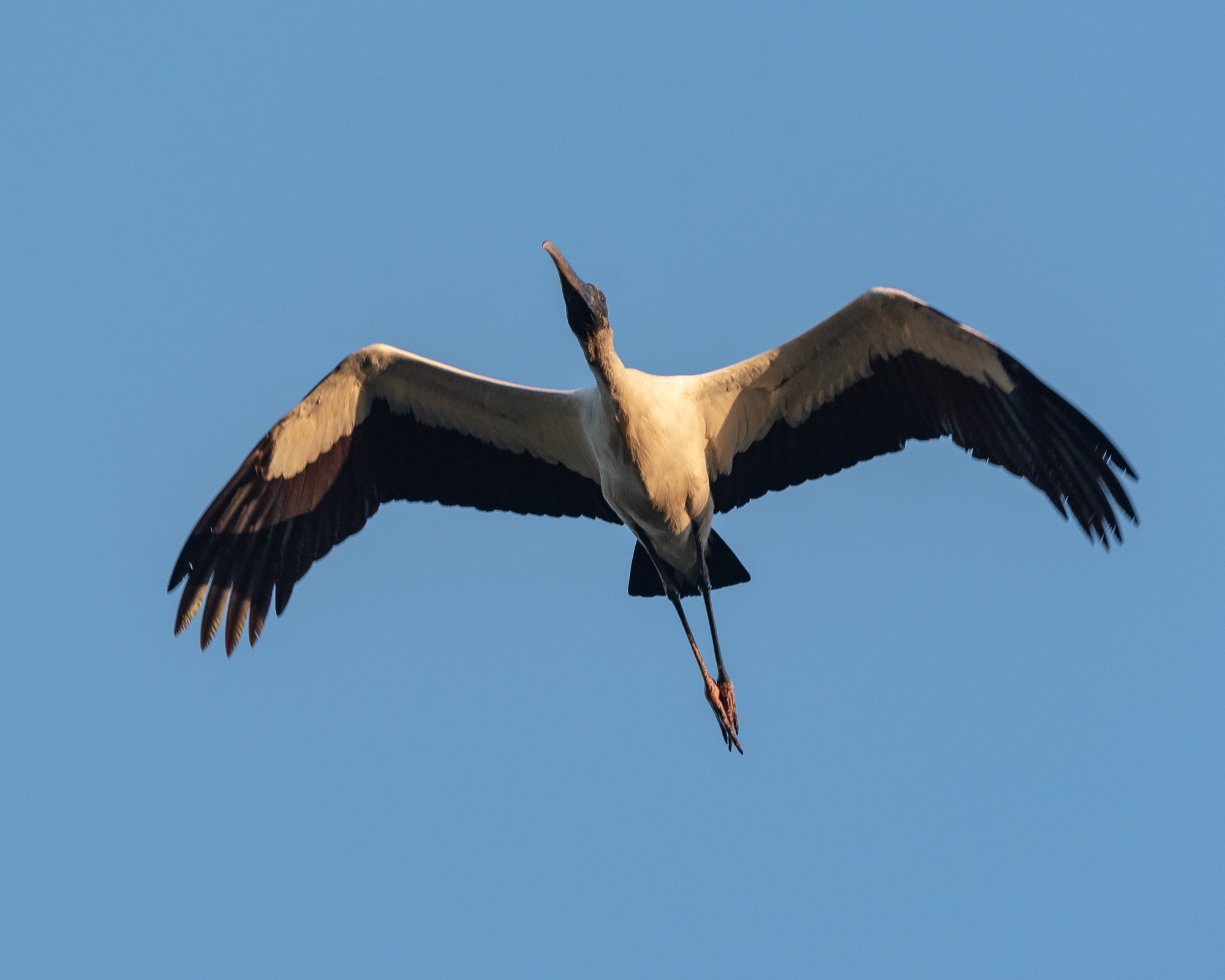
A resident in this area is the Wood Stork. Although their overall population has been stable for several years, they are considered a threatened species due to their vulnerability to dry years and habitat loss.
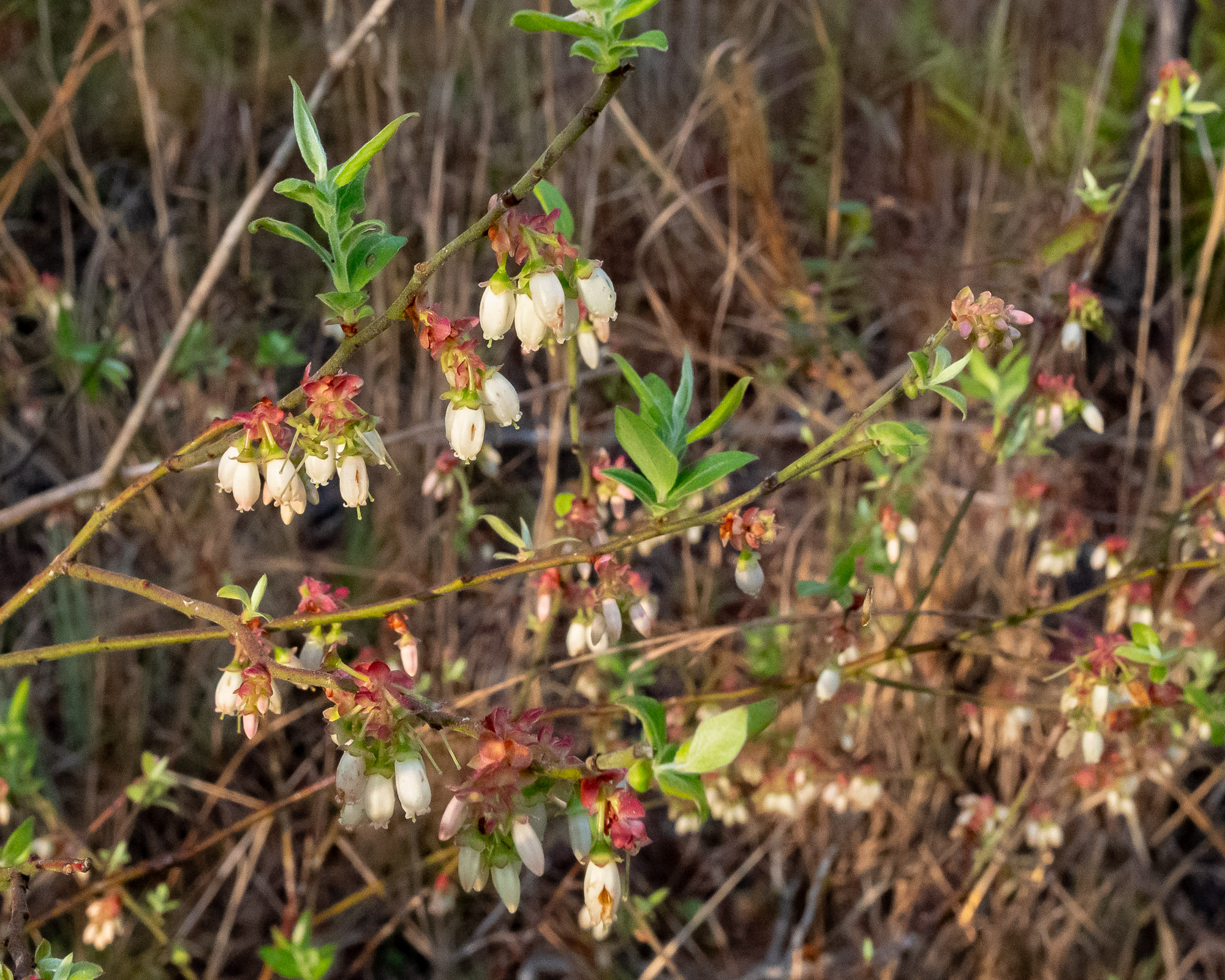
One year, we will beat the wildlife to the small and delicious fruit of the Highbush Blueberry (Vaccinium corymbosum). (Don’t bet too much on our success.)
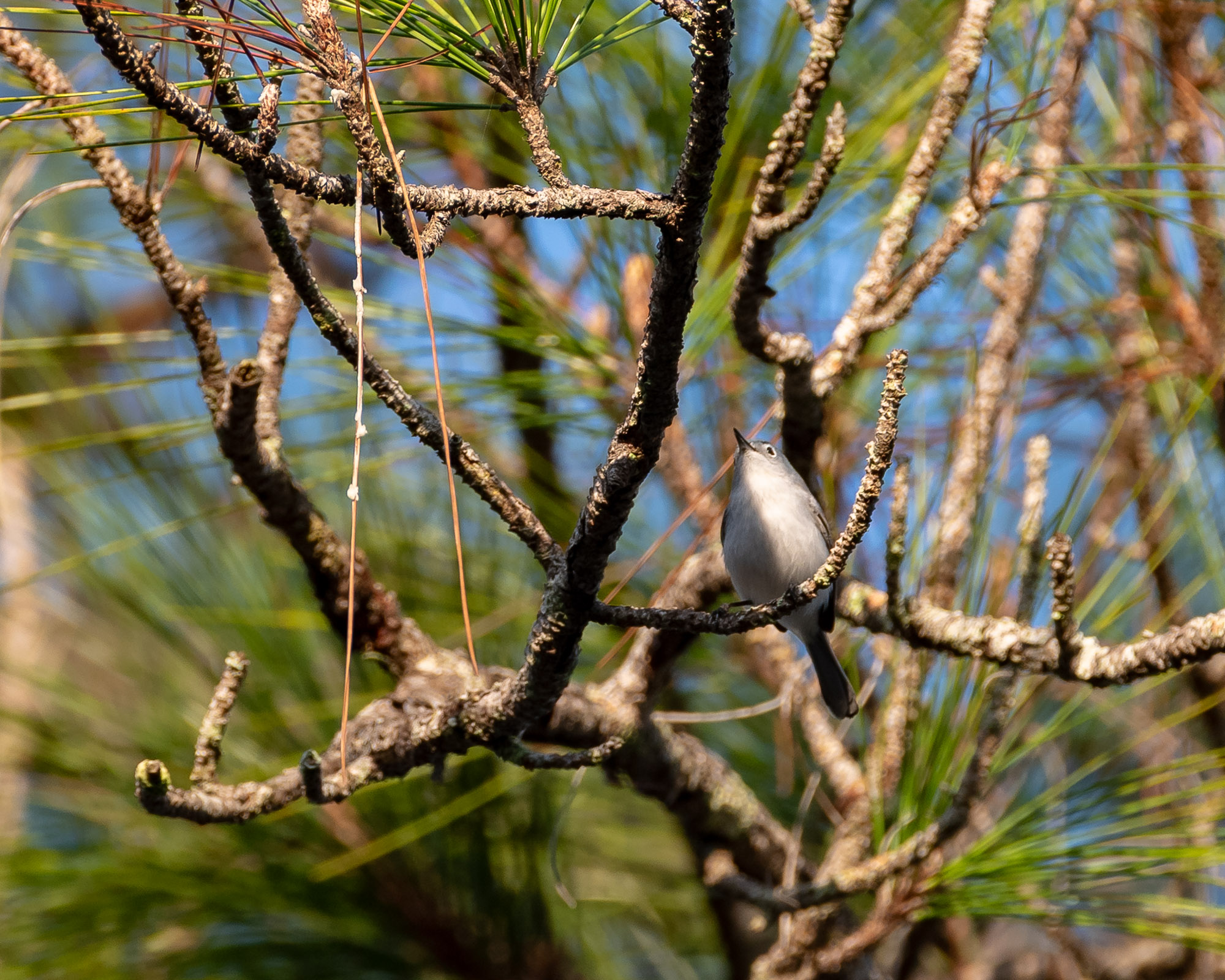
Busy and noisy, the trees were bustiling with the small vacuum-cleaning efforts of Blue-gray Gnatcatchers. The species breeds here, but seasonal migrants by the dozens really like our bugs. (And we appreciate their efforts to eat ’em all!)
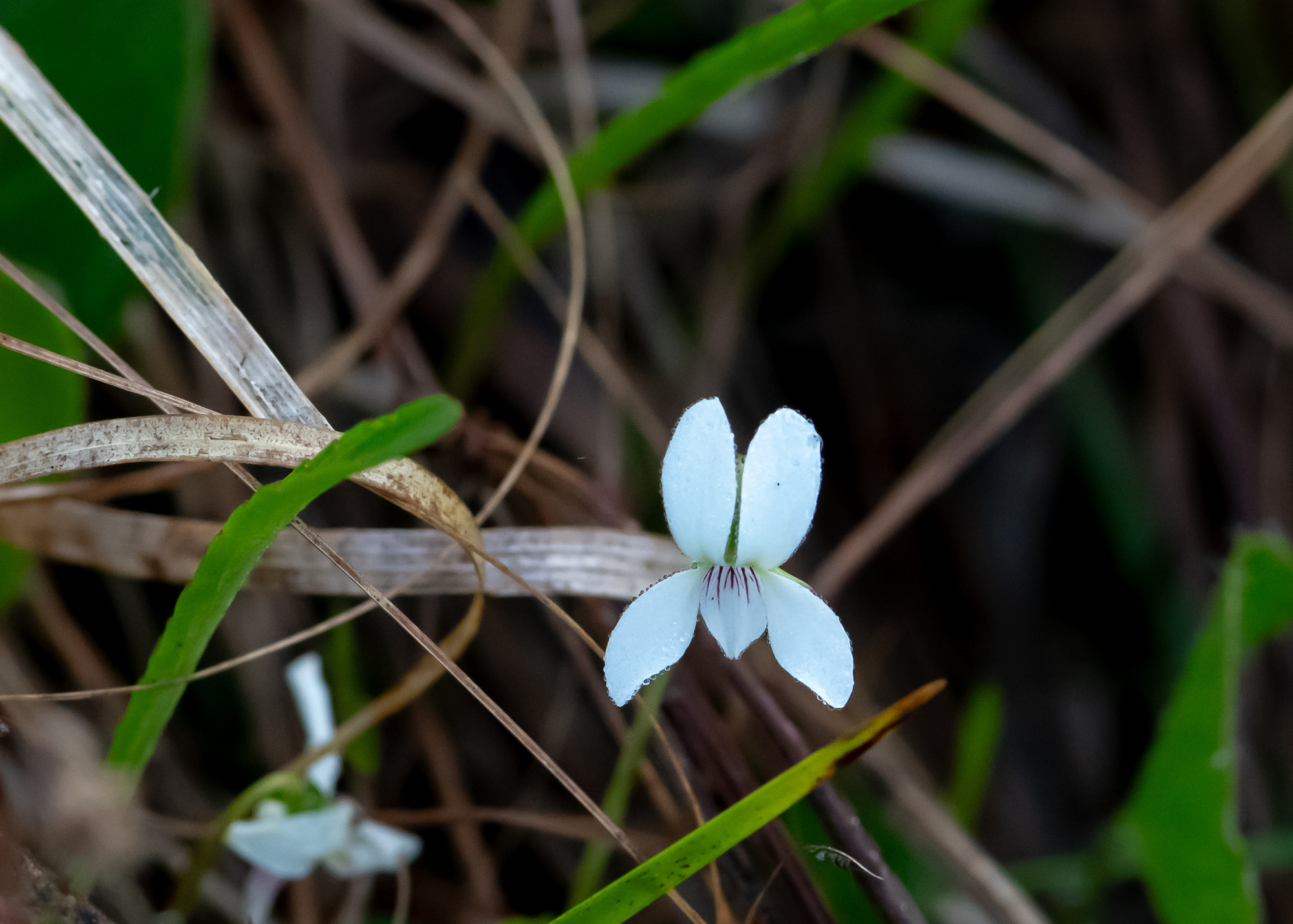
It is all-too-easy to overlook nearby beauty when our eyes are affixed on distant beauty. While tromping toward the Highbush Blueberry blooms, I almost crushed several lovely White Bog Violets (Viola lanceolata) under my feet. Another refreshing sign of Spring.
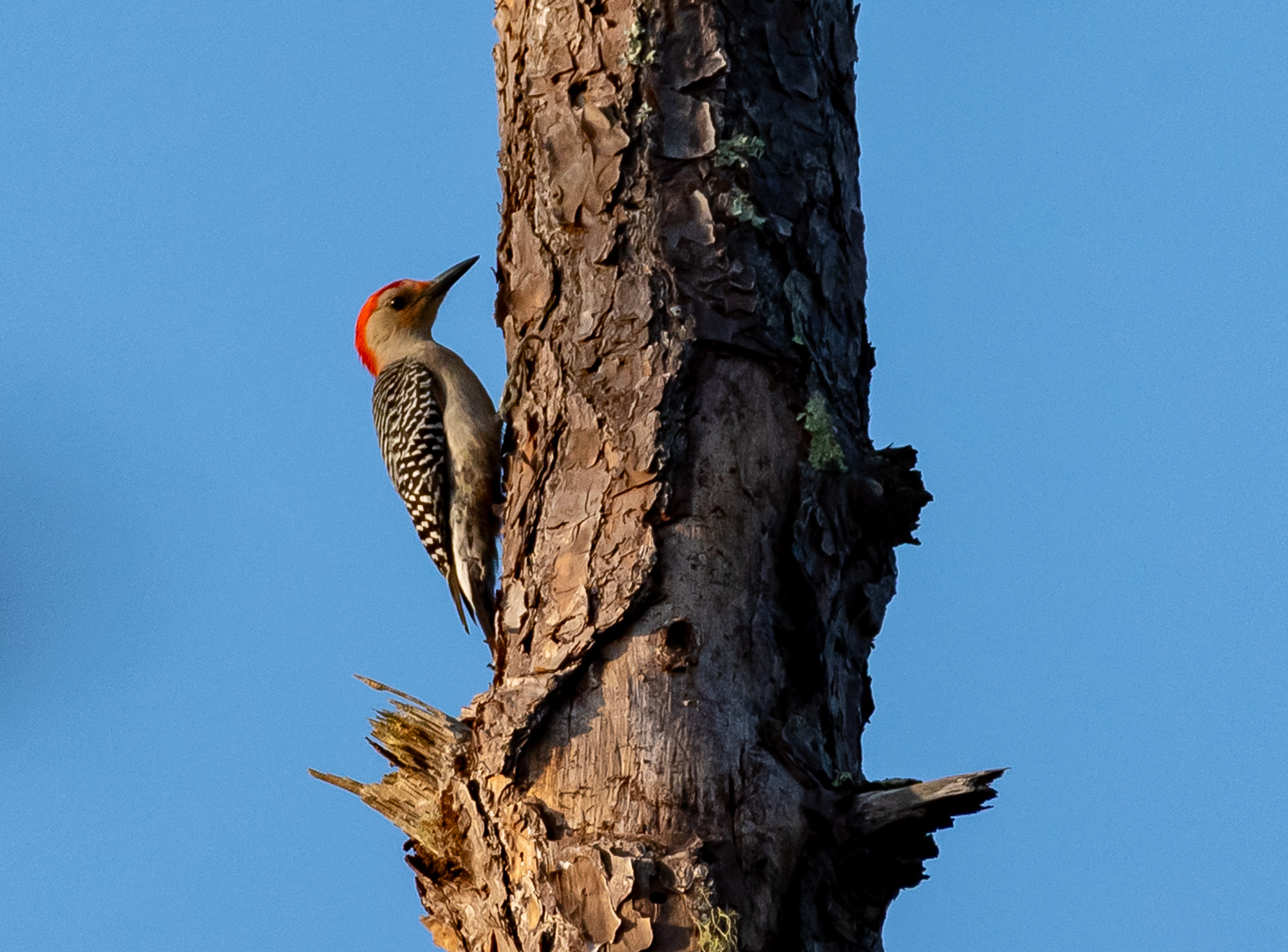
Calling, hammering, calling. Red-bellied Woodpeckers were numerous and quite consumed with staking out territories, seeking willing mates and yelling at intruders into their domain. (That would be – us.)
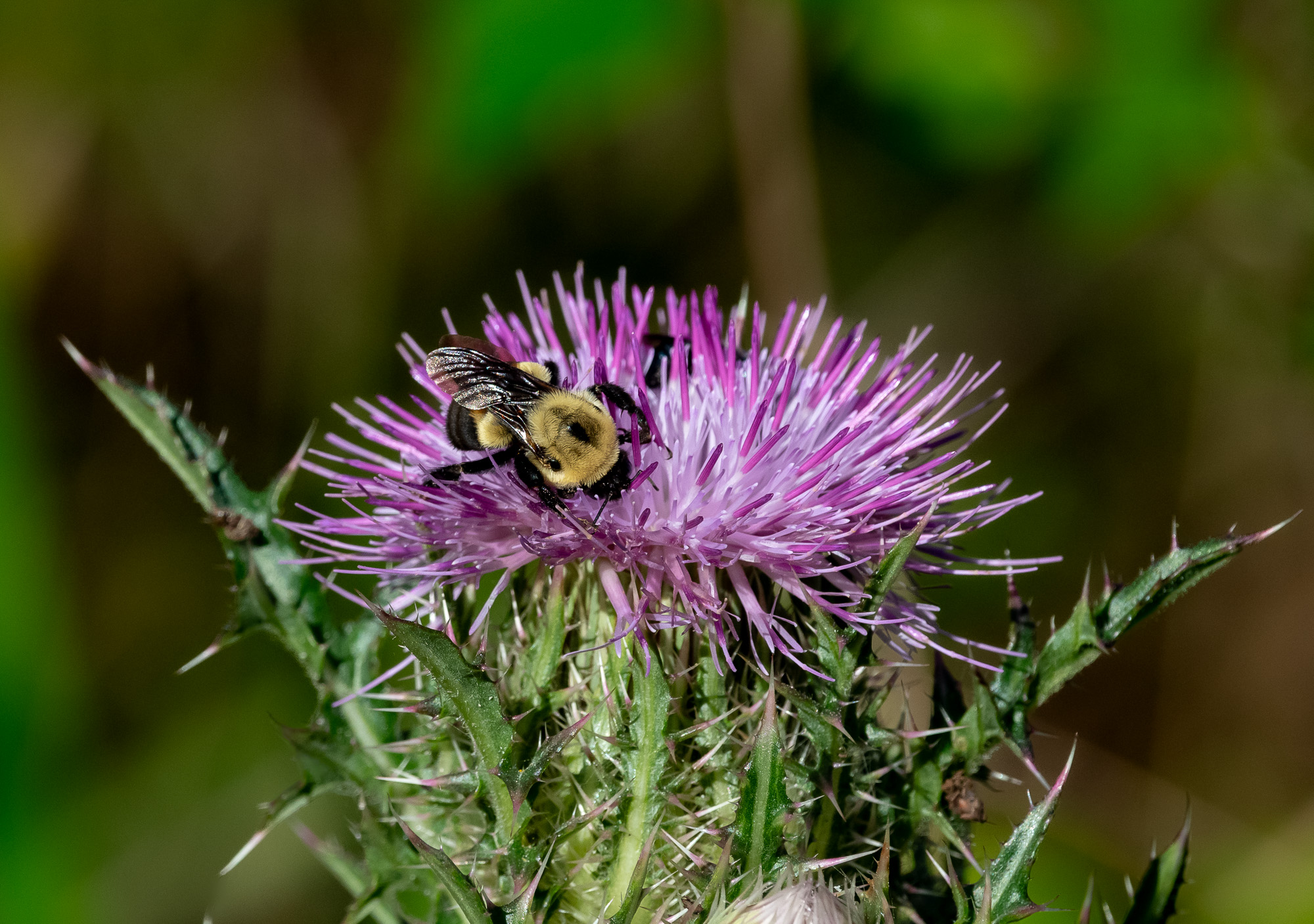
Bumble Bee (Sp. Bombus) on Purple Thistle (Cirsium horridulum). There were plenty of flowers today, but based on the incredible number of new stalks we saw, this may soon become The Purple Swamp!
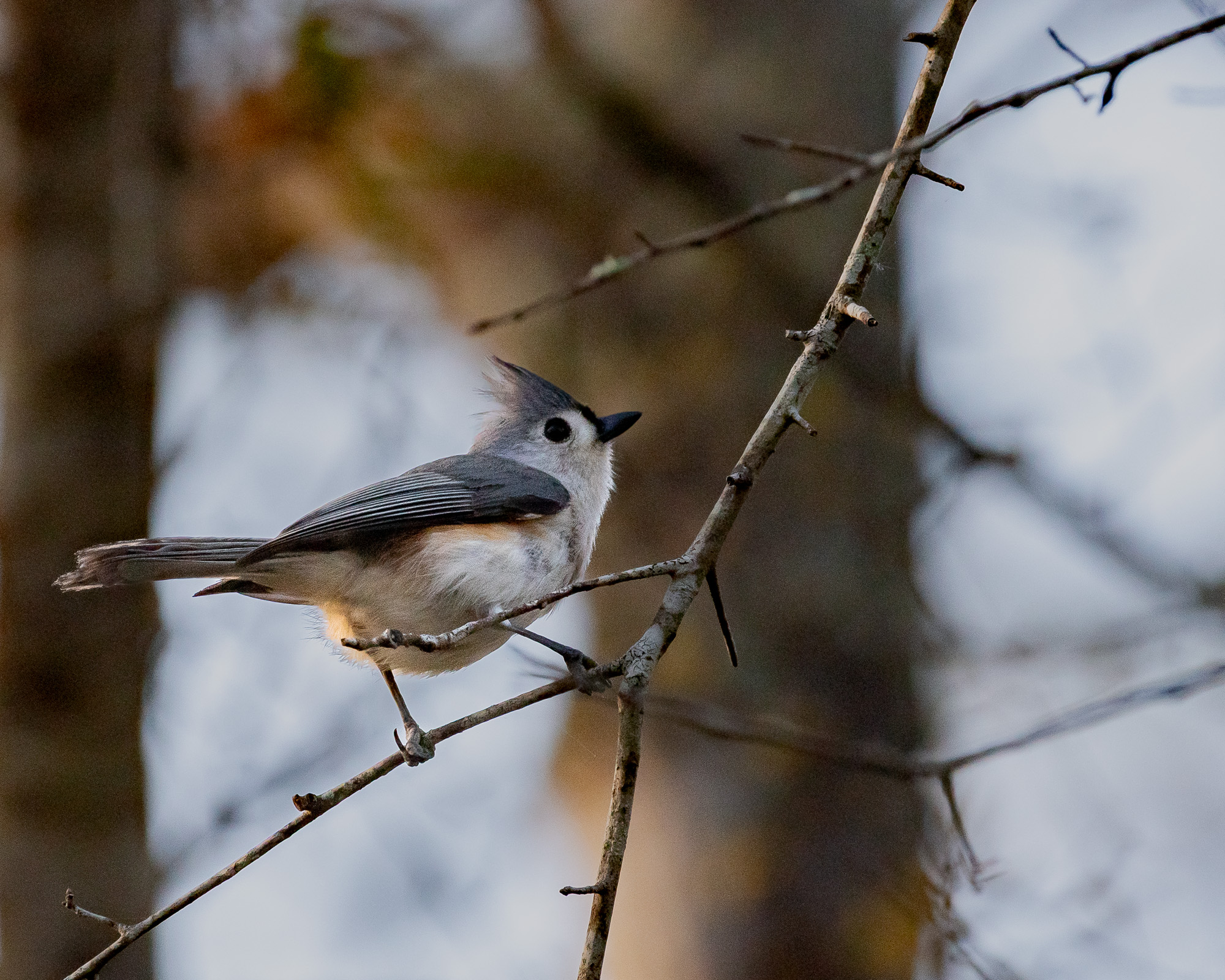
More screaming gang-bangers. Tufted Titmice, like many small birds, project an attitude several times their actual size. Don’t let them know, but we think they are just so stinkin’ cute!
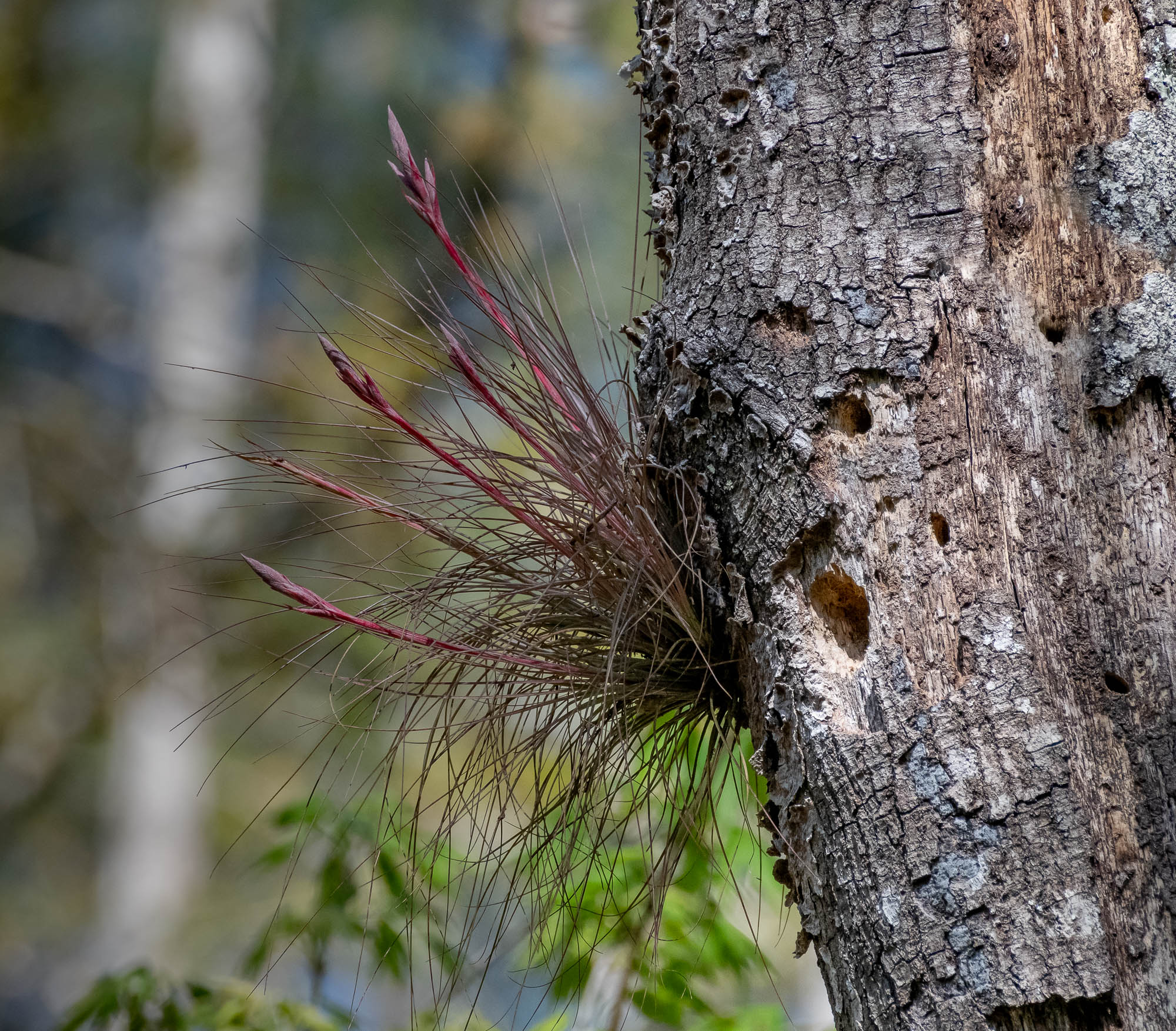
Florida has over a dozen members of the Tillandsia genus hanging around in various habitats. By far, (with the exception of Spanish Moss/T. usneoides) the most common in our area is the Southern Needleleaf (Tillandsia setacea). It usually looks quite unkempt but makes up for it with a really beautiful bloom.
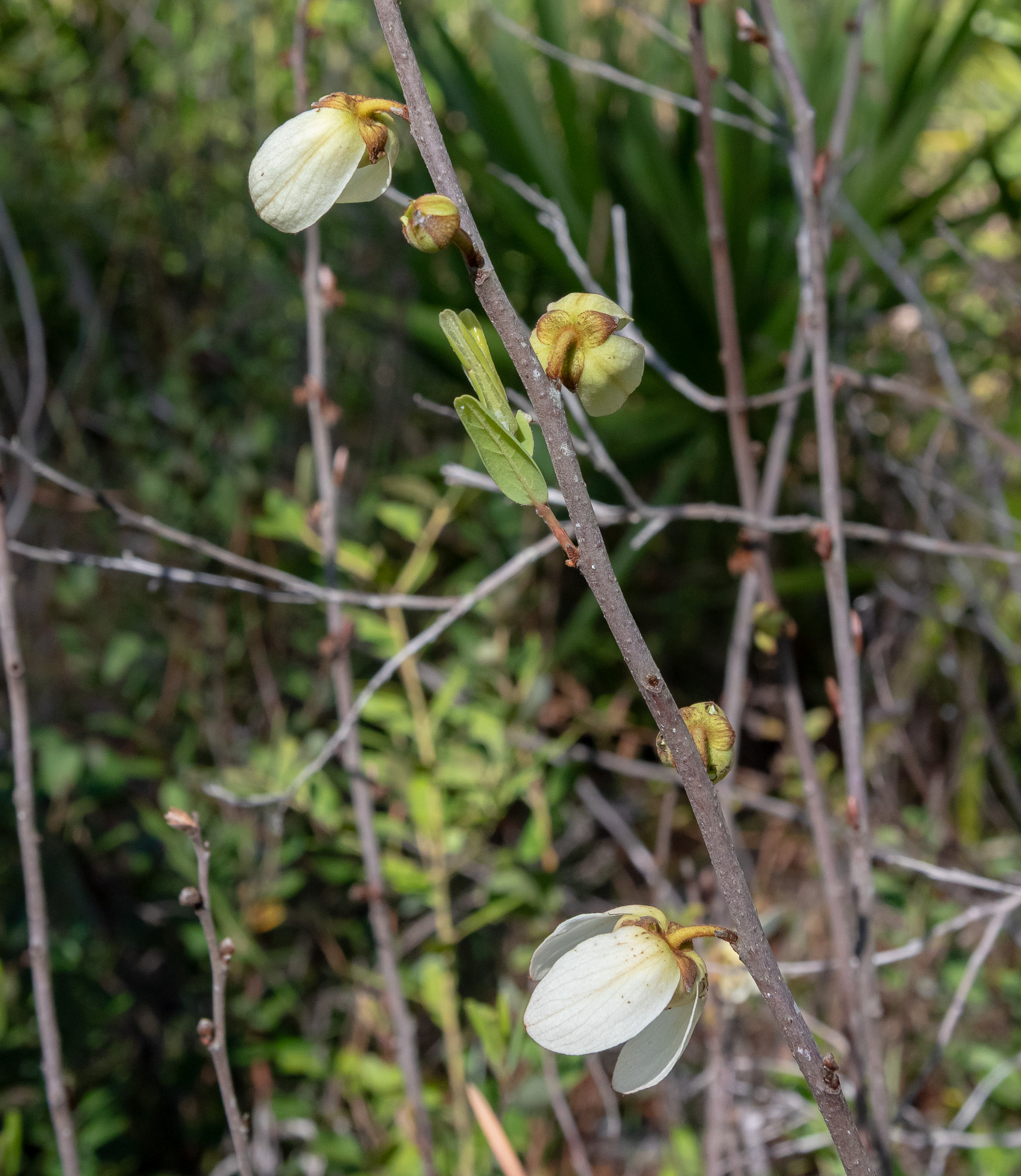
Beginning to bloom in late winter, the Netted Pawpaw (Asimina reticulata) can grow to over four feet tall and produces an edible fruit. Again, just try and find a ripe one before a ‘possum does!
We were happily relieved to see a sign that the area did actually have moist soil in several places. Morning sunlight showcased new blooms and there were many plants which should be in flower in the coming weeks. The light blue-to purple Prairie/Savanna Iris (Iris savannarum) was just what Doctor Nature ordered.
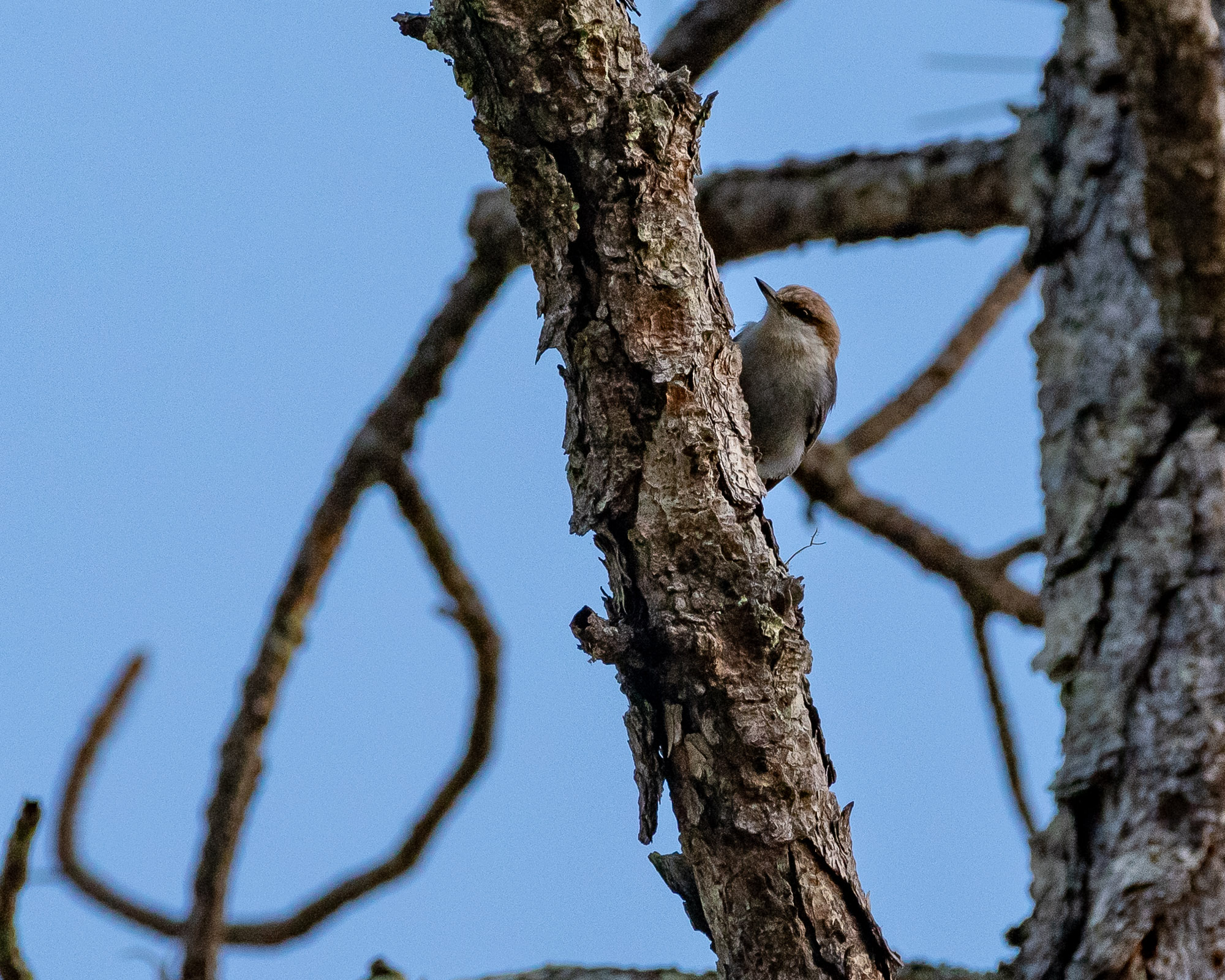
One of our favorites squeaked at us from a tall long-leaf pine tree. Soon, we counted six Brown-headed Nuthatches overhead doing their patented rubber-ducky impression. These little birds are among the earliest nesting songbirds in Florida, usually beginning to breed as early as the second week in February.
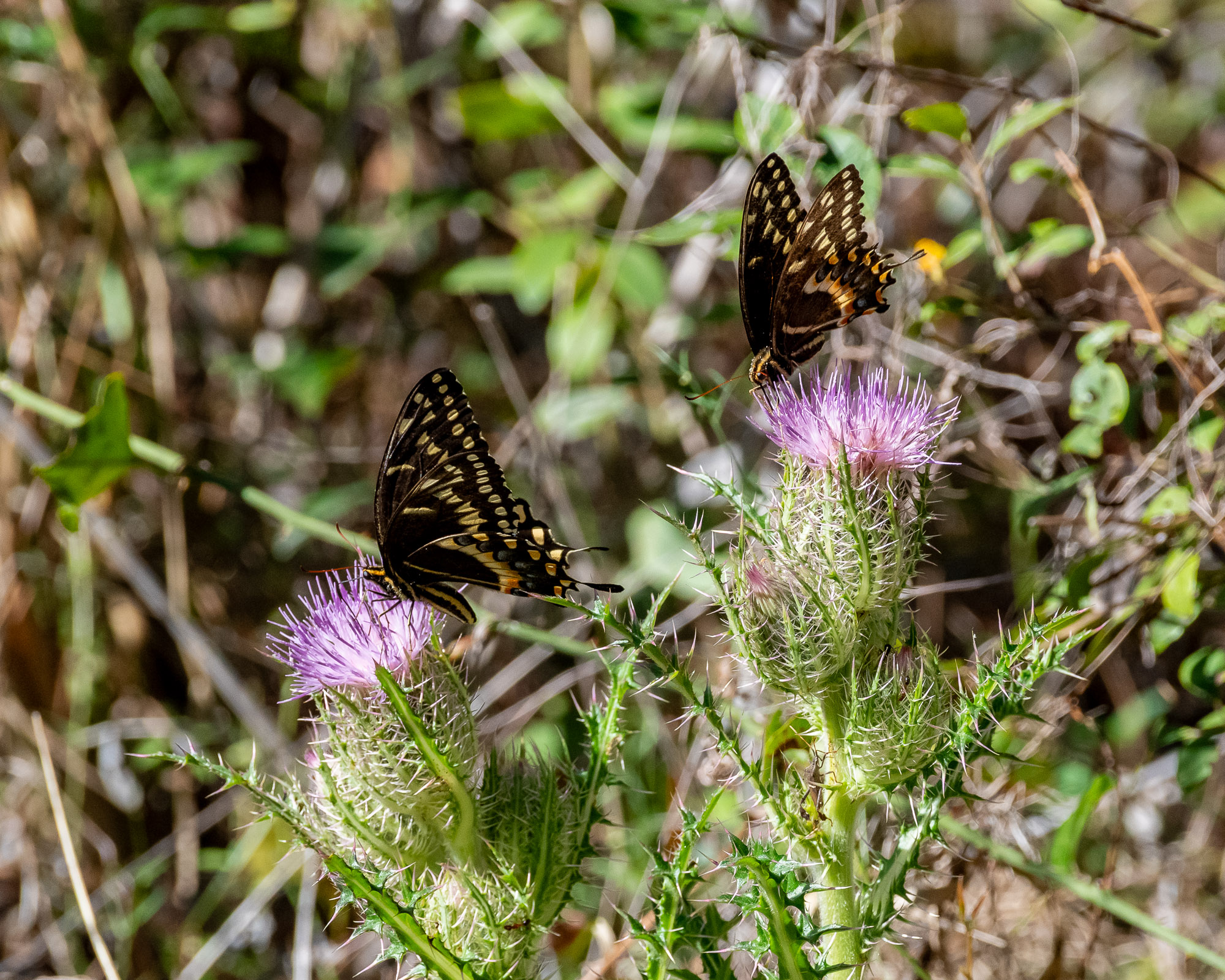
More thistles. More pollinators. Purple Thistle (Cirsium horridulum) with Palamedes Swallowtail (Papilio palamedes). These were by far the most abundant butterfly species of the day.
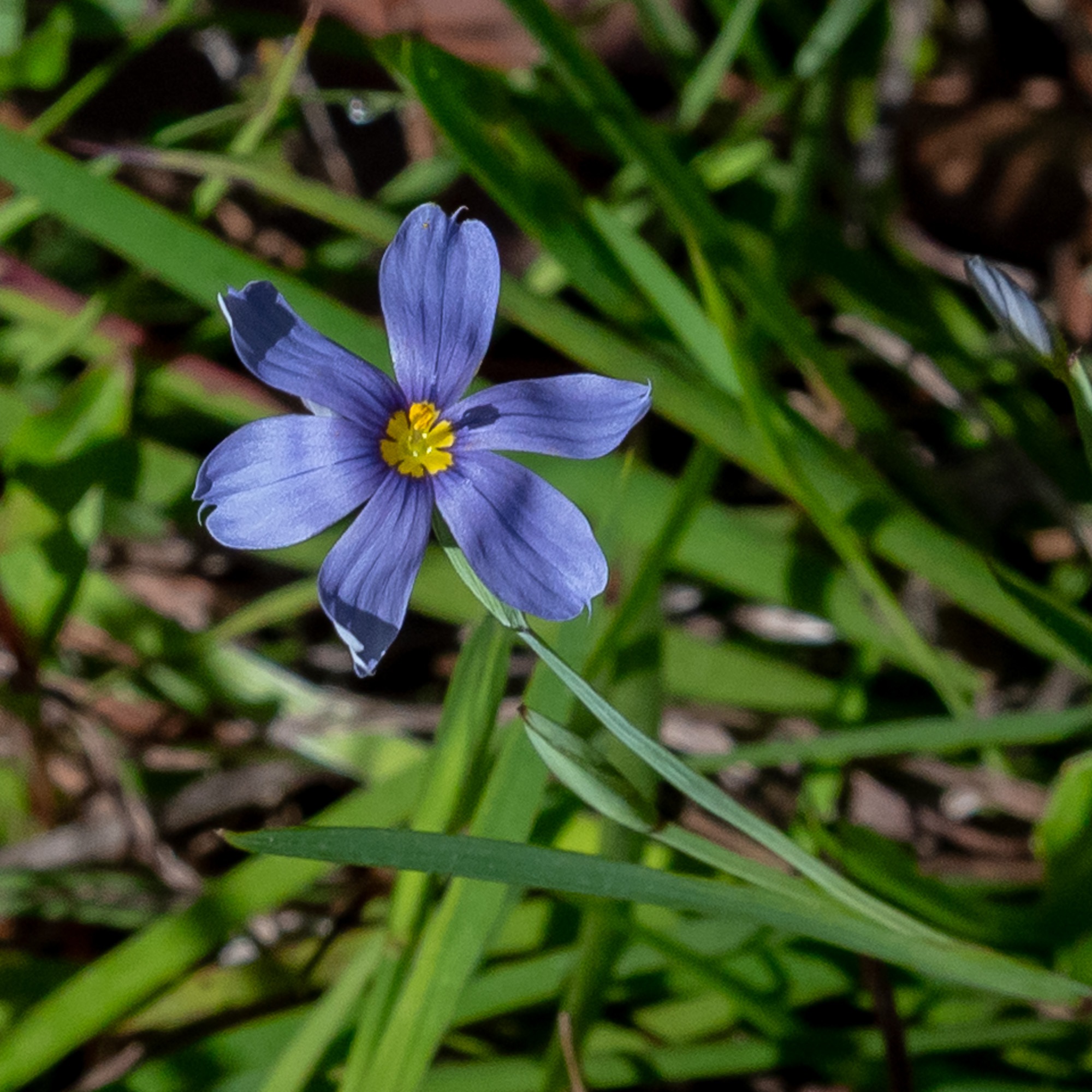
Rounding out our survey of dampness evidence were many spreading tufts of bright blue created by the small flowers of Narrowleaf Blue-eyed Grass (Sisyrinchium angustifolium).
We remember things in certain ways. In discussing the Green Swamp, Gini and I tend to think of our visits during the wet season. Multiple shades of green and abundant flowers. The reality of near-drought conditions provided a different perspective, but one tinged with optimism fueled by more new growth than we anticipated. Can’t wait for the rains to work some magic!
Enjoy your search for a natural place and come back for a visit!
 Our Natural Places
When it comes to greenness, one person’s valley is another’s swamp. Glad to hear it drew the two of you out glad to see it also drew some pictures out of your camera. And look what the stork brought. You heard lots of birds whistle and glimpsed many a thistle: not horrid things at all. Do bog violets ever exhibit a tinge of the color that other violet species gave their name to?
LikeLike
Dear Wally, it was a complete joy to read about yours and Gina’s outdoor adventure. Your enthusiasm is heartwarming and your species identification is much appreciated. Two of my favorite species in your area are the wood stork and the Palamedes swallowtail. Oh and the blue-gray gnatcatcher. So lovely. But of course I also enjoyed the irises, bees, nuthatches, woodpecker, titmice and other wonderful specimen. Thanks so much.
LikeLike
Another fun walk with the two of you. It’s been a while and I really enjoyed this, Wally.
Thanks for your warm and cheery comment on one of my AtoZ posts. Really pepped up my day.
🌼🍀🌼🍀🌼🍀
LikeLike