Spring Prelude
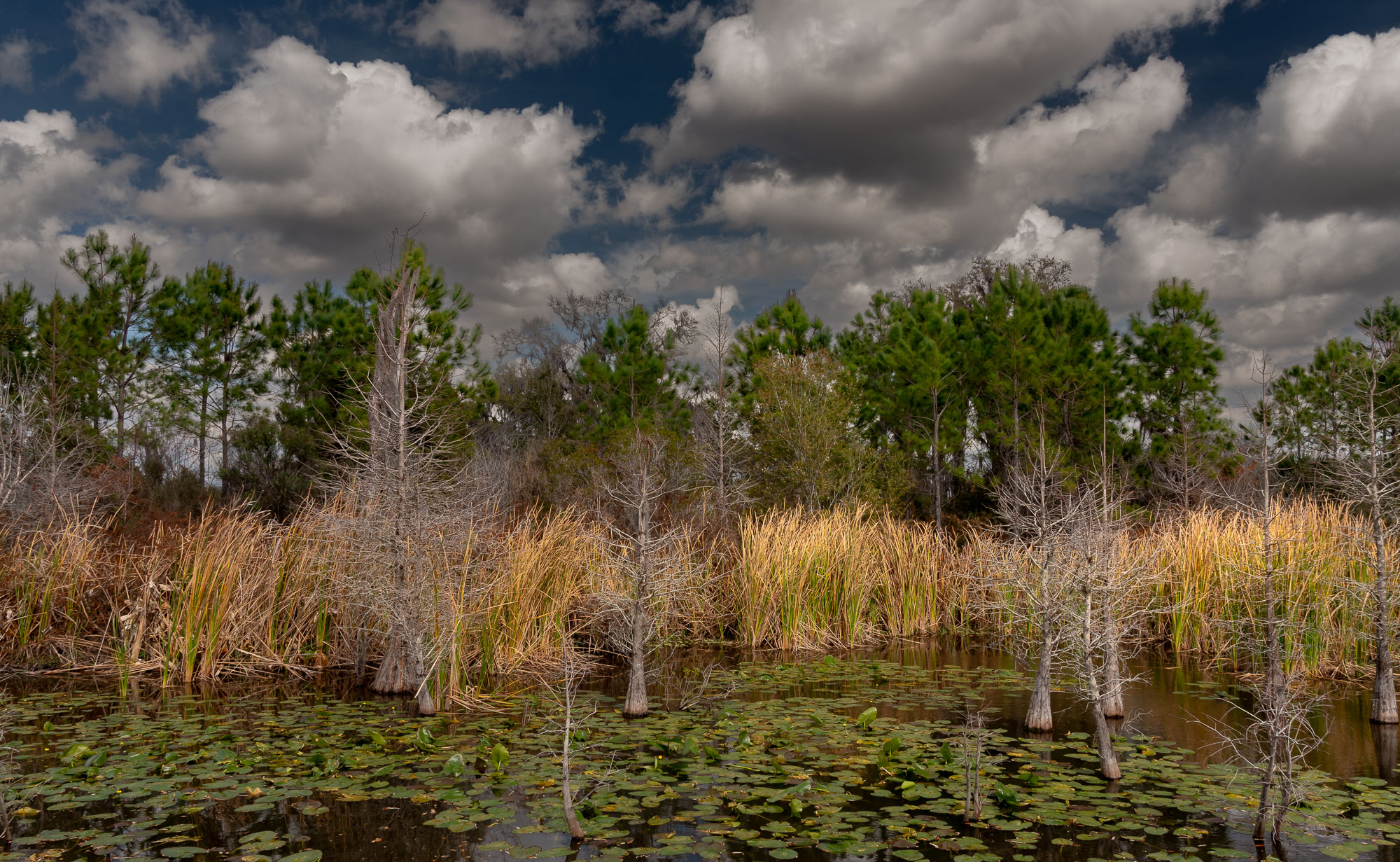
(Click on images to enlarge, click again to zoom.)
A few very cold mornings are uncomfortable events for these native Floridians. Ever the optimist, Gini opined that the below freezing temperatures will help “set” the sweetness for our local strawberry farmers who run sprinklers all night to provide a frozen blanket to protect the little red bundles of pleasure.
Today, the thermometer rose sufficiently for us to venture out and explore what used to be our local “patch”, which once was a ten minute drive. Our new home is over 30 minutes away but we braved the onslaught of morning commuters to see how things are at Tenoroc Fish Management Area.
Gini is not up to hiking yet so our sights and sounds were enjoyed mostly from the car. Even so, we found plenty to make us happy.
“If it is your nature
to be happy
you will swim away along the soft trails for hours, your imagination
alighting everywhere.”
(From Morning Poem by Mary Oliver.)
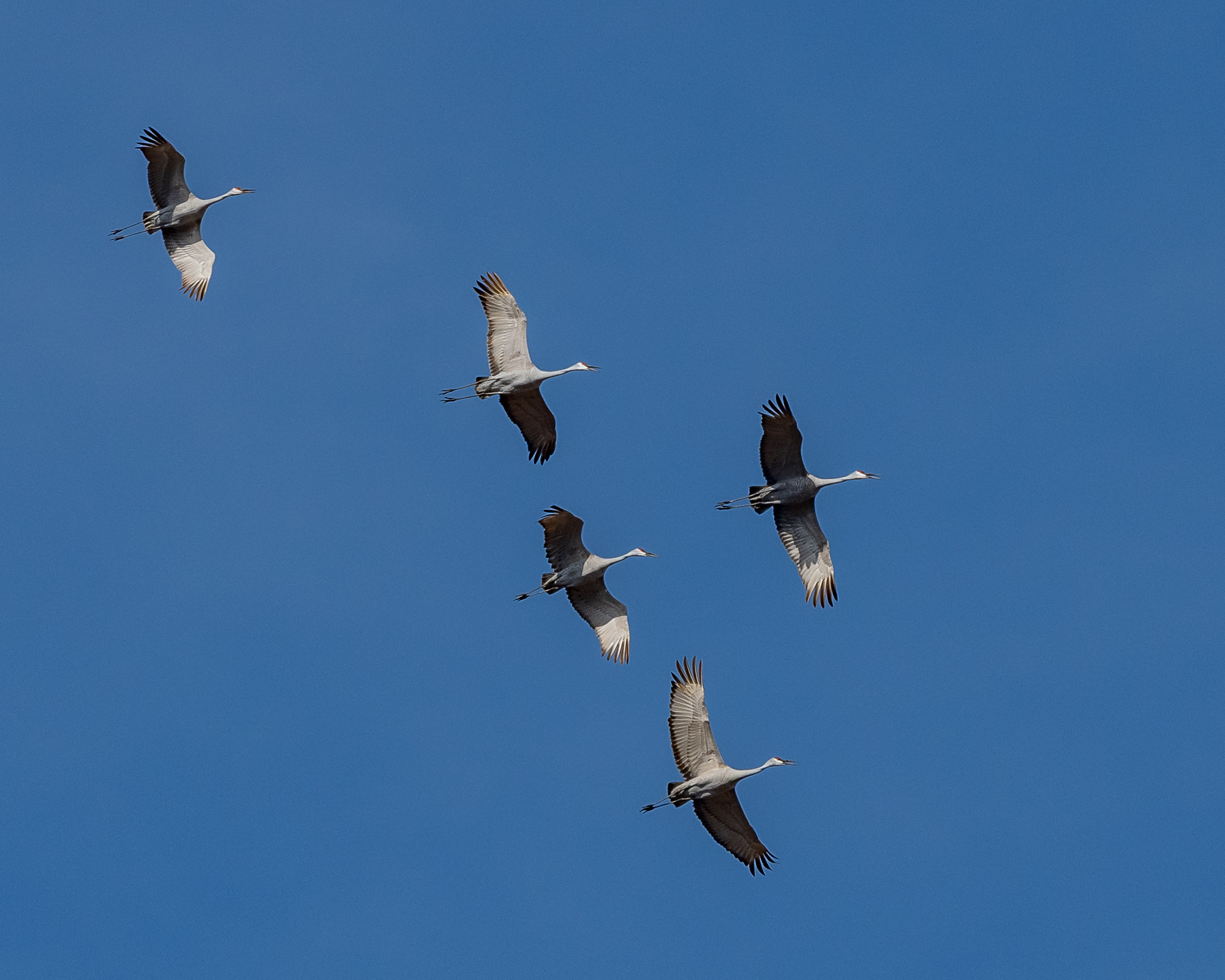
Trumpeting from the skies, a group of Sandhill Cranes headed northeast. They all appeared to be adults which means they are likely winter migrants. Florida has a resident subspecies but it is rare to see more than three or four individuals (family group) together.
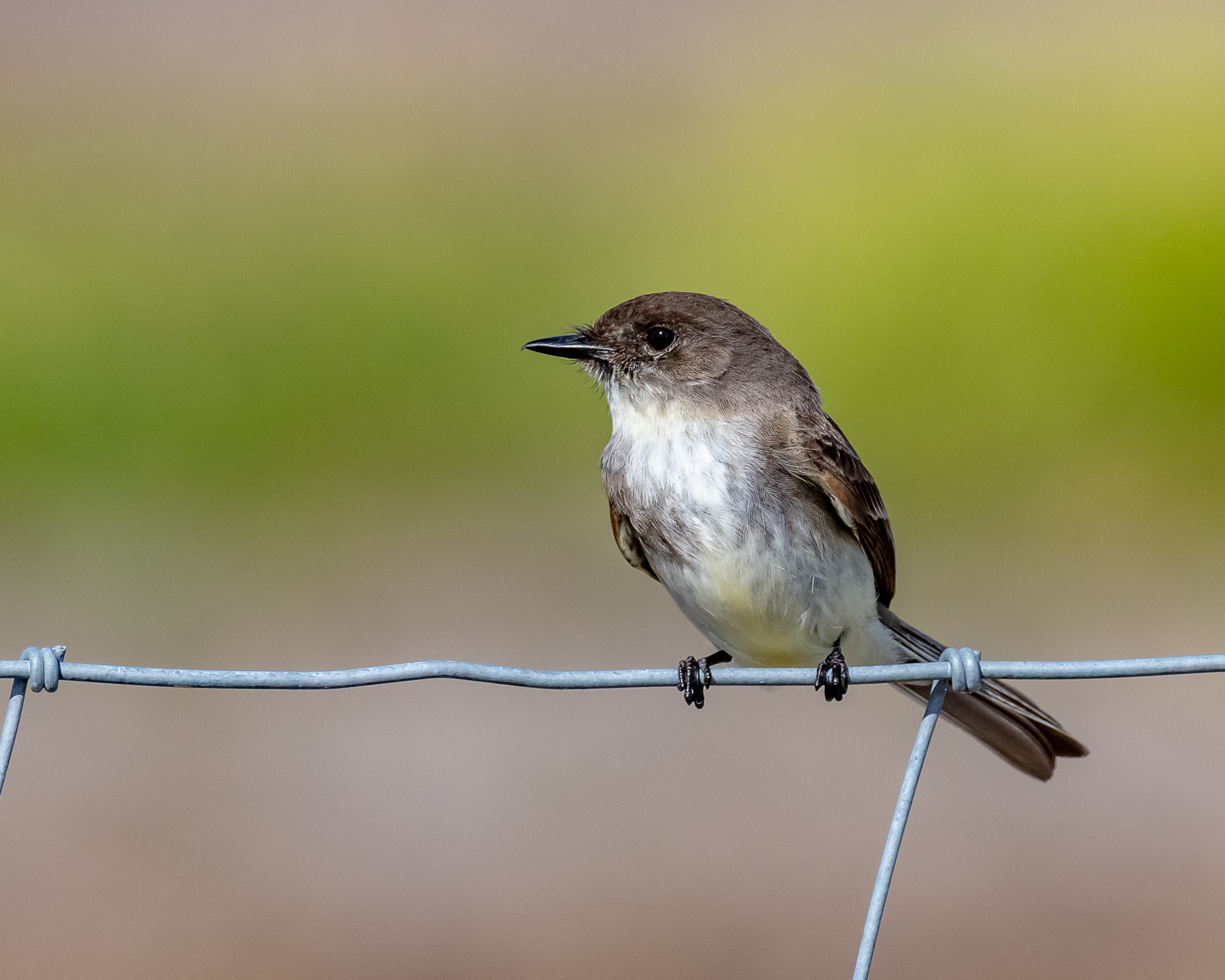
Another winter visitor, an Eastern Phoebe. These little flycatchers are fairly abundant at this time of year.
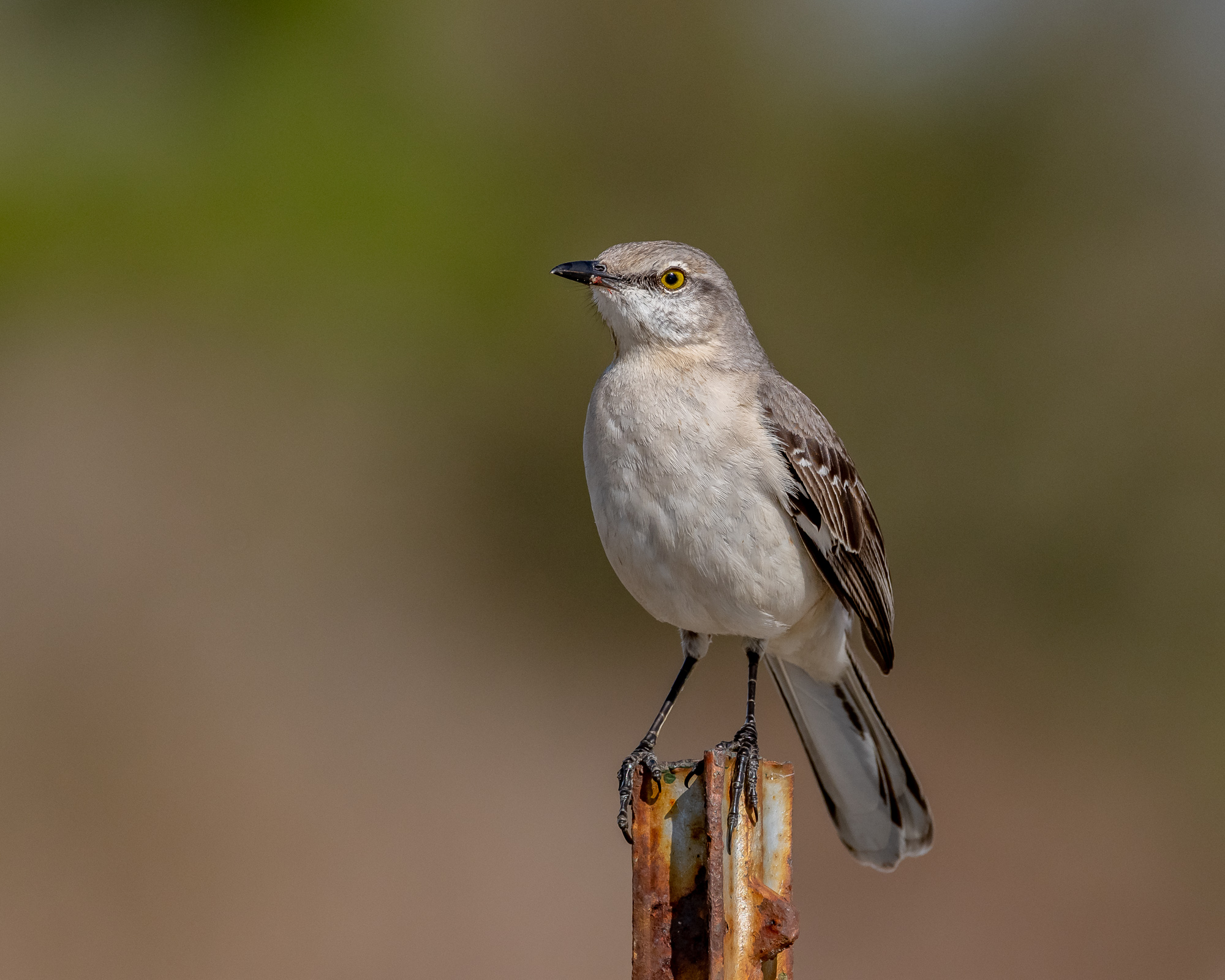
Florida’s state bird is the Northern Mockingbird. They are so common it is easy to pass them by without taking their picture. I’m trying to rectify that sad habit. Those eyes!
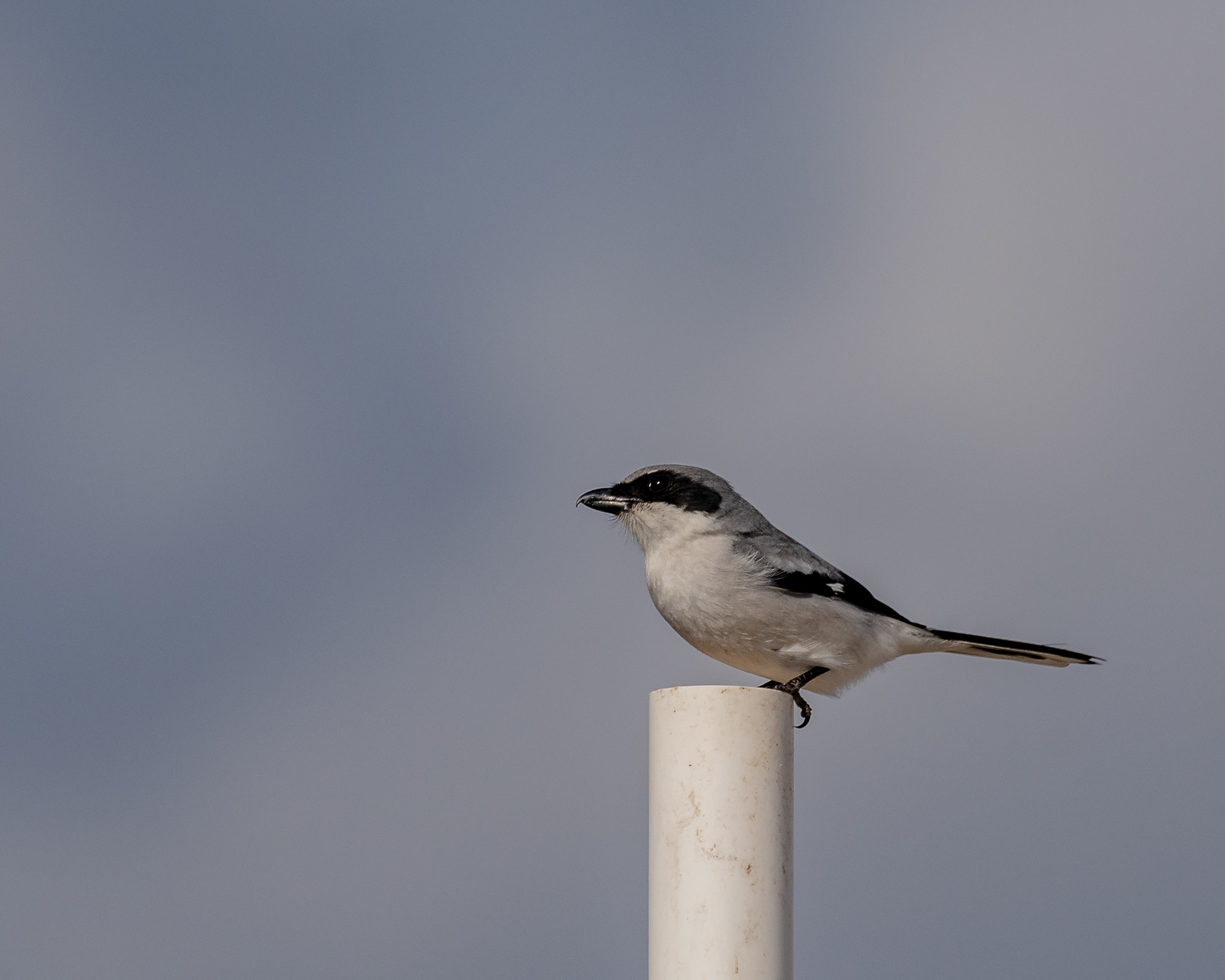
Butcher Bird! The Loggerhead Shrike will use any sharp object to impale its prey thus making it easier to eat. They have been known to store prey in a convenient crook of a branch for eating later when food might be scarce.
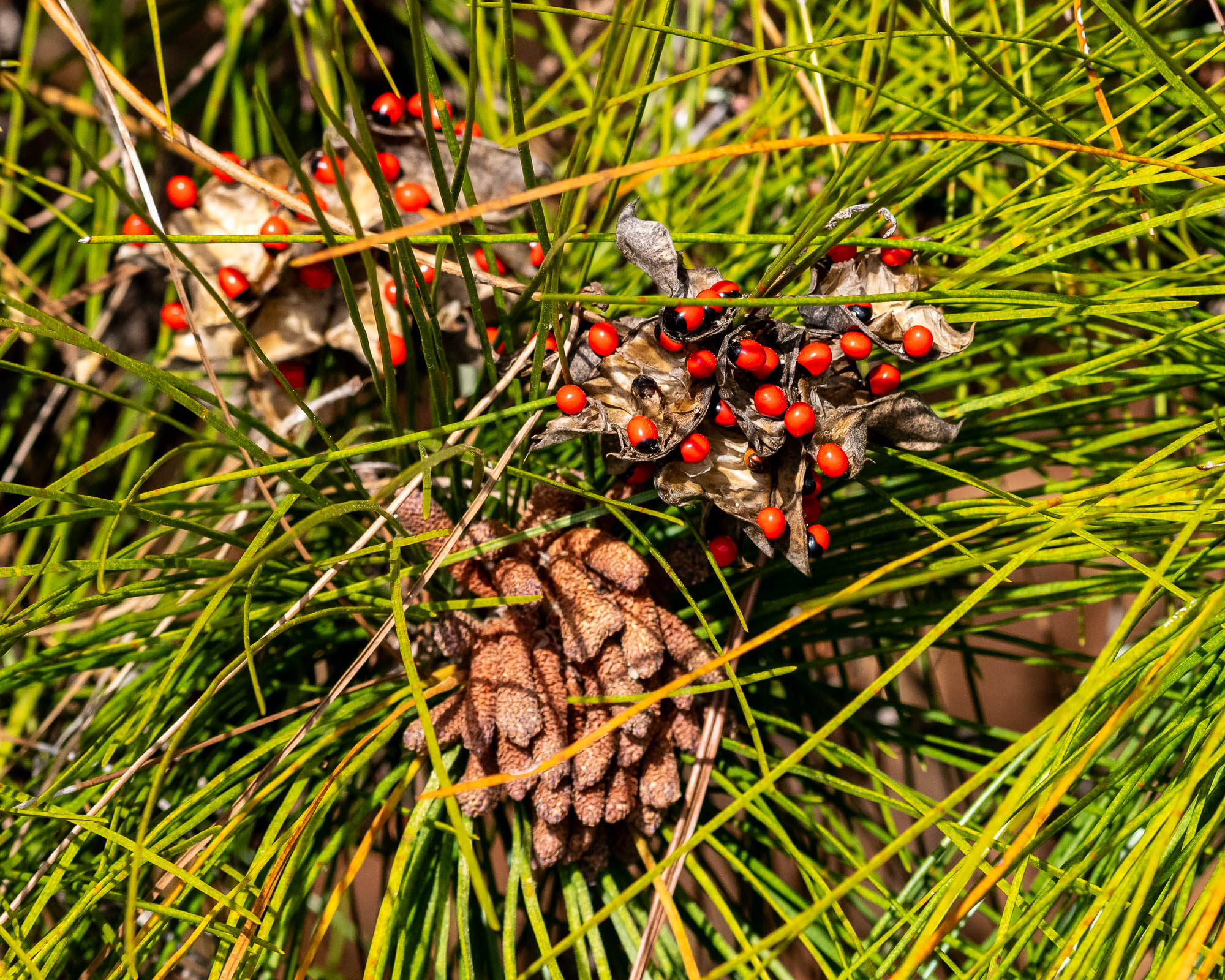
Lovely to look at, especially with bright green pine needles as a backdrop, the Rosary Pea (Abrus precatorius) has bright red seeds in a brown pod. Pretty lavender flowers will begin blooming in a few weeks. Caution. Those shiny seeds contain the deadly toxin abrin and can be fatal if swallowed. This is a non-native plant from India/Asia.
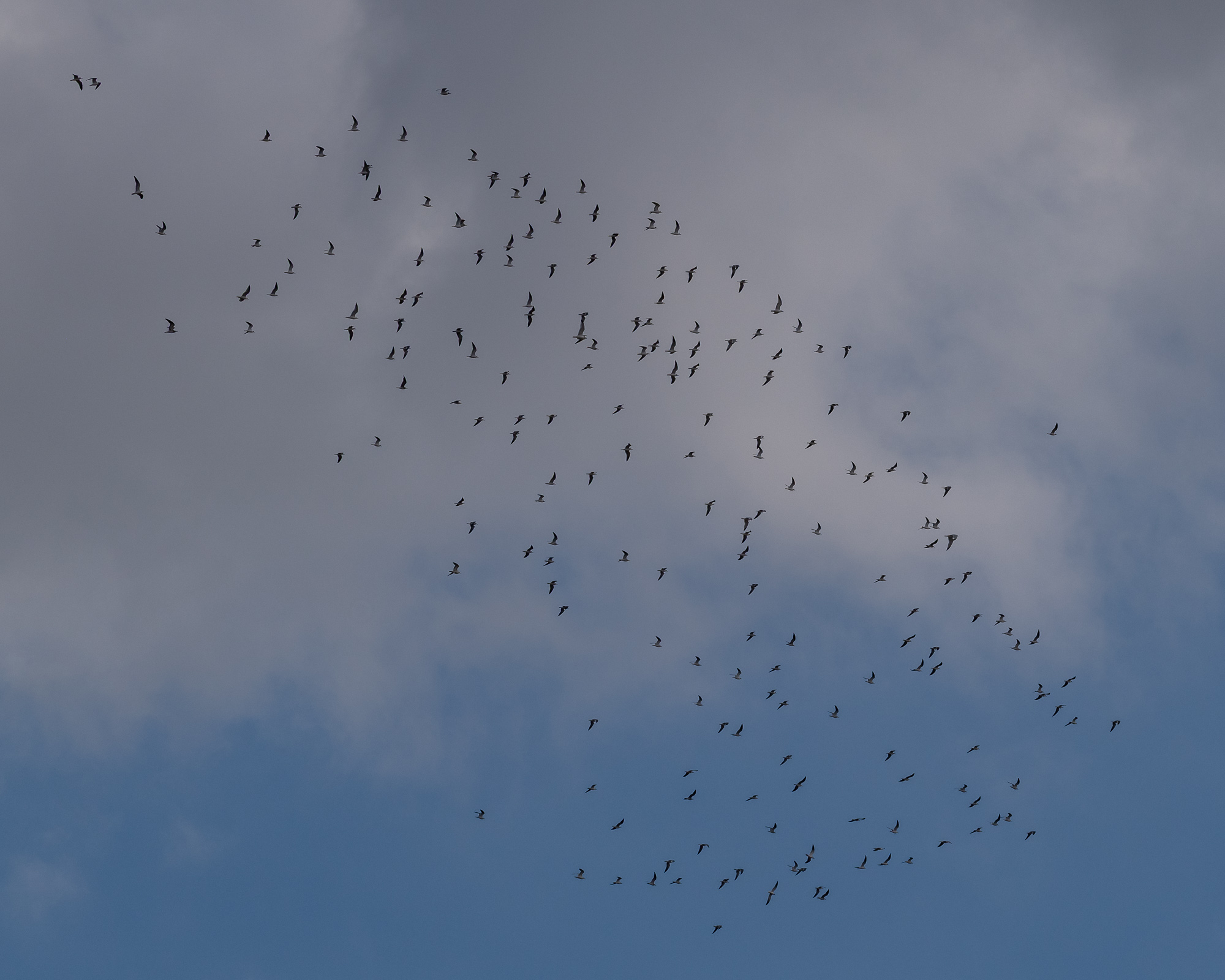
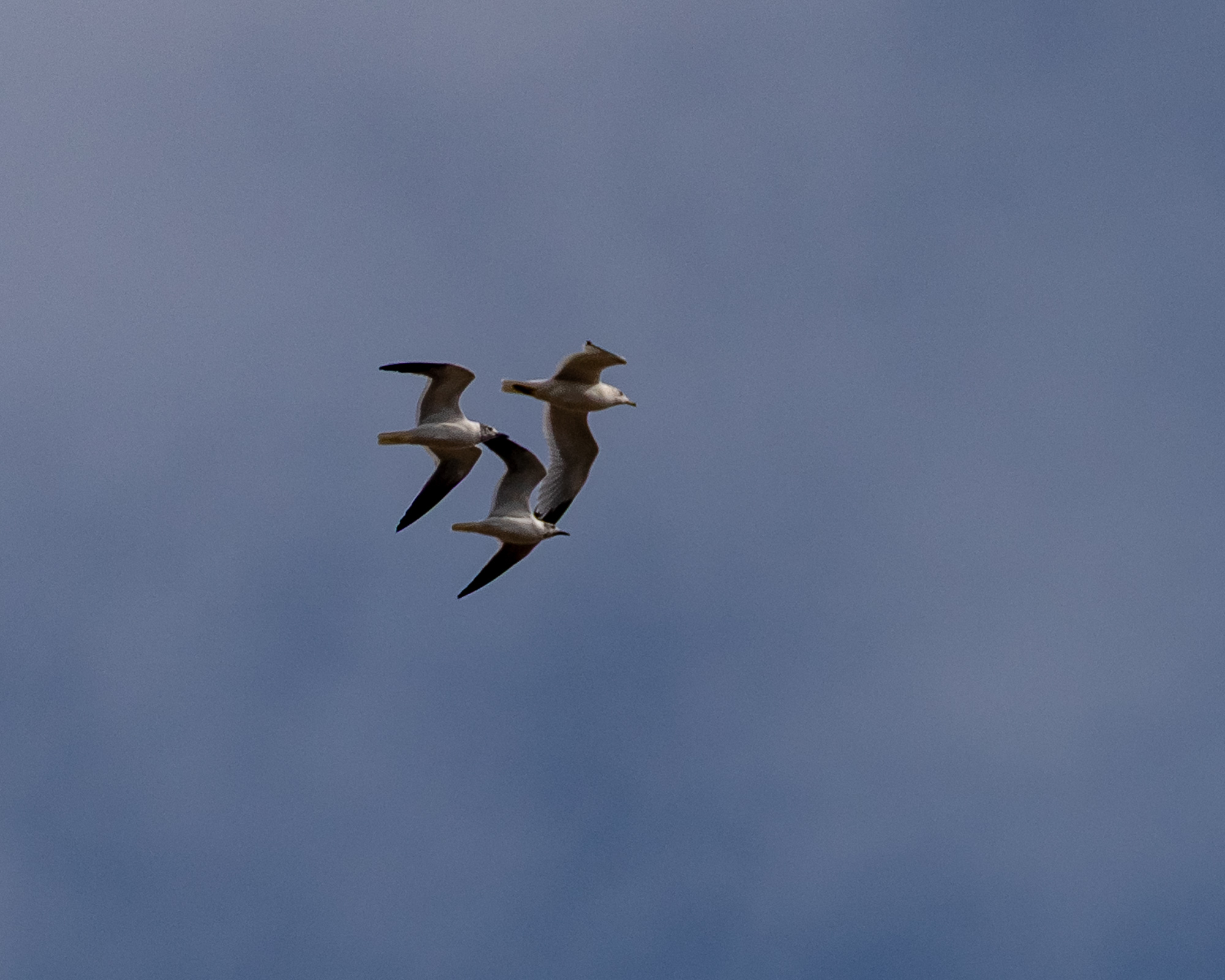
“Look straight up!” I was getting out of the car to chase a warbler, but her shout revealed a huge flock of birds high overhead. From several photos I estimate there were 220-250 Laughing Gulls in the group. There was a mix of mature/immature birds in breeding and non-breeding plumage. Never seen a flock of gulls that large.
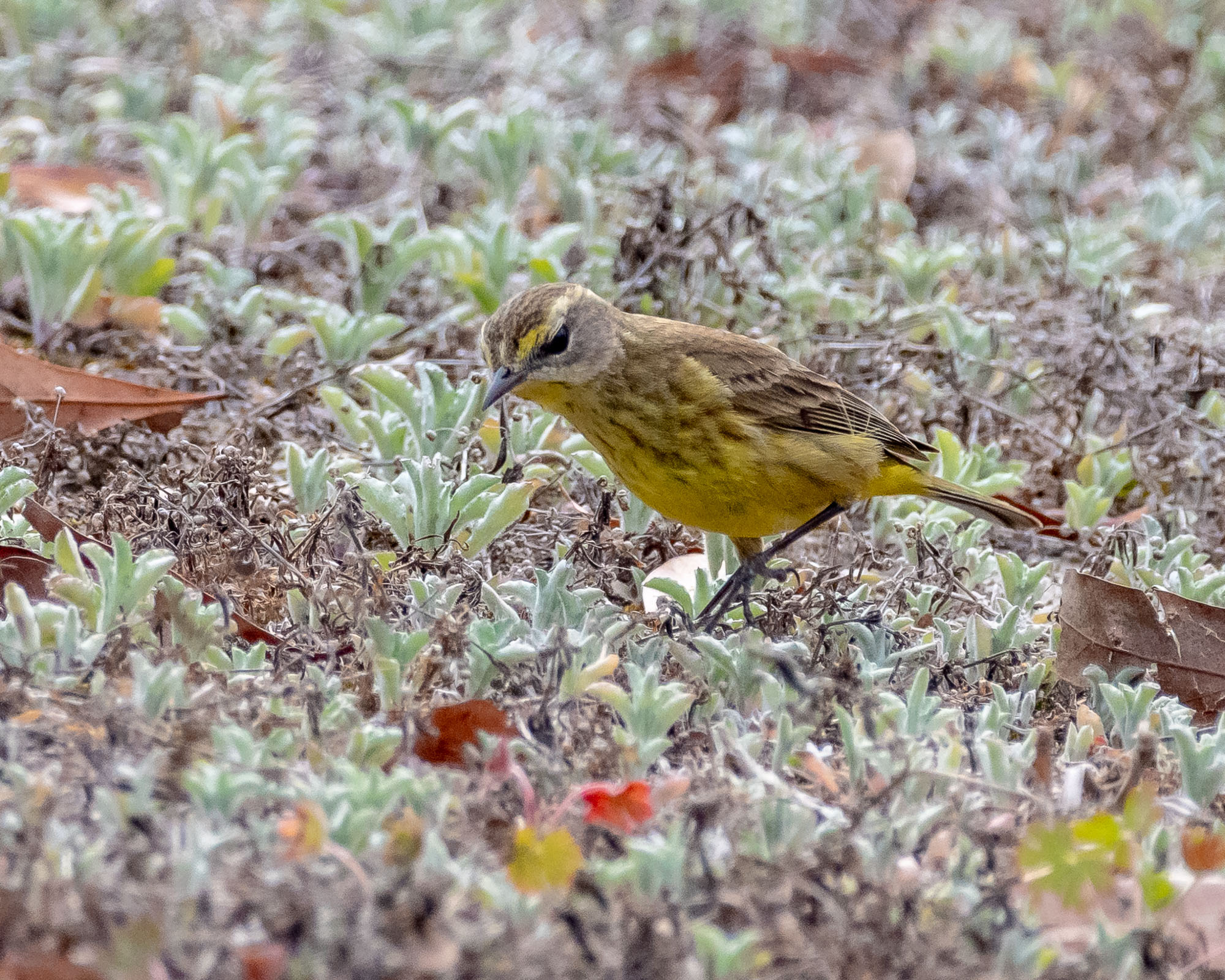
Speaking of that warbler. We found around three dozen Palm Warblers in various size groups throughout the morning.
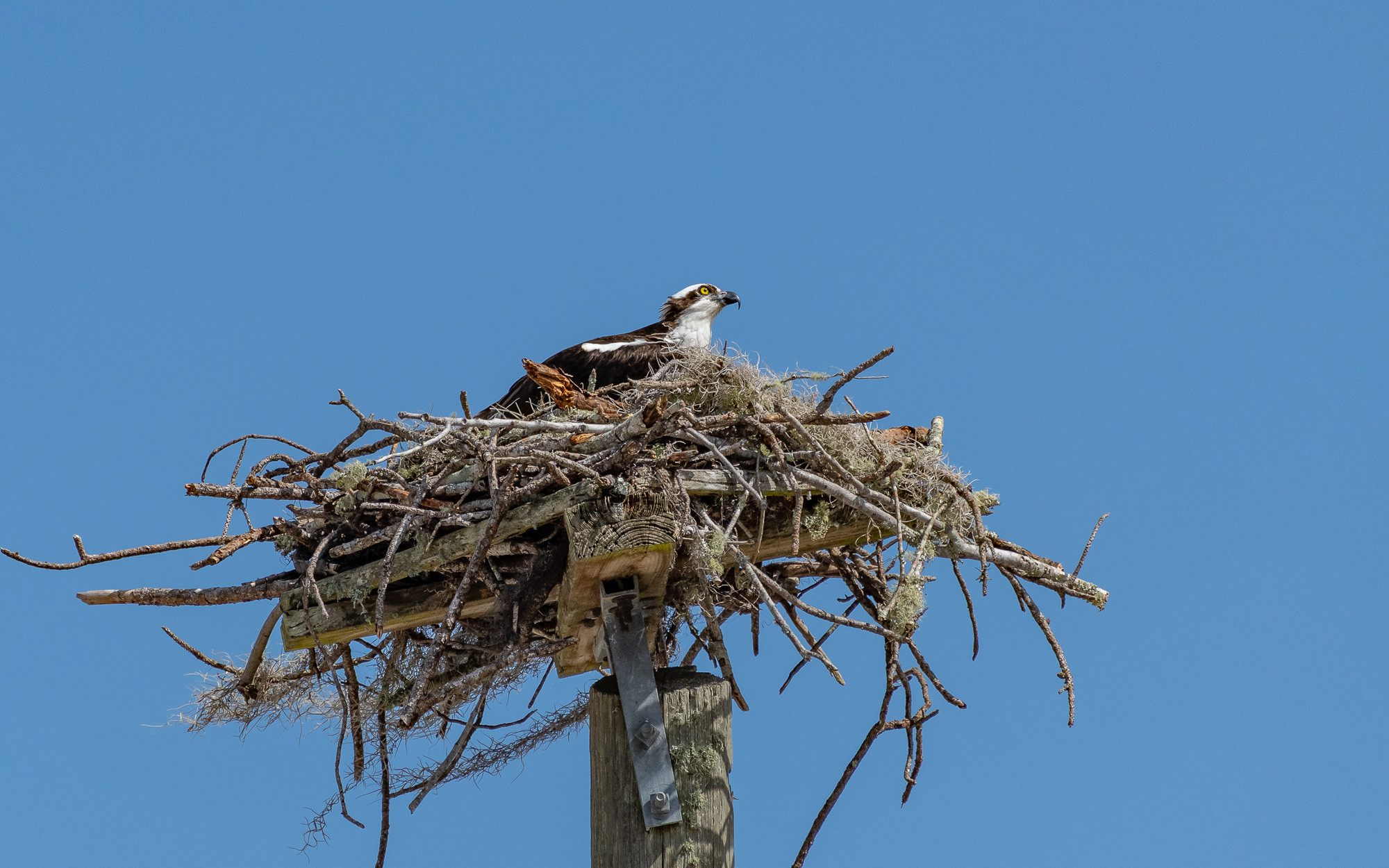
This area consists of many lakes filled with fish. Naturally, Ospreys like the proximity to all those groceries and nests abound at this time of year.
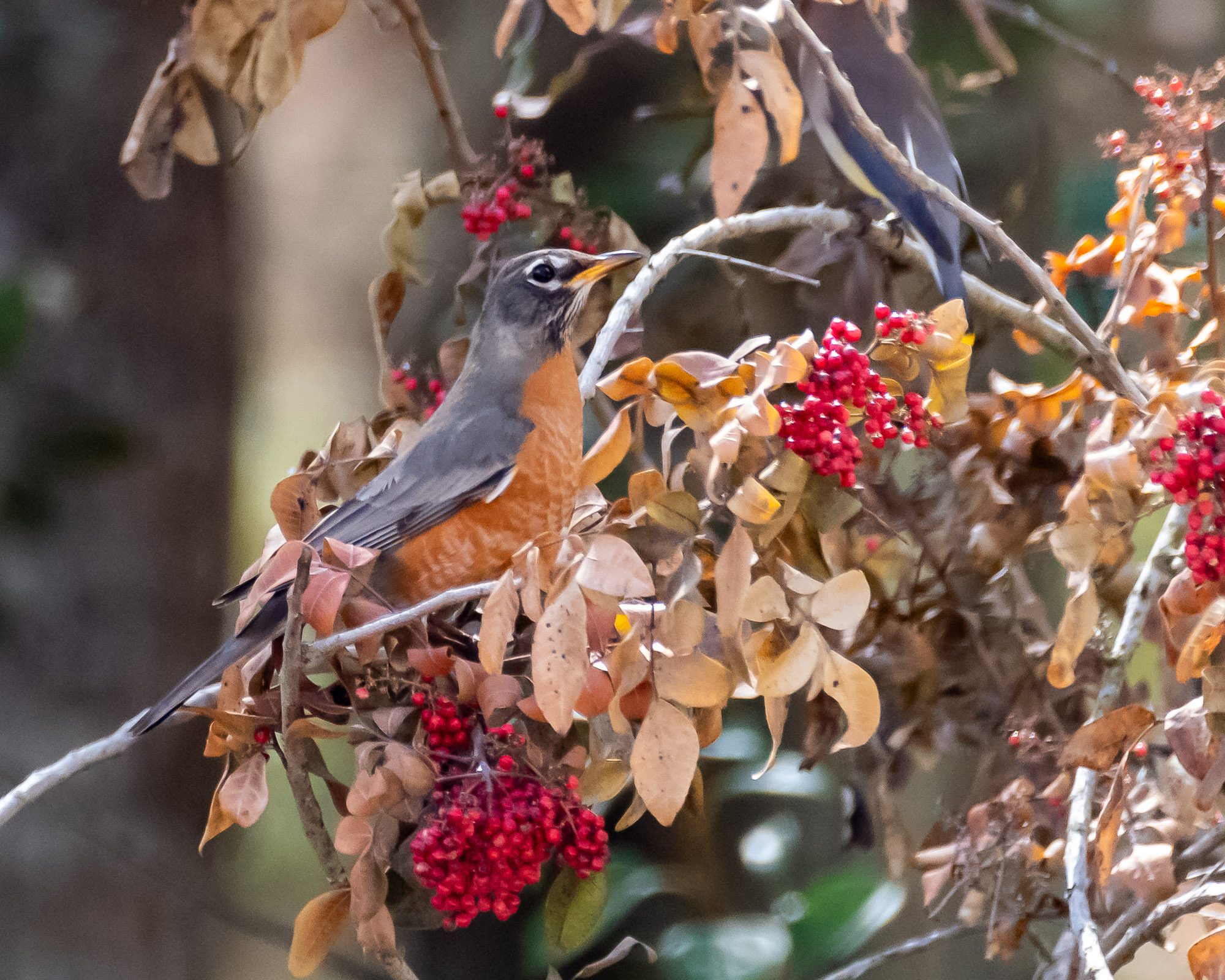
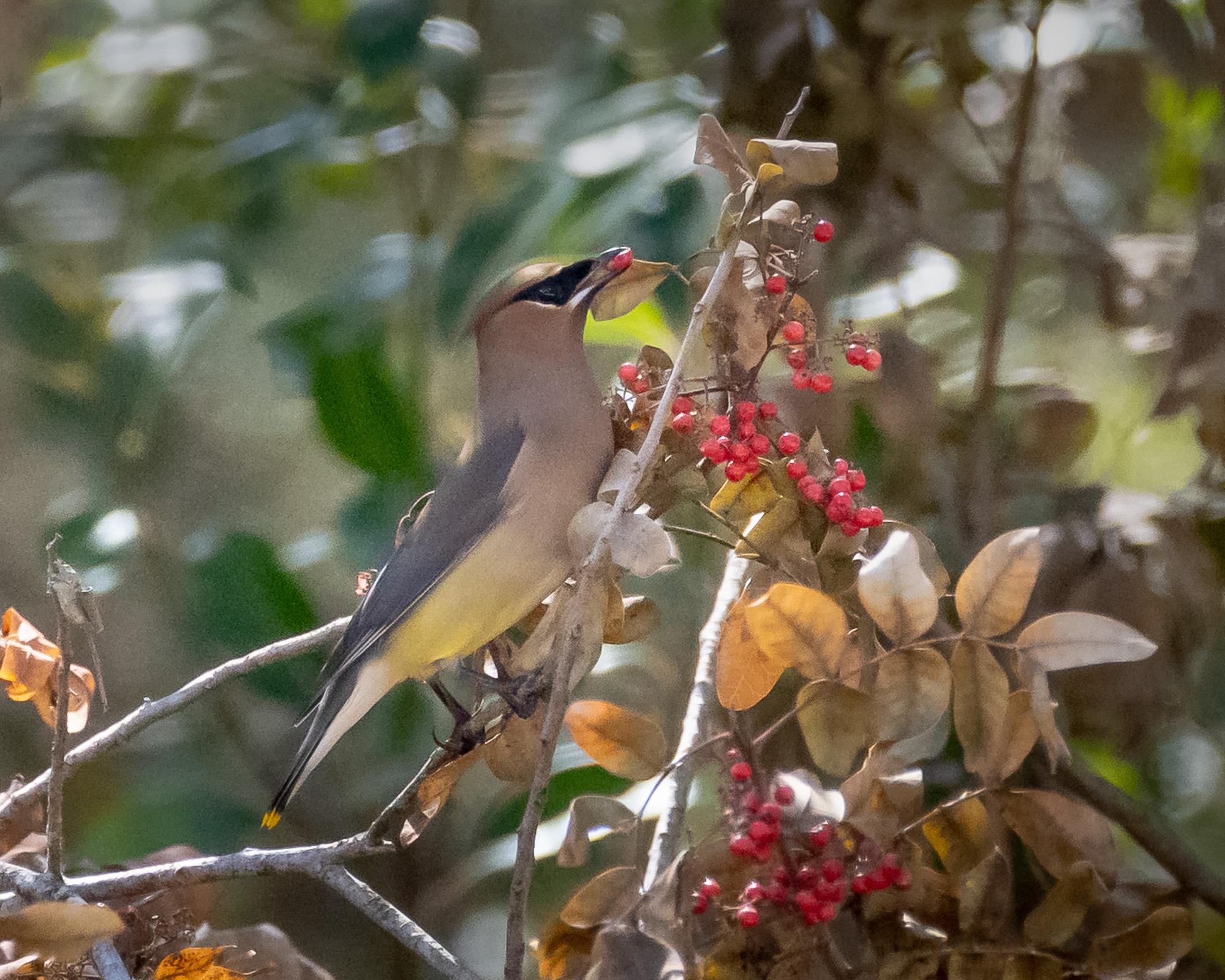
Another very invasive plant, the Brazilian Pepper (Schinus terebinthifolia) is a native of South America and displaces native species if allowed to thrive. It is very difficult to eradicate. One reason it’s so hard to control is those darned birds love the juicy red fruit and spread the digested seeds far and wide. Although we were happy to find a group of American Robins and Cedar Waxwings busily consuming the energy-rich berries, we wished there were native plants for them to visit instead.
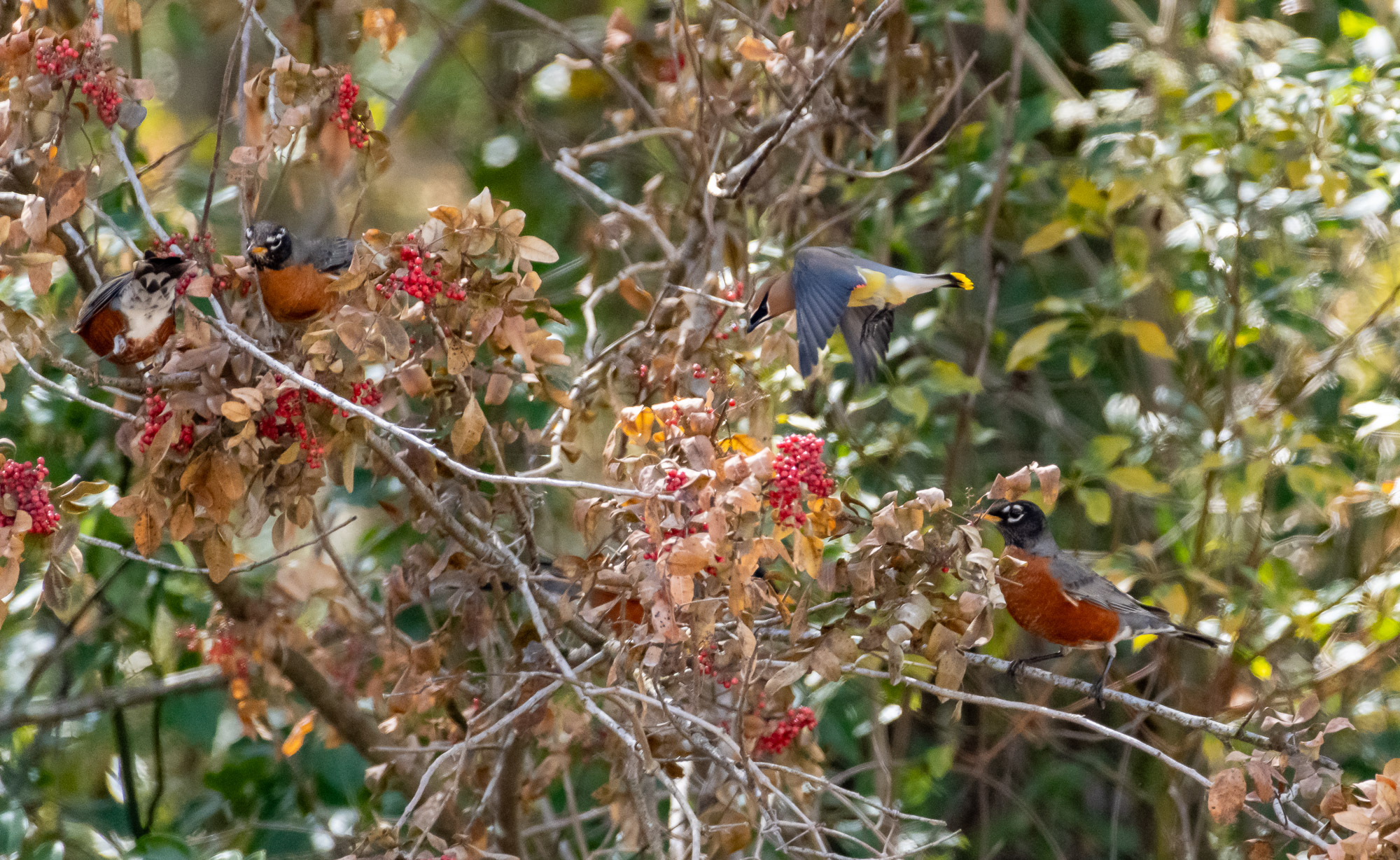
American Robin.
Cedar Waxwing.
This was our first outing of any length since Gini’s second knee operation. She is doing very will with rehab but is not quite ready for walking over uneven terrain. Soon.
Enjoy your search for a natural place and come back for a visit!
 Our Natural Places
Glad you and Gini were able to get out and explore – sounds like Gini is coming along so that is very good news. We are patiently waiting for the Sandhills to make the trek up here. We get to see them down in Texas at the beginning of the year, but always smile when I get to see those tall bodies walking around (a little more north of us). Your abundance of Palms down there is amazing – last time we were down there, every where we looked one was hopping about. That is a large flock of Laughers, I’ve seen some pretty large ones, but not on the move like that, more often just lounging on the sand flats with umbrellas in their drinks and Ray-Bans on. Take care.
LikeLike
We have just had a few days of drought-ending rain and are very anxious to get out and explore our Spring patches.
We passed a field last week with a new Sandhill Crane family and hope to find some little yellow fluffy chicks to photograph soon.
Ten-four on the lounging gulls! They are happiest right after snatching french fries outta my hand!
LikeLike
Beautiful photo of the mockingbird. They are common here, too, and I don’t take the time to admire them. They seem to have a huge vocabulary. Also common (including in my backyard) is the Brazilian Pepper. It spreads locally by aggressive underground roots which sprout new trees, and is very hard to get rid of! Happy to hear about Gini’s progress.
LikeLike
Nice to hear from you, Peter.
Good news/bad news. The good news is that I just bought a new fast wide-angle lens for night sky photography. The bad news — the same as the previous sentence. (The Boss is stocking up on skeeter repellant as we speak.)
I won’t say your stunning stellar images were the reason for my purchase, but they sure do provide motivation every time I visit your blog.
Cheers.
LikeLike
I can just imagine your blue sky and the fresh smell of sprouting and budding greenery. I’m amazed at how you were able to find so many groups of birds – groups of waxwings, robins, pine warblers, cranes – you were both blessed with a wealth of bird sightings!
I don’t think I’ve seen that Brazilian Pepper here yet, I’ll have to look more closely. I know we have something called Peppervine, but it makes berries which are black when ripe, and the leaf looks more like celery than your smooth-edged leaves.
Many wishes to the two of you for more outings as spring progresses!
LikeLike
Thank you, Sam, for dropping by. You are right about the sights and aromas of impending Spring. We can’t wait to get back to being “out there” on a regular basis.
Hopefully, you WON’T find any Brazilian Pepper plants. They are incredibly invasive, crowd out native flora and are almost impossible to eradicate.
Take care as we all look forward to good weather and soothing times outdoors.
LikeLiked by 1 person
Oh Wally, I so very much enjoyed this outdoor bonanza of stunning photos and Florida birds. Fun to get the Mary Oliver poem and wonderful upbeat narrative, too. What a great day you and Gina had at Tenoroc Fish Management Area, it must’ve been so joyful to be out there again. I loved the cedar waxwing and sandhill crane photos especially and enjoyed seeing such a large flock of the laughing gulls (maybe such a big flock due to the recent storms?). Thanks for whisking us off with you two to enjoy this frolic.
LikeLike
Top o’ the mornin’, Jet. Thanks for tagging along as we continue to employ “wishful thinking” about the arrival of Spring.
That flock of gulls was likely a group of migrants from the northeastern U.S. Our local gulls are like the rest of us Florida natives and tend to eschew big crowds. (Family reunions being the exception.)
Sure appreciate your visit and taking the time to record such nice remarks.
LikeLiked by 1 person
Another fascinating walk. Loved it!
Such gorgeous avian wonders.
And the Rosary pea is called Ratti/Gunja in India and was used in ancient times for it’s medicinal properties and most importantly by jewellers to measure gold, even to make jewllery and as a talisman.
Thanks for taking us along, Wally and Gini.
LikeLike
We are happy you walked with us for awhile.
LikeLiked by 1 person
What a lovely day for an outing! Best to Gina on rehab and recovery! My favorite photo is the Eastern Phoebe, I love a wire and the background colors compliment so nicely! Great photos and sightings all-way-round!
LikeLike
Thank you, Donna. It was good to get out following her surgery. But now – she wants more!
LikeLiked by 1 person
The very best thing about this post is that it records sights and sounds from a trip that you and Gini were able to share. Even with my lesser equipment, I’ve found that shooting from the car has some advantages, especially as a mobile bird blind. I can click away at birds on the ponds ringed by the auto route at the Brazoria refuge, but if I open the car door even a crack, you can hear those birds yelling “Vámonos!”
A couple of days ago I posted a photo of the plant (Walter’s viburnum ~ Virburnum obovatum) I learned is native to your state, and often called Florida snow. Now you’re offering another plant we share, unfortunately. I found one example of the Brazilian pepper tree on Galveston Island; I’m hoping to find it gone, or at least unmultipled, this year.
I do envy your robins and waxwings. The robins particularly were a primary sign of spring in Iowa. Now, I rarely see them. There’s a great one-hour video on YouTube that’s nothing more than recorded robin songs and calls; I play it from time to time in the morning or evening, and do a little pretending!
LikeLike
Walter’s Viburnum is one of our spring favorites. Hope to soon visit some of our old haunts to see if they’re still there and blooming.
We estimated there were about four dozen robins and possibly two dozen waxwings in that spot. Car blind was perfect. The chirping/singing of the robins intermixed with the super-high pitch of the waxwings was almost deafening – still, music to our ears!
LikeLike
It occurs to me that just like a flower, Gini’s abilities to be out and about are beginning to bud, but it shouldn’t be long before she’s in full bloom. Enjoy the change!
LikeLike
Somehow I can’t imagine people as happy sleeping under a frozen blanket as farmers claim strawberries are. Too bad you can’t freeze out the invasive Brazilian pepper and the rosary pea. My instinct upon seeing your cedar waxwing picture was to think of the same birds devouring red berries of another kind, those of the possumhaw tree (Ilex decidua) that’s native in Texas. And since you mentioned mockingbirds, just yesterday I saw one attracted to a fruit-bearing possumhaw. As for ospreys, did you know that the English name for those birds traces back to Medieval Latin avis praedae, meaning ‘bird of prey’?
Happy twin wandering again soon.
LikeLike
We actually have possumhaw here along with a few other holly trees. The birds visit them but apparently can’t resist the easy pickings of the shiny red pepper fruit.
I grew up calling the Osprey “fish hawk” and was jealous of their ability to grab a fish from the same spot where my fishing line was sitting completely devoid of fish.
My twin says thank you.
LikeLike
I’ve just googled Tenoroc and what a place!! The nearest similar thing we have is Brandon Marsh Nature Reserve at 220 acres… That’s the US v. the UK 😀 😀 😀 Really enjoyed your post and photos. Hope Gini’s knee gets better quickly 🙂
LikeLike
Thank you very much! It’s a unique spot. Those lakes used to be phosphate mining holes. Reclamation began over 60 years ago and included plantings of native flora and stocking all the lakes with fish. It has become one of our favorite spots. Most people go there to fish so all that acreage is left to us to explore!
We appreciate your visit.
Cheers from The Colonies.
LikeLiked by 1 person
Nice collection. My absolute favourite is the osprey. Good luck for Gini’s rehabilitation! 👍
LikeLike
Thank you very much! The Osprey is a really beautiful bird.
LikeLiked by 1 person