Our Day of Summer – Part Three
(Finally. This is the last chapter of reporting on our only day this summer we were able to explore nature. It was August 15 and we were in the Lake Wales Ridge State Forest in central Florida.)

(Click on images to enlarge, click again to zoom.)
It would have been easy to talk ourselves out of this trip. Both recovering from surgeries, horrible curve balls from Life, middle of Florida’s hot and humid summer – stay home, enjoy the air conditioning. What a mistake THAT would have been!
There were so many flowers and trees and birds and insects – heat and humidity were not even noticed. What a glorious time! We were like a couple of kids at an amusement park. Look at that! What is this? (Okay, to be fair, we’re pretty much like that all the time.)
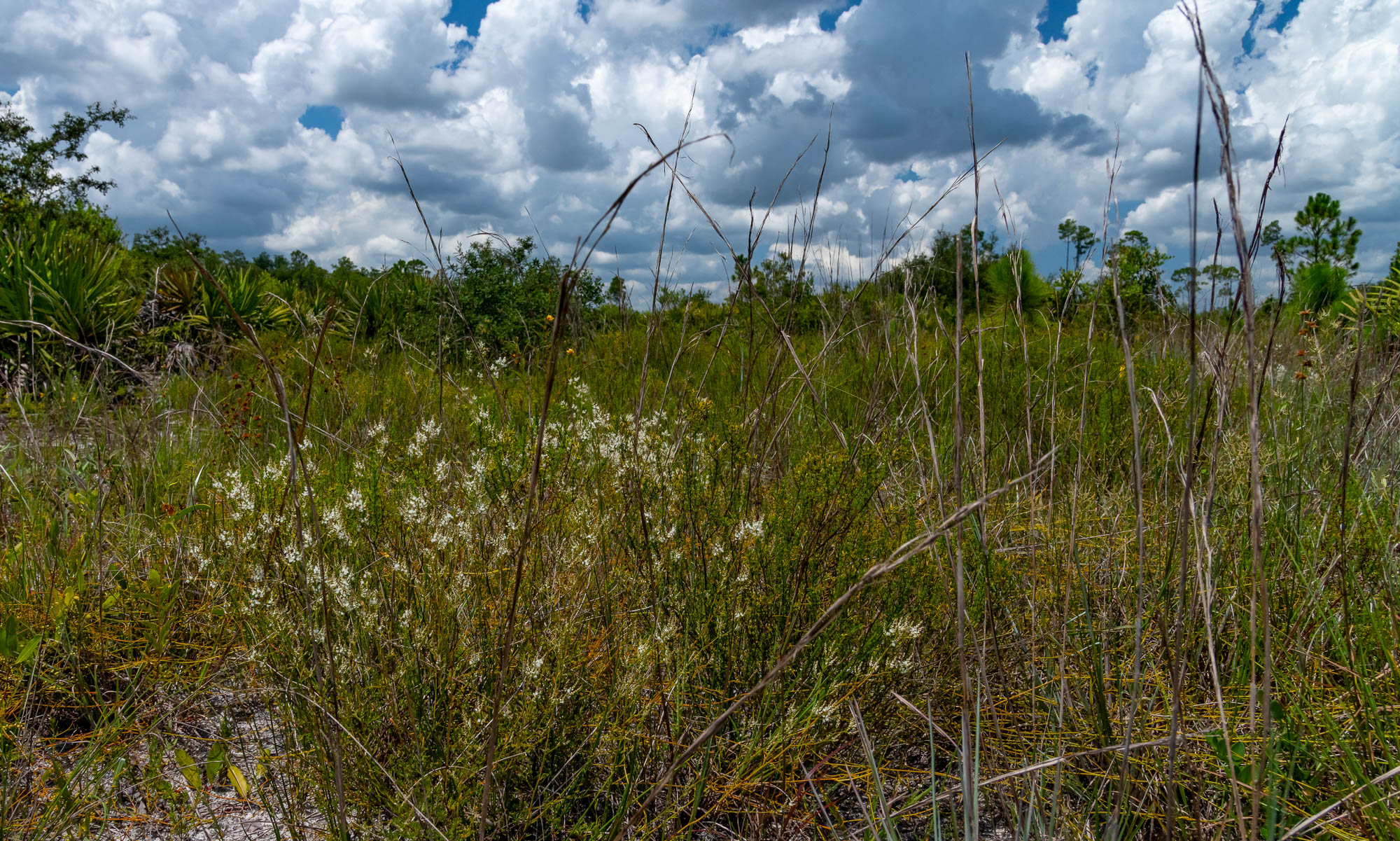
We relaxed, truly relaxed, probably for the first time in a year. Thoughts of hospitals, doctors, rehabilitation, future operations – were banished on this day. Instead, we relished the longleaf pine forest, the open grassy savannahs, the ponds and creeks and all the living things we encountered.
Our summer of exploring nature was oh-so-satisfying. Even if it did only consist of this single day.
Usually occurring as a single bloom atop a slender stem, the Rose-Rush (Lygodesmia aphylla) is nearly endemic to Florida with only a few reports from south Georgia. The stems can reach 24-36 inches in height and the flowers range from almost white to deep lavender.

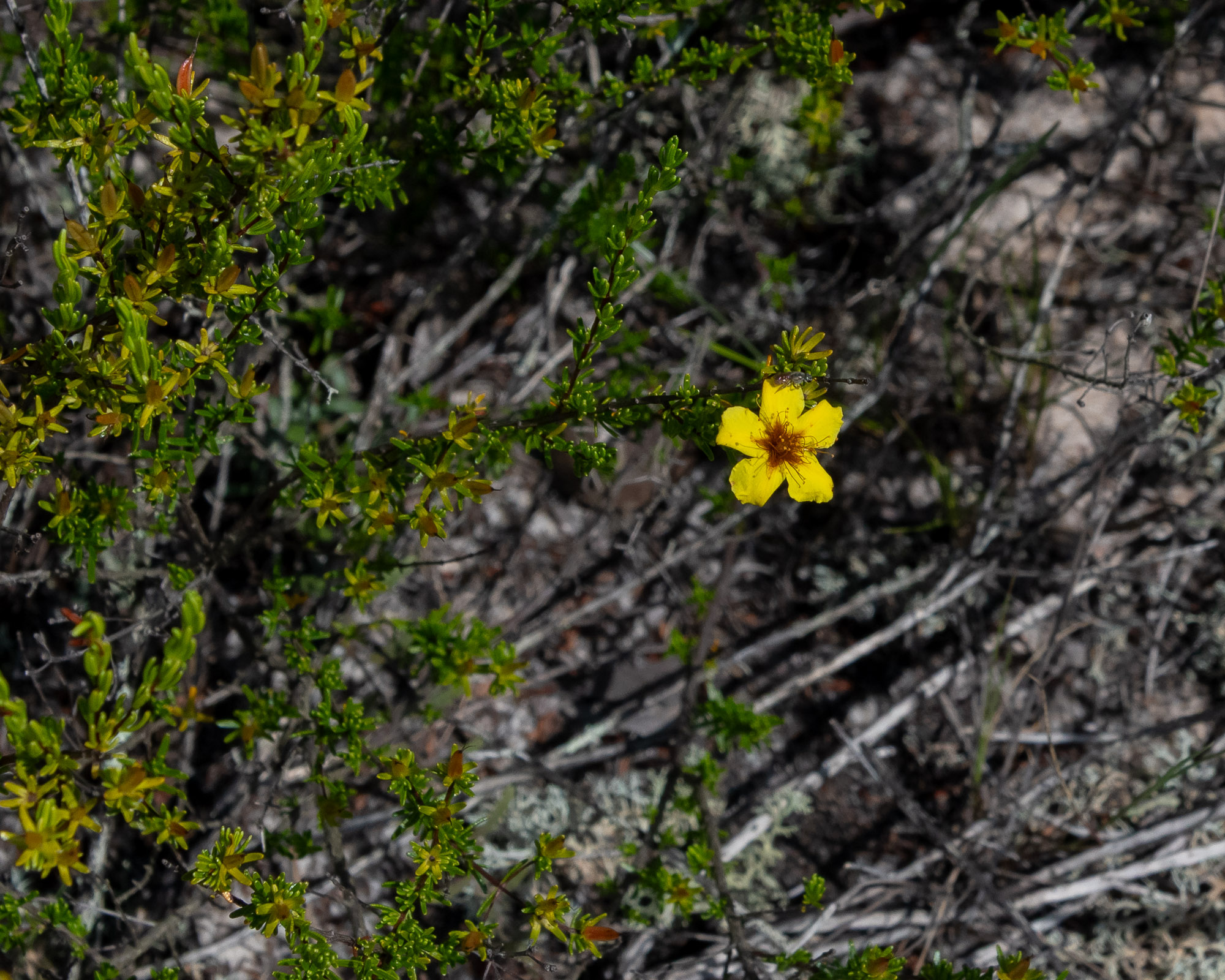
Shiny needle-like leaves and butter-colored flowers make the low-growing Sandhill St. John’s-Wort (Hypericum tenuifolium) extremely attractive and today the landscape was littered with the lovely plants. All sorts of pollinators are attracted to the blooms but they seem to be especially loved by bees.
With all the flowers here, more than a few butterflies were busily flitting to and fro. Here’s one now. A lovely Cloudless Sulphur (Phoebis sennae).

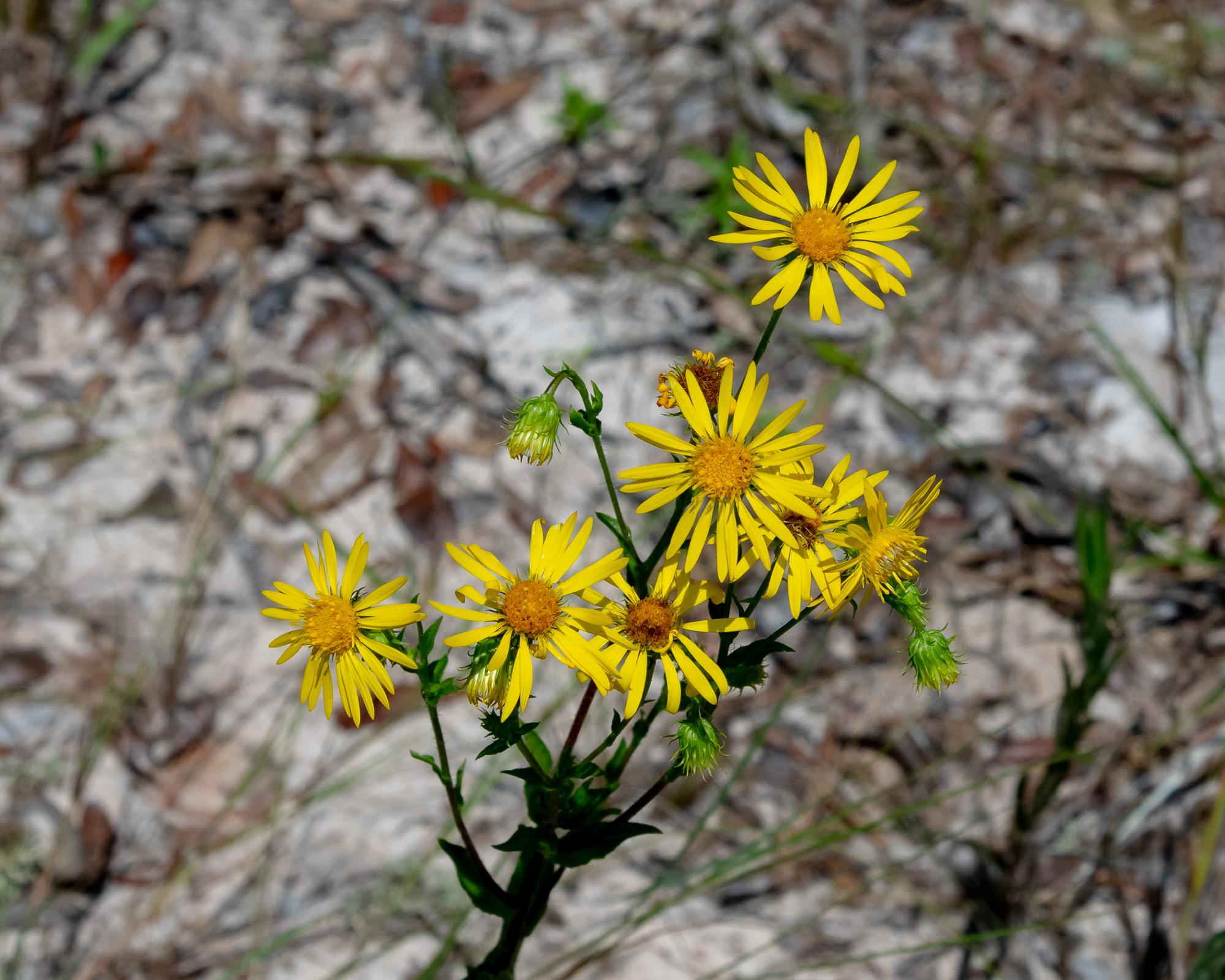
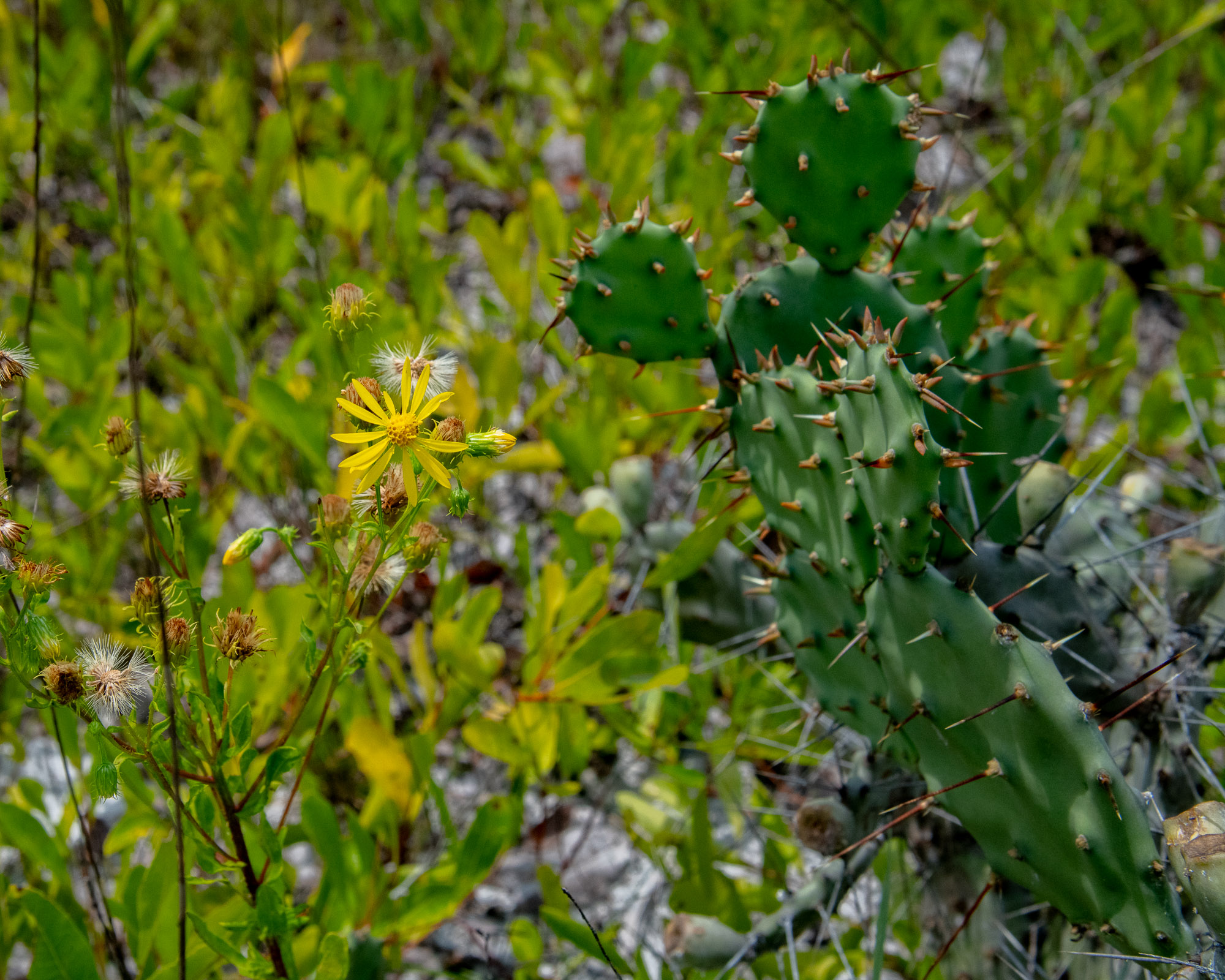
Found only in Florida, the Scrubland Goldenaster (Chrysopsis subulata) is prolific along the Lake Wales Ridge. More yellow. No complaints.

Small (1/2 inch) flowers with white petals and yellow stamens blooming from a cone-like head give Carolina Yellow-eyed Grass (Xyris caroliniana) the appearance of tiny butterflies flitting in the breeze.

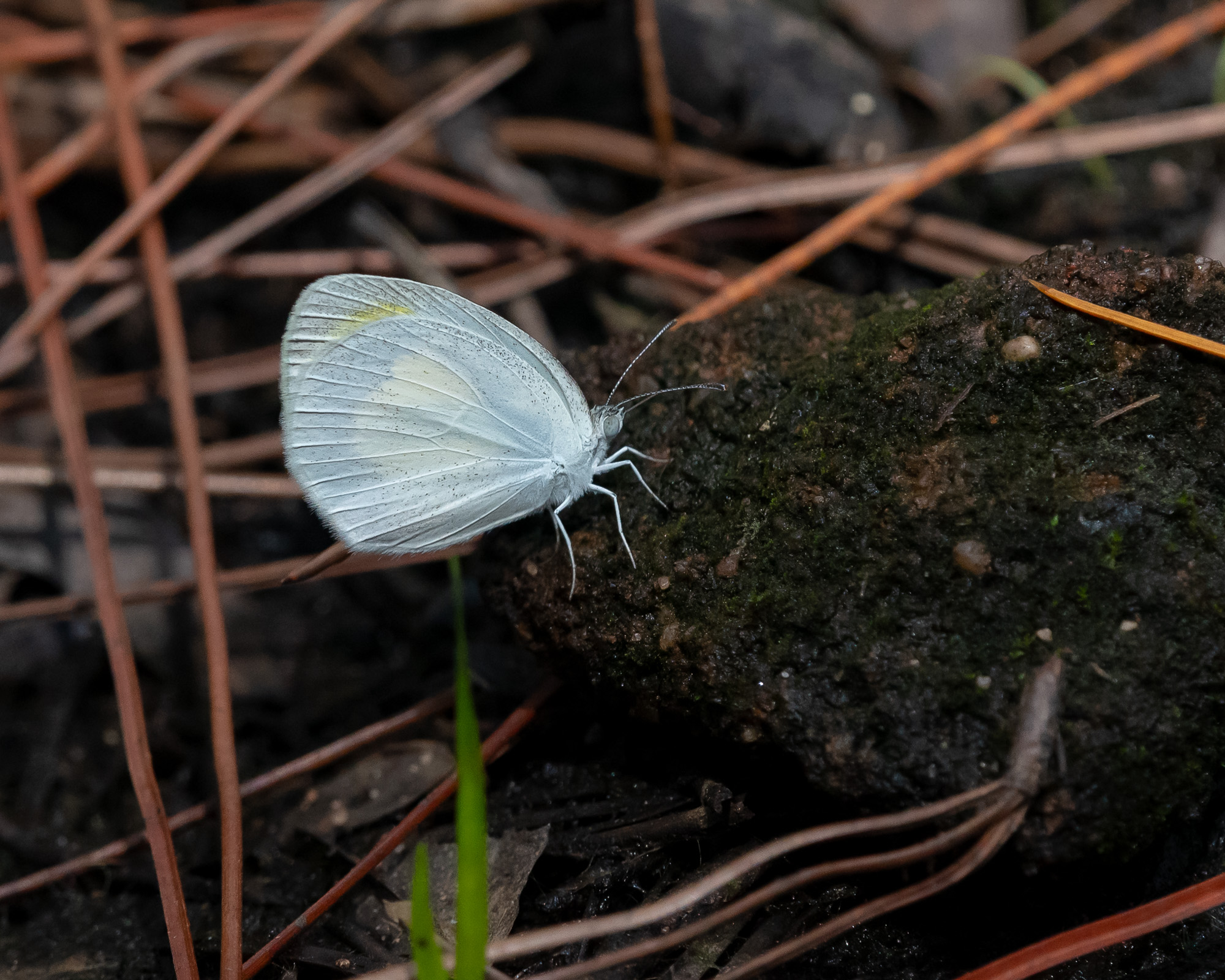
Speaking of small butterflies, the low-flying Barred Yellow (Eurema daira) was numerous today throughout the forest.
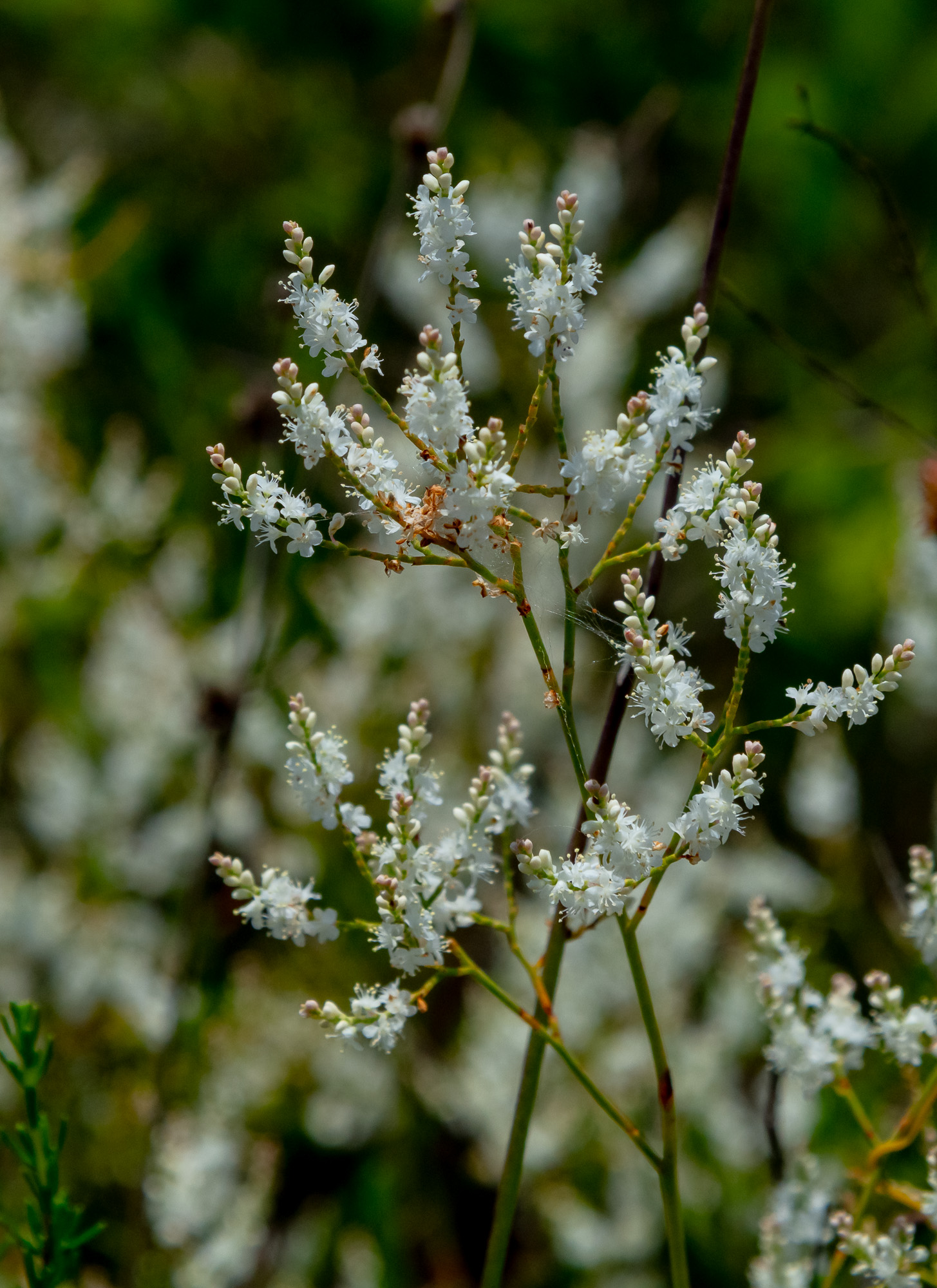
A member of the buckwheat family, this October Flower
(Polygonella polygama) is getting a jump on blooming by a couple of months. Called a “sub-shrub”, it is easily overlooked for most of the year. Then, it blooms. Wow!
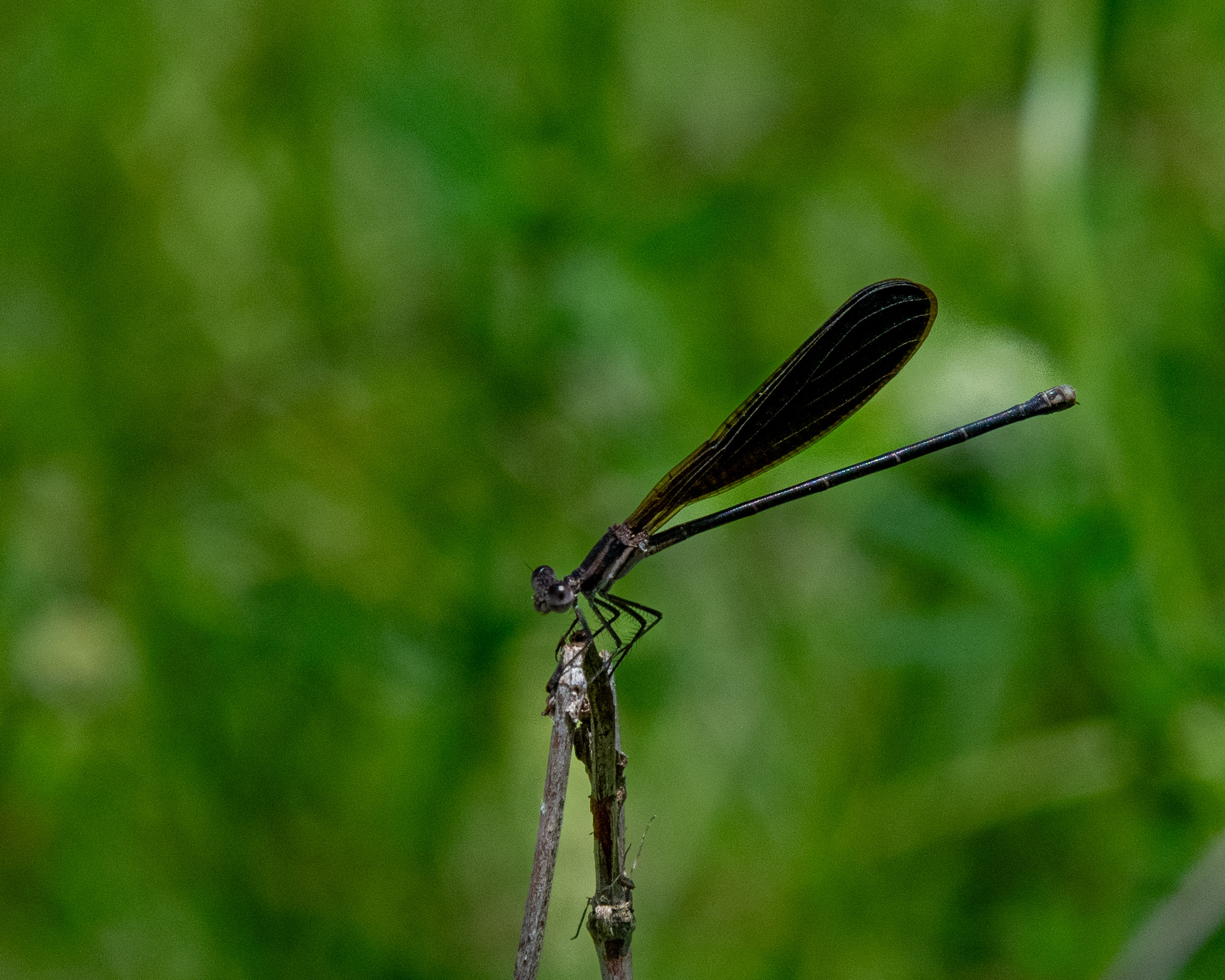
Primarily found in Florida, the Black Dancer (Argia fumipennis ssp. atra) is a subspecies of the more common Variable Dancer. This unique damselfly is fairly abundant in the state forest.
One of our favorite trees is the Loblolly Bay (Gordonia lasianthus). It likes the swampy soil adjacent to upland pine forests and the lovely flowers are similar to Magnolias.

Its common name may hint that it is common but we are elated anytime we spot a Common Buckeye (Junonia coenia). Common or not, it is uncommonly beautiful.

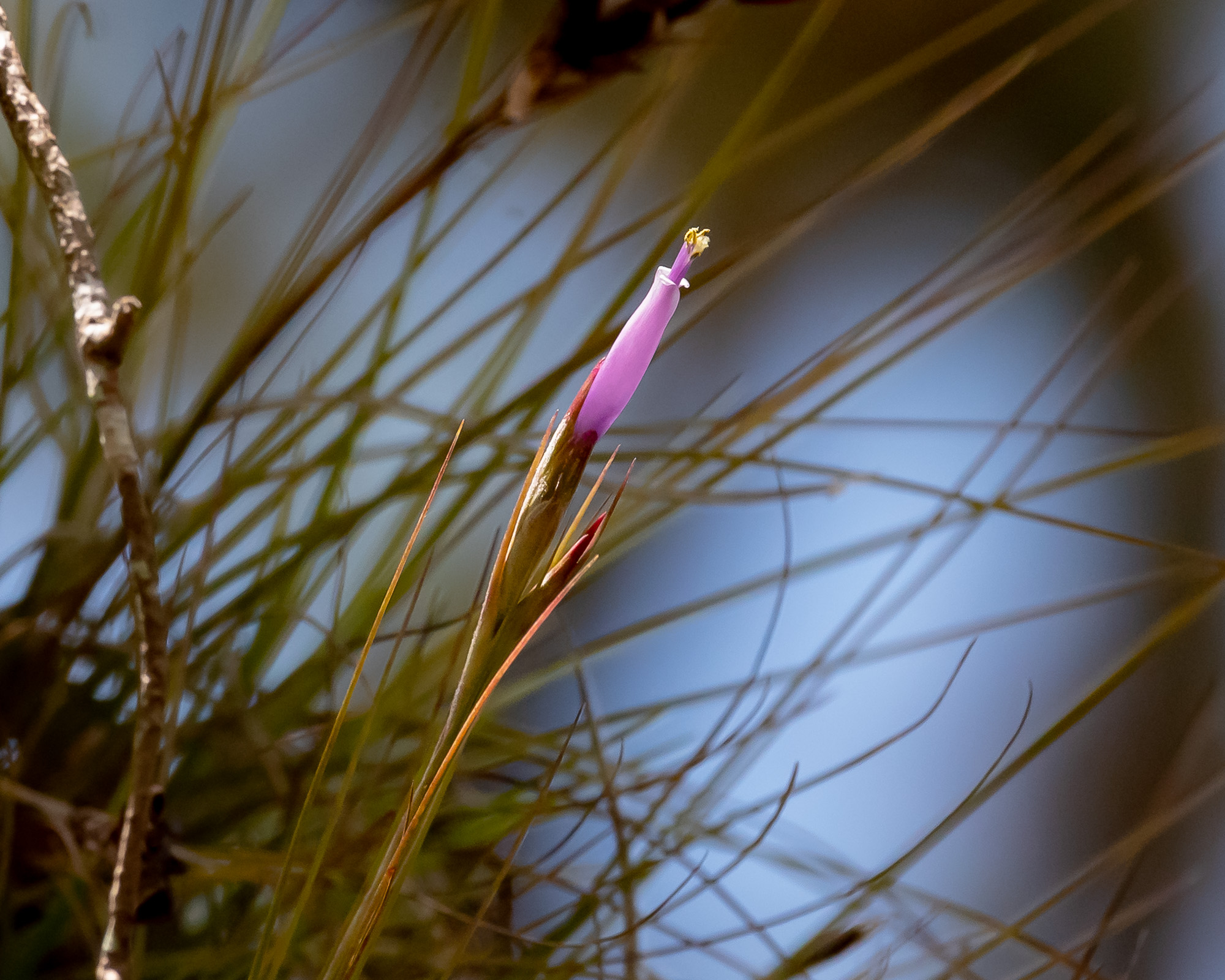
Related to our ubiquitous Spanish Moss, Southern Needleleaf (Tillandsia setacea) can seem to take over some of the oak tree branches around here. Some have called the spindly collection of leaves of this bromeliad the “trash basket of the trees”. When it offers a glimpse of its bloom, however, we simply call it gorgeous.
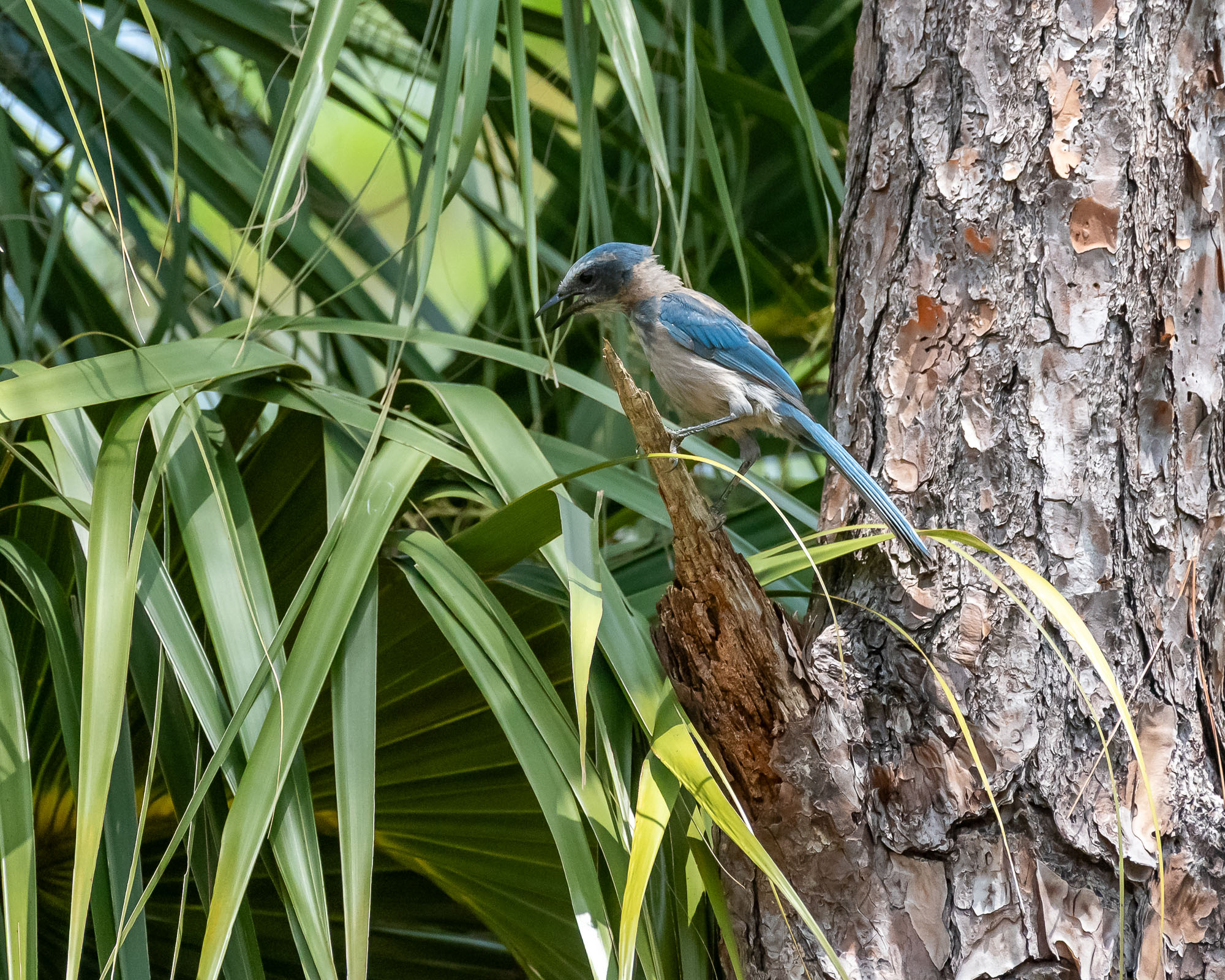
The Florida Scrub Jay is, happily, abundant to this section of central Florida. Typical of other members of the jay family, we are greeted by a gang of birds screeching at our intrusion as soon as we get near the forest entrance road. And that is okay with us.
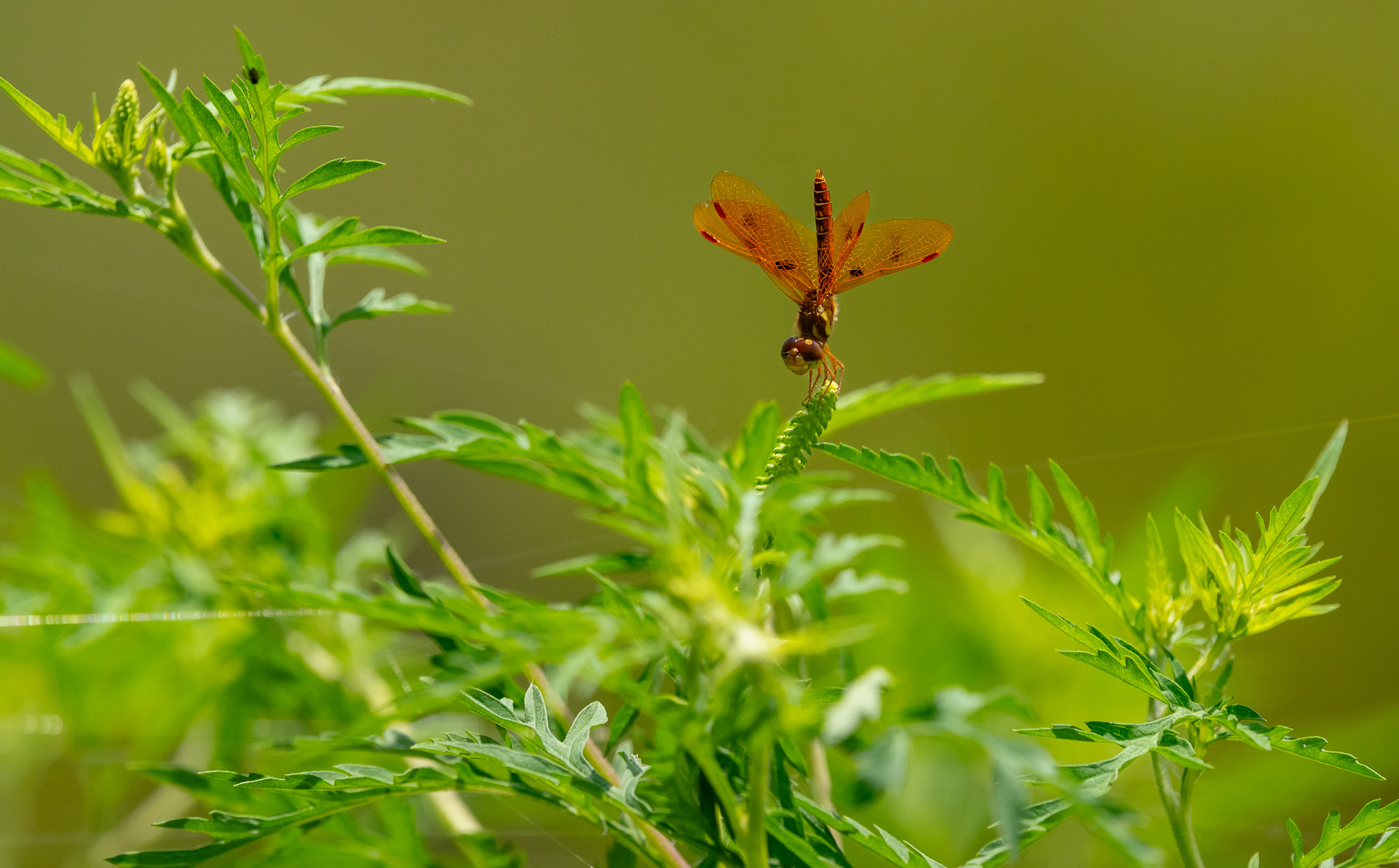
One of the smallest dragonflies in North America, the Eastern Amberwing (Perithemis tenera) resembles some rare golden ornament among the greenery of the forest understory.
Summer is but a memory. This year has been challenging but the outlook for us is bright. We’ve managed a few outings since August and will try to get back into the blog habit. Thanks for your patience!
Enjoy your search for a natural place and come back for a visit!
 Our Natural Places
Hope you and Gini are doing well (or at least better). I am jealous of that Scrub-Jay as I missed it while we were down there over Thanksgiving. A belated Merry Christmas to the two of you and best wishes for a healthy, adventurous coming new year.
LikeLike
Thank you for the well-wishes. Let us know next time and we’ll have a few of our close Scrubby Jay friends gather for a group portrait.
Happy New and Better Year For Us All!
LikeLike
Hello my good buddies. You have seen how my blog is at a standstill but it is good to see that your own is thriving if a little less in the number of posts. Quality not quantity. My own locality is suffering from the usual lack of birds compounded by no lack of water. I think November and December will turn out to be record breaking periods. Sue and I are fine as can be given our combined age and ailments and I hope both of you are making good progress following setbacks.
In other matters, we British cheer on POTUS in taking on the vile BBC. Let us hope he wins and takes them for every single penny of their ill gotten licence fees. I have not paid a licence fee for many years in protest at the organisation’s bias against everything that is good and decent. When the threatening letters in their red envelopes drop through the letter box I take great delight in tearing them to bits.
Have a lovely Christmas both and if you see him, say “hi” and “thanks” to DT.
LikeLike
Thank you so much for letting us know you’re still with us! Life’s events have a way of interfering with what we think is important.
The past 18 months have not been our favorite so far. New heart parts, new knees, new attitudes. “Aging gracefully” was apparently written by some young poet who hadn’t a clue about reality.
We are doing really well overall. Beginning to venture outdoors a bit more each week. Loving every moment.
It is with sad consternation we see what’s been happening in the United Kingdom. As with our own nation, indeed, with most of the planet’s countries, progressives, et al, are bringing their utopian desires to fruition. Our one hope is that it will more and more meet the resistance of ordinary citizens. I fear it may be too late to reverse course. Too much money and power at stake for the overseers of societies.
President Trump is attempting to restore this nation to being the Republic envisioned by its founders, but we are a nation divided and once he departs our children will have a huge task to maintain a decent lifestyle. Sigh.
Us old folks spent yesterday taking part in the annual Audubon Christmas Bird Count. Started at 0400 listening for owls and ended at 1700 after trekking through three different patches. Totalled 60 different species and nearly 650 individual birds. Fun day!
Cheers from two exhausted birders in the Colonies.
LikeLike
Well done American Heroes. Our day will come.
LikeLiked by 1 person
Yet more Florida beauty, thanks Wally.
LikeLike
You’re very welcome. More soon, he said hopefully.
LikeLike
Beautiful shots! It’s always good to get out in nature. Love that scrub jay shot. I still haven’t seen that bird yet.
LikeLike
Thank you, Dina. When you find one Scrub Jay, there will be a gang!
LikeLike
Ah, an early Christmas present: sharing a virtual nature walk with you and Gini! I wish you both a warm and cozy Christmas season, and a quick return to the wilds that we all love so much.
LikeLike
Thank you, Sam. We’re hoping for the same thing!
LikeLiked by 1 person
I’m completely taken with that bit of trash called the Southern Needleleaf. The similarity of the flower to the tiny blue flower of the ball moss is obvious, but I’m wondering about size. It seems to be larger than the ball moss flower: a boon to photographers, and to admirers of pretty (and unexpected) flowers generally.
The flowers of the Polygonella reminded me immediately of Polygonum (smartweed) species. It’s interesting that it’s in the buckwheat family. The scrub jay apparently resembles our blue jay: not only in color but also in behavior. Who can miss those screeches?
It’s really good to know that you’ve been able to get out a bit during the fall. Your discoveries always are a delight!
LikeLike
The Southern Needleleaf bloom can grow to 12 inches and I estimate the one pictured is close to that. It seems the whole plant can be larger overall than ball moss, but that’s just a perception and may be influenced by all those long needles sprouting everywhere.
The area we were in hosts several Polygonum species and it’s been challenging to identify them, especially if they aren’t blooming.
There is still a movement to name the Florida Scrub Jay our state bird since it does not exist elsewhere. So far, the Mockingbird lobby has not yielded.
Gini is doing really well with walking on her new knee. Looks like she’ll have the other one replaced in January.
Hopefully, we’ll get back on track both in our nature exploration as well as reporting about it.
LikeLiked by 1 person
It’s good to hear of your adventures in nature once again. Glad you’ve gotten out a few times since this summer adventure.
Your opening photo somehow reminded me of the paintings of Henri Rousseau.
I’ve long noticed that botanists don’t lack a sense of humor when naming species. Take, for instance, calling the October flower a ‘polygamous little polygon.’ I guess that distinguishes it from the faithful little polygons.
LikeLike
M. Rousseau would, no doubt, have added a lion to the scence. Alas, I could not find one.
Well, since the “October” flower is audacious enough to bloom in August, we should not be surprised at some of its other peccadilloes.
LikeLiked by 1 person
Winter here – brrr! 😀
LikeLike
It’s winter here, now, too. Just without the brrr!
LikeLiked by 1 person