Our Day of Summer
(Click on images to enlarge, click again to zoom.)
Dew-bejeweled wisps of webs atop brown grass stalks sparkled with the first rays of sun as we made our way along the red clay road through the forest. The call of a Northern Cardinal was as clear as the bright blue sky overhead. Mid-summer. Hot. Humid. Surely a day meant for mad dogs. Indeed.
Flowers appeared in profusion every few yards. Birds and cicadas competed in some sort of “who can sing the loudest” contest. Woodpeckers punctuated the songfest with percussion support. Lizards scurried from under every other step. Eastern Towhees seemed to be everywhere all at once urging one and all to “drink-your-teeeea“.
Incredible to think we encountered no other human all day in this lush paradise of birds, bugs and blooms. Every few minutes seemed to produce a heavy sigh from one of us.
We were in the center of Florida within the Lake Wales Ridge State Forest. This unique scrub ecosystem may host the largest number of rare and endangered plants in the United States. Currently, 33 plants and 36 animals in this region are on state or federal endangered lists. Little wonder this is one of our favorite spots to spend a little time.
Key words this year for exploring nature: “little time“.
Surgeries, recoveries – wash/rinse/repeat. Growing old is not for the faint of heart.
Gini was scheduled for knee replacement surgery in mid-July but it had to be postponed until August 26. She is recovering well but still in pain. Meds are helping and on lesser-pain days her physical agility is quite good. Physical therapy will help in the coming weeks.
Meanwhile, little did we suspect this day in mid-August would be our last day to get out for the summer. Fortunately, it was a very good day.
(This post covers only a small portion of the day. We’ll provide little doses over the next few weeks.)
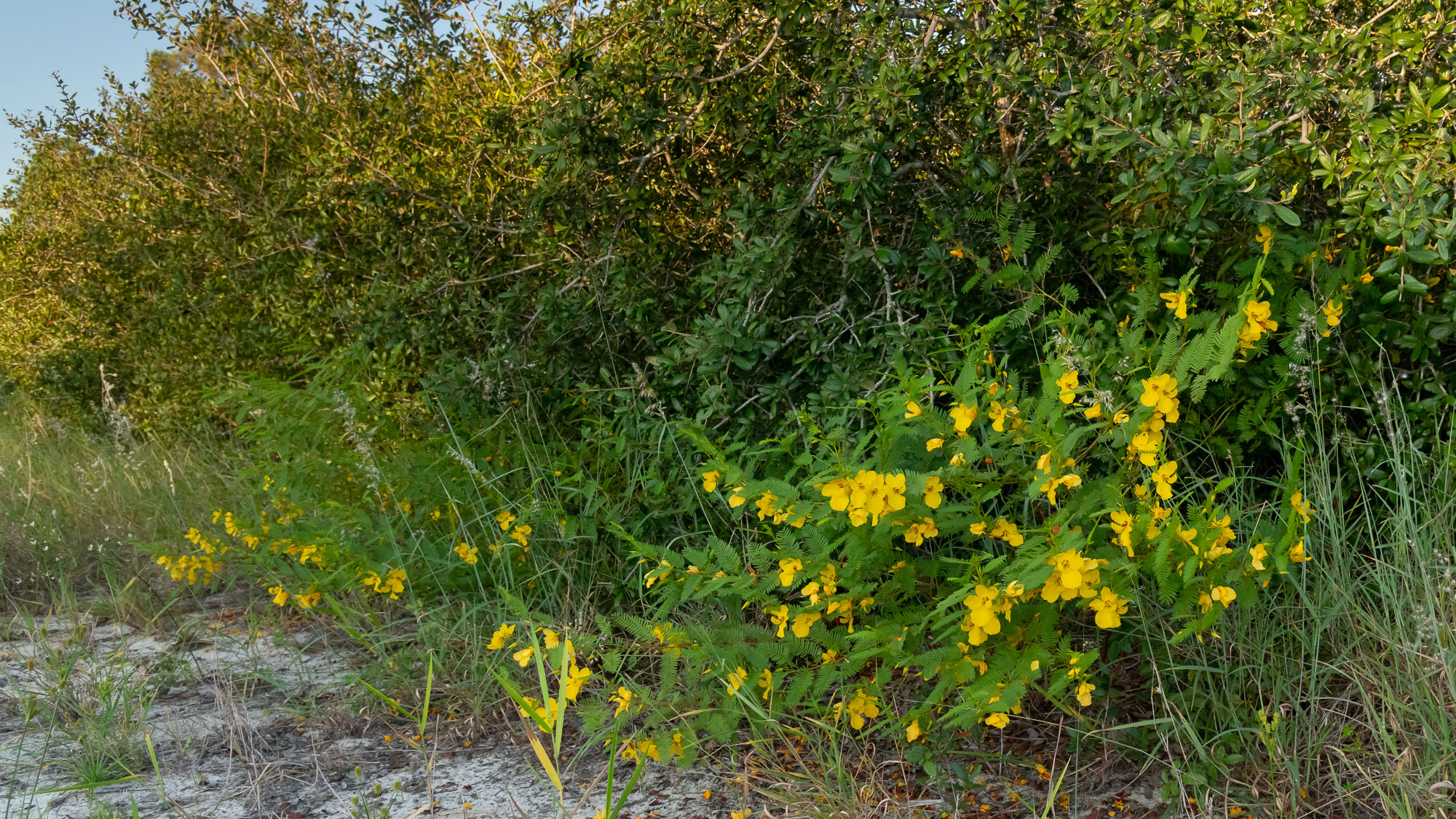
Butter-colored Partridge Pea (Chamaecrista fasciculata) was abundant throughout the forest today. Birds and other animals like the seeds. While the plant is host to several butterfly species, the design of the bloom is such that it can only be pollinated by long-tongued bees.

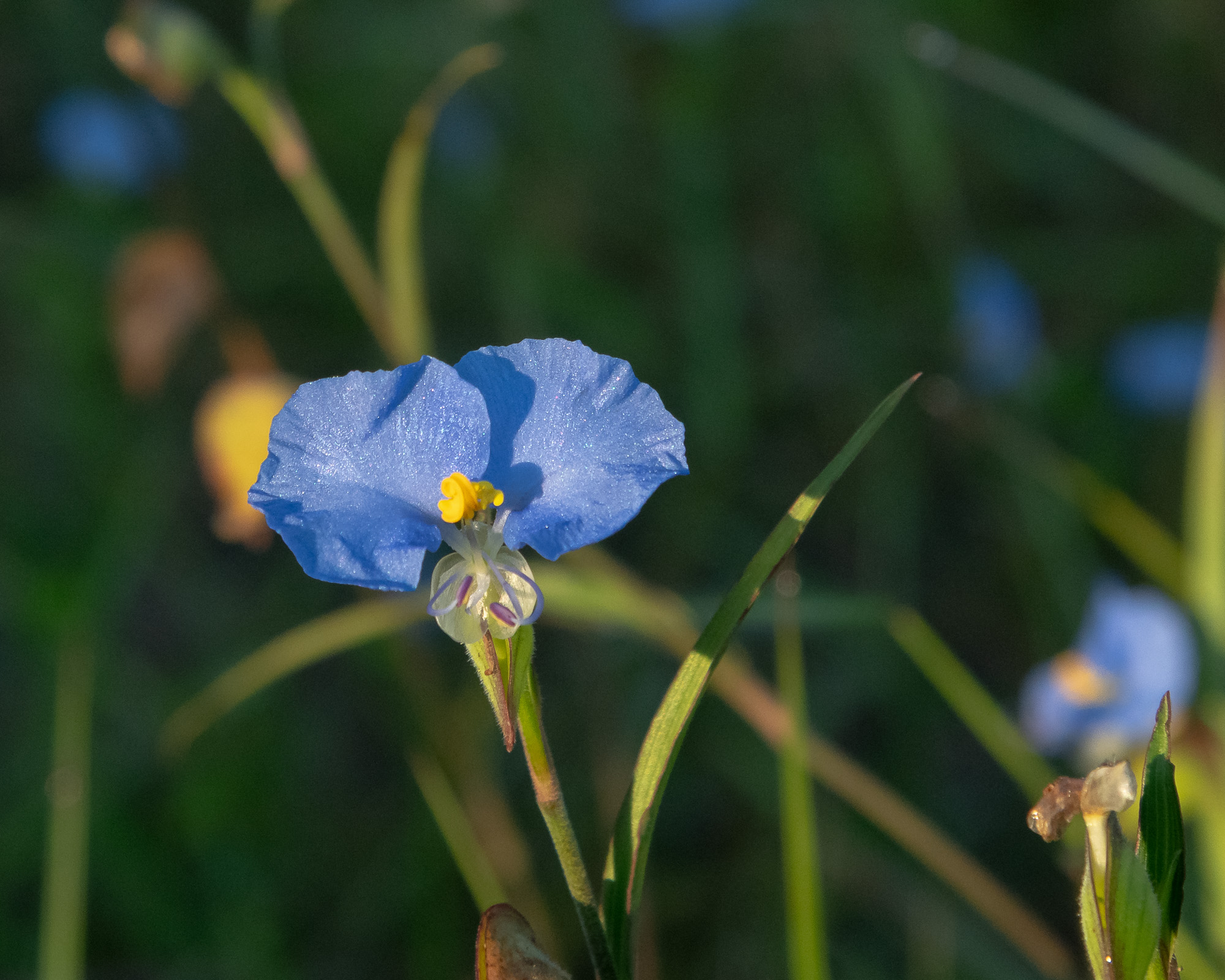
Also plentiful was the brilliant blue Whitemouth Dayflower (Commelina erecta). True to its name, blooms only last one day but the plants have a succession of flowers which keeps the area dotted with blue all summer.

A strange-looking grass-like plant, Plains Snakecotton (Froelichia floridana) is a member of the Amaranth family which can grow as tall as three feet. Despite its scientific name, it’s common throughout the central and eastern United States.

It is estimated that over the last 50 years the population of Red-headed Woodpecker in North America declined by over 50%. Likely due to loss of nut-producing trees and clearing of dead trees, this handsome bird is, thankfully, fairly abundant within the Lake Wales Ridge State Forest.

Pinweeds are low-growing plants that resemble herbs. This particular one, Deckert’s Pinweed (Lechea deckertii), is found in Florida and southern Georgia. Different!

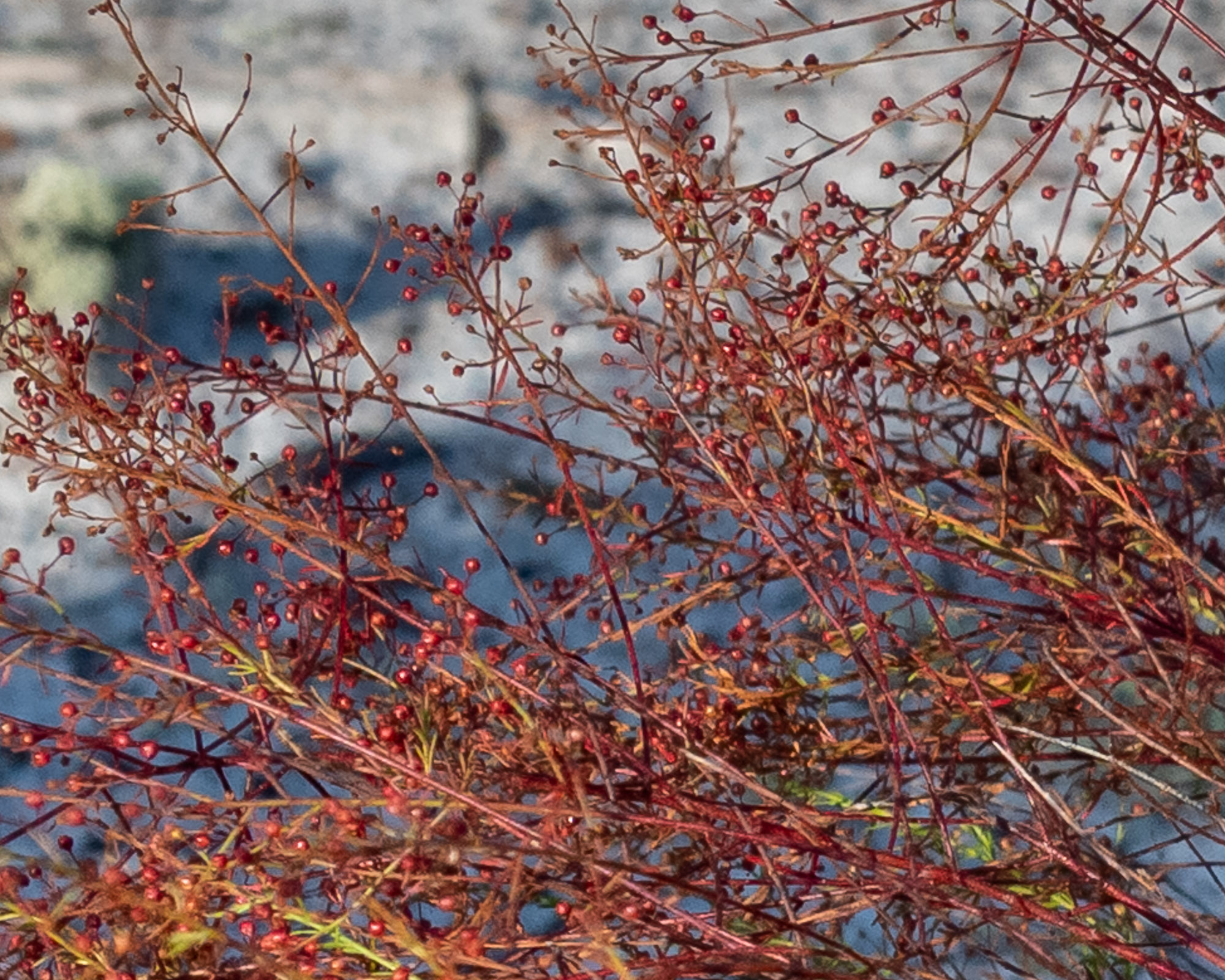
State and federally endangered, Small’s Jointweed (Polygonella myriophylla) is only found in four counties in Florida’s Lake Wales Ridge. This woody, low-growing plant has a profusion of very small white flowers through the summer and early fall.


A legume with bright yellow blooms, Florida Alicia (Chapmannia floridana) can reach three feet in height. Endemic to Florida.


Plenty of insects thrive in this area. This one is quite common. A Carolina Saddlebags (Tramea carolina) on Needlepod Rush (Juncus scirpoides).

If we had known this was to be our last summer day in Nature for the year, what would we have done differently? Not one single thing.
Enjoy your search for a natural place and come back for a visit!
 Our Natural Places
Looks like your last summer day was outstanding! Wonderful photos, and wishing you many more wonderful days in nature!
LikeLike
It was a good day. Thank you, Peter.
LikeLike
Beautiful photos! Thank you so much for sharing your walk! Warm greetings from Montreal, Canada.
LikeLike
Thank you very much, Linda.
All the wonderful things we encounter somehow seem better when shared.
I’ll bet our warm greetings from central Florida are warmer than yours – but we’ll take them and appreciate them!
LikeLike
It’s so great to have places close by to see so much variety. I haven’t seen a Red headed woodpecker lately and went on a trail where I’ve seen them in the past, but no luck. I’ll probably see one when I’m looking for something else! HA! And you are right about getting older and what a challenge it is. Changes…and not for the better. I’m slowing down but feel blessed to be able to do what I can. Take care…both of you! Happy Fall Florida buddies, Diane
LikeLike
Thank you, Diane.
Yep, dealing with the changes required of aging is a frustrating challenge. We just do the best we can each day and pretend we’re still kids.
We had a good outing this past Friday and look forward to more.
Enjoy the day!
LikeLike
I so enjoyed this marvelous walk through Lake Wales Ridge forest, Wally. Wonderful to see so many unique plants and hear about them. So many gems brightening up the trail. I was glad you offered two photos of several species so we could see the overview as well as a close-up of the flower. And absolutely lovely photos of the dragonfly and the red-headed woodpecker. We never know what tomorrow will bring, so it is great you and Gini had such a heartwarming day.
LikeLike
That area is so special. I grew up fishing nearby lakes and never knew so many natural treasures were right under my nose. Well, feet.
We appreciate your kind comments.
LikeLiked by 1 person
Looks like a great day out. I’ve heard a few migrating birds are coming through here but it’s still too hot for me to go out with my camera.
LikeLike
It really was a nice day. Hopefully, Gini will be up to a few drives to see if can spot some feathery travelers.
LikeLike
Redheaded Woodpeckers are still a pretty common sight around here as well. They are so cool to see. Before moving here, I had not seen one in decades!
LikeLike
They’re just too darned picky when it comes to nest trees. Sure is good to see them in good numbers, though.
Happy Autumn!
LikeLike
Hope Gini continues to recover well. The therapy will be work, but it is well worth the (hopefully) temporary discomfort.
Your Whitemouth Dayflowers reminded me of Spiderwort, not related at all, but certainly providing a similar cheerful color strewn across the meadows.
I’m deep in the midst of sewing my granddaughter’s Halloween costume, so I instantly related to the pinweed, with all its little ball-heads. And it is definately showing the approaching fall – who says we don’t have fall color in the swamps?!
Happy to hear from you, and looking forward to your next installment!
LikeLike
Thank you, Sam.
Cheerful colors across the meadow is one big reason we keep returning to meadows!
Hopefully, we’ll soon be chasing the swamp’s colorful autumn transformation. (Okay, so it will only be from green to brown, but we still like it.)
LikeLiked by 1 person
I smiled at your reference to those mad dogs. Just yesterday I said to someone, “Mad dogs and Englishmen may go out in the midday sun, but I’m neither English nor a dog; I’m taking a break for a while.”
Best wishes to Gini. I have a couple of friends who had knee replacements, and both of them found that after a month things began to improve noticeably. You’re about at the one month mark, so I hope the same’s true for her.
If all goes well, next weekend I’ll be able to get off to the land of snake cotton: ye olde piney woods. Locally, partridge pea and dayflower have been abundant. At first glance, I thought your Florida Alicia was our Vigna luteola, but not so. It was fun seeing that familiar species name, though; Mr. Chapman was a busy fellow!
Have you ever noticed the extrafloral nectaries on the partridge pea? I finally found them, and have a few photos to post. I had no idea that so many flowers provide nectar in places other than the flowers.
I really liked seeing the pinweed. I couldn’t help thinking it would look great in a dried arrangement.
LikeLike
Gini says thank you for the positive wishes. She is really doing well, all things considered.
Enjoy the piney woods. We hope to do the same very soon. She is up to riding so we’ll find some nice backroads.
I had not seen those nectaries. Now I’m scanning the pics to find ’em. Pretty neat!
You and Gini are on the same wavelength with the pinweed. I had to remind her (several dozen times) that removing plants within the state forest was not allowed.
Is autumn falling yet?
LikeLiked by 1 person
Get all them repairs done and you will be good to go next year! Nature will wait for you.
LikeLike
This morning she was able to rise from a chair with no support. Progress! Of course, now she wants to go walk our favorite trails. Patience, Grasshopper.
LikeLike
Lots of w‘s in “dew-bejeweled wisps of webs.”
Someone I know in Massachusetts recently posted a picture of partridge pea, and now you’ve done likewise from Florida. It’s been blooming in central Texas for several weeks as well. Call it a widely distributed wildflower. Commelina erecta has been putting in appearances here too.
We have several species of Froelichia in central Texas. By coincidence I took pictures of a dense colony of them six days ago.
Some people might get the wrong idea about what kind of a plant jointweed is.
Happy incipient autumn.
LikeLike
No matter in what state Partridge Pea may be located, its splashes of bright yellow blossoms always improves my state of mind.
A case of the blues is acceptable when its packed with comely Commelina.
Jointweed. Those wacky taxonomists may have named it differently if it had been discovered in a different era.
A “coolish” breeze at dawn this morning was at once surprising, refreshing and welcome.
Enjoy your day.
LikeLike