Falling In The Morning
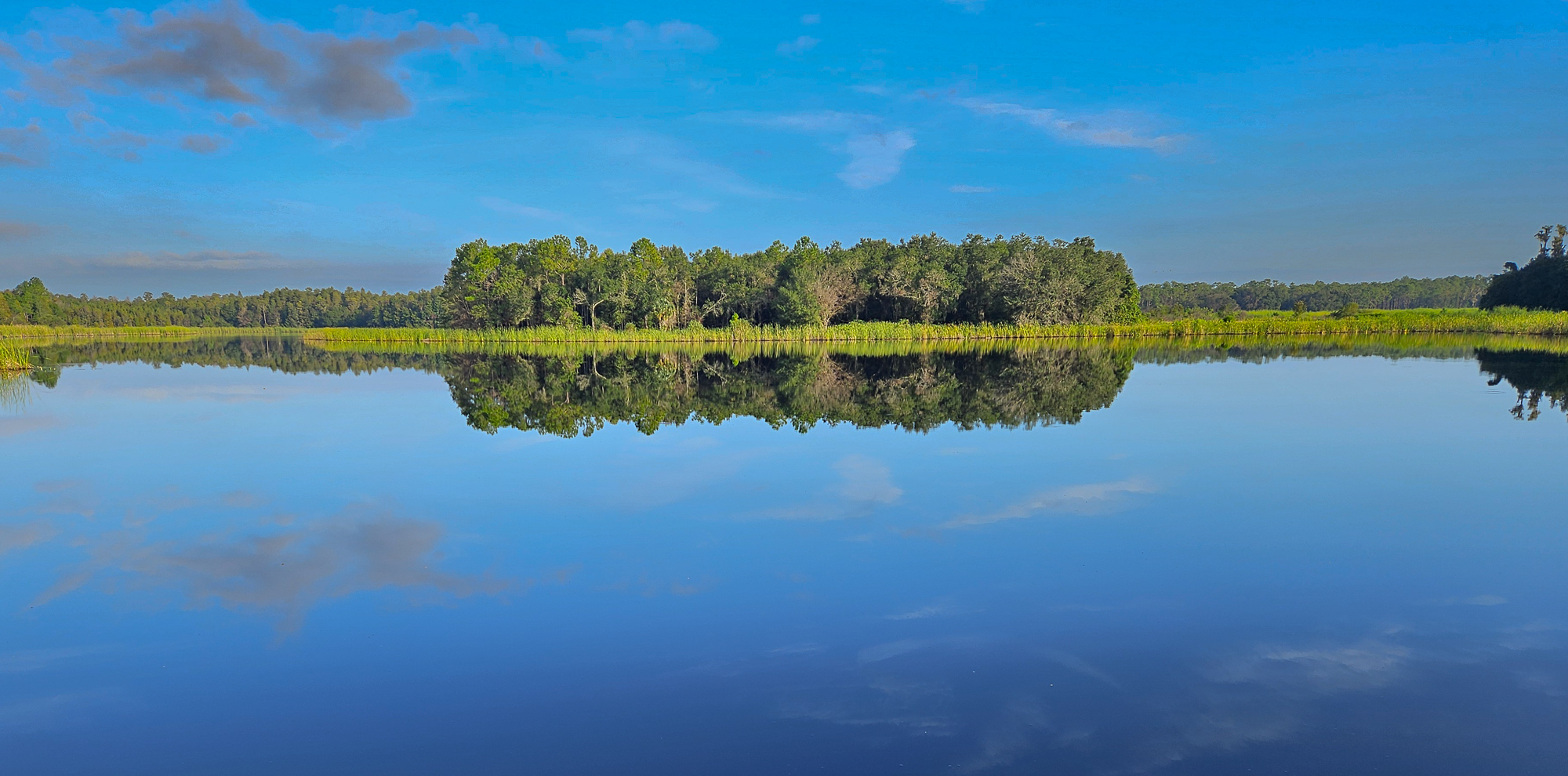
(Click on images to enlarge, click again to zoom.)
(Note: This visit to Colt Creek State Park occurred on September 17, 2024. On October 8, during the night and the following morning, this area received between 15-20 inches of rain and experienced the 100 mph winds of Hurricane Milton. The roads and trails we enjoyed were inundated and completely covered in water for days. Thanks to amazing work by park employees and volunteers, the park is again open for limited exploring.)
Ahhh! Autumn! That time of year in which we say farewell to Summer and look down life’s path in anticipation of cooler days, ripening fruit among trees bearing a kaleidoscope of changing hues.
However……
Those of us in the sub-tropical paradise of La Florida have slightly different expectations of the coming Fall Season. Although not quite sweater weather, our average high temperatures may drop from 92 to 88 F. That blanket of humidity which wraps itself comfortably around us as soon as we walk outdoors should even dip to 90%. And, just as the sun is rising or setting, assuming you have a fairly generous imagination, some of those tree leaves take on the golden glow of a Spanish doubloon left by one of Ponce de Leon’s intrepid explorers. (Okay, let’s face it. Those leaves are dying and are just brown. You see what’s real and I’ll just keep pretending, thank you very much.)
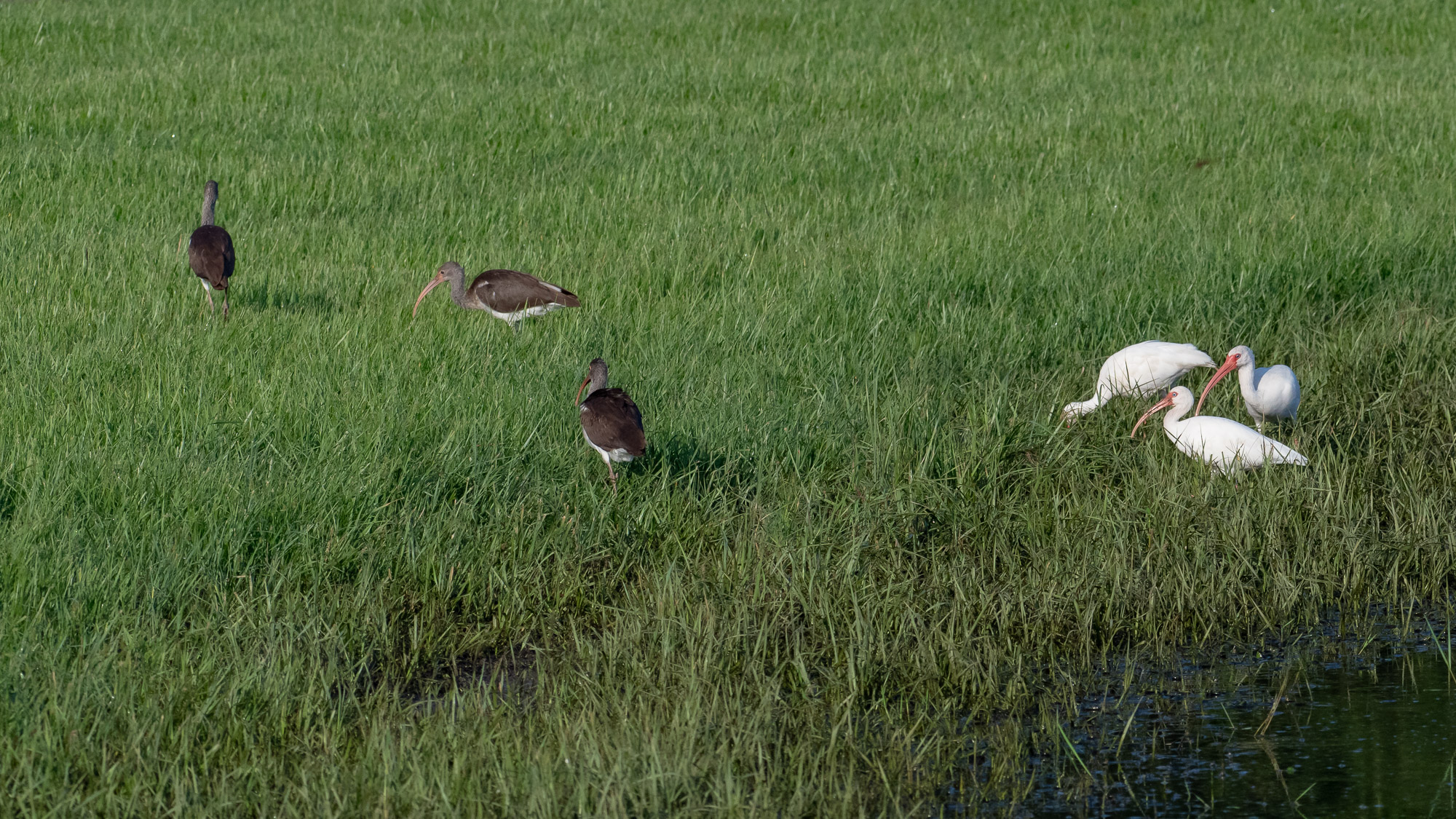
With Gini by my side, we entered Colt Creek State Park as the front gate swung open. A half-dozen White Ibises, three immature and three adults, welcomed us by continuing to probe the wet grass for grubs and totally ignoring the park’s first visitors of the day.
At the park headquarters, we happily forked over our fee and had the extra-added attraction of visiting with Park Ranger Extraordinaire, Sunny Clark. Her intricate knowledge of the park has always helped us have a more focused and enjoyable visit. Today was a perfect example. Not only is she aware of nature’s calendar, she knows all the good hiding places for stuff. It’s also helpful that she is an outstanding photographer and is willing to share techniques and provide suggestions. She passed along exactly the piece of information I was seeking – but that will have to wait for the next blog post.
As usual, our morning was filled with the sights and sounds of Florida’s diverse natural environment. Breakfast at the edge of Mac Lake provided near endless entertainment. An alligator invited us to come closer to the cattails to better appreciate their vivid green color and texture. He made a compelling case, but our attention was diverted down the shoreline by a calling Common Yellowthroat. In the nearby grass were Gulf Fritillary, Great Southern White, Little Yellow and Sleepy Orange butterflies. A Red-tailed Hawk screamed in the distance. Nothing disturbed the glassy surface of the lake as a Green Heron cruised past in a cloudless sky.
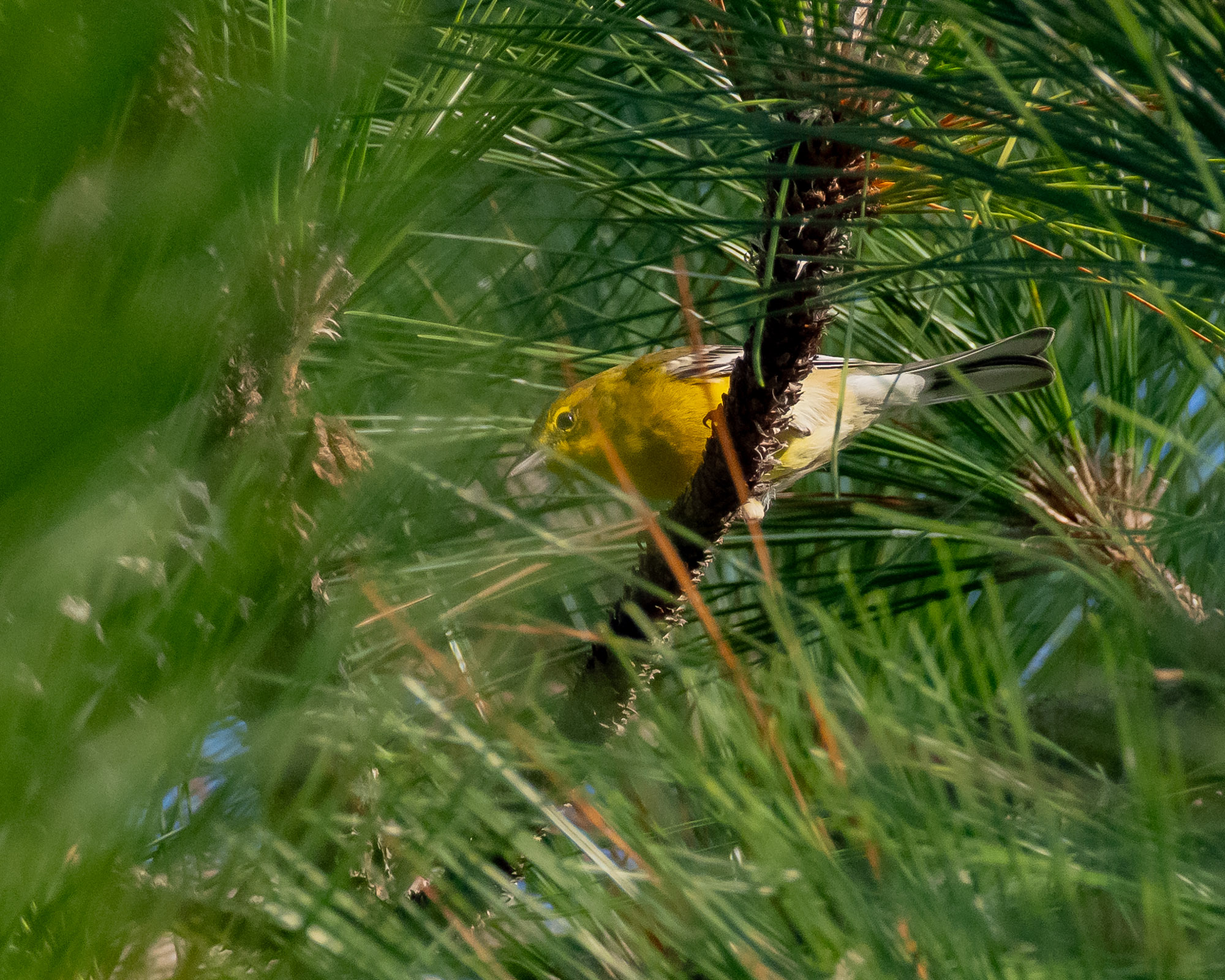
A few migratory birds were beginning to filter into the area. Black-and-White, Pine and Prairie Warblers were busy fueling up on insects. Nearby were small gangs of Blue-gray Gnatcatchers, Tufted Titmice and Carolina Chickadees. Eastern Bluebirds breed within the park and the families are now spreading out to see more of their world.
Once upon a time, I took fall flowers for granted. I grew up in central Florida and although I knew there were flowers all around as I tramped through the forest or drifted along a lake shore while fishing, I never took the time to examine them. Gini says “with age comes wisdom“. I reckon I am becoming wiser as now I simply MUST know the names of all these blooms.
For once, we were not reluctant to head home after a splendid morning at Colt Creek State Park. That’s because, thanks to the secret information we received from Ranger Sunny, we shall be returning later in the day.
Here are some reasons we really like visiting this park.
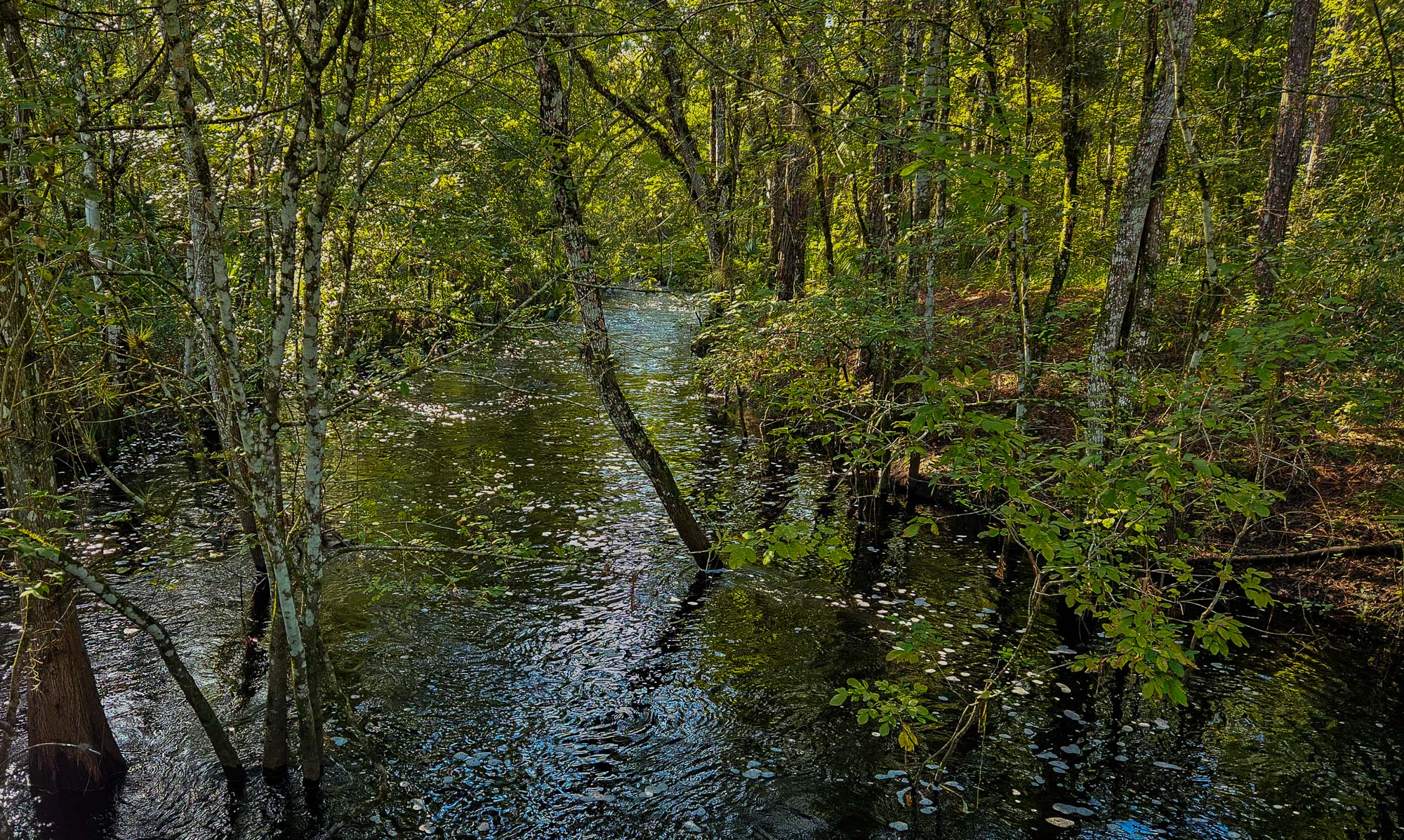
Summer rains have kept Gator Creek flowing. The River Otters, frogs, turtles and fish appreciate it. So do we.
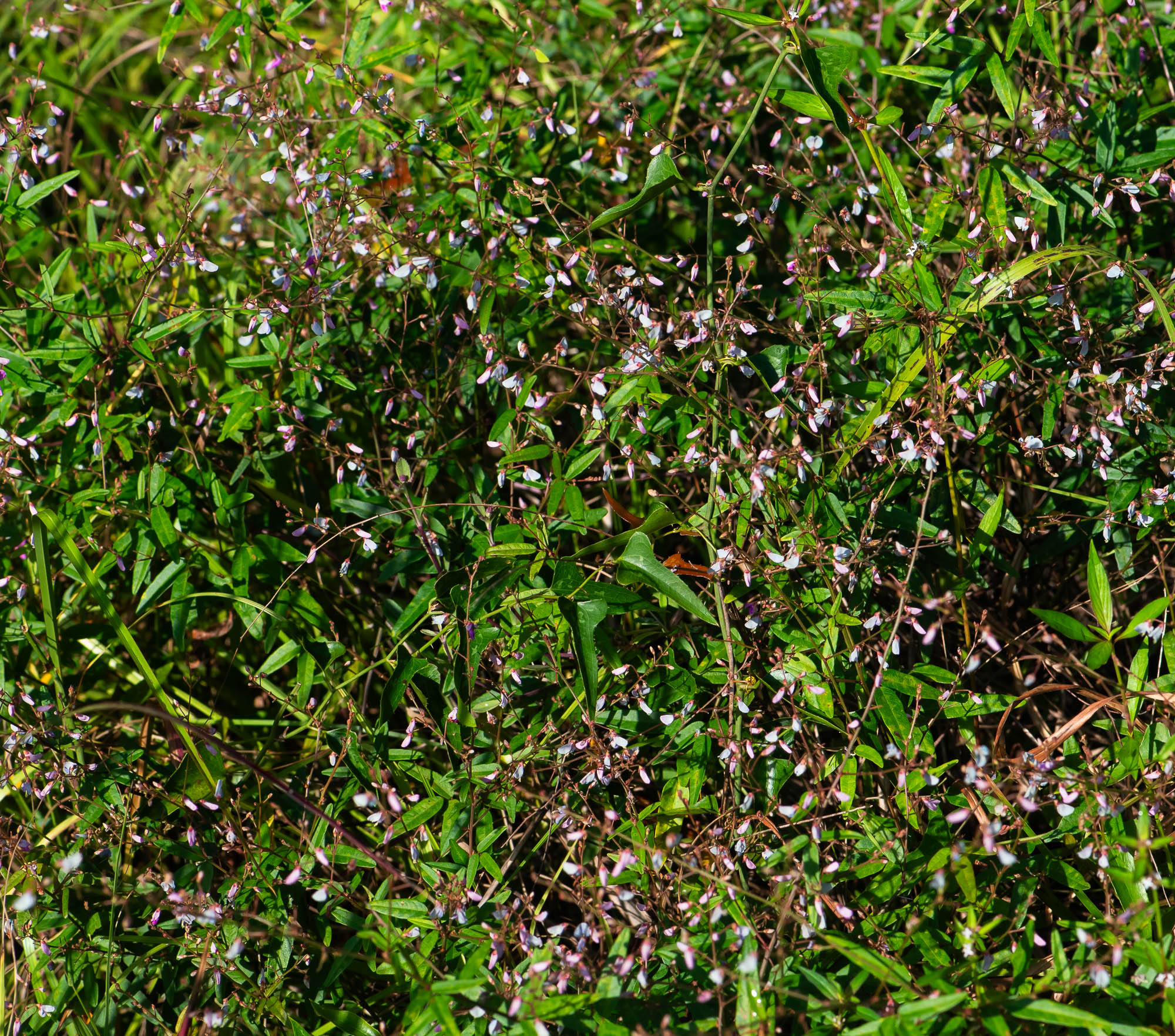
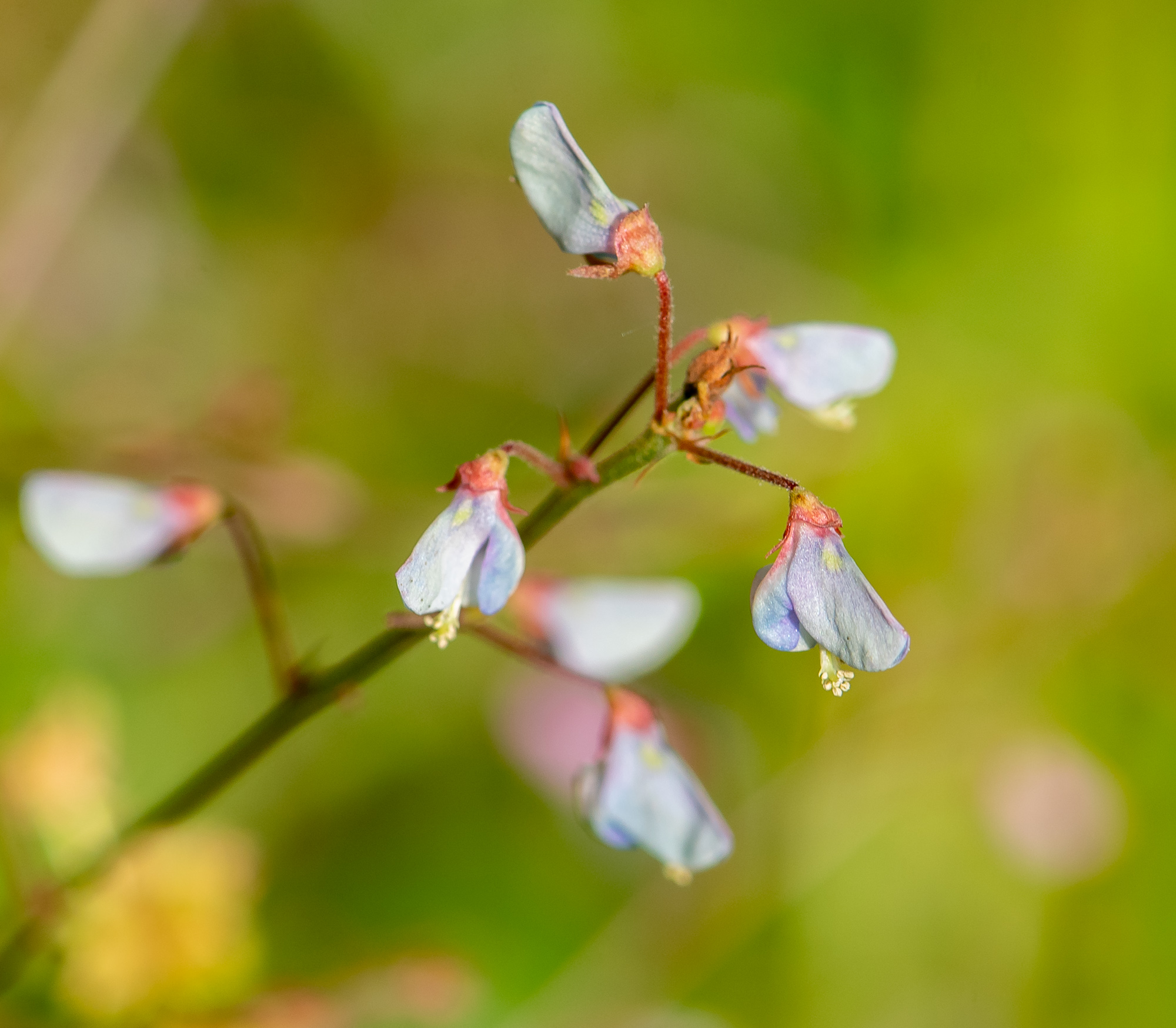
Panicled Ticktrefoil (Desmodium paniculatum). Long name for a very small flower. It forms fairly dense undergrowth which is fun to slog through. We grew up calling it “beggarlice”. Some call it “velcro plant”. The seeds love to stick to your clothing which provides endless hours of fun when you return home and she says you have to remove all those things before tossing your pants into the laundry.
You know it’s autumn around here when the Pine Warblers show up in flocks and no bug is safe.
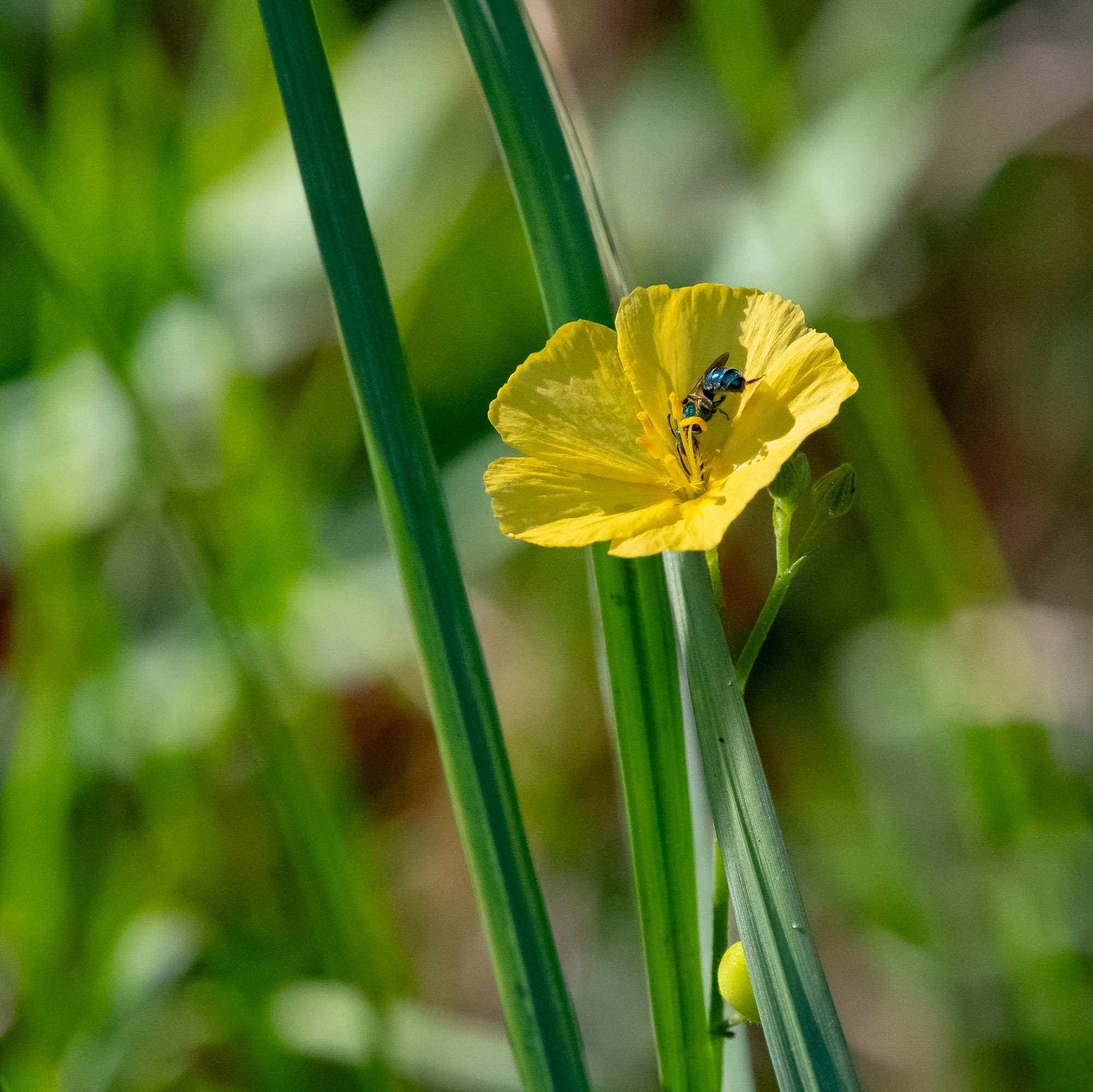
With petals which remind me of paper, the butter-colored Pitted Stripeseed (Piriqueta cistoides subsp. caroliniana) offers sweet nectar for a Brown-winged Striped Sweat Bee (Agapostemon splendens).
A group of White Ibises greeted us as we entered the park this morning. Immature birds are brown during most of their first year and become mottled before attaining the pure white of an adult.
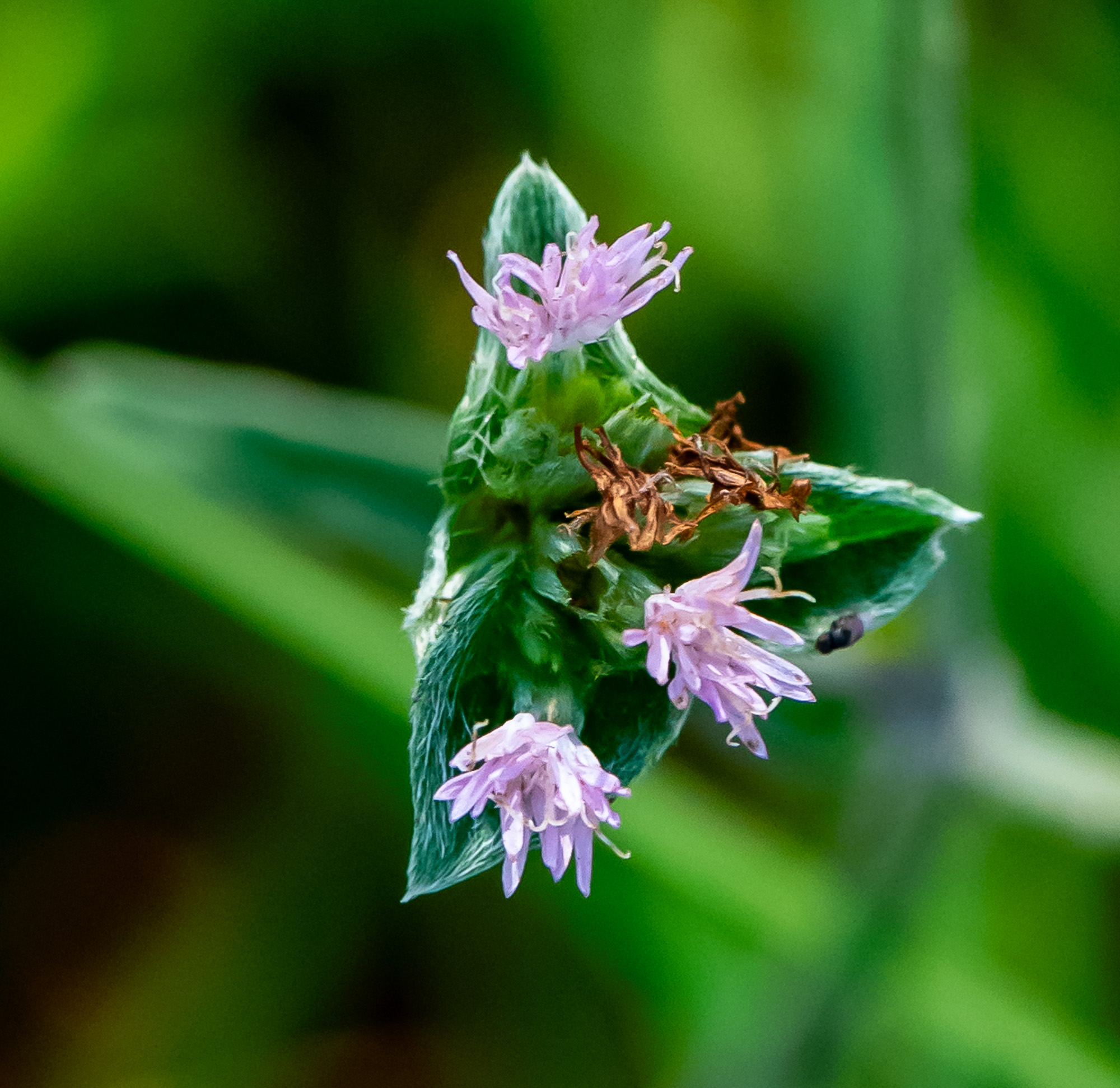
I have tried, but just can’t conjure up what some botanist saw when they named the Tall Elephantsfoot (Elephantopus elatus). No matter. It’s a unique plant with lovely flowers.
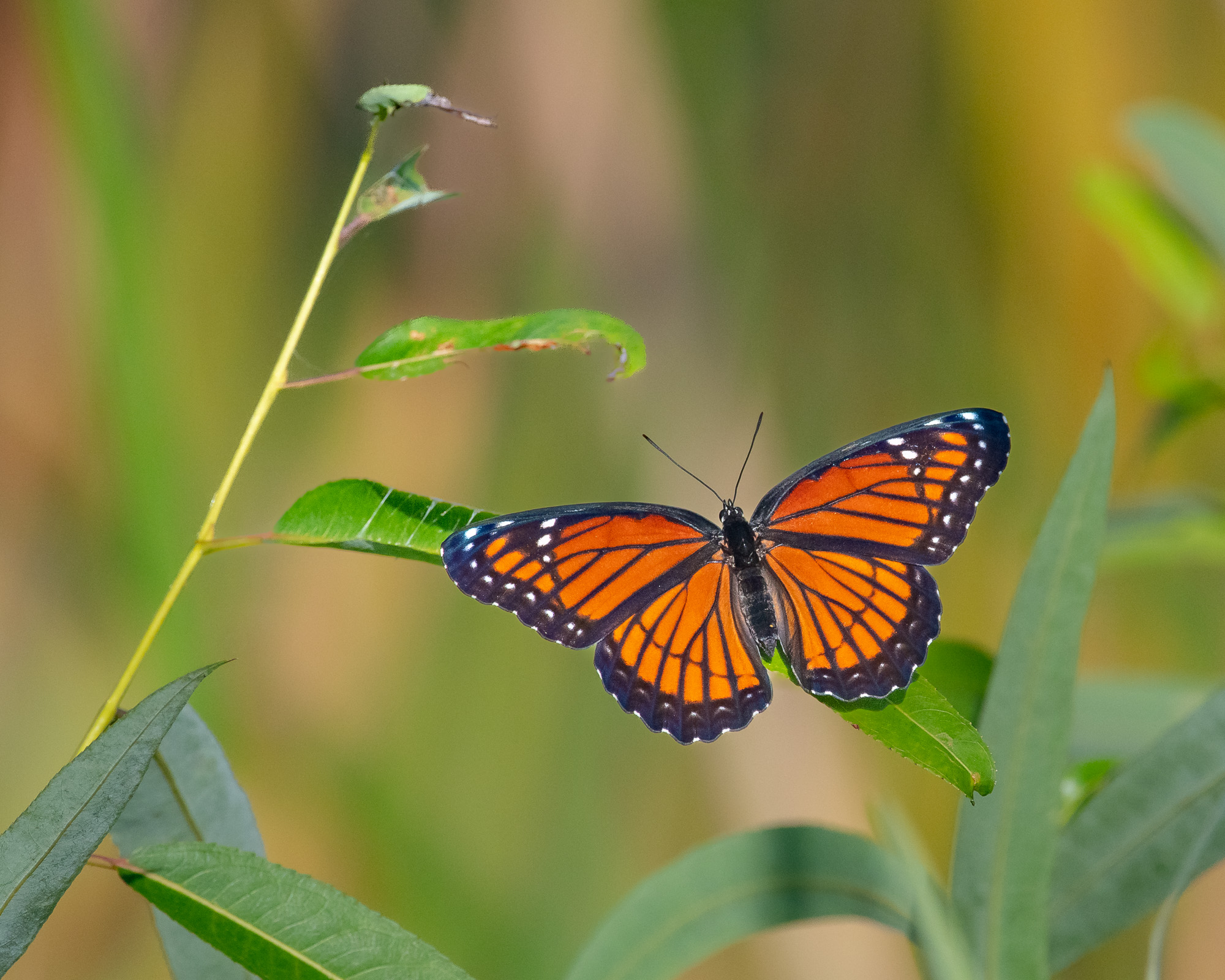
Although they are only very distantly related, the Viceroy (Limenitis archippus) is similar in appearance to the Monarch (Danaus plexippus). The scientific community is divided on whether the Viceroy is a Batesian mimic (a butterfly that is palatable, but mimics an unpalatable species to avoid predation) or a Mullerian mimic (a mimicry involving two unpalatable species). We did not taste this one to check for palatability.
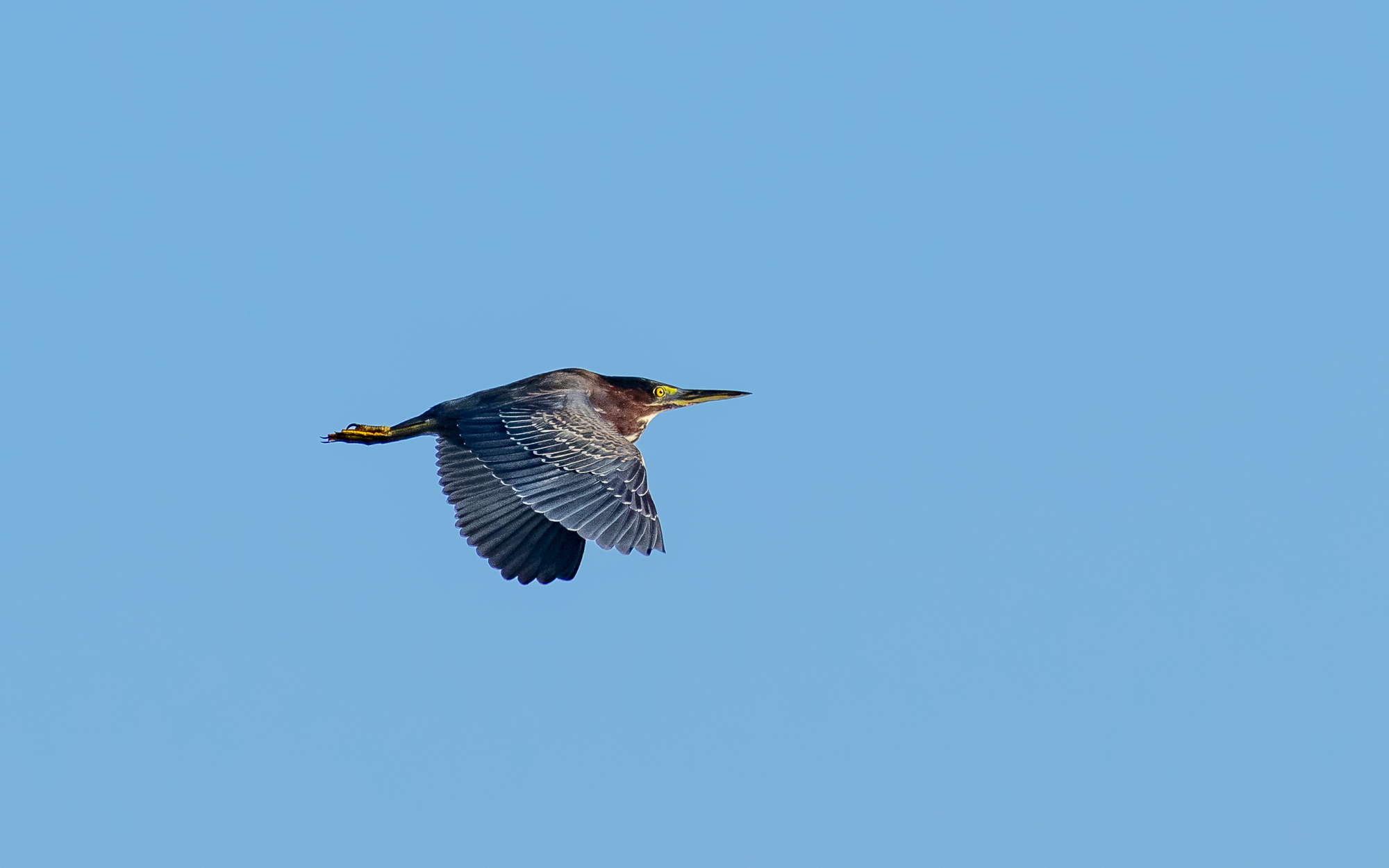
As we finished breakfast, a Green Heron flew from one side of Mac Lake to the other.
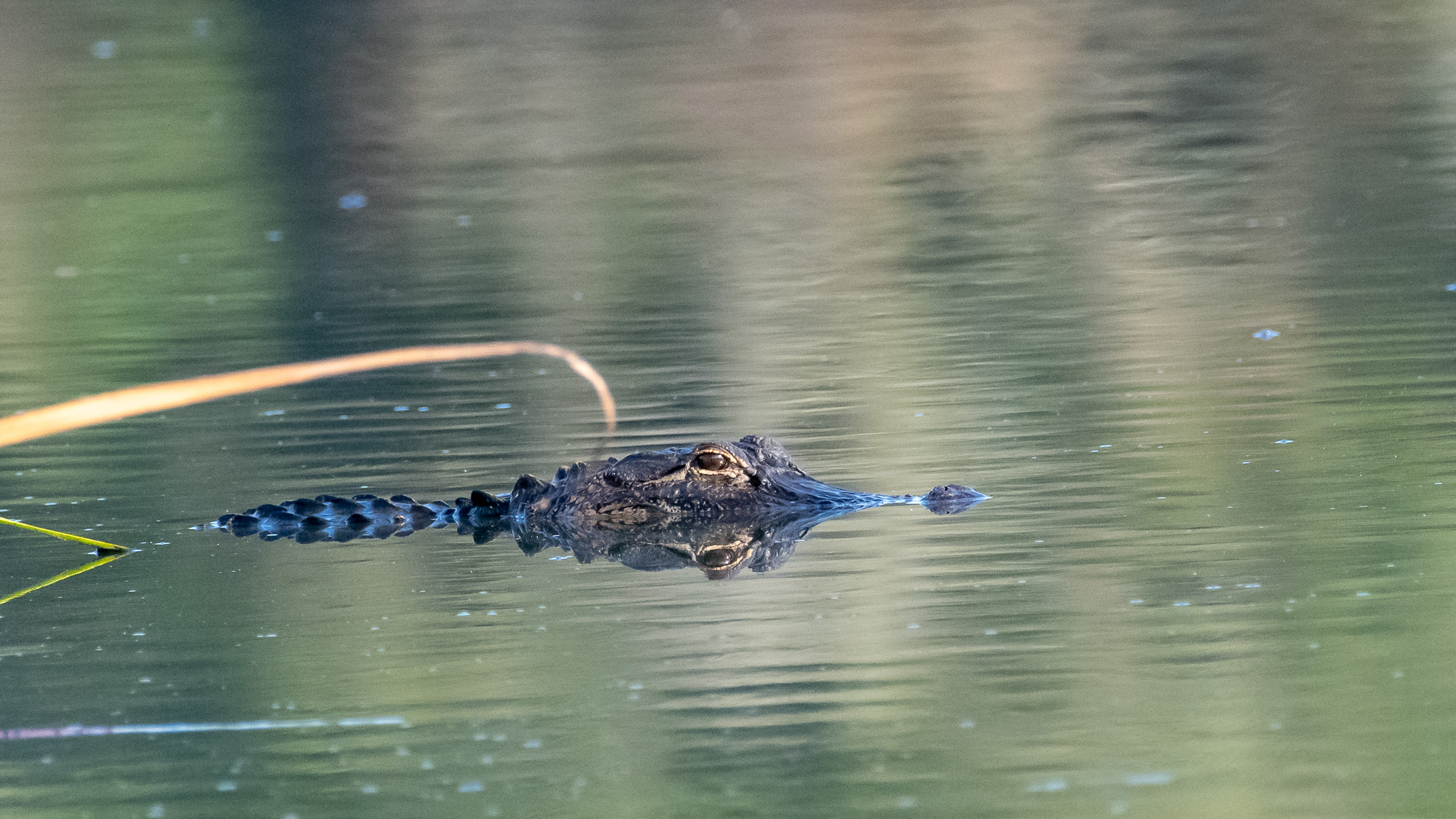
American Alligator (Alligator mississippiensis). To clarify statements from past blog posts, Florida does not actually have a law that says we must include an image of an alligator in each post. But how can we resist anything this cute?
Sleepy Orange (Abaeis nicippe) was one of the most abundant butterfly species we saw throughout the day.

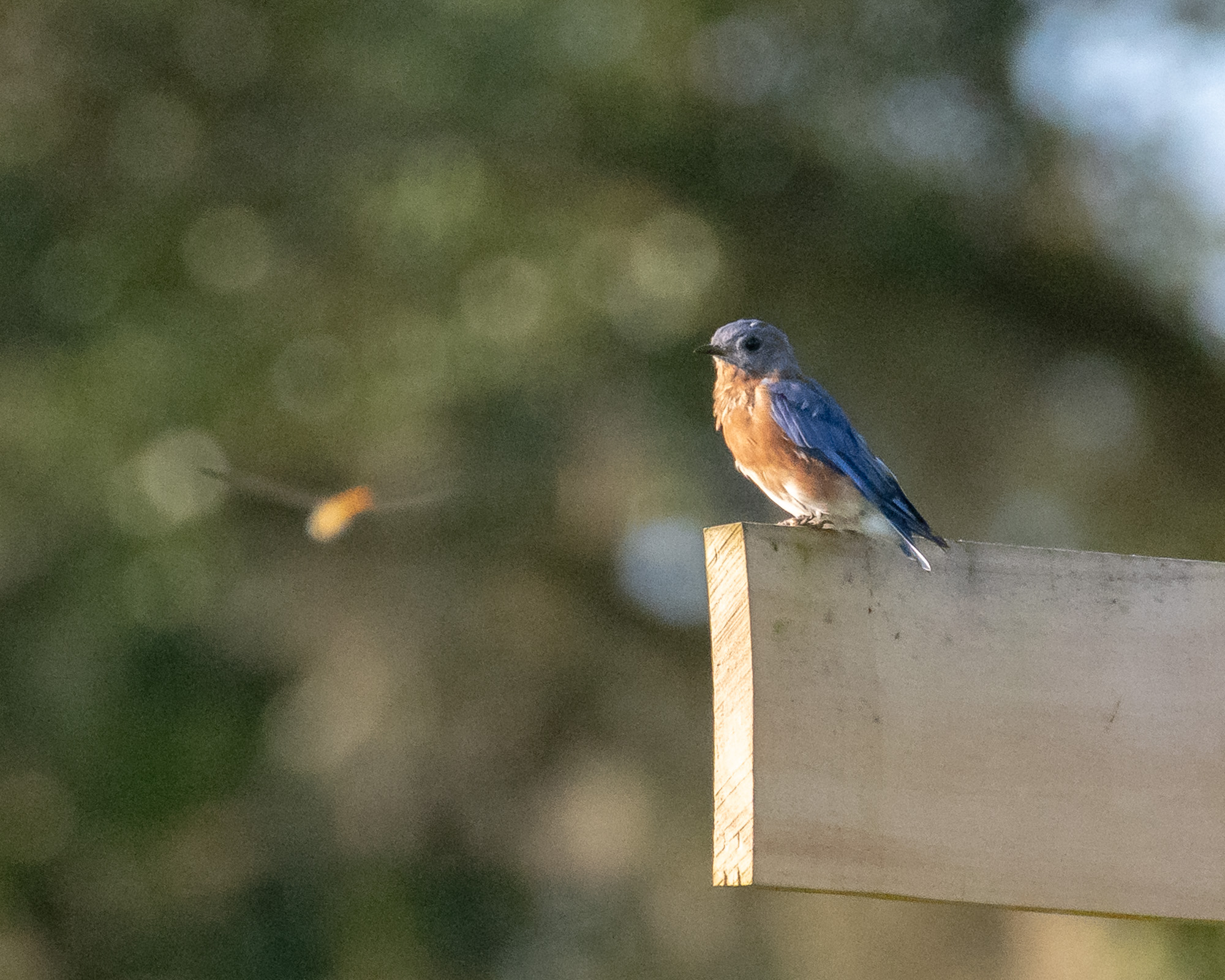
As we focused on the Eastern Bluebird, it was focusing on a photo-bombing dragonfly.
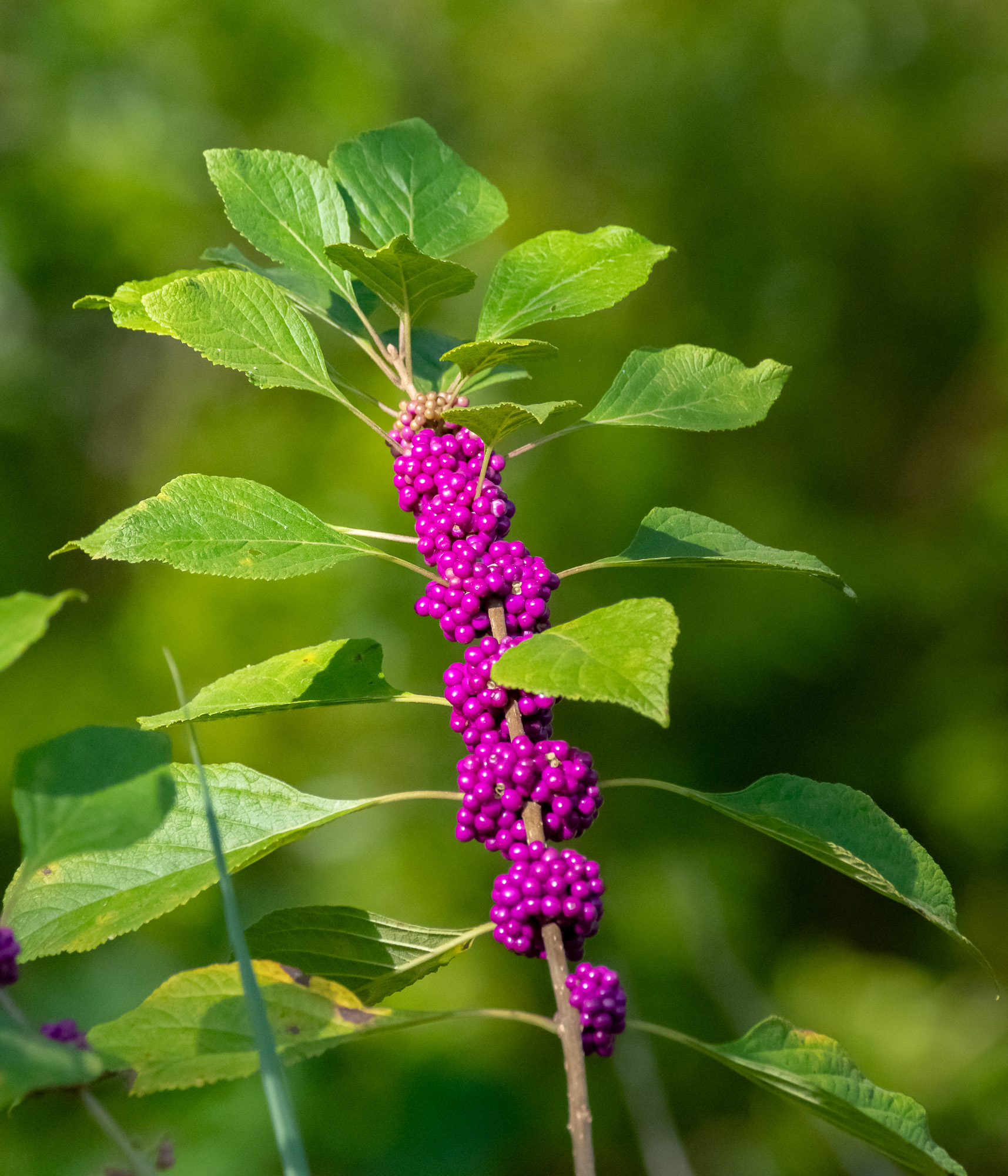
Part of our “autumn color” is the bright American Beautyberry (Callicarpa americana). We have read that the berries can be made into jelly and that the leaves, when crushed and rubbed on the skin, may repel biting insects. Verify these things BEFORE you decide to try them!
Another fall visitor, the Prairie Warbler, showed up in several locations this morning. More evidence that fall migration is underway.

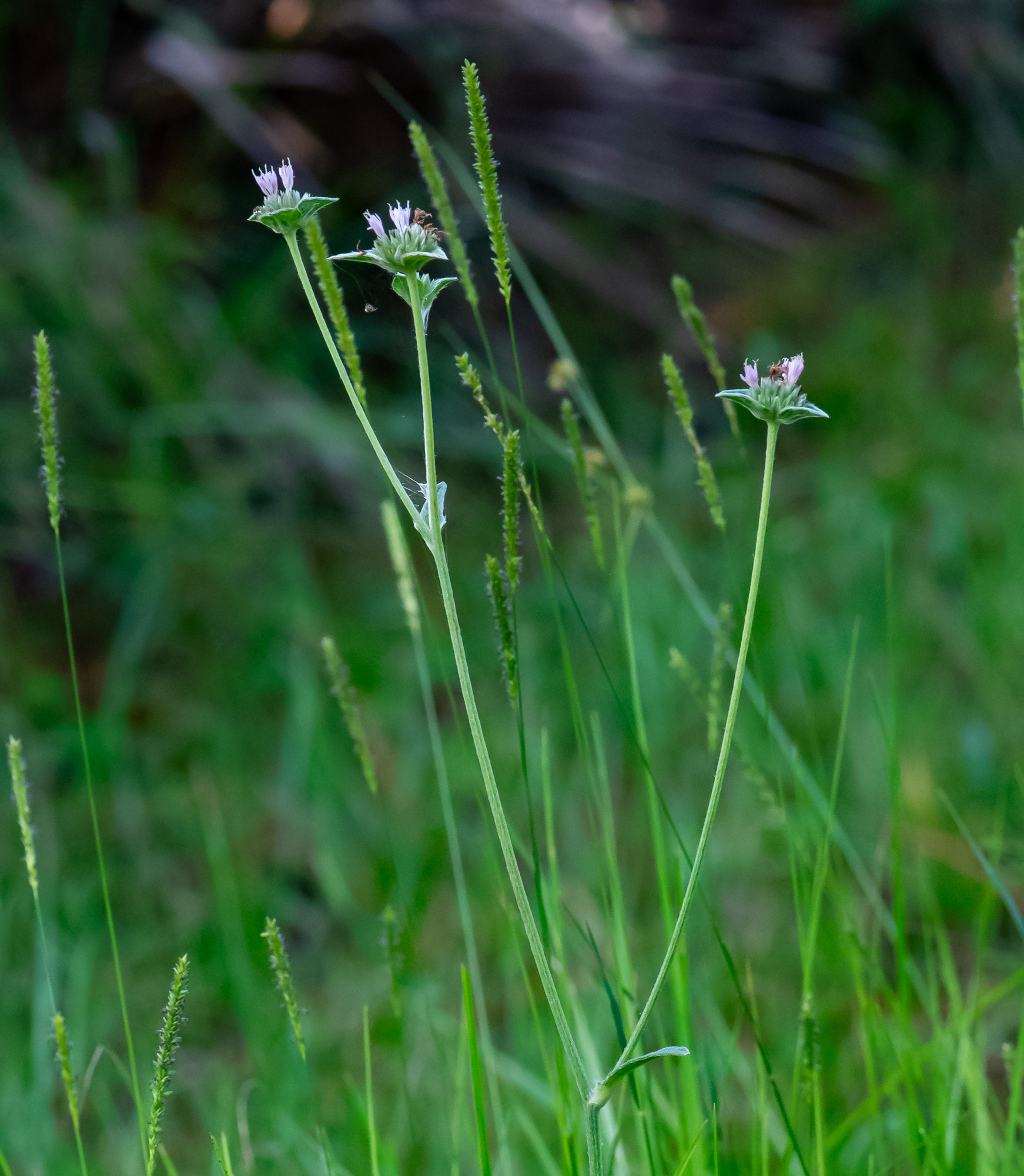
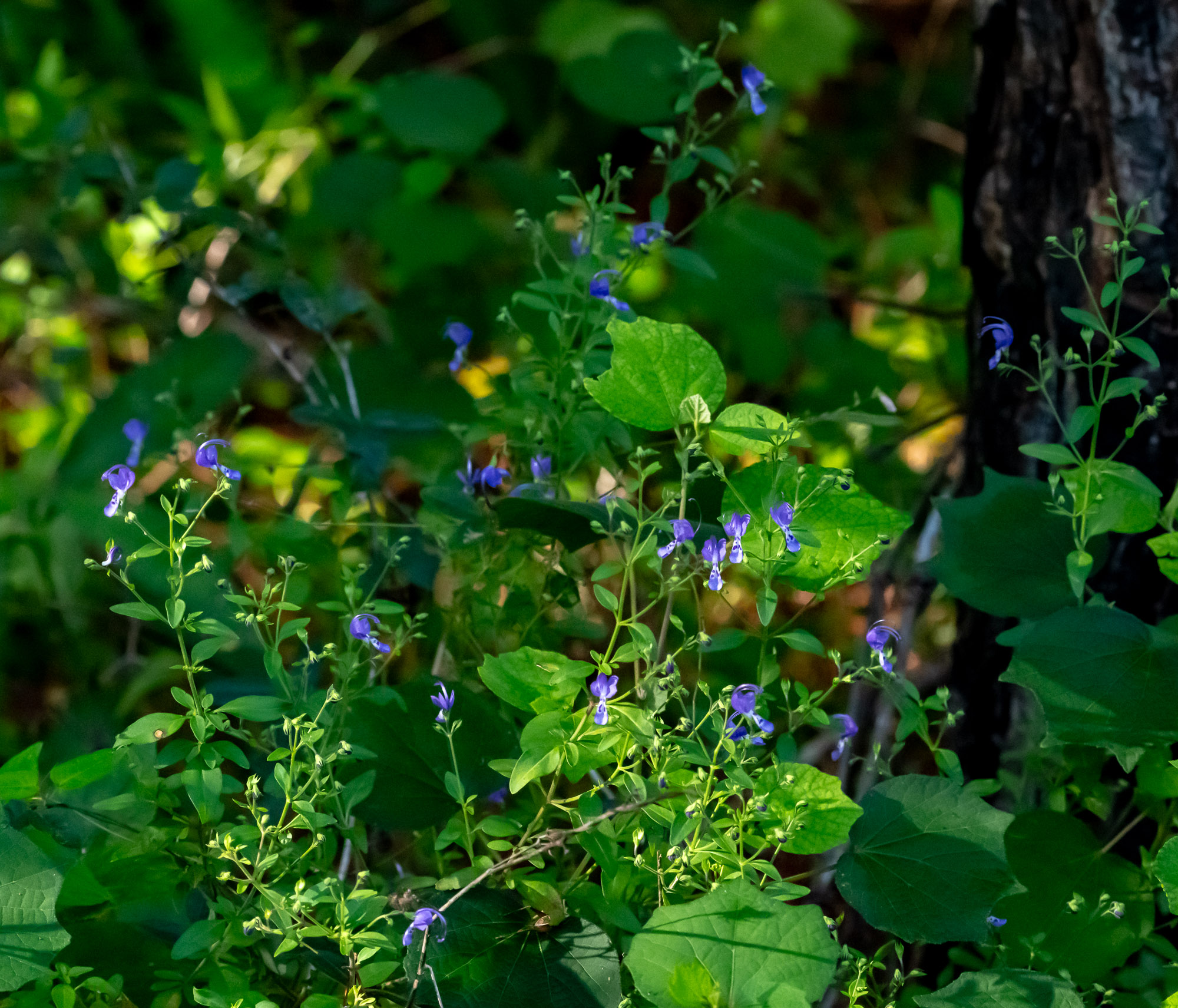
With lovely bluish-purple blooms, Forked Bluecurls (Trichostema dichotomum) attract plenty of nectar seekers, especially bees.

Once again, we spent a couple of very satisfying hours exploring Colt Creek State Park. Stay tuned for the thrilling conclusion of the day’s events as next time we will still be Falling Down On The Job.
Enjoy your search for a natural place and come back for a visit!
Additional Information
Colt Creek State Park – https://www.floridastateparks.org/parks-and-trails/colt-creek-state-park
 Our Natural Places
Cooled down to an average high of 88?!?! It is in the 20’s here this morning with a high in the 40’s. This warm-blooded northerner would rather take these cooler temps than the 80’s! The downside is that many of the summer birds have left, we have no butterflies, caterpillars and other critters to photograph.
Love your pictures and storytelling!
LikeLike
Doggone life ain’t fair.
Too cool today. Too hot tomorrow. We’ll all just keep doing our best to live a good life in the here and now!
LikeLike
Glad to hear the park is reopened! I always worry about the impact those storms will have on local wildlife (after concerns on the human front of course). Panicled Ticktrefoil, hmm, not sure if that is the name of a similar plant we have here but I have to say that plant (or the mistaken one locally) is on my highly disliked list. Countless times I’ve spent precious time sitting in my parents foyer picking those damn things off before I was allowed to venture further. Congrats on the Prairie Warbler – one of my favorite of all the Warblers. Maybe not the most colorful of the Warblers as some like the Chestnut or gorgeous, but the fact it is so elusive to find and even more difficult to get a shot of one if you do gives it such a high ranking. Thanks for taking us along on your visit.
LikeLike
Yeah, I may or may not recognize the “official name” of those plants with the velcro seeds, but they are near the bottom of my “like” list once I get to the house and look at my pant legs.
It’s always a challenge for me to recognize female and young Prairie Warblers at first glance. The nice yellow bodies grab my attention but then I see — gray heads? I keep having to remind myself to take the pic first, then figure out who it is.
Thanks so much for dropping by.
LikeLike
I was going to say, thanks for clarifying the differences between the Viceroy and the Monarch.
LikeLike
Many of nature’s creatures appear similar at first glance. Thank goodness for photographs so we can more closely inspect them.
LikeLiked by 1 person
Fabulous images Wally. I always like the light in your images.
LikeLike
Thank you, Maria.
LikeLike
Beautiful shots! It’s always great seeing the fall migrates coming in, then you think colder weather is coming as well.
LikeLike
Thank you, Dina. Come on cooler weather! And migrants, too.
LikeLike
I guess one has to be a Floridian to include alligators under the rubric “cute.” 😊
Your Prairie Warblers, on the other hand, definitely qualify. They are always rare around here, so I’m envious to know that you will see them regularly for the coming months.
I look forward to learning what you found during your return trip!
LikeLike
Just wait ’til the afternoon trip’s alligator picture. You will reflexively go “awwww”.
The trees and shrubs are definitle brightening up with all sorts of yellow-feathered things. Just the way we like it.
Thank you, Tanja, for visiting us.
LikeLiked by 1 person
Waiting with bated breath . . .
LikeLike
After weeks without rain, we’ve had around a couple of inches, and that means that without leaving my desk I can enjoy the ibis, too. They come over to probe the lawn for grubs, and this morning there are between 25-30 of them running around. It’s great fun.
I was interested in your description of the ticktrefoil. I’ve always thought we shared this species, and a couple of apps confirm that ID, but I’ve never noticed them growing so thickly, and I never have had seeds sticking to me. Perhaps we do have a different species. On the other hand, I may have been in the wrong spots to see them growing thickly and just haven’t noticed the seeds.
I’ve never figured out ‘elephant’s foot,’ either. I found a couple of other species this fall, but their leaves don’t look like elephant footprints, either. That’s the explanation I usually find: that the plants resemble footprints. Not to my eye, they don’t.
The first beautyberry jelly I had came from a member of the Florida native plant society; she was selling it on Etsy, and I couldn’t resist. It was fine, but it didn’t have much of a distinctive taste. Now, the berries on the stem? Those are distinctive!
If you rotate your alligator photo 90 degrees to the right, you may see it as I do: a lovely hanging decoration for a Christmas tree!
LikeLike
My understanding is most species of Desmodium produce those little hitchiker seeds.
It seems like that Beautyberry is so – well – beautiful, that those things ought to taste better. Wildlife seem to like them just fine, so that’s okay.
Now you’ve done it. Gini’s drawing pad is now filled with ‘gator illustrations and she’s trying to figure out how to make paper ones in 3-D to hang from the tree, the ceiling, the lamps. Way to go.
LikeLiked by 1 person
Beautiful 🙂
LikeLike
Welcome, Paul. Thank you for visiting with us. Hope to see you again.
It’s a beautiful spot.
LikeLiked by 1 person
Thank you, thank you, thank you.
So many marvels.
Far away we are moving (quickly) into summer. It is hot here, but not humid. Some rain would be more than welcome (but not the downpours you have been receiving). Fussy aren’t I?
LikeLike
You’re welcome (x3).
We always marvel at our marvels. (Although Gini continually remarks I have lost mine.)
Fussy is good. Otherwise, you won’t get what you want.
All the best, EC, from both of us.
LikeLike
Lake Mac looks good on my Mac.
It’s hard to imagine—much less live through—15 to 20 of inches of rain in a brief period.
In addition to saying goodbye to summer, tomorrow we will have said goodbye to Daylight Savings Time.
American beautyberry ranges across the southeastern U.S. The distribution map shows it in every Florida county, and Austin is near the southwestern corner of its range.
Imagine not being intrepid enough to taste a butterfly.
LikeLike
Lake Mac is unusual for Florida as it is relatively deep. It started life as borrow pit for road construction is my understanding.
I would have tasted that Viceroy in the intereste of science, but I’m limiting my butter intake.
We hope your Texas day is a good one.
LikeLike
Your morning exploration was filled to the brim with life that would have made any Spring proud! I think I’m especially drawn to the Bluecurls, with their tiny carved sporks. Can’t wait to hear what your next “fall” is all about.
LikeLike
It was a wonderful day, Sam.
Lots of migrating and resident bird songs, tons of butterflies and colorful blooms everywhere.
Thanks for your kind comments.
LikeLiked by 1 person