Slow Motion Notion
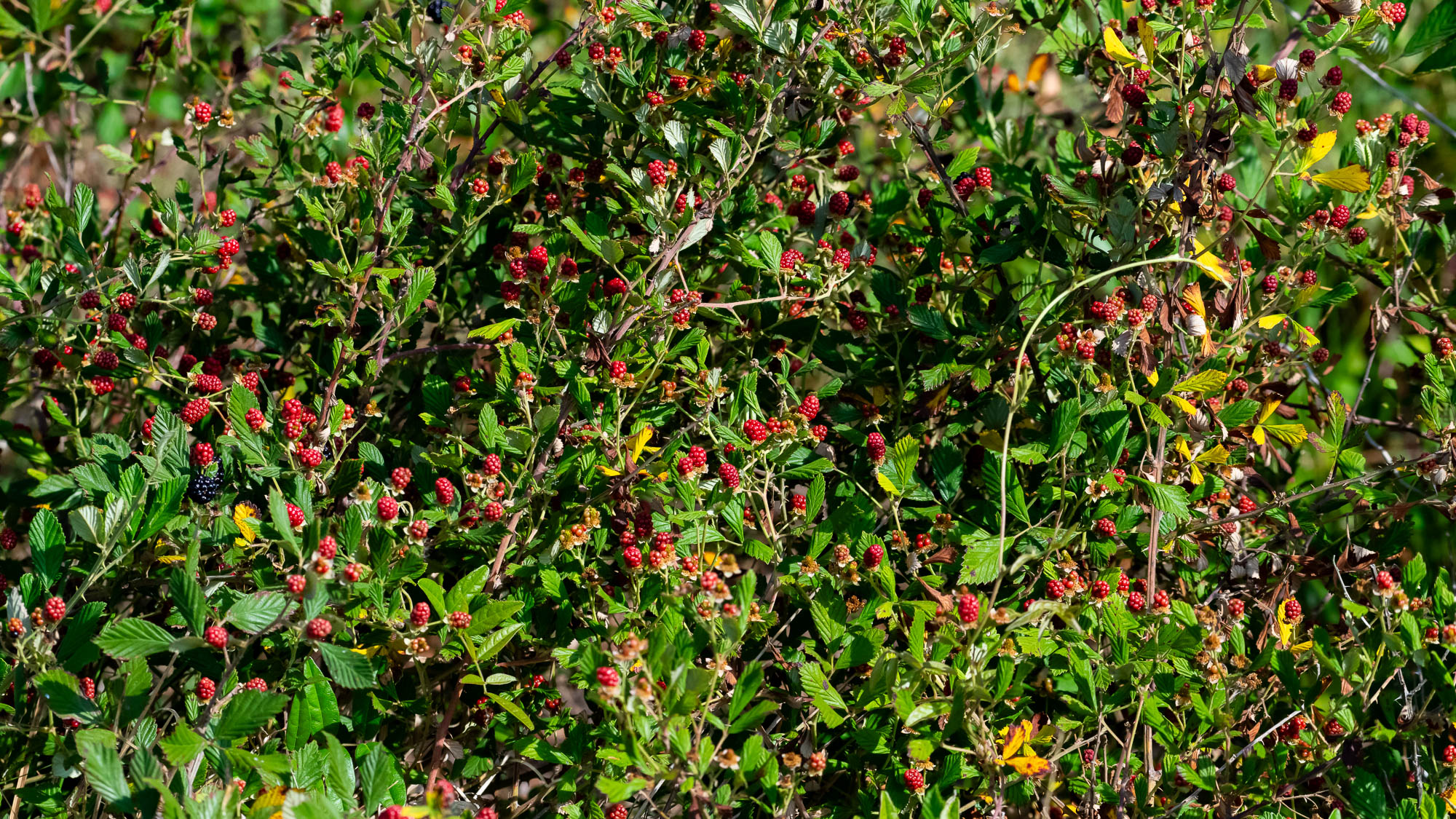
(Click on images to enlarge, click again to zoom.)
I often tend to be in a hurry. Anxious to “see it all”, I have been known to snap a quick picture of a heron and move on down the shore of the lake as I just know there will be a Limpkin disgorging an Apple snail from its shell and I don’t want to miss THAT!
When not on foot, my affliction is mitigated somewhat when driving along a back road as the vehicle has a unique “Automatic High Alert” sensor which conveniently signals upon encountering potentially interesting things. When I drive past a unique flower, for example, the system shouts “STOP! BACK UP!”. After a half-dozen such notifications, she The System inquires if I would prefer to relinquish the driving duties.
A recent trip to our local “patch” allowed me to put into practice my new “SMN” philosophy. After two steps, I stopped and scanned all around. Taking the idea further, I knelt down to help keep me from moving until I had thoroughly investigated that spot. Amazing. There seemed to be all manner of things vying for attention. This “Slow Motion Notion” just might be worth pursuing.
The downside of moving at such a slow pace is not being able to cover as much ground as we normally would. As illustrated in just a moment, the upside is enjoying more diverse subjects. So far, I like the trade-off.
After an hour or so of examining weeds, leaves and dirt “up close and personal”, we took a breakfast break by the side of a lake. In front of us, Ospreys were fishing, Anhingas were drying their wings, Gallinules were preening, a Little Blue Heron was hunting. Gini said, “See? We haven’t missed a thing by slowing down.” The smarter half of the partnership was right – again.
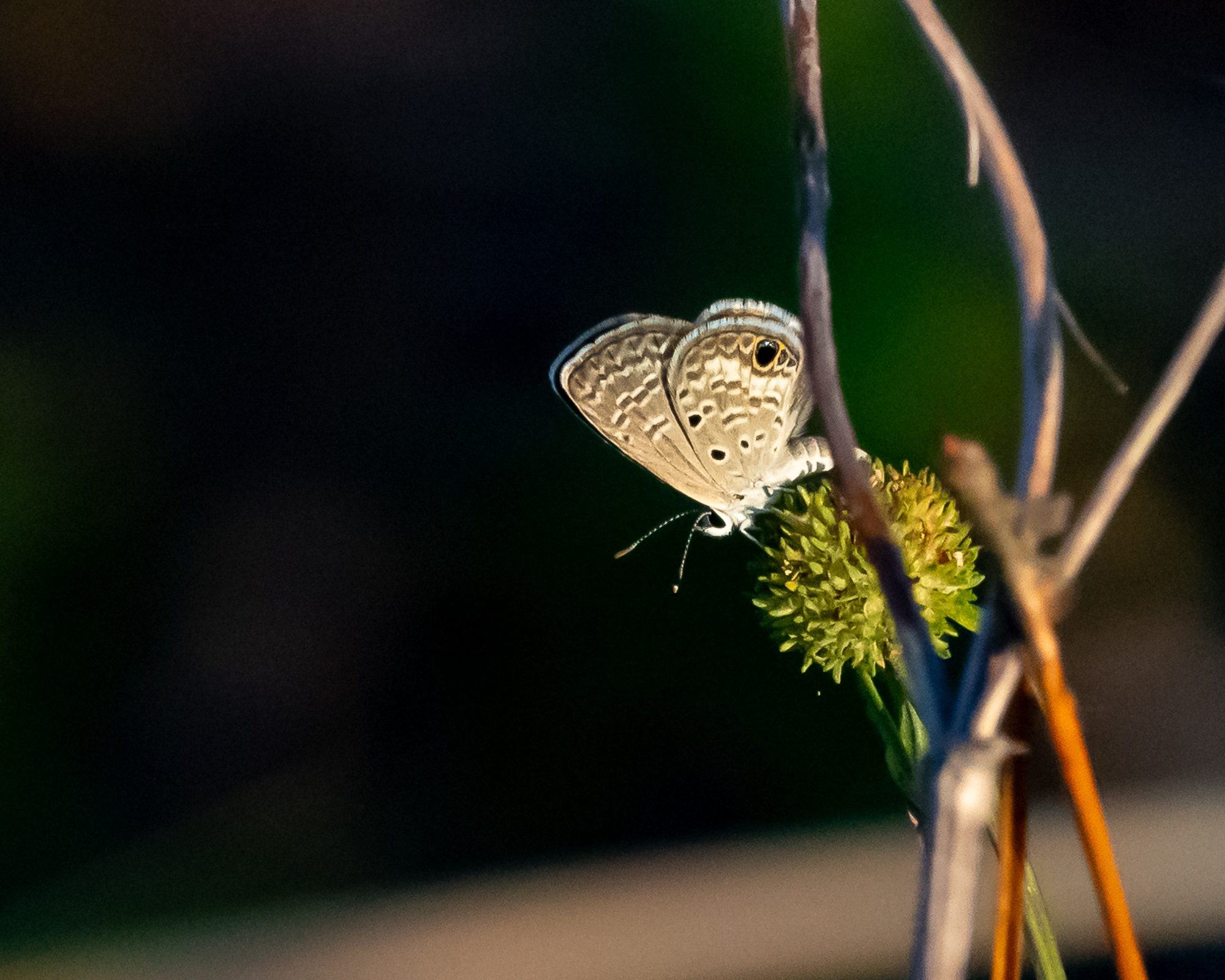
The early morning rays of the sun highlighted the pretty pattern of a Ceraunus Blue (Hemiargus ceraunus).
I think this is a Vagrant Scrubsnail (Praticolella griseola). No idea what the plant is but my imagination liked the way it seemed to be cradling the snail.

There are not many moths active in daytime. Finding an Ornate Bella Moth (Utetheisa ornatrix) is always a pleasure.

One of the smallest dragonflies in North America, this immature male Little Blue Dragonlet (Erythrodiplax minuscula) will soon be all blue.

Fuzzy Wuzzy was a — Bee Fly. There are several species of Woolly Bee Flies (Genus Systoechus) which look similar.

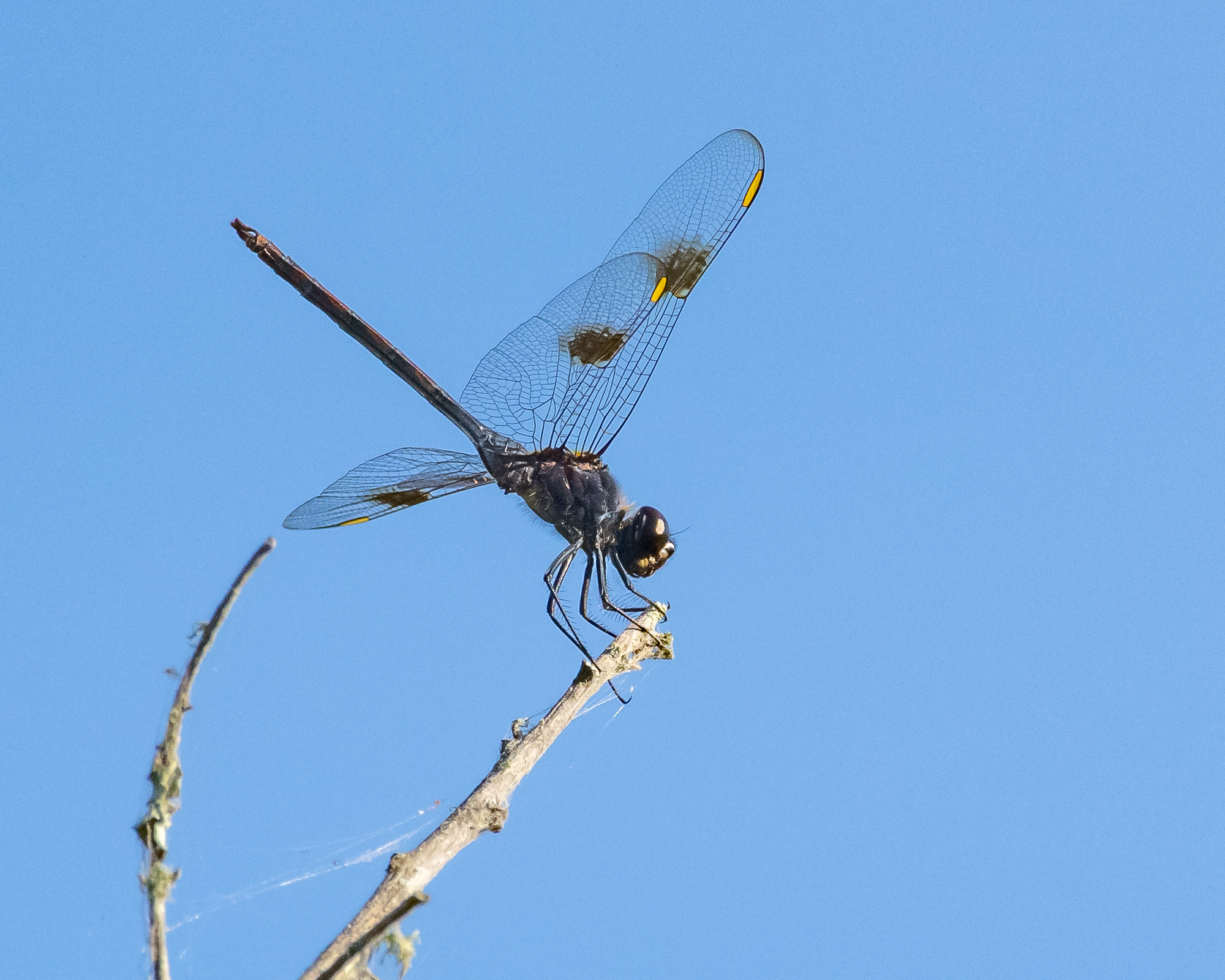
It helps with identification that some dragonflies have particular perching habits. A Four-spotted Pennant (Brachymesia gravida), for example, seems to prefer perching atop bare twigs.
Canary yellow flowers resemble other legumes but the Florida Alicia (Chapmannia floridana) is found only in Florida.

While we enjoyed our fruit breakfast, a Little Blue Heron spotted something it liked.

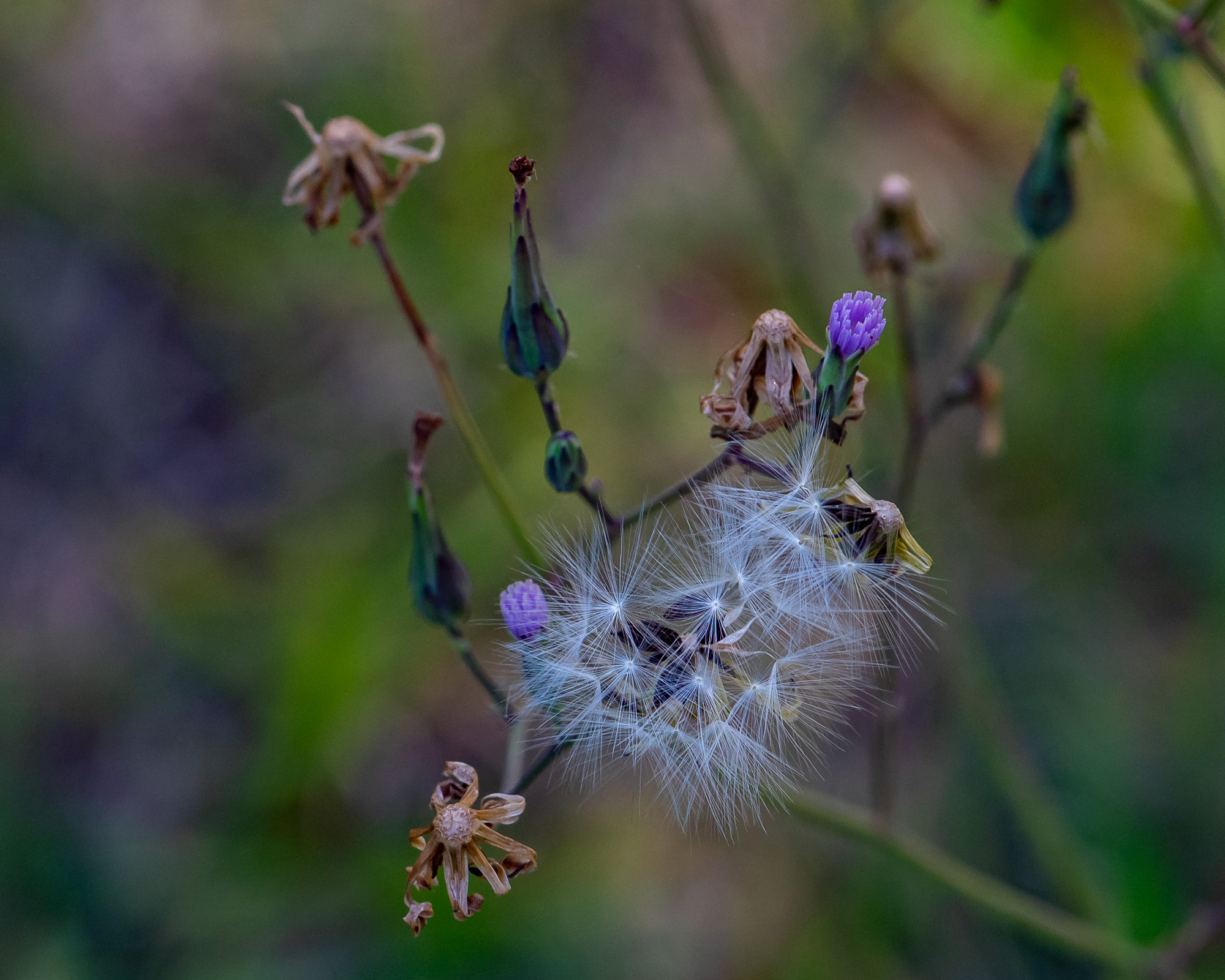
Although I may not include it in my next salad, Grassleaf Lettuce (Lactuca graminifolia) is an interesting plant. Mature plants can look very scraggly, the flowers are lovely and when the “seeds/fruit” explode it can be surprisingly attractive.

It would be difficult to mistake a Halloween Pennant (Celithemis eponina) for much else as it has a very unique wing pattern.

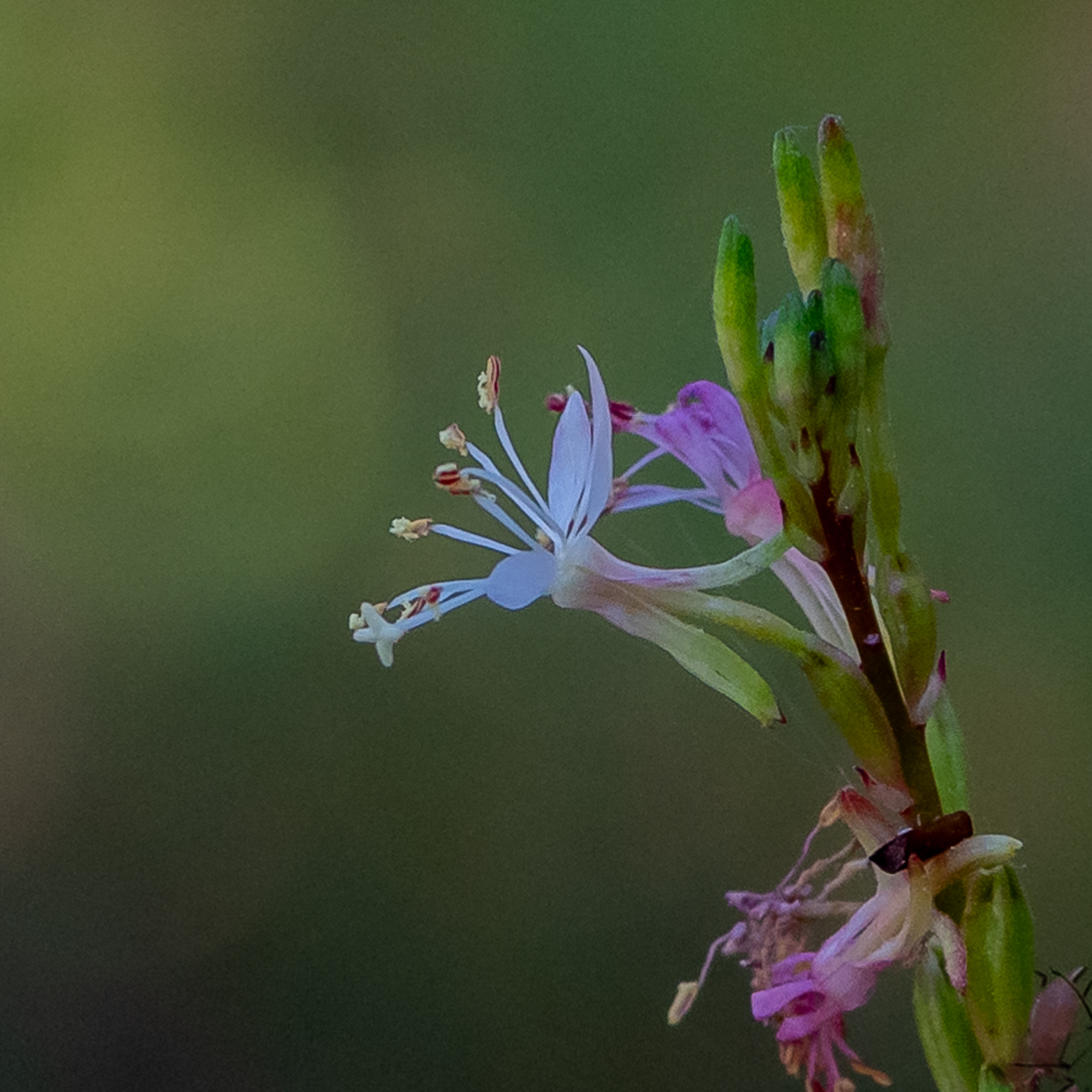
A favorite of bees and other blossom-lovers, the delicate Southern Beeblossom (Oenothera simulans) is subtly gorgeous.
The tiny plant with a huge appeal. We are continually surprised how many nectar-seekers can be found probing the very small flowers of the Frogfruit (Phyla nodiflora).

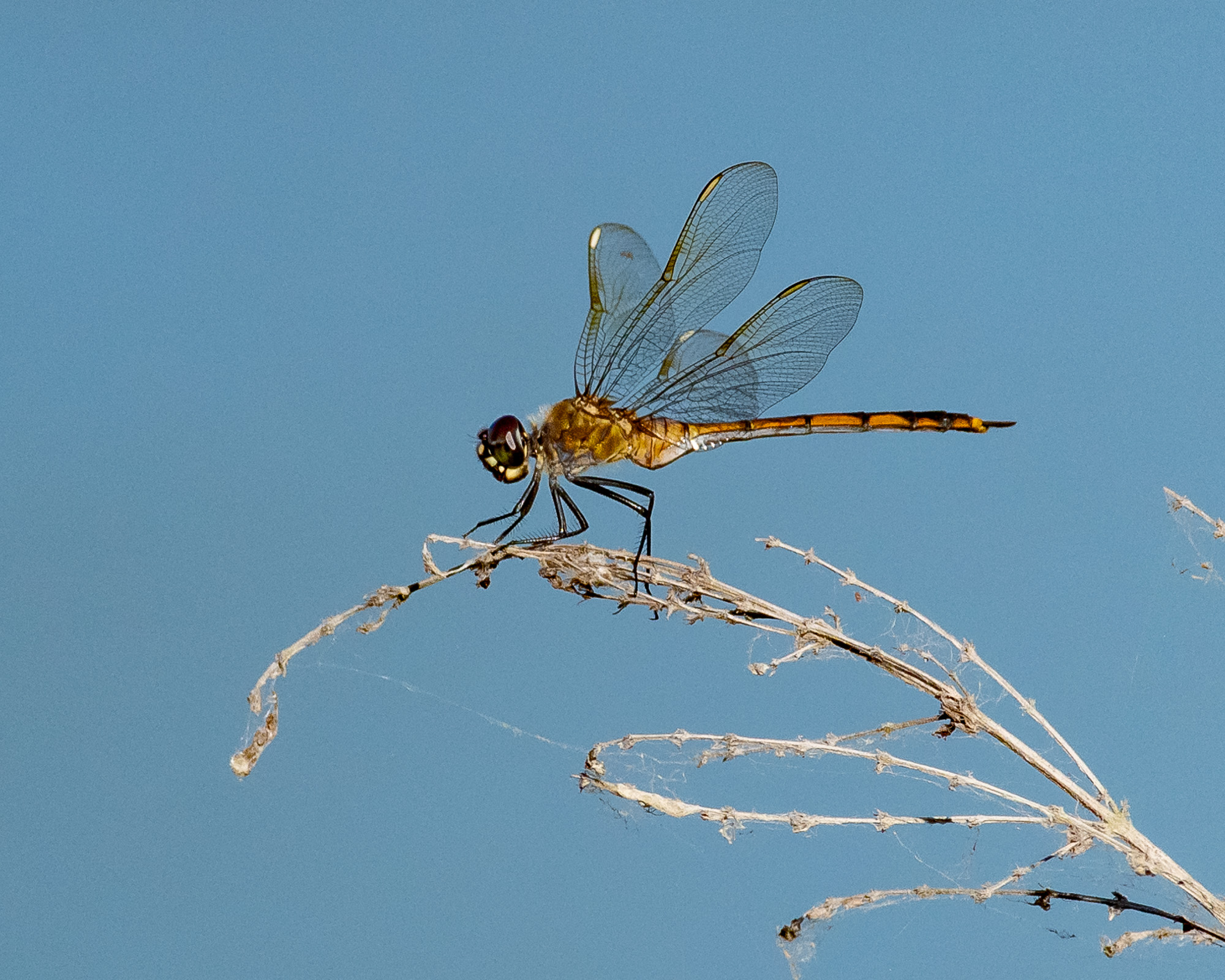
Pretty and golden. A female Needham’s Skimmer (Libellula needhami) returned to this perch six times before she remained long enough for a picture.

So, this is either a wood carving of an alien life form, or, it may be an Arrow-shaped Orbweaver (Micrathena sagittata).

As with most things in life, exploring nature can become infinitely more enjoyable if we adopt a “slow motion notion“. I found so many things on this trip that could have easily been missed if I had been in a hurry. That would have been a shame.
Enjoy your search for a natural place and come back for a visit!
 Our Natural Places
Thank goodness for your Automatic High Alert sensor. Life without her would be less full and fun. 😊
LikeLike
You are SO right!
LikeLiked by 1 person
I like the concept of the SMN. I am pretty high strung myself and not that patient when I’m in the field – much better when I am with someone as they can keep me in check, especially Linda who without I would never stop to eat ha. I can relate to your Alert System, but in my case it is admittedly me as I let Linda drive so I can hang my head out the window like an eager puppy ha. Fun post!
LikeLike
A patient spouse and my advancing years have helped be embrace that slow-motion-notion!
I totally relate to the puppy analogy. Only I do it while trying to drive. Gini is not pleased.
LikeLike
I don’t know how many times I’ve stopped to get a drink of water and looked around and there is something interesting I would have missed. Going slow is good…and that’s a ‘good thing’ because I’m slower than usual here lately. Love that Little blue heron and the dragonflies. Enjoy your weekend!
LikeLike
About a hundred years ago, my Dad taught me how to walk quietly in the woods. It has paid dividends ever since.
The weekend is bright and wonderful.
LikeLike
You ought to see about getting car manufacturers to install your Automatic High Alert sensor in their vehicles. Of course you might need to figure out how to clone the “she” in question.
That’s quite a whimsical portrait of the little heron peering down into the water.
I’m used to the word gravid applying only to females, so it seems strange to see a male Brachymesia gravida.
You may be aware that frogfruit is also called fogfruit. Neither version of the name seems to make any sense. We have that species in Texas, too.
Great picture of the Micrathena sagittata. I see what you mean about the resemblance to a woodcarving.
LikeLike
Based upon experience, adding the AHA sensor would be cost-prohibitive over the anticipated life expectancy of the vehicle.
My mother called frogfruit “matchsticks” which at least seems to be a “match” for their appearance.
Hoping to find more of those “carved-looking” arachnids.
LikeLike
That’s one of the prettiest photos of frogfruit I’ve seen.
The Chapmannia floridana reminded me of our chat about the Chapman’s fringed orchid, which can be found in east Texas and north Florida. I remembered that Alvan Wentworth Chapman finally landed in Apalachicola, which seems to cement at least a name-relationship between the two plants. I was intrigued by the grassleaf lettuce, which looks rather like a mashup of sow thistle and chicory.
The real show-stopper here is that arrow-shaped orbweaver. It does look like laquered wood; it’s beautiful!
As for that slowing down business, it’s something I had to learn. My situation is a little different. Because I have relatively limited time to roam, I always was trying to cram too much into a day, especially when heat, humidity, mosquitoes, and deer flies limited even more the time I was able to enjoy being out. Now, if I set out with three destinations in mind and visit only one? So be it. That just means that I got stopped by something so interesting it was worth the time to visit with it!
LikeLike
I suspect not many realize how many “flowers” are actually atop the miniscule frogfruit. Once we see them, it becomes clearer why so many little critters pay them a visit.
We have now found several spots where we can reliably find Florida Alicia each spring. A great place to wander around if you ever visit Apalachicola is Chapman Botanical Gardens (https://www.floridastateparks.org/learn/chapman-botanical-gardens). Lots of blooms and bugs. And a really neat old Florida town, especially for someone with a connection to the water.
I guess we each travel at a different pace at distinct points in our lives. The key, for us, is to just keep traveling and discovering.
LikeLiked by 1 person
I shouldn’t have read your exchange with Sam, because now my blood pressure’s up again. Let’s just note this: Jason Wells, CEO of Center Point Energy, came here from California, where he was CFO of Pacific Gas & Electric. Initially coming to Houston in 2020 as Executive Vice President and CFO of Centerpoint, he moved up to become President and COO. As the Centerpoint blurb says, he then became CEO: “responsible for the company’s utilities operations, including electric, natural gas and power generation.”
All of this is pretty standard corporate stuff, except for this: for the four years I lived in the San Francisco Bay area, PG&E was notorious for undependable service. More recently, they’ve had the pants sued off them after a variety of California fires were attributed to their vegetation management practices, lack of equipment maintenance, and so on. Turning off power to customers during fire season seems to appeal to them more than cutting brush.
To paraphrase the old saying, you can take the executive out of the corporate culture, but you can’t take the corporate culture out of the exec. Post-Beryl analysis showed that Centerpoint spends less per customer on tree trimming and other vegetation management than Entergy and Texas/NewMexico Power. And, Centerpoint’s slow response post-Beryl made things worse. There’s never a single cause for the sort of mess we endured, but some priority-setting in the corporate suite needs to change.
Now, I’m going to go make another cuppa and come back to enjoy your photos!
LikeLike
Not to add to that blood pressure thing, but –
Not long after Jason Wells moved from PG&E, he was joined by a former colleague, Christopher A. Foster, who became Center Point’s Chief Financial Officer. Just a coincidnence the same corporotate “profit before customer service” philosophy practiced at two major energy companies by two of the same executives.
Now we BOTH need another cuppa.
LikeLiked by 1 person
Beautiful photos. I especially like the alien orbweaver. Your SMN system appears to be working! I think I’ve been using the system for a while now without even realizing it’s a system.🤣 On my best days, everything seems to slow down and I get in that photo “zone.” It’s fun and relaxing, and I always end up with good photos. Hard to do when I hike with others… best done solo.
LikeLike
Thanks, Peter.
Fortunately, my Boss likes to use that same slow approach. You’re right, though. Tough to be in a group if you want to linger awhile.
LikeLike
I enjoyed seeing your closeup and macro photos today Wally – very well done!
LikeLike
Thanks very much, Ed.
As long as it remains fun to do, I reckon I’ll keep doing it.
LikeLike
Great details in the little critters. I’ve never seen that arrow orbweaver before. Very cool! I tend to be in a hurry as well. Don’t like to stand still long.
LikeLike
Thanks, Dina.
I know the “antsy” feeling. However, it appears I have contracted some rare disease which inhibits my heretofore adroitness afield.
My doctor calls it “old age”. Hummphh. What does SHE know?? Not only that, she says there is no known cure.
LikeLike
I intend to officially adopt your SMN approach – I’ve been fighting it for some time, worried that I’ll miss something “out there”, while being a silly widget and missing what is right here around me. Thanks for the reminder, beautifully conveyed, as usual!
LikeLike
Not only that, but that mode just happens to coincide with my strange inability to walk as fast and as far as I could 20 years ago. Go figure.
Thanks for the encouragement, Sam.
We hope Beryl didn’t cause you too much grief.
LikeLike
Our home and family were very lucky with Beryl – only 6 hours without power, 3 without cell and internet. Ours was a very different story from that of some one million electrical company customers who were without power for 3 to 7 days. Houston’s desire for “big trees” is flying directly in the face of our population density and propensity for heavy weather, and something is going to have to change.
LikeLike
Very good to hear you had minimum difficulties.
Is it Houston’s desire for big trees or the policies of CenterPoint, et al, to perhaps emphasize profits over maintenance of those big trees and other cost-cutting measures? I have no idea, just another perspective.
LikeLike
You know, I’m not clear on the cause-and-effect. But what I see is new subdivisions and businesses being built, and new trees being installed… trees placed in easements under power lines, trees destined to become 50 feet tall and wide, when the power lines (and adjacent buildings) are only 30 feet away… The owner’s responsibility includes trimming to assure safety of power lines and power connections, but very few do it, so the power company eventually comes in and scalps the tops and/or sides of the now over-large trees, weakening them so that they cannot withstand wind. And of course, no one trims their roots, so the underground internet cables get intertwined with tree roots, and when the tree goes over, the lines are ripped up. First rule should be to plant what, at its adult size, will fit the available space. End of rant 🙂
LikeLiked by 1 person
Of course, you have very valid points. Responsible planning, development, maintenance – all are important.
LikeLike
Great photos today Wally. I like the fuzzy wuzzy, the orb weaver and the pennant especially. No mention of your minder today so I expect you made her stay around the house to continue her recovery while she baked you a few goodies.
When I switched on the TV the other day I was most alarmed about the near tragedy for the world. Thankfully he came up roses. Not so here with loony tunes in charge that less than 35% voted for!
Hugs to Gini.
LikeLike
Thank you, Phil.
This trip was actually a couple of weeks before Gini’s little hospital tour.
Me “making” her stay around the house – HA HA HA HA HA HA HA!
Yes, we very nearly went over a precipice and we’re still only hanging on by our fingernails. Hoping for good things in a few months.
My condolences on your newly chosen leader.
Gini sends hugs via return mail.
LikeLike
I would love to take a walk or drive with you and see the world through your eyes. There is so much to see and learn about nature and photography.
LikeLike
I reckon that’s why we each do what we do. Sharing what we experience. A positive use of this internet thing.
Now, if I could just figure out how to “virtually” share your 100 pounds of salmon ….
LikeLike
Nice selection of odes, slowly, slowly is always the best way to approach them.
LikeLike
Thanks, Brian.
I really need to make some dedicated ode trips. Soon.
LikeLike
Slow and steady definitely won this race. Thank you both. Again.
LikeLike
Gini keeps reminding me about the real reasons we explore nature. We see nice things, get fresh air and, most importantly, we do it all together.
We both appreciate you visiting with us, EC.
LikeLike