More Ridge Riches
(Click on images to enlarge, click again to zoom.)
A symphony during breakfast is a great way to simultaneously relax and be filled with anticipation at what other treasures Nature will reveal as our quest continues. The musical richness provided by this morning’s performers was simply incredible. Loud and declarative, the White-eyed Vireo kept telling us “I’m a Vireo. I’m a Vireo.”. Clear chirps in sets of two and three notes were from a Northern Cardinal in the soprano section. Supporting the Cardinal was an incessant Tufted Titmouse who announced this performance was all about “Peter, Peter, Peter“. Comic relief came from just off stage where a gang of mischievous Brown-headed Nuthatches burst into occasional “rubber-ducky” squeaks. Overhead, the brass section regally sounded the trumpets as a pair of Sandhill Cranes passed by. Rhythm was not necessarily steady but was certainly attention-getting as a big Pileated Woodpecker whacked on a hollow pine branch.
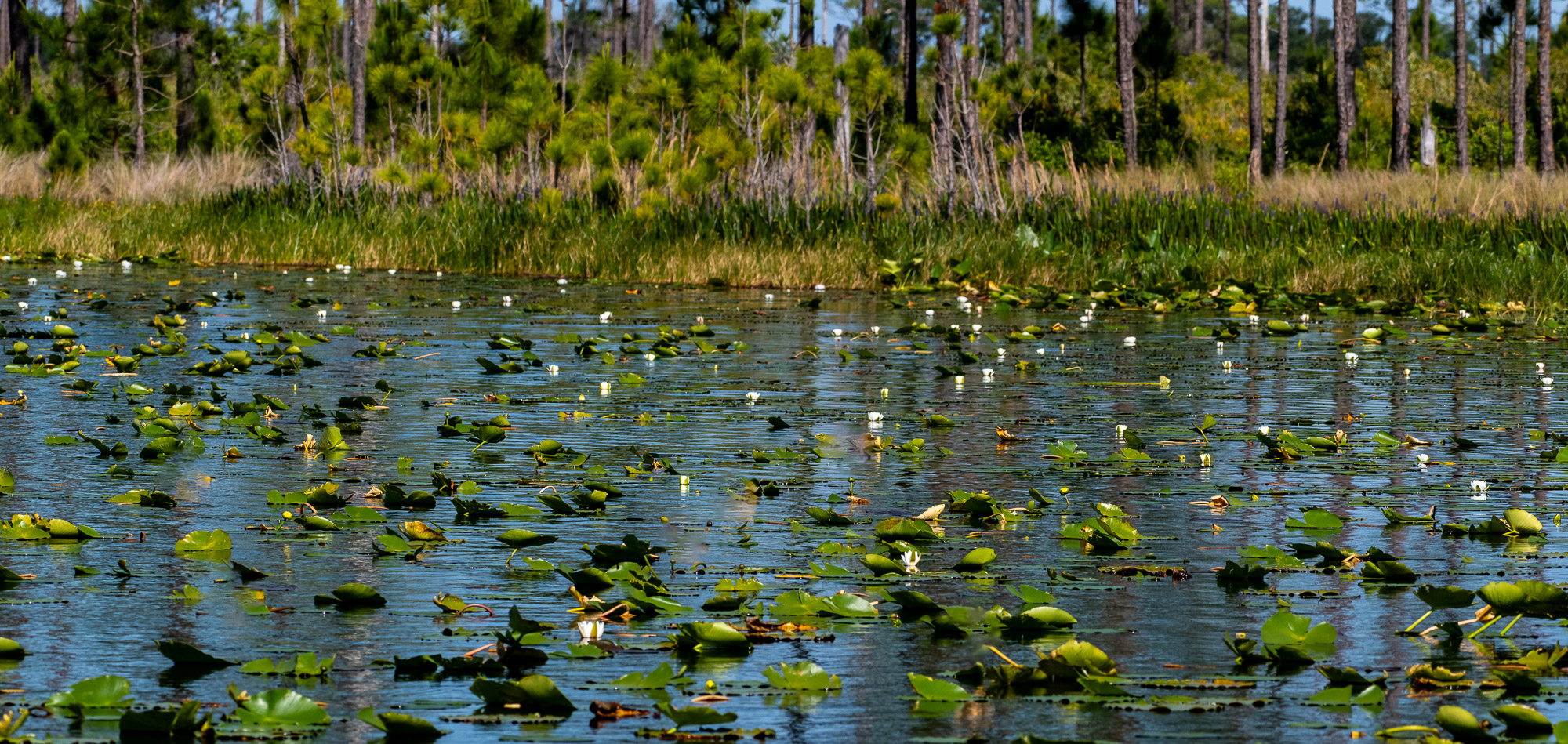
We hope you had a good breakfast and are ready to trek down to the lake. The surface of Lake Godwin is strewn with blooming American White Lilies and bright yellow blooms of Spatterdock. An Anhinga grunts at us disturbing his fishing and flaps away to find another spot. A couple of alligators peek from under the lily pads. Pig Frogs grunt from the shoreline.
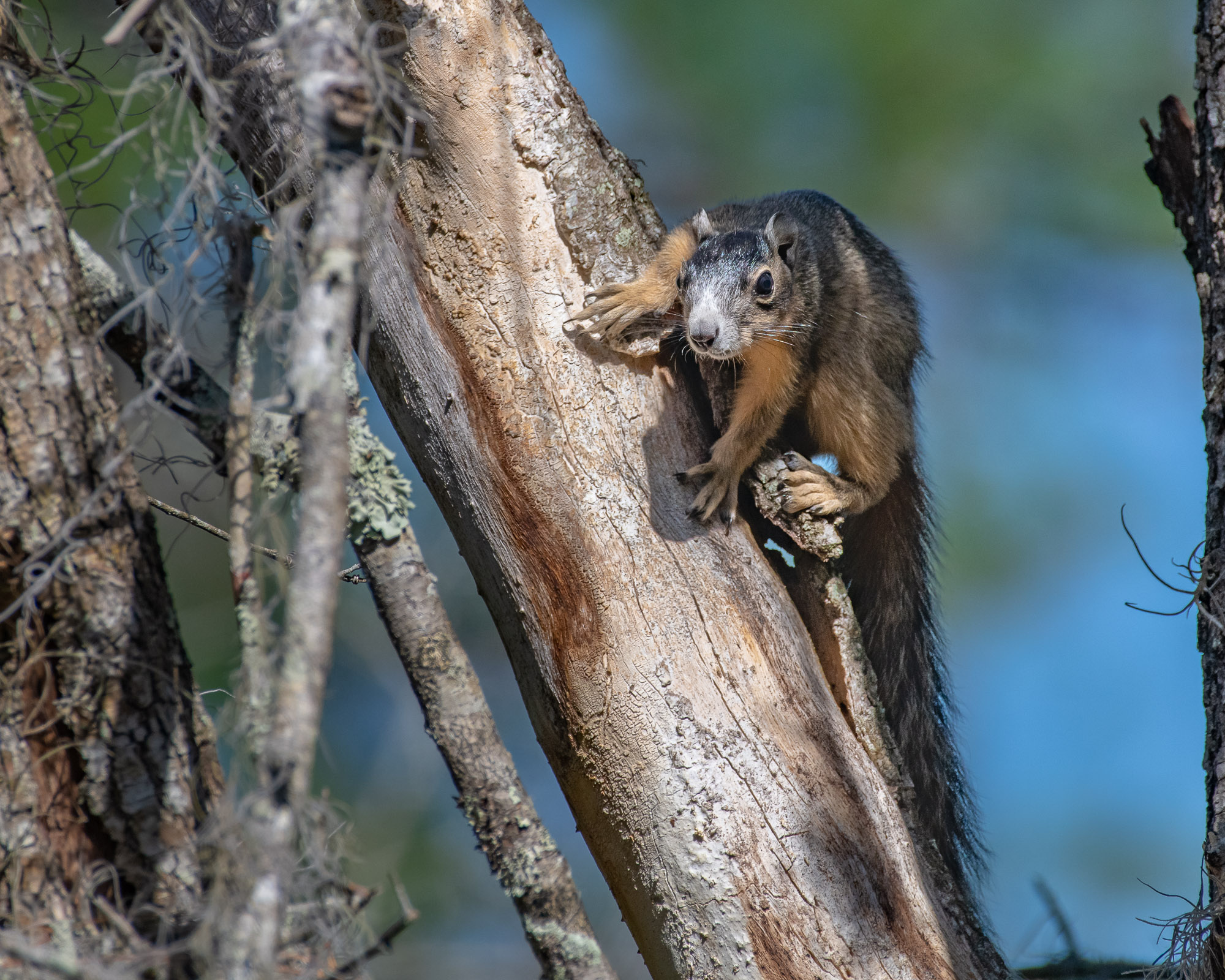
As we head back toward the main forest road, a pair of Sherman’s Fox Squirrels chatter at us from a nearby snag. We are always a bit startled at how large these mammals appear compared to their much more common Gray cousins.
Riches abound along The Ridge. Geologically unique, there are species of flora and fauna within this section of the Lake Wales Ridge State Forest which are found nowhere else on the planet. The forest serves as a habitat for 33 plants and 36 animals that currently have federal or state status as threatened or endangered. All of this potential treasure to seek and today you are the only other visitors we have encountered.
As we enjoy a particularly profuse growth of blooming Prickly Pear, Gini once again states the obvious. “The flowers, the trees, all these birds and insects, the fresh air, aroma of the pines – all of this – any time we want to enjoy it. We really are blessed, aren’t we?“. Yes, my love. We really are.
Look what y’all found today!
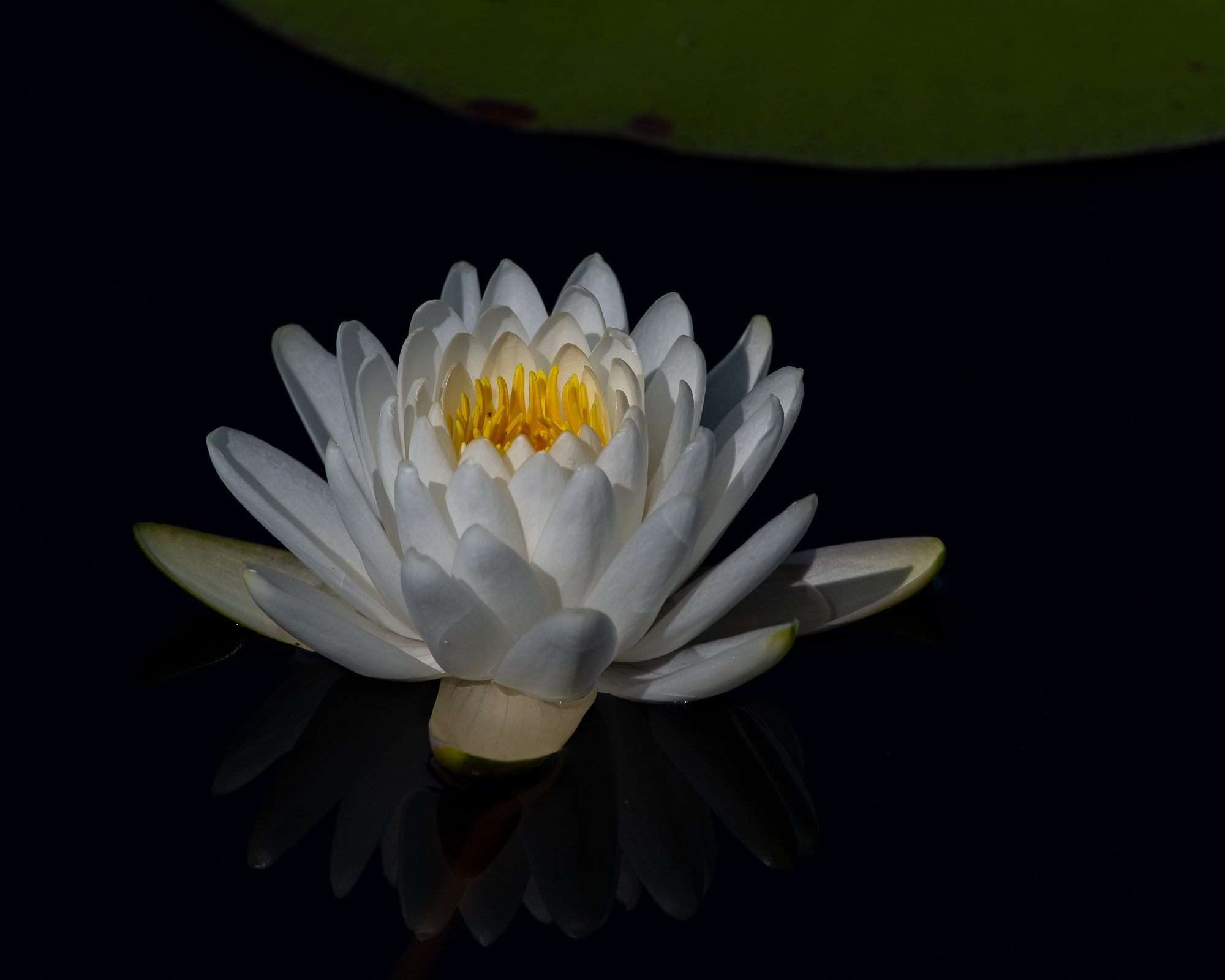
The intricate beauty of an American White Waterlily (Nymphaea odorata) not only attracts human flower-lovers, but also an incredible variety of nectar-seekers. Portions of Lake Godwin were blanketed in white this morning.
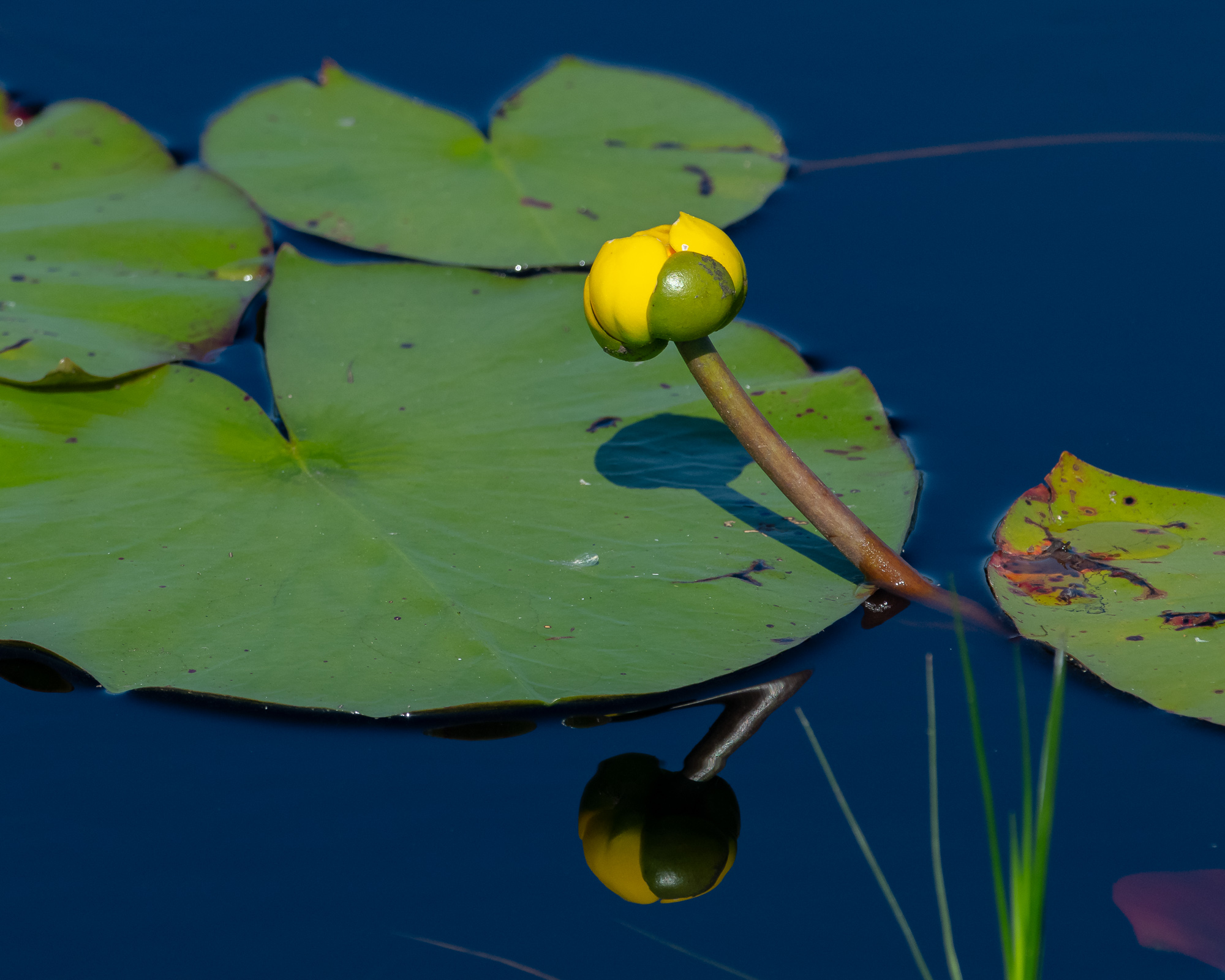
Interspersed with the lovely white lilies are delightfully bright yellow round blooms of Spatterdock (Nuphar advena). The six sepals of these flowers form a cup shape and even when in full bloom appear to be only half-opened. A prominent stigma is usually yellow but we found one with a nice orange glow.

Poking through the lily pads, a stem of Smallfruit Beggarticks (Bidens mitis) displays its own yellow blossom.

Large and in charge. This appears to be a young Sherman’s Fox Squirrel (Sciurus niger ssp. shermani). As it matures, the mask on its face will become darker.
Endemic to Florida, the Florida Scrub Roseling (Callisia ornata) is related to dayflowers and spiderworts. Typically growing less than 12 inches tall, the pink flowers only bloom for one day. Our timing was good!

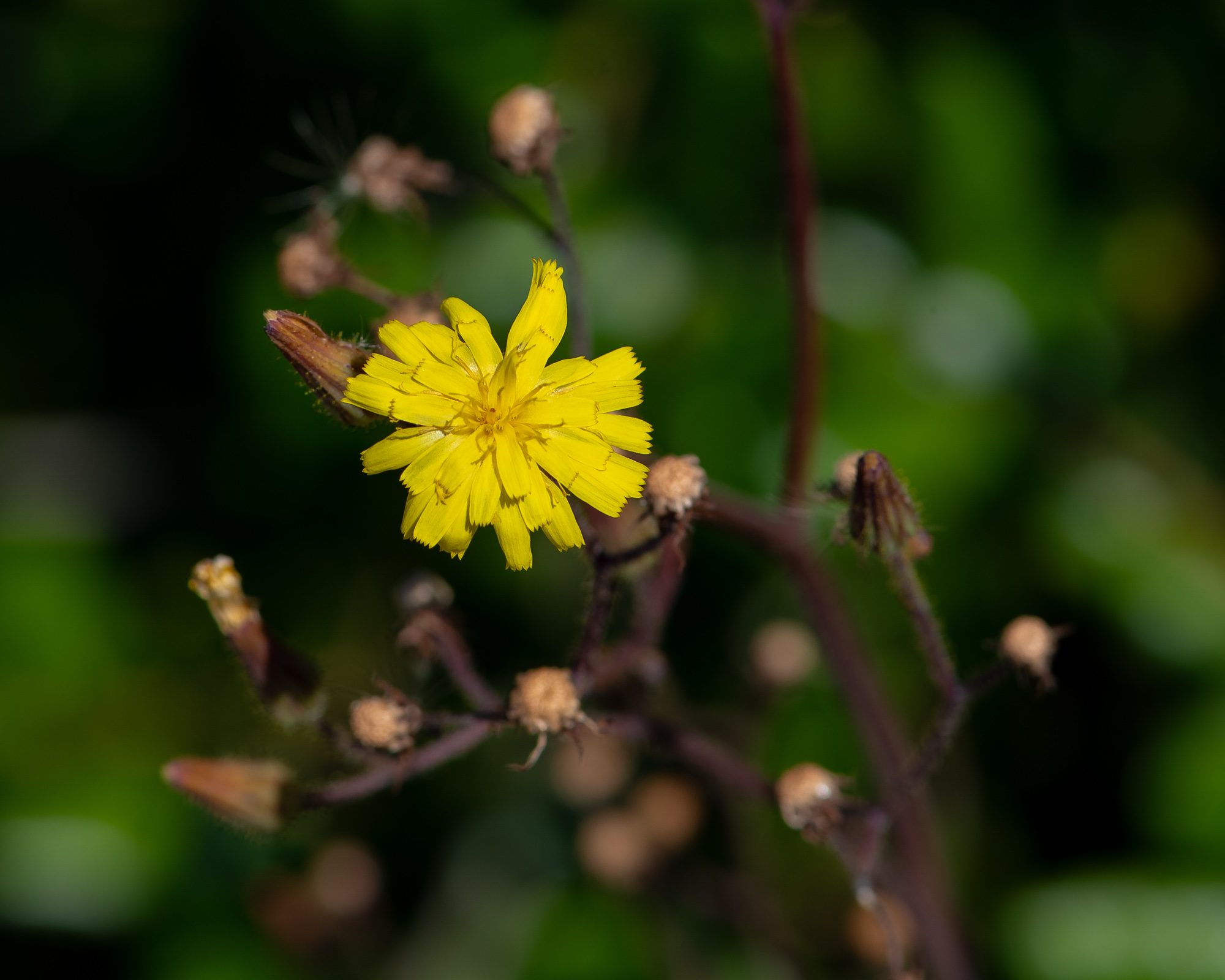
More good timing. The petals of Coastal Plain Hawkweed (Hieracium megacephalon) only remain open in the morning. A near Florida endemic, it has been reported in a couple of counties in Georgia.
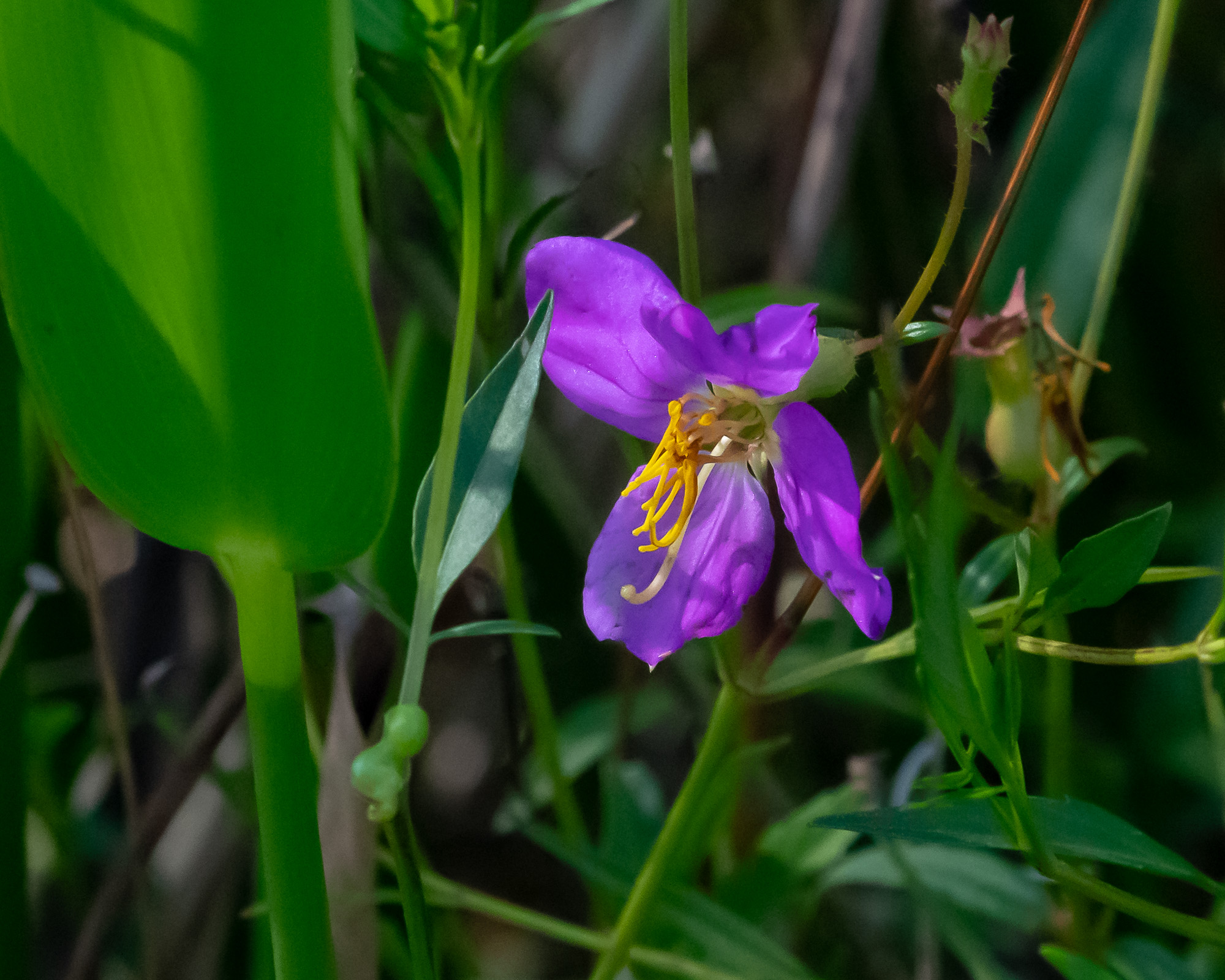
Although it is common in much of the eastern United States, Maryland or Pale Meadowbeauty (Rhexia mariana) is uncommonly beautiful wherever it may be encountered.
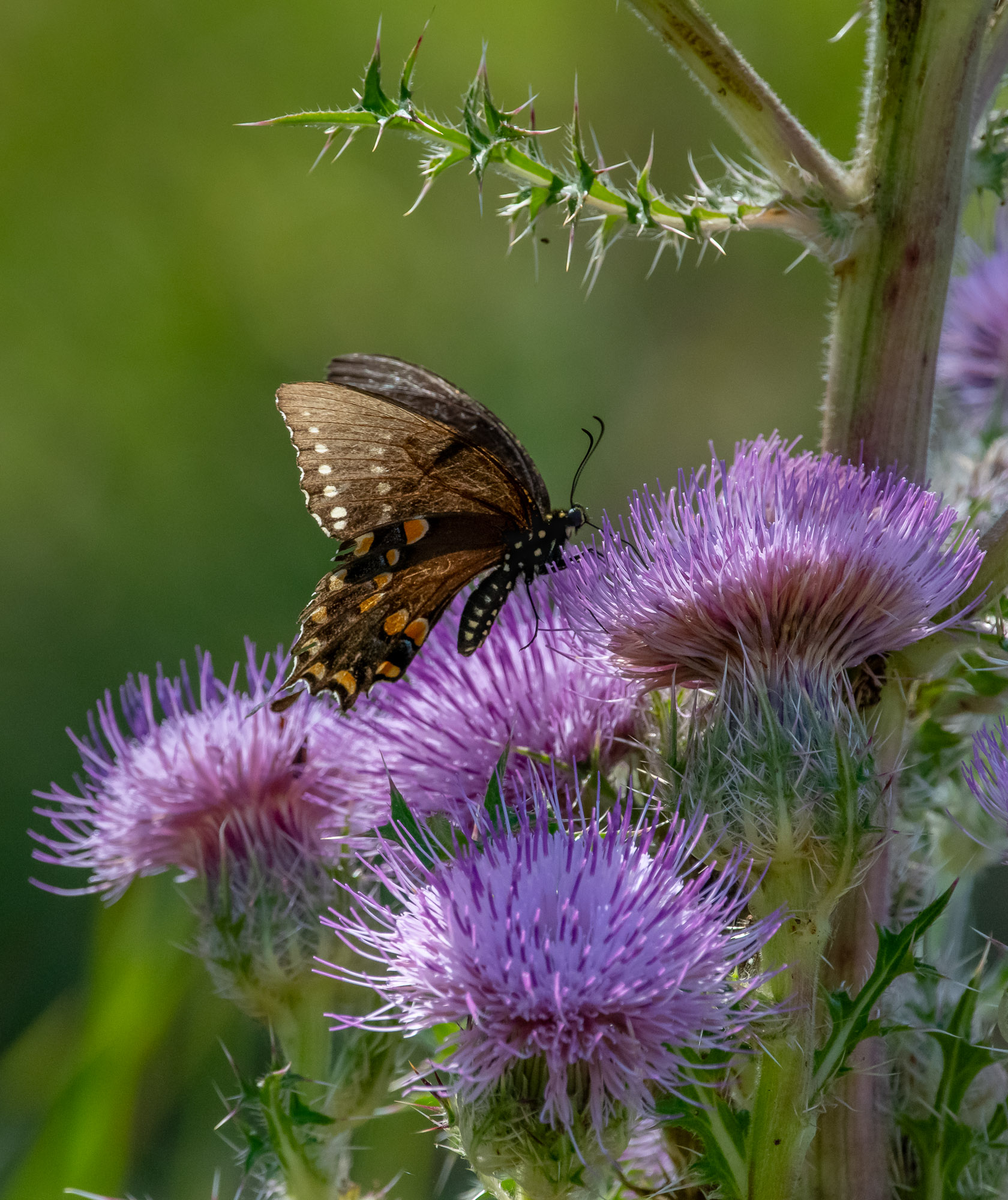
A gorgeous Spicebush Swallowtail (Papilio troilus) has no problem navigating the spines of a thistle to reach the nectar it seeks.
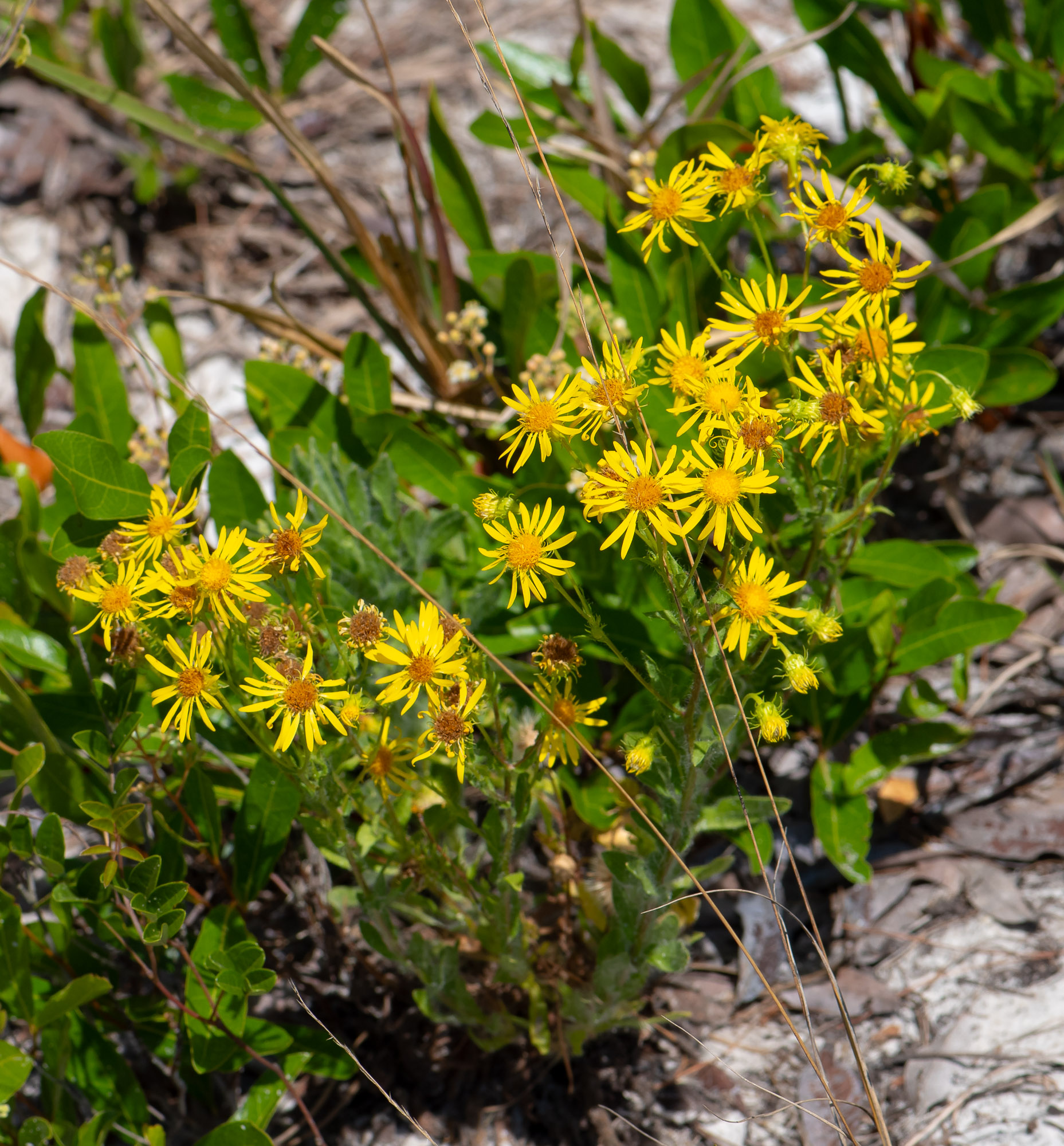
Endemic to Florida, Scrubland Goldenaster (Chrysopsis subulata) is one of 11 species in its genus in Florida. Six of those are found only in Florida. A unique leaf and flower petal structure, habitat and early bloom time help identify this particular species. Besides all its “uniqueness”, a bunch of them sure look pretty.
Endemic to Florida, a Florida Scrub Jay may be taking this fresh morsel to a young one. Normally, it will devour its prey soon after it catches it. I think this bird was suspicious of our presence and may not have wanted to reveal a nest location.

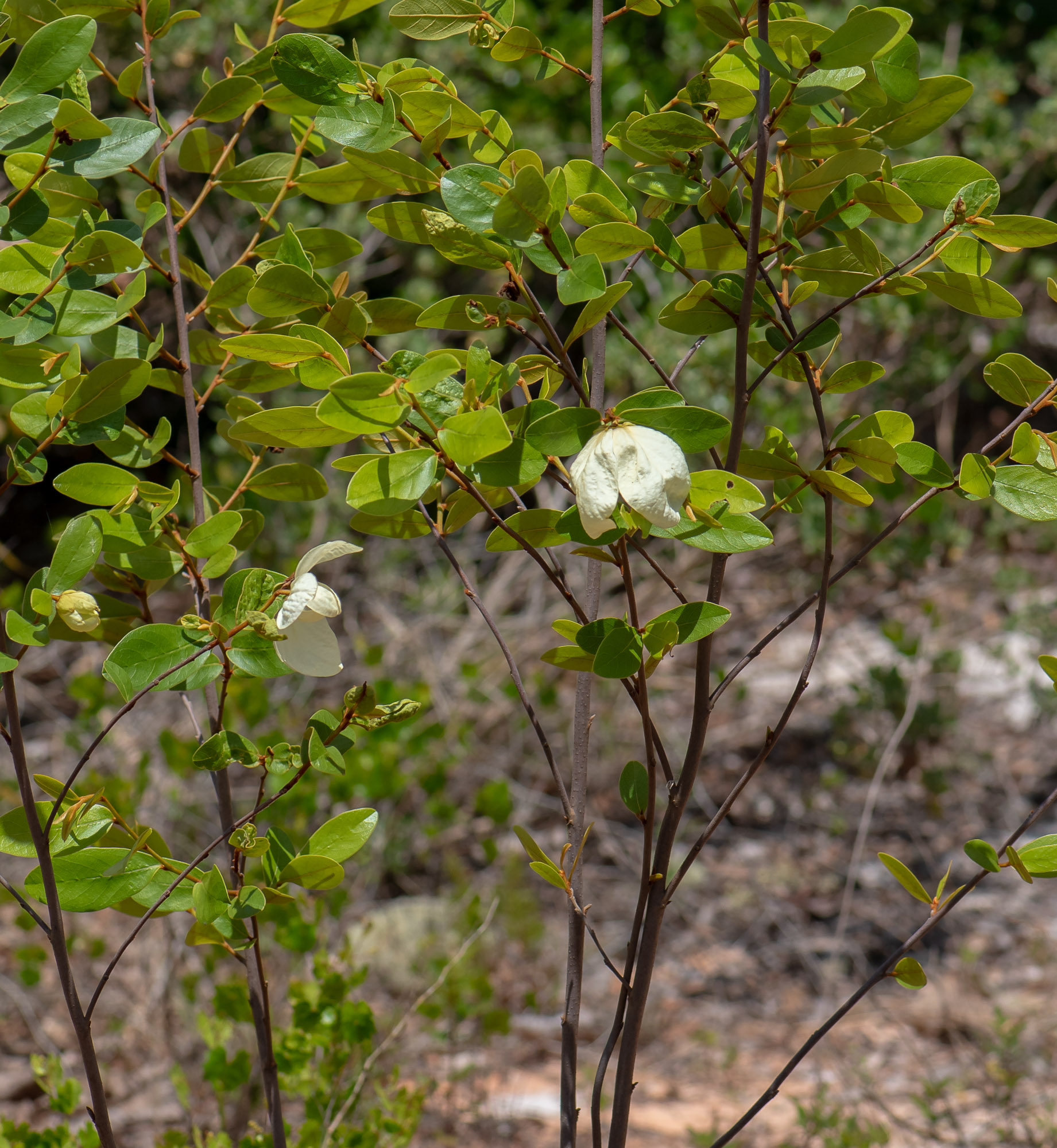
Endemic to Florida, the Bigflower Pawpaw (Asimina obovata) can grow to over six feet tall. Host plant for the Zebra Swallowtail butterfly, the fruit is supposedly edible. We’ve never been able to beat the animals to it to find out.

Brunch! A White-eyed Vireo came away from the buffet with a fresh Cicada.

Various forms of Butterfly Milkweed (Asclepias tuberosa) received that common name for a good reason. Several species of butterfly depend on the plant to host future generations. We found a sub-species called Rolfs’ Milkweed (Asclepias tuberosa ssp. rolfsii), which can be identified by its wavy leaf margins and it is usually significantly less bushy than other members of the species. (I’ll try for a better image showing those features next time. Remind me.)

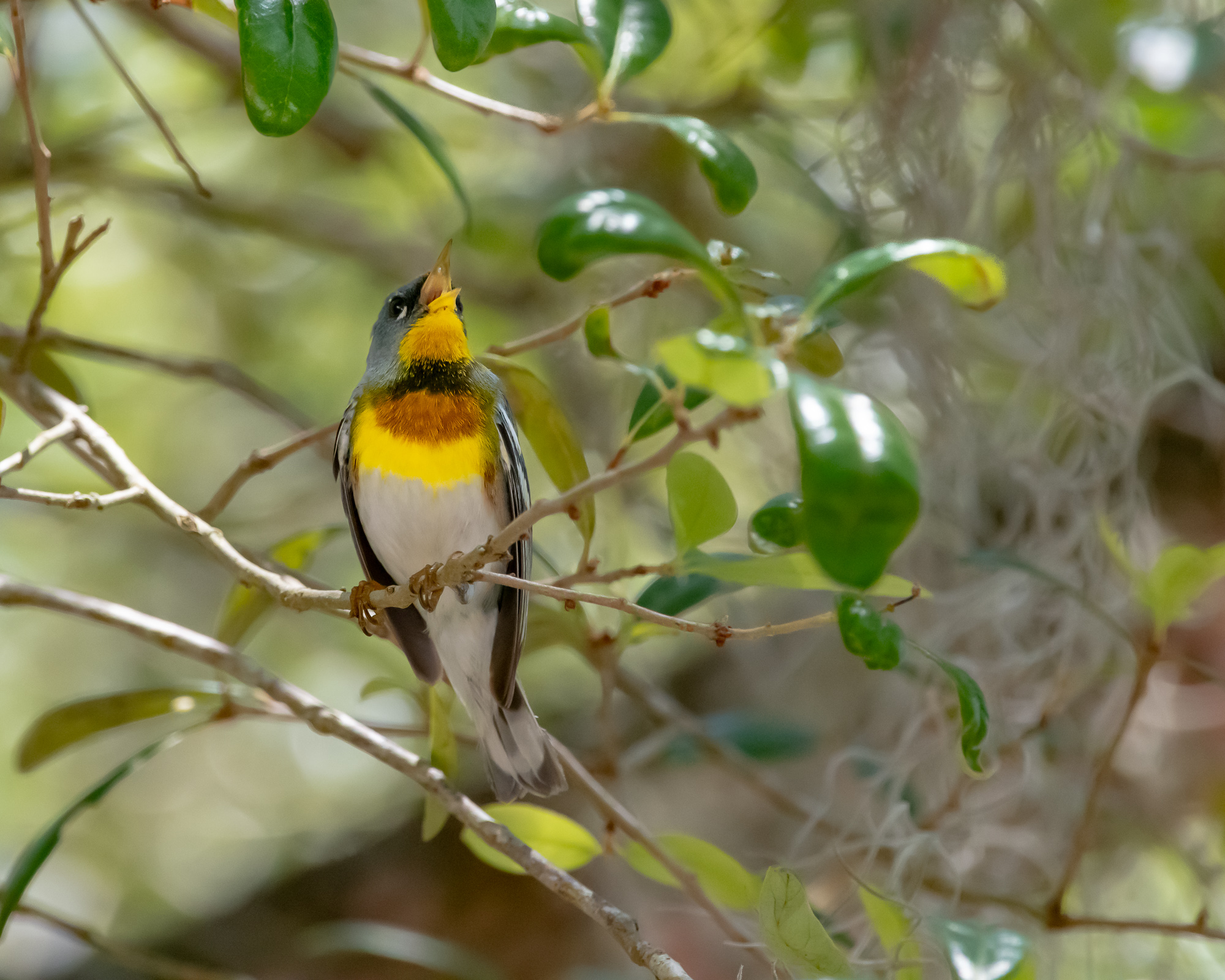
As we prepared to head home at midday, a Northern Parula sang a nice farewell tune. Okay, so the tune was for a nearby lady-love, but we enjoyed it all the same.
The Lake Wales Ridge. Filled with riches waiting to be discovered. Thank you for being there with us. Let’s do it again.
Enjoy your search for a natural place and come back for a visit!
 Our Natural Places
Another great set of images, the American White Waterlily shot and the Spicebush Swallowtail shot are superb. Not sure I have ever seen a Sherman Squirrel – was down in that area last year..need to look at those shots although I probably mistook them for Easterns and passed over them – now armed with more knowledge for my next visit. Also wasn’t aware the White Eyes like Cicadas – the ones up here should be absolutely round based on the numbers of those that came out of the ground here this year. Missed that Scrub Jay when I was down there and still kicking myself for it ha. Take care.
LikeLike
We will monitor all the critters and plants to ensure they remain put until your next visit.
Just part of the service.
LikeLike
Stellar photo of the vireo with cicada – moments like that make me say “Ooo, ahh”! I was tickled with the ruffly roseling, looking like an exotic African Violet. This was certainly a wonderful day on the Ridge!
LikeLike
That place is just so special. We always seem to encounter something different.
Gini had just commented at how noisy the joint was with all the cicadas buzzing and – voila! – the cicada exterminator showed up!
LikeLike
How I wish I had been there for the morning symphony!
But I also greatly enjoyed looking at Nature’s exquisite paintings, captured perfectly by your wonderful photos. Thank you!
LikeLike
No worries. I understand Nature’s Symphony is also appearing in your local area – each day of the year!
Thank you again for your very nice comments.
LikeLiked by 1 person
Yes, luckily, the birds are putting on a symphony here as well, but I don’t think there are as many performers as in Florida. 🎵
LikeLike
Ah! Didn’t realise I’d already read this one. But a re-read opened up a whole new set of imageries.
The Sherman’s Fox Squirrel reminds me of the Malabar Giant Squirrels we have here in the Southern parts. The 16 year old was lucky enough to see one gorging on a huge Jackfruit. The pictures came a bit hazy and it quickly scuttled away before I could catch a glimpse. Seen them before, but been a while.
The Indian Palm squirrels with the trademark stripes are common place in our backyards. It’s such a joy o just watch them at work and play. And they are quite a noisy bunch.
Have a good week Wally and Ginni.
Can’t wait for the next post.
LikeLike
Thank you again, Natasha, for visiting with us and providing such gracious remarks.
Our “backyard” squirrels are the eastern Gray Squirrel and a bit smaller than the Fox Squirrels and much more abundant. That Sherman’s Fox Squirrel, I believe, is still on the state’s threatened species list.
LikeLiked by 1 person
Beautiful! So jealous of that fox squirrel.
LikeLike
It’s almost startling when we see them as they are larger than the gray squirrels we’re used to.
LikeLike
All of the water lilies are just gorgeous! I’m always so excited to see something in bloom and the insects and butterflies that we see here in Florida every time we get outside. The Fox squirrel is a favorite sighting and I’m going back to look at that photo again. And I hope I can get out in the preserve to see the Florida scrub jays too. I feel RICH seeing so much beauty! Enjoy your afternoon!
LikeLike
Thank you so much, Diane.
Sometimes we just feel embarassed at having so much beautiful and interesting stuff to see. – Okay, just kidding! 🙂
It’s raining hard right now so even more flowers should be blooming next week!
LikeLike
So much natural beauty! I really like the White Waterlily with the dark background. Sublime!
LikeLike
Thank you, Peter.
We’re blessed with a lot of subjects. Now, if I can just get to them all…….
LikeLike
Nicely colorful Wally, both birds and flowers.
LikeLike
Thanks, Brad.
LikeLiked by 1 person
The Nuphar advena is really interesting. I came across a ‘Nuphar microphylla’ which opens up even more than this Nuphar advena one. It’s amazing how urban some of Miami is, and now with your blog I finally see more of the native wildflowers (and wildlife) which I didn’t get to see.
LikeLiked by 1 person
Nuphar is also a genus of aquatic plants in the family Nymphaeaceae.
LikeLiked by 1 person
As a young boy, floating around a lake in a small boat, all I cared about was catching fish. Once I discovered they liked to hide underneath the Spatterdock, I paid attention to those yellow blooms.
Now, I pay attention to them for other (more “grown up”?) reasons.
LikeLike
Some images on the web show Spatterdock opening up a bit more than your pictures here, which surprised me. It must be a reason having to do with pollinators, although when it’s minimally open, insects can still get in.
LikeLiked by 1 person
These plants provide nesting sites for fish and other aquatic life.
LikeLiked by 1 person
They provide safe breeding grounds for fish, frogs and other aquatic life. I was raised by a hotel which had a lake full of water lilies, and I witnessed all the wildlife associated with the water lilies’ aquatic environment.
LikeLiked by 1 person
We typically encounter Spatterdock open a bit beyond the “half-way” point. Don’t know if that occurs later in the season, but we’ll keep an eye out for some possible comparison images.
LikeLiked by 1 person
It took me a while to find the photo, but I think I may have seen a spatterdock. I was so impressed with the butterfly (the only White Peacock I’ve seen), I paid little attention to the flower.
I especially like the play of light and shadow in your photo of the butterfly milkweed, and the bright hawkweed. I’ve seen a hawkweed here, but as I recall I never posted the photo because I thought it was an invasive. I need to check that out.
I’ve sometimes noticed birds acting like your scrub jay: seeming to wait for me to move on before they make a move. It makes sense that reluctance to reveal their nest could be the reason, especially if they’re holding on to a tasty tidbit.
I thought ‘spiderwort’ when I first saw the scrub roseling, but then I noticed those frilly edges. Spiderwort petals can be ruffly, but I don’t think I’ve ever seen one with such deeply and regularly incised edges. The roseling’s a beautiful flower, and it’s cool that you managed two views of those fancy stamens in one photo.
LikeLike
That hawkweed is another flower which I think could be dismissed at first glance as a dandelion.
Yes, most birds don’t spent too long playing with their food. And in the Spring, adults can stay pretty busy keeping young beaks satisfied. Caution in keeping nest locations secret is paramount.
As often happens, I almost walked right by that roseling on the way to photograph a different flower. It was on a 2-foot bare stalk tucked up against a palmetto. Now I’ll be on the lookout for more.
LikeLiked by 1 person
Awesome. As usual. 👏
LikeLike
You are so very kind. Thank you.
Of course, Nature is pretty awesome so we just stand around and stare a lot.
LikeLiked by 1 person
I always feel I’m out on this hike with Ginni and you.
Couldn’t agree more. We are blessed to have opportunities to be close to nature. I just returned from the rain forests where dotty darling was interning with reptiles and amphibians. And we had quite the adventure and massive learning shifts.
Have a great week ahead you two.
LikeLike
You are welcome along any time, Natasha.
What a delightful group with which to intern! We look forward to interesting tales.
This week we are dodging rainstorms. Hopefully, we can explore in between the lightning strikes.
LikeLiked by 1 person
Ooooh. Ahhhh. And thank you. Which I probably need to create a shortcut to = since it is my most common comment on the beauties you share.
We live in a rich and beautiful world, which sadly too many of us are intent on ruining.
LikeLike
You said the exact same things we did when we were out there!
Gini and I hope your middle-of-the-week is peaceful, filled with joy and devoid of pain.
LikeLike
Your opening words had me wondering whether you meant an actual symphony by a composer of classical music. The next sentences quickly dispelled that notion. And speaking of words, I think I mentioned once before that parula reminds this not-knowledgeable-about-birds person that paraula means ‘word’ in Catalan. The yellow in your picture is attractive.
Apropos the white-eyed vireo, you probably know that the once-endangered black-capped vireo inhabits central Texas. I see that the general name is a borrowing of Latin vireō. That was from the verb virēre that meant ‘to be green,’ and it referred to some sort of bird, but we may not know specifically which one.
Thanks for the introduction to Callisia ornata. The picture without your identification would have had me guessing a spiderwort of some kind, which you explained is related.
Nice closeup of the colorful spatterdock.
LikeLike
One person’s noisy forest is another’s symphony.
We were fortunate to have seen the Black-capped Vireo as well as the endangered Golden-cheeked Warbler at Lost Maples State Natural Area. Beautiful place.
When I spotted C. ornata, my first thought was Tradescantia ohiensis which is found in the same area.
Growing up in central Florida, I did a LOT of fishing in freshwater lakes. At the time, I didn’t know the name of the lily pads with the yellow flowers, but I did know it meant “fish territory”. Useful knowledge may not always be obviously scientific.
LikeLike
Your opening paragraph is so descriptive that I could almost feel and hear everything as though I was actually there.
Love that picture of the water lily!
LikeLike
I really appreciate your comments, Jim.
Hope the fishing is good and the road is kind.
LikeLike