Among Flowers

(Click on image to enlarge, click again to zoom.)
The calendar for this excursion was near the end of April. Florida’s heat and humidity will be here soon. In the meantime, the mild clear mornings are glorious.
We turned off the county highway onto an old logging road as the eastern sky began to lighten. A coating of dust on the plants beside the dirt track testified to the recent dry conditions. Gini (“super-ears”) was already ticking off bird calls. Cardinal, Mockingbird, Mourning Dove, Northern Parula, Carolina Wren, Tufted Titmouse, Red-bellied Woodpecker. Beams of sunlight streaked through the tall pine trees.
Experience has taught us to go slowly when exploring Nature. Just opening the car door and scanning the ground before I step out reveals a scattering of tiny purple-and-white flowers some call “match-heads”. We’ve always referred to it as Frogfruit. Other names include Capeweed, Creeping Charlie and Carpetweed. The United States Department of Agriculture, as befitting an official spokes-botanist of the entire Government, deems this miniscule bloom the Turkey Tangle Fogfruit. Stopping a few steps away from the vehicle to just look around reveals a panorama of springtime lushness.
Different species of trees have emerging leaves of varying shades of green. Kneeling to examine one small plant reveals a different plant just a few inches away. “Looking” turns into “observing“. Our day has begun.
Gini continues to marvel at the variety of birds she hears. Although they are singing, this is breeding season and most are not lingering on a branch posing for the camera. Singing, yes. In plain sight, not so much.
In addition to the music of the birds, exploring the swamp’s forests and savannas is a smorgasbord of sensual experiences. Aromas of blooming flowers, the tactile pleasure of one’s hand brushing the leaf of a fern, the sight of a bright orange butterfly flitting just ahead of our steps.
Bending to more closely examine a pink Swamp Rose, a large Bumble Bee buzzes up from an adjacent blossom. A squeal of delight followed by a plea (“Oh! Please come back!”) encapsulates the essence of why I love her so very much.
We hope you enjoy flowers.
(Thanks to Steve Schwartzman for pointing out I forgot to include the Frogfruit. Here it is now.) The little flower with so many names seems to consist of a group of tiny flowers. Hard to believe this little thing attracts so many pollinating insects. Frogfruit (Phyla nodiflora).

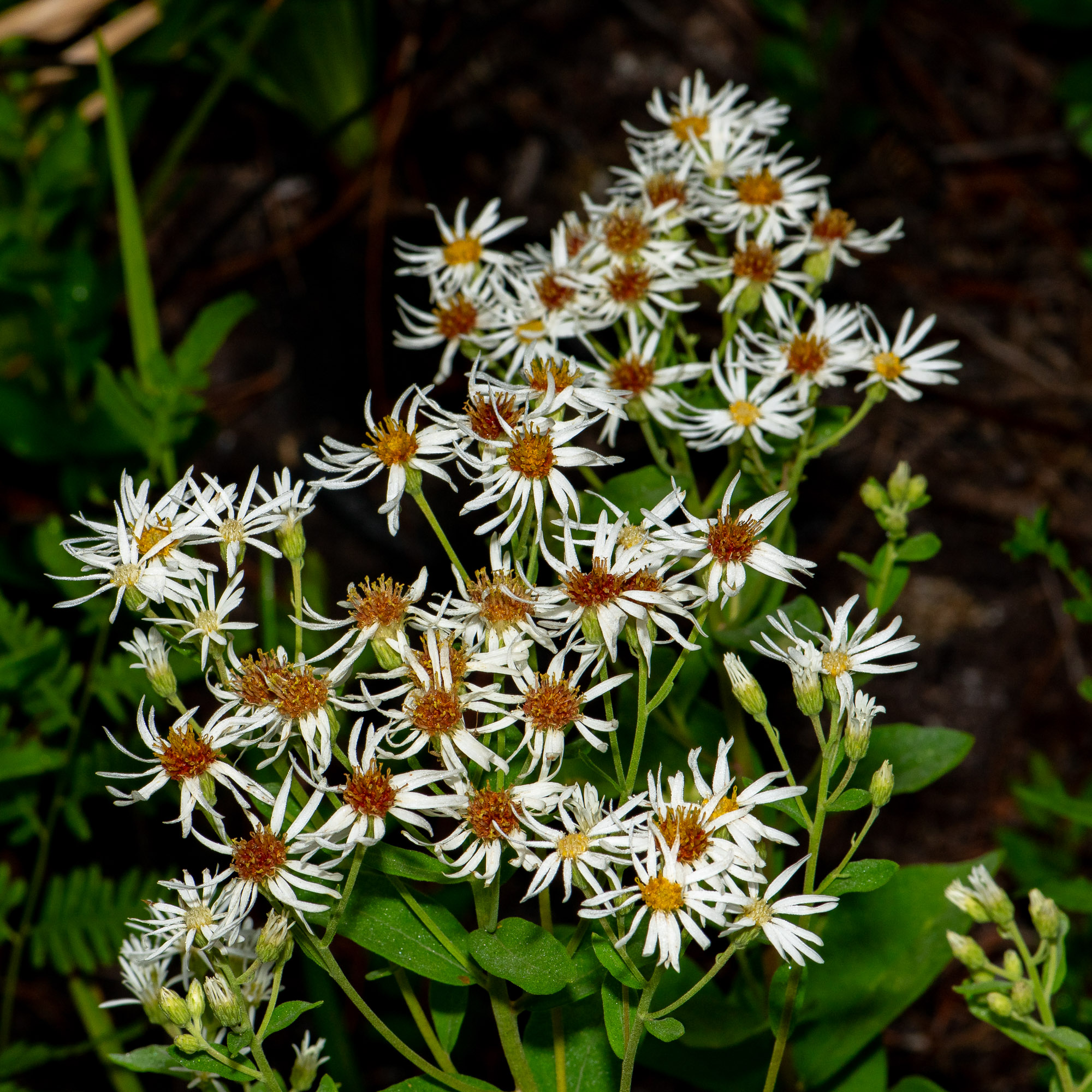
Bouquets of Pinebarren Aster (Oclemena reticulata) were scattered in profusion in some patches of the pine forest understory.
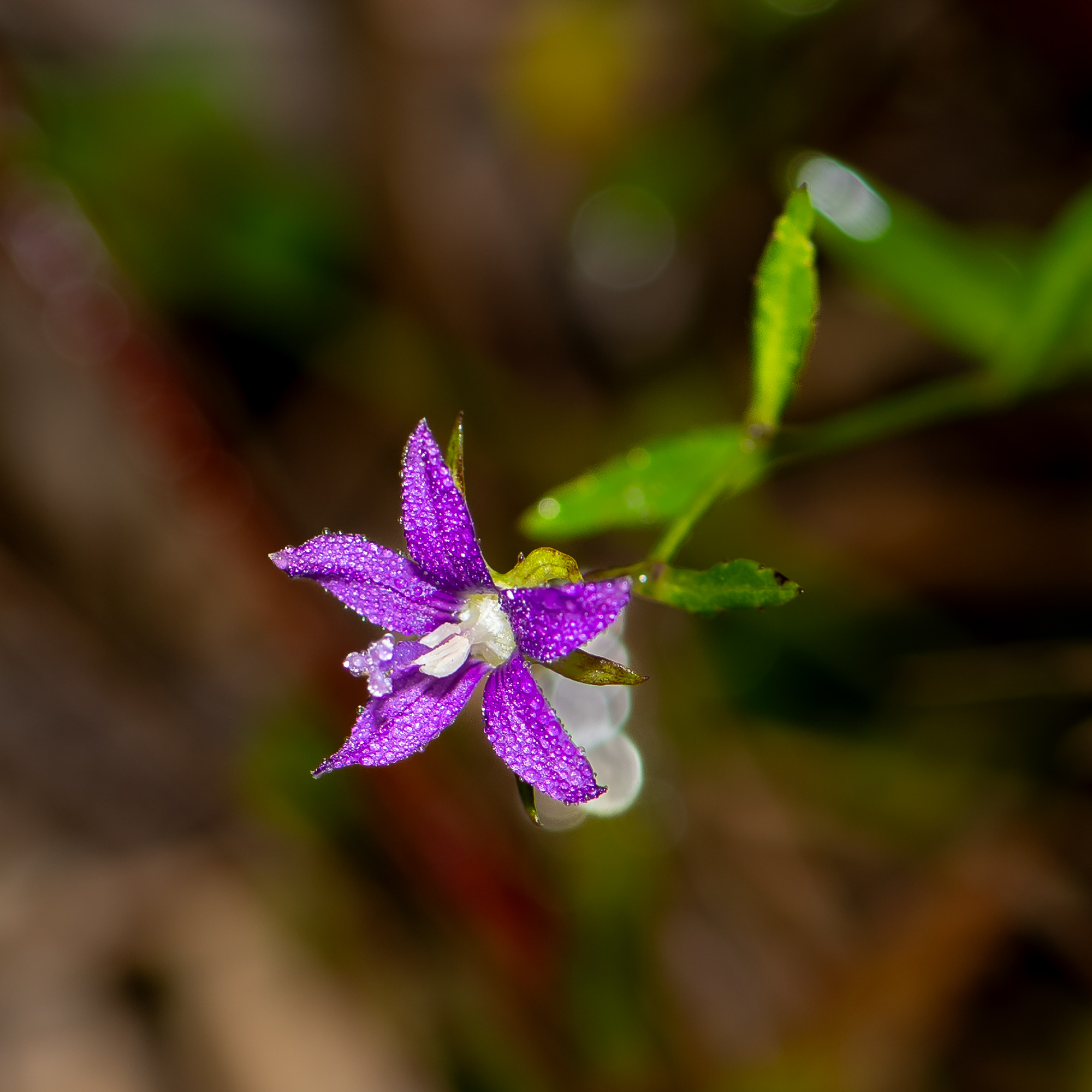
Tiny flower, large beauty. The Florida Bellflower (Rotanthella floridana) is endemic to the state.
For some reason, I thought the Southern Beeblossom (Oenothera simulans) was more widespread. It appears to be limited to just a few southeastern states. Delicate flowers attract a large variety of pollinators.

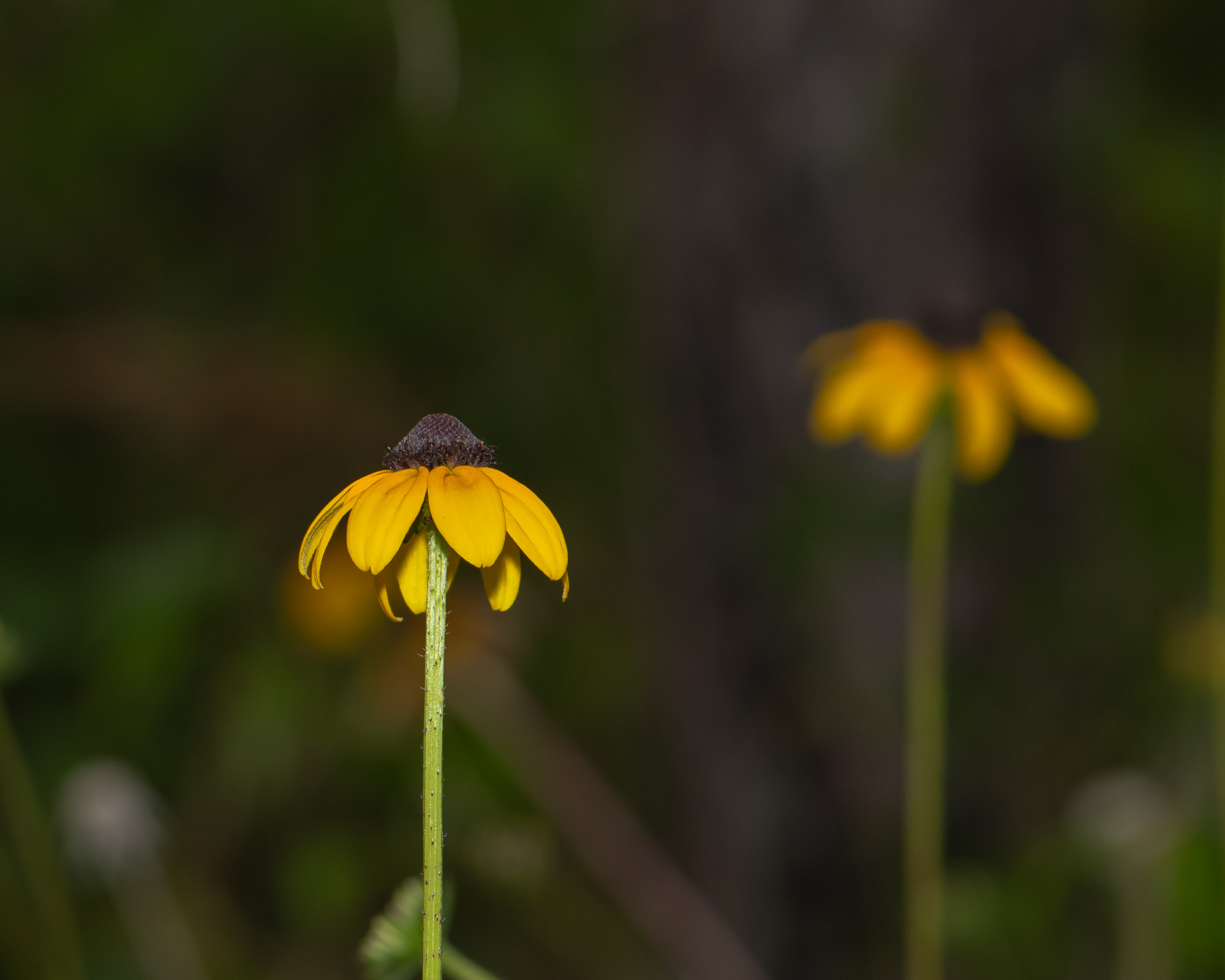
One bloom which IS common around the U.S. is the Black-eyed Susan (Rudbeckia hirta). Common flower, uncommon beauty.
From a distance, this plant seems fairly inconspicous. Closer inspection reveals a remarkable display. Longleaf Milkweed (Asclepias longifolia) is gorgeous.


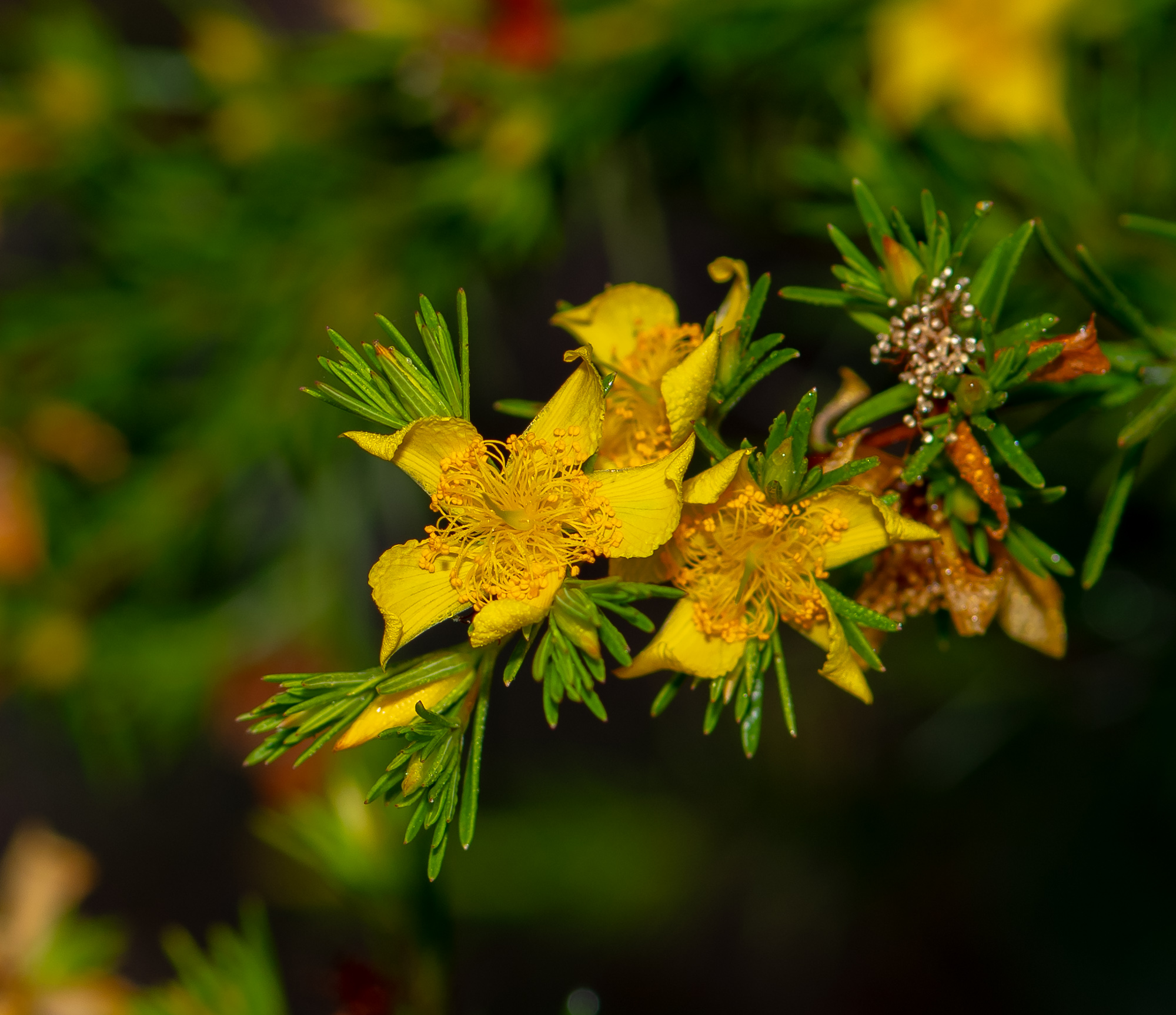
Flowers with many bright yellow-orange stamens and evergreen-like leaves help identify Peelbark St. John’s Wort (Hypericum fasciculatum), also known as Sandweed.

We always love the first blooming of the Spurred Butterfly Pea (Centrosema virginianum) every spring. The climbing vine winds itself around whatever is nearby for support. I learned a new word in researching this plant: papilionaceous – butterfly shaped flowers.

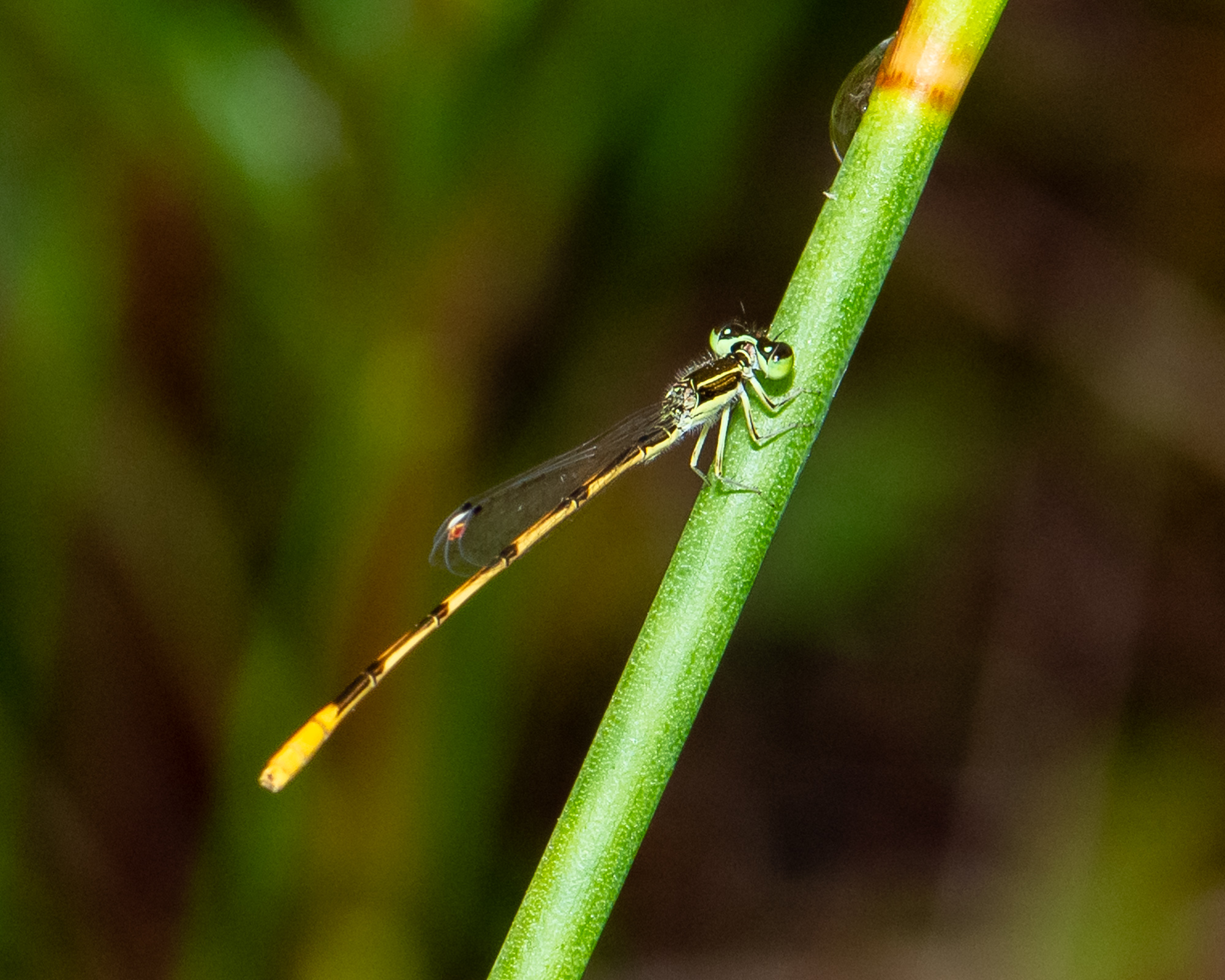
One of the smallest damselflies in North America, the male Citrine Forktail (Ischnura hastata) is quite handsome, once you can spot him.
Hatpins, bogbuttons. There are a few similar-looking species decorating the swamp. I think these are Whitehead Bogbutton (Lachnocaulon anceps). Corrections appreciated.

A spring morning is more glorious when we can see a morning glory. Tievine (Ipomoea cordatotriloba), also known as Purple Bindweed, provides our glory fix for the day.

Rose. The very name evokes beauty. Even in the swamp. Swamp Roses (Rosa palustris Marsh) were beginning to bloom in profusion throughout our visit today. Can’t wait to return once all the buds we saw become the lovely flowers which is their destiny.

Our morning exploration was filled with an amazing variety of colorful flowers. We saw so many, you will receive another dose of blooms from this same visit in the next post. Hope you don’t mind.
Enjoy your search for a natural place and come back for a visit!
 Our Natural Places
Okay folks, this a monumental day … probably the first time I was able to name a flower before reading the caption/description and that was the Black-eyed Susan. My work here is done ha. Curious – is it really called FogFruit or is it Frogfruit…for the record I think Frogfruit is by the far the better name. Just curious as I have heard neither of those names before.
LikeLike
That little flower has so many names, some longer than the whole dang plant, that we just call it Frogfruit, for the same reason you like. Just sounds better.
The abundant Black-eyed Susan brightens up the landscape over most of America The Beautiful.
Thank you again for the visits and kind words.
LikeLike
What a wonderful floral panoply. I recognize only a few genera that also occur in Colorado, though likely the species are different. Except for Rudbeckia hirta, which also thrives here late in the summer and well into autumn.
I love your close-up of the Longleaf Milkweed–such an amazing, intricate creation.
LikeLike
Thank you very much, Tanja.
There is so much to enjoy when we explore our Natural world. We are so fortunate to be able to share what we find and to enjoy what others, such as you, find in a totally diferent part of our planet.
LikeLike
Many of them are so interesting up close like that. Frog Fruit? That is a new one! We have the Black-eyed Susans up here as well. Many of the others I have never seen before.
LikeLike
We grew up calling those tiny Frogfruit flowers “matchheads” due to the resemblance of the purple centers to old-time kitchen matches. It’s amazing how many little bugs visit those small plants for nectar.
Hope your journey is remaining safe and fun.
LikeLike
We are so fortunate to have the variety of wildflowers here in Florida. I had a terrible time trying to ID the bogbutton this week when I saw it. I knew it looked like a button! lol Thanks for sharing your beautiful blooms. As a wise man once said….they are mighty purty!
LikeLike
Nice flower and close-up work Wally. That’s something I need to work on . . . sometime.
LikeLike
Me, too. Eventually.
Thank you.
LikeLiked by 1 person
I grinned at the bog buttons. The only way I can identify one or two of them is to have a plant in hand so I can count the ‘angles’ on the stems, and even then I’m not always certain. I do wonder now if I haven’t seen Peelbark St. John’s Wort on the savannah at the Watson rare plant preserve. My photo sure looks the same; more exploration is required.
I’ve not yet seen the spurred butterfly pea or even the common tie vine yet this year, but that’s my fault, not theirs. And who doesn’t love our endemics? That Florida bellflower is gorgeous.
LikeLike
The bog buttons and hatpins I think will now become an entry “eriocaulon or lachnocaulon – good luck”. After researching some recent finds, I’m more confused than ever.
We were a bit surprised not just a few, but several dozen butterfly pea blooms. Hope that trend continues.
I mis-identified that Bellflower last year and now it seems we encounter it every trip to that area. That’s okay with us.
LikeLiked by 1 person
Beautiful! I love seeing the color out in the woods. You captured them beautifully!
LikeLike
Thanks Dina.
Whole lotta blooming going on out there. But a drop of rain sure wouldn’t hurt.
LikeLike
I admire your ability to photograph plants so well, lovely posting.
LikeLike
Thank you very much, Brian.
That was a nice thing to say.
LikeLike
Beautiful – and I look forward to as many post from this visit as you care to share.
LikeLike
Thanks, EC.
Careful what you wish for. You may need more watering cans.
LikeLike
We have a white wild rose with yellow center here in the Houston area – I’m not sure if I’ve seen the pink swamp rose. Steve is right, guara in both “mostly pink” and “mostly white” is common here. And that Longleaf Milkweed is astonishing – so much detail and color fitted into the most compact package!
I was intrigued by the name “frogfruit”. From the appearance of the flower, I doubt that it is named for frog eggs. So I wonder if it could be named for its resemblance to a frog fastener, a decorative closure made of tightly knotted cord, and popular on women’s clothing in the 50’s, copied from earlier Chinese and Japanese silk dresses.
Yes, I’ll wait right here for Part 2 of your visit to this lovely place!
LikeLike
My understanding is that the genera Gaura and Calylophus were once separate but have now been combined with Oenothera based on DNA evidence. The Southern Beeblossom , Oenethera simulans was previously named Gaura angustifolia.
There are several tales about how Frogfruit came by its common name. I’m trying to make up something semi-believable to stir the pot but my brain is too tired.
Thank you in advance for your patience.
LikeLike
The malleability of language seems to be responsible for ‘frogfuit.’ According to several sources, farmers centuries ago observed that various plants popped up in recently hayed meadows. Meadows, like other environments, often have ground fog in the morning, so the plants came to be known as ‘fog fruit.’ Eventually, that morphed into ‘frog fruit.’
As for that white rose that Sam mentioned, she may be seeing the widespread Macartney rose. It’s a beautiful thing, and blooming everywhere just now, but it’s one of our most serious invasives: the bane of ranchers and land managers of every sort.
LikeLike
Ack, yet another invasive to add to my list. Looking at the photos, yes, Macartney Rose is what I was thinking of. And I’ll try to revise my nametag for guara to Southern Beeblossom… but my brain isn’t as springy as it used to be
LikeLike
Southern or Morning Guara seems to still be a commonly used name but the taxonomist union seems to be intent on never-ending changes.
LikeLike
Sort of like the bird-naming union, heehee!
LikeLike
That spot of pink certainly catches the eye in the top picture. Likewise for the dewdrop-bespangled purple of the Florida bellflower.
Your Oenothera simulans may be limited to a few southeastern states, but similar-looking gauras inhabit Texas and, I suspect, many other places. Ipomoea cordatotriloba grows in Austin as well as Florida. Same for Rudbeckia hirta.
Your first shot of the milkweed makes clear why it’s longifolia. Your discussion of frog fruit’s various other names led me to expect a picture of it, but you surprised me by not showing one.
LikeLike
Thank you, Steve, for letting me know I totally overlooked the poor Frogfruit. I have updated the post accordingly.
Once again, I’m fascinated at how many plants we have in common plus many more which are quite similar.
LikeLike
To quote from Gigi: “Ah yes, I remember it well.”
LikeLiked by 1 person