A Joyful Day
(Click on images to enlarge, click again to zoom.)
Just after sunrise, by the side of a lake, we take delight in the distant, slightly eerie calls of Limpkins. Do they know they are the only living members of their avian Family (Aramidae)? Would they care? We are fascinated with the strange call, answered by calls from several different areas.
An Osprey crashes into the surface of the lake, submerges briefly and comes up clutching a small catfish in its talons. Shaking the water from its feathers, it flies out of sight. Is this the bird’s breakfast, or is it taking it to its mate who may be sitting on eggs in a large bowl-shaped nest?
We continue to enjoy the breaking of a new day as we break our fast of the previous night. Gabbling Gallinules paddle among the cattails. Boat-tailed Grackles cackle above our heads. A curious young alligator barely raises its head above the water line to peer at us from several yards away. Morning flights of White Ibises and Double-crested Cormorants signal the new day has begun in earnest.
Gini and I sigh in unison. We are so fortunate, in so many ways.
As we move through our familiar patch on this mid-April day, we encounter birds, blooms and bugs we have seen many times before. Somehow, each time we see them we react as though it is a completely new discovery. Indeed, it really is. We may have seen hundreds of Red-shouldered Hawks, but we have never seen THIS one perched atop THAT tree on THIS morning. Our day was filled with “new” discoveries.
I had reservations about calling this a “joyful” day, until I looked at the definition: “feeling, causing, or showing great happiness”. Yes. That describes it perfectly.
Take a look at a few things which make us “joyful“.
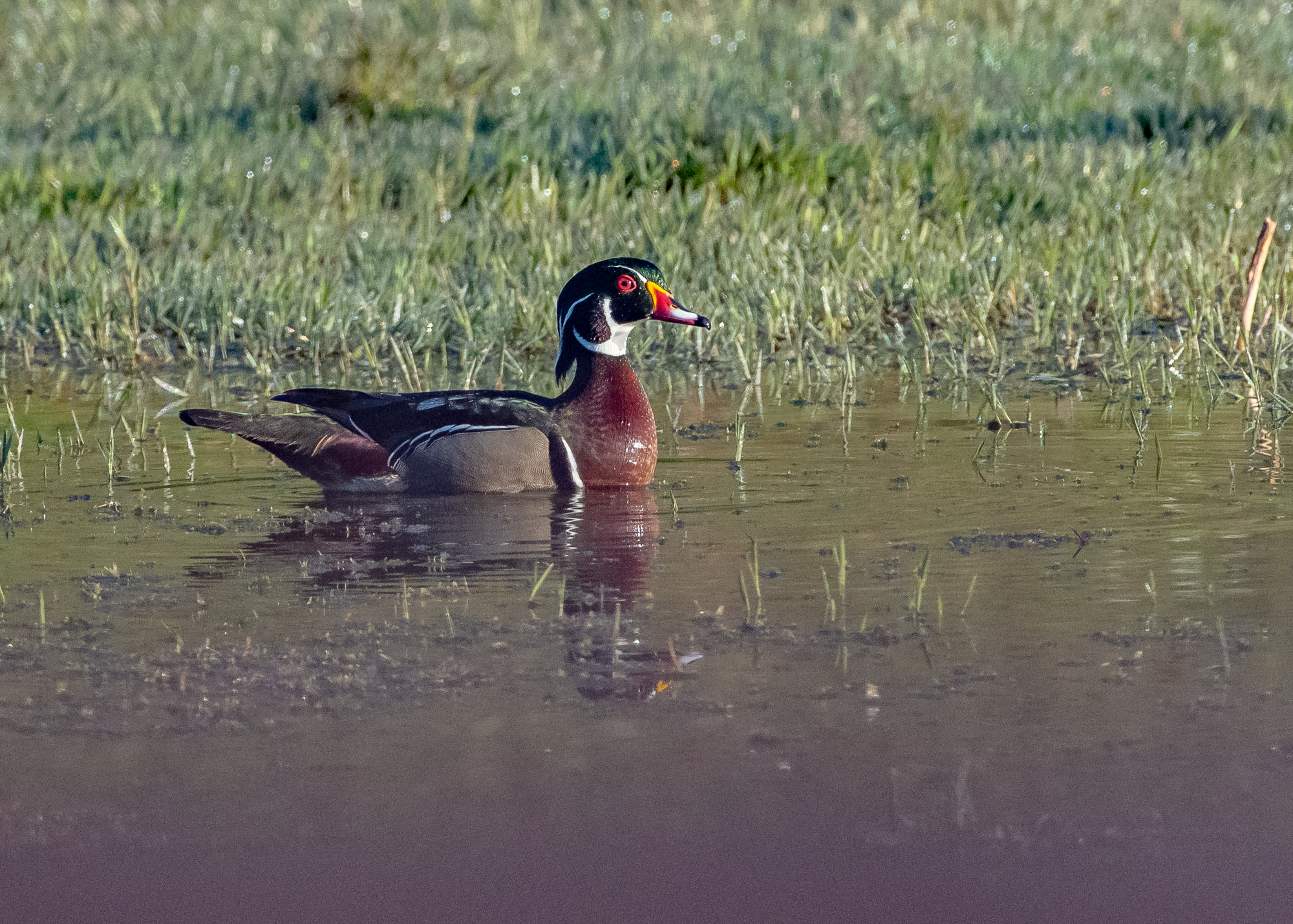
Is the male Wood Duck handsome or gaudy? You decide.
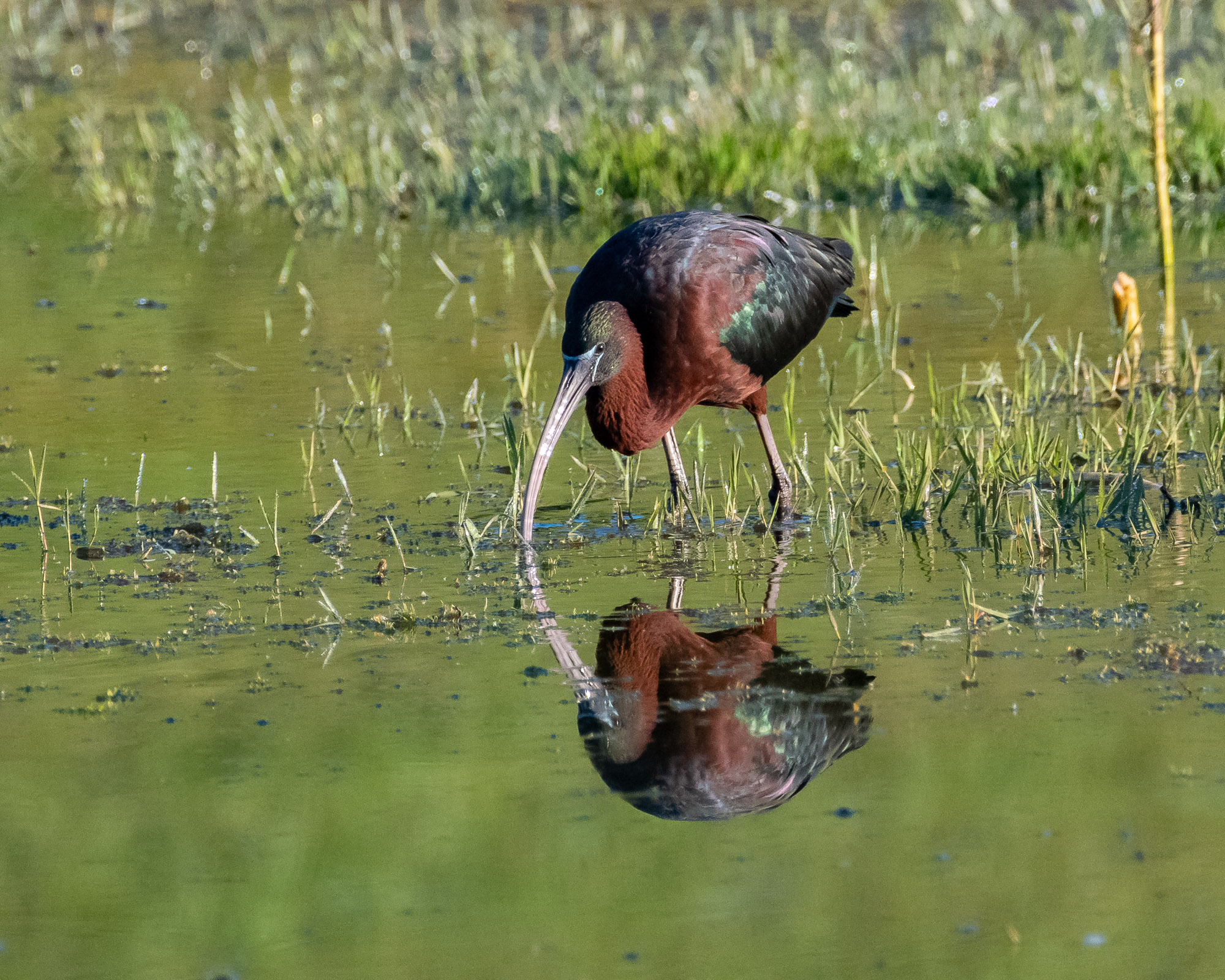
The mother-of-pearl iridescence of a Glossy Ibis’ plumage is enhanced by the early morning light.
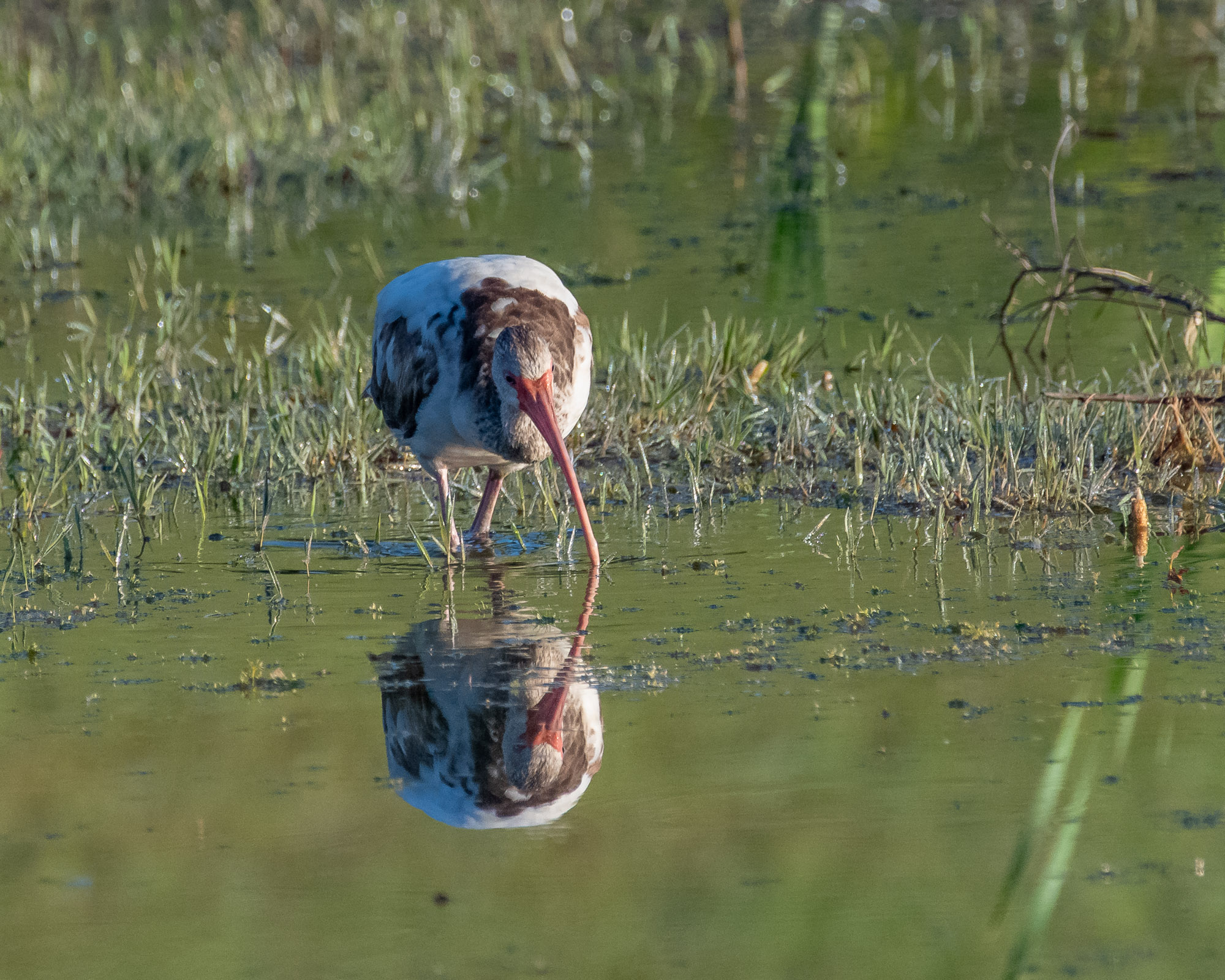
During their first year, a White Ibis is brown. As they approach their first birthday, they begin to change into the pure white of an adult. A few chocolate patches linger into mid-Spring.
It is difficult (for me) to tell the difference between Greater and Lesser Yellowlegs if they aren’t standing near one another. This one was very helpful and made a few calls (different for each species) which allowed us to identify it as a Greater.

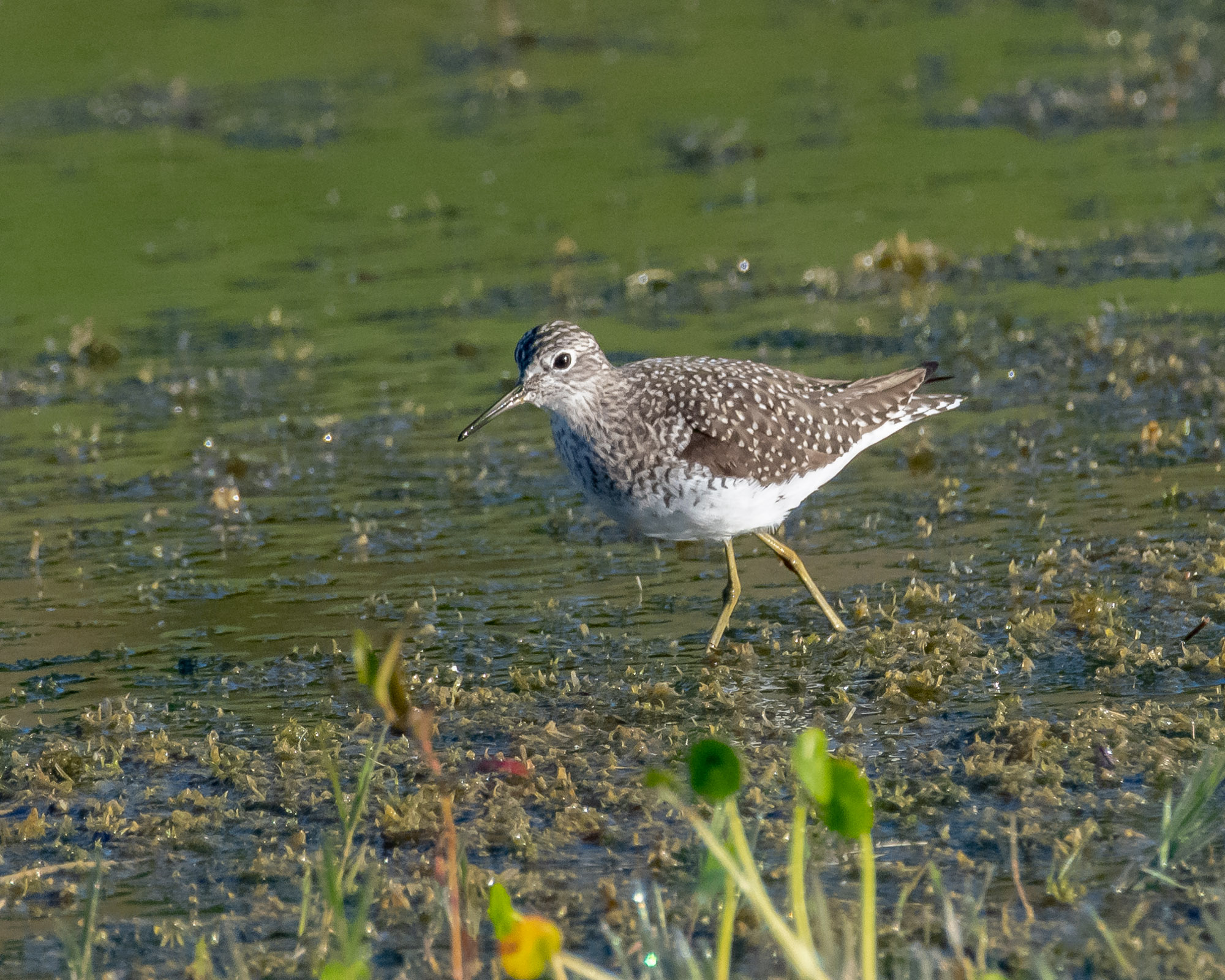
Similar in oveall appearance to the Greater Yellowlegs, a Solitary Sandpiper is much smaller.
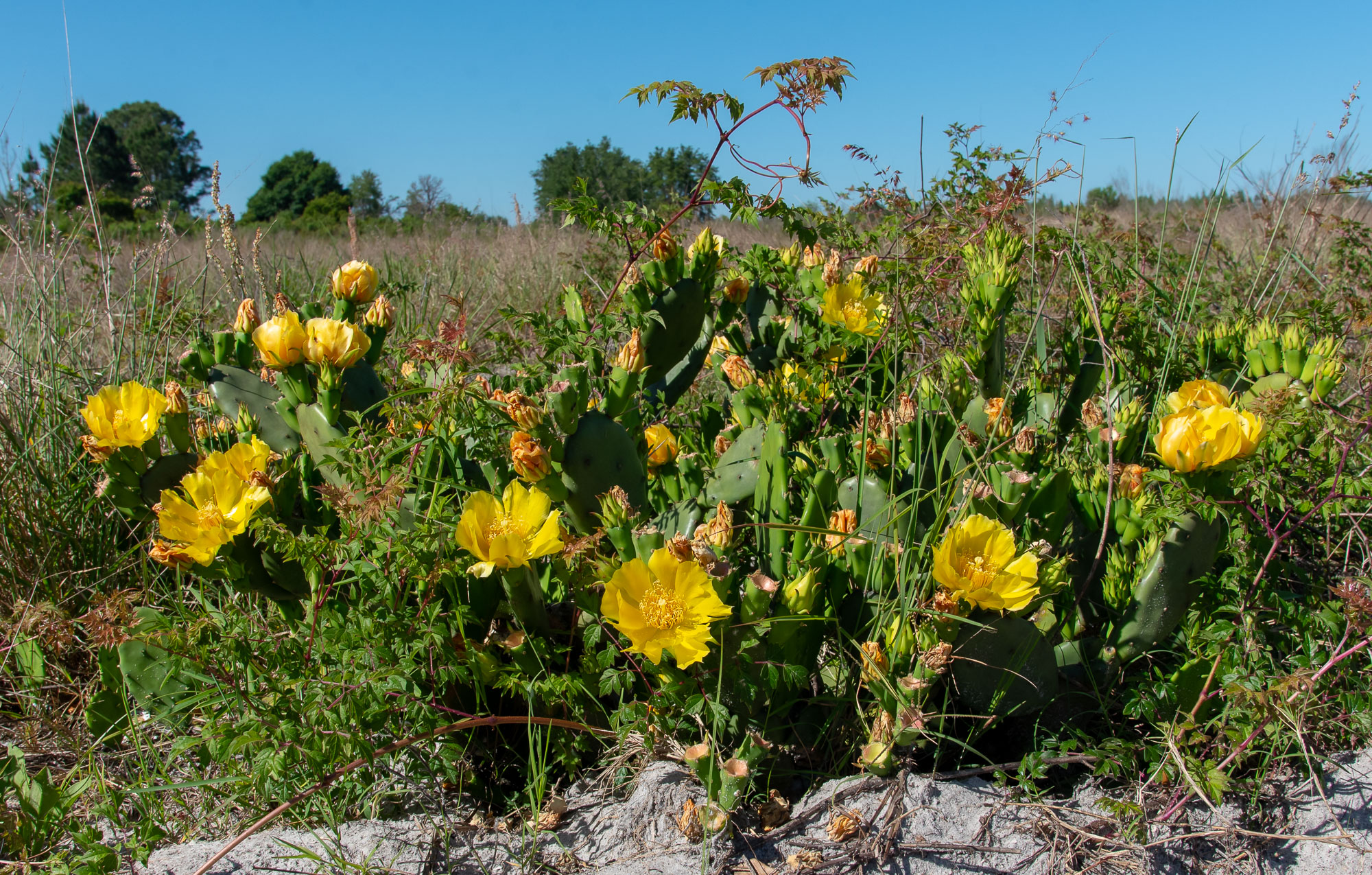
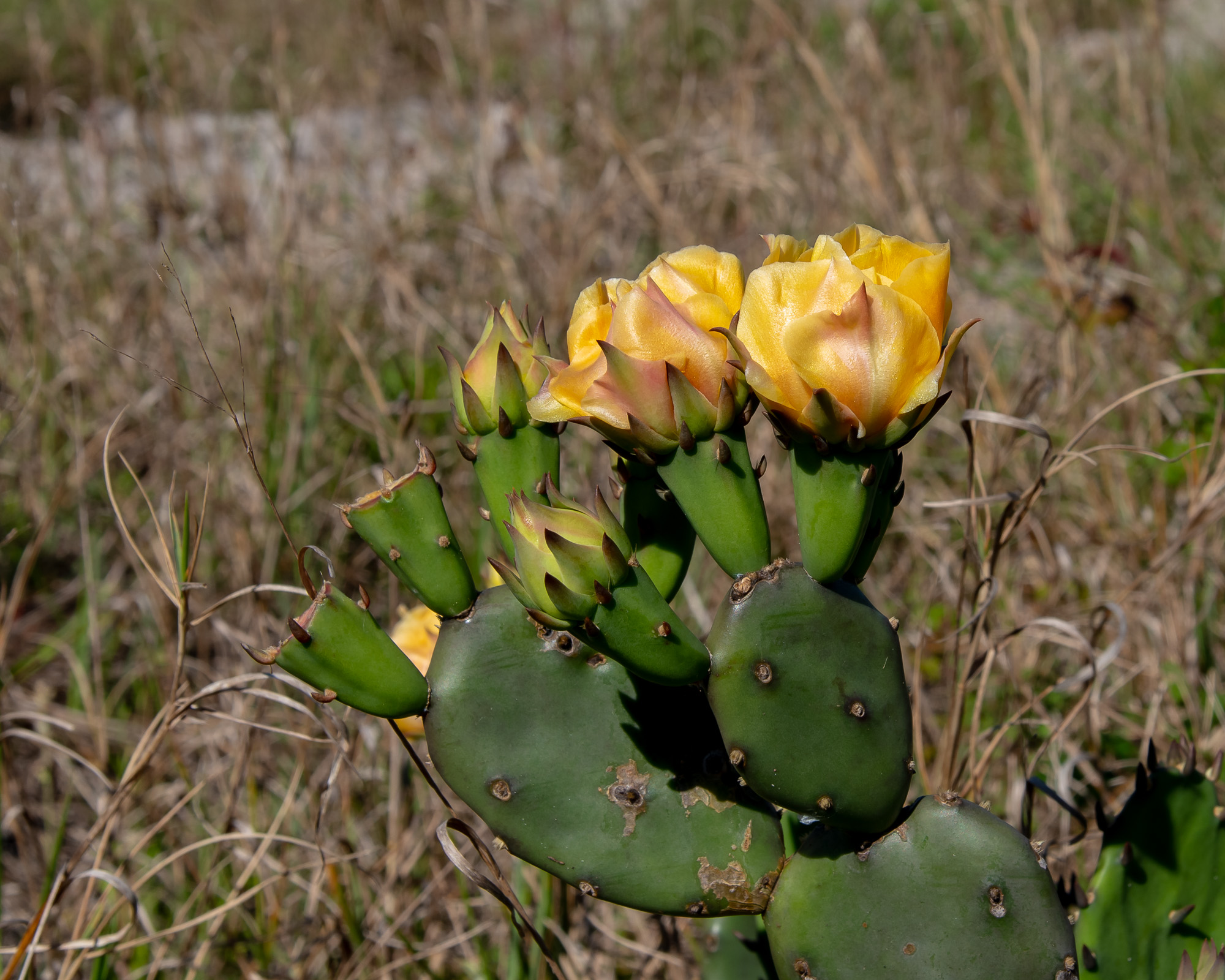
April flowers bring May showers. Wait. Isn’t that the other way around? A gorgeous Prickly Pear cactus bloom resembles a rose.
This Red-shouldered Hawk found a great lookout perch adjacent to an open field.

Although it is not a native, the colorful Lantana (Lantana strigocamara) has been used extensively in landscaping and for many decades has been encountered in the wild. Pollinators don’t care about where the plant originated. This Gulf Fritillary (Dione incarnata) even blends in quite nicely with the blooms.

Black Buzzard Breakfast Bunch. A little preening, discussing the plans for the day, waiting for that first thermal. Life is good in the vulture culture.

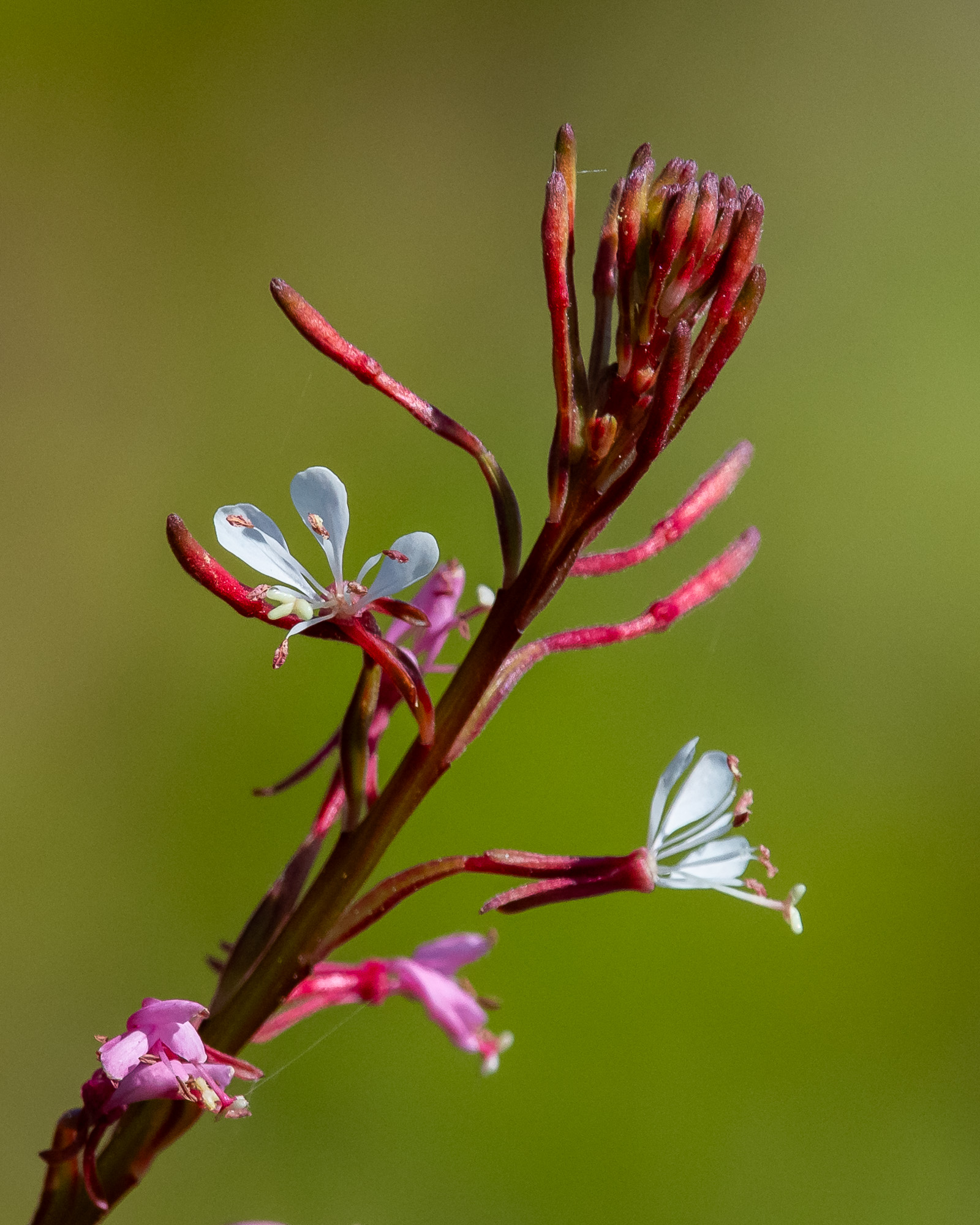
Small, delicate, lovely. Southern Beeblossom (Oenothera simulans) is beginning to become very prolific throughout the area.
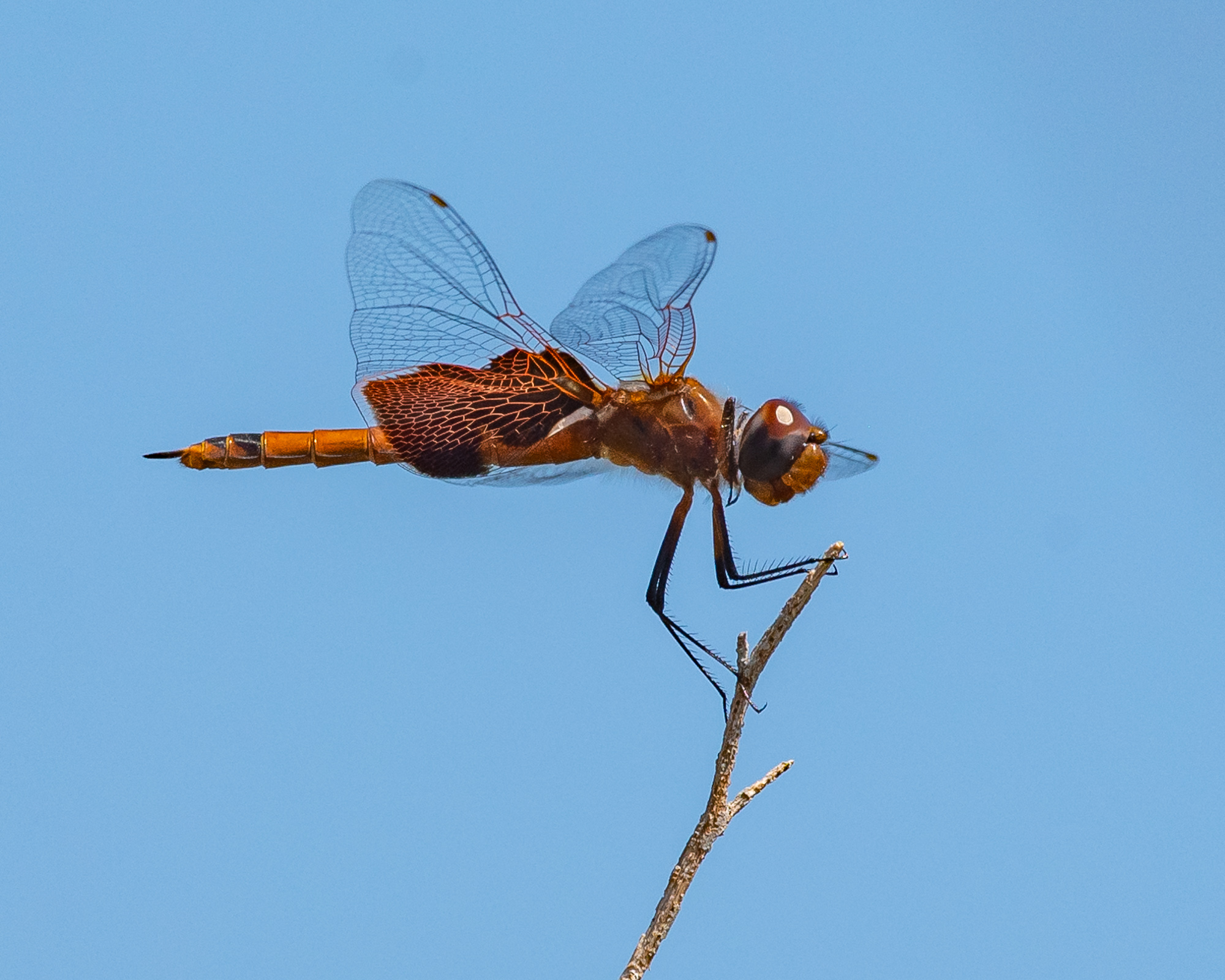
With its characteristic perpindicular perch atop a bare twig, a Red Saddlebags (Tramea onusta) is one of our more abundant dragonfly species. We hope it consumes as many mosquitoes as possible.
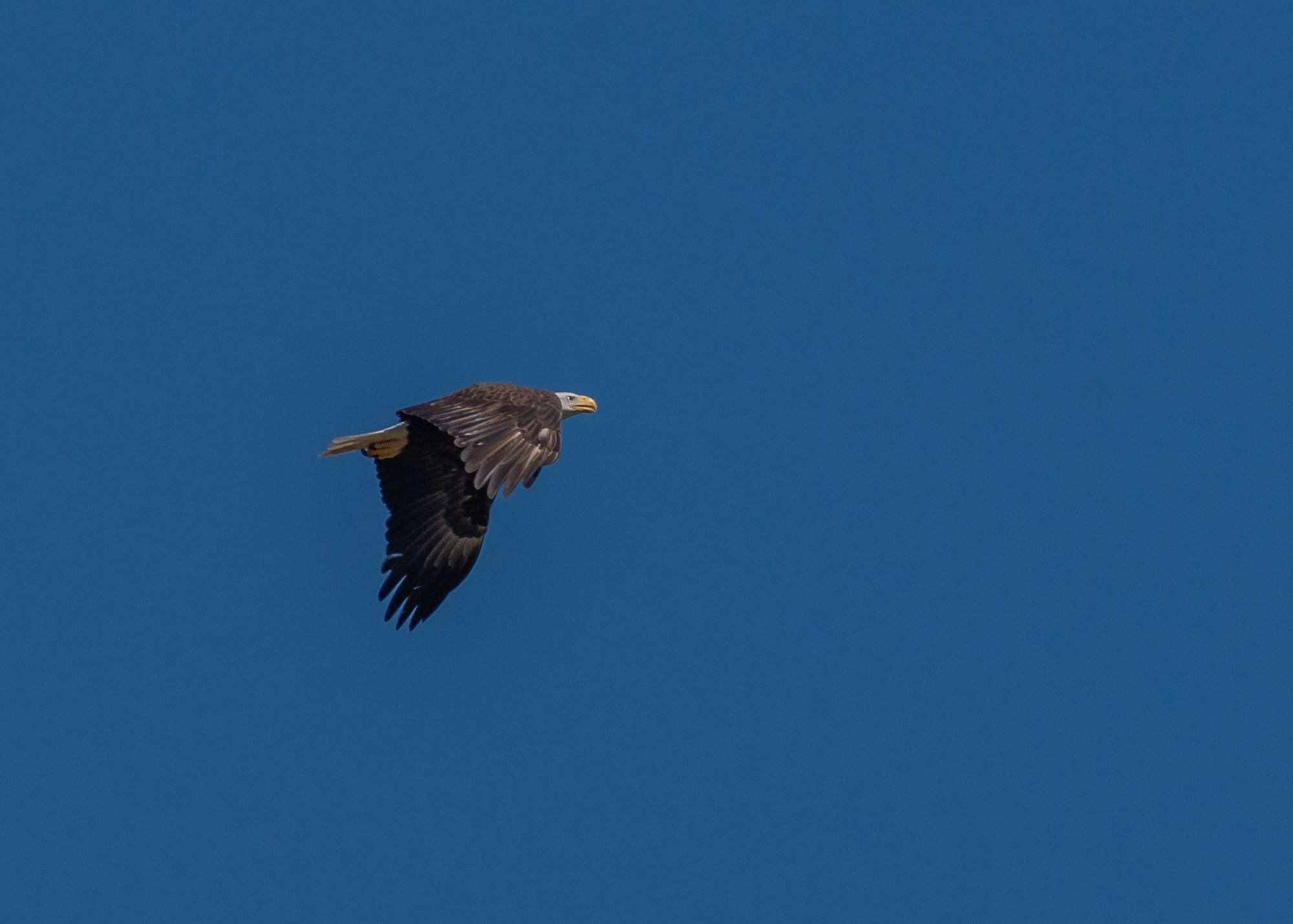
Large, black-and-white, wings held flat – hard to miss the Bald Eagle. We have a very healthy population around here since we have so many lakes filled with fish.
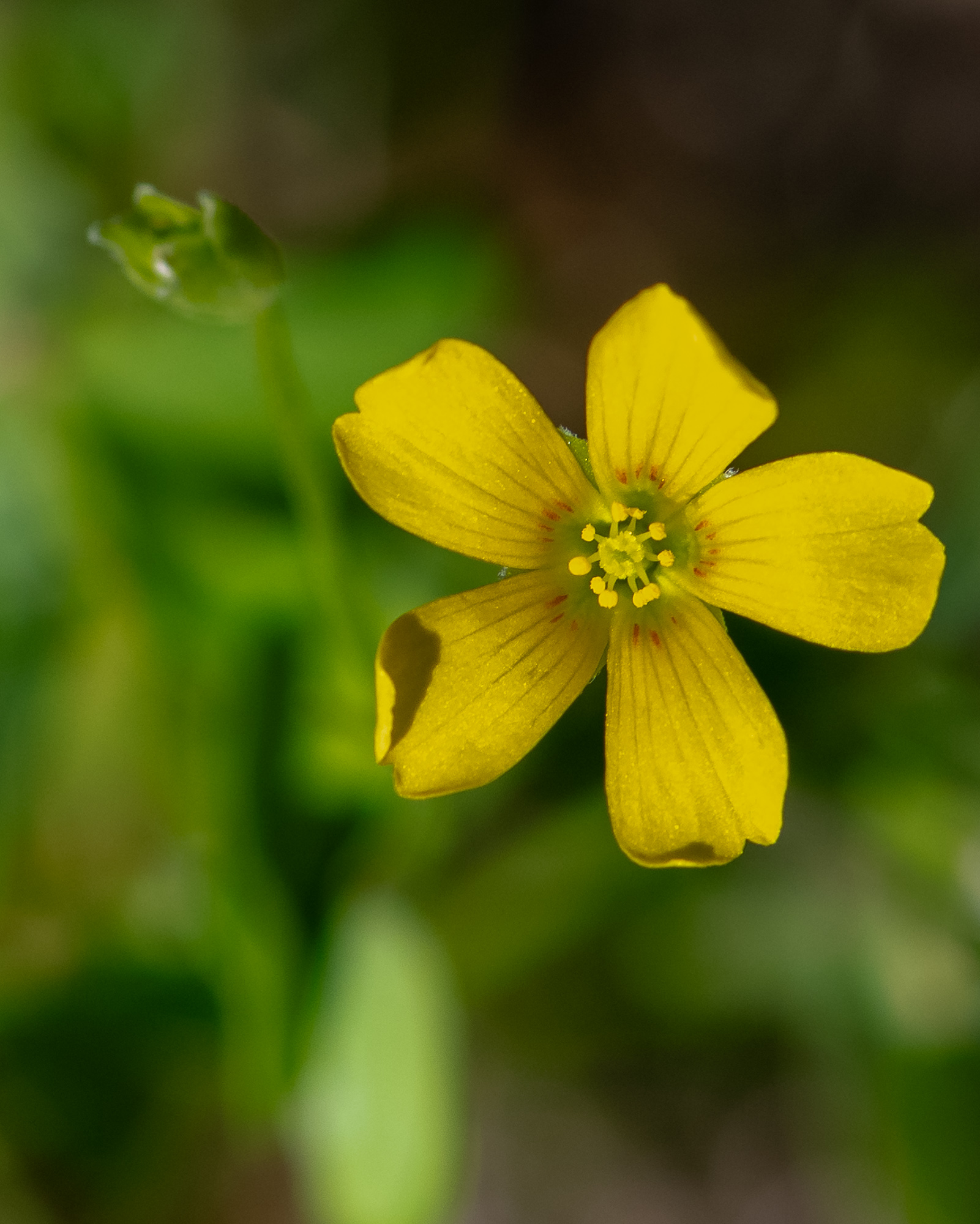
With leaves which slightly resemble a shamrock, the small Creeping Woodsorrel (Oxalis corniculata) has really lovely blooms when examined at close range.
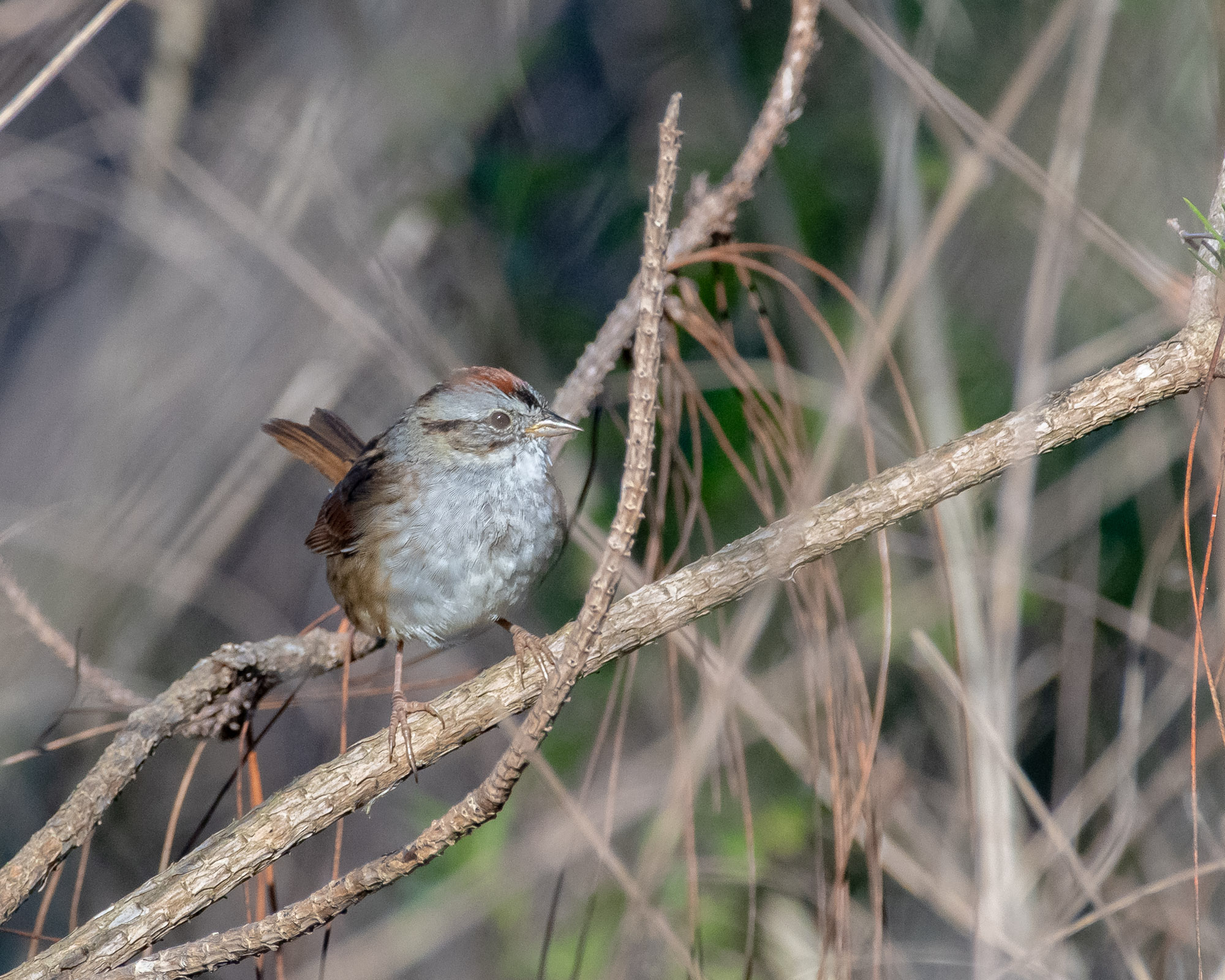
This trip was during the second week of April and a few migratory birds were reluctant to leave the Sunshine State. A Swamp Sparrow will soon head back to its northern breeding territory but promises to return in the fall.
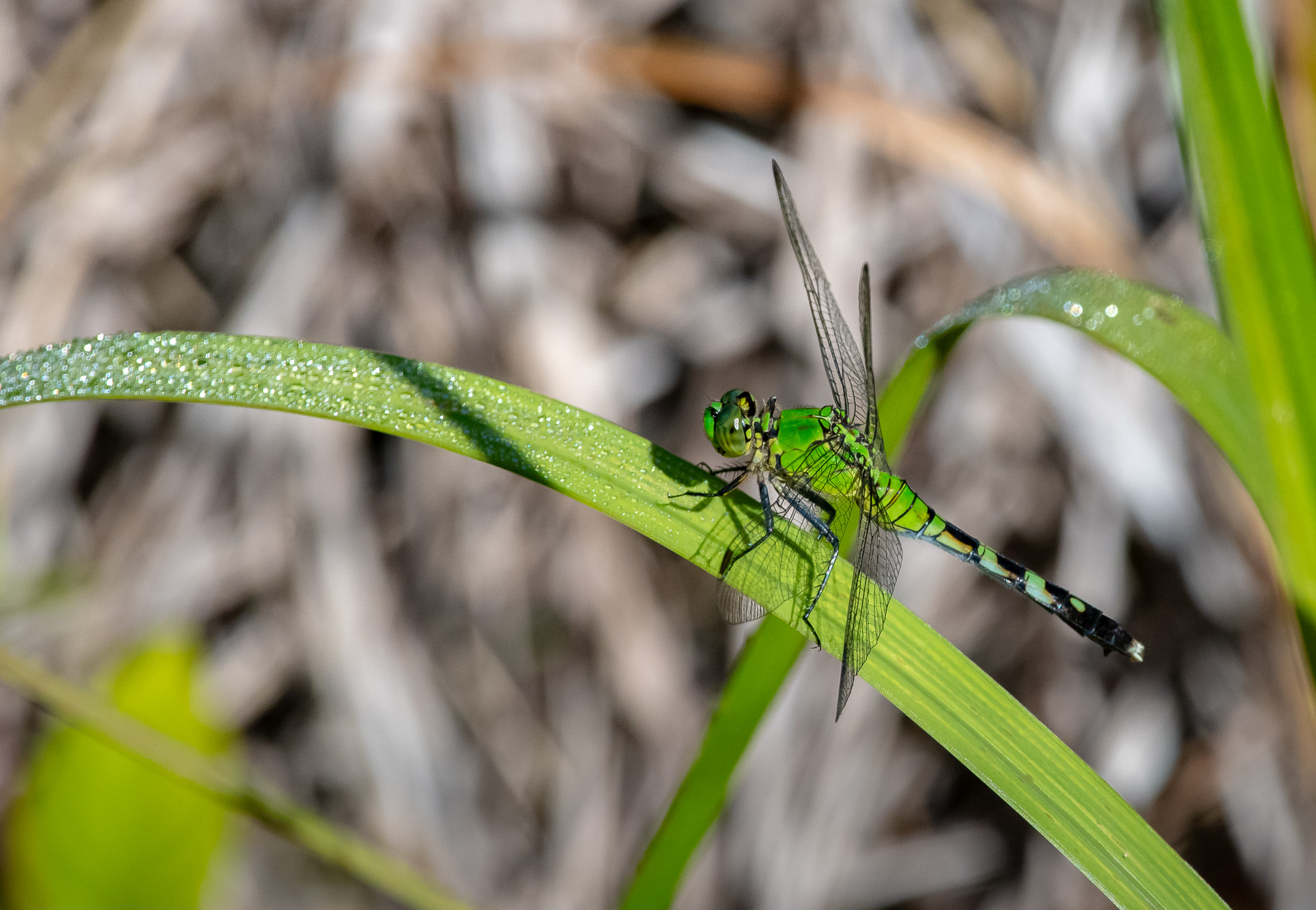
Bright emerald blends in with the fresh new grass where this female Eastern Pondhawk (Erythemis simplicicollis) hopes to ambush a breakfast bug.
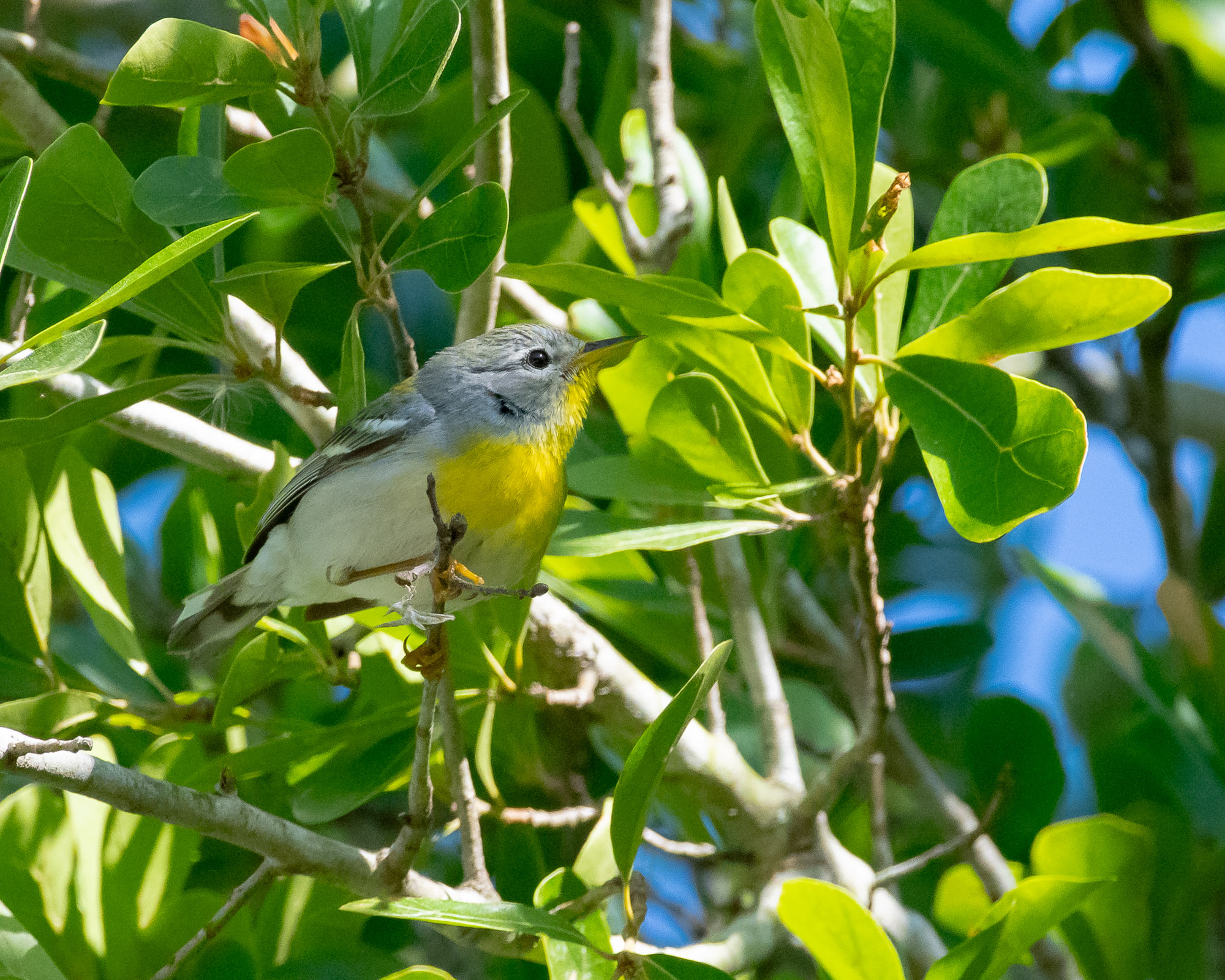
The Northern Parula is a small warbler which breeds in our area. Each winter, they relocate to the southern part of the state or beyond but are now beginning to return to fill the woods with their upward spiraling trills.
Who says taxonomists don’t have a sense of humor? Someone decided this lovely member of the camphorweed family should be referred to as Sweetscent (Pluchea odorata). To be fair, perhaps they had just gotten a good dose of the plant’s cousin, P. foetida – Stinking Camphorweed, and thought by comparison this one was pretty sweet.

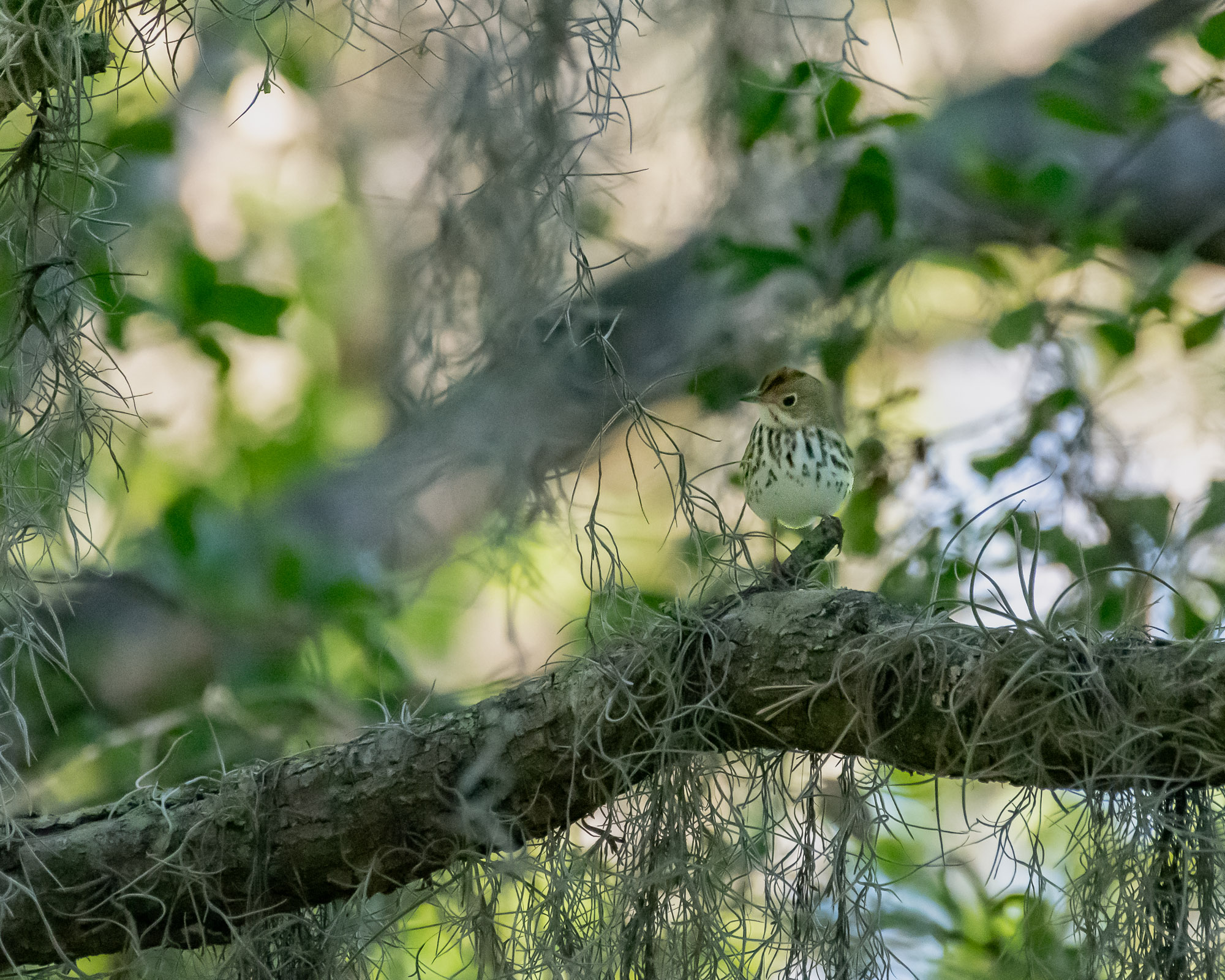
Another procrastinating passerine. An Ovenbird skulks along a tree branch looking for just one more juicy Florida snack before winging northward.
It may not have all the brushy, spiky leaves around its blooms like its horrible relative, the Bristle/Purple/Yellow Thistle (Cirsium horridulum), but Nuttall’s Thistle (Cirsium nuttallii) will still give one pause if they attempt to grab a stem without noticing those substantial thorns.

In the Spring, one can see how the Red-bellied Woodpecker received its name. This female was joined by a male and as we watched, the two seemed to be testing limbs for nest suitability.

The days are warming and the dragonfly population is becoming ever-more abundant. A lovely golden Halloween Pennant (Celithemis eponina) perched a moment for us to enjoy.

Large patches of Oakleaf Fleabane (Erigeron quercifolius) gave the impression of dozens of small orbs of sun among frilly white clouds.

One morning in April filled with sights and sounds we found exhilarating. One truly joyful day!
We hope you enjoy your search for a natural place and come back for a visit!


Joyful, indeed, and so grateful that you shared a healthy dose with us. I got a kick out of all the wordplay… procrastinating passerine, vulture culture, perpendicular perch, and more.
Your mention of the Parula’s ‘upward spiraling trills’ instantly took me back to standing in a wooded Texas park, hearing exactly that call, and not for the life of me being able to see the bird. I used Merlin to identify what I should be looking for, and now the song and image are cemented.
Another wonderful walk, well shared!
LikeLike
We are more than happy to share a little of the beautiful stuff we find.
I never learned to use words properlty so I just play with them instead. 🙂
Those Parula’s are trilling all over the swamp lately. Should soon be lots of little Parulas among the branches.
LikeLike
I always enjoy stopping by to see your beautiful photography. I recognized the prickly pear blossoms right away. Also the purple thistle. But no Spanish Moss in the desert!
LikeLike
Thank you very much for the visit and the kind words, Peter.
I’ll trade you a truckload of Spanish Moss for a Joshua Tree.
LikeLike
A joyous day indeed. Very nice rufous shoulder patch on that RS Hawk, usually I’m struggling to get that revealed. I usually look at the bills for the Yellowlegs, Not an exact science, but a slightly upturned bill I put in the Greater category, straight in the Lesser..of course if they are nice enough to say hello, the mystery reveals itself ha. I vote for handsome on the Wood Duck – I am quite fond, now the Manderin Duck..yeah, that’s clearly in the guady camp!
LikeLike
Gini still can’t understand why the birds can’t wear name tags.
I pointed out theat the shoulder patch on the hawk was like a name tag. After getting “THE LOOK”, I returned to silent mode.
Yeah, the Manderin looks like it was used by a classroom of beginning artists as a paint pallete.
Sure appreciate the visit!
LikeLike
I’m frustrated beyond words. I just left a rather long comment. WP said I wasn’t recognized, and that I should log in again. When I logged in, it apparently erased my comment. See if it might be in spam or moderation. If not, I’ll try to reconstruct it.
LikeLike
Found It! Washed the Spam off and it seems fine. Will reply to it very soon.
LikeLiked by 1 person
It took me a minute to sort out your Pluchea odorata. ‘Sweetscent’ is a common name for a quite different plant I found in east Texas, while this camphorweed is what I learned to call marsh fleabane. On the other hand, your oakleaf fleabane looks exactly like the various fleabanes I’m familiar with here. Your photo of that pair is exquisite; I never can get enough of looking at those small flowers.
I laughed at the collection of vultures. I rarely see groups of them anywhere other than atop dead trees, so this glimpse of them surrounded with some greenery is nice. For that matter, the satiny texture of those prickly pear flowers is elegant and appealing. In the first photo, could that be peppervine I see reaching for the sky above the cacti? Like the hanging pine needles and Spanish moss, little details like that help to fill in the spaces and give a sense of place.
Your non-native Lantana fooled me. At first glance, I thought it was our native Texas Lantana (Lantana urticoides), which has similarly colored flowers.
As for your generally joyful day, you know how my mind works. When I saw your title, this was the first thing that came to mind.
LikeLike
Sweetscent is definitely also referred to by many here as Marsh Fleabane. Hard to keep up with which common name to use.
It was nice to find the buzzard group somewhere other than scattered among the superstructure of a big utility tower. I tried to i.d. that vine and peppervine sounds good to me. Now I’ll have to return and see if I can confirm it.
Whether the Lantana is native or an unregistered guest, them flowers sure is purty. And the butterflies love ’em, so there is that.
Hah! Perfect song! I’m chagrined I didn’t think of it to include in the post.
LikeLiked by 1 person
I feel like I have taken the hike with you guys! A rich and vibrant community! Wonderful photos. There is a restaurant I used to go to in our area called The Canyon. They had the BEST Prickly Pear Margueritas. Are your prickly pears the type they use for that?
LikeLike
Thank you, Judy.
We appreciate you dropping by.
I know nothing about drink preparation, but I think pretty much any Prickly Pear produces the fruit -“pear” – so pick away. At your own risk!
LikeLike
I guess I always figured the Prickly Pears for the drink came from Texas but for no reason in particular. Enjoy your Memorial Day!! 🙂
LikeLike
sounds like a joyful day to me! Barb and I often have the same sense of wonder while wandering the forests, prairies and wetlands. Life is good!
LikeLike
Thank you, Jim.
We’re looking forward to virtually enjoying your Joyful Days as you head down the road again.
LikeLike
Yet another lovely collection of lovelies!
LikeLike
Thank you, Brian.
It was a nice morning.
LikeLike
We presume that your joyful day rivaled the frabjous one a character in a Lewis Carroll poem chortled about in his joy. As always, you’ve attested to it with many a fine portrait. You’ve kept on doing photographic justice to birds and dragonflies.
Semanticists might argue over whether odorata can refer to a pleasant odor as well as an unpleasant one. In contrast, foetida leaves no ambiguity. Semanticists might also tackle whether the cackle of a grackle is a sonic shackle.
Do you get the impression, as I do, that the subfamily of wildflowers called beeblossom and gaura are little known to the public outside gardening and botanical circles? Fortunately there are many species of them.
LikeLike
We have four species of Pluchea in our immediate area. Taking a leaf, crushing it and holding it under our non-botanically-trained noses has produced a similar result for all four species. “Eww. Mothballs.” Or something similar.
One of two possibilities occur to me for the common name of P. odorata. First, it may have smelled less unpleasant than others of its ilk. Second, sarcasm is at work. As with most life forms, there have been common names assigned other than Sweetscent, the most frequent of which seems to be Saltmarsh Fleabane. Better?
I think most folks are similar in their knowledge of plants to myself before enlightenment. “Pretty flowers”. Since enlightenment, I have evolved to: “Pretty flowers. I wonder what they are called?”.
As to our frabjous day, although we did not slay any Jabberwocks (at least not intentionally), we have been known to chortle between ourselves whilst shouting “Callooh! Callay!”. Staring passersby are common.
LikeLike
In the same way that some people hate the taste of cilantro while a majority of folks like it, I wonder if the olfactory senses of people differ enough that some like the scent of Pluchea even when most do not.
LikeLiked by 1 person
These are incredible photos!
LikeLike
Thank you so much, Sandi.
It helps to have good subjects.
LikeLike
DEFINITELY joyful. To the max. A sense of wonder is a true gift isn’t it? Generously reinforced by Mother Nature – who I believe to be the BEST artist, with the BEST galleries.
LikeLike
Amen to the artistry of Mother Nature.
We’re just happy to gawk at her works of art once in awhile.
LikeLike
Beautiful photos!
LikeLike
Thank you!
LikeLiked by 1 person
Your Welcome
LikeLike
The splendid Wood duck and the Prickly pear cactus stand out for their beauty. Thanks for sharing all the other wonders too.
LikeLike
Aren’t they nice?
Thank you for your very kind comments and we are happy to keep sharing.
LikeLiked by 1 person
A joyful day with joyful encounters, indeed.
I can completely relate to the sense of “Somehow, each time we see them we react as though it is a completely new discovery.” This attitude guarantees a neverending sense of wonder and discovery.
LikeLike
Thank you, Tanja.
Yep, that’s us. Wandering, wondering, discovering.
LikeLike