Spring Resurrected (2)
(Click on images to enlarge, click again to zoom.)
The bottom of that shoebox we found for the previous post held a few more pictures, so we thought we would share.
Looking in our rear view mirror back to the second week of March, we found ourselves surrounded by Spring. The Green Swamp was decked out in multiple shades of green thanks to the diverse species of trees and plants found here. A small dilemma arose as we motored slowly along the criss-crossing logging roads. We had to choose our parking spot carefully as the edges of the roads often contained blooming flowers which we didn’t want to crush.
A few roads have become impassable over time and these made good places to park and hike around a bit. Additionally, there are a couple of primitive camping areas which offer plenty of shaded parking with nearby trails to explore. Unless it is hunting season, we seldom encounter other people in this section of the swamp.
Gini expressed the feeling that, despite the vast displays of colors we were seeing, that it seemed the area was really on the verge of really bursting into bloom. Visits since then have proven her correct.
Sit back. Feel the warm sun, a slight breeze, pine tree aroma, singing birds ……
A Carolina Wren flitted from perch to perch and never stopped singing. They have a pretty incredible repertoire.

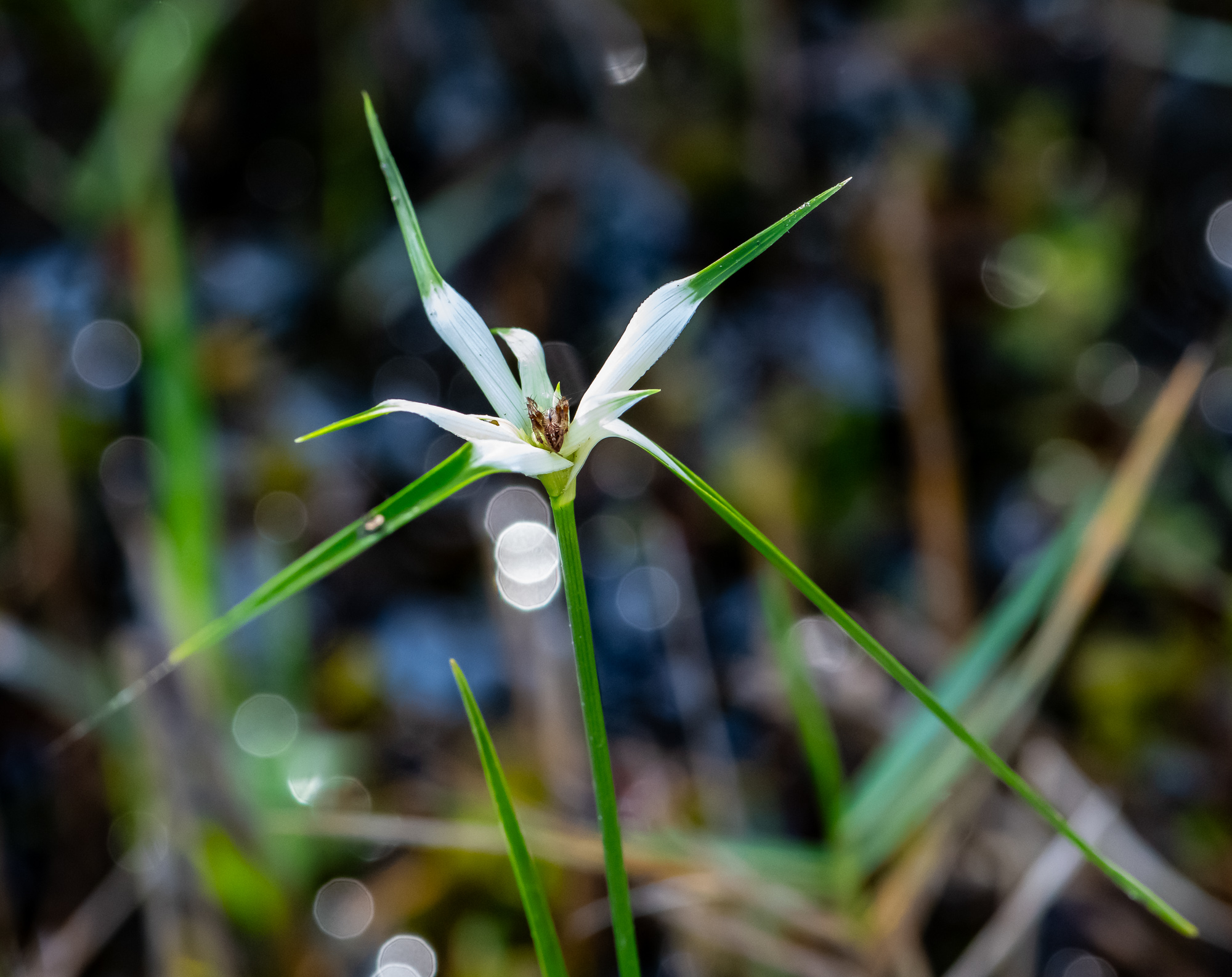
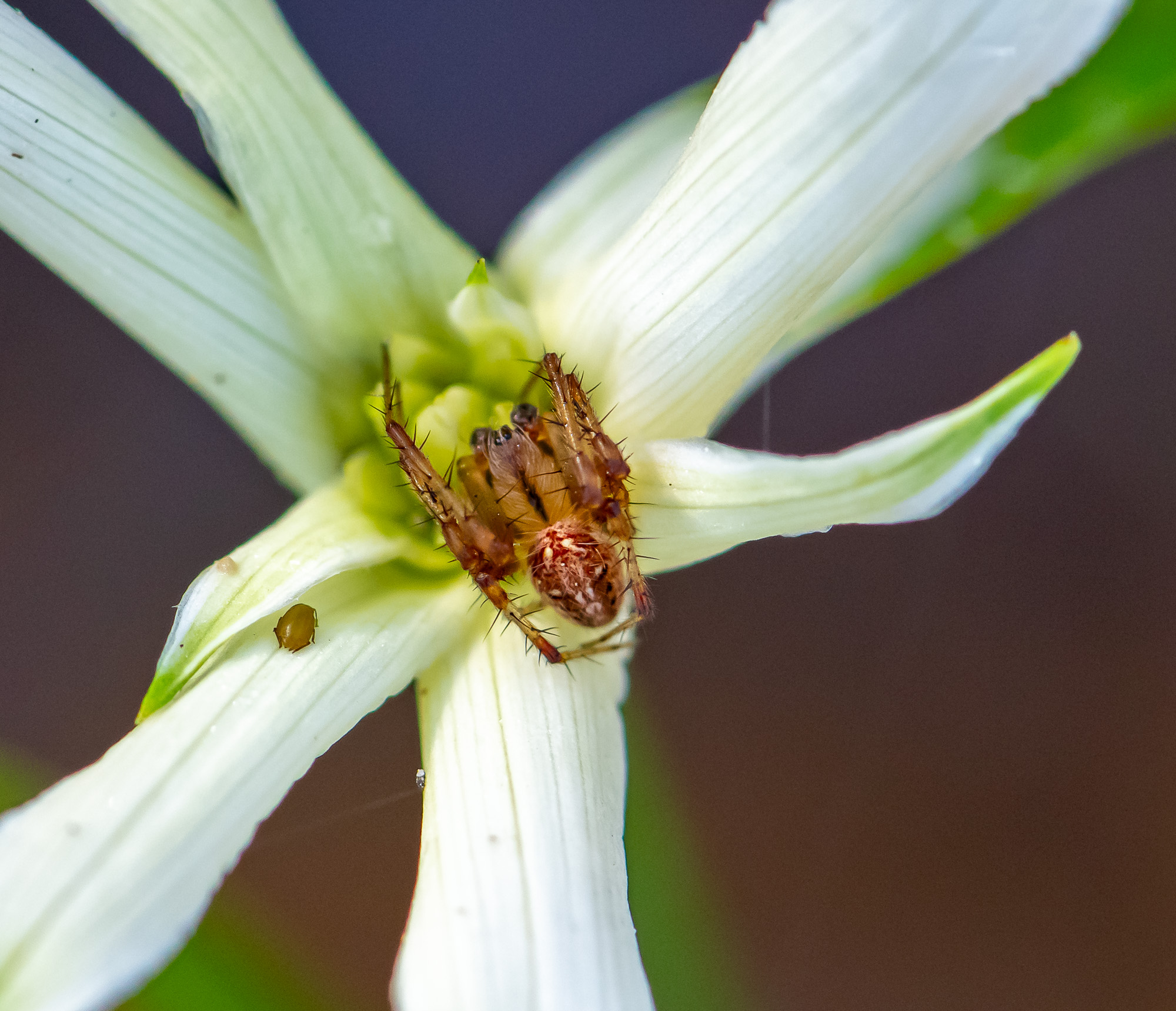
It gives the impression that it’s a flower, but the lovely Starrush Whitetop (Rhynchospora colorata) is actually a sedge. At least one critter doesn’t care if it isn’t a flower as a spider found a nice place to hide. I think it’s a Green Lynx Spider. No idea what the other tiny photo-bombing bug is.

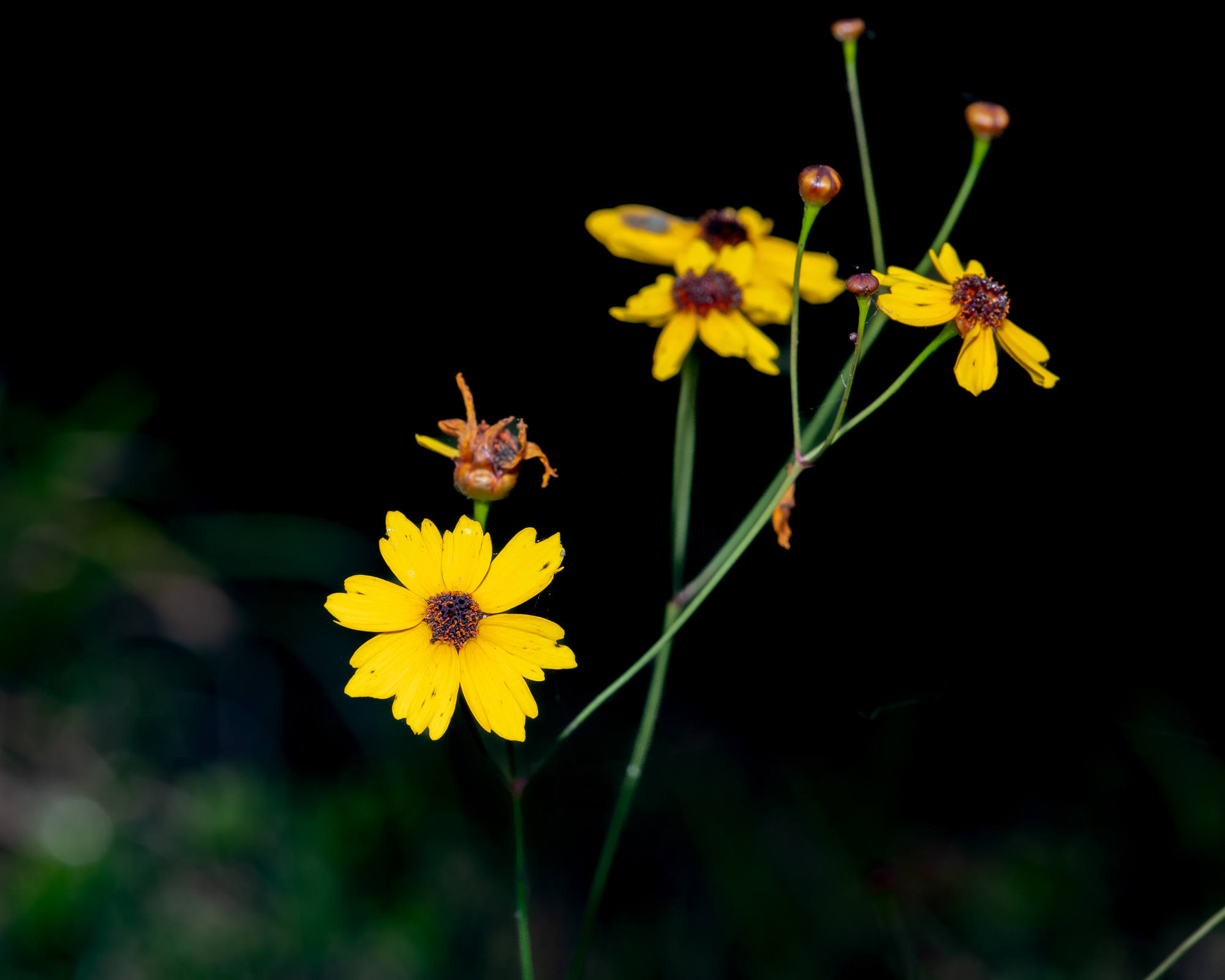
This plant can look pretty gangly as its wiry stems branch in many directions. The bright yellow blooms of the Leavenworth’s Tickseed (Coreopsis leavenworthii) are beautiful no matter what support system they may use.
Found nowhere else but in Florida, the Yellow Milkwort (Polygala rugelii) will soon become abundant throughout this area.

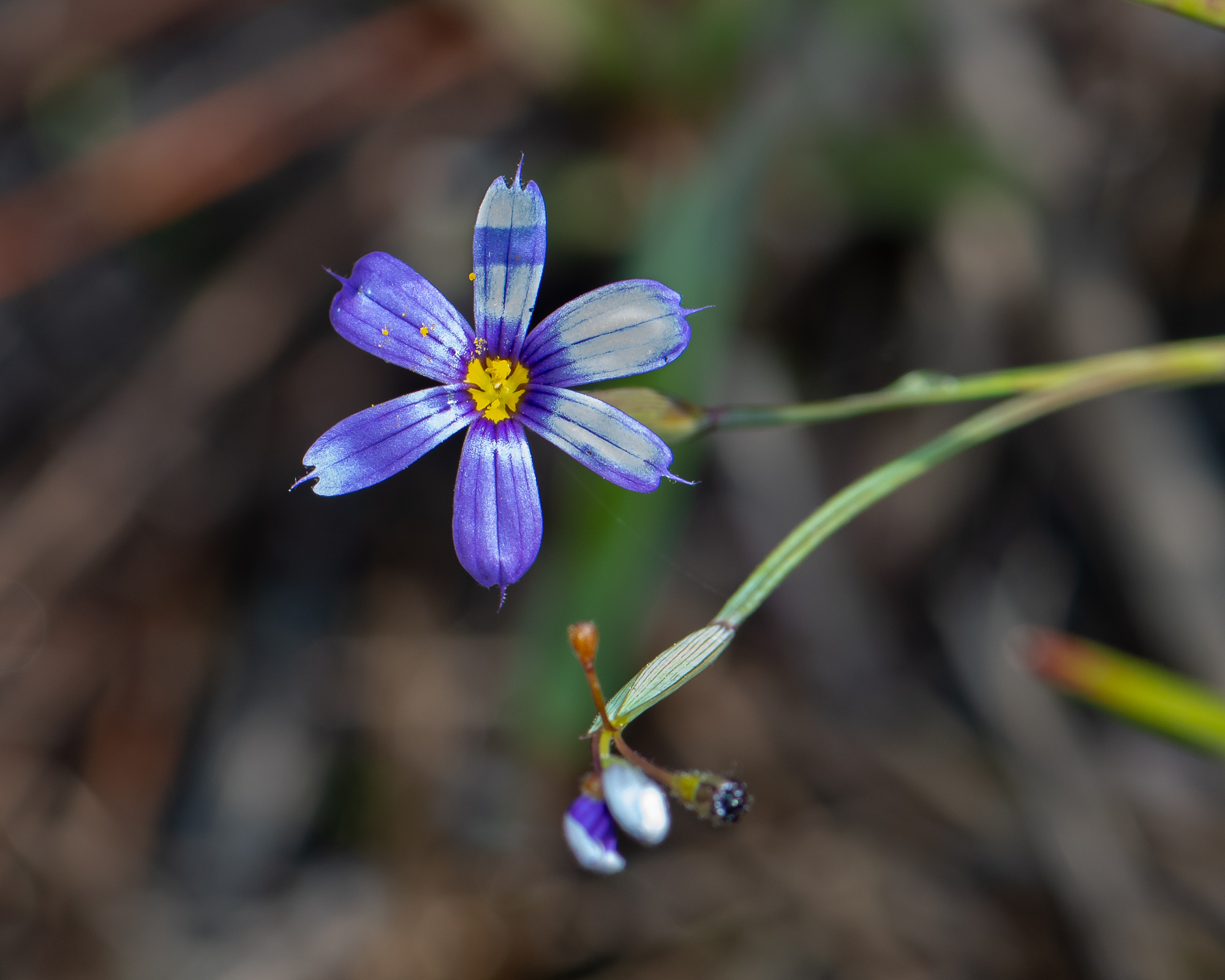
One of those plants mentioned earlier that would be easy to run over at the edge of the road, the blooms of Narrowleaf Blue-eyed Grass (Sisyrinchium angustifolium) are incredibly intense.
We made notes on the location of several Shiny Blueberry (Vaccinium myrsinites) bushes so we can check them in a few weeks. I strongly suspect there are others in the swamp who will be there long before we return. And they very likely don’t need notes on where to find them.

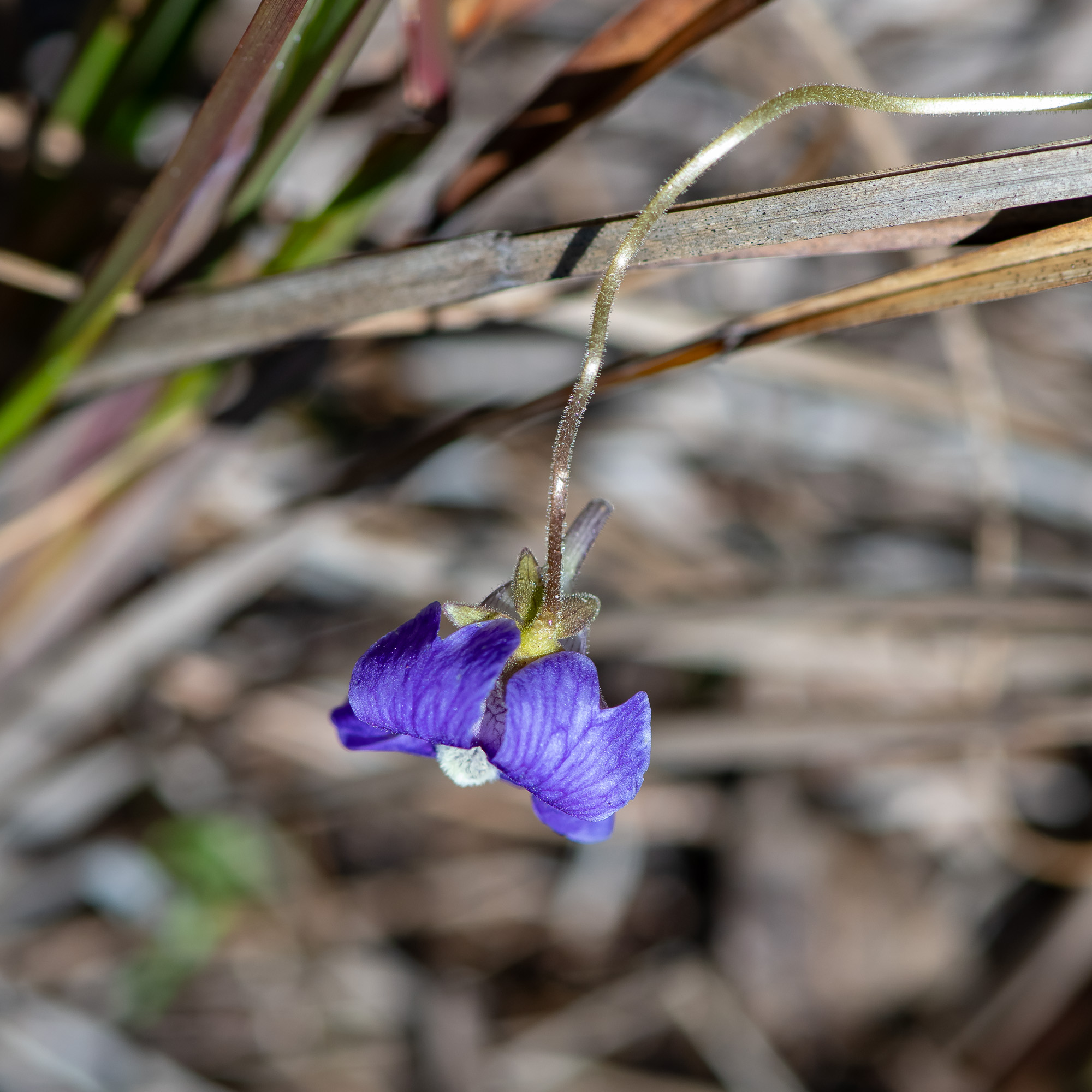
The Blueflower Butterwort (Pinguicula caerulea) is a new plant for us. Like many in the Butterwort genus, this one is carnivorous. The basal leaves are covered in tiny hairs which secrete a sticky substance that helps to trap and digest insects.

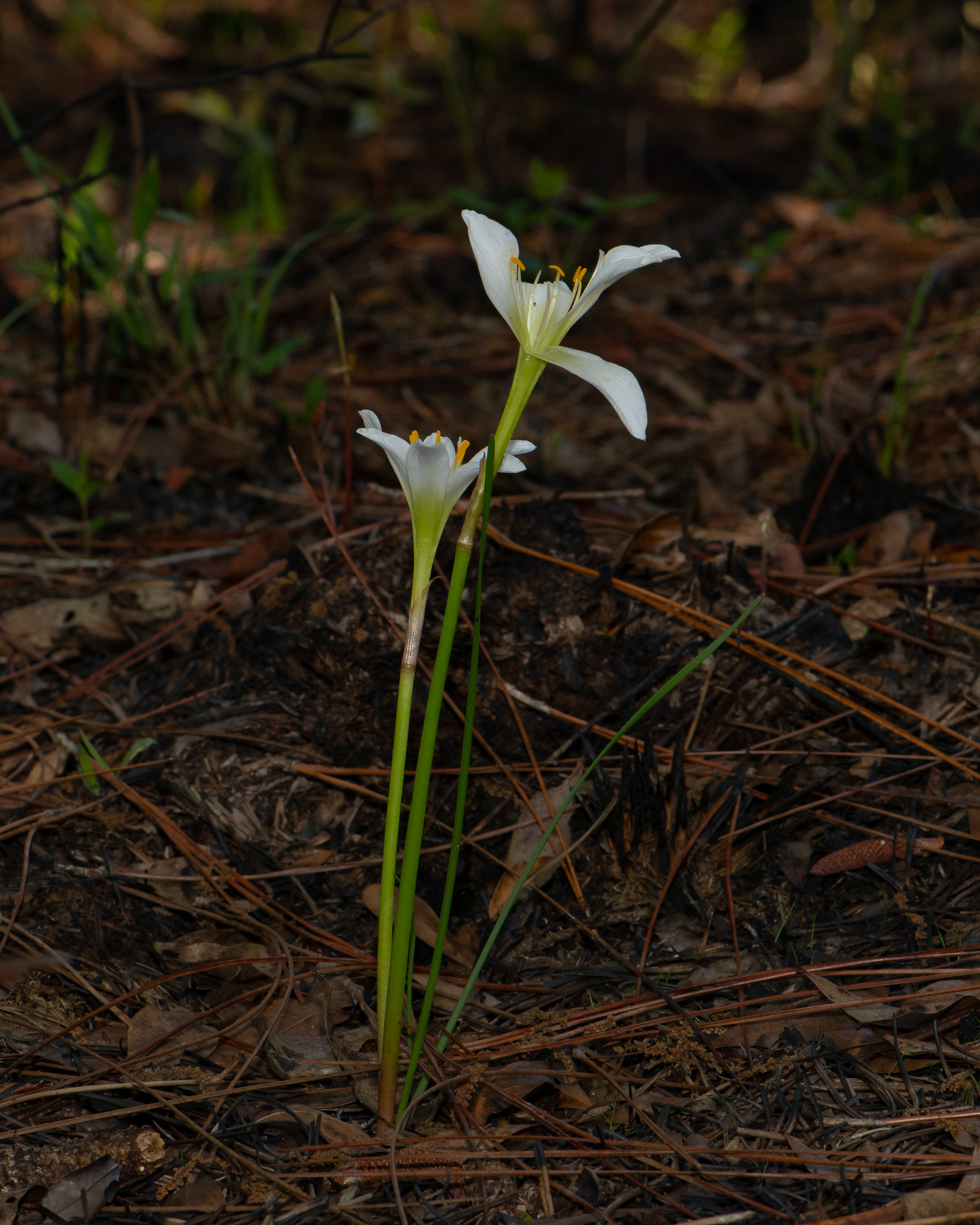
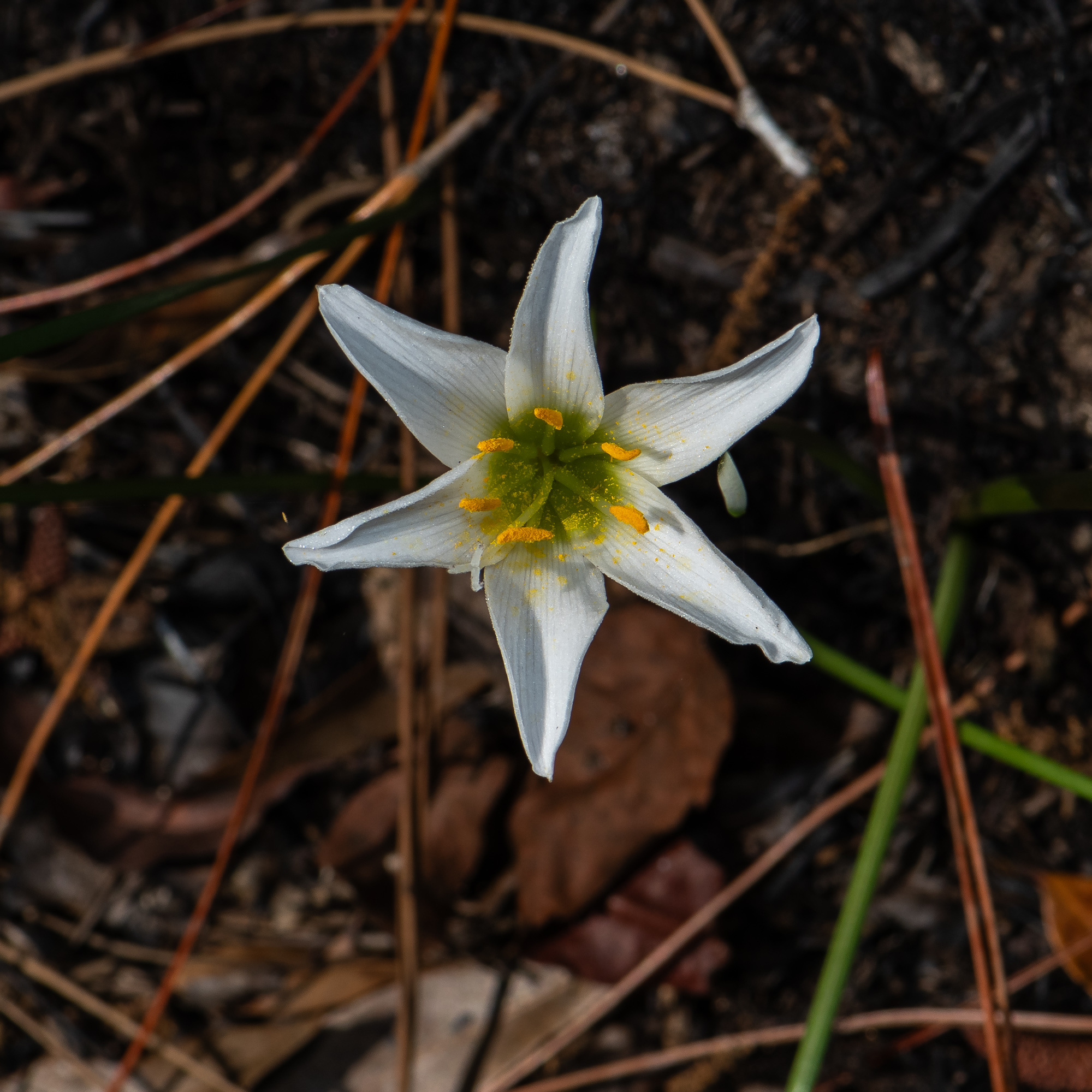
In the understory of pine forest which had recently been the subject of a prescribed burn, we found a few lovely rain lilies blooming. This area of central Florida has two species of this beautiful flower and I believe this one is called Zephyrlily (Zephyranthes treatiae S. Watson). Both species are considered threatened within the state.
Our reporting of the beginning of Spring in Florida’s Green Swamp may have been delayed a few weeks, but the beauty of the season arrived on schedule and is flourishing. We don’t need to be there to witness it, but it sure is nice when we are.
Enjoy your search for a natural place and come back for a visit!
 Our Natural Places
I must say, the Starrush Whitetop certainly looks like white spiders from afar and finding a spider within the spider flower..well in my old career, we’d call that recursion ha.
LikeLike
That stuff is pretty, considering it’s grass.
Someone said finding a bug in a bloom is the definition of “serendipity”. I still call it “luck”.
LikeLike
Thank you dear Wally and Ginni, for taking us along to witness the Spring Splendour. I had a freshly made wood apple drink handy, as I savoured these mesmerising moments. It’s scorching summers in my neck of woods.
Great to know of another insectivorous plant – Blueflower Butterwort. People usually talk about the Venus Fly trap, but this one looks pretty enticing as a bait and otherwise.
I grow a whole lot of rain lilies on our 15th floor terrace and balconies and I totally love how they make a casual appearance with a little drizzle here and there.
We are currently waiting for some ‘unexpected” rain showers in our parched land, that will lend some respite to us and nature at large. Been refilling copious bowls of water for the critters that visit.
Heading to read part 2.
I wrapped by the Wanderlust Chronicles last week, phew!
Looking to explore the rain forests this summer and come back armed with more stories to share. As we head out to King Cobra territory. Amen to that! Going on a volunteering project with the 16 year old.
Have a wonderful Flower Moon!
Cheerio.
LikeLike
Geez, next time warn me! I am peacefully scrolling down having my breakfast then Bam! There is a spider on a flower. I about threw the computer!
LikeLike
But she was so adorable!
Okay, fair warning. Future blogs have a high probablility of containing images of bugs, including spiders. We live in a sub-tropical environment so it’s sorta an occupational hazard.
Hope no breakfast item was wasted during this incident.
LikeLike
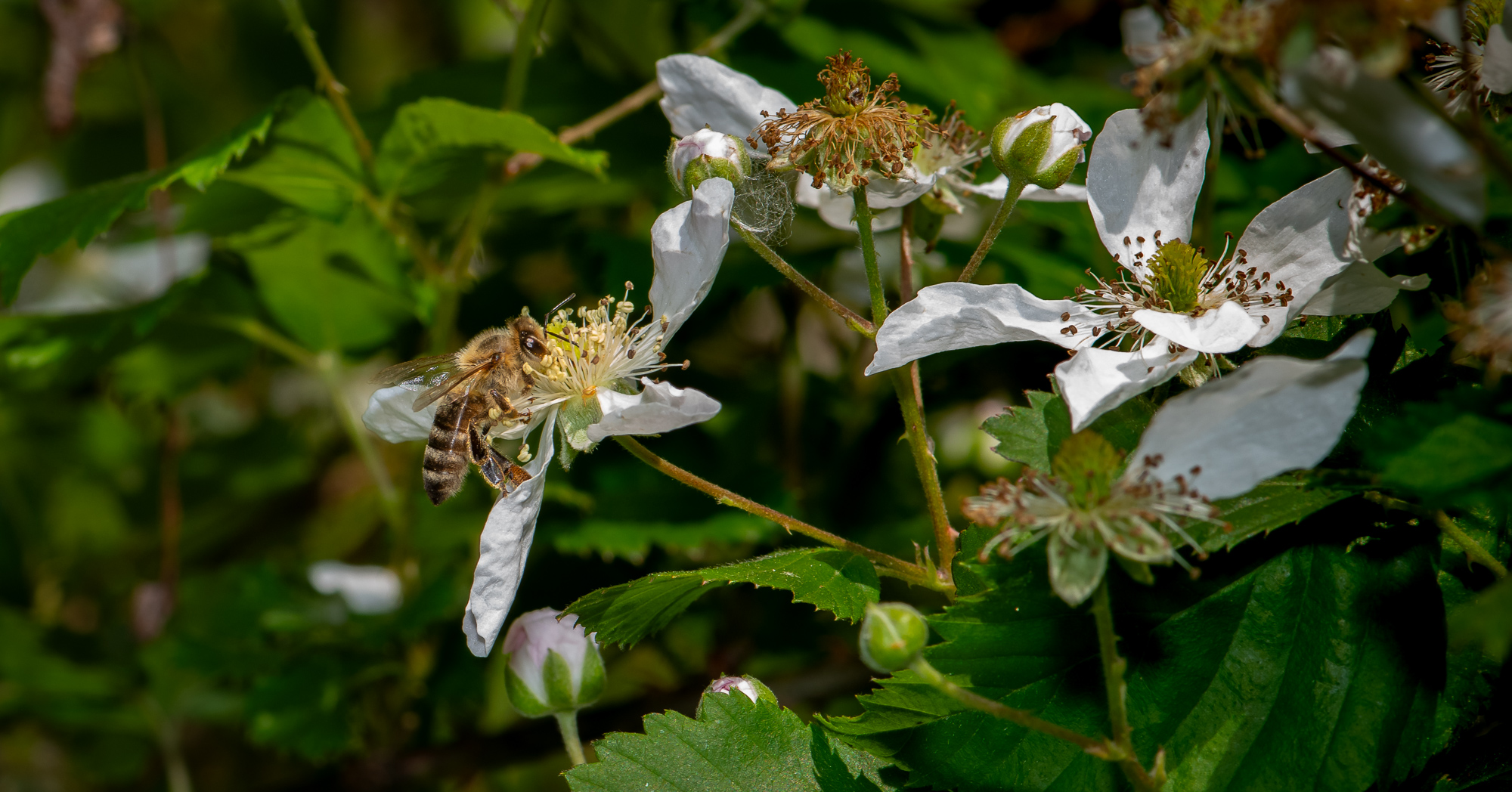
Beautiful flowers. I like how you control the whites in your images (like in the Sawtooth Blackberry shot). We have the White Star Sage (Rhynchospora nervosa) and rain lilies also (Zephyranthes). It’s the first time I see Yellow Milkwort (Polygala rugelii). We also have Coreopsis on the island.
LikeLike
We are each fortunate to live where there are many flowers. I’ve almost achieved a habit now of adjusting the exposure compensation control in the field for extreme light or dark subjects/environments rather that trying to do it in post-processing.
Interesting how we share “almost” the same species of so many beautiful blooms.
LikeLiked by 1 person
Central Texas is with you in hosting the lovely white-topped sedge, which anyone can be forgiven for mistaking from a distance as a small flower. Over here we have white milkwort (Polygala alba) and three other species but not Polygala rugelii, which had me thinking of rugelach. Sorry to hear both of your rain lily species are threatened in the state. Maybe some organization like a native plant society or a garden club could start a program to get people in Florida to grow those two wildflowers. I’m glad you both survived your brush with the carnivorous butterwort.
LikeLike
In spring, large areas of the Starrush Whitetip almost looks like a field covered with frost. Then you get out of the car and the humidity and temperature quickly reminds you how impossible that would be.
The P. rugelii is especially nice as it is a major target for pollinators.
According to the state, the main problem with the species threatened status is habitat reduction and plant poachers. Native plant nurseries offer the species for sale but many of the plants have been hybridized with non-native species, many from other countries.
Unlike some insects, our encounter with the deadly but beautiful butterwort was “touch and go”.
LikeLike
Best time of year. Thanks for capturing it Wally.
LikeLike
I agree and you’re welcome, Brad.
LikeLiked by 1 person
Those are fine photos of the Rhynchospora colorata. They fill the ditches here in some years. There’s a different species in the pineywoods that I think is R. latifolia. I’ve only seen it in the Big Thicket, but the conditions there certainly mimic those described on the wildflower.org site: “The showier Sand-swamp White-top Sedge (R. latifolia), with at least seven longer, wider bracts, is most conspicuous in wet pinelands and savannas.” I remember the ones in the Big Thicket being much taller.
Just for grins, I took a photo of your photo-bombing little bug, and my app directed me to the common pollen beetle. If nothing else, I learned about a new genus in the process of poking around.
At first, I thought we shared that lovely yellow milkwort, but since yours is endemic to Florida, that couldn’t be. When I looked at my archives, I found our east Texas species is P. ramosa. It’s just as pretty, but has a different form.
Your rain lily was the big surprise. It resembles the pink and yellow Zephyranthes species that a lot of gardeners here enjoy; even though ours have been plunked into the genus, they look quite different to me.
I’m glad you decided to bring us a bit of your earlier spring. Photos like this never are out of season.
LikeLike
We supposedly have R. latifolia around here but I haven’t found it yet.
I think that little bug’s specific species within the genus you discovered is the “soon-to-be-breakfast-beetle”. Pretty common around spiders.
Your P. ramosa is another species we should have in our area. I’d love to find some and have a side-by-side comparison with its P. rugelii cousin.
Species of rain lily have been widely propagated for commercial sales and it’s easy to see why. Florida has two native species and both are considered threatened. Beautiful flowers whenever we find them.
LikeLiked by 1 person
This is interesting. We ended up sharing more than some flower species this week. They’ve determined that the storm that rolled through Houston last night was a derecho, and it made it all the way to central Florida before it wore itself out.
LikeLiked by 1 person
Spanish derecho is a cognate of English direct.
LikeLike
The Starrush Whitetop is both beautiful and unusual. I don’t think I’ve seen it before. Lovely photo of the Carolina Wren.
LikeLike
Thanks, Peter.
Hard to believe the Starrush is a grass.
I’m still stunned by your Milky Way photographs.
LikeLike