Spring Resurrected
(Click on images to enlarge, click again to zoom.)
March was a busy month around here. Several family birthdays, annoying medical appointments, an anniversary road trip. During an overdue cleanup of the OurNaturalPlaces office complex, we discovered an old shoebox filled with dust and cobwebs which also contained images of one of the year’s first significant Spring swamp forays. We have tried to clean the pictures enough so you may enjoy what we found during the second week of March 2024.
But first, a public service announcement. Check your camera settings. Go ahead. Do it now. We’ll wait.
I have tried to develop the habit of returning all camera settings to the same “base” after downloading all of the images from that day. Apparently, I occasionally break that habit. The first few photos of the day, therefore, looked as if I took pictures of fluffy clouds during a snowstorm. Sigh. Do as I say, not as I do.
The vast Green Swamp is our playground. We have previously discussed how the definition of a “swamp” can be deceptive. Lots of water is what many think about first. However, there can be huge trees growing in all that water, or wetlands filled with grasses and reeds but no trees, or higher ground with hardwood groves, or actual forests of pines on high and dry land. That diversity is what permits us to enjoy a bit of the 560,000 acres which comprise the Green Swamp.
As Spring began to renew the land, we found migratory birds feeding voraciously as they prepared to return north to breed. Birds who call this “home” were singing to attract mates, squabbling over territory and some were already building nests. Multiple shades of green highlighted the many different species of trees and plants around us. Flowers bursting with new blooms not only attracted us, but advertised fresh nectar for myriad insect species.
“It just smells – fresh.” Gini again finding the right words to describe our morning.
You may not be able to enjoy the aroma of the Spring swamp, but perhaps a few images will help give you a sense of why we love this place.
One of the birds which breeds earliest here is the Brown-headed Nuthatch. They begin nest-building in the second week of February. Most of the year they hang around in loose family groups and pretty soon it will sound like a squeaky-toy factory in the swamp.

Like small lavender flags waving in the breeze, blooms of Lyreleaf Sage (Salvia lyrata) beckoned us to explore further. We happily obliged.

As thistles begin to sprout their spiky leaves and purple flowers, there will soon be insects seeking sweet nectar and helping spread pollen to ensure the plants survive for another year. Purple Thistle (Cirsium horridulum). (Also known by a whole lotta common names.)

This time of year, most wet places in our area have a profusion of Prairie/Savanna Iris (Iris savannarum) showing off their incredible colors. Taxonomists can’t seem to decide what to call this species so I’ll help them remain confused by calling it both of the most prevalent common names found during research.

Bright yellow flowers sticking up throughout some of the wet places are Smallfruit Beggarticks (Bidens mitis). Bees and butterflies love the blooms. The small hairy seeds love everything that comes in contact with them and will happily stick with you wherever you may go.

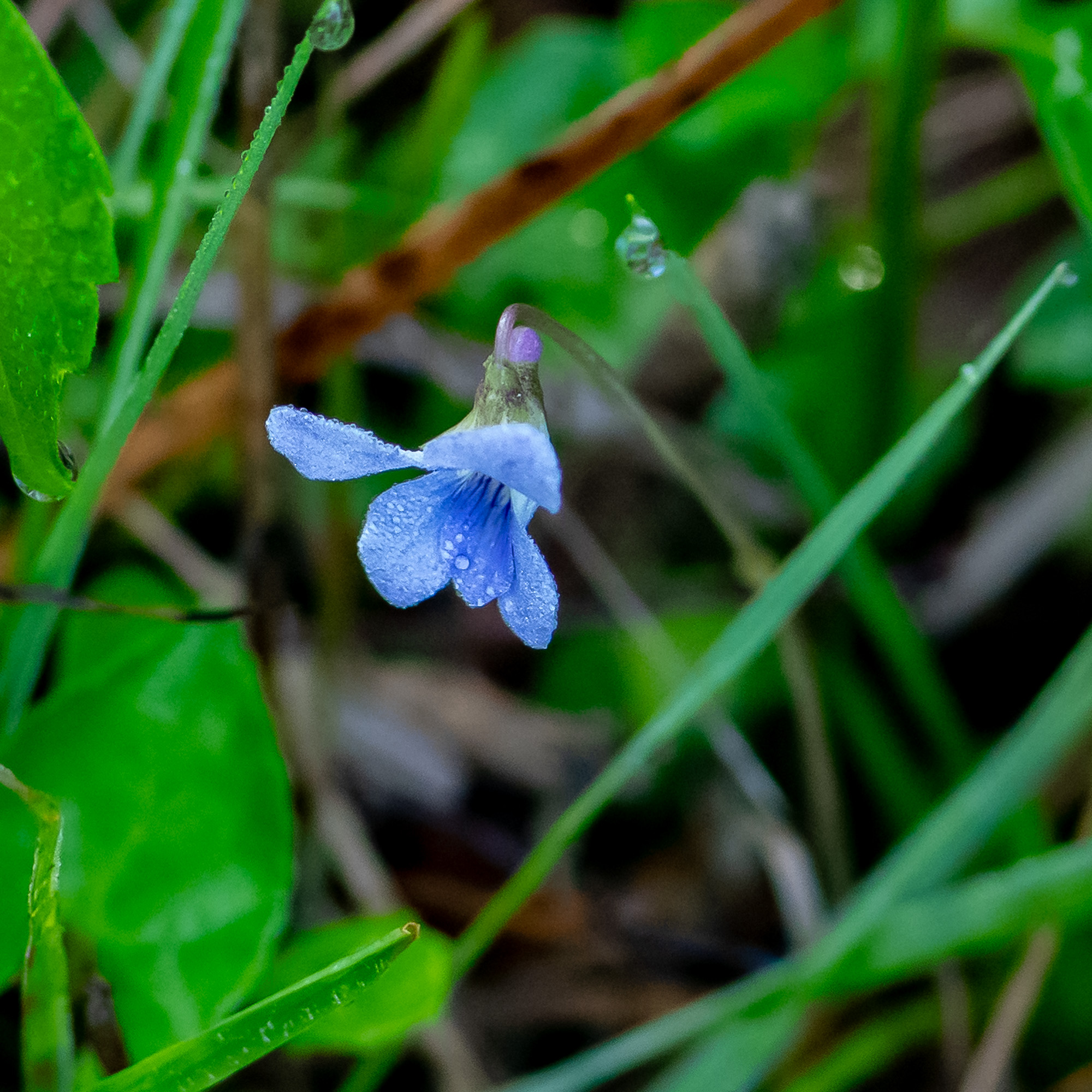
Small and a lovely shade of blue. Common Blue Violets (Viola soraria) were more abundant than we expected.

It seemed as if every road and every trail was lined with a welcoming commitee of vibrant yellow Blackeyed Susan (Rudbeckia hirta).

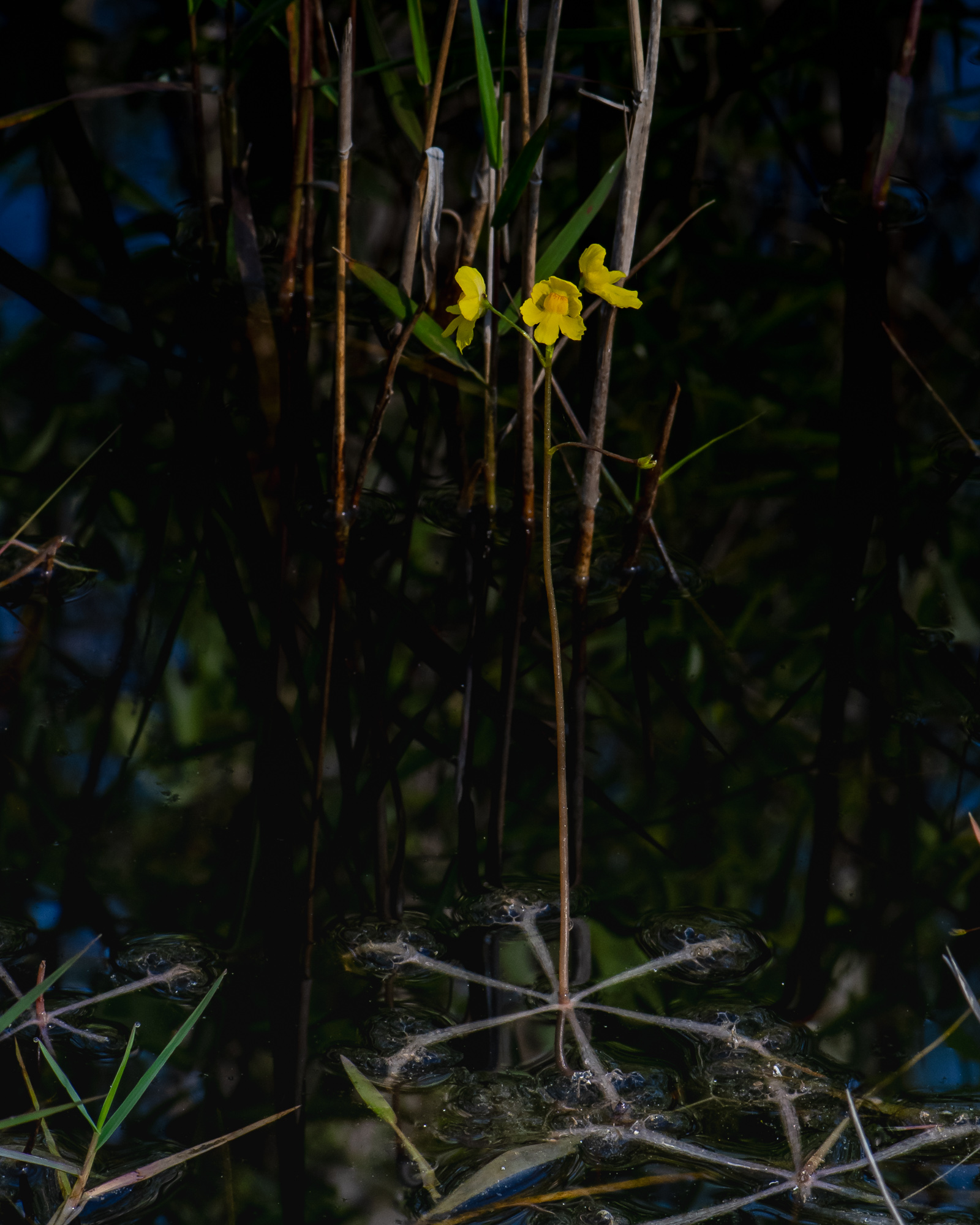
One of our favorite plants is the small Floating Bladderwort (Utricularia inflata). Not only does it decorate some open shallow water spots with dozens of small yellow flowers, the carnivorous plant reminds us of old horror movies with invading alien plant life.

Probably North America’s smallest damselfly, the Citrine Forktail (Ischnura hastata) loves this sort of habitat. The orange male is unmistakable.


This trip was actually the beginning of “our” spring. So much new life was abundant as we explored the diverse Green Swamp. That old shoe box had a few more photos and we’ll share them next.
Enjoy your search for a natural place and come back for a visit!
 Our Natural Places
Good advice on the camera settings. I eventually got tired of kicking myself on the first snaps of the trip and finally got myself 3 index cards (old school ha) – one has the list of of the things to check before I start, one has a reminder of things to do while in the field and then the last one for things to do when I return to the car after being in the field. Life is better now….although the hard part is now remembering to look at the index cards hahahaha.
LikeLike
Great system, but, as I can safely report from my spot near the bottom of the hill – remembering to look at those cards will eventually become a —- uhh —- what were we talking about?
LikeLike
Your images are beyond dazzling, Wally whatever you may say. Someday I’ll learn to take photos are incredible as yours. 🙂 Fings crossed. 🙂
We took a hazy photo of a dozing, Chestnut-bellied Nuthatch on our trip to the mountains (in the latest blog post). It was such an endearing sight, though high up, at quite a distance on a pine tree.
I am hoping to also get a macro lens for my iPhone.
The bladderworts look eerily gorgeous. 🙂 As do all the other images.
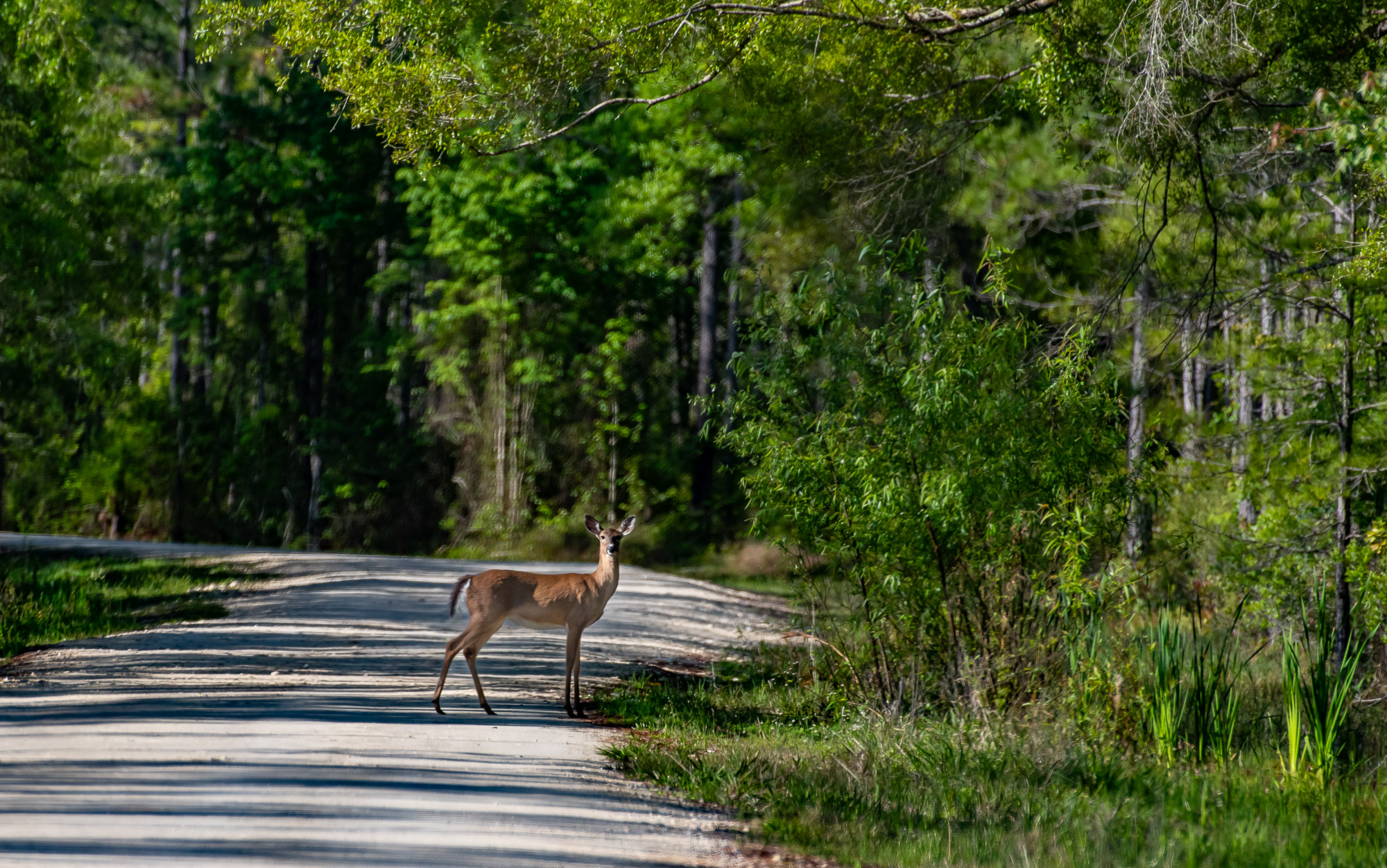
I loved the dappled sunlight bouncing over the white-tailed Deer.
Thank you for making my day naturally wonderful with these images.
LikeLike
Thank you very much, Natasha.
I keep trying and once in awhile get lucky. Fortunately, Nature is very patient.
We hope your weekend is filled with Peace and Joy.
LikeLike
The deer brought me a bit of nostalgia. I do miss living in Florida, and we don’t get any deer here. However, I’m only two hours away by plane so it’s not so distant. As for the camera settings, I’ve always shot in aperture priority mode, unless when shooting indoors and having to use flash on occasion.
LikeLike
We don’t always see many mammals on our trips, but there are plenty around, based on tracks and other signs. Always nice to have one pose for a moment.
It’s good to have “base” settings, which I actually do. However, a typical day will start early in low light and end up near mid-day in bright conditions with dappled shade or water reflections. I almost always shoot in manual so I make changes throughout the day. I just need to remember to return everything to my “base” settings once I return home.
LikeLiked by 1 person
I’ve occasionally left my camera in manual exposure mode rather than the shutter-speed priority that is my norm. Sometimes the first pictures from the next outing still came out okay, but other times I got mostly black images. Unlike in the old film days, at least the display screens on our digital cameras quickly show us our errors—provided we bother to look.
I’ll concur with Linda in noting that the color of Cirsium horridulum flowers I’ve seen east of Austin are yellowish.
Given the Green Swamp’s 560,000 acres, if you check out one new acre on each visit you’ll have enough to keep you going for many lifetimes.
LikeLike
Those days of film could get expensive and doubl-checking settings became a financial necessity. Today, we’re spoiled with technology. Remembering to use that technology (e.g., glancing at the display screen) is now my challenge.
Gini’s recent find of a solid white thistle bloom was pretty neat. We still hope to find yellow ones which I understand occur mostly in the panhandle.
Our problem is we keep checking out the same acerage because it always seem different. Which, perhaps, is just fine with us.
LikeLike
Regarding your last paragraph, some people have observed that the only constant is change.
LikeLike
Fresh…that describes the swamp perfectly. But sometimes I’m reminded of the river in summer months in Arkansas. It’s really special to see the deer at any time of year and the wildflowers are especially lovely. Enjoy your week!
LikeLike
We humans keep trying to capture that “fresh” smell in aerosol cans, laundry detergent, car fresheners – it just ain’t the same.
We’ve been back there recently and there are even MORE flowers!
Thank you so much for visiting with us.
LikeLike
I have a Lumix FZ300, the settings are pretty much always on A. I would love to find an online photography class to help me understand the functions and take better pictures. I took one that will be in my next post (probably Saturday) that I could use your help on. I am going to call it a bluebell, but after reading your post it looks like a Blue Violet.
LikeLike
I’d imagine there are some good tutorials online.
I just plugged in your camera model on YouTube and there seem to be a whole bunch of lessons available. Finding one that suits your level might take some hunting but could be a good starting point.
I’ll keep any eye out for that post.
LikeLike
I’m so glad you shared the photo of the bladderwort with its long stem and six radial bladders/roots? You’ve mentioned it before, and I kept trying to figure out what kept it afloat – now I can see it. Love the dewdrops on the ‘blue violets’. I agree with Gini, when you are in a healthy swamp, there is a clean, green scent in the air, so surprising when you consider all the decomposing going on.
LikeLike
Thank you, Sam.
Sure have loved your road-trip posts.
That little bladderwort is so cool. I just told Shoreacres there is a purple version which I hope to find.
Yep, hard to beat fresh, clean air.
LikeLike
I’ve only done it once, but I well remember the panic that set in when I didn’t realize what had caused those featureless milky photos. I thought my camera had broken. There wasn’t a thing wrong with the camera; as so often is the case, it was operator error.
It’s interesting to see your pink Cirsium horridulum. Here, the plant almost always flowers yellow, but farther down the coast, pink takes over, and Sam found pink and lavender on her recent foray into Louisiana. It’s a great reminder that flower color isn’t necessarily a dependable means of identification.
I’ve never seen the floating bladderwort, but given the amount of rain that’s fallen in east Texas, it might be possible this year. Now that the roads are open again, I might head that direction for a look-see. In your wide view of the plant, I enjoyed seeing the ferns at the edge of the cypress as well.
That’s a nice image of the lyreleaf sage. That’s one of the few plants I can identify in winter, thanks to its basal leaves.
LikeLike
I now try to take a test shot at the beginning of each trip which helps me confirm settings.
The USDA and others refer to the horrible thistle as the “Yellow Thistle”, a color I’ve never encountered in Florida. Mostly pink to deep purple, although a couple of days ago Gini spotted a white one.
That bladderwort is so neat. There is a purple version which I’m hoping to find. There is even a wider view which shows a healthy growth of Starrush Whitetop (Rhynchospora colorata) but it seemed too “busy”.
The basal leaves of the lyreleaf sage are definitely unique. Looks like an exotic salad green.
LikeLiked by 1 person
Wonderful post Wally! The deer on the road and the wide Floating Bladderwort photos are especially nice. They belong on a wall somewhere.
Ed
LikeLike
You’re too kind, Ed, but I love it! Thanks.
Hope you’re about settled in. You need to be out before it’s “humid season”. Ooops, too late.
LikeLike
Spring is such an exciting time of year. For us all. Mind you I am still loving our autumn and noticed a few days ago that we too have violets out. Colour me confused. Again.
Thank you for this plethora of beauty from your expeditions.
LikeLike
It seems as if Nature has something beautiful for us to experience no matter what the season!
Sure hope your autumn temperatures are remaining comfortable.
Have a wonderful week, EC!
LikeLike
Ha! Ah yes, camera settings. When shooting insects (macro) I have it set on A (aperture priority) for birds with the big lens S (shutter priority), however sometimes I’ve not been careful getting the camera out of the bag and accidentally knocked it on to M (manual) taken a load of shots, checked the results on the lcd and nearly died of fright! Yep fluffy clouds in a snowstorm or even Black Panther in a coal mine!
Anyway glad you ‘discovered’ these gems, love seeing your spring.
LikeLike
I keep thinking I’ll learn that lesson. Sigh. Apparently not!
Thank for visiting us in the swamp, Brian.
LikeLike