More Big Cypress National Preserve
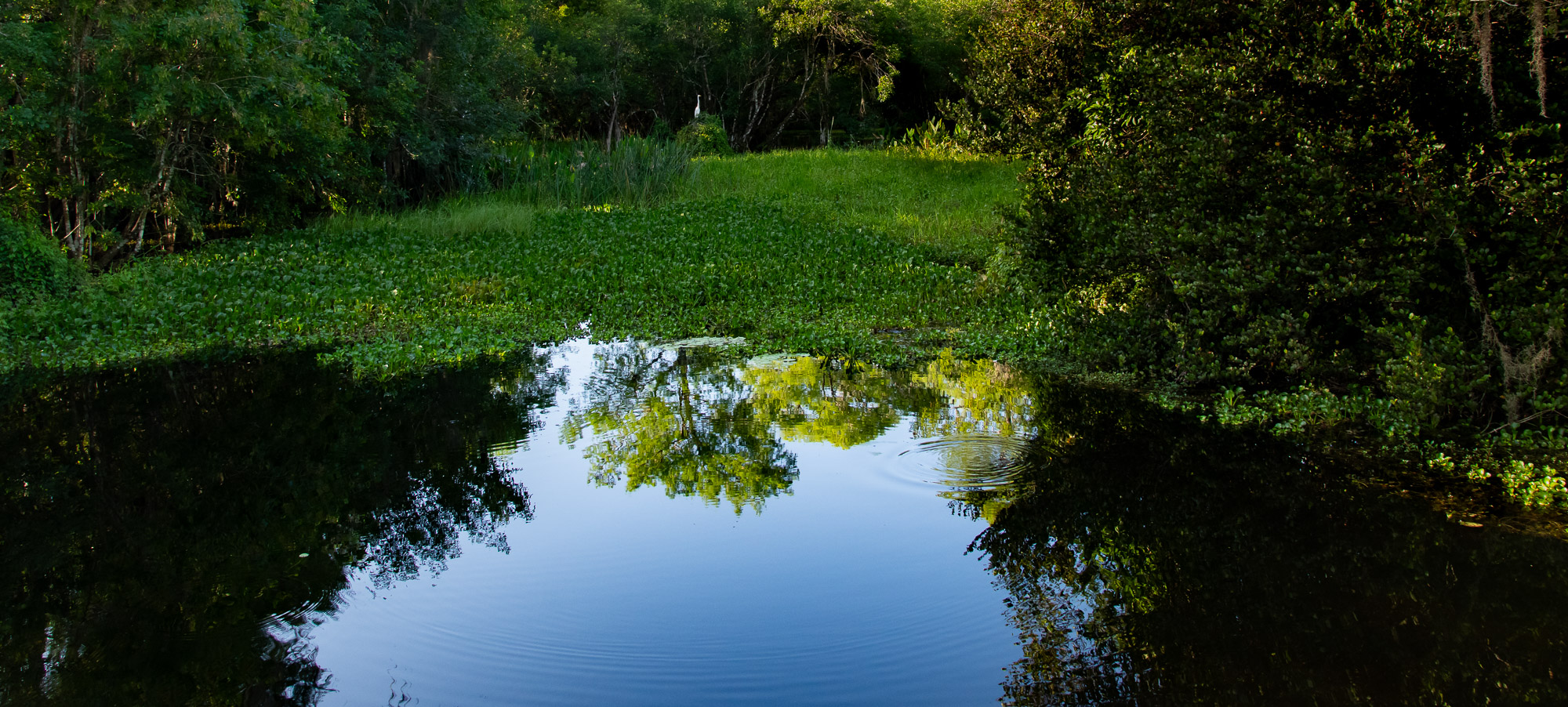
The sound of nature can be incredibly silent.
We scanned in all directions and saw no sign of human existence.
We strained to listen in all directions and heard no sound made by a human being. No traffic noise. No sirens. No electronic emissions disguised as “music”. No one yelling at someone.
The wet prairie of sawgrass, reeds, palm trees and cypress trees awakened gradually as the sun rose higher. Barred Owls called in the distance. A flock of White Ibises squawked as they flew from nightly roosts to a feeding area. Mourning Dove cooed, bright chirps from a Northern Cardinal, screeching of a Red-shouldered Hawk, raucous calls of American Crows – these are the sounds which soothe the soul.
Today, Gini and I continued to explore the Big Cypress National Preserve. Along U.S. Highway 41 (“Tamiami Trail”), the National Park Service operates two very nice visitors’ centers. Here, one can learn about the hydrology of south Florida and the importance of the swamps in filtering water as it flows to the sea. Additionally, there a few roadside parks along this highway which offer surprisingly good opportunities for observing the region’s flora and fauna.
We were up before the sun. We explored. We discovered. We relaxed. We got hungry.
Come on! Let’s go!
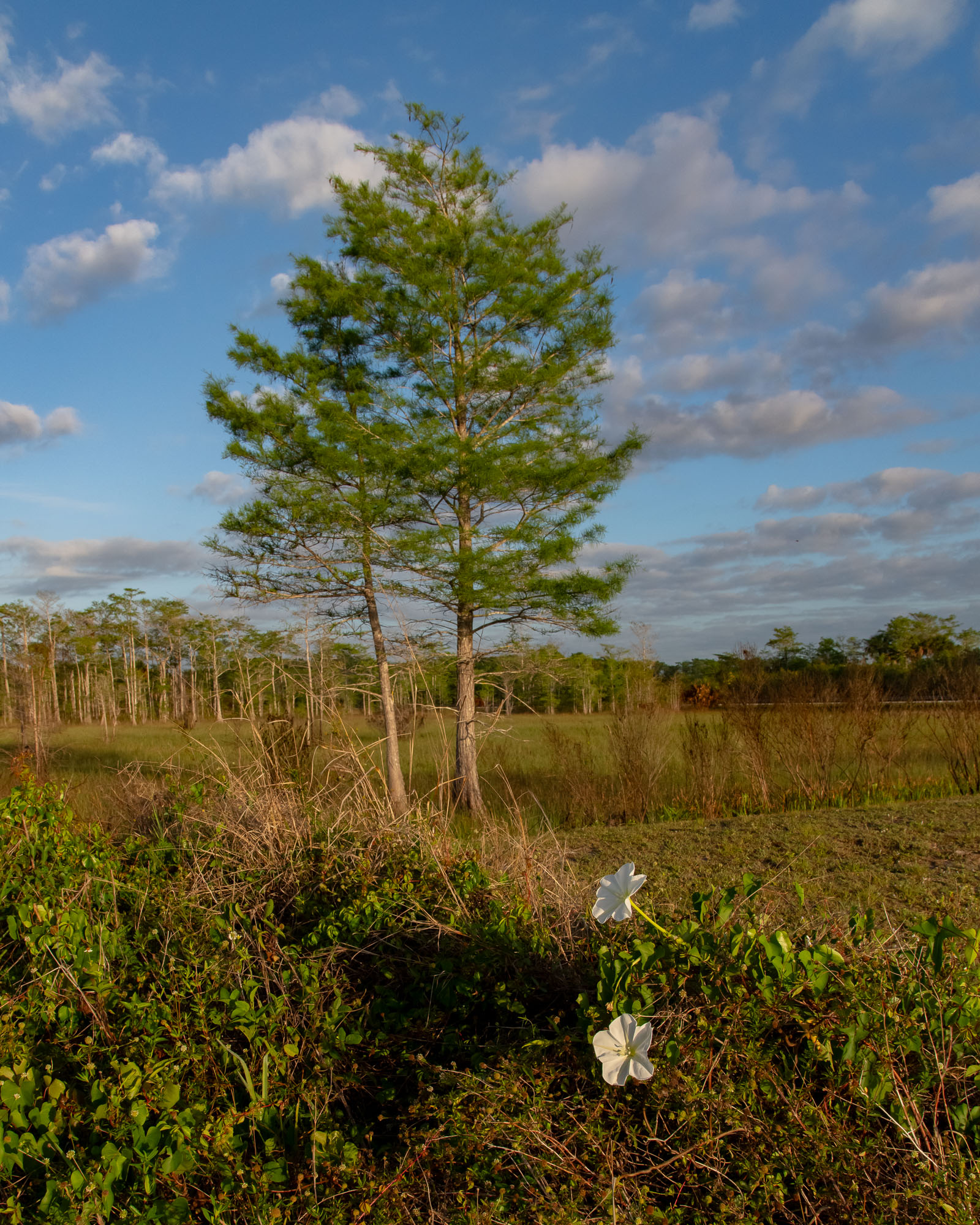
Just after sunrise, at the edge of a cypress-studded wet prairie, we found a blooming Moonflower (Ipomoea alba). Soon, it’s petals will fold as the sun becomes brighter.

An American Crow welcomed us to our breakfast spot, the Kirby Storter Roadside Park. Mr. Storter helped oversee the construction of the “Tamiamai Trail” (U.S. Highway 41) many years ago.

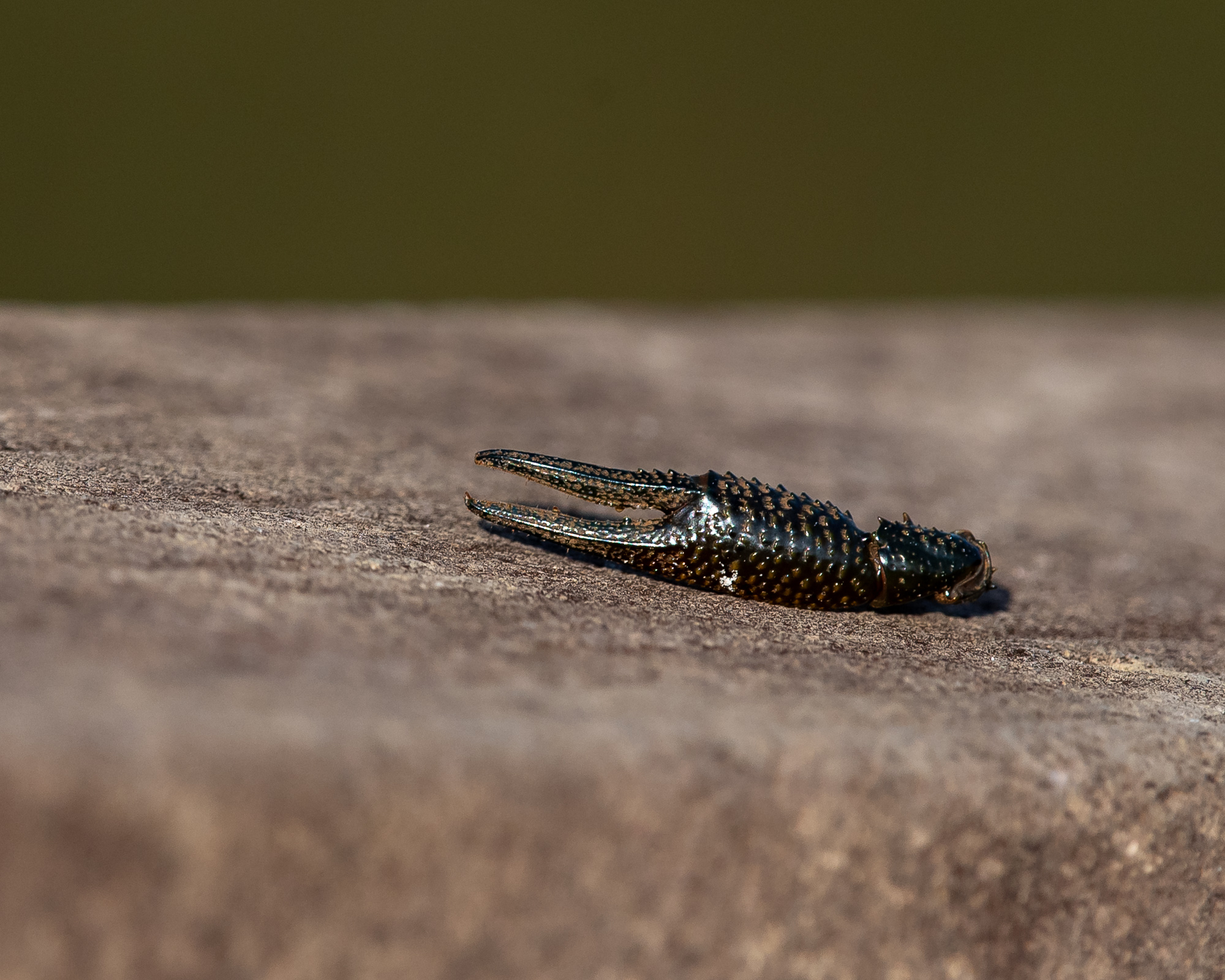
As we enjoyed a boardwalk through the swamp, Gini found a crayfish claw, likely a remnant of a midnight snack from a night heron or other nocturnal prowler.
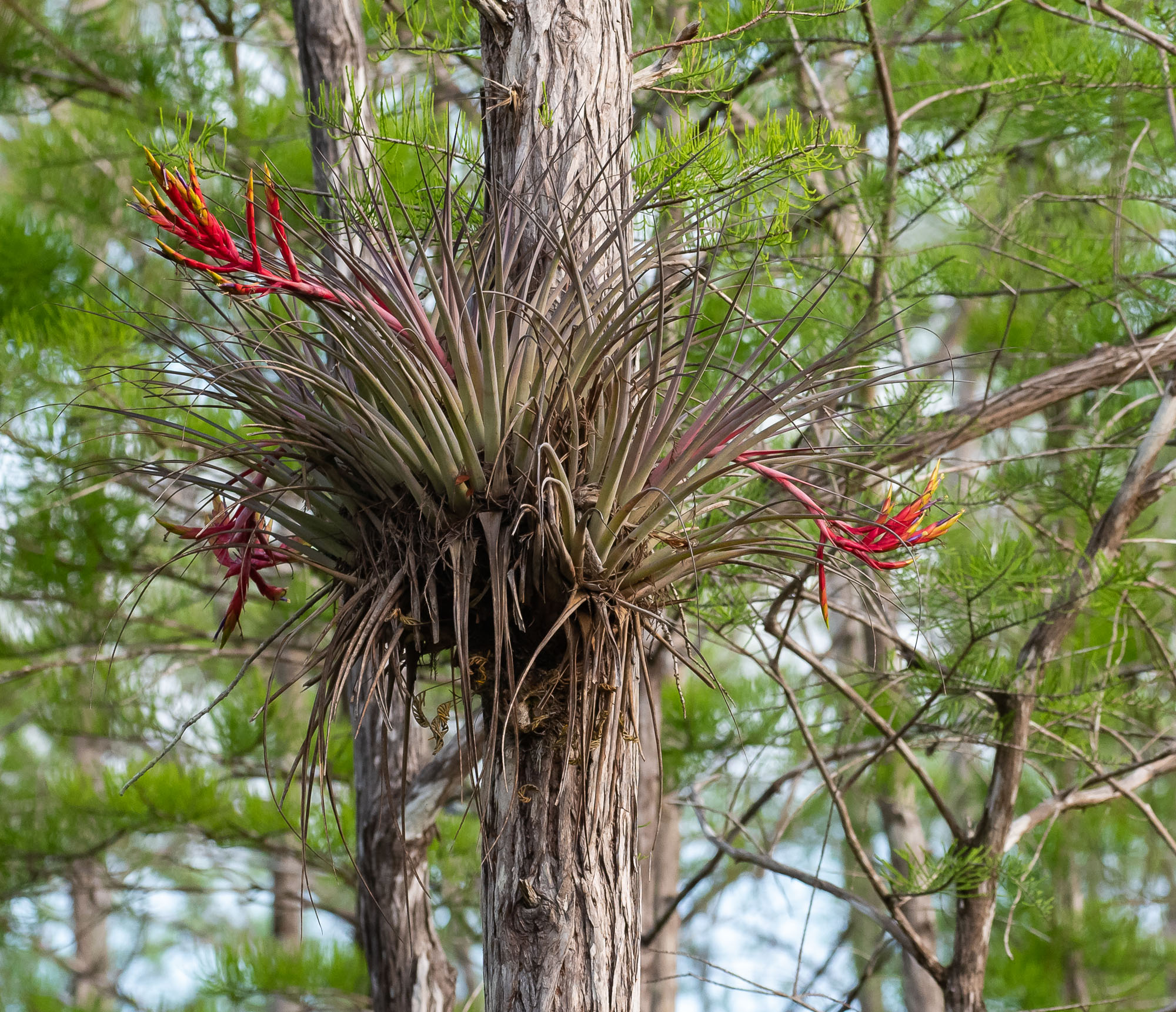
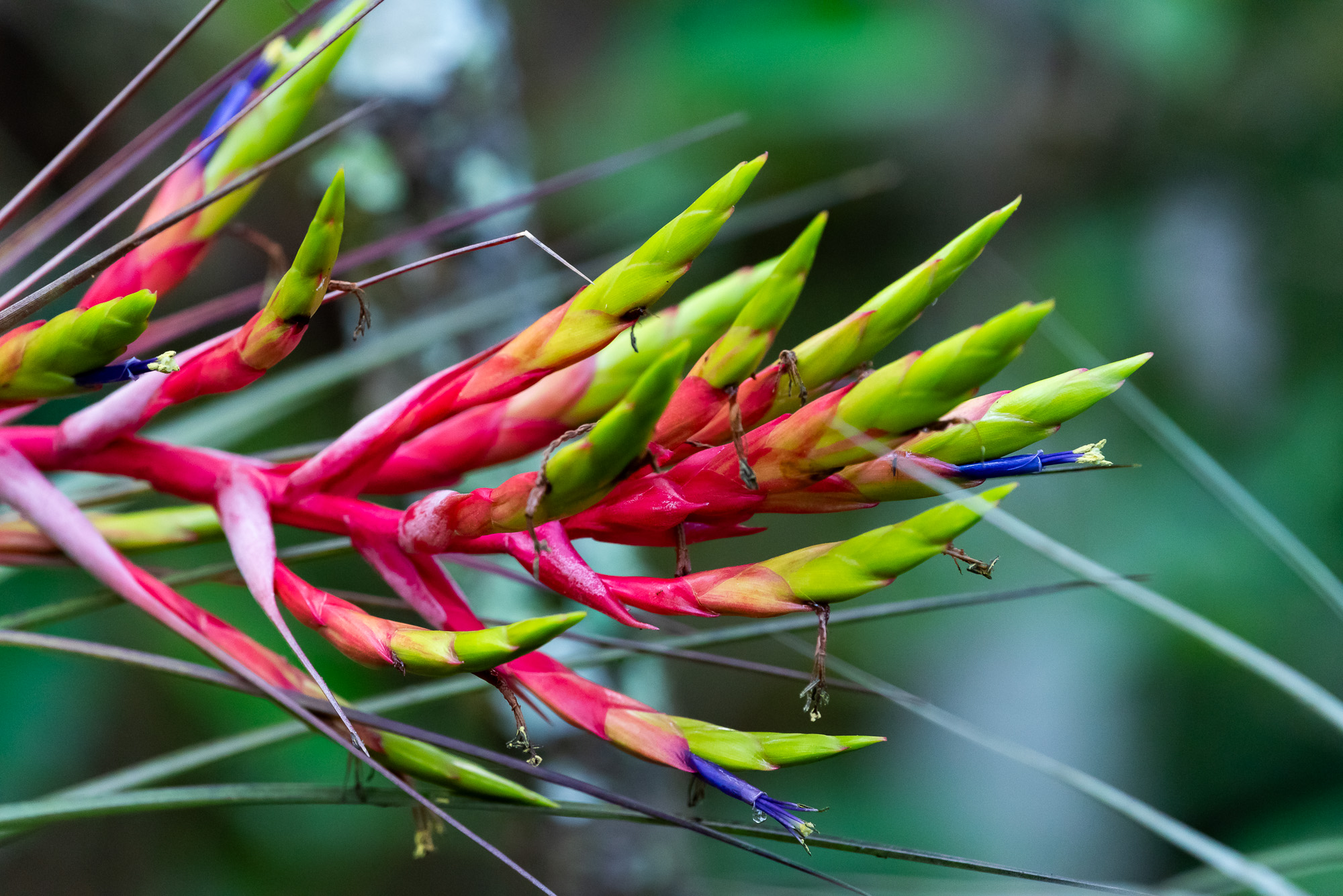
We promised more Cardinal Airplants (Tillandsia fasciculata).
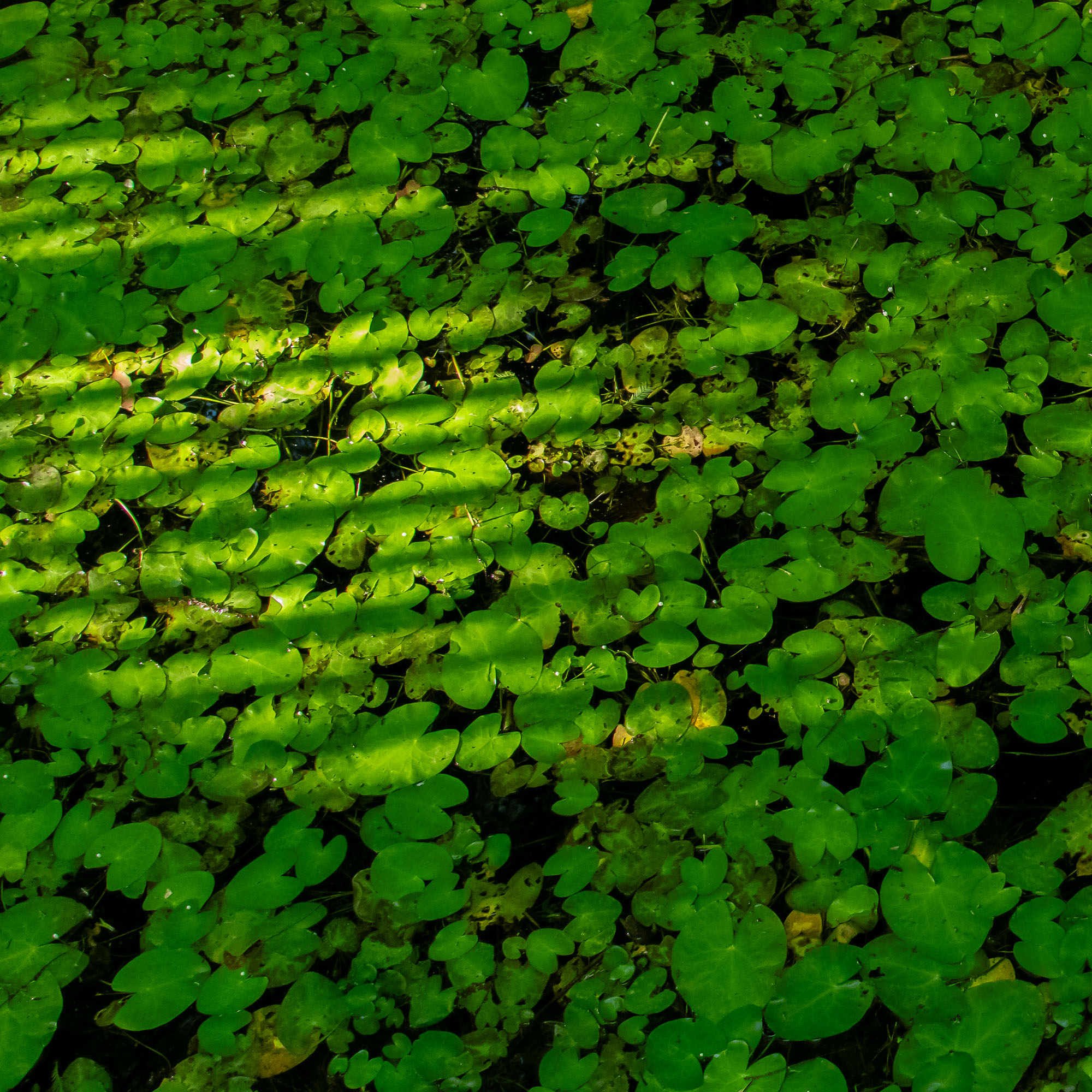
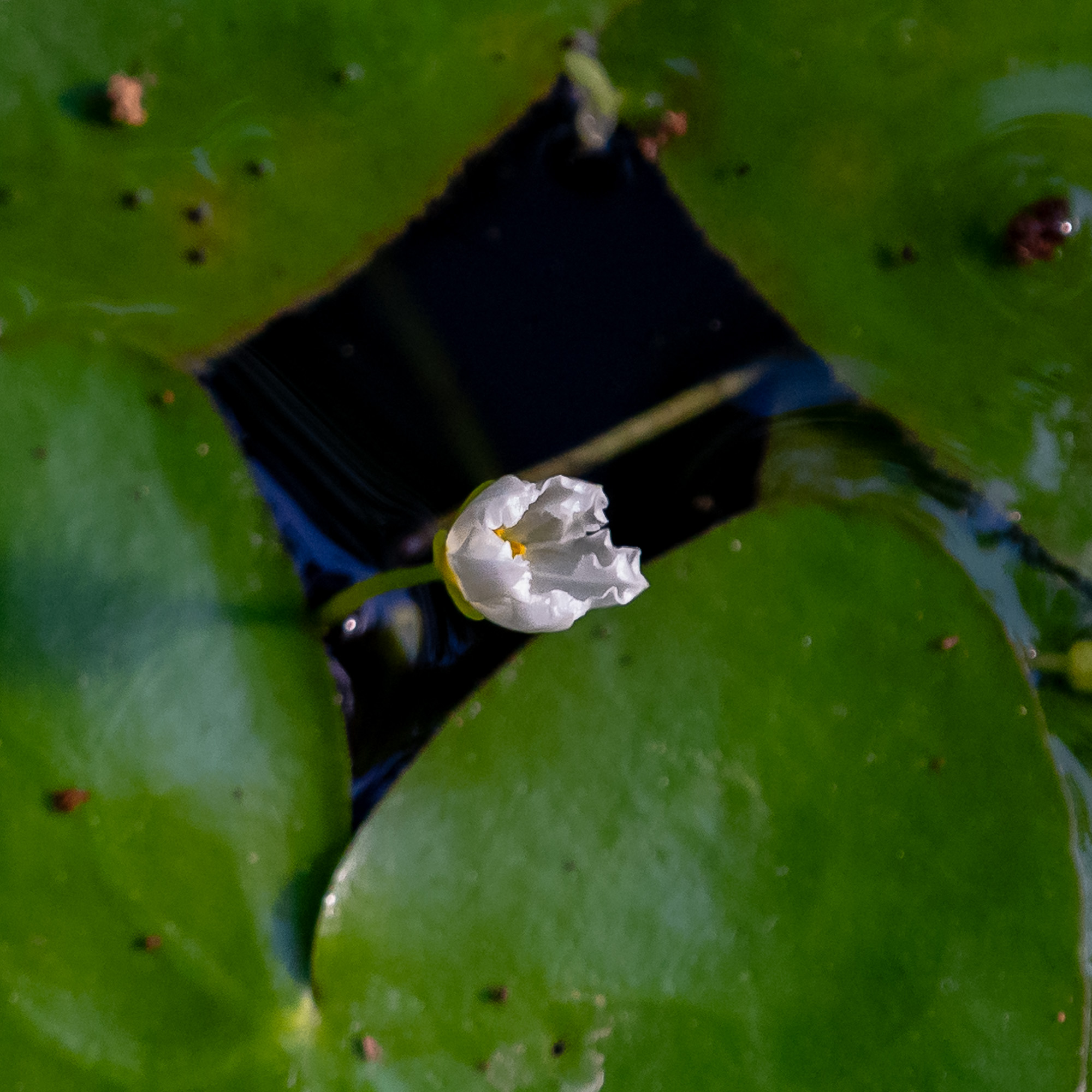
There are two species of Floating Heart (Nymphoides spp.) prevalent in this part of south Florida. One is native, the other invasive. I couldn’t tell which this one was. In the first image, enlarge and zoom in to see the very small white blooms decorating the heart-shaped leaves. The second picture provides a little better view of the flower.
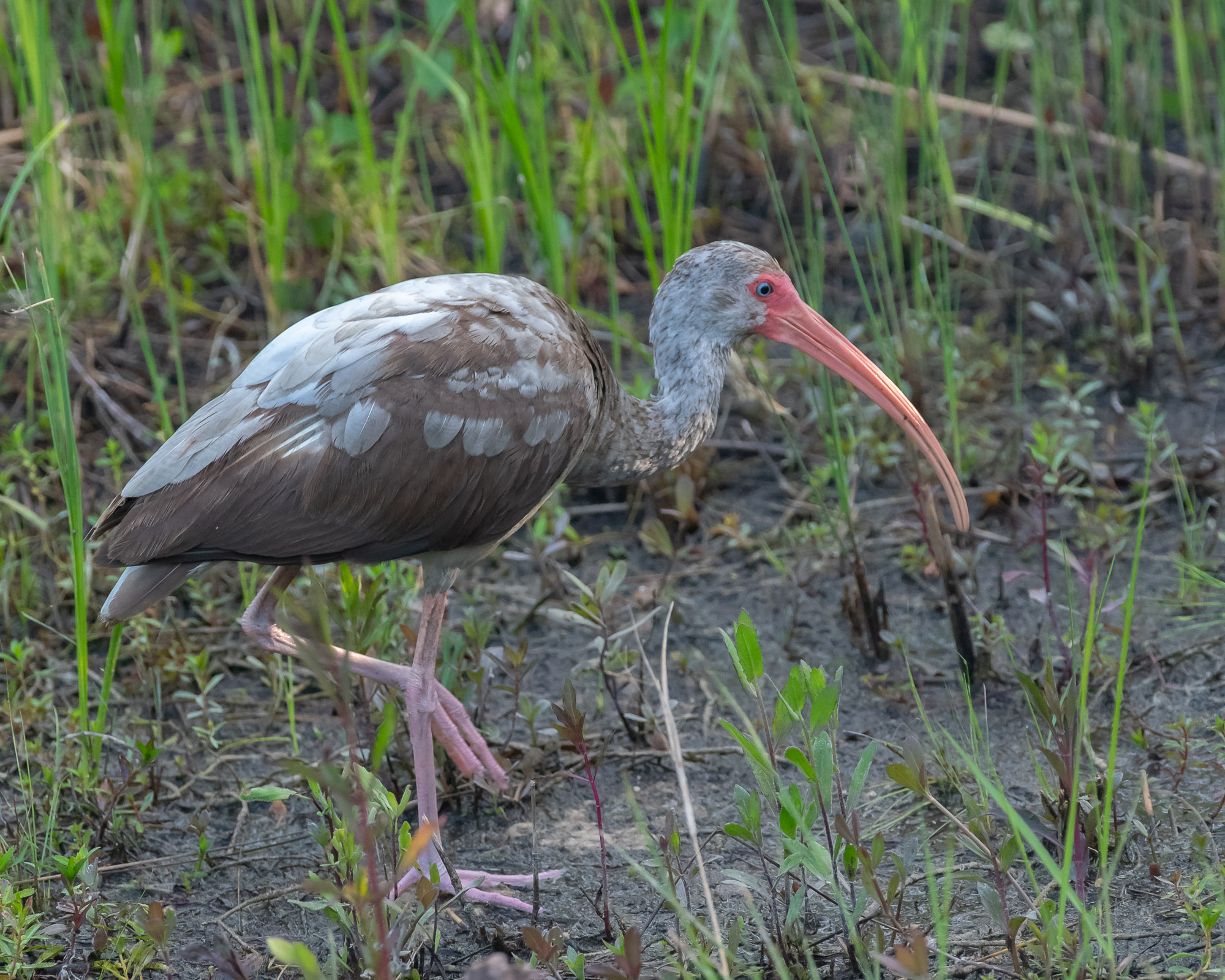
An immature White Ibis was not deterred by our presence as she probed the soft ground for breakfast. It takes about a year for these birds to achieve the completely white plumage of an adult.
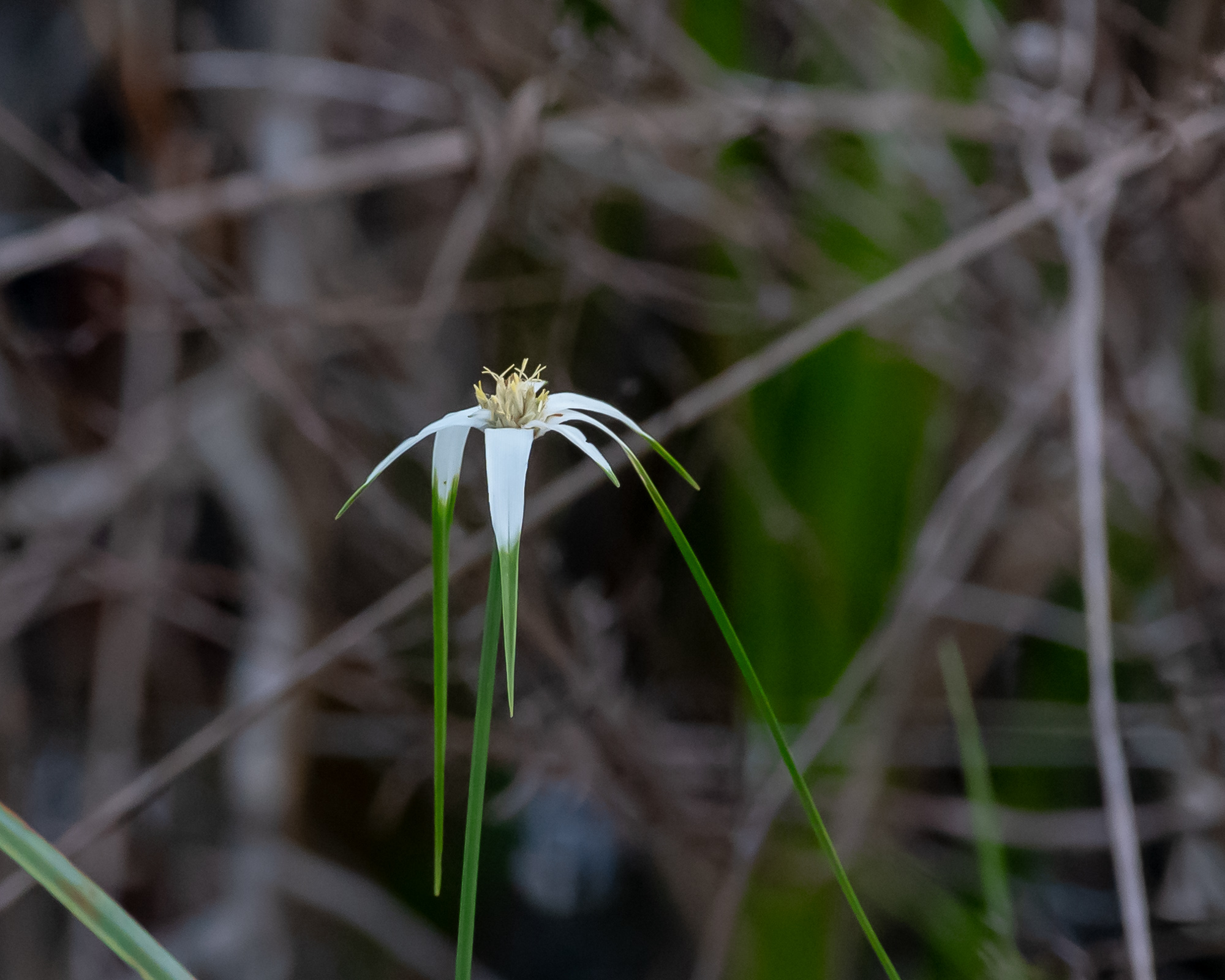
It may appear to be a flower, but the Starrush Whitetop (Rhynchospora colorata) is actually a perennial sedge. Unlike other sedges and grass-like plants, which are wind-pollinated, it’s pollinated primarily by insects.
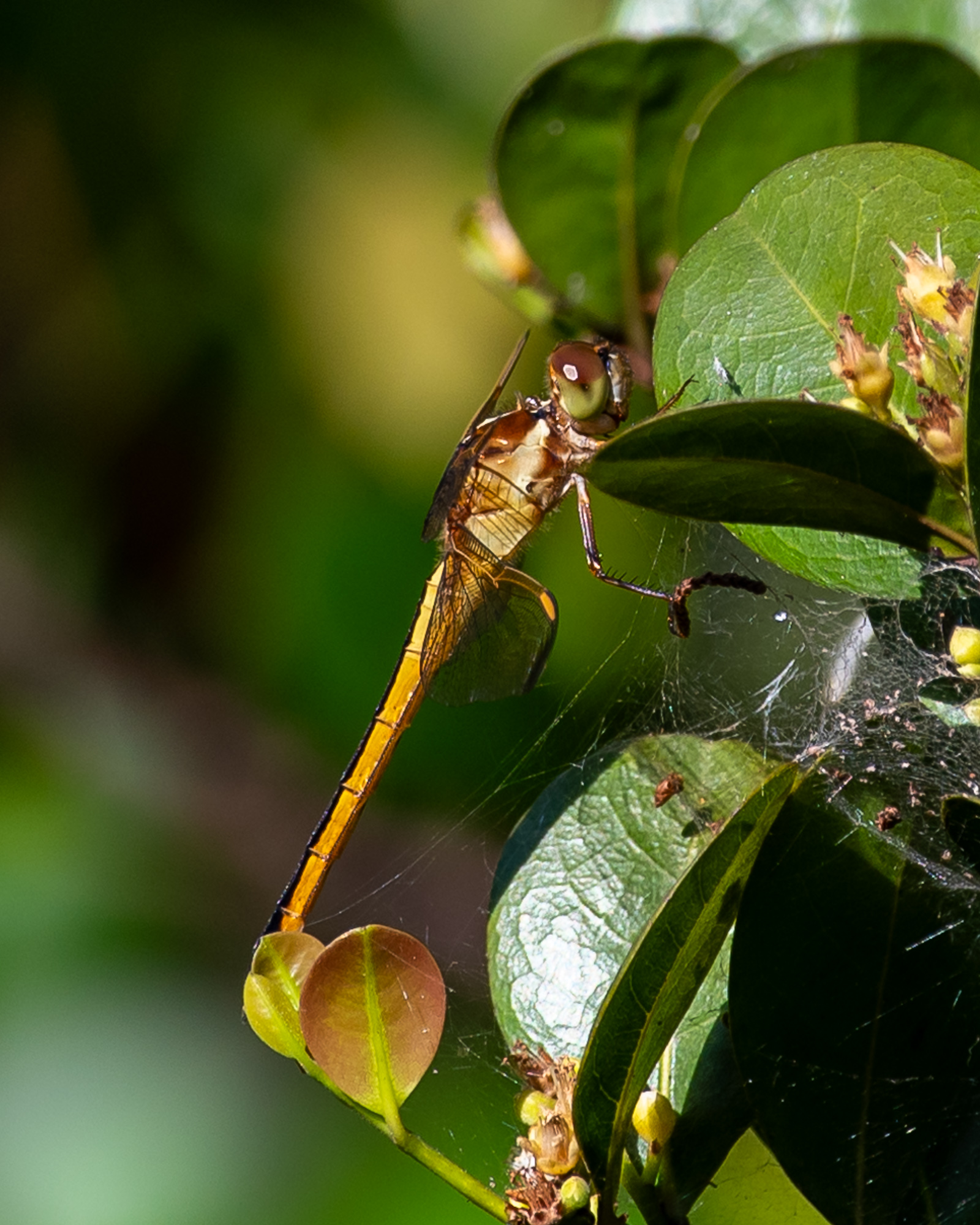
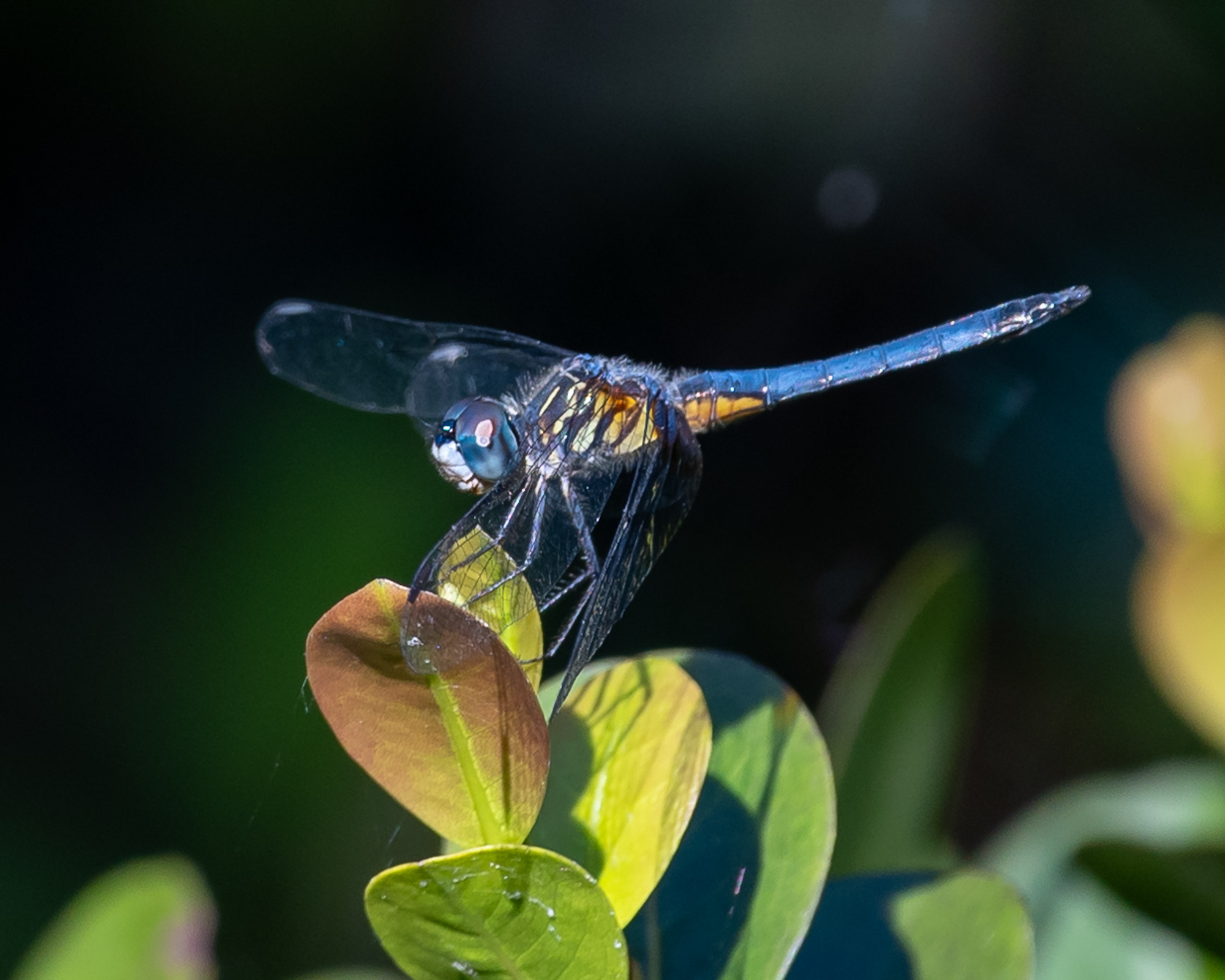
Spring begins early in the southern Florida swamps and there were plenty of insects enjoying the warmth, humidity and newly flowering plants. Gini’s sharp eyes spotted a Needham’s Skimmer (Libellula needhami).
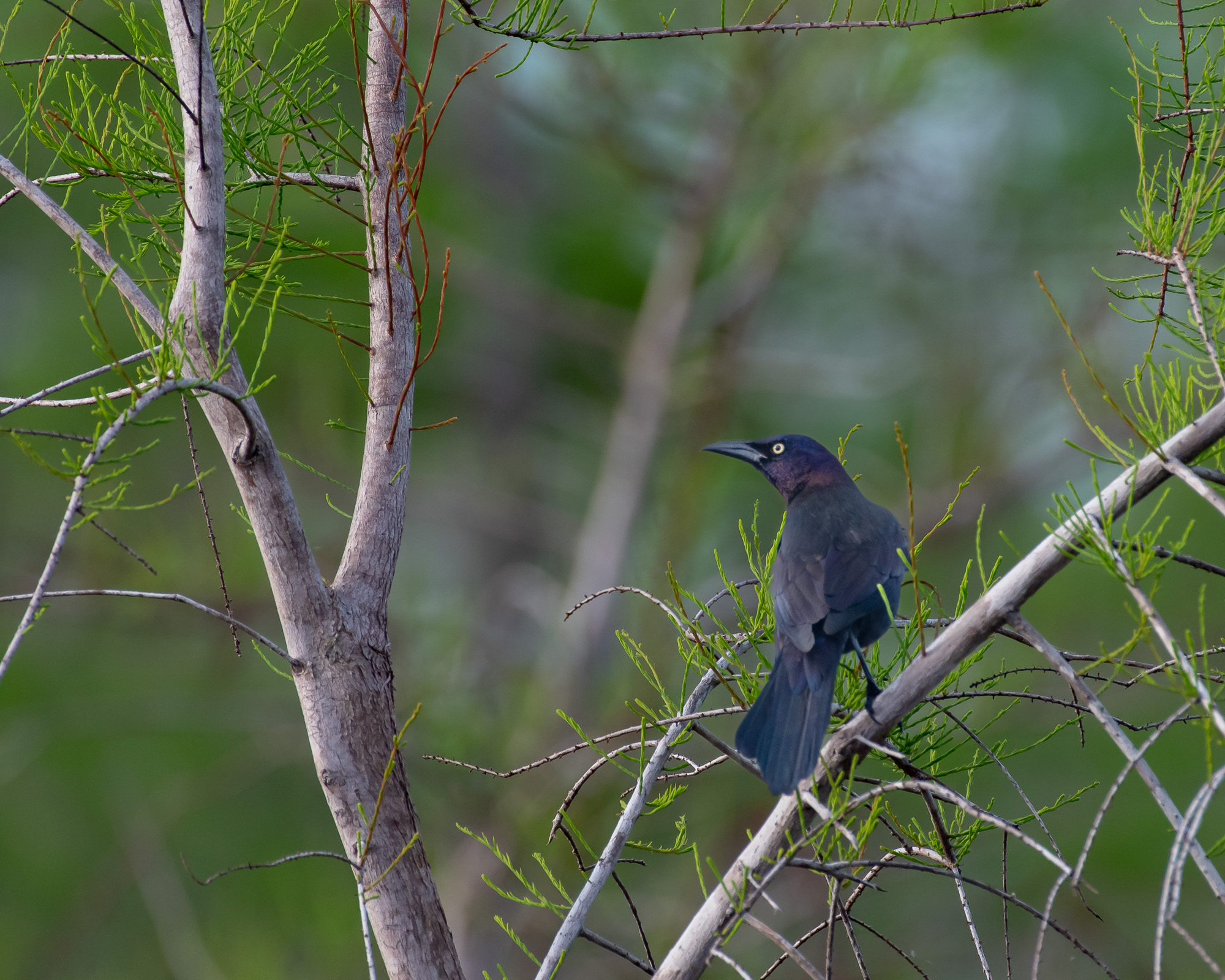
Typically loud and challenging, a Common Grackle issued an unceasing “intruder alert” so the whole swamp knew we were there.
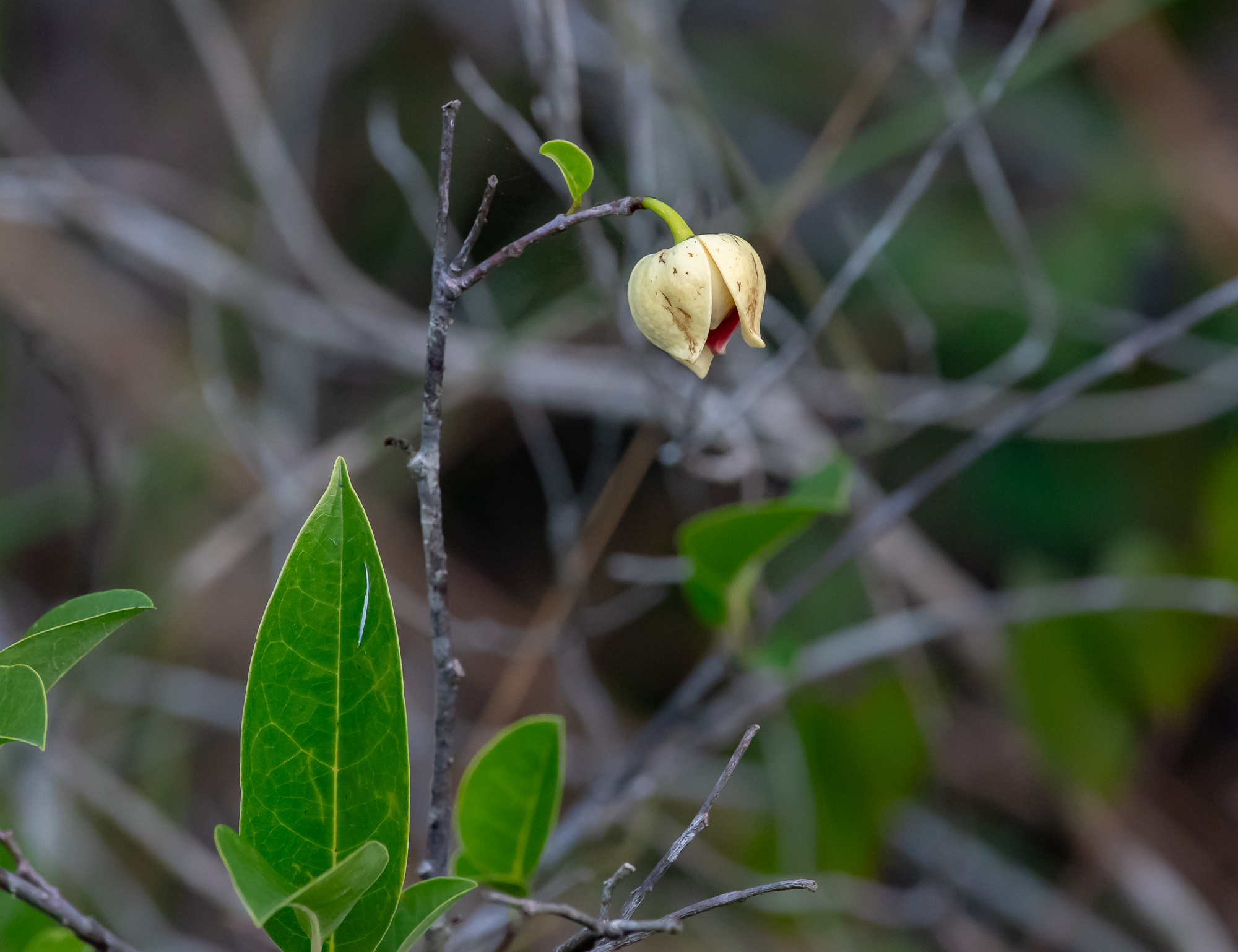
Another swampy resident of south Florida, the Pond Apple (Annona glabra) actually does form a small fruit resembling an apple. Reports of it being edible vary from “okay” to “use it in preserves” to “yukkk“.
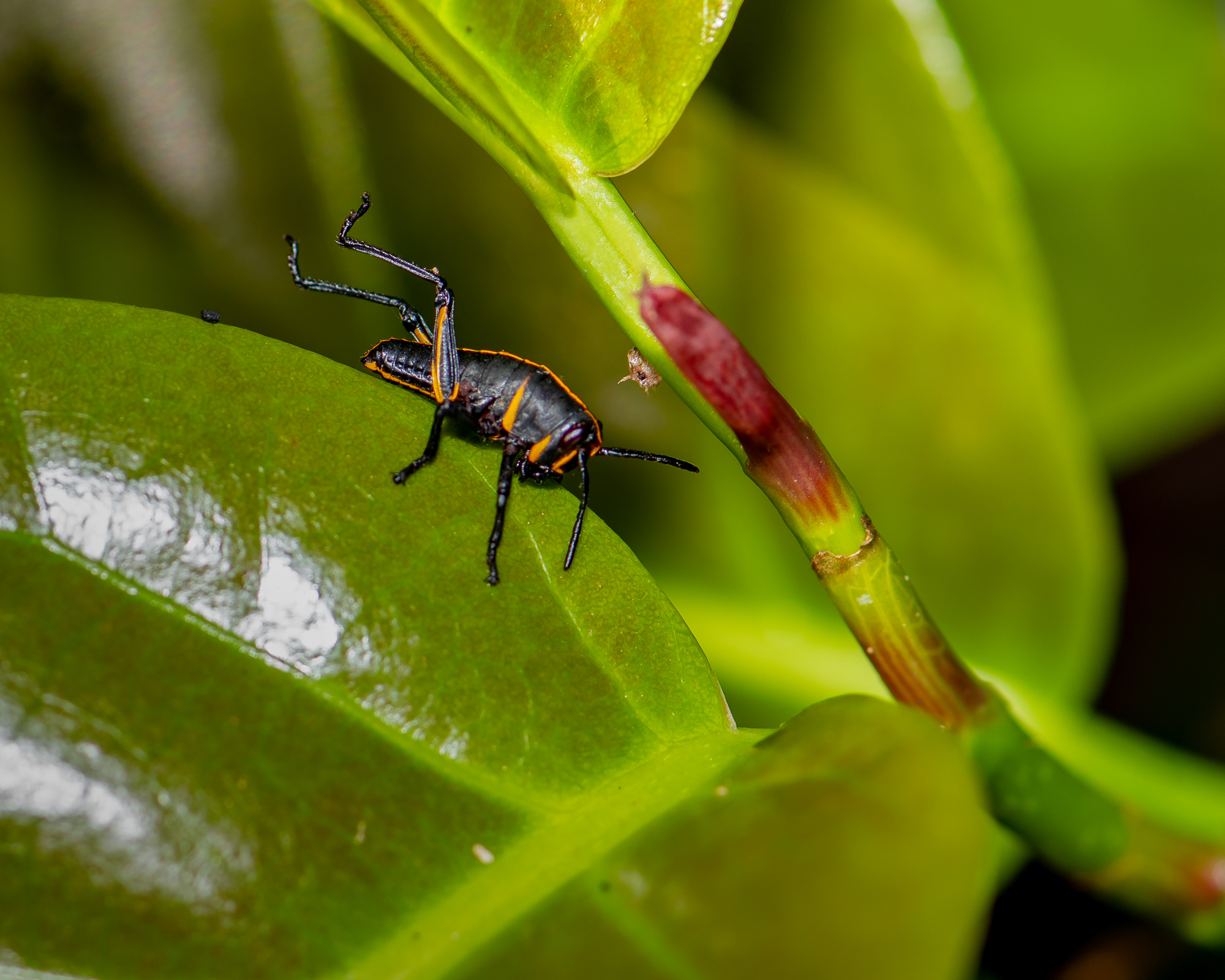
The large bright yellow grasshopper known as the Eastern Lubber Grasshopper (Romalea microptera) begins life as a small mostly black creature. Still pretty striking when on a nice green leaf. The immature ‘hoppers go through five molts (instars) each lasting about 20 days before becoming adults.
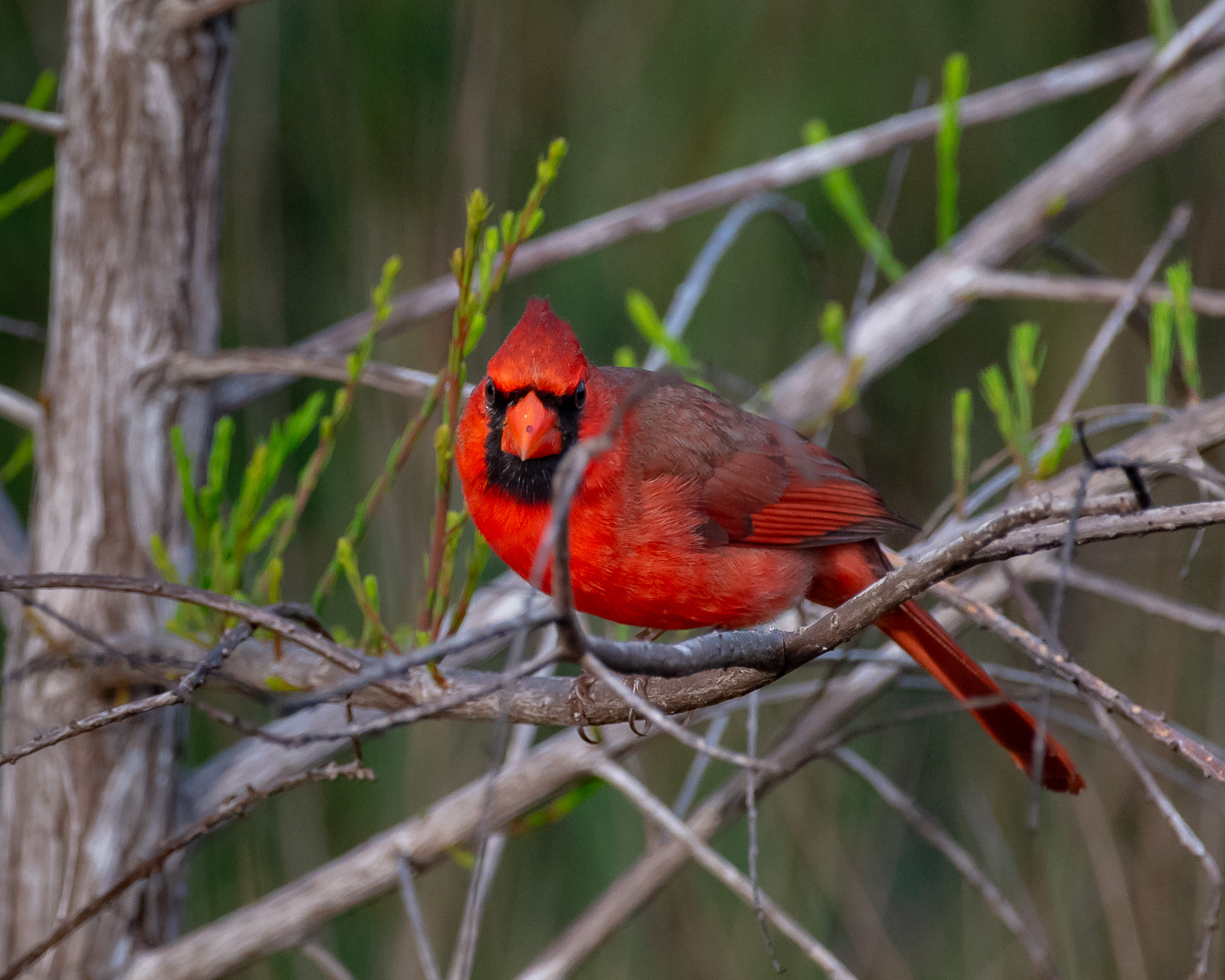
Bright red bird posed nicely. Northern Cardinal.
Bright red flower posed nicely. Cardinal Airplant (Tillandsia fasciculata). Again.
Another swamp dragon. A male Blue Dasher (Pachydiplax longipennis) has a bright white face, blue abdomen and cool black-and-yellow racing striped thorax.
Okay, adventurers. Tomorrow we will be heading northwest for a dose of salt water. So refuel and get a good night’s sleep. For us, a bowl of she-crab soup, a helping of fried green tomatoes and a platter of fresh shrimp. That hotel bed will feel mighty comfortable. Sweet dreams!

The Big Cypress Preserve offered up some amazing scenery, flora and fauna. We found familiar things in a different setting, discovered new plants, enjoyed incredibly dark night skies packed with stars, basked in the warm Florida sun and can’t wait to do it again!
Enjoy your search for a natural place and come back for a visit!
Additional Information
Big Cypress NP (https://www.nps.gov/bicy/planyourvisit/things2do.htm)
Big Cypress NP Visitor Centers (https://www.nps.gov/bicy/planyourvisit/visitorcenters.htm)
 Our Natural Places
Just catching up on your adventures, as I’ve been on the road for our anniversary celebration (not nearly as many years as you guys, you have set the standard!). I too was glad to see the closeup photo of the Tillandsia – I had previously thought it must have a slight iridescence because of the blue tint among the bright pink blooms… but now I see it has lovely blue blooms!
I was intrigued by your Moonflower (Ipomoea alba). I’ve wanted to grow Moonflowers for some time, but was discouraged by the description of Moonflower {datura wrightii) which is entirely poisonous. The binomial names would tend to indicate these two “moon flowers” are not related… but I need to be sure.
LikeLike
Well, happy anniversary to you youngsters!
I wanted to get closer to all the subjects in the swamp but all that water, sawgrass, snakes, ‘gators and common sense spouse left me relying on long lenses and luck.
Your Datura species is what I’ve always called Angel’s Trumpet and once upon a time sent many teens to the ER as some idiot persuaded them they could get high by ingesting or sniffing or rubbing or something. Have not heard it referred to it as Moonflower. Marketing name, maybe?
The Ipomea is the family of morning glories. Pretty sure I won’t eat them, either, just to be safe.
LikeLike
Thank you for the tour of this beautiful preserve. I would love to see moonflowers and tillandsia one of these days, apart from all your fabulous birds, of course.
I particularly liked your description of the birds who make “sounds that soothe the soul.”
LikeLike
You are very welcome.
It’s so amazing that such an expanse of swamp can produce such a variety of life forms.
Yeah, we spent a week with “soothed souls”!
LikeLiked by 1 person
Your images are incredible as usual. But it was your first sentence that really hit home. It reminded me of last week when I got up at 4:30 and went to sit in the hot tub. It was totally black and not a sound other than the ringing in my own ears. No wind, no birds, nothing. Nature can be so silent sometimes!
LikeLike
Thank you very much for the really nice comments.
I reckon that Sound of Silence is why we keep visiting Nature’s big ole yard.
LikeLike
More great and beautiful captures! The Cardinal Airplant closeup shot is stunning, wow! I see Joanie’s Blue Crab Cafe is still there, nice. Did you get to stop at the Big Cypress Bend Boardwalk? It was one of my favorite places to go. We camped in Everglades City from Jan to March in 2020 and 2021. I had the best time venturing all directions from there. 🙂
LikeLike
The Cardinal Airplant, and some of its cousins, were in abundance. Joanie’s was terrific. Great food, great people.
The Big Cypress Bend boardwalk was damaged by Hurricane Ian and is still under reconstruction.
We’ll be back.
LikeLiked by 1 person
Another perfect day, it would seem, Wally. I found the early instar Eastern Lubber Grasshopper to be particularly attractive. If I’d found that beautiful crayfish claw, I’d have been very tempted to take it home, clean out any flesh (not an easy task, I suspect), and put it on my curio shelving in my study.
Things seem to be going according to plan here. My best wishes to you and Gini – – – Richardh
LikeLike
Several perfect days, all in a row.
We’ll try to be on the lookout for young Lubbers demonstrating their habit of congregating in large number just at sunset as they climb a plant stem or fence post to spend the night safe from some predators. Quite a sight.
We used to collect a lot of entire crayfish, but none made it to a curio shelf, just a big pot then a plate.
It is heartening to know someone actually has a plan and even better to hear things are going according to it.
We are well.
LikeLike
That Tillandsia is truly beautiful. It took me a while to figure out what other plant its flowers remind me of. Coral Bean! The flowers emerge in a similar way, although Coral Bean doesn’t have those neat little blue thingies as accents. Are the blue ‘thingies’ the actual flower, while the red and green parts are bracts? It’s a lovely complexity for sure.
I remember you mentioning the moon flower; it’s a beauty, too. And it was fun to see the starrush whitetop. I remember that we have two species: one shorter, and given more to coastal locations, and another, much larger species that shows up in east Texas. I’ll have to sort that out, but I’d bet the one in places like the Big Thicket is what you’ve shown here.
I remember the name ‘Tamiami Trail’ — maybe from you, maybe from another bird blogger who lives on the east coast of your state and who frequents the swamps. I’m looking forward to more bulletins — and wouldn’t I love to stop at Joanie’s!
LikeLike
You are right, the blue “thingies” are the actual flowers and the red/green parts the bracts.
We have three species of Rhynchospora in Florida with two in this area: R. colorata and R. latifolia. For me, it’s not easy telling them apart but I went with the former due to number of bracts, plant height and tapering of white to green on the bracts. This could very easily be latifolia.
It may be obvious, but “Tamiami” equates to “Tampa To Miami” and used to be the best route to get from here to there. Once Interstate 75 was built, the Tamiami Trail became much less nerve-wracking to drive.
Joanie’s was so nice – we dined there twice.
LikeLiked by 1 person
I didn’t know the origin of ‘Tamiami,’ so thanks for that. I assumed it was a tribal name of some sort. I guess maybe it is!
LikeLike
Another truly wonderful day. Thank you muchly.
LikeLike
You’re very welcome, EC.
Our pleasure.
LikeLike
What a fun and beautiful place to explore, and about as far removed from my desert wanderings as one can get! I love the Moonflower. It really jumps out of the photo! I don’t think I’ve ever seen one.
LikeLike
Yep, your desert vistas are so very different from our swampy panoramas, yet equally as gorgeous.
The Moonflower is basically a great big Morning Glory. Blooms can measure over six inches in diameter.
LikeLike
Shades of Paul Simon in your opening line. Later the cardinal calls up the repeated line from “Casablanca,” “Here’s looking at you, kid.” And like the cardinal, the white-topped sedge is another thing that Texas shares with Florida. Too bad the cardinal airplant, with its own way of celebrating bright red, doesn’t make it over here.
LikeLike
You caught me channeling Simon.
We can celebrate those things in Nature we have in common and be thankful for the ability to share those we do not.
Nature-sharing. A positive outcome of the age of the Internet.
LikeLike