Spring In Winter
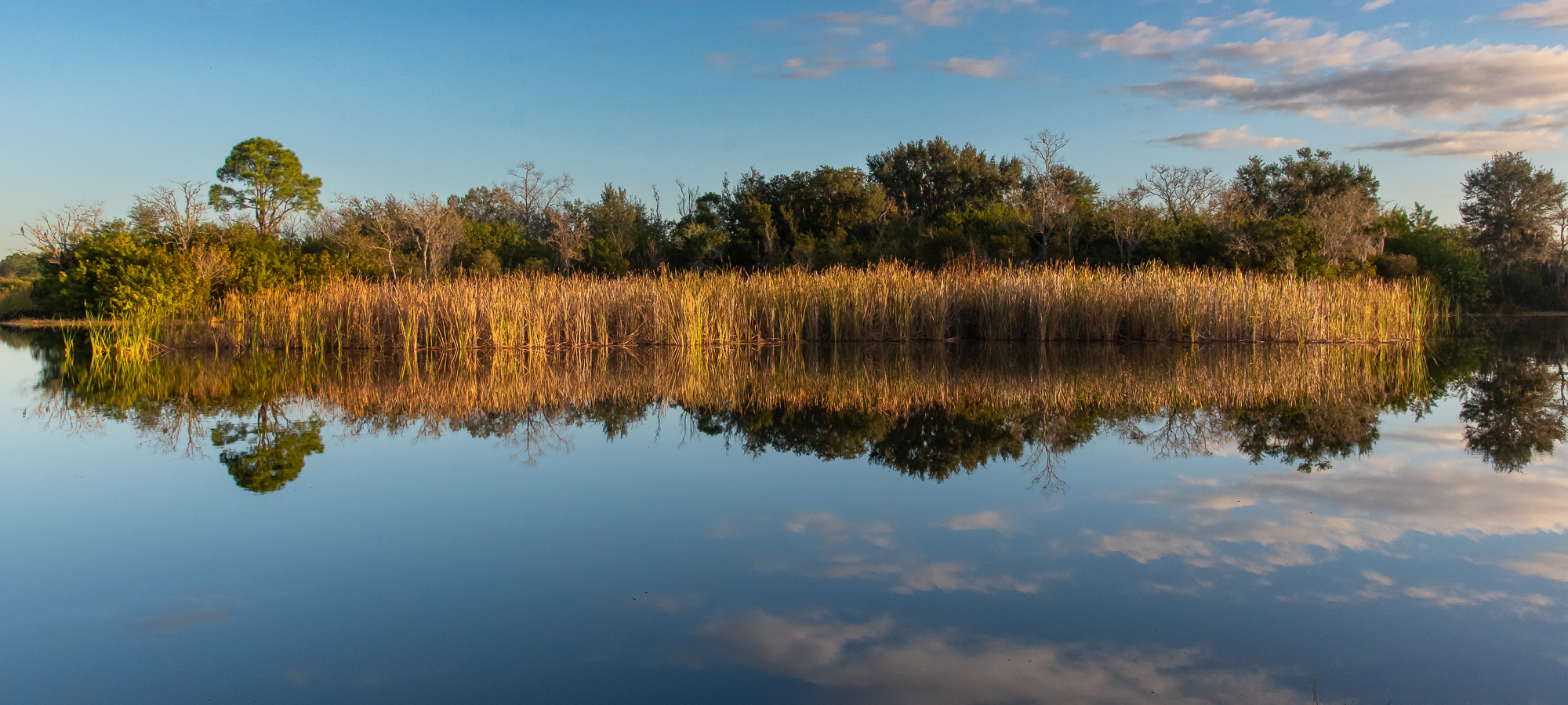
(Click images to enlarge, click again to zoom.)
Good news and bad news.
The good news: Our central Florida winter has not had any days below freezing. That means we have been pretty comfortable as we explore.
The bad news: Our central Florida winter has not had any days below freezing. That means mosquito larvae have not suffered much degradation and there will soon be many hungry adults looking for a feast. Additionally, our local strawberry crops produce sweeter fruit when we have a couple of cold weather events, as the berries remain on the plants longer allowing more sugar to develop.
Our goal is clear. Enjoy being outside more since it’s so warm and cozy. Stock up on skeeter spray and sugar.
Check.
One of our recent warm-ish (Gini needed a sweatshirt) and cozy outings took us through some local territory where it became increasingly obvious that Nature abhors a calendar. Or at least ignores them. Spring is “officially” (so, there!) not arriving until the third week of March. Imagine our surprise <(this is known as “sarcasm”) when we encountered birds engaging in “Spring” migration, flowers blooming and – gasp – actual nest building taking place! Our minds were boggled.
Well, perhaps not completely boggled. We are, after all, spoiled native Floridians and if the winter had produced two days in a row below 40 you would have been able to hear us whining about it all the way to Timbuktu, which, I think, is a very long way from here. We bravely take these abhorrent non-freezing, snow- and ice-free days in our flip-flop stride. (Except for Gini. Below 50 and out comes that sweatshirt. I try not to roll my eyes.)
Turn up your heater, pretend you’re with us in the sub-tropics and enjoy the day!
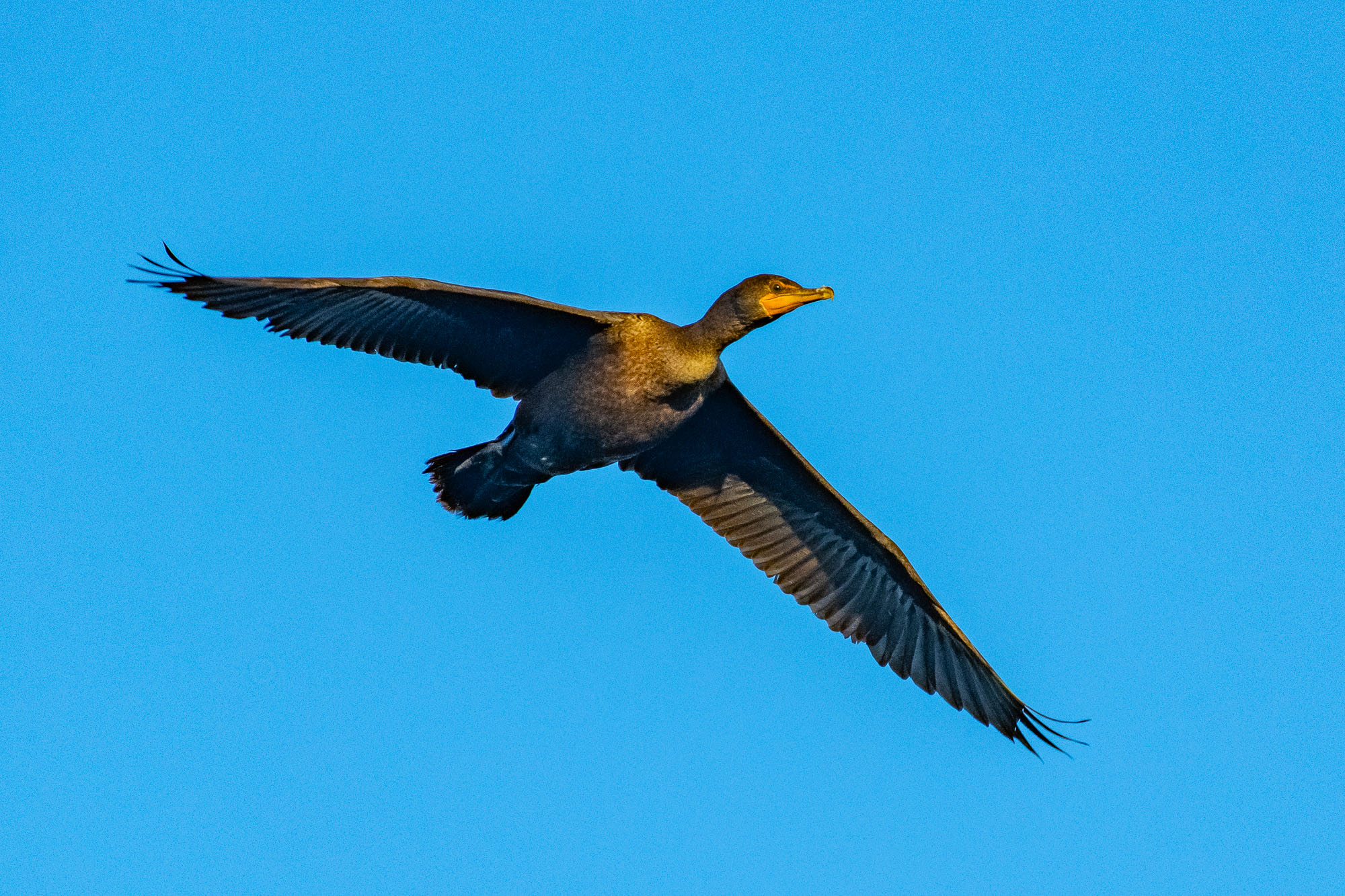
Double-crested Cormorants roost in nearby wetlands and at dawn begin spreading out across the lake-studded landscape to find a good fishing area.
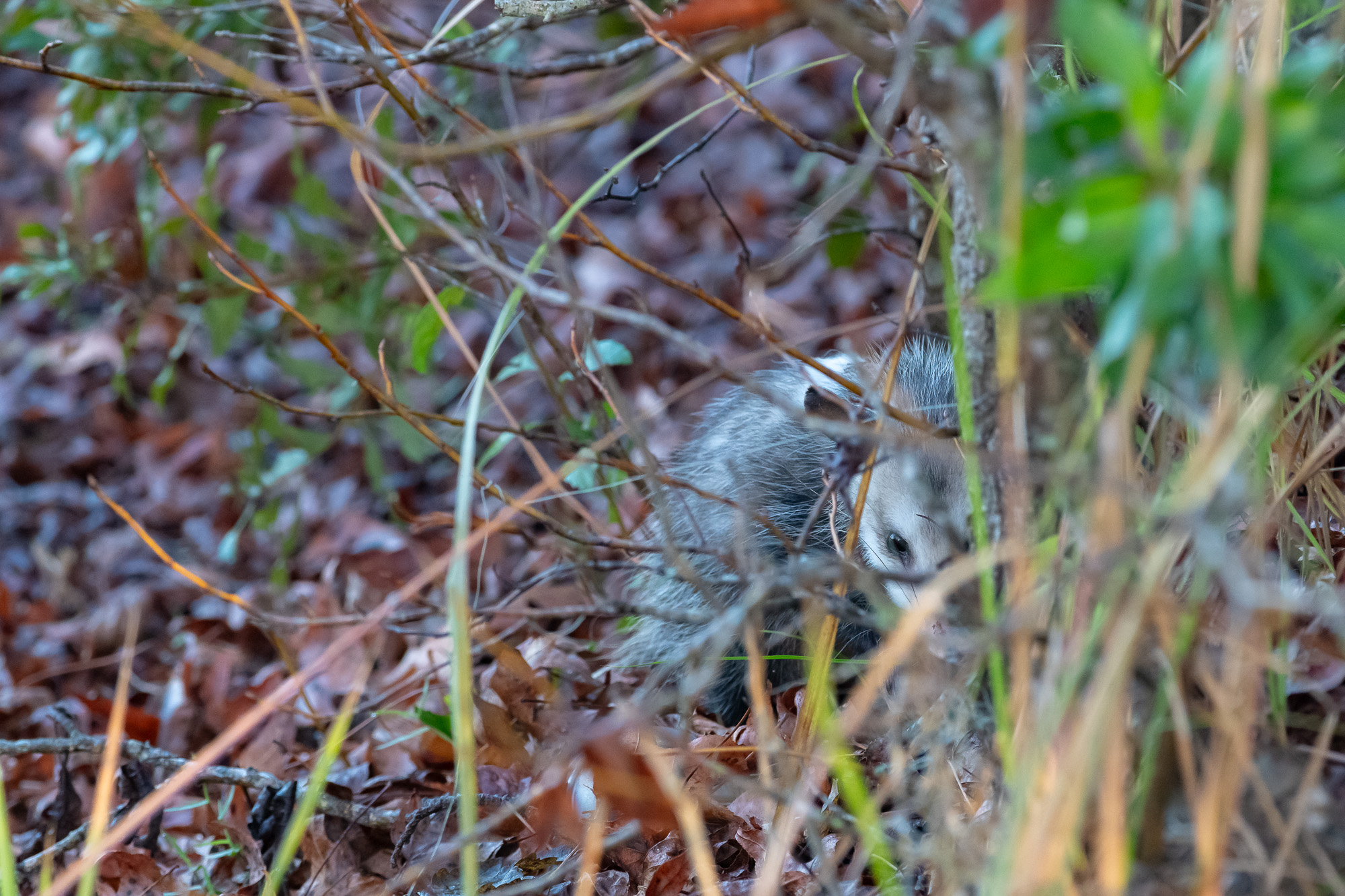
You know the feeling. Someone is looking at you. You turn this way and that and, there – a pair of dark eyes examining you to see if they should run or hold still. I slowly backed away and took a quick pic of the young Opossum.
Escargot for breakfast. Beats me how Limpkins can enjoy the things with no lemon and garlic butter.

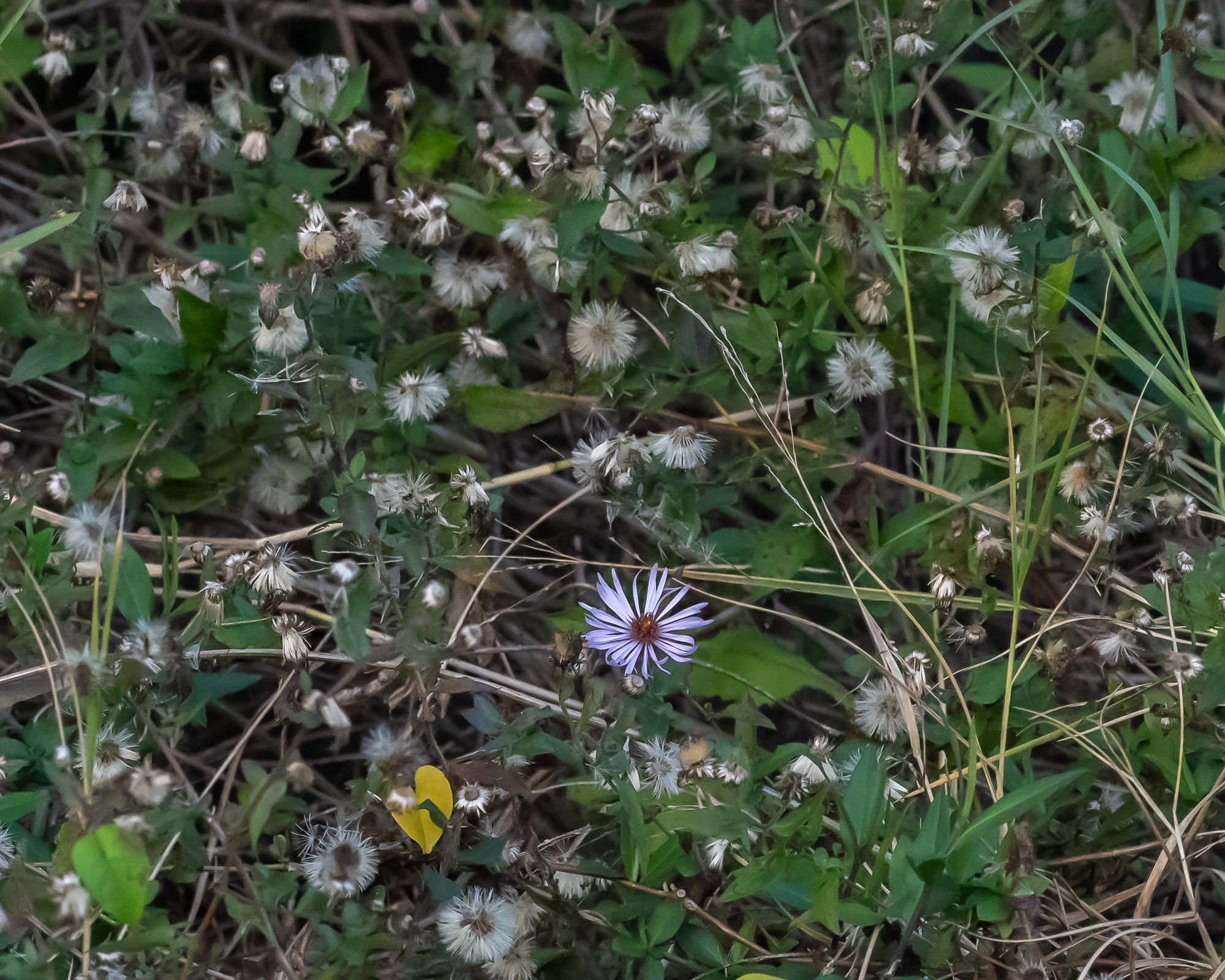
Most of the Climbing Aster (Symphyotrichum carolinianum) has bloomed and gone to seed. Except one lovely lavender holdout who remained for us to enjoy this morning.
Osprey nests throughout our area are being built, re-built and spiffed up. Soon, there will be new mouths waiting for fresh fish to be delivered.


Is it a new bloom or has it been here all winter? We are just thankful this Indian Blanket (Gaillardia pulchella) is here at all.

One of our winter visitors, an Eastern Phoebe, is happy for the warm weather since it means more insects will be out and about. She would like to invite a few for breakfast.

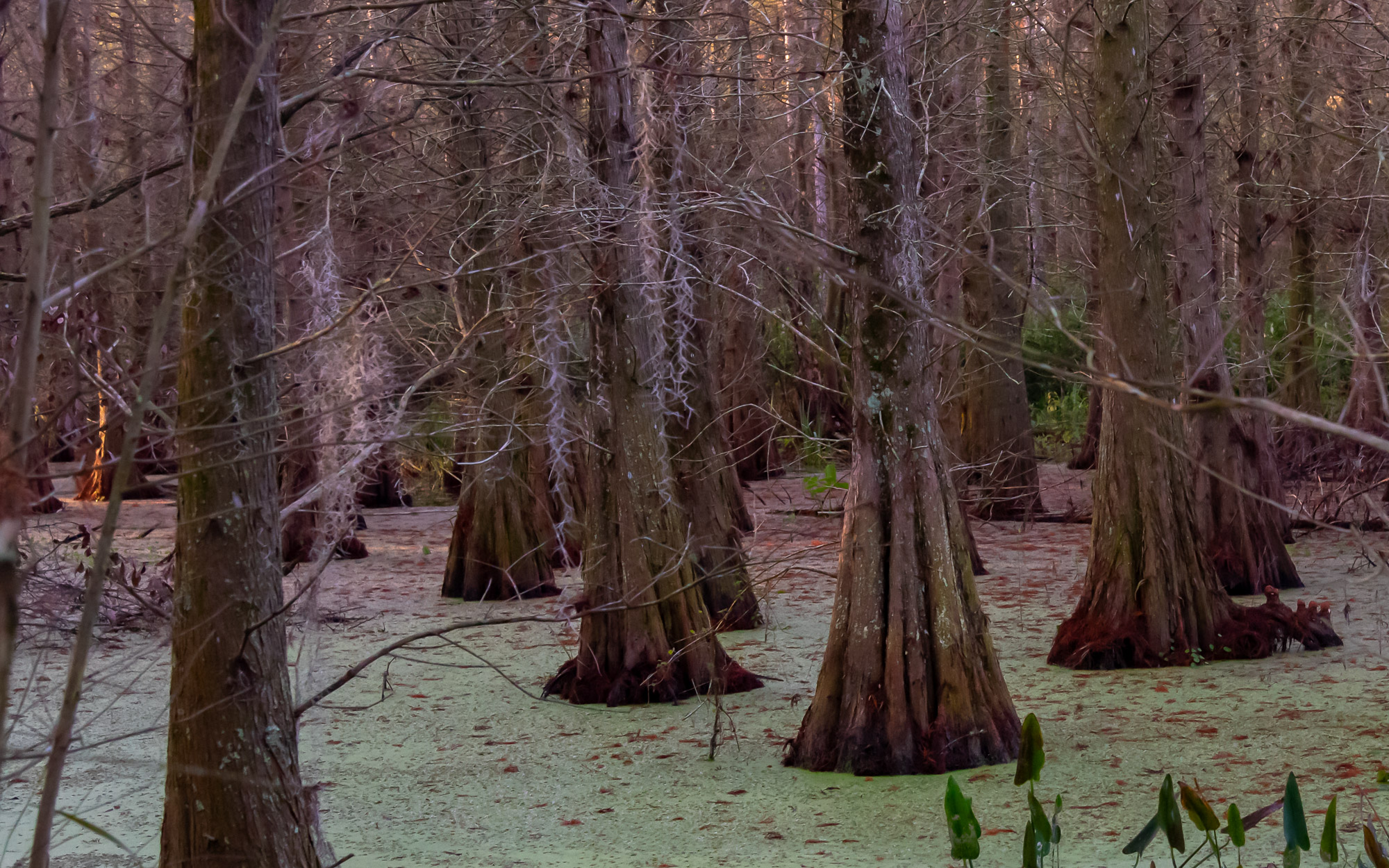
It takes awhile after sunrise for the cypress swamp to allow some light to penetrate.
During fall and through much of the winter, Burrmarigold (Bidens laevis) blooms in masses along the edges of wetlands, creeks and lakes.

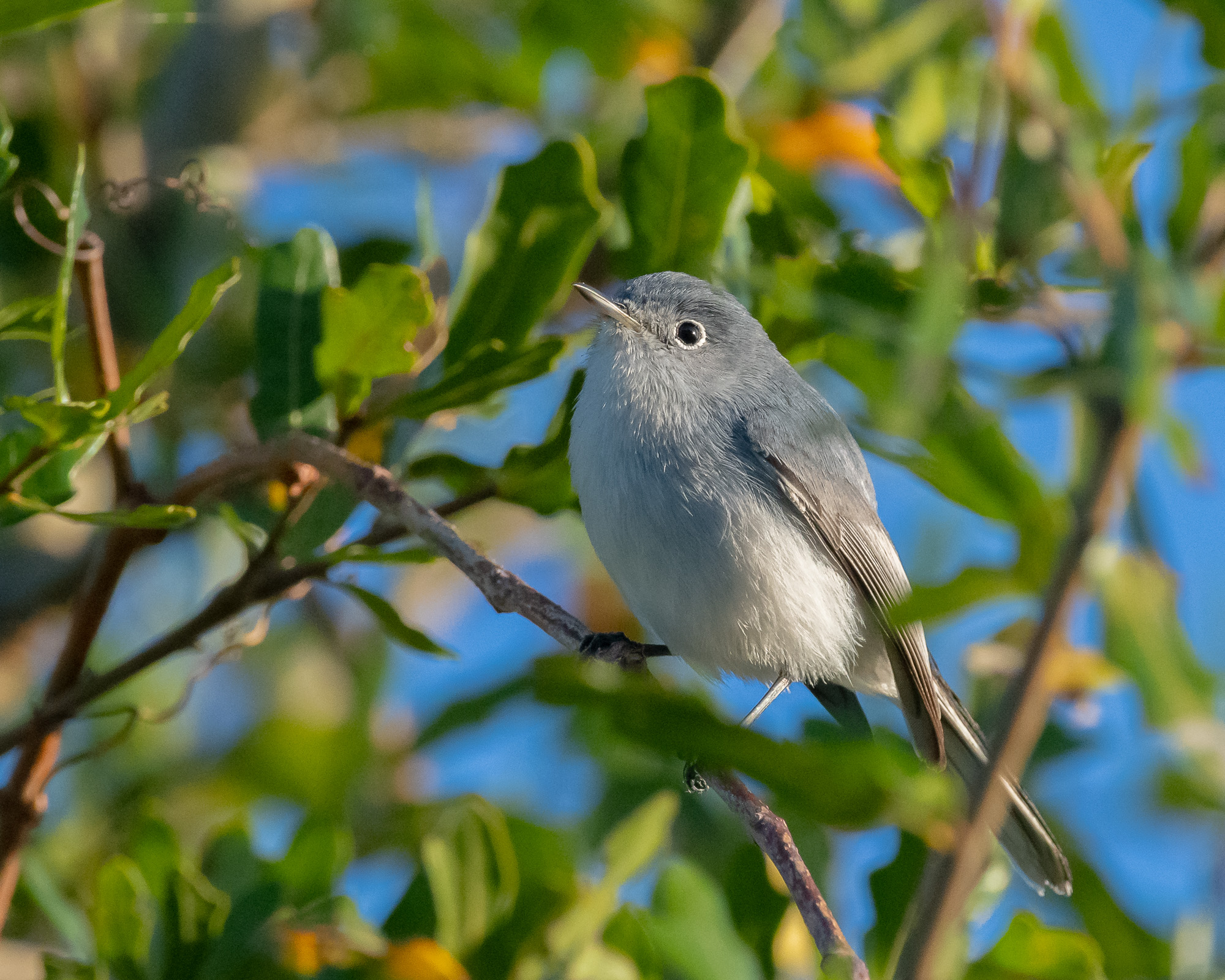
Blue-gray Gnatcatchers are beginning to form groups as they hope there will be safety in numbers during their upcoming long migration flight northward. Many of these small, quick-moving bug catchers will remain with us all year. Hopefully, they will feast on mosquitoes. Lots of them.
It has pretty, feather-like leaves along its twining branches. It has pretty pale pink flowers. It has pretty bright red seeds encased in its rough brown pod. It is an invasive plant from Asia which can choke the life out of native plants. Rosary Pea (Abrus precatorius).
Oh. And it’s poisonous. Don’t eat the pretty seeds. Wash up if you handle it.

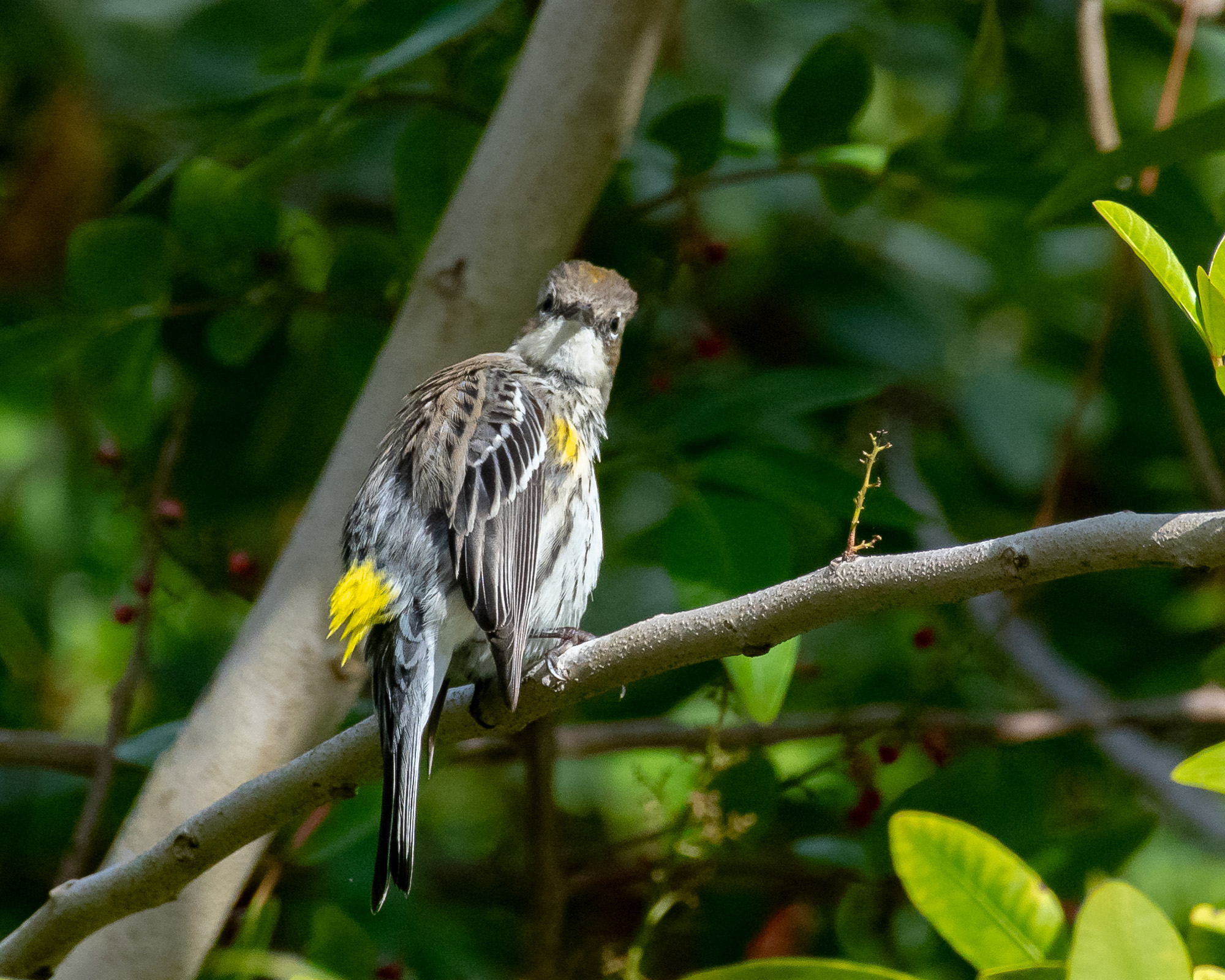
Another one of our handsome seasonal visitors. The Yellow-rumped Warbler arrives a bit later in the Fall than some other songbirds and hangs around a bit longer in the Spring. This one is preening which is important for good health and — What? — Me? — Taking a picture of you bathing? — Well, yes, I guess I was. — Sorry about that.

A small cypress tree bayou leads from a lake into an adjacent wetlands.

An immature Bald Eagle flew low overhead. Time for us to fly toward home.

We hope Spring arrives ahead of schedule wherever you may be. For those south of the equator, we hope Autumn will be kind and deliver just enough rain without overdoing it. Whatever your season may bring, embrace Nature and live your best life.
Enjoy your search for a natural place and come back for a visit!
 Our Natural Places
That’s one of the prettiest sunrise shots that I’ve seen in a long time! Looks like Spanish moss gets used liberally in nest building. Wonderful post!
LikeLike
Thanks, Peter.
Love it when the water is calm. Yep, that gray stuff is preferred by 9 out of 10 Ospreys. Soft, neutral color so it goes with any decor and comes with a month’s supply of chiggers for the new little ones to munch until they graduate to fish.
LikeLike
A wonderful post, Wally! Felt like I was walking along right there with you two, sharing the beautiful weather and the lovely sights!
LikeLike
Thank you!
You’re welcome to come along with us any time. Lots to see.
LikeLiked by 1 person
Nice photos and story Wally. 50s weather is still shorts and Tshirts here, maybe socks. 😀
LikeLike
Thanks, Brad.
Yeah, 50’s here is shorts and Tshirts weather, too. Covered by thick sweat pants, sweat shirt and insulated jacket. Definitely socks. Two pairs. Wool. And a ski cap. Whatever that is.
LikeLiked by 1 person
Beautiful shots! It’s already muggy here. Ugh! Although, it feels like we had more colder days than last year it didn’t get to a freezing point. I remember last year covering my plants a few nights. I’ve seen that rosary pea along the cow pastures. I’m surprised they don’t pull it out.
LikeLike
Thank you, Dina.
Yes, muggy! Just the way I like it.
Those Rosary Peas are extremely hard to get rid of. They have very long taproots and our friendly birds deposit seeds freely across the land.
LikeLike
Those Rosary Tree berries look very inviting, Wally. I wonder how many people have been lured to their death by them.
Your photo of the cypress swamp had me imagining those trees as a sinister army, just about to move into action.
Having had a spell, here, when it looked as if spring had arrived early, recent heavy frost have nipped that one in the bud – literally!
I’m hoping that our Ospreys will be returning soon.
My best wishes to you and Gini – – – Richard
LikeLike
Growing up in Florida, our parents pretty much told us anything in the great outdoors that we put in our mouth would kill us. Naturally, we proceeded to put everything in the great outdoors in our mouth. Made us stronger.
That specific sinister army of cypress trees hosts hundreds of migrating songbirds this week and is home to a pair of Barred Owls.
Mother Nature can be quite the trickster. Hope your “real” spring will be an unusually pleasant one. You are due for some good weather.
Great to hear Lindsay is making good progress. We hope you both remain well.
LikeLike
Ugh, mosquitoes! I can only imagine how mad it gets there. We have very few of them here. To the point if one actually bugs us, one of them will say “Hey, look, a mosquito” right before smacking it!
LikeLike
One of the many reasons I have been married to Gini for 56 years is the sweetness of her blood is known to attract mosquitoes from all over the universe.
LikeLike
Spring is unfortunately still far away from here…
Love the Ospreys. Happy Wednesday!
LikeLike
We will gladly share our spring-like conditions until yours arrives.
Thank you for visiting with us in any season!
LikeLiked by 1 person
I really enjoy it when you show a broader view of the landscape at the beginning of a post. It’s like an invitation: let’s go see what’s in there! I always tend to ramble too much, but there’s so much here that’s enjoyable. The little hairs close to the beak of the Eastern Phoebe are charming; apart from the bushy bluestem, the last photo looks remarkably like a living swamp I visited in Louisiana; the Osprey with Spanish Moss trailing behind is a great reminder of how much work there is to do in spring!
I was especially taken with the Rosary Pea. Its pods reminded me of Coral Bean, although the seeds themselves are red and black rather than orange. It’s a shame it’s invasive; it really is beautiful, and your photo, set as it is in Spanish Moss, really is perfectly composed.
While I’m no more fond of mosquitos than the next person, I’ve managed to capture three photos of male Aedes vexans gathering nectar or pollen from flowers this year. I’ve never seen that before, and honestly? I didn’t consciously realize that they’d do that. It makes sense, but I’ve always been too busy swatting away the females to think about what the guys were up to.
LikeLike
What a coinkydink! WE enjoy those broader views, too!
I all too often forget about taking such photographs ’cause some durned bird flies into view and off I go. I’m trying to do better in the landscape department. (“Lakescape”? “Swampscape”?)
Do not be afraid of rambling too much here. Gini says it is akin to saying there’s too much garlic in the spaghetti sauce. No such thing.
Those little beak hairs are called “rictal bristles”. Interestingly, “experts” still don’t have a clue as to their purpose.
I agree about the resemblance of the Rosary Pea and Coral Bean pods. There may be some anecdotal evidence that the seeds of the Rosary Pea may not be completely deadly. Gini and I both recall using those bright hard pellets as slingshot ammo in our former lives when we were disguised as children. All the same, better safe than sorry, so treat with caution.
‘Skeeters sipping nectar? It’s a trick. Those guys are distracting you while their girlfriends are practicing their phlebotomy skills on your neck.
LikeLiked by 1 person
Your good news ~ bad news reminds me of the way A Tale of Two Cities opens: “It was the best of times, it was the worst of times, it was the age of wisdom, it was the age of foolishness, it was the epoch of belief, it was the epoch of incredulity, it was the season of Light, it was the season of Darkness, it was the spring of hope, it was the winter of despair, we had everything before us, we had nothing before us, we were all going direct to Heaven, we were all going direct the other way—in short, the period was so far like the present period, that some of its noisiest authorities insisted on its being received, for good or for evil, in the superlative degree of comparison only.”
That bayou with the bushy bluestem in the foreground looks like a picturesque place. As you know, bald cypress trees line creeks in central Texas, too. We also have Bidens laevis. And Gaillardia pulchella.
Does the yellow on the warbler serve any known purpose?
Sorry to hear about your Asian invasive plant.
LikeLike
I wish I had thought of that literary opening but I have to work like the dickens to remember such novel passages.
That scenic bayou is a great place to explore. One must take care to make sufficient noise along that shoreline to alert napping alligators. Hopefully, they will eventually slip into the dark water and allow you to pass. So far, that approach has been working.
It is often surprising how many species of flora we share.
Most colors on birds are to help birds identify others of their species, act as an attraction during courting and in some cases to frighten predators. Actual scientists may be aware of other purposes.
As with many invasive life forms, this one was cordially invited by commercial nursery industries to brighten our otherwise drab American residential landscapes. Who could have predicted it might escape into the wild and proceed to kill everything in sight in order to survive?
LikeLike
I can’t get over your gorgeous clear blue skies. Even when we have “clear” skies, there is still enough moisture in the air to create a slight white haze. Some aspects of our “spring” are also hustling along. Seems like the plants and animals that respond to temperature are already thinking in terms of Summer, while those triggered by sun angle or duration are still thinking Spring. Kind of nice to see the combination (mosquitoes excepted!).
LikeLike
Our Chambers of Commerce are required to add just the right tint of bright blue to skies within their respective areas of responsibility. Seems to be working.
We keep trying to convince the flowers to hold off blooming until we have a day to go visit them. Alas, they ignore us every year. Funny thing, it’s the same with the birds. And pretty much everything in Nature.
LikeLike
Let’s hope the many mosquitos will translate into many newborn birds who then grow up into many healthy adult birds.
I imagine the folks in California and Nevada who were pummeled by feet of snow this week can only dream of an early spring.
LikeLike
Fingers crossed their will be just enough mozzies to feed the new birds with none left over to feed on us.
Snow? Yikes.
LikeLiked by 1 person
Some snow can be a beautiful gift!
LikeLike
How very true.
LikeLiked by 1 person
❄❄❄
LikeLike