The Fog Also Rises*
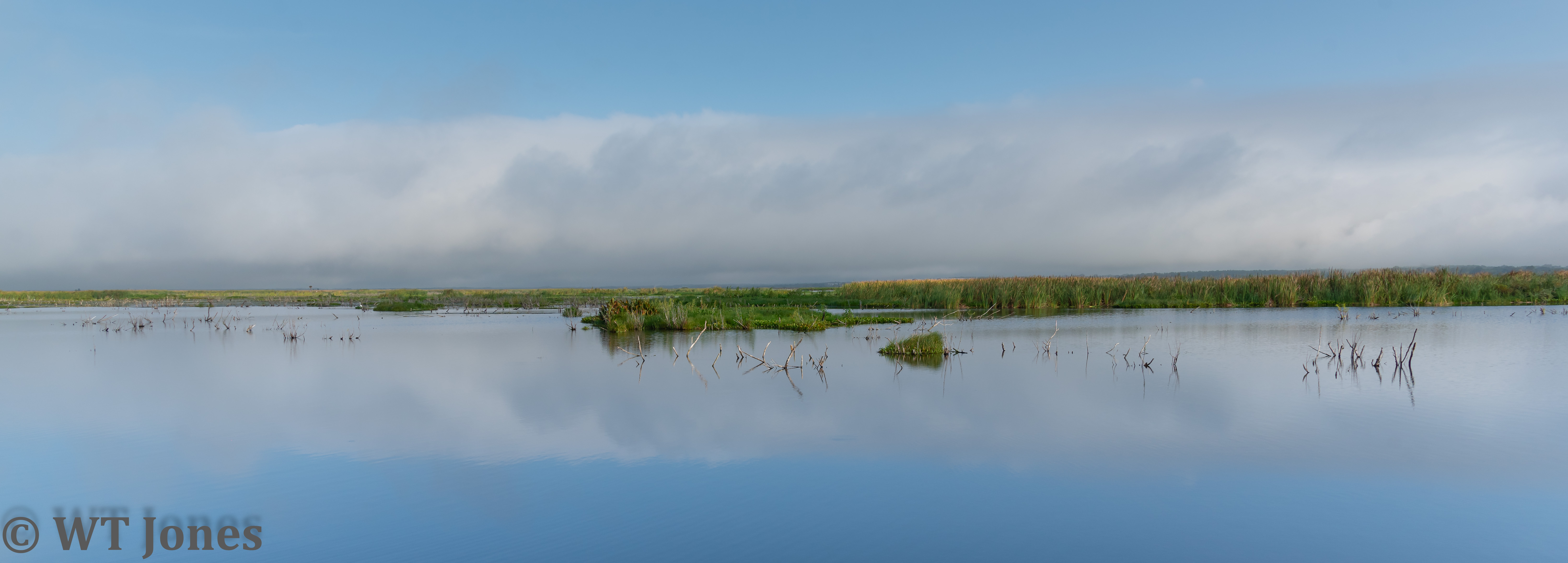
We arrived at Lake Apopka just before “official” sunrise. Of course, the fog obscured the sun completely. It was now about three hours later and the marsh was awash in sunshine, skies were nearly clear and the natural world was beginning to make up for the daylight delay.
It’s a bit eerie how fog dissipates. Like clock watching. (Remember analog clocks?) We know the hands are moving but can’t actually detect any movement. The dense fog did not just vanish all at once. The open spaces of the marsh created a situation where we could observe as the mist became less and less dense and distant objects became incrementally more distinct.
Flocks of White Ibis, Blue-winged Teal, Black-bellied and Fulvous Whistling-Duck moved from one spot to another. Osprey splashed into open water areas and took their catch to a nearby tree branch to enjoy. Wading birds waded, gallinules gabbled, warblers gave up warbling while swallowing bugs, alligators galore grinned and grunted.
We enjoyed it all.
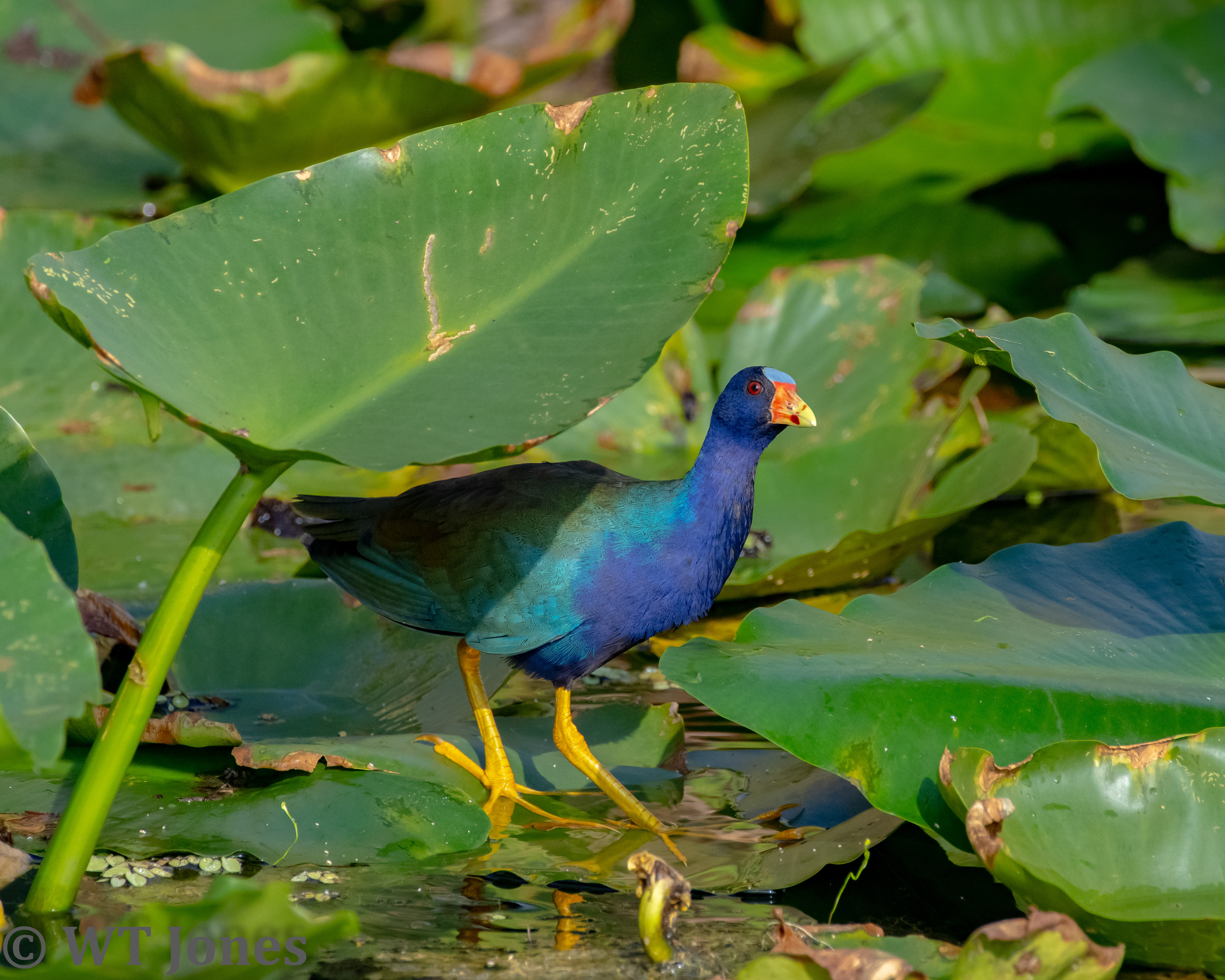
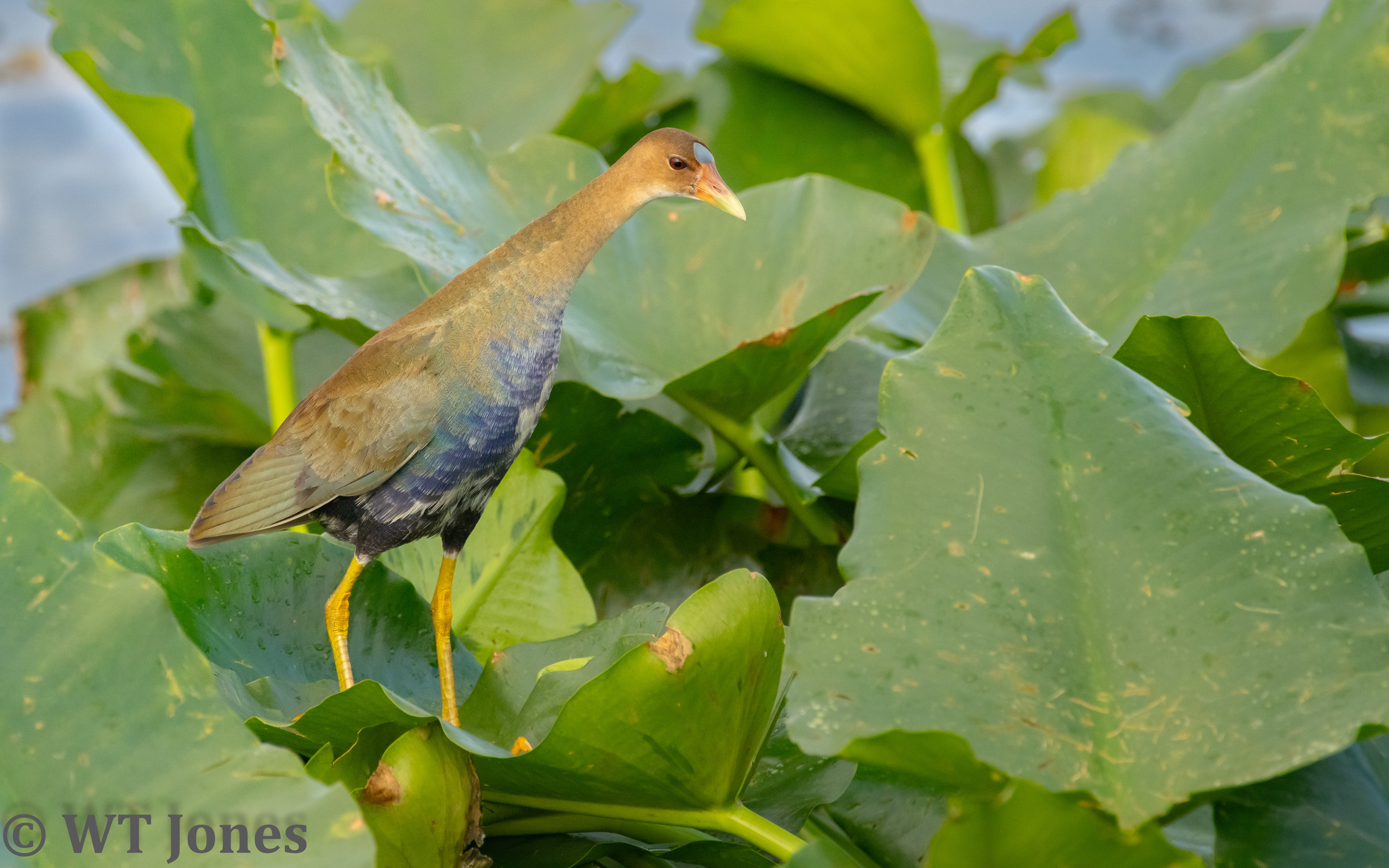
Smaller than the Gray-headed Swamphen we highlighted in the last post, native Purple Gallinules are abundant throughout the marsh. The first image is an adult and the second an immature bird. Sexes are similar in appearance.
Bright Yellow Warblers are early migrants and they love an area such as this as it makes finding a meal easy. They need to eat as many insects as possible to provide energy for their flight onward to South America.

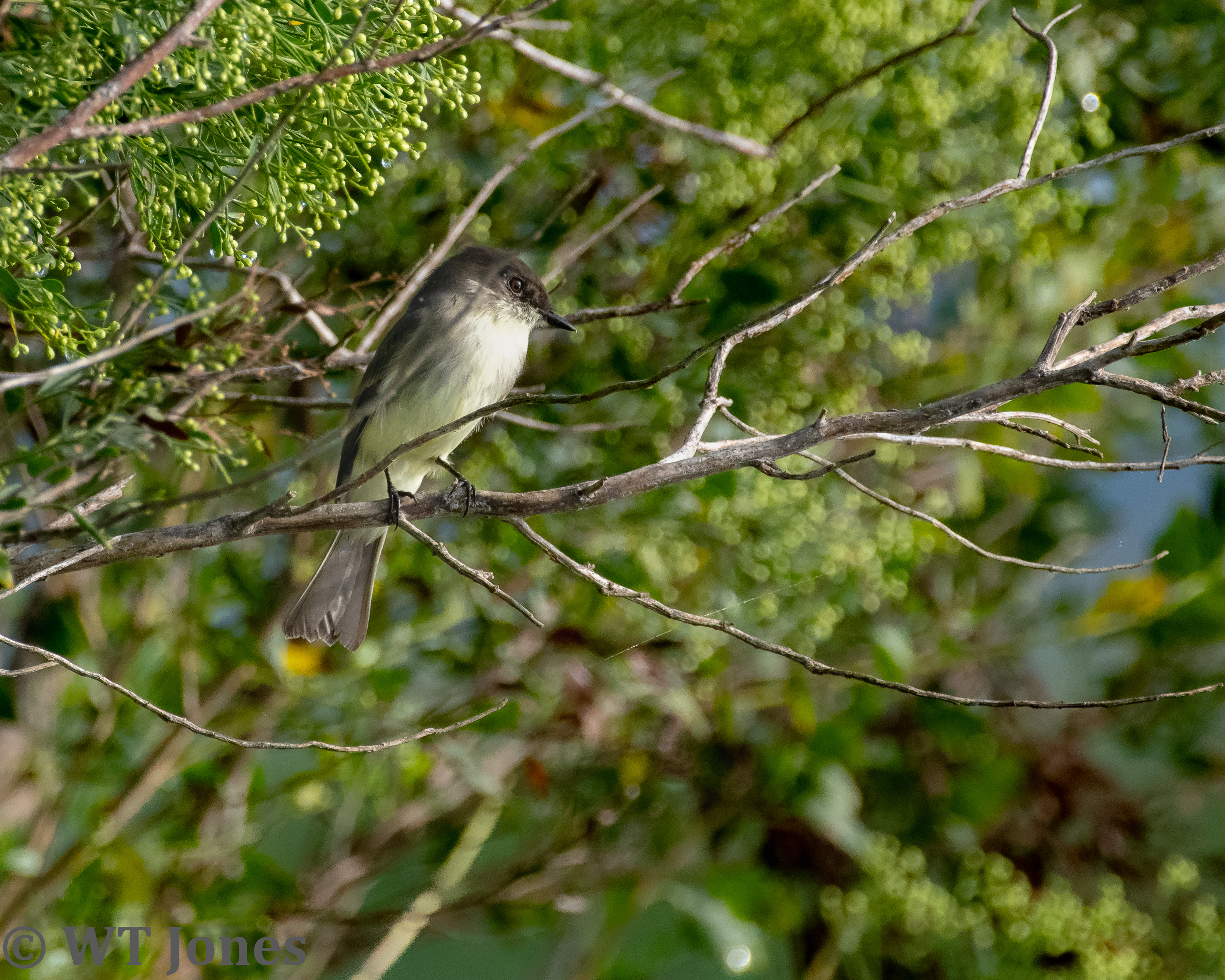
Many migrating birds will spend the entire winter in Florida as long as the weather doesn’t become too cold. This Eastern Phoebe is loving the abundant mosquito hordes. Go, Phoebe, go!
Open water supports several types of aquatic plant life. Yellow balls above large lush green leaves identify Spatterdock (Nuphar advena).

We saw several dozen large Fulvous Whistling-Ducks today. They are year-round residents and breed here.

Another water-loving plant, Broadleaf Arrowhead (Sagittaria latifolia), provided lovely white bouquets for us to enjoy.
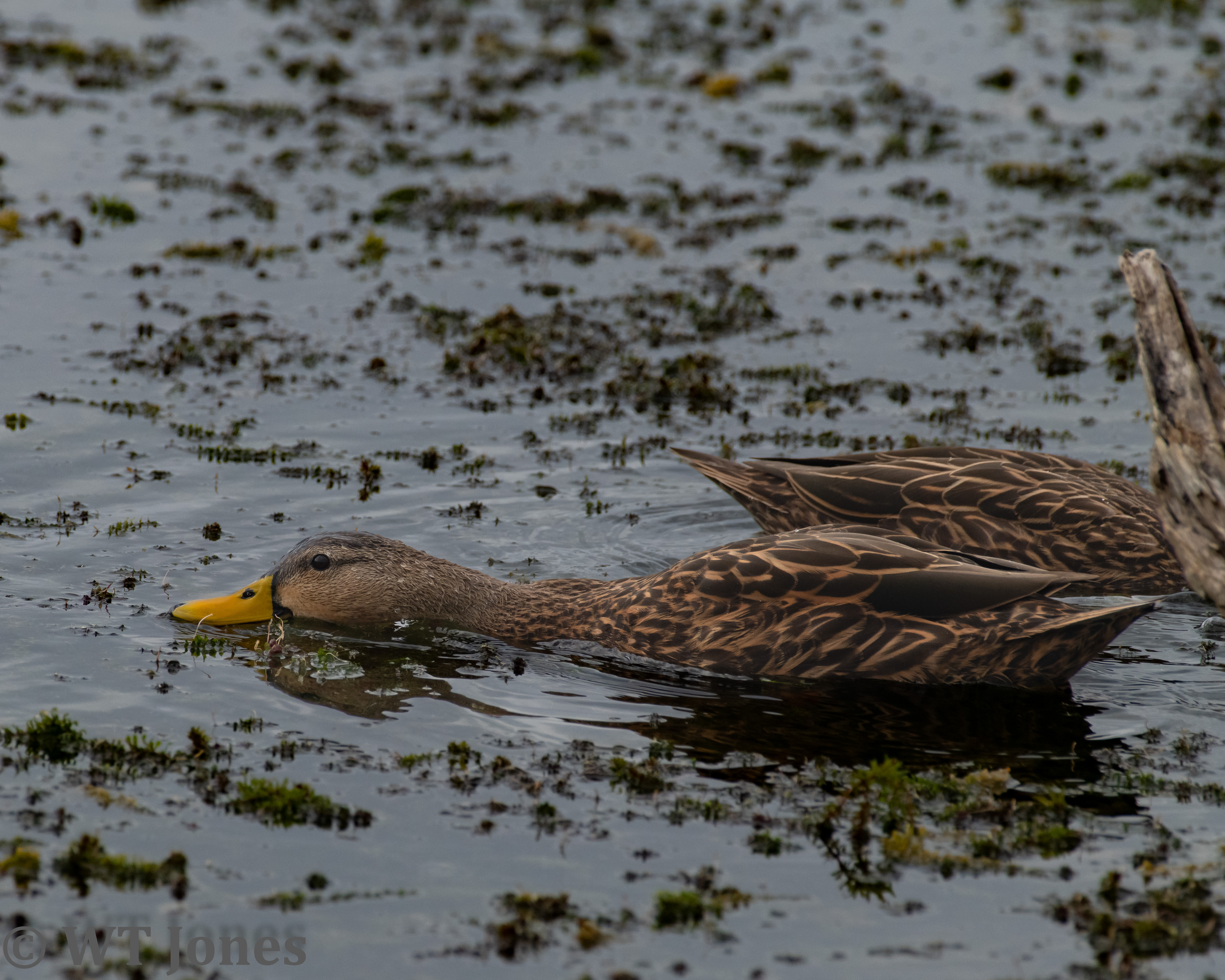
Similar in appearance to Mallards, Mottled Ducks are lighter in overall plumage, there are differences in bills and the wing speculum has no white border like the Mallard has. Hybridization, especially with Mallards, poses a real threat to the Mottled Duck’s future.
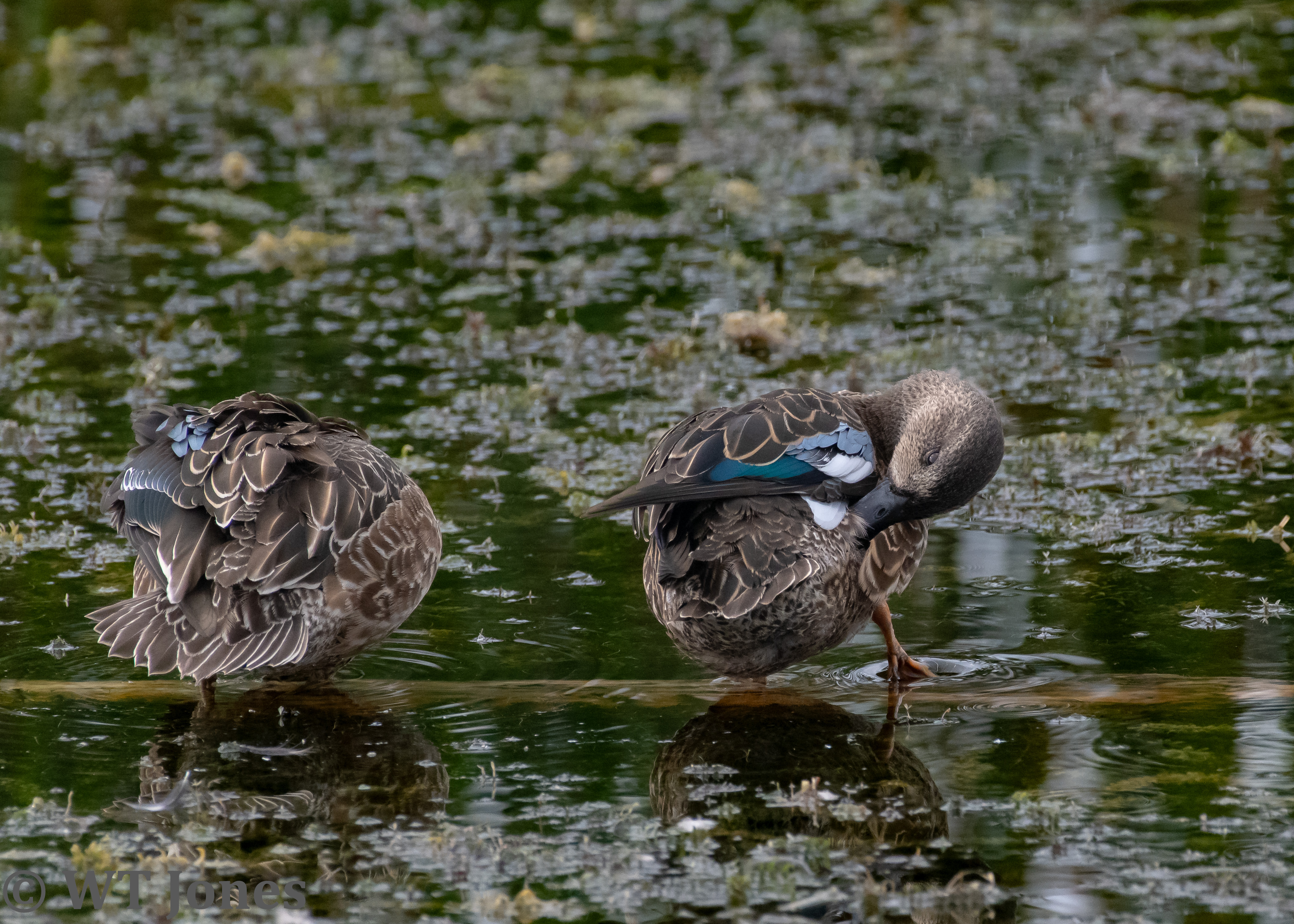
Cleanliness is next to Duckliness. Preening time-outs are frequent and vital to maintaining healthy feathers. This Blue-winged Teal duo really enjoyed having their photo taken while they were busy cleaning up. (They may have a different story.)
Floating flowers. The marsh was in bloom with American White Waterlily (Nymphaea odorata) showing off and we really appreciated it.

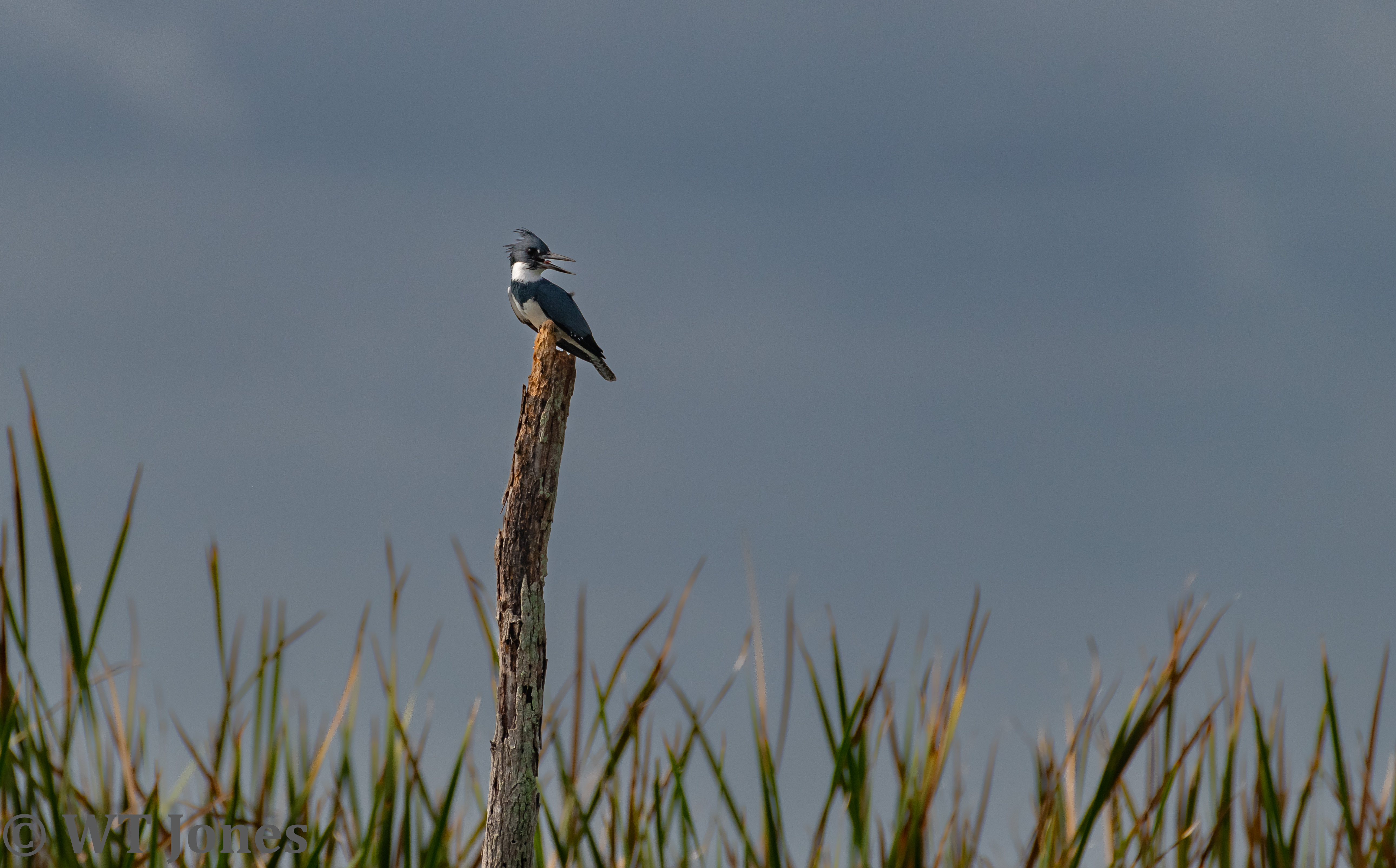
A male Belted Kingfisher sang sweetly as we admired his sleek blue-gray form. Okay, okay. His harsh rattling let us know he was not very pleased with us tromping past his buffet table.
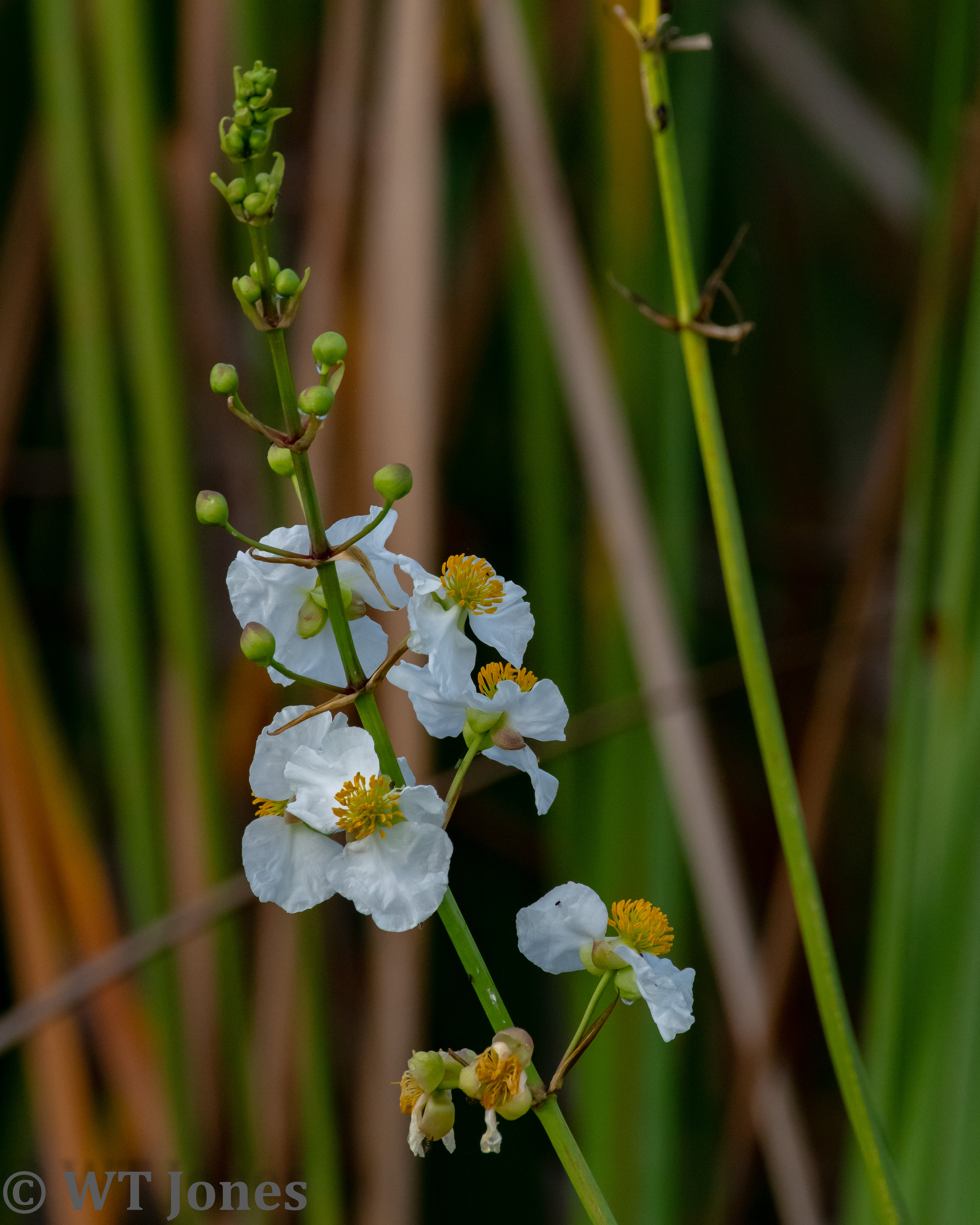
Even more white floral displays to ogle. Bulltongue Arrowhead (Sagittaria lancifolia) is loved by a diverse number of pollinators and at least two flower-lovers. (Yes, she wanted me to pick some to take home. “That alligator in the nearby reeds isn’t all that big.” No, there was no Arrowhead arrangement for the dinner table today.)

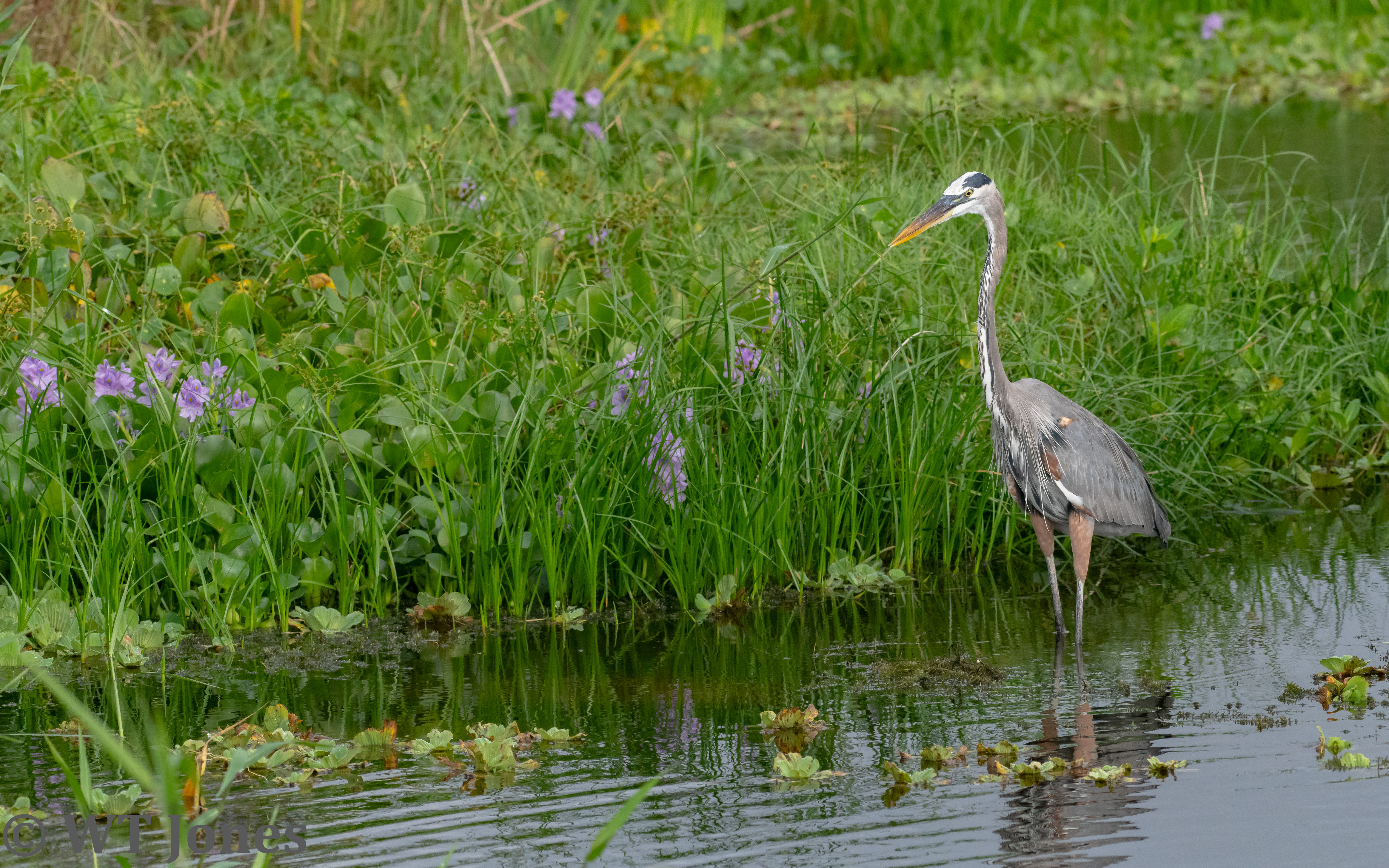
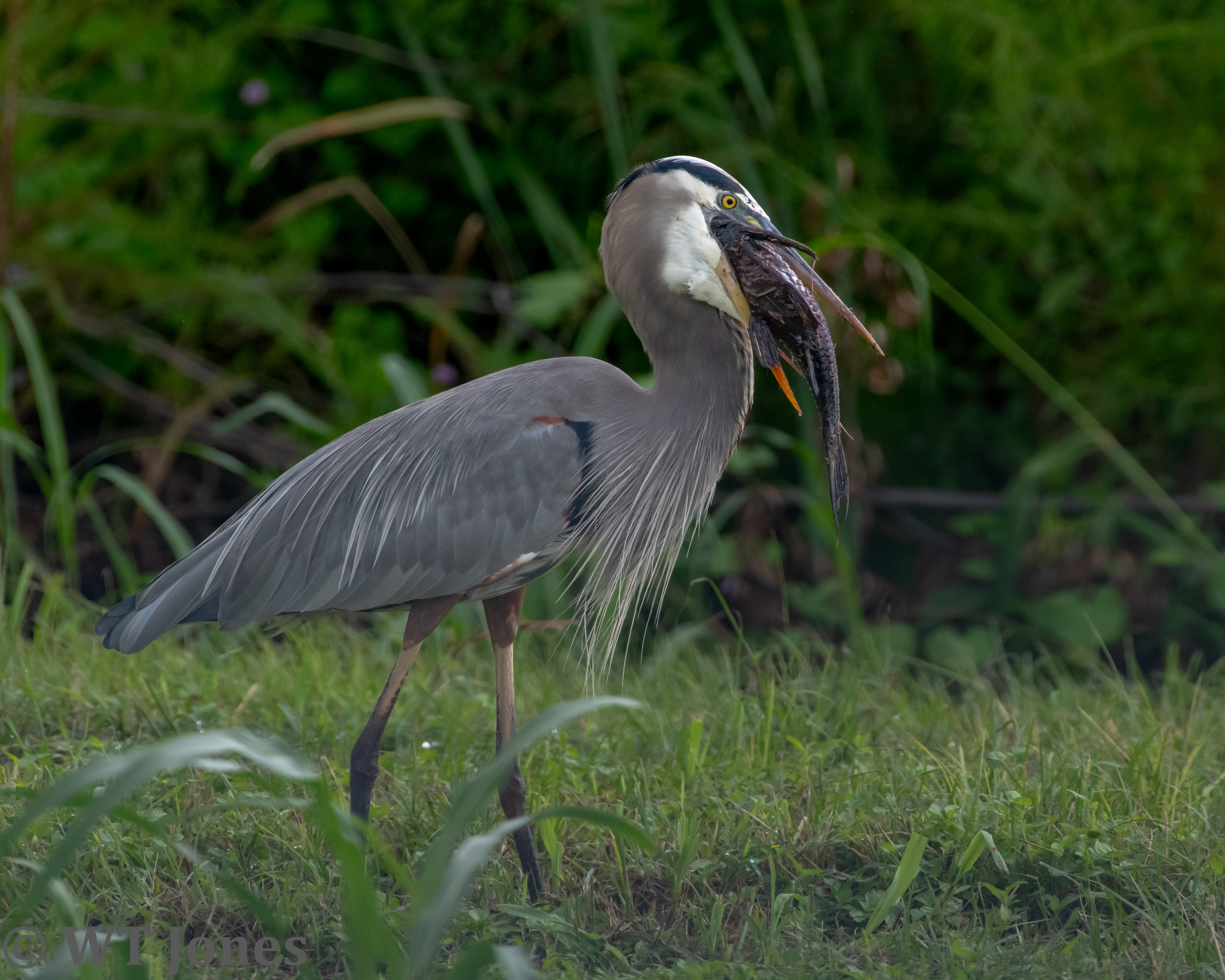
Over 20,000 acres of marsh means there is plenty of room for a Great Blue Heron to stretch its wings. Surveys indicate many dozens of the large waders agree. The big blue birds can look adorable amongst the hyacinths and pretty imposing when trying to swallow a giant-sized catfish.
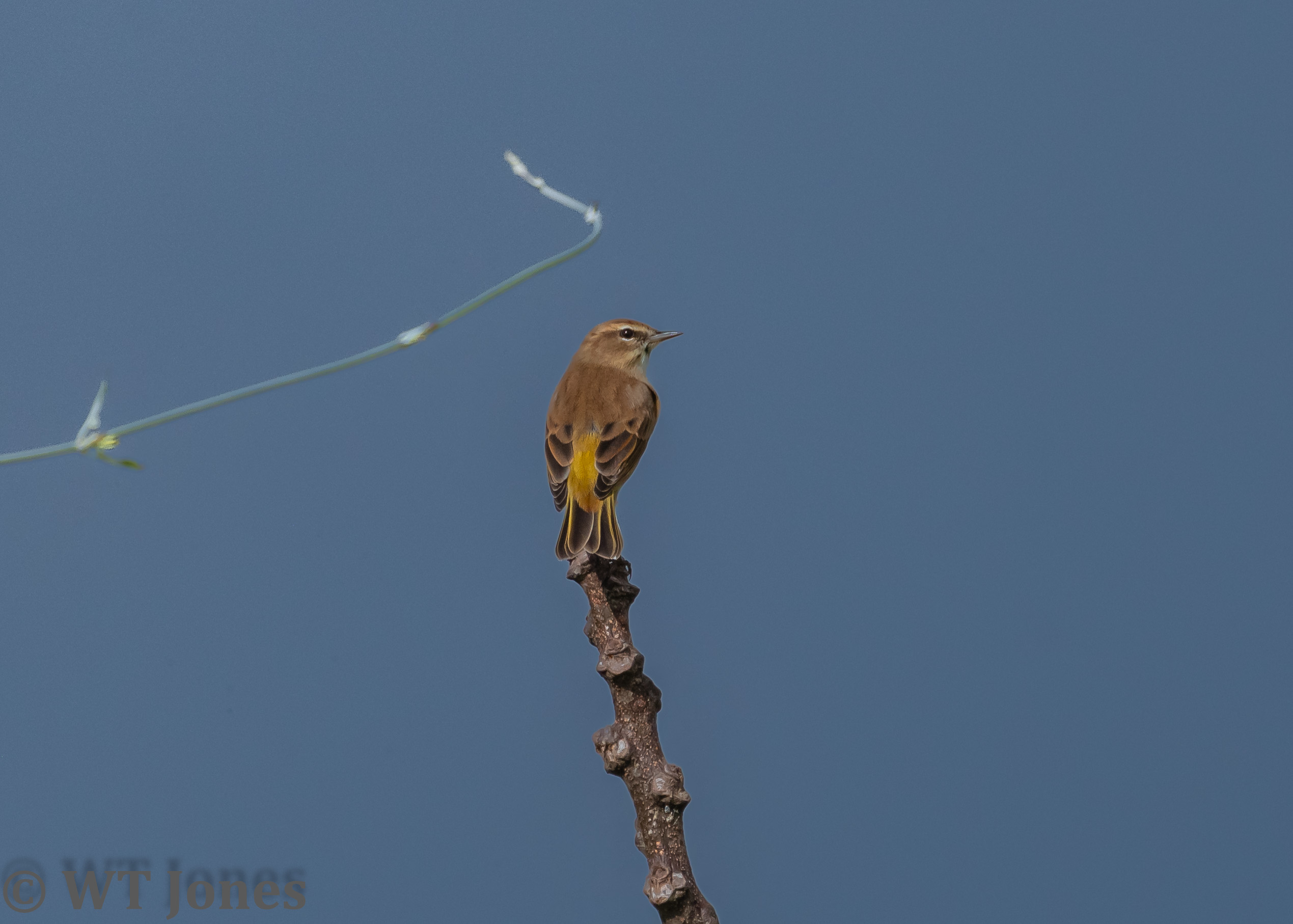
Palm Warblers are one of the most numerous winter migrants in central Florida. They are easily identified, even from a distance, by their constantly pumping tails. Despite fairly subtle plumage, they are handsome little birds.
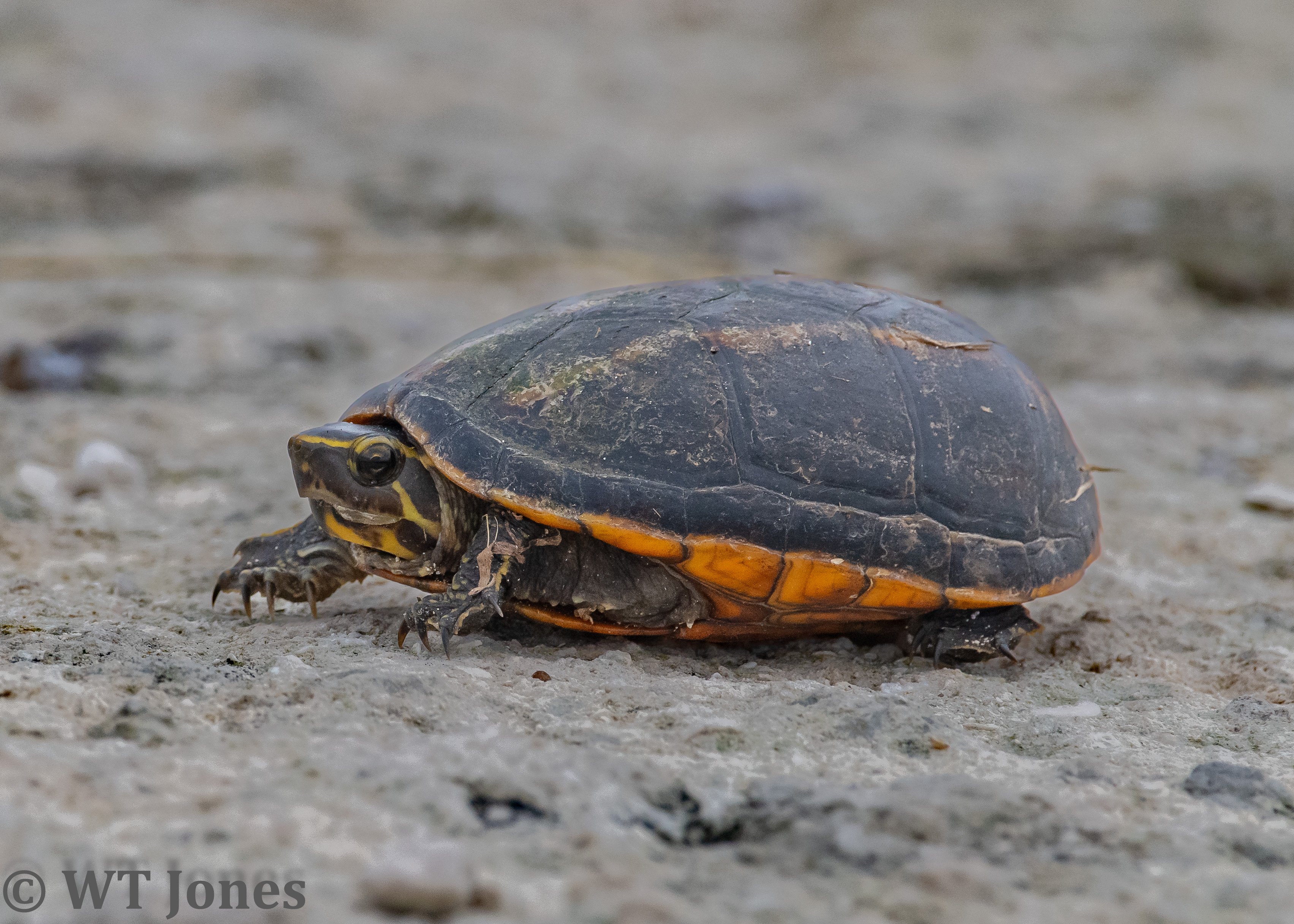
We neared the exit of the Wildlife Drive almost six hours after we began the 11-mile adventure. Discussion had already begun about what German delicacies we would soon enjoy when, all of a sudden, a turtle sprang from the side of the road and bolted in front of the car! Yeah, “sprang” and “bolted” are pretty foreign in turtle terminology. This small Striped Mud Turtle (Kinosternon baurii) was very patient as I took a few photographs and as gently as possible lifted him from the center of the road to the tall weeds toward which he was heading.
Today’s exploration began in murky darkness. Patience paid off as we eventually became enlightened and, ultimately, basked in the bright glory of blue skies and golden sunshine. May your own day be similar.
Enjoy your search for a natural place and come back for a visit!
*(Thanks to Mr. Ernest Hemingway for creating a wonderful title for his novel. Apologies to Mr. Hemingway for modifying it for my own selfish purpose.)
 Our Natural Places
Wally wrote my Wanderlust Chronicles – Part I last week and I thought you would enjoy.
https://natashamusing.com/2023/12/wanderlust-chronicles-2023-1-natasha-musing/
Cheer and sunshine to Ginni and you, if you are experiencing snow that is. 🙂
LikeLike
Thank you, Natasha. More good reading!
No snow yet in our section of sub-tropical Florida.
LikeLiked by 1 person
Beautiful shots!
LikeLike
Thank you.
LikeLike
Wonderful post title. I’m sure Mr. Hemingway wouldn’t mind. Hard for me to imagine that heron swallowing that fish!!
LikeLike
Thanks, Peter. We wanted to help the poor guy find a smaller fish, but he managed – eventually.
LikeLike
Quite a meal for the GBH! Great shots, Wally, nice to see some of my summer feathered friends soaking up the warm sunny days in Florida for the winter.
LikeLike
It was a good day, Donna.
We appreciate you sending us some winter visitors. Anything which helps keep our skeeter population in check is okay with us.
Promise, we’ll send ’em back in March.
LikeLiked by 1 person
All great photos, as usual, but I think my favorite today was the Yellow Warbler being all camouflaged among the yellowing leaves.
You got a Kingfisher showing his tongue – how cool is that!
Like many of your readers, I’m a tad concerned about that Great Blue – was he able to choke down his giant fish? I’ve seen them down here work for 20 minutes to swallow something sizeable, but nothing that massive, or that spiny.
LikeLike
Thank you, Sam.
It took that heron awhile to completely kill the catfish. That’s a must since if the thing is even a little bit alive when swallowed it’s nerve reflexes cause those spines to become erect. Not a good thing if the fish is in your throat or stomach.
Yes, he did swallow the whole thing. I couldn’t believe it since there were no hushpuppies or grits.
LikeLiked by 1 person
Imagine doing a six hour eleven mile bird drive. No I can’t do that.
I must say that those Fulvous Whistling Ducks look very smart and colourful like someone just gave them each matching sweaters to keep out the cold. Love the lookout Kingfisher and yes I remember that unmistakeable rattle.
You don’t say how old youngest grandson is but I guess he’s coming to see you and Gini under his own steam rather than with mom and dad. Our eldest grandson Theo 17 turned up last week in his car, showing off because he passed his driving test first time. Nana and Grandad gave him £50 to fill his petrol tank a sum may just do it with juice around £1.60 a litre! Now he has to keep it on the road with his insurance at £1600 a year even with a black box and max of 6,000 miles a year. Luckily he has a part time job in between his studies at 6th Form college.
Bad news from Oslo where the all electric bus system and the city in time for Christmas has come to a slithering halt because the buses don’t work in the minus temperatures. Who’d a thought it?
Stay cool and remind Gini I am still waiting for a test of her bakes.
LikeLike
Ahh, but the “drive” included much more than birds, for us. We stopped often to just sit and admire the view – and each other. The latter at times becoming quite time-consuming.
Our Grandson is traveling from some foreign country apparently named for a religious group founder, Pennsylvania. He resides in the city of Brotherly Love, Philadelphia, where, according to crime statistics, there are apparently very few actual brothers. He is not the “youngest” Grandson, as there is another in another foregn land where they can only see a single star. Our Texan connection is now 13 years old and his Sister is 15.
We wish Theo all the best as new worlds await his discovery. Hopefully, by the time he reaches our age, this world will still be one of them.
In the U.S. and Canada, electric bus failures have now become commonplace. Battery systems are so heavy some chassis are cracking, braking systems are inadequate and on some hills if the bus stops it rolls backwards The electric transports need to recharge about every 30 miles and their average urban routes are over 100 miles long. Then there is the low temperature issue you mentioned. Additionally, during last year’s storm season, it was discovered that electric vehicles which are subjected to sea water inundation tend to explode and burst into flame as they dry out. Other than that, investment in the EV industry looks great.
Gini will have plenty of baked goodies for you any day now. The only problem you face is our Quality Control Department has very little Appetite Control and availability may be quite limited.
We send all our best, just not all our baked.
LikeLike
I laughed at your sweetly singing kingfisher; that rattling cry is unmistakable. That’s a terrific photo of him on his perch. Some day, I’ll manage a photo of one — but I’m not holding my breath. Natasha’s comment about her kingfishers brought to mind one of my favorite ancient songs. I nearly reposted it this year, but didn’t. You might enjoy the history and the song.
I don’t remember seeing the fulvous whistling ducks. Black-bellied are quite common here, and a lot of fun to watch — especially the babies and juveniles. I was astonished by that photo of the heron with its fish. I know they often can manage large prey, but gracious! Did you hang around to see if he actually swallowed it? I always think of ‘marsh’ as saltwater or brackish, but the presence of catfish, water hyacinth, spatterdock, and such suggest this is fresh water — yes?
Your header photo looks much like the bay, or even the Gulf, when the temperature differentials are just right. It is interesting to watch the fog dissipate, and see the world emerge again.
LikeLike
I need to clean up my late-night html act!
LikeLike
Anyone who has encountered the Belted Kingfisher would never associate “singing” with the bird. I remember your post from last year concerning the kinfisher’s song. Good stuff.
The Fulvous Whistling breeds in southeast Texas and if you cnan find the right habitat they should be there. Anahuac NWR has regular sightings.
Most definitiona of a marsh read something like: A marsh is a type of wetland, an area of land where water covers ground for long periods of time. Unlike swamps, which are dominated by trees, marshes are usually treeless and dominated by grasses and other herbaceous plants. They can be salt or fresh water.
Love a foggy morning.
LikeLiked by 1 person
I’ve not been over to Anahuac in ages: probably two years. Now that summer’s over and the wait times at the Bolivar ferry are less than two hours, I ought to get myself over there.
LikeLike
We found a few pods of the Fulvous ducks in Colorado County a few years ago as we cruised around some back roads through the rice paddies. It was winter and there were several species of wading and shorebirds as well.
LikeLiked by 1 person
That’s Attwater territory! Now that some water’s come back, that might be worth a nice, long day, too.
LikeLike
I’m so glad you could save the turtle. There are way too many hit and run stories.
We have pink delicate laciflora’s our part of the world, and they fill up the tree like candy floss bunched together.
The Kingfisher in your part of the world looks unique. Our White throated kingfisher is multi-hued (remember my post from last week) and the pied one is another gorgeous species to behold. My favourite though is the Dwarf Kingfisher that I hope to see some day in the wild. Looks stunning.
I thoroughly enjoyed this walk, as always. Thanks for taking us along dear Wally and Ginni.
Blessed Yule and may it be peaceful, joyous and relaxing all at the same time.
LikeLike
Fortunately, the little Mud Turtle was not in much danger from traffic. We were still on the “Wildlife Drive” and visitors are there to observe nature. Still, better safe than sorry.
We were thrilled many years ago to see the European Kingfisher when we lived in Germany. I recently read that India boasts 12 Kingfisher species! That White-throated beauty you showed us was magnificent!
Our daily lives are blessed with peace and joy and both are greatly enhanced during the Christmas season. Now, “relaxing” is another story, It won’t be enjoyed until after the New Year! 🙂
Take good care.
LikeLiked by 1 person
Close to six hours: that’s a long time to spend roaming in nature and taking pictures. You obviously enjoyed the odyssey. Inquiring minds want to know: did the heron succeed in swallowing the giant-sized catfish?
Your title followed in a venerable tradition of playing with “sun” and “rise.” In the 1932 Marx Brothers movie “Horse Feathers,” Groucho’s character says to a female college student sitting on his son’s lap: “Young lady, would you mind getting up so I could see the son rise?” And at the end of the post you played around with the literal and figurative sense of “enlightenment.”
LikeLike
That partcular location consists of a one-way 11-mile road which winds through 20,000 acres of marsh. It also is adjacent to a very large lake and there are multiple hiking trails along the way. We are definitely like that little turtle in the last image and just take our time enjoying the sights.
Since I have little talent in using words properly, I tend to play with them.
LikeLike
I am very partial to Kingfishers, but today I will pick the Whistling ducks as my favourites, because of their lovely colour. May your own day be full of golden sunshine too!
LikeLike
Nature offers us so many favorites, doesn’t She?
Thank you so much for spending time with us.
LikeLiked by 1 person
Fantastic set of images Wally (as per usual).
LikeLike
Thanks, Brian. Much appreciated.
LikeLike
That looks and sounds like another wonderful outing. I delight in fog and am endlessly fascinated by the way it s.l.o.w.l.y lifts and then in a heart beat is gone. And a good dense fog is almost always followed by a bright and beautiful day. Pfft to doctors indeed. The world over.
LikeLike
Turned out to be a really wonderful day, EC.
Tons of birds and other creatures.
Yep. We’ll live our best life for as long we have left. Doctors can ride along if they want to.
LikeLike
There you are again, out before dawn, and reminding me of my own inadequacies. In these dark winter mornings, Lindsay and I struggle to surface before about 07.30. However, if I was out before dawn, I’d not find the fabulous rewards to match those that you do. My only excuse is that it’s a little colder here!
I love the colours of the adult Purple Gallinule. The Great Blue Heron looks as it it has bitten off more than it can chew – an expression that I realise is not appropriate to the heron’s method of feeding.
That Striped Mud Turtle is gorgeous – and lucky to have you as a friend.
We’re managing to keep our heads above water here, and hope that the same can be said for you.
Best wishes to you and Gini – – – Richard
LikeLike
Thank you for the wonderful comments, Richard.
It was nice to be rewarded for getting up early, struggling through commuter traffic and having the marsh covered in fog for awhile. All good things …
We have seen those big herons eat some incredible things! I need to make an album.
All is well here. Christmas preparations are underway, although the Boss is a bit grumbly about what doctors don’t want her doing. To quote her: “What do THEY know?”.
Our very best to you and Lindsay.
LikeLike