On Little Bird Feet*
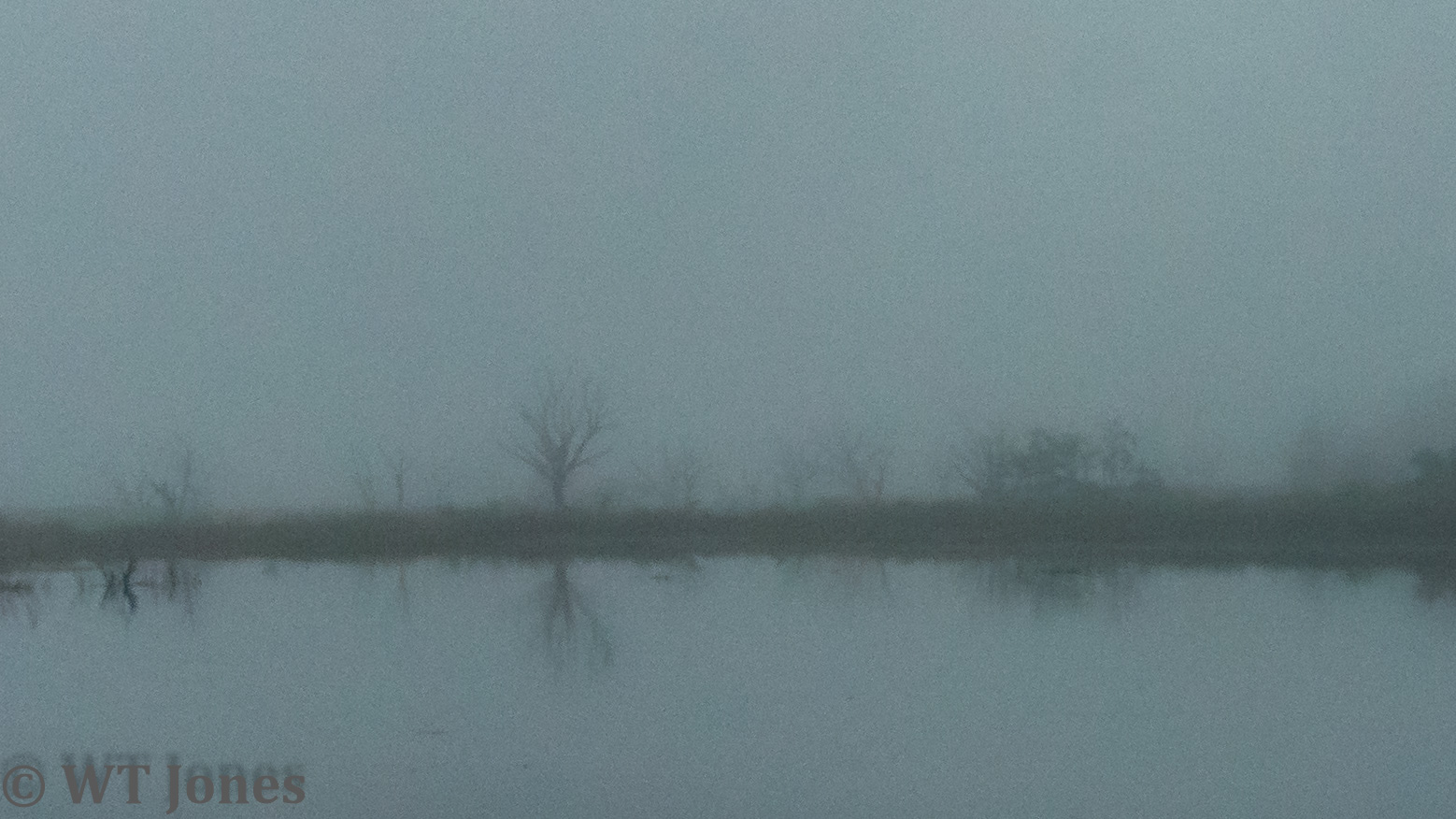
“At least it’s not cold.” How can I not remain in love with such an optimist?
The thick fog permitted a very limited view of our surroundings. We could hear the Whistling-Ducks whistling as they flew above us. We could hear a Limpkin crying about no sunshine. We could hear a big splash – it was close – probably just a turtle. Yeah, that’s it. A turtle.
We have written about Lake Apopka previously. (https://ournaturalplaces.com/2023/02/18/a-work-in-progress/)
It is one of our absolute favorite natural places to visit. All seasons offer a little something different, but fall and winter can be quite special. Over 20,000 acres of marsh adjacent to a huge lake attracts all sorts of migrating birds. The eleven-mile drive through the impoundment offers viewing opportunities seldom available to nature-lovers.
The fog persisted for a couple of hours after sunrise. We consoled ourselves by paying attention to reeds, shrubs and trees which were close at hand. Birds were not hindered by the mist as they busily searched for protein-laden insects. The photographer complained about poor light. The birders loved every second.
No controversial sandwiches for breakfast today. Just fresh fruit and granola. We purposely planned on eating light as our Lake Apopka adventure always ends with a trip to the nearby Yalaha Bakery for lunch. German fare from the deli means grilled bratwurst or schnitzel with sauerkraut and potato salad. Fresh baked sourdough bread, German apple pie, liverwurst and Berliner rolls were bagged up for the trip home.
Almost imperceptibly, the gray blanket began to fade, revealing a spot of blue sky here and there. The marsh was in constant motion as birds, bugs and animals concentrated on surviving one more day.
Hopefully, you will be able to see well enough through the foggy curtain to enjoy a few of our discoveries.
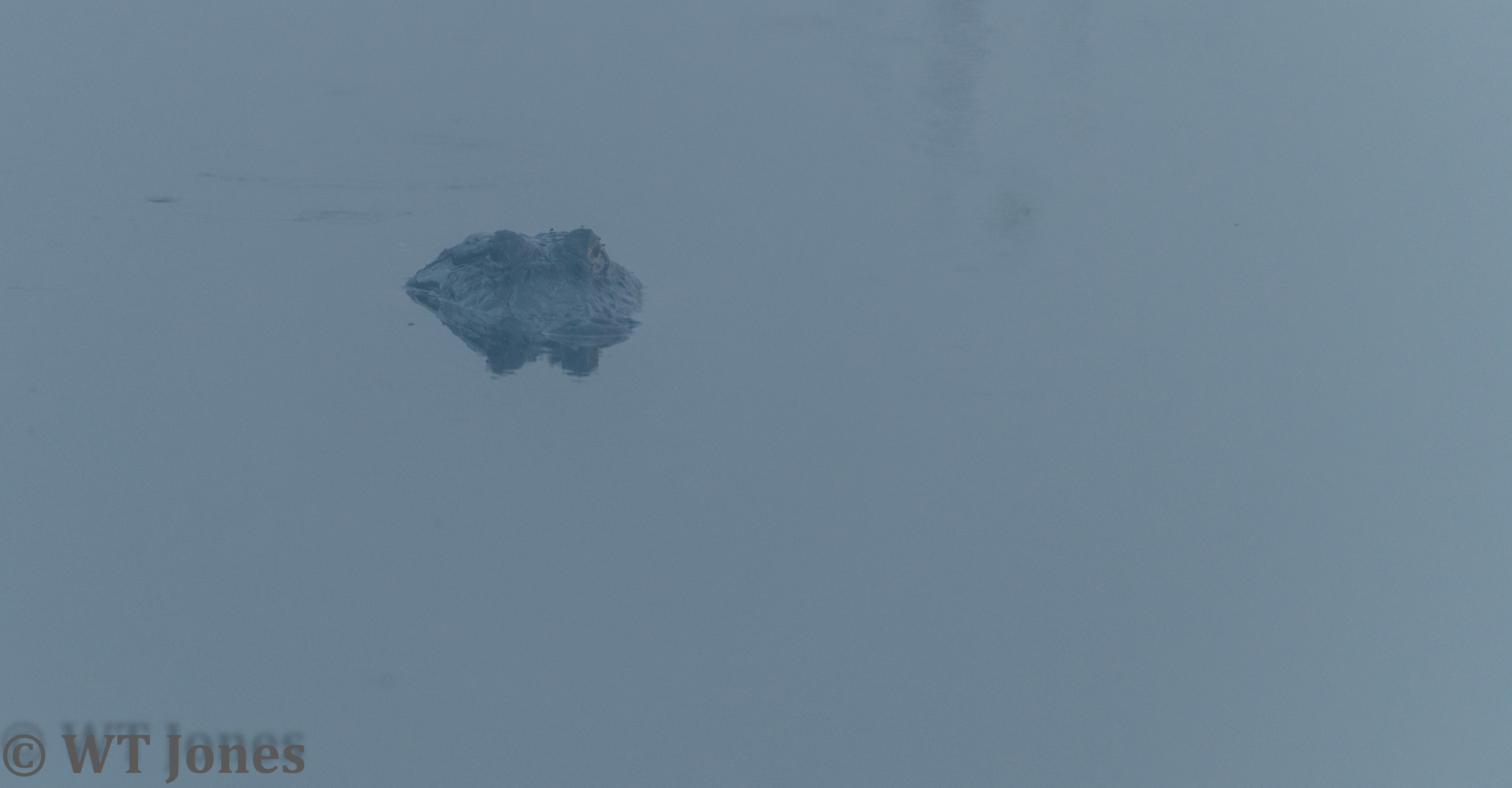
Lily pad? Stump? Turtle? No way it could be an American Alligator that close. Could it?
Fortunately, the Red-shouldered Hawk has no problem finding a frog in fog.

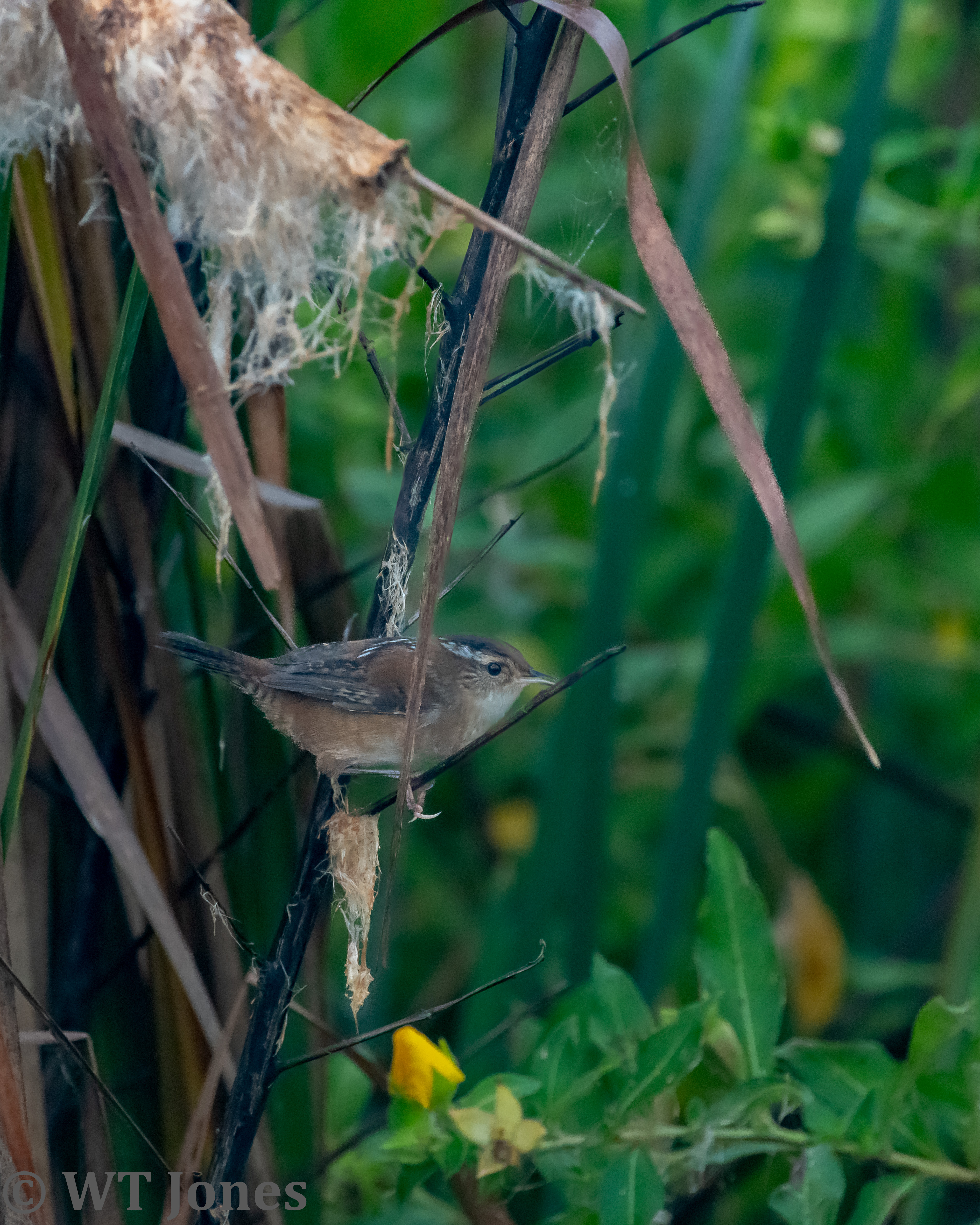
Small birds aren’t bothered by the gray stuff at all. They don’t need to see long distances to find a bug on a branch. This Marsh Wren is a fall migrant and does not breed in Florida.
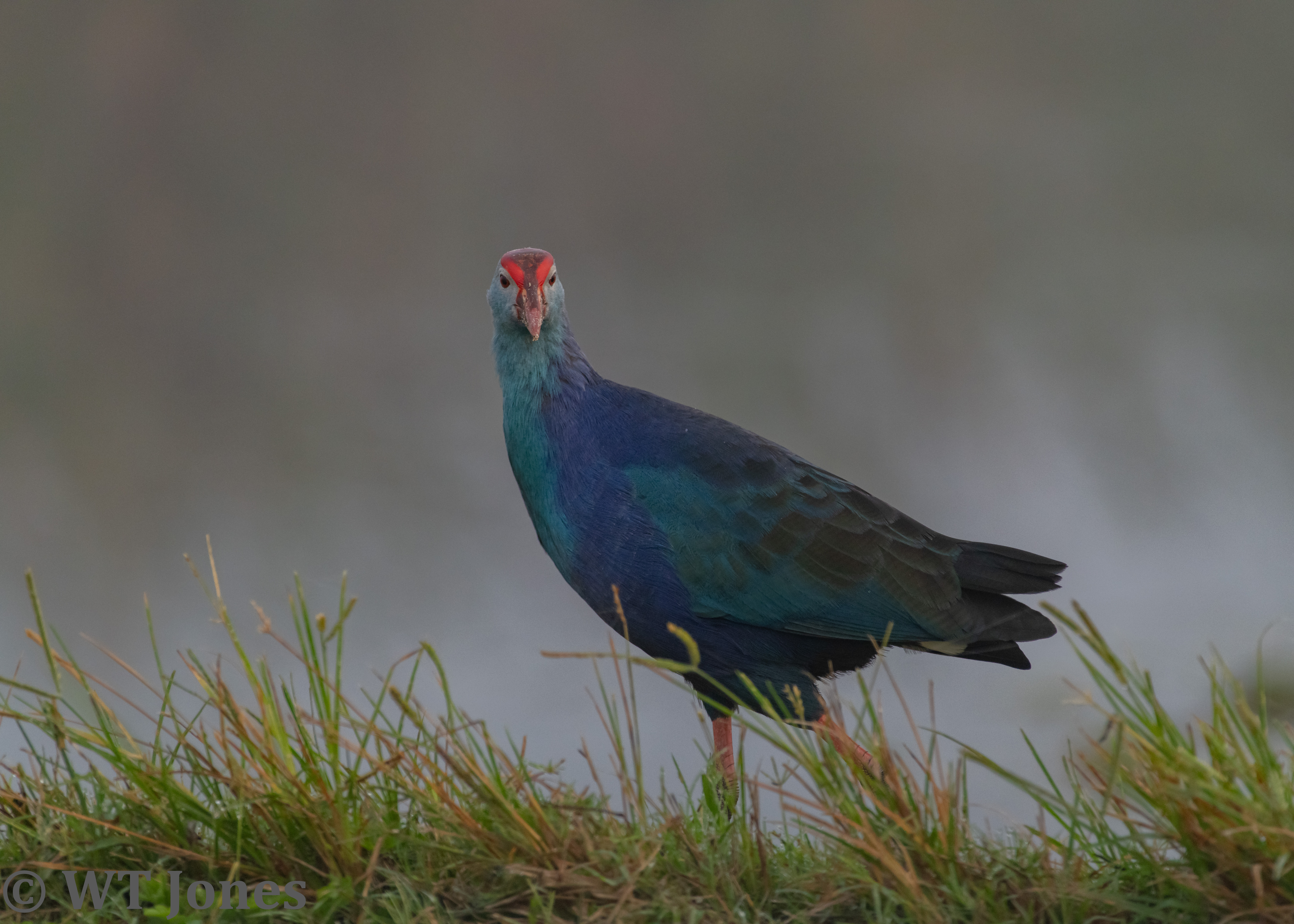
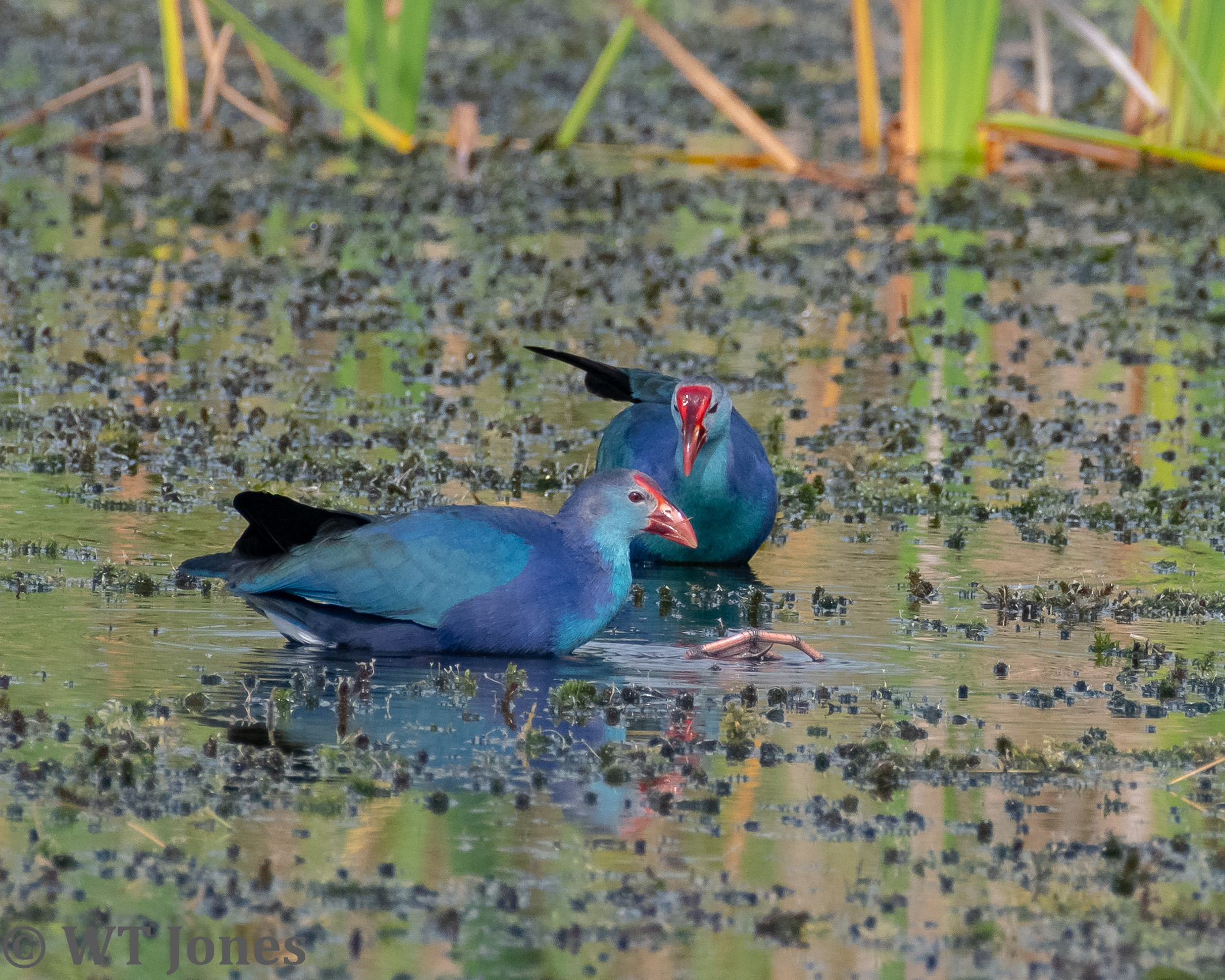
A successful invasive species. The Gray-headed Swamphen probably got a start in Florida due to an escape near Miami in the 1990’s and has now spread to at least the north-central part of the state. Lake Apopka offers perfect habitat for this large member of the rail family.
Constantly on the move, the Common Yellowthroat brightens up the marsh with its bright yellow plumage. We counted 18 of these little birds during the morning.


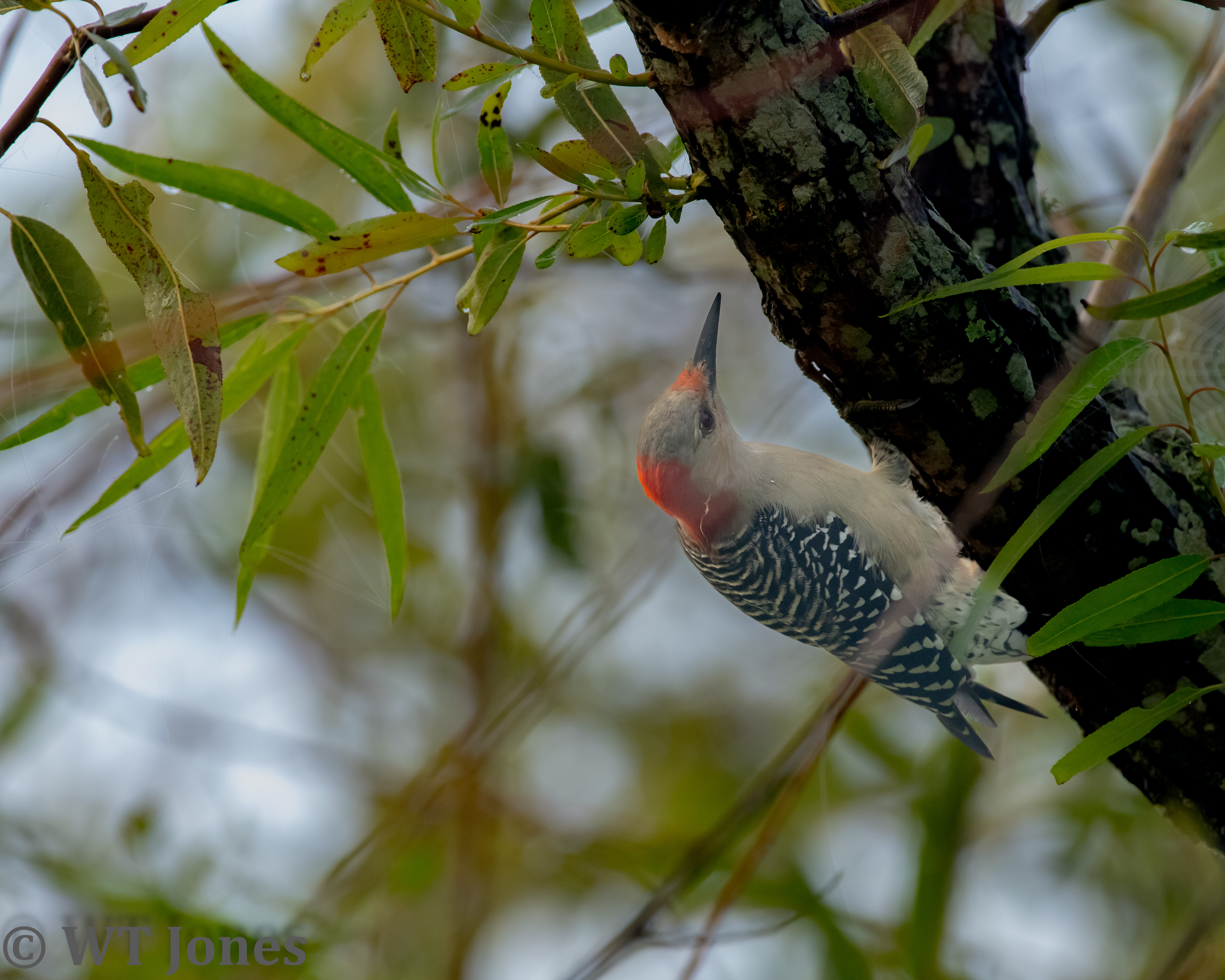
The Red-bellied Woodpecker is our most abundant woodpecker species. This female gave me one shot before disappearing among the leaves.
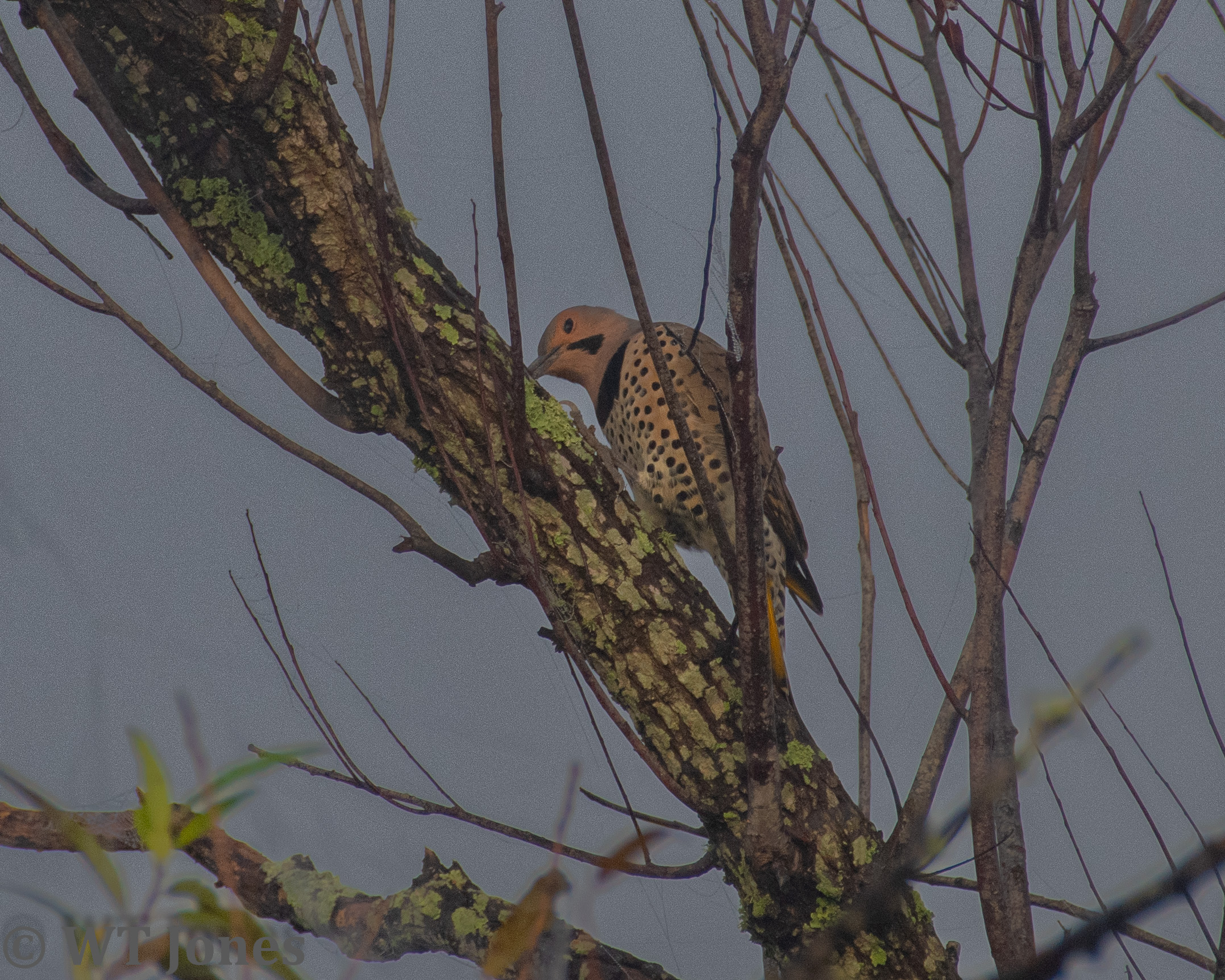
Although the Northern Flicker breeds in our area, their numbers increase during migration.
Is it getting brighter? A White Ibis welcomes a stray beam of light.

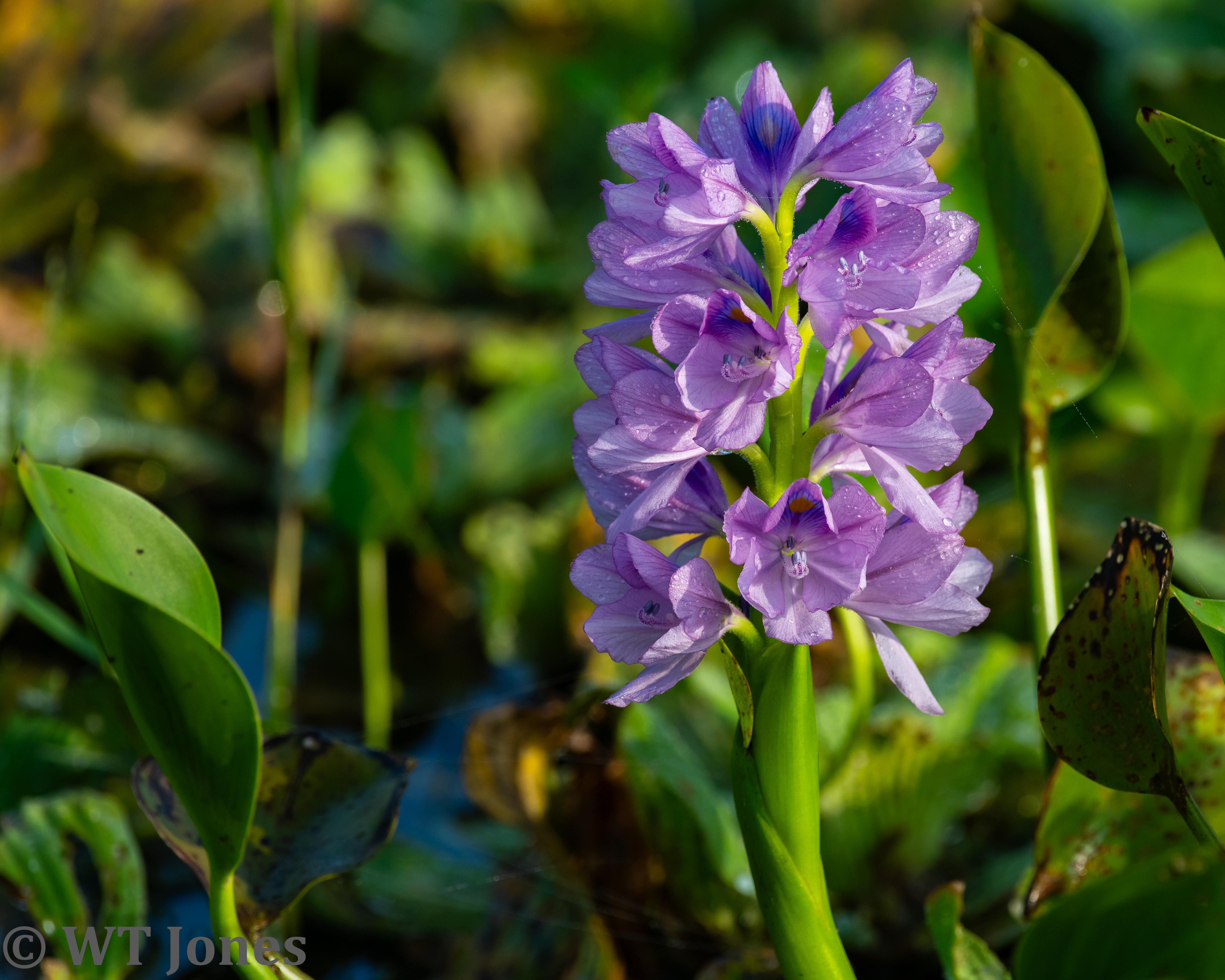
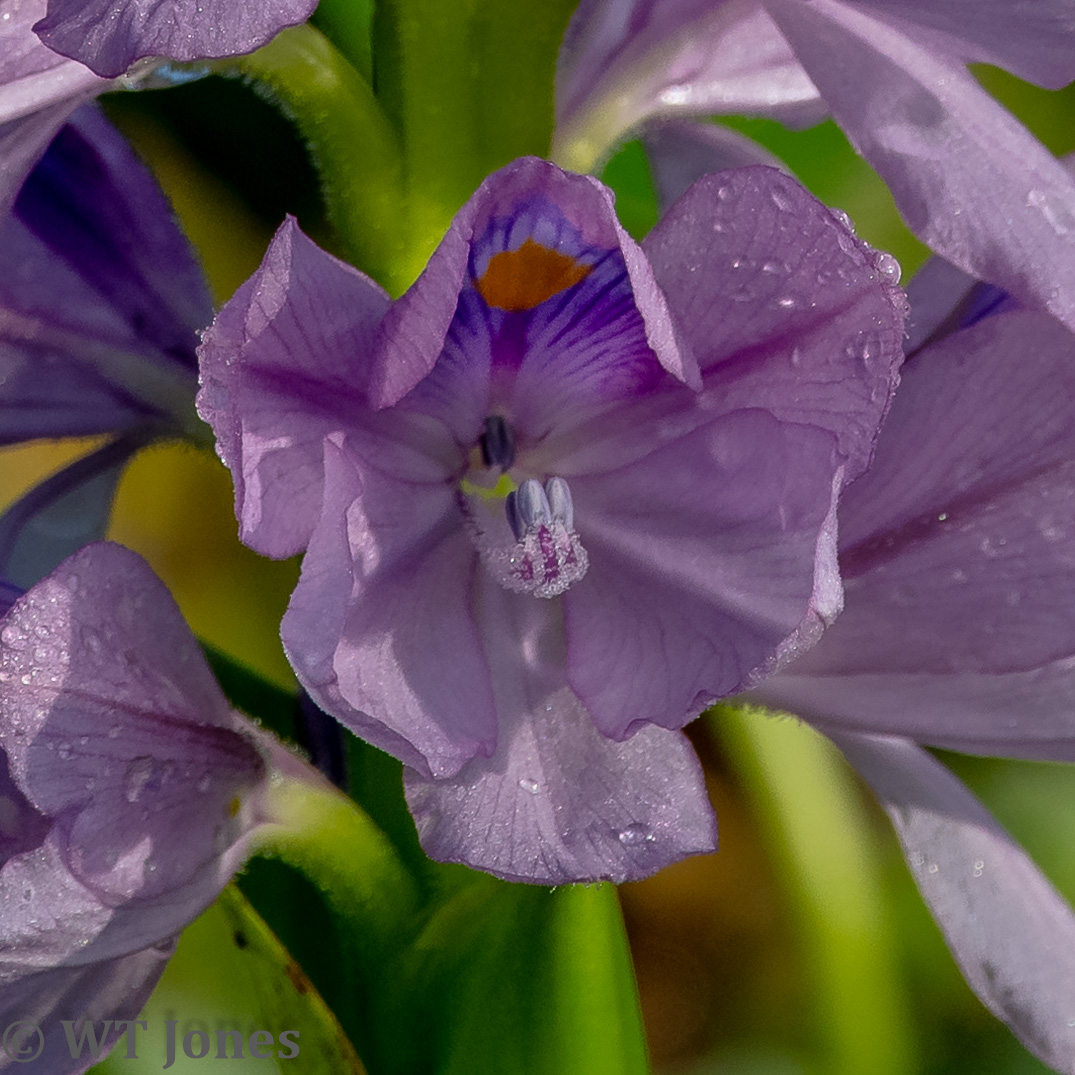
A nasty beauty. The Common Water-hyacinth (Eichhornia crassipes) is truly lovely. However, this very aggressive invasive aquatic plant multiplies extremely fast, forms thick mats which obscure light reaching below a lake’s surface, crowds out native plants and reduces the availability of oxygen in the water. (If you are a boat owner and visit lakes where these grow, clean your prop and boat bottom thoroughly so the plant doesn’t spread.)
Lake Apopka is a joy to explore. There is so much diversity of nature here offering something for everyone. If only that fog would lift ……….
Enjoy your search for a natural place and come back for a visit!
*(Apologies to Carl Sandburg)
The actual words:
FOG
The fog comes
on little cat feet.
It sits looking
over harbor and city
on silent haunches
and then moves on.


Lovely shots, Wally! I enjoyed making my way through the fog in your post!
LikeLike
Thank you, Dina.
Happy to oblige.
It’s a fun place, even in the mist.
LikeLiked by 1 person
I love the Ibis in the tree…perfect lighting for him! And I clicked on the photo AND zoomed in….looks like a gator to me! lol Enjoy your weekend and your winter outings!
LikeLike
Pretty neat place, even in the fog.
Happy Florida trails to you, Diane!
LikeLike
Looks like the sun might have peeked out for the hyacinth photos. Beautiful shots… I didn’t realize they are in invasive species. My vote is alligator for photo #2!
LikeLike
The sun was just making an appearance – stay tuned!
That little ‘gator couldn’t believe we were wandering around in the pea soup. Of course, I pretty much stay in a fog most days.
Thanks for the visit, Peter.
LikeLike
I just love how the Gray-Headed Swamphens dazzle us with their presence. We have plenty in our neck of woods too. And Water Hyacinths- oh so pretty! But such a nuisance. What a catch 22 this!
Another fun line up here.
LikeLike
Invasive but beautiful.
What’s a nature-lover to do?
Take photographs.
Thank you for visiting with us, Natasha.
LikeLiked by 1 person
Did you see mine yet?
Bunched together a few walks.
Hope you enjoy those over a steaming hot cuppa☕️
LikeLike
That’s a great photo of the gator. I’m always struck by how the young (and small) ones can look bullfrog-ish when only their eyes are showing on the surface.
I finally spotted my early dawn caller today, and it wasn’t a red-shouldered hawk; it was a bluejay. It took a little wandering around, following the calls, but when another began answering him, he settled in one spot, the fog in my mind lifted, and the mystery was solved. I’m sure your hawk was glad for the fog to lift, too.
Those are great photos of the water hyacinth. A few years ago, several of our marinas got clogged up with those plants; it became impossible to move a boat. There had been heavy rains, and the plants washed down Clear Creek Channel from areas around the lake and farther inland. Once the plants hit waters with higher levels of salinity, they died. It made for a terrible, smelly mess, but at least the marinas got cleaned out — eventually. The plants that made it into Galveston Bay died even more quickly.
The Gray-headed Swamp Hen is cool, despite the caution sounded on the Cornell site about its ability to supplant native birds. I did grin at the range map. It may be the most limited range I’ve seen for anything: just at the tip of your state. Escapees can be fun. Eureka Springs, Arkansas has a population of white squirrels, said to be descendents of critters used in entertainments at one of the fancy hotels there c. 1900. I never saw a pure white one, but I have photos of one with white splotches on its body and a pure white tail. Your probably have another escapee in your area, too: the Monk Parakeet. They’re thick around here, now. They build their large communal nests in the highline support towers. The nests get taken down every year, but not until nesting season is over.
LikeLike
Those jays!
A whole industry has sprung up in central Florida for contractors removing hyacinths from the bigger lakes. They shred the plants and they are used as compost by many farms.
This Gray-headed Swamp Hen is moving northward faster than they can alter the range maps. Yep, we have several colonies of Monk Parakeets as well as their cousins, the Nanday (Black-headed) Parakeet. Both species are usually heard before seen.
LikeLiked by 1 person
Love the foggy pictures! I love it when it’s foggy here. Sometimes it’s like walking through a shower. Beautiful shots. I need to get back over there to see the swamphen again.
LikeLike
Thank you, Dina.
Fog changes our normal perspective. Taking photos and taking a shower all at the same time. Win-win!
LikeLike
The swamp hen is a new one to me, I have never heard of that one before. I wonder if they were originally brought in to eat. The fog is both mystical and a curse depending on your goal for the day. On your day it really brought an eerie element to your photos.
LikeLike
My understanding is there was an exotic animal show near the Miami airport and several Gray-headed Swamphens from Australia escaped. The rest is history.
I reckon they liked our Florida sunshine and oranges better than what was offered Down Under.
Yep. Driving in fog – no thanks. Chasing weird stuff to photograph – cool!
LikeLike
I find that the two invasive species that you highlight here, Wally, are rather attractive, which I guess is a factor that led to them getting established- bring them in because they’re beautiful and then let them escape.
Had to smile at that ‘gator shot!
Wonderful atmosphere in the White Ibis shot.
Best wishes to you and Gini from middle-England, where it is now less cold but very wet. Take good care – – – Richard
LikeLike
Thank you, Richard.
All we have to do is allow a species a bit of favorable habitat and nature does the rest. Just look at us humans!
We had a chilly couple of mornings but have now returned to Florida “winter” weather. Clear and sunny.
Gini and I hope you and Lindsay are well despite the dreary days.
LikeLike
Wally, your fog photos look like the conditions I was in for the Puffin photos from this summer. I like the color on the Swamphen, we don’t have those this far north. Ironic you mention Carl Sandberg, he was born not far from where I live.
LikeLike
I envy you the Puffin experience. At the rate these big rails are expanding, you may see one swaggering up your driveway any day now.
Sandberg’s neighbor! Small world.
LikeLiked by 1 person
I was interested that you still managed to see and to photograph birds on your foggy morning. If we have fog or even mist here it is a definite no go as birds just stay put where they are and I guess hunker down to become silent and invisible. On the other hand, they must surely feed and as you say, and in warm Florida there is always plentiful food whatever the visibility but probably not here. Maybe our birds have a non-food day? I wouldn’t like that.
Talking of food I do on some days have a controversial breakfast of peanut butter on toast, very non-British but I like it and it is a healthy alternative to sugary jam. If it was good enough for the Aztecs it is ok with me.
Thursday afternoon and Sue is decorating the Xmas tree where I am banned from the room as I would “interfere”. As if.
It’s raining.
LikeLike
It helped that we were in the center of a vast marsh where the birds really don’t have to extend much effort in finding food. Especially insects. If you click twice on that foggy ‘gator, you’ll see what I mean.
Your breakfast combination is quite common around this house. Even without jam.
Delivery truck drivers are beginning to complain about the size and frequency of Christmas-related items being ordered by our household. Hint – it ain’t me.
It’s sunny.
LikeLike
Fog can make a photograph look like a painting, as in your opening picture.
Given that the the gray-headed swamphen is an invasive, do you rail against it? Same question (but without a play on words) for the water hyacinth, which I once saw covering almost the entire surface of a pond in Austin.
Do you know if the black spots on the flicker serve any purpose?
High school English class prepared me to catch the allusion in “On Little Bird Feet.” That may well be how you became aware of the original, too.
LikeLike
You are right, Steve, the fog seems to add “pixels” to the image for almost a watercolor effect. Move over, Van Gogh.
When stalking the swamphen for a decent photograph, my thoughts often go off the rails. As for the hyacinth, it’s difficult to be angry with a beautiful flower.
I once knew a birder who said if one connected the flicker’s dots it would become and Ivory-billed Woodpecker. That theory has never been proved. (The best guess on the dots is it offers a camouflage effect, much like the spots of a leopard.)
My sister gave me a collection of poems when I was about 10 years old and Fog was one of my favorites. Perhaps because it was short?
LikeLike
So for you the shortness of the poem made it long-lived.
I guess focusing too much on the bird’s spots could make a person dotty.
LikeLiked by 1 person
After such an interesting morning full of natural encounters, you deserved a lunch. 😉
LikeLike
And we took full advantage of that thought!
We appreciate you visiting with us.
LikeLiked by 1 person
Lovely photos Wally. The atmospheric ones are excellent but my favourite is the female Yellowthroat with the cobwebs, superb!
We had a day of fog last Saturday and it reached the dizzy heights of -2c, really not liking this as I get older.
LikeLike
Thanks, Brian.
That little yellowthroat gave me fits as she was mostly behind leaves and never stood still. When she finally took a breath, it was a nice spot she chose.
Yes, I don’t mind being out and about in fog unless the temp is similar to yours. Brrrr.
Gini’s mantra has become “getting old is not for the faint of heart”.
LikeLiked by 1 person
Beautiful – though my wimpy self would worry about not being able to see alligators. I do love fog though, despite the difficulties it causes the photographer (but not the wildlife).
LikeLike
Thank you, EC.
No worries, the ‘gators can see you just fine. 🙂
Fog does add a unique dimension to the day. I love the stuff.
LikeLike
I’m so glad you didn’t change plans and decide not to go out due to the fog. You’ve captured the heart and spirit of the tropical swampland, and I could sense the muffled silence from your gray photos. Wonderful!
LikeLike
A little fog won’t stop this intrepid duo from exploring natural places!
Unless it’s too cold. Or too wet. Or there’s too much traffic.
Fortunately, the muffled silece became pretty loud once that blanket was thrown off. An expert birder on that day estimated 1,000 Common Gallinules and over 4,000 American Coots, so you can imagine how noisy things became!
LikeLiked by 1 person
Thanks for the tour Wally. I miss Lake Apopka and will have to go back soon.
LikeLike
You’re welcome, Ed.
So many places to go, so little time.
LikeLike