Ordinary Days, Extraordinary Moments
(Reminder: Click to enlarge images, click again to zoom.)
Gini and I tend to develop a routine when it comes to exploring. When we become familiar with a particular area through repeated visits, a pattern becomes “comfortable“. Today’s visit to one of our favorite “patches” is a perfect example. Tenoroc Fish Management Area is spread out over several geographically separated venues and consists of nearly 8,000 acres. That is a bit more than we can cover in a morning. Or a year.
Since we are resigned to the fact we only have enough time and stamina to check all the trees and weeds, we follow a well-planned, finely detailed route on each trip. Which usually changes the moment we enter the place. Time of year makes a difference also. It is the kinda sorta beginning of “Autumn”, which in central Florida means some green trees and bushes are transitioning into a lovely shade of brown. The good news is a whole bunch of birds don’t care what our color scheme is as long as there are plenty of bugs to eat as they continue their journey from farther north to farther south. There are plenty of bugs.
This morning we started at one of the lakes where we have seen wading birds on past trips, then to a nice grove of hardwood trees where visiting warblers like the buffet, on past the cemetery where the Screech Owls live, to the lake with big cypress trees, a wetland bordering three lakes and a 200 acre field maintained for dove hunters. Hunting season is from late September through January but only on Saturdays. The field is bordered by pine forest and a lovely creek.
The lake with the big cypress trees is our breakfast spot. Short walks allow us to travel through diverse habitat and all the trails and unimproved roads are well-maintained. On this day we spent about four hours wandering around, roughly following our pattern. We found familiar birds, blooms and bugs as well as some surprises.
Driving through the exit gate, we both sighed contentedly and agreed there could be no better therapy session than that offered by Nature.
Breathe deeply. Come along with us and see the extraordinary.
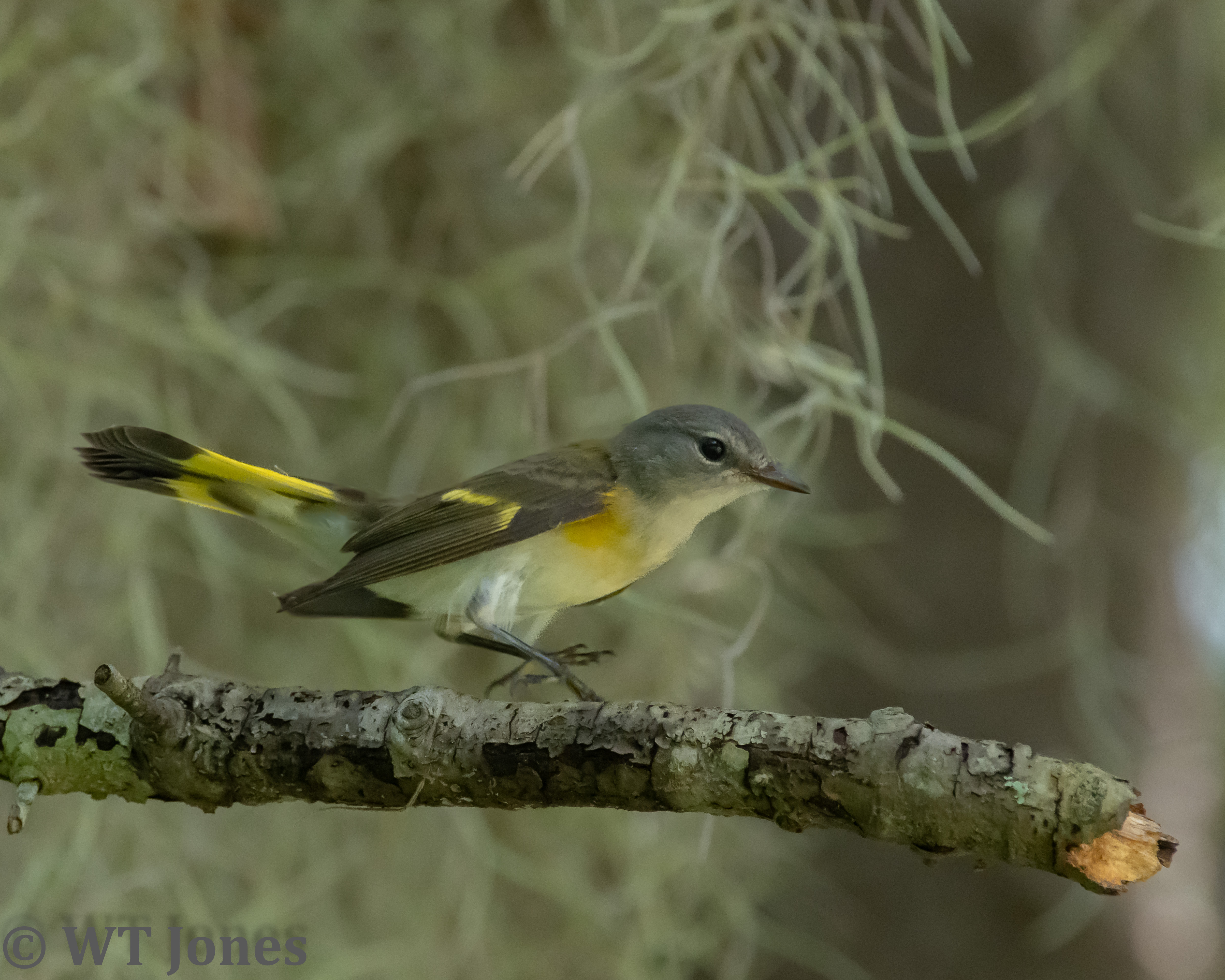
A nice start to the day was watching a female/immature male American Redstart flit from limb to limb, flashing tail and wings with bright yellow spots to frighten insects from hiding places. Immature males look exactly like a female until a bit later in the year when they begin to darken to an adult male’s black plumage.
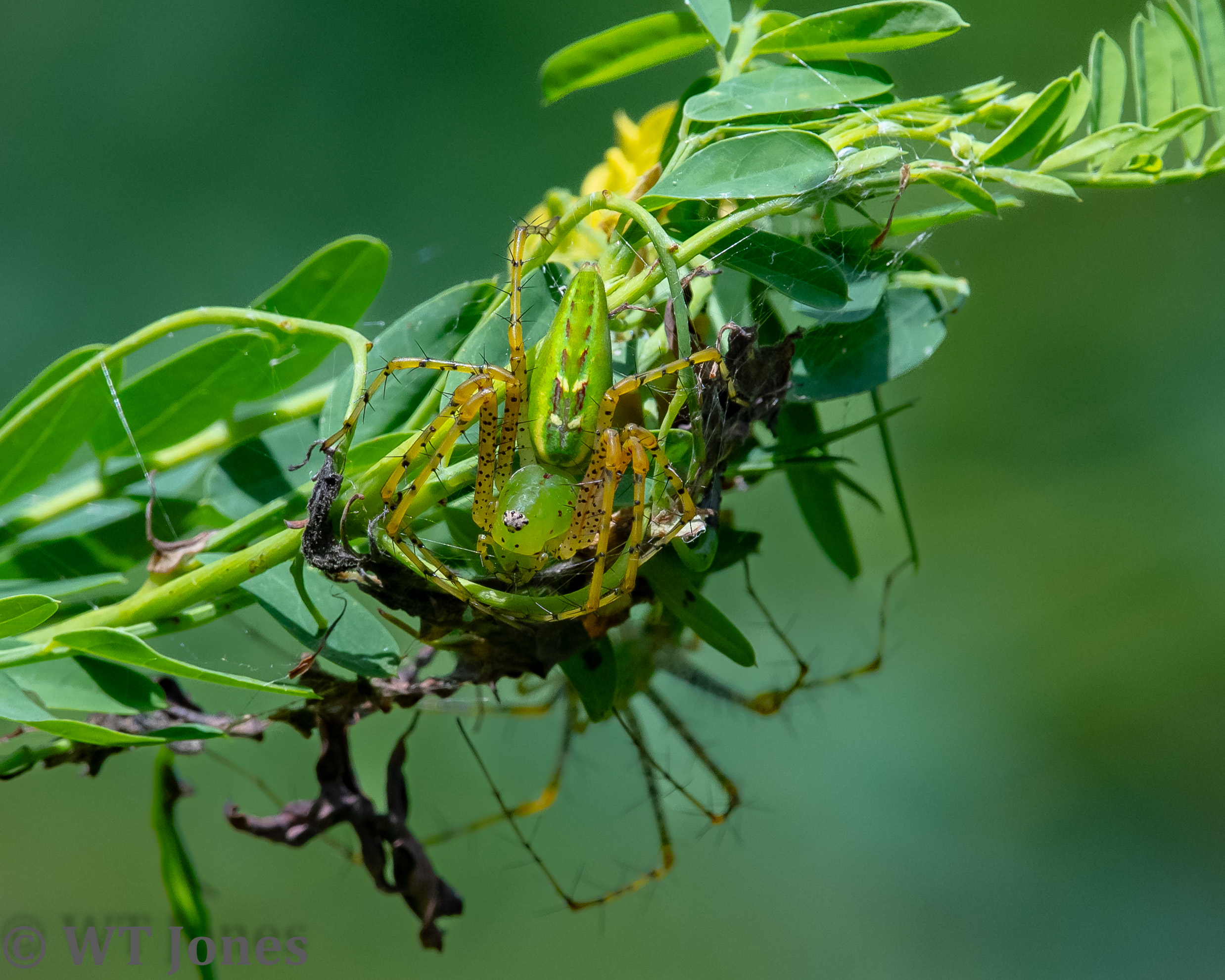
Favorite of the crowd, we found not one but two Green Lynx Spiders (Peucetia viridans). Ambush specialists, they don’t spin a web to capture prey. They just pounce.
Never mind that this is a mighty good-looking bug. I just like the name. Golden-reined Digger Wasp (Sphex habenus).

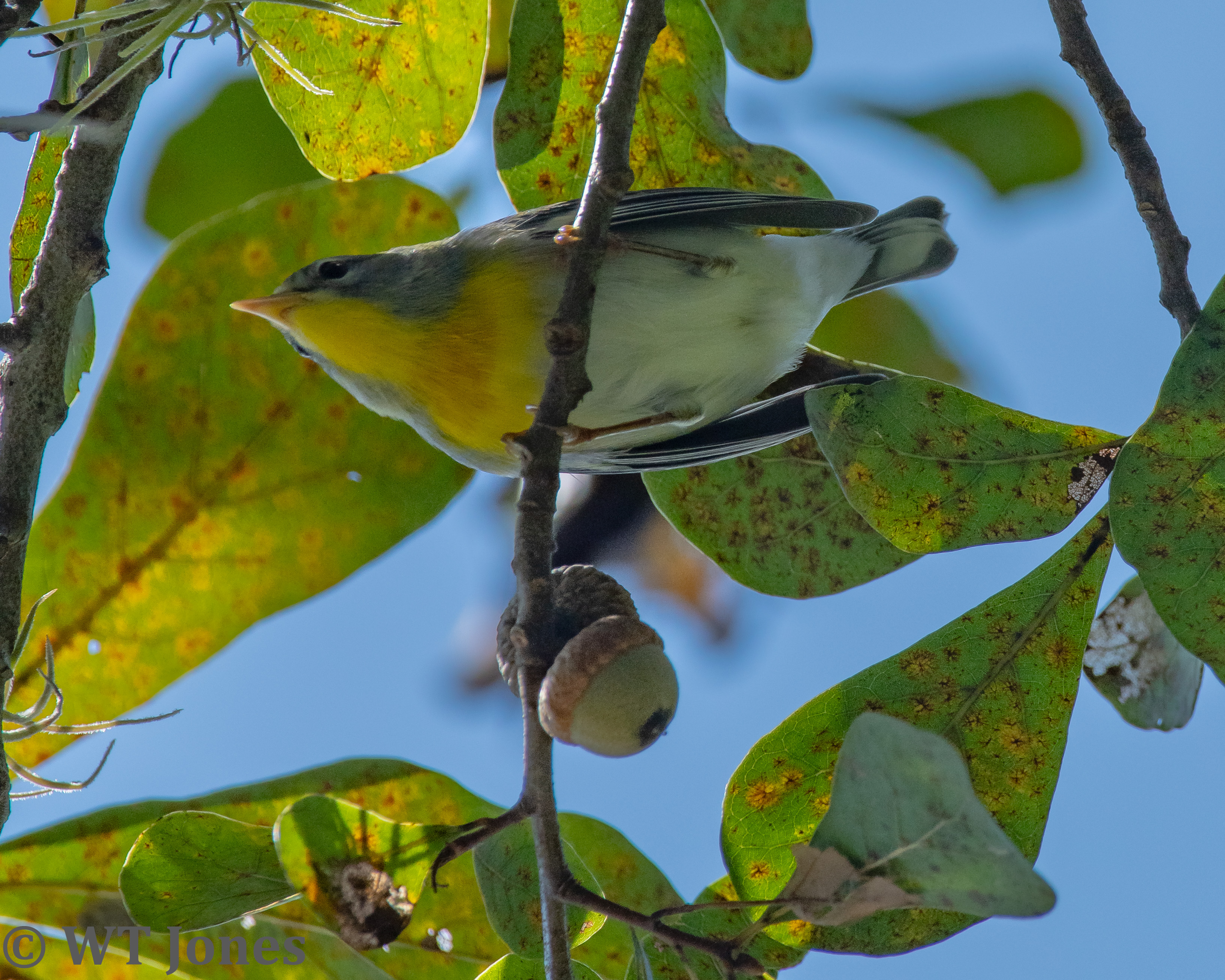
Although the Northern Parula warbler breeds in the area, as fall migration begins, small flocks of local and northern birds form as they begin their journey to South and Central America. Safety in numbers.
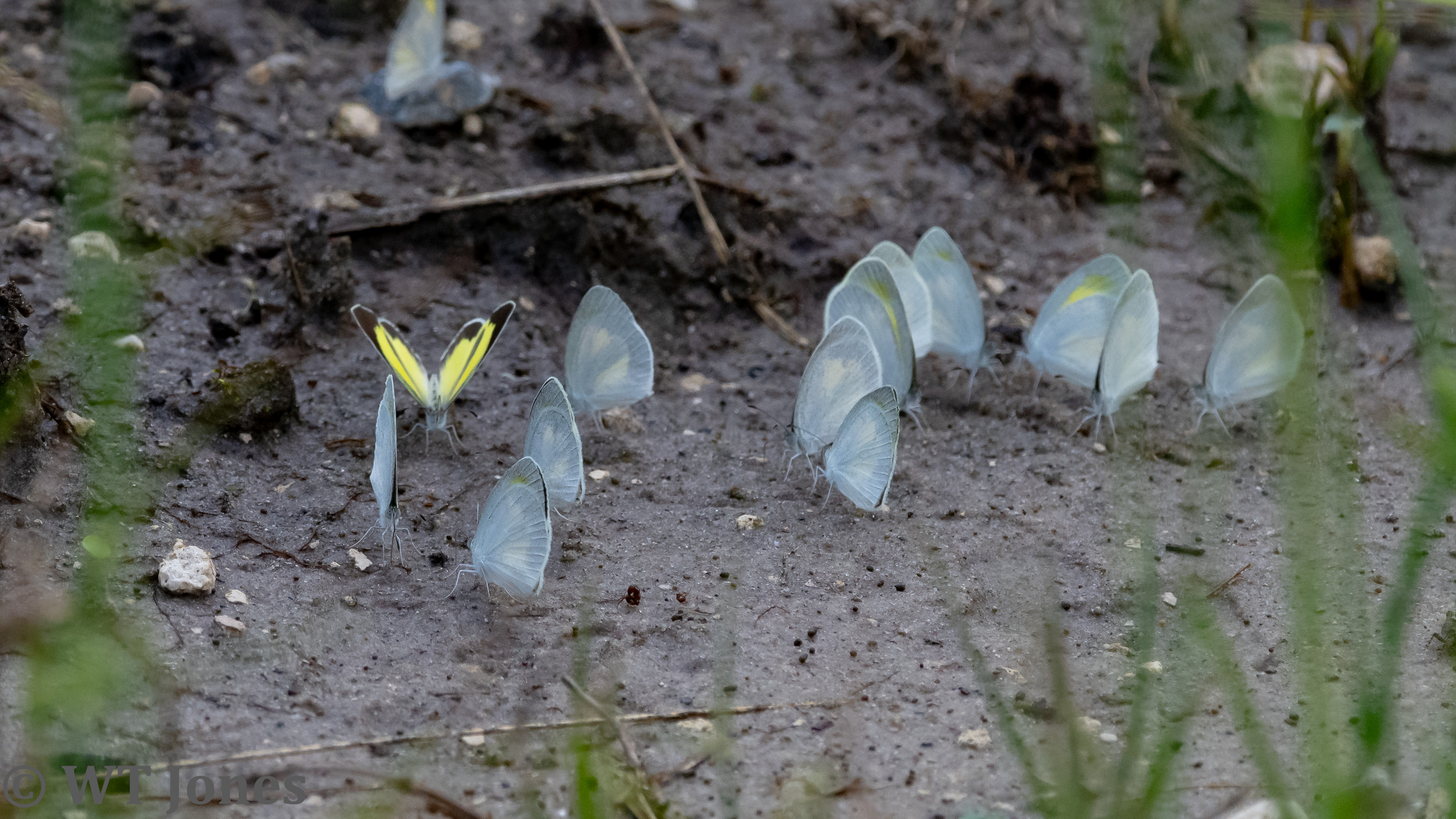
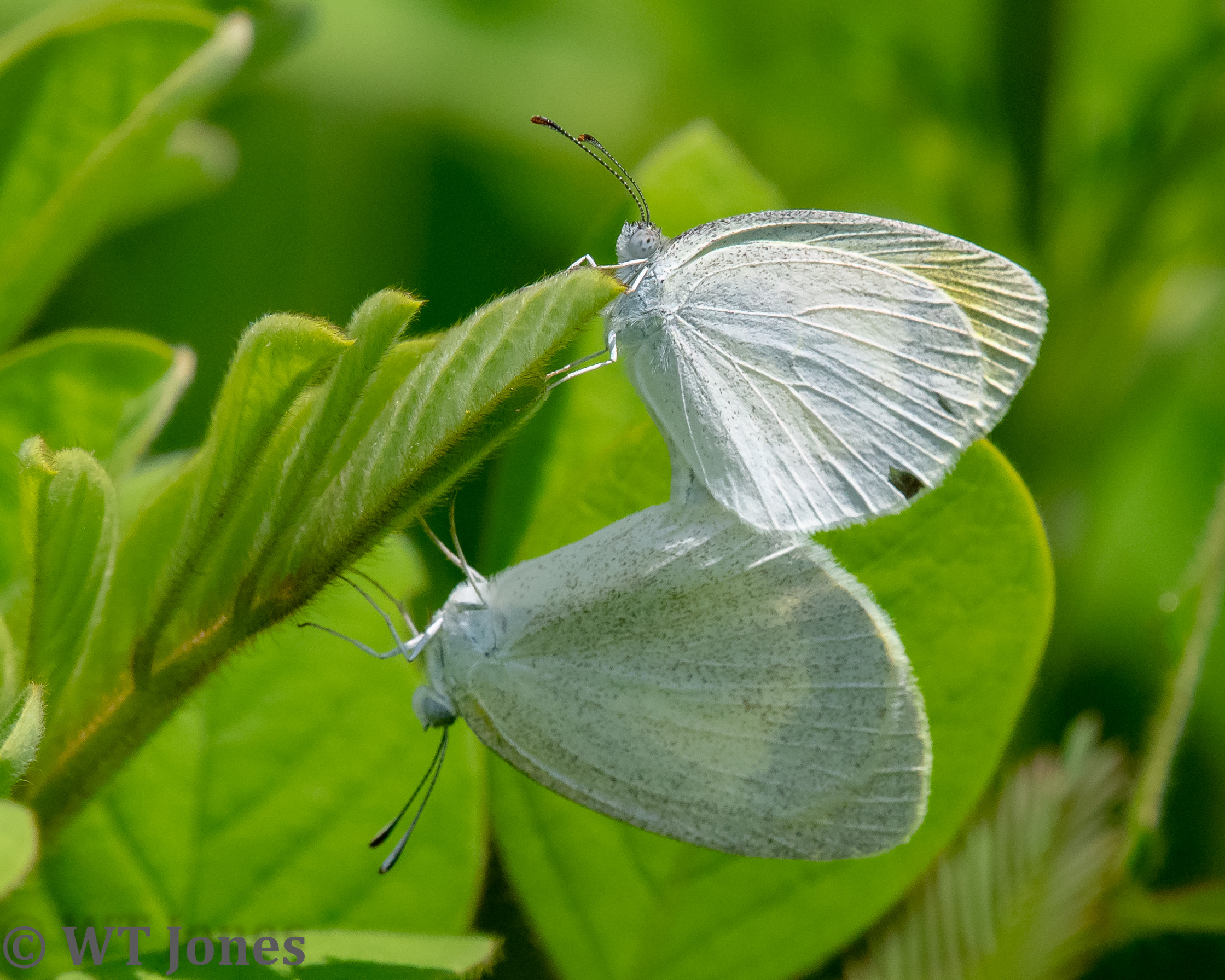
You might have guessed from the lead photograph above that we saw a few Barred Yellow (Eurema daira) butterflies today. Those were engaging in “puddling”, a process of extracting essential minerals and salts from damp soil. The two below are engaged in something quite different, but also essential.
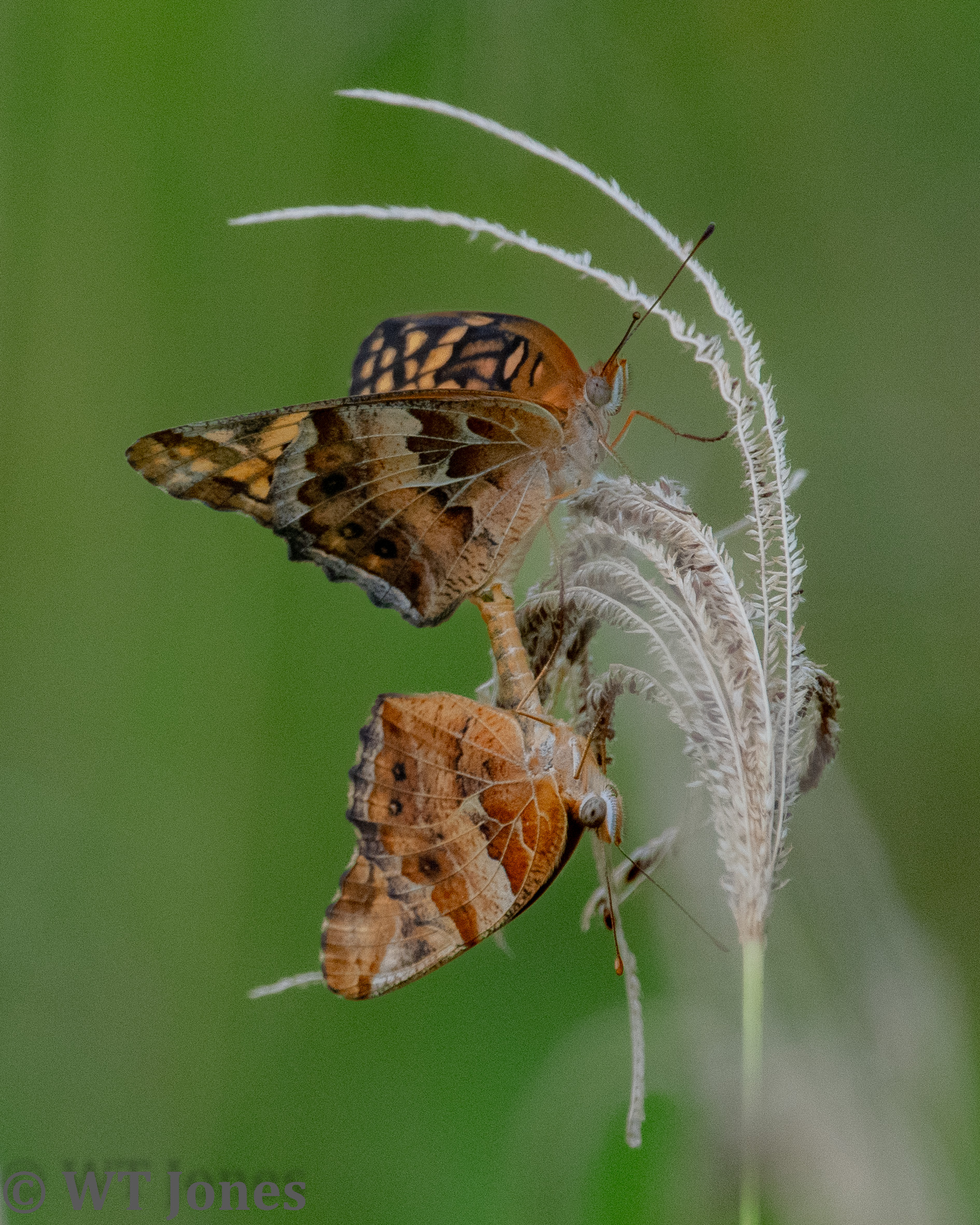
Gini’s sharp eyes spotted these two Variegated Fritillary (Euptoieta claudia) butterflies mating in a grassy field. By the time yours truly tromped into camera range they were finished but at least lounged around for an after-party portrait.
We did not actually see a little suitcase under its wing, so this Carolina Chickadee may be one of our local residents. It will soon be joined by dozens of the little black-and-white songsters for their winter journey.

Once in awhile, one has the feeling taxonomists become a bit frustrated and occasionally burst forth with a designation just for a laugh. This is a rather handsome moth. It was nice to find one in daylight hours. It’s name? Why, obviously, it is an Olive-shaded Bird-dropping Moth (Ponometia candefacta).

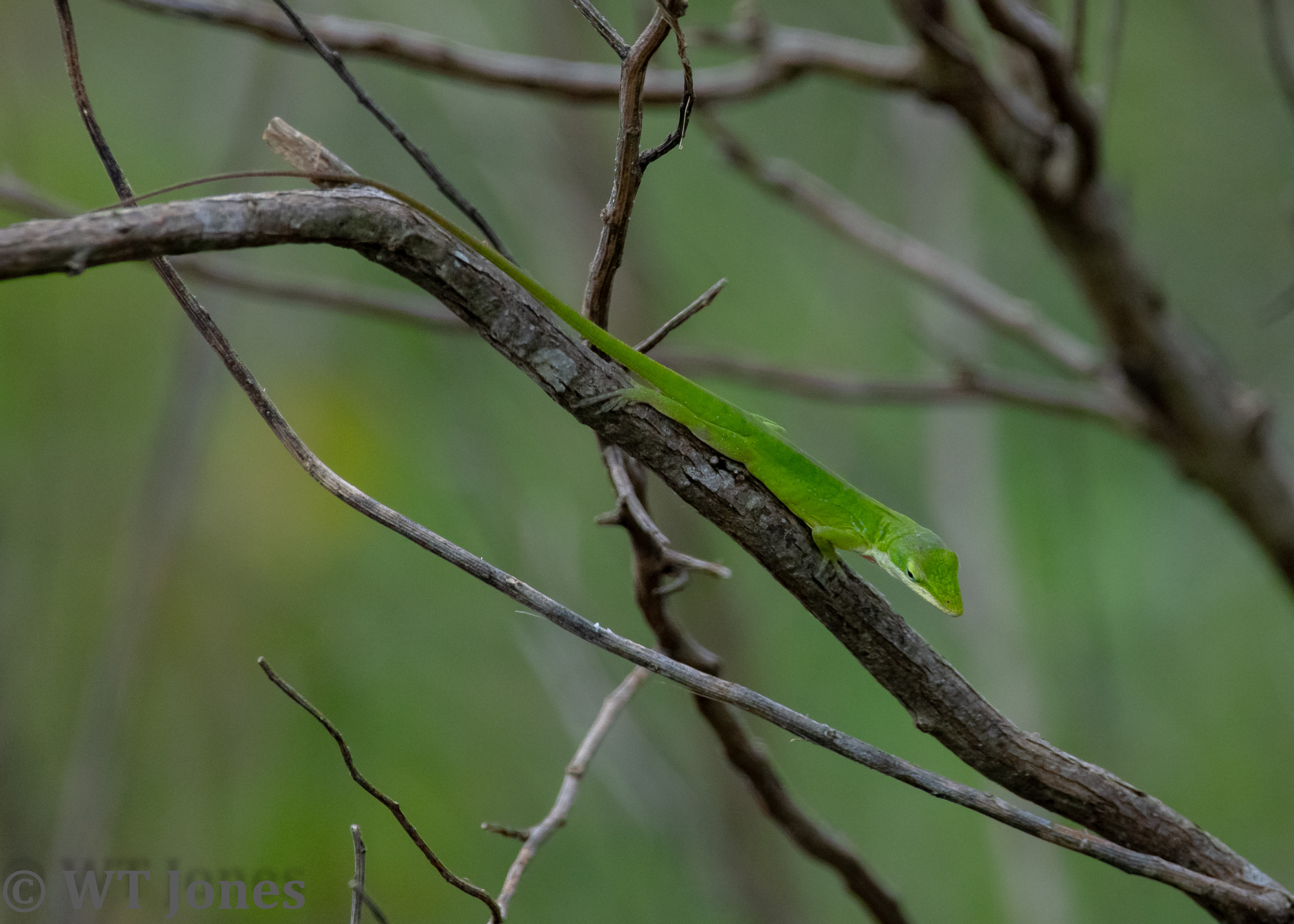
A Green Anole (Anolis carolinensis) may be wondering what a bird-dropping moth tastes like. Yum.
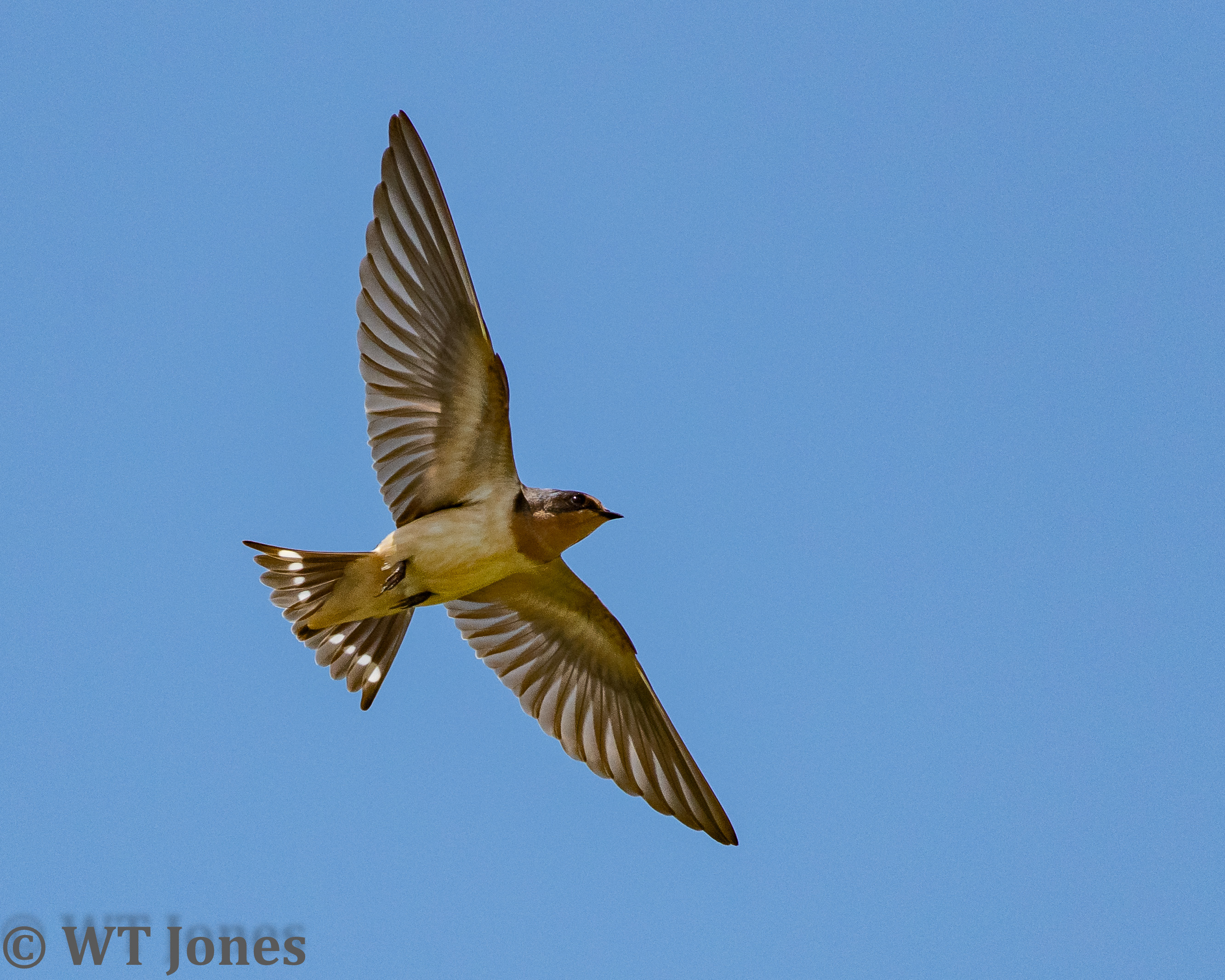
Flocks of swallows are becoming ever larger as the season progresses. This Barn Swallow is a young bird and does not yet have the deeply forked tail of an adult.
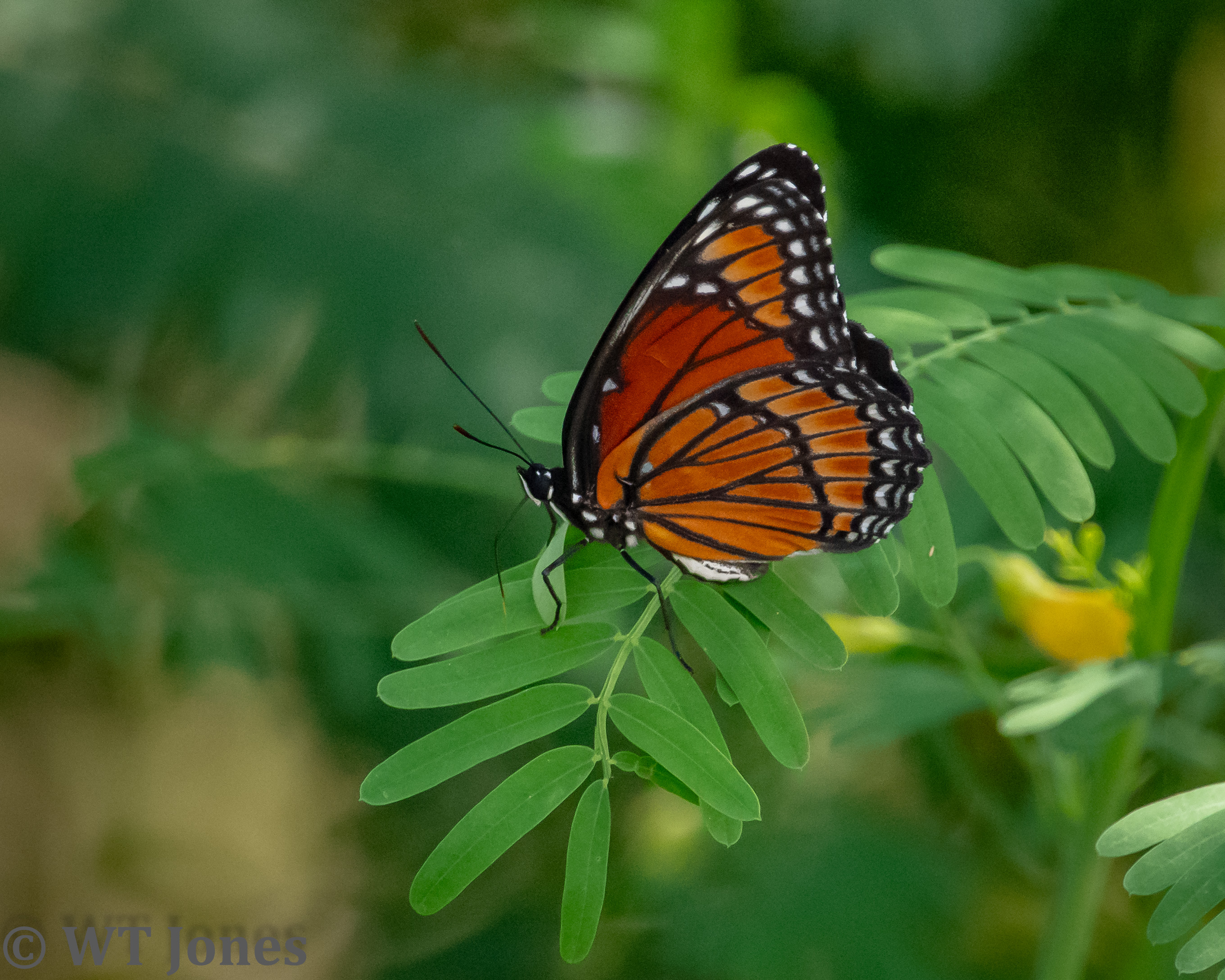
Similar in appearance to its distant cousin, the Monarch, this Viceroy (Limenitis archippus) butterfly is quite attention-getting with its bright color.
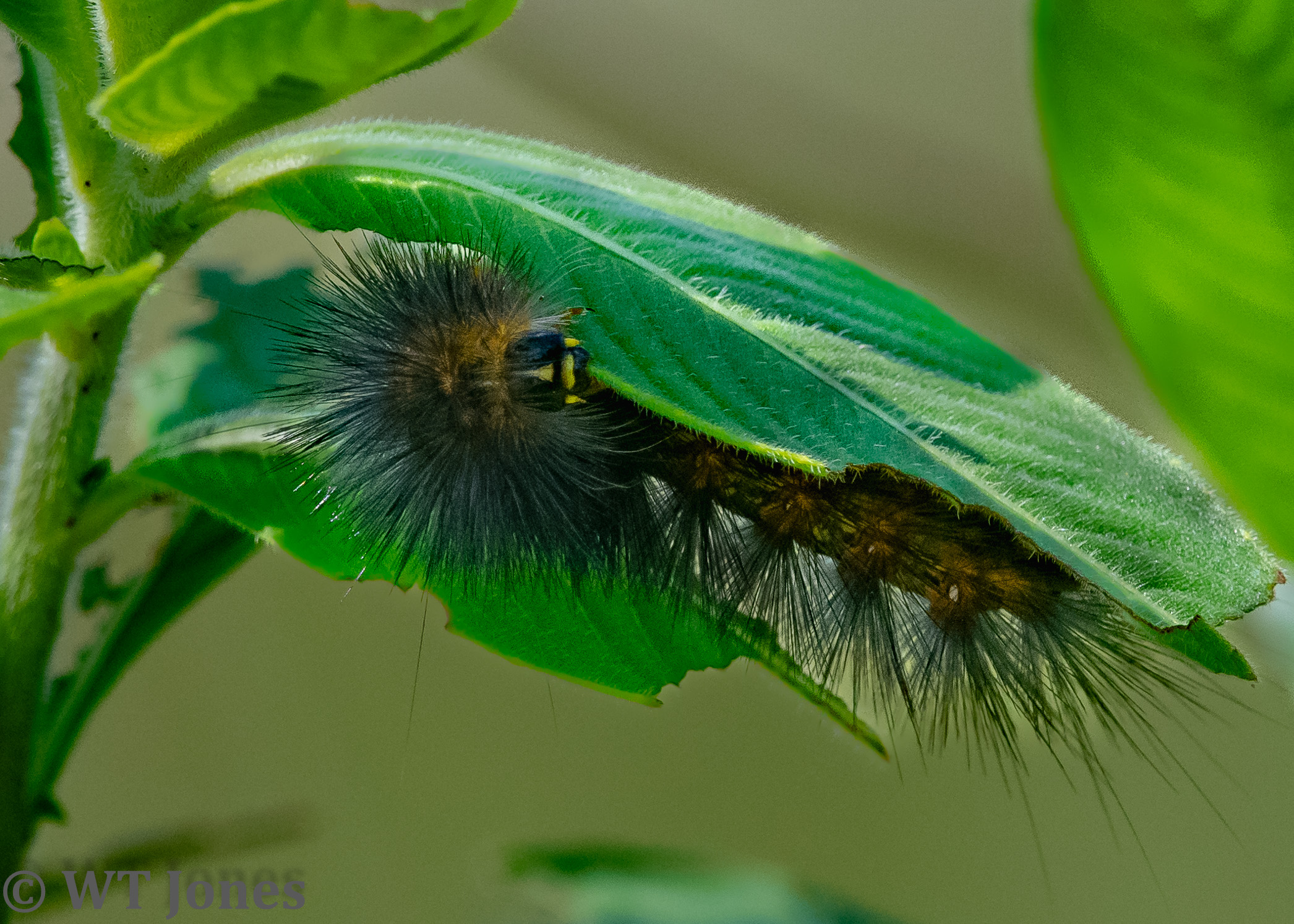
I think this is one of the many variations of the Salt Marsh Moth larva (Estigmene acrea). Please let me know if this is not correct. Some day we’ll find an adult moth.
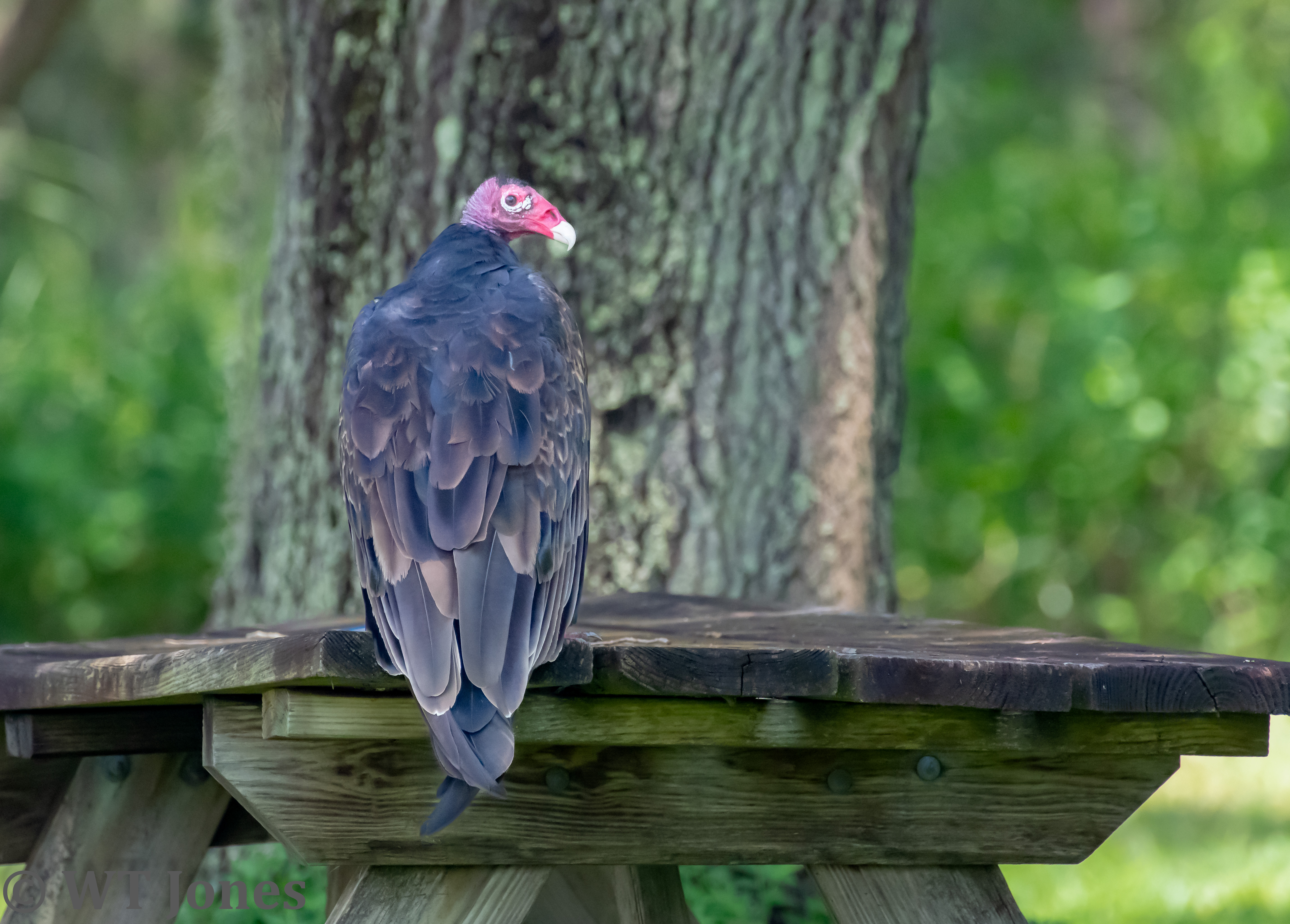
“What? Why, yes, you can join me for lunch. Just have a seat. A few dozen of my friends will be here soon.” Turkey Vultures are so polite.
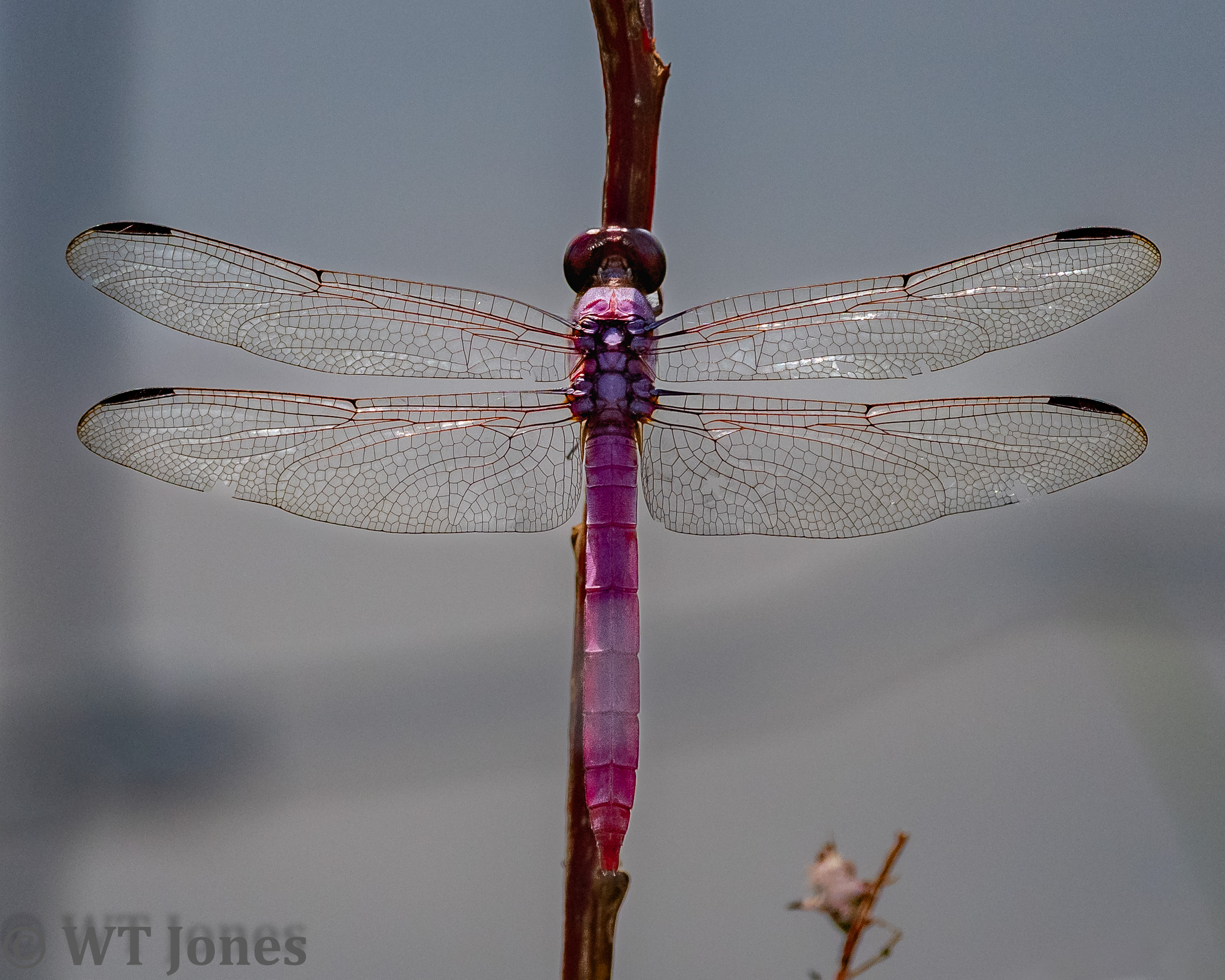
The dove field mentioned earlier has plenty of uneven spots which remain wet all summer. These are perfect places to hunt for dragons, such as this male Band-winged Dragonlet (Erythrodiplax umbrata).

Also from the dove field is a Roseate Skimmer (Orthemis ferruginea). Its color is almost outlandish. Gini says its “beautiful“. I stand corrected. Again.
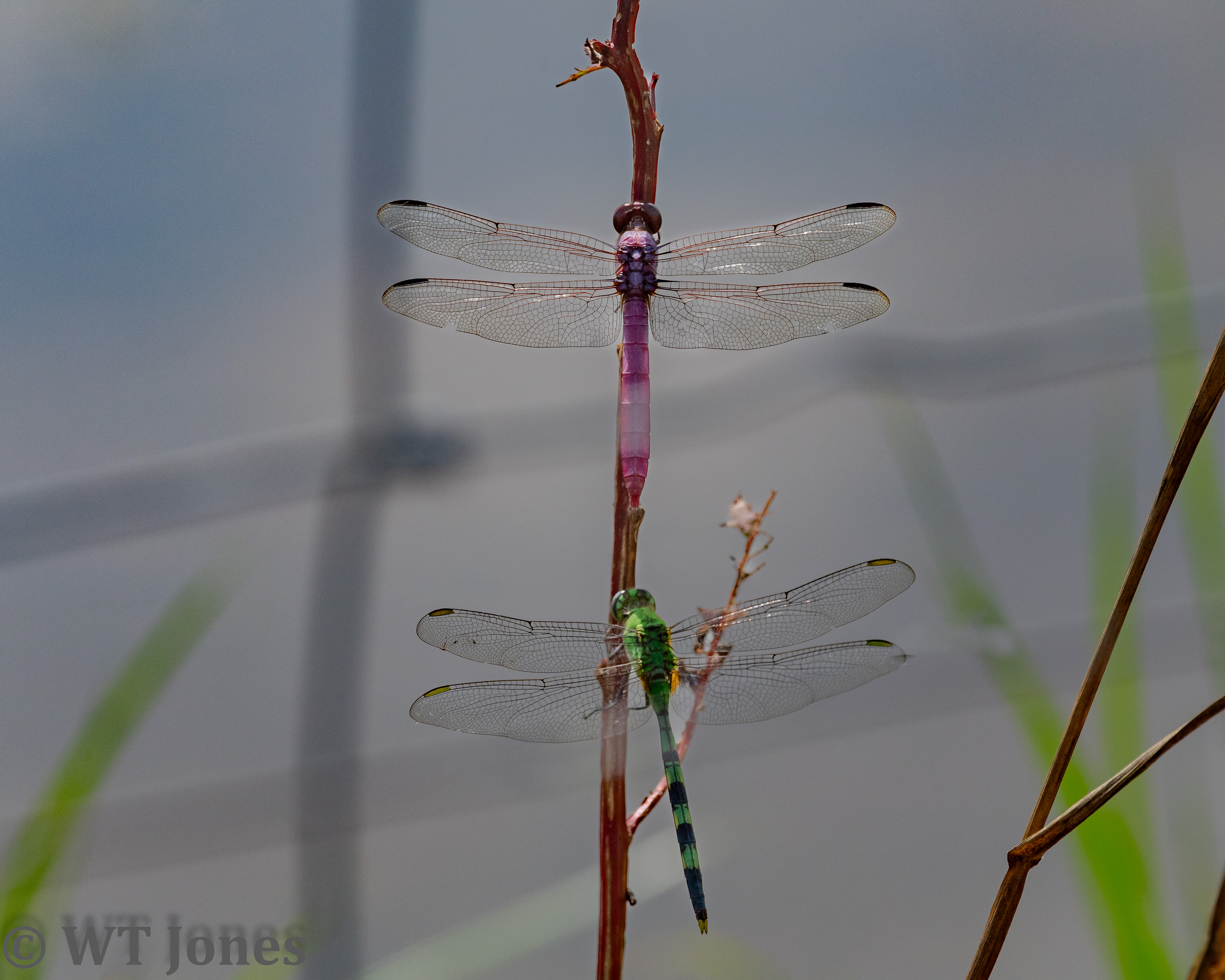
My plan worked perfectly. (It’s called “luck”.) A Roseate Skimmer (Orthemis ferruginea) and Great Pondhawk (Erythemis vesiculosa) perched together briefly.
Gini does it again. “Hey! That’s different!” She found our first-of-the-fall Northern Waterthrush skulking among the willows. Although this handsome bird has streaking similar to a thrush, it is actually a warbler.

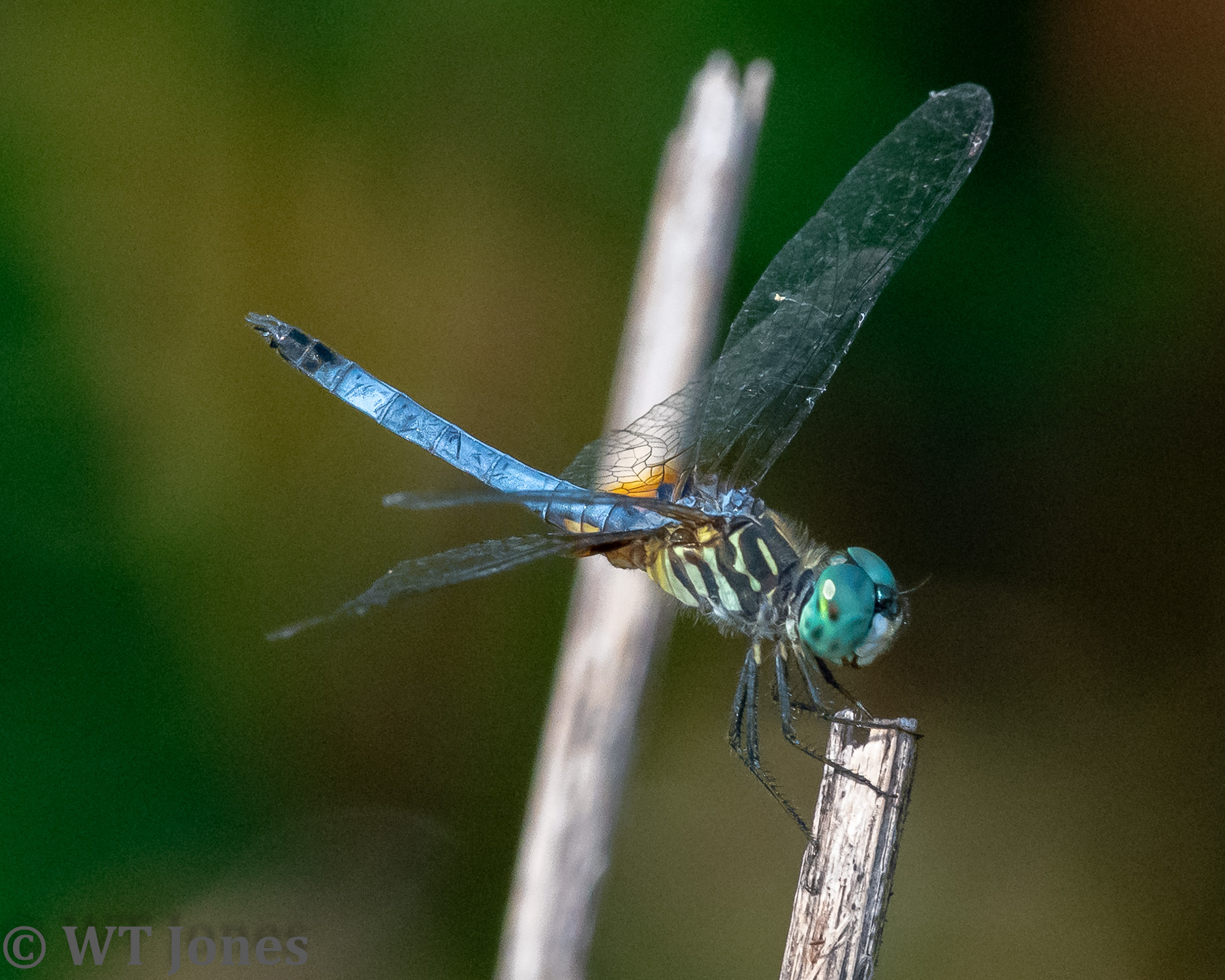
Poised to pursue breakfast. A male Blue Dasher (Pachydiplax longipennis) is a small dragonfly which is easy to identify with its white face and colorful striped thorax.
I have to force myself to slow down and not rush past common subjects. Although I have a full archive of the White Peacock (Anartia jatrophae), each is equally beautiful.

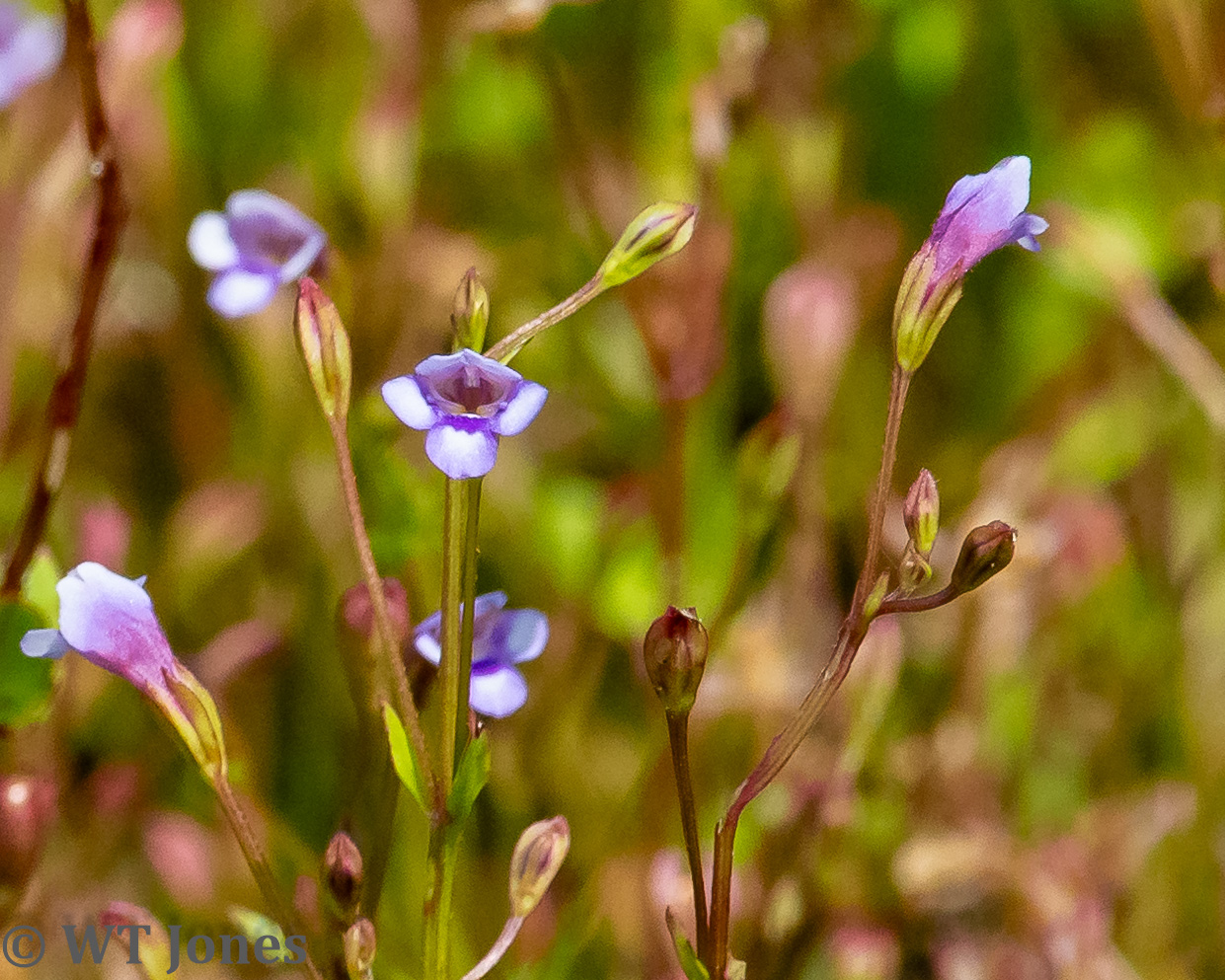
Our morning ended with the discovery of a new plant for us. Several patches of very small and bright lavender flowers grabbed out attention. This little beauty is the Savannah False Pimpernel (Lindernia grandiflora). The plant seldom grows taller than about six inches and forms an expansive mat in wetland areas. It is nearly endemic to Florida with a few reports from Georgia.

Another ordinary day. We traveled a whopping 3.5 miles to reach a familiar place and followed our routine pattern of exploration (sort of). Some observations were wonderfully common. A few were simply extraordinary!
Enjoy your search for a natural place and come back for a visit!
 Our Natural Places
I never tire of the amazing array of creatures you encounter during your “ordinary” outings and I’m deeply impressed by your knowledge of birds, bugs, and blooms. I still have a lot to learn!
LikeLike
You are too kind, Tanja. Danke.
Life is a never-ending learning process for us all.
LikeLiked by 1 person
It’s such a joy to witness the process of mud-puddling. Magical in many ways.
I also enjoy seeing tigers, monkeys etc, lick the salts off the ground in the forests.
And all your photos are fantastic as always. The Roseate Skimmer is gorgeous.
And did I see some acorns, Wally?
A fabulous November to the two of you.
LikeLike
Good Morning, Natasha.
We appreciate your very kind remarks.
The natural world offers so much to see and enjoy, doesn’t it? Your sharp eyes did spot some acorns. At this time of year walking in the woods quietly is imposible due to the crunch of fallen acorns underfoot.
Gini and I have already started the month with a family celebration feast and there is even more planned for the coming holiday season.
Our very best wishes to you.
LikeLiked by 1 person
I’m so excited for your celebrations. Even we recently returned after a gala festive celebration with family and extended family. Was beyond blessed and blissful.
I’d love to walk walk in your natural world listening to the crunching acorns. 🙂
Lots of love, laughter and cheer as the festivities kick in and the year wraps up.
LikeLike
Thank you very much, Natash.
Celebrating life with our families makes all our lives so much better.
LikeLiked by 1 person
Familiarity doesn’t necessarily breed boredom, that’s for sure. Your first photo of the Barred Yellows brought a hearty laugh. The closed-wing cluster reminded me of this 1871 illustration for Lewis Carroll’s “The Walrus and the Carpenter.” Y not a comparison between butterflies and oysters? (Years ago, one of my customers had a boat named ‘Why Knot.’ Its tender was named ‘Frayed.’)
I wished for your lenses yesterday when I spotted some beautiful pickerelweed far across the little lake at the Attwater refuge. It was so far away that I couldn’t see it with eyes alone, and would have missed it had I not snapped a single Great Egret standing at the edge of a small islet. You certainly put those lenses to good use here. The combination of the Pondhawk and the Roseate Skimmer is especially appealing, although the Turkey Vulture appeals, too.
Do Green Lynx spiders have a ‘season’? They always seem most common here in October; I don’t know if that’s when they mature, or if they just show themselves more often. They’re one of my favorites, for sure.
LikeLike
We seldom catch the small sulphur butterflies with their wings open so was pleased this one decided to stand out from the crowd.
Timing is everything. The posing dragons are a perfect example of right place, right time.
The Vulture gets short shrift among most photographers and it was nice to have one stop by for a portrait.
The Green Lynx is more active in September and October as that’s when they produce an egg sac. Typically, there will be 200-400 eggs and while they are in the sac, Mama will aggressively attack anything which comes too close.
LikeLiked by 1 person
Y
LikeLike
On the other hand, Y not?
LikeLike
Thank you for sharing all the lovely finds along your walk. What Diversity! And what sensational photos!!
LikeLike
It all seems a bit lovelier when shared.
You are very welcome. Thank you for the kind comments.
LikeLiked by 1 person
☺️
LikeLike
I imagine many of your photographs are difficult to capture, but for me the most impressive was the swallow. I have tried to photograph them with limited success. They are so darn fast and erratic!
LikeLike
Thank you, Jim.
You are so right about the flight of the swallows! Got lucky as there were several feeding in a field. Lots of shots later – one came out okay. 🙂
LikeLike
So many great shots! I thought the fritillaries mating was my favorite but that barn swallow in flight was amazing. It’s so hard to get those guys flying.
LikeLike
Thank you, Dina.
We liked the butterflies on that grass, too.
My plan for that swallow worked. L-U-C-K.
LikeLike
Your walk was very fruitful. Have a favorite place to walk can yield so many different experiences. Thanks for sharing.
LikeLike
It was a good morning. Thank you, Brad.
So many favorite places, so little time…..
LikeLiked by 1 person
Loved your levitating Redstart, and lurking Lynxes (I had to really study to find the second one), and the friendly Fritillaries on feathered frond… your whole adventure was a joy!
LikeLike
Thank you, Sam.
It was a joy for us, too!
LikeLike
No small wonder that this is one of your favourite patches, Wally (and Gini). The variety of subjects for photography is amazing.
I was enchanted by your American Redstart, butterfly, and moth images, but the real ‘Wow!’ factor came from those Odonata images – fabulously beautiful creatures, superbly photographed.
I hope that all is now on an even keel medical-wise. We’re currently experiencing a few blips. Best wishes to you both – – – Richard
LikeLike
Thank you so much, Richard.
The fact this spot is so near the house is certainly a positive factor. Close to nature in a few minutes is great. So many photo subjects to choose from – priceless.
At our age, “even-keel medical-wise” may never be uttered again. A potential major blip may have been mitigated. The next few weeks will tell. We hope your blips are quickly and smoothly resolved.
Gini and I hope you and Lindsay are able to enjoy the weekend. Cooler temperatures here make our morning outings much more pleasant!
LikeLike
Thanks for sharing all this beauty. I am pleased to admire the Anole in particular. Your header image is awesome too.
LikeLike
You are very welcome! The little green lizard is always a treat to see and the gathering of so many butterflies was amazing.
We hope you are having a great weekend.
LikeLiked by 1 person
When is a door not a door? When it’s ajar.
When is a thrush not a thrush? When it’s a northern thrush.
That one Eurema butterfly in the opening picture was quite the iconoclast, alone in showing yellow as it did.
That’s a good haul of dragonflies for one outing.
The word viceroy means literally ‘in place of the king,’ i.e. ‘governing as a representative of the king.’ About the butterfly of that name, Wikipedia says: “It was long thought to be a Batesian mimic of the monarch butterfly, but since the viceroy is also distasteful to predators, it is now considered a Müllerian mimic instead.” That prompted another search and another explanation: “Müllerian mimicry is a natural phenomenon in which two or more well-defended species, often foul-tasting and sharing common predators, have come to mimic each other’s honest warning signals, to their mutual benefit.”
Your closing statement reminds me of these lines from T.S. Eliot’s “Little Gidding”:
“We shall not cease from exploration
And the end of all our exploring
Will be to arrive where we started
And know the place for the first time.”
LikeLiked by 1 person
Thank you, Steve.
The waterthrushes differ from the “actual” thrush family in size as well as song. They are almost half the size of the larger thrushes.
Some survival techniques in nature are fascinating.
Eliot is a long-time favorite but it’s been years since I read Little Gidding. Excellent passage which I’ve jotted down for frequent reference.
LikeLike
That was a very ‘profitable’ walk, such a huge variety on show and photographed.
LikeLike
Thanks, Brian.
It’s a good spot, that’s for sure.
LikeLike
Gini is right. The roseate skimmer is a beautiful colour.
I am grateful to have been taken walking with you again. Many thanks.
LikeLike
She is ALWAYS right! (That’s a good thing.)
Thank you, EC, for being with us. It made our day better. Our mornings are becoming cooler so hope it was comfortable for you.
LikeLike