On The Importance of Planning

It is vital to set goals is life. Without a goal, how do you know where to go? If you don’t know where you’re going it is all too easy to become lost, literally as well as figuratively. Mapping out a route for what you want to do in life is critical to being successful.
Philosophy lesson for the day is over.
Once in a awhile – okay, most of the time – we have no specific goal in mind when we explore Nature. We go. We see. We breathe. We connect – with each other as well as with our surroundings. We are satisfied and “happy”.
I am blessed to have a partner around whom it is impossible to NOT be happy. She is very special.
Today was like any other. That is to say, it was extraordinary! We traveled a short distance to Colt Creek State Park. Open fields, pine woods, lakes, wetlands, cypress swamp, oak hammocks – diverse habitat inhabited by diverse life forms. Moving along at a quick pace produces an amazing array of sights, sounds, aromas, textures. Slowing down reveals an enhanced experience of all of the above. Standing still forces one to appreciate details impossible to see when walking.
We have a favorite spot under the tall long-leaf pines where we enjoy breakfast each time we visit. Today was similar to others. The shrill cry of a Red-shouldered Hawk indicated annoyance at our interrupting her own search for breakfast. A big Pileated Woodpecker flew from one tree to another. Butterflies flitted among blooming Spanish Needles. From low in a scrub palmetto came the song of a White-eyed Vireo and the summertime cicada chorus was non-stop.
A few hours in the park this morning refreshed our souls. Facing a calendar filled with visits to medical practioners and laboratory technicians seems less daunting.
Diversity shared is diversity enjoyed.
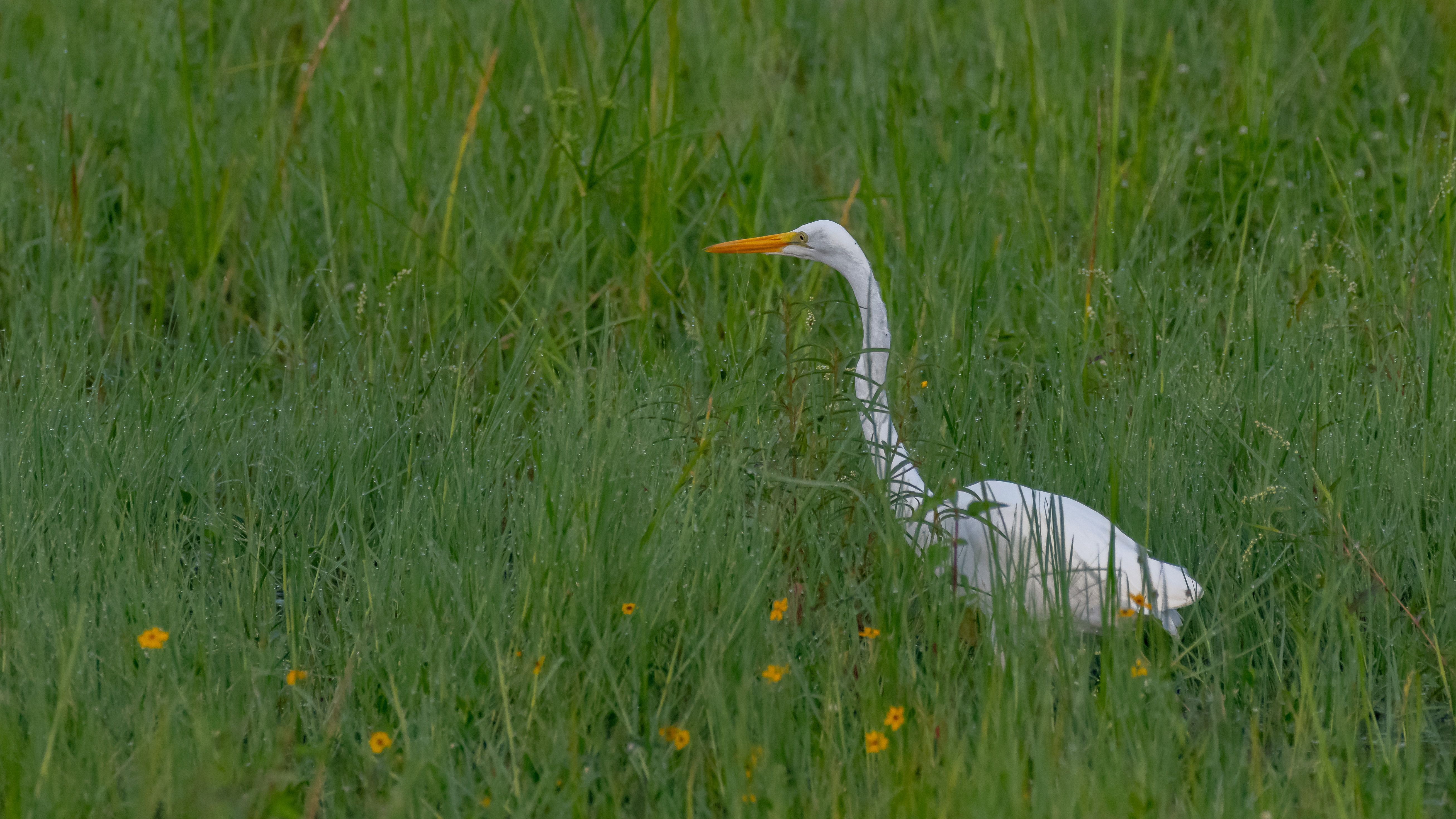
Recent rains have created “instant wetlands” where there is typically only tall grass. Adding water sure can be attractive for some. If you know how tall a Great Egret is then you have an idea how tall the grass has become.
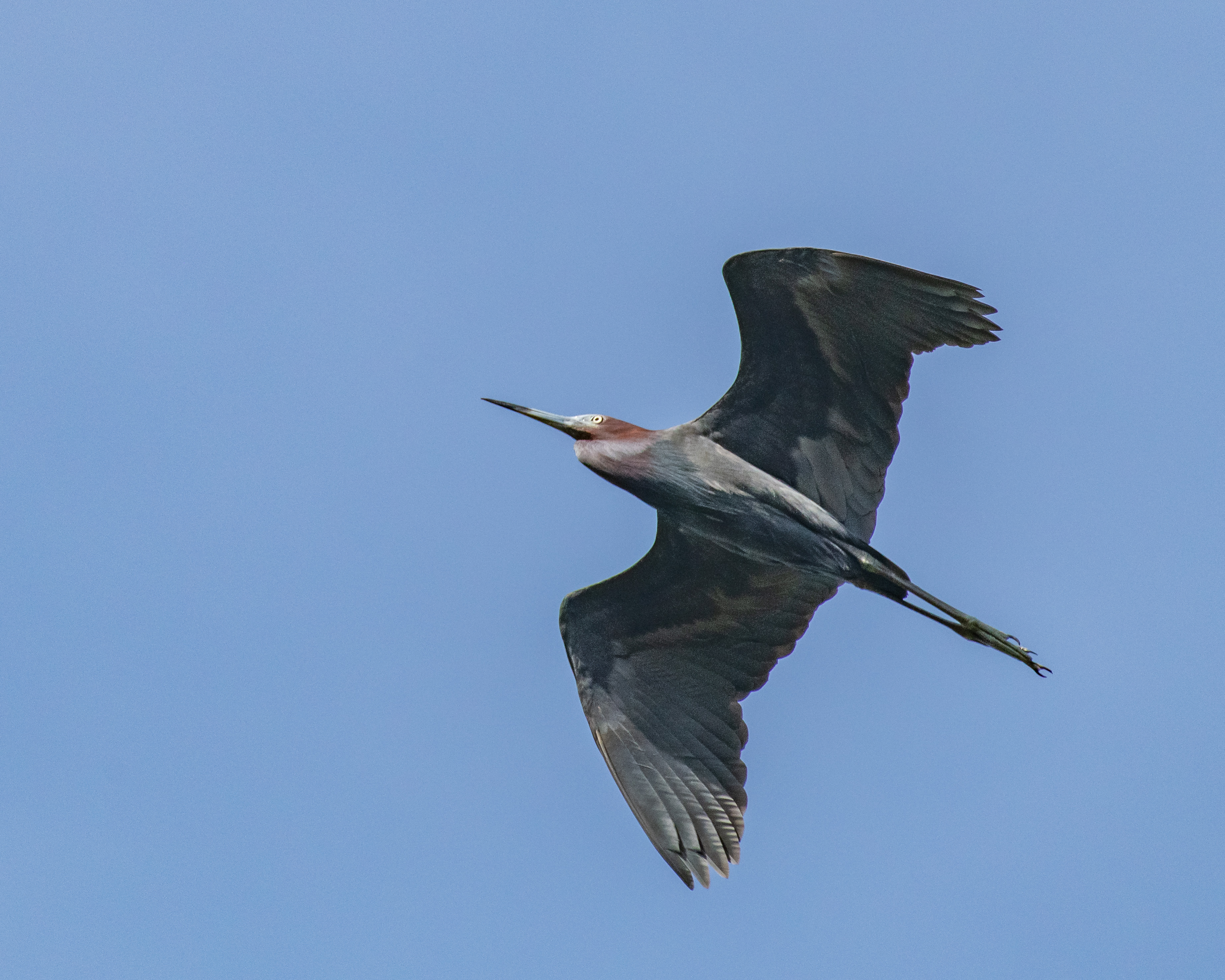
All white tells us this Little Blue Heron is still in its first year of growth. Soon it will become mottled with blue/gray splotches and then next spring will show off its full adult plumage.

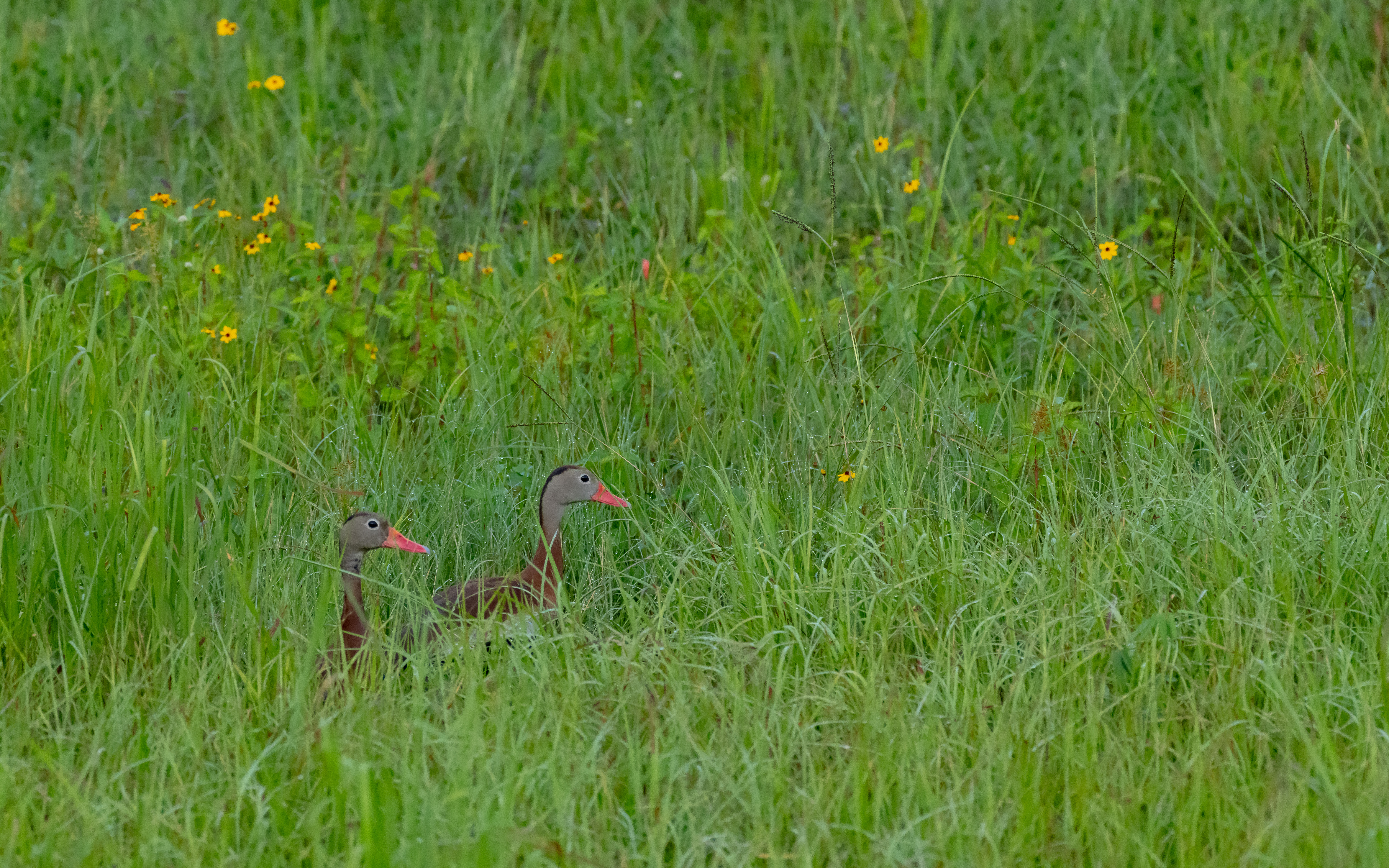
Pretend you can’t see them. We wouldn’t want to hurt the feelings of this pair of Black-bellied Whistling-Ducks who think they are perfectly hidden.
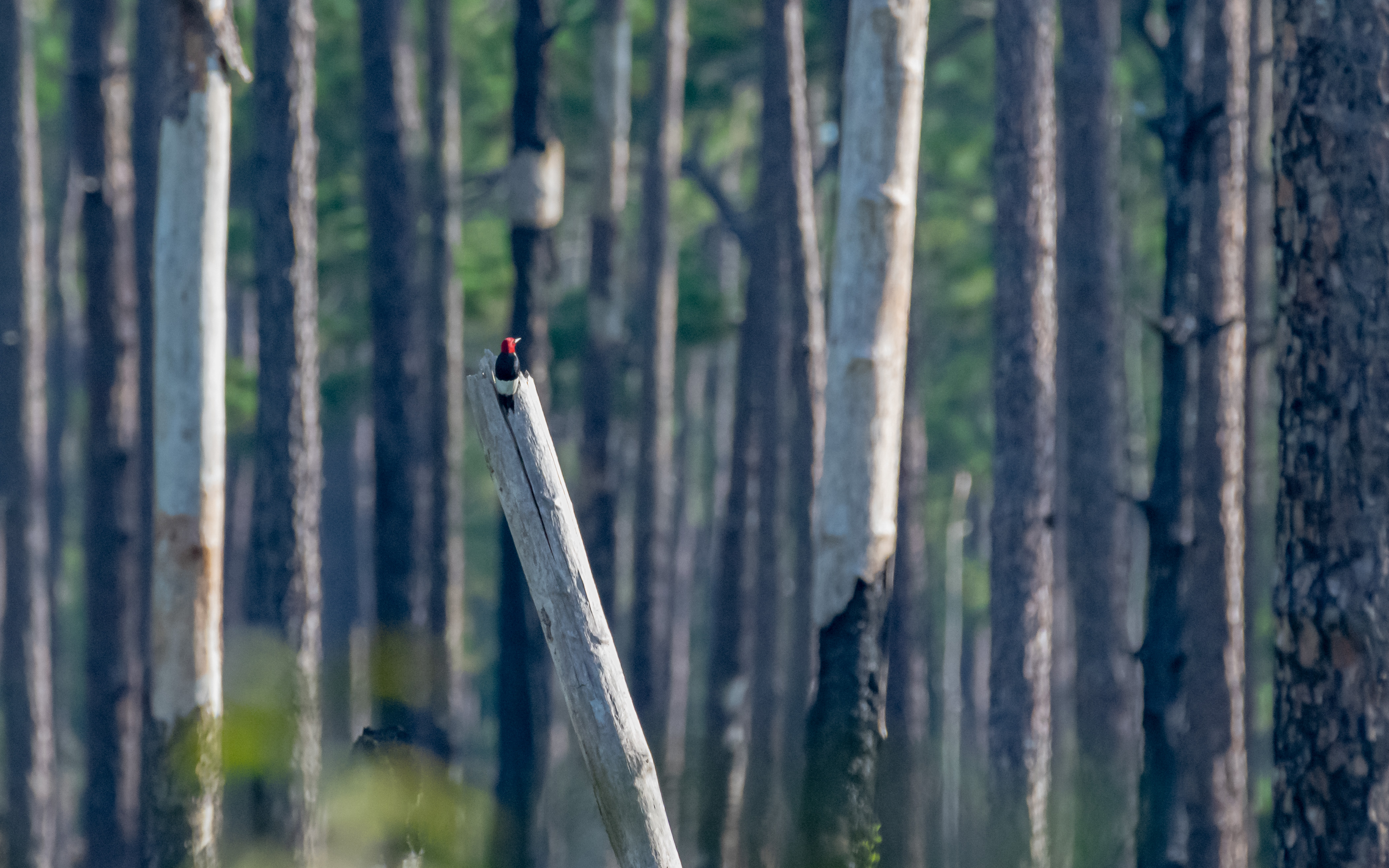
Even at a great distance it is hard to miss the black and white and red of a Red-headed Woodpecker.
Having just emerged from its cocoon, a Gulf Fritillary (Dione incarnata) perches in the morning sun to dry its brand new wings.

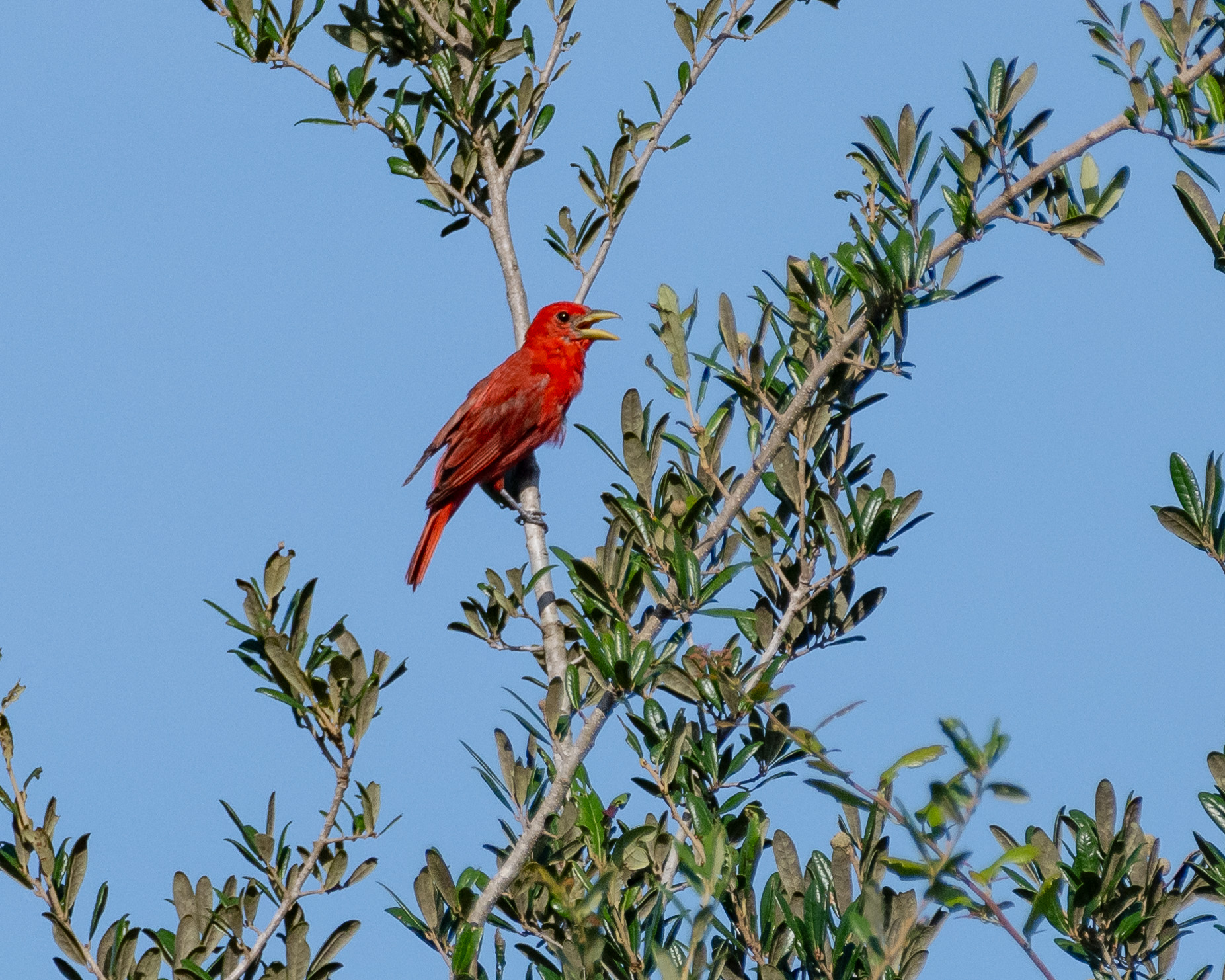
A gorgeous bright red bird AND a beautiful song! Hard to beat that combination this morning. The male Summer Tanager is a joy to behold in any season.
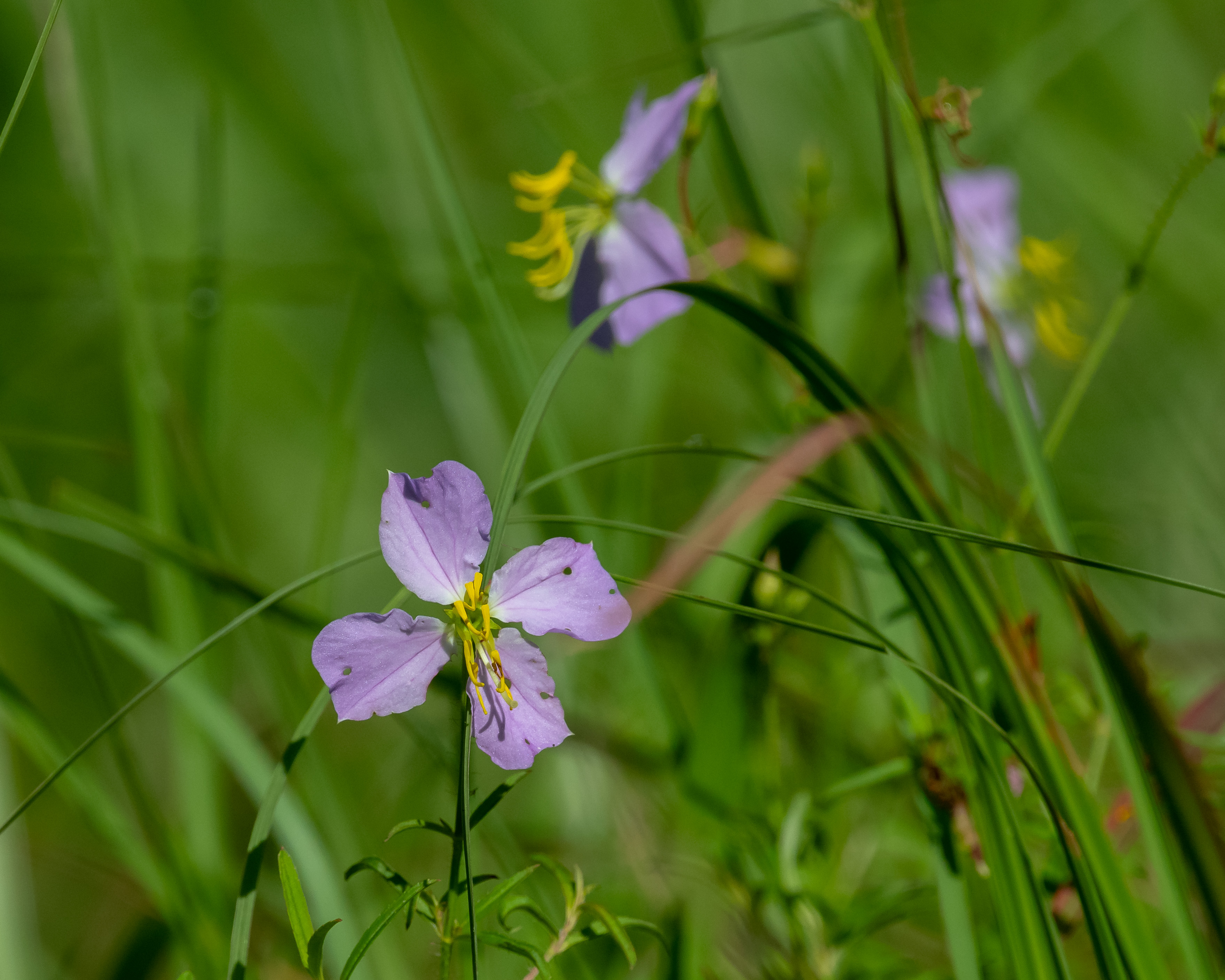
Pale Meadowbeauty (Rhexia mariana). Common in the area, uncommon in its loveliness.
An adult Little Blue Heron illustrates how our immature friend above will eventully appear.
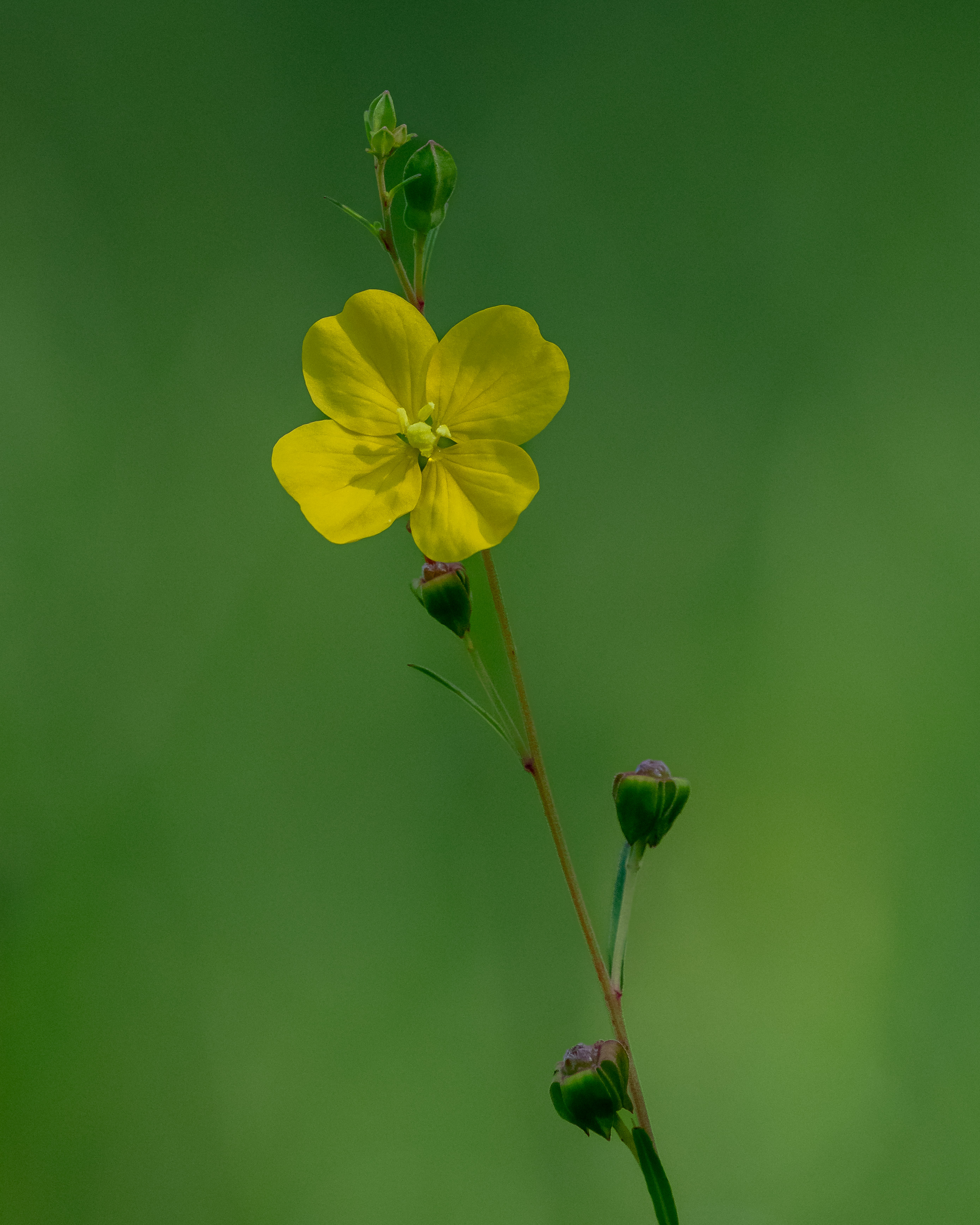
Florida has nearly 30 species of Ludwigia to enjoy with some looking very similar which can make identification difficult. The Narrowleaf Primosewillow (Ludwigia linearis) helps by having, just as its name suggests, very narrow leaves. Bright yellow four-petaled blooms appear on single stalks which can reach up to 36 inches.
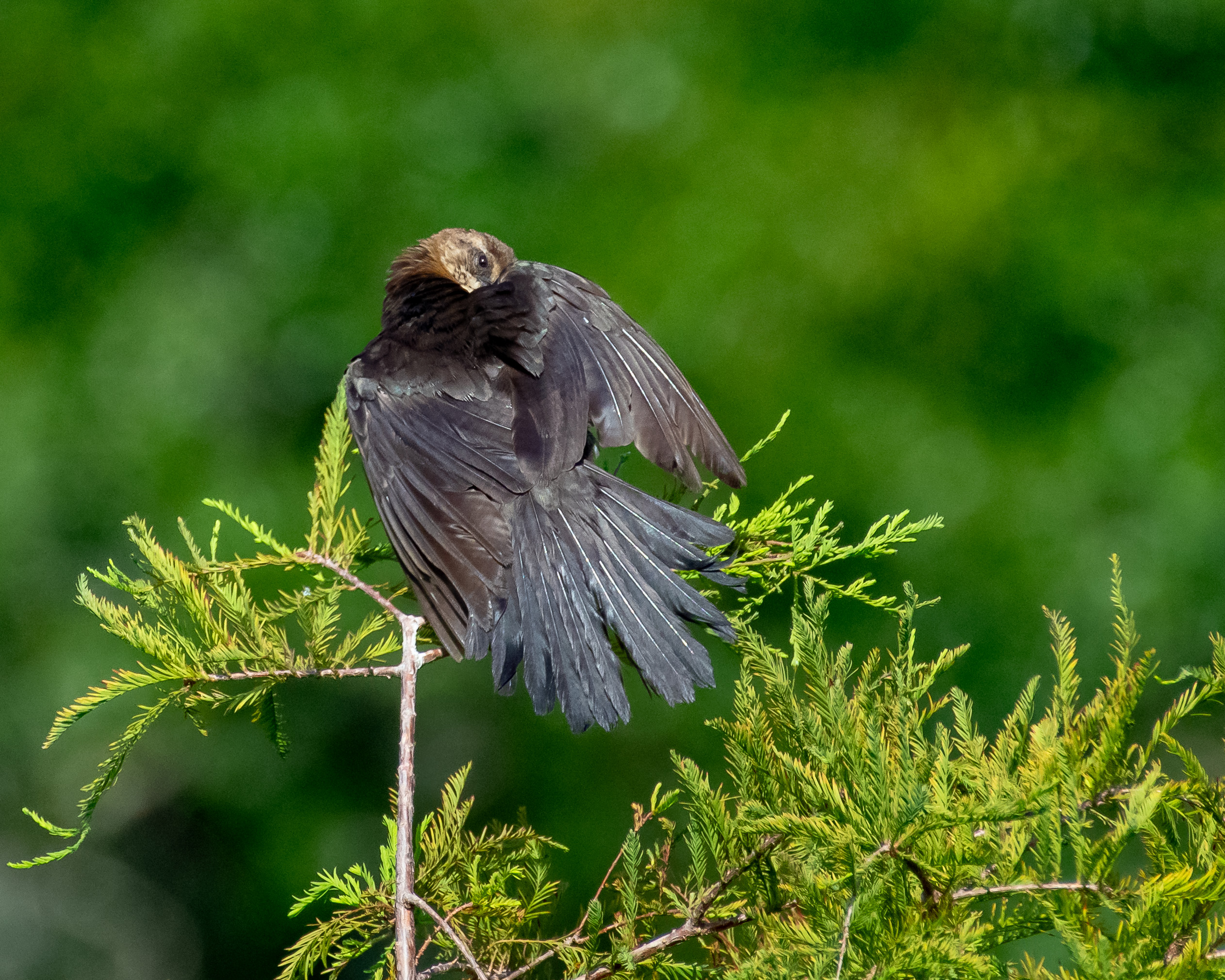
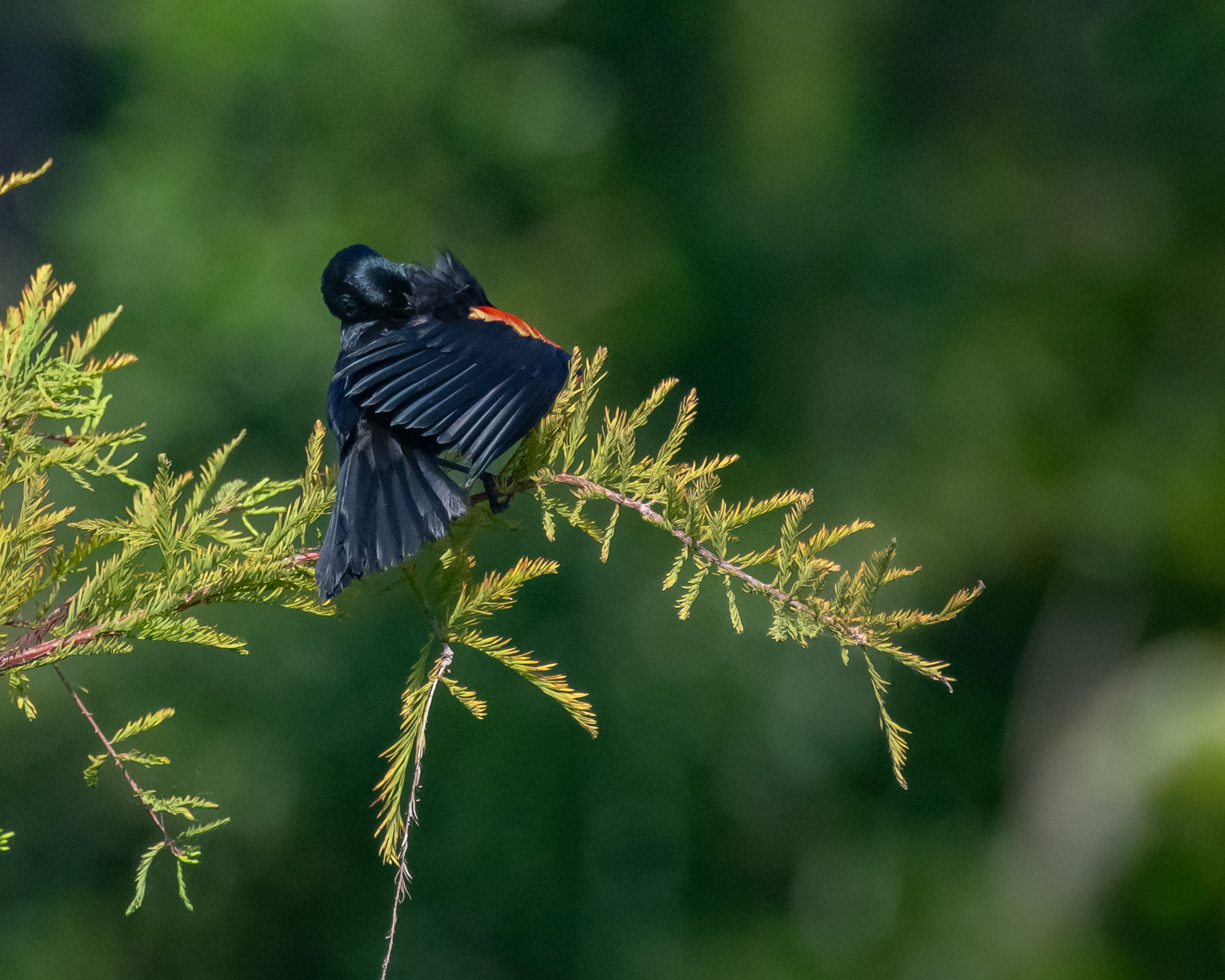
The preening tree. This cypress tree was a favorite spot for perching and cleaning today.
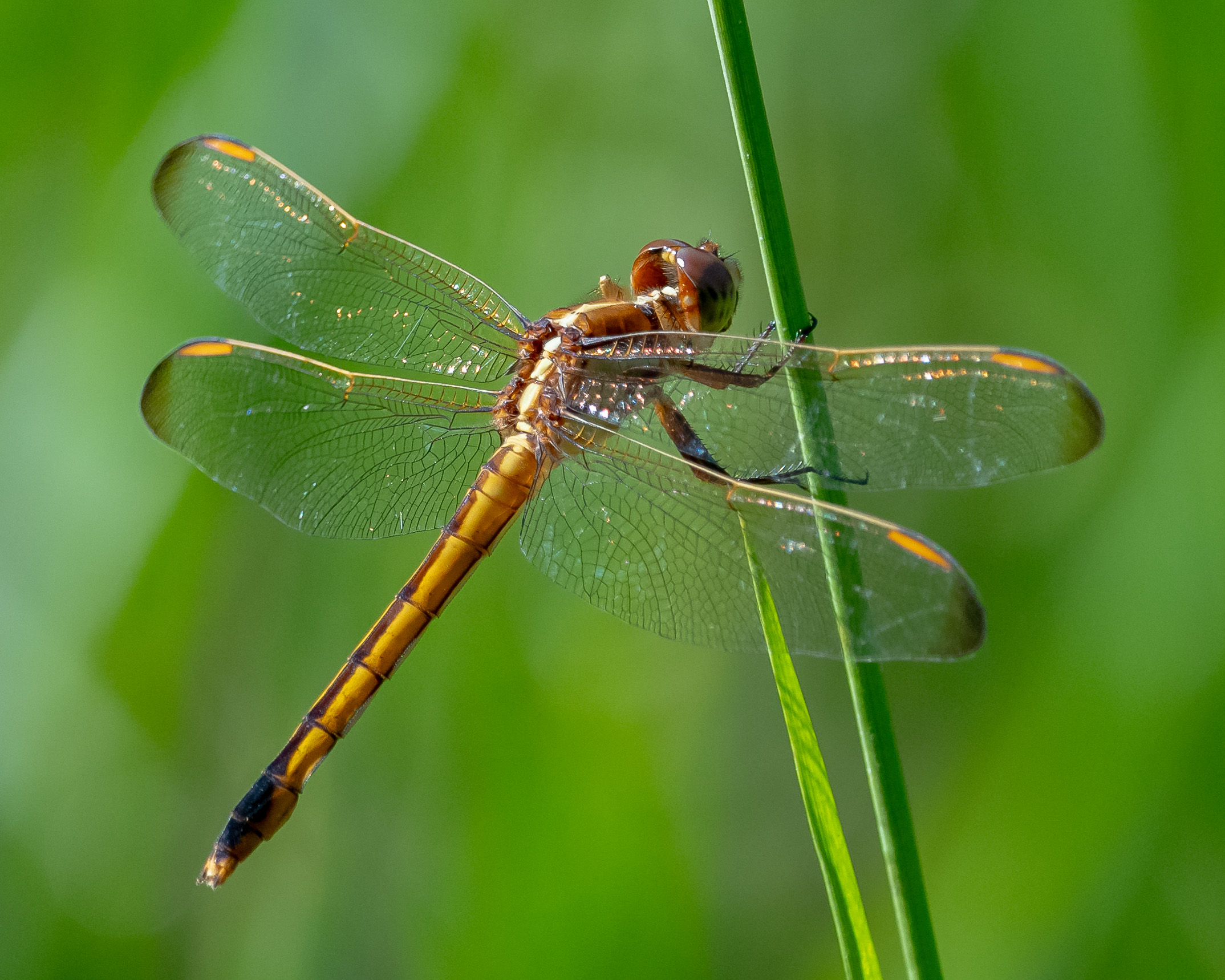
Sunlight can make the wings of a female Needham’s Skimmer (Libellula needhami) glisten even more than usual.
Looking like some alien with large ears, the Hairypod Cowpea (Vigna luteola) is a vine which wraps around sturdier plants, smothering some in the process. A lovely yellow bloom makes us almost forgive its bad growing habits.

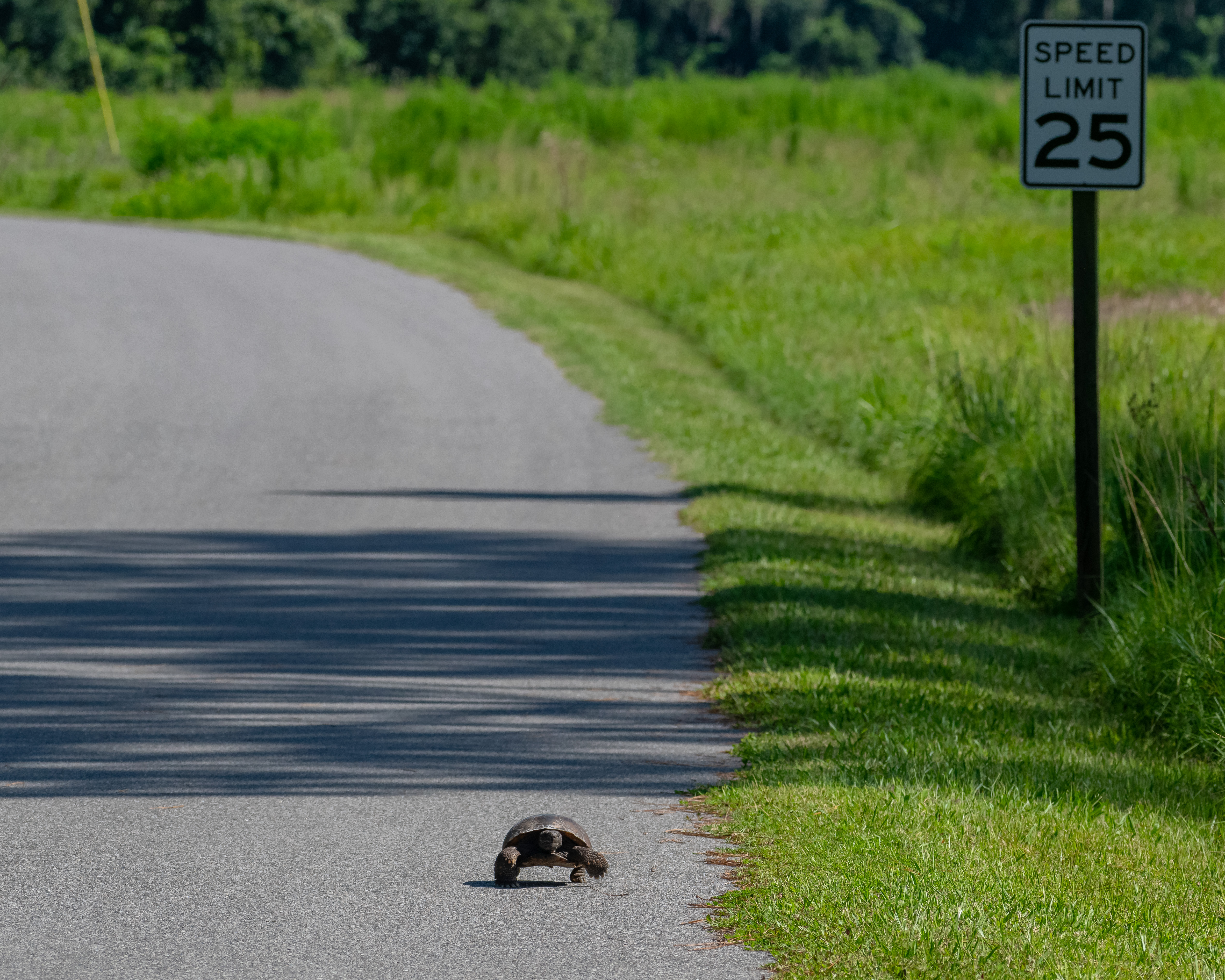
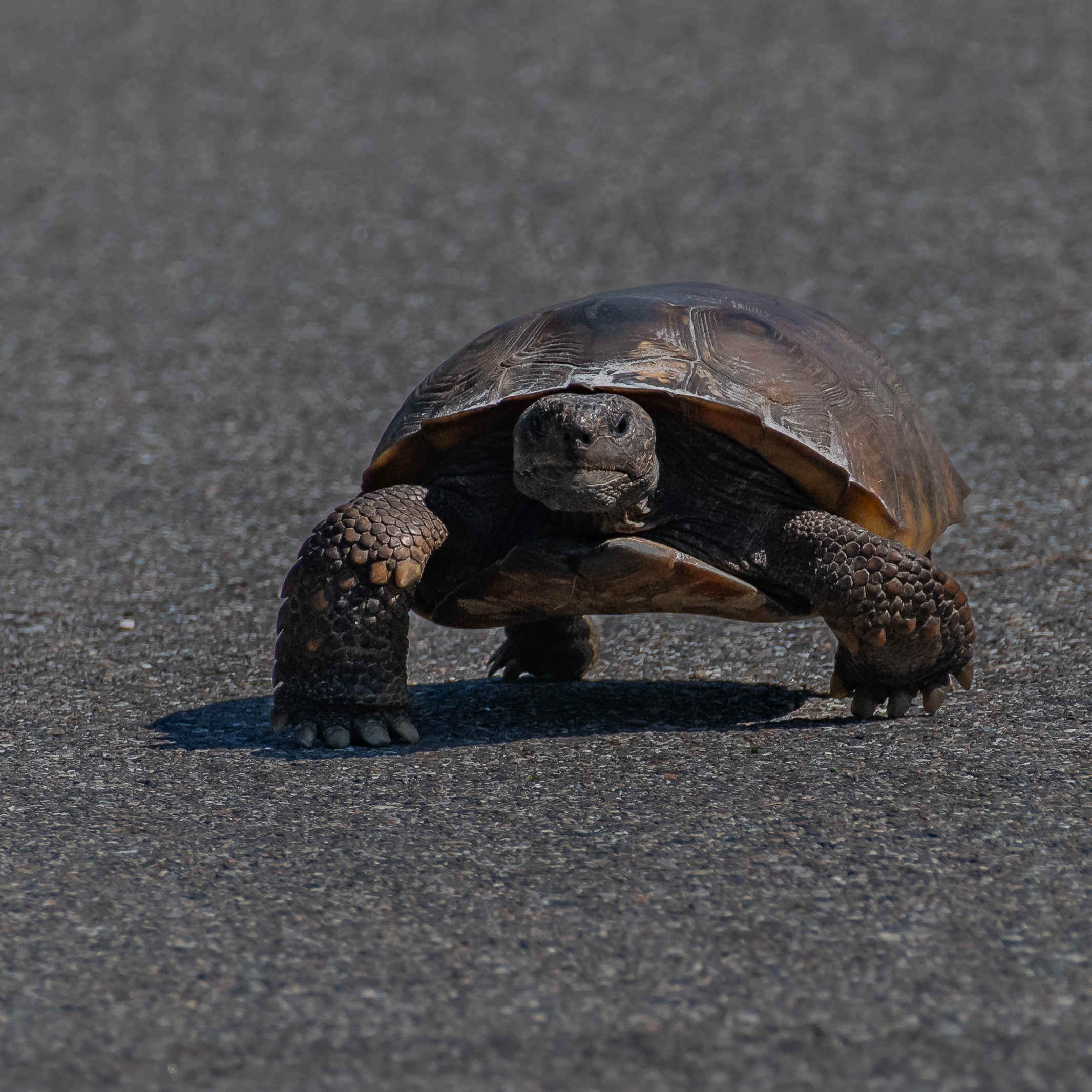
Gopher Tortoise (Gopherus polyphemus). We grew up taking these ancient creatures for granted as here in central Florida they were so abundant. Although still plentiful in some areas of Florida, their habitat continues to disappear due to agriculture, mining and construction development. This one was on a mission and totally ignored us as it trundled down the main park road. Thank goodness it obeyed the posted speed limit.

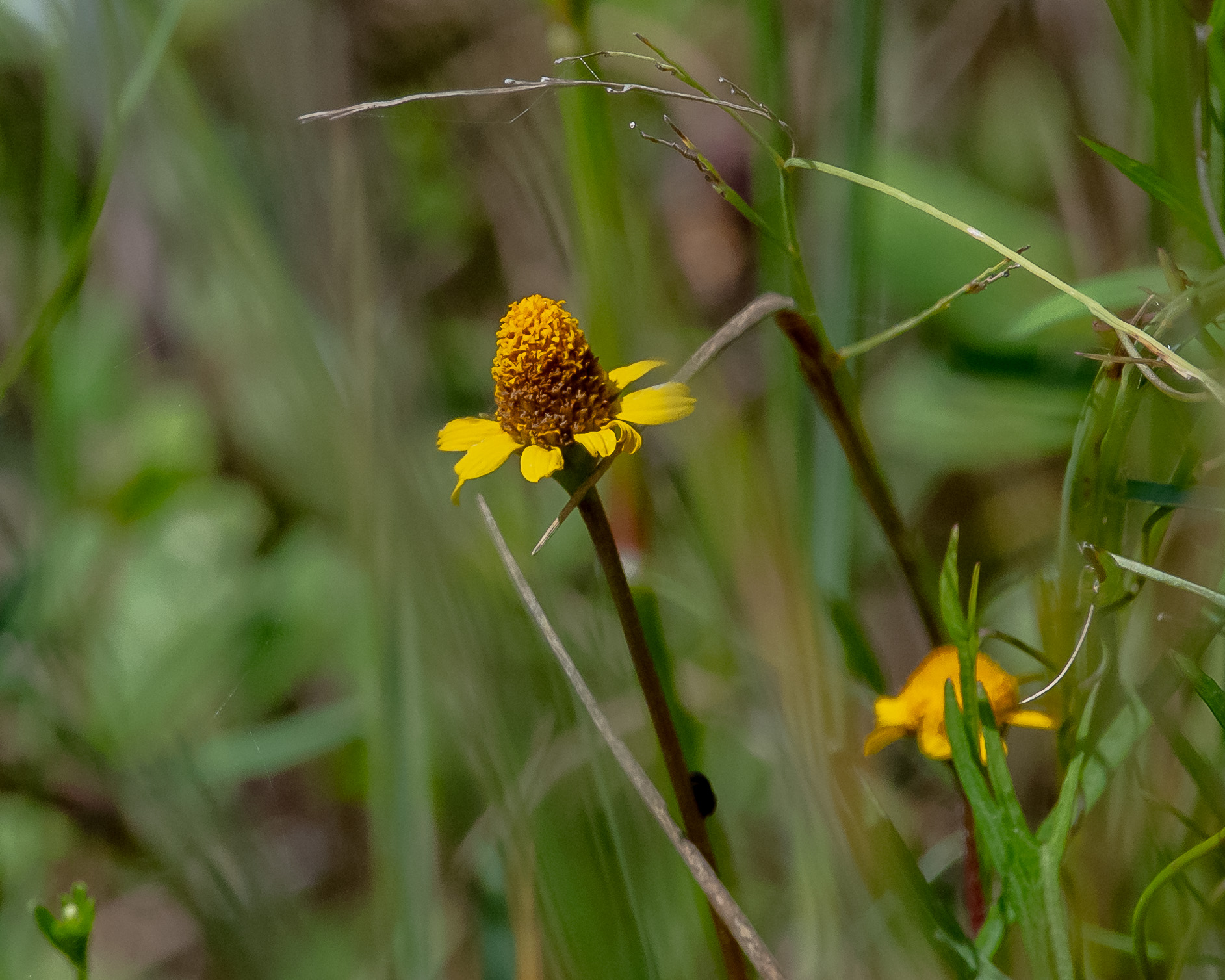
It’s easy to see the relationship to Sunflowers (Asteraceae family) when you spot the fairly small Oppositeleaf Spotflower (Acmella oppositifolia). The plant tends to grow fairly low and sprawls in areas adjacent to lakes and ponds.
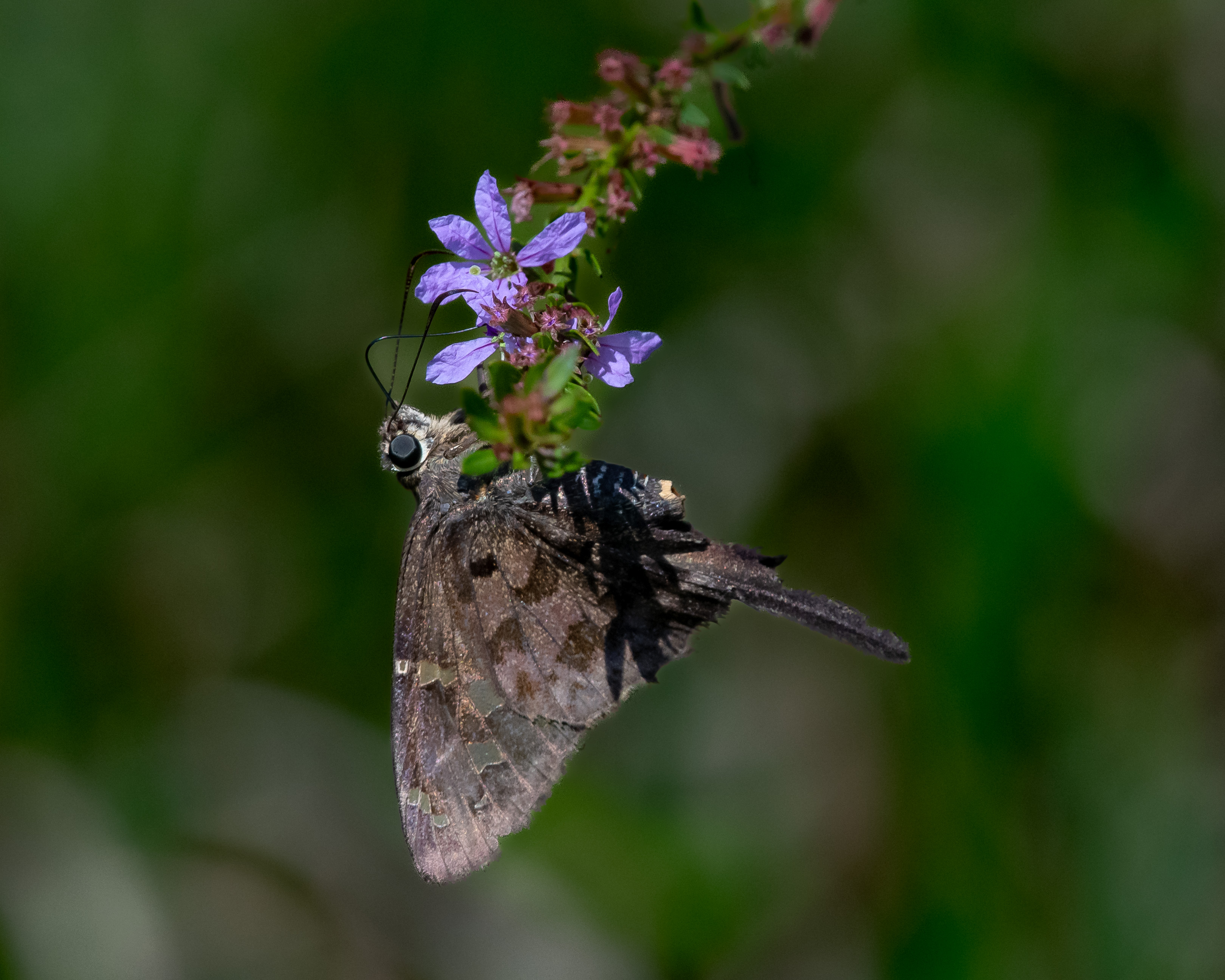
A butterfly demonstrates how to drink nectar while upside down. I tried that with milk and it came out my nose. Dorantes Longtail (Urbanus dorantes) on Winged Loosestrife (Lythrum alatum).
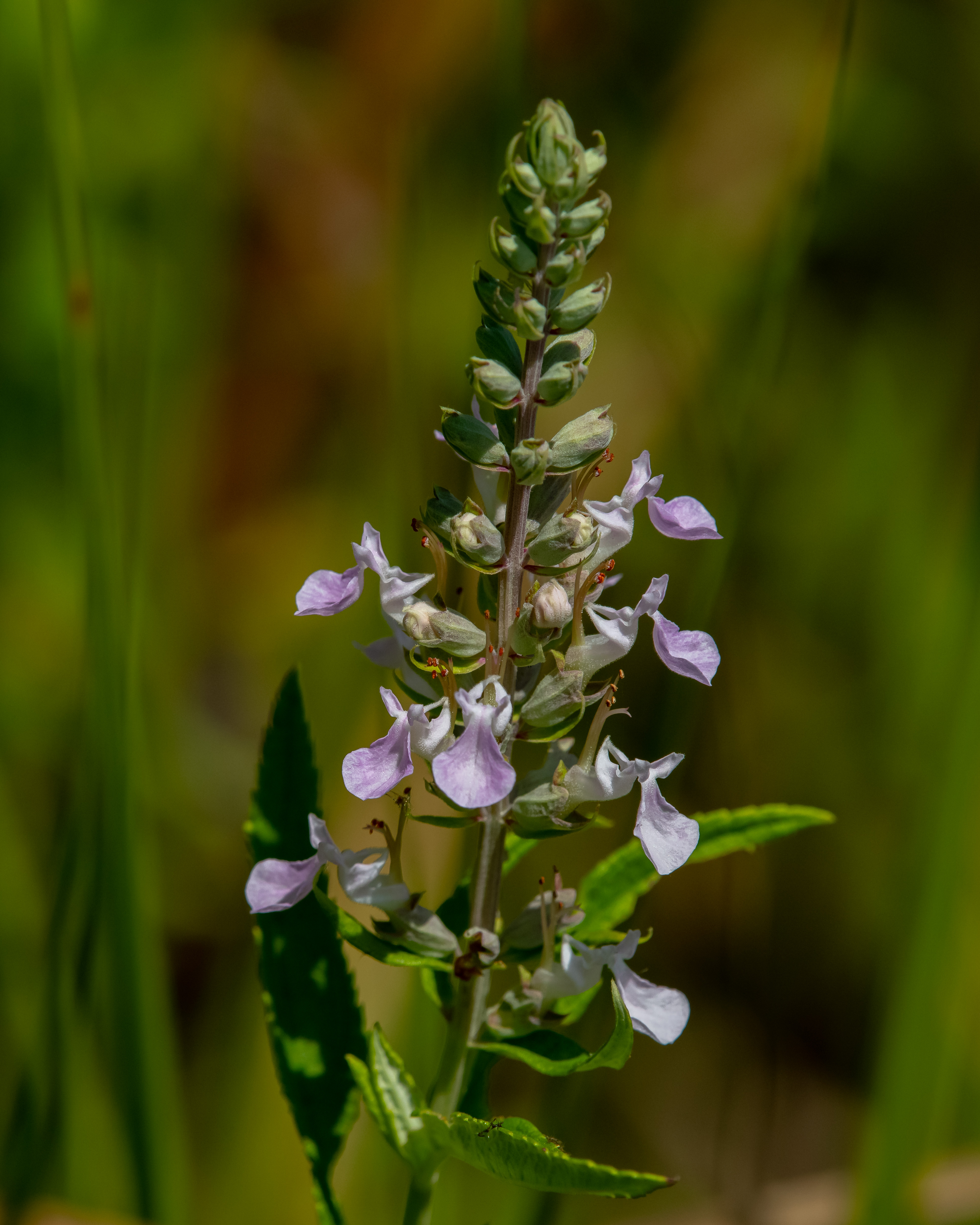
American Germander (Teucrium canadense) is a lovely member of the mint family. It can reach nearly three feet in height. Pollinators have no problem flying to that altitude for their reward. Depending on which taxonomist you can corner, this plant is also known as Canada Germander, Canadian Germander, Hairy Germander or Wood Sage.
In North America there are more than 1,000 species of Robber Fly. Worldwide, around 7,500. Since I diligently researched all of those species, I concluded this is absolutely, positively a Red-footed Cannibalfly (Promachus rufipes). -maybe-

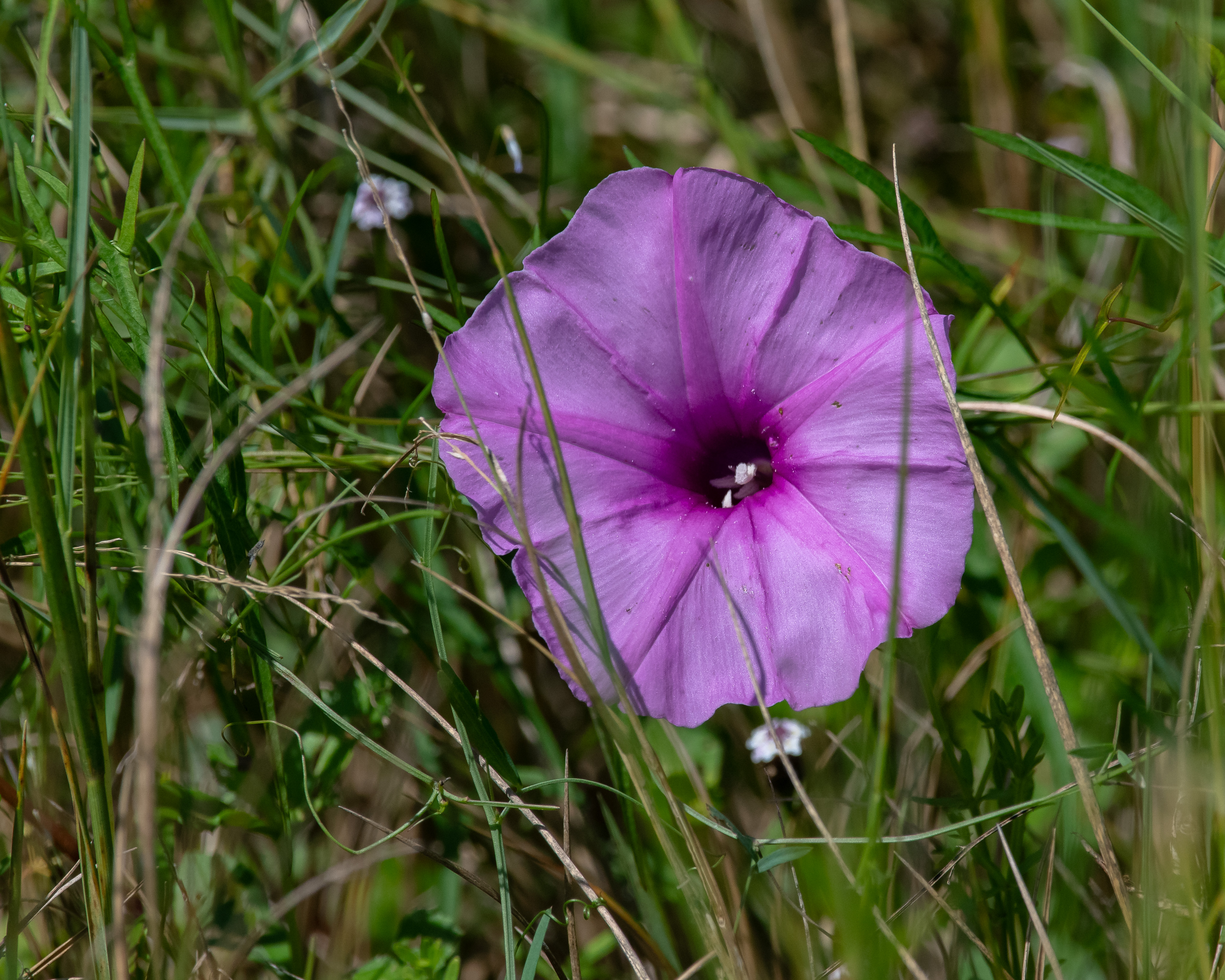
We are not exactly near the coast, but the gorgeous Saltmarsh Morning Glory (Ipomoea sagittata) just doesn’t care. The wetlands of the middle of the state are just fine, thank you very much.
We got up this morning and traveled to our local state park. I guess that counts as having a goal. We returned feeling better than when we did before our visit. I guess that counts as goal fulfillment. Success can be very narrowly defined by each of us.
Enjoy your search for a natural place and come back for a visit.
 Our Natural Places
Wonderful diversity of wild things, Wally. I sometimes grouse about my lawn nut neighbor not appreciating diversity in his yard which affects that found in my yard. His lawn has to house only one specific grass and he goes to great pains and expense to be sure nothing else creeps in. This also affect the diversity of insects and other life forms. Who wants a monoculture…besides him?
You and Gini have what sounds like the ideal breakfast nook.
Your Gopher Tortoise looks like a hellion on toenails.I wonder just how fast it can work its speed up to. It’s a shame so much human activity encroaches on wildlife’s happy places.
LikeLike
Good thing your neighbor doesn’t do the planning for Mother Nature. We’d all be staying home.
We kept looking for the hare ’cause that tortoise seemed intent on winning the race.
Thanks for dropping by Paradise, Steve.
LikeLiked by 1 person
My life is completely driven by goals – set, refine, plan, accomplish, repeat. If I don’t have a purpose for the day I am not sure really what to do ha. I must say it is rare to see just TWO Whistlers in a shot, those things tend to herd up like Wildebeests at a water crossing. That Tortoise was on a mission – probably had to get to grandma’s house before the end of the year hehehe.
LikeLike
I have problem at all with goal-setting. She says “Here’s what needs doing” and my goal has been established.
A few miles from where that photo of the BBWD was taken we counted 85 along one lake shore. I reckon this couple was looking for some privacy in the tall grass.
I looked around for a Hare to see if there was a race in progress, but that tortoise didn’t stop to explain why he was in a hurry.
LikeLike
Great pics! Capture so much detail.
LikeLike
Thank you very much, David.
We appreciate you stopping by.
LikeLike
Super capture of the emerged Fritillary!
That turned out a nice trip, can’t wait for your next one.
LikeLike
Thanks, Brian. We can’t wait for the next one either.
LikeLiked by 1 person
You are speaking my language with goals and milestones. Rarely does something get done without a goal. I have never seen a whistling duck in person, as a waterfowl enthusiast, it would be a special treat. But it is the tortoise that stole the show in your post. Awesome action photos of it!
LikeLike
According to the “experts”, those ducks are spreading throughout the land, so you may see a flock in your neighborhood one day.
We grew up with the tortoises literally in our back yard. Everything about them is fascinating!
Have a good day on the farm!
LikeLike
My free-time goals generally work well enough to get me prepped and out the door. Then I usually let Mother Nature take over. She has a knack for surprising me, and I do love surprises. Well-shared walk, you two, thanks so much!
LikeLike
Thanks, Sam.
Turns out that my “free-time” goals have always superceded my “non-free-time” goals.
Which goes a long way towards explaining my current economic status, I reckon.
Fortunately, Gini and I count our treasures in other ways.
LikeLiked by 1 person
Your photos are marvelous. Nice to getaway in nature for a bit to ease our minds and take a break from our overstuffed calendars.
LikeLike
Thank you very much!
LikeLike
There are several of my favorites here — especially the opposite leaf spotflower and the black-bellied whistling ducks — but that tortoise is adorable. I’m not sure it would enjoy being petted, but I’d be more than willing to spend time admiring it. It was fun to see the Dorantes longtail, too. I’ve seen very few of them, but you were the one who first helped me identify the species.
I had to grin at your philosophy lesson. When it comes to nature, I’m like the bear who went over the mountain; I go out to see what I can see. In truth, I’ve generally approached life the same way. Each career change was more a result of what I like to call ‘intuitive planning’ than a result of goal-setting. That’s probably why, by some metrics, I’m not especially successful. On the other hand, I’m generally content, and often happy: a state which seems to elude plenty of people around me. End of philosophical musings! Here’s to more nature and fewer office visits!
LikeLike
My early years taught me the importance of planning and setting goals. Dad said, “That grass better be cut by the time I get home.” My plan and goal for the day resulted in success.
Like you, my partner bear and I keep going over mountains (metaphorical ones in Florida, to be sure) to see what’s out there. Works for us.
Your phrase “… I’m generally content, and often happy …” is, to me, the very definition of human success. Money, power, accumulation of “things” – all can be fleeting. Knowing who we are, and liking it, lasts forever.
More Nature!!
LikeLike
Your header and opening philosophy lesson will keep me smiling, and motivated, for some time to come, Wally!
That male Summer Tanager, to my mind, is a serious challenger to the Northern Cardinal on the ‘spectacular colour’ scale.
I love the wings on that Needham’s Skimmer. It’s not just the shimmer, but the smokey tips to the wings and the pterostigma colour which matches the abdomen. Wonderful!
My very best wishes to you and Gini – – – Richard
LikeLike
Thank you very much for visiting, Richard.
As should be obvious, I am definitely not familiar with philosophy. Over the years, we have found what works for us.
We’re always happy to encounter the Tanager for the reason you state. Needham’s has a twin in our area, Golden-winged Skimmer (Libellula auripennis). They can be challenging to tell apart but those glistening wings are the same. Easy to see how someone was impressed enough to give it the name.
All is good over here and Gini and I hope you and Lindsay are enjoying the weekend.
LikeLike
Thanks for sharing the lovely series of critters and flowers. Delightful!
LikeLike
You are very welcome. We found it all delightful, too.
LikeLiked by 1 person
Ooh. And ahhh. And thank you. I muddle along, with open eyes, heart and mind. Which works for me.
Sadly I struggled to open your images but when I opened and reopened (and reopened) your site most of them came good.
Mega thanks.
LikeLike
Good Morning, EC!
Thank you for the oohs and aahhs! So sorry you had difficulty opening the images. Not sure why.
I was going to recommend pouring coffee into the keyboard to wake up the computer, but I suspect that is not a recommended solution.
LikeLike
The subject in your opening picture sure is familiar. Is it as common in your part of Florida as it is in many parts of Texas?
Sometimes when I set out to take pictures in nature I have something specific in mind, often dictated by the time of year. More often, however, I have no particular goal except to see what will come my way—and something worthwhile almost always does.
That’s a nice portrait of a robber fly in profile. Likewise for the gopher tortoise.
Your little blue heron looks catapulted, even though it’s under its own power.
LikeLike
Indian Blanket is not native to Florida but has been used so much in highway plantings and offered through commercial sales that it is now somewhat common.
Your plan is similar to mine. “I would like to find something specific today but will be open to anything.”
Thank you for such nice comments, Steve.
LikeLike