‘Tis The Season
Header Image: Coreopsis
I think Gini should have become a television meteorologist in Florida. She looks good, knows how to use her pointer finger (as a weapon, at times) and can enunciate “mostly cloudy” better than most. The ability to be correct 50% of the time is way below her lifetime average of 100%. Instead of all that fame, glory and untold wealth, she chose a life with – me.
I continue to be the luckiest man in the universe.
Summer in Florida can be like living within a steam room from which there is no escape. The rains come according to nature’s long-established schedule. Some years there is more rain than others. On average, the Sunshine State receives over 50 inches of rain each year. With all that watering of the landscape, our forests, fields and swamps become a lush paradise for living organisms of all sorts. As usual, some human organisms are not all that thrilled.
We really do appreciate the efforts of the New York born engineer who has been credited with inventing modern air-conditioning, Willis Carrier, even though a Floridian, Dr. John Gorrie, beat him to it by 50 years. (https://fcit.usf.edu/florida/lessons/gorrie/gorrie.htm)
At this time of year, we celebrate the fact we can escape nature’s steam room for the cool comfort of the living room, no matter who invented it!
Lush and diverse has been an understatement in our recent explorations. Each day I’m conflicted as to which equipment to carry down the trail. Long lens (a bird! a deer!); wide-angle lens (flowers! landscapes!); macro lens (small flowers! bugs!). Alas, I have learned the hard way that I can no longer carry it all. One lens and hope I guess right.
Today we visited nearby Colt Creek State Park. It sits on the edge of the vast Green Swamp and is filled with pine woods, cypress domes, open fields, creeks, lakes and, most of all – Nature!
Come on along! The air-conditioning will wait patiently for your return.
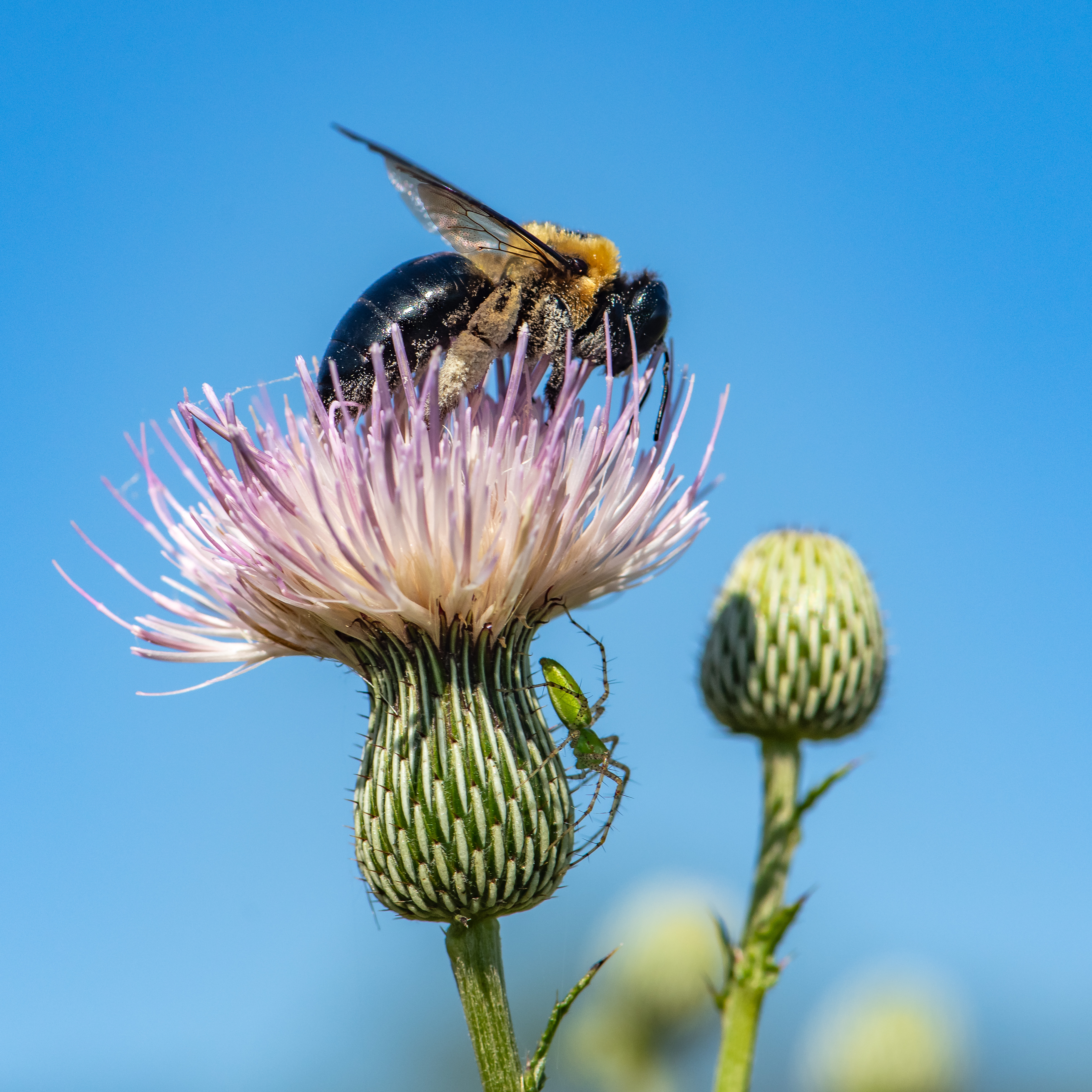
Three-fer! Eastern Carpenter Bee (Xylocopa virginica) and Green Lynx Spider (Peucetia viridans) on Nuttall’s Thistle (Cirsium nuttallii). Pretty sure the lovely Ms. Lynx was about to pounce but Mr. Carpenter had somewhere else to Bee and buzzed away unharmed. This time.
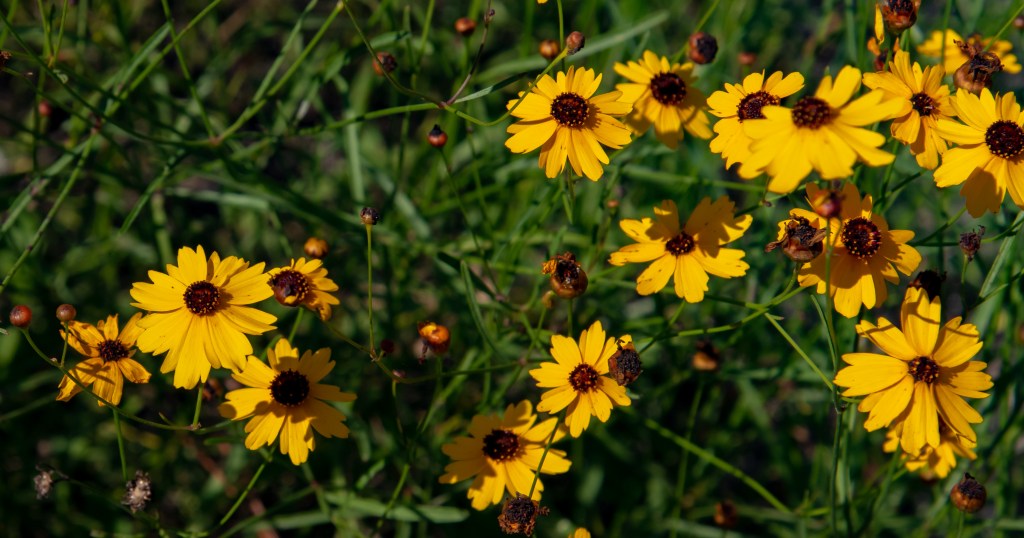
Forest edges are overflowing with flowers. One of the most abundant here is Leavenworth’s Tickseed (Coreopsis leavenworthii). There are 15 species of Coreopsis listed for Florida and the group is so attractive the powers-that-be decided to make the whole genus our Sate Wildflower.
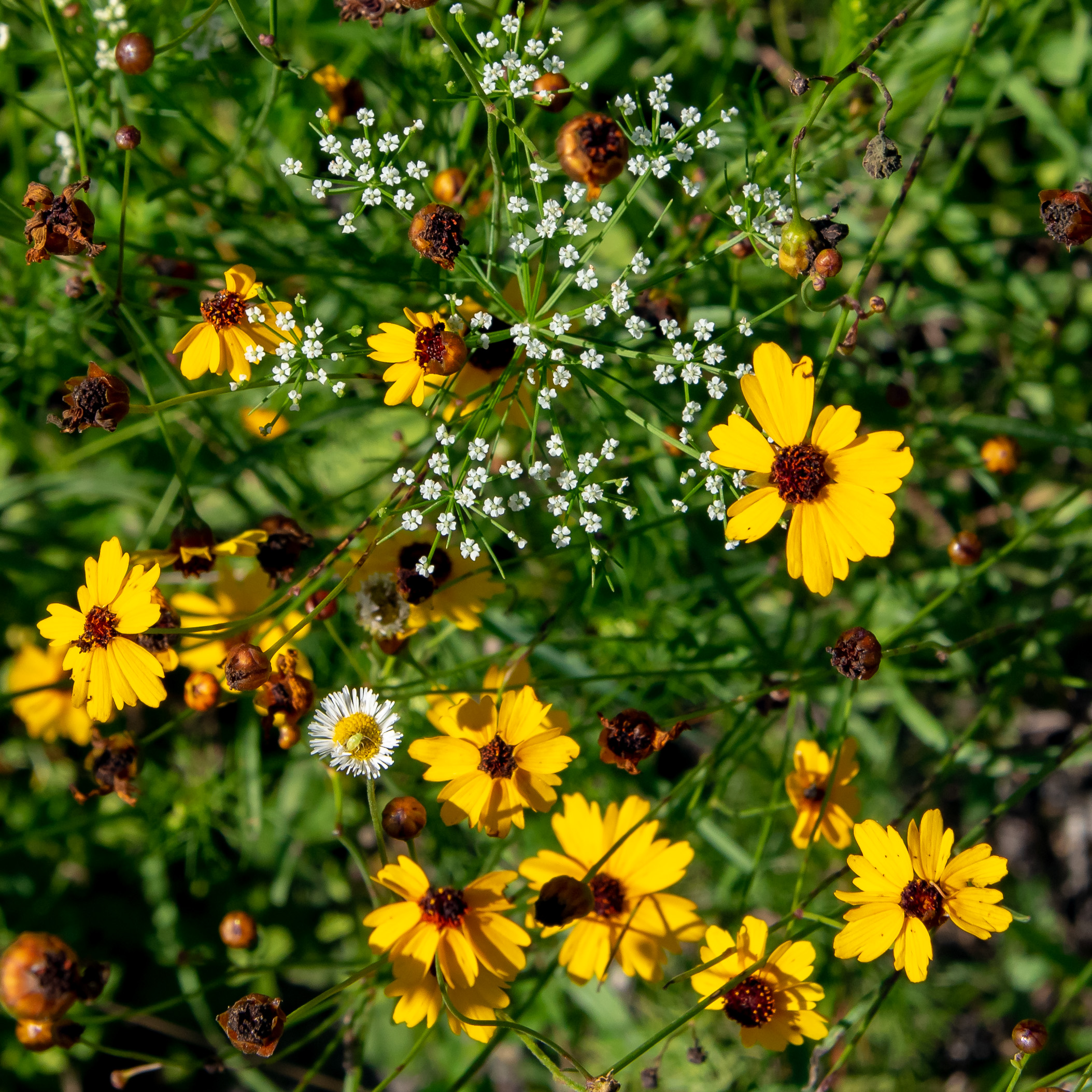
This group includes: Leavenworth’s Tickseed (Coreopsis leavenworthii), Mock Bishop’s Weed (Ptilimnium capillaceum) and Oakleaf Fleabane (Erigeron quercifolius).
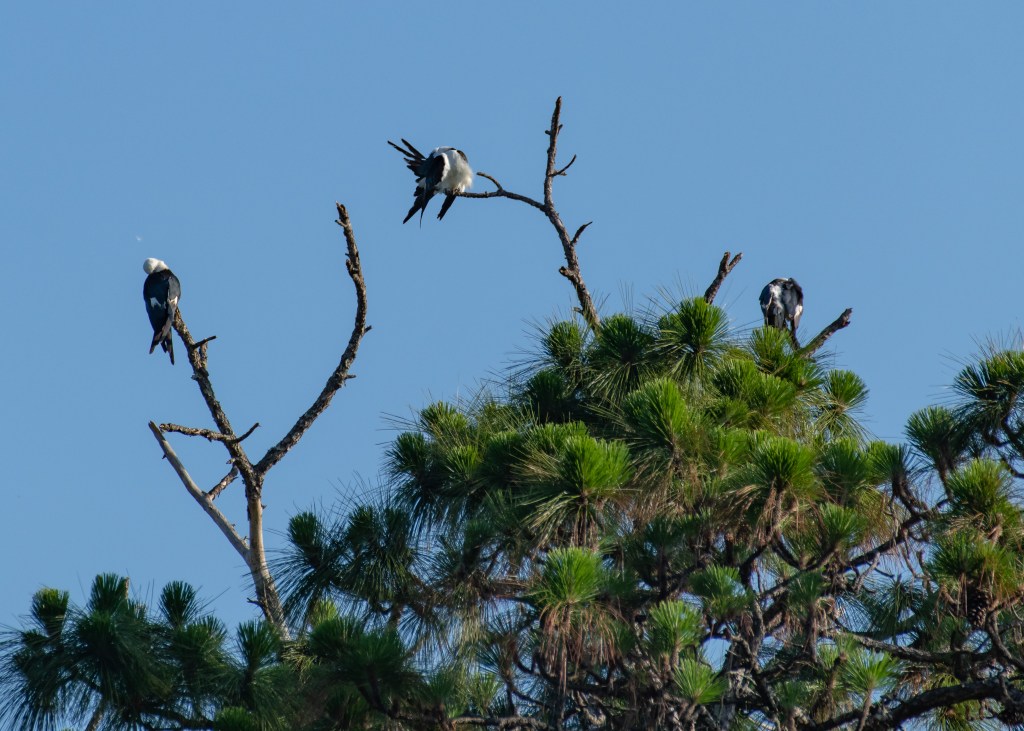
Sleepy Swallow-tailed Kites were just waking up and preening. They typically wait for the morning air to warm and create rising thermals which the sleek raptors use for soaring as they hunt for flying insects, frogs, lizards and snakes.
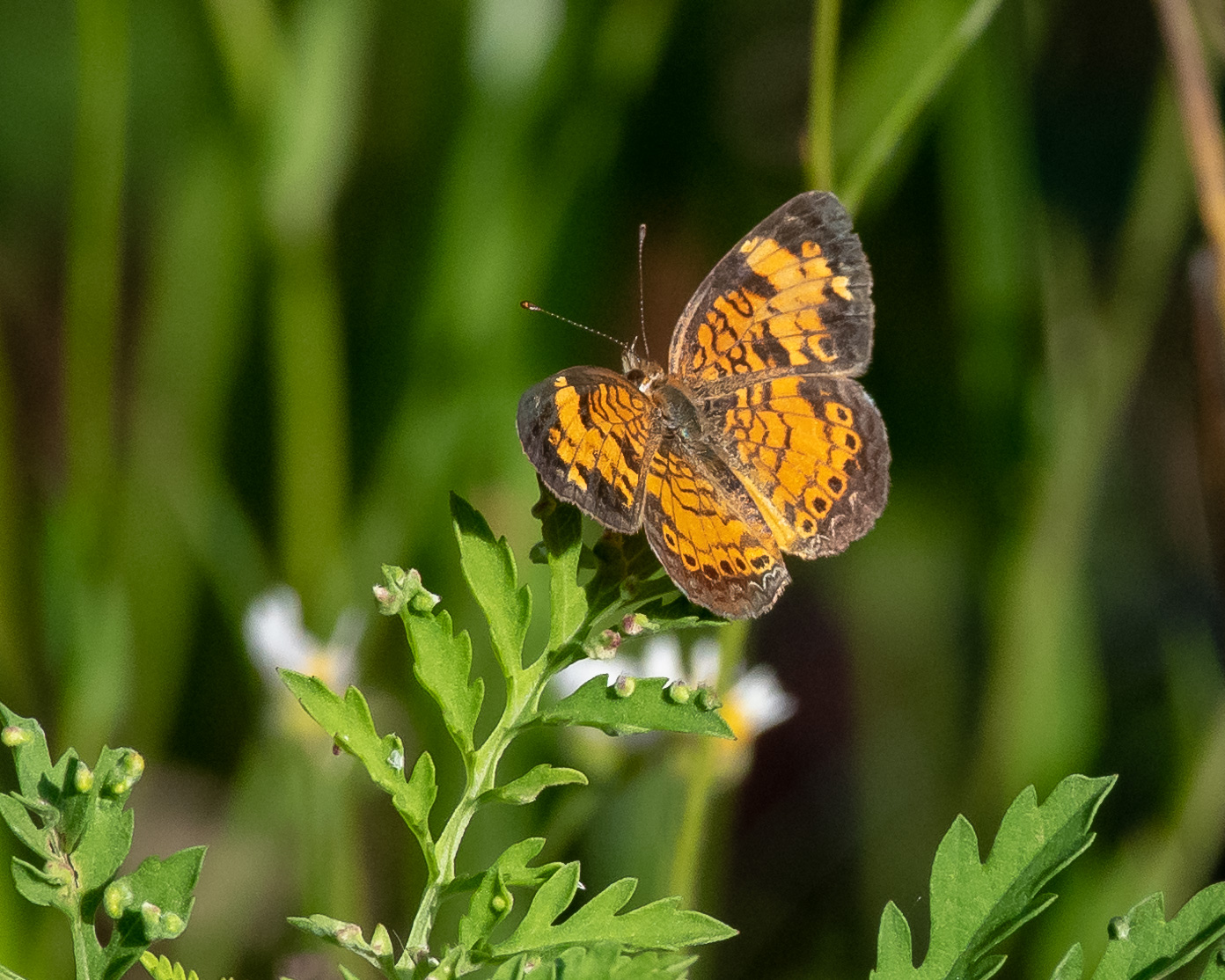
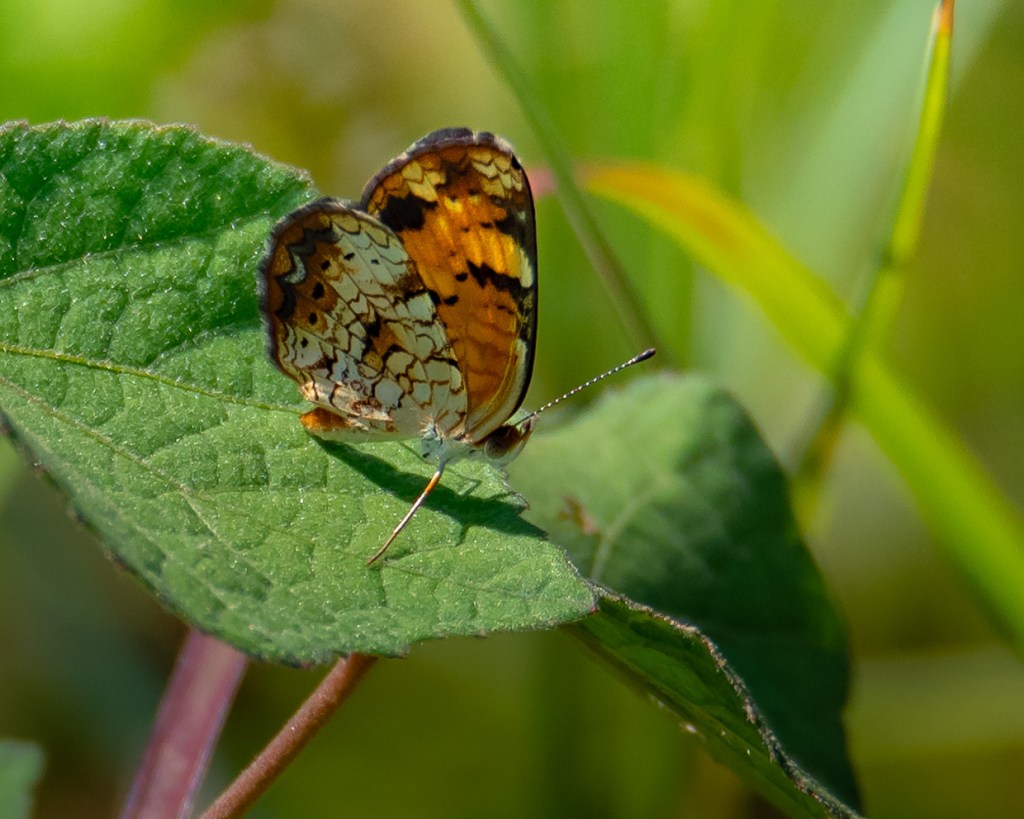
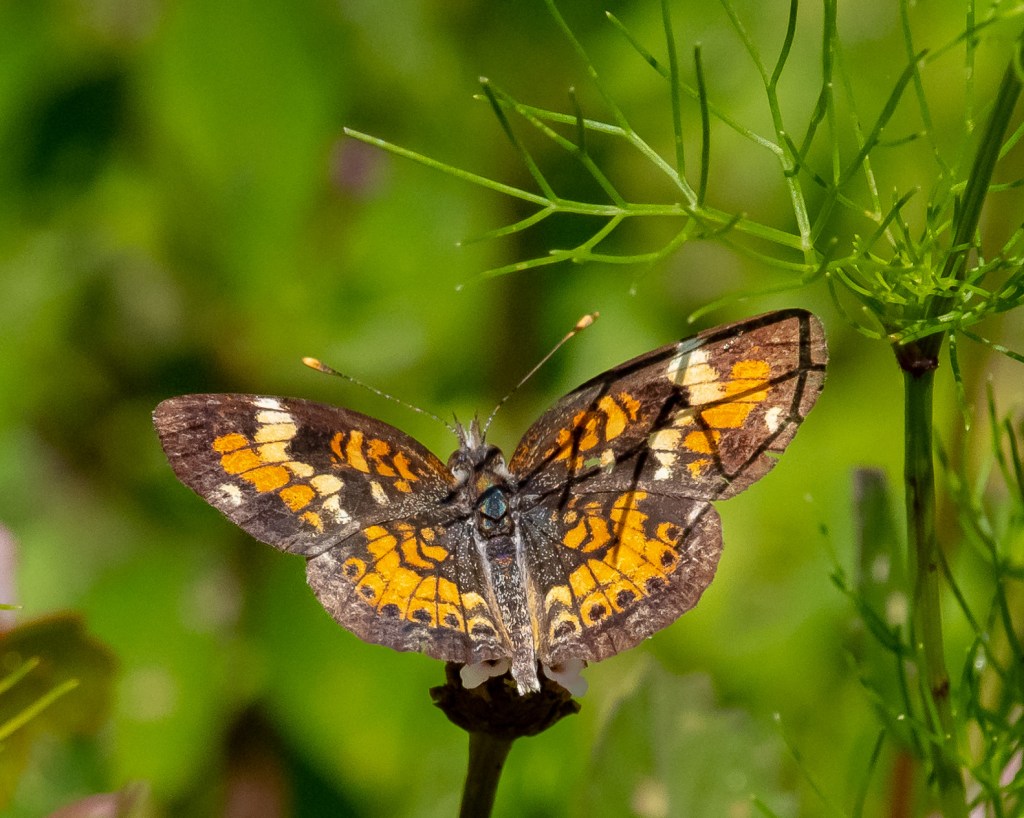
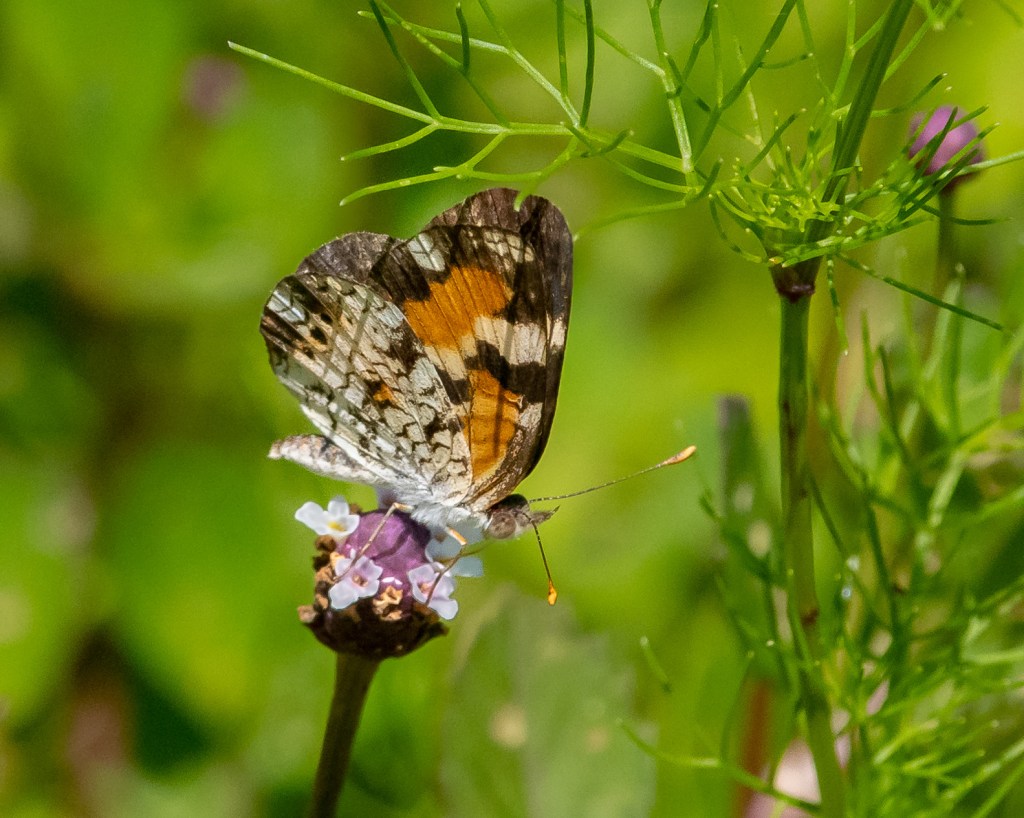
Two similar-looking butterflies of the Brushfoot family are equally attractive.
Almost as small as some damselflies, a Little Blue Dragonlet (Erythrodiplax minuscula) flew up in front of me or else I might have walked right past. This immature male has the same appearance as a female but will soon develop the overall powdery blue of an adult.
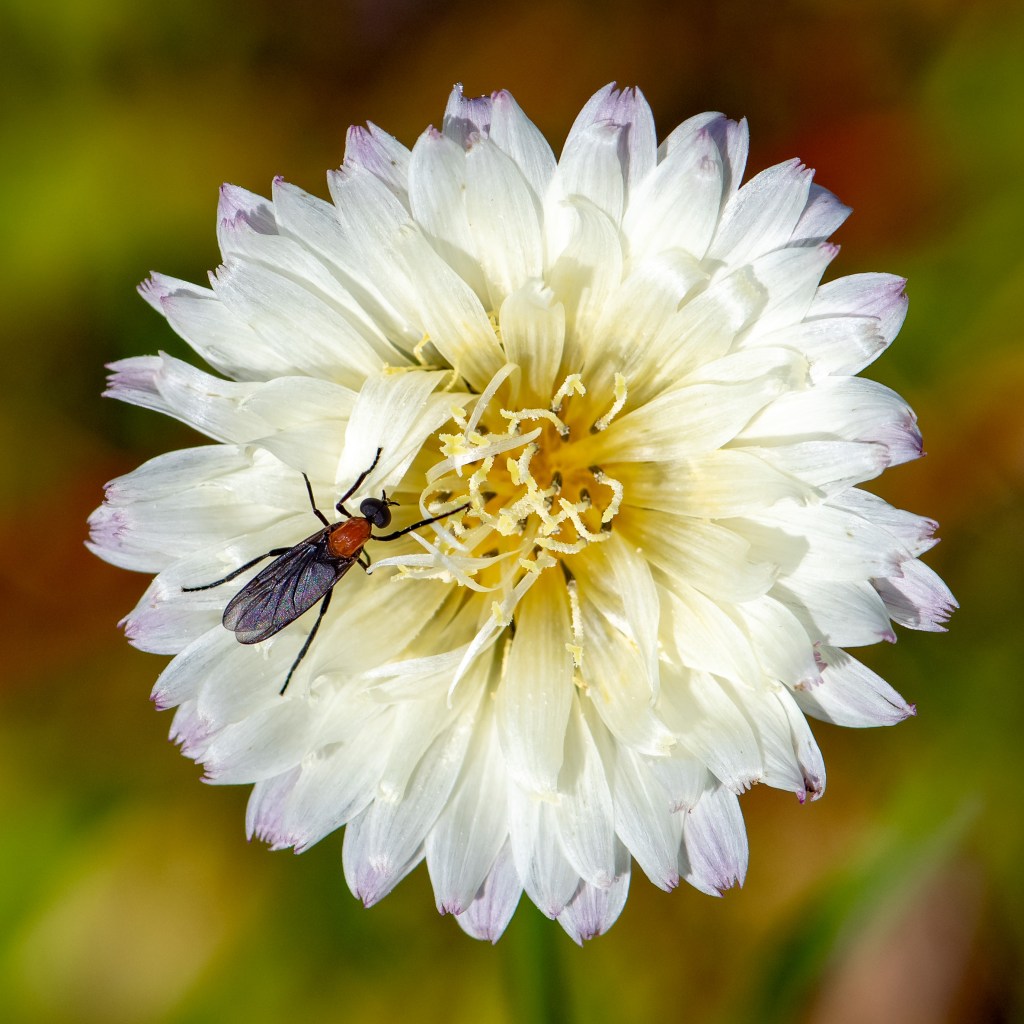
Two of my favorites in one photograph! Lovebug (Plecia nearctica) on Carolina Desert-chicory (Pyrrhopappus carolinianus). Okay, maybe one of these (hint, it’s the fly) is probably our least favorite summer resident. Scraping millions of them from the car, along with the paint, is not pleasant.
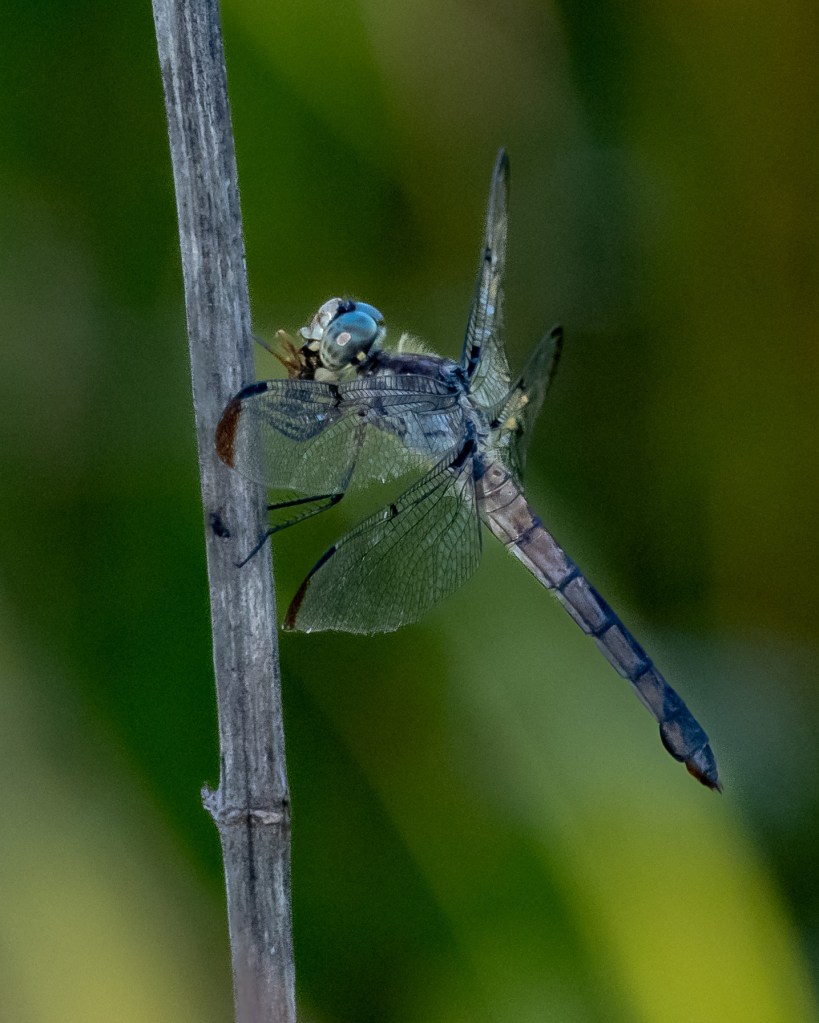
A female Great Blue Skimmer (Libellula vibrans) enjoys a morning snack.
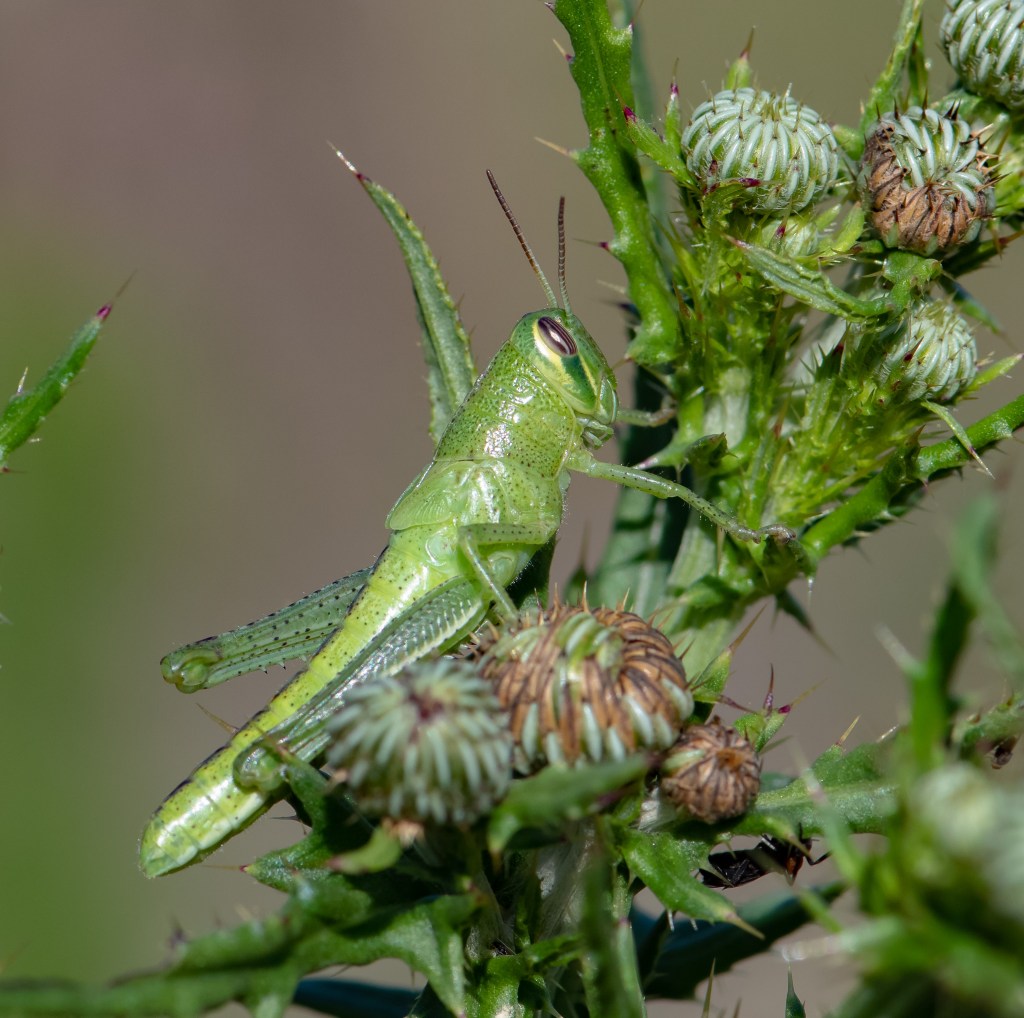
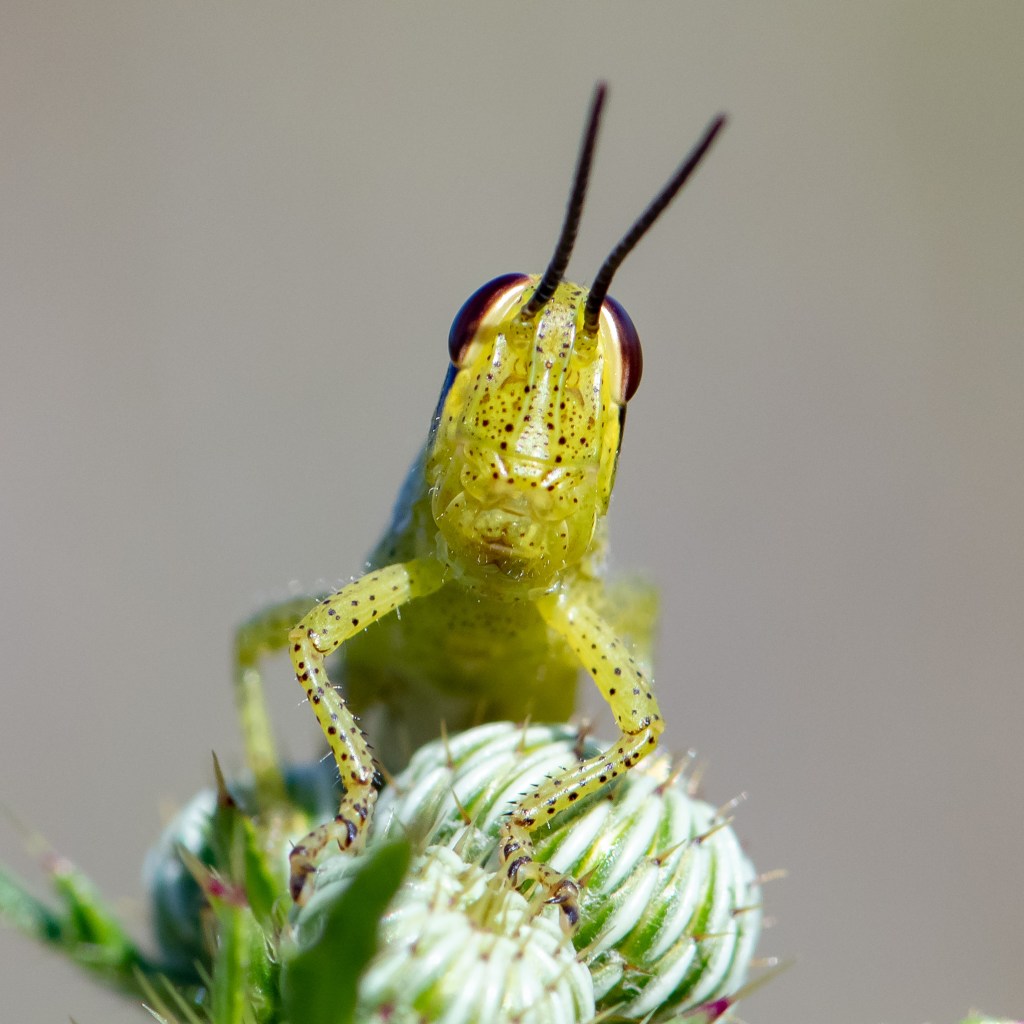
All-green helps young nymphs of the American Bird Grasshopper (Schistocerca americana) blend in with green leaves so they have a chance of surviving the many would-be predators looking for them.
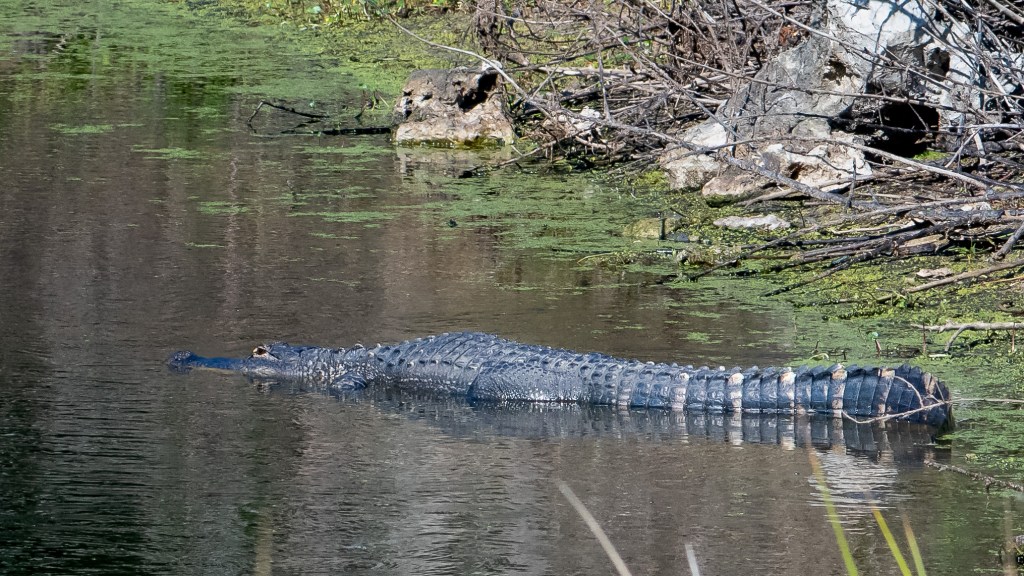
A post without an alligator is like a summer day without humidity.
Mid-morning and the thermals support the Swallow-tailed Kites as they begin their day of hunting. This one found a frog for brunch.

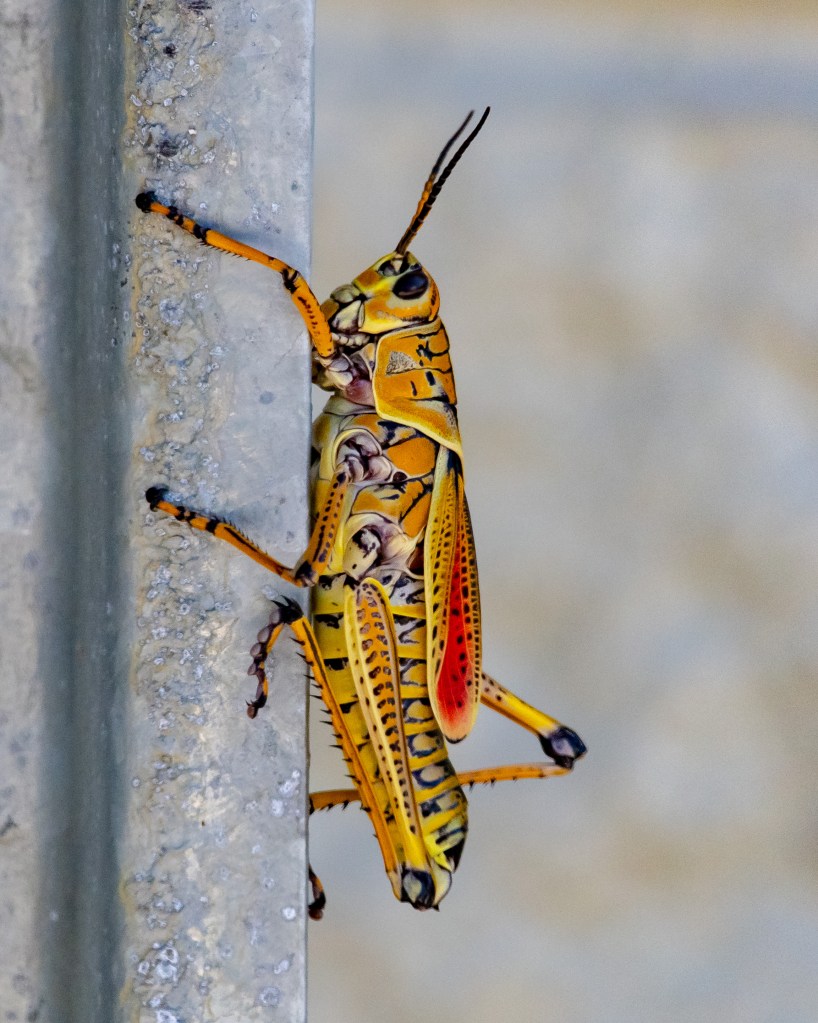
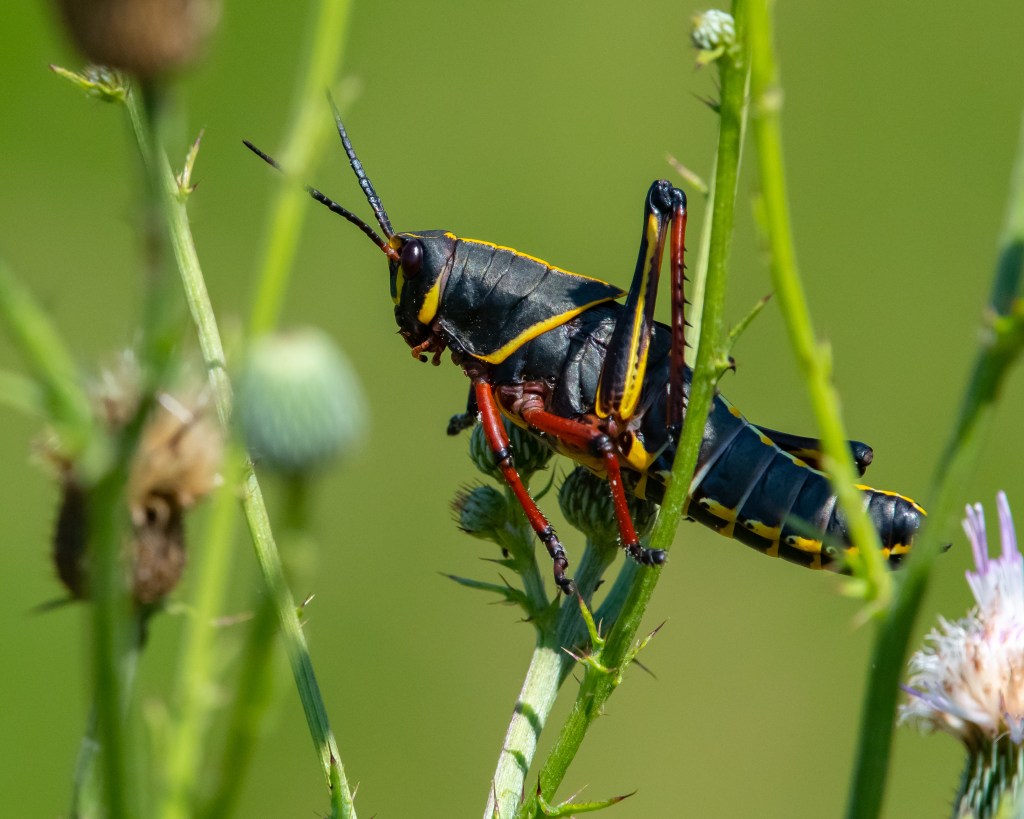
Big. Colorful. That sums up our Eastern Lubber Grasshopper, (Romalea microptera). On the way to becoming an adult, they are mostly black.
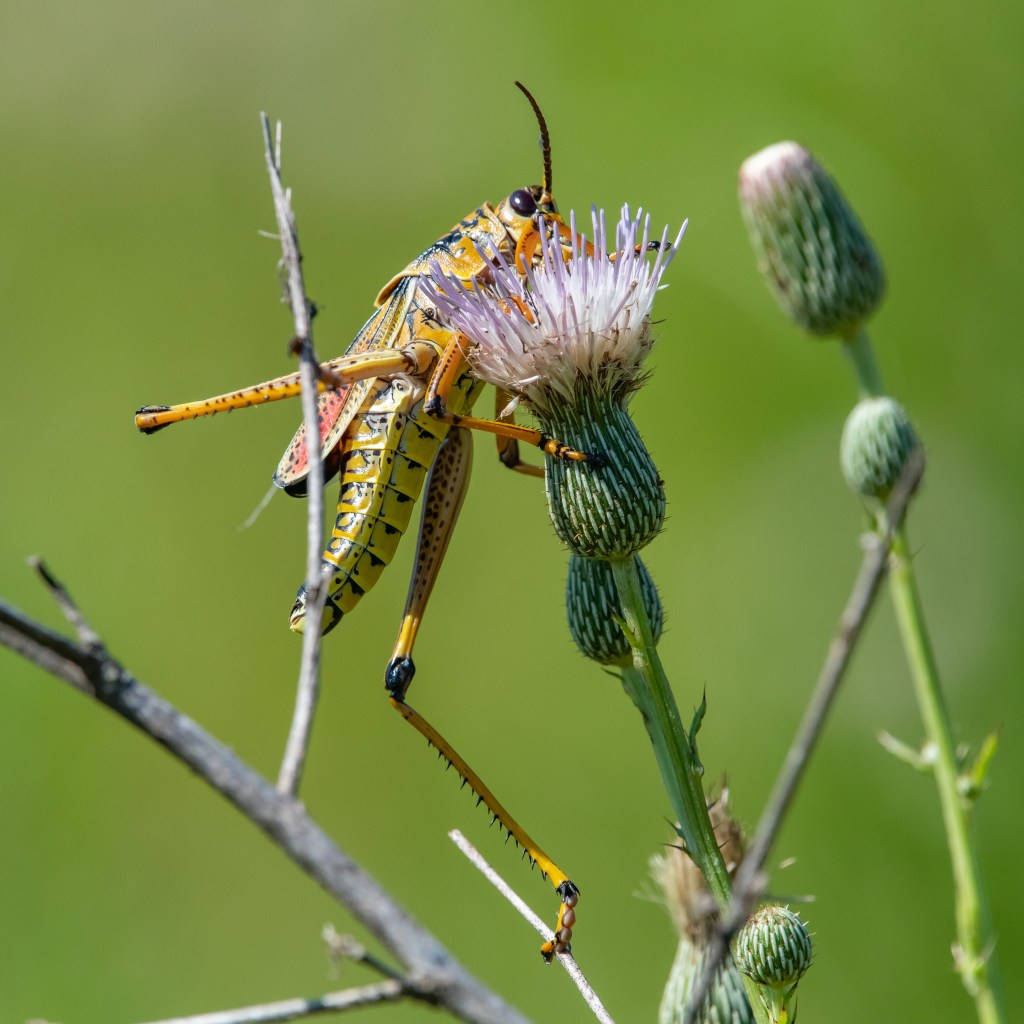
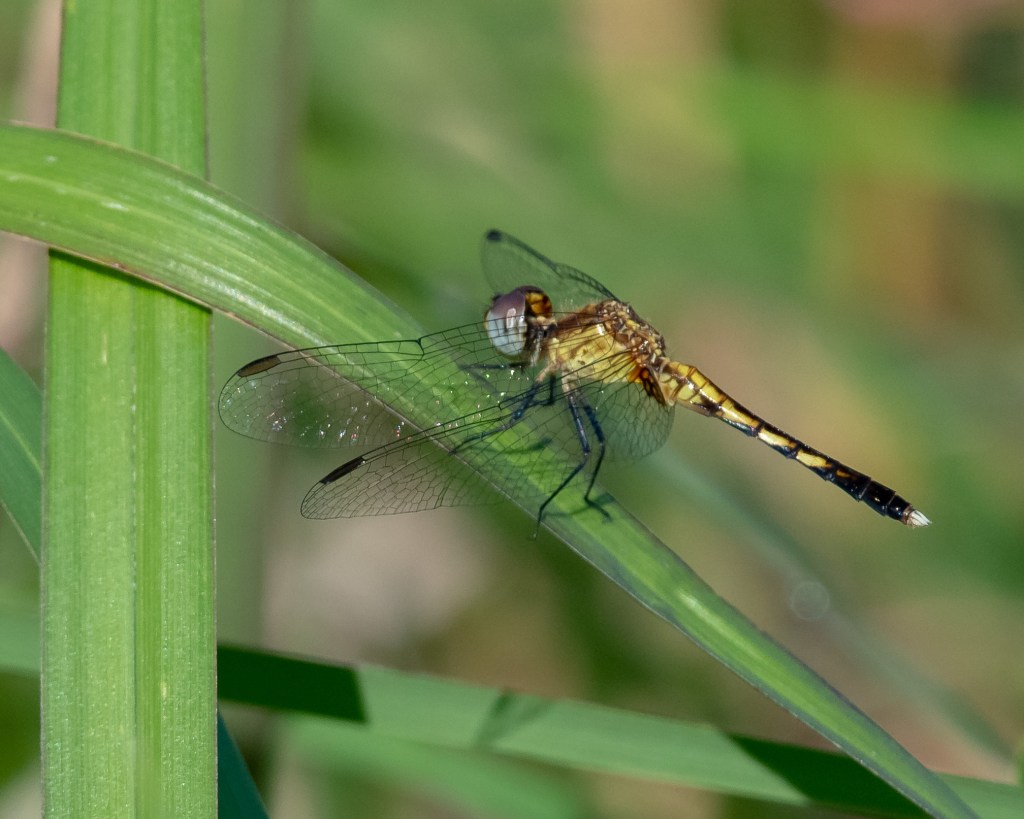
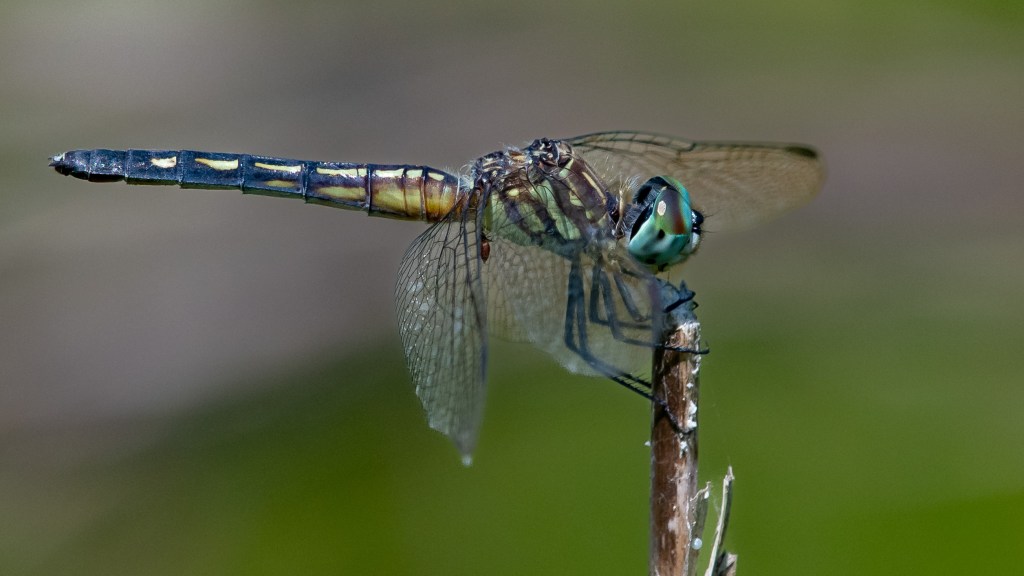
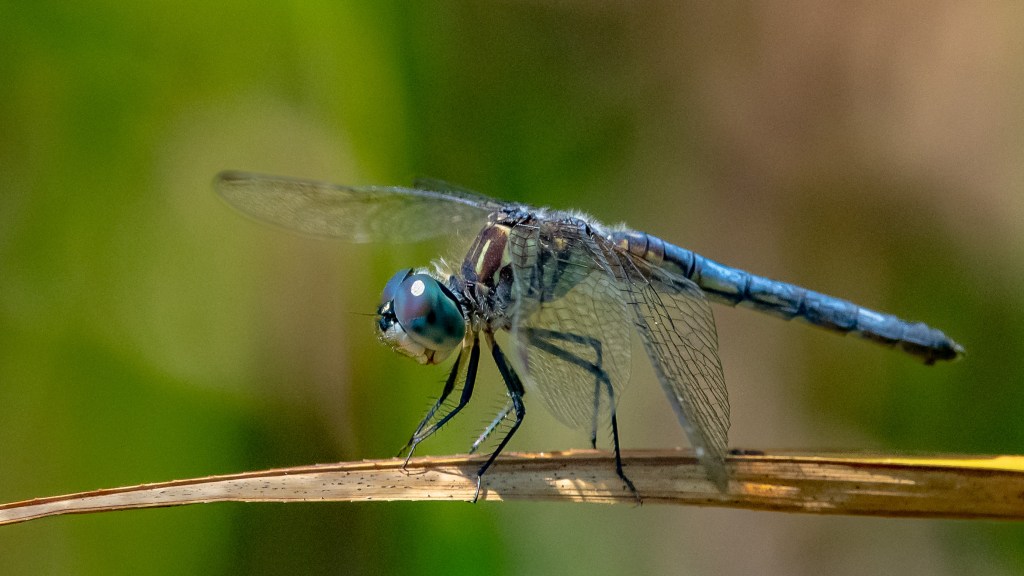
Even though they are fairly abundant, we love spotting the small and colorful Blue Dasher (Pachydiplax longipennis). As with many dragonflies, male and female are different in appearance.
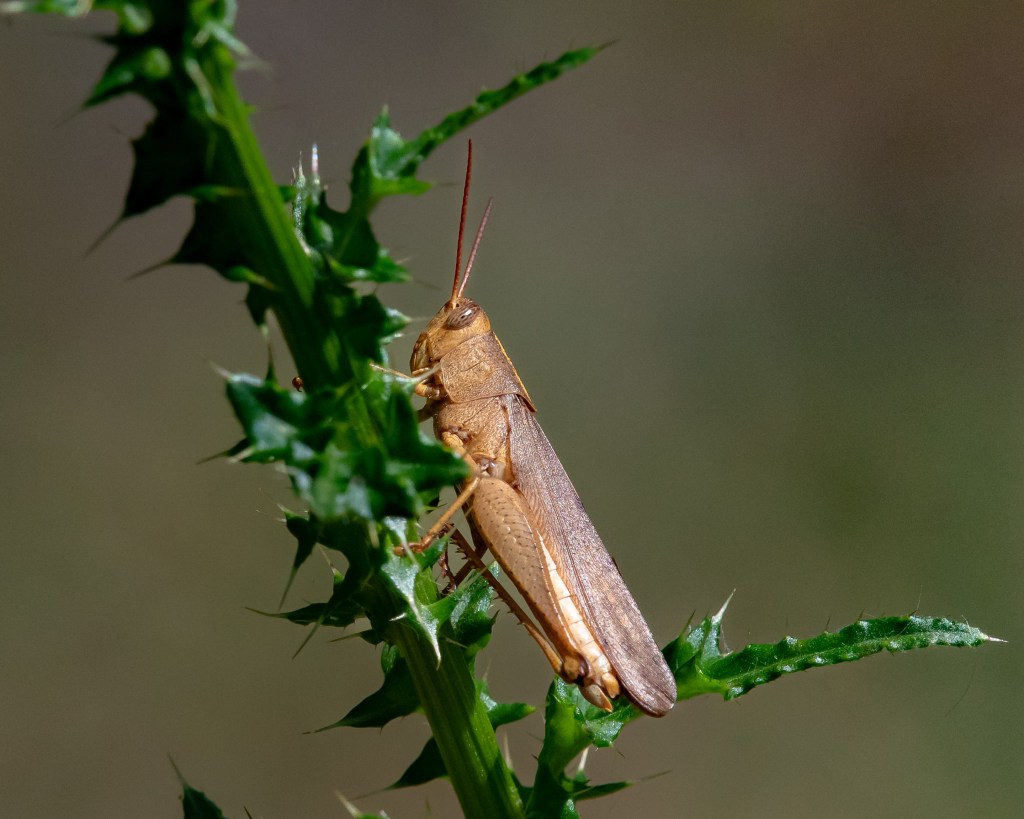
All brown can be beautiful. And those eyes! Mischievous Bird Grasshopper (Schistocerca damnifica).
‘Tis the rainy season in Florida. Big drops of water become torrents, rumbling dark clouds move across the peninsula right on Nature’s schedule, lightning illuminates even the mid-day skies – and we love it! Yes, we get hot and sticky and can’t wait to return to the comfort offered by modern air conditioning. But the diverse offerings of our natural world keep us coming back for more.
Enjoy your search for a natural place and come back for a visit!
 Our Natural Places
Great post, that Lovebug shot is awesome! May have mentioned this before, but Swallow-Tail Kites are one of my favorite birds and along with the Whooping Cranes really the trigger birds that got me back into birding after high school. A Swallow-Tailed showed up unexpected near my Alma Mater in Champaign and it became the first bird I ever “chased”. Got to see several of them while in Florida earlier in the year chomping on Dragons in mid-air – never seen one with a frog though.
LikeLike
“Lovebug” and “shot” are often used in the same sentence around hear at this time of year. They are essentially impossible to remove from automobile paint.
Kites and Cranes definitely would trigger me, too. They still do.
Swallow-tailed Kites are now grouping up in dozens and more as they prepare to head to Argentina for the winter. In about two more weeks we won’t see a one until February.
Sure appreciate you visiting and catching up with some very nice comments.
LikeLiked by 1 person
I’ve always been a landlubber so maybe its an affinity but I love lubber grasshoppers and I could almost, almost!, be tempted to make the trip to Florida just to see and photograph them.
I am not sure I could have captured that grasshopper glamour closeup with it, but I have been using my 100-400 with a doubler for frog shots and, when the opportunity arise, insects as well. It”s not close focusing but with that reach one can stay an unconcerning distance away and still fill the frame…sometimes.
LikeLike
Well, the lubbers are large enough that my 500mm seemed to render it okay.
“Glamour” and lubbers. Never would have thought to combine the two!
LikeLiked by 1 person
“Sometimes you just have to stop and smell the thistles” really made me chuckle. Thank goodness it’s you and not I who is braving Florida’s heat and humidity to keep bringing us these wonderful stories and photos. If it were me, you would have to wait until the actual “tis the season” season.
LikeLike
Since we are native Floridians, we have actual humidity flowing in our veins.
We’re blessed to be able to get out and about a little bit and it seems only fair we should share what we see with those stuck in the ice-covered peaks of the Rocky Mountains.
We hope your weekend is going well!
LikeLiked by 1 person
Gorgeous photography! I remember my wife out gardening and being bitten by a Lynx Spider. It blended in with its surrounding so well she never saw it (until after the bite). Quite a painful experience.
LikeLike
Thank you, Peter.
So sorry your wife was bitten! That’ll take the fun out of gardening for awhile.
LikeLike
I must say, your ‘halls’ certainly are well-decked these days, so the hints of a holiday season in your title are entirely appropriate.
I was surprised to see that your Carolina desert-chicory is white, rather than yellow, like our smallflower desert chicory (Pyrrhopappus pauciflorus). Is this one an outlier, or is white common in your species? As for that critter enjoying the flower, what can I say? For varnishers, it’s akin to the devil incarnate, given its affection for the smell of fresh varnish. I have to have mentioned to you its propensity to fly onto freshly varnished surfaces, or into open cans of varnish, for that matter. I never thought I’d have to schedule my work around the habits of an insect, but it’s a fact that they’re late risers and early-to-bed sorts, so any varnishing is best done before 10 a.m. or after 5 p.m. Of course, we’re so dry this year that I’ve yet to see one. Once the ground moistens up, they’ll be back; an insect-y cloud in the silvery benefit of rain.
OK. Enough of that. All of the grasshopper photos are splendid, including that Darth Vader-like Lubber. But my favorite photo, for its quirkiness and improbability? The frog-carrying Kite. I can only imagine what a thought bubble above that frog’s head might say…
And this, from John James Audubon himself. It made me think of you:
“When the Spoonbills are by themselves and feeding, they can easily be approached by those who, like yourself perhaps, are expert at crawling over the mud on hands and knees, through the tall and keen-edged saw-grass.”
Crawl on!
LikeLike
White blooms of P. carolinianus are not common so I was happy to find this one. Colors can range from white to a pinkish overall look to the more abundant bright yellow.
Who doesn’t love the Love Bug? Anyone who has tried to survive summer among their teeming hordes!
Frog to Kite: “It was so nice of you to invite me for dinner! And to fly me over the swamp to your place is really cool. Oh, look down there. My friends are all pointing and gasping in envy!”
Who knew Jimbo Audubon dabbled in sarcasm?
I discovered long ago that I was allergic to saw-grass.
LikeLiked by 1 person
Great shots of all the little critters! There’s always something to see out here even in the heat of summer.
LikeLike
Thanks, Dina.
Yep, that’s why we keep punishing ourselves — I mean it’s why we keep going back out there.
LikeLike
Such a treat for the senses– palpable bodies of grasshoppers, lovebugs and dragonflies, the scent of wildflowers, the buzz of a bee and the breezy loft of the kites. You really make me miss the richness of Florida flora and fauna. Sad to hear that even the ocean is suffering a record heat wave while here in Connecticut the smoke from the Canada wildfires has returned.
LikeLike
Thank you, Ken.
Not good news you’re seeing a return of the smoke.
Glad we could provide a bit of Florida for you. I’ll try to send some ‘skeeter pics next time just to make you really homesick!
LikeLike
This wonderful post from you, with its amusing (and informative) text and fabulous images. has brought a huge ray of sunshine into my life, Wally – thank you !
I’ve been a ‘single lens wanderer’ for all my life, and when I see shots like that first one of the Eastern Lubber Grasshopper, it makes me realise the limitations of my choice. However, I’m not about to change the habit of a lifetime. Noting Steve’s comment, I did once spend time converting a trolley into a combined camera/lens/picnic/seat/waterproof clothing transport trolley. I think I used it three times before deciding it was easier and more flexible just to travel light.
My best wishes to you and Gini – – – Richard
LikeLike
We’re happy to be the bearer of sunny rays any time!
Yes, I’ve had to admit that taking a single lens on a walk has made my life much easier. I’ll always wish for something better as opportunities occur, but that’s human nature. Some of our trips are mostly by car with only short jaunts. On those occasions, I’ll pack all the inventory “just in case”.
Our summer is proceeding as scheduled since ancient times. So this ancient explorer knows to be out early to beat the thunder.
All the best to you both from both of us.
LikeLike
Lovely post Mr W, so much to admire and this week I’m drawn to the grasshoppers, so beautiful and fantastic photography to get one sitting still!
Luckily we don’t often get much humidity. In fact this month has been decidedly un-summer like or perhaps wet and windy is typically British summer weather! Could be worse we could be in southern Europe.
LikeLike
Thank you, Brian.
Catching any of our subjects holding still is the challenge.
We well remember our ten years spent living in Germany. Our kind landlord advised upon our arrival that we need to buy good raincoats and don’t wait for a sunny day to explore! Good advice, even today.
LikeLiked by 1 person
Thanks for sharing Wally. Great info and photos once again.
LikeLike
You’re welcome, Ed.
We keep going outside, so we’ll just keep sharing.
LikeLike
So much life among the leaves of grass… Nice to discover all this…
LikeLike
We keep finding things to enjoy so we keep enjoying it!
The least we can do is share a bit of it. Thank you for liking it.
LikeLiked by 1 person
I thought you were having a bit of a chuckle at our expense. A Lubber Grasshopper? A Mischievous Bird Grasshopper?? But no, I looked them up. Grasshoppers might be the kings of interesting English names: in addition those you shared, the Obscure Bird Grasshopper, Admirable Grasshopper and Grizzly Spur-throat Grasshopper jumped out at me (metaphorically, of course). And who knew that there is a whole grouping of “bird grasshoppers”. Not sure I want to get tangled up with one of them! As usual, you’ve provided us a whole lot to think about, Wally, thanks!
LikeLiked by 1 person
Coming soon to a post near you: The Olive-shaded Bird-Dropping Moth. No. Seriously.
Taxonomists Of The World – Unite!
LikeLiked by 1 person
Mega thanks. To you both, for capturing and celebrating (and sharing) these slices of perfection.
LikeLike
It continues to be our pleasure, EC! We hope not too much humidity dripped from the images onto your computer screen!
LikeLike
Great bug and bright yellow flower photos. I struggle with the same decision sometime: how many pieces of glass (and camera bodies) do I carry on a particular adventure. Travelling a long distance to a destination also makes that difficult. Am I flying there or driving there? Driving lets me take everything I want to. Flying is very limited and I’m not letting them check my camera gear, so everything has to fit as a carry-on plus my small backpack. In the field I usually put the biggest glass I have on one camera body, a medium lens on the other for Jan, and maybe carry a third lens in the backpack with my snacks, water, sunscreen, and bug spray. No perfect solution, except maybe a Sherpa. Wonder if Intrigued Corporate would cover that?
LikeLike
I had my own personal camera Sherpa for a while. But then my grandson moved away and abandoned me to being ill-equipped forever more. Sigh.
LikeLiked by 1 person
Normally I still lug around a camera bag weighing about 14 lbs. in total; it includes a camera body, 24–105mm lens, 100–400mm lens, 100mm macro lens, extra batteries, and a flash. All that’s a burden, as you’ve said, which seems to slowly keep getting heavier. Occasionally when I’m going out after something specific I’ll walk around with just the camera and the one lens most appropriate for the purpose, with possibly a flash attached. Sure makes life easier.
Bach and other composers have written pieces called Magnificat. Your brown grasshopper’s scientific name , Schistocerca damnifica got me wondering about the species epithet, which in Latin means ‘injurious, hurtful, pernicious.’ I guess this grasshopper eats plants that people value. Also, I don’t think I’ve ever seen a grasshopper as black as your immature lubber.
LikeLike
I know a guy who uses one of those wheeled carries that pier fishermen use. He stores camera gear, stool and small cooler and pushes it along just fine. Of course, he only shoots from wide boardwalks.
I now just pick venues for certain goals and equip accordingly.
Interesting association with the grasshopper and classical music. When those Lubber grasshoppers first hatch into fairly small black bugs, they climb atop a tree snag, weed or fence post by the dozens to roost. Quite a sight.
LikeLike
Given the irregular surfaces I so often negotiate when I’m out wandering, a wheeled carrier would be more of a hindrance than a help. Now, once they invent an anti-gravity device….
LikeLike