Escape From Lost Lake !
The Final Chapter
Just as we thought all was lost at Lost Lake when we stumbled upon the remains of that alligator carcass which was likely a result of the poor beast becoming hopelessly lost at Lost Lake, we spotted the car. Whew! We thought for sure it was curtains. Or at least cheap drapery. Turns out it was just Spanish Moss hanging over the trail obscuring our view of the parking lot.
Now that the serious-minded have left the room ……
We departed Lost Lake and stopped briefly at two more lakes withing the Tenoroc Fish Management Area system. These lakes are geographically separated from the main management complex and were probably lovingly named by some senior bureaucrat after his wonderful children. Lake A and Lake B.
The two lakes don’t have any developed trails or facilities, just boat ramps. We were able to hike around the edges of the water for a bit and made some nice discoveries. Flowers are blooming in celebration of late spring rains. Insects are pollinating in celebration of blooming flowers. Birds are feasting in celebration of insects buzzing all over the place. We are celebrating because it’s all a wonderful experience!
The management area requires visitors to sign in and out so they can lock the gates at the end of the day without leaving too many civilians having to cozy up to the creatures of the night. A small fee is normally required but we are allowed in for free. Being old has some benefits.
We headed from the alphabet lakes to the main complex in order to sign out for the day. Gini begged politely requested that we visit one of our favorite areas before returning home. Of course I couldn’t say no. Especially since it did not involve the collection of dinosaur bones. Butterflies, dragons, birds, flowers and even a low-flying Air Force cargo plane! Nice finish to a splendid day. (That lady sure is smart.)
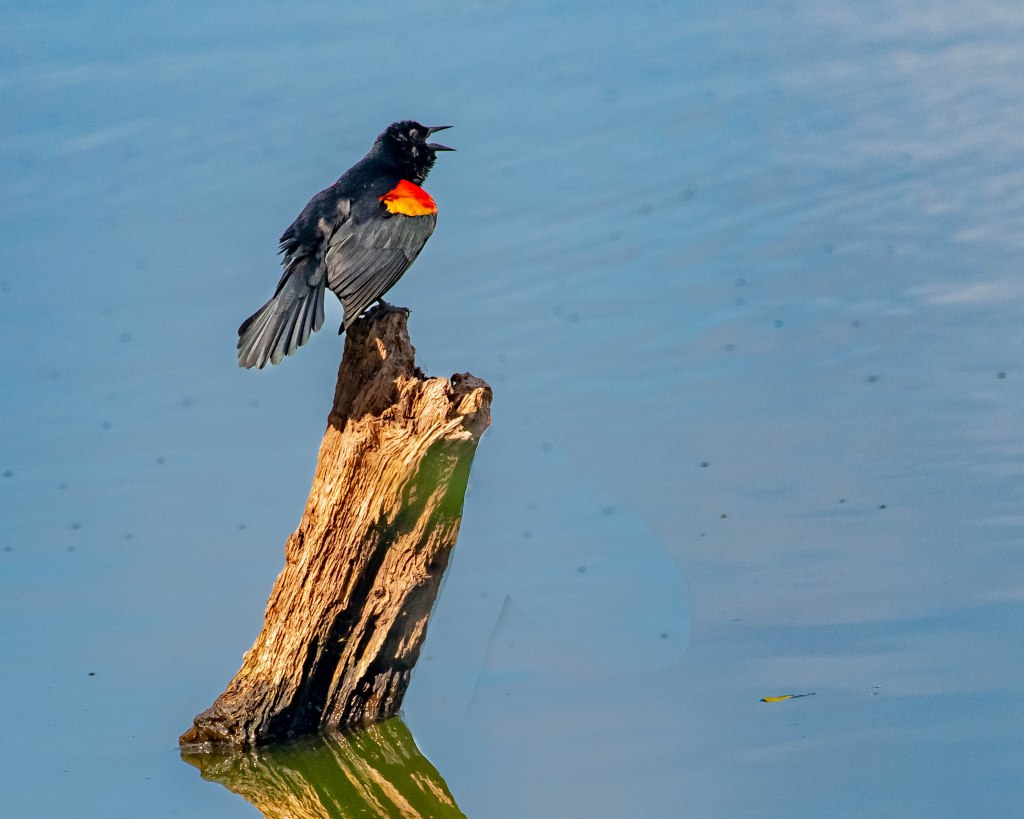
Red-winged Blackbird males are singing all over the place as breeding season is still in full swing.
Caesarweed (Urena lobata) is an invasive plant from Africa introduced into the United States for livestock feed and for its nitrogen-fixing properties which help improve soils. As with many introduced species, it has not played well with native flora and tends to crowd them out – with a vengeance. Pretty bloom, though.

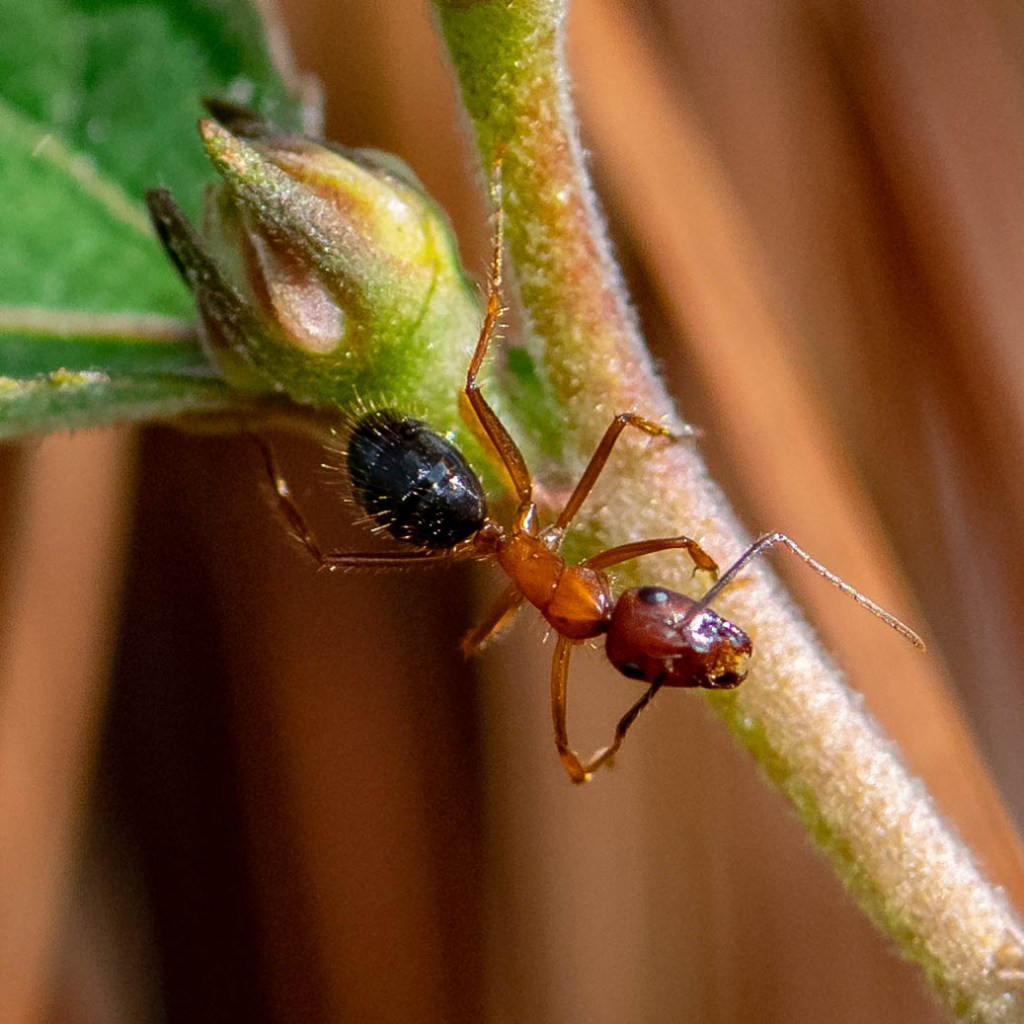
A Florida Carpenter Ant (Camponotus floridanus) doesn’t care where the Ceasarweed came from as long as it provides food and shelter.
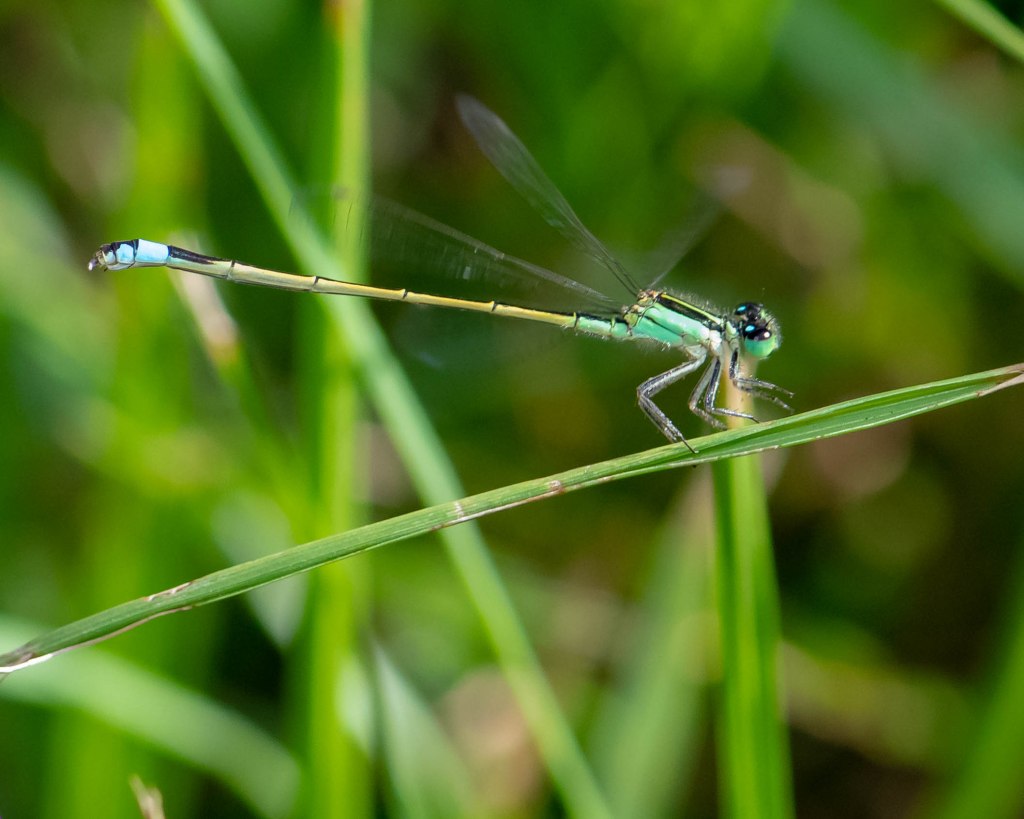
Just about any weeds adjacent to water (which is about 90% of Florida) will harbor small damselflies such as this Rambur’s Forktail (Ischnura ramburii).
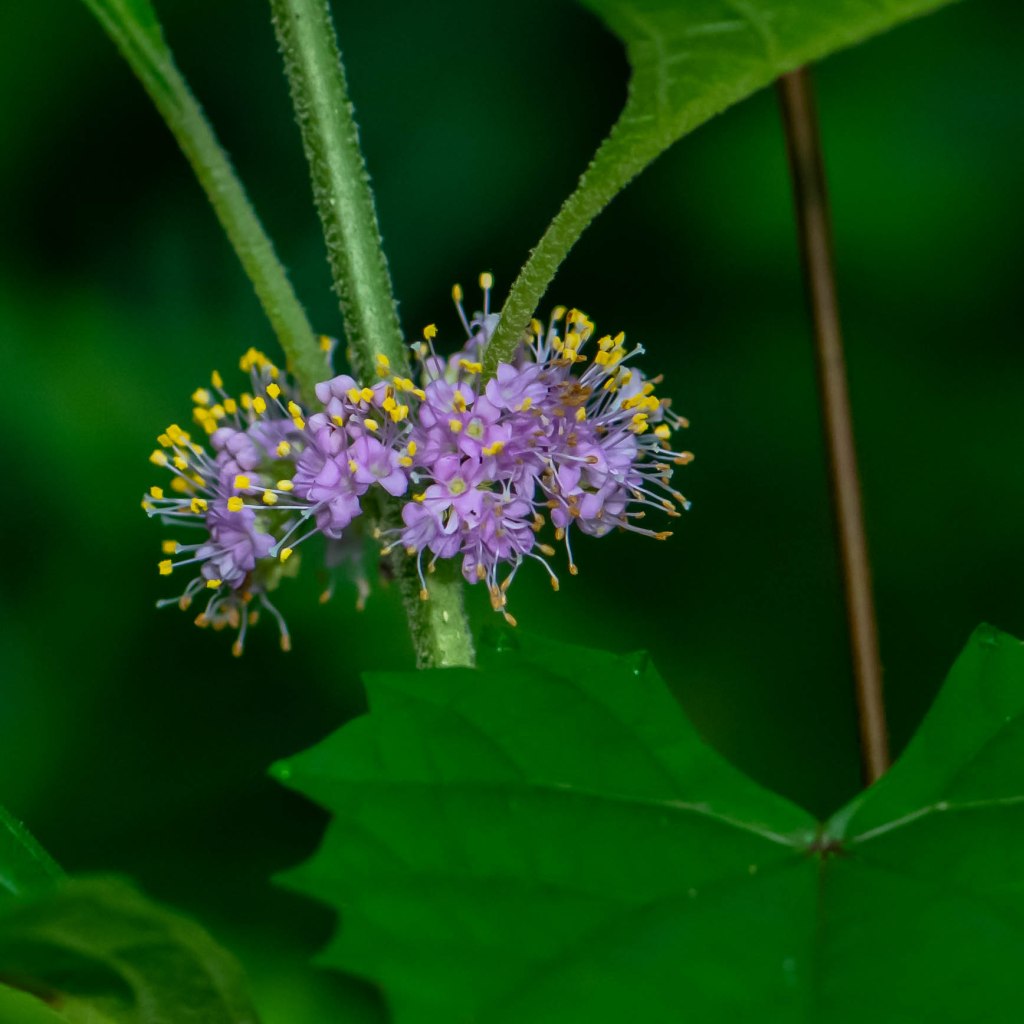
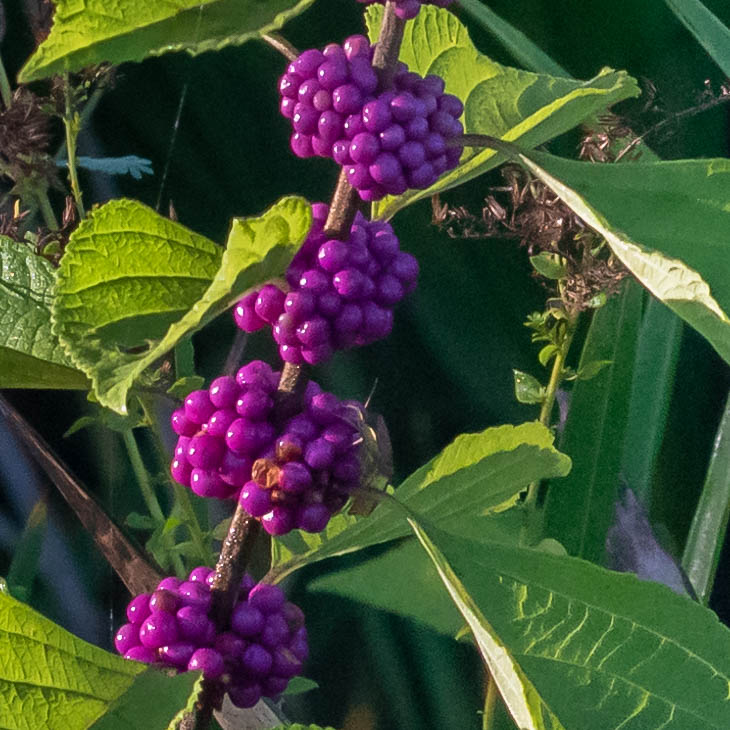
Very common throughout the state, American Beautyberry (Callicarpa americana) has small but lovely flowers, luscious-looking berries, rich green foliage, pretty stems and, according to some, has many useful properties. Parts of the plant have been reported to be good to eat, may have medicinal qualities, berries have been used to dye cloth as well as used in preserves. (Don’t consume anything unless you are 100% certain it is safe!)
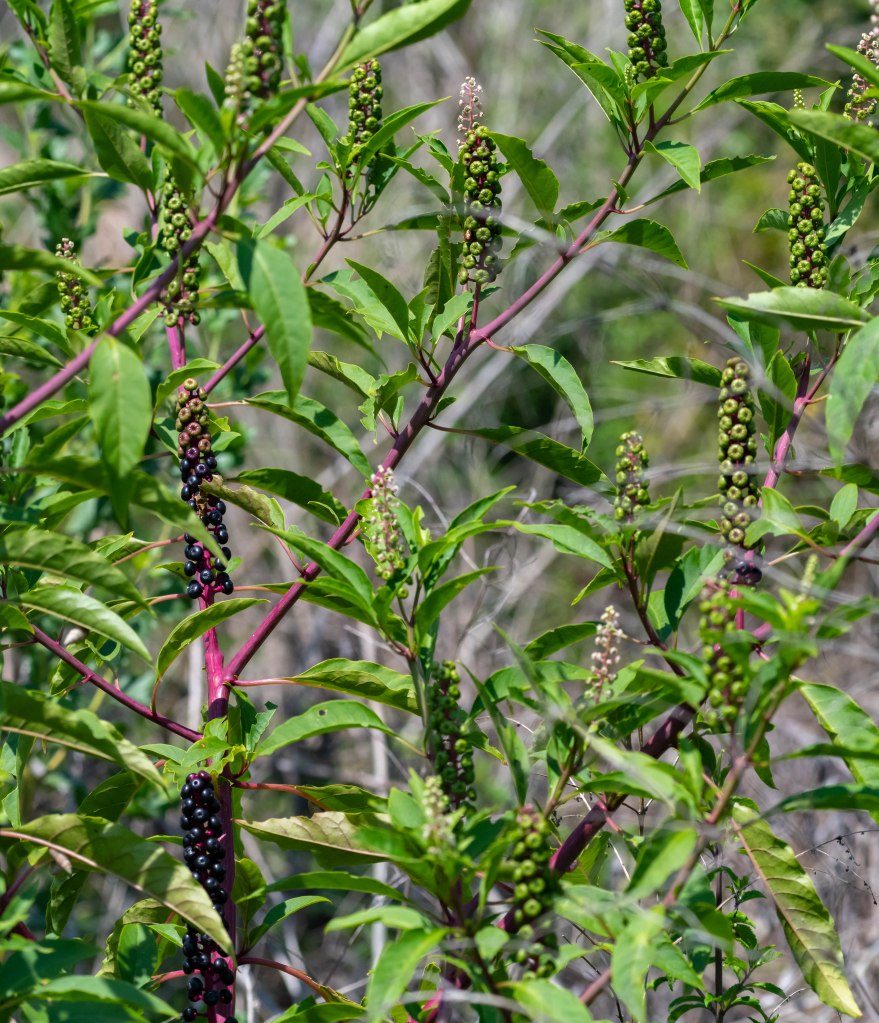
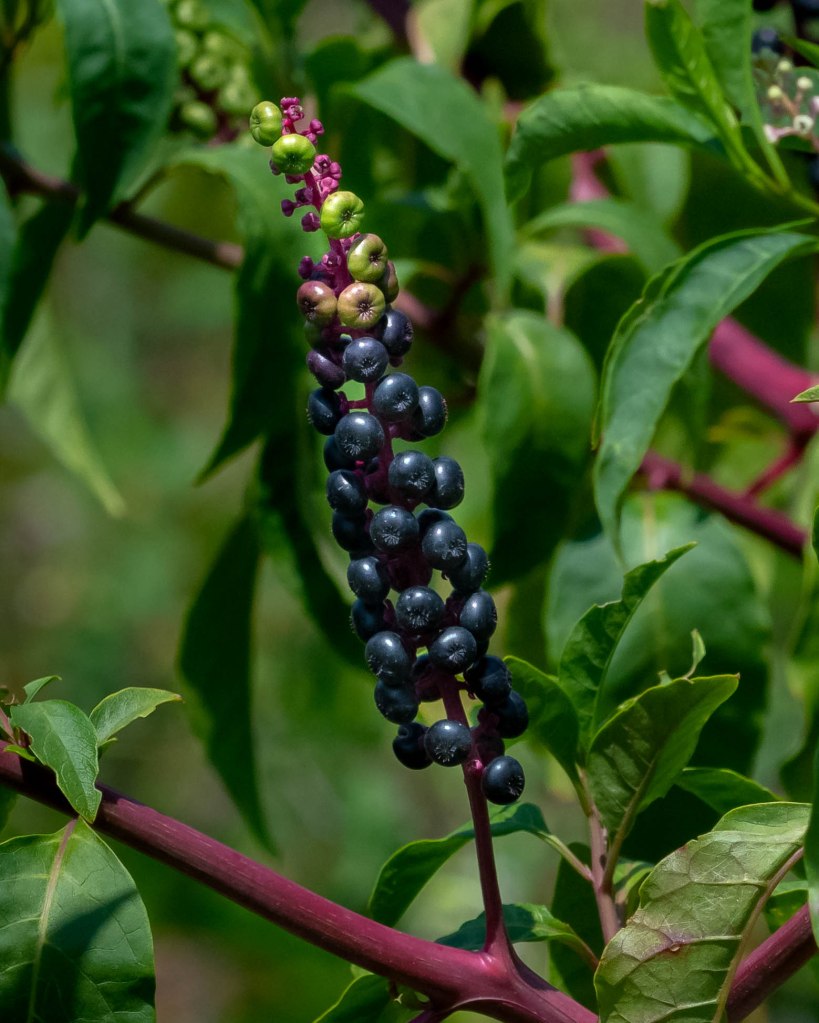
(Thanks to Jimbey and shoreacres for pointing out an important error!) The images below are of the American Pokeweed (Phytolacca americana). The berries of this plant are definitely toxic! Once again, when exploring the great outdoors, DO NOT TOUCH OR EAT ANYTHING YOU ARE NOT 100% POSITIVE IS NOT DANGEROUS!
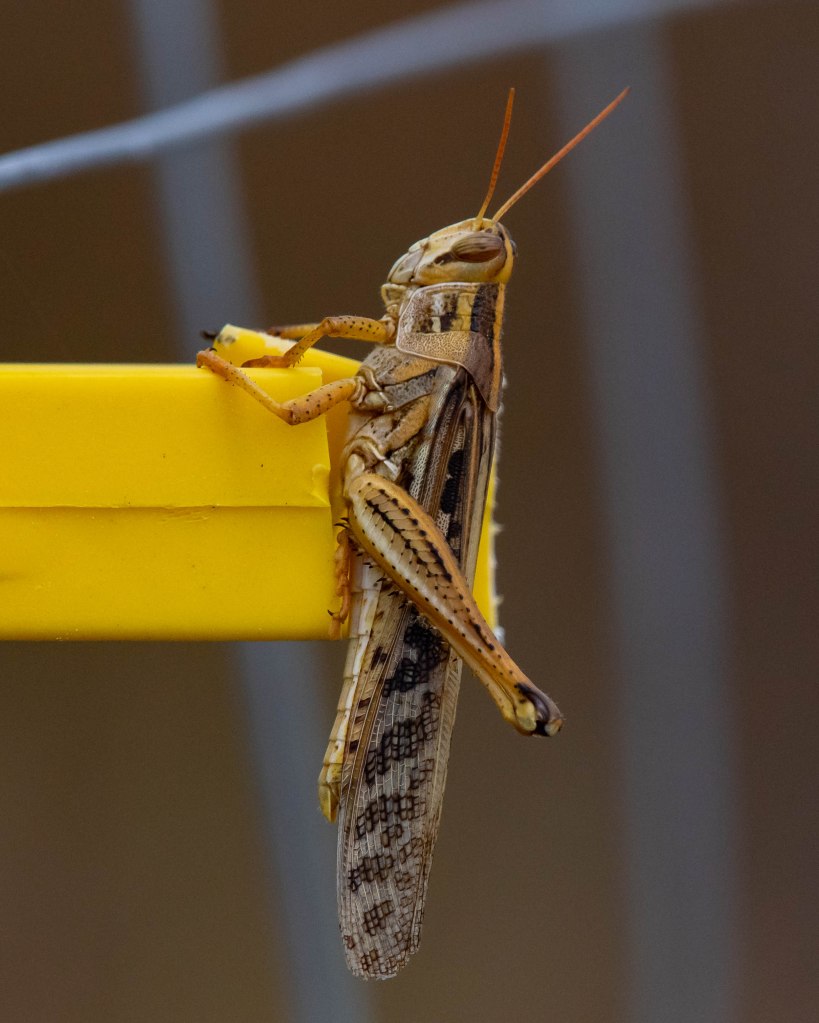
Walking near any grassy area at this time of year will flush good numbers of yellow-winged birds from under foot. Bird grasshoppers, that is. The American Bird Grasshopper (Schistocerca americana) is abundant as well as pretty attractive.
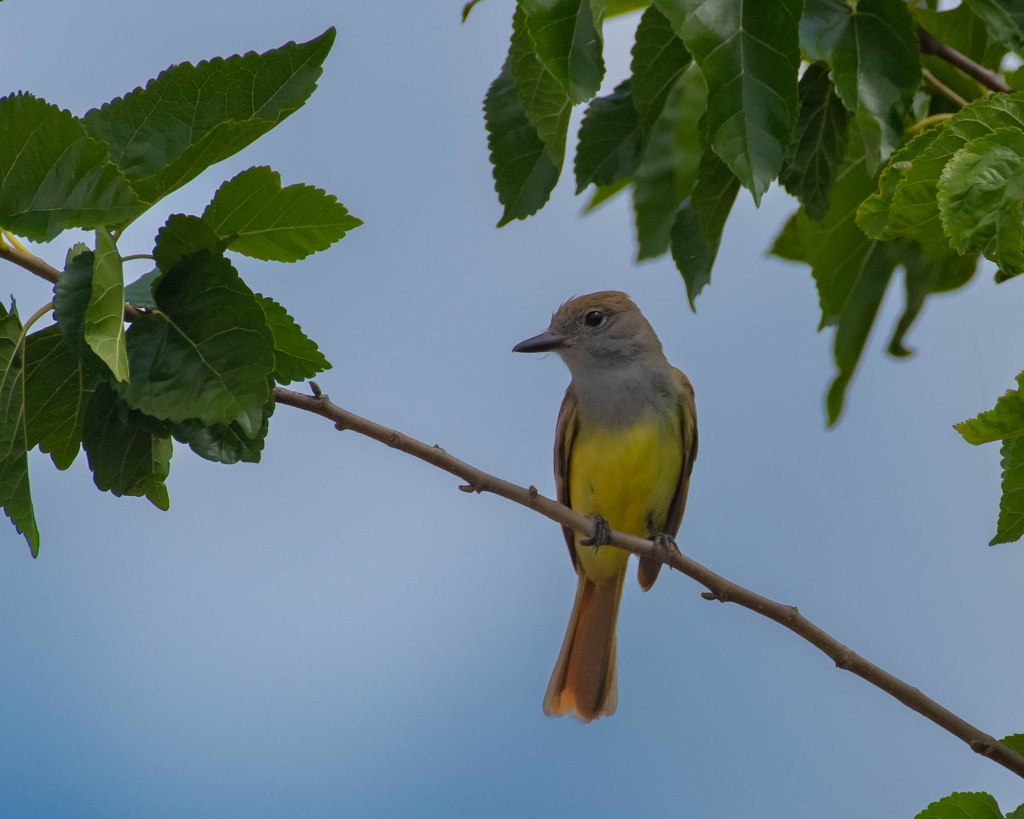
We encountered calling Great Crested Flycatchers throughout the day. This area is filled with breeding males singing to attract a mate.
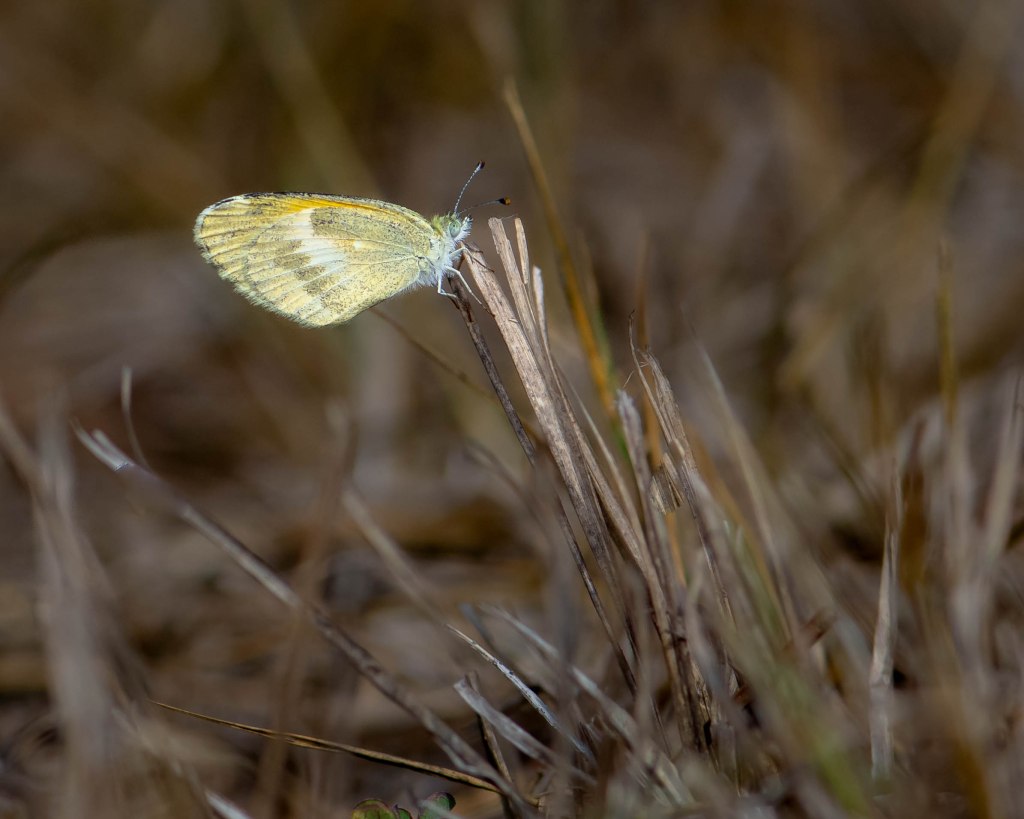
Hands-and-knees time in an effort to sneak up on a small Dainty Sulphur (Nathalis iole). True to their name, these are the smallest sulphur butterflies in North America.
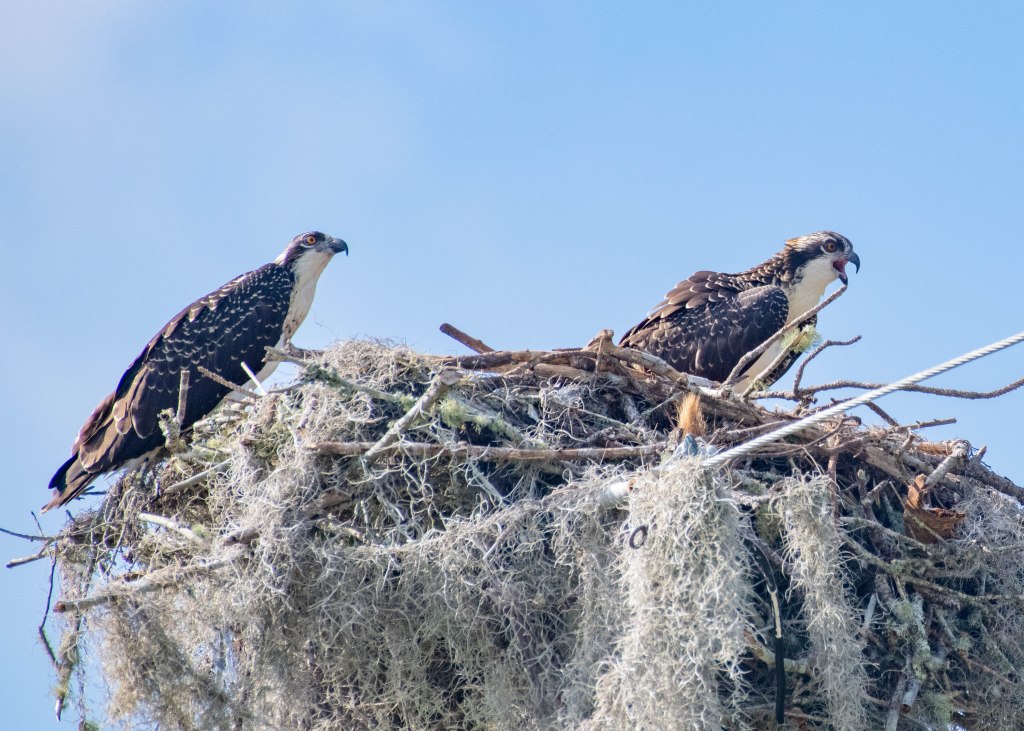
Junior admires Mom’s tenacity as the adult Osprey screeches at a potential intruder. Soon, the youngster will be screeching on his own.
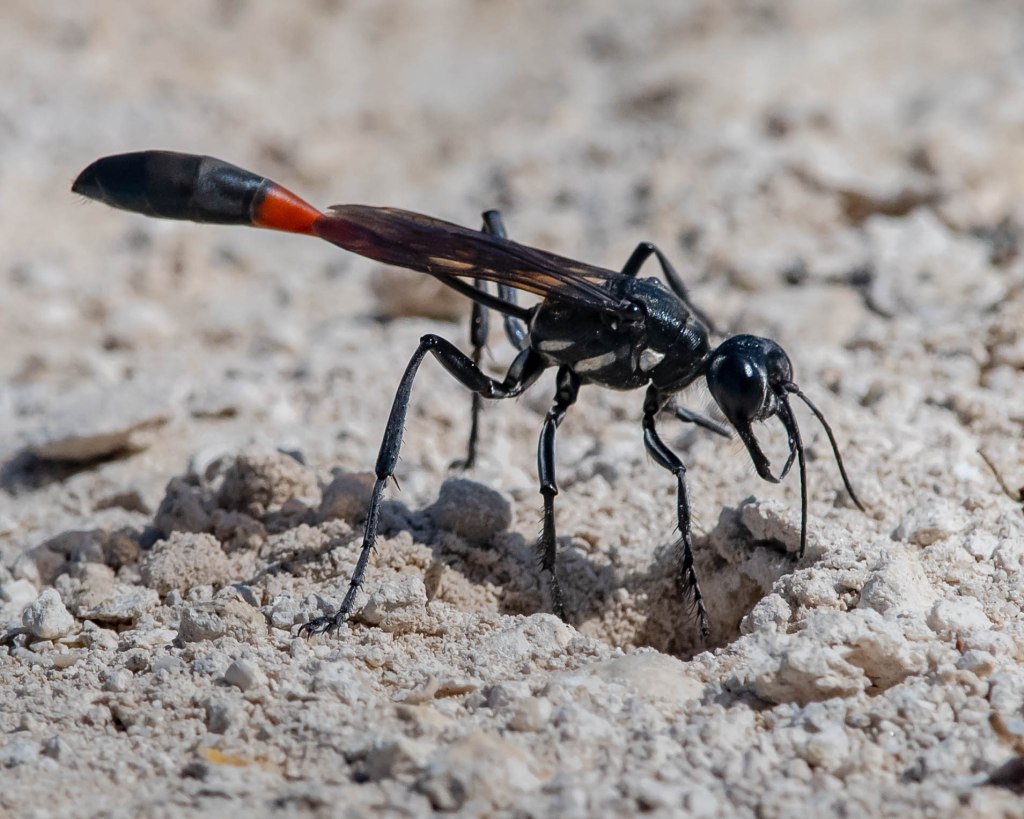
Common Thread-waisted Wasps (Ammophila procera) dig a hole in the ground in which they will deposit a food source, such as a caterpillar, lay eggs, cover the hole – lather, rinse, repeat.
Trumpet Honeysuckle (Lonicera sempervirens) is also known as Coral Honeysuckle. Vines can reach up to 15 feet in length. That’s okay with us for something this beautiful!

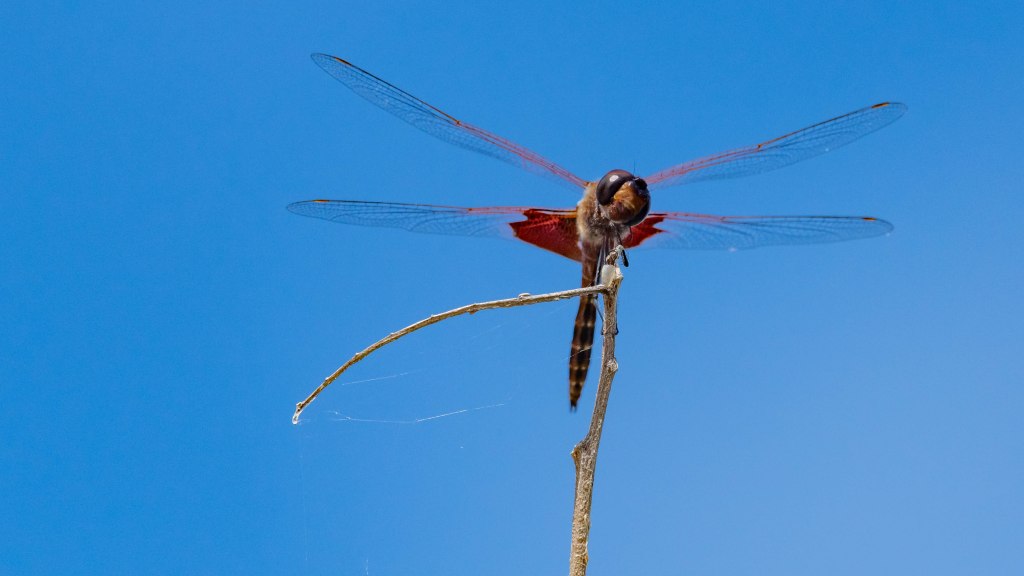
Today’s sentinel duty is performed by the ever-alert Red Saddlebags (Tramea onusta). With all those eyes, this attentive dragon doesn’t miss much.
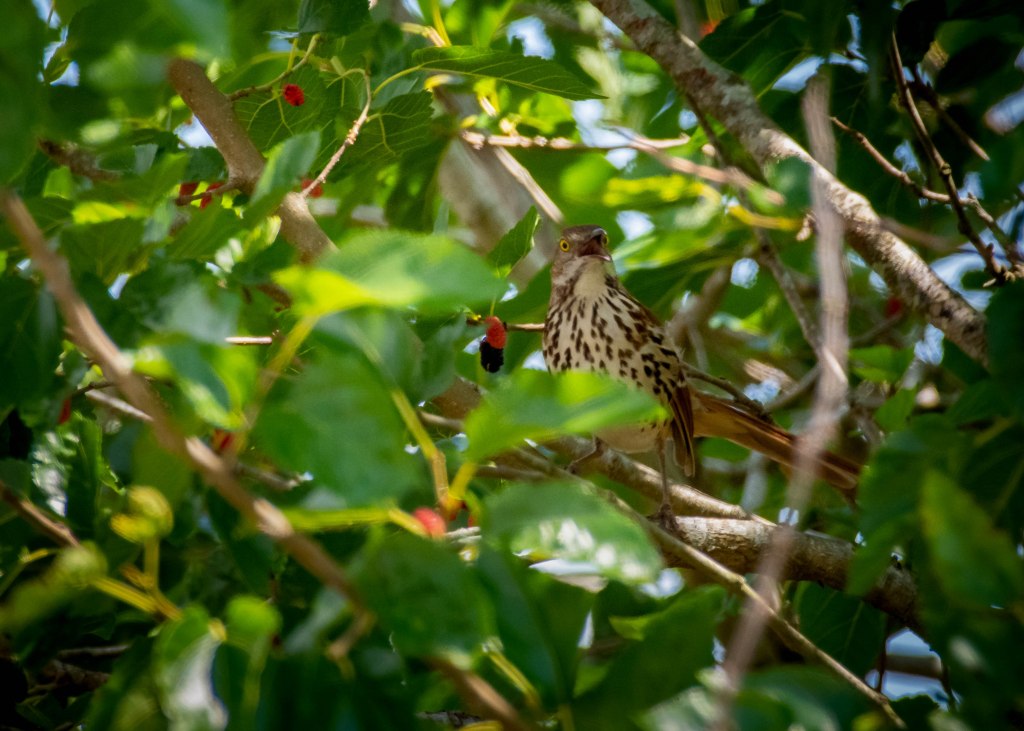
Sitting on a shady branch surrounded by juicy mulberries doesn’t sound like a bad way to spend a warm day. This Brown Thrasher, however, does not appear to be in a sharing mood!
I guess if you are brave enough to order a drink of nectar at the cactus bar, at least you won’t have to worry about much of a crowd disturbing you. This Cloudless Sulphur (Phoebis sennae) has no problems tip-toeing among the spines of a Pricklypear to find the blossoms.

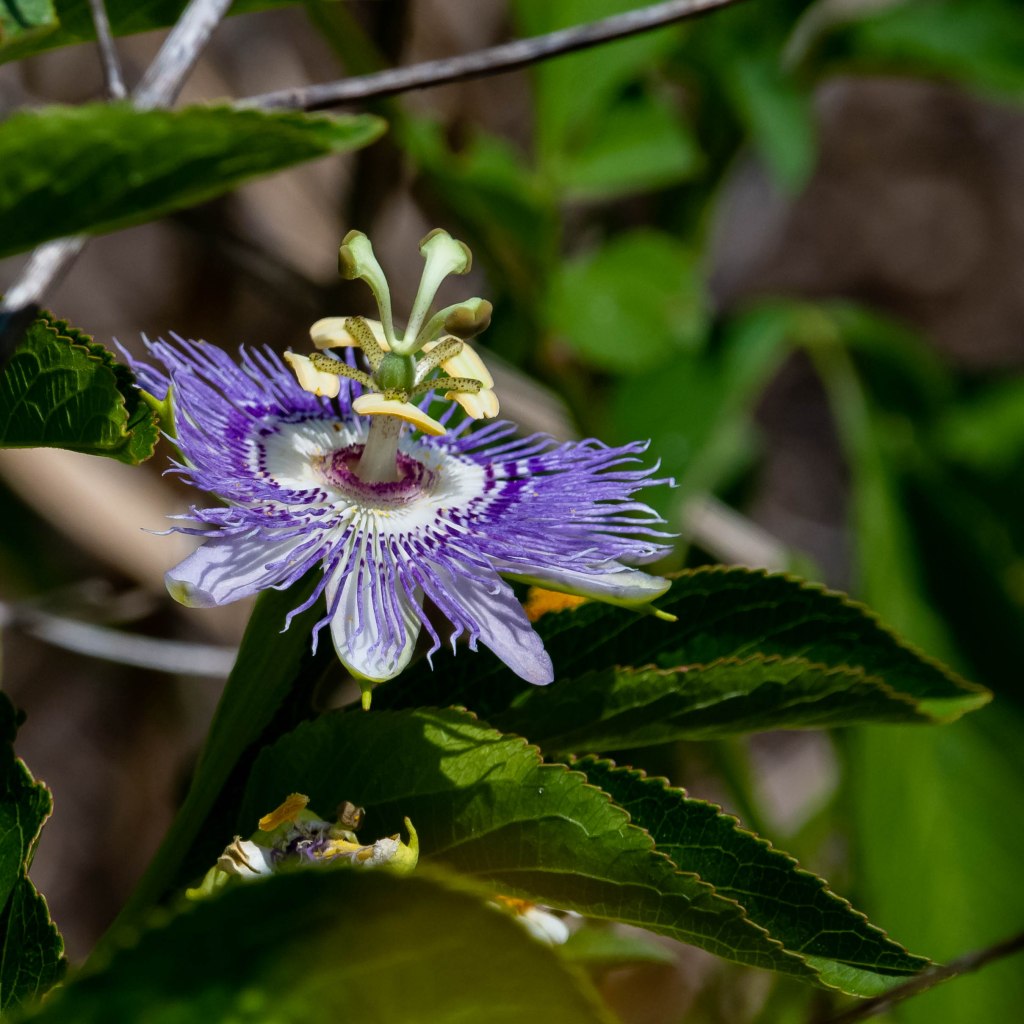
Lush foliage, pale green fruit and an alien-looking but fabulous flower describes the Purple Passionflower (Passiflora incarnata). They seem to be blooming all around us at present.
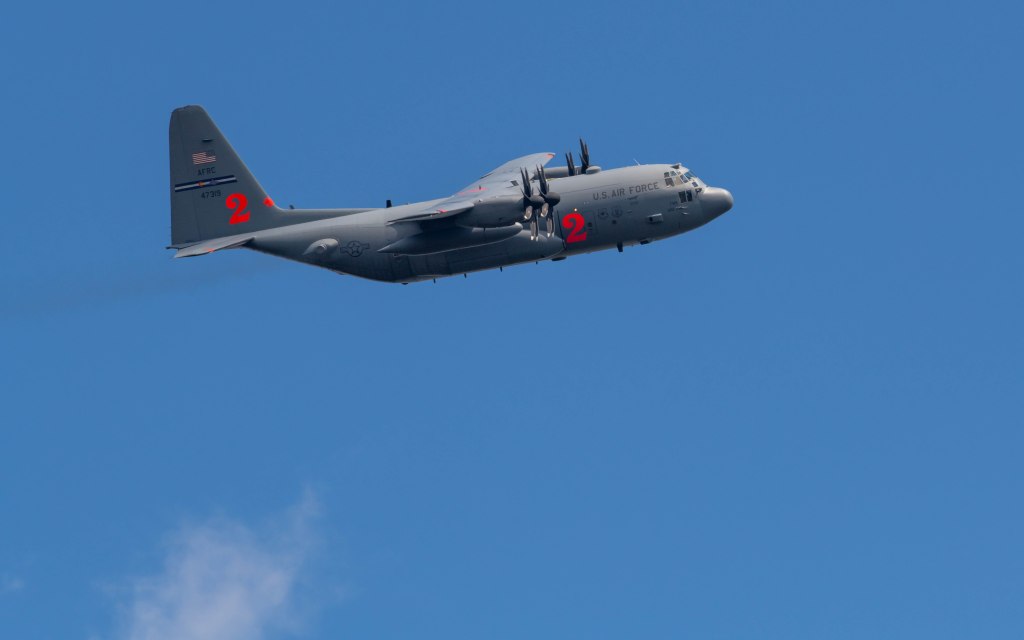
While scanning the sky for raptors, we found something completely unexpected. A U.S. Air Force C-130/Hercules flew low over our heads and even banked toward us as I snapped a few pictures. This particular aircraft is stationed at the 302nd Airlift Wing (Air Force Reserve) located at Peterson Space Force Base in Colorado. This cargo aircraft has been a workhorse for several decades. Recently, this plane helped fight a huge forest fire in Colorado by spraying tons of water over the burning trees. Aircraft from this unit provide “Hurricane Hunter” duties during the summer storm season.
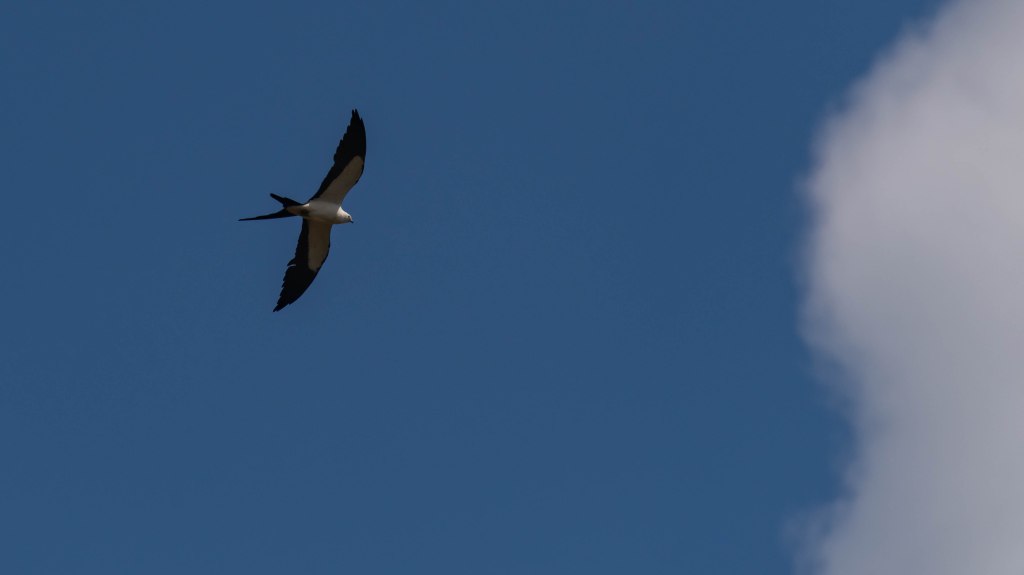
Moments after the C-130 had passed, a Swallow-tailed Kite put on an aerial show of her own for us.
What a day! We got lost at Lost Lake, escaped to the alphabet lakes and could have been rescued by a big metal Air Force Bird if we had needed it. All this enjoyment made Gini feel a little better about not being able to bring home her very own do-it-yourself alligator skeleton. She has almost stopped whimpering. Next time.
Enjoy your search for a natural place and come back for a visit!
 Our Natural Places
For such awfully named places, they certainly have some gorgeous inhabitants. I have never seen the Purple Passionflower bloom before – stunning. Thnx also for the name and warning on the American Pokeweed. Seen it before, no clue what it was.
LikeLike
I reckon the gummint has a very large book of approved names and whatever is next in line gets the next name.
Always remember, don’t poke pokeweed berries in your mouth!
Thank you for dropping by!
LikeLiked by 1 person
First, I just have to say I LOVE this template and the font. Okay, now I’ll go back to read and feast my eyes on the pictures. 🙂
LikeLike
Our staff appreciates you noticing the little details.
Wait, there’s pictures?
LikeLiked by 1 person
Thank you Wally and Gini. You found another fine place in which to get lost while displaying your ID skills on those beautiful insects. I must admit some of those berries do look rather tempting but I’m not very adventurous when it comes to nature’s fruits. If they are in a cellophane covered plastic tray with a price sticker, I will try.
I am impressed by your aircraft ID skills too Wally. I think Mr Putin could use you at the moment as he seems to have lost a few helicopters.
I have sent Sue off to Poulton le Fylde to meet up with her pal Linda and sample the delights of the cafes and coffee shops. She has a shopping list too – that me with peace and quiet for the afternoon.
Enjoy your day and try not to get lost.
LikeLike
We were talking just the other day about how surprising it is that we both survived our childhood. Pretty berries almost always went into the mouth for sampling. Most came back out quickly. Gini learned that picking a bouquet for her Mother came at a price when all the pretty white flowers belonged to a stinging nettle. I learned if you use nice soft Spanish Moss as bed for a back yard campout you’ll wake up itching and burning all over from chigger bites.
Your cellophane/price sticker approach is likely the best one.
Mr. Putin will be just fine. Unless he runs for U.S. President. He’s much too conservative to have a chance.
Gini wants to know how much cleaning, washing and cooking you accomplished in order to surprise Sue upon her return?
We are both on our way in the opposite direction of the swamp and are hoping, despite your advice, that we become lost on the way to our doctor’s appointment.
LikeLike
Oh my, I love your photo of the swallow-tailed kite, what a treat to see it!
LikeLike
We really love that they spend the summer with us!
LikeLike
I think that I may have found the solution to Gini’s wish for an Alligator skeleton, Wally. There’s an outfit in UK that offers a plastic replica, 10 inches long, for just GBP 7.99!
Great variety and super photography. Was most impressed by the grasshopper, wasp, and ant. You are doing great things with that macro lens and you might just inspire me to go down that route myself – just have to try and sell all that Nikon Kit that I no longer use!
I was impressed by your statement of Gini being your bride for over 55 years. We celebrated our 51st yesterday.
I hope that all is well with you both. Things continue to improve here, and we’re looking forward to getting away for a few days in the not-too-distant future.
Take good care – – – Richard
LikeLike
She can’t believe we don’t have leftover plastic reptiles of all sorts that our two children used to play with! I may have to resort to purchasing such a kit in an effort to console her deep depression.
This macro thing is in danger of becoming an obsession. One issue I still find challenging. If a bug moves just a millimeter refocusing is required. Getting in close to a bug makes the bug move. Sigh.
Congratulations to you two youngsters on joining what appears to be a swindling number of couples who actually followed through on that “for better or worse” part of the contract!
All is very well on this side of the big pond! Rainy season. In between thunderstorms we have been having great fun finding new places to explore.
Fingers crossed for your plan to get away.
LikeLike
You certainly listed and showed many good reasons to celebrate, not least of which was not having been lost at Lost Lake. It would have been a shame if you had shared a fate with that alligator. Please refrain from getting lost so you can continue to delight us with wonderful stories and images.
Best,
Tanja
LikeLike
Thank you, Tanja.
I pride myself on my genius at never getting lost. Which is due to the fact I married someone over 55 years ago who has never steered me in the wrong direction.
Enjoy your brand new week!
LikeLiked by 1 person
💕
LikeLike
Looks like a beautiful place to get lost in!
LikeLike
It definitely is. Now, if we can just find a way to air-condition it ….
LikeLike
I enjoyed reading and viewing your shots. Thanks for the info too. Have a nice weekend!
LikeLike
The weekend is already off to a wonderful start!
Thank you for visiting with us.
LikeLiked by 1 person
Concerning edibles: you might want to add a clarifying note that the berries below the beautyberry flowers belong to the toxic pokeweed. While the greens of pokeweed can be eaten while young, it’s quite a process to make them safe, and despite reading a report that the ripe berries can be cooked and used for pie, I’ve never known of anyone who’s done that. All parts of the plant are toxic to one degree or another.
Now, beautyberry? I’ve had both jam and jelly made from those. As a matter of fact, I bought some from a member of the Florida Native Plant Society who was selling her wares on Etsy, just to experience the taste. Like agarita jelly, or cactus jelly for that matter, it wasn’t something I’d devote time to making, but it was fun once.
I’ve been inside one of those Hurricane Hunter planes. They occasionally stop by Ellington Field for an open house. One of my favorite hurricane hunter cartoons was done by the estimable Gary Larson.
The expression on the Brown Thrasher’s face is wonderful. I’m not sure our mulberries are ripe yet. The usual sign of the season — mulberry stains on white fiberglass — hasn’t appeared yet. As for your grasshopper: I was afraid of them in childhood, or at least put off by their erratic flight and noise, but they are beautifully structured creatures. Now, I admire them, and love closeups like yours.
LikeLike
Thanks to both you and Jimbey pointing out I had lumped the Pokeweed in with the Beautyberry. Fixed it.
Our local airfield is a staging area for the hurricane hunters. This one may have been on a practice run gearing up for the season.
The Thrasher was definitely upset we were near that tree! May have had a nest nearby so we backed off. Love the textures and colors on the Bird ‘Hopper.
LikeLiked by 1 person
About the fruit – don’t eat unless you are 100% certain — but 100% don’t eat it anyway. Leave no trace; but leave the fruit for the (wild) locals.
The same guy that named the lakes after his children named the whole area after the family’s Plymouth back when he was in high school. From right to left. 😉
LikeLike
We’re in agreement about the maypop. Ate some when I was a kid. Regretted it. Many online “eat the weeds” articles talk about it being edible. Gini says, cut up the maypop and set it aside while you make an apple pie. Throw away the maypop.
Still, the flowers are mighty nice!
Thanks for visiting, Jimbey, and for the sound food safety tip!
LikeLike
You constructed a nice crisp picture of that carpenter ant, along with those of the grasshopper, dragonfly, and wasp.
It’s always reassuring toward the end of a hike in nature when you finally see your car again.
Turnaround’s fair play: if there’s a swallow-tailed kite, is there also a kite-tailed swallow? Or is that too much to swallow?
Coral honeysuckle is a species central Texas shares with you. Likewise for pokeweed and American bautyberry.
LikeLike
Thank you, Steve. Still practicing with the macro lens. Well, still practicing with ALL the lenses.
LikeLike