(Click on images to enlarge, click again to zoom.)
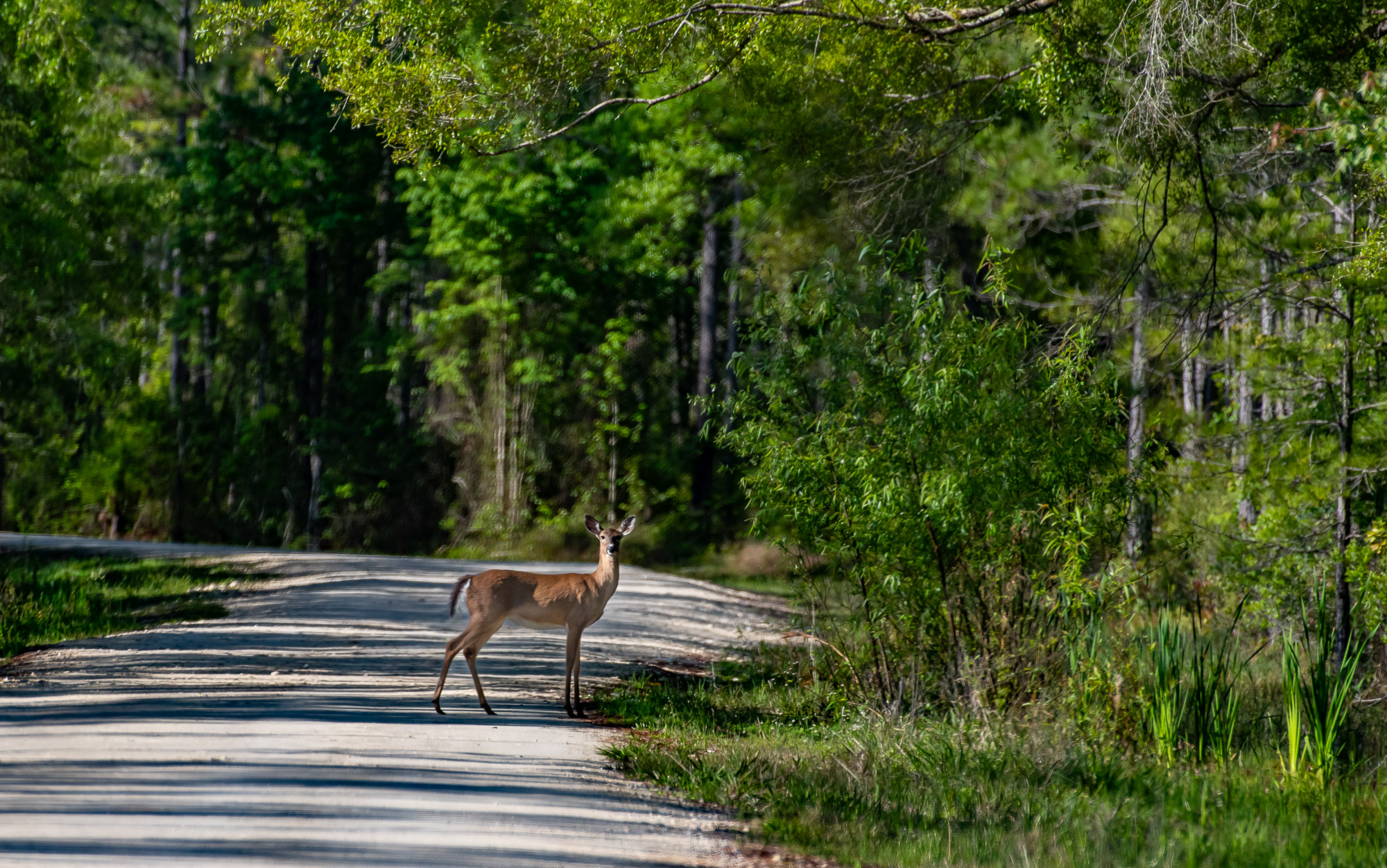
March was a busy month around here. Several family birthdays, annoying medical appointments, an anniversary road trip. During an overdue cleanup of the OurNaturalPlaces office complex, we discovered an old shoebox filled with dust and cobwebs which also contained images of one of the year’s first significant Spring swamp forays. We have tried to clean the pictures enough so you may enjoy what we found during the second week of March 2024.
But first, a public service announcement. Check your camera settings. Go ahead. Do it now. We’ll wait.
I have tried to develop the habit of returning all camera settings to the same “base” after downloading all of the images from that day. Apparently, I occasionally break that habit. The first few photos of the day, therefore, looked as if I took pictures of fluffy clouds during a snowstorm. Sigh. Do as I say, not as I do.
The vast Green Swamp is our playground. We have previously discussed how the definition of a “swamp” can be deceptive. Lots of water is what many think about first. However, there can be huge trees growing in all that water, or wetlands filled with grasses and reeds but no trees, or higher ground with hardwood groves, or actual forests of pines on high and dry land. That diversity is what permits us to enjoy a bit of the 560,000 acres which comprise the Green Swamp.
As Spring began to renew the land, we found migratory birds feeding voraciously as they prepared to return north to breed. Birds who call this “home” were singing to attract mates, squabbling over territory and some were already building nests. Multiple shades of green highlighted the many different species of trees and plants around us. Flowers bursting with new blooms not only attracted us, but advertised fresh nectar for myriad insect species.
“It just smells – fresh.” Gini again finding the right words to describe our morning.
You may not be able to enjoy the aroma of the Spring swamp, but perhaps a few images will help give you a sense of why we love this place.
One of the birds which breeds earliest here is the Brown-headed Nuthatch. They begin nest-building in the second week of February. Most of the year they hang around in loose family groups and pretty soon it will sound like a squeaky-toy factory in the swamp.

Like small lavender flags waving in the breeze, blooms of Lyreleaf Sage (Salvia lyrata) beckoned us to explore further. We happily obliged.

As thistles begin to sprout their spiky leaves and purple flowers, there will soon be insects seeking sweet nectar and helping spread pollen to ensure the plants survive for another year. Purple Thistle (Cirsium horridulum). (Also known by a whole lotta common names.)

This time of year, most wet places in our area have a profusion of Prairie/Savanna Iris (Iris savannarum) showing off their incredible colors. Taxonomists can’t seem to decide what to call this species so I’ll help them remain confused by calling it both of the most prevalent common names found during research.

Bright yellow flowers sticking up throughout some of the wet places are Smallfruit Beggarticks (Bidens mitis). Bees and butterflies love the blooms. The small hairy seeds love everything that comes in contact with them and will happily stick with you wherever you may go.

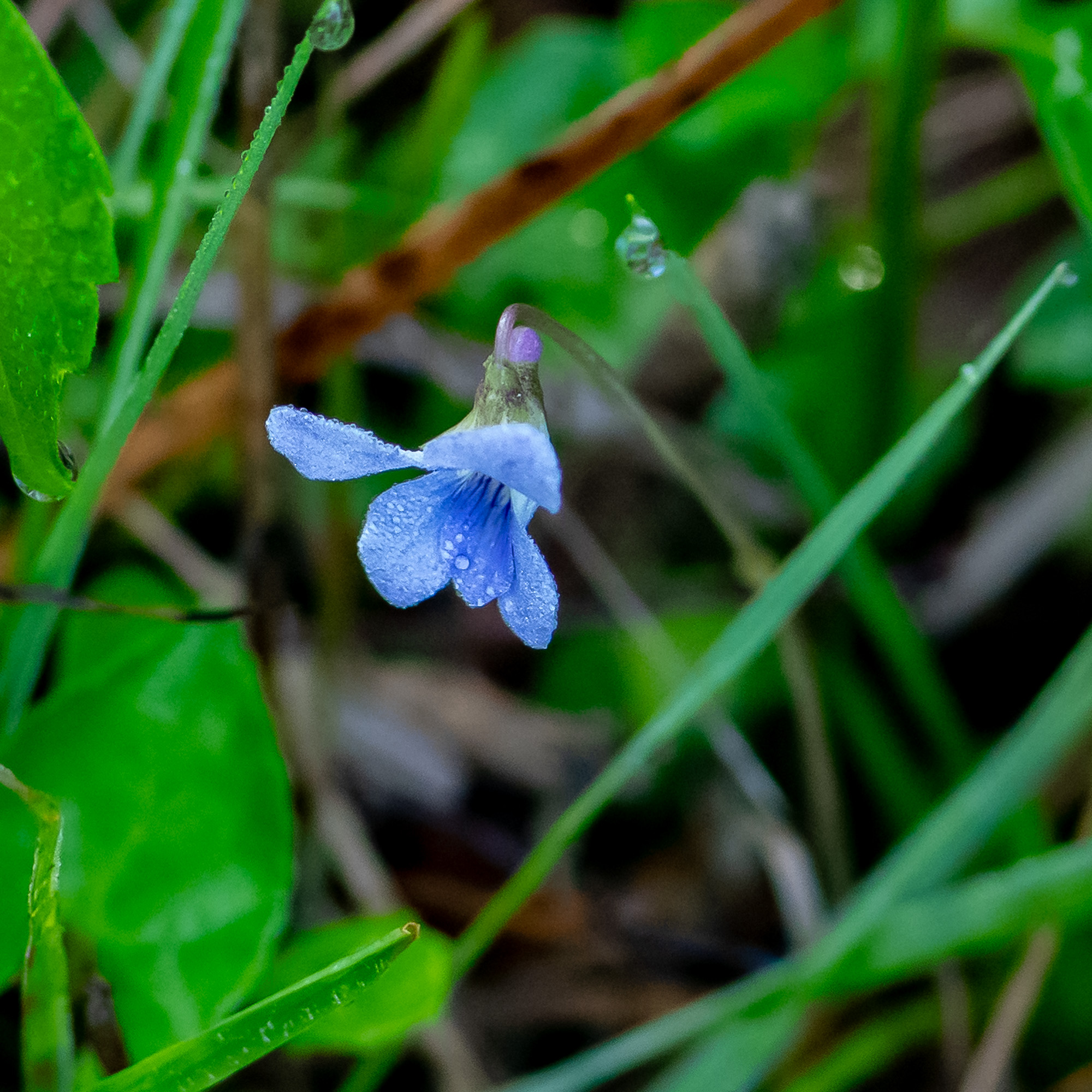
Small and a lovely shade of blue. Common Blue Violets (Viola soraria) were more abundant than we expected.

It seemed as if every road and every trail was lined with a welcoming commitee of vibrant yellow Blackeyed Susan (Rudbeckia hirta).

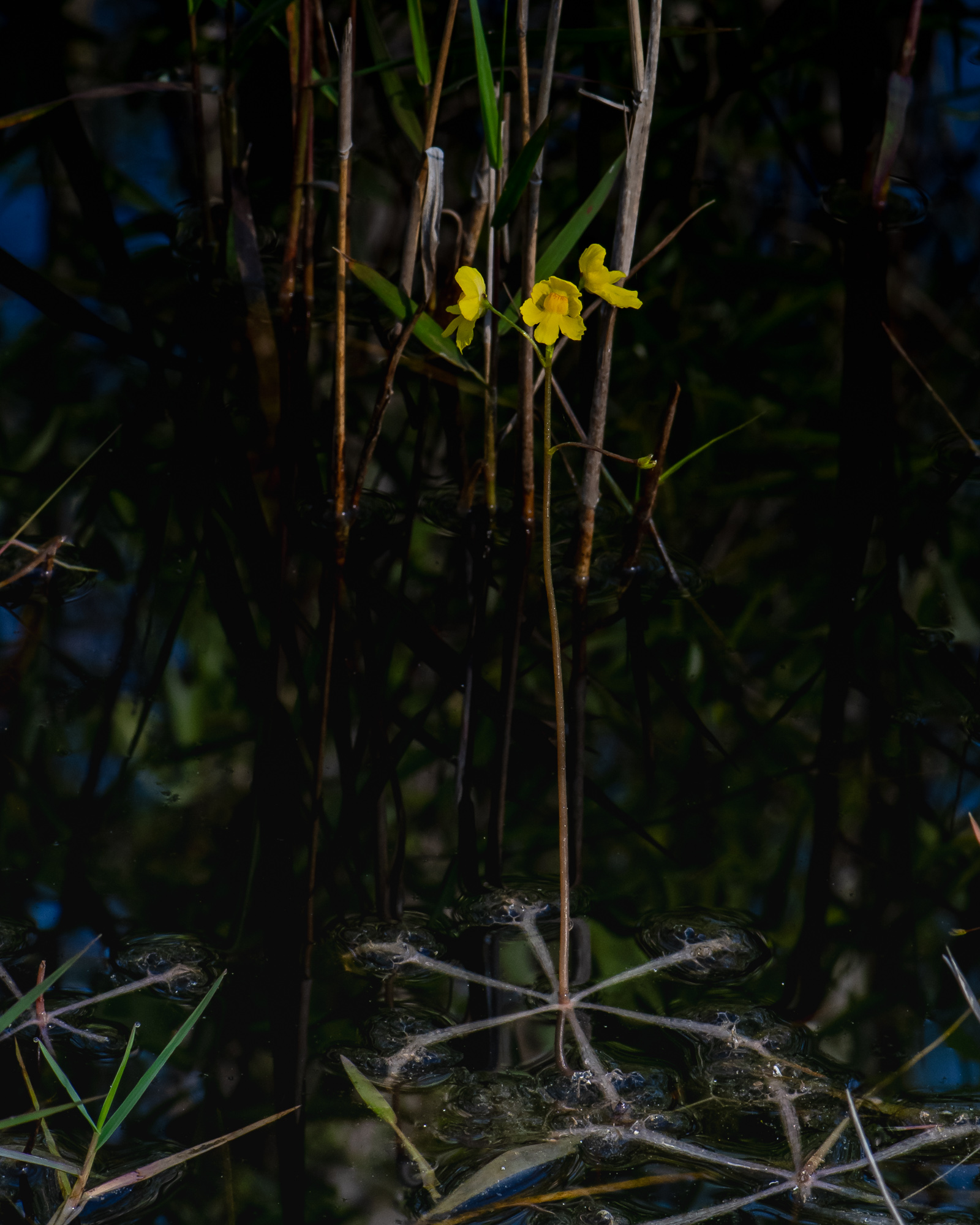
One of our favorite plants is the small Floating Bladderwort (Utricularia inflata). Not only does it decorate some open shallow water spots with dozens of small yellow flowers, the carnivorous plant reminds us of old horror movies with invading alien plant life.

Probably North America’s smallest damselfly, the Citrine Forktail (Ischnura hastata) loves this sort of habitat. The orange male is unmistakable.


This trip was actually the beginning of “our” spring. So much new life was abundant as we explored the diverse Green Swamp. That old shoe box had a few more photos and we’ll share them next.
Enjoy your search for a natural place and come back for a visit!

(Click on images to enlarge, click again to zoom.)
In order to enjoy sunrise at some of our favorite distant locales, the clock must be set to scream at an alarmingly early hour. Scrambling to get the gear packed, remembering to grab the food bag, did we check the gas gauge last night? We do it because we love to be in that special place at that special time when the sky begins to slowly change color. Not to mention how much we like to get up and drive two hours in the dark and — wait — scratch this last part.
Today we drove 15 minutes down the road and arrived 20 minutes before dawn. Tenoroc Fish Management Area has a reasonably pleasant spot from which we can enjoy the sun rising. It also doesn’t hurt that there are several hundred acres of woods, wetlands, lakes and fields to explore once the day begins.
Sleeping in can be a good thing.
The morning show was more colorful than some. That “Golden Hour” phenomenon provided really pleasant light for an hour or so. A “real” photographer would have gone home at that point. For us, making images is pretty much a secondary mission. Even with no camera, we would have the memory of that sunrise, the glow of a moonflower, the calls of Sandhill Cranes, the comic hunting technique of the Cattle Egret, the incredible variety of birds, blooms and bugs which Nature displays every day whether we are there or not.
Today, we were there.
At the edge of our “breakfast lake”, we munched Gini’s freshly baked strawberry bread while an Osprey flew overhead with a large branch for sprucing up the living room. An Eastern Phoebe provided us with a bittersweet reminder of her name one more time before she departs until autumn. A curious alligator watched us, submerged, surfaced in a different spot and kept up his vigilance until we left.
We saw things we have seen before. We trekked over familiar ground. Familiar aromas of blooming flowers and molding leaves filled the air. It was all – the same. It was all – different.
For some, our routine might be boring. “Okay, I saw that Tufted Titmouse, let’s go find something different.” For us, as long as the little gray bird allows us to observe, we aren’t going anywhere.
Enjoy the morning with us.
After snapping a few images of the morning sky, I turned around to discover two large bushes covered in blooms. The Moonflowers (Ipomoea alba) were illuminated by the sun’s rays and the big morning glory blossoms seemed even more incredible than usual.

In addition to the phoebe mentioned earlier, another winter visitor preparing to leave us soon, a Savannah Sparrow, was part of a flock of about a dozen. Seeds and insects will provide them with the fuel they need for their long journey.

The early morning sky was not yet bright enough to cause the Cutleaf Evening Primrose (Oenothera laciniata) to fold its pretty petals. We appreciated the delay.

Fruits of the Netted Pawpaw (Asimina reticulata) will soon appear and just as they ripen, will quickly disappear. Wildlife enjoy these small fruits, sometimes called “custard apples”, and you’ll have to be quick to find them. “Netted” refers to the appearance of the leaves.


Trumpeting of a pair of Sandhill Cranes grew louder and they eventually landed in a nearby field. Although several thousand migratory cranes visit Florida each year, these are likely a resident sub-species which breed in the state.


We have entered the season of dragons and damsels, most not in distress. This handsome male Rambur’s Forktail (Ischnura ramburii) allowed me to lay down and take several candid photos. He was kind enough to order a set of 8×10 glossies of that second image for friends and family.


Cattle Egrets sometimes appear to be double-jointed as they lurch left and right to snag a grasshopper. Gini says the soft brown on the breast reminds her of campfire marshmallows. As for me – their gait brings this instantly to mind every time: https://www.youtube.com/watch?v=Cv6tuzHUuuk. (Sorry about the earworm.)


Eastern Phoebe. We will miss you. Hurry back.

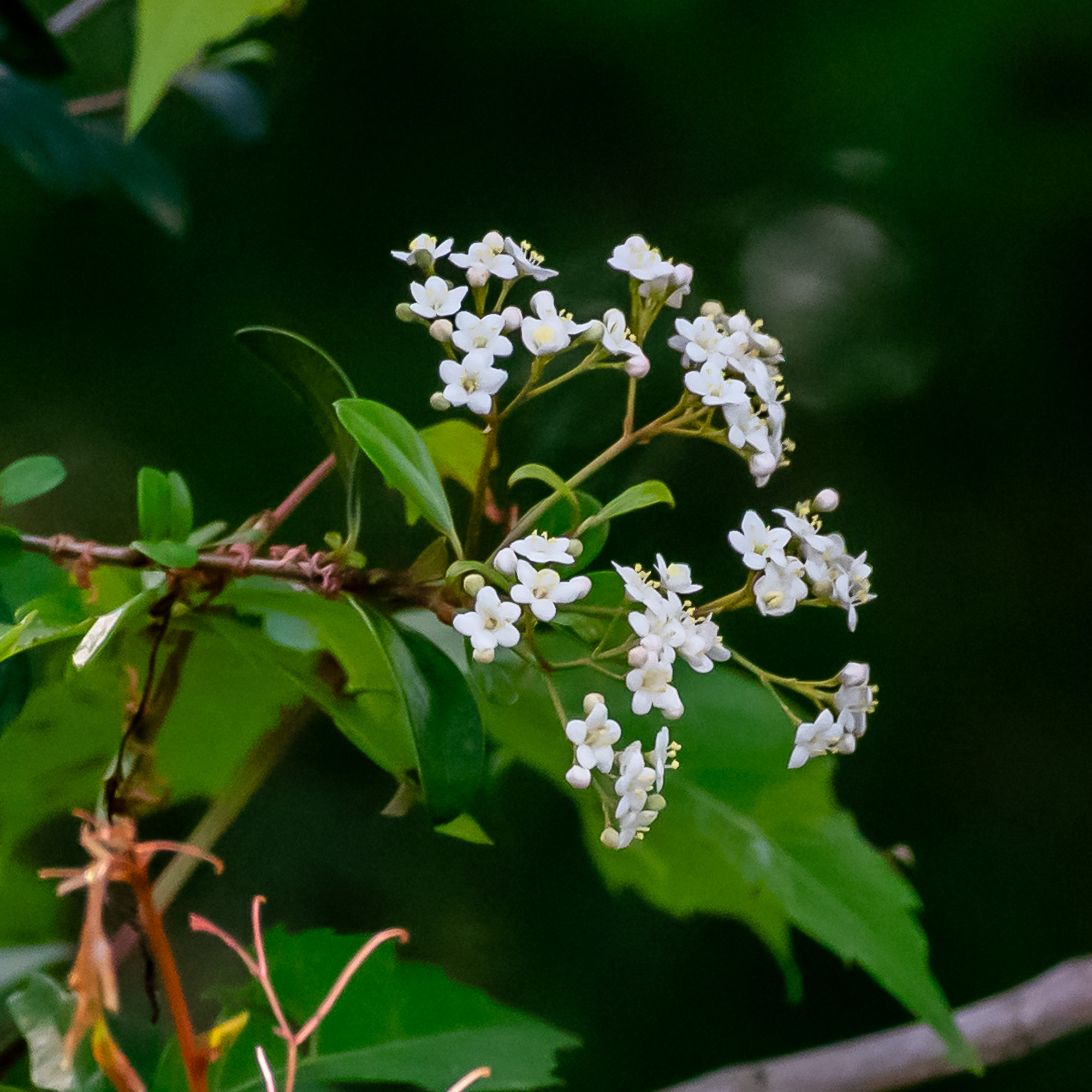
Sometimes appearing as a medium-sized shrub, Walter’s Viburnum (Viburnum obovatum) can attain a height of more than 20 feet and has the appearance of a full-sized tree. The blooms are profuse and have a wonderfully sweet aroma.
Were we watching this Tufted Titmouse or was it watching us?

I followed the Osprey carrying a big stick to its building site where he and the Missus made it known how much they appreciated my photographic efforts. I’m pretty sure I heard Osprey cursing.


We may not have traveled very far to enjoy a sunrise, but the incredible beauty of the event caused us to pause, sigh and agree that we continue to be among the most fortunate beings in the universe. The remainder of our Morning Ramble underscored that feeling.
Enjoy your search for a natural place and come back for a visit!
Additional Information
Tenoroc Fish Management Area (https://myfwc.com/recreation/lead/tenoroc)

(Click on images to enlarge, click again to zoom.)
“Sounds like an alley-cat convention.”
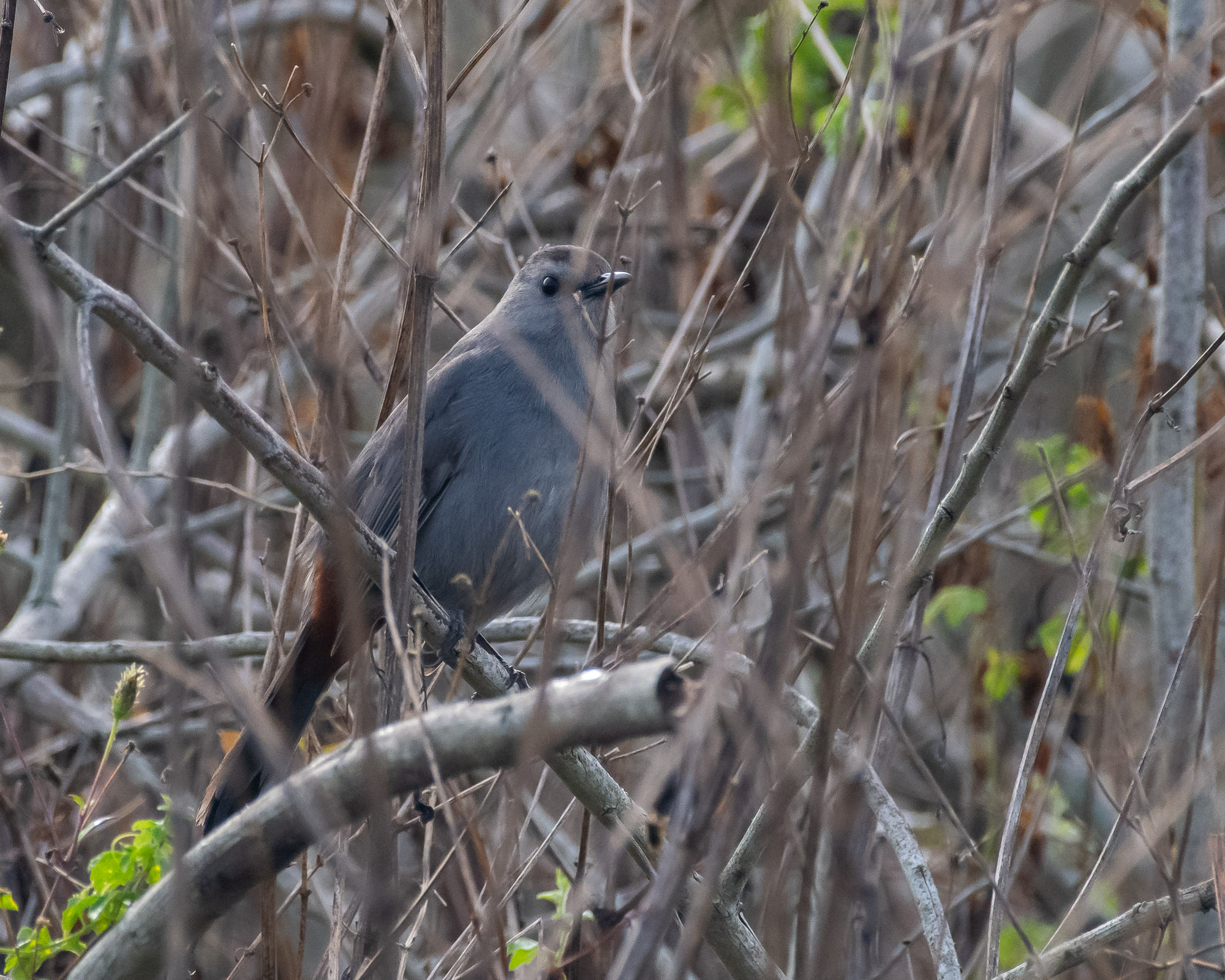
Gini’s hearing, which is significantly superior to mine, was picking up at least a dozen individual Gray Catbirds calling. During pre-migration, this species forms up into groups of one to a couple of dozen birds as they prepare to return to their northern breeding territory.
After some far-flung adventures, it felt good to be in our familiar “patch” again. Only three miles from our front door, the oasis of small lakes and wooded tracts always seems to offer a surprising diversity of flora and fauna. Today was no exception.
Spring flowers were making a showing and plenty of nectar-seeking pollinators showed their appreciation. In addition to the yowling Catbirds, a few other avian migrants lingered to enjoy our Florida weather and the delicious insects to be had. Resident birds were busy with nest-building, courting and hunting.
It’s such a privilege to be outdoors just as the sun is rising. Nature wakes up, we observe. Breakfast by a lake, discussing the kids, planning the week – interrupted by an Osprey splashing into the scene. Time to explore!
Once the sun has been up a little longer, the Cutleaf Evening Primrose (Oenothera laciniata) will fold up for the day. Since they bloom mainly at night, the flowers are pollinated by moths.

Here, kitty, kitty. The calls of the Gray Catbird can, indeed, sound like a tabby in the brush.
I recently discovered a handy way to differentiate the two species of toadflax in our area. When compared with Canadian Toadflax (Nuttallanthus canadensis), Florida (or Apalachicola) Toadflax (Nuttallanthus floridanus) has a longer stem (pedicel) connecting the flower to the main stem and a much shorter spur on the flower. Both are a wonderful shade of soft blue or violet and can be stunning when covering a field in early spring. (Some sources still place these plants in the genus Linaria.)


A female Blue Dasher (Pachydiplax longipennis) looks pretty sporty with those racing stripes on her thorax.

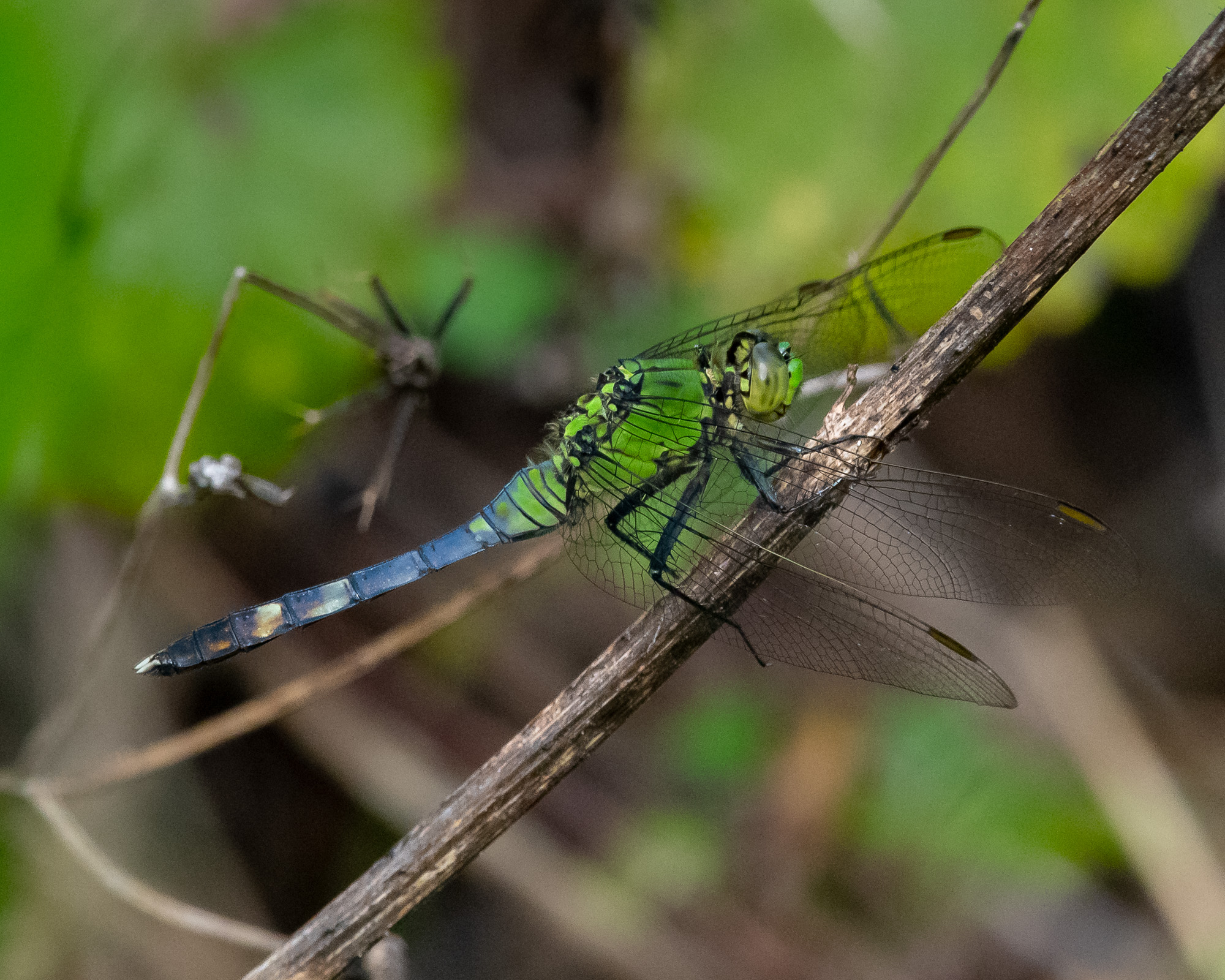
Perched on the same twig as the above dragon, an immature male Eastern Pondhawk (Erythemis simplicicollis) just might be considering a Dasher brunch. Soon, he will change from the partial green of Mom to the total powder blue of Dad.
A Cucumberleaf Sunflower (Helianthus debilis Nutt. subsp. cucumerifolius) is a sub-species of a plant normally only found along the coast. We’re happy this bright yellow specimen likes our patch.

It’s easy to understand why the powers that be decided to designate the Zebra Longwing (Heliconius charithonia) as Florida’s state butterfly. The bright red seeds in the image belong to a Rosary Pea (Abrus precatorius) vine.

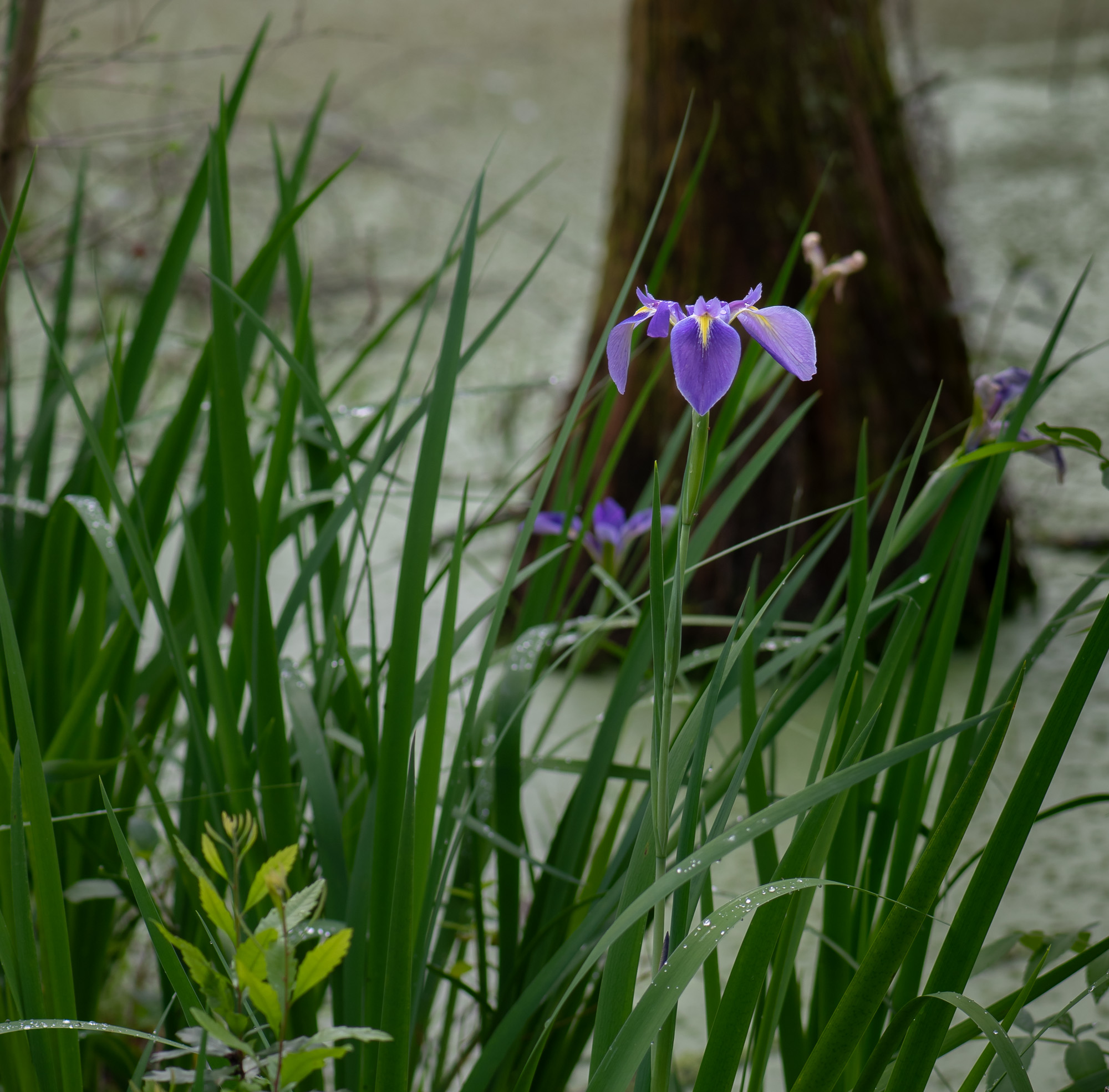
A highlight of spring is the appearance of Prairie (or Savanna) Irises (Iris savannarum) in the wet places. What a glorious combination of colors!

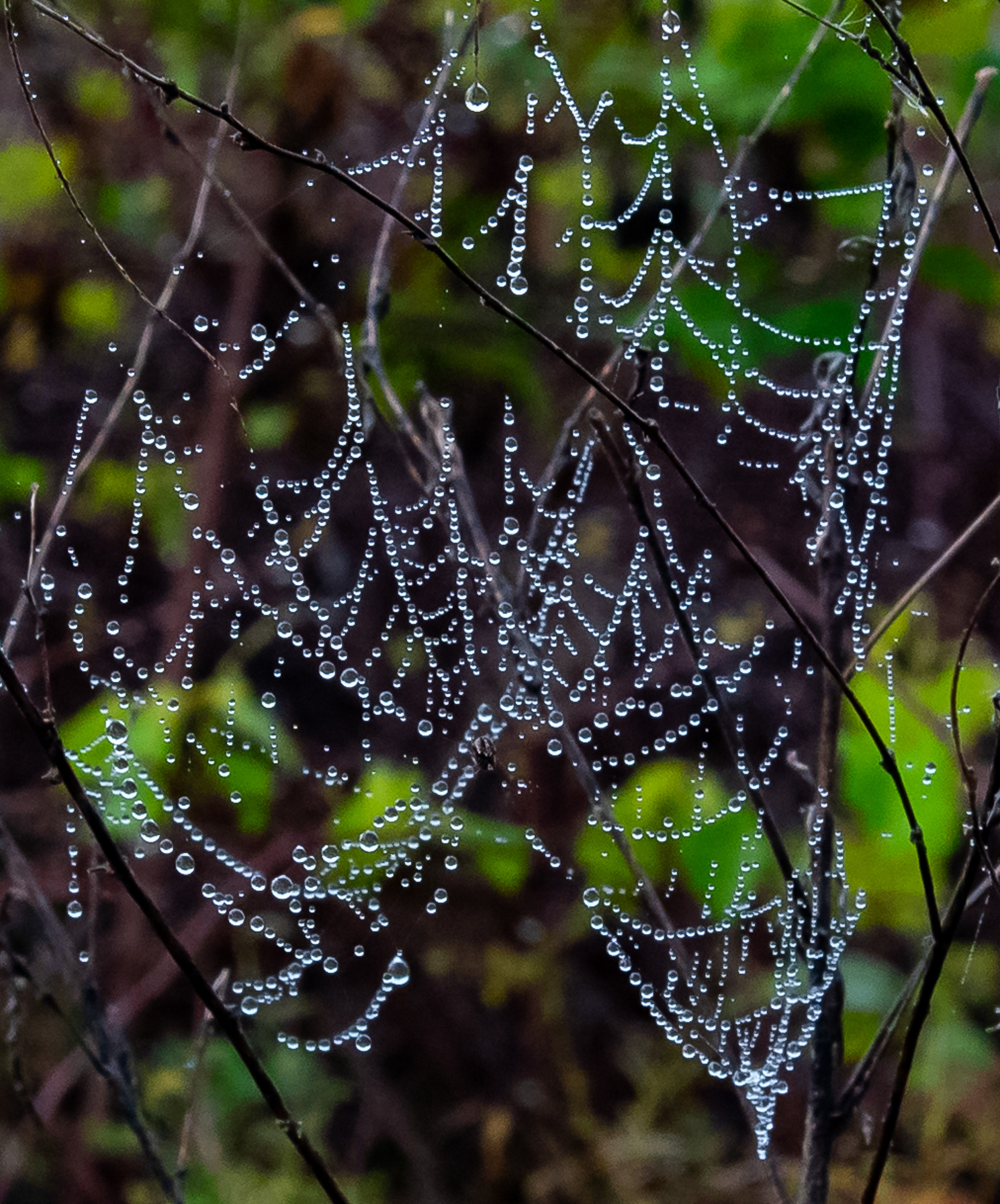
Early morning means dew-jeweled necklaces draping the fields.
We will soon miss the little flycatcher who constantly reminds us of her name. The Eastern Phoebe will return in the fall.

The combination of dark green foliage and lovely small flowers decorated a small wetland area. Butterflies seem quite drawn to the Woodland False Buttonweed (Spermacoce remota).

A Spicebush Swallowtail (Papilio troilus) looks like its hindwings were spray painted a lovely blue, indicating this is a female. Males have a wash of greenish blue.

Another really small flower to enjoy. This one is a brightly colored River Sage (Salvia misella).

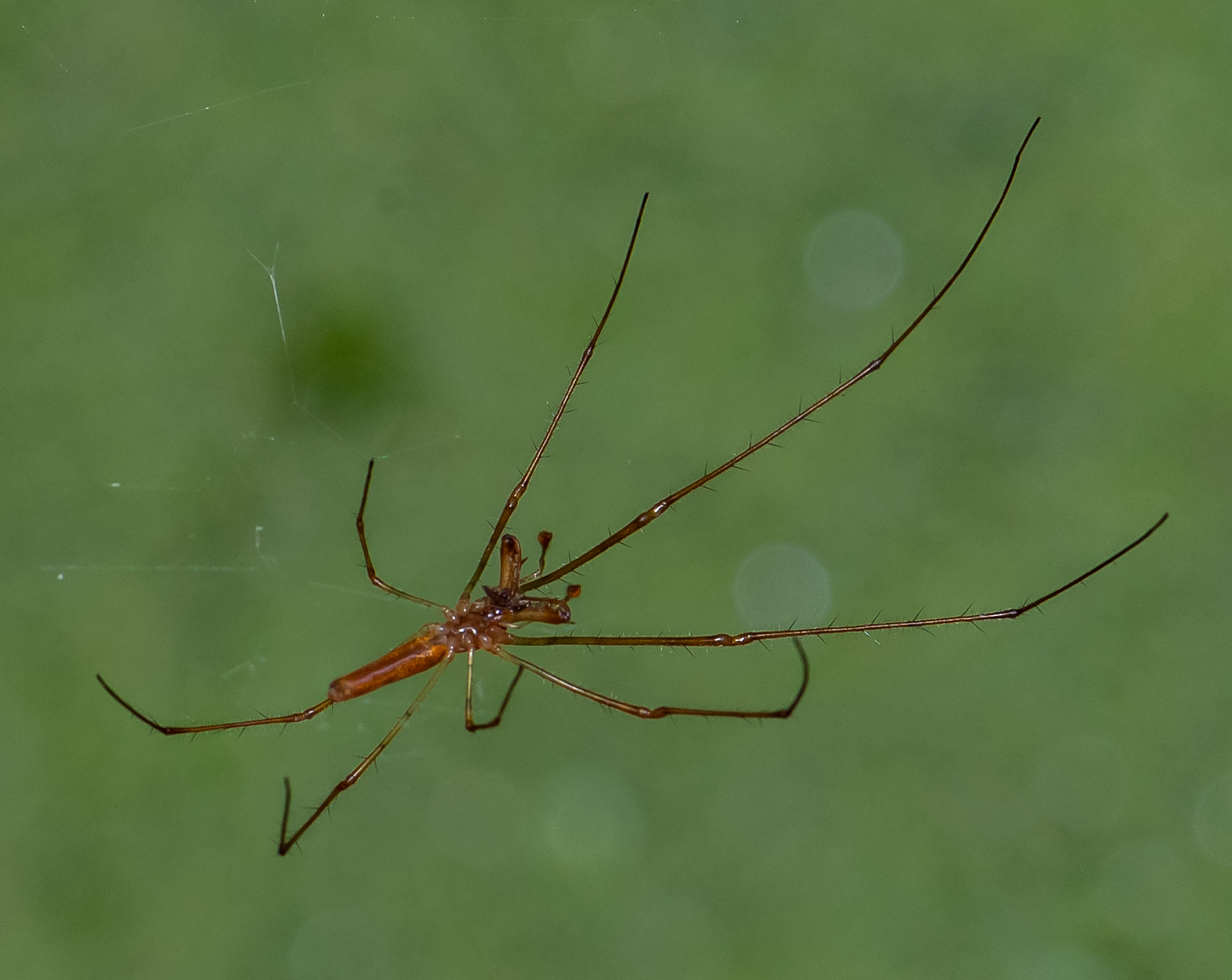
Upside down, but interesting from any perspective. This Long-jawed Orbweaver (Tetragnathidae spp.) wove its web above a small water channel and clung to the underside as it patiently waited for me to move along.
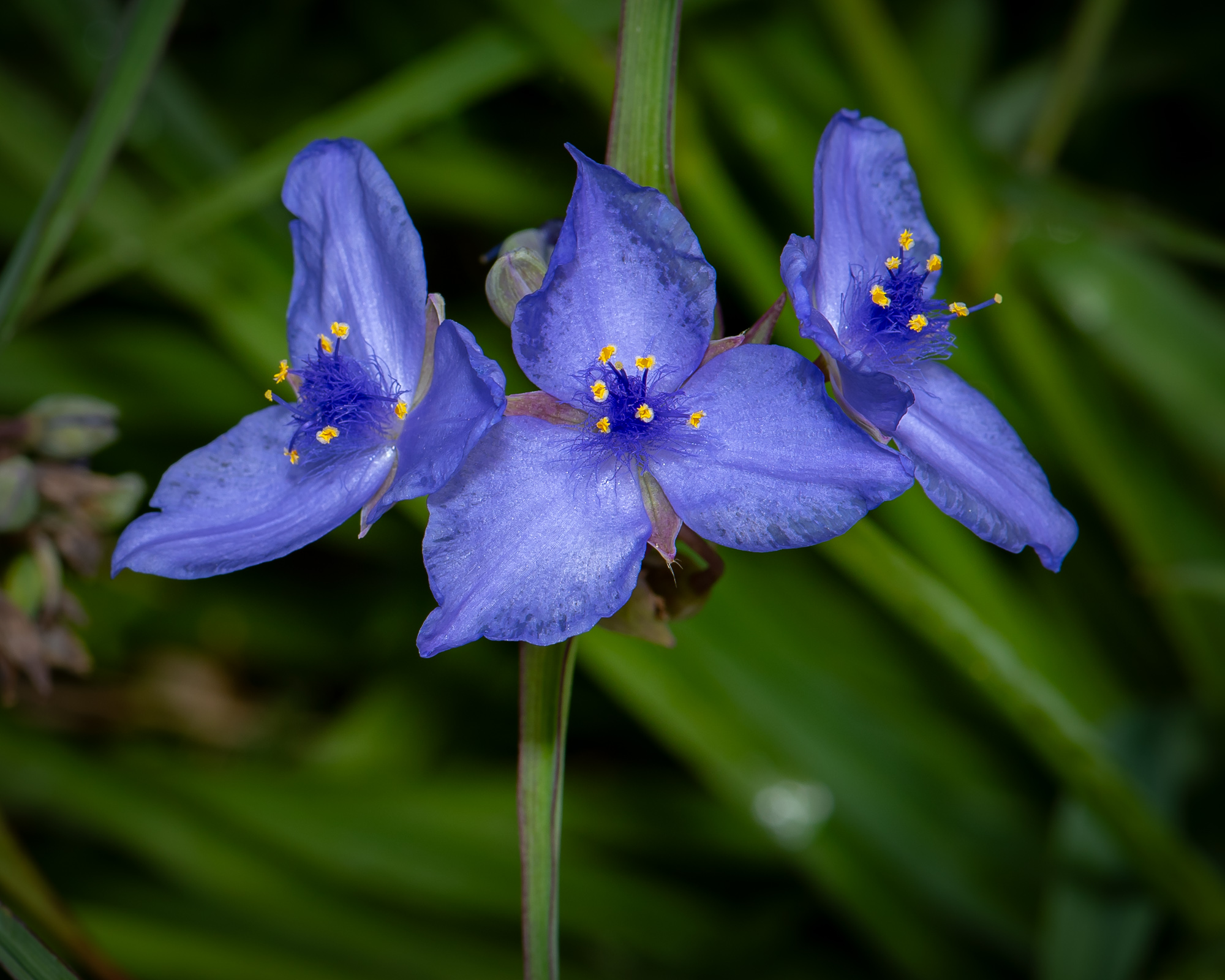
One more bright blue reminder that spring is in full swing. Clumps of Bluejacket (Tradescantia ohiensis) are appearing in fields and roadside ditches throughout the land. This wonderful plant is also called Ohio Spiderwort.
Traveling and exploring new places is wonderful. Returning home and settling down together on our loveseat is relaxing. Visiting our local patch only ten minutes away is like that loveseat – comfortable.
Enjoy your search for a natural place and come back for a visit!
(Click on images to enlarge, click again to zoom.)
Here we are again. We don’t exactly know each tree by their name, but we know we are among friends. The arching branches provide shade for our late morning breakfast. A breeze by itself makes no sound, but when it rustles pine needles above our heads it gives the impression of waves breaking along the shore of our souls.
No matter how ingenious humans become, reproducing the aroma of a pine forest for our living room, the laundry, a car, the bathroom (!) is just not possible. When you are in an actual forest, aroma is only one of a complex set of sensations combining to create an experience. Pine scent is just fine where it is, thank you very much.
On this bright Spring day, Gini and I wandered slowly and re-discovered the miracles of this season of renewal and growth. How amazing that “green” can come in so many different subtle shades! Green is highlighted by a nearly infinite array of additional colors as buds, leaves, flowers, fruits and canopies decorate the landscape.
Blooming flora means a fresh supply of food for insects, birds and animals of the fields and woods. It is one thing to enjoy the beauty of a flower, but when one looks closer we discover a nectar-gatherer who will visit another bloom, carrying with it the life-continuing pollen necessary for a plant’s survival. In the distance is another flower being attended by another would-be pollinator but the busy bug is snapped up by a Great Crested Flycatcher. The Circle of Life is non-discriminatory and it is quick.
Our exploration lasted for a morning. Our memories will remain forever.
One day, I shall stop apologizing for including so many images in these posts. Simply scroll quickly and perhaps linger if you find something agreeable.
Dozens of Prairie or Savanna Iris (Iris savannarum) were on display today. Just one example shows why we love this flower.

A shy Common Ground Dove peeks at us from her perch in a holly tree.

While admiring the lovely blooms of a Nuttall’s Thistle (Cirsium nuttallii), we were being admired by a lovely Eastern Leaf-footed Bug (Leptoglossus phyllopus).

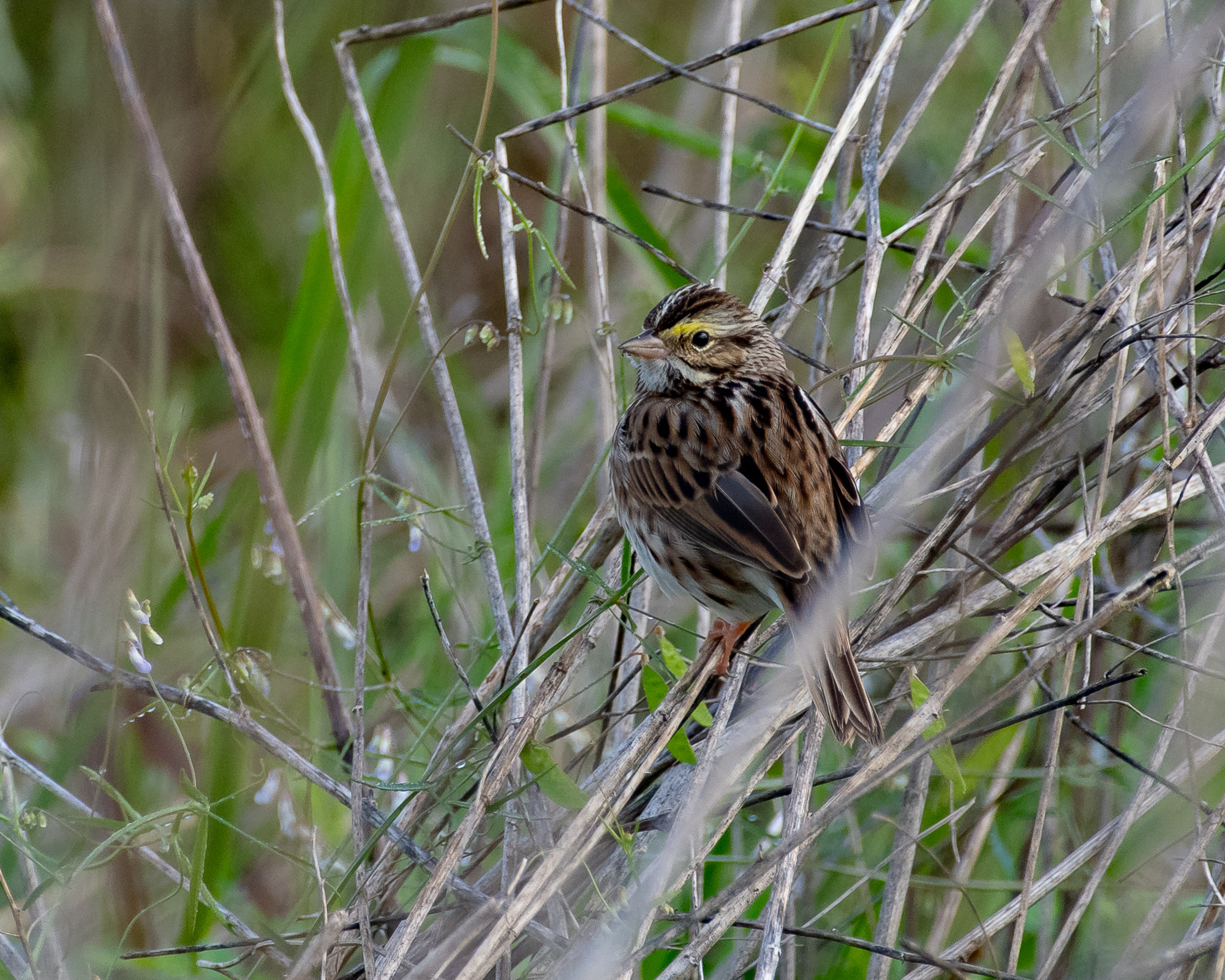
Lingering in the Sunshine State can be a good thing. Unless you need to be in Virginia checking your dating service and real estate listings for suitable nest sites. We forgive this Savannah Sparrow for procrastinating and will look forward to seeing him again in the fall.
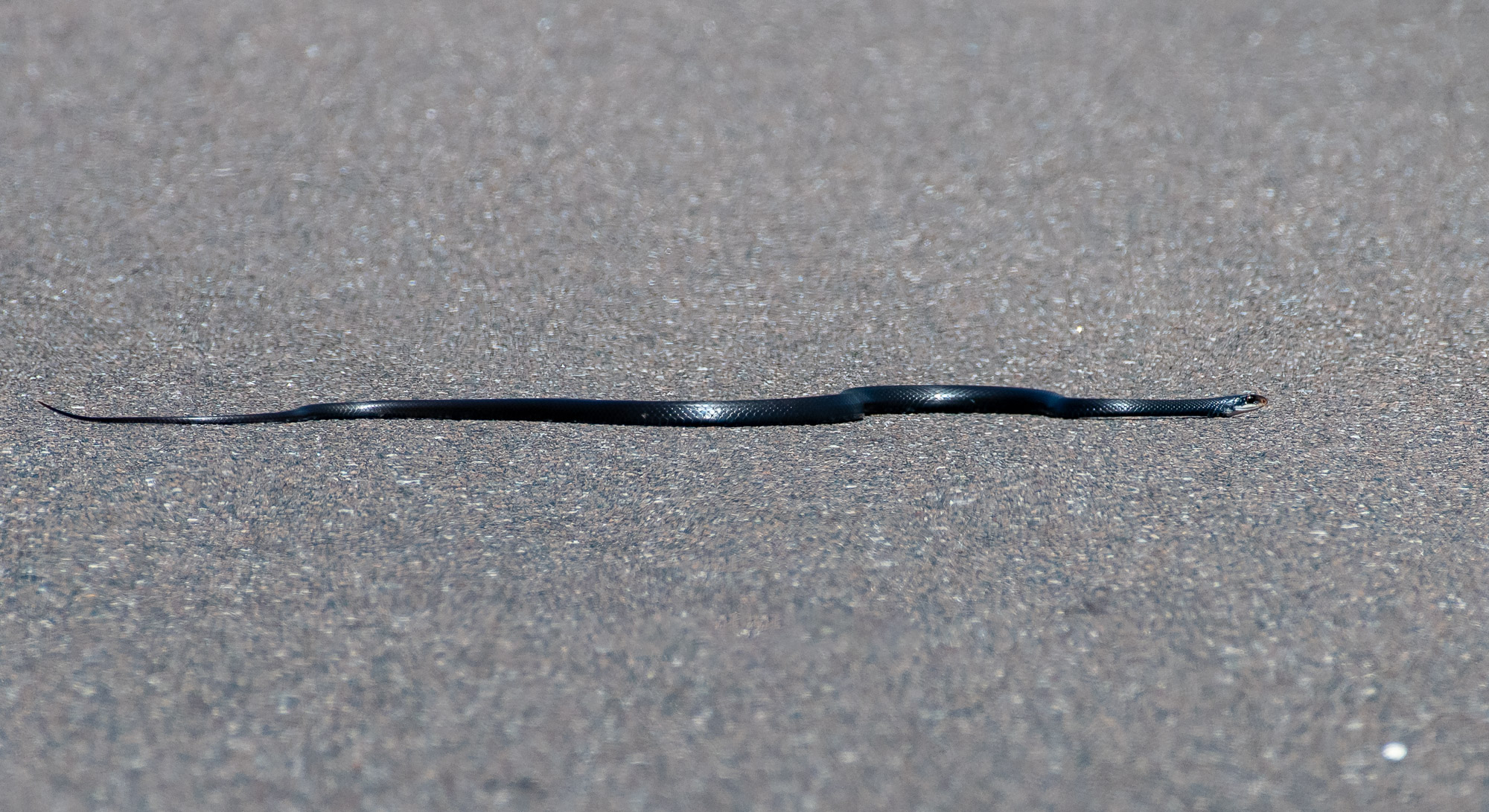
Roads are for racing. This North American Racer (Coluber constrictor) knows that. Fortunately, 1/1250th of a second was enough to capture an image before it disappeared into the grass.
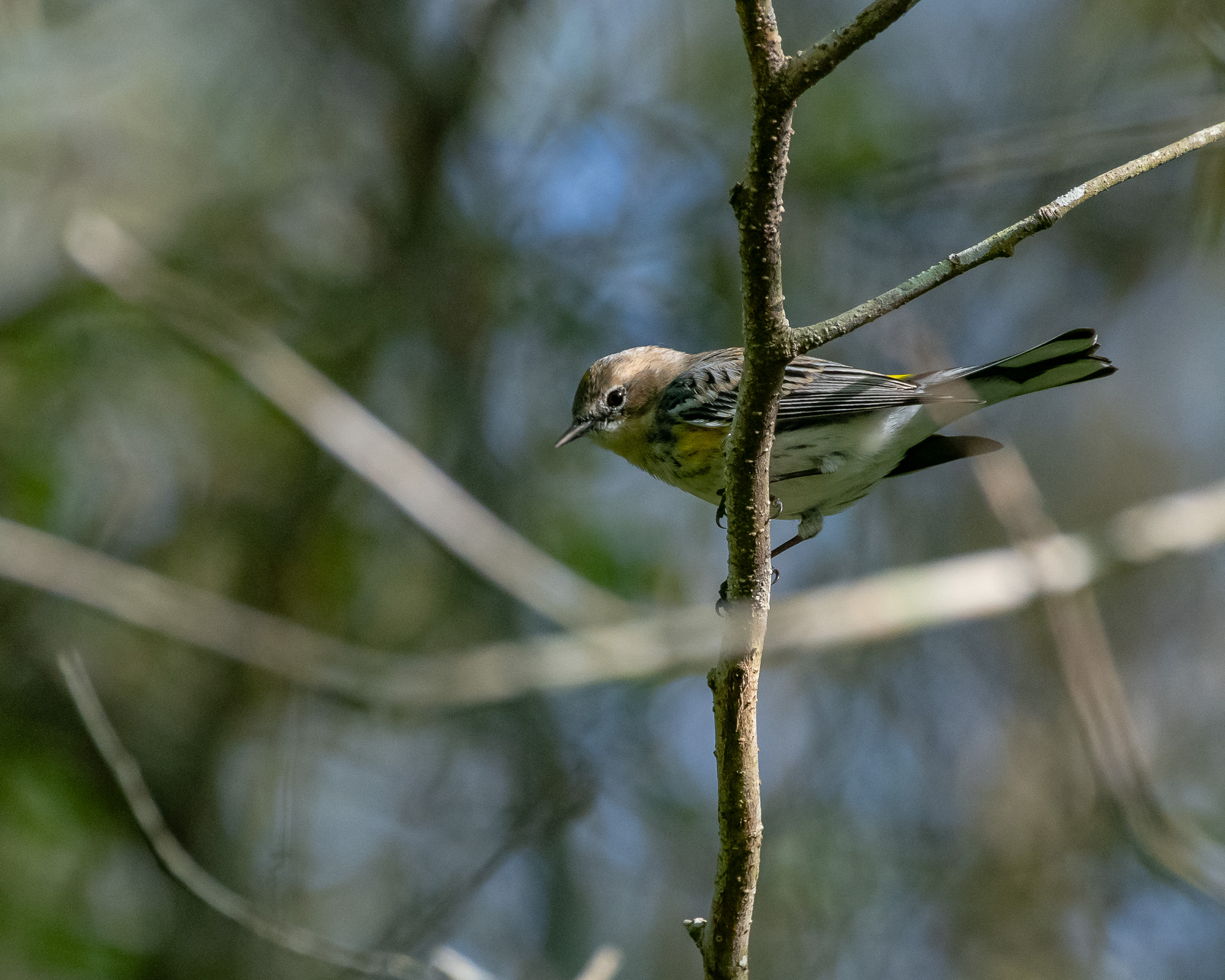
Another Spring-breaker who needs to get its rump up north. We are already noticing a lot fewer Yellow-rumped Warblers than just a week ago.
One of my all-time favorite flowers. Perhaps it’s the incongruity of its common name with its actual species. Nah, the Carolina Desert-chicory (Pyrrhopappus carolinianus) is just plain beautiful.

This Blue-gray Gnatcatcher is likely a resident rather than migrant. The northern visitors usually travel in groups and this one was all alone while it scooped up bugs among the branches.

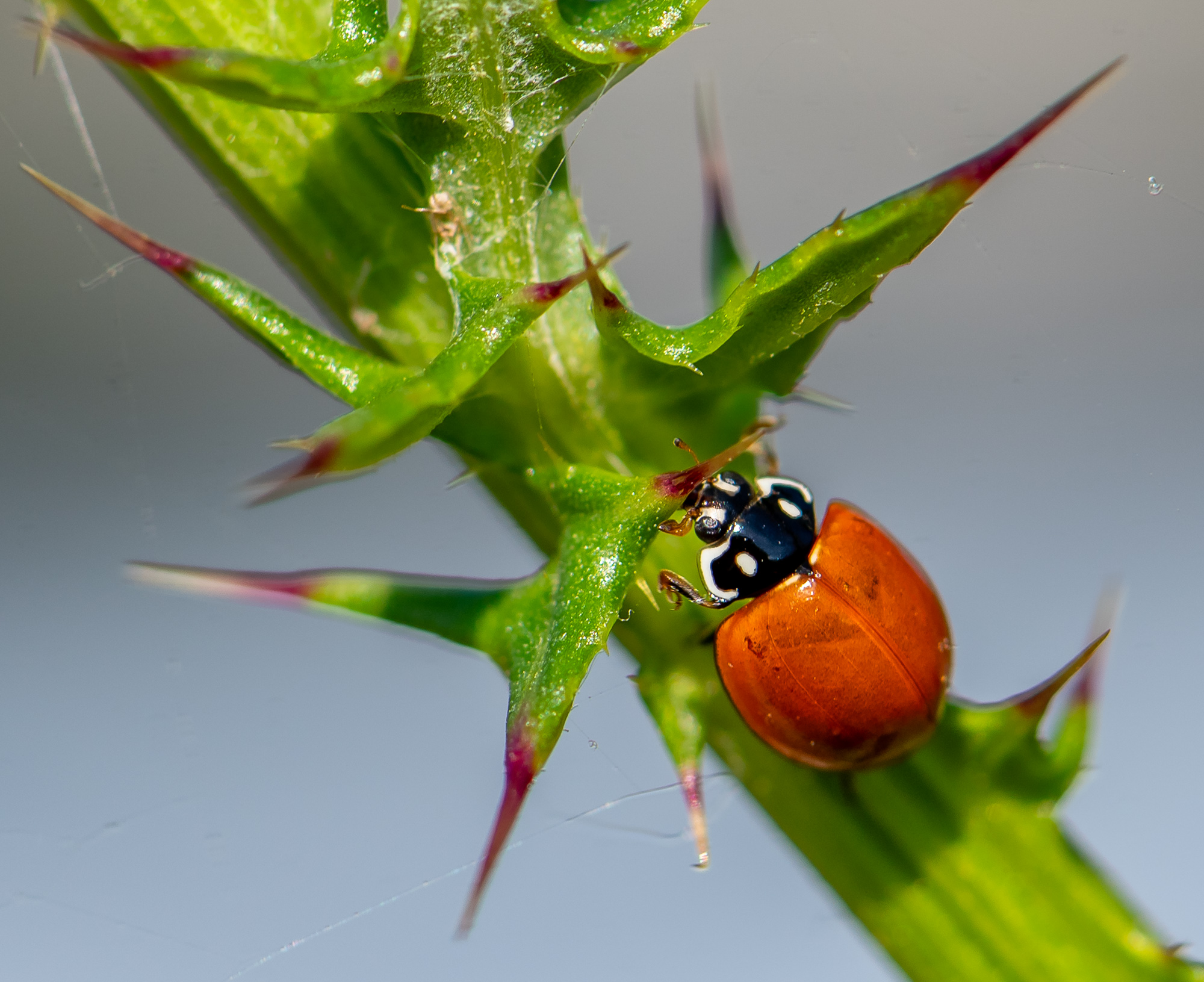
When you are small enough, the spines of the thistle are not much of a problem. This Spotless Lady Beetle (Cycloneda sanguinea) has no issues with navigating among the pointy things.
This lovely flower is new to us. Sparse blooms on a spindly stem over three feet tall, a Bahaman Aster (Symphyotrichum bahamense) really stood out against the backdrop of the pine forest and palmetto understory.

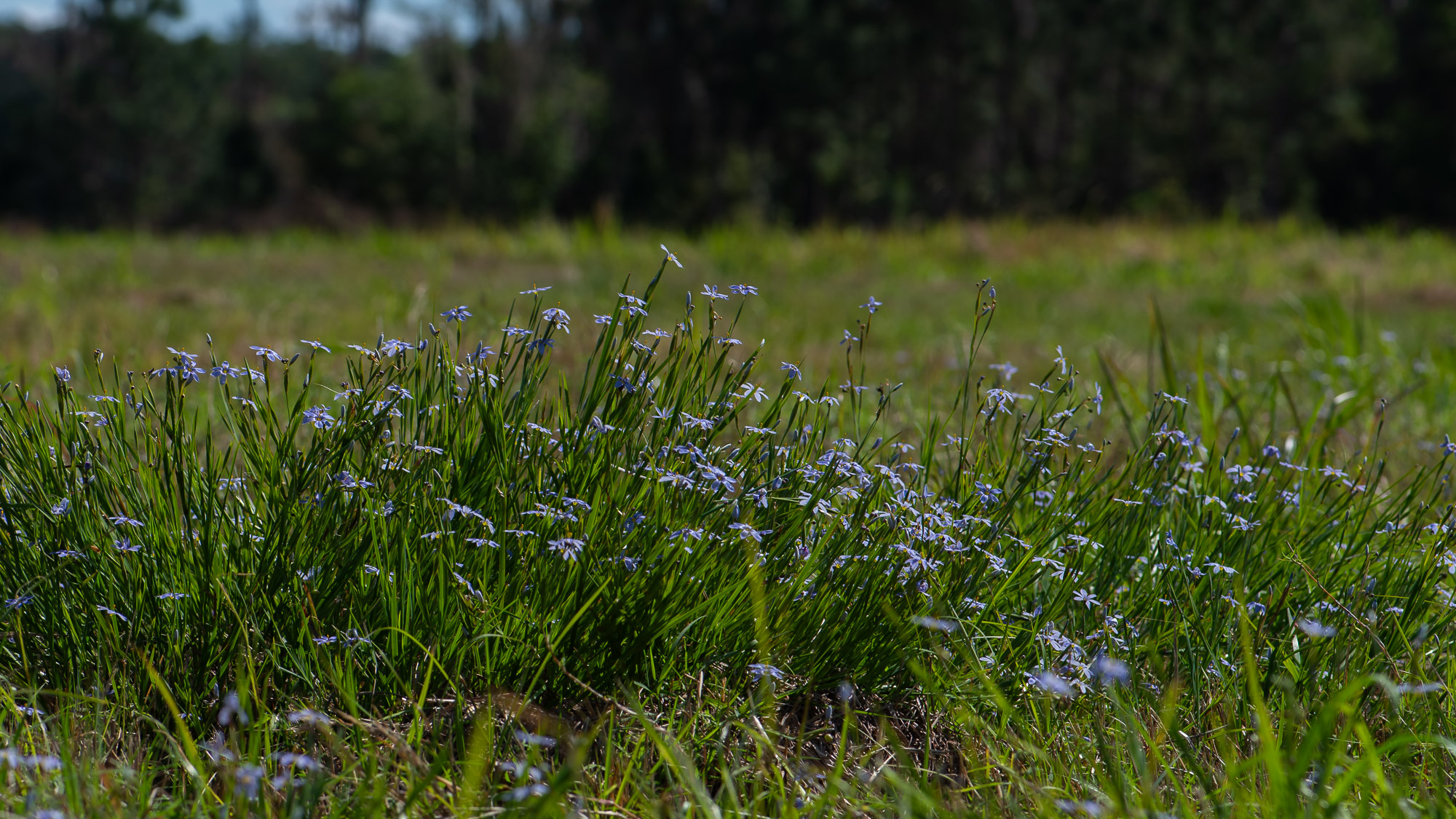
Another favorite threw itself in front of us and begged to be photographed. Several patches of Blue-eyed Grass (Sisyrinchium angustifolium) kept us entertained for awhile.


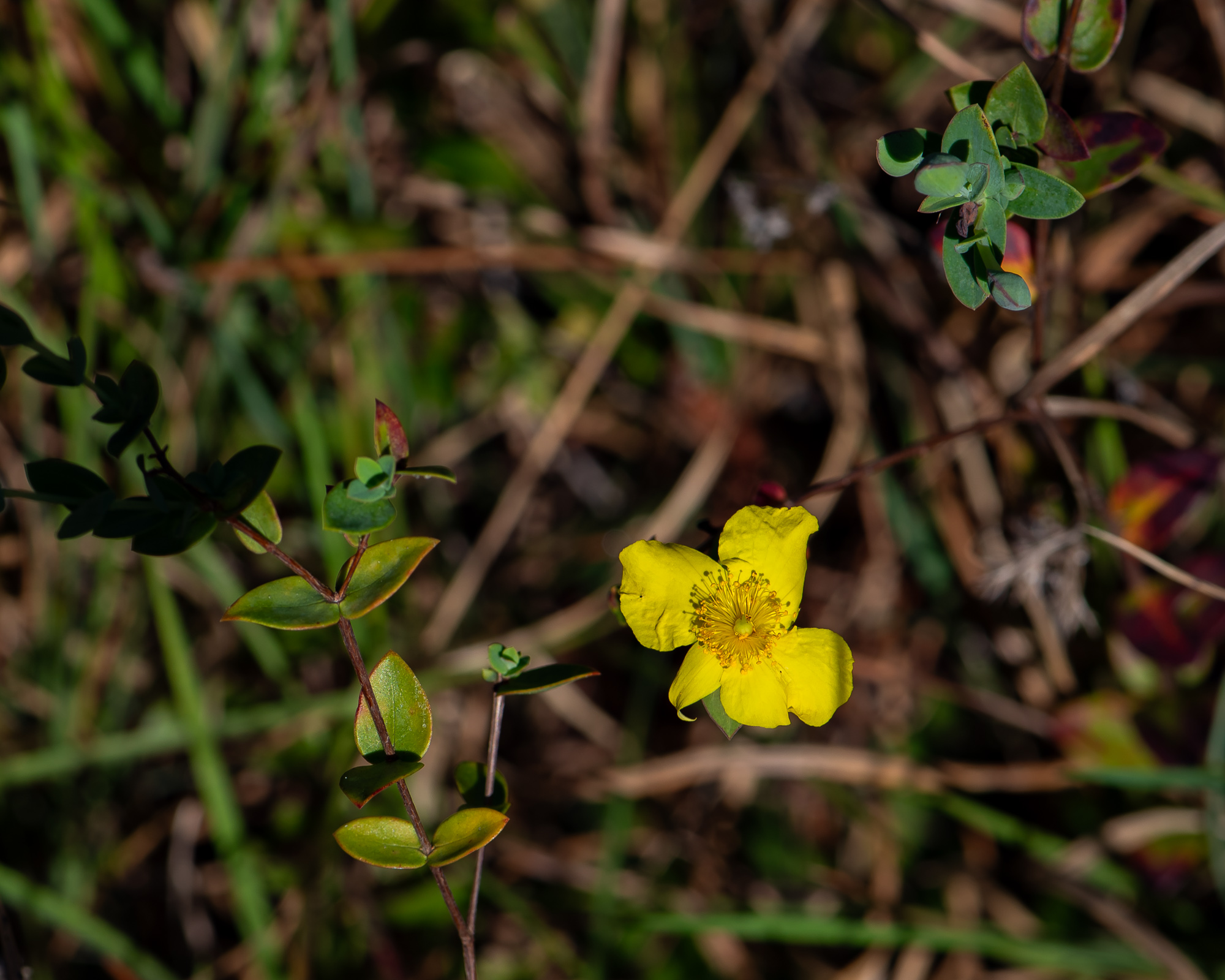
Unique foliage. Uncommonly beautiful. Fourpetal St. Johnswort (Hypericum tetrapetalum) punctuated the woods in several places.
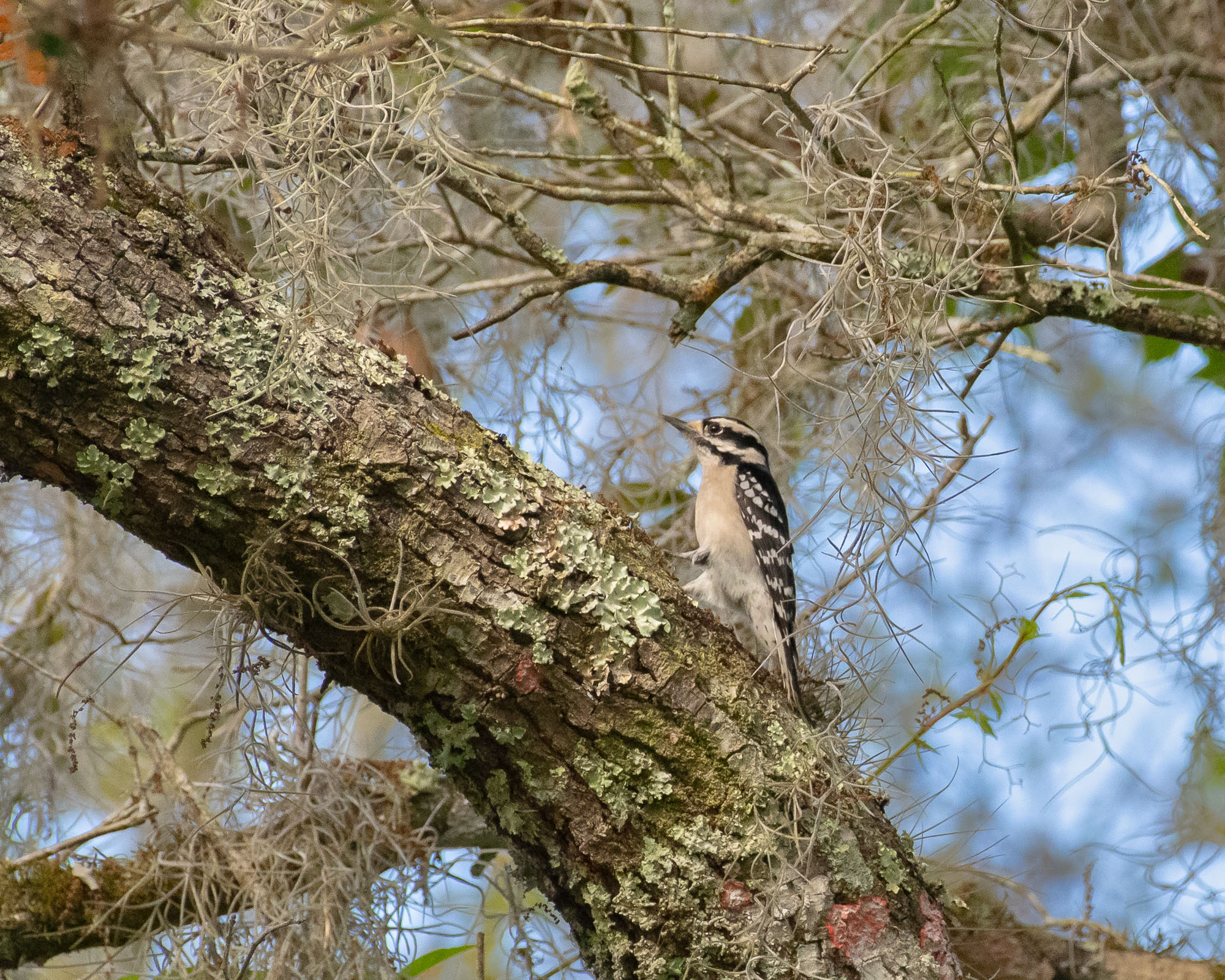
A female Downy Woodpecker hopped along an oak tree branch in search of brunch.
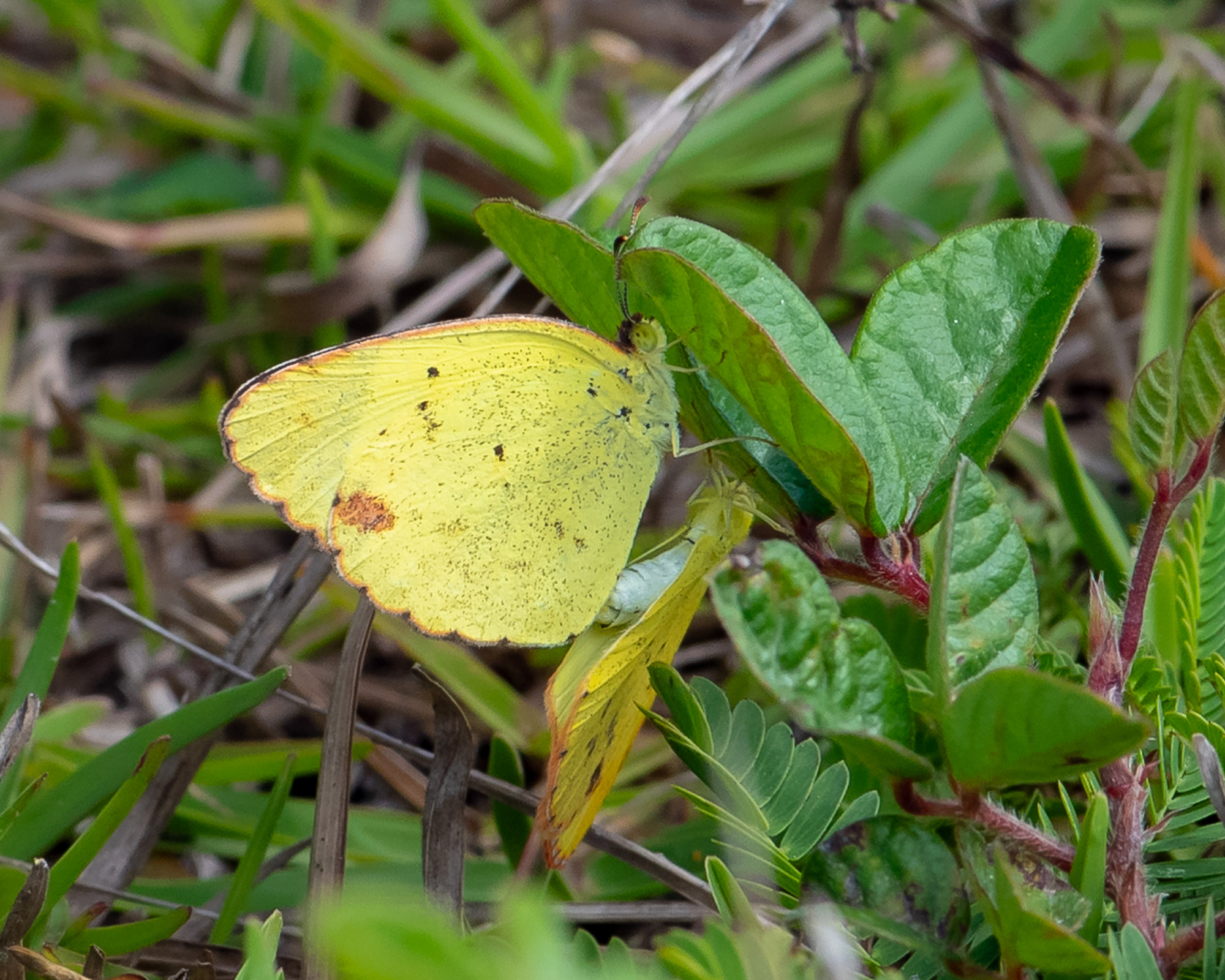
Spring has sprung and butterflies have magically appeared everywhere. This Cloudless Sulphur (Phoebis sennae) is gathering minerals from the damp mud.

Small. Yellow. Gorgeous. Common Yellow Stargrass (Hypoxis curtissii) would be completely overlooked if not for those bright blooms.

One might also overlook the Yellow-throated Warbler, if it weren’t for that bright yellow throat. And the contrasting black and white plumage. Oh, and that wonderful Spring song.

Red, black, white – the combination certainly gets one’s attention among brown and green foliage. In attempting to find a naval connection for the name of the Red Admiral (Vanessa atalanta) butterfly, I discovered in the late 18th century it was called the Red Admirable. Makes more sense to me.

Wiry stems with smallish yellow flowers are beginning to become abundant. Each year, large patches of Leavenworth’s Tickseed (Coreopsis leavenworthii) brighten the countryside.

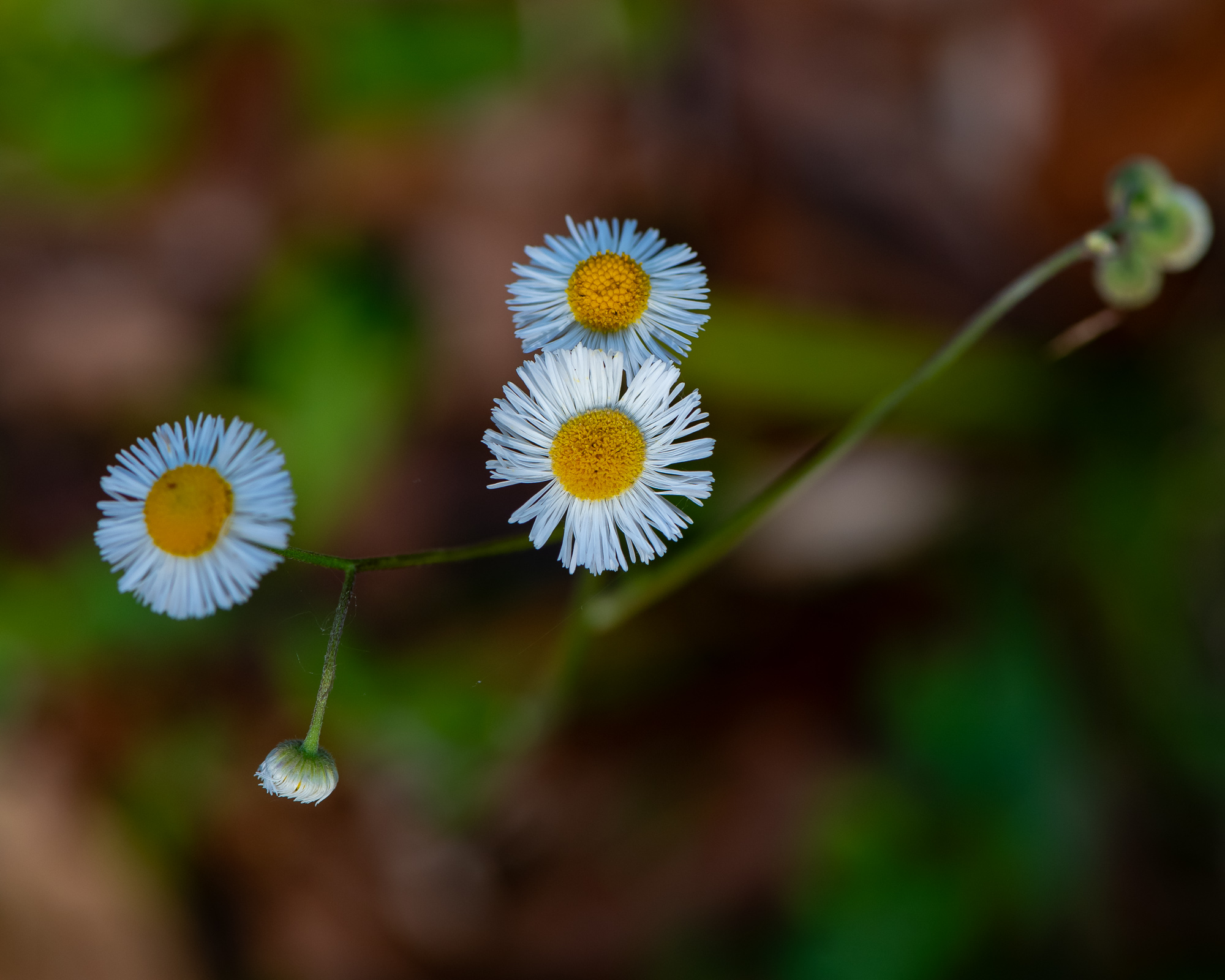
With basal leaves resembling that of some oak trees, Oakleaf Fleabane (Erigeron quercifolius) is very common in our area. Although the blooms are short-lived, plants continue to produce well into the fall. Flowers range from white to pink to purple.
Florida’s most widespread species of small sulphur butterflies, the Little Yellow (Pyrisitia lisa) is somewhat helpful for this elderly photographer in that it tends to fly in straight lines as opposed to the zig-zag patterns preferred by its relatives. Perching once in awhile is also extremely appreciated.
There are 30 species of Ludwigia listed for Florida, many of which are not native to the state. With its non-native sounding common name, turns out that the Mexican Primrose-Willow (Ludwigia octovalvis) is actually a native species. A very attractive one at that.

It’s difficult to believe a bird with yellow, orange, blue and green could be so hard to discern among leaves and branches. Once seen, we really appreciate the beauty of the Northern Parula. When it sings, our appreciation increases.

Walter’s Viburnum (Viburnum obovatum) is a shrubby tree which can grow to nearly 20 feet tall. It is also called Small-leaf Arrowood. The plant’s common name honors Thomas Walter (1740-89), English-born planter of South Carolina, who described this species in his Flora Caroliniana. Each Spring, we’re treated to profuse blooms of creamy flowers with yellow centers.

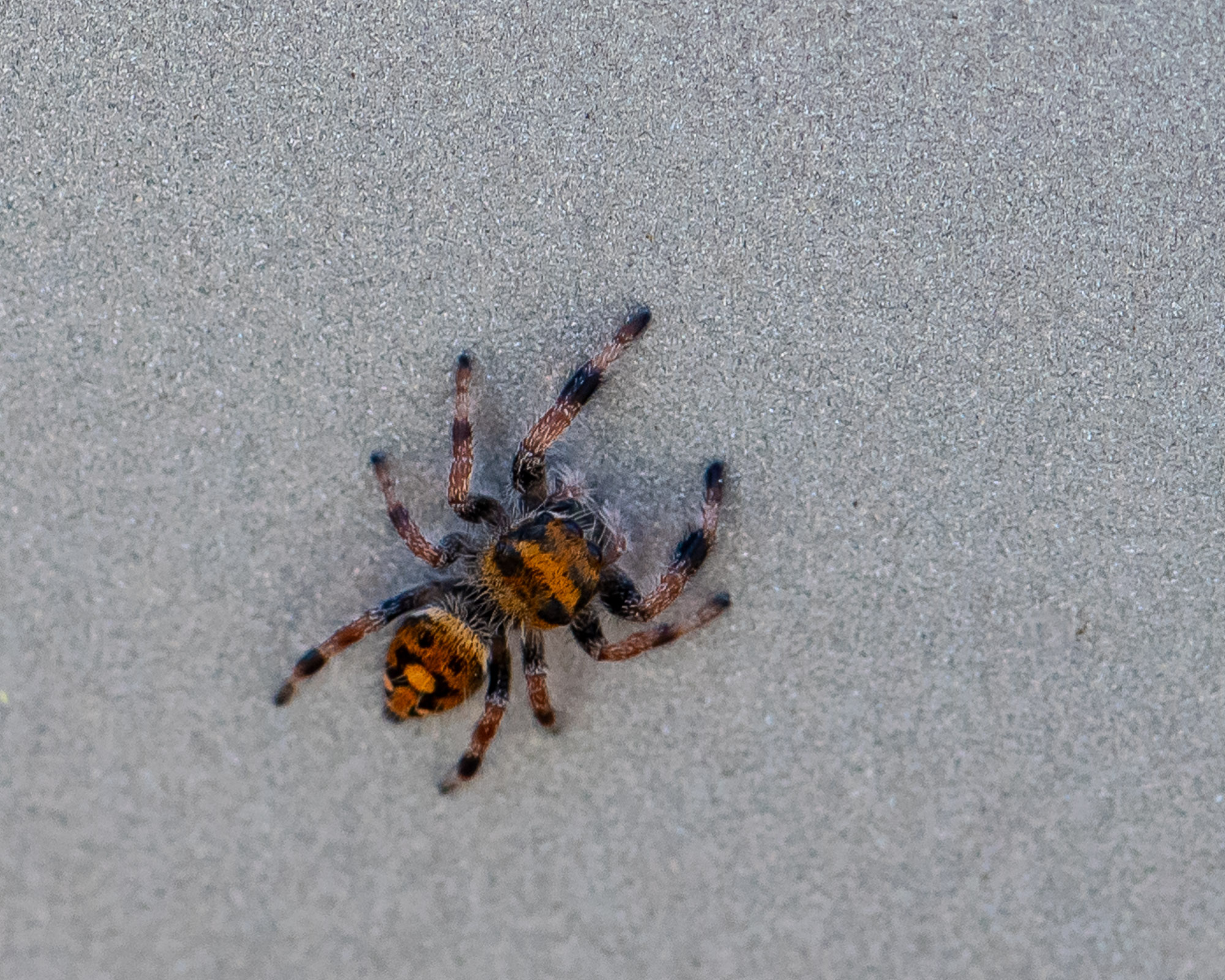
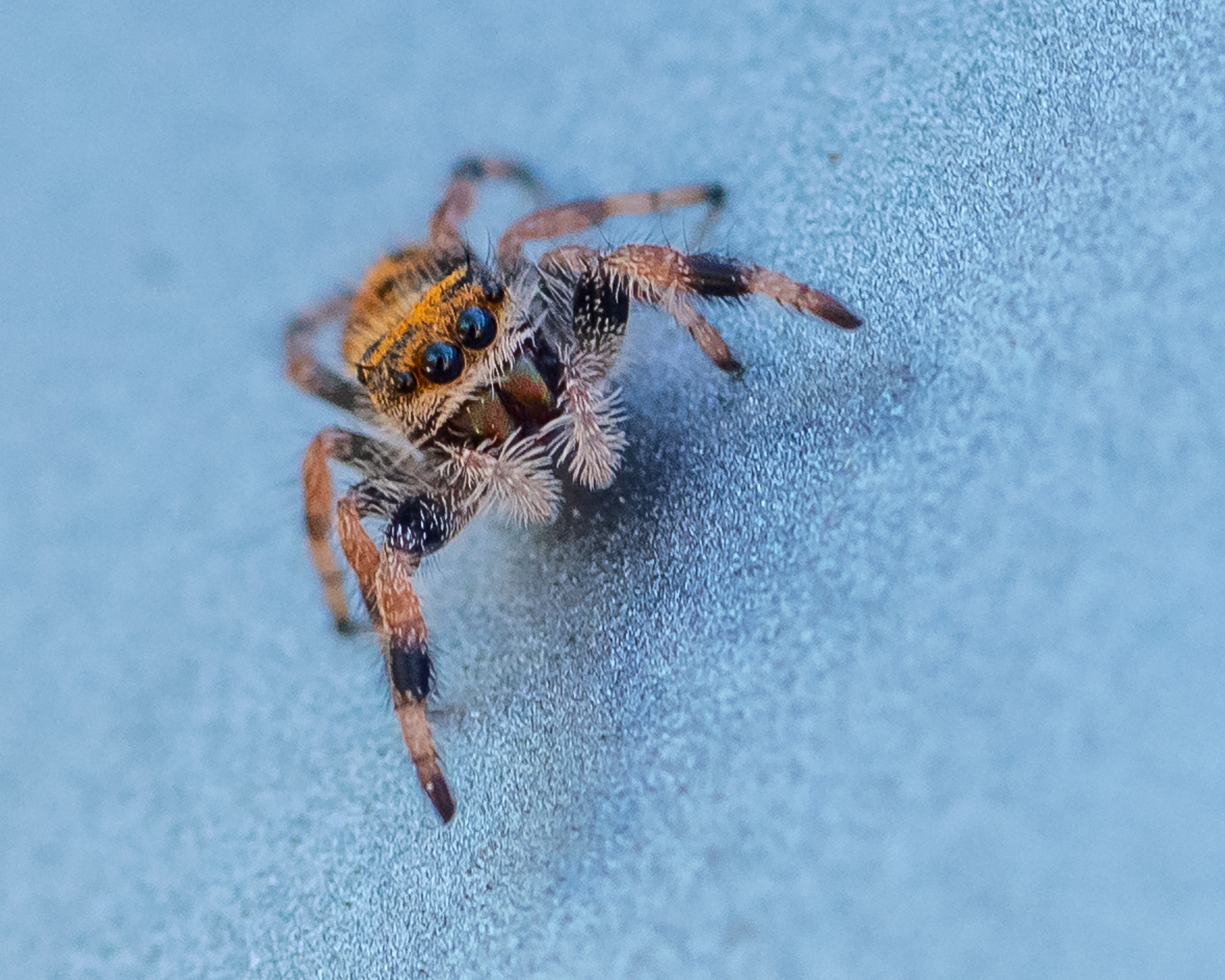
Anyone with a fear of spiders needs to spend some time with a jumping spider. Their appearance, fearless curiousity and downright cuddly nature may just be a cure for arachnophobia. I mean, come on, just look at that face! We appreciate the patience of this little Regal Jumping Spider (Phidippus regius), one of our favorite models.
Our outing today was absolutely exhilarating. At this special season, a visit with Nature is truly as Mary Oliver describes: “… one of the forever gifts …”. We hope you are able to appreciate the gift of Spring, or for those even further south than us, Autumn. Nature has gifts for us to relish in every season.
Enjoy your search for a natural place and come back for a visit!
*“Come with me into the woods where spring is
advancing, as it does, no matter what,
not being singular or particular, but one
of the forever gifts, and certainly visible.”
― Mary Oliver, Dog Songs: Poems
(Click on images to enlarge, click again to zoom.)
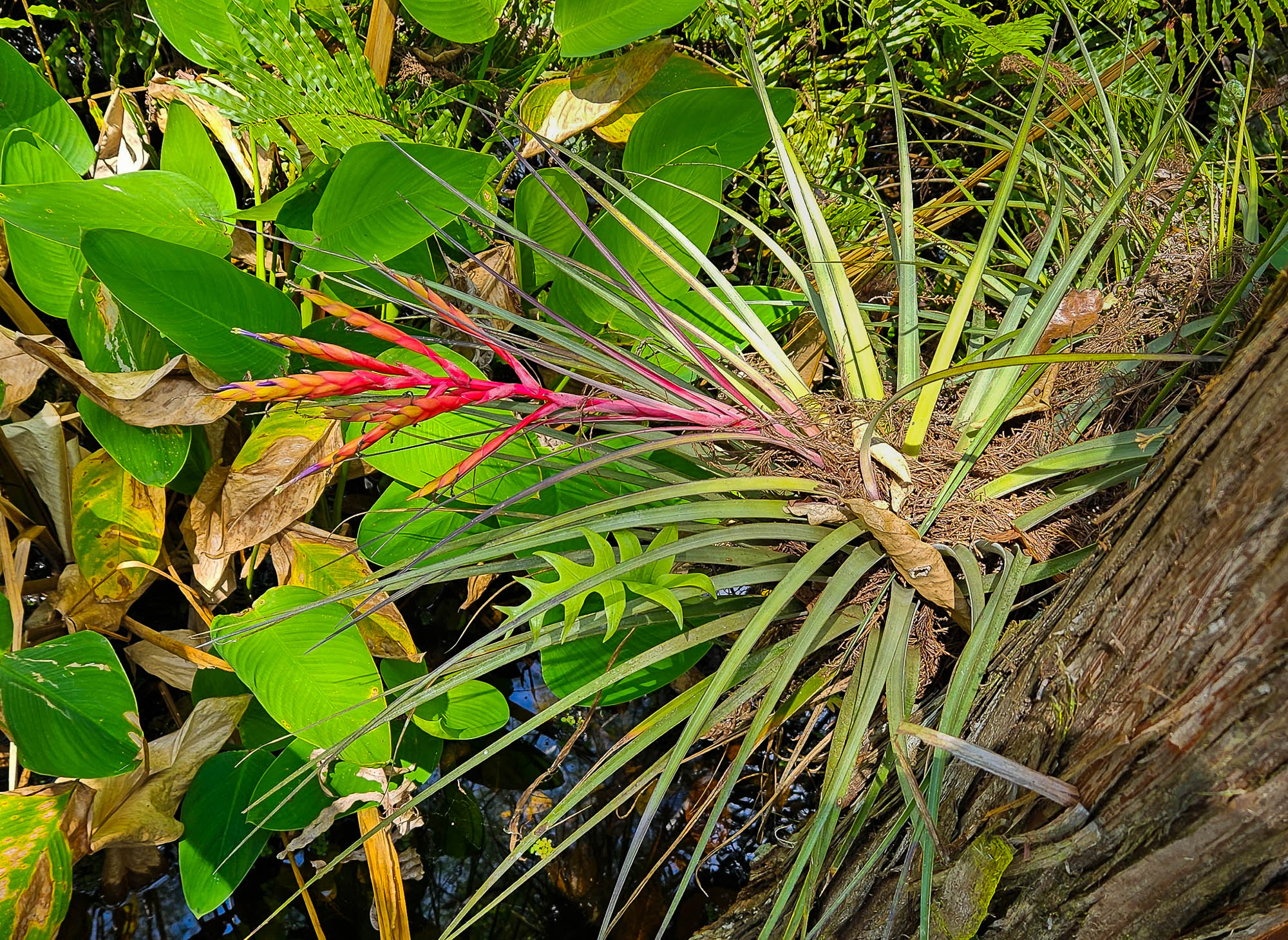
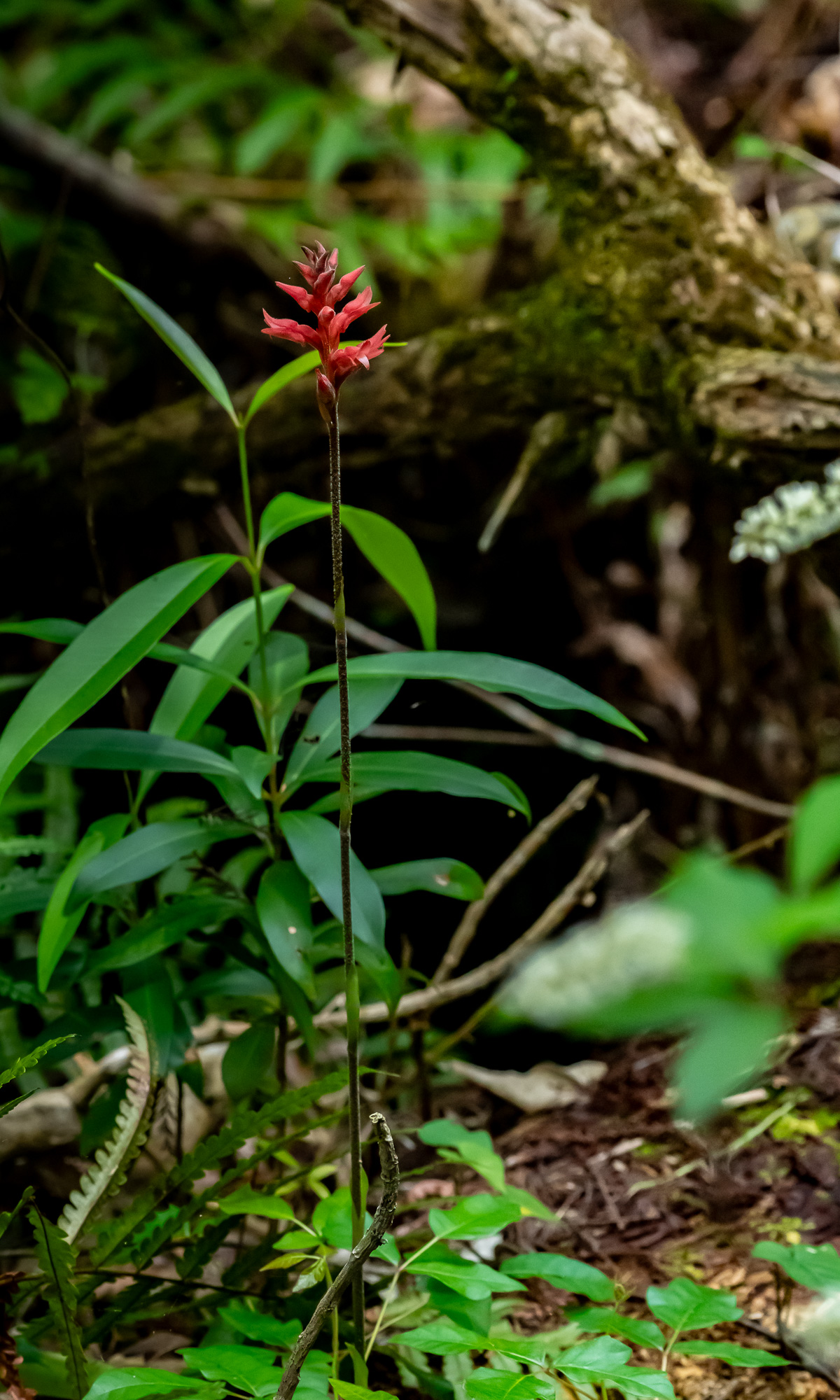
I saw a pretty red flower.
Gini whispered: “That’s an orchid.”
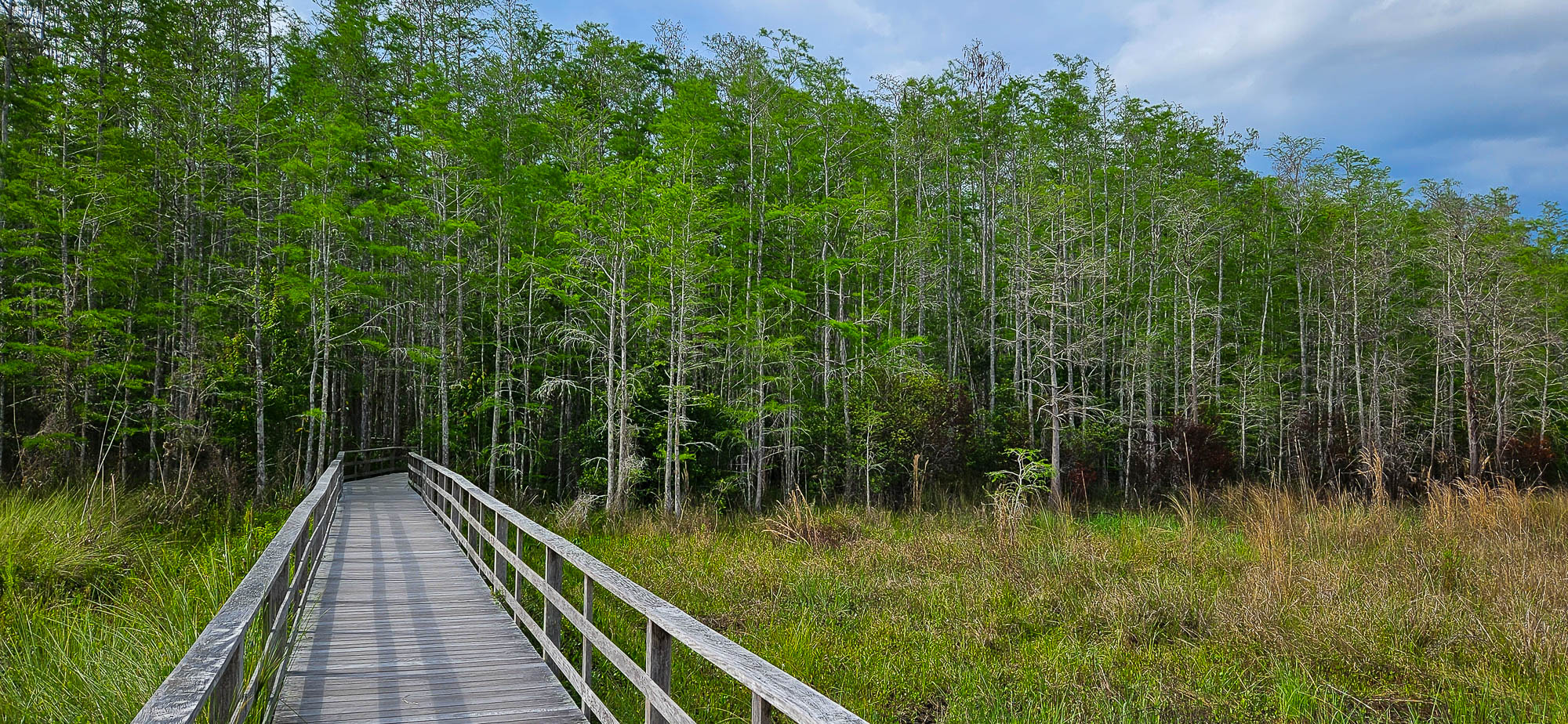
We were enjoying the final leg of our anniversary road trip. About 30 minutes north of our hotel in Naples, Florida, is the Audubon Corkscrew Swamp Sanctuary. Consisting of over 13,000 acres, the sanctuary is a testament to citizen action to preserve an ecological treasure. Logging threatened to completely destroy what remained of Florida’s bald cypress trees in the 1950’s. Residents organized local and eventually state politicians and business leaders to protect the area. The first boardwalk here was completed in 1956 and since then the sanctuary has permitted visitors to see why this swamp deserved to be rescued.
The refuge contains the largest remaining virgin bald cypress forest in the world. It is home to a diverse collection of flora and fauna, some of which are threatened with extinction. Wandering the 2.25 mile boardwalk was an incredibly peaceful and satisfying experience. Within the vast swamp we found an amazing abundance of flowers, birds, insects and even an alligator or two.
There are a lot of images today. I couldn’t help myself.
We’re pretty sure this is the official greeter for the sanctuary. A young American Alligator is pretty handsome in its black and yellow suit. Adults are uniformly dark.

As noted in the last three posts of this trip, Cardinal Airplant (Tillandsia fasciculata) was ubiquitous here, too.
Where there are swamps, there are insects. The birds appreciate that. A Blue-gray Gnatcatcher didn’t stop to chat as it was busy doing its impression of a vacuum cleaner along leaves and limbs.

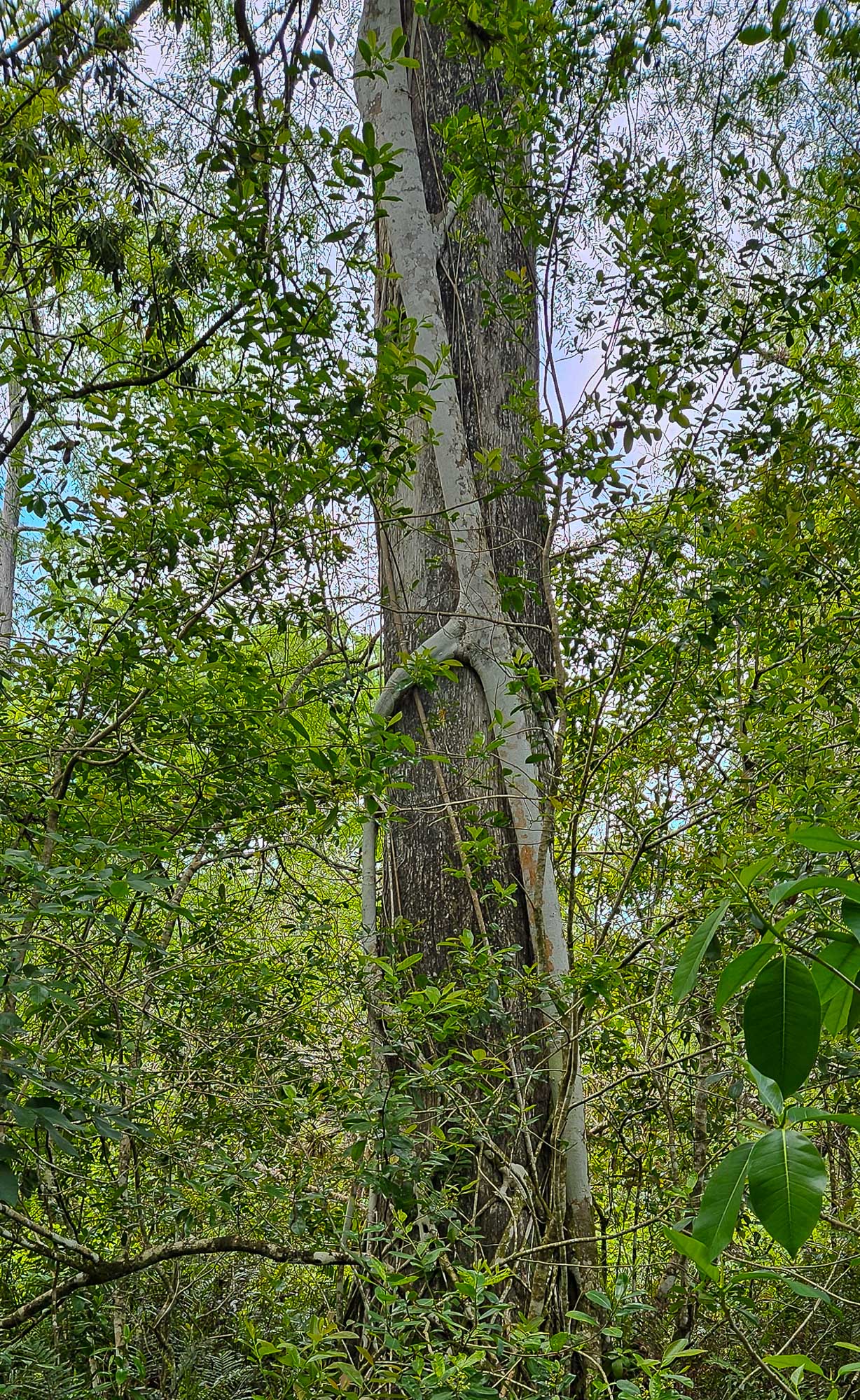
Everyone needs a hug. The Strangler Fig (Ficus aurea) is all-too-happy to oblige. Eventually, the hug recipients, such as these cypress trees, may regret their friendliness as the fig trees will cause their hosts to die. (The second image reminded me of Jules Verne’s 20,000 Leagues Under The Sea and the giant squid attacking the Nautilus.)

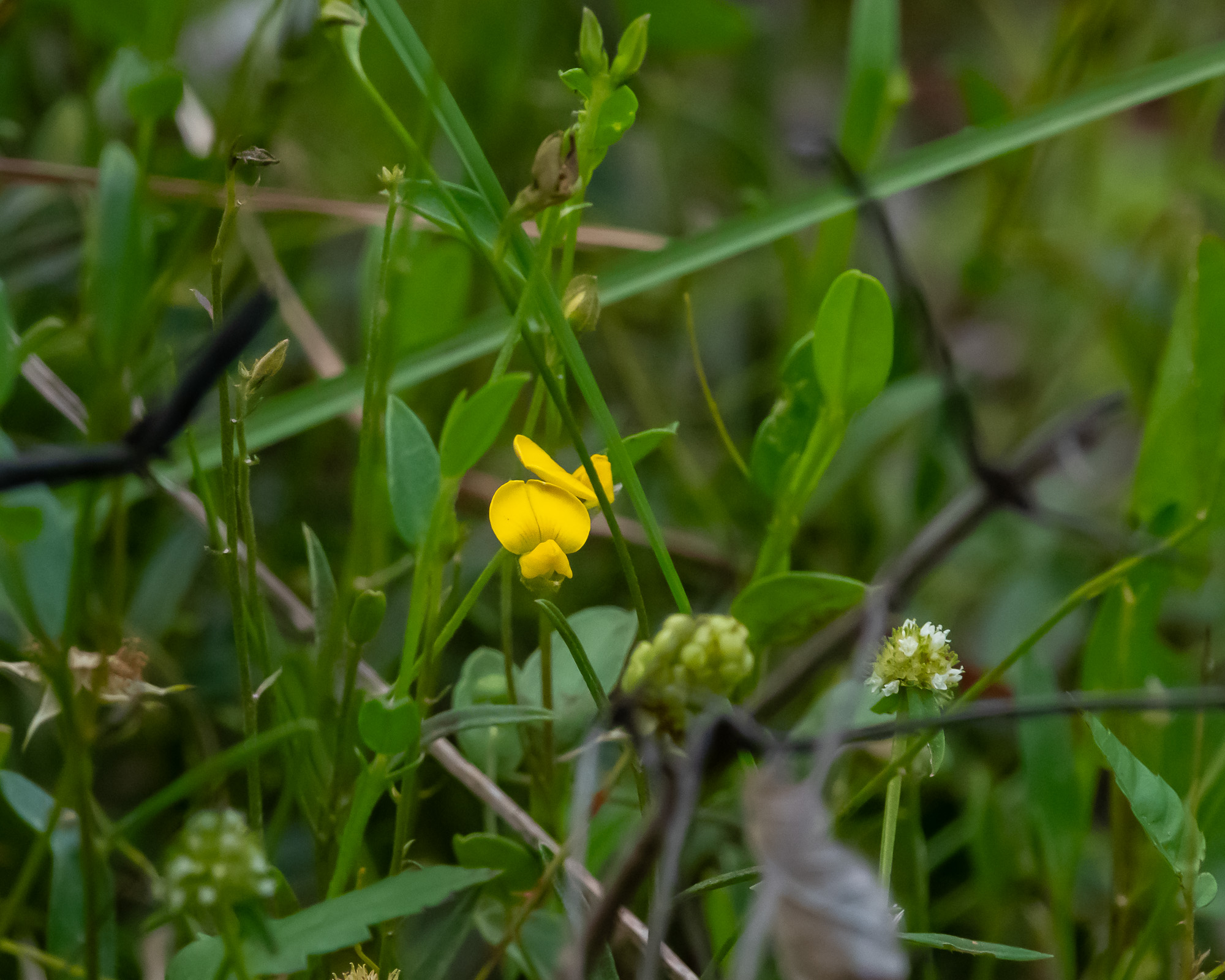
From tall trees to small blooms. Several areas were sprinkled with bright yellow Rabbitbells (Crotalaria rotundifolia).
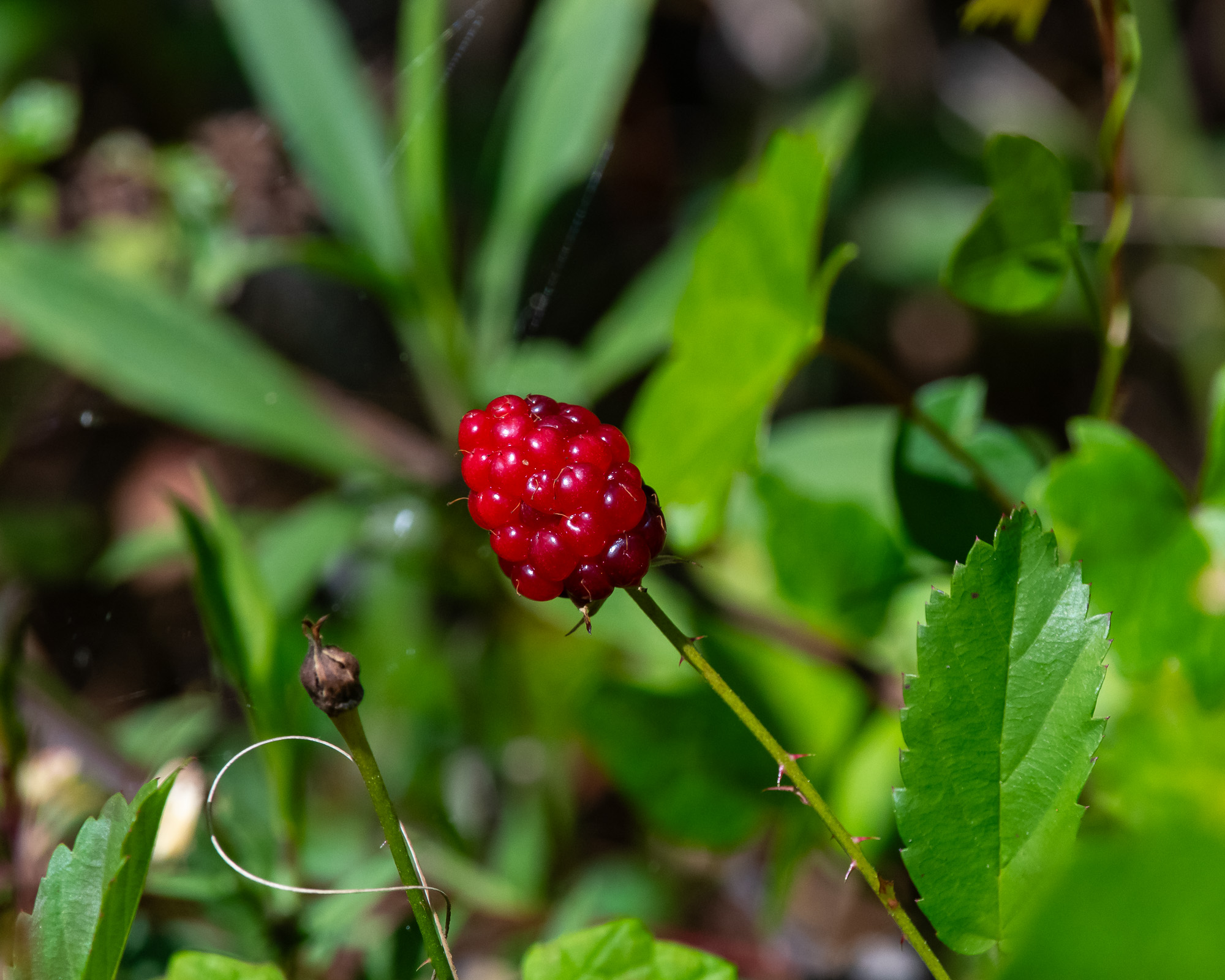
Among the flowers were ripening fruit. This Southern Dewberry (Rubus trivialis) will soon ripen and provide a treat to some swamp dweller.
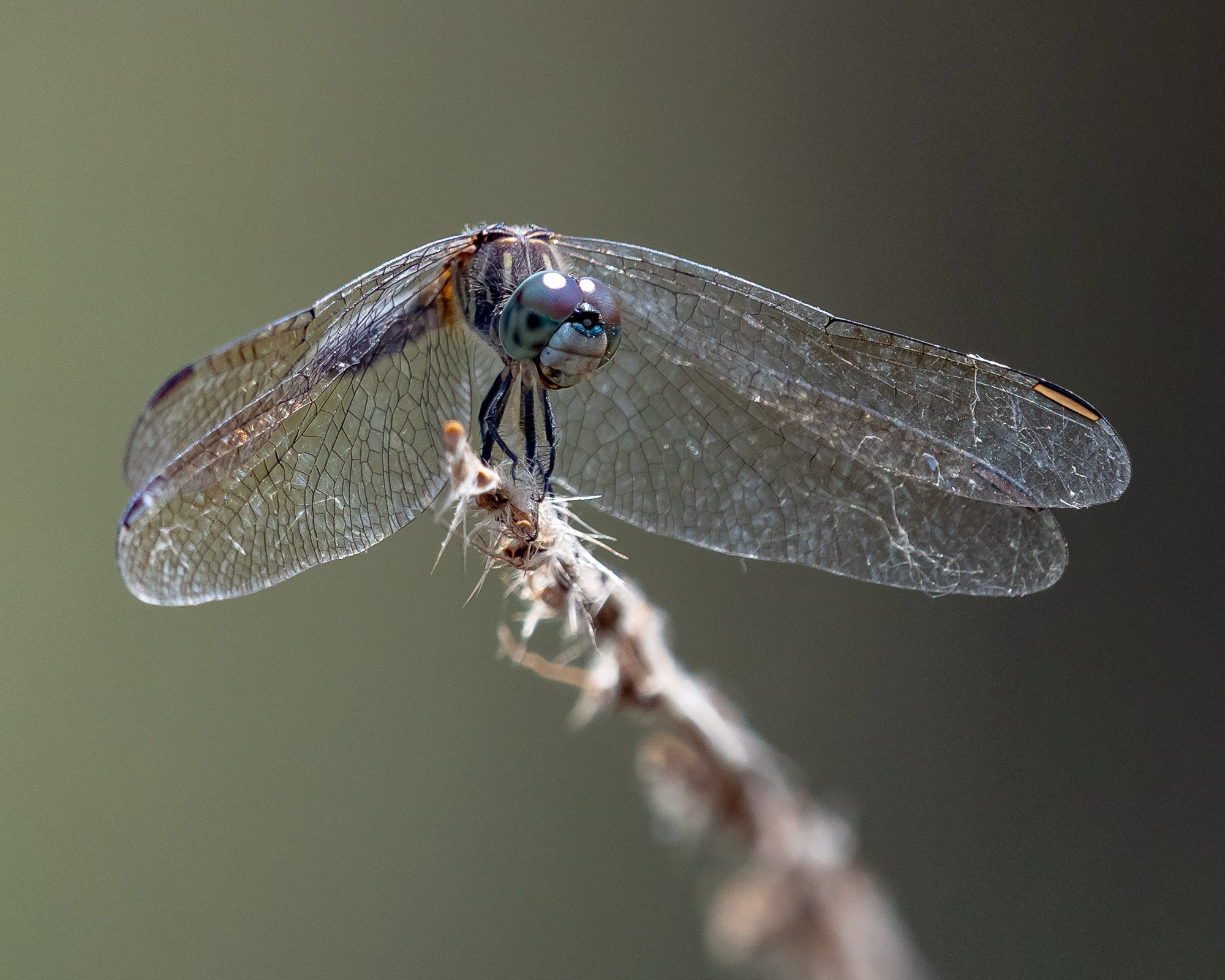
The most common dragonfly we saw was a familiar friend, the Blue Dasher (Pachydiplax longipennis).
It’s easy to resist picking the flowers when they have a defense system such as this Purple Thistle (Cirsium horridulum). The USDA calls this a Yellow Thistle and it is also known as Bristle, Bull, Horrid and Spiny Thistle. Take your pick of names, but watch out if you try to take your pick of these blooms.

Another thistle species abundant in Florida is Nuttall’s Thistle (Cirsium nuttallii). It doesn’t have as many common names as its purple cousin nor does it have as many spiny leaves surrounding the flowers.

It seemed we were never beyond earshot of Great Crested Flycatchers all day. Spring singing was non-stop.

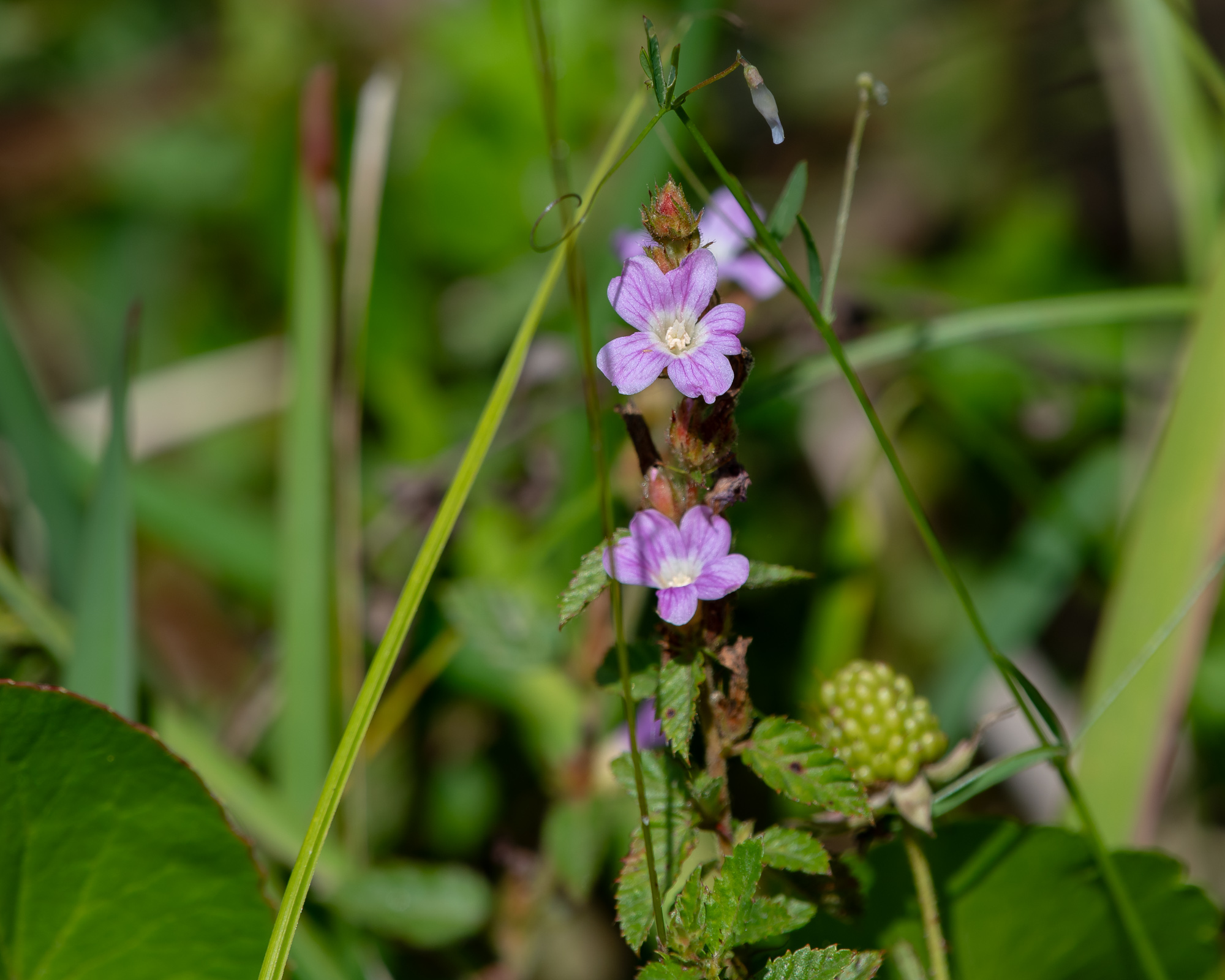
This is another new flower species for us. Bretonica Peluda (Melochia spicata) has a really lovely lavender bloom. I didn’t have much success in researching its common name. “Peluda” means “hairy” in Spanish, the Latin name sort of translates to “spiky mallow”, and it is related to the mallow family. A taxonomist I are not.
Speaking of taxonomy. One might think the Mexican Primrosewillow (Ludwigia octovalvis) is an invasive species. One would be mistaken. It is native in every county in Florida and throughout the Southeastern Coastal Plain states. Oh, and it’s mighty attractive, too.
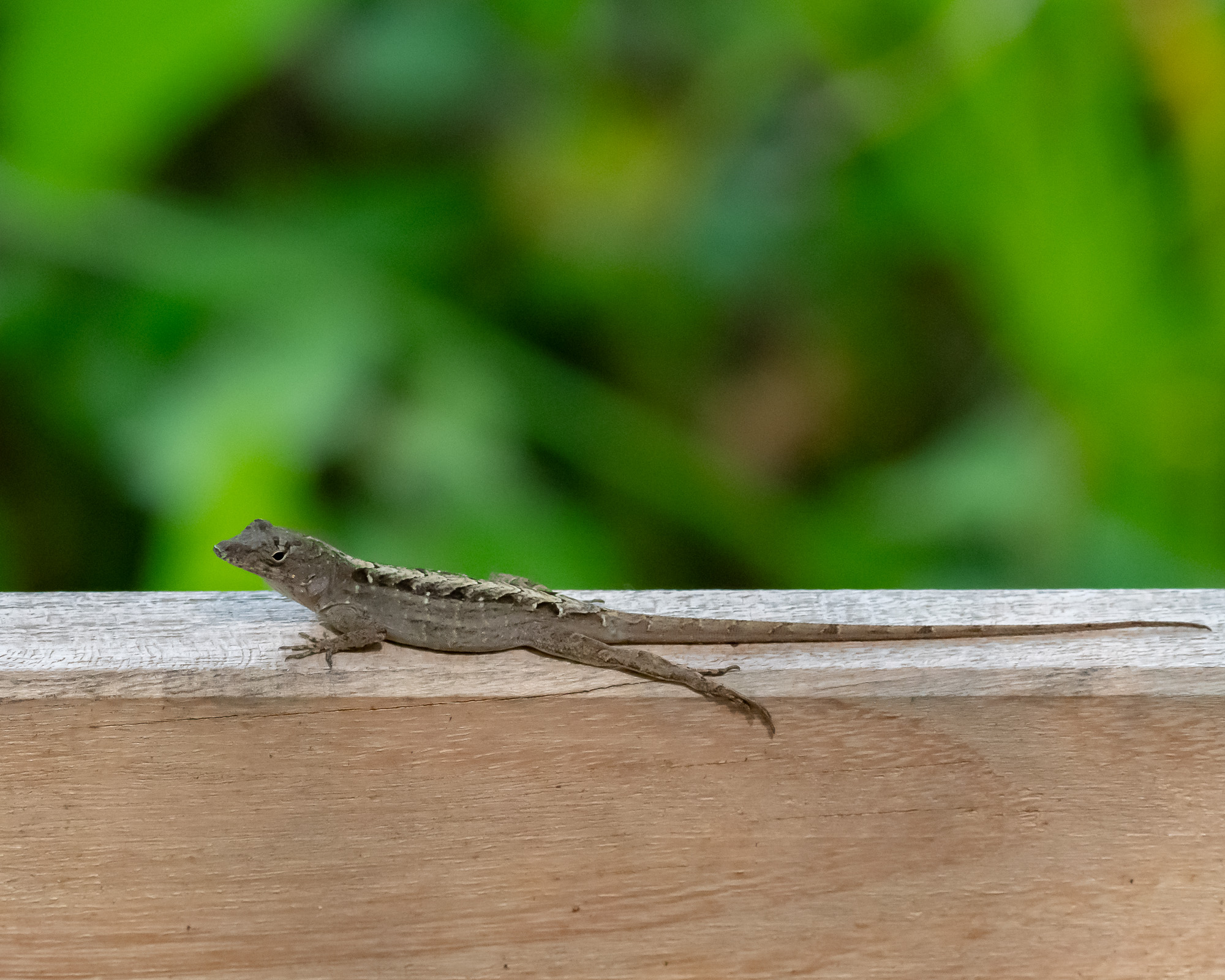
Time for a break. This Brown Anole (Anolis sagrei) was too busy relaxing to scamper away.
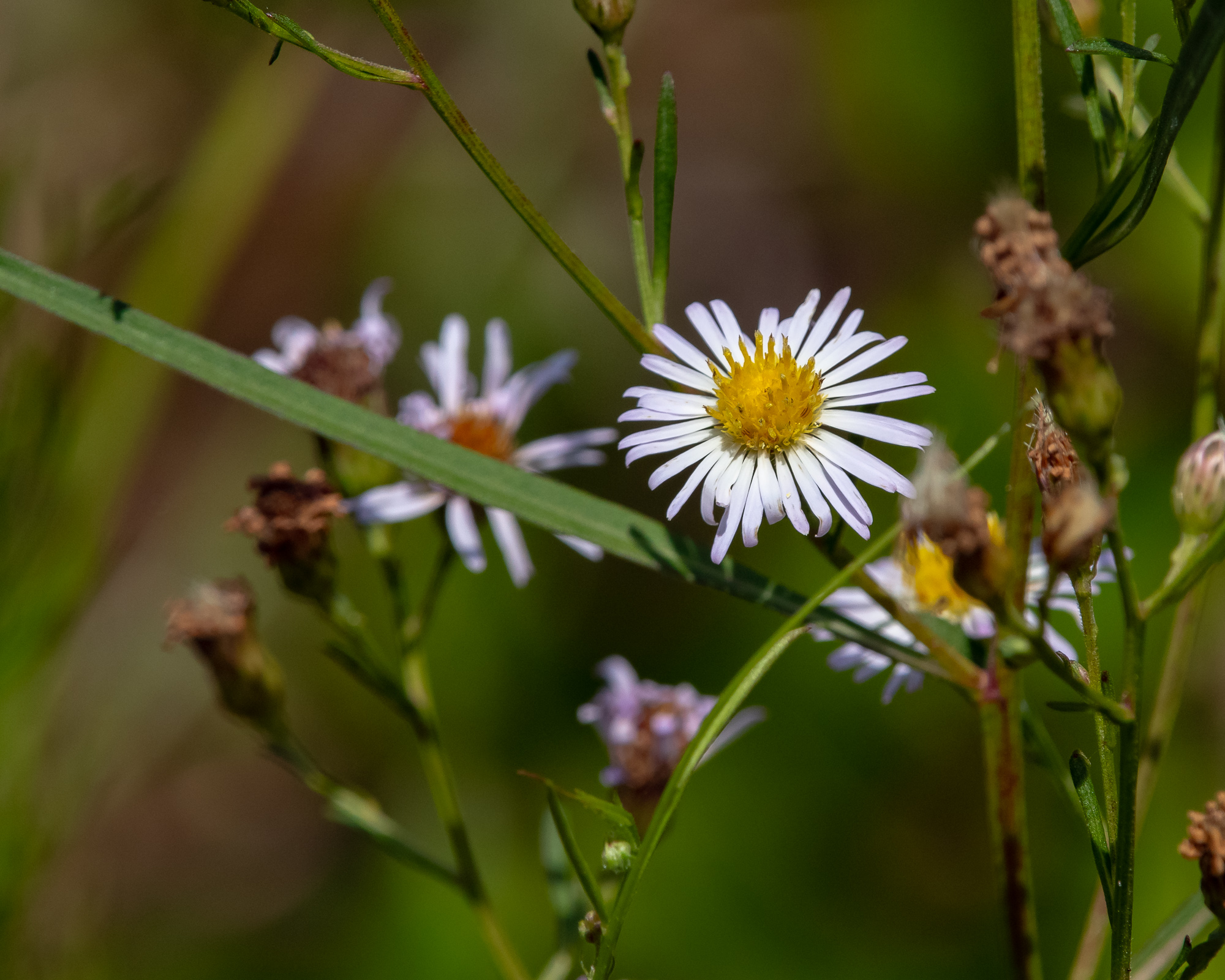
Groups of Rice Button Aster (Symphyotrichum dumosum) decorated the cypress forest. Blooms can vary from white to pink to lavender.
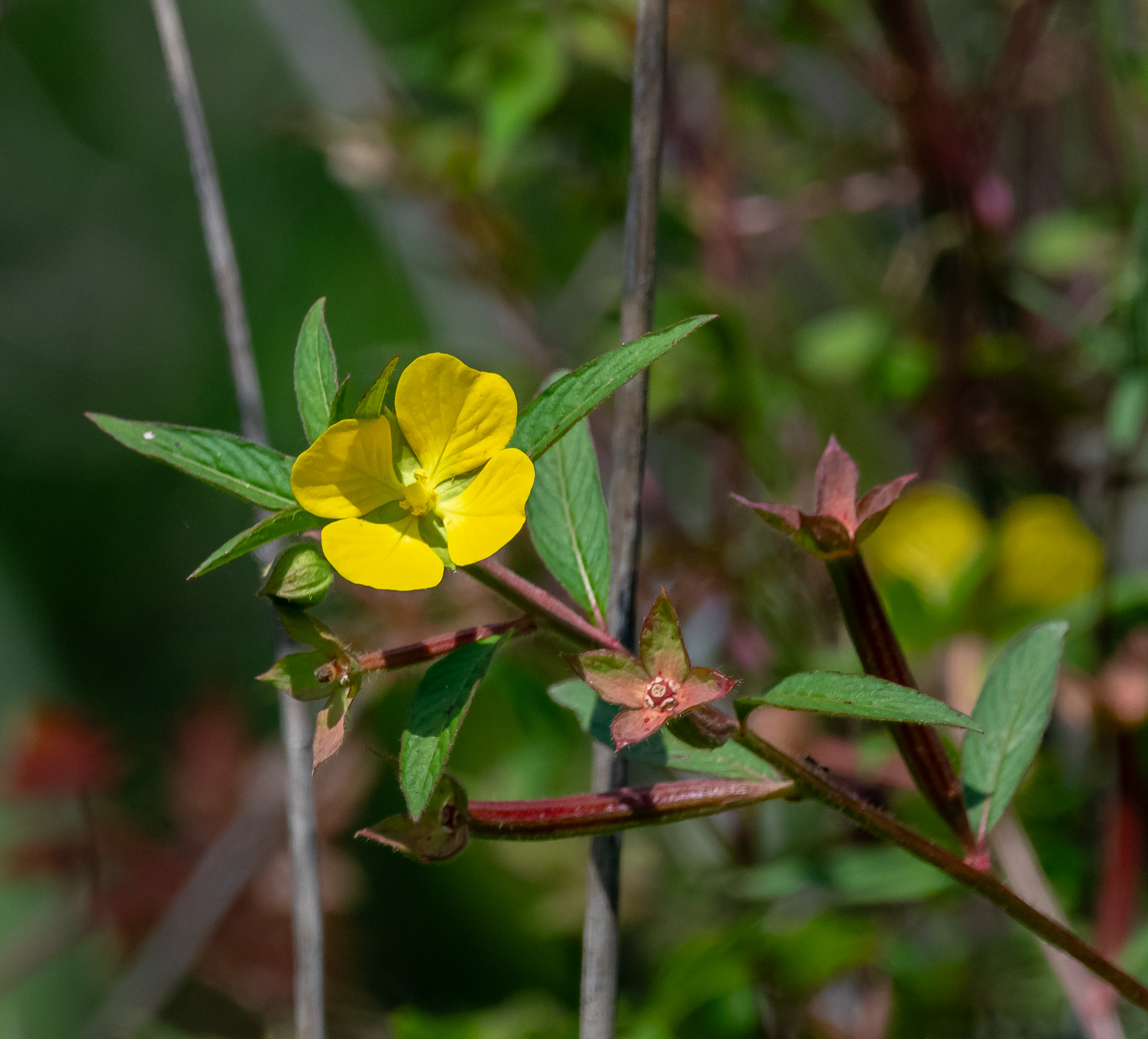
I almost got a headache trying to nail down what this plant should be called. Instead, I decided to love it for its incredible beauty. I have decided to refer to it as a Prairie/Savanna Iris (Iris savannarum). You may call it what you prefer.

In Florida at least, where there is water there is a good chance you’ll find at least one representative (of 13) of the Sagittaria family. Here are two. I wasn’t able to get good pictures of the leaves, but those are critical for determining which is which.

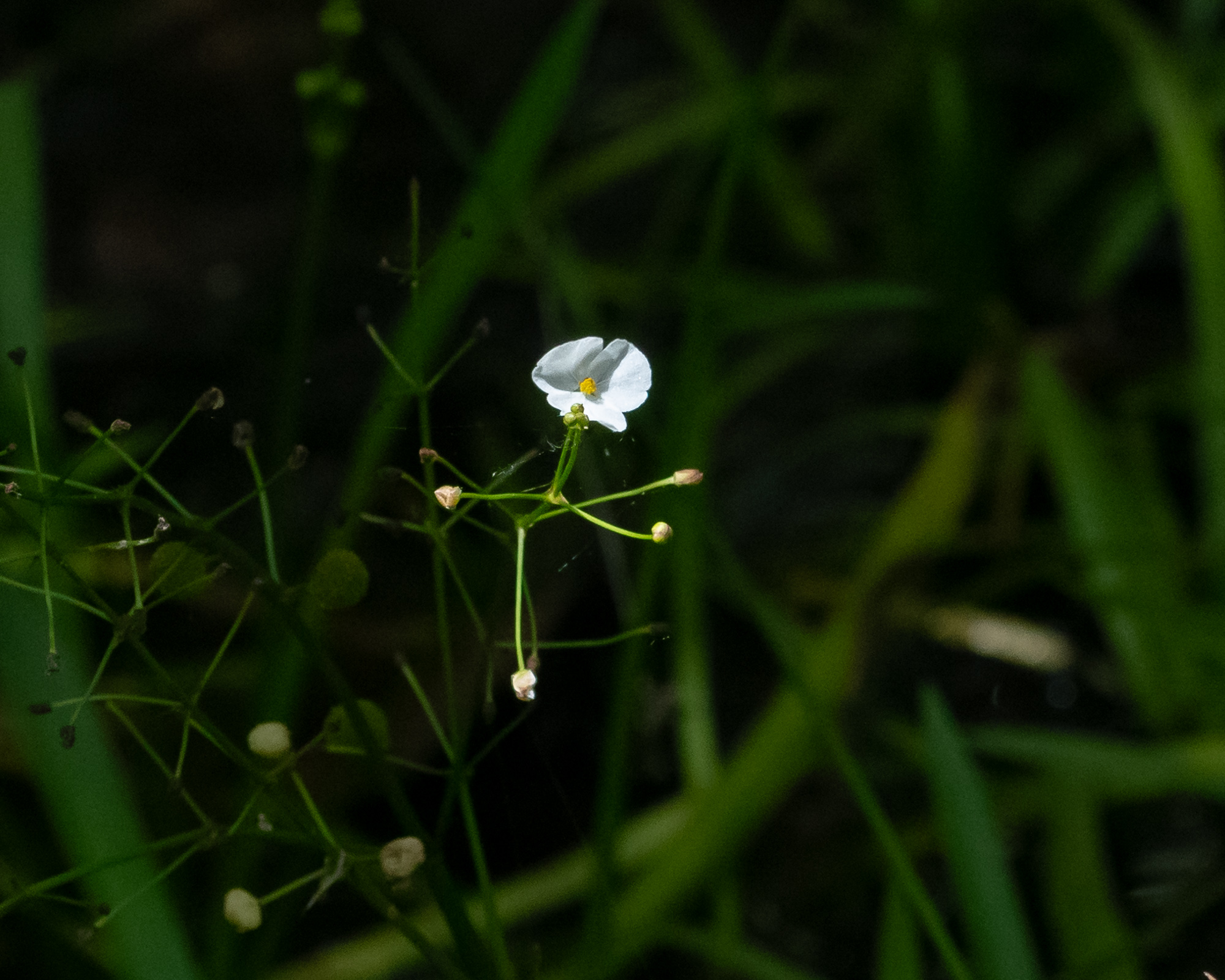
This is why we are thankful someone back in 1956 had the idea of putting a boardwalk through the swamp. It would have been nice to get closer to some subjects for better photgraphs, but Gini was reluctant to wade through that green stuff.

Around areas of open water there was a plentiful profusion of purple as Pickerelweed (Pontederia cordata) pleased pollinators and paparazzi.

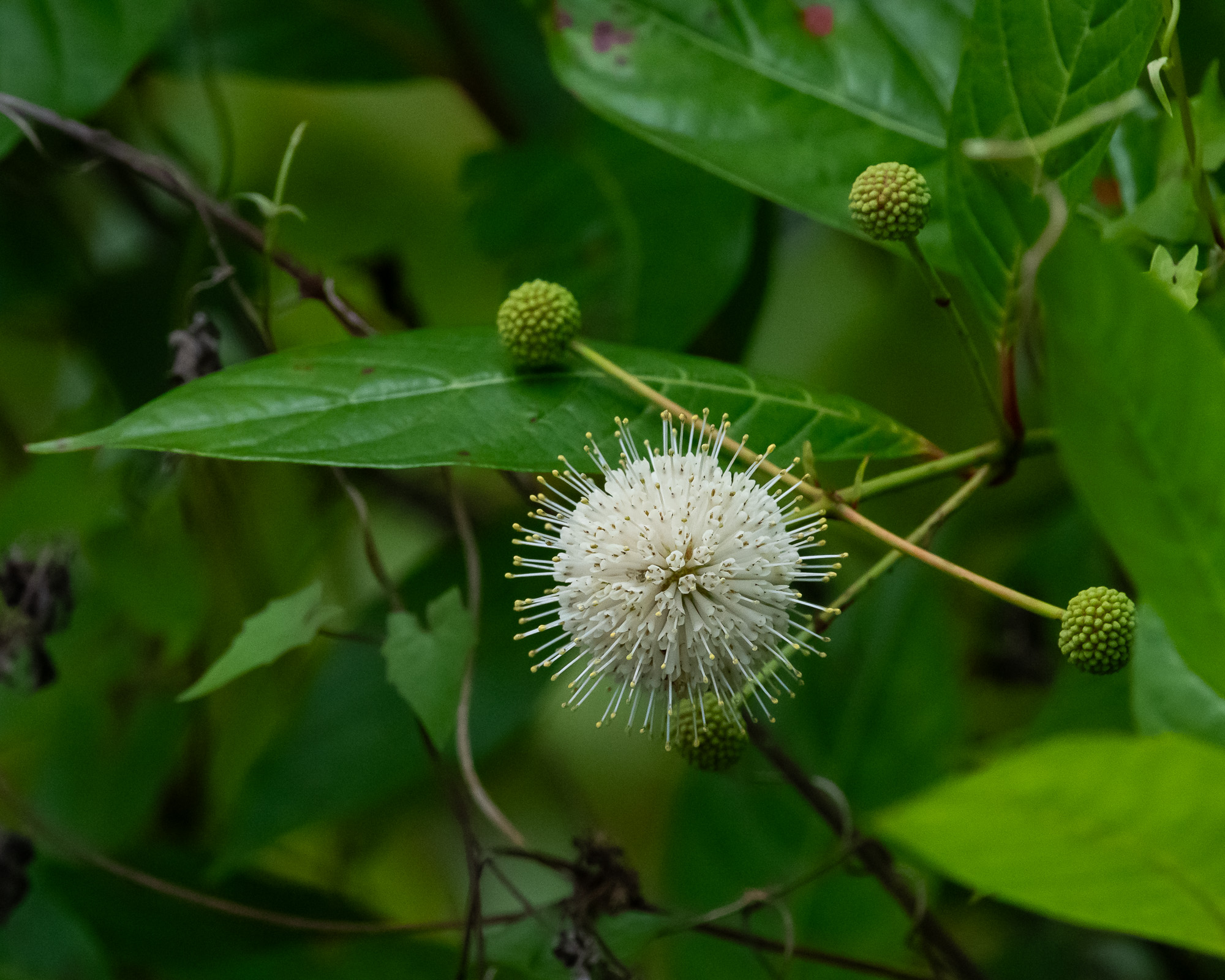
Resembling Gini’s pincushion, blossoms of Buttonbush (Cephalanthus occidentalis) were like little magnets for all manner of insects.
Breeding season causes changes in many life forms. One obvious visual change for the White Ibis is a brightening of its red bill and legs. Compare the bird in the foreground to the one in the rear.

In regards to the “pretty red flower” I mentioned at the beginning, turns out Gini was right (well, that’s not exactly a news bulletin). The Leafy Beaked Ladiestresses (Sacoila lanceolata (Aubl.)Garay var. paludicola) orchid is not found in many other spots in Florida, or anywhere else within North America. We ended up spotting a half-dozen of these lovely flowers.

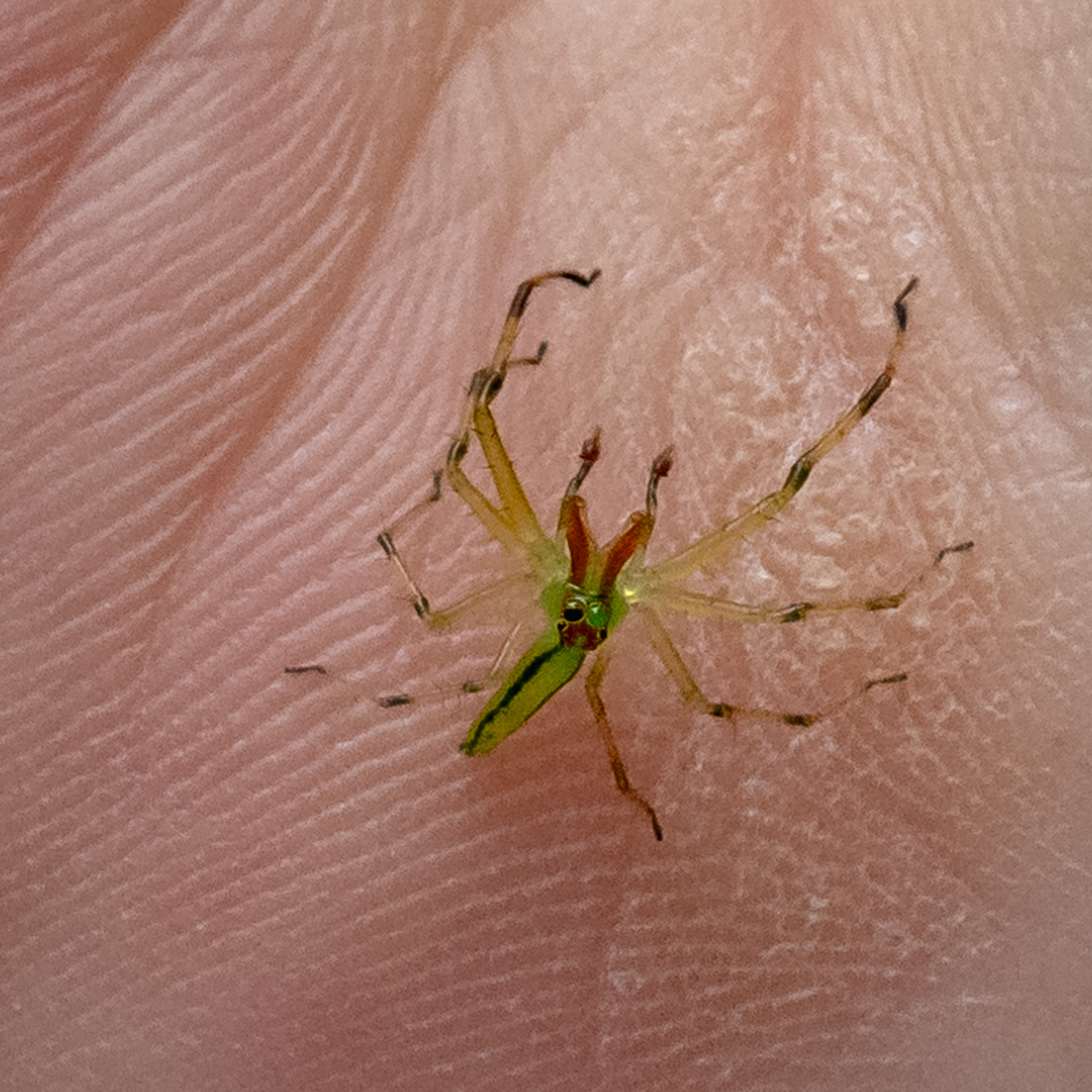
If you got to know her, you would not be surprised to learn that I am not the only species attracted to my bride of 56 years. “Oh, look! I have a friend.” I’ve been trying to find one for years and she just holds out her hand for a gorgeous Magnolia Green Jumping Spider (Lyssomanes viridis). She’s like that.
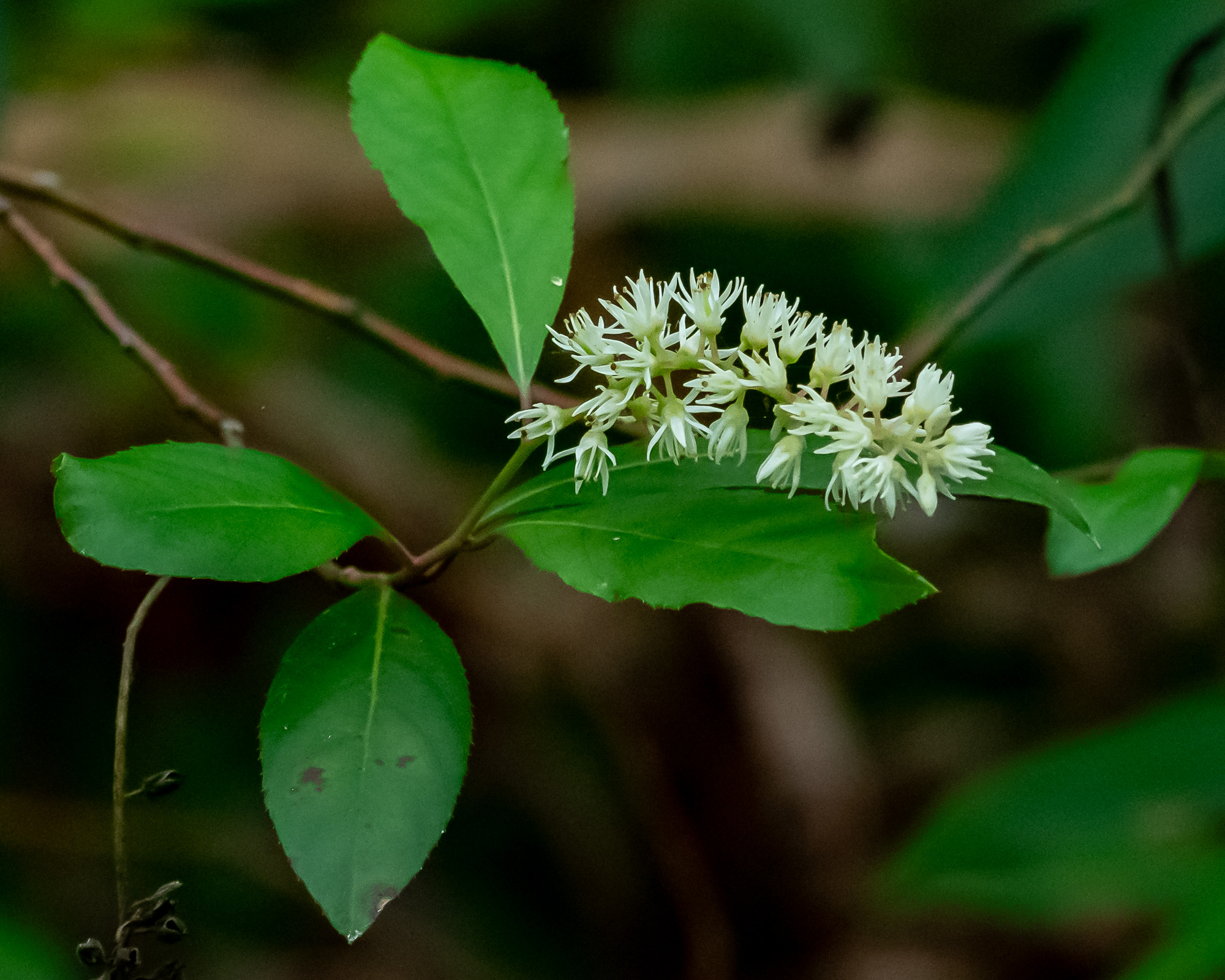
Although not uncommon, I don’t recall ever seeing a Virginia Sweetspire (Itea virginica). Also called Virginia Willow, it is not a true willow (Salix genus).
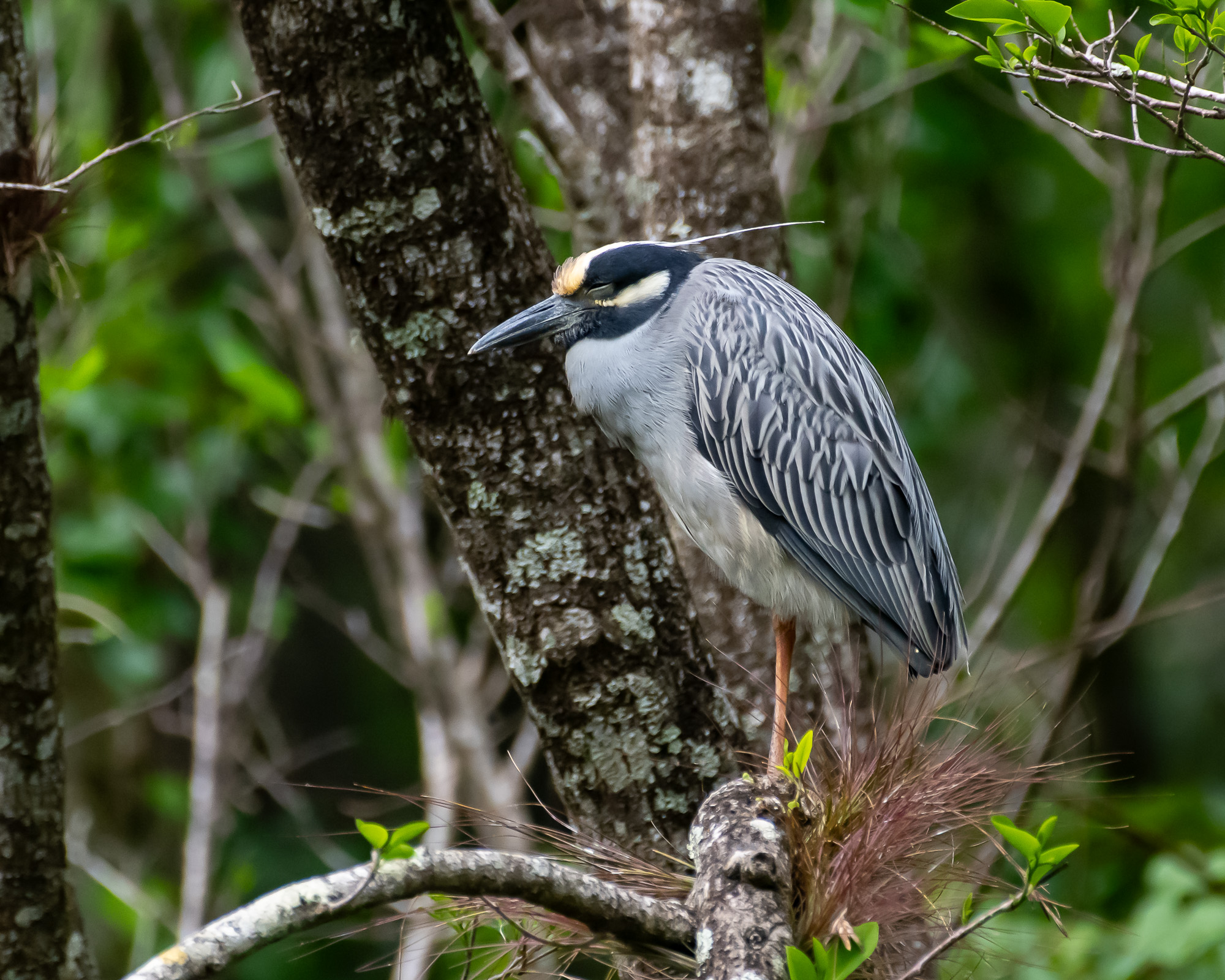
Once again, we came across a resting night shift worker. We tiptoed past another dozing Yellow-crowned Night Heron.
It was an amazing week. This trek through the Corkscrew Swamp was the perfect finale for our celebratory road trip. We have been so blessed throughout our lives. Thank you for allowing us to share a bit of our happiness with each of you.
Enjoy your search for a natural place and come back for a visit!
Additional Information
Corkscrew Swamp Sanctuary: https://corkscrew.audubon.org
 Our Natural Places