
(Click on images to enlarge, click again to zoom.)
“They look like some sort of ripe golden jewels ready to be picked.”
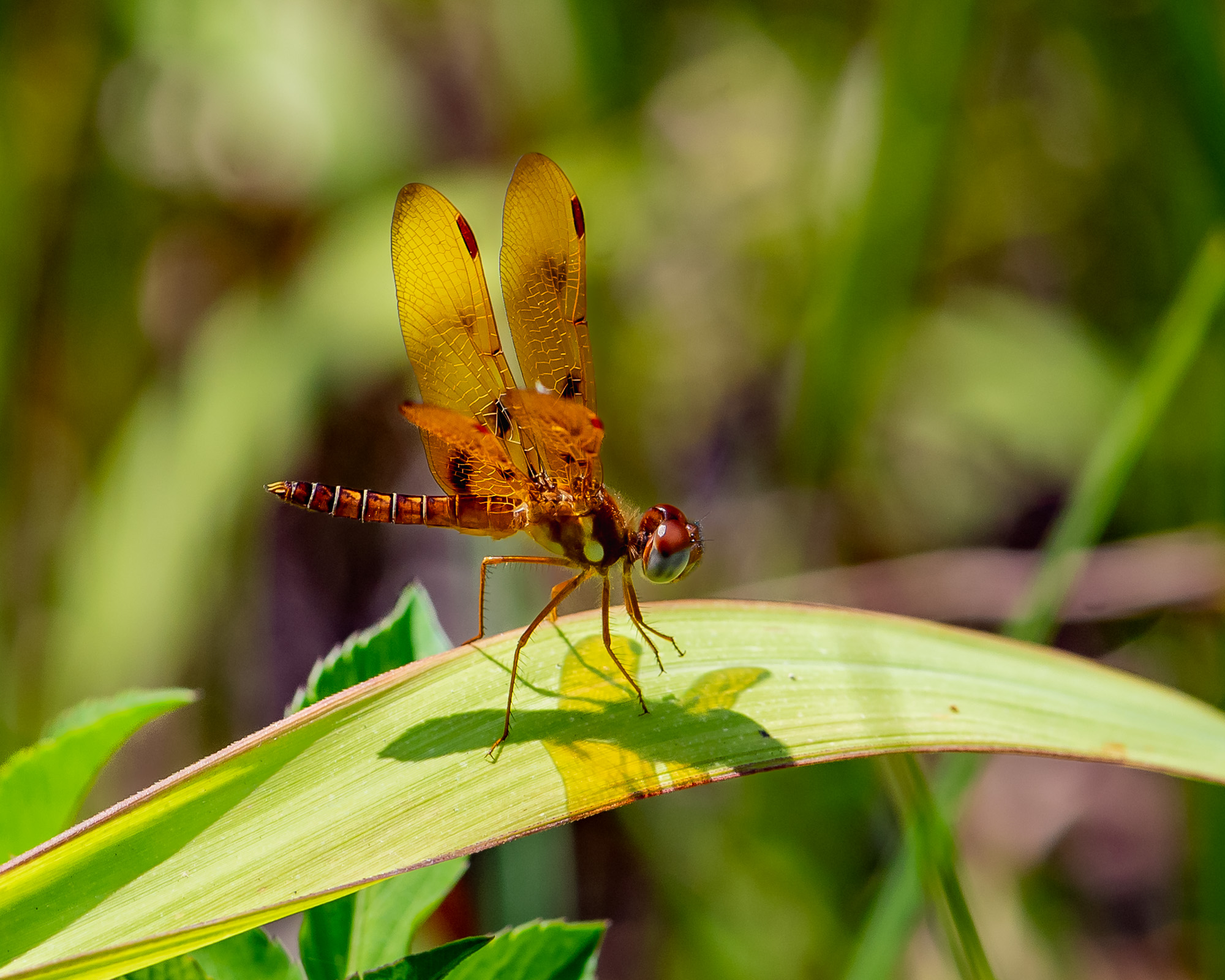
Gini’s description of the Eastern Amberwing was pretty accurate. They flew out to grab a small flying tidbit and returned to the same perch. The morning was warm and they often assumed an “obelisk” postion to help keep cool.
Our morning was proceeding at a very leisurely pace and we had no particular goals to pursue except to relax and enjoy whatever Nature felt like offering. Although we were only a few minutes from the house, the Tenoroc Fish Management Area was just isolated enough that we could hear no human-originated noise. Just birds and bugs. Especially the summer Cicada chorus.
Summer birds are busy raising families and the woods are no longer filled with springtime mating songs. Once eggs arrive, many birds remain quiet to avoid revealing nest location. A few birds, however, seemed to be as vocal as ever. Cries of Limpkins echoed throughout the early morning, Boat-tailed Grackles fussed about everything, Red-shouldered Hawks screamed from above fulfilling their apparent duty as Nature’s neighborhood watch alarm.
Flowers are blooming and an incredible number of insects are doing their best to drain them of nectar. In the process, the blooms appreciate the assistance in transporting pollen to ensure survival of the species.
We seem to have fallen into a breakfast rut of banana, granola bar and a tangerine. Maybe PBJ sandwiches for the next trip, just to be different. Whatever we have to eat, it will be enhanced by the ambience of a calm lake, stately cypress trees, morning-glory blossoms beside us and Swallow-tailed Kites soaring in the morning sky.
Some might say we saw nothing very special today. We know differently.
Tiny Eastern Amberwing (Perithemis tenera) dragonflies are among the smallest in North America. They often fly with legs dangling to imitate a wasp to lessen the chance of becoming a meal.


Gini usually hears Black-bellied Whistling-Ducks before we ever see them. This pair must have been hungry as they let us watch them for a little while.

But, but it isn’t green, you might say. The Green Anole (Anolis carolinensis) is sometimes called the American chameleon because it can change color, but it is not a true chameleon. It changes color because of variations in temperature, humidity, health and mood, not to blend into its background. The strawberry-colored dewlap identifies this one as a male.

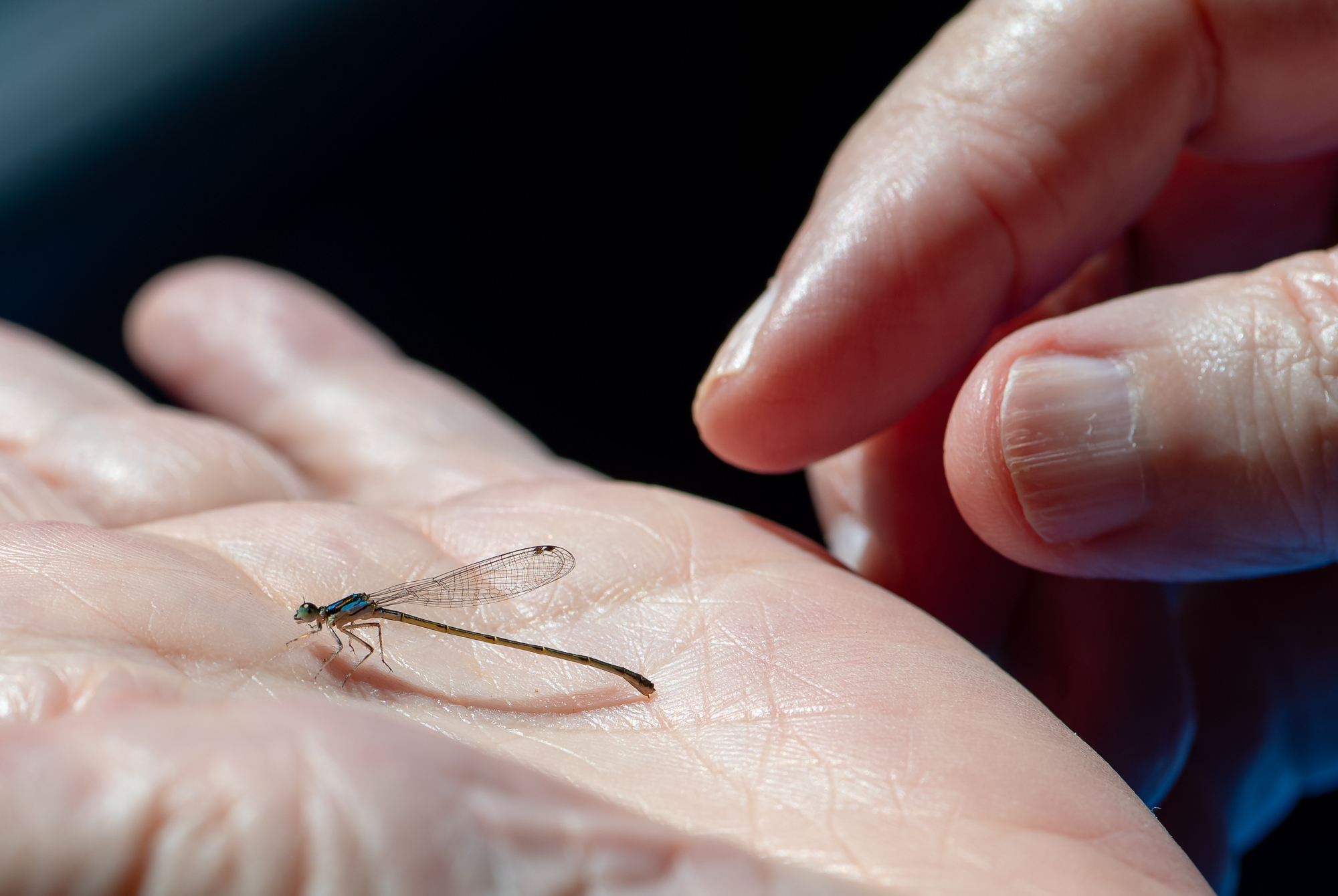
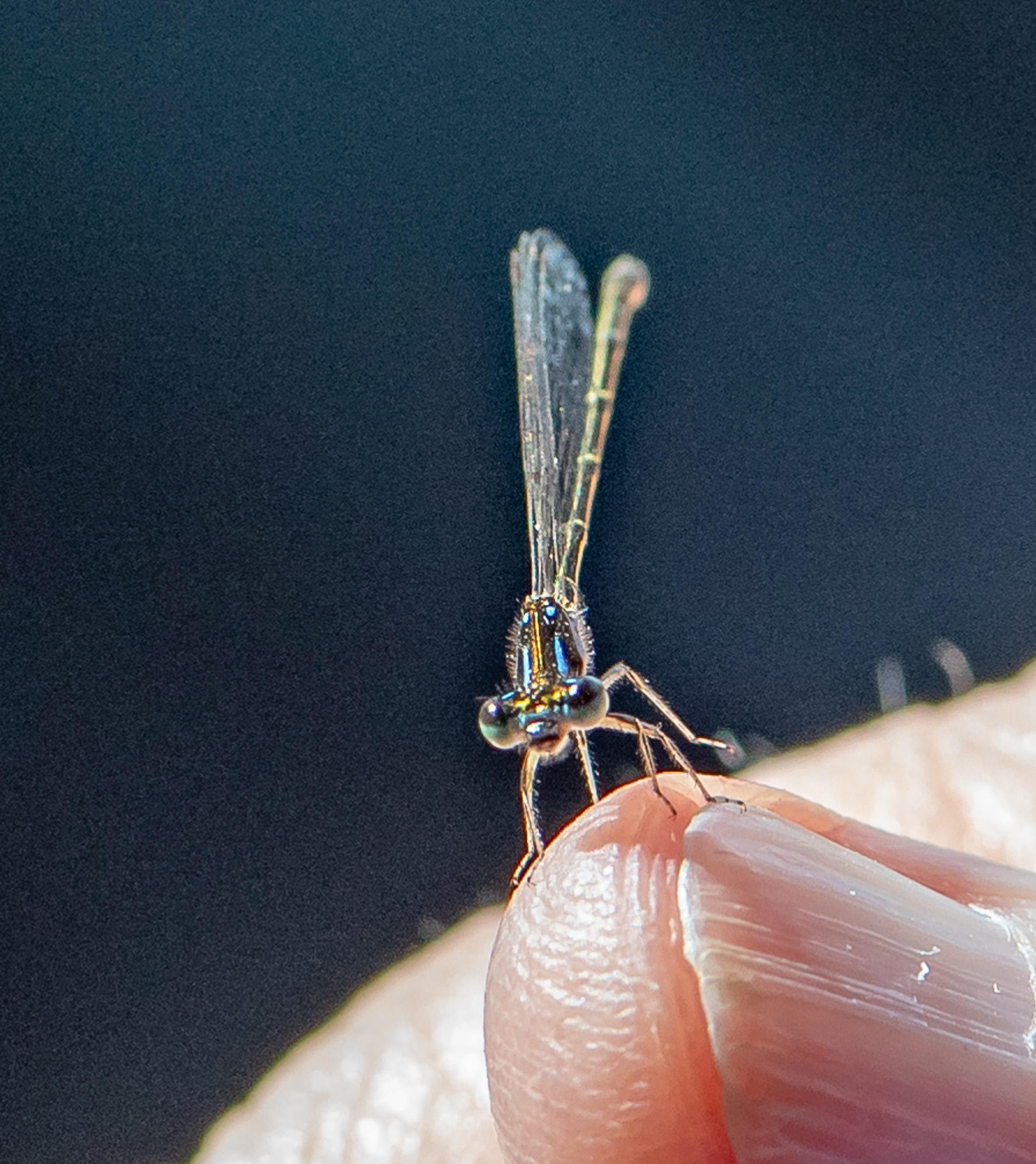
Typical. Walking the hedgerow hoping to encounter something different to photograph. Return to the car perspiring and reach for the water bottle. Gini, who remained in the cool shade to read says: “Don’t make any sudden moves or you’ll scare my friend.” Fragile Forktail (Ischnura posita). She Is — The Damsel Whisperer!
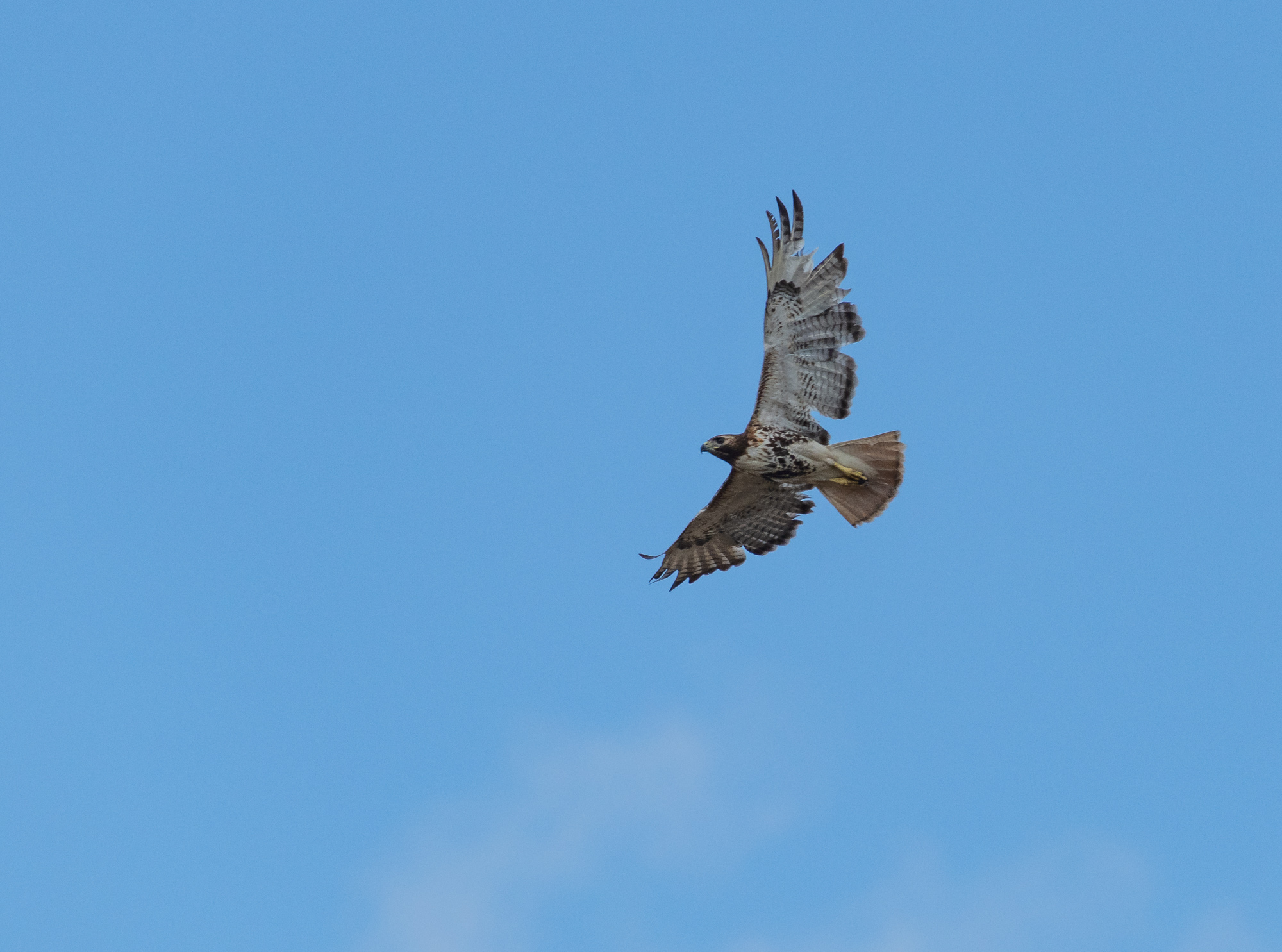
“The song of canaries Never varies, And when they’re moulting They’re pretty revolting.” — Ogden Nash. This Red-tailed Hawk may agree.
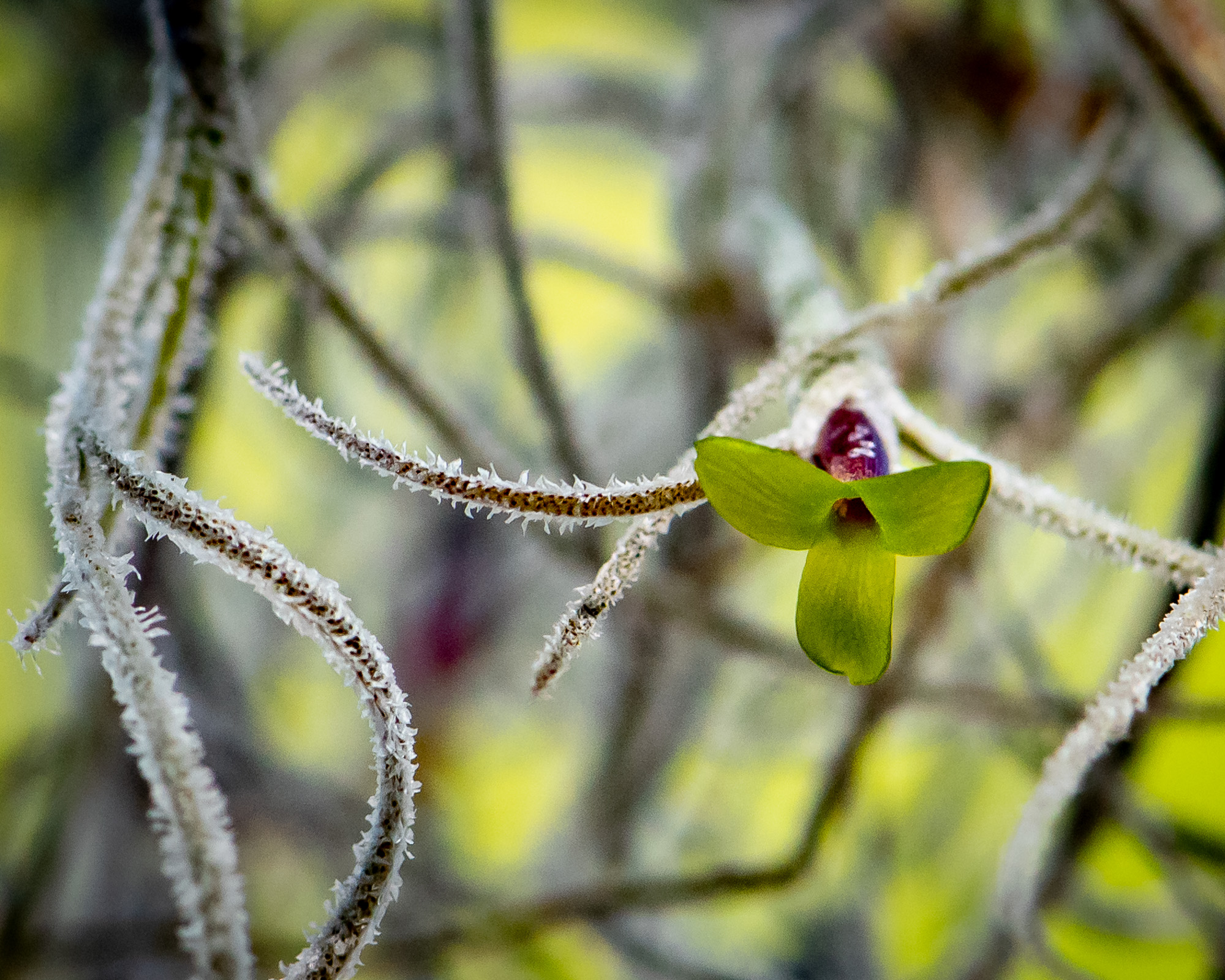
Both Gini and I are native Floridians. As such, we literally grew up with Spanish Moss (Tillandsia usneoides). We used it as a mattress, cleaned the stuff from oak trees, learned about the redbugs which inhabit the masses and caused us to itch miserably, enjoyed its scenic beauty hanging from a cypress tree along a lakeshore. But neither of us could recall ever knowing the ubiquitous gray curtain of our youth had flowers.
Pretty sure these are an invasive snail species known as Bulimulus. Much is unknown about them and they were apparently first noted in Florida about a decade ago. Although they may not directly consume agricultural crops, they tend to form masses around irrigation sources and clog them so crops don’t get water.

Man-of-the-Earth (Ipomoea pandurata), a morning-glory with wonderful, large flowers.

Eastern Lubber Grasshopper (Romalea microptera) on Nuttall’s Thistle (Cirsium nuttallii). This is likely a second or third “instar” and in a few weeks will turn bright yellow and orange as it becomes an adult.

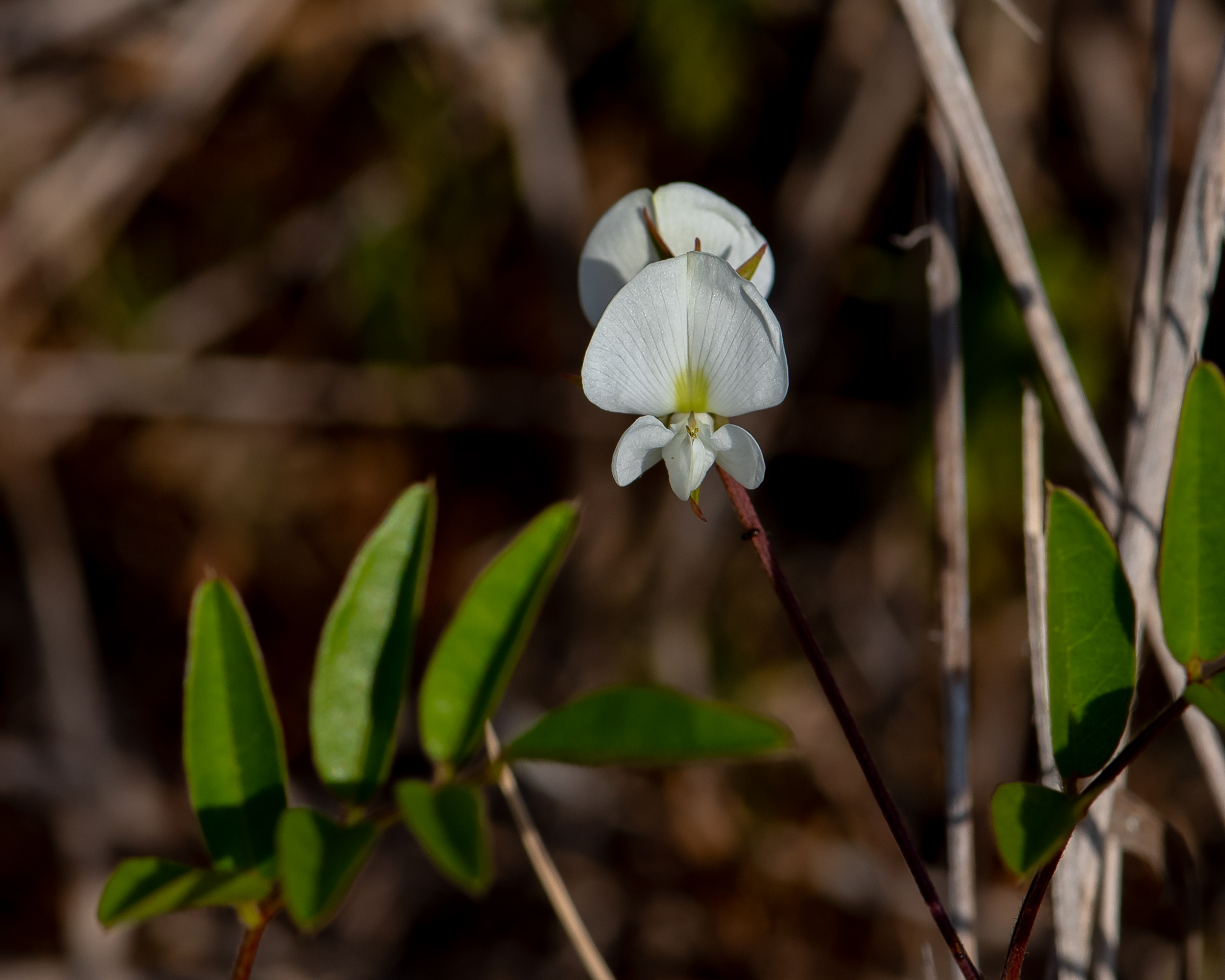
We first enountered Elliott’s Milkpea (Galactia elliottii) late last year in a different location. Now it seems we see them nearly everywhere. That’s okay with us.

Nope. We didn’t see anything rare or very unusual today. The things we DID see, however, we found to be totally amazing and wonderful! Life is like that, isn’t it?
Enjoy your search for a natural place and come back for a visit!
(Click on images to enlarge, click again to zoom.)
I often tend to be in a hurry. Anxious to “see it all”, I have been known to snap a quick picture of a heron and move on down the shore of the lake as I just know there will be a Limpkin disgorging an Apple snail from its shell and I don’t want to miss THAT!
When not on foot, my affliction is mitigated somewhat when driving along a back road as the vehicle has a unique “Automatic High Alert” sensor which conveniently signals upon encountering potentially interesting things. When I drive past a unique flower, for example, the system shouts “STOP! BACK UP!”. After a half-dozen such notifications, she The System inquires if I would prefer to relinquish the driving duties.
A recent trip to our local “patch” allowed me to put into practice my new “SMN” philosophy. After two steps, I stopped and scanned all around. Taking the idea further, I knelt down to help keep me from moving until I had thoroughly investigated that spot. Amazing. There seemed to be all manner of things vying for attention. This “Slow Motion Notion” just might be worth pursuing.
The downside of moving at such a slow pace is not being able to cover as much ground as we normally would. As illustrated in just a moment, the upside is enjoying more diverse subjects. So far, I like the trade-off.
After an hour or so of examining weeds, leaves and dirt “up close and personal”, we took a breakfast break by the side of a lake. In front of us, Ospreys were fishing, Anhingas were drying their wings, Gallinules were preening, a Little Blue Heron was hunting. Gini said, “See? We haven’t missed a thing by slowing down.” The smarter half of the partnership was right – again.
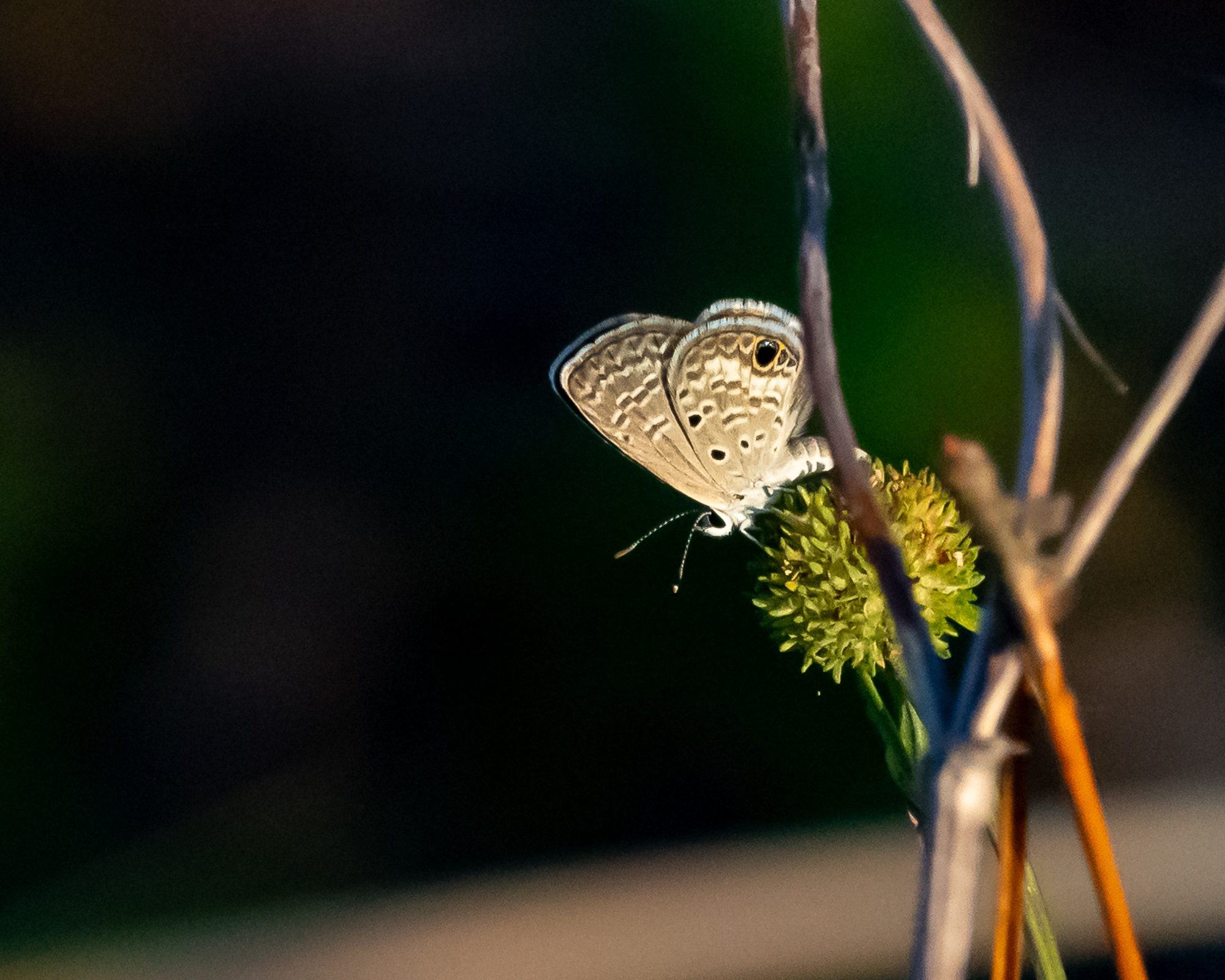
The early morning rays of the sun highlighted the pretty pattern of a Ceraunus Blue (Hemiargus ceraunus).
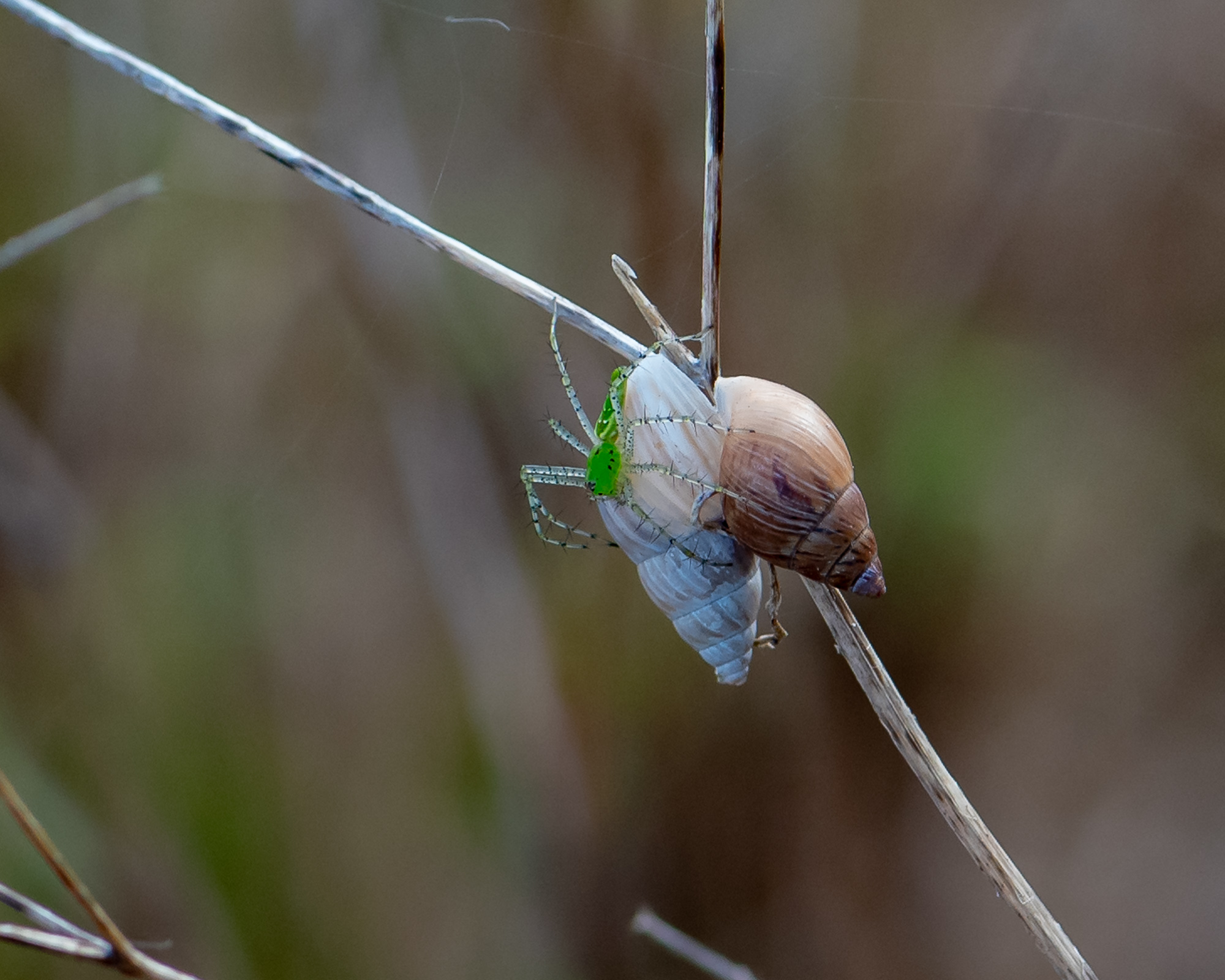
I think this is a Vagrant Scrubsnail (Praticolella griseola). No idea what the plant is but my imagination liked the way it seemed to be cradling the snail.

There are not many moths active in daytime. Finding an Ornate Bella Moth (Utetheisa ornatrix) is always a pleasure.

One of the smallest dragonflies in North America, this immature male Little Blue Dragonlet (Erythrodiplax minuscula) will soon be all blue.

Fuzzy Wuzzy was a — Bee Fly. There are several species of Woolly Bee Flies (Genus Systoechus) which look similar.

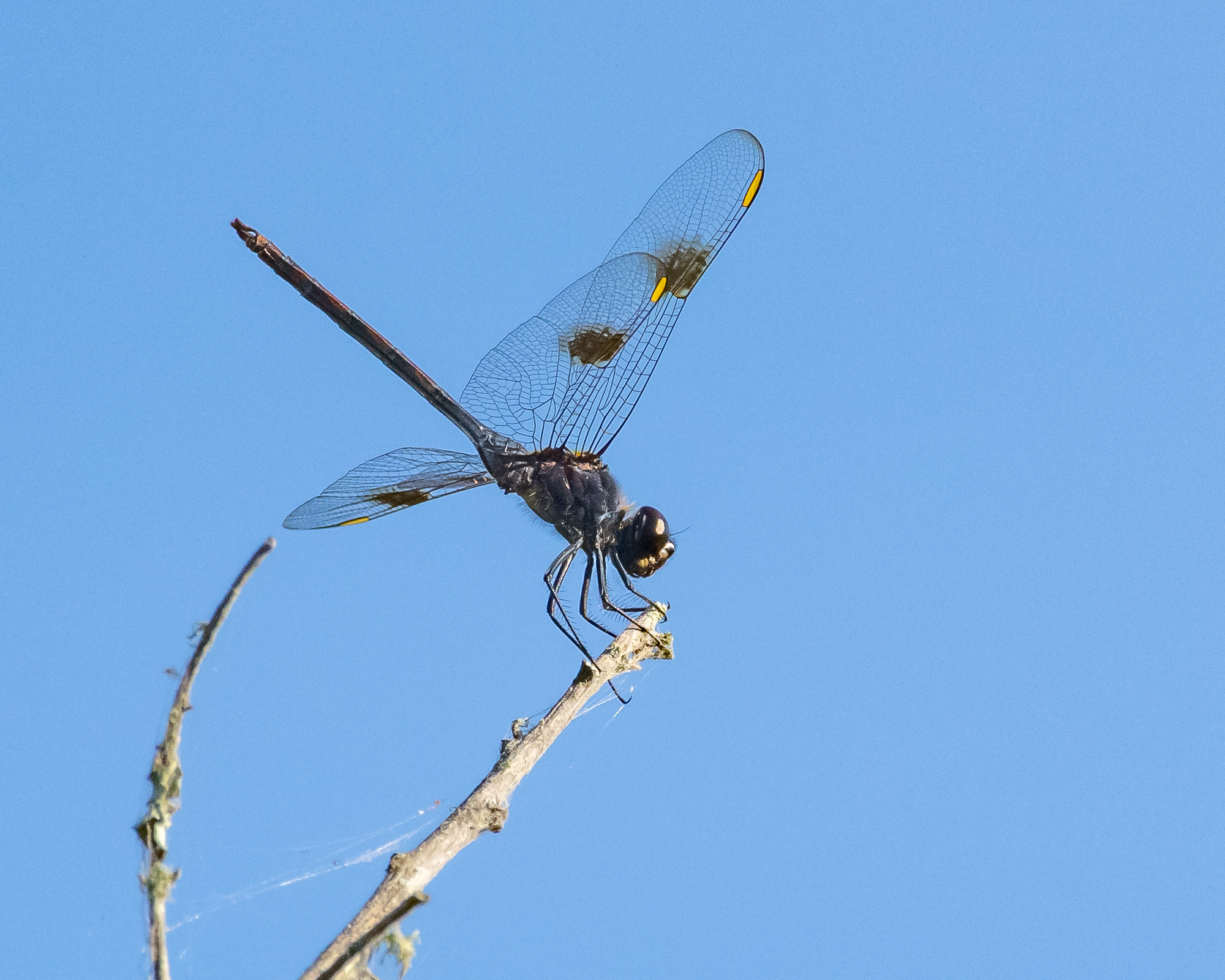
It helps with identification that some dragonflies have particular perching habits. A Four-spotted Pennant (Brachymesia gravida), for example, seems to prefer perching atop bare twigs.
Canary yellow flowers resemble other legumes but the Florida Alicia (Chapmannia floridana) is found only in Florida.

While we enjoyed our fruit breakfast, a Little Blue Heron spotted something it liked.

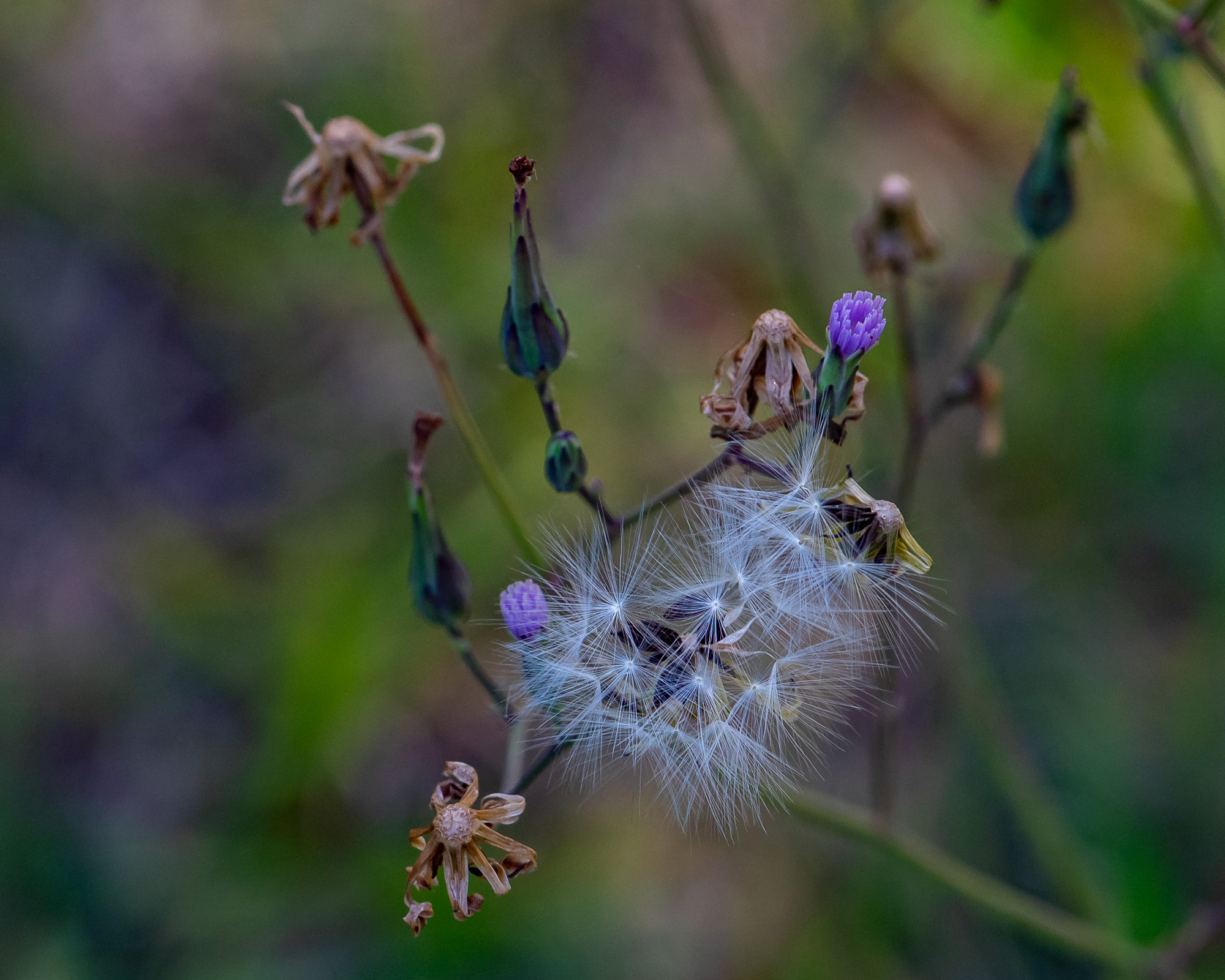
Although I may not include it in my next salad, Grassleaf Lettuce (Lactuca graminifolia) is an interesting plant. Mature plants can look very scraggly, the flowers are lovely and when the “seeds/fruit” explode it can be surprisingly attractive.

It would be difficult to mistake a Halloween Pennant (Celithemis eponina) for much else as it has a very unique wing pattern.

A favorite of bees and other blossom-lovers, the delicate Southern Beeblossom (Oenothera simulans) is subtly gorgeous.
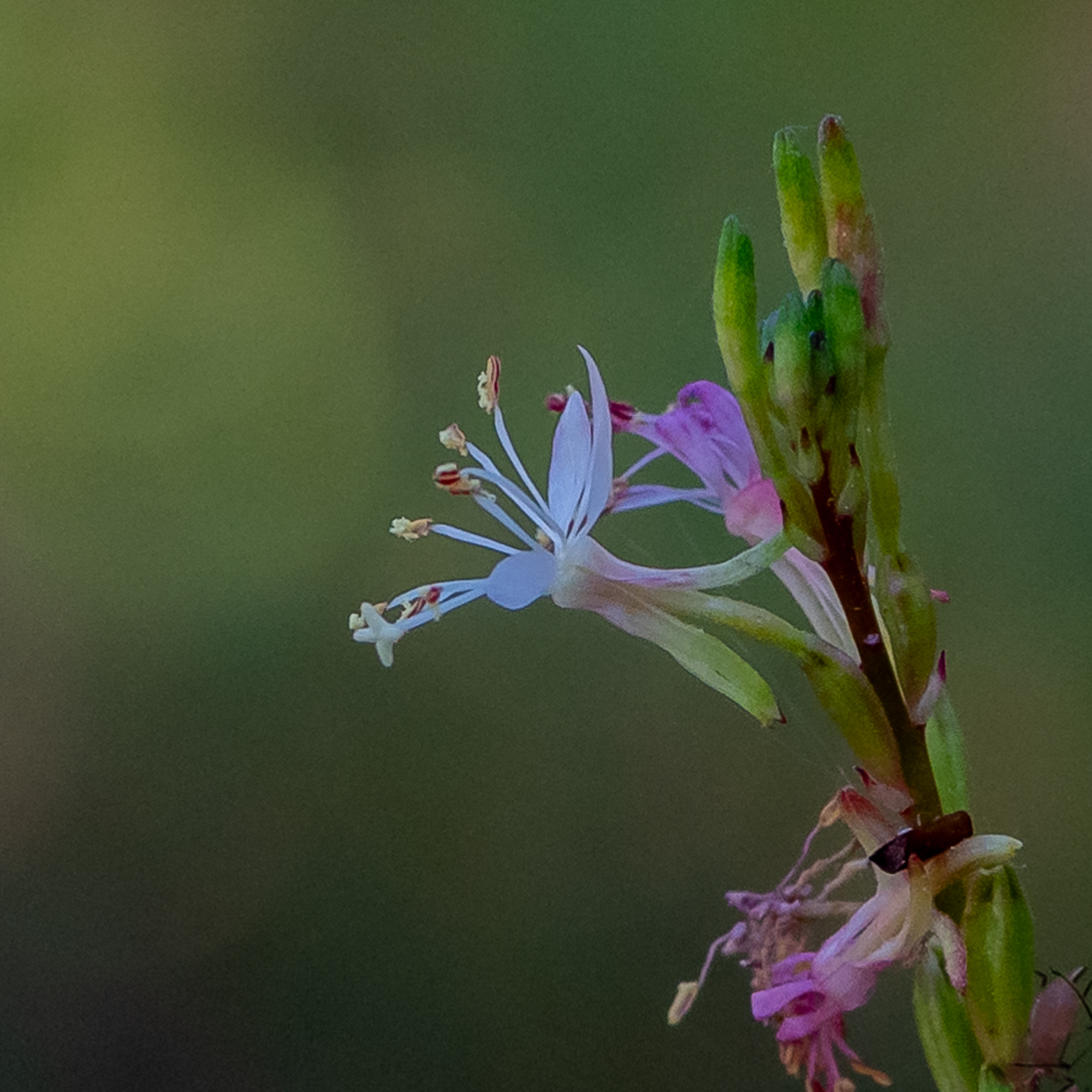
The tiny plant with a huge appeal. We are continually surprised how many nectar-seekers can be found probing the very small flowers of the Frogfruit (Phyla nodiflora).

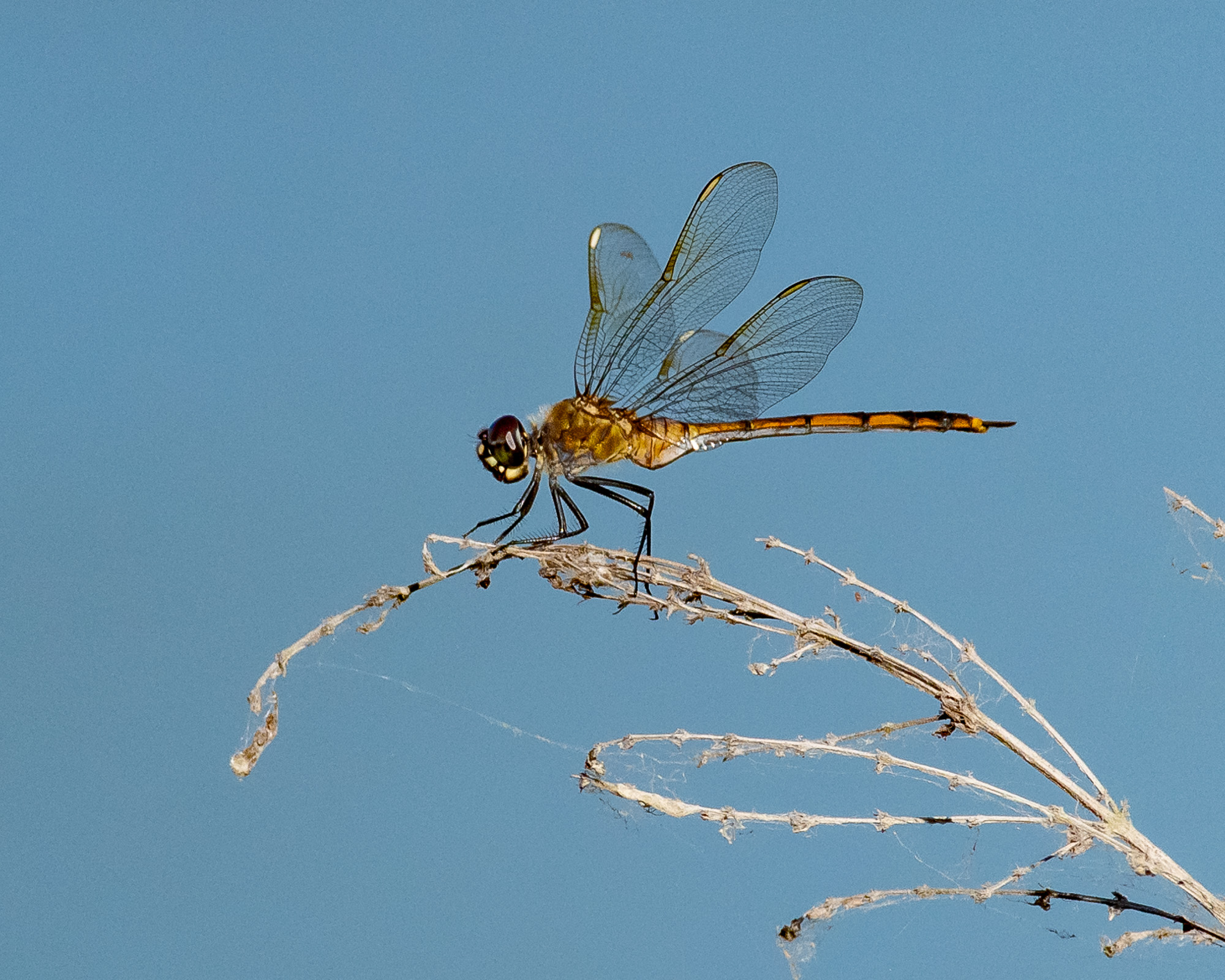
Pretty and golden. A female Needham’s Skimmer (Libellula needhami) returned to this perch six times before she remained long enough for a picture.

So, this is either a wood carving of an alien life form, or, it may be an Arrow-shaped Orbweaver (Micrathena sagittata).

As with most things in life, exploring nature can become infinitely more enjoyable if we adopt a “slow motion notion“. I found so many things on this trip that could have easily been missed if I had been in a hurry. That would have been a shame.
Enjoy your search for a natural place and come back for a visit!
(Click on images to enlarge, click again to zoom.)
We needed a “Nature Fix”.
(About a month ago, Gini was advised to have a pacemaker/defibrilator implanted to improve the quality and duration of her life. No long discussion needed. The procedure was done on July 1 and she’s recovering nicely. Thank you for all the well-wishes. We both very sincerely appreciate it.)
A couple of weeks before heading to the operating room, Gini asked if we could go for a ride. Of course.
Early on a Tuesday, we waited for the gate to open at Colt Creek State Park. This is one of our favorite haunts due to all that it has to offer and the fact that it’s only a 20 minute drive from the house.
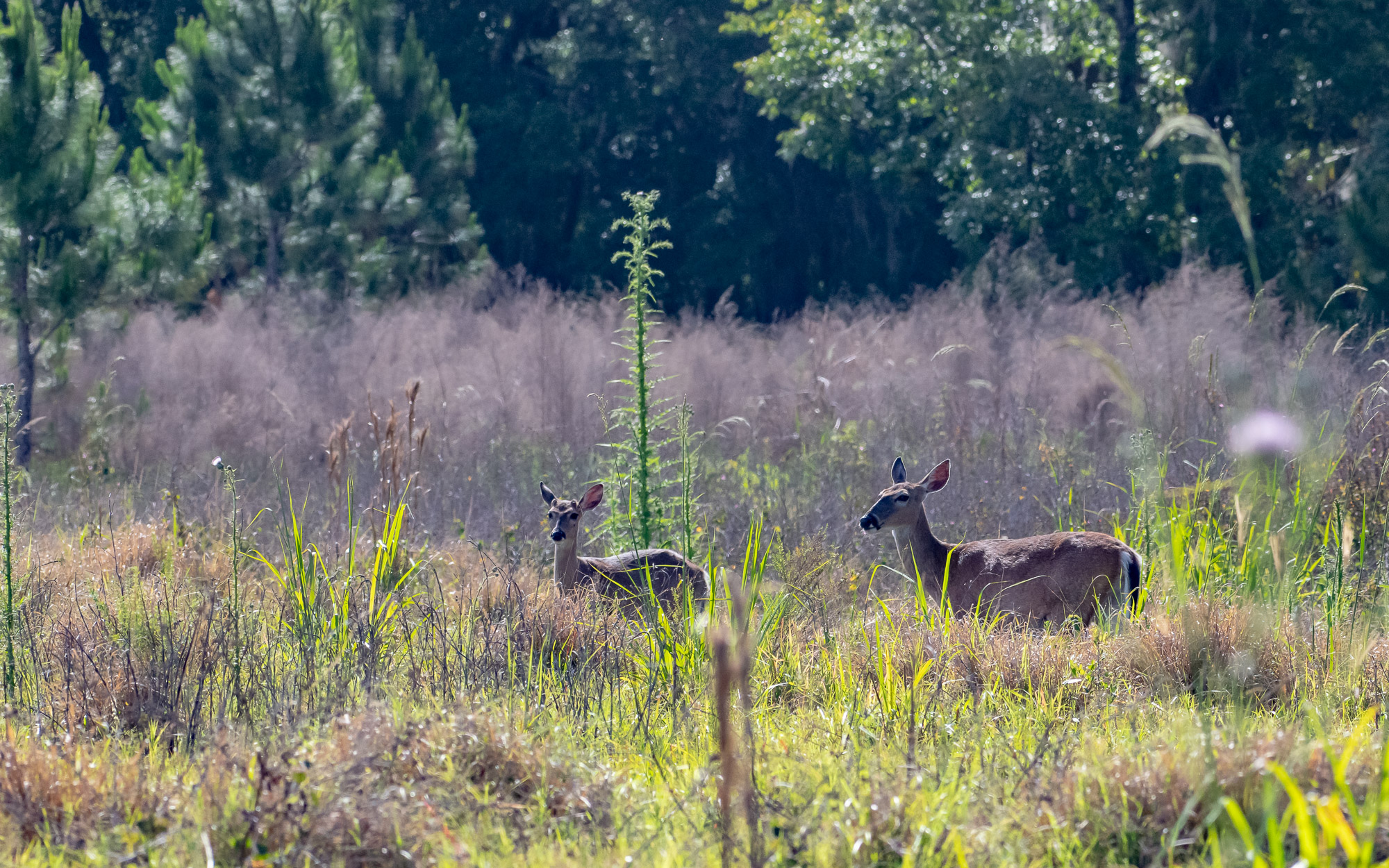
It was a typical Florida morning. Bright blue skies, sunshine doing its job of drying dew-laden plants, deer and rabbits foraging along the edges of the forest, insects beginning their daily routine of feeding/mating/surviving, birds singing. The chorus of cicadas rose and fell like a wave rolling onto a beach. Hammering woodpeckers reminded us of an army of carpenters busily building new houses. Red-shouldered Hawks called from the sky and our breeding season Swallow-tailed Kites soared gracefully just above the treetops. Softshell Turtles and alligators at the lake, wading birds in the wetlands, Pig Frogs grunting from the creek and – the flowers.
A table under a pine tree was a perfect spot to enjoy our breakfast as we held hands and reflected on a life well-lived. We are blessed.
The Florida humidity and rising temperature were rapidly reaching the uncomfortable level. A cool breeze was almost startling as it refreshed our perspiring faces. With the wind were whispers of all we had experienced during the morning and promises of even more to come.
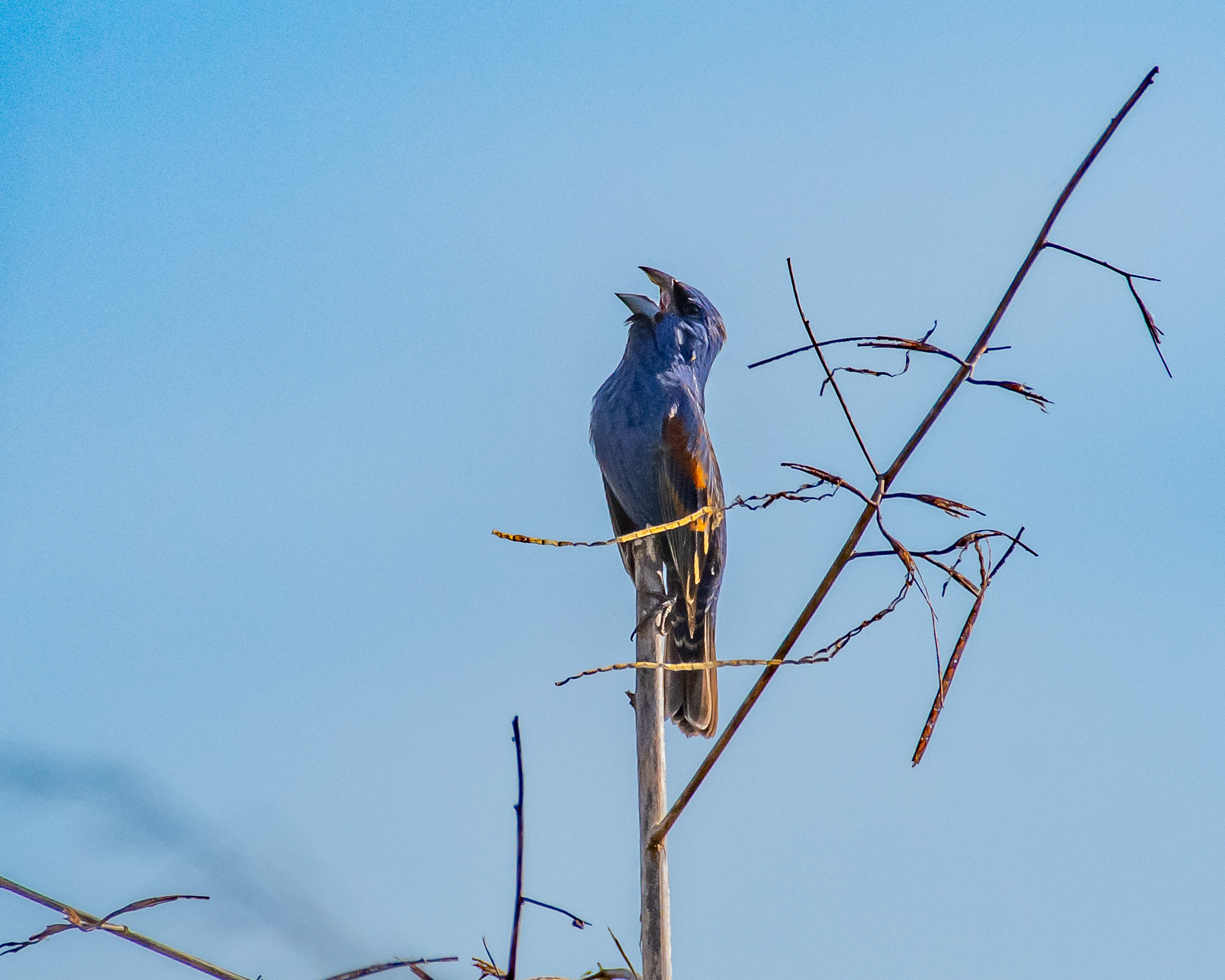
A Blue Grosbeak belted out his morning song to all who would listen. We did.
There are so many things to like about the fascinating Purple Passionflower (Passiflora incarnata). Lovely colors, intricate bloom pattern, host to butterfly larvae of fritillaries and longwings. And, if you are a predator, not a bad place to lurk for prey.


Beautiful, blue and small, the Canadian Toadflax (Nuttallanthus canadensis) is easy to overlook. Earlier in the spring, they can be found en masse where they provide a lavender haze to a field.

Many birds are very busy at this time of year raising chicks, feeding them, teaching them to fly and generally being good parents. This Tufted Titmouse checked us out to make certain we weren’t a threat.

These small lovely flowers may be Florida Bluehearts (Buchnera floridana), based upon location, plant height, leaf blade appearance and relative size of calyx and corolla. They are very similar to American Bluehearts (B. americana).

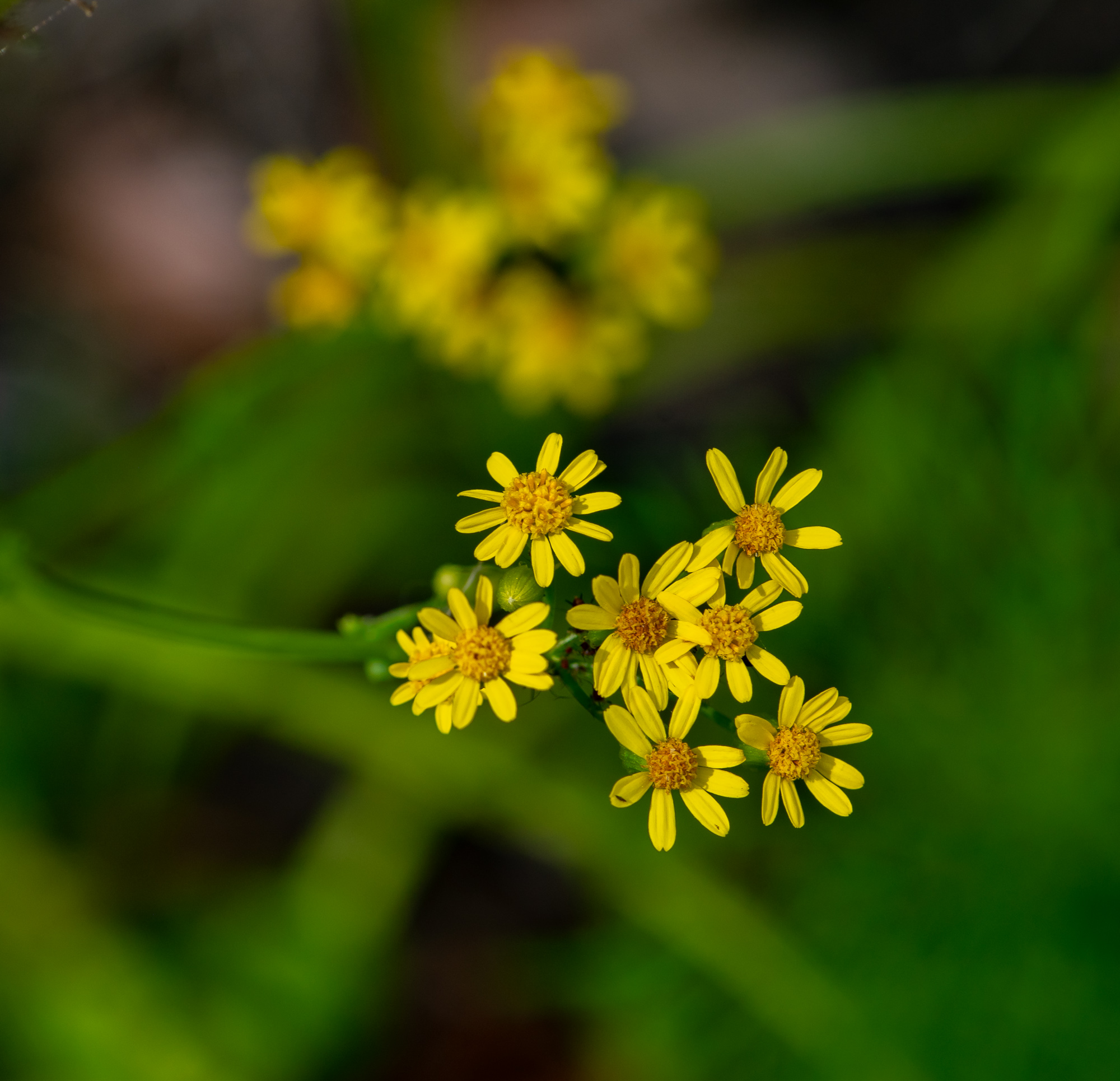
Standing almost three feet tall with the tops covered in bright yellow blooms, it’s easy to see why all sorts of insects love the Butterweed (Packera glabella). So do we!
Snake! Brakes! Jump out! Lay down on the road! Snap a picture! Stand up to change to a better position – learn (again) why it’s called “r-a-c-e-r”. To be specific, the North American Racer (Coluber constrictor). Beautiful!

A lovely white flower. Which isn’t a flower. A painful stinging nettle. Which isn’t a nettle. Botany is frustrating. Enjoying pretty things is pleasant. I choose the latter. This pretty “flower”, which we grew up calling “Stinging Nettle” (along with really bad words when we touched one), is more gently named Tread-softly (Cnidoscolus stimulosus). The white petals are actually sepals. It is not an actual nettle but a member of the Euphorbia family. I have read this bad plant has an edible root. Yeah, hard pass.

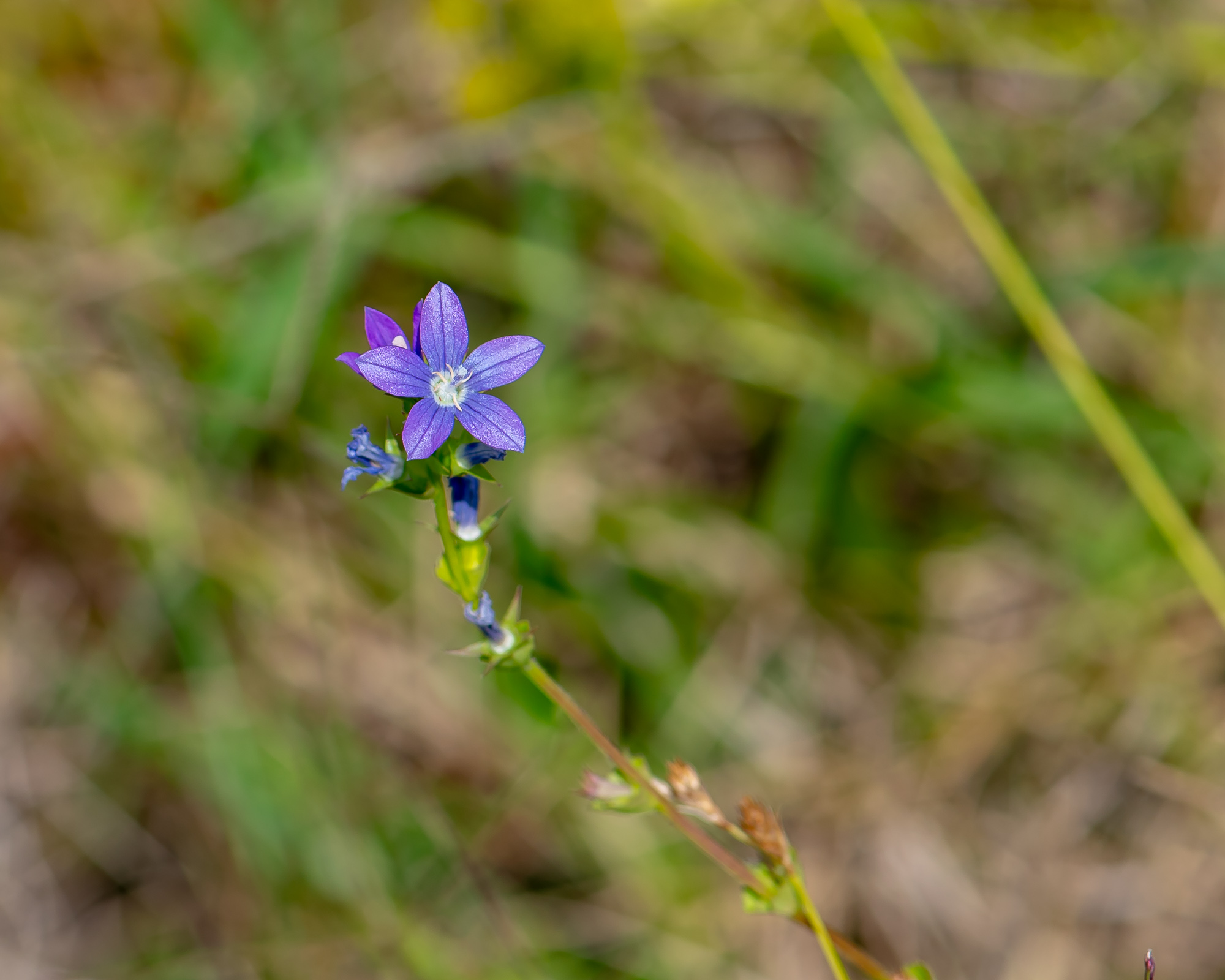
Seldom growing over 18 inches tall, Clasping Venus’s Looking Glass (Triodanis perfoliata) produces gorgeous bluish-purple tubular flowers.The common name appears to come from the seeds, which have a slightly flattened look to them resembling a hand mirror.
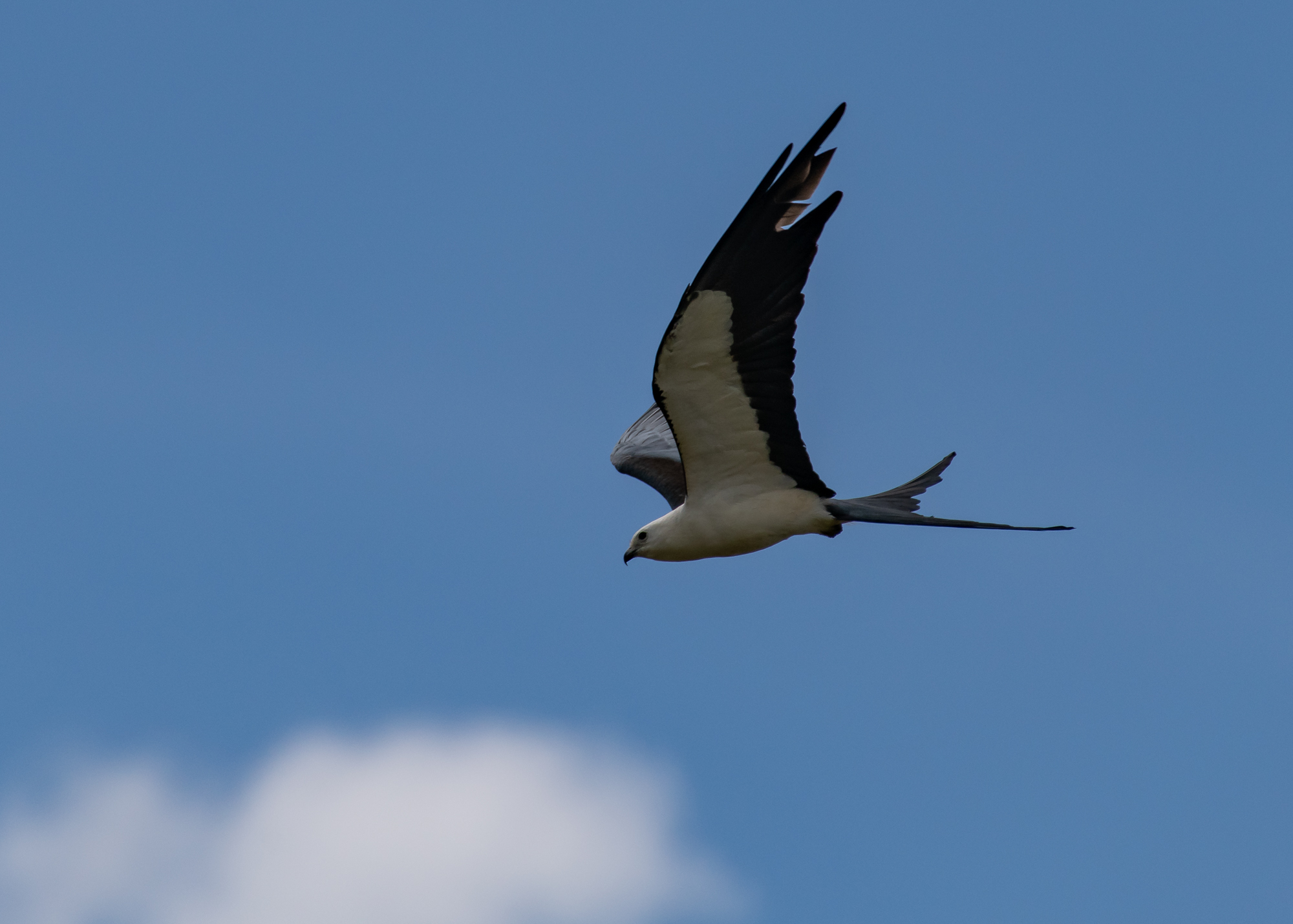
As we headed for the park exit, a Swallow-tailed Kite escorted us toward the gate. Okay, so it was actually just following the road where it often finds tasty treats resting or crossing or racing.
We enjoyed a very pleasant morning. Flora, fauna, good company. We can still close our eyes, feel the cool breeze on our faces and hear the whispers of nature. Live your best life today.
We hope you enjoy your search for a natural place and come back for a visit!
(Click on images to enlarge, click again to zoom.)
This year has been a bit different than others.
“Getting old“, my bride says, “is not for sissies.” Indeed. Hindsight indicates we should have purchased one of those extended service warranties for our bodies. Our appointment calendar sure has been filled with visits to all sorts of medical practioners, laboratories, imaging services and we are now on a first-name basis with the local pharmacist.
This hectic attempt to maintain some semblance of reasonable health has severely crimped our exploration life-style. Long trips have been few and far between. We therefore have been relegated to visiting mostly nearby venues repeatedly. That has not been a bad thing.
Repeat visits have allowed us to find previously undiscovered (by us) spots and to watch the same areas change as the seasons progress. Yes, we record the same species of flora and fauna much of the time. Somehow, we have yet to grow tired of doing so.
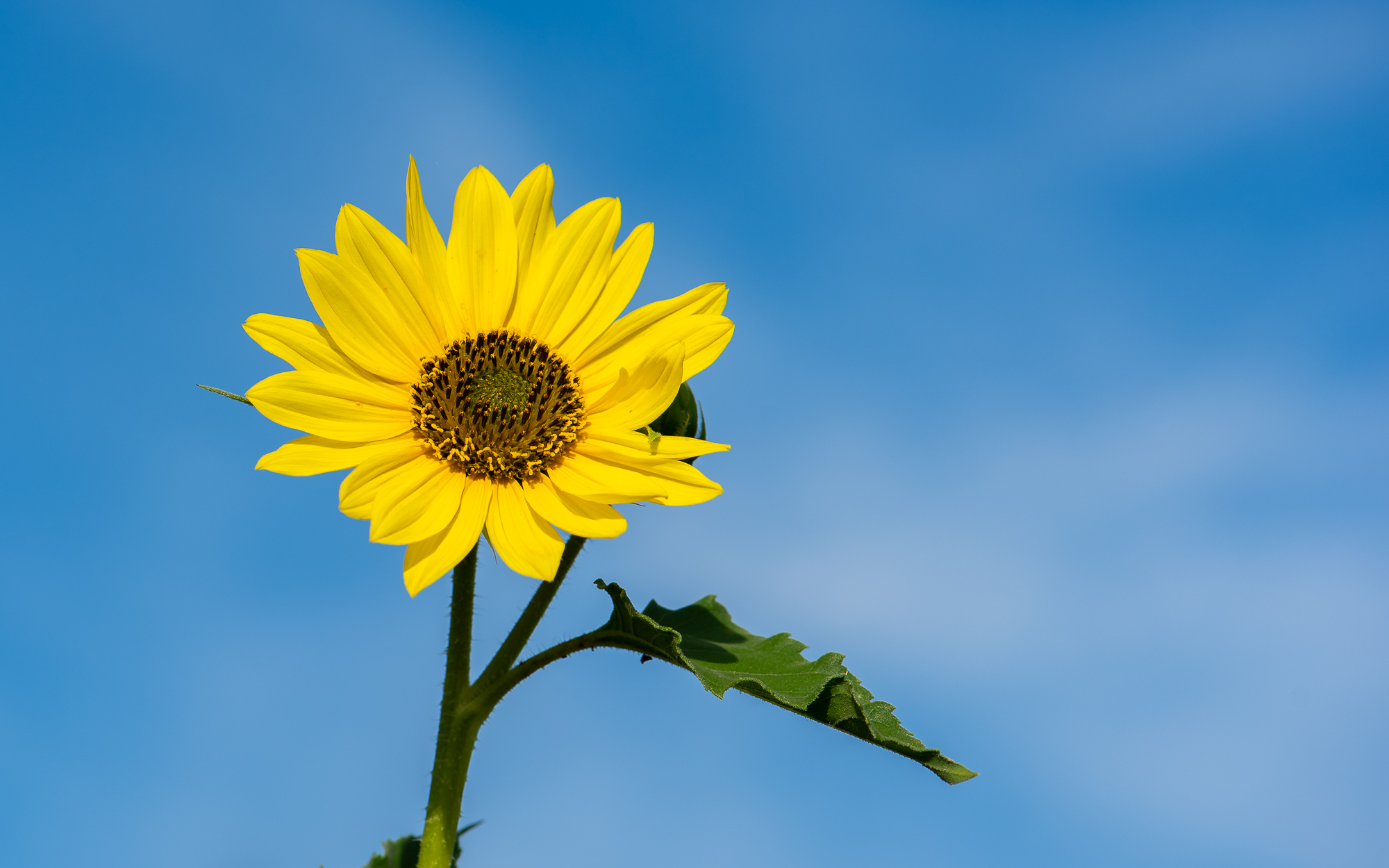
We have passed a group of sunflowers before, photographed several of the blooms before, enjoyed their bright sunshine-yellow color before – but, today, we found a Leafcutter Bee in the center of a big sunflower. That is something we have NOT seen before.
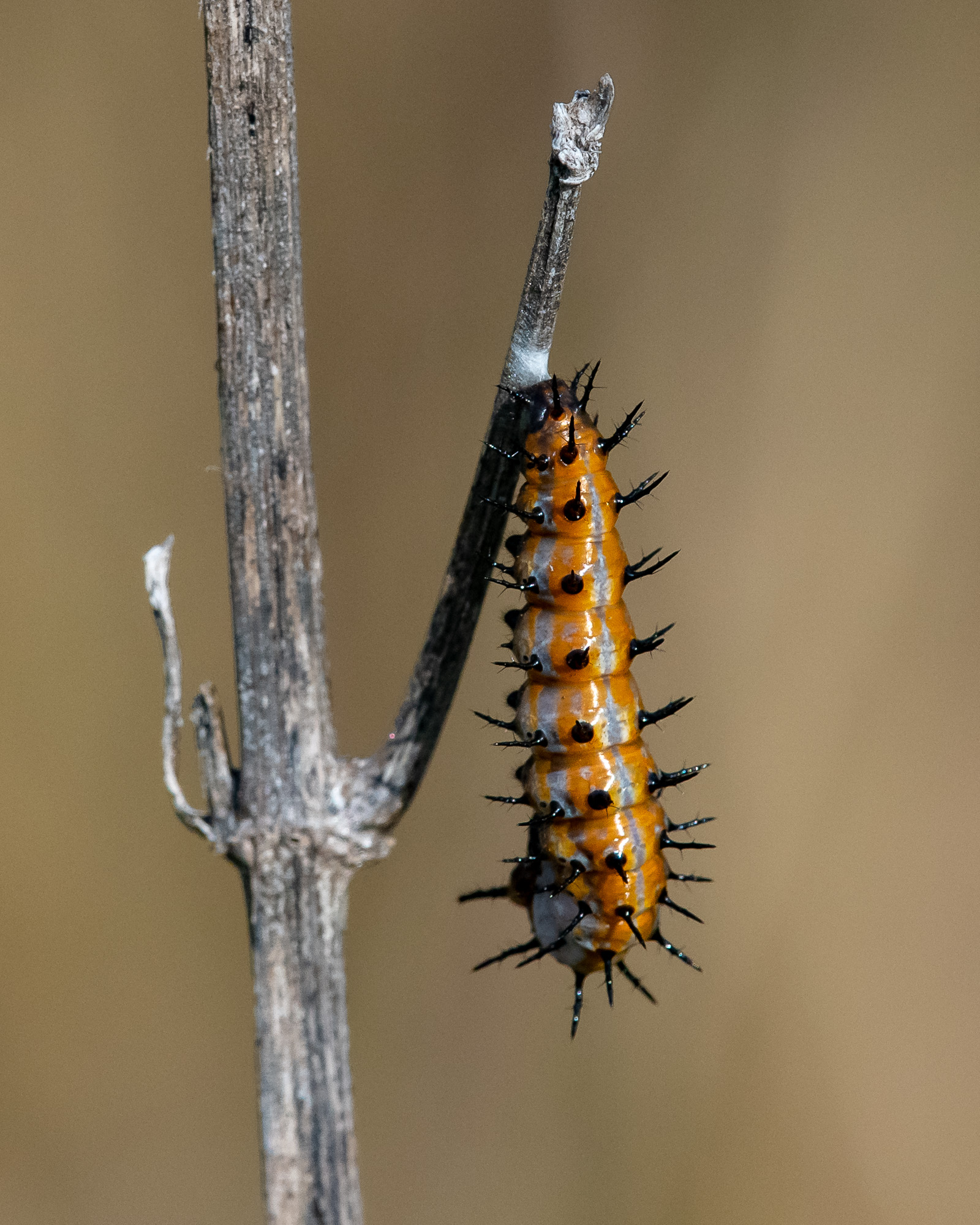
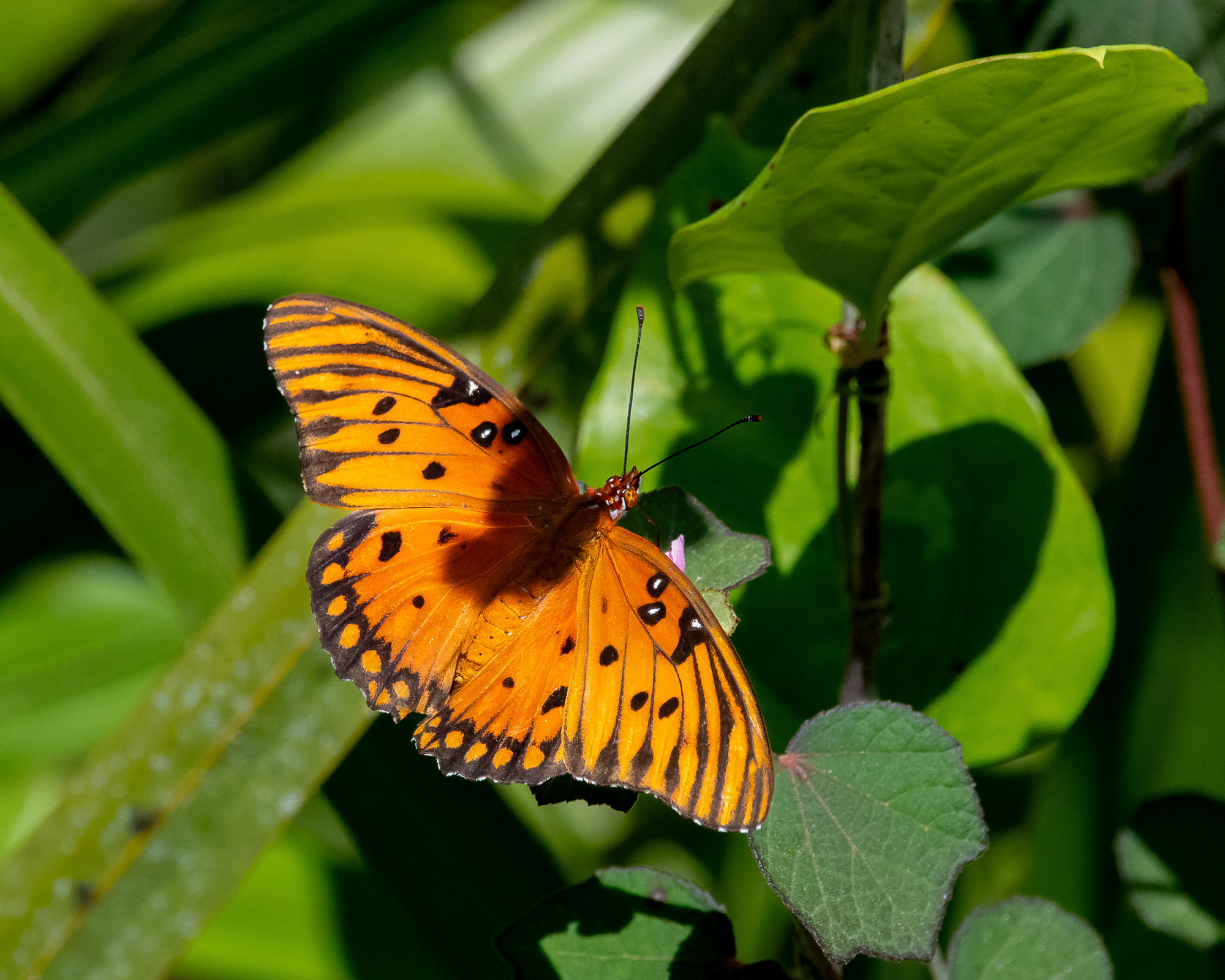
At this time of year, sighting a Gulf Fritillary butterfly is very common. But, today, we found a larva which had nearly formed a chrysalis of that butterfly for the first time at this place. We saw more than a dozen flower species today, all of which we have encountered previously here. But, today, we found a type of orchid we have never seen here.
Our lifestyle may be changing as are we, but our lives continue to be on a journey which offers marvels for us to behold. Familiar or new, we plan to absorb it all!
Common Sunflower (Helianthus annuus) and Carpenter-mimic Leafcutter Bee (Megachile xylocopoides). This bee carries pollen on hairs on the abdomen instead of baskets on their legs like other bees.

We came across a larva about to be a chrysalis for the Gulf Fritillary (Dione vanillae) butterfly. Adults were plentiful this morning.
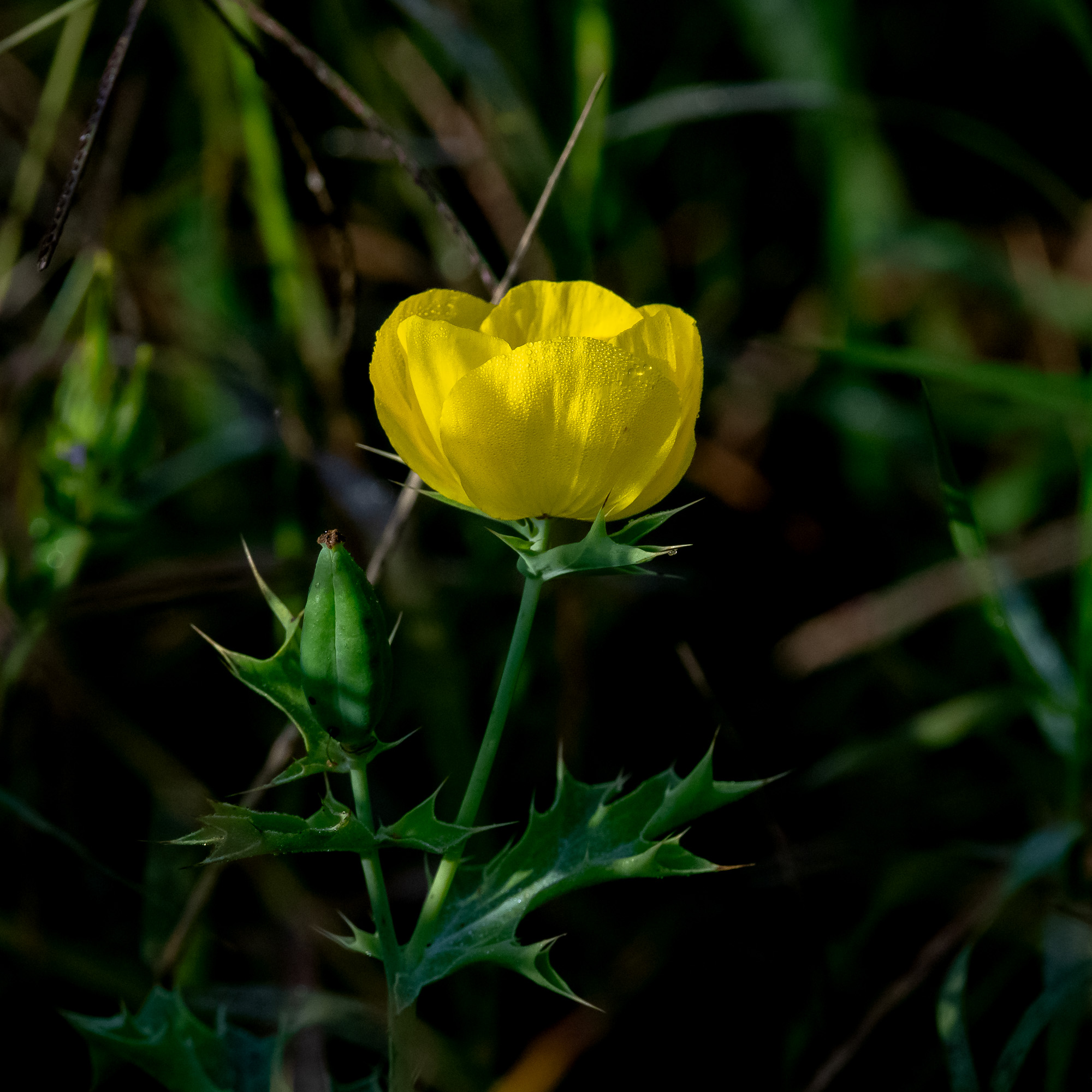
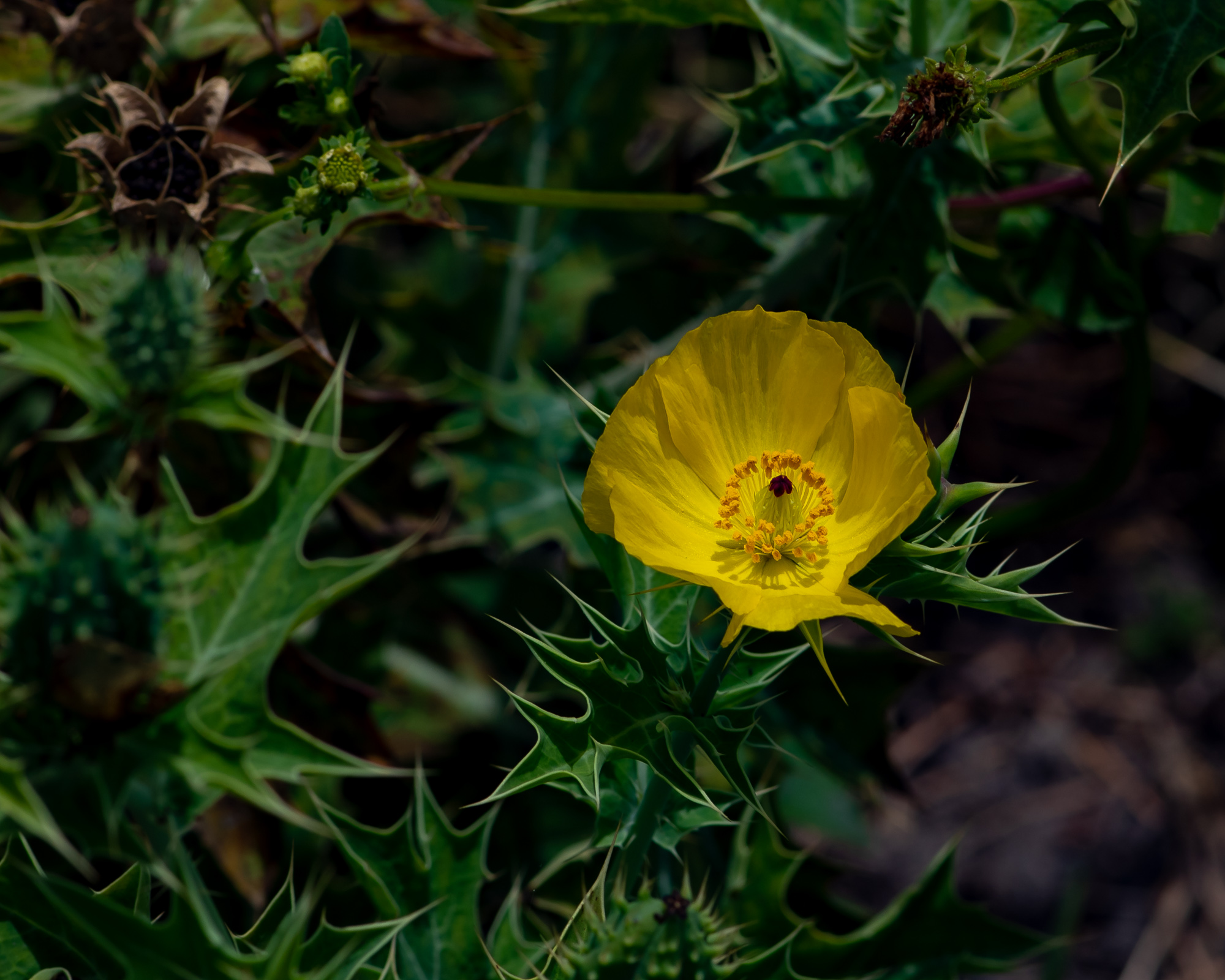
Spiny thistle-like leaves of the Mexican Pricklypoppy (Argemone mexicana) protect the large lovely flowers. It can be found in most states of the eastern U.S.
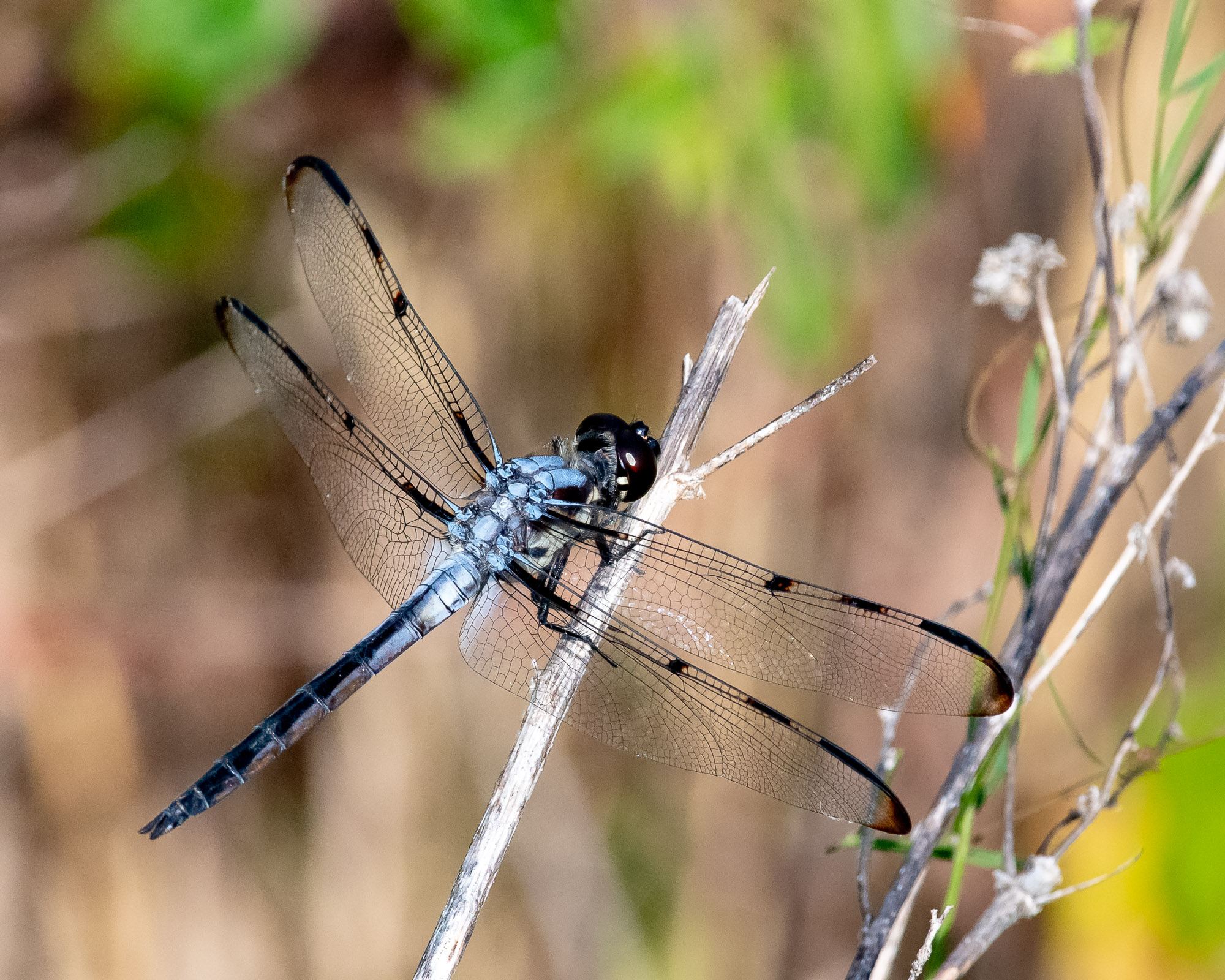
An abundance of blooms attracts an abundance of insects. That is quite satisfactory for the Bar-winged Skimmer (Libellula axilena). This large dragonfly happens to enjoy a bug buffet.
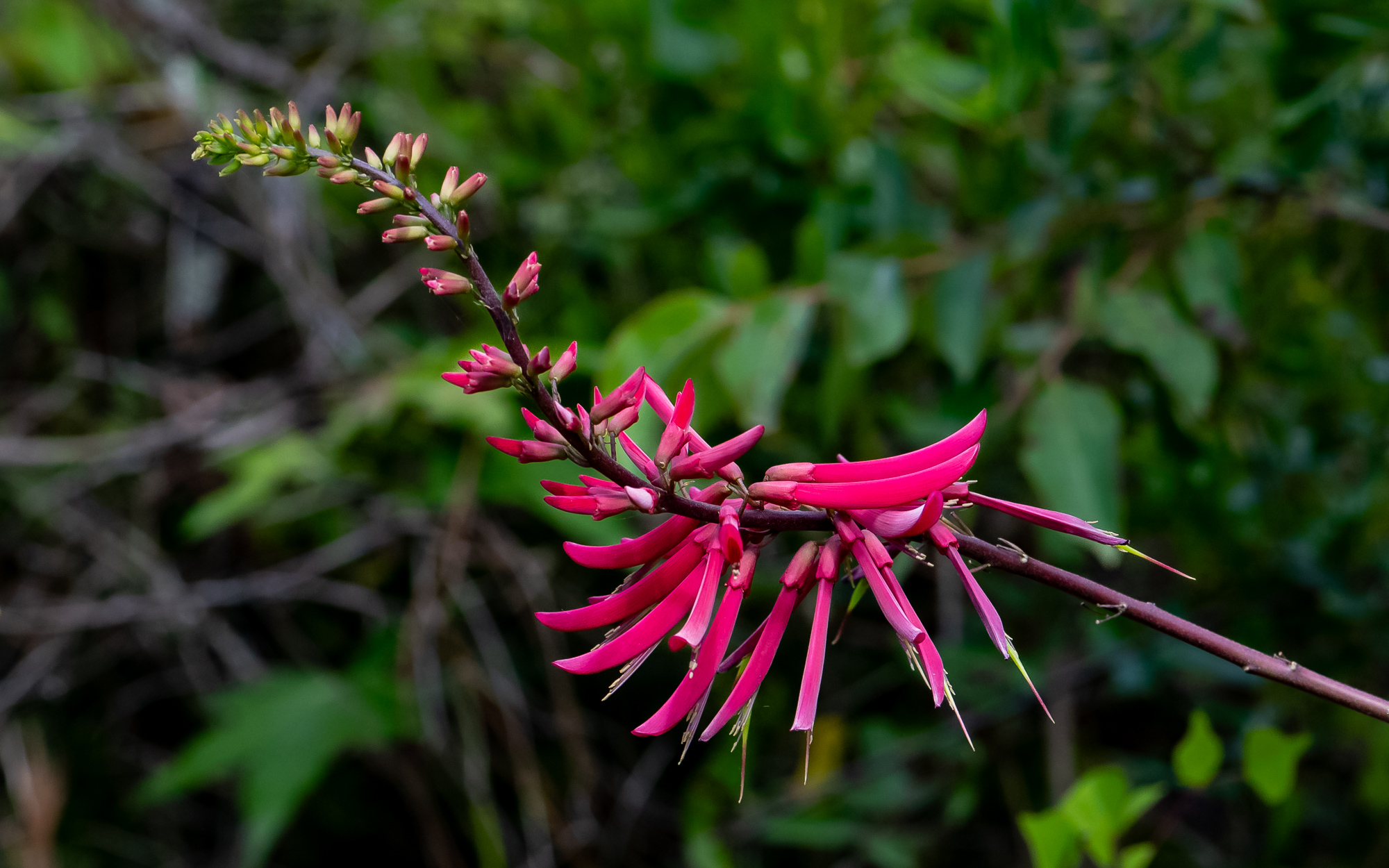
Nothing like a bit of bright red to offer some highlights to the edge of the forest. Today, Coral Bean (Erythrina herbacea) seemed especially abundant.
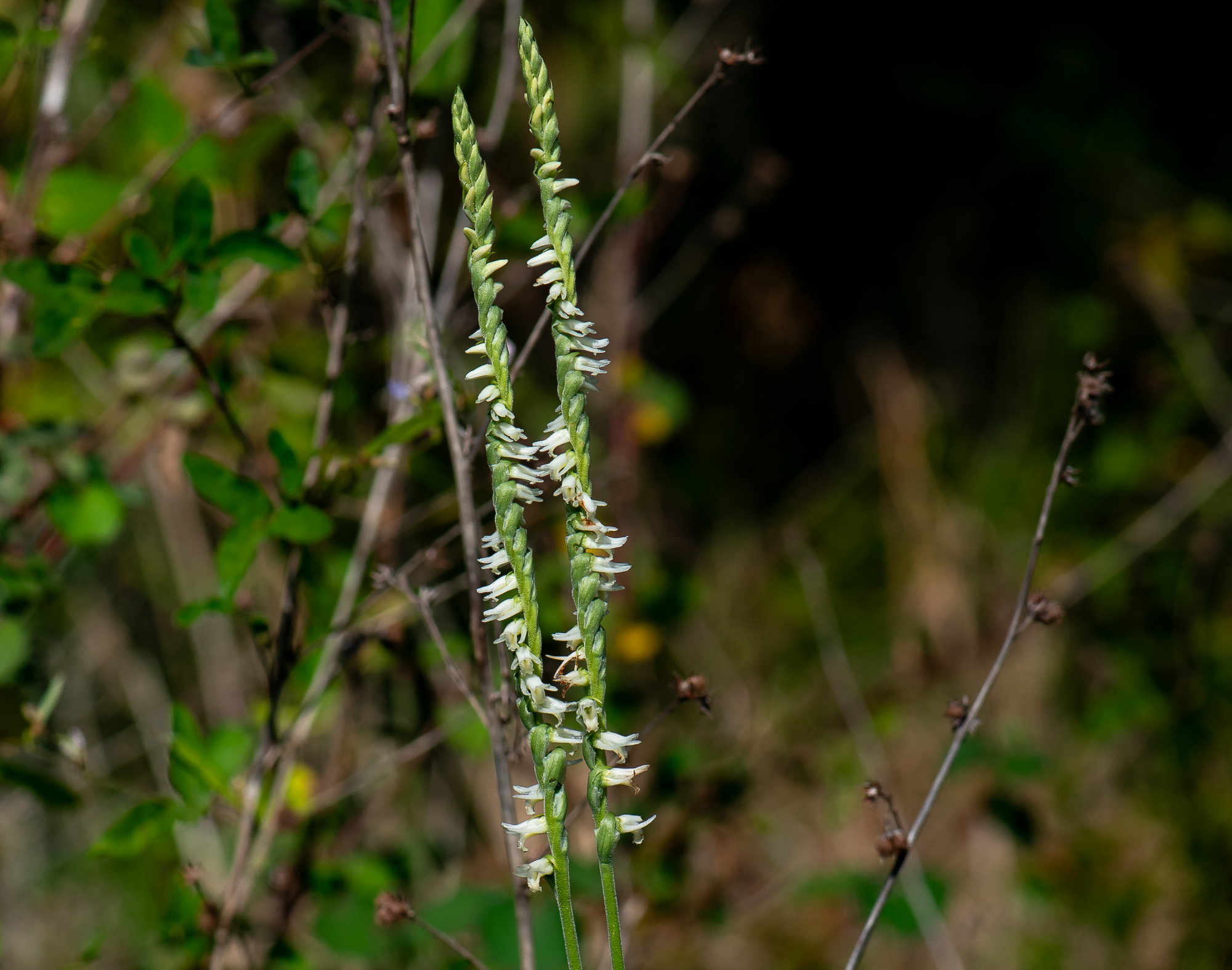
Something new for us here was finding several Spring Ladies’ Tresses (Spiranthes vernalis). These are terrestrial orchids and can sometimes grow to 24 inches in height.
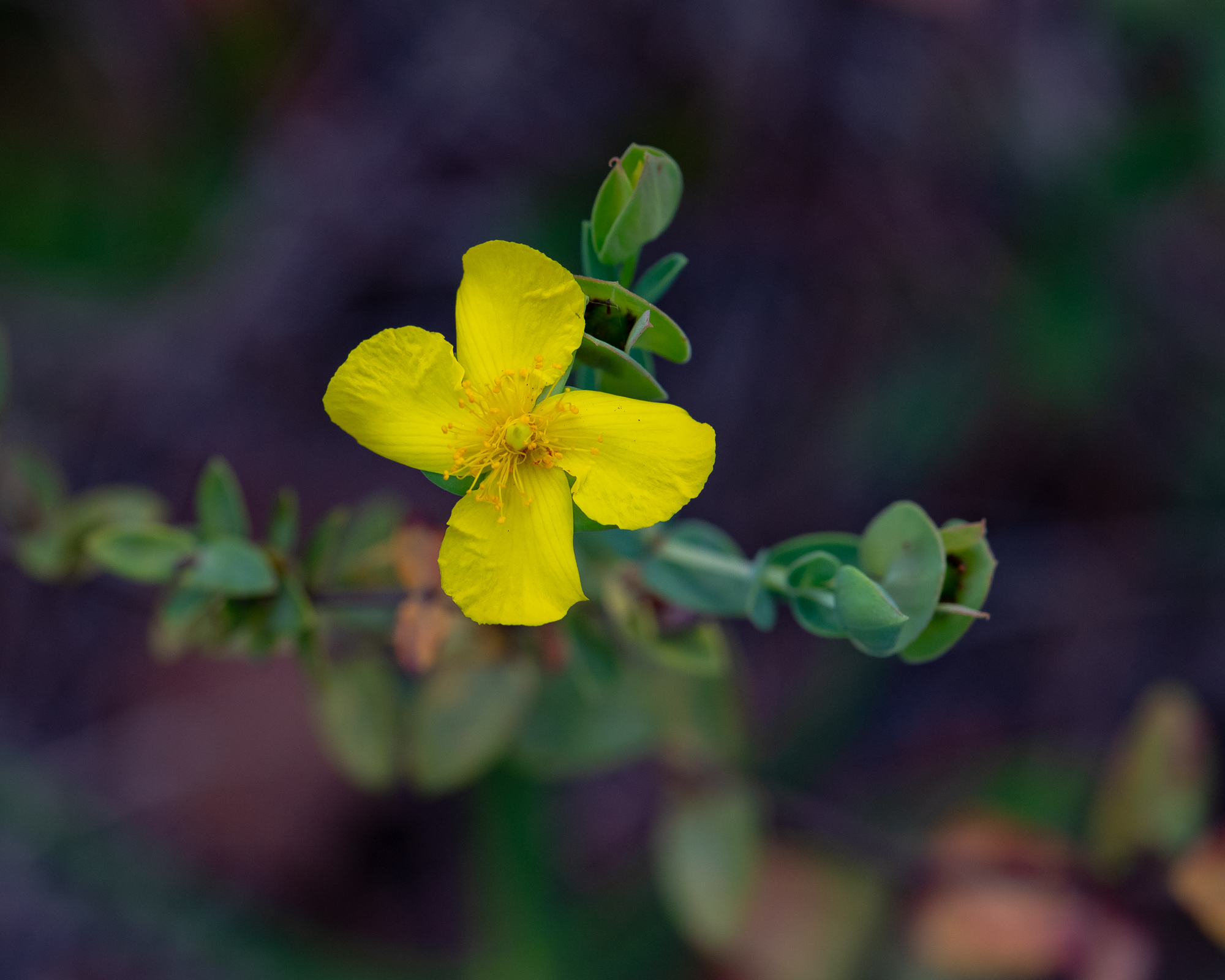
The lovely butter-colored blossoms of Four-petal St. Johnswort (Hypericum tetrapetalum) are a welcome sight in the pine forest. Blue-green oval leaves which clasp the woody stems add to the unique nature of this plant which only occurs in Florida and southern Georgia.
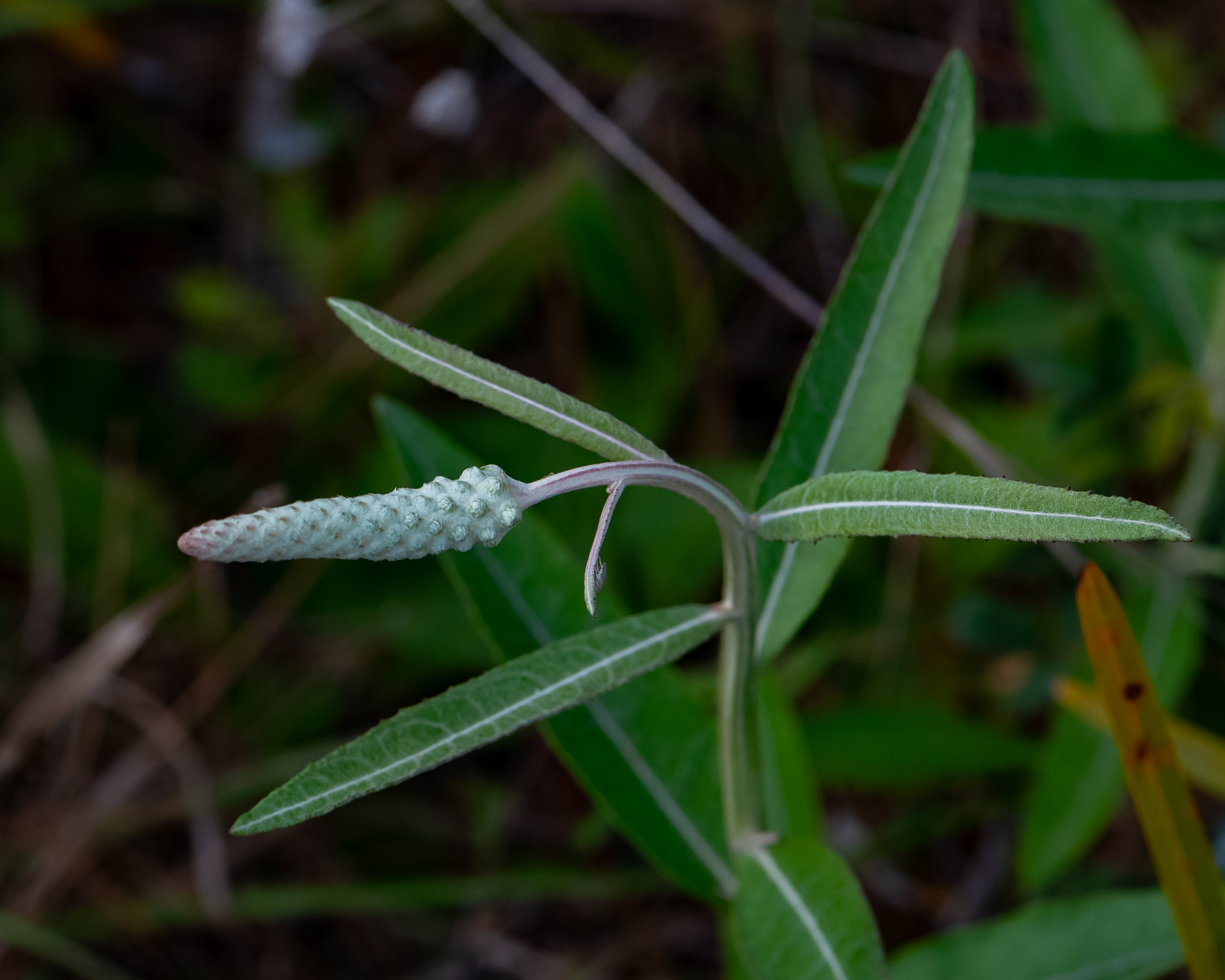
Its unique appearance belies the fact that Blackroot (Pterocaulon pycnostachyum) is a member of the Aster family, although, it is the only member of its genus within Florida. No, I have not dug one up to verify the roots are black. (And don’t recommend anyone else should, either.)
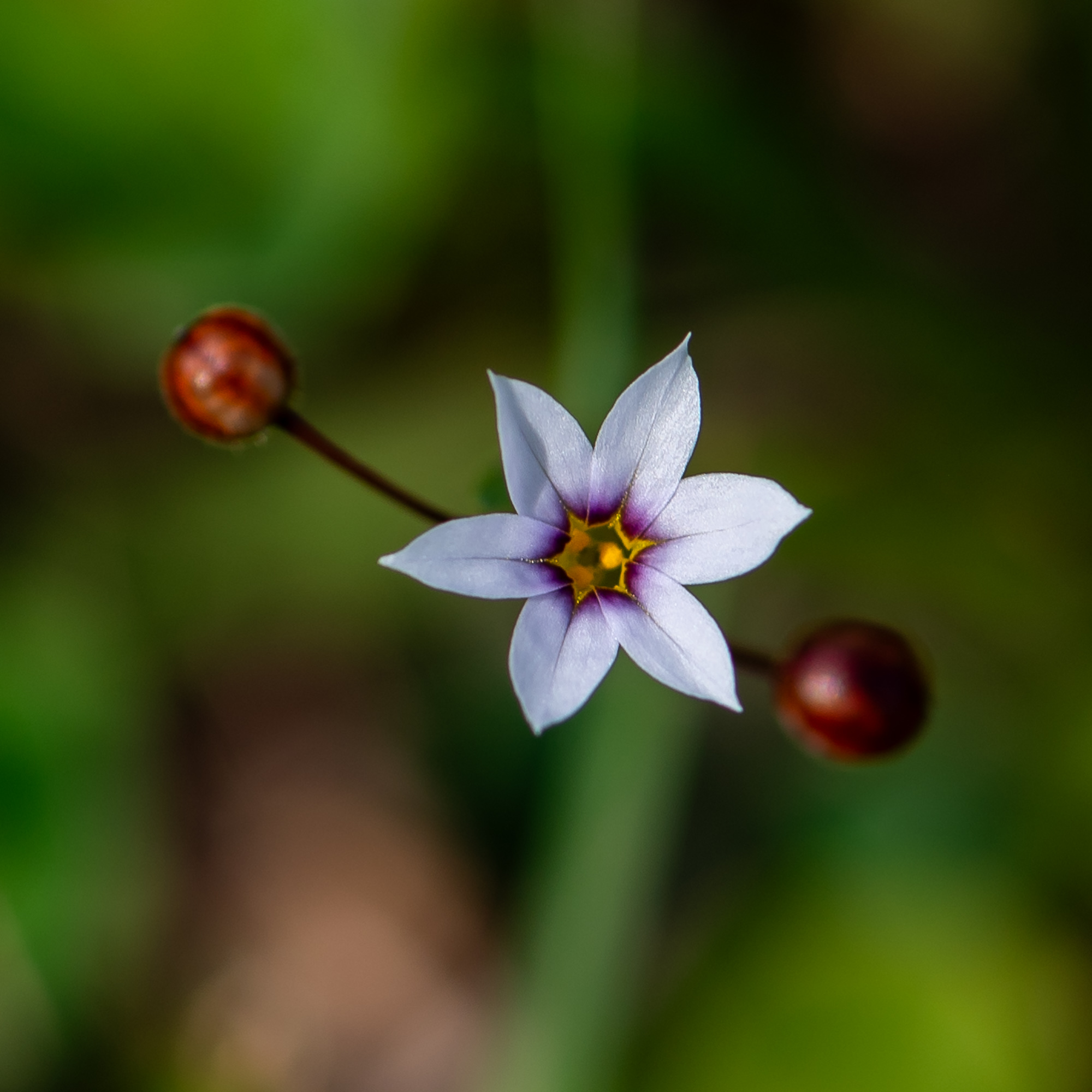
With flowers seldom wider than about one-quarter inch, Annual Blue-eyed Grass (Sisyrinchium rosulatum) could easily be overlooked. That would be a mistake. The white and often yellow blossoms are exceedingly beautiful. (In my not-so-humble opinion.)
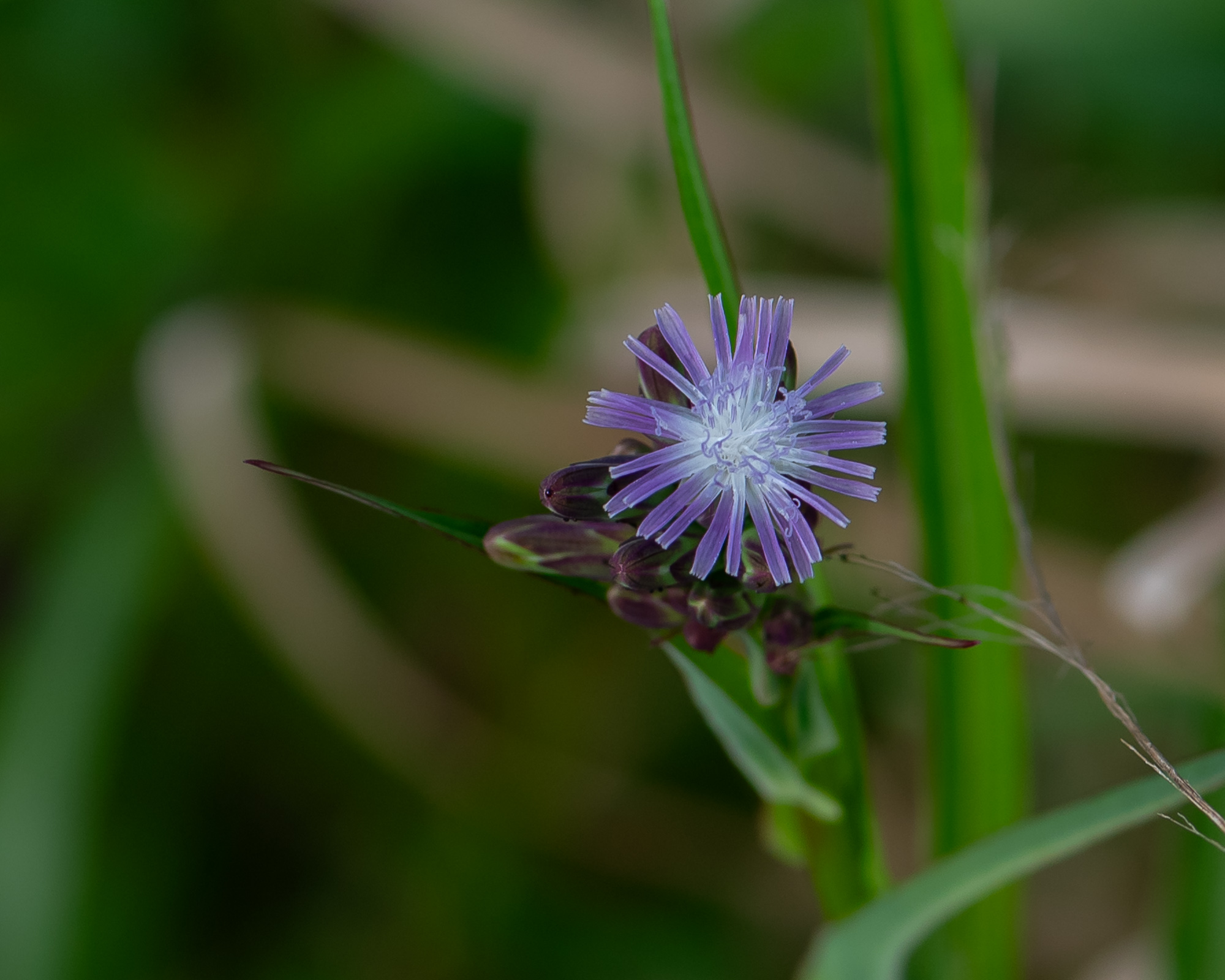
We came across a flower which, although common, we don’t recall seeing before. Chicory (Cichorium intybus) is abundant across the country and throughout most of the world. It is not native to North America and may have originated in the Mediterranean. The species name, intybus, is derived from the Egyptian word for January.
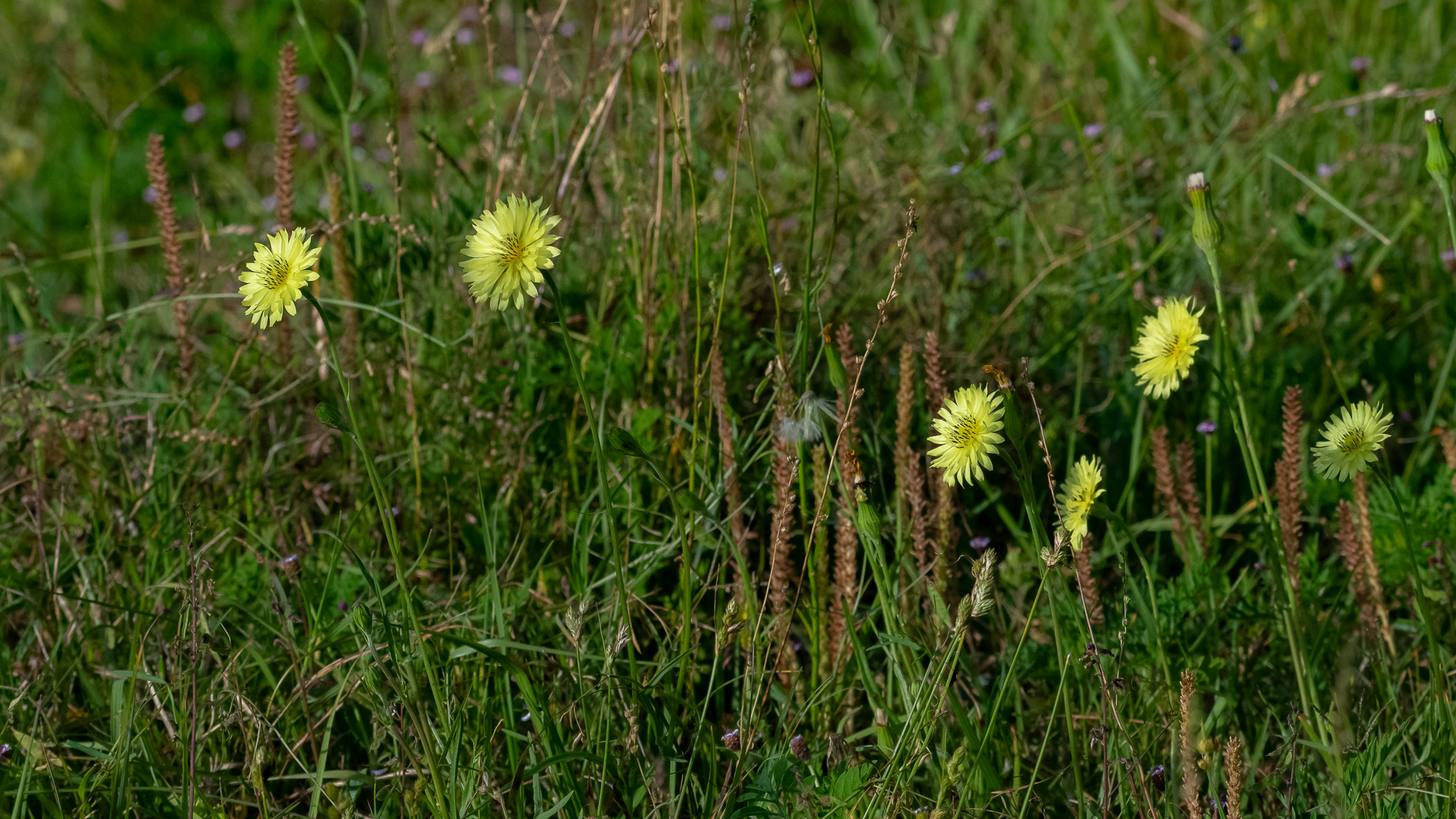
From the real thing to a pretender. Not chicory. Not exclusively from Carolina. Not a desert plant. Other than that, the Carolina Desert-Chicory (Pyrrhopappus carolinianus), also known as a Texas Dandelion, is one of my favorite flowers.
Due to necessity, we have been exploring many nearby places over and over again. Each trip offers us something new as well as much which has become quite familiar. We are content.
Enjoy your search for a natural place and come back for a visit!
(Click on images to enlarge, click again to zoom.)
A symphony during breakfast is a great way to simultaneously relax and be filled with anticipation at what other treasures Nature will reveal as our quest continues. The musical richness provided by this morning’s performers was simply incredible. Loud and declarative, the White-eyed Vireo kept telling us “I’m a Vireo. I’m a Vireo.”. Clear chirps in sets of two and three notes were from a Northern Cardinal in the soprano section. Supporting the Cardinal was an incessant Tufted Titmouse who announced this performance was all about “Peter, Peter, Peter“. Comic relief came from just off stage where a gang of mischievous Brown-headed Nuthatches burst into occasional “rubber-ducky” squeaks. Overhead, the brass section regally sounded the trumpets as a pair of Sandhill Cranes passed by. Rhythm was not necessarily steady but was certainly attention-getting as a big Pileated Woodpecker whacked on a hollow pine branch.
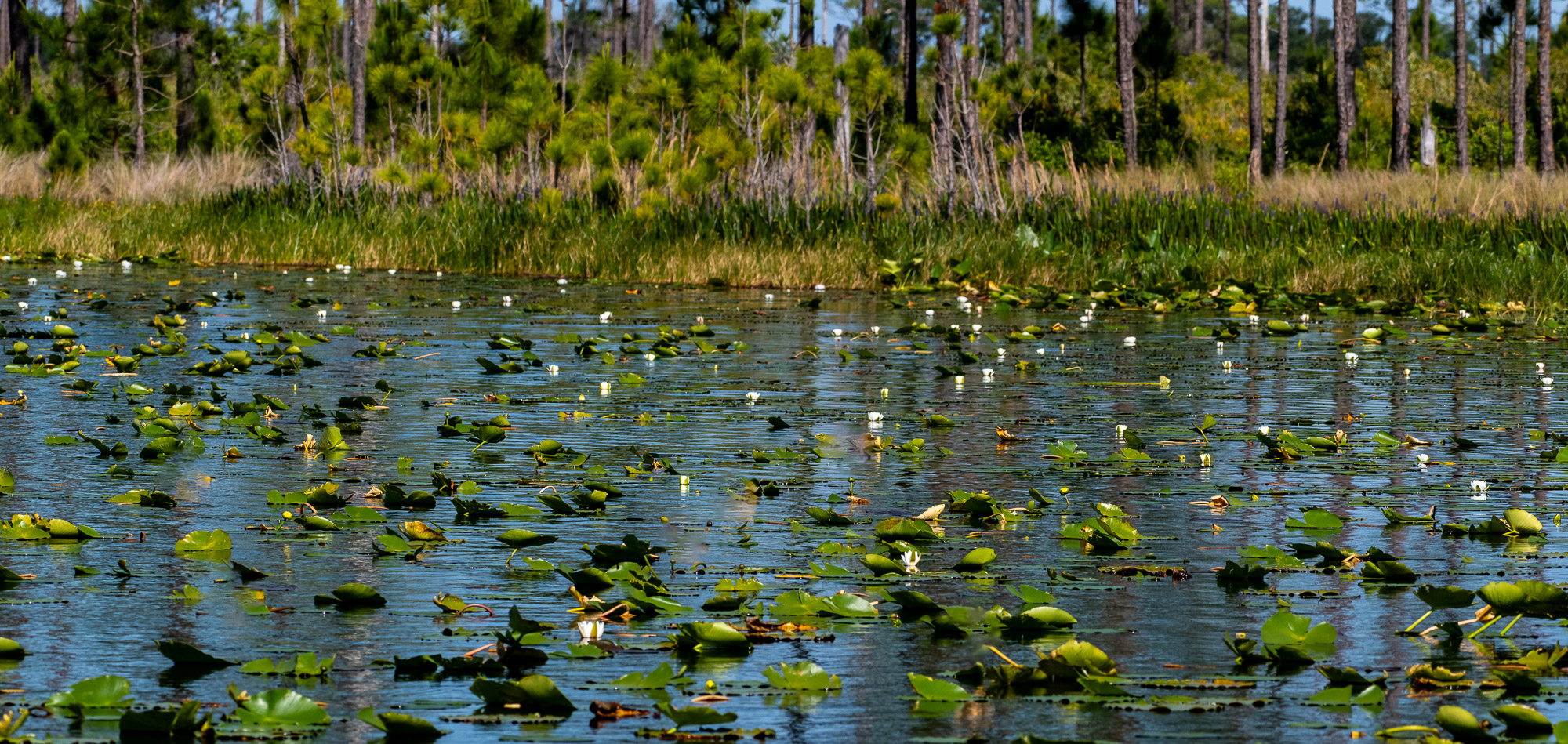
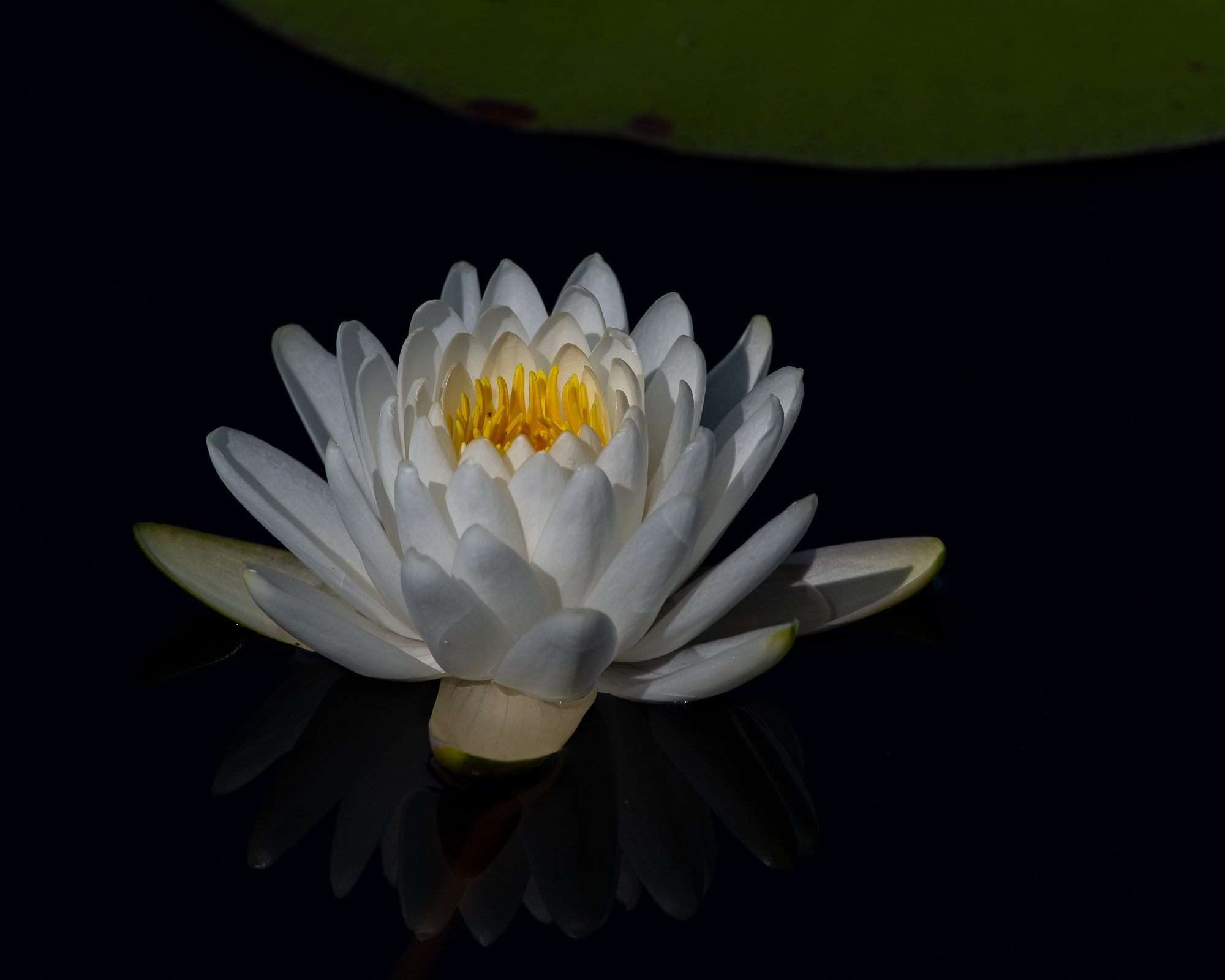
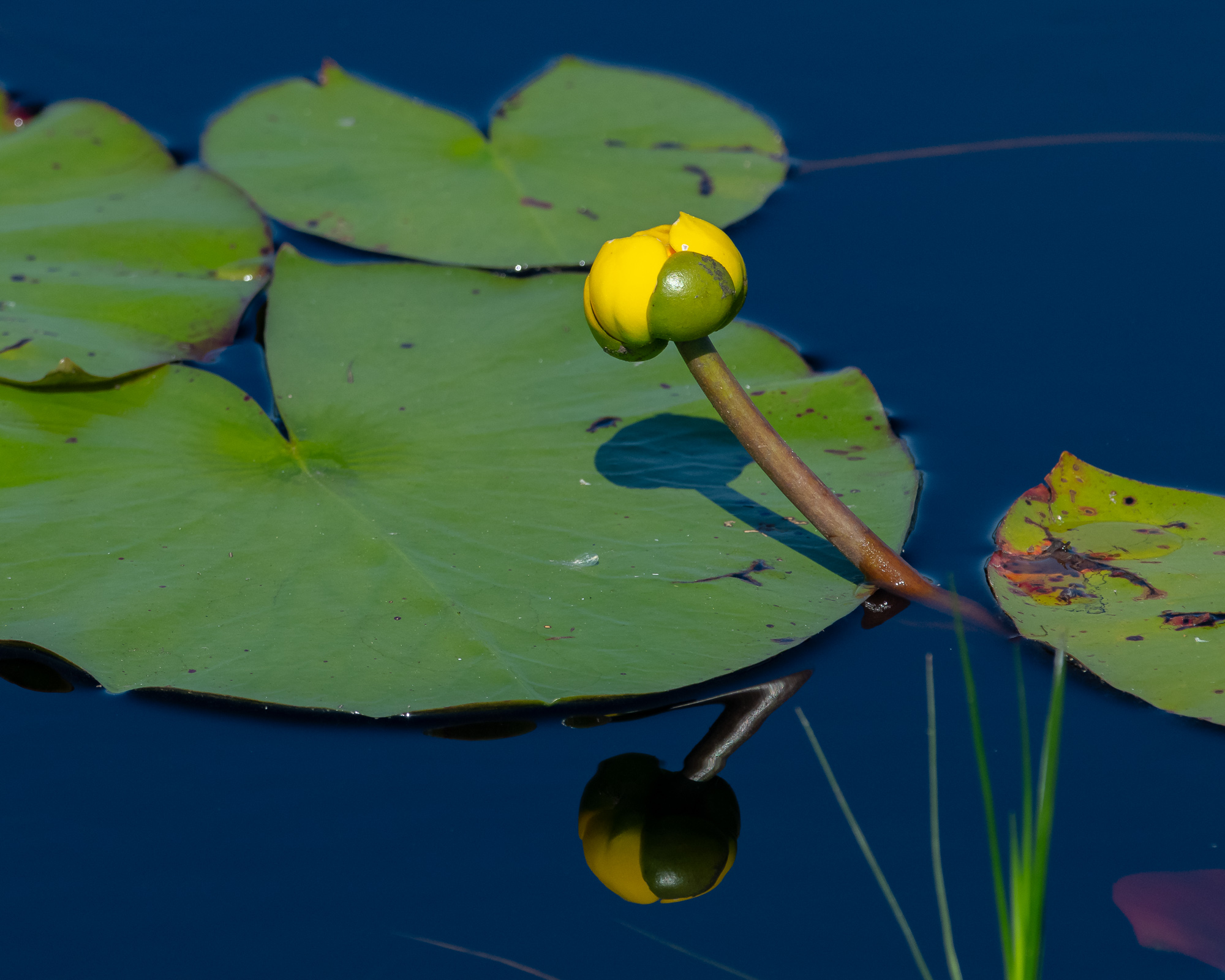
We hope you had a good breakfast and are ready to trek down to the lake. The surface of Lake Godwin is strewn with blooming American White Lilies and bright yellow blooms of Spatterdock. An Anhinga grunts at us disturbing his fishing and flaps away to find another spot. A couple of alligators peek from under the lily pads. Pig Frogs grunt from the shoreline.
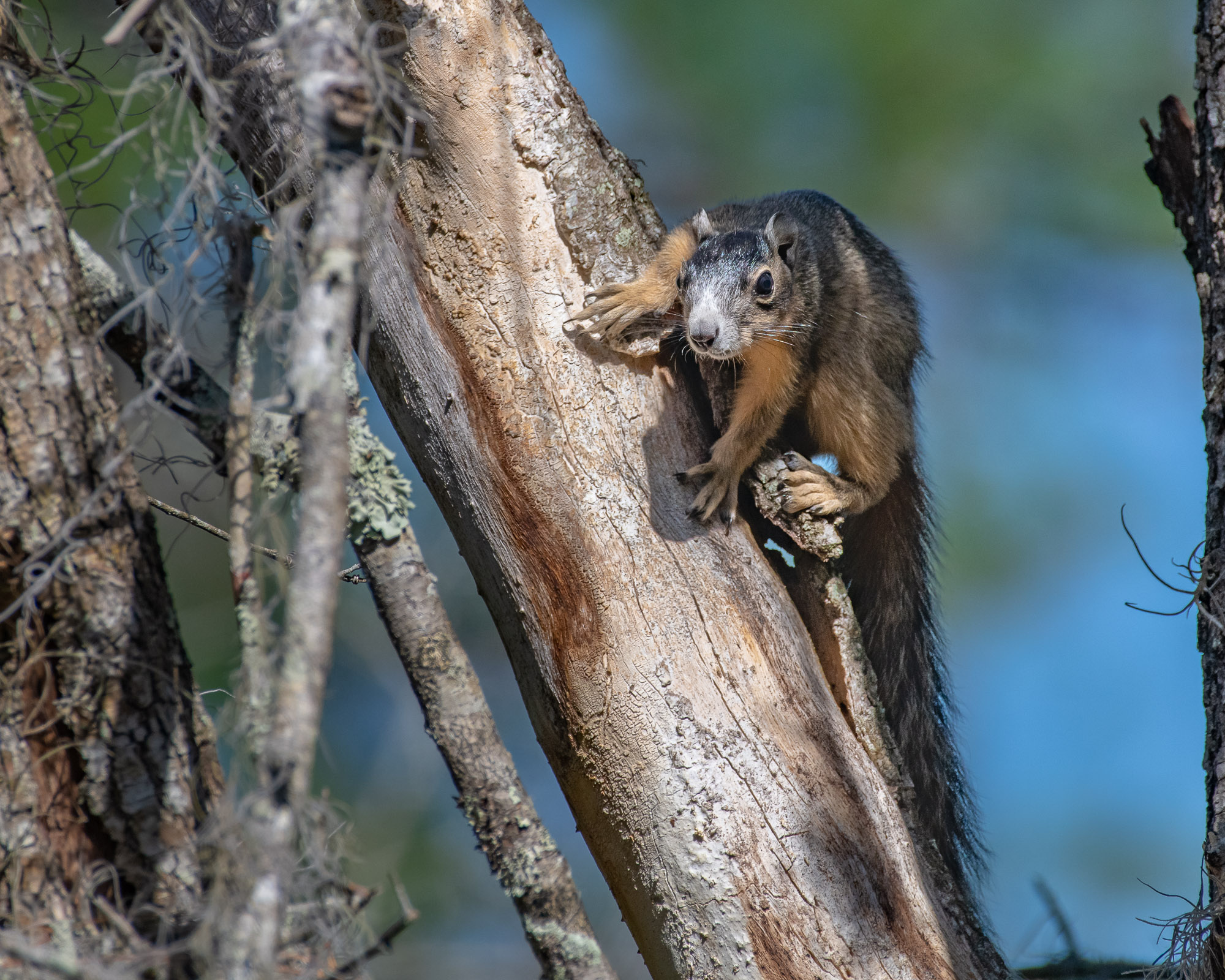
As we head back toward the main forest road, a pair of Sherman’s Fox Squirrels chatter at us from a nearby snag. We are always a bit startled at how large these mammals appear compared to their much more common Gray cousins.
Riches abound along The Ridge. Geologically unique, there are species of flora and fauna within this section of the Lake Wales Ridge State Forest which are found nowhere else on the planet. The forest serves as a habitat for 33 plants and 36 animals that currently have federal or state status as threatened or endangered. All of this potential treasure to seek and today you are the only other visitors we have encountered.
As we enjoy a particularly profuse growth of blooming Prickly Pear, Gini once again states the obvious. “The flowers, the trees, all these birds and insects, the fresh air, aroma of the pines – all of this – any time we want to enjoy it. We really are blessed, aren’t we?“. Yes, my love. We really are.
Look what y’all found today!
The intricate beauty of an American White Waterlily (Nymphaea odorata) not only attracts human flower-lovers, but also an incredible variety of nectar-seekers. Portions of Lake Godwin were blanketed in white this morning.
Interspersed with the lovely white lilies are delightfully bright yellow round blooms of Spatterdock (Nuphar advena). The six sepals of these flowers form a cup shape and even when in full bloom appear to be only half-opened. A prominent stigma is usually yellow but we found one with a nice orange glow.

Poking through the lily pads, a stem of Smallfruit Beggarticks (Bidens mitis) displays its own yellow blossom.

Large and in charge. This appears to be a young Sherman’s Fox Squirrel (Sciurus niger ssp. shermani). As it matures, the mask on its face will become darker.
Endemic to Florida, the Florida Scrub Roseling (Callisia ornata) is related to dayflowers and spiderworts. Typically growing less than 12 inches tall, the pink flowers only bloom for one day. Our timing was good!

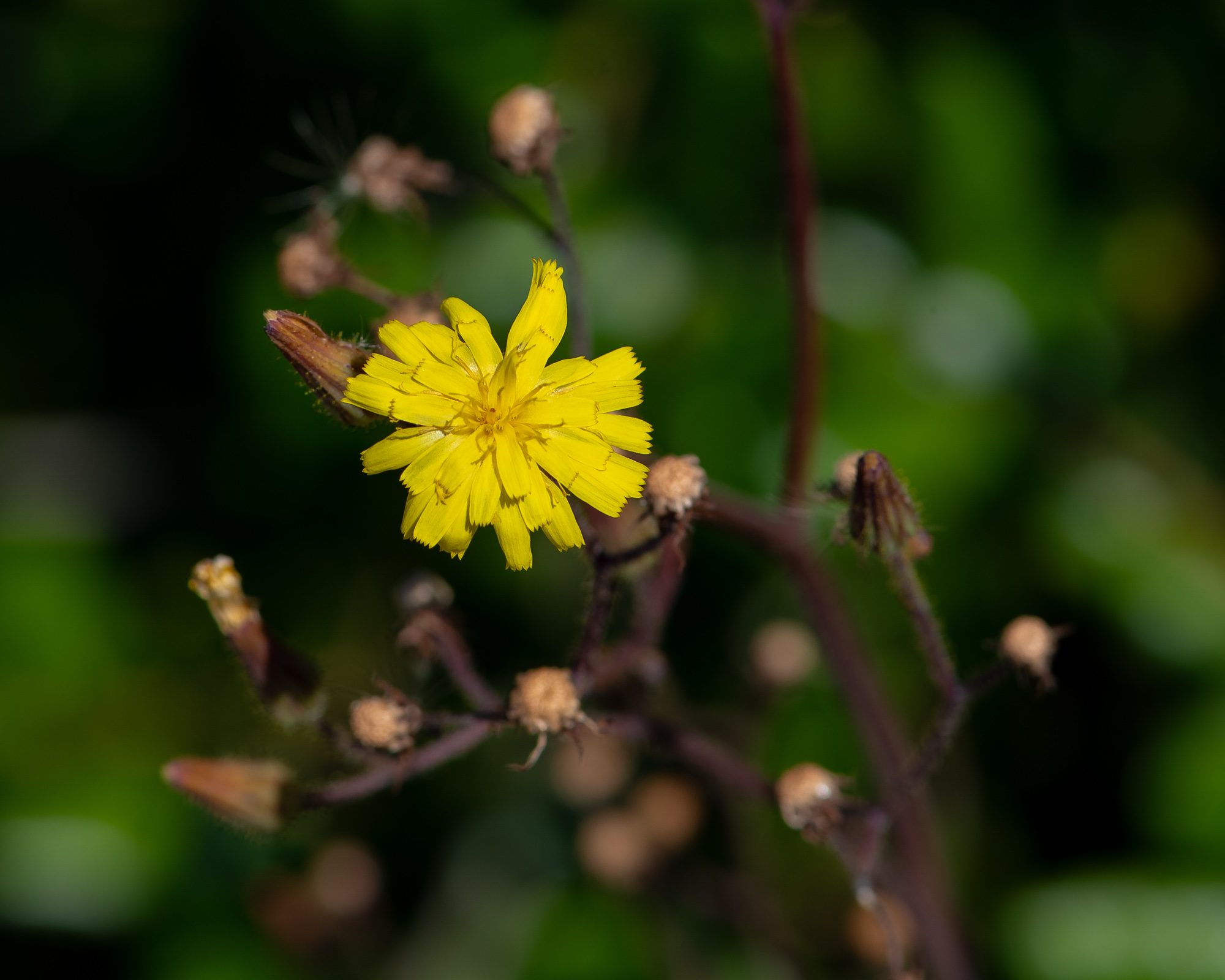
More good timing. The petals of Coastal Plain Hawkweed (Hieracium megacephalon) only remain open in the morning. A near Florida endemic, it has been reported in a couple of counties in Georgia.
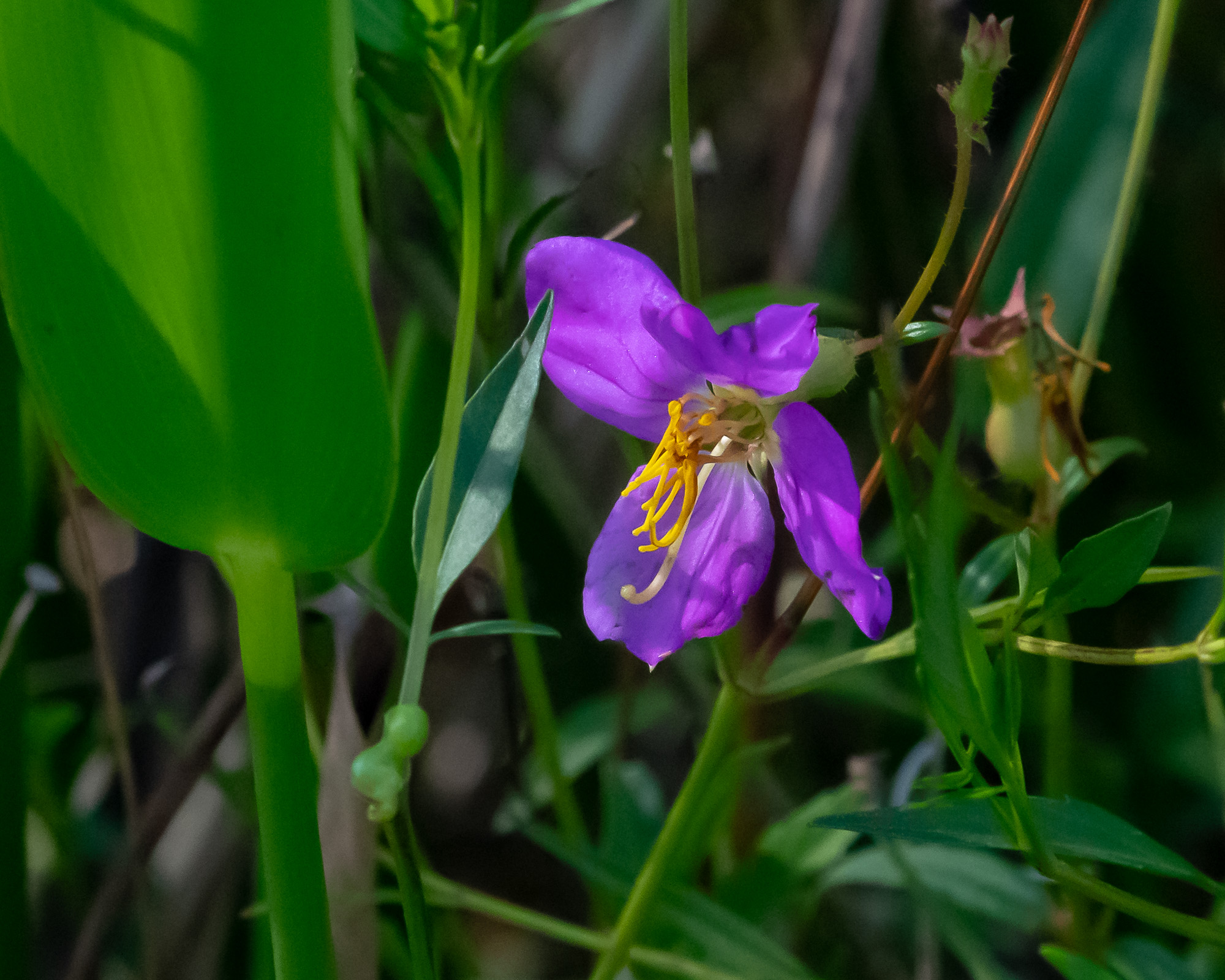
Although it is common in much of the eastern United States, Maryland or Pale Meadowbeauty (Rhexia mariana) is uncommonly beautiful wherever it may be encountered.
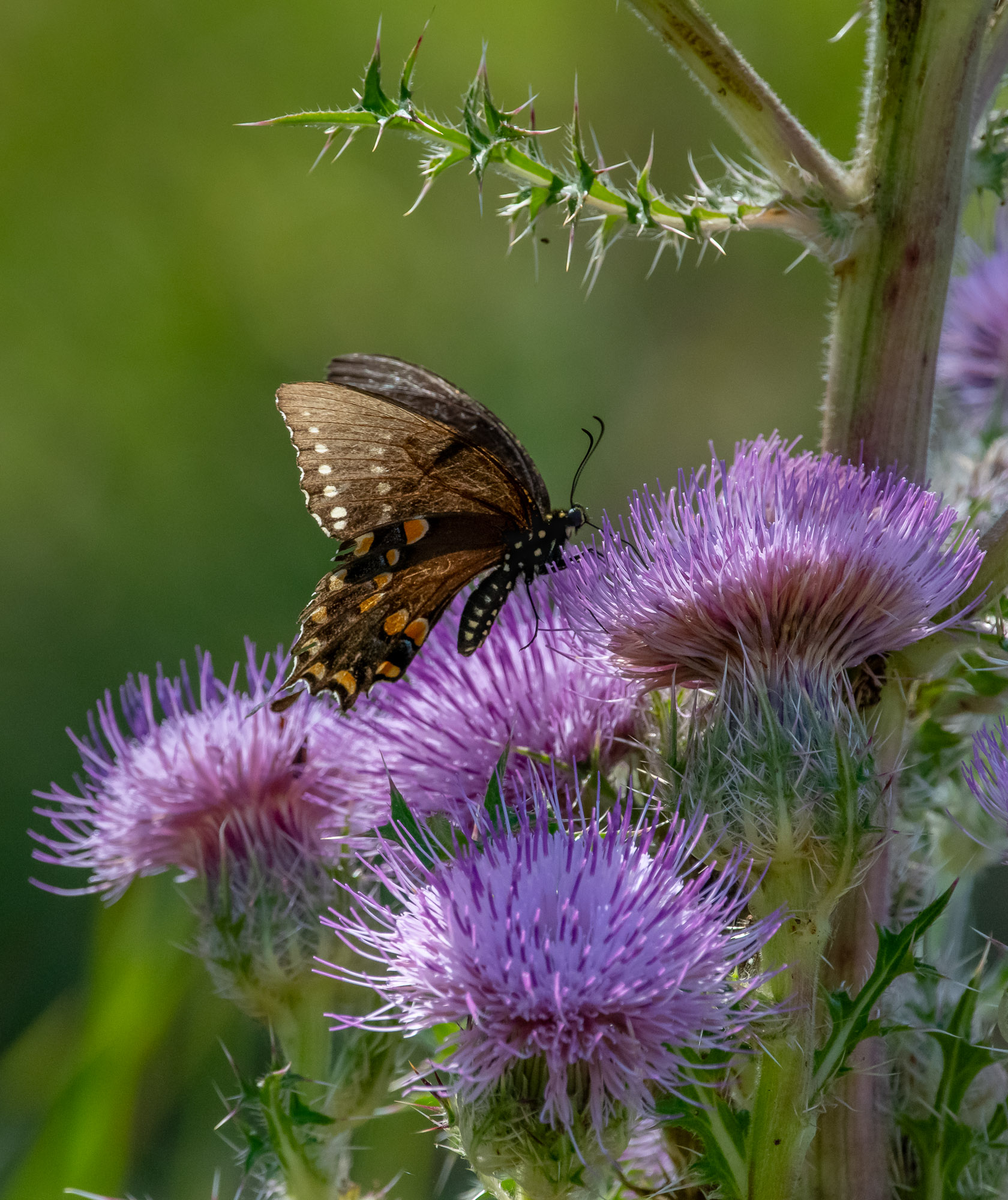
A gorgeous Spicebush Swallowtail (Papilio troilus) has no problem navigating the spines of a thistle to reach the nectar it seeks.
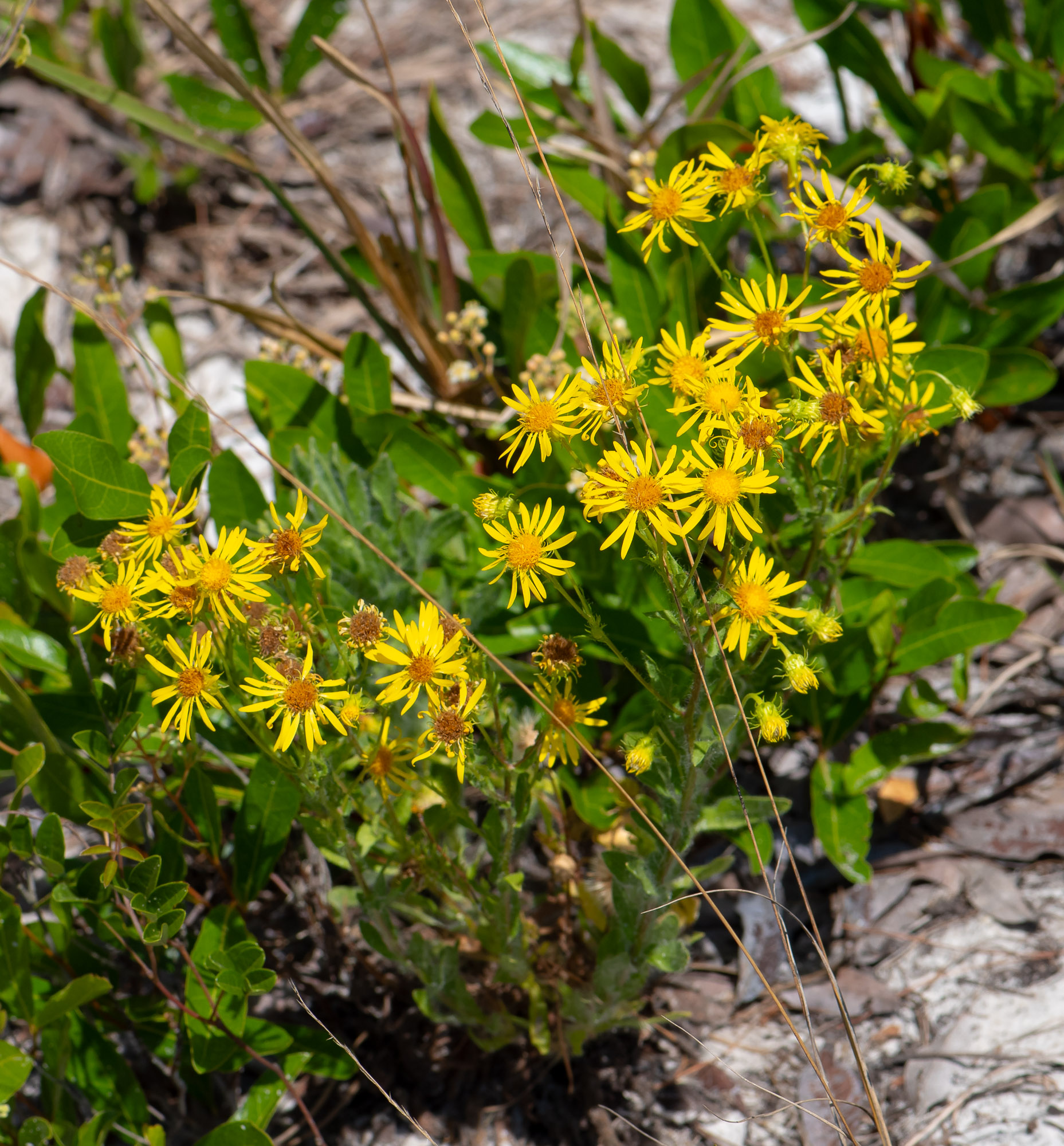
Endemic to Florida, Scrubland Goldenaster (Chrysopsis subulata) is one of 11 species in its genus in Florida. Six of those are found only in Florida. A unique leaf and flower petal structure, habitat and early bloom time help identify this particular species. Besides all its “uniqueness”, a bunch of them sure look pretty.
Endemic to Florida, a Florida Scrub Jay may be taking this fresh morsel to a young one. Normally, it will devour its prey soon after it catches it. I think this bird was suspicious of our presence and may not have wanted to reveal a nest location.

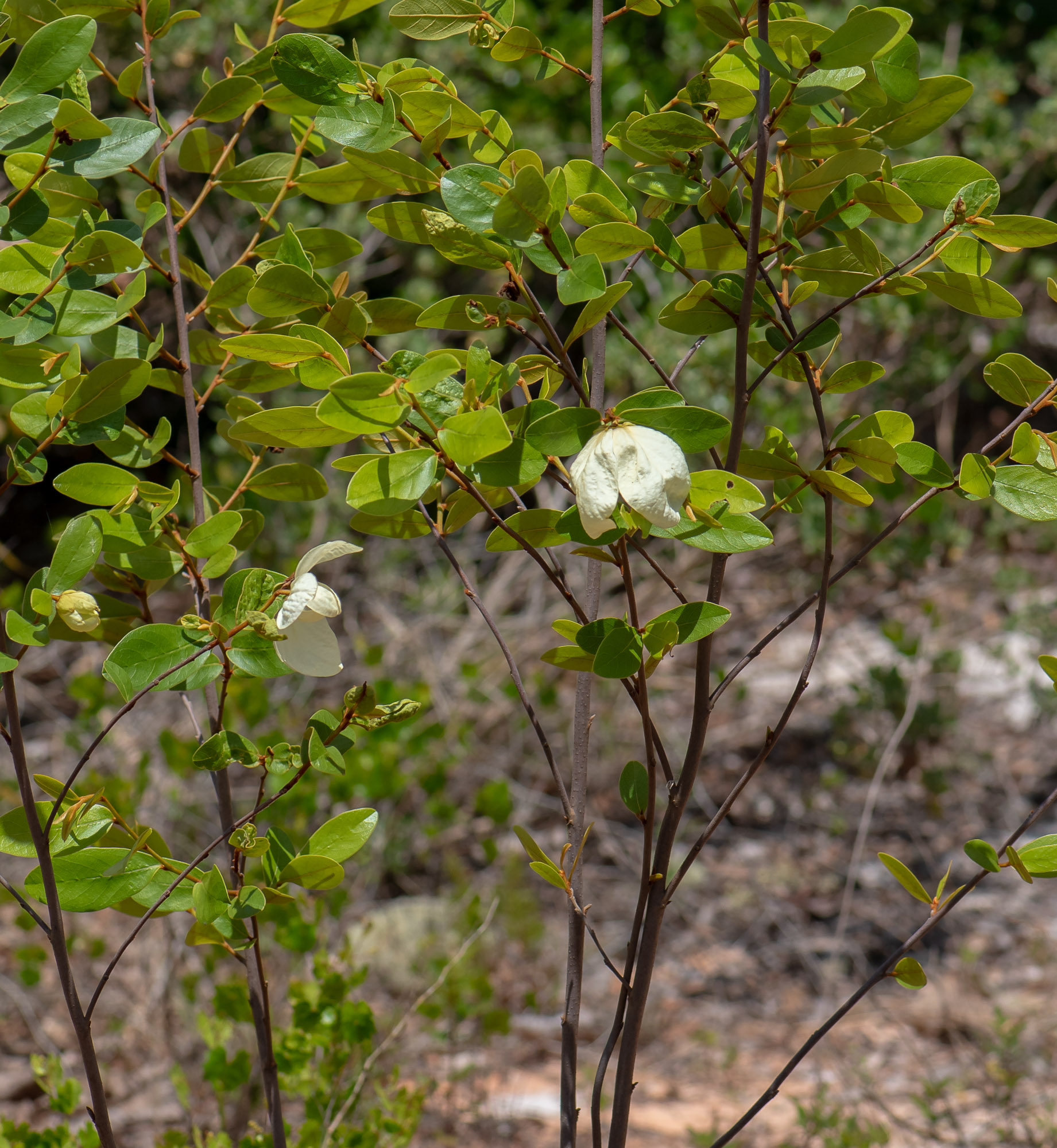
Endemic to Florida, the Bigflower Pawpaw (Asimina obovata) can grow to over six feet tall. Host plant for the Zebra Swallowtail butterfly, the fruit is supposedly edible. We’ve never been able to beat the animals to it to find out.

Brunch! A White-eyed Vireo came away from the buffet with a fresh Cicada.

Various forms of Butterfly Milkweed (Asclepias tuberosa) received that common name for a good reason. Several species of butterfly depend on the plant to host future generations. We found a sub-species called Rolfs’ Milkweed (Asclepias tuberosa ssp. rolfsii), which can be identified by its wavy leaf margins and it is usually significantly less bushy than other members of the species. (I’ll try for a better image showing those features next time. Remind me.)

As we prepared to head home at midday, a Northern Parula sang a nice farewell tune. Okay, so the tune was for a nearby lady-love, but we enjoyed it all the same.
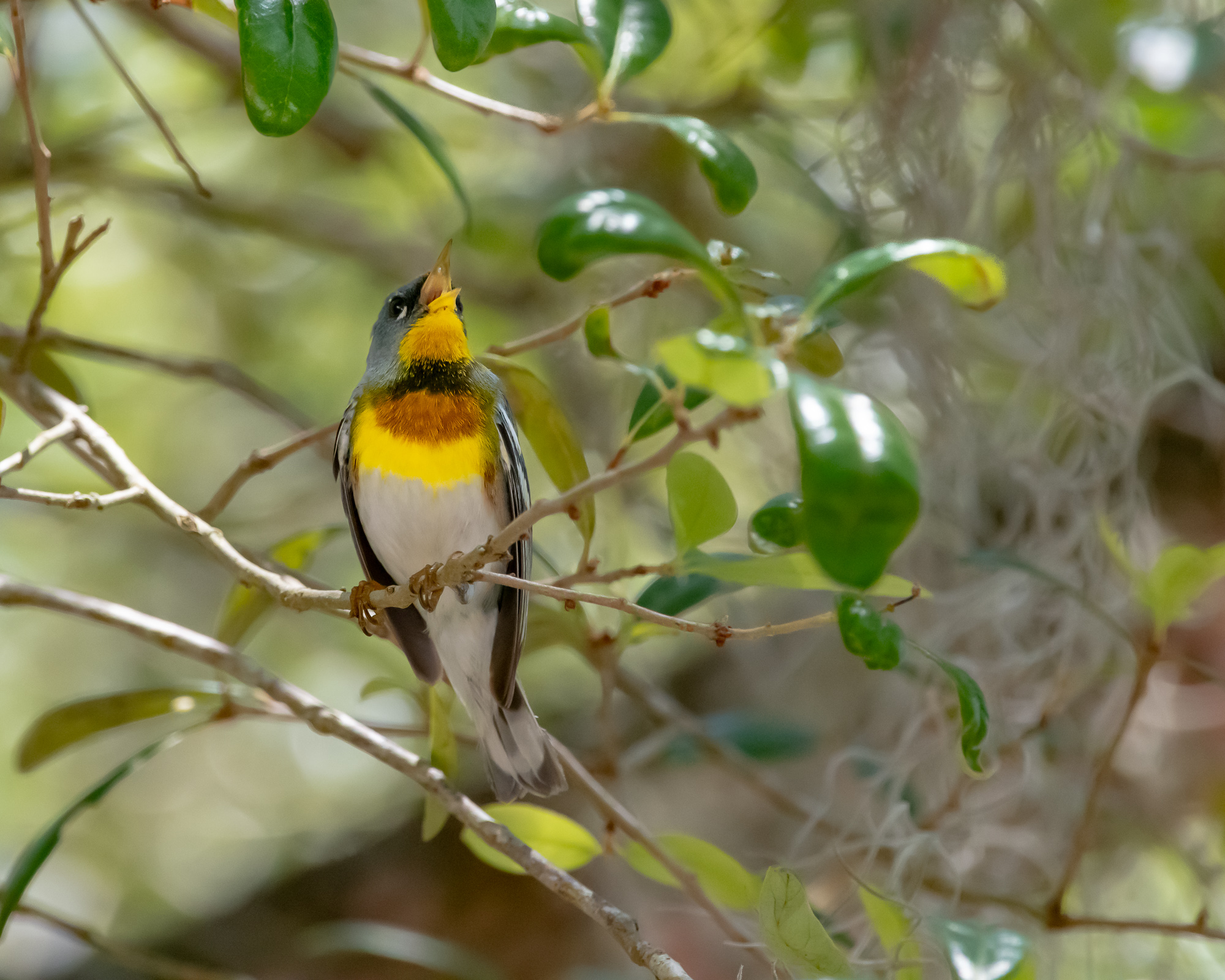
The Lake Wales Ridge. Filled with riches waiting to be discovered. Thank you for being there with us. Let’s do it again.
Enjoy your search for a natural place and come back for a visit!
 Our Natural Places