
(Click on images to enlarge, click again to zoom.)
“Withlacoochee”. I like the sound. I really like the river. The name may have evolved from Native American for “crooked river”, an apt description. Florida’s Withlacoochee River bubbles up within the depths of the Green Swamp and winds its way north and west for 140 miles where it empties into the Gulf of Mexico. It is a beautiful waterway.
Near the place where the Withlacoochee begins, Gini and I spend a lot of time exploring. It is quiet. Well, no, it really is not. It is devoid of human-originated noise. The orchestral composition of birds, insects, alligator growls and scolding squirrels – well, that is our kind of music.
We seldom see very many “wild animals” in this wilderness. The soft sand of the backroads tells us who lives here. Raccoon, opossum, white-tailed deer – these are the most common tracks we see. Less frequently found are the paw-prints of coyotes and the rounded image of a bobcat foot. We know the black bear resides within the vast forest but have yet to see one.
So, despite the presence of danger constantly surrounding us, we amble along and are contented with much tamer life forms. On this day in June, we spent time among a riot of color, bountiful bird beauty and incredibly interesting insects.
Normal summer rainfall has helped replenish the aquifer underneath the swamp, produced numerous clear creeks and enhanced the floral beauty we have come to love so much. The world contains much to make us feel depressed or angry. It also offers many natural oases where we may rest in its grace.
There are a half-dozen species of Rhexia in our area and I’m trying to be more diligent about trying to separate them. Not much luck so far. I’m calling this one Pale Meadowbeauty (Rhexia mariana), well, just because I can.

Gini heard it before she saw it. Typical. Soon, the bright red Summer Tanager gave us a glimpse as it chased bugs in the upper story of the tree canopy. Eventually, it hopped out in plain view to serenade us with a lovely loud burble for a moment.

Interesting bug. Interesting plant. A female Blue Dasher (Pachydiplax longipennis) on Bighead Rush (Juncus megacephalus).

Florida lists 30 (!) species of Ludwigia. Several are non-native plants imported for the landscape industry. Many of the natives are quite similar in appearance. Fortunately, this Narrowleaf Primrose-Willow (Ludwigia linearis) is easy to identify and we think it’s quite beautiful.

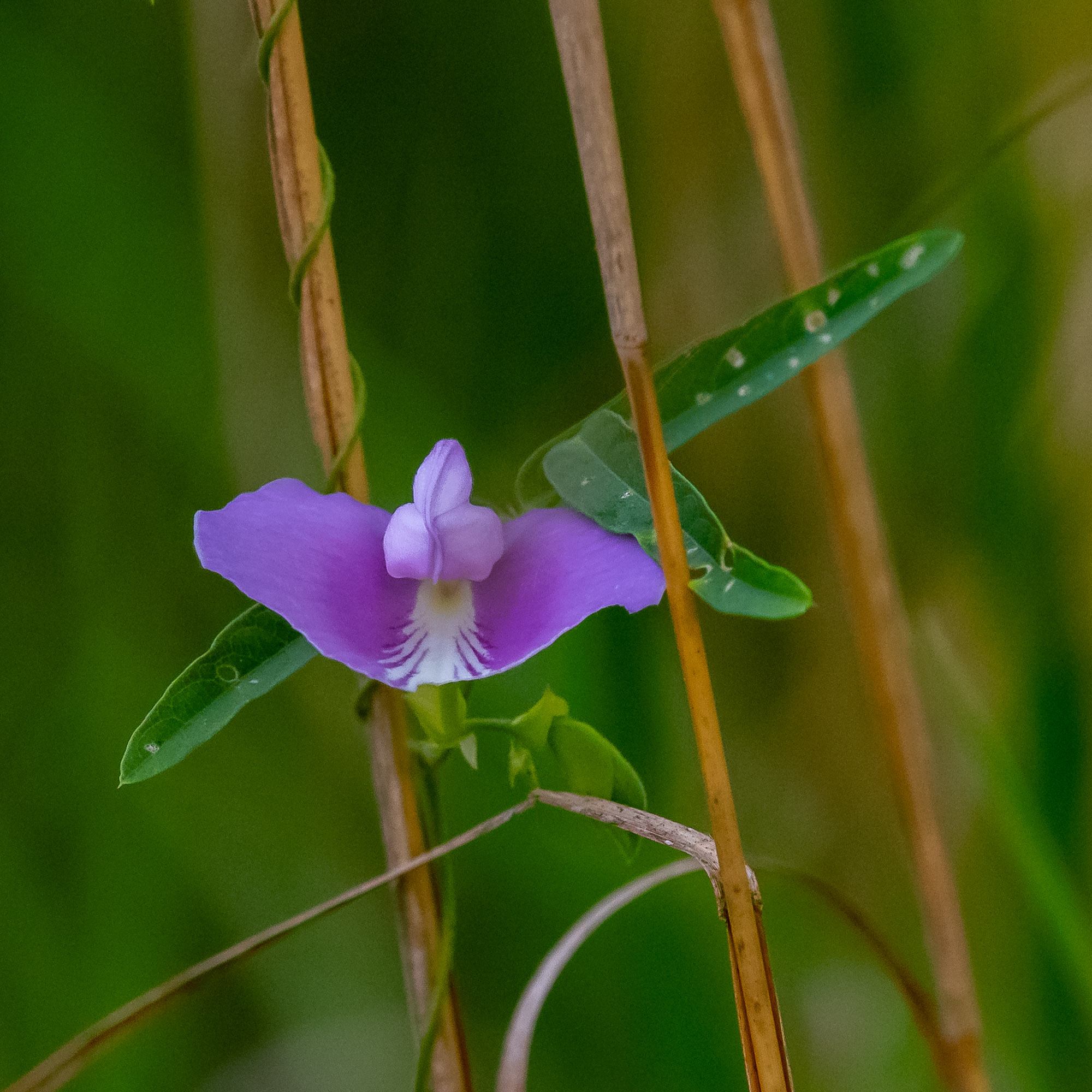
With lovely lavender arms open wide and a nice white runway, what pollinator could resist visiting the Spurred Butterfly-pea (Centrosema virginianum)?
Another red bird! This time, the abundant Northern Cardinal.

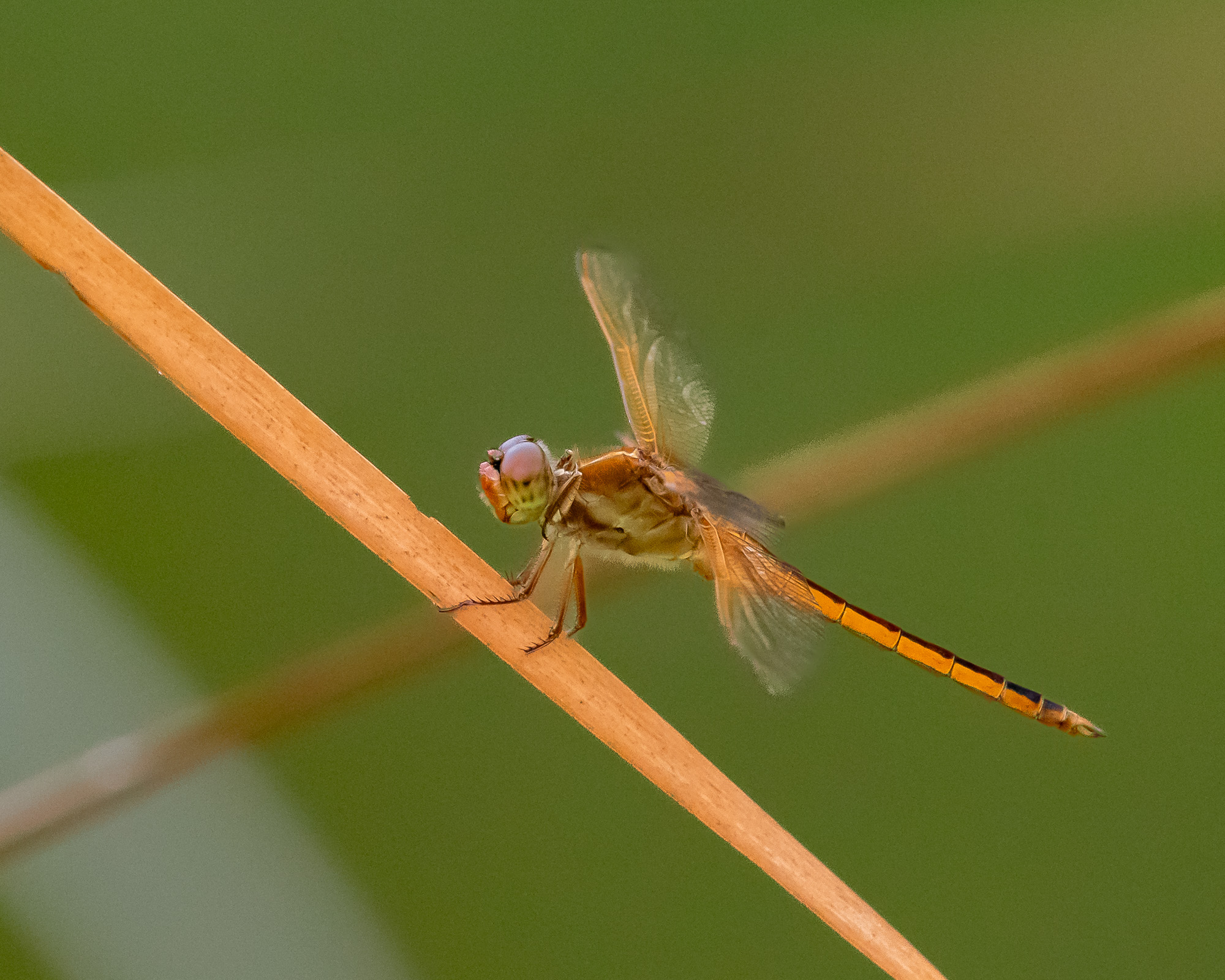
Brown. Orange. Gold. All have been used to describe the color of a Needham’s Skimmer (Libellula needhami). Handsome, no matter what you call it.
The Palamedes Swallowtail (Papilio palamedes) is one of the larger black swallowtails in our area and is fairly common throughout the southeastern U.S.

A few years ago, we were fortunate to find both Yellow Milkwort (Polygala rugelli) and Orange Milkwort (Polygala lutea) within a quarter-mile of each other. Each year since, they have returned to those same spots. The former is endemic to Florida while P. lutea is found in several southeastern states. (Some sources indicate these have now been placed in the genus Senega.)


Winged Loosestrife (Lythrum alatum). The flowers are somewhat small. The leaves remind me of Rosemary. Various references say the blooms are purple, lavender or pink. The bottom line, for me, is this abundant wildflower is simply gorgeous.

Formerly in the genus Gaura, the Southern Beeblossom (Oenothera simulans) has very small blooms which are white early in the season and eventually become more pink. Enjoy them early as they tend to fade as the day progresses.

Gini thinks this Yellow-eyed Grass (Xiris spp.) looks like a tiny flower atop an equally tine pine cone. Who am I to argue?

There are several species of camphorweed in Florida and none are reported to have a wonderful aroma, which some describe as akin to mothballs. This one is the Rosy Camphorweed (Pluchea baccharis). What it lacks in scent it makes up for in lovely pale green foliage and soft pink flowers.

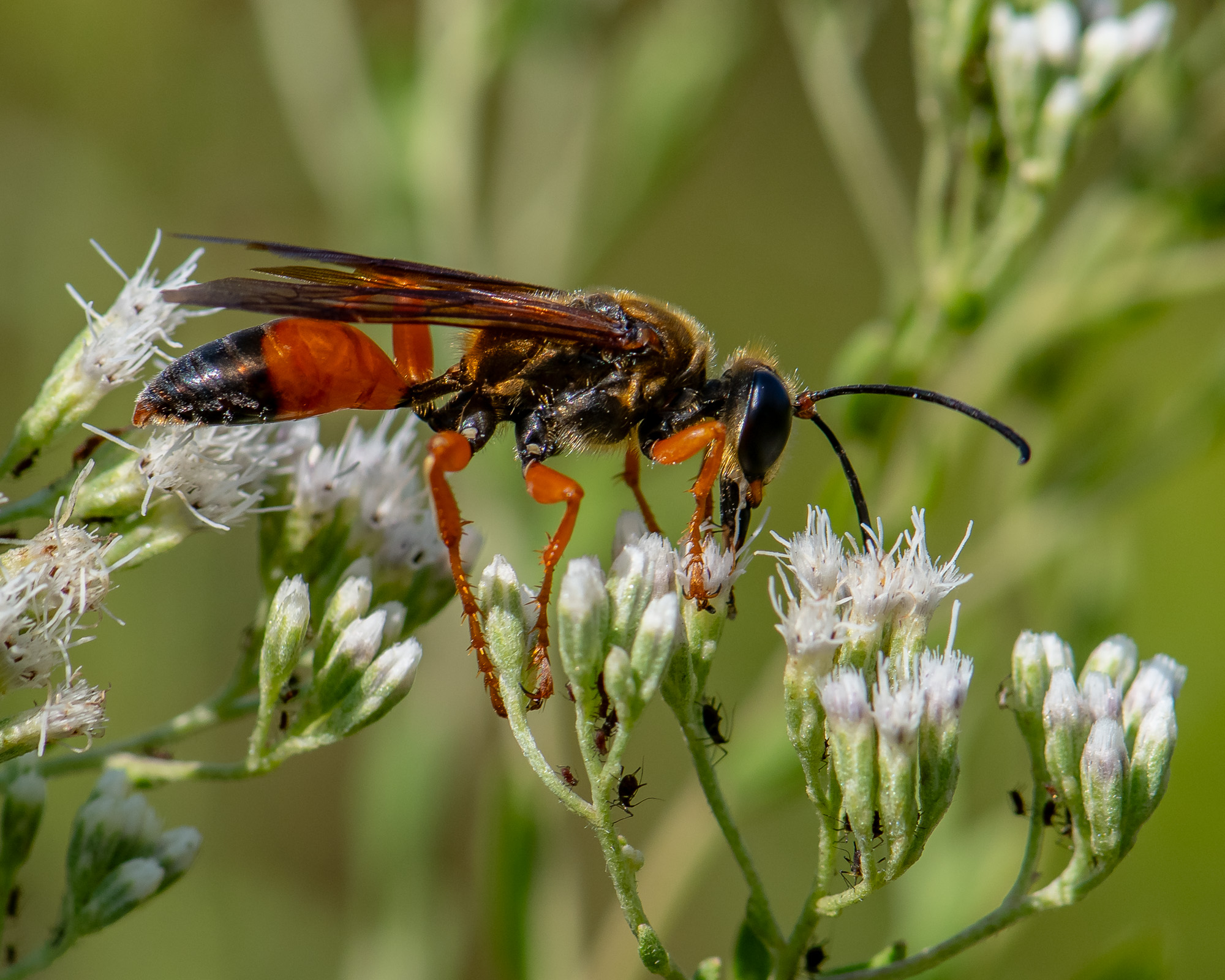
A unique critter. This is a solitary wasp which digs a tunnel where an insect is buried into which an egg is laid. When the baby wasp hatches, it has plenty to eat. Good thing, too, since Mama doesn’t do any parenting after the egg is laid. Great Golden Digger Wasp (Sphex ichneumoneus) on Mohr’s Thoroughwort (Eupatorium mohrii).
The swamp surrounding the “Crooked River” has certainly been a wonderful venue for us to explore. We look forward to many more adventures there. It is truly a place where we can “rest in the grace of the world”.
Enjoy your search for a natural place and come back for a visit!
*The Peace of Wild Things by Wendell Berry https://onbeing.org/poetry/the-peace-of-wild-things/
(We are still experiencing limited opportunities to explore nature. ONE of us, who shall not be named, seems to prefer the ambience of rooms filled with busy technicians, quizzical doctors, equipment with flashing lights/beeps/boops to that of our lovely damp swamp. Due to this hopefully temporary aberration – you will now be forced to view treated to summer reruns.)
(The situation described above is also responsible for our inattention to all of your recent blogs. We apologize and will do our best to catch up as we have a chance.)

“Smell that rain!”
The last week of May this year kicked off our summer, also known as “the wet season”. Gini uttered the above as I had just opened the patio doors to see if our night-blooming Cereus was serious about blooming. Not yet.
I really love our summers. That evening rain meant there would likely be fog early in the morning as we headed away from the suburbs. Our local patch, Tenoroc Fish Management Area, would be bustling with activity. Ibises, Egrets, Herons and Anhingas would be leaving their nightly roosts as they spread out over the area’s several hundred acres and dozen lakes in search of breakfast. As the day progresses, the previous night’s moisture will begin to dissipate, insects will busy themselves with the never-ending task of survival and would-be predators will attempt to interrupt that task, to ensure their own survival.
Migratory birds have, well, migrated. Resident birds are busy with nests, chicks and parenting. New plant growth coincides with newly hatched insect populations. Each step through the grass sends grasshoppers, beetles, moths, spiders, butterflies and other creepy-crawlies scurrying out of our way. The yellow American Lotus dots the lakes. A slice of sky above an open field contains Turkey Vultures, a Red-tailed Hawk, a pair of Sandhill Cranes, a flock of Black-bellied Whistling Ducks and a young American Kestrel attempting to snag a dragonfly.
We made our rounds, lingering at familiar spots hoping to see “something special“. I shall tell you a secret. For us, it is ALL quite special.
As May melts into June, Swallow-tailed Kites have found nesting sites near some water source typically in the tallest tree in the neighborhood. They are incredibly aerobatic and catch insects out of the air, pluck lizards and snakes from treetops and often “eat on the fly”. They will depart for Argentina during the second week of August. Until then, we will enjoy gawking at them all summer long.


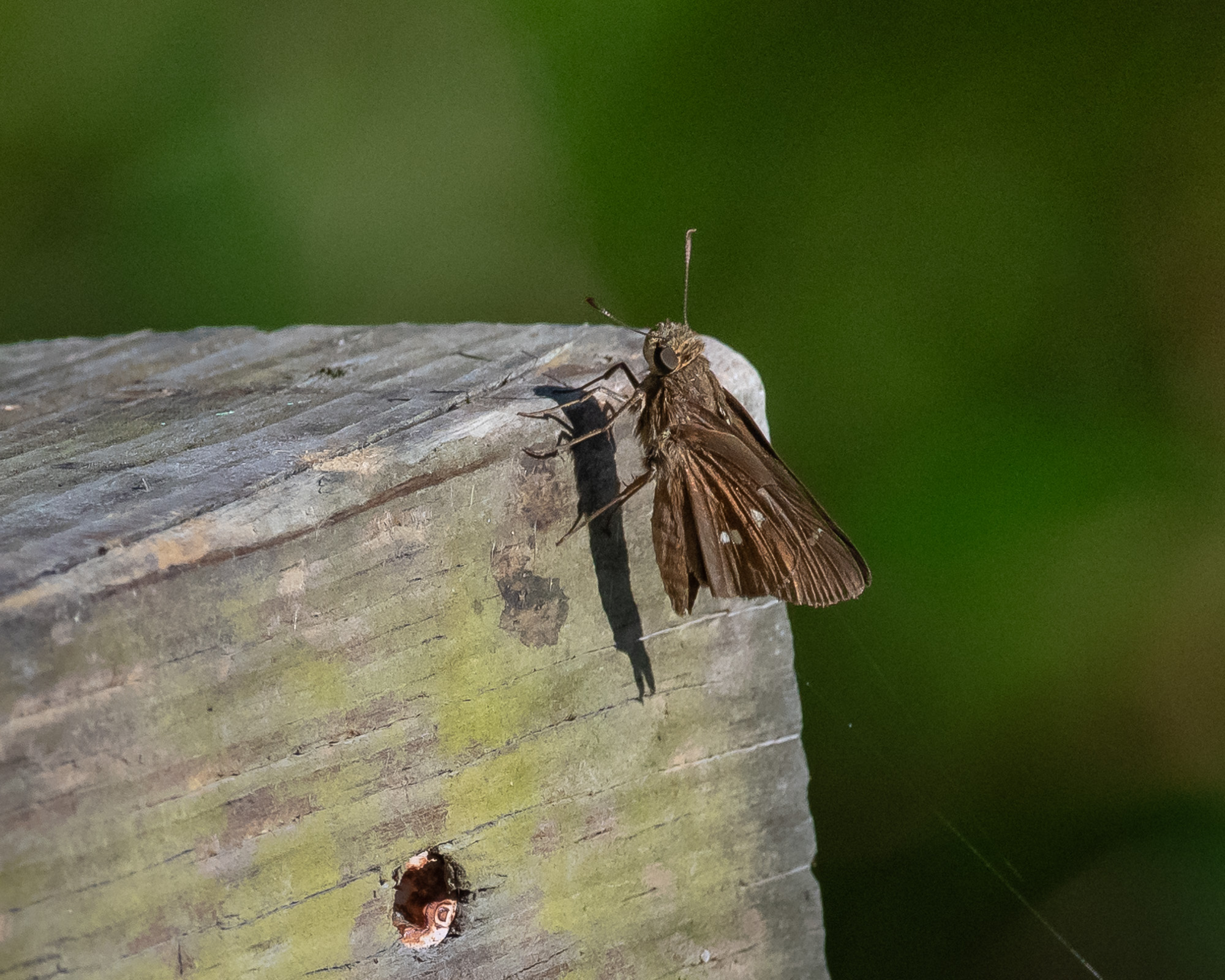
Nearly the same color as the dock post, a Twin-spot Skipper (Oligoria maculata) enjoys the early morning sun.
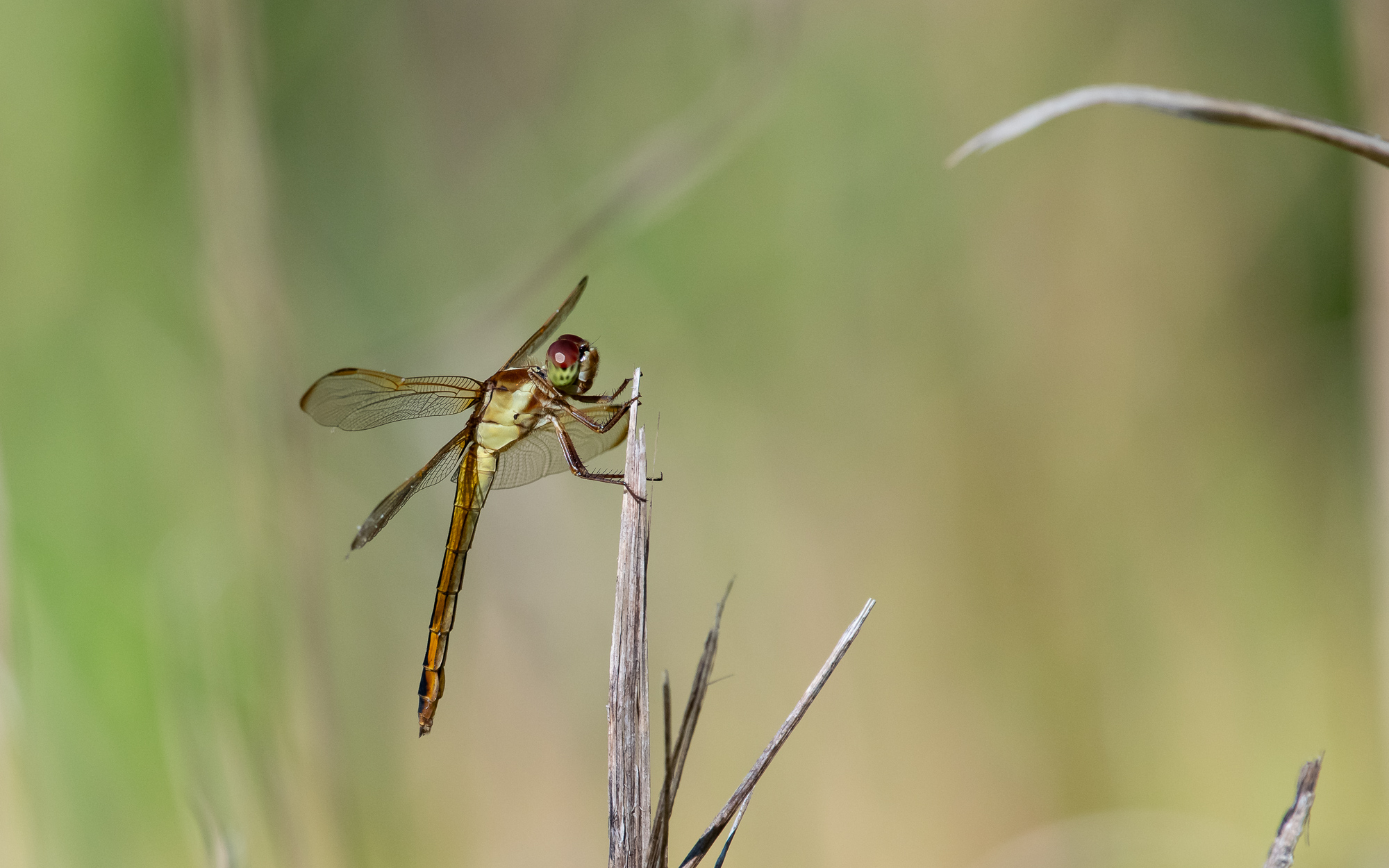
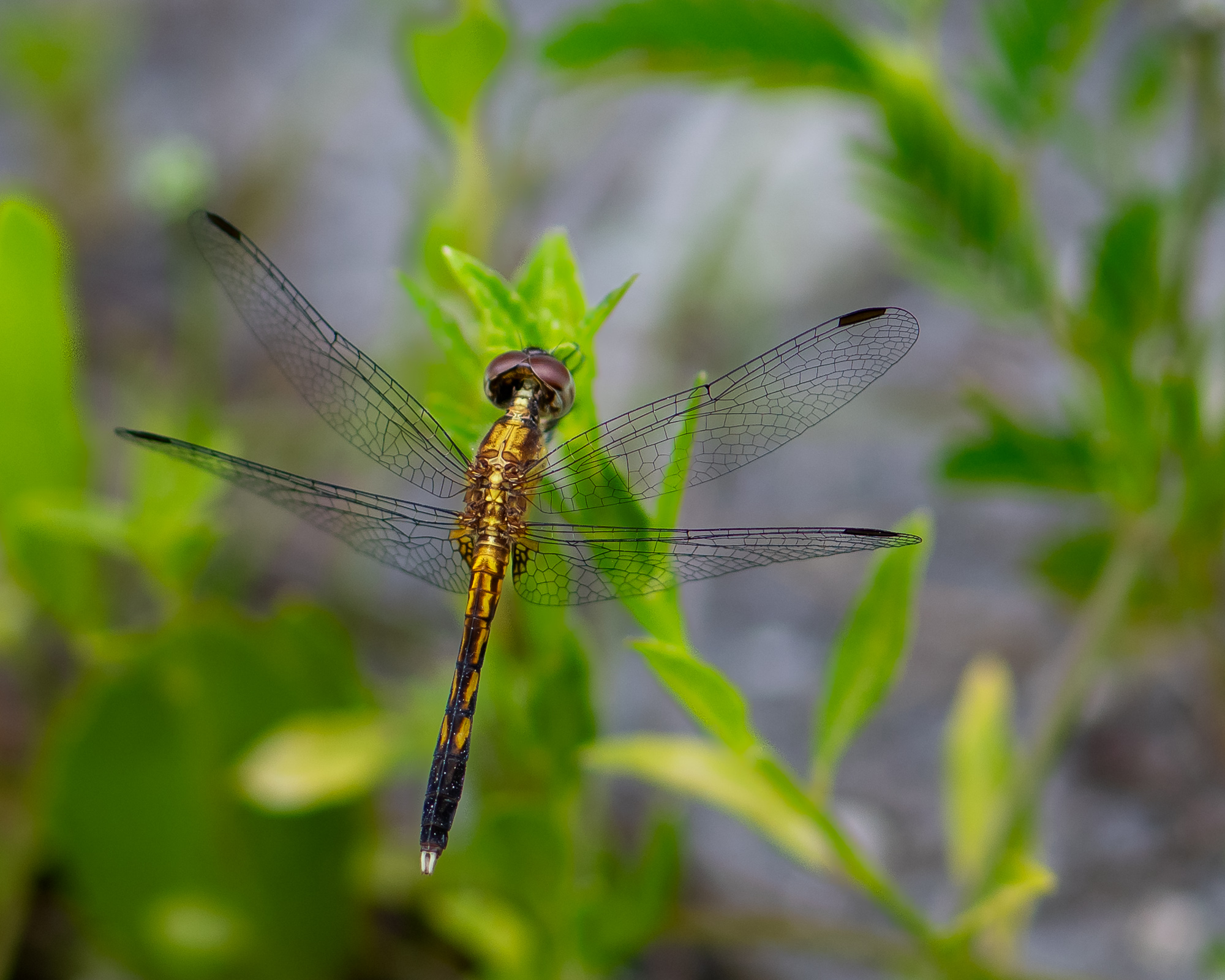
Bright and golden, the female Needham’s Skimmer (Libellula needhami) is a medium-sized dragonfly which is, thankfully, very abundant in our area. The adult male is reddish-orange but we didn’t find one today.

Once again, I am thankful to find a subject with a top speed near my own. This invasive critter is a Ghost Bulimulus (Bulimulus bonariensis), who, along with about a billion of its snail friends have steadily been invading the southeastern United States.

Warm, damp nights mean there will likely be butterflies in the morning attempting to dry their wings. Here’s one! An uncommonly handsome Common Buckeye (Junonia coenia).


She is quiet for now, but about an hour ago, just as the sun appeared above the treetops, a Limpkin chorus provided a screeching wake-up call to all the area residents.

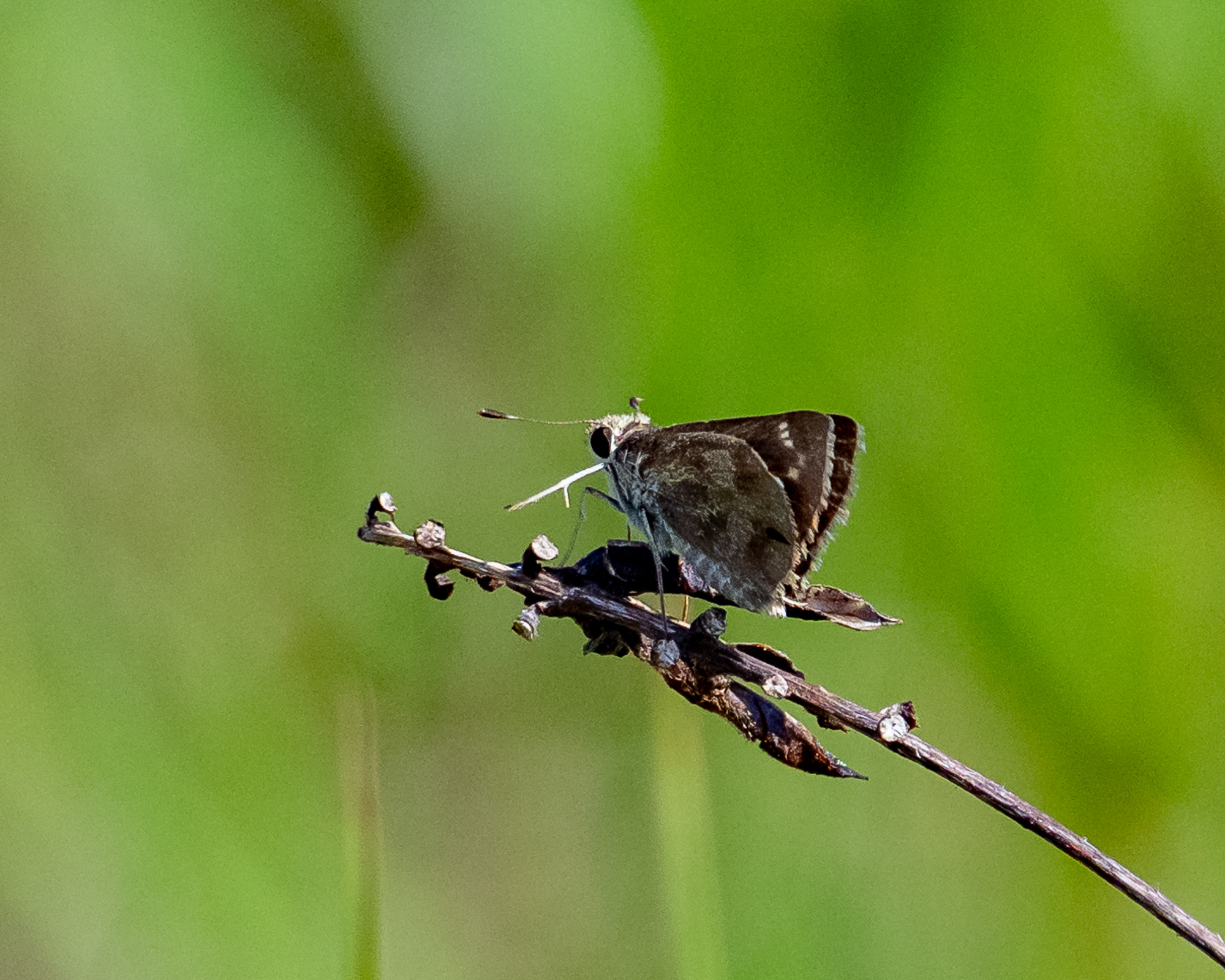
Another one of those small skippers, this time a Clouded Skipper (Lerema accius), remained on the twig for exactly one photo. Poof! Disappeared into the weeds.
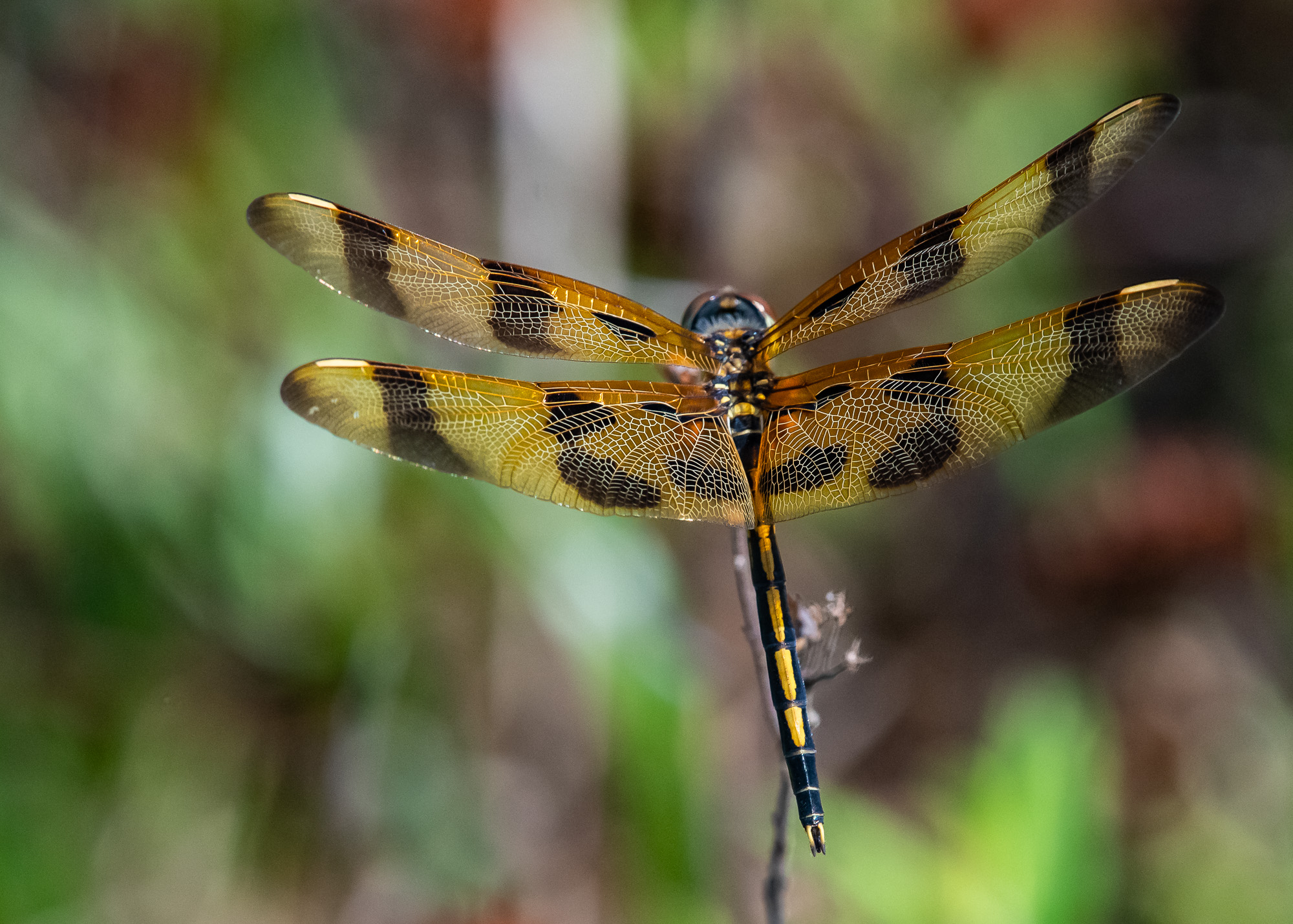
Gini still says the Halloween Pennant (Celithemis eponina) reminds her of a piece of golden jewelry. I can’t argue. (Not that I would.) (Ever.) (Under any circumstances.)

Perhaps it is not as colorful as its butterfly cousins, but finding a moth in the daytime is worth documenting. Besides, the Common Tan Wave (Pleuroprucha insulsaria) has a unique beauty all its own.

Throughout the Fish Management Area this year, we have counted eight occupied Osprey nests. The first two images below are the same nest, where an adult is encouraging a youngster to gain some altitude. We watched for awhile as the juvenile exercised its wings but wasn’t quite ready to step off the edge of the nest just yet. Maybe next week. The third photo is a different nest with one adult watching as the two kids yell at us. (Young Osprey have orange eyes which will turn yellow in a couple of months.)


Summer. The scent of rain conjures up immediate memories of riding a bike through puddles, wading in drainage ditches to catch tadpoles, tilting your head back and opening your mouth to get a drink. Gini and I are, of course too old and sophisticated to partake of such childish — oh, stop it. You would too, if you had a chance!
Enjoy your search for a natural place and come back for a visit!
*If you are interested in the science behind the smell of rain, petrichor, here ya go: https://earthsky.org/earth/what-is-smell-of-rain-petrichor/

A glimple of bright orange. “Is that a milkweed?” No. No it wasn’t.
It was just after sunrise and we made a different choice today. This particular tract is a wildlife management area within the Withlacoochee River State Forest and consists of nearly 60,000 acres. We have developed a loose routine for exploring this vast area. There are three access points from the main road cleverly named “North”, “Central” and “South” Grade. Each winds through a dozen or so miles and eventually hooks up with one of the other roads to take us back to the highway.
There are three additional access points. One is gated and remains locked until hunting season. A second is either under water or, during dry season, contains potholes large enough to swallow large trucks without leaving a trace. The third has no name and we have used it in the past as an exit. It always looked interesting to explore but since we had usually just spent our morning rambling along another road, we never had sufficient time to look more closely.
Until today.
The turnoff from the paved road was almost hidden and I drove past it and made a u-turn. It was in better-than-expected condition. Similar to the other roads we have explored, this one had several areas to pull off with trails leading deeper into the swamp and forest. Same habitat: sandhills, pine flatwoods, oak hammocks, river swamp and cypress ponds.
The date of our visit was August 15, 2024. Hot and humid, just like Florida is supposed to be in summer. Plenty of seasonal rain results in a lot of standing water throughout the swamp. Plenty of standing water results in plenty of mosquitoes. And they are hungry. Good test environment for the three different repellants we brought with us.
Birds were singing, flying, hunting and mostly not perching within camera range. All morning we enjoyed Northern Cardinals, Carolina Wrens, Tufted Titmice, Carolina Chickadees, Brown-headed Nuthatches, Downy/Pileated/Red-bellied Woodpeckers, Blue Jays, Eastern Towhees, Osprey and Red-shouldered Hawks.
In addition to the skeeters, were myriad other insects. Cicada choruses were almost deafening. The dragonflies were enjoying what Air Force combat pilots refer to as a “target rich environment“. Flowers were in abundance. Nectar-seekers were happily busy.
We didn’t want to tax Gini’s still somewhat weak stamina, especially in the excess humidity, so we headed home after a couple of hours of blissful exploration. The road may not have a name, but now we know exactly how to find it and can’t wait to return.
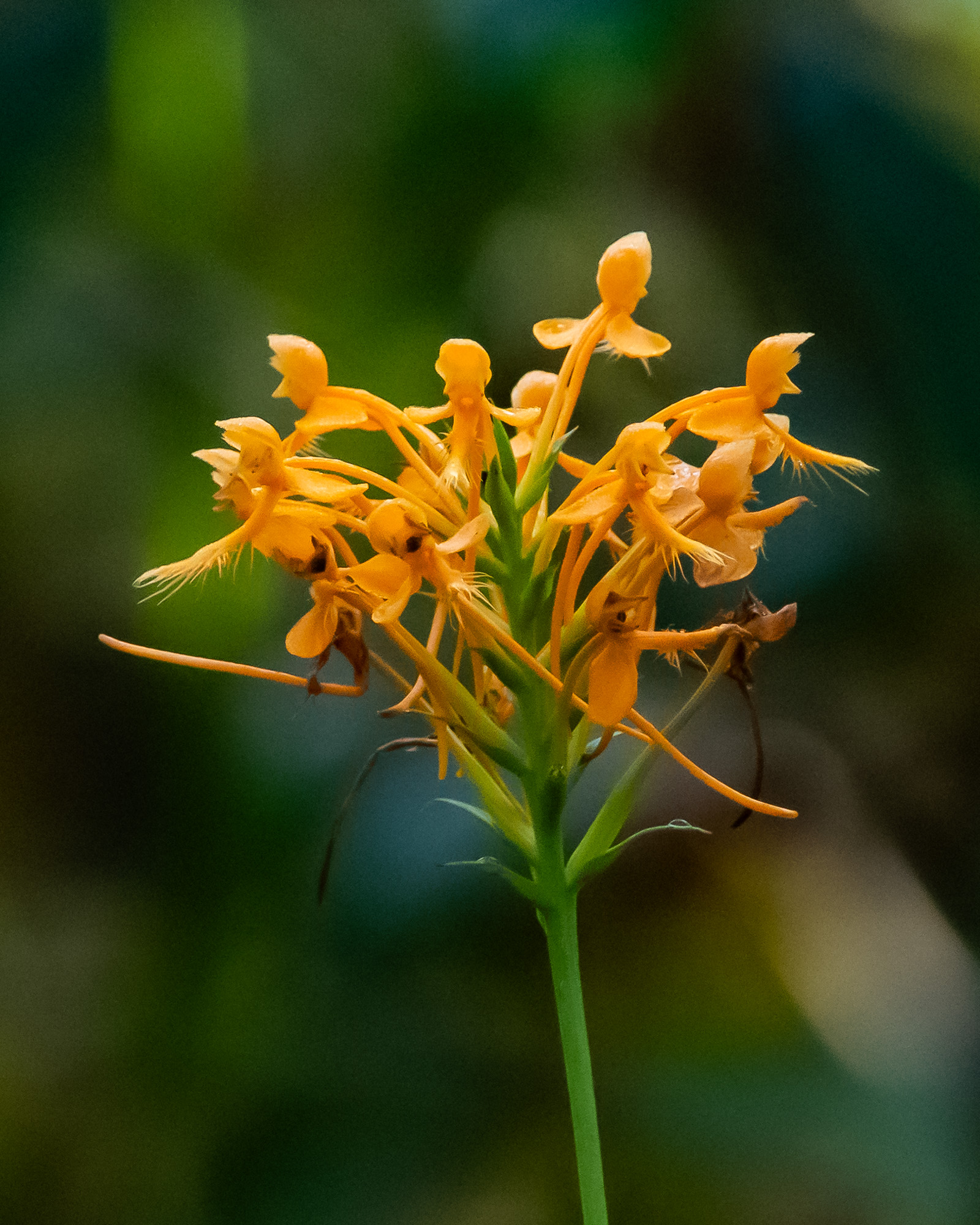
So, if it wasn’t a milkweed?? A first for us. As Gini was examining the bright orange blooms, her florist background kicked in. “This sure looks like some sort of orchid.” Spot on. Again. Yellow Fringed Orchid (Platanthera ciliaris) is also referred to in some sources as Orange Fringed Orchid. Not to be confused with Crested Yellow Orchid (P. cristata) or the Yellow Fringeless Orchid (P. integra). Not to mention, if you travel in the northern part of Florida, the very similar looking and rare Chapman’s Fringed Orchid (P. chapmanii). Coincidentally, Linda on her fabulous blog, Lagniappe, posted on August 21 about her find of the latter plant in Texas. Go there and see her wonderful write-up and photographs. (https://lindaleinen.com/2024/08/21/a-splendid-splash-of-orange/#comments)
Do it now. We’ll wait here.

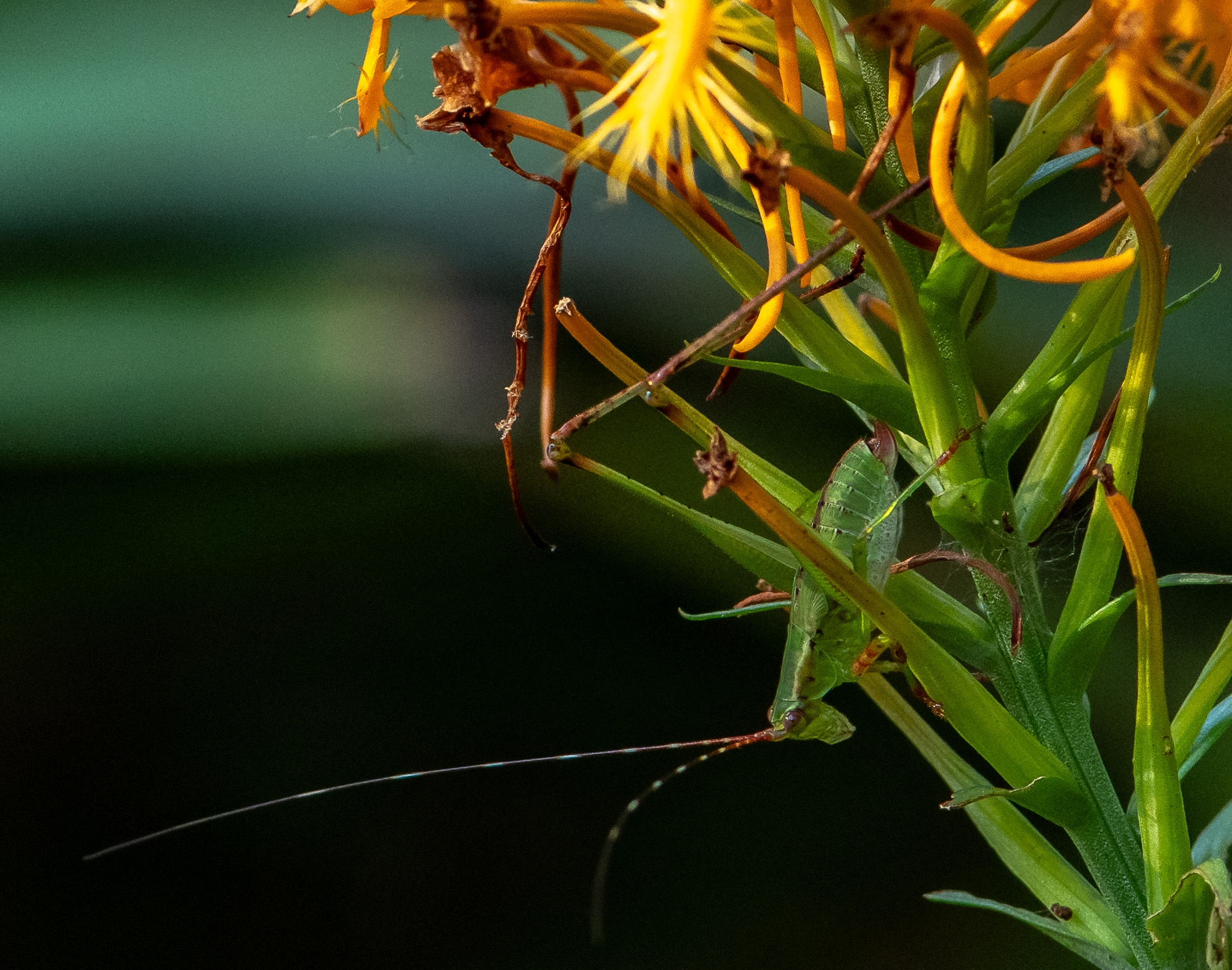
The leaves of Winged Loosestrife (Lythrum alatum) remind me a bit of the herb Rosemary. Also known as Winged Lythrum, the lovely purple blooms attract a great variety of pollinators. Such as a Brown-winged Striped Sweat Bee (Agapostemon splendens), whose name is longer than its owner.


Southern Beeblossom (Oenothera simulans) is one of those plants with small flowers which is all too easy to overlook once the blooming season is in full swing. If we stop to admire it, however, we can find a lot of beauty to like.

One of the most abundant flowering plants we encountered this morning was the Clustered Bushmint (Hyptis alata). Each flower head contains a number of small blooms which don’t all bloom at the same time. This offers the nectar seekers a chance to visit again and again.
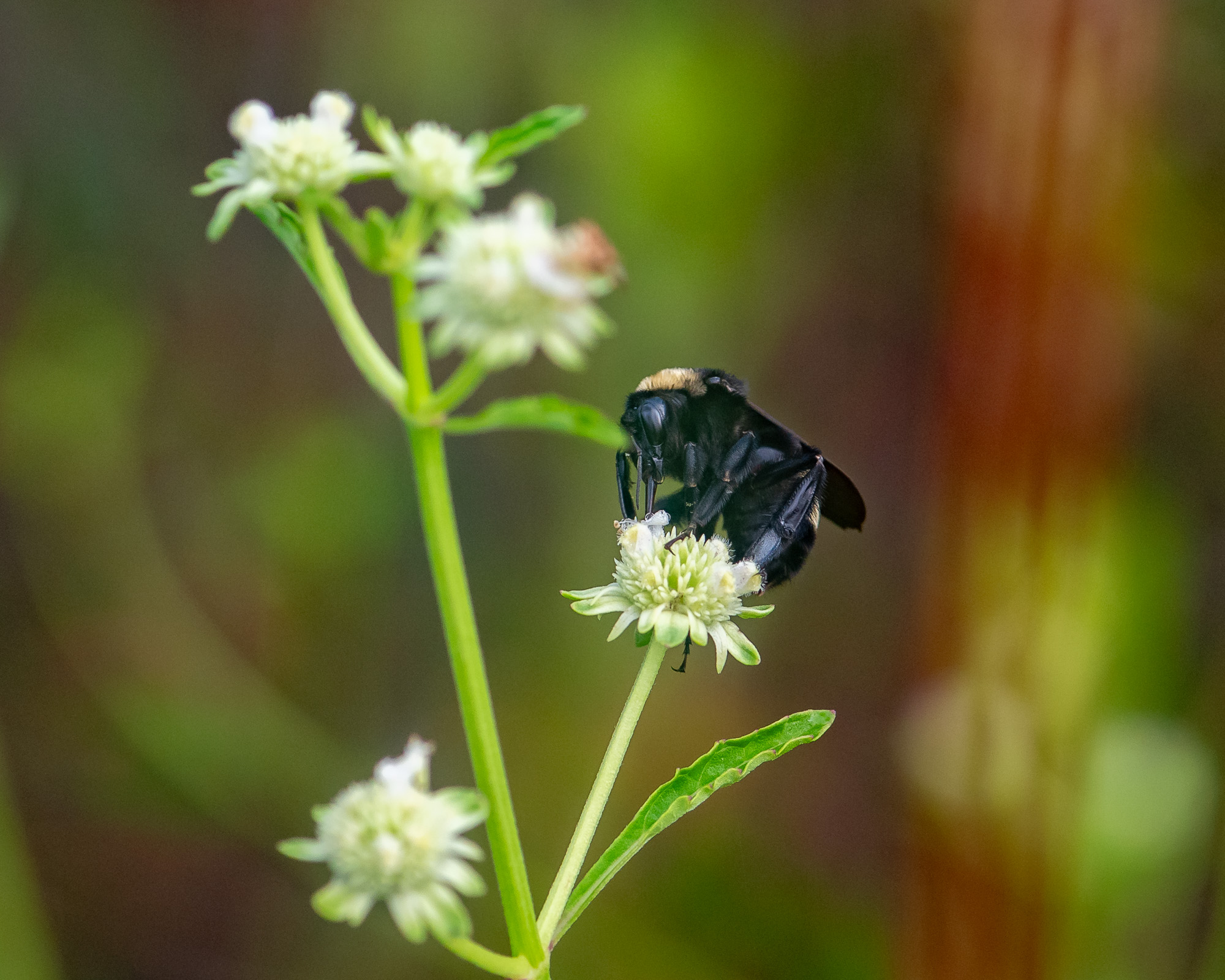

Vincent Franz Kosteletzky, Bohemian botanist and physician (1801-1887), has several plants named in his honor. One such is a member of the hibiscus family and was named for him in 1835. It is the Virginia Saltmarsh Mallow (Kosteletzkya pentacarpos). We found a few dozen plants today and there’s no doubt they are hibiscus. (Hibiscuses? Hibisci?)
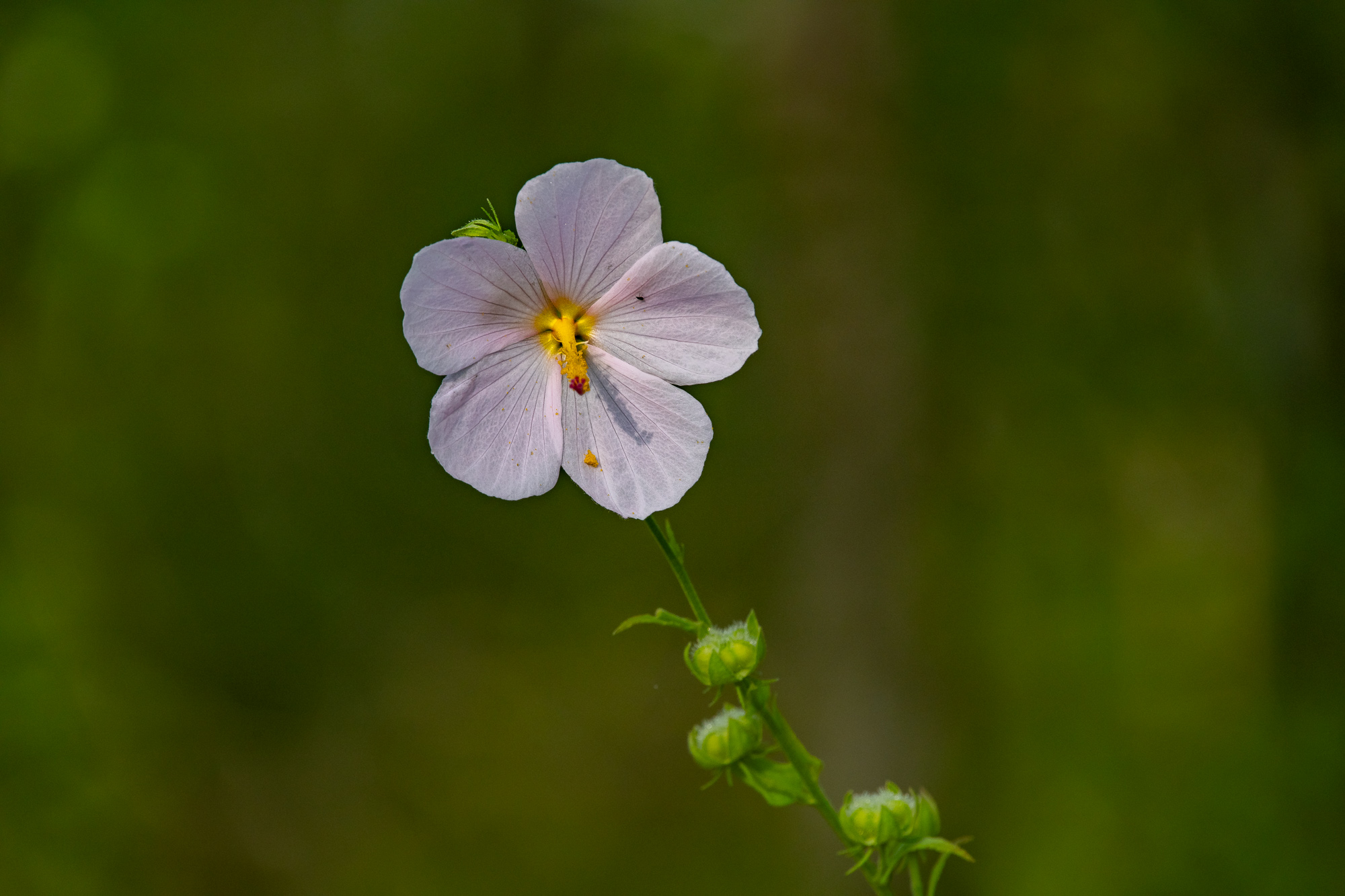
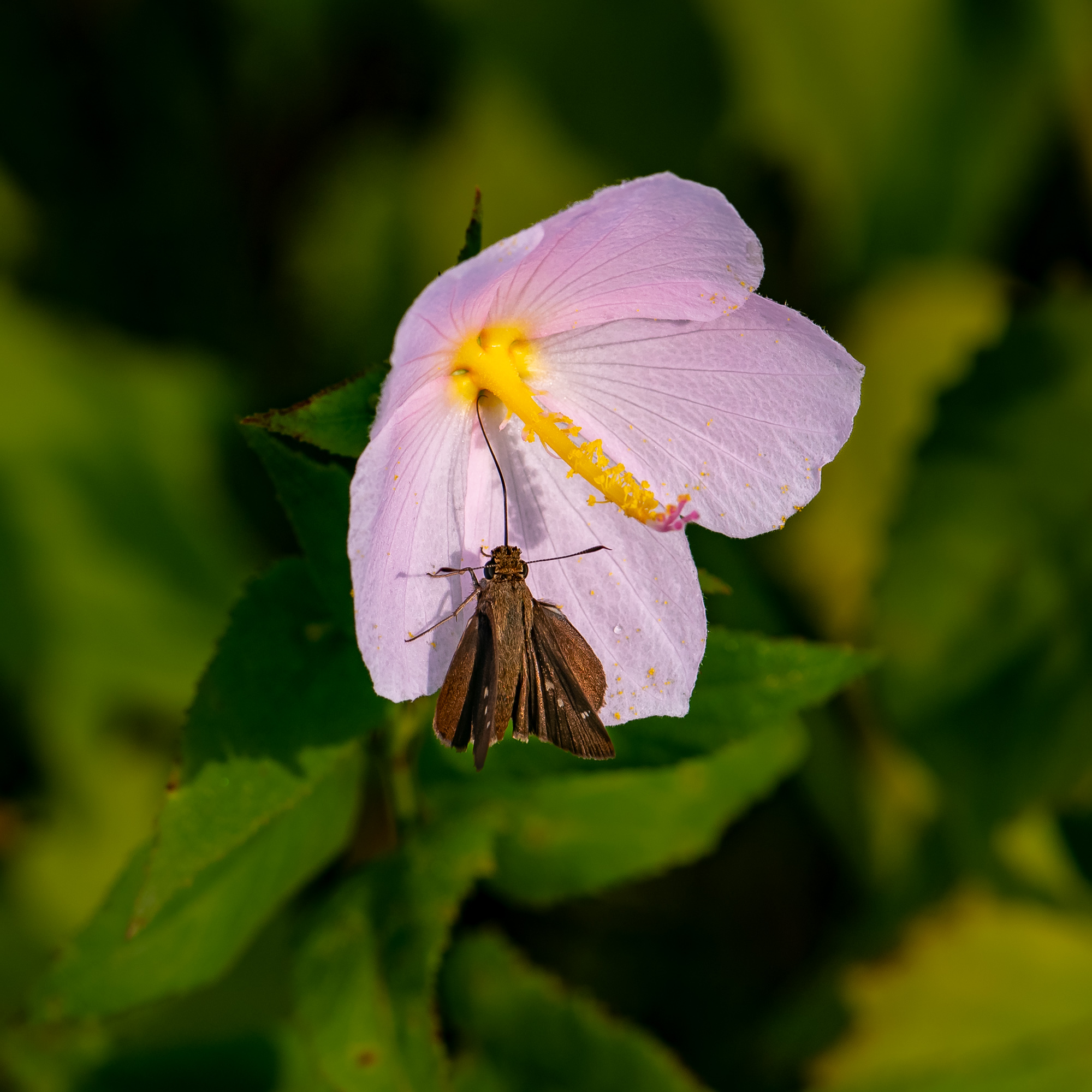
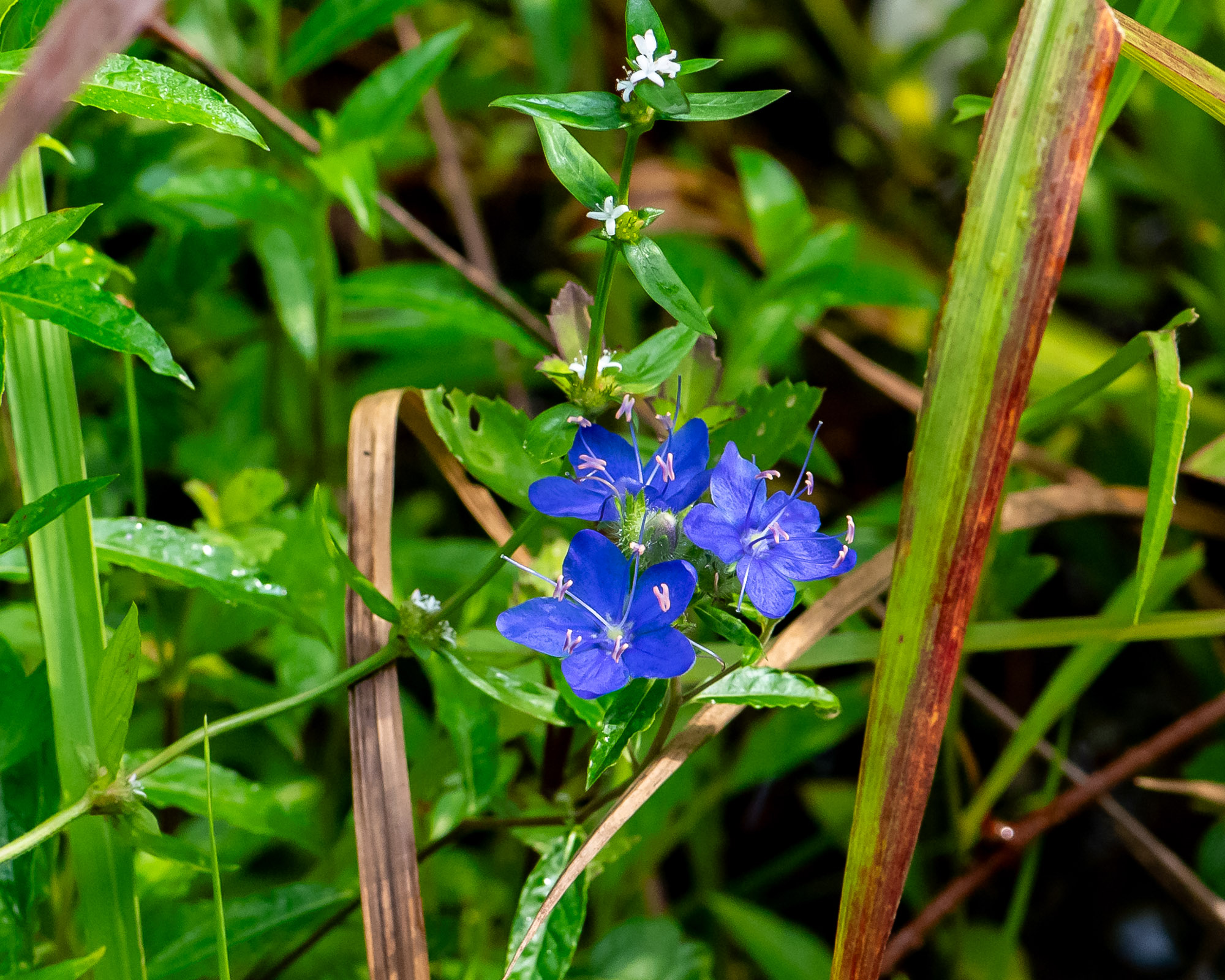
The color almost doesn’t look real. Talk about “blue“! Found in only four southeastern states, the Skyflower (Hydrolea corymbosa) is aptly named. Enjoy the blooms early as they begin to fade in the afternoon.

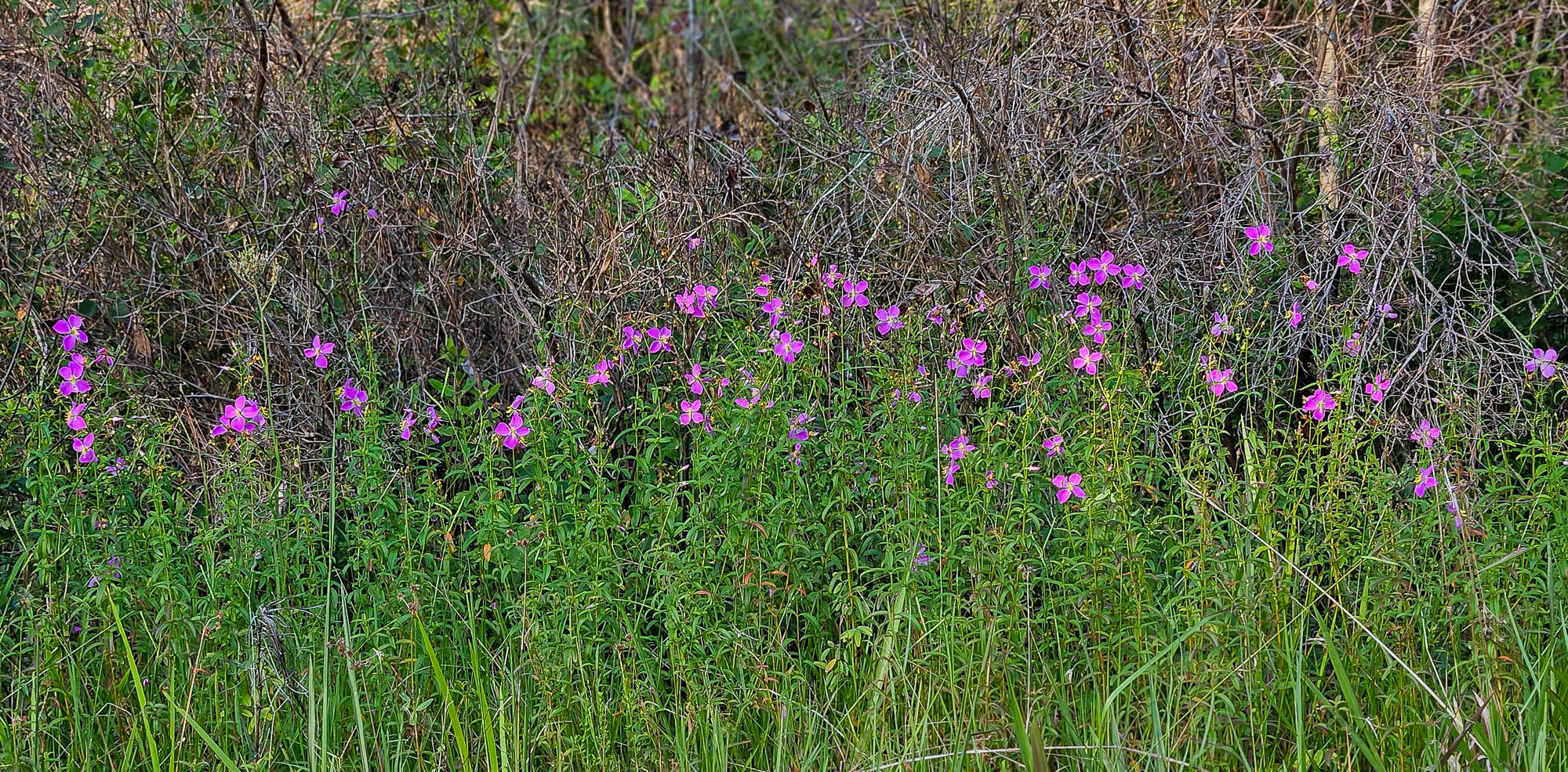
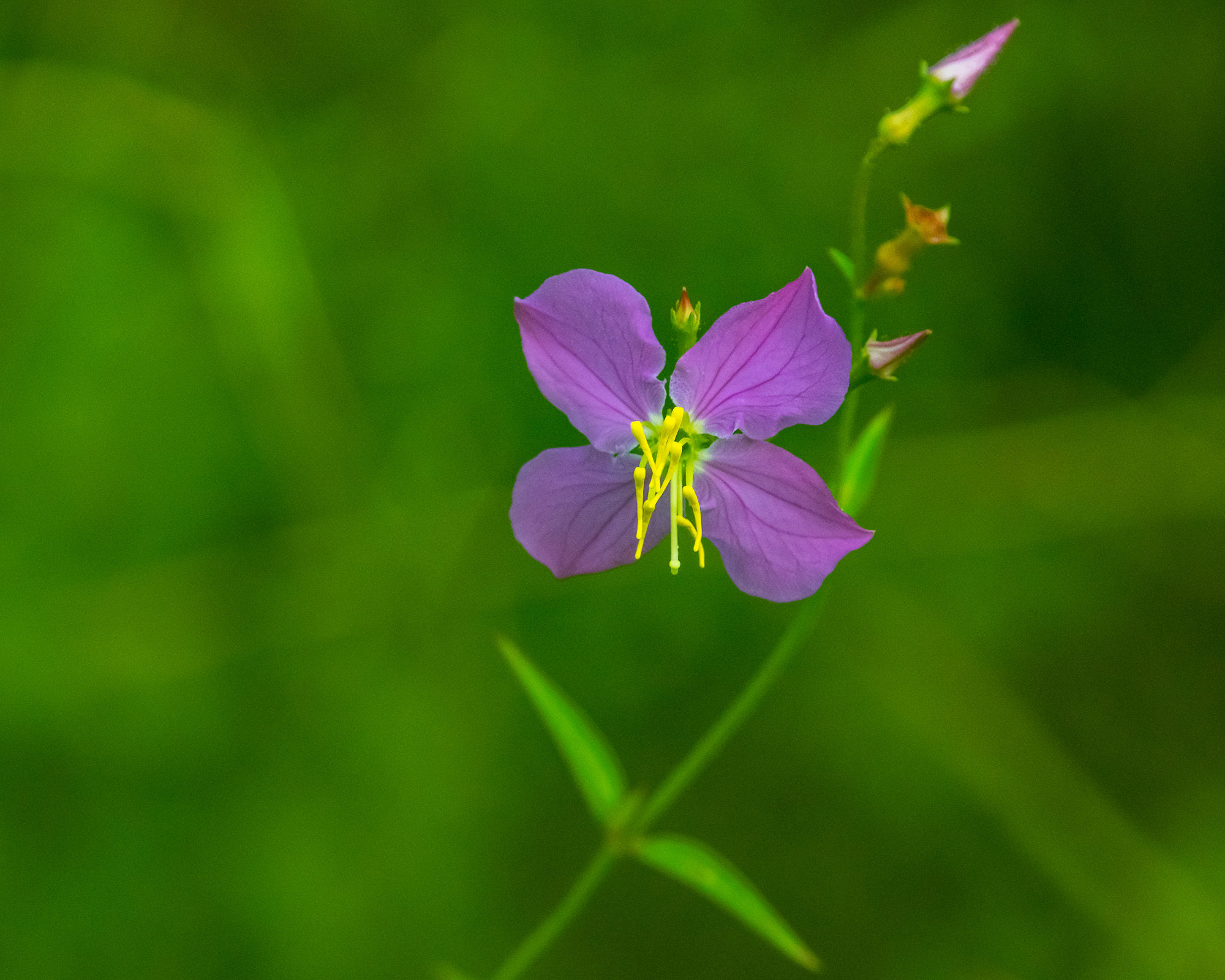
It may be a common flower in much of the country, but when the flowers are this gorgeous, common is a good thing. Call it Pale Meadowbeauty or Maryland Meadowbeauty (Rhexia mariana) or anything else you like. Just savor its loveliness.
Oh. And the persimmons are just about ripe. Common Persimmon (Diospyros virginiana).

We are understandably happy that today we took the road which we have traveled less than some others. It made all the difference.
Enjoy your search for a natural place and come back for a visit!
*The Road Not Taken
Two roads diverged in a yellow wood, And sorry I could not travel both And be one traveler, long I stood And looked down one as far as I could To where it bent in the undergrowth;
Then took the other, as just as fair, And having perhaps the better claim, Because it was grassy and wanted wear; Though as for that the passing there Had worn them really about the same,
And both that morning equally lay In leaves no step had trodden black. Oh, I kept the first for another day! Yet knowing how way leads on to way, I doubted if I should ever come back.
I shall be telling this with a sigh Somewhere ages and ages hence: Two roads diverged in a wood, and I— I took the one less traveled by, And that has made all the difference.
Robert Frost

(Click on images to enlarge, click again to zoom.)
You may be surprised to hear this, but Florida has “tourist attractions“. Beaches, picturesque old towns, prehistoric-looking person-eating hundred-foot-long alligators, cattle(!) drives, Seminole Indian reservations (complete with authentic casinos), fishing opportunities and the ultimate in planetary entertainment – an entire world built by a Mouse!
Gini and I are both natives of The Sunshine State so we are quite familiar with these incredible spectacles. I may even still have a small stuffed orange alligator somewhere in a box in the corner of the garage which I begged for while visiting “Gatorland” when I was about six. (It surely must have some antique value by now! Just think, a genuine Florida ‘gator with sharp little teeth and claws and that little tag on its stomach “Made In China” which Dad never could explain to my young satisfaction.)
Inexplicably, most of those attractions no longer attract us. Could it be we simply don’t like that glitzy stuff? Or the hordes of people we must wade through to get to the counter selling baby ‘gators? Perhaps it’s something in our orange juice. Climate change?
What? No, it has nothing to do with growing up. I can’t believe you said that.
Not too long ago, we spent about an hour driving along an old logging road. Recent rains have filled the drainage ditches and we are enjoying our “seasonal creeks”. The land is lush and green. Flowers abound. Insects buzz around sipping nectar and try to eat each other. It was an uncharacteristically (for us) short ride. All the images in this post were taken within a few feet of the road.
We really do love sharing our state’s unique attractions with visitors. For those who wish to explore beyond the Mouse’s House, take the next exit off the expressway, turn right and enjoy a few alternative Roadside Attractions.
(Gini is still having fun with doctors and their machines. These photographs are again from May in the Green Swamp.)
Looking spiffy in her racing stripe design with wings set forward, this Blue Dasher (Pachydiplax longipennis) is ready to intercept any mosquitoes who dare invade her space. (No wonder we love dragonflies!)

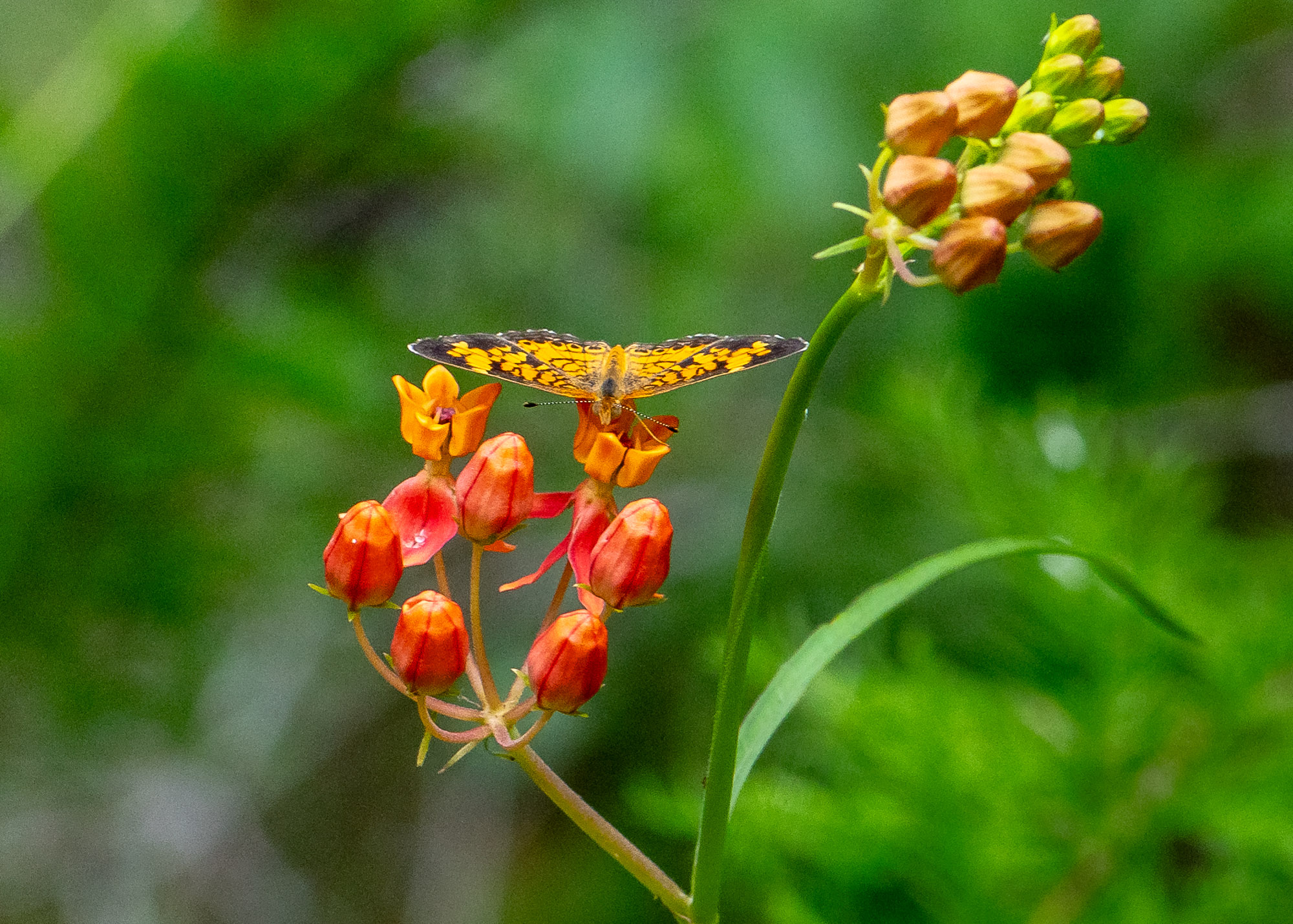
Bright orange flowers and narrow leaves help identify the Fewflower Milkweed (Asclepias lanceolata). Several species of Milkweed are larval hosts for Monarch, Queen and Soldier butterflies. More than a few others like its tasty nectar just fine. Oh, here’s one now – a thirsty Pearl Crescent (Phyciodes tharos).

As wildflowers continue to bloom profusely, insects become more and more active. All those busy bugs attract bigger bugs. And they are hungry. A female Bar-winged Skimmer (Libellula axilena) waits patiently for a fast-food breakfast to fly by.

How can one not like a plant with such a cool name? Bandanna-of-the-Everglades (Canna flaccida) brightens up the swamp.


The very small flowers of the Showy Milkwort (Asemeia grandiflora) remind us of orchids.

Here there be dragons! Even really little ones. This Little Blue Dragonlet (Erythrodiplax minuscula) is among the smallest dragonfly species in North America.
What’s in a name? Bristle Thistle, Yellow Thistle, Horrid Thistle, Purple Thistle, Spiny Thistle, Bull Thistle. All are regional common names for Cirsium horridulum. In our area, we normally encounter purple thistles. When we lived in Texas, yellow seemed more prevalent. Today, Gini spied a white group. The second image shows a beetle known as a Flower Chafer (Trichiotinus species).


One of our favorite critters to encounter in spring and summer is the Hummingbird Clearwing (Hemaris thysbe). This moth is a bit larger than a Bumble Bee and loves those thistles we just mentioned.


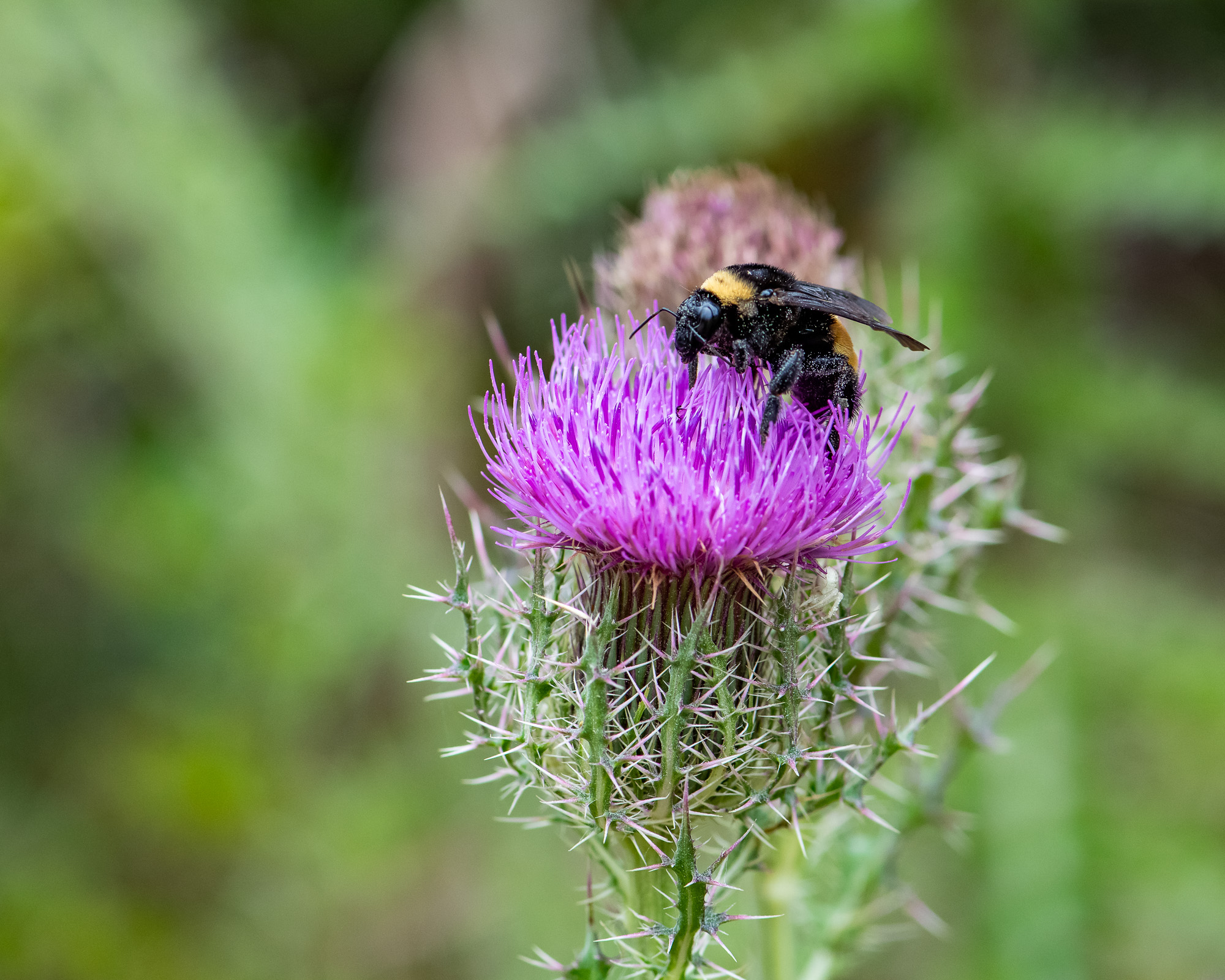
Speaking of Bumble Bees.
Gorgeous red flowers and bright green almost fern-like leaves belong to the Trumpet Creeper (Campsis radicans). It’s not unusual for these vining beauties to climb 30 feet or more where they provide some eye-catching beauty to the tree canopy of the swamp.

Several Pearl Crescent (Phyciodes tharos) butterflies flitted just outside the car window.


A lovely morning glory species is the Noyau Vine (Merremia dissecta), also called Alamo Vine.

“Look into my eyes …” But do it from a distance. They may be mesmerizing but their owner would love to chomp through your skin. The bite of the Yellow Fly (Diachlorus ferrugatus) is painful.

Florida has much to offer for tourists and residents alike. Pick your attraction and come on down!
Enjoy your search for a natural place and come back for a visit!

(Click on images to enlarge, click again to zoom.)
(Gini continues to take it easy and liked the hospital food so much she may schedule another visit soon. In the meantime, we shall force you to view never-before-seen images of past adventures. Thank you again from both our hearts for your well-wishes. It means a lot.)
In the merry merry month of May, Gini and I were frolicking in the Green Swamp gathering rosebuds. Okay, we were actually engaged in serious exploration of the biodiversity of the ecosystem located in central Florida’s Little Withlacoochee Wildlife Management Area and — (“What? Yes, dear, there was a lot of laughter, but YOU started it!”) Turns out, there MIGHT have been some frolicking.
Also, about that “gathering of rosebuds” thing. We obviously repsect Nature way too much to go around picking all the wildflowers so no one else could enjoy them. — (“What? – Well, yes, dear, I suppose since we took pictures of the rosebuds that could be considered “virtual” gathering.”) Turns out, there MIGHT have been some rosebud gathering.
We “gathered” other stuff, too.
Birds were busily tending nests and newly hatched chicks. Flowers seemed to be showing off around every bend. Insects found a lot to be happy about with all those fresh blooms. Trees displayed an incredible array of the color known as “green”. The swamp was becoming wet again.
As we rumble toward the wet season, water levels will make it challenging to navigate some of the trails. Alligators and otters will smile at our ineptitude.
For now, we will be content to pause and smell the roses.
A singing Carolina Chickadee expresses what we define as “joy”.

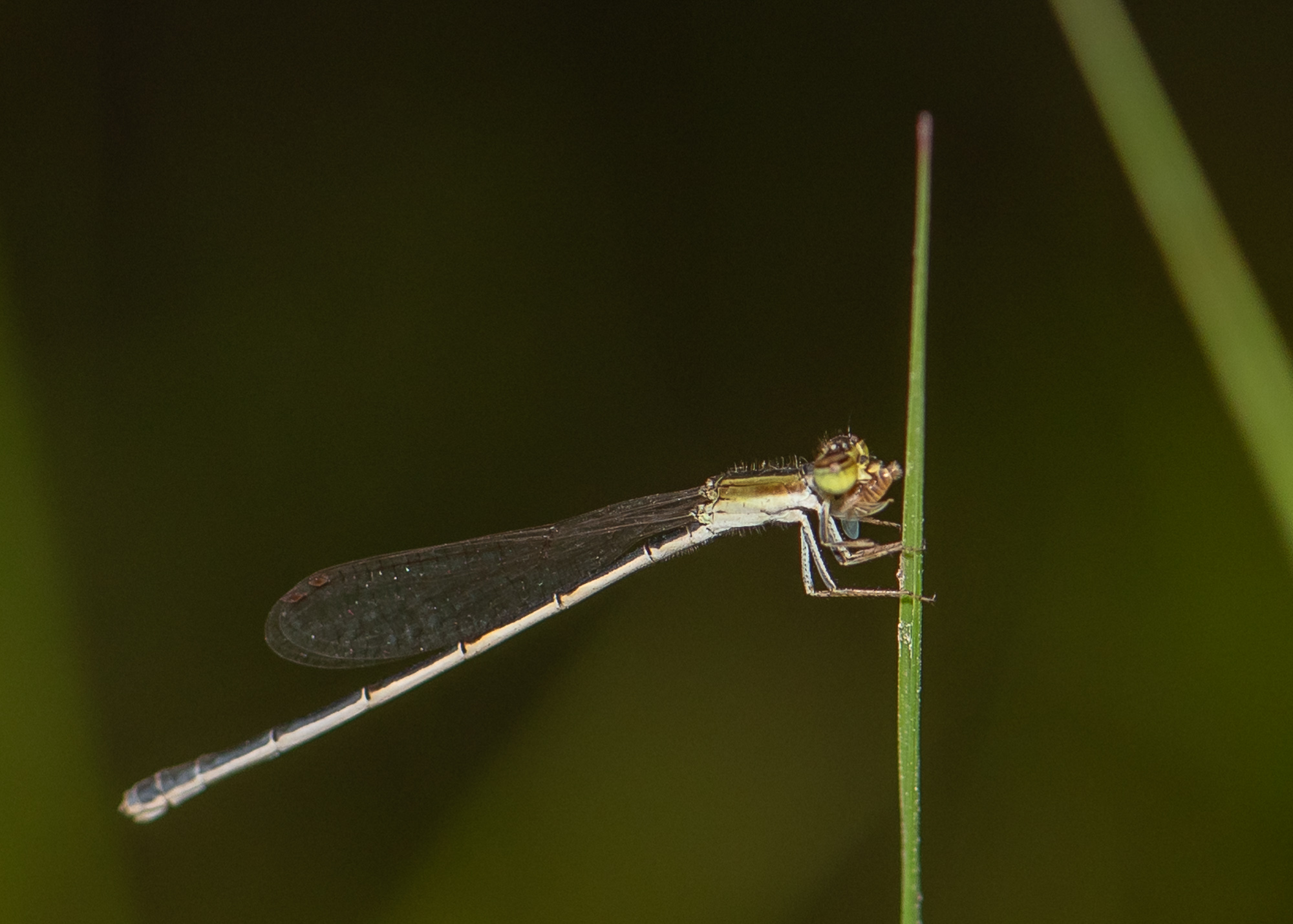
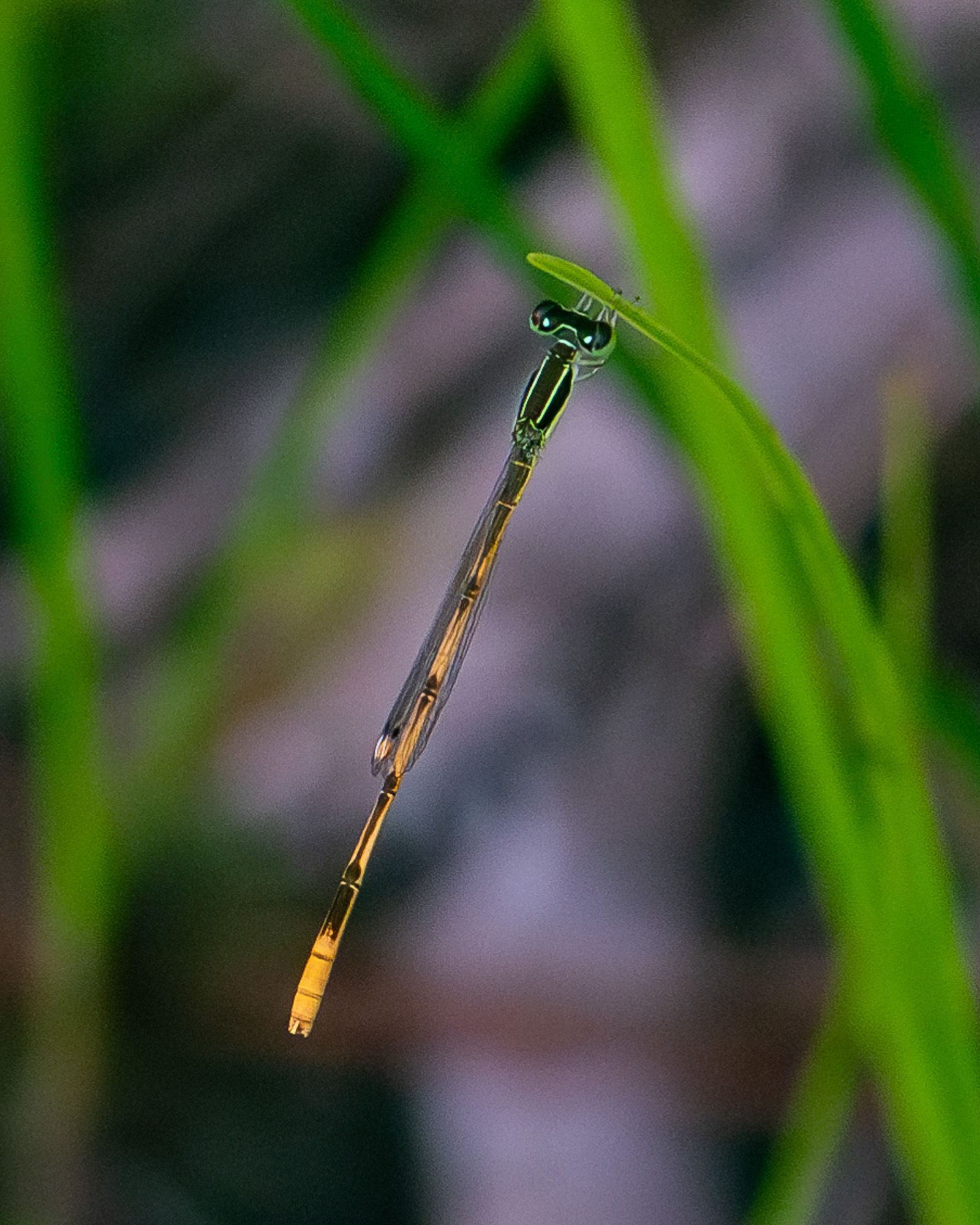
Not in distress, one of the continent’s smallest damsels allows us to compare male and female forms of the Citrine Forktail (Ischnura hastata).
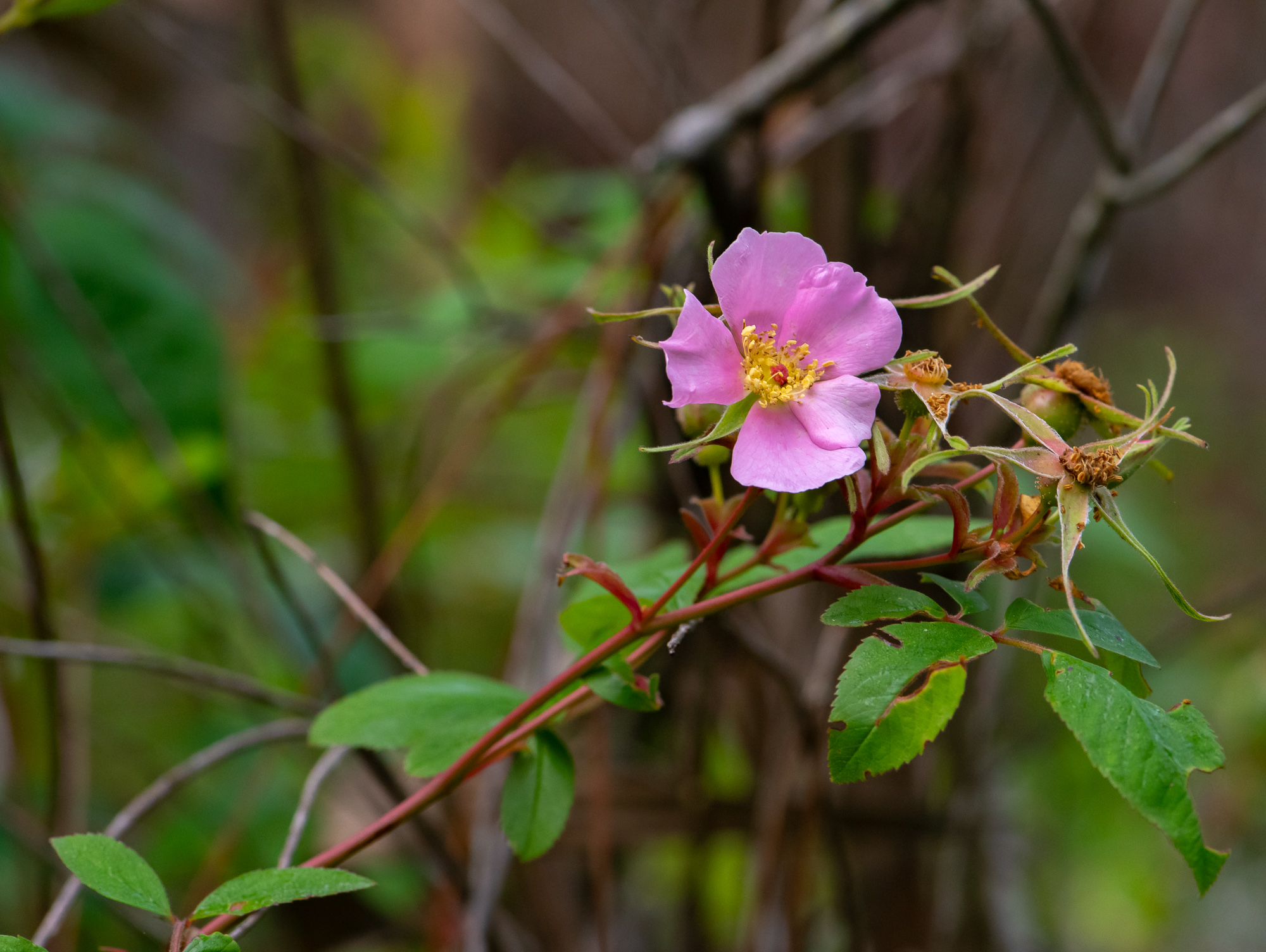
Swamp Rose (Rosa palustris). Most of the buds were blooming. Virtual gathering only.
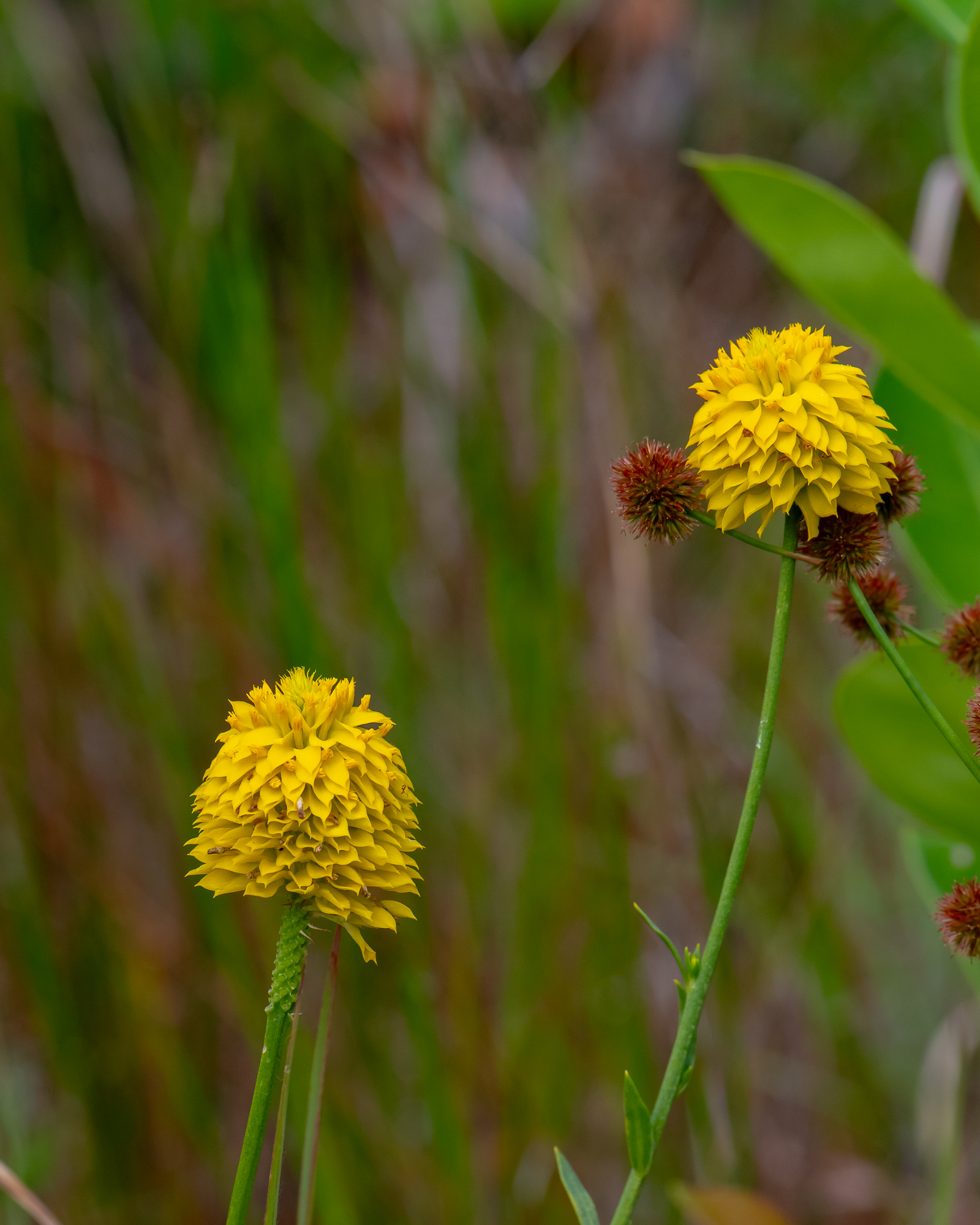
Yellow. Like the Sun. In the Sunshine State. Only found in the Sunshine State, actually. Yellow Milkwort (Polygala rugelii).
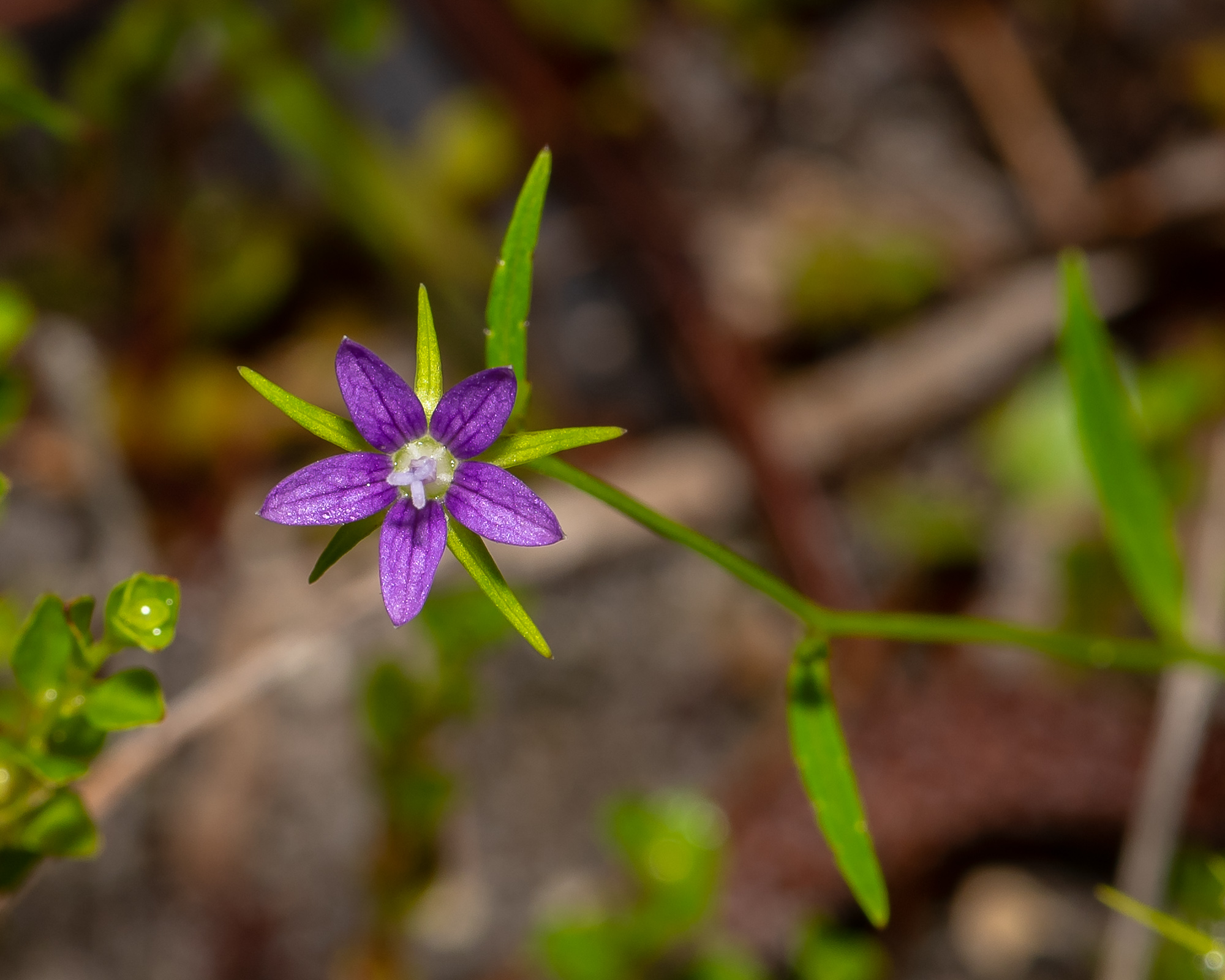
Also endemic to Florida, the small and lovely Florida Bellflower (Campanula floridana) is easy to overlook.
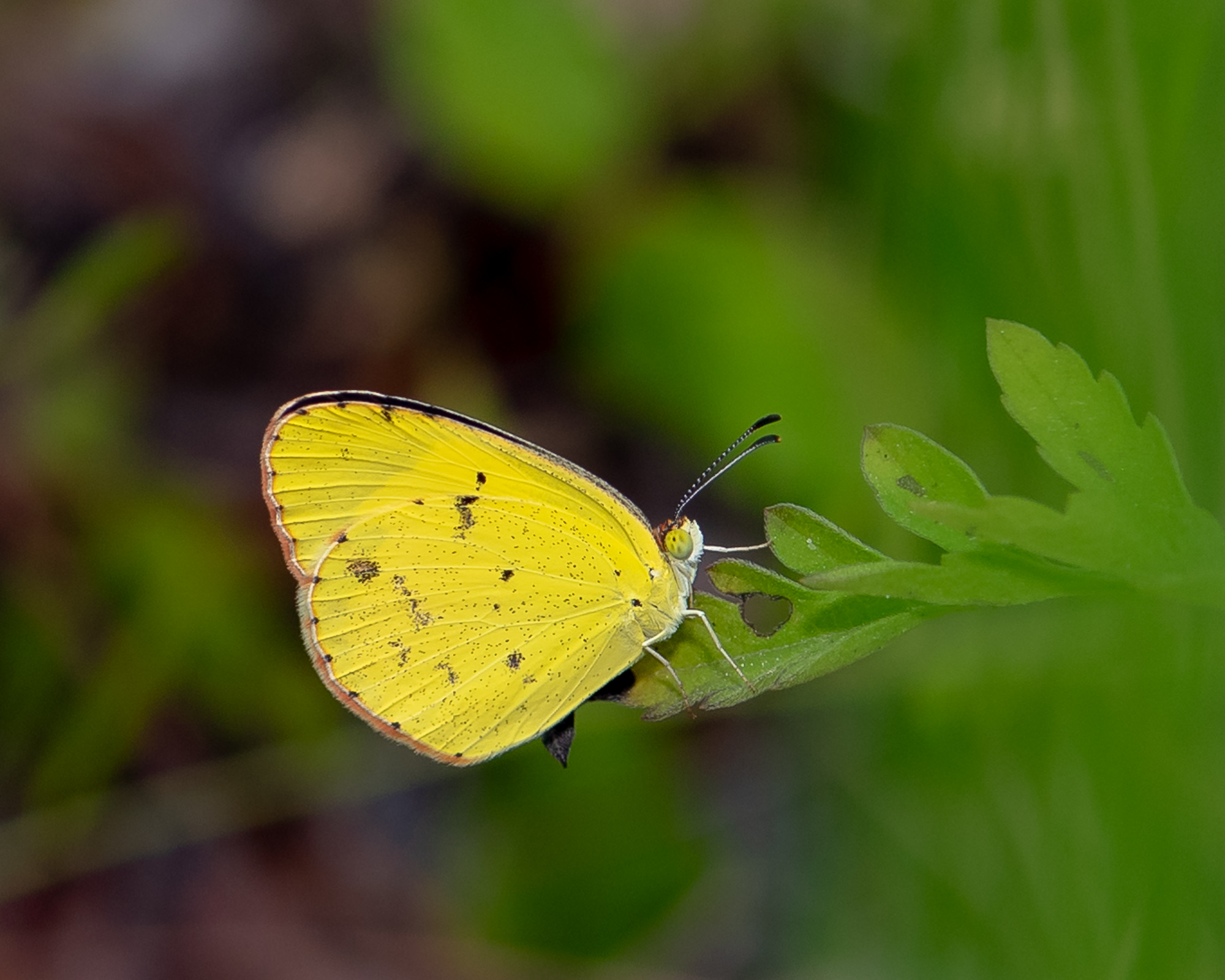
With so many flowers on display, it is only natural that a few nectar-seekers would be out and about. A Little Yellow (Pyrisitia lisa) is only too happy to transport a bit of pollen.
Even the trees have sweet offerings for those which may be interested. Buttonbush (Cephalanthus occidentalis) and Eastern Carpenter Bee (Xylocopa virginica).

Found only in Florida and a few counties in Georgia, Fourpetal St. Johnswort (Hypericum tetrapetalum) sports bright canary-yellow blossoms and unique blue-green leaves clasped tightly around the stem. Don’t mistake this species for some of its relatives which may have medicinal uses. This one might make you feel ill.

Twining vines with lovely lavender flowers are beginning to twist and turn their way throughout the forest. Spurred Butterfly Pea (Centrosema virginianum) is not only beautiful, but is a host for a couple species of butterfly (Skippers) as well.

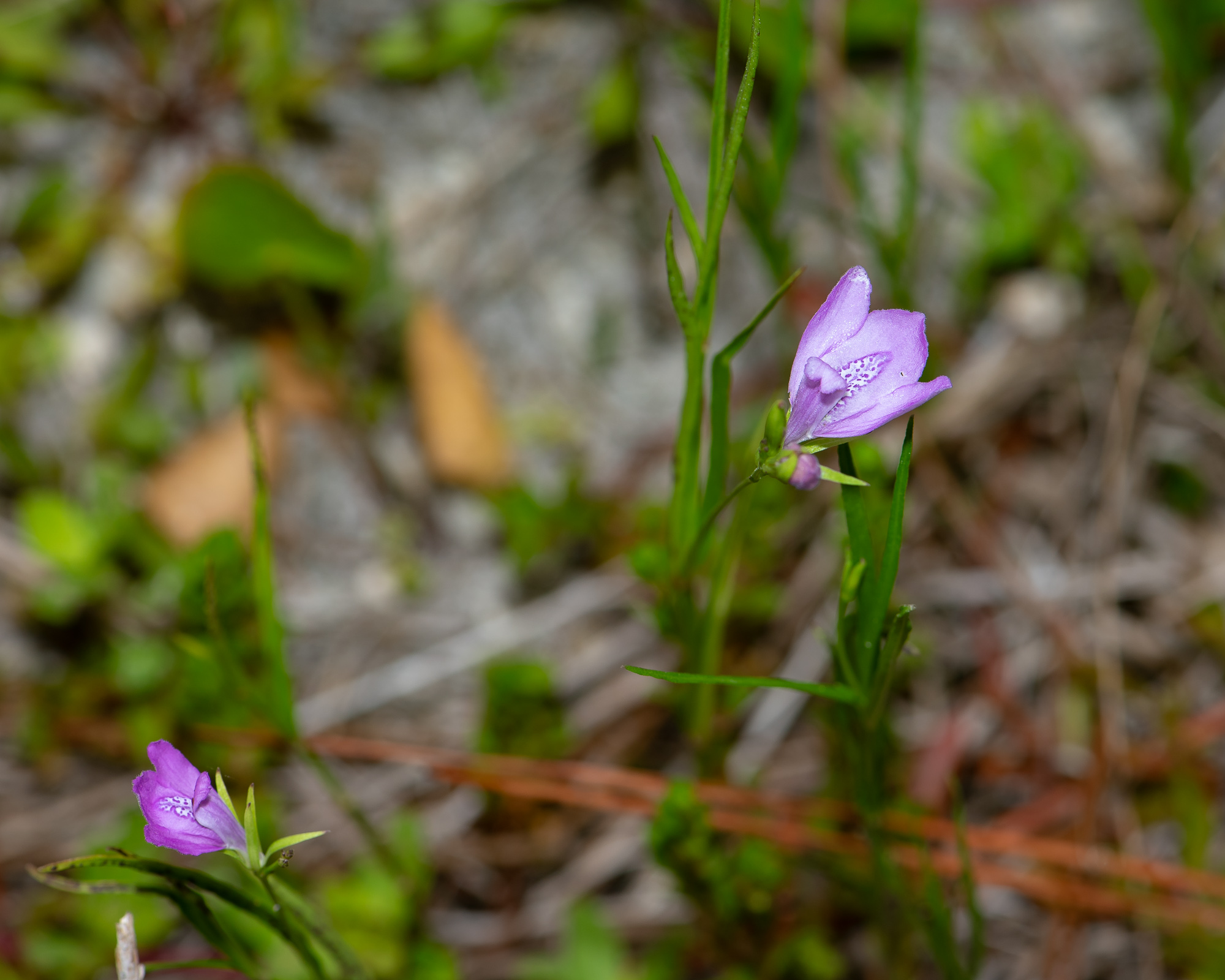
Another near-endemic wildflower for Florida is the Pineland Waterwillow (Justicia angusta). It likes a wet environment and when not in bloom would be a challenge to locate. (For me.)
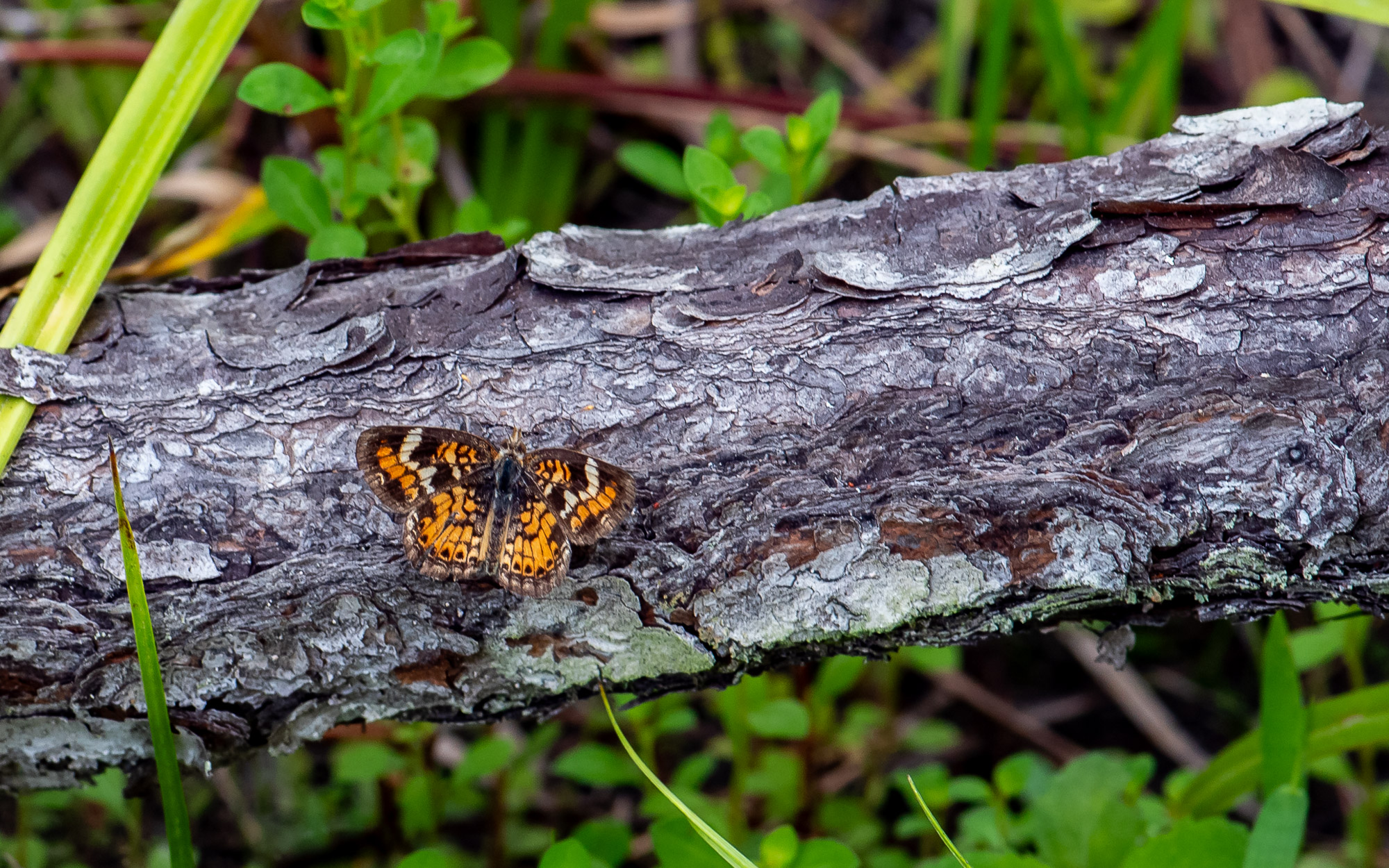
A Phaon Crescent (Phyciodes phaon) looks at home on a pine log.
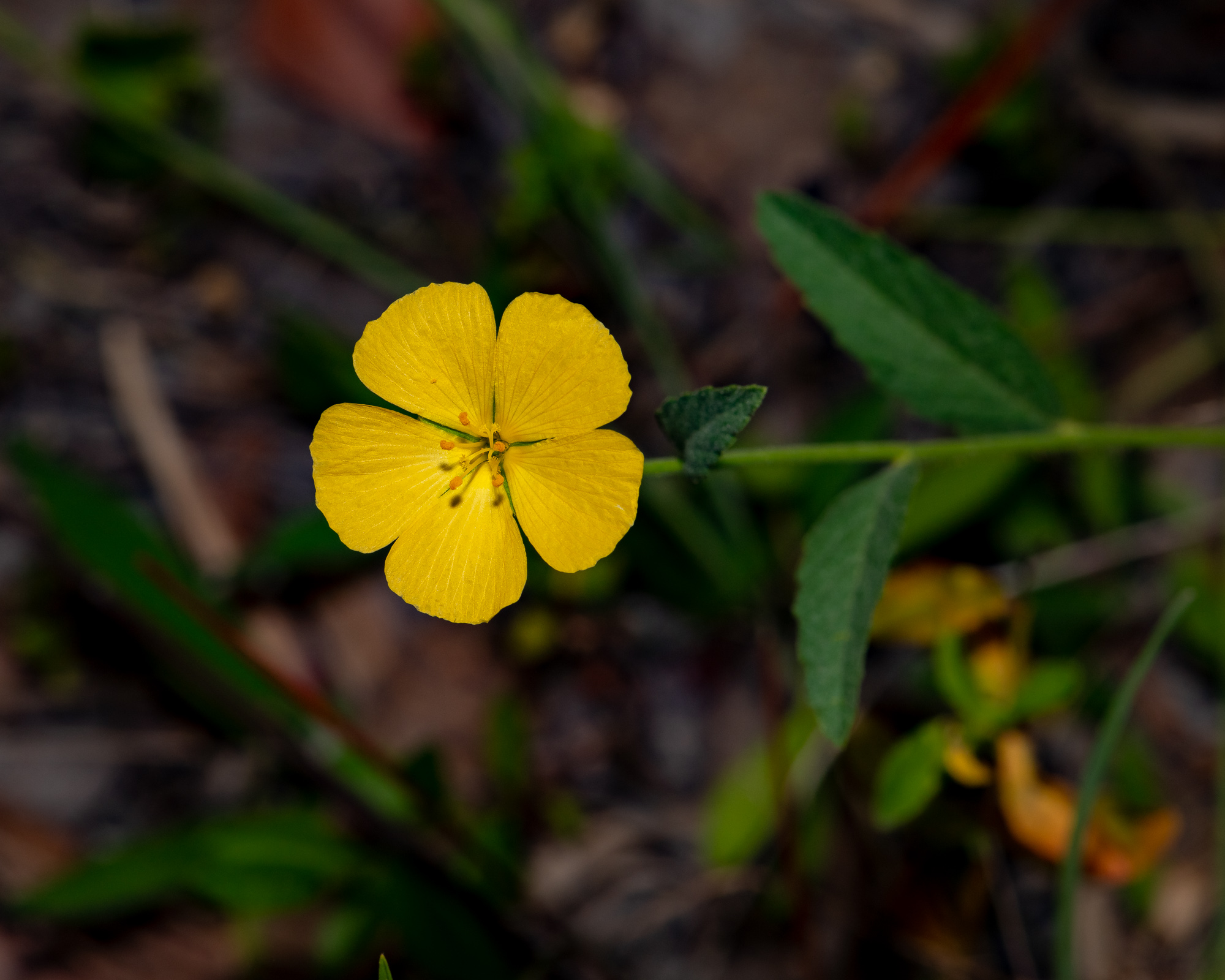
Growing to about a foot tall, the Pitted Stripeseed (Piriqueta cistoides subsp. caroliniana) has uniquely-textured flower petals. Once the flowers open, the weak stems tend to lean toward the ground. That’s okay. Makes the ground more attractive.
It is difficult to step into the forest without the Tufted Titmouse letting everyone know we’re here. Feisty and handsome. They are extra alert during the breeding season.

I don’t often have an opportunity to photograph both sides of a butterfly. This Eastern Black Swallowtail (Papilio polyxenes) posed nicely and then flitted to a plant behind me where an underside image was possible.


Growing to nearly three feet tall usually on a single stem, the Roundpod St. John’s-Wort (Hypericum cistifolium) has deep green linear leaves. It’s found along wetland edges and in moist pine savannas.

The darkly beautiful Horace’s Duskywing (Erynnis horatius) contrasts nicely with the lavender Showy Milkwort (Asemeia grandiflora). The small white flowers are Mock Bishop’s Weed (Ptilimnium capillaceum) or Laceflower, a member of the carrot family.

Heed the words of the poet. *Mr. Herrick was right when he said “Old Time is still a-flying”, so get out there and gather those buds while ye may!
Enjoy your search for a natural place and come back for a visit!
*Thank you to Robert Herrick. (https://poets.org/poem/virgins-make-much-time)
 Our Natural Places